
The ecstatic jump was a reverie, perhaps, but was the clearest sign of Musk’s open embrace of the expansive nature of American sovereignty that Musk s is not just rebranding. It is a new messaging of sovereignty and belonging, rooted in a priority of American exceptionalism that, even as it denies isolationism, embraces an increasingly isolated global future. But while President Trump’s second inaugural seemed to avoid offering any map of the world as he unrolled triumphal plans for an American future that suggested not only “westward the course of Empire takes its way” but to outer space, and indeed to Mars. The spectacle it promises to blind us to wars Ukraine to the Middle East to Myanmar. Indeed, Americans’ deep inability to process the new scale of global conflicts of what seemed a third World War outside familiar theaters of global conflict,–whose terrifying monthly tally of fatalities grows beyond 20,000 deaths per month–a surge of fatalities of unimagined trauma. Few Americans are counted among the dead in these wars–no American deaths!–but a jump of deaths by a third is hard to get one’s head around, and rather shockingly almost absent from the recent Presidential election, waged largely on domestic politics, save Trump’s grandiloquent empty promise to end conflict in the Middle East and Ukraine on day one.


Armed Conflict Location and Event Data, 2024
Trump’s bromance with the rather robotic Elon Musk was a happy accident in many ways, offering Donald Trump a means to staff a whole phalanx of the administration when he had a very few number of reliable advisors. Musk’s imprint was evident in the rollout of a new agenda, most famously in the capstone announcement to Colonize Mars, but with deep ramifications that will be hard to erase. Amidst the volley of long-planned Executive Orders signed Inauguration Day rolled out a re-bordering of the world, focussed on the border, but placing America first in the world. But if we are witnessing a case not of what Zimbabwean anthropologist Denboy Kudejira described as a new scenario of “disaster authoritarianism” in which authoritarian regime exploit natural disaster to assert their unfettered powers outside of the constraints of liberal democracy that censors any reporting of suffering of their most vulnerable populations, in which natural disasters lead to an unforeseen increased of authoritarian governments, but a “disaster nationalism,” that promises an elusive form of victory in the face of threats to the nation.
The disaster nationalism may bode the end of American government, if not a dark spell, as the end of oversight bodes an untold level of corruption, more akin to the “outer boroughs” of Mafia dons than politics as usual. The fears of rabid mobs attacking American cities, waving Mexican flags and leaving store windows shattered and self-driving cars burned as they act to destabilize the peace seems to have brought a dizzying degree of disaster nationalism to the official feeds of the American government not even six moths after Trump’s inauguration. Is it any surprise that the Waymo, or self-driving cars, became a surrogate of disgust at Elon Musk’s corporation, if not for Teslas, a frequent source of vandalism in recent months. Did the violence wrecked on the self-driving cars link data-collection services to Homeland Security digital dragnets of deportation of so-called “illegal” immigrants, even after Musk has officially “departed” government? Bonfires of the highly combustible LiIon battery packs, that combust to burn faster and hotter than gasoline, seemed the perfect medium to destroy the cameras perched on the cars to grab up digital data, a means to resist the very data-driven mechanism of deportation sweeps Trump campaigned on, that 2,000 federalized National Guardsmen the President rallied for the occasion seemed ready to enact? For the disembodied vision systems by which they scan their surroundings three hundred and sixty degrees embody the surveillance systems embody that the protestors seek to resist.

Even as Musk fights with Trump as if heavyweight boxers, the connection of the self-driving car, even of another company, is a totem to Musk’s contribution the raids that seek to deport undocumented across the country and in raids of box stores in Los Angeles, in ways that suggest a data dragnet from sharing IRS data with Homeland Security in the integrated master database DOGE’s sought to construct–to cross-reference information from the IRS, DHS, Social Security Administration and other agencies–cross-referencing benefits rolls with taxpayer data to locate individual undocumented immigrants, far beyond local law enforcement records used in the past. Or was it that the Tesla self-driving car offered an idyllic other view of California, without any sense of the urban environment, able to navigate on highways that never entered the city streets?

The database was purposefully to be used for immigration enforcement, to enable workplace raids from box stores where day workers congregated for casual employment like Home Depot’s parking lot to carwashes in Carson City workshops like Ambience Apparel, targeting vulnerable workers in Latino areas of a city where just under a million undocumented–951,000–are estimated to live. If cities and counties had little basis to stop immigration officials from consulting local police records, the integration of broader databases provide a digital profile of migrants able to be placed in real time, providing a basis to trace those “eligible for deportation” to meet the goal of the current “minimum of 3,000 arrests per day” of immigrant populations that was set by former Angelino Stephen Miller demanded by inviting DHS “go out there and arrest illegal aliens” indiscriminately. (Miller is from Santa Monica, to be sure, an exclusive enclave in Los Angeles’ metro area, but must hate the city.) If federal immigration checks were already active across much of California, as well as New Mexico and Texas, the increased data for Immigration and Customs Enforcement are culled by the bright-eyed pup has allow intensive sweeps as Donald Trump has adopted military rhetoric to “liberate LA” the betray his unsuited character for assuming the title of Commander-in-Chief.
If Musk chose a perky dog’s over eager face, Waymo offers a material node, as well as an icon, of the blanket data-sharing agreements the Trump administration seeks to engineer from housing and social security data in a misguided effort to protect the public good, despite risks of privacy violations. Conflagrations of Waymo have become a compelling icon of resistance the immigration protests that target driverless cars as a totem of a data-driven inhumanity of the systems of deportation DOGE promised to introduce, putting ride-sharing services in the crosshairs of protests Immigrations and Customs Enforcement that have compelled Waymo to suspend services in parts of Los Angeles and San Francisco–even if the unrest that was conjured by the administration and in the news was not so widely generalized. But the stunning use of police maps to show unrest and violence provided a means to concretize a generalized threat that justified military intervention against a faceless “enemy,” argued to have received outside funding from overseas entities.
The protests against the self-driving cars, rumored to share data and even photographs with police, has made them to be targets against police enforcement, both as canvases for graffiti and incineration: the futuristic cars are covered with slogans “F*CK ICE” remind us of how the driverless vehicles are icons of faceless authority; carcasses of tangled carbon are signposts of a victory march against a surveillance state. Elon Musk seized upon the burnt cars as evidence of a destabilizing national invasion beyond civil unrest, but the vandalization promoted on social media is hardly an invasion of barbarians so much as the very struggle of man v. machine Technocracy Inc. envisioned almost a century ago in 1933–the flag-waving shirtless man hardly a bandit of the border, but of a symptom of resistance to the technological dragnet gripping the land.

The Mexican flags wielded in the protests against ICE immigration raids to resist deportations have been cast as evidence of an “insurrection”–“foreign nationals, waving foreign flags, rioting and obstructing federal law enforcement attempting to expel illegal foreign invaders!”–but demand recognition of cultural identity in the increasingly straight lines used to define America’s relation to the world. That identity could be incorporated into America in other eras–the flag was a protest sign of California’s anti-migrant Proposition 187 that restricted public services to migrants–and is a political voice of political subjectivity, rather than an anti-American optic. The Rorschach of the foreign flag demands understanding as an act of solidarity within migrant communities, not as a battle flag of the Confederacy or the Union carried as an act of Civil War: the flag is an ideal of upright identity that is paired with the burning Waymo, a human sign of political vitality and ancestral pride rather than a foreign identity.
This flag-waving man was cast as a “foreign” revolutionary, even as the masked man on the burning Waymo was protesting domestic policy. Yet he became, on social media, proof a national invasion demanded the imposition of martial law.. The defaced Waymo from whose burnt frame black smoke rose was a desecration of property and AI intelligence in Los Angeles’ streets. A nameless shirtless protestor on the Waymo became a Rorschach of globalization, an inkblot able to be read as evidence of violent desecration of property or a liberation against a faceless surveillance state that threatens impending deportation. Protestors took to smashing the windows parked autonomous driverless cars, slashing tires slashed, tagging the cars with protest slogans they were almost inevitably torched to register fury against deportation threats, burning LiIon batteries with abandon despite the release of toxic smoke. The transformation to wreckage of the cars billing themselves as “the world’s most trusted driver” launched a protest at an eroded social compact, as the car seemingly able to register footage became an emblem of revolt against the faceless state. The corporate types who similarly blanch at the sight of violence–like the knit brows of Senator John Fetterman–seem to sympathize with the elites, not to mention the costliness of the cars which range from $180,000-$250,000 to construct, including parts and sensors in addition to the classy vehicle beneath.
The potlatch burning of the costly vehicles is not only a destruction. The man defiantly atop the Waymo is an eery vision of the perennial battle between man v. machine, against the alienation of the federalization of the National Guard, the surveilling of immigrants live in Los Angeles, whose children and parents live there, faced with expulsion, demanding we rage against the machine, a soulless technocrat who seems to be able to struggle to ponder what it was to process human blood.

Frank Kelly Freas, October 1953/Astounding Science Fiction
But rather than pique one’s sense of the humanity of the robot whose index finger is daubed in human blood, and his eyes look upward to a hidden God, beyond its ken, filled with rears, the machine seems to have won. The struggle between man and machine that underwrites the current crisis of federal enforcement of immigration policy has little to do with the law at all–but with the possibilities of enforcement of compliance across as much of the map as possible.

We are not able to map the pervasive conjuring of threats to the world, but these threats often raised to obscure the actual global threats of climate change, which have been so dismissed. Disaster nationalism traffics in cartographic specters able to impose itself on collective consciousness that obscure and blot out not only threats of man-made global heating, but indeed masks the global scale of casualties, an absence not of empathy, but a swapping out of actual armed conflicts by specters of invasion, and a promise of strengthening borders even as the shores and scale of natural disasters only await. One might argue disaster nationalism had a founding moment of crystallization in the events of 9/11, which cast the United States as a victim and of a new founding of the nation appeared in the cloud dusts of the fallen twin towers, that monument to the dangers of destruction of an idea of global empire, it is perhaps no surprise that from that dust emerged the future of MAGA, launching conspiracy theories about the specter of “Islamic terrorism” rather than dumping of 10,000 gallons of jet fuel on a burning building.
Might it not be that this moment of destruction offers a founding moment “Making America Great Again” might be understood not as a domestic promise, but restoring the nation on a redrawn global stage? For the remapping of world affairs that led to the cancelling of USAID, shuttering of embassies, denial of any global conventions as UNICLOS or the Paris Accords pull the United States from global consensus to privilege and prioritize corporate interests of America. The “dream team” of American income inequality that was the big, non-verbal take away of the 2025 Inauguration was a weird reprise of January 6, this time foregrounding the corporate takeover of the U.S. Capitol, tantamount to a blurred executive that stands as a talisman of the blurring of executive authority as much of the income inequality presidency of Donald R. Trump.

January 20, 2025
We have yet to map the unfolding of this disaster nationalism, for it is based on the substitution of actual maps with bad maps of threats, of real science with pseudoscientific claims of dubious origin and no basis in fact-based discourses, but posing as a strengthening of nations, even as it erodes any shared standards or consensus of national aw. And if it starts with the erosion and denial of due process on our national borders, it is set to spread to t he land. While we are distracted by the breakup o the outsized personalities of Donald Trump and his fellow-millionaire, we lose sight of the danger not only of persistent global income inequalities, heightened as never before at home, but might be one important “real map” of the world, in daggers of entering a map of spectral dangers, most illusory, rooted in the defense of false borders of a “North American” theater of defense and an “Expanded Continental Shelf” that promise illusions of national wealth. Such extreme wealth inequalities may be give rise to resentment, but the resentment is rather projected onto the targets of the economically powerless, seen as the source of a laundry list of problems.

Global Income Inequality/World Bank Poverty and Inequality Platform, September 2024
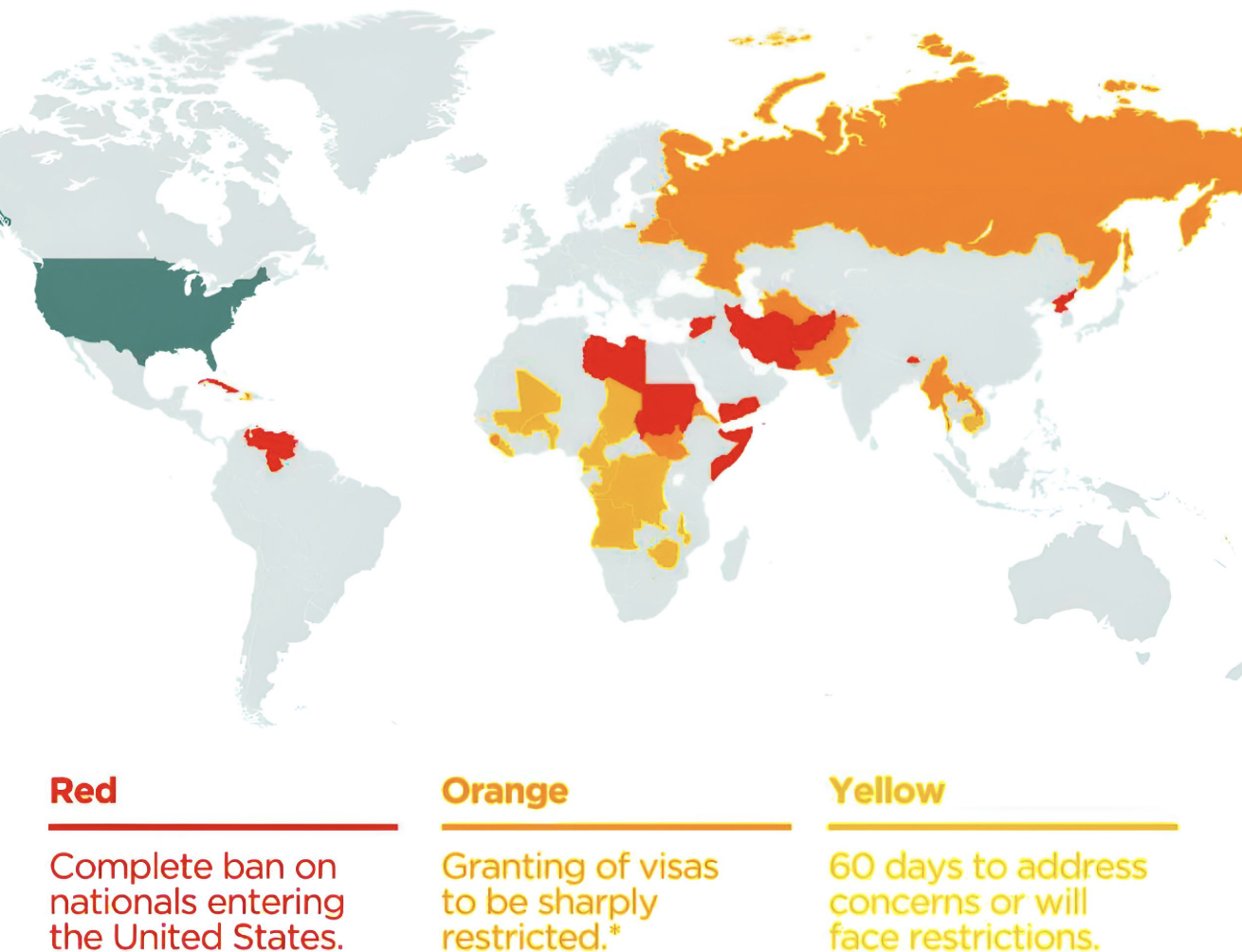
As if to reflexively disguise this intense level of inequality from the podium of an inauguration that featured an assembly of American oligarchs that seemed to trumpet an illusion of prosperity in the figures of untold American wealth, Trump has announced an undoing established traditions of asylum, immigration and border transit and international ties. If the inaugural raised the curtain of a world of redrawn borders, one that immediately promised to deny entry to migrants, refugees, and those seeking asylum in historically unprecedented and indeed unimagined fashion, flaunting all precedents of accepting refugees and persecuted without an intensive process of vetting, sealing the country’s borders by Executive Orders in the name of national security. As if fit for a middle-age crisis, the hormonal rush of stigmatizing, banning, and new accusations and finger-pointing seemed to say that anything goes in the United States, as a President and his partner seemed fine abandoning civil liberties, and feeling the immense power of a sudden rush of breaking norms and of immediate financial gain from the power of tipping the scales of justice for the highest bidder, and imposing a travel ban from countries that expanded his previous travel ban–banning first travelers from twelve nations, including the Muslim-majority ones he had prevented from gaining American visas in 2017, and then rains concerns to ban travel from thirty-six nations–

Statista/June 5, 2025/Katharina Buchholz
-and threaten to expand the list beyond forty-three countries, including much of the African continent, mostly dispersed across the very sub-Saharan regions he had removed foreign aid.
The huge cuts of financial aid that once flowed to nations fell sharply on Africa, and reflect not only the pain of curtailed projects of land improvement, agricultural economizing, or local investment, but the loss of lives (and especially childhood mortality) that were to come under the axe of DOGE, in a mismanaged notion of governmental cost and benefits. The turning of our back on these nations may not map directly on those areas we restrict travel, but many of the same nations will be hurt by cuts in aid, in ways which we can only imagine the need for bar charts to express.

Funding Cuts in USAID Mandated by DOGE as % of USAID Programs/Center for Global Development
The sheer cuts in cash flow based on congressional documents of March 27, 2025 suggests a world painfully disjointed from the United States, untethered from a dire absence of funds that we have asked the world to accept without transition–a massive cut of $1.4B to Ukraine, $100M to Senegal, Georgia, Indonesia, Madagascar, the Philippines, Nepal and El Salvador, and $200M cuts in funds to Ethiopia, the DRC, Colombia, South Africa, Palestine, Bangladesh, Kenya, Afghanistan, and Tanzania. Is this irresponsible levels of subtracting needed funds to countries’ health provision and local projects of infrastructure not an unwinding of a global scale, immensely irresponsible for any nation that recognizes the economic and medical benefits it possess? The backlash to funding of overseas projects is not only a way to cut the national debt–whatever savings that were realized have failed to stop the amassing of a $3TN debt in the coming year’s budget that even Elon Musk has raised against.

Foreign Assistance USAID Cuts in Dollars/Center for Global Development Enacted by DOGE
Trump has moved to curtail entry to the United States from a growing list of countries, effectively separating not only but entry, in an operation of excision nominally to protect our country. Huge cuts in public health, pandemic influenza, emerging threats, maternal health and infrastructure are paired with a subtraction of aid for macroeconomic growth, based on a refusal to “foot the bill” that endangers the world, and not only much of the global south. As the United States creates long-lasting consequences by beginning to disentangle it from an overly messy globe with which ‘we’ do not want contact, the President only maliciously rails–Trump angrily pronounced “We don’t want them!” in the royal collective used as King of America, limiting the foreign nationals’ ability to enter the country’s southern border, invoking the “extreme dangers posed . . . by the entry of those who have not been properly vetted.” The increased walls around the nation to prevent America from–here’s that old refrain–as only so many “foreign terrorists” we don’t “want” at the table–endanger the entire globe, and stand to push back the world into an era of increased shortages and wars, in an unwinding that is hard if not impossible to contemplate, let for future historians to fathom.

The attempt to drill fear into the nation seemed to set a logic for single-handed rule, whether or not Elon Musk was abroad. He wanted to let us all know that only he had prioritized our “national security and national interests” so badly eroded by his predecessor, and sign of with a blind faith in the new maps of the world that he was planning to proclaim. That depends on how one maps we, of course, and where you draw lines around ‘us.’ The haunting of the border by the fear of what lurks outside is perhaps the animating fiction of the Trump Presidency, the looming fear that something is approaching to compel our consent to its enlarged power–if not the fear of an invasion of migrants across the border, increasing crime rates and bringing addiction, the fear of a supersonic missiles may make us cling to protecting a “homeland” as never before. The expansion of a list of nations we’d accept no visitors or guests was paired with a shift to governance of our space, as if to foreground the threats our “homeland” still faced even in an age of curtailed international ties.
The plan for a “Golden Dome” concretized the isolation of the nation, directing the national budget of defense to concentrate on the elimination of foreign supersonic threats from satellites in space. But if the bombastic proclamations that inaugurated Trump II were fired like broadsides as if to make up for lost time and a slow start of his first term, the desire to reshape the world in his own image that may turn out to be about crash-and-burn strategy of bringing down the government and slowing down the world economy in Trump fashion, unwinding international alliances that created the base-map of the post-Cold War era for a gargantuan project of monstrosity, more science fiction than science, using existing planned infrared sensing systems in low-orbital satellites for missile warning .and tracking that already doubled the budget of Space Force for strategic defense and communications for a space-based missile-defense architecture that promises to have the ability to track the technologies to counter the paths of supersonic missiles–
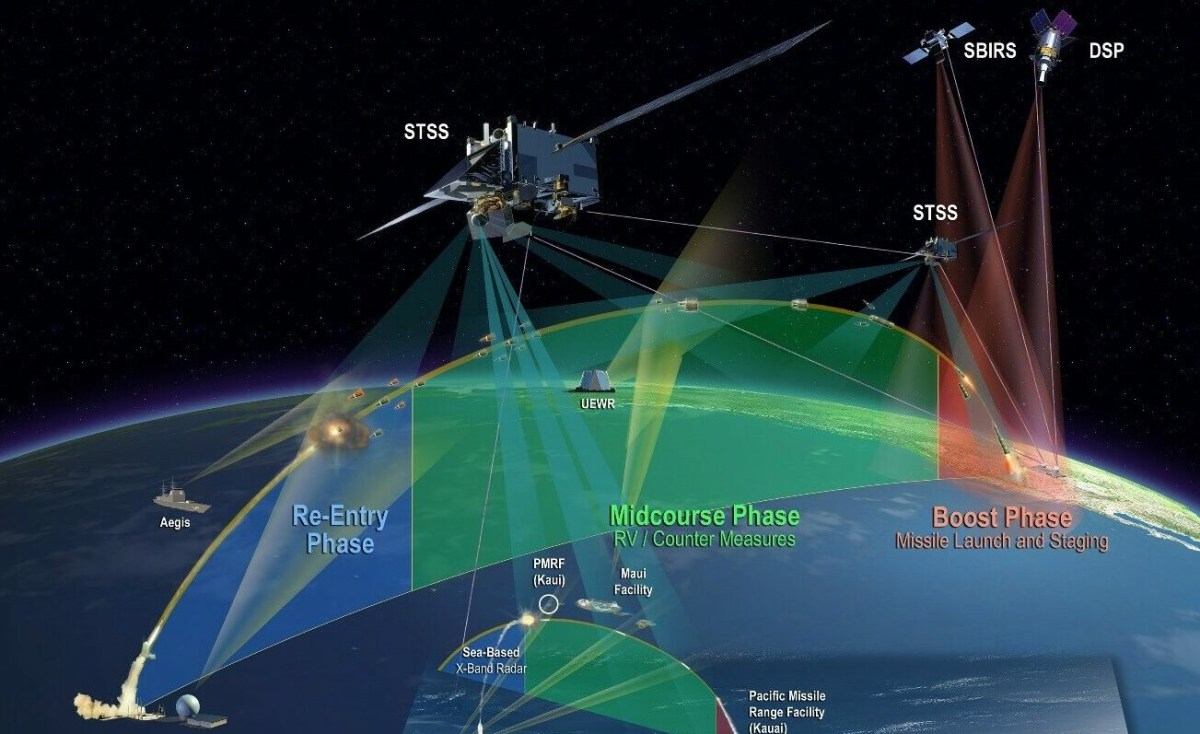
–but seem planned in a universe where our own near-universal tethering of time management, mapping systems, and radio-communications networks in which our lives are currently enmeshed. The investment in a satellite tracking systems echoed Trump 1.0’s formation of Space Force as a “new frontier” of space-focussed military research as a sixth branch of the U.S. military, newly branded with a suitably Star Trek logo that many once mocked–and the motto “Always Above”–unveiled on what was then Twitter in 2020 after “consultation with our Great Military Leaders,” rebuffing the similarity of the delta image to Star Trek’s logo, by arguing it was long “prominent . . . in military space community emblems,”


-reflected Northrup Grumman’ drawing boards of one-sided scenarios of orbiting surveillance structures whose vulnerability in an actual situation of military engagement is unevaluated, but received a robust $130 M appropriations as a high priority missile warning architecture by December, 2020, as Trump was readying to leave the White House, but was eager to give it a green light. At the same time as plans for the January 6 storming of the U.S. Capitol were long underway, and as a whopping $1.3 Bn had been added to the Missile Defense Agency’s 2021 budget request.
The missile defense architecture was an architecture of fear, long about to be unveiled, but was also a redrawing of national defense as a priority of spending, expanding our homeland in a broad-strokes way that was not based on sovereignty, but on the ever-receding promise of great sovereign wealth. While wealth is not the subject of this post–maps are!–those interested in examining the cartographic legacy that was part of what Musk brought to the bargain but have limited scrolling time or attention at their disposal may want to ump to its second part. But the big picture of remaking sovereignty that began at the southern border has mutated on steroids in Elon’s tradition to become a force multiplier in expanding an imaginary of sovereign space.
Trump’s increased investment in space-war plans must have piqued Elon’s attention, given the longstanding ballooning budgeting for satellite defense networks. In parallel with a growing budget for surveillance and data collection from 2008 to 2021 of trillions of dollars, Trump’s dream of data-driven deportation networks promised a virtual data-driven dragnet, not “immigration enforcement” but an unprecedented efficiency in data-fed surveillance to enhance the control that Trump dramatically accelerated by authoritarian invading privacy and circumventing due process. The collection of data based on scans of drivers’ license photos and data accelerated, now using a federally issued identification of REAL ID proving residency integrating state-issued documents, was a very enticing data architecture for the nation that must have made Musk’s eyebrows rise, and promised to offer surveillance tools for the “decoration force” the basis of Trump’s first promise to “round up” undocumented immigrants to set a new record of mass deportations beyond 2.5 million from a Muslim database able to separate “good immigrants” from the undocumented “bad.” The broad purview of such a database would override both due process and civil protections, but be a triumph of data and hard science over could have posed an engineering challenged to pique Elon Musk’s attention and absorb his focus by emulating the semiotics of the screen of a video game.
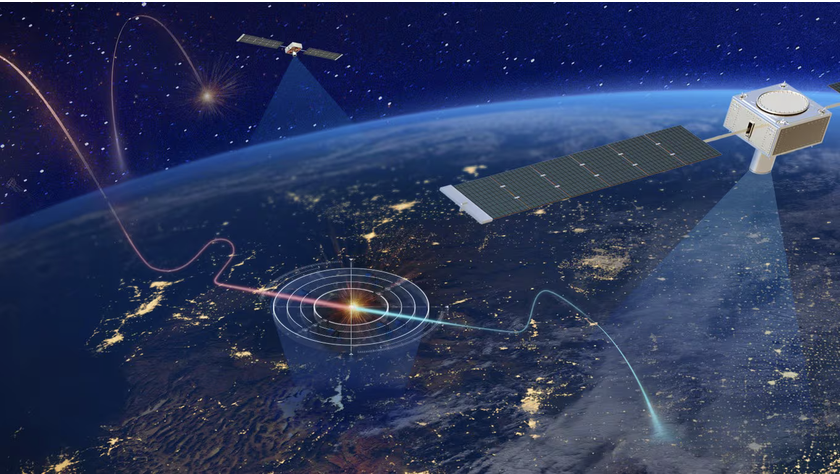
Northrup Grumman, 2020
This is, it merits saying, bad science, or science fiction, and is the obverse of established scientific practices that DOGE would take such strong and immediate aim. If Trump 1.0 had a tendency to privilege virtue-signaling over science, making a rhetorical inversion of the objective of scientific practice dismissing the ethics of climate scientists for the benefit of oil companies and the energy industry in an opportunistic radicalization of norms of virtue.
Virtue is swapped out for the ethics of good science in the Trump Administration 2.0. In what the historian of science Mario Biagioli called “dark transparency” of Trump 1.0, the Environmental Protection Agency openly attacked scientific expertise in exchange for the more virtuous norms of transparency. The exchange for virtue-signaling was diabolic, undermining trust in scientific practices for the greater virtues of transparent communication. The discrediting of science by promotion of pseudo-virtuous norms was not isolated to the pseudo-scandals on public communication of climate change, but the rejection of maternal health aid to appeal to pro-life constituencies. The removing of debate from communities of medical science have encouraged a broad rejection of norms of public health norms–including the very vaccines that helped us claw our economy and our public health crisis out of the pandemic and transmission of the coronavirus: there are higher stakes of promoting anti-vaxxer logic given the hindsight of the pandemic. The dark transparency of the EPA that clouds debates over climate change to promote a removal of regulations on extractive industries claims a greater transparency of communication, as policies of health care are eroded by the virtue of assigning undue agency to the unborn. The costs of dark transparency are echoed in how pro-“life” evangelicals find virtue in restricting women’s choice to uphold theological virtues. The scientific status of American universities is undermined in the name of ending or even undermining diversity initiatives, in the name of competition, virtue seems to be playing an ever-larger role, as could be predicted, in Trump 2.0, and not only to obscure the lapses of ethics or virtuous behavior of the sitting president and his new BFF, as the increased dependence of NASA on Space X serves to privatize the space agency, replacing the goals of a space program with government give aways to promote American industry.
The replacement of science with science fiction may lead Elon Musk to be praised as a visionary big-thinking of his futurism or visionary distillation of the human spirit of exploration” in the United States akin only to the businessman who founded Rhodesia, committed not only to mining gold but to extend British rule across the world–Cecil Rhodes, who felt he amassed wealth for the benefits and “best interests of humanity” as he also laid the foundations for the adoption apartheid. But the vision of Musk is a distorting vision of the world, as was Rhodes’ dedication to the interests of the British Empire: Musk’s hopes for prioritizing the power of data as a force multiplier to expand the market for self-driving cars, the dependence of the government on SpaceX, or the future of Nueralink are opportunistic hybrids of actual science masquerading as for human benefit.
The intercontinental bombast of the most recent project Trump announced of truly mapping global power–the incongruously named Golden Dome is in fact a sort of mirror image that reifies the distances that tariffs have placed between the United States and the world, lest they continue to “rip us off.” As much as a show of force, however, it is masking as a benevolent blanket to perpetuate the investment in an interlinked satellite network hard to defend but able to ask for billions of funding to get off the ground. Rather than offering a show of force, the Golden Dome seems the latest attempt at withdrawing from global influence of the United States that defined the postwar period, and ran through the Cold War straight past its alleged end, and offering coverage to surrounding states as a means of incorporating them in a unified if radically redrawn national sovereignty. ON the drawing board, it is impressive. But the Golden Dome is a pose of power: rather than being as new as it claims, the “shield of the nation” recalls Elon Musk’s intercontinental bombast and engineering bravado, whose career specialized in hybrid projects of futuristic design, but not truly “new”–, its outrageous claims rising to sci-fi challenges of Tesla’s driverless cars, plans to Occupy Mars, or neural interfaces with computers for the human brain, reutilizing technologies to fit together in a web of satellites and radar to “stay ahead of accelerating threats.”
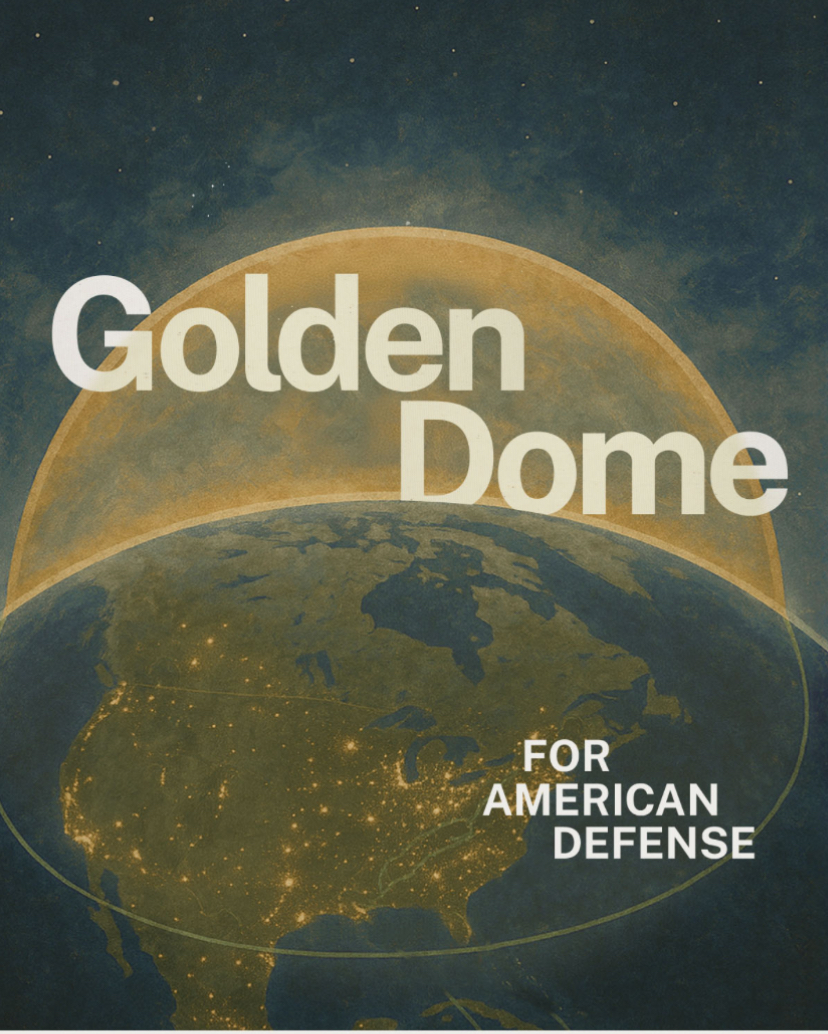
To be sure, the election was not about Silicon Valley, or about tech bros, or about the internet–but it was about wealth inequality and the distance of most from an honest living or early retirement possibilities, and deep frustration as to the economic quandary of everyday life. And it was the absence of effective messaging on everyday issues–and a lack of clarity as to what government might provide–that meant that a man from Silicon Valley might join with Trump, as if a new adopted son, to preserve the promise of an America that would embrace wealth inequality but, by speaking a language of business–not politics–promise to get rid of the red tape of an old governing class, and to promote what seemed like it might be a better economic future. And it was the figure of the border–and the need for a broad re-bordering–an almost compulsive redrawing of the border that allowed Trump and Vance to promote the fear of the oldest literary character of American fiction, the literature of the bandit of the Mexican border, the stereotypical threat to nationalism, ready to reveal its contingency, that forged the oldest racist stereotypes of the nation’s history. The urgent need for an “emergency” re-bordering itself traffics in similar stereotyped notions, if cast as a response to suggest the fiendish nature of drug cartels, human traffickers, and false citizenship claims to capture the radical contingency of benefits in America, but also suggest the blessed nature of a nation able to live under the protection of Trump’s promise, as if it were giving an abundance of wealth to all living in the lower forty-eight, by a sort of virtual tax cut by which the nation would be suddenly colored gold, as if pixie dust rained from the sky–
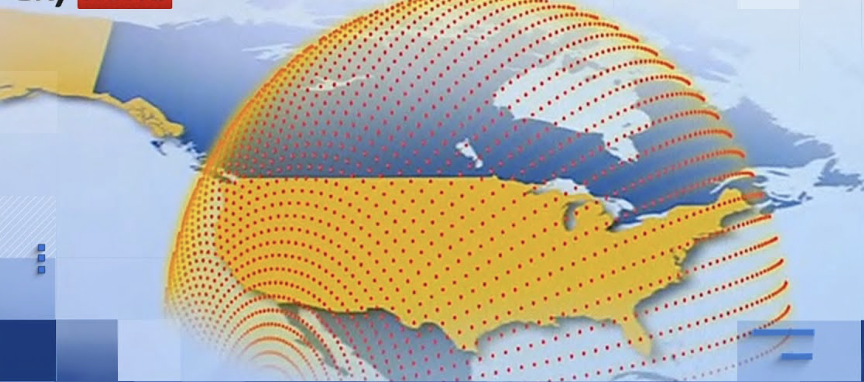
Graphic to Promote Golden Dome
–as if in a cartographic correlate to the “investment visa” of $5,000,000 to allow foreigners to buy a permit for permanent residency, a legal path to citizenship, and a permanent work visa for cash–a gambit that soon after launching in fact attracted 70,000 expressions of interest in playing the $5M required, a sort of economic extension of tariffs, and a residence pathway not based on merit but projected by the US Dept. of Commerce to generate up to a trillion dollars for the U.S. Treasury, despite the oddly unethical feel of a personal dispensation of citizenships accorded by a king.

Trump’s Gold Card Promised a Permanent Visa for Cash
Gold is the garish color that the Trump Era has chosen to promote as its own, as it is the color of the external gold lamé veneer of the glittering glass of his eponymous residence, Trump Tower, in Manhattan, that the New York’s paradigmatic architecture critic, Herbert Muschamp, found not only not architecture, but a perpetual promise of newfound status, money, and the tangibility of power–but a template for garish gold that reflected but the aura of wealth–or its illusion–

Trump Tower on Fifth Avenue in New York City, with Trump Tower Clock in Foreground
–if not the admission of “the “his failure to realize these desires creatively in the architectural medium.” For the king of superlatives, nothing has ever as valuable as he wanted it to be, or as successful as its aura suggested; we suspect Golden Dome may only be so much mirrored glass and shine, a basis for bankrupting government, evading taxes, and promoting a brand of ugly nativism–incarnated by the brutality of the bars and rebar of the Border Wall, barely concealed by its reflective plaque.

Was the Golden Dome a greater realization of the threats that the border conjured? Whereas Trump 1.0 mapped America as if based on the defense of a southern border, especially in its early years, the global centrality of the United States in Trump 2.0 brings a wishful magnifying of its global centrality. And what better way to do that than through the amassing of datasets into an aggregate database, able to be projected to resculpt maps to their own viewers’ deep desires? While the DOGE organization that Elon Musk briefly headed with such devastating results will pass in a matter of months, it was almost an actual Reign of Terror–a preemptive eviscerating of the budget that is passed by Constitutional Law by Congress, and hence known as a Congressional in modifier, that was haunted not by the faces of Musk or Trump, but by the ghost of Palantir, the data-sharing AI analytics software designed to aggregate custom-made datasets long imagined as a force multiplier of state power, but has not been amplified on such a scale, or with such a wide range of government agencies–immigration and customs; intelligence; social security; human welfare; local and state law enforcement; public health and even public housing–that, as we see, is bund to have a few bugs, and to ship some, like Kilmar Abrego Garcia, overseas, at costs to his family and through no fault of his own–but promises a greater force multiplier of governance than since World War II.
To make that force multiplier seem natural, it relies and relates to public voters through maps, often of the most hackneyed and unmoored but effective sort, instantiating the border, and new Cold War geographies of imagined wars and invasions, by maps. ICE has adopted new mapping apps as the Alien Tracker ATRAC, to deliver decoration orders by geolocated data, drawn from data collated and pooled from agencies in government, from the F.B.I.; the Bureau of Alcohol, Tobacco, Firearms and Explosives; the U.S. Marshals Service; and the Social Security Administration, the integration of data provide the government with enhanced operational “intelligence.” The Alien Tracker “app” will “allow for the centralized management of all interior enforcement priorities,” per the New York Times, aggregating data from Housing and Urban Development, Labor, and Health and Human Services Department and Internal Revenue Service; the increased aggregation of data analytics offered considerable resolution to track individuals, and to do so that magnified the crudest of maps that would project deepset categories as “aliens” onto the world. TGhe value and sheen of those precise data-driven maps Palantir benefits from and uses, nothing speaks power to people on as many interfaces as clearly as maps; layers, widgets, and vectors allow migrants to be more easily followed in maps than by national laws.
The maps that we are using to chart the nation and integrate databases, are unsurprisingly stripped of any acknowledgement of legal systems, but suggest something more akin to a board game, visualizing large territories more akin to lebensraum than they are attached to the contours of the land or the people who live there. They are spectral images of governance, all too appropriate for a hollowed-out state. They promise ways of interacting with data streams, a real world that exists rather than filled with humans, designing powerful tools of data integration that purify worlds, and visualize flows within systems, rather than of people. They are the tools of a new globalization, that DOGE and its super-charged datasets have been able to substitute for the maps of the nation at the wink of an eye, modeling datasets for users in a given framework that merges models, data, and analytics in an “ontology system” that will determine an effective new way of seeing and relating to the world, using cartographic semantics (border lines, boundaries, dots, land-sea divides) in order to create a dynamic form of governance whose logic is more often than not rooted in artificial intelligence to form ever more robust geospatial intelligence. The new constellation of power and knowledge in a system of dynamic intelligence is what the robust integration of datasets in the Age of DOGE is all about, as if the folks at Palantir had only been waiting for the invitation to aggregate the datasets of different government systems to create a new level of power.
The false promise of securing the nation from an imagined invasion as a way to secure the economy and public good. But the false promises to rev up the economy led to many to see Trump and Musk as a new power elite are worth reflecting on, as Musk officially departs the White House and government, and a featured seat in cabinet meetings. For Trump and Musk enabled the embrace of understanding global politics by what political philosopher Giambattista Vico called the “conceit of the nation” [la bore della nazioni}–that has so distorted the grasp of humanity and human history, in the readiness to imagine one’s own nation is the true origin of civilization, cultivating a mythic ancestry of the individual nation that had led the rector of the University of Uppsala to claim that Sweden was the cradle of civilization, a lost Atlantis, and Swedish the Adamic language of Eden, the origin for both Hebrew and Latin. Leaving a aside the exaggerations of location nations in a privileged reconstruction of global space in improvised fashion, Vico famously deplored as a result of the willful ignorance that humanity that failed to detect the common institutions of human society, obscured by willful privileging of one’s own state as the primary or sole reference point.
And yet, Trump seems ready to expand the conceit of nations to a new level on the global map, by recuperating a sense of isolationism that rejects a global map. When we imagine ourselves the point of reference for all other nations in the world, we mishap our relation to the world, assuming the inherent superiority of our native values to all others–and ignoring human laws. The dismay the Enlightenment philosopher of Naples felt at the failure of contemporary intellectuals to accept the commonalities of human life by denying the independent origins and customs of each nation promote a new provincialism we have invited by repainting Tesla’s logo gleaming red, as a totem or avatar of Technocracy, eliding the trademark with an image of a streamlined government. The trademark exemplified the privately held firm that replaced the need for pubic service, and conjured a hollowing of public ethos that can only debase and devalue government service.
The disproportionate wealth and naturalization of income inequality led Musk and Trump to peddle a myth of the destabilization of the border and return of the public good, even if they were the embodiment of American wealth inequality. For they were able to conjure what might be best called “the conceit of the nation,” that allowed voters to imagine the restoration of the mythic global dominance of America in the world, by re-bordering the country outside of the economic actuality of globalization, and reimagine our economic futures and securing old ideas of economic wealth. The appropriation of terms in which Trump is so practiced imbues recent press releases from DHS that celebrate the historic end of an “unsustainable” monthly “border encounters”–a euphemism?–and “migrant crossings” plagued the nation, trumpeting the “historic achievement” of “total control” of what was “the most secure border in American history.” The bombast of such a broad view of national history is a perfectly Trumpian claim of the remaking of the world from an American perspective, boasting of the redefining of a global border that Trump has promoted as a hallmark failure of the Biden Presidency, and indeed a reason for voting him out of office on charges of criminal malfeasance of allowing an “open borders” policy,–a meme that was repeated to convey an utter failure to screen immigrants for criminality over the last four years, so that “every American community has become a border community,” as illegal aliens stream into the nation’s homeland, even instructing ICE to consider questions of an immigrant’s health, blood pressure, diabetes risk, and other “mitigating factors” deemed irrelevant to the application of the law, that allow illegal aliens “to commit crimes in American communities ranging from murder and robbery to brutal assault,” as if this were an actual policy or political platform.
The long view not only conferred an illusion of security, but was celebrated as a “historic turnaround” from a time when Joe Biden and Alejandro Mayorkas “refused to enforce our nation’s laws when it came to border security” despite “unsustainable” numbers allowing migrants to bring “enough fentanyl to kill 14 billion people” across the border over four dark years, as nearly 200,000 “illegal aliens” entered the nation, while 1,500 kilograms of fentanyl were stopped from entering. (Never mind the demand for fentanyl was begun by an opioid crisis as the synthetic analgesic developed to promise rapid pain management as an analgesic for chronic pain was promoted by American drug companies–opioid deaths are something that, sadly, almost all Americans can relate in visceral ways, as high rates of overdosing on pain medications in rural communities as a plague to which all voters can relate.)

Opioid Addiction Death Rates/Opiates Detox
The security of a narrative of a strong border is the oldest narrative of the nation, dating back to the myth of Manifest Destiny that the figures on the border seemed a potent threat to destabilize and undermine, has been enabled as a fiction of the Trump Presidency, yet again, if we imagined the Border Wall, that enabling fiction of the Trump Presidency that proved his determination and care, has receded into the graveyard of dead ideas. If the promotion of border security seemed to face with the triumphal heralding of border security with “control” over “border encounters” that was a preface to the “tidal wave” of deportations about to occur–a wave of digitized deportations that stripped all provisional entry of “lawfully present” immigrants to violators of immigration law, stripping rights of all allowed granted humanitarian entry or Temporary Protected Status.

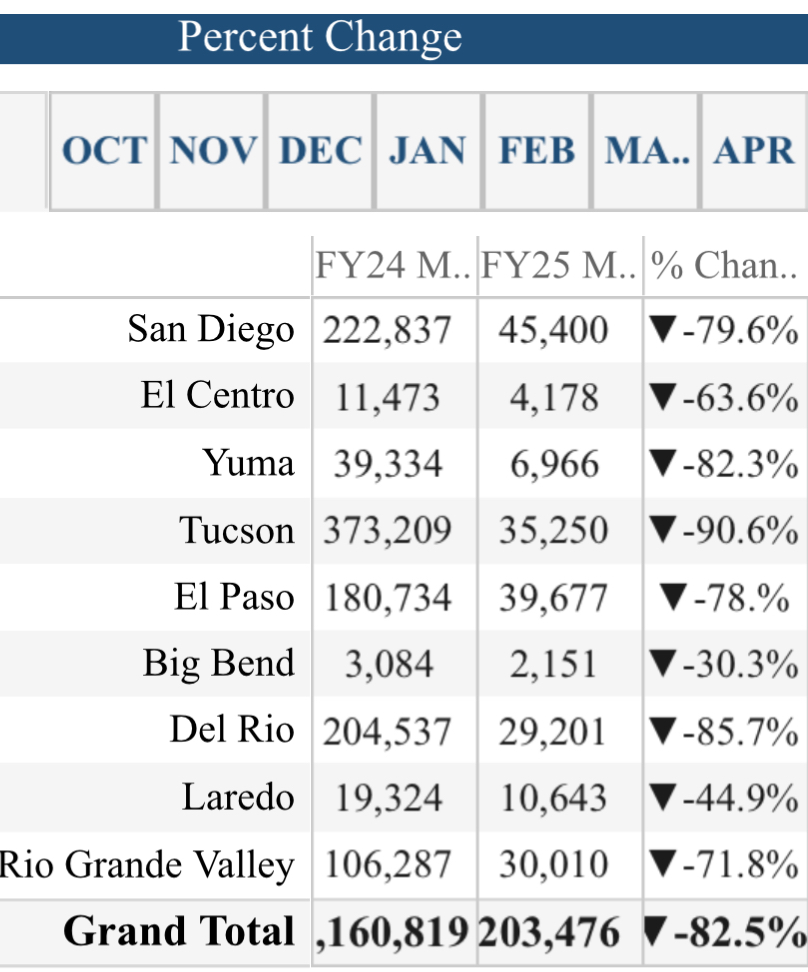
Southwest Land Border Encounters/DHS
The flatlining of those border encounters was the prelude to a redefinition of immigration status.
The shift was seemingly paired, whiplash-style, as if to remind us that what had long been seen as a domestic problem should be regarded as a need to redefine and defend our boundaries with other countries, with the striking new graphic attesting to the increased global vulnerability that still had to be assessed and reexamined, of vulnerability to military technology of hypersonic missiles, that Trump, ready to prove he was in control, had rendered to magnify the place of the United States as if to instill geographic ignorance by foregorunding an electrified southern border of vulnerability–

Golden Dome Poster/Oval Office
–creating a global graphic that followed no actual projection, but ballooned the United States in what was a magnification for emphasis of our global vulnerability, reminding us that the promise to “Make America Great Again” existed and was born from a new understanding on a global scale.
If globalization is cast as a danger of unseating the United States from its accustomed position of economic wealth in an earlier time, Making America Great Again is a way to combat globalization in ways that will at least make us feel better, if not enriching us. And the best way to feel better may be to see a person of wealth at the apex of government, ensuring us that government will be run as a business in ways that he knows best, procuring minerals from nearby countries that we might annex, at least symbolically, into client states, if not voting members offers political representation in the government, as if we can make Greenland, Ukraine, Panama, and maybe also Canada, why not, into part of our expansive oil reserves, rare metals resources, and rights to global trade routes. This would be a new map of wealth that we could get used to, starting from the expanded offshore of the Outer Continental Shelf (OCS) remapped as part of America, and expanding to the mineral resources in other nations that might become client states. If this appears a geography or history of the Cold War, it is rather a set of divides that were imagined before the Cold War to route out the dangers and risks of the contingency of global markets, a restoring of economic integrity and a re-bordering or hemispheric politics to prevent others from taking advantage of us, that begins right at our southern border, that longstanding thorn in the promise of Manifest Destiny that the Trump announced as if a mantra at the inaugural, a trick of reaching back in time order to look forward.
This vulnerability was best depicted as if from outer space, from the real threats of vulnerability that posed no fewer than four simultaneous bombing threats to be staged on red states in America, from Ohio to West Virginia to Colorado to Iowa, with a few more on their way toward Nevada and Pennsylvania. The narrative of these threats, only recently detected but more immediate in fatalities of supersonic missiles that seemed designed to target “red” states, would be prevented only by the twenty-five billion dollar initial investment in a Golden Dome that would supplement the illuminated southern border on this crudely if creatively designed map, which, if you took away those rockets, would manage to confirm the centrality of America in the world by unduly exaggerating its size across the planet. Never mind the distortions, the vulnerabilities were better revealed by the spherical projections, in the dumbing down of incessant national updates on military deployment and budgeting, truly designed to strike actual terror into audiences who only slowly appreciated the heightened vulnerabilities Joe Biden had managed to ignore and downplay, but that Trump has taken renewed cognizance of the novel delivery systems of intercontinental ballistic missiles mapped from Russia, China, North Korea, and potentially Iran.
These are hyped as the “real vulnerabilities” to missile attacks, the new vulnerabilities to invasion far more than our southern border, that seem designed to hold us hostage until we find a way to target these offensive systems, whose increased operating range demand an immediate deterrent, even if one that is hardly able to be fully functional in just the three years remaining in Trump’s term. While the “homeland” is mapped as a subject of attack, from foreign nations who are amassing weapons and ballistic missiles that must be seen as rendering us vulnerable to attack was a stunning graphic, wrenching the observer into outer space that recalled Trump’s promise of a mission to Mars and the orbiting astronauts brought home by Musk’s SpaceX–
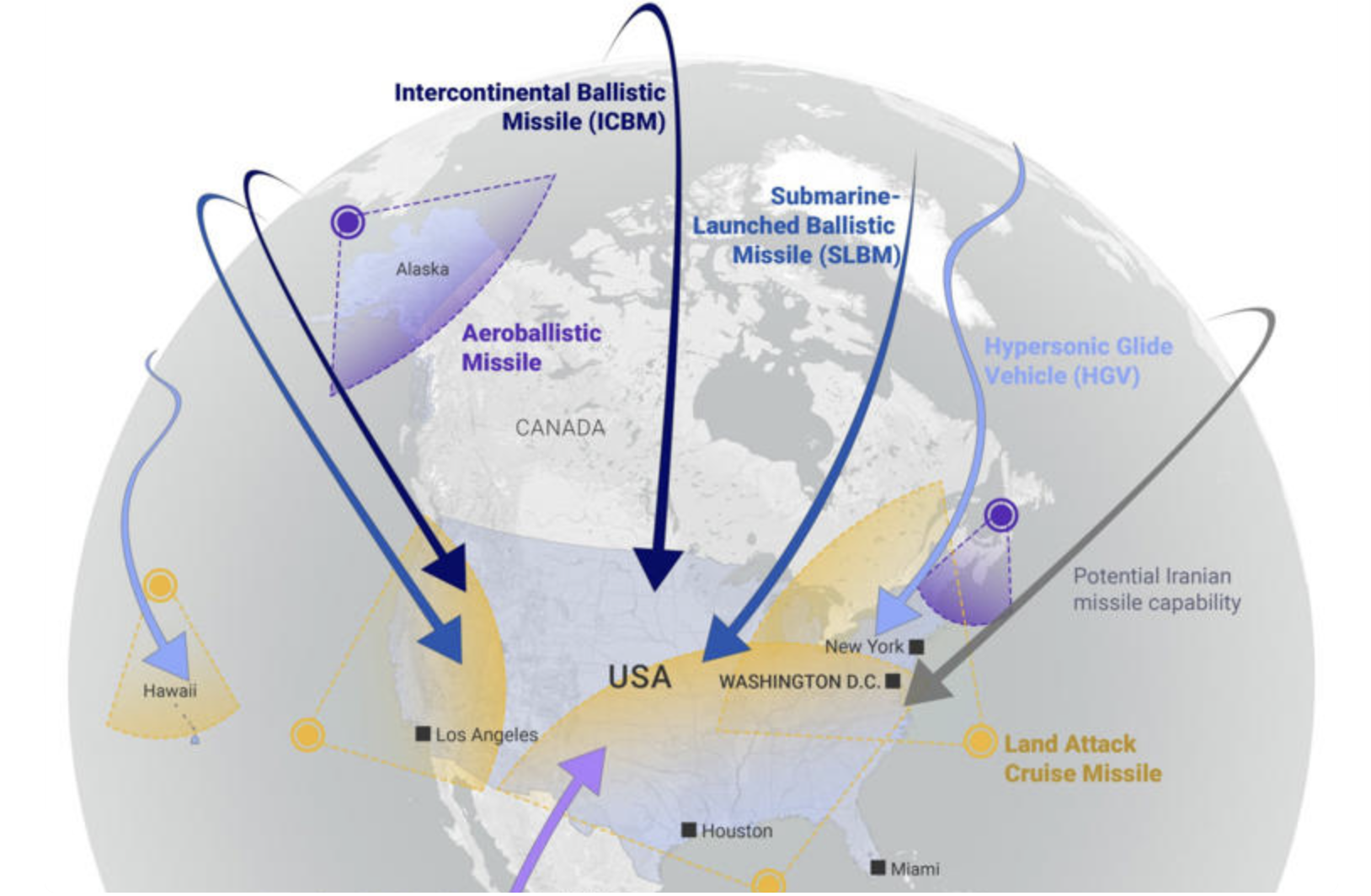
–the vulnerability suggested we meet by restoring America to a central place in the world. This is not a Cold War collectivism, but a haunting of the world with dangers and deceptions the is masquerading as pragmatism of confronting a real world. “This is a very dangerous world, and we’re going to protect our citizens like never before,” using large posters in the Oval Office to protect the nation by ballistic, cruise, and hypersonic missiles–as well as missiles launched from space–that seemed to escalate the arms race to outer space in decisive ways, by ponying up $25B up front to launch the space-age initiative, to be operational before the end of his term. While the actual coverage would be enabled only by repurposing the very infrared sensors used and developed for civilian ends of earth observation satellites that would be not grounded but redefined in scope in future years: in place of monitoring the weather by satellites in NOAA’s GeoXO program, or Earth Observation stations using remote sensing to establish benchmarks of global heating, increased budget cuts at NOAA led sensors to be leveraged to a program of space defense, offering early warning detection of ballistic missile threats. The speed of development seemed to be achieved by promising scalable production of high-value payloads to provide reliable predictability needs for rapid military response, converting the tools of mapping of weather system, now that we were out of that business, into defending the nation in ways we have yet to imagine or engineer. Earth observation satellite to measure polar ice thickness, aerosol heights, hurricane systems, and large-scale weather systems might be shifted, having bracketed global warming concerns by a force of sheer will, to tracking fictive missiles that might be sent to target actual American assets, not the “weather”–as if this was ably covered by weathermen on television, even if their data was overwhelmingly derived from remote observation.

Why not repurpose them to a dome, able to preemptively target imagined strikes on the Homeland and its assets? The current missile defense system is in danger of being challenged by hypersonic missiles already used in the Invasion of Ukraine, and announced by China. Can the real-time data of our earth observation satellites be used with the precision demanded to not only to track weapons, but the target them as they approach at such high velocity? The amping up of the charge to “protect the homeland” would expand the purview of weaponry in a striking hemispheric way, beyond the forty-four ground-based missiles of the National Defense Agency, to secure the entire homeland–notably excluding Mexico, or Central America, but by the color that Donald Trump had almost trade-marked as his own, before dyeing his hair that hue, to designate value by a Midas touch. The new geometric rationalization of the Golden Dome cannot conceal the prominence of the golden borders that peak through below the dome’s rationalism, as if to create a minor world, or lesser world, that will substitute and replace the meridians and parallels of the greater world, offering security around the golden borders of the nation, in this Northrup Grumman visualization.

And even while emptying out social services, making people feel so bad and insecure he may expect us glad to swap out health coverage for military coverage, the “Gold Dome” seems to herald a new era of coverage against imagined threats of the Cold War era, over a geographic region so broad to warrant the $61B he hopes to extort from Canada to cover the downpayment, and maybe include Greenland as well–by changing its presence in Northern Command, instead of European Command, as if in premonition of a new war. The weird wakeup call to the European Union and Denmark remaps the nation in the future defense of the expanded American territory, a slap in the face to the Kingdom of Denmark, but one big step for mankind, by unilaterally mapping the world by prioritizing American defense. While there was no publicly released map of the coverage offered by the Golden Dome–it has not been built beyond the drafting table!–publicity plans expand defensee by ICBMs, hoping to detect and defend missiles by sensors to intercept them in mid-flight–covering Canada and Greenland, as if extending an invitation to integrate sovereignty in a security umbrella in the face of global peril. The demand for broad range anti-missile detection–“other places have it, and the United States should have one, too!”–is born of entitlement, and of a sense of keeping up with the Joneses, demanding command and control mechanisms many engineers find unrealistic; draft images suggest wishful thinking outstripping contingencies or practicalities, as if targeting the US by Russian and Chinese missiles allowed a Cold War geography of isolationist panic to be unearthed from the graveyard of history and terror of a Cold War–that truly seemed dimensioned for a mass-market a sci fi paperback’s cover, as much as a project of America’s Department of Defense.
–if the images posted by the U.S. Army suggest a clear coverage of Canada and Greenland, as well as Europe, raising questions of the coercive strategies for its funding in the grey zone of international politics, as I the dome might be infinitely scaled on a subscription fee to an ever greater sovereign space, fed by a science fiction love that has Musk’s features if not his fingerprints as a new frontier.
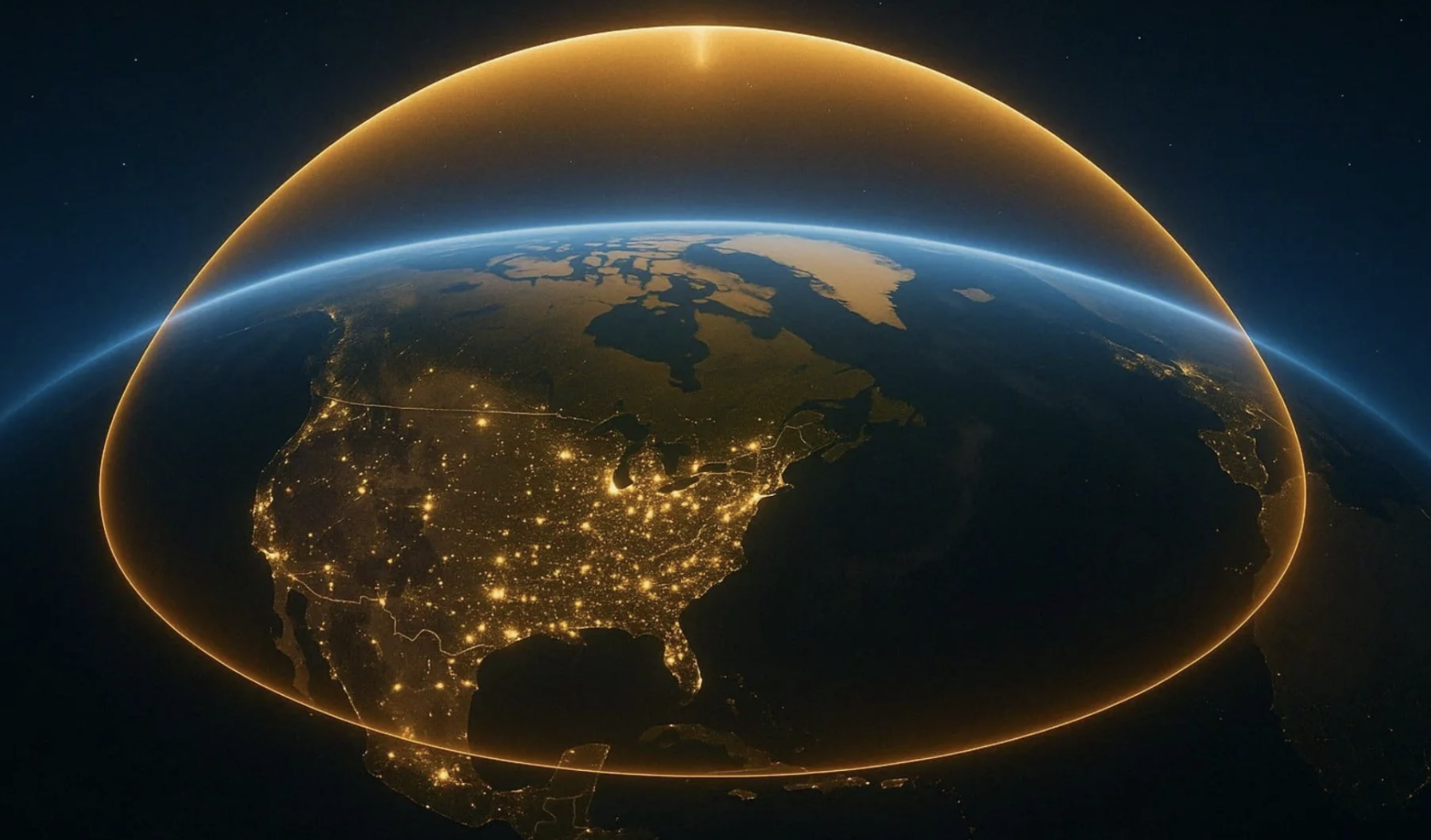
The image of the nation that was actually under attack seemed a means for an imaginative engineer to provide a clear graphic to explain the imminent dangers that were faced by the nation, outlining the lower forty eight in an electrified golden trim, echoing the image of insulation of the sovereign nation and its surrounding seabed as a protection that Trump was sure to prioritize to provide the needed security for the country, even as he retreated from the global stage. The magic number that Elon Musk pulled out of his hat–two trillion saved!–is no w promised to be $175B–the cost of the dome!–if Musk seems less happy to see his promised budgetary savings basically redirected to defense, and not have those funds earmarked for his company and potentially on offer to other engineers. W Ould the Golden Dome project, if now able to be completed in three years, even in Trump’s imagination, put off Musk’s own pet project of the planting of an American flag on Mars?

We may have accepted a major rhetorical shift of Trump 2.0 of American expansionism on a global stage to lie under the collective radar, having not fully processed the logic or implications of seeing expansionism without alliances as a new vision of American power as going it alone. The previous charges Trump faced in his first Presidency–on questions from obstruction of justice to election interference to fraud–have a charmingly legalistic aura as memories, in the face of the institutional graft and short-sighted optics of economic gain. The risk is that collective shock and awe–shock at the extensive dismantling government structures from environmental monitoring to foreign aid to public health to education, and awe as a retracting global footprint casts America less as a standard of law, or bound by international obligations–is replaced by convictions other nations seek to “rip off” the United States, and undercut its economy-a monomaniacal projection that would undermine its alleged economic primacy. While far easier to project such a threat, than stop it, the Sisyphean task of closing down global relations is proceeding apace, at the same time bridges that are being burnt seem to be living history at an accelerated speed that is both disorienting and unsettling.







 Musings on Maps
Pingback: Appeals Court Blocks Trump's Wartime Law on Venezuelan Immigrants - Writ of Mandamus Lawyer in New York, New Jersey, Connecticut & Washington D.C.
Pingback: Judicial Review and Mandamus in California’s Fight Against Federal Immigration Overreach - Criminal Immigration Law Firm in New York, New Jersey
I think it speaks volumes that as Trump seeks to leave a global imprint he was denied in his first term, that he turned to a man like Musk, whose sense of global politics is so limited and skewed. This is a case of the inexpert leading the inexperienced, clamoring for authority with little priorities than their own self-aggrandizement.