
We have difficulty imagining the future of the prolixities of a Trump government, but already had problems in imagining the precedents of the definition of terrorism and homeland under George W. Bush–two decades ago: the embrace of a redefinition of sovereignty led to a renaming of the role and acts of government in risk of being forgotten. The escalation of “border enforcement,” whose costs had already increased in billions in the US Border Patrol, has long demanded creative accounting practices–so much that already in 2003, Paul LaFarge imagined the inevitability of an official definition of “billion” in The Future Dictionary of America (2004) that Orwellianly impose by an imagined future Federal Deficit Control Act of 2008 defend the term as one hundred thousand million, whereas “formerly, billion meant one thousand million, . . . this usage was proscribed . . . under penalty of criminal prosecution, when referring to the federal budget deficit”–as if COVID became a precedent to expand the deficit on border patrol. Yet he rarely allowed or said that the new techniques that would soon be adopted and introduced as tools of border control from biometric and scanning technologies were developed, with partial funding from the United States under Joe Biden and himself, far south of the US-Mexico border, in checkpoints located in Mexican territoriality, and tools of deportation from Mexico’s southern border back to countries of origin that seem so readily adopted in the expansion of deportations form the United States.
Despite all the illusory accounting of alleged “savings” that DOGE is actively engineering to reduce the federal debt, the technologies of border management are a large part of the ways that DOGE has emerged as a verb, hollowing out the state to create savings for prevent migrants from crossing the border as if it were a hemispheric divide of different world. In not balancing books, but cooking them, Elon Musk acted as Donald Trump’s wiling accomplice, promoting cost-cutting and efficiency–watchwords to make anyone prick up their ears, let alone the dog chosen as emblem of DOGE–$18.26 BN for Border Patrol to contain a specter of unruliness from across the border, including fentanyl, criminality, border security, and criminal gangs. This was a guard dog of sorts, pumped up by earmarked funds, of a new Sheriff of the border, promising Americans individualized savings that were specious at best–but displays on its dashboard as slot machine winnings with a Trump-inflected golden sheen that seemed uncannily similar to shine on Trump Tower.

Meanwhile, the actual projected image of debt, measured here by the bottom line of the percentage of Gross Domestic Product, or the interest that the national debt carries, now ballooning to over 1.8 trillion–per year–
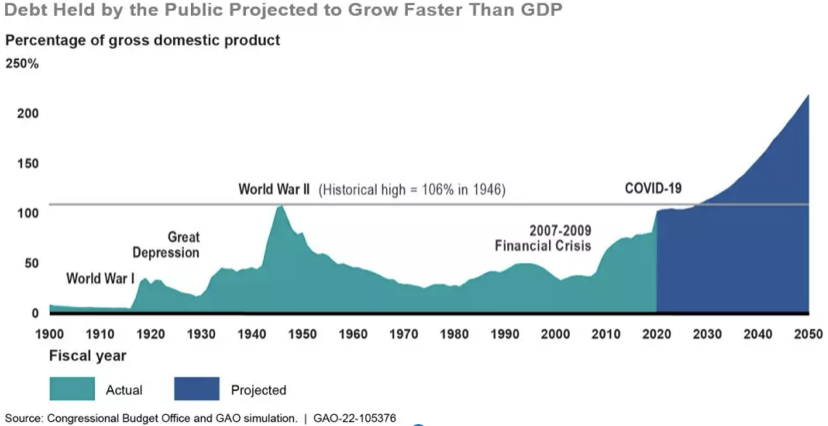
Projected Growth of Public Debt as a Share of GDP, 2020-2050/Budget and General Accounting Office

Interest on Budget Deficit Tops $1.8 Trillion in 2024
The disinformation of the statistical numbers of encounters with the U.S. Border Patrol at the southern border became a graphic that Trump was long enamored. He has probably only seen and encountered it in 2024, when he was shown the graphic by Republican U.S. Senator Ron Johnson, to which had already been added interpretive annotations to show the success of his own policies in contrast to the “record high numbers” of border encounters as deportations were ended–or suspended–by his successor and Biden’s Vice President, Kamala Harris, the Democratic candidate for President. What the graph defined as a Biden “Deportation Pause” may be a point of inflection in American history, privileging the “illegal immigration” it dates from January, 2021, not as a date of infamy for the nation,–anattempt to seize control of America’s government by force–but by “opening” the border to an invasion and stripping the Department oF Homeland Security, and erasing the trauma of COVID19 pandemic to a migrant “invasion” by clever substitution of facts.
The range of traumatic deaths that became central to Trump’s speeches, deaths attributed to migrants who deserved to be kept out of the nations–the concept of “migrant crime” was introduced by Trump to a new metric of national health–led him to shift from immediate expulsion of migrants with calls for execution of the new plague on the nation, that was as large, or larger, than COVID-19, a plague of unneeded deaths that were the sacrifices the nation had to endure lest we sacrificed the migrants we had so problematically and trustingly accepted into our borders. The melodramatic tragedies of these deaths punctuated the speeches of the campaign trail, with mug shots of migrants accused of grizzly crimes, as if a police docudrama was underway that we had to watch before American flags and call for national strength in the increasingly incendiary rhetoric of public rallies, claiming that “America is known all throughout the world as occupied America,” and the invasion was willfully being denied by his political opponents who had willfully concealed these crimes with ostensibly upbeat narratives, not wanting anyone to know just how bad things had become. escalating the demand for immediate mass deportation with enhanced border security tools the day after his election. The election was organized by announcing the delayed gratification of mass deportations that the electorate would be empowered, if that is the right word, to effect.
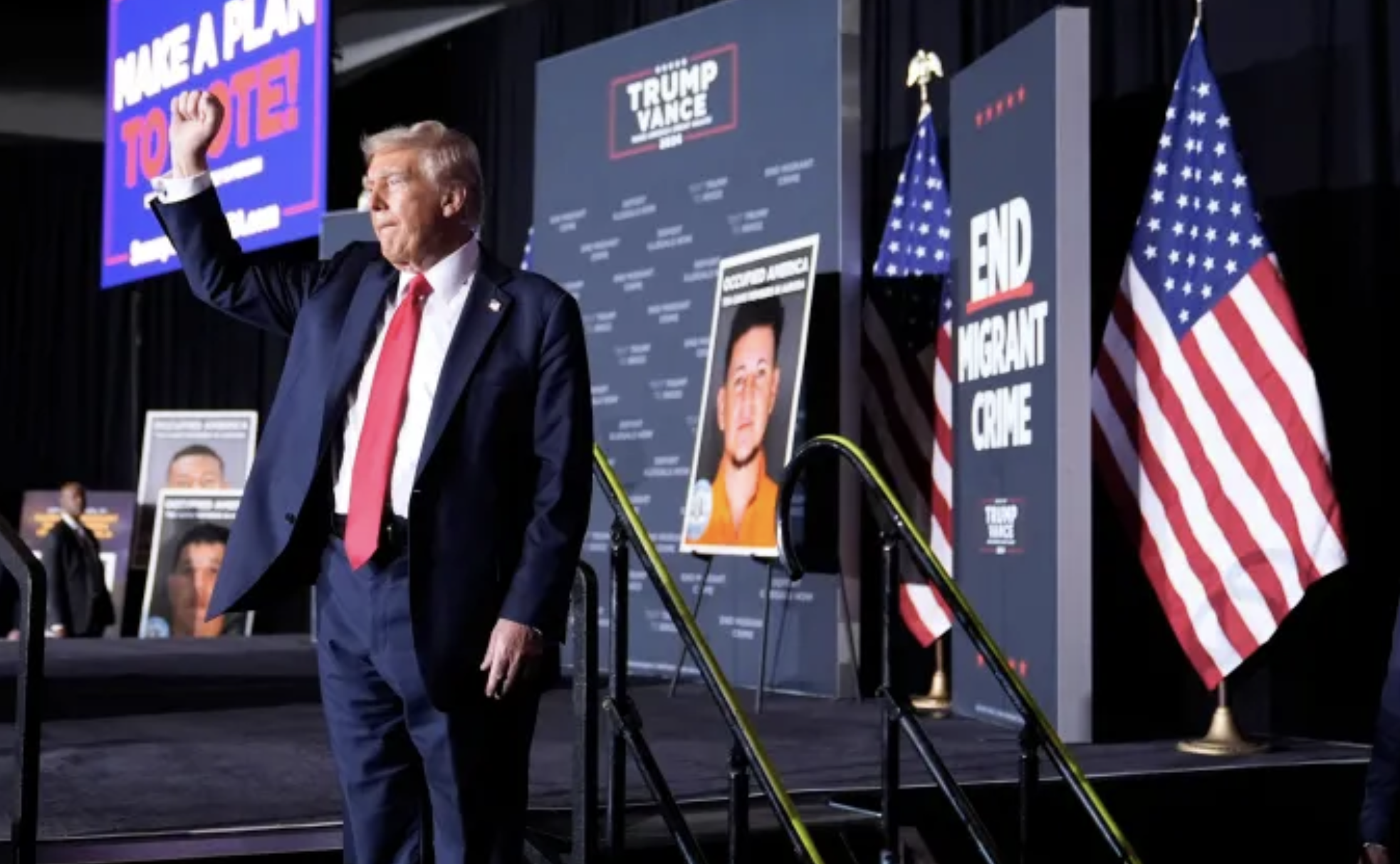
October, 2024 Rally in Colorado/Alex Brandon/AP
The infliction of heightened sense of trauma on immigrant communities in America as outsiders meshes in uncomfortable way with the pillars of Christian Zionism of purifying the nation by the ritual sacrifice of the civil rights of immigrant communities, whose civil liberties are systematically denied in the Trump nation state–or, more accurately, who are deprived of their civil liberties. The cultivation of enforcing the deprival of civil liberties is a massive operation and priority for the Trump state, demanding the investment of an increased battery of private surveillance, apprehension, and detention that was never possible to be adopted in Trump’s first presidency, but has been in the works at the same time as deportations and detentions of migrants declined what seems a Biden interregnum. The bar graph above, a not-so-hidden-or-submerged understory to the bar graph of the tally of what is euphemistically called border patrol “encounters” was a demand for enhanced surveillance tools. The federal expenditures on private industry tools of surveillance and apprehension, to manage border encounters, repeat-encounters blurred in the lump sums the bar graph of border revealed of “encounters”–magnifying alarm at total encounters tallied Border Patrol, are not criminal apprehension on the most-crossed national border in the world. The tally of mere moments of contact, tacitly or implicitly criminalized crossing of the border, imputing the crime of seeking to enter the country to all migrants, a presumption of collective guilt before investigation of the crime that conceals meetings that were innocent in a ballooning total.
The chart become a figuration of his promise of good governance, and evidence of “the last administration’s unsustainable numbers” that Trump had argued had totaled 1.1 million “border encounters”–not individuals arrested or convicted–and “enough fentanyl to kill 14 billion people,” a similarly specious if scary statistic–64,000 pounds!–and “abysmally low arrest numbers.” But was the role of governance indeed only about being a strongman who makes arrests? Using pseudo-objective “data” provided by the friendly folks at Customs and Border Protection, Senator Johnson has long advanced the need for continued protection of the border security since 2016, and was quick to provide Trump a needed rhetorical device to introduce at his rallies. Senator Johnson had made a name for himself advancing contingency plans to fund border agents in government shutdowns in the U.S. Senate, sustained the “worst border crisis in history” was created by Joe Biden. As well as introducing the alarmist Keep Our Border Agents Paid Act in September, 2023, he used carts with a penchant for exaggeration both borrowed from Trump’s playbook and restored a winning issue to Trump’s quiver of misleading data visualizations for rather dubious ends. The points of inflection of national history that were tethered to the pronouncements of presidents made the nation’s fate seem to depend on a secure vigilance of the border from the Oval Office–not deputized to the border–in a fascistic image of governance by a single office holder, the occupant of the Presidency seeming to be holding a gun to the nation’s head.
The chart asked voters who they would trust, based on the numbers of the past, and seemed to invite them to look for metrics that it implied or alleged–job security; unemployment; drugs; criminality; violent crime–as if to ask audiences if they really wanted this presence to continue, or more Homeland Security Tools be introduced as they had been in 2016-20, when the previous high-water mark of migration had quite precipitously declined under the Trump government’s management of the border. If the nation was not a nation without borders, management and governance of the border became a surrogate for the governance of the nation that audiences seemed to be able to understand and could be convinced that they did.

Monthly Total Envcounters on Southwest Border Tallied by Border Patrol, including Points of Entry
The chart Ron Johnson’s staff seemsannotated for Trump’s attention was a script for his re-election offered a platform in itself, and a visual argument with presumptions that were sold to the American people in . Despite its apparently objective aura, the enormous escalation of numbers of border encounters was so compellingly illustrated that Trump as a candidate could hardly resist further exaggeration and embellishment, without grounds, while displaying the chart at rallies with assertions the numbers of migrants arrested at the border once 7.1 million grew upward of 30 million. The image of the “crisis” of rising border patrol encounters invited “truthful hyperbole,” to use Trump’s term to describe his penchant for dramatic distortion and license for exaggeration, erasing the scales in the missions f the Department of Justice or Department of Treasury for the distorted scale of conjuring a convincing “border crisis” that demands new software to tally.
For Trump single-handedly used the chart, before turning to gesture to it for further inspiration of future riffs, so suddenly dodge an assassin’s bullet, to recast the border as a figure of speech, a call to amplify the emergency of border crossings, and the threat of undocumented immigrants. He was already so in love with the brute reality of these colored bars, tipped with red and buoyed by a tide of violet, to conjure a rising tide, independent of the shifting legal landscape from Trump’s policy Remain in Mexico implemented at the start of his Presidency was ended by Biden on day one. Trump further amplified the border crisis by affirming how many migrants hailed “from prisons and mental institutions” to dramatize the graphic that continued to be annotated to provide a document of his historical return to the presidency, quickly securing the border by January, 2025.
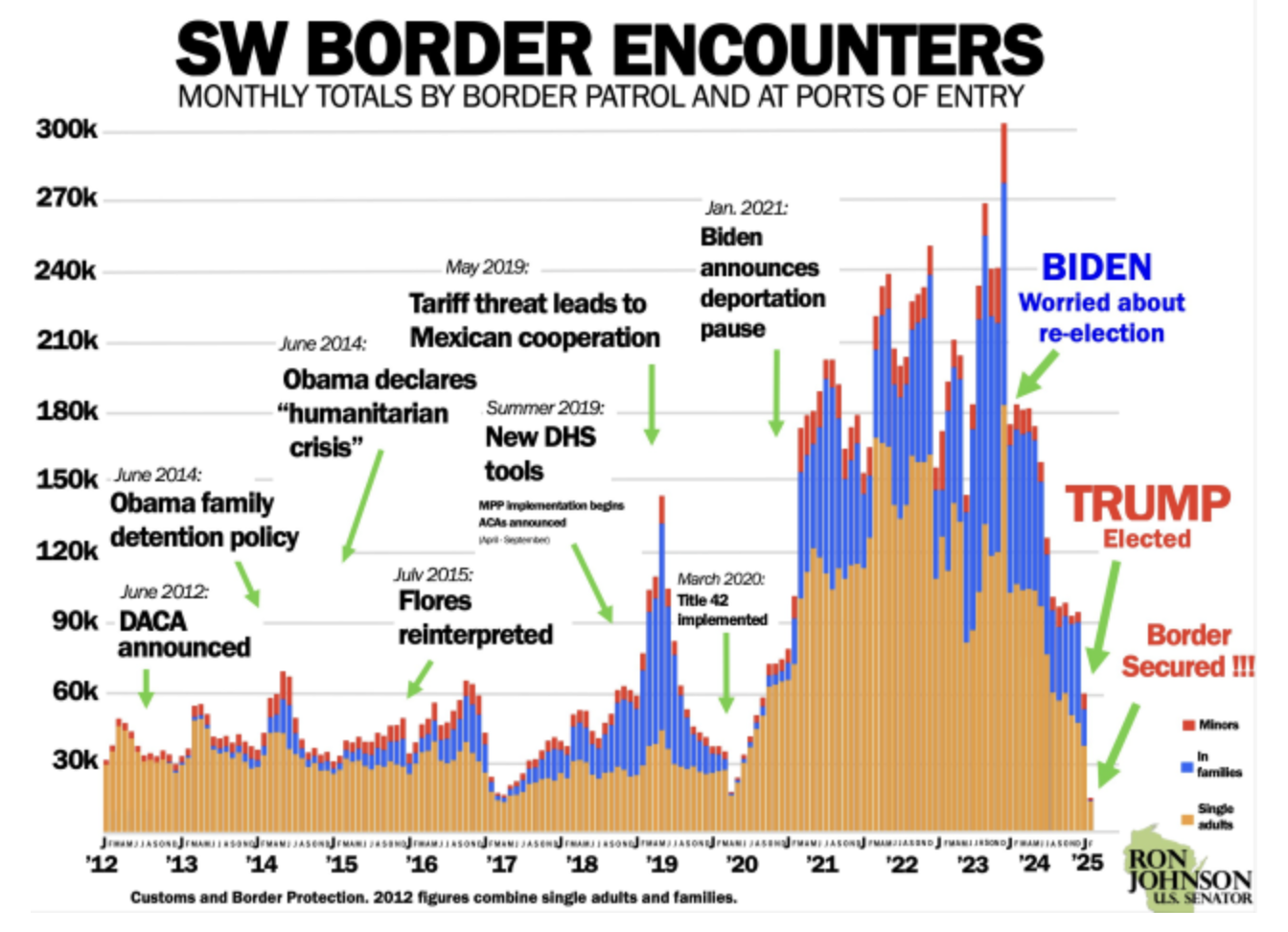
The deceptive simplification of the bar graph that seemed purified of any noise at all, and removed from international relations, was removed from a map, but suggested that it distilled numbers proving that only Trump could be able to prevent from rising again–as if a “migrant stream” had reemerged after he left the White House threatening the nation’s fabric that only his return to power might staunch. The mapping of border encounters onto Presidencies recalled the crude infographics that conservative “analyses” had long promoted. Tallies of “border encounters” were not a clear measure of crime, value, or danger, the punctuation of the bars by large red arrows at the dates of his own presidency became a centerpiece and a fixation of Trump rallies that deceived many into seeing it as discrediting current policies of border governance, rather than the distinct images of government each candidate put forth: escalating encounters at the border were a proxy to map the border as “out of control” not to be trusted to the current executive or politicians who sacrificed the security of the nation as dangerously as those out of touch predecessors of Trump 1.0.
Was the annotated graphic that Trump was shown in April 2, 2024 a narrative framing of the very graph of average border encounters that was published in The Economist in January? The annotated graphic gained traction as evidence of the immigration crisis, independently from a map or discussion of immigration law, the economy, or a pandemic that had been a major accelerant of monthly encounters at the border–notable elisions less noticeable than commission sharp fall of border encounters by early 2024, when encounters dropped to almost a quarter of the heights of December, 2023, in part as Mexico forcibly stopped migrants from reaching the southern border–bringing a 77% decline from 249,741 encounters that had peaked in December 2023.

The Economist, January 24, 2024
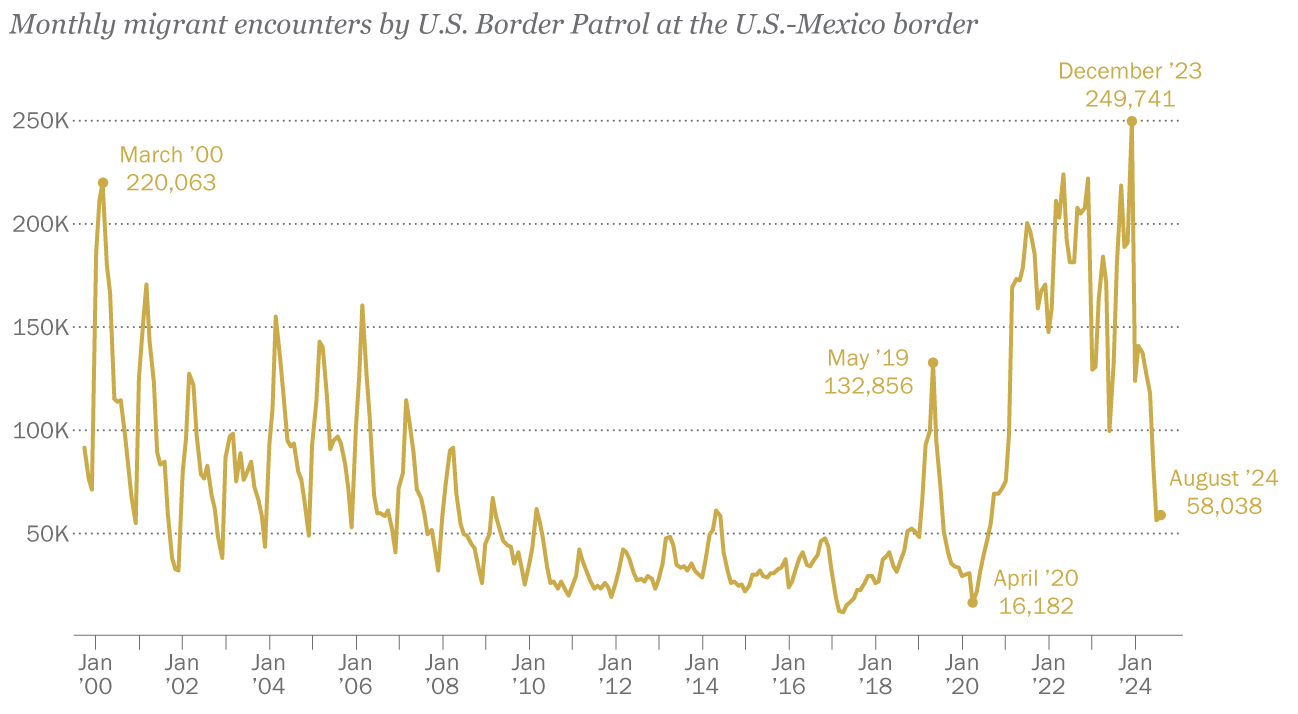
The blinders that were placed on anything like a global map by the cherry-picked data of the curve so entranced Trump after he added red arrows at the dates of his Presidency it became a showpiece of his campaign, an infographic of forgetting able to recast memories of his Presidency to omit the mismanagement of the global pandemic, lack of legal rights of immigrants at the border, and a ballooning military budget,–and Trump so entranced was he by the bar graph he looked up at it admiringly to remove him from the path of an assassin’s bullet. If he raunchily declared his love of the chart he credited for his life to sleep with it in for the future, that may well fuck over the country. The deceptive distillation of the metric of border ‘encounters’ omitted the legal negotiation of immigration levels or Biden’s executive order making it far more difficult for migrants to enter the U.S. without legal permission to seek asylum. But Trump foregrounded thee curve, after adding large red arrows, as if to take personal credit for managing the descending numbers of border encounters, omitting that they had escalated far beyond the Obama years in his term.
For the toxic image of migration as a weakness and affliction of the body politic was so compelling to silence memories of the trials that the nation had faced in his previous presidency, and allowed voters to believe that he wouldn’t be anything but the return of an image of law and order, able to staunch the erosion of politics and normalcy caused by a dangerously persistent migrant stream.

As a candidate, Donald Trump has so skillfully adopted terms and coopted concepts by slapping his name on them to rebrand them as his own, the embrace of an economic nationalism led Trump to embrace Musk not only as a poster boy of American innovation, as if planting an American flag on Mars might be the big reveal of the Trump’s inauguration. But Trump’s rhetorical embrace of the partnership is far more than, one fears, a rhetorical posture that had energized Trump’s campaign. The role of Musk as an image of the victory of the .01% in the new model of governance of Trump 2.0 goes beyond the many players make many entrances and exits in Trump’s administration or a shift in dramatic personae–and may persist long after his official exit from cabinet meetings While Musk propped up the illusion that wealth might be conserved in the United States–that the nation might be the Great Society again, even as the middle class contracts, the image of prosperity that Trump promised by tariffs will never shore up the prosperity in ways Trump voters imagined. Trump’s entrance to a political stage promised economic reinvigoration protecting and preserving American wealth by building a needed wall along the southern border.
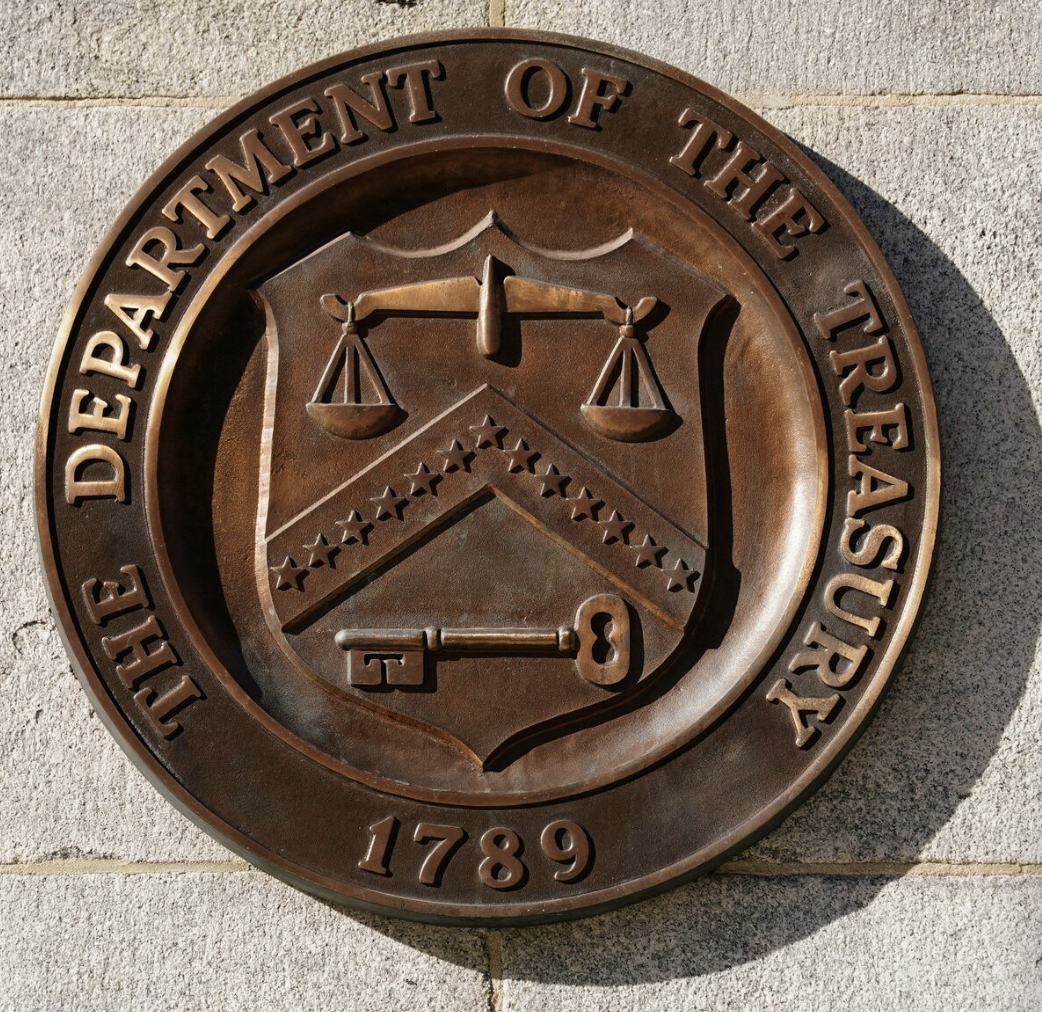
This is a large part of the new ways in which DOGE has emerged as verb across the nation, rooted in new tools of governance. The issue of immigration offered an outsized focus on the border as an urgent form of protection, as much as its mapping was a sort of feint to distract America from maps of climate change or endemic wealth inequality. For the sigla of the system of “justice” are repurposed, increasingly bound to the electric bolts of the Seal of Justice, as if the Department is dependent on generating electric current by Nikolai Tesla, atop a shield that vigilantly guards the southern border–

–exaggerating the sword that justice carries in her hands in place of the scale of impartial weighing of an ideal of equal justice in the 1872, in contrast to the centrality of scales as depicted by Luca Giordano, but the dominance of talons that alternatively grasp an olive branch and sharpened arrows emphasize the role of prosecution or pursuing for the sake of the Lady Justice, rather than the equivalence of the scales of justice. The Latin motto had regal origins, to be sure, understood as “prosecuting on behalf of our Lord, the King” or Queen, but rather of Lady Justice, in how the office of the Attorney General functioned. But the arrows of justice seem to have magnified a prosecutorial role toward individual migrants who evade surveillance, not Justice, in promoting prosecution of violators of the clear division of the border–justice administers no equivalence of scales, prosecuting border violations in response to the distorted scale the crude bar chart depicted

Luca Giordano, Giustizia, Palazzo Medici-Riccardi, 1684-1686
The border wall once promoted an impermeable barrier to economic security, promising a physical barrier over a decade ago as an outsider sufficiently similar to his building skills to be a promise–“you know I’m a builder”–that he could keep. Distanced from any nuance or policy paper, distilled to the promise “no on’e sowing over,” it was not so much impermeable as it preserved an economic divide of inequality that seemed to preserve a future of American superiority in a globalized world. For the endorsement of Elon Musk, as well as bringing millions to the candidate and adding a new feature on his road show the increased its sense of dramatic action and appeal, provided yet another infographic, one of Trump’s treasured mediums, to the candidate who sought to portray himself as a savior the nation, who would end the “invasion” of “illegal immigrants” that had eroded the sense of national wealth. With two of the men identified as the wealthiest Americans, solidly behind one party, the question of how Democrats could be trusted with the management of the economy before these two self-styled billionaires seemed designed suddenly in question, so much that much of the nation payed less attention, or gave Trump the benefit of the doubt, as to the survival of the law. While many of Trump’s policies were surely clear, and others attracted support from the religious right, the tauntingly theatrical exaggerated pronouncements Trump made seemed far more entertaining and reassuring, than having to do with laws at all.
Elon Musk extended the promised economic security of America a decade later, rooting the bluster of economic identity on a global stage, by creating barriers preserving and protecting the illusions of national property and wealth, as he was himself a mascot of wealth inequality, and indeed the victory of AI as a form of alternative governance–a governance without having to be the role of governing–to preserve an illusion of America’s radical difference from the world. Indeed the economic promise of just being American, by affirming an illusory economic fortunes of Americans in the world. Indeed, the radical separation of America–or the North American continent–as a rational unit of economic productivity was argued as an eternal form of the continent, that the rationality of tools of mapping defined as an identity outside time, in ways that the symbolic paraphernalia of the Technocracy movement, that seemed to redefine American expansionism by severing America from a global map, suggested was the product of intelligent social design. To be sure, this odd expanded continent presented an isolationist icon embedded in American politics, and was dismissed by Canadian Technocrats as evidence that “Technocracy Inc. is conspiring against the British Empire — against the sovereignty of Canada.”
Where does the preeminence of the border in the image of a Technocratic state derive? It was not an image of war, interestingly, but defined in wartime, not as a defensive image, but in response to the national debate on entering World War II to coantain German expansion and invasion of other states. Instead of a militarized nation, the social design of the Technocrats articulated a nation not by self-determination, or by laws, or even custom, but the rational geopolitical parsing of a needed position of economic safety, placing a premium on the interests of one mega-nation. Technocratic precepts of good governance by economic rationality, rather than sovereign laws, were promoted in Regina and in Saskatchewan by Joshua Haldeman, who would be Elon Musk model of an engineer, and indeed his father figure for much of his childhood, raising questions of the political role of engineering that demand to be asked about an entrepreneurial engineer who has provided key tools to reorganize American government in Donald Trump’s second Presidency.
Although Haldeman would angrily disavow the expansive map of North America as a corruption of the doctrine of Technocracy, his public statements sought to justify his patriotism as his resistance to the war–and allegiance to Canada’s government–was under attack–if the famous 1941 graphic of the Technate of America was American in design–and, if it preserved the Gulf of Mexico, uncanny in its resemblance to the image of American expansionism Trump has treated as Manifest Destiny, but what might be best seen as an image of hemispheric dominance in response to the Atlantic Charter, a notion of protecting the economic fortunes of a greater continent that was mapped by a Technocrat who the inhabitants of The Technate would relinquish their autonomy if they knew what was good for them in the face of a coming threat for global collapse and economic decline.
For Joshua Haldeman helped explain the need for a broader mapping of the continent of North America that was so clever planned by the Technocrats as a vision of integrity and rational design, an economic unit that transcended national lines, he believed to offer wealth in rational planning that left little to chance or the vagaries of international currency or markets, as if the autarky of the continent would be a way to contain economic dangers by a new image of self-sufficiency. The intentional narrative of the new continental behemoth of “The Technate”–which almost seemed to argue, in symbolic terms, that the residents of the red area who be fine if we just cut along the dotted lines of a map and severed ourselves from the mutability of global affairs and apocalyptic images beyond the dotted lines–arguing that one might find strength in solidarity in social design.
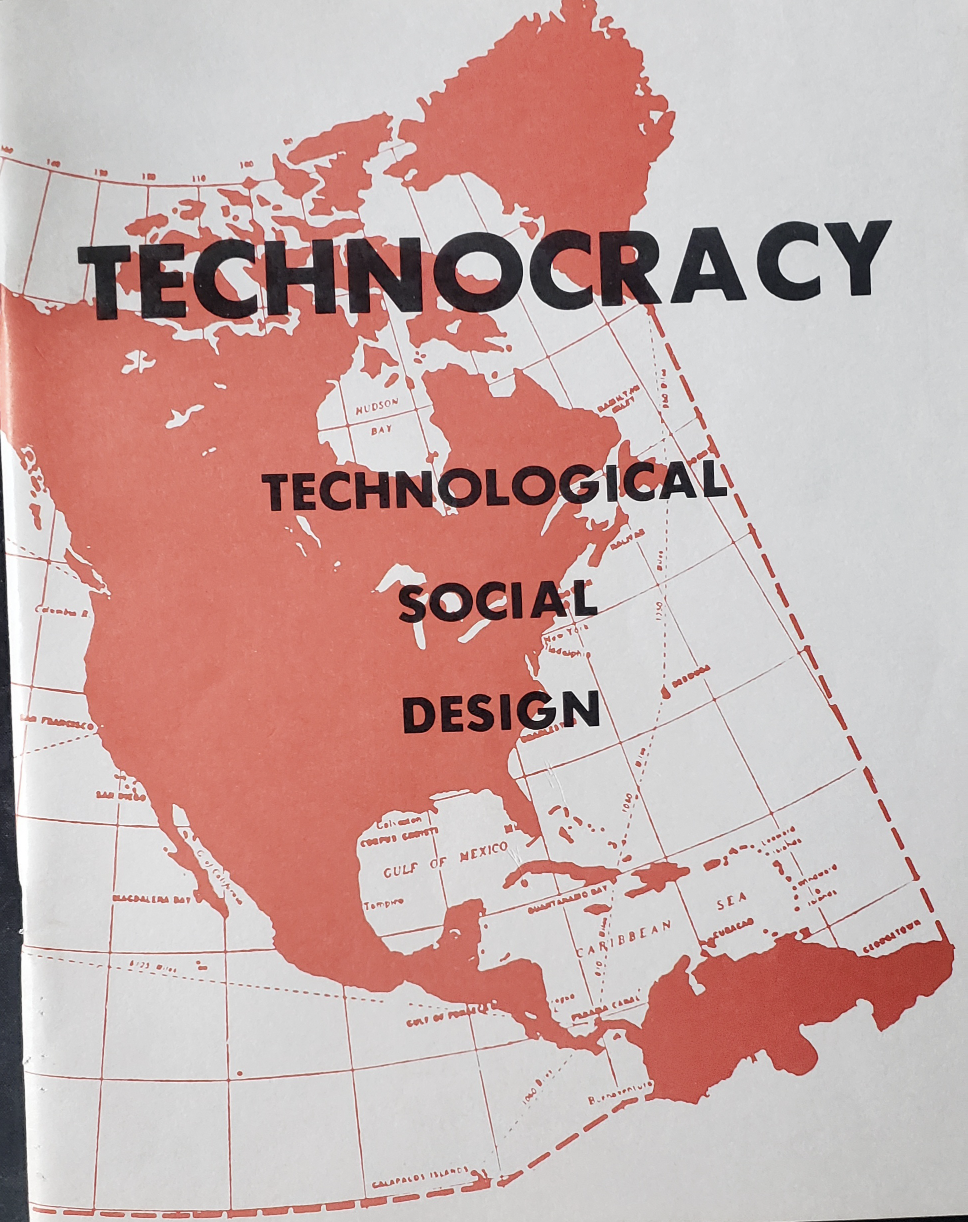
The map was a command, of sorts, not to trust the redistribution of wealth, but to meet an emergency of sorts by trusting the Intelligent Design of the expert, in place of a state government. The notion of a nation had been subsumed in the shifting dangers of a global economy, and a new massive power would take its place, which necessitated all rational men to remove themselves from the bonds of a global map or bonds of law, but to recognize the sheer power of economic strength.
Why was the Technate Red? Clearly not to have Soviet sympathies, but was designed to attract the eye of viewers as if unveiling an all too obvious truth of the need for economic corporation in a vision of autarky and self-sufficiency that took the Galápagos and an imagined frontier from Greenland’s tip to Guyana and the Aleutian Islands as its frontiers, to argue that a country might be better designed by social design than by its existing frontiers. The Etch-a-Sketch fluidity of the global borders that Technocracy advanced place a premium on borders, over country, and on economic embodiment over a social body or body of laws, that provide a striking resemblance with the master-metaphors of borders of government and economic integrity over legal systems or good government. The premium on policing the citizens of the United States in Trump 2.0 indeed extends the vigilance over borders that became a leitmotif Trump conjured before his rallies by free associations and creative exaggerations or imaginative hyperbole as if in a looking glass of nations, which few have truly come to terms with in its consequences of imagining the nation-state.
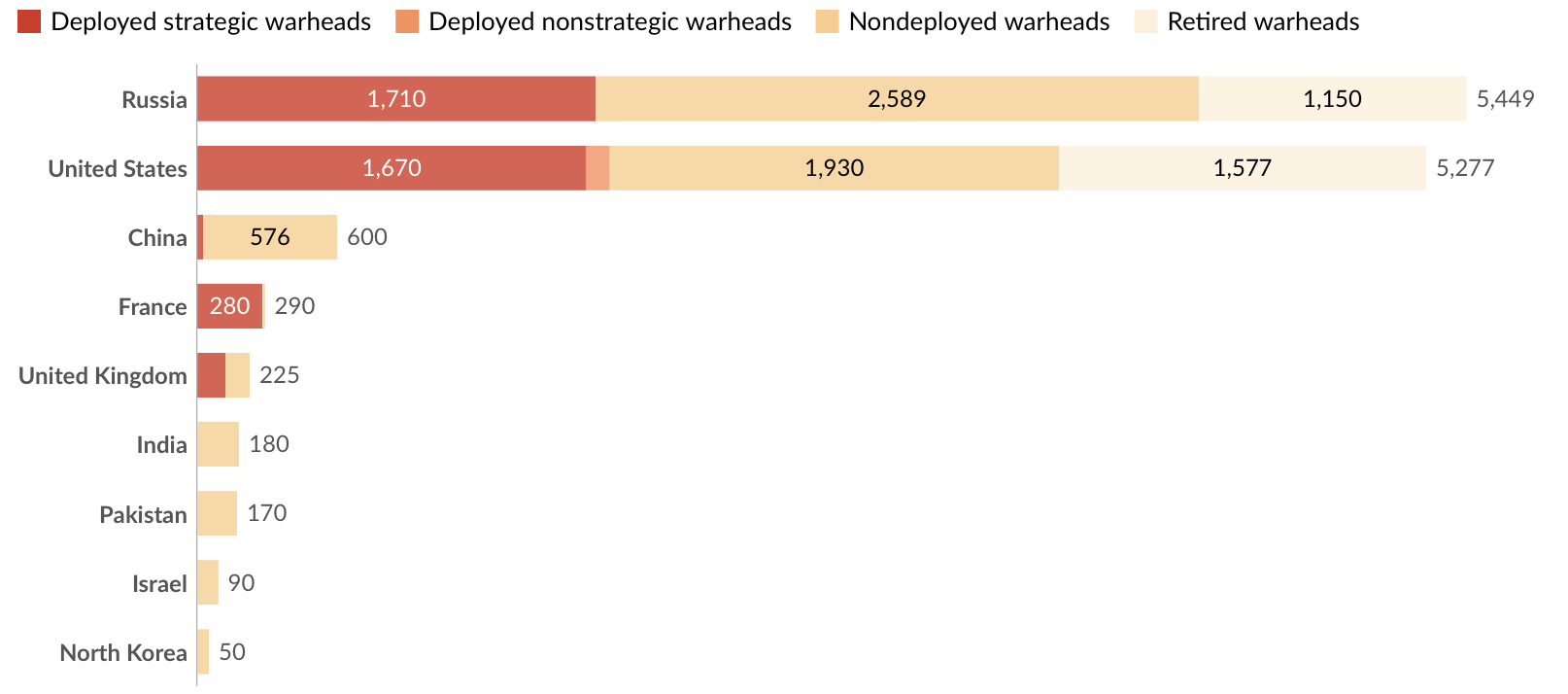
The map that was first published in 1940, before America had entered the war, amidst the Battle of Britain, offered a sort of hobby horse on which the theory into global war was debated, contested, and resisted after the Fall of France, as the United States remained officially neutral, but had by September readied its own army in the first ever peacetime draft in American history, posed to shift the economy toward industrial production for a war effort, as the world of prosperity and peace seem a lost world, part of an old rules-based system that we have consigned to the past since 2016, ever since he argued upon his inauguration that the United States would be wise to expand its nuclear arsenal, that effectively ended a longstanding policy of nuclear containment. The rise of nuclear arsenals across the world has provided, oddly, a resurgence of the monocular map of red, that lacks national boundaries, as the threat of nuclear weapons have expanded, and provide the new map for global conflict, but that distance us from any sense of security isolation might offer–if the threat of Iran’s possession of a nuclear weapon may prove the basis for the next world war.
But the concentration of warheads on the northern hemisphere have created a distinct imbalance of global power that has yet to be fully internalized, but shift the balance of power in ways yet to be understood as a distorting lens of global imbalance we often view save by the “conceit of nations” to understand global history and imagine future histories outside of their own national perspective.(We can understand JD Vance’s hardly comforting clarification, “We’re not at war with Iran–we’re at war with Iran’s nuclear program,” through the lopsidedness of the global dispersion of nuclear power.)
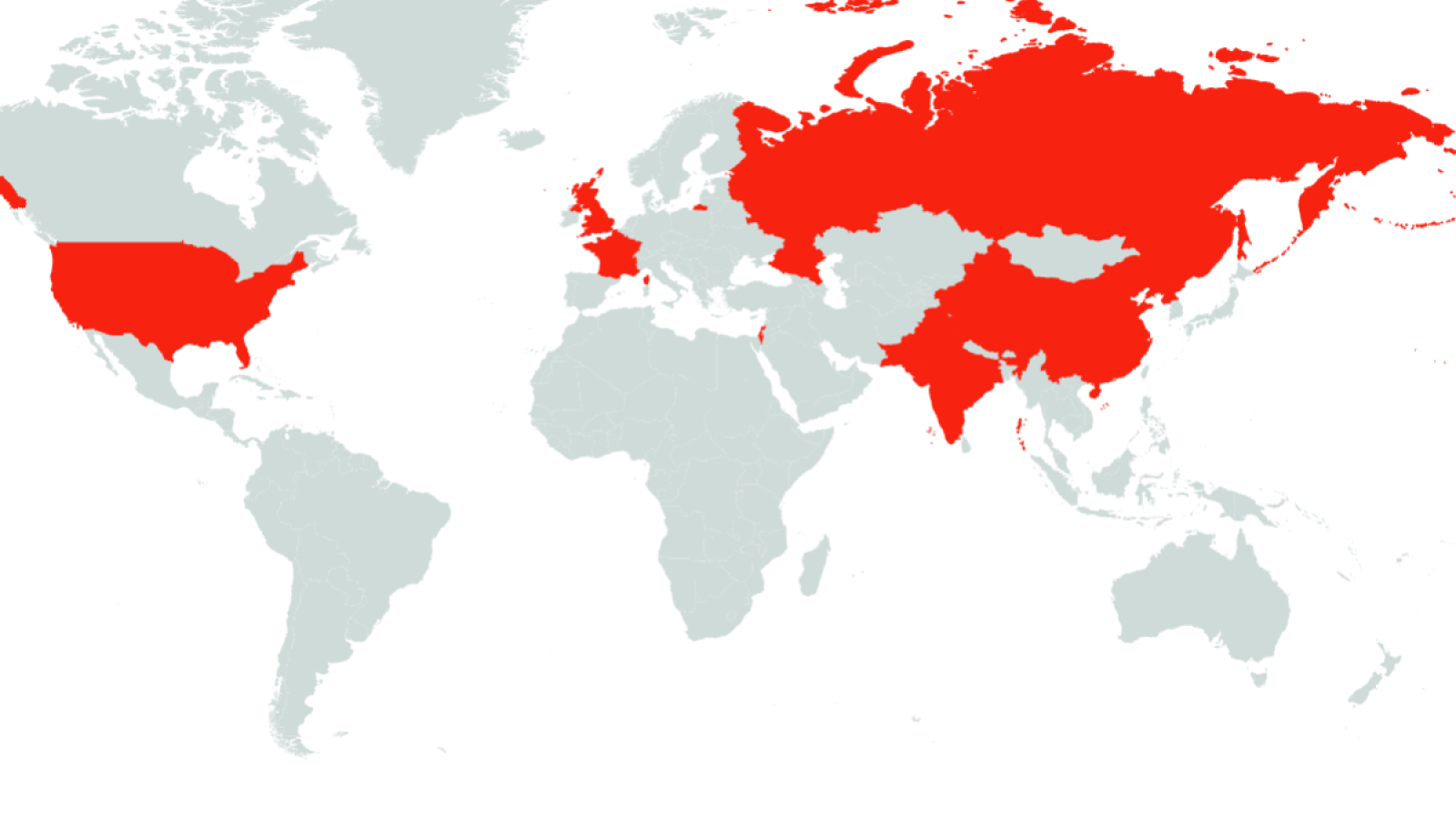
Global Nuclear Powers, 2025
President Trump presented himself as a peace-time President, set to extricate America from wars–and foreign obligations–as he has escalated the fears of the possible involvement of the American military in global wars. Trump conjured as the master-metaphor of his 2016 Presidential campaign a promise to bound the nation securely by an insurmountable wall as a master-builder, the pragmatics of border walls faded, to be replaced by the conceit of engineering a new polity. If the border wall he had often argued to be almost completed in his Presidency seems deferred, it has been since replaced by the conceit of engineering a new future in ways that seem to rehabilitate not a medieval fantasy imported into the present-day security wall, faced by legal and pragmatic obstacles for its administrating and surveilling the most surveilled area in America. Utopia projects of promised protection of preserving an increasingly illusory economic wealth in the nation. And the zombie idea of a Technate, an American project long dormant to govern by expertise, in place of a nation, defined by the needs of economic lebensraum, seems to have gelled the multiple projects of expanding the national waters of the nation–the hidden wealth under the ocean floor to be mined from an Expanded Continental Shelf, annexing Canada, or including Canada and Greenland beneath a protective “Golden Dome” managed remotely by satellite power would secure the nation from ballistic missiles–and coerce other nations to join a mega-continent.
But this is recycled stuff, designed to keep other real worries–from artificial intelligence to global warming–at bay, bracketing them as not issues at all in a new world of American prosperity. As much as modern at all, or on a cutting edge, the global recycling of an old symbolic iconography offered da map for global governance that seemed to have been especially appealing to the technocrats at DOGE in Trump 2.0. If “Trump changed the map of the world with the stroke of a pen,” birthing the Gulf of America as inaugurating a Golden Age of America from his inaugural address, the proposals of Dr. Joshua Haldeman were dating from the early 1930s to 1940s led the reprinted edition of Haldeman’s writing about global conspiracies to be “presented to the American public for the first time” by early 2025, The uncanny similarity of the expanded state Technocrats imagined a rational government made the case for protecting national wealth rather than administer laws, offering a new polity that was able to resist globalization as if its sheer geographic expanse mapped onto the expanded self-sufficiency of its economic resources. It was perhaps no surprise that the project was unveiled not only on the day of Musk’s unpaid consultancy at the White House abruptly ended, not long after the publication of the writings of his grandfather, noted Technocrat Joshua Haldeman, resurfaced on Amazon in February as if in a warning to the nation. At the same time as the world wondered what Musk was doing in American politics, helping advance the career of a curiously malleable politician who seemed exceptionally susceptible to being molded in new directions, the origins of Elon Musk’s own mindset seemed to offer insight to his unorthodox skepticism of established systems of public governance, and a guid to his budget trimming.
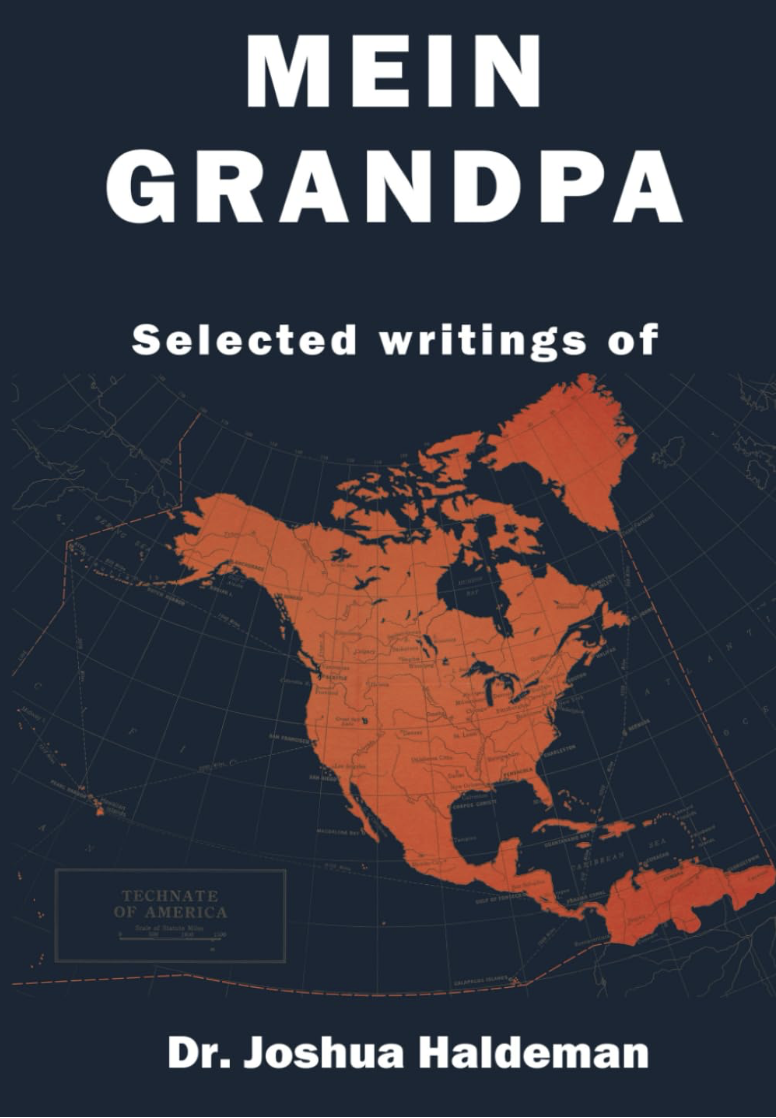
The independently published book claimed to provide an insight into a new Svengali of sorts about to frame the President of the United States’ relation to the world. Musk’s presence must be understood through how data aggregation has transformed the border to a laboratory of the technological tools of data-driven deportation of a piece with an expansive re-bordering of the nation that understands governance primarily as a means to resist globalization by a new mapping of the role of government in individual lives, less tied to the nation’s politics as usual, but promising to move fast and break things, and reconfirm the promised economic superiority of the United States in an increasingly uncertain global map, characterized by increased economic anxiety in the face of new horizons of work, industrial downsizing, and chaotic global markets. Was it possible that the very name Tesla echoed the image of The Technate, a technological rudder of sorts in the seas of global instability?
The corporate names are important in mapping the global purview that private industry seems to have gained in Trump 2.0. The role of private industry groups like Palantir in the invasion of Gaza and Israeli Defense Forces have raised eyebrows, and the name of the software company cannot but evoke a holy crusade in the name of justice and order–Paladin was taken in 2001 for a firm promising adding value to technology, defense, telecommunications, e-commerce, and real estate. specializing in the global expansion of venture investments of security, safety, and trust, Peter Theil may have only sought to reference the Lord of the Rings ‘seeing stones’ in predictive tools data surveillance might offer government, winning contracts form the CIA, NSA, DHS, and Pentagon’s Special Operations. Palantir was a watershed for technocratic participation of private industry into government surveillance operations. If its name promised mystical abilities of surveillance of J.R.R. Tolkien’s “seeing stones,” in a neomedieval fight between good and evil. Its robust operation grew out of the expansion of government funds in the Global War on Terror, which offered a foundation myth of its promises of ingesting mountains of data; it was quick to convert its influx of capital from the Department of Defense into funding the campaign of Donald J. Trump in 2016, expanding from making heat maps for the military and Department of Defense based on military intel to organizing the data on health, employment, and human services.
This mega-project of remapping the nation, and not only on a project to colonize Mars, offered the new tools to surveil populations of undocumented immigrants in the nation in Donald Trump’s government, presenting them as terrorists, in a new vision of sovereignty within an expansive image of national bounds. Who needs a nation as usual with access to the data that the government processed and stored? The increasing promise of a technocratic world view–and indeed a new “global technocracy” has emerged somewhat under the radar in the years preceding Trump 2.0, a new image of global governance that resuscitated an old utopian ideal.
Might Elon Musk have shared the image of a securing of America’s borders that his grandfather Joshua Haldeman eagerly signed on, as they discussed their shared distaste for immigrants in America who were undocumented, allowing many they termed “illegals” were not bad people? It is striking just how many of Haldeman’s deepest convictions–mandatory pasteurization of milk; mass-vaccination of children; fluoridation of water–were put forth in the conspiracies that Haldeman continued to conjure in the mid-1960s, in his International Conspiracy in Health–so many windmills that were tilted at not only by Haldeman, but with renewed energy in the recent global pandemic, as the image of a better run and managed society than actual governments could achieve gained steam.
Despite Musk’s concession of Canadian citizenship, his deep animosity to Justin Trudeau and the whole of Canada’s Liberal party–while the conservative politician John Diefenbaker was no liberal, and sent the Liberals packing, the future Prime Minister was a political nemesis of Haldeman’s party in Saskatchewan, and he would maintain a staunch stance against South Africa’s apartheid policy, and its explosion from the Commonwealth of Nations, after the violent Sharpeville massacre revealed the impossibility of Afrikaaners condemning apartheid in 1960, Musk has dismissed the sovereign status of Canada with quite vociferous abandon–
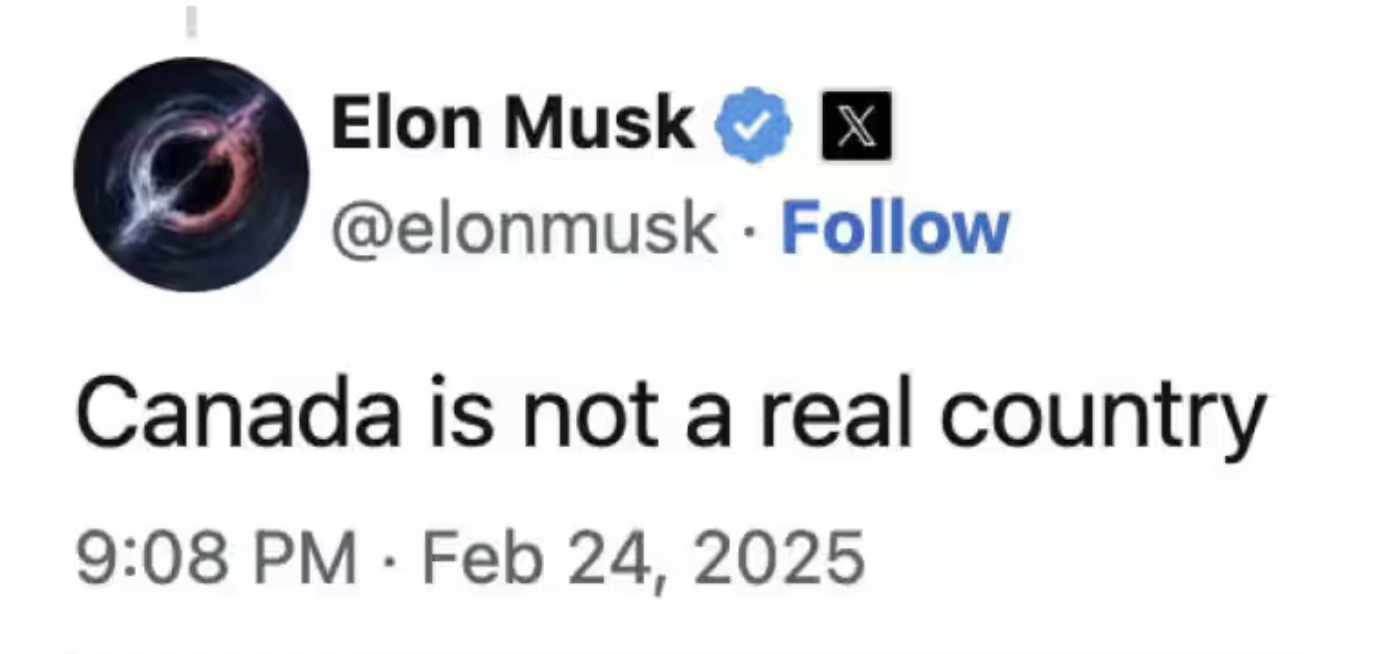
–that is hard not to read The Sharpville Massacre that killed over ninety protesters who held no weapons as they discard the mandated passbooks and identity papers that restricted their internal travel and work in the country, would have provided a living memory in which Musk’s father-in-law wrote his last major self-published political screed, “The International Conspiracy to Establish a World Dictatorship and the Menace to South Africa,” in an attempt to defend the apartheid regime as it came under international attack for the police killings, warning “international conspiracy” to abandon the country weeks after the violent massacre of March 21, 1960 left over ninety dead. The tortured viciousness of crude brutal debasement of the human body at Sharpeville led to violent repression met by global condemnation, but sent Haldeman to rally to Apartheid’s defense a decade before Musk was born. Yet the injustice of the massacre at Sharpeville revealed the violence of apartheid on a global stage, as South African artists wrestled with the vindictive violence and abject horror that prefigure violent apprehension and deportation at the border off of Trump’s graph.
The image that Harold Rubin tried to conjure of the creation of a hell on earth in his careful line drawings was not a map, but an abyss of inhumanity of the infliction of pain in a hyper masculine ideal that took pleasure in incarceration, exploring how beast and burden are bound together in the erasure of the humanity of the subject after the defining moment of the 1960 Sharpeville massacre was a point of inflection in which Joshua Haldeman had defended his new South African identity as a champion of Apartheid before his grandson Elon’s birth. The sadistic torture and imprisonment of those demanding civil rights began with the rejection of passbooks issued by government as papers echoes the perverse pleasure taken in human incarceration in Harold Rubin’s conté drawing to capture the costs to silencing of voices that was indeed a theft from humanity and from the world–
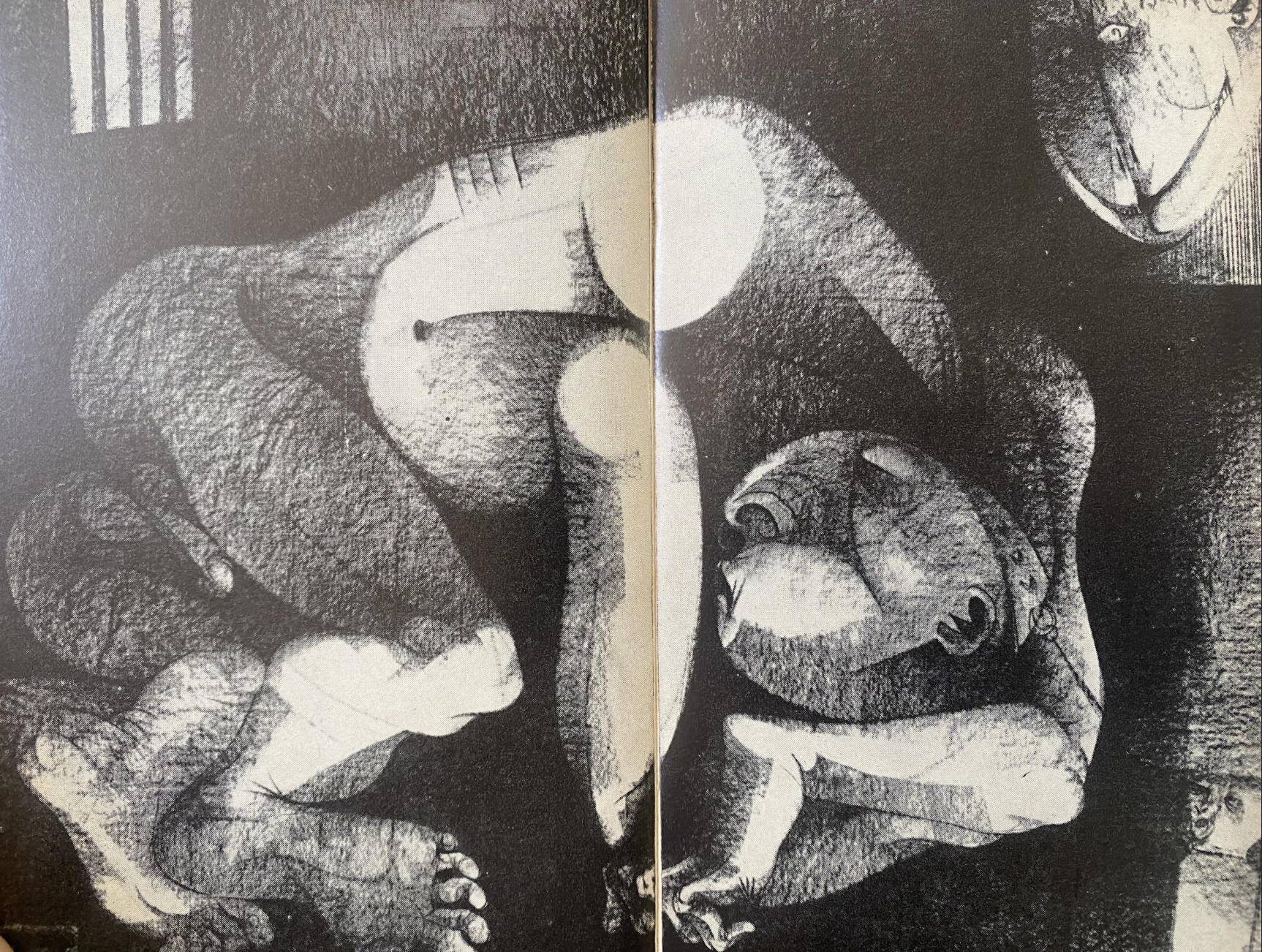
Harold Rubin, The Vindictive,” Conte drawing from “The Beast and the Burden” (1962)
–was based on the dehumanization of a theater of punishment offered a burden of proof of the bestial treatment of law enforcement as a perverse pleasure was a perverse use of evidence, later commemorated in South Africa as Human Rights Day, forty years after the fact, when the protest of pass laws lead police to fire indiscriminately at an assembled crowd, later detaining over 11,000 by security forces and banning anti-Apartheid organizations, echoed Francisco Goya’s “Disasters of War,” as a senseless theater of cruelty robbed of reason or rationality, in cartoonish lithographs, and the abandonment of justice outside the police station where the crowd demanded justice.
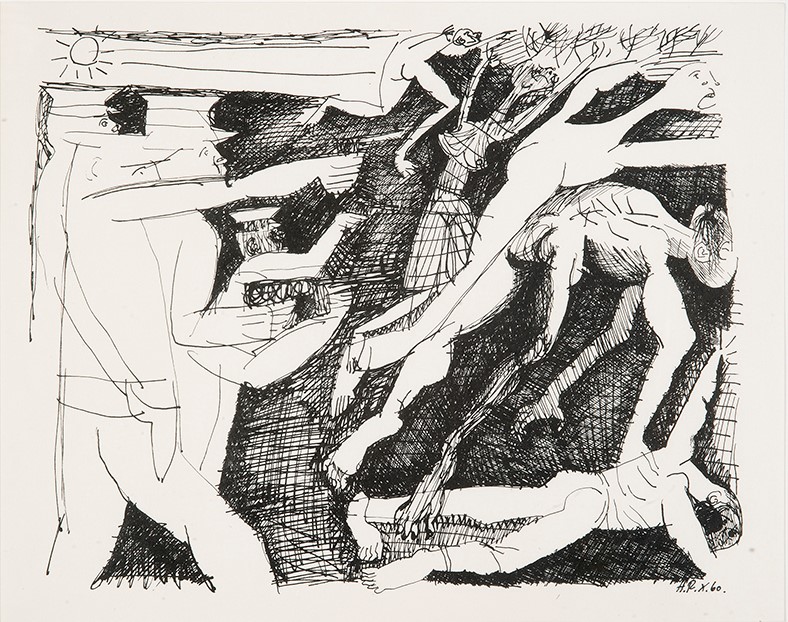
Harold Rubin, Sharpeville Massacre (1961)
The classification of the undocumented as outside of the nation is, after all, a project that promises to purify the nation as an economic collective, to ensure more jobs, greater economic security, and greater safety. Before Haldeman had been forced to quit Canada and decamp to Pretoria in 1942, with his airplane and family, finding more congenial fiuture in the Apartheid regime? The image of preserving this inequality of America’s economic fortunes and the departure of wealth was cast in terms of natural resources–gas, oil, coal–but the promise of a preserved economic identity of America in a globalized world might be rendered not by a wall, but seen in the new boundaries to put America on auto-pilot for a rosy economic future, preserving wealth that the image of a North American unity separate from the world dating from the 1940s featured as the header to this post–
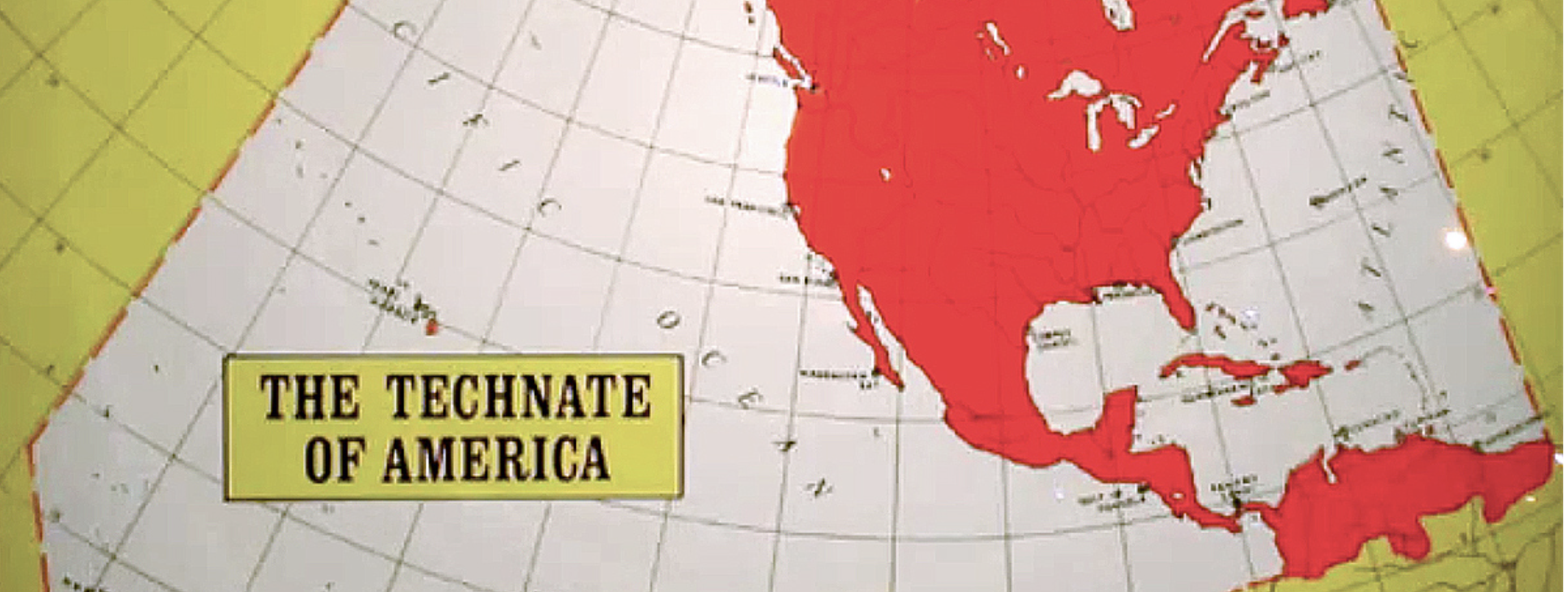
The Techie of America, 1940
–to which an expansive cartographic production sought to convince North Americans of the greater security of preserving national wealth in the continent, absorbing the territories of wealth across the continent, defining a penumbra of security around the nation. The map of the Technate, if long forgotten, was a powerfully animating imaginary of Musk’s childhood, both of the myth of the engineer of a man he had idolized, a risk-taker, purer than his father, who promoted expert governance of economic sovereign wealth promised by Technocracy at the end of the Great Depression and during World War II, whose political expulsion from Canada for his pursuit of virtue was the best way of understanding how Musk and his parents ended up in Pretoria, far from hiss actual relatives or family.
The odd modernism of this map of The Technate of America seems to celebrate the durability and rock-solid nature of a new sovereign unit for new times, both in its strikingly uniform primary color and the gripping font–and muscular name–it assigned itself. While primary colors of The Technate did not, of course, map onto an actual polity, or a sovereign nation; it was heuristically an anti-nation: as an opacity of a primary color, covering any national name or geopolitical identity, it offered an urgent message of the need to replace the nation with an economic unity that it asserted in the primary color of red. The map was effective as a broadside against joining the war in Europe, and affirming economic management of the expanded image of the North American continent by rational precepts by dispensing with borders. Continental mapping promised American lebensraum in ways that has enjoyed a long survival we might do well to consider as a zombie state. As the practice of remapping has gained a curious steampunk afterlife in the present, a retro aesthetic as if in reaction to maps of five-colors, by reducing the surface of North America to a platinum textures, if sharp divides of North America seem obscured by these earthy tans and browns, the Technate seems to supercharge and revitalize a new economic entity whose electric red glows across oceans.
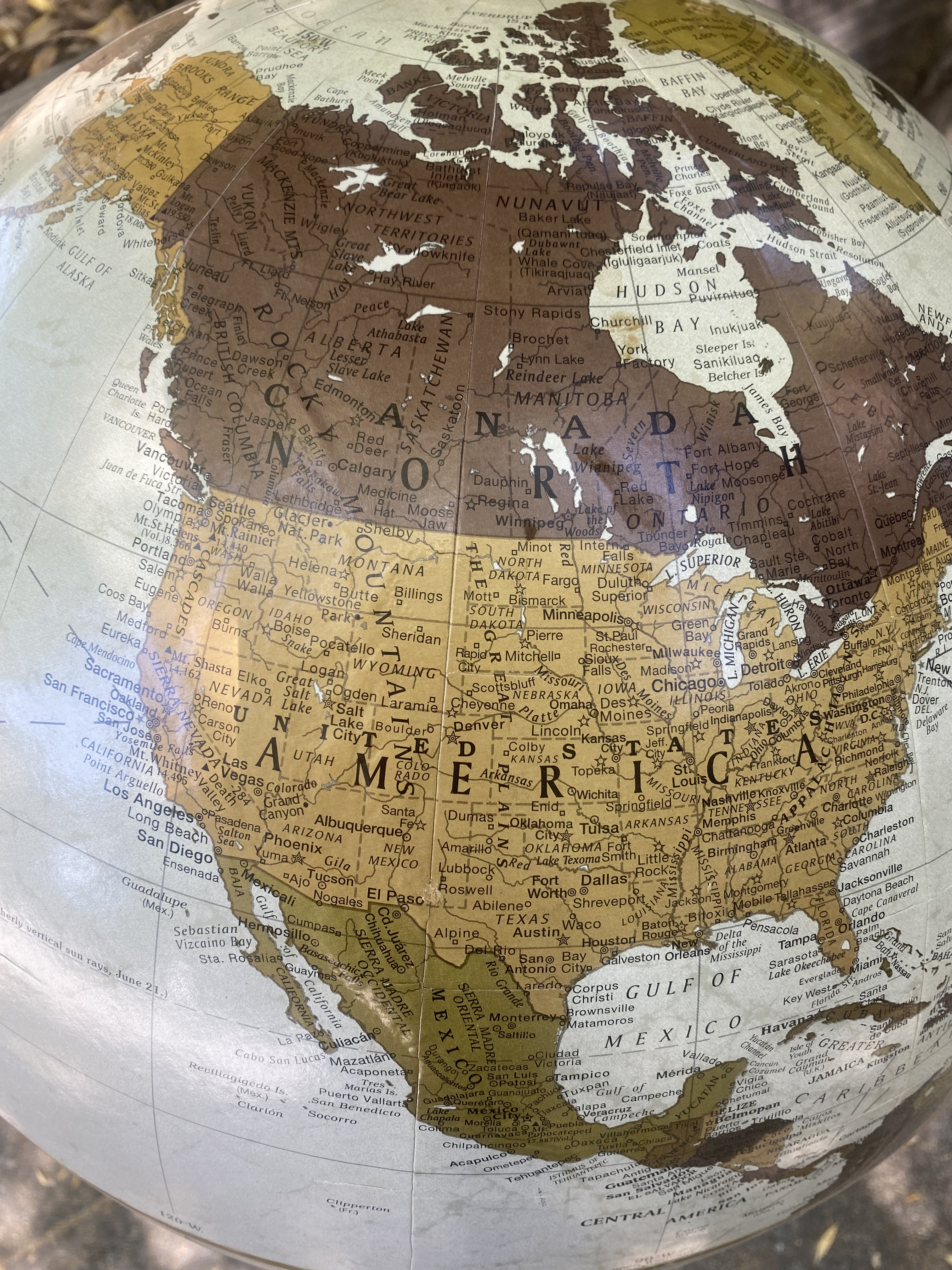
The “map” of The Technate may well have legs as a broadside at internationalism. If first launched by the protofascist separatists of the Technocracy, Inc., as an economic unit that presumed the need to reorganize a new notion of the nation, rather than being forgotten to the dustbins of history, it was rehabilitated by Donald Trump overeagerly. Perhaps Elon Musk shared plans for a more technocratic government that might pare down the existing Washington bureaucracy that might replace bureaucracy with efficiency as a part of his family identity? While we won’t know for now, it seems as if The Techante was a golden calf of the Trump-Musk regime that promised to emerge as a new economic space. Its survival is a chapter of the revitalization of zombie ideas by which the Trump Presidency and MAGA vision of the world are perhaps best defined,–as much as by a Civil War cartographic imaginary of a secessionist enclave of red states.
For the promise of efficient organization of the North American landmass in ways the American government had not conceived in all of its over expansion. For if paring down of government to techno-libertarian ideals was a long term goal of Musk, as an entrepreneur, the managerial basis for merging government databases that were at the center of DOGE’s work provided a mapping of the nation, and the relation of the state to the population, that a data-driven form of government would allow. This fundamentally utopian image of a continental Technate of apparent economic self-sufficiency that cut its ties to foreign currency markets of fluctuating values and stocks was a powerful icon for Musk that may well have fed his own anti-immigrant sentiment, or the bonding to the power of infographics in Trump’s Weltanschauung of a world where one could not trust other nations. The monumental unity of the Techniate on a global map was an ideal for engineering America as a global power that the obsessive return to expanding American territory annexing Canada, compelling union with Greenland, and expanding America’s territorial waters. The two-color map is a mental imaginary as powerful to the border wall a decade later, in Trump’s unimagined second presidency, creating new trade barriers in a world of cash flows, that preserve American greatness, in the fanciful utopia of an American Technate as a topic vision of the nation.







 Musings on Maps
Pingback: Appeals Court Blocks Trump's Wartime Law on Venezuelan Immigrants - Writ of Mandamus Lawyer in New York, New Jersey, Connecticut & Washington D.C.
Pingback: Judicial Review and Mandamus in California’s Fight Against Federal Immigration Overreach - Criminal Immigration Law Firm in New York, New Jersey
I think it speaks volumes that as Trump seeks to leave a global imprint he was denied in his first term, that he turned to a man like Musk, whose sense of global politics is so limited and skewed. This is a case of the inexpert leading the inexperienced, clamoring for authority with little priorities than their own self-aggrandizement.