
Even after his official exit from Trump’s cabinet, an intense bromance may prefigure a Presidency,–a relic of American isolationism, joining corporatism and government, in a promise of governance that preserves American wealth. For if the Technate has been consigned to the dustbin of history, and was probably not remembered by many save the students of alternative futures, the plans that were forged in the years between the Great Depression and World War II sought to preserve a secure North America in the early years of globalism that was forged in hemispheric projections, in the plans prepared by the U.S. Army Corps of Engineers in the early 1940s to capture global space on military grids. The powerful isolationism of The Technate of America was a response to globalization that in place of the interconnection of a gridded space proposed the economic integrity of America–an America of expanded frontiers offer a miniature version of globalism, defined by its rejection of international ties–but bolstering its “natural” resources and wealth in a utopia image of the expanded continent able economically to go it alone, free of global obligations or entanglements–and no real sovereign separation between Canada, Greenland, and United States, that almost appear, symbolically, a rational replacement of the British Empire’s maritime expanse.

Howard Scott, The Technate of America (1940)/P.J. Mode Map Collection, Cornell University
This mapping of the Technate, before America had entered World War II and as the Battle of Britain was underway, seemed an alternative model of security in a gridded space of clear frontiers–free of global entanglements. Although the map of The Technate that Technocrat Howard Scott designed provided a smoking gun to some, with currency on the internet and Reddit after the inauguration, as if the rediscovery of a part of history of American isolationism we seemed condemned to repeat, if we had rejected it in the mid-twentieth century in ways that se the nation on a very clear course. The fears isolationists used played on illusory fears of untold economic scarcity, of goods, of wealth, and of “energy,” that the expertise of The Technate promised to resolve, least all Americans panic by having their savings and overcharged economic status in a globalized world suddenly stolen from them and reduced by being tethered to the global currents of scarcity and war that the party with which Elon Musk’s grandfather, Joshua Haldeman, a chiropractor who promised to renew the body politic of North America, had been long associated living in Saskatchewan, where he practiced 1926-1950, composing not only Saskatchewan’s 1943 Chiropractic Act, on the province’s board of examiners, but as Research Director for the province of Technocracy, Inc., and leader of the Social Credit Party during World War II–before relocating to Pretoria, South Africa in 1950, where his thought shifted from the utopia of Technocracy to riches of the Kalahari Desert.
When Haldeman worried at that Technocracy brethren south of the border were selling out his country in their hopes to take over Canada and Greenland by “force of arms” through the power of “insidious and seditious propaganda,” he urging “The Canadian people and the Canadian government must take positive action now as a measure of national safety” in 1945, he had already fallen from public good graces. American forces had captured Münster, advancing in Germany and forced Japan’s Prime Minister to resign after landing in Okinawa; American subs sinked a floating hospital of 2,000 in the Taiwan Strait. These concerns of a loss of economic wealth, and a lack of money in lands as costs of grains suddenly fell, causing many to loose their work, were more real for Saskatchewan than for America today. But the panic scarcity provoked seems imitated in the panic that is channeled in the contemporary Technocratic propaganda of separatism and autarky.
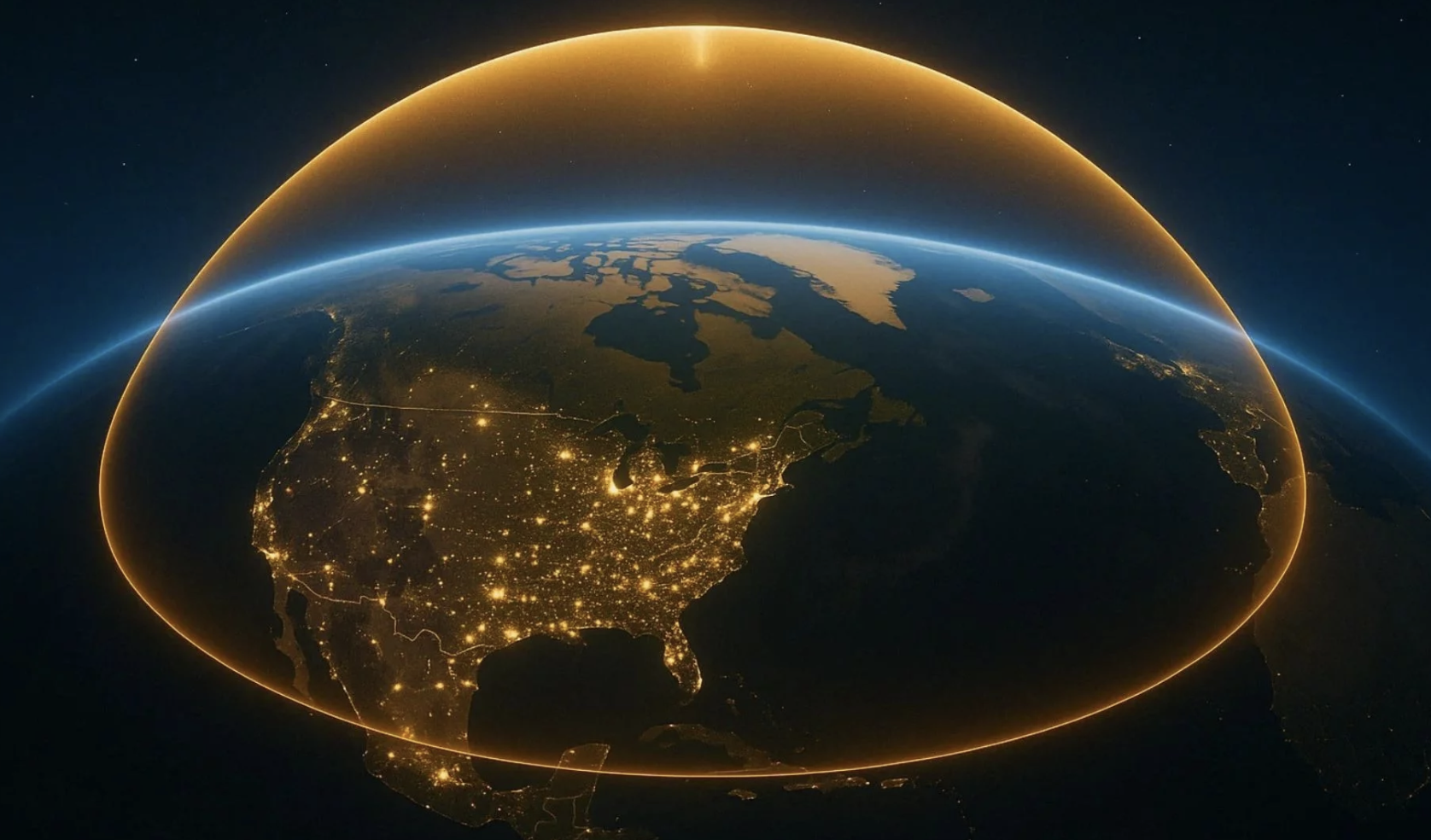
U.S. Army, Rendering of Golden Dome
The Technate oddly meshed with Donald Trump’s espousal of a fierce new isolationism farther from Europe, and Ukraine. The geopolitical reconfiguration of global politics was not only a template for the Trump administration had embraced, but a utopic view of the isolationism that is no longer possible in a global world. If the map of the Technate suggests an enhanced and empowered North America, colored red, it is able to be viewed, and might well be appreciated, as a far shrunken notion of ties to global space–a Technate that is willfully and irrationally imagined as surrounded by the thinnest of dotted or dashed lines, as if they were credible frontiers to be drawn on a gridded map with a ruler, traced as if frontiers might be conjured and imposed on the globe in an act of narcissistic image of what a nation might look like, if it wanted to be seen as strong. For the Technate is not a smoking gun, or a footnote in history, but a zombie idea that is at serious risk of replacing the nation not in its actual design, but as a ghost in the geopolitics of globalization, a misguided image of national security and isolation that demands to be expelled, ejected, and repelled.
It is an image that is advanced in ideas of data governance and the imposition of new frontiers out of whole cloth that echoed the new resurgence in Trump 2.0. If in part these reflect the manipulating fears of uncertainty by populist movements and technocratic elites in recent year since the global financial crisis of2008, the new faith in deeper problems that income inequality have led to a new notion of governance, gaining popular legitimacy from democratic elections, but working in non-democratic ways–allowing them to implement effective policies of wealth, often around fears of migration and of the inevitable collapse of a status quo. Populist movements and technocratic factions have lined up in different ways, but work by managing and mapping global propblems entirely from national perspectives, in a distorting lens that is able to demand both an expansive lebensraum for the United States seems to assert its hemispheric entitlement to proclaim a dominance over its section of the world, far beyond the nation or nation-state. The defensive posture of a defensive Golden Dome as something is akin to a science fiction replacement for NATO. Unveiled in the Oval Office, its futuristic plans have all the fingerprints of Musk and Space X–something that had the fingerprints of Musk’s promise to provide “full self-driving capability” by “state of the art” technological enhancements of Model S’s “autopilot” mode.

While demanding belief in its “full functionality,” the promise of full security against an array of national threats may be false. But the thrill of the very promise of an all-knowing capacity to track, target, and shoot down hypersonic ballistic missiles that approached the boundaries of the Homeland from outer space was the realization of a full Apollonian view of the nation’s borders. The promise of a technology General Michael Guetlein asserted “exists today” had little provable basis in engineering, but was a promise of almost hubristic advertising. Guetlein’s confidence but days after being confirmed by the U.S. Senate as Vice Chief of Space Operations should raise some questions in itself –the scheme of aerospace defense echoed how Ronald Reagan had championed the Strategic Defense Initiative in 1983 as a means American ingenuity offered to end the Cold War.
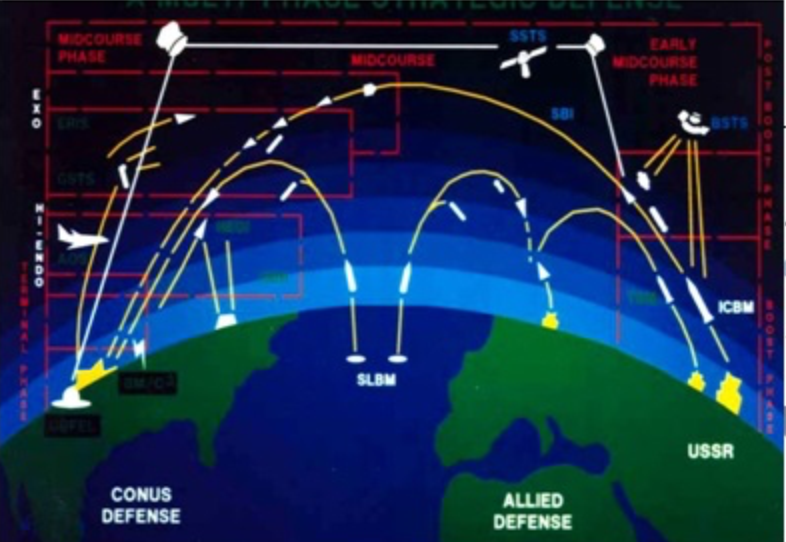
If President Reagan had entranced Americans by the technological vision for defense that was derided as Star Wars, and but a fantasy, General Guetlein claimed these strategic tools had “never been brought to bear on this problem set to protect the homeland,” as if he had done his homework by rebranding Reagan’s championed missile defense system, deriding the plans in cinematic terms as Star Wars, was little more than a ploy to expand the Defense Department’s budget, Time readily acknowledged forty years ago–and a way to rejuvenate the Gipper for the Space Age, updating the black swept back hairline to make his stare into the future look more than ever like Big Brother.
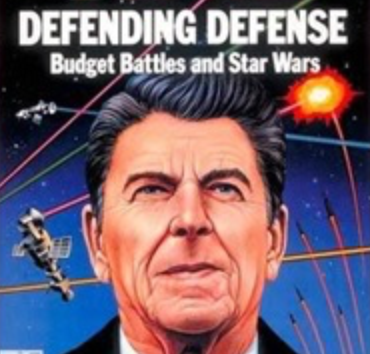
Time, front cover, April 4, 1983
The retooling of the old hope of an approaching future, cast now as a problem of only changing the organizational cultutre of the U.S. military, is not much more than an attempt to reprise Reagan’s hope to scrap strategic arms limitation treaties for a bonanza of defense spending is straight out of the Republican playbook, but is recast in a shiny technocratic garb. Presented as a new level of defense of the Homeland, it is cast as defensive protection far more expansive that extends to a stratospheric level of orbiting satellites. Far removed from the fears of Reagan’s Cold War imaginary, it exists in a unipolar world, however, with only the preservation of border security as its commanding logic. It promises fully automated protection from fears that extend far beyond migration from the border, at the same time as promising an invisible protection in the virtual “missile shield” that existed over the United States–together with potentially annexable former allies, welcome to join the United States under a Dome in this Very Dangerous World. The map of a hemispheric new dawn gestured rather prominently–if subliminally!–to the southern border but lifted a curtain on the nation’s fears for a “Very Dangerous World” in an age of economic wealth.
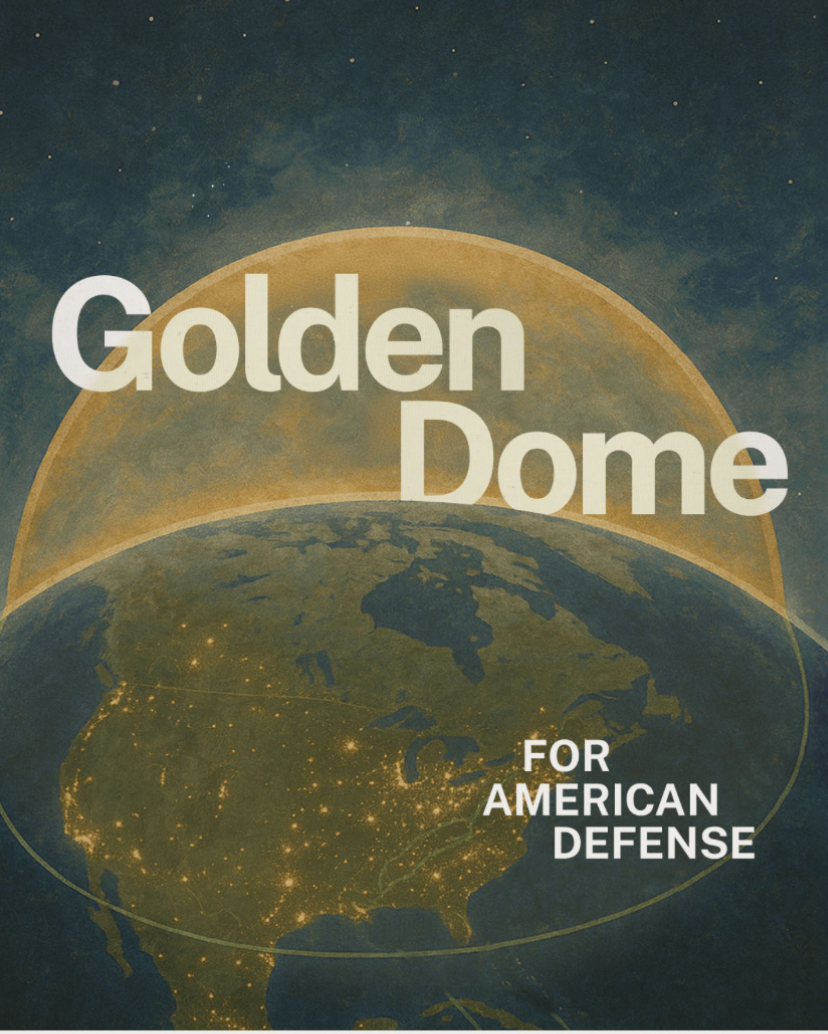
The rapid resurgence of a specter of Technocracy as a challenge to democracy might as well be a science fiction cover from a paperback of an earlier era–a map of nocturnal illumination by electric lights serving as a substitute masking wealth inequality, but based on the illusion of impending scarcity–gained broad currency since the global financial crisis. The global map reaches new heights of the evasion of democratic accountability, with the rise of what some political scientists as Archon Fung have warned of the emergence of “wide-aperture, low-deference democracy” that masks as utilitarianism, and presents militarized borders as the solution to impending threats that we might not even expect to know if the government had not informed us. Cast as an AI-generated map, that is itself a double for the rapid expansion in the United States of a space economy that has surged to over half a trillion dollars–$570 BN by 2023!–it is a magisterial revelation of the expansion of an American economy, as much as a defense shield, that would provoke competition of our aerospace industries–

–whose moving parts are being tested by the space-based interceptors of Northrop Grumman, in a combination of “existing and future capabilities in space and within the Earth’s atmosphere” that will substitute for the weak on-earth economy, perhaps, that people sense they live in, whose name–Golden Dome–was changed, as Pete Hegseth remarked while explaining budgetary realignment plans of the Dept. of Defense, from “Iron Dome for America,” as if in imitation of the Israeli system of missile defense, to “Golden Dome for America” by the fiat of an executive order, with assurances it would be “built and function optimally” whose prospective buyer need not worry or feel they might have reason to beware. But the drawings released by Los Alamos to ensure .
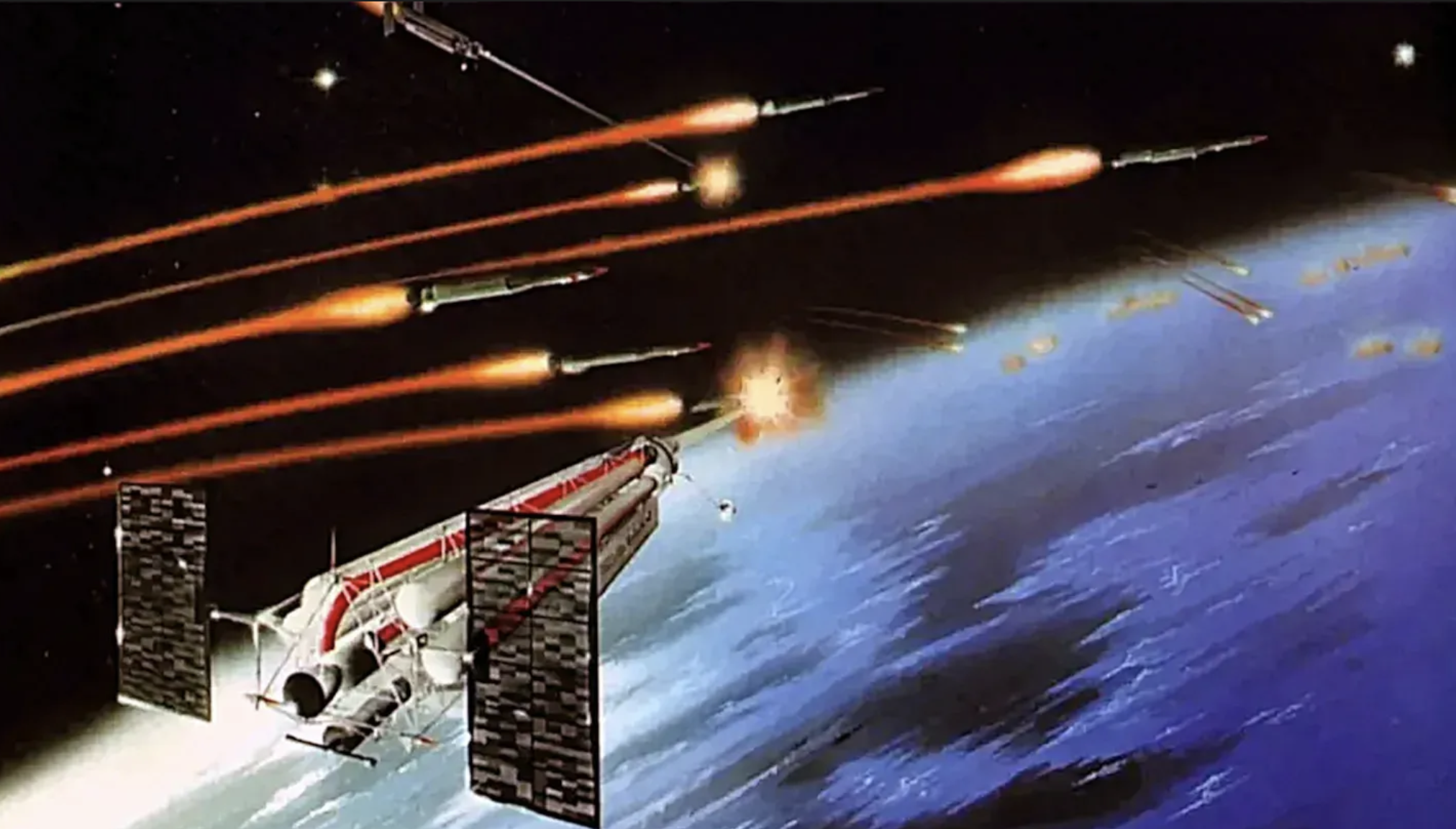
Los Alamos National Laboratory
If the new bordering of defense in a “Very Dangerous World” illustrated by the infographic shown at the White House’s Oval Office to the world have the smell of autocracy, underwrite authoritarian drives of an oligarchy, they demand consent for global decisions in increasingly undemocratic ways, posing technocratic solutions that are removed from any actual oversight. Rather, they are rooted in illusions of scientific expertise–if they discount scientific expertise and knowledge for the pastiche of security of a Golden Dome for America as what the nation deserves and demands.
The Dome replaces a government of persons for a new government of things, rooted in Artificial Intelligence and a technical-rational scientificity seemingly able to end actual political conflicts and replaces the law in its mastery of controlling unspecified lurking dangers. In redrawing borders as sites of contest and conflict, the Golden Dome mirrored the ways that Customs and Border Patrol used enhanced authority in recent years to conduct warrantless searches a hundred miles from any international borders by executive sanction, to expand the authority outside borders. For by adopting AI-augmented surveillance hundreds of miles from international borders in order to “track suspicious activities along U.S. borders,” Customs and Border Patrol have expanded their purview and operational needs beyond the United States’ coastlines by long-range surveillance systems. The map bellow, shown to private-sector vendors of surveillance tools by the Customs and Border Patrol, focused on a Coastal Area of Responsibility as an extension of their authority, suggesting the growing nature of surveillance and authority beyond traditional national maps–as if the map were an antiquated vestige of the authority they possess, transcended by the scale of operations. The expanded tools for the “detection, tracking and classification of targets” does not exclude taking preemptive military action, but implied it–promoting a need to defend our borders in ways that are defined beyond the internationally understood borders of national territory without accountability: the hopes to lay 2,100 fiber optic cables on the northern and southern border suggest an ability to preemptive strike by a sensor network including cellular tracking beyond the commonly understood notion of borders to protect the nation from global threats.

Screenshot of Customs and Border Patrol Presentation to Private Sector Vendors, 2025
The satellite network would augment the permission already granted immigration enforcers to conduct warrantless searches within a hundred miles of land bordering Canada, Mexico, or the coastline of the “homeland,” extrapolating into offshore areas, asserting maritime operations over “Coastal Areas of Responsibility” in “close proximity to foreign nations” including Cuba, Haiti, the Bahamas, and Dominican Republic, by “weather resilient systems” able to deal twitch hurricanes. The surveillance towers already deployed on the US-Mexico border to leverage AI to expand border security by the Rapid Tactical Operations Reconnaissance Programs, RAPTOR–eat your heart out, Thomas Pynchon, for inventive acronyms!–translates into long-range surveillance to monitor the coastline of the United States, in ways that the Golden Dome uncannily mirrors.
The defense of the Homeland is all about blurred borders, and blurring what are the commonly acknowledged and recognized limits of sovereign authority over land. If J.D. Vance blandly asserts the United States is not at war with Iran, acting as mouthpiece for messaging Presidential authority regarding the nuclear project of Iran, asserting to Americans that it was only Iranian ambitions for nukes that demanded bombs to be launched to destroy Iran’s underground tools to enrich uranium.
This very logic is cast as a a managerial policy to ensure global strength and security that echoes the utopic visions of technocracy of the Technate of almost a century past. To be sure, the Techante anticipated the rise of a technical expert able to replace traditional politicians have long been worried to eventually compromise or render opaque concerns for social justice, fairness, and social equity as bulwarks of democracy. For technocratic domination, if long rooted in development projects, have come home in Trump’s world to provide the basis for withholding funds and dismantling policies, promising to “solve” problems even if this means increasing economic inequalities, under a salvific Golden Dome that remain more on the drawing board.

Trump’s Chief of Staff Susie Wiles Holds Chart of Golden Dome Missile Defense System/May 12, 2025
This was, of course, less a model of “lebensraum“–the vision it offered was centered on another nation!–than of weltraum. The decidedly global purview of this dome suggested a new map enabled by the tools of global surveillance that undergirded the Golden Dome were needed in order to contain the transnational threats incarnated by supersonic missiles and ballistic threats, able to comprehend the new global scale on which the nation had to understand threats, that demanded the dawning of a new age of global empire that Donald Trump sought to embody, offering security to the nation to a degree that no other governing body had ever offered before. The hubris is laughable, if it was not so deadpan.

One possible expansion of the “dome”–a weirdly Christian apocalyptic conceit, modeled after the Dome of the Rock, conjured a technological shield against the arrival of airborne apocalypse, even if it is only at this point an imaginary construction hardly off of the drawing board–and an excuse for to allocate $175 billion to a Defense Dept. pet project of a strategic shield that would promise to block the threat of ballistic missiles from China and Russia in an era of escalating national debt.

The hint of a possibility of assimilation of Central America, Canada, Mexico, and Greenland into an economic unit lops off northern South America enclosed Cuba and a congeries of offshore islands, in a Manifest Destiny of the nation beyond any frontiers that ever existed on a national map–billed as a superior or more rational vision of mapped space to fabricate a new America for the twentieth century, beyond boundaries, with dotted lines of defense far from its shores in the Atlantic and Pacific oceans from Newfoundland and Alaska. If the impermeable border wall promised an absolute stoppage of migrants, the golden dome promised an impermeable protection against missiles from reaching the Homeland, a partitioning of space that was even better than a wall at promising “our citizens like never before”–Trump’s audience was never going to judge him on his record. Did the promise of such a partition from the world offer a guarantee that he would protect “America First,” even after bombing another nation’s sovereign space from outer space?
The imagined autarchic unit of governance center mapped space on an image of an expansive America, as if profiting from the new scale of a global map to define “governance” beyond human scale, as if demanding assent to the new geopolitical power and economic powerhouse that the Technate would define. If Haldeman provided grist for the “myth of the engineer” to be alive and well in Pretoria, when he met Errol Musk, celebrated the marriage of his daughter, Maye, to an engineer, feigned astonishment that they “were very fanatical[ly] in favor” of Apartheid among Maye’s parents he remembered as oddballs who “came to South Africa from Canada because they sympathized with the Afrikaner government” and “sympathized with Apartheid’ as supporters of Hitler’s National Socialism, he told Podcast and Chill in 2024. If Errol seems to have been concealing the inhumanity of the Maye’s father to appear in a better light himself, his romanticization of the benefits of paternalism Apartheid offered provided a means to understand why the Haldemans saw their future son-in-law as a successful engineer, and indeed might lead us to wonder what sort of seeds and ambitions were early planted in his head. If the currents of Technocracy were more transmitted in the steady diet of sci fi that Elon Musk consumed as a teenager, turning for solace to the worlds of Isaac Asimov and Robert Heinlein, of the possible triumph of rational technocratic men in outer space and on other planets conquered by Earth–including the colonization of Mars or penal colony established on the moon, in an image of colonialism that was purified by technocratic control in outer space–the modulations of a terrestrial politic that originated the myth of a stable Technate bound by necessity, not laws, was the beating heart of his utopic geopolitical imagination.
While Errol Musk romanticized Apartheid regime as paternalist, his future in-laws fomented a myth of the engineer, that Eroll, with his own firm, reflected. he flew airplanes, and before making a second fortune selling emeralds on the black market, nurtured the myth of the engineer among the Musk family, hewn to the very idealsat Howard Scott proselytized, that set a clear model for Elon. Elon was no doubt haunted by the myth of a technocrat–if his biographer Walter Isaacson played down the myth of the engineer Elon cultivated in public life as shaped by Haldeman’s ideals. Musk held anti-immigrant stance and technocratic criticism of government as he entered the orbit of Donald Trump that not only meshed with Trump’s own, but offered Musk a business opportunity by which Trump sought to define the business value of his Presidency for Americans; Trump quickly backed Elon’s pet project of sending humans to settle the inhospitable planet Mars. The Technate of America to be sure only existed on maps, but was the central vision of the platform for resistance to entering a global conflict, to be sure, but promised a vision of economic security in a post-Depression world that Haldeman promoted was a powerful if zombie vision of the past that, if it was ignored when his political party was banned, offered an icon of the removal of an America no longer tethered to global energy markets.
The map presented the alternate reality of a rationally engineered future, whose currency mirrored the anti-global imagery of the Trump Presidency–and withdrawal of American aid to global partners Trump long campaigned to end ties as U.S. President. These maps echo an eery global vision of isolationism informing, mutatis mutandi, a defensive technology to Make America Great Again, by a mobile defense system. If it echoes Israel’s Iron Dome, in featuring AI-powered early warning systems, lasers, missile defense systems and command and control networks it would boost the budget of the Department of Defense. It boasts as its software backbone, almost predictably, the real-time integration of satellite data and drones that is the specialty of Palantir, Lockheed Martin for hardware, and L3 Harris for communication sensors, as an icon of the new global defense tools that Donald Trump proposes as the centerpiece of his plan to Make America Great Again, if the infographic seems a science fiction project distilling the redefinition of America’s relation to the world.
While the Golden Dome is promoted almost century after Howard Scott founded Technocracy, Inc., proposing the cult of the “myth of the engineer” as able to extricate the nation from global war and other economic fears, focussed on the needed restoration of a balance between consumption and production that the trademarked yinyang or monad was the iconic symbol–as if in reassurance of the preparation to face a future as America was in fact on the verge of entering World War II, using maps that might showcase the readiness of continental defense by clear borders that are memorably provided by those dashed red lines in The Technate’s map, here displayed in situ in the meting of Technocrats in the Griffiths Observatory in Los Angeles, just before America went to war.

Map of the Technate of North America in Technocrats Meeting, Griffith Observatory, December 1942

Novelist Kevin Baker two decades ago identified Howard Scott as a political utopian whose popularity is a predecessor of the Reform Party candidates sought by Pat Buchanan–former speechwriter of President Nixon, then a commentator and outsider–and successful hotel magnate Donald J. Trump in 2000. Baker did not see Scott, who he likened to “created out of whole cloth any Ayn Rand,” as a precedent for the present-day politics at the end of the Clinton era. The Reform party lay outside the box in ways that tapped a strand in Rand’s work, however, we have yet to recognize as central to American politics. Baker did not tie Scott’s Technocracy to the Reform Party’s platform; Trump then had a fixation on ending the national debt that was a way of thinking foreign to policy papers or politics as usual, as out of the box as how Scott offered a comparable example of American eccentricity posing as politics as usual, but far outside of the toolbox of constitutional politics of sovereignty. But Scott created a zombie idea of considerable power, that might be a surprise to Baker, able to resurface in the distorting politics of the present.
The promise of a use of technology as better keys to control and supervise a well-engineered humanity that mirth be a utopian paradise was on the front burner in 1933 of many–especially in areas of real actual scarcity, like Saskatchewan–and provided powerful grist for Haldeman’s overactive mill. Scott’s re-bordering of the world was so focussed on borders and protection from dangers that it served as a preface to the heightened policies of border governance, as if to sever the protection of the border, and the integrity of the nation, from questions of governance. In the current Trump Presidency, the centrality of technocrats is replaced by artificial intelligence, but the Technocratic image of the globe seems to prefigure. Kevin Baker found a precedent for the success with which technocrats channeled discontent with the established political parties in the break from “politics as usual” that paralleled emerging “reform” parties, including similarly odd characters outside politics as usual competing to manage America in an age of greater prosperity–conservative commentator Pat Buchanan, reporter turned media analyst and speechwriter for Richard M. Nixon and Spiro T. Agnew, had coined the concept of a “Silent Majority” he asked to consider the paramount need to preserve “peace and freedom in America and in the world,” to the even more improbably fringe challenger he competed, hotelier Donald J. Trump. Backed by his buddy former pro-wrestler Jesse Ventura, Trump famously first entered America’s political stage a quarter of a century ago, making international trade a marquis issue of his presidential bid, arguing he would eliminate the national debt and balance the budget in The America We Deserve, and vowing to marry his then-girlfriend Melania Knauss to make her First Lady just four years after she settled in the United States. In the days before he vowed to remove America from unsuccessful foreign wars, the image of the power couple–marrying only in 2005, Bill and Hillary Clinton attending.
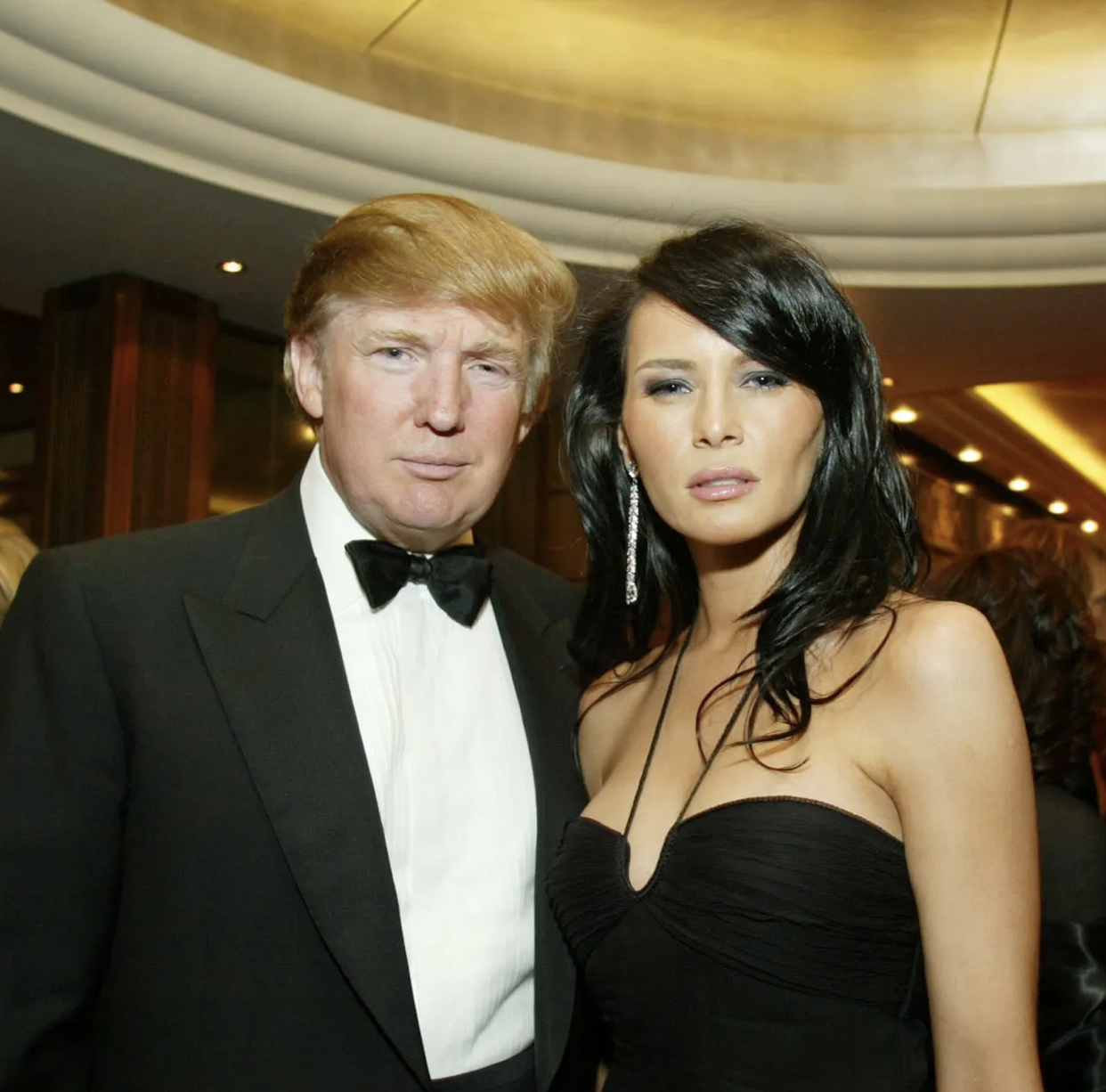
The promise of “peace and freedom in the world” was one Trump channeled, and seemed able to offer as a practiced salesman. In 2000, the burlesque seemed made for television; the prescient “America we deserve” slogan of Trump 2000, a zombie idea of its own, was a mirror to see yourself. Unlike the alternatives of “compassionate conservatism” or “leadership for a new millennium,” Trump parlayed a letter bearing the prediction of First Lady Pat Nixon predicting his future political success, vying with Buchanan to channel the Silent Majority, a zombie itself, in a new era. Trump was already tapped by Roger Stone to run for President in the 1980s, but in 000 converted his telegenic celebrity to the nomination process, as he became a champion of “forgotten voters,” the new guise Nixon’s “silent majority” gained, if they sought greatness more than law and order.
Was this only about channeling zombie ideas, or finding new ways to electrify the electorate with an alternative choice? Trump had rather skillfully exploited increased alienation of the voting public in 2016 in what would be a dry run. We are keen to identify apathy and low turnout as a motivator for Trump’s return to power in 2024, a sort of puzzling as to why laziness has undermined our democratic participation, the increased sense that the promise of leadership and reform, and the coded language of “states’ rights” in fact increased an appeal of orientation to a confusion of who was American, and exactly who deserved the privileges to be protected by the law that was once universal in the land, as across the nation plummeting moderate democratic support refused to rally behind the candidate in New Jersey, Maryland, Michigan, Texas, Ohio, Arizona and even in southern California and Oregon, as Trump wielded anti-immigrant rhetoric with a passion that inspired broad devotion among voters that once tilted reliably Democratic.
The rhetoric of scientific management of Dark Maga is unfortunately quite inapparent if not invisible in demographic analyses of voters by age group and race. Yet rather than focus on these groups, we must remember Trump won voters who elected to not participate in the 2020 election. These were the outsiders who he brought into a political tent, expanding his reach not by whites, blacks or latinos, but the disaffected he convinced might be made to think their votes mattered.

This was the logic by which Technocracy sought to appeal to voters. The founder of Technocracy, Howard Scott, was not an engineer, but bequeathed a template for outsider politics. Kevin Baker regarded Technocracy as a fitting precedent and template for outsider candidates of the Reform Party who embodied how “thinking outside the ‘box'” of political parties gained traction, as in an era of wartime as politics offered a new paradigms of national identity in a post-Cold War world. Maps were not central to Scott’s trademarks for Technocracy, but offer assonances as new icons for outsider politics; the coinage of a continental map of a Technate promised the charisma and aura of a new form of “scientific government” as electorates worried about the inadequacy of politics-as-usual: in a range of futuristic images that echoed the refrain of man versus machine, the future of technocracy was one promising sleek skyscrapers and a rational way forward during the Depression or under the thereat of War: the idea of a shift of global power, and the pre-eminence of experts was an image of a Brave New World we had to ready ourselves to confront–in which maps and insignia promise to provide needed points of orientation to a world that had to be made more efficient, affordable, and less like gambling at a casino: the uniforms and yinyangs inspired near-militant devotion among white believers, made for television in a black-and-white era.
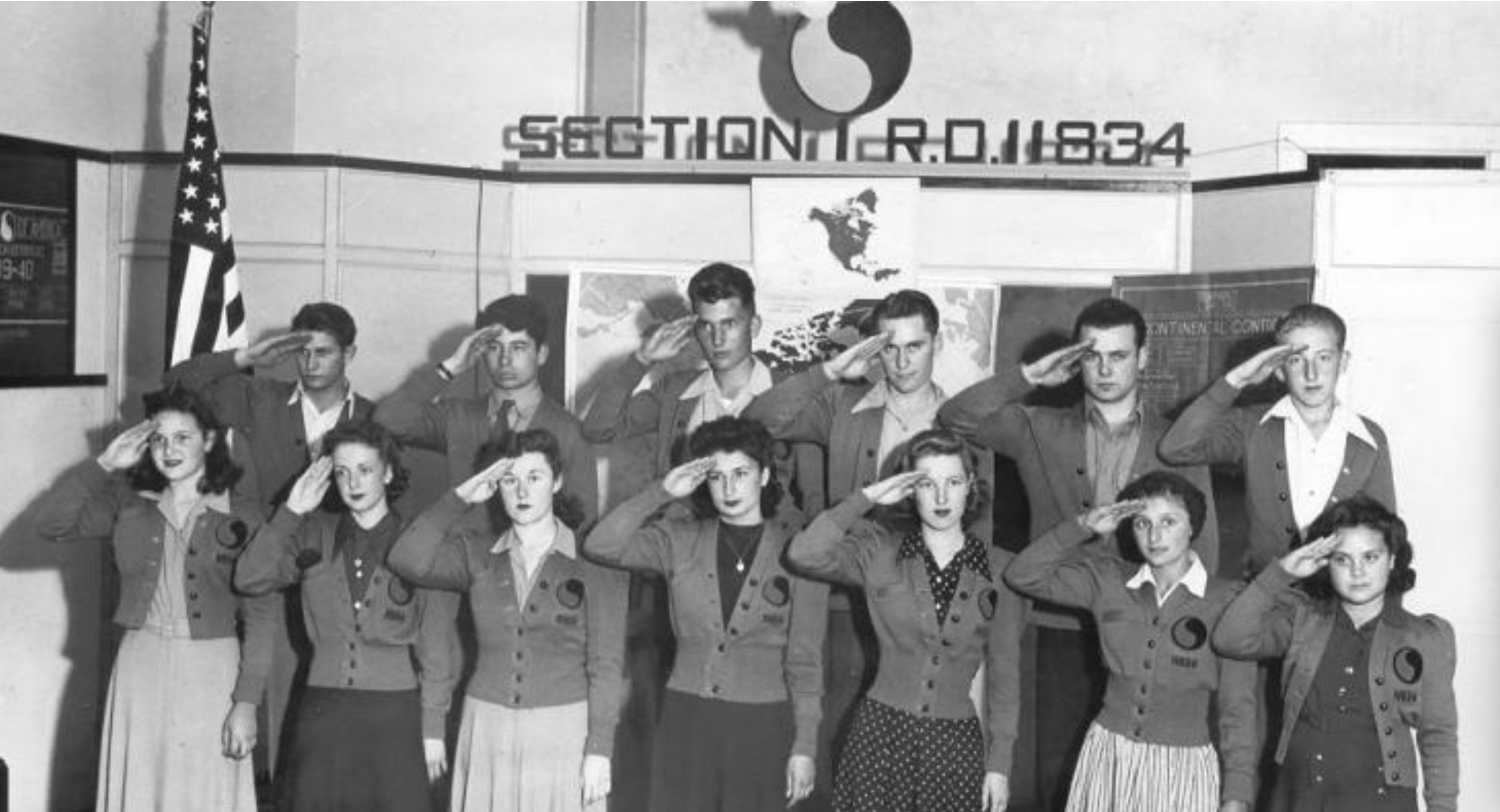
Technocracy, Inc., Chapter Meeting, Los Angeles, 1942
If the bright-eyed boys and girls of Technocracy convened in Griffith Observatory just before the entry of America to the European theater in World War II, their vision of the future reflected the dominant mindset confining American military assets on defending the western hemisphere, and the limited engagement in supporting British bases in Newfoundland and the Caribbean, a partition of military attention in a limited internationalism that kept America at arm’s length from European war theaters even as HItler declared war on America, until the mobilizations of December, 1942: despite welcoming of hostility to Japanese incursions on Pearl Harbor, California was a hub of isolationism, where the anti-Japanese sentiment could feel the war effort, fed by an image of the white girls and boys as an icon of racial purity would not be ignored. The Technocracy youth were a call to military adherence to a doctrine of the western hemisphere, that suggested a devotion to the economic management of an expanded Northern American continent mapped by The Technate in a new image of globalism made safe–where American economic interests prevailed on those of the North American continent.
By 1940 the US, while still neutral, was becoming the “Arsenal of Democracy” for the Allies, supplying money and war materials. Prime Minister Winston Churchill and President Roosevelt agreed to exchange 50 US destroyers for 99-year-leases to Bhe image of an American Technate survived to provide a bizarre rebirth in the Google Maps platform, offering an envisioning of a global unity of safety from 2006, before resurgence of what might be best seen as the zombie idea of a Technate, empowering a reentering the the bone by new mapping powers to rebound an eerily analogous area of global space as a unit–able to be reconfigured by rational precepts in new ways–
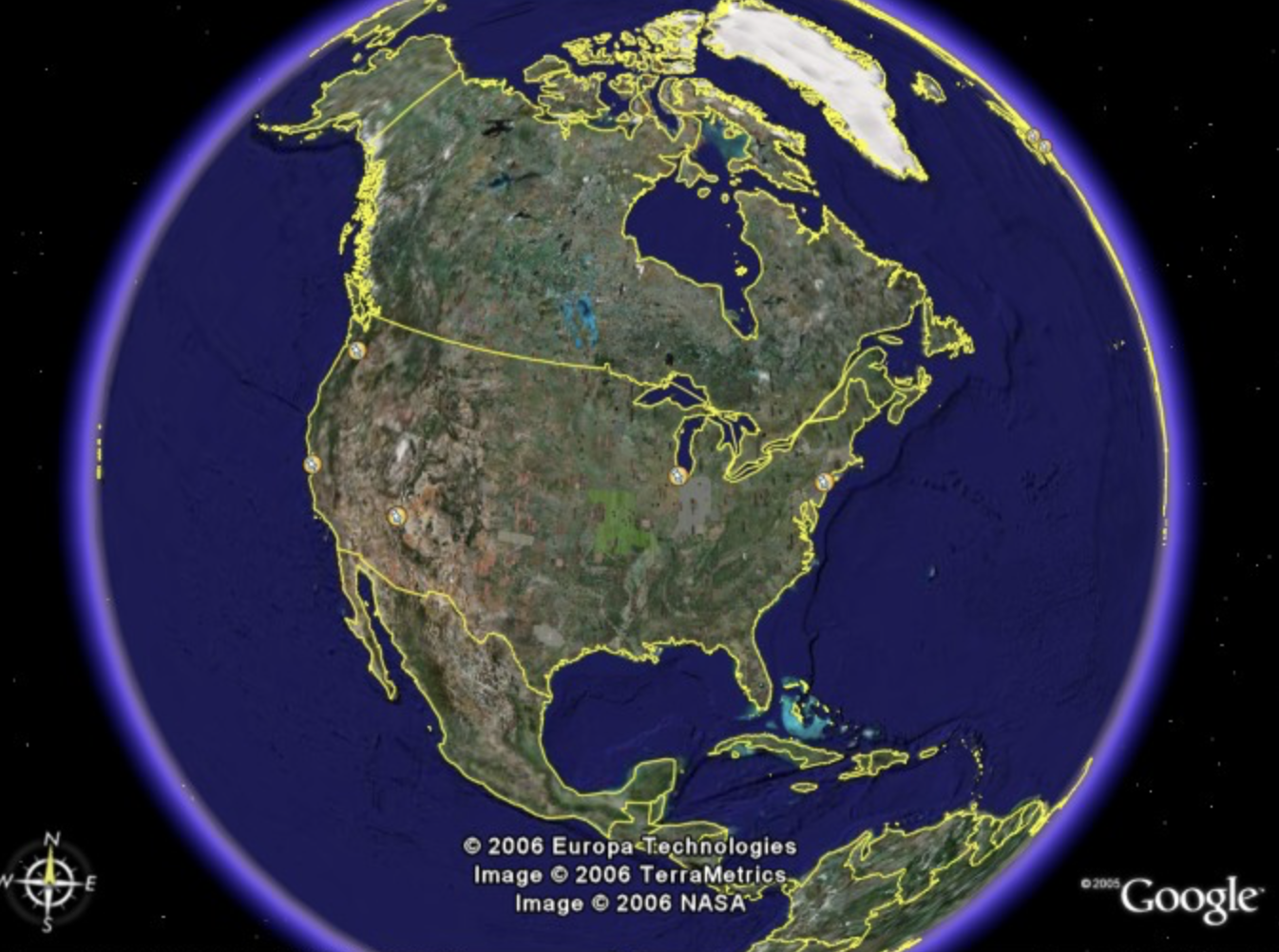
–to offer a solution to the un-bordered world in an era of re-bordered regional space. On the eve of the 2020 election, it was striking that as Elon Musk used social media to voice an increasing obsession to colonize Mars, the urgency of “accelerating Starship development to build the Martian Technocracy”at SpaceX provided a logic for his own entrance to politics, if by a somewhat oblique reference to his father in law’s and Scott’s old ideas being both dead and alive and well.
The images of data governance had been developed in Silicon Valley, apart from any model of sovereignty or global governance. But the idea of a better form of governing was evident from the visuals of the inauguration of January, 2025, when the new oligarchy of Silicon Valley appeared at the sides of the theatrics of Donald Trump’s second inauguration. And the appearance of Musk as the standard-bearer of technocratic elites that converged in the Trump White House on Inauguration Day–and the man who secured a desk in the White House to define a vision of data-driven technocratic governance seemed bone-chilling news of how Big Tech hit the mainstream, in ways the mainstream media had failed to register, explain or detect.
The below-the-radar nature of data governance in Trump 2.0 emphasized the extralegal nature of the Department of “Government Efficiency”–as if it were almost an inside joke for folks who saw the government as anything but–presumed government as usual had to end. A rambunctious puppy would run circles around bureaucrats, and exploit digital tools of surveillance and data integration to remodel governance by mining personal data to enact programs that constitutional norms failed to permit, without oversight. The icon of perky vitality would replace the sleepy governments of the past, the eery AI inhumanity of this dog-like cartoon a perky version of the trusted pet, not to be trusted, resting on the telling gear ringing the national flag,–even if prepositions are most often omitted from acronyms. The seemingly timely acronym refurbished an symbolic inheritance of an technocratic past, a zombie idea that seems to be the energy that animates the unearthly energy of the like-colored canine mascot wearing a blue band, as a mascot of governance–good or not, it seemed as patriotically cheery flag-waving as on the Fourth of July–

DOGE Alternative Seal
–if it adopted the trademarked insignia of technocrats of an era ago. The framed yingyang of Technocrats’ image of the pairing of production and consumption in a rationally planned economy based on the local sufficiency of goods and energy, circling the American flag by a whir of the wheel of machine gears seem to ensure it cannot be read as unpatriotic. The fourteen golden gears of the wheel symbolized the rationality of industrial progress, not the mysticism of impermanence of a wheel of fate; its implied forward motion would perfect government in the name of efficiency in a world of clearer borders, free from worldly confusion, without redundancy or emotion or even, rationalizing the decision-making operations of humans that makes them unlike animals. The image of clarity and rationality was decisively upbeat, but it never became a form around which America rallied. It may have imagined the moral duty of Americans was to comply and assent to its vision of government. If the wheel echoes images of archaic origins, the seal champions the bounded unity of the United States free from suffering, asking us to cling to nothing. It is not tethered to lower realms . . .
The temporal reference of the sneaky final initial of MAGA begs to be read as a return to taboo subjects to mainstream political discourse. As it extends strict constructionalist readings of the U.S. Constitution to embrace white supremacy, segregation, and even Jim Crow but suggests making American safe for unconstrained capitalism as well, by ending all government oversight and emptying regulations to allow the geared wheels of industry to move unencumbered by environmental guidelines, climate legislation, or even preserving public lands in a free for all that will expand offshore drilling and embrace bitcoin memes. The reservoir of available iconography of the progress of those geared wheels of faux futurism that embraced technology as a form of rational government had led to many alternative histories that openly referred the icon of Technocracy, Inc, dredging it up from the dustbin of history to give it new life. And the Technate had been previously promoted as a powerful reservoir of an alternative future, an alternative image of America, that had not experienced a civil rights movement, or any expansion of the franchise, but was a somehow promoted as a lost road of efficiency of an alternative past of a future determined not by the free market, but rational planning, in a redrawing of the American dream.

2018
The online community rehabilitated the image of an expanded North America over an election ago, when the geared wheel iconography of the Technocracy appeared as a new vision of government that seemed to be echoed by the very Dark MAGA that Musk seems to promote in his black t-shirts emblazoned “Tech Support” and jeans, announcing to all in-the-know that the experts had arrived.

When Spartawolf designed an icon for the “promotion of scientific government,” the image of the geared wheel DOGE adopted as a new silver-and gold font promised the untold riches that would be released by the responsible organization of government across the country, in an amigo of the release of untapped wealth by scientific governance that followed the principles Technocracy, Inc. offered those ready and willing to admit that the usual operations of government were not able to offer the needed expertise to loosen the economic riches the improper organization of governing bodies has squandered. The the more enlightened governance of a sparky dog could immediately recognize and sense poor processes of decision-making that endangered national safety in the recent past–that government as usual was not able to rectify, but DOGE might, given its ability to purges habits entirely corrupt. The purity of the DOGE symbol promised national governance of expanded frontiers, as the expanded map of the nation–including expansive territorial waters of the Expanded Continental Shelf, the full continent of North America, having annexed Canada, and inevitable purchase Greenland, and expansion hemispheric dominance beyond the Panama Canal.
Making Great America was premised on restoring hemispheric dominance, what would have been a forgotten footnote of history would be embraced as placing the United States on a global stage.

Online Technocracy Symbol, 2020
The image of the yin yang in the wheel reminds us of how the DOGE logo is a sort of in-house inside joke, a decal likely to appear on the laptops of the interns restructuring government, rehabilitating the fourteen-tooth geared wheel that was once an icon of Nazi propaganda for industrial work, now suddenly sublimated in the icon of a single government agency in the United States. Aufhebung indeed!

The old emblem, hardly dead, may recall the industrial gears whose rotation trapped Charlie Chaplin in Modern Time, but came to be fetishized as the icons of governance by experts granted full powers of decision-making in the fields of expertise they were trained. This alternate form of governance was an icon of progress in the atomic age, putting technocrats in place of civil servants of government; the hollowing out of the state set new standards of governance in Trump 2.0. The perkiness of that frisky dog aside, even as we are saddled with the long tentacle of DOGE that remove the nation from global commitments that make it seem economically ok to militarize the southern border and create a new space shield model on Israel’s Iron Dome, the bent toward militarization and the militarization of borders seems implicit in how the atom–and indeed the secret weapons of atomic and nuclear war–lies deep at the dark heart of a Technocratic utopia uber älles.
Is the recent resurgence of Technocracy, long since removed from the language of economic autarky, presented as a modern example of efficiency that the Trump presidency was ready to coopt as a way to remove governance from the law, the copyrighted logo of an entrepreneurial group defined by compelling ideas, invention, expertise, deep pockets, and malleable morals as much as an aristocratic ethos that fit the vision of high tech oligarchs able to define a proxy nation?

We have long known Donald Trump to be easily attracted and energized by a compelling infographic, especially one able to distill global complexity to grip him by the gut in ways he sees fit to translate to programmatic action. The industrial gears of technocracy reconceived power, remapping geopolitics that cut against an interlinked world of globalization fit a re-bordering of the world to restore America on a global political and economic map. What is the Golden Dome project but a modern version of the AI-driven shield against incoming threats of enemy invasion? The Golden Dome destabilized the notions of borders as usual, and made one feel–in one handy graphic–a need for protection that played well on national television soon after it was displayed in Trump’s Oval Office? For Technocracy had distilled an analogue retro world-view that might be a meeting ground, if not a geopolitical inheritance, of the Musk family that meshed with Trump’s America First vision, a means to distill global politics to a Manichaean oppositions of “us” vs. “them” by mapping “us” in an expansive continent to revise America’s relation to the world. The large red opacity of The Technate in the header to this post seems to haunt a vision of government, of stopping the dangers of migration by expansive frontiers of rational determination.

The image of a besieged America updated the promised “border wall along its souther boundary” as a banner of continued isolationism and a nation that was far more under threat than its everyday citizens ever realized, until they were convinced otherwise by a compelling infographic, seemingly designed for Donald Trump’s short attention span, but that effectively also recast the southern border as but one edge in an illuminated map of expanded or enhanced territoriality that the rest of the continent might be able to join–perhaps Greenland would as well?–as the shifting borders of global geopolitics made concepts of sovereignty quickly recede into the past. Scott’s convincing infographic was never elaborated upon to explain how preserving wealth in America would proceed by separating a re-engineered America as an extra-continental mass on a map. The survival of this icon of a rationally engineered government, a rewriting of global geopolitics that was the brainchild of the isolationist nationalist Howard Scott, that Scott’s protégée to the north carried in the luggage or mental imaginary after his far-right political party was banned from Canada. The super-continent of The Technate promised a supercontinent that was able to defy all bounds, and trade barriers, an agglomeration of economic power no other nation in the globalized world had, and rebuffed the ideal of national inter-dependence that was expressed by the azimuthal equidistant projection centered on the North Pole, the banner that was chosen in 1945 to be blue in order to be “the opposite of red, the war color,” developed by the protege of Richard Edes Harrison, that cast the individual flags of nations as a laurel that would surround a vision of global peace.
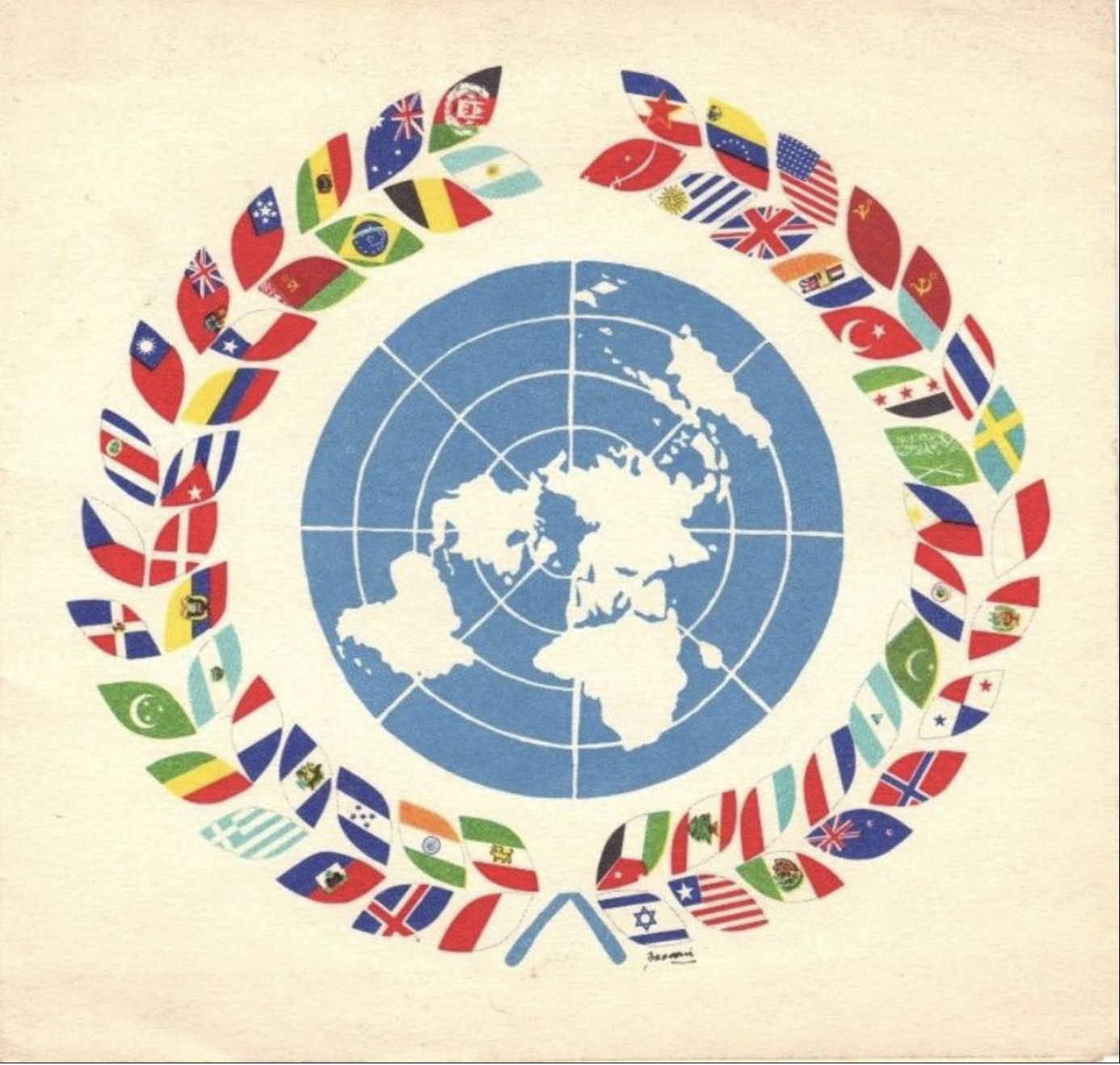
The official flag of the UN, born by legend by peace-keepers of the 1964Greek Civil War, who craftily embroidered a uniform white globe onto light blue fabric that flew on their white jeeps, converting the laurels into olive leaves as emblems of global peace, ws born in San Francisco, by a shade of blue absent from any national flag–“Stettinius Blue,” later known as “UN Blue”–approved by December 1964 as the official emblem of the international organization that would serve in so many peace-keeping operations across multiple continents to be an icon of internationalism. The dialectic was born between peaceful globalism and an expansive continentalism, a contest of mapping power and state authority beyond the nation-state, embodied by contrasting visions of the North American Technate of expansive economic domination and global harmony of Stettinus Blue in the UN Flag.

Design for Official UN Flag, 1964
The power of the iconic polar azimuthal projection was a response to the notion of Lebensraum that had motivated ithe geographic deologues of the Nazi era–preeminently Freidrich Ratzel, among others, As the United Nations was born as an official seal. If first, almost mythically, borne from the unofficial impromptu banner that peacekeepers flew from white jeeps in the Greek Civil War, the map of globalism was a response to the preeminence of any nation asserting its ability to infringe global geopolitics and upset the coherence of a tglobal map, ensuring a vision of globalism framed by olive branches.
Back in the world of nations, Joshua Haldeman, having decamped Saskatchewan for Pretoria, was a pioneer in the pathways of global transit that globalism allowed, but also kept the flame alive of a technocratic vision of government. Haldeman was long Elon Musk’s personal hero–a pseudo-father figure whose fame as a pilot and daredevil showed a legendary level of risk-taking to which Elon had aspired. May Musk’s flashy father was Erol Musk’s hated father-in-law, but a hero to young Elon, had shipped with his airplane to South Africa the clean lines of the infographic mothballed in the mental furniture of an early age of global mapping as an empowering graphic resistance to entering global conflicts, and to preserve the hope of an economic future separate from the strings of world markets. The iconic image of resistance Howard Scott and Joshua Haldeman promoted would be an insignificant than a curiosity of early architectures of global economy if it did not map in such eery ways to the current distancing of the United States from the European Union, and Ukraine. The icon of a re-bordered world that technocracy promoted “along rational lines” offered a way to imagine frontiers, governance, and borders in terms outside of politics as usual, that promised to provide a lifeline to Americans that no one in government had imagined.






 Musings on Maps

Pingback: Appeals Court Blocks Trump's Wartime Law on Venezuelan Immigrants - Writ of Mandamus Lawyer in New York, New Jersey, Connecticut & Washington D.C.
Pingback: Judicial Review and Mandamus in California’s Fight Against Federal Immigration Overreach - Criminal Immigration Law Firm in New York, New Jersey
I think it speaks volumes that as Trump seeks to leave a global imprint he was denied in his first term, that he turned to a man like Musk, whose sense of global politics is so limited and skewed. This is a case of the inexpert leading the inexperienced, clamoring for authority with little priorities than their own self-aggrandizement.