
“Read all about it! Donald Trump captured by a Flying Spacecraft! Donald Trump captured by aliens!” cried an unhoused man urgently yelled, hoping to get attention to sell copies of Street Spirit outside a neighborhood bakery in North Oakland. He may have been providing a degree of wish fulfillment to pedestrians, but also cannily suggested ties between the promise to deport undocumented in the Trump Presidency–the “alien” was so central to Trump’s vision of his second Presidency–and the current shock of the arrest, kidnapping and deportation of undocumented across the country in defiance of legal precedent. Trump’s promise of space travel to Mars may seem without relation to the rise of a militant deportations he had long promised, claimed as a mandate of the last election. But the prominence of Elon Musk in the world view of Trump’s well-planned efforts at deportation demand a further exploration. For it reveals the extreme logics of redefining government by the data DOGE pools, necessitating its own Executive Order on information-sharing across agencies of government, in ways that will change the relation of the government to the individual resident in explicit ways. The decision to grant “unfettered access” to programs of state data can target the undocumented, cross-checking data sets under the guise of “eliminating information silos” exposes the general population to AI searches by an invasiveness libertarians are increasingly alarmed. It was hard to be surprised with the image of the “alien” was literalized by Steven Spielberg’s iconic cinematic scene to describe the need for the undocumented to self-deport by the hackneyed scene of the departing “alien” from the 1982 box-office hit “ET–The Extra-Terrestrial” on social media as if it was a possibility for self-empowerment–oddly placing the seal of the Dept. of Homeland Security on the lunar surface shown in the original film still.

“Even E.T. knew when it was TIME TO GO HOME. Take control of your departure using the CBP app.” July 17, 2025
Beyond the dispute between Trump and Musk, this is a massive death knell to the space project, and indeed American supremacy in space, even if that means on an inhospitable planet hardly geared to human life. The work opportunities for Immigration and Customs Enforcement promised a new horizon in employment in the America that Donald Trump has helped remake. ICE has been asking for applicants for different models of immigration enforcement across the map, mostly for task forces in Florida, but, quite conspicuously, outside of California–the state that would emerge as a hotspot for the first conflicts between ICE agents and local residents–as well as for states like Oregon, Colorado, or Washington–cites of sanctuary cities where local law enforcement is of course less ready to participate in detentions or share data or criminal records with federal agencies. (New Mexico, Utah, Nebraska, Minnesota, Vermont and Illinois are less ready for ICE facilities to expand, perhaps as counties, states, or communities have declared themselves to be sanctuary jurisdictions, and less ready to share data with federal authorities to allow a data dragnet–local law enforcement is far less entangled for now in law enforcement on immigration, creating blank spots on the map of job applications that ICE is posting on social media, if the hotspots of the closest cooperation that Immigrant Legal Resource Networks noted in 2019 reflect the site advertising the most positions. The new drive to “keep communities safer from criminal aliens” had advanced on data governance in many regions in Trump 2.0 that rewrote local laws, expanding enforcement in Texas and Florida to stage flights of rendition and “self-deportation” in response to top-down federal directives of jails, task forces, and criminal warrants–
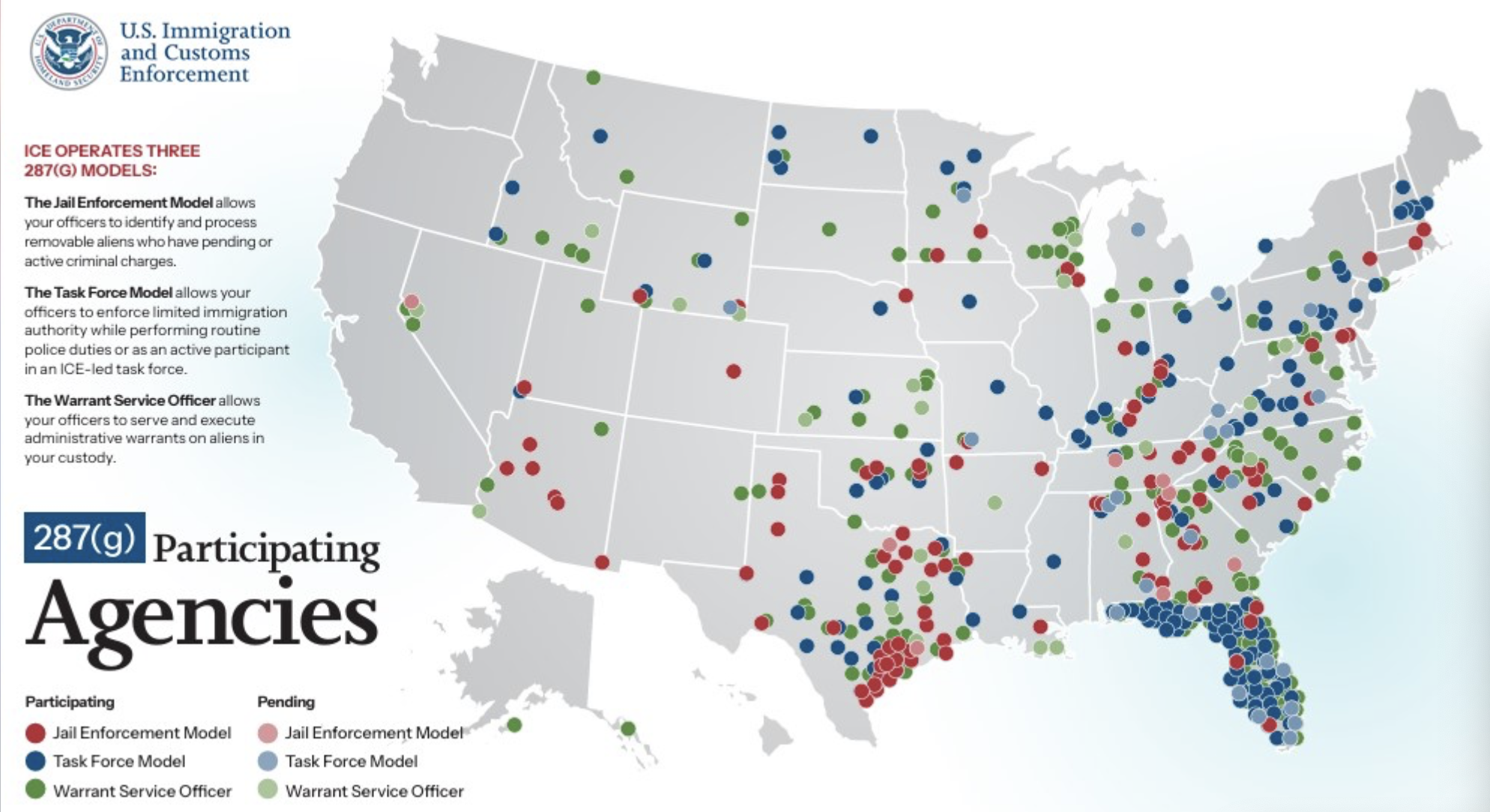
–expanded local involvement in communities across the nation, with the exception of California. The involvement with local authorities had become far more consolidated than the local agencies complicit with federal immigration enforcement at the end of Trump’s first term in office–


Local Agencies Cooperating With ICE/2019
–in ways that were little changed from the first year of Donald Trump’s first Presidency, per Victoria Beckley, across most of the country save California and the western states–the state that was a notable holdout against local cooperation with federal immigration authorities, committed to protect sizable tax-paying immigrant communities who play outsized economic roles from farmlands to metropoles in the age of increased immigration enforcement from the federal level.

Would a model of digital governance provide a needed torque to pressure local communities to comply with federal immigration strictures to fulfill Trump’s new goal? For the amassing of a new ability of government to work unpriced with digital records has led to a major shift in government, far beyond the law or legal precedent, in ways that were consciously shaped by the President’s team. Trump’s use of the Alien Enemies Act of 1798 adopted in times of wartime dusted off of tomes in a legal library to allow interlinked databases to locate and kidnap undocumented as “alien enemies”–a term conjuring a specter of dangers to national security that violate not only due process but the curtailing of all immigrant rights in order to enable mass deportation. And the results of such a dragnet designed to keep civil liberties on ICE was evident within months of the Trump regime, with the chanting landscape that detailed dragnets allowed remapping the arrests of migrants across the states–tripling the numbers of arrests in states not only like in border states like New Mexico or Texas, but combing with renewed vigilance in Idaho, Oregon, Colorado and Ohio to show the extent of federal authority over illegal immigration that Donald Trump could enforce by tools of governance whose disruptive and corrosive effects on our social fabric are unfolding. The tripling of migrant arrests in so many heartland states suggests the fervor of panic and demand for increased demonization of the migrant community that has visited truly traumatic effects.
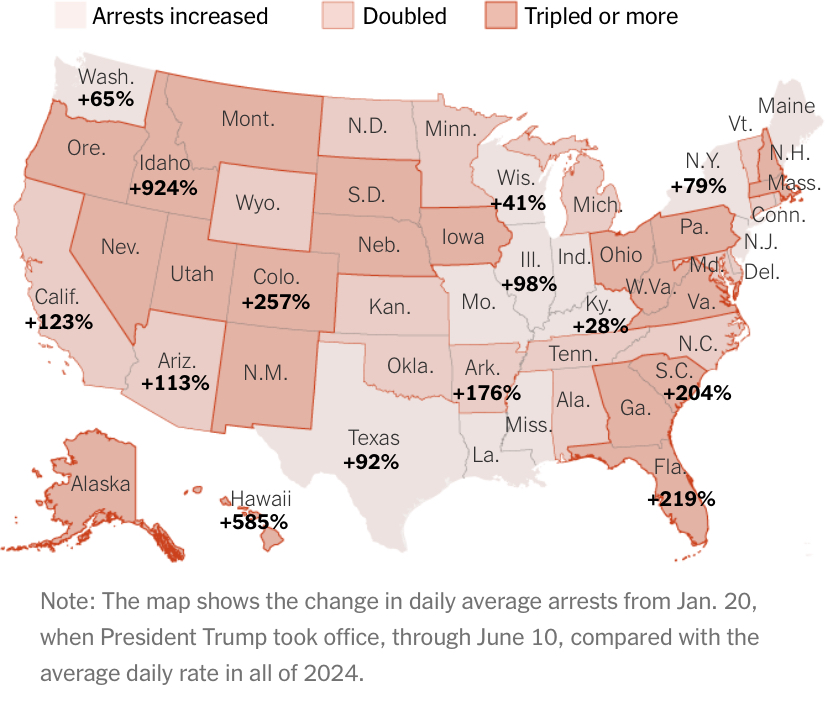
New York Times Map of Average Daily Arrests by ICE to Enforce Migration Policy/Deportation Data Project
We do not speak of such trauma. This is perhaps best understood as a new notion of Homeland that has provided a basis to conflate the migrant with a domestic terrorist demanding to be expelled from he nation. But the landscape of ICE enforcement is a stripping of civil rights that is far from the border, in the first five months since Trump assumed the Presidency, adopting the new priorities of making the migrant a foreign subject without rights or protections: the sheer numbers of arrests are clearly focussed in Texas and California, large states with labor markets for migrant work, of course, as Arizona, but the expanded vigilance of tools of ICE dragnets and arrests across the nation has offered a truly terrifying logic of apprehension, the largest expansions of ICE arrests located in the very states that are most supportive of Trump’s coercive policies in response to immigration, which have bought into and subscribe to the narrative of an invasion that demands increased tools of vigilance and increased curtailing of migrant rights, by the data obtained by the Deportation Data Project of UC Berkeley’s School of Law from federal authorities. The 124% growth achieved since the last year of the Biden administration reflects increased police raids, crackdowns, and the expanded presence of ICE in workspaces, sports stadiums, schools, and criminal courts, that redefined the notion of public spaces and chimed away at the protections sanctuary cities offered, but would have been a map that would have not been able to be seen in its broad results and deep talons without a request for tallies of escalating arrests by the Deportation Data Project. Is this map not the making good on the promise of that the bar graph Trump displayed at campaign rallies?
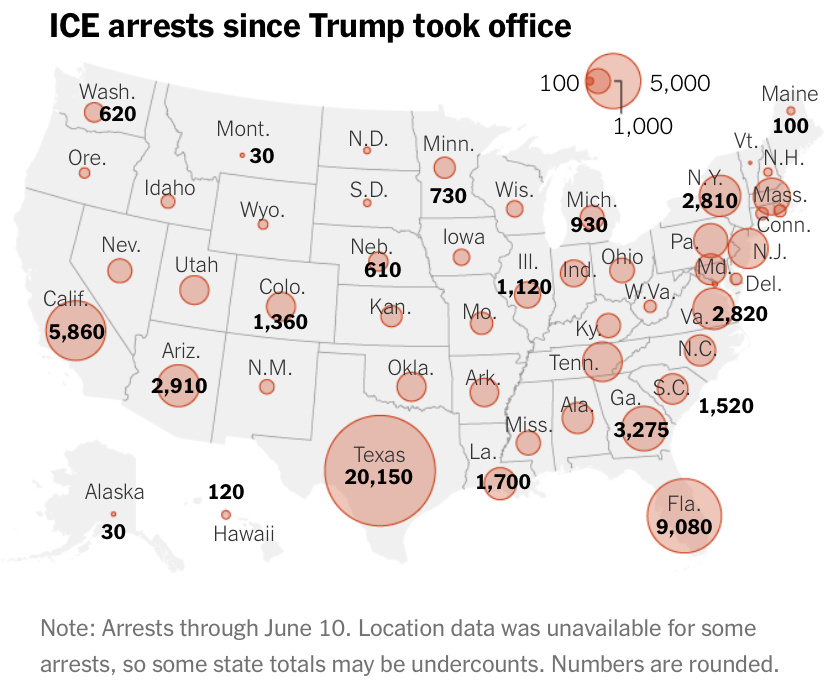
Immigration Enforcement in Trump Presdiency’s First Five Months, January 20-June 10, 2025/ published June 28, 2020, The New York Times
The detailed dataset of federal enforcement of by ICE, Customs and Border Protection, and Border Patrol since Trump’ inauguration present a terrifying landscape of the nation, enabled by a linkage of databases in ways that have fewer guardrails than Facebook or Google. The possibilities for data dragnets open the possibility of weaponized dossiers since March 20, 2025. Far beyond the stated goal of “enhancing the governments’ ability to . . . detect fraud,” the vulnerable particularly exposed to data mining beyond the reach of judicial oversight–a shift that occurred but two weeks after the prosecution of Dogeworker Marco Elez for shared access the Dept. of Treasury financial databases beyond the agency in early February. This is an operation of national purification, and a massive fraying of the social fabric intentionally enacted by policies of the federal government, and the new rewriting of the rights that America is ready to assign and grant migrants, but it is more importantly a toxic demonization of the migrant as the source of ills of unemployment, public safety, criminality, and even economic performance, seeking to deny citizenship or civil rights to migrants too liberally dispensed due to the sheer folly of previous Presidential administrations.
The shift in abilities for data harvesting raises the curtain on the ways that Trump and Musk, for all their newfound enmity, converged not only in outer space, but border security, and the invasiveness of a digital dragnet far more heady even than the possibility of manned space missions to Mars–indeed, the massive budget cuts that Trump made after Musk’s departure to NASA’s budget are on track to dismantle longstanding scientific projects and end the massive advantages of the American space program, and indeed future projects NASA has planned, save the vaunted mission to Mars that seems reduced to a publicity stunt than scientific mission, shuttering over forty earth observation missions by consigning them to the dustbin of history as the space program moves to the private sector.

Trump ran for President with the promise to enable government to “carry out the largest deportation operation in American history,” seizing on the presence of “get[ting] these people out” of the nation, he waxed in California, promising “the largest deportation in the history of our country” as a goal for his second administration–beginning from the towns of Indiana and Colorado he argued were “taken over” by gangs. Trump adopted semantic shift in governance of national immigration policy from January 20 to “illegal alien” into official government parlance from communications to official documents, ending the adoption in the Biden administration of terms “noncitizen” and “undocumented noncitizen” to shift governmentality uniformly across the nation by a paradigm shift of the relation of the government to the migrant that concretely cast the migrant not only as a foreigner but as “alien” to a” rule” of law–rewriting the legal code tacitly by as if legal libraries were searched to normalize the current spate of deportations as if it had precedent in the “Alien Enemies Act” more than the alien spacecraft the unhoused man referenced.

A deeper geography of global security If the dogma of Technocracy does not appear in the monumental epideictic to Musk that was written by recently by Walter Isaacson, the global vision on which Musk was brought up in Pretoria, with lingering ties to the political career of his beloved uncle, his mother’s daredevil father, a heroic figure who had made a fateful decision to emigrate to Canada, perhaps in hopes to find the Lost City of the Kalahari, was central to Musk’s father-in-law, Joshua Haldeman, even if Isaacson’s laudatory tome, Elon Musk (2023), gives Technocracy, Inc. no place in its Index–although the icon of isolationism and power Haldeman treasured must have been as burned into Musk’s mind as he was impressed by a deep awareness of how “risk energized” his uncle as he made yearly treks to the Kalahari Desert in search of riches to plunder from the Lost City,–as if his adventurous credulous unclewas knowingly payed by fraudulent photos by a fabulist con man. Haldeman became an adventurer in the African desert, living outside for months in the desert on treks for one of the Holy Grails of nineteenth-century Anglophone archeology.
As Musk was on the verge of entering American politics, frustrated with Joe Biden and seeking to make an end run to save companies like Tesla and SpaceX, ready to take his own risk by latching their fate to the fortunes of a different administration, the image of security that Haldeman had promoted as an active member of Technocracy, Inc., a doctrine promulgated south of the border, but which as it failed to have legs grew into a force of conservative utopian social populism in rural Manitoba. until Mackenzie King banned the party for being “injurious to the conduct international affairs,” Haldeman left Canada after weathering prosecution for belonging to an illegal organization, seeking the equivalent of asylum in the more congenial atmosphere of the land of apartheid. The image of globalism that sent Haldeman to run for an imagined world in the desert was a response to globalization of post-World War II world, a retreat to the all-white paradise of Pretoria that Musk has managed to recreate in Silicon Valley, and that, in many ways, was on the brink of being recreated in the meeting of the tortured spatial imaginaries that Trump and Musk created of hard borders, racial oppositions, and dystopian futures that Trump had long run on, but of which Musk was in a sense the heir and entrepreneur, turbocharging the digital dragnets across America to locate and deport undocumented individuals for detention and deportation in President Trump’s misguided plan for national purification and renewal, in a new contest between federal immigration authorities and local law enforcement.

Even if Trump’s wall had constructed an apparent barrier against cross-border migration, the actual records of the Department Homeland Security by 2023 had portrayed a terrifying picture in heat maps like the below of actual apprehensions that suggested a border that remained porous,–

Department of Homeland Security Heat Map of Border Apprehensions/February, 2023
–where the apprehensions in fact occurred quite north of the separation barrier of the “border wall,” shown in red lines, that it had infuse provided a porous barrier for cross-border migration, despite its daunting presence in public debate, that was promised to be replaced by the engineering of an AI system of control over the presence of “undocumented” immigrants in the country, demanding that they “self-deport” to get their “papers” and remake the nation’s integrity again, as if they constituted the true legal problems in twenty-first century America to resolve.

The far firmer borders guarded by the military imagined by Technocracy, Inc. the terror of a coming apocalypse as a War of the Worlds–piquing fantasies of the millions of unemployed by being tethered to global price system was pungent that won endorsements from folks like Thorsten Veblen as it promised a “revolution without bloodshed” that preserves a vanishing status quo, getting rid of money in favor of the rationality of “energy certificates” allowing citizens equal shares of their continent’s wealth, a four hour workday, and four day work week of universal income, configuring the United States, Canada, Mexico, and Central America to a preserve of autarkic wealth administered by engineers to allow a all adults between the ages of 25 and 45 to be guaranteed work, to prevent any return of depression and promising the end of the doubling and tripling of unemployment rates as machines displaced workers. Government regulations are inadequate to confront the specter of thirty million out of work within the year as “carload upon carload of automobiles await buyers” and “we see armies marching upon Washington demanding relief,” from “penniless veterans of the World War [who] cry for assistance,” and “granaries groan with loads of raw foodstuffs, while people starve” before the end of work with electronic machines.
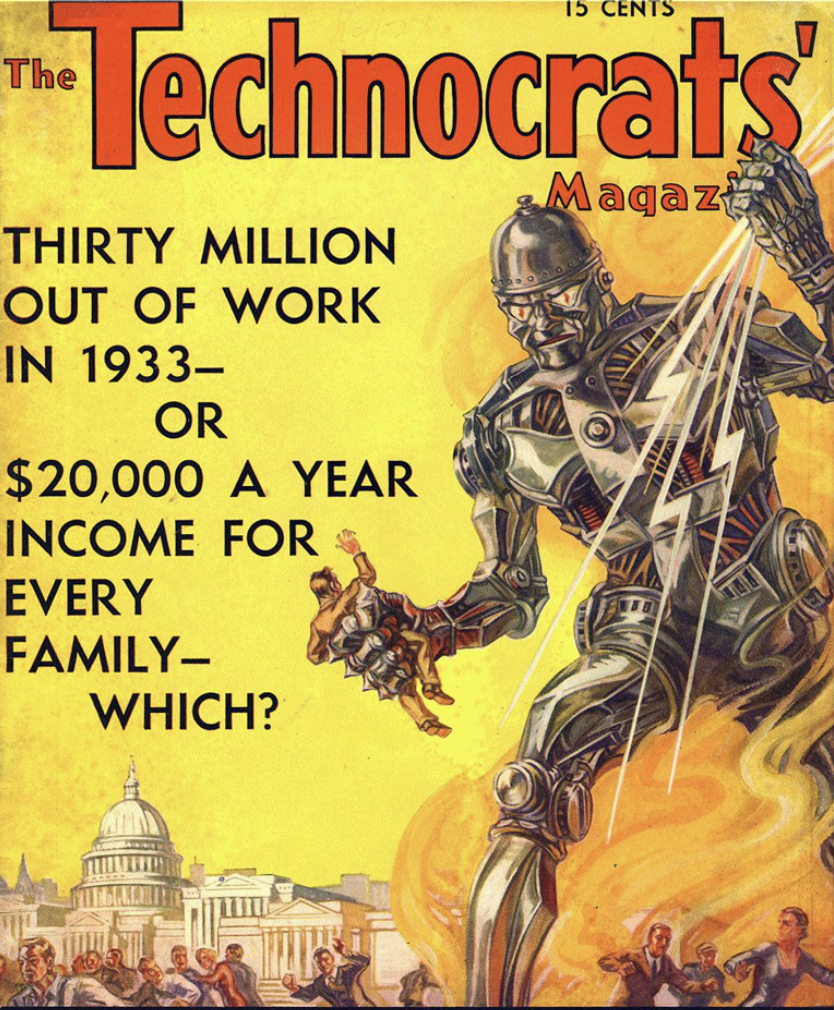
The Technocrats’ Magazine (January, 1931)/Norman Saunders
The specter of an insecure foundation that Technocracy, Inc. promoted arriving led Haldeman to relocate to a white apartheid regime to avoid the censorship of his party,–as much as the Musk family myth Haldeman felt Canada’s government “was usurping . . . vote the lives of individuals” that Walter Isaacson willingly perpetuated Such view echo Musk’s own libertarian creed. Though the New York Times calmly assured readers “Mr. Musk is unlikely to tip November’s vote, social media experts said,” as Musk declared Joe Biden’s presidential campaign undeserving, soon after he met Trump in March 2024, for “facilitating illegal immigration,” having swallowed the logic of MAGA from January 2023 that illegal immigration was a front to win immigrants’ votes, not civil rights. As Techonocrats conjured fears that incredibly anticipated January 6 of “armies marching on Washington” lest liberties be put to a popular vote, Elon Musk used the service once known as Twitter in order to launch broadsides against Democrats’ health care and immigration policies, even before Musk shared his endorsement of Trump’s campaign in July to 200 million followers,– entering political debates more eagerly and directly than he ever had since acquiring Twitter as he rehabilitating the like-minded narcissist-in-chief, by sharing “space” on X with Trump on X.
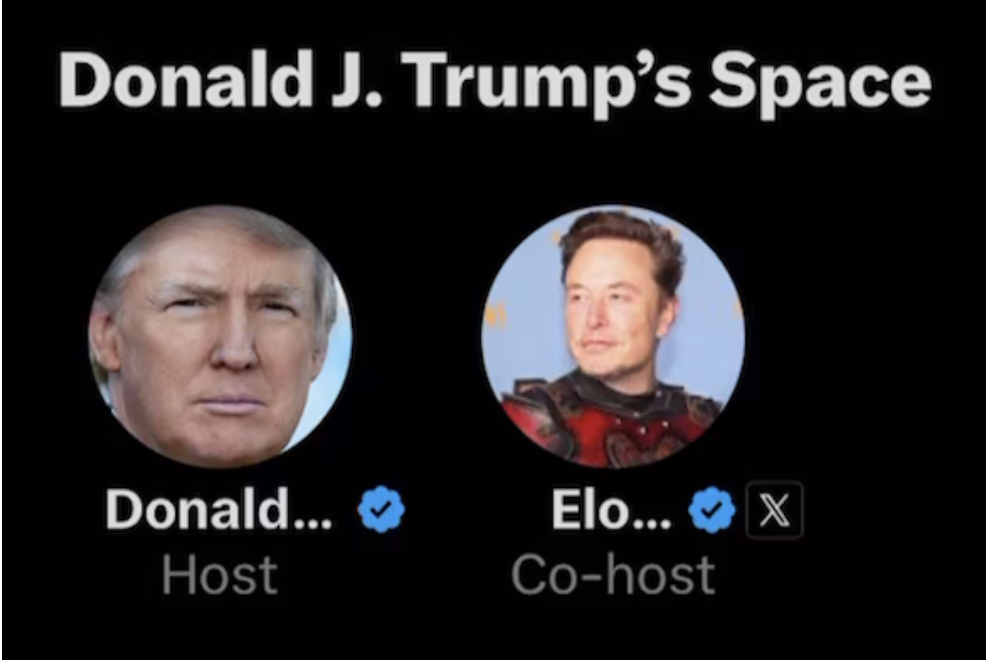
Whether the big breakup of the two BFF’s will cast a shadow on the world or a pall on the economy or not, the man who Musk may have tipped his had in vowing to “love as much as a straight man can love another man” a week before Valentine’s Day proclaimed to what is still the twittersphere as a declaration he engaged exclusively in fucking women,–or in fucking them over as they gave birth–was hardly a mature message, or designed to prove his political mettle. The ways that Technocracy traded in fears of a coming civil war that almost seems to have prefigured January 6 riots in response to the fears of curtailing liberties and a right of all to work is indeed a scary pretext that promised to make the world safe for drably suited white men to “perform” work. The fear, launched at the height of the Great Depression in early 1931, promising to prevent the decline of work by a new revolution of automation led to fears of an impending loss of million mens’ livelihood, a disruption of family values, and the risks that white men might actually come to face.
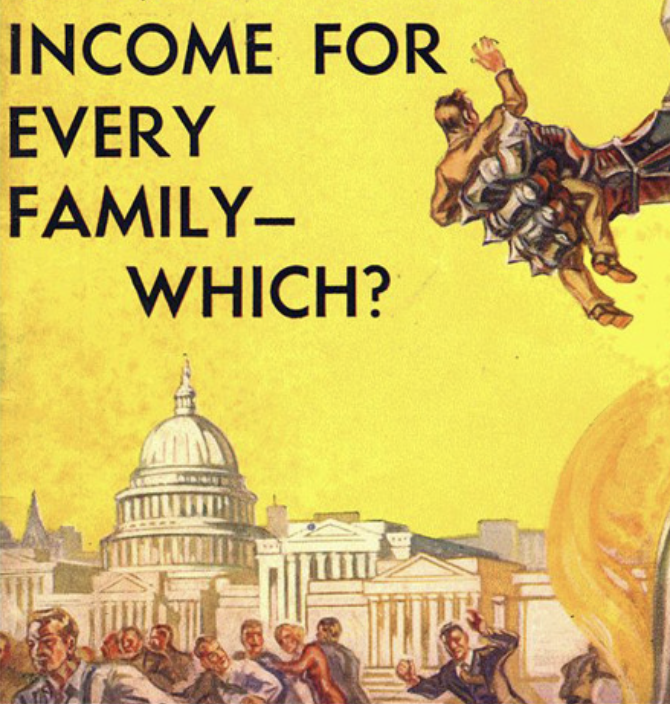
Technocrats’ Magazine/Norman Sanders, Minnesota Graphic Arts (1933)
While Musk appeared close to Trump’s innermost orbit in ways that seemed to stun the press with a narcissistic bonanza that passed as American greatness, freer of political norms than Trump himself, he became an image of the dismantling of the old bureaucracy and managerial class, replacing bureaucrats with glee in exchange for data whiz technocratic experts who fired all Inspectors General, special counsels, or ethics offices with oversight over governmental practices: the end of government as swapped an eagle-eyed vigilance of the Office of Government Ethics for an acronym that dispensed with the idea of auditors or Inspector Generals. This wasn’t a joke, or flight of fancy or a whimsy, but an emptying of ethical norms obscuring eagle-eyed vigilance.

By offering Trump considerable energy in the home stretch of a Presidential contest, Musk offered a sheen to Trump 2.0 as brilliant as the hoods on any Tesla S parked before the White House. However, if Musk managed to energize the MAGA crowd, and be energized by them, the mid-life crisis he may well be experiencing led to a strange bedfellow indeed, enticed by the promise to emerge on a global stage with gusto and Dionysian ecstatic abandon, far beyond even “unbridled enthusiasm.” Musk was approaching rhapsodic abandon of escape velocity as he entered Trump’s orbit, modeling rapturous enthusiasm in way captured by a New York Times photographer long covering the Presidential beat–as if with studio lighting to set out in the rosy fingered light on a pre-election rally that promised to be an epic journey,–and did double duty as an energetic jpeg meme. Whether Trump was profiting from Musk’s presence,–or whether Musk’s jump onto the stage of a political rally was a declaration tethering his engineering smarts to a Presidential race.

Doug Mills/New York Times (October 6, 2024)








 Musings on Maps
Pingback: Appeals Court Blocks Trump's Wartime Law on Venezuelan Immigrants - Writ of Mandamus Lawyer in New York, New Jersey, Connecticut & Washington D.C.
Pingback: Judicial Review and Mandamus in California’s Fight Against Federal Immigration Overreach - Criminal Immigration Law Firm in New York, New Jersey
I think it speaks volumes that as Trump seeks to leave a global imprint he was denied in his first term, that he turned to a man like Musk, whose sense of global politics is so limited and skewed. This is a case of the inexpert leading the inexperienced, clamoring for authority with little priorities than their own self-aggrandizement.