
If both fantasists’ ventures into forested woods were shaped by Morris’ championing of northern oral legends, perhaps impressed by the disdain Morris showed to Richard Wagner’s operatic staging of the Nibelung in his Ring Cycle. (He responded to the first English edition of Die Walkure by not even reading the translation as he found Wagner’s “theories on musical matters . . . absolutely abhominable [sic]” and regarded the transformation of “such a tremendous and world-wide subject” to the operatic stage “nothing short of a desecration” of the legend he increasingly regarded as uhis own discovery, as unusited for the “gaslights of an opera–the most degraded and rococo of all forms of art” to the voice of a “sandy-haired German tenor.” The epic of northern landscapes. Morris called Wagner’s Ring left both medievalists careful to preserve their own epic tales in the grandeur of the setting Morris had envisioned for oral tradition as a vividly immersive map to do justice to Morris’ vision of a search for a green paradise in which nature, God and man revealed their harmony, a search Morris had traced in his own woodcut map in the Kelmscott edition tracing the riverine path through “gardens ever blossoming” of the forested Wood Masterless through which the Wanderers traveled, enchanted sword in hand. Lewis loved the Mortician prose that conveyed “watercolor effects” in its “northern bareness” in 1950, describing a literary and poetic ideal that, save for a sprinkling of archaic words and medievalisms, “departs from that of modern prose in the direction of simplicity” and “obeys the doctrine of generality” rather than indulging in descriptive detail.
One could say as much for the bare poetics of his map, and the landscape it opens of clear riverine courses that led to the ocean port where the Wanderers arrived in the narrative poem that made perhaps the most impact on Lewis of all his writings, and the clarity of its map.
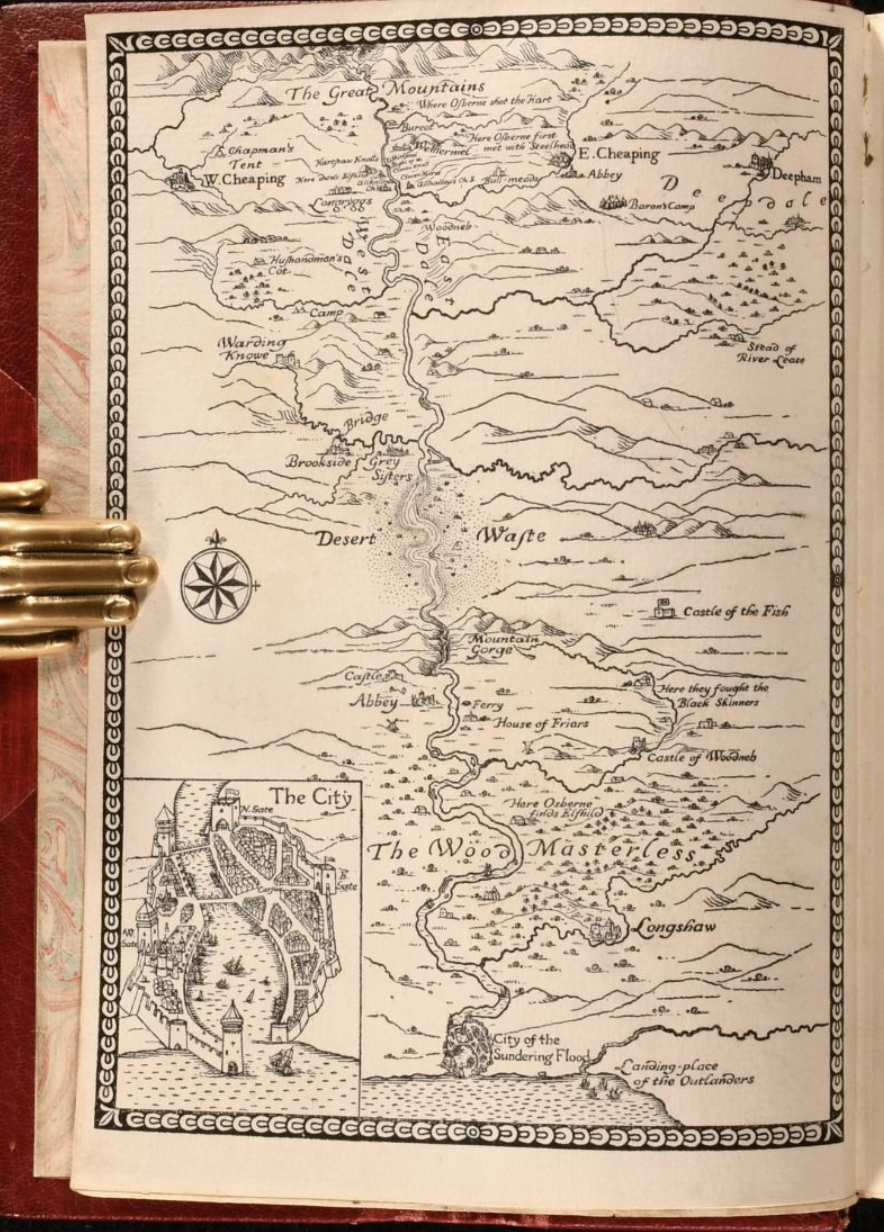
While the literature that sprung from the last map of Morris’ printed work is striking, the imagery raised a challenge his followers sought to come to terms with a similar pictorial craft. Morris no doubt felt the visual immensity of the landscapes he saw in Iceland unsuited to musical evocation. In order to craft a Morrissian world with sufficient compelling plasticity, given his lack of training or conviction for visual arts, Lewis desperately sought an illustrator for his own books, primarily hoping they might to appeal to children, more than convictions of needing orientational maps.
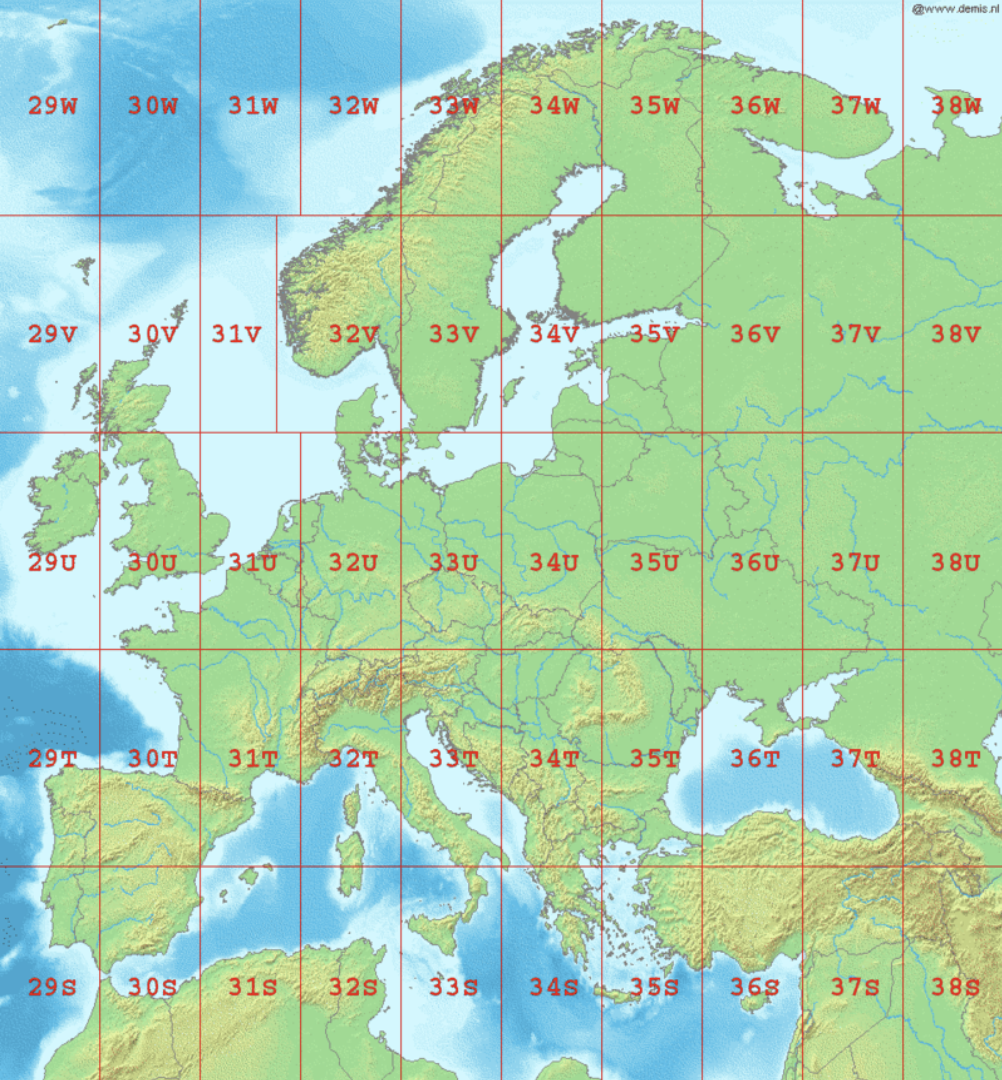
7. Neither Oxford medievalist valued the cartographic skills that Baynes honed in wartime working for the Admiralty Board, drafting bathymetric charts of coasts and oceanic expanse for the Royal Navy during the war. But the spaces in which both authors situated their work can no longer be separated from her cartographic skill, as much as Morris’ mediation of Iceland as a . She invested the coasts maps invested with a persuasive texture and power that she would expand in later years, as if she realized their addition ensured a powerful counterweight to the uniformly gridded zones in which wartime Europe had been effectively remapped.
The specific expertise of the illustrator that Lewis chose allowed the world to unfold in far more compelling ways than he ever seems to have recognized. C. S. Lewis may have been surprised that the illustrator whose skill he considered less talented than he expected from an illustrator of his expanding set of fantasy books might move readers to the other green world whose forests and shores he imagined as enchanted. By the time that a cartographic apparatus to Narnia was added in what he expected to be the final of the seven variations on fiction that offered variations on the portals to an alternative world, the map has remained and endured–and was popularly expanded after his death–as an icon of and portal to the very world that he had imagined himself to have single-handedly created.






 Musings on Maps
Very eager to read this post—looks delicious! Can’t wait to finish it!
!!!!!!!!!!!!!!!