
The technocratic nature of Musk’s hopes and aims may have been modulated by the outsized ambitions in Silicon Valley. The peninsula is an extra-governmental economy and space apart, animated by the rhetoric of transcendence, totality, and mastery. But the technicians’ logic in Musk’s case was more clearly rooted in a complex family drama, a genealogy of flying across borders, and of heroic machines of management and engineering, born from the curated slide carousels shown in Pretoria, but with deep roots of heroism and escaping international law, personified in the glorified missions and transcontinental airplane flights of the aerialist and serial entrepreneur. Elon Musk long idolized his elegant grandfather, Joshua Haldeman, father of May, who seemed to have been a father figure: Haldeman spent his life defining a career not only on the borderlands of Saskatchewan as a cowboy, but as an enterprising risk-taker who after work as the test pilot for an Italian engineer who had tooled propellers in Paris and Milan after training in fascist Italy, had designed aircraft used in Lindbergh’s great flight manned flight.
Joshua Haldeman had defined his political sensibility as a prophet of Technocracy, Inc., in the late years of the Great Depression, but after the decision of Canada and the United States to enter the “European” war that became World War II led him to leave the western prairies of his farming roots, Haldemann had redefined himself as a modernist by bringing his young wife to South Africa shortly after Canada’s entry into World War II, no doubt fearful of inevitable economic collapse. Haldeman continued his career as a chiropractor of note but also as an engineer on the side, a staunch resister of internationalists who hoped to definitively hunker down outside Canada’s borders by 1950. After having boosted his trade as a rodeo man to flying in air shows and carnivals across Canada, after work as a rodeo man dried up in the Depression, his success as test pilot for Bellanca Airlines, who had designed Charles Lindbergh’s plane led him to try to replicate the sudden success Lindbergh won with a follow-up transatlantic flight of nearly 33 1/2 hours aloft, following the same northern route as Lindbergh, who must have been his idol–
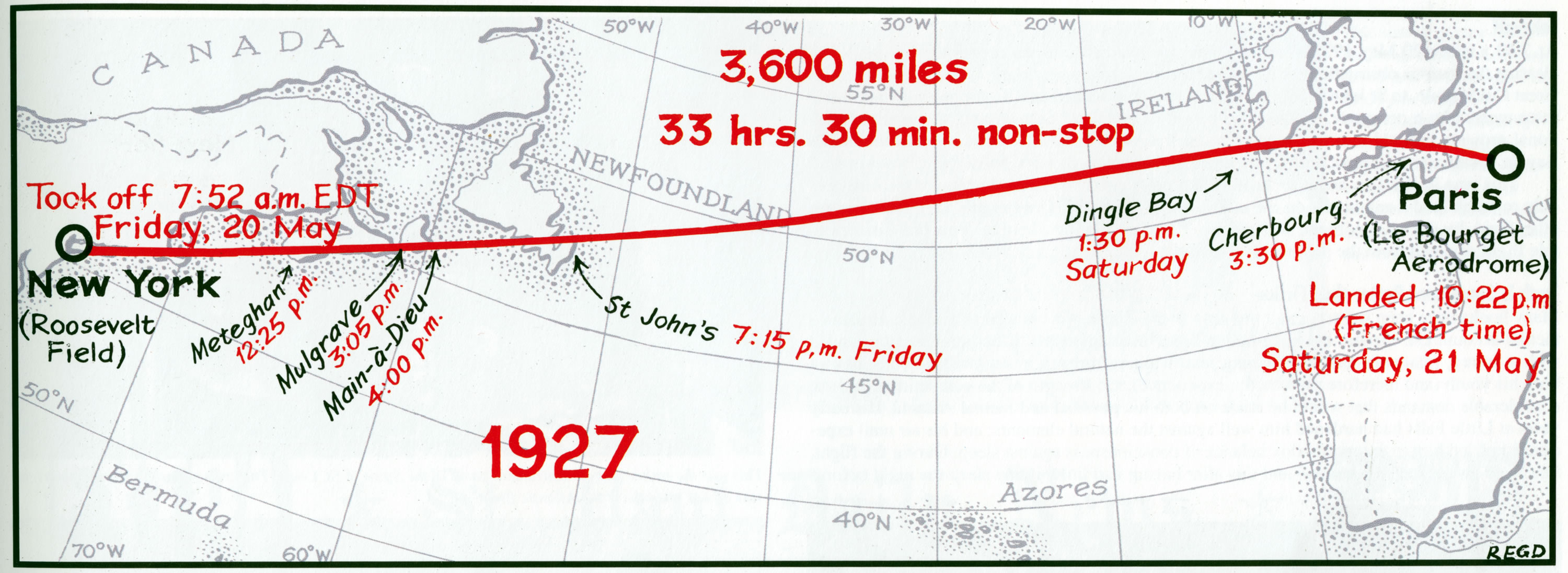
Transatlantic Arctic Great Circle Route of Charles Lindbergh that Joshua Haldeman quickly followed in 1927
–if he never won the global fame of Lindbergh, though he may well have thought he deserved it, and desired a similar sort of global recognition. Haldeman would have been an expert in flight paths on new map projections, having piloted the first flight in 1929 from Ontario to Cuba, as his politics followed Lindbergh’s. After all, he had steered along the Great Circle Route but five months later in a single-engine jet from Long Island to Paris, moving to Pretoria in 1950, to seek a better political climate untenable, winning fame with his wife Winnifred flying over eight times the distance, from Africa to Australia around the coast of Asia, and 8,200 miles of low flight desert flights hoping to find the long rumored Lost City of Kalahari in a near-obsessive manner, making a monthlong trek every year in his small airplane, without mapping tools, hoping to find the legendary city as he hunted for his own food in the Kalahari desert, sleeping outdoors as he hoped to find the lost treasures of the city of legendary lore. (Musk was almost apologetic about how Haldeman was shown a faked set of photographs of the “lost city” in Moose Jaw, Canada, as a child, as he told Isaacson, explaining how he accepted the delusion even if “this fabulist showed my grandfather pictures that were obviously fake, but he became a believer and decided it was his mission to rediscover it.”)
Even before running Zambian emerald mines, Haldeman gained some fame the belied his status as an outsider. He had bought his plane before he knew how to fly it, trading his car for the plane he saw in a farmer’s field and later packed it into a crate when he moved to South Africa in 1950–and flew over the subcontinent in search of a new place to call home. The global map of Technocracy was also bought to South Africa in his mind, and the image of remaking the world. As if in hopes to tilt against the internationalism that soon gained its iconography in the Universal Transverse Mercator of airline pathways after the Second World War, the map of Technocracy, Inc. rearranged global economy and politics on a rational system that technocrats might be able to accomplish to prevent the dangers of internationalism from taking hold. Haldeman followed a distinct path to lock fame, having cultivated his own fame of surpassing borders that were preserved in the entertaining curated family slideshows that not only Musk’s father Errol but Musk himself saw as a child, as they were nearly legendary. For even without finding the lost city, his emerald mine had a side business vaunting skills beyond war pilots. Was he a model for the intense energy with which Elon Musk has sought to grow Tesla on autopilot in a sleek car lacking pedals, steering wheel or brake or rear view mirrors? Hardy Joshua Haldeman, a one-time farmer and rodeo star, would win lasting fame beyond his family for not flying without radio communication at all in his flights in a single-jet plane across the Kalahari or over Asia,–preferring to run risks of daredevil flying, and believing himself invulnerable, until his plane tragically crashed.
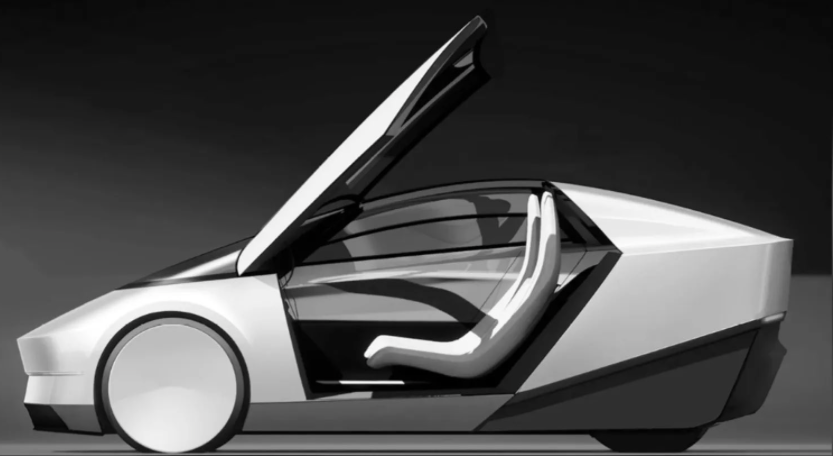
The autonomous vehicle was in a sense Musk’s centerpiece of promotion rom his arrival at Tesla., as he identified his authority with the self-driving cars that were so eerily independent of human navigators or indeed human eyes. Even if Musk had to admit shamefacedly after announcing the arrival of Full-Service Driving mode for years since 2015 that he might well be “the boy who cried FSD” on social media, his promise of reducing commute hours in a car that featured multiple monitors, WiFi, rotating chairs for conferences, in a driverless Robotaxi has been an elusive object of desire in a world of urban sprawl and massive commute times no longer confined to Silicon Valley or the 405. Did the significant attention to design and type downplay its risks of driving based on an AI map? These risks may be minimized by the readiness of Tesla fans to accept the lustre of the rather hackneyed futurist car that seems to meet our expectations, but lacks much sense of a real relation to the road. Has the trust in devices that offload our need to pay attention to the actual world appealed as a promise to allow the Tesla AI to guide us to a smoother future of greater ease, if one that is rooted in economic inequality, but one able to convince us of its future by his exuberant promotion of the alluringly sleek vehicle of suitably futuristic design.

Futuristic Tesla Driverless Cybercab with no Steering Wheel, Featuring Large Touchscreen
Musk may have faded from the spotlight of cabinet meetings or cutting government, while loosing funds due to his entry into national politics, his net worth even precipitously slipping $130Bn in the first quarter, as AOL leadership of Tesla was led to the worst quarter ever of Tesla stock, as he shed millions and political prestige in campaigns, before his 130 days as a “special government employee” wrapped. Musk tells buyers that ” to solve full self-driving, you actually have to solve real-world artificial intelligence, which nobody has solved,” but used sleek the promotion of the imagined vehicle as cyber trucks wait unsold in lots on the sides of highways.
One wonder why the neofascistic sleek anonomity afforded by the cybertruck’s dark windows will ever be considered either a compelling or good model of automobile design, without need for a port but purely wireless charging, the robotaxi set a new standard for the car: the grey rendering of the ultra-sleek, two door hatchback was a new form of car cast as a new phase of evolution, without any features needed to be grasped by the human hand–the engineered dihedral doors with no handles and absence of steering wheel seemed a definition of the human driver as not now needing to use their hands for anything, as if the car’s structure had evolved to be fully at the service of drivers by the planned efficiency engineered entirely by the human mind..

As doubts about his the materialization of a robofleet grows, his paring of government sheers off regulations to win a foothold for -both SpaceX and the long promoted Tesla autonomous vehicles. Silence about a Robotaxi fleet may stave off projected declines in TSLA from shedding share value, despite tariffs on foreign-made cars, if the share remains roughly what it was in October ’24,–erasing the entire post-election rise in share value. Musk’s showboating new logos on MAGA caps. But the goofy feature of cabinet meetings streamed on X push the envelope on self-redefinition as he glows in the label of a “patriot” but seems a sycophant, channeling My Hat’s too Big memes with braggadocio suggesting their outsized roles, if those dorky oversized hats aren’t metaphors for Trump’s trademark ALL CAPS penchant–as outsized as Trump’s promise of real leadership. Or is he not offering the sort of hands-free driving that Musk has promoted as the ideal driving experience that Americans truly desire?
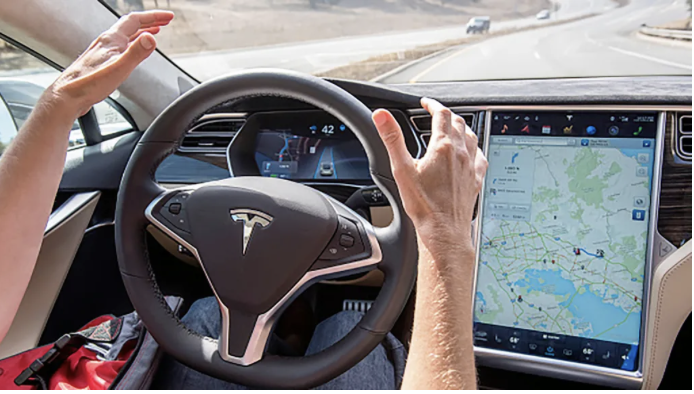
Member of the Media Test-Driving the Tesla S, equipped with Autopilot Features/David Paul Morris
But the zealousness Musk has shown for a dedication to spent his weekend not at “great parties” but rather “feeding USAID into the wood chipper” stopping billions of critical assistance reaching destinations across the globe, from vaccines to medicine to environmental projects of landscape sustainability or farming initiatives paralleled an Executive Order “pausing” foreign development aid worldwide.
But the dismissal of conventional skills for government–laws and oversight are out; no guidelines are in–of the “nimble,” “bare bones,” critical functions of cutting waste in the Trump White House, as the amount he had boasted to trim of at least two trillion dollars Musk once predicted from the “wasted 6.5 million Harris-Biden budget” has contracted quite dramatically to two million, with huge sacrifices of shuttering socially and environmentally important programs and oversight. The myths of the allegedly wasteful and irresponsibly profligate “spending binge” of an administration that deliberately grew the federal deficit and size of government. The claim that the election was a mandate to streamline government and cut discretionary spending on clean energy or Ukraine or Medicaid expansion. The uniformity of the faux expertise that Musk and Carlson pedal have gained a rather terrifying currency in Trump’s White House as tools to accelerate his sovereigntist vision: if it also suggests an almost childlike obsession with power, leading to his prominence in Trump’s “team of people who are incredibly passionate about the issues impacting our country.”
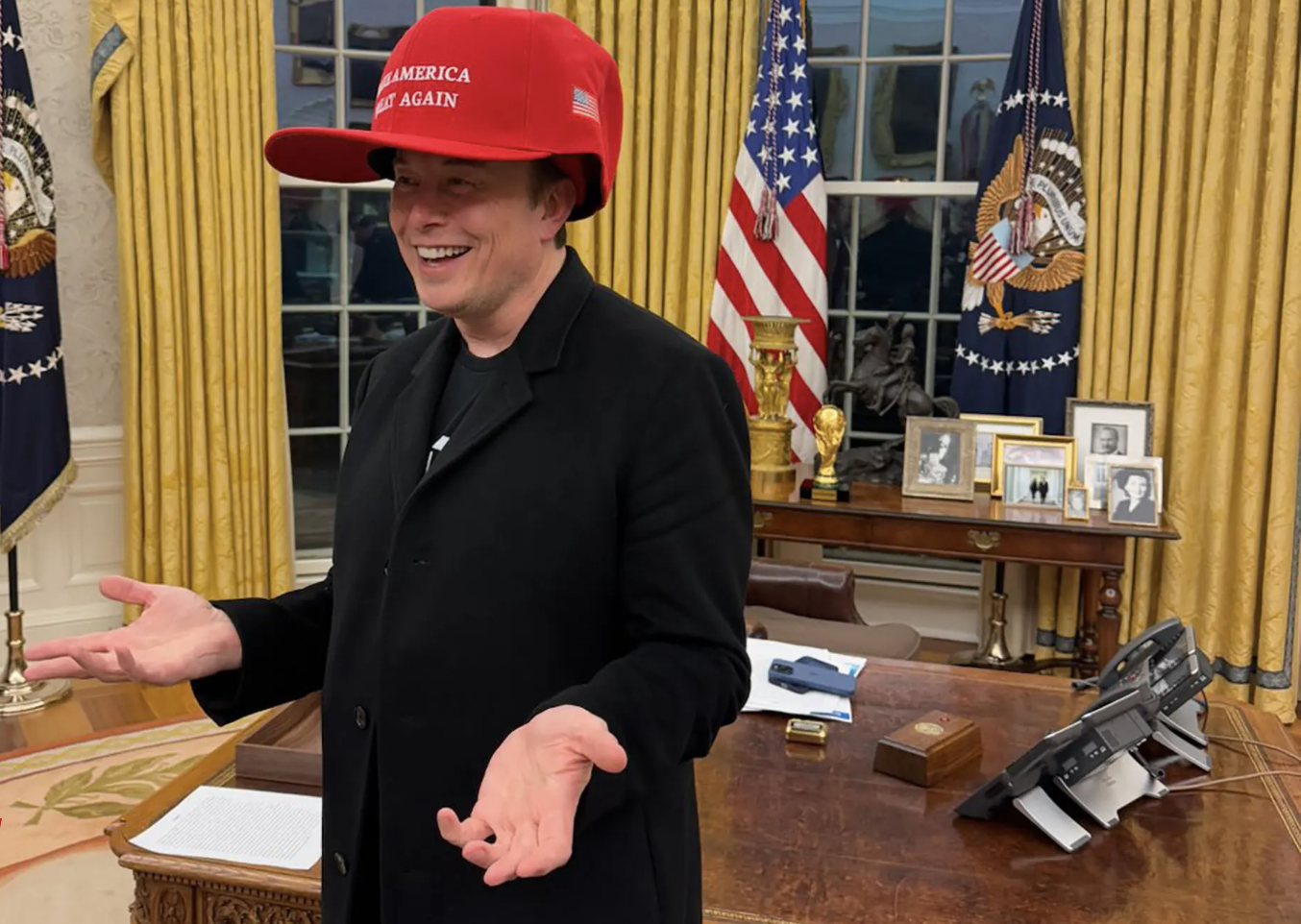
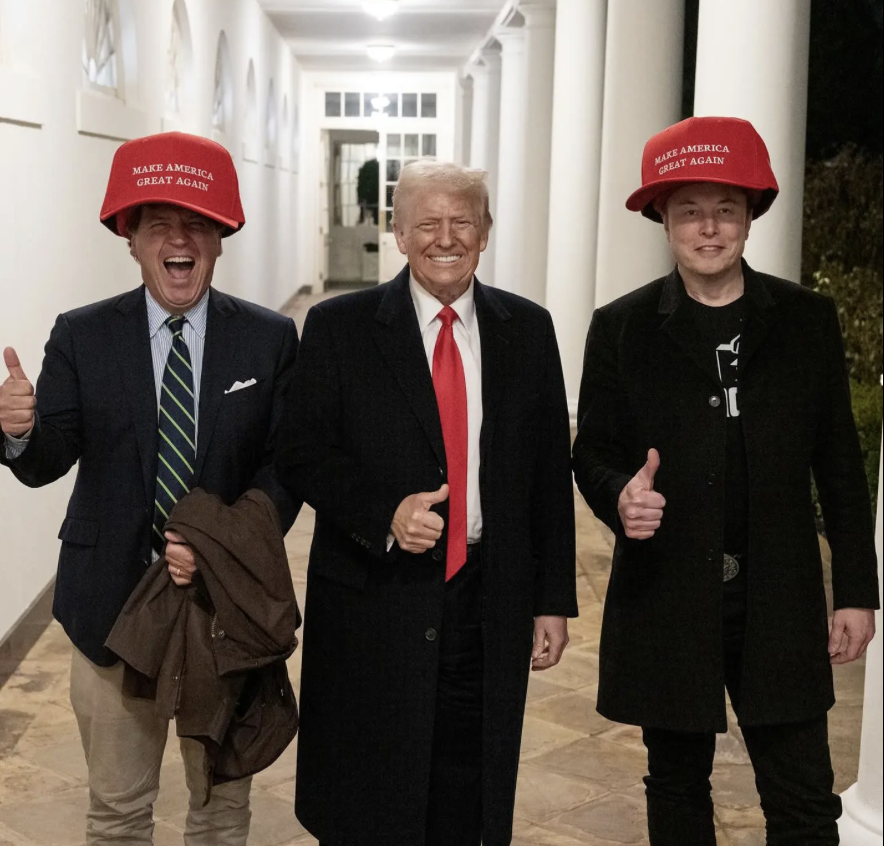
Elon Musk’s Grin Beneath a Massive MAGA Hat in White House Oval Office/X
The passions for countries often transcend borders. Musk’s admiration for his Technocratic grandfather, Joshua Haldeman, has been ricocheting in the news even as Musk’s own political star seems in decline, as a model for his political ambitions. Musk’s own technocratic instinct attracted him to promoting expansive projects as Tesla, the car company he began to fund twenty years ago, a year after its founding, expanding Tesla Motors beyond a proprietary motor and battery to sensors and software in the past decade to luxury market by its futuristic brand. Perhaps the problems of securing funding from the Department of Energy for its technical engineering innovations led to an interest in government and regulations–engineering technological innovations led to a crucial cutting of regulatory red tape to “open the playing field” and loosen, safety standards, encouraging a libertarian streak. The prioritization of getting his AI Roadsters on the streets as soon as possible may have left the nation in the red, as shooting a starship to Mars, but the scale of his hopes seem embodied in the oversized cap he was sporting on his expanding head. Many wondered how this reckless man ever got into the Oval Office . . . in a scarier defining images of Trump’s first hundred days, with the President taking a second seat, as Muck prepared to leave the scene after the government was downsized to get to his real business priorities again.
Maximalist goals were long Musk’s ambitions. Despite releasing beta versions of self-driving Tesla updates for cars and trucks, the promised arrival of Autonomy Day receded to August 8, 2025. The new date may be due to the bully pulpit he has to promote his brand, as Musk seems energized to seek early approval of the allegedly growing precision of his own fleet? Musk will desperately seek the Highway Traffic Safety Administration’s approval lest it continue to recall autonomous vehicles–a reason to gain Trump’s accolades and approval, as much as space exploration projects via Space X! The losses of billions might be compensated by the billions of investment through the Trump’s term, even after he leaves his inner circle. But inviting Musk of all people to cut costs of the very government watchdogs may eliminate obstacles for the new driverless car’s release, safety standards notwithstanding, as well as lift limits mining heavy metals for Tesla Li-Ion car batteries, or access to China’s lithium refining in tariff wars. If the nation’s interests is the same as Tesla’s, and if “big cap” might signal a high stock market valuation of TSLA even as X has regained value with new equity partners, despite dramatic revenue drops, or just may be a case of ego obscuring its lack of real cash flow, as if they might be erased by the bully pulpit of the U.S. Presidency, where Musk went bananas posting photos of himself in the Oval Office at all hours.
The overweening drive to technical automation both of AI driving by a neural network is a mapping resource that is without people–evaluating “road” or “not road” from onsite images or aerial maps–but that provides a technocratic form of mapping that Musk has long continued to promote, but may have found a new form of government contracting to support, after his “watchdog financial agency” has helped hollow out the budget to make more “efficient” for preserving the extremely fat contracts SpaceX demands, and are difficult to put together from corporate financial backers.
Yet the drive to automation and engineering of artificial intelligence mapping systems are a surprisingly close fit with the monitoring of migrants’ presence in sovereign space that advanced in the time since Trump 1.0, as new models of sovereign protection were increasingly refined in data-driven ways as projects of engineering–rather than questions of law. The most surveilled site of the nation is already monitored by a battery of Predator drones, sensors, infrared cameras, and towers equipped with radar as well as mobile surveillance trucks and maned helicopters: but the shift from remote monitoring, a practice that expanded in Biden’s Presidency from fifty-five towers built as a “virtual wall” on the border, are being replaced by the mobilization of troops, able to support the inadequate deterrence that the removed feeds of surveillance cameras provide to border agents.
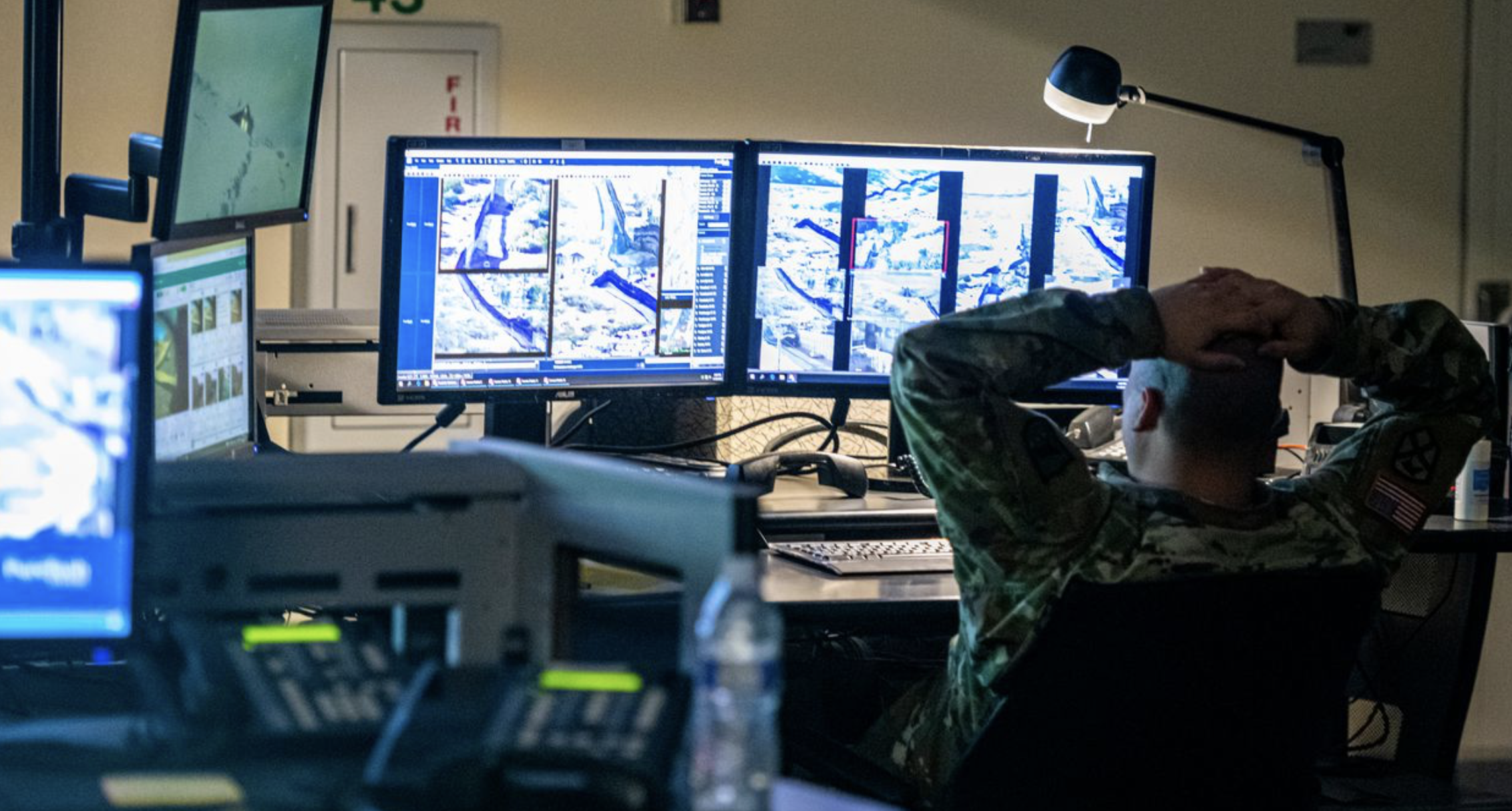
The shift of the border from a nation of laws to an apparatus of surveilling immigrants has developed in ways that fit terrifyingly well with Trump 2.0. A demand for such mapping systems lie on the front burner of the Trump 2.0 agenda in increasingly maximalist ways, from the border to Mars. Did the cabinet member with that most patriotic of portfolios or his team of teens help tech tools to monitor the locations of immigrants who reported to ICE as a way private companies might offer robust digital tools to monitor their locations in President Trump’s new administration.
Instead of allowing applications for for work permits by the CBP One App to be processed, to expedite immigration to the United States by humanitarian parole from countries as Argentina, Haiti, Cuba and Nicaragua, the shuttering of national borders has been followed by increased use of data surveillance to target and apprehend suspected undocumented migrants, and even to ship those petitioning for asylum or humanitarian parole from other countries to surveil populations. The increased use of data flows are surveillance tools for apprehension by ICE began early, from digital surveillance tools including geolocation by ankle monitors by mapping software. The new interest in hovering up data on undocumented immigrants to coax them to voluntarily self-deport: while CBP One allowed advocates of immigrants by lawyers or NGOs, the digital portfolios amassed by the state provided a vindictive system of deportation enhanced by data-driven tools. Texas Republicans who have long patrolled the border and built border fencing–and were the proponents of anti-immigration–had openly disdained mobile apps as worthy tools for framing pathway to citizenship, ridiculing “the Biden administration’s attempt to manage the southern border by app.” But the biometric data the app amassed allowed afforded an ample database of biographic data now in possession of the government, including geolocation data, to curtail migrants’ civil rights that are at risk of streamlining deportation processes as their tools of surveillance.
By engineering “smart” deportations by data-driven tools, the Musk-Trump regime is committed to racing the presence of migrants to drive each and every “illegal” outside the nation’s borders,–even to remove them to camps of detention beyond sovereign territory to reduce their rights or abilities for legal redress in a newly maximalist sense of the nation that extends far beyond its bounds, engineering new systems of security far beyond geographic borders, that seek to redefine the nation-state’s sovereignty. Late in Donald Trump’s first Presidency, in 2020, Clearview won the funding from Musk’s comrade from PayPal, Peter Thiel, to extend services of facial recognition software. Their “faceprint” is fed into a search engine able to scrape images off social media, used by Immigration and Customs Enforcement from 2020 by a “probe photo” to scrape social media platforms for messages or posts critical of Trump, police databases, or surveillance of protesting crowds to create a profile of those deemed “anti-American.” The algorithm of digital surveillance Clearview offered, per Mother Jones, in the Biden Presidency became a tool for ICE to become the most widely used private algorithm of facial recognition among federal law enforcement agencies–not only to screen immigration applications even to conduct police investigations, without any civil rights oversight, to mine detailed profiles by biometrics that often target minority immigrants.
The work of Clearview is of a piece with the integration that has been achieved on DOGE laptops of government databases long kept separate of earnings (Internal Revenue Service), Treasury Dept., Health and Human Services, and Social Security, ostensibly to prevent ongoing fraud, without any regard for personal privacy. The funneling of this new mega-database suggests a huge grab of personal data to integrate from dozens of databases into a master–“one ring to rule them all”–that is framed as an impartial platform in Silicon Valley assertions that tech is neutral, and objective. But the increased targeting of immigrants, the most vulnerable population, has set a standard for electronic profiles compromising privacy and civil rights. The most vulnerable are come for first. The master database will exist to amass biometric data for new ends of mass surveillance, in an era when “Our administration will not rest until every single violent illegal alien is removed from the country”–a pile-up of modifiers that pools long partitioned siloed datasets, to strip the need for court orders to make arrests, almost as overdetermined as the “person-centric repository of biometric and associated biographic information provided by applicants, petitioners, requestors, and beneficiaries” of immigration to create a central hub of all data on migrants in a “mega API” in a centralized database that has never existed before for ICE.
The honing of granular tools of nationwide monitoring of unauthorized immigrants became a priority in national databases, as they are without legal representation. And at the same time as Musketeers have worked furiously to hollow out the IRS and EPA, and to steal their databases on fugitive laptops, civil rights are dismissed and brushed aside. The expansion of a mandate for detention of undocumented migrants by the Laken Riley Act has encouraged increased surveillance of undocumented to track several millions by digital ankle monitors–potentially–expanding biomonitoring tools first introduced in the Biden administration as cheap tech tools to expand border and immigration enforcement. Privacy concerns are deferred as the demand for ramping up removal ops without warrants in growing raids. Although electronic monitoring may be an artifact of an earlier administration, the use of smartphone apps like SmartLINK as tools of surveillance in sanctuary cities, relying on digital technologies without any need for local law enforcement given the increasingly robust integration of technological tools–a sense of digital surveillance of immigrants that would break down the judicial obstacles more easily as God broke the barriers surrounding Jericho at the blowing of battle horns (Joshua 6:1-27).

ICE Watch/Immigrant Defense Project, 2022
One might even see the precursors of the cross-agency Large Digital Database that DOGE has constructed in the use of Large Language Models offer an ability to track millions of undocumented “aliens.” Trump wants to brand these immigrants, without evidence, as members of criminal gangs, to demonize their arrival and justify their targeting as they are without many rights to protect privacy or sensitive information, and the protection offered at schools, hospitals, and houses of worship is set to erode before digital tentacles rooted in geolocation tools. While the random capture of cell phone data was long harvested and “geofenced” for data tracking, allowing “locations of interest” of the cel phones or tracking apps on migrants tracked after being released from federal custody, the Heritage Foundation captured data from some 30,000 cell phones to track migrants across the nation from NGO facilities. The resulting expansion of the frontiers of surveillance in rather terrifying ways that the Laken-Riley Act–after the twenty-two year old jogger tragically killed by a Venezuelan man during the heat of the Presidential election generated intense anti-immigrant legislation as conservative immigration groups pressed for as a point of inflection in national debates on immigration.
Laken Riley Act served to manufacture and foregrounded the danger of a “Biden border crisis” as it was signed into law with a mandate for increased rates of federal detention. The increased high tech systems of immigrant surveillance, as if suddenly finding a use for the expansive and intrusive mapping technologies to track immigrants whose future detention provided the logic for arrests, by tracking paths by which NGO’s “transport tens of thousands of illegal aliens to the interior” to over forty states–“geofencing” NGO facilities traced to hundreds of congressional districts for the pointed reason of “securing America’s borders by tracking illegal aliens across the United States.” As Trump has vilified USAID as assisting migrants to enter the nation illegally, the curtailing of funds to NGO’s that support civil rights are argued to provide a way to end the presence of migrants crossing from the southern border, whose presence the tracking maps provide alleged evidence.
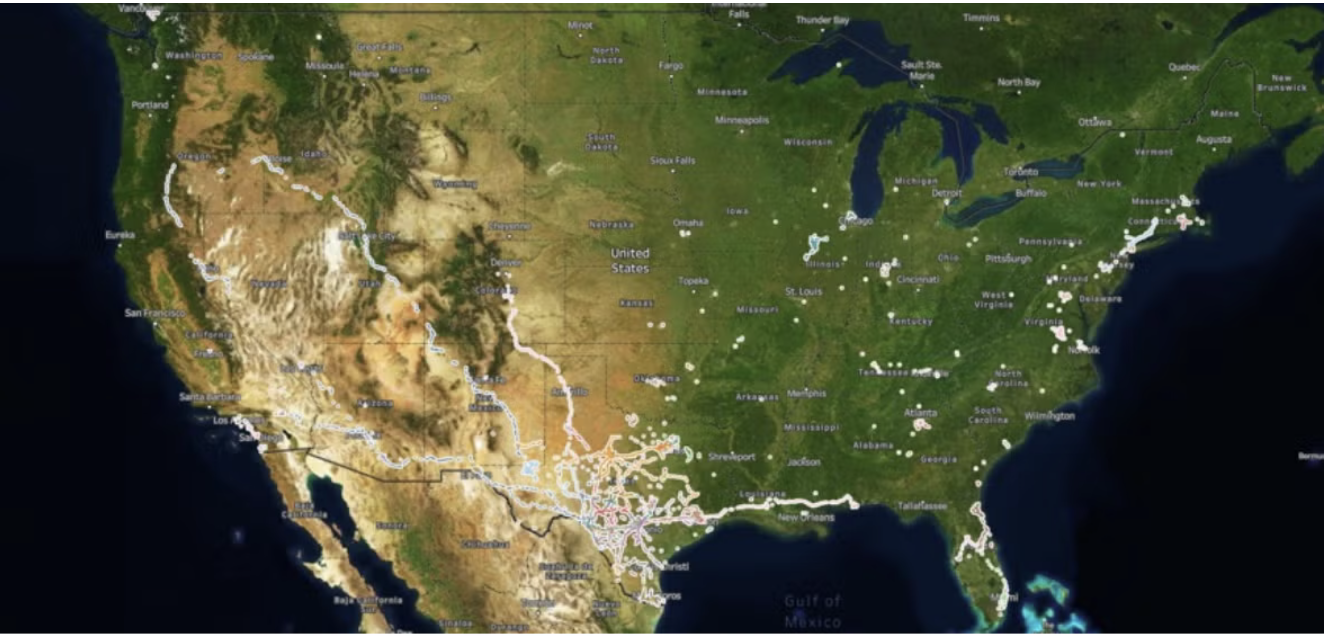
Cell Phones Traced from NGO’s Near Border to Forty One States, 2022/Heritage Foundation
The tracking maps suggest a broad erosion of privacy protection to be facilitated in future years by enhanced monitoring tools to dramatically expand the frontiers of federal authority and sovereign borders across the nation in unprecedented ways, effectively remapping the nation and remapping border enforcement far from the actual frontier. While the removal of so-called “aliens” under the wartime Alien Enemies Act allowing for enhanced detainment and deportation has been stayed–or prevented–the citing of an Act invoked only after a declared war suggests an arrogation of Presidential authority to remap threats to sovereign space beyond times of invasion–to respond to drug trafficking or immigration “with a high degree of confidence.” The maps derived from open data from geofenced locations offered an ideal tracking system and materialized an optimal system of data tracking to guard or monitor border security quite far from the border structure itself.
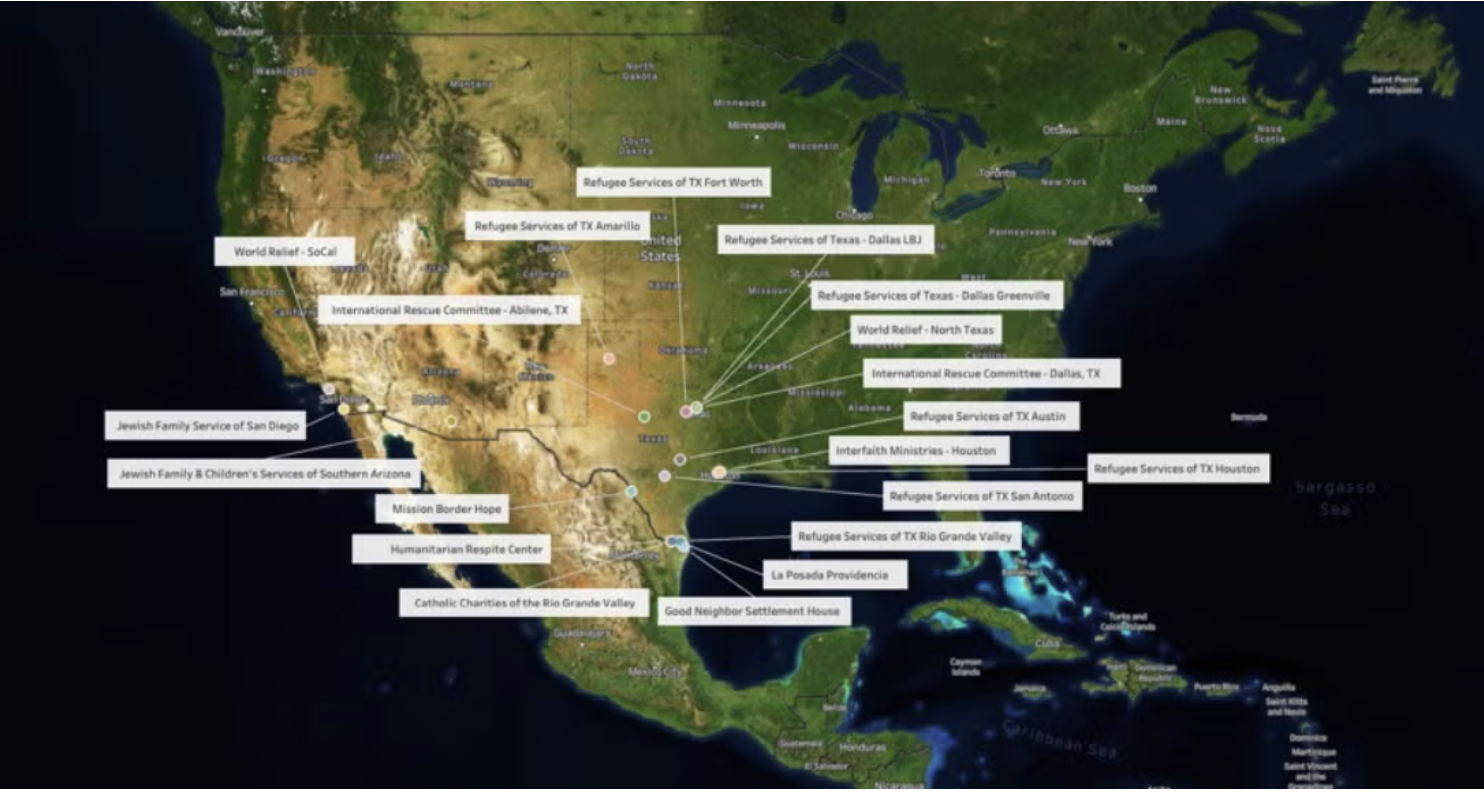
These open source mapping tools may define the eclipse of civil liberties in our democracy, one image seems to rise above them all, a transcendent bull’s head rising powerfully as if to eclipse the nation-state. The mapping tools suggest an intentional remapping of sovereign space and its vulnerabilities, and an eery expansion of the liquidity of sovereign boundaries that the Trump administration in its current incarnation seems determined to provoke, expanding the sovereign authority of the state to turbocharge deportation and to expand the limits of sovereign space. In tracking the devices to some 433 congressional districts, the tracking afforded a ground plan to trace overflow from Customs and Border Patrol to an image of “illegal aliens” across the national interior that pointed the finger at NGO’s who “actively facilitated the Biden border crisis.”
The extraction from the halls of government agencies of digital data, departing in the laptops that crammed DOGE agents’ laptops, each offering continued access to different agencies, is currently being combined in an integrated database from what were separate federal agencies. Is the Boring Company ready to equip the government by offering AI tools to respond to the border crisis? The maps traced an alleged overflow of migrants who NGOs served, concretizing the Biden border crisis. as an erosion of the oversight of Customs and Border Protection, confirming a “border crisis” and “border emergency” enabling the “migration of illegal aliens into the interior of the country,” demanding the expansion of the role of the military along the border to bolster national security, and indeed map a network of danger with striking facility in time for the Trump 2.0 team, whose mapping of individuals deemed “aliens” of illegal presence demand deportation to “home countries” without being accorded legal, civil, or human rights–but are cast as an invading army.
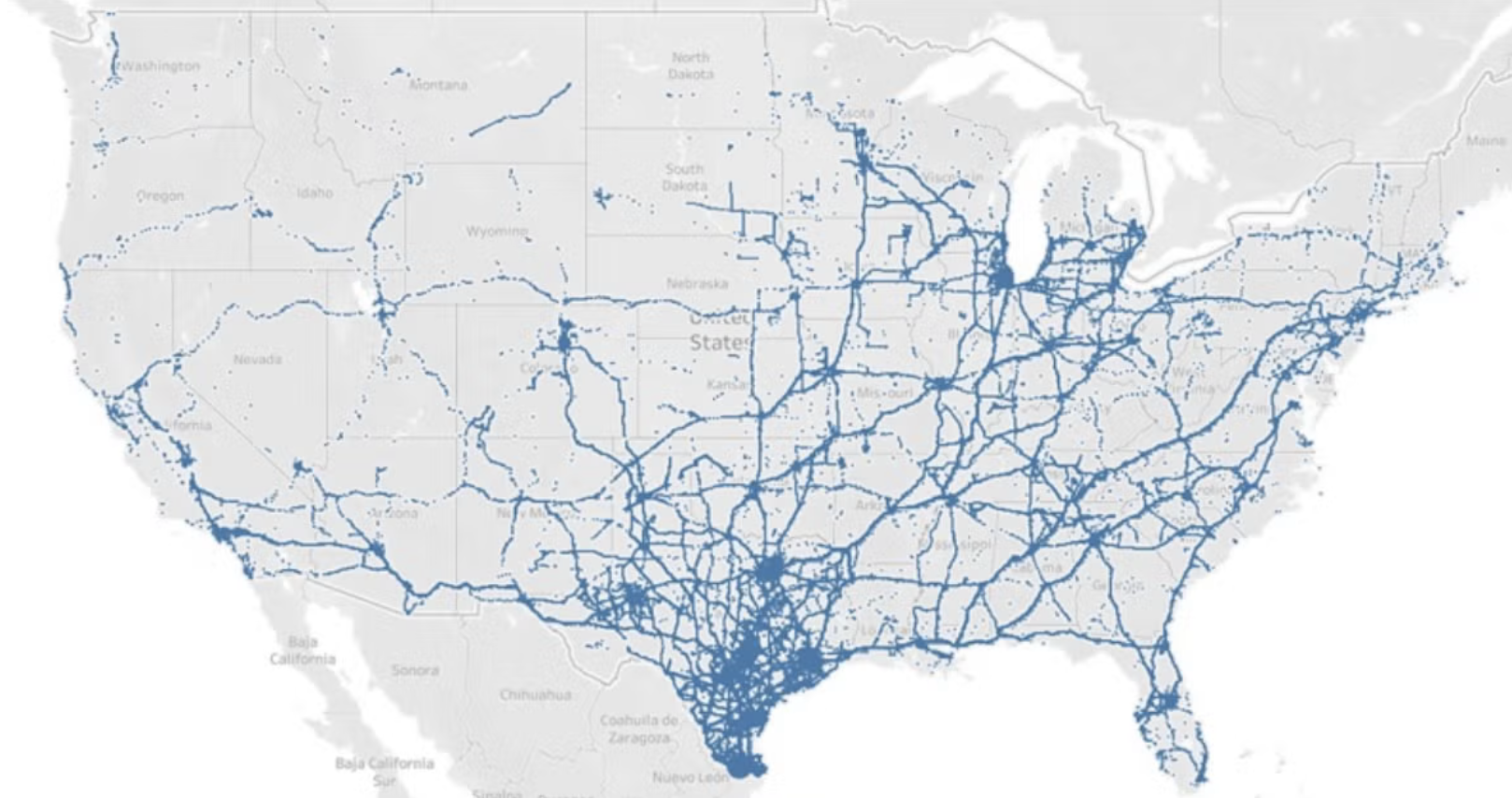
Geofencing Catholic Charities of the Rio Grande Valley, in San Juan, Texas by Heritage Project Traced 3,400 Mobile Devices to 433 Congressional Districts Nationwide
The map tracing undocumented refugees handily documented the urgent need to bolster sovereign authority, emphasizing the need for deportation across the country for national security. The expansion of sovereign authority and indeed sovereign limits have become a hot point and test case for the expansion of executive authority into new terrain–and indeed into extraterrestrial space. The new terrorizing coercive television ads that Homeland Security Director Kristi Noem broadcast address potential “illegal” immigrants with a taunting directive masking itself as an assurance, “If you leave now, know you can return”–or face fines of up to $100,000 and prison, terrifying possibilities that few migrants would be able to afford, and seem to make it worthwhile to leave the country to return with documentation–even if this means leaving family members behind. The broadcasts grimly announce impending closure of borders, while a possible road to legal immigration remains “if you leave now, you may have an opportunity to return and enjoy the American Dream“–an actual goal for most immigrants who moved to the United States–three in four (77%) hoping better future for their children. Framing the warning as a public safety announcement on domestic and international audiences, it broadcasts amidst daily news to amplify Trump’s Executive Order 14159, as if “Protecting the American People Against Invasion” were an invasion of American territory.
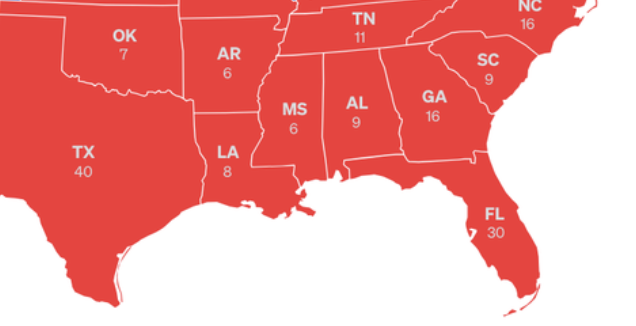
The manufacture of a state of war was implicit in resuscitating a zombie Alien Registration Act, enacted in World War II in 1940, as a restoration of justice that will fingerprint and register all over fourteen years old promises to be a foundation of a program able to track all migrants in sovereign bounds, teasing that those who respect the law and leave now may be able to return legally at a later date. If the map of state populations doesn’t smoothly project onto the expansive block of red states, it reveals how many states supported Trump are utterly oblivious to the scale of school-aged children Trump’s proposal would effect, beyond an apparent absence of empathy across the red states: from Iowa, Missouri, Arkansas, Louisiana, Missouri, Alabama to South Carolina, voters are unlikely to sense–or are, unfortunately, willing to bracket an entire social reality from their lives.
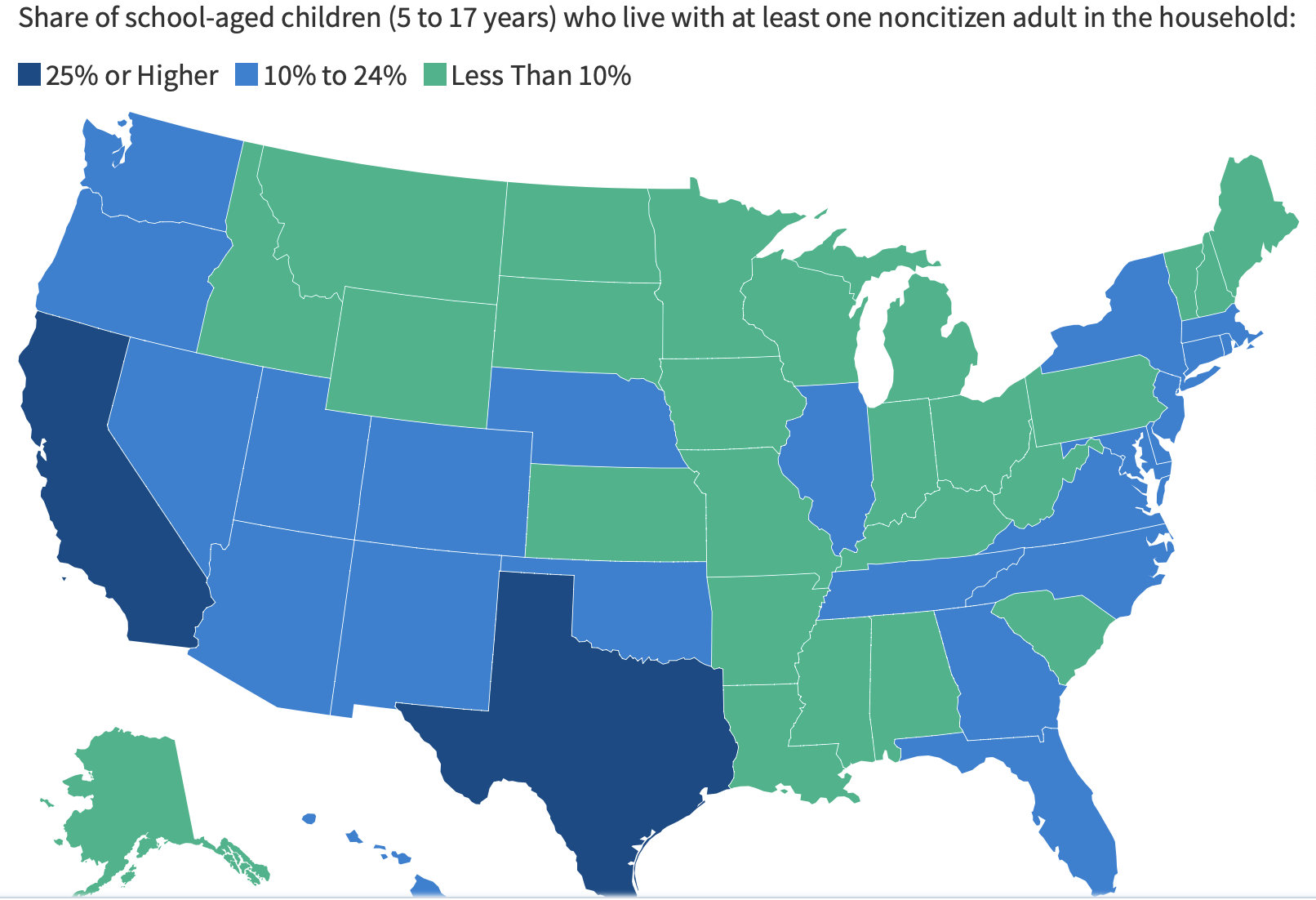
The blanket denial of citizenship to “illegal migrants” was long featured as a platform of Trump’s campaign, but would affect 6.3 million American households, affecting 17% of children living in households with a noncitizen adult to be targeted by these new immigration policies–and over 30% of children in California, Texas, or Nevada, the latter two states that voted strongly for Trump-Vance in 2024–and cannot be separated from the margins red states tilted Trump-Vance in 2024.







 Musings on Maps
Pingback: Appeals Court Blocks Trump's Wartime Law on Venezuelan Immigrants - Writ of Mandamus Lawyer in New York, New Jersey, Connecticut & Washington D.C.
Pingback: Judicial Review and Mandamus in California’s Fight Against Federal Immigration Overreach - Criminal Immigration Law Firm in New York, New Jersey
I think it speaks volumes that as Trump seeks to leave a global imprint he was denied in his first term, that he turned to a man like Musk, whose sense of global politics is so limited and skewed. This is a case of the inexpert leading the inexperienced, clamoring for authority with little priorities than their own self-aggrandizement.