Category Archives: social media

“He Could Easily Destroy Us”

“Amazingly, as of tonight,” new host Tucker Carlson declared in hopes to build anticipation for a Twitter broadcast, “there aren’t many platforms left that allow free speech.” While Fox News took Carlson’s show off the airwaves, he promised to return quickly on the social media platform owned by Elon Musk. Having worked for networks across the political spectrum, from CNN to MSNBC to FOX, Tucker Carlson seems to know what he was talking about. Musk seems to have promised the very sort of guarantees of free speech–a lifting of all monitors or warnings about misinformation or the content of posts that were adopted in the 2016 election–by deciding to remake Twitter a site of “free speech” without any restraints–indeed the very safe haven for “free speech” that right wing pundits and partisans had long demanded. In rescinding any bans on political ads on social media sites, by which social media sites sought to dissociate themselves from political messaging, Musk set the basis for rolling back misinformation set a new standard that opened the gateways to racist, antisemitic, and homophobic tweets. The new notion of normative “free speech” led to the “unbanning” of accounts of high-profile polarizers with a limited relation to truth-claims–as “free speech” become more woolly and capacious as a form of entitlement.

But when he called his own de-platforming as a suppression of his right to speak his thoughts he claimed a constitutional liberty, invoking his freedom of speech, he raised the stakes to a boiling point to appeal to his viewers, inviting them to feel that they had an ability to preserve their one sense of “free speech” by moving, with him, from mainstream media and network news to the social network formerly known as Twitter. In parallel to the truly terrifying and unprecedented loosening of all restraints or gatekeepers on increasing hate speech and an efflourescence of antisemitic content on the social media platform per the University of Southern California’s Information Sciences Institute dating from Musk’s aggressive takeover,
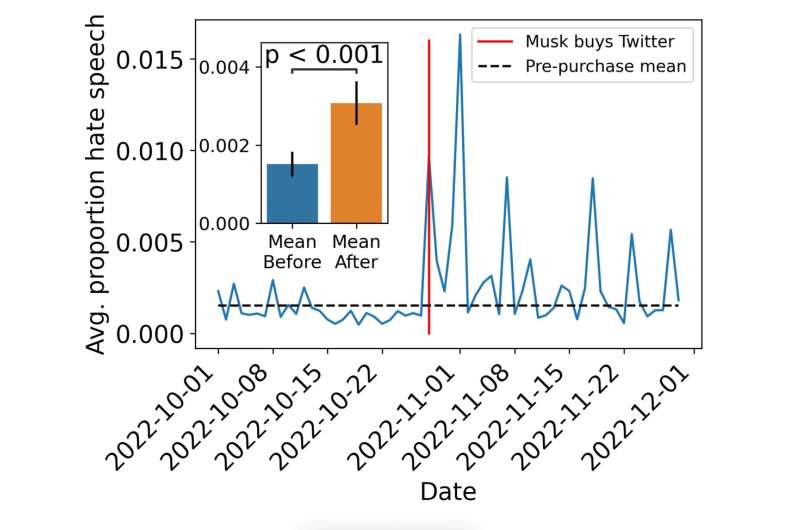
New Twitter, now with more hate

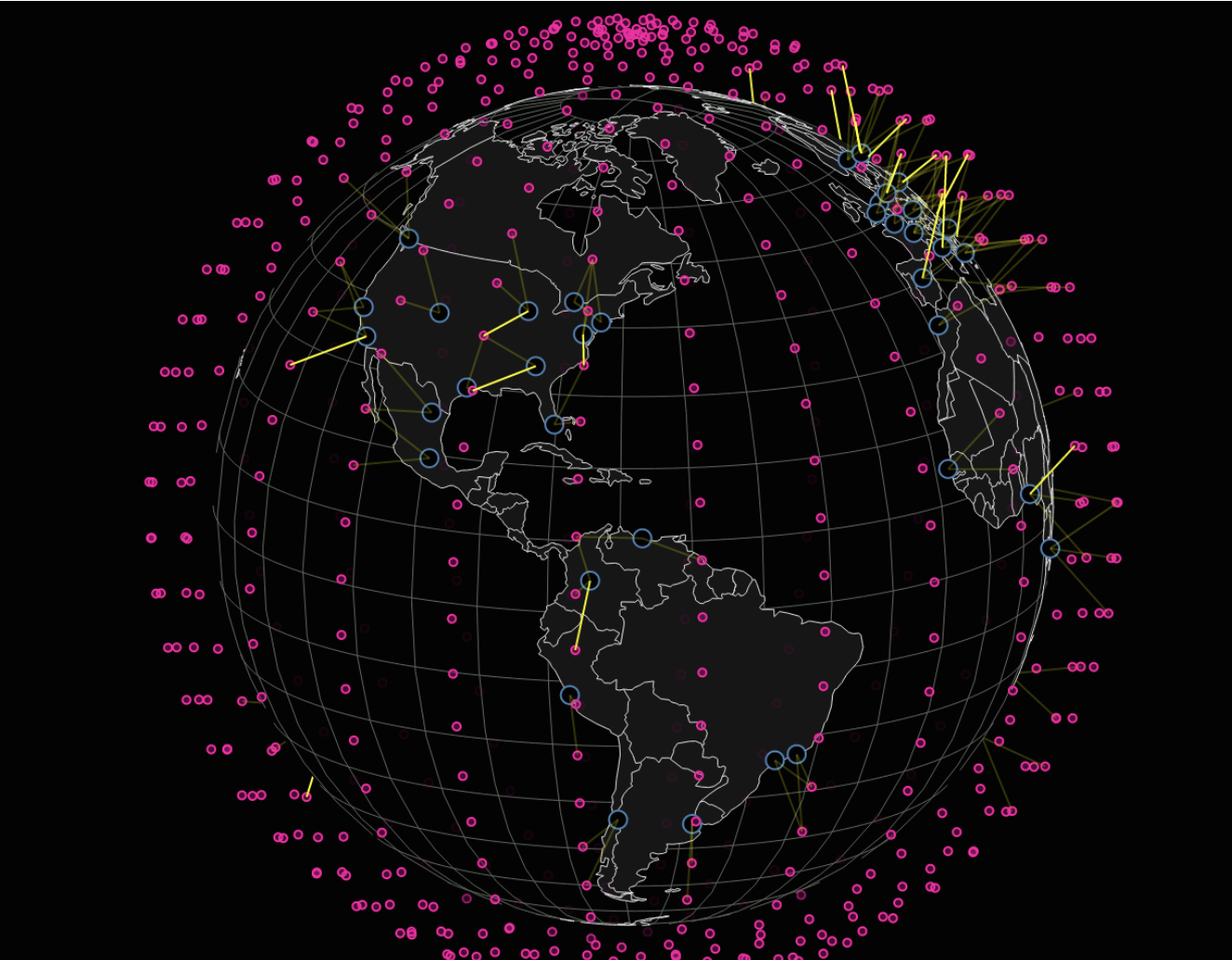
the same man who holds a disturbing dominance of global satellites via Starlink, Musk seems to have invited Carlson–and Trump–to help him enter a new space of media dominance. Already, state sovereign governments accused the owner of the network once known as Twitter of steering public discourse into a sovereign-free space by a Global Internet Satellite Network in dangerous ways. The network is perhaps designed to enable and feed off of, a new model for unrestrained public discourse, the likes of which we have never known, but will be augmented by 7, 518 low-earth orbit (VLEO) beyond 4,425 existing satellites, functioning as a cross-linked satellite system. If the social critic Roland Barthes prophecied with something akin to ecstasy that when labor-saving devices of the very sort that Musk’s self-driving cars promote would replace any need for work and “when progress will have rid men of every manual task, they will then to do nothing but discourse and kiss!” perhaps all they will actually do is follow. social media with bated breath.

Musk’s stated goals to make the social media platform X into the central staging ground and media feeding ground for the 2024 United States Presidential Election would be making use of Carlson–and of Trump, if in a quite mutually beneficial ways, suggests something like an alternate reality, surrounding earth with so much space junk to cause many astronomers to complain it is poised to compromise observation of far-off galaxies and nearby asteroids alike, weaving a web cocooning the earth’s atmosphere with the new litter of space junk: if geographer-artist Trevor Paglen warned geographers in 2016 to retool the focus of their disciplinary lenses on the immediate extraterrestrial pathways of satellite space, Musk forces Paglen’s cautionary argument.
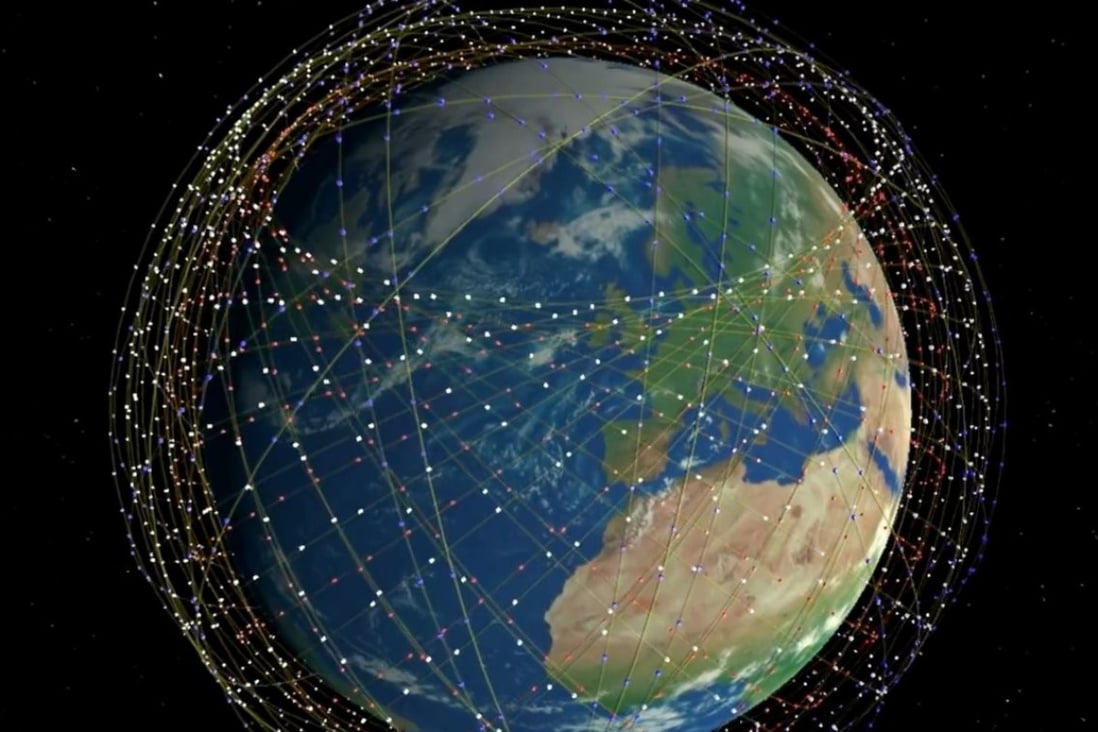
This illustration of Starlink, a fleet or constellation of internet-providing satellites designed by SpaceX, shows roughly 4,400 satellites of the project’s first phase deployed in three different orbital “shells”. Photo: University College London

Yet this business plan is far more than a conceptual art. It seems to strike at the heart of the news media system, and approach the predictive algorithms of psychographic profiling that Cambridge Analytica allegedly launched back in 2016, by opening up a free-for-all of communicative pathways.

Is this planned chaos? If Tucker Carlson’s decision may break his contract, it was a way of sticking it to his former employer. Many were surprised Carlson has continued to act as a center of gravity on “X,” posting interviews not affiliated with any broadcaster as if they offered uncompromising and unclouded evidence of “free speech” on the sole platform where it existed–X, as in SpaceX, a floating signifier able to carry any informational content. While the notion of a global lock on the news by a media elite is hopelessly outdated in an era of the fragmentation of monopolies by corporate news behemoths of a previous generation, the new libertarian owner of X has studiously tried to lead rapt listeners by a drip drip drip of insider news and heightened expectations for unvarnished honesty unavailable outside respected news channels–“More interesting than you think,” promoting the platform as “humanity’s collective consciousness,” deleting the ability to block other users, and hijacking other platforms. In rejecting formats of debate sanctioned by political parties or authoritative streaming service, Carlson was almost perfecting a cult of personality, more than the respect for the U.S. Constitution, that would of course appeal to the indicted former President, seeking to convince the nation he did not violate the U.S. Constitution, Donald Trump. (Trump pre-recorded an interview with Tucker Carlson to broadcast the first debate of Republican candidates for President on X, thumbing his nose at FOX executives by announcing he will miss the debate of a race for which he is front-runner, in a clever bit of strategic counter-programming designed to depress FOX revenues after they had let him go.) Although Carlson claimed to hate Trump “passionately” and “couldn’t wait” until the television network was able to ignore him, after a last-minute deal led Fox to cease broadcasting Tucker Carlson Tonight, Musk’s network fed the former President into Carlson’s new platform.

But if Carlson believes that he is entitled to continue to broadcast in Tucker on Twitter, claiming his continued “rights” to speak his mind to his base, having lost his broadcast platform, the lack of understanding individual liberty–and indeed rights–tell us more about his misunderstanding of rights–and the individual’s relation to the state in a democracy, even if he was talking about broadcasting more than “speech.” Carlson claimed that he had been ‘cancelled’ as if it were an honor and his destiny. “Tucker will not by silenced by anyone,” boasted Carlson’s lawyer assertively, as if going on the offense to guard the rights of a man whose “singularly important voice on matters of public interest” should be acknowledged to play a major role in the past as well as coming elections. Carlson’s lawyer claimed his client was in danger of being forced “be silent until after the 2024 election,” insisting that the broadcaster had every right to bond with the nation as effectively as that 2020 election map that froze ed and blue states into the logo of his NewsHour. The blurred luminous map that was the televised subconscious of the Republican Party was suddenly no more.

From decrying of “cancel culture” nightly, is it possible that Carlson “won the cancel culture lottery” by being able to port audiences to Twitter and outfox Fox? For Tucker Carlson, the dismissal from Fox was a slight that led the often over-confident anchor to be utterly confused: “I was first confused, and then shocked,” he claimed. “It was just, ‘We’re taking you off the air.’ No explanation why, and they’ve let me guess ever since. That’s literally all I know. I asked if I violated my contract. They said, no, I’m not fired, I’m still under contract.” The cancelling of Tucker’s airtime, he would argue in his defense, would cause damage to the nation, against the very constitutional freedoms that have defined the republic, might not be that absurd. While he suspected the “cancellation” was due to his strong opinions about the Ukraine War, rather bombastically linking himself to geopolitics with characteristic sense of disproportionate self- importance, noting that even if Rupert and Lachlan Murdoch “definitely didn’t like my views,” Lachlan, News Corp’s co-chair, was fine they disagreed. “The Murdochs were fine about Ukraine,” even if Tucker had mapped the conflict in curious ways that denied Ukraine’s sovereignty so blatantly they were rebroadcast on Russian state-owned news.
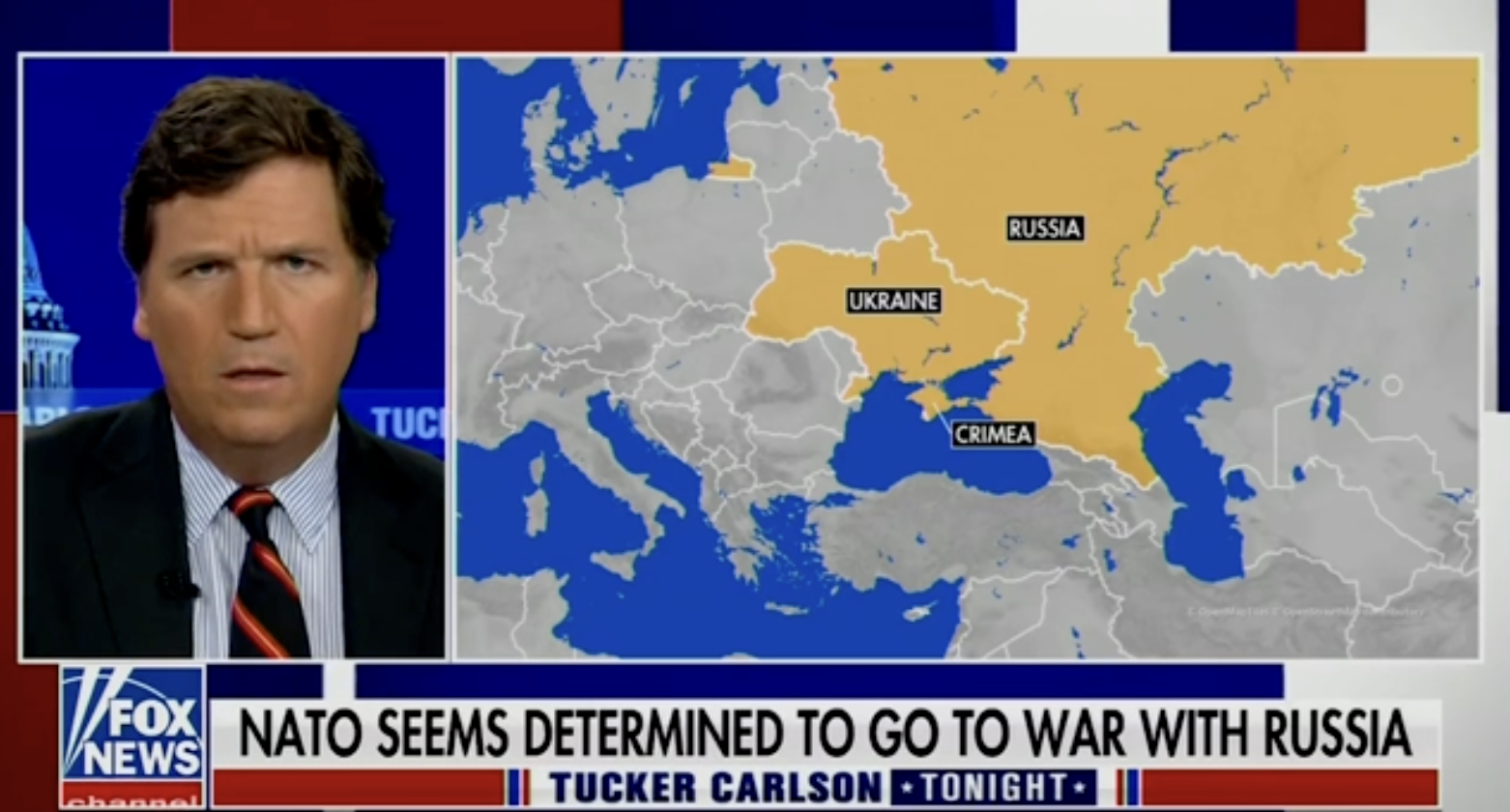
Intentionally sewing a cunning cartographic deception in coloring “Ukraine” and Russia by the same color–and not only Crimea–as if to dupe listeners into thinking the war a mater of secession, confusing the question of Ukraine’s pre-2014 and pre-February,2022 borders by arguing that Ukraine was unreasonably demanding “taking Russian Crimea from Russia” as a hostile act. In asking if NATO was “determined to go to war with Russia,” Carlson may have been exercising free speech, but was rather deviously and dangerously questioning Ukraine’s sovereign status. (Yes, Carlson had insisted, invading Ukraine would lead, as Russia said “many times, . . . would lead to nuclear war” and likened its Prime Minister to the “manager of a strip club” but was entitled to his free speech by his constitutional rights.)

In Carlson’s Fox Newshour, he had long decried how “fear of being ‘canceled’ due to unpopular political and cultural opinions or unsubstantiated allegations, often amplified with viral Facebook, Twitter, or Instagram posts, has become a serious issue in America.” Against the spectre of cancellation haunting North America, Carlson promised to tell audiences the stories of the victims most affected by it, presenting himself as the defender of a toxic cancel culture, found himself the most recently wronged star of the epidemic afflicting America, mutatis mutandi, rather than admitting past lies or apologizing. Rather than being a fractured shifting the newsmedia landscape in America, Carlson’s departure from FOX after six years was recast as typical of what was wrong with America, not the systemic lies about election fraud helped keep Trump’s cause alive.

This was now about his personal survival. Tucker Carlson long championed his role at Fox News as mediating the relation of individual to the state in a new electoral map. But his rhetoric reflected a disproportionate sense of self that seemed inflated by the podium Fox News had offered to address the entire nation, and to do so with the aim to magnify partisan divides. So much was suggested by retaining as an electoral map as the logo for the news show, which saw its survival as beyond any one person, and tied to nourishing and maintaining the new sense of national identity that 2016 had created with Carlson’s own help. With Carlson leaving the network, FOX seemed to have lost faith in the election map as an icon of the future, or the foundation of broadcasting, even if they had long promoted the Big Lie he had won the 2020 election. In getting rid of Carlson, they were cashing out of that long-iconi 2016 electoral map.

Carlson had become a global figure, far beyond the nation. He had relished this role as an icon of a movement beyond national borders, wishing “Godspeed” to all the Americans in Hungary as he bonded with the Conservative Political Action Conference that met overseas as promoting a fight that had begun at home as if he were a bystander in a conference that served as a platform for containing the “virus” of recognizing civil rights of migrants, LGBTQ, or the content of educational curriculum and, indeed, the press. The CPAC meeting of May, 2023 for which Carlson broadcast a prerecorded segment from his old FOX studios seemed a lovefest of sorts, as the Hungarian Prime Minister exlaimed “programs like his should be broadcasted day and night” in ways that only suggested Viktor Órban’s own tight control over broadcast journalism, as much as it recalled Soviet-style Cold War press beneath the blustery banner of questionable humor, “This Is No Country for Woke Men.” Cormack McCarthy, RIP.

Tucker Carlson Addresses Budapest CPAC Remotely in Pre-Recorded Statement, May 2023

The future conditional Carlson used to imagine his future firing in the segment he pre-recorded in the Fox Studios eerily anticipated his own actual dismissal from Fox News–Dominion Voting Systems already had filed its case by March, 2023, two months before Carlson spoke via video link at CPAC; it had perhaps already hinted–if this was never recognized as a demand of the legal settlement–that Carlson be released from the network. Tucker Carlson had already entered some legal hot water after parroting false claims of “massive electoral fraud” that seemed filtered straight from QANON screeds, in ways that had raised questions of how much Free Speech a broadcast journalist, if Carlson can be called that, enjoyed, even for Rupert Murdoch.

The global reach that Carlson’s news show had attained–despite its focus on American politics–suggested a pivot from the fomenting of electoral divisions that were made manifest in 2016 to a crusade of sorts that might continue unmoored from his old employer and old studio. The “pivot” was from a map of red versus blue states to anti-globalism, an agenda that’s been central to Carlson’s Twitter monologues on Ukraine, the truth of 9/11, and questioning the legitimacy of mainstream media. Tucker on Twitter became rebranded as a sort of Lone Ranger against globalism, as he had always been, to be sure, but was now holed up in his Maine house without the accoutrements that FOX had refitted in an old Grange Hall near his Bryant, Maine country house, as an improvised if convenient studio, but continued to tilt, a Sancho Panza for the new millennium, against globalist windmills–immigration; NATO; LGBTQ+ rights–snug in his own house in Maine seemingly from his own iPhone, where the Bill of Rights was pinned behind him on a rustic pine wall. There was something of a new mantra he seemed to have prepared for the new “show,” as much as the electoral map before which he had pontificated as he delivered the newshour in past weeks: “Free speech is the main right that you have. Without it, you have no others.” But this was not really a broadcast, or a news show, as much as the invectives of infotainment of another era.

Twitter was in a sense “outside the law”–or it least, this is what made it so welcoming in Carlson’s mind, as a terrain in which he might reasonably claim First Amendment rights–and Tucker indeed concluded his first monologue with a rousing pitch for Twitter as a platform to which all were entitled to spew lies.  “Twitter has long served as the place where our national conversation incubates and develops. Twitter is not a partisan site. Everybody’s allowed here, and we think that’s a good thing,” Carlson wound up his monologue as the all-new Tucker on Twitter, reminding viewers that even as he remained under contract to FOX News, that Tucker on Twitter was a guarantee of their own rights: “Free speech is the main right that you have. Without it, you have no others.” Twitter isn’t mentioned in Carlson’s FOX News contract–as Brian Stelter, the latest chronicler of the struggle between Fox News Network and American democracy, has suggested might inform Carlson’s own legal strategy. Carlson may imagine that his Twitter monologues are a form of Free Speech, tied to his public persona beyond any network, rather than an expansion of the invective-spewing persona of the character he cultivated on Fox News for alt right constituents. The fiction is that Twitter exists beyond the nation-state, as would please Elon Musk, and beyond legal enforcement of his contract.

For his part, Carlson groused on Twitter few platforms allowed free speech anymore, in quite strikingly globalizing terms,–Twitter was “the last big one remaining in the world,” he seemed to seek to embarrass his old employers, and maintain his bond to viewers by portraying the news network as yet another curtailment of American rights. Carlson celebrated his presence on Twitter–whose owner Elon Musk had already hoped would be center stage in all future elections–to play defense on his de-platforming, but boast that his appearance on social media would be a defense of his personal rights, as well as a protection of the nation. It is as if Musk had advised Carlson’s grousing as a way to invalidate a contract by which he was “prohibited from rendering services of any type whatsoever, whether ‘over the internet via streaming or similar distribution, or other digital distribution whether now known or hereafter devised.'” He felt he had a deeper bond with his audience, or to American voters, to be silenced in the political arena til 2025.

While Fox was forced to let go of Carlson’s highly rated show as an agreement in the recent Dominion case, in which his sustained denial of the 2020 election results and defamation of their voting machines was so central, leaving a $20 million salary was only part of the network’s $787.5 million settlement with the voting systems company–Musk must have been more than happy to scoop up the highly ranked news show was appealing to one of the few billionaire with a powerful hold on news information that reaches what is left of the public sphere. While Carlson accepted a severance package from Fox News, he seemed to continue to speak from an old place on the map–as a defender of specious rights, inexistent privileges, and imagined protections, more akin to the notion that January 6’ers were exercising their freedoms by entering the U.S. Capitol, or that former President Trump had a privileged relation to the law. While Carlson believes his Twitter account is protected Free Speech, he confuses his media presence and his right to public speech.

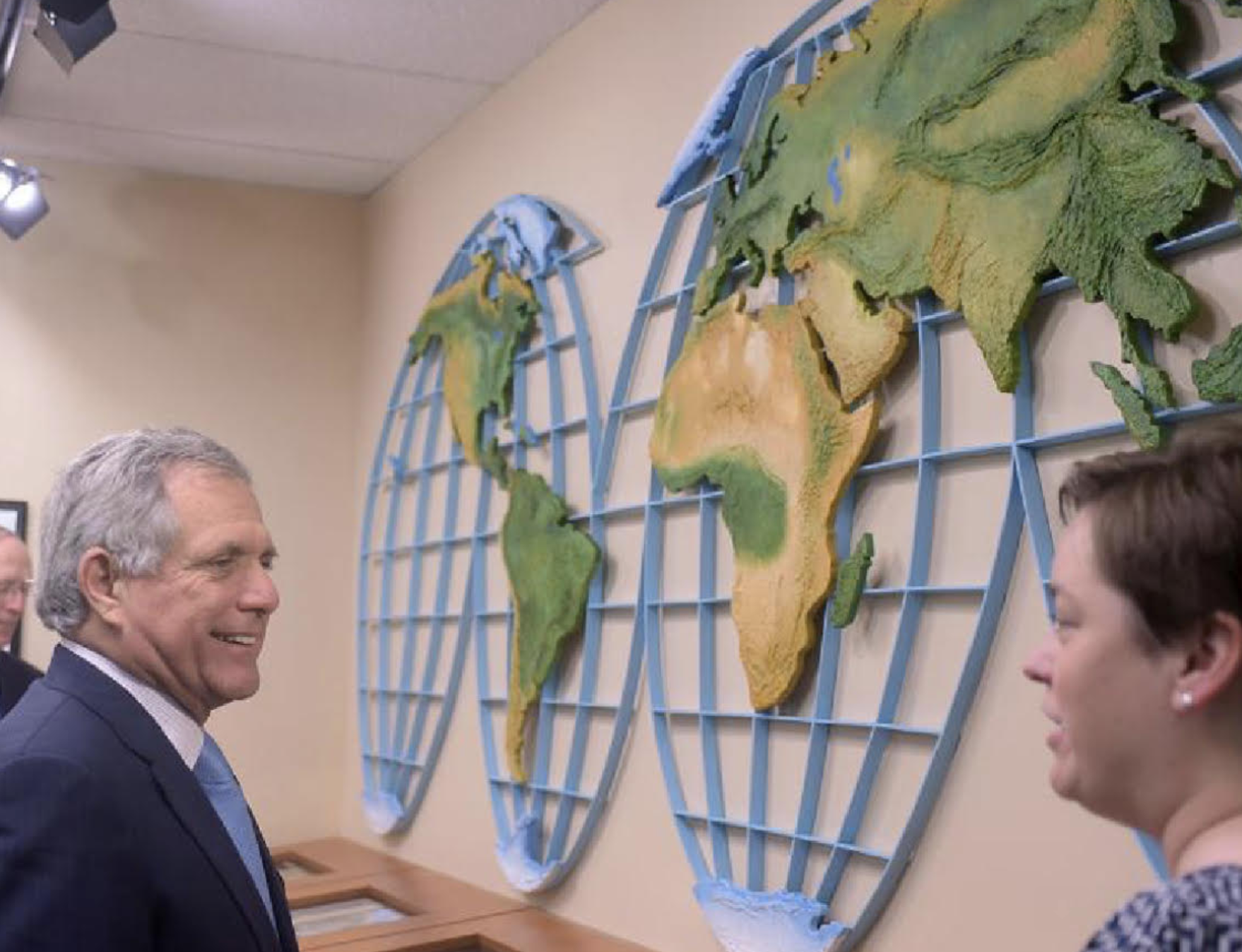
Fox News and Dominion Voting Systems deny they demanded the removal of Carlson from the cable network in their legal settlement. But Carlson is portraying his dismissal as a denial of his rights to free speech in ways Musk must deeply enjoy. After being kicked off of Fox News’ platform. The map before which his divisive news hour had long aired as the highest rated on air suggest the dedication of his show to the sharpening of the nation’s political divide, however, as much as Carlson grandiosely claimed his rights to Free Speech as a reaction to his sudden and surprising de-platforming. The logo of the 2016 electoral map might be seen as a sign of the relative provincialism of his successful news hour: far more significantly, it was a sign of his opposition. to “mainstream” news media. If the CBS evening news had refurbished the Mercator projection of the world before which Walter Cronkite had presented the news from 1962-81 as an image of moral probity, which the station would refurbish in 2018, after having in 2016 swapped it out for video panels, the world map that had long been an emblem of trustworthiness and impartiality–

–was quite quickly recast as informed by bias, in an American political landscape defined by division, rather retreated from claims of objectivity. By 2015, CBS News featured not the flat wall map before which Walter Cronkite had delivered the nightly news with some probity, modernizing it as an extruded map colored bright gold, to keep in line with the times of HDTV, the post-election package designed for the news was thrown out by Carlson’s Newshour, which flattened the world to red and blue states. The smirk with which Carlson was ready to gloss the map, often blurred as it receded into the background, became glossed every night for 2.7 prime time television viewers in 2017, in what might indeed be called a nation within a nation, and a significant voting bloc.

Never mind that CBS had started to use the revolving globe as its new icon of global news by 2009; Carlson’s map was a rebuttal of globalism, and global elites, cast against mainstream media and committed to revel the insidious interests by which the actual news in America was now defined. Tucker used an idea of Free Speech to deliver the unvarnished news, political beliefs born proudly on his sleeve, as Les Moonves of CBS celebrated a refurbished replica of the dimensional world map in a model TV studio in the Cronkite Memorial of Missouri Western State University in 2015.
This was not, of course, anything like what Free Speech meant, for the Founders. But Carlson cast his “deplatforming” as a violation of a foundation liberty. Carlson had of course recently re-aligned himself with “free speech absolutist” Elon Musk’s proclamation that Twitter was the new public town square of democracy. Tucker Carlson Tonight was dedicated to championing the freedoms Carlson championed on his long-lived show, whose life tracks neatly against the Trump Presidency, prolonged a bit by election denial into 2023, promoting freedoms that were portrayed as “under attack” from the left, while he assured his audiences that all other media “have succumbed to Trump hatred so obsessively . . . so much that they’ve begun to dislike the country that’s elected him,” rather than his open attacks on immigrants, civil liberties, racism and religious “freedoms,” and courting of the alt right. (The popular election of 2016 had of course tilted to Hillary Clinton: but, as seen in the header to this post, Carlson obscured that nightly, commenting on ‘news’ before a 2016 electoral map as if it revealed an actual national status quo.) The text messages admitting he “absolutely can’t stand” a former President who “could easily destroy us” may have seemed to destroy his longtime brand and public trust, declaring he long “hate[d] him passionately.” But Tucker Carlson flamed out in the light of the Dominion lawsuit.

Yet Carlson has continued to promote and his election denialism, calling 2020 a “grave betrayal of American democracy.” But he had undermined trust and credibility for the right, and as the attack dog on civil liberties that Fox News had birthed. Fox News sought to restrain his appearances on Twitter, Carlson announced he would never “be silenced by anyone,” as a lawyer leading the Center for American Liberty sought to defend his continued broadcasting on social media platform as protected by his First Amendment rights, and promoting it as a venue for his “response to the indictment of Donald Trump. The complicated story of how the Dominion suit involved the departure of Carlson from Fox News platforms led him to claim higher legal precedent, bizarrely claiming the infringement of his own personal constitutional rights of free expression, going it alone on Twitter as a confidence man of his own, even building a news room of his own in a work vest, plaid shirt, and axe, as if he were defining a new media frontier.

Carlson in his wood shop attached to his studio. (Gillian Laub for TIME)

Gillian Laub, Time

The ‘freedoms’ with which Carlson long aligned his News show did not only reflect his own opinions: Fox News promoted many of the causes promoted by non-profits of the right, as the Center for American Liberty, that promotes religious freedom, targets protests of Black Lives Matter, Covid restrictions, or gender-affirming healthcare, as a sort of ACLU in reverse, founded in 2019, in response to “anti-free speech” and “anti-civil liberties” trends, dedicated to “holding those who destroy our civil liberties accountable through the courts” and promoting “traditional Judeo-Christian values,” by pursuing suits against school boards, Kaiser Permanent, parental rights, alleged victims of Antifa violence, the vaccine mandate by suits intended to keep schools open, and indeed “Big Tech Censorship” that included both Twitter and PayPal as “oligarchs who threaten American values.” Carlson now elevated Twitter as a bastion of Free Speech in its new owner’s vision. (Tucker Carlson has incidentally elevated Twitter from ephemeral media to a repository of apparently considerable historical significance: his alma mater Trinity College features in Fall, 2023 a co-taught course in Writing, Rhetoric, and Media Studies departments, for which Carlson and Jesse Waters assign reading all of Trump’s tweets as a corpus, beside the post-Civil War inaugural of Andrew Jackson and Adolf Hitler’s Mein Kampf.)

While it was hardly new that Carlson acted aggrieved, as if his own rights to free speech had been denied, by recasting his own abusive behavior as a preservation of rights he seemed to tailor a new sense of free speech familiar to his demographic. The “denial” of free speech rights was a relatively recent bête-noire of the alt right. From calls to speak out “against the numerous attempts by college administrators to limit and attack students’ free-speech right” as “free speech zones” that were argued to restrict “a culture of free expression and develop in students a robust ability to reason” began a narrative of repressive left Carlson seemed to parrot. The multiplication of “free speech zones” at political conventions, areas of protest, or during the war on terror made the mapping of areas guaranteeing freedom of expression protected by the first amendment a contested concept of civil rights–isn’t the entire country a free speech zone?–and the emergence of “free speech zones” on universities have created real limitation of public protest and had restricted freedom of speech at over three-quarters of universities–even as judges have questioned the limitation of “free of speech zones” on campus, and legislatures in multiple states passed prohibitions that outlawed the establishment at campuses of “free speech zones” in conservative states suggesting the different natures of “free speech” in a starkly divided partisan map: Kentucky, Missouri, and Virginia became sites championing “free expression” and “individual rights in education” from 2014-17, as claims to “free speech” preventing restrictions on political or hate speech grew in the aftermath college protests of the election of President Trump. Legislatures restrictions on the curtailing of free speech zone polices, as a ballast to academic freedom,–

–in ways that alt right media like Breitbart embraced as a the rewriting of claims to free speech, claiming censorship by universities, as if to protect free political expression–even if such expression embraced incendiary anti-immigrant rhetoric–that challenged boundaries of “free speech” in unexpected and unprecedented ways that Carlson seemed to invoke more than the Bill of Rights had ever intended. While he cast his intentions as an echoe of the First Ammendment, Carlson’s own pursuit of polemics pleasing the alt right white supremacists was long known–it seemed he had targeted the demographic in attacking mainstream news–to provide alternative news able to unite an increasingly intolerant partisan political constituency that was as rooted in anti-intellectualism as it fetishized the freedom to hold hateful positions. Free speech was expanded as a megaphone of public address on social media, as the logo of “Campus Reform,” a news organization backed by the funders of Breitbart, dedicated to exposing liberal “bias and abuse” in American universities and colleges to delegitimize higher education around issues of free speech.

As the new terrain of “free speech” expanded from civil liberties to anti-immigrant rhetoric to Black Lives Matter to anti-vaxxers to mask-wearing, it embraced shelter-in-place policies in the COVID-19 pandemic, school closures, and public health responses before election denialism. Ever broader and broadened concepts of “free speech” became a surrogate for perpetuating persistently deep fissures in the body politic, boosted in no small part by Tucker Carlson’s news show on FOX. Tucker Carlson Tonight embraced an algorithm oriented to the distortion of free speech, and created a demographic that distorted free speech from the freedom of parents to protest school curriculum, as learning institutions were attacked as restricting abilities of open inquiry and “debate” by mandating reading lists. “Restore Free Speech Acts” had earlier emerged in local state legislatures to push back against such perceived restrictions. Carlson reached back in his recent relaunch on Twitter–his first appearance on airwaves after leaving or being let go from Fox News–to echo the image of a restrictive environment of free speech by those who sought to push the envelope of foundational freedoms and the Bill of Rights as protecting the open circulation of ideas online, and the end of “free speech zones” at universities that legislators had introduced back in 2017–more than the Bill of Rights that was framed in 1789. The partisan legislatures tied to red states, from Texas to Louisiana to Kentucky, vacated the “free speech zones” on university campuses, long before Donald Trump.

States Where Bills Preventing Campus Restrictions on Free Speech Were Introduced, 2017/Campus Reform

Maps of free speech seem to have broadened to free speech zones in the media, often adopting notions of free speech not based on expression but social media platforms and the fears of a restriction of political speech in a specter of de-platforming. Broadened claims for the protection of free speech was condensed to an electoral map every night on Tucker Carlson’s popular news hour. As Free Speech was rooted in the algorithm that brought his messages to millions and reached the right audiences, invoked against deplatforming, as if his sprinkling of volatile statements designed to open a greater cleave in the electoral divide was rooted in a freedom to collapse complicated and considered political debate into an ongoing strategic battle between two parties and ways of life. To be sure, this was “free speech” as understood in terms of a search for ever-higher ratings, a “free speech” that was in a sense modeled after alt right journalism, coopted by @realDonaldTrump, “liberties” easily seen as shaping a battleground for electoral votes.

What Painted Us So Indelibly Red and Blue?

The understanding of “fundamental freedoms” that expanded the electoral footprint for partisan ends was a great feature of his Fox Newshour that was embraced by Lachlan Murdoch and Rupert Murdoch, until the Dominion case. As much as due to unethical improprieties, the settlement with Dominion seems to have stipulated that Carlson cease to appear on Fox News, who curtly if promptly decided to “thank him for his service to the network as a host and prior to that as a contributor.”

Tucker Carlson sought to stake out somewhat familiar higher ground. Carlson’s post may have channeled Musk, who cast his social media network at the center of a “battle of civilization” in promoting Twitter-without-monitors as a vanguard of free speech, tweeting out, “if free speech is lost even in America, tyranny is all that lies ahead”! As Musk tried to represent or rebrand social media without constraints on hate speech or disinformation as American, issuing the latest iteration of his Messiah complex on his private social media platform, gaslighting the nation has long been Tucker Carlson’s principle trade. Branding of the social media platform as a venue for free speech may have been suggested by Musk in an invitation of Carlson–the most offensive of pundits–to the social media platform. Carlson waxed elegaic on free speech as the rarest commodity, affirming dedication to protecting speech though he lost the platform of Tucker Carlson Tonight, the highest-rated show on Fox, as if his departure his new venue was his free choice, or a changing media landscape, not how his own alienating comments and actions left him damaged goods.

The global scale of Carlson’s claim about Twitter was absolutely self-serving, to be sure, as much as an illustration of Musk’s uniquely deceitful brand of “free speech absolutism.” He sought to flatter Musk, his new platform’s host and sole proprietor, and to offer a powerful dig at Fox News, by upsetting the algorithm in his own favor, as if he were able to wrest it back from the Murdochs by becoming his own media figure, so much as Twitter offered him the chance. He claimed to have thrown his lot the last remaining safe space in media, and turning his back on television in disgust. Carlson was long habituated to rail against the media, and offer the alternative story of the disaffected and aggrieved. But this time, aligning himself with a “free speech absolutist” eager to attack Twitter for “failing to adhere to free speech principles” as a platform before purchasing it, and doing so only to make it a “public town square” of democratic value. Yet he fired all objecting to his corporate policies and politics, if he felt censorship of a social media platform was unethical. The two-faced nature of Musk firing employees he disagreed modeled ‘free speech’ as a fundamental freedom born of a social media ecosystem.

Long before Carlson’s revisionism of the January 6 Capitol riots, calling “mostly peaceful” the violence begun as President Trump dramatically enjoined crowds assembled before the Capitol building to “fight like hell” to contest 2020 election results then being tabulated by Congress, Carlson forged the combative nature of “free speech” as a pragmatics of perpetuating hyper-partisan social divisions of a sharply polarized nation in alt right media as the Daily Stormer. He perpetuated divides displayed in a dated electoral map of 2016 as a battlefield map on the new show premiering after Trump’s inauguration in 2017, as a realpolitik of broadcasting. When Kevin McCarthy gave Carlson secret footage of the Capitol Riots to allow viewers “to see the truth” of “exactly what transpired that day” in a “media exclusive,” he perpetuated claims of election fraud he claimed protected by a freedom of speech. And if the riots were dedicated to the resetting of a historical narrative and apparent shift of legitimacy–a shift of the historical understanding of the nation, oriented not to 1619 but to 1776 or 1492, the historical recreationism of January 6 was not cosplay but a rectification of revolutionary time,–a restoration of white men in Washington, and a right to bear arms, and to restore racial supremacy, all of that was embodied by Tucker Carlson.

Although he had hosted a news show for six and a half years since Trump’s election, before a map of the fragmented nation polarized by partisan divides; free speech, he suggested, no longer existed on mainstream media. However, he was without the tell-tale map that was a longtime logo for his news show–a news graphic of 2016 that had become the permanent illustration of the status quo he sought to address, and to filter all “current” events, as if in a time warp from the 2016 Presidential election, that showed the country divided, or nation split, into two sharply divided nations, hued red and blue, that formed the perspective to which his commentary was addressed. Immediately after Trump’s inauguration, Carlson was broadcasting live from Washington DC, promising to guide the nation on “a live hour of spirited debate and powerful reporting each night, as America gets set for the administration of President Donald Trump,” while only addressing half the nation. While preparing perspectives on news able to “bring you to every corner of America to hear from you and tackle the issues you care about” engagning “what the other outlets are missing and what the media isn’t telling you,” Carlson’s brand was to supplement the mainstream media by dedicating himself to “calling out the status quo in his signature style,” using his status as founder of The Daily Caller to reach a large 2.8 million since starting to air, and gaining viewers across demographics by speaking to a divided United States electorate by presenting issues through the fierce urgency of now.

Or was this an image, a counter map of the traditional newsman that showed the planet since the studio of Walter Cronkite, a representation of the new limits of the expansiveness of free speech? The visualization of the continental United States–the lower 48, and the continuous heartland at its center–offered an image of belonging that was talismanic for the TV audience, and a powerful image of belonging in an increasingly atomized United States, bowling alone and with few ties in its neighborhoods. Carlson was its prophet and its oracle, and effectively ventriloquized the divides with such success that he had become a channel for Donald Trump himself. Despite his affirmation of the stolen election, and the credence he gave to January 6 protestors, without that map Carlson was suddenly weaker, suddenly punctured by the actual news.

Carlson’s celebration of his relation to the partisan position of the former occupant of the Oval Office and to the Trumpian talisman of his news show was far less powerful, even after January 6.
Tucker Carlson strongly criticized for Jan. 6 comments after airing footage  from Capitol attack - CBS News

The map of the Lower 48 was a nice means to deny global warming, to ignore weather maps, or international politics, and even the real pressure migrants face. It was an image of the New Isolationism, America First for the twenty-first century, an image without rising temperatures, sea-level rise, or global economic forces beyond Americans’ or America’s control. Yet in a few weeks, Carlson was deemed a social liability by Rupert Murdoch, after winning unprecedented ratings as Lachlan Murdoch’s darling, as the Dominion lawsuit unwound and his own indefensible offensiveness was revealed. In a departing dig at Fox News, as well as an encomium to the social media platform he was about to join. Yet without the map of a permanently divided landscape of politics, promoting a polarized landscape split by partisan hues as a different reality, the values that Carlson was suddenly so desperate to fall back on–the Bill of Rights–as a language of the aggrieved was all too inappropriate and far less credible or effective. A trademark of he tried to remind his most loyal viewers that “Speech is the fundamental prerequisite for democracy”–as if speech were the same for the Founding Fathers as in an age of de-platforming, claiming a right of redress as an aggrieved media pundit, hailing Twitter as a unique preserve of republican liberty. (This much must have come as music to Elon Musk’s ears, who convinced Ron De Santis to declare his own candidacy on the medium–even if that didn’t go so well. But it didn’t break Twitter.)

Tucker Carlson may have had few grounds to claim free speech was violated, but there was of course a clear precedent for claiming such rights of free speech. For this formed the grounds by which Fox News lawyers had quite successfully defended him in a recent defamation case brought by Karen McDougal, who Calrson had treated as a punching bag while at Fox News with something like barely concealed glee. Fox News lawyers had successfully argued Carlson was in his rights to speak derivatively of McDougal, the 2020 verdict of a federal judge agreed, as no “reasonable viewer” could be expected take his show literally–he was, it ruled, “not ‘stating actual facts’ about the topics he discusses and instead only engaging in ‘exaggeration’ and ‘non-literal commentary.'” The successful dismissal of claims of slander was made on the grounds that “Mr. Carlson’s statements were not statements of fact,” and could not be interpreted as defamatory as such. The indefensible on-air statement that McDougal had “approached Donald Trump and threatened to ruin his career and humiliate his family if he doesn’t give them money,” as if she were an extortionist. (The court ruled Carlson’s words could not be interpreted as slander, or containing “malice” as but, as FOX lawyers argued, “delivering opinion using hyperbole for effect,” in an odd echo of how Donald Trump advocated “truthful hyperbole” to negotiate good deals in his 1987 Art of the Deal.)

Carlson seems to have accepted the verdict as a sort of license of his defensible rights to issue slanderous broadsides by converting political debates or even personal actions into the crisp colors of a partisan divide, a divide that was embodied as it had never before been by the very electoral map he used as a backdrop if not leitmotif for his show since its 2017 premier on Fox. He had staged a nightly news show to gloss the partisan divisions of a polarized landscape as the new status quo, harping on cultural resentments that divided the nation by district and county, as they existed as his show began, as an electoral landscape he would perpetuate and perhaps expand, and reinstate beyond the divisions of 2017 as a permanent map by which to understand the news–and the place of the nation in the world. Keeping open the sharp divides of a seemingly “continuous” red block and fractured blue in place was the grounds for his daily show, and the work of perpetuating the map had become glossed as a form of free speech.
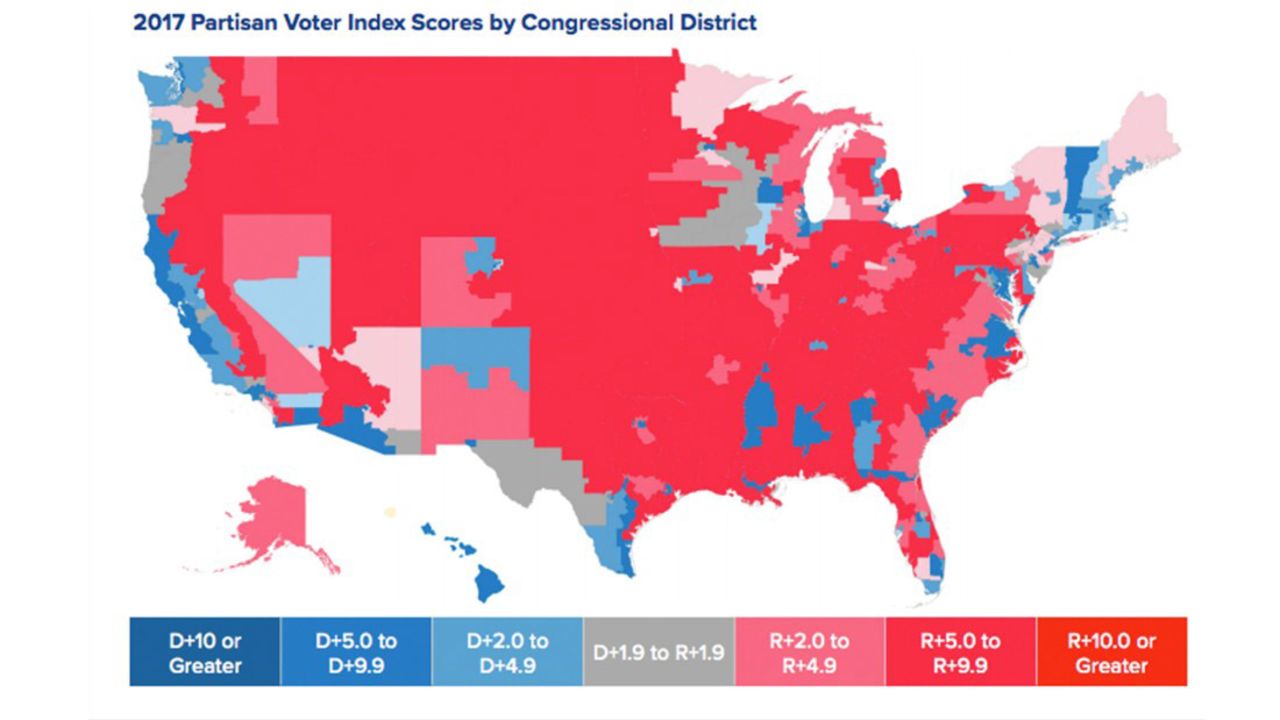
cook report map 1

 Cook Political Report, 2017 

Having left the highest rated show on cable news for huffing it on his own, he invoked his rights to free speech again, as he attacked mainstream television itself. This time, his status as an outspoken commentator was infringed by his former employer, it appeared. He sought to invite his audience to follow him onto the new Twitter platform, as if it was a preserve of free speech. He had discussed the infringement of rights–from the rioters of January 6, whose peaceful invasion of the Capitol he culled from exclusive footage of the thousands of hours Kevin McCarthy granted of “secret” footage that day, to Donald Trump himself–in recent shows, using free speech as a sacred cow. The protection of freedom of speech that Carlson had conspicuously denied Black Lives Matters protesters–who he disparagingly cast as a mob whose violence that threatened the nation–clothed both January 6 protestors and his own show. Never mind that Representative Zoe Lofgren, D-CAL, who had served as a member of the January 6 Committee, felt that Carlson’s broadcasting of the footage “a road map to people who might want to attack the Capitol again.”

In presenting himself as a champion of Free Speech, Carlson claimed the higher ground, as if his constitutional rights had been infringed, in ways that were not only aggrieved. Of course, his rights to speech were quite from curtailed–he was an evangelist of the right whose outspoken claims made him a darling of liberty at the Turning Point USA’s AmericaFest,–

–and he had become an international figure of jet set global conferencing with national leaders outside the United States, at the first meeting of the Conservative Political Action Committee outside of the country. Carlson had delivered speeches at the invitation of right wing anti-immigration strongman Viktor Orbán, whose cry to “take back the institutions in Washington and Brussels” led him to summon Tucker Carlson to Hungary as he sought to remake it as a bastion of conservative Christian values long before 2021, quenching the opposition media and openly urging audiences to stand up against the “rule of the liberal media” as a form of “Conservative resistance to the woke revolution.” Of Orbán dressed outrageous ethnic nationalism as a form of libertarianism, he seemed to have ripped a page from Carlson’s rhetoric, taking him on a helicopter tour of his own “border fence” that led a perhaps mystified Carlson to return the favor by calling Hungary “a little country with a lot of lessons for the rest of us,” terrifyingly gestured to the media monopoly that Orbán created in his illiberal democracy that silenced all opposition in the nation.

Carlson suddenly found himself suddenly an international media star, basking in the attention he won overseas from a man who was an icon of conservative demagoguery. Orbán’s extreme hard-line policy of rejecting asylum- seekers was an outlier of liberal democracies indeed–which Carlson eagerly promoted as a model for American immigration system he calls far too lenient and argues was poised to weaken the power of native-born citizens in ways that aped White Supremacists. Was this a watershed in his defense of what he called free speech, or a new height of self-deception? Carlson’s 2021 visit to Budapest followed a range of anti-LGBTQI laws by the Hungarian parliament, issued to help Orbán cling to power in ways that rested on a profound rewriting of the mediascape of the nation: the refusal of legal recognition of transgender people in Hungary, and enshrining birth sex in Hungarian law, ws normalized transgender discrimination that culminated in bans on any application for change in gender recognition by 2023–legal barriers to gender recognition that became widespread in much of the United States (more alter). When Carlson was forced to participate remotely In the 2022 meeting of CPAC in Budapest, he vouched “I wish I was there in Budapest,” adding in terms that now seem irenic that “If I ever get fired and have some time and can leave, I will be there with you.” (Carlson had found virtues in Hungary’s limited free speech–Orbán has clamped down on media coverage of the Ukraine critical of Russia, as if Trump could end the conflict–“Come back, Mr. President, make America great again, and bring us peace!”–that he blamed on the United States as CPAC imitated Hungary in allowing only alt right journalists to cover the event, rather than the Associated Press.)

Fox News’ Tucker Carlson visits Prime Minister Orbán in 2021/Office of the Hungarian Prime Minister

Prime Minister Viktor Orbán’s policies in Hungary against trans people and gender reassignment has made him a hero on the alt right, a weird affirmation from afar of a charge against “global progressive elites” who promote immigration, transgender and LGBTQ+ rights, bundling them as a “virus” in need of being defeated by a “Christian conservative turn” that offered a model for how right-wing culture might defeated and dispatch “woke” agendas in its defense as a bulwark of Christian democracy, conjuring Hungary’s historical role as a buffer-state of the Austro-Hungarian Empire against Islam. The ban on public depictions of homosexuality in Hungary or any promotion of sex education became a way to for Orbán to emphasize his protection of Christian values: “No Country For Woke Men,” read banners at the CPAC conference he hosted in 2023, proclaiming his nation an “incubator” of “the future of conservative policies” world-wide to energetic applause. (His censorship of the media were elevated as a model for American CPAC leadership who vowed to “go Hungarian,” deciding “who is a journalist and who is not a journalist” for entry to their events, as universities were transferred to being run by Orbán cronies to silence free speech.

Hungarian Prime Minister Viktor Orban addresses a keynote speech during an extraordinary session of the Conservative Polit...

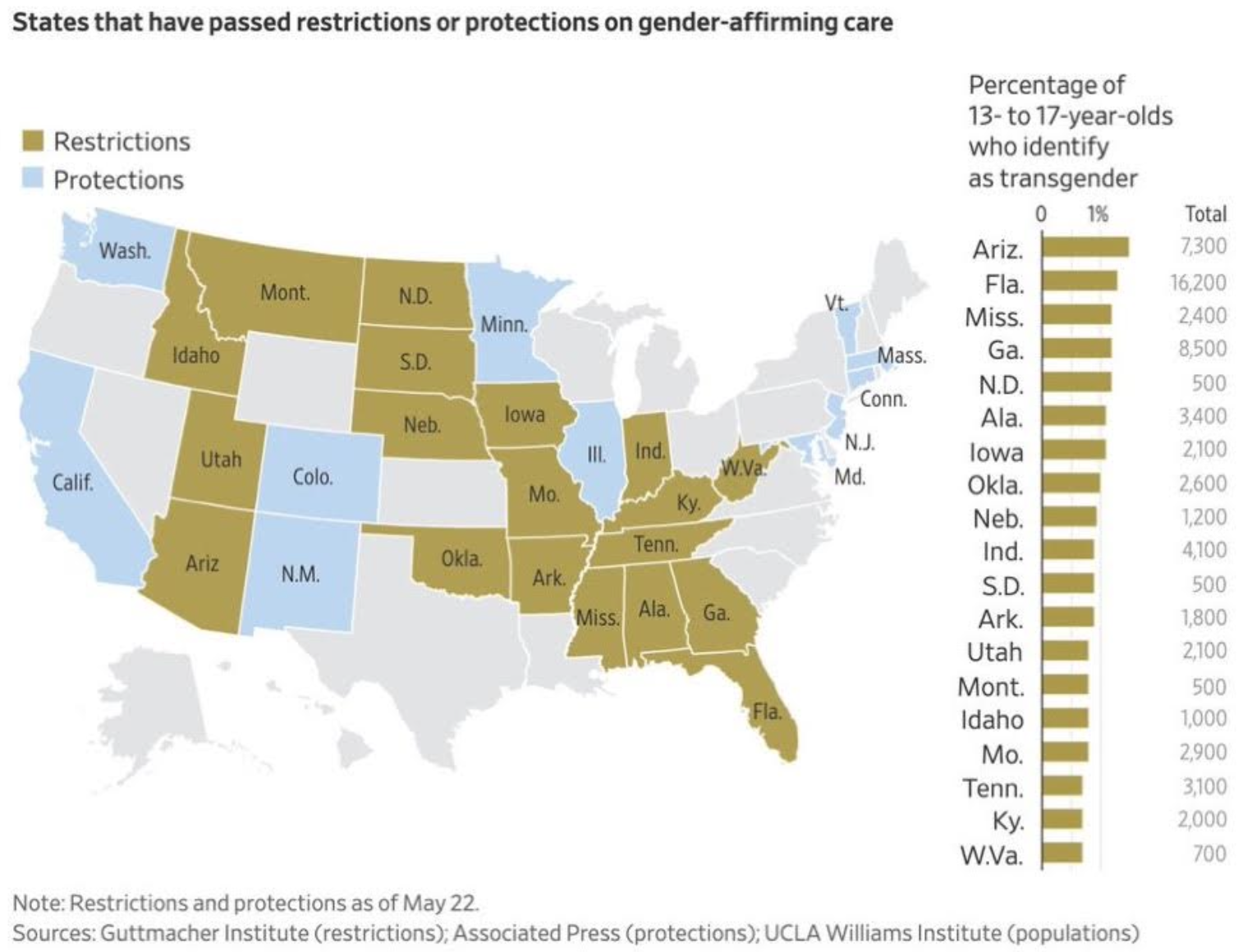
To be sure, to cite a recent news maps of the change that has swept across America of Orbán-like doctrine, mental health was thrown to the winds by the broad imposition of restrictions on gender identification, as a slew of “red” states have introduced restrictions on gender-affirming care across the nation, per the Guttmacher Institute, crating a cleft across the nation of the Orbán-esque policy by enacting outright restrictive transgender laws or curtailing care for trans teens in states over the past two years–a new hot-button issues to motivate to intensify political polarization by invasive restrictions on competitive sports, restroom use, and other health care. The adoption by state legislatures of restrictions and protections a new front of divisive polarization of increasingly sharp lines, as a terrifyingly contiguous block of “red state” litmus tests of knee jerk variety now threaten to return critical swing states–Georgia; Florida; Arizona–into a hard conservative fold.

But the national political struggle is perhaps less the point than the harm inflicted upon some thirty thousand kids in Arizona, Florida, and Georgia who may be destined to suffer psychological harm. The laws against transgender identification in America, echoing Carlson’s false charge that transgender people are targeting Christianity–and “the natural enemy” of Christians, arguing that gender-affirming medical treatments are “chemical castration” by 2022 that was protected by the U.S. Constitution, after the White House criticized states’ criminalization of gender-affirming care. Carlson’s statements echoed Orbán, but also pushed the envelop on free speech as medical care for transgender was revealed as a macabre Grand Guignol theater: “Slicing off a child’s sex organs, preventing a 12-year-old from going through puberty, that’s not ghoulish and dangerous and horrifying. No, it’s not. It’s ‘gender affirming health care.’ Indeed, it’s all we’re now calling a best practice.” And after Arkansas banned puberty-blockers in 2021, a potentially life-saving intervention, as endangering children with long-term medical side-effects, encouraging local legislatures to oppose them, giving a platform to anti-trans authors without any medical qualifications or experience, to shape public opinion on gender-affirming medical treatments as reliant on “massive, massive doses” flooding the bodies of young children who become “cash cows” for the medical establishment, but are not seen by doctors–casting trans support as abusive parenting “irreversibly damaging their bodies.” (Gov. Greg Abbott of Texas obligingly took up the charge in a directive declaring gender affirming services provided youth could constitute child abuse as “abusive procedures” in early 2022, echoing bans on gender-affirming surgery in Alabama, Arkansas, and Arizona.)

The map of outright bans on gender-affirming care suggests an echoes of the red state map, to be sure, with the “heartland” of America from the Dakotas to Iowa down to Arkansas and Tennessee and the Deep South constituting a local legislative block against gender reassignment practices, as transgender healthcare coverage by Medicare in America has become a prominent partisan divide, as the call for “protecting” children by preventing transgender treatment have grown in America–

–in ways that stand to place many who identify as transgender at risk, following the bullhorn of Carlson’s openly wrong condemnation of transgender care as a violation of Constitutional Rights.
 Peter Champelli

Yet Tucker Carlson tried his darnedest to cast himself as aggrieved from his Maine country house, defending his ideological ground from an outpost of broadcasting on Twitter. To be sure, Carlson seems to have accepted a legal right to free speech to warn Americans of the dangers of immigration, terrorism, and feminism, in ways that mirrored the redefinition of “free speech” that had bloomed on the internet and among alt right media, and was recently articulated by Fox News lawyers who beat back an earlier charge of defamation brought by Karen McDougal against Tucker Carlson Tonight. The success of Fox News lawyers defending Carlson’s commentary not as truth but as “non-literal commentary,” boosted when federal judges dismissed the defamation suite, accepting the preposterous defense that the 3.2 million viewers his show nightly attracted did not understand them as “statements of fact” or “actual malice,” may have boosted Carlson’s sense of his own free speech. However implausibly, Fox lawyers had successfully argued his words “cannot be understood to have been stating facts, but . . . delivering an opinion using hyperbole for effect” that the District Judge Mary Kay Viscocil had affirmed.

The lawyers’ argument recalled Donald Trump’s defense of using “truthful hyperbole,” with a twist. In deeming Carlson’s speech to be “‘loose, figurative, or hyperbolic language’ that does not give rise to a defamation claim,” the judge agreed a reasonable viewer of Tucker Carlson Tonight “‘arrive[s] with an appropriate amount of skepticism’ about the statements he makes,” as if defamation were not the stock trade in the show. In agreeing to the new nature of hyperbolic speech, District Judge Viscocil effectively defended Carlson as a disseminator of defamation and rumor for the growing rumor mill of the Trump Era. But Carlson’s broadcasts had worked to shape dissensus on a scale that echoed how the Roman poet Virgil called Fama “the swiftest traveller of all the ills on earth, thriving on movement, gathering strength as it goes.” Over six and a half years, Carlson had nightly delivered invective that was perhaps “at the start a small and cowardly thing, it soon puffs itself up, and walking upon the ground, buries its head in the cloud base,” or the air-waves, the “swift-footed creature” of rumor escaped judicial sanction as pure hyperbole, as rooted in “exaggeration” as Donald Trump’s own claims, rather than “stating actual facts.” AlthoughTrump had famously counseled “truthful hyperbole” as a form of “innocent exaggeration” in The Art of the Deal (1987), Fox News seems to have expanded the effective business practice to news broadcasting, defending Carlson’s “hyperbolic language” to be protected as free expression, no matter how incendiary or vindictively dismissive it was.

The admission of hate speech and denigration as a form of “free speech” set a new standard in the weaponization of speech against the electoral map in which partisan battle was energetically waged no holds barred, going full Hungarian, to cite CPAC. If such hyperbole was but the stock-in-trade of Tucker Carlson’s on-air fare, Carlson’s partisan commentary had sped hotfoot through the country, intentionally, crying news not rooted in actuality, or anywhere but partisan reality, but in what we had come to expect on Tucker Carlson Tonight. For Carlson had already explained that immigrants made the United States “poorer and dirtier” (December, 2018), as the protests after George Floyd’s killing were “definitely not about black lives” or justice (2020) Yet FOX lawyers cast the dismissal of defamation charges both a “victory for FOX News Media and or all defenders of the First Amendment”–as if they fit the Free Speech protected by the U.S. Constitution. Such lowered standards of speech enabled Fox TV lawyers to suggest that viewers’ expectations for “truth” from Carlson’s brand of commentary had diminished, and one could not expect him to be prosecuted for going overboard–the argument was not, in fact, about free speech, but the lowering of standards on broadcast news that painted Carlson as not speaking the truth at all.

This quite broad interpretation or inflection in historical arguments about free speech was perhaps born online. It was first prominently set by the distortions by which Campus Reform, affiliated with Breitbart, appropriated Free Speech in 2020, litigating that “free speech” zones at university campuses to protect political proselytization–akin to the zones of political protest that emerged in the 1980s and 1990s for protest activities–but now against the restriction of conservative speech. The redrawn “protections” of campus speech mirrored “red” states or states with sizable “red” constituencies, North Carolina to Georgia to Michigan to Wisconsin to New Hampshire to Virginia–

Introduction of Legislation Protecting Free Speech at Campuses in Reaction to Universities’ Restriction of Political Proselytizaiton

–and had created a striking division by using state legislatures to “open” university campuses to conservative ideologues, a mission that escalated after Donald Trump’s election. The dispatching of talking heads from the alt right–Anne Coulter; Milo Yiannopoulos; Ben Goldberg; and other online trolls–raised the bar on ‘free speech’ and adopted it as a logo for conservative causes, in an attempt to staunch an electoral divide.

The citing of free speech as an outcome of Tucker Carlson’s defamation trial was nothing less than a feather in the cap of alt right media. Campus Reform had long sought to “expose the liberal bias on America’s campuses”–of which many universities seemed guilty as charged–to protect conservative speech and learning at college education after Trump’s election, following protests after Trump’s election on college campuses. The rallying cry that “The radical left will stop at nothing to intimidate conservative students on college campuses” animated the movements of protecting Second Amendment clubs in Utah, Free Speech Balls in Mississippi, and other conservative activists interested in sponsoring ideological speakers.

Tucker Carlson accused his past employer of ‘de-platforming’ the voice of conservative America, and limiting his broadcasts–even if the notion that he had crossed a line in the broadcasts was less compelling than the sexist private behavior and a bevy of texts that the new defamation suit uncovered red. Carlson invoked the term ‘free speech’ in the context of broadcasting, to make a point quite different from the definition of free speech in 1789–but far more akin to the earlier defamation suit that viewed his show as “loose, figurative or hyperbolic language.” When Carlson recast himself as aggrieved by the mainstream media, he hinted his dismissal reacted to the bravery of his vigorous election denialism. But his liability had grown. Carlson’s new texts reviled Donald Trump in a language not seen on air reveal a level of contempt for a man he characterized as a “good at destroying things” and as “a demonic force, a destroyer,” before whom he needed to stay alive: “But he’s not going to destroy us. I’ve been thinking about this every day for four years.”

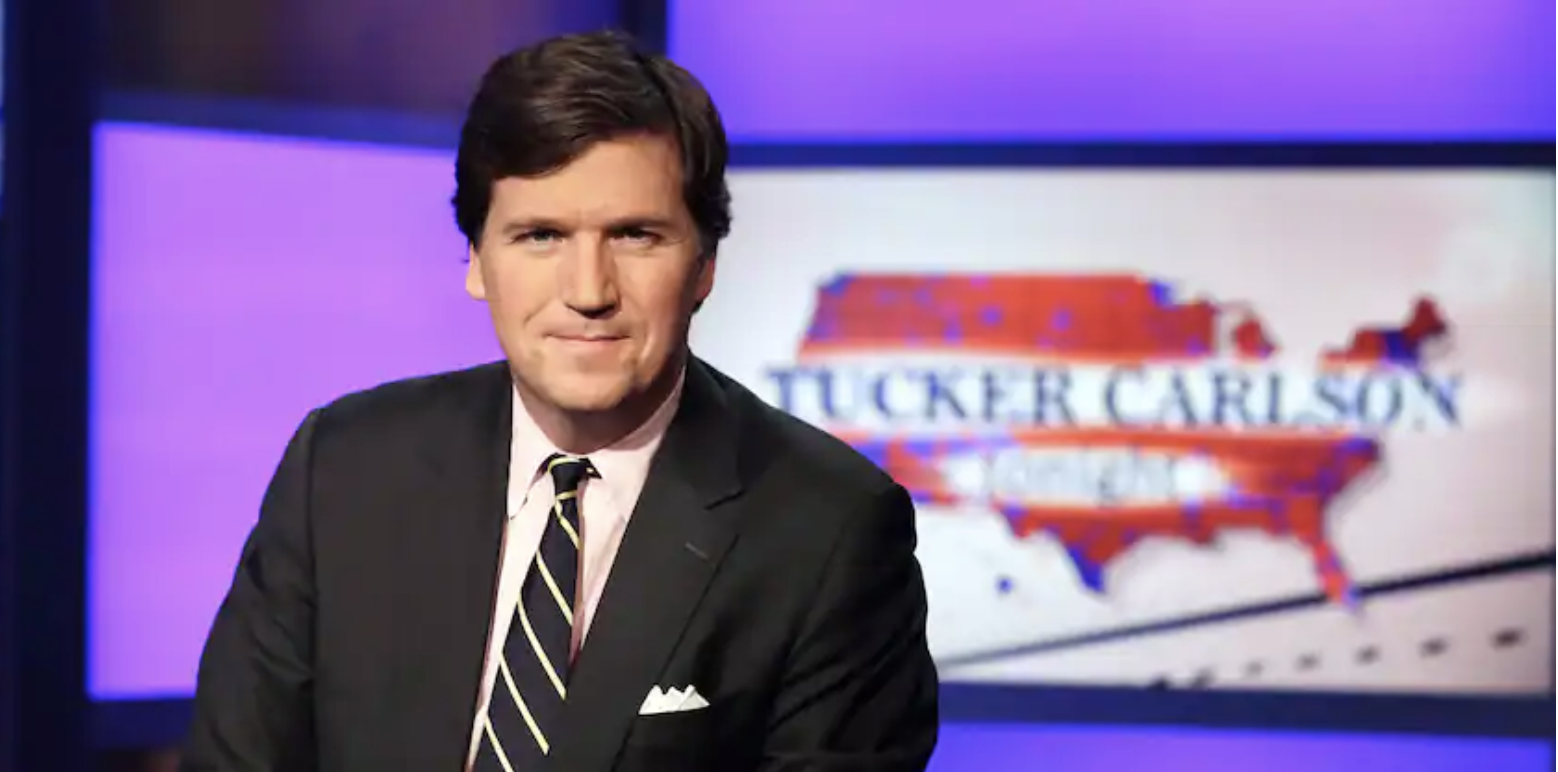
Yet Carlson had himself destructively sewn discord to destroy the civil fabric of the nation, however, which became the main currency of his own show. Even as he claimed to be within his “rights,” Carlson pushed the envelope to create a racist, invective-filled shows on cable news, espousing replacement theory as a danger to the character of the United States that aped white supremacism. Before the split map of red and blue counties of the 2016 election, he perpetuated the gap between parties as destiny, reprising themes of the Trump campaign and promulgating new resentment. The map before which he delivered the news became a banner of election denialism. Delivering “news” before a blurred electoral map–a map so iconic among Republicans to not demand detail–the backdrop for rosy-faced invective on Tucker Carlson Tonight. This post unpacks the persistence of this map on Fox News as a backdrop for Carlson’s version of truth-telling in opening monologues broadcast nightly from November 14, 2016, to April 21, 2023–as if it were a static screen to which Carlson sought to orient viewers, freezing the 2016 electoral map in time.

Tucker Carlson, host of "Tucker Carlson Tonight," poses for photos in a Fox News Channel studio...

Fox News Channel March 2, 2017, in New York/Richard Drew, AP

While the red swath had grown far less monolithic in the early hours of the tally of the 2020 election, in ways that might have seemed to warrant a challenge to Carlson’s logo, the map of 2016 was an icon for the “news” hour, the logo was so iconic that it had not changed,–even as the recent election suggested an opening in the monolithic division of blue and red states, and a more closely divided vote indeed. But as election denialism continued, Carlson had clung to the 2016 map, which occupied a central place in the ideological bent of his viewing audience, who saw that victory as a new road map for partisan identity–even as the states seemed to break in a different manner. Indeed, the early results on the “magic walls” on interactive news screens quickly reconfigured the logo that Tucker Carlson had used as the back screen of his nightly partisan broadcasts.
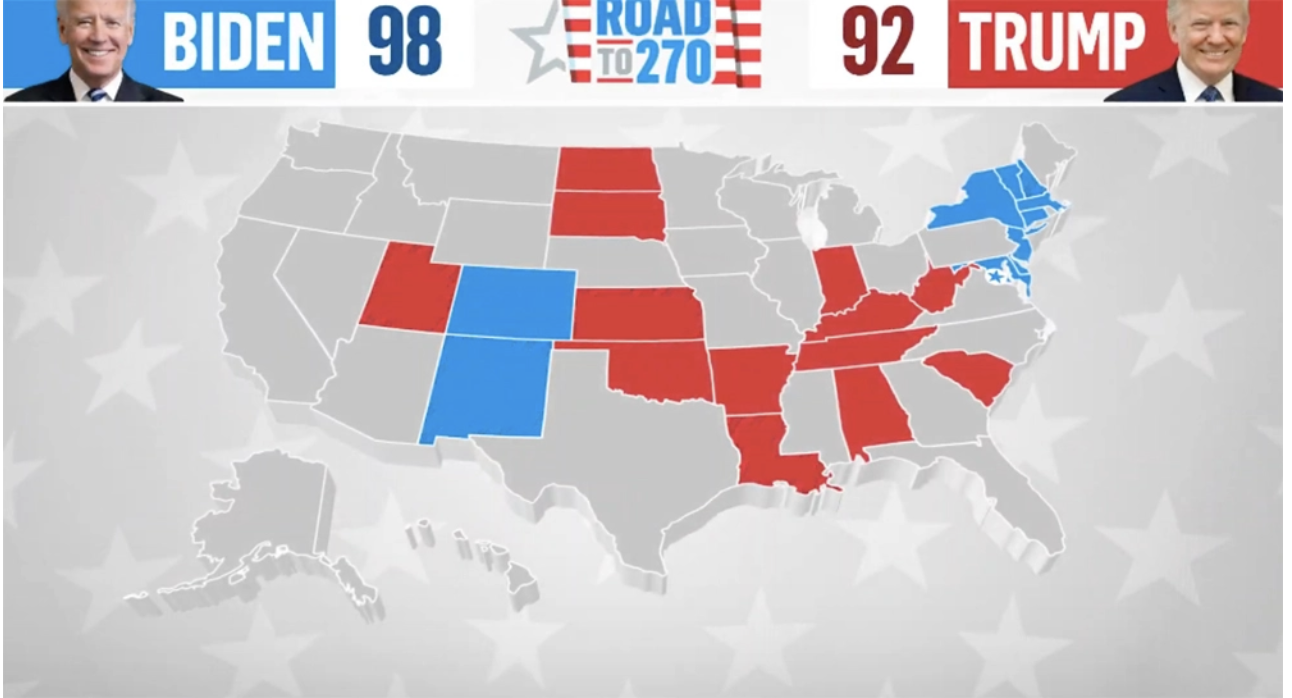
Magic Wall on NBC News, Election Night 2020

1. Tucker Carlson seemed more florid and a bit unnerved on Twitter, a bit faded after all those broadcast, a bit less animated, before a framed Bill of Rights, with far harsher lighting. He claimed himself ready to confront what he cast as a moment of media crisis in which he was not involved. Bereft of the logo of the nation as it was fragmented by electoral politics in 2016, split in “blue” and “red” counties as if it contained separate nations, the aggrieved news commentator seemed trying to convey an air of normalcy, hunkered down in a house as if sheltering in place.

Safety, and indeed free speech, had been imperiled by the liberal state. Protection of an imperiled democracy offered a rationale for broadcasting that was indeed akin to January 6, as if an insurrection was being live cast direct from Maine, in what seemed Tucker Carlson’s summer house, a site of safety and white purity, far from the current partisan wars, but also command central for waging them. In granting the possibilities January 6 rioters who entered the Capitol were only exercising free speech and rights of assembly, Carlson reprised a tired charge “liberals” imperil our national security–a big reveal of American conservative news media for some time. The emergence of the constellation of “national security” was forged in the post-World War II period, first linking “security studies” to “international political economy” in ways later made explicit by 1947, when The National Security Act coordinated global risks and federal agencies by a National Security Council created “to advise the President with respect to the integration of domestic, foreign and military policies relating to the national security and internal security.” The postwar triangulation solidified the place of America in a global theater that would redefining American liberalism, framing “national security” by military policy as well as foreign policy liberals long found problematic more than purely pragmatic.

When Carlson blamed liberals for intentionally undermining national security on his show every night–by cutting the military budget, welcoming refugees from war-torn nations, or migrants on the southern border as creating a national security threat, it was as undercutting that global order, as much as undermining a national order. And, most recently, he had delivered an exposé of sorts about the Capitol Riots of January 6–

–even if this meant taking the QAnon Shaman who decorated his face with warpaint as a victim of an American media, as much as a victim of his belief in false freedoms.

In exposing global existential threats, Tucker Carlson had created a script of urgency January 6’ers had almost coopted–an d then reframed the trials of the rioters in the January 6 Insurrection as an issue of freedom. If Carlson’s rants on immigration crafted a uniquely survivalist tone taken up by January 6’ers as charges when they entered the Capitol, creating an alternative narrative and reality about the protests, as well as about the convictions of : “in free countries, governments to do not lie about protest as a pretext to gain more power,” white-washing the event as “mostly peaceful chaos” in ways that offered those being tried for besieging the U.S. Capitol some hope. Carlson cunningly suggested federal forces increased the violence by planting disruptive agents in the January 6 crowd, finding evidence of a “false flag” operation in 46,000 hours of “secret footage” House Speaker Kevin McCarthy provided as an exclusive, as one of his first public acts, because, as Carlson put it, “Americans have the right to know” and have not been told the full story.
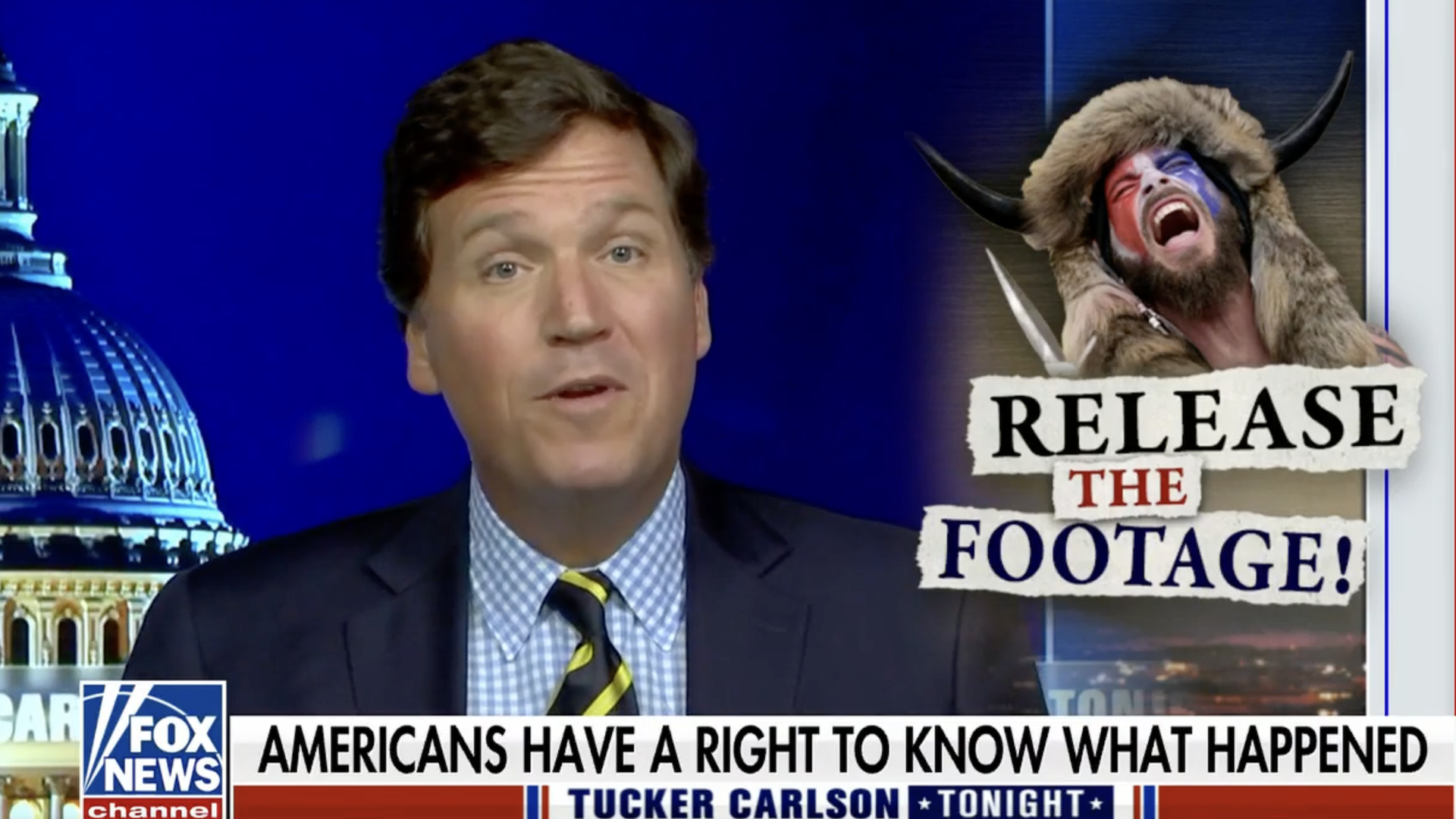
Exclusive: Kevin McCarthy gives Tucker Carlson access to massive trove of  Jan. 6 riot tape

Tucker Carlson’s “return” was a form of phoenix-like relaunch, born out of the ashes of the the defamation lawsuit against Fox News, arising to strike against the legal verdicts not of the January 6 rioters, but verdicts finding Donald Trump guilty of battery, defamation, abuse, felony and falsifying business records. Quite soon afer he was released from or asked to leave Fox News, it was predictable Carlson would not allow himself to be pushed around. Promising to continue to speak the unvarnished, unrestrained manner that gave voice to the aggrieved, he found a defender in free speech absolutist Elon Musk. Musk had stated ambitions to make the center of news information in the 2024 election, claiming Twitter might create a major platform of the election, and Carlson almost wanted to lend a helping hand. Granted a newly prominent platform by the free speech absolutist to reinvigorate his own failing business, Carlson perpetuated a true deep fake, reclaiming free speech as the terrain of the alt right, appropriating the early modern liberty as an empowering rallying cry against entitled but entrenched media interests.

The most recent gambit of Carlson to sew board discontent not only recast the former president as an aggrieved victim, but showed himself a victim of powerful interests that seek to de-platform his show–at a close remove from the limiting of liberties that now stood in the rifle sites of the new priorities of the state. The historical decline from America’s Four Freedoms were at threat as the switch he made to Twitter only revealed the threats to freedom of expression that were historically enshrined by the passage of the Bill of Rights sought to protect in an early age of print culture. The streaming and broadcasting of defamatory lies on television provided a qualitative and mode of expression more akin to groupthink than expression, cleverly camouflaged in Carlson’s championing of a right to “free speech.” Presenting himself as the aggrieved party, he became a living symbol the violation of civil rights haunting the country from the January 6 rioters to Derek Chauvin to Donald Trump, all white men targeted by the liberal state, at a time when the union–and not only the Capitol building, but the country that the Capitol represented–was under attack.

Tucker Carlson news: Fox host defends QAnon Shaman, attacks trans people  and calls Zelensky 'despot' | The Independent

The new argument of “legal exceptionalism” deviously undercut justice, if not the trial system, in the false populism of common sense. The dismissal of Tucker Carlson from Fox News may have occurred in the fallout from settlement of the Dominion lawsuit out of court, that revealed him to have sent several quite disparaging texts about Donald Trump amidst the rampant sexist of his newsproom, in a revelation of his off-the-camera behavior. The demand for a greater level of honesty on Twitter might allow was cast as a greater level of purity. In pandering to grievance yet again, he continued the Tucker Carlson narrative of grievance that was hardly new to his show. To be sure, in the light of the remarks made public during the Dominion lawsuit for defamation of the electronic voting systems, he wanted a place to reach the 3.2 million viewers who had nightly tuned into his show. His bracing announcement “We’re back!” quickly topped 100 million views in less than twenty-four hours, winning 21 million watches of a video, even if the number probably magnified individual viewers. This approached the audience of 3.2 million of times past.

Tucker Carlson let his viewers know that after he left the FoxNews network, in the fallout from settlement of the Dominion lawsuit out of court, texts disparaging Donald Trump and revelations of improperly sexist newsroom behavior were less the reason than claiming moral high ground. But Carlson may have been protesting too much: his show had almost intently if not obsessively exploited a politics of grievance to fostered since 2017 the hyper-partisan division of the United States. The recurring topic of the show was stated in the electoral map logo of red expanse and blue readouts that hung in the background of his nightly rants–Carlson’s news commentary fit the slightly blurred map of the electoral division of the nation, now an existential fact and eternal lesson in ways that its content didn’t even demand to be interpreted, glossed or read.

The blurred out map before which he had broadcast since 2017 on Fox News displayed a cleaving of blue and red counties he cheerily perpetuated. His show id his best to preserve if not magnify this map, if not to make it an iconic as a map of the party’s future. The map was a leitmotif of sorts of a struggle that animated all Carlson’s on-air rants: as if patriotism perpetuated the partisan divides, he basked before the warm glow of an electoral divide among blue and red counties that cartographic semantics dictated displayed perhaps less two different nations than two world-views. He didn’t need to explicate this divide that lay at the center of most all nightly broadcasts, but electoral divides placed in question the fate of the nation before the duplicity of Democrats and the national security threats they had enabled–as he invoked narratives of “how nations collapse.” The all but blurred logo had a centrality that didn’t even need to prominently register.

Continue reading
Leave a comment

Filed under Donald Trump, Free Speech, Freedom of Speech, social media, Tucker Carlson

Florida Tweets

Can we believe anything from the office of Governor Ron DeSantis? It was the height of irresponsibility, but one that should make Jack Dorsey breathe a sigh of relief that at last he is no longer responsible for Twitter: the Florida Secretary of State used bad data about the rates of COVID infection around the nation to trumpet the peninsula as a vacation land as a safe space in the pandemic, using an utter absence of ethics to promote disinformation about viral spread in the peninsula that almost echoed the denialism Governor DeSantis long promoted in bashing vaccines, masking, or market constraints as a way of combatting viral spread, even if his assertion ran against established ideas of contagious disease and viral transmission. Florida is facing numerous existential threats, from sea-level rise to saltwater flooding of coastal areas, but promotion of the state as a site of safety from the global pandemic was the height of duplicity.

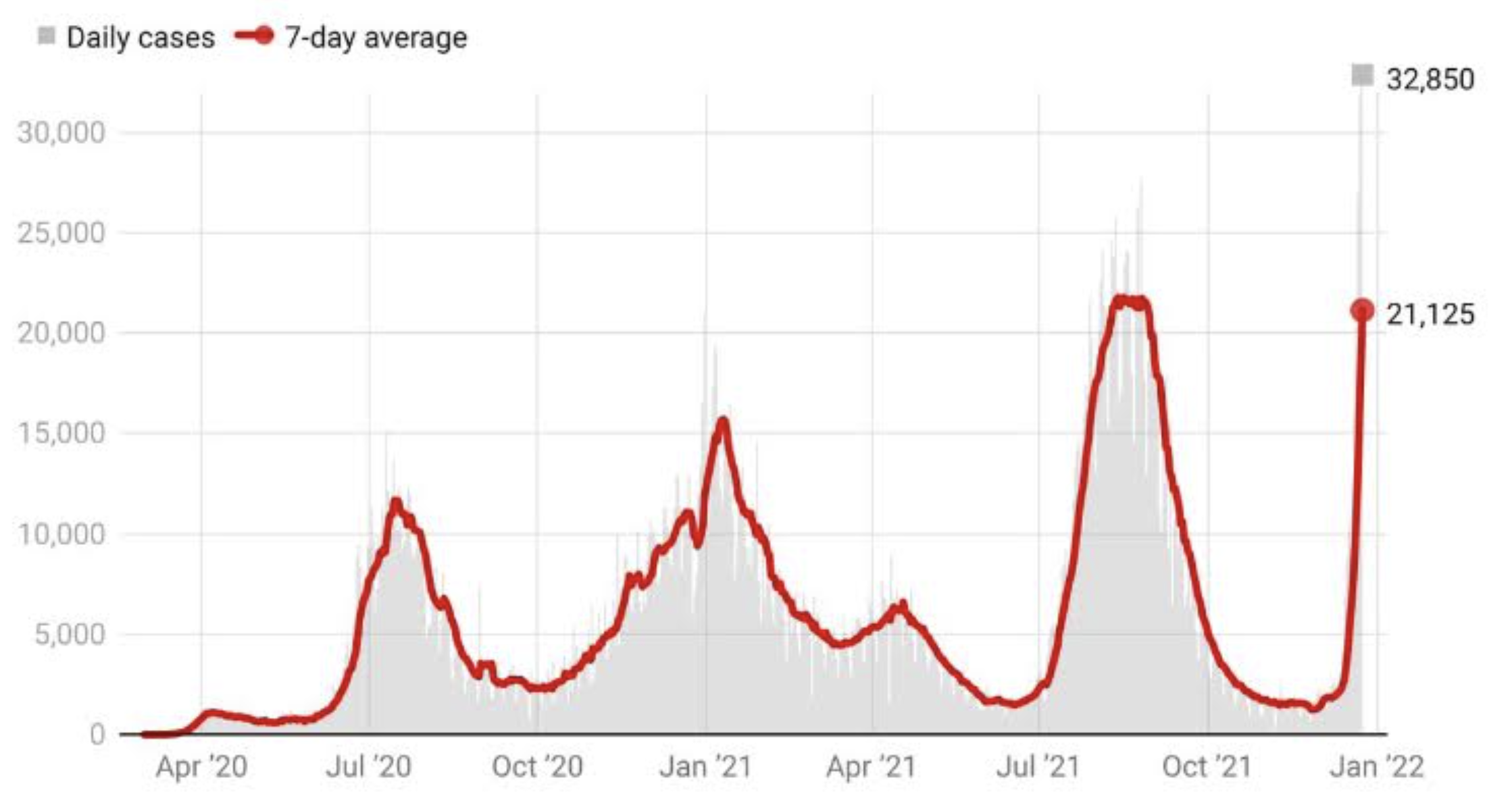
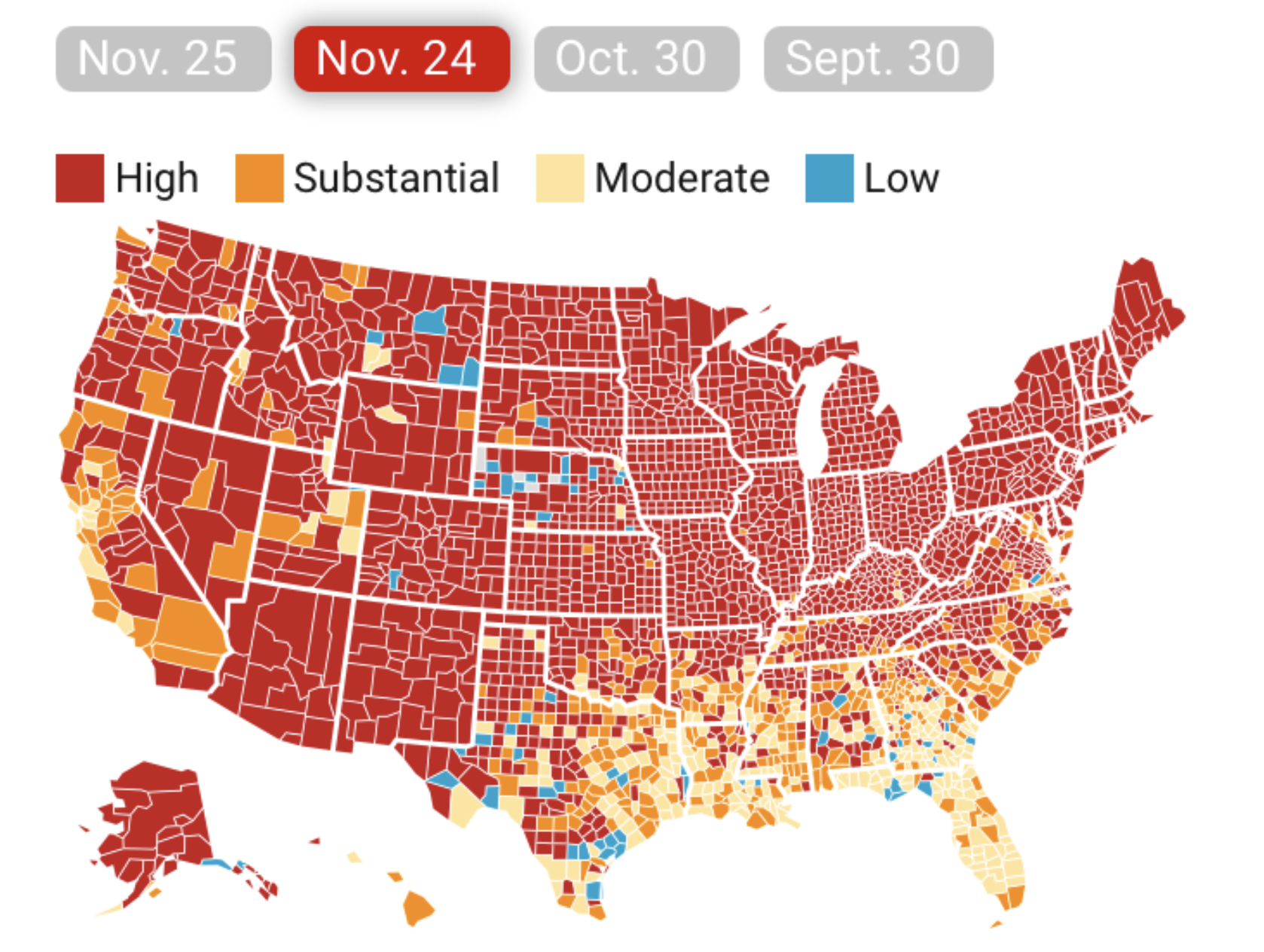
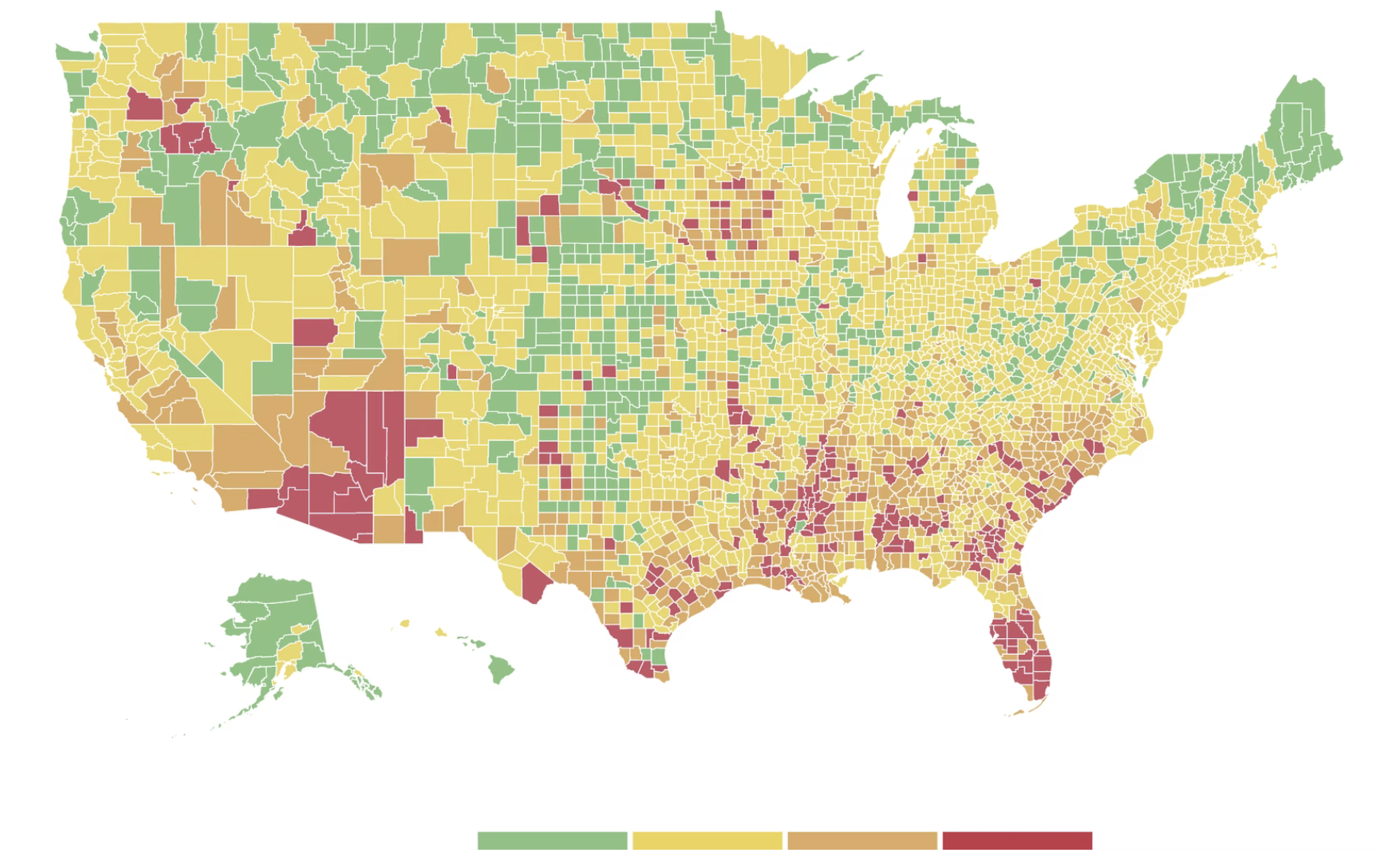
Exercising the prerogative DeSantis long claimed to guard the health practices of Florida, apart from the nation, his office and press secretary must have been thrilled at the latest pre-Thanksgiving COVID data vis that the issued by the CDC, that showed Florida as lying apart form the nation in a bucolic preserve of blue of low coronavirus transmission rates. The announcement by Florida’s Dept. of Public Health on June 8, 2020 of the first twelve deaths due to COVID-19 in the state of Florida 0, when just over 63,000 were testing positive in the state, led the DoH to promise to “provide more comprehensive data,” releasing daily reports on COVID-19 cases in Florida on the DOH COVID-19 dashboard is also providing updates once per day for every Florida county, “available here,” of new positive cases, that state residents and the nation watched rise. If folks had become habituated to dashboards as a way of accessing up-to-date data on viral transmission and public health, the tweeting out of a map that integrated outdated data on infections in Florida with shifting national picture as even as the arrival in the United States of an Omicron variant put a chill on national travel over the Thanksgiving weekend, but year-end travel was predicted to see a rise in air-travel that would approach pre-pandemic days.

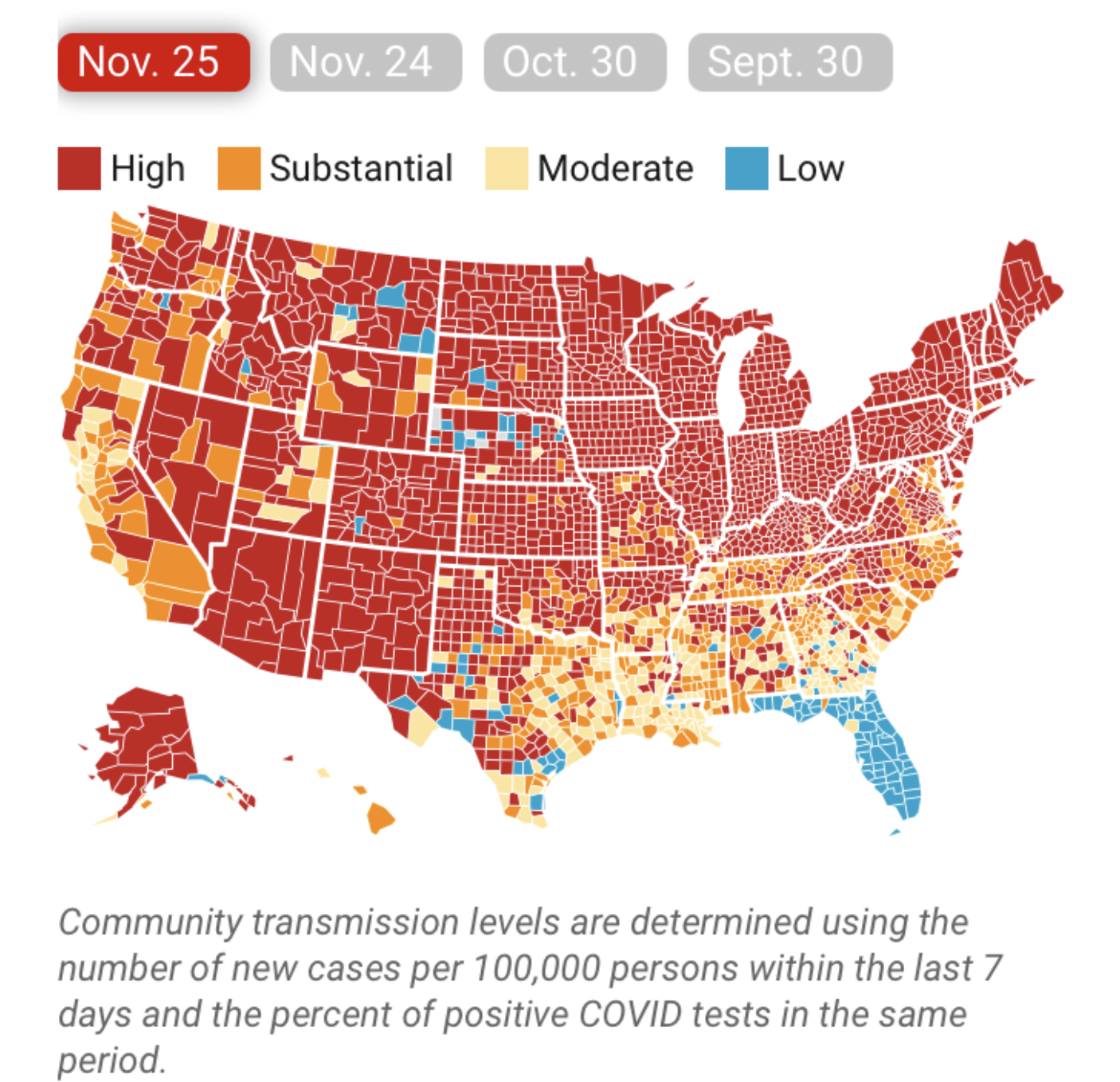
The Age of COVID has encouraged an amplification of graphic story-telling about the hot spots and safe spots of viral transmission or local virulence. And the infographic appearing to label Florida, the nation’s storied vacationland, as featuring far lower community transmission seemed ripe for a retweet. Caroline Pushaw, Florida Governor’s social media savvy press secretary, seems to have issued it as an invitation to the state’s winter beaches, as if Florida policies had, despite anti-vaccination campaigns and few masking mandates, gone beyond other states in reversing the high rates of COVID-19 mortality that once afflicted the state per public dashboards of years past.

COVID-19 RIsk Rate/Harvard Global Public Health/Talus Analytics
July 2020

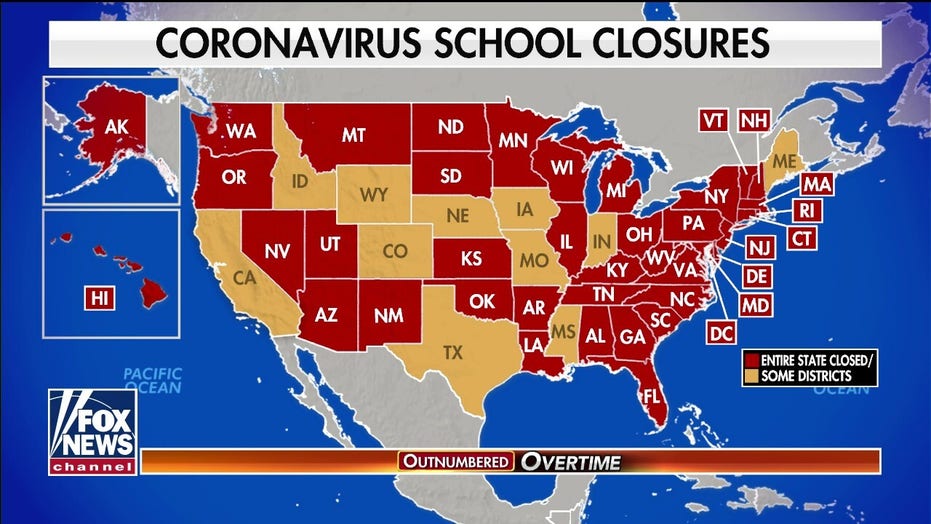
Gov. DeSantis was a huge denier of the infectious nature of the virus, even resisting Trump’s own calls for Americans to stay at home when possible to contain virtual spread, arguing that imposing any “lockdown” and “shutting down the country” was an excessive response. DeSantis’ prominent place in Trump’s inner circle of response to the pandemic increased his profile in the COVID response, and inflated his own sense of national responsibility, as well as causing his pro-business policies to shift in March 2020 by closing Florida schools in the end.

The national map of community transmission rates attempted to bolster Gov. DeSantis’ national credibility. The arrival of the Omicron variant, boasting over three times as many mutations as the delta variant, became an opportunity to boost perceptions of Gov. DeSantis’ public health creds. Despite the Governor’s vaccine denialism and diminishment of public health risks–and utter lack of interest in vaccine equity–low rates of transmission offered a useful icon of peninsular identity to promote the governor on the national news, from FOX to OANN, as if to suggest that “as winter approaches,” Florida was doing something right–as if in an invitation to the nation to make travel plans to consider visiting the sunshine state.

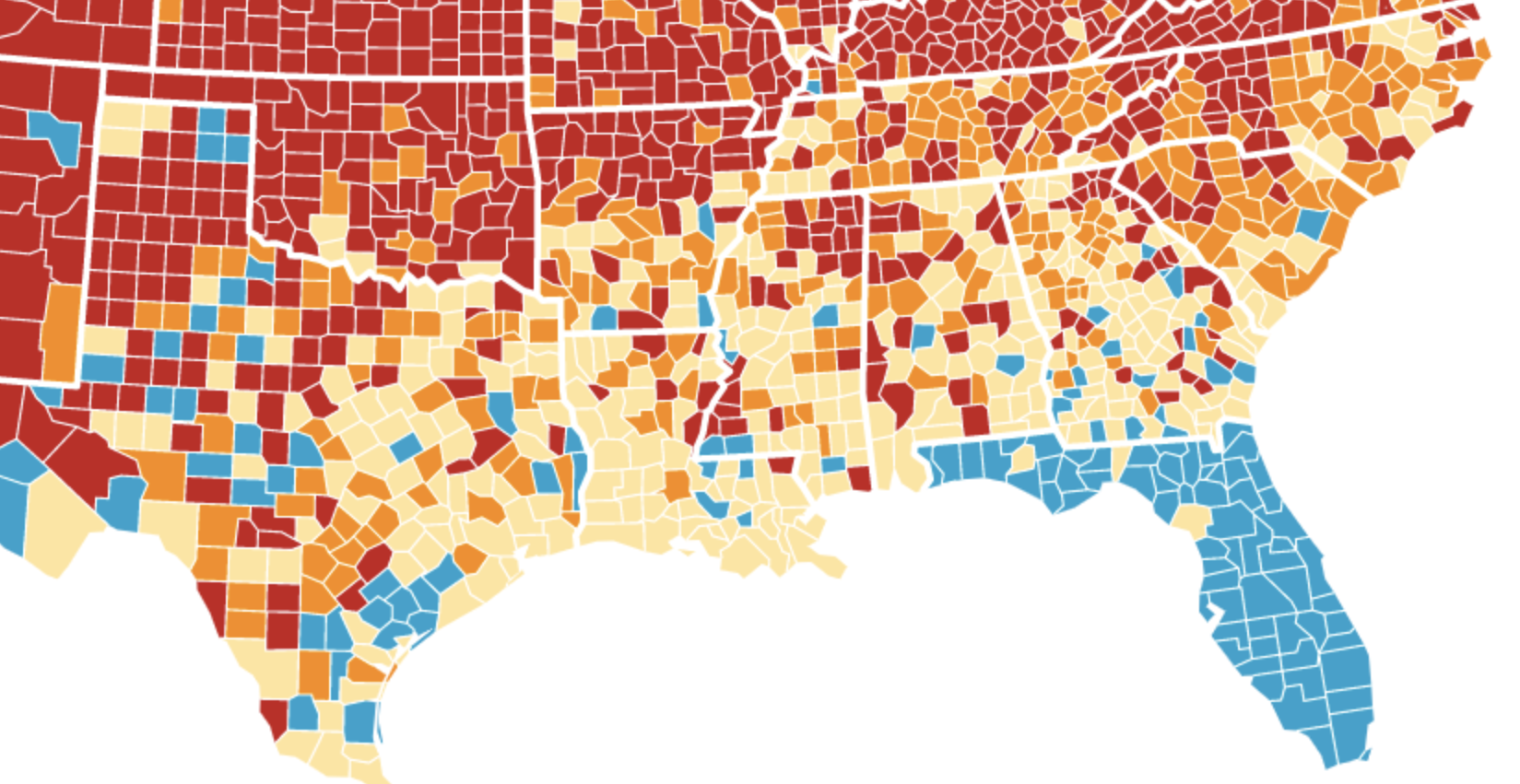
It must have been clear quite immediately to DeSantis’ press secretary, who tweeted it to her 22,000 Twitter followers as evidence of an ethically dubious ethical invitation to the Sunshine State for future travelers–per what seemed currently reported transmission levels. Strikingly, low levels of community transmission in most counties south of the Mason Dixon line would obviate the need for mask-wearing even in public after the arrival of new variants, although not the bulk of the nation, colored red for high levels of transmission that merited masking in the all counties colored red for high levels for which the CDC recommended masking in public to contain potentially very dangerous COVID-19 transmission in the form of new variants.

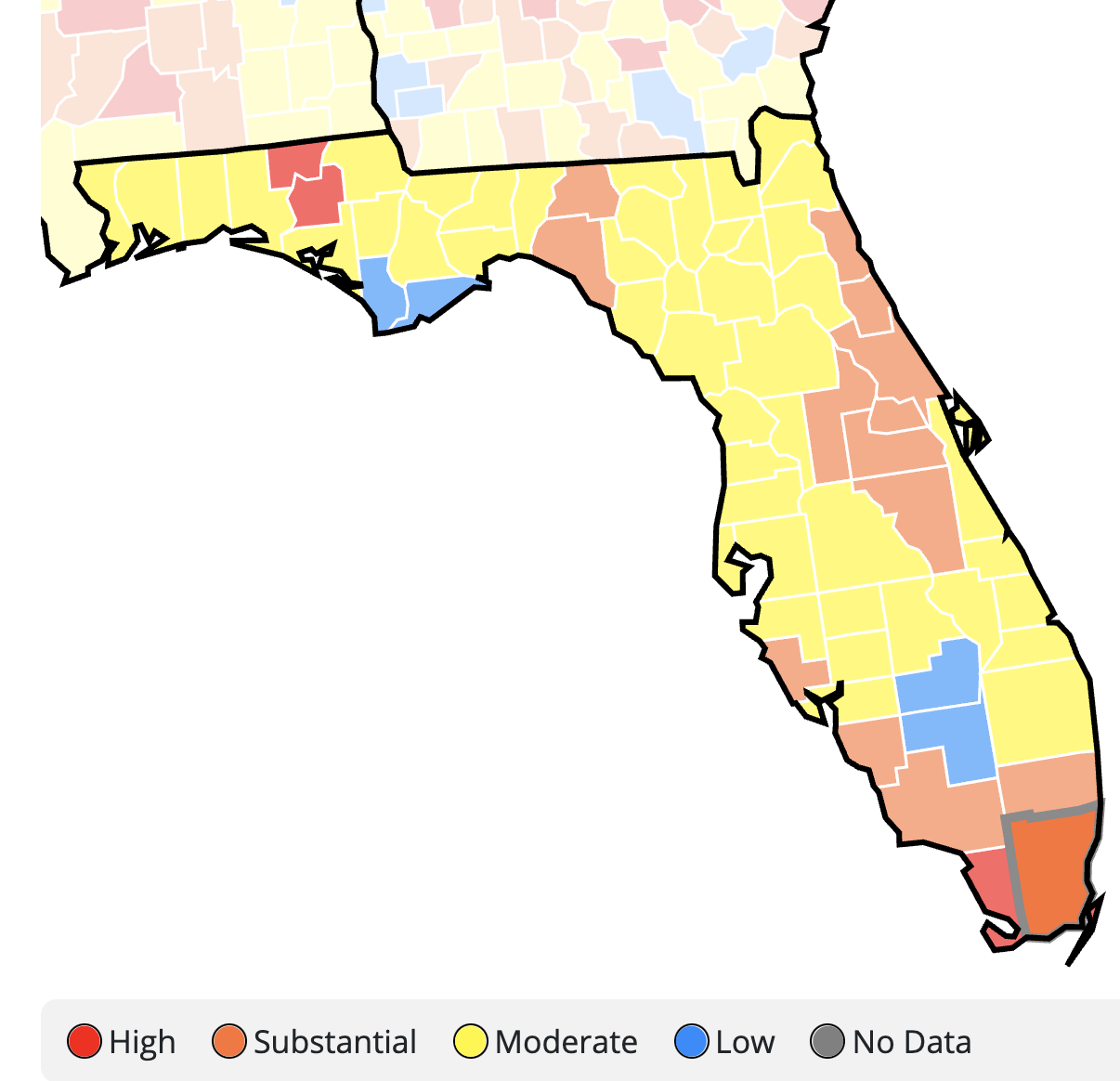
But the map “lacked” a legend and was in many ways cherry-picked–or based on cherry-picked data, as the statistics for infections in Florida were decisively from an earlier date than the rest of the country, artificially rendering its community transmission rates low. It seemed as if the apparently real-time picture was evidence of a stark change of events that talking heads debated as if it were proof and evidence of DeSantis’ underestimated smarts in pushing back against national health policy. Yet the story is far more complicated–and far more Machiavellian–as the pristine blue image of the state–a blue aquamarine that handily recalled those beaches and sun’n’fun for which Florida was long celebrated in the national imaginary-was based on counts from a different time than the dates of cases in all other states, conveying the appearance of salubrity when that was not the case.

Did the state’s office really fudge the public data on its case rates, which it had long ceased releasing daily, using outdated numbers to showcase an apparent contrast sharply evident on state lines? The meaningful legend that might be juxtaposed with the “snapshot” that the delayed reporting of statistics of coronavirus transmission in Florida shaped might be the way that the state had in fact earlier been rocked by successive waves of coronavirus infections, a roller coaster of infections of which the state Governor, who had only recently unveiled a new image for the separate task force of the state that showcased its unique health policies, seemed oblivious, but whose bursts of new cases of infection seemed the bête noir against which DeSantis was forced to tilt in the public eye.

For in taking the emblem of an alligator fiercely guarding its territory, must have loved the data visualization that “mapped”–if deceptively–the improbable case his unique health policies not only separated Florida from national guidelines, as a paradise free from mask-wearing and vaccine mandates. It was a perfect case of how maps lie, which removed him–or his press secretary–from any liabilities, as the map gained a robust afterlife on social media, free from the constraints of real public health data or true comparison of COVID case counts.

DON'T TREAD ON FLORIDA': Ron DeSantis Promotes 'Pro-Freedom' Flag | Sean  Hannity
October 21, 2021 by @GovRonDeSantis

Modeled after the Gadsden flag, the image radiated a stubborn sense of obstinacy as the omicron variant lead to renewed fears of a new spike of coronavirus in Florida, worry that found an odd counterpoint in the map the press secretary took comfort in tweeting out. Yet by Christmas, the gift of the CDC data vis seemed not the gift that keeps on giving at all, as Omicron infections had hit the Sunshine state, proving that its barriers were hardly fixed frontiers.

Although most all Florida had been colored red for much of the summer–amidst concern for the Delta variant, and for “breakthrough” infections–and the new tracker map seemed a lucky break. As the omicron variant leading to rising fear of a new spike of coronavirus in Florida, DeSantis’s press secretary took comfort in an opportune recently issued CDC map to suggest that, low and behold, things had changed, and current COVID visualizations showed “low transmission rates distinguished the panhandle and peninsula, as if the state public health policies had in fact, contrary to recent pandemic history, been doing something right all along.

The crisp borders of low community transmission that seemed to define Florida seemed to be a tip-off, even if the image that was tweeted out was picked up on FOX-TV and other “sources” of right wing or alt right news. The image of a combative alligator defending its territoriality, as a sign of local resilience before fears of rising rates of infection and hospitalization, and is now available at PatriotFlags.

The image of defending a swamp fit DeSantis’ promotion the ports of the Sunshine state as the logjams in ports on the east coast and west coast created problems for transportation hubs in California, Washington state, and New York. “We’re also seeing increased costs, inflation, and higher food prices,” he added. “We in Florida,” DeSantis ventriloquized for the state, showcasing his mastery of boosting public health with the bona fides of a newly minted pro-business eecutive, “have the ability to help alleviate these logjams and help to ease the problems with the supply chain,” with little care for vaccine mandates: In Florida, “At the end of the day, you shouldn’t be discriminated against based on your health decisions.” 

When Christmas did come, it didn’t seem that the state of Florida was particularly bad off in relation to the rest of the nation–but the rising death rates related to COVID-19 dramatically grew across the peninsula in truly terrifying ways, drenching the peninsula pink, and belying those low transmission rates about which Gov. DeSantis’ office was so eager to tweet out.

The level of disinformation is rather without precedent, but speaks in many ways to the hyper-reality of maps of COVID-19 infection that were based on rather dubious and incomplete data providing a rudder in an age of uncertainty. DeSantis’ press secretary tweeted out the CDC map to bate the anti-vaccine commentariat. Arriving pre-Thanksgiving, it seemingly celebrated the arrival of a new state of salubrity: the boundary lines of Florida popped bright blue of unearthly nature not because of what Florida was doing right, but was based on data of community transmission rates at days behind the rest of the nation: state data days out of synch with the national norm created the impression of statistically low transmission rates in the state, and south of the Mason-Dixon line, affirming how things were always better in Dixie.

DeSantis had been comparing the low rates of per capita COVID mortality in Florida, despite its large share of elderly, from March, 2021, claiming higher mortality rates for seniors in forty other states had offered evidence that his policies were indeed far more effective than those states that mandated lockdowns and suspended schools, insisting on the benefits of helping businesses and keeping local commerce flow. As FOX news commentators spun the CDC map of community transmission rates as evidence of nothing wrong with fighting masking mandates, or vaccinations.

Yet by mid-December, 2021, reality had reared its ugly head. Skyrocketing rates of infection from the Omicron variant proved the folly of asserting any containment of the coronavirus that any policy of one state might so easily fix, as the high rates of infection shifted the panorama of the pandemic, with the fifty millionth case of COVID-19 recorded, and deaths due to the virus across the country topping 800,000–far more than the deaths of the US Civil War, by recent estimates, and more than the current population of Seattle. And if Florida was increasingly as red as the nation, the rise of COVID death rates by the month’s end had effectively eroded all of DeSantis’ suggestion of the benefits of adhering to alternative models of public health care.

covid-map-us
CDC Dashboard, December 2, 2021

If the arrival of the Delta variant had led to the growth of mortality by another 100,000 in two and a half months, the advance of the more transmittable Omicron would stain the whole map red, bridging boundaries and state divides, as thirty three states hosted large infections, with little clear relation to their health policies–save perhaps low population rates and density. By Christmas 2021, national dashboards of infection rates made it clear that Omicron infections advanced not only through the northeast but along the sandy beaches of the Sunshine state.

National COVID Infections/Mapbox
December 20, 2021

Yet that single CDC map in the header to this post suggested low COVID transmission rates in Florida was suspiciously more than opportune. For it suggested, lo and behold, starkly lower transmission rates across the panhandle and peninsula, as if the state public health policies had in fact, contrary to recent pandemic history, been doing something very right all along, as DeSantis continued to fence with Joseph Biden’s attempts to devise mandates of mask-wearing and vaccines, all but defining himself as a sort of shadow-government in opposition to the White House, in the manner, say, that now-disgraced Governor Andrew Cuomo and California’s own Gavin Newsom played to Donald Trump, as if voices of stability in the time of need. DeSantis had provided an alter-reality of risk-free no masking or vaccines, freedoms at work and at school, refusing to limit the social interaction and tourism that Florida needs–even accepting cruise lines and offering to provide shipping ports–arguing that reopening was indeed in everyone’s interest, variants be damned: could it be that the CDC was offering a map validating that his policies were working well after all?

Florida boasted low transmission rates, putting the past history of the pandemic in the past, and effectively inaugurating a new news cycle that made this the map to count on and trust–the one dated that very day!–and putting lack of COVID vaccination out of folks’ minds as they booked their family travel plans for late 2021-2. Florida regained its storied status as a site for healthiness and well-being, unlike, it looked at that moment, like the rest of the nation, leading FOX commentators to spin new stories about the long-term success of DeSantis’ absence of clear public health plans.

For although Gov. DeSantis had pulled the plug in June, 2021 on a public-facing COVID-19 dashboard tracking daily updates on cases, deaths, and open hospital beds across the state, inviting those glued to their computers to take two giant steps back from the spate of emergency preparedness that seized the nation from March 2020, the CDC data vis plotted handily outdated data, skewed from rising rates of Omicron that were spooking the nation.  As there was no public source of infection rates in the state that was available anymore, the disturbing orange dots that crowded the Florida beaches on the COVID dashboard of the past seemed like it was dispensed with, and the seas calm and skies rosy in a bright blue of low transmission levels–despite DeSantis’ longstanding opposition to vaccine mandates or even public masking across the state.

Instead, the spokeswoman of the DeSantis regime tossed to right-wing news sources a rosy picture of the calm waters of Florida–he must have loved the blue azure that the state was tinted to proclaim low community transmission rates over the Thanksgiving weekend, as if it was a sea of tranquility in a nation that was revving up as word of Omicron spread. (“I hope you make it through Omicron,” the man behind me in Whole Foods said as if a neighborhood sage, finger of the pulse of the rising national pandemic anxiety that had recently seemed safely in the rear-view mirror.)

The CDC image of transmission offered a useful icon of peninsular identity for DeSantis’ media savvy press secretary, who tweeted it out to her almost 22,000 Twitter followers as a dubious ethical claim of the health that the Sunshine State held for all future travelers, according to the current community transmission levels. Indeed, as this detail of the data vis shows, the lower than substantial levels of community transmission in most counties south of the Mason Dixon line would obviate the need for mask-wearing even in public after the arrival of new variants, that the CDC had advised for all counties colored red for high level of transmission.

David Schultz/Orlando Sun Sentinel from US Center for Disease Control Data

The striking if deceptive visualization that Ron DeSantis’ press secretary tweeted out on Thanksgiving morning had the benefit of depicting the desired “low community transmission” rates that seemed to confirm DeSantis’ attempts to bolster confidence in his public health policies, even if his longtime war on vaccination was not the success story that the map showing the state as an island of relative salubrity was based on an outdated tally of infection rates in the state whose public health policies seemed a concerted effort to sew fears of vaccine safety. DeSantis’ press secretary, who has cultivated a broad presence on twitter since gaining the job, aimed to promote public perceptions of the success of the Governor’s bellicose strategy of vaccine denialism and scoffing diminishment of public health risks.

The data vis was important to tweet out at 6:30 am to hit the national news outlets, because it helped begin or frame a narrative that Christina Pushaw, who had long questioned the value of a “piece of cloth” and long defended the Governors’ criticism of mask mandates. The low transmission rates that cast the peninsula as an island of salubrity amidst national rising fears distinguished Florida as a rare area in which the CDC was not returning to recommend mask-wearing even among those vaccinated–at least per appearances, or a superficial reading, endorsing the exemplary nature of its public health protocol. Unlike most all counties in the nation, prominently colored high-risk red to indicate the return of high transmission rates, Florida (a “red” state) was bright blue as a safety of haven as it had, conservative media argued, weathered out the storm of masking hysteria. All of Florida had been colored red for much of the summer–amidst concern for the Delta variant, and for “breakthrough” infections–and the new tracker map seemed a lucky break.

But the data was off, way off. In fact, the data vis used cherry picked numbers of a previous days that concealed the hight rates of transmission that existed for southern Georgia and all of Florida–as an updated vis of community transmission for the very next day revealed. The shifting image of transmission rates suggested the lag in data that the state was providing the CDC, as well as the greater risk for variants the nation now faces as a whole. But the data vis, entered into the media cycle of the nation, threw many off ground, in its apparent objectivity. Perhaps that was the job of a press secretary: to distribute any image that provided cover for the Governor who had faced criticism for his handling of COVID-19 by fashioning a new media cycle.

These maps show the levels of COVID community transmission in Florida's counties on Nov. 30, when data for the state was missing from the CDC's portal, and Dec. 1 after the state's data was updated. (Source: U.S. Centers for Disease Control)

So intertwined is travel with the identity and economy of the state, that it was no surprise that the Florida beaches already made it grounds for public health concerns, and the measures during Spring Break, 2021, gave rise to a spike of COVID cases from new variants. In Spring, 2020, infections in Florida had just begun as its beaches filled, and rose again in the summer; but this Spring seemed the textbook case of exactly “what a lot of public health folks have been afraid of.” Increased partying brought rates of infection of a magnitude six times greater, with up to five variants, in the second spike of infections in the state.

The Governor came under fire for his resistance to mask-wearing, social distancing, and toleration of partly open restaurants and beaches, as the coronavirus literally ate into his popularity, and he became something of a “mini-Trump” as Trump’s popularity slid, and many questioned if his positions reflected political expediency and short-term gain, rather than Florida’s interest. But by May he was proclaiming “landmark legislation” banning “vaccine passports” in the state, boasting that the state had, unlike others “avoided protracted lockdowns and school closures in Florida because I have refused to take the same approach as other lockdown Governors,” boasting that the legislation forbade the danger of arbitrary school closures or shutterings, and that “In Florida, your personal choice regarding vaccinations will be protected.” A year after school closures rocked the nation, calling for a rededication of state funds to pay parents for home schooling on FOX, the economic nightmare of state over-reach replaced fears of infection.

Lindsey Burke: Coronavirus school closings should prompt states to pay  parents to educate kids in other ways | Fox News

March, 2020

DeSantis’ sense of himself as a savior grew in public statements and edicts denying any government overreach, his national ambitions were evident. Arguing that while many other states were just beginning to re-open, Florida was responsibly opening up. He cast the new COVID surge as but a summertime blip, as he embraced “freedom” as a choice of parents by keeping schools open, refusing policies of masking in public, and questioning the wisdom of masking or vaccines, even threatening to not pay county officials who enforce mask mandates, trusting the survival of FLorida’s tourism industry would consolidate his status. Governor DeSantis stood his ground as an ardent supporter of his anti-masking policies and a Trump legacy. He attracted admiration and interest of the communications professional, Christina Pushaw, whose admiration of how DeSantis stood up to “persuasive . . . false narratives” begun in the public press. Pushaw all but publicly identified herself as a new press secretary for the beleaguered governor, whose admiration of his public heath policies, landed her a job but helped to transform the press secretary to an alternative news source, to remap the risk of COVID-19 by a new public health narrative–a narrative that, until recently, had only lacked the right data maps to treat her office’s social media as a new news source.

A screen grab of a tweet written by Ron DeSantis Press Secretary Christina Pushaw.

The rise of infections in Florida echoed the first opening up Florida to tourism in early May, 2020 that continued through June. The recent promotion on social media of the low transmission rates in the state suggest difficulties in balancing a parallel calendar of tourism on which Florida has long relied to the accurate tally of community transmission–a tension that may go back, for Governor Ron DeSantis, to his office’s extended tussles with the GIS analyst at the Florida Dept. of Health who first constructed the dashboard of daily and cumulative infections in the state.

While the Governor had claimed that he would “follow the data” in his opening plans, there were deep concerns that the data was not transparent. When Pushaw wrote a set of attack pieces on the GIS analyst who felt that figures of infection rates were being manipulated, massaged or suppressed infection rates, DeSantis’ Lieutenant Governor promoted it as evidence of “one of the biggest media fails during the pandemic.” DeSantis soon gained a new press secretary, who had essentially applied for the job by praising the skill with which the Florida governor had resisted public masking and vaccines, working to combat the “devastation caused by socialism . . . happening in our country,” and assailed the “big lie” about corruption that a GIS analyst had charged the state. The woman who had worked as an attache in Georgia for Mikheil Saakashvili, now working in Ukraine, might not be a common itinerary to Florida’s Governor’s office, but Pushaw wrote, “If there are any openings on the governor’s comms team, I would love to throw my hat in the ring.” Having assailed the GIS architect of the Dept. of Health COVID dashboard, she offered her services to Florida’s embattled governor to shift attention from COVID-19 infection rates.

After taking the post, Pushaw cultivated a broad social media presence by tweeting some 3,800 times in her first month on the job,–including one arguing watching one’s weight was more protection against COVID-19 than “a piece of cloth” or mask, and promoting the state’s organization for Florida residents of free “antibody infusion treatments” across the state.

Image
State-Run Monoclonal Clinics for COVID-19/@GovRonDeSantis, August 28, 2021

While the map of “state-run treatment sites” seemed to counter the data visualizations of local infection, it tried to set a counter-map to images of level infection or mortality. The notoriety of COVID-19 cases in Florida must have encouraged De Santis’ press secretary to retweet a CDC map dated November 25 that appeared to document low transmission rates in almost all state counties–offering evidence of the healthiness for Christmas visitors. Notwithstanding its Governor’s longstanding resistance to masking and infrequent masking in public spacearding one of the biggest media fails during the pandemic.”. The map retweeted early morning on Thanksgiving Day a shout-out for shifting public perception of the state, as it paints the state as the being sole site of “low” community transmission in the nation, and followed the calls for more praise for DeSantis’ brave strategy of handling the pandemic, since Pushaw became press secretary, both from the Wall Street Journal (Media Ignore Florida COVID Recovery,” October 31, 2021) and Fox News, on which DeSantis echoed Pushaw’s points as he claimed poor media coverage in relation to COVID-19 “deadly” in mid-November, after a rough summer in which 60,000 deaths related to COVID-19 afflicted the state. In early November, One America News Network promoted a special report from this summer (“America’s Governor and Florida’s Grit”) about DeSantis’ guaranteeing of increasing access across Florida of “a life-saving COVID-19 drug” that reduced severe illness.

It was hardly surprising with such lead-up of an alternative narrative on Conservative news that Pushaw seemed to seek to boost the narratives that were launched in conservative media when she retweeted a new data map of COVID community transmission news on 6:30 a.m. Thanksgiving morning as if to target Christmas travel plans to be discussed at the harvest feast that rather highlighted the far lower transmission of COVID-19 relative to the rest of the country as fears of COVID variants multiplied nationwide. The map with national imprimatur showed a drop of community transmission levels in Florida alone, and seemed to offer some back-of-the-envelope evidence that the spikes of previous years in the southern states and in Florida had created local resistance to the coronavirus and its new variants.

The bifurcated image of the nation that showed Florida as, essentially, the sole site of low COVID transmission, would be sure to attract attention and conversation, political ethics be damned. Flying in the face of the longstanding resistance of Florida Governor Ron DeSantis to curtail out-of-state tourism that encouraged him to keep the state open to travel, DeSantis’ new press secretary used the map to show Florida open for tourism, after having weathered three waves of spiking coronavirus infections. Perhaps the state’s poor planning for public health in the past by lifting guidances ofr mask mandates might, DeSantis ventured, create safety in the beaches of the Sunshine State in a winter of variants, as the ‘conservative’ media–Wall Street Journal and FOX–had hinted might be the case.

DeSantis’ groundless claims of safety found somewhat predictable support from FOX commentators in sustaining “natural resistance” to COVID-19 from past exposure, a “natural” immunity better than vaccination, was a data-based strategy, although what sort of data they were using is unclear. (The CDC finds those who had recovered from COVID-19 but were not vaccinated were five times more likely to contract it again than the fully vaccinated.) The conflicts DeSantis’ office seemed to manage between a state economy dependent on tourism and the calendar of increased community transmission suggests a lack of transparency, but also a duplicity based on improvised off-the-cuff diagnoses of a dangerous disease.

The lack of COVID-19 transparency that had been a continuing issue in the state since 2020 had reared its ugly head again, and just in time for post-Thanksgiving Christmas planning. Indeed, the absence of transparency was particularly troubling as we increasingly depend on dashboards, tracing, and positivity rates in grappling with the virus and its ongoing mutations. As the self-declared attack dog of the GOP, Governor Ron DeSantis was by 2021 boosting the dubious concept of “natural immunity against COVID-19” as the forefront of a fight against mandating vaccines for large businesses, exempting from vaccination all recovered from Covid; with full vaccination rates in Florida about 60%, around the national average, Florida ranked twenty-first among states providing at least a single shot to residents. Those already vaccinated in Florida were mostly elderly–a demographic on which DeSantis had dutifully concentrated to provide the vaccine. But many residents in the state, liberated from mask-mandates, were partying, barhopping, hitting the beaches, as masking was unenforced at schools, kept open five days a week, or on cruises–DeSantis promised cruise ship companies that in Florida, they wouldn’t need “vaccine passports.” Bahamas Paradise Princess Cruise Company promised that “safety, fun, and vaccines” were all priorities as it docked in Palm Beach on June 25, having suspended per CDC regulations on March 14, 202, and the fireworks festivies cancelled the previous July 4 due to COVID restrictions were planned again, now with a Cuban reggaeton as a featured guest for the festivities, voluntary masking, as Florida as a state checked out from updating its COVID-19 dashboard, tracking updated cases and deaths across the state.

Governor DeSantis, amidst COVID spikes, emerged as a Trumpian cheerleader standing steadfast in against a “biomedical security state” as COVID infections spiked yet again: “Florida, we’re a free state–people are going to be free to chose to make their own decisions.”

Daily Cases of COVID-19 Reported in Florida by State and Local Health Agencies/New York Times

Days after DeSantis challenged Biden’s authority by declaring “We’re respecting people’s individual freedom in this state,” and banning businesses from adopting vaccine mandates–even though the state’s sizable elderly population was demonstrated to be at risk for co-morbidity.

At the same time, a DeSantis spokesperson and press secretary retweeted a rather striking map with CDC imprimatur made rounds on Twitter: the striking data visualization suggested that rates of community transmission plummeted in comparison to the lower forty-eight. While the image depended on the outdated data Florida provided the CDC, a symbolically powerful image as rising alarm about rising rates of transmission injected fear in holiday plans.

DeSantis’ energetic and telegenic press secretary, Christina Pushaw, whose Twitter profile shows her pushing her hair over her head with a smile as if seeking to embody Florida cool, seemed all but to channel a vacation advertisement in her retweet. In promoting the alleged decline in COVID-19 cases from it appeared that Florida had been granted a reprieve as folks were finalizing winter vacation plans in the face of worries about increased infection rates. Pushaw’s tweets had been flagged for vacuuming up right-wing media–a constituency to which she had belong–and had already been suspended once from Twitter in the past. But she retweeted a CDC data vis to promote the apparent decline in rates as evidence that the state provided the secure vacation spot to soak in sunshine this winter after a stressful year.

@ChristinaPushaw

The bright blue expansed that so conspicuously appeared to isolate the peninsula in a sea of high rates of community transmission of COVID cases appeared to promise Florida offered some sense of shelter from the storm. Yet in spite of all its apparent objectivity, the CDC data vis Pushaw tweeted out on social media didn’t really prove the assertion of Keesman Koury of the Florida Department of Health that low cases of community transmission the data vis registered reflected the “result of our innovative and strategic COVID-19 response that focuses on prevention and treatment,” as if that included no mask mandates or social distancing. As if providing evidence of how much the global pandemic was fed by local bad messaging and toxicity, Pushaw boasted of its safety as if promoting a healthy vacation site in the tradition of the State Tourist Board: “Florida still has the lowest case rate per 100,000 in the entire country and this continues to decrease,” as if the data vis provided cutting edge news, sufficient to rethink the state’s ham-handed response to preventing the virus’ spread.

The tweet amounted to outright disinformation–and showed sense of the media savvy of a National Interest journalist turned DeSantis spokesperson known for offensive and off-topic tweets of scurrilous content. Few out-of-staters may have known that she had been accused of stalking the Florida Dept. of Health geographer and data analyst Rebekah Jones, the geographer responsible for having publishing and curating data of COVID-19 infections daily tracking infections, hospitalizations, and deaths related to infection across the state–having built the COVID-19 dashboard to track cases and deaths. Jones had been terminated by Florida’s Department of Health for “extensive, unauthorized, communication” about the dashboard–where she was in charge of answering public questions–and unceremoniously fired May 18, 2020, after raising questions about changes in the publication of data and functionality from May 5, including the combination of tallies of total negative COVID tests and positives, perhaps to lower the calculation of COVID positivity on the dashboard she designed, and the re-tallying of deaths certified as due to coronavirus infections.

As the beaches of South Florida were readying to re-open, Jones, fearing the state fudged public health data irresponsibly, unethically adding negative tests in a false aggregate–even if conducted for the same person–to diminish the ranking of positivity, even as DeSantis proclaimed he was “following the data” in re-opening. Months earlier, Jones had created the dashboard and apologized for the lowering of mortality rates announced per Florida’s Dept. of Health, in the course of reclassifying many coronavirus-related deaths, as the Dept. and adding fewer deaths despite rising mortality rates in Florida to deaths verified as related to COVID-19. The state argued it would “continue to provide the most up-to-date information to arm Floridians with the tools and knowledge necessary to flatten the curve,” but seems to have shifted the nature of its total counts of deaths or indeed of positive cases of infection. But, unlike the state dashboard, Jones showed the density of confirmed COVID infections and the few Florida counties which, by her count, ready to reopen. 

1. The data aggregated on Jones’ alternative dashboard suggested that rather than the curve flattened, only two of sixty-seven counties in Florida met the state’s established criteria for re-opening. She complained Florida’s Dept. of Health had wanted her to delete the report card of infections per county, as it showed “that no counties, pretty much, were ready for reopening;” FDOH didn’t want that visible on the dashboard in ways that would “draw attention” to an inconvenient truth, she said in mid-June. (At the same time, the state had witheld data on deaths certifiably related to COVID-19 at nursing homes and assisted living facilities, unlike other states, to keep figures low.)

As the data guru in charge of publishing the data, Jones would be expected to be central to any public health work that was based on the data. But she alleged her refusal to lower the state’s positivity rating to allow it to meet its target for reopening led her to be dismissed: as the state became an epicenter for infection in March 2020, the state faced increasing pressure to meet goals to be “ready to open” for the summer.

Rebekah Jones in her office at the Florida Department of Health.
Rebekah Jones at Florida Dept. of Public Health/Photo Courtesy Rebekah Jones

Despite noting the “dramatic changes” on the data portal of concern back in May, 2020, Jones, whose dashboard had long been trusted as a source, seemed to feel it had swung beyond her control: she would only say in early May, “I helped them get it back running a few times but I have no knowledge about their plans, what data they are now restricting, what data will be added and when, or any of that.

The long familiar site which Florida residents had used to orient themselves to daily updates of county-by-county breakdowns of new and total positive cases of COVID infections, virulence, hospitalizations, and deaths had shifted,–about a month before infections would peak–

Woman who built Florida's COVID-19 dashboard removed from project | wtsp.com
April 22,2020

–and infections in the state broke previous records, adding nearly 9,000 new cases in a new daily record by June 22, 2020, before the arrival of the Delta variant.

New COVID-19 cases for Friday, June 26 - IMAGE VIA FLORIDA DEPARTMENT OF HEALTH
Screengrab via Florida Dept of Health, for Friday, June 26 2020

The numbers of positive cases for state residents grew, as hospitalizations, during that very summer, when they ballooned, and multiple counties in the state grew deep blue.

SCREENGRAB VIA DEPARTMENT OF HEALTH

As if in response to what she contended was an unmerited ouster from Florida’s Dept. of Health for failing to fix datasets, Jones quickly founded her own alternative “rogue” informative COVID-19 dashboard, Florida’s Community Coronavirus Dashboard.

2. While DeSantis had outlined, under the approving eyes of then President Trump, plans to re-open the state by placing “public health-driven data at the forefront” along fixed “benchmarks,” his data guru insisted her refusal to be part of promoting “misleading and politically driven narrative that ignored the data;” she constructed an alternative dashboard showing only one of the sixty-seven counties in the state revealed sufficiently low positivity to warrant reopening or easing restrictions on social distancing. The exclusion of positive antibody tests on the Dept. Health website was clarified on the new site, which aimed to be far updated daily and far more user-friendly when it appeared in June, 2020, and tracked the rise of positive cases that summer, adding increasing features of legibility and of tracking change over time.

Florida's Coronavirus Dashboards
Florida’s Community Coronavirus Dashboard, June 2020

The new site foregrounded total “COVID Positive People” detected in both PCR and Antigen tests in running tallies, listing new positives from the previous day, running counts of recoveries, and available hospital beds beside a county-by-county breakdown, the dashboard offered a far more synthetic fine-grained map of the COVID-19 ground-game of public health to grow public trust. The rival dashboard that debuted in mid-June aimed to show accurate geodata of “what’s going on in a straightforward, nonpolitical way,” FloridaCOVIDAction.com synthesized publicly available open data, mined from state reports but not reported straightforwardly on state-run websites.

As it became clear that the data for which Jones and a group of epidemiologists had been never incorporated in DeSantis’ vaunted plans to rely on the data in plans for re-opening the state; reopening brought a five-fold surge in COVID infections by mid-July. The expansion surpassed the rate and number of Covid-19 infections than any other state in the pandemic, breaking records for the highest number reported in a single day–15,300–or in New York in early April, during the worst outbreak in the city. The wave, which might well have been prevented, strained hospital and treatment by antivirals. It called into question the logic of DeSantis’ reopening plans, or how much he had relied as promised on health-driven data, but a blind adherence to the sense of “best practices” that could allow the economy to be open, beaches and restaurants stay open with adequate distancing, and schools not be closed–meeting short term demands and needs for the summer economy, but sewing skepticism.

April 23, 2020/Drew Angerer

The state in fact seemed to lack even sufficient testing to measure the scale of the outbreak, even as he reopened the state at a far faster clip than New York or California, re-opening all gyms, bars, indoor dining at restaurants, schools, pools and salons and ending stay-at-home orders but a month after they went into effect, to welcome tourists to the state from Memorial Day, increasing the risks to the state’s older residents greatly, before closing the bars in late June. By November, after an other rise in COVID cases ran through the state, Jones’ public message to the Florida Dept. of Public Health to “speak up before another 17,000 people are dead” as the dashboard stood at 17,460 COVID-related deaths in the state, law enforcement served a search warrant at Jones’ home, guns drawn, seize the laptops from which the former GIS manager of the Division of Disease Control and Health Protection ran the alt dashboard–“all my hardware and tech”–seven months after her firing from the Dept. of Public Health.

The dashboard of rising COVID infections released on an ArcGIS platforms was a bombshell that placed her in the public eye–and was regularly updated. The alternative website seems to have led to her attack as a discontent “rogue” rather than a whistleblower in the national news. Its release lead to subsequent national media slamming of Jones in conservative media as a serial social media abuser, as outlets tagged the former public health official as a “super-spreader of COVID-19 disinformation,” to defuse her own charges of community transmission. Jones was charged of being guilty of having openly invented lies “about Ron DeSantis’ Press Secretary” using social media to pedal pandemic falsehoods. @GeoRebekah temporarily de-platformed on Twitter, Pushaw crowed that her suspension revealed Jones’ untrustworthiness and abuse of the medium, calling it “long overdue.” No doubt infuriated and flustered by DeSantis’ own consistently relax and dangerously reckless policies on keeping schools open and removing COVID protection policies, Pushaw must have been not only frustrated, but a target of DeSantis’ ire.

Pushaw went further by attacking the GIS systems manager as nothing less than “the Typhoid Mary of COVID-19 disinformation,” echoing the bombast of the DeSantis regime. DeSantis and his office dutifully applauded Jones’ temporary suspension as evidence for her duplicity, as guilty of “defamatory” statements and a “COVID super-spreader,” happy to see her public profile reduced. Comparing the systems manager to an Irish-born cook whose asymptomatic infection spread to her employers what was known as Salmonella oddly served to demonize her as an immigrant carrier of disease, echoing Trump’s obsession with “foreign” origins of COVID-19; it shifted attention from dangerous mortality levels in the state, and gestured to an era when the pathogenic transmission of salmonella was not understood, more than inadequate responses of the Governor’s office to three waves of COVID-19 in the state. A leader who had and would repeatedly cultivate “strongman tactics” in a dangerous time, as Ruth Ben Ghiat recently noted as this blog was first written, DeSantis performed a version and vision of leadership that seemed to establish himself as an autocratic leader of Florida, with a proposed a new Florida State Guard to assist the National Guard in public emergencies, that he would oversee as a state militia, that could act “not encumbered by the federal government” or federal regulations, from federal masking policy to vaccination mandates, and banned vaccine mandates or masking in public as unsafe and unscientific.

DeSantis chose another official to be an attack dog to step up vaccine disinformation. The campaign of disinformation continued DeSantis had appointed a surrogate “State Surgeon General” who stood beside vaccine skeptics who encouraged misinformation from claiming the vaccine altered your genetic RNA to a lack of scientific consensus in its value. Surgeon General Ladopo spread dangerous COVID denialism, instructing the public “to stick with their intuition and their sensibilities,” demeaning the public health value of the vaccine a misguided “religion” and emphasizing the monoclonal antibodies treatments DeSantis has vigorously promoted in the place of vaccines–and indeed as an alternative public health policy. In so doing, he mimicking the public health maps like Alabama’s “COVID-19 Dashboard Map” that foregrounded Monoclonal Antibody Therapy (mAb) therapy as a counterpart to Vaccine Distribution in an ESRI Story Map; Alabama’s Dept. of Health boasted a 60-70% success rate at “preventing high-risk patients” from being hospitalized–a strategy of off-loading any public health care policy or plan.

Monoclonal antibody therapy
Alabama COVID-19 Dashboard;Non-Hospital Providers of Monoclonal Antibody Therapy

If we are approaching a time in the history of COVID-19 when our fears of catching the disease may soon be replaced by an acceptance that we may become infected, and will manage that infection, the hope to navigate infections that would be more severe among the unvaccinated populations suggest a tinderbox that will require an armed guard of the sort DeSantis has imagined as running when he announced in Pensacola his plans for a military unit with uniforms tagged “FLORIDA” rather than “U.S. ARMY” from a podium bearing the sign “Let Us Alone” that echoed the “Don’t Tread on Florida” sign displayed at a special October session of the state legislature to counter federal COVID-19 vaccine mandates. The curious unveiling of a “civilian volunteer force that will have the ability to assist the national guard in state-specific emergencies” seemed design either in case of another surge, or to support DeSantis’ distinctive public health policies. The banner “Let US Alone” first displayed in the 1841 inauguration of Florida’s first Governor, William Moseley, was a cause for celebrating the independent health policies in the state, which had by then reached the third-highest number of infections in the nation–3,730,395.–and the third-highest number of deaths, 52,647.

The image shard of a combative alligator defending its territoriality, Florida’s own Gadsden flag was unveiled at a press conference speaking out against vaccine as the new logo of the state: the alligator with gaping jaws, ready to attack or defend its ground, was tweeted out on October 21, 2021 by @GovRonDeSantis as a sign of resilience and power in the face of the fear of rising rates of infection and hospitalization, and is now available at PatriotFlags. The image of defending a swamp fit DeSantis’ promotion the ports of the Sunshine state as the logjams in ports on the east coast and west coast created problems for transportation hubs in California, Washington state, and New York. “We’re also seeing increased costs, inflation, and higher food prices,” he added. “We in Florida,” DeSantis showcased the pro-business benefits of his health politics with the confidence of a newly minted executive, “have the ability to help alleviate these logjams and help to ease the problems with the supply chain.” In Florida, unlike Biden’s America, DeSantis proclaimed as a rallying call, “At the end of the day, you shouldn’t be discriminated against based on your health decisions.” 

DON'T TREAD ON FLORIDA': Ron DeSantis Promotes 'Pro-Freedom' Flag | Sean  Hannity

Gadsden flag - Wikipedia
Gadsden Flag

The Gadsden Flag, beloved by separatists–and displayed at the door of a neighbor of mine in Berkeley with the slightly menacing words “Don’t know what it is? Look it up!”–has of course become a treasured emblem of the right, and Patriot groups, as well as militias, and was flown on the U.S. Capitol briefly on the morning of January 6, 2021.

3. Pushaw and Jones had a long history of entanglement. The ways that their fraught relations determined the battles over the local messaging on the pandemic remind us of how its global spread was brewed in the toxic channels of local miscommunications about public health. Governor DeSantis had only hired Pushaw as a press secretary, per WaPo, after realizing public messaging on COVID-19 crucial to his public image. The Florida Governor seems to have been especially keen on Pushaw’s exposé of Jones’ “big lie” about DeSantis’ reticence in releasing total counts of positives, long before he restricted state dashboards to weekly updates of limited information by June, 2021, as total cases of infection surpassed 1,7783,720, creating a crisis in calm as the state faced a second spike. By then, Florida ceased reporting deaths or infections daily to the CDC, making them hard to tally with regularity, and shifted the format to weekly tallies of vaccination and infections, as the “surveillance dashboard” radioed staying away from the beaches around Daytona Beach or from Fort Lauderdale to Miami Beach, even as new cases seemed to decline, and hospitalizations grew, as the daily tabulations of resident deaths and COVID positive suddenly ceased.

COVID dashboard 020821
June 4, 2021

The articles Pushaw had written attacking Jones’s whistleblower status may have encouraged a long-running conflict that led her to be charged with “computer crimes”; Jones’ charged the press secretary with having stalked the GSI analyst obsessively and aggressively, slurring her reputation after she was fired, allegedly for insubordination for refusing to undercount infections and magnify the number of people tested. The vindictive attacks on the data analyst obscured the problems of reduced clarity of replacing the daily updates on which viewers had relied with weekly tallies.

Florida Covid-19 Dashboard and Surveillance Dashboard
Florida's Rising COVID-19 Numbers: What Do They Mean? : Coronavirus Updates  : NPR
June 24, 2020/Florida Dept. of Health Public Dashboard

The Surveillance Dashboard offered a comprehensive running count and cumulative tally that Jones was charged with having crashed before her dismissal from the Dept. of Health, six months before the police entered her house in December, 2020, weapons drawn, to seize her computers as the novel coronavirus was spreading widely across the state.

Despite the value of allowing state residents to orient themselves to the spread of COVID-19, Jones disturbingly suggested the state was playing fast and loose by manipulating data of infection rates by slimming counts of positives by omitting almost 10,000 antibody tests from its tally. Yet by June 22, 2020, twice broke records for single-day infections in a week: the state dashboard of daily data announced a new record of nearly 8,000 infections and 13.5% positivity rate–a critical number just over the early baseline for re-opening of 10% positivity–even if the WHO baseline for reopening was set in May, 2020, in preparation for summer, at 5% or lower for two weeks. Playing fast and loose with time-stamped data in troubling ways, DeSantis assured the public in mid-June as positivity grew that journalists should realize the past was more important than the present in his allegedly data-driven response, rather than the policies he had adopted: “the main thing is just for folks to look, in May, if you remember end of April, May all the way through, you know coronavirus was relatively quiet in Florida. You had manageable cases. Our positivity rate was 4 or 5 percent consistently.

Only in late June, 2020, was a Public Health Advisory issued that back-tracked on Governor DeSantis’ longstanding objections to preventive measures like public mask-wearing, social distancing, and caution. In fact, some 20 million cloth masks distributed statewide that “all individuals in Florida should wear . . . in any setting where social distancing is not possible” and social interactions limited for all over age sixty-five. The cautionary tone was not alarmist, keeping bars and restaurants open in the sixty-four counties it defined as in “Phase 2,” and allowing all retail businesses and gyms to operate at full capacity, entrusting their clientele to practice social distancing from one another, as part of a “plan on public recovery.

Coronavirus Rising in Florida, Arizona, California and Texas: What We Know  - The New York Times
June 24, 2020

Yet the Governor, in his wisdom and care for his pubic perception , issued an Executive Order Affirming Freedom to Choose emulating the then-President, by June 2021, after school boards considered adopting mask-wearing mandates for their students, as a part of schools being “open for instruction” since the summer of 2020, noting how “masking may lead to negative health” and the CDC “guidance . . . lacks a well-grounded scientific justification.”

By August, as the weekly counts of new infections surpassed 110,000, according to CDC data the most in any state of the country, Floridians missed getting daily updates on the counts of infections per county. The old regularly updated dashboard has became a focus of public attention in what seemed a laboratory case of an unfolding public health disaster–DeSantis had phased out county-by-county daily breakdowns as he issue weekly tallies, having argued that the state had rounded the bend, and removed the regular daily updating of dashboards on which Floridians had long relied on to orient themselves. Age breakdowns and a geographic distribution by county–features of the old dashboard–were no longer available, even as schools were reopening, parents deciding on vaccination and masking, and public trust frayed.

June 22, 2020, via Florida Dept. of Health (screengrab)

Since the escalating records of early summer cases in 2020, the state dashboard had provided a familiar breakdown of infections, offering real time information based on age in a county-by-county breakdown that all of a sudden wasn’t there as a guidepost for local decision at a critical time, once it had been removed.

More crucially to this post, the constraints over how much information of COVID transmission was publicized–and how accurately it was compiled–suggested that DeSantis’ office commitment to ensuring the calendar on which the state’s economy for tourism depended had displaced the monitoring of a calendar for community transmission. By June, 2020, the Florida Dept. of Health substituted weekly COVID tallies in place of the daily breakdown and count that Jones had worked, explaining that the state wanted to streamline information and reported daily case data to the CDC. The new weekly dashboard failed to orient users to a geographic distribution of COVID-19 or what counties infections had occurred, so prominent in the old dashboard; it provided little data that could be drilled down into, by abandoning a county-by-county distribution and dropping the stark visualization of state counties as a “third wave” of COIVID-19 infections hit in 2021, and DeSantis mused that the county-by-county breakdown might be useful to some.

July-August “Third Wave” of COVID-19 infections in 2021 in Florida/New York TImes

DeSantis proclaimed the state had turned the bend. But as Florida led the country in newly confirmed cases in early August, 2021, folks wondered why the daily dashboard of old was no longer readily available as a tool of visualization, worrying that the daily updates were pulled by the Governor’s office prematurely in June, as the pandemic led to more hospitalizations in the state than ever before, but the Governor’s office, rather than offering public health data to state residents, asked for patience “in returning to normalcy”–even after twenty-four days with over 1,000 new cases discovered daily. And in tweeting a map of low transmission rates in the post-Thanksgiving days, claiming COVID cases had begun to “bottom out in Florida,” while they started to peak nationwide, Pushaw seemed to seek to clean up Florida’s public image, by directing attention on social media to an alternative reality that may have benefitted a map that rendered rates of community transmission taken, albeit a map that had benefitted from the new timeline at which Florida was releasing data to the CDC. Indeed, the release of figures of community transmission at different times from the country seemed to offer evidence of how clear-headed policies had kept local transmission rates low, even if the data ws comparing apples and oranges.

The tweet seemed to seek to erase memory of those dashboards of the recent past, that might well have kept tourists away from Florida, due to high positivity rates. The apparently credible picture showing low risks of viral transmission statewide was a retrospective reprieve of sorts for the inexcusably poor public health policies of the past. Although the CDC had updated data on community transmission for the nation, the state received a rather convenient break: for local data had ceased to be updated with much regularity for Florida, compared to the rest of the union, rendering its counties an almost continuous bright blue. Pushaw’s early a.m. tweet was the perfect graphic for her smiling Twitter profile, which recalled the vacation ads of old that promoted the salubrity of the state’s sunny beaches.

The imaginary fault-line that seemed to isolate the panhandle and peninsula as a sight of purity and safety was itself a creation of the lag in the reporting of state data, rather than reflecting a break in community virulence or the “bottoming out” of COVID cases. But the implication that Florida had suddenly become an area of low community transmission reflected cherry-picked data crafting a false comparison between apples and oranges, so to speak, since the state’s data had stopped updating as the rest of the country suffered from rising rates of COVID-19. Was the absence of inclusion of available data on the national COVID data tracker a mistake, or a convenient untruth of deeply unethical nature?

The maps of cases, infection levels, and fatalities, had been if only six states have mask-wearing mandates for the vaccinated and unvaccinated, whereas in 2020, forty-three states had adopted them, the low levels of transmission seemed to promote an image of azure seas across the peninsula that was oddly akin to the images promoting the Vacation Land U.S.A state from the mid-1950s, presided by a beneficent smiling sun, whose rays boded health for all–where the sun was able to be drunk to good health daily in the state’s unofficial elixir, fresh orange juice. Concerns about the continued popularity of winter beach destinations during the rise of the new Omicron variant may have been leading many to rethink their vacations, but the data vis was dropped at a strategic time to plug the beaches’ open space as a space for rejuvenation, a ready get-away for those seeking escape from COVID stress.

“Come on Down to Fabulous Florida,”
State of Florida Tourism advertisement placed in National Geographic, 1952

The couple romping through the surf promised escape in a “lovely peninsula, with its 30,000 lakes and 1,400 miles of mainland coastlines, which is continuously cooled by refreshing [ocean] breezes” is removed from the fears of coastal erosion that recently reared its heads in the collapse of the Seaside FL towers. But the coast beckoned as a site of sociability, for many who had been spooked by the rise of COVID-19, the beach offered an image of health in ways that rehabilitated the classic cinematic myth of the sunshine state of ocean fun.

The past imaginary was one of all carefree abandon, promising a year-round vacationland, outside of the normal flow of time or the seasonal change–as the 1954 advertisement put it, “WARM in Winter–COOL in Summer!“–that would produce “a fabulous state of well-being.”

1954 State Travel Advertisement, “Fabulous Florida . . . WARM in Winter-COOL in Summer!

The “extra special” nature of Florida as “one of the world’s greatest concentrations of fun facilities” was tied to its beaches, but stretched “border to border,” mapping a vacationland free from worry. Was Republicans’ not readiness of to nix the federal budget over mask mandates, and resist previous mandates on vaccination that would buck the federal advisory that folks “resume activities without wearing a mask or physically distancing” in areas of high or significant transmission risks, mandates for the unvaccinated only existed in reliably “blue” states–California, Connecticut, and New York–where they did not face legislative pushback, and the mask mandate for all only applied to those island territories with uncertain public health infrastructure–Puerto Rico, Guam, and the U.S. Virgin Islands–where an outbreak could be devastating, and where Democrats acknowledged the public costs as critical, from Hawaii to New Mexico to Nevada to Illinois, where the COVID scare remained fresh in memory.

Florida was long an outlier of mask-wearing, especially on its beaches, per this classic Mapbox data visualization of the likelihood of meeting masked friends in public from mid-July 2021, that reflected the split sort of realities with which the nation had been confronting COVIDThe rarity of spotting mask-wearing in midsummer 2021 was super spotty in the Sunshine State, especially on its beaches, in a state seemingly torn by parallel realities.

Wat is the Likelihood of Encountering Groups of Five People Following Mask-Wearing Mandate in the United States? New York Times/July 17 2020

The stark local divisions of adopting masks in public space won world-wide attention early in the pandemic. No masking regulations on beachfronts were a sort of albatross for the state governor DeSantis, famous for issuing a forceful Executive Order later in the month, resisting school boards trumpeted the absence of “well-grounded scientific justification” that mask-wearing reduced transmission and finding an absence of sufficient evidence masking could reduce community transmission in the state schools, had openly run against national opinion and allowed “all all parents have the right to make health care decisions for their minor children” affirmed patients’ “rights under Florida law” and vowed to protect all Floridians’ constitutional freedoms. By the time that the new CDC visualization dropped, anxiety was growing the rebound of COVID-19 both in Delta and omicron variants would kill the tourism industry for Christmas Vacation 2021, and DeSantis’ spokesperson must have been primed.

The flimsily persuasive nature of the cherry-picked data of the data vis can be handily spot checked on the CDC website itself, by stepping back just one day for a better view of the risk levels of putting caution aside and heading to the beach. For the lag of a few days of renewing data reminds us of how important the daily release of accurate data is, and how easily it can skew a national image of community transmission that seems to provide a “snapshot” of national levels. Florida’s rates of infection didn’t remain an island from the nation, so much as a lag in reporting failed to show comparable rates of infection to the rest of the nation. The differences were not so pronounced: indeed, the previous day–November 24–mapped the state as being a site of moderate and substantial transmission that could not have suddenly shifted in but one day, so much as the new visualization fit the “narrative” about DeSantis and COVID-19, more than the situation that Floridians experienced on the ground.
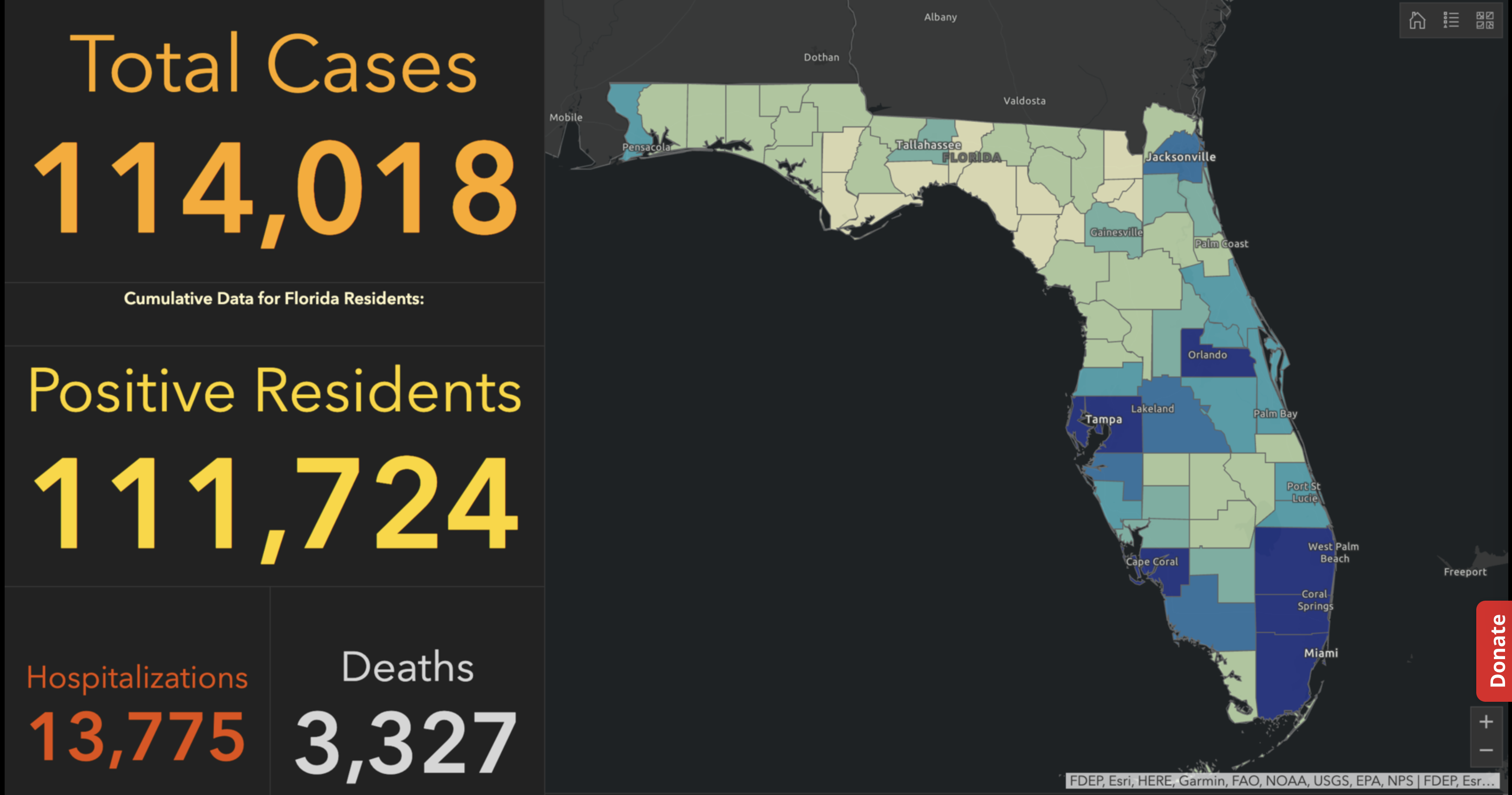
And flipping back just a few days previous, the stark divides of low rates of transmission and the substantial to high rates in other states offered little grounds for off the cuff collective diagnoses of the greater hardiness that exposure to COVID due no mask mandates offered a benefit to the state’s population, or might in fact be considered a viable public health policy: a month earlier, transmission seems roughly equivalent on the Florida or Texas coast, and relied on uniform assessment and tallies–but we may have reason to suspect Florida of undercounting to keep its numbers low.

The lay of the land was basically not at all that clear-cut. One can only hope that few made travel plans after seeing that bright blue peninsula on social media: a better bet, it seems, would be Puerto Rico, if the mask-wearing mandate could be tolerated by visitors. In fact, the very areas that visitors might be hoping to travel–from Daytona Beach to Cocoa Beach, or the area around Miami and South Beach, down near the peninsula’s tip–suggested areas of substantial and even high risk, save for the area lying in the Everglades.

Community Transmission by County in the United States, November 26-December 3,
CDC Covid-19 Data Tracker by County

Indeed, a Moderate Risk seemed the fate of much of the state, if the tracker were looked at with regularly updated data sets. And this is relying on the numbers that the Department of Health provided–numbers that might be well scrutinized, given the complaints their former data guru had raised. All said and done, the “narrative” was not one of the power of a Governor to imagine his ability to purge COVID infections from the state, so much as a burst of virulence that demanded to be mapped and tracked in better detail.

CDC COVID-19 Data Tracker, November 26-December 2 2021

2 Comments

Filed under COVID-19, data visualizations, Florida, public health, social media

The New Xenophobia

One of the scarier consequences of the Paris Terror Attacks are the waves of renewed xenophobia that have swept Europe’s already seething right wing, and somewhat surprisingly travelled across the Atlantic.  The suicide bombings by jihadis were widely mapped in Paris at first, in attempts to comprehend the coordinated suicide bombings and sites at which terrorists struck with AK47’s and Kalshnikovs in quite shocking near-simultaneity.  (Coordination of the attacks, which claimed 130 lives, and left 368 wounded, undoubtedly increased their terror, and eerily echoed the parallel hijacking of planes on September 11, 2001, in suggesting vulnerability and geographic reach of an unseen network.)

The transformation of reflexive spontaneous public displays mourning the victims or in solidarity with migrants have all too rapidly been replaced in many European cities, as if leading us through a looking glass, into nationalist protests of anti-migrant sentiment, channeling fears that have grown with threats of another attack into neo-nationalist sentiments–as if governments had failed to defend public safety, following on the immediate declaration of a state of emergency, closing of borders, and multiplication of police raids.  The initial reflexive show of widespread solidarity of mourning and commemoration at the unprecedented attacks appeared to heal profound shock and disbelief at the murders at outdoor restaurants and night clubs in Paris and attempted assassinations at a soccer stadium attended by the President of the Republic outside the city.   Those public displays of sentiment contrasted sharply to how the deadly attacks have fed a new xenophobia in Europe and America, and a deep suspicion of the “other” of the refugee–now increasingly suspected of disguising their own ties to terrorist cells.  If these protests appears–inadequately–to orient and focus fears of further terror attacks of such terrifying scale, they suggest the disorientation before the shock of the Paris attacks, if not outright cynical deception.  After ISIS claimed responsibility for the coordinated attacks,  President Hollande’s immediate declaration that ‘France is at war prepared the stage for a rhetoric of opposition evoking George W. Bush’s declaration of a clash of civilizations, giving broader circulation to a misguided concept first theorized by Samuel P. Huntington, but that gained startling currency to justify the so-called war on terror:  it returned as a master-narrative of global oppositions reduced to the easiest alterity of us v. them and cast less in terms of law than religion; if it was readily reclaimed by ISIS news releases to magnify the actions of a group of attackers resident in Belgium who were second-and third-generation immigrants, the group of plotters was not based in Syria.
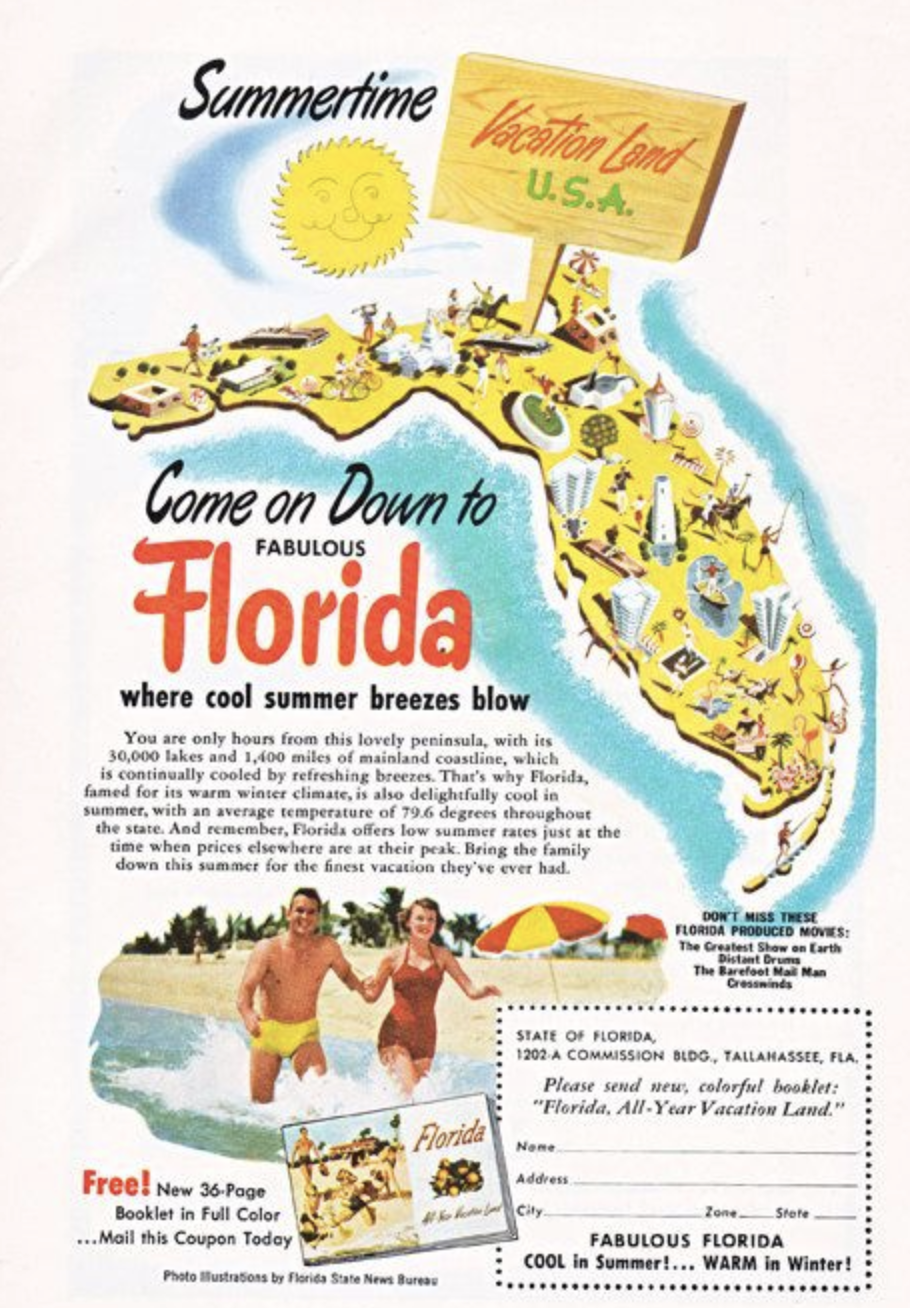
Despite clearly harmful over-simplifications in so faulty an opposition, the narrative have mobilized unjustified fears of infiltration removed from evidence:  mapping ties between ISIS and the perpetrators of the attacks shifted nefariously to mapping terror onto Syrian refugees.  Only three days after shock and outpouring of global sympathy to shootings that left 129 dead in six simultaneously timed attacks in the city’s center, fears of infiltration of displaced Syrian refugees by ISIS terrorist cells have gained unprecedented currency based on only the flimsiest of circumstantial proofs.  It is as if this responds to the relative inadequacy and failure of efforts to comprehend the plight or the scope of needs of Syrian refugees, and shock at the use of military-grade weapons in civil spaces.  Many of the multiple attackers in fact held French or Belgian nationality, and for disaffected underemployed Europeans living in the Brussels’ district of Molenbeek and other poor urban neighborhoods, the Islamic State appears to have exercised a particular appeal.  And although the attacks were coordinated by the Belgian ISIS Lieutenant  Abdelhamid Abaaoud, who sought to impress higher ups with a devastating attack in France, the group of terrorists and gunmen, if many were trained in Syria, are poorly mapped onto Syrians writ large, even if they were adept in evading security forces at airports and in cars.  For despite his presence in every available database of terror, Abaaoud evaded suspicion, as did other Paris plotters and Belgian jihadists, who had sequestered large amounts of triacetonea triperoxide explosives and automatic explosives.  The danger of terrorist threats and operations is profoundly mis-mapped and poorly apprehended as originating abroad, even if Abaaoud was indeed eager to “do jihad”:   ISIS propaganda has lavished praise on the “eight knights” for having “brought Paris down to its knees” but increasing evidence points to local coordination of the attacks, most probably planned and executed by a contingent of Europeans.  Yet rather than being coordinated at a remove from secretive locations in Pakistan, Syria, or Yemen, as Al Quaeda, European residents who joined ISIS have apparently hatched plots of their own–as firing automatics at close range in a concert hall or stadium–that reflect ISIS’ increased exploitation of social media and crowd funding to attract jihadis eager to pose beside the black ISIS flag.


alt-abouad-articleLarge

From ISIS’ online recruiting magazine, Dabiq

The topography of the Paris attacks is increasingly reveled to have unfolded in the changing urban sociology of European cities in France and Belgium, and neighborhoods plagued by high unemployment rates and disaffected youth as St. Denis and Molenbeek; although some suspects have indeed traveled to Syria, they are removed from a central command, and seem to have enacted their own fantasies of violence in crowded public spaces (a rock arena and soccer stadium), rather than being orchestrated from abroad as the French President Hollande has asserted: indeed, despite the target of ISIS’s Syrian de facto capital, many of the ISIS higher ups have left the city long ago, and bombs are focussed, it is argued, on empty lots.  The perpetrators are among thee roughly one thousand French citizens and six hundred Germans who have travelled to Syria to join the Islamic State; over 3,000 Europeans committed to jihad, attracted in part by IS’s increasingly effective use of the internet as a recruitment and fundraising tool, as well as for diffusing a call to jihad.


1. It is striking how public spectacles of collective mourning have rapidly mutated into frustration to contain deep fears of where terrorists might strike, and desperation at the unexpected attacks–even as parallel protests have occurred sympathetic to the plight of refugees.

The government’s official denunciation of attacks as “planned in Syria” have justified airstrikes against the Syrian capital of the Islamic State, led to over 600 raids and numerous house arrests across France, and increased visible military presence in much of the nation.  French President François Hollande’s involvement of the army across the country “confirms we are at war“–as is, by extension, suddenly, much of the world.  The absence of the face of the “enemy” has led concern to be projected upon the next potentially scary suspect, in an attempt to contain fears of repeat attacks, with the whereabouts of their actual coordinator unknown.  We assume that it must be contained in fixed border, and arrive from a place that lies far outside the boundaries of the European Union.


Islamic State's Frontier


Yet if France is at war, where’s the enemy?  Molenbeek?  The problem of mapping the threat has provided substantiation of deeper fears of the arrival of terror cells in the European Union’s borders whose provenance was limited to the Middle East is no longer tenable, and the bombing of unidentified targets in Syria may not even be an adequate response to a network of men in their late twenties or early thirties, mostly petty criminals, who are presumed to have recently traveled to Syria.  Even if their radicalization occurred in Syria, they are not refugees.


Molenbeek detail

New York Times


The lack of clear compass to where the enemy exists has made the apparent insinuation of terrorism into the European Union so startling that a finger has been quite deceptively pointed toward refugees.  A similar lack of knowledge and growing fears of further attacks have come to justify an unprecedented public expansion of xenophobic protests calling for a rethinking of the European Union’s previous decision to admit refugees.  These protests, stoked by threats of continued terror attacks, mirror a broad attack on outside, external forces as if they have indeed coordinated the vicious jihadi attacks, and the de facto ISIS capital of Raqqa constitutes an odd localization of the the terrorist threat.  Bombings have been unleashed against northern Syria, announced to be in retaliation, concentrated in the operational capital of the Islamic State, have been concentrated on its outskirts.  Even in the face of evidence locating coordination of attacks in Paris among local jihadis, the unprecedented intensification of anti-migrant rhetoric across Europe mismaps and exploits the danger of further jihadi attacks in irresponsible ways, largely because of the discovery of a Syrian passport near the corpse of one suicide bomber in the Paris attacks at the Stade de Paris.


Bataclan Concert before Attack:Marion Ruszniewski:Agence France Presse.pngMarion Ruszniewski/Agence France Presse
 

The Syrian refugee crisis has already provoked severe human rights violations, from sequestrations and confinements to arrests and strip-searches, and numbering, dehumanizing displaced refugees who try to enter Europe in search of residence and work.  The renewed currency of ties between terror and migrants have also led American politicians eager to find common ground to condemn Barack Obama’s offers of asylum within the United States to those displaced–as if it constituted a heedless abetting of the spread of terror attacks, mirroring inflated anti-refugee rhetoric throughout the European Union.  The wholesale borrowing of such groundless charges from right wing European parties is a particularly toxic manifestation of anti-Islamic xenophobia, transported by means of tweets and social media, and giving rise to a melding of anti-immigrant xenophobia and nationalism that attract an inverse demographic than protests welcoming immigrants in recent months, demanding their repatriation and literally cloaking themselves in regional nationalisms.
 

poland-byg

55b3e3f5c36188314b8b45fa

Russia Today

Pelagics Protest

DW

The protest of Germans anointing themselves as “Patriotic Europeans Against the Islamization of the Occident” hearken back to visions of oppositional political history framed by Karl Schmitt in the Nazi period.  The pressure they have put on Germany’s continued promises to resettle refugees has forced its Minster of Justice, Heiko Maas, to caution against equating refugees with terrorists, and affirm the absence of any actual ties between Syrian migrants and the perpetrators of the Paris attacks, and the EU to tighten security on the boundaries on the Schengen region.

The actual geography on the ground hasn’t at all changed.  But the links already insinuated between hidden terrorist cells and Syrian refugees have materialized as a rationale for collectively turning our backs on the growing refugee crisis as if our actual well being and survival depended on it–and the acceptance of refugees has provided an entry point of sleeper cells who may execute similar attacks.  As the manhunt for the terrorists who committed the atrocities has expanded, waves of panic have spread, stoked by accusations that resemble a witch craze, as the association of migrants and terrorists has virally mutated not only in Europe, but migrated across the Atlantic to the United States, in ways that stand to infect political discourse and debate.  The recent reassessment of how open America’s doors would remain to refugees–and absurd request for assurances that none would engage in “terroristic activity,” as Greg Abbot of Texas put it, or, as Senator John McCain glibly demanded, while defending migrant asylum, that “there’s a process that prohibits any kind of infiltration like we’ve just seen in Paris,” entirely misses the point.  And they stand to expand the waiting-time to process Syrian refugees in the United States beyond the  18 to 24 months now required, and hamstring plans to grant 10,000 refugees asylum in 2016–by requiring the heads of the FBI and Secretary of Homeland Security to personally approve each refugee for entrance, radically reworking practices of processing Syrian and Iraqi refugees at a crucial and sensitive time.

The discovery of a passport of the Syrian Ahmad Almohammad, who entered Europe from the island of Leros in Greece and the traversed the Balkans, near one site of terrorist attack offered circumstantial evidence but needed grist to identify refugees who have arrived in Europe with feared terrorist groups.  Links between ISIS terrorists and Syrians refugees in Europe acquired the sort of substantiation which politicians believed to exist, even if they were not searching for them.  Although no previous proofs of actual connections exist that could have prevented the Paris attacks, the fingerprints of one of the suicide bombers on a Syrian passport has suddenly substantiated fears of terrorist infiltration of groups of millions of undocumented refugees.  Such identifying signs, no doubt since they provide the archetypical clues for how the police have apprehended and identified criminals, offer the needed grist for inflammatory ties between national security and displaced Syrian migrants and substantiating long latent xenophobic fears.  The documented passage of the holder of the passport through the Greek island of Leros tied to the cluster of deadly attacks under the name Ahmad Almohammad suddenly offered possible grounds to fear potential infiltration by Islamic State operatives among the 1.5 millions displaced entering Europe from Turkey–even though the other perpetrators were of longstanding European residence, including a French national and Belgian resident.  The poor sense of the geography of terror is to blame.  For even the discovery of the even crudest hand-drawn map of a route from Turkey through Greece and Hungary to Germany provokes speculation about terrorist plots.  Suspicions of the presence 4,000 “covert gunmen” in Europe have been stoked by ISIS videos promising further attacks, and led refugees to be stopped on suspicion in Turkish port cities.

Ahmad was clearly not the ringleader of the operations–local police finger the Belgian-born jihadist Abdelhamid Abaaoud–but the apparent presence of a Syrian refugee at a site of terror has provided the needed catalyst for expanding increasingly inflammatory rhetoric linking jihadi terrorism to Syrian refugees, despite the unfounded nature of these links.  The potential links of terrorist threats and the arrival of Syrian refugees in Europe has been often cited by countries than had already built barbed wire fences in order to discourage the arrival and block the progress of Syrian refugees across the Balkans in the Schengen region.  The border barriers built in Greece, Hungary, Bulgaria and Croatia served as physical barriers to transit points of entrance to the Schengen area of passport-free travel–


schengen_area_map_2008

migrant-borders-europe-1442357424369-master495-v3


But the identification of the fingerprints–regarded as a clue that conceals the illogical association of guilt with all refugees from the region to seek a home in Europe–has become grounds to criticize whatever agreement existed for resettling refugees within the European Union.

And so, three days after outbursts of sympathy and horror at the Paris shootings, panic has been fostered about the fear for admitting terrorists disguised as refugees and displaced.  European nations from Poland to Czechoslovakia, a nation already eager to turn away refugees from its borders, and a rousing chorus of tweets from others to close their borders in the light of terror attacks for which ISIS claimed responsibility,–by linking the danger of the further attacks that ISIS has promised to the presence of refugees within their borders, as if accepting refugees constituted surefire vulnerability to further attacks.  But even closing borders won’t help stave off the attacks that ISIS promises would be repeated, though the reflexive agenda of far-right politicians in Europe–and, shortly after, in the U.S.–has been surprisingly swift.  Poland provided one of the easiest cases for accepting this policy, its new right-wing government having been elected on a platform of anti-migrant platform.  Such right-wing opponents of accepting refugees have even found recognition and previously implausible legitimacy as defenders of the common good:  they obscure the fact that such home-grown jihadis originate in districts of European cities with unemployment rates exceeds 30%.

Molenbeek.png

The Paris attacks may have broken a delicately negotiated managed solution to a growing crisis, despite the reluctance of Austria, Hungary, and other nations.  Only shortly after the President of the European Commission, Jean Claude Juncker, instituted an emergency quota system to spread the admittance of an expanding number of refugees who entered the Schengen region among EU member states and their neighbors–requiring almost all of the member states to welcome a total of 160,000 people–the Paris attacks that claimed 129 victims have provided a pretext for Europeans as the incoming Polish president or Slovakia’s government to bend to popular protests against the acceptance of immigrants from Syria and the Middle East.  (None other than the now-cranky Lech Walesa has reared his head again as a nationalist spokesperson, asking the world “to remember that Poland has been transitioning from communism for only 25 years.”)  Yet the market has little to do with the rampant xenophobia nourished in anti-migrant marches in Polish cities, which have prominently included emblems of explicit nationalist protectionism.

But the Euroscepticism of several incoming conservative governments has relished in having found new fodder for their claims.  Just after an equably distribution of refugees among Europeans seemed reached, the shock of processing the terrible deaths of innocent civilians in Paris seems to have helped redraw the map again, giving far-right European politicians from Marine Le Pen–tweeting an “immediate halt to all intake of migrants in France”–and Poland’s European Affairs Minister Konrad Symanskic, with Viktor Orbán not far behind, occasion to tweet about the need to close borders to prevent unsubstantiated fears of terrorist infiltration.  Even in France, where President Hollande had recently if only grudgingly decided to accept 24,000 displaced refugees over two years, the readiness to evoke fears of admitting unwanted terror cells give expression and justification to longstanding deeply-seated anti-migrant and -immigrant attitudes that have been suddenly given a new boost by conservative social media.

While Facebook unveiled the Safety Check app to alert friends ‘I’m Safe’ just after the Paris shootings, post-shooting tweets have disseminated particularly dangerous rallying cries from the right on social media.  The rage of tweets from members of the radical right from Filip Dewinter of the Flemish secessionist Vlaams Belsang party to Nigel Farage of England’s UKIP echoed the decision another Eurosceptic, Poland’s Foreign Minister, to use the events to revise his nation’s policy toward migrants.  The tragedy has sadly provoked the weirder, post-tragedy tragedy of making it even harder for refugees to be accepted in Europe who are fleeing ongoing civil war, even as that war seems to have visited Europe.  The New Xenophobia is of the most dangerous sort–a xenophobia prominently rooted in the fear of enemy agents potentially destabilizing the nation, based on linking the displaced to the most nightmarish event visited on a nation for several years.  The new xenophobia stigmatizes the humane acceptance of displaced migrants based on the paranoid fear that displaced migrants, rather than seeking asylum, seek to attack our security and our cities and our homes.

The stoking of all this barely logical fear has, back in our own country, somehow swiftly set the stage for the weirdly unpredicted closing of ranks that Presidential candidate Donald Trump couldn’t have possibly foreseen himself.  But it stands to add an element of distinct charm to the presidential race:   for in the face of President Obama’s humane decision to multiply the number of accepted refugees accepted by the United States from Syria five-fold, a strikingly cynical consensus has emerged among American republicans in the wake of the Paris tragedy that state governors must act as federalist sheriffs to protect the country, and refuse the entry to displaced Syrian refugees which Obama had earlier promised.  If Donald Trump has taken the opportunity to impugn the President’ sanity as much as his foreign policy choices–


IMpugn sanity


–other candidates have not hesitated to broadcast their own readiness, unlike the President, by implication, to protect similar tragedies in the United States, and rather put at risk the hopes of entry of the 30,000 refugees that the United States government promised  it would soon increase from 70,000.  Indeed, the strike in Paris, claimed to be the proportional equivalent of the Twin Towers’ destruction in New York City back in 2001, and “France’s 9/11,” has led Republicans to direct renewed attacks on President Obama’s offer to resettle a small share of the refugee crisis to be equated with putting Americans at risk.

And so, just three days after the terror attack in Paris, Texas’ Governor, Greg Abbott, took it upon himself to write a letter informing President Obama that, given his experience in dealing with the dangers of migrant crises and immigrant threats, and the foiling of an ISIS-related terrorist attack, and by extension his greater familiarity with terrorist threats, he would refuse to allow Syrians to be placed in the state he represented, and called on the President to “halt your plans to allow Syrians to be resettled anywhere in the United States,” given the possible danger that they pose to the country.  The chorus of Republican governors, from Bobby Jindal’s advice of prudence to Charlie Barker of Massachusetts, to Chris Christie of New Jersey, seemed an attempt to drown out the airwaves after shock over the terror attack.  The bizarre move imitated far-right European parties again evoked the degree of “unacceptable peril” Republicans have long liked to Obama’s presidency, rather than any material threat.  But within a few days, sympathy was overwhelmed by isolationism, as the television news network CNN trumpeted in banner headlines that governors of over half of the states in the union–twenty-seven states–have unilaterally refused to accept Syrian refugees, although the position has limited if any legal ground, in ways that have been imitated by a spate of Republican presidential candidates eager to prove their executive abilities.  All have been magically transformed, including Jindal, into foreign policy experts.


CNN No Refugees.png

CNN


The map of those still honoring their commitments to accept displaced refugees struggling to find homes appear to be in the vast minority–five states that seem almost foolhardy embraces of national vulnerability, from Vermont to Pennsylvania to Colorado and Washington, against the dominating common sense of declaring closed doors to the displaced.  When placed in context of nearly five million Syrian refugees  displaced truth, of course, regions of the United States have hardly absorbed their share–and those states whose governors were so quick to condemn the possibly plausible terrorist ties of refugees from Syria or Iraq had admitted far fewer than 300 or 250 refugees since 2011 at most:  their governors seem to be showing their own ignorance by taking such a broad stance.


a pittance of refugees in US

The map of those local Republicans who took it upon themselves to retract any offer of resettlement to all displaced Syrians–by far the greatest majority of refugees who left homes with hopes to resettle in Europe–seems not only an eager posing as patriots, or launch grenades at the existing foreign policy of the Obama White House yet again, but reveals an unforeseen opportunism as well as little familiarity with the workings of the federal government:  those most quick to reject entry to refugees as if this were within their competence responded to the fears of their own constituents, or so it looks in the below visualization printed by the New York Times–the graphic may not map clearly onto where displaced Syrians have been relocated or placed, but to the demographics that local politicians seek to reach.   The declaration spread like a meme, at any rate, over the airwaves of the United States, alerting constituents that their immediate governors would not place them at risk–as, by implication, the folly of the President had, and Hillary Clinton and the Democrats had been uniformly duped to advocate.  And it is not a surprise, to enter the world of the archeology of data visualizations, that they mirror those states that reject the federal government’s expansion of Health Reform.

Medicaid-Expansion-States-07.01.14

Access to health care--insurance

And so, the entire party has been associated with irresponsibility, and the other accepted xenophobia as the cry of the day. Quickly, not only Donald Trump but Marco Rubio and Chris Christie and Ted Cruz have joined in calling for shutting the borders to the displaced, and Bobby Jindal can appear a model of executive authority–whose deeply felt opinions illustrate little familiarity with constitutional law or Geneva Conventions.


What Governors Draw line at Syrian Refugees?

New York Times


The opportune nature of such a quick in-step realignment of the debate about immigration took up its lines went without much comment.  But it unsurprisingly seems to replicate opportune lines of political pandering at its worst:  if it was the ultimate insult to most refugees, and the perhaps poorest forms of protection mirrored political opportunism below the historical 48th in the United States parallel that so sadly seems to continue to divide north and south, and have little correspondence to the areas where most of Syrian extraction live–or Syrian refugees have been placed by the US Government since 2012, and mirror the red/blue divide, as configured in these cartograms reflecting the electoral results of Presidential elections of 2004 (state by state) and 2012 (county by county).


Shaded Cartogram 2012.jpg

What do they have in mind?  Out-Trumping Trump?  Winning, more likely, or hoping to do so by stoking fears and bringing them to the surface again.

For the close-minded knee-jerk refusal stokes the most unfounded fears in the wake of the tragic terrorist attacks that we are all vulnerable:  and to pretend we are living in the shadow of 9/11, when Republicans once unbelievably came to be improperly equated with protecting our nation’s safety and common good, and to wallow in complete amnesia by bandying about the word “terrorism,” ISIS, and “terror attack” with undue frequency to suggest the benefits of responsibly closing our frontiers.  The good old days.


1-d28cb2b8ec

3 Comments

Filed under Clash of Civilizations, ISIS, Paris Terror Attacks, refugee crisis, refugees, social media, Syrian refugees

Mapping Friendships? Facebook Maps Social Networks

The recent growth of web-based “social networks” inspire maps no longer rooted in terrestrial relations, but stand to become vertiginously unmoored from them:   maps often help us to grapple with the distance between them, as much as to orient us spatially to their relationships, but the blobs on this series of maps oddly disaggregates the inhabitants from the land, focussing less on their spatial situation than their relative degree of web-presence.   Indeed, in ways that very inventively rewrite the map as a throbbing surface, rather than a static interface, the attachments of folks to the interactive space of Facebook becomes cast as the subject that is being mapped–as well as being the datasource from which the map’s dataset derives.

Thanks to the creative folks at Stamen design, we have a beautiful interactive global map of Facebook users, whose bold colors offer a neatly clickable index of social networking over space.  The map is not an innovative ordering of space, but illustrates the network’s global reach in a twist on the project of mapping the inhabited world, shared by Ptolemy and Abraham Ortelius alike.  But let’s ask what’s at stake in crafting a visualization culled from archived data gathered from users’ profiles–as much as celebrating the virtuosity of the clickable map as a chart of the social network’s reach, as if it were able to map as previously unquantifiable (and indeed ultimately almost ephemeral) value as ‘friendship’ might be.

World's "Friendships" on Facebook

Many maps employ self-reported data.  In a sense, the map of Facebook use–or the self-identified “Friendship Map”–charts global inter-relations, like the global maps of national distribution of GDP, provenance of coffee beans or even pathways of the migrating whales, both discussed in earlier posts.  But whereas  maps objectively mediate terrestrial inter-relations–and inter-connectivity–the notion of connectivity has been re-appropriated in the images of “Friendship” that Facebook commissioned, as has the meaning of the word “Friendship” itself.  On the one hand, this map is a celebration and triumphal illustration of Facebook’s near-ubiquity.  But it is also with clear limits, even if they are unacknowledged.  Anyone not on Facebook is absent from the map, since connectivity is generated from profiles that are registered online.

Facebook connections allowed the folks at Stamen to generate instantaneous images of web-use, making this sequence of clickable maps a truly interactive treat, as well as a visual feast.  But the effect is also to present the data generated from Facebook use as endowed with the allegedly objective criteria of maps, and to normalize Facebook’s criteria of “friendship” in apparently objective terms.  Although the very notion of geographic connectivity is fundamental to map making, the maps that are used as the templates to indicate the “connections” of friending in the Facebook platform invest a sense of objectivity and meaning in trends of friending that elevates the medium as the basis to generate further information to a degree that boosts Facebook’s criteria of meaning, as much as provides analytic tools:  if “the medium is the message,” the medium is not cartography, although the multiple images echo the authority of cartographical forms, but Facebook itself.

This is particularly pernicious, and bears some examination.  The maps on this site visualize aggregate friendships on Facebook as quivering blobs of connections that pulsate as with life of their own.  Although claiming objective authority of a map, the aggregates map “friendship” as Facebook has defined it, and embody and reify the data FB use itself creates and generates:  this is a map of FB use, in other words (rather than of web use in general), and a vision of the interconnectivity Facebook promises and the very “Friendships” that it creates.

Take a look once again at the snapshot of the connectedness of the Marshall Islanders who use Facebook:

World's Friendships on Facebook


Such a map is decidedly not a territory–nor could it be confused with one.  But if “all maps are arguments,” in Harley’s words, and conceal interests, as much as show meaning, the interests concealed in these “Maps of the World’s Friendship” demand considerable unpacking.  For to me, the multiple maps that Stamen design unveiled last September 12 are something like post-modern versions of earlier corporate emblems.

The aggregate views of information born of Facebook use essentially trumpet the inter-connected world that Facebook promises as a matrix achieved by corporate interconnectedness, in other words, in ways that update the familiar stream-lined modernist logo of global unity Pan Am once used to promote itself as the “world’s most experienced airline,” able to provided air service to all regions of the world by airline jets.  The Pan Am emblem emptied the familiar format of projection from toponyms or places, as if to illustrate the lack of obstacles to air travel and the global surface that its flights promised to link.  The logo owned by Pan American World Airways erased places in favor of the latitudes that link the world bridged by flight paths and no longer in need of land maps, no doubt intentionally offering the new map the airline corporation promised to provide to its users.


277px-Pan_Am_Logo.

The interactive map of Facebook connectivity are constantly evolving and generated at a given moment, and, unlike the static emblem, as if living independently from the viewer, but embodying actual FB use.

The contrast is interesting on iconographic grounds as well as stylistic ones.  The generation between these visions of global interconnectedness has led to a map of greater sophistication and persuasiveness of interactive form, and one that seems, like Facebook, user-friendly and value-free:  but the map of Facebook users is particularly insidious, as ‘friending’ and connections are rendered by the web-based platform itself.  In comparison to the Pan Am logo, rather than merely provide an illusory image of the promise of global unity, the map is a triumphant image of the actual interaction that the web-based platform promised: “friending” provides the metric of global interconnectedness and the sole standard of national interconnectivity.  Although the map can be re-centered at a click in order to map the connectedness from a different point of view, the “point of view” does not really change. In the text above the map, “friendship” doesn’t appear in scare quotes:  it in fact normalizes Facebook use as the sole index of contentedness and inter-connection.

Let’s examine specific cases to ask what is revealed or viewable in these multiple maps, which represent a proliferation of different data visualizations as much as providing a basis for geographical or spatial orientation. To do so, return to the “map” of Facebook connectivity in the Marshall Islands, which maps Islanders’s global connectedness via Facebook friendships:

World's Friendships on Facebook


The notion of mapping an emotion or state of mind–friendship–suggests the sort of positivism of early twentieth-century phrenology, or the comic maps of lands of contentment, like the early modern “Carte du Tendre“–an imagined geography described as a “topographic and allegoric representation” by Mme. de Scudéry in seventeenth-century France–as a geography of Love, complete with a river of Tenderness that runs through towns named after different stages of tender affection.

There’s a wonderful paradox of mapping the intangible as concrete, or mapping the ineffable–how often do we invest deep significance in the word “friend” after fourth grade?–in graphic terms, as if to make manifest the good-will that exists as if it were a physical topography.  (The notion of such mythic lands is re-inforced by dividing the map into color-coded continents, as if an emotional Olympic games between different parties.)  But it is more the hubristic belief of Facebook in their own metrics, doubtful in any event, than a positivistic belief in the ability to locate sites of well-being in the body or on the planet.

What’s the metric here?  Hopes of visualizing interconnectedness among Facebook’s users is more of an advertisement for their web-based platform than a visualization of disinterested data, and it’s not at all certain that this converts to a metric of well-being:  the huge number of connections boasted by residents of the Marshall Islands, Guam, Fiji, and the Philippines may derive from a sense of disconnectedness among the American populations in these regions, and a reliance on FB as a platform to remain in contact with their relatives in a different time-zones.  Although the Marshall Islands were only occupied by the United States until just less than thirty years ago–American forces left in 1986–the 10% of the population of American origin maintain extremely close ties to the US, and, more tellingly, the top destination for Marshallese ex-pats is the US.  “Technology bridges distance and borders,” Mia Newman boasts from Stanford on the FB website itself, as, due to the grace of this platform, “Individuals today can keep in touch with their friends and family in completely new ways — regardless of where they live.”  In a world characterized by dislocation and isolation, Facebook provides social ties.

The appeal of the map is of course to advertise how Facebook trumps geography, and one might do well to return to the interested nature of this map as a corporate logo:  “Immigration is one of the strongest links that seems to bind these Facebook neighbors,” the website informs us, if this was a discovery that the platform allowed; having (and maintaining) a lot of FB connections isn’t that surprising given the dislocations caused by such out-migration over recent years.  Flipping to the site itself,

[http://www.facebookstories.com/stories/1574/interactive-mapping-the-world-s-friendships#color=continent&story=1&country=MH],

watch with awe as color-coded aggregate bubbles quiver with connectivity,  as folks update social profiles, making new connections, adding “Friends”, or, as I happened to do last night, de-Friending others.  Clicking on the variable of ‘language’ on the site, we can see or imagine close ties between the Marshallese and the Philippines, and note with some surprise that the dominance of red (English) on the map, the improbability that non-English speakers in the islands nonetheless register the greatest number of connections.  This omits the different uses of “Friending” or “FB Friendship” among each region, of course, we failed to add, as it assumes that use of Facebook conventions is as universal as Facebook’s global reach.

The deepest attraction of the site is its interactive feature by which the map at a click newly configures itself from the perspective of dfferent FB users.  The movable centering of the map doesn’t change the geographic distribution of place, but rather  reveals how connectivity is centered in the globe from different national aggregates, which can also be segregated by language.

Experiment at the link here, to explore the fluidity of this new mode of mapping the world’s population, and abstracting one’s web-presence from the world.

[http://www.facebookstories.com/stories/1574/#color=continent&story=1&country=HT]

In this case Haiti, the “map” correlates the number of Facebook connections in the country and numbers between countries in ranked order that are a bit surprising, given the prominence of Canada, until one imagines the number there of Haitian refugees:

Learn Which Countries Share

The links among active FB users, cast here in terms of language groups, ostensibly responds to the question of who “shares the closest friendship connections,” although the reasons for those connections are not able to be clarified–although the illumination of linguistic ties clearly helps.  The huge prominence of Haitian ties to the Dominican Republic and Canada is not a big surprise; if the slightly lesser ties Haiti enjoys to the United States may be, it is not surprising that the proportional ties to France rank a close fourth.  This is a map, however, of dislocation, and attempts to bridge physical divides, as much as it is of friendship ties–or even a measure of friendship per se–so much as the type of “friendship™”  that Facebook seeks to market and be able to offer:  friendship that is less in, as it were, meatspace than cyberspace.

In contrast, the close ties of Russia to the Ukraine, Kazakhstan, and Belarus might be better explained by their recent division from a formerly united regional territory, albeit one that was ethnically diverse:

Russia's %22Friends%22

These maps display salient ties of economic and linguistic relations, to be sure, yet filtered through the economy of Facebook use.  The dramatically interactive map measures different perspectives of the world through the sum totals of FB users in one region or nation–a self-selected group–based on the criteria that that group imposed on the map.  Unlike other maps, where the data is cherry-picked and chosen and balanced by the mapmaker to conceal or pinpoint interests in an objective manner, Facebook has culled the data for this map–created and devised by Stamen Design–based on data that is not only essentially self-reported, but represents not only a portrait, but Facebook’s ability to mine the data archived by user-preferences and to assemble its own data of the aggregate of regional Facebook communities.

The result is a fantastic vision of totality through the eyes of the Facebook network, in which we can “click” on any country to view its population’s “connections” to other areas of the world.  What else does the map tell us?  Little more than the economic ability to dedicate large amounts of time to FB, or the state of emotional dependence on expanding one’s connections–or, more accurately, the acculturation of FB as a way of maintaining ties.  “Economic links, through trade or investment, also seem to be strong predictors of country connectedness,” Mia Newman informs us as she seeks to interpret the map for readers who have stumbled upon it and seek to understand this new configuration of the globe online.

Since we’re championing interconnectedness, let’s look at the potentially more isolated country of Pakistan:

Pakistan 1

The ever helpful text panel–as the legend that must always be read with care in any map–calls special attention to Pakistanis’ ties to Bangladeshis, an effect of their unity in colonial times, but is less than illuminating about what are the classes of Facebook users in the former South Asian colonies, or what are the groups using the platform:  perhaps the emphasis on the fourth largest aggregate site of connections distracts from the comparable ties to users in Afghanistan, or the surprising permeability of the Indian-Pakistani border.

The multiple FB connections of inhabitants of Greece, however, and the generous radii of countries in Eastern and Central Europe, belies the notion that interconnectedness is a metric of economic vitality.

Greece.

There’s a lot of FB activity in Micronesia–but are Bulgaria and Serbia hotspots of economic vitality or cooperation?  Are Chile and Argentina sites of stability, or is Mexico?  Is Argentina really a center of stable labor relations and a model of free markets that we are instructed to read the map as providing evidence of?

Argentina's Friendship and Labor Market

The arrangement of a configuration of bubbles of different colors are beautiful, and the pulsation of colored blobs dramatic, but the group of users are particularly difficult to identify, as are the habits by which they might “friend” their “friends”–or the networks they create.

Does–to chose a limit case–an absence of FB interconnectedness in China really reveal that the country is moribund economically?  In the manner that North Korea drops off Google Maps, although we all know that North Korea is not known for its open-access, there is no point of reference on which to click or metric to view for the largest of the world’s economies.

The limits of mapping FB use as a form of “friendship” rests on a combination of economic benefits, security, and desires for companionship that jointly contribute to online “friending” and the archiving of “friends.”  Not only is there a uniform level of “friending”–so that the necessity of economic “friendship” is equated with the ties of countries of origin among immigrant communities–but the homogenization of these different gradations of “friendship” obscure the potential benefits of legibility in this dramatically interactive map of Swedish FB users’ ties to geographically proximate and distant members of the FB community.

As the test notes, it shows the close ties of the Swedish market to Norway-not surprisingly–Denmark, and Finland, but also the ties of refugees who have arrived in Sweden, a preferred site, from both to Serbia and Iraq.  These recent settlers in the region, unlike the Scandinavian nexus, document a “friendship” to parents, schoolmates, or extended family– the database FB has culled suggests a deep desire to continue an imaginary with these faceless “connections,” and the lack of ability to make easy contact with these ties among immigrant communities, rather than the depth of their connections.

sweden's friendships

In the end, these are wonderful maps of our own making, whose indices are a better reflection (or projection) of what connectedness means to us–connectedness now being a relation that Facebook has now both defined and designed.  Whereas the old Pan Am logo surely maps geographical interconnectedness, as do all maps, the series of user-generated maps of Facebook connectedness map the extent of networked interconnectivity:   they are less truly maps, in some sense, than data visualization schema, that render in pictorially iconic form the data that Facebook is able to collect.  All maps reflect their makers to be sure; the maps of Facebook connectivity, more than perhaps anything else, illustrate the range of data Facebook is able to mine.  Perhaps this is the real function of the maps, which parade the range of information and “closer looks” that Facebook has access to.

For what goes unsaid–and remains unsaid–in this endless sequence of maps is the variations among the penetration of Facebook within each country–it is assumed to be complete, and to rester anyone that one is interested in taking measure of, as if it were the metric of Who Really Counts.  Yet the wide disparities within the extent of Facebook’s currency (or, if you will, adoption) in different countries not only widely varies but might be itself mapped, as something like a corrective to the data streams that the above maps claim to oh-so-conveniently organize.

The distribution of the differential sin Facebook’s adoption in the population at large might be usefully remembered in this far yet brilliantly colored but useful bubble map, which chats the intensity of Facebook’s penetration in the population, based on site-registered active users around 2012 from a variety of sources, from a project of Elvin Wyly and Larissa Zip, which attempts to map the more socially-networked world that Facebook boasts it can offer access to.  Although the ranking of urbanization of countries is problematic–given the local variation in a largely rural nation as India that possesses large cities–the huge size of connectedness that was privileged in the urbanized areas of brazil, the United States, UK, Uruguay, Chile, France, Columbia, Turkey, Argentina, Malaysia and the Philippines, as well as highly urbanized Singapore and Hong Kong–irrespective of actual geography or population size.  (India is the outlier of a largely unorganized country with high FB users, but the undoubted majority of its users are concentrated in cities or urban areas–Facebook does not release or record precise geophysical location; the relatively small user numbers for Iraq, Ukraine, Afghanistan, Ethiopia, Uganda, or China seems to show regional poverty.


paste74

The outsized boast of mapping “The World’s Friendships” conceals the very absence of the non-networked, the new disenfranchised who the ideology of Facebook erases from the map–and who are poised to become the unnamed hordes of the inhabited world, whose lives are less visible in a globalized world, although we absent India, Kenya, China, Rwanda, Ethiopia, Nigeria, Nepal and Uganda at considerable risk.

Unurbanized Low-FB presence

The “Maps of [Facebook] Friendship” are fundamentally ways to advertise the very sort of datasets that Facebook is able to sell to companies that want its records of page-views, if by orienting folks to the very metrics that Facebook has at its fingertips.

What we get is a sense of the reliability and credibility that the data Facebook possesses to orient us to the webspace that Facebook has created, using the trademark of being a “friend”–that crucial desideratum in an economy when credibility seems hopelessly confused with web presence and social connectedness intertwined with virtual contexts and contacts mediated over Facebook and LinkedIn–is able to be mapped with apparent accuracy, of an almost positivistic tenor, albeit allowing for the fluidity that is itself so characteristic of the web as a medium and of Facebook as a virtual interface.

Leave a comment

Filed under bubble maps, data visualization, Facebook, Facebook Friendship Map, Facebook Urban Penetration, FB users, Interactive Maps, social media, social networking