Systemic Failures? Water Flow, Air Safety, and our Purchase on the Natural World

Before the mass firings of civil servants, members of government, and oversight by the Trump administration, we were already shocked by two major disruptions that suggest the danger of the new President’s reflexive knee-jerk responses from his over-sensitive gut. Both–the fires in Los Angles and the failure of air safety at Reagan International in DC–are problems of an anthropogenic world, where the structures of traffic flow, water safety, as much cognitive failures of the current President. But the massive problems they suggest we will be facing are problems of mapping, as well. Water doesn’t flow naturally to Los Angeles, a city built in the desert,–as any viewer of Roman Polanski’s neo-noir Chinatown knows.

While the former director of the public utility, Noah Cross, is an evil mastermind too remove public water for his own private ends, is a scarier character, far darker than Donald Trump’s buffoonish public figure, who corrupts his family and the utilities by laying the seeds of a schemes of personal enrichment, and Trump’s inability to map the dangers the nation faces less rooted in venality, he conjures an image of corruption–and imputes corruption–so that the public good is almost entirely hidden, clouded and obscured in airing a broad range of grievances. For the problems of water flowing to the Los Angeles Valley became the dramatic centerpiece of this Depression-era classic, in an attempt to explain the lopsided geography of Los Angeles to the nation, and to do so within a rising taste for disaster movies that boded premonitions of massive destruction–infernos; earthquakes; tidal waves–Abel to be viewed in national theaters.

The United States had long indulged, to be sure, an unsustainably massive demand groundwater pumping for farming in the central valley. The diversion of waters to Los Angeles that caused the regional water table to drop so precipitously as local farmers’ wells ran dry in the largely agricultural San Joaquin Valley north of Los Angeles in central California, as groundwater depletion the aquifer of the Valley that intensified from 1925 to 1975 sucked water from the earth; thousands of pumps suddenly went dry by the 2012–2015 drought, due to cumulative effects of groundwater pumping predating drought, but the question of water use and Southern California on the minds of Robert Towne, who wrote the script of “Chinatown” a 1974 film noir as a drama that featured the opaque conspiracies of water diversion and depletion set during the Depression as a moment of the birth of the contradictions of the unevenly economically divided social landscape of Los Angeles that fit the era of Watergate, and showed conspiracies as deeply seated in the American grain. Cross is a dark nemesis, a seductive land magnate, Noah Cross, played by director John Huston, who pulls punches to divert pumped groundwater from the city to housing tracts in the desert. Chinatown immortalized the schemes of water diversion schemes that remade the sharp social divides in Southern California, whose false respectability seeks to drain the Owens Valley dry that only sharpen the pronounced inequalities in Los Angeles’ stark landscape, reforming the public Los Angeles Dept. of Water and Power for personal gains of massive private enrichment, by bringing the city to where the water flows, rather than by moving water to the city by aqueduct–enabling the urban expansion of Los Angeles.

The film channels a keen sense of short-sighted conspiratorial instability in a world of money and wealth, but may well reflect our own current dilemmas more than we imagined–and a world of graft and corruption that has provided Donald Trump with a means to imagine the status quo. The prescient observation of the cost of redirecting resources was keenly felt by 1974, when Chinatown was conceived, even if the film was set in the Depression. But we are perhaps living it only today. The idea of transformative powers that the redirection of water to the growing city might mask its deep inequities and inequalities, moving it from Chinatown to the “northern Valley,” was a get-rich-quick scheme conflating public and private works, but also a sign of the systemic failure of Los Angeles, and its deeply criminal origins. Was this, the film seemed to ask, really America? Or was the corruption on such a massive scale really what Donald Trump both describes himself as able to prevent, and which the systemic failures that his presidency seem slated to bring, imposing a world of trade tariffs, withdrawing from the world, and an absence of data privacy, indeed eerily akin?

Owens Valley Diversionary Supply of Water

For the creators of “Chinatown,” the Depression perhaps provided a compelling image of the huge wealth inequalities that have since come to be characteristic of the United States, inequities on display with a vengeance in 2025–where the richest men in the world were given front row seats to the 2025 inauguration–men whose combined value provided an image of over a trillion dollars of wealth at one event. Speaking before individuals whose fortunes of four hundred and two hundred billion, emblems of a massive privatization of government, boded poorly for the future. The first months of the Trump White House plagued by seemingly separate issues of fire safety and air safety are rooted in a failure to map increasingly apparent emergencies, specters dangers rooted in the modification of the built environment, as much as policy, that depend on good mapping tools. The eery sense of these inequities and systemic failures echoed through the inauguration ceremony–the fires were still burning, if they had been put out; the promises of American renewal seemed deeply deceptive, hardly addressing wealth inequalities. If “systemic” is among the worlds that the White House offers a guidance not to use, the failures of the first weeks of the Trump presidency seem so systemic to be a harbinger of what is to come.

President Trump seemed almost to stray from prepared remarks, as is his wont, calibrating the value of a rig on national television, as he took time to ponder with marvel how these fires had hurt even “some of the wealthiest and most powerful people of our country” on the stage, and promised to change a situation “everyone is unable to do anything about” but promised to change. Trump would probably never visit the scene the destructive fires had raged, but in detracting from the scale of their devastation he concealed the failures of destruction, loss of housing, loss of healthy land, and loss of economic wealth in the state–foregrounding the major losses of elites.

Trump, as a modern Noah Cross, luxuriated in the face of devastation, concealing the sense of systemic failure. The kinship of systemic failures in Chinatown’s corruption seemed to rise to the surface in this hardly tacit alliance with extreme wealth on the inaugural stage; Trump drew a similar tie to wealth in the face of loss, highlighting on the misfortunes of the “wealthiest and most powerful” amidst a partisan attack on local corruption, from a podium that seemed to trumpet its own corruption. For the President seemed as if he hardly appreciated the scale of the systemic failures that led to the fires, standing before Priscilla Chen, Mark Zuckerberg, Jeff Bezos, Sundar Pinchai, and Elon Musk, who seems to have viewed the inauguration with particular elation, as if the Los Angeles fires were only an example of the previous administration’s failures. If Parmenides suggested that fire was eternal, disordered, and changing, the maps of the destruction of residences seemed a puzzle of poor leadership and a failure of adequate priorities or preparation.

But these emergencies have been oversimplified by being converted to talking points. We often fail to appreciate the huge risk of the present by failing to map these changes, or acknowledge them. Yet without registering the increased risks of anthropogenically modified spaces from the woodland-urban interface or overcrowded skies, we risk losing the knowledge needed to confront these risks. Rather, we seem ready to cut needed federal expertise, believing the national emergency of high energy prices exacerbated by a diminished capacity to protect the nation rom hostile foreign actors.  The schemes of corruption of the Department of Water & Power which Noah Cross manipulated to create housing in what we call the Central Vally seemed a look back at the deep levels of corruption from which Los Angeles was born. They pale in comparison to the rampant misuse of public funds for personal gains intertwine of personal advantage and public funds seem on show in the return of Donald Trump to the White House. Another film of 1974 that reveals a terrifying fear of distance from nature featured Mr. Kapital–in Dusan Makavejev’s Sweet Movie, a more comic Mr. Kapital boasted beside Niagara Falls of his plans to re-engineer its natural beauty as a spectacle–“my biggest undertaking in landscape architecture” as “I’m gonna buy it from the Canadian Government, . . . renovate it, redecorate it, get rid of the water, turn off the Falls“–a combination of graft and bombast more worthy of Trump, to amplify the falls’ crashing by “a huge quadrophonic sound system”–the “best available”–to increase its spectacle. Makavejev’s film features Mr. Kapital seeking to transform the natural monument not only to a tourist spectacle but light and sound show, an act of consumer fetishization of exploitation. Trump exploited the disasters of fires and mid-air collision as platforms for his brands, spectacles of his continued campaign and road show, as if they could become illustrations of the need for small government.

Increasingly determined to use public position for private gain, we have seen ungrounded accusations of mismanagement in the face of the growing risks of the effects of global warming and climate and environment blithely ignored, shifting blame to environmental policies or hiring practices. To do so only distracts our attention from growing environmental risks in an era not only of temperature rise, longstanding drought, and a demand to create agricultural productivity by irrigation. For if rising drought in western states–particularly California, mapped below by from data of Trump’s first term in office as a landscape he should have know well, reveal risks of extreme drought across the entire state.

Increased risks of what we still call wildfires, as if they are far from cities, in woodlands hit by lightning, reflect our impact on the environment, as increased extraction and appropriation of resources have continued without assessing the needs for better water storage, strategic burns, and protective barriers against fires’ spread. But the huge wildfire frequency of Trump’s first term–

Risk of Wildfire Frequency in the Lower Forty-Eight/Gund Institute for Environment, UVM (Dec. 2022)

–grew before lower levels of rainfall, as precipitation plummeted by the start of 2025, a truly perfect storm across Los Angeles, falling so far below usual since October to compromise reserves of groundwater across the county to heighten its combustibility as a site for future fires.

The massive fires that Trump argued we had dismantled defenses was a perfect storm, and a calamity almost foreseeable in public data compiled by NOAA, for which we were unprepared.
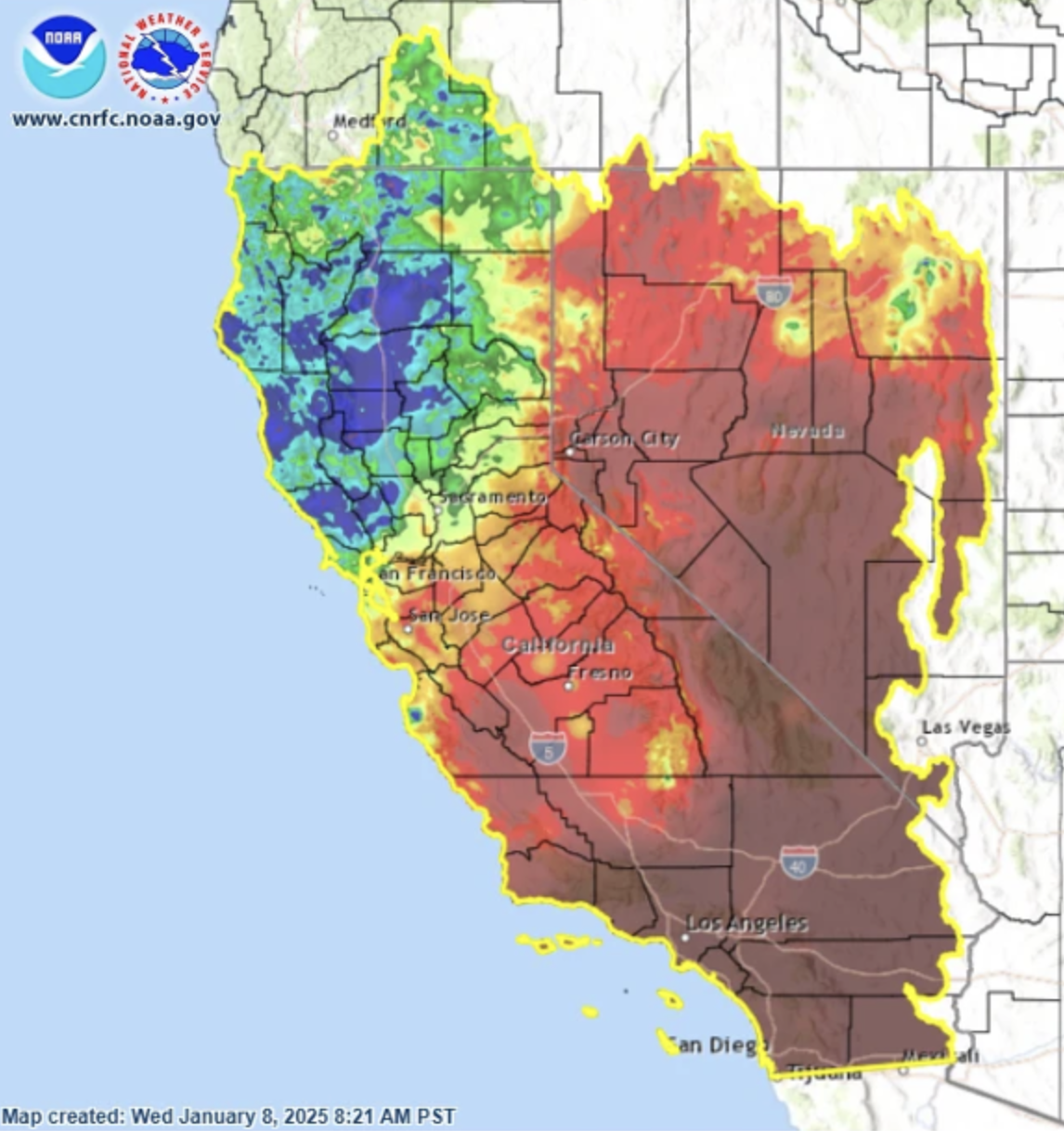

Below Average Rainfall in Southern California, October 2024-January 2025/NOAA

The similarities of President Trump’s policies to the management style of Noah Cross after he left Los Angeles’ ‘public’ Dept. of Water, having rigged local supplies of water, appreciated long before Elon Musk was a fixture of the Oval Office; we will soon be able to look back with romance at Cross’ devious schemes to leech public water resources from Los Angeles aqueducts for private gain. Cross engineered water supply for private ends, the corruption and public malfeasance of pervasive corruption of public resources were a premonition of rampant abuse of public resources, confusing public needs with accusations of maladministration seemingly slated to be a hallmark of the new Trump regime. The loss of insured properties of $30 billion and total economic losses beyond $250 billion pose problems of fire prevention far beyond local mismanagement or malfeasance–but will be one of the greatest costly of disasters we persist on calling “natural” more than man-made. Yet even as we began the Trump Presidency with a declaration of a National Emergency–not from the invasion of the southern border, declared a National Emergency in Trump 1.0, but the fr more menacing specter of “high energy prices . . . exacerbated by our Nation’s diminished capacity to insulate itself from hostile foreign actors . . . in an increasingly crucial theater of global energy competition,” the actual emergencies of climate and airspace that were largely man-made are not only ignored but reframed as errors of bad governance. For while the incoming President issued an early declaration of the need for coast-to-coast “integrity and expansion of our Nation’s energy infrastructure,” the emergencies on both coasts of fires far more massive than regular for January on the west coast and a tragic arial collision on the east coast provided not only spectacles but hints of the emergencies that the Trump administration is ready to exacerbate and downplay, casting their spectacular disasters as the result of the mismanagement of his political opponents.

The mipmapping of how modifications of the environment outside of Los Angeles, or over the skies of Washington, D.C., reveal problems of mapping far deeper than corruption, as they are rooted in deception and willed ignorance that distract us from real problems on the ground and in the sky. The question of moving water to the Los Angeles fires must have hit Donald Trump like a bolt, from a cinematic repertoire Trump has at the ready, and seems poised to provide, as if the cinema-starved Americans, still reeling hurt from pandemic closures, were starved of heroic narratives.

But the accusations of mismanagement that Donald Trump converted two national crises but days into his Presidency–the Los Angeles Palisades Fire he relegated to a local failure of corrupt environmentalists and the tragic in-flight collision at Reagan International–served only to stoke resentment from coast to coast, in denial of the deep stakes of future disastrous scenarios that the country faces with climate warming and the broad deregulation of anthropogenic change. And the current dismantling of ranks of needed forest workers, National Parks, and fire safety monitors, as well as the civil service of FAA engineers and technicians and air traffic controllers–jobs at short levels perennially–suggests nothing less than a massive privatization of resources that the current government has relished to destroy. The current firing of hundreds of “probationary” workers or recent hires responsible from radar, landing and in-air navigation and control automation from air traffic control towers courts systematic disfunction remind us America increasingly is Chinatown, a site of corruption where everyone does as little as possible work: if Trump has presented am image of a declining America, no longer a wealthy society but “a kind of Chinatown where unaccountable power is conspiring against everyday Americans,” compromised by elites, obscuring civil judgements of his own fraud and sexual abuse that deflect from his own “personal and public corruption,” Ronald Brownstein trenchantly observed, to present himself as a savior to the nation, and suggesting that financial elites in a “deep state” have hindered the interests of most Americans.

But the risks of these twin catastrophes at the start of the Trump Presidency suggest the vain boast that Trump will erase the corruption within the state fail to understand the growing scale of our environmental risks. common good. If Chinatown captured the dangers of a world of deregulation and criminality in the Depression era, the increased deregulation that Donald Trump proposes runs rising risks of returning to an era when all America will be Chinatown, lifting laws and regulations of environmental protection and workplace safety, and minimizing what were once norms of public safety standards, transforming all America to a landscape where the corruption of power will conspire against us all. The National Air Traffic Controllers Association has tersely claimed to be “analyzing the effect of the reported federal employee terminations on aviation safety, the national airspace system and our members”–although they include folks working on early warning radar systems for incoming cruise missiles that belong to the defense of national borders. The firing from non-government email addresses, hailing from “ASK_AHR_EXEC_Orders@usfaa.mail.outlook.com,” as if with DOGE fingerprints.

The indiscriminate mass-firings, meant to suggest a “fork in the road,” suggest a collapse of public and private among government. As civil service employees long overtaxed and understaffed are cursorily dismissed, the absence of accountability seems intentionally designed to circumvent regulations. The opaque firing evokes the greed of the “rape of the Owens Valley,” channeling water to the orange groves of a “northwest valley” by silencing opponents and critics, if not by killing, to stave off opposition to the wisdom of ever diverting the Colorado River and city water by Los Angeles Water and Power to quench the thirst of growing urban populations that led William Mulholland to argue, “if Los Angles does not claim the Owens Valley water supply, she will never need it.

Amalgams of institutional distrust, and corruption of power, have been conjured to help Donald Trump power his way to the Presidency, for reasons themselves rooted in corruption, if promising to combat the untrustworthy corruption of powerful elites–not in the guise of a gumshoe but, as political journalist Ronald Brownstein observed in some astute cultural commentary, that fits the moment as an episode of political demonology, an incarnation of Noah Cross,– that mastermind of the Los Angeles Water System played by John Huston who corruptly allowed it cease to be privatized, but undermined its public performance as a public utility from the shadows. by silencing opponents, discrediting others, and literally killing opponents, Cross presided over a massive diversion for future of plans of property development. A network hidden in plain sight of dams, aqueducts, and man-made diversions carried water outside Los Angeles, opening new real estate lots for future homeowners in a “north-western valley” filled with orange groves,–a surrogate for the as yet unnamed San Fernando Valley where the Los Angeles viaduct led.

Los Angeles Aqueduct and Southern California/from The Water Seekers (1950), by Remi A. Nadeau

The silencing by firing, a massive laying off of skilled workers across under the aegis a Department of Government Efficiency. The eery prerogative of a shadow government, apparently intended to silence to redefine government quite literally by starting from the collective dismissal of Inspectors General, suggests the victory of a non elected body designed to prevent anyone from speaking out.

But the charges of corruption and sense of a rigged system have let President Trump suggest the need for better mapping of how to contain fires’ spread, rather than the dismissal of forest workers and even fire fighters and championing of easy methods to end fires in the future. Rather than by perpetuating a plan of official deceit, coverups, and public deception, current plans to cut forest workers, trail maintenance, and fire fighters to forge an optimal streamlining of government by rooting out public corruption seems the worst possible means of facing a landscape of heightened fire risk, where insurance fails to cover the costs of destructive fires, and encourages rebuilding only for the elites able to rebuild homes in what has been recently declared a disaster area but where fire codes had been not enforced, relaxed, or circumvented any spatial buffers, fire perimeters or barriers to fire spread. The systemic failures of the fire rested in the lack of any adequate areas without brush to stop the fires from spreading–not water, even if the hoses that firefighters were using to combat the blazes did run dry due to a perfect storm of contingencies.

Yet the housing markets that have conspired to create a Paradise without fire walls or buffers offers a hard space to combat fire, or plan for unwealthy residents less ready to pay insurance premiums and not rely on private firefighters. With the increased investments in local fire protection to supplement insurance, wealthier residents increasingly come to rely on private firefighters, and demand for funds for rebuilding without taxation for affordable housing in the region–rentals are quite scarce in Los Angeles, as much of the country, and increasingly out of grasp; and the local cost of rentals are inevitably destined to increase as Malibu and the Palisades and Altadena are rebuilt. The case against letting Malibu burn has, since Mike Davis posed the possibility, been stacked in favor of the super-rich; coastal enclaves that obstruct shore access for the unpropertied have proliferated, even if many beachfront properties are now ominously dotted with singed palm trees, signs of the serious trouble in paradise. Anyone who surveys the wreckage can only marvel at the socially leveling nature of fire–the most expensive if not expansive in American history.

The range of damage that the fires have brought–a clean up that a hollowed-out EPA hopes to complete in months, “working around the clock to get as many properties cleared of hazardous material as quickly and as safely as possible.” But as they confront 4,250,000 tons of structural ash and debris, including many asbestos-laced structures in the Pacific Palisades and Altadena threaten to transform what were bucolic beachfront properties into sites for removing hazardous debris from burnt out electric vehicles, explosive lithium-ion batteries, energy storage systems, propane tanks, swimming pool chemicals, uncombusted paints, and asbestos insulation. The fear of ocean pollution, indeed, suggests a far deeper scar than the value of initial property loss suggests–as risks of emission of toxic gases and particulates continue long after the fires have been extinguished. The fires threaten to become among the costliest natural disasters in American history, the spectacle of the fires ceased, and the goal of “expedited removal” by February 25 is not only optimisitic, but most likely unwarranted, despite deep concerns for toxic seeping into the earth and even filter into the limited levels of groundwater supply. But we have never been able to expect good skills of mapping from the Trump team, whose cartographic ineptitude primarily uses maps to rally up fears and generate grievances, rather than to assess actual dangers and liabilities. (Most current EPA workers dismiss the deadline as impractical if not unhinged and nearly impossible to meet.)

Beachfront Homes along the Pacific Coast Highway after the Palisades Fire/MediaNews

Donald Trump didn’t mention these intractable problems of housing in his inaugural address, but rather only noted “we are watching fires still tragically burn from weeks ago without even a token of defense,” showing almost pathological lack of empathy but raising a grievance familiar to many. The grievance he felt seemed to deflect attention from the dire situation he seemed ready to blame his predecessor, if there was in fact not much federal oversight over what was a local problem endemic to a region of the state that had been deeply impacted by increasingly arid air and winds of over a hundred miles an hour, possibly tied to the very pressures of climate change whose existance he has denied. For fanned by record-breaking winds that are higher, dryer, and more unrelenting than previous years, low humidity has made the region more combustible than ever, allowing flames to rapidly spread over space that outpace fire engines, at a time when fewer fire workers were employed, outside fire season. For five days, flames burned through Pacific Palisades and Malibu and Altadena, creating zones of destruction that truly resembled the destruction of a war zone–provoking worth-the-read comparison to the destruction zones of nuclear weapons. The flattened residential regions that have replaced communities are, however, more like war zones than any Trump has ever encountered, and may send a cautionary signal to the future regional devastation of fires in a warming world. Even with over 13,500 parcels eligible for clearing of debris and rebuilding, the Esri view suggests a chastening future of a burnt-out landscape scarred by fire.
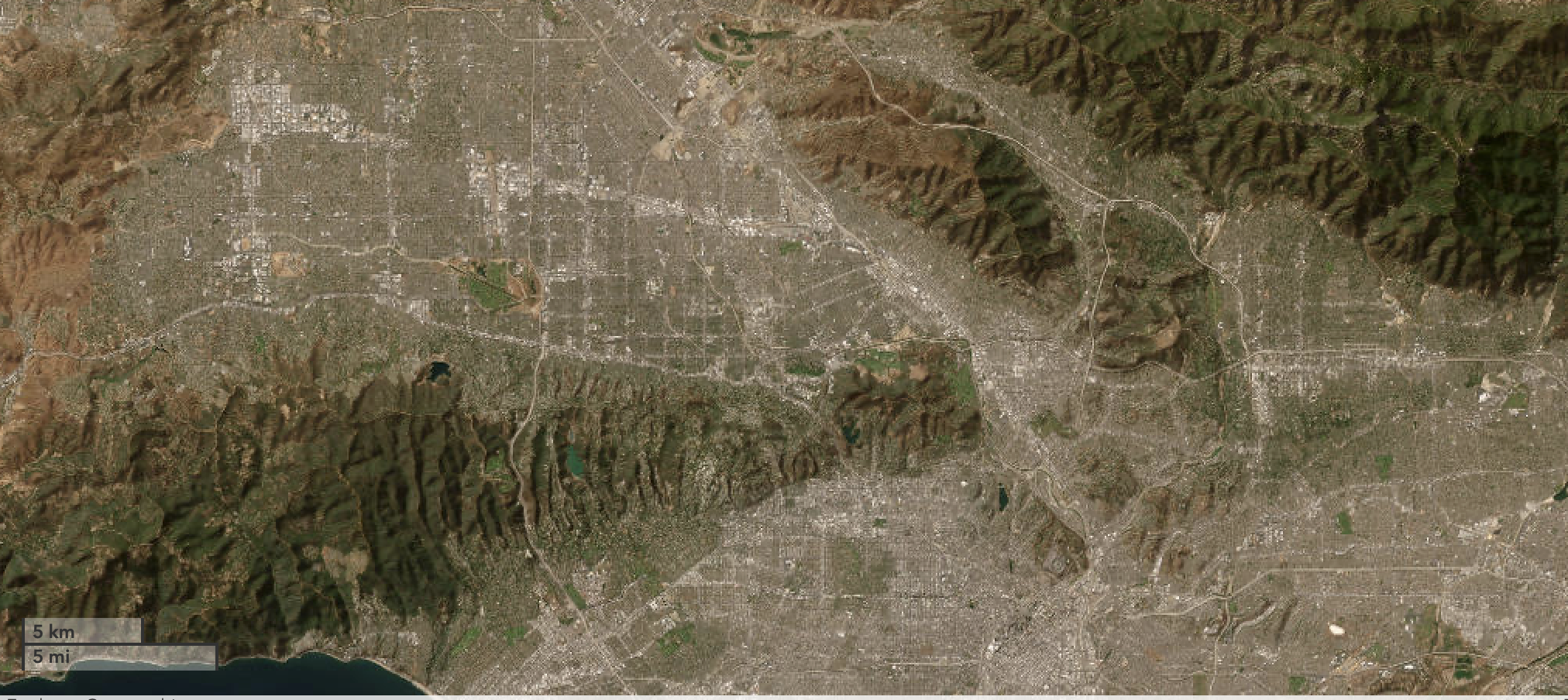
US Army Corps/CA Wildfire Debris Mission/Earthstar Geographics

Without much containment over five days, mega-fires of massive flattened real estate, homes, and work that even before they raised questions about recovery left many in awe of a destructive spectacle that destroyed some of the most valued properties in the coast United States. Watching the fires as they burned through Los Angeles county, one was almost able to bracket questions of how they would leave many unhoused, or the precariousness state common to inhabitants of mansions valued at over $40 million to much of the country, and many lower and middle class Americans: the fires were a terrifying leveling act, immediately expanding an already growing community of unhoused, adding to acute housing shortages across coastal California.

The violent fires were on their way to being contained by the inaugural, as many fire fighters had arrived, and water was being dropped from super-scoopers by the middle of January, including water from the nearby oceans that help to cut of the fires’ oxygen supply and cool burning zones. But they seemed far from Trump’s mind, as the hyperbolic grievance at the rate with which they had proceeded “without even a token of defense” offered no clues to map what had happened. If few engines were initially sent to the blaze and far fewer firefighters work outside the usual fire season in wintertime, containment in many areas had begun by January 10, as particulate matter filled the skies, creating a psychological toll due to stress and evacuation that cannot be measured by metrics of property loss or fire intensity alone in Malibu or Pacific Palisades. Trump had only referenced them as a grievance in his inaugural: if the narratives of the fire focussed on wealthy areas, the failure to include more middle-income areas can frame the response to the disaster.

The massive conflagration created a huge burn area that, after the spectacle of the fire ceased, receded from national attention–even if it should have remained front and center, rather than be argued to be resolved in ways that made up for the failures of on the ground emergency crews. The hyperbole of “without even a token of defense” was unwanted, mis-mapping the spread of multiple fires as due to avoidable error or bad government, and poor environmental planning, more than plagued by inadequate protection or regulations in the increasingly overbuilt wildland interface, that offer increased points of ignition in place of structural barriers and fire breaks to manage the mass fires of future conflagrations. Governor Gavin Newsom had, of course, invited Trump to view the fire damage at first hand, seeking to bring him on board to help hundreds of thousand displaced by fires; Trump promoted false narratives of a lack of water–even after ample sea water helped contain the fires. To see the fires as grievances we lack adequate defenses only echoed in their metaphorical construction migrants from the southern border entering the nation’s border,–as if needed water was blocked by poor government of a “his Los Angeles crew” of Democrats, more than poor systemic planning and climate change.

Trump told the world in his inaugural address as an occasion to view from afar the fires”raging through the houses and communities, –even affecting some of the wealthiest and most powerful individuals in our country, some of whom are sitting here right now” not as tragic moments, or times of heroism, but an infrastructure unable to serve the privileged or America. He complained with surreal pathos how some on that very stage “don’t have a home any longer” and noted others even worse off; the inability of the entitled to secure luxury homes provided a pivot to address the entire nation with a sense of grievance that provided a refrain of his recent campaign: he told America, “we can’t let this happen” to a great system–as we musn’t accept “we have a public health system that does not deliver in times of disaster,” “an education system that teaches our children to be ashamed of themselves–in many cases to hate our country,”– even if the federal governmental does not oversee these programs, or an ability to ensure that things will “change very quickly.” (For his part, Biden had emphasized the importance of providing federal assistance to a region where “All changed, changed utterly” in describing the “terrible beauty being born.”)

The readiness of Trump to channel grievance and discontent in a moment that demanded gravity revealed a pathological lack of empathy, that we soon saw again in the Blackhawk helicopter crash that killed sixty nine–more than the twenty-nine known fatalities in Los Angeles. More than a disconnect from climate change, there was alarming readiness in the President’s readiness to train our eyes on targets as scapegoats degrading our safety and self-image as a nation and erode our nation, rather than appreciate heightened dangers of a system challenged by intense unpreparedness. Yet the stress of a dangerously overcrowded condition–either of residences in the woodland interface, or in the increasingly crowded skies–offered little distance on these real problems, that are far more likely to be harbingers of dangers in a national structure unprepared for climate change or a climate emergency, and without tools to compensate for anthropogenic change. For the problems of human costs that are erased in Trump’s narratives of poor government or management suggest the blind spots of governing that mismap the nation in critical ways and reveal the failure to map dangers of a sudden accelerated downsizing of government. Fires grew in the state by the mid-1940s not only as record-keeping grew, but as increased density of settlement and above-ground electrical wiring expanded, even if they were nothing like the massive fires of recent years.

That change might well come by slashing the Department of Education and its ability to fund school districts, and end funds for fire mitigation. We might do worse than to remove our geography of fire from low rainfall, and consider new means of water storage. But preserving the vanity of what Mike Davis called “fireball suburbs” that is more prosaically mapped as the Woodland-Urban Interface, seeking to preserve a beautiful space for those who can afford high premiums to face heightened fire risk. While the recent Pasadena and Altadena fires are best mapped against the dryness of the soil in Southern California terrain that faced accelerated howling of Santa Ana winds, transforming aridity across much of the newly abundant chaparral, scrub and grasses into so much kindling for fires, the flammable landscape Angelino Davis famously traced to the entrance of new sources of ignition into the Malibu landscape in the 1928 opening of the Pacific Coast Highway to coast views created a new outpost of Hollywood stars along the views of beachfront mansions–indeed, a new sense of property foreign to the region–risked being consumed by “wildfire” in October 1929, a year before a five-mile front of towering flames led firefighters combatting them to fear the impossible containment might lead them to spread to densely inhabited urban areas.

As much as global warming heightened risk of dried out brush and higher velocity of winds, we have shifted a focus from prevention to insurance, rather than clearer laws and consciousness of controlling building materials, fire risk, and surroundings. Benjamin Franklin, who began the first insurance company in America in Philadelphia, as well as the first volunteer fire fighting company, Franklin’s Bucket Brigade, in 1736, was properly called the Union Fire Company, inseparable from the buckets that bore water to put out burning flames that improved fire safety in the newly settled east coast, whose energy sources were mostly both extremely combustible and above ground. Franklin made no bones about privileging the need for prevention in his writings from 1735, noting the need to consider the scale of damages from not adding “a clause too regulate all other Houses in the particulars of too shallow Hearths, and the detestable Practice of putting wooden Mouldings on each side of the Fire Place, which being commonly of Heart-of-Pine and fun of Turpentine, stand ready to flame as son as a Coal or a small brand shall roul against them,” inviting readers note “foul Chimneys burn most furiously a few Days after they were swept: People in confidence that they are clean, making large Fires,” but must be controlled btw fines if with the sweepers needing to be licensed and fined if their preventive work isn’t adequate; public pumps demand enough water “be had to keep them going for half an Hour together” for Fire Engines to perform best “in the Affair of Extinguishing Fires,” with tax exemption or abatement to all helping extinguish “fires . . . whenever they happen”–and covering the roofs of all building sight tiled surfaces, as is the case for all new buildings in London, even if “all the bad Circumstances have never happened together, such as a dry Season, high Wind, narrow Street, and little or low water,” this may have given us a sense of false security n our minds, though if such circumstances “God forbid, should happen, we should afterwards be careful enough.”

We should afterwards be careful enough. Franklin predicted confidently in ways that would make Mike Davis smile and laugh. That very cocktail seems to have happened in Altadena. Franklin was too aware of the danger of electrical strikes from lightening and the combustion of most materials, and flammability of oil and kerosene, sought to ensure the abilities to quench flames collectively. But fires grew as their own identity, to destroy cities undermining the regimes of good governance and disciplined spaces of cities, that urban societies and common fellowship had better protect themselves against: the Great Fire had wildly roared through city blocks unchecked, consuming them amidst helpless cries of help and fear. The fire was an uncontrolled entity, appearing with a vengeance as it “bounded up, as if each flame had a tiger’s life, and roared through, as though, in every one, there was a hungry voice” in Charles Dickens words. Dickens captured how insatiable urban fires roared as they consumed built structures whose hearths and wooden roofs posed heightened risks of combustibility. And it was when he lived in London, worked as an itinerant printer, was a bit of a center for flames and fire companies that were a model for quenching the flames whose “fearful symmetry” could not be framed, or even comprehended by “mortal eye.”

The danger of urban fires were tried to be mapped–and used as cautionary tales. Boston’s Great Fire of 1872 was not mapped by how the winds sent fire raging down streets across the financial district, in the map drawn for Currier & Ives that ran in Harpers, jumping from a burning roof to other buildings under high winds, running down streets as “fire poured with inconceivable force” that was only contained by dynamiting other buildings to create fire breaks in the city’s plant. The outlines of the fire broadcast in national news supplemented stories about fire fighters’ bravery beside ads using the conflagration as grounds to purchase policies to “insure against accidents,” generalizing the need for fire insurance to confront risks in increasingly congested urban areas.
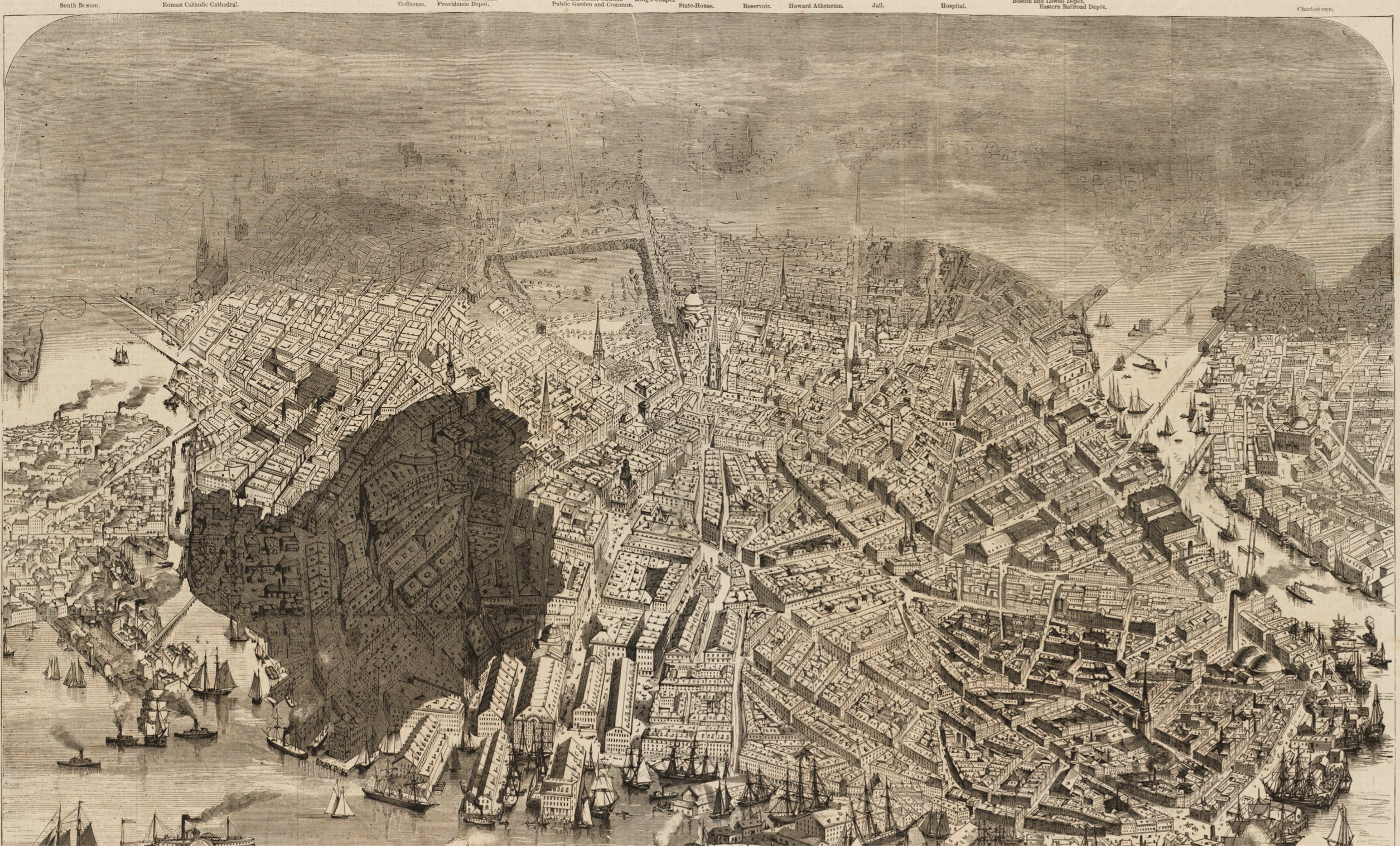
Boston’s Great Fire (1871), Harpers/Norman B. Leventhal Center, Boston Public Library

We are now facing new fires, that roar even louder–driven by winds of seventy to eighty miles per hour, as if facing experiments of flammability in California, and much of the world, that we are only learning how to map, and fearing the even greater roars of a fast-approaching future. And we are only learning to map the rapidly burning landscapes for our eyes, and the dangers they present, and the inequalities that can be born from insurance market, where the rapidly rising costs of insuring homes in much of the old fire zones of the Palisades are most likely to bring booming costs of insurance to obstruct rebuilding in these regions, making the Palisades more outrageously unaffordable and exclusive. Far in the past has receded the recommendation for a protocol of containing risk in teams of firemen, by which these valiant “Men of Prudence and Authority, [may] direct the opening and stripping of Roofs by the Ax-Men, the pulling down burning Timbers by the Hookmen, and the playing of the Engines, and command the making of Lanes, &c. and they are impowered to require Assistance for the Removing of Goods out of Houses on fire or in Danger of Fire, and to appoint Guards for securing such Goods; and Disobedience, to these Officers in any, at such Times, is punished by a Fine of 40s. or Ten Days Imprisonment.”

The imposition of regulations is hard to imagine in southern California, where regulations are lifted by the preservation of the exclusive rights to property and luxury of homeowners lucky enough to live in the Palisades near the nearly 700 mansions that tragically burned in the recent fires while not adorable housing, lack the needed fire perimeters or fire-resistant plantings, or protection with adequate local reservoirs. For Franklin, extinguishing fires was a means of mutual assistance for homeowners in urban neighborhoods, more than a Wildland-Urban Interface. But living in the city of Philadelphia was in a sense closer to the wild than we might think, and close to an anthropogenic world of needed to be grasped as far more combustible than the wild–and whose heightened risk of combustibility he demanded be insured. As much as California exists under a different fire regime, the spread of reported fires around Los Angeles grew by 1945 in a growing Wildlands interface, as increased housing density in areas of combustable scrub, electric wires, and poor guarding of a fire permitter in housing created increasingly dangerous conditions for fire spread in the interface. They are tracked in statewide maps of CalMattersWildfire Tracker–and the responses to the fires in wildlands interface outside Los Angeles predating environmental regulations were far fewer.

Fires Resounded to in California, 1945/Wildfire Tracker–Cal Matters

The fires ignited in the states only significantly multiplied as rising danger of fire prevention grew, with increasingly dense housing along the coastal areas of Los Angeles by 1990,–
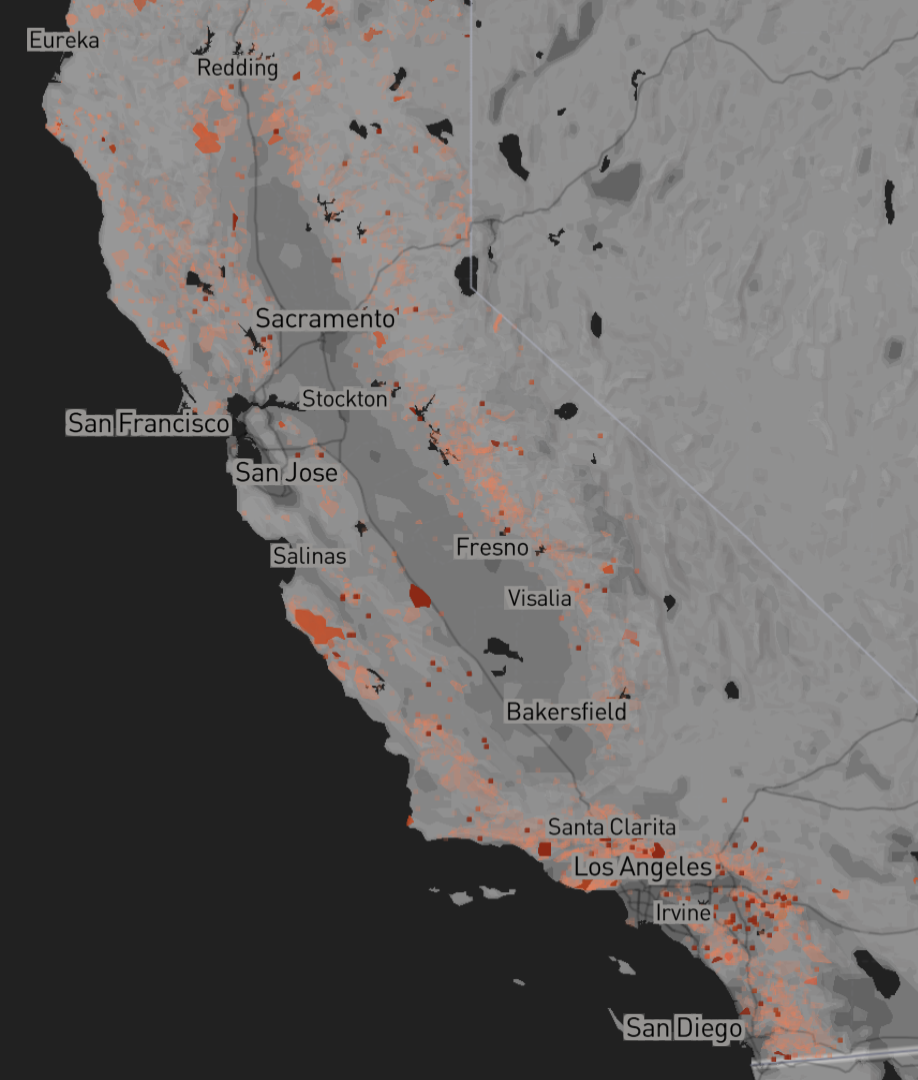
Statewide Fires Responded to in California, 1990–Wildfire Tracker–Cal Matters

-that have only consumed a greater area of the state in the interface by 2020, creating an emerging recognizable landscape of great risk. The risk was not born so much as made by the increased density of the woodlands interfaced that expanded with limited prevention strategy on the books.
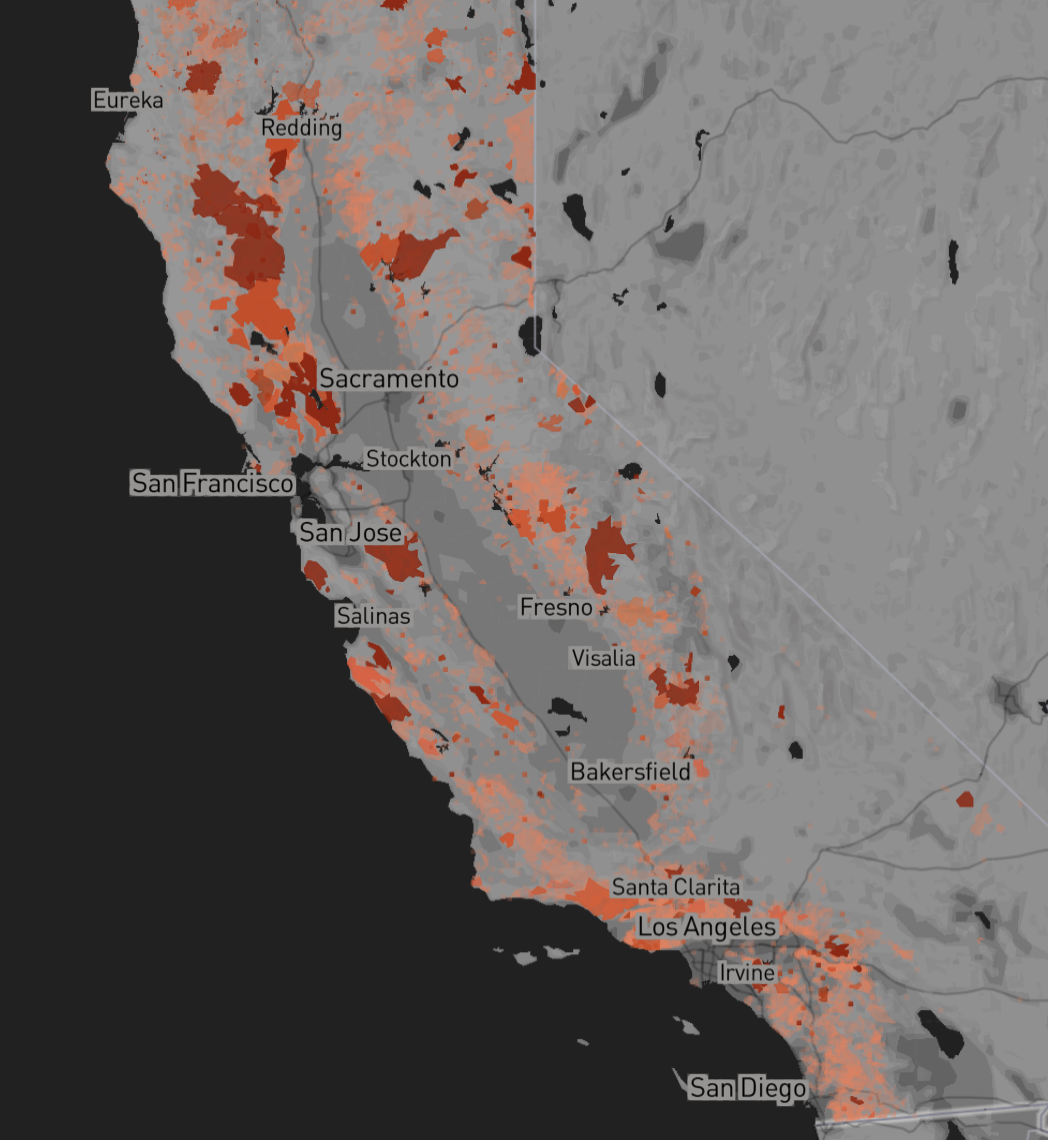
Statewide Fires Responded to in California, 2020/Wildfire Tracker–Cal Matters

Water trucks were of course crucial in an earlier fire regime of urban regions, as risk grew with urban housing density. In demanding both leather buckets and “discoursing and communicating such ideas as occurred to us upon the subject of fires as might be useful on such occasions,” proudly asking if there was a city in the world better equipped than Philadelphia “with a means of putting a stop to beginning conflagrations” with fire-engines, thirteen ladders, two hundred and fifty buckets, and two fire hooks. He had been so struck by the transformative effects of the Great Fire that had caused houses in London to be built “chiefly of brick,” with walls of brick between each house “found to be, indeed, very helpful in case of fire,” and while Daniel Defoe considered Londoners to be “some of the most careless persons of the world in the world about fire” he approved fire insurance meant that “no sooner does a fire break out, but the house is surrounded by engines, and a flood of water poured upon it, until the fire is, as it were, not extinguished only, but drowned.” The local urban insurance companies founded after the Great Fire “keep in constant pay, and who they furnish wit tools proper for their work, and to whom they give jack-caps of leather, able to keep them from hurt . . . [who] make it their business to be ready at call, all hours of day, to assist in case of fire, . . . very dextrous, bold, diligent and successful,” who “they call fire-men, but with an odd contradiction in the title, for they are really most of them water-men.

The foundation of an early insurance company in England fourteen years later–The Fire Office–was celebrated as it served all fires, insured or not, and this pillar of public assistance provided Franklin a model for the “Contributionship for the Insurance of Houses for Loss by Fire” with his fellow-volunteer firefighters–insurance companies equipped watermen “to repair all arms of fire,” responding to “all fires that shall come to their knowledge & give the best of their assistance to extinguish the same” as public forms of assistance per local statutes. If “in this world, nothing is certain but death and taxes,” a maxim Franklin took from Defoe’s Political History of the Devil (1726), the fire was nothing if not diabolic as it spread from the canyon mountains down to the shore, consuming houses and businesses and creating billions of dollars in loss. Franklin valued the lightning rod as an invention enhancing safety to aid a new regime of risk in urban landscapes of density, where lightning could strike roofs to cause loss of property–“cease, ye clouds, your elemental strife,/Why rage ye thus, as if to threaten life?/What busy mortal told you Franklin’s dead?/What, though he yields at Jove’s imperious nod,/With Rittenhouse he left his magic rod!“–and electric charge bring fire.

Franklin was alert to the need of fire prevention in 1735, mapping the dangers of a city where “foul chimneys burn most furiously a few days after they were swept.” Philadelphia should not feel secure, even if “all the bad Circumstances have never happened together, such as dry Season, high Wind, narrow Street, and little or low Water: which perhaps tends to makes us secure in our own Minds; but if a Fire with those Circumstances, which God forbid, should happen, we should afterwards be careful enough.” (He had proudly designed iron vented fire-places or Pennsylvania Franklin stoves to rede fire risk.). The city was only waiting for the eventuality of a perfect storm. By 1752, his insurance society would stipulate “no wooden Houses be built after the present Year, . . . nor any of the Hazardous Trades or Businesses following are carryed on, to wit, Apothecaries, Chemists, Ship-Chandlers, Stable-keepers, Inn-holders, Malthouses, Oyl and Colour Men, or which are used as Stores for . . . Hemp, Flax, Tallow, Pitch, Tar, Turpentine, Hay, Straw, and Fodder of all Kinds and Corn unthrasht,” carelessly stored in homes–“the Insurance of Houses from Loss by Fire hath, where the same has been practiced, proved very advantageous to the Publick” underscoring his awareness of the need to “promote so great and public Good as the Insurance of Houses from Loss by Fire, upon the most equal Terms, and apart form all Views of private or separate Gain or Interest.”

Franklin’s visit to London as a printer not only exposed him to a more expansive world of letters, but provided a quite compelling case in point. Fires were already experienced in Philadelphia–for one, the raging fire by which Virginia’s state capitol was deplorably consumed by arson in 1747–but the danger was succinctly and effectively stated by the argument in maps of the devastation of the Great Fire, preserved in memory if its ashes were of course no longer actually smoldering:
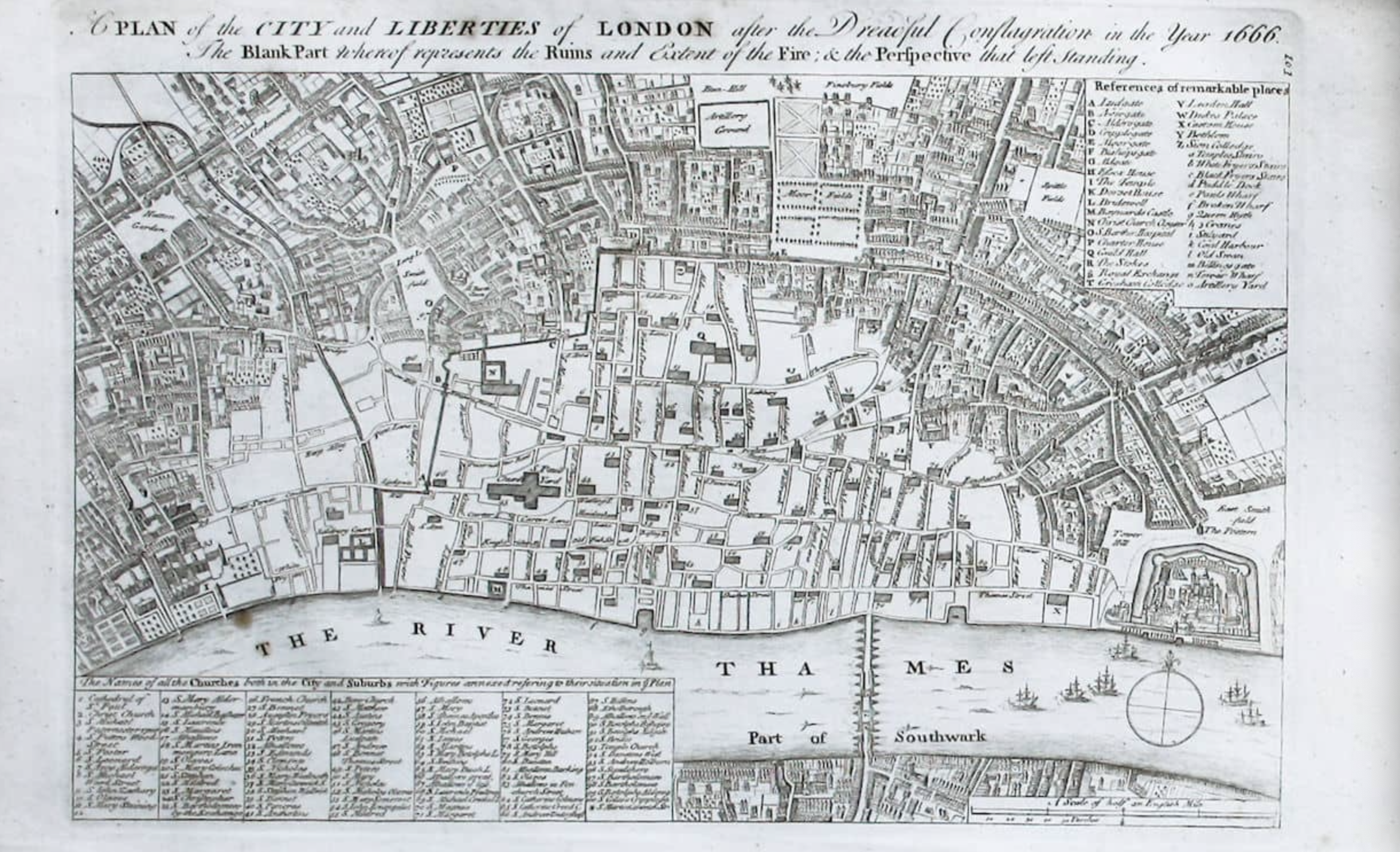
Wencelsaus Hollar,Plan of the City of Long after the Great Fire (1666), from Maitand’s History of London

The bad circumstances happened together in Altadena, even more than were imagined in 1735 in Philadelphia, as high pressure systems sent furious Santa Ana winds into the mountains, and then rushed to the ocean shores, seeming to carry a front of raging fire to the ocean that even the heroic drops of water that were dangerously flown over the flames seemed they might not be able to stop. Franklin printed a famous letter on fire prevention that urged basic preventive steps, before he founded the insurance company as well. The two were simply paired.

Franklin boosted public interest in the need for such insurance policies in best practices. He printed an anonymous letter, and perhaps penned it, arguing not only an end to “the detestable practice of putting wooden Mouldings on each side of the Fire Place,” ignoring their combustibility, by due diligence: “if Chimneys were more frequently and more carefully clean’d, some Fires might thereby be prevented,” leaving “People in Confidence that they are clean, making large Fires” and that ” in the Affair of Extinguishing Fires, tho’ we do not want Hands or Good-will, yet we seem to want Order and Method.” The Boston Fire Society existed from 1717, equipped with ladders, pails, engines and axes, to prevent fires’ spread, but it seems to have been made indelible by Defoe’s account of the scale of destruction of London’s 1666 Great Fire, and the mapping of the extent of the damages of the Great Fire, and indeed by 1744 the model for the rebuilding of London’s burned down center by Christopher Wren.

 A Plan of City of London after the Great Fire, in the year of our Lord 1666, With the model of the new City, according to the Grand Design of Sr. Christopher Wren. London, 1749/British Library

Daniel Defoe provided a compelling narrative of the Great Fire’s spread that Franklin encountered, reding about the origins of the fire and with diagnostic skill in an elegant post-mortem to consign it to the past: the scale of loss of thousands of houses, fifty-two guild halls, St. Paul’s cathedral, and eighty-seven parish churches was unimaginable before, if to be expected given the crowded nature of the center,: “the houses all built of timber, lath, and plaster, or as they were very property called paper work” that might combust readily, allowing the fire to move by “on the tops of the houses by leaping from one side of a street to another” in narrow curving streets, given “the manner of building in those days, one story projecting out beyond another, . . . such that in some narrow streets the houses almost touched one another at the top.” Even despite challenges posed by global warming and the acceleration of fires fanned by the unprecedented velocity of Santa Ana winds above the San Gabriel mountains, there are certain problems of fire spread and fire prevention that are not so distant from those Franklin admired in Defoe’s account of the Great Fire of 1666.

In London, Franklin was particularly excited to learn upon his arrival, a new language for fire existed that might be worth importing to Philadelphia. The leaping flames were only mitigated by the fact that insurance companies paid specialists “who make it their business to be ready at call, all hours, and night, to assist in the case of fire; and it must be acknowledged they are bold, diligent, and successful: these they call fire men, but with an odd contradiction in the title, for they are really most of them watermen.” The question of how water was gotten to fire needing to be extinguished is underscored in the letter Franklin had printed in 1734 in hopes to sway public opinion to consensus for a fire company: “we have at present got Engines enough in the Town, but I question, whether in many Parts of the Town, Water enough can be had to keep them going for half an Hour together. It seems to me some Publick Pumps are wanting; but that I submit to better Judgments.

What sort of judgements do we face in the age of global warmings, and what public pumps do we hope to use? The expansion of fire companies in London was amazingly effective, and renowned, in part as by the Great Fire of Tooley Street of 1860, starting on a waterfront ward, extinguished by the water-canons of fire-ships on the Thames which shoot arcs of water at towering infernos that spewed pillars of smoke to the skies, in an eery echo of the huge grey clouds of smoke that rose over Pacific Palisades and Altadena, creating an unprecedented damage of £2 million by the time the two-week fire stopped smoldering, leading to calls for a public Metropolitan Fire Brigade in place of local neighborhood companies: the incorporation of the city was to large by the late nineteenth century for smaller companies to supervise or carry out, raising questions of the integration of a fire company integrated with other public services of urban maintenance.

Urban Spectacle of the Tooley Street Fire of 1861

The towering flames were rather miraculously confined, but the urban crowds of 30,000 provided an urban spectacle to city dwellers, frozen before the destruction of eleven acres even as the flames were soon stabilized, including the London Bridge station, but the absence of effective hydraulic pumps. The flames that spewed from highly combustible tallow and oil created an urban spectacle early in the era of street lighting, seen for miles around, exemplified the failures of water delivery to leave underwriters aghast; unprecedented losses for insurance companies led to boosted rates–as reflexively, perhaps, to the rates boosted as State Farm is demanding a 22% “interim” jump for home owners across the states after almost 9.000 urgent claims and paying out one billion dollars. Both the fire boats and private engines insurance companies relied to shoot water seemed helpless before the combustion that led to a public company of fire suppression to limit the unsustainable rises in fire insurance premiums.

In the wake of recent wildfires, the absence of preparation or local water supplies led to panic, as if they had not read Davis’ The Ecology of Fear. The disaster drastically depleted insurers’ capital, compelling insurers to claim an urgency greater than in their hundred-year history of serving California homeowners–“risk is greater in California.” in hopes to secure the 2.8 million policies already issued in the state, even if it has ceased issuing policies and not renewed some 30,000–as home insurance contracts, in relatively shocking manner, have been unceremoniously “dropped” in much of the nation in the face of heightened unprecedented climate risk and “non-renewal” rates in much of California had grown in landscapes that were already identified as of high fire risk.
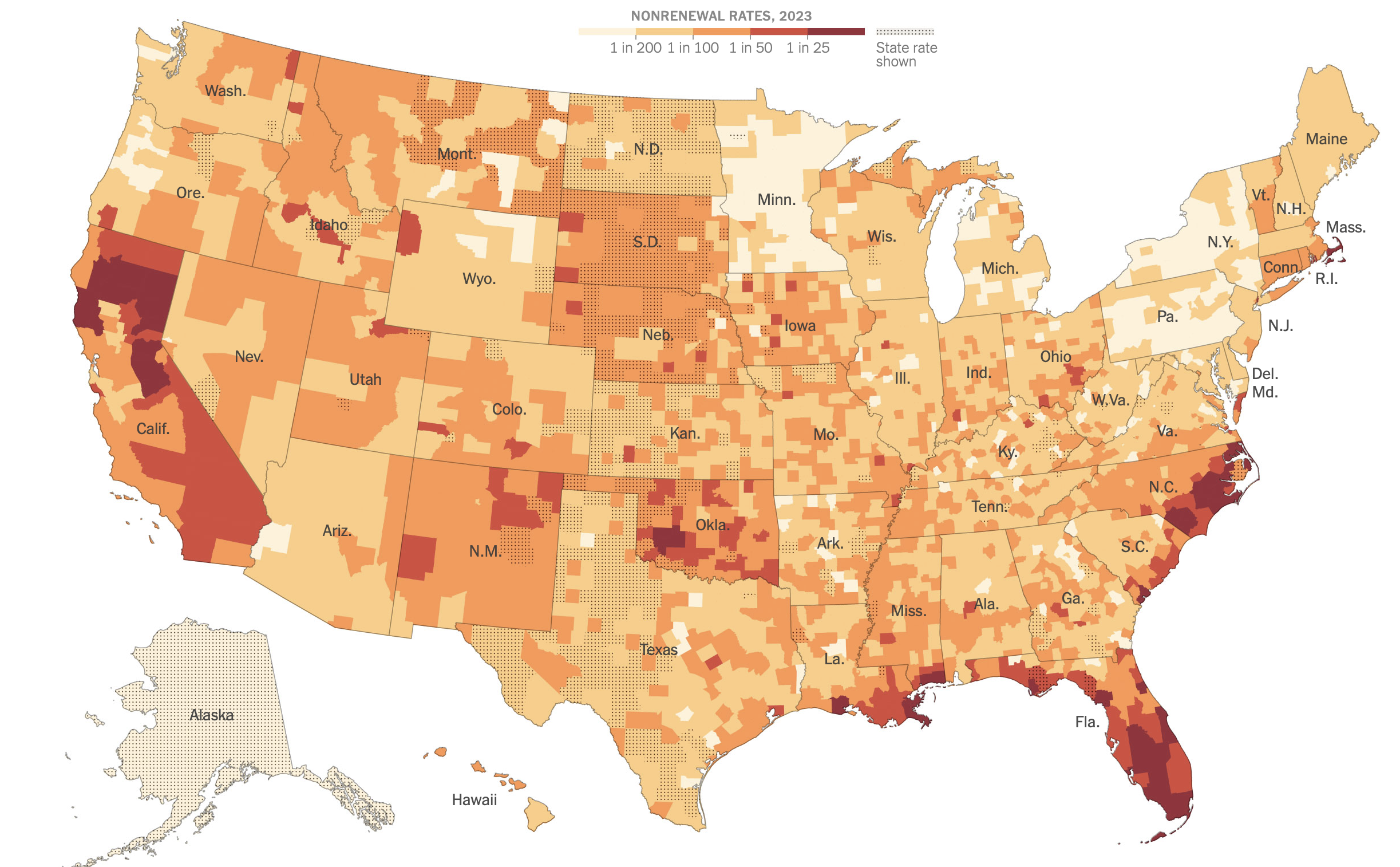
Distribution of Dopping of 1.9 Million Home Insurance Contracts, 2018-2024/New York Times (December, 2024)

The insurance crisis that is increasingly gripping the nation as the government ignores or denies climate change is fraying the bonds by which insurance ties us. The late Mike Davis, whose evocations of Los Angeles fires have been cited and repeated and piggy-backed on as we again panic at the Palisades and Mountain Fires, was not thinking of the Great Fire of 1660 or of Ben Franklin’s recommendations for joint companies–for Mike Davis, of course, Los Angeles and Malibu might be mapped as a distinct ‘ecology of fear’ long before the Franklin Fire. California fire-fighting lies situated at a similar intersection of insurance and risk, but the absence of offering collective insurance to most suggests the deep dangers of the cyclical burns that much of Malibu and Pacific Palisades have long faced since they were developed in the 1920s.

For all the exceptional conditions global warming created that led the fire to spread at such high speed through the desiccated brush in Malibu, the Pacific Palisades, and Altadena erasing a bucolic landscape in a matter of hours, the intersection of risk with insurance supported a rather careless regime of rebuilding without adequate reserves of water. There were no requirements to create water storage underground in Malibu,–even if Los Angeles County Supervisor Wright realized as much back in 1930, as fire lines collapsed before rapidly burning fifty-year-old chaparral on Los Angeles’ city limits, after Malibu was evacuated, that should “fire raging in the Malibu district get closer, our whole city might go,” as if suddenly sensing the terrible fragility of the bargain of its built landscape before an all too real apocalypse.

Brush Fires Threaten Malibu Inn, October 28, 1935/courtesy Los Angeles Public Library

The often ramshackle houses, local columnist Robin Abcarian later observed, boast “the privilege of being able to gaze out the window at one of the most magnificent natural tranquilizers the world has to offer,” if they are also terrifyingly poised on the edge of natural disaster. One shouldn’t be surprised this is the landscape Thomas Mann wrote Dr. Faustus–a book more often linked to fascist Germany than to Southern California’s idyllic coast. Mann may have sublimated “The Fire” as the force of artistic ambition, more than natural disaster–he arrived as a refugee in California by 1941–but the choice between extreme cold and extreme heat provided the “ruffling, sublime shudders from pate to tiptoe over him who it visits and causing him to burst into streaming tears” perhaps tied to the dramatic swings of burning brush in southern California. Combustible brush fires spread so quickly across the Malibu hills fed by the fuel of abundant brush after last year’s rains, fanned at low humidity, by dry high-velocity winds Daniel Swain likened to an “atmospheric blow dryer” to flatten beachfront properties. (The loss of the Thomas Mann’s house was averted but close; the Spanish style Bel Air villa of fellow-refugee Lion Feuchtwanger, Villa Aurora, was singed recently by Palisades fires as it was again in 2025; Arnold Schoenberg’s home had burnt to the ground in 2015.

The contest between tranquility and chaos in Southern California maps onto the balance of risk and insurance. The veteran Los Angeles columnist detected the dissonance of a promise of peace and landscape of violence. The area’s attraction was underwritten to mask the risks of facing fires even as flames consumed 44,000 acres in Paradise Cove in 1982, over 11,000 acres in 1985, and, by 1993, the “Old Topanga Fire” grew over seven days across 18,000 acres,–covering ten million dollars in losses of public property and over two hundred million in private property damages. California homeowners resettled the region and the Pacific Coast Highway, their fears falsely contained due to the expansion of California Fair Access to Insurance Requirements Plan–FAIR, as laws intended to respond to the inequities of redlining by offering inner city homeowners insurance before historically discriminatory polices in many urban neighborhoods were expanded to “hard to insure fire areas.” Since 2018, FAIR has ballooned to become a major insurer of California properties, becoming a primary insurer of over 400,000 properties, with an astronomic risk exposure of $400 billion, and raising its coverage from $20 million per location to $100 million by, but leaving it unprepared for wildfires across the state as it expanded coverage to areas of wildfire risk by 2024–leading artists to lampoon the old WPA posters used by the National Parks as insurers were compelled to offer coverage for high-risk fire zones, and their exposure approached $350 billion.
Will the Franklin fire and the fires from San Luis Obispo to Indio be a tipping for insuring houses in fire zones? Sales of homes with stunning views that FAIR enabled artificially induced promises of reduced risk in the form of low premiums from the San Gabriel Mountains to Malibu, offering insurance to residences even as they were periodically facing threats of destruction that would warrant fears of building, in a false economy of abundance. But the scale of the fires are difficult to map–57,673 acres already burned, 16,255 structures destroyed, and twenty nine confirmed fatalities, and $186.6 billion of property at risk in Los Angeles, and $112.8 billion in Riverside. The news maps used on television could not but see this as a dark future at best, colored in the charcoal grey that spread across the Southern California skies and fell as flakes into swimming pools. The urgent petition for a rate hike of 22% on the heels of a crisis in insurance markets that follows swiftly from climate crises–as homeowners who lost their housing face questions of to rebuild or not to rebuild–as existential dilemmas in a state State Farm already ceased issuing new policies–and already raised homeowners’ rates by 20% in 2024, before the recent spate of fires in the south.
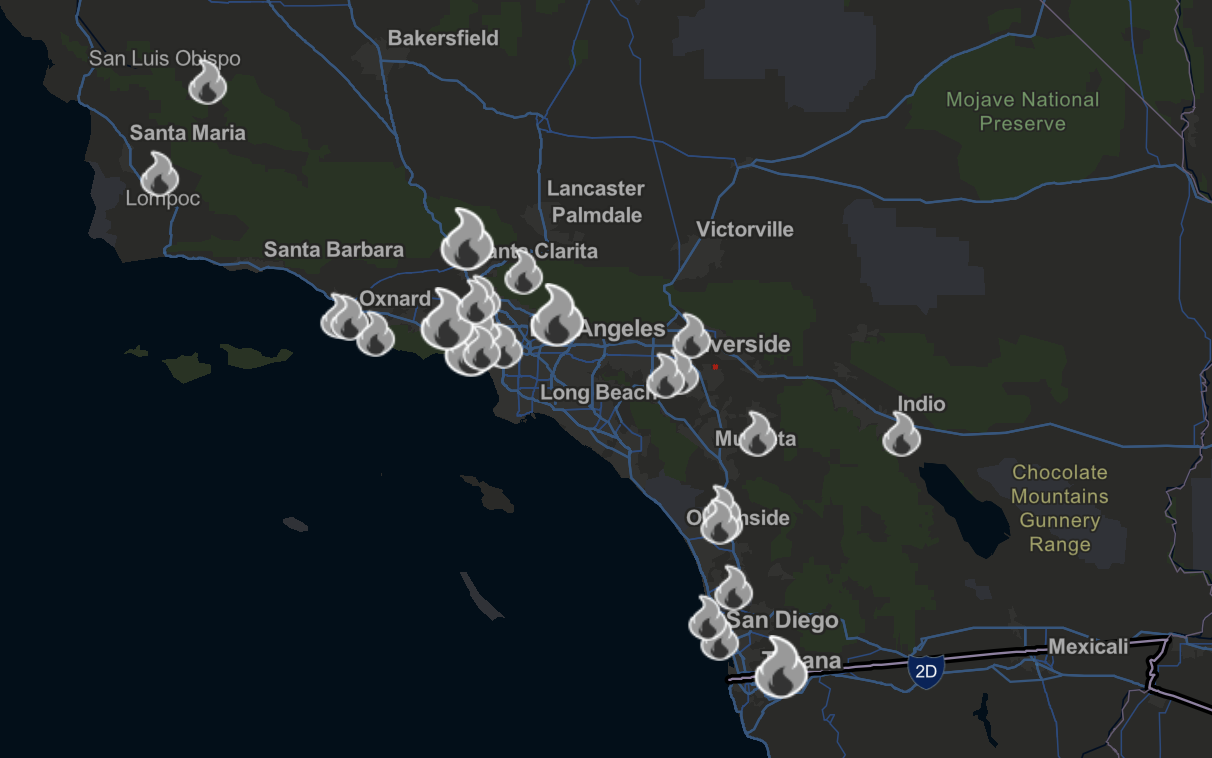
2025 Fire Incident Archive/CalFire

The extraordinarily strong Santa Ana winds that whipped up the flames of fires of up to forty and sixty-five miles per hour–over the speed limit!–that fanned the hills were pointed to for the inferno of the “particularly dangerous situation” in mid-January 13, as urged warnings were issued about infernos that had caused $250-275 billion in damages to property and were not contained, as gusts of wind grew from thirty-five miles per hour to seventy miles per hour, carrying flames and embers across a dried out landscape that indeed lacked water, and where fire fighters had no water in the ground, as they were forced to make heroic fire-drops–and we depended on them to contain the increasingly fanned flames, in ways hard to separate from the heightened levels of fire risk.
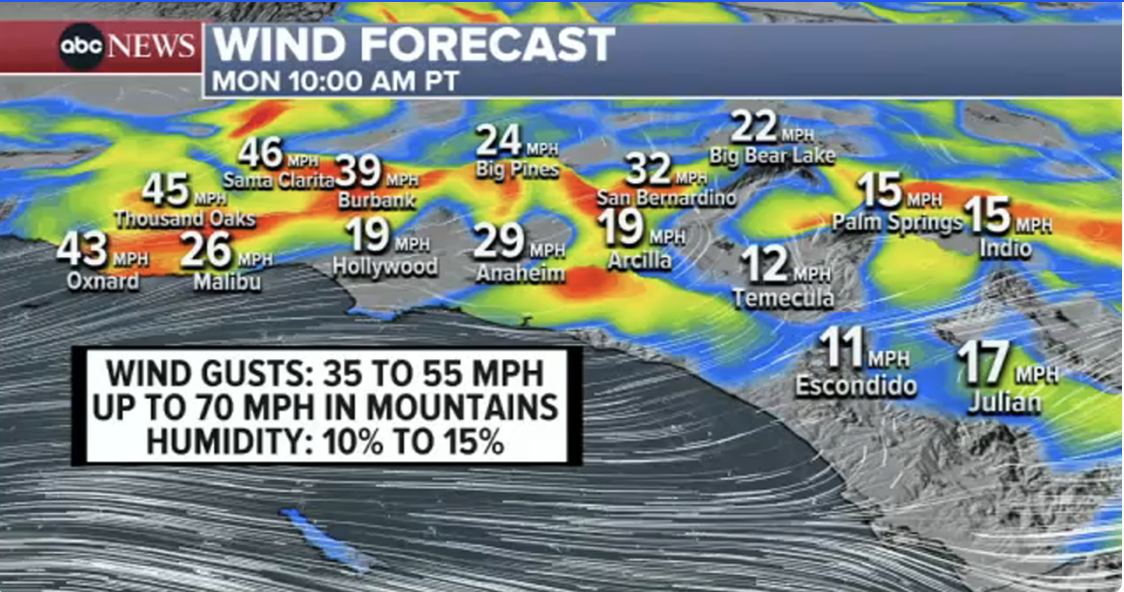
The threat to local governance or personal safety were clear, but the precarious nature of the future before such widely fanned flames seemed to offer little real possibility of protection.

Despite President Trump’s image of the valves that would allow water to flow south from the Sierras, and indeed flood the Central Valley, if all obstacles were removed, they would release adequate reserves of water to combat local fires, as if the spread of fires was due to poor water flow. In the Oakland and Berkeley Hills, the fires famously grew in 1991 across an expansive wildllands-urban interface where a firestorm destroying $3.5 billion in today’s dollars spread across dried out grasses with terrifying speed, as trucks arriving in the hills to found a lack of universal hookups to on hydrants, and negotiated destroyed above-ground pumping facilities, as accumulated debris on roofs spread the flames with highly flammable fluids. As the water supply was strained by fifteen hours of continuous drawing off of water the three largest tanks that held over a million gallons of water went dry, as firefighters drained the reservoirs on which they relied, and after four hours of burning under high winds, another million gallon water tank empty as the size of the fire tripled.

Timeline of First Twenty-Four Hours of Palisades Fire and Eaton Fire/Orange County Register

Under the pressure of high winds and with arid ground conditions allowing the fire to speed through combustible brush on the Palisades hills, the other hundred-gallon tank was empty, as it happened–a perfect storm for the fire to spread with a lack of adequate infrastructure in months that were believed to be outside the critical danger zone of fire season usually imagined over by November or December in most normal years. The nucleus of the fire that exhausted the tanks allowed to burn, the fire continued as a thousand fire hydrants across the neighborhood lost water pressure, stripping fire fighters with their basic tool to try to combat its spread, as high winds fanned the flames toward Malibu, and then into the hills where no reservoirs were to be found.

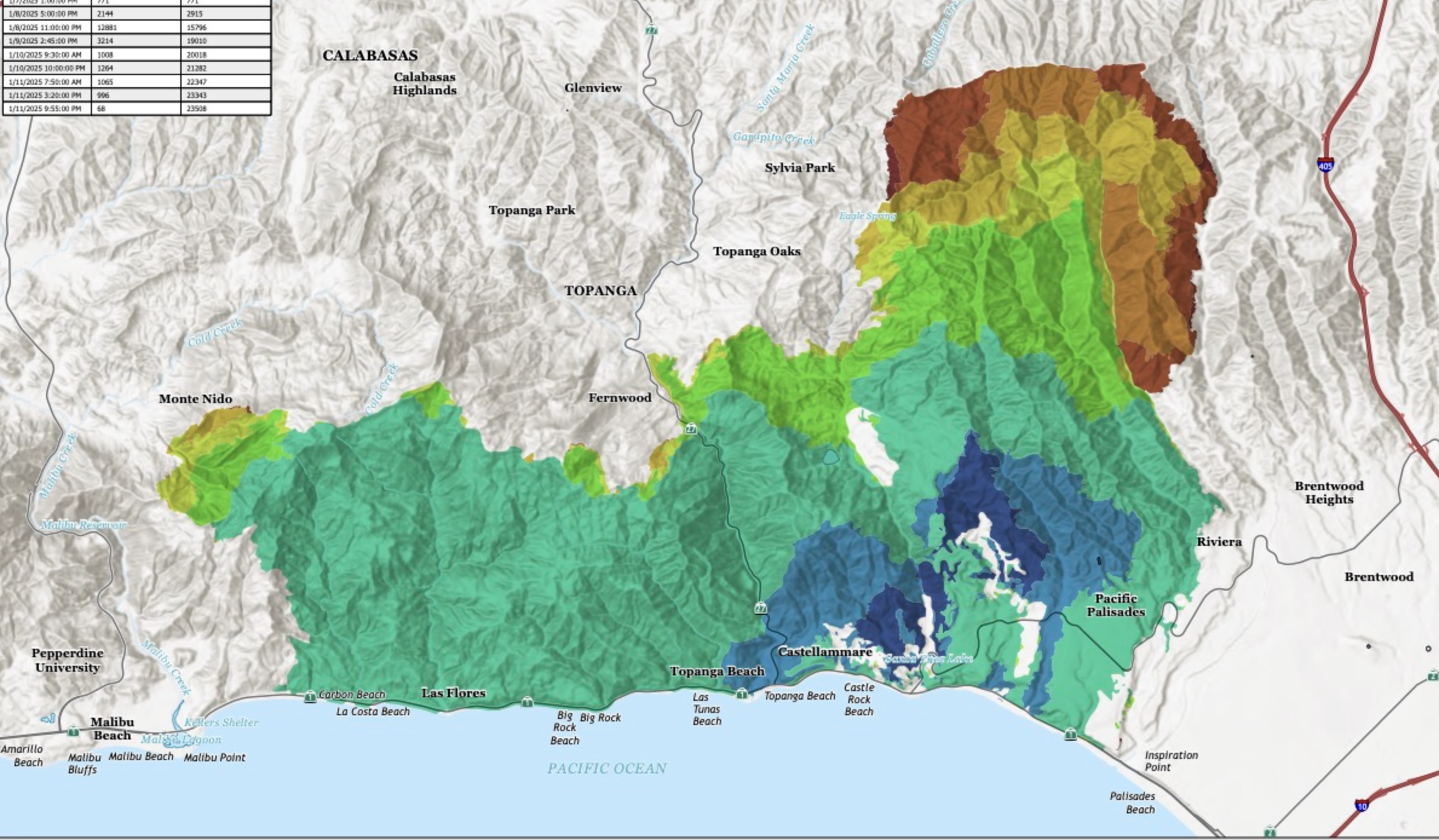
Fire Progression in Palisades Incident/January 7-January 11, 2025 (The Lookout)

The hydrants did indeed go dry. But the fire hydrant became an emblem of the failure to quench the fires in troubling ways, fetishizing the failure of the old industrial warhorse. The hydrant is easier to see as an avoidable failure that distracts from a compromised state of events. For in focussing on firemen’s failure to provide the water needed to put the fires out, we fail to see the poor water pressure as a symptom of stressed urban water supplies, at a remove from the infrastructure of fire suppression, and as a fungible good on a marketplace of allocating abundant natural resources. The system stressed by a rapidly spreading fire in Altadena and the Palisades underscores the absence of urban water networks being designed for wildfires in the WUI, even in the face of growing fire zones and a continued threat of dry temperatures. Rather than trafficking in truth, or in true dangers, the President has elected to traffic in myth–echoing the “mythic fictions” that Thomas Mann felt the German fascists had in the 1930s used to shape political will, using “myths trimmed for the masses . . . [asthe] vehicle for political action–fables, chimeras, phantasms that need to have nothing whatever to do with truth, reason, or science in order to be productive nonetheless, to determine life and history, and thereby to prove themselves dynamic political realities.” (The absence of any underground tanks in the southlands suggest that the problem was not, as Trump would have it, created by Gov. Newsom’s foolhardy desire to “protect an essentially worthless fish” as the smelt, or the dams that he hopes to open to release the “millions of gallons of water, from excess rain and snow melt from the north to flow daily into many parts of California, including the areas that are currently burning in a virtually apocalyptic way.” )

Might an apocalypse fire prevention be averted by adequate investment? The terrifyingly rapid of the expanding fire that approached the 405 as it ran along the shore and Brentwood Heights became an eery sight for urban spectators, who stood motionless on lookouts, as if condemned to remain powerless, entranced as the unwilling audiences for its spread.

Trump seems to seek to reveal a new flowchart to understand the state’s economy of above ground water, but underground water tanks might be a form of insurance able to tether rising premiums. But the problem of a simple failure of hydrants that forced Dick van Dyke to flee his home was not a problem caused by faulty forged hydrants on which the fire department was force to rely.

The lack of water to extinguish the fires that begun–perhaps because of fallen electrical wires; perhaps because of homeless encampments; perhaps due to arson, or negligence, as most fires, have been less often blamed as culprits than poor design. The images of these hydrants were icons in the television coverage of the raging fires that almost dissociated the raging fires from the local landscape in global media. The sturdy old singed hydrants seemed emblems that the scale of maps of fire damage maps were hard to process, as of the residents who gathered to witness the columns of smoke from the nearby hills, wondering if they were safe. The hydrants seemed, however, telling synecdoches of the burnt acreage we cannot grasp or property loss–6.800 structures burnt in the Palisades Fire–that we cannot grasp, or the burn scars that are empty outlines of loss.

Fire Hydrant in Highlands Neighborhood after Pacific Palisades Fire Burnt 23,000 Acres/Loren Elliott

The ghostly form of burnt iron hydrants have become a haunting of the Palisades, a memento mori of modernity and even a haunting of the nation. The skyrocketing demand for private hydrants across Los Angeles seems to mark a major retreat from public utilities, as the hydrants running dry became a spectacle of spectacular failure, rather than a wake-up call. Streamed on media, the rusty hydrant became an emblem of infrastructural failure, and “absolute mismanagement by the city” as if it were a failure of governance that hinted at the failure of public protection. Local storage in tanks had been drained by heavy use in the uphill areas, however, as pressure for long-term usage had decreased so dramatically to make the preposterous charge that local authorities had denied needed water flow by failing to priorities local communities. But the image of the hydrant that ran dry became an emblem of what was wrong in America, the stationary hydrant enduring flames an icon of what happens a state run by a Democratic governor and with a Democratic mayor.
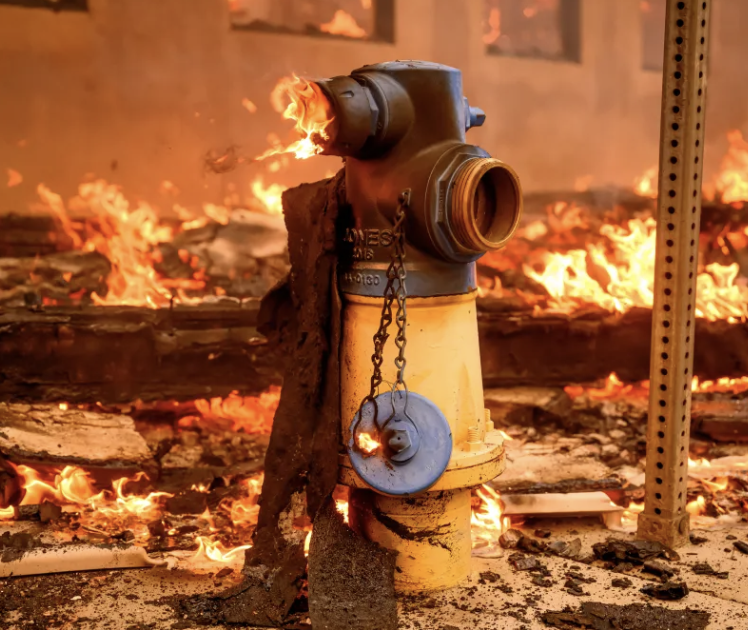
Fighting the fires from huge tanks of water able to hold a million gallons each unsustainably taxed the system, eventually draining the tanks that made water-drops the sole viable tactic to combat the fires, but not before letting fires grow. As water trucks brought in an other 76,000 gallons of water to fight the fires, and more water shipped for drops from the other far larger urban reservoirs, but the dry hydrants and low pressure seems a shock of poor planning and infrastructural failure, that left the stressed-out forged hydrant an emblem of a declining industrial landscape, as if the rust belt failed the Pacific Palisades. But the hydrants were evidence that the true culprits of the destructive fire was local mismanagement–rather than high winds or dry brush.

Dry Hydrant, Pacific Palisades/Eric Thayer

Locals worried about the danger of rekindling of fires that had retreated to seats in trunks or trees’ root systems, believed extinguished, but had only reignited as they were fanned alive by high Santa Ana winds, leaving firemen unable to stop their destructive spread. There was an online issuance of a “Right of Entry” form complete with QR code that could be scanned as a “crucial step to expedite your return home,” but no sense of a return home, or a return to safety was in sight.

America’s declining infrastructure was hardly raised in the last Presidential election. But it was a talking point of Making America Great Again 1.0. There was something truly evil and grotesque in how President Trump attributed the mid-air collision of an airplane descending to Ronald Reagan National Airport Municipal as due to DEI policy, not coordinating flight paths in overtaxed airspace. (The difficulties in the landing has more direct tie to the operation of the nation’s air traffic control tower below recommended levels of staffing,–even if the Reagan Washington National Airport was “not normal for the . . . level of air traffic” at the time of the midair collision over the Potomac. The collision of a Black Hawk helicopter rehearsing a training flight to preserve “continuity of government” to be ready to evacuated political leaders in case of a National Emergency with an incoming flight–became a national emergency. And it was symptomatic of a national emergency far deeper in scale than a single collision. Perhaps the air traffic controller was doing the job of two persons . . . what about the unexplained firing of all members of the Aviation Security Advisory Committee mandated by Congress to oversee safety issues in national airports after the 1988 PanAm 103 bombing over Lockerbie, Scotland? or the vindictive firing of members of the FAA National Defense Program seriously threaten to undermine national safety.

The Reagan airport is severely overtaxed, as overly stressed and as overworked as the air traffic controllers who work there, understaffed. Senator Tim Kaine had already worried about “increasing a safety risk because when you have one plane taking off or landing every minute, while other planes are circling, especially in very constricted air space, like DC’s airspace, you run the risk of serious challenge,” in May 2024, pointing to “flashing red warning sign” of audibly hearing air traffic controllers “having to shout ‘Stop! stop!’ to get two jets trying to use this main runway to stop within 300 feet of each other,” in an airport already overburdened with incoming flights–before the event: “God forbid waking up and looking in a mirror one day,” he worried to congressional reporters, “and say, ‘Wow, I was warned. I was warned and I shouldn’t have done this.’” Or just read the news:

 Control Tower and Flight Paths at Reagan International Airport

What was the helicopter doing rounding a busy air traffic area at night, even if its pilot had fancy night goggles? What was the supercool Sikorsky helicopter doing flying at an altitude above two hundred and fifty feet (per the air controllers’ tools) and in actuality three hundred and fifty feet, or fifty feet above the height at which it appeared on the air traffic control display at the time of the mid-air collision–if that figure is a bit approximate for landings, and rounded to the nearest hundred feet, over the Potomac Rive–significantly above a flight path limited at 200 feet, perhaps due to winds. Their field of vision was drastically limited by night goggles, however, that restrict the field to but forty degrees–leaving one without peripheral vision–and facing challenges from the night-time illumination of a city below them, whose reflected illumination had been intentionally intensified by the night goggles that presume a need to augment or amplify ambient light to make one’s surroundings visible–even if the Commander-in-Chief insisted in his preferred all caps podium, it was indeed “a CLEAR NIGHT” for most, at least unless you were trapped in a Blackhawk with a faulty altimeter and wearing night goggles. In that case, your sense of your position was not only hampered, but inevitably compromised.

The difficulty lay in the relation between man, environment, and machine, but that is not saying much. The helicopter’s request for “visual separation” to decouple from air traffic meant that they were decoupled from air traffic, and less dependent on radar, reliant on their own eyesight in an are of enhanced light pollution, multiple landing aircraft that were hard to identify, without radar-based calculations of other planes’ position. The airpower allowed them the flexibility around airports, assuming they enjoyed good visibility; but it is likely that bad readings on a faulty altimeter and garbled warnings from tower controllers prevented advance warnings about the circling aircraft, as they flow to over three hundred feet–a hundred feet over the route’s ceiling altitude–hitting the plane at 278 feet if it had been as high as 400–and if they claimed they had the jet in sight, they were hampered by little guidance save direct observation, failing to to receive guidance from controllers along standard flight paths as they strayed above the allowed height. And if there were more than a few recent near-misses at Washington’s Reagan International, the eventuality of a collision seems to have been waiting to happen, even as the routes of planes was reliant on flight measurement, and often left helicopters manning compromised instruments while allowing the helicopter to fly close to the plane by “visual separation” to rely on coordinating their exact positions in relation to one another in a very crowded night sky.

FAA Chart for Flight Paths around Potomac near Ronald Reagan International

Even if the Blackhawk wasn’t using AI,–though the Air Force is integrating AI to upgrade legacy helicopters like the UH-60, named after an indigenous American leader whose stealth and swiftness were celebrated in a pre-AI world, itself an updated of the UH-1 Iroquois, the tools were at fault. (The names for military aircraft that privilege indigenous models of agility and intelligence are as offensive as the idea of DEI, but in an administration railing against equal opportunity laws won’t likely cease such offensive labels to idealize military tactical technologies.). For all the indigenous metaphors of stereotypes of aerial agility, coordination of the dense flyspace failed, not longer effectively coordinated from the tower, instrumentation failed and all visibility compromised.

What sort of “visual separation” was able to be allowed to a pilot wearing night goggles amidst the glare of the overlit night sky, where the reflections off the Potomac compromised accurate identification that he even had ability to claim he had the right jet plane in sight?

The threshold of safety depended on relations of “human, machine, and the environment” ruled the National Transportation Safety Board–even as President Trump didn’t get that much in seeking a review of “all hiring decisions and changes,”–presuming that things were peachy until the wrong folk were hired, in a massive if blatantly tactical reading of the tragedy before sixty-seven bodies were dredged from the Potomac River, where the airplane from Wichita hit the Blackhawk. That triad doesn’t explain much, but it does express how we all live today. The problem of controllers granting the lovely if opaque circumlocution of “visual separation” with the jet at the moment their flight paths converged begs the question of the advantages of blindness in a metropolitan airspace and the wisdom of allowing pilots wearing night goggles to fly by their own sense of judgement. Why even have air traffic controllers at all?

Trump wants to use “common sense” to understand the magnitude of disaster as based on human error–“we have to have our smartest . . . they have to be talented, naturally talented people,” he lamented as if the the mid-air collision was the latest grievance he had with his predecessor, without showing any empathy for the dead, as if feeling ripped off this occurred on his watch, insisting “we can’t have regular people on this job.” The problem is more likely anthropogenic (air pollution), instrumentation (night goggles); and bravado (“visual separation”), and poorly integrated systems. Why was a helicopter with limited steering control in winds allowed to lurch above its intended path by an airport run way, asking to be released from air traffic control with false confidence, allowing it to pop up in ways that could not but have disarmed the pilots descending to a runway, in one of the most congested airports in the country?

Existing aviation rules require helicopters on that route above the Potomac to stay below 200 feet. In a supercool helicopter, the pilots outfitted with goggles felt they were equipped by technology that they didn’t see left them purblind in a sea of electric light. Was this one the Blackhawks used to capture Osama bin Laden outfitted with technology to avoid radar? As the plane entered its landing path toward the airport, trying to evade collision with the copter by trying to rise from the path of its descent, as airport employees capturing on their cel phones. The new regime of air traffic, and the new regime of public lands and national parks, suggest a systemic failure waiting to happen.

Collisions and Crashes in American Airspace/Trump Crashed This

A historical question about the tragic emergency that is the largest mid-air collision in years: why has no one tied the deeper tragedy off the expanding runways of Reagan National to an airport named after a president determined to fire 11,359 air traffic controllers demanding higher wages, whom he order to return to work or be banned from future employment at airlines? (President Reagan consolidated executive power by angrily firing striking controllers whose labor rights he denied, and declared a “peril to national safety.”

The show of force reduced collective knowledge-pool of a profession we rely on as air traffic grew, orchestrating increasingly congested skies that placed increased levels of stress on controllers. “They are in violation of the law,” even as they had complained on under-staffing, Reagan heavy-handedly flatly “terminated” striking workers with the braggadocio of a cowboy, arguing public safety workers lacked rights to strike in a shift of labor law. He used military scars to make up for shortfalls and break the strike, issuing a directive the FAA hire new controllers to replace an entire professional cohort, reducing proficiency managing flight paths, as controllers did not reach pre-1981 levels for over a decade, even as demand grew in flight control. By silencing union demands for better equipment, depressing controllers’ wages, and increasing stress, Reagan compromised professional status, job security and national safety. “That’s not the way people ought to work,” he had angrily asserted, firing all who didn’t return to the towers by 48 hours–if not, “Tell them when the strike’s over, they don’t have any jobs.” The 13,000 air controllers who went on strike in 1981 compare poorly to the current need of 14,335 controllers to direct air traffic; only 10,8000 working certified air traffic controllers today are 2,000 less than forty years ago, leaving 3,500 control towers short-staffed, despite ever-busier flight paths and congested air traffic. Do workers’ old complaints of poor staffing and shoddy equipment haunt our skies?

Security seems to be a commonality here in the tortured American landscape of the 2020s, when global warming notwithstanding we face infrastructural challenges of unimaginable scale. While Reagan saw the strong-arming of the union who were demanding “a survivable contract” as a real act of political courage bolstering Presidential power, the unprecedented firing of 11,000 Americans from the Rose Garden that the striking air traffic controllers “will be terminated” banned the 11,000 from being rehired to bolster his own power–even after the union had endorsed his candidacy for President the previous year!–the blue skies that allowed air traffic to inch from only 50% of flights to 75% in two days sanctioned the practice of “permanently replacing” workers to diminish the job’s status and cast union-breaking as defending the interests of the everyday man. Despite the hopes to “ground the planes” and empty the skies, the precedent of a wholesale replacement of the striking workers and dismissal from work with a real threat of “permanent replacement” was more than a revision of air traffic control as a line of work, but a labor tragedy that took aim at the AFL-CIO, already weak enough but with difficulties overcoming the precedent, as its striking members were in fact jailed for seeking a four-day workweek and less overtaxed work conditions, and were transformed to a service economy workers without the rights to strike for higher wages. Strikers sfound themselves in jail, without a profession, or even a job to return, an earthquake making air traffic control a far less appealing position; what was a navigational beacon in all weather systems across the national skies, now recast in openly oppositional terms as part of a service economy.

If the government’s breaking of the PATCO strike is often treated as a watershed in labor laws, by reducing the bargaining power of the union that it challenged as illegitimate, another consequence of the strike was to create increasingly stressful working conditions and work shortages that made a weak link in an overburdened system of air traffic. With controllers chronically exhausted from a workloads of increased intensity in a sixty-hour work weeks of increased intensity to monitor flights in over-served airports of increased runways, Trump[s readiness to criticize the quality of workers typically overlooks the increased demands evident, in the judgement of trained air traffic controllers, in the voice of the “very, very busy, very task saturated” controller who was managing the tower in Ronald Reagan International on the night of January 29 when the midair collision occurred. The sympathy an aviation consultant familiar with the workload of air controllers felt for the worker handling air traffic that night is a striking contrast to the absence of empathy for striking workers by the President after whom the airport where the mid-air collision occurred.
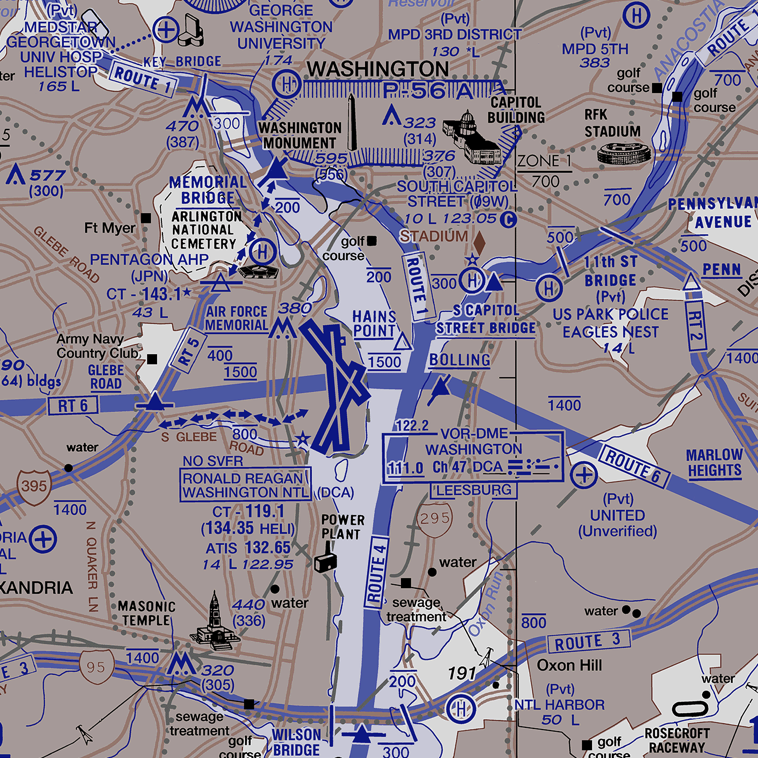
When Ronald Reagan insisted that the strike was not “legal” and that the workers had no ability to negotiate for pay, they took to the streets for a survivable contract, trying to let the nation known that the flights they had presumed available might be stopped–and airplanes grounded–that sent the California Governor turned President into a tizzy, leading him to start training strike-breakers and collectively firing the entire union of a local that had endorsed him in ways that would compromised the profession of air controllers for future years, limiting the attractiveness of a job and ensuring that they would be understaffed and underpaid for decades to come, in ways we have perhaps only very recently begun to receive the bitter harvest of its fruits. The hope of that strike–to ground the planes and empty the skies of air traffic , in an attempt to show the muscles of air controllers angry at their low wages and lack of a viable contract or bargaining terms–
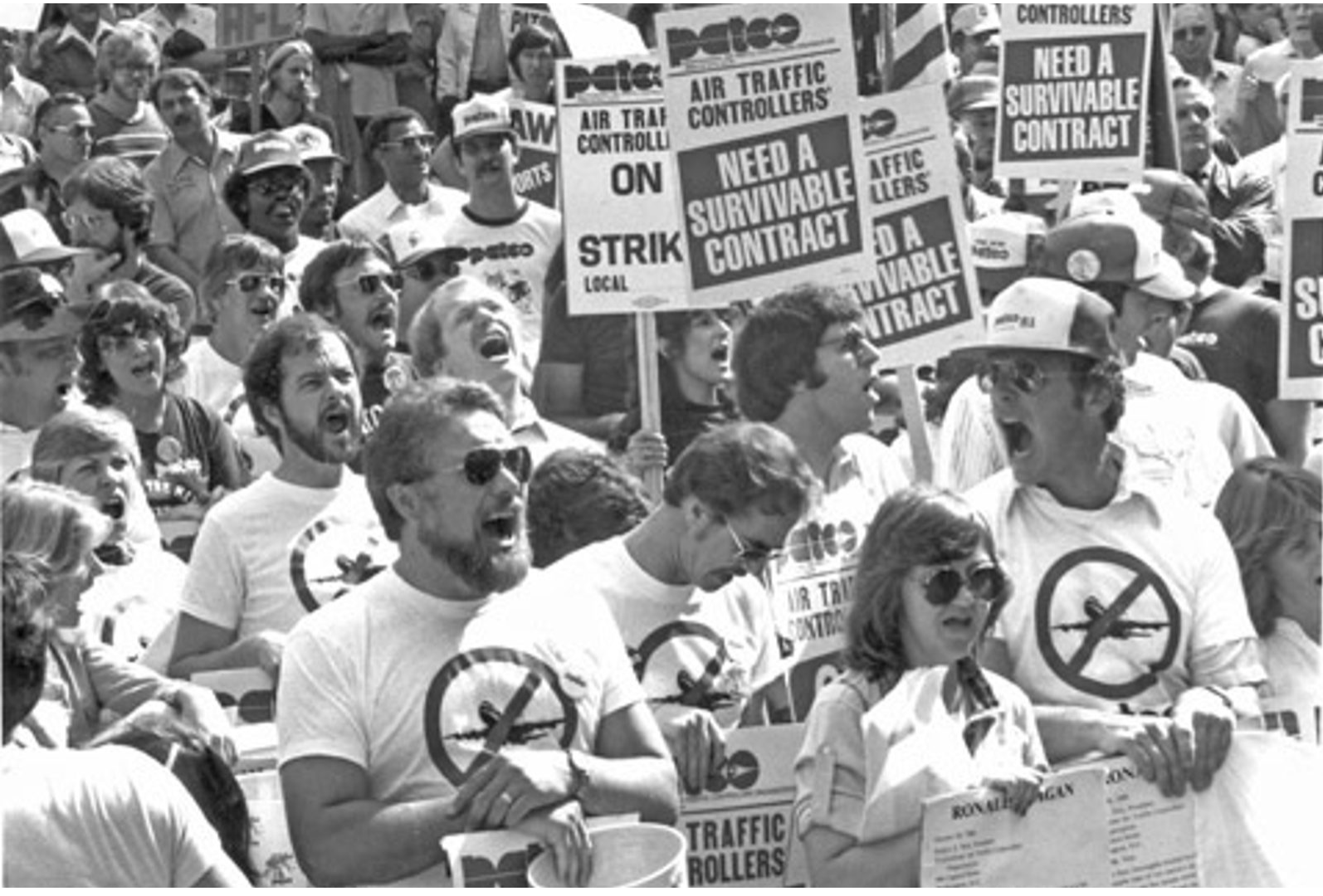
Professional Air Traffic Controllers’ (PATCO) Striking Workers, 1981

–had led them to join the AFL-CIO and show their force in a struggle of collective bargaining that led the President, Ronald Reagan, terrified of the instability empty skies would bring to America’s economy and middle class families, if the image of a sky empty of grounded planes came true.

Isn’t it a typical strategy of Trump to blame the poor training of airport workers for problems of ever-growing workloads, low wages, grueling hours of work that ask workers to cover multiple shifts, and overtime that undermines their performance? Air traffic control– as fire prevention–depends on the transmission of knowledge, and the knowledge loss is serious as cohorts air traffic controllers are constrained by being hired after age thirty-one and retiring at fifty-six years old, reducing the pool of knowledge for operating flight schedules to slim levels for coming decades.) Before the tragic accident occurred, 85% of post-pandemic air traffic control facilities were staffed below accepted thresholds, leaving shortfalls in the staffing of control towers in Dallas-Fort Worth, Atlanta, and Chicago, coordinating the busiest US airspace was an object of contention between the FAA and airlines, leading to cancellations and charges and counter-charges of inconsistent FAA hiring resulting–even as the airspace over the lower forty eight grew increasingly entangled.

The crisis of staffing of certified controllers became a new normal for decades, as the density of airplane routes was poised to escalate quite dramatically, air traffic controllers loosing a union with teeth, and many staffed buy air traffic controllers in training in a job that is plagued by labor shortages as workflow is increasingly challenging to map–in ways that poses a serious safety risk. For the sever shortages of staffing of Air Towers by professional controllers has quite precipitously declined since 2012, and even has not recovered since the pandemic–per FAA public data–long before we were two thousand controllers below the goal that the FAA set with controllers of 9,000–a number quite lower than the certified controllers we relied upon for landings and air safety.

Staffing Shortages of Certified Air Traffic Control in America, 2012-2020/Dept of Transportation data

The goals recently se try the FAA and air controllers’ union, in an attempt to get things back on track as the travel across skies is poised to grow in magnitude, suggests many slices of the pie gone with unmet goals.

Shortages of Air Traffic Controllers in the United States based on 2024 Targets/Erin Davis/Axios Visuals

The FAA report was unavailable on the agency’s website as of early February — if the numbers have resurfaced–in ways some fear is part of the recent purge of government data mandated in executive orders. But the shortcomings of controllers in airports in the nation–even if Texas, New York, California, Wisocins, and Arkansas seem in the red–cannot be seen as a local problem–if the planned expansion of more runways in the relatively narrow airspace over Reagan International is a worry. The crash due to a faulty altimeter occurred in a context of tightly competing air zones, and different priorities of military and civilian air traffic, where supposedly air traffic controllers were, if short staffed, not to blame so much as a convergence of factors. The expansion of air traffic into Washington seemed poised to escalate in ways that would only increase the danger of in-air collisions, warned many senators, including the warning from Virginia’s own Tim Kaine. And National Transportation Safety Board Chair Jennifer Homendy seemed to stressed as she tired to address the grim picture of safety of air travel around Reagan International to reporters, offering that the Fatal collision on tragically converging flight paths before a large FAA map, broaching the possibility the helicopter crew hadn’t heard the directions that air traffic controllers provided to position themselves behind the plane landing of Path Four, at a tense news conference February 14, because the pilot had been talking over them.

NTSB Chair Jennifer Homendy on February 14, 2025/Mark Shiefelbein, AP

As we register with open mouth after the death of sixty passengers and four crew members on the American Airlines regional jet that collided with a Sikorsky helicopter, we should consider how Kaine warned his colleagues that the readiness to expand runways posed a real national risk they had no contemplated. “You’re doing it to convenience a few dozen members . . . at the expanse of everybody who lives around this airport who would potentially victimized if there was some kind of collision,” he told his colleagues, in being willing to pass a bill to increase the runways without even having the air controller staff at an adequate level. And while we have been told it was a bad night at National when the airplane entered the regional airspace, allowing it to collide with a helicopter that was practicing, irony of irony, emergency rescue operations for the President, the safety of our airspace had already long been compromised. The safety we could offer passengers who were flying on board by accommodating to the logic of the skies, and challenge of an increase of flights local air traffic controllers had to accommodate, with New York’s Terminal control Center pulling outsized weight to handle a third of all national air traffic, despite serious attempts to organize “traffic flow management” of commercial aircraft, cargo transport and business jet in a web of air traffic netting that covers the continent like a quilt.

For just thirty minutes before any airplane’s pilot sets their sights on taking off to their destination, all planes notify the next sector of airspace of an adjoining air traffic control tower, to ensure that its flight path will not encounter problems as it approaches a new his airspace or needs to be redirected along an alternate heading or altitude as it plots its flight across the country–moving, as this flight did from Kansas City to Washington. Only after this change is made will the incoming controller accept the airplane into the network whose operation has been overseen by the Dept. of Commerce in July 1936, in the midst of the Depression, but by now expanded to“air traffic control” sectors on which we depend for controllers for safe travels, in order to ensure safe travels.

ARTCC (AIr Route Traffic Control Centers) in Lower Forty Eight
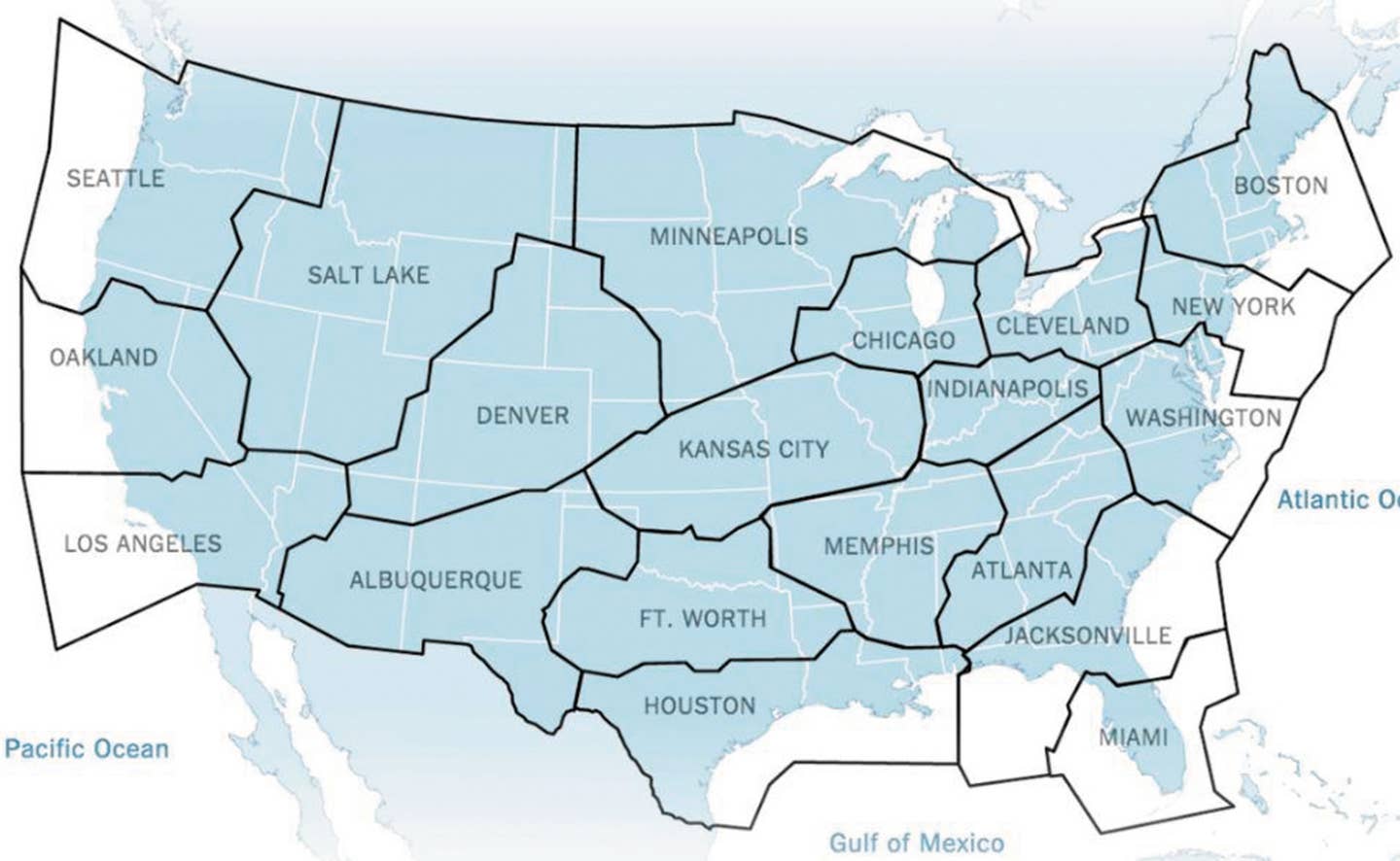
Air Route Traffic Control

The towers studded across the nation, which are in control of all flight paths at distances from five to forty miles at the densest sites of air traffic, control routing and altitude over immense swaths of national air space, mandating the point at which any aircraft can clears 18,000 feet, when movement is permitted in the cabin, and more. If New York’s control tower covered a sixth of all global flights in 2015, the dispersive governance of the skies manages the scheduling and routing of air traffic of increasing density we never observe from the ground, filtering routing and scheduling decisions through an extended network and routing system, as the hands of local controllers using automated flight routing systems, but control final routing and scheduling from quite dispersed local hubs, within twenty-one united “states” of airspace of disproportionate air traffic.

Which maps are we paying attention to–maps of safety or maps of need? Or are our eyes being taken off the dangers and risks of increasing air traffic on our runways, imagining that this is a problem that doesn’t exist on the ground, as if it were out of sight and out of mind, and with less of a sense of the increasing servicing of airport hubs, even under difficult weather conditions. The level of work exhaustion of air traffic controllers is overtaxing workers’ mental energy and stamina even as President Trump, echoing his predecessor Reagan, has given controllers a kick in the pants, arguing that the FAA has been at fault for hiring policies encouraging “people with sever disabilities” and insisting that DEI initiatives are at fault for “regular people doing this job” rather than the “naturally talented” who might “restore faith in American air travel.”
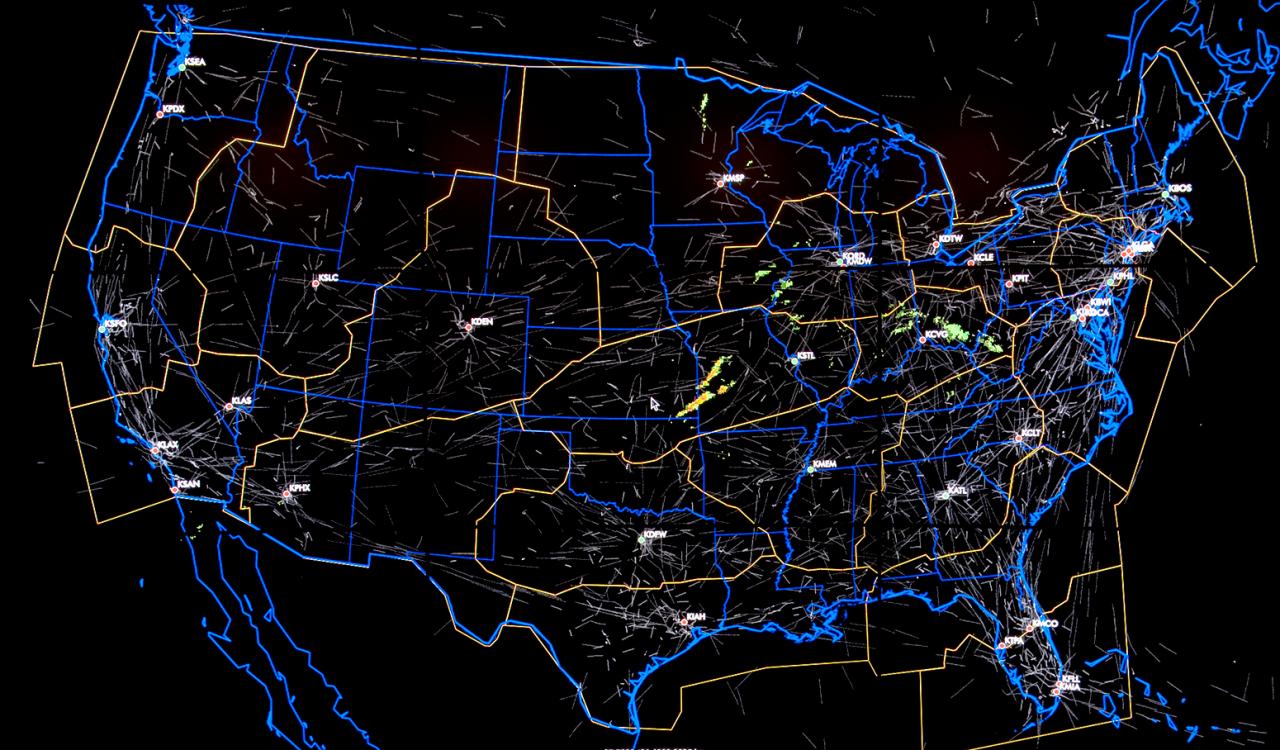
caasd_whatwedo_metroplex

Air Route Centers in Continental United States/Mitre Corporation, 2015

But the density the larger regions by which we map the confusion of air traffic into large boxes as a space that lies far above the ground as if they would continue to seamlessly interact.
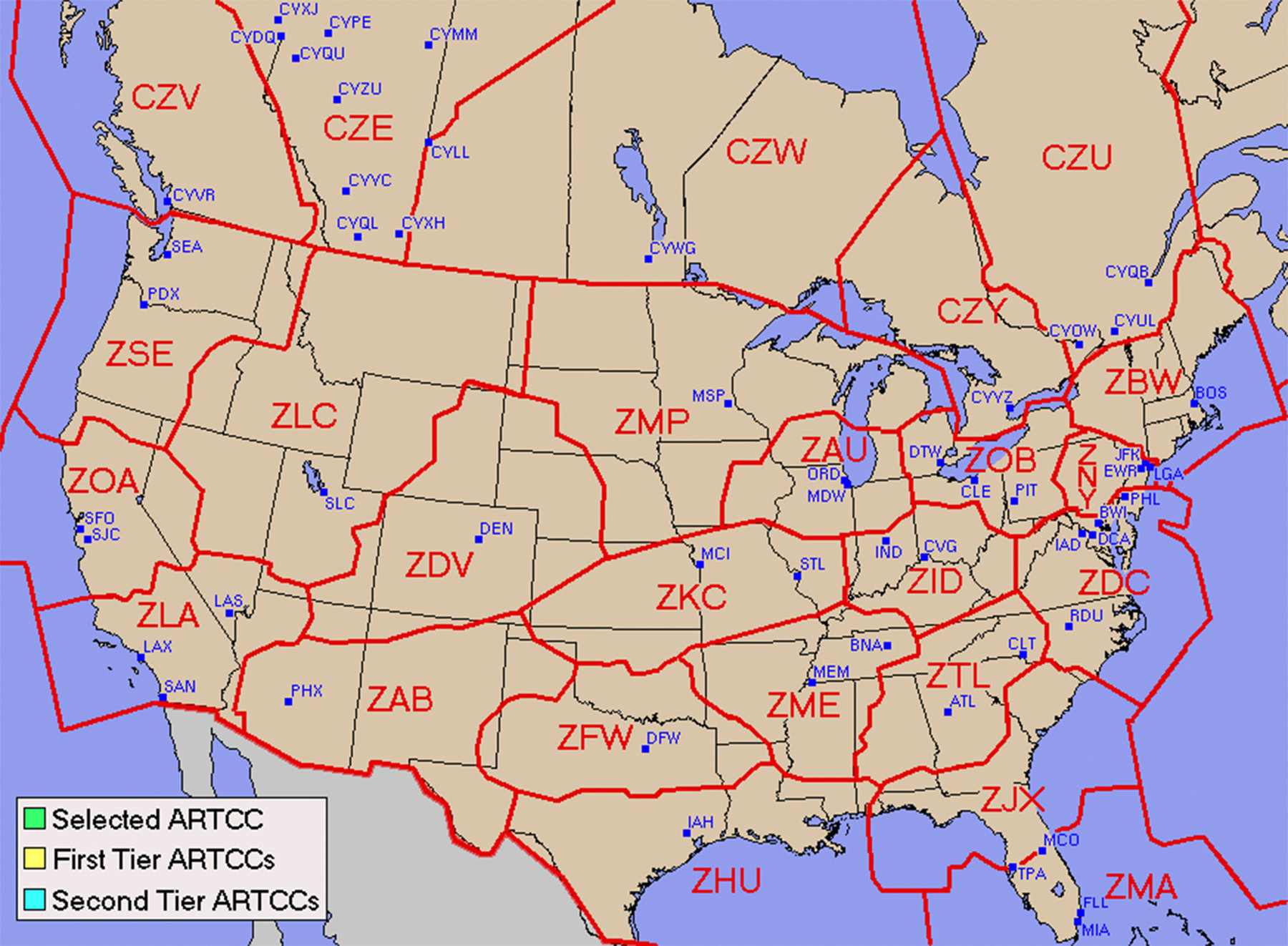
Perhaps we must map not only the pressures of global warming on an increasingly anthropogenic world, whose infrastructure, increased landcover, and impermeability only increased the effects of global warming, but rather ways in which we might better plan to mitigate inevitable catastrophes. For we might talk “now of prevention, where they would be damage . . . for preventing Fires,” in Franklin’s words. The maps of infrastructure may be more readily ignored, as well as the maps of infrastructure, in the glare of the spectacularity of the televised fires. In fact, responders will be sifting through almost a hundred hours of videotape and audio footage as they try to pinpoint the causes of the fire, even as the infrastructure that failed to respond is ignored.
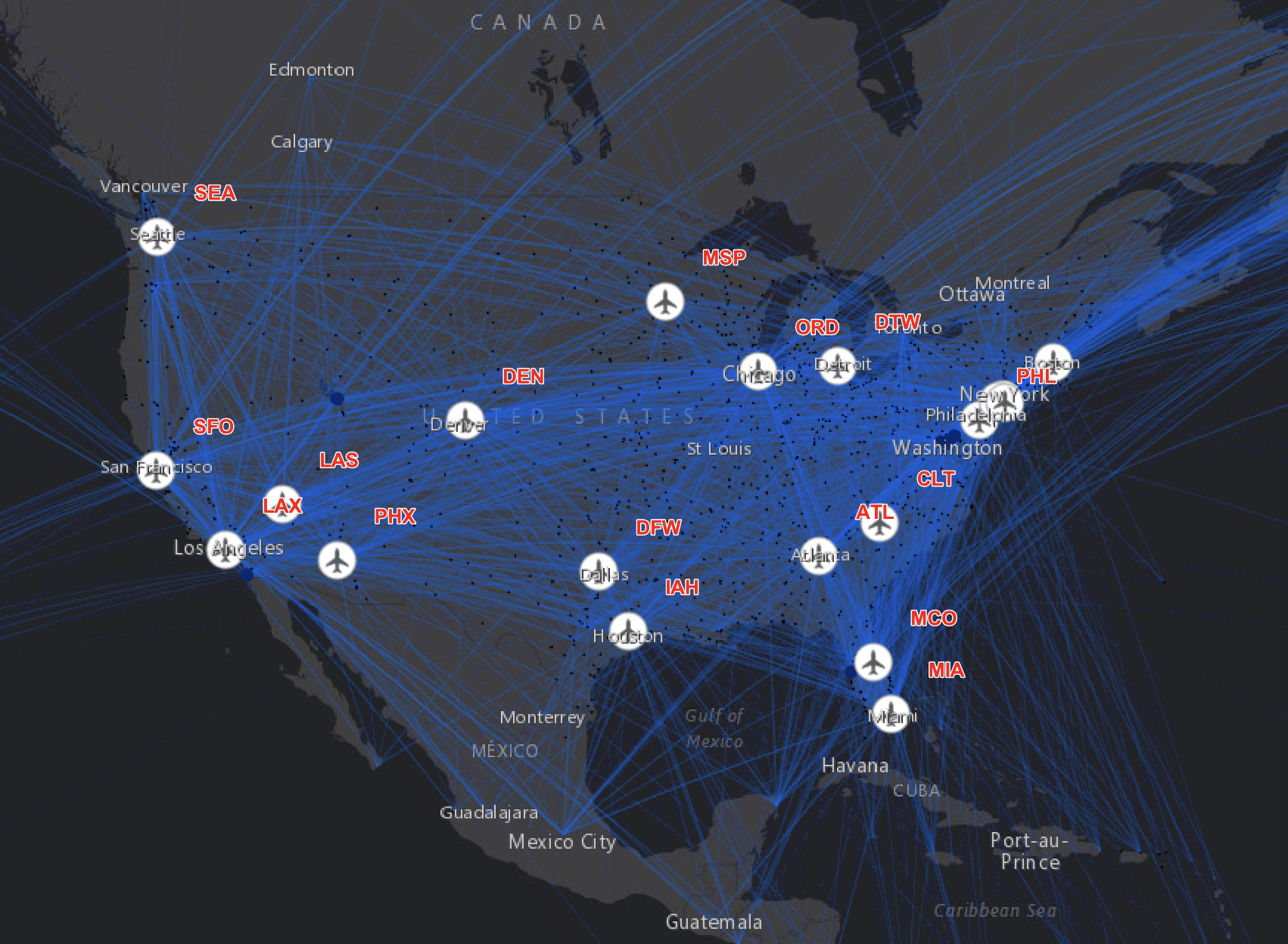
The relation of human, machine, and environment was reprised in the overtaxing of systems of water delivery in the Franklin Fire. Systems of water delivery in Malibu and the Pacific Palisades were hardly equipped for fires of such scale; poor local supervision left critical local reservoirs empty, despite an ever-expanding imbricated Wildland-Urban Interface–or “WUI.”

We need to use better maps, no doubt, as we try to reassess maps of the “WUI” from what we might have seen in northern fires, including integrating water systems into the intersection of chaparral and electrical wires–more than map the locations of houses and overhanging branches, the metric of mitigation in much of the north. Or must we depend on water-drops of daring pilots who must drop them by flying just above smoking infernos?
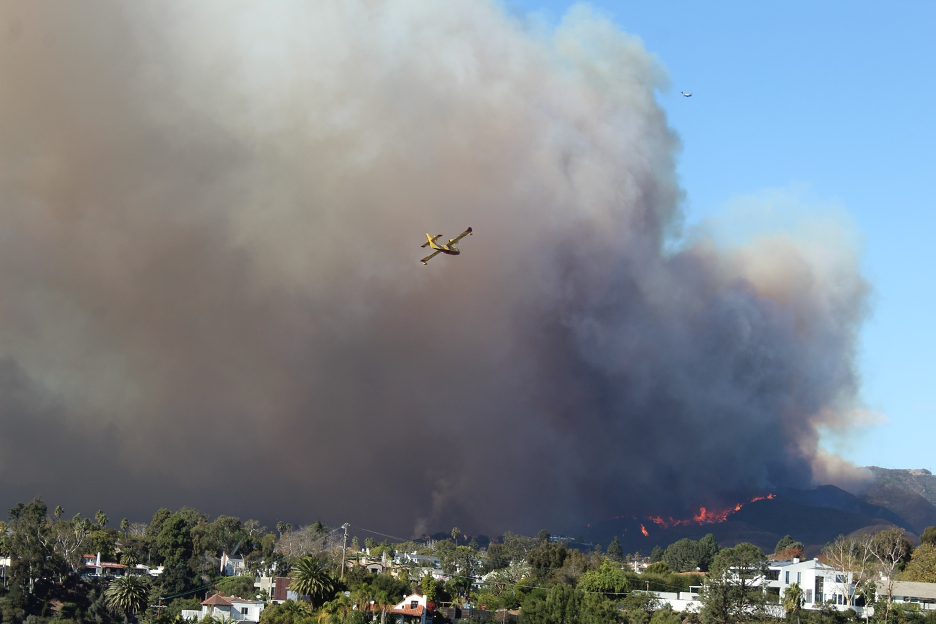
Water Drops over Pacific Palisades Fire, 2025

Every time it is a perfect storm, if the storms keep happening, and fire seasons expand beyond seasons, and not only due to rainfall. We have not created reserves for water capture, on the ground and for local needs. For in allowing hydrants to run dry as flames spread in multiple fires across the combustible landscape of the hills fed by the Santa Ana winds. It was a landscape that was desiccated due to an absence of rainfall, but not because of a chokehold on water supply from the Central Valley or north, and the opening up of those massive “valves”–as much as valves are automatically activated in an individual building’s or hotel’s fire system, the logic by which Trump has extolled the “valves” of an imaginary waterway linking California and Canada,–as if the needed flow of water had been shut off at the border. In the image of a state where water flowed in massive aqueducts, the project seemed one industrial engineering got wrong, where opening and overriding of federal laws protecting endangered species and environmental laws could save the state, to allow a hyperbolic “hundreds of millions of gallons of water [to] flow down into Southern California” as if they had won the jackpot or lottery in his Presidency after being deprived by the bureaucrats and nonprofits in Sacramento.

But such exercises in creative hyperbole hardly helps on the ground . . .

The idea that the water would be able to flow “naturally” from the Pacific Northwest and Canada was an imagined geography indeed, as if all water ran southwards on a national map, analogously to the Mississippi, as it had done for millions of years, rather than that the fire regime of California that global warming had accelerated and expanded was not itself millions of years old. The absence of any southward sloping of land out west, and the low point in the Sacramento-San Joaquin River Delta, means that water hardly flows naturally to the overbuilt southland, but that the region will need new water storage infrastructure. William Shatner’s proposal for an above-ground four foot pipeline that carried water from Seattle to Los Angeles along Highway 5, that might be allowed to leak, no problem, it will do double-duty to irrigate the arid Central Valley, proposed a $30 billion dollar pipeline a decade ago, may inform the Trumpian geography of the state’s water supply. Or maybe the film Chinatown does. Probably, the outdated and undated NAPWA plan, which might exist as a carrot in Trump’s mind to reduce tariffs, for Canada, might exist as a basis to access all the water in the Yukon, and the other reservoirs above the forty-eighth parallel, if it weren’t for the danger those recent fires in the Northwest.
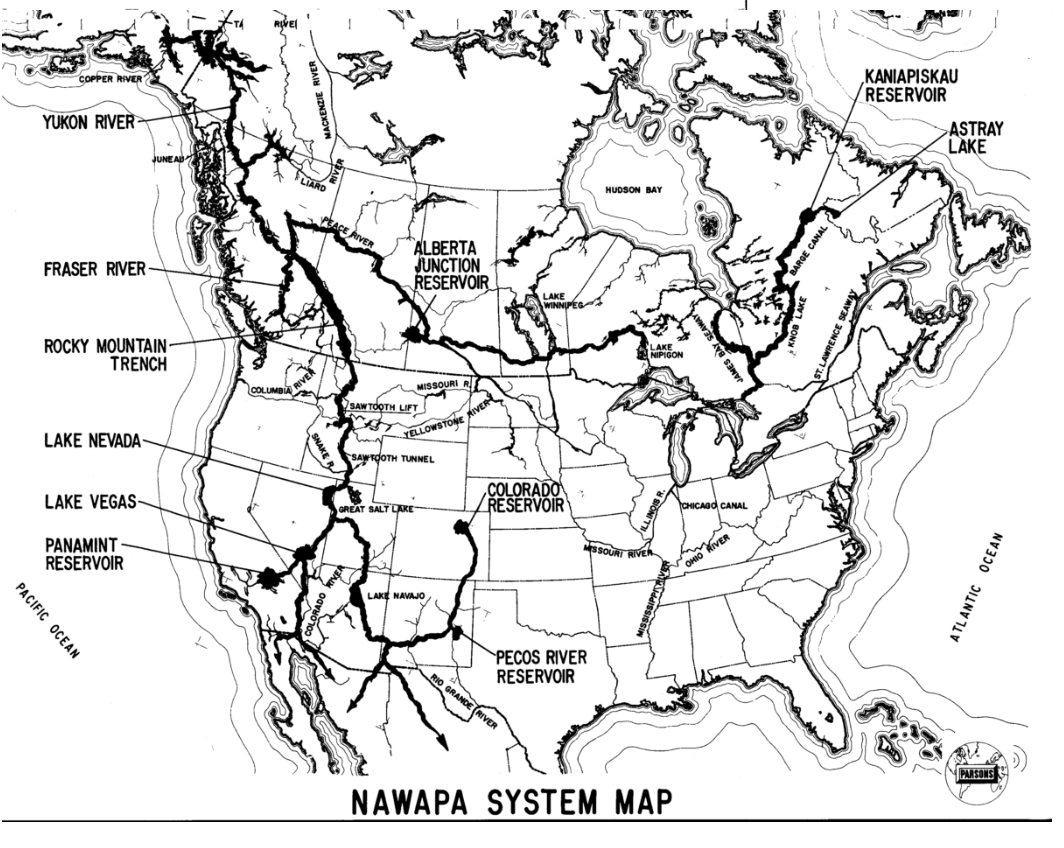
NAWAPA System Map as Imagined by Ralph Parsons (1965)

But the problem may be a difficulty to look local, or build an infrastructure a bit less grandiose. Davis rued that given the scale of the tragedy in Malibu in the 1930 fire, long before the recent fires, the wisdom of opening Malibu to development should have been debated; in contrast, the insurance of Malibu homes in The term which he read in Defoe’s work was of a piece with Defoe’s celebration of rogue wider streets of the city after 1666, a threshold in Anglo-American urban design, in a sense, when “their are many more houses built than stood before on the same ground; so that taking the whole together, there are more inhabitants in the same compass than there were before,” in smaller dwelling with far wider streets. The basic precautions of changes in urban infrastructure to expand in woodlands-urban interfaces, include more reservoirs, attentive practices not only of conservation, and water conservation, but water storage, perhaps in underground tanks, akin to the artificial rivers that were constructed in London, as the New River, to offer London residents a new means for freshwater from Hertfordshire to the urban metropole beyond the River Thames and River Lea, a project at the massive cost of nineteen thousand pounds or in modern currency £4.44 million, costing an eventual £32,000 (£8.43 million today).

As Donald Trump acts to end  proposed limits on releasing so-called “forever chemicals” into the environment or rivers, the water that is now able to flow southward in the state is destined to transport increased poison to farmlands it irrigates, ensuring that the water being pumped up from the state’s aquifers will be endangering our food supplies, compromising the health of salmon, and also entering our almonds, lettuce, tomatoes, citrus, grapes, kiwis, and figs–and even the robust market for California wines we will need to be drinking to confront the next climate catastrophe.

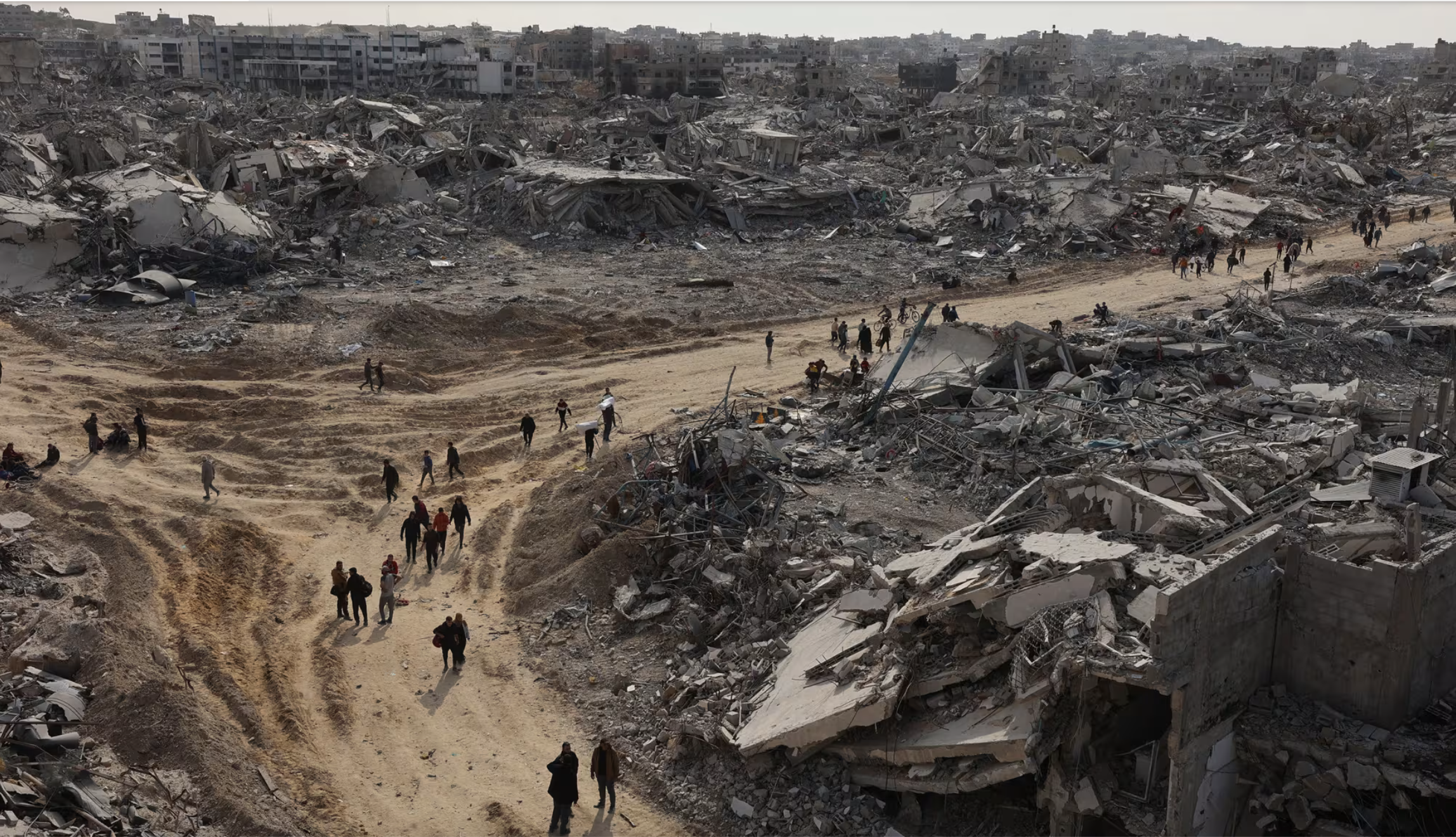
1 Comment

Filed under California, Donald Trump, Environment, environmental risk, Wildfire

“You Know,–It’s Over!” (Gaza After the Ceasefire)

I am looking at the whole Gaza Strip right now,” President Trump announced, “and it’s a mess. It’s a real mess.” Trump seemed not to consider the scale of American arms’ involvement in its destruction, but to steamroller over any hopes for reconstruction or rebuilding of Gaza for its former residents,–considering that they would be better served by resettlement in other Palestinian nations, like Jordan and Egypt, perhaps pliable to the anticipated demand of the American President. The words Trump spoke to King Abdullah II of Jordan in semi-confidence on Airforce 1 were quickly broadcast throughout the world,–as if wishfully recasting an old Port City that had been under siege from November 2, 2023 between Israeli Defense Forces and Hamas as a demolished lot whose rubble stretched under the feet of the Angle of History, replacing a place of memory with a blank slate,–rather than one 500,000 Palestinians might be trapped. As we face problems of mapping the Gaza Strip after the negotiated Ceasefire, and the transformation of a war zone into a civil space, we are must confront how calls to “Save Gaza” are increasingly being warped to calls for its development by a new American commander-in-chief seeking to insert himself in the war zone as its developer.

Gaza was an empty lot, it seemed to Trump, wanting to be rebuilt better and transformed by a mental imaginary of his own past, bearing no correspondence to the Gaza Strip or any sign of the role of American arms in reshaping the boundaries or escalating loss of life in Middle Eastern politics. What was Gaza? An demolished lot that might be, as any property. It might indeed be a valuable property, a trick to be turned and a deal to be made. The bizarre AI video that Trump would post on social media a few weeks later, imagining the rebuilt Gaza Strip with a soundtrack proclaiming “Donald’s going to set you free,” allowing refugees to escape ruins to frolic on the beach of a resort, seemed to claim to transform the humanitarian disaster to a luxury site for the super-rich, dispelling all concerns for health, devastation, and a shattered infrastructure with an AI image of untold wealth at the end of the tunnel. “I don’t think people should be going back to Gaza,” Trump offered about what was “a phenomenal location on the sea,” contradicting himself by adding “Palestinians will live there. Many people will live there,” as if imagining a Phoenix-like resurrecting a community from the rubble created over a year and half by American-made bombs.

The project of forced displacement of two million was melded with a vision of how the United States would assume its role as a military backer of Israeli’s army, to assume the “long-term ownership” over the Gaza Strip by which it might transform the rubble to an enticing view. On Inauguration Day, as Palestinian refugees were returning to their homes under a newly brokered ceasefire, Trump had proclaimed his vision for a rebuilding in this “phenomenal location on the sea,” a remapping that seemed rooted in his gut, more than , but seemed a reprise of the demolition of the classy emporium Bonwit Teller–but this time less as a tragedy of the loss of an icon of art deco architecture–that he replaced by a kitschy bronzed monument of Trump Tower, as if it were an extension of his own bronzed visage, unconscious that this time tragedy was reprised as comedy.

Palestinians Returning to jabalia Refugee Camp the Day in North Gaza, the Day Before Donald J. Trump’s Inauguration/January 19, 2025

Hopes for Palestinian statehood were implicitly “over,” Trump seemed to imply, as if the ruins of the Gaza Strip presented a fait accompli that the world should now listen, as it turned attention to the problem of who would rebuilt the contested area long occupied by Palestinians, and see it not as a contested grounds of war, but transformed to a lot of rubble he must have understood reflexively as waiting to be rebuild, not demanding humanitarian aid. Foreclosing any right of return to Gaza, the city flattened by bombs seemed transformed by eminent domain trumping international law, removing hopes for Palestinian territoriality from the table for bread and circuses, an image of two paunchy white suits making a deal over the situation on the ground that provoked global outrage.

 Protesting President Trump’s Gaza proposal in Seoul outside U.S. Embassy, February 5 2025/Chung Sung-Jun

That major transaction that had helped catapult Donald Trump into prime time, as he entered prime real estate in New York City that distanced him from his family’s own Queens-based origins, was a major coup in rezoning laws, which allowed Trump to leverage his ownership over the old shopping emporium with its art deco facade, to create the gleaming gold tower now at home in a sea of midtown skyscrapers that defined Manhattan–and offered the stage, of course, by which descending from a golden escalator, he seemed to define himself as a presidential candidate for an era of steepened wealth inequalities, by refashioning and rearticulating an American Dream that had little to do with education, expertise, and competency, but with leverage of a sort Archimedes never had known by which he, Donald J. Trump, was somehow able to move the world.

President Trump, entering his second term, perhaps overly eager to claim credit for a ceasefire in Gaza, and ready to declare the war that plagued his predecessor at an end. But Trump was purblind to registering the greatest humanitarian disaster of the modern Middle East. And the odd elision of loss of life with rubble, and the prominence of a lot of rubble at the first White House press conference with a foreign leader –“Why would they want to return? The place has been hell!”–reminds one that hell is different for different people, if one often carries one one’s hell with one head.

Despite the return of some over 500,000 Palestinians to Gaza since the fragile ceasefire, precarious conditions across the Strip have been intensified with increased cruelty. The prospect to cease the flow electricity that Israel has long provided 120 megawatts to Gaza’s inhabitants on ten power lines on the tails of ending the flow of billions of approved USAID supplies to Gaza. The absence of the flow of the most basic humanitarian aid will hurt displaced mothers, babies, and young children facing needed medical attention–3,000 children facing malnutrition and thousands of pregnant or breast-feeding women, with only ten of twenty-seven health centers in Gaza operational, staffed by stretched and exahusted medical teams by February 2025, after the “ceasefire” was long negotiated: twelve million women and girls will lose access to contraceptive aid in coming months.

The curtailment of 2,300 trucks of needed aid stopped at border crossings since March 1 was followed by ending the flow of electricity to Gaza’s residents on March 9, leaving displaced increasingly vulnerable, living in tents adjacent to homes that are now destroyed buildings, as we approach the holy month of Ramadan, two months after the fragile ceasefire had begun and residents have begun returning to Gaza. Is this coordinated strangulation of the residents of the region not inhumane? Pregnant women and children long bore the brunt of starvation: with 50,000 pregnant women living in such conditions, many displaced at risk of giving birth in unsterile conditions, in rubble and on the streets, at risk of dying from complications, some 400,000 displaced people living under tarpaulins–more than a quarter of its population, per UNRWA, overwhelming postnatal and family planning services in a region where 1.9 million were displaced.

Displaced Residents of Gaza City in Ramadan/March 1, 20205/Gaza City, Gaza Strip/Abdel Kareem Hana

We mask these losses–and challenges–by re-mapping suffering in the region to a lot of rubble, and not including people in our maps, distancing the scale of the humanitarian disaster by a vision of abundance as if to wipe the slate clean with a vision of neoliberal opulence in itself offensive to distance suffering. For the characteristic of the region as rubble mask the contradiction of a return of peace that provides no return to stability. But is a disaster area, lacking water, electricity, water, or sewage lines, in which the most vulnerable women and children have long born the brunt, some sixty thousands of pregnant women are now suffering from malnutrition and ninety percent of children under two years of age face severe food poverty day-to-day. Are these bodies not being treated as rubble, allowed to weaken, wither, and lie without any permanent structures or warmth?

Jabalya February 2025/Olga Cherevko/UNCHA Humanitarian Report

Trump’s words suggest a cognitive refusal to grasp the scale of a disaster that did not involve himself, and readiness to insert himself in the drama of lost lives as a real estate developer, used to rubble, and ready to rebuild “something that could be phenomenal” in its place, “something that could be amazing, the Riviera of the Middle East,” how Trump offered a brutal deal in improvised diplomatic channels immediately taken as an open offense. The refusal that his words provoked of Palestinians living ion the Gaza Strip to exchange that rubble for an “entire city” or “a castle in Egypt or Jordan” among rebuffed Trump’s words so keenly because the proposal not only adopted a right-wing Israeli belief that Gaza is not a Palestinian homeland, but erased a historic site of residence in calling it a lot of rubble, as if to foreground the fungible nature of Gaza City.

Trump’s boast recalled to this New Yorker the very fungibility of the landmark building in New York, once occupied by Bonwit Teller, more than having a historical significance for its inhabitants. As much as it reflected a tactical plan to render life in Gaza City so unlivable to force Gaza’s residents to leave the region, the topos of “rubble” immediately disenfranchised Palestinian inhabitants from the region. In offering them a “deal” of other unbuilt residences and promising to rebuilt a “new” and better development in its place, a promise that seemed more of a con man or realtor than a national leader or a President. For the boast that Trump made to rebuild an area he would “own” suggested the site that he purchased on 721 Fifth Avenue, far from the Middle East, that he proceeded to convince the City Council to rezone for residences, before demolishing the art deco building that he had pressured the company to sell for $15 million by January, 1979, persuading that Council that he would cease to rent the art deco skyscraper to the sophisticated luxury store for upper-class customers if it were not rezoned–and proceeded to reduce to rubble, including the stylized art deco relief sculptures and art deco artifacts he denied to preservationists, in what became the grounds for retail and commercial areas, offices, and thirty-nine floors of exclusive luxury residences, before its penthouse suite served in 2016 as the White House North.

The transformation of the building’s bronze-colored glass facade skyscraper he commanded his architect create was an intentionally showy, luxury footprint that sought to change the skyline of New York, with “flash,” at a far remove from Gaza’s inhabitants or arid sands. The conflation of the two places–the future of a built towers destined for the 1% and the rubble on the ground today in the bombed out site of Gaza City–was thematized in the AI video Trump promoted on TruthSocial–as broken down towers morph into a rebuilt exclusive beachfront paradise of soaring luxury towers, lined with palms, and without fear, was at a remove from the historical origins of the Arab presence in Gaza, as its minarets are seen behind luxury shopping spaces replace the residents’ suffering, as if the tenants who live in and occupy the building Central Park South building that became Trump Tower could be evicted and displaced. The spectacle of the magnificent building would arrive to obliterate all needless suffering that would erase the all too squalid past.

British Mandate Government map of Bureir, 1945.

Gaza City and North Gaza in the British Mandate Government (1945)

Ready to flip the region to real estate lots, was Trump actually replacing international diplomacy and law to the hard bargain of Manhattan real estate markets of the 1980s, seeking to strong-arm a sovereign by the logic of real estate? He seemed to ask the world to imagine the Gaza Strip as a real estate parcel, and stop thinking about the people who lived there–indeed to realize that this rubble was destined for the site of rebuilding so that a phoenix might arise from it, akin to the rebuilding of the Bonwit Teller building that he purchased and had rezoned from a commercial development to a residential tower of luxury condominiums might effectively transform the contested land by fiat, as he had forced the construction of Trump Tower through the City Planning Commission, who he told “if I don’t get a zone change, I don’t rent to Bonwit Teller,” already imagining the luxury duplex he might build at the top floors of the monstrous building he had rendered before destroying the Art Deco landmarked building that had long occupied it for a new monumental project that would mark the start of “the monumental projects” he decided to dedicate himself by 1980–“not like the junk I destroyed at Bonwit Teller” that had so flipped aesthetic values of public architecture, its concrete superstructure clothed 3,800 tons of steelwork by a concrete superstructure more solid than the steel-framed architecture of skyscrapers. The erasure of the suffering and human rights crisis that Trump is unable to see or even detect suggests an extreme pathology, but an unhinged relation to the global map, building on a Presidency that promises to allow us not to see suffering, not to see displacement or refugees, and to detach America from a prominent position in the world.

The rubble that he saw in Gaza as an uninhabitable site of misery was a site of misery for many who had died there, or were still buried under its concrete rubble, but the concrete would be cleared, and replaced by steel structures he might build in their place. As the concrete of Bonwit Teller were cleared and soon forgotten, despite their iconic value, the flattening of history seemed sanctioned to Trump, as if the ruins of Gaza had crashed at the feet of the Angel of History who was born forward on winds, toward the future of the new Riviera of the Middle East.

Rafah Immediately after Hamas-Israeli Ceasefire Agreement/Ashraf Amra/Andalou

The header for this post was not only a pronouncement that the Hamas’ authority on the Gaza Strip is over, but the hope of Palestinian sovereignty is over, that the Two-State Solution is at its end, but that the refugees you heard about were no more. So declared Donald Trump and Benjamin Netanyahu at a joint press conference that opened the possible eviction of Palestinian refugees who had begun to return to there home after the recent Ceasefire for which Trump had, weeks ago, eagerly taken credit. Israel and Hamas had proposed multiple humanitarian ceasefires in the past, and the United Nations had called for decades, ineffectively at best, demanding the “immediate and unconditional ceasefire” in hopes to work toward “a durable and fully respected ceasefire” on humanitarian grounds. The hopes of the ceasefire became a building opportunity for investment, a question less of borders, or refugees, or humanitarian interest, as the building Trump Tower by topping fifty-eight floors of concrete–45,000 cubic yards!–to encasing four thousand tons of steel.

The ruins might be consigned to the past, and replaced by a worthy monument to fun in the alchemy of construction. The heightened level of destruction of so many IDF bombs–and prospect of a delivery of more powerful bunker-buster bombs to Israel in coming months–hoped to strong-arm the Middle East to finally map an absence of sovereign claims neither Trump or Netanyahu had never hinted might ever map in the so-called Peace Plan of 2020. As if it were long-established consensus, Tump’s spokewoman asked if “people should live in such dire conditions” that seemed a truly “uninhabitable place for human beings,” suggesting that this region in the Middle East had been rendered uninhabitable, a non-place of modernity, as Trump painted the possibility of a future plans for Palestinian resettlement, “if we can get a beautiful area to resettle people, permanently, in nice homes,” in the language less of a statesman than real estate developer. The Gaza Strip, so long celebrated and fought over as a site for a Palestinian homeland, was “an uninhabitable place for humid beings,” as if it were a torrid zone from medieval maps, in a band that was parallels the equator and lay beyond the human ecumene. This was not about human rights anymore; this was about the transformation of the most densely-inhabited area of the earth to a wasteland removed from governance..

The United States elected Trump to make sure we didn’t have to think about people. Trump was promising that we don’t really have to care about others, or even think about people: much as he promised to deport immigrants or refugees in the United States, and suspended refugee admission on the first day of his presidency. The declaration of January 20 he was “Realigning the United States Refugee Program,” by suspending the US Refugee admissions policy and refusing to accept refugees in America as they were “detrimental to the interests of the United States.” The rejection of a policy on refugees paved the way for the fluidity of the Gaza Strip, and the fluidity that the boundaries of Ukraine had at the end of another war he claimed to end,–leaving a tenth of the Ukrainian population, including 1.5 million Ukrainian children, under Russian rule. In a single news conference and on television, his preferred medium, President Trump had closed the door on the future of a Palestinian state with particular cruelty–there was just no place for it on the map, but we should stop even thinking about it. That was not the spectacle he wanted to focus on, and neither was the spectacle of the Palestinians in Gaza–or the Ukrainian refugees who would stream into Europe, fearful of future prosecution, or the unhoused in America, or human rights refugees.

What Trump was looking at as he was watching the “whole Gaza Strip” wasn’t ever clear, and it didn’t need to be. There was literally nothing to be seen there–just devastation, an a mess that was not worth thinking about. Trump’s declaration about the Gaza Strip seemed a prelude to the dissolution of a hoped for armistice shortly before he took office, as if that long process of negotiation that tried to offer a careful path forward to sovereign coexistence and military withdrawal were a ridiculous proposition to imagine. Despite traded accusations of violations of the Israel-Hamas Ceasefire, Trump escalated a rhetoric of bullying, as if he might force Hamas and all Palestinians from Gaza and dismiss claims of Palestinian sovereignty out of hand, claiming the Palesitinians at this point just didn’t have any place on any map: Netanyahu, who had allowed only enclaves of Palestinians without a state to exist in proposals of the previous six years, seemed to be delighted at the result of Trump, nudged by his financial backer, Miriam Adelson and the American right. It was about “protecting the meaning and value of citizenship.” It was not only bluster, if it left the world open-mouthed.

The map hadn’t changed much in Ukraine for years, but Ukraine as we know it seems to soon maybe not exist on the map, after a future press conference with Vladimir Putin will likely announce its newly drawn borders, after a war of attrition seemed to be shifting the other way.

Sovereignty may seem to be up for grabs in the regional map and in the global map, in a not that new spin on globalization. Trump may threaten to invade–or occupy–but to take any pathway to statehood off the map. The future of a Palestinian state indeed seems to be far more up for grabs than during the war. Then again, so does the Gulf of Mexico: that body of water’s renaming may be but a prelude to America’s assertion of its rights for underwater prospecting in the region,–and allowing American petroleum industries not to imagine the notion of Mexican territorial waters. If ten percent of Ukrainians who will be living under Russian sovereignty for the near future suggest the fluidity of borders and the U.S. Secretary of Defense calls the borders of 2014 “unrealistic,” we don’t have to care about the people who live in those borders. They are non-nationals, stateless who are as far from American interests as can be.

The fate of Palestinians seems more abruptly decided indeed: why don’t they go somewhere else? The stateless do that, and 700,000 Palestinians did in 1948, when Israel was founded. Rather than propose control of a zone by peace-keepers, the prospect of displacement of two million seems easier after destruction of over 90% of residences during fifteen months of bombardment or armed invasion has destroyed local infrastructure in ways that offer little point of orientation to a landscape that defies mapping.

Trump’s claims in semi-private confidence were of course broadcast to the world, and occupied the spectacle of Gaza’s ruins. The shift in spectacle–that of imagining the invasion and occupation of the region by America–was eery. Because it adopted or used the terrifying language of spectacle that he had adopted when promoting Trump Tower, forty years prior, using the destruction of lots of real estate to describe the Gaza Strip as if its rubble might be valuable beachfront property. The confusion of categories—not loss of life, humanitarian need, hunger, medical emergencies, bodies buried under rubble–raised the basic question of what map or drone footage of Gaza he was looking at exactly–even as footage of destroyed homes and buildings were intercut with a news conference Middle East, forcing Egypt and Jordan and Bahrain to accept refugees that would compromise any opportunity for Palestinian statehood, at the very time that displaced refugees try to return to their destroyed homes and neighborhoods utterly unrecognizable after near-complete aerial devastation.

Nadia Abu Malloh in the Ruins of Rafah City in Southern Gaza City/Medicines sans frontières, 2025

The announcement that came quick on the shuttering of USAID suggested that rather than help any refugees with reconstruction, the United States’ intent to ensure there was no presence on the map of Palestinian sovereignty, and Hamas would be expelled from the region. What had been sovereign bounds were transformed into a war zone where past ideas of sovereignty did not exist, erasing the boundaries of Gaza that Israel had staged its ground invasion, as if the Palestinian refugees that entered Jordan, and Egypt, which was suddenly responsible for the Palestinians living in the Gaza Strip that they seized in 1948 in the first Arab-Israeli war.

Those displaced by the Gaza War would be resolved by sending more stateless able to gain Jordanian citizenship and be welcomed into Egyptian universities, despite destabilizing of forcing stateless to enter either nation from Gaza or the West Bank, and the utter disinterest it reveals of the Miiddle East’s instability, and dismissal of a future two-state solution as “a reward for terrorism.”  With all funding for reconstruction in the Gaza Strip suddenly placed in jeopardy, and taken off the table, the war continues a year after the majority of building in the region had been destroyed–and all monuments, landmarks, and many orienting signs have been destroyed, creating a true sense of immediate local disorientation, with neighborhoods flattened beyond recognition.

MapLab: Mapping Gaza's Destruction - Bloomberg

Decentralized Damage Mapping Group/analysis based on Saentinel-! radar data, OSM, building footprints/ James Van Den Hoek and Robert Scher

The sick travesty that what remained was only rubble–and merited no attention for local claims of habitation to its residents–deflated any talk there had been of enacting a Marshall Plan for Gaza. The question of political control of the Gaza strip was placed into un certianty in the announcement at a press coherence with Netanyahu that America was ready to bully “Arab” states to accept the absence of any Palestinian sovereign bounds in occupied territories–and the erasure of the sovereignty demands to be mapped. In erasing the boundaries of sovereignty in the Gaza Strip, Trump tried to bully the global stage by evoking Gaza as mere rubble. Israel, a year later, for its part had refused to allow displaced Palestinians even to enter the “strip” that had been decimated, waiting until further Israeli hostages taken by Hamas were released–as if the clearing operations that the Israeli army had undertaken in the blue dotted lines below had relegated past inhabitants’ right to the place they lived by converting them to archeological sites to relegate them to the past.

Israel-Hamas Ceasefire Lines/January 25, 2025/Institute for the Study of War

The President announced he had spoken to the Jordanian King Abdullah II as monarch to monarch, rather than as a leader of the Free World. It was clear suddenly that during Trump’s second term, , he was more than ever apt to empty the land of people, and to treat space as fungible real estate to which no other nations or peoples had claimed–and that they might as well be stateless, as the Palestinians. For it just might be time to “just clean out” Gaza, forcing its inhabitants, whose suffering under American munitions and arms showed they had little “luck” in the region, to decamp for brighter pastures, and leave the beachfront Riviera to the map with the plan, which would not allow any space for the reconstruction of what used to be there at one time, or the hopes for sovereignty that were long rooted in residents’ minds that they had refused to leave until the local infrastructure had collapsed. This was a sense of unreality as the Palestinians who had fought for statehood–a Right of Return–appeared as if they might be displaced from their homeland. That hope seemed over–and the very idea of a two-state solution as well.

Trump’s assertion to the assembled press corps does beg the question of just what maps of Gaza or aerial photography he was just “looking at,” and what sort of spectacle he wanted to suggest exist in place of the destroyed landscape he dismissed as an empty lot of rubble. It was evident to all that there was no actual plan that he had revealed or disclosed–an American entry into Gaza, displacing refugees who had recently crowded its beaches, in search of assistance and shelter, with 80% of the residences dietroyed by bombs and materiel that America had sold to Israel. This was described as a deal he had worked out in advance, and sought to impose on the complicated map of the Middle East, but was reminds us more of the very transactional politics by which he approached diplomacy in the Middle East in Trump I, now on steroids as a purely transactional exercise of deal-making.

Displaced Refugees Crowded along Gaza Beach

“You’re talking about probably a million and a half people,” Trump said, referring with skepticism to what he saw as a relatively small number of residents to occasion a global outrage. “And we just want to clean out that whole thing, and say–you know, it’s over,” seeking to turn the corner on the Middle Eastern tragedy and to strong-arm Israel’s neighbors to just put up or shut up, and accept more refugees within their borders, as if the clean-up mess was just overdue, and it was time to “clean out” the Palestinian residents, historical shadows of forced migration and ethnic cleansing aside for the moment, and eager to release his predecessor’s hold on the sale of 2,000 pound bombs to Israel. The sense of treating the land as a real estate lot, suggesting the Gaza Strip had become a territory “nobody could live.” It was clear he wasn’t really looking at a map,–but there was a sense that he had finally considered it time to look at the spectacle of the destroyed Gaza Strip broadcast worldwide. The spectacle of the destroyed houses and bombed-out buildings was perhaps the point. “Gaza is not a place for people to be living,” Trump ominously declared, on the eve of hosting his first official state visit in his second Presidency–at least,-until it was suitably developed. And remember those bombs? Israel’s already bought them from the United States under his predecessor, and “They’ve been waiting for them a long time.” Netanyahu bore his White House smile, after the state visit had ended, grinning far more broadly even than after earlier meetings with Donald Trump.

In shock announcement, Trump says U.S. wants to take over Gaza Strip |  Reuters

The broad smile on the Prime Minister’s face at the press conference betrayed full satisfaction,–not only as a satisfied customer, or a client with his confidence man, but as one of two confidence men, far deeper than the smile with candidate Trump in Trump Tower’s gilded chambers, back in 2016–

Candidate Trump Meets Benjamin Netanyahu in Trump Tower, September 25, 2016/Kobe Gideon (GPO)

As they posed for photographers before the White House, after Trump had promised to find some enticements to attract Palestinians to leave Gaza, a long dream of the Israeli Prime Minister, as if it was an unexpected outcome of his visit, Netanyahu smiled like a Cheshire Cat, so that the smile seemed to be left hanging even after the photo session end, a smile that was a bit of a smirk, at the edge of his chair as if he couldn’t believe his luck, either during the talks in the White House–

Donald Trump (right) and Benjamin Netanyahu sitting and talking.

February 4, 2025/Evan Vucci/AP

or by the time he left the White House, as if with a gift that he had hardly imagined barely within grasp, even if it was at an absurd distance from the displacement of refugees they had imagined, a reality far from the White House, whose implementation was yet to be defined. “It’s right now a demolition site, this is a demolition site, virtually every building is down, they are living under fallen concrete that is very dangerous and very precarious,” Trump told an audience of reporters, in which the “only reason” the displaced refugees even wanted to return to the bombed out region was because they had no “other alternative“–and he was going to be able to provide them one. And whatever the borders of the Gaza Strip and the rights of residence guaranteed its residents, only a “long-term ownership position [by the United States] would bring “great stability to the Middle East.

In shock announcement, Trump says U.S. wants to take over Gaza Strip |  Reuters

Netanyahu was smiling ecstatically. His army having reduced Gazato rubble, destroying a fifth of its permanent buildings and 85% of its homes, bunker-buster bombs would be soon on their way, as the smoke was rising. The verdict of the International Criminal Court had charged Netanyahu a war criminal be damned. (President Trump was happy to thumb his nose at the International Criminal Court than Gaza’s refugees, when he decided to invite Netanyahu as his first state visitor to announce a deal on Gaza, also no doubt allowing Netanyahu to miss a court date–and jointly endorsing the war crimes a forced migration of Palestinians from the long-time homelands of the Gaza Strip, where they had lived since Israel’s independence. The spectacle of the sanctioning of war crime flouting the norms of international law, and the international Criminal Court was cast as a victory of national interests over international ones, and against the global interests perhaps incarnated at this point only by the United Nations and ICC. (Was Trump reminding that court that released its warrant November 21, 2024, of its continued lack of jurisdiction in the United States, and perhaps reminding the world how little he considered laws as valid, international or national?)

What was a bedrock of international law was cast as irrelevant before the brute reality of the post-invasion devastation of the Gaza Strip, where the absence of any ability to map the ruins of residences let Trump to question the interests of the Palestinian people–“I would think that they would be thrilled” to move!–as if the end of Palestinian sovereignty in Gaxa and the West Bank was a foregone conclusion, and the real estate value was degraded, beyond the possibility of rebuilding, unless the region were flipped, by the practices of good real estate managers, to a Riviera of the Middle East–a place where only the UAE is seeking to open up longstanding gambling laws–as if the casinos of Israel or Lebanon, and the options for gambling to tourists available in Jordan and Egypt, and the future casinos of the UAE, might be extended to Gaza to develop the current ruins.

The idea of replacing the ruins of Gaza as a true “Riviera of the Middle East” with a range of options of resorts and casinos was lampooned by the current Secretary of State Marco Rubio back in the 2016 Presidential primary–“The Palestinians are not a real estate deal, Donald!–but now seemed to backtrack on this issue, insisting that the President of the United States was a pragmatist, whose position “was not meant as a hostile move.” Behind the scenes, perhaps Trump saw the loss of Hamas’ gamble to stage the October 7 attack on Israel to retake the Al-Aqsa mosque and East Jerusalem met its conclusion, in the pragmatic opinion of a past owner of several casinos in Atlantic City long-time associate of casino-moguls Sheldon and Miriam Adelson, to cast Hamas’ “gamble” of sovereignty in the Middle East as merely a badly placed bet–

Grok AI

–that might be best understood as a way to rebuild Gaza not, as President Biden imagined, by tools of governance and reconstruction, but rather by undermining international law or institutional support, seeing it as a “pile of rubble” as a demolition site to develop and rebuild.

The ruins of Gaza had no future for its former residents, who had no right to imagine let alone claim sovereignty over the land where they once lived, as their habitation of its was misguided and came to no good. The footage of the demolished regions of Rafah, the southernmost city of the Gaza Strip, of Gaza City, or of destroyed refugee camps that were targeted as site where Hamas was sequestered, were so thoroughly destroyed by US-made bombs over the past decade, even as journalists were denied entry, that the images of bombed out landscapes that seem uninhabited and uninhabitable seemed to have been replaced with rubble, an utter demolition site to which former residents had no rights to occupation or rebuilding.

Destroyed Buildings in Jabalia Camp in Gaza City/October 23, 2023/Yahya Hassouna, AFP

You know, it’s all rubble,” Donald Trump mused as a confidence man from the Oval Office, reminding Palestinians that they really at this point had no choice but to look elsewhere for a homeland, and would be happy if they did–even after enduring aerial bombardment in the houses that were once a flourishing, if crowded, community–as they just hadn’t been that lucky after all in Gaza, a place they had no real future. Trumped seemed ready to unbalance the precarious nature of the Ceasefire Agreement that Israel and Hamas had recently brokered, with considerable United States help, which he once claimed credit fro: “all hell would break loose,” he predicted in two days, if the Palestinians did not accede to demands to release all prisoners, and leave the region whose map and ground plan seemed left without guideposts or remaining infrastructure to rebuild, as if it might be understood as a clean slate and a resolution to a grim future its residents must accept.

Rafah After Hamas-Israel Ceasefire Agreement, Ashraf Amra/Andalou

Sitting comfortably behind the Resolute Desk to met with Netanyahu, Trump used the first state visit since the election to show the world that the visit was not only an excuse for Israel’s Prime Minister to skip a date in court, but to flout it. “They have no alternative right now. I mean, they’re there because they have no alternative. What do they have? It’s a big pile of rubble . . .”

Khan Yunis, July 31, 2024/Hassan Jedi

Rather than seeing Gaza as a site of needed humanitarian aid after the Ceasefire Agreement that he claimed credit for having brokered was signed, going into effect the day before his inauguration, on January 19, 2025, he ended expectations of allowing the entry of humanitarian assistance to the Gaza Strip. Even as movement into and out of Gaza was allowed at opened border crossing, allowing plans for the region’s reconstruction and an eye acted rise in humanitarian relief, as well as the ceremonious exchange of mortal remains, before rebuilding homes, with a promised 600 trucks arriving per day and fifty trucks of fuel, with three hundred trucks heading to North Gaza to encourage the return of displaced Palestinians, Trump was telling the world that rebuilding might not even occur on his watch. If a bulk of the support for the people of Gaza had been arriving since 2021 via USAID, and the organization had promised $230 million for the West Bank and Gaza in November, 2024, as Joe Biden was leaving office, the substantial aid that had arrived for water sanitation, infrastructure, and governance, as well as cash flow, had been put on hold as the agency was in the process of being drastically reduced and all awards and support were cancelled, and over 5,000 foreign aid officers reduced to a rump of 290, and all foreign support contractors furloughed.

And so, although he acknowledged that he, Donald Trump, was quite a busy person, he would be talking to “various and sundry other countries“–his way to reference Jordan and Egypt, playing a tad better than “shit-hole countries” on the air–to make sure they would take in the Palestinians who could be bribed to leave Gaza, and maybe given an enclave elsewhere, “a lot better than going back to Gaza.” The hope may well be that these nations, which depend on US Foreign Aid, can be used by the latest form of global bullying at Trump’s disposal to be strong-armed to accept refugees who lack a home. Indeed, as Israeli Defence Minister Israel Katz ordered the army to develop a comprehensive plan to facilitate Palestinians’ permanent “voluntary departure” from the Gaza Strip, in quite open violation of forcing the movement of people living under military occupation by the 1949 Geneva Conventions, Netanyahu, who has already been judged a war criminal by the International Criminal Court, has endorsed the prospect of a mass emigration of Palestinians from Gaza praised Trump’s plan of developing the region as quite a “remarkable” idea.

Displaced Palestinian Children Look at Destroyed Buildings, February 6, 2025/Bashar Taleb AFP

The density of aerial bombings created far, far more deaths than Arab-Israeli conflicts of the previous fifteen years, and an astronomical measure of deaths per sq. feet if that metric existed, and “excess deaths” of starvation, and deteriorating psychological, infrastructure, and health services–by conservative estimates surpassing 67,000.–normalizing a level of violence rarely seen concentrated so intensely into a compact war zone able resembling an actual demolition site.

Rafah, Gaza Strip, Tuesday, Jan. 21, 2025

Continue reading

Leave a comment

Filed under displaced peoples, Donald Trump, Gaza, Gaza Ceasefire, Gaza War

Along Narnia’s Enchanted Shores

As we face an age when the norms of legal conduct in the United States stand to be shredded, we have been suggested to benefit from looking, both for perspective and solace, if only for relief, to fantasy literature as we await what is promised to be a return to normalcy at some future date. If Trump’s unforeseen (if perhaps utterly expectable) victory has brought a sudden boom in sales of dystopian fiction, as new generations turn en masse to George Orwell’s Nineteen Eighty-Four, Margaret Atwood’s Handmaid’s Tale or Aldous Huxley and Arthur Koestler for guidance in dark times. The search for points of orientation on a disorienting present is of course nothing new: much as maps of rising rates of mortality from COVID-19 brought a surge in popularity of Albert Camus’ The Plague (1947), an incredible sales spike of over 1000%, alternative worlds gained new purchase in the present. But we look to maps for guidances and the stories of time travel and alternative worlds were suddenly on the front burner. For the surprise election of Donald J. Trump that may have been no surprise at all prompted a cartographic introspection of questionable value, poring over data visualizations of voting blocks and states to determine how victory of the electoral college permitted the trumping of the popular vote; hoping to find the alternative future where this would not happen, the victory of Trump in 2024 provoked a look into the possible role of time travel in a chance to create alternative results about the stories that the nation told itself of legitimacy, legal rights, and national threats.

We had turned to fiction to understand new worlds during the pandemic. The allegory of a war mirrored the global war against the virus–and provided needed perspective to orient oneself before charts of rising deaths, infections, and co-morbidities in the press. Camus became a comfort to curl up with in dark times, to help us confront and imagine the unimaginable as Camus’ text gained newfound existential comfort. A friend insisted on ministering stronger medicine by an audiobook narration of “Remarkable occurrences, as well Publick as Private” in Daniel Defoe’s Journal of the Plague Year (1665), mirroring our own helplessness in spite of modern science, putting the seemingly unprecedented topography of disease in another perspective. London, that global capital which seemed mistaken for the world to many, was transformed as it lost a good share of its population–an unprecedented 68,596 recorded deaths is an underestimate–as the spread of bubonic plague spread brought by rats created the greatest loss of life since the Black Death, permeating urban landscapes with what must have been omnipresent burials, funeral processions, grave-digging, and failed attempts to hill or quarantine the infected–as if it were a land apart, sanctified and ceremonialized to confront death in suitable ways. But t he public trust that had been seemingly shattered by the pandemic–trust in health authorities government oversight, and expertise, led us to turn to past realities as some mode of exit from the grim present.

Mapping Mortality in the 1665-6 Plague/National Archives

As we seek reading with new urgency as alternative means of intellectual engagement, the fantasy literature that C.S. Lewis and J.R.R. Tolkien wrote in Oxford, as members of the Inklings, a society meeting regularly in a pub, if not Merton College, sought to create such durable architectures of alternative life to explore. If both writers’ works have been studied as a rejection of modernist poetics, rehabilitating old genres and rooted in premodern poetic visions, the centrality of the maps accompanying each have perhaps been less interrogated as a source for their deeply enduring immersive qualities–and indeed for the durability of the alternative maps to the imaginary that both offered. In recent weeks, a wide array of fantasy books reaching bookstores beside apocalyptic fiction in ways that seem made to order, offering refuges from the present as forms of needed self-care; immersive fantasy books and apocalyptic fiction may be the most frequented sections of surviving bookstores that survive, sought out for self-help in an era of few psychic cures. And it is no coincidence that we also turn to the carefully constructed cartographies of these alternative worlds with newfound interest, immersing ourselves–not for reasons far from those their authors intended–in the mythic cartographies that might be familiar as sources of comfort, that it might make sense to examine the context in which the carefully wrought and designed cartographies of Middle Earth that were conceived by J..R.R. Tolkien and imagined world of Narnia were designed, as an alternative to the new cartographies of wartime that imposed a geospatial grid, in place of a world of known paths and well-trod roads of an earlier world. For the shift in the world that World War II created spurred Tolkien and Lewis to craft alternative worlds of resistance, in hopes for a future that might be made better, not only in a Manichaean struggle between good and evil they watched from Oxford, but to struggle with the future effects of mapping systems that seemed to drain or empty the concept of the enchanted world of the past–the literary “Faery” they loved–and replace it with a Brave New World of a uniformly mapped terrestrial coordinates that risked othering the wonder of the living world. But we anticipate.

In short, we all seem to agree, the newspaper of record found a bit of a silver lining the day before Election Day, fearing the election’s outcome, offering the consolatory message of reassurance there are “few pleasures as delicious” as the ability to transport us “far from our present realm.” Yet the role of illustration in mapping of alternate worlds has perhaps been insufficiently appreciated. And while Narnia and Middle Earth are both seen as a predominantly mythic construction of worlds, removed from the orientation to actual locations, or to the power of transportation to a purely mythic realm, the pragmatic mapping of mythical spaces were alternative universes, modeled on mapping an expansive reality on the national borders of an actually remapped world that privileged the actuality of place, continuity, and contiguity in a mapping of location and position of precision without any precedent in geodetic mapping systems of the Universal Transverse Mercator maps advocated by the British and American military, and increasingly relied upon by the German military in the Battle of Britain.

The meeting of these two eminent architects of the fantasy worlds of the twentieth century–C.S. Lewis and J.R.R. Tolkien–whose colorful literary works opened new portals for generations have been linked with richly detailed cartographic corpora of persuasive power to redefine fantasy fciton–are tempting to be seen as the consequence of some passionate creative synergy of defining paradigmatic models of escape. At the same time as two veterans of the Great War joined forces in hopes for curricular reform after the war in Oxford University by expanding the medieval readings undergraduates might be assigned, in hopes to expand a consciousness of myths and legends in the texts suited for postwar life, the skills of remapping mythic landscapes in response to the Great War depended on a deep bonds to a cartographer appreciative of the losses and absences of geodetic maps, and eager to help them draft the shores and contours of the “escapist” worlds of fiction that both Oxford tutor would start to draft that set new standards for children’s books and fantasy literature for the twentieth century, that demand exploration as an energetic writing of a counter-map to the new authority of geodetic grids of a uniform space, that focussed attention on the suspending of beliefs by the liminal spaces of the shore, the mountain ranges, and the living landscapes that the smooth continuity of the geodetic grid could not describe or reliably capture. As much as the two dons indulged in the creative power and shared love of William Morris, adventures of Lord Dunsany, and Norse legends, both deeply relied on the illustrations realized with the need for the actual cartographic skill of their common illustrator. For their versions of the literature of quest, Pauline Baynes effectively served as a needed midwife blending cartography and art by to render the palpable landscapes of shores still in need of defense.

Both men acutely realized the need for a good illustrator for their projects of fantasy fiction, able to engage younger audiences that they had little practice in addressing, but whose interest they sought to attract. The prominent work on detailed maps for both books not only reached toward a demand to invest new mythic landscapes with concrete presence for their readers, but to create a new map of the world: to restore an older map of the countryside, to be sure, and forests that were still enchanted with meaning for their readers, but to map the countryside in new ways, rooted not in dots and points but in the continuity of the land. If Karen Wynn Fonstad, a recently departed cartographer of Tolkien’s Middle Earth, confessed missing a sense of proximity to Tolkien’s “tremendously vivid descriptions” in reading after a few weeks, the landscape of the terrain of Middle Earth persuasively offered a counter-world for many, lodged deep within our minds, as well as an escape from wartime when Tolkien composed their initial versions. The transportation powers of the text is real, and its exacting coherence demands a more adequate map than the new military maps of the global space defined during the Second World War, offering a basis to restore the lost sense of wonder that a point-based map elided, in order to provide the detailed landscape of a new form of meaningful quest, and to cast the novels as an opening up of new worlds in a world that seemed, inevitably, to be increasingly comprehensively mapped. These maps offered new spaces of exploration and proving that were outside the increasingly authoritative printed map.

The one-way ticket fiction offers may be deeply under-rated, but the map is critical to immersion in another reality. The Grey Lady of the New York Times indeed ominously but perhaps aptly marked the recent Presidential election’s results by offering orientation in this abundant field, providing signposts to a smattering of new fantasy books, as a response to the national exhaustion or real premonitions of fear. We rightly feel we are without precedent unwarrantedly–we’re confronting a loss of agency that seems unprecedented before the cocktail of environmental dangers of climate change, global heating, and an unprecedented circumscription of individual human rights, reading promotes a sense of agency, as does exploring landscapes outside of the present. If we feel alienated from the country that has again elected Donald Trump as President, to turn from blue and red states to maps of possible worlds form the past–we will need maps, as well as written narratives.

These worlds are however rooted in maps–maps of testing, maps of exploration, maps of selfhood, and maps of futures that are deeply lodged in our imaginations. They are not properly “possible worlds” but instead alternative ones, rendered by maps as regions that can be navigated along new orientational guides, attending to what is overlooked in other maps–maps of the nation, or of the world–by restoring or revealing overlooked orientational signs. If many emerged maps of new scales, dimensions, and resolution emerged in opposition to cartographic practices, the ways that Oxford–site of the Oxford movement, but a time capsule of religious devotion and royalist retreat from the present–became a site where the world was remapped in the interwar years, at the same time as the streets and urban fabric defining Oxford were facing new pressures, a layout bolstered by the archives of unbuilt architecture of urban planners’ dreams, and by the multiple patrons of college architects, among whom nurtured a neo-medieval architecture on fifteenth-century foundations of hammer beams, baroque screens, vaults, spans, and fans in a time-spanning style embodied by the perpendicular gothic in which were set carved gargoyles, plasterwork ceilings, and spires. The Palladian facades fantasias and architectural follies of Christopher Wren or Nicholas Hawksmoor (1661-1736) define a place apart, at an angle to the world, of expansive gardens, pathways among ruins of earlier times.

The poetic vision of a light able to pierce Mordor’s darkness and inspire a valiant quest for freedom was born in the neomedieval poem of distinctly Morrissian poetics conjured a counter world in wartime, as German troops invaded France, of a mariner whose course above the earth’s surface sought to preserve the last surviving shards of Edenic light. The complex backstory that he ably mapped for the poem bore the imprint of the earlier war, but crafted to an epic scale. If they recuperate old paths, fed by an Oxonian taste for re-imagining legends on anti-modern maps, drawn by illustrations and a stock of neo-romantic classicism, it was bolstered by an expansive philological apparatus Tolkien modestly called a consequence of being the “meticulous sort of bloke” not given to fantasy. Its maps opened powerful alternatives to the bloodshed and terror of the actual wars of the twentieth century as much as an Oxonian architectural fantasy.

The worlds of C.S. Lewis, Tolkien and others blur the imagined architecture of Oxford and romantic poetics of Morris served as “stock” to imagine an angle on the world, as a terrain that might be explored, and where a quest might still exist. Tolkien was hardly a utopian–and had little interest in “how worlds ought to be—as I don’t believe there is any one recipe at any one time” he described the invention of alternative worlds as that of a “sub-creator”–as much as seeing the author as a creators working with a large scale plan into which his readers were increasingly drawn. The appeal of these maps as invitations to alternative worlds has long been compared to the earlier traditions of cartography–cartographic conventions that formed part of the “stock” on which Tolkien claimed to have drawn in his work. Yet Tolkien’s skill as of illustration has proved to be quite a counterpoint to data visualizations, and indeed to the claims of comprehensive coverage of the world from satellite maps, or global projections, by offering the local detail of a conflict between good an evil that they lack.

In contrast to cartograms that have distanced viewers from the nation, or which suggest a nation grown increasingly remote in purely partisan terms, they allow us to inhabit those worlds in a refreshingly distanced manner, providing immersive senses of reality, as well as a needed perspective on the present. In the same years, Camus himself worried about the lacking landscape of moral imagination in the notebooks of 1938 that were the basis for The Plague,–feeling France could hardly contain Nazi Germany with honor, if it was not seen as a plague: in looking at geographic maps of frontiers, France was “lacking in imagination . . . [in its using maps of territory that ] don’t think on the right scale for plagues.” Thinking on the right scale reminds us of the current need for better maps of the imagination: we need counter-cartographies to the present as much as written works, of commensurate scale, involvement, and attention, as well as preserving a map of future possible worlds,–maps of superior orientation, fine grain, and moral weight to the current world. As much as rejecting the poverty they perceived in modern poetics, each constituted new maps of a world in need of adequate mapping tools.

Their “green worlds” are not pure fantasy; fantasy is a pharmakon for readers. The imaginative space of the written work opened up new absences of political space. In Camus’ prewar novel, Rieux, comes to fear the state’s role in spreading the plague coursing through in Algeria, Americans of diverging politics grew angry at the state policies for COVID-19 they blamed for the pandemic, lacking maps to describe where we were. While widely suspected that Donald Trump himself does not read books–Tony Schwarz doubted he felt inclined to read a book through as an adult not about himself in 2016, and Trump waffled about having a favorite book, citing a high school standard and explaining “I read passages, I read areas, I’ll read chapters—I don’t have the time” among his businesses–perhaps the act of reading is also one of resistance. This absence of any readiness to read may be a failure of the imagination, but also indicates an almost existential focus on the strategic role of deal-making in the present, managing a calculus of variables rather than people, accommodating to evils, and to sacrifice, more than empathy or the aspiration to human connection. The imagination of the moral theologian and philosopher C.S. Lewis to indulge in a children story, even without his own children, began from the domestic acceptance of actual children in his Oxford home from wartime London, it’s well known, when he penned the proposal for a new sort of story, not science fiction or serving more abstract theological morals, rooted in the adventures that he was able to imagine far more clearly of the displaced Londoners he housed–“four children whose names were Ann, Martin, Rose and Peter . . . [who] all had to go away from London suddenly because of air raids, and because father, who was in the army, had gone off to the war and mother was doing some kind of war work”–left to find new models of orientation to an enchanting Oxford countryside with little help from their host, “a very old professor who lived all by himself in the country,” who recedes to the background as a minor character as they are enchanted by their new surroundings. If Tolkien was a far more careful cartographer–far more perfectionist and academic in structuring another world–the alternative cartographies both constructed, this post argues, were midwifed by the illustrator both shared, who used her own cartographic skills to design their immersive worlds.

Creating viable worlds of otherness is an old art, but rapidly grew a far more complicated proposition in the years after World War II, a postwar period that was relentlessly dominated by new mapping tools. The demand for more expansive maps of the imagination paralleled the birth of Narnia and Middle Earth, expansive immersive worlds mapped in Oxford the respond to the claims of cartographic objectivity whose authority both authors whole-heartedly rejected in creating expansive atlases of purposefully anti-modernist form. C.S. Lewis and J.R.R. Tolkien imagined expansive green worlds in multi-volume fantasy books by Lewis or Tolkien as a new atlas paralleling the objectivity of the coordinate grids as the Universal Transverse Mercator, first widely adopted in the post-war period, as their works offered testing grounds for virtue removed from battle or transnational war: the green words of Middle Earth or Narnia may be tied to the success Henry David Thoreau’s bucolic Walden of a life apart won among World War I veterans, years after its publication in Oxford World Classics; but the expansive worlds one encounters in Narnia oriented readers not only to a new cosmography but an expansive atlas of fictional territory. Beyond anything William Morris had drawn or written, the influence of Morris on its writers–and on the woman who provided the romance of their different quests–acquired new scale, dimensions, coherence, and topographic density, orienting readers to landmarks that grew lodged in readers’ consciousnesses so that they seemed the transmission or recovery of previously unknown worlds.

The maps of an archeological recovery of a Medieval landscape of good and evil became immersive counter-worlds because they existed at a distinct angle to the authority of current mapping tools. Indeed, the expanse of Narnia, poised between Archenland and Ettinsmoor, defined not by natural geomorphological borders of mountain ranges, marshes, and desert rather than by abstract lines, without lines of longitude and latitude, grooves a uniquely suited testing ground for honor, duty, and valor of a timeless and mythic nature, suited for testing bravery and aptitude for a preteen; it is an atlas that unfolds in the sequence of books–here assembled from several volumes–that maps a world that was lost with the rise of maps of geodetically determined borders mapped by a grid to coordinate military engagement, logistics, and the coordination of ground and air travel. Its maps are dominated, appropriately but the faces of a sun that peers out from the mariner’s compass rose–and by the natural worlds of forests we are in danger of overlooking, not as so many lost green worlds but as living landscapes.

Narnia Maps by Pauline Baynes, assembled from the Endpapers of Volumes in Chronicles of Narnia, 1950-1956

Continue reading

2 Comments

Filed under C.S. Lewis, fantasy fiction, fantasy maps, J.R.R. Tolkien, military maps

Swing States, Battleground States, Inflection Points

While we’ve been driving ourselves to distraction with the distortion of the electoral maps, projecting the failure of our system of government in the specter of “tied” electoral contests in which the vote is thrown to the House of Representatives, rather than anyone having a vote, we as if realizing the real fears of disenfranchisement that are all too palpable in the current status quo. The possibilities of choosing a President in a polarized nation have led, not only to consecutive weeks of polling so closely within the margin of error to be set many to rip out their hair, but also inevitably ratcheting up the fears of violence–and violent confrontation–at the polls.

As if a concrete version of swinging, the fears of fists swinging at the polls seemed all too real, perhaps in the memory of January 6 still fresh in some minds, and the major actors, decentralized and all-male actors seeming to respond to Trump’s rhetoric, claiming that they would “show up” at the polls, as Ohio-based groups posted “the task is simply too important to trust to regular normies,” legal norms, or boards of election. All ratcheted up fears that the election would be stolen, amplifying anxieties about the authority or legitimacy of the election. by taunts that “FREE MEN DO NOT OBEY PUBLIC SERVANTS” on alt right social messaging platforms before Election Day. The Proud Boys, famous for having been told by Donald Trump in past Presidential debates to “stand down and stand by,” now stood “locked, loaded, and ready for treasonous voter fraud.” The demonization of public servants and the civil service, only to be amplified by the Trump White House in later months, was indeed launched within the election.

The feared violence did not happen, but a violent shock seemed present as votes were counted in a new electoral map, as the battleground states that had long been contested seem to have folded, and shifted red. But Trump’s ties to the Proud Boys–or the ties that were not only seen on January 6, but even back to the “stand down and stand by” remarks in the Clinton-Trump debate that curried so much favor with the radical alt right group. Indeed, they raise the question of whether, even if violence at the polls or voter intimidation did not occur, it still makes sense to map the electors in purely partisan terms, in this most polarized of ages, and how much that polarization rests on the personal power that Donald Trump has gained. But we have retained the map of “red” and “blue” states as a visual shorthand, dating twenty years ago on the television news, that has dominated our understanding of partisan divisions, and indeed been naturalized as a shorthand of political brand, able to take the metaphorical temperature of the nation and “decide” its leadership–even if the cartographic shorthand may be outdated in the era of the strongman. And we have forgotten how narrow the election was, as Trump has claimed a “mandate” while in fact loosing the popular vote, on the basis of winning six swing states–as if those close margins of victory, and a failure to gain a majority of the votes in what was for all practical purposes a two-candidate race, led to an electoral map that was rather divided–and offered little consensus–despite an illusion of a continuity of red states, rooted in the less educated and more economically disadvantaged ones, who bought Trump’s deceptive assurances of the arrival of lower prices on food and gas.

Council of Foreign Relations

Have we allowed our minds–and our journalists’ minds–to become too filtered by the distorting principles of electoral maps? William Galston, an observer of elections and insider who worked for four presidential campaigns, ran with this cartographic metaphor, noting that if political parties had gained and lost ground in states and regions in earlier eras, we “live in an era of closely contested presidential elections without precedent in the past century.” As one candidate promises to divide us like we have never been divided, we are divided by the smallest of shifts in voting patterns, the electoral map of “the contemporary era resembles World War One, with a single, mostly immobile line of battle and endless trench warfare”–that reflect the increasingly and unprecedentedly sharp partisan tenor of our politics. Galston argued this was increasingly true in 2020, the election when states’ partisan opposition seemed to harden over forty years–if not sixty?–despite the interruptions of the Clinton and Obama years, the rare excerptions. But this divided landscape gained a terrifying sharpness that crystallized in how seven “battlegrounds” decided the election in 2024, justifying outsized attention from Presidential campaigns in the 2024 election.

Presidential Election 2020 Partisan Victories Mapped against Last Year a State Voted for a Different Party

Even as the United States Justice Dept. monitored twenty-seven states–and some eighty-six jurisdictions!–to ensure compliance with federal voting rights laws, prevent voter intimidation, and law enforcement agencies were braced for violence, no cases occurred–despite tangible fears of violence or intimidation. But the shock of the red map lead to existential worries of a story that ended in the wrong way. If 77,000 votes from Wisconsin, Michigan, and Pennsylvania put Trump in the White House the first time, in 2016, a big push from all three states did the trick by promises to a Christian Right. Even if Harris cut Trump’s lead in the battleground states, Trump continued his advantage in battlegrounds of the light blue Democratic victories of 2020. And so the first returns in the Election Day scenario of the 2024 suggested a shift in the landscape rightwards, a mass shift Trumpwards, in fact, that had not been seen before, a shift in collective action and identity voters adopted en masse–as if rejecting partisan allegiances to run against the polarization of the past–

CBS News/November 7, 2024

–that provided a new landscape by the evening of November 7 of increased margins of victory from 5% to as much as 20% among for the party that had undeniably become, as many fretted, the Party of Trump, in ways that tested the carving up of the electorate into demographic groups or genders.

The array of arrows lurching red seemed to blanket the nation appeared nothing less than a major electoral paradigms. And the victory of Trump was not a victory of the GOP, but a confirmation, in some sense, of the full takeover of the Republican Party by Trump’s promises of making things right again, promises that seemed more concrete in its details–even if they were largely vague assurances, moral victories of slim benefit like the restoration of values and end of access to abortion–promises at well in exurbs, far from cities and urban disturbances, from private equity to prisons to gaming to casinos to gun advocates, finding a gospel of mall government and low taxes, a salve to anger at pandemic restrictions, an exurbia on the edges of cities, fleeing all disturbances to an elusive status quo, believing hopes of bracketing costs of global warming and near gaining a critique of Trump’s abundant lack of any actual economic plans.

CNN, November 7, 2024

The sudden parsing of the flow of margins erased the red state-blue state electoral map, with a precinct- or county-based tally of margins from the previous election, seeking to size up candidates by socioeconomic or other groups, but confronting an apparent large-scale shift of the electorate. Trump’s victory was not overwhelming in its margins, but re-mapped most large stretches of the country red left the notion of “red” states in the past, to augur a new landscape for the United States–not only in domestic policies, but, of course, its relations to the wider world. But it was more than decisive, and the “break” in many districts once dependably mapped as Democratic voters to Republican suggested a wake-up call, even if the election was by no means a landslide: it felt like one, and that nagged one’s mind and would in days to come. And, perhaps more importantly, the perception of a landslide–even if it was by small margins–was exultantly viewed as a license to remake the government, remake the presidency, and redefine the role of government.

The bitter truth Trump did well among, non white voters, lower-income Americans, and women cannot be explained easily, and surely not by class-based disaffection from Democratic candidates.

Red Shift across American Landscape Showed a Decrease in but 240 Political Counties/New York Times

Despite fears of violence, the eery absence of any disturbances paralleled the rightward swing of the American electorate, evident in the rightward swing of voters not only in those seven “swing states” but the great majority of counties across the nation evident as the first votes were tabulated on election night. This was a punch to the right, a lurch right save spots in Georgia, South Carolina and Michigan–once considered swing states, to be sure, but now trending red. How did all the so-called “swing states,” uncertain in their voting practices but which we had been reminded from the summer, would, in fact, be selecting the President as much as the country, swing red in ways that seemed more overdetermined than seeming news?

The map hit viewers like a slap in the face, a rude awakening of heart-breaking disconnect with America, but was also cause for a recognition of deep-lying and relatively dark undercurrents that found grounds to turn away from a convincing female candidate, even in favor of a convicted felon. The bomb threats on election across swing states provoked fears of a conspiracy of Russian origins, but the lurch seemed terrifyingly home-grown and domestic, and seemed profound. It was only as more votes came in, early results revealed a shift of over 90% toward Donald Trump, a terrifying landscape indeed, but as the votes continued to be tabulated nationwide, the electoral map and the tally of votes suggested a narrow victory, in many senses, as more votes came in from California–but revealed the stubborn draw of this year’s Republican candidate, former President Donald Trump, who attracted voters across many of the states once thought in play. Candidate Trump currently only leads the vote count by 2.5 million votes nationwide, but the large turnout paradoxically benefitted him, suggested the special draw that he had as a candidate among many voters, from a far more “diverse” background than Republicans had indeed ever assembled.

Cook’s Political Report/2024 U.S. Presidential Election

The light pink areas that were not so dominated by Republican voters presented a fractured landscape that broke the wrong way, and did so by small margins and very much perhaps for not the right reasons. But the break in votes was striking, as if able to be mapped as continuous regions. We are still haunted and traumatized by the mapping of the way the national population had split in 2016,–of siloed blue towers, removed from he rest of the land, a hived off vision of politics that we faced with frustration as Trump entered the White House for the first time–winning the backing of the interior forty-eight with an intensity not reflected in any earlier polls.

Three-Dimensional Map of 2016 United States Presidential Election at County Level Light to Dark Red and Blue Showing Democratic and Republican Votes and Voting Density

We had pored over those maps that haunted our minds with endless precision as data arrived on county and district level, to search for signs of the anatomy of the loss, hoping to grasp the gaping division of the national vote. Did Trump’s continued appeal redraw the political landscape, or was there something wrong baked into aggregating the general will? Did tailored talking points about access to abortion and an attack on price-gouging fail to motivate voters, or provide a convincing narrative of steering a more vital economy, or at least a convincing trust in the law?

Or, the voting map almost seems to beg the question, were we relying on the wrong maps as we focus on electoral maps, and ceaselessly made new maps for electoral prediction, seeking to craft multiple scenarios for how electoral votes would fall out this time, scenarios whose endless proliferation seemed a suspension of agency? The real maps of the election lie far outside demographic metrics not mapped by demographics or class or race or gender divides, but a space of a lost community, where the battle cry to Make America Great Again exercised undeniable appeal.

The massive scale of the red shift evident by the morning after Election Day was a wake-up call that suggested a changed landscape. The red arrows lurching right seemed evidence of a disconnect of Democratic campaigns and candidates that provoked an immediate introspection and conveyed the shock many felt in he nation. Amazingly, rather than the election being close in any way, it seemed, the election that was long said to come down to thin margins of voters, per the polls, were upended. Trump’s margins built on 2020 and significantly grew in 2,367 counties nationwide. The red arrows overwhelmed any of the fears of heightened violence in Trump’s political rhetoric elected, with the demonization of opponents, or indeed just suggested they were meaningful rallying cries far more successful than polls had showed or political junkies had expected.

Continue reading

1 Comment

Filed under 2024 election, data visualization, kamala-harris, presidential campaigns, Red states v. Blue States

The Office of the Geographer and Art of the Deal

Plenty of blame has been going round this election cycle on the Democratic Party for having given material assistance–if not tacitly supported–in the bombing of Palestinian settlements in Gaza by Israeli Defense Forces. The drumbeat of disquiet about the Democratic President for lending apparently unfettered support to Israeli bombs and air force in destroying the Gaza Strip is not only a cause for pronounced disquiet. The destruction may be a determinant factor in an election cycle that could open floodgates to untold ramifications of both foreign policy and domestic inequality. But as the world focussed its eyes on Gaza, we have taken our eyes off Trump’s promotion of a deeply symbolic if imaginary tie to Israel, and Israeli claims over Palestinian lands.

This tie is not only tied to imperial legacies or geopolitics, but stands to gain a new zeal, melding the early Zionist idea of a “greater Israel” with American expansionism and a Christian Zionism of peculiarly Trumpian stamp. Many believed that Netanyahu, confident in the hopes of Trump’s future victory offering a basis to enter the once and future President’s good graces, and led Thomas Friedman to argue that Netanyahu only suggested to be interested in a ceasefire in Gaza in order to achieve “total victory” of hoping to occupy both the West Bank and Gaza in the near future by escalating the war in Gaza before Election Day, in order to proclaim his ability to work toward “peace” after a Trump victory, having established the transactional value of reoccupying Gaza, while helping to return Trump to the White House again.

Despite the global revulsion at the killing of civilians, forced migrations, and violent atrocities, it is so difficult to process for the violence of suffering we may forget the tactical role maps of supposed peace “solutions” played preceding these struggles–and indeed how “remapping” the Middle East to defuse its conflict only served to sanction or endorse an unprecedented explosion of violence. Did the maps that the Trump White House created, assisted by the Office of the Geographer in the U.S. State Department, help to sanction a ground plan to drivePalestinians from Israel’s borders?The cartographic framework that President Trump deceptively promoted in his first Presidential term as a “Deal of the Century” was boasted to be a gift to the Middle East remade the borders and normalized the rebordering of Israel in quite violent ways. The consolidation of expansive borders was done quite aggressively-by invoking far-right Israeli ideas of territoriality of scriptural precedent removed from the ground, rooted in myth more than precedent. Trump bombastically magnified a “deal” that was of course both one-sided and deceptive, not a treaty or process of negotiation, and perhaps never really or truly on the table; it demanded few sacrifices if any from Israel even as it promised it was an end of sectarian violence.

The rather crude maps not based on GPS and drawn on paper napkins that came out of the Trump White House however became a basis for a “deal” in the Middle East gained a tactical role as Trump positioned himself as master of the “art of the deal” able to bring peace to the Middle East, born of a transactional logic of personal negotiations. The improbable prominence of Jared Kushner as alleged architect of a new “peace plan” long elusive to previous American administrations balanced a promised port, access to the River Jordan, and a cut-out boundaries as a viable future for the State of Israel, constraining Palestinians to islands of green. The “Plan,” as it was known, was never taken that seriously, if promoted as a once-in-a-lifetime “Deal of the Century, was drafted with no input from Palestinians, and ignoring all stated desires, but offering several carrots in mistaken hopes to end diplomatic stalemate to restrict Palestinians to a reduced presence in the new State of Israel. If President Trump is best known perhaps for his dictum that a state without clear boundaries is not a state, the Palestinian population would not be in defensible boundaries, or any boundaries, but linked by a set of bridges, tunnels, roads, and islands, without coherence in this “visionary” plan.


President Trump remained oblivious he hadn’t addressed the situation in a meaningful way: “All prior [American] administrations have failed from President Lyndon Johnson,” he said beside Netanyahu in 2020, “but I was not elected to do small things or shy away from big problems.” Netanyahu was overjoyed at a man he praised as “the first world leader to recognize Israel’s sovereignty over areas that are vital to our security and central to our heritage”–obfuscating words about the protection of a barrier of security in Israel’s bordering with Palestinian populations, and offering no “right of return” for Palestinians expelled from ancestral homes in Israeli territory, and offering Israel “access roads” across and between Palestinian enclaves.

The hope that if extending Israeli sovereignty “to Judea and Samaria” would anger the Palestinians, all bets were that the Palestinian Authority would in the end “maintain a certain level of security cooperation with Israel to prevent the strengthening of Hamas–as if the calculation of according Israeli sovereignty would be a step toward “peace” ensuring “dignity, self-security, and national pride,” offering a prosperity that could be fashioned out of whole cloth and promises of independent economic wealth.

Trump” Peace Plan for Middle East, 2020

Since then, despite–or perhaps because of–the incomprehensible scale of tragedy and violence in Gaza and much of the Middle East, we have continued to consume our information by infographics and maps by territorial maps that foreground borders, as if this was a geopolitical dispute about territory, in ways that ignore how these are a new war of bordering–and often mythic borders, as much borders that can be mapped or reflect the situation on the ground, as if legal precedents–and how far we have come from a war that new borders might resolve. The very maps we use to help process attacks that are cut as border-fighting often destabilize the viewer’s perspective on the Middle East, distrusting Israeli politics, and the tactical goals of the Israeli army–and rightly so.

And although Kamala Harris has refused to distance herself from the War in Gaza, and affirmed the policy of providing support for Israel, even as the United States has little apparent leverage to shape Israeli aggression, despite her empathy for Palestinians, the endorsement of robust military action of Israel to defend its borders, and to attack trans-border threats, not only to vilify and condemn all anti-war protest with antisemitism, as part of a transnational “Hamas Support Network,” by the President who authorized annexation of the West Bank, endorse the annexation of the Golan Heights, and relocate the United States embassy to Jerusalem–the strident pro-Israel branch of the Republicans Overseas promise to secure a remade the map of the Middle East with the active contribution of a new Republican President who proclaims himself “Israel’s Best Friend” will be far more ready to supply Netanyahu with arms to defend borders and offensive weapons rather than stop their flow. If globalization ensures every point in the world can be more immediately connected to any other than ever before, a President promising to encourage Israel defend its borders and “finish the job” of extermination in Gaza blurs America’s borders with the defense of Israel’s borders and a license for far more escalated violence. The readiness with which Netanyahu has praised Trump as a “savior” for Israel, amidst the increased violence on three fronts of war.

A large billboard posted by the Ayalon highway in Tel Aviv, in support of Republican presidential nominee and former US president Donald Trump, October 30, 2024. (Avshalom Sassoni/Flash90)

Tel Aviv, October 30, 2024/Avshalom Sassoni

Donald Trump’s vaunted promise to “make America great” was more closely tied to the role of the United States in Middle Eastern politics than has been acknowledged. Trump’s “Deal” replaced true negotiation with a set of illusory promises of economic benefits, investments, and technical know how. The offering of this “deal” was presented in patronizing terms, economic advantages and promises was all Trump offered to the Palestinians, a carrot of future investments. Could it be that the death of any two-state solution lay in the ultranationalist ideologies of Trump and Netanyahu, whose respective ultranationalist ideologies, for all their differences, invoked state boundaries with massive blind spots to the situation on the ground?

The promotion of the rights of an army of settles to expand a protective buffer or envelope for Israel, the hundred mile envelope Customs and Border Protection and the Border Patrol conducted warrantless searches from any “external boundary” of the United States strips innocent people of constitutional rights–limiting constitutional rights along the entire coastlines as well as southern border, allow new technologies of surveillance in a range of technologies as a militarization of the border. If the battery of surveillance technology lack geographical limits, the border zone expanded by settlers long militarized an expansive boundary of the Israeli state, in powerful cartographic genealogy of the demands for a “Greater Israel”–a concept that found surprising acceptance and endorsement from the very individuals Donald Trump would come to nominate for key roles in his cabinet upon winning the 2024 Presidential election, Pete Hegseth for the Department of Defense, who was proposed as a key negotiator in any future military deals with Israel, and Mike Huckabee, the former Arkansas Governor and Baptist minister reborn as political commentator as the next U.S. Ambassador to Israel, who has been long committed to establish Israeli sovereignty over Gaza, impressed by the “overwhelming spiritual reality of understanding that this is the land that God as given to the Jews” while hosting tours of srael hundreds of times since the 1980s–and arguing that the very concept of Palestinian Identity is not a valid concept of governance, but invoked only as “a political tool to try and force land away from Israel.” All this is well-known. But the circulation of this sentiment among American Baptists and evangelicals across the Atlantic to reinforce or grant currency to resurrect a zombie idea of Greater Israel in the current Middle East is beyond imperial, but is a symptom of globalization, if not a symptom of the “shallow state” enabled by drafting lines of polygons in crude overlays, as if toponymic tropes of biblical tropes respond to current crises.

The conceit of a Greater Israel, at the start of the twenty-first century, is a symptom of the confused legacies that were promoted by Donald Trump and Co. to give license to the expansion of military might over Gaza, as much as the alleged failure of the United States to intervene. Would the idea of intervention even seem possible, once the entertainment of the permission to expand Israel to the West Bank and the Mediterranean was floated in the first Trump Presidency in the maps that the Office of the Geographer at the U.S. Dept of State had given their imprimatur? The maps that were made by the United States, as much as displayed by Benjamin Netanyahu to the U.N. General Assembly, suggest the deep origins of the expansion of Israeli territory in perhaps the shallowest corner of the first Trump era, where the boundaries of Israel were tacitly expanded and the two-state solution taken off the table as a desideratum. The pro-settlement ideology Huckabee has openly espoused and literally preached rests on the belief that expulsion of all self-identified Palestinians from the biblical bounds of Israel is part of a preordained divine plan for Christ’s return, opposing any two-state solution–at least, “not on the same piece of real estate.” The old conceit of “sovereignty over Judea and Samaria,” regions that did not exist on earlier maps of the Middle East, is presented as a decision “for Israel to make,” even if they were not named in any recent maps of the region, as the future Ambassador described himself as “very pleased that [Donald Trump’s] policies have been the most pro-Israel policies of any President in my lifetime.”

Applying Israeli Sovereignty to Parts of Judea and Samaria according to the U.S. Peace Plan – Implications

President Trump Announcing Comprehensive Settlement Between Israel and the Palestinian People, January 29, 2020

The genealogy of these “pro-Israel” ideas rests on a reconstruction of a longtime US-Israel alliance in the optics of the rise of apocalyptic rhetoric far different from the afterlife that the Cold War granted Imperialist ideas. (The central crux of an oxymoronic credo of “Christian Zionism” denies blame or agency for the killing of Palestinians in the Gaza War, and whitewashing of Likud regime policy with Christian millennialism.). It is also less of a “vision forward” than resting on the recycling of some of the most toxic concepts of nationhood that demand to be fully examined to be understood. Although Huckabee has claimed that Trump will assemble a “pro-Israel dream team” to ensure that nothing like the bloody massacres of civilians in the invasion of Israel on October 7, 2023 will ever occur, the notion of turning the page on October 7 seems designed to demonize the Palestinian slogan, “From the River to the Sea” to an excuse to obliterator the legacy of Palestinian presence from the map–and to assert, as Huckabee claims, that the legitimacy of biblical terms “like ‘Promised Land,’ and ‘Judea and Samaria'” hold the significance “that live from time immemorial,” a nomenclature that the United States has had no small part in perpetuating.

The castrophic events foretold in the Book of Revelations were not close to the ideas of right-wing Zionists who affirmed the boundaries of a “Greater Israel” as the historic borders of a sovereign state. Promoting expansionist vision of territorial maximalism of a Jewish state beyond the boundaries of a Palestinian Mandate, and across the River Jordan, of biblical derivation, was first championed by the Right Wing Zionism before the state of Israel was founded, informing the current demands to annex lands beyond mapped borders, if they now neatly dovetail with demands for security and with evangelist eschatology. Expanding the current boundaries of Israel in the ultranationalist vision of a greater Eretz Yisrael beyond ends of security, power, and reflected in the affirming state boundaries in Israel? The ultra-nationalist vision of far-right supporters of a fixed protective barrier securing a frontier meshed with the resurrection of the map of an expansive Greateer Israel advertised “The Only Solution”–the sole solution–years after the Final Solution imagined the idea of a world without Jews set sights on a Greater Israel–

Irgun Poster from the Military Organization of Eretz Israel, beyond Palestine Mandate

–whose decisiveness underlay the cartographic genealogies of ultranationalist thought from the time former Irgun like Menachem Begin entered Israel’s government, advancing advancing gradual annexation by settlers of “lost” lands. The map produced in Central Europe in the post-war period of the 1940s set a territorial goal. If the constitutional silence on territorial borders in Israel’s constitution is invoked as berth preserving the vision of “Greater Israel” in Israeli politics, the ultranationalist ideology of America First ideology invokes an expansive border as a site for federal law enforcement of a “virtual border fence” of Border Patrol’s federal mandate has compromised individual liberties in Donald Trump’s vision of the United States in the Trump era, Likud nourished outwardly expansive borders, as if resurrecting a zombie idea from the dead, but one of deep biblical resonance with the land granted Abraham’s children “from the brook of Egypt to the Euphrates,” accomodating the territorial given to the children of Abraham and Israel over generations to the new language of nations.

For this map–that places Palestine beyond the borders of Israel, in Lebanon, Jordan, and an “Arab Palestine” to the south of “Eretz Israel” of bright blue hue, that encompasses in its midst the biblical territory of Jerusalem, and the Jordan River, and assumes an almost cloak-like form, in a land map recalls modernist abstract expressionism argues that lands promised to the children of Israel when they left Egypt in Exodus or Deuteronomy offers a template to a modern Israeli state–“two banks the [River] Jordan has./One belongs to us; the other does as well,” read lyrics at its base, redrawing state borders already being negotiated in interwar years.

Greater Israeli from the Nile to the Euphrates, 1947

Which returns us to the telling erasure of a Palestine on the River Jordan’s left bank in the map that Prime Minister Benjamin Netanyahu, Begin’s heir, brought to the United Nations’ General Assembly to make his case While the Democratic presidency is faulted for pursuing a “deal” rather than supporting the future rights of a Palestinian state to exist, there is a stunning amnesia of the promotion of the language of a “deal” in the maps designed and issued in the architect of the Art of the Deal, who set the terms for a “deal” that would given Palestinian territoriality, delimit Palestinian rights, and offer an upper hand to the Israeli state. President Trump’s vaunted “Deal of the Century“ has perhaps been overshadowed by the violence of war, but is a “deal” for which we can find ample fingerprints–and indeed a famous scrawled signature!–among paper maps not only props of statecraft, but frameworks with power to re-shape Middle Eastern politics on the ground. These are maps that echo ultranationalist demands, and echo the forms of ultranationalism that became platforms he articulated in his first Presidential campaign.

As props, these maps–in tiresome ways–demand to be traced as symptoms of the personalization of the political, and indeed the entrenchment of the United States in projects of remapping the Middle East, as much as personalized as a “love affair” between Netanyahu and maps, as Middle East Eye has with accuracy recently observed, noting the “history of using controversial maps” in public presentations to international bodies and the Israeli press, while not fully underlining the personal sanction that the cartographic gifts from President Trump provided Israel’s Prime Minister both to promote his vision of Israel to the world, but a platform to rehabilitate Netanyahu’s political career.

The oddly vivd green-hued map all but eliminated Palestine from the Middle East. The blue island of Israel placed “Palestine” in vivid green nations mapped as Palestinians’ actual homes: “Egypt,” where potentially over 270,000 Palestinians live, Jordan, home to 3.24 million Palestinians, and Saudi Arabia, home to a community of 750,000, and quite vocal as to Palestinian sovereignty–as well s Bahrain, where pro-Palestinian advocacy has been intense among its pluralistic population and Sunni Arabs among the most influential groups–and Sudan, where many Palestinians reside.

The color scheme of the political lay of the land erases Palestinians, perhaps, in a bright blue Israel which lies like a mosaic amidst the clear borders of nations. But the coloration of the political lay of the land is slippery. Such vivid green, long a color symbolizing allegiance to the cousin of the Great Prophet, Ali, gained status since the prophet’s lifetime as a the important color in Islam and the green spirit, Al Khader, and a sign of the vitality of Islam alive from the rich cultural Fatimid era up until the arrival of western crusaders. Netanyahu rose to political prominence, by no coincidence, amidst this improvised patriotic flag-waving in the occupied territories when flying the flag’s colors was forbidden in Gaza, the West Bank, or Golan Heights by Israeli law–provoking the improvised creative display of its colors in laundry hanging outside windows of private residences. If the same flag led the watermelon to become a symbol of resistance, combining the four colors of the flag, the red marker that Netanyahu used before the United Nations to draw a “trade corridor” across an Israel straddling the Mediterranean Sea to River Jordan “map” Palestine outside of Israel’s borders.

Netanayu and ‘The New Middle East’ at 78th session of United Nations General Assembly/September 22 2023 AP/Richard Drew

The vivid light green color of “The New Middle East” that Netanyahu crossed with a red marker was no longer needed to be a theater of war, but could be transformed to one of economic vitality, as if coopting the “green fields” in Safi al-Din al-Hali’s verses Arab nationalists first coopted in the early twentieth century and by 1947 Ba’athists and members of the Arab League took as the national flag of Palestinian people–“White are our deeds, black are our battles,/Green are our fields, red are our swords.” Netanyahu wanted to place these fields securely behind the borders of Jordan, Bahrain, Egypt, and Sudan, not in Israel that lay on a channel of trade to Europe. This quite rebarbative map–as others that Netanyahu brought to the General Assembly of the United Nations from around 2018, and the maps he continued to display through 2023, as if to make the case Israel demanded to be seen as a “normal nation” among nations. But increasingly it may indeed seem to conceal it is not–indeed, Palestinian residents in Israel are not deserving of any clear political role in the New Middle East.

Netanyahu Addresses General Assembly from UNGA Lectern September 22, 2023/AP/Mary Altaffer

The geopolitical situation as he spoke was extremely complex, but the presence of Palestine was masked in mapping Israel by a blue island by the River Jordan held before the General Assembly, in ways oddly incongruous with the image of global peace on the lectern from which he spoke. The map clearly showed a West Bank and Gaza under Israeli control, even though the situation on the ground as he spoke was one of fragmentary political control by both Hamas in Gaza and Fatah in the Jordan Valley, largely subject to the “supervision” of Israel’s government. The complex administration of the areas of Fatah control in the West Bank and Jordan Valley contrast to muted blue areas jointly administered by Fatah and the Israeli military, and a light green sea of Israeli military control surrounding the lands of settlers in the Jordan Valley If the blue regions were subject to joint administration by Fatah and the Israeli army, light green showing areas of Israeli military control, rather than administration by a civil government, the airspace of the entire region was administered by Israel, but the entire region not controlled by any means by an Israeli state.

Evan Centanni, Administration of Land October 6, 2023,/reproduced by permission of Political Geography Now. Sources: B’Tselem, UN, Gisha, city population.de

Why was such a mixed administration around areas of Fatah control masked before the General Assembly? Was this intended to normalize the Israeli control over a mythic “Greater Israel” or was it just a map? The map Netanyahu held proudly of The New Middle East as if teaching a class without familiarity with world affairs. It was a sort of magic trick as much as informative, and masked actual bounds. It successfully concealed the violence of apartheid relations, on the one hand, and erased historical Palestinian demands, simplifying history immediately raised eyebrows by rendering a “New Middle East.” The map that the Prime Minister brought to New York while his generals planned the invasion of Lebanon was reflecting back at Americans a recognizable coinage of then Secretary of State Condoleezza Rice, who in late July 2006 had vouched during an earlier invasion of Lebanon with American arms–and just before the United States invasion of Iraq–the bombing campaign focussed on freeing Lebanon of Hezbollah that targeted terrorists with unprecedented force marked “the birth pangs of a New Middle East” able to accelerate a “freedom and democracy agenda,” rather than one of dislocation and destabilization. Secretary Rice had promised a “domino democratization” across the Middle East would result from assisting these “birth pangs” by “pushing forward to the new Middle East, not going back to the old one.”

Secretary Rice invoked the groundless discredited rhetoric of “dominoes,” not as about to fall to communism but as an extension of a “green revolution” in Arab states that would alter the geopolitics of the Middle East in definitive ways to the benefits of Americans. Armed with these persuasive tools, Rice cast extirpating Hezbollah not as violence but as a “moment of opportunity,” advocating the chance to intervene decisively to remap the geopolitical center in the Middle East among Egypt, Jordan, and Saudi Arabia during the war between Israel and Hezbollah–in place of the “old Arab center,” and leaving the question of the future of Palestine off of the political map, remapping the Middle East from afar for American eyes. Indeed, the affirmation of Jerusalem, a divided city with a large Palestinian presence in the East, which Israel considers critical to its territorial integrity as a capital, was surrounded by light green territory under Israeli military jurisdiction, beside a mosaic of light blue regions jointly administered by the army and Fatah.

Territorial Administration around Jerusalem, August 2023/Evan Centanni, detail of above

In ways that obscured this complex balance of shared authority and jurisdiction, the map of “the New Middle East” Netanyahu presented was not a return to the rhetoric of George W. Bush, but refracted through the hardball politics of redrawing of boundaries encouraged by Donald Trump. Was not the map of Jordan, Bahrain, Egypt, and Saudi Arabia but an updated version of that hope? Netanyahu may have implicitly told the United Nations that Israel, extending from the Mediterranean waters to the River Jordan, was already surrounded by states of Palestinian populations–that Palestinians, in other words, who often designated themselves by light green, had “their” states already. The Palestinian flag of white, green, and red, prominently included green to designate the survival of nationhood of which medieval poet Safi al-Din al-H’ly rendered an icon of three colors–“White are our deeds, black the fields of battle, our pastures are green, but our swords are red with the blood of our enemy.”

The tricolor was proscribed from flying in Palestinian lands– Gaza, the West Bank, and Golan Heights–for the generation,1967-1993, as Netanyahu rose to political power in Likud; the cartographic symbology seemed coopted in the map Netanyahu conspicuously displayed at the United Nations, placing Palestinian pastures beyond Israel’s borders. In the “New Middle East,” Israel possessed the Golan Heights and lands of the West Bank, the reduced Greater Israel is far more limited scope than Jabotinsky’s vision, but integrated in a community of nations–imagining a new “security envelope” that expanded Israel’s territoriality to the West Bank.

Map of “The New Middle East” Netanyahu Prominently Displayed to Address General Assembly Sept. 22, 2023/ Spencer Platt/AP

The Israeli Prime Minister was using the map to demonstrate a world view, more than a regional map. No map is all-seeing, objective, or all-knowing, but maps shape reality as knowledge-making systems: the powerful map green seemed to illustrate an Israeli state surrounded by the Palestinians with which Israel could live. The security of such secure bounds was a creation of the Trump presidency, but we may have forgot how keenly Trump fed that new map of the Middle East to Netanyahu in transactional exchanges to maintain his political survival, navigate a future with far right-wing allies, and win a second term. A sort of “Dance of Death” had indeed emerged between this remapping and remaking of the Middle East in the Trump Presidency, that used maps to redefine reality, and indeed maps to redesign political boundaries from an increased removed from the ground. Yet the situation was quite different, PolGeo reminds us, on the ground.

Administration of West Bank October 6, 2023, Evan Centanni/used with kind permission of Political Geography

The map of a Greater Israel became a sacred icon for the new hardball politics of the Middle East parallel how Trump employed crude maps of the US-Mexico border maps to advance the populist politics of a nationalist movement. In the map Netanyahu used to address a mostly empty halls of the General Assembly in late September 2023, Lebanon was notably not marked as a nation. As the map showing the boundaries of Israel after the first Arab-Israeli War in 1948 Netanyahu displayed incorporated the West Bank, as if to erase history, the “New Middle East” resuscitated the ultranationalist vision of an Eretz Yisrael— a “Greater Israel” including the West Bank and Golan Heights. The “map” was in fact less a nation than a concept of a nation, but the ultra-nationalist older right wing Zionist conceit quashed any idea of negotiating about a Palestinian state.

The expanded territory of Israel symbolically expelled the 1.7 million Palestinian residents of Gaza–before the October 7 invasion, retaking the ancient “territories” of Judea and Samaria, west of Jerusalem, to use the scriptural place-names of ancient biblical Kingdoms–as if those were the true territories the nation of Israel was historically destined to include. Entrusting an army of settlers to annex over future generations lands claimed as lying within Israeli territory seems to naturalize a territoriality by a map of transhistorical verities, rather than of political process or human rights.

“The New Middle East” Netanyahu Displayed at U.N. General Assembly on September 22, 2023, detail

Netanyahu’s notorious use of maps noting “military control” of Gaza’s borders by Israeli forces, like the these maps that extended Israeli territory to the West Bank, make offensive arguments of silence by erasure. They offer templates for failing to recognize Palestinian presence. If Zionist groups had earlier at times claimed the Transjordan, or historical Mandate, to imagine an expansive ‘Greater Israel”, the Likud Party set its sights on settling the West Bank, and even resettling a Greater Israel that included the Gaza Strip and Golan Heights–a far right conceit that extended beyond Israeli borders to the Transjordan and Sinai Peninsula, its capital in an undivided Jerusalem. As much as geopolitical intentions were ascribed to Israel of territorial ambitions to settle the region from the Nile to Euphrates, little different from how the Israeli flag was allegedly interpreted by leaders of Hamas as the “map” of a region extending from the Nile to Euphrates that included Jerusalem at its center, as claiming territory from the Mediterranean to the Jordan.

The actual proposals for securitized corridors around Gaza bounded Palestinians outside Greater Israel, after the armed reprisals for Hamas’ invasion of Israel, dismantling Hamas’ presence in the region and policing the boundary between Egypt and the Gaza Strip under Israeli control in future years, so that it is residents are entirely bordered and contained by Israeli military authorities. The demand to block what Israel treats as a dangerously transnational space–the very route by which arms, weapons, and bombs entered along the only remaining corridor of Gaza to the outside world–is cast as an objective of the Gaza War, demanding control of a narrow space lest it continue to provide “oxygen” for Hamas in the Gaza Strip., as if the border crossing Israelis have held since May provides a sort of tourniquet and security envelope for the future. Is the image of protective corridors not a Trumpist vision of space of a militarized border zone?

 “Philadelphi Corridor under Israeli Military Control”/Ohad Zwigenberg (AP)/September 2, 2024

But the use of these maps to normalize aggression–perhaps even raising questions of a future Israeli settlement of Gaza that has recently emerged as a far-right agenda–provoke and enrage only since October 7, 2023. The truly mythic geography that placed Jerusalem at the center of a “Greater Israel” could not but include the mythic, biblical kingdoms of Judea and Samaria–not on any actual political maps, but nourished in ultra right-wing Zionist political rhetoric and increasingly close to platforms of Likud. The recognition of Jerusalem as a capital of Israel early in Trump’s presidency responded to an old demand that the divided city be recognized as a national capitol. In announcing a decision to place the American Embassy in Jerusalem from he White House had sent shock waves around the Middle East. For he seemed consciously to recognize and proclaim a new order of American foreign relations in 2017, by announcing in a news conference “Today we finally acknowledge the obvious: that Jerusalem is Israel’s capital” as “nothing more or less than a recognition of a reality.” But no map, of course, is ever merely a reflection; as much as a recognition, maps offer a shaping of reality.

The map that officially designated Jerusalem as Israel’s capital–long a demand of the Israeli state that American governments resisted–was an affront to allies across the Middle East, and remaking of decades of rather delicate foreign policy, opening fault lines between Palestinians and Israelis, and making the United States an outlier among nations–even as Trump deceptively cast it as “a long overdue step to advance the Peace Process,”– even as he recognized having rocked the international boat while appealing to “calm, . . . moderation, and for the voices of tolerance to prevail over the purveyors of hate.” By November 17, the United Nations, over American opposition, declared void any action by Israel to impose its laws, jurisdiction, and governance over Jerusalem as “illegal and therefore null,” invalidating all authority of the “occupying power” and demanding withdrawal from Occupied Territories. Netanyahu responded by the bluntly drawn borders of a counter-map.

American Shift of U.S. Embassy to Jerusalem, Lending Recognition to Israel’s Declared Capital City/NY Times

Who were the “purveyors of hate” but the Palestinian people? The maps that were provided by the Office of the Geographer of the United States of the future “State of Israel” in the Middle East curtail hopes for a Palestinian state, if not provide grounds for the disarming arrogance with which Israeli right-wing forces seem to have adopted an open policy refuting the right of Palestinian settlements or states as it situated the U.S. Embassy in Jerusalem, only recognized as the Israeli capital as President Trump single-handedly issued a Presidential proclamation in 2017, shortly after his election, ordering relocating the embassy be situated in Jerusalem, to the glee of Prime Minister Netanyahu, who won a sort of prize from the United States in official placement of a five-pointed star designating a capital in a city that sparked such sudden protests across the Middle East in early December, 2017, the United Nations Security Council immediately condemned the proclamation as destabilizing of any peace process in early December 2017.

Trump saw the early declaration of a new site for the embassy as purely “transactional” more than political or ideological–“today, I am delivering!”— fulfilling a campaign promise he long ago made the late Jewish American financier Sheldon Adelson, who with his Israeli-born wife made it a hobby of vanity to meddle in Israeli politics and media. Trump wanted to recognize Jerusalem as Israel’s capital, he argued, before the Israeli-Palestinian conflict was resolved, echoing Sheldon and Miriam Adelson’s intense opposition to a two-state solution from 2017. The opposition grew into an agenda for the Israeli-American Council political lobbying group, arguing against history “the Palestinians are an invented people” to promote the right of return of diasporic Jews to Israel–promoting the Birthright Foundation with a half a billion dollars of their fortune to take Jews from across the world to visit the Holy Land to strengthen ties to Israel. By inverting Jews’ historic expulsion from the Roman Empire’s borders forbade Jews led to settle the expanded boundaries: whereas Romans forbade Jews to settle in Jerusalem or Palestine, the call of return inverted the wrongful diaspora created after wrongful blame for Hadrian’s death, the expulsion from the Empire’s borders ca. 133, effecting a “return” from the Empire’s edges in Egypt, Babylon, Italy, Spain, Eastern Africa or India.

Imagined Trauma of c. 130 AD Jewish Diaspora from Severus’ Expulsion of the Jews from the Roman Empire/ Radioactive_Bee/r/imaginarymaps

Miriam Adelson, a megadonor to Trump’s 2024 Presidential campaign, donated a sum second only to Timothy Mellon and Elon Musk, over $106.8 million, five times what her husband contributed in 2016, and has courted billionaires to support Trump’s White House bid. Her award of the Medal of Freedom in 2018 confirmed her role as a kingmaker of sorts, and she attracted a hundred donors to her own SuperPAC to swamp the airwaves of battleground states, convincing WhatsApp founder Jan Koum to add a five million dollar contribution. Her auditions of Republican candidates in Las Vegas became a litmus test that fed Trump’sinitial expectation that Trump she was good for $250 million in 2024–she aimed to drum up the support as Trump made it clear he demanded from mega donors to appreciate the strings he could pull after his return to office, reminding them repeatedly how much they had to be grateful for for tax reductionss, militaRY support and defense of Israel’s expansive boundaries, even after the Gaza War, alternating assurances over cozy candlelight dinners at Mar-a-Lago and text messages angrily demands donations to his campaign through Election Day to expand his support for moving the American consulate to Jerusalem, for which the late Sheldon Adelson had long mobilized support, provoking Miriam Adelson to demand Trump support an official annexation of the West Bank and deny all possibility of a Palestinian state. Critics of the Israeli counter-offensive in Gaza “are dead to us,” Adelson ominously warned; Adelson promoted not only Micke Huckabee for ambassador and Elise Stefaniak at the United Nations.

The myth of expulsion was mapped in the didactic style of an old schoolbook is fictional despite its authoritative arrows, the infographic attracted attention on reddit; it might be an icon of a diasporic imagination. Tracing the imagined consequences of a ban from the Roman empire’s borders after the Bar Kochba revolt, it embodis the mythic diaspora that Zionism seeks to reverse–a reversal invoked in the mythic geography as a basis to demand that Israeli law be applied to the fictional regions of Judea and Samaria–regions Israeli settlers have increasingly occupied, demanding military protection, that led to Likud demands to reject international law designating ‘Judea’ and ‘Samaria’ as “occupied territory.” This wanton elision of international law was basis for a roll-out of the “Trump Deal,” expanding a “Greater Israel” outside Israeli borders, a flouting of international agreements that must be placed in the chronology of current understandings of the Gaza War. The erasure of international law that was adopted in the Likud platform included a “right of settlement,” that continues to animate the current calls of right-wing ministers to “settle Gaza” and encourage Palestinian migration as a restoration of a “Land of Israel” as if it could be imagined as “the most ethical” solution to the currently devastating war, mirroring calls to settle the West Bank. The fears of actual threats of “rocket strikes” from Judea and Samaria have mobilized fears about the regions–the presence of settlers argued to prevent rocket strikes on Israel’s unsecured borders, as Israeli withdrawal from Gaza led Palestinians to fire Katuyusha rockets to Israel.

Map of the Rocket Threat from Judea & Samaria to Israel (2020)/Endowment of Middle East Truth

The fear of transforming Judea and Samaria to a grounds for staging a terrorist attacks on Jerusalem, Nazareth, Beer Sheva, and Tel Aviv makes the “green lines” of this map of rocket threats leap to prominence, and demand the protection of settlers’ de facto annexation of the West Bank.

The securing of a “Greater Israel” is impossible to separate from the designation of Jerusalem as the capital. Trump’s recognition of Jerusalem as a capital was an insult to hopes to secure East Jerusalem as the capital of a Palestinian State were placed on ice, even if Trump’s Texan Secretary of State, Rex Tillerson, sought some conciliation in statements that the move “did not indicate any final status of Jerusalem” and “that the final status, including the borders, would be left to the two parties to negotiate and decide.” Despite such ample acknowledgement of some form of future agency, apparently betraying a lack of attention to details as actual borders, the interest in determining new borders–and defensible borders–were promoted in the “deals” to animate a promised “peace plan” resolve longstanding Palestinian-Israeli conflict, entrusted to the 38- year old apprentice, Jared Kushner, the son of the wealth realtor and son-in-law of the President, promising varied economic plans and proposals and touring six capitals, in a week-long trip of Middle Eastern countries, even after the Palestinian Authority preemptively had rejected any United States proposal after the affront of relocating the embassy to Jerusalem–long the center claims and counterclaims to the sacred center of any two-state solution, and the site of the division since Israel’s founding in the 1948 Arab-Israeli War, long sectored by different temporal authority,–

— but unilaterally annexed since 1980, when Israel declared its capital, even if Palestinians make up close to 40% of its current population, and the city is divided in East and West, and bisected by a complicated curving wall, check-points, and gates manned by soldiers, increasingly to protect enclaves of Israeli settlements in East Jerusalem.

[Chart]

Boundaries featured, unsurpisingly, fashioned in simplistic, arrogant, and insulting terms in the different iterations of the Trump Plan, hardly led clarity to the islands of Palestinian population, but created a “green entity” linked by roads, and tied to the River Jordan, while offering Israel control over the West Bank, and being presented as a concession that allowed the fiction of an Israel that stretched from “The River to The Sea,” if one accepted the map’s general design. If the kingdom of Judea existed in the 9th Century BCE, to one side of the Jordan from the Ammonites and the Moabites, the historical populations of an ancient Kingdom of Israel was able to be mobilized, as the ancient Temple Mount in the Old City remained very much at the center of territorial dispute.

The Trump Plan proclaimed a resolution of Israeli-Palestinian differences with bluster as the first “plan” to be put on the table and have multiple signatories–save Palestinians, that is, whose arms were seeming to be twisted to gain approval through a broader international consensus and economic carrots to promote the far bleak futures of impoverished residents in a Gaza Strip, but required no Israeli concessions. The map granted single isolated port city for Palestinians, was premised on drilling an underground Gaza-West Bank Tunnel (!) linking Gaza to the Palestinian enclaves lying at a remove west of the River Jordan, suggested a massive remaking of Israeli state’s position of strength in the Middle East, and victory of absolute recognition of Israel’s right to exist from Palestinians–the map was a map that would guarantee recognition of Israeli boundaries, rather than a Palestinian land.

The promises that the Palestinian economy might be boosted by planned residential, agricultural, and industrial communities way to the south of Rafah, if an acknowledgement that few fertile lands would be in the reduced Gaza Strip, would be oddly placed at a remove in the Negev, linked by thin roads or causeways along the border with Egypt, fragmenting the Palestinian presence.

But the closest appearance of Trump’s figurer prints lay on “the new official U.S. map of Israel” that Trump personally allowed Kushner to give to Prime Minister Netanyahu, as a promise to be in his court, in his February 2019 trip by the apprentice Kushner, the thirty-eight year old son-in-law Trump had placed in charge of the deal he called a “peace process’ that at last recognized the Golan Heights–a site of the current war between Hezbollah and Israel–as Israeli territory. This map set a powerful precedent of similar international precedence essentially recognizing lands occupied since 1967, and annexed to Israeli territory in 1981, removing what the rest of the world recognized as Syrian territory that the Israeli army had occupied, as part of Israel’s sovereign grounds. Indeed, the “plan” registered a severe and unidirectional loss of Palestinian lands that Al Jazeera was quick to note, removing lands form Palestinian sovereignty to make the Oslo Accords look like the good old days, shrinking land under Palestinian control away from the West Bank and limiting jurisdictions.

If the firing of many Hezbollah rockets into “Israel” were target at the Golan Heights in recent months, the unusual map presented Netanyahu two weeks before what would be his reelection became a slap on the back and endorsement, labeling Israel’s annexation “Nice! Recognizing the reality of what were deeply contested boundaries as straight lines, Trump took to what was then Twitter to tweet he was “hoping things will work out with Israel’s coalition formation and Bibi and I can continue to make the alliance between America and Israel stronger than ever. A lot more to do!” The recognition of Israeli sovereignty over the Golan Heights had been formally recognized on the visit of Netanyahu  to the White House in an earlier proclamation of March 25 confirming Israel’s ability to “protect itself from Syria and other regional threats” in defending the Golan Heights–a move of chess of fundamental import in the current war against Hezbollah and invasion of Southern Lebanon by the Israeli army. The arrival of Kushner with the map in April, just before the Israeli elections, led him in May to showcase the “update[d]” map as the basis for the Trump ‘Peace’ Plan.

The proclamation asserted a deep commitment of the United States to the acknowledgment “any future peace agreement in the region must account for Israel’s need to protect itself from Syria and other regional threats,” not naming non-state actors but giving backing and carte blanche to the Israeli leader to defend enhanced boundaries of the state. When the map was displayed by Netanyahu at t press conference, he crowed “Here is the signature of Trump, and he writes ‘nice.’ I say, ‘very nice!'”–as if delighted with the new objective truth and framework the map set forth.

The sentiments were reprised in Kushner’s late May public statement stating “The security of Israel is something that’s critical to the relations between America and Israel, and also very important to the President, and we appreciate all your efforts to strengthen the relationship between our two countries;” Prime Minister Netanuyahu happily stated Israel’s relation with America had “never been stronger, and we’re very excited about all the potential that lies ahead . . . for the future.” The powers of prognostication were in a sense supported and formalized but he

May 30, 2019Thomas Coex/AFP

The election of April, 2019 was hardly a massive victory for Netanyahu, if it meant a fifth term. His political party won a mere 35 of 120 parliamentary seats, but it placed him in a new alliance with the far-right parties that had been engineered by the cartographic gifts that Trump had provided the Prime Minister became props for a new form of political theater with which Netanyahu was particularly taken. The map was a gift that kept on giving, a new knowledge system to deploy the firmed up boundaries of the Israeli nation that no other nations would recognize save the United States. Even if it was not a recognition of “reality,” the flouting of international consensus offered Netanyahu a needed shot, a show of support for the defense of current expansive borders, and even support of the arrogance of drawing borders,–as if the “Geographer of the United States,” Lee Schwartz might take up a larger role in the State Department, where his office was in fact located.

This map was the gift that kept on giving, a showpiece of sorts that preceded the many maps that Netanyahu quite triumphantly brought to the United Nations, maps that set the precedents for the maps Netanyahu brought to the United Nations General Assembly to lecture the world on the possibilities for peace in a New Middle East, in which Israel controlled the full West Bank–a map he had displayed before the April election on Israeli national television, and the map where Gaza was shown to be part of Israel, absorbed in an attempt to focus on the international alliances that Israel was announcing, the small details of Palestinians’s hopes for territoriality were dwarfed by the fantasy of a new community of nations–that led to campaign promises to incorporate the West Bank to affirm an expanded Jerusalem at the center of the Israeli nation, reaffirming in “blue” the territory of a united Jerusalem that was nestled right up to Jordan in the 2019 election. The map was a political promise to expand Israeli territory in the West Bank he insinuated the Trump Plan would allow him to annex in the Jordan Valley, due to his close relation to the American President.

The speech before the 2019 elections promised “Peace and Security” as if citing Revelations 19:20, at time when the contents of the Trump Plan were not yet fully known, and the power of suggesting a major remapping of the relation of Israel to the West Bank might be persuasively made. The map, whose logic seems to underlie the claims of the map of the “New Middle East” Netanyahu would use before the General Assembly, on September 23, 2023, just weeks before the October 7 invasion. Indeed, the image of an annexed West Bank suggests a negative image of the invasion of Gaza, or make Jericho, as Youse Munayyer, the Director of the U.S. Campaign for Palestinian Rights put it quite succinctly, leave Palestinian residents of Jericho dependent on Israeli authority to enter and exit what would be a “new Gaza, another open-air prison Israel can lock down as it pleases.” The desired transformation of almost a quarter of the West Bank by the wave of a magic wand into an area of Israeli control area would disenfranchise Palestinian residents who would lack all voting rights or citizenship, but live in a system of limited autonomy might be better called apartheid, controlled by a minority of Israeli Jews.

Menahem Kahana/AFP

What Netanyahu boasted was a “dramatic” plan and opportunity for fragmenting Palestinian communities within Israel was hardly a “deal” acceptable to Palestinians, and prevent a future Palestine, annexing a quarter of the occupied territories. Describing the option as able to be realized by virtue of his privileged relation to Trump, he openly appealed to far right parties: by calling the Trump Plan “visionary” in scope, he offered the vision of a containment of Palestinian hopes for sovereignty in an Israeli state that was in fact recycled form a 1968 plan for a divided West Bank that annexed rural Jewish settlements to an expanded Israel, while allowing enclaves of Palestinian communities around Jenin, Nablus, Ramallah, and Hebron to formalize ties to Jordan.

Netanyahu Hints Trump Plan Will Let Israel Annex Key Land

Netanyahu’s 2019 Proposed Annexation of West Bank and Confinement of Palestinian Civilian inhabitants

But if Netanyahu spun fantasies of new borders and expanded Israel out of maps, this post is about the fate of the Trump maps. For the presentation of that map–and the map of a peace proposal that demanded no sacrifices of land for Israel–seems the tipping point of sort. The maps played a large role that provided Netanyahu with the credibility of a statesman in Israeli national elections, a gift allowing Netanyahu to claim control over territory that Israel had not won recognition by the rest of the world. When Netanyahu displayed the personally signed map to the nation in a news conference, even if he failed to assemble the coalition needed to gain a second term, the Prime Minister used the maps s prop to affirm his ability to navigate the nation to the future defense of its borders and boundary lines by his personal ties to the United States President, a gift of statecraft that materialized boundaries of a newly expansive sort as if they were a true consensus. Displaying the map helped his foreign policy expertise to be leveraged for a new term. He quite quickly invited Americans to visit the new Israeli town he in northwestern Golan to found in Trump’s name to acknowledge the meaningful nature of geographic recognition of the Golan plateaux under Israeli sovereignty, voyaging to the region to celebrate Passover as part of a “thank you” for the gift of an American president who “recognized Israeli sovereignty over the Golan Heights forever,” declaring the foundation of a new permanent village be named after the former American President.

Was the gift of the map that Kushner was entrusted not the basis for the forging of a new personal friendship of transactional sorts that Trump was able to present Netanyahu as a promise to stand behind the Israeli Prime Minister’s illusions of protecting Israel’s greater borders, to protect its security? The United States Geographer Lee Schwartz, who signed the map that Trump entrusted Kushner, lists his remit as “defining detailed and advise policy makers on territorial disputes to aid international boundary negotiation may have gone above and beyond his role to offer “guidance” on the ways boundaries are shown on government maps, to adjudicate and resolve international disputes, as Schwartz had in Kosovo and the Baltics, and to guide the Office of the Geographer and Global Issues–a weighty title, not to suggest that folks at the office didn’t also have fun with maps.

Dr. Lee Schwartz with INR/GGI Team at the Office of the Geographer on Global Issues, 2019/Isaac D. Pacheco

The office of Geographer had evolved in a global context after the Cold War to endorse claims of sovereignty and international boundaries to federal agencies became a platform of sorts to curtail the advantage of redrawing boundaries, as well as determining problematic questions of naming, even adjudicating maritime boundaries that addressed “global issues” analytically from an office within the Department of State. Haing taught at American University in Washington, DC, with a background in the Cold War, Schwartz was soon recruited at the State Dept. to work in the office of regional analysis, specializing in refugee affairs.

Stream episode Lee Schwartz: The Coolest Geographer You'll Ever Meet by US  Embassy South Africa podcast | Listen online for free on SoundCloud

The drawing of boundary lines recognized by the U.S. Office of the Geographer were trusted as “holding up in court cases.” The Office used s “compelling evidence” to map states in the Balkans, that were seen as far more compelling than satellite views. But the maps of Israel’s expanded sovereign bounds launched a missile at the heart of Hezbollah and of Palestinian claims to the region, providing “legal” validation of Israeli territoriality anticipating Israel’s legal rights to territory above any other nation, offering legal validation of the expansion of Israel’s frontier outside the United Nations or international community. Which makes the speeches Netanyahu delivered all the more frustrating. For his cajoling of the United Nations General Assembly to “go along” with new maps in future years played fast and loose with the shifting toponymy of a country much as Trump’s unilateral shifting of the United States Embassy to Jerusalem. The recognition of Israel’s capital as Jerusalem led to the renaming of a small square in Jerusalem beside the embassy’s new location after the United States President, nominally in recognition for his having the courage to “stand on the side of historical truth and do the right thing”–coopting the phrase in an act of pretty radical historical revisionism, eliding the sacred and the secular and echoing biblical geography for his American fundamentalist audience. Trump may not be personally invested in a Christian Zionist vision; but he has cultivated religion as a critical constituent in the marketplace of ideas as a valuable investment. For Trump, the sacred rhetoric easily bled into the image of a strongman. It was fitting Trump concluded his campaign by arrogantly assuring audiences should God “come down and be the vote-counter for just one day,” Trump would win decisively states with immigrant populations–he singled out my blue state of California–by excluding illegitimate votes.

For a strongman who has advantageously coopted agendas, cobbling together religion and apocalypse provided vast reservoirs of hyperbole in Donald Trump’s political imaginary. The survival of a sacred image of Israel has gained an untold and terrifying prominence in the American imagination, not of Puritanism, or of a nation in the wilderness, but of of apocalyptic meaning, as Trump himself assumes a near-biblical prominence as a prophet in the MAGA world who is able to claim a historical destiny not only for Israel, indeed, but, by way of extension into the notion of a sacred nation of America, within the ultranationalist imagination. In this imaginary, territoriality of scriptural sanction bears a close family resemblance to the fundamentalist insistence on borders over rights, and of near-divine sanction, in the promotion of the southern border of the United States as it is promoted with a near-apocalyptic vein and verve. While the same twill cap retails on Etsy for $29.99, it opened a view on a mental geography I was quite surprised to see in the Sierras offered a window into how Christian Zionist imaginary invested the geopolitics of the Middle East with prophetic meaning. Tapping an evangelical strain I associated more with Mike Pence, the cap seemed an artifact of globalization, hardly out of place in Ace hardware store in Nevada stocked with objects made in China. But it provided a vividly sense of the access to Middle Eastern politics the Trump campaign promised that I hadn’t ever appreciated with such sudden and direct impact.

The year 5785 that began at sunset on October 2, 2024 places Trump’s Presidential campaign in a calendar not of the secular world but from creation, by God’s calendar, beyond any political cycle or national calendar. The year end of times destruction may be the conclusion, revealed in the Hebrew letters of Trump’s name on a cap fit for a coming apocalypse, more than any election, seemingly signed by the signature of the very same executive proclamation that recognized Jerusalem as Israel’s national capitol, and cemented Trump’s symbolic ties to a Holy Land. The headgear that was in fact widely available online was no doubt not made in America, but was an ideology whose eschatological implications sent my head spinning as I was preparing to canvass voters who might be eager to support a ticket that was ready to promise it was zealous to acclerate Armageddon, and eager to promote a sense that the proverbial prophetic writing was indeed already on the wall.

Hebrew Hipster ships the RUMP VANCE 24 (2024) in Hebrew Embroidered Baseball Dad Hat from California

Hebrew hipster ships the MAGA kippa, needless to say, as well as MAGA twill caps, for the faithful.

But if the Jewish electorate or “vote” is important, the evangelical may be as critical. For the cap remained me how much the end times teleology of Christian Zionism was apt to link the current election to a date ready to be remembered by the Jewish calendar from creation. The awakening of 5785 suggest a deliverance and spiritual rebirth that is provided only a candidate inspired by the breath of God, no matter what events are occurring in the world: if 2020 was a season marked by a lack of faith, the coming year would bring a final revelation of God’s word, to combat the Moabites, Ammonites, and the proud people of Mt. Seir attacking the nation of Judah, for Israel to occupy the restoration of its full territory in the year when Israel and America will, per Christian Zionism, also recover territory the enemy had wrongly entered as the entire nation will come to repent–and by Psalm 85, in order to restore divine favor to the land–lest abortion, same-sex marriage, trespassing against one’s created identity, and absence of prayer inspire God’s Old Testament wrath. Let us heal our land in the first forty days of the Jewish New Year, lest it be destroyed by his fire.

Ace Hardware, NV

A semiotic decoding of the hat, so overdetermined in its Hebrew lettering and Old Testament associations, is challenging, so cluttered is it with symbolic paraphernalia, accumulated symbolic identities of faith, nation, and masculinity to resist interpretation, subsumed in combination of Old Testament faith and Christian apocalypse, save as an announcement of destiny to prepare for the awaiting of the Rapture. It proclaims that the faith of “proud deplorables” intersect with a vision of Trump-as-biblical-prophet of apocalypse whose time has indeed come in America, even if it may begin in the calendar of Hebrew scripture.

In proselytizing a candidate for the American Presidency in black Hebrew letters date the campaign from the creation of the world, the salesman I met while canvassing was promoting a cult of personality as a prophecy destined to inaugurate a new historical era more than a President. Even in a store selling goods mostly produced overseas, the largest proportion probably in China, the cap reminds us to place Trump’s candidacy in a global context, as much as one of Making America Great Again, transposed from a medieval universal history culminating in the Apocalypse, which resonated strongly with the Fundamentalist origins of placing the capitol of Israel back in Jerusalem. While I was in the state to encourage voting, I didn’t need to reflect much how the prophetic vein was bound to elicit votes far more effectively than an army of door-knocking volunteers. Could it be that in the current United States, apocalyptic rhetoric has become the ultimate strategy of getting out the vote? In affirming right-wing Zionist Israelis hopes to restore God-given borders of sacrosanct nature, mutatis mutandi, the logic of territoriality was doubtless but a reflection in many ways of continuing to defend “our” borders as well, and a restoration of its rightful extent and “legal” boundaries in maps, no matter the situation on the ground.

Borders were framed in prophetic ways for 5785, as if created by the force of worship: as if the expectation of the year were an anointing of a monarch, able to set those borders, returning to a new level of reverence for life, and restoring favor to the land; numerologic glosses on this year’s digits, 5 + 7 + 8 + 5 = 25, or two fish and five barley loaves of abundance, affirmed God’s intelligence in providing, and encouraged thanks to God’s demands for a candidate to enact his will, and service in the election to confront those intimidating giants that have threatened the nation as David threw five stones against intimidating giants with the outpouring of spirit and a new battle plan. Despite transposition of loaves and fishes to decipher the prophecy of the year, the gloss demanded believers give freely of what God needs of us–votes for Trump?–to steward of things beyond individual needs. The message emblazoned on the man’s cap burst on the eyes of customers akin to the revelation of the prophetic writing that burst before the eyes of Nebuchadnezzar as he stole the sacred goblets and golden cups from Jerusalem’s Temple, perhaps seen as somewhat akin to the stealing of the vote and White House–as prophetic words of caution and terror, “mene, mene, tekel, upharsin“, letting him know the4 days of his kingdom are indeed numbered. If Svetalana Alpers argued that Rembrandt painted gold objects and clothing to play with the value of the painted work of art, the below painting of Belshazzar’s Feast, far from a foray into the baroque, is an escalation of the rendering of gold of a new level of the divine sublime of perhaps the greatest value–gold letters drawn by the disembodied hand of God, a model far from the glittering if polished mock-gold facades of hotels Donald Trump so delighted to inscribe his own name in capital letters to convince the world of their inestimable value.

Rembrandt van Rijn, Belshazzar’s Feast (1635-1638), National Gallery, London (Daniel 5:1-31)

Only the visionary Daniel can interrupt the mysterious letters–apparently arranged in an acrostic cypher, that evaded the interpretation of any Babylonian wise men, as a prediction of the doom of the king and his dynasty. The failure of the royal astrologers Belshazzar had summoned to read the golden letters were only able to be read by the visionary Daniel, who realized the doom they prophesied was evident to all who read the letters as columns, rather than trying to force meaningful words by reading from right to left. The discovery that God had numbered the days of the kingdom of Belshazzar in the Masoretic text depended on glossing the same verb as both senses of “numbered” and “finished,” the third column as “to weigh” and “find wanting,” and the fourth as both “divide” and “Persia.” In the electoral fantasies of a divided nation, wanting the election of a true leader, the cap had of course provided the illustration of a direct tie of individual to leader, a sartorial proclamation of a direct allegiance to a leader akin to the brown shirts of Nazi storm troopers issued from 1925 or the immediately recognized uniforms of Mussolini’s blackshirts.

If the inscription that Belshazzar witnessed on the Temple walls demanded Daniel’s interpretation to decipher, eluding even the Babylonian wise men, any in the know grasped the meaning of the revelation of Trump’s name in Hebrew–a revelation akin to the inscription traced on the Temple wall. There is nothing wrong transcribing a candidate’s name to Hebrew characters–but the valor into the cap seems to violate a division of church and state, commanding a vote for a candidate as if it was a message from on high, and question of obedience to God. The inscription of Trump’s name in Hebrew characters assume a divine command, as if invoking a scriptural authority in Trump’s support. Rembrandt relied for the top-down columns of his painted Hebrew characters on the learning of a rabbi and printer who lived in Amsterdam’s Jewish quarter, Manasseh ben Israel, despite incorrect transcription of one character–a zayin for a nun–render the luminous prophetic inscription traced by a disembodied hand on the temple wall to the amazement of all present:

Rembrandt van Rijn, Belshazzar’s Feast (1635-38), detail: Inscription on Temple Wall, ()

The difficulty in interpreting the Aramaic chiding that was included in Daniel 5 derived from the encoding of the sacred message in an early form of encryption, a matrix of coded data that demands to be read from top to bottom, rather than right to left, an early form of cypher that was historically accurate, but pushes us to demand the decoding that hat. If the son of Nebuchadnezzar, the conqueror of Jerusalem, had not recognized his own hubris of destroying the Temple and carrying off its sacred vessels to be used as goblets to drink wine at a banquet with his concubines, the cryptic message demanded God be shown reverence as it was dramatically inscribed on the palace wall. If the glitter of gold was a frequent color Rembrandt used in his studio paintings, from helmets to coins to a cuirass, and the artist must have delighted in depicting the abundant wealth of Belshazzar’s Feast by painting the sacred goblets of gold and silver stolen from the Temple.

The set of stolen sacred goblets seem suddenly to fall as God’s hand leaves a shimmering on the palace wall. A shocked Belshazzar sees the inscription with terror as he turns a turbaned head atop which a gold jeweled crown seems to totter; the inscription warns his days of rule are numbered and his dynasty will fall due to failure to honor Israel or the kingship of the God of Israel: the “writing on the wall,” that claims inevitable restoration to a throne of rule by one who honored God in words, Mine, MENE, TEKEL, UPHARSIN, that outshine even his glittering royal gold encrusted cloak.

For the candidate who still reminds audiences of his plans to laud efforts to Stop the Steal, the story of Belshazzar is not only biblical legend. It may even form a natural part of the aura of a God-given inevitability of his return to the United States Presidency. Trump eagerly revealed at a Pennsylvania rally in mid-October how in a “very nice” [telephone] call” he gave Netanyahu his blessing to “finish the job” in Lebanon and Gaza, promising “you do what you have to do” when it came to defending Israel and its border, determined to allow Israel to “ultimately make decisions according to her national interests.” Trump’s affirmations of placing a premium on Israeli interests revealed the far more solid commitment of his relations to Netanyahu than Biden’s; it made him a true confidence man. Trump regaled audiences with how Netanyahu took his call from his private vacation residence in Caesarea after it had been targeted by a drone, reminding supporters of their regular contact, as if to evoke the deep ties a Trump presidency would have to Israel. Trump had, after all, from 2017 transferred the American Embassy to Israel from Tel Aviv to Jerusalem, removed the Palestine Liberation Organization from Washington, D.C., stopped referring to Israeli settlements as illegal and ensured the United States State Department no longer called the West Bank “occupied territories.” This was the very map that Netanyahu presented the United Nations.

To flip the metaphor, the writing was indeed on the wall–and on the map!–since Trump removed occupied territories on the West Bank from State Department map. This “new map” was indeed but a model of the Middle East that the Trump Presidency worked hard to map. In the cap I saw as I canvassed in Nevada, Trump’s name seemed to affirm his destiny to win the election, an event of such historical importance fit for counting from the creation of the world. In ways that recall the insidious intermingling of the sacred and secular in the Trump Presidency, the Presidential election of “5785” has become in large part a referendum on Donald Trump’s continued defense of the United States as a sacred nation with boundaries the former President has defended as if it were sacred and worked to sacralize.

The man’s cap was emblazoned with a logo so aggressive to be tantamount to a revelation: it was nothing less than a divine endorsement from on high, on a bright red field that may as well be glittering in gold. It reminds us of an end times philosophy, and a Republican Party exhorting more arms flow to Israel to defend the sanctity of the borders of a Holy Land. It affirms the impending inflection of global history 5785 is destined to bring. Indeed, the date on the cap may gesture to revelation of Ezekiel 47:13-20, sketching “Boundaries of the Land,” a vision of the future boundaries a restored land of Israel, running east to the Jordan, that run near Damascus, unified “into one nation on the mountains of Israel” with a temple at its center.

This vision of reconstituting the State of Israel was of course of meaning among Christian Zionism not as a political affirmation of an apartheid state, but a precondition for the end of time, and return of Jesus; the religious right’s ideology interpret all Middle Eastern politics through the lens of a prophetic of end-time teleology and premillennial belief, more than geopolitical dynamics let alone a demand for human rights. The previous President has nourished if not cultivated an intentional confusion of a vision of geopolitics with one of spiritual authority and territory with a revelation of a scriptural legibility. Even as we continue to insist that the conflict is between nation-states and ideological in nature, and demands to be solved between nations, by shuttle diplomacy and Secretaries of State, the confusion between a sacred map and a map of territoriality of the Middle East has been nourished in that vision of the Middle East for decades, juggling around the pieces as if to find a winning and unable solution. For we continue to insist that the conflict is geopolitical and at base ideological and between nation-states, in ways that blind us to its distinct and deep-seated nature of these claims of territorial possession, as if is between nations among other nations, as if purposefully creating and bequeathing blind spots in our maps.

5785 has been called a year to invest kingly and priestly authority, await divine intercession and kingly rule, a year of righteousness and peace where the Lord will give what is good to yield increase and a year of awakening. If the current Middle Eastern situation has proven to be a time of crisis not only in Gaza and Lebanon, and Israel, but a moment of revealing the lesser role that the United States can play in global affairs and global wars, an apparent lessening of authority and prestige that seems to show the weakness of the Biden administration, and reorient America’s relation to the world, and the apparent erosion of anything approaching a secure grip on global affairs. In the legend of Balshazzar, the hubris of the worldly ruler is punished by the inscription of the legend that the King immediately beholds, with his assembled guests, who dropped the sacred goblets from which they were obliviously drinking wine in shock. “The God who controls your life breath and every move you make–Him you did not glorify! He therefore made the hand appear and caused the writing that is inscribed: Mene Mene Tekel Upharsin . . .” that predicted the doom of the pagan ruler and of his dynasty, from a God who would soon bring both to their ends (Daniel 5:22-25). The writing was, as it were, on the drywall in the Nevada hardware store that I glimpsed the MAGA hat two weeks before the Presidential election. Maybe 5785, I thought, will be a year all plumbing issues will be suddenly resolved, fixtures will be free and lightbulbs easily able to be returned.

Leave a comment

Filed under boundaries, Gaza, Gaza War, Gaza-Israel Boundary Wall, Israel, Israeli Borders, Israeli-Palestinian relations