Category Archives: American Politics

“They’re Eating the Dogs!”

As non-human animals inhabited the edges of the inhabited world in medieval cosmologies, it may be unsurprising that the MAGA candidate who has done much to resurrect the contours of theocratic neo-medieval maps perpetuated stories of the consumption of pet dogs–the “pets of the people who live here”–as the latest hidden news fallen under the radar that he dredged up from the darker reaches of the internet. Donald Trump has long supercharged fears of migrants before the 2024 Presidential election. But the claim that Haitian immigrants who arrived illegally in Ohio were eating the pet dogs and cats of American citizens was a Hail Mary move of the 2024 election. As much as merely re-presenting the dark face of immigration unfurled as the banner of Trump’s 2016 Presidential campaign, delivered as he descended the golden escalator in Trump Tower, the fake news Trump was pedaling without foundation evoked an anxiety dating from the discovery of the New World, and the image of dog-headed men on the margins of comfort and of the inhabited world was registered in the first world maps,–not even intended to be truthful, but hoped to sell books that narrated a global history in the first age of the printed book–
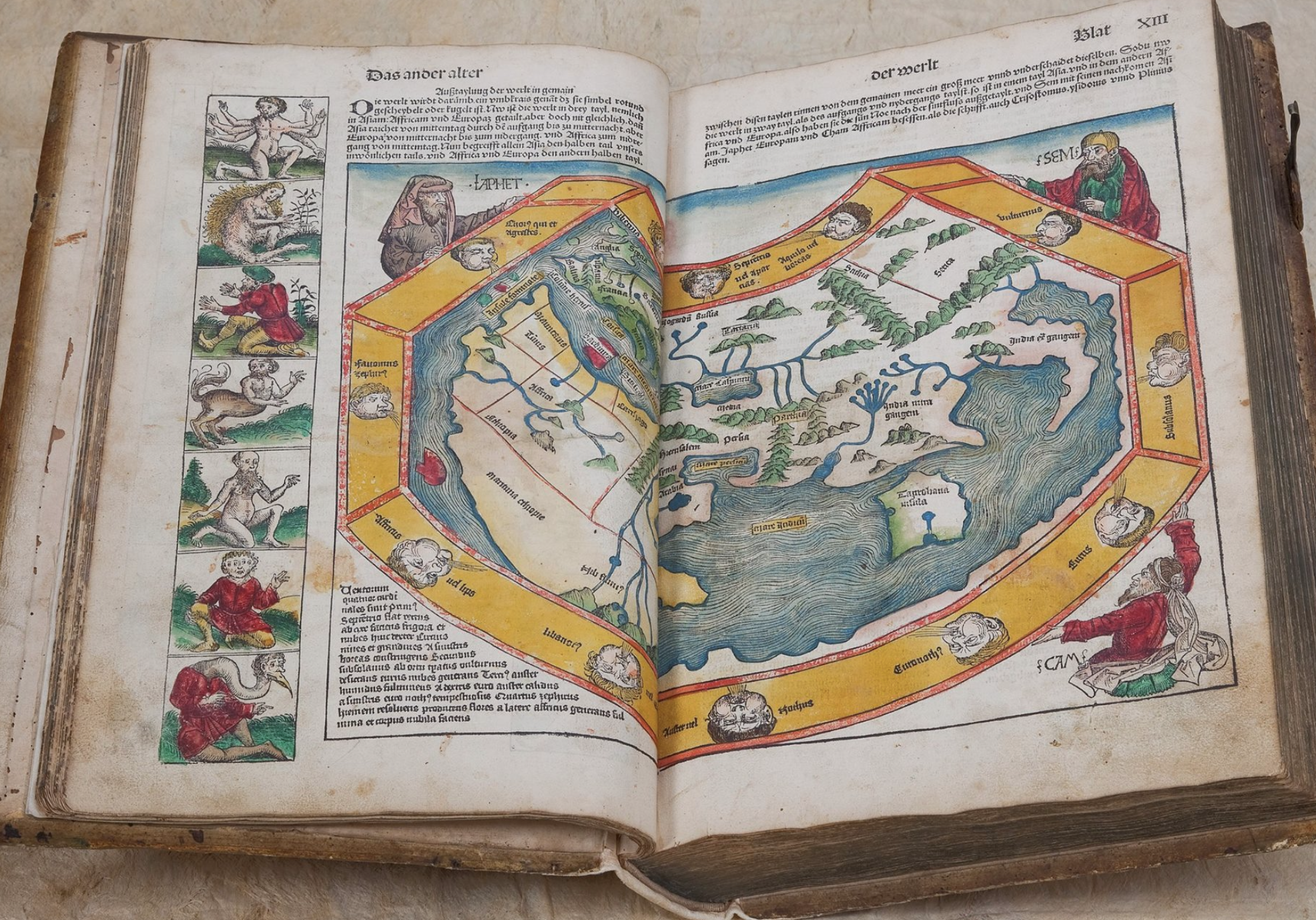
Nuremberg Chronicle (1493)

–as a facile combination of the barely credible that courted anxieties of the unknown. The telling combination of the cartographic and hysteric, announcing discovery of New Lands with evocation of monstrous races off of its margins, drawn from a repertoire of medieval mythology, by presenting the new worries of the Modern Age in circa 1493, featuring not only a range of fantastic creatures–from monopods, headless men whose mouths were situated in their chests, to creatures with a large single foot, but human-like creatures on the margins of the known with heads of dogs.
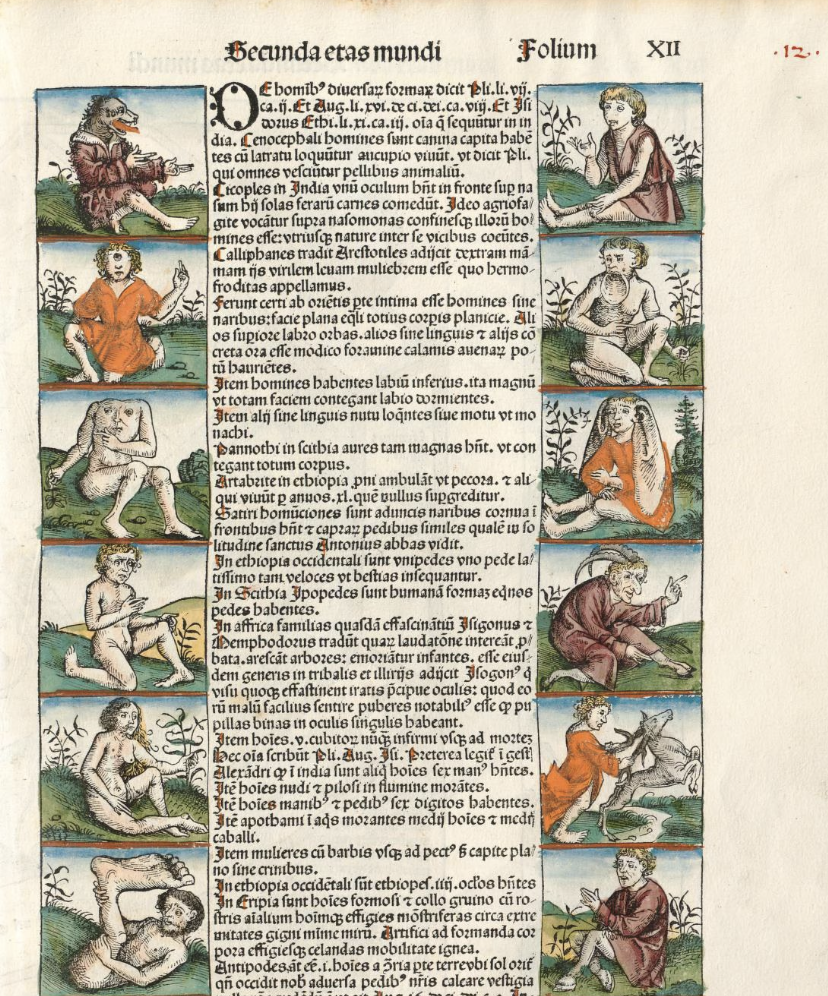
Monstrous Races on the Edges of the New World and Beyond, Nuremberg Chronicle (1493)

And as much as the unfounded charges that Trump evoked in his bid to be U.S. President had a basis in law, or pretended to be grounded in fact, they trafficked in rumor and stereotype, drawn from the oldest anxieties of threats to stability and knowledge, myths of existential threats more than actual dangers, and a premonition of the baseless charges and illegal conduct and disrespect for legal norms that the Trump Presidency would encourage and indeed make its brand. While widely identified as from the internet, and quickly decried by local city authorities in Springfield as scurrilous, the outrageous charges held weight among all terrified to admit Haitians into the United States, as if an existential terrors to the American families that captured the charges of criminality and deviance identified with the immigrants accepted from below the southern border. The absurd claim was lent currency in the debate as valid evidence of the dangers migrants posed to residents of in the bucolically named Springfield, Ohio, was unfounded and without documentation. The theater of fear, and the theater of the unknown, was however the theater of American politics, at the start of a new Information Age stunningly removed from fact, but enmeshed in if not parasitic on maps.

But the imaginary dangers to “people who live there” have been accentuated, with brutal and compelling stories related to migrants retold to create a sense that the country is under attack, in ways that takes voters’ eyes off of the role that the United States might play to bolster regional security rather than build walls and deny asylum to migrants seeking to flee political persecution. In response to a question about immigration, the pivot to eating dogs was presented as evidence of fears that the twenty-thousand immigrants from Haiti in Springfield, Ohio, launched for all its absurdity as an attempt to resurrect fears of immigration across America, as a specter of the flouting of American values and identity across the border, and taking advantage of an alleged “open borders” policy that put America at risk: the arrival of even a small number of Haitian immigrants, even if the immigrants had boosted the local economy. The Haitians were seen as sites of deep anxieties of disruptions to normality, as dangers to personal safety, and as disrupting the all American family by the sacrifice of its pet–the friendliest family dog or cat–
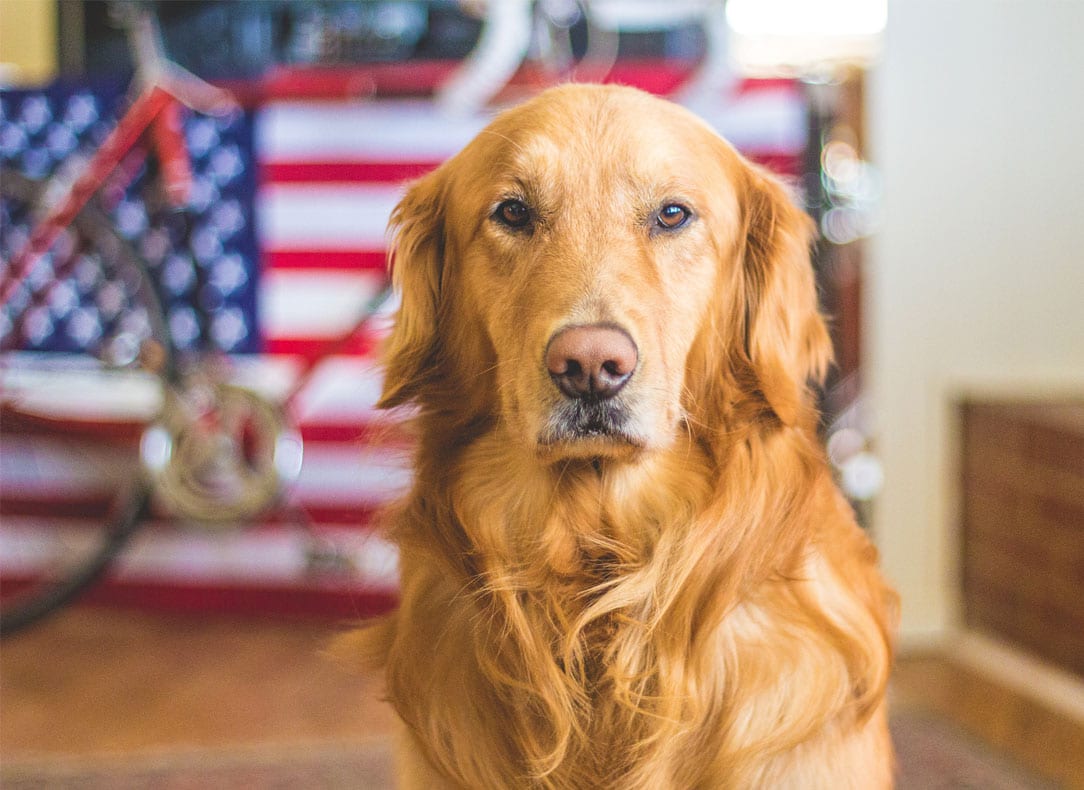
Golden Retriever Most Friendliest Dog Breed Which Dog Breed Is Best For  Family Best Dogs To

–taken as an icon of American identity. For Trump wanted to cast them, not tacitly but explicitly, as proof of a “great replacement” of whites that that did not need to be located in a state–Springfield might be in Missouri, Florida, Massachusetts, Kentucky, Illinois, or Ohio, where like-named towns existed–but denoted a replacement of American values that American needed to be paid attention to. And given the almost generic image of a Middle American society at risk. To be sure, social media provided a willing megaphone to expand these fears, that the Biden-Harris team ignored. The Haitian refugees were conjured as a danger to the nation, a synecdoche for the figure of the migrant in its most un-American form in the only Presidential Debate between Harris and Trump. A set of talking points that emerged from an interview stating that there was no evidence that Haitians had eaten animals–ducks, geese, or dogs–was shamelessly manipulated in the coming weeks by Charlie Kirk, the head of Turning Point who has never shown much respect for the truth in making vitriolic points, as if it was all the proof he needed to confirm a vicious internet meme.
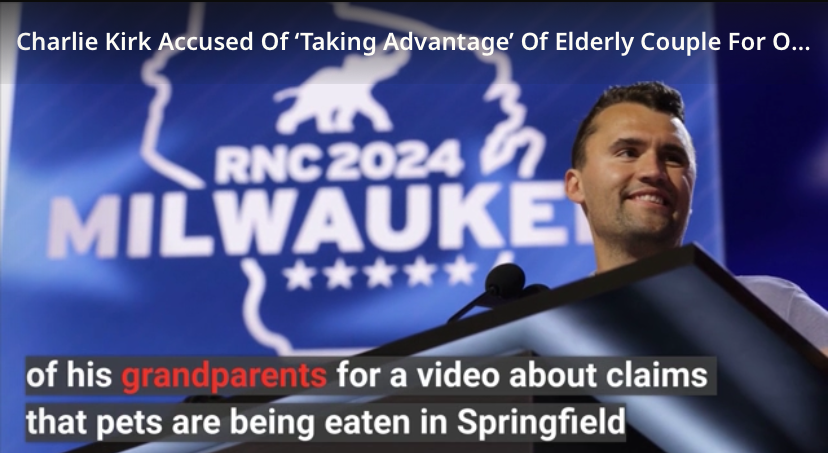
The Speaker at the Republican National Convention Who Eagerly Spread False Rumors of Dog Eating Haitian Immigrants

But if the talking points became central to energize audiences at the Presidential Debate, they gained a life of their own on social media that seemed to erase any question of reality, as the image of disappearance of ducks, geese, and dogs had quickly conjured an enemy from within that boosted calls to enforce the investment of public funds to guard the border. The former President showed little sense of responsibility that would make him merit the Presidency, of course, as he mapped migration by local and not global terms in declarative sentences: “In Springfield, they’re eating the dogs. The people that came in. They’re eating the cats. They’re eating — they’re eating the pets of the people that live there. And this is what’s happening in our country. And it’s a shame . . .”

The generic third person plural was left unidentified, but asked one to map one’s relation to the country–as in “they’ve shot the President” or “they’ve killed the Senator!”–to distribute collective guilt across all migrants, in ways that were, to be sure, readily echoed after Charlie Kirk’s shooting with the blurring of the motives of his assassination as the product of “Democratic left” and “Democratic assassination culture” (John Kass), out to kill the real inspiration to America’s young, “the political left” (Governor Spencer Cox), and “an attack on [President Trump’s] political movement” (Lindsay Graham), or Joe Biden’s attempt to “silence people who spoke the utter truth” (J.D. Vance), and even “the damage that the internet and social media are doing to all of us” (Spencer Cox again, this time on Meet the Press and not a news conference). Yet the drumming up of internet rumors, as much as Kirk’s genius in organizing outreach to younger voters, was the basis of the sordid stock racist accusations of immigrants eating dogs. “They” did not need to be identified; “they” were the people we needed to keep out of the country.

The fears of the “open borders” policy that the Biden-Harris team had willfully persisted was cutting short America, as the Republican congressmen on the Judiciary Committee investigating the injust policy hadgenerated on what seemed official masthead, a waste of official papers to distract American voters–

–in a waste of official congressional paper, to make the meme material in the national news media and the consciousness of Americans who worried about those “leaky borders” as being a threat to American society. And now, it had gotten so bad that even the dogs would suffer.

Not only Charlie Kirk ran with this, but the entire right wing media system seems to have kicked in as the story materialized. The insinuation profited from how the “pet dogs”–even if they did not exist, or were not eaten as per rumor–had become red meat as clickbait within the Turning Point media empire and social media of the Alt Right. The alternative reality Trump dignified was imported wholesale from social media. Indeed, when the moderator questioned the basis for the statement in a forum for selecting the future President, Trump offered no actual proof but returned to innuendo: “Well, I’ve seen people on television . . . people on television say their dog was eaten by the people that went there,” revealing the wrong of offering migrants asylum as a threat to domestic pets. “Cats are a delicacy in Haiti,” offered the video that Kirk made to give wider currency to rumors of the abduction of pets–as if it were the 2024 version of the international pedophilia ring Hillary Clinton allegedly “ran” out of a pizza joint–and “ducks are disappearing,” as if to map the Springfield as a “tinderbox” of the crisis of immigration, and the 20,000 Haitian migrants who arrived in Springfield over the last four years who have helped to drive the small city’s economic boom became evidence of illegals taking open advantage of the Immigration Parole Program of Joe Biden to sacrifice American pets as if they were cannibals, eating the dogs that became a synecdoche for all Americans–and the American Dream.

Even as Haitians had themselves insisted on the news that “We’re here to work, not to eat cats,” in response to the outlandish accusation, the footage of their protests offers, however circularly, footage that was consumed as evidence of an admission of their alleged guilt. The protests became evidence for the need for a new Immigration Ban, and stoked fears of the Great Replacement. What was red meat for social media clickbait became passed off as truth, in the false currency occasioned by Presidential elections, that have become sanctioned rumor mills since Whitewater if not Watergate, as charges of incompetency materialize in disproportionate commensurability to the weightiness of the office of U.S. President.

Steve Sack/July 30, 2019

The feast of hate male that the MAGA movement has invited has opened up the sluices on social media innuendo, inviting us into the society of spectacle of online memes to launch a bid to defend the nation. Trump’s brusk adoption of the first-person reminded us that he was in charge, and should be, effectively asking viewers of the debate to join him, watching TV in his home. He seemed to call for a need vigilance to supervising the crisis of migration that Vice President Kamala Harris had permitted to threaten the country, papering over a national emergency that the Democratic Party refused to acknowledge as an invasion as he had called-even at the risk of endangering the safety of Springfield’s domestic pets. He’d be watching . . .

For her part, it was utterly unsurprising Kamala Harris was unable to respond to the outrageous charge with concreteness. Did she fail to connect in any similarly visceral way or was she just unable to reply to the outrageous claim? Trump had outflanked the outrage that his constituency had come to expect. The fictional charge perpetuated myths of aliens endangering Americans’ pets J.D. Vance used to reveal the threat admitting immigrants–even granting asylum–as a threat undermining civil behavior and the American family, but pushed the boundaries of civil norms. There was no sense that the charges aiming to dehumanize the immigrant and to blame her for the endangerment of American pets could be presented on national television as evidence of the danger she would cause the nation: it was all but impossible for her to enter that rabbit hole. Could one even trust Kamala Harris to be a defender of America against these Haitians, her very appearance and hair suggesting that she could not be trusted to protect white Americans from the arrival of migrants who failed to understand American values, and failed to integrate in white America? This proclaimed the reclaiming of tacit racism on steroids by Trump, Kirk, Vance and Stephen Miller.

Former President Trump claims immigrants are 'eating dogs' in Ohio

Presidential Debate in Ohio, September 10, 2024

The outrageous and ungrounded accusation against Haitian immigrants of being cannibals recycled old fears of the beast-like nature of an island colonized by Spain and long used for American enterprise at low wages, was rather tired. After all, it was one of the more striking images of the Governor of the colonial administrator who had served as Governor of New York State, the Irish-born Cadwallader Colden’s colorful description of the Five Indian Nations of Canada, based on his early position as the first colonial representative to the Iroquois nation. His familiarity with the Five Nations of the Confederacy had featured the puzzled anthropological observation that “the young men of these nations feast on dog’s flesh,’ although Colden, in 1747, confessed he was unsure “whether this be, because dog’s flesh is most agreeable to Indian palates, or whether it be as an emblem of fidelity, for which the dog is distinguished by all nations.” Whatever the reason, he admired the indigenous “boast of what they intend to do, and incite others to join, from the glory there is to be obtained: and all who eat of the dog’s flesh, thereby enlist themselves” in a gory potlatch of canine flesh to display their martial bravery. The dog-eating indigenous males revealed their militant character that Colden felt worthy of the virtue, discipline, and honor of Romans, if their modern use of muskets, hatchets, and sharply pointed knives, if abandoning bows and arrows, accompanied fierce adornment of themselves with red war-paint, “in frightful manner, as they always are when they go to war,” rivaling the military discipline and honor of Romans.

Not so for the Haitians Trump painted who arrived across our open borders. The accusation Trump leveled suggested a third reason for the eating of dogs: the Haitians’ absolute inhumanity, which needed to be separated by a wall. It clearly bore fingerprints of his speechwriter Stephen Miller, who had just crested 100.000 views on X after questioning allowing “millions of illegal aliens from failed states” in “small towns across the American Heartland.” Donald Trump could not help himself in echoing Miller’s charge, as he held his ground on the debate stage, summoning a sense of grievance by lamenting as if to himself “What they have done to our country by allowing these millions and millions of people to come into our country . . . to the towns all over the United States. And a lot of towns don’t want to talk — . . . a lot of towns don’t want to talk about it because they’re so embarrassed by it.”

September 19, 2024

Was this not itself an open violation of social norms? It mapped Haitian migrants in the United States, if not openly criminal, as endangering the nation that demanded to be fully revealed. The outrageous charge of “eating the dogs” was not only unfounded, but pushed the nightmarish scenarios of migration, a stock trick of the 2016 election, mapping an invasion migrants allowed under the poor vigilance of Joe Biden and Kamala Harris: an outrageous charge fabricated out of whole cloth dominated post-debate discourse, becoming remarkably effective in social media, resurrecting the worst stereotypes of deep prejudice that subverted any debate on immigration policies by purported evidence no one in the White House was willing to acknowledge. The protection of domestic pets started to seem like it was about the enforcement of border policy. Was this pandering not a sort of primal fear of othering, tracking the approach of a race not like us who didn’t share our basic customs or social codes as they crossed the southwestern border?

Planting the rhetorically powerful fears of dog-eating immigrants as invasive revealed the Haitian as an attack on values that need not be brooked–an attack on American values passing under the radar of the current administration that failed to screen migrants in promoting a CBP One™ Mobile App as an open portal for undocumented migrants to allow migrants provisional I-94 entry, schedule appointments at points of entry, or gain temporary visas–a program he immediately shuttered after his 2025 inauguration. The mobile app reduced illegal immigration grew popular among Haitians, Cubans, Venezuelans, and Mexicans as it streamlined opaque processed of applying for residence, but Trump reviled it as evidence of a policy of open borders, attracting almost a million users for tens of thousands appointments with migration courts. It would abruptly cease functionality in January 2025, cancelling pending appointments migrants made, leaving many without any basis to pursue the hopes some 280,000 had had hopefully logged into daily, as he pledged to use the army to remove 11 million he claimed in the country illegally by mass deportations, and canceled court appointments of some 30,000 migrants made for coming weeks. The need for an “immediate halt to illegal entry” he asserted, began with a need to to restore human agency to define who gets to become an American citizen and ending refugee resettlement.

Trump has of course vowed to end illegal and legal entry of migrants, asserting as illegal border crossings had plummeted that the current pathways of migration were not sufficiently controlled. He cast the expedited streamlined avenues of legal migration by Apps as oversteps of Presidential authority, affording provisional entry of undesirables who the Haitians were a recognized token; the MAGA movement outrageously tagged Kamala Harris as having abetted illegal smuggling by an app that allowed nearly a million migrants to enter the United States. The sudden suspension of the app’s functionality be executive order would reduce the reliability, speed, and assistance available to migrants, as if they creating what he called illegal smuggling routes. echoing outdated MAGA maps that accused the Mexican government for enabling the smuggling of “Haitian words” into the United States illegally back in 2016, a map that probably lay at the back of his mind as he cast aspersions on the smuggling of Haitians into America that the CBP One™ mobile app allowed.

“Mexican Officials Quietly Helping Thousands of Haitian Make their Way to the United States Illegally,” Washington Times, October 10, 2016

“Hatian Hordes” did not emerge as a meme in the 2016 election, but it may have lay hidden at the back of Trump’s capacious mind. Did this outdated map of “Haitian Hordes” of the alt right Washington Times not rolled out as fodder in advance of his own earlier campaign for President, eight years ago, underly the logic of his new rather extravagant claim about “eating the dogs,” made without any grounds at all? Candidate Donal d Trump had repeatedly promised audiences of rallies he intended to “end asylum” most Americans did not want or desire, as if the Biden-Harris had enabled an unprecedented national invasion. The figure of the Haitian demanded to be contextualized in the escalating illegal immigration that Biden and Harris had abetted. At his rallies, he had promised the liberation of the nation he would bring about by “return[ing] Kamala’s illegal migrants to their homes,” explaining his intent to replace immigration with “remigration,” or forced rendition, vowing in rallies and social media to “save our cities and towns in [the swing states of] Minnesota, Wisconsin, Michigan, Pennsylvania, North Carolina and all across America!” Perversely, he would do so by ending an app the app directs each type of user to the appropriate services based on their specific needs. indeed, “the United States lacks the ability to absorb large numbers of migrants, and in particular, refugees, into its communities in a manner that does not compromise the availability of resources for Americans,” read the Executive Order he signed upon inauguration in 2025, cutting off access to jobs in America or migrants fleeing persecution, or even American allies from Afghanistan, as if drawing up a drawbridge that had long existed on the grounds that the nation was “full up.”

August 20, 2024/Trump Rally in Howell, Michigan/Nic Antaya

The charge of dog-eating Haitians elevated the gutter of the internet to Presidential debates, as an exemplification of the false statistics displayed at rallies in order to make his point to the nation. The salacious accusation picked up off of social media was presented as if objectively true, elevated from social media to the forum of a Presidential debate as a basis to chose the next President. Trump recycled a hurtful and demeaning meme as if it were a charge, and evidence of the clear need to restrict and stop migration outright–and discontinue granting asylum to refugees, legal or illegal. The charge elided the right to asylum, or the persecution that immigrants faced–or, indeed, the dependence it would throw migrants into on smugglers. For by revealing the true identity of foreign-born immigrants as dangerous outsiders, ready to consume domestic pets, Trump tagged the Haitians as threats to the nation by mapping their foreign origins, introducing a logic of mapping the threats by their nation of origin as needing to be expelled from the social body to make it healthy again–and in suggesting the need of a strongman able and ready to confront the eaters of dogs to expel the migrants for breaking the deepest social bonds of American society.

Indeed, the rhetorical image of migrants suggested an image of rounding up stray migrants, posing a danger to naturally born Americans, and the limits to which the Biden-Harris migration policies had pushed the nation to the bursting point–a powerful narrative if one hardly grounded in fact. The charge was but the latest dog whistle designed to stir up anti-immigrant fear resurrected old tropes not only of casting Haiti as the target of fear as a rare outpost of the European colonies where slavery was outlawed, where black majority rule stood to upset racial hierarchies and upset a civilized order. Fears of an imbalance in racial hierarchies fed unwarranted fears of immigrants fleeing repression as a known vector of infectious disease. Trump had long attacked a “Phone App for Smuggling Migrants” as a way to facilitate illegal immigration that Harris and Biden created for the sole purpose of  “smuggling” migrants into the United States–an app Trump vowed to terminate, and did as soon as he entered the Oval Office. He blamed Harris for allowing migrants to access App dating from his Presidency, available from Google play stores and Apple since 2020, that he identified with Harris–maliciously vowing to “terminate the Kamala phone app for smuggling illegals (CBP One App), revoke deportation immunity, suspend refugee resettlement, and return Kamala’s illegal migrants to their home countries”–as if the presence of migrants eating pet dogs was due to Harris’ negligence in outsourcing human intelligence, rather than an effort to increase border security. The “big reveal” during the debates revealed the inner nature of the migrant as a threat, undetected by an app, and demanding human intelligence and vigilance he could provide, promising to end the spike of an alleged “Biden world record illegal immigrants, many from prisons and mental institutions, also terrorists”–as undesirable as the dog-eating Haitians seem to be.
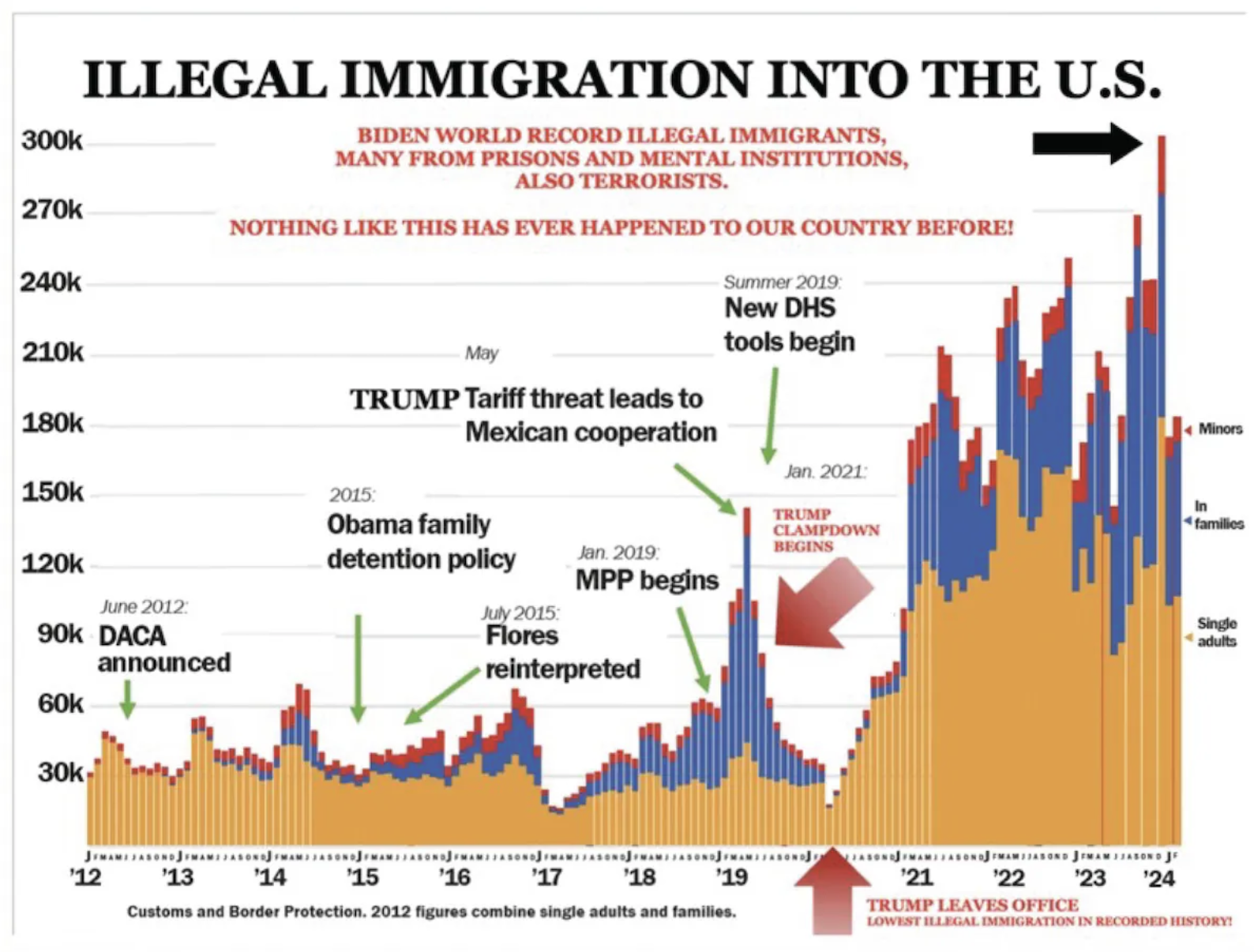
The vignette was a theatrical reminder of the need to “immediately end the migrant invasion of America,” blurring the need to “stop migrant flights, end all illegal entries, [and] terminate the Kamala phone app for smuggling illegals as if they were all contributing to an invasion we allowed–although the misleading chart he was so fond of displaying that suggested an emergency indicated not “illegal immigration” at all, but Border Patrol statistics on those stopped at the border, not admitted, and the drop in immigration arrivals of the pandemic shot up in his Presidency, readers of the Washington Post, before it became an organ of government, were reminded over a month after Trump presented the meme domestic pets had been injured by immigrants who crossed the border.

The misleading charts later touted as the “chart that saved Trump’s life” not because of its inaccuracies, but that had grabbed his attention for a moment as he looked toward it in the rally of July 14, 2024, moving his head to the chart that became the basis to boost his political fortunes, he dodged an assassin’s bullet. But for all its abundance of stubby red arrows and acronyms, was a story that he was massaging all along:
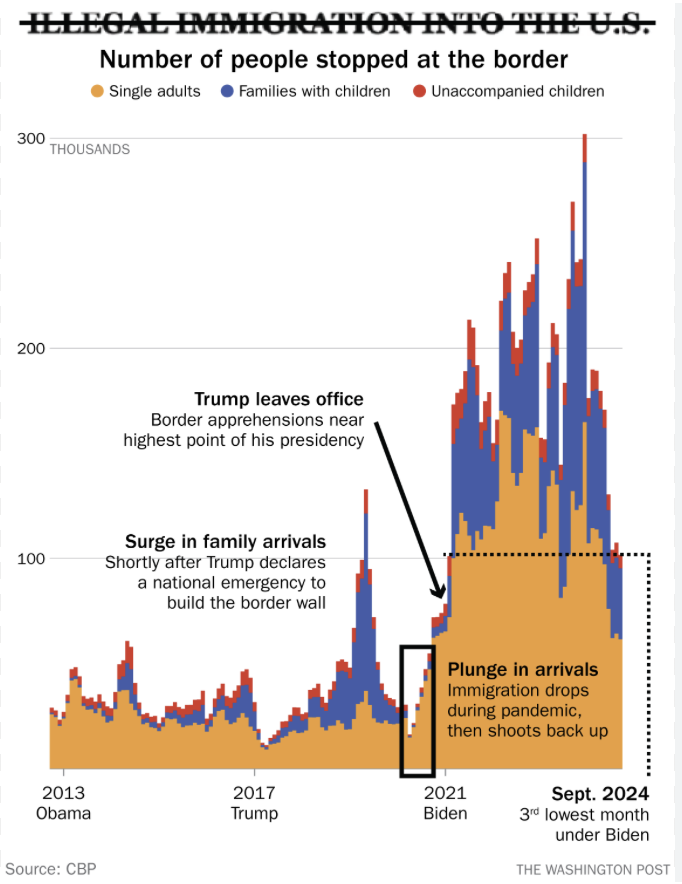
Washington Post/October 24, 2024

The statistics he presented of the escalation of illegal migration into the county. The insinuation animal-like people had attacked the pets of American families appeared grounds to impose discriminatory immigration policies that would abandon longstanding principles of granting asylum.

The baseless charge pushed us back in time, stoking fears of globalization opened the nations to attacks on white American families that dated from the first age of globalization. While presented as the latest evidence of the wiles of these immigrants Biden and Harris allowed to enter our borders by their Border App, it seemed evidence of their readiness to sacrifice the safety of the nation to a dog-eat-dog world that existed outside the safety of American borders, rather than expedite the complicated process of cross-border migration. If the partnership of man and dog has been long a sturdy basis for cooperation, and indeed a paradigm for human companionship, if not of parallel evolution, the immigrants were upsetting of categorical distinctions fundamental to the nation by treating pets as meat. This was not only evidence of their alleged desperate hunger, but an insidious attack on the stability of the social order–upsetting of naturalized hierarchies of man and animal feared since first contact with the New World and the naming of Hispaniola in 1492.

What was presented as the big “reveal” at the debates of the failure of the Harris-Biden team to look at the evidence before his own eyes was grounded in stereotype, it recycled fears dog-headed men inhabited New World islands on the edges of the inhabited world–among other monstrous races–in the first printed book to recycle attention-grabbing images in the encyclopedic images used in 1493 Liber chronicarum known as the “Nuremberg Chronicle”–a historic achievement of the early press–their wagging tongues colored red in deluxe editions to suggest their inarticulacy–
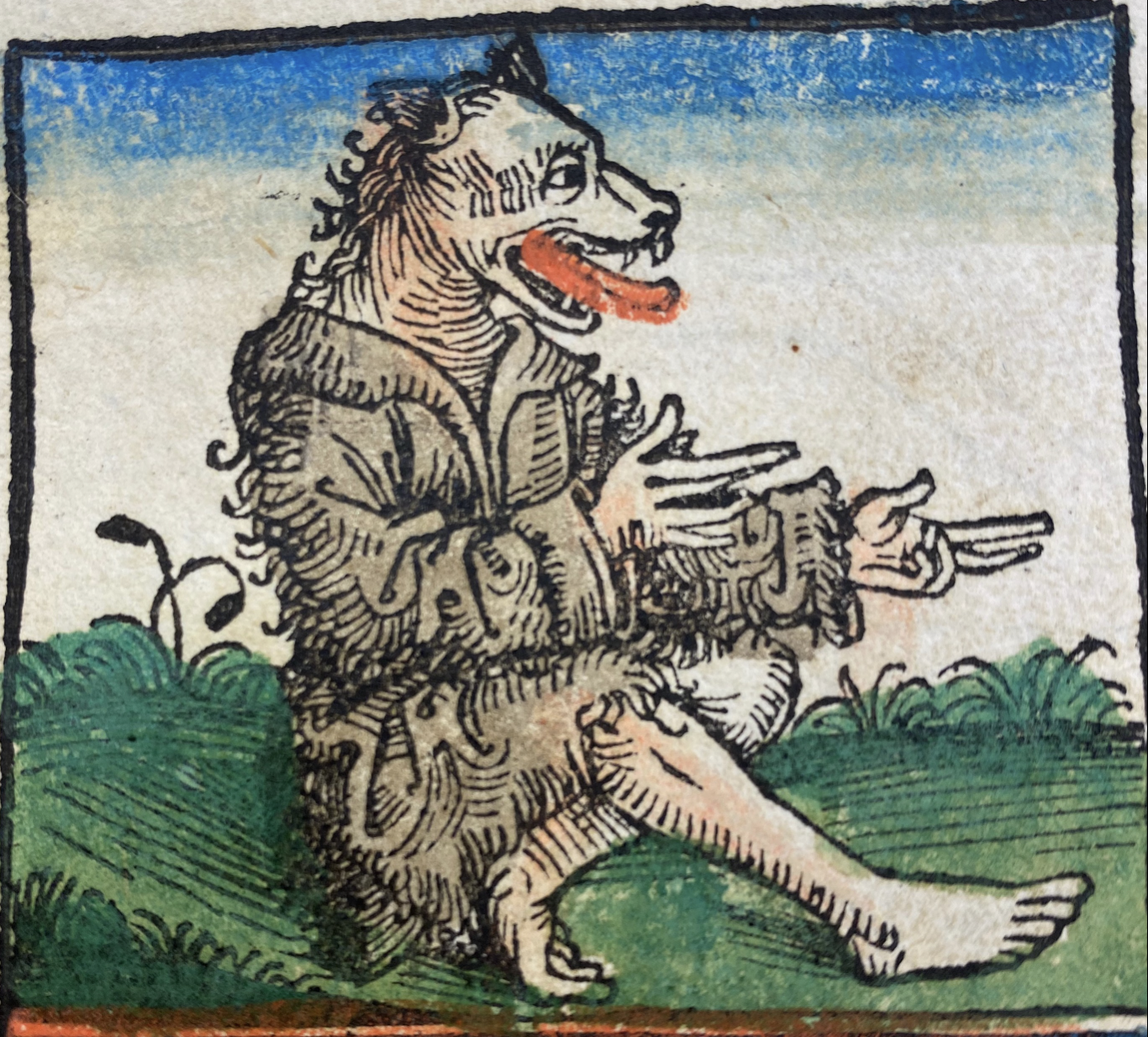
–where the corrupted tongues of the inhabitants of New World islands were imagined as a focus of concern, lacking rational speech.

Dog-Headed Man, or Cynocephali, from Nuremberg Chronicle (1493)

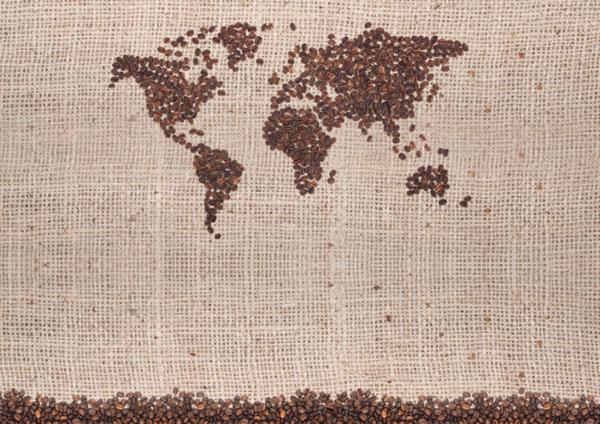
There was almost the sense in Trump’s odd declaration in response to question about immigration to the United States that he expected us to believe at least some of those twenty-thousand might actually have, even if legal immigrants, crossed a threshold of civil behavior and violated one of the greatest taboos in the lands the AI image in the header to this post tries to conjure. “They’re eating the dogs” launched the most recent addition to the laundry list of the hidden cost Americans pay for a poorly policed border–but it raised the bar beyond criminality; dealing drugs; belonging to gangs; taking jobs; and taking housing. When I canvassed for Kamala Harris in Nevada, it was memorable that a friendly man on whose door I knocked in Carson City smiled as he lifted his cute kitty before me, assuring me at once that he would soon be voting Democratic and loved his pet– “[’cause] I don’t eat dogs; I don’t eat cats.”

In the month and a half since Trump delivered the unfounded accusation on national television it had percolated within the political discourse, taking shape as a hateful accusation and a venting of anti-immigrant sentiment. The confession was a joke, more than a confession, but an admission of the power of the Trump-Vance trope that extended to a theatrical appropriation of citizenship by a prospective voter, jokingly confessing to me the absurdity of the situation where migrants were so thoroughly demonized in ways that even if I weren’t the son of a psychoanalyst would make me think of Sigmund Freud’s reminder that jokes are deeply related to the unconscious–and even the collective unconscious that Trump had so successfully tapped–that reservoir of rhetorical figures of “women, fire, and dangerous beasts” that led Freud to ponder in 19054 how “only a small number of thinkers can be named [in western philosophy] who have entered at all deeply into the problems of jokes,” plumbed the relations of the comic to caricature, rooted in the comic nature of the verbal contrast between apparently arbitrary connections or links seem to discover a sense of truth in its verbal economy–a compression of meaning that creates a new statement, where the allusion to the monstrous may be a stimulus to revealing the nonsensical nature of the statement, as if it imagined the half-human people on the worlds’ edges imagined in 1493, as the first news of the New World filtered back to Germany, by the printing house in Nuremberg, blurring fact and fancy be medalling visually inventive if vertiginous half-truths.

The widely performed song adopted as a call and response by touring bands in clubs, audiences recite a chorus of dog sounds and cat purrs to personify the purported victims of Haitian migrants. If Freud reminded us that jokes rely on operations of condensation and displacement to subvert judgements by releasing what we might repress, Trump seemed to tap a long repressed collective unconscious of New World cannibals that cast migrants as non-humans, as much as not living legally in the land, drawing lines of exclusion to affirm the rights of nativism long repressed to assert them on the debate stage about the carnage faced by domestic pets–as it became a central point on which to determine who would occupy the White House.

This is not only interrupting consensus on immigration statistics, but elevating internet rumors to the stage of political debate of a Presidential election that is comic enough as displacement of speech acts. Eating pets powerfully indexed otherness and terrifyingly tagged a threat to domestic tranquility; in a nation where pets are in fact among perhaps the best-fed and most-protected of its inhabitants, the threat to domesticated animals violating a salient border of civil behavior, marking a moment of catharsis for its patent absurdity but evoking a long repressed image of the other. Harris had to laugh when Trump stressed “they’re eating the PETS of the people who live there” as if a refrain of moral outrage: the White House had just taken their eyes, the hidden message ran, at what is happening in small towns “across America”–and the state of affairs confronted by the people of Springfield or Aurora: “they don’t even want to talk about it,” because “it is so bad.”

The debate, widely promote4d as determining the next executive to lead the nation, may have allowed him to ask viewers who voters in America wanted to put into the White House, and who would have their best interests in mind–not only global warming, revealing a hidden “real threat” that immigrants posed in ways that Biden and Harris blithely overlooked from Washington, DC.

This wasn’t “news,” but demanded to be included among the issues confronted on the debate stage. For Trump specializes in escalating his oratory to stentorian tones, in explaining political elites had neglected that “they’re eating the dogs, they’re eating the pets, of the people that live there,” weighting each syllable as Harris reflexively laughed, and tried to preserve composure while wondering what she might say to reassure Americans as he uncorked a disclosure of the violence on unleashed on American soil. “This is what is happening in our country, . . . and it’s a shame,” Trump gravely intoned, masking his reach into the dark gutters of the internet with gravitas. Harris barely processed the outrageous claim clothed in faux seriousness as a peril. Harris clearly never expected to hear a displacement so extreme on the debate stage before a national audience, or an issue that the nation was taking seriously in a debate on their visions for the nation’s future. The red flag that was raised alleging that immigrants with government “protection” were engaged in eating pets gained national attention, as it coursed through the internet in ways that amplified a rumor to a story, gaining a faux credibility among anxious Americans, so that Springfield was forced to close its public schools and offices during the presidential campaign, after attracting numerous bomb threats from vigilantes interested in protecting American values that were allegedly under attack.
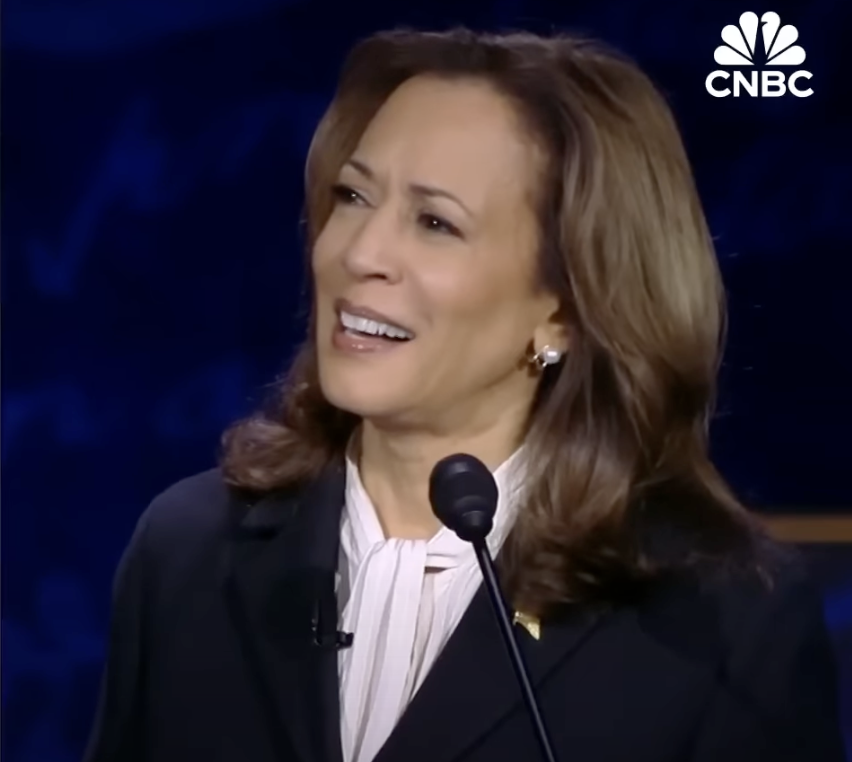
U.S. Presidential Debate, September 10, 2024

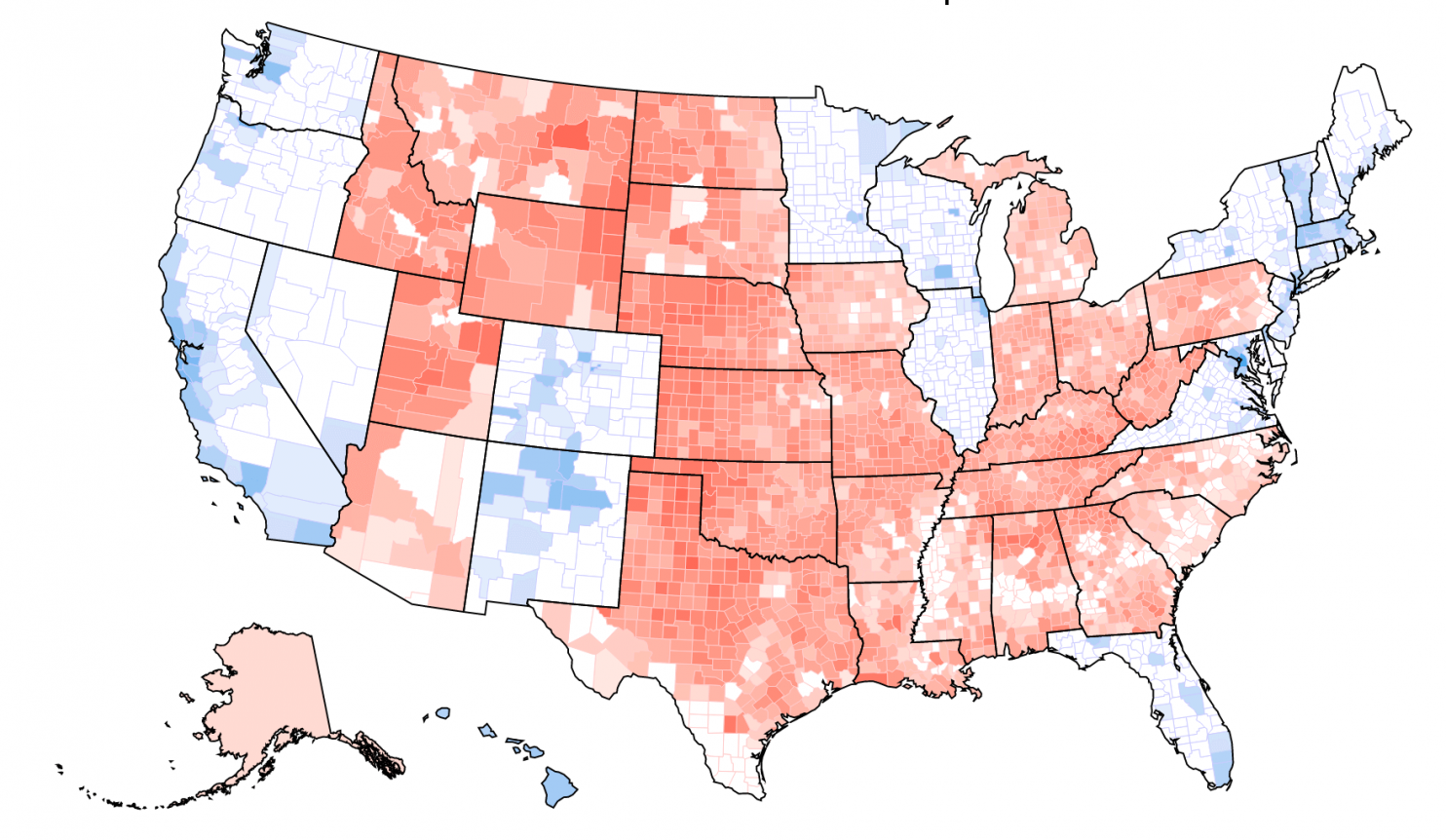
The question was rooted in anxieties that were not rooted in Springfield, or limited to Haitians, but the demographic proved a particularly scary straw man: the charge that an influx of below 135,000 Haitian immigrants Social services and the local health care system in a county of about 15,000 people was magnified in ways that reached the nation. Springfield’s public health officials have struggled to cope with the influx of an estimated 10,000 to 15,000 Haitian migrants during the past three years, but the rage was directed to the fact that the US government was offering “Temporary Protected Status” to those fleeing violence and widespread poverty, a humanitarian action that Trump wanted to demonize, long before shuttering USAID: the idea that Americans might help others flee tough circumstances they didn’t deserve was identified as an example of international largesse that the United States couldn’t, in a global economy, afford to continue, as it had encouraged the destabilization of local communities and redirected assistance not to Americans, but to foreigners. And the Temporary Protected Status program had been filling many jobs across the country, but was a subject that was able to come in for a lot of wrath, as s displacement of the focus of government from Americans–even if maintaining a good relation to local states and populations was definitely in national interests. The presence of persons benefitting from Temporary Protected Status whose protections Trump had boasted he would immediately revoke were distributed across much of America, in fact–
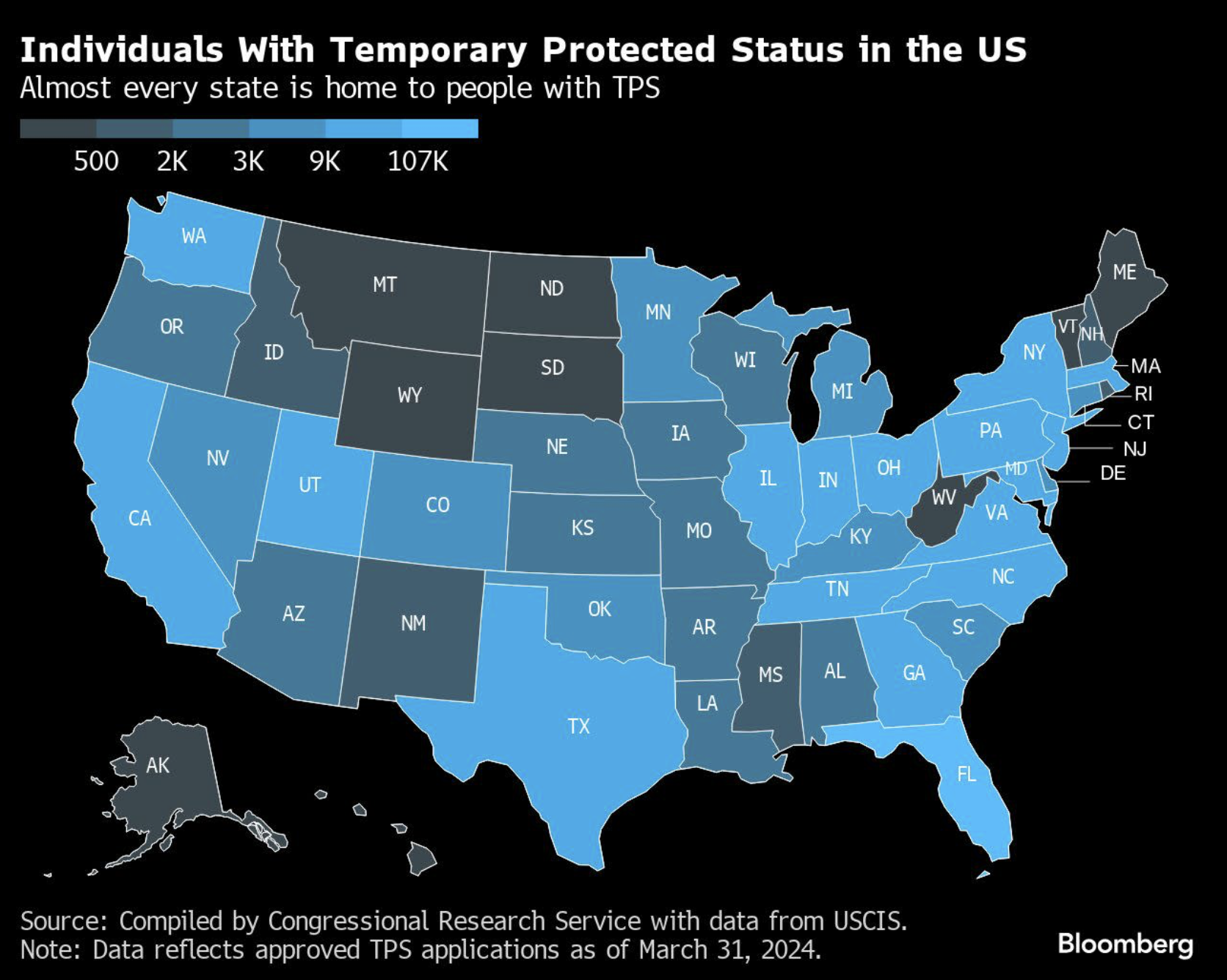
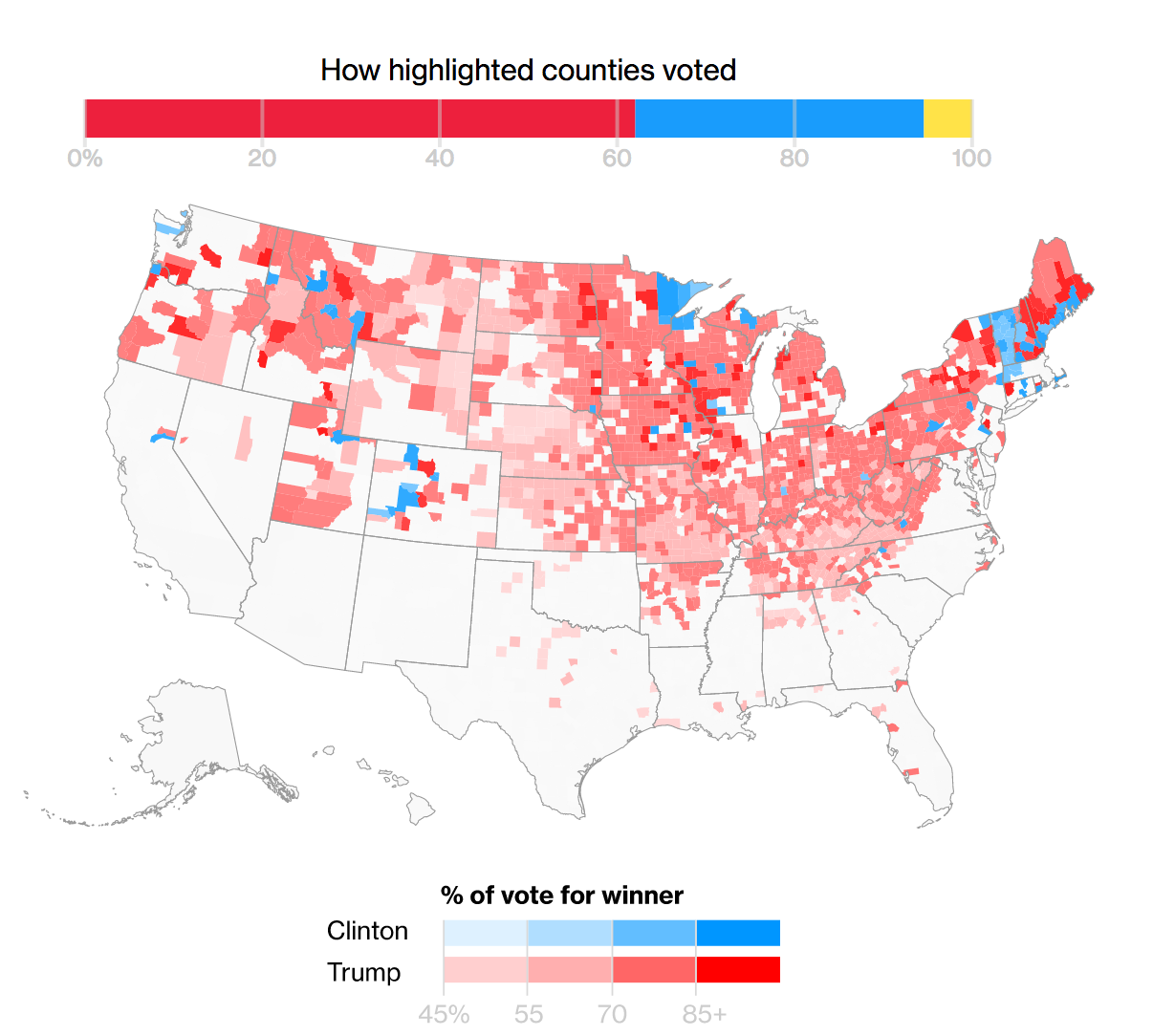
–and the notion that these protections were granted seemed a great way for Trump to bring back the sort of cooperations of local law enforcement with federal immigration authorities that were a priority of his first presidency, and which, while Biden had attempted to roll them back, had split the country by 2019, when Biden was elected, as many counties had begun the very sort of close involvement with ICE that Trump was about to promise to restore.

The huge incommensurability between the safety of pets and migrants fleeing persecution was so great it was truly comic in its slippage, as Trump seemed to be spinning facts in ways that seemed to be about borders, but was doing so by peddling utterly unsubstantiated fears. If Harris was trying to process how seriously this fabricated claim might be taken by the viewing audience, amazed that there would be many ready to fall for the bait, and ignore the debate, the direction of which seemed like it might be in danger of suddenly slipping away, as easily as Trump had seemed to recover from the questions she raised about the size of his rallies by attacking her for fabricating the rallies she had held for the previous days. But the issue of a debate about elections seemed less important than the identitarian fears of endangered pets that Trump seemed to be saying had been neglected by the Biden administration.

Fears of dog-eating immigrants were outlandish. They echoed the fearsome nature of the unknown featured prominently in the 1493 Nuremberg Chronicle as an image of otherness outside the inhabited world–the dog-headed people who gestured, lacking recognizable human speech, were placed at the edges of the known world, talismans of the fake news about “barbarous” peoples and “marvelous races” that early modern readers might expect to define a threshold of the known.

Cynocephalus in Nuremberg Chronicle (Buch Der Chroniken und Geschichten,Blat XII), 1493

The woodcut of dog-headed exotics placed prominently on the edges of the known world circa 1493 in Buch Der Croniken und Geschichten to grab readers attention in the compendium of texts purporting to synthesize all known history, by situating many woodcuts to encourage reading its derivative text. While this motif can be seen as a classic–if not primal–dehumanizing of foreign peoples–the implicit question it raised in the early modern era was whether these dog-headed men possess souls. At a time when Europe was understood to lie on the boundary of an expansive ocean and bounded more clearly, revealed in the edges of early global map featured in the popular book–

Nuremberg Chronicle, detail of world map at Blatt XIIv-XIII Munich State Library, Staatsbliliothek

–the dog-headed men that lay among the fantastic races that ring the global planisphere of Ptolemaic derivation were inhabitants of the edges of the known world described not by Ptolemy, but Pliny Augustine, and Isidore of Seville, and Pliny, authorities one was loath to contradict, whose assertions demanded to be reconciled with the new maps that increasingly included New Worlds. The men who seemed to gesticulate with animation spoke no recognizable tongue, and may have been of some sort of diabolical creation, even if they seem to us early modern cartoons.

Nuremberg Chronicle, Blatt XII, Munich State Library/Staatsbliothek

Are not the dog-eating immigrants not their most recent iteration, people who don’t have respect for pets, fail the affection and citizenship test in one go,–and maybe even lack souls? They surely were imputed to lack patriotism and be un-American, putting aside for now the question of souls– even though the legal migrants in Springfield do not eat dogs. They were terrified at the charge that they did, as the Haitians of Springfield must have wondered what a weird, tortured, social media world they had moved to, where they might be accused of stealing their neighbor’s pets.

Yet these hoary old recycled images of dog-headed men, whose long, loose tongues seemed to compensate, if one notices their animated gestures, for their inarticulateness, emblematized babble in an early book of global history cobbled together from sources of dubious authority and biblical paraphrases. The synthesis of world history was in fact akin to a sort of early modern internet, recycling images and legends circulating in flysheets and leaflets in visually entertaining ways helped readers navigate derivative text that purported to summarize global history. At the same time the edges of Europe were defined, dog-headed Cynocephali were located at the edges of the known world as it was being remapped in real time, situating an upsetting of the divine order of creation that were echoed in fears of dog-eating immigrants who had the edges of the nation.

The eating of dogs has, incidentally, only been legally forbidden in the United States, with the exception of Native American religious ceremonies, and in New York specifically illegal to “slaughter or butcher domesticated dog” for human or animal consumption, suggesting how our legislators take the matter quite seriously–and even if the majority of dogs globally are free-roaming or stray (70% per one estimate at PetPedia, the existence of “dog meat markets” in Viet Nam, the Philippines, China, Indonesia, and Cambodia suggests a blindspot for animal suffering–South Korea will ban meat markets from 2027.  The consumption and slaughter of dogs and cats for human consumption was part of the reconciled version of the Farm Bill the Trump White House helped pass in 2018, featuring the “Dog and Cat Meat Prohibition Act,” signed into law by President Trump. The ban on eating dogs was an achievement of the Trump Era, holding there was no place in America for the eating of dogs or cats–both animals “meant for companionship and recreation” and imposed penalties for “slaughtering these beloved animals for food” of up to $5,000. (While China tolerated such meat markets, its sponsor held, “should be outlawed completely, given how beloved these animals are for most Americans” on American territory.)

A part of Making American Great Again was criminalizing killing of dogs and cats, save for religious practices of indigenous,, by imposing federal penalties for slaughtering cat or dog meat for consumption, not protecting animal welfare. While there is no clear coherence for the alliance of the Animal Hope and Wellness Foundation, the nonprofit that promoted the bill’s passage in Congress, dedicated to protecting dogs and cats from being butchered abroad for customer markets in China and Viet Nam, as a step in “making America a leader in putting an end to this brutal practice worldwide,” seeking “to move towards bringing an end to the suffering of these animals who are like our children, our family,” identified two species sought to be banned from foreign meat markets was always a local exercise in response to global problems. The refugees escaping a human rights crisis in the hemisphere would perhaps be both a proxy and symbolic surrogate to the crisis of “illegal” migrants moving across the southwestern border.

The number of Haitian immigrants to the United States had for some precipitously risen–doubling since 2000–as immigration became a hot-button issue, and seems on track to grow tenfold since 1980, creating an irregular influx in response to economic crises, natural disasters as the 2010 earthquake, rising gang violence following the assassination of the Haitian President Jovenal Moïse in 2021, that make Haitians an ever larger immigrant community–and given the threefold increase in immigration since 1990, the community is easily othered, perhaps explaining their targeting by outrageous conspiracy theories about eating pets.

Continue reading
2 Comments

Filed under American Politics, Donald Trump, Haiti, immigration policy, Presidential debates

To Levitate an Elephant

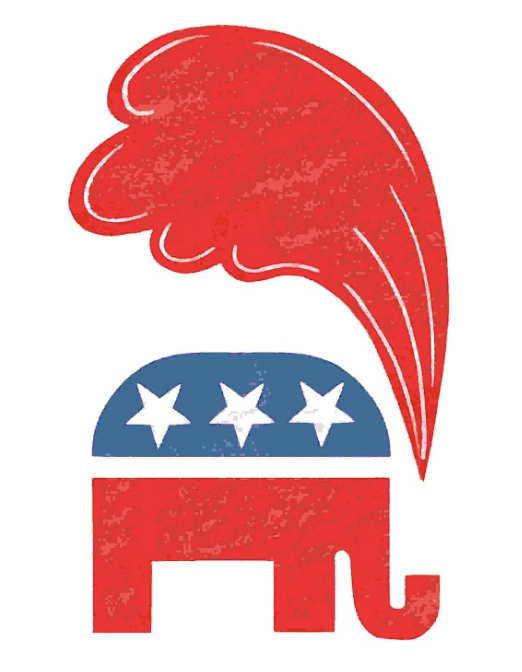
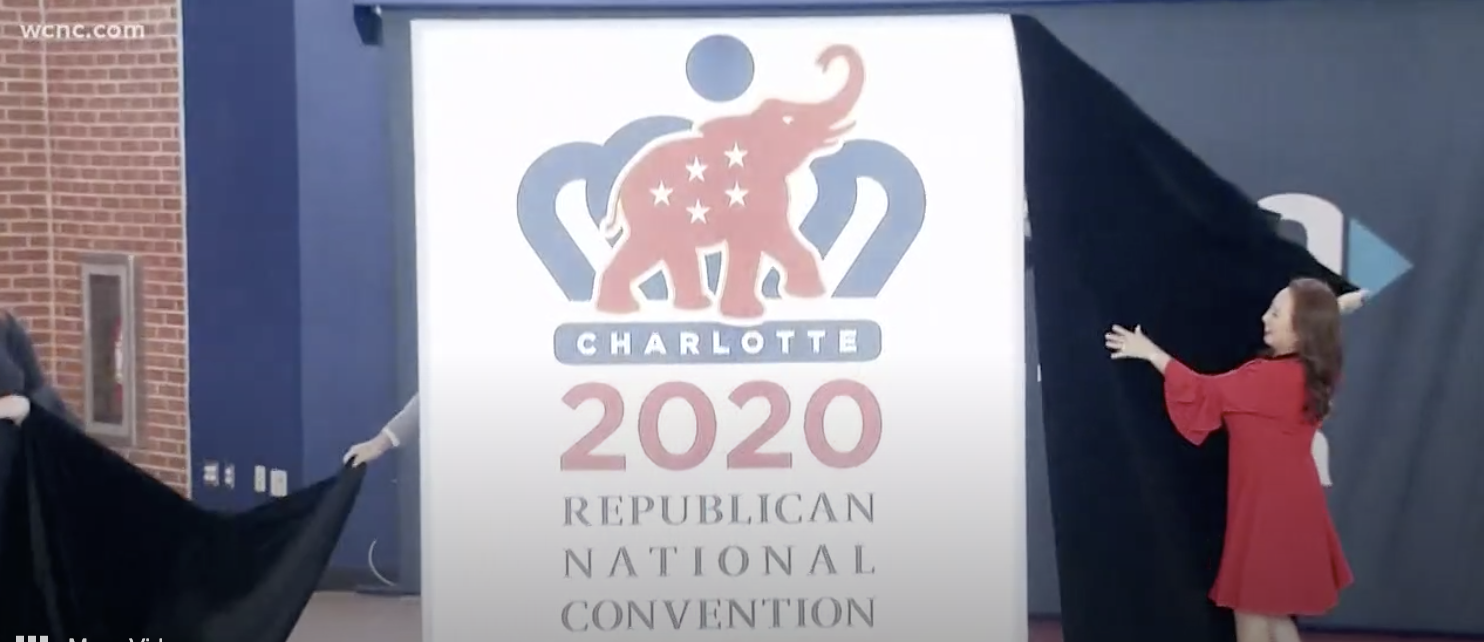
Rarely has a political convention focussed so strongly on distracting attention from current actualities and reconstituting a disparate party as the 2020 Republican Convention that met to nominate Donald J. Trump. The mood was tense, and the nation as desperate for a powerful political icon. While the country had been counting COVID mortality rates and lamenting police violence and the injustice of health inequalities across the nation, a balloon of good news was levitated, a roly poly elephant leaping to the stars. Rarely has an animal assumed so much iconographic power and significance as the in the field of vision of spectators as the monochrome red elephant that the RNC adopted, seeking a needed sense of purity to the circus animal that was a longstanding symbol of the party. Amidst numerous bona fides to Trump’s character that were paraded from the platform in place of a platform, the tacit claim to “Support President Trump to Keep America Great” was captured by the almost floating icon of an elephant rising, lifting its trunk regally, unveiled in 2019 as moment marked by newly invigorated partisan identity, if not a reassuring rebranding.

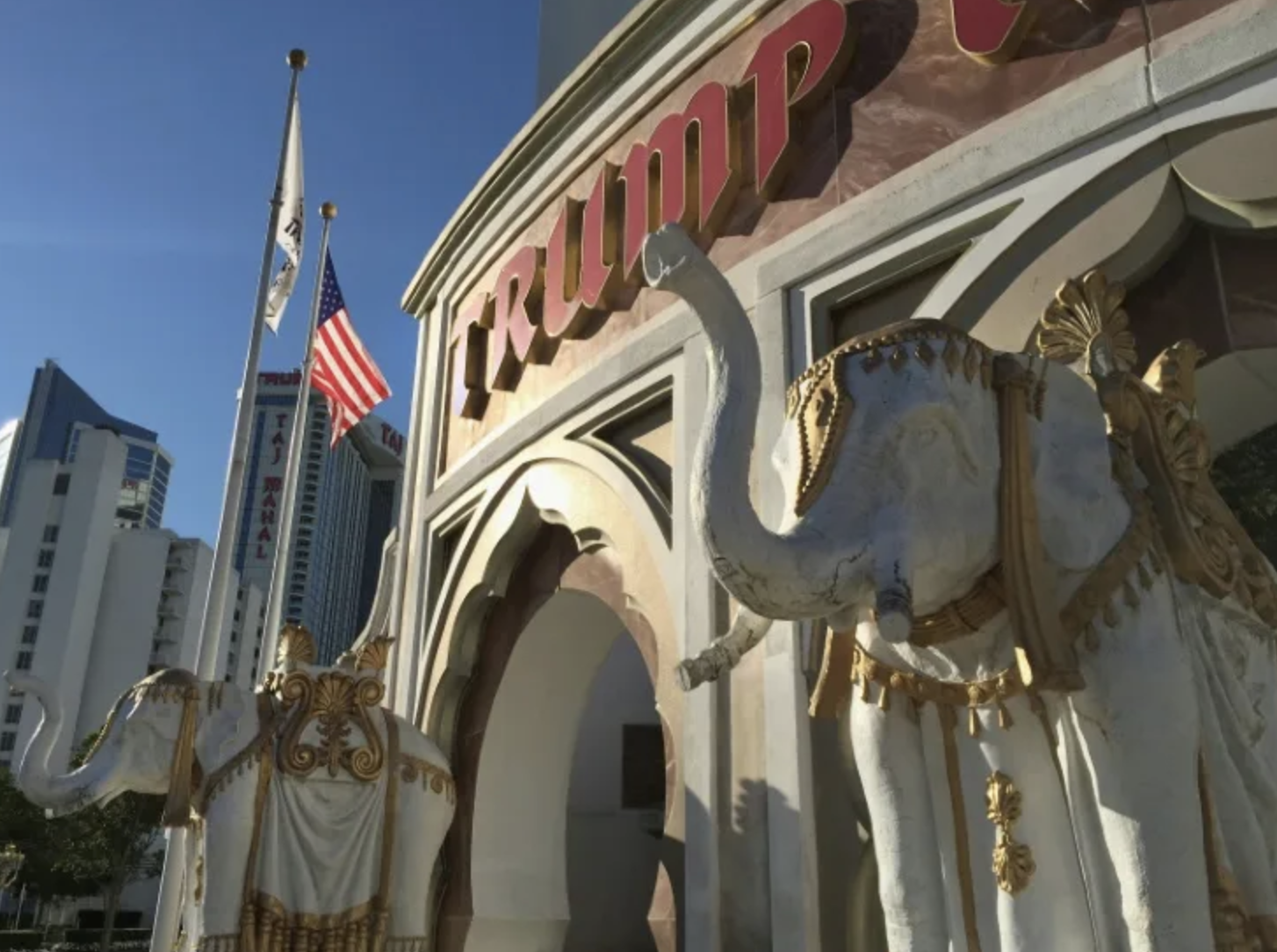
The rising elephant aspired to the monumental scale of an already anointed candidate’s victory; more than a mirror and a map, its shiny surface akin to those shiny reflective gold plates on the latest skyscrapers adorned by “TRUMP,” was an emblem off which history slid, less as a future map than a monolith blending partisan confidence with revisionist history. Revisionist history was historical fabulation for Donald J. Trump, of course, who had adopted the elephant as something of a mascot for Trump Taj Mahal, one of the three casinos built on the New Jersey coastal resort town in the 1980s–before it went bankrupt in 1991, and Trump Casinos and Resorts filed for bankruptcy in 2004, but the elephants that adorned the Taj Mahal added a weirdly nostalgic glitz akin to a Crystal Palace for the fin de siècle, disguising the value of the property by sheer investments after the city decided to legalize gaming in a bid to rescue a sagging economy, that Trump could not resist as a scheme to make money at three new casinos, the centerpiece still remembered as decorated by gaudy elephants–in what might, in an alternative universe, have been the end of the story.

Trump Taj Mahal, Entrance, Atlantic City, New Jersey

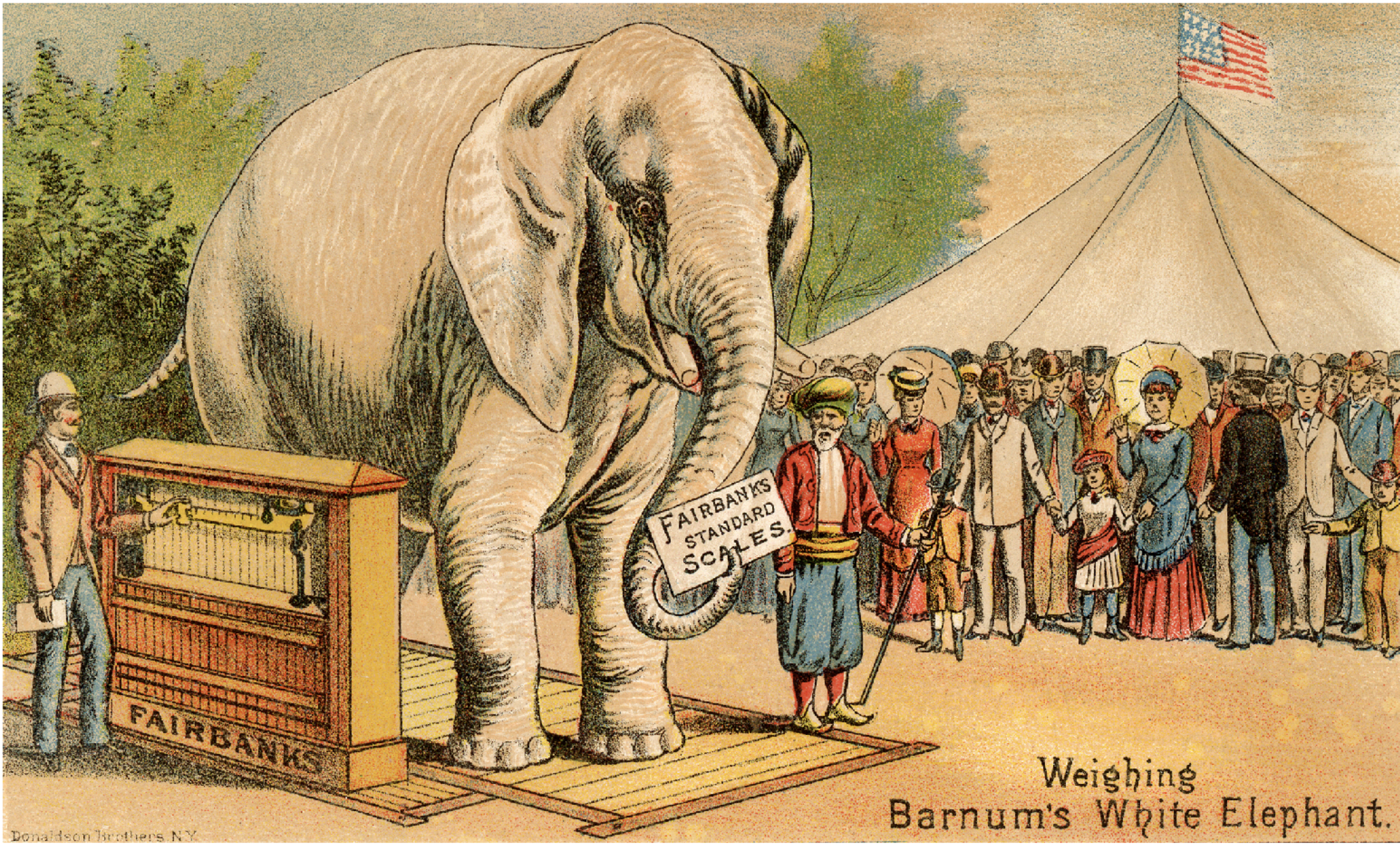
The saddled elephant raring its trunk in orientalist garb might have been from the Crystal Palace’s East India Company’s exhibit. The striking image of luxury promised a new venture for the construction magnate, and the reburnishing of the party mascot of the elephant seemed to disguise the absence of any clear political platform, debates, business meetings, or slates of candidates at the Charlotte, NC convention–only speeches vouching for the candidate’s credibility despite all evidence to the contrary. The new elephant that had a complex racial history of proving the purity of. the party when it was introduced at the same period that P.T. Barnum had introduced to his circus the first “white elephant”–a Burmese beast, publicized as a “sacred elephant” to complement his crew of African Grey’s, as a sign. of the purity of their party. Some four years and one election cycle after the circus Barnum & Bailey had retired elephants from their show, after 145 years, the iconic raised trunk of circus animals entered the Republican party that Trump now adopted, the circus having complied to state and local laws that prohibit the use of bullhooks trainers long used to train the animals for their gaudy performances.

Ringling elephants perform last show, end 145-year run | whas11.com

May, 2016 Final Performance of Trained Elephants at Ringling Bros., Barnum and Bailey Circus

In retrospect, the affidavits of credibility assembled at the 2020 Republican Convention were a rogue’s gallery anticipating the absence of unity or direction in the party with Trump at its helm. Herschel Walker took the stage with black Republican representative Tim Scott to vouch for Trump’s absence of racism. The revisionary history “honoring the great American story” as much as history minimized the place of race or white supremacy in the past or current party; while the convention occasioned no change in a political platform boasted to remain unchanged, the convention featured affidavits that Trump’s “actions” illustrated just “how much he cares about social justice and the Black community,” all evidence to the contrary. Before the red elephant that sought to celebrate the party’s integrity and honesty, perhaps Hershel Walker, Tim Scott, Vernon Jones and Nikki Haley all protested too much, their eyes on the elusive “black vote” in the general election, more than the politics the circus elephant embodied. The speakers bent backwards to minimize Trump’s place in America’s racial politics, claiming “free minds” in “a large and growing segment of the Black community who are independent thinkers . . . believe that Donald Trump is the President that America needs to lead us forward;” Jones vouched that Democrats no longer served “Black Americans’ interests” in the manner they might claim.

Yet the orange-tinged weightless elephant that raised its trunk victoriously behind each speaker seemed a form of cross-messaging in recuperating an icon of tinged origins. The “great American story” offered lip service to racial harmony from Walker–prompted to oppose the first African American senator from Georgia, Raphael Warnock–Scott, and Nikki Haley filled four nights of testimonials black voters would support Trump by testimonials that denied Trump’s open appeal to white supremacists in the election. Audiences may have been assured by the solidly red beast, branded with five stars in a ‘W’ semaphoring victory, that the party was Trump’s, and the platform always the same, and racism had no place in it. But as Haley vouched that “America is not a racist country,” the hopes to levitate the elephant behind the podium told another story, its slick surface resisting the archeology that this blogpost will attempt.

Unveiling the New Logo of the 2020 Republican National Convention, Charlotte, NC, 2019

Racial politics held centerstage of sorts in the new partisan icon. The mascot of a bloated elephant of wide torso not only coronated “The Donald” as the candidate of the party’s future but celebrated the purity of the party’s coalescing about the cult of a the other great elephant who was onstage in everyone’s minds. The rebranding was puprosely thin on any history, which it seemed to deflect off its shiny surface, but pregnant extravagant symbolism–predictably over-the-top, over-determined, gold-rimmed, and also, despite including the crown of Charlotte, SC. cheap. It may have also indicated the beginning of an end of cultivating an image of victory amidst mismanagement, self-inflicted crises, and deep social unrest. But it is more: the flat nature of this circus elephant, apparently returned to the ring after sojourning as a symbol of the party, unlike the abstract GOP elephant of just four years ago, seemed historically flat, bulked up and red hued, five stars seemingly blazoned in a W-shaped constellation as if an augur for electoral “victory,” was seemingly unveiled to celebrate its own utter obliviousness to its sense of past.

Perhaps this was a trick of gigantism: for by transforming what was once a circus animal to a monolith of “red states” and uniformity, used to suggest not a “big tent” politics, but, rather, an immobile and inflexible set of positions, values, and national identity, increasingly elided with the fears of allegations of electoral integrity to the need for a rambunctious, beyond normal political practice, and outside of its performance. The new vitality that was given to the elephant as a sleek, emoji-like character was an attempt to be forward-looking, as if incarnating the false “red wave” that only disguised the advantage among votes cast on election day–rather than those that arrived by early voting or absentee ballots.

Did the elephant symbolize the assembly of a new coalition of red states behind the all-but-presumed Republican nominee? The “red mirage,” or a red wave waiting to happen, was not after all a message of rallying an army of patriots to Save America in 2020–the partisan gains of a “red wave” fizzled in 2020 even more than it would again 2022. But the arrival of a bloated elephant seemed design to promote it, and to do so in coded ways. And in the adoption of the emblem of a ‘star-studded elephant’ standing before a navy blue crown was described in 2019 by RNC chairwoman Ronna McDaniel as incarnating in cartoon form the “traditions of the Republican Party” as much as a common sense of purpose that would fill the bill for a call to “Support the Elephant Heard,” one always suspected that it carried with it a sense not only of gigantism but dung. But was the rebranding of the red elephant not just a ground-plan for electoral victory in a future electoral map, that offered naught but a uniform red field, or a mirror of a monumental vision of a groundswell for a red dynamo of partisan strength–but a terrifyingly coded image? The resurrection of this old emblem of partisan unity as rearing on its feet, uniformly red, broadcast an. icon of consensus to the MAGA crowd with dark roots deep in American history.

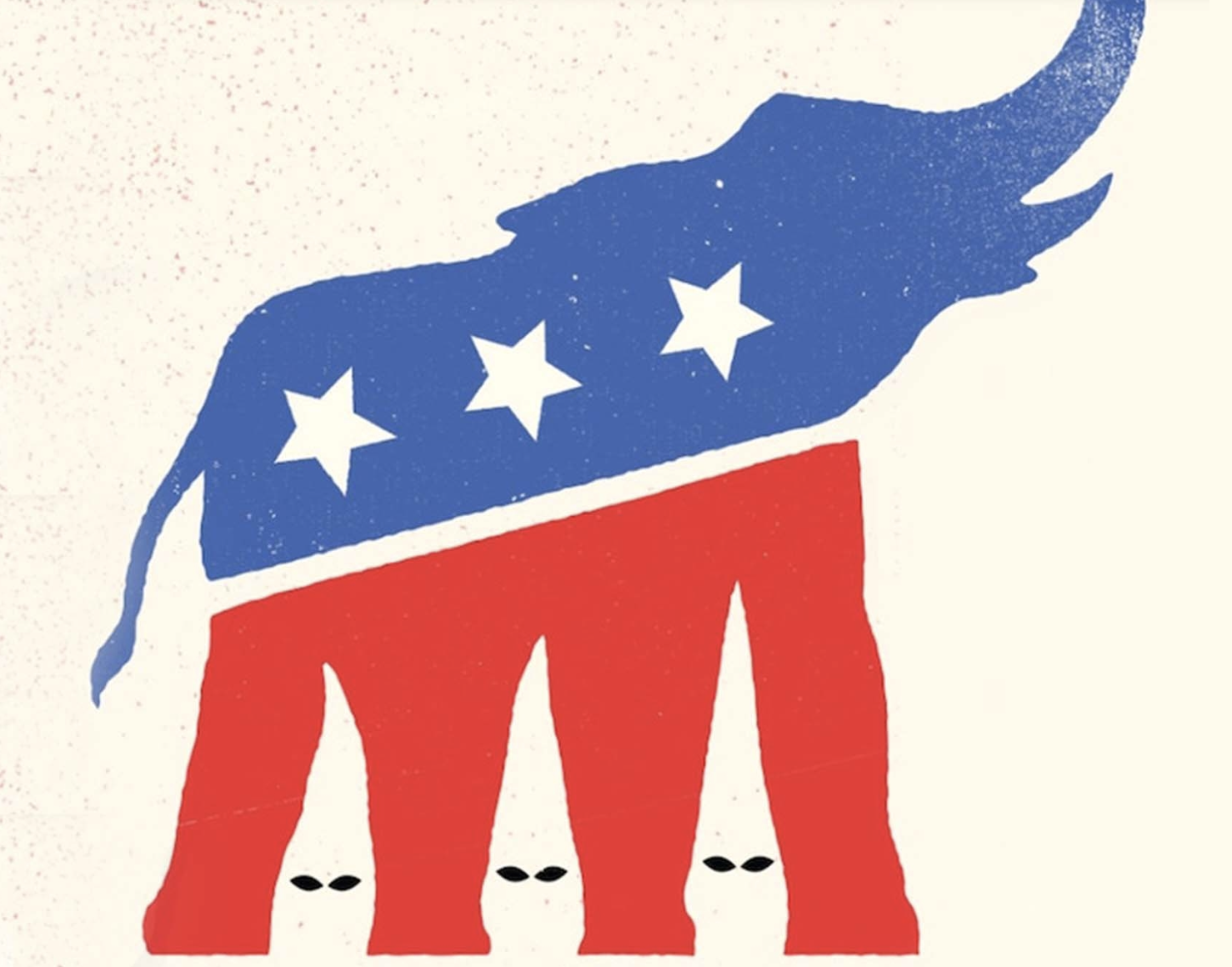
But who could doubt that the distinct smell of copious dung all along? And the recent online sharing of an elephant encoding subtly placed KKK imagery, as if a game of seeing as, on the webpage of the Alabama GOP, may have only helped to unmask the “hidden content” and “hidden figures” for which the new county chair of the Lawrence County GOP apologized–as if without knowledge that the image derived from graphics commission by Mother Jones for an article in which David Corn observed how Trump persisted to foreground a politics of personal grievance to make a case for four, as if gaslighting the nation by evading the mismanagement of the real coronavirus crisis he had cast as a border crisis in new guise, and arguing that they party was appealing to white supremacists–and the currency of the adopted emblem in a GOP event in Arizona to promote a local candidate for law enforcement suggested that the image had traction in the party far beyond copyright infringement or accidental internet searches. Is it possible the graphic of hooded figures peering from conical pointed hoods from between the elephant’s column-like red legs was proudly appropriated as an in-the-know icon by party members?

Woody Harrington, Mother Jones (August, 2020)

The droppings of the upward-rearing circus elephant raising trunk on cue from an unseen circus-master were concealed in the three klansmen figures staring out from the Facebook page of Lawrence County’s Republican Party, but eerily conjured a past that few wanted to advertise. The graphic designed by Woody Harrington, newly adopted to announce the retirement of the former county chair and thank him for his service, suggested that the dung was not only always there all along–the graphic was first from an article that described how white supremacy was taking over the Grand Old Party–but its racist provenance. For as much as deriving from cut and paste–or accidental misuse–the original adoption of the elephant as a partisan icon was steeped in an iconography of steeped in a segregationist past.

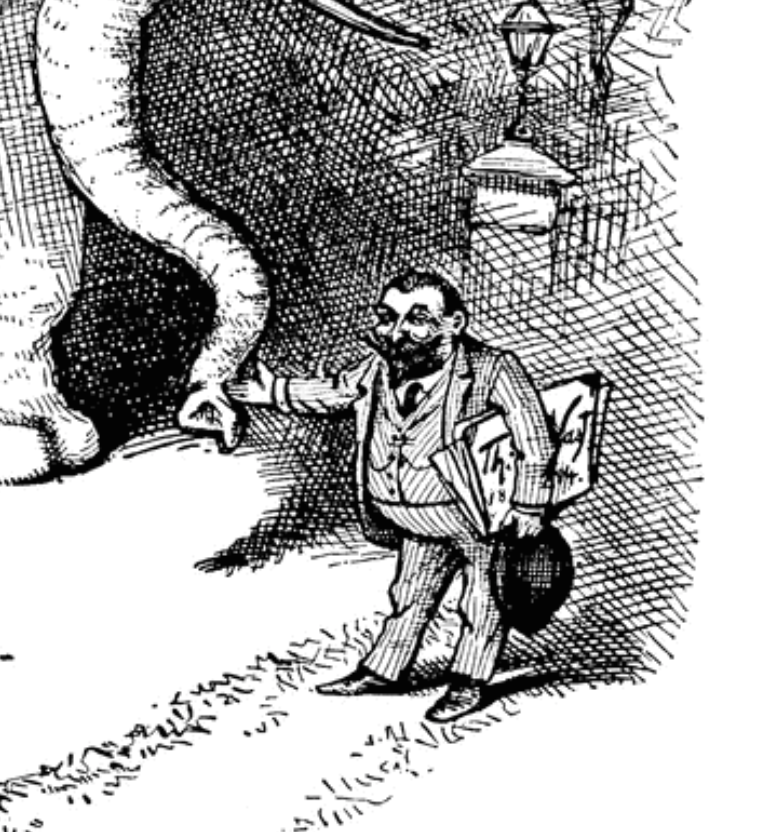
The Facebook post, claimed incoming chair Shanon Terry, who made it, used an image that the incoming party chair claimed derived from a Google search engine, to have no hidden meaning, and to be without malice, in a “deep and sincere apology” such “hidden images that do not represent the views or belief of the Lawrence County Republican party,” responding to calls he resign from his role. But he may well have protested too much. In unveiling of a new red elephant as RNC mascot, the Republican Party elided the racially coded origins of the pachyderm were quite obscured by the red hued elephant rearing its trunk, the introduction of the emblem was an uncanny recuperation of the original radicalized intent of the circus elephant that recalled the racist connotations of circus elephants that were imported from Africa by P.T. Barnum for his circus when it was adopted as a partisan icon in 1884, or as the southern states emerged from Reconstruction without expanding the popular franchise, or inequities of enslavement, over a century ago, even if, as Terry claimed, “I did not properly review a cut and paste image used in that post from an internet search for a ‘GOP elephant.'” Yet as much as an accident, the Thomas Nast cartoon promoting the arrival in Barnum’s circus of an elephant of pure white skin not as “Towering Monarch of his Mighty Race” but akin to the white Burmese elephant that Barnum had purchased to expand his menagerie of African Greys.

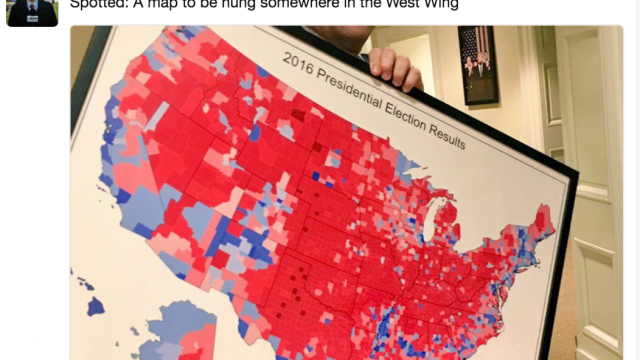
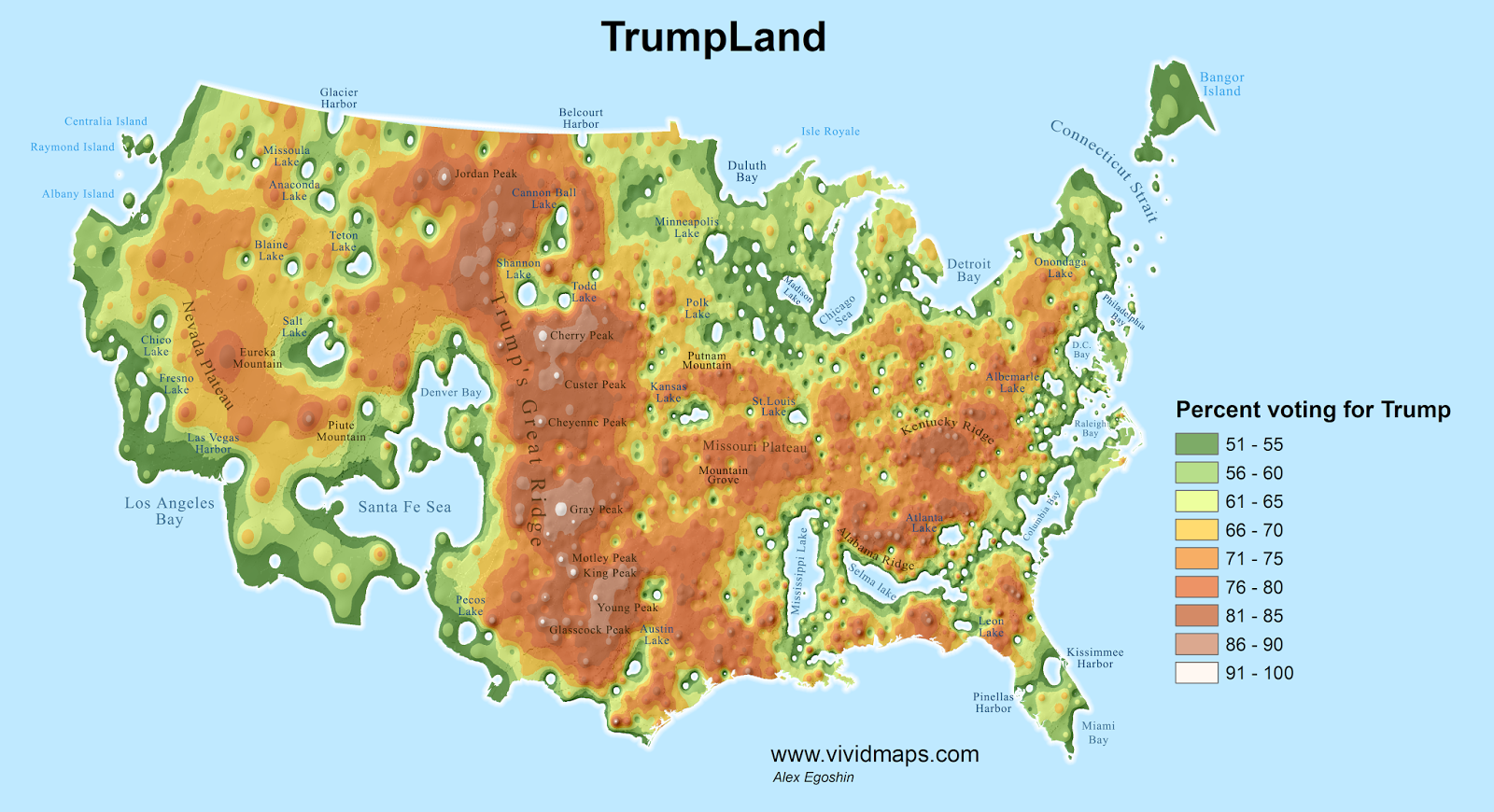
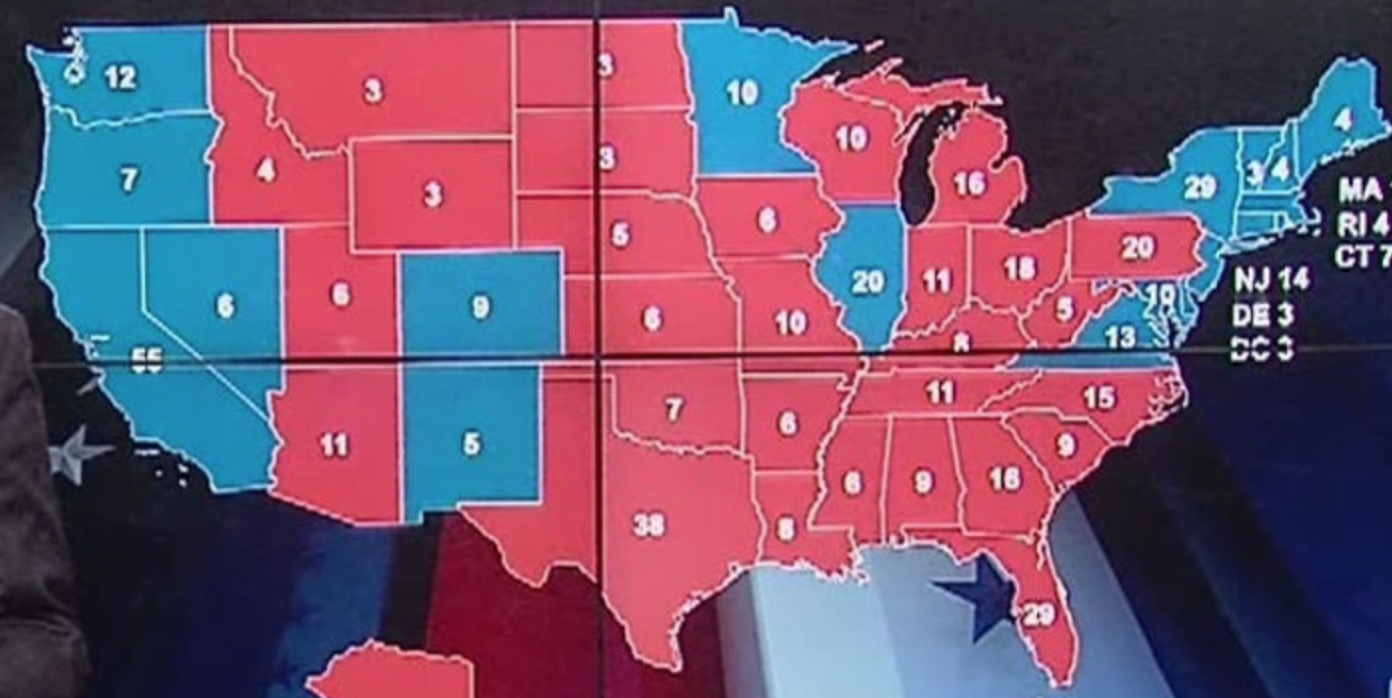
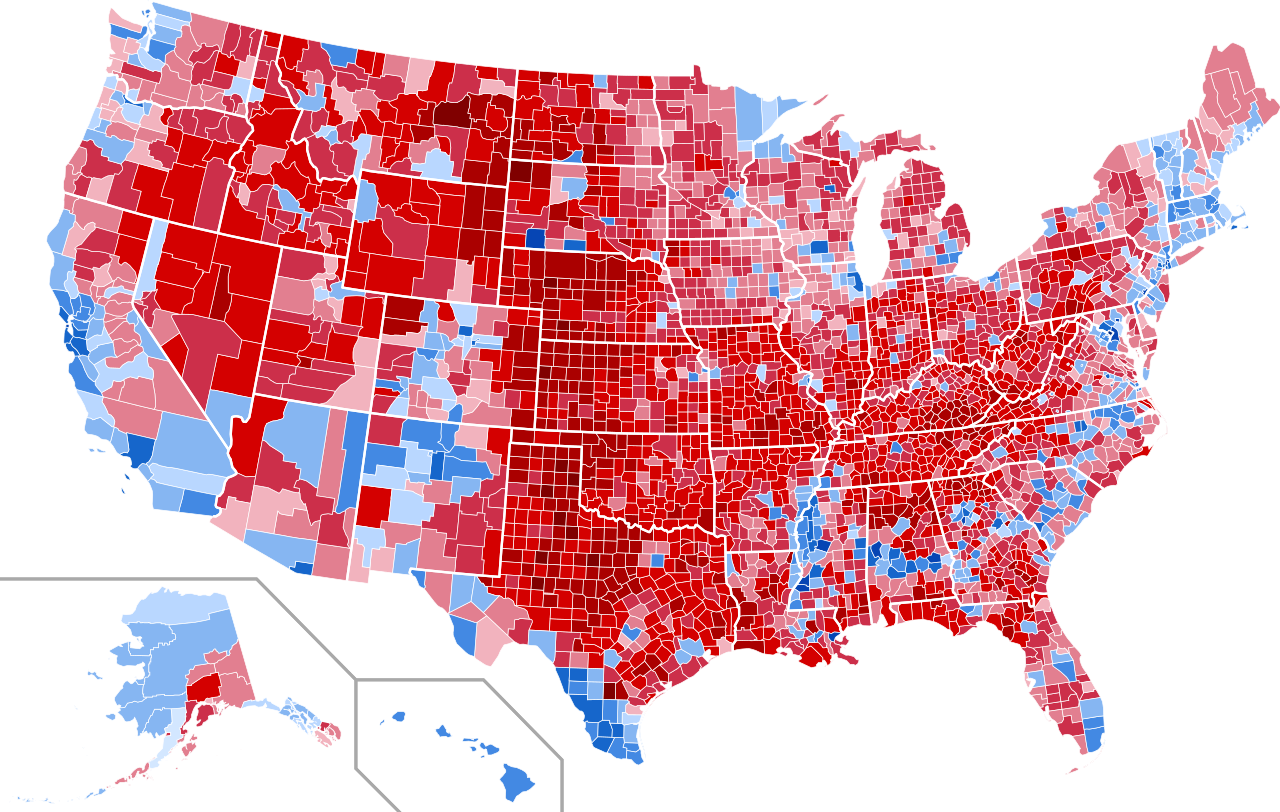
Yet was the importance of the new emblem under-appreciated as a form of branding for 2020? Indeed the revision of the anthropomorphic emblem seems to hearken to the circus elephant that first inspired the logo of the Republican party, transforming a famous cartoon of American history into a partisan icon. The apparent solidity of an electoral “landslide” of 2016 in the sparsely populated “red states” was enlivened by appeal to white supremacy that went unacknowledged: to disguise his far fewer votes, he displayed the electoral map as a victory map, blue regions confined to its coasts and inland seas.

The elephantization of the political party conjured an invisible army of belonging with deep roots in the mumbo jumbo of circus performing–and, indeed, close ties to the popular circus animal, Jumbo, whose size may to some have incarnated the monumental scale of the Republic hopes. If the prestige of the elephant was coopted in England as a “traditional” symbol of divinity in the empire–and India–in the stuffed pachyderm bearing an imperial carriage displayed by the East India Co. of the Crystal Palace, in 1855, in full regalia, in the “Company Room,” just five years before Phineas T. Barnum brought the beast to his menagerie. The new circus elephant, as if to signal that Trump was a new political animal, not in the mold of the Grand Old Party of the past, but a future icon of red hope, seemed to pronounce itself as propelling enough red ink against the map to flood the nation a deep shade of crimson, unlike the more jig-saw like coloration of lighter reds, pinks, sky blues, or powder blues of electoral maps past.

Did Trump not imagine himself not only as a new political beast, whose public performance was able to paint the map red more fully than it had long been seen? The new elephant may have conjured similar aspirations and was a new sort of political symbol for a new candidate–if not a new party, in a variation of an old political icon for new partisan ends.

This was itself a sort of circus trick. It may be no surprise that the origins of the party’s icon of an elephant drew upon the anthropomorphic partisan emblem designed by American cartoonist Thomas Nast, and adapted from the advertisements and publicity that circus impresario and entrepreneur; Barnum was the first circus in America to focus a menagerie on elephants, in the reconstruction era, by tacit references to race and the geographic origins in an American vein: Jumbo, the first Bush Elephant in the circus, captured in Sudan by a game hunter in 1860, left Paris’ Jardin des Plantes for Barnum’s menagerie twenty-six years later, was such a crowd pleaser in New York’s Madison Square Garden in 1882 that two weeks’ ticket sales fully recuperated Barnum’s costs for purchase and transport overseas.

Vintage circus poster shows Jumbo with his keeper Matthew Scott, 1882

The elephant featured as the centerpiece of the “Greatest Show on Earth” was long tied to showmanship, and claims of grandiosity, inflating the spectacle offered circus-goers by skillful messaging and marketing that the Republican Party’s 2020 convention seemed eager to evoke to its own paying customers. If the nation needed a circus, the elephant seemed to occupy center Barnum displayed the elephant to paying audiences as the “Towering Monarch of his Mighty Race“–openly invoking racial ideals as an attraction–at the centerstage of his traveling menagerie, promoting it as the largest elephant held in captivity became a focus of mass communication. In future years, Jumbo was replaced by “sacred white elephant” of Burma, as a new centerpiece for currying racial fascination that, soon after it was presented as a new attraction in Barnum’s menagerie, become, mutatis mutandi, now the mascot and icon of the Republican party in the pen of the cartoonist Thomas Nast, he of father Christmas fame. From the appearance of the November, 1884 political cartoon used the purity of the white elephant assumed to cast the Republican vote as a group of voters scared by the prospects of a Democratic President of dictatorial pretenses remaining in office.

The progression or symbolic conversion from Barnum the skilled impresario to Nast’s cartoon came full circle in disturbing ways in Trump’s 2020 “coronation” as the Republican candidate for President in a convention that featured no contest of securing a nomination–but was a coronation of a victor, before the election. Barnum’s eager hocking of a hoax–a trickster “hocus pocus” redirecting his audience’s attention to concerns that were latent in the display of the menagerie, of detecting racial difference, were converted into showmanship in the circus he promoted, in ways that might be profitably compared to the disguise of racial anxieties and feelings of persecution or economic compromises within the identification of “hoaxes” that Trump pointed out to the electorate in his candidacy.

As Trump’s career as a real estate promoter eerily paralleled Barnum in his promotion of size, immensity, and over-awing over-the-top gilt grandeur–he was a promoter more than an actual expert in construction, and skilled in transforming his boardroom to a television set before the White House became one as well. His promotion of multiple hoaxes and slogans fed a candidacy as they generated new attention in which he based as a candidate, working with similar television set designers. And it comes as no surprise, in effect, that the introduction of a new symbol for the Republican party, a “red elephant” rearing with five stars featured on his body, seemed to embody the tradition of hoaxes and promotions that the use of the elephant as an icon for the Republican party had long enjoyed, since it was introduced by cartoonist Thomas Nast in the era of Reconstruction. But the white elephant–who Nast introduced in the press as a new symbol of partisan purity in 1884 as proudly possessing dignity unlike the beast fleeing from a gun–invested the President with over-sized jumbo value even as he was overstepping his office; the elephant as a trope recast the corruption-free party as a sacred beast as Barnum billed the latest circus attraction of pure skin color as a “Sacred Elephant” in not subtly racially coded terms–terms on which Thomas Nast seized, clever cartoonist as he was, as a braggadocio illustration of the Republican party’s new purity.

Nast’ Hidden Self-Portrait in 1884 Cartoon
Thomas Nast introduced White Elephant, 1884

Trump, in adopting Nast’s clever cartoon, seemed more akin to a circus promoter even as the RNC promoted red elephant promoted as a new partisan brand. America was more than ever in recent memory haunted by blackness in the summer of 2020, as racial justice movements exploded across the nation in the wake of George Floyd’s killing and the cancer of the racist Trump Presidency: the RNC was proud of re-introducing the Red Elephant as an icon of redemption in 2020, a new symbol of the reborn party that would revitalize the nation, and, in an evocation of the associations of the elephant and memory, restore national traditions, poised as if newly resurgent over threats to the social body, a gold-limned red elephant, with a as if tattooed with an auspicious constellation of pentagonal stars across its side telegraphing a sign of victory.

RNC 2020 Logo in Convention Swag

Was this the elephant securing borders, defining the new edges of the polity, promoting those who were part of it and trampling no the rights of the undocumented, the underprivileged, and the unemployed?

The bush elephant Jumbo had indeed moved or been trafficked across borders to reach the London Zoo, and, more recently, been outfitted with a cage of its own bespoke design for transoceanic transport to New York, where it was first billed as an attraction of The Greatest Show on Earth: trafficked across the Mediterranean by a network of animal traders, first to the German traveling Menagerie Kreuzberg, Paris’ Jardin des Plantes, and London Zoo had featured “Jumbo” to impress audiences with his enormity, where “mumbo Jumbo” was a true crowd pleaser who delighted children and audiences alike. P.T. Barnum had renamed the elephant he bought for public display from the term of endearment,”Mumbo Jumbo” Londoners used to indicate its African origins, referencing to the masked male west African dancer, in Mandinka “Maamajomboo”, to promote its exoticism as a pagan idol, to foreground its size alone. If Mumbo Jumbo was a fallen idol of the imperial periphery become a popular attraction for London children to exercise imperialist imaginations, however, he felt it less reciprocal, and increasingly succumbed to increasing fits of rage. The showman Barnum did not curry religious hokum, but shortened the name of the elephant to bolster claims of gargantuan size that fit the Greatest Show on Earth; its iconic image gained center stage on promotional posters plastered towns he toured–long before the elephant was adopted as the emblem of the GOP, Barnum strikingly made the elephant into a curiosity of openly racial intent.

The arrival of the “white” albino elephant during the era of American reconstruction after Jumbo’s death, Toung Taloung, was promoted as a gentler and more civilized version of the African Bush, and indeed of a different race, to delight popular circus-going audiences with the notion of an elephant from a different corner of the world by clear analogy to the debates of blood-purity and skin color that were dominating America, as has been argued: the white elephant was not only an exotic beast, but Barnum’s celebration of its “white” constitution could be understood by white circus-goers as a response to the tensions around racial tensions in Reconstruction America. While the introduction of a red elephant as a revised emblem of a partisan icon was by no means referring to race as explicitly as had P.T. Barnum in displaying African or Burmese pachyderms, the partisan icon of a red elephant–invoking the size of the red states in the electoral map, channeled connotations of race for American audiences. Is it a coincidence that the red elephant was trotted out in 2020 as a purified elephant–now entirely red!–to meet the tastes of the Party of Trump? The large size of the elephant seemed capacious enough to contain the many hoaxes that Trump had promoted from before announcing his Presidency, in order to create a political movement rooted in promotion and promoting the sense of rugged stalwart isolation before the dangers of a rigged world.

The 65 days that led to chaos at the Capitol - BBC News

The introduction of the red elephant as a party emblem boasted the chromic homogeneity of the GOP in ways that almost seemed to revive the long forgotten fascination in elephants as a nativist symbol. If the cartoonist Thomas Nast famously assigned the dignity, probity, and size of the popular central figure of the circus menagerie as an aspiration of how claims to dignity that might allow his party to win the White House once again, Trump consciously chose the beast of a uniformity of color to express aspirations of recreating the red map in the 2020 Presidential election, in selecting it as the new emblem of a party that had grown increasingly identified with his person, casting the new red elephant as a bold statement of partisan aspirations that may have bracketed race–but channeled the deeply racialized character of the white elephant of Reconstruction. While the story of Nast’s invention of the anthropomorphic icon has been often recited, the use of an elephant to incarnated the current capaciousness of a desired electoral victory echoed the rhetoric of securing the presidency by replicating the same margin of victory in red states alone, in the victorious image of a rearing, martial elephant, as if auguring a rise of red states in 2020 as staging a cartographic reconfiguration of the electoral map.

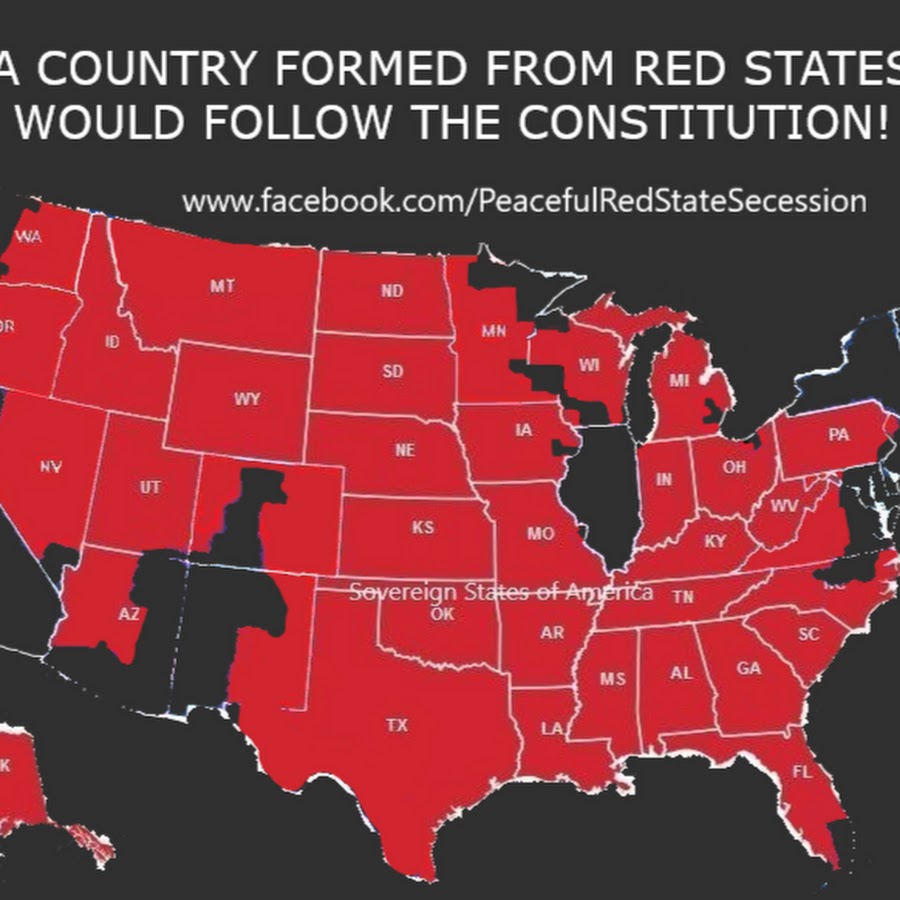
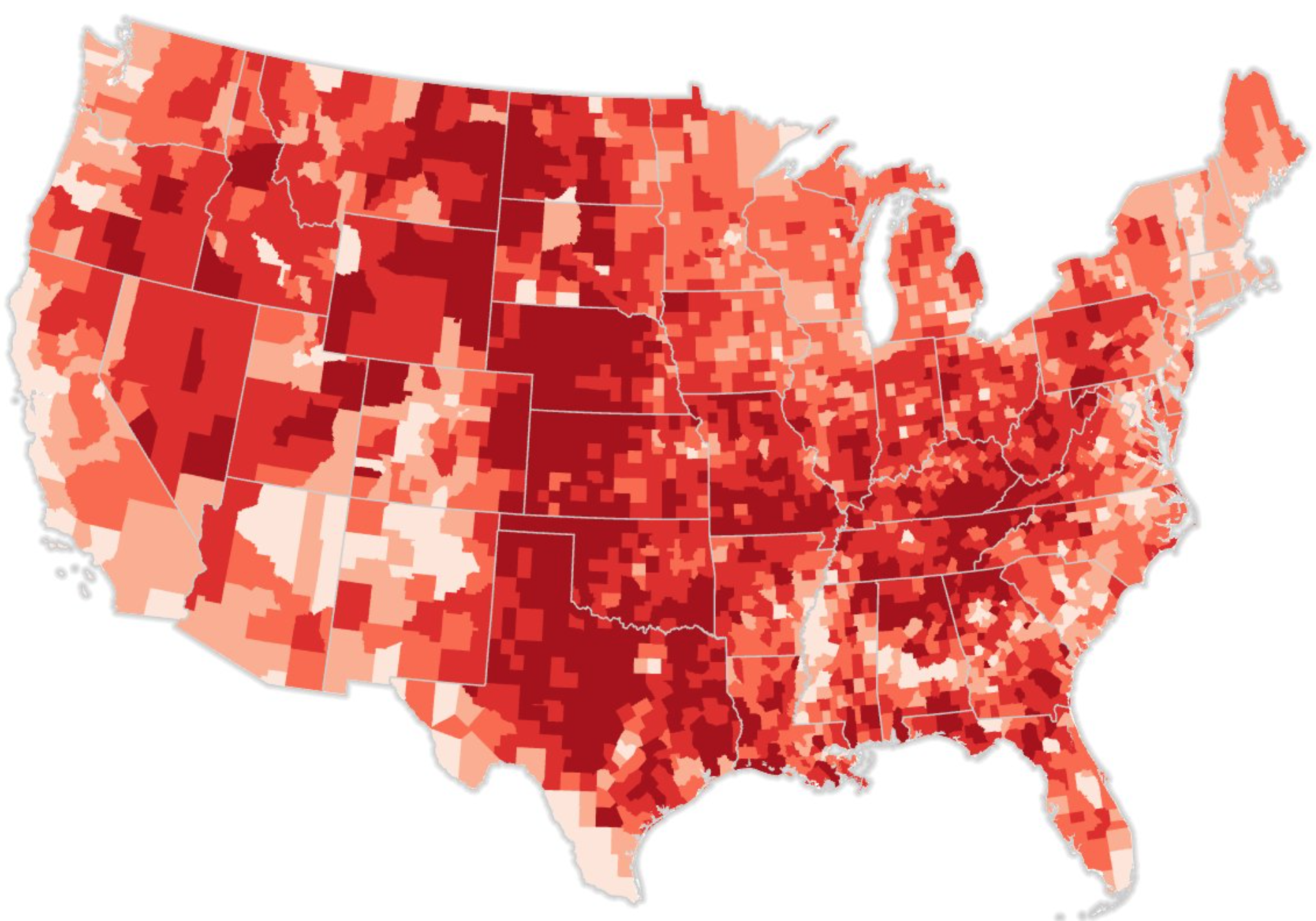
The elephant was an emblem of the go-it-alone spirit of the party, repurposing the animal affirm the capaciousness of a secessionist nation that echoed a Manichaean gloss of “sovereignty” RedStateSecession.org had extended across all of North America by 2019. The image of a “peaceful red state secession” was by no means mainstream in the political party, or a part of its platform, that no platform was ever devised for Trump’s renomination courted the broad worries of the dilution of a white majority nation filled with “illegal aliens” and foreigners Republicans had often mapped onto blue states–and echoed the strength that a “country formed from red states” might provide, in substitution for the internationalist commitments of a non-white majority nation that the actual United States held–promising the rebirth of a “country formed from Red States” alone, in a 2018 Facebook meme might generate a form of national renewal adhering to the U.S. Constitution. The pseudo-map, which circulated on social media and the internet, rather than in printed form, was itself a hoax–to use the terms Barnum claimed–using the smoke and mirrors of data visualization to crop the counties of an electoral map as if they would provide the new borders of a “new country formed from Red States” as if it was more faithful to the spirit of America–while leaving little question in the mind of viewers that the verb “follow” meant adhering to the politics of national renewal that were tied to a closure of national borders, embrace of white-majority culture, and refusal of “socialist” health care.

Red-State Secession - YouTube
RedStateSecession.org, 2018

The pseudo-map existed only as a derivative copied form of the distribution of Republican voters in recent elections, but it was powerful and strong as an image of common like-minded ideological preferences and political cultures, a sort of resegregation of the nation that might reveal the enlargement of the old south, not suggesting only white-majority areas, but areas where conservative voters had won since 2018. While the bizarre image of the “Sovereign States of America” took the logic of rewriting sovereignty of clear borders to an extreme, in its explicit adoption of an electoral map, omitting Broward and Miami-Dade counties in Florida, omitting much of the Northeast, Illinois–home of Barack Obama–and Southern Wisconsin, as well as California and most all of Arizona, the monochrome icon seemed to willfully dispense with California, New York, and Washington out of hand, with a vitriol that only grew in the year of social justice movements of 2020.

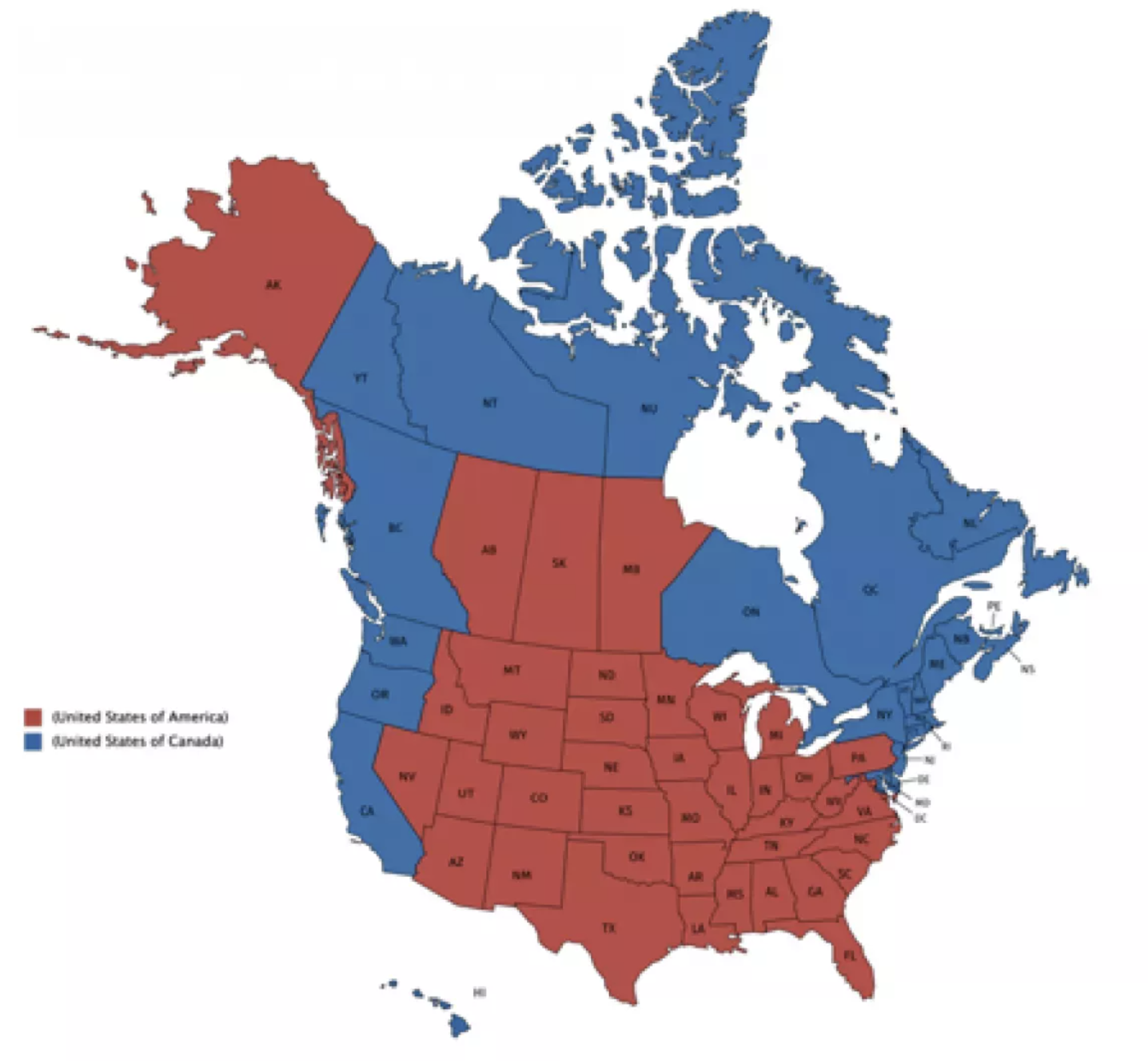
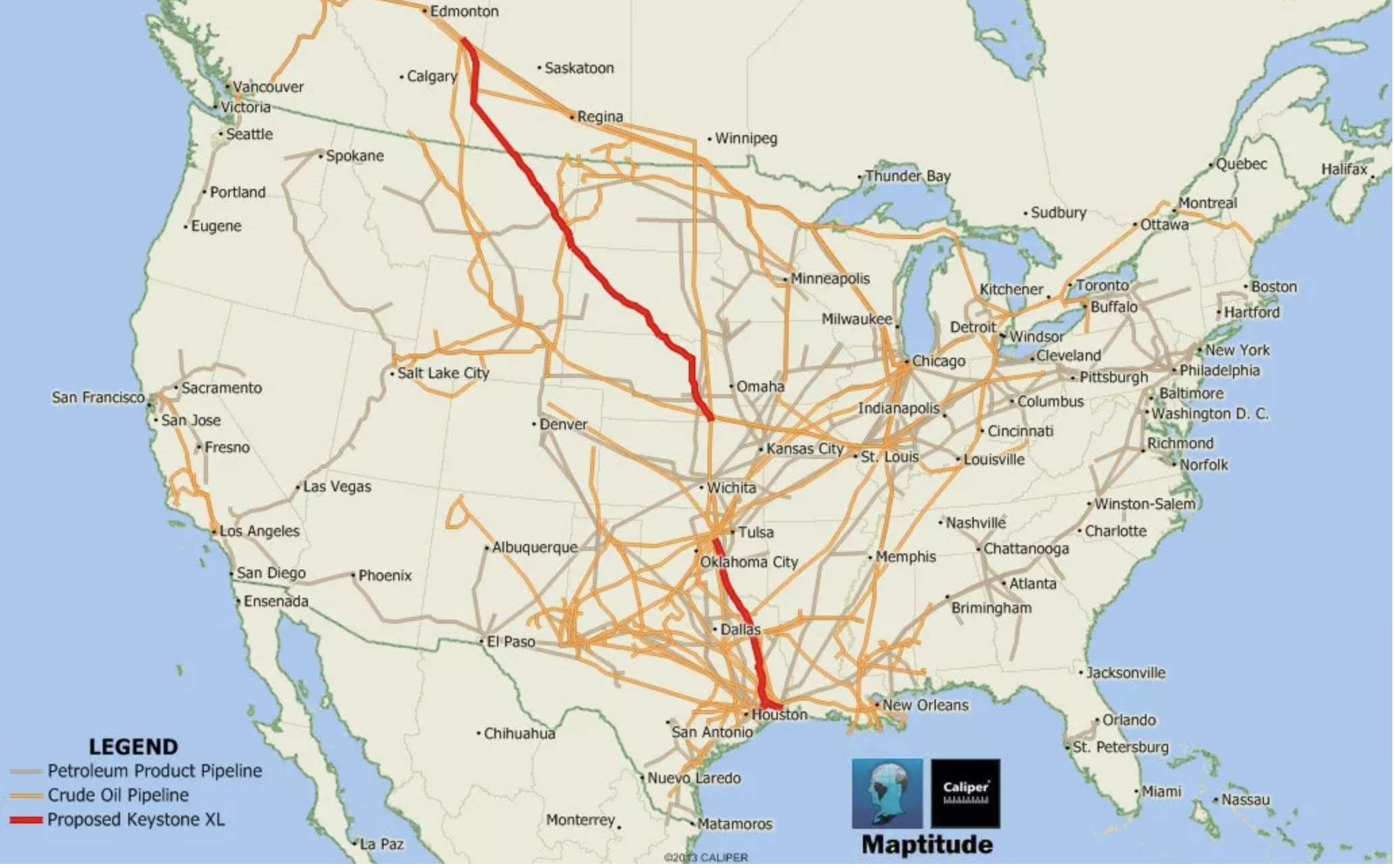
The emblem of the big red elephant referenced a notion of a nation created from a congeries of conservative-dominant counties, disdaining “blue states” as compromises not worthy of inclusion, lest they sacrificed ideals of America’s purity in light of the danger of immigration by creating new borders for the nation as a nation. The elevation of the monochrome pachyderm became a floating signifier of the ideals of red purity on which the party would base itself in a new image of sovereignty, often asserting economic independence by the addition of oil- and gas-rich provinces within a “Sovereign States of America” of the like-minded social media bubbles, echoed in the attacks directed to “globalists” on Canada-based alt right networks like Rebel Media, that proposed a repurposing of nation as a concept and conceit, and would be mapped onto the new sacred collectivity of a purely red beast that threw earlier Republican’s red, white, and blue elephants out as relics of RINO’s–those “Republican in Name Only,” and to map a scrappy new collectivity which hewed to one geopolitical agenda and moral script. Did the “fantasy map” not only push the logic of extreme federalism to its ends, but in juxtapose the “Sovereign States of America” with a far-fetched notion of energy independence, dismissing the allegedly “internationalist” regions of the US-Mexico border, the northeast, and Pacific rim as an internationalist “Bluetopia”–by remapping the Keystone XL and other crude pipelines as in line with American economic interests located entirely on sovereign soil.

Tale of Two Countries, 2019

To be clear, the map was a bit of a “hoax,” or the logic of the hoax–a term deriving from “hocus pocus,” the claim of a magician or juggler, and itself the sham-Latin perversion of the sacramental claim that the host present the body of Jesus Christ–an etymological origin for “hoax” that was oddly appropriate to the re-presentation of the nation as another beast, and the rewriting of sovereign allegiance to an underlying fabric of America in red states alone, a blood and soil doctrine that mapped energy extraction to allegiance to the political party representing the nation.

The red elephant rising echoed the glee of remapping of national sovereignty as if sovereignty were lines of affect–ties to the true interest of the nation, evident in the preservation of racial hierarchies, preserved, in the circus, by the in If Trumpism depended on a new “red nation,” RedStateSecession.org materialized a cartographic rewriting of the nation and national sovereignty, often privileging energy independence and clear borders, and imposing those borders on a map, but affirming the elephant as an image of its capacious quality–adding the petroleum reserves of Alaska and shale deposits across Saskatchewan, Alberta, and Manitoba as if to make up for the absence of the wealth of California, the northwest, and the northeast from a “sovereign” map that would end culture wars. Revising the “Jesusland” map of 2004 to include shale deposits in the north integrated a network of petroleum pipelines from like-minded “red states” north of the border, imagining a “United States of America” of radically redrawn borders embracing Calgary, Regina, Edmonton and Saskatoon as its own endless reserve of energy and national wealth–a new fantasy of national “belonging” that denied the actually lopsided nature of the America’s population and wealth.

Mark Joseph, February 2020

The fear of globalism was a steeped in internationalist rhetoric of “open borders,” disguising a disdain for national culture and America First, in its promotion of open borders, was deemed a dismantling of the nation as we know it. The map of “red America” was a rewriting of NAFTA, and a rewriting of the secessionist Civil War, imagining the Mason-Dixon line elevated to embrace all Pennsylvania, imagining the survey that defined the border disputes between Maryland, West Virginia and Delaware as a basis to expand the division between two “United States,” one blue and one red, a spectacle of sorts that engaged observers in the image of a remapped red United States, as if imagining the old northern border of the confederacy to be hiked to include the swing state of Pennsylvania, even above the “West Line” Charles Mason surveyed between Pennsylvania and Maryland in 1768, to create a mythic country of 2020 that expanded upon Trump’s surprising 2016 electoral victory, as if re-imagining the boundary line that became a division of slave states and free states as a division between Americans and internationalists. Indeed the determination of the new “boundary” able to preserve American integrity was cast as natural, but included the area along which the Keystone XL was planned to transport crude and Canadian shale reserves as well within the United States of America–arriving at an economic integrity that the Confederate States of America had lacked.

“A Plan of the West Line or Parallel of Latitude,” Charles Mason 1768 (detail)

Such a realization of economic imperatives transcended the use of lines of latitude as a dividing line; the inclusion of the land where the Keystone ran within the “new nation” gave it an integrity often lacking in the division of the nation by political affiliations or voting patterns–

How to split the USA into two countries: Red and Blue
Dicken Shrader, 2018

–but sought to prevent the fluid Geography_of_Gilead, in which “where the edges are we aren’t sure . . . they vary, according to the attacks and counter-attacks,” but try to preserve an image of American integrity as if it were “natural,” by incorporating the petroleum pipelines and the shale reserves from which they carry crude sludge to realize the adoption in the 2016 Republican Party platform of promoting the Keystone XL within a vision of “North American energy independence” as if the Bluetopian environmentalists of the previous Democratic administration had strayed from such ideals. The map realized an actual division that seemed economically viable, if it would indeed “Support #CALEXIT!” as the “Tale of Two Countries” meme suggested.

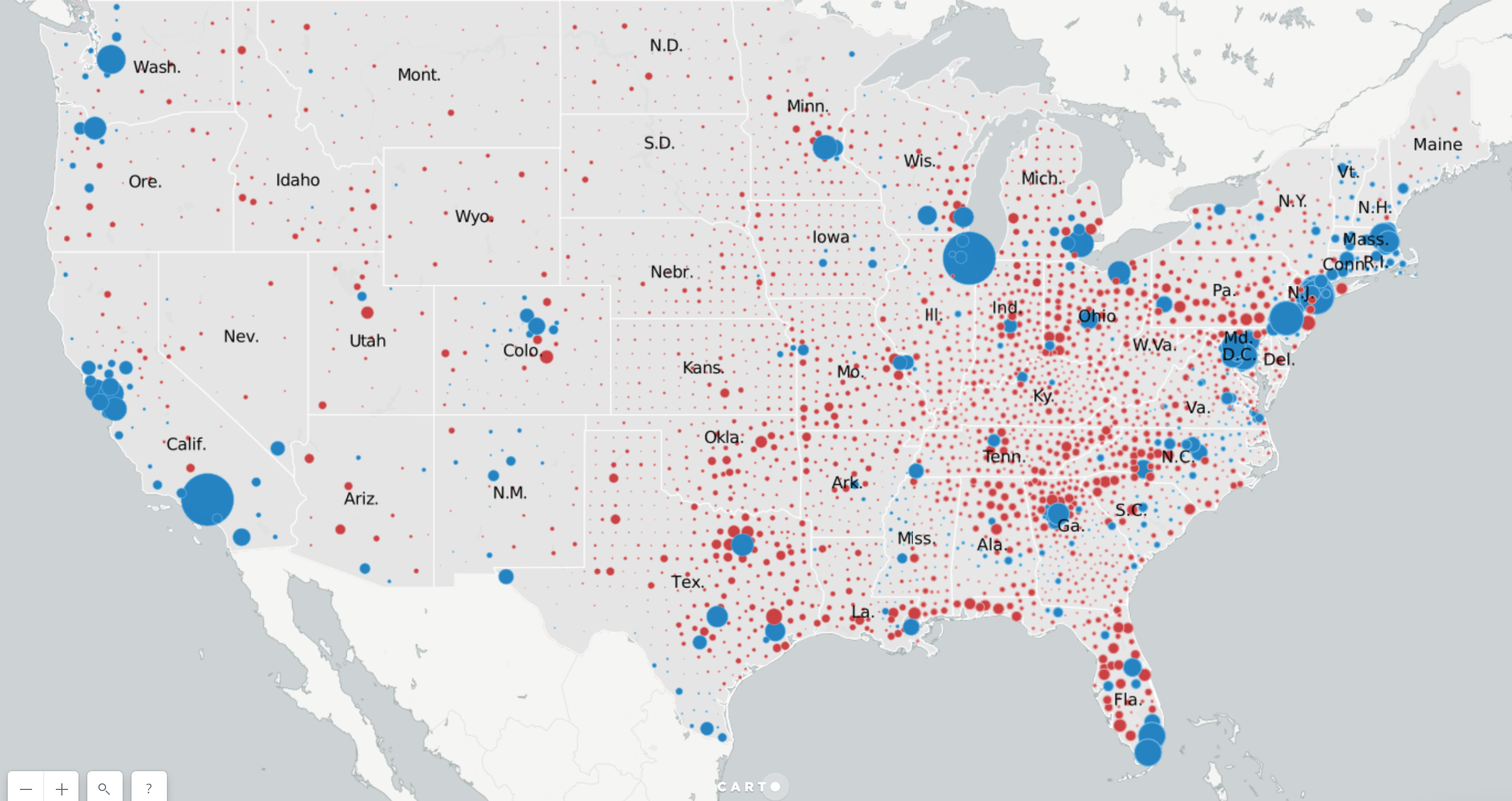
If the electoral map has become. a spectacle of repeated glossing, fetishizing, and analysis since 2008, often wrestling with an imagined discrepancy between the appearance of greater sovereign acreage of a party with fewer votes, essentializing “redness” lay in the eye of the observer, and the old partisan mascot served to embody the identity of a party that trumped reality, as if the continuity of red counties might gain sovereign status of its own.

Unreported Stats - FactCheck.org

There was something almost Barnum-esque, as much as Alt Right, in the prominence with which Trump raised th hoax of globalism to expose as a conspiracy of “globalist elites” as a threat to the nation in almost existential terms. P. T. Barnum had hewed the cultivation of hoaxes as a means to attract his audiences in the first age of mass-printing, viewing the “hoax” Barnum viewed as a part of the spectacle and business plan for the circus that he pioneered: from the display of mermaids to human freaks, Barnum promoted illusions to attract the complicity of spectators in “hoaxes” in ways surprisingly akin to the centrality of “hoaxes” as hooks able to attract and to consolidate support for Trump’s Presidency and presidential campaign. If some hoaxes served to distract attention of collusion of the Trump campaign and Russian government, Trump had long reserved ire for the allegedly internationalist “hoax” of global warming and climate change he had disdained revealed in 2015, before announcing his candidacy, through casting the coronavirus pandemic as “their new hoax” in the final year of his Presidency, from February to March of 2020, adopting the term “hoax news” later dropped to the damning “fake news” to suggest the extent of an information society that was rigged.

Trump’s labeling of “hoaxes” is not only an echo of QANON, but used the identification of hoaxes engaged in a “plot the destruction of U.S. sovereignty” to attracted many supporters by seeing economic integration, internationalism, much as Barnum promoted hoaxes (if he didn’t call them that in announcements) as a way to attract audiences. For Trump, hoaxes served to stoke popular anger by unmasking how his opponents disrespected the nation’s integrity: Trump attacked “global warming hoaxsters” of scheming to raise higher taxes in January 2014, and labeling a “hoax provided a powerful way to rally his base before a new sense of the nation, freed from the allegedly pernicious logic of “open borders,” globalist elites, digital media and internationalism–the very same specters he decried on January 6, 2021.

If “hoax” was not at first among the preferred words of rage to use in his social media accounts, it grew as a way of voicing collective rage. A text analysis of Trump’s tweets charts how he grew aligned with political discourse as a way to vent his anger and direct the rage of his constituents, as his use of social media morphed from personal attacks promoting the bogus “birther” theory about Barack Obama’s birthplace–a primal hoax–to the calling out of hoaxes more quickly than they might be mapped, processed, or charted, as he alternated schoolyard insults to channel a paranoid persecution of describing hoaxes with greater traction as he ridiculed investigation into the Russian ties of his campaign and cabinet. The twittersphere encouraged Trump to act as a border guard, identifying “hoaxes” with illusory clarity on a medium that encouraged the retweeting falsehoods; as Trump attacked Fake News, his public statements included an increased number of falsehoods, according to Factba.se’s tracing, rising with his social media presence, calling out hoaxes became a broader truth game that extending to questioning the accuracy of voting machines of the 2020 Presidential election, allegedly both owned and operated from overseas. And as claims of a stolen election seem set to be relaunched in debates about voting integrity, the fierce urgency of identifying a hoax may loose momentum as they are increasingly evidently about race. The candidates’s visibly vertiginous delight in discerning of globalist hoaxes only came back to bite him only as he persisted casting the spread of COVID-19 not as a pandemic, but just another liberal hoax–stretching credibility in the face of cognitive dissonance of rising mortality rates of coronavirus and Trump claiming people’s surprise . . .

Claims of hoaxes–or fake news–had mutated into claims that the candidate alone understood or got global politics. The red elephant introduced in the 2020 Convention afforded a new image of the nation that was the inverse of the hoax. It was a statement of the credulity of the party and the party line, as well as an identity for partisan unity–channeling a mental imaginary rooted not in continuity or federalism, but a uniformity of consensus in Trump’s own words. Trump’s attachment to “hoaxes” as compelling fighting words defined much of his presidency, as much as his social media presence. But the identification of hoaxes as objects of scorn, and insults to the nation, found a counterpart in the newly triumphant icon of decorous anger Ronna McDaniel unveiled in 2019, in hopes to consolidate or conjure a new alliance of red states to promote the Republican hopes for victory in 2020.

Charlote, NC/August 2, 2019

One could detect a sense of the circus when political strategist Ronna McDaniel took it on herself to channel Vanna White and middle America, revealing a reinvigorated elephant as a new logo for the Grand Old Party for 2020, her flowing red dress underscoring to the new monochrome of icon. Having been named to lead the RNC by Donald Trump after she had served as a delegate from Michigan who supported Trump in 2016, as the vacancy opened, with Rience Priebus becoming Chief of Staff, with the only precondition dropping her maiden name to erase any hint she had supported her uncle Mitt Romney’s 2012 campaign, McDaniel was elevated to be the chair of the Party, ensured that she could be counted on for her allegiance to Trump’s agenda and to promote his brand–demonstrating allegiance by imitating Trumps’s own warnings of voter fraud before the 2020 election and warning widespread fraud had led to the electoral loss of the man she trumpeted as as a “moral leader” while using her zealous defense of Trump as a cover to steer RNC funds to companies run by family members or as a quid pro quo for donations.

President Donald Trump arrives to speak at Republican National Committee, Aug. 24, 2020, in Charlotte NC
(AP Photo/Evan Vucci)

Could not one say that the use of the red elephant by Trump, a man widely known to delight in manipulating details of his public image, and indeed his brand, channeled P.T. Barnum in re-presenting the red elephant as a party emblem to the 2020 Republican Convention in Charlotte, NC? The elephant that was displayed in the political convention that was located proudly in a southern state without explanation by RNC Chairwoman Ronna McDaniel in 2019, as an icon of partisan purity by 2020. Was the red elephant not a recuperation of the spectacle of the elephant as a refraction of America’s still fraught racial politics? Barnum was a master of public relations, and used the magnificence of the elephant as a centerpiece for his show, and an elephant seemed to incarnate hopes for an augur of victory in the next Presidential election, in the memes and media circus of unveiling of an icon of partisan identity. The symbol of the 2020 Republican Convention was unveiled to bridge novelty and tradition within the Republican party, but invoked performative rituals of circus-going as a spectacle about race, whiteness, privilege, and spectatorship–as much as a new mascot. Its political symbolism might be placed in a volume of Circus Studies or political symbolism, a regal pachyderm that recalled the Monarch of Illusions by invoking the partisan remapping of American politics as a swath of red states. The energetic red elephant proposed as a new symbol of partisan identity seemed an attempt to reenergize the party headed and embodied by the circus-master Donald J. Trump.

Was not Barnum, a showman who had perfected the arts of mass communication in the Gilded Age, gliding from popular entertainments to mass spectacles with unprecedented ease, able to transform the circus into an economic machine and public spectacle in ways eerily akin to how Trump has changed the political process of the United States? As much as changing Free Speech, Trump has exploited anxieties by offering what audiences “wanted to see” in a new regime of politics and political performance, continuing a Barnum tradition of combining minstrelsy, freak shows, entertainers, collections of menageries, and clowns in a “big tent” of the profitable economy of the circus show. Barnum was not only an orchestrater who expanded the circus as an institution of modern life and mass culture, converting spectacles into profits by promising to transport audiences into the fantastic, but was a promoter who insistently promised “good faith” to his audiences even as this strained credibility.

Barnum was the great American creator of ‘hoaxes’ central to capturing public attention and framing public opinion. Although the “Sacred Elephant” he later displayed to extend anxieties of the determination of racial difference to the animal kingdom was not white, promotion of the elephant that was appropriated by Thomas Nast as an icon of the Republican party prominently triggered fears of the identity of racial characteristics by universalizing them to the ostensibly pleasurable arena of the circus. Hoaxes were there from the very start of Barnum’s career as a promoter of the fantastic and curious wonder for audience’s pleasure: Barnum’s career began with his purchase of a slave he exhibited as George Washington’s own Mammy–a figure able to cross racial lines, peddling racial stereotypes in a spectacle of servility. Barnum promoted the woman, Joice Heth, as a sideshow curiosity, importing the plantation economy into vaudeville, as the allegedly hundred and sixty one year old Mammy of the first president entertained white audiences with barely credible stories of how she had nursed George Washington, that promoted the social dynamic of a plantation as the American narrative, as he deployed race and racial anxieties in a human museum, in the American Museum in downtown New York from 1842: as improbably as the White Elephant he imported from Burma gained crowds as an alleged education on racial difference, Barnum began from exploiting desires, fears and boundaries of normalcy; mass advertising in printed flyers attracted audiences’ interest to freak shows, promising “prices reduced to suit all classes” and boasting of his own populism, offering audiences primarily “instruction and happiness” while pursuing financial gain. The show begged complicity with the master-showman–Barnum boasted at combining “smoke and mirrors” with “a little ‘clap-trap’ occasionally, in the way of transparencies, flags, exaggerated pictures, and puffing advertisements” in “the wildness of wonderfully instructive and amusing realities,” that set their own criteria of truthfulness.

P.T. Barnum’s 1835 Handbill Advertising Joice Heth as “Natural & National Curiosity”

Was prominent billing of a long-lived manny as a “natural and national curiosity” a template for inviting audiences to witness the contrast the “sacred” elephant to darker African elephants, shipped to America at Barnum’s expense?

Mr. Barnum’s White Burmese Elephant, ‘Toung Taloung”

P.T. Barnum had arrived at the use of the elephant as a focus on entertainment and moral instruction followed how his American Museum suggested a welcome traffic with and blurring of knowledge and science in the name of compelling illusions and pleasure. And after the Museum burned down in 1865, rather than being the end of his career, he promoted “P.T. Barnum’s Traveling Museum, Menagerie, Caravan, and Circus” as a road show, publicizing its contents for audiences across the nation. He returned to New York by 1877, promising to cater to all audiences’ pleasures by featuring the new addition of “$500,000 worth of Foreign Features” with assurance of “prices reduced to suit all classes,” emphasizing his egalitarianism. If Barnum boasted “the largest, finest, and best menagerie and circus in the world” he cast himself not as a promoter but as acting “to my countrymen and countrywomen as a minister of instruction and happiness, while pursuing my primary purpose of making money.” The arrival of a Bush Elephant purchased in 1882 from London Zoo as the central exhibit in the menagerie displayed in Madison Square Garden, promoted widely as “the largest elephant in captivity,” whose prominent billing and attracted such massive crowds to recoup costs of transport and purchase in just four days; Jumbo’s later 1885 death in a train accident led the elephant to be replaced him with the commanding attraction of a Burmese albino elephant, shipped to New York, to replace the bush elephant’s center stage in his menagerie. Barnum long exploited print advertising, and promoted the “sacred” Burmese, Toung Taloung, imported from the Near East, as a “white elephant” whose different stock than elephants of African origin was morally instructive, Barnum, as if its white skin denoted a different race, courting popular fascination with miscegenation and shades of skin color in Reconstruction America.

The hoax, as so often in recent years, was part of the point. Even if the display of the white elephant was more about race than exoticism, the shift from the size of the elephant Barnum promoted fit the times of Reconstruction, but tapped into the display of race and racial difference within Barnum’s promotion of a carefully curated image of Americana. Barnum featured exploitation of race in his showmanship in 1835 by exhibiting former slave Joice Heth to paying audiences, as the mammy of George Washington as a national curiosity in New York’s Niblo’s Garden. The hoax who delighted audiences by promising stories of raising “little George” for the Washington family, Barnum adeptly exploited the place of enslavement held in the national fabric of America led directly to his subsequent exploitation of an elephant in the racial politics of reconstruction America by 1884, when he had promoted the purity and probity of an albino “white elephant” before it arrived in New York by ship from London as an animal possessing greater distinct characteristics from the African Grey he had featured in his menagerie and traveling show–a probity featured as Nast used the pachyderm as an anthropomorphic icon of the Republican party that very year.

Who else but a zealot and convert to the cause of a candidate obsessed with political promotion and image would realize the critical importance of rebranding of the party in anticipation for the 2020 election, to take time to promote and announce the roll-out of a new political iconography of the elephant–a red elephant–with purity of purpose? While Trump’s commitment to steer the party to victory in 2018 midterms had failed to translate unprecedented advantages in fundraising McDaniel had ensured to a margin of victory, the largest elephant in the room of animating the electorate for the Presidential election.

Was it at all surprising Trump felt the party needed rebranding? The elephant would be a potent signifier of the purity of red states to those who wanted it, inviting images of a domestication of wildness, a channeling of white anger, and a sense of bucking tradition and loosening of decorum, all rolled into a rearing beast.

President Trump Addressing 2018 Republican National Committee Winter Meeting

The redesigned “red elephant” was perhaps a white elephant of political iconography, but a new regime of truth for the political party. For in abandoning the red, white and blue to promote a uniformity of purpose and single mindedness that echoed the “sacred elephant” cartoonist Thomas Nast had adopted to represent the Republican party’s nobility by anthropomorphizing Barnum’s new exotic addition to his famed menagerie–a “white elephant,” nobler and more kind and docile than its African cousin–in ways that would consciously play to the consciousness of race among circus-goers in post-Reconstruction America. Was the new red elephant, distinctive in its chromatic design, a color that might not only signal rage, or anger at the declining moral standards and protection of liberties, but a conformity around an image, in ways that Trump, a master of the image, must have found appealing as a new branding of the political party under his own imprint?

GOP Square.svg

While the elephant was long red, white, and blue, the new monochrome elephant projected an imaginary of a unified party, no doubt composed of “red” states, purified and poised to advance into the 2020 Presidential election as a united front, long before the social justice protests of 2020 that reacted in shock to George Floyd’s brutal murder by white police, head forced to the ground in Minneapolis by local police before a crowd of onlookers, and the social reckoning these protests bought by the convention itself. Having spent party funds on covering all legal fees related to defending the sitting President from charges of Russian interference in the 2016 Presidential campaign, McDaniel seemed to seek to make a fresh start for Trump’s campaign for reelection, adopting a logo of chromatic conformity for a campaign that would not adopt or issue a party platform, but that revolved around the new leader of the party.

How the party would map onto the country was a question that was on the front plate of many separatist groups by the summer of 2019, when the question of how a non-nation rightly secedes to create a ‘country’ prompted many cartographic fantasies rooted in the appeal that “nation” was an ethno-linguistic group of common customs, and the alleged principle that all states have the right to secede from the union: “red states” did not really follow state lines, but could be carved from electoral districts and drawn by software in a loopy map of alleged unity, not without appeal to many white supremacist ideals, avoiding most coastal regions, and larger cities outside Texas and Georgia. While this internet map originated from a political fringe, the fantasy of a monochrome elephant foretold a red coalition’s coming victory, as in inviting readers to contemplate the legal justification that might exist for eastern Texas, western Louisiana, or the western panhandle of Florida to secede from the nation.

Red State Secession/August, 2019

Redesigning the very republic as if in DIY drawing of electoral districts, in an inelegant from of gerrymandering that dropped sections of Florida, Wisconsin, Michigan, Ohio, Arizona, Colorado and Virginia and a strip of Nevada that echo the demand to “do your own research” to recognize your allies. The oppositional politics of the map of almost Manichean design was best met by a uniformly red elephant as its emblem. Perhaps the deep fantasy of cartographic excision was less based on the secession of the Civil War, than the Looney Tunes logic of separating Florida from the United States to the Atlantic with a saw in 1949, with the cry “that does it–South America, take it away!” to redraw the nation in the Red State Secession by cutting Broward, Palm Beach, and Miami-Dade counties from the Union, in a hardly convincing map of states that “follow the Constitution”–derived from electoral maps. The almost comic cohesion of a red elephant might enjoy suggests a regime of stagecraft and suggestion, that openly showed little but gestured to a rich history of political iconography far deeper than its crude cartography suggests.

Bugs bunny cuts florida off America.

The fantasy of the monochrome elephant might be sufficient to accommodate all local interests in a buoyant beast of even larger girth was hardly new. The image of a monochrome elephant s party logo began with the introduction of the animal by Republican cartoonist Thomas Nast, who took the image of an albino elephant–the first “white elephant” of allegedly greater purity than its African cousin–at the height of reconstruction to appeal to Republican’s adherence to greater dignity in their own party’s principled platform of reform. By the time that the convention to anoint Donald J. Trump as nominee for a party without a platform got underway, as if to tell us we had been watching dangerous performances all summer long in social justice protests spread across America, the remodeled red elephant that hearkened back to Thomas Nast’s pioneering use of the bull elephant to champion the vigor and capaciousness of a party to which he belonged as an image of the nation and the purity of its leadership. The recuperation of what Nast saw as an image of nobility and purity of purpose in Barnum’s new addition to the traveling menagerie boasting moral instruction was also in ways a return of the repressed, tapping into the racial anxieties that were projected onto the African elephant as an emblem of the domestication of the savage beast.

For elimination of all tricolor in the new brand of the President’s party recycled the very racial insensitivity and unsavoriness that the exhibition of circus elephants had long signaled. When circus entrepreneur P.T. Barnum extolled the purity of the exhibited albino “white” elephant he purchased to introduce to American audiences as a nobler alternative to African Greys, he desired to please circus-going audiences in Reconstruction America. Unlike the darker “cousin” Jumbo, who after being captured in Abyssinia in 1861, was sold by animal traders to the Jardin des Plantes as the largest elephant in captivity, and who Barnum had brought to America by boat from London as a centerpiece for his traveling show, Barnum promoted the albino elephant as a gentler, nobler, and more docile breed. The creature, described as of different cast and moral status than other elephants who had toured the nation, became a media sensation whose claims to purity Nast had channeled. While the cartoonist hoped to communicate the new moral character of the Republican party, in the very costume Barnum outfitted and exhibited the Burmese beast, the racial anxieties he tapped were eerily akin to those Trump stoked at the 2020 Convention. Barnum had promoted a beast not captured from Africa, but from Burma’s court, where it was regularly serenaded and invested with sacred character, suggested the subject removed from “blackness” and slavery, a different stock and perhaps race of elephant, in ways that the audiences of Barnum’s circus could not fail to appreciate and discern. Was the watered-down eugenics of Barnum’s beast not implicit in the “white elephant” by which Nast embodied his own political party?

Thomas Nast, “The Sacred Beast” (1884)

The vaunted new red elephant was a new embodiment of the party, but mapped it onto red states. The new logo keyed into a color line, in ways that may hint at the future meaning of the semiotic weight of the party logo for generations who may only know the political animal and not the living beast. To be sure, whatever future semantic properties of the pachyderm as a symbol of political party were raised in 2010–as the animal’s significance seemed remote from then-current political debates–

–found an unexpected response as the Party of Trump reclaimed the elephant in ways that reclaimed its spectacularity in a circus, as the jumbotron in Charlotte, NC, unveiled the spectacle of the pachyderm, devoting far more attention as the party leaders who planed the meeting wanted to discuss the “new logo” combining the iconic elephant and the city’s crown, describing the city they claimed to be far more concerned with business and development of the city. The logo’s unveiling followed President Trump’s disgraceful call for members of the U.S. Congress to “go back to the countries from which they came” in a city viewed as “business-first, not politics-first,” calling the first order of the day being “the unveiling”–a term often associated with commemoration than politics.

August 1, 2019

The Republican Party unveiled a sleek lines of a new red elephant in preparation for the 2020 Republican Convention recuperated the performative origins of the once-sturdy quadruped as it appeared on the jumbotron, whose very size communicated how much air the presence of Donald J. Trump had sucked out of Charlotte’s Convention Center.

What the party billed as a rejuvenation of the vitality of the old elephant staged a rebirth of the party at a time when its ties to the nation had been increasingly tenuous, and seemed to mask the deep fragmentation that the politics of divisive opposition had been stoked by the shock jock tactics of a President over his first term.

The GOP elephant had by the 1970s and 1980s retained its stability in abstract form, but seemed an unassailable image of the party’s security, its sleek form a clear contrast to the far more fluid, and perhaps mutable, Democratic donkey–and, when the streamlined icon emerged int he late 1970s, to assert its modernity.

Democratic donkey and Republican elephant

The new “red elephant” was not only a logo to be used at the 2020 Republican Convention, but a branding of the party that had arisen on social media, akin to the new emblems of patriotic devotion that were first engraved by the U.S. Mint on national currency to offer evidence of the piety of the after the Civil War, when Secretary of the Treasury Salmon P. Chase received letters from ministers beseeching him to include adequate “ recognition of the Almighty God in some form on our coins,” and imploring him “What if our Republic were not shattered beyond reconstruction? Would not the antiquaries of succeeding centuries rightly reason from our past that we were a heathen nation?,” leading Chase to impress upon the Director of the Philadelphia Mint the need of a device able to depict “the trust of our people in God . . . on our national coins” by a device and motto proclaiming national recognization of God, reasoning that it was evident that “no nation can be strong except in the strength of God, or safe except in His defense.” Facebook groups Red Elephant media launched March 5, 2017 or The Red Elephant–a FB group and twitter handle, @redelephantt–founded April 9, 2018–suggested the new hue of the populist party of Donald J. Trump , an aggregator and amplifier of tweets by folks like Rep. Jim Jordan, Rep. Matt Gaetz, Gov. Ron De Santis and Marjorie Taylor Greene, a new republican Party that issued the post-inaugural proclamation to be back in other form.

Donald Trump’s party may not have known how sharp his focus on Law & Order would be in 2019. But the focus on a red-state party, which commanded consensus as much as presented a platform, used the traditional party logo as an “proud and strong symbol” of–pardon the pun–a deeply truncated party, which might have been indeed a stuffed beast, eviscerated of any vital principles, and more of a symbolic avatar of fealty to a new ideal type of red states. The Republican elephant of 2020 unveiled in Charlotte, North Carolina, attempted to invest strengthened unity for a party that had changed its identity, in ways that threatened its resilience. The proverbial four blind men who came to describe an elephant might not detect the chromatic shift, but the seismic shift in partisan identity was huge in a party whose sense of identity was being strong-armed by the sitting President. The prime political parties of American politics were defined since the late nineteenth century were symbolized by animals in ways that reveal the dominance of the popular press and editorial cartooning of Harpers magazine, where cartoonist Thomas Nast elevated the elephant to a symbol of party, embodying the collective vote in less that laudatory ways, have become potent signifiers their partisans invested with positive qualities to define their affinities, invested in tricolor mascots imbued with patriotism, the elephant associated with memory, probity, and intelligence bearing three stars, and the donkey, populist, dedicated, and stubborn in holding its ground, emblazoned with four, no longer the American flag that the GOP had once pretended to incarnate for its members, but far more akin to the image of capaciousness and stolidity of tradition, known sufficiently embodied only by red states. 

Continue reading

2 Comments

Filed under American Politics, Donald J. Trump, partisan iconography, political iconography, racist politics, Repu, Republican Convention

Mega-Projects without Maps

President Donald Trump made the mega-project of a border wall the basis of his candidacy. The proposed innovation of a “wall” — a “great, great” border wall blocking the specter of cross-border transit–has offered a powerful image by which to pole-vault into Presidential politics whose power has left the nation arrested in shock. To promote the “wall” as a mega-project the nation, Trump has regularly invoked the notion of an invasion from the southwestern border, conjuring the image of a nation in dire need of protection–using this talking point not only to enter the 2016 Presidential election and on the campaign trail, but to hold his first news conference from the Oval office, and as grounds for a thirty-five day government shutdown to gain a $5 billion in public funding for the project. The ratcheting of collective attention to the imperative of the border wall has peaked as it became grounds to declare a National Emergency.

The inflation of the border wall at the cost of all other projects of infrastructure increasingly reveal both a personal fixation and public obstruction to national growth. From something like a virus, meme generator, and a battle cry, the wall that provides the latest punchy slogan for the 2020 re-election campaign–the oddly motivating cry, “Complete the Wall,” as if such a wall has been begun to be built–

–has given currency to the fiction of a “Trump wall” as a project whose urgency only masquerades its deep illegality. The absence of the wall may lead it to be fetishized as “beautiful” and “being designed right now,” Trump assures, as if to involve the nation in a fantasy, but is never mapped.

The fetishizing of such a misguided promise masks that the project, perhaps funded by stolen funds, including civil forfeiture conducted by Customs and Border Patrol at the border that offer $600 million, would mandate reprogramming billions, but fails to address the problem of massive migration and displacement. But in dignifying the border plans by discussing a border “wall,” the image helps magnify the mega-project Trump has recently elevated to the status of a National Emergency to secure funding of $3.6 billion, even its cost estimates haven’t been defined, but lie at least $15-25 billion without costs for land acquisition and future maintenance. And as if to avoid the misery of migrants who arrive in the Caravan from Central America, the wall is elevated as a mythical, beautiful construction, and played against violent scenes of sex trafficking, threats of the violence of criminal migrants, or stories of the cruelty of cross-border transit. The mega-project of the border “wall” deflects all of these, and seems a solution to the tide of migration that haunts a globalized world.

The state of state-funded mega-projects is a battleground for defining the future of the nation in both metaphorical and real terms, and it was bound to be opposed to projects of actually investing in national infrastructure. Trump has long attacked the mega-project of building High Speed Rail along California’s central valley. The project that symbolizes many of the visions of responsibility he has disavowed, and indeed the vision of building “new roads, bridges, highways, railways, and waterways all across our land” by destabilizing the role of public funding in infrastructural improvements, but using local and state funds with private capital. While the High Speed Rail was based on promises of lowering emissions and government funding of infrastructural projects that were the fruit of public stimulus projects, it has come to symbolize public investment he seeks to shun, and a vision of the future that seemed destined to collide with the alternative mega-project of guarding the nation against the danger of outsiders outside its borders. Indeed, longtime anti-HSR Representative Kevin McCarthy introduced a ‘Build the Wall, Enforce the Law” Act to ensure the project–slated at $23.4 billion–as reflecting the popular desire “the American people want” to fulfill an alleged governmental responsibility of “maintaining strong borders” that “For too long, America has failed.” Yet despite the geographic fiction of this imperative, it lacks any map.

The project claimed to bring economic benefits and jobs become a target of Trump’s anger, leading him to announce on social media “We want that money now!” in a clear attempt to shift its past and future funding to his own designs on completing a massive border wall between US and Mexico, long promised as the guiding project of the Trump Presidency–even if the wall has not, in fact, begun to be built, “Complete the Wall” the likely slogan for Trump’s re-election bid in 2020. The disdain that California Governor Gavin Newsom showed in dismissing the so-called “border ’emergency'” as manufactured political theater, in which California’s National Guard wouldn’t participate only rose the

Trump is particularly eager to allocate further funds for the construction of the long-promised border “wall” that will be insurmountable by refugees or criminals. To achieve its building, he declared an actual national emergency, in hopes to free funds for its construction that the US Congress denied. He almost acted as if the funds were ready to be reassigned, and the funds to be returned diverted to his own mega-project of border construction–and to glorify the actually uncertain technology of such a “wall,” in contrast to the “boondoggle” of a state-of the art infrastructural project of High Speed Rail, long supported by his predecessor, but which has become something of an avatar of the Green New Deal, as an opportunity to promote his construction of a border “wall.”

In a few days, Trump tweeted out a counter-image of time-accelerated wall construction from his social media megaphone, accompanied by a triumphal score as form of alternate news. High speed video of the replacement of twenty miles of bollard fencing were scored as a triumphal achievement, as if a ready-to-assemble pieces on cleared terrain was only IKEA-style assembly–showing a picture of segments that replaced existing fencing as a project completed “ahead of schedule” unlike the damning time delays and overruns on the High-Speed Rail Project that stands uncompleted.

“We have just built this powerful Wall in New Mexico. Completed on January 30, 2019 – 47 days ahead of schedule! Many miles more now under construction!” (February 20, 2019)

The two mega-projects are quite distinct in functional and in the futures they promise to create. But both suggest the degree to which political problems are both increasingly interconnected with considerable complexity–weaving problems of globalization, from climate change to immigration to economic inequality–responded to by a “simple” solution of a truly monumental solution. The GIF of workmen posed on the side of the new border fencing promoted the momentum to a mega-project of utmost national need. The project is one marked by a stunning lack of national vision, but its simplicity has proved sufficient to substitute for one. Whereas the project of High-Speed Rail or a “Bullet Train” promised to create needed pathways for economic mobility, the super-project of connecting San Francisco and Los Angeles–essentially an urban plan, moving across the Central Valley, and promising to reduce carbon emissions in coming years–was both a target embodying all that Trump denied and degraded (needed emissions reductions; public transit; global warming) but a source for needed funds.

The difficulty of these mega-projects–which oddly unintentionally echo the fascist projects of the past, while claiming different visions of modernization–both turn on the use of public investments. The allocation of huge sums to infrastructural improvement are promised to assuage the political sense of insecurity that plague the world, and the promised resolution of global specters that they promise to allieve and the futures that they promise to secure. If the High-Speed Rail Project connecting San Francisco and Los Angeles provide a broad link within the state from the hub of a new Transit Center in downtown San Francisco to the world, from Sacramento to Los Angeles, the border “wall” is a barrier to protect America’s place in the world. The claims that the rail project was indeed “dead” that were made by Republican Kevin McCarthy–a long supporter of the President–to interpret Gov. Gavin Newsom’s very first State of the State speech in Sacramento incorrectly as a declaration of death of a project that he has long opposed. The notorious pro-MAGA Congressman from Bakersfield who has long enjoyed aggressively contentious sparring on social media–“We cannot allow Soros, Steyer, and Bloomberg to BUY this election! Get out and vote Republican November 6th. #MAGA”–and to make the securing of $25b for the US-Mexico “border wall” a national priority to burnish his pro-Trump credentials. His claims as “GOP Leader”–he refuses to be a Minority Leader–on the fundamental place of “a protected border” to a nation led him to promote bills funding the “wall” and support the National Emergency, delighted in tweeting gleefully the “Train to nowhere is finally stopped”–as if the plans for completion had been postponed.

McCarthy seemed to pounce on Newsom’s address with misplaced glee as he relished the prospect of ending a project to which he’s long been opposed, and is the model of public investment in economic infrastructure that Trump on which Trump seeks to shut the book, by privileging public-private partnerships and streamlining with less accountability or review, and the promise of revenue-making public works–while funds earmarked for disaster relief and stimulus seem redirected to a costly “border wall” claimed to be prioritized as a response to current national security crisis. The antipathy that McCarthy–long tied to oil money in Bakersfield, just outside Los Angeles, through whose district the rail would run–has framed his oppotiion to the high-speed rail project led him to try to frame it as a matter of national politics, as he styled himself as a “Republic Leader”–rather than “Minority Leader,” pronounced the Bullet Train “dead” with a finality that he must have trusted Trump would notice.

The collision between the needs for funds for the border wall–an apparatus of state that is needed, Trump insists, to preserve the policy he enacted of “zero-tolerance” immigration policy on the border, but that would serve to protect the nation from proliferating specters that haunt the nation. Collision with the projected High-Speed Rail Project first planned in 2016 by voter referendum, back in 2008, in the days of the arrival of promised Stimulus Package, seem almost the exact mirror image of mega-plan, designed to bundle inter-related problems (air pollution; congested freeways; climate change; petroleum dependence; economic inequality) at a single stroke, if from an almost diametric position. But as the right accuses the “far-left government” of California, suspiciously as if it were a Socialist state in Latin America, of pushing the rail project, and President Donald Trump grips to the conceit of a border wall, the individual faces of men and women recede to the background of each.

While touching on a range of political issues, the project that declared itself free of ideology became something of a political target to Trump as he machinated to find new resources for the “wall” that the U.S. Congress denied funds. The slightest hint that California’s new governor, Gavin Newsom, Jerry Brown’s successor, would scale back or re-dimension Brown’s own pet project because it “would cost too much” prompted Trump to reclaim federal funds as “California has been forced to cancel the massive bullet train project”–code for an unneeded public expenditure–even as Trump tried to remap the southwestern border by a barrier constituents could rally around, as if designing a new aesthetics of our national space to bracketed a record 68.5 million of globally displaced people driven from their homes, according to UNHCR, at a rate of almost 45 million a day, including 25.4 million refugees.

AnCalifornia’s Attorney General–with those of fifteen other states–quickly sued Trump for declaring a National Emergency to secure needed funds for the “Border Wall.” Not missing a beat, Trump attacked the state for the right to do so after “the state . . . has wasted billions of dollars on their out of control Fast Train, with no hope of completion,” and whose “cost overruns are becoming world record setting.” Trump’s gleeful tweets about a “Failed Fast Train Project” may conceal what is really at stake–

–but the needed funds were surely in the front of Trump’s mind.

For as Trump seems to be “weighing every possible option” to build the wall’s so junk technology at the border, so that the “wall” has become an icon of “illegal immigration” and the danger of “entry” into the United States’ “open borders,” as if the President is able to exercise complete executive authority by closing the border at any time, the state audit revealing that construction delays and billions of dollars of cost overruns were due to budgetary mismanagement has been blamed on being a project of personal investment for ex-Gov. Jerry Brown, who spent public funds on an unbuilt system long promised to link San Francisco and Anaheim, and failing to link the state in the sort of mega-network Brown had proposed, and a true break of public trust. (If Ponytail suggested that a solution would be to build a “wall” in detachable sections that, post-Trump, might be submerged in the Atlantic and Pacific sea floor to offer anchor sites or artificial reefs for marine life to flourish where it doesn’t exist, the potential proliferation of mega-projects and maxi-projects as border walls world wide–

AFP/2015

–have created a terrifying normalization of the border wall in a shockingly brief time, as a mega-project promising security at a time when global security is hard to come by, as if they were tools of normal governance.)

Can the projects and their costs even be compared? If the costs of the High Speed Rail project have ballooned–as the costs of the “Wall” seem constantly underestimated and bound to rise in cost overruns we have not even begun to predict–the notion that these are comparable construction projects, or analogous infrastructural improvements. Both mega-projects–however dissimilar in nature–don’t address political problems, but constellations of issues, from infrastructural needs, climate change, and fuel consumption to immigration, criminality, and drugs, promoting projects of mass appeal in different ways, that suggest targeted projects addressing constituencies, promising to address deep infrastuctural problems to very limited degrees–their purported boldness hindered by limited funds, and facing limited support to be enacted on the scale that their promoters celebrate.

While it’s uncertain that either could ever be completed in a realistic schedule that has been announced, the projects from opposite sides of the political spectrum seem something like mirror-images, ostensibly designed as investments but suggesting almost opposed ideas of government or the idea of investing in the public good. Bound to collide with one another, both advance promised changes in landscapes, projecting solutions to mega-problems they cannot fully address, and invite fantasies of the further promises they might meet. The rise of such mega-projects seem a sign both of the increased complexity of pressing problems of powerfully political origin, but their bundling of networks of pressing political problems in a single project claiming to resolve complex problems at a single stroke, is combined in quite toxic ways with oversimplification–by both promoters and their critics who attack them–in ways that threaten to remove them from the very complex networks of problems they attempted to address. The changed status of “mega-projects” in our political discourse make them a sort of pandering rooted in slogans and ultimatums, and removed from complex problems we deserve better to map.

Hot on the heels of Trump’s fuming at Congress that “with the wall, they want to be stingy,” matched by the veiled threat that “we have options that most people don’t really understand,” Trump found the time ripe to chasten California’s governor for “wasting billions of dollars”–and charge that the state in fact “owed” the federal government $3.5 billion. The handy figure could increase the $1.375 billion allocated in budget negotiations for fencing on the Rio Grande, and in a budgetary shuffle increase desired funding for Trump’s mega-project, to reach the robust sum of $4.875 billion–almost close to that original demand for $5b, a magic number of sorts, that could be itself arrived at by allocating emergency funds from the Department of Defense–or the declaration of a national emergency as if this were an actual crisis. (The addition of $3.6 billion from other military construction projects among the $6.1 billion from the Defense Department budget that he argued wasn’t going to be used for anything “too important”–and was officially discretionary, if earmarked for construction, repairs, and counter-narcotics programs–rationalized as the mega-project would block “illegal” drugs.) The result would double allocated funds–and create a mega-project worthy of the name, for which no clear map exists, although many have been offered. But a mega-project of this size perhaps, paradoxically, itself resists mapping . . .

Racing to ensure the possibility of declaring the national emergency to get his way on Thursday, the suggestion on television that Gov. Gavin Newsom could curtail a project of high speed rail in the state just the day previous came with a search to secure more than the $1.375b in border fencing as a victory, or exit the terms of the bill he had to sign to avoid extending a government shutdown, as he met contractors to discuss the design of the wall, and sums of money able to be tapped after he declared a national emergency, and use it as a basis to claim he remained an outsider, still not bound by Congress, still not polluted by deals cut in Washington, even after he’d occupied the Oval Office for over two years–even if he didn’t really have a believable map of how to build it? Or did the Commander-in-Chief, feeling cornered by Congress, see Newsom’s seeming concession as the chance to secure billions by budgetary re-allocation? The high-speed rail system was given the fearsome price-tag of $10b; repossessing $3.5 billion of funds from a cancelled project raised dizzying possibility of an under-the-table reallocation of federal funds no one knew were there.

Trump delights in playing fast and free with numbers that seem designed to disorient his audience. In truth, the costs of a border “wall”–whatever it might look like–remain far higher than we can calculate or imagine. Trump boasts he can build the “wall” for but $12b, yet that is a figure at which most scoff. Internal reports from the Office of Homeland Security place the figure at more like over $21.6 billion over three years, The most recent plan to secure another $6.5b by some sort of emergency funding seemed less of a reaction to stinginess than a charade of creative accounting,–a dizzying juggling of vast amounts of money that become meaningless before his own hyperbolic claims of “an invasion of our country,”–the new mantra used to justify its construction–“with drugs, with human traffickers, with all types of criminals and gangs.”

In the process of pulling out all the stops in his request for emergency funding and indulging his worst impulses, the moneys slated for California’s train suddenly seemed an attractive target for federal re-appropriation. High-speed rail seemed a project whose funds were easy to hijack and redirect to the border barrier Trump was scrambling with budget analysts and contractors to fund. And when California’s governor appeared to diminish the size of his project, Trump not only pounced, but to terminate the funds of just under a billion for the rail project–a $929 million federal grant–and to demand the return of $2.5b in past stimulus matching grants, arguing they were neither properly used or matched by the state, by “actively exploring every legal option” to take the funds, no doubt in order to add them to the President’s discretionary funds during the declared National Emergency, which seems more and more a pretext for building a wall for which the land has not been secured, let alone panels designed.

Staging a “state of emergency” is a classic form of justification advance by political theorist Karl Schmitt, a promoter of executive power and extra-legal articulation of a state’s power. The demand for the funds would not necessarily allow the completion of a “Border Wall,” but would compromise a project that is important to the state’s economy. The crisis he has manufactured has led Dan Richard, chairman of the High Speed Rail project or “bullet train” to resign, as a damning letter arrived from the very transportation agency which sent grants for the High-Speed Rail Project in 2009 and 2010 called California state out of compliance with the grant agreement and promised date of completion by 2022. As chairman, Richard, former PG&E executive and pioneer in extending public transit the BART transit in San Francisco, was an unpaid member but was involved in the project’s operational planning and oversaw the extension of almost one hundred and twenty miles. But his work came under heavy criticism after the state audit for having assigned contracts in haste that precipitated lawsuits–mostly from the improvident failure of securing land for building track. (Perhaps Newsom suggested a reduction of the scope of the project–“Let’s be real”–to bring the state in line with a Central Valley Project from Merced to Bakersfield, and a cornerstone for a future route from San Francisco to Los Angeles.) But the call “let’s level” about the elevated platforms built for the current project whose platforms are already built across much of the Central Valley–

–was heard by opponents as a cry of concession, consequent to the finding that an L.A.-San Francisco line could cost over $13 billion estimates that were expected.

But was the comparison between such mega-projects creating a false sense of similarity in the role of the state to redesign the future of the nation at a single stroke, impressing an executive desire on the landscape? The false geographies that each project create demand themselves to be better mapped. The aspirations for the High-Speed Rail Project were considerably easier to map, similar questions of a lack of state-owned lands on which to build and lack of agreement on the projects form created obstacles that a single executive not deeply familiar with the site or its inhabitants couldn’t have hoped to resolve.

The rail project was savagely satirized in the juxtaposition of newsmaps claiming to reveal hidden interests for property owners–as if to suggest its hidden agenda–by linking High-Speed Rail to the raging California wildfires, as if such a small-scale map could reveal the foolhardiness of the rail project. The manipulation of news maps as information was a teased that the fires would prompt landowners who wouldn’t sell land to the state to do so–

–but was presented as an excuse not to dig deeper into the project’s benefits. For real problems of congestion, a lack of public transit, and a need to create better infrastructure for jobs are all replaced by evils specters of other hidden interests, all rendered opaque by likening the geography of fires’ spread to the state’s problem in securing necessary lands on which to build the tracks, and raise the specter of special interests driving High-Speed Rail, in ways that might deeply damage the state as we know it.

1. Both mega-projects have been sold as worth their cost, and both–though one falsely–as “paying for themselves.” The border “wall” is so massive it has no clear price–conservatively, $70b (and an extra $150 million a year to maintain it), or anywhere from $27b to $40b, while Trump asserts only $12b. Where the funds will come from is anyone’s guess, as the promise is something of a conceit, and as Trump never produced a clear schema of costs, the whole question has been maddeningly and dizzyingly opaque. The train may cost as much–although the benefits are more tangible–though a possible $100 billion price-tag has raised many eyebrows. But the high-speed rail was long billed as a basis for modernization, which the border wall can hardly be claimed to be. Price-tags provide a poor basis for understanding the benefits and goals of both mega-projects–$21.6 billion for a wall and $10 billion are sums which we can barely imagine for organizations that symbolize ultimatums–protection and safety or economic modernization–that reduce the complexity of inter-related problems to a monumental solution, all too often removed from or reduced to a map.

The funding for High-Speed Rail was planned to be funded largely by the cap-and-trade program designed to lower California’s carbon emissions. Cap-and- trade was written off, at first, but has caught on as a practice of resistance in the Trump era–although it is rejected by the White House. The High Speed Rail project would stands as an alternative infrastructure to fight climate change. This made it all the easier to the seen as a sacrifice of federal funds, at a time when any budgetary expenditures were being scrutinized for potential pillaging. The vertiginous bombast that Trump summoned to seek to justify the declaration of a national emergency–the image of an invasion is pretty powerful, and for some hard to resist, and the threshold of evidence has been substantially lowered–allowed for the by now all too familiar juxtaposition of scale, numbers, and proportions that seemed guaranteed to confuse his audiences so that they got behind his argument. The very breadth of the high-speed rail project seemed a perfect target–its many maps suggesting a future that gave Trump special pleasure to deflate, no doubt, in ways that one can’t see as tied to a perverse pleasure in seeing infrastructural projects seem to crumble into thin air, felled by executive fiat.

Gary Coronado / Los Angeles Times

Leave a comment

Filed under American Politics, border policy, border wall, infrastructure, US Politics

Global Giuliani

Rudy Giuliani, more than anyone else, evokes the national trauma of September 11, 2001. If the trauma 9/11 has been a poster for increased federal powers, an excuse for violating civil rights, and a remaking of the New World Order, it is striking how much recent resurgent if hoary myths of the national values of 9/11 contributed significant spin to the careers of members of the Trump administration. Indeed, the trauma of 9/11 has been recycled in ways that have affirmed nationalist credentials and pride.

It is especially striking how the former New York mayor, and and U.S. Attorney for the Southern District of New York, was able to successfully pivot from being a figure of local fame and prestige–indeed, a defender of the hope of returning New York to a lost time he seemed to embody as the locally schooled tough-talking upright son of a family composed of cops and firefighters, who seemed to tap a tradition of legal-minded public service of which he posed as champion. But 9/11 provided the optic by which Giuliani acquired a resonance and career that became wierdly global–and hardly local–as if by the alchemy of the global need for security. The miracle of the alchemical transformation of Giuliani from a local figure–imbued in a sense of neighborhood that was incarnated in the tavern his father ran in Brooklyn–became not a guarantor of a local past, which may not have ever existed, but was transmuted into a global career of posing as a strongman.

In many ways, the position that Giuliani occupied after 9/11 allowed him to claim the almost fantasy position of a warrior for good on a global stage. The transformation of the former public attorney and lawman who seemed to stand as a stalwart defendant of local values as a global figure was not quick, but endured over decades, in ways that have not been fully traced, as Giuliani converted his prestige in the global media after 9/11, as he seemed to carry the nation through trauma, into a global mercenary of something like the New World Order. For after the terrifying punctuating event of 9/11, and after he left office, the former New York Mayor rode the surface of the global media to promote his brand as a means of guaranteeing security, desalination projects, police reform, judicial reform, and even unrelated areas as investment banking.

Giuliani toured the world with an expense account, speaking for broad Neo-nationalist audiences across the world that manufactured greater credibility for a ridiculously globally broadened sense of his license, capacities, and legal expertise, in ways that his actual career as mayor or attorney would hardly have predicted or confirmed. After years of being rooted in the defense of a local moral economy, and tough-guy persona rooted in Brooklyn as well as New York City, and the NYPD, the vey mediatization of 9/11 improbably shot Giuliani to the global in ways that we are still coming to terms with in our national trajectory: emboldening Giuliani to hoc his newfound fame on a global marketplace in truly mercenary fashion, coasting on the publicity that global media platforms had generated, and surrounding Giuliani with more wealth than he had ever enjoyed–its dark backdrop catapulting the mayor to the global stage as a “tower of strength” that replaced the global status the Twin Towers had once occupied. Over the devastated New York skyline, Giuliani towered, proclaimed a true “tower of Strength” no longer a Mayor, but an advocate for global calm before menacing darkened nocturnal skies.

The New York poet Michael Brownstein–no relation!–conjured a vision of a gypsy that the very hijackers who perpetrated the 9/11 attacks on the World Trade Center in lower Manhattan, men who had famously fashioned themselves as martyrs, accompanied the souls of many men, women, and children who died as a result of their actions into the afterlife, somehow acting as agents of peace as much as visiting a traumatic vision of mortality. The diabolical vision Brownstein described in the years after 9/11 must have shocked his readers, but presented what he wanted to be a healing poetic image of devastation. The Angel of Death himself must have accompanied Giuliani, a former altar boy himself who had recast himself in global media as selected to fulfill his role as a defender of the city, expanding his narcissism as he promoted himself as a symbol of security on a global stage, able to advise on crime rates, manage security, and maintain peace on a global stage that had not ever existed before with any comparable concreteness.

The searing image of a redemption after the destruction visited on New York became a means for Giuliani to be turned to as a figure of trust, a center of stability, that the world seemed to need–but on which his own. Rudy Giluiani’s huge sense of himself saw magnified on a global stage, and able to cast in global terms, a a spokesperson, lobbyist, agitator, instigator and legitimizer who could hector, yell, and barge his way onto any global stage, and command total attention for any agenda that would pay his way. Did the unweildly narcissism that Giuliani promoted in America and on such a global stage prepare the way for Trump?

When we ponder how Giuliani emerged–indeed remade himself–as an unregistered agent of other governments, allied with a law office (Greenberg Traurig, most recently, or a partner at Bracewell & Harrison, in Houston, then transformed to capitalize on his name as Bracewell & Giuliani), he skirted the law while capitalizing on his image as a hardened lawman; the contradictions were not contradictions for a man whose media image was so impressive and had gained such global currency to be hard to question. The bonds of trust that seemed forge in the years after 9/11, and the sense of cathecting with Giuliani as “America’s Mayor” truly seemed exploited, as his own historical narcissism led to a thirst for further attention, and to remove all limits from his own propriety. He extended this credibility in a failed bid for the Presidency in 2008 and after it folded sought to keep alive his image of himself as a global fix-it man.

In this post, I want to sketch the map of the bizarre global travels of Giuliani as a man who promised to accommodate any interest, promote a vision of global security who parlayed his status to a talking head on any media. He should have been far less assuring than we were willing to accord: but Giuliani’s skill at exploiting an endless reserve of symbolic capital seemed endless, allowing him to stake Presidential campaigns, and earn massive retaining fees, without much attention to what credibility the ex-Mayor ever merited. The very transnationality of the commemoration of 9/11 transformed it into a global event, and not a local one, offered a means for Rudy to travel through the looking glass, and for Giuliani to gain a global credibility that was eerily universal. We didn’t pay much attention. We discounted Giuliani’s neediness for attention as self-generated, and not itself of global impact, but it increasingly exercised influence that mirrored the very trans-nationality of the commemoration of 9/11. Their trans-nationality Rudy a truly unprecedented global carte blanche of unprecedented character.

This credibitliy was a carte blanche appealing to foreign strongmen, to be sure, who sought to fashion themselves as comparable “good guys” in a global stage demanding a way to map security in the face of terrorists, and seek a figure of calm in the swirling fears of insecurity, even if that very figure would continue to do his best to provoke our deepest fears.

Continue reading

2 Comments

Filed under 9/11, American Politics, global terror, globalization, September 11, World Trade Center

Mapping Trump

As news anchors stared directly at the camera on Election Day 2016, they might gesture mutely to the apparent dominance of Donald Trump’s presidential victory, shown the blanket of bright red polygons that took the viewer’s breath away by their sheer continuity affirmed that the people had spoken definitively.  The map was a bit of a total surprise, evidence of the disproportionate appeal of Trump across most states other than the coasts.  And it is an icon with which Trump has taken to celebrate in an almost proprietorial way as the result of his labors and his own hard work that he tried to celebrate in addressing the Boy Scouts’ annual jamboree this year.  Casting a now-forgotten moment of compact between himself as Presidential candidate and the nation, incarnated in a map, and presenting it as a personal triumph, he recalled the electoral map as a definitive rebuttal of a “dishonest” press and media, urging we all “remember that incredible night with the maps and the Republicans are red and the Democrats are blue; that map was so red, it was unbelievable,” and rhapsodizing how the map struck so many dumb with disbelief so that “they didn’t know what to say?”  The electoral map, for Trump, provided the ultimate confirmation for a “dishonest press” and “dishonest media,” but just how honest was that map, anyway?


Trump at Jamboree.png


The map seemed to show a dramatically lopsided margin of victory, but it of course concealed just as much.  It seemed to celebrate red nation, indeed, until one considered the concentration of population, and drilled deeper down into population distributions than an electoral map can reveal.  The map however remained so cognitively powerful that the geodemographics of the 2016 Presidential election seems to mark the return of a landscape of blue vs. red states, and a sense of the self-evident nature of a newly redivided republic.  The promise of national maps to parse the division of the popular vote–a conceit fundamental to the electoral college–however creates a false sense of the breadth of support or the links between an individual candidate and the land–distilling the distribution of the vote into a false if compelling continuity of a sea of bright red.  And it is not a surprise that the map has become a favorite demonstration of the extent of Trump’s popularity, and the myth of a landslide victory not seen in earlier years.  Even if its geodemographic illusion demands to be unpacked, the scale immediately gave rise to the magnification of a margin of victory that is entirely to be expected from Trump.

But for a national figure who has convinced what seem continuous swaths of the nation’s so-called heartland he could speak for their interests, it is striking that despite some considerable variations among voting patterns, the intensity of that red block so clearly endured.  The distribution illustrated the intensity of the affective relation to the candidate, or rather the failure of achieving any deep to Clinton as a candidate–but became a symbolic icon of Trump’s claim to represent the nation’s ‘heartland.’

reference-mapBen Hennig, from results of 2016 US Presidential Election

The geodemographic conceit was not much evidence that he actually did.  Despite the strength of such affective ties, Trump has only slim familiarity with that heartland–and rarely showed much tie to it.  Despite the compelling nature of the geodemographics that suggest Trump’s close tie to the nation’s center, the region Candidate Trump convinced was ignored by the media and press alike was largely avoided by Candidate Trump.  And few of its interests can be said to have been sustained by the President we now have, whose electoral success in the upper midwest will be hard to measure with a feared decline in health care subsidies, should the Affordable Care Act be repealed and Medicare gutted, leaving older working class voters in the cold, as a new tax code does little comfort.

But was Trump ever so tied to the band of red running vertically down the country?  For the region that voted for him is increasingly becoming disaffected, as he qualifies his opposition to NAFTA and his assurances about the need to construct a border wall, in ways that raise questions about his strong showing across middle-America and his identification with the people’s will.  Yet the iconic map itself may have provided for Trump himself a bit of a mirror illusion–as if to trigger a sense of recognition of his identification with the entire nation in ways that came as something as a surprise, it also effectively validated his long-time aspirations to the presidency, not only for the media, but for himself.  To be sure, the notion of a “heartland victory” reflected the growth of a tendency to shift Republican on a county-by-county level, which reflected a targeting of the midwestern states that seem to have been conducted below the eyes of team Clinton in the 2016 US Presidential election; Trump’s vote share substantially grew in Ohio, West Virginia, Iowa, Michigan, Wisconsin, Minnesota and Missouri.


Republican Blush.png


By normalizing the same choropleth of Trump votes, or using a color ramp that will foreground the percentages of voting intensity, a recommendation for all future voting maps Kenneth Field rightly suggests, the deep intensity of reds are brought out better, focussed almost in targeted sites in ways that might merit more retrospective scrutiny.


Trump votes normalized choropleth.png

Kenneth Field

But the deep reds of the electoral map were the most compelling to The Donald, and continue to lead him to retreat into rhapsodies, some eight months after the election, in Cedar Rapids IA, about how “Those electoral maps, they were all red, beautiful red.” As much as Trump has seemed to be processing the legitimacy of his victory well past the first hundred days of his term, a framed version of the electoral map infographic is rumored to have been hung, framed, as an icon in the Trump White House for visitors, to which he can point only to ask, as if in desperation,  ‘Aren’t you impressed by this map?’”  The map has become something of a calling card to which Trump seems both boastful and still gleefully processing, perhaps precisely because it was so often broadcast on TV.  The image transformed to a wall-map seems a needed confirmation of the areas that sent him to the White House, and has become a distributed visual for news interviews, as if its presence reminds interviewers that they are engaging with the representative of the real country.


C_kshitVoAE0vfh.jpg


Why post the map on the wall?  The infographic presumably captures those areas of the US where Trump must continue to address outside Washington–and of the disempowerment of the mainstream media–as if to remind him of his ongoing sources of strength.   Trump cannot conceal his pleasure to continue to crow, reveling in his unexpected ability to cathect with voters across so much of the northern midwest if not the silent majority of the national interior, and the map confirms a moment of joy:   the map of a “sea of deep crimson” offered credible needed visual confirmation of the legitimacy his newfound power that responds to continued crises, and a sort of symbolic consolation:  Trump, as if planning a billboard to the nation, requested no one less than the Washington Post run the image on his hundredth day in office, perhaps in hopes to brainwash the nation by the repetition of that apparent sea of deep, deep red.  It reveals, moreover, the very silent majority that Trump had long evoked:  Trump’s skill at resuscitating the Nixonian conceit of a “silent majority” supporting the Vietnam war and rejection counter-culture became a bulwark of sorts against the press; it  was particularly pleasurable as it re-appeared within the very news maps that the media produced which were broadcast on television screens, in ways Trump himself wants to continue to broadcast.  Trump not only holds TV in famously high regard–even if he did not mostly watch television for all of election night–it is almost credible that the iconic electoral map was framed for the White House walls, if distorting , offered a recollection of the magnitude of his margin of victory that must be comforting to show guests.

The considerable shock of the electoral results led many readers to recognize the reduction of support for the Democratic candidate, so well-qualified, to isolated regions near the more diverse and reliably Democratic coasts.  The visualization of disembodied counties for Clinton registers an immediate anxiety in projecting the angst of isolation from the same heartland, as if to show what seem only pockets of Clinton supporters in a very tenuous archipelago with outposts hewing predominantly to the nation’s coasts, as the outliers of the vision of America that Trump was able to propose.  As much as showing the lack of contact of Clinton’s messaging to so many counties in the in-between “forgotten heartland” that the Trump vote seemed so successfully to invest coherence in, the image shows a heartland that is almost abandoned by Clinton voters who seem not to have migrated from the country, but seem exiled from an increasingly fractured nation, in their own filter-bubbles, in which their own place has been rendered up for grabs.


clinton_v2-Artboard_6.pngTim Wallace/New York Times

The geodemographic illusion of such fracturing however belies the sharp dissonance that a deeply provincial figure long resident in one of the nation’s largest metropoles felt to much of the country and the nation that he so convincingly claimed he was able to represent.  Trump’s ability to have convinced much of the country he could guarantee their continued safety lies in contrast with the limited presence Trump ever remained in many of the regions that the force of his Presidential campaign so solidly and deeply colored red.  The clear divisions in the country that emerged in the 2016 Presidential election revealed a clearly widening set of divides between islands of populated blue and regions that trusted different news sources, more suggestive of a divide driven by eduction than wealth, using available census data on education from the Data Observatory in a CARTO visualization of the lower forty-eight, to create a more finely-grained record of the distribution of votes that allows the chromatic vacation to pop–

Carto Trump.pngMichelle Ho‘s Carto Blog

While the “split” between “heartland” and “blue islands” pops out better in the above courtesy the Carto dashboard, the surface of a flat map can conceal the extent to which the vote broke among more and less populated counties, as the following sizing of counties by votes received by Clinton (blue) or Trump (red).

Coutnies.png Carto

The thin distribution of red dots calls into question the existence of “heartland” in the nation, and how much the notion of a coherent heartland is the creation of a map, suggests the extreme oddity of an election where votes so clearly broke with electoral votes.   Notwithstanding the visualization of Alexis Egoshin being picked up on right-wing sites as a basis to argue for the need to continue the electoral college to represent the mass of land, pictured as a plateau, with which Trump won decisively, and could be called “TrumpLand” as it was so solidly voting in his favor–

trumpland-1.png

–the thinly stretched archipelago of Tim Wallace might defy geographical explanation, and be rooted as much in media bubbles, fractured politics, anti-immigrant sentiment as it can be said to be geographically determined, and perhaps the tendency that we have to believe that there could be a geographic explanation at the root of the Trump victory, or a definable “Trump” community or constituency might be more tied to the contingency of information economies than anything as easily mappable in purely objective terms.

1.  Trump’s own overly inflated claims to represent the red expanse of the rust belt was, for one, most strikingly undermined, however, by his regular return flights on his Boeing jet to his New York penthouse while on the campaign trail.  For as he campaigned, Trump maintained a remove from much of the country, even as he evoked the “rusted-out factories scattered like tombstones across the landscape of our nation,” and excoriated the policies that he claimed created them, urging voters to “take our country back again.”

While we are still trying to understand what he meant by “American carnage” save as a way to conjure fear, and a landscape beset by violence and “drugs pouring into our country and poisoning our youth,” within an “environment of lawless chaos,” the exaggerations of specters of social threats that proliferate from Trump’s mouth seem to be as emotionally figurative as they reflect actuality, and more a reflection of the America on television news than statistics.  The call to “shake off the rust” appealed, however, by binding themselves to the possibilities of “wistful time travel” that Donald Trump’s candidacy seemed to promise voters, as Zadie Smith has keenly observed.  Who better, in fact, to convince most of the country that he could bring it out of the shadow of threats of terrorist attacks that 9/11 has continued to cast across much of the nation, as if creating a bond of reassurance that stood in for any other tool of manufacturing consent.

And the tie was reified in maps.  A land map magnifying the extent of Trump’s 2016 US election results in the electoral tally was widely trumpeted by right-wing news sites, as well as the nightly news, to proclaim Trump’s was a landslide victory–even though the differences in popular voting was not only decisive, but Trump’s own relation to the nation he now leads is poorly understood.

Trump can be claimed to have converted more far more Republicans to his candidacy than recent Presidential candidates, but Trump was long an outsider.  And Trump’s imaginary tie to nation seems just that, despite some considerable crowing over Trump’s close relation to the American heartland that he claims as deeply tied to and to be the territory that he best represents–

electoral-trump

–although these stark divisions in the distribution of voting patterns disappear in the district-by-district electoral votes map posted by Mark E. J. Newman in clearly contrasting stretches of red and isolated islands of blue with only the occasional all-blue state.

county-map-2016University of Michigan/M.E.J. Newman

But the map of the distribution of electoral votes is only the start of the attenuated relation Trump has to the country.  Trump’s insistence on an alleged “mandate” or a “massive landslide” seems designed to provoke collective amnesia by its repetition–Trump’s own convictions seem born from the illusion of democracy displayed in broadcast electoral maps on TV news.  For the vagaries of the current electoral system meant that a shift of four counties from one state to a neighboring state, data scientist Kevin Hayes Wilson pointed out, would have redrawn the map of the election, and our picture of the nation to a more comforting baby blue–although this tantalizing alternate reality is not to have been, but is in fact not so far away at all:

imrs-1.php.pngKevin Hayes Wilson/Redraw the States

Yet the victory of a continuous stretch of red is so iconic that the mapping of votes by counties is taken as an affirmation of regions of deep scarlet, as if the county is a meaningful unit for displaying voting tendencies:

United_States_presidential_election_results_by_county,_2016.svg

The image of “red” states or counties is so potent, however, that the image is taken as evidence of the appeal of Trump’s promise to “Make America Great Again”–as if the slogan spoke to the heartland–that converting the map of counties to a cartogram which sized counties by population and voter size seems to be a weaponized warping of the nation for polemical intent, in which the center of the heartland has been stretched into a skein of thing red strands that slighted the region by stripping it of its political voice, as if created by a leftist cartographer who polemically diminished the heartland by rendering it as so much connective tissue in contrast to the prominence of blue cities.

Stretched thing

vote share.pngBenjamin Hennig (detail of Hennig’s cartogram of 2016 US Presidential election)

The rendering of the heartland as a stretched skein of what seem ruts in the American landscape seems the polemic of a leftist cartographer from a metropole, to many, ready to slight the heartland in favor of the magnified cities whose names appear on the map.

hennig skein

To be sure, the tea leaves of county voting patterns do parse voter populations:  to be sure, Trump did almost twice as well as Clinton in those counties that were at least 85% white, rural (fewer than 20,000 inhabitants), and won huge preponderance of the votes–70%–where less than 20 percent of the population has a college degree.  But the continutiy that one can translate into spatial terms is much less clear, and the county is not the clearest organization or translation of a voting bloc, despite the clearly greater diversity of the cities, and the dominance that Trump exercised in counties that were predominantly–85%–white, in ways that may have single-handedly overturned the electoral map, and were the audiences to whom the visions of prosperity Trump promised most appealed, and where the Democratic candidate’s losses in comparison to Barack Obama were big–and where Trump won almost twice as much of the counties.

80%white.png

Bloomberg, “The Voters Who Gave Us Trump” (Nov. 9, 2016)

But, by and large, the rhetoric of the red intensity of maps perhaps have originated as pollsters talking among themselves, and against each others’ expectations, as much as the distribution of a close connection to the candidate; the intensity of the red appeared in a contrast of the predictions of the popular vote distribution against the actuality, even if it seemed within a margin of error, as the final actual distribution–

2016-presidential-elections-actual-county-level-results-map-e1484740439135

Beta News

–broke ever so slighty, but so definitively and so strikingly, from their expectations:

The-final-2016-presidential-election-app-county-level-predictions-e1484740495640

Beta News

2.  Trump’s claims for a personal relation to the nation is far less apparent.  It demands to be scrutinized, as it only seems demonstrated in electoral maps.  Even though seven out of ten Republicans voiced expressed a preference for America of the 1950s rather than that of today, and Trump’s candidacy both entertained and invited such acts of willed nostalgia, it’s hard to believe Trump’s own proximity to the nation’s heartland is based on “lived” experience.  The surprising story of Trump’s campaign may be the alchemy by which he cemented a bond among evangelicals, with the help of his only nominally Catholic running mate, Mike Pence, paired with the poorly thought-out strategy of Hillary Clinton to focus on cities, rather than rural areas or the economically depressed areas that reject the effects of globalization, which could have spread those blues out along the map with far greater surety–a need that the map of Hayes Wilson reveals by the washed out areas of even the states whose delegates she won.

For while growing the share of Republican voters across several states presumed to vote Democratic, including many in the so-called “rust belt”–here colored dark red–

trump-increases-republican-votesBBC

–President Donald Trump seems himself to be quite alienated from the very folks whose economic interests he persuaded he would strongly defend, and less than ready to spend time there, save in his Florida estate, the new Winter Palace, Mar-a-Lago, ensconced as if forever a foreigner to much of the nation.

3.  The familiarity that Trump created with the nation seems rooted in an imaginary, built on the lifestyle of the Trump brand–even though his election leaves us with a shrinking horizon of expectations.  To say Trump ever knew much of the country is not only an exaggeration, but an outright deception that was willfully perpetrated if not orchestrated by his campaign.  Despite the broad appeal of a Trump lifestyle, Trump seems to have little connection for the man in the street or his job.  But his keen sense of playing the salesman for his brand, which promises to be a central part of his Presidency, led him to have so much practice at delivering people’s fantasies and recasting the art of promising anything but the greatest product ever to “innocent . . . exaggeration.”

For his policies betray little familiarity with the nation, beyond empty sloganeering, evident the belief that a repeal of the ACA would help the nation–when it would most likely, as Paul Krugman noted, “send the numbers right back up—[after] 18 million newly uninsured in just the first year.”  And the imposition of punitive measures against American companies who chose to locate their production overseas or in Mexico, and even more punitive tariffs against foreign competitors demand to be called out as instances of economic bullying, rather than anything like a realistic economic policy or plan.  And the notion of a 20% import tax would be passed on not to the Mexican government, but to heartland consumers who would pay for it in their purchases.  And ending the American Care Act would put almost a half a million aging folks off of health care, in ways we cannot yet fully map, but will have deep consequences for the very deep red “heartland” that Trump champions.  And as Anwar al-Awlaki, the radical Islamic American-born al-Qaeda preacher, foretold that the “West will eventually turn against its Muslim citizens,” Trump has successfully made his prophecy an actuality.  (“You were a nation of ease,” al-Awlaki had addressed the United States ominously, inviting a similar sort of time, but “imperial hubris is leading America to its fate.”)
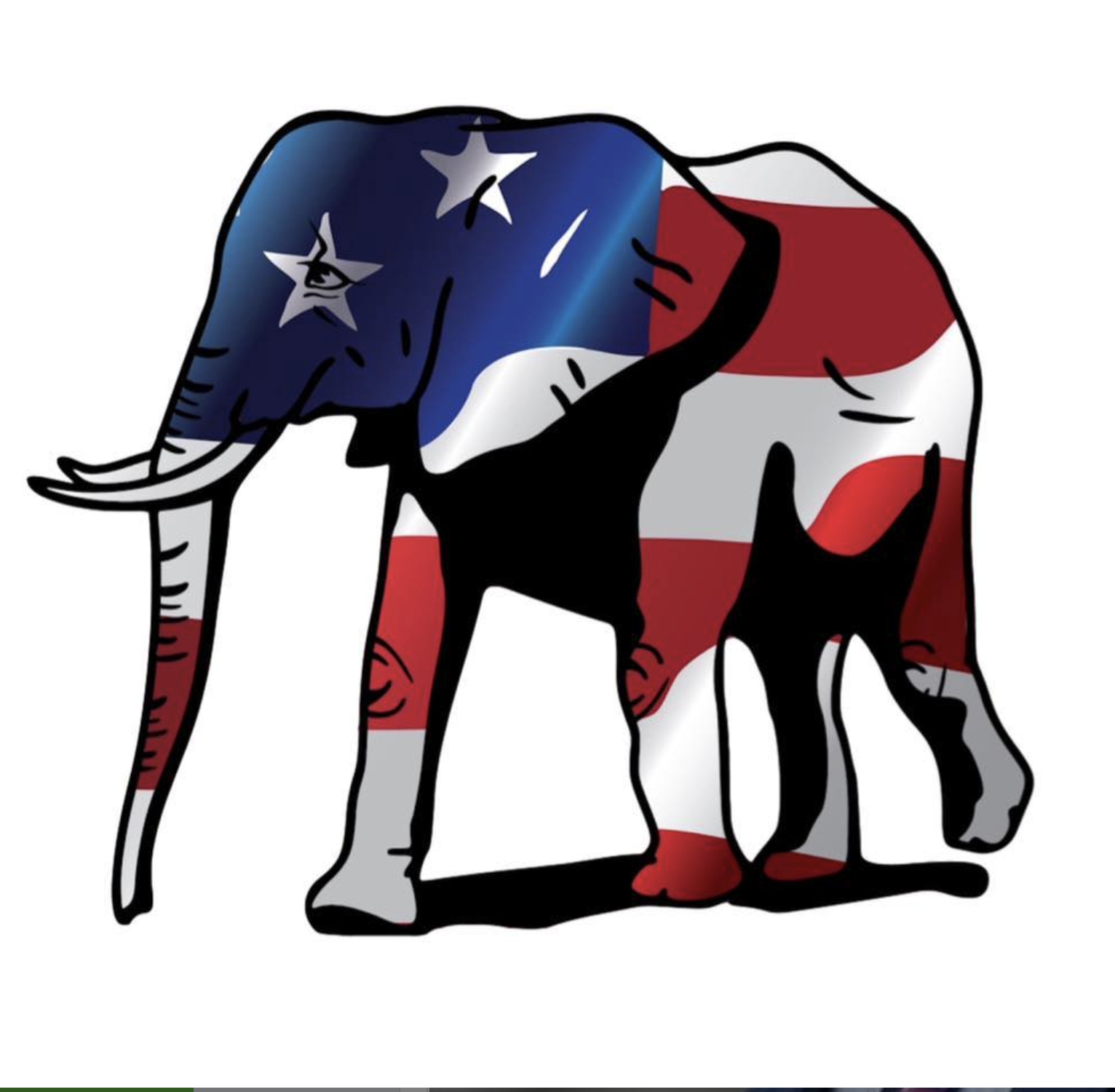
Although Trump claimed to speak for the country, he was most famous for retreating to the confines of Trump Tower:  he was, confessed long-time political operative Roger Stone, something of a homebody.  His attachment to owning properties in Manhattan and his estate in Mar-a-Lago were so great to start rumors Trump declined to make the White House his regular residence as President.  And when Trump regularly returned to New York City or Mar a Lago, he always kept most of New York at a remove while sequestered in Trump Tower.   While totaling some 276,000 miles in the air by late September since announcing his candidacy for the U.S. Presidency  on June 16, 2015, Trump traveled over half of the days since announcing his candidacy, even while visiting far fewer places than other Republican candidates and fewer than his Democratic opponent, Hillary Clinton.  And if one is to judge his familiarity with the country in terms of the cities where he chose to build and promote hotels as evidence for the sites he earlier visited, it is striking that the sites of Trump’s North American properties are located on its coasts, or outside of the very areas where his campaign was so wildly and only perhaps improbably successful.

North Am Trum Properties.png

For on the campaign trail, Trump buzzed about the country to create the sense of direct contact with constituents even without spending that much time in a single place, but regularly returned to New York, he may have visited places like Brooklyn, where Clinton’s campaign was based, far less frequently–and spending a considerable amount of time on the campaign trail sleeping in Trump Tower, if not resting in the large bed stationed in his 757; tweets from sites on the campaign trail conveyed his endless motion, but many began “just returned from . . .” in multiple tweets during the early days of the primary.




Were the steady accusations of his opponents’ tiredness but projections of his own somnolence or power naps?

Somnolence.png

Trump was regularly cast by ABC news as Palm Beach’s Most High-Profile Homebody by the year’s end.  Trump was no doubt tired out by the extensive campaign where he projected his exhaustion first onto Jeb Bush and then, more dramatically, Hillary Clinton:  for two weeks in December, rather than assemble his incoming cabinet, the PEOTUS remained in the sumptuous Mar-a-Lago, rarely leaving the estate for golf and dinner at the Trump International Golf Club, or Christmas Eve mass, and meeting with his transition team just “a stone’s throw from the croquet garden,” before returning to Trump Tower in January to assemble the rest of his incoming cabinet in the nineteen days before his inauguration–and expressed reluctance in leaving his aerie in Manhattan for periods of a week after assuming the Presidency, proposing frequent returns to his three-story penthouse on the 58th floor of Trump Tower for family time during his Presidency.

4.  Even if he has warmed to the White House’ decor and furniture soon after moving in, Trump is a man who has stayed put in his lavish multi-floor apartment for much of the last three decades, and it has provided the perspective from which he looked at the United States–and may offer a perspective from which the strong opinions of his policies were formed.  For a candidate who saw the sumptuous quarters designed in Louis XIV style as a tribute to his creation of his own self-image, was his creation of a time-frame also particularly revealing?  Did his identification with an apartment decorated in 24-karat gold and marble and furniture and tapestries  in Louis XIV style with a Tiepolo ceiling put him in ideal place as a candidate to promise a project of time travel to Americans seduced by his timeless lifestyle–

15trumpwomen-ivanacomp-master675

so effectively isolated as he was from the changes in the external world over the past twenty to thirty years?  (And doesn’t being called a “homebody” mean quite a different thing for such a home?)  For a man who grown up in a house with four white columns that were adorned with a confected crest and coat of arms and white columns, as a palace set apart from Queens, N.Y., with twenty-five rooms and nine bathrooms, the palatial abodes that he has continued to created for himself and his family similarly stepped outside of time.

The series of luxury hotels with which Trump’s name has been synonymous promote lifestyle packages promote pastiches of European luxury that are, after all, the tricks of the trade of a master hotelier–whose expertise is to offer an escape to a new comfort zone.  Since winning an election for United States President seems to provide only an extension of the art of escapism he has already refined in the political sphere that can translate to the trade of the hotelier, it seems no surprise that recent publicity even integrated the image of the White House facade to a promise of escapism at Trump International located in Washington, DC–even if this reveals something of a conflict of interest or confusion of jobs, or rather imagines the sort of “Suite Escape” in which Trump Hotels specialize the possibility of looking at the photoshopped blanched federal Environmental Protection Agency  through drape-graced windows in utmost Trump luxury, even if it does, as Philip Bump noted keenly, capture the “mess of conflicts of interest” that Trump is now likely to himself face far beyond that hotel.

c3i8vuhwcaa5x5e

c3kmsa4wyaavo2z-jpg-large

5.  For it seems that a large part of the promise of Trump Hotels is to offer to assemble for their eager visitors pastiches of the “finer things of life,” such as the guesthouse in the Blue Ridge foothills, combining a Georgian-style mansion with old-world elegance from Waterford crystal chandeliers, oil paintings, and statuary in surroundings recalling the Tuscan countryside; every one of his Trump International hotels or Trump Hotels is prized for its own thematic program of interior decoration that offer to their visitors.  This is distilled in the utterly escapist residence Trump loves in Trump Tower, whose time-shifting decor to transport one to an idyllic past, free from social consequences or concerns, that might be the emblem of the escape he offers the country.

inside-trump-tower

The notion of Trump sequestered, as a self-made Rip van Winkle, is somewhat appealing.  Donald Trump rarely travels, and seems something of a homebody, flying home regularly while he was on the campaign trail on his private jet–and asking the Secret Service to follow him home, on an air company he owns.  To the tune of $1.6 million, agents accompanied him on regular return flights on TAG Air, on which he logged some $6 million personally, boasting “I could be the first presidential candidate to run and make money on it,” as he walked to the bank, even outfitting his own ostentatious Boeing 757 jet at a cost of $1 million that situated his own name prominently in red, white, and blue. Trump often made late night trips back to New York during the Presidential campaign, to sleep in his own living quarters, according to the New York Times.  (The cost of outfitting his plane in suitable luxury may have given Trump grounds to criticize current government contracts with Boeing for the real Air Force One of $4 billion–“Cancel the order!“–although the mechanics of what was entailed in that plane were probably not in his grasp.)
trump0715-force-one.jpg

All those daily flights home on “Trump Force One” to sleep in Trump Tower during the Iowa Caucuses were at first feared to cost him some votes across the midwest.  Trump had regularly returned to his morning view of Central Park and his lavish home quarters, however, and seemed to relish returning with regularity during the campaign.  He didn’t allow any press members to accompany him on these flights, though the staff grew.  But he didn’t hesitate to outfit the luxury jet which was a frequent backdrop for news conferences and televised appearances, at a cost of an extra cost within the 3.8 million taxpayers payed to Tag Air, Inc., to operate the jet which approximated his personal quarters in Trump Tower, from a master bedroom approximated with silk wall coverings, mohair couch that converts to a bed, 57-inch television, home theater, shower and gold-plated toilet on this fuel-inefficient plane–all the while insisting on returning to his penthouse in Trump Tower almost each and every night.  (Trump claimed his flights were funded by checks he wrote to his own campaign, and the sale of MAGA hats and souvenirs at rallies, but the $27,000-$36,000 increase in daily operating costs of such regular flights home–the result of a deep resistance to overnighting outside his home long noted on the campaign trail–left the Secret Service sending a tidy check of $1.6 million for much of 2016 to Trump’s own airplane company.)

6.  The web of financial ties to Trump are far-flung in their nodes, and their ties to members of the incoming Trump cabinet–including Betsy “Ah, Betsy; Education, Right?” DeVos–and seem to stretch to areas only begging to be fully mapped, but which extend far, far beyond the properties of the Trump Organization.

Trump Mafia.png

–in a virtual web of business connections, many concealed within his tax statements.  The ties to much of the nation and newfound legitimacy and recognition of the Trump brand seems undeniable–even if Donald Trump, Jr. dismissed the idea that Donald, now that “he’s got real stuff he’s got to deal with” and “real people’s lives,” is anything but occupied with his governmental duties or realizes the extent to which hid new platform of recognition might encourage the expansion of a luxury hotel chain to new regions of the country.   While scoffing at the “notion that [President Trump] is still running the business from the White House is just insane,” however, the network of hotel chains he has administered provide something like the template for Trump’s notion of his relation to space, as the deals he brokered with construction firms, cities, and property taxes have provided him with the basic tools by which he seems destined to project Presidential authority.  Even as Trump sons Eric and Donald, Jr., the surrogates of his hotel empire, claim “There are lines that we would never cross, and that’s mixing business with anything government,” the inescapable confusion is one from which they will benefit.

Indeed, the range of hotel properties Trump owns are wide-ranging, although notably removed form the African continent or Australia, not to mention an almost entire absence in Asia, restricting interest in South America to the tourist destination of Rio and a planned residential development in Uruguay; and with no properties in continental Europe outside Istanbul–and an avoidance of Mexico which, for the owner of a chain of luxury hotels and hotelier, seems almost to be rooted in something like a deep personal dislike–

48d41a986339f80a89695e2609f368fd71dc0653-1

The selective seats of Trump International perhaps befits an entity long styled as “real estate super-brand” and linked to the lifestyle it marketed.   But the absence of Trump’s ability to market the Trump lifestyle and brand of hotel destinations in Europe, save the recent and requisite golf courses in Scotland Ireland, may reveal a long ambivalent attitude to Europe and NATO countries, given the absence of Trump interests outside golf courses in Aberdeen, Tunberry and Doonbeg.  (Indeed, Trump took no time after assuming the Presidency to rail against the EU based on his own experiences from “another world” of business–based on the firm refusal  of the EU to resist a proposed seawall on the dunes of Trump International Golf Links and Hotel in Doonbeg, Ireland, on the grounds of the environmental protection for endangered animals.  Trump was forced to curtail his planned seawall, the basis for the objection–an endangered snail–post-dates his aversion to expanding Trump International in Europe.

But is emblematic of the disproportionate scale with which Trump seems to view the world.  While mocking local disturbances faced by his building projects as annoying disturbances, he promotes his vision of a single way of life cobbled together from historical periods, providing residents a view from Mumbai at the Park at a remove from the poverty of homeless families who sleep on cardboard on Mumbai’s streets–in an image long suspected to be photoshopped.

58681cd31500002f00e9ddcc.jpegPaul Needham (2014)

The withdrawal of Trump Tower is the opposite of global engagement, but is the site to which Trump seems to invite us all to retreat in an age of global refugees.  Is it any coincidence that the self-confessed germaphobe so fearful of contamination from crowds is most inclined to adopt metaphors as floods, swarms, or infectious to describe the experience of refugees as threats to the social body, metaphorically re-framing their plight at a remove from social, politics or economics–and insisting on our need for better self-protection?  The distorted view from Trump Towers elides the experience of many through the distorting lens of real estate.

7.  Indeed, Trump’s gift for getting his name put on every empty surface known to man–including Trump-themed fiction–seems to have been taken as an excuse for his interest in political representation, which it is not.  But it is no secret that business interactions have most importantly shaped and helped formed Trump’s world view.  And the somewhat striking absence of Trump hotels in much of Eurasia–save residential developments in Seoul, and some under construction in Mumbai, Pune and the Philippines–raises questions not only of the appeal of the version of Trump glitz that they offer, but also of the place of these actual locations in Trump’s current mental map; the distance of the Trump brand entirely from the neighboring state of Mexico is more than clear, and may derive from personal distaste.

The presence of properties under construction in Uruguay, India, and Makati may indicate constraints of the Trump lifestyle, whose limited truck in Europe is not destined to grow in the future.  The relative absence of Trump’s presence in Asia–save Baku–suggests not only a compromised notion of geography for Trump, but an untimely withdrawal from international markets that analyses of the previous administration suggested place millions of jobs at risk.  How can we collectively trust a man with so compromised a notion of geography to can the Trans-Pacific Partnership?  The punitive measures proposed to be taken against companies making products overseas suggest a deeply skewed notion of the place of the American workplace in the global economy, and punitive measures against foreign competitors, suggest a limited and deeply narcissistic notion of global economic transactions, distant from and out of touch with the distribution of global populations.

populous nations.png

The remove of a spatial imaginary of real estate was long prominent in Trump’s mind.  The sharply concentrated and geographically small circuit of properties Trump owns in New York suggests not only a limited knowledge of the huge diversity of New York City but define the notion of the Trump lifestyle he has sold to America as an outer borough boy.  It betrays his narrow range of interest in coveted properties around Midtown and Trump Tower, revealing Trump’s longstanding interest in focussing his sights on Manhattan, despite his father Fred’s disinterest in the far fancier borough–and his open discouragement to Donald for chasing such properties from a firm that had roots from the Verrazano Bridge to the Long Island border, and offered middle-class housing, for hubris in reaching beyond his Brooklyn roots.  Is the focussed expansion of Trump Properties into Midtown, by now long naturalized by its epicenter at Trump Tower, a form of inter-borough envy with roots in the class conflicts of New York City’s urban geography?

Such inter-borough rivalry seem to have guided not only the expansion of Trump properties as it expanded to the area around the future Trump Tower, site of the tony area of Tiffany’s, the Plaza Hotel and Central Park South–

Trump NYC.png

–but the position in which he sees himself in relation to the world, and the caricature of the populist millionaire that became the conceit of The Apprentice and since become a basis for Trump to sell himself and his brand to the country.

Indeed, the eagerness of Donald to move to the toniest areas Fred Trump disdained, by casting himself from the “streetwise son of Brooklyn’s largest apartment builder,” allowed him to expand his stylized image as a colossus of Manhattan, but to disdain the outer boroughs of New York City as a place to plant the gold-plated image of his name.

Fred and Donald.png

In staking claims to building in such a restricted area of Manhattan, Trump may have used midtown as a sort of arena or performance space to broadcast his identity with such well-polished sheen that it served as a launching pad for Reality TV, long before declaring his Presidency.

8.  More scarily, however, is that the quite limited previous experience Trump gained with world affairs from his perch in New York seems destined to shape the judgements that he shapes on issues of global consequence:  as being in Queens and looking at Manhattan defined Donald’s appreciation and interest in power, the very tactics of aggression that worked for him to launch his brand in New York has become generalized in the trademark launching of hotel facades, and the confrontational bullying of world leaders seems to be the chosen metier of foreign policy, as cultivating allies and personal rapports; divisions between personal space and national destiny seem far closer than in the past, who seems to see foreign policy as conducted in confidence and in tête-a-tête rapports; foreign non-immigrant workers of HB-1 visas are viewed as “cut-rate” bargains, analogous to foreign construction workers; constant commentary on foreign affairs in Twitter permitted; brinksmanship is a working strategy; market negotiations as a primary means of statecraft with overseas partners and adversaries alike.

Trump’s deep need to impress world leaders takes precedence over policy or statements of national interest; tax-cuts are for corporations, whose rate is cut to 15 percent, and tax brackets collapsed from seven to three–while omitting how the US government would be able to afford the cuts.  Trump works on small-scale corporate deals with companies about aircraft, but the big picture seems to slip away.

For Trump’s apparently unremitting focus on staking claims to what he considered higher status in New York City’s real estate market, and to promote his name in doing so, developed with an intensity that led him to continue to stake claims to that status for new arenas.  This began in New York City, greedily and relentlessly, from the West Side Highway where his promise of a waterfront apartment building led the city to permanently close an exit ramp, to Soho, to Wall Street.  This apparent search seeming to chase an image of prestige in the mirror of his own gold-plated marquee, combining deep desire with disinterest in much of the external world, almost desiring only to look in the mirror of the gold reflective surfaces naming the multi-billion dollar towers to which the developer lends his name and the status they take pains to create.  Trump indeed boasted to a biographer Harry Hurt III, back in 1993, about having the best living room view in all of New York City, by virtue of being able to see from his Trump Tower apartment his own name on all sides:  beside the Hudson River in the West Side Yards; on Third Avenue, atop the thirty-nine story Trump Plaza or the fifty-five story Trump Palace.  Hurt compared it all to a child-like fantasy: mirrored in miniature on the ultimate stage of self-indulgent fantasy, as Trump’s name is branded not only on buildings but also “on a Monopoly-tyle board game branded ‘Trump'”, in a sort of ubiquity that needs its own constant affirmation, and itself engenders a desperate need for confirmation of loyalty and admiration.

For Trump seems to have lived in an extended or protracted mirror stage, where the materials of building provide themselves the foil for revealing the “I” that the builder seeks to cultivate, forged in a pre-linguistic stage but continuing as a distorting monumentalization of selfhood that desires to obscure if not obliterates the very map across which it spreads, disorienting the viewer.  The reality of the Trump presidency seems retaining the sheen on the name that seems to gain a greater aura the more that it is reproduced.

Gold reflective.png

Trump Tower

tower.png

lv-trump-t

But how long can that last?  While Trump boasted that his ability to have “added show business to the real estate business” is an apt characterization as “a positive for my properties and in my life,” is the nation able to be defined as his property, or is he able to fulfill the fantasies of his constituents through inflated promises and empty patina?

Rather than build such bold pronouncements of self without oversight in Washington, DC, Trump seems to offer the nation new ideas of the landscape of governmental authority.  For rather than seeing the role of the Presidency as representing the nation, Trump seems to have relentlessly presented the function of the Presidency as expanding own his personal enrichment at the cost of the nation–and indeed at the cost of the Presidency’s historical prestige.

c3ejxivwaaaytfr

Comments Off on Mapping Trump

Filed under American Politics, data visualization, Donald Trump, electoral maps, real estate