Can we sustain an argument that the freedom to own guns truly makes us safe? Mapping the question of ownership–and indeed even trying to visualize the terrible frequency of mass shootings in the last forty years–makes any consideration of their violent punctuation of public life question the value of construing gun ownership as a freedom.
The frequency with which mass shootings that clot a timeline of the last four decades is hard to comprehend, save for the very difficulty of how such truly terrible episodes have come punctuate our sense of time. The diminished intervals marking time between mass shootings make the above timeline hard to process or digest–and it frustrates comprehension, but maps an apparent onslaught of apparently unpredictable succession which have so troublingly occurred with increased rapidity in the United States: each mass shooting named once seemed to violently punctuate public space, and set a thresholds for public violence, but in retrospect have almost seemed to collapse as their occurrence and repetition has come to know few bounds in public space–occurring in schools, military bases, public service buildings, or movie theaters–even as few believe that the next mass-shooting would ever occur in the area in which they live. It suggests that the troubling succession of mass-shootings is in itself a crime of human right sand public consequence, far more than they have ever been portrayed.
The timeline is not spatial in orientation, but arranges place names in a disturbing map of America difficult to come to terms with or recognize–it cannot help but raise questions about how we reconcile increased individual access to firearms and individual rights. It’s hard to process raises pressing questions of the ways in which our national landscape is increasingly defined by gun violence, dotted by once-memorable place-names of Columbine, Virginia Tech, Ft. Hood, Aurora, Newtown, or, more recently, San Bernardino–each of which has come to destabilize the way that previous mass-killings once loomed so large in the present, and in our thoughts about gun control. Although it makes one want to bore more deeply into the data, it registers a national landscape marked by gun violence with new urgency. Even as contentious debates are staked about how individual access to guns defines the nation, the simple timeline poses complicated questions about a public arena mapped that seems increasingly mapped by mass shootings. It describes the prominence of gun violence across a national landscape–even though it only lists but thirteen places by name. If chronologies were once used to supplement to maps in the middle ages, to sort the settlement of the inhabited world, the shrinking distances between multiple mass shootings on the over-crowded chronology indeed seem to map a growing public arena of gun use that appear increasingly difficult to physically or mentally inhabit. Yet it is a question all too often marginalized from public debate, and allowed to continue as a truly sick status quo.
The punctuation of time by mass shootings turns to a terrible continuum in recent years overpowers the viewer in ways that make that landscape difficult to process. Rather than offer a way to mark time, the frequency of what were once treated as discreet events is overwhelmed, as shootings in public spaces that left four dead have ceased to meaningfully mark time, and suggest a geography of shooting guns in public space. From occurrences at clearly marked intervals, the pace of mass shootings suggest a surreal information overload in their bunched crowding that challenges legibility, and even remembrance. For even when distributed on a map, it’s hard to find any coherence in how the clustering of such senseless premeditated tragedies have relentless occurred. Can one even map their social impact or human cost?
Few maps can register their deep costs than the oddly disembodied timeline. As one tries to consider shooting, the pace of shootings across the United States is cognitively difficult to process. The timeline challenges one to comprehend both the toll of the rash of deadly assaults on public space. There is little consensus about “mass shootings”; the timeline charts shootings in public space that left four or more dead. But it suggests how, at a time when gun-related violence has recently declined, the recurrence of mass shootings suggests a landscape we need to collectively confront–and to map against the pernicious diffusion of beliefs that gun ownership are a form of freedom guaranteed by Second Amendment rights–although the frantic pace of mass shootings, illustrating the tortured narratives of shooters, to be sure, but also the problems of examining distinct differences between mass shootings, mass murder, and mass killings in relation to the increased access to firearms.
While some would portray the awful repetition of these tragedies as the cost of liberties, the timeline tracks the truly terrible ease of widespread recourse rapid-fire firearms. Indeed, the horror at the occurrence of mass shootings seems due not only to their horror, but their deep confusion of a militarized and civil space. The dramatically unique scale of gun violence in the United States has led it to be increasingly accepted as a natural fact, to be sure, as many, including City Lab, have noted, leading Zara Matheson to create a brilliant visualization comparing urban gun violence in America to that of other countries:
The amazing scale of gun violence itself has encouraged the expansion of open carry laws and gun rights protests in America, that have resulted in a similar deep confusion between civil and militarized space. But nothing evidences such a profound and deeply dangerous confusion as specifically or dramatically as mass shootings. And as the profusion of arms in public space grows at a rapid pace, doesn’t the assertion of gun ownership as a right suggest a deep and problematic confusion of civil and militarized space in the deeply disquieting and increasingly public assertion of Second Amendment rights?
Gun Activists Marching with AR-15s at UT-Austin/Getty Images
<!––nextpage––>
1. It’s not possible to fully comprehend the density of shootings in public places or their especially increased frequency during the past decade–and especially difficult to process their relentlessness across the timeline, which suggests we are in danger of losing count. They suggest a dangerous landscape of public violence that doesn’t seem likely to change. Traumatic shootings which once seemed watersheds of public violence, once viewed in aggregation, reveal a relentlessness impossible to process save as a changed state of events. And while the government has not tracked the rise of mass shootings, or mapped the prevalence of guns in relation to deadly shootings, on-line aggregations of mass shootings and tallying victims confirm a change in public space–closely tied to the ongoing advocacy of gun sales by gun manufacturers who fund the NRA: indeed, the laissez-faire attitude to gun sales are increasingly masqueraded in the United States as a form of liberty in ways that pose an increased danger to public health–that might be more aptly likened to a contagious disease. Mappings of the rash of mass shootings by active shooters in the past three years embody violence in ways that resemble nothing so much as disease maps.
data from Shooting Tracker
But the aggregation of mass shootings in the United States seems tragically tied to the flooding of markets with firearms and guns, not only causally, but in terms of the vociferous defense of individual rights to bear and carry arms in public space–as the recent exaggerated expansion of the Second Amendment defense of individual rights–long agitated for by the NRA–suggests.
Getty Images
In ways raw data speaks more than cartographical forms can embody. But only by parsing the rise of such mass shootings from gun homicides and firearm use can we begin to understand the deep confusion and distortion mass shootings have made between militarized and public space, and address or process them by more than shock–or start examine reasons for the considerably greater fear of terrorism, despite the 10,000-fold magnitude between the number of gun deaths and deaths from terrorist attacks, and the wildly disproportionate fatalities from mass shootings since 9/111 than home-grown terrorism. Treating the San Bernardino mass shootings as terrorism is only not recognizing the prevalence of mass shootings in the American landscape, and makes it increasingly important to clarify the presuppositions of mapping mass shootings.
If the extreme gun violence of mass shootings are parsed since Sandy Hook, or since 9/11, or since the threat of terrorist violence on U.S. soil, the collective growth is striking. Gun violence is perhaps not possible to measure abstractly, let alone to aggregate. But the crowding of individual events in a chronology is difficult to process in a timeline that rather than keeping time almost undermine its legibility as a distribution–the very frequency with which mass shootings have come to occur offers pause for reflection. In aggregation, the timeline is hard to get one’s mind around, as if it challenges the viewer. In ways that almost undermines its value as a timeline, the clustering of dates when mass shootings occurred suggests the difficulty to process or clearly map their frequency: public shootings or four victims or more increased in the aftermath of the terrible shooting of kindergarten children in Newtown, PA–guns killed 90,000 since, some 555 children. Rather than constituting watersheds of public violence or tipping points, the Newton massacre and the shootings of Columbine, Aurora, and Virginia Tech suggest way stations of increased violence in an embodiment of collective violence.
The aggregated timeline poses questions as to whether we are watching a pattern of collective behavior in schools, a geography of anger, or an epidemic of public health, and charts a widespread and growing confusion between civilian and military arenas in an era of globalized battlefields–in which the range of “perceived enemies” has expanded off of the map. Aggregates of shootings of four or more dead or injured by guns suggest a similar cognitive overload of data of the dead or injured that we are similarly unable to process in any meaningful way:
But distinguishing gang-related violence from other records on mass shootings a broad national problem of guns:
If we turn to maps to create coherence from the successive mass shootings that increasingly afflict the country, the timeline reminds us most disturbingly of the remove of such events from our own personal responsibility–their relation as traumas remains difficult to start to comprehend, let alone map meaningfully, since they seem so likely to recur and not removed in time. The distribution of mass shootings suggest an undeniable underside, indeed, to the increased insistence on individual rights to carry guns in public space, despite the deep dangers that they continue to pose. For the approximation of continuity in the multiplication of mass shootings approximate a sense of helplessness parallel to the terrifying 350 counted shootings of multiple victims over the past year–even if they are not all mass shootings by any definition.
The intense anger and helplessness behind shooting of multiple unknown victims suggests a striking recourse to guns, however, which currently seems bound to increase with the continued easy availability of firearms. Despite the danger of over-aggregation in light of San Bernardino and Columbia shooting and their mourning, which has almost become its own internet meme, parallel to the sudden rise of training exercises to respond to them, suggest a dangerous desperation to comprehend the scope of gun violence in America by affirming the personal possession of guns–sessions that include the very same sinisterdesign of a public poster devised for a wide morale-boosting campaign by Britain’s Ministry of Information, the government agency charged to design morale-boosting posters during World War II. The emblem, adopted to suggest the difficulty sustaining attacks and civil space in mass shootings, almost mirror the confusion of civil and militarized space in such shootings. Its inclusion recalls a tendency to discourses on mass shootings to migrate to terrains of preparation, as much as prevention: if the original posters were printed in 2.5 million copies, they were largely “held in reserve, intended for use only in times of crisis, or invasion”–and only later rediscovered by a Northumberland used bookstore.
No matter how much we seek to map their incidence, to create some sort of clarity in danger or fear we might better grasp, the bunching of mass shootings–killings where a single shooter open fires ammunition to leave four dead–suggests a shattering of public peace, and civil space. While the rise of mass shootings are called a creation of the news cycle, although their incidence have overwhelmed the airwaves– “And now we turn to this. Here we go. Again.”, the frequency with which incidence of public mass shootings in America have multiplied with the relentlessness of streaming banner news headlines on cable television suggests a violation of human rights. The increasing pace with which shootings of unknown victims occurred in public space seems impossible to clearly compartmentalize, or continue to report, as their frequency over the past two years enters a terrifying continuity particularly difficult to objectify since they assault humanity. Although these shootings constitute but a small share of gun violence, the deeply troubling landscape of mass shootings troublingly parallels increasingly strident assertions defense of firearm possession as a right not able to be legally regulated.
2. Even removed from a coherent geographical form, the sequence of isolated place-names of shooting sites challenge one to confront the landscape of mass shootings in the United States in disquieting ways. The expansion of such shootings illuminate a shifting landscape of guns in public life–even as fewer than a twentieth of Americans regard gun control laws as a problem confronting Americans, and Congress only recently recognized “mass killings” in 2013 as demanding attention from the Attorney General. Even in the light of rejecting restrictions on gun laws or an assault weapons ban, the late identification of such premeditated if unpredicted shootings of unknown victims reveal an increasing accumulation of fatalities, not suggested in the timeline, that . The picture of mass shootings since 1982 indeed suggest a terrifyingly broad distribution across the United States and suggests a failure to responsibly manage firearms in public space.
ABC News/Mother Jones
The increasing occurrence of mass shootings challenges viewers to join several apparently incidents whose totality difficult to cognitively process, moving events seared in our personal memories as if they watersheds in a quick succession whose near-continuum strains understanding as a status quo, and raises questions about how to find meaning in their rapid onslaught.
The crowding of the chronology of mass shootings links dramas that unfolded in different parts of the country in a metaphor of the difficulty to grasp the rate of mass shootings in public spaces: dots designating individual events are difficult to process or parse. Rather than seem individual aberrations, the unpredictable arrival of such mass shootings, grouped collectively, ask us to find coherence in the repetition of mass shootings across America, and to ask why the growing frequency of such shootings is still doubted as specific to our political culture, and relentlessly called into question, rather than addressed, even as tallies of gun deaths have broadly dropped by 30 percent from the early 1990s: the recent surge of mass shootings are not only due to increased media attention to their senseless randomness, but as a threat to human rights.
The reopening of debates about how gun control laws could stop or hinder the geography of gun deaths or scrutiny of shifting gun laws and their effectiveness suggest the lack of clear voice about guns. The variation among regulations about carrying guns in public–and transporting firearms–are even cast by advocates of the individual rights to firearm possession as a jumble of intrusive edicts on transporting loaded guns, ammunition, and storing such weapons by local attorney generals, aircraft carriers, TSA officials, and, yes, national parks and wildlife refuges, as so many “regulatory schemes” curtailing the allegedly protected freedom to own and carry guns.
Rather than consider mass shootings in terms of criminality or individual deviance, the prevalence of mass shootings across America demand to be recognized as a register of the unregulated liberties to carry guns in public space. The timeline in the header to this post is disorienting in how it aggregates such shootings, and poses multiple much-debated questions about understanding their rapid pace over time. Yet the picture of giving coherence to the range of mass shootings across the land is in a sense the reflection of the paranoia of gun protection. Ordering the relative frequency of mass shootings by lone gunmen is itself a challenge to map–and get one’s mind around–because it lacks without any apparent clarity in its growing spread. We often turn to maps to try to find some coherence, but find ourselves similarly frustrated by attempts to find coherence in the growing landscape of mass shootings and not offense. For the pace of mass shootings, once so terrifying in their individuality, has accelerated both since Columbine and since Sandy Hook to make it difficult to not view within a broad change in the use of guns in public settings, conflating militaristic violence and public life, in ways that demand mapping if not to the increased availability of guns, to the ways mass murders might be measured.
The timeline renders it impossible to regard what were once seen as possible turning or tipping points in public violence outside of a context of their collective increase. However much some pundits repeat the conclusions of criminologists about the constant levels of gun violence in America–distorting the distribution of their frequency by including family violence and gang-related fights that constitute a large share of firearm homicides–the increased occurrence of mass shootings on unknown victims reveal disturbing conflations of guns and public space. Even to measure gun violence alone deeply distorts the unique problem of mass shootings, as they are premised on lumping such public shootings with a broad epidemic of gun violence, rather than confronting and visualizing the growing conviction of the legitimacy of firing firearms randomly into crowds without restraint.
Although mass shootings in public spaces are by nature unpredictable, the aggregation of mass shootings offers a way to analyze and recognize the problems of But although the violent level of gun shootings in America have grown, as violence cannot be universally quantified, mass shootings prove difficult to classify or define with uniformity. For mass shootings reveal a unique sort of violence in public. Even when not counting the shootings of family members–the majority of group homicides from firearms, with one in four victims being close family members and over half family members or intimate partner–the increase of public “mass” shootings aimed at unknown victims suggest a confusion of militarized and civil space–and an irresponsible intrusion of firearms into public life, all too eerily mirrored in the attempted seizure of public lands.
The increased anonymity of mass society finds an eery underside in the relentless expansion of mass shootings at unknown human targets in civic space, as if they suggest the fragility of civil society. The numbers shot or killed by high-capacity magazines have defined and will define the country by their very frequency of mass shootings occur in the United States–however vociferously contested is the claim President Obama’s claim that “this just doesn’t happen elsewhere”, the expansion of such shootings reflects an increased absence of regulation of firearms. While it’s not entirely true that only “high capacity magazines put the ‘mass’ in mass shootings”, given the range of gun violence, the peculiarity of gun violence in America lies in the frequency of adopting firearms to wound or murder unknown victims, and the need to better chart the level of violence on For the anonymity of gun violence in America reflects the far greater access to guns in the country, and a broader presence of guns in public spaces of assembly. The expansion of mass shootings illuminate the shifting landscape of gun violence–even as fewer than a twentieth of Americans regard gun control laws as a problem confronting Americans, and Congress took until 2013 to recognize the “mass killings” as demanding attention from the Attorney General, after it rejected to enact restrictions on gun laws or extend an assault weapons ban.
The recent proliferation of such mass shootings, rather than raise thresholds for processing public violence, raise questions about reasons for increased recourse to guns, as well as about the perpetrators of crimes. For the striking relentlessness of the multiplication of premeditated crime in public space is truly difficult to comprehend as they approach a deeply disquieting continuity. The term “mass shootings”–only slightly removed form “mass-killings” or “mass murder” that evoke wartime–have no place in liberal society as bizarre conflations of military-style violence, so disturbingly are they removed from a society of laws. Even if exceedingly rare in comparison to gun-related deaths, mass killings by guns have however multiplied in three-fold fashion over the past three years to almost cease to be able to be seen as discrete events as they were once considered to be, as shootings in public spaces by “active shooters” have skyrocketed, as the times between their occurrence declined sharply.
The rise of such shootings has no clear precedent. Although such killings have a clear history and precedent, at times dated as far back as 1891 or even to 1984, the term “mass shooting” first gained currency around 2012, in reaction to the expansion of public shootings, and the classification introduced by the FBI was soon adopted by CNN, who expanded the bar for fatalities in a mass shooting to four, but also excluded events where the victims were related. Only after that did the U.S. Congress in 2013 officially qualify “mass shootings” as single incidents leaving three dead in the Investigative Assistance for Violent Crimes Act, taking responsibility to define the term as part of America–even while refusing to maintain a public registry of such shootings, or adopt this as the sole definition. The relative frequency of their occurrence suggests a deep confusion between civilian and military space that demands to be unraveled, even if the lack of a public registry of such public shootings may soon change, as well as the introduction of greater checks on the purchase of guns. But there is an abdication of responsibility has led to an unchecked expansion of the defense of individual rights of gun ownership–and a dislodging of attention from shootings to the danger of compromising gun rights.
The sense of virtual continuity that approaches in the above timelines are so disordered that it is tempting to find coherence for these unpredictable events in a map. But the collective mapping of such extreme violence is truly difficult to comprehend as they approach a deeply disquieting continuity. Individual stories of mass shootings such as the terrible tragedy at Sandy Hook Elementary School in Newtown, PA cannot help but bring tears to one’s eyes, as to President Obama’s, as they will continue to do. But the intense the pace of shooting multiple victims–evident in the shrinking intervals between black circles that mark mass shootings–represents a terrible sort of information overload. For it sketches a landscape of mass shootings we’ve been slow to confront, and evokes a sense of powerlessness to interrupt the staccato of their onslaught. Although shootings has, incredibly, relentlessly accelerated since the Newtown, PA attacks, the same event provoked increased attention to mapping and quantifying mass shootings, in an attempt to understand that increased frequency. In spite of the absence of national databases on mass shootings, the rise of crowd-sourced or open-sourced maps since then provide a better dataset of their occurrence–forcing us to confront the increased numbers of people shot or killed by high-capacity magazines, the older demographic of their perpetrators, almost exclusively male, and the greater share children such mass shootings killed, to force us to better examine their occurrence outside the landscape of mourning which has also recurred with increased frequency.
We mine data in hopes to try to impose coherence on the terrifying frequency with which public “mass shootings” doubled after 2007, and tripled by 2011. But such documentation fails to process the landscape of increased recourse to automatic guns. The succession of individual mass shootings fail tell a satisfying narrative about their increasing occurrence. For the collective aggregation of such apparently random acts of violence, the timeline of mass shootings grouped with apparent objectivity, embodies a story that lacks apparent spatial coherence. Although we use maps to process their relation to one another, and to gain a better picture of the proliferation of public violence, the expansion of mass shootings maps a story that eerily parallels the increased availability of guns and assertion of an individual “right” to firearms irrespective of individual rights or public safety.
Similarly, the government has focussed on mass shootings though an optic of criminal investigation, rather than through their victims. Although the government, in an abdication of public responsibility, has resisted tabulating the occurrence of such crimes, and only defined “mass killings”in 2013 as a subject worthy of investigation by the Attorney General, collective tabulation often rested in amassing local police records of ‘active shooter incidents’ as problems of law enforcement, rather than within a landscape of gun violence lasting two to five minutes. The problems of mapping where such premeditated crimes continue to inflict violent injury or death reflects increased access to firearms, parallel to the decrease in urban gun violence. But their senselessness remains difficult to commemorate or get one’s mind around or even to individually mourn.
The spread of new venues for shooting, however, and the greater availability of guns promotes a particularly dangerous confusion between public space and shooting space, embodied perhaps in the Right to Carry movement, are troublingly apparent in the growth of gun ranges as sanctioned spaces for using deadly weapons, attracting those who want to use firearms–People come in and say, “Oh, I never knew this [sort of] place existed!”–which rent visitors firearms from a Ruger to a and provide practice venues, so popular that websites exist dedicated to where the nearest ranges are to your address. Several perpetrators of mass shootings have not only practiced at such ranges, but they allow targets with images of Obama–as a worker at one range remembered patrons had once used targets showing President Clinton.
<!––nextpage––>
3. The tabulation of such terrible incidents of gun violence where a single shooter left four or more dead from a single shooter–a standard defined in FBI data but not adopted universally–have consistently occurred with increased frequency over the past twenty-five years. The definition introduced by the FBI and taken up by CNN may however, it is widely noted, minimize the scale of these shootings and mask the lack of clear consensus of what constitutes mass shootings–from whether the category reflects fatalities, wounded, or indeed the weapon used. The refusal to tally mass killings, even if they comprise only 1% of all murders, is inadequate to visualize events that shouldn’t even be happening. The gun violence enabled by high-capacity magazines that create a potential of shooting multiple victims have led to a spate of mass shootings perpetrated almost entirely (94% of suspects are male) by white men, mostly between 20 and 45 years old, have alarmingly accelerated since 2005. The difficulty in parsing the changing landscape rests in defining “mass shooting,” quantifying gun violence by its victims, and of understanding the rapid sequence of such truly terrible premeditated crimes.
The multiplication of mass shootings have a fairly uniform spatial distribution, but a geography of anger that invites increasingly military-style assaults on public space. For if they are not clearly tied to globalism, or economic change, the rise of mass shootings in America are all too tellingly linked to a persistent confusion of militarized actions and public space, aptly characterized by Arjun Appadurai as a geography of anger in an age of globalization. Interrogating what invites such a confusion of public and militarized space might generate a clearer geography of mass shootings, lest they seem only random or chaotic scatterplot.
Mother Jones; data analysis by Harvard School of Public Health
In part, the overcrowded timeline remains difficult to process adequately because of the very density with which marks that note individual events of gun violence overlap with one another, effacing their own legibility, and the difficulty of giving meaning to violent outbursts in a clear context. The difficulty to discern the individuality among “mass shootings” makes it hard to process the meaning of their frequent repetition. In part, the abdication of definitional categories by the government, and failure of Congress to define “mass shootings” until after the 2012 Newtown, Connecticut shooting opened debate about the proliferation of such violent events, suggest an abdication of responsibility–the government has not only left the media without a clear definition to track their occurrence; we have failed to control the rash of shootings in public space. Although the Newtown shootings led to a number of attempts to aggregate mass shootings–from the Stanford Mass Shootings of America to Shooting Tracker–that placed renewed responsibility and focus on gun violence, and its victims, the absence of focussing on the specific gun violence of mass shootings and how to tabulate its violence outside of a language of criminality has provided an unclear image of its proliferation or its expanse. President Obama, not only acting as Consoler-in-Chief, increasingly adopted the term “mass shootings” in public statements during 2015. We cannot afford to let the disarming pattern of their recurrence remain so very difficult to wrap one’s head around.
And so we turn to maps to try to impose some purchase or coherence on the rage of gun violence, which seems to stand between individual actions and some macabre sort of collective agency. Only ten public shootings in the timeline are identified by place in the timeline above. But the landscape of shootings reveals a violent interruption of public space, difficult to explain or comprehend–both in terms of the increased frequency of mass shootings since events like the Columbine shootings, or the Newtown Shootings at Sandy Hook Elementary, just three years ago, or the subsequent multiplication of mass shootings whose frequency almost seems not to permit time for processing the memory of the dead. Even in an age of growing global violence, because it is so hard to get one’s mind around a landscape where public mass shootings have continued to multiply across the land, and their danger goes unaddressed. The renewed popularity of trainings to survive mass shootings continues to affirm the individual right to possessing firearms as a solution to contain violence–rather than recognize the pathology of gun violence that confuses military-style shootings and public space.
Yet the frequency of the recurrence of mass shootings is difficult to process in part because of the lack of a clear database for either the crimes and weapons with which they were perpetrated–resulting in a deeply troubling longstanding blind spot in processing the landscape of recourse to guns. The troubling reluctance to tally mass shootings–or to associate them with guns–has been clouded by a reluctance to identify the violence particular to gun crimes. Yet increased numbers of crowd-sourced or vetted counts of mass shootings illustrate a landscape of a terrifying proliferation of violence difficult to get one’s head around, in which the late 1990s constituted something like a watershed, but by the last ten years proliferated in increasingly troubling ways, in a geography of anger that a time-lapse visualization reveals, compressing monthly tallies over fifty years that increasingly stained the nation by blotches of bright red.
This count is an underestimation that does not include mass-shootings involving family members, which amount to a quarter of the victims of mass-shootings, and the majority of such shootings are family-related. Interrogating what invites such a confusion of public and militarized space might generate a clearer geography of mass shootings, in Appadurai’s terms, might however gain better purchase on their occurrence and indeed the fear of further mass shootings in America.
The proliferation of such premeditated public gun violence across the nation was enacted with complete lack of empathy and arrogant privilege. Although the recurrence of mass murders in America may have created changing thresholds of public gun violence in the country, particularly since the Columbine massacre in 1999. When the sociologist Ralph Larkin suggested the emergence of a “cultural script”–a model for shootings inspired by the violence of earlier killers–the suggestion paralleled vigorous public debates as to the ethics of continued identification of perpetrators on television news and the coverage of their manifestos. But the ethics of tallying the geography of this spate of mass shootings and the landscape it presents is not only as important for the image of the nation that it presents, but for the difficulty of finding any coherence in episodes of public gun violence, at one time rare, but now extending from sites of public congregation from movie theaters to schools to public clinics to on-air news shows.
The problem of tallying mass shootings, after all, is a problem of confronting the extent of gun violence in the country by visualizing the ways that mass shootings, if a small percentage of gun-related deaths, compromise public safety in unacceptable ways with increasing frequency. So much is revealed in the increased prominence of the number of mass shootings staged in schools since Newtown alone–
School Shootings in the United States since 2013/Every town Research
or the predominance of children among victims of mass shootings–
Mass shootings are increasingly publicly staged as a perverse taking of justice into one’s own hands, not only as increasing guns have entered circulation, but as the diffusion of firearms equipped with high-capacity magazines has changed the landscape of gun violence. Despite a partial slowing of their occurrence after passage of the Assault Weapons Ban, in place until 2004, most public shootings occurred with legally purchased guns–80%. If many perpetrators betrayed signs of mental health problems,this did not obstruct the legal purchase of guns with high-capacity magazines whose rapid-fire capacities that the black dots marking shrinking intervals almost emulates in its chronology of violent crime, whose staccato approached near continuity at several times ov re the past ten years. If such violence parallels a growing global violence, the painful punctuation of time with public mass shootings, tabulated as a single gunman leaving at least four dead, suggest more than a cultural script, but a geography of extreme rage it is important to try to confront.
Mother Jones; data analysis by Harvard School of Public Health
The increasingly crowded chronology reveal an increase in episodes of public gun violence with multiple victims, whose occurrences become difficult to individuate form one another their repetition is so dense. Yet a clear consequence of such mass shootings is in the geography of fear: on the heals of individual mass–shootings, surges in the sales of firearms have arose–recent sales have increased across Southern California in the aftermath of the San Bernardino shootings, in the manner that gun-dealers were quick to report increased requests for weapons after earlier mass shootings as Sandy Hook to two million guns a month. And once more, firearm purchases have surged.
<!––nextpage––>
4. If we are apt to interpret the increased spate of shootings as a sort of crowd psychology of negative role models, the tacit dialectic between mass–shootings and gun sales demands mapping as an intersection of a spatial imaginary rooted in the defense of rights to possess firearms and the expansion of further firearm sales–a landscape not of increased gun ownership, but of an expansion of the misunderstood “right” to bear arms. We are more ready to accept workshops for training in behavior during mass shootings, as if to accept them as a new normal, than to enact laws designed to staunch the sales and circulation of firearms.
For the expansion of mass shootings in America has grown in the face of a lack of official government counting of their occurrence, and a blind spot and self-imposed reluctance to monitor or disturb the alleged “right” to bear arms. Although there is unclear evidence that the ban on assault weapons limited the growth of gun violence or murders before it expired in 2004, despite reported reduction of guns in circulation at shows and gun sales, the promise and hope to reinstate the plan led to a defense of gun rights consolidated in 2008 by the Roberts court. The Court’s somewhat surprising defense of gun possession as a personal right paved to an increase in circulation of guns in America that mushroomed first to one per citizen, and approximately 310,000,000 million firearms as of 2012–114 million handguns, 110 million rifles, and 86 million shotguns–or more than the number of Americans. At the same time, the expansion of AR-15’s in American hands beyond 3,750,000 by late 2012–with sixteen million new guns circulating in America by 2013, as detailed in the tenth (and almost self-standing) section of this post. Industry analysts of gun and ammunition manufacturers–who donate part of their profits to the NRA, mean that the panic-buying after each mass shooting regularly accelerated and “went vertical,” driving new monies to the NRA.
The full-throated defense of gun-ownership as a right, long asserted by many pro-gun groups, was endorsed that parallel the expansion of a landscape of illegal gun shootings and the multiplication of mass-shootings over 2015–in what President Obama recognized as “a pattern . . . of mass shooting in this country that has no parallel anywhere else in the world.” Rather than the chronology of mass shootings only reflect an inexorable rise of anger or a disembodied landscape of emulation of bad role models, this post suggests the need to embody that landscape in the dramatically increased right to protect individual ownership of guns. that provide a background for the four-fold expansion, by one count, of mass shootings in America from 2008 to 2014: the expansion of gun sales triggered by Obama’s 2008 election encouraged shops to restock firearms anticipating Obama’s re-election, which indeed spiked sharply after Newtown, when a surge in the circulation of firearms occurred which demands to be mapped.
Have the costs of such a resurgence of guns in America already born costs?
The extraordinary expansion of such newly identified events as “mass shootings” suggest a failure to map a landscape of gun violence. The increasing frequency of such murders renders it almost impossible individuate these terrifyingly militaristic event as discrete; their aggregation overwhelms its own very symbology, as if echoing the deep difficulty to interpret their troubled narratives with any coherence. The frequency of public mass shootings in America offers a mirror particularly difficult to confront. We search of more coherent answers in maps–but are frustrated at the meaning of the apparent proliferation of mass shootings since Sandy Hook attacks directed public attention to attempts to contain future gun violence while respecting Second Amendment rights–
–and inspired the public record-keeping that had long lacked to provide a clearer image of the expanse of gun violence across the country that has led President Obama to act with a “sense of urgency” to enact gun control measures in ways consistent with Second Amendment rights–even as his opponents return to possible impeding of Second Amendment liberties as a nefarious design needing to be met by their active protection.
4. Have we have allowed a clear popular distortion of individual rights to possess guns that obscure the multiplication of mass shootings, and landscape of gun violence, distorting the rights of gun ownership as a constitutional liberty, leading to a refusal to monitor or control access to assault rifles or handguns? By failing to register the relation of rapid-fire guns to crimes, curtailing background checks, and invalidating any bans on the restriction or ownership of handguns, the founders’ call for a “well-regulated [state] Militia” was re-interpreted as an individual prerogative to have unrestricted access to firearms, irrespective of the growing threat to public safety.
Brady Campaign to Prevent Gun Violence
The timeline at the header to this post challenges us to map memories of individual shootings in schools, movie theaters, public buildings, or auditoriums in an abstract form–and process the reasons for their collective acceleration over time. Each episode of violence suggests less a fixed ‘place’, of course, than the extent to which extreme gun-violence intersects with the nation; the collective list challenges viewers to process the collective impact of a new landscape of gun violence in public space, almost 80% of which involved legally purchased guns with high-capacity magazines, and to explain the reasons for the distribution of an undeniable epidemic of public shootings in civic space. Much as the extension of railroad lines earlier placed locations “on the map” which were earlier unknown, the occurrence of mass shootings–by no means consistently defined in the United States, and based on an old FBI classification since abandoned–puts a town at the intersection between a near-epidemic of violence and civil space.
The sites where mass shootings occurred have entered public memory, even if no clear consensus has emerged on the notion of mass shootings. Although its value for registering gun violence in America has been questioned, the terrifying prominence of the increase in such public performances of violence has led to increased interrogations of what has allowed (or facilitated) such explosive violence that have been relentless over the last few years. While we have watched a procession of deer-in-the-headlights photos of perpetrators or examined the eyes of Facebook portraits for clues, the aggregate acts of such violent aggression can’t be seen as an aberration. The overlap between public instances of gun violence that left four dead is difficult to process both as a loss of individual lives, and epidemic of violence for which no clear end seems in sight: the telling contraction between shootings in which four or more were killed have come to overlap with one another to make them illegible and impossible to process as a whole–the crowded timeline of violent outbursts overwhelms in ways difficult to process or understand, in part because it removes the increase of mass shootings from a broader context of refuting local restrictions on the possession of guns in 2008 and 2010, as the widespread reluctance to revisit the lax regulation of gun ownership encouraged a belief in the “right” to own guns.
Mother Jones; data analysis by Harvard School of Public Health
Tabulated by mass shootings/month, a terrifyingly clustered repetition–if less clearly as a visual metaphor for the difficulty to grasp the frequency of public shootings’ occurrence–returns. There has never been a break for more than three months in a public shooting that left four dead over six years–breaks that only occurred two times. Although the shootings cluster, and little coherent pattern exists among the rampages,
their occurrence raises questions about the increasing intersection of gun violence and public life. Even though “mass shootings” comprise quite a slim percentage of gun violence, to be sure–
–the persistence of mass shootings with terrifying regularity raise inevitable questions about their future role in the country’s public space, and hint at a future of violence in places where violence previously had little place. Is there something like a tipping point about the diffusion of mass shootings in America, or are we powerless before their spread?
Although mass media has returned to the dramatic setting of public mass shootings as tragic losses of life, we fail to process them as fragments of a national storyline, since their narrative coherence is poorly understood–what coherence can be imposed or read in their distribution remains unclear. The unpredictable sequence of such heinous crimes staged by individual shooters have only come to be collectively defined, and given coherence by being mapped in ways other than numbers of killed. Though the mass shooting was not included in the FBI’s Crime Records Reports, the mass shooting has come to resonate with a topography of fear in an age of the perceived rise of terror; if questions have been raised about whether mass media reporting may have increased copycat crimes, the crowded landscape of sites of public gun violence paints a frightening image of America, at the nexus of law enforcement and legal rights of gun ownership, but creates a landscape of its own.
The resonance with which each place-name appears on the crowded timeline suggests the growing difficulty to process the seventy-three of such identified events over the past thirty years, and rapidity with which have arrived in sharply decreasing intervals; as much as a landscape of increased violence across the nation, the mass shooting has become a way of marking time of increased fear–whose crowding as a collective chronology above, reprinted from Mother Jones, based on three decades of data and research from the Harvard School of Public Health on shootings in public space, suggests a random reputation of lives lost. We turn to maps to try to process them. But the increased frequency of mass shootings intersects with public space in these data visualizations, made and remade in attempts to understand whatever coherence they might have or invest coherence in their occurrence fails to reveal clear meanings–even against our intensely fractured political climate. And after each shooting since Sandy Hook, gun retailers celebrated a “real surge” in sales that was widely championed by gun manufacturers.
The distribution of mass shootings blankets America whether measured by their occurrence or the number killed by such public violence, in ways that define the country in curious ways but they hold a mirror to the country we do not like to recognize.
Stanford Mass Shooting Archive/Open Street Map/CartoDB
5. Even the recognition of the phenomenon has been deemed too contentious to adopt, we use crowd-sourced web-based tabulations and open-source aggregations from non-profits like Shooting Tracker or Gun Violence Archive to track their occurrence and geographic distribution in the country. Both websites have tabulated their incidence less with reference to an “active shooter” who is “actively engaged in killing or attempting to kill people” in public space determined by the FBI to describe “mass murders,” as if to hesitated to link them to a weapon of choice. The tally of mass shootings has been only recently construed less in terms of the incidence of deaths–as tabulated by news agencies as CNN or the FBI–but includes those injured, rather than only those killed. The timeline however exclusively marks public shootings that left four or more dead, excluding the gunman. But multiple different definitions about what constitutes a mass killing can however lead any tally to vary and arrive at radically different results; the ongoing lack of consensus in the term as an analytic tool makes it difficult to agree on how this data, and make us depend on non-profits for accurate counts beyond that of news agencies. (Does a ‘mass shooting’ reflect the number shot in quick sequence (as it does for Shooting Tracker), four or more killed, or only multiple shootings? Should the category exclude robberies, gang-related violence or domestic violence?)
The results can be so radically different to suggest radically different landscapes of public violence, and rely on different triangulations between perpetrator, victims, and gun, which reflect contentious debates about relations of gun control and such shootings. But all try to visualize the undeniably growing intersection between such apparently random outbreaks of gun violence and public space, to try to create meaning from such tragic and not-so-sporadic outbreaks of public violence. The significant difficulty of cognitively processing the growing frequency of public mass shootings occurring at one time and site–let’s say only killings of four or more unrelated individuals at one site–so overwhelms as an information overload alone, to demand careful consideration. In part, the events seem too traumatic, most still seared in our personal memories, to be able to be distanced with clarity. Even when stripped of geographic location, each place-name invites us to place our personal recollections of what seemed altering shootings in a collective context that lacks clear coherence.
Although the timeline in the header is not at all an actual map, per se, each place-name triggers indelible if temporary ruptures of civil society, asking us to try to abstract them as a coherent whole; rather than seem discreet moments, they assume a collective resonance that’s terribly challenging to process–the relation between the distribution of mass shootings to our sense of the space civil society is pressing, but quite difficult to define, even as mass shootings have undeniably multiplied to 375 over the last year, including four or more killed or wounded, in a combination of imitation and increasing violence over a year which at its close was dubbed “year of the mass shootings.” And only a small number of such events had there been concern about the mental health of their perpetrators expressed to medical practitioners, school officials, or legal authorities–and if concerns were expressed about just over one tenth of perpetrators, fewer than 1% were actually legally barred from buying guns.
The quick succession of mass shootings in the timeline of course forces us to ask their relation to one another, and expresses the cognitive challenges of getting one’s mind around them–and questions whether a map is even the best medium to track the spate of violence of mass shootings, even as it makes us turn to a map to locate them in space. The difficulties of visualizing mass shootings lies only in part in the limits of reporting or classifying outbreaks of gun violence occurring at a single site as “mass shootings” by fatalities versus the number of wounded or shot–as if to count as an event that is newsworthy, an individual must die–but in making sense or coherence of the rash of these explosions of violent gunfire across the land. The chronology lists mass shootings that left four dead but also evokes the very extent to which this past year’s onslaught of mass shootings in ways cognitively challenging to grasp, as their ever shrinking temporal separation approach near-continuity. If each dot indicates a shooting without reference to space, their accumulated density maps a geography of anger. For much as the place-names clustered with such density on the timeline, they are cumulatively less and less easy to grasp as singular events: mass shootings punctuated the last two decades with an intensity difficult to process such occurrences better–making one turn to a map to endow coherence to the unpredictable outbreaks of indiscriminate shootings across the country with little end in sight.
The aggregation of public gun violence suggest not only a geography of fear–and an undeniable overlooking of anger–but reveal a particularly insidious misinterpretation of gun ownership as a right in legal discourse, as much as the tally of mass shootings is filtered through debates on gun control. The disembodied dots that dizzyingly crowd the timeline mimic the rapid-fire of bullets delivered by assault weapons’ replaceable magazines. Despite continued unresolved debates in political discourse about how to gloss the spread of mass shootings in a country where it is so easy to procure guns, the contested interpretation of the map may betray a deep reluctance to confront their pervasive occurrence, and ask what sort of story their increased incidence, perpetrated almost entirely by young, white men–94% of suspects are male–suggests.
For the spread of mass shootings as a category eerily parallels a crisis, suggested by Dorothy Samuels, in American legal discourse as to the right of individuals to “bear arms” as a right without government oversight. While many perpetrators, to be sure, displayed signs of significant mental health problems, the multiplication of mass shootings has been facilitated by legal sanctioning of individual “rights” to own guns since 2008. The defense of such “rights” not only actually encouraged the proliferation of millions of guns in the United States, but generated a political discourse, long-planned by the NRA, about gun ownership that made reinstatement of either research on gun violence or curtailing of gun sales anathema.
Even without focusing on perpetrators and their weapons, the landscape of gun violence poses questions as to what the aggregation of “mass shootings” reveals. For even when excluding shootings that result from domestic violence in the home–perhaps unconscionably, given that a quarter of victims of multiple murders are family members and the majority of group-killings stem from family violence– the distribution of the data is terrifying as a rewriting of the use of guns in public space. We are used to watching zones of war in television films, video games, and movies, but such mass shootings of four or more are difficult to process because they have occurred in spaces of public life: health centers, schools, auditoria, film theaters, medical clinics, public buildings, or even the television news–as if to openly attack sites of public assembly.
News stories about mass shootings have remained prominent since 2011, ranking in the top five stories in repeated years, lending familiarity to the term before it was defined by Congress in January, 2013 lowered the threshold for identifying “mass shootings” to three victims. Data visualizations that “map” the accumulation and relative density of mass shootings present a landscape that we are just starting to learn to measure. Although”mass killings” were first defined by the FBI, the adoption of “mass shootings” by news agencies as CNN or ABC left unclear consensus in how they are counted or conceived. Indeed, while deeply disturbing, the ethics of a CartoDB heat map, which blur shootings to obscure individuality, are unclear, if terrifying; their distribution here approximates a disease map, but one particularly challenging to process–as if a miasma removed from the nation.
–and aggregates data to suggest their wide distribution in populated areas, without any meaningful clarity. The rise of such public displays of mass violence, if constituting only less than 1% of all gun violence, can’t help but suggest a deep instability within the nation–irrespective of place. The aggregation of mass killings raises questions about attributing mass killings to a failure of mental health providers or shifting thresholds of violence of mass behavior–and, indeed, the thresholds that the country is able to process. But the distributions with which mass shootings have occurred in America increasingly seem to define questions of the possible intersections between the site of the mass shooting and public life that are barely touching, but always in danger of overlapping.
6. The national timeline presents an image of the nation hard to ignore, as if a creepy causal network of mass behavior. The difficulty in mapping such violent outbreaks seems due to the reminder that they offer of how difficult mass shootings are to prevent, and how ubiquitous they have become, as revealed in this map tallying victims of mass shootings over the past year alone, but whose legibility is also obscured by the failure to count wounded and fatalities of four or more to tally the multiplication of mass-shootings over the past year of 2015–“a pattern . . . of mass shooting in this country that has no parallel anywhere else in the world.”
The year was so grim, and so tragic, in the series of shootings that we are still trying to get our minds around and to process, as shootings occurred almost daily over 2015, that we may be near a tipping point in processing their immensity.
A chronologically collapsed aggregation of the wounded and dead in mass shootings that occurred since the Newtown shootings of 2012 make it impossible not to acknowledge their prevalence across America–in ways not limited to a tally of four dead, but that includes all dead or wounded:
The profusion of such violent events with guns contrasts to the twenty-eight states which had not seen a mass shooting incidents from 1984 to 2012–a number that in 2015 shrank to but five, making this earlier landscape look far removed from the nation’s current state:
The pronounced expansion of mass shootings across both space and time suggests a boiling over of rage across America that such aggregations only force us to start to process. While such killing sprees were initially termed “rampages” or “mass murders”, the increased currency of the very term “mass shootings”–only slightly removed form “mass-killings” (preferred by USA TODAY, who include killings of family members) or “mass murder” (which cannot help but evoke wartime settings)–suggests a disquieting difficulty to place such conflation of military-style violence and public space in a liberal society– and the troubling sense that this is approaching a new normal. Even though the polarized nature of political discourse about gun control make it increasingly difficult to resolve.
7. There at first seems little coherence offered in such maps, and a powerlessness that any action might soon slow their future occurrence–the maps overwhelm one with a feeling of impotence, as if “this was a terrible tragedy but somethings these things just happen and there’s nothing anyone can do to stop them”. Rather than only create an image of a blood-splattered segment of a continental mass, or a record of psychic disturbances or mass behavior, the images might suggest the spaces that have been opened for mass shootings across the United States which increasingly pose undeniable challenges to human rights. The shootings are deeply misunderstood as individual cases of psychic disturbance, even if they demand to be understood more clearly as a crisis of public health.
Individual attachment to guns may, insidiously, enable this rash of violent subtractions of self from a social compact. For the challenge to visualize such violent shootings in public space collectively–and the deep threat and instabilities mass shootings continue to pose–resonate not because they are a large proportion of homicides (fewer than 1%) or gun violence (fewer than 5%), but because of the deep shock they pose to civil society. Even if the attention to the number of mass killings may distract attention from the real danger of guns, including “slightly modified combat rifles” enough to be “red herrings” in the debate on gun control. USA Today stokes fears by reporting that mass killings in fact “happen far more often [my italics] than the government reports,” even if shootings in public spaces account for about one-sixth of mass shootings, the events are so disturbing because they blur the boundaries between military action and public space too common in today’s world.
The relation between the space of mass shootings and the inhabited world is in a sense the subject of all maps of mass shootings. There has been a dizzying crescendo of shooting sprees in the over the twenty years since the concerted defunding of the CDC’s study of gun violence in America in 1996, believed to “advocate or promote gun control” or defamed of doing so, and the silencing of research on gun violence. Since the decision to direct the 2.6 million that the CDC invested in studying gun violence to the less-contentious research in traumatic brain injury, the rise of open-source mapping of the mass shootings in America reveal widespread proliferation of military-style gun violence across the national landscape, as if to direct increased attention to the problems of processing a problem from which government funding disappeared. This is a victory of crowd-sourced mapping.
The onslaught of gun rampages that cause multiple murders and injuries overwhelm, and the clustering of mass shootings in the past ten years to make it impossible to see them as only discrete events: the virtual continuity that they assumed, as space shrunk between shootings, raises questions of the future and they can be meaningfully processed in a map. Even as we turn to map their occurrence to find some explanation and meaning from such senseless and only apparently unrelated events. For although unclear commonalities emerge in their place, their targets, or their scope, they suggest an increased ability to view the level and site of collective instability in the nation. The distribution of mass shootings over time hence provides a disquieting image of increasing instability of civil society, and demand to be mapped against not only against gun ownership, but against the defense of rights to own guns. For even although the legality of gun ownership is recognized by courts, nothing is more disturbingly removed from a society of laws than mass shootings.
The term “mass shootings” was only recognized by Congress as they qualified “public mass shootings” as leaving four dead, the FBI had recognized the rapid pace at which public mass shootings in America doubled after 2007, and tripled by 2011. While a small proportion of gunshot deaths, or the 51,ooo incidents of gun violence over the past year, mass shootings assume particular prominence within the national consciousness from such events–if they undeniably follow the same general distribution with other geographically weighted concentrations of gun violence.
Even as gun violence has overall declined, the spread of mass shootings suggests a changing picture of America that is still being more clearly processed. In part, this is because the term “mass shooting” has been defined by the media–both CNN and other television networks–although it was first developed by the FBI to tally criminal acts of murder. In recent years, it has been diffused and developed via the mass media, and specifically the ever-multiplying banner headlines of cable news, whose counts are directed to define them by the number of those killed–four or more dead defines the “mass shooting.” The attention to those dead, omitting those victims who were injured or escaped violence, both reduces their appearance on a data map, rather than, say, numbers of those killed or injured or the number of bullets that were shot, diluting the aggregations that such shootings map and making them mortality counts , rather than gaining perspective on them episodes of gun violence. And it distorts how the geography of mass violence and that of civil society overlap.
Reference to “mass shootings” as term of news reporting by CNN (who excluded events where the victims were related to each other) quickly followed, but the time to required for the term to gain currency raises questions about the difficulty to process the new thresholds of such extremely disturbing public acts of violence–USA Todayprefers to use “mass killings” instead. As mass shootings recur with a rapidity to mimic the banner cable news headlines on CNN, where they were frequently announced, one is challenged to process their totality and staccato occurrence alike, given their actual broad geographic distribution. Because of the prominent suggestion of serious mental health problems of many perpetrators, we often fall back on diagnoses of individual instability to explain each tragedy that registers in the national consciousness, the huge spike in aggregate mass shootings after 2000 which jumped again from 2013 can’t be diagnosed by individual disturbances or the categories of the mental health profession–so long as gun ownership remains recognized as an individual right. And yet the mass shooting suggests a deep assault on human rights.
A recent study of the thirty most violent mass shootings since 1945 found more than half occurred in the last decade, and their proliferation seems to have alarmingly grown in recent years We turn to maps to struggle with the difficulty of comprehending events of terrible particularity in the aggregate. Despite the terrifying nature of each place-name, which evokes a specific time and tragedy, as if a series of battles, aggregation offers the possibility of drilling down into their occurrence underneath the accumulation of horrific individual stories. Yet we struggle, since even a map of mass shootings including four or more killed or wounded during the past year poses similar cognitive difficulty to process:
Is this an accurate reflection of the country, and what does it tell us about its laws and legal discourse on gun ownership and possession? Although the mass shooting is still an anomaly, it is also part of a difficult to confront part of our nation. For the right of personal possession of guns is so difficult to remove or qualify in the United States, and so difficult to prevent rights to gun ownership to be so tragically misconstrued; if most of the guns purchased for these public shootings were done so legally, the lawlessness of the events is not able to be correlated only with guns, even if the changing landscape of the broad availability of guns seems to have created a space where individuals are all to ready to conflate civil space with a space of violence. Part of the difficulty to process these ‘events’ surely is that we focus attention on their perpetrators, as much as their victims, reducing the dead to a statistic, and not comprehending their violence:
<!––nextpage––>
The prominence of mass shootings illustrates a confusion of public spaces with military-style gun violence in disturbing ways. For the spread of individuals who have not only subtracted themselves from civil society, but turned to gun violence as a public performance, suggests not only aberrations; the aggregation of such shootings reveals the increased prominence of military-style violence staged within public space, and forces us to view their dizzying repetition within the national landscape. The geography of mass shootings still remain poorly understood by most: although about a third of the victims were near their homes when the shootings occurred, fewer than a quarter of Americans believe that there is reason to fear a mass shooting in their neighborhoods, and a fewer than a twentieth see gun control laws as a problem confronting Americans. Indeed, if Congress only recently recognized the mass shootings in 2012, as increasing numbers of lawmakers forced to confront their occurrence in their home districts, but many affirm the rights to own guns. And in 2015, only five states were spared mass shooting sprees–“the bloody, perpetual series of mass shootings in the country this year,” as ABC News put it, no doubt reflecting mass-opinion, and the sense that this steady accumulation may have reached something of a tipping point.
8. Even disembodied from a geographical form, the sequence of haunting place-names captures the degree to which mass shootings are cognitively difficult to process in their totality, and the complex shifting landscape of mass shootings they create. For the spectacular violence of each event is encouraged by the deep and abiding sense that the exceptionalism of America that is increasingly rooted, for a small if vocal minority, in its ownership of guns. The timeline forces us to confront the increased crowding of mass murders over twenty years not as aberrations, but through the inability to continue to segregate them as inexplicable tragedies apart from a larger picture of the nation. If we turn to maps in attempts to create a more coherent image of their coherence, since the frequency of mass shootings seem without any clearly recognizable patterns in such unimaginable violent aggression against four or more, as if civil society seems no longer able to contain its members.
For the aggregation of mass shootings presents an image of the United States we have difficulty recognizing as holding a mirror to the present, when amassed in their collectivity, and to search for answers for acts that so sharply run against the very fabric of civil society. We have repeatedly turned to terms like “disturbed“, “delusional“, “psychotic“, “sociopath“, or “undiagnosed schizophrenic” that continue to be bandied about in the wake of successive shootings–as if a diagnosis could prevent such events. But in offering clinical explanations for the violent tendencies so dramatically exhibited by their perpetrators, rather than explain the sequence of mass shootings which dramatically grew after 2000, and after 2013 rose so dramatically that over a thousand mass shootings occurred in the two years since Sandy Hook, with little change in background checks, to demand a collective mapping that a focus on mental illness denies. The array of weapons used in such killings raises pressing questions about their perpetrators’ access to assault rifles, but similarly fails to map reasons for this anguished performance of public violence against lives–
If poignant stories of the mental instability of those who committed rampages since 1984 force us to revisit possible counterfactuals, mass shootings may be less easily collectively diagnosed than mapped against legal discourse of gun ownership and freedom to own guns. For recent and widely reposted data from Mother Jones suggests that most of the guns used in mass shootings over the past thirty years were legally purchased, raising questions about their contingency. The rights of gun ownership on which our laws insist are embodied in conceal-and-carry permits, the rhetoric of gun ownership, and growing defense of rights to gun ownership as individual rights protected by the Bill of Rights and US Constitution–which have discouraged a public recognition and accounting of gun deaths. Although many of mass shootings occur in places not known for violence, the continued championing of assault rifles behind the empty slogan that “the only way to stop a bad guy is a good guy with a gun” valorize the weapon in ways that exculpate public entities or gun salesmen–protected by the Protection of Lawful Commerce in Arms Act--from responsibility of mass shootings’ occurrence: the shifting of responsibility too easily comes to fall into the domain of mental health, without looking at the dangerous opening created by an immobile legal discourse on gun ownership and firearm use.
Can the rise of mass killings be mapped within the access to guns that current laws permit, and the rhetoric of gun ownership that they unknowingly promote? It truly is unconscionable to see “firearms” as identical, despite the quite different uses to which they can be put?
Although the sequence of mass shootings tallied in the header to this post follows no predictable pattern (save to rapidly increase) and geographical distribution seems happenstance, the growth and unpredictable nature of mass killings demands to be mapped other than psychiatric labeling and armchair diagnosis. For black-boxing the spread of mass killings in questions of individual mental illness neglects to map against a changing discourse on the ownership and personal possession of guns and abnegates collective responsibility for the density of the clustering of these violent episodes increasingly part of day-to-day life.
Mother Jones/Data Analysis by Harvard School of Public Health
For “mass shootings” have so rapidly and dramatically accelerated during the past decade to overwhelm understanding. Indeed, the turn to map their occurrence provides a basis to distance oneself from the terrible occurrence and find some purchase on what seems less a Hobbesian state of nature without government, but a conscious remove of shooters from civil society. The rise of mass shootings in public places, although but a small fraction of all gun-killings, makes us want to map them to make sense of their inexplicable violence, to give some coherence to the sites of such deeply shocking events, as well as gain perspective on them. For although fewer than a quarter of Americans fear that they live in a neighborhood where a mass shooting might occur, the landscape of mass shooting has become an image of America. And if ShootingTracker.com and Gun Violence Archive have crowd-sourced statistics on all gun violence since 2012, to create a picture of the country, the image of mass shootings are both more complex and difficult to assess, partly because of their removal from and far deeper shock to civil society.
Rather than being chaotic disruptions, the increasing chronological clustering of individual mass shootings suddenly appear as a connected group of events, whose quick succession both challenges the integrity of their remembrance, but seem cognitively challenging to grasp or gain clear bearings on. Even as the pace of gun-violence has decreased, the prominence in national news and consciousness of the mass shootings, and the prominent display of murderous violence that parallels their prominence in the national consciousness has created a new landscape of American violence and fear. Such apparent singularities have grown in the shadows of a country overly preoccupied with attacks of foreign terrorists or extremists, despite the greater than thousand-fold likelihood that between being killed by guns than a jihadist attack on American soil.
Is it possible we have decided not to look for the best ways to map and understand such violence as it has spread? Or is the confusion of civic and military categories part of the difficulty of comprehending the logic or pattern of mass killings in the United States? For the landscape of mass-shootings suggests another way of looking at America that may illuminate the gap between the rhetoric of gun ownership and civil society. The very density with which mass shootings appear on the timeline, blending with one another, reflects the deep difficulties of processing their occurrence, but also the manner in which mass shootings have come to represent the nation to an uncomfortable degree. Despite the specificity and unique nature of each occurence, the public violence of mass shootings demands to be mapped in relation not only to guns, but a rejection of civil society.
In its totality, the timeline raises questions about the aggregation of such deeply terrifying tragic events and the limits of comprehension save as an irregular quickening of public violence. While they surely offer a picture of the nation whose exceptionalism is evident in its rights to own guns and growing frequency of mass shootings–and they just don’t happened elsewhere–the script of such deeply tragic mass shootings recently has become recognizable event. The translation of the compilation of data, which first appeared at Stanford University’s Geospatial Centeras an interactive map of Mass Shootings in America, has been translated into a range of new visualizations to grasp the increased frequency of their daily occurrence, if not, rather terrifyingly, a way in itself of experiencing time.
USA Today/Gannett–Mass Shootings in America until Dec 24, 2015
Although such killings have a clear history and precedent, at times dated as far back as 1891 or even to 1984, the term “mass shooting” first gained currency around 2012, in reaction to the expansion of public shootings, and the classification introduced by the FBI was soon adopted by CNN, who expanded the bar for fatalities in a mass shooting to four, but also excluded events where the victims were related. After the U.S. Congress in 2013 officially had qualified “mass shootings” as a single incident leaving three dead in the Investigative Assistance for Violent Crimes Act, as if taking responsibility to define the term as part of America–even while refusing to maintain a public registry of such shootings. The relative frequency of their occurrence suggests a deep confusion between civilian and military space that demands to be unraveled, even if the refusal to maintain a public registry of such public shootings may soon change.
The terrible growth of such tragedies from 2008 can be aggregated in compelling ways broader time-scale for greater dramatic impact, as it was by Tristan Bridges and Tara Leigh Tober, using criteria of shooting three or more people adopt by the Stanford Geospatial adopted–
–and then comparing relations between fatalities and injuries over time:
The chronology that most painfully punctures the daily news, in a time of terrorist attacks and refugee crises, tracks an increasingly undeniable anomaly and a violence against civil order, and a willingness to separate oneself from it. Whereas early chronologies were often closely tied to maps from the late middle ages, as ways to process information, the onslaught of the mass-shooting suggests a rapid-fire occurrence difficult to track. Their rapid progression sadly seems to mimic banner cable news headlines, their most common medium of announcement, whose timeline of recent history hardly permits processing their memory–save fears as to where and when mass shootings might occur.
<!––nextpage––>
7. Indeed the growing geography of fear–and what Appadurai characterized as a geography of anger linked to a prevailing sense of the deeply chaotic state of the present, animates such mass shootings, as much as a fear of globalization or economic change. But they target the nation as a whole in a tragically desperate sense: the nature of mass-shootings have indeed become an image of the defining character and deep insularity of America, as well as a registration of the anger of individuals who feel increasingly challenged, dislocated, and removed from changes that they cannot control. Indeed, however tempting it is to see mass-shootings as a consequence of terrorism, as the tragic Paris shootings, the scripts for these events are all too similar to the confusion of civil and military spaces, rather than terrorist activities–it is remains more likely to die in a mass-shooting than terrorist attack in the United States. For such tragic events blur public spaces of civil society and a militarized space of combat in increasingly terrifying ways; the rise of mass-shootings in public life are exclusively initiated by deeply marginalized men–94% of suspects are male–who decide to undertake a striking unprecedented degree of military-style violence.
The geography of such killings seems enabled by their subtraction from civil society. Interrogating what invites such a confusion of public and militarized space might generate a clearer geography of mass shootings, lest they seem as random or chaotic as one might seem: if offering a map provides such order to such psychically disruptive events, they also challenge clear containment within the order of a map. The dramatically increasing sales and supply of firearms–until recently most widely sold at Walmart and no doubt soon to be delivered to your home on Amazon drone–have generated an increased legal access to guns and heightened rhetoric to gun ownership that mirrors the culture of mass shootings. The chronology of mass shootings resist any semblance of coherence of a map, so deeply grievous and inexplicable is the loss of life, but illustrates the terrifying frequency with which they tragically punctuate time in ways that increasingly press against civil society. The rather grotesque rationalization of shootings as the “cost” of the liberties we accord gun possession dismisses their unacceptable risks as violations of human rights, independent of the considerable national cost–if only a small fraction of the total costs of gun violence–currently total over $200 billion in health costs,–more than Apple’s annual revenue.
But the spread of mass-shootings seems to stand at the intersection of the relations to guns that our legal culture has encouraged, and the cultivation of human-object relation in the murderous impact of rifles and other guns. Although over three-quarters of the guns that were used by those who orchestrated mass-shootings since 1964 were legally purchased in stores, the geography of gun-ownership alone does not correlate to the apparently inexplicable proliferation of angry mass-shootings. Indeed, we are frustrated however much we repeatedly return to their geographic distribution in attempts to grasp the rapidly spiraling increase in their terrifying violence and frequency, for the mass shooting is undertaken by those who separate themselves from civil society, or willingly conflate the civil space with spaces of combat. The dramatic rise in the legal availability of firearms and the increased identification with guns gun permits have encouraged radically changed the landscape of gun violence.
Perhaps the difficulty that the number of guns in public circulation in the United States outnumber the population are less a basis that might explain mass-shootings than the close ties that individuals have construed to their guns. Even though they themselves constitute but a small portion of all violent crimes committed with firearms, public mass shootings have resulted in the murder of 547 people, with 476 other persons injured, these manifestations of violence first doubled and then tripled, as if breaking what prior watersheds of the violence in public life. For mass shootings’ recurrence is all too easily recognized when they occur, and far too often accepted as an inevitable consequence of freedom to own guns. Although there is no clear “map-sense” in the spread of events of gun violence that have injured or killed multiple victims, and no clear pattern among these rampages, the timeline provides us with a sense of distance on the spread of such shootings–rare in 1990, slightly slowing before 2005–by which to gauge the current spread of mass-shootings, and the steep challenge of any data visualization. The failure of coherence in the tragically crowded chronology of mass-shootings reflects, more powerfully than any map, the difficulty given their radical remove from a society of laws of processing the chronology of shootings that have increasingly occurred across the most populated areas of the country. These terribly violent crimes, rarely tied to self-interest or revenge, suggest a deeply distorted world-view, whose distortion of gun-use occasions needed reflection as pushing to an extreme the notion of individual liberty even if few would recognize it as such.
<!––nextpage––>
8. Where such introspection will come from seems difficult to say, so problematic is it to map as a mirror of the country–and so easy is it to use a data visualization to do so. The timeline creates something of a mirror of the country, but mapping the blurring the unprecedented intensity of mass-shootings in public spaces suggests a way to understand their spread. While the latest of which almost always seems to constitute a new watershed in public violence, the aggregation of events simply overwhelms ordering–the totality of such troubled shootings erases any agency, and fails to establish the sorts of clarity or reveal the sort of connections that one would expect from a map. How would a map of the spread of such mass-shootings across the United States be best rendered?
Whereas maps process a coherent relation to expanse, by ordering place for viewers that they can process, the failure of ordering the tragically crowded chronology of mass-shooting frustrates even the most detailed data visualizations, which give limited meaning to the possible motivations and circumstances for such a huge change. The crowded timeline reflects how shootings have perversely come to punctuate public memory, but at the same time to follow on one another without space for rituals of remembrance of their individuality–or reflect on the national nightmare of the lawlessness of mass-killings as somehow being permitted under the actual rule of law. If attempts to trace the geography of mass-shootings disorients, it reveals a new image of America. Even if few see risks of a mass-shooting near where they reside, that gives rise to a new geography of fears that arise from the sense that no one knows where the next mass-shooting–and there will be a next–will occur: fears of their occurrence in nearby areas has grown, as the multiplication of mass-shootings expanded far beyond familiar urban regions to become a part of America: the geography of the 355 mass-shootings reported over the past year–wounding 1,314 and killing 462 in one year, and occurring almost one a day–is vast, but the steady stream of such shootings have occurred most anywhere in the United States, although 5% of Americans stubbornly believe that guns make public places safer persists, and most think the chance such events occur in their own neighborhoods remote.
The landscape of victims of mass-shootings however suggests a new image of the nation.
Such is the deeply disturbing disconnect between the actual geography of mass-shootings and the spatial imaginary of Americans: even if the same proportion (35%) believe that “mass shootings are just a fact of life in America today,” far more Americans are concerned about the risk of future shootings than think that the risk is considerable where they reside–though over half expressed concerns of the such a mass-shooting near where they lived. Yet how does the distribution actually look? The geography of “mass shootings,” documented since Sandy Hook by the Stanford Geospatial Center, for lack of a national database, which accepts three or more injured by guns as a mass shooting, if it has grown quite considerably from late October to the late December, 2015, already suggested the difficult density of understanding patterns in how such mass-shootings had already spread across much of the country by October–and constituted what is almost a dangerous republic within a republic.
The timeline used in the header to this post serves to map this increased violence, even if the litany of place-names in the timeline is removed from the nation’s geography. What can account for this crowding of violent killings with guns? The frequency may encourage both a reassessment of thresholds of violence–Ruby’s Massacre and the Columbine Massacre have morphed to the Aurora, Charleston, and San Bernardino Shootings–as the number of mass shootings in public space with semiautomatic rifles has grown. As well as reflecting increased access to guns, however, it may be that the rise of shootings has reflected the reception of a particularly perverse and wrong-headed defense of rights to the access to guns as if this entitled their use as a form of public expression–if not a public statement, however pathological or hateful this form of individual expression.
The increase in the vociferous assertion that gun ownership is a right–protected within the Bill of Rights, as if it were an individual right–may have encouraged a quite idiosyncratic misconstruing of individual liberties, and at least encouraged a misguided belief that individual access to automatic weapons is protected by constitutional law as an individual “right.” The chronology that marks the rapid acceleration of mass-shootings in public reveals the deep difficulty of cognitively processing their individual occurrence–both in the degree to which mass-shootings remain profoundly difficult to process, and even to express. For the timeline marks a density of mass shootings’ occurrence tragically seems a national map: although the series of evocative place-names where shootings occurred are not mapped in geographical terms, their chronological crowding mark a nation that, if increasingly difficult to come to terms with, aptly express the difficulty to accept or even address. If the crowding of place in the above timeline expresses its a failure to lend order to their recurrence, it raises questions as to whether a geographic distribution could adequately capture their steep cost, both as a loss of human life or trauma–since 2007, the chronology of shootings is so tightly clustered to show them as a part of life in the United States. If firearms are permitted by law, it suggests a deep misunderstanding of gun use as a form of expression.
For mass-shootings have so tragically recurred with historically unprecedented rapidity–each compelling attention but difficult to synthesize in a coherent image, echoing the singular position gun ownership continues to occupy in political discourse. What, if anything, can be done to direct more attention to the growing fatalities from mass-shootings in an era when the demand for purchasing guns only continues to grow, with no sense of the steep risks such high sales pose for civil society? The profound, if deeply misguided conclusion that protections of free access to guns addresses their possession and civilian use–rather than being limited to guaranteeing well-regulated local militia–has helped turn a blind eye to the 30,000 plus civil deaths that result from gun violence, including increasingly common rampages of mass-shootings. The difficulty to address gun-safety reforms has encouraged a blossoming of gun purchases and the advocacy of the protection of gun rights by Americans, and bodes dangerously for the future, even if such killings constitute a fraction of gun deaths in the United States. Visualizations of mass-shootings provides an interesting–if challenging-way to understand the United States, which reveal something of a hidden republic within the country–one nourished by the insistence on Second Amendment rights to own guns, and fed by a deep conviction of the inviolability of removing firearms from an individual’s possession.
If the increasingly rapid growth of gun ownership has been fed by fear, the difficulty of describing the expansion of mass-shootings on America’s sense of public space remains deeply difficult to assess with certainty.
Steep fear of future mass shootings provide an interestingly new picture of the country, and a new geography of fear. The ways that this epidemic of mass-shootings might be adequately processed–through a visualization or in geographic terms–is the subject of this post. For the depressing density of such clustering of mass-shootings in America has grown since 2012 to a degree that has lent an unhealthy aura of familiarity to the term alone, defined by the FBI as a shootings killing or wounding four or more, but which have multiplied to refer to shootings of many more–the comprehensive tally of deaths from mass-shootings in 2015 alone devised using data from shootingtracker.com have stained North America a bright red to try to give concreteness to the all too familiar term used for shootings in crowded settings or public spaces difficult to comprehend, but necessary to grasp–the interactive visualization tallies actual numbers of killed by Google-like teardrop shaped pointers, casting appropriate shadows over the place where they occurred, as if in a partial gesture of mourning to the many killed in each, but it is impossible that the pointers and their shadows will not at times overlap:
While such aggregations of mass-shootings are profoundly affecting, they create little sense of new thresholds for such wanton displays of violence that the rise of mass-shootings seem to have created across America.
The shadows that mass-shootings have come to cast over the country, which seem to get longer and darker with the expansion of collective grieving and dead bodies after each tragically inexplicable event, have gone beyond raising the threshold for violence in the country, but have increasingly demanded attempts to give meaning and concretize their proliferation lest we lose a sense of who we are: for if the map above is a mirror, of which San Bernardino was the 355th shooting this year, it demands reflection as we approach the year’s end. The successive occurrence of such heinous and collectively inexplicable crimes–so deeply challenging in their occurrence to lead President Obama to ponder, “as I said just a few months ago, and I said a few months before that, and I said each time we see one of these mass shootings, our thoughts and prayers are not enough.”
Staring at a map, without even knowing what is being mapped in this continent whose place-names are blanketed by sites of mass-shootings’ occurrence. Yet in the light of shootings this month in San Bernardino, Calif., the disproportionate role of access to semi-automatic weapons in America raises questions about their place in civil society, and place in a society that values individual life. If the tragic proliferation of mass shootings in America seems a set of disembodied toponyms that resist clear relations to spatial position, they constitute a litany in which it is hard to find coherent meaning in most data visualizations that have been devised. For rather than map the occurrences of such shootings by population density, gun laws, race, or affluence–despite the value of such data–it seems both far more important and relevant to map the intersection of guns and political discourse. Yet we quite regularly turn to maps to explain the epidemic, frustrated by the difficulty in adequately aggregating events so deeply disturbing, and have difficulty to register how such shootings have come to punctuate national news with a degree of shock and incredulity that proves difficult to sustain. Perhaps it is ethically unsound to remove from the grotesque tragedy of these newly classified events, in light of the lack of meaning that each and every event occasions.
9. Would we do better to re-map the rise of mass shootings in relation to the relentless promotion of viewing gun ownership as a right and individual freedom protected by constitutional law, than to aggregate the prevalence of death by firearms in recent years? Such a map offers a disquieting mirror, to be sure, but only partly captures the assertiveness that mass-shootings have recently come to occupy in public life.
The same statistics from Stanford’s Geospatial Analysis, envisioned in a bar graph of escalating injuries and fatalities by the Economist spanning a longue durée from the 1960s, force offer a deeply depressing recognition of shootings in public spaces–universities, army bases, immigration service centers, movie theaters, elementary schools–that assault civil society.
Economist
Although every mass-killing seems to reset thresholds for public violence, the collective image presented in the timeline first featured in Mother Jones but based on data designed to supplement the shocking absence of a national database of gun-ownership, shootings across the country raises questions stubbornly independent from their geographic distribution, but demand interrogation as part of a national political discourse we would rather not recognize. The absence of locations in the above visualization of place-names that became widely known for suggests a rational distribution of mass-killings seems less relevant than how such killings are increasingly a part of who we are–despite attempts to link their spread to terrorists, terrorism, or foreign wars. Only 43 of the 641 killed in mass-shootings over the past ten years are credibly related to Islamic extremists, it seems important to overcome difficulties of mis-mapping the relations between their violence and embrace of guns in America rather than as coming from afar rather than rooted in the potential distortions of our own legal culture.
It may be time to examine the extent to which it is home-grown. The estimates of the increased circulation of guns in the entire United States since the election of a President who made gun control a priority has been dramatic–and whose election in 20008 led gun sales to crest above 1 million per month. Almost 16 million guns entering the US markets in 2013 alone–and the call for future gun safety regulation has led to a new surge in gun sales, in an increasingly strident (if deeply mistaken) assertion of gun ownership as if it were an individual right that was guaranteed and unqualifiedly protected by law.
The gun manufacturers who share profits with the lobbying group of the NRA manipulate the value of stoking fears of gun control measures–in the guise of an attack on gun liberties–to increase their own sales. The increase of handguns, rifles, and semi-automatic weapons that can be registered such an uptick around President Obama’s election, with fears of the eventual confiscation of weapons, may even serve to catalyze the outpouring of mass shootings since, as the full-throated defense by gun-owners associations such as the National Rifle Association that gun ownership was a legally protected and guaranteed right “to keep and bear arms,” despite the quite different sense of the personal ownership of weapons. The imagery by which Ted Cruz championed his defense of Second Amendment rights–echoing the explicitly racist Tea Party imagery–by cruelly photoshopping President Obama, in military garb, bent on violating rights of gun possession, eliding civilian and military space and conflating voting rights with a defense of rights to possess firearms in ways designed to circulate widely as a rallying call and fundraising pitch on social media:
The terribly offensive masquerade of the President as if he were less than the Commander in Chief, but festooned only with a button with the insignia of “change” suggest he hardly has American’s’ actual interests at stake.
Indeed, the image of Obama is tame compared to with images of Obama that are sold as targets and used at many shooting ranges in America–sites that, like gun shows, encourage sites of like-minded individuals to use the ranges as underground sites of sociability that promote the normalization of gun-ownership and use, which have grown in number and have acquired increased prominence as sites of access to a world that normalizes gun use. Such ranges, easy to locate in a nationwide online directory, provide access to an underworld of shooting ranges that sanctions and promotes the use of guns, as well as offer a place to practice firing at targets of your choice, including images of political figures, with faces cartoonishly photoshopped to be dehumanized targets of rage.
The deep confusion of civil and military space is hardly new in a nation that has been repeatedly grieving from mass shootings, but suggests a newly militarized landscape of fear that to rally support for Ted Cruz, down to the more than distasteful depiction of President Obama as endangering the Constitution, rather than a Commander in Chief–as if he were a foreign agent in fact bent on the violation of constitutional liberties.
As it stands, the sense of an information overload of public grieving outweighs any meaning able to be gleaned from any collective representation of such violent and devastating occurrences that continue to boggle the mind. Perhaps this is partly provoked by the increasing occurrence of what is defined as “mass shooting”–defined as a shooting killing four or more–is graphically suggested in the crowded chronology of individual mass shootings, in ways that oddly supplants geographic visualization with a chronology whose density overpowers viewers: the intolerably crowded chronology of mass-shootings in public spaces over the past ten years were once unthinkable,– as were the now-common rituals of public grieving that try to process and come to terms with the terrible tragedy of such an event, and the deep psychological impact it has on a community and society. Even if only a quarter of Americans are concerned about a mass shooting in their neighborhood, almost all are vicarious spectators to the grieving in their aftermath.
Honoring Victims of Inland Regional Center in San Bernardino Marcus Yam/Los Angeles Times
(after San Bernardino) Jim Wilson/The New York Times
San Manuel Stadium in San Bernardino, CA December 3, 2015 (AP/Mark J. Terrill)
The increased frequency of mourning for mass shootings reveals a search for restoration of their occurrence, which almost incredibly becomes ever more tragic.
Despite the valorization of every details of the attacks in the collective obituaries that have painfully become ritualized aftermath of each event, in an attempt to find closure in their very disruptiveness, the tragedy defies mapping in ways that make it difficult to come to terms with its recurrence, or to consider any logical connections between the range of admittedly often psychopathic shootings of innocent victims, and obscure their relation to the increasingly wide championing of access to guns–and the eery current of adamant insistence that gun-ownership is a right, despite the violation of human rights that the availability of rapid fire firearms like the AR-15–championed among its owners as “America’s Guns” to insist on their rights of possession–stands to risk. The difficulty of confiscating guns reveals the disconnect between their deadly power and the responsibility of ownership in the United States of America.
<!––nextpage––>
The epidemic remains to be effectively mapped, if it ever can. Indeed, at three years distance from the Sandy Hook mass-shooting, which left twenty children and six educators dead with the gunman, and suggested new heights of insensitivity in murdering the unprotected and defenseless. The landscape of mass-shootings seems hardly to have changed, save by mass-shootings becoming more unpredictable and frequent. We regularly turn to maps to explain the epidemic of gun deaths in the nation, frustrated by the difficulty in summing up or aggregating events so deeply affecting and disturbing, and so stubbornly attached to individual particularities, that they are so particularly difficult to refer or materialize in a map–or reduce to a single cartographical form of sufficient explanatory power–so horrific is each individual event as a drama, and so stunning has their actual frequency been in recent years. Even if such crimes constitute but a small share of overall gun violence, the public planned staging of apparently indiscriminate events is difficult to get one’s mind around. For even three years and a thousand shootings after Sandy Hook, twenty mass shootings of 2015 occurred in the face of a continued absence of gun laws–laws that could potentially have prevented the perpetrators from ‘legally’ obtaining guns.
Such stalemate is difficult to understand or rationalize, as is the refusal to research the origins of gun violence, or restrict firearm sales of firearms with magazines that are so readily able to be “legally” procured without any examination or scrutiny of their purchasers’ past criminal history. Yet what, one might ask, is a “legally” procured semi-automatic rifle? What constitutes or stands to be recognized as a legal firearm? The multiple asterisks in the Smith & Wesson advertisement for the M&P 15 “Sport” suggest the active engagement of many of its features–a collapsible stock; thirty round magazine; suppressor compensator–with the local legal requirements so prominent in the minds of their clientage.
Beside the inexplicable spread of mass shootings in America, there’s a deep inability to articulate an adequate response to the assertion that the ownership of guns is a right–evident in the stark contrast of the deep conviction of 35% of Americans that guns make public places safer and a geography where four people or more were shot by guns–even if they were not killed–since 2012. Despite some serious questioning by criminologists about the apparent increase in mass-killings in the United States that grew scattershot across the nation since 2010, the terms of debate indicate deeply definitional problems of even describing what mapping mass-shootings in America are–do victims have to die? how must die for the occurrence?–and what the fairly new term means. Such questions may indeed only reflect the great difficulties we still have in getting our minds around and coming to terms with any visualization of the actual or imagined distribution of such unpredictable and indiscriminate events, here mapped from late 2010 in an apparent lack of any clear pattern as to where or when they might occur that is consonant with the sense that there is no rhyme or reason to their occurrence, which must remain the bitter “price” for our continued constitutional liberties.
Although the prominence such mass shootings occupy in national news surely amplifies the truly traumatic sense, the above timeline used in the header to this post equally suggest the deep difficulties of making sense of their spread–as do and the now common collective biographies of their victims, or harrowing news profiles of the killers who acquired the guns, which almost replace the simple coherence of a data visualization. But does a “mass-shooting” even require fatalities to be counted? What can explain the government’s refusal to keep a database of gun deaths, despite the increasing violation of human rights they pose?
The difficulty of achieving closure on such mass-killings challenges the cognitive abilities, much as the crowded timeline of the heading to this post.
<!––nextpage––>
10. The most deeply striking characteristic of this terrifying epidemic of mass-shootings may not lie in the intensity of their occurrence, but their overwhelming occurrence within public spaces. If mass-shootings might multiply due to imitation or emulation, as public displays of gun violence gain a clear cultural script, shifting the threshold for planning and executing unthinkable mass-murders in public space, the decision to execute the innocent in public has its own terrifying geography: the spate of mass-killing with rifles staged in public life–in movie theaters; schools; workplaces; clinics; churches–indiscriminately claimed lives in rampages not easily explained only by psychologic disturbance or by psychopathic traits. Such crimes are staged as if to take justice into one’s hands, in a geography without coherence in a map, reflecting a conviction of individual “rights” to “keep and bear arms” that intentionally distorts what the Bill of Rights neverintended as a right of personal possession.
Is the icon of the armed Minuteman–the ever-ready marksman with cocked gun in hand, an eery underside of this proliferation in civil space? The mistaken acceptance and promotion of such a pseudo-“right”–and its defense has dramatically grown with the belief that rights to the ownership of guns will be rolled back and individual firearms confiscated–that has quickly gained fairly terrifying increased traction in public political discourse. Indeed, they not only occur as the per capita presence of firearms in America has mushroomed to one per citizens and approximately 310,000,000 million firearms as of 2012–114 million handguns, 110 million rifles, and 86 million shotguns–or more than the number of Americans. At the same time, the expansion of AR-15’s in American hands have crested beyond 3,750,000 by late 2012, as sales of such guns ballooned with astounding rapidity: background checks that precede the legal possession of semiautomatics multiplied at the alarming rate of 50% in five years before Newtown.
The wildly increasing circulation of rifles and handguns in America have been paralleled in public discourse by a deeply distorted and fraught notion of the liberties of “bearing” a gun–as if this means being equipped with a semi-automatic weapon, rather than holding a musket within a state militia–or as if the reloading and cocking of muskets has some historically essential equality with the expressive abilities of the magazines of rapid-fire assault rifles. The expansion of an eery political current that treats the rights to gun ownership as a right of political expression deeply distorts the notion of constitutional liberties and freedoms. Does the representation of gun-ownership and -useas a right correlate to the geography of mass-shootings in America? Surely the conviction of most Americans that guns “makes public places safer stands in contrast to the rise of mass-shootings in America. One of the most surprising mapping of reactions to mass-killings may be not only in the expansion of a geography of fear, and the a growing demand for the purchase and owning of more firearms and guns, in reaction to perceived fears of gun control. For on the heals of individual mass-shootings, we see surges in the sales of firearms–recent sales have especially increased in Southern California, after the San Bernardino shootings, in reaction to pronounced fears of gun control, in the same manner that gun-dealers were overwhelming by requests for weapons after previous mass-shootings–and the increased risk of gun killings in those areas where guns are more clearly concentrated.
If the presence of firearms alone in specific regions of the country constitutes a clear measure of increased risks a clear index of risk, that distribution cannot explain the rise of the mass-shooting phenomenon. The difficulty of even defining the “mass-shooting” as an event that can be mapped–what, indeed constitutes a mass-shooting? four fatalities by firearms? or should three deaths suffice? or are gun-wounds sufficient to identify the danger of mass-shootings?–reveal a difficulty of processing or coming to terms with the rising risk of premeditated killing sprees in public space that seem quite distinct in pressing the limits of public violence and in the tragic consequences of such deranged actions. The failure of the United States government to keep or retain records or data on gun deaths suggests the odd disconnect between the ability to process such events in ways that would allow a meaningful mapping of mass-shootings.
For the relations between mass-shootings and gun sales demands mapping as an intersection of a spatial imaginary that is rooted in the defense of rights to possess firearms and the proliferation of sales of firearms–and the implicit sanctioning of guns in public use that distinguishes the United States from other countries, and that has become prevalent in recent decades, suggesting a true national nightmare from which we are not likely to soon awake.
Despite frequent defenses of gun ownership repeatedly rehearsed with increasing force in political discourse, can the possession of firearms be legitimately based on claims to a preexisting right? The frequency of mass-shootings in America cannot be reconciled with beliefs that their occurrence is to be seen only as the price of the “freedoms we enjoy,” as if these deaths were a sort of collateral for the freedoms that are naturalized within one country. For their terrifying frequency seems almost to sanction a form of violent expression is difficult to defend by the Second Amendment or an individual liberty, and whose costs are deeper than their benefits–despite the rhetorical championing of the ownership of automatic rifles was a right protected by law, and the AR-15 or AK-47 akin to a muskets of revolutionary militias that similarly served to protect the public safety. Does the defense of gun ownership create a space for separating oneself from civil society in increasingly violent ways, and combining the militarized behavior within a civil society from which many falsely feel themselves disenfranchised?
As the costs on our perception of public space augment, and the basic human rights of occupying public space or sanctioned clinics grow, so does the preposterously contorted argument that gun-ownership–“bearing arms”–is constitutionally protected. Increasingly spread over radio and the internet as if gun-ownership were naturalized to the land, using a deeply and perversely misguided notion that “bearing arms” justifies individual possession of firearms, the Constitution is explicitly misunderstood: for what was framed by the framers as a right to militias is taken as a right to personal possession, although it sought only to pertain to “bearing” guns in the context of state militia. But the notion of such a shadow “state”–or unseen republic–is regularly reified within the symbols of a terrifying current in political discourse, as if to imagine themselves as a group whose ownership of guns demands to be defended and whose fetishization of the AR-15 demands further examination. So does the open and explicit elision of an iconography of military aggression with the emblems of gun ownership, which seek to advocate and advertise possession assault rifles as an unqualified individual right–as if to turn all America into a shooting range.
Is the right to load a musket in any way similar to the rounds of ammunition able to fired with rapidly form a rifle’s reloadable magazine? Such taunting slogans and symbolic badges bizarrely conflate rights and assault weapons in ways that tie use and possessions of assault weapons to a rhetoric of vigilance–imagining the owner of an automatic rifle as finding historical precedent in the Minuteman’s musket, and imagining gun-ownership as a right to be asserted against fear of the encroachment of an overly invasive national government.
As perpetuated by underground radio stations and internet sales points, the pseudo-right to “bear arms” is taken as itself in need of protection by firearms, even in the face of our marking of time with mass-shootings at a density difficult to comprehend. The rhetoric of continued vigilance that these items promote create an imagined geography of defending liberties that were able to be secured by guns, as if the right to possess arms was itself in need of vigilant protection and preservation–and reflects a revolutionary underground that can be imagined as a space of concealed gun permits, based on “exercising the Second Amendment right guaranteed to them” in a true land of liberty, as evoked in the images of minute-men and the date of the Constitution or Bill of Rights that so anachronistically celebrate gun-ownership as a right.
Gun Owners of America
Such willful acts of creative anachronism go to the heart of redefining the Constitution–the basis of the civil society and the nation–as the basis for the Republic of Gun Holders’ defense of their pseudo-rights to possess and “bear” arms in the manner historically guaranteed to state militias were sanctioned in the country’s founding document–and to imagine a nation within the nation where rights to carry and conceal firearms are guaranteed. How “bearing” arms became anachronistically permutated to the carrying of concealed weapons is a long story of tortured logic, but it was most successful in those states that have historically rejected federal oversight.
The increased confusion of gun laws that prevent police officers from challenging individuals bearing arms to show their open-carry permits in Texas challenges such a map–and raises pressing questions on the extent to which we are tending to a society that tolerates carrying guns in public space–or diminishes police authority to supervise the presence of AR-15s in public settings in America, as such authority would diminish the rights of individual gun possession.
Bill Pugliano/Getty Images
In this spatial imaginary, the United States is seen as the last bastion of individual liberties of owning guns, a category quite largely construed:
This imagined republic champions its vigilant defense of “bearing” firearms including “assault weapons” as a deep form of liberty, placing a deeply anachronistic construction on their belief in “bearing” arms. Indeed, the neo-revolutionary symbology of individual resistance openly casts possession of firearms with urgency within a vocabulary and syntax akin to the defense of individual rights, suggesting the apprehension of a new state of emergency where rights are in need of defense.
The spread of paranoia of gun control is perhaps evident in the expansion of “California compliant” AR-15’s with detachable magazines. For the expansion of an imaginary space of vigilance and readiness, though absent from most quantitative data visualizations of mass-killings, firearm assaults, or gun ownership, choreographed as if in an underground nation, replete with news outlets that purport to purvey the actual truth of increasing need for protecting individual gun-possession, given the restriction of such “rights” since the 1988 reclassification of “assault weapons” and the 1993 Assault Weapons Ban. The symbolic potency of the assault weapon–the icon of the AR-15–within such “gun rights” discourse seems to taunt viewers with its open celebration of a refusal to respect such limits as gun control.
<!––nextpage––>
11. The depressingly dense crowding of the chronology of mass-shootings, which melds into a terrifying virtual continuity from 2013, marking how the almost daily recurrence of mass-killings overwhelm time for their remembrance, return us to the problem of processing their continued occurrence over time. As such mass-killings so tragically come in seemingly swift succession, from Ft. Hood through Newtown to Roseberg, OR, to San Bernardino, CA, linked by common use of the AR-15’s gun enthusiasts champion “America’s guns,” register not only a landscape of increased mass-shootings, but a spatial geography of the defense of gun-possession and -use. Such claims to the rights to own guns ineluctably moves us further away from discussion of gun control, and paradoxically push public debate away from guns–leaving Republican candidates to affirm their support for gun ownership as an individual liberty.
The new geography of mass-shootings has increased our fears of the near-inevitability of their recurrence, but leave us with a deadened sense that goes beyond individual guilt or criminality–and raise questions of the costs of contorted classification gun ownership as a form of liberty. The very unpredictability of their sequence elicited an ever-present geography of fear across the nation that is impossible to map: we return to the stories of the individual lives that were lost, but not the semi-automatic rifles that enabled them. Because many see restrictions on gun ownership as violating rights, we increasingly seem both defenseless against the geography of mass-killings that increasingly endanger individual safety, despite the increased sense of security gun control would create in civil society. If the laws of the Constitution have defined the collectivity of the nation, the vehement fixation on championing “rights to keep and bear arms” as the principle freedom of the country
The stunning sequence of mass-killings over the past three decades makes us turn to maps, in hopes to gain some purchase on what can seem unrelated events and to organize the pace of their occurrence in recent decades in a meaningful way. The empty recitation of place-names–Columbine; Ft. Hood; Newtown; Aurora; San Bernardino–seems to attempt to come to terms with the tortured geography of mass-shootings in the United States, intoned as if the sites of Civil War battles, followed by a shudder of recollection far more of numbness than understanding: although each dot marks a place in time, as much as in space, whose relationships fail to add up. The relation of this swift succession of killings to gun “rights” is not clear. But the deep-set reluctance to tackle the issue of assault weapons whose magazines permit such rapid fire–and strength of wide resistance far beyond the 1.5 Americans who already own them to their banning–hints in terrifyingly ways at the introduction of a new landscape of mass-shootings in America.
Any regulation of “assault weapons” is counted by increasing stockpiled by gun owners within a debate about “rights”–and the constitutional protections on gun-ownership–even as mass killings pose clear threats to and violations of human rights. The openly taunting slogan “Come and Get It,” reproduced in an array of quotidian objects to be coded identifying signs, blends the internet initials that tag the Right to Keep and Bear Arms from US Revolution with the weapons of choice of many killers today. The array of objects code a sort of revolutionary brotherhood, collapsing and conflating understandings of the law in the black of right-wing militia–
–in a disguise that seems a rallying cry designed to mask the fears of gun confiscation through the very firearms mass-killers most widely used, placing them totemically above the date of the Constitution’s passage, beneath a cryptically coded insignia–“RKBA,” a.k.a. Right to Keep and Bear Arms.
San Bernardino Police Department
12. The terrifyingly crowed chronology of recent mass-shootings is both disorienting and disarming because it affords so little clarity or meaning as a sequence save as an onslaught of taking liberty with guns pose such a clear human rights offense: the rapid-fire pace in the graphic introducing this post suggests the near-impossibility of ordering time in such an intense onslaught of the occurrence of mass-killings, or to impose meaning on them. Indeed, the recurrence of mass-killings is deeply troubling because it lack any easy or clear coherence, and reminds us of the far remove of firearms’ use from any sense of personal responsibility.
The frequency of mass-shootings across America appear less to punctuate time or space than they mimic the rapid-fire sequence of banner headlines of cable news which draw attention to their occurrence; the traumas remains difficult to comprehend, or map meaningfully, save as something like a nightmare from which we cannot awake. Despite the overall national preponderance of firearm fatalities resulting from hand-guns, it is striking that something of a caesura occurred in the sequence of mass-shooting during the ten-year ban on such rifles, from 1994 to 2004. Does the tempo of mass-killings suggest a deep misunderstanding of liberty? Whether one parses time passed since Sandy Hook, Columbine, or since 9/11, or the threat of terrorist violence on U.S. soil, the growth of gun-related violence is difficult to process save as a nightmare we are trying to awake, so deeply depressing because it’s an information overload so very challenging even to process. And at the same time as we are confronted with an apparent rise in deaths, just as tragically, we are at odds as a nation in coming to terms with what the “National Nightmare” of gun homicides means.
The suitability of the term, forty long years after President Gerald Ford hopefully declared “our long national nightmare is over” at his inauguration–a famously wishful declaration of a desired break with the past, trying to be auspicious and omitting any mention of Watergate–the wishful declaration of a turning point, as we were recently reminded, rings hollow some forty years later before the current nightmare from which we seem unable to awake. For as we parse the rise of gun-use and firearm homicides, a subject we almost lack the means to address, turning points or chronologies seem sadly as useless as geographies, but confirm an undeniable progress to an ever expansive escalation of gun deaths on U.S. soil, that seem to stand in some relation to the increased terrorist attacks, but whose scale unprecedentedly grew since 2010 in ways that are not entirely easy to map onto global events–even despite the claims that the objectives and ambitions of ISIS terrorist groups have increasingly begun to stretch beyond territorial borders. Despite the decrease of mass-shootings during the ten-year ban on such rifles from 1994 to 2004, non-Islamic and Islamic extremists alike seem to have benefitted from access to guns:
New York Times
It is understandable that we also turn to maps in hopes to process meaning in the face of an almost unexplainable epidemic of mass-killings. But as we do so–tracking sites of deadly assault, tracking the provenance of the weapons and guns the killers used, or crowd-sourced online compilations of the truly staggering human toll in list form, we are apt to find that the raw data often speaks far more than cartographical forms can embody:
Why does this stuff continue to happen so relentlessly ? A global comparison of firearm homicides within developed nations may not be exact or be a map. But it suggests a staggering need to reduce the rates of gun homicides in both public and private spaces, and the specific challenges of disentangling access to guns to the language of rights with which it has been deeply if deceptively conflated.
The bar graph positioning the United States as far off the charts raises questions not only about the access to guns in the US, but raises questions about the value of continuing to map the distribution of gun homicides in the country–although their remapping provides something of a mirror that can only compel further reflection on the apparently increasing stubborn persistence of such an outlier status that seems daily to grow. The bar graph raises questions about the increased occurrence attacks we have seen recently of heavily armed individual attackers or groups of individuals, which create a crowded litany of place-names immediately identified with premeditated mass-killings staged in schools, churches, centers of social services, or government agencies across the nation, even as little action seems able to be taken to stop the steady expansion of this list of memorials or access to guns–and worries have turned to the provision of expanded services of social and emotional health to process the proliferation of violence, as much as to better serve potential perpetrators of homicidal rampages–without ever addressing the problems of the all too easily obtained firearms, and the perverse notion deadly gunshot provide any statement save ending someone’s life.
<!––nextpage––>
13. In an age when mass-killings have almost come to occur daily, even in the face of calls for better mental health services for all, it’s hard to know how these levels of violence can actually be processed–not only by children, teenagers, and even adults, but most of society. The recurrence of public mass-shootings almost suggest a new normal, where the majority of the victims were completely unarmed–even if it is a normal President Obama implores we collectively refuse to accept.
Although gun attacks on Planned Parenthood office remain relatively rare, despite the daily threats under which clinics across America live, the acknowledgment of the occurrence of firearm assault as a forms of expression strains credibility–as if the public use of guns suggests a right worthy of defense. And the terrifying entanglement between far right-wing rhetoric and gun use cannot be continued to be dismissed out of hand since “speech does not breed violence;” because to do so conceals a more terrifying acceptance of gun violence as if it were a form of public speech–rather than an assault on human rights–and continued imprecations, even after mass-shootings, that “Now is not the time to call for law-abiding citizens to put down their guns,” as if more guns would secure greater safety and well-being. There is nary a mention of the dangers of gun violence in the tweets by leading Republicans, beholden to NRA ratings, to suggest any restrictions on access to guns, lest they no longer secure “A-” grades from the overly powerful and deeply protective advocacy and lobbying body–the tweets couched a language in terms of comforting those “impacted” by the shooting (not killed) and offer prayers, thoughts, and condolences, but suggest the inability of framing any other response.
This slideshow requires JavaScript.
The stunning wall of evasive silence that is maddeningly maintained in these quite vacuous tweets reflects the immobility in political discourse to identify the problem as one of ready access to guns, lest they be seen as infringing on the Holly Grail of the Second Amendment, which seems for some more sacred than the United States Constitution. The reflexive if actually inexplicable refusal to consider to fund research to be done on mass shootings, and the absence of even a budget for gun prevention in the CDC–who have nonetheless continued to tabulate gun fatalities–suggests the perils of the Manichean opposition created in political discourse between any questioning the motives for gun ownership and firearm use and the struggle to preserve gun “rights”–as if they were in fact in need of being legally protected and state-sanctioned. Governor Chris Christie, currently seeking the White House, can only tweet about those “victimized” by shootings, rather than admit they were killed.
What are these rights to “bear arms? The conflation of rights to possess firearms with individual rights have been perilously distorted in public opinion, perhaps as dangerously as they have been rewritten by the courts. For the tendency to assume such rights all too often goes unquestioned and is increasingly misunderstood. With any analysis of gun violence presented as ac actual attempt to infringe inalienable rights of gun possession that are posited to be enshrined in the law, there is a reluctance even to examine its origins: the recalcitrance against even supporting studies even into risk/benefit analysis of domestic ownership of guns is taken to smack of poor governance and nefarious plots by the National Rifle Association, who discourage any research on the subject of gun use as an infringement on what seem sacrosanct rights to gun-ownership. The fostering of deep fears of such infringement have gained legal cover, moreover, in a particularly willful misreading of the Second Amendment. For the obstruction of legal response to the spread of gun-killings has deep roots in the perpetuation of the illusion of the legal exceptionalism of the United States.
Increasingly, a bizarre conflation of the right to possess guns and the acceptance of the firearm as a rightful means of expression seems to have crept into American political discourse in eery ways, and may underscore the clear illustration of such an outlier status, as much as any mapping of gun ownership or facilities in our country: while Freedom of Speech is of course a right sanctioned by the framers of the nation’s Constitution, and indeed given a prominent position within the Bill of Rights. Whether the Constitution so openly sanctions such a “right” is of course open to interpretation if not in doubt: the conviction that it does so rests on the almost intentionally misguided perverse notion that the Second Amendment affirmed “bearing of arms” more than a “well-regulated militia” not only distorted the clear focus of the framers on the necessary possession of such a militia to “the security of a free State.” Yet the apparent if unconscious absorption of possessing firearms into the Bill of Rights is not only an open distortion of constitutional law, but a justification of gun-owning in America, even in the face of mass-murders. The perverse insistence on the ethics and safety of firearm possession guarantees open access to firearms in almost unfettered manner within the United States that seems to be increasingly exploited in tragic ways.
For the blatant and brazen misconstrual of the principal of individual gun-ownership as if it were a right has helped to sediment a misrepresentation of meaning in state-protected rights, and a dangerous distortion in how rights are perceived and indeed defended that endanger human rights to safety and security–quite confoundingly, the very term that is so often cited in the defense of the “right” to bear arms. Although dating from a very different era when militias were understood as local entities–rather than nationalized–little interpretive leeway or allowance was accorded its interpretation, so strong was the conviction that the right to arms remained a personal prerogative. Rather, the reflexive conviction to affirm the right to possess firearms–“bear arms“–has become a disembodied imperative, removed from the discipline or order that a militia would provide, as Dorothy Samuels acutely observed, and taken as an individual prerogative never intended by the framers, and severed from the notion of anything “well-regulated” at all–even morphing into a form of protection against an untrusted state.
The slippery grounds connecting unfettered access to guns as a primordial “right” the state must be prevented from interfering or regulating has created increased contortions of logic that strain credulity in political discourse. The near-impossibility to invoke “security” as a reason for the widespread owning and general access to firearms–witness the mental gymnastics both Ben Carson and Ted Cruz have performed around the old but untired argument that greater gun-possession would increase safety against “lone wolf attackers” and better those besieged by such rogue actors, warranting gun safety education in public schools, if not gun training–may conceal a hideous deeper conflation between the Second and First Amendment in the minds of some. The misconstrual of liberties sometimes seems to underlie the tortured discourse about the need for protection of rights to gun ownership–and perhaps an initial mental block to framing coherent arguments about access to guns in an uncontrolled market, or even dialogue about preventive measures of gun use–and derives from mistaken acceptance that gun ownership belongs in the Bill of Rights that makes it so difficult to historicize the meaning of the Second Amendment.
12. Perhaps we don’t even gain much by mapping the increase of gun violence that we’ve seen, which roughly corresponds, it at first seems, to population concentration. For the terrifying transformation of the map of the country into something that might be more familiar on a firing range than infographic:
Despite value and clear ethical import of counting each and every life lost and individual wounded by the surplus of guns across the country, the additive summary of individual events has limited coherence save as a tragedy.
There is indeed a clear cognitive rebuff of such a visualization of multiple wounding and killing by firearms that challenges the logic of mapping; the limited clarity or coherence can be gained by trying to locate the expansion of gun use through so much of the country on a map, save to illustrate the expansive nature of its threat to public safety: what all too often seems at stake in the demand to have unfettered access to guns that are able to be readily loaded and not dismantled without restraint seems to rest not on legal precedent or logic but the national imaginary of the gunslinger, and indeed the place of the lone avenger, as much as the concerns for safety that the Framers somewhat cautiously voiced. Perhaps the blood-splatter symbology used by the Gun Violence Archive, who’ve daily tracked 48,348 incidents of gun violence, and promise new and comprehensive pictures of gun-related violence, is most apt in inviting us to comprehend the jaw-dropping totality of lost lives:
Such maps however don’t make much sense, because they offer such little access for viewers to their motives, into the circumstances where and when and among whom they occur, or purchase on the ways folks found their guns and the ease of their acquisition of firearms. Where they long possessed, or acquired for a premeditated event? Perhaps this doesn’t make a difference to its scope.
The difficulty and deep frustration of successfully processing any clear sense of the frequency of occurrence of gun killings across the country is intensified by the blurring of concentric circles and oblique markers of at least ten homicides color the map by a confusion of different hues of blue, crowding the national map with spate of a density we cannot even unpack, even if its bluntness raises clear questions about frequent arguments about the safety that owning guns provides. The inability to drill down in the map allows only limited cognitive access.
The admirably ethical project to provide an actual record of the recent devastating progress of gun-deaths across the country–as the comprehensive Gun Violence Archive project–overwhelm viewers in their deadening additive accumulation of shootings, if desensitization lies farthest from their planners’ intent. In tracking deaths by fire-arms since the Sandy Hook tragedy occurred in Newtown, CT the non-profit created a sort of watchdog online archive in 2012 that was soon so cluttered to be taken down at the end of the following year, after clocking 12,042 without a sign of deceleration in sight. The map still strains credibility: limited to the top 1,000 locations of gun-related homicides to retain legibility, it rendered opaque many of the twelve larger urban centers of gun deaths. The mapping became a meme of sorts, however, in attempts to understand what was going on, although the map lacks much coherence. And while the darkening of most of the country reveals a spate of deaths to be standard across 46 states and Washington, D.C. it is troubling that Florida, Illinois and California compete for the most gun killings.
14. There are some serious problems with the above maps, however, both as a visualization whose very symbology is so overwhelmed with the current the level of violence that it conceals, as if to create increased distance between the viewer and a disturbing landscape of lethal homicides that so frustratingly seems a data overload almost impossible to process or embody in a map.
For in toting up statistics of those felled by guns as if challenge viewers to comprehend what seems to track an actual epidemic or the spread of a miasmatic force that swallows centers of habitation–although the point of the onslaught is effectively made–it is a pity we don’t map the actual demographics of those with guns, what sort of past history or licenses they have to own guns, how they acquired them, or the role of hate crimes and emotional states of the perpetrator of such acts of violence, if only to help better comprehend and represent what is actually going on. And the recent increase of intensity in the frequency of mass-shootings, which are now so uneasily discussed to be referred to simply by the sites of their locations–
–have so crowded news headlines so that we hardly have time to mourn the victims of one event before we are presented with another set of images of bloodied shirts, vacant faces, and memorials once again.
We are all fearful and uncomfortably present at the image of lives lost and families ruined, or fatherless children, that the devastating progress of untimely if largely unintentional deaths have led us to despair: our public imaginary is tethered to the image of a quite different sense of freedom of gun ownership as one of security that is terrifyingly difficult to dimension on a moral canvas, however, even though the sneaking suspicion that the mythology of gunslinging has helped confuse the Second Amendment with the First, as “keep and bear arms” seemed an expressive act, as much as a phrase whose actual meaning can be more properly historicized, as Justice John Paul Stevens has aptly noted, to describe taking part in the military, rather than acting as a vigilante. Yet the possession of the gun is a particularly haunting presence that now seems to have come to define individual liberty by the fantasia regularly disseminated in film–
–where the geography of guns, marksmanship, and ammunition suggests an almost primordial relation to space, as well as to taking justice into one’s own hands in a landscape already crowded by dangerous guns.
Marvel Comics
The image of the slayer in video games is but an updating of this primordial image of the individual avenger who takes justice into his own hands.
Call of Duty
This imaginary landscape that includes an avenger who has separated themselves from civil society has so solidified that the terrible option of taking violence and justice–even if this also means taking death–into one’s own hands, has paralleled the proliferation of mass shootings: if some 30,000 lives are ended due to gunshot each year in the United States of America, and we continue to refuse to curtail access to guns or short-term bans of firearms sales or even something so sensible as individual background checks. But do we misunderstand the debate on gun ownership by removing it from the human rights affront it is?
Although it is impossible to chart motivations for gun ownership, of course, or the emotional states in which guns arrive in the hands of the perpetrators of crimes and assaults by firearms, the increased attachment of ownership to liberty in public discourse is particularly troubling. For the defense for gun ownership and sales far less reinforces the safety of a militia, but echoes a disturbing notion of self-expression, all too eerily illustrated by Robert L. Dear Jr.’s so very, very, very misguided utterance to police of those four words in the public record, which may provide the clearest insight we will probably ever have into his actual intent, if it can ever be comprehended.
And while such mass-killings are perhaps quite different forms of assault and gun use, the access to guns and their presence in civil life is credibly tied to the defense of gun ownership as a right–although the proponents of rights to gun possession of course clearly don’t see their own stance in relation to the recent expansion of such mass-attacks they also wish to contain. Yet the relation between gun-use is difficult to see as only arriving from outside the country, and unable to be contained by our laws. We can see where Colorado indeed clearly lies–like Newtown–far outside the zone where the greatest number of firearms in circulation or possession lie, as is the contiguity of regions where the greatest share of the population possesses guns–or is known to possess firearms–might seem to paradoxically lie outside of those places where by far the greatest fatalities from firearms, as if this would mean that the open possession of firearms indeed could provide a reliable measure of collective security.
But a map cannot really ever explain the conflation of a gun and a tool of public expression, and only reflects the accuracy of licensing or reporting, or indeed readiness to self-report registered firearms. The problem of access to guns undoubtedly lies partly also in those unreported firearms.
<!––nextpage––>
15. The deep tragedy of the association of firearms and freedom–and this persistently seems to include, in a bizarrely never-intended way, if one impossible to banish from the collective imaginary, to a freedom of personal expression–seems to map onto an expansive notion of freedom that it was never actually meant to carry or enjoy, but which attempts to restrict or curtail gun-ownership, since constitutionally enshrined by the Roberts court, in what can only be described as “faux originalism” of Justices, as it was by Richard Posner, is far more than a judicial distortion or cynical half-truth, but feeds a slew of related half-truths that are all too tacitly consented to be disseminated in public life. For the distortion of removing the right of individual ownership from regulation of a militia in defense of local liberties, the question of individual ownership has both groundlessly but all that inexplicably become a Holy Grail, ready to be wildly misconstrued as a deeply uncivil sort of right among libertarians.
The divide of sites where one feels justified in owning firearms is stark. It is somewhat surprisingly far removed from urban populations, where the densest number of gun-related homicides occur; the landscape of gun-caused deaths seems surprisingly distinct, with the exception of southern states, but such maps speak more to the openness of a culture of owning guns. They raise questions about what leads gun ownership to be identified with something like a liberty–or what it would look like to remove guns from their current conflation of anything like a liberty. The investment in guns in poorer states is astounding if one looks at the extremes, as do low rates of gun ownership in more populated areas.
The culture of gun violence is in many ways quiet distinct from such measures of ownership, if one maps rates of death by firearm across the lower forty-eight or fifty states, though the prevalence of gun ownership in the deep south–Missouri, Mississippi, Alabama–raises questions; the entire country seems heated up with high levels of homicides, in the parsing that Richard Florida offer almost a decade ago in an attempt to measure, grosso modo, the contribution of stricter gun control laws to death by gunfire soon before the Supreme Court issued a ruling in District of Columbia v. Heller that effectively enshrined the right to “bear arms” across the land as something that should occur without federal oversight:
Although Florida seemed only too pleased to find a correlation between lower gun violence in those states where one sees a greater presence of his fabled “creative class,” this seems almost a red herring in comparison to the presence of even a single law on the books that was related to restrictions on carrying firearms, trigger locks, or safe storage practices–Florida found some negative correlations in those states that enacted bans on assault weapons (-.45) or mandated safe storage requirements (-.48).
But the notion of a “Geography of Gun Deaths” can hardly be explained by looking for correlations to other statistics. It just doesn’t make sense, in part, since the circumstances that permit these trips into firearm homicides is sanctioned by a permissiveness of the market, and the broad access to a fantasy that gun access has benefits, which is difficult to geographically locate after all, so much as it is to find across the country. And a lining up of numbers of death just plain ignores questions of population density-as if presence of deaths per 100,000 can be uniformly colored by state, rather than reflecting the breakdown at the level of county residents, where a similar, but far more disconcerting record of the lack of clear variations that might be explained by local laws, and provides a far more accurate break-down of collective rates of gun mortality in the nation, 2004-2010, whose variations demand to be viewed as a web-map, designed by CartoDB, individuating death rate, homicide rate, and suicide rate across the lower forty-eight and drilling far more deeply into CDC’s actual data, rather than trying to impose our notions of coherence on it:
Drilling down a bit to the southern and western states, we can see some huge cultural divergences, less present by cutting across state lines, and which many urban centers seem relative outposts of tranquility, lying far below the median-level of gun deaths:
The more elegant data visualization importantly disabused viewers of a habitual focus on urban cities as sites studded with gun homicides–and calls attention to the deeper question of where folks think of themselves as being safer with guns in their possession, by highlighting the more rural areas, often of lower density population, where firearms may be more seen as forms of safety and security, and apparently are more readily used. Rather than see urban violence in cities as the source or center of firearm fatalities, if they ever indeed were, areas as Wyoming, Idaho, parts of Nevada, non-urban Louisiana, Mississippi, South Carolina, Arkansas, and southern Utah, as much as Chicago, are centers of gun deaths, and firearm homicides in Chicago have declined.
What does that mean?
The category of “states,” as Florida should be the first to admit, are less meaningful guidelines to gun-deaths, or the grim landscape of fatalities, even if they provide the jurisdictional filter to try to control the availability and circulation of arms. It may be helpful to see the extent to which overlays line up with firearm deaths less as a cause, of a marked decrease of deaths due to firearms, than a shifting cultural topography in relation to the possession of the gun: the refusal to pass any such restrictions, one could as plausibly argue, seems most prevalent in those very regions and areas where the recourse to firearms seems accepted as if it were a right. For even though the laws are most often designed to protect children from gunfire–rather than curtail gun use–this seems to suggest an acceptance of the need in a specific case for gun laws to preserve fundamental human rights, rather than the civil protection of public security that we increasingly seem to need.
Indeed, rather than seeking spatial coherence in a culture of firearms that seems less spatially coherent than conceptually powerful, it might make sense to abandon the use of a geographical map to seek spatial correlations in a dilemma that is more national than local or regional, even if plagued by some deep regional differences ad divides:
The correlation, not so surprisingly, is pretty clear. Parsed only slightly differently than Graves, and also viewed over a ten-year period, a grim vision of the firearm deaths per 100,000 emerges, which suggests the deeper extent of a readiness for individual recourse to guns in the greater part of the nation, including terrifying persistently increasing suicide rates by firearms that one can only attribute to increased access to guns–an increased danger if you have a gun that few gun owners confront.
Hawaii remains the clear outlier with the lowest rates of firearm injuries–suggesting that if we might look for a model of well-being, it would be furthest away from the country–though New York, Massachusetts, and New Jersey appear relatively low in national context. The large numbers of gun fatalities, which in 2007 killed over 10 per 100,000 residents, rose to 21.7 in Washington, D.C., perhaps justifying a new notion of how guns would relate to public safety after all. Poverty levels have the clearest correlation with deadly assault with firearms. And the majority of victims of violence were women, often in domestic rather than public settings. But what does the geographic distribution of murders tell us, given that the density of homicides–or mass-murders–is less the point than their occurrence?
16. The more such killings and mass-killings appear to multiply, perhaps intensified by the barrage of media images and banner headlines that consume our diminished attention and place new demands upon whatever comprehension we might be able to gain, the weaker seems the validity of letting American legal exceptionalism perpetuate the conflation of individual rights with gun ownership in our collective imaginary. Indeed, the very claims of exceptionalism of the defense of gun ownership within a “Bill of Rights” creates a distortion of the very reasons for owning a gun, and indeed the associations that one should attach to gun-ownership–as much as safety: gun owners remain far more likely to kill themselves intentionally, and increases the chances of gun-related accidents.
But the global graphic of homicide rates, more broadly construed world-wide, may provide something of a useful touchstone in resetting the place of America in the world. It interestingly expands homicides to different weapon types, parsing the globe by assailants’ weapon of choice. To be sure, the US is embarrassingly first, suggesting its greater normalization of recourse to weapons to perform aggression, and surpasses any other country in the world in assault by a sharp object (dark green) or other means (green), even though gun-related deaths in specific inflate U.S. homicide rates to so tragically numbing a state of extreme exceptionalism.
Coasts have provided the primary cartographical invention to understand the risks that erosion pose to property: the coast-line is the boundary of the known land, and determines the outer bound of the real estate. But the coastal fixation of the landlubber privileges the illusion of the fixity of the shore. More than ever, assumptions about the fixity of shorelines must fall away. Perhaps the most haunting take away from the Surging Seas web-based map of global shorelines forces us to take into account the inevitable mutability that must be accepted with the rising of ocean-level associated with climate change.
The web-map presents itself as a set of tools of analysis, as much as cartographical techniques, by which the rise of sea-level that has already risen globally some eight inches since 1880 stands to accelerate–emphasizing the alternate scenarios that the acceleration of sea-level rise stands to bring over the next hundred years, introducing a new concept of risk due to coastal flooding. The availability of accurate GPS images of the elevations of homes have provided the possibility of sketching scenarios of sea-level rise to create readily zoomable maps of elevated ocean levels that confront us with at least the image of the options which we still theoretically have. The contrasting futures created in this cartographical comparison shocks viewers with a salutary sort of operational paranoia only increased as one fiddles with a slider bar to grant greater specificity to the disastrous local consequences of rising sea-levels world-wide.
In ways quite unlike the wonderfully detailed old NOAA Topographic Surveys which map shorelines at regular transects, or T-Sheets, recording the high waterline of tides across 95,000 coastal miles and 3.4 million square miles of open sea, the coastline is less the subject of these web maps than levels of potential inundation. In a negative-mapping of possibilities of human habitation, blue hues invade the landscape in a monitory metric emphasizing the regions at risk of being underwater in a century. Whereas scanned T-Sheets can now be viewed by a historical time-bar slider, the fixity of space or time are less relevant to the web maps than the gradients of possible sea-level rise caused by carbon emissions might force us to confront.
Surging Seas forces us to confront the possibilities of the future underwater world. The infiltration of a deep shade of blue commands the eye by its intensity, deeper shades signifying greater depth, in ways that eerily underscore the deep connection that all land has to the sea that we are apt to turn our backs upon in most land maps, showing the extent to which a changing world will have to familiarize itself to water-level rise in the not-distant future. It’s almost paradoxical that the national frontiers we have inscribed on maps has until recently effectually made impossible such a global view, but the attraction of imagining the somewhat apocalyptic possibility of sea-level rise seems almost to map a forbidden future we are not usually allowed to see, and has a weirdly pleasurable (if also terrifying) aspect of viewing the extensive consequences of what might be with a stunning level of specific and zoomable local detail we would not otherwise be able to imagine, in what almost seems a fantasia of the possibilities of mapping an otherwise unforeseen loss, not to speak of the apparent lack of coherence of a post-modern world.
For the variety of potential consequences of disastrous scenarios of sea-level rise posed can be readily compared with surprisingly effective and accurate degrees of precision, in maps that illustrate the depths at which specific regions stand to be submerged underwater should sea-level rise continue or accelerate: zooming into neighborhoods one knows, or cities with which one is familiar, the rapid alteration of two to seven feet in sea-level can be imagined–as can the fates of the some 5 million people worldwide who live less than four feet above sea-level. For if the shores have long been among the most crowded and popular sites of human habitation–from New York to London to Hong Kong to Mumbai to Jakarta to Venice–the increasing rapidity of polar melting due to climate change stands to produce up to a seven feet rise in sea-level if current rates of carbon emissions, and a mere four degree centigrade rise in global temperature stands to put the homes of over 450 million underwater, which even the most aggressive cutting in carbon emissions might lower to only 130 million, if rates of warming are limited to but 2°C. (If things continues as they stand, the homes of some 145 million who currently dwell on land in China alone are threatened with inundation.)
The recent review of the disastrous consequences of a rise of two degrees Centigrade on the land-sea boundary of the United States led Climate Central to plot the effects of a-level rise of at least 20 feet on the country–and foreground those regions that were most at risk. The webmap serves as something like a window into the possible futures of climate change, whose slider allows us to create elevations in sea-level that the ongoing melting of the polar ice-cap seems poised to create. As much as offer compare and contrast catastrophes, the immediacy of recognizing the degree to which places of particular familiarity may soon stand to lie underwater performs a neat trick: for whereas a map might be said to bring closer the regions from which one is spatially removed or stands apart, making present the far-off by allowing one to navigate its spatial disposition in systematic fashion, the opacity of those light blue layers of rising seas obscures and subtracts potentially once-familiar site of settlement, effectively removing land from one’s ken as it is subtracted from the content of the map, and charting land losses as much as allowing its observation.
The result is dependably eery. The encroachment of the oceans consequent to rising sea-level propose a future worthy of disaster films. But the risks can be viewed in a more measured ways in the maps of sea-level on the shores of the United States calculated and mapped by Stamen design in the Surging Seas project that allows us to imagine different scenarios of sea-level rise on actual neighborhoods–the set of interactive maps, now aptly retitled Mapping Choices, will not only cause us to rethink different scenarios of shifting shorelines by revisiting our favorite low-lying regions, or allow us to create our own videos of Google Earth Flyovers of different areas of the world. Mapping Choices provides a way to view the risks and vulnerabilities to climate change made particularly graphic in centers of population particularly low-lying, where they testify to the clarity with which web maps can create a vision of imagined experience as we imagine the actual losses that global warming is poised to create. And although the recent expansion of the map to a global research report, allowing us to examine possible global futures that are otherwise difficult to comprehend or process the potential risks posed by the inundation of low-lying inhabited regions for a stretch of thirty meters, the potential risk of inundation is perhaps most metaphorically powerful for that region that one best knows, where the efficacy of a simple side-by-side juxtaposition of alternate potential realities has the unexpected effect of hitting one in one’s gut: for debates about the possibilities of climate change suddenly gain a specificity that command a level of attention one can only wonder why one never before confronted as an actual reality.
Maps are rarely seen as surrogates for observation, and web maps often offer something like a set of directions, or way finding tools. But the predicted scenarios of sea-levle rise allows one to grasp the local levels of inundation with a specificity that allow risk to be seen in terms of actual buildings–block by block–and wrestle with the risks that climate change portends. The lack of defenses of populations in many regions are definitely also at great risk, but to envision the loss of property and known space seems oddly more affecting in such an iconic map of Manhattan–and somewhat more poetic as an illustration of the fungibility of its hypertrophied real estate and property values.
Of course, the data of Climate Change allows a terrifying view of the future of four degrees centigrade warming on low-lying Boston and the shores of the Charles, as the city is reduced to a rump of an archipelago–
or the disastrous scenarios for the populations in the lower lying areas of Jakarta–
or, indeed, in Mumbai–
Viewers are encouraged to imagine the risks of the possible alternate futures of just two degrees with an immediacy that worms into one’s mind. The possibilities that GPS offers of instantaneous calculations of shoreline position and elevations allow one to view a potential reality where one can focus on individual streets with inspirational urgency.
But such scenarios seem somehow particularly graphic illustrations of risk for those regions where there has been a huge investment of human capital, as New York City, where it might seem credible enough to be mapped that they are poised to melt not into air but vanish beneath ocean waves. For if Marx predicted with spirited apocalypticism at the very start of the Communist Manifesto that capitalism would destroy value to money as it expanded into future markets, as market forces abstracted all things into money–and “all that is solid melts into air”–the twentieth-century expansion of possibilities of environmental and human destruction have lent unprecedented urgency. While for Marx the metaphor of melting of inherent value was the product of the capitalist system, the capitalist system bodes a strikingly similar image of sinking into the seas. For huge expanses of the old industrial city–the piers and the old manufacturing zones, most all of the Jersey shore and area around Newark, Long Island City and the Gowanus canal seem sink apart from the shoreline in the future New York that Surging Seas creates, in ways that seem the consequence of industrial production and carbon surging far beyond 400 parts per million (ppm), with the addition of some 2 ppm per year, in ways that make it a challenge to return to the levels deemed healthy–let alone the levels of 275 ppm which the planet long held through the mid-eighteenth century.
That drought, hurricanes, disappearance of arctic ice (up to 80% in summertime) and rising sea levels are tied to the growth of greenhouse gasses hint how global capital might be closely linked to the sinking into the seas, and suggest the surpassing of a tipping point of climate change that is the counterpart to melting into air might be viewed, in New York City’s economic geography, as if to offer a poetic reflection of the migration of capital into the financial centers of the city downtown from its piers or areas of industry–
–although half-hearted joking references to Marxist maxims (or geographers) is hardly the topic of this post, and the island of high finance that would be created in downtown Manhattan would hardly have ever been planned as an island.
What one might someday see as the lopping off of much of lower Manhattan might be far better tied to the runaway markets of a free-trade economy, rather than rational planning, and has no clear correspondence to property values.
Indeed, the mapping of the prospective loss of those residential parts of the city “where poor people dwell” (as do minorities) is undeniable, if one looks at the 2010 American Community Survey, regarding either in the city’s distribution of ethnic groups or households earning below $30,000, who remain the most vulnerable to the danger of rising ocean levels.
But the disappearance of the Eastern Parkway and the Jersey shore are a blunt reminder of the extreme vulnerability of the built environment that lies close to sea-level–
–and an actually not-too-apocalyptic reminder, but the mapping of consequences of man-made change that goes under the rubric of anthropocene, and is most apparent in the increasing quotient of carbon dioxide in the atmosphere and the warming that this may bring. For if it has been approximated that there has already been a rise of sea-levels by some eight inches since 1880, the unprecedented acceleration of that rate, which will increase the dangers of floods from storms and place many of the some three thousand coastal towns at risk, are likely to increase as the sea level may rise from two to over seven feet during the new century.
The distribution is by no means uniform, and more industrialized countries, like the United States, are producing far more particulate matter, although they have been recently overtaken by China from 2007, and have atmospheres above 380 ppm in the Spring, making them more responsible for rendering higher temperatures–although the lower-lying lands below the equator may be most vulnerable to the consequences of climate change.
The increasing levels of particulate matter are attempted to be more locally mapped in Surging Seas.
The changes extend, in a nice dramatic detail, into the Central Park Meer rejoining the East River with the predicted inundation of much of the posh residential area of Manhattan’s East Side, all the way to Fifth Avenue.
It is difficult not to compare the scenarios sketched in Surging Seas maps to some of the maps of those future islands of New York that Map Box and others allowed Sarah Levine to create maps of the heights of buildings from open data after the pioneering maps of Bill Rankin’s 2006 “Building Heights.” When Rankin remapped Manhattan by taking building height as an indirect index of land value, he saw the island as clustered in distinct islands of elevation above 600 feet:
Levine used similar data to chart the fruits of Mammon in buildings above sixty stories. Maps of skyscrapers beside the gloom of Surging Seas suggest those towers able to withstand the rising seas brought by global temperatures jumping by just two degrees Centigrade. If one moves from the map of the bulk of lowest sections of lower Manhattan–
with reference to Levine’s brilliantly colored carmine mapping of the highest buildings in the Big Apple, above forty-seven or fifty-nine stories, which one imagines might provide the best vantage points that rise above the rising waves, especially when located on the island’s shores.
There’s a mashup begging to be made, in which the tallest buildings of over fifty stories at the tip of the island peak up above the cresting waves, and the rump of buildings in lower Manhattan offer contrasting vistas of the city’s contracting shores. The buildings that create the canyons of urban life, the buildings of elevation surpassing sixty stories might suggest the true islands of Manhattan’s future, as much as the points that punctuate its skyline.
The realization of this possible apocalypse of property made present in these maps offer the ability to visit impending disasters that await our shorelines and coasts, and imagine the consuming of property long considered the most valuable on the shore–as rising seas threaten to render a whispy shoreline of the past, lying under some six meters of rising seas. The prospect of this curtailing of the ecumene, if it would bring an expansion of our nation’s estuaries, presents an image of the shrinking of the shores that suggests, with the authority of a map, just how far underwater we soon stand to be.
All actual maps, including Levine’s, provide authoritative reporting of accurate measures with a promise of minimal distortions. But visualizations such Surging Seas offer frightening windows into a future not yet arrived, using spatial modeling to predict the effects of a rise in sea-level of just five feet, and the potentially disastrous scale such a limited sea-level change would bring: the coasts are accurate, but their inundation is a conservative guess, on the lower spectrum of possibilities. For in a country in which 2.6 million homes are less than four feet above current sea-levels, the spectral outlines of chilly blue former coastlinespeak at a future world are still terrifying and seem all too possible, as much as potential cautionary tale. The concretization of likely scenarios of climate change remind us that however much we really don’t want to get there, how potentially destructive the possibility of a several degree rise in ocean temperatures would be.
As we attempt to navigate the ever-expanding seas of data in the information economy, we can overlook the extent to which data streams run underneath the world’s seas to create a quite concrete sense of the interlinked. For such cables underlie the increasing notion of geographical proximity we experience daily, from the world of big finance to mundane online transactions. Ocean floor mapping had barely begun when the first cable was laid underneath the Atlantic, connecting England to the United States by being painstakingly laid by throwing thousands of kilometers of telegraph cable overboard ships from wooden beams loaded with cable, moving from the middle of the Atlantic in two opposite directions. The efforts that lasted four years, begun in 1854, created a subaquatic bridge of metal wire, by 1858, eight years after the first cable beneath the English Channel, brought nearly riotous celebrations in New York City,–where the latin of the first functional transatlantic cable led to citywide celebrations.
Crowing that “at last the great problem is solved,” Walt Whitman heralded the achievement of the laying of the Atlantic Telegraph as a precedent that “set all doubts are forever at rest as to the practicability of spanning the world with telegraph wire–of joining Europe, Asia, Africa, America and Australia together by electric current,” at the same time as revelers invaded City Hall. The celebration of the shrinking of the world was an early mark of globalization, and the erasing of continental frontiers. The image of electricity as a fluid able to be channeled, controlled, and conveyed, all the while insulated from harm, provided a basis for joining America to the Old World, founding father Benjamin Franklin had argued a century earlier, tying Philadelphia to the capitals of European learning, beyond state governance–long before a national electric grid. While the seashore was being celebrated as a discovery of the wild in an increasingly overpaid world, the laying of cable was an achievement worthy of celebration beyond previous limits of human travel, erasing all natural obstacle and edgess, if the cable’s breaking quickly emerged as the weak links of a triumphal vision of globalization: the increased vulnerability of internet cables in recent years, whether in the North Sea or Baltic or off the coast of Africa, suggested the material fragility of transnational networks of finance, communications, and audiovisual streaming we are overeager to naturalize, forgetting that they rest on infrastructure. If we want to see ourselves as modern, and globalized, overly eager to forget or deny the fragility of global linkages.
Even if the cable broke in four years, the insulating jute fibers wrapped around the wires eaten through by a hungry worm, the steel casing of cables’ housing was reengineered against breakage in punishing conditions of the ocean floor, the protection of deepsea cables has extended as an independent offhosre infrastructure we all depend, at depths of over 20,000 feet below. The electric lines were almost in fact a country apart. Several generations earlier, the founding father of America, Benjamin Franklin, animatedly announced “Electricity is a vast country, of which we know only some bordering provinces; it is yet unreasonable to give a map of it, and pretend to assign the laws by which it is governed.” The metaphor is pretty stock, but the map he imagined might have as its basis a way of attaching pre-revolutionary Philadelphia to the wider world, as, even by the Schuylkill, “we are in a fair way of soon becoming as well acquainted with that terrible element, as with . . . the invention of the air-pump,” by advancing the new nation into new realms by drawing electricity from the thundering sky, using silk as an insulator to protect the experimenter flying the kite from the shock of electromagnetic charge drawn from the heavens on the string on which he had suspended a key.
Benjamin Franklin was quite eager to imagine the European innovation of Teutonic scientists with sparks and charges to be recreated in the colonial entrepôt, imagining that the fearsome world of a fluid “electrical fire” might be “collected” and “drawn off” as a resource of generative power, if he imagined the kite would be flown from a window indoors, harvesting electricity from the heavens as a fluid resource that might be understood by market dynamics as flowing in directions and along straight lines. Franklin seemed to imagine electricity as a new resource of fluid wealth, drawn from the heavens and generated out of the air, whose currency might be gathered to be redircted across borders of nations or state jurisdictions, as if from as yet unmapped lands.
The attempts to map the current iteration of underseas cables that carry internet signals rather than only electric charge as a new vital network of a global economy, in inevitable need of repair but also of maintenance, demanding to be mapped as it runs outside of the limits of state governance. But the map of electric cables and WiFi lines across the oceans increasingly in need of mapping as the infrastructure of underwater current seems a country apart, a region offshore and hidden in the deeps. The generative power of electricity by which Franklin was so excited seemed able to be channeled through bodies, human and animal, as a dynamic “currency,” whose oscillating flows mirrored market transactions, as if it were able to suture the global division of continents by new “bonds” that carried and put in circulation the bipolar interface as a harmonized market, anticipating underseas cables, but depended on the material ties.
The hopes of governance of a network of cables suggest almost a living structure of its own. The cables are the material substrate of our sociability and economic ties, but a have become increasingly difficult to map in necessary detail or expanse to scale. The mid-nineteenth century optimism of joining continents by underseas cable were imagined as a network that spun out from London, contracting the surface of a world that appeared the ghost of a British Empire, the delicate web of tangled underseas cables of fiber optic cable, that now are estimated to extend across the global seabed to connect most of the world’s data plans and streams at over 1.4 million km, along the ocean’s floor, buffeted by currents, mudslides, and even the lines of fishing trawlers, even as the global spinning out of submarine cables has grown astoundingly over the past thirty-five years, since the first fiber-optic cable extended on the Atlantic Ocean’s seabed floor in 1988, by ATT, France Télécom, and British Telecom, with an optimism mirroring the first underseas cable of the mid-nineteenth century.
The mapping of such cables–carrying not only telegraph signals, as in the 1800’s, and, much later, wifi along fiber-optic lines wrapped in steel, lie among the hundreds of cables that would collective run over a million miles back to back beneath the earth’s oceans. The criss-crossing of underwater canyons and deepwater divides, linking the financial transfers, ensure the continued global transit of messaging signals, and internet providers’ continued service, in a complement to the satellites which ring the planet in outer space. Although the satellites are only be able to carry a fraction of the information that the cables send between continents that hug the seabed: satellites can indeed only carry a half of a percent of the traffic that courses across underseas cables, making them a vital infrastructure on which we increasingly depend in more ways that we imagine. The hidden infrastructure of the hidden deep suggests a network that is terrifyingly fragile, and is able to be mapped in quite concrete terms as a material substrate on which globalization can be mapped if its fragility can be maintained, and the dangers of underseas breakage and disruption prevented against.
1. The global impact of the underseas cable was, to be sure, seamlessly felt to be a contraction of the global surface analogous to shipping routes of trade, as they were mapped in an 1893 global map trumpeting shipping routes and cables that contracted the world’s surface as the dawn of a new era of an earlier globalization.
The World on Mercator’s Projection, Showing Sailing Routes and Underseas Cables/1893
The smoothly curved hatched routes of lain cable that crossed from England to the Boston and Newfoundland underseas promised the realization of the globalization that Whitman had celebrated, if Thoreau turned a cold shoulder, predictably, to the “grandeur of this creates achievement of the Nineteenth Century.” Thoreau was not impressed at the cables of telegraphy, who found its benefits rested on illusion as much as advances, in his predictable skepticism, as “pretty toys which distract our attention from serious things,” presciently fearing the contents of the first messages born by underseas cables were more frivolous messages than ones of import, worrying that the haste of the construction of telegraph cables proceeded more quickly than there was information needing to communicate. But the amount of economic transactions, speculations, and data flows that are flowing under the world’s oceans outstrip the powers of reflection, or indeed comprehension.
For the American Poet, it confirmed the “practicality of communicating across the Atlantic,” on the eve of America’s Civil War, was a triumphant enterprise whose “immensity” threw cold water on doublers was cast in disturbingly radicalized terms, to be sure, as a bond that liberalized a bond by which “Saxon extends the hand of amity to Saxon,” of an “all-conquering race that is always progressing and extending its power and influence, whether in the icy Arctic and Antarctic or in the tropical heats of India” by “lighting flashes from shore to shore: Whitman sung the “chord of communication” that would “vibrate forever with the peaceful messages of commernse, the lightning-winged words of the press, and the thousand anxious queries of individual affection to the health and happiness of the absent and the loved” in the Brooklyn Daily Times, as an ethnic triumphalism that “conquered time and space . . by man’s inventive power” as a sublime achievement. And the raptures into which the transatlantic cable set the poet who so desired worldly unity in 1858 saw the miracle of allowing the world to “reason together,” “without the aid of palpable agencies” suggests a fascinating promotion of a discourse network uniting Old and New Worlds whose map was aptly chosen by Telegeography as a harbinger of a new horizon of information exchange in the twenty-first century.
And even as the landlubbers Leopold Bloom and Stephen Dedalus paused with the hoi polloi of actual sailors in a wooden cabman’s structure in Dublin, overhearing Italian and imagining the opening of new routes to London–not to say that they had ever traveled extensively–“fell to woolgathering on the enormous dimensions of the water about the globe, and ineluctably found the conversation of others turn to “talking about accidents at sea, ships lost in a fog, collisions with icebergs, all that sort of thing,” in 1904, the contraction of global transit cannot but be seen as a precedent of the smoothening of information transit today, pace James Joyce.
2. The spans of privately funded fiber optic undersea cables that have been lain across oceans floors, some stretching over 28,000 kilometers, are a literalization of global circumnavigation. They provide an image of global networking as well as offering the most massive engineering feat on earth that is hidden to human sight–and are more an emblem of globlization, in many ways, than the contraction of global space. And the rapidity with which further cable is being lain to link the world’s data flows along faster and more secure lines of communication mirrors global interconnectedness–senses of connectivity and warping past concepts of proximity, unifying the differently owned cables. Conjuring of a surprising antiquated format of charting coyly suggests the increasing interconnectivity of the Information Age, and it also channels the extreme novelty of being interlinked. The retro iconography of a chat channels the very claims of modernity that TeleGeography, a global telecom, pioneered to channel information–and done so by familiarizing viewers with a distinctly concept of space by how we are increasingly interlinked on information highways often concealed far beneath the sea. Rather than naturalize an image of high-speed connections, the clever choice to rehabilitate a slightly romanticized earlier mapping of oceanic expanse suggests the new space of online data. And it takes the notion of the electronic frontier seriously, by seeking to orient viewers to the new mental space that such sunken data lines create. If the map of the bridging of oceanic by sunken internet cables domesticizes the transcendence of distance through the increasing interconnectedness of information flows.
There is clear pleasure in the retrograde mode of mapping also reveals the actual distances that the physical substrate of the World Wide Web inhabits in so doing, and suggests that we would do well to remember the physical substrate by which the global financial economy is interlinked. To be sure, the format of the map echoes laying the first undersea cables across the Pacific, in the mid-nineteenth century in 1850, when the thrill of mapping the expanse of undersea cable was mapped for the first time enabled possibilities of direct communication networks in the Anglophone world that the poet Walt Whitman himself–he who asked readers ponder the image of a thousand acres, and the linkages among all Americans, and in older age would celebrate the inauguration of the first transcontinental railroad.
Whitman provided a vertiginous reaction that registered the excitement that the cable trigged in the United States in a rather short newspaper article of 1858 focussed on the “moral effect of the Atlantic cable” on the nation, which barely touched on its technological triumph: it is striking that Whitman, long practice in the material practices of setting type to mediate the human voice, celebrated the technology of the cables laid under the ocean by wooden boats as linking communication between England and the United States, as Anglophone nation, by a cutting edge technology of deeply spiritual significance by which he was fascinated. The piece is a sort of meditation on human geography, or the aesthetics of space that the cable changed in a profoundly deep historical–as well as submarine–manner, bridging distances of communication in new ways.
Whitman was long fascinated by the compilation of voices in type, and networks of communication that spanned nations as the railroad. In 1858, already an established poet, he celebrated the cable as as a material network for transporting semaphore, if not human voice, transcending space and binding England and America in truly inseparable ways as a sign of the fostering of global peace–attracting much popular celebration, even if he judged it would not “bring one iota of personal benefit” to the majority of American inhabitants, the electrification of “unbounded excitement” makes it seem as if the internet was introduced to all, in democratic fashion, generating a level of excitement, evoked in the map below of the Submarine Telegraph, worthy of “glorifying a grand scientific achievement” that outstripped any “merely material considerations” by its ability to “thrill every breast with admiration and triumph” in ecstatic terms: Whitman waxed poetic as he praised how “the sentiment of union that makes the popular heart beat and quiver,” more than its technological advantage, imagining that the network set a deep tie spanning the Anglophone world betwden two countries “no longer [able] to keep each other at arms-length.”
The role of technology in furthering the natural relations within or coherence of a nation–a point of fascination common to the institutional infrastructure of America Whitman also celebrated of his own poems–was almost cartographically conceived as a way of unveiling unities within the world able to bridge space, and even, at times, time, able to transport and convey messages that depended on oceanic travel.
Was the technology of the Submarine Cable an extension of the national unity Whitman already celebrated of the United States? The bond that the cable created was cast as a profound historical event, leading England and the United States to set aside any rivalries, having forged this deeper bond of both “heart and feeling”–the network was a deep-lying embodiment of shared purpose, even if it was not seen! Perhaps its very invisibility added to its power. Whitman had celebrated in the 1855 Leaves of Grass the very conceit of achieving such a “merge” through his poetic voice, a merge between peoples, races, and classes; he was open to the idea that the Cable achieved a merge between nations, allowing voices or at least semaphore to span space. Accordingly, he invested the transatlantic coupling of two nations with almost spiritual dimensions. The cable’s laying open new chapter of global history opened by triumphs of ingenuity, skill and technology was less of interest than the “exultation with which it has been greeted and the unbounded enthusiasm with which it has everywhere been received” to foster a sentiment “that makes the States throb with tumultuous emotions and thrills every breast with admiration and triumph.” The cable indeed became a form of sexual congress and intimacy between continents, for Whitman, as much as a communications network, the cable from Newfoundland a fundamentally triumph over international dissensus.
Can one imagine a better promoter of the sort of information highway that realizing poetic goals “material bond for the transmission of news of the rise and fall of stocks,” as Whitman seems to merge his role as newspaperman and poet to celebrate the mystical resonance of cable that would make the designers of the internet applaud. Whitman was amazed that the “mighty outburst of enthusiasm all over the land” that the laying of the cable provoked in the United States, greater than any in his recollection, beyond other celebrations of the nation: the apparent contradiction that “Probably to an immense majority, the Telegraph Cable will not bring one iota of personal benefit” would be outweighed by the “union of the Anglo-Saxon race, henceforth forever to be a unit.”
Whitman was almost anticipating how TeleGeography didn’t only borrow the antiquated iconography of marine charts to celebrate globalization, but found a precedent to celebrate relying high fiber optic cable across the ocean floor: a communications network has perhaps rarely been cast so openly in spiritually elevating terms by someone not its promoter. There was of course considerable physical effort, and much planning, now unseen, as well as the loss of thousands of cable underwater for several years, until warships, loaded with cable, divided the oceanic span by setting off from a point in the midst of the Atlantic in opposite directions, to create a subaquatic bridge, after having lost kilometers of metal wire, by 1858.
The first message took over sixteen hours to arrive in full from England’s Queen Victoria to U.S. President Buchanan, by undersea cable–
The shrinking of distances was a powerful breakthrough of the ability to map space in different metrics, however, than every seemed possible for transatlantic travel. And it’s hence quite apt that the antiquated techniques of mapping global relations were reprised by the folks at TeleGeography to remap the current global growth of internet cables by the syntax and aesthetics from an Age of Discovery.
The appealing charting of the hidden network of submarine cables designed by TeleGeography didn’t only borrow the antiquated iconography of marine charts from an Age of Discovery in order to promote the expanding spread of submarine fiber-optic cables in amusing ways. For the image served to suggest the shifts in spatial connectedness that such increasingly rapid data flows have allowed, and to suggest a map that, in focussing on the seas–and the overlooked areas of marine space–returned to an interesting if somewhat overlooked spatial metaphor to consider and visualize the extent to which global financial networks and information systems move in particularly flexible ways across the permeable boundaries of nations, if not the degree to which national units have ceased to be the confines that matter, as cross-border flows are increasingly the primary sorts of traffic that matter to be mapped.
4. A more familiar global remapping of phone calls,constructed on a study by students of business, Pankaj Ghemawat and Steven A. Altman, partly funded by the logistics firm DHL, an approximate quantification of globalization was made by the metrics of cross-border telephone calls in 2012 worldwide, in which the thickness corresponds to the minutes spent on the phone–and presumably the closeness of connections, if filtered through the relative costs of calls and the ability to pay them.
In a sense, the chart featured by TeleGeography openly incorporates less data, while noting the varied speeds of connections, in an image of interconnectedness, and positions itself less as a cutting edge snapshot of globalization or globalized than at the dawn of the possibilities of future interconnectedness that the laying of fiber-optic cables of greater speed can promote. If the map of telephone calls raises questions of information flows, some 41 percent originating in what the authors identified as “advanced economies” to “emerging economies,” and only a small fraction (9%) originating in an “emerging economy,” the technology may also illustrate the precise demographic that continue to adopt telephony: the authors observe that the dominant “calling patterns” reflect “interactions due to immigrants,” with most international calls being placed from the United States to Mexico and India, countries of first-generation immigrants–rather than reflecting actual information flows.
TeleGeography seems decidedly optimistic about the possibilities for global circumnavigation fibre-optic cables can promote. In place of offering a map of actual flows of data, or a revealing look at where cables lie, the adoption of an aestheticized image and iconography of the nautical chart to map the ever-expanding web of cables that connect the world advances an argument about the sorts of ties cables facilitate, in order to illustrate and promote the ever-increasing multiplicity of ways information can travel across the globe without regard for the bounds of the nation-state. Even as we bemoan NAFTA, or raise concerns about the Trans-Pacific Partnership, the networks of cables that currently span the terrestrial sphere divide into 285 separate privately owned segments show a coherent network has rapidly grown–its extent more than doubling in length over the past three years–and seems poised to only grow in coming years, to render national protectionism a thing of the past: the map leaves viewers only to imagine its benefits. While not seeking to quantify actual data flows, the scope of the map seems to be to naturalize the broad range of traffic lying such cables allows, if it is also jumps backwards over the many traditions of oceanogapahical mapping to show a seafloor that is not marked by drifting continental plates and scars of underwater earthquake activity–
NOAA
–but a smooth surface of cables that seem to be lain without ever encountering natural obstructions or topographical variations in the ocean floor.
The expansion of transcontinental submarine travel was on the cutting edge of the 1850s, and the laying of miles of lost submarine cables the Atlantic floor may have led Thome de Gamonde to realize hopes for a tunnel between England and France that parallel the previous laying of cable–
–and project the first underwater tunnel linking England and France in 1855 for rail, a project stopped for “strategic reasons” though the idea of such a chunnel–imagined by Napoleon’s mining engineer of mines as conveying horse-drawn carriages–
–was only completed until Francois Mitterand was driven by Rolls Royce (a concession?) to board the inaugural train.
The linkage between the nations was a feet of boring a hole, but bridged the very question of territoriality that the first plans of the 1855 version, presented to both Napoleon III and Queen Victoria to be forged through undersea rock, as if piercing the earth’s mantle–
–posed to territorial bounds, and the definition of sovereignty.
5. The submarine network of cable now totals upwards of 550,000 miles. Although it is never seen above ground, and lies concealed beneath the seas, it now seems to animate most international commerce. There is a pleasant irony in adopting the decorative aspects of marine charts to map a contemporary image of global circumnavigation, since they gesture to deep shifts in the seas of information, but also evoke the marvel of rendering visible what is all but unseen. The exact locations of such cables are not displayed, of course, but the stylized presence suggests a decidedly early modern form of boastfulness–“according to the best Authorities [and] with all the latest Discoveries to the PRESENT PERIOD,” the extent to which the infrastructure of the Information Age spans the seas. What once was a site of marvels revealed by the officer turned conservationist Jacques Cousteau is a field for information carriers, even if monsters inhabit its depths.
The “New Map” updates the recent rapid exponential expansion of the network fiber optic cables in recent years as a sort of corporate promotion, rehabilitating the marine chart to naturalize the submarine network that now carries a large share of global financial and administrative information worldwide. Retrospectively mapping the expansion of this exoskeleton of the anthropocene ignores the technologies on which such mapping suggest, recalling the abilities to technologically harness steam, wind, and power to recreate the romance and adventure of global circumnavigation in an updating of the 1873 romance and fast-paced adventure Jules Verne told of a race against the mechanized clock by a constellation of transit networks.
For much as Verne offered a quickly paced adventure mildly disguised celebration of technological unification of the globe, the retrograde if glorious map masking as an engraved superimposing high-fibre cables on image of the ocean as understood in days gone conceals the clear corporate interests or material technology that underpin the Information Age. And the recent expansion of a trans-continental high-tension submarine fiber network able to carry 26.2 terrabits/second of data across the undersea floor–which once took seventeen hours and forty minutes–is an awesome acceleration of time that unbinds us from all accustomed temporal constraints in a dizzying fashion. Even as Russian and other spy ships are operating in dangerously close proximity to the cables that carry an infrastructure of global communications that maintain the illusion of the open exchange of information across territorial bounds. (The safety of the antiqued map dispels any such fears of disruption of information exchange in its friendly presentation of a mysterious unknown underwater world.). And now that 99% of global internet traffic occurs thousands of feet undersea–from Netflix to now literally offshore financial transactions to email, the more black-boxing a map can perform, the better!
The appeal of the map not only is of an oceanic unknown–but an act of traversing the very national boundaries that seemed so solidly perpetuated in paper maps. The map of the oceanic unknown celebrates the laying of a material web of the world wide web as if it were another oceanographical detail, but masks the unseen nature of the cables that were lain in hidden fashion underneath the seas: indeed, rather than the slightly earlier Verne-ian classic of 1870 with which it is often paired, the map doesn’t heaven to futuristic science, but sublimated a similar story of submarine itineraries. Indeed, the map offers a picturesque recuperation of an aesthetics of global unity that serves to reframe the newly prominent submarine network that ships recently strung across the ocean floor. It conceals the labor and mechanical drudgery of doing so–both the engineering or the fragility of the fibre-optic network, and the material basis of an electromagnetic carrier lurking deep under the seas. In the Cable MapGreg Mahlknecht coded, the spans of current cables already connect hubs of communication across oceans at varied but increasing speeds, now approaching 26.2 terabits/sec across an astounding 6,6000 km from Virginia Beach to Bilbao, Spain. And while the depths of such cables is not apparent in most maps, the lodging of the cables on the ocean bedrock, 8,000 meters beneath sea-level, is argued to promise the “stability” of such an infrastructure that seem removed from the effects of human interventions from such old-fashioned add-ons to the seafloor as anchors or submarines.
And the planned additions to the network, in part enabled by warming waters, are poised to greatly expand:
The work that the map modeled after an engraving of global seas does is serious, for it integrates the growing network of fiber-optic cable at the ocean’s floor into the seascape that nautical charts showed as a light blue watery expanse. For as the price for fiber-optic cables precipitously dropped since 2000, this material infrastructure of global financial markets has not only grown, but kept up with the rapid improvement in network communication along a growing network of 250,000 km of submarine cable most folks have limited knowledge, and whose public image is in need of better PR, the more eye candy the better. The complex web of what Russ Fordyhce of Infinera has slyly called “the workhorse of the Internet” using fiber optic–a seemingly antiquated technology in an age of streaming and cellular towers, in a high-speed fiber network able to carry internet traffic that roots a virtual world. Such high-pressure sub-sea links expanded subsea capacity by an Intelligent Transport Network, expanding the network of undersea cables to meet broadband needs across the word by 100G flows.
6. The increased speed of such expanded capacity for submarine transport is akin to a living network of “intelligence transport.” But it also suggests a massive updating of our notions of transportation, by a restricted number of undersea fiber cables that seem staged to supersede cable networks in providing bandwidth. The pictorial addition of such fairly florid decorative detail from nautical charts to invest the routes of hidden submarine cables’ with an aesthetic that both caused it to be named one of the best maps of 2015 and exemplifies how to lie with maps, if the current expansion of fiber network capacities suggest that the network of just four years ago are indeed antiquated by the Infinera and other organizations promising to transport data at significantly greater and greater speeds.
The 2015 map, published online, but emulating the paper map, seems to conceal the extent of work that went into not only laying the cable, but ensuring that it was not disrupted, but blended seamlessly into the surrounding submarine landscape. FLAG–the Fiberoptic Link Around the Globe–after all offered a sort of modern updating of the boast of Jules Verne’s Phineas Fogg. For Fogg wagered £20,000 that the speed of the combination of trains and steamboats would allow him to travel around the globe so that he could return to the very same seat he occupied in the Reform Club in London in only eighty days–a boast based on his trust in the speed of modern conveyances of steam travel. For Fogg’s image of interconnectedness was realized in the copper cables that conducted telegraphy traffic.
These telegraphy cables lain under the Atlantic by the 1880s by the Eastern Telegraph Company across the Atlantic and Pacific, which by 1901 linked England to North America, India and Malay in a network of communications that offers a vision of corporate interconnection spanning the expanse of the British Empire and providing it with an efficient communications system that was its administrative and commercial underpinning.
Eastern Telegraph Company (1901), planned cables shown by dotted lines–Wikimedia
But rather than perform the feat of circumnavigation, the matrix of underwater internet cables is based on the creation of a submarine matrix to carry any message anywhere all the time–when it can be linked to an on-land cable–save, that is, in Antarctica, where the frigid waters, for now, would freeze the cable and disable it. Fogg staked his wager after noticing a map showing the construction of British rail exchanges that allowed long-distance transit across India, believing in his ability to achieve global circumnavigation on a network of carriers, based on his trust as a passenger and subject of the British Empire–and the infrastructure the enabled news, commerce, and administrative connections to travel with velocity, leading twenty-four of the thirty ships capable of laying cable-laying to be owned by British firms by 1896. The framed cartouche in the upper right of the 2015 Submarine Cable Map echoes the triumphalism of the “present day” in boasting of the achievements by which, since “the first intercontinental telephony submarine cable system TAT-1 connected North America to Europe in 1958 with an initial capacity of 640 Kbps, . . . . transatlantic cable capacity has compounded 38% per year to 27 Tbps in 2013,” as US-Latin American capacity has nearly quadrupled.
The map, revealing the material network to what most of us perceive as coursing through the air, less effectively places the course of cables in evidence than depicts their now naturalized course. The seascape of the Information Age seems, indeed, to demand the naturalizing of the courses of submarine cables, shown as so many shipping lines, running across the Atlantic and to the Caribbean, around the coast of Africa, from India to Singapore and to Hong Kong and Japan, before coursing across the Pacific. Is its quaint cartographical pastoralization of the courses of communication under the oceans, we see a reverse rendering of a materialized image of globalization, disguised by a faux nostalgia for the mapping of the as yet unknown world that will be revealed by the impending nature of an even greater increase of data flows. Indeed, the breakneck speeds of data transport are noted prominently in some of the cartouches framed at the base of the map, which suggest the two-fold subject of the map itself: both the routes of cables that were laid on the ocean floor, and the speed of data transport their different latency allowed. The cartouche is a nice rendering of the corporate promise of delivering data that TeleGeography presumably makes to its customers, despite the different ownership of many of the stretches of cable that exist, and the lack of harmony, proportionality or geometric design in how the cables are in fact lain.
That the network of submarine cable retains a curious focus on relays in England that is a telling relic of the nineteenth century.
The internet’s network still seems to start in England in Porthcurno, moving to Spain and through the Strait of Gibraltar, across the Mediterranean to Alexandria and then turn down the Gulf of Suez through the Red Sea, and around the Arabian Peninsula to Dubai, before moving across the Indian Ocean to Bombay and on to Malaysia and through the South China Sea to Hong Kong and up the coast of China, it creates an even more expansive set of exchanges and relays than Fogg faced. For while Fogg was dependent on rail to traverse the United States as well as much of Europe, where he could pass through the Suez Canal to reach a steamer engine, and then cross India by train, before getting a ship at Calcutta to Hong Kong and Yokohama, the multiplicity of connections and switches that the submarine cables create disrupt any sense of linearity and carry information at unheard of speed–fiber-optic cables carry information at a velocity that satellite transmission cannot approach or rival.
Voyage of Phineas Fogg by rail, steamship, and boat–Wikimedia
The relays of paired cables now enable the instantaneous transmission of information between continents realize a nineteenth century fantasy of an interlinked world in ways that expanded beyond contemplation, the possibility of visiting the countries that FLAG traces are actually verges on impossibility–if only since the network offers multiple pathways of simultaneous transit.
The ambitions of those earlier Telegraph cables in connecting the world far transcends Fogg’s plan to create a path by which he could move between transit hubs. His plans are dwarfed by the ambitions of modernity of the range of active and future underwater cable revealed in Greg’s Cable Map in ways that suggest the ambitions of creating an ever-more intensely interlinked world, where increasing number cables have been laid to fashion the actual physical infrastructure of the internet.
We often render the “hidden world” of privately owned transatlantic and other cables as a separate underseas world of cables lying on the seabed, able to be disrupted at its nodes, but removed from alike the shoreline and terrestrial world.
In strong distinction from such an image, the recuperation of something like nautical engraving by TeleGeography makes the clever point of naturalizing the greatest infrastructure of the Information Age–one that sometimes seems to have outweighed investment in the visible infrastructures of our cities and roads–within the currents of our seas, and as colored by the very hues by which the land is mapped as if to show the seamlessness of the communicative bridges that they create.
Given the extreme overload of data that these maps reveal–and the eeriness of a world created by the extent of cable laid–It’s in fact quite apt that the telecom firm TeleGeography showcased the interconnected nature of global communications this year by adopting the style of nineteenth-century cartographical tools. It’s probably not at all a coincidence that in this age of big data, there’s a deep romance in the symbolic reclaiming of the crisply engraved lines of nineteenth-century cartography that folks like Nathan C. Yau of FlowingData pioneered in the online publication of a Statistical Atlas of the United Sates with New Data, refiguring information of the 2010 Census and 2013 American Community Survey. Although designed in bits, the maps emulate the engraved delineations created for Francis Amasa Walker’s first Atlas: Yau announced he had done out of some disgust that budget cuts prevented the Bureau of the Census from creating the atlas displaying its data in a Census Atlas–despite its success in accumulating so much data.
A quite clever and versatile graphic designer, Yau has often publicly posted sequences of detailed non-dynamic maps that evoke the lithographic detail and crisp objectivity with which Walker created multiple legible embodiments as the Director of the US Census from 1870, when his interest in data processing led a set of new maps of the nation to be printed in Harpers Magazine, and the Census to grow to 22 volumes. So well are we trained in grasping information via elegant visual forms that Yau bemoaned the absence of a similarly set of stately maps by evoking the project Walker envisioned as a form of mapping serving the public good: and his online images embody data lying in the repository of Census data, from geological records to the distribution of human populations–and digest data to recognizable form, whose individual snapshots seem a nostalgic embodiment of data available from the American Community Survey.
FlowingData, “Map Showing the Area of Land Cover for Forests within the Territory of the Coterminous United States” (2015) from data compiled by American Community Survey (2013)
Flowing Data, “Map Showing Five Degrees of Density, the Distribution of Population” (2015) from American Community Survey (2013)
It is somewhat less expected that the format of an engraved or traditional map be showcased to reveal the system of submarine cables lying on the ocean’s floor: few would consider the invisible network with nostalgia for the medium of the paper map.
To be sure, the very subject of internet cables are more appropriately rendered in an appropriately futuristic mode that habituates us to its ambitions by expanding the colors of a public transit map to reveal an image of an interlinked world–
The decision to “go retro” breaks conspicuously with such a choice for the futuristic design, and accommodates the multiplying extent of fiber optic cables that have been laid across the world’s waters so as to network the globe. Only in 2014, TeleGeography issued a staggering map of the improvements in linkages of relays in submarine cable systems, suggesting the extent of the interlinked world to which we have become familiar not only thanks to Edward Snowden, but to our reliance on global data flows that increasingly enable financial markets worldwide, surpassing material constraints.
Such a map is overly schematic, indeed, since many of the cables’ paths are not openly disclosed. From the land, we cannot see the landing sites where such fiber-optic cables go underwater, as Trevor Paglen has recently reminded us, in a series of diptychs that contrast the cables barely concealed in NOAA maps and the otherwise placid landscapes of the beaches beneath which they run; few realize the extent to which the information that travels on them is likely to be monitored as a form of mass surveillance, which we are far more likely to associate with satellites or surveillance, but are in fact far more efficient.
But the complexity of the how information is carried along such cables is as boggling to the mind as the awesomeness of its ambitions. Perhaps recognizing the sense of overwhelming its readers with data overloads in its maps, the 2015 map of submarine cables from Telegeography updated the format of an engraved map, and put in online in a fully zoomable form, to allow one to examine its lovingly rendered detail in a map that harkens back to charts of nautical discoveries but celebrates the rapidity of delivering information in an updated version of the corporate triumphalism of the Eastern Telegraph Company. That map, which boasts in evocative language to be revised “according to the best Authorities with all the latest Discoveries,” foregrounds the multiple linkages of fiber optic cables that carry the vast majority of communications–of which “oversea” satellites link but a fraction–so efficiently they at first carried upwards of a thousandfold as much data compared to the older copper cables that lay below the sea recently–280 Mbps of data per pair–and moved 100 Gbps across the Atlantic by 2012–and the prediction 39 Tbsp is even feared to barely satisfy demand. For transatlantic cable have come to carry some 95% of international voice and data traffic, and are viewed as a fundamental–if unseen–part of our global infrastructure, potentially vulnerable to disastrous interruption or disruption.
The familiarity of the “New Map of the Submarine Cables connecting the World” is not only charming; it is a somewhat subtle naturalization of the new materiality of information flows so that they are regarded as a part of our new lived environment. To be sure, the paths of cables are highly stylized, as if they fit within the oceans’ currents, although they sacrifice accuracy even though they suggest their private ownership and considerable density.
The open-ness of this mapping of submarine cables has been rare until recently–as recently as 2009, the location of the cable that arrives in the UK at Cornwall Beach was kept secret even on military maps, although commercial fishing trawlers and other boats are provided with access to them, somewhat paradoxically but unsurprisingly, lest they run across and damage the undersea cables that relay so many vital data flows across the globe under the seas, and whose severing could potentially come at a cost of as much as $1.5 million per hour.
The actual density of such cables laid at the bottom of the sea is not displayed on the above map, of course, which conceals their precise locations or the complexity of their routes, which are tantamount to secrets of state and off most maps.
The map designed by TeleGeography is indeed a romanticized vision of the pathways that information courses around the world, undersea, in an information age; the recuperation of the iconography more familiar from a printed map of the seas than the layers of a web map or data visualization naturalize the presence of such submarine cables in an odd exercise of familiarization. We might be more suspect of the cartographical tricks of rendering, naturalizing the courses that submarine cables take when we examine the definitive maps of actual submarine cables or study the extent of such offshore cables in an interactive map and more carefully scrutinize their actual expanse. (Such maps are not actual renderings of their situation on the seabed, if the stark layers that chart these cables are decidedly less harmoniously balanced with the light shades of the mock-engraving, Submarine Cables Connecting the World.)
Decidedly fanciful if naturalistic sea monsters could denote the limits of the known world or the boundaries of secure navigation in many early modern charts, the inclusion of this most pictorial of cartographical iconographies familiar from early engraved maps are aptly appropriated to suggest the absence or gaps in the interlinked nature of space and of what passes as our sense of continuity in 2015–as well, on a not so subliminal level, to evoke the dangers of their disruption.
So naturalized is its cartographical iconography that the map suggests the new environment of internet cables in which we live. This naturalization might be nowhere more evident than in the exotic appearances of marine creatures included in its seas. A longstanding historical association exists between sea monsters with the North Sea, after monsters were first rendered as crowding its overflowing oceans in glorious detail by the bishop-geographer Olaus Magnus in his 1539 map of the land and waters around Scandinavia, who seems to have borrowed from bestiaries to illustrate the dangers that sailors would face in its waters, and to delight his readers and attest to the variety of the created world.
James Ford Bell Library, University of Minnesota
A strikingly similar sort of horned seal and spouting fish quite appropriately make an appearance in the 2015 Submarine Cable Map of TeleGeography within the North Sea and Arctic Ocean, as if to suggest the frigid waters that restrict the services such cables deliver–the spouting animals and seal lifted from Olaus Magnus’ Marine Chart frolic just beyond the regions that are currently covered by the cables’ crowded course.
Is this a hidden representation of what actual spatial limits constrain where countries are able to lie further submarine cable? Or is our dependence on underseas cable not a new affordance that we are unlikely to want to leave, demanding we fall back on the paper maps of the ocean floors as we attempt to repair, reconnect, and preserve the networks of cable on which we increasingly have come to depend? Telecommunications giants like Orange, the French communications company, have come to employ a miniature dedicated marine fleet of repair ships, on call 24-7, to address the dangers of cables broken due to mudslides, tsunami, ships setting anchor, trawling nets, or deepwater avalanches arriving with detailed nautical charts and grapnels to locate, capture, and rejoin the ends of cables in order to lift them up from the ocean floor to splice, repair, and then allow them to sink again to the ocean floor, keeping the fiber-optic network alive, for the time being, as if it were a living being, in need of rewiring and surgical repair. Several secret fleets are dedicated to repair what might well be the world’s most important infrastructure–and perhaps the infrastructure that has most enabled the phenomena of globalization–
The hundreds of thousands of miles of slender cables that lie on seabed paths along the world’s oceans floor is an apt image of globalization, aptly colored in deep sea blue by the Verge, remind us how fragile so much the oceanic expanse we neglect in our increasingly landlocked era is in the globalized world, linking Europe to Asia and erasing the divisions of continents, demanding constant attention for subsea repairs, ensuring the global network that carries bank transfers, internet communications, and an international economy can survive across borders, shepherding signals across the ocean deep we neglect at our own risk.
The pressing problems of how visualize our rapidly growing environmental footprint–and map the concept of a footprint over time–have found a new answer in the rendering of topographical and thematic layers to chart the degradation of forests world-wide. If deforestation is hard to get one’s mind around or grasp effectively, the tracking of the quickening pace of the loss of forested regions and indeed of the carbon sequestration that forests provide are elegantly tracked in a set of web maps that provide new cognitive tools to measure the effects of such abstract entities as globalization and free markets on the expanding losses of forested land.
Indeed, such interactive web-based maps provide something of a needed stimulus to the stewardship of intact forests, by offering ways to chart intact forest landscapes worldwide and survey anthropogenic disturbances in forested lands, and inviting analysis of existing forest cover, agricultural conversion, loss of forests to lumber, man-made fires, and industrial conversion, so as to render the planet’s surface area in newly readable form. While offering an interpretive surface unlike the symbolic forms or indexical referents of most existing GIS maps, the Google Maps base map offers a basis to render a uniform record of human activities on a rapidly shrinking range of forested lands–and the rapidly shrinking carbon storage intact forests provide. At a time when forest loss spiked in Russia and Canada, even as forest losses have grown worldwide, the map offers an exposé on forest management and best practices of conservation of forested lands, as well as a record of our global footprint in sites of carbon storage.
Forest losses in Canda, mapped by Global Forest Watch (2013)
The ability to indicate forest losses with striking precision provides a welcome if unforeseen assistance from satellite surveillance whose data can help visualize the growing footprint of global forest loss. Although the necklace of satellites that necklace the earth are now more often associated with espionage of cell phone metadata, NASA satellites record the biomass of global forests by measurements that can construct a comprehensive muliti-dimensioned map of the balance between forest growth and loss. The zoomable map marry technology to ecology to chart a terrifyingly revealing record of incursions into natural resources worldwide, whose detail provides something closest to a tally of global lost and a record of the footprint of our globalized economy on the fragmentation of forests with a startling degree of accuracy. Remotely sensed data from MODIS satellites has allowed Global Forest Watch to bundle geolocated data for ready consultation by manipulating colorful detailed layers of an interactive map to visualize the effects of recent forest loss with an immediacy and precision not earlier possible.
The comprehensive interactive map of forest loss effectively materializes a global footprint in startlingly effective manner: for rather than merely mapping the amount of carbon emitted into the atmosphere in ways that reflect GDP, visualizing the scope of the depletion of forests–and of trees that offer reserves of carbon–suggests a true wake-up call by tracking the progressive effects of forest loss over a global expanse. The relative distribution of tree cover gain and loss can be readily scanned, beside the density of intact forests, or natural catastrophes, at a level of zoomable detail that stands as both a barometer and a chart of the unprecedented scale of forest degradation over the past fifteen years.
The extent of forest losses since 1960 have been estimated at over 180 million hectares, and the consequences of an estimated greatly diminished capacity to generate new forests of almost twice as many global hectares. The collation of a detailed map of forest degradation worldwide boggles the mind for its ability to comprehend the accentuation of forest loss in recent years, when inroads were made into the forested areas of Indonesia, Amazonia, and Central Africa–as well as the Canadian north–in increasingly rampant ways. The map Global Forest Watch has created and featured in their dynamically interactive website invites us to re-examine a global picture of forest change since 2000–of which North America is shown below as an example–translating big data into a set of actual traces and scarring of landscapes, marked by incursions of sensed biomass loss in bright magenta: at a time when the US federal government may auction off hundreds of millions of acres of national forest, wilderness areas, and refuges, projects the potentially disastrous consequences of sanctioning “increased resource production.” Whereas often classified satellites are better documented as creating a record of global surveillance, the remote sensing assembles a picture of the increasingly fragmented landscapes of forested land that suggests an often concealed inheritance of globalization, difficult to visualize or conceive on a global scale, that serves as a deeply monitory image of the growing global footprint that deforestation creates.
Does the footprint that these maps trace reveal a more complex dynamic of forest loss than earlier provided? Might the map offer new tools to understand the threats to the survival of not only old growth forests but intact forests worldwide? The image surely serves a somewhat stoic function for looking back, retrospectively, at the incursions into a planetary ability to store carbon worldwide, and of the dire lack of restraint and of the enforcement of policies of forest use.
1. Global disequilibria of legal forest harvesting and trade reflects a global difficulty to meet demand for wood. Structural imbalances are more often mapped as the consequences of population growth, as by Global Footprint Network:
Yet the differences in the distribution of wood losses worldwide are not necessarily linked to wood market, but a wide range of potential reasons for the degradation of forested lands. Indeed, the problems of mapping both the expansion of agriculture and the illegal logging trade has created problems of accurate modeling of forest loss, in part due to the lack of an effective system of monitoring. The web-based maps of the Global Forest Network identify the world’s greatest exporters of wood–Canada, Brazil, and Russia–as not exclusively lying in sub-equatorial tropical rainforests, however, and indeed suggest the broad range of forested land that meets a demand for wood products worldwide–even as the demand has more than doubled since surpassing the biocapacity of forest land from the 1970s.
The intensification of deforestation has dramatically increased since 1995–the conventional date of the social effects of the globalization of markets from 1993-5, even if the process can be traced to earlier precedents, rather than 1492. As the need for carbon protection by forests has effectively surged, the pronounced patterns of forest loss reveal a lack of controls on forest loss, even at a time when we would require twice as many forests as exist to absorb the carbon emissions generated worldwide. How can such an expansive loss be fully comprehended? The layers that map wood losses in the Global Forest Network’s interactive visualization marks the extent to which we have pushed the ecological limits of incursions on forested lands, anthropogenically expanding the effects of natural fires or climatological disaster: the austere visualizations embody inroads in global forest-cover and intact forests, by tallying forest change by marking gain in blue and biomass loss in pink. The resulting pockmarked pink landscapes focuses viewers’ attention on the increasingly fragmented condition of forested lands, and raises big questions about their consequences. Indeed, it offers a definitive and geographically specific way to tally the results of the increased scarification of forested lands, linking the loss of forestsnot only to the extent to which high-income countries are expropriating natural resources of tropical lands, in Brazil or Central Africa, but the extent to which widespread practices of illegal logging has grown globally.
The suitably austere layers the map suggest a voracity of the fragmentation of many formerly intact forest, fed by demand for agrarian lands or lumber, in a form that gives a plastic and material evocation of the expanding losses of forest over time. The layers of the interactive web map effectively translate some very big data to create an image of lands are rent by natural and rising global demands, offering a new way to view the inhabited world or ecumene less in terms of sites of habitation or population, than map a loss of biomass that is almost elegiac in tone, despite its stark finality. Viewers are invited to scan interactive layers of the web map and take stock of the balance forest loss and growth over the earth since 2000, detect areas of deepest deprivation of tree-cover, and scrutinize the scale, scope and sheer size of forest loss to measure environmental change in an age of globalization. The Global Forest Network converts data to map the quickly expanding global footprint in forested lands, measuring the ecumene as it has rarely been seen and charting the fragility of forests in which we will now never walk.
The expansive and expanding degrees of degradation are difficult re cognitively quite difficult to contemplate or process. But the spatial collation of disruptions on local habitats creates a new sense of the readability of the map and of attending to the widespread degradation of forested lands that seem an unnoticed–and somewhat elusive–counterpart to the growing globalization of the demand for wood and for agricultural land, by mapping the disappearance not only of habitat but of wooded lands–and even providing tools for actively engaging with a rapidly changing world.
2. Cartographers have long worked to render a “mathematical figure of the earth” viewers could readily scan, translating spatial distributions to accurate formats despite the multiple and inevitable distortions of any map and wresting with questions of accuracy. Interactive visualization wizards of web maps showcase distributions by a spectrum that filters experience in multiple layers: visualization wizards seem particularly apt tools of responding to problems of embodying data trends–and ffiltering data to generate images which embody exact distributions of forest degradation along roads, rivers, in regions of timber harvesting, and even in currently protected areas. The maps of forest loss provide a record of future archeology of the anthropocene, akin to maps of temperature change or of our overheating world.
The destruction of some 250 million acres of forest since 2000 by human development threatens to bring the fragmentation of forests, compromising not only integrity of ecosystems, animal habitats, and tropical rainforest, as well as increasing erosion, but the sequestration of carbon in ways that have irreversible impact on the planet. We see the world with new eyes by measuring the extent of timber lost by something that approaches real-time measurement in the dramatic amps the World Resources Institute and Global Forest Watch have created online. Although satellite measurements more often identified with surveillance, the high radiometric sensitivity are able to pinpoint a record of biomass loss across the world’s forested lands that set new standards for a running-time comprehensive map for charting the distribution of dramatic losses of forested land–similarly to the detection of forest fires–in an increasingly expansive and loosely regulated market for wood. Even without describing or identifying the causes of forests’ fragmentation, the layers of the web map offer an almost inevitable and irreparable image of the scope of forest loss even in protected lands.
Cattle Grazing in Amazonia (Brazil)/Daniel Beltra
Clear-cutting in British Columbia/Garth Lenz
The collation of growing forest loss within these maps raise questions about the sustainable practices in forest regions aptly characterized as the planet’s lungs. Ten million sq km of forested land have been estimated to have been cleared between 1890 and 1980: a further 500,000 square miles of lost heavily forested land were lost since the year 2000 that can be watched in stop-action accelerated real time in the web maps that display forest data, by geotracking the loss of a further million sq km of intact forest through 2013, in a sort of stop-action map that includes Indonesian forest fires, land clearance in Brazil and the Amazon, and the increased commerce in wood and forestry in Canada, Honduras, Indonesia, and much of South East Asia that seem an inexorable result of a voracious market for wood in a globalized economy.
As well as documenting the loss of some 8% of the economy since 2000, Global Forest Watch has embodied remotely sensed data in dramatic and disquieting to map the ongoing fragmentation of forested lands in a time-lapse map of some thirteen years–mapping the surface of the earth at a time when the range of anthropogenic incursions into forested lands, and the planet’s history, rapidly grew provoking discontinuities in previously intact forests and forested habitats of which we are only beginning to take stock, and whose disruptions threaten to radically change the planet’s lived geography. The layers of forest change that are distinguished in the interactive web maps the Global Forest network devised present a color-coded basis to gauge the incursions into forested lands of the world by human industry and economy as well as fire. They offer an image that is both the tabulation of a benchmark and a memory map that reminds us of the loss of forested land over thirteen years which is a cautionary note about the need for better stewardship of forested lands in a globalized economy–and, indeed, those sites that are most intensely aggrieved in the modern age.
3. In a less frequently cited monuments of cameralist thought, Saxony’s Chief Inspector of Mining, Hans Carl von Carlowitz described forms of the conservation and cultivation of native trees where his family had long run mines; the Sylvicultura Oeconomica which in 1713 perceptively responded to fears of a shortage of wood after the Thirty Years War, to benefit the common good by advocating sustainable practices of forestry. Nachhaltende Nutzung provide a set of responsible practices, or “a blueprint for the guiding principle of our time,” and something of an early recognition of the intentional planning of practices for the conservation of wood “for posterity” that we might look to at a time when the fragmentation of intact forest rapidly grows, as the remote registration of the distribution of decreasing forest biomass detected remotely by MODIS satellites reveal that go beyond the sort of aerial photos of forest degradation below seen in the Rondonia in Brazil over a mere six years.
Although the reasons for the degradation of forests due to alternative anthropogenic causes–land conversion; timber extraction; degradation of land–is not clearly distinguished from loss of forests to fire or catastrophe, individual layers allow the reader to distinguish between potential factors that precipitate forest lost, and uncover varied reasons for the growing crisis in sustainability of forests worldwide, as technology provides a useful medium to measure effects on the natural world. The dynamic qualities of static maps is enhanced by suggestive chromatic variations, the ability of LandSat 8 to create a remotely-sensed picture of the world in but sixteen days allows dynamic records of land change to offer the chance of intensive reading and investigation not earlier possible. While the causes of wood loss cannot be clearly discriminated, to be sure, the layering of maps provides a basis to take stock of the extent and locations of wood loss. The layers of web-based maps invite viewers to investigate multiple potential narratives about the shifting ecosystems in a rapidly changing world. The layers of the map suggest a new way to embody data to view its palpable effects. By importing data that they open or stake directly on the surface of a map or spatial database,web-based mapping offer a supple interactive medium to situate narratives in a global expanse–from situating the relative geographic densities of sightings of hummingbirds–
to relative geographical variations of biodiversity–
Remote sensing of incursions into intact layers of tree cover by Modis satellites provide an even more sensitive tool to display data of habitat change and ecosystems alike, and indeed to trace the incursions of a clandestine economy of wood on areas of forest that remain threatened, from clearing for agricultural areas, prospecting for palm oil, chainsaw logging, or bring of peat. For remote sensing can record at startlingly high resolution disturbing incursions, breaks and absences in forest expanse and the distribution of intact forest and tree cover at the considerably high resolution of thirty meters, creating a tragically compelling record of anthopogenic disturbances of subtropical and other forested lands regions that comprise some 37.3% of the world’s total land area.
The record stands in inverse negative image of the expanding consumption of wood in the world’s more populated areas, and sets something of a watermark in the growing dangers of the apparent lack of oversight of the global consumption of wood. The stacking of layers of data reveals a particularly striking record of natural degradation and loss of forests, that details the increasing intrusions into intact forests and tree cover worldwide in ways that suggest the continued value of synthesizing an almost pictorially present record of our increasingly poor management of the valued resource of forested lands–both for the species who live in them and the biodiversity they nourish, as well as the atmosphere they help preserve. These losses are materialized in especially compelling graphic terms in renderings of the comprehensive record of the incursions of lands that have created a steep loss of wooded biomass.
The colored layering of data in the web maps devised for Global Forest Watch create a legible balance sheet for accurate viewing the disappearance of forested lands, coloring tree cover gain and loss at an amazingly exact resolution of up to thirty meters. The cartographical accounting of tree cover loss–and forest degradation–for viewers to begin to process and come to terms, balancing magenta losses of biomass with planting of new trees in deep blue.
The global purview of this data Global Forest Watch is effectively rendered in CartoDB offers a point of entrance to a dramatic narrative of loss. The mapping of forest loss can be measured against the globalization of an economy for wood that knows relatively few restraints, creating a compelling visualization on scenes of clear-cutting that might otherwise leave their viewer speechless.
Industrial Logging in Wilamette National Forest, Oregon (USA)/Daniel Dancer
4. Globalization increasingly forces us to try to conceive as well as calculate the steep variations in the consumption and use of resources worldwide. The increased variations–and variability–in geographical description of how we consume resources suggests the need for new ways to imagine geographic space that foreground its alteration that reveal the huge losses of biomass worldwide over time with a precision that sets new notions for the accuracy and possibilities for the persuasive powers of maps as images. The charting of the lost biomass of forested lands creates a constructive relation of tragic narrative of loss, to be sure, using thematic maps of the physical changes in the global landscape to direct attention to a range of narratives of loss, and alert us to multiple possible narratives of both loss and potential ways of averting impending future losses by rendering visible the loss of forests and invite investigation of their causes and origins. If in many ways the history of the most recent periods is both hardest to tell and to try to comprehend, the multiple thematic maps of tree cover loss highlight the changing landscape of tree cover and carbon stock–and the threats to intact forests that wood use poses–that provide an investigative tool to examine the emerging threats to intact tropical forests and wooded ecosystems in ways that viewers can visually process and cognitively digest.
For the totality of forest loss that the interactive thematic maps of the Global Forest Watch synthesize and render reveal a record of intersecting ecosystems that foreground questions of the continuity, density, and loss of connectivity in forested lands that raises serious questions of concern about their increased fragmentation. By providing a global synthesis about the use, degradation, and replanting of forested areas and trees worldwide, the tally of global biomass that they reveal provide an elegantly color-coded record of the limits of sustainability of our forests. The sustained silence about the contribution of the destruction of worldwide forests to the release of greenhouse gasses in the planet is a deep deception that the illusion of the limitless potential for the expansion of a market for wood and wood products perpetuates in a particularly insidious way. The global thematic maps of remotely sensed presence of wood and forest density in a remarkably accurate manner provide a necessary corrective.
By revealing the loss of forest cover and the fragmentation of forested lands in a zoomable fashion, the thematic maps invite not only reflection on a tragic narrative of the memory of loss–as they do–but might perhaps incite similarly global strategies of protection and conservation, helping to ken the steep risks that globalization portends to the possibility of a truly sustainable future. At a time when industry increasingly rests extracts revenues in whatever ways possible, the sacrifice of forest lands demands increasing attention.
Global Forest Network has opportunely responded to the need for mapping a totality of forest degradation by assembling a remotely registered image of the scope and extent of biomass loss in forests worldwide. By mapping an effective tally of trees planted and forested land lost over time in a time-lapse fashion, one can visualize the unsustainable rhythm of an all too rapidly growing footprint of the loss not only of habitat but of reginos that might be called the planet’s lungs. Their web-based maps reveal offer indices and tools to reflect on the impact of globalization on forested lands. The 2013 map of the shrinking forests of the world sensed remotely from 2000 to 2012 used the first high-res comprehensive global map of forest degradation to craft an alarming story by directing detailed attention to the question of costs: synthesizing 654,178 individual images to model human and natural forest loss, the result is a persuasive record of human geography, delineated in the rich color palette of CartoDB, inspired on one devised by Cynthia Brewer: losses of forest are strikingly rendered hot pink to purplish magenta, fire red-orange, tree-cover pea-green against intact forest rendered a rich kelly green. Rather than retain national boundaries as the prime units to parse ecological change and man’s impact on the environment, these maps of the sustainability of forested lands provide multiple layers to examine the use of wood worldwide–and contemplate the ecological and economic implications of a huge reduction of over 500,000 square miles of formerly healthy forests by for the first time charting the local loss of forests in an accurate and globally consistent manner–conspicuously marking variations in land use in a year-by-year distribution, discriminating between forest land lost and gained to shine a lens on the question of the sustainability of forests and the fragmentation of forests, tracing the expansion of our carbon footprint through the ongoing scope of forest degradation and loss that has expanded with a demand for wood worldwide with major risks to the surrounding environment.
The survival of a coherent network of forested land is a central to the survival of ecosystems, and to local livelihoods of a large range of humans, as well as to the global storage of carbon in the ecosphere: the hugely negative effects of forest degradation stand to contribute to upwards of a fifth of carbon emissions, as well as to have disastrous effects of animal habitat and local ecosystems and biodiversity, and an image of the loss of forest cover and the fragmentation of formerly intact forests provides a compelling record of human-made and natural incursions into wooded lands from 2000-2013, revealing the uneven distribution of the exploitation of forested lands in a globalized economy. Although the largest regions of intact forest are located in Tropical and Subtropical Forests (45.3%) and Boreal Forests (43.8%), and almost 64% are located in Canada, Russia or Brazil, they face distinctly different challenges of industrial logging, oil and gas extraction, and natural clearing: even without distinguishing patterns of land use, the maps suggest the incursions of human influences on these and other particularly fragile forested landscapes, in ways that trace a narrative of the distribution of forest losses in the new millennium, and more importantly the balance between forest loss and gain.
If the loss of forests truly accounts for more than the sum total of carbon emissions of all cars, trucks, planes, and ships every year, and create a more compelling way to combat climate change, as well as acting to purify air, preserve watersheds, and foster biodiversity, and prevent impending dangers of erosion, the shrinking area of forested land provides a particularly sensitive barometer that demands to be on the global consciousness and a site for restraining consumption. Indeed, once stewardship of forests are included within measures of carbon emissions, tropical rainforest-rich countries like Brazil and Indonesia–both growing economies, to be sure–jump into the group of the top ten global polluters–a fact concealed by the expansive international market for wood.
Rather than only measure the metrics of forest loss, the rates of forest degradation in different areas create an interesting record of the inequities and incursions into forested lands, which has striking parallels to the disappearance and lack of protection of community land-rights in the face of economic demand. How to calibrate the role of pollution that results from forest degradation? The layered web maps raise the possibility of tally that could lead to better stewardship of forests, and pose a call to manage “carbon stocks” of which we have few comparably accurate measures. The maps offer a quite significant key to curb global greenhouse gas emissions, indeed, by charting the threats to carbon stock of sensitive areas from tropical forests–from the Amazon to central Africa from Equatorial Guinea to Rwanda and to Indonesia–to North America, by visually highlighting the balance of intact woodlands unlike a static map, by conspicuously marking loss of woodlands in pink/magenta and using orange to note carbon stock threatened by tree-cover loss to trace the all too human incursions in the tropical forests, balanced against the scattered tree-cover gain noted by periwinkle blue.
The result is to make the land speak in an almost palpable way by inserting crucial layers to map the shrinking landscapes of intact forest, continuity in tree-cover extent, and note protected regions, biodiversity hotspots, current fires, and regions used for logging, mining, or wood fiber plantations, so that we can, even with the introduction of only a few layers, sense the risks to forests in Amazonia or Indonesia that are particularly sensitive to globalized markets for wood. One can as easily add a layer revealing the primary forest of Indonesia that maps the extent of its coherence, and allows continued depletion of forested lands in the region to be read in relation to its most densely forested regions, beside the depletion of forests in the Philippines, Taiwan, Thailand and Papua New Guinea:
The result is a brilliant visualization able to mediate the concept of sustainability in its multiple layers. The idea of such a comprehensive map of forests derive from synthesizing the MODIS images on a Google Earth engine to trace the contours of such a footprint. They can be read interactively by adding, removing, or toggling between specific layers displaying the ever-shrinking quantity of “intact forest landscapes”–regions untouched by human economic activity, settlements or industry of 500 sq km without evidence of habitat fragmentation, regions distinguished by tree loss or gain, and regional tree cover. Although much wood and fiber has concentrated on economic value rather than ecological effects, the interactive map brilliantly illuminates the changing contours of forest landscapes worldwide, including land-use change, log forests sawn for lumber, fires, and clearcutting over time that provide a baseline for stewardship and management, revealing the extent and nature of the loss of forest extent in South America and sub-Saharan Africa. Global Forest Watch has assembled stunning interactive web maps that invite readers to investigate the relative imprints in each region over twelve years, creating a valuable historical document of deeply monitory functions, if as well as a stunning record of historical change on a global scale.
The significant role of forest in contributing to the livelihood of over a billion of the world’s the poorest dwellers suggest the economic as well as ecological imperative of restricting losses that would be impossible, if not difficulty, to ever recuperate or restore.
Endangered Amazonian Forests in French Guyana
The geographical remoteness of many vulnerable areas of forestry creates a clear need for the globalized mapping of forest loss–if only to offer a needed corrective to the globalized market for commodified wood, which enters markets with almost no sense or measure of its site of origin, and with few reports of the degradation of forested lands that result in such particularly sensitive ecosystems in tropical forests. The interactive web maps may address the considerable alienation of most commodities markets–or even markets for wood and wood-products–from the very habitats and ecosystems that forests create, and the levels of unsustainability of the current market for often indiscriminately forested wood and wood-products. Indeed, many early modern maps reveal the situated nature of local interdependency between peoples and forested lands–and the commerce with wooded lands–that is so often abstracted from market of wood, characterized as they are by the relative alienation of patterns of consumption from the survival of forests.
5. The sensitivity of early modern notations of forested areas nicely suggests something like a need to change our practices of global mapping to track the interdependence of urban economies and patterns of consumption on forests that are increasingly far flung rather than surround our lived environments, or the absence of a clear sense of forested areas as rich resources of life and commerce on which a built city–such as this image of the merchant city of Nuremberg, drawn and painted on linen by its own early sixteenth-century surveyor, Erhard Etzlaub, which suggests a particularly complex understanding of forest management and use in depicting the considerable levels of forest density proudly preserved around Nuremberg. Erhard Etzlaub’s View of Nuremberg from the North with the Sebalder and Lorenzer Wald, opaque colors on parchment (1515)
If the Nuremberg surveyor Erhard Etzlaub conveyed the wealth of the surrounding forest to the city’s economy, drawing the clear boundary between the forests and cleared land, Venetian surveyor Christoforo del Sorte attentively sketched the forested regions of the especially rich interior hinterland, or Terrafirma, that would continue to provide so much of Venice’s timber were detailed with a similar care in his 1556 map of the northern Veneto, whose aestheticized painted view reveal a similar consciousness of a relation to forested lands, even in a time of land-clearance:
As well as provide images of a landed patriciate, the mapping of forested areas suggested the lustrous habitat that many modern drawn maps lack. Lake Garda and Surrounding Areas (oil on panel) by Cristoforo Sorte (fl.1510-95) — Museo Correr, Venice
The relative absence of maps that effectively preserved an affective record of forest loss has been designed to meet the hugely magnified loss of forests worldwide, and especially in equatorial regions where they seem to have fallen prey to a growing global hunger for consuming wood that cannot be easily sustained. The series of zoomable maps offer an invaluable basis and provocation to reflect on the virtues of data and the limits of best rendering data in visual form. More specifically, they provide a basis to use maps as a tool to model the levels of sustainability that exist in forests worldwide, by the actual mapping of both forest loss and forest degradation worldwide that has been increasingly conceived as the growing ecological footprint created through a decline of worldwide forests that have never been able to be satisfactorily visualized or conceived of in their totality.
6. The Canadian economist William Rees introduced the conception of ascertaining the impact humans exercise over natural surroundings as a “footprint”–using a term developed by his student Matthis Wackernagel with him in hopes to conceptualize the undeniable traces that they left on the environments in which they live, by analogy to the “footprint” of a computer resting on a workplace desk. The rapidly accepted currency and quick adoption of the term was striking. Its ready adoption reveals apprehension of an unsustainable set of practices to consume resources that exceeded natural abilities for their replenishment, long before the archeological definite that led our own age to be described as the anthropocene. Although Rees introduced the term of a “footprint” predominantly as a conceptual tool, it has also begged visualization due to its concreteness, and ready connotation as a tangible record of impact–and as such demands to be mapped–it has often been taken too literally as a guide to creating data visualizations.
The linking of levels of emissions to the lifestyles of residents of individual countries is telling, but risks the sense of reminding one of the difficulty of changing differences of consumption as if they were an inevitable cultural choice–and have the odd consequence of removing the figure of speech of the “footprint” from a logic of sustainability, in this image of Stanford Kay, which relies on a bubble map to pose a charge to the most popular polluters, but tends to obscure the scale of the question and its possible impact on the world–the rainbow colors allow us to parse the relation of pollution to continents to some extent, but make it truly difficult to assemble a picture of sustainability, or of the global consequences of the expanding carbon footprint of the earth’s inhabitants. While we don’t doubt that China creates the largest carbon emissions in Asia, what measures of sustainability need to be taken or could be proposed? Need we only accept the habits of consumption adapted in the world’s most populous nations or can we curb them? Stanford Kay
A static if cumulative atlas of carbon emissions was produced by the Energy Information Administration and ran in The Guardian in 2011, in the form of an actual terrestrial map, which charted both the relative contribution of countries to the global footprint in the millions of tonnes of carbon emissions it generates, and a notation of their relative augmentation or decrease in 2008-9: the infographic provide a document used as something of a running tally of CO2 emissions per country, as a way to measure the reduction of emissions agreed as a goal at the Kyoto protocol, and was imaged by artists Mark McCormick and Paul Scruton of the world’s distribution (available as a PDF file) that took a traditional terrestrial map as an alternative visualization of the greatest emissions by continent–and laying the blame at the doorstep of specific countries.
The Guardian
Chuluun Togtokh of Ulaanbaatar invested considerable forcefulness to similar statistics in a pointedly polemic manner when he effectively retabulated a the levels of countries’ levels of sustainability in a brilliant revisionary cartography, including control of carbon emissions within what constitutes the United Nations’ Human Development Index–a metric synthesizing life-expectancy, literacy and purchasing power–but which omits sustainable growth as a relevant criteria of development: by reminding readers of the ethical imperative to cease ignoring the costs of the greatest polluters in the world, lest we fear to acknowledge the ever-steeper competition for dwindling resources that “growth” perpetuates, Togtokh’s measurements present the ability to remap the question of “economic development” in ways that include environmental stewardship as a criteria:
As vice-chair of Mongolian IGBP Global Change National Committee, Togtokh chastised as much as reminded the UN and other international agencies of the folly of ignoring sustainability or carbon footprints in calculation development. The map reveals the importance of what data we include in the map, and what story we decide to make it tell. The visualizations of forest loss provide a far more finely grained story of carbon emissions, less artificially flattened along national lines, and focusses on one variable in need of urgent response. And at a time when humanity’s demand on nature exceeds natural resources by twice, such footprints might be more compellingly visualized and communicated. Forest degradation provides a particularly relevant index of global impact, both a record of compromised carbon storage and since the destruction of biomass in land-use change creates a massive 17-29% of global greenhouse gas emissions and irremediable loss of habitat for vertebrate animals.
7. The vivid contrast between geolocated data within the interactive web maps create a dynamic panorama that tally tree loss to reveal an actual imprint of the human economy on deforested lands–far beyond what it was during the entire twentieth century due to new techniques of clear-cutting.
Darius Kinsey (1861-1945), Crescent Camp Number One (c. 1930)
Savannah River Site Corridor Experiment examining the effects on habitats on the edges of forest
Photograph: Ellen Damschen
The global and regional maps parse local data changes in the size, fragmentation, and density of forests over different periods of time that provide a crucially informative tool to examine the rapid pace of our apparent losses and rabid degradation of forested lands–losses of which many, if not most, are blithely unaware.
The striking coloration of the interactive map jointly charts the diminution and growth arboreal expanse worldwide to alert viewers to the impact of the footprint of forest loss and clearings. In ways that are easily apprehended, bright colored magenta pink call attention to the relative loss of forests in different areas that one can scrutinize in zoomable fashion, to generate legible maps that show forest degradation that convert available data with a precision that seems almost instinctively legible far more dynamic and more legible than a bubble map that is abstracted from the land. The zoomable record of terrain allows one to track the points of forest loss against intact forests in such disparate regions as Amazonia or around Lake Victoria in the Congo or the Northwest Territories, tracking the extent to which such loss outstrips any areas of forest gain (highlighted in periwinkle blue) and allows one to observe the intensity of loss across land. Even if they include few words, the variability of color and hue provide a case where the land speaks, and the cumulative loss of tree-cover can be examined in detail across borders, and over a twelve-year period of time in which the forces of globalization have made their impact felt worldwide:
And to observe the scale of the “footprint” at a considerable high resolution, taking into account the losses of tree cover that are registered in relation to the areas of “intact forest landscape” that is registered in dark kelly green, with small areas of forest growth noted in periwinkle blue, in ways that synthesize a record that shows the degrees to which tree loss is exceeding the capacities of local ecosystems that may be particularly fragile indeed, and forever transfigured:
Weirdly predictable patterns of tree loss line what seem to be rivers that run into older intact forests in the Central African Republic:
The areas devoted to lumbering across the Northwest Territories can be noted in an overlay of tan, setting it off from the areas of considerable tree cover loss that are relatively widespread within it, but spread with a terrifying concentration of clustering in areas of intact forest landscape as well:
The very visibility of a footprint in these satellite maps materialize the concept of a sustainable footprint that Mathis Wackernagel first developed, and is associate with both Wackernagel and his teacher Rees as a fundamental critical tool of ecological economics. The recent definition of “intact forest landscape” provides a crucial parameter by which the maps invest materiality in the notion of a “footprint” which build upon desires for sustainability, and a mapping construct that allows one to ascertain and observe forest degradation in new ways, and indeed the extent to which most industrialized countries have far outstripped their “carrying capacity” of their lands.
Indeed, the problems of sustainability have been deeply exacerbated by globalized trade that Rees and Wackernagel’s demand to reduce our ecological footprint–too readily directed at a few nations, rather than recognized as important as a global imperative–demands an ability to confront the problem of ecological overshoot that would have as its most obviously persuasive source the form of a world map whose uniform distribution allows us to target the biomass in need of protection.
It is striking, however, that if the notion of a “footprint” provides a reflective tool to take consciousness of outstripping global resources, it has been widely adapted in ways that almost excavate it of the attention to ecosystems. Most recently, the notion of the “footprint” has enjoyed far wider currency as a cartographic conceit, diluting its original intent in an almost comic turn, when adopted by the US Department of Defense in 2008 to illustrate the global dominance of the presence of military forces over an unprecedentedly far-flung portion of the globe, in an apparently odd appropriation warping Rees’ original intent.
If one feels need for taking break from the depressing metaphorical use of footprints global and military, a nicer appropriation of the footprint lies in how vineyard-owner Bonnie Harvey decided in 1968 to include her personal footprint as the playful logo to evoke the stamping of a grape harvest, before the widespread adoption of Wackernagel’s phrase–in this “wet” footprint, if its connotations of local eating carry far more self-satisfied semantics of the California coast–albeit in ways that are now marketed by Gallo wines–as well as a sponsor of fun-runs across the state, playing on the image of the former tradition of treading grapes in vats by foot to extract their juice in annual crushings:
With the sort of untrammeled demand for commodities and consumption that has led us to double the Gross World Product in less than twenty years, driven not only by population growth but a rapid expansion of per capita energy expenditure, the importance of acknowledging and recognizing the accelerated appropriation of global resources and natural capital seems increasingly tied to crafting such an “ecological footprint” analysis in adequately persuasive terms. Yet it is reassuring that the growing footprint of the globalized economy on forest worldwide have encouraged the adoption in Canada of a Plan Nord, in which the same government often challenged for protecting foresting rights has promised to protect some 50% of the forested land above the 49th parallel in the province of Quebec, in a major accord to protect intact forests in the northern part of the country from mining, industry, lumber and development, that commitment to conservation that provides a possible basis for similar program of protecting forests in the Northwest Territories, and much of the world.
8. The peculiar construction of the maps of forest degradation prepare a record invites examination through the concept of a “footprint” as both a metaphor and figure of speech implying an ecological balancing act. If Longfellow described the hope to “leave behind us/ Footprints on the sands of time” able to inspire exemplaric lives that “can make our lives sublime,” the maps of dramatically diminishing forest-cover detail a threat that, while the public commentator and self-styled linguist William Safire once disdained this apparent “March of the Metaphoric Footprints” as a migration of meaning that seemed sloppy in its claims, and Safire, although long pro-corporate, may have been upset by the ready currency that it gave a metaphor which barely indicated the scale of its actual impact and, even moreso, the notion that an Emersonian image of untampered nature that “shines into the eye and heart” to create a “perfect exhilaration” was far from what Safire sought it worth the time to preserve.
But the incommensurability of the image might have been a large part of the problem for the New York Times pedant. The conceptual tool of Rees and Wackernagel, however, did not build on the notion of the “virgin land” and “untrammeled” landscapes as free from human impact, pace Howard Zahniser, as would be evident in not leaving evidence or footprints from a visit, but to suggest a recognition of just how great such footprints could be. Wackernagel adopted the more pedestrian metaphor of the spatial footprint that a computer left on a desk, to suggest an empirical index and analytical tool that could be quantified. The economics of ecological footprints provides less a figurative than an analytic tool, able to be identified and measured by global hectares, rather than by marks in the sand, and measured against the biocapacity of the earth, and a question of the consciousness of individual impacts on the environments in which one lives. As Togtokh calculated, the footprint seemed to decisively grow in countries where levels of consumption seem so widespread to outstrip consciousness of environmental impact.
Emerson imagined the glory of nature from a subjective position, “my head bathed by the blithe air, and uplifted into infinite space,” as triggering a place where “all mean egotism vanishes: and “the currents of the Universal Being circulate through me; I am part or particle of God” in a transcendent moment, where in the “line of the horizon, man beholds somewhat as beautiful as his own nature,” the notion of an ecological footprint returns to the material dependence of man on nature. How to map that dependence, and describe the amount of land required to support a person, and indeed the ecological footprints of economies, and the appropriation of land in each, poses a question that the MODIS satellite images help map in a cognitively persuasive fashion.
It is hard to see how such an ecological impact could be adequately visualized or grasped. Safire may have been intentionally obtuse in pooh-poohing the footprint’s use as a figure of speech. Wackernagel and Rees strove to indicate the impact humans exercise on the environment, the image of an idyllic erasure of egotism and uplifting to infinite space was less the aesthetic than a hope to minimize the impact of human activity on the landscapes. The constraints or limits on hopes for sustainability have often been charged, based on data of national policy, as a failure of ecological responsibility, or of running against the limits of what is able to be sustained by natural resources: and the sensitivity of the biomass of forests as a reserve of CO2 provides a uniquely tangible instance of such a national responsibility. While often not included in the maps we make of carbon emissions, which distinguish countries by directly translating data of million metric tonnage of carbon produced–the map’s tones suggest a scolding of lifestyle, habits or inefficient policy controls, but fail to render the emission-levels in tools of critical response. Indeed, most maps root emissions them in levels of industrial production and population density that provide limited possibilities of being grasped save in a very broad sense of differences of lifestyle or something so broad as if it were a cultural choice in consumption patterns. University of Wisconsin Cartography Lab
The alternative of parsing data in slightly more sophisticated manners on a scale of sustainability can foreground surpassing an threshold of biological capacity of local resources, alerting us to where the planet exceeds its biocapacity in hectares, which shows, again, the concentration of populations within those areas that individual consumption exceeds the biocapacity of regions, creating a heuristic tool to understand the inadequate relation of markets to levels of natural goods worldwide.
9. Although there is some value in giving a embodied form to Wackernagle’s metaphor for measuring the regional release of gaseous emissions and carbons in the popular infographic of Stanford Kay’s Information Graphics Studio, intended for the international edition of Newsweek, but popularized in the Atlantic, the foot-shaped bubble map metaphorically removes the “footprint” from measuring environmental impact on the globe. It seems a playful reference to the measurement of gasseous emissions, able to be perused to note the extent of the problem, but not to communicate the impact of emissions on the world–and hence perhaps of more elegance than either hortatory or monitory value.
Kay’s quite colorful mapping of carbon emissions quite unsurprisingly located the most populous nations as the greatest emitters–China is at the ball of the foot and the United States as its heel. A complimentary view of per capita emissions instructively altered the picture a bit–suddenly, the Virgin Islands appear at the foot’s ball, and not the populous United States.
Despite the infographics’ elegance, does there remain a risk that such a statistical distribution of emissions distracts us from the changes that globalization has wrought in our environment, and the drastic degradations of the forests that are themselves the consequence of such elevated levels of consumption? And does it detract from the degree to which the destruction of biomass and carbon storage provides an equally looming biological danger, of proportions that we have not been able to fully grasp? Indeed, by revealing the shared nature of what remain common problems of the loss of carbon storage worldwide–and animal habitat–the map departs from a nation-by-nation mapping of dangers, in ways that might seem to inherit nineteenth or twentieth century classifications incommensurate with a problem of truly global proportions of the loss of biomass, by spacing and ordering of uniquely obtained data of forest loss that the viewer can readily grasp, rather than being forced to confront in all its monolithic immensity. The problem is one of organizing data in a suitably readable form.
For such powerfully damning visualizations, while embodying a footprint, often remain quite disembodied from the nature of the losses of resources or generation of waste that they imply, and ask whether the display of data is enough: the limitations on engaging with the maps suggest that the display of data is so overwhelming to ifrustrate or press against the limits of representation, and discounts the effectiveness of how meaning can concretized in maps that direct attention to the disappearance of resources and the alterations of carbon footprints on the land. The detail of the Global Forest Watch web map is brilliant in the ability to investigate a uniform global standard for accelerating degradation that help us grasp meaning in all the mess, in ways that almost make one start to think good things about Google Earth, as surprising as that might be.
10. The image of loss of forested lands–and loss of trees–provides a concise statement of the growth of our collective carbon footprint. Although one continues to wonder whether data is enough to represent the compromise of the biosphere, or how global footprints can be more crisply visualized than the bubble maps of carbon footprints, the loss of lumber is revealed with indelible accuracy on these maps’ face that make them more readily graspable, their content most cognitively persuasive and suitably compelling in impact to impel viewers to navigate local details in their surface: the distribution of data in this map is rendered more transparent and uniquely able to preserve a sense of local impact in less disembodied manner. The below distribution indeed concretizes the local lossses of tree-cover that MODIS has registered over twelve years–or from 2001 to 2012–in ways that remind us of the reduction of tree cover over that decade not only in the American south or shores of Mexico, but in much of California, Washington, and Oregon, and across British Columbia with a texture difficult not to admire. Global Forest Watch By the insertion of layers, the map’s snapshots of the earth’s surface can be investigated by drop-down menus, allowing one to map tree loss across regions of intact forests or tree cover, to calibrate the nature and consequences within a picture of existing treecover loss in, say, California: Global Forest Watch or to map the targeted intensity of wood losses on the edges of denser woodlands in Central American forests in Guatemala, Belize, and Honduras against regions in Mexico, using data that might otherwise be less often assumed to be interchangeable and equally valid: Global Forest Watch
11. The huge value of the dynamic cartographic synthesis by Google Earth Engine lies in the comprehensiveness and accuracy with which it allows us to start to comprehend forest loss. Indeed, elegant search functions allow users to detect, despite some questions that could be raised about the ability of the MODIS satellite to detect lighter forests and brush, rapidly advancing variations in forest-loss worldwide. The visualization allows one to scrutinize the relative extent of the forest cover’s local degradations worldwide and over time: the amassing of this data on a Google Earth Engine was achieved in several days that offered both a compelling advertisement for its readiness to process geospatial data, and the possibility of modeling the relative intensity of losses of forest land in a brightly vivid dayglo green, creating a compelling graphic that testifies to the depletion of forested lands worldwide that clearly coincides with globalization: indeed, the comprehensive tracking of the lost of forests in fluorescent green areas from Malaysia and Indonesia to the Congo and Brazil, and from Cambodia to Russia to Central America and northern Canada reveals substantial clearance of forests, independent if linked to forest fires and protected forestland.
The layering of degrees of forest loss moreover creates a compellingly synthetic record of land-use. World Resource Institute The chromatic variations among our shrinking forests worldwide was remapped to model the loss of tree cover worldwide from 2000-12, courtesy the World Resource Institute, is perhaps more shocking–and more easy to know how to respond to–than global warming. The illustration of a loss of tree cover since the year 2000, which has doubtless progressed far more extensively since, suggests something like a plague of deforestation, which far outweighs tree cover gain in the same period–over this period, the loss of 2.3 million square kilometers constitutes something like an atrophying of the forestlands worldwide, approximated by the WRI to equal the disappearance of some fifty soccer fields of forest each and every minute of every day, for long over a decade, at the same time as only .8 million square kilometers of forest was replanted.
If by 2005, about 30% of the land on earth was covered by forest, just under four billion hectares, the increasing loss and degradation of forests poses an ongoing challenge. The data reveals what is happening to the world’s forests in a globalized economy. If the amount of energy expended on clearing forests alone has been estimated to constitute between 12-20% of global greenhouse gas emissions between 2000 and 2012, the storage of carbon in forests–and the forest’s value as a source of economic livelihood–are both threatened by the dangers of deforestation worldwide. The detailed interactive map that was produced by real-time feeds of a MODIS satellite and synthesized by a Google Earth engine combines sensed layers of forest depletion over time to create a suitably sensitive platform to monitor forested land, using work of Matthew Hansen of the University of Maryland to map forest cover in that suggests a dramatically new way that we might understand and comprehend the effects of globalization on our concepts of the inhabited world, by toggling back and forth on a sliding bar to reveal the scope and scale of forest depletion from 2000 to 2013. The data is striking–but is it ever enough as an effective embodiment of the scale or varied concentrations of such an expansive loss of biomass?
To an extent, the maps of tree loss that were created by the Global Forest Watch, a partner of the University of Maryland, use satellite readings to refine the forest/non-forest global mosaic that the Japanese Aerospace Exploration Agency (JAXA) assembled from Aperture Radar aboard the Advanced Land Observing Satellite DAICHI. The composite imaging of an accurate global distributions of forested land, at a resolution within ten meters, called attention to the degree to which forest degradation increased CO2 emissions created for a 2010 summit of the Group on Earth Observation in Beijing that set a new standard in remotely observed calibration of earth cover that starkly foregrounded threatened areas.
The unprecedented resolution of these images created a compelling watermark for future forest loss, and directed attention to deforestation that provoked the United Nations to declare 2011 as the Year of the Forests that celebrated heroes of local land management. The layering of measurements of forest loss over time in the MODIS maps offered a comprehensively view the effects of forest loss and view tree loss over time. What can explain such a radical augmentation of deforestation, concentrated in relatively specific areas? Despite the improving curbs on forest loss in Brazil, for example, the deep increases in forest losses in Indonesia, Cambodia, and Malaysia, as well as Paraguay and Bolivia, offset any gains across the earth, and suggest a lack of orientation toward conservation or stewardship, or an economics of sustainability of the sort that is only beginning to be championed–if Paraguay had the highest ration of forest loss to gain, Cambodia and Malaysia among the highest rates of loss and Indonesia the greatest increase in forest loss in the period under study, when the rate of local annual deforestation more than doubled, suggesting the complete lack of any safeguards for sustainable forestry. And rather than being based on self-reported numbers, as is often the case, the Landsat picture that emerges is effectively able to balance the objective disappearance of forested land in ways that the principal scientists broke down by year, with the aqua and red corresponding to 2013 and 2012 respectively, and orange noting years between 2000 and 2012, and yellow 2000: At times, such as in Indonesia and Malaysia, the effects can be particularly dramatic, if not traumatic:
The maps suggest the very limited weight carried by notions of forest growth conservation worldwide. To examine the loss of forested land alone, highlighted below by a bright magenta, the drastic diminution of forested lands lost, alone, in North America that occurred was concentrated predominantly in Canada and Alaska, including the Boreal Forest, as well as an unprecedented destruction of forested lands in much of the American South, suggests a huge shift in the human relation to the environment, and was matched with a vigorous and systematic degradation of forested lands in Russia and Scandinavia, to suggest an almost obliviousness to the losses incurred in forested lands and their habitats, as what seems a truly free market eats, rather like mildew, into the forested regions of what have been aptly called the planet’s lungs. The rather unprecedented decade-plus long expansion into forested areas is not only a displacement of natural habitats, but a severe compromising of tree cover in our lived environment, that undoubtedly contributes to the increase of global temperatures.
And to model the impact of tree losses, noted above in magenta, against the layers that mark regions of sanctioned lumber (tan) and forests that are intact (kelly green)–and even introduce layers of areas that are designated focusses of conservation. The impact of the deep incursions in Alaska’s forests is as striking as the expansion of lumbering in British Columbia, the Northwest Territories, and Saskatchewan of formerly intact forests. The isolation of forest loss alone suggests a broadly shifting Eurasian landscape, with the deepest incursions on outlying areas of Scandinavia (Sweden and Finland, to be precise) as well as the expansive forest cover across the far eastern lands of the Russian Federation–regions with forests denser and holding far greater amounts of carbon that other national forests. Global Forest Watch, 2001-13 MODIS information might be placed against intact forests mapped in Russia: And identify its relative density and biomass: within a record of those dispersed protected areas in Russian parks:
The modeling of satellite data amassed at the the University of Maryland‘s Department of Geographical Sciences, with a Google Earth Engine, has led to a far more detailed interactive map to be published by the newly founded Global Forest Watch to document that shrinking lungs of the planet, when one balances the imbalances between contrasting tree cover gain (blue) and loss (pink) from 2001 to 2013 offers a way to register interaction with our environment in stunning local detail, that reveals the extent of the aggressively pockmarked surface of forests in much of northern Canada, in Alberta, Saskatchewan and Manitoba, inland of Hudson Bay. Despite a degree of forest gain, the deep incursions of tree cover loss create a grim picture of the future landscape of the continent, and suggest the benefits of layering levels of growth v. loss of forests, and revealing the clear imbalances between the two. If sustainability is about maintaining a level of balance–and of ecological equilibria–the virtual assault on the forest, that last refuge from urbanized space, increasingly seen as an obstacle to growth, reveals both an abdication of responsibility for environmental impact, and a broad scattering of the extraction of forest growth from the globe: the scattering of forest loss in remote areas, perhaps subject to less rigorous oversight, makes such a mapping of the global impact of deforestation over time particularly pertinent.
For the impact of deforestation, if we might begin from North America, is truly globalized. The concentration of tree loss in the US South is not only pronouncedly accentuated, but seems to have occurred without restraint as “wooden pellets” were gathered, often for exportation across existing wooded areas, removed as a layer of in the first map, but shown in light green below.
The northern regions reveal an even more pronounced targeting of forested areas in northern provinces jut below the Northern Territories. Despite dedicated spots for foresting in Ontario, there seems to have been a much greater expansion of regions of something approaching clear-cutting to the farther north, that tell a story of large-scale licit forest degradation in the particularly pock-marked lands of northern Alberta, Manitoba, and Saskatchewan, stained with blotches of magenta that record the intensity of forest depletion and sites of local degradation:
The same region where matches the areas of tree cover across North America.
Layering of areas of conservation reveals how several protected regions closely intersect–and indeed overlap–with the extent of forest loss, in ways that could provide a prompt for investigative journalism, as well–potentially–an illegal wood trade that is quite difficult to control: The local degradation of forests to the north can be placed in the context of both tan regions denoting zones that are dedicated to lumbering and the kelly green regions of intact forests, often bordering on ocean waters–
or, thanks again to Global Forest Watch, balanced against the degree of degradation of forests and range of intact forests in the data bank over an eleven year period from 2000: The strikingly similar selective inroads into forested areas are evident across Russia–where severe inroads in pockets of the deep forest lands north of Mongolia–seem to suggest the global character of an almost systematic program of deforestation, far exceeding the intense lost of forests in other areas of the country.
If one is to map the same region against protected forests, the composite revealed of protected areas that are often violated by loss of forests and odd balance between scattered regions of protectionism and deep inroads of forest loss are difficult to reconcile.
Or map the widespread absence of tree cover in relation to the shrinking intact forests of the region:
Or the limited growth of new forests, shown in periwinkle blue, against the lost tree cover and intact forests:
Is the concentrated incursion into forest lands–and resulting loss of forest–a shared condition condition, a result of laissez faire economics, apparent deregulation or lack of coordinated protection of forests, that is a consequence of globalism? For if globalism entails, as Giddens has it, not only ‘the intensification of worldwide social relations which link distant localities in such a way that local happenings are shaped by events occurring many miles away and vice versa’ but a shift in the understanding of place and localisms with distinct bearing on geographic understanding, the depletion of forest cover in concentrated but widely dispersed regions suggest a new understanding of forest loss. The years from 1990 has seen a dramatically unprecedented expansion of CO2 emissions, especially in developing nations, that may be closely tied to the depletion of tree-cover worldwide.
12. The loss of tree-cover quite constructively is mapped against the gain in forests, contrasting losses in bright pink/magenta against blue growth, as a means to track local variations in a spreading environmental catastrophe that suggests a colonization of former forested lands, not only due to deforestation but to the disregard for arboreal habitats, with deep losses in the boreal forest and pacific northwest that will haunt the continent to come–despite some repeatings, leading areas to be colored purple, the acute absences of forests has progressed over the interval of twelve years tracked by the LandSat images to an extent that the local environments may never recover. It may be the case, sad as it seems, that we are actually increasingly tied together and to one another in an age of globalized economies by the disappearance of forests at multiple spots across the globe: if there is a clear consequence of the 1992 trade agreement that lifted all tariffs between the US, Canada and Mexico known as NAFTA, for example, it is evident in the dispersal of trade in wood pellets and chips–at times a notorious means of smuggling–as previous duties on wood products from Canada of up to 16% on softwood and lumber were eliminated, expanding the amount of hardwood lumber imports to the US, US imports of wood more broadly, and trade of US wood to Canada (including hardwood lumber, veneer, plywood) as their prices lowered or decreased. The large amounts of oak and hardwood from Mexico to the US in pre-NAFTA days would definitely increase. While the government has encouraged such trade as an economic benefit, the expansion of forest degradation that results–and which the below map tracks–they mask the considerable global problem of greenhouse gas emissions that are due to forestry and land-use change, and the troubling finality of a change in greenhouse gas emissions hat the degradation of forests–and especially old growth or boreal forest–creates. (Clearing and burning forests creates a fifth of such emissions worldwide; the loss of trees constitutes a deeper damage on the global environment.)
The relation of the degradation of forests to globalization is perhaps most sharply revealed when moving to the Central America, and the regions of Guatemala and Belize mined for forest wood: The widespread compromising of local environments can be read through the foregrounding of layers that creates quite compelling narratives about forest-cover even for those who had limited sustained interest in the economics of wood: despite some densely intact forest landscapes inland in Malaysia, for example, and regions in Indonesia and Thailand, the tree cover loss from 2000-2013 suggests narrative of expanded logging for lumber, oil palm, and wood fibre, indicated by tan, ochre, and brown, in Malaysia, Indonesia, and Singapore and a picture of economic squandering of resources:
The degree of loss by forest fire might be isolated, moreover, to determine which sort of loss of regional carbon is described in Vietnam, Malaysia, and the Philippines:
Deforestation in central Africa seems more due to a combination of mining and logging, and seems to have grown up surrounding the remaining intact forest landscapes in the Democratic Republic of Congo, and conceals multiple narratives of commercial sacrifice of landscapes to an international demand for wood, as well as for the monies of other countries, the forests of Western Africa long depleted:
The areas of Brazil and South America that constitute the Amazon suggest a growth of compromised forests on the edges of intact forest in 2013, concealing the far greater expanse of tree cover just thirteen years earlier:
Intact forests in 2000, noting also tree cover expanse in lighter green:
Tree cover in 2000:
One is, in the end, overwhelmed by the range of maps and layovers, in ways that are almost as difficult to process as the data on which they are based. How to hold onto it, or ascertain the economical exchanges that are, so to speak, lying under these maps?
13. There has clearly been a pronounced warping since 1990 of local attitudes toward wood and forestry, and a rising appetites for wood: and despite the value of the time-lapse visualizations of forest growth or loss in a truly world-wide picture, the maps provide a point from which to raise questions about how global markets for wood are hastening the degradation of the untouched forest lands of specific environments, they also remove that data from a larger picture of economic exchange. A counerpart is offered in how the Worldmapper tool and website valuably reveals regional imabalances and discrepancies through its warped cartograms, highlighting, based on FAO statistics, the disproportional nature of the appetite for wood, and the increased reliance on international markets that concentrate the decimation of existing forests in an ever more disparate trade of woods from China, Indonesia, Scandinavia and Brazil–as well as Canada, Malaysia, and the United States. (Indeed, the specific imbalances of areas like China, which is known to buy up wood from neighboring regions and then resell wood products to the United States and Japan, offers evidence of the degree to which economies of wood are removed from woodcover questions, although wood purchases often originate form nearby areas Malaysia or, in the case of the United States, Honduras, Canada, or Belize.)
The compromising of local forests is not only due to professional farming of wood or “forestry” production of “farmed” wood, which has been nicely plotted for the year 2011 by Worldmapper in the form of a cartogram which reveals a large and flourishing industry of forest growing, using data from the FAO, in a warping of nations’ relative sizes that reflects the large-scale outsized business in forestry in China, Japan, and Indonesia, where wood seems plentiful, and across much of Scandinavia and the United States.
If the process of globalization has been pegged as convincingly as elsewhere to the consciousness of climate change around the summer of 1988–and the first collective calls to cut greenhouse gas emissions–the process of deforestation is a nice cast of the the impact of what Anthony Giddens aptly and succinctly described characterized as ‘the intensification of worldwide social relations which link distant localities in such a way that local happenings are shaped by events occurring many miles away and vice versa.’ It reveals distinct change in how we experience localness and place, and indeed a distinct change in the absence of attention to the devastating local effects of the consumption of wood–and entitlement to continued access to a perpetual availability of wood products–in an increasingly globalized economy of natural resources. Although the Worldmapper maps have the unfortunate effect of warping countries to erase place, the maps that were designed to show global imbalances in forest production, consumption, and growth provide a regional context in which to understand the losses of trees in many regions of the world, and the deforestation of particular places.
Whereas the statistics don’t include the considerable illegal wood trade, the limited nature of forest growth worldwide–nil in Canada or Russia, slim in Central America or Brazil, and significant only in some regions like the US or Vietnam where wood is an important cash crop. The production of forests in different lands seems proportionally concentrated in China, doubtless to meet local markets for wood, and is reflected in the mapping of forest growth from 1990-2005–a time over which the range of forests in much of Brazil and Mexico was rarely augmented to great extent, despite the heavy loss of forests in those regions, and a pronounced lack of the sustainability of forests in Indonesia:
The scale of planting forests surely respond to deep differences in the consumption of forests, outsized in industrialized nations, no doubt for tastes in consumption, and particularly bloated in Japan, Germany, England and the United States as well as Brazil, each of which–particularly England, Japan, and the US–seems to outstrip its production considerably; Canada clearly destines most of its produced wood for export, but China was using an outsized share of wood worldwide –given the near absence of extensive forests in its territory, after the destruction of much of the forests in the South:
The consequent degradation of existing forests worldwide might be nicely visualized, in a map generated also by the University of Maryland, this time with Greenpeace, by situating the areas of marked degradation against forests lands as of 2013, against the spectre of those forests that are now no longer intact–against which we can orient ourselves and imagine the scope and scale of the loss of woods–and no doubt the economy and ways of live that the woods provide, as much as their role as lungs of the planet that allow for its very habitation.
The issue of wood exports is clearly an issue of sensitive proportions for the hypertrophied regions of Southeast Asia, as well as North America, and one that suggests particularly pronounced effects of globalization on the wood market in both Sweden, Indonesia and Malaysia, as well as Korea, which suggests the distorted nature of the market of legal trade in wood that motivates the degradation of the forests in those countries–and to some extent in Brazil:
The effects of the loss of forest-cover seems among the most prominent–if rarely discussed–aspects of the arrival of the anthropocene, in which the subtraction of forested lands has explicitly altered the nature of the environment. Hennig was quick enough–as well as ever-industrious–to create a range of a stunning cartogram warped by the relative depletion of forests of the loss of forested environments between 1990 and 2005, which was not offset by the growth of forests in the same years. The cartogram is particularly stunning for how it depicts the disproportionate nature of the depletion of forest lands across the southern hemisphere, especially in Southeast Asia, Mexico and Brazil as well as central America and Central Africa, whose disproportional distribution amounted to a loss of 7.3 million hectares over those fifteen years alone.
Amount of Forested Land Lost in Each Country of the World, 1990-2005
At the same time, few forests grew in the southern hemisphere in that same period of fifteen years:
But the most convincing map of the global disparities that arose in the last twenty-five years is what is evident in the most distorted of cartograms showing the relative depletion of the resource of forested lands, based on the irresponsible felling of trees without provision for future growth: for the world doesn’t exactly fold in half, in this map, but the pronounced lack of responsibly sustainable growth in Guatemala and parts of Central America and much of Malaysia, India, Pakistan, and Central Africa and Ethiopia, reveals a world where poorer countries seem the largest losers, less habituated to practices of sustainability as they are, and more driven by market forces against their own interests–or at least against the interest that the cameralist Hans Carl von Carlowitz would be able to recognize.
Worldmapper/Benjamin Hennig
A compelling Worldmapper cartogram maps tree cover against local population is particularly powerful in the suggestion of how disproportionately the survival of forests is endangered by high areas of population–the very areas with an elevated populations, if not necessarily “global footprint,” are among the least forested areas of the world. And the spread of globalization often threatens precisely those increasingly isolated areas of intact forest marked in light green, revealing the relative lack of forested regions in the most popular areas–and the low concentration of intact forests in the Amazon, Central Africa, and parts of Russia.
To be sure, the scale of the radical reduction of global tree cover in a similar transformation are far withdrawn from centers of economic growth, but the remove of forests at an even greater degree from the equator constitutes a dilemma of global consequence. It is striking, after a somewhat exhausting world tour of the disproportionately skewed nature of forest loss and arboreal compromise, to return to the United States, that remaining densely forested areas in the continent mirrored the striking distribution of the recent map modeling the spread of highly audible levels of anthropogenic sounds across the country, based on data released by the National Park Service, and offer a telling sign of how we inhabit the land in which we live.
The relative rarity of areas of dense tree cover that remain today in the United States–together with the significant loss of wooded areas in just the past decade, and the marked degradation of forest–suggest a clear record of environmental compromise, if not an evacuation of what might be called the nation’s living landscape–even if the map indicating tree cover noted below it suggests a further diffusion of greenspace in the lower forty-eight:
The loss of tree cover in a sense stands out most prominently in the context of what degree of tree cover exists–for the spread of a loss of trees across the deep south, especially notable on the eastern seaboard and in much of Louisiana, as well as outside Denver, in Idaho, and parts of California and Oregon–suggests a loss of the local landscape that may well come back to haunt us. The spread of forest degradation is not so visibly pronounced in the US, but the extent to which the region is haunted by the specter of long-lost healthy forests or “non-intact” forests surely is–the modeling of our current forest cover is being eroded less by a rapacious economy for wood products than it is concentrated in fairly specific sites of large-scale clearing. But non-intact forests seem in clear danger of greater compromise.
14. It is striking that although the origins of the word “sustainability”–Nachhaltigkeit–and the concept of sustainability have often been traced only to recent years, expressing ideas linked to the 1969 US National Environmental Policy Act (NEPA), and for some was first coined in 1972 in Blueprint for Survival as a concept that related to man’s future. But when it was introduced in the Enlightenment, the Saxon nobleman Hans Carl von Carlowitz employed Nahhatligkeit in an illustration of his cameralist thought as a matter of good sense back in 1713.
Von Carlowitz apparently coined the ethical charge of sustainability in the context of sustained-yield forestry, Sylvicultura Oeconomica, a monument cameralist thought in forestry affirming responsible stewardship of forests. If responded to deep fears on the continuing ability to derive a sustainable economic value unless one refrained from over-forestation and depletion of lumber stocks. If written out of deep concern as a civil servant and mining inspector who sought forest ordinances in the Electoral Saxony to conserve resources for the common good, von Carlowitz deliberated the forest ordinances in theElectorate of Saxony where he served as Chief Inspector of Mining, introducing an ethics of economic conservation of nature that preceded the Tharandt Forest Academy in 1811; in calling for conservation of forests for lieben Posterität, he communicated a powerful notion of bequeathing a world undisturbed by unwisely aggressive or opportunistic interventions. Von Carlowitz’s message framed the concept of mitigating human intrusiveness on the landscape as a “sustained forest yield” around his native Saxon lands, Ulrich Grober has observed, with an intentional of the present’s responsibility to future generations, and as a reasoned reaction to the shock created by wood shortages after the Thirty Years’ War. The war created a contempoorary crisis in the availability of wood prompted assuaging of fears to ensure that the “great wood shortage . . . be pre-empted,” and awareness that “more wood was felled than grew over many ages” that were more reasoned than the deep-seated apocalyptic fears of the humanist Melanchthon’s prediction that in “the end of time, man will suffer great need for wood [am Ende der Welt man an Holtz grosse Noth leiden werde].” It is likely, Grober suggested, that von Carlowitz wrote with knowledge of John Evelyn’s hope to manage England’s forests in Sylva or a Discourse of Forest Trees and the Propagation of Timber, where he advocating the need to coordinate replanting forests to secure future ships for the navy, the “wooden bulwarks of the kingdom.” Evelyn cautioned that”Men should be perpetually planting, that so Posterity might have Trees fit for their service,” but did not do a map to chart the losses of trees that had occurred; Evelyn however articulately feared lest “we thus continue to destroy our Woods, without this providential planting in their stead, . . . felling what we do cut down with great indiscretion, and regard to the future.” These dire warnings shortly preceded how Colbert initiated a similar program for protecting forests for shipbuilding in France to calm fears about wood shortages, leading him to be cited by von Carlowitz as a model for responsible conservation. But von Carlowitz’s cameralism went farther in calling wood “essential for the conservation of mankind [daß das Holtz zur conservation des Menschen unentbehrlich sey, (p. 372)],” and constraining consumption in relation to the resources forests could support, and intentionally managing a forest’s limited resources as an incumbent responsibility and an ethics of good stewardship.
US Forest Service
The importance of continued responsible stewardship is no longer only based on academic expertise for the common economic benefit, and transcends the concerns or training in administrative expertise. Indeed, the maps of global losses in biomass are both more shocking than the fears of an impending lack of supply for wood markets, since they reveal the steep consequences of the disappearance of tropical rainforests and subtropical biomes to meet the needs of a growing global population–both by wood extraction and the conversion of forested land to pasture.
But they provide an effective embodiment of the ongoing loss of forests that go far beyond the needs of an individual state. Even though the United Nations only used the world in a document in 1978, according to Charles Kidd, and “ecological footprint” entered public policy papers as a sort of benchmark and measurement in later years and perhaps widespread usage only after 1987 in the UN World Commission on Economic Development, the lack of a common metric of sustainability no doubt led William Rees and Mathis Wackernagel to advocate the importance of an “ecological footprint” as an ethical imperative, and its adoption as a criteria for the responsible harvesting and planting of trees (as well as, of course, in the economics of forestry).
If we have been increasingly blinded to the sense of such a footprint–even despite the continued ability to map its occurrence for decades–the rise of disproportionate deforestation of the subtropical biomes in the globalized economy finds a counterpart in the measurements of a MODIS satellite–an instrument more widely associated with surveillance and spying, to be sure–to preserve an eerily unimpeachable public record of environmental loss. Although the loss of wood is not effectively embodied in the above maps, the concept of sustainability and sustainable practices demands comparable efforts of mapping, as is partially suggested by the degree to which we risk warping the use of our resources, lacking much sense of the language of sustainability or biocapacities, absent a clear visualization of the extent of forest degradation worldwide–and an awareness of the intense over-foresting of areas of critical habitat, as well as of forests critical in their storage of carbon.
15. Those remaining areas of intact forest landscapes has receded outside many of the areas of the habited world, as the cartograms designed by the Sheffield group and Worldmapper that map forest growth against population on an equal projection reveal, suggesting how astronomical levels of population growth occur at considerable remove from forested lands in much of the world–in ways that have large consequences for the lived environments transmitted to future generations extremely significant in the maps of the future we might imagine. (It is far more difficult to visualize or imagine the loss of forests on a local level, so tremendous are they in scope. One must consider, however, the loss of forest around the areas so severely afflicted by the recent outbreak of Ebola virus, however, to start to do so.) The naming of 2013 as the Year of Intact Forest Landscapes sought to direct important attention not to the conservation of forests, but the need for the protection of the increasingly isolated islands of intact forests across the world–an image that becomes especially scary if one thinks of forests as the world’s lungs.
It is particularly worthy and jarring to remember the relatively recent date of many losses of formerly intact forest, as we consider how to use maps to start to think–or to try to start to learn how to think about–as well refamilairize ourselves with and recognize where the greatest continuous areas of tree cover in the world are located–both in the band of tropical forests along the equatorial regions of Brazil, Central Africa, and Indonesia, as well as the Russian plains and large stretches Canada above the central wheat fields and south of the Northwest Territories. These tend to be the same areas where an uneasy balance is occurring between loss and gain of forests, and the losses of of specific regions have been strikingly surpassing gains since 2000.
Silicon Valley is not located on a proper map. And it is fitting that such an unmappable site has become the site attracting such overwhelming investment, start-up money, and employment that it has become a paradigm of the new pathways and interconnections that form a central part of the distributed networks we now speak of as globalization. Silicon Valley is a place, but as a conceptual space demands mapping against its actual configuration. It exists in part as an easy space of commute from San Francisco,if it is hard to gauge the distance between the two. If its proximity to San Francisco became clear by 2001, as the formerly secluded verdant paradise had consolidated its identity as unable contain the proliferation of brands formerly nested in its landscape, the bounty of Silicon Valley was defined by its maps, far more than its location.
Yet where does Silicon Valley lie? Long a place-holder for prosperity more than a location, the term is rich with connotations of branding user experiences, relentless competition of technological innovation, collaborative workspace, cross-fertilization of web-based technologies and design, as well as a ruthless competition whose deeply gendered assumptions have only recently begun to be questioned, rather than suggestive of a bounded location. While something of an ecosystem and region set apart from the national economy as clearly as it set itself apart from an industrial space of production, the area identified with Silicon Valley has increasingly been a site distinguished by such rapid growth and profit margins that it threatens to lose site of any location–and expand in ways that cannot be actually mapped as a place, within polygons or as a bounded region in space: is it more of a mindset, an attitude, or style of attracting investment capital? As the excellent online cultural resource the David Rumsey Center illustrated in its state-of-the-art exhibition of maps of Silicon Valley and other tech hubs, weighing in on Silicon Valley’s transformation and refashioning in the post-war period, in hand-drawn maps that extend satellite imagery to a naturalized place, the hope of consolidating the Valley as a commercial agglomeration were determined to promote its workspace as a bucolic island of munificence as if it had naturally appeared–in 1985–as a site fully born in the world–
–however much a closer view of this now changed landscape reveals it as in fact rooted in time, highly contingent, and almost ephemeral nature of the constituent residents of the commercial landscape that it mapped–and of course its constructed nature as a space where “normal” economic rules end or needn’t apply.
Johnson, “Silicon Valley,” City Graphics of America (detail of above)
If now an abandoned landscape in comparison to the days of earlier Sunnyvale businesses, the inevitability of Silicon Valley as a place is undermined at a distance of forty-five years, even as it has endured and flourished, filling the promise that had already crystalized by the 1980’s.
It is almost fitting one is not sure of one’s own place or position in apt ways while snaking along the freeways that curve into Silicon Valley under Northern California’s lack of clear bearings in the sun-drenched region; there is no sudden recognizability of Silicon Valley as a place. Disoriented by the nondescript brown mountains improbably marked by isolated patches of darker trees which ring the flat fields which once held pitted fruit trees, one immediately finds that Silicon Valley is a site of transit, through which one moves, rather than one of residence, but exists as a workspace in ways that make it a transitional non-place–rather than an actual location. Yet the swarming of Silicon Valley with corporations, angel investors, start-ups, and next big things increasingly threatens, as will become clearer at the end of this long meditation on the ability to map Silicon Valley, to overwhelm its livability.
Yet over forty some years, Silicon Valley has enduringly assumed an enduring mental prominence in our collective imaginaries as a new configuration of capital, and a new notion of economic success, rooted in the displacement of earlier models of work and of a new relation of technology to nature–from when William Shockley first started manufacturing the silicon chips that replaced the cherry and plum-laden orchards that had dominated the Santa Clara Valley. Over four decades, the place of the region has so metastasized in our mental imaginary to spread not only along freeways but an innovation hub able to outpace the growth of the national economy, especially in innovation jobs, although in ways that threaten finally to overwhelm the infrastructure of the region, and its ability to sustain the region. Will the growth of Silicon Valley itself overwhelm the region that is increasingly displaced as the primary sector of tech innovation it has s long claimed to be?
It is not fitting that it is not easy to orient oneself to place because of the region has so long persisted in the mental imaginary. We need maps to tell us,”this is here,” in ways that make the magic of maps of Silicon Valley all too visible and attractive as an improbably combination of culture and nature, and its productive promise somehow oddly naturalized. Rarely was the metaphors of place so successfully enlisted in remapping of place in our collective imaginary as Silicon Valley. The boosterish claims for perpetual production of next generation devices has almost rested on the promise of endless natural bounty in a region, eliding the natural with the technological in ways that don’t exist on maps, but have been mapped and remapped as a utopic space, to conceal that the conceit of Silicon Valley is not at all a location, but a space of work, defined by trademarks, unprecedented angel investment, and the proliferation of patents, as much as the actual fertility of its terrain. The term has however served well in the continued reinvention for over forty years even as it has replaced a place once dominated by fruit orchards and exporters but recast itself as the motor of a newly integrated economy apart from usual notions of work-time.
If Silicon Valley lies off of most maps, and can’t be found on most maps or even exist as a place-name, it is imagined as a freeway exit, and an economic engine, even if it has for many years not produced any actual material goods. But the notion of a place of such hype serves well of the as a promise for manufacturing a new place of work and a notion of productivity, which is especially appealing and useful to imagine as if it lies on a map. but amidst sunny and verdant California hills, nourished by a bright northern California sun, sui generis as a site of innovation as much as capital, and naturalized as a region. While long ago defined as a site for manufacturing silicon chips in roomy warehouses formerly devoted to shipping of dried fruit, the mapping of Silicon Valley has continued to define its place and prominence in a global economy, and to affirm the uniqueness of place even in a world that is far less rooted in manufacturing or material production. Although Silicon Valley exists as a promise of freedom from normal constraints, or patterns of work, its imaginative conceit of as a utopia banks on the promise of new rules for its continued bounty and next generation circuitry, software, and cloud-based commerce, and the absence of any normal constraints in its utopia space, as if it defies any fixed place on a normal map or pattern of economic production and innovation. And as the valuation of mental health apps, remote conferencing tools, and online sales doubled and tripled their valuation in the Coronavirus pandemic, producing a quarter of unprecedented profits in Q3 2020 and Q42020 and continued to attract venture capital, the survival of Silicon Valley seemed uncannily adept in an era of sheltering in place.
The promotional maps of Silicon Valley that were produced since the 1990s are in a sense the markers of its emergence as a place in our collective imagination–and provide the most common maps where the region exists as a place or that claim to orient one to it. But as questions of the replicability or the necessary preconditions for Silicon Valley and investment in tech sectors have grown worldwide in recent years, or over the past decade, the exceptional nature of Silicon Valley, in ways once perpetuated by these maps, has been called into question, in ways that might occasion an investigation of how to best orient oneself to the region. The serial production of such slick colored promotional maps, if they are vanity items without much clear scale or orientation, provide a basis to examine the vision of place that Silicon Valley promoters promoted, entrenched as they are in the image of bucolic abundance they seek to perpetuate–removed from the usual specters of pollution, urban grit, transportation problems, or the poor, unemployed, and indigent that Silicon Valley businesses sought to promote, and holds a mirror up to the non-place that has so dominated our collective spatial imaginary for forty-odd years, when the Valley became the site of corporate swarming in ways that not only rebranded itself but became a site for branding a growing sector of the US and global economy.
The promotional industry maps of Silicon Valley–whose scope has now expanded to encompass maps of corporations in “Silicon Forest” in the Pacific Northwest, “Silicon Coast,” “Silicon Desert” in Arizona, the “Tech Triangle” in North Carolina, “East Coast Tech,” and “DFW Technoplex” play on the attractive image of “Silicon Valley” as a unique site of investment in the high-tech economy. They respond to questions about the unique growth of the region as a site of high tech and corporate investment. But the burgeoning range of maps also make any discussion of its “organic growth” a bit of a sad joke. For the myth of Silicon Valley as rooted in Goldilocks conditions has something true, the transformation of the semi-arid region’s orchards was long a site of one of the largest farms for harvesting plums, cherries, and the streams that fed orchards was anything but organic. But the pull of the idea of “Silicon Valley” as a fixed location also provides a basis for the successful production of these maps from 1989, as the first paradigmatic high-tech region of the world.
The continued swarming of Silicon Valley with cutting-edge businesses, deals, and capital occupies the former Santa Clara Valley, the site for shipping cherries, prunes, and to the world since the 1860s, has particularly resilience as a center of a global economy to which the metaphor of fertility has been used to promote a new paradigm that has naturalized the high tech. Indeed, the rebirth of Silicon Valley in the public imaginary is defined as distinct from the economic landscape of much of the United States, in ways that have raised repeated questions of whether a similar efflorescence of high tech companies is possible in other climates or sites. The region’s economic productivity doesn’t seem to be confined to one place, but its continued growth across forty years reveals the persistent place in our mental imaginary over the past fifty years in ways that demand to be mapped as an innovation economy whose future-oriented economy is set apart from the United states. To be sure, the notion of work-time in Silicon Valley long remained separate from the United States as its intensity as a site for research, development, and marketing–and the basis of an economy rooted in an innovation paradigm based on investing on human-machine interactivity that is increasingly a global phenomenon.
R&D spending intensity in California metro areas/Source: Milken Institute
The illusion of intense competition of a small pool of talent that dominates Silicon Valley makes it a unique ecosystem–one for which the agrarian metaphor seems oddly apt, given its continued growth and the appearance of continued productivity–making the massing of workers, technical competence, start-ups, skilled labor create a web of related companies and hiring models oriented to a business of innovation, a business which generated its own future-looking style. Yet the utopian nature of Silicon Valley and its exceptionalism have over forty years increasingly become the rule, both in the outsourcing of labor–silicon chips long ceased being assembled in the valley, as the name persisted–and a paradigm for creating wealth inequality on a global scale, even as it has cast itself as a site of unbounded economic opportunities. Even the compounds of work in Silicon Valley are odd clusters in an uneven economic landscape, whose status eludes any geographical localization or embodiment.
Menlo Park, CA, site of Facebook HQ (Noah Berger/Reuters)
The unique pace of growth in Silicon Valley as a region redefined the occupation of space–its expansion has defied normal mapping terms of boundedness, definition, spatial continuity, and networks of capital flow–but its “center” or “capital” demands to be mapped, to try to grasp its character by locating its spatial center in space.
Even as the expansion of the Valley has refused fixed boundaries since it was adopted as a term for a newly emerging and unprecedentedly fertility of a space for economic transactions, it has redefined the actual Valley, an orchard nestled between mountains, long since displaced by urban sprawl. But the coinage appealed as a hybrid of nature and culture–and a naturalization of the epicenter of the semiconductor and computer, as well as the proprietary ownership of first circuitry and later code, even as the fruit trees and produce receded into its past, and the layering of data only wryly recycled its agrarian genealogy to explore and explain the ideal growing conditions of high tech.
In registering a site less of human habitation, than through which an increasing amount of capital, employees, data, start-ups, returns, and intellectual property flows, Silicon Valley is a particularly capacious place-holder as much as an actual “place,” having outgrown its metaphorical coinage as a topography whose former fruit orchards and cattle ranches were seamlessly resettled by an apparently waste-free industry, or even its spatial situation, to embrace a style of business and investment as well as of technology. Indeed, whereas once this valley which shipped fruit worldwide has become the paradigm for an even more exceptional sort of bounty, the produce that flows from the sunlit once-green hills is technological and now largely web-based, so much that the modes of interaction and human-to-human activity that once defined the valley as an agrarian hub now seems to have constituted a new sort of workplace, as well as the entrance site to a new economy.
“Silicon Valley” won’t be found on any “real” map. It doesn’t exist on maps–although you will find Menlo Park; Palo Alto; San Jose; Mountain View; or Redwood City. It exists across them, and in the offices off their freeways, save as a “non-place,” a destination and a sense of purchasing power and, it could be argued a state of mind. Silicon Valley is removed from place, as a space of work and deal-making oriented not to the present or the work-time of the rest of the economy, but rather is oriented to the future and the Next Big Thing. But if future-looking, it has a striking resilience as a region, and not only on metaphorical grounds as a site of abundant investment, and has been widely mapped as such, if only to be grasped, and for its possibilities of recreation to be examined. While there has been an underlying continued stability of Silicon Valley as a place-holder reflects the very linked networks of home computing that it promotes, the valley’s abundance is defined by its generational staying power. The staying power in the region of investments in products from integrated circuits, to silicon chips, to personal computers, to cloud computing–from the ARPANET to the internet–has retained a stubborn geography of its own–even as Greater Silicon Valley has spread to the East Bay, San Francisco, and Walnut Creek, and multiple “Silicon Valleys” have so grown across the world, each with their own set of angel investors, to deny or threaten the uniqueness of this one region.
At the same time, however the fame of Silicon Valley has only grown. How to make sense of the continued success of the Valley as a sight of investment, joint ventures, deals, and patents is unclear–but the Valley emerged as a new site of deal making, as much as of the production of goods, and defined its own style in distinct ways, as much as it has gained exclusive rights of copyright or a patent on innovation. Between a hub of intellectual property rights and a push to innovation in a competitive market place, however, and driven by individual holding huge nubmers of patents–Steve Jobs, who has now gained some 458 patents, including a third–141–that were granted after his death, from the 1983 patent for the Personal Computer, as the work of the independent investor Jerome Lemelson in robotics and machine vision, who averaged a patent a month for over forty years, as well as ninety-six after his death. Silicon Valley might indeed suggest not only another form of commerce, not rooted in place, even as it exists as a place: it certainly suggests a new form of IP authorship, even as its technological leadership is not defined only by patents, but a skill at turning what seem to be small innovations into global corporations, fed by the trust of those investors funding the Next Big Thing. If the economic clustering of Silicon Valley reflects the surprisingly grounded spatial metric that determined the circulation of start-up capital only to offices lying “thirty minutes from one’s door”—even in an age when “If you’re not online, you’re not really in business,” the spatial metric defined a fuzzy logic for the spatial clustering of capital.
For as much as it has sustained its meaning in designating a, region, its amorphous expansion has skewed the economy and habitability of the real estate market in the region–in ways that couldn’t earlier be locally imagined–expanding beyond its geographic confines as a locus for employment and investment whose landscape is increasingly prominent in defining the presence of place in an age shaped by ever-increasing ties of globalization. Each corporate campus in the Valley seems a node of the interlinked global economy, in ways that are dependent less on “local” knowledge–as is revealed, say, in this striking survey of the bay waters of 1880–but whose topography is shaped by its ties to the broader knowledge economy far beyond a single region. But even if it is not able to be bound by clear boundaries, or exist as a place, the appeal of Silicon Valley as a term and concept in the geographical imaginary is that it lies apart from normal commerce, and beyond familiar concepts of scale, building empires out of chips, integrated circuitry, or an interlinked economy, defining itself as a apart and as a focus of investment world-wide, fetishizing the local through a bucolic imaginary of the possibility of infinite investment for technologies of global purchase. This post wants to take stock of the Silicon Valley through the metaphor not of agricultural abundance of a place, but swarming of a ‘non-place’–a space not able to be found on any “real” map, but assuming increased importance in a mental imaginary. For Silicon Valley exists as a space dense with investment and deals, where the proliferation of companies replaces habitation or inhabitants, and as a community exists in corporate terms, from the production of silicon chips or micro-processors, attracting migration of highly skilled workers in a new interconnected space of work that has changed the regional landscape over the past forty years in definitive ways.
The playfulness of the place-name barely conceals the displacing of the agrarian orchards that once occupied the site known as the Valley of Heart’s Delight–but nourished by Stanford University, rather than sun, fed by investors, rather than by the watershed of the Guadalupe River, long since dried up, and the once-riparian lands of Coyote Creek, or Alamitos Creek, and fecund with silicon chips, rather than fruit trees. But the place-name’s enjambment of hi-tech and sunny suburbia captures the presence of Silicon Valley as a non-place–a hybrid site of work and capital investment as much as habitation. The over-optimistic boosterism of the term–perhaps hatched by marketers and fed to Don Hoefler, prominent columnist at Electronic News, but emulating the bountifulness of a region’s beneficial agrarian climate for fruit trees or farms–has had considerable staying power both because it redefined the region. “How was I to know,” Hoefler mused innocently on his renaming of the region in 1981, “that the term would quickly be adopted industry-wide, and finally become generic worldwide?” January 11, 2015 marked the forty-fourth anniversary of the naming of the region in print, and the continued transformation of the region reflects the considerable work done by its first naming almost a half decade ago, when the term increasingly beckoned its expansion as a site of job opportunities epitomized by its sunshine, incarnated now in its “sunset” stocks of IPO portfolios.
If “Silicon Valley” was enthusiastically received in America as a region of the country, its appeal as a region set apart from a manufacturing or industrial economy foretold the rapid expansion of the region as it readily metastisized to erase traces of the region’s former toponymy. Hoefler’s early article focussed on the early marketing of the transistor and semiconductor in the Santa Clara Valley, but announced the appearance of a ‘place’ in the spatial imaginary of Americans, retrospectively rechristening the rapidity of startups to appear in the previous fifteen years around the production of transistors. Apart from its commercial characteristics, or business practices, the huge rise of has skewed the economy and habitability of the real estate market of the region in ways that couldn’t earlier be imagined–and led to a recent expansion of corporate valuation of Silicon Valley-oreinted companies of High Tech across the region that extends far beyond its geographic confines of the Santa Cruz mountains and Diablo range, but continues to stand apart from much of the United States. The recent decade of employment growth across varied sectors of technology–health, design, communications, finance–have not only become emblematic of a global economy, but has disproportionately crowded the region as a center for venture capital and an apparent mecca for jobs, defined by the clustering of corporate habitation of the region, as much as human population.
For in Silicon Valley, the individual is indeed transformed to a “Googler,” an “ex-Googler,” or “Microsoftie”, as well as working at Sun, Facebook, or Amazon, which is defined by its corporate culture or the corporate cultures that define place: if “20% is your benefit and responsibility” in the “personal projects” Google encourages, the flip side is that 80% belongs to Silicon Valley. While such a map might seem to leave out people, or map corporations as people and habitants, the complexity of cash-flow and individual personhood in any map of the Valley might be best captured in the combination of graphs, charts, and visualizations of the z-axis of time by which individual employment in the region’s tech sector is understood.
Will the actual confines of the region be able to sustain its growth? The emergence of the semiconductor industry in the South Bay extends far beyond the fairly tongue-in-cheek popularization for a column in Electronic News, running with a term overheard from folks in marketing semiconductors to present an “insider story” of the industry would generate an extensive cartographical afterlife as well as a new place in our mental collective spatial imaginary that displaced the agrarian valley’s network of creeks with a web of freeways. As imported water supplies exceed half of the water consumed in Santa Clara Valley, the region has exceeded and surpassed its bounds. The apparently disembodied region Google Maps generates of the region, fed by the 280, 880, 680, and 101, erases the corporate constellation that creates the nexus of Silicon Valley, but captures the problem of identifying the region’s integrity, as what was once a region of relatively cheap land that could be easily purchased by corporations around San Jose–where the largest publicly traded tech companies are still based, cozily clustered next to such points of reference as Stanford University, where an archipelago of corporate campuses have grown.
At the same time, the Valley has grown not only in economic authority with such intensity to redefine its relation to space. If the region seems as emblematic of income inequality as technology or innovation, as exponential crowding of the region are increasingly fueled by hopes for future growth. Crowding suggests both the way that Silicon Valley’s expansion as a “non-place” has created a new relation to space, but how the region has grown not by familiar models of urban or extra-urban expansion, but by analogy to the increased ability to compress information and invention into its elastic space–and to reinvent its relation to space. Despite the staying power of Silicon Valley as a magnet of investment and entrepreneurial development, the increasingly elastic development of the Valley as an array of interfaces and media, the crowding of Silicon Valley raises increased questions about the continued coherence of its economic and social space, and what sort of space it has come to constitute–and how that space grew as a space bridging nature and culture, as well as investing in future generations in this mythical land of start-ups.
“20% is your benefit and your responsibility.”
1. The toponomy of Silicon Valley has been since quite carefully cultivated and nourished by the industry, long after its orchards had left, from Steve Jobs and Steve Wozniak to Mike Judge: as a region removed from the manufacture of Silicon chips, the extra urban space was a hub of prosperity and investment, and a new way of getting things done that has, mutatis mutandi, expanded as an “area” across an ever increasing geographic space to render it unrecognizable save as a site of investment and ever-expanding economic goals.
For Silicon Valley has so expanded the Bay Area itself on our maps, that the industrialist Tim Draper recently promoted the area as metastasized into its own mini-state in his proposed partition of the state as Six Californias, removing its toponym from anything more than a notional relation to place, now bound as it is by eight freeways, from the 280 to 880, as much as the Guadalupe River, Coyote Creek, and Stevens Creek. But the naturalization of the region as a site of marketing semiconductors and computers defined by a unique trading zone between engineers at Stanford University, favorable tax policies, and venture capitalists has oddly reified a landscape of agrarian work, fruit orchards, cattle ranches, and –Santa Clara Valley and the one-time Valley of Heart’s Delight–
–whose land readily metamorphosized an economic destination and style of work rooted in offices, corporate campuses, and that has persisted as economy of its own, with incomes far higher than nearby regions.
The increasing unboundedness of Silicon Valley is a reflection of its prominence in our social imagination as a region of corporate achievement and internet start-ups grown into tech stock giants–than to its place on a map. Which is as it should be for a place that is defined as a concentration of capital, rather than a fixed workspace, and redefined by its promise as much as its rootedness in the land. While the increased ties between Silicon Valley and Wall Street may pose risks of feeding unrealistic expectations for IPO’s, the expansion of Silicon Valley needs to be explored for the unique space that it has created–as much as the careful cultivation of historical levels of inter-generational invesment of its own.
In this sense, the punning toponym “Silicon Valley,” which gestured back to the agrarian economy micro-computing had replaced and displaced, called attention to the unique sustained investment in industry that defined its genius loci, if its god was Manon, as much as innovation. If the riparian banks of Coyote Creek, and Miguelito Creek have been displaced by the paved corridors of commuters, the cultural capital of Silicon Valley has been so globally diffused to be a model for global cities, the recent failure of recent heavily promoted IPO’s despite their “Valley” Buzz may have created a slew of “zombie stocks” under-written by Wall Street and backed up by venture capitalists, but unable to offer the continued investments and promise that have led so much money to flow into the Valley’s corporate accounts–raising questions not only of “getting out” of initial investments, but of how many employees the increased crowding of Silicon Valley can actually continue to create, even as it redefines its owns pace.
How Silicon Valley will remain on the map can only be answered by excavating its formation as a place. The region of Silicon Valley has long been represented as a case for the stubborn relevance of geography to the economy in an age of the interlinked, the generation of wealth, linked products, has also left its mark as disturbing the region’s economic equilibria in ways that its very identity as a fertile valley can no longer be clearly recognized, and whose boundaries lack clear bounds. For Silicon Valley is fundamentally a locus of economic transactions, evident in sheer number of investments, volumes of sales and users, as well as successful startups and of the marketing of the future, even if it holds the name of a hamlet on a fictional map whose notion of exceptionalism might more closely resemble a board game than actual geography. But to persist in naturalizing it as a fertile El Dorado of High Tech prevents us from examining the peculiar place that exists between the Santa Cruz mountains and the Diablo range, shown as if they existed on a field of green.
But rather than being as disconnected from a site of work, the economy of the interlinked has emerged around a given nexus where plentiful entrepreneurial investment has encouraged an economy that has seem credibly naturalized to a given region and climate–as the perpetually sunny image of Silicon Valley long been cultivated in the “map porn” of product placement evident in the region’s annually produced vanity maps, in which business cards replace toponyms.
The naturalization of the corporate constellation that has settled across the region since the 1980s as a microcosm of the micro-computing industry, has defined itself as a map of the computing hub of America, but now extends far beyond any single map. For as the haze and pollution of the Valley have increasingly grown, the continued investment in “sunset” companies promised to never fail seems called into question by the continued market for financial services, health services, and networked items.
The expansion of the authority of the region as a corporate cluster reflects the increased leverage that it gained as the merchant of a new sort of sales and property with patenting of software from the early 1970s, the growth of the patentability of software from the 1990s created grounds for an unheard of expansion of the region’s symbolic and actual capital; what attracted investment was less hardware or silicon chips, than the algorithms that are often cross-licensed as commercial tools, creating a new period of astronomic growth witnessed in the over 150,000 patents it issued for “computer implemented inventions” by 2004, a number which has only grown since that date, driven in part by economic necessity as much as entrepreneurial investment. As a center of investment, it is too big to fail.
Wikipedia
The transformation of a purely notional relation to place that was cannily created about thirty years ago to designate the abandoned orchards of the Santa Clara Valley attributed to newsman Hoefler or fed to him by industry promoters caught on quickly after it appeared in print in Electronic News. In the fifty odd years of extraordinary economic expansion since the tacit boast first circulated, and the spatial imaginary of Silicon Valley has become less a place or even a region than a crisis of corporate over-expansion and congestion, with little room for workers to live nearby. And as the map in the header to this post reveals, the corporate toponymy of the region, if shifting, has come to rival or displace the the actual names of towns, as they indicate the actual terrain of investment, employment, valuations, and real-time commute. And even if the exceptionality of the area was long pictured as a site of abundant economic growth, both as an economy apart and one that followed its own rules of the game, Silicon Valley remained a site for the proliferation of start-ups and potential buyers of smaller internet companies to an extent that warped not only the demand for space but economic geography, real estate valuation, and commuting times of northern Californians, as well as to pave over whatever remained remotely bucolic about the Valley during the 1970s.
The region has expanded beyond the category of a magnetic boom-town whose economy was set apart from the United States by the very ease with which it effectively generated wealth–unlike most of the nation–and where salaries, investment, and product production seemed at a different actual scale than the rest of the nation. The distorted scale of Silicon Valley’s wealth, entrepreneurs, and volume of sales challenge and make it particularly difficult to locate in the conventions of a single map, and press the powers of data visualizations and cartographic skill. Maps of the region suggests a different relation to geography, work and space, rather than use familiar terms of cartographic expertise–as if these could ever be commensurate with the space or actual topography that Silicon Valley–the very name of the region has become the ultimate floating signifier–has continued to define.
The continued growth of the region over forty-five years to become an economy as large as that of some developed countries–and to see the coining of seventy-five analogous place-names designating over hundred and five locations as similar sites of “digital urbanism”–from Bangalore to Berlin, as well as Ireland, Scotland, Texas, New York, and Sweden as if in hopes to jump-start a digital economy in “Mobile Valley,” “Telecom Corridor,” or “Silicon Alley,” by capturing an apparently mobile but elusive signifier to christen prospective hubs of the digital economy–in the face of the persistent and stubborn growth of this single region as an interlinked economy. The continued prominence of the region in the global imaginary has created a sustained the desire for its material remapping, as if to grasp the resilience with which economic transactions have remained located in a relatively, across generations, in a well-defined region for over forty-five years.
Although “Silicon Valley” exists as a new hub of an economy transactions that has been removed from a material trade, its preeminence in our spatial imaginary continue as it has shaped the geography of the state of California and economy of the United States. As such, “Silicon Valley” demands its material concretization and mapping, in the hopes to embody and explain of its distinctiveness as a region. This blogpost has itself expanded, analogously, as if to come to terms with the paradox of comprehending and mapping Silicon Valley as an emergent place–which signifies both a place and a destination and a state of mind, but refuses to be coherently mapped, even as it has utterly reshaped the increasingly paved terrain that it has continued to occupy. Perhaps if an absence of regulation is the chief defining characteristic of Silicon Valley, of course, mapping its location might prove as elusive as classifying its economy in familiar terms.
“The best people had made the best systems and the best systems had reaped funds, unlimited funds, that made possible this, the best place to work. And it was natural that it was so, Mae thought. Who else but utopians could make utopia?”
–Dave Eggers, The Circle
2. The promise of the region’s identity as privileged mecca of knowledge and technology has persisted with the introduction of a new sense of intellectual property as it has attracted continued entrepreneurial investment, coasting the waves of hopes for a new economy. If the Valley remained a center for start-ups whose fertility was long unrivaled as a site of start-ups in the 1980s, 1990s, and first decade of the twenty-first century, corporate deals in the region have so runneth over to obscure any center or set bounds we might recognize as a “Valley” or indicate on a map–and suggest the distortion of territorial extent and expanse that the economic powerhouse of Silicon Valley has wrought in ways that will challenge any mapping of the sociodemographic entity long known simply as The Peninsula–an unbounded term that has for all practical purposes replaced “Silicon Valley” as a geographical designation. For despite the removal of “Silicon Valley”from a traditional geography of work, the continued geographic stability of its corporate clustering over a considerable length of time has suggested its resilience as a place.
Indeed, indeed the continued swarming of entrepreneurial investments, start-ups, intellectual property negotiations, and internet hubs to the relatively specific region has increasingly found itself without the possibility of mobility that its economy might otherwise imply–and perhaps best defined by its lack of regulation.
Over forty years since Hoefler coined the term “Silicon Valley” to describe what had become the “breeding ground for industry,” the corporate landscape of Silicon Valley increasingly finds itself without room to grow. Indeed, the current shortage of office space and a colonization by corporate campuses transformed whatever had once been economically or figuratively bucolic about the former industrial landscape into insulated workspaces suggest an archipelago of the interlinked.
What once seemed to transcend the bounds of the American economy has set bounds for its own urban development in ways that have artificially escalated real estate prices, the geography of the Valley–if once created–has warped the economic equilibrium of the region. The clever expression rapidly adopted by the hi tech community as a naturalization a genius loci in upbeat terms set apart from the nation’s economy possessing its own distinctive rules, has come to warp the economic equilibria of the region far beyond the space that it originally designated: as much as replace the bounty of former orchards of plums, cherries, and apricots with an ever-plentiful production of micro-processors and computer chips, the economic equilibrium of an expanding Silicon Valley raises pressing questions about its future rarely posed before. If the genius loci asserted on pro-commerce maps of Silicon Valley depict a pastoral image of innovation and investment, the actual Silicon Valley’s growth has so distorted the real estate market and commute routes to obliterate the legendary natural fertility of the region once rich with fruit trees that provided year-round delicacies of dried fruit.
Yet whatever genius loci still exists in the region is less defined by fealty or dedication to any god save as a broadly understood site of sacrifice. The current economic equilibrium of the region so warps the lived geography of traffic and housing across the Santa Clara Valley so as to conceal conceit of the region’s plenty–whatever Gods or guardian spirits dwelled at its altars beside Manon. Indeed, the expanding commute times and density of office space have replaced whatever image of a “Valley of Heart’s Delight” in which technical expertise could flourish with only apparent pollution-free production of integrated circuits whose plenty replaced its formerly legendary past agricultural wealth–
–to a not so bucolic region whose landscape can barely conceal its haunting by 23 superfund sites, toxic waste, overcrowded paved arteries, or bleak landscape of grim skies where trees poke through corporate campuses that even the best architectural romanticized futuristic rendering of Google’s new campus can barely disguise. The ever-expanded economy as retained its metaphorical toponym, but almost fully obliterated the abundance valley of the past with an entirely new sort of techno-fertility.
The distorting effect of Silicon Valley were evident in geographer Bill Rankin’s now-dated donut distributions: the Bay Area provided a paradigmatic questions of the blurring of urban and suburban where “concentric rings of wealth and poverty [arise], with the rich both in the suburbs and in the ‘revitalized’ downtown, and the poor stuck in between.”
As Silicon Valley’s economic growth has surpassed the GDP of entire nations, the naturalization of the “Valley” as a site of growth has concealed the consequences of its inevitable expansion are increasingly impossible to ignore.
The dialectic of the expansion of Silicon Valley has spread whatever actual greenery that remains in the region to the periphery of its apparently expansive economic growth–at the same time as its privileged concentration of corporations created a new self-proclaimed Eden and “Valley of Heart’s Delight”–as it has become something more like a Valley of Consumers’ Desire.
whose most prominent former start-ups congregate in an even more tightly bound settlement along freeways that run from Sunnyvale to Cupertino to San Jose:
The continued growth of “Silicon Valley” was perhaps long based on disrupting and erasing the boundaries of its former farms, and then of displacing or surpassing the productivity of past firms that settled in the region: the tongue-in-cheek adoption of the agricultural metaphor to describe the micro-culture of a region came to designate the way its economy stood apart with one foot in the future, evoking a place with new business practices and sources of entrepreneurial investment, it also denoted a concretization of a business practice that proved particularly challenging to give a visible or apparent site on the map. But the continuity of designing new products for consumption was always central to its growth, as was the marketing of a new network of the interlinked.
Rather than questions the continued swarming of Silicon Valley with start-ups, tech workers, coders and entrepreneurs, this post raises questions about the consequences and stability of a place defined by the continued swarming of capital to a single site–and question the sustainability of such swarming, as well as its causes. As much as exploiting the mythology of the fertile valley around Santa Clara and San Jose, it has been argued that the myth of Silicon Valley exists at an unclear overlap between a promotion and a locus of production, and a network that is both challenging and quite difficult to map: what mapping Silicon Valley would mean is indeed hard to say, for even as it is a highway destination and legendary site for start-ups, now permanently part of the economic landscape of modern America, its impact on the region has so outgrown and upended its immediate landscape to become paradigmatic as a locus of the blurring of nature and culture, even as it entertains that “Silicon” and “Valley” once belonged to separate domains.
The ways that nature and culture are yoked in the very term for a region that neither occupies no individual “valley” or has anything but the most mutable–if exclusively defined–boundaries capture the complex ecology of an economy that is still in the process of being mapped, and has compelled its own mapping as we seek to understand the elusive meaning of a region that has so disproportionately loomed large in our national consciousness. For despite its apparent naturalization of place, the region is of course absent from most actual maps, as that of even contemporary maps of the once-fertile region’s coasts and waterways, the conflation of culture and nature in “Silicon Valley” makes the complex ecology of the region’s economy and industry increasingly important to map, and to map in the region that it inhabits.
Silicon Valley has not only redefined the relation of place and space, but increasingly intrudes on the uniform distribution of space on a map: it ecology indeed disrupts the very continuity and stability that one associates with a geographic map. While drawing sustenance from inflation of the value of its products, first as the clearing house that for so long transformed Silicon Chips into microprocessors and now as new forms of networking and interface, the Valley emulates the “disruptive innovation” that has become a dogma of displacing earlier technologies, disrupting existing markets by creating new markets for features so successful that are increasingly omnipresent parts of our daily life, by disrupting the ecology of a bound or circumscribed place. Rather than suggesting a tacit dogma the Valley defined, before Clayton Christensen theorized it as “Disruptive Innovation,” as entrepreneurs and engineers to focus on the applications of semiconductors for products of daily life–small microchips; business machines; personal computers; telephones; online services–before Christensen gave a positive twist to Schumpeter’s conviction s that such an economy of “creative destruction” would cause capitalistic society to end.
Can a region built on successive disruptive innovations be either indicated or rendered on the flat continuity of a map? Or is the apparent instability of “Creative Disruption” of displacing networks of communication far less disruptive than Christensen would argue, and based on a stability of place?
If Disruptive Innovation is premised on creating new markets that didn’t earlier exist, and reinventing a business model at ever decreasing profit margins, the stability of Silicon Valley suggests the continued marketing of linkages symbolic, imaginary, and actual. If the dogma of “disruptive innovation,” unlike the sustaining innovations that aim to innovate more speedily as needs evolve, work by creating new markets through services earlier unimaginable or inaccessible to most, from the personal computer that rapidly produced circuit boards and microprocessors of silicon chips, the “Battle for Customer Interface” has long been a constant in the region’s growth.
3. Any “map” of ‘Silicon Valley’ is a proposal and projection, as well as a fantasy, their orienting abilities have considerable staying power. If all maps are constructions, maps of Silicon Valley provide a particularly useful way to come to terms with the evanescent nature of its local ecosystem all too evanescent to perceive, and too complex to grasp in ways reduced to a single visualization. The mythos of “Silicon Valley” has grown in pace with its technologies, as a hybrid of software and commerce, circuitboards or even silicon chips, has attracted capital to the region. Its very economy is increasingly felt in the successive waves of residential displacement around the Bay Area, by which the effects of the continued investment it attracts and economic growth of its performance are immediately felt, and mapped by Trulia in the rising real estate values.
The metaphorical permanence of a fertile region has held, all the time, as former farmlands have become a site of cross-fertilization, growing talent, whose fertility is based on the ever-growing engines of corporate entities–
Such disruptive innovation creates markets that didn’t exist before, and reinventing a business model about producing cheaper products at lower profit margins, and attract increasing numbers of engineers, corporations, investors and clients interested in riding its peculiar and particular ecology in ways that are not perceived to lie outside its economic microclimate. The swarming of the region has disrupted a delicate regional ecology, coopting and displacing earlier networks of value, but recast disruption as flourishing. Ever since metonymy was first conflated with toponymy forty-five years ago, rebranding naturalized the region’s economic growth as a new wave of the economy, and agrarian metaphors have conflated toponym and metonymy in ways that invested the region with a sheen and imagined coherence as a geography of hope, Silicon Valley has been mapped as a site of limitless economic growth of ever-expanding amorphous boundaries on Google Maps–the traditional mode of mapping in the Valley.
Who could have foretold the current expansion of the region once rooted in the fertile plains of the Santa Clara Valley with an amorphous area on the verge of consuming a significant amount of the Bay Area, generating a distinct rhythm of work that was sustained by new forms of investment and a new market for goods? Even while the apparent mobility of tech has grown, the resilience of the name on which sales force teams had hit–“Silicon Valley”–has stuck as a space with connotations of continued fertility, lent coherence to its components even across a dot-com bust-and-crash: metaphorically and conceptually, as a distinct ecosystem whose economy remained more resilient than that of the nation. For “Silicon Valley” retains a distinctly privileged place in our mental imaginary–both as a desired destination and a site of innovation aimed to be recreated elsewhere–despite the challenges in defining the aura of the region’s promise as a material space in cartographical terms.
Perhaps this is due to the largely insider nature inherent in how Silicon Valley is perceived as a place. The insider nature of the region was recently exploited with great success by former software-worker Mike Judge as a theme for the eponymous HBO series, “Silicon Valley,” with remarkable international appeal. The place-name is a basis for its narrative has proved a source of intense curiosity and cartographical investigation, if only in the hope to reveal the hidden mechanics that might explain the hidden culture that ostensibly animates the region.
The designation of the Valley has provided a huge source of its attraction and appeal–and the lure of its green hills that defined it as a destination and a site deserving of investors’ attention that led it to be so prominently foregrounded on their maps–so much so that rather than directly puncture or satire the hype of start-up culture and the values of techies or entrepreneurs, the show seems more of a situation comedy that is sprinkled with tech jargon and adult humor, which admires a shrine of tech culture from afar. Silicon Valley has constantly rewritten its own present, lending the very notion of mapping a center of hi-tech that assumed its own the notions of natural fertility considerable cognitive appeal.
Innovation was always inscribed on its landscape. As early as 1982, Moira Johnston observed that even if “Silicon Valley appears on no map, this former California prune patch is [now] the heartland of an electronics revolution that may prove as far-reaching as the Industrial Revolution of the nineteenth century” and “cutting edge technology stumbling over itself its competitive a rush to the marketplace.” The region quickly captured one-fifth of the global market for silicon chips, then valued at over 15 billion, creating ties to a marketplace even as microprocessors manufacturing has receded into its long-distant past, and enjoyed an amazing resilience as a center of investment, entrepreneurial capitalism and redefinition of new online providers of web-based services. The conceptual work of remapping the industry that “Silicon Valley” provided helped in the material construction of the region, giving its material creation and consequences an air of stability, and even inevitability. Although the chip fabrication factories that used to dot a zone once manufacturing integrated circuits and semiconductors are shuttered, and in the corporations in Silicon Valley increasing attention is gained by “napkin” products of marketing ingenuity, the growth of the compressive capacities of silicon chips remain emblematic of a Valley that continues to warp our sense of space, and be talismanic for the Next Big Thing. Even as silicon wafers have come to take the form of chiplets more easily printed than etched, their use as microprocessors or repositories of memory will continue to expand online platforms, driven by the doubling every two years of the transistors able to be etched onto a silicon chip.
4. The former fruit orchards once known primarily for its production of semi-conductors, was quickly designated the epicenter of a new economy, and continues to occupy a privileged place in our mental imaginaries as a new geography of work and wealth. Its individuality has come to stand for the transformation of much, if not all, of northern California–displacing the region with new technologies of the personal and an economy approaching libertarian ideals. The industry that so famously concealing its waste-products and smokestacks to play off of the bucolic scenery of a formerly fertile landscape of plums, apricots, and cherries has so successfully styled itself after the agrarian fecundity it effectively displaced. Renaming the region of such agricultural fertility “Silicon Valley” was not only a sleight of hand of marketers: it naturalized the growth of the new landscape of the region as a guarantee of economic promise, as much as it created a clever brand, and redefined the region as typifying a new rhythm of work, where circuits were confounded with in ways that have rewritten the once-Golden State by providing a new focus for capital and new market for employment.
The promise of Silicon Valley as a beacon of entrepreneurship and investment, as well as personal advancement, has almost forgot its historical origins, so rapidly did it identify itself with a new economy. If for the fictional innocent Mae, whose arrival Dave Eggers chronicles in his recent parable of networked information, The Circle, can only marvel at the different region in which she has come to work, with its burnished workspaces and glass buildings promoting the promise of transparency in terms of the new mental geography that it offers as she navigates its workspace–Mae gains the impression that “The rest of America…seemed like some chaotic mess in the developing world“—the status of Silicon Valley as a unique site of investment and corporate clustering both demand to be mapped–and frequently are–in order to understand the continued preeminence that place holds not only as the world is increasingly interlinked, but in ways that capitalize on the distinct centrality it has maintained in an ecology of information.
Already by 1996, much of the world was tied, by high fiber cable, to the United States, on the ocean floor, that has expanded by 2011 to a global ring:
Yet very reasons for the preeminence of Silicon Valley as a place has proved far more difficult to map–both since the mapping of Silicon Valley offers little clear explanation of the dominance the region enjoys as a place and a region of investment, and the unique place that it continued to claim within a world that is increasingly interconnected on networks–and indeed depends on tools of computing drawn from truly global economic reach–both for IT workers and for rare metals that go into keyboard circuitry. The computer networks that span the world seems not to demand any single location, but an apparently amorphous ‘Silicon Valley’ continues to retain astounding corporate density in an age of outsourcing. And even the most generic maps of Silicon Valley purport to offer their viewers an “insider”-view, charting continued expansion in Silicon Valley’s tech industry–even as that expansion runs against its metaphorical insistence on regional fertility.
Not only have the real constraints on water-use that have challenged its narrative of boundless growth. Growing conflicts around water-rights have only pointed up the warping of space and the privileging of location created by the continued prominence of Silicon Valley, for all the apparent mobility of the internet and placelessness of computer networks. The quite elastically bound region that is an epicenter of ecommerce has concealed or smoothed over a rich palimpsest of inter-generational corporate dynasties, from Hewlett Packard and Apple through Facebook, LinkedIn and Google, but created a stability in place even as it has so radically redefined landscapes once marked by farmers or manufacturers of chips, from Fairchild Dynamics or Intel, that have nourished them: for Silicon Valley is, if nothing else, appropriately named as it is defined by its own ecosystems of intellectual communities, engineers, coders and material cultures, if these ecosystems are less dependent on rich aquifers that formerly watered the acres of fruit trees that were cultivated in the region’s fertile plains.
But the network that has replaced and be written over its previous landscape has retained centrality in a unique economy on a global scale that seems to deny accepted standards of measurement.
Yet can the ecosystem continue to be actually sustained? One might begin, in a very literal fashion, from the often concealed landscape in which Silicon Valley was spun, to unpack the metaphorics of eternal fertility that led its very toponym to be so optimistically coined. Even though the economy of Valley’s geography is no longer so dependent on its water-table–
and even if it may have begun recover the long-term displacement of water from the region and arrested its story of subsidence from the mid-1960s–
the actual ecosystem filled by start-ups, coders, engineers and venture capital that fill the long narrow trough once so intensively cultivated for fruit is now paved over to be serviced by the corporate campuses that dot the freeways that ring the amorphously growing region, rather than being an actual physical destination, or be able to be arrived at by conventional means. Arriving means gaining sufficient capital, and being a sufficiently global player enough to be visible local.
“You know this isn’t what you might call a clock-in, clocked out type of company. Does that make sense?”
–Dave Eggers, The Circle
5. The notion of a “place” seems almost foreign to describe the space of transit of engineers, corporations, and capital in Silicon Valley–a “space” which, in so far as it exists, parallels Marc Augé’s poetic notion of a “non-place” or the sprawling spaces of “supermodernity” filled with an abundant density of events–if it is not paradigmatic of it. For Augé argued that the abundance of super modernity is unique as its crowding of events each insistently demanding its own interpretation and clamor for the town attention as if to make the totality difficult if not impossible to comprehend: Augé’s “non-places” generate “thin” abstractions which each individually upend an ability to locate culture in place and time.
As much as defining an economic niche, for all the apparent topophilia of its designation as a place or destination, the network of Silicon has proved increasingly difficult to define over time. Rather than existing in one place, moreover, despite its pronounced self-declared exceptionality and insularity as a biological and economic niche, Silicon Valley exists in dialogue with the very past of the region that it has erased–and concealed. The paved worlds of Silicon Valley are best defined now by the “non-place” of interesecting freeways, interstates, and roads, over-writing its earlier landscapes, and spaces of transport by which substantially more tech workers are drawn to Santa Clara valley than anywhere in the state, creating a swarming that challenges the viability and coherence of its ecosystem, even as it creates a new space of work.
If once existing in relation to a specific chains of production and manufacturing, embodied in the fabrication of semi-conductors, circuit boards, or silicon chips, as well as integrated circuits, the increased remove of Silicon Valley from a site of production–and its increased reliance on user interfaces from ecommerce to maps to datafarming–indeed suggests that its extraordinary density of investment, capital, and economy is increasingly dependent on universalized relations to a phone, tablet, or computer screen. The increased remove at which Silicon Valley stands from a supply chain or indeed products from 2015 offers a very odd backdrop for its increased attraction of engineers and employment, and indeed the consolidation of economic power and in one place. where global capital seems to concentrate, even as its source of capital lies in the creation of an effective interface that demands no actual geographic center–but continues to attract increasingly unheard of levels of investment–but whose very landscape erases whatever specificity was once prized in Santa Clara Valley in the not-so-distant past.
Indeed, the upending of culture as a set of practices that are localized in time and space is very much what Silicon Valley has created and promises.
The actual longterm instability of the landscape of Silicon Valley lies on a cutting edge of economic models geared to global investment that increasingly never seem rooted in space, and generated the unique topography of capital investment it promised.
If the separate dynamics and logic of Silicon Valley always prided itself as depending on levels of technical expertise and communication networks never quite known to or kenned by outsiders, the invitation to explore the topography of the Valley and its impact on the region remain one of the most mapped subjects of recent years, largely for the often illusory promise of transparency that maps of Silicon Valley’s work arrangements and structures of investment seem to offer, and the increasing disruptions that the illusion of the region’s fecundity has wrought on its lived landscape in recent years, in such different ways that the optimistic promises of local abundance of the serially produced vanity maps of businesses that have colonized the region and lent integrity to an area that now spans not only the peninsula but much of South San Francisco, Marin, and the East Bay–and has left an indelible mark on the configuration of the region as a whole.
Maps serve as visualizations for putting issues on the table that open them to future discussion, embodying networks and ties that can be better detected and discerned, as well as serving to orient viewers to their spatial situation or location. The vanity maps of Silicon Valley that are widely marketed as well as designed as promotional copy devised and distributed by Michael Desrosiers of Silicon Maps carry a perpetual promise of insider knowledge. The images of a proliferation of corporate synergy that is itself generative has long overshadowed the individual successes and failures of Silicon Valley. The mapping of the corporate collective that subsumes the suburban reality of the region has grown so large so as to supersede geography itself–even as it trumpeted a distinctly new geography of work from the get-go. For Silicon Valley was readily recast from an area of bountiful agrarian production to a symbolic site of new productivity of the microchip, whose invisible laborers produced and synthesized silicon chips, but whose intellectual economy provided its real engines, created a geography of work long difficult to locate or define.
The economy has shifted over the past five decades, to be sure, as its corporate engines have shifted from the chip and monitor. But the image of perpetual fertility have sustained a toponym that helped define one of the greatest economic concentrations in the economy of the United States and of the new global economy: the place has become paradigmatic of the compression of time and space that allow globalism to exist. In the sole instance of the perseverance of an image of localism, the former agrarian region became a desirable destination whose moniker cemented connotations of fertility, and assumed imposing prominence in our collective mental imaginary as a place for reaping unheard economic margins, whose open-ness as a new economy would redefine online communications–casting aside hardware and software (Fortran; ASCI; Unix; Linux; etc.), as if they were so many antiquated agricultural implements.
6. For Silicon Valley is engaged in a perpetual practice of remapping, as much as charting a new economy of its own. The rewriting recasting of the once rural region mystified its own origins as a new geography of work. First concentrated in offices of engineers, coders, and platform designers, the region’s geography has produced a mythic landscape that increasingly difficult to map uniformly but defined by sites of production, centers of manufacture, or industrial relations.
And the impact of the forty-year swarming of the region has also created an untenable situation of little sustainability or foresight, growing by taking advantage of pro-commerce policies and politics, but fostering rising unsustainable practices on a region whose unclear mapping is almost akin to the optimism that lead to a failure to map or monitor the water table, much as what is actually produced in and around Silicon Valley has become, for all the championing of its productiveness and economic engines, increasingly difficult to clearly define. At a time when Tom Goodwin can readily admit that the real “Battle is for Customer Interface,” rather than spaces of work or supply chains that are situated in space, the mapping of the recent swarming of Silicon Valley serves as an extended occasion to open up questions about why the Valley still continues to exist, and whether the romance of situating one site of such density for Tech investment will long remain so strongly situated in a single place.
It is apt that the many commercial maps of Silicon Valley suggest a deceptive open-ness of access even as they celebrate the clubbiness and power of a select number of tech companies that have increasingly come to dominate its space. For the same values have simultaneously lent continued interest to the project of “mapping” the economic activities of the region and defining a place that is increasingly difficult to define in meaningful ways on the map. In an expansive geography bursting the boundaries of the freeways by which is navigated the space that was ringed by paved, crowded freeways like the 101, 280, 880, and negotiated along the 237, and 84, the growing corporate zone long straddling multiple municipalities is defined primarily by inhabitants who were not its actual residents, who congregated along in lots and embody the region. For even as its economy seems to have had decreasing relevance to its geographical position in space, the region has come to embody an economic engine identified with unbounded hopes of California itself.
7. The contradictions of how what seems a placeless product have proved spatially fixed, and indeed densely located, reflect not only a concentration of entrepreneurial investments, but a crowding of corporate cultures that may prove unsustainable to the region. If the properties were first sold by Stanford University to attract businesses to the region, the region developed its insularity as a highly educated hotbed of programmers, coders, and engineers, and increasingly become known by the money that moved through its undefined space. And if the sixteenth century mapper of the world, the early modern geographer and engraver Abraham Ortelius, could confidently note that “because every part of the world will have its own map as well in this book, and will be discussed at some length,” in his Theatrum Orbis Terrarum circa 1570, promising to achieve complete coverage of the Ptolemaic ecumene, or inhabited world, “together with the land they constitute the entire globe,” Silicon Valley has proved an oddly insular microcosm of global finance. Its contours an limits not easily able to define or to be recreated anywhere else on the globe.
Despite its changing cast of characters, the unique conglomeration of corporate culture on the Southern Bay has grown in ways that demand to be mapped. Desrosiers’ annually produced maps offer a barometer of corporations across region whose insularity has long segregated it from the world in the annually-produced (and somewhat goofy) vanity maps of the region that offered corporate social registers for the past twenty-five years, acquiring unforeseen popularity since 1989, and even generating $1.7 million in annual sales in 2001 befits the region, if they’ve also been dismissed as “map porn” for recapitulating the very claims of universalism that Silicon Valley has claimed to represent as the center of a newly wired world. The publicity-rich promotional pictorial maps which chart the continuing corporate crowding of the region, even across the dot com bust to the economic upturn of recent years, with its hortatory call to “Put Your Company On the Map,” makes the vision of the Valley the promise of the maps they themselves sell. Joining the map in a prominent manner is a means to place the individual corporation within a complex of innovative practices by which the region’s landscape has come to be defined and to concretize.
Paradoxically, perhaps, global recognition value is what is required to be visible on the local map.
The almost comically colorful promotional corporate maps crafted by Silicon Maps are not surveyed, but exploit and package the insularity of Silicon Valley and mirror of the turn to globalization, and the worldwide reach of the corporations clustered there. For although Silicon Valley lacks precise contours, to be sure, or a center, and defied the categories that would have made it easy to map, the mapping of the region and the affirmation of its unique incubating matrix as a site of density have long been important to advertise its own luster: so has the image of a still-verdant region, illuminated as if by perpetual sun, beneath the leisure like activities of ballooning, sailing, and pleasure drives, even if it is ostensibly a land of work, an area of transit for planes and cars, with no workers visible–and whose proliferation of profits is reflected in its forest of business cards. An early influence for the poster, perhaps, can be detected in the little-appreciated board game In the Chips: Silicon Valley, designed circa 1980 by a former high school classmate of Steve Wozniak and Steve Jobs, sold in the South San Francisco Box Factory, a center for paper products, provided one of the first “board game” maps of corporate career paths in the formerly bucolic region. Although quickly criticized as “basically a vehicle for local businesses to advertise in a board game,” it offered but an inkling of the permutation of the landscape that was to come–registering the density of the corporate clustering of Hewlett Packard, Intel and Varian Associates, its players advancing with dice to pass “Salary Increase,” as if to celebrate the new gamesmanship of crafting an alternate pathway to fortune, as much as a new community of commerce:
‘
While it may seem perverse to chart the region marked by innovation by means of a static map, the image provides a reflection of the spatial imaginary that Silicon Valley has become: the images that Desrosiers and company fabricate suggest the nature of Silicon Valley as simultaneously both a physical transitory space that one can enter and a mental space that is less able to be entered into or render visible, and a set of actors who compete for investors’ attention and whose products compete among consumers. The serial production of these maps over twenty-five years suggests their shifting contours of changing characters, as much as they affirm the stability of its scale or its static nature. For the maps suggest the distributed nature of Silicon Valley as a network, and the shifting nature of that network as a locus of technological production and economic vitality all over the world. The evolution of this distributed network suggests an archipelago of corporations whose actors often both circulated among each other and whose investors changed, maintained its symbolic and unity over an extended period of time, if not constituted its own order in and unto itself.
8. The image of Silicon Valley creates was never intended to describe only what lies within its own parameters, however, but also to provide a commentary and gloss on how the organization of one area exists an angle to existing concepts of and experience of space. And so it seems particularly apt that the relation of Silicon Valley to the space around it of private bus lines that ferry workers to Silicon Valley provides a counter-map that serves to problematize the very issue of the Valley’s relation to transit space. The timely visualization revealed routes of private commuter busses that tied the workspace of Silicon Valley to the city of San Francisco; it opened many eyes to a hidden network of transport created to ferry engineers, techies, and designers, if not executives, to amorphous worksites removed from an urban place, and put the question of Silicon Valley’s intentional remove from an urban infrastructure.
Fora subsequent generation, “The City From the Valley” traced the creation of an exclusive transport network that create and reflect a distinct relation so space: with a nod to the color-scheme of Massimo Vignelli’s color-coded New York City modernistic Transit Map of 1972, Eric Rodenbeck and Stamen colleagues imagined the stops of these exclusive lines as if transit hubs to shift lines, adapting Vigelli’s cartographic iconography as a tacit commentary on their very exclusivity. Whereas Vignelli opened access to urban space, the private IT bus lines appear as a separate transit web imposed on iSan Francisco’s infrastructure–yet existing outside it–carrying inhabitants outside the city to a new destination, and ferrying money into the city, mapping the existence of Silicon Valley at an angle to San Francisco’s infrastructure by the exclusive bus lines that transported workers to the Valley, tracing a progression that imposed its own sense of space on the region:
The City and the Valley (2012) (Copyright Stamen design)
“The City and the Valley” reveals the private buses that feed giants of Silicon Valley from the Mission neighborhood in which Stamen is based, but also a cartographical broadside against its secret economy. While Stamen is known for mapping data flows in dynamic ways, Rodenbeck used a team of surveyors used Field Papers to plot once-secret exclusive lines for ferried workers to the Valley’s biggest corporate workspaces that direct attention to changes all too easily often go overlooked, and shape how Silicon Valley corporations have changed our relation to space: the apparent draining of San Francisco workers is less the point than the hidden daily migration (or “forced” march?) of techies to the peninsula.
The 2012 map launched an almost explicit cartographical invective against Silicon Valley’s relation to the city from a champion of open-source data, unlike the secret API codes effectively monetized Google–by so far the largest operator of bus-lines they are collectively classified as “Google Busses.” (The Field Papers program is available as a free download on Stamen’s website.) Rodenbeck acknowledged Massimo Vignelli’s public transit map as a model,but the visualization also echoes the iconic map by which the retired civil engineer Charles-Joseph Minard mapped the steep losses incurred by retreating infantry and soldiers that the Napoleonic army incurred from the Moscow campaign of 1812 by using shifting the band-widths to indicate the army’s loss of soldiers along its path of retreat through Europe after the disastrously humiliating the campaign–the streams of flow tracing private bus lines that feed Silicon Valley with a daily forced migration of tech workers suggest the massive size efflux of workers along a parallel system of private transportation, from the city streets in the very same Mission area neighborhood as Stamen design, as if to suggest how the commercial expansion of the Valley has changed many of the tech workers’ own relations to space in ways that warped the city of San Francisco itself: Edward Tufte praised the graphic economy of the condensation of meanings in Minard’s graphical representation of the contraction of the army over space, Stamen’s map of bus-lines gained a powerful symbolic status not only as charting the formerly hidden highways by which Googlers and others make inroads in public transit systems, but a rewriting of public transit and public space. The year of its mapping, 2012, suggests something of a tipping point in the swarming of the Valley and its expansion into San Francisco’s exclusive property market, in what Rebecca Solnit has described as an invasion of the city that has forever changed its dynamic and character.
The burgeoning streams feeding workers along the I-280 and US-101 are shown as an abandonment of public transit. But whereas the retired civil engineer Charles-Joseph Minard elegantly drew attention to the endless attrition of those soldiers enlisted on Napoleon’s march to Moscow across Europe in the narrowing band-width of the extensive itinerary that the soldiers were forced to take his 1869 infographic, the map of the “forced” migration of tech workers from the city to the 101 and 280 to their destination on the peninsula of course describes the reverse. The bands of alternate colors and stops gesture to the New York City’s Metropolitan Transit Authority’s famous map of public subway lines, but shows the volume of passengers who abandon public transit in making their commute. The convergence of private bus-lines to Silicon Valley raise implicit questions about its exclusivity, excavating a hidden network of transport by which the economic preeminence of Silicon Valley warps the infrastructure of San Francisco’s changing urban space: from the city, we see the horde’s of computer buses, feeling the exclusivity of the region’s pull, and the economic impact of the salaries they bring back to the city.
Is the story of the parasitical pull of Silicon Valley as an exclusive “rim” economy outside San Francisco only a part of the story of the historical warping of space within the Bay Area that the massive growth of the economy and resources and infrastructure of Silicon Valley now holds? And does the rarely articulated influence of Minard’s work on the Private Bus Lines visualization a suggestion of the deep tragedy of how that growth has warped space in the Bay Area? The busses currently emblazoned with the reminder “THIS BUS REMOVES TWENTY CARS FROM YOUR COMMUTE,” to remind other motorists of their value as a public service, the point of the Stamen map is that Silicon Valley may have engendered a private conception of space that runs against the very notion of a public transportation from which it might benefit–or the common good.
The question of how Silicon Valley can be mapped for the public good, rather than private interests that underpin its expansion, is the subtext of this post. This post poses similar question of how the swarming of Silicon Valley increasingly came to warp the distribution of space across northern California, that perpetrated a hoax on deceptive uniformity or equal distribution of mapped space around the stupendous concentration of capital investment, intellectual property, and initial government investment in creating the region as a new workspace. Encouraged by the almost terminal velocity of its own production of products, and legal copyrights for microcode processors of increasing power, the conceit of “Silicon Valley” is problematic to map in any objective way at the very time that it changed the nature of communications worldwide. If its expansion called into question the situated nature of geography or the geographical situation of human activity, or collective practice, it’s important to remember the inescapability of the existential reality of its geography. For an area increasingly dedicated based on information retrieval and storage, and the open-ness of all knowledge, the space of Silicon Valley has over-written itself multiple times in the very recent past of which almost no trace remains–almost as if memory is obliterated from its landscape.
But even as the networks of computing have rewritten the workplace and our modes of communication, the geographical location of the region where its capital is based is too often obscured by the increasing opacity of most maps. At the same time a suggesting the uncertainty of what a future map of the region that has become so central a conduit of capital might be, this post offers an excavation of Silicon Valley’s relation to its past, and an attempt to resituate in a more detailed landscape. In this sense, its “space” may better correspond to Michel Foucault’s notion of a “heterotopia” of modernity, as a space that stands apart from the conventions that mark the division of space or measuring of time, that seems open to all, but is actually accessible to few, and defies the conventional measurements and criteria of maps. To examine this space, this post aims to consider the steep changes that its growth has wrought on the region’s environment and on its lived space. Rather than map the economic performance of its major players and the genealogies among electronics firms, start-ups, and corporate brachiation of micro-computing, this post attends to how the space of Silicon Valley was redefined as a center of swarming that offsets whatever mobility the internet might allow–and the status of Silicon Valley as a “non-place.”
“Though the company was less than six years old, its name and logo—a circle surrounding a knitted grid, with a small ‘c’ in the center—were already the best-known in the world.”
—Dave Eggers, The Circle
9. The importance of mapping Silicon Valley assumed from its increasing assertion of its importance in the national economy, now important as a way to understand how an increasingly global economy takes so much of its spin from a site of continued entrepreneurial investment and corporate density, even if its center or bounds are difficult to define.
We have come to accept the spread of Silicon Valley from the South Bay as inevitable. But the multiple reasons for its historical formation as a center and a locus for innovation in hi tech might be reviewed. It may be the great real estate deal offered corporations by Stanford University on unused lots leading them, to become a center that prefigured Citizens United in seeing corporations as its inhabitants: lured by low taxes, an available pool of educated workers, and an eventual abundance of software and electronica, to lock into low 1975 real estate prices by 1978, and join what emerged from the 1980s as an entrepreneurial hub, investors helped to be transformed to a site whose economic vitality that, somewhat surprisingly and perhaps unwarrantedly, is eagerly been sought to be emulated worldwide down to its architectural details, as if to recapture the luster of the region as a heavyweight in an international industry.
The maps that Stanford officers used to entice executives to what is today Mountain View, without industrial or corporate presence in the 1950s, in sharp contrast with the skyrocketing real estate prices in today’s Bay Area. If it suggests the long-term investment that predated venture capital funding, it reminds us of how quickly the region’s landscape changed around what seems the expanded plans for downtown San Jose.
Stanford University officials attracting prospective clients to settle businesses in the South Bay, c. 1950
Although never consciously planned as a region, the continuity in coporate clustering from the 1950s through the mid-1980s, when the region won its name, continued long after the dot com bust to resurrect in an Era of Devices with the energy that the personal computer once had: rather than being a center of manufacturing, however, the geographical description of the region–which remains notoriously difficult to define in conventional geographical terms. It perhaps heuristically exists as the material counterpart of the increasing expansion of the all too often undefined deep space Internet we have such trouble to visualize: it is surely symbolic of the economic wealth generated on line, balancing the disembodied phenomenology of User Experience that makes it compelling to map the corporate topography that has assumed so prominent a place in our way of doing business, and indeed in our sociability. But mapping Silicon Valley is also a way of answering the almost perpetual riddle about the replicability of the region that has attracted so much international attention in recent years.
Indeed, we almost need to map this site of corporate clustering that barely exists for its residents, but might be measured by the traffic through the cities of Menlo Park, Cupertino, San Jose, Los Altos, or Fremont now that the existance of a “Valley” barely registers in the mind. But the region also occupies a place in our mental geography of a new El Dorado, and a seat of corporate wealth. As much as a seat of residence, the region was long envisioned as one of corporate belonging in ways that were early represented in Michael Desrosiers’ clever caricature maps, featured in the header to this post, who hit in 1989 on the idea of creating a collage of business cards, prefiguring Where’s Waldo?–which, its website claims, consistently sells over twenty times the volume of other city maps. The mapping of Silicon Valley has continued to survive the dot com bust. As well as charting a corporate “ecosystem,” the maps hold a mirror to the Valley, it creates more than an imagined entity in the mind’s eye, but poses the illusion of a community that can be easily entered and to which admittance can be readily gained.
Silicon Maps, 1991-2014
Even as outsource our own communicative skills and link us to the cloud in an Internet of Things, Silicon Valley expands as a region and what might best be called a ‘non’-place–which lacks a social center constituted by its inhabitants, but expands for those who are able to benefit from its expansion, as the new Greater Silicon Valley that spans loosely from Santa Cruz to Sacramento, in a dispersed economy that rewrites the relation of individuals and tech workers to space.
“Silicon Valley” offers a place where we readily locate the microelectronics industry, biotech, and IT whose bounty seems symbolically inherited from its once abundant crops of apricots, plums, and other fruits. The conceit concealed in its toponymy offered a metaphorical stability that conceals the degree to which it is a place through which cars, traffic, workers, money, and investment move, and in which the highest paid executives in the country live but whose community and environment is being increasingly undermined. The renaming of a region once-fertile with fruit after the surface of integrated circuits etched on one of the most abundant elements oddly displaced the engine of its new economy onto part of a product, the semiconductor, as if to obscure the hidden engines of entrepreneurship and competition that drove the region, much as its intense competition was concealed under a veneer of upbeat optimism and untold profits: the abundant creation of an integrated circuits made from silicon, and the expanding numbers of integrated surfaces to be placed on a chip both at low cost and relative ease, coopted a metaphor of abundance with surprising facility.
“Uber, the world’s largest taxi company, owns no vehicles. Facebook, the world’s most popular media owner, creates no content. Alibaba, the most valuable retailer, has no inventory. And Airbnb, the world’s largest accommodation provider, owns no real estate. Something interesting is happening.”
10. The microprocessors produced on ever-smaller circuit boards defined a new era of electronics products which soon provided a basis for data storage unites of Random Access Memory, pinning the local economy to new forms of intellectual property in computing and new engines of production, epitomized by Intel men in bunny suits or logos like Apple and, later, Facebook. If the congregation of over 3,000 electronics companies in 1980 had defined the region as an agglomeration of small firms and entrepreneurs, contracts for custom-designed integrated circuits led to the commodification of memory chips and the rise of the integrated microprocessor, the expansion of computer-industry startups across the region was cast in an curious chiasmus with the fertility of the ground, as the contraction of farmlands was replaced by new lots, corporate campuses, and offices that drove up real estate prices in the entire region at warp speed. The ever rapid assembly of increasingly powerful circuit boards, melded with the speed of travel among and between manufacturing and corporate sectors along the region’s freeways, soon led a the surface of replication, re-engraving, and a downloading of memory to designate a sector of the economy that seemed to expand worldwide, altering notions of subjectivity and space alike in ways too vast and complex to assess yet, but are epitomized in the activities of assembling and reading blogposts. It is hardly surprising that computer networks have carried so much data to become targets implanted with software to gather sensitive personal information for NSA surveillance, but that the CIA has created its own front company–like In-Q-Tel–to outsource its own intelligence gathering work and defense work, actually raising money for the government and allowing the agency essentially to co-opt technologies to enhance its spying capacities and abilities without any government oversight–leading to programs as “Total Information Awareness” and other data collection and analysis to locate, map and identify hidden potential terrorists networks from online data–and explicitly inviting the firm to “identify, adapt, and deliver innovative technology solutions to support the missions of the Central Intelligence Agency and broader US community.”
Naming the region after a surface for an integrated circuit to be encoded with memory etched has proved a particularly compelling notional map. The name was perfect expression of the utopian nature of Silicon Valley and the big claims for rebuilding information circuits from the ground up. The surface etched for a circuit stuck as a spatial imaginary, because Silicon Valley was in essence engraved from the ground up, encoded with new matrixes of economic structures and circuits of commerce, work, and investment that seemed so ingenious from the start and whose big, big dreams were based on making circuits small, small, small. Even if the region of Silicon Valley is no longer a site of chip manufacture, Silicon Valley became the privileged identifier of an industry by a magical metonymy which seemed able to be extended to a bucolic landscape of northern California.
The naming of the region after the cheaply replicated and infinitely encoded space of the chip has stuck far beyond a marketing ploy in an industry removed from industrial centers, which expanded with the adoption of languages that allowed the sort of large-scale programming able to maintain large software projects, and increasingly expressive code, and readily maintainable operating systems and graphic interface from Windows to OS X to Android, that redefined the wealth of the region and increased investment in its products. As much as a new geography of work, it portended and facilitated new geographies of communication and networked systems: “Silicon Valley” grew as it offered a space of linkage of networks–and through the internet–that removed individuals from their location in a space. Even if Silicon Valley became spatially defined as a geographical entity, it was a lure and an ideal space of the swarming of IT workers, coders, software designers, and entrepreneurs, rather than being a place or location, even if, with globalization, it designates the interlinking of the online world: although Silicon Valley has always been more of a way to move through space than a place–a site bounded by limits and defined on a map–the corporations who settled on the cheap lots of its expanse, encouraged by contracts with the defense industry, assumed the name soon after it gained new attention as a site of expanding returns, producing an endless stream of personal products attracting entrepreneurial investments, that continued to blossom–even when corporations started outsourcing much of the actual manufacturing process to locations overseas, and established satellite distribution centers, service centers, and tax shelters outside California in ways that made the region more glocal than local–if it ever had been.
For Silicon Valley defined itself by its exceptionality as existing outside the usual criteria for measuring space and time. The very problem of defining what “Silicon Valley” was quickly came to stand for a new relation to technology or an unbounded reaction to the online world seems particularly helpful to define as spatial situated if not rooted in a specific place. The name hopefully marked a new sector of the nation’s economy that has since become its most conspicuous and most economically productive, whose continued insularity and exceptionalism seems to have transferred to economic productivity as a point of global envy. But the problem of mapping its relation to space is, in a sense, ignored by fixation on its valuation and productivity. Rather than developing as a community, however, what we call or construe as “Silicon Valley” is not a region, but the network of industries whose code has both become a center of IT employment and disproportionate entrepreneurial investment, although its corporate archipelagos, even as they are mapped locally, continue to exist as oddly separate from its social space–and assumed the odd status of a global center of investment whose definition was difficult to pin down, even if it also had to exist–and defined a setting where IT workers and designers congregated and were drawn–a workspace with uneasy relation to its physical place, creating an uneven playing field worldwide, despite or notwithstanding the bright optimism of their utopian dreams. For Silicon Valley reveals how the world is truly increasingly (or inevitably) spiked:
(The placement of this image of interconnectivity in what seems like the antiquated monitor of an old computer screen not too subtly suggests that the world’s surface is here measured by investment in IT–and the new notion of mapping that it necessitates.)
While the rise of Silicon Valley at the same time as globalization–a trend datable from circa 1989–is a topic that bears further attention, the new potential of silicon chips to organize information that researchers at the Photonics Research Group in Ghent (Belgium) when they created a self-reflexive mapping of the globalization of hi-tech in 2oo9, revealing the survival of an artisanal heritage in an age of big data, etching the quaintly conservative and all too retrograde Robinson projection of the globe at the quite unprecedented scale of 1 trillion:1 on an optical silicon chip of forty micrometers nods to American ingenuity even if it trumpeted tech–not with micrometer calipers, but to boast the abilities of scale reduction. As much as charting space, the chip-map announces global victory of its medium, by illustrating the integration of optical circuits by light modulation, using 200 mm processing to illustrate a million-fold multiplication of components crammed onto one chip on four layers, as a “micromap” of the global scale of web-based interconnectivity.
All maps effectively play with the limits of encoding information to attract visual attention to themselves, and the notion of mapping a practice of coding and encryption seems particularly problematic for the information industry. If this post offers multiple ways of “mapping” the contents and locations and players in Silicon Valley, the region exists most prominently in space as a site of investing and employment–and a site with a premium of claims to intellectual property–than a place that can be occupied: it is a linked and a liminal space, which based itself on a set of protocols for interacting with a screen or monitor, whose mapping was less often about fixed definition than its appraisal.
The region became a center for the concentration not only of entrepreneurial investment but wealth, and was an early site of the super-rich by 2008:
The region continues to exist as an attractive center of investment, but its truncated descriptor never designated a fixed place so much as a lure: its elasticity seemed apt to denote a site that served as something like a nerve center for dispersed fabrication facilities and service centers around the world. The evocative place-name that fabricated the non-place as a location where one was absent, and naturalized an economy that needed no geographical relation to its local economy; masking the oddity of using second most abundant element on Earth as the name for a new industry for investment. At the time that the region had attracted executives to the west coast with promises of stock options and later IPO’s in the 1960s in ways that were a premonition of the subsequent expansion of personal computing and the cognitive rewiring of the Internet, its expansion could not be foreseen, it was already suggestive of a new topology of work. Although some advertising gurus claim to have heard the term in the mid-1960s, the toponymical coinage stuck as something that compellingly signified its nature as an insider culture of innovation and intellectual property where silica somehow replaced the gold standard. The metaphorical image of “silicon growing” that came to explain the expansion of the industry, and to capture the sense of continual innovation that became increasingly removed from the fabrication and assembly plants which migrated overseas.
The metonomy of Silicon Valley perhaps long allowed its complicated topology to be overlooked, as if space or spatial stiltedness did not, in fact, matter: the image of the exactly replication of silicon chips gained traction as a metaphor for this corporate blossoming, and belies the need to map the emergence of steepest economic inequalities and equity that exist in the world. The region was early defined by the amount of investment made in circuitry and the products that they promised. The record funds needed for start-ups in Silicon Valley soon arrived, with executives from the East, as the region morphed from the property lines of the orchards that once defined the Valley of Heart’s Delight, abandoning a fixed shape of fields from which migrant workers supplied the world with what seemed an endless supply of dried apricots, cherries, and prunes, as sales force teams applied the aura of the region’s fertility to the production of personal electronics encoded with the semiconductors and chips that were both products of local labor, often from migrant workers’ families, but where the real money lay in its intellectual properties and the promise to reconnect users everywhere. Silicon Valley has of thirty years provided the matrix for new notions of connectedness on varied platforms, but exists not as a clear workspace, so much as the DOC appellation for corporate entities and the devices that have included ever more powerful microprocessors, from the 4004 that introduced ROM and RAM to ever smaller chips to encode memory to the atom and Pentium, the marketing of technology in products from calculators to personal computers created huge windfall revenues even as the bulk of the wealth it produced has continued to prove particularly elusive for many of its residents.
The preposterous basis for locating a name in a conduit of memory was almost predicated on rewiring the region from the memory of the land. Although “Silicon Valley” firms have been among the most famous for being eager to reduce their carbon footprints, and Going Green, the formerly very fertile area Silicon Valley remains by nature poorly defined as the urbanized areas around the South Bay by Google Maps, which almost traces an outline around an expanded grid of paved streets and semi-suburban grids along the network of freeways by which the region is primarily experienced and defined, as a matrix of roads and exchanges that oddly emulates the labyrinthine pathways of the chip itself:
And while the region’s leaders–Google, Apple, Intel, and Facebook–vaunt their dedication to Green and a low carbon footprint as an order of social responsibility, the region of Silicon Valley rewired the fertiility on the ground, and conceal the greatest dense of superfund sites in the state–despite the recent promises the same companies have made to restore wetlands, banish the “heat islands” of parking lots, and replace asphalt with drought-resistang greenery, as well as, in some cases, even replanting fruit trees: the roof of Facebook’s new building even promises its own ecosystem with hiking trails amidst full-grown trees; Apple plans to plant apricots, pears, and apples.
But is this drive toward restoring local landscapes a sort of weak repentance for the depth of inroads that the companies have made on the environment–or the decreased demand for human labor in the second economy which is not only replacing physical jobs, but making physical jobs disappear. Yet the rapid increasing capacities for computer memory cannot conceal the deep impact that the old manufacturing jobs have left on the land.
More locally, however, Silicon Valley maps itself as a landscape that has long been primarily characterized by corporate productivity and identity–most famously in the pictorial maps designed and annually refashioned by Michael Desrosiers–and how these map onto its reality, rather than in terms of space: for here, the regular rules of time and space do not apply, or objects, as figured in the Desrosiers maps that were produced as the region became integrated within paper maps, hover in an undefined space or matrix, as much as they occupy fixed positions in a perspective plane that one can meaningfully scan.
So much is evident in the collective maps that the largest players of the region devised to remap themselves in the region, channeling the graphical skills and stylistic abilities of Desrosiers’ firm, which has emerged as the region’s collective cartographer from the late 1980s. In the same years as one began to talk about globalization and as Silicon Valley products gained an audience worldwide, the then far smaller enclave of Silicon Valley regularly produced promotional images of itself that held something of a mirror to its expanding industries, stylizing the congregation of corporations between the 101 and 880 as a paradisal group of the newly arrived. The notion of this mirror seems appropriate to the heterotypic construction of the region less as a bounded city or location, remaking of the region as a site for commercial branding and a matrix for massive investments. For even though the “silicon chip” is less emblematic of the region today, and chip manufacturing spread to Asia and offshore areas, the metonym that the toponym promises in this propositional image of the coherence of the region, moving from the individual object (the silicon chip) to the industry, and the name of region that is less due to anything inherent about its place or inhabitants than the software industry it suggests, and the goods that circulate through it–rather than the place that they create. These colorful maps increasingly came to chart the circulation of intellectual capital and the energy of intellectual property–here, the time of microprocessing circuits becomes space–rather than they carry the pretense of spatial orientation or even of defining a fixed location, each serving as a sort of archeology of the business life of the region rather than its land.
If history influences and shapes how we see reality, it also shapes how we understand space. And this erasure of place–and indeed the constitution of the region as less of a fixed place, than a space through which money, goods, capital, intellectual property, and corporations move, as so many commuters–suggests the unique nature of Silicon Valley as a non-place (more on that later), and the triumph of metonymic function over a toponymic stability in its name. For the shifting architecture of Silicon Valley as a metonym for the industry that exists there makes a walking tour of towns like Cupertino, Menlo Park, San Jose or Palo Alto an illuminating illustration of how the arrival of industry changed its relation to the former openness of space. This post examines the constancy in the shifting definition of Silicon Valley in concealing the space it offers to bring together different communities, and remaps the relation of its material creation to what was once the Santa Clara Valley, even as the region expands over space, driven less by a relation to a fixed product, but the spread of investment in the region’s companies online web-based business, and the removed relation to material products that this expansion represents.
Yet was that motion an inevitable product of the region’s longstanding uneasy relation to place? The annual images that map the Valley created by Desrosiers and what is now Silicon Maps replaces regional toponymy with a rough collation of business cards, at an intersection of branding and information, but can hardly be said to really constitute a “space” or “place,” after all. The product provides a telling encomium to the region and its contradictions, and the difficulty of knowing what to map–or what data to choose to examine and foreground–when one looks at the region in which a clustering of corporations have defined themselves as its residents, designed to boost businesses’ market valuation in a region where valuation is the name of the game–noting the “high perceived value to the people who receive it.”
The cornucopia of plenty by which Silicon Valley has been mapped for over thirty years creates a sense of place where one is in fact hard to define. If not absent from the map, the promotional elision of Silicon Valley with its scenery conceals the deep rewriting of the region as something like a board game, with little actual relation to its environment. The power of such a metaphorical remapping of the landscape is deeply tied to the preservation of an ideal of the bucolic setting of Silicon Valley, and its assertion of the ongoing vitality of the Valley as a privileged site of innovation.
11. If cultivating such a market, it pronounces the local degradation of the Valley is masked by pronounced dissonance between its metaphorical mapping and its configuration on the ground. Silicon Valley is viewed quite differently from within or without its corporate spaces. Even as Silicon Valley has generated both a staggering number of jobs and amount of money in one puzzlingly apparently perversely specific geographic location, what is at once so prominent a node of work and investment is particularly difficult to map, in part since it defines itself with such little reference to the material world. (Although “Cupertino” is well-known as Time Zone location, and a surrogate for “Pacific Time,” few know where the site of Apple Computers actually is.) The problem of mapping Silicon Valley is almost one of giving location to a place whose location is scarcely legible.
To be sure, the map itself defined Silicon Valley as a place–remaking it against other images of urban centers as lying outside of a built environment, and not able to be mapped as lying on straight or clearly surveyed lines. Desrosiers’ view of Silicon Valley as a single microcosm–resembling the “microcosmic” city views after the cartoonist Saul Steinberg’s 1976 rendering of westward bird’s-eye view of New York, View of the World from Ninth Avenue, if careful not to infringe on issues of copyright–questions its relation to the concept of place, and indeed of the Valley’s status where the world is no longer understood or measured by fixed lines, but opens before the viewer as a Valley of corporate logos, each moored locally but proliferating world-wide online. The encomia to corporate plenty referenced a longstanding tradition of the encomiastic views of urban architecture; but “freed” from a specific setting, buildings are replaced by corporate structures whose online presence resonate the viewer more than the verdant surroundings to resurrect the forty-five year old slogan that trumpets a bucolic setting of the “glocal”–as if it were environmentally conducive to corporate growth. In conveying an image of corporate stability, the annually reissued map of ‘Silicon Valley’ had come to spread north to San Francisco by 2001, both to reflect the inability for its corporations to be confined, and encompass the multiplication of investment, spinning off of further companies and projects expanded that expanded on the internet and tech boom, spurred by the inflation of real estate and the filling-in of what seemed an open area of cheap land, long before it became such a prime site for global commerce to an extent difficult for individuals to conceive.
The formerly secluded verdant paradise can’t contain the proliferation of brands formerly nested in its landscape as more corporations wanted to show clients that they had arrived. It also signaled the break with the past–and with past models of business–that Silicon Valley cultivated, even as it grew into a hub of global commerce.
The improbably pastoral metaphor naturalized how the new collectives of corporations had spread across much of the Bay Area, assuming individual identities as persons that predates how the Citizens United decision removed limits on individual corporate expenditures in politics– echoing the largely libertarian ethos of the region. The connotations of abundance and fertility in the toponym is reified in the publicity maps marketed annually by Silicon Maps, who pictorial maps, such as that pictured in the header to this post, suggest the difference between how Silicon Valley is viewed quite differently from within or without its corporate spaces.
The deep cognitive dissonance between this metaphorical mapping and the crowded configuration on the ground, and the perennial attractive sheen perpetuated in Desrosiers’ color-saturated tableaux depicting a space the viewer wants to inhabit, but that seems absent for the uninitiated. The expansion of its space isn’t irrational, but has created a tight-knit community both expansive and insular in its parts: it is something like both a utopic space that conceals its status as a “non-place,” to borrow the term of the French anthropologist Marc Augé, who has argued that a range of similar “in-between spaces”–spaces for moving between and betwixt, from airports to highways to the computer terminal’s interface–convey a sense of placeless rather than the stability of tradition as liminal spaces. Such a “non-place,” to be sure, breaks down distinctions between workspace and playspace, and between such givens as private and public space: it is a space through which things travel through, even as it lacked its own center or geographical stability. Indeed, they mask the longstanding degradation of the region, by picturing it as a destination akin to an older era’s board game–a game from the time of the first map Desrosiers designed, as if a hybrid of such classic boardgames like Candyland or Carriers.
The swarming of Silicon Valley refers both to the arrival of workers in the region, where some 30% of the workforce is tied to high-tech, and successfully seeking and attracting workers from much of the country, and, often, restricting hiring from competive companies, purportedly to keep salaries from rising out of control. Counties like Santa Clara, San Mateo, and San Francisco revealed the strongest gains in jobs in high tech in the four year period 2009-13 in the nation, far outpacing the rise of data centers and tech centers in other regions of the country: and despite considerable attention to predicting what would be the “next” Silicon Valley, a question asked since the 1970s, the somewhat surprising durability of the region in an age of globalization seems of unique geographical magnetism as much as its economic interest.
.
The academic nature of the problem raises questions not only of PR or branding, but the critical mass of programmers and coders who gravitate to the region and not only move between different jobs, but readily gain entrepreneurial backing for their own start-ups that build off of a large pool of engineers. In an age when tech industries seem disembodied from location, the region is no longer advantageous to live in, but Rather than attracting folks by health plans, benefits, or even a particularly stable progressive environment, despite its association with progressive politics.
This post suggests its popularity as a figurative Christening of a region has much to do with how it obviates any critical mapping, and seems to naturalize a warping of the boundaries of the regional and personal–lines otherwise hard to clarify by the conventional signifying structures. For while the contours and expanding area we call “Silicon Valley” is often redrawn and redefined, and the region might exist as one of the most promotionally mapped areas of the world, the lack of an actual location of the Valley makes it challenging to map, even if it considered a primeval “entrepreneurial ecosystem” and remains a place for businesses to stand out. Indeed, the region stands out as one of the sites of the highest concentration of wealthy inhabitants, if it is also characterized by high levels of poverty–and it stands out as a model for future job-creation in ways that make its mapping especially important.
The mapping of Silicon Valley raises the problem of seeing through maps, and understanding the dynamics among the sorts of populations that live there more than has been addressed. And the recent championing of the region not only as a distinct center of entrepreneurial activity, but something of an economic prototype of economic growth in the nation makes it particularly important not only to analyze, but to explore in order to understand the consequences of its particular economic intensity and indeed entrepreneurial hyperactivity. The surprisingly clear definition by the MIT economists Jorge Guzman Scott Stern, who sought to map a distribution of the successful start-ups in the region from 2001provides something of an objective image by assessing the success of new businesses registered in the region from 2001 to 2011, ranking them by number of patents and indices of “meaningful growth” revealed a striking distribution in the region with its epicenter in the Santa Clara Valley.
Long after buildings of chip fabrication, assembly, and production have migrated overseas together with service centers, and the age of manufacturing personal computers appears to have run its course, the continued economic gravity of the region’s intellectual copyrights persist: the ineluctable pull of the region that seems rooted in a name has itself has expanded from a region to a sector of the American economy and, even more broadly, all sites of commerce in software and user experience.
The allegory of productivity that “Silicon Valley” claimed was a sleight of hand that was most likely to be perpetuated in a map. The mapping of Silicon Valley is especially important because Silicon Valley is the sort of site where the question of insider versus outside knowledge is always in the game, and the knowledge of the actual lay of the land a form of secrecy for those in the know. Silicon Valley is a sort of mythical game–a fabulous place or El Dorado–that cannot be pinned in one place, or in a region, even if it seems to naturalize itself as a land of wealth and fortune, built on the illusion of an information economy that it creates–though productivity of the region has a huger carbon footprint than one would acknowledge. For if Silicon Valley remains both a geography of innovation, capital, and work, far more than a space of investment that generates its own concealed toxic waste.
But the manufacturing industry of chips have undermined whatever fertility remained in the formerly agrarian region known as Silicon Valley, which only survives as a reference for its unpredictably abundant economic growth. Indeed, the troping of a natural region of abundance provided a confusion between categories of nature and culture that seemed apt for an area whose exact objects of production could not be grouped or defined–and became the ultimate for of copyrighted insider knowledge themselves. The first poster-maps that tracked the rapid expansion of corporations across Silicon Valley boast an almost oblivious confusion between nature and culture as categories that has only grown over time, as an always poorly defined region that spread municipalities and grew on freeways has spread past its origins in Cupertino, San Jose and Palo Alto as a hub of software start-ups imitated and emulated worldwide, as if it were a proved template for economic success and innovation–and indeed a metaphor for a roadmap–despite Silicon Valley’s complete failure as a community, or as a productive civic and environmental space. Indeed, despite the language of Green that has been adopted at Intel, Google, Apple and Cisco to lower their carbon footprints, the green of Silicon Valley conceal the existence of many deeply toxic superfund sites underground.
Although we think of space as undifferentiated and smooth in its topology, the unlevel clustering and clumping of Silicon Valley reveals a far more complex surface, whose shifting links to its landscape beg to be mapped in its entirety. While the compressing of the history of Silicon Valley’s existence as a place in maps cannot be excavated at one go, this post starts to examine how the mental maps constructed the region as a site of social interaction in ways that have overwhelmed the landscape that used to exist–a landscape which the very name Silicon Valley seems to herald as a land of plenty. This post will consider the difficulty of mapping both the region and consider the lack of any clear roadmap for the future, as the swarming of the region has erased all traces of earlier landscapes, and has grown unprecedentedly from the area of Cupertino to come to occupy a huge stretch of land from Sacramento to Santa Cruz as a Silicon Valley writ large, providing a promise of future storage even as it consumes the land on which it lies.
Cast as a “hub” or an elusively mythic “El Dorado,” the economically productive if uneven terrain of Silicon Valley compelled continued attention and scrutiny and mapping, if not only because how the ways that its collective practices remain specifically spatially situated seem improbable and unclearly understood, unless the degree of investment in the region is understood by being somehow amalgamated to the formerly verdant landscape. But the new relation to work that the region offers on its corporate archipelago is itself a bit lonely, alienating and the landscape pretty foreign.
“‘Safer to build it here. To keep all the patented stuff secure.'”
–Dave Eggers, The Circle
12. The explosive economic and geographic growth of Silicon Valley as an idea over the last fory-five years parallel its own exceptionality in its production, projected to only increase, of items moving from the personal computer and peripherals to devices in our homes. Now plotted beneath a reticulated grid, or shown as such, it is virtually a global stage to itself, fitting for a globalized world. If “Silicon Valley” has changed as a site of corporate corporate congregation, and coders and programmers, as its past has not only fallen away, both with its perpetual positioning of itself in the future, and revaluing of the notion of location, the spatial practices that underlie Silicon Valley’s construction may not be well understood. Although the older landscape has been largely erased by the intensity of economic swarming of the region, the prominence of the region in our vision of the future is disproportionately huge: it is even hard to imagine, given its current prominence, that map of the state of California existed in the mid-1980s without the region on it.
While it is distinguished not only by its economy, but the highly educated workers, highly paid executives, and entrepreneurs it attracts, even as the IT economy spreads world-wide, the continued arrival of highly educated workers, but of firms with relatively low costs of doing business seems, in its insularity, truly separate from the country, reveling in a similar notion of intellectual property. The congregation of corporate wealth across Silicon Valley is difficult to chart objectively in space, and its influence on how space is configured across the Bay Area is difficult to minimize. It is nearly impossible to unpack the historical redefining the Santa Clara Valley and nearby areas as if they constituted a continuous region, or compress the history of the region onto the surface of one map, but the maps provide something of a register for understanding this layering, and examining its consequences for the future of the same landscape.
Indeed the production of products that compress information, relay information, and fabricate memory across ever decreasing material forms also exists–and perhaps gets its most clear materialization–on the map, as something of a cancer that has come to inhabit the land.
As a site of intellectual and technological exchange and innovation, Silicon Valley long asserted its own exceptionality separate from the country, and imagined it had no actual environmental presence–even as that presence has atrophied and grown. If the name “Silicon Valley” conjures the riches of its agrarian past, that past is increasingly removed both in time and space, not only in San Jose but far around. Indeed, the organization of Silicon Valley constitutes such an insider culture, that it creates a marked dissonance between mapped and perceived space.
The swarming of Silicon Valley cannot be best charted empirically, financial, or economically, but in its continued vitality as a privileged site of innovation: the considerable density of competing corporations masks the increasing difficulty of gaining an insider’s view on the complex fortunes and concentration of investment in the region predate the Ages of Google, LinkedIN, Facebook, and Twitter–those economic engines whose business is the extraction of personal data. The region has its own lexicon, albeit one that has been adopted worldwide. To be sure, these corporations have sold products that have changed not only the region, but the face of global interaction–redefining terms that seem extracted from the lexicon of social anxiety of middle school–“liking,” “friendship,” personal communication–to market an altered notion of the personal that has altered forms of sociability and notions of privacy worldwide, in ways that seem to derive from the sheen of calm that radiate from the region of Cupertino, Mountain View, and San Jose.
The economic ascendance of this region has changed our longstanding relation to printed paper, indeed, as a privileged medium of privacy, and linked us to one another in absurd ways. But it is less well noted that the rapid expansion of a single site from which such webs develop has also remade a region in ways that demand to be more clearly mapped, given how their product offers a distinctly new way of relating to space. Can one argue that there was, indeed, a sense of space from which the engines of the internet emerged? Or map its origins in something like a material form, rather than adopting the metaphor of a cloud? Silicon Valley was never a single or fixed “place.” The perpetuation of its fiction and unique status in the world as a center of start-ups and a highly valued software industry perpetuate the fiction that it is a place–and is distinguished as a region that receives at present almost one half of all venture capital investments in the United States, which depends for its continued vitality on an ability to continue to attract suitably skilled tech workers, address problems of both housing and traffic that the swarming to the Valley has posed, and allow similar opportunities for success to the many residents of the region who aren’t or have not profited much from its current astronomical economic growth.
These are steep demands. But it confidently pointed itself to a future, and located that future within the products that it sold. It is no accident that the rise of Silicon Valley as a region included in maps of California parallel the time of the date most widely identified with globalization, 1990–the date the first saw the consciousness of the rise of C02 emissions, and indeed awareness of the interlinked nature of global warming to local industries: the clean of Silicon Valley, if illusory, as we shall see below, may have indeed provided a large part of its particular sheen in the South Bay. A compelling conceit of “Silicon Valley” is almost impossible to define on the map. For it offers an “other space” of shifting definition objectively impossible to “map” as a fixed region or an archipelago with stable directions of growth.
Silicon Valley’s longstanding mutability–and indeed its erasure of its past–has made the term a valuable conceit, however, not only to define its difference from the rest of the working world but to imagine that it does exist. The unique nature of how Silicon Valley exists by a distinct set of rules for competition, innovation, engineering, and investing have generated a sense of swarming frightening because it increasingly sees itself as working best by its own rules, and most often working as primarily responding to an international economy. Its impossibility to be located or fully mapped parallel its increasing insularity. As a region that grew up around the production of silicon chips as a commodity, and expanded on new ways to market and personalize the microprocessor, but went beyond a marketing ploy: it is an illusion of plenty, perhaps, based on the utter availability of all that exists online, and that also seems to in the radically re-configured (and now forgotten) Valley of Dreams, where the most privileged place for “memory” exists in a chip, online, or in the cloud.
Despite the legendary open-ness and meritoriousness of Silicon Valley, the reasons for its narrative of economic exceptionalism remains difficult to map, even as it is eager to be emulated. The felicitous metonymy of its toponym is so removed from geographical place to extend wherever the industry of which it become a metonym has spread, indeed, that what “Silicon Valley” is is less clear than the swarming that it has become. Inhabitants of “Silicon Valley” are more properly mapped as corporations, rather than physical landmarks or actual inhabitants–and the region is best defined by those liminal spaces or heterotopia through which pass monies, patents, engineers, designers, security experts and goods. For despite the specificity of an evocation the region once known as the Santa Clara Valley, the spread of “Silicon Valley,” as its products touch the world, are more difficult to objectively survey than regions of California or the United States: and with even the maps of Silicon Valley insisting on a topical focus, and perpetually redrawn in vague bounds, the parallel compulsion to map Silicon Valley–to try to localize the increasingly floating toponym first coined as a clever compression by marketers, and reveal it as a landscape of its own. For the very same region that grew with the evangelical conviction that its products serve to “make the world a better place” have in turn erased one of the more bucolic places on earth: indeed, local differentiation wha was named Silicon Valley is for the most part vanishing at the same time as it grows by providing an alternate reality mediated by the personal screen. Could one argue that the shifting relation between information to privacy is informed by the world-changing solipsism that Silicon Valley has become, and the apparent relative blindness to the external world that its continued prosperity has perpetuated?
The growth of this capital of prosperity, that has now become perhaps the prime the engine of the American economy, where workers continue to generate more output than anywhere else in the nation was, of course, partly premised upon a changed relation to the land and erasure of its past and a uniquely fluid relation to space and play. The “swarming of the valley improvised an infrastructure of very decisive economic advantages of skills and education, and whose insularity has a history of deeply disturbing and disorienting environmental effects.
Santa Clara Valley, 1914 (from Mount Hamilton), History San Jose
Corbis
The extent of the radical transformation of what might be called the local ecosystem of what is now widely known Silicon Valley–rather than the Santa Clara Valley–can be suggested by a recent mashup of the data that the United Park Service has compiled of sound levels across this region, as part of its larger project of color-coded mapping of sound levels across the nation; the considerably high range of sound around the peninsula to San Jose that the acoustic sensors revealed indicate that an area which has been described as a “rim city” is in fact not only plagued by traffic noise along its freeways, but now almost more polluted with man-made noise as the Port of Oakland or downtown San Francisco, with a longer continuous region defined by sound levels in the highest two ranges–where, of course, each ten decibel intervals mark a doubling of perceptible levels of ambient sound that suggest its widespread commute:
data from National Parks Services’s Division of Natural Sounds and Night Skies, Kurt M. Fristrup; local Bay Area mashup by George Jones
The rising sound levels across Silicon Valley may be marked by the intensity of traffic on its street, but mark an invasion of noise that could suggest a compelling visualization of the swarming of populations far beyond the levels of the past, and a miasmatic expansion of man-made sound-levels across the region that stand in striking dissonance with its relative low density housing. The sound-map reveals the radical remaking of the region to one that is the perhaps the most marked by human activity in the Bay Area, based on the registration of sound-levels on a summer day, that belies the conceit of the confusion of nature and culture in the region’s self-chosen toponym in days when it first emerged as a manufacturing center.
The radical rewriting and rewiring of the landscape recast Silicon Valley as a destination for groups that attract capital, linked it to a growing pool not only of coders and engineers, but of venture capitalists attracted to invest in the region as a site of economic growth. The statsu of the region as a globally unique site of investment and expertise has let its influence be felt by the cascading effects of a clustering of corporate colonies, form the warping of real estate prices, new costs of congestion, and pollution–even as the region retains a name of agricultural origins as a fig-leaf concealing its long-fading bucolic facade.
“It was called the Middle Ages, the Dark Ages. If not for the monks, everything the world had ever learned would have been lost. Well, we live in a similar time, when we’re losing the vast majority of what we do and see and learn. But it doesn’t have to be that way.”
–Dave Eggers, The Circle
13. The almost evangelical confidence in an economic gospel of high tech has created the recent swarming of Silicon Valley that defined it as a region that has consumed what was left of an old agricultural space. “Silicon Valley” was far more than a place from its first naming some forty-five years ago, and rarely appeared on maps of California maps even five years before its corporate settlement was increasingly mapped the logos and locations of its major companies and its charted corporate density beyond the 10, to a region spanning from Santa Cruz to Sacramento. If Silicon Valley is somethings defined as a ‘workspace,’ it is something more like a space of investment, and a mapping of its own future. Despite multiple maps and remapping of the region, its dynamics are hard to capture because its totality resists mapping: the area might be most famously rendered by maps of economic performance, but the poster maps produced annually produced by Silicon Maps of its sun-drenched landscape make a unique promise of the existence of this made-up toponym as a place one can observe, if it is barely visible from the freeways through the region, from which one has no sense of entering a place or space–and indeed on which the individual moves rather than inhabits, and consistently does high quality work. After all, the cultivation of Silicon Valley is partly the cultivation of an image of innovation.
Although these vanity maps are ephemera, but do heavy lifting both in manufacturing this place, and in mapping a space that has merited receiving extensive investment over time. The map succeeds in persuading one that one can comprehend its almost undifferentiated corporate expanse as filled with distinct landmarks and nodes of work among which its visitors pass: the map makes good on the story of a toponymy without etymological significance, but reflects the explosion of interest in the memory stored in the material chip, and the abilities of data compression it allows, and is less a location than a designation of a target for investors. (Toponymy here does not generate metonymy, as Bordeaux wine or Roquefort cheese, but metonymy designates the region it has by extension overwhelmed: the region has itself become a metonym for a way of life adopted world-wide and mediated on one’s “personal” screen.) There are few who would have traffic with all the sites of work that are listed in the Desrosiers’ map, but the accumulation of corporate density is what constitutes the Valley, and may create the best cumulative map of life for those who work within it, and narrates the success story of the region such as it exists as an area where everyone does high quality work that they love.
The figurative notion of the region–a Valley that grows Silicon Chips!–naturalizes the swarming of the region in recent years. And in illustrating the continued symbolic fertility of the region, such promotional maps reflect its settlement of its actual landscape by industry. They document Silicon Valley’s privileged position in our mental imaginary and economy–both as a desired destination and a site of innovation aimed–without recognizable borders, and the conflation of corporate identity with the actual landscape. The expansion of such a “place” over forty-five years demands examination as recreating the region as a center of investment, financial investment, and intellectual innovation affirms its own centrality in an expanding market for security services and interactive industries. For even as the continued centrality of the place of Silicon Valley as a center of start-ups seems contested, the material configuration of Silicon Valley demands to be mapped not for the dynamics of its workspace or the valuation of its multiple corporations but for the difficulty in mapping how its openness as a continued site for ongoing speculation and fertility, concealing the lack of transparency in remaking its landscape as a continuous region that extended far beyond its original historical location, as an abundance of corporations congregated from the 280 to the 680 to remake a territory from a freeways bounding orchards just forty years before.
The quite colorful and seductively silly poster maps designed by Desrosiers’ firms perpetuate multiple myths of the Vally by a particularly clever sleights of hand. They mask the competition of corporations and the environmental impact of their products and the particularly congested settlement of the area from Cupertino to Mountain View to Menlo Park and across Silicon Valley, they reflect that technology companies employ some 27% of the jobs that exist in the region. It’s no secret that the paving over of a huge section of the sun-drenched region once filled with plum and apricot orchards in the Valley’s Mediterranean climate now paved have expanded the demolition of much of San Jose, rendering it more prone to urban heat. Even as Silicon Valley corporations like Google and Yahoo compete for being more green, and, since 2011, Microsoft, ScanDisk, National Semiconductor, and Yahoo have thrown more money at serious efforts of tree-planting with local non-profit Canopy as cities from Palo Alto to San Jose took proprietary ownership and protection of remaining trees–and to renewable energy, the region has remained the most productive area of technology in the nations. Yet the rapid growth of historical San Jose over the past four decades, fed largely by the swarming of Silicon Valley, transformed it from a land of orchards to an area where some 60% of the land is now covered by impervious roads, buildings, and parking lots whose urban tree canopy has often fell below 15% in 2013, when the city council anxiously planned additional potential tree planting sites in its parking lots, sidewalks, and public streets, utterly changing it from the past.
And yet, the removal of many of these allegedly “green” corporate campuses remain far from public transportation, often in ways criticized for their car-dependent design. A considerable degradation of the environment of Silicon Valley occurred with the expansion of a corporate swarming of the region, often poorly mapped by economic metrics of the amount of moneys invested in the region or its economic returns. Despite the potential mobility of Silicon Valley as a space of investment, entrepreneurial interest, and the circulation of commodities, rather than a place of residence or work, the expansion of this corporate map suggests the contradiction between the local site where Fairchild Semiconductors still lies and the expansive region of the Bay Area that has now become an extension of what was once a single region. While Silicon Valley is often mapped as a genealogy of corporations or a shift from industry to consumer goods that emerged as the internet and information highway reconfigured economic life, what would it look like to consider not its corporate networks, but the balance between the access to its space that it seemed to offer and the relative opacity created by its technological and corporate worlds?
The difficulty to map Silicon Valley lies less in its mobility or dynamism, than the ways it seek to normalize its relation to space, defining a single site of origin, even as it continues to cannibalize territory in direct relation to the growth of the traffic of internet-based businesses: the region has become a site for the traffic of money, software expertise, and employment in something of a physical reminder of the expansion of web-based commerce that quite creepily make it best place to mint millionaires–and indeed to produce more millionaires than any country in the world outside the United States as a whole and China, and by far the most economically productive place in the United States of America. The disproportionate economic engine, however, has begun to feel its own growing pains. The perpetuation of an illusion of bucolic harmony is more than a vestige of the region’s old agrarian origins, but a celebration of its uniqueness. The ongoing project of pictorial remapping the region reveals a continual rewriting of the region around the myths of Silicon Valley’s flourishing and uniqueness, and an increasing amnesia toward its own sense of place. This post suggests that the illusion of its continued coherence and vitality has continued to attract entrepreneurial investment by cultivating an idea of open-ness, even if its culture is in fact quite closed.
By using a variety of maps of the region’s inhabitation, it seeks to reconcile the balance between insider and outside perspectives on how its unique relation to space, by offering one that has grown as it has long remained so unclearly mapped. Indeed, a recent mapping of the sites of entrepreneurship–rather than work, property, or legal entities or municipalities–led Scott Stern to map the region as first and foremost as a space of “high-impact entrepreneurship,” rather than as a location, that began in the South Bay, east to Livermore, north to Marin County, and up along the peninsula. Even as Silicon Valley is under assault for the pronounced clubbiness of its culture of programmers and rarely openly examined pronounced lack of female venture capitalists, the region has remained a particularly privileged site for valuation, investment, and speculation unlike other regions in the country that regard it as the space to watch for the Next Big Thing–despite its many possible emulators as tech hubs around the world–from Silicon Hills, Silicon Forest, Silicon Prairie, Silicon Square, Philicon Valley (Philadelphia) to Silicon Allée, Silicon Wadi, Chilecon Valley (Santiago), and many more who seek to define the unique relation of local and global in a post-industrial economy. Yet no space has proved as productive, or as much of a focus of investment.
For the place of Silicon Valley as a node of technology, interactivity and user experience that seems a gateway to global markets seems to be able to be reproduced, but seems to retain a unique relation to space, balancing its ideals of open-ness against the sources of its intense concentration of worldly capital. Its steel and glass smokeless buildings of offices and parks are increasingly integrated into its verdant landscape, as if to blend nature and culture and naturalize the flourishing of its corporations–as much as its residents. Indeed, despite a huge growth in the salaries and benefits of the successful few of the current information economy, the continued stagnation of wages of middle- and lower-income workers’ wages have meant that income inequality across Silicon Valley is increasingly unequal–and few can afford to exist in its currently elevated real estate market, where in four decades a predominantly agricultural economy of land-use has been replaced by a growing of what goes under the name of an “information economy,” whose leaders once preached egalitarianism, and continue to espouse a sort of meritocracy, but where even as the local job market expands, some 20% of household incomes stagnate below 30,000, and a further 35% are between 35,000 and 99,000–even as the region generates extraordinary wealth: incomes of high-wage earners stood some 4.4 times that of low-wage earners, higher than anywhere in California–a quite pronounced high wage/lower income inequality, despite an apparent Gini Coefficient of income inequality approaching zero (0.44461).
As a unique center of investment in the expanding information highway of the early 1990s, the maze of highways in Silicon Valley became nourished by bus-loads of tech workers, software engineers, and coders who moved through what existed more as a non-place–a site through which moved capital, products, and goods, rather than worked in its physical site. Yet the continuity and identity of the region as a site of continued fertility is clear. If as a region it remained difficult to circumscribe, the continued vitality and coherence of Silicon Valley has been an important founding myth for the region: the maps of its landscape, as the annually produced vanity maps in the header to this post, foreground the shifting cast of characters in the region’s main actors, driven by valuation, and reveal a distribution that lacks any localized center or fixed bounds. The myth of the economic insularity of Silicon Valley as a spontaneous generator of profits just recently resurfaced in Barack Obama’s 2015 State of the Union Address, when the President repeated a narrative of how the region created “jobs that didn’t even exist ten or twenty years ago–jobs at companies like Google, and eBay, and Tesla . . .” and privileged the region as emblematic of the most well-off. The continued rhetoric that the Silicon Valley map deploys of corporate plenty had not only infiltrated the State of the Union by 2015, but the President tacitly recognized the its arrival as a significant lobbying force in Washington, as social media now tops the list of big spenders to the tune of $14 million a year.
The attempts to map the growth of a network of its corporate community reveals its distinct character by both currying attention by inviting examination of an insider’s perspective and resisting being objectively mapped, often by revealing contradictions in its own coherence. And at the same time as achieving net neutrality, urging that the strongest “possible rules” to keep the internet open, fast, and without regulation, the laudable endorsement reveals Silicon Valley’s increasingly privileged place as a sizable corporate lobby and newfound political clout. (It seems somewhat cynical hyperbole for the President to cast cyberspace as a new “Wild West” where “everybody is online, and everybody is vulnerable” at a Cybersecurity Summit in Palo Alto, given recent exposure of back-door programs of government surveillance by the NSA, the multiple stops of both President Obama and former President Clinton to the region signal its political prominence.) Are the new faces of Silicon Valley deserving blame for having created a new relation to the world, or are they symptomatic of a global change in the economy of attention with broad consequences? Such a shift even might be explored by excavating the radical transformation of the region known as Silicon Valley and its surroundings–rather than link its growth to a new elite composed of individual CEOs who seem too easily cast as bent on global domination.
If the faces of these CEOs evoke a ruthlessness of a new generation of superheroes, keen on demonstrating their continued strength, the swarming of the region is best embodied in maps to be understood as a consequence of the unique space for investment it creates. The difficulties of mapping Silicon Valley seems rooted in the contradictions between its vaunted openness and the difficulty of understanding the dynamics of its space with anything like transparency. While Silicon Valley has origins in apparently opening its insider network as a landscape of speculation and valuation, the network of investment that animates the valley is of necessity opaque, making objective mapping particularly difficult to render its commercial operations in clearly legible form. Since “Silicon Valley” first appeared in maps of California in the mid-1980s, it has loomed large in the mental imaginary as creating a space for interaction between investors, coders, software engineers, start-ups, and tech workers that blurred familiar lines of investment, work and even physical space. If the term concealed the ways that such an interaction occurred, it has become of the site of a far greater density than its first pioneers could have ever imagined, or that the spawning of business cards across a sun-drenched valley south of San Francisco openly conveyed. Although Der Spiegel hascharacterized the region as bent foisting “forced happiness”–Menschheitsbeglückungswerks–on the world, its concentration of economic activity seems driven by demand for returns, more than cultural values.
For the construction of Silicon Valley is less an effect of its current CEO’s thirst for power, re-writing of rules of global commerce, than a corporate overcrowding that has so long and successfully developed to have forced an increasing number of its “innovation industries” to shutter–as did some 2,500 in 2013–the drive to define oneself in a sea of corporate competition, even as its production of circuits or chips was long eclipsed. The erosion of the open space of Silicon Valley–and the retreat of corporate colonies into individual compounds known now as campuses, may threaten to erased the very trading zones on which Silicon Valley traditionally based its explosion of profits.
“We find your Technology Map to be a most cost effective way to gain visibility as a High Tech leader in the Silicon Valley. We look forward to seeing our logo on the 2003 map/calendar.”
14. The promotional posters Silicon Maps pioneered promote a region by masking its increasingly deep inequalities. Indeed, the absence of a community in a region where corporate practices obscure its own identity as a community: if the map compiles constitute social registries of the region, as a conceit of marketing which would continue to cultivate prospective clients–“Sponsors: Put Your Company on The Map!™”–while orienting viewers to the industrial and corporate centers often hard to see from the road, they perpetuate an insider’s view of its landscape. The poster map seems a surrogate for revealing the growing valuation of their own industries. But as any poster intends to paper over yesterday’s news by today’s actuality, these recurrent annual publications paper over the business dynamics they herald, speaking less to outsiders or visitors than to those already initiated and in the know. The poster map provides a public profile of a company, and something of a sense that it has, indeed, arrived, even as the expansion of “the industry” alters the environment in fundamental ways that are more rarely mapped than the story of its economic success. The maps suggest a sort of board game where visitors can enter, and an imaginarily isolated space that they can explore.
The poster-maps merit scrutiny for how they confront the amorphous constitution of Silicon Valley over time, and the shifting cast of characters it involves.
Silicon Maps, 1991 (detail)
Those annually-produced colorful pictorial maps, one reproduced in the header to this post, records the corporate swarming of Silicon Valley as well as a sort of social register of the region, as much as a map with directionality that might help evidence a sense of itself as a physical space. While the map is an advertisement that is self-made, and Desrosiers solicits local corporations to place themselves on its twisting freeways, the result nicely evokes something like a “non-place”–a site of the transit of products, technology, and funds, served by winding roads, freeways and expressways, familiar to the insider, which one enters on the 101, along its low-density buildings and placards. The sequence of promotional maps, once assembled collectively, suggest the expansion of Silicon Valley as a site of entrepreneurial investment that resists easy interpretation.
The vanity maps of local corporate clusterings have more than totemic value: for they figuratively document the novel semantics of the ever-changing, mutable and actually overlapping spaces of Silicon Valley as a sort of fertility cult whose corporate residents heralds themselves as the site of the future, and the recession of the landscape of its past. If “Silicon Valley” became a place-name as a form of branding, its currency and solidity concealed its own continual reframing and negotiation as a site of corporate logos of varied online platforms, rather than as a specific place, but to manufacture a sense of place of particular attraction. The region emerged as a site funded by government subsidies, to be sure, before emerging as a hotbed of start-ups, but was able to naturalize its own ongoing fertility in ways that concealed the complete transformation of its landscape. Virtually an integrated circuit of its own, the landscape, once naturalized as a center of technological commerce and clean industry, replaced the landscape of orchards that once defined the bucolic nature of the Santa Clara Valley or Valley of Heart’s Delight.
For Silicon Maps marked metaphorical toponym naturalized a landscape of regeneration as a landscape of innovation and perpetuation revaluation in its annually generated maps, even as the site declined as the manufacturing industry for electronics that it once was: what was once a site for producing semiconductors or transistors became one of ongoing innovation in the tech industry and providers of internet platforms and exchange, concealing the transactions and flows of investment that brought it to life, and presenting the many forces it brings into reaction with one another in a global economy with the image of a static location–akin to the landscape of the Santa Clara Valley that it has replaced, and gives an apparent materiality and location to a site which is both difficult to map and based on a world-wide circulation of goods. The maps suggest how Silicon Valley might be mapped both as a conceptual space and against its actual configuration, if only so that we can better gauge the distance between the two, and to consider the unique relation of its “place” as a corporate network, rather than a community. The swarming of the Valley that Desrosiers has continued to map from 1989 so compellingly through the present offers a mirror of the swarming of Silicon Valley far beyond the eighty chip manufacturers that spread along highways from Palo Alto to San Jose, boosted by an availability of cheap (most often immigrant) labor, as had worked its earlier orchards of plums. Even as the actual farmers left the Valley, and the green space far receded, with the swarming of industrial campuses and, soon, islands of corporate minicities on the peninsula, the density of Silicon Valley is difficult to chart, because it seems so spread out. The insularity of the community is as distinct as its much-vaunted open-ness and the premium it placed on a devotion to freedom, equality, and rational thought.
The swarming of Silicon Valley they show is based on a long-standing vangelism of tech, however, as much as for folks in search of work: if not an organized religion in any way, the theology of technology has define logic of the swarming of the Valley–and the mutual recognition of its members–in ways that made Silicon Valley a community of believers hard to map from the outside; it was always a center of investment whose benefits, not so paradoxically, rarely reached most of its residents from who they lay far out of reach. The region providing platforms to the world is not organized as a clear workspace or a set of clear property lines, but as corporate entities and logos, and where the bulk of the wealth produced has proved increasingly elusive for many of its residents, and indeed leads many of its residents to leave.
Cartographical attempts to present its corporate clustering as a verdant bucolic space are evident in the popular maps that defined the region from 1989–the other year of its coming of age. Desrosiers’ maps were explicitly crafted annually for explicitly promotional ends, but their continuous appearance for almost twenty years register how Silicon Valley entailed a conscious re-writing of a performative relation to space, erasing the bucolic scenery that once characterized the Santa Clara Valley first with manufacturing industries that concealed the waste they generated, and then with a constellation of corporations among which the freeways–so integral to its creation–almost disappeared, and toponymy almost vanishes within a network of corporate logos that once recalled business cards in a verdant landscape. Silicon Valley’s predominant industry required no fixed or discrete location, and was situated behind computer terminals, but Desrosiers mapped a sun-drenched space in which brands figuratively blossom, selling its image of fertility, from the year of the Loma Prieta earthquake, as a microcosm of commerce in California’s coast, his maps reveal more about its performative relation to space than the many data visualizations of its productivity or the investments it has attracted, and provide a fitting entrée into an exploration of how Silicon Valley has created a unique relation to its corporate space.
For most conspicuous in the mapping of the region over all of these years is the conspicuous absence of public space. The Silicon Valley mapped for the corporations who dwell there compete with each other, demanding some loyalty and collective hiving off in corporate identities, but are content to set new levels of mixing individual identity and a corporate setting and space, and even adopt what seems a distinctly insular economic climate and mode of communications, and its own adoption of new models of intellectual property that in ways are still closely linked to the silicon chip–years after the factories for producing chips have receded into the background of its corporate culture.
This poster map promises make sense of the constitution of a corporate place in Silicon Valley, as much as the relations between people and objects, or of its actual inhabitants. For Silicon Valley is indeed defined not less by its inhabitants than the corporations based there, from those who responded to invitations from Stanford University to settle in lots sold to attract business to the region to the start ups who congregate in its space. The result created a space through which investors, programmers, start-ups and coders circled each other in ways that would forever alter the lay of the land.
It’s hard to know if there is any clear “outside” Silicon Valley, whose culture permeates the region. Mike Judge’s satire of the culture of programmers, engineers, eccentric venture capitalists, and excess, where money wildly circulates, appeals as an insider story of how Silicon Valley became far more than a fixed geographical place for reasons and escaped categories: bound by the paved paths of route 101 and the 280, and now to 680 or 880 and beyond the 101, and viewed in motion, one negotiates the Valley as a sprawling corporate space straddling municipalities, stretching from San Jose, Santa Clara, and Mountain View to Palo Alto and Foster City or beyond: the region is an interlocking swath of the Bay Area that call attention to themselves, more than a freeway exit, but as a space of transit, through which course large sums of capital as well as creativity–although the focus on the Valley as a source of the production of value has often obscured its own unique sense of space or the space it creates. Silicon Valley is no longer distinguished as one site of entrepreneurial investment, to be sure, but an entire region that has attracted an incredibly significant investment across a growing geographical expanse.
Martin Prosperity Institute
The swarming of investment is somewhat decentralized and widespread. Yet Silicon Valley remains, in a geographic imaginary, a place which advertises where one has arrived–and must pay attention–but exists as only a “place” that one can arrive if one has an insider’s map. Silicon Valley is viewed differently from within or without its corporate spaces, and extremely hard to map for the uninitiated. The actual elusiveness of Silicon Valley rests in being bound by freeway mobility and displacement, as one-time relatively cheap land was converted into corporate campuses, and at the same time being an experience–a fact which Judge captures so perfectly–that is only really able to be perceived by the few who worked there, and take the freeway exist to their sparkling sites of work.
The special place of the region nation-side is more evident in a mapping of venture capital investment across the nation:
Martin Prosperity Institute
Venture Capital Investments from Andreessen Horowitz, In-Q-Tel, NEA, and Kleiner Perkins in 2014
For despite sustained attention to the uniqueness of Silicon Valley’s economy, Silicon Valley is emblematic of a shift in our sense of space and its inhabitation: its growth might be mapped as a relation between firms of electronics and shrinking wilderness formerly characteristic of the region, and, as much as a new culture of work, maps a new reaction between work and space in an area whose former orchards are now largely paved.
Google Maps
As much as the rationality of economic models, the collective action of swarming may provide a helpful model to understand and unpack the historical growth of the Valley’s sustained economic productivity, quite unlike the genealogies of corporations, or IPO’s backed by Google Ventures or other venture capitalists that have been created to describe its generations of commercial growth. For swarming conveys how the expansion of the Valley, or with a fixed center, has spread and grown by quite unique criteria that don’t seem to abide by the rationalist principles of most all programmers or CEOs.
Silicon Valley has been long mythologized as an anti-industrial space, whose unique workspace was defined by synergy and trumpeting itself as a flex space at the forefront of a tech revolution, but the changing relation to space of the region was not fully understood. The physical space of Silicon Valley lacks a center, physical footprint, or in relation to an urban economic environment–even though it seems to stand at the center of the world. Silicon Valley seems defined by an ongoing swarming to Silicon Valley, despite venture capitalist Marc Andreessen’s 2012 prediction that, as work moves to the cloud, “software is eating the world” erasing the distinctions between locations. The corporate preeminence that the Valley endures–a preeminence reflected in the regions’ hyper-inflated real estate prices, the daily swarming of commuters who can’t afford to live nearby, the swarming to industrial cities, the swarming of spin-offs, or of the intensity of investment that distinguishes the region outside of the way we designate place or partition space, and has an at least two-fold existence for those who participate in its economy and those who view the economy from afar. Even as crowd-sourcing has become not only one of the new mantras of the internet, but Silicon Valley a source that has expressed increased confidence in crowds as sources of knowledge-production and distributed problem-solving, the continuation of this concentration, despite the consequences and irrationality of such a swarming of Silicon Valley, are perhaps poorly understood.
15. The contradictory nature of Silicon Valley is illustrated in its radical transformation of itself as a place. The environment of the Valley is often, to be sure, obscured by its powerful myths. In fact, the multiple spaces of Silicon Valley–manicured green spaces of corporate parks; freeways; open office spaces; self-contained islands; sites of toxic waste; homeless encampments; sites of toxic waste; wilderness–coexist without the harmony that is imagined in the bucolic visions of the Valley that this header describes. The contradictions between these spaces are only hinted at in the visions of the valley that are produced by Google Maps as a hazily populated region in Earth View.
If we can see that an increasing expanse of Silicon Valley is now paved over–the disappearance of greenspace in Silicon Valley and much of the peninsula is legendary–what spotty areas of greenspace remains seems hemmed in, despite increasing calls for coordinated sustained development of the region, either built on or paved with asphalt or concrete or threatened to disappear, as less and less of the region is covered by trees–and seems to have grown as the Valley that once existed was replaced by buildings, freeways, pavement and parking lots. As if in inverse relation to the shrinking of global space online, the expansion of the Valley as a site of work and investment has continued to warp the lived geography of the west coast and its environment in somewhat startling ways, only recently appreciated as we distance ourselves from the mythos of the region’s talismanic synergy.
In a world where the web flattens production and consumption, Silicon Valley has remained a spike for entrepreneurial investment. But it remains a liminal space, outside urban environments, or even a “rim city.” Silicon Valley is not only a visibly heterogenous space, but one challenges criteria of geographical meaning in ways that make it all the more difficult to map or chart: it juxtaposes multiple sites, themselves often incompatible with one another, in a single site, each linked to different senses of space and time.
The coherence of the conceptual pace of Silicon Valley is notoriously difficult to map both because it changed so quickly, and because so little of its true construction or inner mechanisms seem evident in a simple land-map or the “spatial configuration” of such a unique post-industrial space, especially one that looms so large in a spatial imaginary. For it abandons the conventional categories by which geographical space is understood of proximity and scale, and even metageographical concepts of rim cities or corporate suburbia; its economy suggests a megacity with unique ties to a global economy. Silicon Valley long ago abandoned property lines of the orchards that once defined the former Valley of Heart’s Delight, where migrant workers supplied the world with what seemed an endless supply of dried apricots, cherries, and prunes. Rather than a center of agriculture or yearly crops, the region has been in large part paved over. In fact, just under 60% of the region is paved, and only 15% covered with trees, radically altering its landscape from the past.
“Swarming” captures an instinctual collective pattern, as much as a rational plan, as a figure of speech. The multiplication of corporations on the ground around the Bay Area often imagined as genealogy proving too complicated and brachiated to map by the 1990s, the multiplication of corporate presences throughout the Bay Area demands to be examined as a new relation to space. “Swarming” implies an animal-like herding and multiplication removed from the precepts of rationality that are claimed to underlie Silicon Valley, and an unconscious collective activity, but serve to attract future engineers as a magnetic force, drawn often through educational networks that as much as anything else constitute Silicon Valley, and help to define its overwhelmingly male preserve–
–often in hopes to join its innermost circles or mafia.
Silicon Valley seems only bound over the longue durée by freeway mobility and displacement, as one-time relatively cheap land was converted into corporate campuses, and at the same time being an experience–a fact which Mike Judge captures so perfectly–that is only really able to be perceived by the few who worked there. But the image of Silicon Valley popularly perpetuated by its local cartographer and chronicler, Silicon Maps, unconsciously provides a guide by which corporations could see how they occupied its space, literalizing the transformation of metonymy into toponymy in the clever expression of compression dreamed up by sales force reps and marketers as a catchy descriptor transferring connotations of agricultural abundance to the electronics business that has long stuck. The same marketers could surely not imagine the remaking of its local landscape that play on the horizon, or the preeminence of the region during the spatial shrinkage the internet facilitates.
But the name not only stuck, but became a toponym and freeway exit, even if it lacked a center or enjoyed a clear location. Its optimistic transference of connotations of perpetual prosperity to tech resonated with the sunny evangelism of a unique marketplace: and the name stuck as investing coherence in a region of transit, across a dot-com bust-and-crash, as defining a metaphorically distinct ecosystem whose economy seems more resilient than the nation’s economy as a whole. For the swarming of Silicon Valley depicted above followed the region’s transformation into a manufacturing center, but pre-dates the wireless mesh that led it to reborn as an archipelago of the internet-linked. The commercial map united a region not bound by land-surveys or legal limits, it might remain best mapped reflexively to foreground its myth of spontaneously regenerating prosperity as the displaced orchards of yore. For time, as well as space, are difficult to quantify or measure in “Silicon Valley” which has been far more than a fixed geographical place from the start–it almost had no bounds, as a site which was not really defined by work, but by the flow of workers, coders, programmers, circuits, chips, and platforms, distinguished by a seemingly endless supply of venture capital and a rash of rising valuations by the next century.
If these communities overlapped in different ways in the Valley, the collective synergy so often championed distinguished the region in ways that demanded to be visualized, but which maps fail to comprehend adequately. Desrosier’s perpetually sunny land lends actual coherence to a now not so anomalous intersection of freeways, obscuring the contradictions of a clustering of big tech corporations by situating them in a smoke-free bucolic setting. The maps sort out not only the big players, but orients one’s experience of the region obscured by the confusion of driving across the region on the crowded 880, 237 or 101 which has few prominent landmarks–save Great America or Fry’s Electronics–along a maze, glimpsing billboards, logos, or now, the enclosed communities of those who have indeed “arrived.”
The burgeoning logos that crowd the surface of the pro-commerce map does some serious cognitive work by effectively reifying Silicon Valley as a place, branding it as something considerably more for insiders and outsiders alike: a microcosm of the world of hi tech that constituted itself as something of a new frontier and a new space of work, tied to the idealism of the nineteen-seventies but closely tied to a new world of global finance, but one completely removed from the familiar office space or indeed patterns of work: it is the vision of the new industry that defined the Valley–a vision of the multiplication of individual makers of chip-related industries, soon expanded by the arrival of global electronics firms, and in fact led it to win its very own patent office “to speed up the patent process and help American businesses grow, innovate, create jobs and compete globally” in 2012 to confirm its status as a “number one destination for innovation capital.”
“‘We own the patent for that particular technology. Did you know that?'”
–Dave Eggers, The Circle
16. Who was the new patent office really for? We have extensive data and metrics about economic performance and entertain theories for the growth of a trading zone between coders, and capital. But mapping the mental construct of Silicon Valley–charting the proliferation of energy in the maps by which the Valley viewed itself as a place–remains a challenging to unpack, so distant is it from the environment or ecology of Silicon Valley on the ground.
This is partly due to the difficulties of defining Silicon Valley as a place with apparent bounds, the difficulty of pinning down the very centrality of a site through which have moved circuits, code, products and venture capital, and which now stands as a center of platforms to a World Wide Web, instead of manufacturing, and to take stock of its resilience as a site of investment over time. For Silicon Valley seems a center that we can’t map so easily as a site of work, one that has long been a notable spike of the global economy, where the swarming of workers and the place it has assumed in our collective mental imagination as leading to the future stand at odds with broader environmental change across its growing expanse.
Mike Judge’s satirical account of the emergence in the eighties of a view of the Valley is perhaps a history of the moment it became unreal. The HBO comedy has certainly gained huge popularity as a narrative of the historical moment when the Valley appeared on the map as a unique space. “Silicon Valley” depicts the interaction of entrepreneurs, programmers and coders on which feel we somehow have a purchase, inviting us to be a fly on the wall overhearing interactions in an “absurd time in history where people who are 24 are suddenly worth $10 billion in a year and a half.” Although Silicon Valley’s continued vitality as a site of startups may be currently questioned, as the mobility of tech has grown worldwide, “Silicon Valley” retains a distinctly privileged place and position in our mental imaginary as a conceptual space–both as a destination and a network of innovation aimed to be recreated elsewhere–the challenges in mapping Silicon Valley with fixed bounds, a center, or indeed as a space provide a healthy way to excavate the contradictions and constellation of meanings that Silicon Valley has aquired. For in our mapping of the economic success of Silicon Valley in our imaginations, we have, in a large sense, papered over and homogenized the huge differences of wages, ethnicity, and lifestyle in the porous region. For, if not the Wild West, it has sustained itself on a frontier-space, bridging spaces more than defining them.
One powerful account of the birth of this geography can be traced to ta time when funding from the US Department of Defense turned to Stanford University, and began luring tech projects with leases on local lands, both for military and civilian ends, the swarming of the Valley has redefined its heterotypic space in ways that were unforeseen before. Despite the focus of scrutiny on corporate actors at the cutting edge of the next big thing–from Xerox’s Palo Alto Research Center, with help from the Pentagon’s Defense Advanced Research Projects Agency–as much as its economy was shaped by corporate growth, Silicon Valley was remade as a site of technology that erased its own past, and whose composition is hard to read. The myth of the verdant landscape stuck as a topos of rebirth, but also a bizarre combination of nature and culture that pointed the way forward, concealing the fractures that lay beneath the glistening sheen of the pro-corporate maps that Desrosiers continued to produce, and the difficulty of knowing what, exactly, the politics or the character of this corporate space was in American culture. If the internet was supposed to be universally accessible, and independent of location, the corporate space of Silicon Valley that had benefitted from available funding for research and start-ups, and benefitted from a mobility and collective migration of talent among its corporations and the greater acceptability of hackers among its milieux–as well as the relative remove of the Valley from larger market forces. If continued speculation has been directed to locating the next center of tech on a world map, the relation between local and global crucially allowed money, capital, and workers to flow through Silicon Valley as a conduit, and indeed the constitution of a rich market for programming and engineering on the ground.
The region’s origins at the center of web-based computing might be traced as an intellectual genealogy of hypertext in the Stanford Research Institute and adoption of Vannevar Bush’s image of a systematic ordering of information by associations–links–rather than ranking or indexing, navigated by a keyboard, as one lineage of the region, the swarming of Silicon Valley demands to be spatially and conceptually mapped, to excavate its symbolic status as a location, reborn most recently as the site for a historical drama on HBO–much as its increasing alignment of the programmer with a male culture of self-sufficiency that naturalized its own male identity–and intense dueling of programmers’, coders’, and entrepreneurs’ free-market ethos–despite the quite complex social composition revealed in the demographer Dustin Cable’s “Racial Dot Map” of the region’s relative social segregation. The segregation perhaps tends to disappear as the population shifts on freeways, but exists in the image Wired celebrated as “the best map of America’s racial segregation,” where Asian-Americans are noted by red dots, Latinos by orange dots, whites by blue dots and blacks by green: the map of 308 million dots, each signifying an individual, reveals clear “ethnic” enclaves.
A great part of the Silicon Valley’s continued symbolic unity lay it is status as s a center for entrepreneurial activity–and intense investment local corporations–create a unique landscape, not able to be reduced to the political, not easily able to be easily imitated in other regions, however inevitable is the attempt to imitate and emulate, i. Lest branding seem the sole function of the maps that bound the region’s apparent shapelessness, it os important to note the difficulty with which regions inherit its sheen–for as “Silicon Valley” is reified and its branding imitated briefly if spectacularly produced Silicon Alley in Manhattan, Silicon Hills outside Austin, Silicon Allée in Berlin, Silicon Docks in Dublin, “Silicon Roundabout” in London, Silicon North in Ottawa, or, back in the US, Silicon Prairie or the Silicon Valleys of the South–as if each is competing for a symbolic marker having arrived at a similar model of economic investment, the distance at which each lies from a similar concentration of start-ups or investors is evident in metrics devised by Jorge Guzman and Scott Stern weight regions to measure the quality of entrepreneurial activity from 2001-2011.
For this intensely hyperactive space of reinvestment has increasingly directed to a global economy in ways whose dynamics are hard to recapture–and that leads visitors to many of these regions from California to wonder at the different lifestyles, less free-flowing rivers of money and conspicuous expenditures they find overseas, where start-ups just don’t live in the same way. These differences are not treated in this post, which has ballooned enough, but seeks to move between branding, economic charts, and data visualizations to better map the space and region Silicon Valley not only as an economy, but as a space. The changing space of the Valley, in other words, seems central to an understanding of its expansion not as a work space, but a space whose ethos or social space of actors has encouraged so much finance to still flow. The flow of inordinate capital to these new spaces have much to do with the rise of homelessness in San Jose and across Silicon Valley, to be discussed later, given the near-impossibility of sustaining a residence in a space that is increasingly valuable as a place for hanging one’s shingle and displaying one’s business card on a map.
The powerful remapping of the Valley in these poster maps that Desrosiers produced for a large corporate clientele represent, more than anything, the interest in sustaining an imaginary view of the Valley as a “green” space, and as a bucolic land of plenty, in an increasingly impoverished nation. The assiduous cultivation of this image of fertility conceals the obliteration of the landscape’s former fertility that had so long defined the region, but made it into a new land of national plenty.
“The rest of America…seemed like some chaotic mess in the developing world. Outside the walls of the Circle, all was noise and struggle, failure and filth. But here, all had been perfected. The best people had made the best systems and the best systems had reaped funds, unlimited funds, that made possible this, the best place to work. And it was natural that it was so, Mae thought.”
–Dave Eggers, The Circle
17. Despite the recent arrival of “Silicon Valley” on California maps, the mapping and remapping of the Valley’s corporate clusters made sense of its intersecting multiple economies, to make the illusion of the Valley present to viewers as a place, during the 1990s. The comfortable jostling between competing corporate entities, many of whom exchanged ideas, products, or employees, was shown as a single surface of production–albeit one that seemed pollution and industry-free, in ways seems a careful smoothing over its curious heterotopia–even as the former Valley of Heart’s Desire began to disappear. If all maps share encomiastic functions to some degree, these images chart the emergence of an extended archipelago of the internet-linked, not bound by lines determined by land-surveys or maps, to show the triumphal promise of its economy. The map showcases a myth of self-generated corporate prosperity, at the same time as the increasing corporate swarming of the region by consumer-driven commercial consumer firms in the Valley that incrasingly changed its material map of employment and work from a purveyor of chips.
“Silicon Valley,” Michael Desrosiers (1990)
The verdant bucolic space of the sort portrayed in maps of Michael Desrosiers from 1989, suggest its openness as a continued site for speculation even as they concealed the pronounced lack of transparency in remaking of its landscape. The image of abundance is naturalized in the map: there is hardly room that seems to remain in this “map” of space crisscrossed by freeways; the profusion of fabled corporate logos of brands as Atari, IBM, Memorex, Olivetti, InfoWorld, NEC, KLA, Intel, beside Fry’s Electronics and a young Apple dot the greenery of the South Bay. Desrosiers’ Silicon Valley would only spread north to San Francisco over a decade later, in 2001: until then, a secluded verdant paradise holds a proliferation of brands are nested in a landscape with which they have little traffic in an improbable pastoral metaphor, beside grey highways on which snake cars, buses, and perhaps a municipal garbage truck that both sanitizes and barely conceals the levels of waste the region has long created. The imagined space of Silicon Valley, however, has always trumped the real concrete sprawl, and the maps of Silicon Maps–previously “City Maps”–provided the mirror to the corporations that they have pretty continuously wanted to see, they merit examination as being without serious impact on its surroundings.
The “map” of the Valley whose new name Desrosiers popularized on the business calendar was a mirror of Silicon Valley. It inscribed the name of each company he located on his pictorial map who would pay–adding satellites and a zeppelin in 1991–and reflects the changing cast of characters it invested with apparent harmony, which cast the region’s abundance as its own brand through the conflation of a proliferation of business cards that the region generates with the land’s natural fertility. An early prototype of this commercial map, which invited local companies to place themselves on this new space by attaching their business card within its map both exploited and famously advertised the fertility of Silicon Valley.
Silicon Maps, 1991
To be sure, the 1991 landscape was about branding as much as mapping, but demands some symbolic analysis. Desrosiers revealed he Valley as an improvised congeries of spaces–a hyperbolic heterotopia–where the density of manufacturing industry had replaced existing models of work and generation of wealth had magically become clean. Crammed side by side one another in a green expanse that somehow remains park-like and inviting–and worth ballooning above–workspaces bloomed in ways tied, implicitly, to a global economy, but was depicted as an alternate workspace that echoed a classical bucolic scene, and plastered over its competitiveness or martial metaphors by presenting this workspace as something of a “playspace” where competition was far more intense–and mortal–than the board-game like scenario of cheery colors would portend.
The pastoral expanse of Silicon Valley can be scanned as a region of fertile abundance from the first very map Desrosiers made–which displayed a corporate cornucopia as an always green, sun-drenched landscape, in what might be the precursor to the current perpetually green landscapes in Google Maps. The cartographical rhetoric of abundance is about product placement, as much as the determination of geographic location, but the promise to orient viewers to the Valley by an imagined prospective view of the South Bay which almost seems its own island paradise, above which sail two smiling white balloonists, welcomes one to something of a self-declared topic corporate mecca by showing the most prominent big players circa 1990 to tell each they had arrived–and offered a bright invitation to find a place in its terrain. Of course, the map was indeed more board-game than actual terrain: it invites people to Silicon Valley’s new image of settling space more than orient them to its corporate plenty. How can the congregation and spawning of so many software and electronics industry–yet to be called “information”–be understood than by swarming, as the Valley seems something like a feeding ground and center of spin offs whose own genealogy is difficult to track?
The mechanics of such swarming is less due to immigrant laborers, but to map some of the reasons where the figure of swarming proceeds–both in terms of the swarming of the landscape with corporate entities whose growth depends on chips’ availability, the swarming of capital that congregates in the region, obliterating the landscape once there, to the swarming of commuters who have longed stream to the region from cheaper residential areas on its margins, a swarming so prominent a factor of the multi-lane highways that in the most pedestrian sense link Silicon Valley to the world to have become a defining element of its current landscape. While swarming was not Desrosiers intention, it seems an apt paradox to see the seat of this new information industry as best mapped by a sort of herd behavior whose design is not clearly rational. If its roots seem to lie in the plummeting of the prices of circuitry and semi-conductors, the now-mythical “separate culture” that bloomed in Silicon Valley from Intel to Apple to Google, the post-1960s culture, replacing that of Fairchild Semi-Conductors, rested on a link between “computer” with “personal” that arose in the early 1980s, and quickly encouraged the near evangelism of an affective tie between man and machine.
National Geographic (1982)
For these maps embody and manufacture the seamless unity of the divided region of Silicon Valley as if it were a coherent place, by doing the sort of job maps were long employed to do. While they vaunt the micro-community that Silicon Valley as a center of manufacturing and programming that made it one of the sole sunny spots in the United States, were they also conscious of the erasure they perform of its earlier sense of place as the Valley of Heart’s Delight, content to map the desire for increasingly powerful circuitry and “user-friendly” personal computers?
“‘We value your work-life balance, you know, the calibration between your online life here at the company and outside it. I hope that’s clear. Is it?”
–Dave Eggers, The Circle
12. Were such early mappers of the profusion of corporate spaces across the Santa Clara Valley tacitly conscious of the displacement of the once-fertile agrarian community formerly known as the “Valley of Heart’s Delight,” whose bucolic orchards of peaches, plums, and cherries were replaced by a scattering of electronics firms based in semiconductors and silicon chips? Was the definition of a new microcosm of fertility a name that concealed an undeniable if implicit recognition of the erasure of what once was, and a process of forgetting by what it had been replaced?
Nicolas Poussin, “Et in Arcadia Ego” (1637-8)/Musée du Louvre
Et in Arcadio Ego? The studious absorption of reading the location of Tech companies across the Valley finds its counterpart, perhaps, in the bucolic space where stand Arcadian shepherds, bent over the sepulchral monument that they find in their midst, perhaps like programmers trying to read code, script and algorithms of the past, or venture capitalists trying to find the Next Big Thing. The shepherds’ engagement leads them to realize the civilization that once was there, and the fated disappearance of their paradise. They are not in the Desrosiers’ maps. But the swarming of Silicon Valley seems almost premised on the erasure and displacement of what once was there: if we live in a space habituated to the writing over of landscapes, Silicon Valley was one of the first, where we’ll be long reading the traces of its past occupation.
Few signs of the past of the Valley are present in the commercial maps of Silicon Valley. When Desrosiers cleverly mapped the region of just four years later as an expanding region, it had expanded considerably, but the map was hardly realistic: the Bay Bridge looms, as greenery recedes into a somewhat misty rainbow-hued ground, Intel appears beside a growing Apple campus, and new firms like Siliconix, Hyundai, Semivac, Informix and CompUSA dot what seems a board game more than terrain, beckoning one to enter the landscape of gambling on the vision of the future it proposed. The instability of such a tie-dyed terrain speaks to the post-1970s origins of the coders, geeks, and engineers. If the map also acknowledges a mellow past of Silicon Valley, the peopling of the landscape presents it as a sort of fold into which a tight community of insiders is nested–no streets are labeled, or toponymy noted, save corporations who could buy a spot in the new landscape featured in the calendar, which all but obliterates the one-time fertility of the land, replacing it with a landscape of business cards so often carried by those who navigated its highways.
Silicon Maps (1994)
The map’s fecundity imitates the spinning off of corporations by former workers who attract new backers that characterized the Valley’s actual economic growth from Los Gatos to Concord and Mill Valley. Ss companies have continued to be spun out from companies–if Fairchild Semiconductors’ former employees generated at least a hundred; who knows how many were spawned by others–corporations replace place-names, as the landscape conflated with the continued circulation of business cards, as the spinning off of companies obscure geography, and corporate cleavages led to a swarming of a region beyond all expectations of its earlier inhabitants, but in ways that reflect the optimism for universal free-market competition.
Silicon Maps (2013)
How, ask promoters of this popular piece of office decoration, do I get copies of the map/calendar or put my company on the map? The deep desire to “put oneself on the map” of the region reflects the corporate swarming of Silicon Valley–driven by the arrival of workers, capital, and intellectual properties to the region in ways that fed an anxiety of how to visualize how one’s company had arrived in a landscape where swarming was early on naturalized in a landscape of apparent abundance. Facilitated by networking, the ongoing image of a landscape of innovation and investment perpetuate a mythos of perpetual renewal as if a natural environment or ecology, blending nature with culture, as if reasons could be found for its emergent structures in a landscape of innovative renewal, even as it had begun to disappear conclusively as a place.
The apparent openness of Silicon Valley’s environment is often attributed to its much-vaunted open informal organizational style, informal communities that generate innovative thought, or networks among entrepreneurs able to detect and sniff out the valuations of new platforms and opportunities for economic growth. But these over-rehearsed explanations of the region’s abundance tend to naturalizing of a landscape of continued fertility in ways that create a “place” or space in a metaphorical sense, as if to fabricate a notional creation even as its coherence is in fact concealed and never so clearly perceivable for its inhabitants–save perhaps as an obliteration of its perpetually receding agricultural past.
National Geographic (1986)
So unaesthetic is its design that it is doubtful that Silicon Valley will ever find its own Trevor Paglen.
Rather than developing as a planned or gated community, Silicon Valley developed as a sort of language game that emerged around player–and grew as a space of gaming, both of placing bets on corporations, and investing money in startups, which on its own had no fixed bounds and no limits or center, but lay in the overlap of multiple communities of coders, programmers, and manufacturing workers that exploited the availability of electronic circuitry and silicon chips. The Valley seems a classic heterotopia of the confusion of spaces of investment, coding, and corporate campuses, whose focus is directed to the flow of information on computer screens: its metaphorical mapping embodies what emerged as an archipelago of the internet-linked, not bound by lines determined by land-surveys or maps, but best mapped reflexively to foreground its myth of self-generated corporate prosperity. Such promotional serially produced sequence of annual vanity maps, designed as individualized posters and desk calendars, record the record job growth by “biz listings” in ways that don’t pause to conceal the ever-present engines of is formation.
But they foreground the difficult-to-pinpoint rationale for it’s enduring economic prosperity. All maps mediate an individual perspective and the spatial distribution of a world-view, but such pro-commerce pictorial map of Silicon Valley relishes the worldliness of the insider’s perspective. The iconography of the pictorial map of the Valley inscribes and recapitulates a myth of the genius loci, since so often recycled in depicting a salubrious locus amoenus for generating unending venture capital, without offering space to interrogate the unique rationale for its corporate clustering in a bucolic setting, or to recognize its cascading effects on the region. But the map foregrounds the difficult-to-pinpoint rationale for its enduring economic prosperity. For the ever-absent contours or centers of Silicon Valley are problematic to map or imagine as a fixed terrain, rather than as a vast archipelago of corporate settings whose members drink from a common, secret source, or concealed groundwater aquifers and rivers that have replaced the old.
18. The mapping of the region expresses the difficulties in coming to terms with the historical emergence of the region as such a prominent center of capital, as much as the data that might be measured of its exponential economic productivity and growth, which somehow masked its tacit connection to a globalized economy. Rather than being closely tied to a city, Silicon Valley has emerged outside of crowded spaces, where it could attract labor to the region–or draw from nearby cities from San Francisco to San Jose to Santa Cruz–without ever being a city itself.
And even though there were early plans to use public transit to link San Jose to Oakland in the early part of the century, the lack of a center and disaggregation of Silicon Valley was always part of its appeal, if not its attraction, as a region that could attract folks from around the country, and was capacious in its ability to absorb–if in recent years also sent folks to the new “Silicon Valleys” in the US. Yet despite hopes to create public transit lines since the start of the century, the spread out nature of the Valley have never been built–even if it has very long been projected. While this presses the nature of our public transit, is it really that hard to serve Silicon Valley directly–a project that has been in the works, it seems, long before tech settled the area? The poorly-served nature of Silicon Valley by public transportation from San Francisco–and the bevy of private busses that have arisen, as a selective private transport web that Eric Rodenbeck of Stamen design famously likened to an alternate private transport system that feeds on public infrastructure of San Francisco to leech out the tech workers who live in the city for its own suburban center of industry, picking up workers from secret stops to carry them on the 101 and 280 to corporate campuses in the peninsula.
The motion through Silicon Valley’s workspaces–site of the international traffic of products, capital, investment, and workers–resists conventional mapping of its workplace, environment, or investment, and resists a conventional network of public transit to feed its factories today: the stops of the corporate busses, scoped out by Stamen so that their routes were mapped by Field Papers so that they could provide a sketch of the alternate network of transit that tied the city to the region’s major players–from Yahoo to Apple to Google to Genentech, as if to survey the ties of the city to the peninsula through a hidden network of private bus lines to Silicon Valley that Stamen was able to excavate. But even in the initial plans for the Bay Area Rapid Transit system of a Peninsula Line that would transport workers to the peninsula was never realized, although the plans for decreasing the congestion of traffic to the peninsula were not easy to forecast
The coherence of the Valley can be less defined in the political terms that the rest of the country might recognize, the opposition between different political parties, less clearly defines its relationship to the nation than its relation to tech. Santa Clara County–a relatively wealthy county by median income, in which the majority is non-white–is difficult to define as a political environment. The region has tended to vote increasingly Democratic in recent elections, no doubt increasing ties of Democratic presidents to the region, despite a deep-seated passion of Silicon Valley for free markets, verging on the neo-Liberal, but corporations like Apple and Google became overwhelmingly supportive of Democratic candidates in the late 1980s in ways that reflected their deepest faith in IT as a progressive (if not liberating) force in the world that aligned it with ideals of equality, if one tracks the region from the early 1980s.
The symbolic world map would never be read, and is less about denoting spatial relations than the level of data compression photonics can facilitate. But the image necessarily might preface the problems of mapping Silicon Valley in how it appropriates a chip–an icon of the Valley’s manufacturing fame–as a surface to map a global distribution, if one perhaps legible only in the world of electron microscopy. The production of such “electronic mini-marvels” by low-salaried immigrant workers–often, unbelievably, not working in laboratories or corporate quarters, but in something like a putting-out industry during the early 1980s, when immigrant workers were taught vocational English to assemble chips or circuit boards at home–provided a forgotten basis for jump-starting an industry in one quite specific site.
The laminated map speaks to the global ties that Silicon Valley mythically forged in a global economy in about those very years, and even the possible mobility of corporations from Silicon Valley, USA, at a time when internet companies began to crest on the World Wide Web, and the release of Google Maps and Earth in 2005 boded a new vitality of a Valley, if no longer only a center of manufacturing, as the site of net-based startups whose interfaces would continue to change how we see the world. As we have multiple metrics and a near infinity of data to map Silicon Valley, the place it occupies in our mind may be as good a way to map its place in our economy as the data that we have about its performance, productivity, or capital it attracts. Yet the globalization of the web–and web-platforms–remained rooted in large part to Silicon Valley’s ill-defined structures, as it became the sight of, if not vision, a somewhat evangelical trust in the liberating nature not only of coding and programming, but of creating new social platforms–from credit to finance to medicine to social-networking–that came to define one aspect of globalization in a non-industrial style.
How can the emergence Silicon Valley be best mapped, charted, or expressed? The ‘engraving’ of global connectivity on a chip celebrate the global reach nano photonics would allow for linking the world, in disciplines from biotech to security to manufacturing to laser lithography. It celebrates not the medium of the map or the mapped subject, but the very practices of layers of lamination and processing for encoding information as in a map.
Despite the elegance of using the surface of the chip as an actual map, any mapping the region that launched the web’s networks seems far more fraught, if only because its contours continually expand. The absorption of the world onto the surface of the chip may erase the oddity of Silicon Valley’s unique position as a site of computing technologies and tech investment. The intricate laminating four layers in the micromap may be less difficult than mapping the overlapping areas that exist simultaneously in the Valley, and the view that appears best, and perhaps only, to insiders of Silicon Valley’s space. If all maps share deeply encomiastic properties, boasting the limitless possibilities of interconnectednesss, it is not difficult to map how Silicon Valley continues to hold particular primacy within that field.
Conventional tools of map making or metrics of growth are harder to use to track the contours of the Valley. Even as the end of manufacturing that had boomed in the 1980s meant that suppliers of semiconductors had ceased to be concentrated in the Valley by 2008, and were produced world-wide from Bangalore to Tokyo to Canberra, a map of coeval time charts the persistent centrality Silicon Valley surprisingly continued to retain in a metaphorical landscape of the global economy of knowledge-production: indeed, the Valley’s status a prominent spike in the knowledge economy, pointedly questioning Tom Friedman’s image of a flattened earth. For by 2007, Silicon Valley had remained a privileged preeminence as a spike of tech workers, patents, and investment; if it was surpassed in patents by Tokyo and Beijing, it stands out as a center of attracting global capital in a remarkably spiked economy of IT and communications technologies:
The persistent concentration of such prominent peaks in the global landscape of “knowledge-production” in Silicon Valley seems partly metaphorical, but is based on the shifting landscape of perpetual abundance in the reborn Valley of Dreams. Such an image of unending innovation of course conceals the degradation of both the region of the Santa Clara Valley and environs, and masks the disappearance of the valley that was once there, as well as the extraction of funds from region. The prominence Silicon Valley enjoyed as a peak in global networks of knowledge-production–both in patents and IT employment but, most notably, venture capital–stand out in this map of the inequalities of a “spiked” world, where the United States seemed to hold an undeniable advantage, despite a burgeoning number of patents in Tokyo and Shanghai, and Silicon Valley a prime place, despite the rise of IT from Boston to Austin in the US, and its rise in Ottawa, Berlin or Ireland or Bangalore.
Can these spikes be explained by economists who have sought to map the circulation of currency that was increasingly funneled into Silicon Valley industries, or its level of ingenuity, in order to define the continued centrality that the Valley occupied? While these measures are to an extent circular, they provide a basis to suggested how densely spaces in the Valley overlapped. To be sure, the density of the Valley as a site of investment alone was remapped by the scale on which start-ups and venture capital were drawn to a single region by the economist Richard Florida, drawing on data from the National Capital Venture Alliance, that as of 2011 focussed an inordinate amount of money on one place:
Zara Matheson, from data of USA Today and National Capital Venture Alliance
But this may use data to boast of the billions of dollars invested, with little fine grain or sense of how things are on the ground in the heterotopic conditions that distinguish the former Valley of Heart’s Delight. To piggy back on the visualizations of CityLab again, the striking density of the jump in patent applications around San Jose, even in the post-crisis year 2011, reveals the considerable resilience of the Valley, even as ground was ceded to Boston and New York. The sustaining of a unique market of speculation for knowledge and innovation–despite competition from folks both in Portland, the East Coast, Chicago, as well as Texas:
If the weighted nature of the bubble map to the locus of Silicon Valley remains indeed striking–especially for a non-metro area–the density of patents in the Valley before that crisis synoptically map the peculiarity of the Valley’s restless energy as a unique motor for the region that attracted such sustained investment:
But does it present an adequate image of the costs–or discrepancies–in the money that flows through its midst, or the corrosive values that it may pose to the local landscape and communities? What do we truly want to foreground in its maps? The map that so distinguishes Silicon Valley as the site of patent applications seem to have been filed by folks emulating Steve Jobs’ historical 458 design or tech patents–an astounding number, even if a third were awarded only posthumously. The huge concentration of patent applications–of which the Apple family was a large share–offer one index of the Valley’s fertility. It seems only rivaled by corporate centers of innovation in Rochester, NY, home of the Mayo Clinic and IBM campus, and surpass New York, Boston, New Haven or Ann Arbor. And the number of applications for patents the region generated streams down the counties of the Valley gives a sense of its intensity that lay the groundwork for its corporate presence. Measuring patents per sq kilometer reveal a striking density, reflected in the over-amplified costs of local real estate:
Atlantic/City Lab/Zara Matheson, Martin Prosperity Institute
Another emblem of Silicon Valley as aspiring to a perennial site of innovation might reflect the huge cult around innovation tied to industries in the Valley–one aspect of which is revealed in the almost entrancing visualization of the patents linked to Steve Jobs across different sectors of tech and design. The image of an expanding, apparently boundless range of patents across that proliferate across different sectors of local industry are all tied to Jobs–who in appears below as a light blue node, mid-central, from which spins out thin blue lines to diverse sectors of technology and design–but seem to expand outward, as if without bounds or clear center, but boundless energy, in an apparently endlessly self-generating web-like form, without clearly planned growth. For it in some way reflects the spread and growth of Silicon Valley itself, and of the range of new products and devices with which Silicon Valley had become increasingly defined.
André Vermeij: Visualization of patents associated with Steve Jobs, shown as a blue node above center
19. But the set of maps raise cautious questions of how data can actually measure the productivity of Silicon Valley. Although such collections of economic data can, to be sure, help to envision the continued prominence of the region as a center that attracted investment through markets for circuits, chips, algorithms, platforms, or congeries of online services, they don’t map the reasons for its survival with any clarity, and only affirm its importance as a focus of national, if not global, attention, and don’t describe the peculiarity of its status as a ‘place’ or geographic region. They surely pose questions of how to visualize the data that provide metrics of its growth, but only by considering the profound “placelessness” of Silicon Valley–and its prominence as a center of transit, but also as a between-space through which workers, commuters, money and big finance moves, can we map the very sorts of swarming that have defined it for almost fifty years–and have continued to work against any attempt to level the playing field. The multiple contradictions in the place-name of Silicon Valley, as a place between nature and culture, between global and local, and between workplace and commercial space, seem as good a place as any to start.
The map showing the multiple corporations that ring the South Bay with which this post began surely conceals the local losses that the reinvention of the Valley endured. What continued to distinguish Silicon Valley as a center of innovation, and what sort of maps would make sense of its disproportionate advantages in a global marketplace, and a sort of emblem of globalization, which was ready to discard its dominance in the semiconductor to cultivate new platforms of prosperity farmed and nourished by Google? While seeming to draw on a reservoir of coders and start-ups that lie within close proximity, allowing it to extract technologies, money, and platforms from a strikingly dense space, more competitive than many other places in the US. For if toponymy was long intended as metonymy in Silicon Valley, the innovation clustered around the Valley tells but half the story–and erases the obliteration of a long-disappeared Valley of Heart’s Desire. While we are dazzled by the glittery array of patents that proceeded from the Valley’s economic growth, the costs of being on the edge of the future may be about to come home to roost.
Despite the vaunted fertility of the region, its riches were of course never by any means ever accessible to all. The region of Silicon Valley has the most accentuated disparities in wealth in the country, with some 20% of its inhabitants living in poverty and a strikingly expansion of poverty across the regions, in something of a microcosm of the coming global economy in which 1% of the global population own over half of the world’s wealth. The demographic divisions of Silicon Valley run sharply against the message of inclusiveness that is diffused as if a meme by most all Silicon Valley firms: the suburbanization of poverty across the Bay Area, as in America, pushes poorer residents to outlying suburbs and include Silicon Valley and the South Bay–making it among the most pronounced regions of the divergent wealth in the nation, from East Palo Alto to Morgan Hill. For if it is a center of a booming tech economy, the San Jose-Santa Clara region is the seventh largest concentration of homeless in the United States–including major metropolitan regions–leading many without homes in Silicon Valley to be concentrated in a 68 acre encampment in a sunken subdivision along Coyote Creek, a shantytown of tree-houses, lean-tos and jerry-rigged tents whose residents were recently evicted from encampment that was close to some of the largest players in Silicon Valley and United States. Many of its inhabitants were chronically homeless, some pressed out by a soaring housing market driven sky-high by the swarming of tech workers–inability to pay rent is the major cause of homelessness, as well as homeless techies: for the swarming of Silicon Valley has itself produced its underside in the Jungle, the negative space to the corporate abundance Desrosiers has continued to map yearly, an unconcealed encampment by the route 280, and a counterpart to its sanitized spaces. Most workers ar oblivious of it even as they espouse helping the world. (If what was the nation’s former largest homeless encampment was forcibly cleared over Christmas 2014, a New Jungle of homeless quickly emerged farther from downtown San Jose.)
Did the region’s placelessness in essence foster homelessness?
It seems that the Jungle’s growth date from the Recession. The greater density homelessness in this small region along the 280 speaks to the deep sense of being broken in a region where real estate prices grew so improbably high so suddenly, stripping many of stability in a market that was hard to comprehend–and indeed what sort of actual community both software and the internet creates. For in the same region of corporate abundance, one in ten depend on a food bank, and the costs of corporate bankruptcy and costs of living may have created a new Grapes of Wrath—even as Tech CEO’s seem among the nation’s leading philanthropists. Silicon Valley’s tech firms enjoy extreme sources of investment; products of unrivaled popularity boosted average salaries of $76,593 in 2011, compared with a national figure of $50,502, according to the American Community Survey. And yet, also according to the Survey, 13.9 percent of the 40 million residents of San Jose went without health insurance–and the region offered one of the lowest residual values for average wages in the state. Few rewards of the Valley’s dominant industry reach many of its residents, whose corporate campuses are clustered in close proximity. One aspect of the coherence of Silicon Valley is that few fortunate to partake from its prosperity–overwhelmingly both white and overwhelmingly male.
Polis, Changing Percentage of Families in Poverty, 1990-2010
Deep divisions in the formerly landscape of Silicon Valley tellingly emerge when the region is rampaged by racial self-identification, the strikingly segregated community that appears, concentrations of self-reported “whites” in the American Community Survey noted in by red dots, apart from “Asians” who noted by green dots, and “other” by noted by yellow dots and a few African Americans by the few blue dots:
Dustin Cable–detail of Racial Dot Map
Despite the near-talismanic quality of Silicon Valley in our national imagination and economy, the region is become a microcosm of our inequality–sixty-plus billionaires inhabited one of the most radically socially unequal places in the United States to live. For even while trumpeting egalitarianism and open-ness, tech firms in Silicon Valley remain the epitome of a closed society, whose quite conservative hiring practices, despite an embrace of a rhetoric of transparency and progress, and a deep belief in rationality–obliterates an open playing field. Most tech workers draw from quite demographically similar cohorts (streaming from Stanford, UC Berkeley, Carnegie Mellon to San Jose State), and Silicon Valley tech firms attract far fewer fewer minorities than are represented in American college graduates. The dominant male ethos of programming and coding, and male-identified nature of corporate ideologies of rugged individualism and empowerment, Vikram Chandra and others have argued, had become attached to programming and business in Silicon Valley. The distinction between manufacture and coding–and the intellectual genius of programming–had early defined deep splits in how merit and credit was awarded in Silicon Valley’s industry, and indeed who the major “players” were.
For the disguised workplaces in Silicon Valley electronics firms long concealed the huge appropriation of unseen migrant labor who filled jobs often most closely involving carcinogenic chemicals and metals. David N. Pellow argued migrant workers who undergirded the electronics and computing industries in the same Valley once used for farming fruit remained less able or likely to unionize than the migrant fruit workers of earlier generations, who worked canning and drying fruits of the same land; the expropriation of labor was not especially unfettered in the Santa Clara Valley, but the remarkable success of the union-free policies of the electronics industry and computing companies silenced the exposure to and production of carcinogens which have led to the huge concentration of superfund sites–what Tom Foremski calls its “sweetly toxic center.” Despite the formation of the Silicon Valley Toxics Coalition to protect workers as early as 1982, the perpetuation of the belief of a “clean industry” concealed the toxic work environments involving thousands of metals and chemicals used to produce chips, perpetuated by concealing the air ducts, chemical discharge, and smokestacks of the region. (Those exposed to these toxic chemicals were the “silent workers” of the valley: women, immigrants, minorities–often underreported or not included in tallies of exposure to carcinogenic risks.)
“‘I love it that you call it a campus. That’s very cool. We used to call this places offices.'” –Dave Eggers, The Circle
20. While it is the center of global capital, the workspaces of Silicon Valley are themselves oddly cordoned off from a sense of a uniform or continuous space–set apart as campuses from the actual economic world. The logic of financial extraction and expropriation of capital generated a concentrated stock market of venture capital, whose ties to a global market which oddly skewed the internet economy and sites of hi-tech startups founded since 2002: if expanded to include San Francisco, the expanding Valley numbers a prolific two-hundred-and-ten, and leads particularly in those companies funded by venture capital (568), few of whose wealth was widely shared.
Such visualizations echoed the spiked world map offer some evidence of a northward shift of the center of gravity from Silicon Valley in recent years, and what Richard Florida calls a broader urban shift in whatever “model” of high-tech start ups exists. But it ignores the transformations and expansions which have reshaped Silicon Valley itself, as if in the need to trumpet a pronouncedly whiggish story of the world-wide spread of markets of innovation as if driven by an invisible hand, and indeed the transfiguration that the Valley has undergone as a site of commerce and work, transforming the Valley from a fixed site of work to one of the global circulation of capital in surprising ways. Can one rather speak of the swarming of the Valley as an appropriate metaphor for economic development? Or how can this corporate swarming be explained? The animalistic connotations of the metaphor as a collective behavior of aggregation which lacks any central coordination, driven by its own intelligence which serves to model a complex system whose self-organization cannot be perceived from any fixed or single perspective, or locally rooted model of rational intelligence, may indeed provide one basis to conceiving of mapping Silicon Valley, rather than seeking grounds for its own rationality or searching for reasons for the coordination of its emergence.
While the causes of Silicon Valley’s pronounced peak in the metaphorical map above may be unclear, persistent vaunting of the “new economy” has created a focus of global capital across several generations that have wrought a rewriting of its workplace. They suggest the huge investment in local property–and site-specific location of industrial giants in the region of Silicon Valley–whose campuses create the ultimate reification of a new site for work and the rewriting of the region as a workplace–and the increased residential remove of its economy from many of its residents.
The metaphorical remapping of an unequal tech landscape in a globalized economy seems tied to successfully sustaining of the metaphor of the Valley’s fertile setting of entrepreneurship and innovation, even as the continuation of its metaphorically fertile terrain, this post suggests, concealed the degradation of the real local landscape of the South Bay: even in asserting the vitality of the Valley as a privileged site of innovation, and a mecca of entrepreneurship, an expanding market for platforms of fixed obsolescence and unknown opportunities masked the degradation of its former fertility. If cultivating markets for platforms of e-commerce and social media were fed by the global expansion of the invisible empire of the internet, the sustained metaphorical mapping of a landscape of plenty, and innovation and progress, masked the dissonance between the region’s corporate configuration and the disappearance of its landscape. Santa Clara University, seeking to attract students to the land of 6,600 science and tech start-ups, echoes the disappearance of place in the region by prominently situating its own campus amidst a corporate landscape as if it has displaced the toponyms of a lived terrain, to orient prospective students to what it optimistically calls a “mindset” more than an actual space:
Is this region perhaps better understood by the category of the geographer and anthropologist Marc Augé has used to describe a ‘non-place’, defined more by the experience of transience–even as Silicon Valley is defined as a place of work and, not only of work, but of innovation and tech? The meta-geographical concept of a heterotopia not able to be embodied on a map, ranging from the points of transit such as airports or freeway rest-stops and hotels to the absent spaces we occupy before a monitor or TV, are defined by a space of partial subjective perception that seems apt in particular ways in the valley, and especially applicable to a lamination of distinct points of orientation–one can sense at least three above, from the contours of shorelines and oceans to the cities to the corporate topology, as well as the tacit omitted map of freeways that physically connect them on commuter lines. Absent for all practical purposes, the “Valley” seems present to the extent of the partial awareness of space that exist for its inhabitants–a similar awareness is produced by the reader of the above, where a landscape of the brands of innovation consumed has replaced an actual topography, as routes of transit through the space replace an embodied entity, and global industrial entities displace the orienting cues of toponymy, now demoted to a distinctly lighter shade of font.
If Silicon Valley is the unseemly aggregate of such clusters of corporate quasi-toponyms, or the critical mass of a corporate collective it creates in an era of late capitalism, more than a place, or a mappable space–something contained in ways akin to a theme-park or game-board more than a space physically occupied or to which one can be oriented. Newly-built corporate ‘campuses’, increasingly segregated and built apart from local communities, make manifest the complex relation to place that most corporate entities increasingly feel. One heart of the region, the Googleplex, defines itself both as a central part of the Valley, yet not of it, and as a bounded island in an archipelago of imagined places each discretely situated within the Valley as individual sites, but as collectively constituting one region–or imagined work place, with its own clear borders. Each, indeed, modeled after the classic case of space moved through–the “campus”–has been argued to be an attempt to create something like its very own city–the physical evidence of its corporate independence–even as these conceptual campuses are so often attempted to be grouped as a region; even as they exist as micro-cities that dot the rim of the South Bay, as if they were enclosed biospheres of their own, the secrecy that attends to each site of production at Google, Facebook, Electronic Arts, and Apple conceals their relation to one another, investing each its own image of insularity and high-stakes secrecy, as if it were a microcosm that has spun off from Silicon Valley as a whole.
What are these satellites an attempt to deal with swarming of the region by both providing expansive real estate in a crowded market, and economically withdrawing to gated enclaves, separate from the communities in which they live?
Googleplex in Mountain View
Electronics Arts in Redwood City
Facebook City in Menlo Park
iTown in Cupertino
The eery similarity of the oculus of iTown to photographs of GCHQ by Trevor Paglen is surprising and scary:
Trevor Paglen
But, as the CIA admits its nongoing struggle to break the secrecy and code of Apple’s iPhones, the similarity between these agencies of encryption may not be indeed so far apart as seems as each seems merchants of secrecy.
And, as Google hopes to double its Mountain View-based workforce from 11,322 to over 24,000 and expand the square footage its owns in the North Bayshore area north of the 101, on properties it’s acquired from 2005 to 2011, building a huge multi-building campus of its own, completing its four buildings of 3.4 million sq. feet in the seven million sq. feet of office space in Bayshore properties owned in the area by LinkedIn and Microsoft:
Plans for Google’s New Complex in North Bayshore
These buildings are the apotheosis of the swarming of the Valley. For Jim Morgenstern, the chief of Linked In’s realty, the huge advantages of creating the goal of a “critical mass” of workers in one region–transformed the areas of farming and former junkyards to bucolic satellites, in which one can “drive out in this incredibly tree-lined, almost serene place,” and find that “It’s five minutes in between buildings. It’s not 15 minutes or a half hour because you’re driving somewhere.” The swarming of Silicon Valley has its end product in the foundation of the Googleplex in 2003,
This “hiving off” of workplaces in the North Bayshore area, as the consolidation of such complexes across the peninsula, suggests a desire to keep coders, engineers, financial folks, and design within close communication, the lived geography of the company, which often employs spouses, family members, and in-laws, reflects the family-oriented corporate collective that has come to pass for “community” across Silicon Valley, but whose real estate scramble excludes much property rates from members of the community outside the corporate constellations–Google Inc., LinkedIn Corp., Intuit Inc., Microsoft–that have become powerful property owners of much of the land, as if in a material apotheosis of the Citizens United Ruling of 2010 about corporate personhood.
Is there any surprise that the very social media titans of Silicon Valley offer a new way to map the intersection between public media and social space in the state?
Alan McConchie/stamen design
“‘We value your work-life balance, you know, the calibration between your online life here at the company and outside it. I hope that’s clear. Is it?”
–Dave Eggers, The Circle
20. These theoretically independent architectural “places” in the peninsula convey impregnable self-sufficiency. They both mask the very nature of the inter-related economy of the region as a trading zone in which employees and material moves, and place each in its own field of green. Their discreteness belies that they are situated on a network of freeways, offering spaces to move through, as much as real residences. They are miniature Valleys of the Heart’s Delight, echoing the earlier name of the Santa Clara Valley, each networked in a broader cultural space, aspiring to be a place.
The non-place that is known collectively Silicon Valley was of course the focus and launching pad for a globalized economy of late capitalism, in which the production of competing platforms and forms of intellectual property have replaced the production of goods. This seems no coincidence, and specific to the unique heterotopic space in which the majority seem to be working from behind computer screens. For this reason, perhaps, despite the seeming possibility of the mobility of the moniker Silicon Valley, despite some success in recreating similar or analogous sites of corporate investment and entrepreneurial backing, a similar density of clubiness among investors does not actually exist. Even if the notion of “another Silicon Valley” has led the term geographically circulate with symbolic currency, and be playfully truncated to christen hopeful destinations or centers of innovation and venture capital–Silicon Alley, even as it appears prominently emblazoned as a destination on freeways from Milpitas to San Jose, briefly if spectacularly led to Silicon Alley in Manhattan, or Silicon Hills outside Austin, as sites of tech start-ups, or Silicon Allée in Berlin, or Silicon Docks in Dublin, “Silicon Roundabout” in London, Silicon North in Ottawa, or, back in the United States, “Silicon Prairie,” alternately located in Des Moines (Iowa), Texas (Fort Worth) or Oklahoma City, or the Silicon Valleys of the South–even as the name is imitated, as if it were a mantra or a spell, each compete for a symbolic marker of prosperity.
But can any acquire the aura of an innovation hub that can symbolically naturalize itself as a comparable wellspring of innovation? Perhaps they are hindered in doing so, because of the unique nature of Silicon Valley as a “non-place”: even as maps provide important ways of narrating the status of a Valley, its definition makes most sense to inhabitants than it can be described by traditional cartographical tools. And so it seems apt that as the Valley survives as a center of investment, it makes sense for Mike Judge’s television comedy to look back and illuminate the insider’s story of what was there at the start as a way to map its emergence as an island in our radically uneven sociocultural landscape. For if Silicon Valley’s contours or location seem to defy mapping, but the fixity of a privileged place exists as one that seems able to be invested with objectivity or fixity, when viewed at the scale of a national map, and its very privileged position in our national economy suddenly emerges in ways that demand to be explained:
For while the Arpanet seemed to promise a landscape of packet-switched computer networks, but the focus and locus of the world-wide system of internet protocols oddly seems to have been most successfully reaped in a precise location, even if we now imagine it as a World Wide Web without parameters and not able, as a constellation of information, to be geographically constrained.
The quite grossly skewed nature of the geographic distribution, crudely mapped to be sure, suggests the existence of almost gravitational forces that attracted those corporations that the internet enabled to one small region, boosted by the presence of communities of coders in outlying areas, governmental agencies and research centers, and a unique nourishment from private universities that have actively encouraged its expansion in multiple ways, and perhaps created a climate of financial possibilities that have helped set it apart from the nation. Despite the global reach of the internet, the population of coders and local reinvestment in platforms has meant the location of the largest billion-dollar internet-based IPO’s from Zynga to Google to Facebook–as well in biotech and medical instruments, according to the Small Business Administration–affirms the geographic centrality Silicon Valley holds of a network at first appearing to transcend geographic specificity: as well as straddling municipalities, the somewhat inexplicable concentration of capital in a cluster of corporate campuses which seems to hold themselves to standards apart from government is defined by an community rich with start-ups and coders, continuing to attract IPO’s in the face of other potential sites which boast still lower taxes–or sales taxes–from Costa Rica or Rosarito to Seattle, Dublin, or Switzerland, as the privileged site for generating phenomenal wealth and profits. Even as such alternate “Silicon Valleys” proliferate in an attempt to wrest the moniker and good fortune from California, however, including across the necklace of Silicon Valleys of the southern United States, situated amidst zones of pronounced poverty. Silicon Valley has expanded, and still retains global centrality as the hub of tech–or the competition for the title of Silicon Valley North in Canada between the former unchallenged holder of the title, Ottawa, with Calgary, Vancouver, and Waterloo, only the latter was in fact awarded a “five bar” rank of signal strength, as if that was a predictor of who would inherit the moniker in northern climes.
Despite the diffuse nature of such apparent competition, Silicon Valley continues to hold a clearly dominant gravitational pull–not only because of its new status as a pool of startups who can advertise to larger corporations, but as a community into which one can break. Many corporations located in the Valley–perhaps unsurprisingly–have, to be sure, regularly sheltered their huge profits overseas, both resisting or avoid federal prosecution for not paying their share of local or federal taxes, encouraging them to remain based in the US due to a beneficial tax code, even in the face of attractively low tax-rates elsewhere–and even leading them to expect similar tax-breaks in other countries. While the special relation of tech to tax code demands much research, the economic incentives of remaining located in the Valley seems based between a symbolic capital and capital gains, lowering their tax rates by stockpiling 1.7 trillion of earnings overseas is something of a scam that permits tech to draw increased symbolic capital to the Bay Area’s shores. (Given not-so-recent revelations of the scope of NSA hunger for dragnet surveillance of web browsers and cell phones for data collection, and the use of web browsers for individual geolocation, is it indeed too sinister to imagine a shady backroom quid pro quo between platforms or software providers, as Jacob Applebaum argued, from Yahoo! to Sun to Microsoft to Dell to Apple, to, knowingly or unknowingly, allow them back-door access to private online communication? Or is some such quid-pro-quo enabling of backdoor electronic access for spooks just too paranoid and too staggeringly illegal to even imagine?)
Without being overly apocalyptic, the very insider nature of the Valley tempts such outlandish hypotheses. With their ability to defer taxes on income deemed reinvested, the expansion of software companies and campuses has overflowed from Silicon Valley to offshore satellite campuses, driven partly by the pursuit of Larry Page’s “perfect search engine” that transparently understands the desires of its users, Silicon Valley can hardly contain its growth. Silicon Valley is rarely a site of residence, these days, so much as it has morphed into a site of work, of course, if only because its real estate is so crowded with corporate parks, and so directly fed by freeways that run from residential areas from not only Mountain View or Sunnyvale but Santa Cruz or San Francisco. It is a space of interaction between coders, venture capitalists, and startups whose specificity almost exists as a focal point of commute lines–from which most of its workers have been priced out.
Desrosiers’ popular pictorial mapping of Silicon Valley has helped rebrand its economical vitality as a land of plenty, adapting a particularly clever conceit in a clever sleight of hand that conceals its own nature as an illusion. It conceals the fact that its contours or centers are problematic to map as a unified terrain, and that the few invited to the apparently profitable spaces are quite select. It appears as a vast archipelago of corporate settings exists, whose members drink from a common, secret source–as if the concealed aquifers of innovation and venture capitalism had replaced the estuaries that once irrigated the South Bay, but the image of plenty is of course something of a self-perpetuated myth. The image of a wealth of “innovation clusters” was mapped by McKinsey digital some six years ago in ways that captured its unique place in our mental map in a similarly stylish design, but one of similarly questionable meaning: the corporate buzzwords of “momentum,” “dynamic oceans,” and “innovation” seem puzzlingly abstracted from its sense of place, though we get the idea of its greater importance than other California cities to tech.
Leaving such corporate buzzwords demands some serious spatial and cognitive remapping–not least because creating a cartography of the creative community of coders and coded is particularly compelling. (What sort of “diversity”–no doubt in ventures, not in workforce–the map implied seems to lie in its use of corporate buzzwords which features “dynamic oceans” of momentum among investors, as much as productivity.)
The state of the Valley, still depicted as a land of jobs and opportunity still demand mapping at the intersection between hedonism and opportunism, between work, venture capital and tax-dodges, and at the unclear intersection of a mental, economic and corporate space, more than a “place”–a terrain and superimposed on separate municipalities, bridging once clearly drawn county lines, which has become part of our mental universe but one looks to old maps vainly to find. Even as Silicon Valley emerged as an increasingly central sector of our national economy in the United States, it has increasingly acted as its own republic–diverting over $100 billion dollars into overseas tax shelters, even as it conserves an imaginary capital and value into a specific place, tied to a global circulation of capital. The extraction of wealth in the Valley foreground the difficult-to-pinpoint rationale for its enduring economic prosperity.
21. Although “Silicon Valley” primarily denotes a site of employment, it is as much a site of the imaginary. Indeed, the toponymy of Silicon Valley often remains only an almost imaginary destination for tech workers, as a board game, as much as a community of entrepreneurs or innovators. It is the classic contemporary image of a community one wants to join, whose boundaries are often hard to map with any fixity because of their own elusiveness. In Mike Judge’s television drama, however, we are suddenly there. More an enclave, preserve or invisibly gated community than “place,” we can see the origins of the new state of Silicon Valley is an enclave to be recruited to, which deems itself external to a jurisdiction. In a sense, the Valley’s unique status is historically mapped in Judge’s historical drama, a comedy about the vicissitudes of coders, programmers, and capitalists in the social interface that occurred at start-ups of the 1980s at the fictitious corporate setting of “Hooli” (aka, Google) about data compression: the drama examines the Valley as a privileged site for designing software to now-familiar platforms of global exchange, and the high prices and potential popularity start-ups command as their stocks rise, making fun of the language of marketing and purchases of often undisclosed prices based on ever-rising valuations and semi-cannibalistic buyouts by corporations eager to boost their own values. In the historical drama of six characters in search of six-figure salaries, buyouts, data compression algorithms, elevator pitches, unfunded startups, reverse engineering and cloud platforms become narrative devices of plot development, exposing the culture of programming as a hidden social topography of Silicon Valley featuring fierce corporate competition, hiring practices, and hedonism. If Silicon Valley has rarely reflected America, we enjoy being invited to experience the story of “Hooli” that might be the most compelling “reality” TV show of all–one about which we all feel some purchase, and can at last participate, now finally having been invited to view and happily if vicariously partake, if without shares.
The very same terrain that nation was long eagerly watching–if at several removes, to be sure–in our social imaginary at the same time as we have increasingly interfaced with its products is now available on TV where the idealized vision of the Valley exists as a form we can all be vicariously involved. All this makes it particularly interesting to locate Silicon Valley’s centers or purported bounds, or to imagine the construction of the world or Silicon Valley to which we are given access on HBO: as one of the ultimate insider stories that plays for a large audience nationwide, Judge’s eponymous sitcom is perhaps the best historical map of the Valley, since it offers perspectives to viewers, offering a in-jokes and partly recognizable routines, presenting itself as the results of something like a mock-ethnography of the Valley’s recognizable ideal types–hackers, coders, by-standers and backers–from within its own social space.) In a clever historical drama, a world unfolds to which we are peripheral but which we are all, by now, implicated, featuring stock characters with whom we are all too familiar, but who are compelling since they seem so far away from our present world of online-surveillance, geolocation tracking and cyberterrorism, these fresh, youthful faces present a compellingly contrasting image of charming naive in their earnest optimism of kids on the make during the 1980s. (Is there also something appealing about such a boys’ club scenario imagining Silicon Valley as a fencing-ground of a nerdy frat-house for guys on the make–despite increasing awareness of incidents of sexism and harassment from investors in the tech industry?)
The show is in a sense a retrospective thematization of the non-place of the Valley. The not-so-hidden story of the six characters in search of generating more than six-figure salaries is that everyone wants to be part of the Valley, or to be seen as lying at its center. If a remorphing of the American Dream, it is one to which not many are invited or allowed. (The success of an HBO documentary about gangs in Oakland and Los Angeles, “Bastards of the Party,” set in the Oakland of 1995, is a lesson in property values and the imaginary social landscapes we watch on TV.) Being a central player in Silicon Valley is itself a way of boosting one’s valuation, and acquiring the latest start-up is a central way of remapping one’s place in the Valley’s highly corporate landscape. Forty years after the term was still introduced by sales teams back when it was one of the most important manufacturing areas on earth, even in the post-Netscape landscape, littered with discarded platforms and providers, it continues to attract investors by promising platforms.
Even as Windows 10 boasts to unite user-experiences across devices by”offering a familiar experiences as they switch back and forth from personal computers, to tables, smartphones and other gadgets such as gaming consoles or even holographic projectors,” as the AP put it, and movement past the event threshold of the anthropocene in which smart phones outnumber global inhabitants, a vision that led Microsoft CEO Satya Nadella to address the needs of “a world in which there are going to be more devices on the planet than people,” the ever-expanding markets for the same devices continue to concentrate revenues in Silicon Valley, directing global capital to the Valley of the Heart’s Delight–and increasingly attach its devises to the notion of the consumer’s delight, by design or ingenuity.
Indeed, even if a relatively select proportion of viewers were anticipated to find the show popular–according to Echelon Analytics–the widespread success of the show suggests the interest of most Americans in its subject.
Long after it has relinquished its role as a center of chip- or transistor-manufacturing, or even as it continues to hold prominence as the sole global site or the center of software industry, Silicon Valley exists so prominently in our collective geographical imaginary as a site of both start-ups and coders, as we participate, in Judge’s serial drama, with its new platforms, ventures, and IPO’s. The new produce of “Silicon Valley” is increasingly rooted in its eventual inevitable obsolescence, as new platforms are updated and replace the old with rapid-fire succession of appropriately punctuated decimals, as if the valley itself recapitulates the MJT send-up of Geoffrey Sonnabend’s three-volume theorization of Obliscence that forgetting is “the inevitable outcome of all experience”–subtitled “Theories of Forgetting and the Problem of Matter“–in which all the past is truly irretrievable, and memory a comforting construction to buffer ourselves from such necessary disappearance. For supersession increasingly is normative in Silicon Valley.
Despite the immaterial matter of its merchandise, the concentration of work in Silicon Valley is set apart from the country as an idealized workplace. That the Valley currently continues in its constellation, as a concentration of a center for internet-based IPO’s may actually seem something of a puzzle, despite the persistence of its prominence in our national imaginary. This might seem particularly paradoxical, given that the Arpanet was first designed by the military as the sort of mobile network they sought to construct the as able to withstand air-raids or nuclear attack, and lacking any center that could be dismantled or targeted in attack, but that provided the sort of ghost like infrastructure that could preserve the unity of the nation in the case that several major cities were obliterated–as J.C.R. Licklider proposed a “galactic network” of computers that could talk to one another as a response to the potential for the destruction of our national infrastructure in case of a (Soviet) missile or nuclear attack that got special traction at the Department of Defense’s Advanced Research Projects Agency, and provided the impetus for projects of “packet-switching” for sending data along an invisible network from computer to computer, following its own route from place to place that defied easy mapping.
The sort of non-site-specific mobile network that the military envisioned led John Unsworth to note its chronological similarity to the synthesis of LSD consumed in the Bay Area in rendering place meaningless. The one-time counter-culture novelist Thomas Pynchon to imagine the circa 1970 computer geek Fritz to feel his mind blown at the revelation that when he ponders how, since when “gets on this ARPAnet trip, and I swear it’s like acid, a whole ‘nother strange world – time, space, all that shit,” whether “they gonna make it illegal.” Both reference Ken Kesey’s calling the prototype of the Internet–Douglas Engelbart’s oN-Line System–as “the next thing after acid” for its associative structure. Yet the site Silicon Valley, rather than offer the placelessness the Arpanet promised, has held almost gravitational pull among internet startups from 1996 to 2006, according to the Small Business Administration, in ways that would probably make it a prime target for missile attack–if we were worried about it. Although cyberpunk prophet William Gibson presciently evoked the same line of thought in Neuromancer, describing cyberspace as premised upon the “consensual hallucination” of online existence, Silicon Valley has generated both a staggering number of jobs and amount of money in one puzzlingly apparently perversely specific geographic location.
It makes sense to consider the odd dynamic of permanence and impermanence in Silicon Valley as a heterotopic space or cluster of heterotopia–defined by the transit of workers, flow of capital, and expansion of interfaces–that have radically rewritten an ecosystem or its own. The very fluidity of the streams of commute-migration might be mapped not only on the distribution by which Stamen effectively mapped the private buses that ran on secret routs to ferry some 7,500 tech workers from the city to work by the most effective paths and recruit tech workers to Silicon Valley to Apple, eBay, Facebook, Google, and Yahoo! The secret routes, which no corporation assisted Stamen to map, stands as a separate apparatus of transit, open to few, and providing them with an alternative mode of collective transportation on dark-windowed WiFi busses to avoid a nasty commute. The lamination of these commute routes over the Stamen Toner base map stacks data in ways that allowed the companies of Silicon Valley to best visualize and identify with the fluidity of peninsular destinations of commute, in ways that effectively mirror the truly heterotopic spaces in which the Tech workers of the Valley moved:
Eric Rodenbeck/Stamen Design
The swarming of Silicon Valley itself transformed a space that once enjoyed clear boundaries into a new sort of space for investment as well as workspace, almost paradoxically, erases what was there and exists as it grows without any actual center or sense of fixity, even as its place-name is co-opted all over the world map. If the name is often reproduced or coopted, the lost or absent nature of the Valley–or the ambivalence contained in that ever-popular playful oxymoron “Silicon Valley”–seems as good a place as any to start to consider its current creation, by reaching back in time before the 1980s life shown on Judge’s show, to recuperate the metaphorical vitality that the term first coined in the early 1970s sought to capture.
To discuss the displacement of the Santa Clara Valley offers a sort of conceptual base-map to begin to describe the story of corporate growth in an actual terrain. For even if the current corporate-campus-laden valley denies either its polluting or increasingly polluted nature, mapping the rise of its congested campuses might begin by taking stock of the surrounding sunlit counties were fed by rivers and agriculturally rich–even if few of the farmers’ markets in the Valley now feature the local produce once grown right outside San Jose along Coyote Creek or the San Joaquin River. The notion that space and community are only created in the same site now among the shoppers at farm-fresh markets, a destination valued as a “walkable space” uniquely able to “create a sense of place in Silicon Valley,” suggests a deep vein of romanticism for the current disappearance of the Valley that once was–filled with local garlic, strawberries, eggs, and chard–even if it paradoxically means growing acres of lettuce in large warehouses under pink and purple LED’s, among other innovations in “Smart” agriculture–as if to compensate for the metamorphosis that the Valley has itself undergone. Yet despite a clear fascination with green tech, and a boom in the commitment to clean-tech investment and “enviro-investing” in 2012, from Solyndra to Kleiner-Perkins, the joy expressed at the market’s oscillation away from “trendy eco-projects that failed” and to a commitment to addressing “market needs” celebrated by the Wall Street Journal as a return to its sensible role of enriching the world.
The oscillation between two deities in the Valley of Heart’s Delight–between nature and money, between green environmentalism and technology–is evident in the vanishing nature of the one-time Valley itself, whose topography is now erased, for all practical purposes, by the concentration on freeways on which one moves, and the almost universal historical amnesia with which one proceeds along its freeways to work.
While the water is no longer nearly so clean and the same region is marked not only by superfund sites left by the toxic chemicals of semiconductor industries, the region’s rich groundwater aquifers are replaced by the “Purple Pipelines” of waste-water re-use, providing recycled water to the region once filled with cherry orchards from East Palo Alto to south of San Jose.
For the oxymoronic transformation of the Valley of Heart’s Delight into a “paradise for engineers” was based on far more than an apt slogan of marketing or metaphor for corporate synergy or change: its fecundity as a site for IPOs has both replaced and erased its former wealth of apricots and prunes. Silicon Valley reflects the transmogrifying reality of industrial parks spread over real estate lots in a matrix of freeways, without fixed center, boundaries, or terrain and spread across multiple municipalities, and is a quintessential heterotopia of intersecting worlds and spaces, lying on the edge of mapped space, and actualized only on cyberspace rather than in space. Oddly, Silicon Valley is also defined by its replacement of the once-bucolic landscape that was there–and more a distributed network than a collection of defined lots, or the boundaries of property drawn by classical Roman agrimensores, as well as being unbounded quintessentially defines a site whose its inhabitants lack many of the fruits of their community–even as those new fruits are trumpeted as the most productive of the world–that is both obstinately opaque to outsiders beneath a smog-filled haze and demanding a greater transparency.
“Silicon Valley” is almost an ironic toponym of the tongue-in-cheek, a metonym orienting one to a mythic space that sharply contrasts to the clarity of late nineteenth-century maps of Santa Clara County–a landscape predating even what Steve Jobs quite evangelistically ironically termed “B.C.”–before computers.
San Jose Public Library
The current clustering of a network of corporate campuses around San Jose, a new Stanford and encroaching San Francisco Bay invites mapping its hidden network of trust, corporate proximity, and investment upon the metaphorical perpetuation of a lost land of orchards that an image of apparent cleanliness and idyllic expanse. For a half-century no longer an expanse of orchards, no longer divided by clear municipalities, the expansive sprawl has served as an incubator than a launching pad of Microsoft, Google, “Silicon Valley” is truly more of a metonym than toponym. Burgeoning sprawl, having displaced the orchards, has endured as a site where the production of microchips fostered a mental space in a network of venture capitalism, patent applications, and IPO’s. The transformation of the site from blossoming orchards to a site that, as an “edge city” for journalist and geographer Joel Garreau, more fully exist as places for its inhabitants they share clear boundaries or municipal identities, exist as an interlocking framework of industrial parks, almost like a theme park than a stationary location.
22. Yet Silicon Valley, as much as being only an “edge city,” is a concept that resists being mapped for a variety of reasons that are built into its very construction as a landscape of almost infinite ingenuity and invention: if it were bounded, this would be to constrain the proliferation of the provides of platforms and unbounded nature of the internet itself. Indeed, the contours of this Valley are not open or subject to public observation, perhaps because they define a site of experimentation and neigh fifty years of advance, and the mindset perpetuated at the site of work behind closed doors of corporations indeed suggest the secretive nature of what actually happens in the Valley as a reason for its fertility: if we were to actually map it, we might be able to understand what occurs there, and the mystique of its centrality would wear thin. Indeed, the corporate landscape of the Valley as it has developed seems filled by a seemingly healthy competition between entrepreneurs, coders, and franchised trademarks who compete not only for being identified with quality, but seem to fence for connotations of its one-time fecundity or abundance in the 1880s–back when the South Bay was indeed nourished by rich networks of estuaries, rather than venture capitalists and entrepreneurs. The small [ockets of green space belie the nature of the region’s fertility–and reveal the radically shifting groudcover of any areas that can or might be built upon from Menlo Park to Mountain View to Santa Clara to San Jose.
Perhaps the planned obsolescence of many of the electronic products and software platforms that most of us cycle through, forever obtaining new updates, creates a cycle of forgetting what the Valley once was, that both makes the early maps of Desrosiers look so very quaint in deed, and the maps of the earlier appearance of Santa Clara valley as if they had receded into the past with a velocity that surpassed much of the traditional landscapes of the nation, as if memories of what it once held recede such rapidity to erase any sense of their pasts. If the folks at the Museum of Jurassic Technology posit forgetting as “the inevitable outcome of all experience,” the past truly seems especially irretrievable, and its passage irreversible, in the supersession of the blossoms and poppies of the former Field of Dreams.
For although many investors have recast themselves as stewards of clean technologies, and Silicon Valley is a decisive global center of clean tech, from wastewater to manufacturing, the conceit that memory of the distant past remains the greatest illusion of all in Sonnabend’s concept “obliscence” seems especially to hold for the landscapes of Silicon Valley: and their past to have receded furthest from the maps that we makes of the same region to day to the extent that it takes a huge force of remembering to imagine what its past landscape consisted of apricots, plums, cherries, poppies and flowering trees.
San Jose Public Library (c. 1872)
Settlement of Silicon Valley (from Alum Rock, 2004)–Wikipedia
The repeopling of Silicon Valley transformed is small community of rich ranchos in the region that bordered San Francisco Bay, nourished by streams and open estuaries, to obsolescence. Their clear lines of property ownership were dissolved by the corporate heterotopia of proliferating poured concrete buildings that have replaced, and been superimposed across, the land in ways that opened its fruit-growing trees to colonization and suburban sprawl.
Calisphere/San Jose Historical Society
Rather than receding into the past in the manner of other regions across America, the region of Silicon Valley has strikingly changed from a regularly mapped set of Ranchos as the Rancho del Refugio/Pastoria de las Borregas to a landscape that, definitively, can’t be clearly mapped because its corporate population is ever-growing and ever-fertile. “High energy people blossom in this industry,” boasted a manager at Intel as he relaxed in his indoor hot tub in 1982, perhaps unconsciously appropriating an agricultural metaphor to describe the ethos of an industrial environment.
Can it be mapped? The very illusions of objectivity, control, and fixity are least apt to imagine across SiliconValley, where one can best map fixity in terms of motion, transit, and expansion, and might better map without imagining fixed boundaries or centers, but view cohesiveness by valuation, salaries, or broadband access, the disappearance of greenspace, the commute-space, or even, and, perhaps most definitively, the production of toxic waste. But if the microchip first promised to redefine the region as a site where one could declare the “future was here,” the growth of broadband and wifi across the region–then the current iteration and reminder that the region had arrived, the definition and preeminence of Silicon Valley as at the cutting edge, several steps ahead of the country, has managed to be maintained in ways that redefine the Valley beyond and as much more than a space or place.
Despite the striking elasticity of the Valley as a work environment–its satellites have migrated to the East Bay, Marin, or Half Moon Bay, and the region may seem to be overtaken by San Francisco or China–the continued gravitational pull of this non-place without a clearly mappable center have persisted over forty years through at least four generations of entrepreneurs, from the manufacturers of silicon-chip microprocessors to the first software companies to the behemoths of globalization. Rather than designate a specific place, the phenomenon of the proliferation of corporate campuses supported by capital investment recast the Valley as a quite surprisingly placed network of collaborators and capitalists that staked out the purported revolutionary nature of the enterprises they advanced.
23. The powerful myth of Silicon Valley is closely tied to the capital it attracts as Appland, as much as the federal grants to Stanford University of the past. But the symbolic prominence Silicon Valley has assumed a site for arrival in the future–a vision that is remarketed on HBO show attempts to narrate our unique relation to place–has demanded a constant remapping of the Valley as the site of future growth to maintain a place on the map that was impossible to find before the late 1980s. The relatively small pond of coders who congregated between Mountain View, Milpitas and Palo Alto created a community that reshaped the fertile valley that, in the late twentieth century, eventually overshadowed the prominence of investment in transistors or semiconductors, or even the landscape that Netscape helped fashion after its initial foundation in 1995. In this sense, Silicon Valley never existed as one place so much as it has become a search for the promise of integrating the open spaces of the internet that first appeared as real–or were first seen–by folks who worked in the Valley’s industries, or in the meet-ups that preceded the first IPO’s.
One of the clearest definitions of Silicon Valley as a region emerged with the attempt to define it as an early WiFi space. In ways that definitively showcased its transformation from a center of manufacturing, linking the valley by wireless placed it in the future by imagining a network of communication that seemed open to all. If the plastic bounds of the Valley as a place have nonetheless lead its boundaries to be redrawn almost an infinity of times over forty years, as folks have tried to identify the aura and energy of the Valley on a map, in attempts to describe what the Valley might be, or what would be needed to unmoor it from its setting. And even if its bounds have been reconfigured and spread along regional highways to encompass San Francisco and the East Bay and reach south to Half Moon Bay, the network has particular symbolic staying power even after over forty years. A new state in this elasticity began from 2006, in a sense, when what had long been a workplace site for semiconductors and became the largest open regional wireless broadband network to offer internet access across nearly 1,500 square miles, creating an extra-urban collective showcasing Cisco’s umbrella wireless mesh network as its infrastructure–the Joint Venture Silicon Valley Network, privately built and operated by IBM, Cisco, Azulstar and SeaKay, created a prototype and illustration of a linkage and site-specific technology upgrade to which the world could aspire–as well as, if then unwittingly, a model of surveillance. (Is it too much, in an era of the recent revelation of the mass-surveillance of internet communications, to imagine some sort of early realization of the broad opportunities for the back-door interception of signals that a single broadband network could provide?)
The self-described epicenter of innovation united the largest regional wifi of its time both as its own advertisement, and in a manner that no other collective had previously done–and which still provides an unreachable ideal for most nation-states, that effectively remapped its own inter-relationships, by 2008 imagined to comprehend thirty-seven cities in what seems a new means to map both economic territoriality and insularity:
The coherence within the same area of wireless access still stands in sharp contrast to the uneven access to Broadband available nationwide by 2011, according to the National Broadband Map, although much of the rest of the United States seems to have caught up to the Bay Area:
The spread of a fiber-optic networks across the Bay Area have hugely facilitated the growth of the Valley outside the topographic contours of the past, allowing it to realize new hubs in a more mobile–yet still strikingly concentrated–manner across the Bay in ways that expand the more limited mesh network of 2006, and allow rewriting a ground plan for future corporate expansion on fiber pipelines across county and municipal lines:
The effects of creating cohesiveness across Silicon Valley’s penumbra have been rapid. It is striking is that by 2013, software developers were both better-paid and more sought after in and around San Jose, where a premium seems to be placed on specific skills and programming languages that are more sought after than elsewhere in the country–defining a unique labor market in itself for software developers in a surprisingly dense geographic location–garnering them salaries of over 130,000, some $4,000 over the national average.
The above visualization of recent salaries of software developers attests as well as anything to the continued prominence of the Valley in the national economy.
But “Silicon Valley” emerged as a numinous a network of start-ups from the 1970s, and the term gained wide currency out of digerati in the 1980s–shortly before I moved to California, when the campuses of Xerox and IBM dominated the scene with Microsoft, and Google was yet to be born out of the dream of a universal digital library out of the World Wide Web. The density of software developers’ salaries came to define the Valley as a place, but it was always linked to the topic idea of defying geographic specificity, as is often observed, and a truly utopic place, linked to industry, but unmoored from a geographic setting to present itself as a state of synergy; if Silicon Valley was closely tied to Stanford University, the very placelessness of the Valley has both led it to be imagined to be replicated (in New York, Berlin, Boston Ireland, etc.), and to be a network, or space, rather than being geographically defined, despite its resemblance to a toponym, and the continued status that it has enjoyed as an enduring epicenter of venture capital and patent applications. Of 141 global internet corporations valued above $1 billion, whose global reach suggest the apparent limited relevance of geography to the the internet start-ups–a preponderance continue to be located in a restricted area on the peninsula or near the Valley.
“‘We value your work-life balance, you know, the calibration between your online life here at the company and outside it. I hope that’s clear. Is it?”
–Dave Eggers, The Circle
24. The surprisingly local concentration of founding software companies in sectors from gaming, security, commerce, social networking, or gaming of billion-dollar valuation was mapped by Atomico, using markers of place to designate blossoming of billion-dollar valuations by dots of differently colors that suggest the site’s continued fertility for different portfolios, casting the region as a site that proliferates portals to online platforms. If Silicon Valley is not bounded, its evanescent contours match the basis of many in the perpetual obsolescence in an economy of platforms needing to be nourished by continued updating, even if many make the majority of revenues from tried-and-true tactics such as advertisement, taking cuts, and client services:
A comprehensive “Geography of Start-Ups” might be rendered as follows to pose questions about the geography of programming taken that go beyond the pithy statement that “something is in the air” or “location matters” to decipher some of the reasons why physical proximity was facilitated by wiring and by offering both advice and stealing possible future employees from one another in a relatively small but well-fed pool: corporations are cluster in the map designed at the Economist in regions, erasing all specific toponymy in a landscape of giants of the net economy:
The rage of start-ups remap the region of Silicon Valley as a new insider culture. It is hard to map what it is like to work at one of these companies, or to describe it as a new geography of work when its expansion seems so relentless.
The illusion that Silicon Valley is a center of a specific cluster of open web-based industry conceals the fact that the economies of many are based in traditional forms of revenues, though linked to user experiences on interactive platforms. Indeed, the prominence of “user experience” as a category of specialization–and indeed, of work–captures the truly heterotopic nature of Silicon Valley. The proliferation of a number of diverse internet platforms that seem to have bloomed spontaneously in a landscaped marked by an identical coastal configuration in the above visualization of the international investment firm Atomico, an efflorescence of pastel dots suggest the diversity of services rather than designate their location, almost renders place irrelevant: each platform provides services for sectors from finance, social media, e-commerce, gaming, enterprise apps, enterprise data, travel, transport, security and much more. Although the uniqueness of the region has been identified as lying in its “flexible spaces of interaction” on an (sub)urban periphery, it seems to have become its own center for the swarming of capital that cannot be reduced to lifestyle alone, but a density of entrepreneurial investment that was so clustered in the Santa Clara Valley.
That such multiple global platforms originate in the same place reveals something of an inner contradiction demanding to be explained, beyond blandly essentializing it as a landscape of innovation–if only since it is remarkable that this network remains so very rooted in space, and closely located to capital as well as government initiatives that could serve as a possible business model. The persistence of this sense of geographic rootedness may derive from the early establishment of a “trading zone” within a market between entrepreneurial investors and software engineers, that nourished modes of net-based interaction have both developed and been cultivated in ways that are more accepted and recognized than other parts of the world. The global expansion of Silicon Valley has, if nothing else, added a further wrinkle to the displacement of the Valley as a privileged center of software industries. Indeed, recent maps of the Valley seem to try to imagine and fix the global economy in its growing space, as if to explicitly picture the Valley as a microcosm of a globalized economy.
The link of a geographic site to such multiple web-based platforms in one geographic area may seem something of a surprise, if only because of its staying power. Despite the apparent competition from overseas or elsewhere, the proliferation of so concentrated a cluster of software-related corporations valued over $1 billion specific to one geographic region of the United States not only creates a real economic inequality, difficult to explain within the forces of globalization the software industry itself promotes, but confirms the image and expectations of “Silicon Valley” as a place; the influx of capital into a surprisingly non-urban area has promoted investigation of its defining characteristics as allowing a mobility of work, whose holding power almost seems to attract its own inflow of intellectual capital, as well as start-up funds. Of 137 companies world wide, the highest number of billion dollar startups came to be concentrated in San Francisco or San Jose, providing the household words of a global economy.
The proliferation across the peninsula of a network of industry reveals the resilience of a geography over forty plus years, from transistors to micro-processors to software worlds, tied perhaps to a local culture of its fertility–not agricultural, but metaphorical and man-made. Although never able to be clearly bounded on a map, despite attempts to locate its center or expansion in wall calendars or corporate clubs, and the deep demand to orient oneself to its changing topography. (If, as the journalist Alexis Madrigal, recently relocated to report on the Valley for Fusion, has observed, “Silicon Valley has been marketing speak from the jump” its robust sense of placelessness seems to speak volumes to the flexibility with which it more approximates mental spaces than it encompasses territory, defining the shifting parameters for a market for specific sorts of expertise as well as inflated salaries.) The boundaries of the Valley are mapped in vain, at the same time as we struggle to arrive at a reason for the specific clusterings of companies as if it was indeed a place that had the status of the cities, suburbs, regions or counties at which we arrive with help from a highway map; we map and remap to orient ourselves to the incredible economic expansion there, and the implied fecundity of the name “Valley” sticks, since it captures the difficulty of defining the “place” or bounding what seems a conceptual space, but seems so hard to concretely represent, and perhaps exists more as a region the enjoys some privileged relation to an influx of capital than anywhere else on the map. (There is something quixotic in the fact that this region introduced a whole new meaning for “search,” as well as, “history” compels us to search for it on a map with such limited success.)
We want to find it, since we want to go there, or partake of it however vicariously, even if we are related to watch T. J. Miller solicit coders on HBO. That Silicon Valley is so problematically mapped and consistently re-mapped across forty-four years into the game reflects the particular holding power of this construct as a destination as a center of the semiconductor industry and an image of a center of innovation. The construction of Silicon Valley as a destination exercised attraction due to the difficulty with which it can be made present for viewers in geographical terms–or indeed pinned down to a region, or a fixed center. The superimposition of a yellow-line over a printed map nicely expresses the enduring sense of Silicon Valley as a network of freeways–now a network of commute, along the central vein of the 280 and bound by the 280, 880, and 680, and fed by US 101.
25. The increasingly impossible commute routes that have long distinguished the peninsula suggest the nature of the Valley as a space through which passes through immense numbers of cars, workers, capital, and parts–as well as one that launches platforms, software programs, and IPO’s. (Needless to say, these networks of transit were not in place to ensure the diffusion of dried fruits: they have grown to service what has become the most economically profitable region in the United States.) The malleability of these boundaries are perhaps best illustrated by the expansion of its boundaries shifted from a region that radiated from Palo Alto, contained by the Bay and Santa Cruz mountains, in 2000, to encompass not only Santa Clara county and Cupertino but Fremont, Brisbane, Scotts Valley to the south, and South San Francisco and Half Moon Bay: as the inter-related networks of the region expanded over the next ten years, the metaphorical “valley” extended far beyond the region–self-proclaimed futurologist Timothy C. Draper imagined it as encompassing land far beyond the bucolic county where it once lay, and even a fiscally separate state.
The expansion of the “Valley” to a region that even itself contained the entire Bay Area, peninsula, and coast suggest the autonomy of the region from “California,” for Draper, but also the expansion of the network to instantiation by the map, was something of a hope for its future expansion, and the ultimate statement of the difficulty of identifying its now-global reach, most evident in its high prices of renting square footage–now more densely focussed around Palo Alto, but still also considerable in San Jose–or triumphal maps of a tactile microcosm of globalization that have made it a magnet for investment and jobs. Indeed, the echoes of rising real estate costs have now driven up the market throughout much of Oakland, Berkeley, and South San Francisco, as the Valley has steadily, intrepidly progressed up to the North Bay.
Zillow
To be sure, the distortions on the Valley have been widely noted as a result of the gentrification of the Valley on account of receiving such a local injection of disproportionate incomes in recent years, to make it prohibitively unaffordable to live in the directly adjoining towns in the peninsula or South Bay:
Kwelia
even as rentals near the Valley are wildly distorted by its presence:
Kwelia
The growth of Silicon Valley attested to on pictorial maps used as conspicuous objects of display and a corporate directory of the region suggest its ever-changing boundaries and constantly expanding frontiers. Indeed, while in 2012 the Valley was imagined as mostly in the South Bay,
the Valley seems to have effectively moved far further north in recent years, rather than migrated, or being “challenged” by the San Francisco and Oakland.
“It took a day or so to get used to, seeing so many people nodding so frequently–and with varying styles, some with sudden birdlike jerks, others more fluidly–but soon it was as normal as the rest of their routines . . . “
–Dave Eggers, The Circle
26. Silicon Valley’s expansion has been sustained by a corporate swarming of tech industry, whose unreal success obliterates the “Valley” as a place. The remapping of that place by Silicon Maps affirms its uniqueness, and affirms the utopian nature of Silicon Valley as a place outside of the norm, and outside of the usual skills that are used to map place, even as they only raise questions about the pasts they obscure. The density of the proliferation of industry across the region was soon such that the crowding of corporate logos dominated the landscape in a cornucopia of corporate presence that has altered the once-bucolic landscape of the Bay Area:
What seems to remain its epicenter has been now rendered illegible toponyms, truly erasing any information by directing attention to its true sources of capital investment and new competitors for attention beside the oldest producers of electronics:
The corporate density was briefly–if unsuccessfully–taken as a target of attack of the Occupy movement:
But the pictorial map of corporate blossoming is more the cherished icon of a modern fertility cult, although it has echoes of one. Such much-recycled and enriched projections of the Valley’s corporate landscape depicts a transparently triumphal vision of corporate colonization almost seems to consciously be displacing an area once filled by orchards. The image of a naturalization of tech abundance, if long ironic, has perhaps led to a new self-knowledge of the malleability of place–despite the continued hold of the region in our nation’s economy. The multiplicity of its centers has created a challenge of orienting oneself to an extra-urban spread of corporate campuses on arterials, extra-urban or urban rim–removed from San Francisco, on the horizon, or Oakland, whose freeways seem to have themselves pushed back the receding hills of green in the below pictorial map, which magnifies the valley as a network spilling beyond its origins to the South Bay, to Scotts Valley and Cupertino but also Concord or Marin.
For “Silicon Valley,” even some forty-five years after its first naming, remains a quintessential conflation of nature and culture (and of nature and commerce, or orchards and transistors).
Since its coinage at the start of the 1970s, in a rare moment of optimism preceding the political “nervous breakdown” of 1973, suggested a marketer’s promise to sell its wares, the application of a metaphor of agricultural abundance to the center of semiconductors seems the industry misleading. If the term was diffused by Don C. Hoefler to describe the dense local proliferation of silicon computer-chip industries around Santa Clara Valley, probably first overheard the term when it was first bandied by industry sales’ forces: it gained appeal as the oxymoron that designated the first hot-bed of synergy that would hatch the golden egg, leading Hoefler to employ it as the name of his column (“Silicon Valley USA”) that concretized a set of commercial practices and industrial values in the area around Stanford Research Park, where venture capitalism exploded after 1980: “Silicon Valley” became a symbol of the Steinbeckian wealth of the new produce that outshone the Central Valley, as what had been the “Valley of the Heart’s Delight” ceased being only a landscape, but carried the new hopes for California in ways that conjured a new Gold Rush, even before microprocessors were made, and a suburb entered the internet before the rest of the world, and arcade games constituted real work, and the World Wide Web a form of ecstatic liberation and a space of collaboration that mapped loosely onto the region’s geography, but which has now become the territory of the net’s globalization–if one that was never that diverse, and where more “lip-service” was paid to diversity than institutional changes, in the words of the CEO of the Palo Alto-based non-profit that promotes the remediation of the gender imbalances in tech, the Anita Borg Institute.
By 1986, the appearance of a view of Silicon Valley a decade after the famous Saul Steinberg depiction “New Yorker’s Veiw of the World,” 1976 New Yorker Magazine cover, responded to the proudly provincial primacy of New York on one mental map of the United States with an alternative view from the West coast: Kitty Sperber imagined the prospective above the box like structures of Silicon Valley not to rank the companies in the region, but to present the view from the Pacific of a Valley bisected by the 101–
–as a view that placed the remainder of the nature in perspective, from the prominence of Apple and Varian to Sun, 3Com, and Tidewater Associates, which now seem a graveyard of old properties but posed a concentration of capital, intellectual and financial, that shifted the landscape of the United States, a region that might be prone to fault lines, but reoriented a national economy, offering a rich canvas to viewers that invited east coasters to measure themselves against it, a decade after the appearance of the Steinberg cover.
“‘Individually you don’t know what you’re doing collectively.'”
–Dave Eggers, The Circle
27. The landscape is of course, anything but the verdant Santa Clara valley of the past. In fact, what the Valley was is in danger of disappearance–although the somewhat convenient creation of a protected “Green Belt” around its system of freeways, almost identical with the changing topographies of the surrounding hills, seems to guarantee only several specific redoubts of green:
These “remnants of the Valley” suggest an expulsion of most protected areas, however, far outside of the fertile Valley once linked to agrarian dreams, and now more likely to be preserves near wealthy suburbs or country estates.
One might note that the amazing concentration of capital incongruously allows the persistence, amidst such suburban sprawl, by the proliferation of the illusion of often year-round access to nearby farms–although these are few and far between in the Santa Clara Valley itself, despite the flourishing of local Farmers’ Markets there as a sort of micro-economy of the well-fed:
But even though we like to map the region by its dark and light kelly greens, is the area still so pristine as the bucolic baggage of its name suggests? The blend of marketing and optimism at the origins of its the curious coinage, now marking its 44th anniversary, caught like fire by word of mouth. After it made its debut in Electronic News of Jan 11, 1971, it introduced a destination, long after the first work on silicon device manufacturing in the region in 1958, just outside Palo Alto, to which one could arrive, and created something of a market for work in itself, and which he popularized through his. The story goes that Hoefler lit up when he first heard the term over lunch in San Francisco as it was mentioned by some marketing guys as a term bandied around in the office, and the term coined by the sales team in the semiconductor industry grew into an actual place that Hoefler happily termed “Silicon Valley, U.S.A.” for its commercial fecundity, as microprocessor manufacturers slowly started to line its roads. Since then, the moniker has readily migrated out of newsprint to highway signs . . . as if to meet the demand that we know we have truly arrived.
The region’s identification as a destination and critical mass of microprocessors grew around the transistor, and only later the silicon chip, but remained a center of innovation, cross-pollination, and an ideal for how possible future centers of technology might work to foster the somewhat “serendipitous synergies” of a supply of cutting-edge computer knowledge, design, and a culture of open-ness–although the tradition of the US government investing so extensively in R&D activities and firms in Palo Alto made it a unique setting for collaboration difficult to recreate, even among the networked set–and as difficult to attract funding.
.
Silicon Valley it has, of course, as a place of opportunity and progress also become a mythological place in our sense of the global imaginary–as an area bursting with IPO’s, venture capital investment, and risk-taking, nourished by a web of freeways that transported networked workers from nearby cities.
Yet the image of the bucolic nature of the “Valley” as a nourishing site for corporate growth, entrepreneurship, and the needed venture capital provided a nice manner not only to orient oneself to a growth of tech firms in the region but to illustrate one’s own place in the proliferation of firms in an area where gentile ballooning seems still the motif, and the greenery of the landscape a continued metaphor for economic flourishing and a narrative of economic opulence. Even as the Valley seems to be challenged by San Francisco, the elasticity of cartographical formats allows it to be pictured no longer as concentrated around Palo Alto and San Jose, but stretching northwards to the now-greener hills of the East Bay and Marin.
Silicon Maps
The 2014 mapping of the icons of corporations that have colonized the what was once a Valley of fruit trees between Sunnyvale, Palo Alto and San Jose suggests a critical mass of corporate intermingling and synergy south of San Francisco, depicted in ways that continue to echo the bucolic tones of its first coinage–and if long seen as an outgrowth that ramified from Stanford University, what was once a “valley” has spread across much of the Bay Area and South Bay, so that, in this pro-corporate prospective map from Silicon Maps, trademarks threaten to overwhelm toponymy– in ways that makes one wonder whose interests the map actually articulates, and what the dissonance might exist between the advance of trademarks and the all-so-green topography of the region. The swarming of tech, however, seems to know no clear bounds, and we are poised to open up Concord, Sacramento, and Marin to the expanding corporate space.
Silicon Maps
The map tells a story that is reliably upbeat and optimistic, inflated by venture capital, and captures the image of the plenty of produce emerging from fertile ground in the former Santa Clara Valley to foster all of the 87,000 companies that have settled or been fostered there; the now largely figuratively verdant terrain is a dominant metaphor that this pictorial map of the region sets forth–even if trademarks come to crowd out whatever is left of the surrounding green as one moves south to its historic constellation of Palo Alto, Sunnyvale, and Mountain View.
Silicon Maps
Of course, the story that the map tells to viewers conceals a valley of manufacturing now vanished or almost gone: the industrial campuses that fill the landscape were built atop the original boom towns, now eclipsed by the trademarks of globalization that litter the lawns: this past industrial landscape, before microprocessors were all made abroad, was a rich center of manufacturing jobs, we often forget, as well as agricultural jobs that coexisted cheek by jowl, all fed by the sunlight of Sunnyvale, if it is now filled by superfund sites created by the storage tanks that were built, from 1981, to store the waste of the semiconductor plants which are the best evidence of the production of the past. These buried footsteps of the toxic deposits of Superfund sites is concealed by the pollution-free concentration of industries it presents.
The dense tangle of industries that are the landscape of Silicon Valley, free from industrial waste, has settled a still-green expanse, which seems to prove the continuity of the metaphorical construction of an ever-fertile region, now pushing forty years. The heart of the corporate flourishing of Valley lay in the incongruous appropriation of a term for the acreage that was once dedicated to fruit trees, to be sure, along the freeways that encircles Palo Alto, Mountain View and Sunnyvale, where microprocessors have replaced transistors as the currency of choice, feeding off of the circulation of employees–and its venture fund backers–the region attracts, for industries that seem embedded cheek by jowl in its fertile landscape, as if in a techno-garden glorying in joyous masking of the complex contradictions of a radically re-written landscape where workers arrive daily along paved arterials from increasingly lengthy commutes.
Silicon Maps
To be sure, the flourishing of corporate America by streams of venture capitalism in the meadows of Silicon Valley was never for all–back in 1982, the residents of Black, Hispanic, and Vietnamese who lived in East Palo Alto and worked on the assembly lines of Apple Computer and others were barely touched by its wealth, even if they were attracted by its dream.
Of course, as much as the map sustains the metaphor to imply that the blossoming of fruit is indigenous to the place, as Bloomberg Businessweek has helpfully revealed, in something of a counter-map of place based on the American Community Survey from 2008-12, the actual origins of its workers–predominantly from Mexico–that keep the chips whirring, and microprocessors on the move, and that announces it as a destination. For all the recent discussion of the predominantly caucasian tech firms based in the Valley–if some 83% of tech jobs at Google’s workforce in the Valley were held by men, 93% of those workers were white or Asian, while true that more lip service is paid to diversity than programs for change, it is striking that of the influx of residents into the region, a relatively large number of folks speak a language other than or in addition to English at home. Since 2010, a majority of the tech workforce has been Asian Americans, among whom migration to the valley has continued to grow even during economic downturns, in ways that compel mapping as a skewed sort of microcosm of globalization, as well as of the United States–a microcosm that reveals the profoundly transient nature of a region bound by highways, which seems more an icon of social and geographic mobility than a geographic place. The aggregate workforce that reveals marked actual geographical diversity densely packed peninsula–the leading companies in the tech sector are rarely diverse, and despite net migration, and the insularity Valley seems something like the reverse of a melting pot: it is a site where folks arrive on well-worn paths, and which the range of geographic birth-places cannot conceal the fact that it hires the folks it knows best.
Bloomberg Businessweek
The big draw to the valley from over 6,000 miles away speaks volume to the value that its industry places on specific expertise, and its prominence in an international marketplace who often receive work H1 visas because of their corporate desirability. And one can imagine the nearly identical pathways for their arrival:
It’s easy to compare this map to the density of corporations that the fill–whose names seem to drown out the actual place-names of the region.
Does the burgeoning of an apparent plurality of logos conceal the pretty uniform nature of its residents? The trademarks make up the valley as a place that is not even rooted in space-time, and removed from local roots, so much that one might almost miss the toponyms that indicated the old centers of manufacturing that filled the valley not long ago. Now, if conjoined to the name of the local branch of Carnegie Mellon, globalized corporations colonize the face of the local map–making it a true artifact of the global that compels one to try to imagine a time-lapse graphic of corporate settlement across the region over forty years, as Microsoft appeared, Google was born, and LinkedIn emerged, replacing Raytheon, Advanced Micro Devices, and Fairchild Semiconductors, and leaving Hewlett Packard, Intel, and Varian Associates as less prominent parts of its topography, while prominently placing the logos of global companies–LinkedIn; Microsoft; Google–in its stead as the prominent pit stops along the freeways that commuting workers move.
Silicon Maps
The costs of the swarming of innovation lies underneath the verdant landscape of the Silicon Valley superconductor industry. Even as the connotations of the region’s historical fertility metonymically survive in our collective imagination, the seeds were planted for the expansion of the region’s sites of toxic waste–and indeed the work in a number of carcinogenic metals and chemicals created one of the largest clean-up sites in California, reviewing a state-wide survey of Superfund sites.
Wikimedia
Indeed, the lack of absence of any federal regulation of underground storage of toxic chemicals and even volatile organic compounds seems to have created a loophole large microchip processors exploited to ensure the appearance of a pollution-free industry–and ensure the image of propriety, even though the region includes more superfund sites, clustered cheek by jowl, than any location in the nation, many already leaking chemical waste since the mid-1980s. The absence of regulation again defined the region.
Stanford University commissioned one early map of the many contaminated “hot spots” across the Valley, which might best define the region’s coherence by some measures, in 2004–long before it was suspected to in fact be “home to one of the nation’s heaviest concentrations of toxic-waste sites,” but around the time that local residents began to first complain of respiratory problems. Local clean-ups, already paid for in the first decade of this century by chip corporations from Intel to Applied Materials Inc. to Advanced Micro Devices, stand to define the region since its time as a center for the fabrication of transistors, and contains deposits of toxic waste from as early as 1956, even if violations for unauthorized storage of waste only emerged recently.
Is this legacy another sense of defining the efflorescence of industries in the Valley–and did the established practices for under-the-radar concealment of wastes indeed provide a rationale for the explosion of microchip processing in a region where the EPA could stand to turn the other cheek? Whatever the reason, the swarming of industrial manufacture to the Valley, if erroneously linked to labor practices, has left a clear record of its material substrate in the number of Superfund sites that still swarm around the South Bay, where individual clean-up costs of up to $5 million are now regularly declared to be “bad chapters,” but might prove to be the norm. (And even when “cleaned up,” to be sure, entails a shell-game of moving it from Mountain View to be treated and burned in less-populated and far less affluent regions in Oklahoma or Arizona, often discharging toxic wastes and still more harmful chemicals on Native American reservations.
28. Notwithstanding the verdant foliage that crowds the landscape mapped by Silicon Maps to present a mirror of prosperity, evidence of those underground storage tanks old manufacturers left in the region, it’s well known, are not only concentrated in Santa Clara County, but regularly continue to leak and leach into the water and ground around them–the concentration of Superfund sites in Santa Clara county is far greater than any US county. Their toxic legacy signals not only a return of the repressed of the costs of hiding pollution that old manufacturing plants, long abandoned, have left along its major thoroughfares from Sunnyvale–epicenter of the “old” Silicon Valley–to San Jose, but a boondoggle of its own. For concealed far deep beneath the illusorily pristine nature of those firms that provided microprocessors–prohibited from revealing smokestacks, ducts, or waste–were left deposits in storage tanks that are destined to crack with time, as if the forgotten footprints of the powerful corporations who walked the streets. The map emerged at about the same time that Alexis Madrigal came across a collation of corporate headquarters that crowded the Valley already in 1983–“Rich’s Guide to Santa Clara County’s Silicon Valley”–which he mapped against the twenty-three Superfund sites across Silicon Valley: if the toxic plumes are now under control in the Valley, and chip-making a thing of the distant past, it remains a notable shock that manufacturing continues to provide some 20% of the region’s jobs, a concentration which stands out for regions outside of major metro regions, and seems to be growing from San Jose to Livermore and as stable as it’s been for the past decade.
Yet it is not clear how long this can last. The recent discovery of a hazardous discharge of a solvent used in making chips, trichloroethylene, or TCE, of 7.8 micrograms per cubic meter, that exceeded the 5 microgram EPA safety levels within air vents at a Google satellite campus employing a thousand workers in 2013 seems an unwanted inheritance from buildings of Intel, Raytheon, and Fairchild Semiconductor on the same area.
Paul Mison/Stamen
Promoting itself as a land of verdant fertility continues to serve to conceal the multiple sites of waste storage that are in danger of being released in the soil and groundwater that seeps into indoor industrial spaces and the grassed over lands of somewhat bucolic corporate campuses, is indeed an odd wrinkle in corporate time. Indeed, it seems necessary to have recently introduced one of the largest and most advanced state-of-the-art water purification plants in the Santa Clara Valley Regional Wastewater Facility, employing microfiltration, reverse-osmosis, and ultraviolet disinfection at a cost of $72 million, funded both by the water district and City of San Jose, as well as $8 million from the American Reinvestment and Recovery Act. As if tracks in the La Brea tar pits, the Superfund sites of Silicon Valley, mapped by Paul Misonon Stamen tiles, reveal the residue of manufacturing that was so long concealed by the appearance of box-like structures and manicured lawns, which were mandated to conceal the waste they generated–although the density of these twenty-three footprints of toxic underground pollution were long known to the EPA–as were the nineteen left by tech firms and their manufacturing, largely of site scores of thirty to thirty-five, save Advanced Micro Devices in Sunnyvale (37.93) and Fairchild Microconductors in South San Jose (44.46).
The quite toxic not-so-past of Silicon Valley offers a map of the former manufacturing industry reveals a clustering of superfund sites that paradoxically coincident with stratospherically rising property values, making the region exceptional for being a site of toxic pollution and valued lands. To be sure, the state of toxic pollution is effectively hid by the current industrial giants in their own maps of the region, and its hopeful hue of verdant green. But they are pretty prominently placed in the distribution of Superfund sites in the state, as the only continuous stretch of red, rivaling the San Gabriel and San Fernando valleys in its toxicity, in a clustering that one might do well to meditate on again and hold before one’s mind while buying local real estate, or on the dangers of sea-level rise in a region whose demons are thought to be safely buried underground.
To be sure, in recent years, the local presence of pollution has shifted from underground to the air in ways increasingly evident in recent years in the air overhead in the Valley, where a spate of perpetual highway expansion has been added to accommodate commuters–without reducing traffic congestion, but only feeding haze of traffic jams, fed by the interminable commute from outlying areas where one could most readily afford rent in 2012.
Kwelia (2012)
Questions of how to move around this tech-induced suburban spread of rim cities has led Lyft to introduce a satellite of ride-sharing into Silicon Valley, extending its service much further south, even as it balks for now at offering rides along the commuter corridor from the Valley to San Francisco.
All of which makes important to reiterate the difficulty of mapping Silicon Valley with fixed bounds–save in a numinous way and as a true heterotopia of commuting capital and workers. For the way that capital, entrepreneurship, and innovation have swarmed to the valley in clustered corporate campuses, each defining itself by its own platforms and in buildings that stand as if apart from the world, has produced a second-swarming of commuters and commute buses, as if in a third dimension of the heterotopic expansion of Silicon Valley as a Valley of Dreams. Indeed, the difficult to detect costs of its ongoing environmental impact can now best be read by the swarming of commuters who stream into the South Bay, and across the peninsula, despite the earnest attempts of its bicycle coalition to reclaim alternate modes of commuting on El Camino Real–the only mode of transit that connects Daly City in San Francisco to San Jose that is not a highway.
While such new modes of connecting the multiple communities that exist in Silicon Valley suggest a new perpetuation of the utopic vision of the Valley as a site of innovation and growth–and indeed link the vision of innovation to the welcoming of eco-friendly transport, the hopes to introduce a new infrastructure of bike boulevards seems more successful at getting kids to ride bicycles to schools than workers to rethink their commutes. In part, this is due to the distance that commuters’ travel demands. It’s possible to map the network as a convergence of freeways that have become massively expanding commute roads to scratch beneath the surface of an encomiastic map that privileged the industrial icons of the area, but renders the pressures of commuting to sites of startups on Google Maps that describe the reality of swarming commuters take daily on eight freeway’s paved roads–the network that primarily defines Silicon Valley for most.
29. The Valley might well be seen in recent years, as a network of freeways engorged by traffic jams, englobing a bit of green that survives around San Francisco Bay. The built environment created around the coursing freeways between Milpitas and Los Gatos that have pushed the forests and green lands out to the margins of the Sunol Regional Wilderness or Henry Coe State Park, which are able to be protected as they lie outside the lines of commute that serve as Silicon Valley’s true bloodlines of vital nourishment:
Google Maps
The displacement of much industry to San Francisco has led, to be sure, to an expansion of the WiFi buses that the giants of the Valley have offered their workers as a means to lure them to their campuses at low cost, in buses that promise to create mobile workspaces that make the commute apparently instantaneous, since they guarantee a workplace environment as soon as one steps aboard:
The need to expand new avenues of public transit, as BART, to San Jose or the Valley seem, for now, on hold, unless we want to continue to test the synapses and alternate routes for workers, undoubtedly driving with smart phones wired to their ears or on speaker phone, to improvise expeditious routes down the peninsula or through Fremont and Foster City, hoping to arrive in Sunnyvale and Palo Alto by a curtailed commute.
Of course, the problems of the commute depend on time, and increasing amount of time that is consumed in inbound commute hours to the Valley among a demographic not so habituated to long commutes. This is most nicely envisioned as an increase in commute traffic just last year, according to a 2014 report by research firm Inrix, in which San Jose suddenly rose four levels to the seventh worst commute city in the nation from 2012, with drivers losing some 35 hours weekly, and Palo Alto showing the worst inbound commute and job-to-residence imbalance, aside from San Francisco, despite the construction of increased traffic lanes in recent years that were built at considerable expense to accommodate the number of commuters:
Inrix
In ways that can also be read in a dynamic map of the best and worst commute times in clickable form, the map offers a new sense of the topography of traffic that has grown congested around the space, erasing its bucolic connotations, and even suggesting high commute times from residential areas of those earning six figure salaries, creating an odd sociological profile of high commute times. When one focusses in upon this landscape of commuter times, and maps either inbound commute times or those times greater than 45 minutes, the definition of the valley’s topography of traffic best emerges above San Jose, focussed in residential regions Sunnyvale and around Palo Alto:
Inrix
Inrix
Mapped in a closer record of minutes of inbound and outbound commutes, suggests the degree of congestion by locally ranking commutes in static form–and making the problem of finding residences in nearby regions all too evident:
The explanations of the expansion of commuting distances along a formerly suburban expanse appears partly due to the low-density housing of the same area, to be sure. But it is also true that most of such residences are quite prohibitive to relocate to, and in an era when all are consulting Redfin and Zillow maps, mapping costs of property against costs of commutes in a calculus of expenditures, school districts, and acreage, the twenty-five minute commute from Scotts Valley seems quite a good deal indeed. This makes commuting to Silicon Valley much better understood not only a choice of lifestyle but economic reality with the Bay Area-wide escalation of the valuation of potential sites of residence. As more high salaried workers are attracted to the region, the expansion of housing costs throughout the Bay Area has been rapid, and the escalation of costs of Bay Area homes no bubble.
The normalization of expanding commute-times, in line with those across the country, seems increasingly tied to the imbalance between jobs and housing costs, already apparent from 2007, the valuation of homes above $600,000 had already expanded throughout most of the formerly small towns of the Bay Area.
–an imbalance which revealed in even greater starkness in the 2014 Kwelia maps of median income across much of the greater Bay Area, and the huge spikes of real estate values in Palo Alto and Milpitas.
One can understand the map of property values in terms of Bill Rnakin’s “Donut Maps” of income distribution in urban space:
Is one consequence of this distribution of wealth that crowds out many of the area’s own employees not a massively toxic release of carbon dioxide due to commuting that endangers the toxicity of its day-to-day air quality?
The metric tons of CO2 generated from commuting as far back as 2009 already created an image of dense pockets of commuting, even despite the existence of other options of public transit. Predictably, the amount of time spent in automotive transit per household overall most rapidly escalated from the Oakland Hills to the South Bay and Santa Clara County–due to lack of access to public transit, as well as greater disposable income.
The foregrounding of alternate transit options in the recent New Places, New Choices report has emphasized the benefits of urban lifestyles. But with workers often pushed out by the distorted real estate prices–here mapped in terms of median incomes–one result of further commute distances is that congestion is even harder to escape. The below maps the extent to which the Valley not only devours ground-space, attracting a groundswell of workers to the Valley of Dreams, but sucks cars down to central San Jose at clogged times of commute, creating crowded freeways where commutes devour a week of peoples’ lives each year.
Infix
The concentration of the 23% rise in traffic showed pronounced congestion across the southern peninsula.
Of course, the dynamic of the commute is less tangible in the map of the San Jose’s Chamber of Commerce of the golden region spreading southwards from San Jose over what was once agricultural lands, as they’ve adopted the term that Hoefler first used in his now-historic 1971 column in Electronic News.
All too often, we’re tempted to see the disconnected dots of hubs of the global computing industry as a specific market for software engineers not only as providing a basis of the continued relevance of geography to the internet economy–but how the internet economy is revolutionizing the ground.
30. If there is any irony in mapping the residues of waste left by this concentration of corporations, this seems multiplied by mapping the probability that rising waters of global warming threaten their future leakage into the grounds of such desirable real estate. For despite the current appearance that a tech-centered gravitational pull with which it continues to draw folks to work is likely to continue to endure, the apparent inevitability of those upright pushpins may be erased by the coming rise of ocean waters over the many of the same corporate campuses that ring the bay, which, built along the South Bay, seem particularly exposed to the danger of sea-level rise, so tightly clustered are they along a shoreline of particularly low elevation. If we allow ourselves to map the threatened rise of ocean-level based on current climatological predictions we can staggeringly map many of the largest players of the “Valley”–Intuit, Google, Facebook, Yahoo!, Dell, Cisco, Citrix, Motorola . . .–as lying geographically underwater in coming years.
Unless the Valley can, through the increasing integration of cross-platform technologies, make the world a better place purely through cloud-based platforms instead of a land-based workplace? What would happen if all the ample expanse of App-land, no longer protected from the rising San Francisco Bay, were to disappear? The current inevitability of seal-level rise–predicted to advance if current rates of carbon emission rise unchecked a further twelve feet in the coming century, placing much of the region underwater–suggest that the fluidity of the shoreline might be taken far more seriously as an eventuality.
Climate Central–Surging Seas/Mapping Choices
Already, much of the area faces considerably high hydrogeological risk, and suggest considerable density of vulnerabilities that Silicon Valley is just beginning to assess.
And a view from San Francisco projected several years past with Carto tools by Amanda Hickman showed the scary problems that developers in the region will face as the high-end projection of sea-level rise might raise water-level by about eight feet, in ways that would inundate a large part of low-lying coastal areas where many of the same region that is most highly colonized by tech, but providing a far more hard-nosed view of the danger of surging seas than the future-oriented boosterism endemic to Silicon Valley’s vision of itself.
The potential erasure by the bay’s waters seems not only an apt elemental revenge of global warming, but a fitting end of how a non-place might very well be the first places to actually disappear under the surface of soon to be rising seas.
We read more maps than ever before, and rely on maps to process and embody information that seems increasingly intangible by nature. But we define coherence in maps all too readily, without the skepticism that might be offered by an ethics of reading maps that we all to readily consult and devour. Paradoxically, the map, which long established a centering means to understand geographical information, has become regarded uncritically. As we rely on maps to organize our changing relation to space, do we need to be more conscious of how they preset information? While it is meant to be entertaining, this blog examines the construction of map as an argument, and proposition, to explore what the ethics of mapping might be. It's a labor of love; any support readers can offer is appreciated!

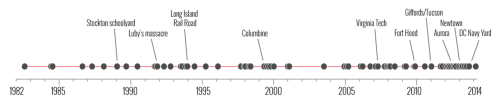
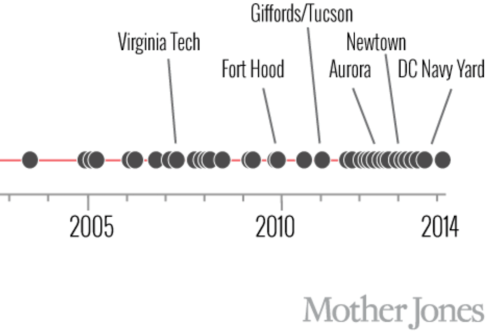 Mother Jones/Analysis by Harvard School of Public Health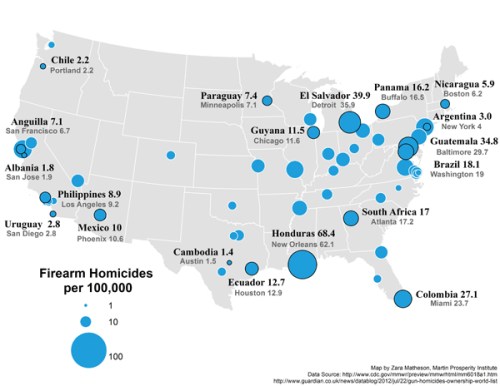
 Gun Activists Marching with AR-15s at UT-Austin/Getty Images
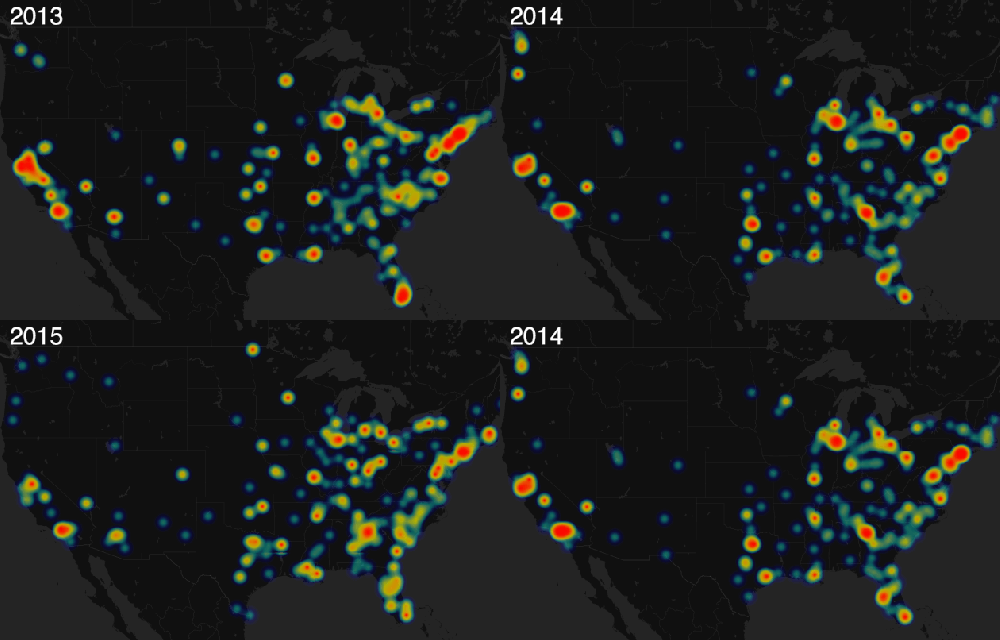 data from Shooting Tracker
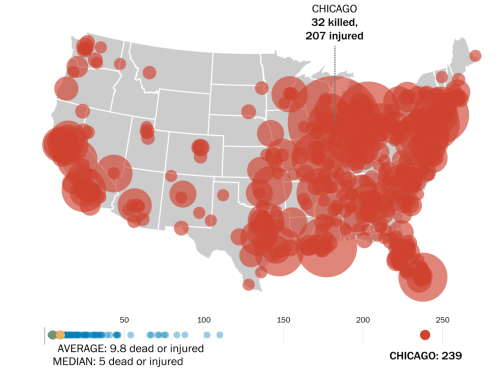
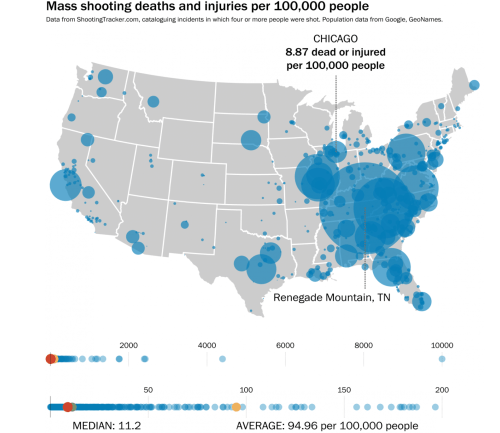
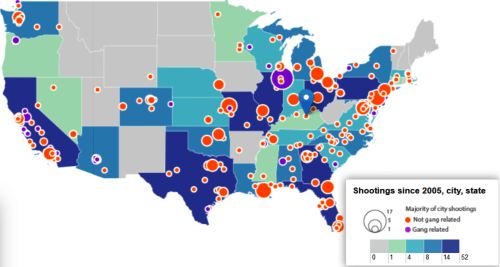

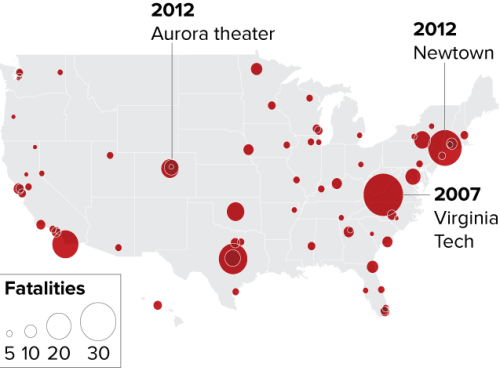

 NRA-Institute for Legislative Action
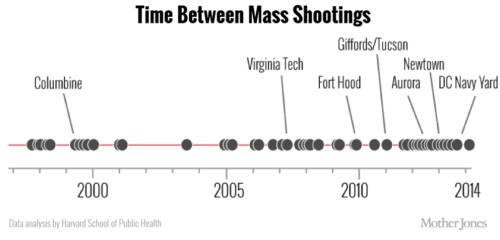

 Mark Wilson/Getty Images
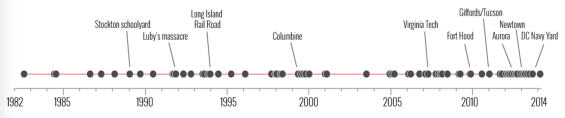 Mother Jones; data analysis by Harvard School of Public Health
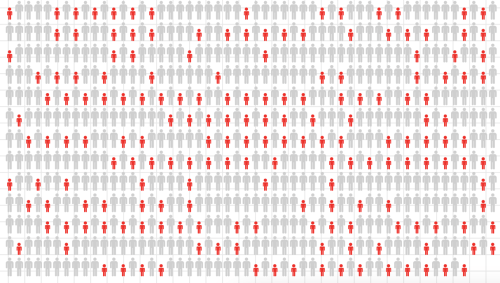
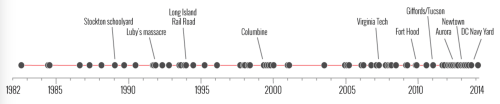 Mother Jones; data analysis by Harvard School of Public Health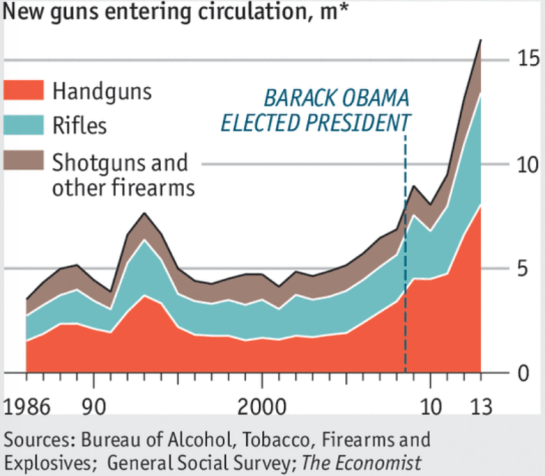
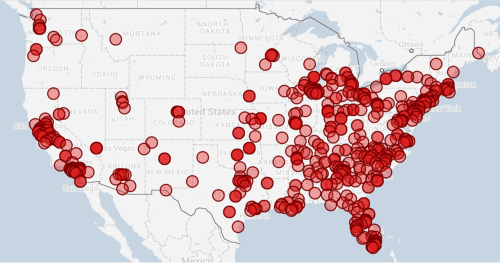

 Mother Jones; data analysis by Harvard School of Public Health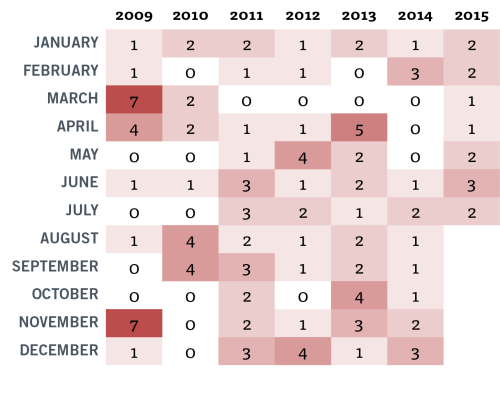

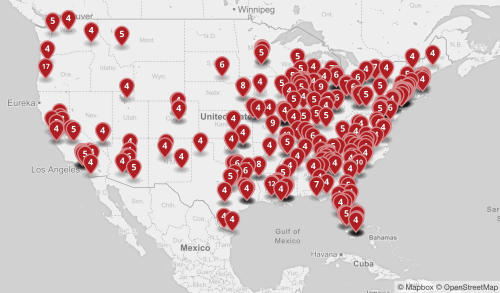
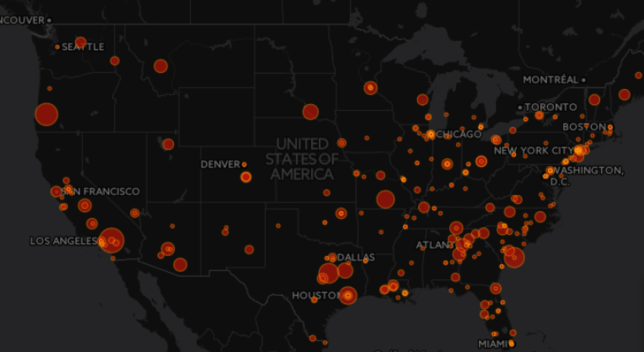
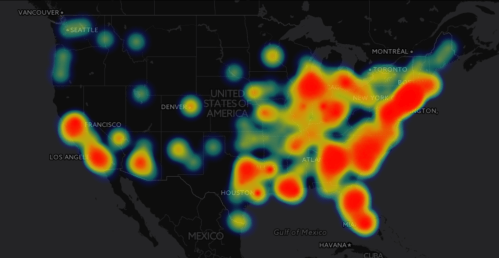
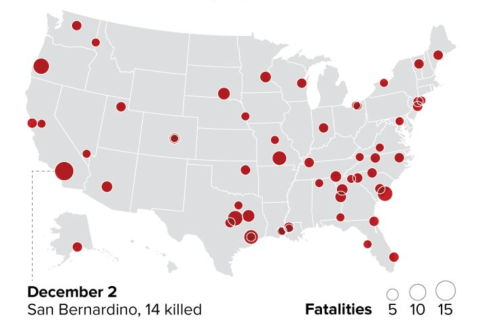

 Citizens Crime Commission, “Mass Shooting Incidents 1984-2012”
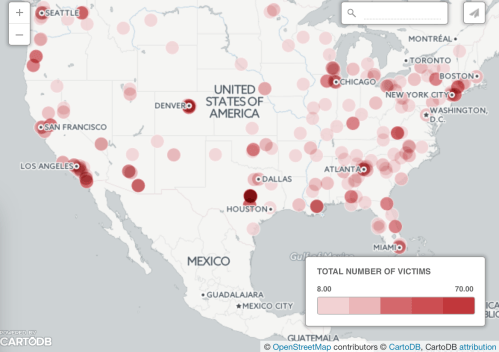

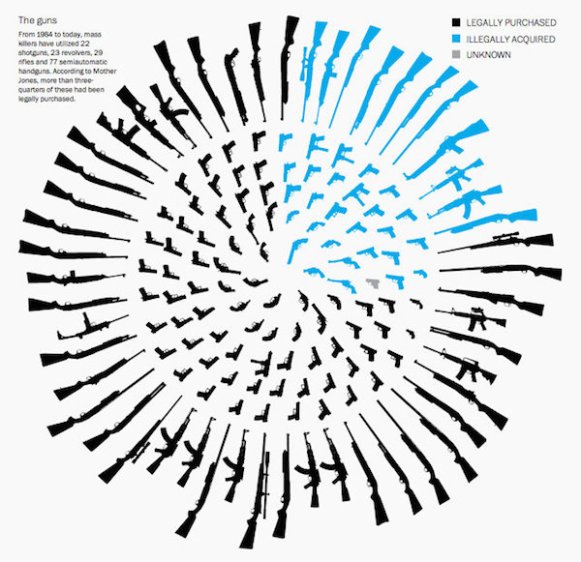

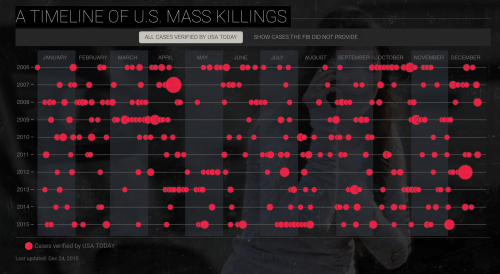 USA Today/Gannett–Mass Shootings in America until Dec 24, 2015
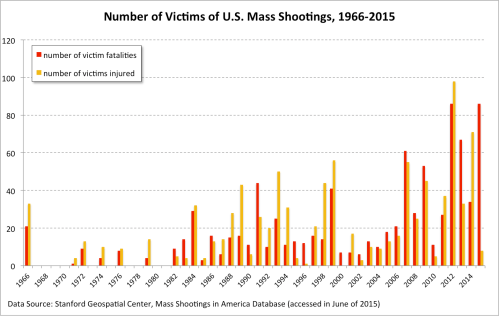

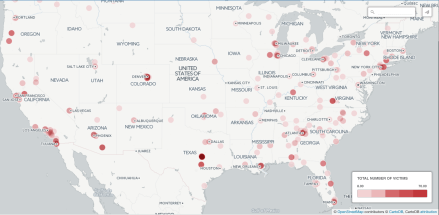 Stanford Mass Shootings in America (SMA), courtesy Stanford Geospatial Center and Stanford Libraries (map compiled with data of October 27, 2015)
 Stanford Mass Shootings in America (SMA), courtesy Stanford Geospatial Center and Stanford Libraries (map compiled with data of October 27, 2015)
 Stanford Mass Shootings in America (SMA), courtesy Stanford Geospatial Center and Stanford Libraries (map compiled with data as of October 27, 2015)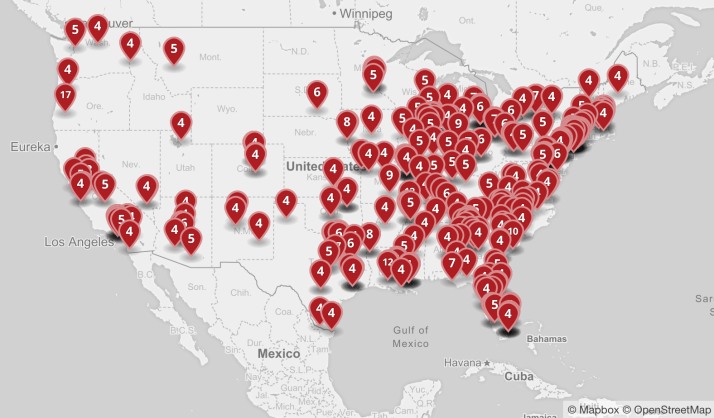
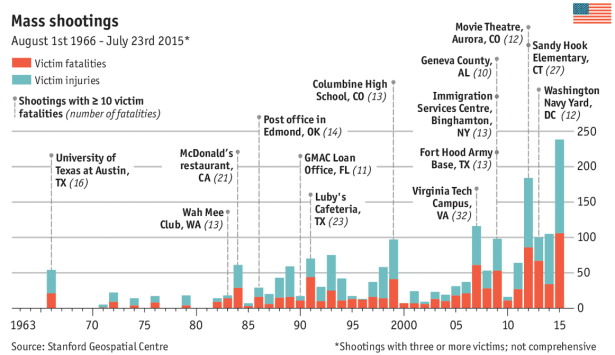 Economist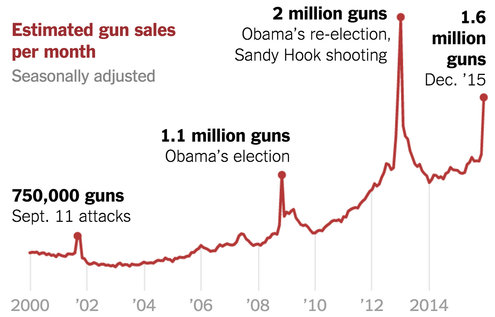
 Ted Cruz Campaign Flyer/www.tedcruz.org
 Honoring Victims of Inland Regional Center in San Bernardino Marcus Yam/Los Angeles Times
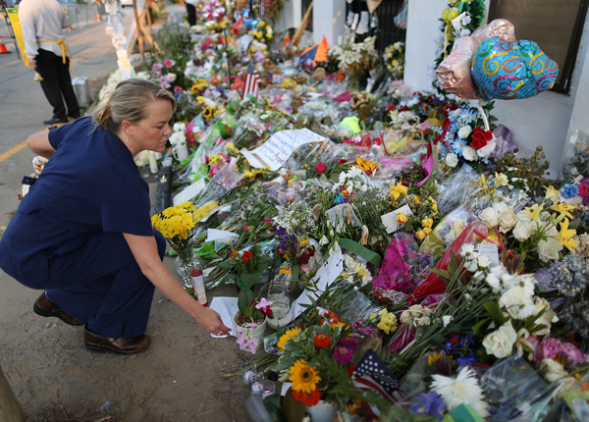 After Charleston Getty Images
 Monroe Township, NJ/Daily News
 After San Bernardino Genaro Molina/LA Times
 (after San Bernardino) Jim Wilson/The New York Times
 San Manuel Stadium in San Bernardino, CA December 3, 2015 (AP/Mark J. Terrill)
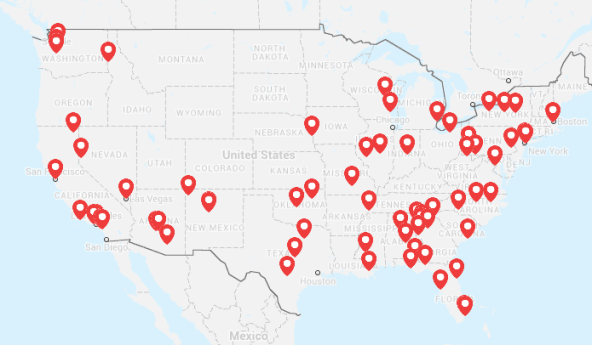 Mass-shootings since Sandy Hook, by Soo Oh using data from Mass Shooting Tracker, via Stanford Geospatial Center–do check out the interactive web map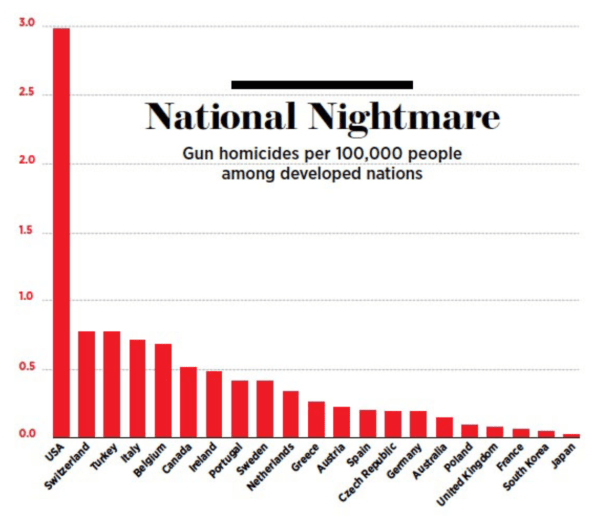


 Gun Owners of America
 Give Me Liberty: Where 8% of Population Own Concealed Weapons Permits
 Bill Pugliano/Getty Images


 San Bernardino Police Department
 New York Times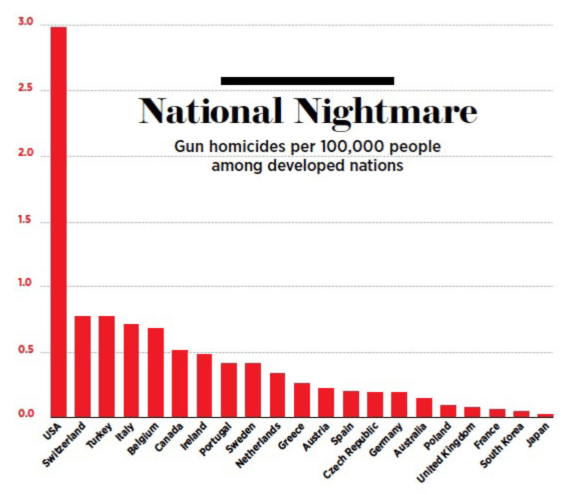


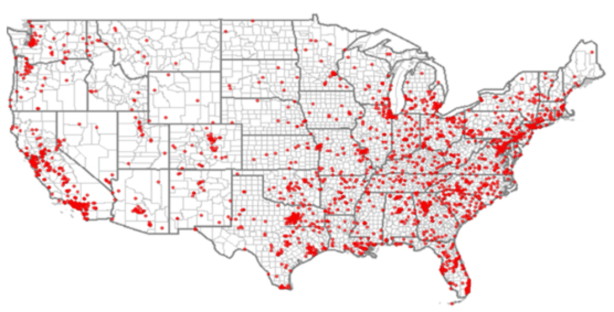
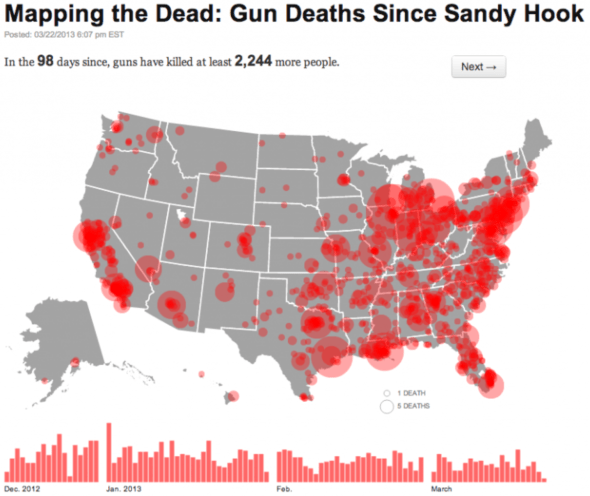




 Marvel Comics
 Call of Duty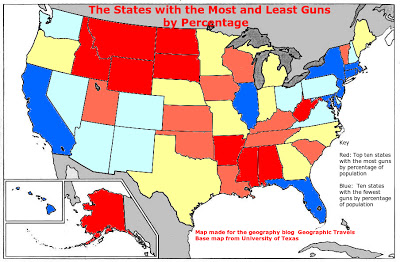

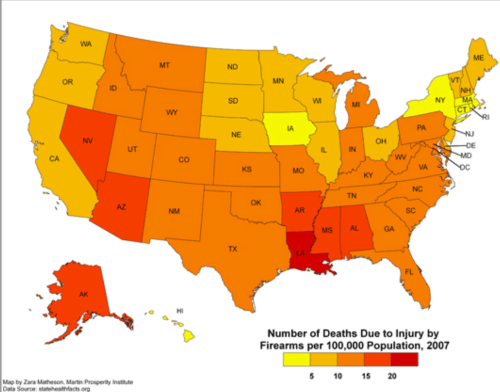
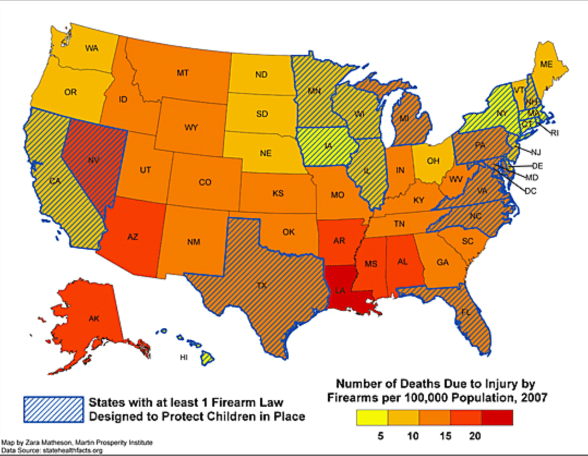
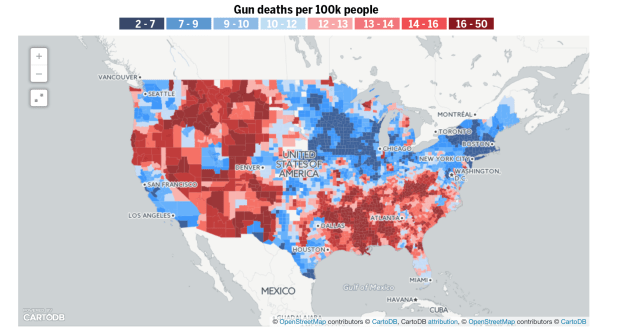


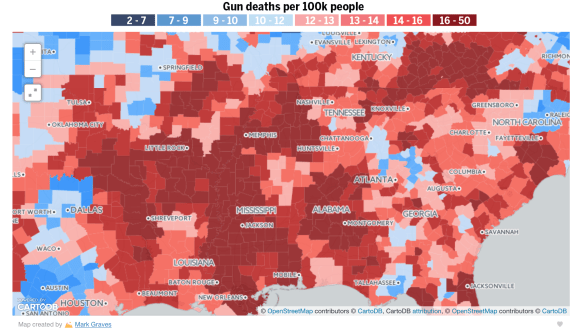

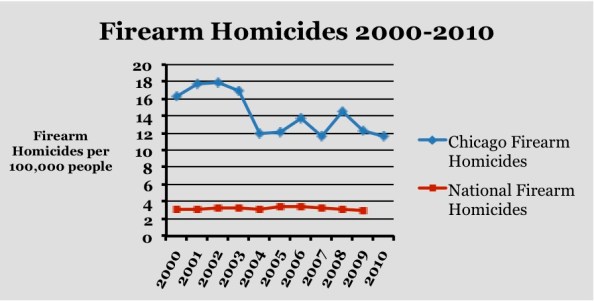

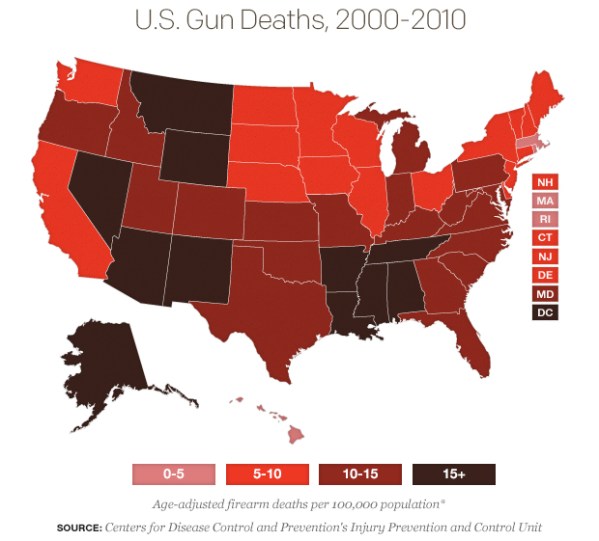
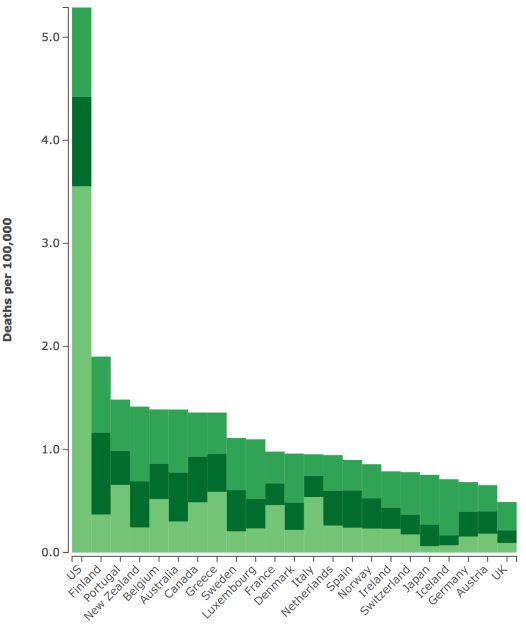
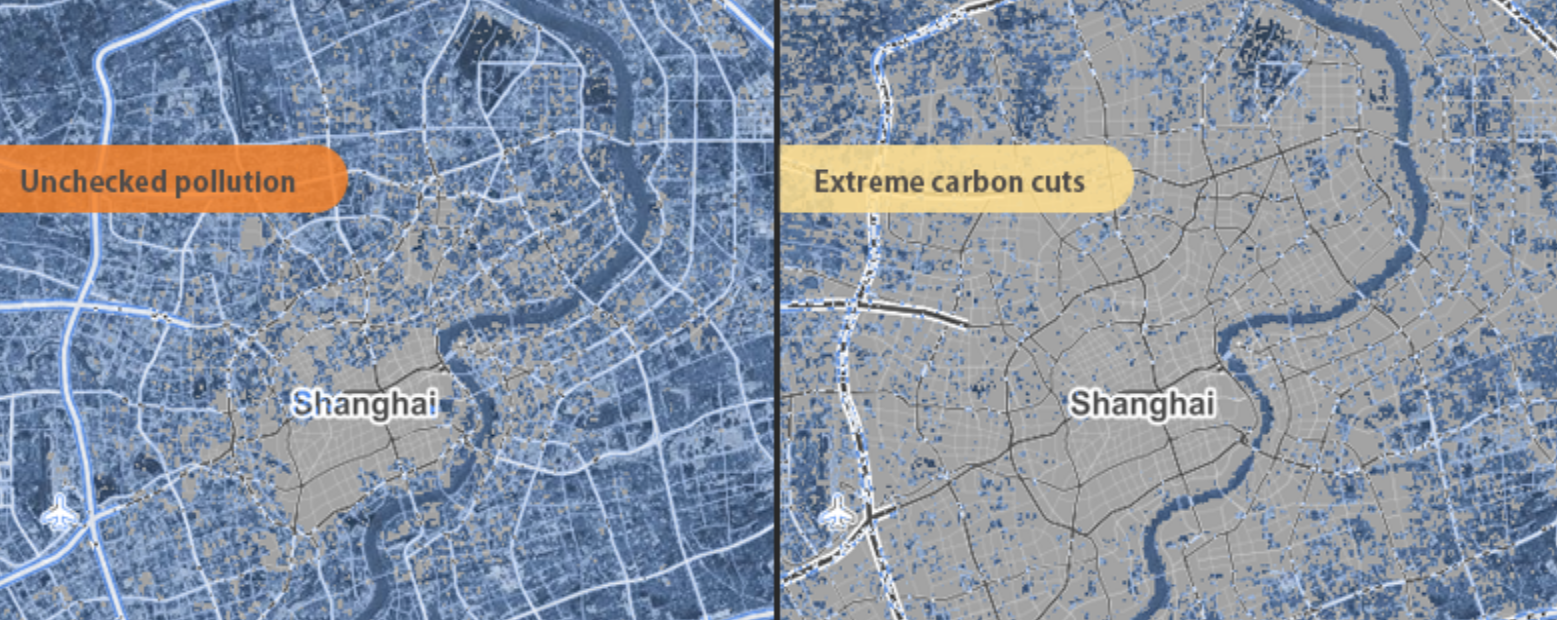
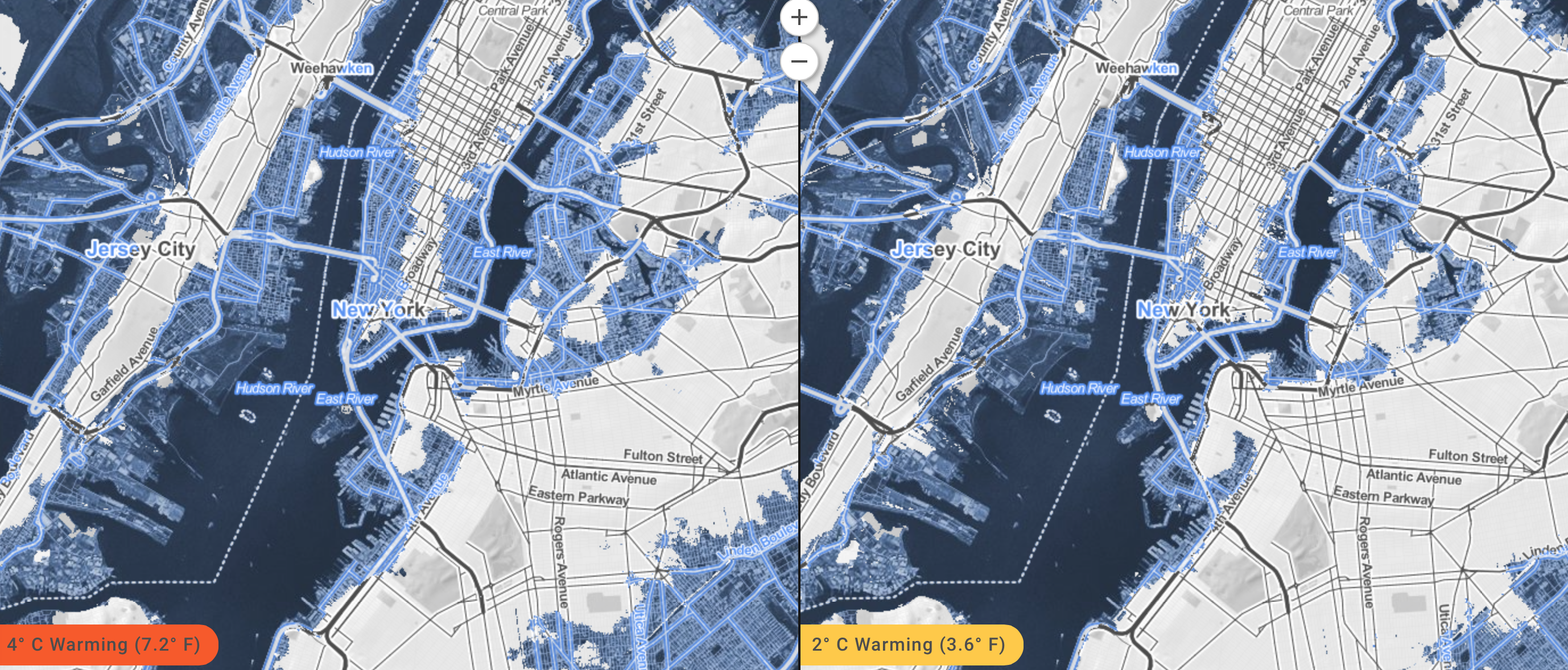
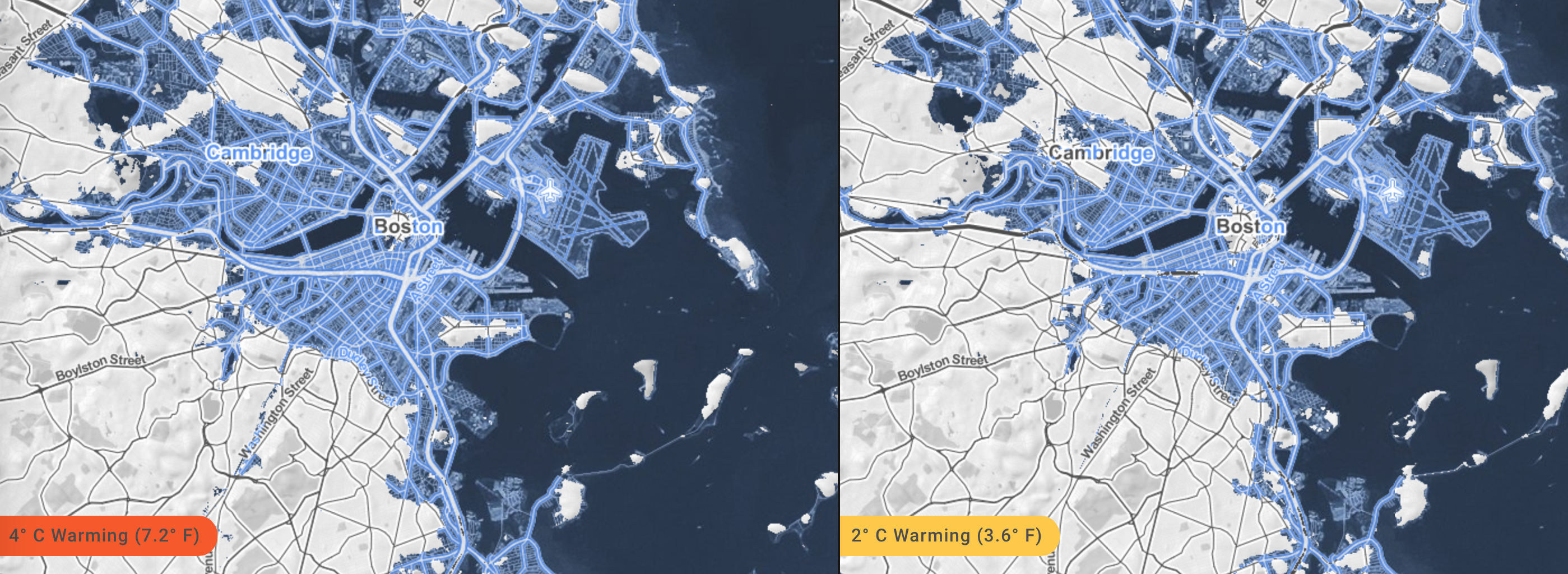
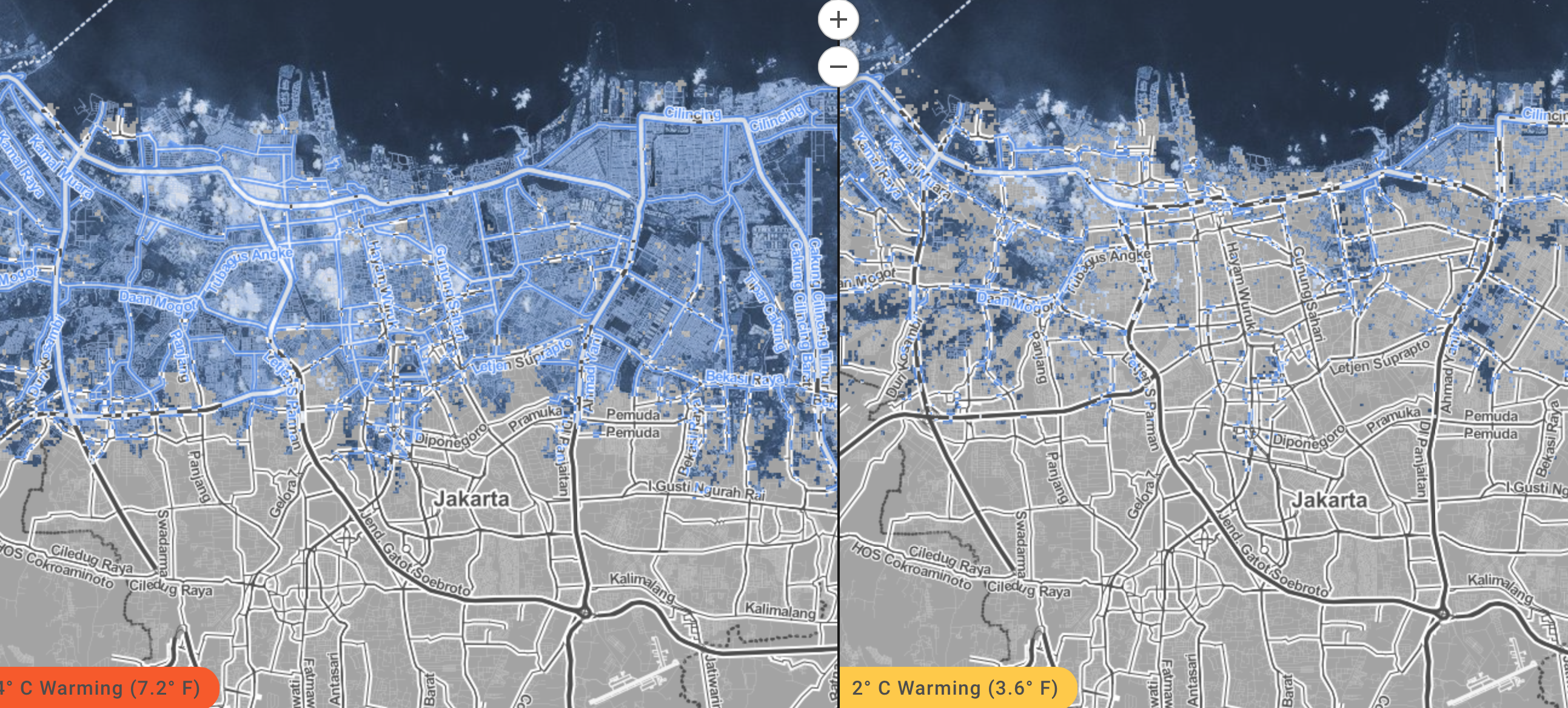
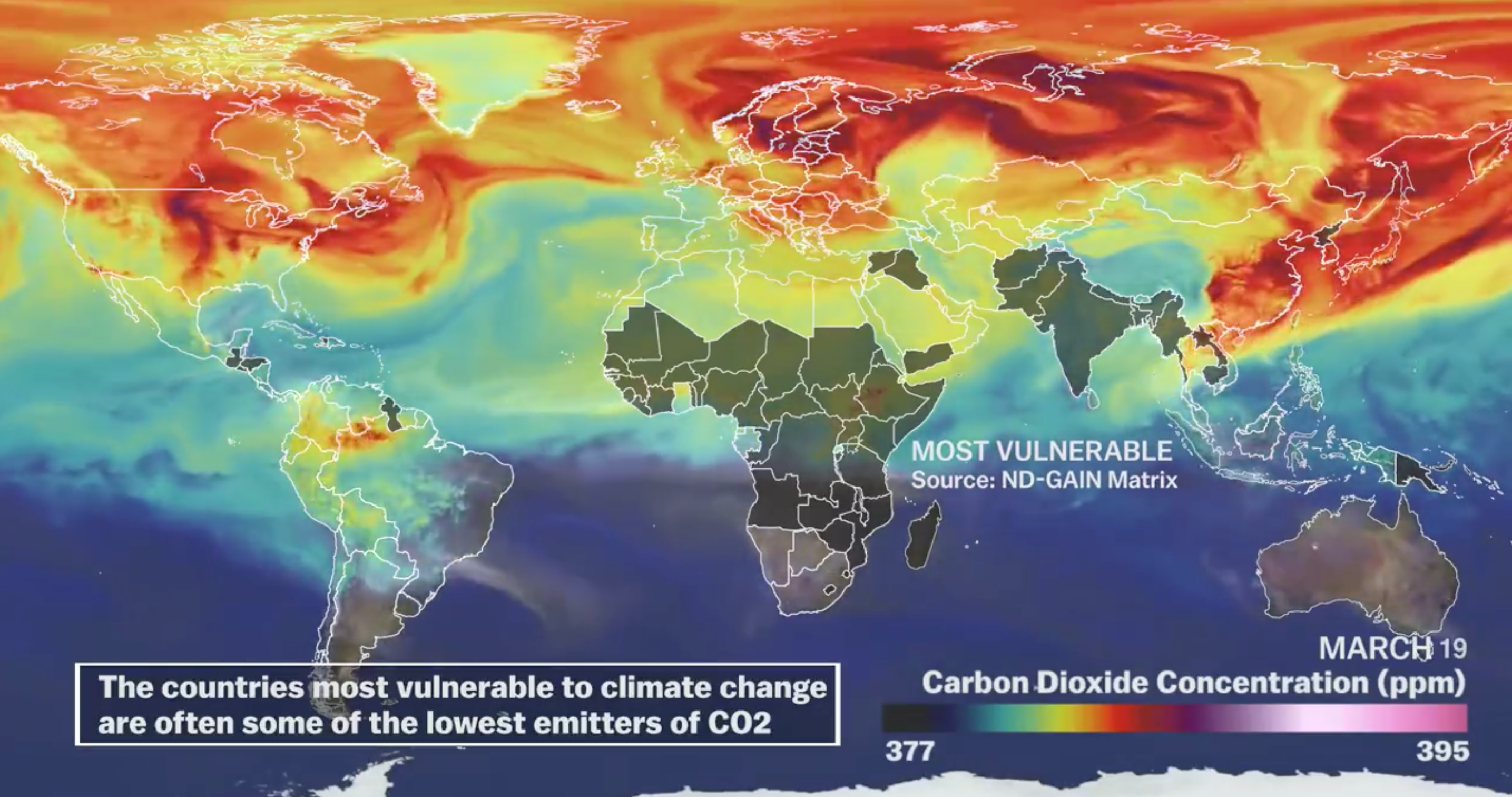
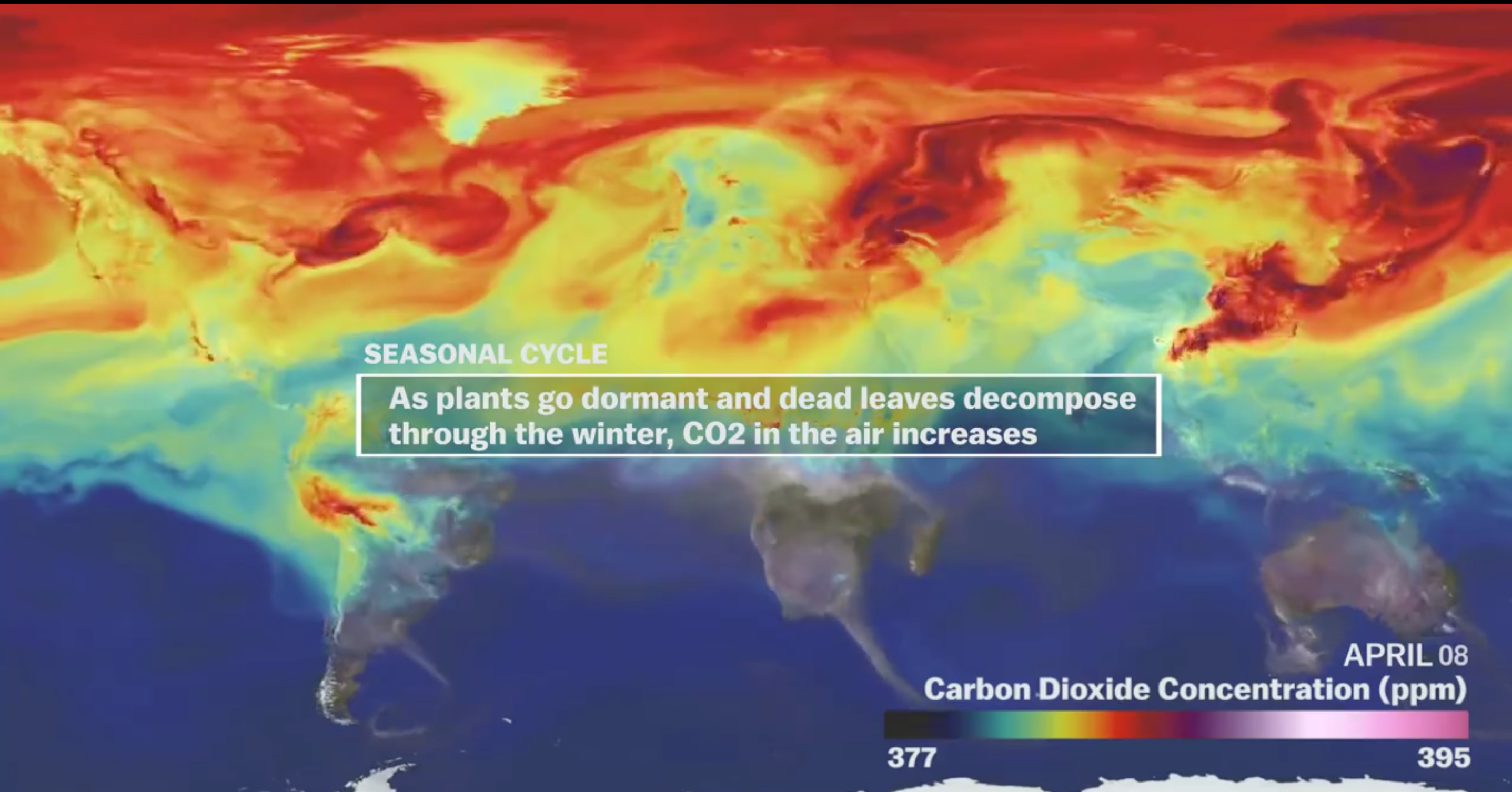
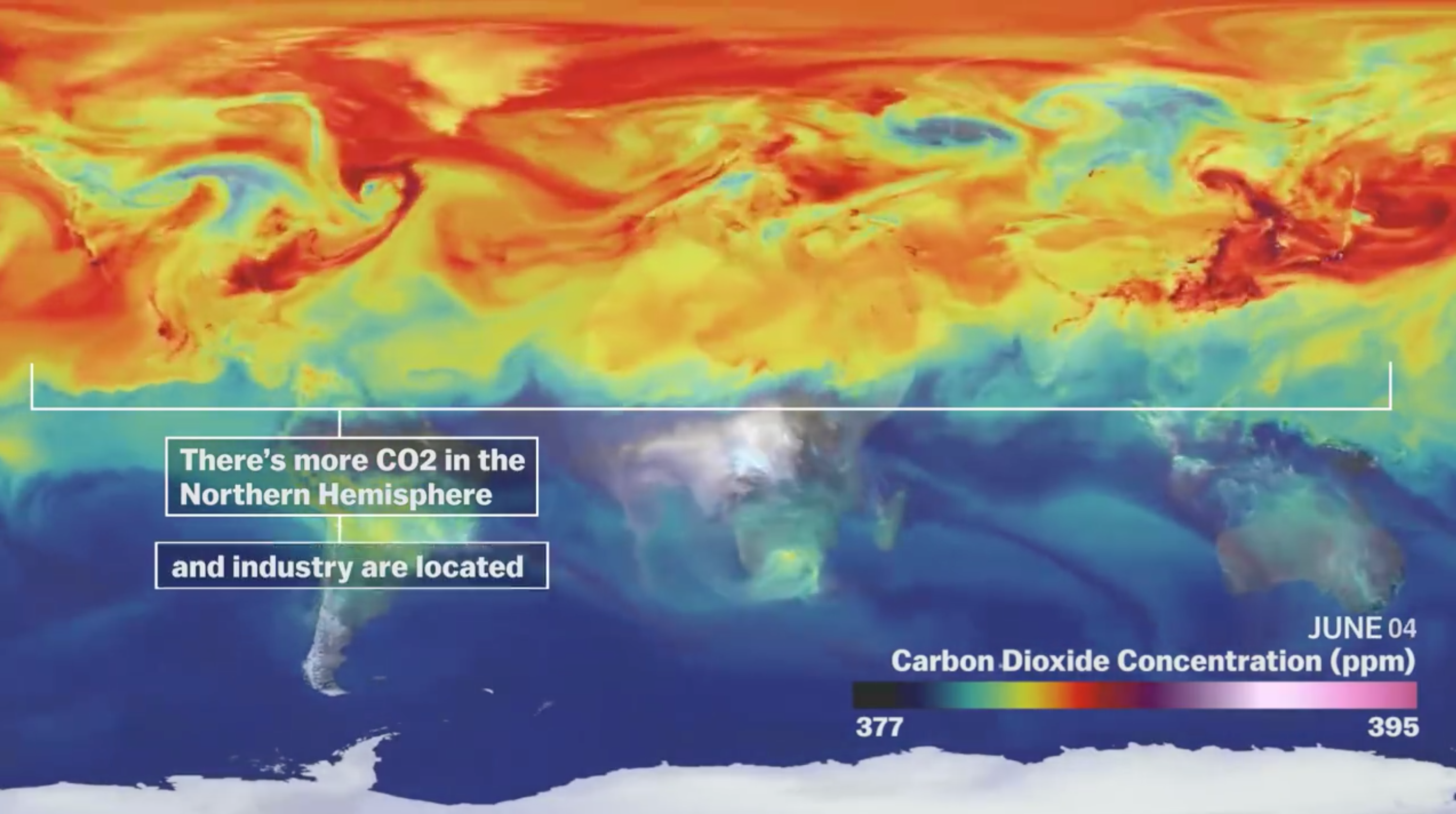
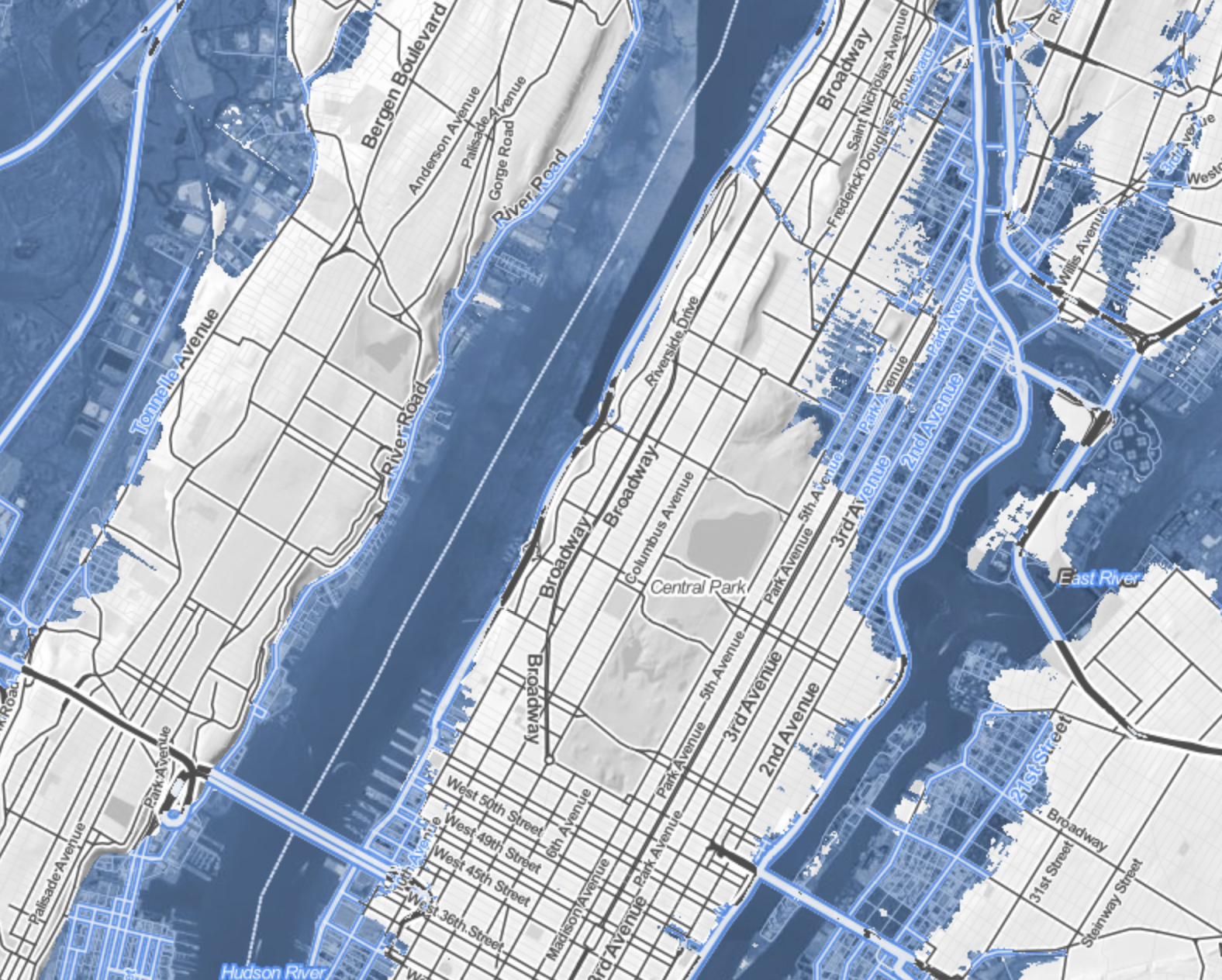
















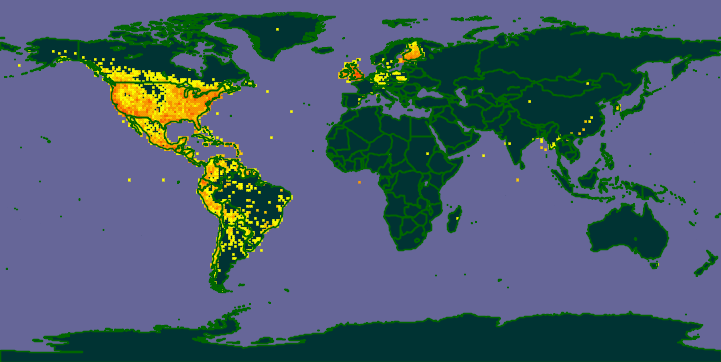
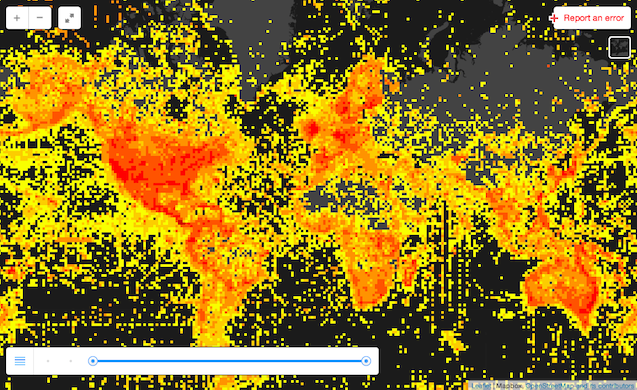














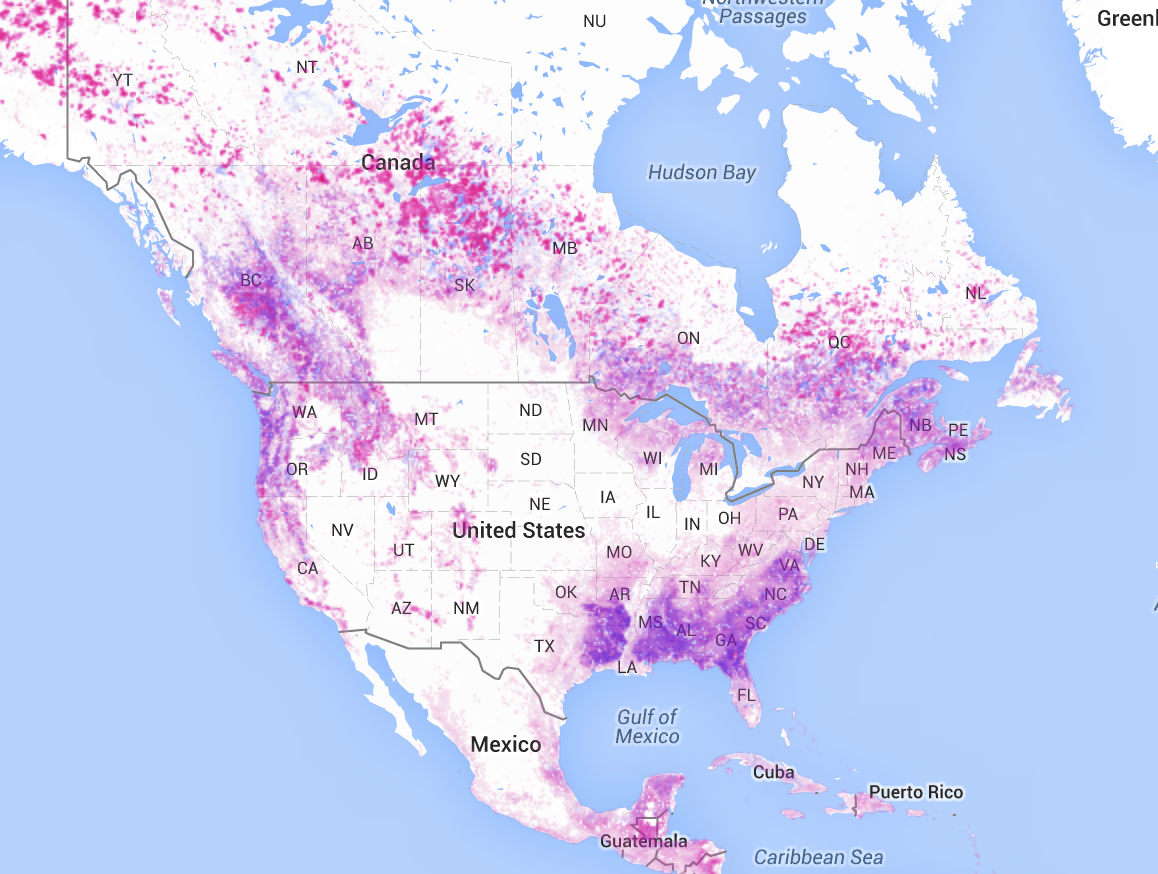
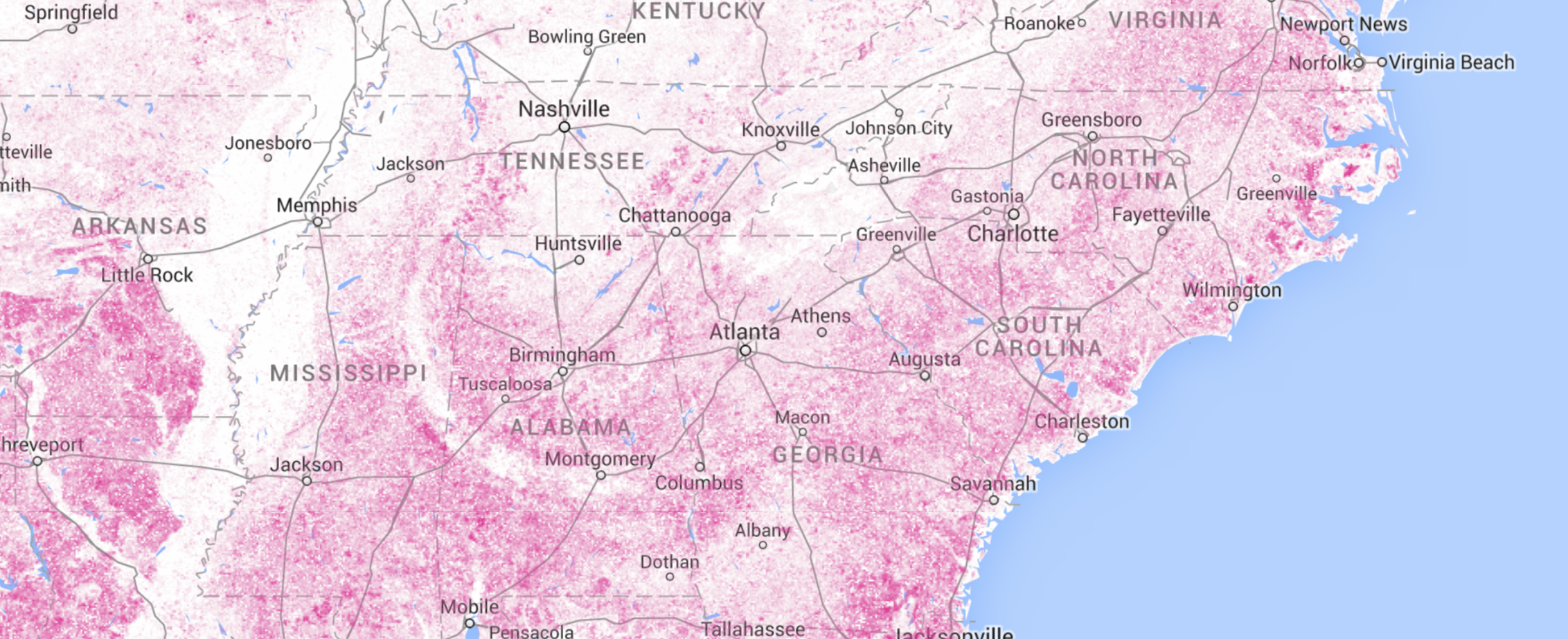
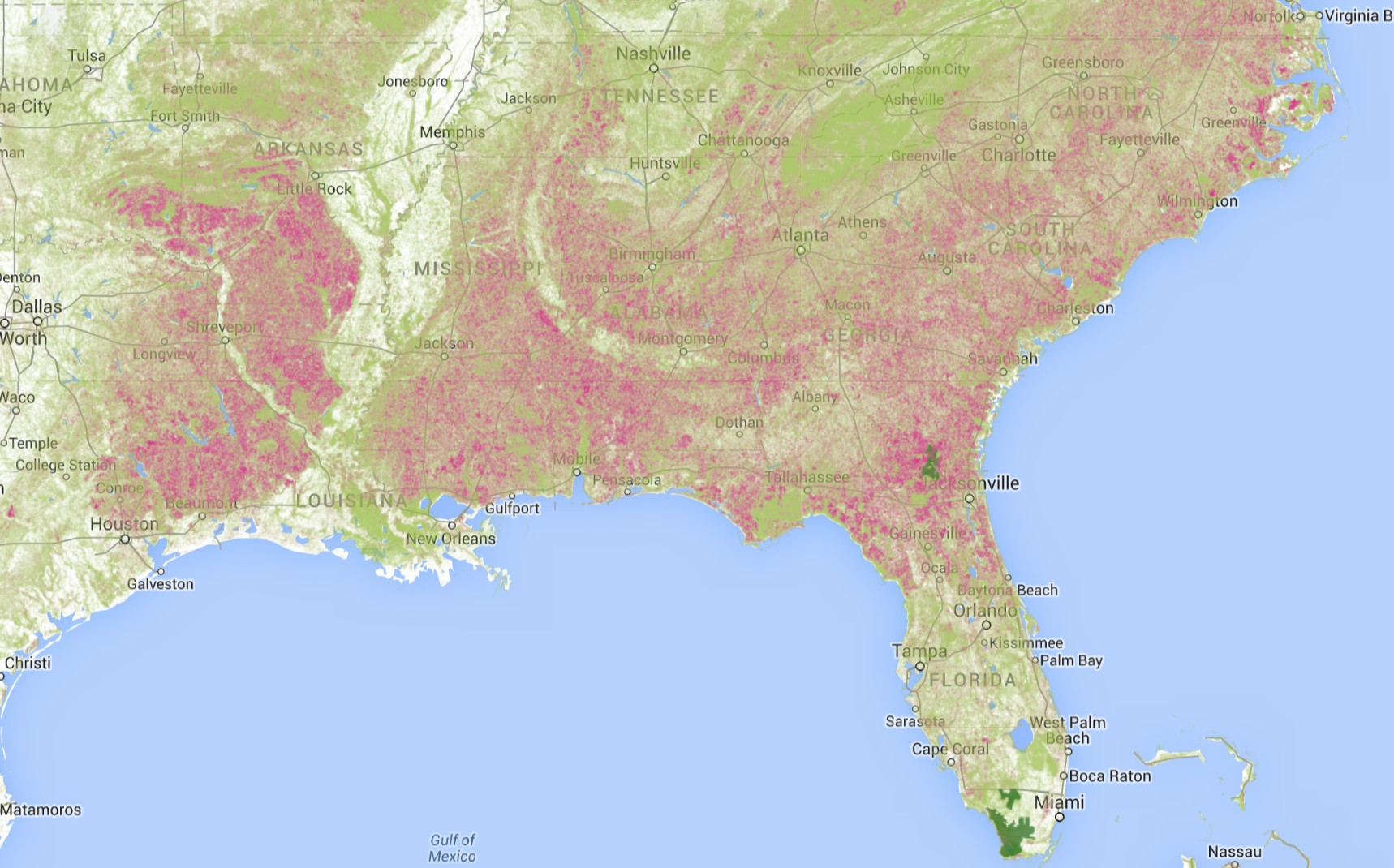



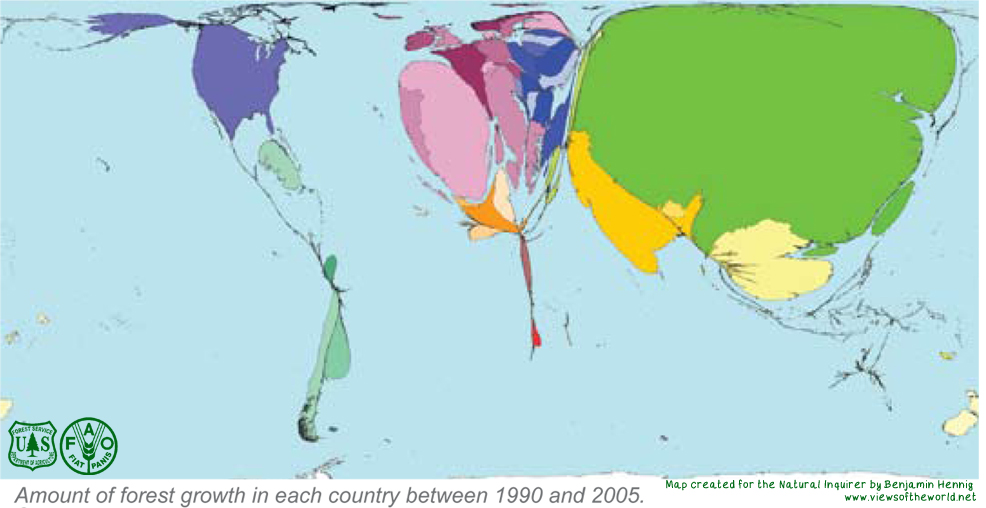
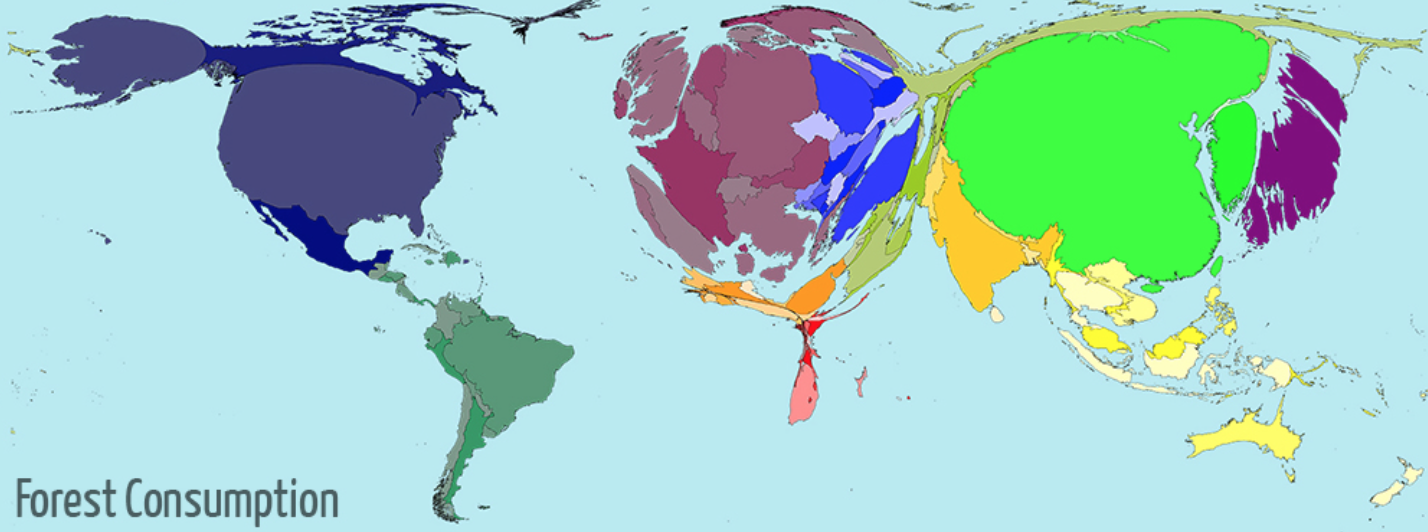
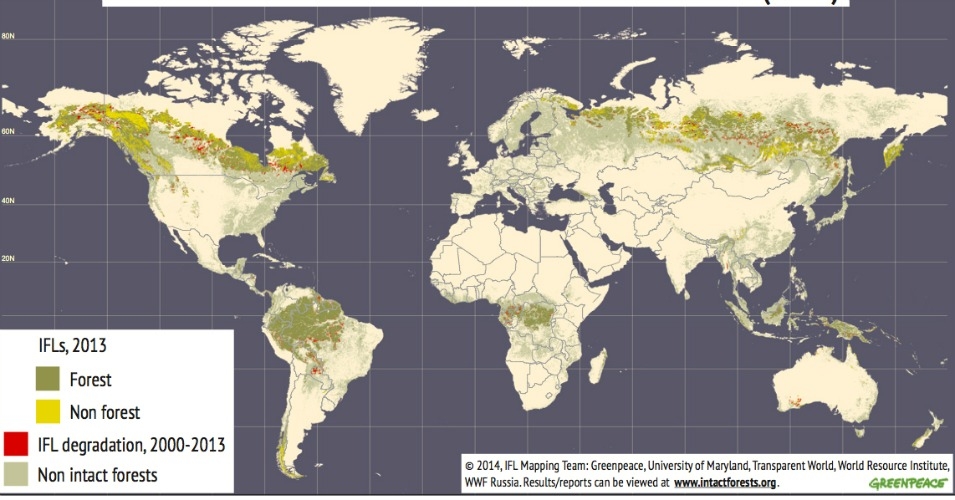
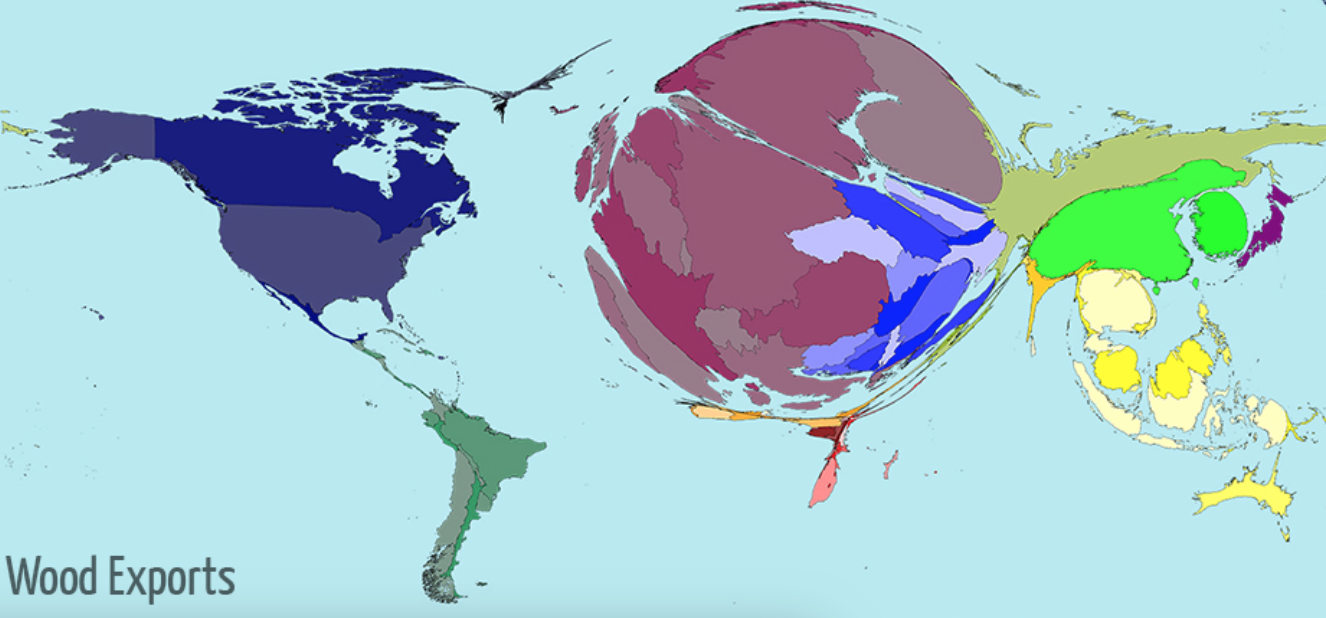

 It is striking, after a somewhat exhausting world tour of the disproportionately skewed nature of forest loss and arboreal compromise, to return to the United States, that remaining densely forested areas in the continent mirrored the striking distribution of the recent map modeling the spread of highly audible levels of anthropogenic sounds across the country, based on data released by the National Park Service, and offer a telling sign of how we inhabit the land in which we live.


 R&D spending intensity in California metro areas/Source: Milken Institute








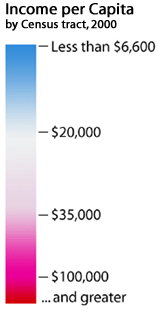


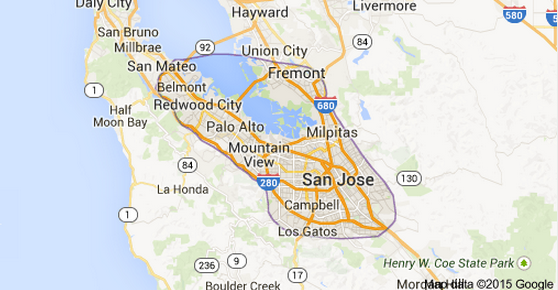



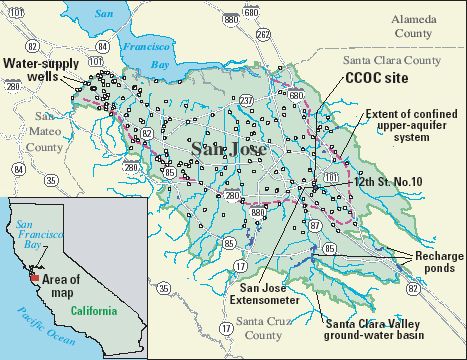







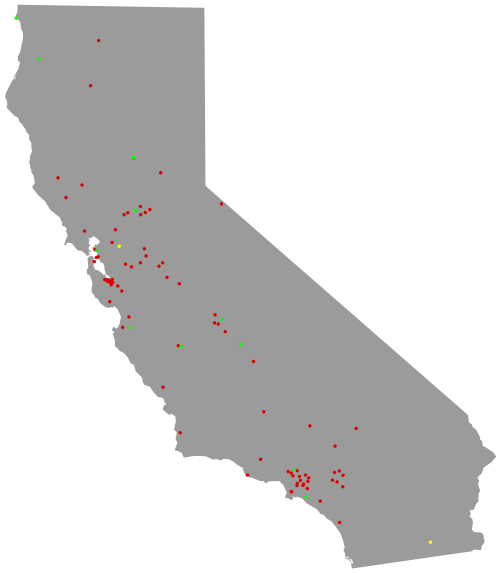











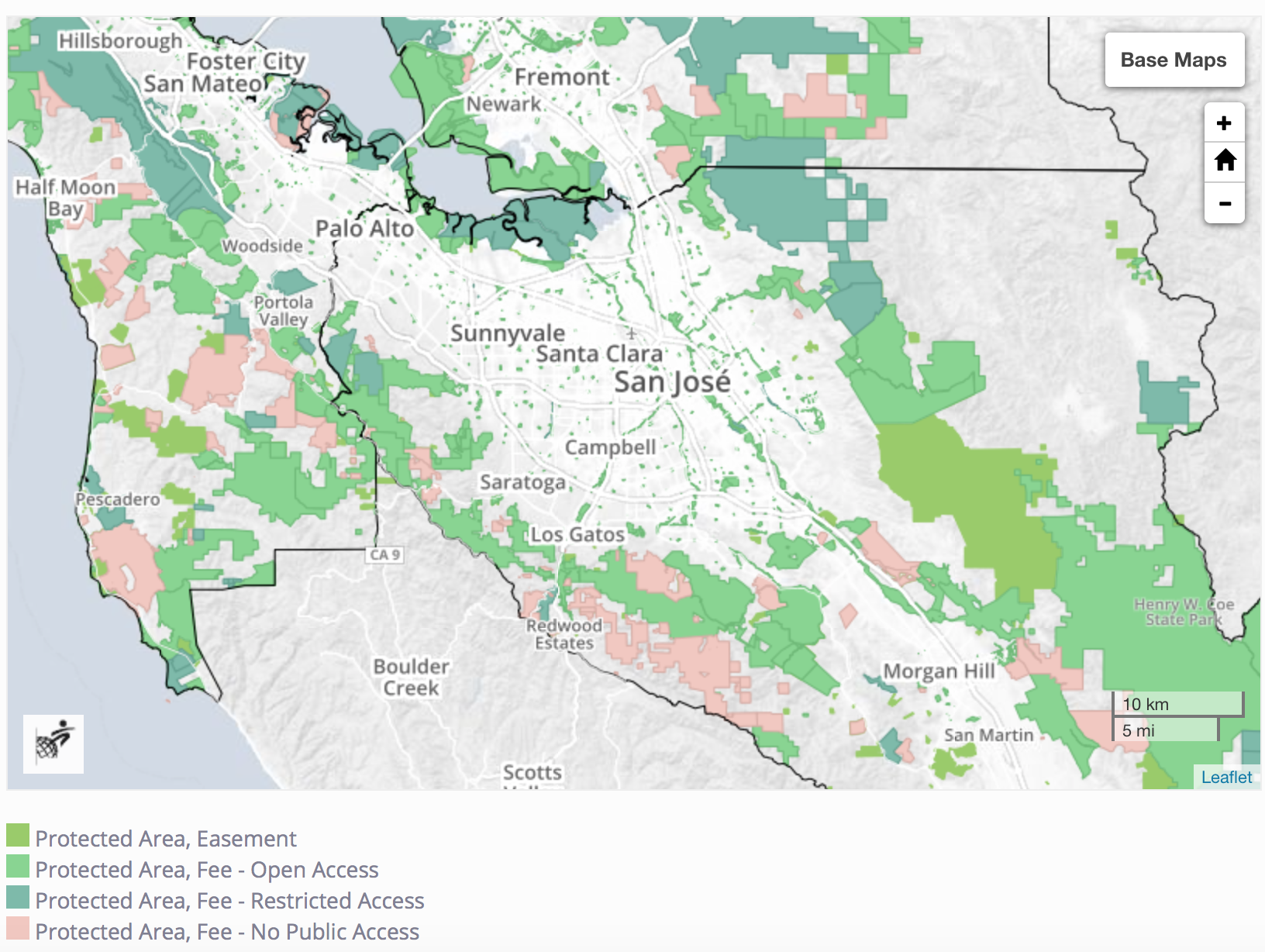
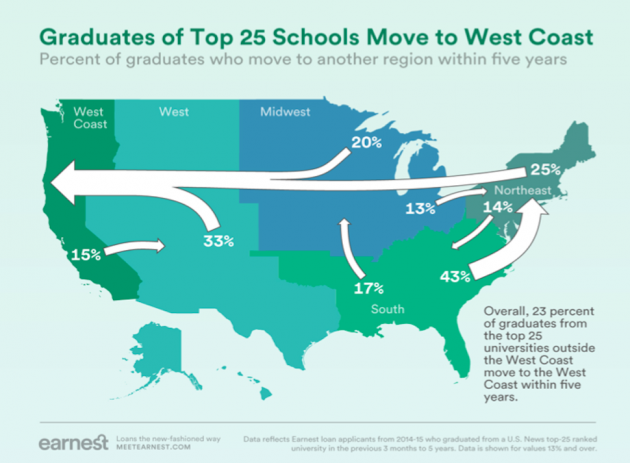






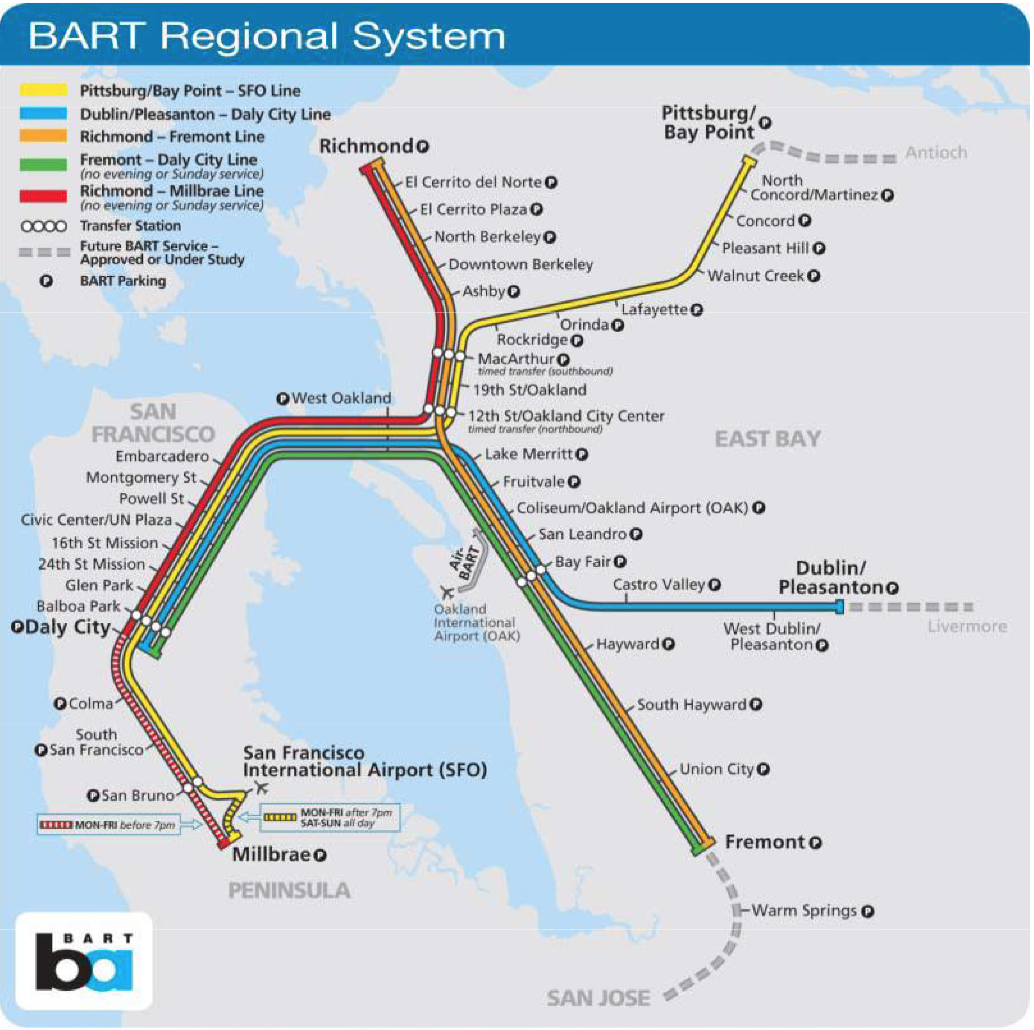



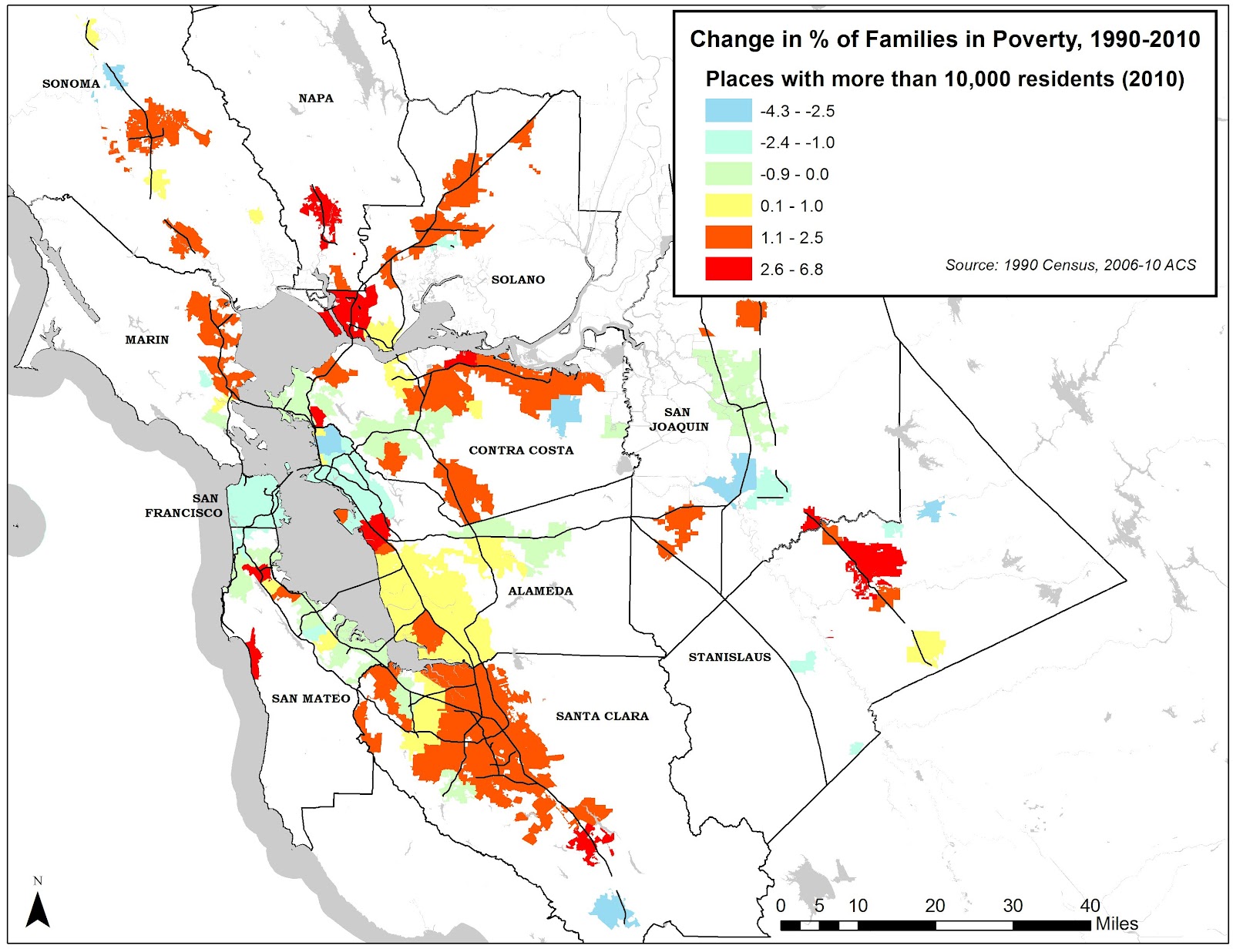


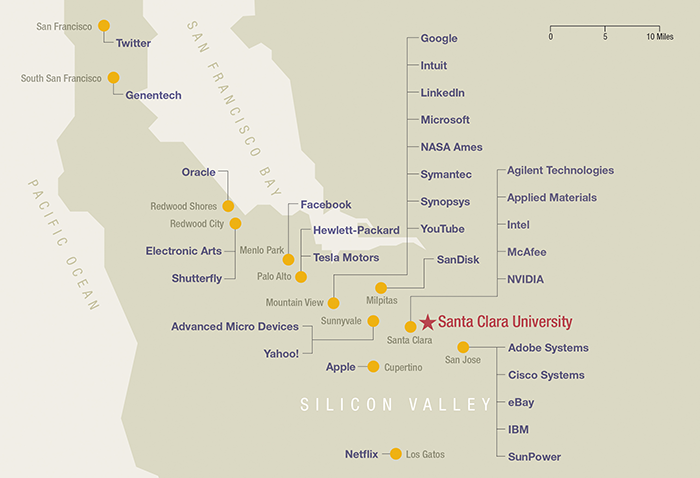




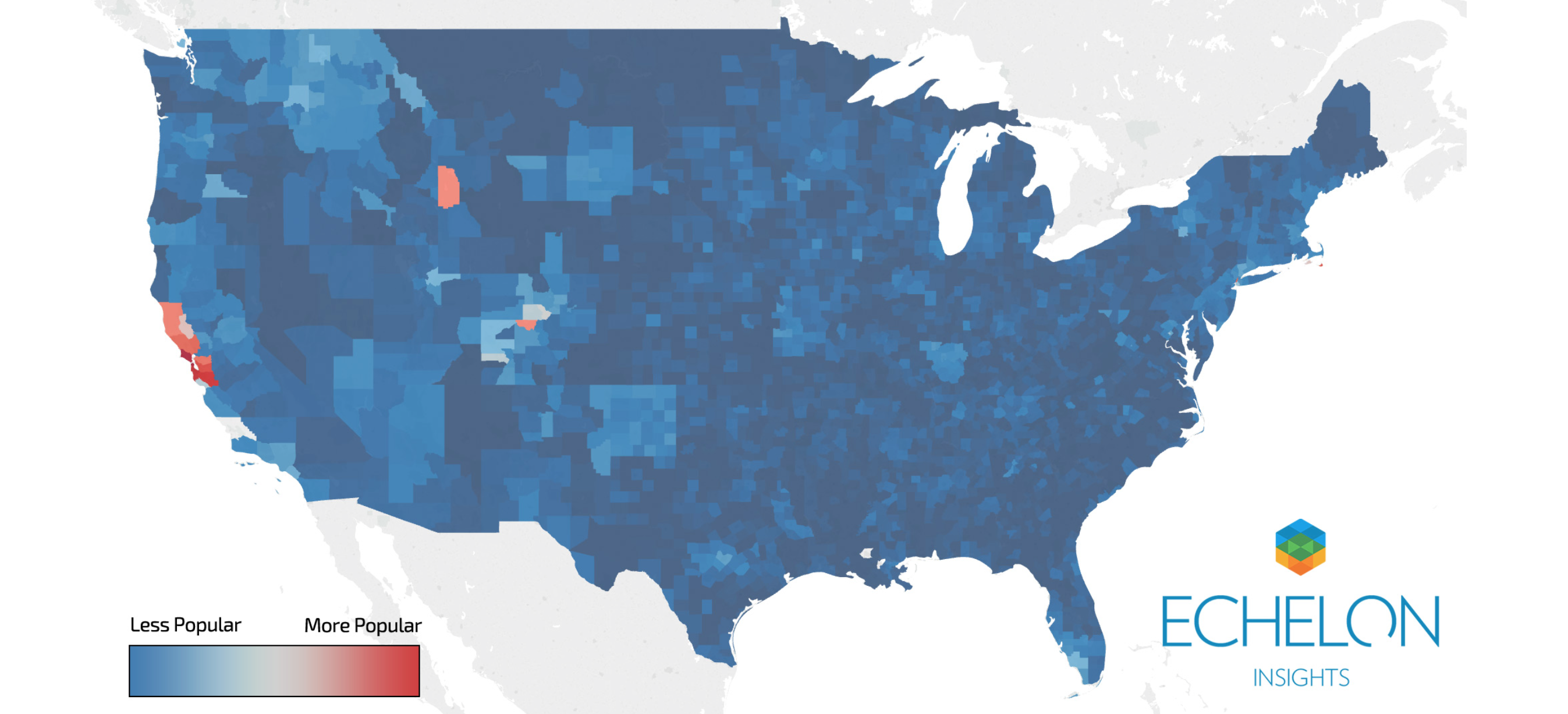












































 Musings on Maps
web.jpg)