While we’ve been driving ourselves to distraction with the distortion of the electoral maps, projecting the failure of our system of government in the specter of “tied” electoral contests in which the vote is thrown to the House of Representatives, rather than anyone having a vote, we as if realizing the real fears of disenfranchisement that are all too palpable in the current status quo. The possibilities of choosing a President in a polarized nation have led, not only to consecutive weeks of polling so closely within the margin of error to be set many to rip out their hair, but also inevitably ratcheting up the fears of violence–and violent confrontation–at the polls.
As if a concrete version of swinging, the fears of fists swinging at the polls seemed all too real, perhaps in the memory of January 6 still fresh in some minds, and the major actors, decentralized and all-male actors seeming to respond to Trump’s rhetoric, claiming that they would “show up” at the polls, as Ohio-based groups posted “the task is simply too important to trust to regular normies,” legal norms, or boards of election. All ratcheted up fears that the election would be stolen, amplifying anxieties about the authority or legitimacy of the election. by taunts that “FREE MEN DO NOT OBEY PUBLIC SERVANTS” on alt right social messaging platforms before Election Day. The Proud Boys, famous for having been told by Donald Trump in past Presidential debates to “stand down and stand by,” now stood “locked, loaded, and ready for treasonous voter fraud.” The demonization of public servants and the civil service, only to be amplified by the Trump White House in later months, was indeed launched within the election.
The feared violence did not happen, but a violent shock seemed present as votes were counted in a new electoral map, as the battleground states that had long been contested seem to have folded, and shifted red. But Trump’s ties to the Proud Boys–or the ties that were not only seen on January 6, but even back to the “stand down and stand by” remarks in the Clinton-Trump debate that curried so much favor with the radical alt right group. Indeed, they raise the question of whether, even if violence at the polls or voter intimidation did not occur, it still makes sense to map the electors in purely partisan terms, in this most polarized of ages, and how much that polarization rests on the personal power that Donald Trump has gained. But we have retained the map of “red” and “blue” states as a visual shorthand, dating twenty years ago on the television news, that has dominated our understanding of partisan divisions, and indeed been naturalized as a shorthand of political brand, able to take the metaphorical temperature of the nation and “decide” its leadership–even if the cartographic shorthand may be outdated in the era of the strongman. And we have forgotten how narrow the election was, as Trump has claimed a “mandate” while in fact loosing the popular vote, on the basis of winning six swing states–as if those close margins of victory, and a failure to gain a majority of the votes in what was for all practical purposes a two-candidate race, led to an electoral map that was rather divided–and offered little consensus–despite an illusion of a continuity of red states, rooted in the less educated and more economically disadvantaged ones, who bought Trump’s deceptive assurances of the arrival of lower prices on food and gas.
Have we allowed our minds–and our journalists’ minds–to become too filtered by the distorting principles of electoral maps? William Galston, an observer of elections and insider who worked for four presidential campaigns, ran with this cartographic metaphor, noting that if political parties had gained and lost ground in states and regions in earlier eras, we “live in an era of closely contested presidential elections without precedent in the past century.” As one candidate promises to divide us like we have never been divided, we are divided by the smallest of shifts in voting patterns, the electoral map of “the contemporary era resembles World War One, with a single, mostly immobile line of battle and endless trench warfare”–that reflect the increasingly and unprecedentedly sharp partisan tenor of our politics. Galston argued this was increasingly true in 2020, the election when states’ partisan opposition seemed to harden over forty years–if not sixty?–despite the interruptions of the Clinton and Obama years, the rare excerptions. But this divided landscape gained a terrifying sharpness that crystallized in how seven “battlegrounds” decided the election in 2024, justifying outsized attention from Presidential campaigns in the 2024 election.
Even as the United States Justice Dept. monitored twenty-seven states–and some eighty-six jurisdictions!–to ensure compliance with federal voting rights laws, prevent voter intimidation, and law enforcement agencies were braced for violence, no cases occurred–despite tangible fears of violence or intimidation. But the shock of the red map lead to existential worries of a story that ended in the wrong way. If 77,000 votes from Wisconsin, Michigan, and Pennsylvania put Trump in the White House the first time, in 2016, a big push from all three states did the trick by promises to a Christian Right. Even if Harris cut Trump’s lead in the battleground states, Trump continued his advantage in battlegrounds of the light blue Democratic victories of 2020. And so the first returns in the Election Day scenario of the 2024 suggested a shift in the landscape rightwards, a mass shift Trumpwards, in fact, that had not been seen before, a shift in collective action and identity voters adopted en masse–as if rejecting partisan allegiances to run against the polarization of the past–
CBS News/November 7, 2024
–that provided a new landscape by the evening of November 7 of increased margins of victory from 5% to as much as 20% among for the party that had undeniably become, as many fretted, the Party of Trump, in ways that tested the carving up of the electorate into demographic groups or genders.
The array of arrows lurching red seemed to blanket the nation appeared nothing less than a major electoral paradigms. And the victory of Trump was not a victory of the GOP, but a confirmation, in some sense, of the full takeover of the Republican Party by Trump’s promises of making things right again, promises that seemed more concrete in its details–even if they were largely vague assurances, moral victories of slim benefit like the restoration of values and end of access to abortion–promises at well in exurbs, far from cities and urban disturbances, from private equity to prisons to gaming to casinos to gun advocates, finding a gospel of mall government and low taxes, a salve to anger at pandemic restrictions, an exurbia on the edges of cities, fleeing all disturbances to an elusive status quo, believing hopes of bracketing costs of global warming and near gaining a critique of Trump’s abundant lack of any actual economic plans.
CNN, November 7, 2024
The sudden parsing of the flow of margins erased the red state-blue state electoral map, with a precinct- or county-based tally of margins from the previous election, seeking to size up candidates by socioeconomic or other groups, but confronting an apparent large-scale shift of the electorate. Trump’s victory was not overwhelming in its margins, but re-mapped most large stretches of the country red left the notion of “red” states in the past, to augur a new landscape for the United States–not only in domestic policies, but, of course, its relations to the wider world. But it was more than decisive, and the “break” in many districts once dependably mapped as Democratic voters to Republican suggested a wake-up call, even if the election was by no means a landslide: it felt like one, and that nagged one’s mind and would in days to come. And, perhaps more importantly, the perception of a landslide–even if it was by small margins–was exultantly viewed as a license to remake the government, remake the presidency, and redefine the role of government.
The bitter truth Trump did well among, non white voters, lower-income Americans, and women cannot be explained easily, and surely not by class-based disaffection from Democratic candidates.
Red Shift across American Landscape Showed a Decrease in but 240 Political Counties/New York Times
Despite fears of violence, the eery absence of any disturbances paralleled the rightward swing of the American electorate, evident in the rightward swing of voters not only in those seven “swing states” but the great majority of counties across the nation evident as the first votes were tabulated on election night. This was a punch to the right, a lurch right save spots in Georgia, South Carolina and Michigan–once considered swing states, to be sure, but now trending red. How did all the so-called “swing states,” uncertain in their voting practices but which we had been reminded from the summer, would, in fact, be selecting the President as much as the country, swing red in ways that seemed more overdetermined than seeming news?
The map hit viewers like a slap in the face, a rude awakening of heart-breaking disconnect with America, but was also cause for a recognition of deep-lying and relatively dark undercurrents that found grounds to turn away from a convincing female candidate, even in favor of a convicted felon. The bomb threats on election across swing states provoked fears of a conspiracy of Russian origins, but the lurch seemed terrifyingly home-grown and domestic, and seemed profound. It was only as more votes came in, early results revealed a shift of over 90% toward Donald Trump, a terrifying landscape indeed, but as the votes continued to be tabulated nationwide, the electoral map and the tally of votes suggested a narrow victory, in many senses, as more votes came in from California–but revealed the stubborn draw of this year’s Republican candidate, former President Donald Trump, who attracted voters across many of the states once thought in play. Candidate Trump currently only leads the vote count by 2.5 million votes nationwide, but the large turnout paradoxically benefitted him, suggested the special draw that he had as a candidate among many voters, from a far more “diverse” background than Republicans had indeed ever assembled.
The light pink areas that were not so dominated by Republican voters presented a fractured landscape that broke the wrong way, and did so by small margins and very much perhaps for not the right reasons. But the break in votes was striking, as if able to be mapped as continuous regions. We are still haunted and traumatized by the mapping of the way the national population had split in 2016,–of siloed blue towers, removed from he rest of the land, a hived off vision of politics that we faced with frustration as Trump entered the White House for the first time–winning the backing of the interior forty-eight with an intensity not reflected in any earlier polls.
We had pored over those maps that haunted our minds with endless precision as data arrived on county and district level, to search for signs of the anatomy of the loss, hoping to grasp the gaping division of the national vote. Did Trump’s continued appeal redraw the political landscape, or was there something wrong baked into aggregating the general will? Did tailored talking points about access to abortion and an attack on price-gouging fail to motivate voters, or provide a convincing narrative of steering a more vital economy, or at least a convincing trust in the law?
Or, the voting map almost seems to beg the question, were we relying on the wrong maps as we focus on electoral maps, and ceaselessly made new maps for electoral prediction, seeking to craft multiple scenarios for how electoral votes would fall out this time, scenarios whose endless proliferation seemed a suspension of agency? The real maps of the election lie far outside demographic metrics not mapped by demographics or class or race or gender divides, but a space of a lost community, where the battle cry to Make America Great Again exercised undeniable appeal.
The massive scale of the red shift evident by the morning after Election Day was a wake-up call that suggested a changed landscape. The red arrows lurching right seemed evidence of a disconnect of Democratic campaigns and candidates that provoked an immediate introspection and conveyed the shock many felt in he nation. Amazingly, rather than the election being close in any way, it seemed, the election that was long said to come down to thin margins of voters, per the polls, were upended. Trump’s margins built on 2020 and significantly grew in 2,367 counties nationwide. The red arrows overwhelmed any of the fears of heightened violence in Trump’s political rhetoric elected, with the demonization of opponents, or indeed just suggested they were meaningful rallying cries far more successful than polls had showed or political junkies had expected.
Plenty of blame has been going round this election cycle on the Democratic Party for having given material assistance–if not tacitly supported–in the bombing of Palestinian settlements in Gaza by Israeli Defense Forces. The drumbeat of disquiet about the Democratic President for lending apparently unfettered support to Israeli bombs and air force in destroying the Gaza Strip is not only a cause for pronounced disquiet. The destruction may be a determinant factor in an election cycle that could open floodgates to untold ramifications of both foreign policy and domestic inequality. But as the world focussed its eyes on Gaza, we have taken our eyes off Trump’s promotion of a deeply symbolic if imaginary tie to Israel, and Israeli claims over Palestinian lands.
This tie is not only tied to imperial legacies or geopolitics, but stands to gain a new zeal, melding the early Zionist idea of a “greater Israel” with American expansionism and a Christian Zionism of peculiarly Trumpian stamp. Many believed that Netanyahu, confident in the hopes of Trump’s future victory offering a basis to enter the once and future President’s good graces, and led Thomas Friedman to argue that Netanyahu only suggested to be interested in a ceasefire in Gaza in order to achieve “total victory” of hoping to occupy both the West Bank and Gaza in the near future by escalating the war in Gaza before Election Day, in order to proclaim his ability to work toward “peace” after a Trump victory, having established the transactional value of reoccupying Gaza, while helping to return Trump to the White House again.
Despite the global revulsion at the killing of civilians, forced migrations, and violent atrocities, it is so difficult to process for the violence of suffering we may forget the tactical role maps of supposed peace “solutions” played preceding these struggles–and indeed how “remapping” the Middle East to defuse its conflict only served to sanction or endorse an unprecedented explosion of violence. Did the maps that the Trump White House created, assisted by the Office of the Geographer in the U.S. State Department, help to sanction a ground plan to drivePalestinians from Israel’s borders?The cartographic framework that President Trump deceptively promoted in his first Presidential term as a “Deal of the Century” was boasted to be a gift to the Middle East remade the borders and normalized the rebordering of Israel in quite violent ways. The consolidation of expansive borders was done quite aggressively-by invoking far-right Israeli ideas of territoriality of scriptural precedent removed from the ground, rooted in myth more than precedent. Trump bombastically magnified a “deal” that was of course both one-sided and deceptive, not a treaty or process of negotiation, and perhaps never really or truly on the table; it demanded few sacrifices if any from Israel even as it promised it was an end of sectarian violence.
The rather crude maps not based on GPS and drawn on paper napkins that came out of the Trump White House however became a basis for a “deal” in the Middle East gained a tactical role as Trump positioned himself as master of the “art of the deal” able to bring peace to the Middle East, born of a transactional logic of personal negotiations. The improbable prominence of Jared Kushner as alleged architect of a new “peace plan” long elusive to previous American administrations balanced a promised port, access to the River Jordan, and a cut-out boundaries as a viable future for the State of Israel, constraining Palestinians to islands of green. The “Plan,” as it was known, was never taken that seriously, if promoted as a once-in-a-lifetime “Deal of the Century, was drafted with no input from Palestinians, and ignoring all stated desires, but offering several carrots in mistaken hopes to end diplomatic stalemate to restrict Palestinians to a reduced presence in the new State of Israel. If President Trump is best known perhaps for his dictum that a state without clear boundaries is not a state, the Palestinian population would not be in defensible boundaries, or any boundaries, but linked by a set of bridges, tunnels, roads, and islands, without coherence in this “visionary” plan.
President Trump remained oblivious he hadn’t addressed the situation in a meaningful way: “All prior [American] administrations have failed from President Lyndon Johnson,” he said beside Netanyahu in 2020, “but I was not elected to do small things or shy away from big problems.” Netanyahu was overjoyed at a man he praised as “the first world leader to recognize Israel’s sovereignty over areas that are vital to our security and central to our heritage”–obfuscating words about the protection of a barrier of security in Israel’s bordering with Palestinian populations, and offering no “right of return” for Palestinians expelled from ancestral homes in Israeli territory, and offering Israel “access roads” across and between Palestinian enclaves.
The hope that if extending Israeli sovereignty “to Judea and Samaria” would anger the Palestinians, all bets were that the Palestinian Authority would in the end “maintain a certain level of security cooperation with Israel to prevent the strengthening of Hamas–as if the calculation of according Israeli sovereignty would be a step toward “peace” ensuring “dignity, self-security, and national pride,” offering a prosperity that could be fashioned out of whole cloth and promises of independent economic wealth.
“Trump” Peace Plan for Middle East, 2020
Since then, despite–or perhaps because of–the incomprehensible scale of tragedy and violence in Gaza and much of the Middle East, we have continued to consume our information by infographics and maps by territorial maps that foreground borders, as if this was a geopolitical dispute about territory, in ways that ignore how these are a new war of bordering–and often mythic borders, as much borders that can be mapped or reflect the situation on the ground, as if legal precedents–and how far we have come from a war that new borders might resolve. The very maps we use to help process attacks that are cut as border-fighting often destabilize the viewer’s perspective on the Middle East, distrusting Israeli politics, and the tactical goals of the Israeli army–and rightly so.
And although Kamala Harris has refused to distance herself from the War in Gaza, and affirmed the policy of providing support for Israel, even as the United States has little apparent leverage to shape Israeli aggression, despite her empathy for Palestinians, the endorsement of robust military action of Israel to defend its borders, and to attack trans-border threats, not only to vilify and condemn all anti-war protest with antisemitism, as part of a transnational “Hamas Support Network,” by the President who authorized annexation of the West Bank, endorse the annexation of the Golan Heights, and relocate the United States embassy to Jerusalem–the strident pro-Israel branch of the Republicans Overseas promise to secure a remade the map of the Middle East with the active contribution of a new Republican President who proclaims himself “Israel’s Best Friend” will be far more ready to supply Netanyahu with arms to defend borders and offensive weapons rather than stop their flow. If globalization ensures every point in the world can be more immediately connected to any other than ever before, a President promising to encourage Israel defend its borders and “finish the job” of extermination in Gaza blurs America’s borders with the defense of Israel’s borders and a license for far more escalated violence. The readiness with which Netanyahu has praised Trump as a “savior” for Israel, amidst the increased violence on three fronts of war.
Tel Aviv, October 30, 2024/Avshalom Sassoni
Donald Trump’s vaunted promise to “make America great” was more closely tied to the role of the United States in Middle Eastern politics than has been acknowledged. Trump’s “Deal” replaced true negotiation with a set of illusory promises of economic benefits, investments, and technical know how. The offering of this “deal” was presented in patronizing terms, economic advantages and promises was all Trump offered to the Palestinians, a carrot of future investments. Could it be that the death of any two-state solution lay in the ultranationalist ideologies of Trump and Netanyahu, whose respective ultranationalist ideologies, for all their differences, invoked state boundaries with massive blind spots to the situation on the ground?
The promotion of the rights of an army of settles to expand a protective buffer or envelope for Israel, the hundred mile envelope Customs and Border Protection and the Border Patrol conducted warrantless searches from any “external boundary” of the United States strips innocent people of constitutional rights–limiting constitutional rights along the entire coastlines as well as southern border, allow new technologies of surveillance in a range of technologies as a militarization of the border. If the battery of surveillance technology lack geographical limits, the border zone expanded by settlers long militarized an expansive boundary of the Israeli state, in powerful cartographic genealogy of the demands for a “Greater Israel”–a concept that found surprising acceptance and endorsement from the very individuals Donald Trump would come to nominate for key roles in his cabinet upon winning the 2024 Presidential election, Pete Hegseth for the Department of Defense, who was proposed as a key negotiator in any future military deals with Israel, and Mike Huckabee, the former Arkansas Governor and Baptist minister reborn as political commentator as the next U.S. Ambassador to Israel, who has been long committed to establish Israeli sovereignty over Gaza, impressed by the “overwhelming spiritual reality of understanding that this is the land that God as given to the Jews” while hosting tours of srael hundreds of times since the 1980s–and arguing that the very concept of Palestinian Identity is not a valid concept of governance, but invoked only as “a political tool to try and force land away from Israel.” All this is well-known. But the circulation of this sentiment among American Baptists and evangelicals across the Atlantic to reinforce or grant currency to resurrect a zombie idea of Greater Israel in the current Middle East is beyond imperial, but is a symptom of globalization, if not a symptom of the “shallow state” enabled by drafting lines of polygons in crude overlays, as if toponymic tropes of biblical tropes respond to current crises.
The conceit of a Greater Israel, at the start of the twenty-first century, is a symptom of the confused legacies that were promoted by Donald Trump and Co. to give license to the expansion of military might over Gaza, as much as the alleged failure of the United States to intervene. Would the idea of intervention even seem possible, once the entertainment of the permission to expand Israel to the West Bank and the Mediterranean was floated in the first Trump Presidency in the maps that the Office of the Geographer at the U.S. Dept of State had given their imprimatur? The maps that were made by the United States, as much as displayed by Benjamin Netanyahu to the U.N. General Assembly, suggest the deep origins of the expansion of Israeli territory in perhaps the shallowest corner of the first Trump era, where the boundaries of Israel were tacitly expanded and the two-state solution taken off the table as a desideratum. The pro-settlement ideology Huckabee has openly espoused and literally preached rests on the belief that expulsion of all self-identified Palestinians from the biblical bounds of Israel is part of a preordained divine plan for Christ’s return, opposing any two-state solution–at least, “not on the same piece of real estate.” The old conceit of “sovereignty over Judea and Samaria,” regions that did not exist on earlier maps of the Middle East, is presented as a decision “for Israel to make,” even if they were not named in any recent maps of the region, as the future Ambassador described himself as “very pleased that [Donald Trump’s] policies have been the most pro-Israel policies of any President in my lifetime.”
The genealogy of these “pro-Israel” ideas rests on a reconstruction of a longtime US-Israel alliance in the optics of the rise of apocalyptic rhetoric far different from the afterlife that the Cold War granted Imperialist ideas. (The central crux of an oxymoronic credo of “Christian Zionism” denies blame or agency for the killing of Palestinians in the Gaza War, and whitewashing of Likud regime policy with Christian millennialism.). It is also less of a “vision forward” than resting on the recycling of some of the most toxic concepts of nationhood that demand to be fully examined to be understood. Although Huckabee has claimed that Trump will assemble a “pro-Israel dream team” to ensure that nothing like the bloody massacres of civilians in the invasion of Israel on October 7, 2023 will ever occur, the notion of turning the page on October 7 seems designed to demonize the Palestinian slogan, “From the River to the Sea” to an excuse to obliterator the legacy of Palestinian presence from the map–and to assert, as Huckabee claims, that the legitimacy of biblical terms “like ‘Promised Land,’ and ‘Judea and Samaria'” hold the significance “that live from time immemorial,” a nomenclature that the United States has had no small part in perpetuating.
The castrophic events foretold in the Book of Revelations were not close to the ideas of right-wing Zionists who affirmed the boundaries of a “Greater Israel” as the historic borders of a sovereign state. Promoting expansionist vision of territorial maximalism of a Jewish state beyond the boundaries of a Palestinian Mandate, and across the River Jordan, of biblical derivation, was first championed by the Right Wing Zionism before the state of Israel was founded, informing the current demands to annex lands beyond mapped borders, if they now neatly dovetail with demands for security and with evangelist eschatology. Expanding the current boundaries of Israel in the ultranationalist vision of a greater Eretz Yisrael beyond ends of security, power, and reflected in the affirming state boundaries in Israel? The ultra-nationalist vision of far-right supporters of a fixed protective barrier securing a frontier meshed with the resurrection of the map of an expansive Greateer Israel advertised “The Only Solution”–the sole solution–years after the Final Solution imagined the idea of a world without Jews set sights on a Greater Israel–
Irgun Poster from the Military Organization of Eretz Israel, beyond Palestine Mandate
–whose decisiveness underlay the cartographic genealogies of ultranationalist thought from the time former Irgun like Menachem Begin entered Israel’s government, advancing advancing gradual annexation by settlers of “lost” lands. The map produced in Central Europe in the post-war period of the 1940s set a territorial goal. If the constitutional silence on territorial borders in Israel’s constitution is invoked as berth preserving the vision of “Greater Israel” in Israeli politics, the ultranationalist ideology of America First ideology invokes an expansive border as a site for federal law enforcement of a “virtual border fence” of Border Patrol’s federal mandate has compromised individual liberties in Donald Trump’s vision of the United States in the Trump era, Likud nourished outwardly expansive borders, as if resurrecting a zombie idea from the dead, but one of deep biblical resonance with the land granted Abraham’s children “from the brook of Egypt to the Euphrates,” accomodating the territorial given to the children of Abraham and Israel over generations to the new language of nations.
For this map–that places Palestine beyond the borders of Israel, in Lebanon, Jordan, and an “Arab Palestine” to the south of “Eretz Israel” of bright blue hue, that encompasses in its midst the biblical territory of Jerusalem, and the Jordan River, and assumes an almost cloak-like form, in a land map recalls modernist abstract expressionism argues that lands promised to the children of Israel when they left Egypt in Exodus or Deuteronomy offers a template to a modern Israeli state–“two banks the [River] Jordan has./One belongs to us; the other does as well,” read lyrics at its base, redrawing state borders already being negotiated in interwar years.
Greater Israeli from the Nile to the Euphrates, 1947
Which returns us to the telling erasure of a Palestine on the River Jordan’s left bank in the map that Prime Minister Benjamin Netanyahu, Begin’s heir, brought to the United Nations’ General Assembly to make his case While the Democratic presidency is faulted for pursuing a “deal” rather than supporting the future rights of a Palestinian state to exist, there is a stunning amnesia of the promotion of the language of a “deal” in the maps designed and issued in the architect of the Art of the Deal, who set the terms for a “deal” that would given Palestinian territoriality, delimit Palestinian rights, and offer an upper hand to the Israeli state. President Trump’s vaunted “Deal of the Century“ has perhaps been overshadowed by the violence of war, but is a “deal” for which we can find ample fingerprints–and indeed a famous scrawled signature!–among paper maps not only props of statecraft, but frameworks with power to re-shape Middle Eastern politics on the ground. These are maps that echo ultranationalist demands, and echo the forms of ultranationalism that became platforms he articulated in his first Presidential campaign.
As props, these maps–in tiresome ways–demand to be traced as symptoms of the personalization of the political, and indeed the entrenchment of the United States in projects of remapping the Middle East, as much as personalized as a “love affair” between Netanyahu and maps, as Middle East Eye has with accuracy recently observed, noting the “history of using controversial maps” in public presentations to international bodies and the Israeli press, while not fully underlining the personal sanction that the cartographic gifts from President Trump provided Israel’s Prime Minister both to promote his vision of Israel to the world, but a platform to rehabilitate Netanyahu’s political career.
The oddly vivd green-hued map all but eliminated Palestine from the Middle East. The blue island of Israel placed “Palestine” in vivid green nations mapped as Palestinians’ actual homes: “Egypt,” where potentially over 270,000 Palestinians live, Jordan, home to 3.24 million Palestinians, and Saudi Arabia, home to a community of 750,000, and quite vocal as to Palestinian sovereignty–as well s Bahrain, where pro-Palestinian advocacy has been intense among its pluralistic population and Sunni Arabs among the most influential groups–and Sudan, where many Palestinians reside.
The color scheme of the political lay of the land erases Palestinians, perhaps, in a bright blue Israel which lies like a mosaic amidst the clear borders of nations. But the coloration of the political lay of the land is slippery. Such vivid green, long a color symbolizing allegiance to the cousin of the Great Prophet, Ali, gained status since the prophet’s lifetime as a the important color in Islam and the green spirit, Al Khader, and a sign of the vitality of Islam alive from the rich cultural Fatimid era up until the arrival of western crusaders. Netanyahu rose to political prominence, by no coincidence, amidst this improvised patriotic flag-waving in the occupied territories when flying the flag’s colors was forbidden in Gaza, the West Bank, or Golan Heights by Israeli law–provoking the improvised creative display of its colors in laundry hanging outside windows of private residences. If the same flag led the watermelon to become a symbol of resistance, combining the four colors of the flag, the red marker that Netanyahu used before the United Nations to draw a “trade corridor” across an Israel straddling the Mediterranean Sea to River Jordan “map” Palestine outside of Israel’s borders.
Netanayu and ‘The New Middle East’ at 78th session of United Nations General Assembly/September 22 2023 AP/Richard Drew
The vivid light green color of “The New Middle East” that Netanyahu crossed with a red marker was no longer needed to be a theater of war, but could be transformed to one of economic vitality, as if coopting the “green fields” in Safi al-Din al-Hali’s verses Arab nationalists first coopted in the early twentieth century and by 1947 Ba’athists and members of the Arab League took as the national flag of Palestinian people–“White are our deeds, black are our battles,/Green are our fields, red are our swords.” Netanyahu wanted to place these fields securely behind the borders of Jordan, Bahrain, Egypt, and Sudan, not in Israel that lay on a channel of trade to Europe. This quite rebarbative map–as others that Netanyahu brought to the General Assembly of the United Nations from around 2018, and the maps he continued to display through 2023, as if to make the case Israel demanded to be seen as a “normal nation” among nations. But increasingly it may indeed seem to conceal it is not–indeed, Palestinian residents in Israel are not deserving of any clear political role in the New Middle East.
Netanyahu Addresses General Assembly from UNGA Lectern September 22, 2023/AP/Mary Altaffer
The geopolitical situation as he spoke was extremely complex, but the presence of Palestine was masked in mapping Israel by a blue island by the River Jordan held before the General Assembly, in ways oddly incongruous with the image of global peace on the lectern from which he spoke. The map clearly showed a West Bank and Gaza under Israeli control, even though the situation on the ground as he spoke was one of fragmentary political control by both Hamas in Gaza and Fatah in the Jordan Valley, largely subject to the “supervision” of Israel’s government. The complex administration of the areas of Fatah control in the West Bank and Jordan Valley contrast to muted blue areas jointly administered by Fatah and the Israeli military, and a light green sea of Israeli military control surrounding the lands of settlers in the Jordan Valley If the blue regions were subject to joint administration by Fatah and the Israeli army, light green showing areas of Israeli military control, rather than administration by a civil government, the airspace of the entire region was administered by Israel, but the entire region not controlled by any means by an Israeli state.
Why was such a mixed administration around areas of Fatah control masked before the General Assembly? Was this intended to normalize the Israeli control over a mythic “Greater Israel” or was it just a map? The map Netanyahu held proudly of The New Middle East as if teaching a class without familiarity with world affairs. It was a sort of magic trick as much as informative, and masked actual bounds. It successfully concealed the violence of apartheid relations, on the one hand, and erased historical Palestinian demands, simplifying history immediately raised eyebrows by rendering a “New Middle East.” The map that the Prime Minister brought to New York while his generals planned the invasion of Lebanon was reflecting back at Americans a recognizable coinage of then Secretary of State Condoleezza Rice, who in late July 2006 had vouched during an earlier invasion of Lebanon with American arms–and just before the United States invasion of Iraq–the bombing campaign focussed on freeing Lebanon of Hezbollah that targeted terrorists with unprecedented force marked “the birth pangs of a New Middle East” able to accelerate a “freedom and democracy agenda,” rather than one of dislocation and destabilization. Secretary Rice had promised a “domino democratization” across the Middle East would result from assisting these “birth pangs” by “pushing forward to the new Middle East, not going back to the old one.”
Secretary Rice invoked the groundless discredited rhetoric of “dominoes,” not as about to fall to communism but as an extension of a “green revolution” in Arab states that would alter the geopolitics of the Middle East in definitive ways to the benefits of Americans. Armed with these persuasive tools, Rice cast extirpating Hezbollah not as violence but as a “moment of opportunity,” advocating the chance to intervene decisively to remap the geopolitical center in the Middle East among Egypt, Jordan, and Saudi Arabia during the war between Israel and Hezbollah–in place of the “old Arab center,” and leaving the question of the future of Palestine off of the political map, remapping the Middle East from afar for American eyes. Indeed, the affirmation of Jerusalem, a divided city with a large Palestinian presence in the East, which Israel considers critical to its territorial integrity as a capital, was surrounded by light green territory under Israeli military jurisdiction, beside a mosaic of light blue regions jointly administered by the army and Fatah.
Territorial Administration around Jerusalem, August 2023/Evan Centanni, detail of above
In ways that obscured this complex balance of shared authority and jurisdiction, the map of “the New Middle East” Netanyahu presented was not a return to the rhetoric of George W. Bush, but refracted through the hardball politics of redrawing of boundaries encouraged by Donald Trump. Was not the map of Jordan, Bahrain, Egypt, and Saudi Arabia but an updated version of that hope? Netanyahu may have implicitly told the United Nations that Israel, extending from the Mediterranean waters to the River Jordan, was already surrounded by states of Palestinian populations–that Palestinians, in other words, who often designated themselves by light green, had “their” states already. The Palestinian flag of white, green, and red, prominently included green to designate the survival of nationhood of which medieval poet Safi al-Din al-H’ly rendered an icon of three colors–“White are our deeds, black the fields of battle, our pastures are green, but our swords are red with the blood of our enemy.”
The tricolor was proscribed from flying in Palestinian lands– Gaza, the West Bank, and Golan Heights–for the generation,1967-1993, as Netanyahu rose to political power in Likud; the cartographic symbology seemed coopted in the map Netanyahu conspicuously displayed at the United Nations, placing Palestinian pastures beyond Israel’s borders. In the “New Middle East,” Israel possessed the Golan Heights and lands of the West Bank, the reduced Greater Israel is far more limited scope than Jabotinsky’s vision, but integrated in a community of nations–imagining a new “security envelope” that expanded Israel’s territoriality to the West Bank.
Map of “The New Middle East” Netanyahu Prominently Displayed to Address General Assembly Sept. 22, 2023/ Spencer Platt/AP
The Israeli Prime Minister was using the map to demonstrate a world view, more than a regional map. No map is all-seeing, objective, or all-knowing, but maps shape reality as knowledge-making systems: the powerful map green seemed to illustrate an Israeli state surrounded by the Palestinians with which Israel could live. The security of such secure bounds was a creation of the Trump presidency, but we may have forgot how keenly Trump fed that new map of the Middle East to Netanyahu in transactional exchanges to maintain his political survival, navigate a future with far right-wing allies, and win a second term. A sort of “Dance of Death” had indeed emerged between this remapping and remaking of the Middle East in the Trump Presidency, that used maps to redefine reality, and indeed maps to redesign political boundaries from an increased removed from the ground. Yet the situation was quite different, PolGeo reminds us, on the ground.
The map of a Greater Israel became a sacred icon for the new hardball politics of the Middle East parallel how Trump employed crude maps of the US-Mexico border maps to advance the populist politics of a nationalist movement. In the map Netanyahu used to address a mostly empty halls of the General Assembly in late September 2023, Lebanon was notably not marked as a nation. As the map showing the boundaries of Israel after the first Arab-Israeli War in 1948 Netanyahu displayed incorporated the West Bank, as if to erase history, the “New Middle East” resuscitated the ultranationalist vision of an Eretz Yisrael— a “Greater Israel” including the West Bank and Golan Heights. The “map” was in fact less a nation than a concept of a nation, but the ultra-nationalist older right wing Zionist conceit quashed any idea of negotiating about a Palestinian state.
The expanded territory of Israel symbolically expelled the 1.7 million Palestinian residents of Gaza–before the October 7 invasion, retaking the ancient “territories” of Judea and Samaria, west of Jerusalem, to use the scriptural place-names of ancient biblical Kingdoms–as if those were the true territories the nation of Israel was historically destined to include. Entrusting an army of settlers to annex over future generations lands claimed as lying within Israeli territory seems to naturalize a territoriality by a map of transhistorical verities, rather than of political process or human rights.
“The New Middle East” Netanyahu Displayed at U.N. General Assembly on September 22, 2023, detail
Netanyahu’s notorious use of maps noting “military control” of Gaza’s borders by Israeli forces, like the these maps that extended Israeli territory to the West Bank, make offensive arguments of silence by erasure. They offer templates for failing to recognize Palestinian presence. If Zionist groups had earlier at times claimed the Transjordan, or historical Mandate, to imagine an expansive ‘Greater Israel”, the Likud Party set its sights on settling the West Bank, and even resettling a Greater Israel that included the Gaza Strip and Golan Heights–a far right conceit that extended beyond Israeli borders to the Transjordan and Sinai Peninsula, its capital in an undivided Jerusalem. As much as geopolitical intentions were ascribed to Israel of territorial ambitions to settle the region from the Nile to Euphrates, little different from how the Israeli flag was allegedly interpreted by leaders of Hamas as the “map” of a region extending from the Nile to Euphrates that included Jerusalem at its center, as claiming territory from the Mediterranean to the Jordan.
The actual proposals for securitized corridors around Gaza bounded Palestinians outside Greater Israel, after the armed reprisals for Hamas’ invasion of Israel, dismantling Hamas’ presence in the region and policing the boundary between Egypt and the Gaza Strip under Israeli control in future years, so that it is residents are entirely bordered and contained by Israeli military authorities. The demand to block what Israel treats as a dangerously transnational space–the very route by which arms, weapons, and bombs entered along the only remaining corridor of Gaza to the outside world–is cast as an objective of the Gaza War, demanding control of a narrow space lest it continue to provide “oxygen” for Hamas in the Gaza Strip., as if the border crossing Israelis have held since May provides a sort of tourniquet and security envelope for the future. Is the image of protective corridors not a Trumpist vision of space of a militarized border zone?
“Philadelphi Corridor under Israeli Military Control”/Ohad Zwigenberg (AP)/September 2, 2024
But the use of these maps to normalize aggression–perhaps even raising questions of a future Israeli settlement of Gaza that has recently emerged as a far-right agenda–provoke and enrage only since October 7, 2023. The truly mythic geography that placed Jerusalem at the center of a “Greater Israel” could not but include the mythic, biblical kingdoms of Judea and Samaria–not on any actual political maps, but nourished in ultra right-wing Zionist political rhetoric and increasingly close to platforms of Likud. The recognition of Jerusalem as a capital of Israel early in Trump’s presidency responded to an old demand that the divided city be recognized as a national capitol. In announcing a decision to place the American Embassy in Jerusalem from he White House had sent shock waves around the Middle East. For he seemed consciously to recognize and proclaim a new order of American foreign relations in 2017, by announcing in a news conference “Today we finally acknowledge the obvious: that Jerusalem is Israel’s capital” as “nothing more or less than a recognition of a reality.” But no map, of course, is ever merely a reflection; as much as a recognition, maps offer a shaping of reality.
The map that officially designated Jerusalem as Israel’s capital–long a demand of the Israeli state that American governments resisted–was an affront to allies across the Middle East, and remaking of decades of rather delicate foreign policy, opening fault lines between Palestinians and Israelis, and making the United States an outlier among nations–even as Trump deceptively cast it as “a long overdue step to advance the Peace Process,”– even as he recognized having rocked the international boat while appealing to “calm, . . . moderation, and for the voices of tolerance to prevail over the purveyors of hate.” By November 17, the United Nations, over American opposition, declared void any action by Israel to impose its laws, jurisdiction, and governance over Jerusalem as “illegal and therefore null,” invalidating all authority of the “occupying power” and demanding withdrawal from Occupied Territories. Netanyahu responded by the bluntly drawn borders of a counter-map.
American Shift of U.S. Embassy to Jerusalem, Lending Recognition to Israel’s Declared Capital City/NY Times
Who were the “purveyors of hate” but the Palestinian people? The maps that were provided by the Office of the Geographer of the United States of the future “State of Israel” in the Middle East curtail hopes for a Palestinian state, if not provide grounds for the disarming arrogance with which Israeli right-wing forces seem to have adopted an open policy refuting the right of Palestinian settlements or states as it situated the U.S. Embassy in Jerusalem, only recognized as the Israeli capital as President Trump single-handedly issued a Presidential proclamation in 2017, shortly after his election, ordering relocating the embassy be situated in Jerusalem, to the glee of Prime Minister Netanyahu, who won a sort of prize from the United States in official placement of a five-pointed star designating a capital in a city that sparked such sudden protests across the Middle East in early December, 2017, the United Nations Security Council immediately condemned the proclamation as destabilizing of any peace process in early December 2017.
Trump saw the early declaration of a new site for the embassy as purely “transactional” more than political or ideological–“today, I am delivering!”— fulfilling a campaign promise he long ago made the late Jewish American financier Sheldon Adelson, who with his Israeli-born wife made it a hobby of vanity to meddle in Israeli politics and media. Trump wanted to recognize Jerusalem as Israel’s capital, he argued, before the Israeli-Palestinian conflict was resolved, echoing Sheldon and Miriam Adelson’s intense opposition to a two-state solution from 2017. The opposition grew into an agenda for the Israeli-American Council political lobbying group, arguing against history “the Palestinians are an invented people” to promote the right of return of diasporic Jews to Israel–promoting the Birthright Foundation with a half a billion dollars of their fortune to take Jews from across the world to visit the Holy Land to strengthen ties to Israel. By inverting Jews’ historic expulsion from the Roman Empire’s borders forbade Jews led to settle the expanded boundaries: whereas Romans forbade Jews to settle in Jerusalem or Palestine, the call of return inverted the wrongful diaspora created after wrongful blame for Hadrian’s death, the expulsion from the Empire’s borders ca. 133, effecting a “return” from the Empire’s edges in Egypt, Babylon, Italy, Spain, Eastern Africa or India.
Imagined Trauma of c. 130 AD Jewish Diaspora from Severus’ Expulsion of the Jews from the Roman Empire/ Radioactive_Bee/r/imaginarymaps
Miriam Adelson, a megadonor to Trump’s 2024 Presidential campaign, donated a sum second only to Timothy Mellon and Elon Musk, over $106.8 million, five times what her husband contributed in 2016, and has courted billionaires to support Trump’s White House bid. Her award of the Medal of Freedom in 2018 confirmed her role as a kingmaker of sorts, and she attracted a hundred donors to her own SuperPAC to swamp the airwaves of battleground states, convincing WhatsApp founder Jan Koum to add a five million dollar contribution. Her auditions of Republican candidates in Las Vegas became a litmus test that fed Trump’sinitial expectation that Trump she was good for $250 million in 2024–she aimed to drum up the support as Trump made it clear he demanded from mega donors to appreciate the strings he could pull after his return to office, reminding them repeatedly how much they had to be grateful for for tax reductionss, militaRY support and defense of Israel’s expansive boundaries, even after the Gaza War, alternating assurances over cozy candlelight dinners at Mar-a-Lago and text messages angrily demands donations to his campaign through Election Day to expand his support for moving the American consulate to Jerusalem, for which the late Sheldon Adelson had long mobilized support, provoking Miriam Adelson to demand Trump support an official annexation of the West Bank and deny all possibility of a Palestinian state. Critics of the Israeli counter-offensive in Gaza “are dead to us,” Adelson ominously warned; Adelson promoted not only Micke Huckabee for ambassador and Elise Stefaniak at the United Nations.
The myth of expulsion was mapped in the didactic style of an old schoolbook is fictional despite its authoritative arrows, the infographic attracted attention on reddit; it might be an icon of a diasporic imagination. Tracing the imagined consequences of a ban from the Roman empire’s borders after the Bar Kochba revolt, it embodis the mythic diaspora that Zionism seeks to reverse–a reversal invoked in the mythic geography as a basis to demand that Israeli law be applied to the fictional regions of Judea and Samaria–regions Israeli settlers have increasingly occupied, demanding military protection, that led to Likud demands to reject international law designating ‘Judea’ and ‘Samaria’ as “occupied territory.” This wanton elision of international law was basis for a roll-out of the “Trump Deal,” expanding a “Greater Israel” outside Israeli borders, a flouting of international agreements that must be placed in the chronology of current understandings of the Gaza War. The erasure of international law that was adopted in the Likud platform included a “right of settlement,” that continues to animate the current calls of right-wing ministers to “settle Gaza” and encourage Palestinian migration as a restoration of a “Land of Israel” as if it could be imagined as “the most ethical” solution to the currently devastating war, mirroring calls to settle the West Bank. The fears of actual threats of “rocket strikes” from Judea and Samaria have mobilized fears about the regions–the presence of settlers argued to prevent rocket strikes on Israel’s unsecured borders, as Israeli withdrawal from Gaza led Palestinians to fire Katuyusha rockets to Israel.
The fear of transforming Judea and Samaria to a grounds for staging a terrorist attacks on Jerusalem, Nazareth, Beer Sheva, and Tel Aviv makes the “green lines” of this map of rocket threats leap to prominence, and demand the protection of settlers’ de facto annexation of the West Bank.
The securing of a “Greater Israel” is impossible to separate from the designation of Jerusalem as the capital. Trump’s recognition of Jerusalem as a capital was an insult to hopes to secure East Jerusalem as the capital of a Palestinian State were placed on ice, even if Trump’s Texan Secretary of State, Rex Tillerson, sought some conciliation in statements that the move “did not indicate any final status of Jerusalem” and “that the final status, including the borders, would be left to the two parties to negotiate and decide.” Despite such ample acknowledgement of some form of future agency, apparently betraying a lack of attention to details as actual borders, the interest in determining new borders–and defensible borders–were promoted in the “deals” to animate a promised “peace plan” resolve longstanding Palestinian-Israeli conflict, entrusted to the 38- year old apprentice, Jared Kushner, the son of the wealth realtor and son-in-law of the President, promising varied economic plans and proposals and touring six capitals, in a week-long trip of Middle Eastern countries, even after the Palestinian Authority preemptively had rejected any United States proposal after the affront of relocating the embassy to Jerusalem–long the center claims and counterclaims to the sacred center of any two-state solution, and the site of the division since Israel’s founding in the 1948 Arab-Israeli War, long sectored by different temporal authority,–
— but unilaterally annexed since 1980, when Israel declared its capital, even if Palestinians make up close to 40% of its current population, and the city is divided in East and West, and bisected by a complicated curving wall, check-points, and gates manned by soldiers, increasingly to protect enclaves of Israeli settlements in East Jerusalem.
Boundaries featured, unsurpisingly, fashioned in simplistic, arrogant, and insulting terms in the different iterations of the Trump Plan, hardly led clarity to the islands of Palestinian population, but created a “green entity” linked by roads, and tied to the River Jordan, while offering Israel control over the West Bank, and being presented as a concession that allowed the fiction of an Israel that stretched from “The River to The Sea,” if one accepted the map’s general design. If the kingdom of Judea existed in the 9th Century BCE, to one side of the Jordan from the Ammonites and the Moabites, the historical populations of an ancient Kingdom of Israel was able to be mobilized, as the ancient Temple Mount in the Old City remained very much at the center of territorial dispute.
The Trump Plan proclaimed a resolution of Israeli-Palestinian differences with bluster as the first “plan” to be put on the table and have multiple signatories–save Palestinians, that is, whose arms were seeming to be twisted to gain approval through a broader international consensus and economic carrots to promote the far bleak futures of impoverished residents in a Gaza Strip, but required no Israeli concessions. The map granted single isolated port city for Palestinians, was premised on drilling an underground Gaza-West Bank Tunnel (!) linking Gaza to the Palestinian enclaves lying at a remove west of the River Jordan, suggested a massive remaking of Israeli state’s position of strength in the Middle East, and victory of absolute recognition of Israel’s right to exist from Palestinians–the map was a map that would guarantee recognition of Israeli boundaries, rather than a Palestinian land.
The promises that the Palestinian economy might be boosted by planned residential, agricultural, and industrial communities way to the south of Rafah, if an acknowledgement that few fertile lands would be in the reduced Gaza Strip, would be oddly placed at a remove in the Negev, linked by thin roads or causeways along the border with Egypt, fragmenting the Palestinian presence.
But the closest appearance of Trump’s figurer prints lay on “the new official U.S. map of Israel” that Trump personally allowed Kushner to give to Prime Minister Netanyahu, as a promise to be in his court, in his February 2019 trip by the apprentice Kushner, the thirty-eight year old son-in-law Trump had placed in charge of the deal he called a “peace process’ that at last recognized the Golan Heights–a site of the current war between Hezbollah and Israel–as Israeli territory. This map set a powerful precedent of similar international precedence essentially recognizing lands occupied since 1967, and annexed to Israeli territory in 1981, removing what the rest of the world recognized as Syrian territory that the Israeli army had occupied, as part of Israel’s sovereign grounds. Indeed, the “plan” registered a severe and unidirectional loss of Palestinian lands that Al Jazeera was quick to note, removing lands form Palestinian sovereignty to make the Oslo Accords look like the good old days, shrinking land under Palestinian control away from the West Bank and limiting jurisdictions.
If the firing of many Hezbollah rockets into “Israel” were target at the Golan Heights in recent months, the unusual map presented Netanyahu two weeks before what would be his reelection became a slap on the back and endorsement, labeling Israel’s annexation “Nice!“ Recognizing the reality of what were deeply contested boundaries as straight lines, Trump took to what was then Twitter to tweet he was “hoping things will work out with Israel’s coalition formation and Bibi and I can continue to make the alliance between America and Israel stronger than ever. A lot more to do!” The recognition of Israeli sovereignty over the Golan Heights had been formally recognized on the visit of Netanyahu to the White House in an earlier proclamation of March 25 confirming Israel’s ability to “protect itself from Syria and other regional threats” in defending the Golan Heights–a move of chess of fundamental import in the current war against Hezbollah and invasion of Southern Lebanon by the Israeli army. The arrival of Kushner with the map in April, just before the Israeli elections, led him in May to showcase the “update[d]” map as the basis for the Trump ‘Peace’ Plan.
The proclamation asserted a deep commitment of the United States to the acknowledgment “any future peace agreement in the region must account for Israel’s need to protect itself from Syria and other regional threats,” not naming non-state actors but giving backing and carte blanche to the Israeli leader to defend enhanced boundaries of the state. When the map was displayed by Netanyahu at t press conference, he crowed “Here is the signature of Trump, and he writes ‘nice.’ I say, ‘very nice!'”–as if delighted with the new objective truth and framework the map set forth.
The sentiments were reprised in Kushner’s late May public statement stating “The security of Israel is something that’s critical to the relations between America and Israel, and also very important to the President, and we appreciate all your efforts to strengthen the relationship between our two countries;” Prime Minister Netanuyahu happily stated Israel’s relation with America had “never been stronger, and we’re very excited about all the potential that lies ahead . . . for the future.” The powers of prognostication were in a sense supported and formalized but he
May 30, 2019Thomas Coex/AFP
The election of April, 2019 was hardly a massive victory for Netanyahu, if it meant a fifth term. His political party won a mere 35 of 120 parliamentary seats, but it placed him in a new alliance with the far-right parties that had been engineered by the cartographic gifts that Trump had provided the Prime Minister became props for a new form of political theater with which Netanyahu was particularly taken. The map was a gift that kept on giving, a new knowledge system to deploy the firmed up boundaries of the Israeli nation that no other nations would recognize save the United States. Even if it was not a recognition of “reality,” the flouting of international consensus offered Netanyahu a needed shot, a show of support for the defense of current expansive borders, and even support of the arrogance of drawing borders,–as if the “Geographer of the United States,” Lee Schwartz might take up a larger role in the State Department, where his office was in fact located.
This map was the gift that kept on giving, a showpiece of sorts that preceded the many maps that Netanyahu quite triumphantly brought to the United Nations, maps that set the precedents for the maps Netanyahu brought to the United Nations General Assembly to lecture the world on the possibilities for peace in a New Middle East, in which Israel controlled the full West Bank–a map he had displayed before the April election on Israeli national television, and the map where Gaza was shown to be part of Israel, absorbed in an attempt to focus on the international alliances that Israel was announcing, the small details of Palestinians’s hopes for territoriality were dwarfed by the fantasy of a new community of nations–that led to campaign promises to incorporate the West Bank to affirm an expanded Jerusalem at the center of the Israeli nation, reaffirming in “blue” the territory of a united Jerusalem that was nestled right up to Jordan in the 2019 election. The map was a political promise to expand Israeli territory in the West Bank he insinuated the Trump Plan would allow him to annex in the Jordan Valley, due to his close relation to the American President.
The speech before the 2019 elections promised “Peace and Security” as if citing Revelations 19:20, at time when the contents of the Trump Plan were not yet fully known, and the power of suggesting a major remapping of the relation of Israel to the West Bank might be persuasively made. The map, whose logic seems to underlie the claims of the map of the “New Middle East” Netanyahu would use before the General Assembly, on September 23, 2023, just weeks before the October 7 invasion. Indeed, the image of an annexed West Bank suggests a negative image of the invasion of Gaza, or make Jericho, as Youse Munayyer, the Director of the U.S. Campaign for Palestinian Rights put it quite succinctly, leave Palestinian residents of Jericho dependent on Israeli authority to enter and exit what would be a “new Gaza, another open-air prison Israel can lock down as it pleases.” The desired transformation of almost a quarter of the West Bank by the wave of a magic wand into an area of Israeli control area would disenfranchise Palestinian residents who would lack all voting rights or citizenship, but live in a system of limited autonomy might be better called apartheid, controlled by a minority of Israeli Jews.
Menahem Kahana/AFP
What Netanyahu boasted was a “dramatic” plan and opportunity for fragmenting Palestinian communities within Israel was hardly a “deal” acceptable to Palestinians, and prevent a future Palestine, annexing a quarter of the occupied territories. Describing the option as able to be realized by virtue of his privileged relation to Trump, he openly appealed to far right parties: by calling the Trump Plan “visionary” in scope, he offered the vision of a containment of Palestinian hopes for sovereignty in an Israeli state that was in fact recycled form a 1968 plan for a divided West Bank that annexed rural Jewish settlements to an expanded Israel, while allowing enclaves of Palestinian communities around Jenin, Nablus, Ramallah, and Hebron to formalize ties to Jordan.
Netanyahu’s 2019 Proposed Annexation of West Bank and Confinement of Palestinian Civilian inhabitants
But if Netanyahu spun fantasies of new borders and expanded Israel out of maps, this post is about the fate of the Trump maps. For the presentation of that map–and the map of a peace proposal that demanded no sacrifices of land for Israel–seems the tipping point of sort. The maps played a large role that provided Netanyahu with the credibility of a statesman in Israeli national elections, a gift allowing Netanyahu to claim control over territory that Israel had not won recognition by the rest of the world. When Netanyahu displayed the personally signed map to the nation in a news conference, even if he failed to assemble the coalition needed to gain a second term, the Prime Minister used the maps s prop to affirm his ability to navigate the nation to the future defense of its borders and boundary lines by his personal ties to the United States President, a gift of statecraft that materialized boundaries of a newly expansive sort as if they were a true consensus. Displaying the map helped his foreign policy expertise to be leveraged for a new term. He quite quickly invited Americans to visit the new Israeli town he in northwestern Golan to found in Trump’s name to acknowledge the meaningful nature of geographic recognition of the Golan plateaux under Israeli sovereignty, voyaging to the region to celebrate Passover as part of a “thank you” for the gift of an American president who “recognized Israeli sovereignty over the Golan Heights forever,” declaring the foundation of a new permanent village be named after the former American President.
Was the gift of the map that Kushner was entrusted not the basis for the forging of a new personal friendship of transactional sorts that Trump was able to present Netanyahu as a promise to stand behind the Israeli Prime Minister’s illusions of protecting Israel’s greater borders, to protect its security? The United States Geographer Lee Schwartz, who signed the map that Trump entrusted Kushner, lists his remit as “defining detailed and advise policy makers on territorial disputes to aid international boundary negotiation may have gone above and beyond his role to offer “guidance” on the ways boundaries are shown on government maps, to adjudicate and resolve international disputes, as Schwartz had in Kosovo and the Baltics, and to guide the Office of the Geographer and Global Issues–a weighty title, not to suggest that folks at the office didn’t also have fun with maps.
The office of Geographer had evolved in a global context after the Cold War to endorse claims of sovereignty and international boundaries to federal agencies became a platform of sorts to curtail the advantage of redrawing boundaries, as well as determining problematic questions of naming, even adjudicating maritime boundaries that addressed “global issues” analytically from an office within the Department of State. Haing taught at American University in Washington, DC, with a background in the Cold War, Schwartz was soon recruited at the State Dept. to work in the office of regional analysis, specializing in refugee affairs.
The drawing of boundary lines recognized by the U.S. Office of the Geographer were trusted as “holding up in court cases.” The Office used s “compelling evidence” to map states in the Balkans, that were seen as far more compelling than satellite views. But the maps of Israel’s expanded sovereign bounds launched a missile at the heart of Hezbollah and of Palestinian claims to the region, providing “legal” validation of Israeli territoriality anticipating Israel’s legal rights to territory above any other nation, offering legal validation of the expansion of Israel’s frontier outside the United Nations or international community. Which makes the speeches Netanyahu delivered all the more frustrating. For his cajoling of the United Nations General Assembly to “go along” with new maps in future years played fast and loose with the shifting toponymy of a country much as Trump’s unilateral shifting of the United States Embassy to Jerusalem. The recognition of Israel’s capital as Jerusalem led to the renaming of a small square in Jerusalem beside the embassy’s new location after the United States President, nominally in recognition for his having the courage to “stand on the side of historical truth and do the right thing”–coopting the phrase in an act of pretty radical historical revisionism, eliding the sacred and the secular and echoing biblical geography for his American fundamentalist audience. Trump may not be personally invested in a Christian Zionist vision; but he has cultivated religion as a critical constituent in the marketplace of ideas as a valuable investment. For Trump, the sacred rhetoric easily bled into the image of a strongman. It was fitting Trump concluded his campaign by arrogantly assuring audiences should God “come down and be the vote-counter for just one day,” Trump would win decisively states with immigrant populations–he singled out my blue state of California–by excluding illegitimate votes.
For a strongman who has advantageously coopted agendas, cobbling together religion and apocalypse provided vast reservoirs of hyperbole in Donald Trump’s political imaginary. The survival of a sacred image of Israel has gained an untold and terrifying prominence in the American imagination, not of Puritanism, or of a nation in the wilderness, but of of apocalyptic meaning, as Trump himself assumes a near-biblical prominence as a prophet in the MAGA world who is able to claim a historical destiny not only for Israel, indeed, but, by way of extension into the notion of a sacred nation of America, within the ultranationalist imagination. In this imaginary, territoriality of scriptural sanction bears a close family resemblance to the fundamentalist insistence on borders over rights, and of near-divine sanction, in the promotion of the southern border of the United States as it is promoted with a near-apocalyptic vein and verve. While the same twill cap retails on Etsy for $29.99, it opened a view on a mental geography I was quite surprised to see in the Sierras offered a window into how Christian Zionist imaginary invested the geopolitics of the Middle East with prophetic meaning. Tapping an evangelical strain I associated more with Mike Pence, the cap seemed an artifact of globalization, hardly out of place in Ace hardware store in Nevada stocked with objects made in China. But it provided a vividly sense of the access to Middle Eastern politics the Trump campaign promised that I hadn’t ever appreciated with such sudden and direct impact.
The year 5785 that began at sunset on October 2, 2024 places Trump’s Presidential campaign in a calendar not of the secular world but from creation, by God’s calendar, beyond any political cycle or national calendar. The year end of times destruction may be the conclusion, revealed in the Hebrew letters of Trump’s name on a cap fit for a coming apocalypse, more than any election, seemingly signed by the signature of the very same executive proclamation that recognized Jerusalem as Israel’s national capitol, and cemented Trump’s symbolic ties to a Holy Land. The headgear that was in fact widely available online was no doubt not made in America, but was an ideology whose eschatological implications sent my head spinning as I was preparing to canvass voters who might be eager to support a ticket that was ready to promise it was zealous to acclerate Armageddon, and eager to promote a sense that the proverbial prophetic writing was indeed already on the wall.
Hebrew Hipster ships the RUMP VANCE 24 (2024) in Hebrew Embroidered Baseball Dad Hat from California
Hebrew hipster ships the MAGA kippa, needless to say, as well as MAGA twill caps, for the faithful.
But if the Jewish electorate or “vote” is important, the evangelical may be as critical. For the cap remained me how much the end times teleology of Christian Zionism was apt to link the current election to a date ready to be remembered by the Jewish calendar from creation. The awakening of 5785 suggest a deliverance and spiritual rebirth that is provided only a candidate inspired by the breath of God, no matter what events are occurring in the world: if 2020 was a season marked by a lack of faith, the coming year would bring a final revelation of God’s word, to combat the Moabites, Ammonites, and the proud people of Mt. Seir attacking the nation of Judah, for Israel to occupy the restoration of its full territory in the year when Israel and America will, per Christian Zionism, also recover territory the enemy had wrongly entered as the entire nation will come to repent–and by Psalm 85, in order to restore divine favor to the land–lest abortion, same-sex marriage, trespassing against one’s created identity, and absence of prayer inspire God’s Old Testament wrath. Let us heal our land in the first forty days of the Jewish New Year, lest it be destroyed by his fire.
Ace Hardware, NV
A semiotic decoding of the hat, so overdetermined in its Hebrew lettering and Old Testament associations, is challenging, so cluttered is it with symbolic paraphernalia, accumulated symbolic identities of faith, nation, and masculinity to resist interpretation, subsumed in combination of Old Testament faith and Christian apocalypse, save as an announcement of destiny to prepare for the awaiting of the Rapture. It proclaims that the faith of “proud deplorables” intersect with a vision of Trump-as-biblical-prophet of apocalypse whose time has indeed come in America, even if it may begin in the calendar of Hebrew scripture.
In proselytizing a candidate for the American Presidency in black Hebrew letters date the campaign from the creation of the world, the salesman I met while canvassing was promoting a cult of personality as a prophecy destined to inaugurate a new historical era more than a President. Even in a store selling goods mostly produced overseas, the largest proportion probably in China, the cap reminds us to place Trump’s candidacy in a global context, as much as one of Making America Great Again, transposed from a medieval universal history culminating in the Apocalypse, which resonated strongly with the Fundamentalist origins of placing the capitol of Israel back in Jerusalem. While I was in the state to encourage voting, I didn’t need to reflect much how the prophetic vein was bound to elicit votes far more effectively than an army of door-knocking volunteers. Could it be that in the current United States, apocalyptic rhetoric has become the ultimate strategy of getting out the vote? In affirming right-wing Zionist Israelis hopes to restore God-given borders of sacrosanct nature,mutatis mutandi, the logic of territoriality was doubtless but a reflection in many ways of continuing to defend “our” borders as well, and a restoration of its rightful extent and “legal” boundaries in maps, no matter the situation on the ground.
Borders were framed in prophetic ways for 5785, as if created by the force of worship: as if the expectation of the year were an anointing of a monarch, able to set those borders, returning to a new level of reverence for life, and restoring favor to the land; numerologic glosses on this year’s digits, 5 + 7 + 8 + 5 = 25, or two fish and five barley loaves of abundance, affirmed God’s intelligence in providing, and encouraged thanks to God’s demands for a candidate to enact his will, and service in the election to confront those intimidating giants that have threatened the nation as David threw five stones against intimidating giants with the outpouring of spirit and a new battle plan. Despite transposition of loaves and fishes to decipher the prophecy of the year, the gloss demanded believers give freely of what God needs of us–votes for Trump?–to steward of things beyond individual needs. The message emblazoned on the man’s cap burst on the eyes of customers akin to the revelation of the prophetic writing that burst before the eyes of Nebuchadnezzar as he stole the sacred goblets and golden cups from Jerusalem’s Temple, perhaps seen as somewhat akin to the stealing of the vote and White House–as prophetic words of caution and terror, “mene, mene, tekel, upharsin“, letting him know the4 days of his kingdom are indeed numbered. If Svetalana Alpers argued that Rembrandt painted gold objects and clothing to play with the value of the painted work of art, the below painting of Belshazzar’s Feast, far from a foray into the baroque, is an escalation of the rendering of gold of a new level of the divine sublime of perhaps the greatest value–gold letters drawn by the disembodied hand of God, a model far from the glittering if polished mock-gold facades of hotels Donald Trump so delighted to inscribe his own name in capital letters to convince the world of their inestimable value.
Rembrandt van Rijn, Belshazzar’s Feast (1635-1638), National Gallery, London (Daniel 5:1-31)
Only the visionary Daniel can interrupt the mysterious letters–apparently arranged in an acrostic cypher, that evaded the interpretation of any Babylonian wise men, as a prediction of the doom of the king and his dynasty. The failure of the royal astrologers Belshazzar had summoned to read the golden letters were only able to be read by the visionary Daniel, who realized the doom they prophesied was evident to all who read the letters as columns, rather than trying to force meaningful words by reading from right to left. The discovery that God had numbered the days of the kingdom of Belshazzar in the Masoretic text depended on glossing the same verb as both senses of “numbered” and “finished,” the third column as “to weigh” and “find wanting,” and the fourth as both “divide” and “Persia.” In the electoral fantasies of a divided nation, wanting the election of a true leader, the cap had of course provided the illustration of a direct tie of individual to leader, a sartorial proclamation of a direct allegiance to a leader akin to the brown shirts of Nazi storm troopers issued from 1925 or the immediately recognized uniforms of Mussolini’s blackshirts.
If the inscription that Belshazzar witnessed on the Temple walls demanded Daniel’s interpretation to decipher, eluding even the Babylonian wise men, any in the know grasped the meaning of the revelation of Trump’s name in Hebrew–a revelation akin to the inscription traced on the Temple wall. There is nothing wrong transcribing a candidate’s name to Hebrew characters–but the valor into the cap seems to violate a division of church and state, commanding a vote for a candidate as if it was a message from on high, and question of obedience to God. The inscription of Trump’s name in Hebrew characters assume a divine command, as if invoking a scriptural authority in Trump’s support. Rembrandt relied for the top-down columns of his painted Hebrew characters on the learning of a rabbi and printer who lived in Amsterdam’s Jewish quarter, Manasseh ben Israel, despite incorrect transcription of one character–a zayin for a nun–render the luminous prophetic inscription traced by a disembodied hand on the temple wall to the amazement of all present:
Rembrandt van Rijn, Belshazzar’s Feast (1635-38), detail: Inscription on Temple Wall, ()
The difficulty in interpreting the Aramaic chiding that was included in Daniel 5 derived from the encoding of the sacred message in an early form of encryption, a matrix of coded data that demands to be read from top to bottom, rather than right to left, an early form of cypher that was historically accurate, but pushes us to demand the decoding that hat. If the son of Nebuchadnezzar, the conqueror of Jerusalem, had not recognized his own hubris of destroying the Temple and carrying off its sacred vessels to be used as goblets to drink wine at a banquet with his concubines, the cryptic message demanded God be shown reverence as it was dramatically inscribed on the palace wall. If the glitter of gold was a frequent color Rembrandt used in his studio paintings, from helmets to coins to a cuirass, and the artist must have delighted in depicting the abundant wealth of Belshazzar’s Feast by painting the sacred goblets of gold and silver stolen from the Temple.
The set of stolen sacred goblets seem suddenly to fall as God’s hand leaves a shimmering on the palace wall. A shocked Belshazzar sees the inscription with terror as he turns a turbaned head atop which a gold jeweled crown seems to totter; the inscription warns his days of rule are numbered and his dynasty will fall due to failure to honor Israel or the kingship of the God of Israel: the “writing on the wall,” that claims inevitable restoration to a throne of rule by one who honored God in words, Mine, MENE, TEKEL, UPHARSIN, that outshine even his glittering royal gold encrusted cloak.
For the candidate who still reminds audiences of his plans to laud efforts to Stop the Steal, the story of Belshazzar is not only biblical legend. It may even form a natural part of the aura of a God-given inevitability of his return to the United States Presidency. Trump eagerly revealed at a Pennsylvania rally in mid-October how in a “very nice” [telephone] call” he gave Netanyahu his blessing to “finish the job” in Lebanon and Gaza, promising “you do what you have to do” when it came to defending Israel and its border, determined to allow Israel to “ultimately make decisions according to her national interests.” Trump’s affirmations of placing a premium on Israeli interests revealed the far more solid commitment of his relations to Netanyahu than Biden’s; it made him a true confidence man. Trump regaled audiences with how Netanyahu took his call from his private vacation residence in Caesarea after it had been targeted by a drone, reminding supporters of their regular contact, as if to evoke the deep ties a Trump presidency would have to Israel. Trump had, after all, from 2017 transferred the American Embassy to Israel from Tel Aviv to Jerusalem, removed the Palestine Liberation Organization from Washington, D.C., stopped referring to Israeli settlements as illegal and ensured the United States State Department no longer called the West Bank “occupied territories.” This was the very map that Netanyahu presented the United Nations.
To flip the metaphor, the writing was indeed on the wall–and on the map!–since Trump removed occupied territories on the West Bank from State Department map. This “new map” was indeed but a model of the Middle East that the Trump Presidency worked hard to map. In the cap I saw as I canvassed in Nevada, Trump’s name seemed to affirm his destiny to win the election, an event of such historical importance fit for counting from the creation of the world. In ways that recall the insidious intermingling of the sacred and secular in the Trump Presidency, the Presidential election of “5785” has become in large part a referendum on Donald Trump’s continued defense of the United States as a sacred nation with boundaries the former President has defended as if it were sacred and worked to sacralize.
The man’s cap was emblazoned with a logo so aggressive to be tantamount to a revelation: it was nothing less than a divine endorsement from on high, on a bright red field that may as well be glittering in gold. It reminds us of an end times philosophy, and a Republican Party exhorting more arms flow to Israel to defend the sanctity of the borders of a Holy Land. It affirms the impending inflection of global history 5785 is destined to bring. Indeed, the date on the cap may gesture to revelation of Ezekiel 47:13-20, sketching “Boundaries of the Land,” a vision of the future boundaries a restored land of Israel, running east to the Jordan, that run near Damascus, unified “into one nation on the mountains of Israel” with a temple at its center.
This vision of reconstituting the State of Israel was of course of meaning among Christian Zionism not as a political affirmation of an apartheid state, but a precondition for the end of time, and return of Jesus; the religious right’s ideology interpret all Middle Eastern politics through the lens of a prophetic of end-time teleology and premillennial belief, more than geopolitical dynamics let alone a demand for human rights. The previous President has nourished if not cultivated an intentional confusion of a vision of geopolitics with one of spiritual authority and territory with a revelation of a scriptural legibility. Even as we continue to insist that the conflict is between nation-states and ideological in nature, and demands to be solved between nations, by shuttle diplomacy and Secretaries of State, the confusion between a sacred map and a map of territoriality of the Middle East has been nourished in that vision of the Middle East for decades, juggling around the pieces as if to find a winning and unable solution. For we continue to insist that the conflict is geopolitical and at base ideological and between nation-states, in ways that blind us to its distinct and deep-seated nature of these claims of territorial possession, as if is between nations among other nations, as if purposefully creating and bequeathing blind spots in our maps.
5785 has been called a year to invest kingly and priestly authority, await divine intercession and kingly rule, a year of righteousness and peace where the Lord will give what is good to yield increase and a year of awakening. If the current Middle Eastern situation has proven to be a time of crisis not only in Gaza and Lebanon, and Israel, but a moment of revealing the lesser role that the United States can play in global affairs and global wars, an apparent lessening of authority and prestige that seems to show the weakness of the Biden administration, and reorient America’s relation to the world, and the apparent erosion of anything approaching a secure grip on global affairs. In the legend of Balshazzar, the hubris of the worldly ruler is punished by the inscription of the legend that the King immediately beholds, with his assembled guests, who dropped the sacred goblets from which they were obliviously drinking wine in shock. “The God who controls your life breath and every move you make–Him you did not glorify! He therefore made the hand appear and caused the writing that is inscribed: Mene Mene Tekel Upharsin . . .” that predicted the doom of the pagan ruler and of his dynasty, from a God who would soon bring both to their ends (Daniel 5:22-25). The writing was, as it were, on the drywall in the Nevada hardware store that I glimpsed the MAGA hat two weeks before the Presidential election. Maybe 5785, I thought, will be a year all plumbing issues will be suddenly resolved, fixtures will be free and lightbulbs easily able to be returned.
Can we believe anything from the office of Governor Ron DeSantis? It was the height of irresponsibility, but one that should make Jack Dorsey breathe a sigh of relief that at last he is no longer responsible for Twitter: the Florida Secretary of State used bad data about the rates of COVID infection around the nation to trumpet the peninsula as a vacation land as a safe space in the pandemic, using an utter absence of ethics to promote disinformation about viral spread in the peninsula that almost echoed the denialism Governor DeSantis long promoted in bashing vaccines, masking, or market constraints as a way of combatting viral spread, even if his assertion ran against established ideas of contagious disease and viral transmission. Florida is facing numerous existential threats, from sea-level rise to saltwater flooding of coastal areas, but promotion of the state as a site of safety from the global pandemic was the height of duplicity.
Exercising the prerogative DeSantis long claimed to guard the health practices of Florida, apart from the nation, his office and press secretary must have been thrilled at the latest pre-Thanksgiving COVID data vis that the issued by the CDC, that showed Florida as lying apart form the nation in a bucolic preserve of blue of low coronavirus transmission rates. The announcement by Florida’s Dept. of Public Health on June 8, 2020 of the first twelve deaths due to COVID-19 in the state of Florida 0, when just over 63,000 were testing positive in the state, led the DoH to promise to “provide more comprehensive data,” releasing daily reports on COVID-19 cases in Florida on the DOH COVID-19 dashboard is also providing updates once per day for every Florida county, “available here,” of new positive cases, that state residents and the nation watched rise. If folks had become habituated to dashboards as a way of accessing up-to-date data on viral transmission and public health, the tweeting out of a map that integrated outdated data on infections in Florida with shifting national picture as even as the arrival in the United States of an Omicron variant put a chill on national travel over the Thanksgiving weekend, but year-end travel was predicted to see a rise in air-travel that would approach pre-pandemic days.
The Age of COVID has encouraged an amplification of graphic story-telling about the hot spots and safe spots of viral transmission or local virulence. And the infographic appearing to label Florida, the nation’s storied vacationland, as featuring far lower community transmission seemed ripe for a retweet. Caroline Pushaw, Florida Governor’s social media savvy press secretary, seems to have issued it as an invitation to the state’s winter beaches, as if Florida policies had, despite anti-vaccination campaigns and few masking mandates, gone beyond other states in reversing the high rates of COVID-19 mortality that once afflicted the state per public dashboards of years past.
COVID-19 RIsk Rate/Harvard Global Public Health/Talus Analytics July 2020
Gov. DeSantis was a huge denier of the infectious nature of the virus, even resisting Trump’s own calls for Americans to stay at home when possible to contain virtual spread, arguing that imposing any “lockdown” and “shutting down the country” was an excessive response. DeSantis’ prominent place in Trump’s inner circle of response to the pandemic increased his profile in the COVID response, and inflated his own sense of national responsibility, as well as causing his pro-business policies to shift in March 2020 by closing Florida schools in the end.
The national map of community transmission rates attempted to bolster Gov. DeSantis’ national credibility. The arrival of the Omicron variant, boasting over three times as many mutations as the delta variant, became an opportunity to boost perceptions of Gov. DeSantis’ public health creds. Despite the Governor’s vaccine denialism and diminishment of public health risks–and utter lack of interest in vaccine equity–low rates of transmission offered a useful icon of peninsular identity to promote the governor on the national news, from FOX to OANN, as if to suggest that “as winter approaches,” Florida was doing something right–as if in an invitation to the nation to make travel plans to consider visiting the sunshine state.
It must have been clear quite immediately to DeSantis’ press secretary, who tweeted it to her 22,000 Twitter followers as evidence of an ethically dubious ethical invitation to the Sunshine State for future travelers–per what seemed currently reported transmission levels. Strikingly, low levels of community transmission in most counties south of the Mason Dixon line would obviate the need for mask-wearing even in public after the arrival of new variants, although not the bulk of the nation, colored red for high levels of transmission that merited masking in the all counties colored red for high levels for which the CDC recommended masking in public to contain potentially very dangerous COVID-19 transmission in the form of new variants.
But the map “lacked” a legend and was in many ways cherry-picked–or based on cherry-picked data, as the statistics for infections in Florida were decisively from an earlier date than the rest of the country, artificially rendering its community transmission rates low. It seemed as if the apparently real-time picture was evidence of a stark change of events that talking heads debated as if it were proof and evidence of DeSantis’ underestimated smarts in pushing back against national health policy. Yet the story is far more complicated–and far more Machiavellian–as the pristine blue image of the state–a blue aquamarine that handily recalled those beaches and sun’n’fun for which Florida was long celebrated in the national imaginary-was based on counts from a different time than the dates of cases in all other states, conveying the appearance of salubrity when that was not the case.
Did the state’s office really fudge the public data on its case rates, which it had long ceased releasing daily, using outdated numbers to showcase an apparent contrast sharply evident on state lines? The meaningful legend that might be juxtaposed with the “snapshot” that the delayed reporting of statistics of coronavirus transmission in Florida shaped might be the way that the state had in fact earlier been rocked by successive waves of coronavirus infections, a roller coaster of infections of which the state Governor, who had only recently unveiled a new image for the separate task force of the state that showcased its unique health policies, seemed oblivious, but whose bursts of new cases of infection seemed the bête noir against which DeSantis was forced to tilt in the public eye.
For in taking the emblem of an alligator fiercely guarding its territory, must have loved the data visualization that “mapped”–if deceptively–the improbable case his unique health policies not only separated Florida from national guidelines, as a paradise free from mask-wearing and vaccine mandates. It was a perfect case of how maps lie, which removed him–or his press secretary–from any liabilities, as the map gained a robust afterlife on social media, free from the constraints of real public health data or true comparison of COVID case counts.
October 21, 2021 by @GovRonDeSantis
Modeled after the Gadsden flag, the image radiated a stubborn sense of obstinacy as the omicron variant lead to renewed fears of a new spike of coronavirus in Florida, worry that found an odd counterpoint in the map the press secretary took comfort in tweeting out. Yet by Christmas, the gift of the CDC data vis seemed not the gift that keeps on giving at all, as Omicron infections had hit the Sunshine state, proving that its barriers were hardly fixed frontiers.
Although most all Florida had been colored red for much of the summer–amidst concern for the Delta variant, and for “breakthrough” infections–and the new tracker map seemed a lucky break. As the omicron variant leading to rising fear of a new spike of coronavirus in Florida, DeSantis’s press secretary took comfort in an opportune recently issued CDC map to suggest that, low and behold, things had changed, and current COVID visualizations showed “low transmission rates distinguished the panhandle and peninsula, as if the state public health policies had in fact, contrary to recent pandemic history, been doing something right all along.
The crisp borders of low community transmission that seemed to define Florida seemed to be a tip-off, even if the image that was tweeted out was picked up on FOX-TV and other “sources” of right wing or alt right news. The image of a combative alligator defending its territoriality, as a sign of local resilience before fears of rising rates of infection and hospitalization, and is now available at PatriotFlags.
The image of defending a swamp fit DeSantis’ promotion the ports of the Sunshine state as the logjams in ports on the east coast and west coast created problems for transportation hubs in California, Washington state, and New York. “We’re also seeing increased costs, inflation, and higher food prices,” he added. “We in Florida,” DeSantis ventriloquized for the state, showcasing his mastery of boosting public health with the bona fides of a newly minted pro-business eecutive, “have the ability to help alleviate these logjams and help to ease the problems with the supply chain,” with little care for vaccine mandates: In Florida, “At the end of the day, you shouldn’t be discriminated against based on your health decisions.”
When Christmas did come, it didn’t seem that the state of Florida was particularly bad off in relation to the rest of the nation–but the rising death rates related to COVID-19 dramatically grew across the peninsula in truly terrifying ways, drenching the peninsula pink, and belying those low transmission rates about which Gov. DeSantis’ office was so eager to tweet out.
The level of disinformation is rather without precedent, but speaks in many ways to the hyper-reality of maps of COVID-19 infection that were based on rather dubious and incomplete data providing a rudder in an age of uncertainty. DeSantis’ press secretary tweeted out the CDC map to bate the anti-vaccine commentariat. Arriving pre-Thanksgiving, it seemingly celebrated the arrival of a new state of salubrity: the boundary lines of Florida popped bright blue of unearthly nature not because of what Florida was doing right, but was based on data of community transmission rates at days behind the rest of the nation: state data days out of synch with the national norm created the impression of statistically low transmission rates in the state, and south of the Mason-Dixon line, affirming how things were always better in Dixie.
DeSantis had been comparing the low rates of per capita COVID mortality in Florida, despite its large share of elderly, from March, 2021, claiming higher mortality rates for seniors in forty other states had offered evidence that his policies were indeed far more effective than those states that mandated lockdowns and suspended schools, insisting on the benefits of helping businesses and keeping local commerce flow. As FOX news commentators spun the CDC map of community transmission rates as evidence of nothing wrong with fighting masking mandates, or vaccinations.
Yet by mid-December, 2021, reality had reared its ugly head. Skyrocketing rates of infection from the Omicron variant proved the folly of asserting any containment of the coronavirus that any policy of one state might so easily fix, as the high rates of infection shifted the panorama of the pandemic, with the fifty millionth case of COVID-19 recorded, and deaths due to the virus across the country topping 800,000–far more than the deaths of the US Civil War, by recent estimates, and more than the current population of Seattle. And if Florida was increasingly as red as the nation, the rise of COVID death rates by the month’s end had effectively eroded all of DeSantis’ suggestion of the benefits of adhering to alternative models of public health care.
CDC Dashboard, December 2, 2021
If the arrival of the Delta variant had led to the growth of mortality by another 100,000 in two and a half months, the advance of the more transmittable Omicron would stain the whole map red, bridging boundaries and state divides, as thirty three states hosted large infections, with little clear relation to their health policies–save perhaps low population rates and density. By Christmas 2021, national dashboards of infection rates made it clear that Omicron infections advanced not only through the northeast but along the sandy beaches of the Sunshine state.
National COVID Infections/Mapbox December 20, 2021
Yet that single CDC map in the header to this post suggested low COVID transmission rates in Florida was suspiciously more than opportune. For it suggested, lo and behold, starkly lower transmission rates across the panhandle and peninsula, as if the state public health policies had in fact, contrary to recent pandemic history, been doing something very right all along, as DeSantis continued to fence with Joseph Biden’s attempts to devise mandates of mask-wearing and vaccines, all but defining himself as a sort of shadow-government in opposition to the White House, in the manner, say, that now-disgraced Governor Andrew Cuomo and California’s own Gavin Newsom played to Donald Trump, as if voices of stability in the time of need. DeSantis had provided an alter-reality of risk-free no masking or vaccines, freedoms at work and at school, refusing to limit the social interaction and tourism that Florida needs–even accepting cruise lines and offering to provide shipping ports–arguing that reopening was indeed in everyone’s interest, variants be damned: could it be that the CDC was offering a map validating that his policies were working well after all?
Florida boasted low transmission rates, putting the past history of the pandemic in the past, and effectively inaugurating a new news cycle that made this the map to count on and trust–the one dated that very day!–and putting lack of COVID vaccination out of folks’ minds as they booked their family travel plans for late 2021-2. Florida regained its storied status as a site for healthiness and well-being, unlike, it looked at that moment, like the rest of the nation, leading FOX commentators to spin new stories about the long-term success of DeSantis’ absence of clear public health plans.
For although Gov. DeSantis had pulled the plug in June, 2021 on a public-facing COVID-19 dashboard tracking daily updates on cases, deaths, and open hospital beds across the state, inviting those glued to their computers to take two giant steps back from the spate of emergency preparedness that seized the nation from March 2020, the CDC data vis plotted handily outdated data, skewed from rising rates of Omicron that were spooking the nation. As there was no public source of infection rates in the state that was available anymore, the disturbing orange dots that crowded the Florida beaches on the COVID dashboard of the past seemed like it was dispensed with, and the seas calm and skies rosy in a bright blue of low transmission levels–despite DeSantis’ longstanding opposition to vaccine mandates or even public masking across the state.
Instead, the spokeswoman of the DeSantis regime tossed to right-wing news sources a rosy picture of the calm waters of Florida–he must have loved the blue azure that the state was tinted to proclaim low community transmission rates over the Thanksgiving weekend, as if it was a sea of tranquility in a nation that was revving up as word of Omicron spread. (“I hope you make it through Omicron,” the man behind me in Whole Foods said as if a neighborhood sage, finger of the pulse of the rising national pandemic anxiety that had recently seemed safely in the rear-view mirror.)
The CDC image of transmission offered a useful icon of peninsular identity for DeSantis’ media savvy press secretary, who tweeted it out to her almost 22,000 Twitter followers as a dubious ethical claim of the health that the Sunshine State held for all future travelers, according to the current community transmission levels. Indeed, as this detail of the data vis shows, the lower than substantial levels of community transmission in most counties south of the Mason Dixon line would obviate the need for mask-wearing even in public after the arrival of new variants, that the CDC had advised for all counties colored red for high level of transmission.
David Schultz/Orlando Sun Sentinel from US Center for Disease Control Data
The striking if deceptive visualization that Ron DeSantis’ press secretary tweeted out on Thanksgiving morning had the benefit of depicting the desired “low community transmission” rates that seemed to confirm DeSantis’ attempts to bolster confidence in his public health policies, even if his longtime war on vaccination was not the success story that the map showing the state as an island of relative salubrity was based on an outdated tally of infection rates in the state whose public health policies seemed a concerted effort to sew fears of vaccine safety. DeSantis’ press secretary, who has cultivated a broad presence on twitter since gaining the job, aimed to promote public perceptions of the success of the Governor’s bellicose strategy of vaccine denialism and scoffing diminishment of public health risks.
The data vis was important to tweet out at 6:30 am to hit the national news outlets, because it helped begin or frame a narrative that Christina Pushaw, who had long questioned the value of a “piece of cloth” and long defended the Governors’ criticism of mask mandates. The low transmission rates that cast the peninsula as an island of salubrity amidst national rising fears distinguished Florida as a rare area in which the CDC was not returning to recommend mask-wearing even among those vaccinated–at least per appearances, or a superficial reading, endorsing the exemplary nature of its public health protocol. Unlike most all counties in the nation, prominently colored high-risk red to indicate the return of high transmission rates, Florida (a “red” state) was bright blue as a safety of haven as it had, conservative media argued, weathered out the storm of masking hysteria. All of Florida had been colored red for much of the summer–amidst concern for the Delta variant, and for “breakthrough” infections–and the new tracker map seemed a lucky break.
But the data was off, way off. In fact, the data vis used cherry picked numbers of a previous days that concealed the hight rates of transmission that existed for southern Georgia and all of Florida–as an updated vis of community transmission for the very next day revealed. The shifting image of transmission rates suggested the lag in data that the state was providing the CDC, as well as the greater risk for variants the nation now faces as a whole. But the data vis, entered into the media cycle of the nation, threw many off ground, in its apparent objectivity. Perhaps that was the job of a press secretary: to distribute any image that provided cover for the Governor who had faced criticism for his handling of COVID-19 by fashioning a new media cycle.
So intertwined is travel with the identity and economy of the state, that it was no surprise that the Florida beaches already made it grounds for public health concerns, and the measures during Spring Break, 2021, gave rise to a spike of COVID cases from new variants. In Spring, 2020, infections in Florida had just begun as its beaches filled, and rose again in the summer; but this Spring seemed the textbook case of exactly “what a lot of public health folks have been afraid of.” Increased partying brought rates of infection of a magnitude six times greater, with up to five variants, in the second spike of infections in the state.
The Governor came under fire for his resistance to mask-wearing, social distancing, and toleration of partly open restaurants and beaches, as the coronavirus literally ate into his popularity, and he became something of a “mini-Trump” as Trump’s popularity slid, and many questioned if his positions reflected political expediency and short-term gain, rather than Florida’s interest. But by May he was proclaiming “landmark legislation” banning “vaccine passports” in the state, boasting that the state had, unlike others “avoided protracted lockdowns and school closures in Florida because I have refused to take the same approach as other lockdown Governors,” boasting that the legislation forbade the danger of arbitrary school closures or shutterings, and that “In Florida, your personal choice regarding vaccinations will be protected.” A year after school closures rocked the nation, calling for a rededication of state funds to pay parents for home schooling on FOX, the economic nightmare of state over-reach replaced fears of infection.
March, 2020
DeSantis’ sense of himself as a savior grew in public statements and edicts denying any government overreach, his national ambitions were evident. Arguing that while many other states were just beginning to re-open, Florida was responsibly opening up. He cast the new COVID surge as but a summertime blip, as he embraced “freedom” as a choice of parents by keeping schools open, refusing policies of masking in public, and questioning the wisdom of masking or vaccines, even threatening to not pay county officials who enforce mask mandates, trusting the survival of FLorida’s tourism industry would consolidate his status. Governor DeSantis stood his ground as an ardent supporter of his anti-masking policies and a Trump legacy. He attracted admiration and interest of the communications professional, Christina Pushaw, whose admiration of how DeSantis stood up to “persuasive . . . false narratives” begun in the public press. Pushaw all but publicly identified herself as a new press secretary for the beleaguered governor, whose admiration of his public heath policies, landed her a job but helped to transform the press secretary to an alternative news source, to remap the risk of COVID-19 by a new public health narrative–a narrative that, until recently, had only lacked the right data maps to treat her office’s social media as a new news source.
The rise of infections in Florida echoed the first opening up Florida to tourism in early May, 2020 that continued through June. The recent promotion on social media of the low transmission rates in the state suggest difficulties in balancing a parallel calendar of tourism on which Florida has long relied to the accurate tally of community transmission–a tension that may go back, for Governor Ron DeSantis, to his office’s extended tussles with the GIS analyst at the Florida Dept. of Health who first constructed the dashboard of daily and cumulative infections in the state.
While the Governor had claimed that he would “follow the data” in his opening plans, there were deep concerns that the data was not transparent. When Pushaw wrote a set of attack pieces on the GIS analyst who felt that figures of infection rates were being manipulated, massaged or suppressed infection rates, DeSantis’ Lieutenant Governor promoted it as evidence of “one of the biggest media fails during the pandemic.” DeSantis soon gained a new press secretary, who had essentially applied for the job by praising the skill with which the Florida governor had resisted public masking and vaccines, working to combat the “devastation caused by socialism . . . happening in our country,” and assailed the “big lie” about corruption that a GIS analyst had charged the state. The woman who had worked as an attache in Georgia for Mikheil Saakashvili, now working in Ukraine, might not be a common itinerary to Florida’s Governor’s office, but Pushaw wrote, “If there are any openings on the governor’s comms team, I would love to throw my hat in the ring.” Having assailed the GIS architect of the Dept. of Health COVID dashboard, she offered her services to Florida’s embattled governor to shift attention from COVID-19 infection rates.
After taking the post, Pushaw cultivated a broad social media presence by tweeting some 3,800 times in her first month on the job,–including one arguing watching one’s weight was more protection against COVID-19 than “a piece of cloth” or mask, and promoting the state’s organization for Florida residents of free “antibody infusion treatments” across the state.
State-Run Monoclonal Clinics for COVID-19/@GovRonDeSantis, August 28, 2021
While the map of “state-run treatment sites” seemed to counter the data visualizations of local infection, it tried to set a counter-map to images of level infection or mortality. The notoriety of COVID-19 cases in Florida must have encouraged De Santis’ press secretary to retweet a CDC map dated November 25 that appeared to document low transmission rates in almost all state counties–offering evidence of the healthiness for Christmas visitors. Notwithstanding its Governor’s longstanding resistance to masking and infrequent masking in public spacearding one of the biggest media fails during the pandemic.”. The map retweeted early morning on Thanksgiving Day a shout-out for shifting public perception of the state, as it paints the state as the being sole site of “low” community transmission in the nation, and followed the calls for more praise for DeSantis’ brave strategy of handling the pandemic, since Pushaw became press secretary, both from the Wall Street Journal (Media Ignore Florida COVID Recovery,” October 31, 2021) and Fox News, on which DeSantis echoed Pushaw’s points as he claimed poor media coverage in relation to COVID-19 “deadly” in mid-November, after a rough summer in which 60,000 deaths related to COVID-19 afflicted the state. In early November, One America News Network promoted a special report from this summer (“America’s Governor and Florida’s Grit”) about DeSantis’ guaranteeing of increasing access across Florida of “a life-saving COVID-19 drug” that reduced severe illness.
It was hardly surprising with such lead-up of an alternative narrative on Conservative news that Pushaw seemed to seek to boost the narratives that were launched in conservative media when she retweeted a new data map of COVID community transmission news on 6:30 a.m. Thanksgiving morning as if to target Christmas travel plans to be discussed at the harvest feast that rather highlighted the far lower transmission of COVID-19 relative to the rest of the country as fears of COVID variants multiplied nationwide. The map with national imprimatur showed a drop of community transmission levels in Florida alone, and seemed to offer some back-of-the-envelope evidence that the spikes of previous years in the southern states and in Florida had created local resistance to the coronavirus and its new variants.
The bifurcated image of the nation that showed Florida as, essentially, the sole site of low COVID transmission, would be sure to attract attention and conversation, political ethics be damned. Flying in the face of the longstanding resistance of Florida Governor Ron DeSantis to curtail out-of-state tourism that encouraged him to keep the state open to travel, DeSantis’ new press secretary used the map to show Florida open for tourism, after having weathered three waves of spiking coronavirus infections. Perhaps the state’s poor planning for public health in the past by lifting guidances ofr mask mandates might, DeSantis ventured, create safety in the beaches of the Sunshine State in a winter of variants, as the ‘conservative’ media–Wall Street Journal and FOX–had hinted might be the case.
DeSantis’ groundless claims of safety found somewhat predictable support from FOX commentators in sustaining “natural resistance” to COVID-19 from past exposure, a “natural” immunity better than vaccination, was a data-based strategy, although what sort of data they were using is unclear. (The CDC finds those who had recovered from COVID-19 but were not vaccinated were five times more likely to contract it again than the fully vaccinated.) The conflicts DeSantis’ office seemed to manage between a state economy dependent on tourism and the calendar of increased community transmission suggests a lack of transparency, but also a duplicity based on improvised off-the-cuff diagnoses of a dangerous disease.
The lack of COVID-19 transparency that had been a continuing issue in the state since 2020 had reared its ugly head again, and just in time for post-Thanksgiving Christmas planning. Indeed, the absence of transparency was particularly troubling as we increasingly depend on dashboards, tracing, and positivity rates in grappling with the virus and its ongoing mutations. As the self-declared attack dog of the GOP, Governor Ron DeSantis was by 2021 boosting the dubious concept of “natural immunity against COVID-19” as the forefront of a fight against mandating vaccines for large businesses, exempting from vaccination all recovered from Covid; with full vaccination rates in Florida about 60%, around the national average, Florida ranked twenty-first among states providing at least a single shot to residents. Those already vaccinated in Florida were mostly elderly–a demographic on which DeSantis had dutifully concentrated to provide the vaccine. But many residents in the state, liberated from mask-mandates, were partying, barhopping, hitting the beaches, as masking was unenforced at schools, kept open five days a week, or on cruises–DeSantis promised cruise ship companies that in Florida, they wouldn’t need “vaccine passports.” Bahamas Paradise Princess Cruise Company promised that “safety, fun, and vaccines” were all priorities as it docked in Palm Beach on June 25, having suspended per CDC regulations on March 14, 202, and the fireworks festivies cancelled the previous July 4 due to COVID restrictions were planned again, now with a Cuban reggaeton as a featured guest for the festivities, voluntary masking, as Florida as a state checked out from updating its COVID-19 dashboard, tracking updated cases and deaths across the state.
Governor DeSantis, amidst COVID spikes, emerged as a Trumpian cheerleader standing steadfast in against a “biomedical security state” as COVID infections spiked yet again: “Florida, we’re a free state–people are going to be free to chose to make their own decisions.”
Daily Cases of COVID-19 Reported in Florida by State and Local Health Agencies/New York Times
At the same time, a DeSantis spokesperson and press secretary retweeted a rather striking map with CDC imprimatur made rounds on Twitter: the striking data visualization suggested that rates of community transmission plummeted in comparison to the lower forty-eight. While the image depended on the outdated data Florida provided the CDC, a symbolically powerful image as rising alarm about rising rates of transmission injected fear in holiday plans.
DeSantis’ energetic and telegenic press secretary, Christina Pushaw, whose Twitter profile shows her pushing her hair over her head with a smile as if seeking to embody Florida cool, seemed all but to channel a vacation advertisement in her retweet. In promoting the alleged decline in COVID-19 cases from it appeared that Florida had been granted a reprieve as folks were finalizing winter vacation plans in the face of worries about increased infection rates. Pushaw’s tweets had been flagged for vacuuming up right-wing media–a constituency to which she had belong–and had already been suspended once from Twitter in the past. But she retweeted a CDC data vis to promote the apparent decline in rates as evidence that the state provided the secure vacation spot to soak in sunshine this winter after a stressful year.
@ChristinaPushaw
The bright blue expansed that so conspicuously appeared to isolate the peninsula in a sea of high rates of community transmission of COVID cases appeared to promise Florida offered some sense of shelter from the storm. Yet in spite of all its apparent objectivity, the CDC data vis Pushaw tweeted out on social media didn’t really prove the assertion of Keesman Koury of the Florida Department of Health that low cases of community transmission the data vis registered reflected the “result of our innovative and strategic COVID-19 response that focuses on prevention and treatment,” as if that included no mask mandates or social distancing. As if providing evidence of how much the global pandemic was fed by local bad messaging and toxicity, Pushaw boasted of its safety as if promoting a healthy vacation site in the tradition of the State Tourist Board: “Florida still has the lowest case rate per 100,000 in the entire country and this continues to decrease,” as if the data vis provided cutting edge news, sufficient to rethink the state’s ham-handed response to preventing the virus’ spread.
The tweet amounted to outright disinformation–and showed sense of the media savvy of a National Interest journalist turned DeSantis spokesperson known for offensive and off-topic tweets of scurrilous content. Few out-of-staters may have known that she had been accused of stalking the Florida Dept. of Health geographer and data analyst Rebekah Jones, the geographer responsible for having publishing and curating data of COVID-19 infections daily tracking infections, hospitalizations, and deaths related to infection across the state–having built the COVID-19 dashboard to track cases and deaths. Jones had been terminated by Florida’s Department of Health for “extensive, unauthorized, communication” about the dashboard–where she was in charge of answering public questions–and unceremoniously fired May 18, 2020, after raising questions about changes in the publication of data and functionality from May 5, including the combination of tallies of total negative COVID tests and positives, perhaps to lower the calculation of COVID positivity on the dashboard she designed, and the re-tallying of deaths certified as due to coronavirus infections.
As the beaches of South Florida were readying to re-open, Jones, fearing the state fudged public health data irresponsibly, unethically adding negative tests in a false aggregate–even if conducted for the same person–to diminish the ranking of positivity, even as DeSantis proclaimed he was “following the data” in re-opening. Months earlier, Jones had created the dashboard and apologized for the lowering of mortality rates announced per Florida’s Dept. of Health, in the course of reclassifying many coronavirus-related deaths, as the Dept. and adding fewer deaths despite rising mortality rates in Florida to deaths verified as related to COVID-19. The state argued it would “continue to provide the most up-to-date information to arm Floridians with the tools and knowledge necessary to flatten the curve,” but seems to have shifted the nature of its total counts of deaths or indeed of positive cases of infection. But, unlike the state dashboard, Jones showed the density of confirmed COVID infections and the few Florida counties which, by her count, ready to reopen.
1. The data aggregated on Jones’ alternative dashboard suggested that rather than the curve flattened, only two of sixty-seven counties in Florida met the state’s established criteria for re-opening. She complained Florida’s Dept. of Health had wanted her to delete the report card of infections per county, as it showed “that no counties, pretty much, were ready for reopening;” FDOH didn’t want that visible on the dashboard in ways that would “draw attention” to an inconvenient truth, she said in mid-June. (At the same time, the state had witheld data on deaths certifiably related to COVID-19 at nursing homes and assisted living facilities, unlike other states, to keep figures low.)
As the data guru in charge of publishing the data, Jones would be expected to be central to any public health work that was based on the data. But she alleged her refusal to lower the state’s positivity rating to allow it to meet its target for reopening led her to be dismissed: as the state became an epicenter for infection in March 2020, the state faced increasing pressure to meet goals to be “ready to open” for the summer.
Rebekah Jones at Florida Dept. of Public Health/Photo Courtesy Rebekah Jones
Despite noting the “dramatic changes” on the data portal of concern back in May, 2020, Jones, whose dashboard had long been trusted as a source, seemed to feel it had swung beyond her control: she would only say in early May, “I helped them get it back running a few times but I have no knowledge about their plans, what data they are now restricting, what data will be added and when, or any of that.”
The long familiar site which Florida residents had used to orient themselves to daily updates of county-by-county breakdowns of new and total positive cases of COVID infections, virulence, hospitalizations, and deaths had shifted,–about a month before infections would peak–
April 22,2020
–and infections in the state broke previous records, adding nearly 9,000 new cases in a new daily record by June 22, 2020, before the arrival of the Delta variant.
Screengrab via Florida Dept of Health, for Friday, June 26 2020
The numbers of positive cases for state residents grew, as hospitalizations, during that very summer, when they ballooned, and multiple counties in the state grew deep blue.
As if in response to what she contended was an unmerited ouster from Florida’s Dept. of Health for failing to fix datasets, Jones quickly founded her own alternative “rogue” informative COVID-19 dashboard, Florida’s Community Coronavirus Dashboard.
2. While DeSantis had outlined, under the approving eyes of then President Trump, plans to re-open the state by placing “public health-driven data at the forefront” along fixed “benchmarks,” his data guru insisted her refusal to be part of promoting “misleading and politically driven narrative that ignored the data;” she constructed an alternative dashboard showing only one of the sixty-seven counties in the state revealed sufficiently low positivity to warrant reopening or easing restrictions on social distancing. The exclusion of positive antibody tests on the Dept. Health website was clarified on the new site, which aimed to be far updated daily and far more user-friendly when it appeared in June, 2020, and tracked the rise of positive cases that summer, adding increasing features of legibility and of tracking change over time.
Florida’s Community Coronavirus Dashboard, June 2020
The new site foregrounded total “COVID Positive People” detected in both PCR and Antigen tests in running tallies, listing new positives from the previous day, running counts of recoveries, and available hospital beds beside a county-by-county breakdown, the dashboard offered a far more synthetic fine-grained map of the COVID-19 ground-game of public health to grow public trust. The rival dashboard that debuted in mid-June aimed to show accurate geodata of “what’s going on in a straightforward, nonpolitical way,” FloridaCOVIDAction.com synthesized publicly available open data, mined from state reports but not reported straightforwardly on state-run websites.
As it became clear that the data for which Jones and a group of epidemiologists had been never incorporated in DeSantis’ vaunted plans to rely on the data in plans for re-opening the state; reopening brought a five-fold surge in COVID infections by mid-July. The expansion surpassed the rate and number of Covid-19 infections than any other state in the pandemic, breaking records for the highest number reported in a single day–15,300–or in New York in early April, during the worst outbreak in the city. The wave, which might well have been prevented, strained hospital and treatment by antivirals. It called into question the logic of DeSantis’ reopening plans, or how much he had relied as promised on health-driven data, but a blind adherence to the sense of “best practices” that could allow the economy to be open, beaches and restaurants stay open with adequate distancing, and schools not be closed–meeting short term demands and needs for the summer economy, but sewing skepticism.
April 23, 2020/Drew Angerer
The state in fact seemed to lack even sufficient testing to measure the scale of the outbreak, even as he reopened the state at a far faster clip than New York or California, re-opening all gyms, bars, indoor dining at restaurants, schools, pools and salons and ending stay-at-home orders but a month after they went into effect, to welcome tourists to the state from Memorial Day, increasing the risks to the state’s older residents greatly, before closing the bars in late June. By November, after an other rise in COVID cases ran through the state, Jones’ public message to the Florida Dept. of Public Health to “speak up before another 17,000 people are dead” as the dashboard stood at 17,460 COVID-related deaths in the state, law enforcement served a search warrant at Jones’ home, guns drawn, seize the laptops from which the former GIS manager of the Division of Disease Control and Health Protection ran the alt dashboard–“all my hardware and tech”–seven months after her firing from the Dept. of Public Health.
The dashboard of rising COVID infections released on an ArcGIS platforms was a bombshell that placed her in the public eye–and was regularly updated. The alternative website seems to have led to her attack as a discontent “rogue” rather than a whistleblower in the national news. Its release lead to subsequent national media slamming of Jones in conservative media as a serial social media abuser, as outlets tagged the former public health official as a “super-spreader of COVID-19 disinformation,” to defuse her own charges of community transmission. Jones was charged of being guilty of having openly invented lies “about Ron DeSantis’ Press Secretary” using social media to pedal pandemic falsehoods. @GeoRebekah temporarily de-platformed on Twitter, Pushaw crowed that her suspension revealed Jones’ untrustworthiness and abuse of the medium, calling it “long overdue.” No doubt infuriated and flustered by DeSantis’ own consistently relax and dangerously reckless policies on keeping schools open and removing COVID protection policies, Pushaw must have been not only frustrated, but a target of DeSantis’ ire.
Pushaw went further by attacking the GIS systems manager as nothing less than “the Typhoid Mary of COVID-19 disinformation,” echoing the bombast of the DeSantis regime. DeSantis and his office dutifully applauded Jones’ temporary suspension as evidence for her duplicity, as guilty of “defamatory” statements and a “COVID super-spreader,” happy to see her public profile reduced. Comparing the systems manager to an Irish-born cook whose asymptomatic infection spread to her employers what was known as Salmonella oddly served to demonize her as an immigrant carrier of disease, echoing Trump’s obsession with “foreign” origins of COVID-19; it shifted attention from dangerous mortality levels in the state, and gestured to an era when the pathogenic transmission of salmonella was not understood, more than inadequate responses of the Governor’s office to three waves of COVID-19 in the state. A leader who had and would repeatedly cultivate “strongman tactics” in a dangerous time, as Ruth Ben Ghiat recently noted as this blog was first written, DeSantis performed a version and vision of leadership that seemed to establish himself as an autocratic leader of Florida, with a proposed a new Florida State Guard to assist the National Guard in public emergencies, that he would oversee as a state militia, that could act “not encumbered by the federal government” or federal regulations, from federal masking policy to vaccination mandates, and banned vaccine mandates or masking in public as unsafe and unscientific.
DeSantis chose another official to be an attack dog to step up vaccine disinformation. The campaign of disinformation continued DeSantis had appointed a surrogate “State Surgeon General” who stood beside vaccine skeptics who encouraged misinformation from claiming the vaccine altered your genetic RNA to a lack of scientific consensus in its value. Surgeon General Ladopo spread dangerous COVID denialism, instructing the public “to stick with their intuition and their sensibilities,” demeaning the public health value of the vaccine a misguided “religion” and emphasizing the monoclonal antibodies treatments DeSantis has vigorously promoted in the place of vaccines–and indeed as an alternative public health policy. In so doing, he mimicking the public health maps like Alabama’s “COVID-19 Dashboard Map” that foregrounded Monoclonal Antibody Therapy (mAb) therapy as a counterpart to Vaccine Distribution in an ESRI Story Map; Alabama’s Dept. of Health boasted a 60-70% success rate at “preventing high-risk patients” from being hospitalized–a strategy of off-loading any public health care policy or plan.
Alabama COVID-19 Dashboard;Non-Hospital Providers of Monoclonal Antibody Therapy
If we are approaching a time in the history of COVID-19 when our fears of catching the disease may soon be replaced by an acceptance that we may become infected, and will manage that infection, the hope to navigate infections that would be more severe among the unvaccinated populations suggest a tinderbox that will require an armed guard of the sort DeSantis has imagined as running when he announced in Pensacola his plans for a military unit with uniforms tagged “FLORIDA” rather than “U.S. ARMY” from a podium bearing the sign “Let Us Alone” that echoed the “Don’t Tread on Florida” sign displayed at a special October session of the state legislature to counter federal COVID-19 vaccine mandates. The curious unveiling of a “civilian volunteer force that will have the ability to assist the national guard in state-specific emergencies” seemed design either in case of another surge, or to support DeSantis’ distinctive public health policies. The banner “Let US Alone” first displayed in the 1841 inauguration of Florida’s first Governor, William Moseley, was a cause for celebrating the independent health policies in the state, which had by then reached the third-highest number of infections in the nation–3,730,395.–and the third-highest number of deaths, 52,647.
The image shard of a combative alligator defending its territoriality, Florida’s own Gadsden flag was unveiled at a press conference speaking out against vaccine as the new logo of the state: the alligator with gaping jaws, ready to attack or defend its ground, was tweeted out on October 21, 2021 by @GovRonDeSantis as a sign of resilience and power in the face of the fear of rising rates of infection and hospitalization, and is now available at PatriotFlags. The image of defending a swamp fit DeSantis’ promotion the ports of the Sunshine state as the logjams in ports on the east coast and west coast created problems for transportation hubs in California, Washington state, and New York. “We’re also seeing increased costs, inflation, and higher food prices,” he added. “We in Florida,” DeSantis showcased the pro-business benefits of his health politics with the confidence of a newly minted executive, “have the ability to help alleviate these logjams and help to ease the problems with the supply chain.” In Florida, unlike Biden’s America, DeSantis proclaimed as a rallying call, “At the end of the day, you shouldn’t be discriminated against based on your health decisions.”
Gadsden Flag
The Gadsden Flag, beloved by separatists–and displayed at the door of a neighbor of mine in Berkeley with the slightly menacing words “Don’t know what it is? Look it up!”–has of course become a treasured emblem of the right, and Patriot groups, as well as militias, and was flown on the U.S. Capitol briefly on the morning of January 6, 2021.
3. Pushaw and Jones had a long history of entanglement. The ways that their fraught relations determined the battles over the local messaging on the pandemic remind us of how its global spread was brewed in the toxic channels of local miscommunications about public health. Governor DeSantis had only hired Pushaw as a press secretary, per WaPo, after realizing public messaging on COVID-19 crucial to his public image. The Florida Governor seems to have been especially keen on Pushaw’s exposé of Jones’ “big lie” about DeSantis’ reticence in releasing total counts of positives, long before he restricted state dashboards to weekly updates of limited information by June, 2021, as total cases of infection surpassed 1,7783,720, creating a crisis in calm as the state faced a second spike. By then, Florida ceased reporting deaths or infections daily to the CDC, making them hard to tally with regularity, and shifted the format to weekly tallies of vaccination and infections, as the “surveillance dashboard” radioed staying away from the beaches around Daytona Beach or from Fort Lauderdale to Miami Beach, even as new cases seemed to decline, and hospitalizations grew, as the daily tabulations of resident deaths and COVID positive suddenly ceased.
June 4, 2021
The articles Pushaw had written attacking Jones’s whistleblower status may have encouraged a long-running conflict that led her to be charged with “computer crimes”; Jones’ charged the press secretary with having stalked the GSI analyst obsessively and aggressively, slurring her reputation after she was fired, allegedly for insubordination for refusing to undercount infections and magnify the number of people tested. The vindictive attacks on the data analyst obscured the problems of reduced clarity of replacing the daily updates on which viewers had relied with weekly tallies.
Florida Covid-19 Dashboard and Surveillance Dashboard
June 24, 2020/Florida Dept. of Health Public Dashboard
The Surveillance Dashboard offered a comprehensive running count and cumulative tally that Jones was charged with having crashed before her dismissal from the Dept. of Health, six months before the police entered her house in December, 2020, weapons drawn, to seize her computers as the novel coronavirus was spreading widely across the state.
Despite the value of allowing state residents to orient themselves to the spread of COVID-19, Jones disturbingly suggested the state was playing fast and loose by manipulating data of infection rates by slimming counts of positives by omitting almost 10,000 antibody tests from its tally. Yet by June 22, 2020, twice broke records for single-day infections in a week: the state dashboard of daily data announced a new record of nearly 8,000 infections and 13.5% positivity rate–a critical number just over the early baseline for re-opening of 10% positivity–even if the WHO baseline for reopening was set in May, 2020, in preparation for summer, at 5% or lower for two weeks. Playing fast and loose with time-stamped data in troubling ways, DeSantis assured the public in mid-June as positivity grew that journalists should realize the past was more important than the present in his allegedly data-driven response, rather than the policies he had adopted: “the main thing is just for folks to look, in May, if you remember end of April, May all the way through, you know coronavirus was relatively quiet in Florida. You had manageable cases. Our positivity rate was 4 or 5 percent consistently.”
Only in late June, 2020, was a Public Health Advisory issued that back-tracked on Governor DeSantis’ longstanding objections to preventive measures like public mask-wearing, social distancing, and caution. In fact, some 20 million cloth masks distributed statewide that “all individuals in Florida should wear . . . in any setting where social distancing is not possible” and social interactions limited for all over age sixty-five. The cautionary tone was not alarmist, keeping bars and restaurants open in the sixty-four counties it defined as in “Phase 2,” and allowing all retail businesses and gyms to operate at full capacity, entrusting their clientele to practice social distancing from one another, as part of a “plan on public recovery.
June 24, 2020
Yet the Governor, in his wisdom and care for his pubic perception , issued an Executive Order Affirming Freedom to Choose emulating the then-President, by June 2021, after school boards considered adopting mask-wearing mandates for their students, as a part of schools being “open for instruction” since the summer of 2020, noting how “masking may lead to negative health” and the CDC “guidance . . . lacks a well-grounded scientific justification.”
By August, as the weekly counts of new infections surpassed 110,000, according to CDC data the most in any state of the country, Floridians missed getting daily updates on the counts of infections per county. The old regularly updated dashboard has became a focus of public attention in what seemed a laboratory case of an unfolding public health disaster–DeSantis had phased out county-by-county daily breakdowns as he issue weekly tallies, having argued that the state had rounded the bend, and removed the regular daily updating of dashboards on which Floridians had long relied on to orient themselves. Age breakdowns and a geographic distribution by county–features of the old dashboard–were no longer available, even as schools were reopening, parents deciding on vaccination and masking, and public trust frayed.
June 22, 2020, via Florida Dept. of Health (screengrab)
Since the escalating records of early summer cases in 2020, the state dashboard had provided a familiar breakdown of infections, offering real time information based on age in a county-by-county breakdown that all of a sudden wasn’t there as a guidepost for local decision at a critical time, once it had been removed.
More crucially to this post, the constraints over how much information of COVID transmission was publicized–and how accurately it was compiled–suggested that DeSantis’ office commitment to ensuring the calendar on which the state’s economy for tourism depended had displaced the monitoring of a calendar for community transmission. By June, 2020, the Florida Dept. of Health substituted weekly COVID tallies in place of the daily breakdown and count that Jones had worked, explaining that the state wanted to streamline information and reported daily case data to the CDC. The new weekly dashboard failed to orient users to a geographic distribution of COVID-19 or what counties infections had occurred, so prominent in the old dashboard; it provided little data that could be drilled down into, by abandoning a county-by-county distribution and dropping the stark visualization of state counties as a “third wave” of COIVID-19 infections hit in 2021, and DeSantis mused that the county-by-county breakdown might be useful to some.
July-August “Third Wave” of COVID-19 infections in 2021 in Florida/New York TImes
DeSantis proclaimed the state had turned the bend. But as Florida led the country in newly confirmed cases in early August, 2021, folks wondered why the daily dashboard of old was no longer readily available as a tool of visualization, worrying that the daily updates were pulled by the Governor’s office prematurely in June, as the pandemic led to more hospitalizations in the state than ever before, but the Governor’s office, rather than offering public health data to state residents, asked for patience “in returning to normalcy”–even after twenty-four days with over 1,000 new cases discovered daily. And in tweeting a map of low transmission rates in the post-Thanksgiving days, claiming COVID cases had begun to “bottom out in Florida,” while they started to peak nationwide, Pushaw seemed to seek to clean up Florida’s public image, by directing attention on social media to an alternative reality that may have benefitted a map that rendered rates of community transmission taken, albeit a map that had benefitted from the new timeline at which Florida was releasing data to the CDC. Indeed, the release of figures of community transmission at different times from the country seemed to offer evidence of how clear-headed policies had kept local transmission rates low, even if the data ws comparing apples and oranges.
The tweet seemed to seek to erase memory of those dashboards of the recent past, that might well have kept tourists away from Florida, due to high positivity rates. The apparently credible picture showing low risks of viral transmission statewide was a retrospective reprieve of sorts for the inexcusably poor public health policies of the past. Although the CDC had updated data on community transmission for the nation, the state received a rather convenient break: for local data had ceased to be updated with much regularity for Florida, compared to the rest of the union, rendering its counties an almost continuous bright blue. Pushaw’s early a.m. tweet was the perfect graphic for her smiling Twitter profile, which recalled the vacation ads of old that promoted the salubrity of the state’s sunny beaches.
The imaginary fault-line that seemed to isolate the panhandle and peninsula as a sight of purity and safety was itself a creation of the lag in the reporting of state data, rather than reflecting a break in community virulence or the “bottoming out” of COVID cases. But the implication that Florida had suddenly become an area of low community transmission reflected cherry-picked data crafting a false comparison between apples and oranges, so to speak, since the state’s data had stopped updating as the rest of the country suffered from rising rates of COVID-19. Was the absence of inclusion of available data on the national COVID data tracker a mistake, or a convenient untruth of deeply unethical nature?
The maps of cases, infection levels, and fatalities, had been if only six states have mask-wearing mandates for the vaccinated and unvaccinated, whereas in 2020, forty-three states had adopted them, the low levels of transmission seemed to promote an image of azure seas across the peninsula that was oddly akin to the images promoting the Vacation Land U.S.A state from the mid-1950s, presided by a beneficent smiling sun, whose rays boded health for all–where the sun was able to be drunk to good health daily in the state’s unofficial elixir, fresh orange juice. Concerns about the continued popularity of winter beach destinations during the rise of the new Omicron variant may have been leading many to rethink their vacations, but the data vis was dropped at a strategic time to plug the beaches’ open space as a space for rejuvenation, a ready get-away for those seeking escape from COVID stress.
“Come on Down to Fabulous Florida,” State of Florida Tourism advertisement placed in National Geographic, 1952
The couple romping through the surf promised escape in a “lovely peninsula, with its 30,000 lakes and 1,400 miles of mainland coastlines, which is continuously cooled by refreshing [ocean] breezes” is removed from the fears of coastal erosion that recently reared its heads in the collapse of the Seaside FL towers. But the coast beckoned as a site of sociability, for many who had been spooked by the rise of COVID-19, the beach offered an image of health in ways that rehabilitated the classic cinematic myth of the sunshine state of ocean fun.
The past imaginary was one of all carefree abandon, promising a year-round vacationland, outside of the normal flow of time or the seasonal change–as the 1954 advertisement put it, “WARM in Winter–COOL in Summer!“–that would produce “a fabulous state of well-being.”
1954 State Travel Advertisement, “Fabulous Florida . . . WARM in Winter-COOL in Summer!“
The “extra special” nature of Florida as “one of the world’s greatest concentrations of fun facilities” was tied to its beaches, but stretched “border to border,” mapping a vacationland free from worry. Was Republicans’ not readiness of to nix the federal budget over mask mandates, and resist previous mandates on vaccination that would buck the federal advisory that folks “resume activities without wearing a mask or physically distancing” in areas of high or significant transmission risks, mandates for the unvaccinated only existed in reliably “blue” states–California, Connecticut, and New York–where they did not face legislative pushback, and the mask mandate for all only applied to those island territories with uncertain public health infrastructure–Puerto Rico, Guam, and the U.S. Virgin Islands–where an outbreak could be devastating, and where Democrats acknowledged the public costs as critical, from Hawaii to New Mexico to Nevada to Illinois, where the COVID scare remained fresh in memory.
Florida was long an outlier of mask-wearing, especially on its beaches, per this classic Mapbox data visualization of the likelihood of meeting masked friends in public from mid-July 2021, that reflected the split sort of realities with which the nation had been confronting COVIDThe rarity of spotting mask-wearing in midsummer 2021 was super spotty in the Sunshine State, especially on its beaches, in a state seemingly torn by parallel realities.
Wat is the Likelihood of Encountering Groups of Five People Following Mask-Wearing Mandate in the United States? New York Times/July 17 2020
The stark local divisions of adopting masks in public space won world-wide attention early in the pandemic. No masking regulations on beachfronts were a sort of albatross for the state governor DeSantis, famous for issuing a forceful Executive Order later in the month, resisting school boards trumpeted the absence of “well-grounded scientific justification” that mask-wearing reduced transmission and finding an absence of sufficient evidence masking could reduce community transmission in the state schools, had openly run against national opinion and allowed “all all parents have the right to make health care decisions for their minor children” affirmed patients’ “rights under Florida law” and vowed to protect all Floridians’ constitutional freedoms. By the time that the new CDC visualization dropped, anxiety was growing the rebound of COVID-19 both in Delta and omicron variants would kill the tourism industry for Christmas Vacation 2021, and DeSantis’ spokesperson must have been primed.
The flimsily persuasive nature of the cherry-picked data of the data vis can be handily spot checked on the CDC website itself, by stepping back just one day for a better view of the risk levels of putting caution aside and heading to the beach. For the lag of a few days of renewing data reminds us of how important the daily release of accurate data is, and how easily it can skew a national image of community transmission that seems to provide a “snapshot” of national levels. Florida’s rates of infection didn’t remain an island from the nation, so much as a lag in reporting failed to show comparable rates of infection to the rest of the nation. The differences were not so pronounced: indeed, the previous day–November 24–mapped the state as being a site of moderate and substantial transmission that could not have suddenly shifted in but one day, so much as the new visualization fit the “narrative” about DeSantis and COVID-19, more than the situation that Floridians experienced on the ground.
And flipping back just a few days previous, the stark divides of low rates of transmission and the substantial to high rates in other states offered little grounds for off the cuff collective diagnoses of the greater hardiness that exposure to COVID due no mask mandates offered a benefit to the state’s population, or might in fact be considered a viable public health policy: a month earlier, transmission seems roughly equivalent on the Florida or Texas coast, and relied on uniform assessment and tallies–but we may have reason to suspect Florida of undercounting to keep its numbers low.
The lay of the land was basically not at all that clear-cut. One can only hope that few made travel plans after seeing that bright blue peninsula on social media: a better bet, it seems, would be Puerto Rico, if the mask-wearing mandate could be tolerated by visitors. In fact, the very areas that visitors might be hoping to travel–from Daytona Beach to Cocoa Beach, or the area around Miami and South Beach, down near the peninsula’s tip–suggested areas of substantial and even high risk, save for the area lying in the Everglades.
Indeed, a Moderate Risk seemed the fate of much of the state, if the tracker were looked at with regularly updated data sets. And this is relying on the numbers that the Department of Health provided–numbers that might be well scrutinized, given the complaints their former data guru had raised. All said and done, the “narrative” was not one of the power of a Governor to imagine his ability to purge COVID infections from the state, so much as a burst of virulence that demanded to be mapped and tracked in better detail.
CDC COVID-19 Data Tracker, November 26-December 2 2021
This problem seemed to come from Hell. The “righteous strike” of a drone-fired Hellfire Missile killed Afghan aid worker Zemari Ahmadi, his nieces and nephews was America’s military doing what it did best–a targeted precision strike. As much as targeting a human target who was instantaneously dismembered as his car shifted into park, the “Over the Horizon” strike cell commander who fired the missile from the drone was firing at a coordinate, and trusting in its authority. United States Dept. of Defense spokesperson John F. Kirby vowed “to study the degree to which any policies, procedures or targeting mechanisms may need to be altered going forward.”
The strike was to be reviewed by former senior staff officers who served in Afghanistan, assigning it high priority as an event that was based both on the lay of the land in the territory of the strike and of the unique capacity and liabilities of drones to both survey the area from human intelligence it is fed. But Rear Admiral Kirby insisted that the strike was only green lighted after the American General at Central Command, or CENTCOM, who remained apprised of surveillance found “a reasonable certainty of the imminent threat that this vehicle posed.” The descriptors of a “reasonable certainty of imminent threat” was itself a wartime coinage, the inheritance of the contradictions of the drone’s ability both to provide impressively detailed imagery from both infrared and image-intensified cameras in the Reaper drone that killed Ahmadi, believed and claimed to having decided to act as an agent of the Islamic State by a car full of explosives, a misjudgment for which no military were ever punished, or ever will be, as the intelligence failure was attributed not to humans, but to a defect akin to software–“a breakdown in process, and execution in procedural events, not the result of negligence”–even if it was in fact unnecessary to protect American troops from a strike from the Islamic State that the drones had detected.
The CENTCOM Commander himself apologized, saying “we thought [we had] a good lead,” the balance between “certainty” and “threat” was not so clearly mapped as the pinpoint targeting of the vehicle, watched for over eight hours. As if in a surplus expenditure of energy at the conclusion to the war, or a final moment of fireworks, the huge discrepancy of wealth and technology between two sides was made manifest in the explosion that took the aid worker Zemari’s life with his nine family members, a final salvo of the Forever Wars. But the striking of the vehicle containing Ahamdi, and which his nieces and nephews surrounded, were perhaps the fault less of a human error–if that was involved–than of a desire for a new method of war conducted in alarmingly disembodied terms, in which “it is exceedingly important to shoot the missile, not at the target, but in such a way that missile and target can come together in space,” as Norbert Weiner wrote in 1948, in a classic work of communication networks in animal and machine, in which human judgement become part of feedback loops, but not ever making anything like what we might classify as ethical calls: the transmission of information in this model is based on the clear transmission of alternatives, and reduction of ethics to so much background noise, based on the probability of how much accurate information was available or at hand.
This conflation of viewing and mapping is a creature of the geodetic grid, now enhanced, as never before, with qualitative footage that is real-time, if incomplete. The widely touted surveillance abilities of the Reaper Drone that is able to transport laser-guided Hellfire missiles, and day or night radar, was the “first purpose built hunter-killer UAV,” a precision instrument run by real-time video feed by operators located thousands of miles away was not only a filmic experience as a video that guaranteed its own sense of accuracy, assured by highly refined abilities of mapping that, as all geodetic maps, offer the security of a grid imposed on experience, as a substitute for experiential knowledge, but extends the global network of American military bases into the city blocks of residential housing able to drill down to the very driveway in which Ahmadi was hit. If the justification of “imminent threat” the reaction time from the growing constellation of drone bases” in a secret network of airstrips across Africa and the Arabian Peninsula to assure global military dominance growing from 2013 in the Global War on Terror, to achieve a targeted killing program of which Ahmadi’s death is only the latest fruit. The network designed to ensure the safety of Americans was justified by the Legal Counsel to Barack Obama’s Justice Dept. in 2011 as allowing lawful killing of any member of Al Quaeda or its affiliates of “imminent threat” to the United States, a formulation first used to justify the killing the American-born Muslim cleric Anwar al-Alaki, and his sixteen year old son. If the white paper does not mention quality of intelligence sources, it gave broad legality to aerial killing, stipulating “imminence must incorporate considerations of the relevant window of opportunity” and possible collateral damage to civilians. The geodetic architecture of spatial precision created a new regime of imminence, locking targets into the sights of removed
The legal term “imminence” is balanced with a distributed network to dilute responsibility in ways oddly commensurate with the technology of death. The removed visual experience conjured by the Reaper is an ideal cartographic knowledge, equipped with all-weather, day or night radar, a sensor ball bearing image-intensified and infrared cameras in the gridded screen of a target, is unique. Its firing is rooted in an ethically unquestionable phenomenology of film that depends on “what the camera can see,” which legal historian Nassar Hussain argued refined a way of seeing that elides its own mechanical construction and claims a total experience despite its often partial picture of the target in question; it is also a bolstering of the smoothness of the decision to strike a threat that proceeds down the “kill chain.” The moment of impact is geographically removed but also problematically removed from any ethical contract among combatants: it is the most extreme threshold yet of the “maximum range killing” that Dave Grossman, an authority on the psychological impact of lethal force in war, defined as “a range at which the killer is unable to perceive his individual victims without using some form of mechanical assistance—binoculars, radar, periscope, remote TV camera, and so on.” For Grossman, the occlusion of visual perception creates a suspension of ethics unique in military psychology: “I have not found a single instance of individuals who have refused to kill the enemy under these circumstances, nor have I found a singe instance of psychiatric trauma associated with this type of killing.” It was this unique psychology of killing, cleansed of all trauma, it appeared, that ballooned in the military theater of war in Afghanistan.
“Imminent threats” were intentionally removed scrutiny of targeted killing from public scrutiny by a legal whitepaper, commissioned by the U.S. Dept. of Justice in 2011, to confirm the lawfulness of a strike against an “imminent threat” of any senior or operational leader of Al Quaeda or affiliates just after the height of drone strikes in Pakistan and as drone strikes in Afghanistan reached astoundingly routinized presence. But the equipment of drone with lethal missiles from 2001, in the heady early days of a Global War on Terror after 9/11, transposed the legal language commonly used as a term of justification, to targeted killings as the 2002 strike against Al-Harethi in Yemen from a secret American base in the Horn of Africa, and the growth of drone strikes in Pakistani territory, whose legality the US government had effectively confirmed as part of the state of war and the landscape of aerial warfare that was increasingly incommensurate in scale of destruction with the terrorist attacks on the ground or IED detonations.
American Drone Strikes, 2004-2014, The Economist
At a time when ISIS had effectively internalized the danger of a sense of western besiegement, and the United States had almost amplified its power to suggest that waves of besiegement were utterly insurmountable and impossible to defend against, the arrival of a final Over-the-Horizon strike of a Hellfire missile seemed a parting strike of particular cruelty, by accident effectively perpetuating the inevitability of a continued narrative of besiegement for the world; as the escalated pummeling of ISIS presence in the hills of Peshwar and Afghan provinces had provided ample evidence of besiegement attempting at exhausting the “enemy,” in record numbers, over a decade of intense bombardment focussed firepower one final time on a residential courtyard in Kabul were someone far away had judged an Al Qaeda affiliate was parking a carload of explosives.
There are problems of balancing an awesome strike ability of a Hellfire missile, a missile conjuring the eternal fire faced by the dammed with a “righteous strike,” and the scale of local damage it can cause: the death sentence that the missile passed as a remotely tracked technology of obliteration was invested with curiously religious terms, the fire of damnation a sentence of divine wrath, sending the fire of hell to the courtyard of a Kabul family residence to shatter the life of the wrong man who had been tracked for eight hours by Over-the-Horizon Strike Cell dedicated to disrupt the Islamic State Khorasan. But this time the Over-the-Horizon strike in Kabul was, if precise, focussed on the wrong white sedan, as the intelligence about the car that was being tracked for over four hours was terrifyingly incorrect. The poor debut of “Over-the-Horizon” strikes was a bad omen of the value of geospatial precision.
Afghan Neighbors Ponder the Courtyard of the Zemari Ahmadi’s Home in Kabul, Afghanistan Jim Huylebroek for The New York Times
Were the mechanisms for firing the laser-guided missiles encoded in the authority of the mapping tools that sent the laser-guided Hellfire missile to Kabul, as much as in faulty intelligence, and the limited guidance on targeting individuals? In what was almost a bravura use of force, American military drones fired Hellfire missiles as the airlift continued, on the eve of the United States departure, pointing to the appearance of secondary explosions as fireballs to indicate presence of explosives inside vehicles that ISIS operatives might drive into the airport for a second suicide attack. But if the strike was “deliberated” and the information military had collected “all added up,” the rules of engagement of airstrikes, as much as the human intelligence, implied deep ethical problems of trusting in the logic of maps to sift through evidence with greater accountability, especially as we seem to be approaching a threshold of increased engagement without men on the ground in Afghanistan, in developing an “over-the-horizon” strategy for the immediate future, as President Biden pursues his commitment to fight ISIS-K without actually increasing civilian deaths.
Ajmal Ahmadi, Mourns Members of His Family Killed byu Hellfire Missile in Kabul, Afghanistan, Monday, Aug. 30, 2021. Marcus Yam/Getty Images
The mechanics of the decision-making process that led to fire a drone that later killed Ahmadi and his children, nephews, and cousins is under review, but the verbal and epistemic confusion between what was first described as a “righteous strike” of vengeance, evoking the theory of “just war” that was invoked by President Barack Obama in invoking “just war theory” to rationalize the use of the military force not as a wanton or needless display of power and with the hope of saving lives to prevent the loss of lives, required, in his hope a “near-certainty of no collateral damage.” And while this was of course collateral damage of the most extensive time, the coverage of the extent of mis-targeting of believed terrorists reveal a terrifying cheapness of life, undoubtedly only able to be researched in detail for the jaw-dropping mistake of targeting of innocent civilians by a laser-guided missile due to the density of journalistic coverage of this particular strike, and journalistic presence documented the costs of erroneous strikes and the scope of civilian casualties as horrific as carpet bombing–if far more surgical–as if this were a far more humanitarian form of war whose precision could be labeled just. We were able to see the Taliban checkpoint that let in suicide bombers to Kabul’s airport, causing almost a hundred and fifty deaths, we became convinced of the ability of targeting precision strikes of the perpetrators of similar crimes, and amped up the intelligence networks to scour the city for signs of any activity appearing that it demanded to be targeted, and snuffed out.
Planet Labs Inc., image of Taliban checkpoint blocking access to Kabul’s international airport Saturday, Aug. 28, 2021 (Planet Labs Inc. via AP)
Precise targeting, unlike bombing raids of the past, provided this certainty, or was supposed to offer surety of not being needless. But if such near-certainty depended on a map, it rests not on the accuracy of mapping. The strike that killed Zemerai Ahmadi — and ten of his family members–was mistakenly categorized as a “righteous strike,” killing an innocent aid worker and his family members. While it occurred in the heady atmosphere of retaliatory strikes for attempt to sabotage the withdrawal from Kabul’s airport attempted to be just, the slippage between the logic of targeted bombing and justice became apparent. It was a lurch to affirm global strength, more than justice, in using a technology of geolocation that had evolved to coordinate hand in glove with surveillance from Reaper drones. The ability to pinpoint track the progress of one car tagged as an imminent danger.
U.S. Central Command maps movement across Kabul of white Toyota Corolla on Aug. 29, 2021. CENTCOM/via Military Times
The mistaken of surveilling and targeting a young Afghan civilian in a Toyota Corolla was terrifyingly akin to the senseless bombing campaigns of South Vietnam, North Vietnam, and Laos, or more terrifying. Surveillance of Kabul and its airport were much better than Vietnam, by remote satellite and drone photography, the ability of such targeting–and the rush of such precision killing–seemed to follow the logic of the map, as much as people on the ground.
1. The maps used to conduct action at a great distance in Vietnam were not as transparent or evident, but they were for the time. In the 1960s and 1970s, they offered grounds to pose the eerily analogous question of the extent and expanse of the globalist claims of American power. The trust in the accuracy of maps provided an eery precedent for the confidence in strikes an old theater of empire, a theater once defined by imperial maps. The surety of the strikes that the UTM and LORAN B offered to American pilots existed in two theaters–the arena of the map that determined the strikes and the geographical space to which it corresponded, and old imaginaries of imperial and colonial power. The British empire was driven from Kabul in 1842 and 1843, and the French hold on Indochina had led them to withdraw; as the mapping techniques of post-war Europe led the United States to inherit Southeast Asia, global technologies of mapping opened the possibility of launching strikes that would offer lasting reminders as America withdrew from the Forever Wars in Afghanistan, leaving as the English did from both Kabul and Kandahar, but, in an attempt not to be forgotten, leaving a lasting imprint of the power of long-distance bombing. If combatants of most all wars fight with different maps, often reflecting differences in military intelligence, both these post-colonial wars were defined by the drastic dissonance of radically different maps of geospatial intelligence, one from the air and one on the ground, and the pursuit of a stubborn logic of air maps as if they offered both superior exactitude and geospatial intelligence, modernizing the struggle for control by defining a logic of modern military operations by which to understand and to shape the “sharp edge” of war.
Carpet Bombing in Vietnam by B-52 American USAF Planes
The beginning of the end of American Empire has been recently pegged to 1972, a year that marked and took stock of the the end of a huge expenditure of sustained bombing drives with little apparent enduring accomplishment. The geospatial logic that drove such earlier long-distance aerial bombing campaigns in Vietnam were driven by perhaps misplaced confidence in how maps enabled and facilitated military action at a distance: maps offered a logic, if there was one, for conducting the over six hundred sorties and operations over eight and a half thousand miles away. There is an eery analogy that we have the most complete and exact database for bombing raids of the American military in Vietnam, coordinates that were painstakingly compiled by Americans, so analogous to the geodata of thousands of drone strikes in Northwest Pakistan and Afghanistan, from 2004-2018, that the New American Foundation asserts the vast majority–over 80%–of those killed, were militants, though the Brookings Institution counters that drone strikes killed “10 or so civilians” for every militant who died,; Pakistan’s Interior Minister complained vigorously that a preponderance of the killed with civilians–especially in habitual follow-up strikes, targeting those responding to victims of the first hit, targeting of funeral processions, or mourners, or simply less surgical strikes. In an attempt to respond to these attacks from above, the Taliban’s weapon of choice was improvised explosive devices–literally, IEDs, placed on roads and activated by radio signal, mobile phones, or triggered by victims who step on them.
Paul Scruton, The Guardian
The warscape that developed 2004-9 of explosive shells, made often from diesel or fertilizer, along the major Afghan highway by the border with Pakistan where the Taliban was geographically contained–an increased density of which was tracked by Paul Scruton in the screen shot maps to the right of the map. The first attachment of a Hellfire missile to a drone followed the sighting of Osama bin Laden by one of the Predator Drone of the sort that flew across Afghanistan from September 7-25, 2000, in search of the terrorist who was wanted from 1998 suicide bombings in two U.S. embassies, his first strike at American territory; the unarmed CIA Predator was able to laster-illuminate and geolocate him so that it tracked him fro almost four and a half hours, but he could be hit by a Tomahawk missiles, but the time-lag for firing Tomahawk missiles failed to guarantee a similar sort of accuracy; as the new tool of the CIA and US Air Force were mounted with Hellfire missiles, they sighted and shot at Mullah Omar in 2001, but missed him, destroying only his car.
When Barack Obama assumed office in 2009, he tweaked George Bush’s invasion of Afghanistan by rehabilitating the “just war” theory, of medieval origin, formulated by Christian and protestant thinkers. Obama chose to rely on the accuracy and surgical nature of precision strikes as surgical means of not striking civilians, or focussing on enemy combatants, although the berth of such distinctions lay in the military or CIA: ifAfghanistan became the terrain for “the future of our military,” where Predators defined the mobile “edge” of warfare waged overhead and across borders. Targeted assassinations by CIA and USAF targeted the Waziristan region, mapping the region with pin-point in the notion of a “just-war” theory, rehabilitating an ancient doctrine of right conduct in war–“jus in bello” doctrine of Christian thinkers–by modern tools of geolocation, leading to the escalation of pin-point targeting by drone-fired missiles. In the face of global opposition to the use of missile enhanced drones as tools of targeting objectives in war in the mountainous areas of Pakistan province where the Taliban had fled by 2011,–
Escalating Drone Strikes Targeting Taliban in Remote Mountainous Region of Waziristan
–and, from 2012, the CIA went out of its way to try to design alternate missiles to “shred” vehicles and their inhabitants, but without blasts, to attempt to minimize “collateral damage” or killings.
Hellfire Modified to Limit Damage of Bystanders, Used from 2012
By the time the final American forces were set to ferry the final civilians from Kabul, however, the logic of drone strikes shifted to the home front of Kabul, set motion by the terrifying suicide bomber who struck Kabul’s airport, killing 143 Afghans and 13 American servicemen. In what was either the last gap or new frontier of geolocated killing, drones targeted Hellfire missiles in pinpoint strikes across Afghanistan, in “just” retribution of the fear of further K-ISIS suicide attacks on the ground during the last days of American presence in Afghan territory focussed on flights departing Kabul, revealing an ability of surveilling, targeting and striking far into the country as American forces departed the ground, as if to alert the Taliban of the continued proximity of CENTCOM bases in Qatar.
However celebratory the drone strike seemed, hellfire missled that killed Ahmadi suggested the haunting return of a lack of justice on August 29, as twenty pounds of explosive struck the car of the breadwinner of an extended Afghan family, with seven children who depended on his work. The children who had rushed out to greet him as he pulled his own white Toyota Corolla into the driveway of his personal home were not seen by the man who fired the drone missile, who felt secure no civilians were nearby. As we examined footage to detect the alleged secondary explosion, we found a weird echo of the airstrikes of an earlier war removed from our continent. While much comparison between the messy tactics and poor planning American withdrawals from Vietnam and Kabul spun, the incomplete coverage of the “collateral deaths” of civilians from the strike led to the military’s eventual backpedalling of its story of striking ISIS-K as an act of counterterrorism or “righteous strike.”
It was only due to careful investigation on the ground that the horrendous mistake was discovered. Reporters used footage from security cameras to follow the forty-one year old aid worker before he was driver targeted by the Hellfire missile suggested the poor intelligence which operators of “strike cel commander” who had been operating the drone in Kabul. Even as we await analysis of the decision-making mechanisms, we wonder a the high degree of certainty in public statements, even as questions circulated from the start of accurate video analysis of an after-blast confirming, as was claimed, that the Toyota Corolla was carrying a payload of ISIS-K bombs, and the lack of a mechanism of review before the drone strike. The accuracy of targeting the car was questioned by journalists as Spencer Ackerman all too familiar from the targeting of civilians that had escalated in previous years. Although announced as compensatory for the deadly suicide bombing outside Kabul’s airport, killing Afghans and thirteen U.S. military, as a second drone strike on ISIS-K leaders in Nangarhar Province of an “Islamic State planner” in retaliation for the deadly suicide bombing–and entranced the world with the surgical take-out of the very operatives who allegedly planned the airport attack that killed thirteen American service men and 146 Afghans, as they rode a three-wheeled truck near the Pakistani border from 7,350 miles away in the Nevada desert, injuring an associate but killing the two men immediately. There was a perfect symmetry in the image of men who were riding in a tuk-tuk being obliterated by a strike that left a crater four feet deep.
While removed in time, the bombing campaigns in Vietnam have left precise geodata for bombing raids so comprehensive to be able to map cumulative raids over time. The result privileges strikes over deaths, in the eerily lifeless and quite terrifying record of Bombing Target Maps,–charting sustained campaigns of bombing at a distance waged in maps. This blog considered human costs of aerial perspectives both as a result of the acceleration of bombing campaigns in World War II and how maps jusfitied and normalized the Atomic bomb dropped on Hiroshima. As the longest and least accomplished use of maps to sustained military engagement at a distance, is impossible not to consider the retrospective view it offers and reveals on the logic of the role of drones in Forever Wars. Systematic carpet bombing of Southeast Asia was pursued 1965-1973 as if by a logic of mapping, escalating by 1972 in a failing attempt to illustrate global dominance. The increased exactitude of the map becam a rationale for the power to wage war from afar, both to compensate for a lack of information on the ground, and to compensate for more irreducible problems of distance: mapping tools promised a logic of the ability to operate smoothly across frontiers. The unprecedented global coverage of GPS coordinates was administered and run by the United States for Vietnam through 1975, long after the war concluded. But the role of maps in waging war early emerged. If the United States in 1959 had blocked adoption of new standards of global projection, perhaps linking knowledge to power, the Army Service had recalculated surveys of Southeast Asia–Cambodia, Laos, and Vietnam from the global projection that became a basis to collate new geodata–the Army relied on for staging helicopter raids in Vietnam, and, later, for long-range bombing campaigns.
Tet Offensive, 1968
Not that this was always smooth. Despite troubling distortions inherent in the UTM along South Vietnam’s north-south axis and border with Cambodia, coordinates provided a basis for conducting war at an unprecedented distance, even if they would necessitate revamped geodetic networks to minimize built-in distortions.
Aerial strikes offered a sense of security, notwithstanding, and aerial sorties that continued to exercise claims to global power even in an unfamiliar theater of combat, evident in the dark lines of ordnance dropped along fairly fixed flight paths on what were deemed strategic locations in North Vietnam, and dense napalm dropped in the Thura Thiên region, where the saturation with napalm provided a carpet bombing of unprecedented scale, with limited sense of the effects on the local ecosystems. The planes’ almost indiscriminate blanketing of the strategic Thừa Thiên province and mountainous border with Cambodia where Việt Cộng hid were blanketed with ordnance and herbicides including Agent Origin, creating a massive deforestation there and on the network of roads known as the Hồ Chí Minh Trail.
Despite the bracketing of huge ethical questions and costs, the authority of maps assumed huge costs as they were were able to conceal huge liabilities, changing the nature of the battle line at which we were now, as a nation, waging war, and its ethical costs: for we were bombing locations, not people, and the people were faceless who the bombs were targeting, othered, and in the national imaginary all but erased. It would take a force of consciousness, indeed, to place them on the map–on the ground photography remained relatively rare. And it is the ability to erase people by dots that provided, this post argues, a similar logic for the expansion of drone raids and drone-delivered bombs.
As bombing raids hit the the Seventeenth Parallel, the war was fought on a map: as much as Võ Nguyên Giáp revealed his military tactical genius as military commander of the Việt Minh, who had developed with stunning success the principle of Sun Tzu in successfully applying minimum military force to maximum effect in deploying light infantry in the First Indochina War, and in engineering of the network of roads known as the Hồ Chí Minh Trail, whose targeting continued in the war, even as its north-south course were distorted in UTM projections. The uncertainty is almost registered by Americans turning for solace to sing Toby Hughes’s “Ho Chi Minh Trail,” a wartime blues to the tune of “Billy the Kid,” as a blues of airspace: “When you fly on the Trail through the dark and the haze/It’s a think you’ll remember the rest of your days./A nightmare of vertigo, mountain, and flak,/And the cold wind of Death breathing soft at your back“? “Uncle Sam needs your help again,” is the mock-resolute start of another of the many songs that tried to process distance and space during the war, “He’s got himself in a terrible jam, way down yonder in Viet Nam,” as was no better evident than in targeting the elusive Hồ Chí Minh Trail.
Hồ Chí Minh Trail Netork (1990)
Americans administrators plagued by lack of knowledge about Southeast Asia or South Vietnam’s leadership relied on maps crippled by distortions. If the blues developed on the plantation, the wartime blues was a lament popular with American pilots as a new folksong of a technological divide pilots sung for psychic stability seemed to balance the demands they shouldered and fears–“the trucks must be stopped, and it’s all up to you,/ So you fly here each night to this grim rendez-vous”–as each sortie tempted fates in contested military space above the Trail; they watched from above “trucks roll on through darkness not stopping to rest,” consigned to their fate nervously navigating airspace by charts, “our whole world confined to the light of the flare,/And you fight for your life just to stay in the air./For there’s many a man who there met his fate,/On the dark roads of Hell, where the grim reaper waits.”
Carpet bombing was hardly comfortable, but was filled with fear. And one is filled by an eery apprehension at the ease with which geolocated records of bomb strikes in North Vietnam, South Vietnam, and Cambodia translate across time into a Google Maps platform, and the translation of the coordinates to a geospatial grid that we all have come to adopt to navigate space. UTM grid zones in Southeast Asia, as Bill Rankin noted, split in inconvenient ways in Southeast Asia, and although bombers were relying on them in raids that spanned over five years, As the provisional line of demarcation between North and South Vietnam, the so called “DMZ” of the Seventeenth Parallel Mendès France negotiated in 1954 was pounded twenty years later with all the firepower America could muster, trying to secure its border by a crazy huge show of power at a distance.
The result of these compound offensives was to riddle the countries with some 2.7 tonnes of explosives, as we were asked to keep our eyes on a static maps on television screens. This was described poetically as “carpet bombing” or continuous bombardment, first used only in 1944, in response to destructive V-1 and V-2 bombs, to mark a shift from the largely targeted bombing of industrial sites in the war. The sense of a lack of restraints or targets dramatically grew in the Vietnam War, as a no holds barred method, long before Ted Cruz vowed to recommit American to the carpet bombing of the Middle East to “utterly destroy ISIS,” asserting, as if in a perverse science experiment, that while he didn’t “know if sand can glow in the dark,” he would ensure American planes bomb ISIS positions until the sand glowed, in 2015,–intimating a carpet bombing of nuclear proportions. Donald Trump amped up Cruz on the campaign trail in Iowa, by promising not only to “bomb the shit out of ’em,” and “bomb the pipes, bomb the refineries, and blow up every single inch” of refineries to prepare for several months of rebuilding of pipelines by Exxon to “take the oil.” Since the debut of smart bombs in global video during the 1991 Gulf War, the sense of carpet bombing seems to have been consigned into the past, with the trust in the security of drone-fired bombs from 2003 promising to strike targets in a far more humanitarian way.
As the Vietnam War intensified, the long year of March 18, 1969-May 28, 1970 brought daily bombing of Cambodia, all but omitted from the entry of troops into Cambodia we watched on a static map on black and white televisions. Even as the escalation of disproportionate bombing campaigns that only ended on August 15, 1973 grew, they set a standard of sorts for the elegance of airborne strikes from afar.
Tet Offensive Bombing Campaign, 1968
Is it only a coincidence that after serving the nation as Special Assistant to the Undersecretary for Policy in George W. Bush’s Dept. of Defense that the right-wing columnist who has romanticized Gen. Custer devoted time to dispelling the “flawed Tet mythology still shaping perceptions of American military conflicts against unconventional enemies and haunting our troops,” completing This Time We Win: Revisiting the Tet Offensive (2012), winning praise from Henry A. Kissinger, who agreed that “the self-perpetuating myth that the Tet Offensive ended in a defeat for America continues to do us harm,” while endorsing Jerome S. Robbins’ re-examination of the bombing offensive “through the lens of terrorism, war crimes, intelligence failures, troop surges, leadership breakdown, and media bias”–as if to champion the very losing strategy that informed bombing raids in Afghanistan.
2. The limits of local intelligence recalled the opaque maps before which an earlier Commandeer-in-Chief who, convinced of the logic of military strikes, attempted to project assurance at having directed American troops to enter Cambodia in April, 1970, as bombing grew. Just two years before the continued expenditure on aerial bombing campaign seven thousand miles away revealed a failure to reach military objectives announced a start of the decline of the American empire, the drone strike at the old colonial city of Kabul CentCom ordered revealed a continued commitment to the logic of military engagement by drone that animated the logic of war under an inauspicious promise to Maker America Great Again: the conducting of increased bombing strikes eight and a half thousand miles away would grow in intensity from 1970, but the argument Richard Nixon made was not apparent, as it rested on a geospatial map, but used the crude maps of boundaries of states few Americans were familiar–Laos, Cambodia; South Vietnam; North Vietnam–that hardly reflected why such intense bombing would be occurring around the seventeenth parallel, or mapped a clear vision of strategy.
American Troops Enter Cambodia, April 30, 1970
Even as we knew enough to be skeptical of his map of crude cut-outs, remembering Dresden Hiroshima, and My Lai aggression against civilians, but knowing we had heard stories from reporters on the ground about its intensity. And so we watched the maps of new offensives, distrusting escalated air bombing in times of war–if we knew not to trust them, we took to the streets in protests because we remembered, and because the official news maps of selective hits in one offensive was a partial story–and the danger of what was being targeted by a carpet of explosive bombs dropped.
B-52 Carpet Bombing of Vietnam
–hardly mapped the increased intensity of air strikes of carpet bombing, the new illustration of force that blanketed the nation with strikes to cover borders between north and south Vietnam and the coast, as Air Force data reveals, releasing over two and a half million tons of bombs on over 115,000 sites in Cambodia, from 1969-72, of which over 11,738 were indiscriminate–with the blatantly false assurance from the military commander in South Vietnam, who requested the sites be targeted in a neutral country, that Cambodians did not live in them, in the wave of secret bombings ordered in violation of international law, and quickly developed by Nixon’s National Security Advisor Kissinger–
The unprecedented concerted orchestration of carpet bombing campaigns by air sorties attempted to wipe out all VietCong bases in eastern Cambodia, vaunted precision in dropping 7.5 million tons of bombs across Laos, Vietnam , and Cambodia, between 1965-75, from Operation Rolling Thunder (1965-68) and Operation Steel Tiger (1965-68), to the extended campaigns in Laos of Operation Barrel Roll (1964-1973) to Cambodia, before Operation Menu (1969-70), blanketing the nation and creating untold civilian deaths and injury in a show of force.
The latter raids covering the country in toto, but to target Khmer Rouge ranged widely across borders of Cambodia and Laos, which was facing a communist insurgency in its borders, and the nation Vietnam had invaded became central to the Domino Theory that rationalized an expansion of boming across borders, before returning with intensity to the seventeenth parallel from 1971-2, trying to hit precise coordinates, and effectively carpeting the old DMZ with bombs. There was something weird, as from a nation of the crossers of borders, we flew bombs across borders, carpeting regions with devastation, from the shorelines of Southeast Asia, to the interior, to the shore again, this time with even greater intensity and around what was then Saigon.
The intensity of carpet bombing was astounding in Cambodia and Vietnam, literally coloring huge swaths of the country red, in these maps that use red dots for cumulative tallies of bombing strikes.
Taylor Owen, University of British Columbia’s Liu Institute for Global Issues
Aerial Bombardment by US Air Force of Cambodia, 1965-1973
The danger of those bombing strikes on civilians were rarely described, or even comprehended, at a distance. But visualizing the faces of the civiliians whose towns and life were disrupted so violently became a basis for protesting the war–and a crystallizing factor in antiwar protests as the bombing campaigns grew–as the ends of carpet bombing as a targeting of civilians nonetheless grew all too painfully clear, as the very intensity of such carpet bombing created a new architecture of destruction in an already profoundly unethical war.
Anti-War Protest Button, 1972
3. Precision strikes seemed more humane than carpet bombs. But the precision bombs of the Forever Wars were, perhaps haunted by those images of civilians with targets on their crudely drawn heads, trying to advertise themselves less as a global over-reach of the targeting of precise strikes in another hemisphere, a campaign that in fact began, back in the response to the apparent hubris of 9/11, in the battery of B-52’s brought out from retirement, before the Defense Department hit on the new idea of acquiring drones and investing in drone technologies, a budget that has risen to above $7 billion by 2021, whose use is severely restricted in American airspace, but seems the perfect medium for fighting forever wars, on which the United States has come to rely since at least 2005. Fighting the Forever Wars and for counterterrorism programs, a new logic of military engagement, although the program that was first used in 2003 to strike targets developed in secrecy as a way of blurring the “sharp edge of battle,” described by British military historian John Keegan as incomplete or elided in most military histories. Now the “sharp edge” is both everywhere, blurred, and intentionally difficult to see.
The airspace for operating for the 11,000 drones or “Unmanned Aircraft Systems” in the United States that the U.S. Department of Defense currently owns and operates in American airspace are far from civilian centers in the United States–but the logic of pinpointing strikes 7,000 miles away provided a precision bombing that replaced or antiquated carpet bombing, billed in a new humanitarian guise.
Department of Defense Special Use Airspace, 2006
–but the rest of the world is, as the Kabul airstrike reveals, an open surgical target. And the increasingly intentionally reduced transparency of an increased national commitment to military drones in the Trump administration has created a new logic for the use of military force, via armed drones, and the unprecedented mobility of military theaters, under the cover of the advancement of either military or national security objectives. The bulk of the drone programs run by the CIA are shrouded in entire secrecy, although the commitment to reducing any sense of transparency and accountability–a main operating strategy or modus operandi of the recent Commander-in-Chief–has left a stamp on the U.S. Drone Program that will be difficult to erase, and a new sense of the secret maps by which war is waged.
As military operators of drones gained far greater air-strike-decision ability and independence, both in the military and the CIA’s separate drone strike operations, a new level of security was increasingly embedded in the logic of the map. There was, moreover, not even a requirement for registering enemy or civilian casualties, even if they might embrace deaths, since Trump issued Executive Order 13732, exempting both the US Army or for the CIA for any such responsibility for strikes outside combat zones; strike-enabled drones were granted greater operating grounds with less scrutiny or oversight. At the same time, oversight of sales of U.S. drones waned, and the Department of State gained the ability of direct commercial sales without oversight or special export conditions. Drones, in short, became the new currency of the war, and the means by which anything like a familiar battle line vanished. Removing strikes of pin-point precision from a system of military review so localized the “sharp of edge of battle” that it might migrate, given the ease of mapping, to a civilian garage.
Kabul, Afghanistan, Aug. 30, 2021. Marcus Yam / MCT
The drone strike seems emblematic not of a hasty withdrawal from Kabul, but of the confusion of military and civilian space in the war that readily relocated anywhere on the geospatial grid. In targeting the driver’s side of the white Toyota with incredible precision, we can see something of a history lesson in how mapping tools offer terrifyingly increased precision strikes. Although the Pentagon assured us that the existence of “significant secondary explosions” occurred, indicating a “significant explosive load” in the car with “minimum collateral damage,” and “reasonable certainty” of no nearby civilians, the lack of any grounds for certainty of explosives or an absence of civilians suggest not only the fallibility of human intelligence, but the Hellfire warhead that ruptured the tank while targeting the driver’s seat was a disproportionate show of force of awesome precision led its operators to trusted was trusted with “reasonable certainty” to pose “imminent threat.”
Drone strikes were not particularly effective against Taliban forces, and rarely contained them. But the act of power of pummeling Afghan locations that seemed worrisome with credible degrees of “reasonable certainty” was a release. It led to an escalation unprecedented in airstrikes against the nation as a show of power–until the end of DOD releasing of air strike data during negotiations with the Taliban; if airstrikes stopped, the shipment and stockading of increased armaments funneled to the Afghan army’s American-built bases in an attempt to overpower the nation that created its own dynamic of awesome war all but erasing the sharp edge of battle. The escalation of strikes as Trump assumed office had only recently grown to unprecedented heights.
More seriously, without any public release of the principles and procedures guiding the U.S. drone program, secrecy shrouds the legitimacy of the use of drones or the notion of the responsible use of drone strikes of increasingly powerful capacity, undermining the accountability of the military’s actions. It is perhaps ironic that this is being revealed on the eve of the departure from Afghanistan, and twentieth anniversary of the attacks of 9/11, which were such a shocking violation of territoriality: the expansion of no oversight on drone strikes risks undermining legitimate military goals, and even undermining national security interests, in finally attaining the capacity to act as a rogue state.
4. Although the possibility of retributive payments for these lives have not been publicly raised, although America has discussed “considering ex gratia or reparations,” the demands for some sort of compensation for those who were killed outright by what U.S. Cent Com admits as a “mistake.” If the walking back from early qualifications that rather than being a direct hit in retribution for the airport strike against U.S. military, the strike was “unlikely . . . those who died [jn the drone strike] were associated with ISIS-K,” or a “righteous strike” foiling a strike, the admission of guilt by the “strike cell commander” located in Kabul raises questions of the logic of military engagement in an era of drone war. The increased trust in the mapping systems–rather than on-the-ground intelligence or a need for confirmation–had brought the war on rural Afghanis to the nation’s capitol, leaving looming questions of why the country was not so concerned to use arms left by Americans to repel the Taliban, and how the logic of drone warfare expanded in the Forever Wars as a logic of surgical strikes that had boasted to not involve or affect civilian populations.
This time, the on the ground tracing of the Toyota Corolla’s movement in downtown Kabul led it to be targeted based on faulty information, and faulty flagging of suspicions in Ahmadi’s white Corolla, or the proximity with which it was parked or had stopped near an ISIS-K compound. The tracking of the car as it moved along city blocks and well-known streets led to the capture of surveillance footage of Ahamadi filling his car with water bottles, and dropping off coworkers, while he returned to his family, but it is unclear how a review of policies and procedures of targeting mechanisms will alter the logic of the drone strike as a surgical tool of war; just after the admission of mistakes in mapping and targeting of an Afghan civilian, CENTCOM followed up with announcement of the drone strike of a “senior al-Qaida leader” in Syria, in which “we struck the individual we were aiming for, and there are no indications of civilian casualties as a result of the strike,” as if to demonstrate how the smoothly the logic of drone strike technology could continue to work.
Yet, as journalists were increasingly present in Vietnam to film, witness and provide testimony of the devastation of bombing raids, with increased secrecy around drone strike programs, we have to wonder whether the mapping of civilian casualties will be something that would be in the government interests to continue, or if it is the case that the sharp edge of war has been definitively blurred. There was, by chance, due to the intense on the ground presence of journalists, an attempt to review the way that we set up what was almost a “home front” in Afghanistan; the victims of strikes were captured on closed circuit television, and could be tracked through the city of Kabul. Unlike for most drone strikes, we have faces, making it all the more possible to grieve their deaths and need to figure out how best to mourn their needless deaths, if not to take them as emblematic of the 71,000 civilian deaths from military campaign in Afghanistan we are told will come to an end. Though this time, we know their names–and can say them–the children of Mr. Ahmadi, Zamir, 20; Faisal, 16; Farzad (10); the children of his cousin Naser, Arwin, 7; Benyamin, 6; Hayat, 2, Malika, 2, and Somaya, 3, as well as a former Afghan officer who worked with the US military, Ahmad Naser–and we know how to say their names, that basic, elemental form of mourning that we never had access to in the past–let alone the series of smiling head shots.
More to the point, our actions are effectively setting international standards for drone strike accountability and for the limits of drone use, running counter to global security, and how drone strikes in the future wars that may be, eventually, used against us, as well.
The haunting GIF in the header to this post tracks the rapid return of the Taliban to power as a drawdown of the Forever War. It echoes a sense of inevitable loss–a dramatic ceding of territory, echoing the “loss” of Korea, China, or Vietnam–an un-imagined conclusion to the War on Terror. The terrifying denouement of a collapse of provinces across this virtual Afghanistan seems to suggest a logic deflating bravura of the Forever Wars, in which arms and military materiel were funneled at unprecedented rate to Afghanistan–at a rate that would only be later superseded by the rush of arms into Ukraine. This was hardly, the GIF suggests, the conclusion Americans would have expected from Donald Trump’s promise to “ending the era of endless wars,” but was the end of an era of pretenses to American empire, that sent hundreds of billions of military spending to Afghanistan, inflating the budget for the Department of Defense in unsustainable fashion, and, intentionally suggests an ominous terms a haunting pivot to an unknown future without imperial plans. This is a future where the return of military forces from Afghanistan will upset a global military playing field, where war will no longer be fought in terms of a map of Afghanistan or a level field.
But if the glass can be called half-empty or half-full, its apparently overpowering logic of loss also obscures, by flattening to a few months the long history of post-9/11 period, how wars waged since 2001 has left the United States without any control over the ground game. For by failing to find allies in the ground we’ve been pummeling , unsuccessfully seeking to construct alliances on the ground, the arrival of arms and military technologies have re-written the situation of Afghanistan, or the conflict there in which we were long immersed, in ways few Americans have any memory, and surely won’t be aided in the dramatic GIF that suggests the collapse of the house of cards on which we created a power vacuum filled with only intensified high-powered arms, in what was virtually a powder keg of massive American forces across the Middle East, in an extended military apparatus designed to keep a geo-political map afloat that had no endgame or even game.
It is hard to come to terms with the 9/11 wars without tracking the flow of military technology and tools overseas. Over 9,000 Americans have died, or the hundreds of thousands who returned from the wars, injured in body or psyche, the roughly 6,200 U.S. military personnel, contractors, humanitarian workers and journalists killed in Afghanistan since the U.S. government invaded are left off the map, but the legacy may be greatest for the huge amounts of military materiel shipped into the Middle East–arms that helped in some way to “modernize” the current Taliban, who may have received training from Pakistan intel–as well as the huge losses of population and infrastructure in Afghanistan, where about 71,000 Pakistani and Afghan civilians are estimated to have been killed–a staggeringly disproportionate number in crossfire, bombing raids, drone attacks, suicide bombings in Kabul and other bases, IED’s and night-time raids by NATO or American troops.
The GiF that purports to document the effects of American withdrawal renders the battlefield of Afghanistan as the rapid falling of provinces as if they were a gameboard, or a mock battlefield, creating a sense of causation due to American withdrawl by the proverbial falling of a set of dominoes. But the limited long-term strategy of these wars is handily elided in what seems the result of an immediate retreat of military presence. The retreat was, however, only the last act of a tragedy on a massive scale, the result of funneling arms rather than promoting national infrastructure in a nation that has limited infrastructure–and which even American forces were compelled to cast and indeed to consider as a tribal society that had no social structures that could be trusted or built upon. The increased lack of trust that dominated relations on the ground were more revealed by the map–as well as the lack of effort to foster a functioning government. Donald Trump may have escalated the arms trade into the Middle East to levels far beyond his predecessor, but the frustration of his successor Joe Biden was perhaps more clear-eyed than is given credit, if intentionally so: “We provided our Afghan partners with all the tools — let me emphasize: all the tools.”
But were tools of war ever enough? Biden’s remarks revealed a combination of deep dissatisfaction at returning to government after four years, and finding the same boondoggle on the table from the Bush years, and apparent exasperation. If he was trying to justify his rapid withdrawal of U.S. troops from Afghanistan as a pivot in prioritizing strategy he had long seen as of limited benefit or without exit strategy, it betrays a deep sense of what might have been different in Afghanistan, or how the map of civil government could have been different–if the arms sent to Afghanistan in military aid was not seen as a sufficient basis to forge a civil society. The vague circumlocution “all the tools” may well come back to haunt both Biden and the world. For in the course of training and equipping a military force of 300,000 provided the basis for delivering much military support, America created spiraling costs of a global arms industry, even if the range of arms offered was not as well-suited to Afghani terrain or as protective as equipment offered NATO troops. (Oryxblog notes the poor protection these vehicles offer against feared improvised explosive devices (IEDs) compared to the MRAPs available to NATO forces in Afghanistan, and offered to police departments across the United States, but not offered to Afghan special forces.)
While the messy exit from Afghanistan appeared an uncoordinated relinquishment of control, the reliance on firepower and bombing raids as the sole veneer of stability in earlier maps of the region is revealed by the map, far more than the crumbling of a once united front of control. The GIF dramatically collapses the past four years as they unravelled over the months from May to April 13 to August 16, 2021; if it is only one of the several theaters of war, it seems to offer a compelling, if distorting story of a fall of provincial provinces in the state that the United States and the failure of rebuilding an infrastructure to which NATO committed from 2008, a loss that seems to ratchet up one’s sense of a lost opportunity. The failure of being able to control Bagram Airfield thirty miles north of Kabul–its control ceded to an Afghan army able to provide cover for fleeing Americans–was a final tragic episode in sustained lack of commitment in the ground game over more than two decades of ignoring the level of local trust that might have better created the nation’s infrastructure.
Indeed, the fraught planning of the withdrawal from Afghanistan, too easily blamed on a failure of “listening to those on the ground” who grasped the critical strategically critical nature of operations of drawing down the war rests is imbued with a sense of loss the mock up maps released by outfits as Long War Journal communicated to the viewers that reveal incomplete tactical awareness of a long-term ground game, but cunningly erased the costs of a war that inflicted such sustained damage on the country–and introduced escalating levels of violence and anti-government opposition–that little trust or loyalty remained after intense military efforts over all those years.
The costs of the pursuing of war and of bombarding much of the nation are never referenced in the maps of the advance of Taliban forces across the nation that suggest a strategic meltdown of ground-game. The “loss” of territory in the flip-book like sets of images recorded a real-time reaction to the transmission of power from American military camps, a transfer of power that was so poorly coordinated to not even allow the departing United States troops to secure Bagram Airfield, miles outside of Kabul, and the Hamid Karzai Airport to coordinate departures.
The narrative of Taliban advance is however mapped as an optic of loss. But the loss is almost hidden from visibility in the very same maps. The failure to compel Afghanistan to present Osama bin Laden and Taliban officers or training camps created the false sense of security of a show of power. It was based on and predicated the false concept of a submission of Afghanistan as best achieved by bloody bombing campaigns, drone strikes, and military incursions. For the loss of what we imagine territory held by our troops seems almost to cleanse the bloodiness of that past history. The advance of the Taliban into areas that were allegedly once in “government control”–or are labeled as such–reveal the spread of an ominous wash of deep crimson across the country as the tragic end of the War on Terror, something of a blood bath in the making, a spurt of pink and deep crimson red–as if the bloodshed was not cast by an American show of power.
Yet it erases the effects of a sustained numbers of deaths, violence and loss of blood, and the deaths of civilians that might have been prevented, already destabilized what was left of the civil government. The absences of governmental structures or webs of local allegiance allowed the superficial sense of stability that the provinces had retained, as American air power left them , and as stockpiling of arms and munitions in many former American bases provided the materiel for Taliban forces to advance even more quickly across space than they had ever expected. The insufficient supervision of arms that arrived at American bases suggested a landscape long permeated by naivite about the agency of Afghan people, and the utter the absence of training of local forces, that anticipated local governmental failure across the Forever Wars.
The readiness to point blame at a new President for not listening to the on-the-ground sources is concealed in the maps that suggest an abandonment of areas “under government control” as a betrayal–rather than a culmination of the long-term costs of a failure of effective governance of a land that long lacked centralized governance of the sort that is signified–but not demonstrated–by a map. The very national borders of what was shown to be a “nation” created a sense of false security, belied by the appearance of relatively few areas of insurgent activity across the terrain since 2018, and with little sense of the infrastructure destroyed by sustained bombing campaigns.
Afghan “District Stability” and Sites of Insurgent Activity (2018) SIGAR, January 20, 2019, Quarterly Report to the United States Congress
But the arrival of bloodshed to Afghanistan was something that the United States, of course, brought there on a scale no one had ever before imagined, flooding the nation with arms of a level of modernity as if they would defeat the society we had once called ‘tribal’ and incapable of tactical maneuvering or high-tech weaponry. As the United States assures we are As the area under “Government Control” contracts to an isolated the limited area, leaving us asking how the United States mapped it so badly. As the Government four Presidents promoted military ties contracts to a dot, but the dream of such an independent state now apparently eclipsed and recast into what may now seem more of an inter-regnum between two rulers–Hamid Karzai and Ashraf Ghani–in a Taliban regime. Rather than being cast as a restoration of power, the map illustrated to Americans the fall of an American dream, and an eclipse of the idea of nation-building as a primarily military prospect, that the US Army took over from NATO.
The hope to recreate firm borders of Afghanistan at untold expense fell like a house of cards. The Taliban’s strategic operations for controlling the very roads on which they once attacked American and NATO forces had destroyed the structures long before the troops retreated, as they had paralyzed the country’s movement and flexibility of its soldiers or national infrastructure. The fiction that was long nourished of an Afghan state that America had been able to try to fortify by the importing armaments–the “tools of war”–over more than twenty years. While the map is a visualization that derives from the work of the Foundation for the Defense of Democracies, and poses as a vision charting the erosion or loss of the coherence of a liberal state in the borders of Afghanistan, it both isolates the nation from its broader context in the Middle East and War on Terror–from the United States Central Command (CENTCOM) in Qatar, from the allies of Taliban in Pakistan and elsewhere, or the exit of many Afghan forces as refugees, or the seizure of weapons, humvees, and armored vehicles abandoned by the Afghan National Security Forces (ANSF) who left them behind as they fled north across the border or abandoned their posts. A map of the arrival of firearms and materiel–the procurement of Foreign Military Financing (FMF) and International Military Assistance (IMET) programs that American Presidents are authorized, and with Donald Trump escalated and Barack Obama had previously–would be as helpful, as it would track a vision of a significant increase of security assistance for geopolitical dominance.
Total Drone Strikes in Afghanistan and Somalia by Presidents Bush, Obama, and Trump
The investment in drone escalation as a tactical relation to “space” redefined territorial dominance to replace one of community building, often confusing targets with the territory. Drone strikes not only served to “take out terrorist commanders”–but as if this did not destroy the stability of the fabric of a nation America was allegedly trying to rebuild since 2008–defined a view far from the ground. Over 13,000 drone strikes on Afghanistan alone–a minimum of 13,072 strikes killed in Afghanistan alone over 10,000–conducted by the United States Reconnaissance created a landscape being invaded by foreign powers. The dynamic of incessant drone strikes–conducted by a tool not owned by the U.S. military before the Forever Wars, and now showcased in targeted strikes is an invaluable prism to understand the mapping of the land that appears a hope for peace and end to the Forever Wars, as much as a lack of training, strategy, or American assistance. In ways that make drone strike fatalities pale, the recent estimate of 46,310 Afghan civilians–if below half of the estimated 95,000 dead Syrian civilian casualties of the War on Terror–suggests the way that the United States has benefited form the low presence of reporters on the ground.
The war in Afghanistan was located predominantly in the countryside, and across the many provinces that “fell” to a Taliban newly fortified by the windfall of armaments they accumulated as provincial cities, abandoned by the AFSN, fell. The logic that we had supplied the ANSF with sufficient arms to defend the territory reveals a confusion between the territory and the map–and the theater of combat and the situation on the ground. When Joe Biden marveled at how American-trained Afghan security forces Americans out-numbered Taliban fighters fourfold, and possessed better arms, the 298,000 armed ANSF were thinly spread and at low morale; if trained and armed by Americans, perhaps amounting to but 96,000, they lacked decisive advantage against Taliban force of 60-80,000 whose leaders effectively exploited internal weaknesses off the battlefield.
The real map–or the inside story of the progress of the Taliban across the nation–lay the perhaps not control over districts’ capitols, but the many well-stocked bases, airfields, and army depots long cultivated by American troops. The long-running bases across the country–sites with often mythic and storied names, like Kandahar and Bagram airfield, where tens of thousands of United States soldiers had been stationed from 2001–had posed a site of immense military materiel that the . The Bagram Airfield was a site for drones, of course, but also for storing cutting edge Blackhawk helicopters that the United States committed to Afghan forces, even if they were not well-trained in using or maintaining them, munitions, and firearms, even if the larger American aircraft and drones were withdrawn. As American forces withdrew, the rifles, ammunition, and tactical vehicles–as well as cars–were left at bases that the Taliban had long attacked–as Bagram—and had their eyes and were particularly keen. American commanders, as if intending to disrupt the withdrawal’s smoothness, disrupted the smooth transition by not even telling Afghans before they arrived at the Kabul airport–allowing the looting of laptops from Bagram, as a sort of bonanza, by local residents, before the arrival of Taliban forces.
Over three million items were abandoned by the U.S. Army in Bagram, from food to small weapons, ammunition, and vehicles–presuming that the “tribal” Taliban did not know how to use them–before they down-powered the entire base. Did the generals doubt that the Taliban could ever operate them, or just trust they were secure with Afghan forces? The weapons were poorly monitored. As ammunition for weapons not being left for the AFSN was destroyed, the abandonment of materiel, planes, helicopters and ground vehicles followed departure from ten other bases before Biden took office, often over NATO objections–that bestowed a huge symbolic victory of sorts to the Taliban of having driven foreigners from the land as they long promised, if not one of military materiel as wall. If American military argued “They can look at them, they can walk around — but they can’t fly them. They can’t operate them,” the ludic inversion of Taliban displaying armaments of Americans was profound theater of deep symbolic capital.
Taliban Forces Celebrate American Withdrawal from Kanadahar
If the hundreds of bases that Americans sent soldiers had long declined to dozens, the withdrawal of American forces without clear coordination with Afghans left a vast reserve of symbolic military material ready for the taking. How much was left at the bases closed in Helmand province, Laghman province, or Kunduz, as well as the bases in Nangahar, Balkh, Faryab and Zabul? Did these sites, and the reduction of American presence in Jalalabad Air Field, Kandahar Air Field, and Bagram not provide targets on which the Taliban long had eyes? The seizure of Kandahar provided an occasion for a triumphal procession of sorts, showcasing armored vehicles, as Blackhawk helicopters flying the Taliban flag flew in the skies overhead. In a poor country, the large prizes of American bases stood out like centers of wealth inequality, stocked with energy drinks, full meals, medical care and other amenities, and stockades were impossible to fully empty as the American bases closed from 2020.
Sites Supported by United States Military in Afghanistan, 2006/Globalsecurity.org
Few gave credence to Taliban boasts 1,533 ANSF joined the Taliban by May, or that June saw another 1,300 surrender, but the numbers of deserters only grew, expanding “contested” areas where Government forces lost ground without a fight. All of this crucial information is absent from the map, but we still believe, despite all we might have learned from Tolstoy, that generals and strategists determine the state of play on a battlefield, without knowing how the war was waged, or that the war was never seen as geopolitical–as it was waged–but across borders and rooted much more locally on the ground, as Taliban entered sites of former bases, and amassed arms caches in a drive of increasing momentum to Kabul–one of the only areas that wasn’t bombed so intensively, hoping it would be a reprieve from the violent bombed out landscapes on the ground.
For a war that was long pursued remotely, the image of territorial “loss” obscured the failure of engineering a transition to democracy. We have already begun debating the extent to which an executive decision-making shouldered full responsibility for the folding of the government of Afghanistan that followed the withdrawal of United States soldiers. –and air cover. We like to imagine that an American President has continued to steer global dialogue about the Afghanistan War, the remainder and reduced proxy of the War on Terror. Perhaps it is that we have a hard time to imagine a sense of an ending, and loose the ability to imagine one, and have lost any sense of a conclusion to the War on Terror that was long cast as a “just war,” against evil, and in terms of a dichotomy between good and bad, as if to disguise its protracted disaster. If we could never “see” the results of a an end to the War on Terror, Orwellianly, we were told it was not endless–Americans must have patience, said President George W. Bush as he promised us he had, to pursue a simple, conclusive, and final end to terrorism, assuring us the war would not, appearances to the contrary, grow open-ended, with a “mission creep” even greater than the Vietnam War. Barack Obama, after he presided over the military surge, hoped to “turn the page” on it in 2016. But any “exit” receded, and may not even be able to be dated 2021–as we imagine–but more protracted and indefinite than resolute–as Barack Obama, who presided over the military “surge”–hoped to “turn the page” and wind down by 2016. The logic of the war grew, as if deriving from Bush’s refusal to negotiate as was requested after the eight day of the bombing campaign, or move Osama bin Laden to a third country, but employ military might to force destruction of the camps of the Taliban, and delivery of all Taliban, fixating on the Taliban escalated the war far as an American struggle, far beyond attention to the situation on the ground.
The nightmarish reversion of Afghan territories was seen as the culmination of the withdrawal of American troops at large levels, almost achieved by President Obama in 2016, after the heights of the first “Surge” in 20011, but which was delayed by President Trump. The war that refused to end or conclude was never seen as a protracted struggle–or presented as one–but it was, and perhaps because of this never had any end in sight. “This is not another Vietnam” was announced by the father of that President, President George H.W. Bush in 1990. Americans changed the organizational structure and leadership of Afghan troops with each U.S. President, making it hard to conclude or manage, shifting how Afghans were trained, that must have encouraged a sense of clientelism and corruption of which the Afghan government became increasingly accused–and perhaps introducing a lingering suspicion of corruption and clientelism, more than bringing anything like a modern fighting army or New Model Army. There was never a sense of refusing to leave for fear that the failure that the maps depicted of the collapse of all districts of the new “Afghanistan” depended on continued American investment and support to endure.
Although the rapid reversion of districts to Taliban is far more likely to remain perceived by Republicans as a fiasco in leadership, the poor state of the country and ineffectiveness to work with the increased military materiel it was provided as if the army members did not have to be motivated and organized. The impossibility of mapping the geopolitical interests America felt onto the Security Forces–Lt. General William Caldwell IV reflected Defense Dept. opinion in the military when he assured the world Afghanistan National Security Forces were effective and trained, in fact “probably the best-trained, the best-equipped and the best-led of any forces we’ve developed yet inside of Afghanistan,” by June 2011, after a decade of military training, and only able to get better, even if American Generals were clear they would tolerate a degree of chaos, and didn’t want Afghans to be defining priorities, but only to instill a “particular kind of stability“: by 2016, National Security officials openly worried about the lack of any metrics–levels of violence, control over territory, or Taliban attacks that presented or projected confidence. The distrust, missed assessment and mutual mis-communications between American Generals who promoted and mistrusted Afghan troops whose efficiency they promoted created a disconnect between Americans as they downplayed the military ability of the Taliban, regarded as lacking sufficient air capacity or military prowess to command the nation or pose a threat to the Afghan Security Forces who folded before the Taliban’s military and threats of reprisals.
Is it possible to trace a transfer of military technologies and armaments in the twenty years since the crashing of airplanes into the Twin Towers by jihadist militants and the appropriation of sophisticated arms, night-goggles and humvees of members of the same Taliban who now occupy Baghdad? At the same time as American purchasers of handguns and firearms grew, the transfers of weapons and military firearms to the Afghan areas–UAE; Saudi Arabia; and especially Qatar–in a massive transfer of military technology that paralleled the emergence of the very groups cast as primitive rebels who had commandeered aircrafts to strike the Twin Towers into an efficient user of enhanced military tools and technologies, rather than the primitives who occupied the outer peripheries, but were both trained and prepared to occupy a nation’s center in disarmingly modern ways. Although the image of the plans flying into the Twin Towers presented an image of modernity versus premodernity, a lens through which the protracted war was pursued, as we cast the Taliban as “tribal,” and drove the Taliban into the opium production business, selling “modern” weapons and military tools into Afghanistan, the dichotomy of modern and primitive failed to present anything like a proper lens to pursue the war, although it was one American military had adopted on cue from an American President who had promised a “crusade” in no uncertain terms.
9/11
Perhaps the story of the War on Terror, in both its Afghanistan chapter and in other ways, demands to be written, when it is, as a massive transformation from the perspective of a shift of military engagement on the ground, and the military experience of the soldier, or what John Keegan called “the face of battle,” rather than the grand narratives of a conflict of civilizations in which it was framed. If the experience and strategic outlook Keegan emphasized might well be expanded, following increased awareness, to the long-term psychological and physical costs to those who were fighting, the erosion and fraying of the sense of nation and national motivation for combat must be included in the history as well, but the shift in war experience of the soldier must have shifted far more dramatically for how the “sharp end of war” appeared for the generation of the Taliban who matured in a terrain where American weapons had increasingly arrived in abundance to become part of the landscape of the state, and might be understood in terms of the shifting eras of military engagement from being attacked by bombers, targeted by drones–none of which were owned by the U.S. Army before the war, a telling index of engagement that reflects the way the war was in fact pursued at its sharp face. While in America disdain candidate Obama showed for how his opponent thought the military operated by measuring might by its navy or air force–“we have these things called aircraft carriers . . .,” suggesting one might use cavalry or bayonets as metrics in the Presidential debates in condescending tones–the shifting theater of military engagement of the Taliban, from placement of IED devices to the mastery of roadways and local influence–greater than the American soldiers on the ground.
From IED placement to suicide bombers, to rifles, kalashnikov, helicopters, and humvees, Taliban developed a new mastery of terrain, control of road networks for shipping materiel, to a n increasingly sophisticated tactical and performative use of arms and modern fighting tools that altered its experience and skill at the “sharp face of war” that we ignore, or attribute to outside assistance from Pakistani military, preferring to see the Taliban as primitive fighters without access to the technology America possesses and our provision of military “aid” as destined for “Security Forces” alone, rather than for a theater of war.
1. The current appeal of the clear mapping of the “fall” of Afghan districts to Taliban omits any senses of the line of battle. This is perhaps convenient for the military observers, who digest the war as it is pursued by American interests alone, even the NATO presence was increasingly defined in terms of the development of Afghan forces and democracy, although the “military alliance” shared by America and its Afghan ally is most often understood only in American terms. In mapping the “fall” of districts as if they were of purely strategic outposts in a geopolitical game, the map not only ignores the face of battle, but emblematizes the mis-mapping of American geopolitical interests onto Afghan interests. Despite the continued perhaps overzealous promotion of the skills of Afghan Security and the continued presence of American and NATO military failed to transition to Afghan Security Forces, even if we have continued to equip them with robust “tools of war,” without having trained them fully to fight our wars or to imagine their territorial mastery as anything like a strategic advantage for themselves.
Although the first elected President of Afghanistan, Hamid Karzai, was a friendly figure for Americans, trained in international relations and fond of Islamic philosophy, the promise invested in him as a “transitional figure” uniting “all Afghans” was better received by the British Queen and American President, Americans have been more concerned to map Afghan strategy as if it aligned with American interests, and a global war on terror, which Afghan Security Forces were deputized to adopt. We had long mapped the Taliban Resistance or “neo-Taliban” after the Taliban had been crushed as confined in the mountians, rather than in terms of its engagement with the “sharp face” of battle and its toll on both soldiers and the civilians who lived it. We saw the Taliban as an “insurgency” confined to the mountains as if these were the margins of the nation, and located them in Tribal grounds that were opposed to the vision of a central state–or as the inhabitants of a “Triangle of Terror” they had created.
“Neo-Taliban Insurgency, 2002-6”
“Triangle of Terror”
In the images of Afghanistan’s “fall,” the “face of battle” is conveniently absent. In the visualizations of “district control” that were produced in the maps of the Foundation for the Defense of Democracy and reproduced across Western media, serving lambasted President Biden for some sort of dereliction of duty in concluding a forty-year old poorly thought out war? Democracy becomes something that the United States defends in these maps–or deputized Afghans to learn to defend–but the American President is suddenly seen as asleep at the wheel and not vigilant, the reverse of the image of a powerful Commander-in-Chief we desire, or the necessary and needed military “genius” who can strategically protect the national interests these visualizations reveal to have been tragically imperiled. And so we watch the “fall” of districts that had never gained independent unity, as if they failed to protect themselves from a theocratic opposition. We pretended that the failure was not the entry of increased materiel to the nation, but the global dismay at the levels of arms that are left in Afghanistan–more than are possessed by some NATO countries, and an unknown remainder of the $83 billion of materiel shipped to that nation–and the failure of Afghans to learn to use them against the Taliban, as if they were the exponents shaped by a Triangle of Terror, not affected by the shifting face of battle and “sharp edge” of war.
Increasingly, the promotion of the image of success in containing the Taliban that the U.S. Government promoted was doubted in the press, and seen as not an accurate reflection of the dominant role that the Taliban already had gained and controlled in Afghanistan, but which United States military assessments had rather dishonestly diminished, a scneario in which the maps of the Foundation for the Defense of Democracy provided a needed reality check as the true crowd-sourced story of the limited amount of control that the Afghan Government controlled. The extent to which the misleading military map by which the US government was seen as exaggerating and misleading the public on Afghanistan was US government is exaggerating and misleading the public on Afghanistan reflected the more bracing judgements of the right-wing Long War Journal, which valued its ability to present a clear-eyed view of America’s strategic interests in an unvarnished or not sugar-coated geopolitical assessment that America needed in the Trump era, when the confidence in our own government declined.
We did not ever map the “sharp edge” of war, preferring to view the nation from above, either against a “Triangle of Terror” we sought to bomb and domesticize, or parsed into tribal affiliations that became the preferred means of translating Afghanistan to an American audience, which almost acknowledge the failed imperial fantasy to project Afghanistan as a nation with clear sovereign borders, or to define an objective for Afghan independence that is not backward-looking, and rooted in the cartographic attempts of Great Britain in the nineteenth century, translated into the crucial “buffer” function that might contain Pakistan, and stabilize Central Asia in a geopolitical struggle defined by the War on Terror, and not the situation on the ground, or how Americans altered that situation by their increasing military presence and profile. As the Taliban slowly gained ground over the years, and in which the logic of waging war as a protracted struggle had ceased to be worth the $6.4 trillion American taxpayers have invested in post-9/11 wars through FY2020, in Iraq, Syria, Afghanistan, and Pakistan–and the escalating future costs that the war would mean. As we have lost sight of the logic of continuing the “forever wars” into the Biden Presidency, and the vision of a “just war” has become clouded and polluted in the Trump yeas, we have lost site of any ability to imagine the ground plan for the resolution of the continuation of a War on Terror or imagine at what scale such a conclusion might ever occur.
To be sure, the advance of Taliban was not how we wanted to imagine it as a restoration of “normalcy” or a status quo, and a rejection of a theocratic government for a secular liberal ideal. But perhaps the image of Afghanistan as a liberal state was indeed a failed project, and it only existed in maps that had outlived their usefulness or reflection of the area on the ground. The “fall” of Afghanistan reflects the inability to contain the Taliban from the nation, and the weird blindness that America–and the American military and perhaps military intelligence–have to the effects of war on Afghanistan on the ground, wanting to believe in a clear chain of command, recognizable in other militaries, in the AFSN. The GIF seems to raise as many questions as it resolves of the fall of Afghanistan’s provinces to imagine what that ending looks like. As much as the number of districts that speedily negotiated a resolution of hostilities with the Taliban, the fall of Afghanistan and painful and deadly withdrawal from Kabul has been cast as the final cataclysmic episode of the War on Terror, as if President Joseph R. Biden–and Donald Trump before him–had already decided on a military withdrawal from the region was both long planned, and was indeed a means of cutting losses and leaving a region to re-dimension or re-scale the War on Terror that had been fought.
The mapping of the collapse of Afghan districts to the Taliban, cast as sudden and without any sense of occurrence, seem to justify the continuation of that war, but track the erosion of a territorial war, long morphed into a struggle whose aims are unclear. Maps that suggest a “country” of Afghanistan as land that was lost help us imagine that the authority of US forces might have trumped geography. And so we are retrospectively questioning the reporting of intelligence on the ground, trying to read the records of intelligence, or debate the false confidence projected by U.S. military through the final years of the campaign, as if this were an American decision, and a reflection of American global authority, as a microcosm of the image of the United States in the world theater, and seem to present the reassuring picture of a scenario of global politics in which wars are still fought on the ground, and which the loss of the War on Terror was not a failure of the American military, but the ceding of land by Afghans themselves who lacked ability or conviction to fight the war against theocracy that was largely scripted by American Presidents and military–who were unwilling to share their sense of their mission in Afghanistan with Afghan leaders, certain, as last as 2016, that Afghan “priorities are different from ours”–perhaps making it impossible for Afghans to take charge, as leadership of the nation was less of a gridded battlefield that became the dominant graphic that filtered, processed and mediated the withdrawal of American forces across the mainstream media.
In viewing a nation as a battlefield, we are not looking at the right map, or perhaps not looking at the right maps at all–or at the role that the arrival of military weapons played in the rendering “Afghanistan” all the more difficult to map. Perhaps the exportation of arms to the Middle East and to Afghanistan in the years since the nation’s invasion provides a better legend, and indeed a necessary legend, to map how control slipped out of the increasingly corrupt Islamic Republic of Afghanistan, established in 2004 after the United States as it assumed control of most of the country, which has been ceded–and destroyed–by the advance of the Taliban. The drawdown of troops in the country from the heights of the first surge under President Obama of 10,000 men and women has in fact been declining for years, but we have not noticed, or even looked closely at it. Yet the compelling nature of visualizations of “control” over individual districts by 2020 seemed a sudden loss of the nation, a progression of a fall of provinces culminating in the Taliban taking control over almost all of Afghanistan’s provinces, and entering Kabul, perhaps as Afghanistan seems a fitting theater or field for the master-trope of America’s imperial decline. Indeed, the attention in media maps to the delusion at an apparent absence of groundplan for American extrication or withdrawal.
These graphic visualizations are hardly accurate maps, but conveniently omit all information about the “sharp end” of battle, falling back on the geostrategic place of “control” over provinces–is this by the flags flying in their capitals? what is control in a war-torn area?–that can be understood as an element of a “Global War on Terror,” rather than the ways that the war was fought. As uncomfortable as such images might be, we prefer the “objective” GPS image “mapping” control, not pausing to ask what they miss or distort, or process the war in an episode on the War on Terror, or a lost field of battle for Afghan independence which it has long ceased to be.
The time-lapse visualization in the header to this post, of Afghan provinces shifting from “Government Control” or “Contested” to “Taliban Control” offers an image of dramatic impact, as if it were real-time, compelling as a tragic narrative, but erases the deep roots of the “lightning drive” of Taliban forces, fueled in large part both by absence of administrative unity and a massive uncoordinated influx and abandonment of arms–both left to Afghan Security forces or in caches. So strong was the flow of arms to Afghanistan and Qatar from the United States that the Biden administration only suspended arms contractors from delivering pending arms sales. Caches of arms left abandoned by Afghan Security Forces and, presumably, American military who had left them to be used by Government forces, not only destabilized the landscape of local government, but amplified a landscape by men with guns long fed by the over $40 billion contracts for firearms and ammunition flowing to the Middle East since 9/11. But if Biden assessed the Afghan Security Forces as being “as well-equipped as any army in the world” in contrast to the Taliban–and greatly outnumbering Taliban fighters–the long-term distrust of Afghan priorities and concerns left them with little sense of a common grounds for defense. As Americans were making similar assurances, Afghans were already fleeing in July to Tajikistan, where over a thousand Security Forces had already fled.
The arrival of the Taliban did not embody the victory of a theocratic to a secular regime that Americans have cast the War on Terror. The arrival of the Taliban as an armed infantry group, with its own modern military power, is an unwritten history, but was fueled by the arrival of an increased number of weapon that arrived in the region, and the transmission of military technologies across borders in ways that American governments could not perhaps imagine. Whether they were not exposed to the arrival of high tech arms of US manufacture in previous years or not, the idea that the arms that allowed Taliban members to arrive with speed in Kabul and negotiate a ready capitulation of districts, perhaps with Pakistani assistance, the seizure of of an unaccounted number of weapons caches turbocharged the advance to Kabul, in ways that not registered adequately in daunting images of the shift in districts to Taliban control. Such visualizations map a checkerboard of district that seem to track the government “control” of districts that image the erosion of a secular vision of Afghanistan. The division of Afghan lands into “districts” is almost a shorthand for the localism of Afghan politics, an admission of the difficulty of knitting together a secular state from into a centralized state, was never resolved by occupying forces or the Islamic Republic of Afghanistan. More than confirm the alienation of ethnic groups from the vision of an allegedly secular government, inter-ethnic divisions have dramatically grown in the place of a coherent strategy for forging a multi-ethnic state, emblematized by an unknown CIA analysts’ map of circa 2017, that continued to map a nation bound by the red line of Afghanistan’s historical border–the “Durand” line, negotiated in the last decade of the nineteenth century–a conceit bisecting a region of Pashtun dominance and mountainous terrain that poses questions of Afghanistan’s ‘borders’ as much as it answers them. Was the retention of this imperial cartographic imaginary not suited for the sense that Afghanistan, as Samuel Moyn argued, offered a chance for the “last gaps if imperial nostalgia” in the post-Trump years, that was, improbably, able to play across the political spectrum?
CIA Analyst’s Map of Afghanistan, Pashtun dominance in Blue “Tribal Belt” (CIA, c. 2007)
Is it possible that the among of weapons funneled into Qatar, United Arab Emirates, and Saudi Arabia that have disguised the cost of the War on Terror to some degree have created a huge concentration of arms in Afghanistan.
Stockholm International Peace Research Institute (SIPRI)
If a rationale for the increased ability of Taliban members both to manipulate negotiations may lie in their attention to negotiations at Doha, their use military weapons may lie in the increased arrival of arms in the region. The escalation of imports and sales of arms to Afghanistan–many not registered or under the radar–escalated in the course of the Afghanistan War, and reflect a growing geopolitical significance that the nation was given to the United States, rather frighteningly similar to Vietnam, if the withdrawal from Afghanistan has been most focussed on as the greatest similarity between these two long wars, both fought at considerable hemispheric remove, only conceivable as they were logistically mapped by GPS. In both cases, wars were pursued across a complex and often oversimplified logistic chain, pursuing an elusive vision of global dominance or geopolitical strategy, whose obstacle appeared a lack of geopolitical “vision”: but was the presumption of a possibility of “global military dominance” that mismapped both military projects from a purely American point of view. The flattening of the effects of waging war only seems to have increased, paradoxically, as the geopolitical significance of Afghanistan overwhelmed the well-being of its residents, blotting it out, as the country modernized by force as it became a focus of the arms trade.
2. The investment of American taxpayers’ monies in the region was astounding, and hardly democratic, so much as a tantamount to a massive dereliction of national vision amidst the faulty reprioritization of mission creep that may be attributed as much to the military-industrial complex as to leadership or governance. Over half of all American foreign military financing arrived in Afghanistan directly by 2008, but aid had long flowed to Mujahideen and other insurgents through Pakistan, yet in later years billions of substantial materiel flowed via Qatar, location of the $1 billion CENTCOM headquarters where Americans coordinated all air operations in Afghanistan–a small nation that became the tenth largest importer of arms in the world, after South Korea, Iraq, United Arab Emirates, from 2015-19, largely from the United States, with contributions from France and Germany, jumping by 631% from 2010-14–becoming the eighth-largest market share in arms imports for 2016-2020 behind South Korea.
The absence of attention to the situation in the ground is nowhere more apparent than in the GIF that is the header to this post, which reveals the “fall” of Afghan districts to the Taliban from April, 2021. We map the hasty conclusion of the long war in GIF’s of districts, as in the header of this post, the flattening of a country that has been divided for over forty years, a form provided by the Long War Blog. The division of inhabitants of the land, or the effects of previous combat on the nation’s infrastructure and sense of security, is hardly rendered in the shape-files that flip from one hue to the other, suggesting a “lightning” advance of a militarized Taliban, evoking a sudden loss of a territorial advantage for which Americans long fought, and for which Aghans are to blame. Yet as much as the linked maps of “district control” suggest a traumatic collapse of the Islamic Republic of Afghanistan, the ally of the past five American Presidents, the maps collapse or elide the deep disturbances the war and importation of arms has brought to the territory that lies beneath the map, or oversimplified visualization of regional control.
The quandary of designating Afghan regions by questions of “control” presumed a sense of stability and allegiance more akin to an idealized military map than to the situation on the ground. The checkerboard image of areas of “government” and areas of “Taliban” control became thinly veiled covers for a Global War on Terror in which the United States defined itself on the side of the good, that was current in a variety of maps long after the First Surge. In the context of the broad drawdown of American troops after the First Surge, as US troops level fell below 10,000 and Afghan Security Forces were celebrated for their effectiveness, the Taliban made steady gains on the ground. But the maps that suggested “stability” in government-held areas created a cocoon from which to affirm stability of a regime that never had broad institutional support as if the dangers it faced were from an “insurgency” 2002-6, and promoted an image of government control within the outlines of a national map, arriving from outside of a nation that still had retained its integrity and clear bounds as if they were able to be preserved.
“Neo Taliban Insurgency, 2002-6”
Even as Taliban presence was more clearly established than we liked to map, the image of the Taliban as outsiders in Tribal lands created a sense of justifying a “civilizing mission” that was understood as more pacific than military, underpinned by a myth or conceit that the disciplined bodies of American warriors would beat the undisciplined bodies of the Taliban. This myth was confusing the goals of the military occupation, but creating an increasingly real edge for Afghans who experienced much more fully “the sharp edge of war” both forged increased bonds between the members of the military and the fighters and the landscape among the generations of Taliban fighters, and their logic of responding to a military strategy American generals mismapped on a geostrategic checkerboard–the very checkerboard that Foundation for the Defense of Democracies encouraged us to understand the success, progress, or challenges of combat, and indeed control their fears and responses to technologies of combat imported to the region by the United States.
Fall of Districts by July 1, 2021, documented by Fazl Raman Muzary, from local media and on the ground reports
The deep concern of a lack of “strategic vision” was not the best way to understand military engagement of Taliban forces, or to cast the compact shift of district loyalty after the American withdrawal.
But these terms provided the terms to condemn and bewail the broad geopolitical military failure read into the maps of Taliban advance in August, 2021, apparently confirming that the AFSN had built up as our surrogate was unable to “face” the Taliban militia we continue to cast as “rebels” or “insurgents.” But the negotiated settlement allowed te rapid fall of a number of districts, as while it required the Taliban cease hostilities with NATO and American troops who had negotiated the settlement, the terms allowed Taliban forces to concentrate on negotiating settlements with local regions, exploiting divisions and existing corruption of Ghani’s Afghan government, boosted by the concessions to release 5,000 prisoners in the past, and the opening of jails in districts whose centers they captured or negotiated a solution.
Donald Trump may have escalated the arms trade into the Middle East to levels far beyond his predecessor, but the frustration of his successor has perhaps provided a far more clear-eyed assessment, perhaps more than he is given credit. “We provided our Afghan partners with all the tools — let me emphasize: all the tools,” U.S. President Joseph R. Biden sternly told the nation, in a combination of evident dissatisfaction and apparent exasperation, in justifying his rapid withdrawal of U.S. troops from Afghanistan. The vague circumlocution “all the tools” may well come back to haunt both Biden and the world. For in the course of training and equipping a military force of 300,000 provided the basis for delivering much military support, America created spiraling costs of a global arms industry, even if the range of arms offered was not as well-suited to Afghani terrain or as protective as equipment offered NATO troops. (Oryxblog notes the poor protection these vehicles offer against feared improvised explosive devices (IEDs) compared to the MRAPs available to NATO forces in Afghanistan, and offered to police departments across the United States, but not offered to Afghan special forces.)
It is hard to tally or come to terms with the human cost of post-9/11 wars. Over 9,000 Americans have died, or the hundreds of thousands who returned from the wars, injured in body or psyche, the roughly 6,200 U.S. military personnel, contractors, humanitarian workers and journalists killed in Afghanistan since the U.S. government invaded are left off the map, but the legacy may be greatest for the huge amounts of military materiel shipped into the Middle East–arms that helped in some way to “modernize” the current Taliban, who may have received training from Pakistan intel–as well as the huge losses of population and infrastructure in Afghanistan, where about 71,000 Pakistani and Afghan civilians are estimated to have been killed–a staggeringly disproportionate number in crossfire, bombing raids, drone attacks, suicide bombings in Kabul and other bases, IED’s and night-time raids by NATO or American troops.
We read more maps than ever before, and rely on maps to process and embody information that seems increasingly intangible by nature. But we define coherence in maps all too readily, without the skepticism that might be offered by an ethics of reading maps that we all to readily consult and devour. Paradoxically, the map, which long established a centering means to understand geographical information, has become regarded uncritically. As we rely on maps to organize our changing relation to space, do we need to be more conscious of how they preset information? While it is meant to be entertaining, this blog examines the construction of map as an argument, and proposition, to explore what the ethics of mapping might be. It's a labor of love; any support readers can offer is appreciated!
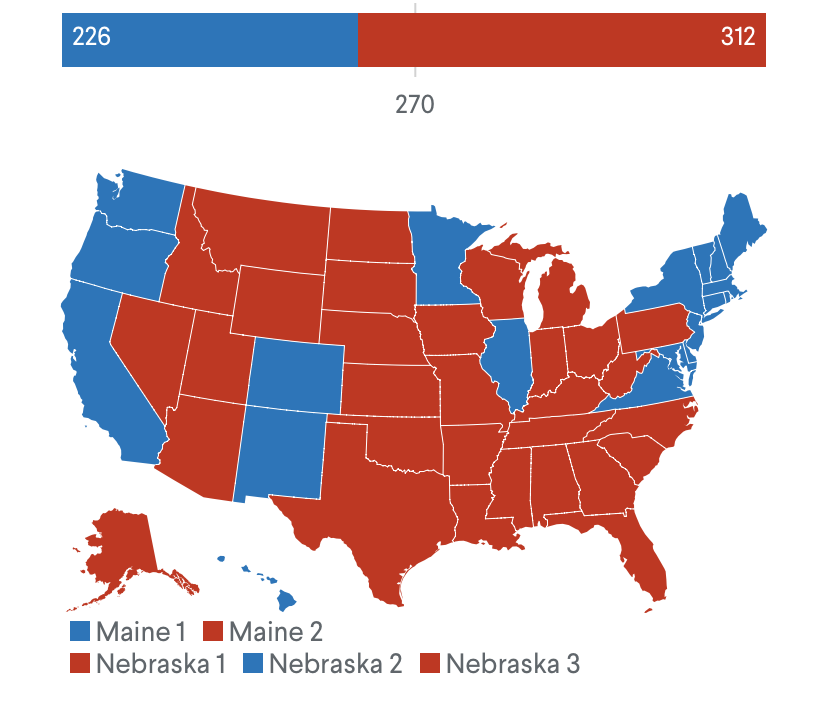

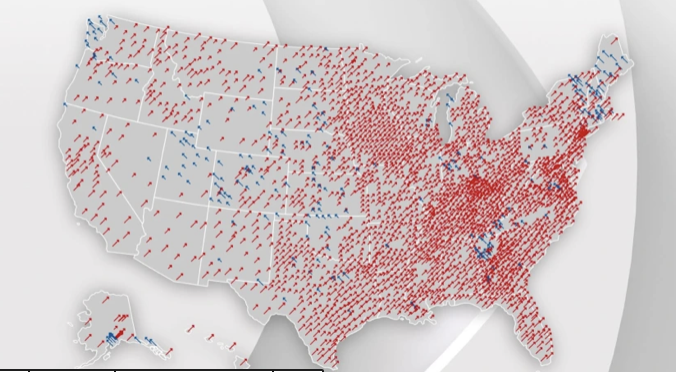


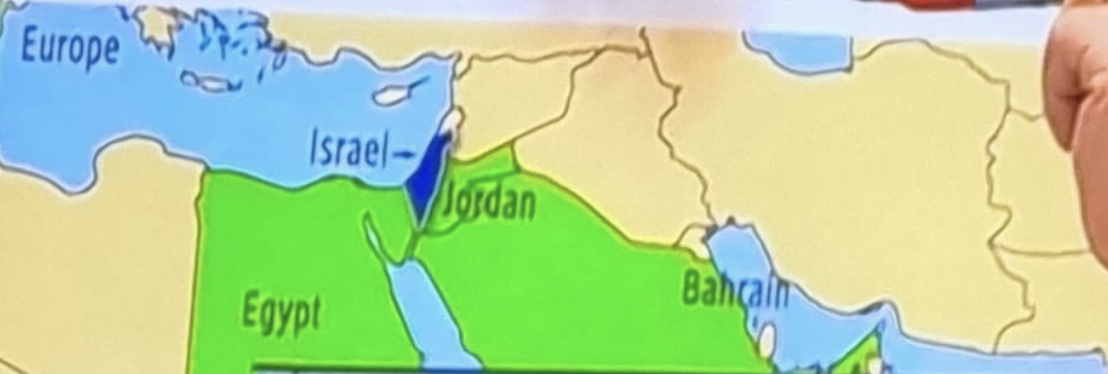


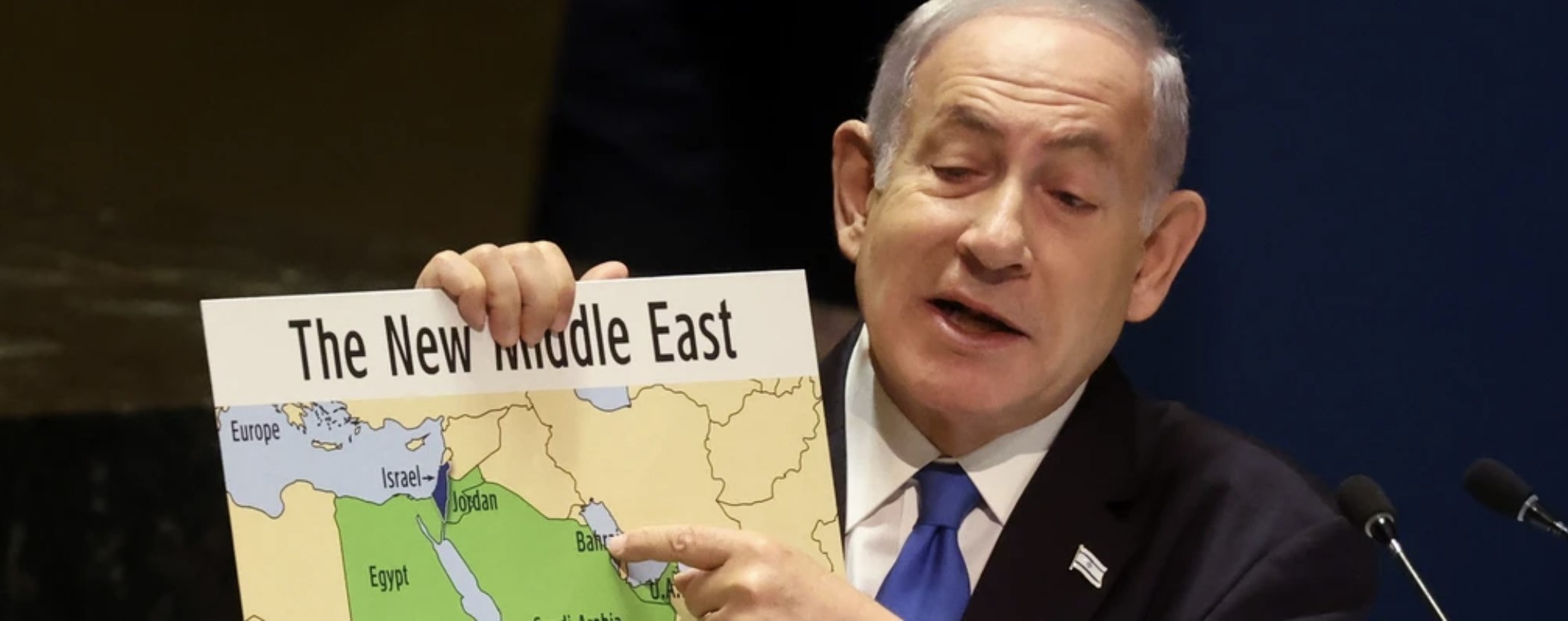


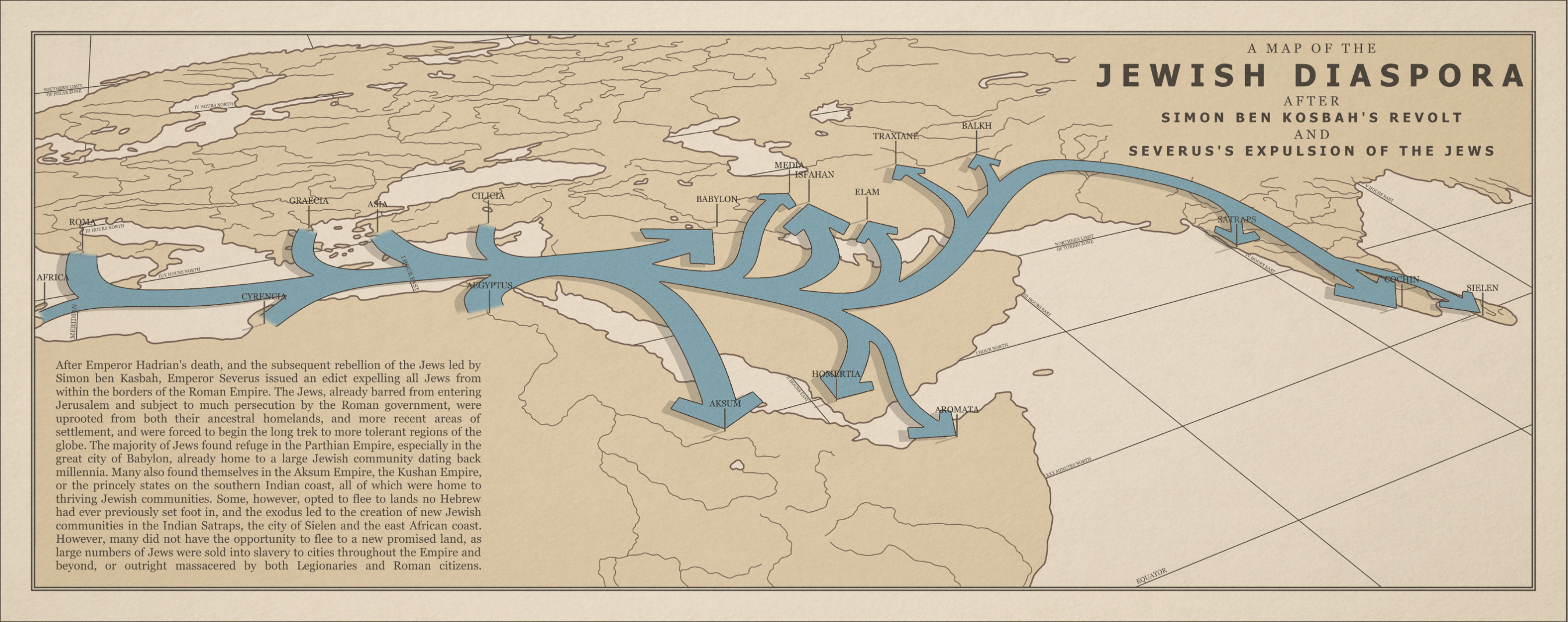
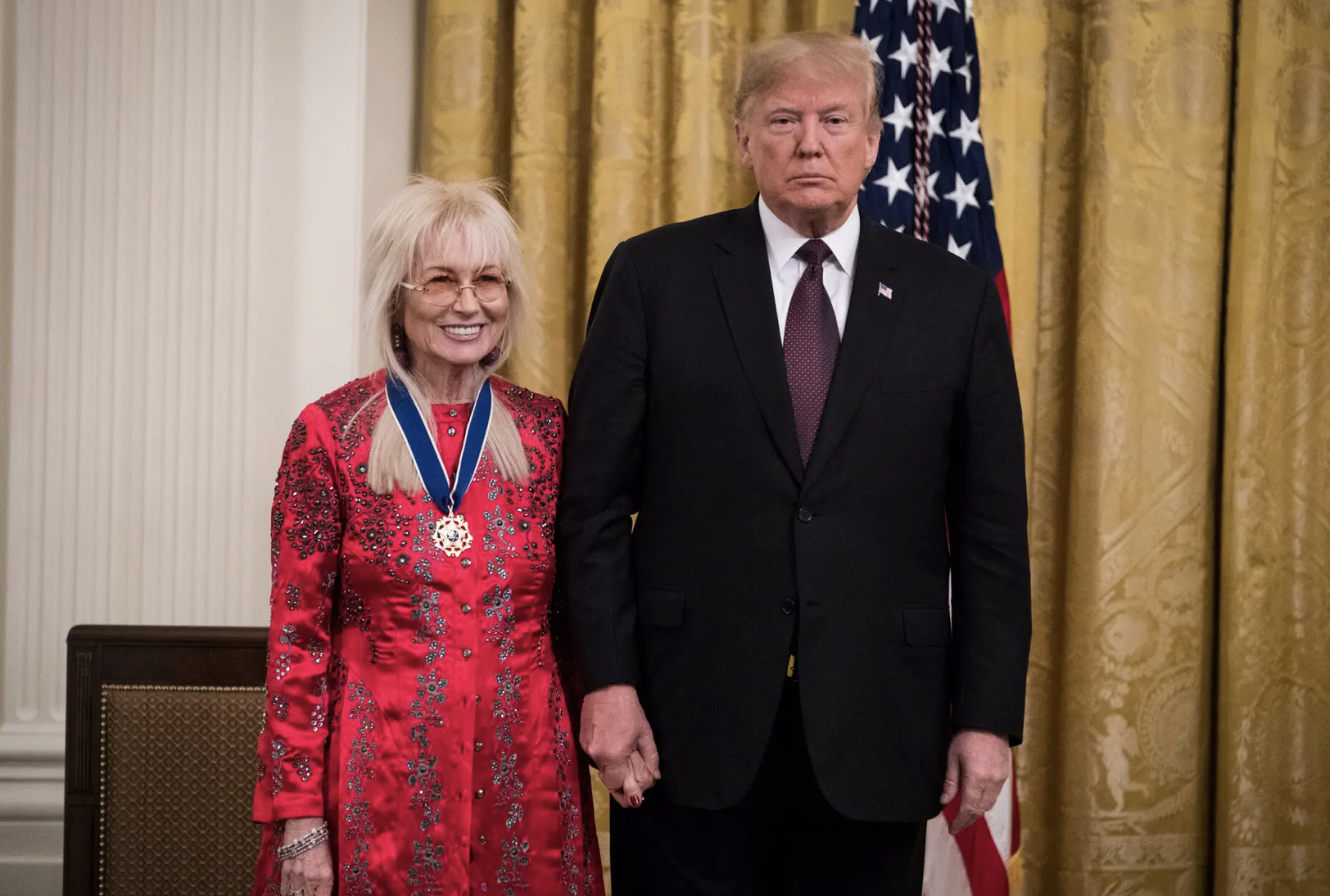
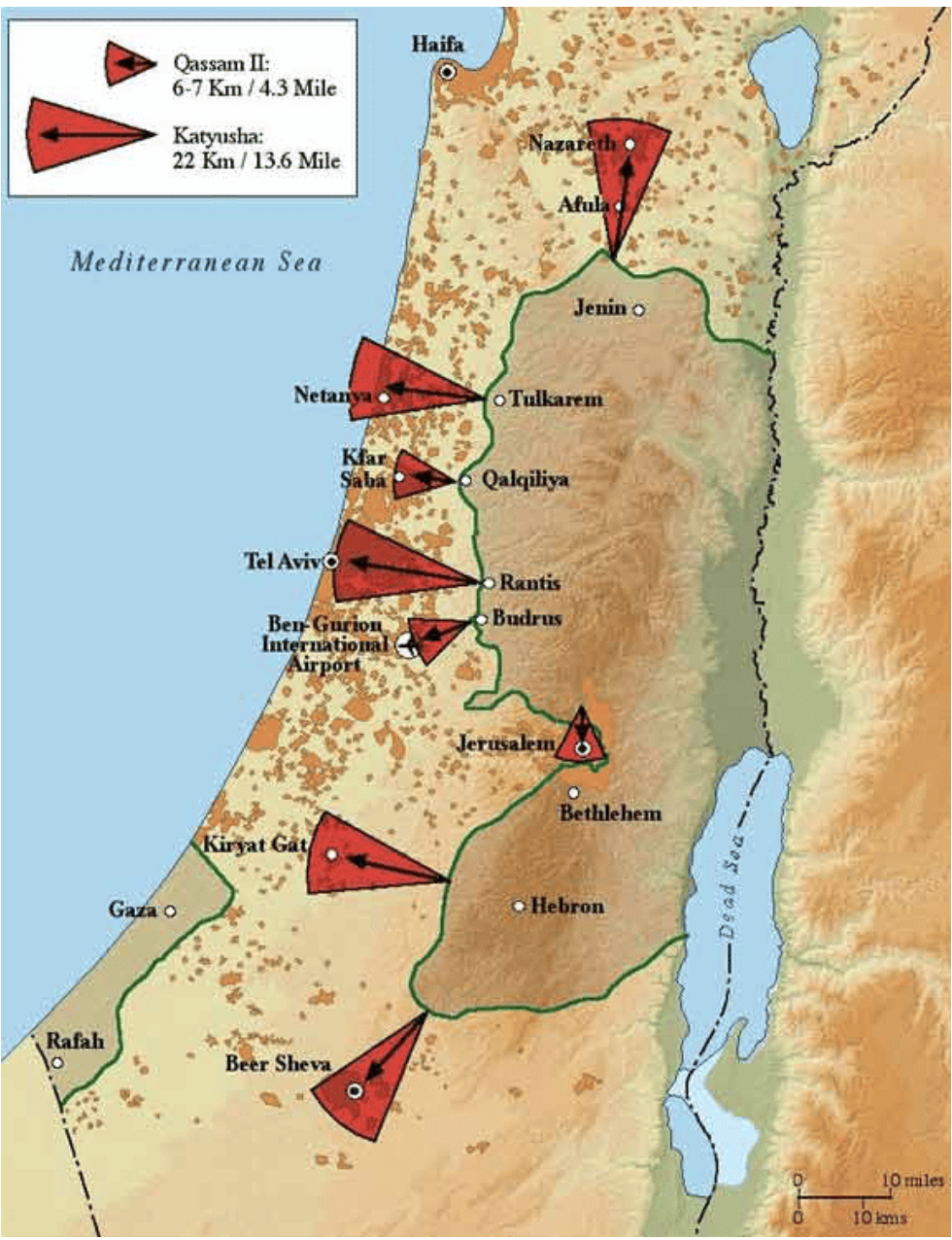

![[Chart]](https://apps.npr.org/dailygraphics/graphics/map-jerusalem-current-20180511/assets/desktop.png)
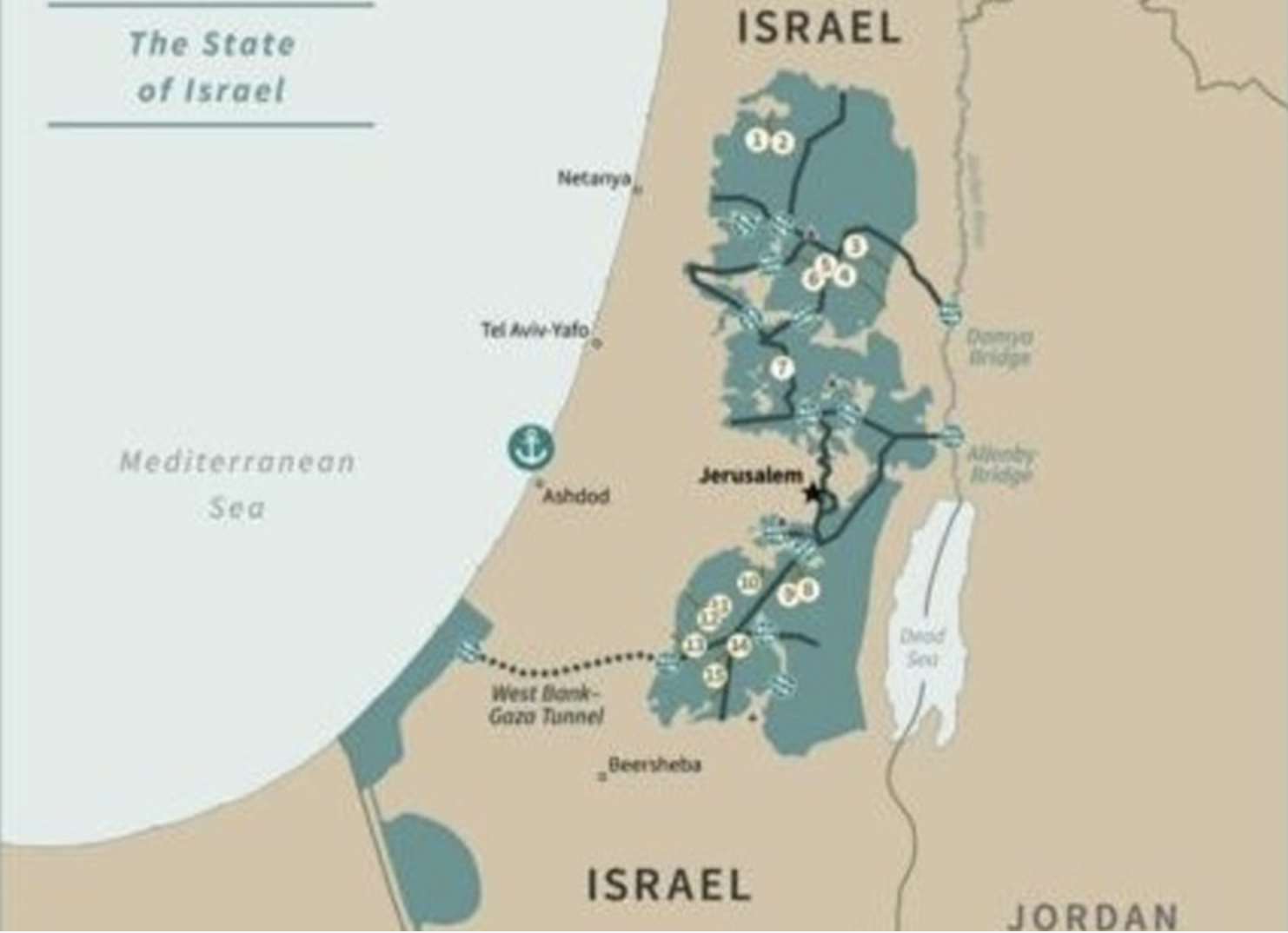


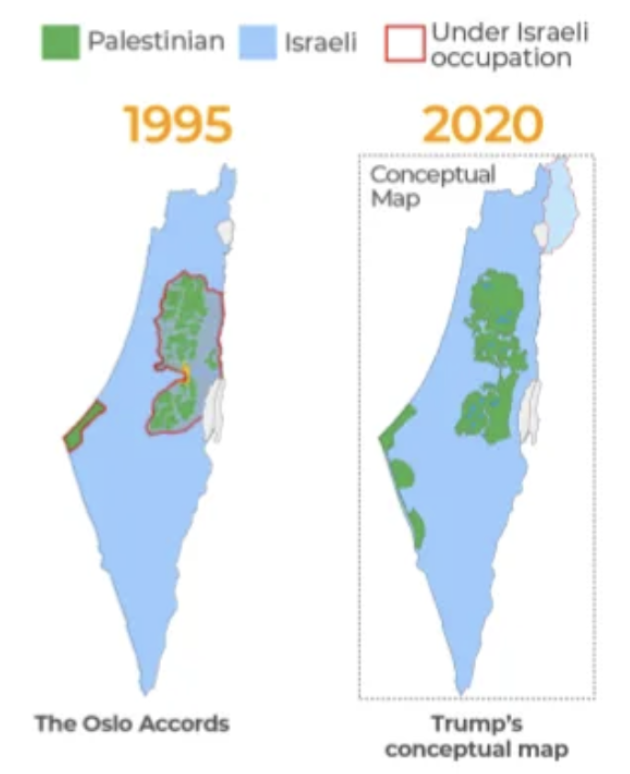

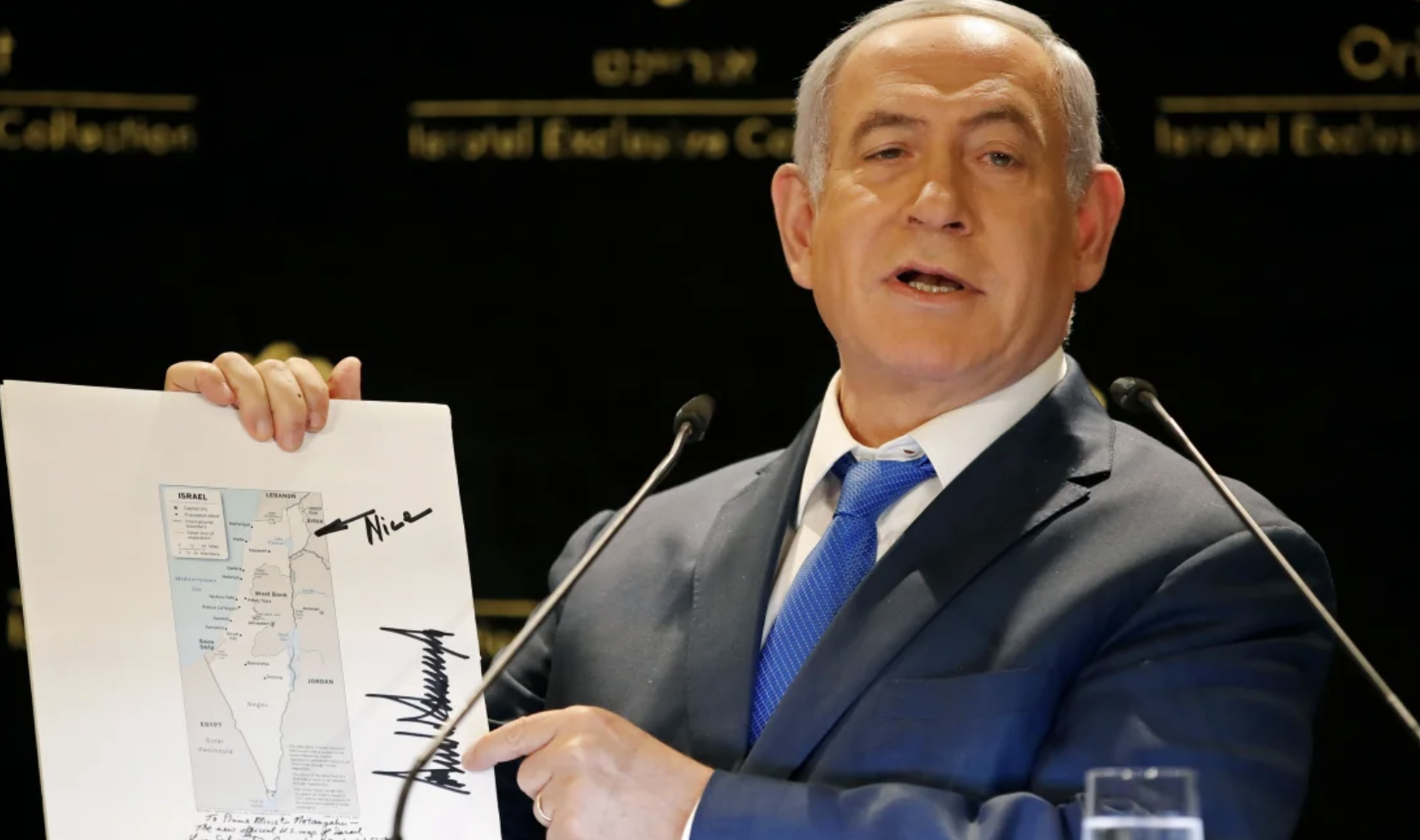

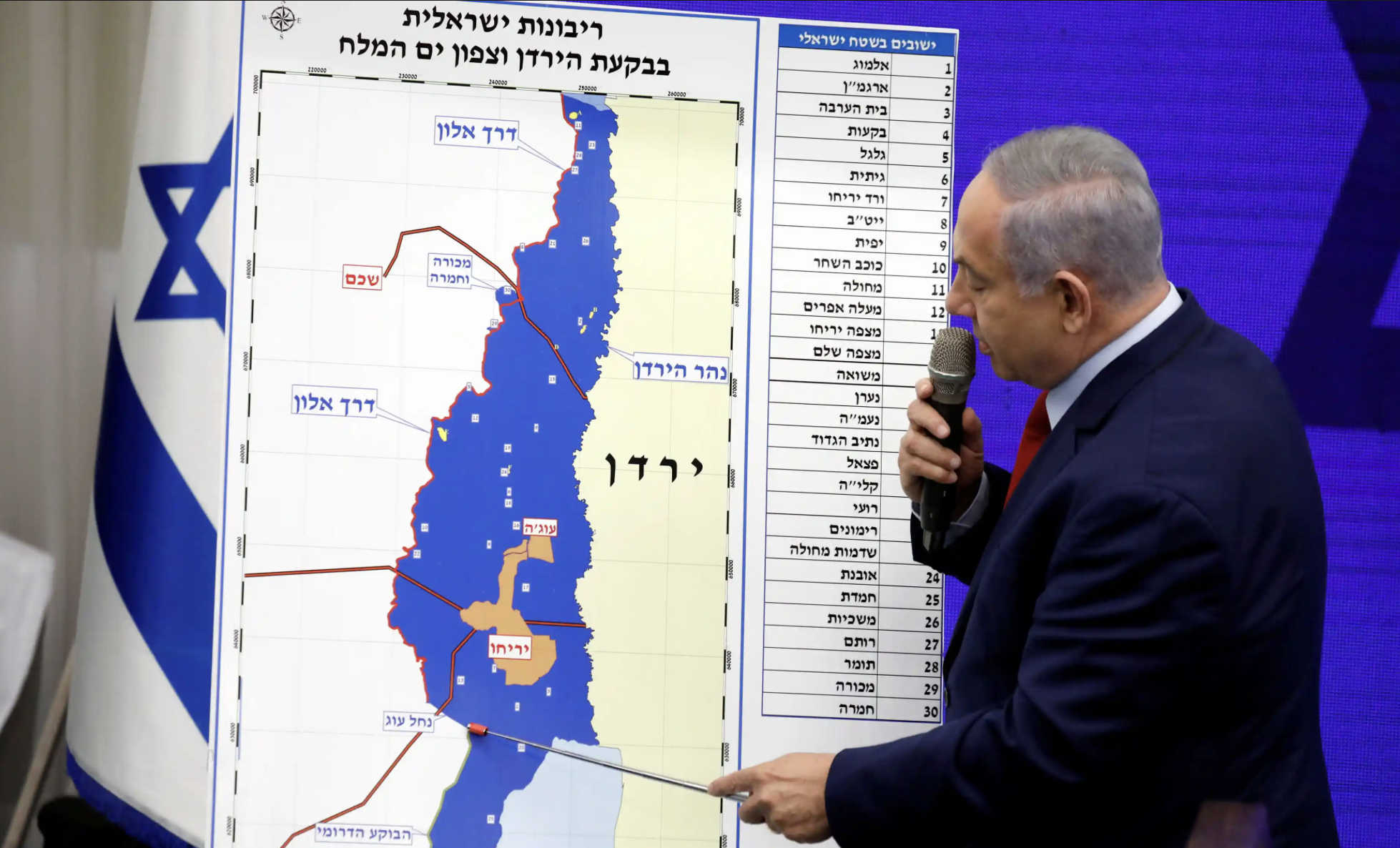







 )
)

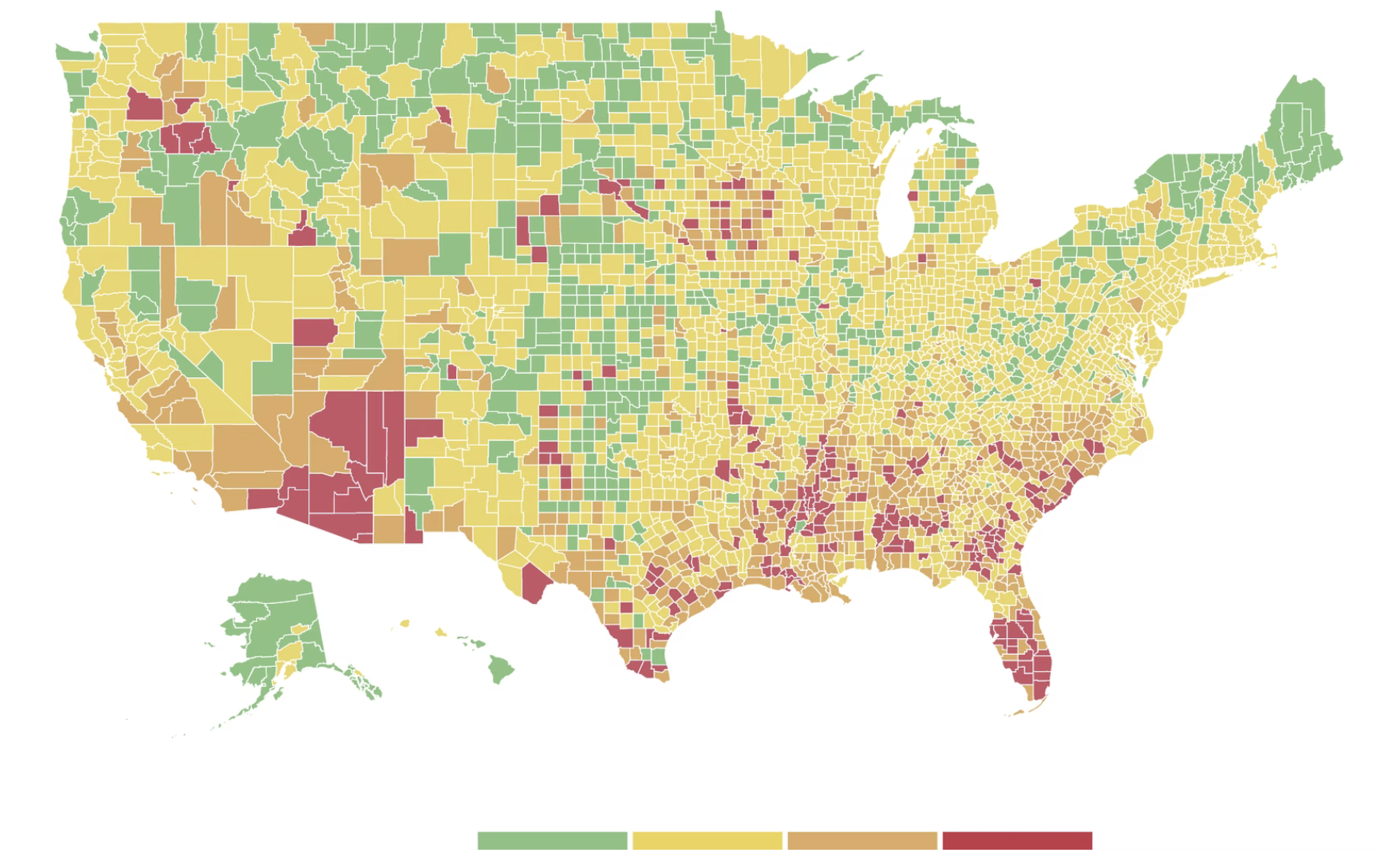

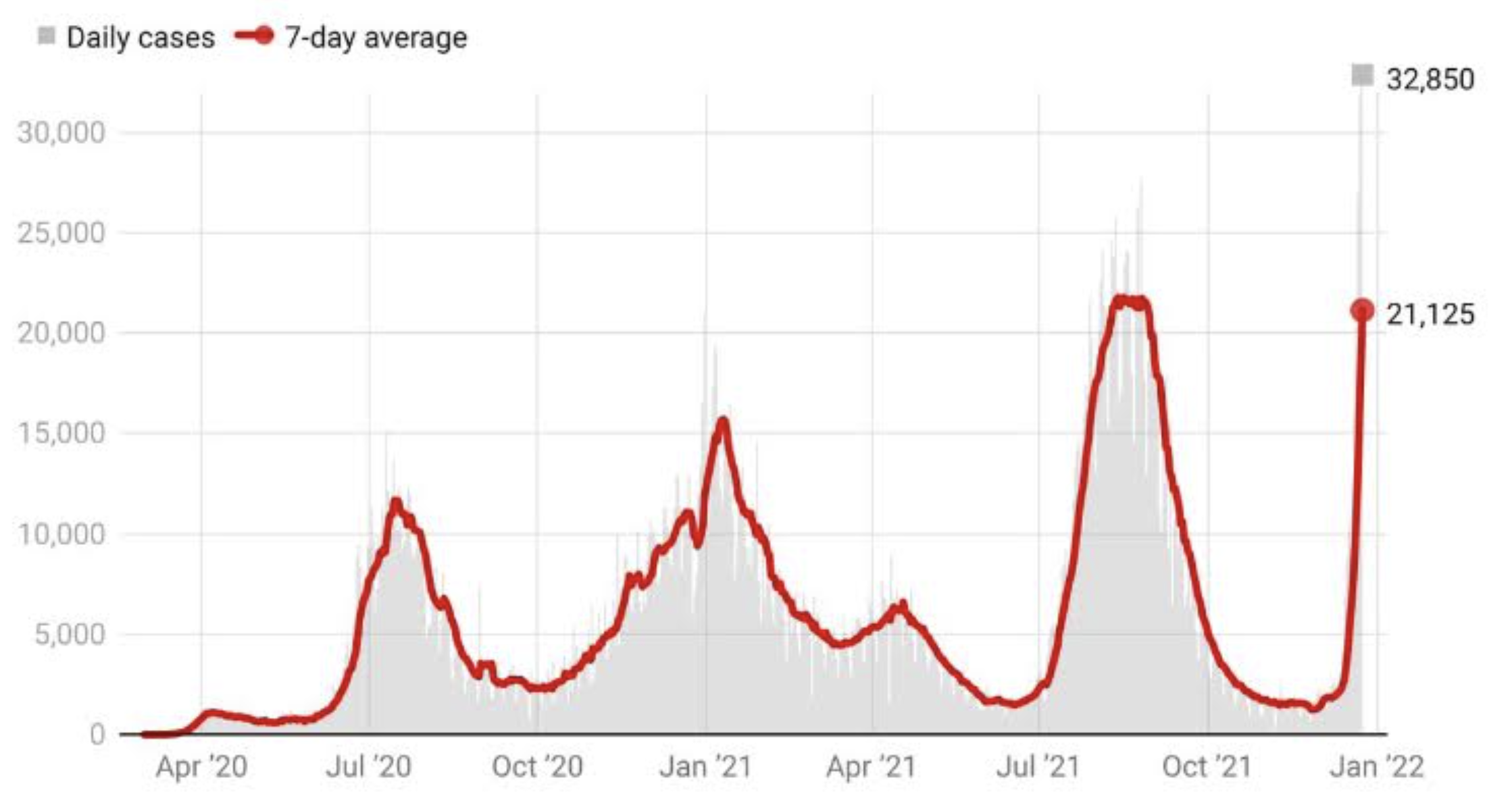

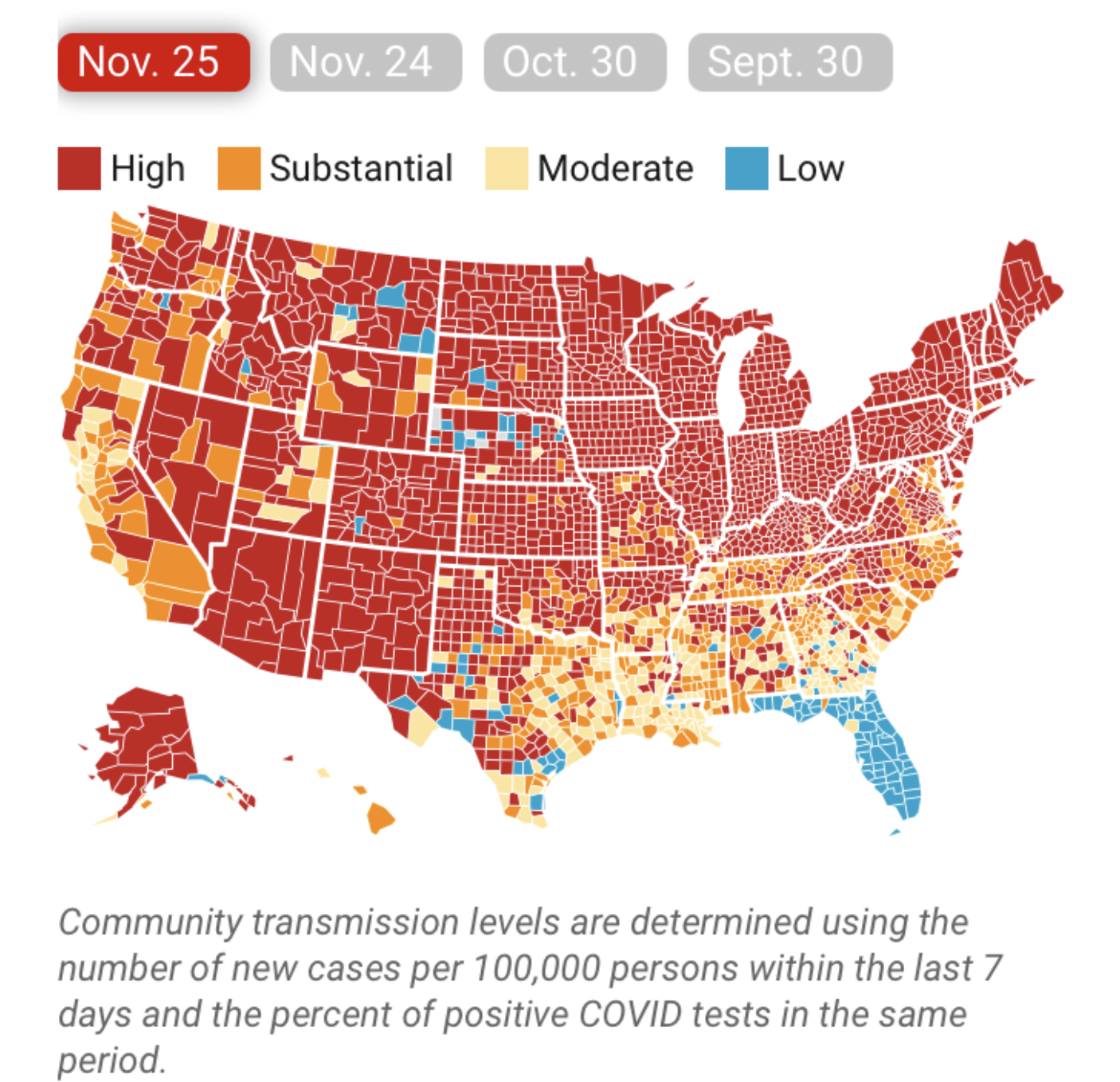


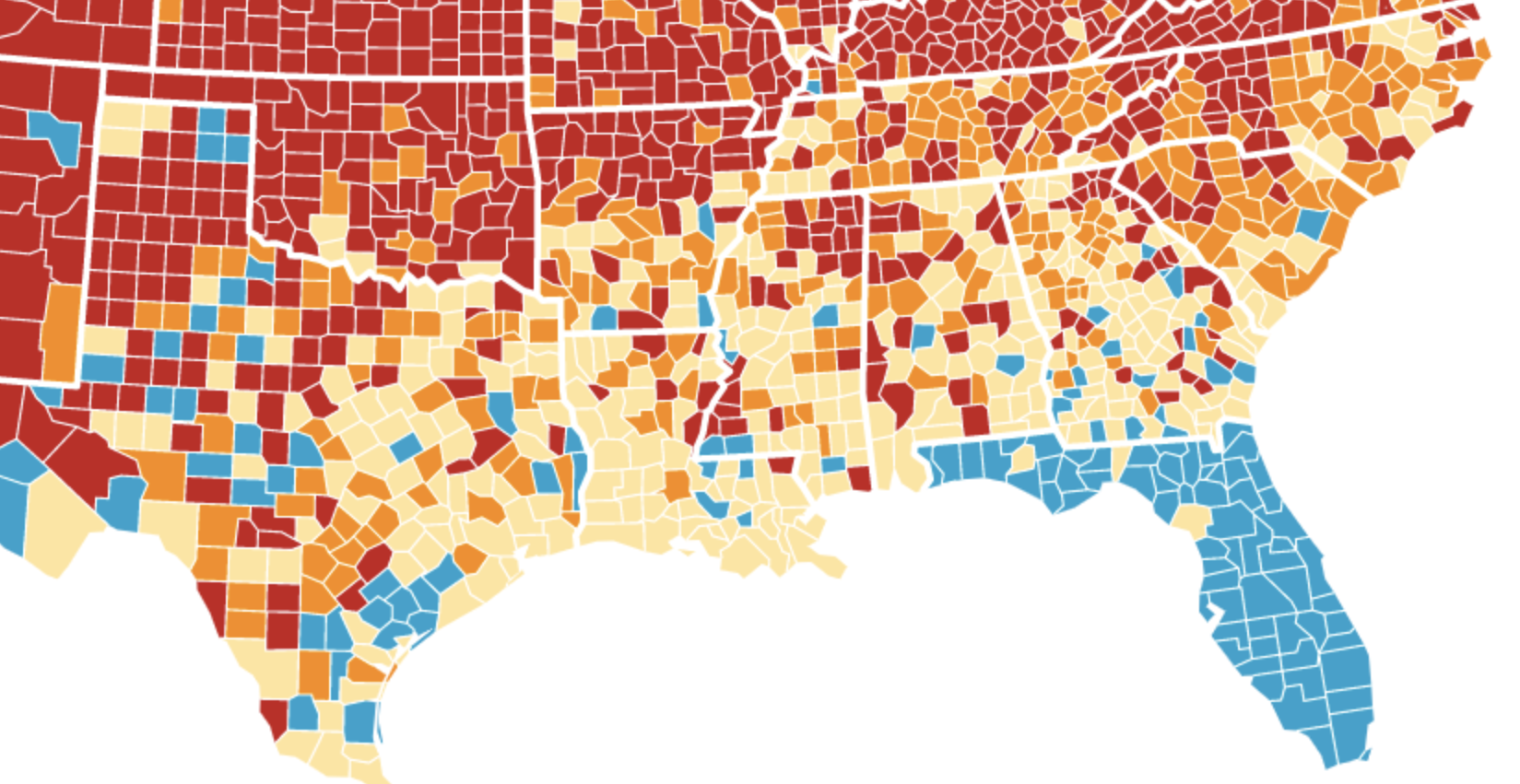






















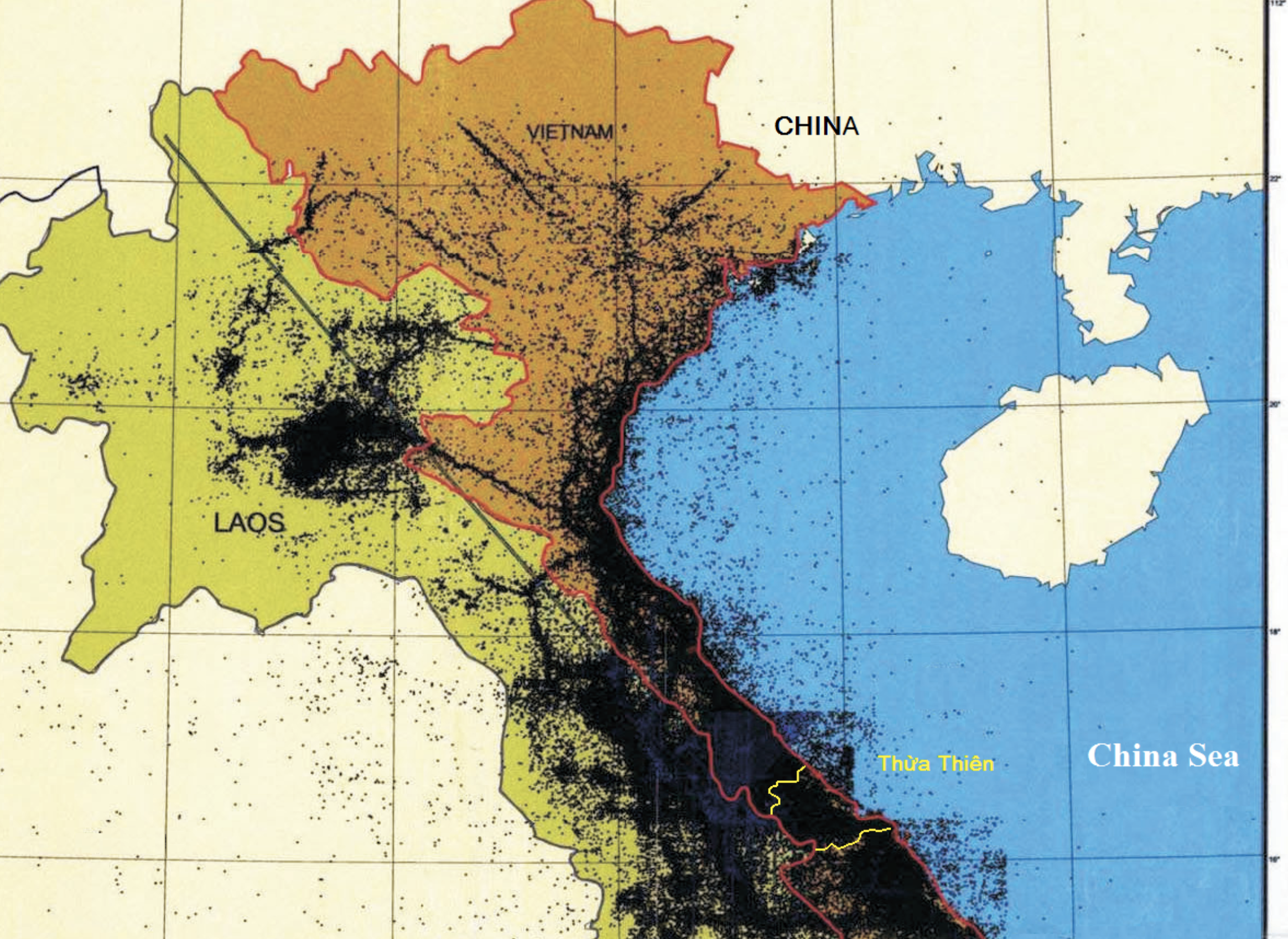

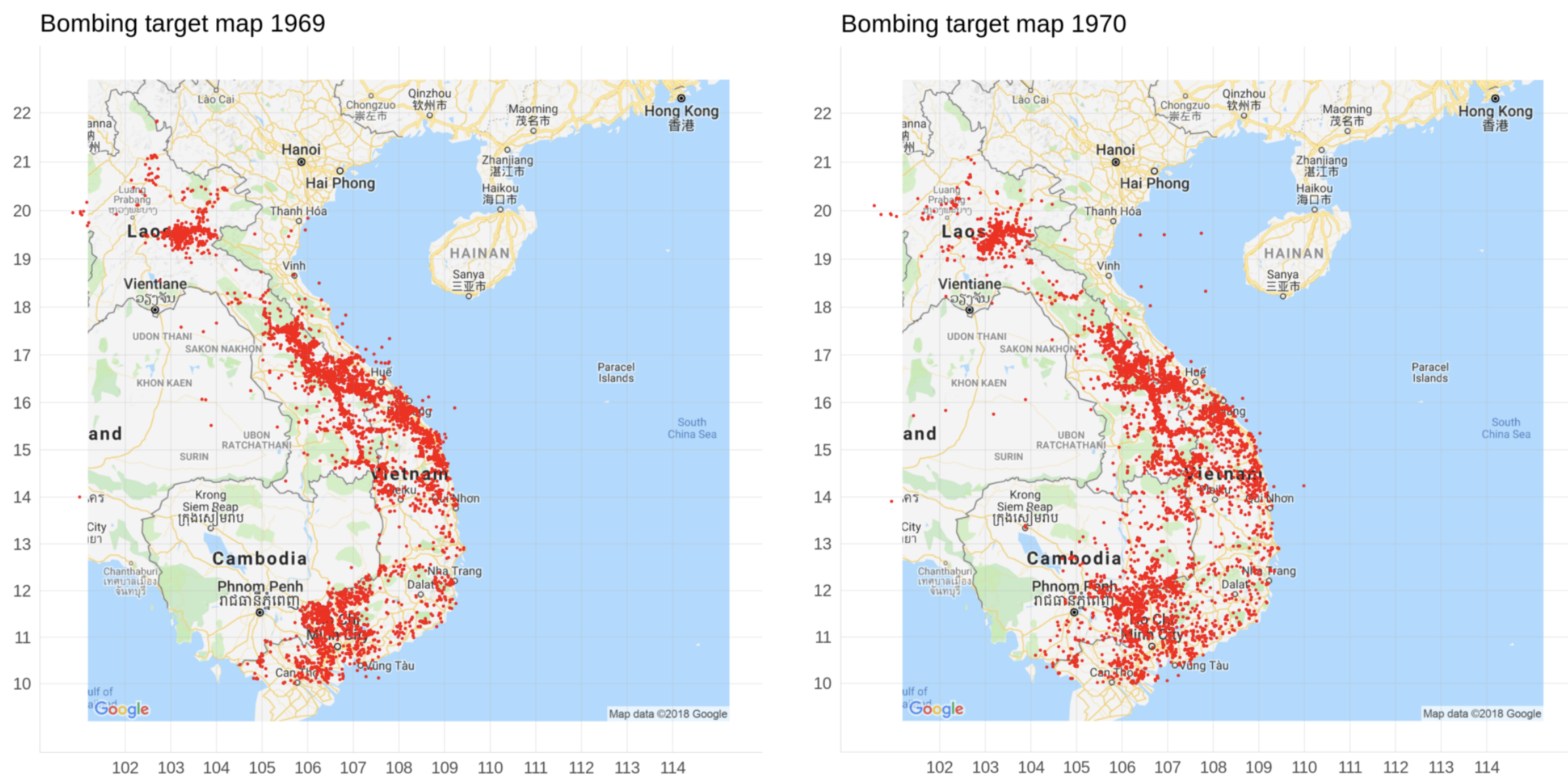

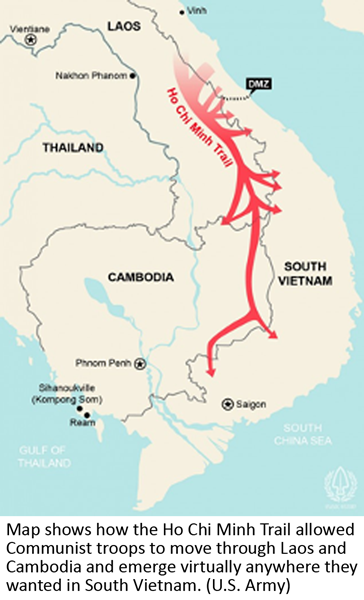
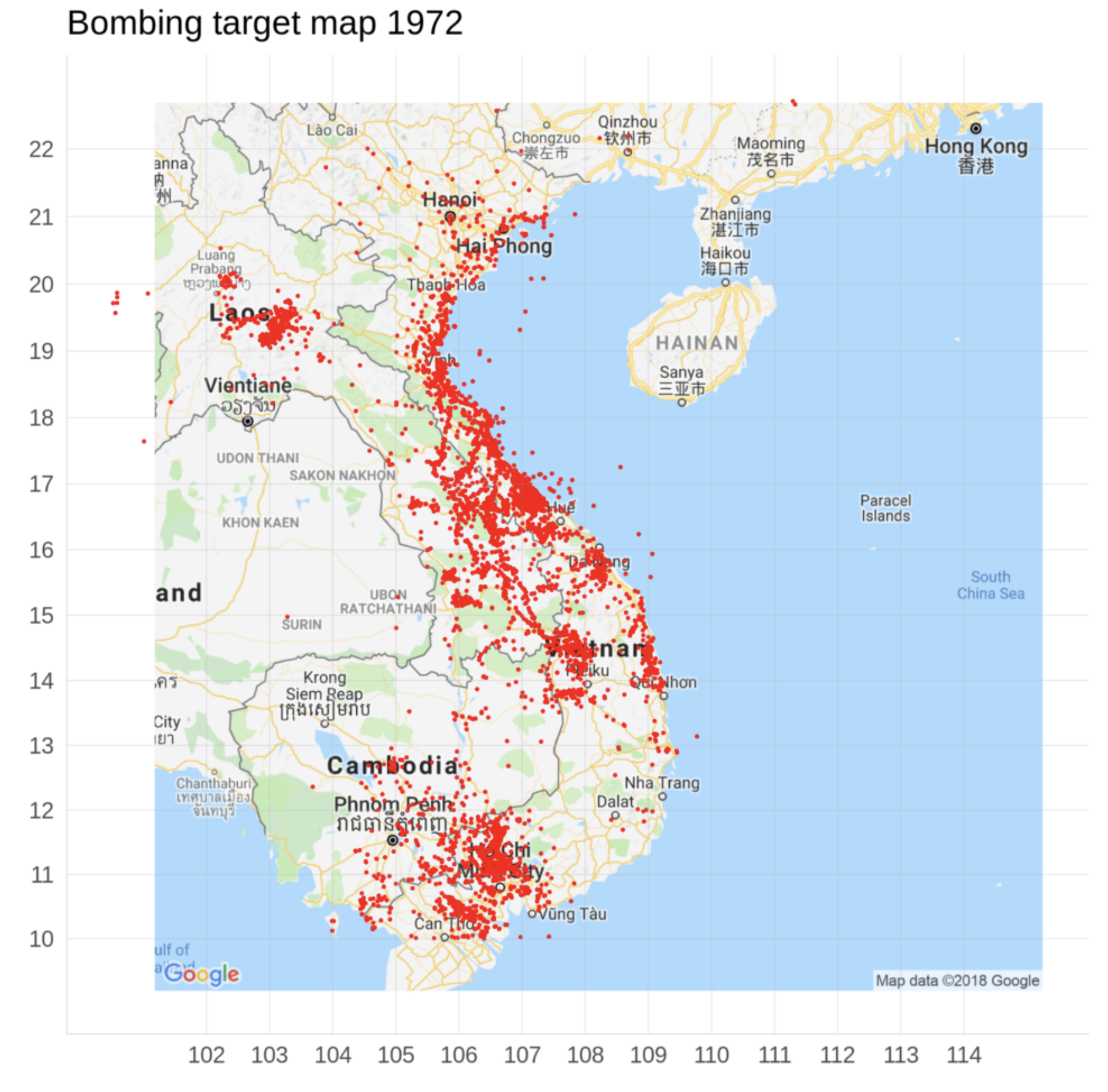

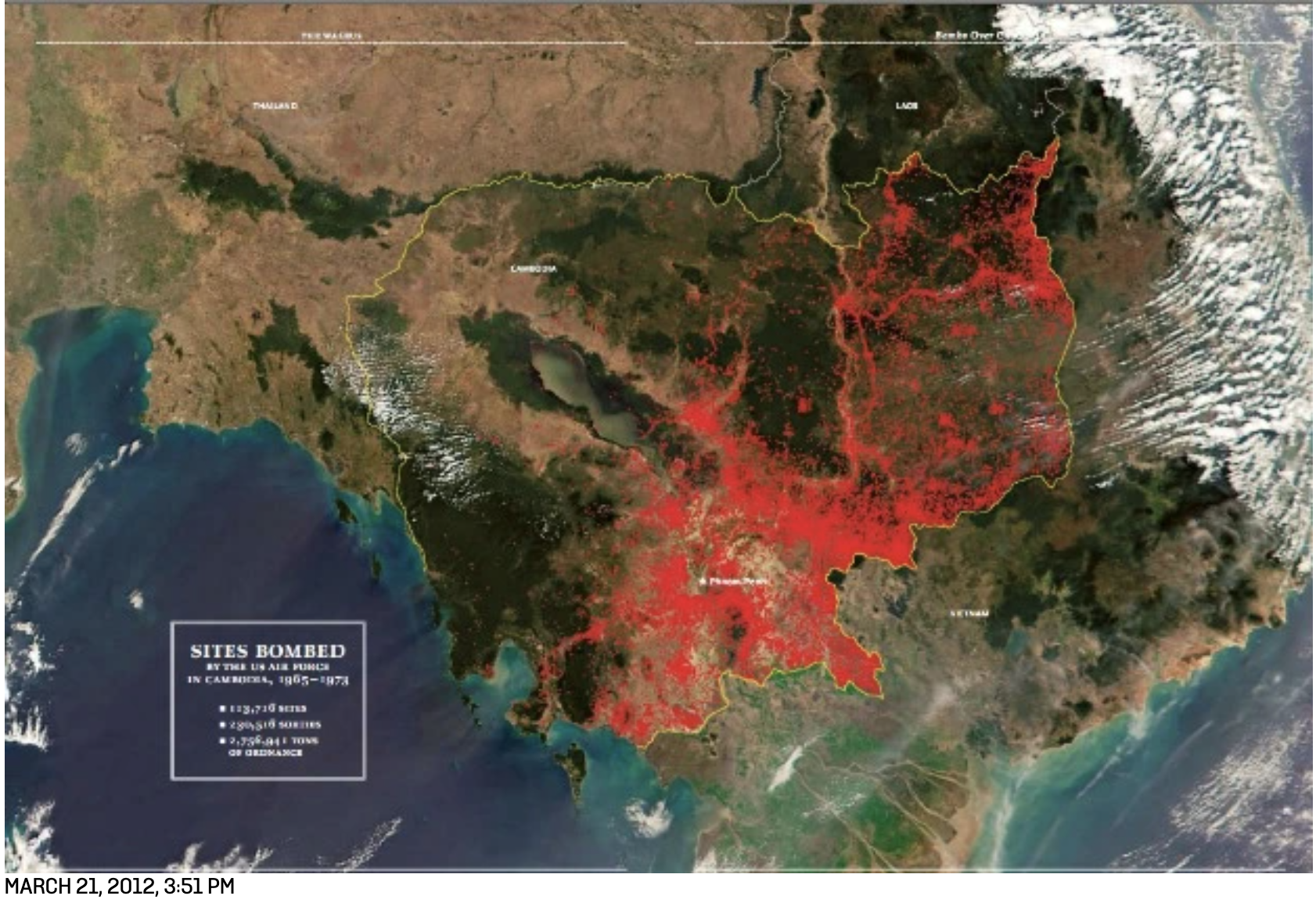


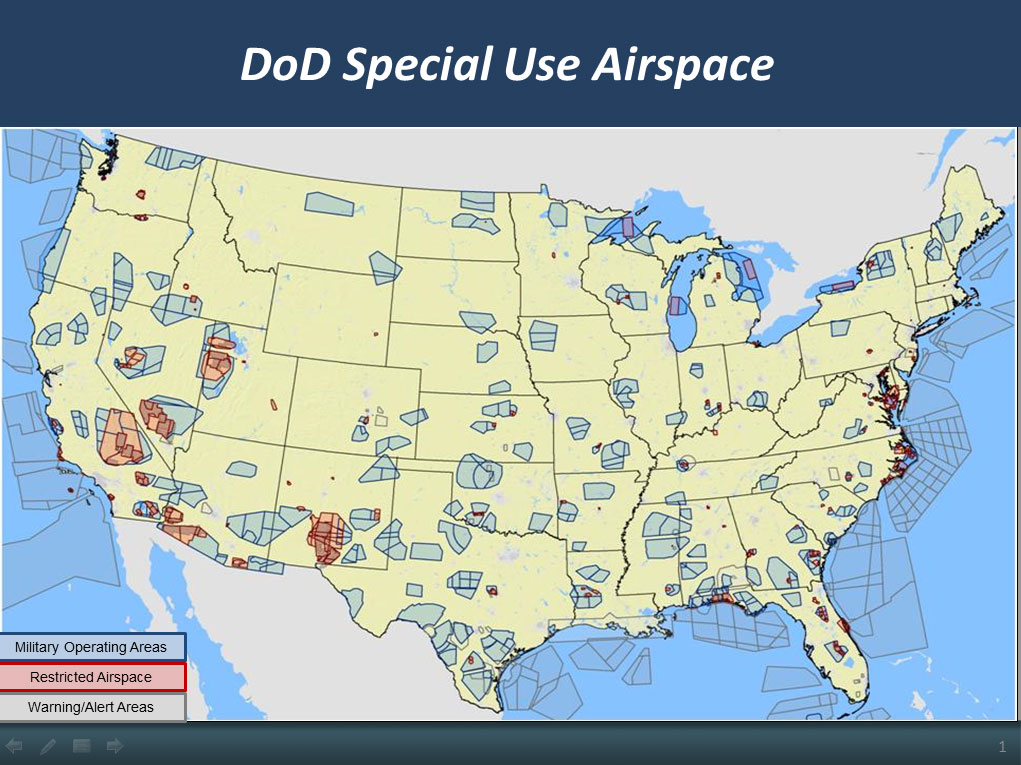
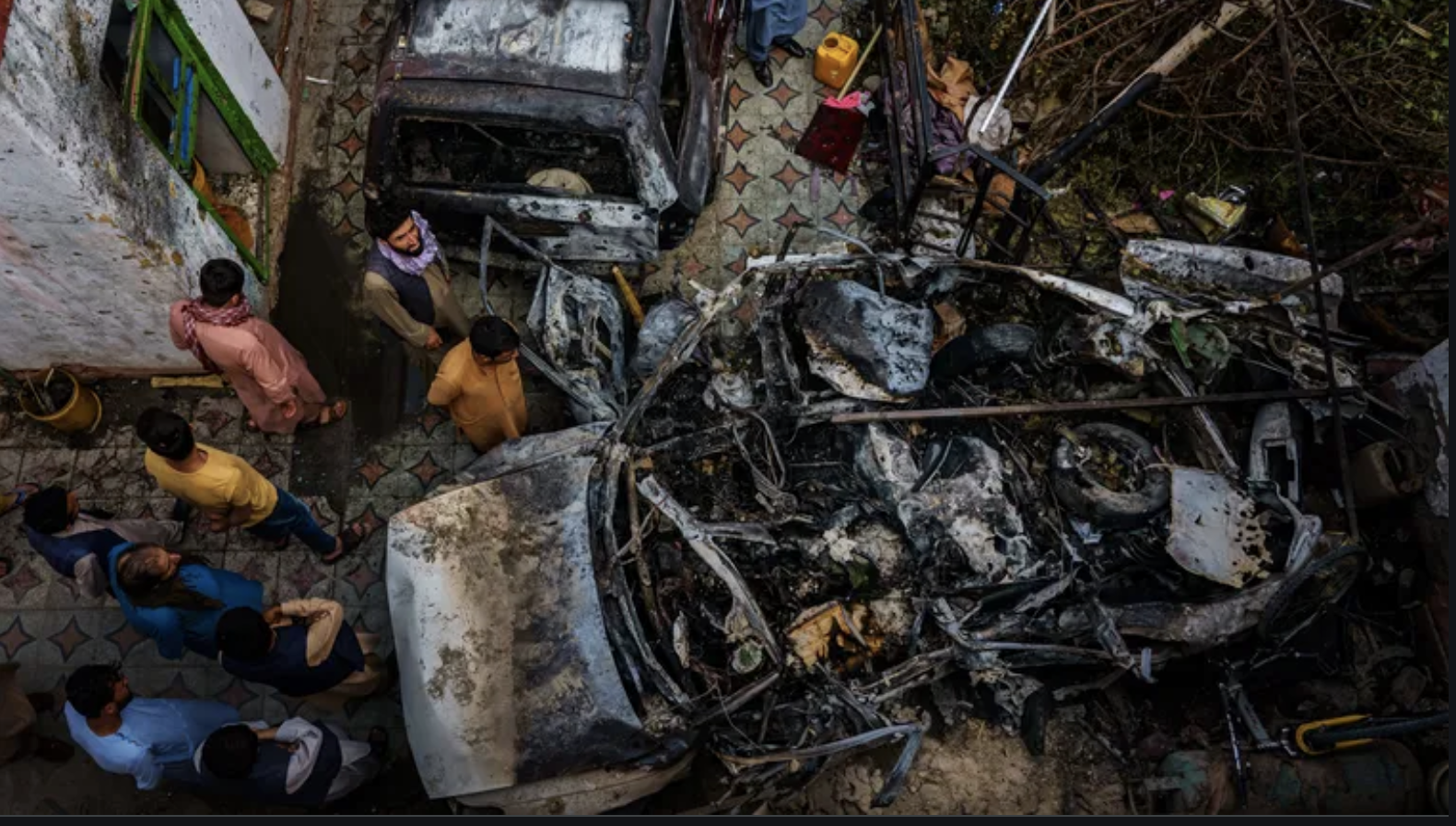
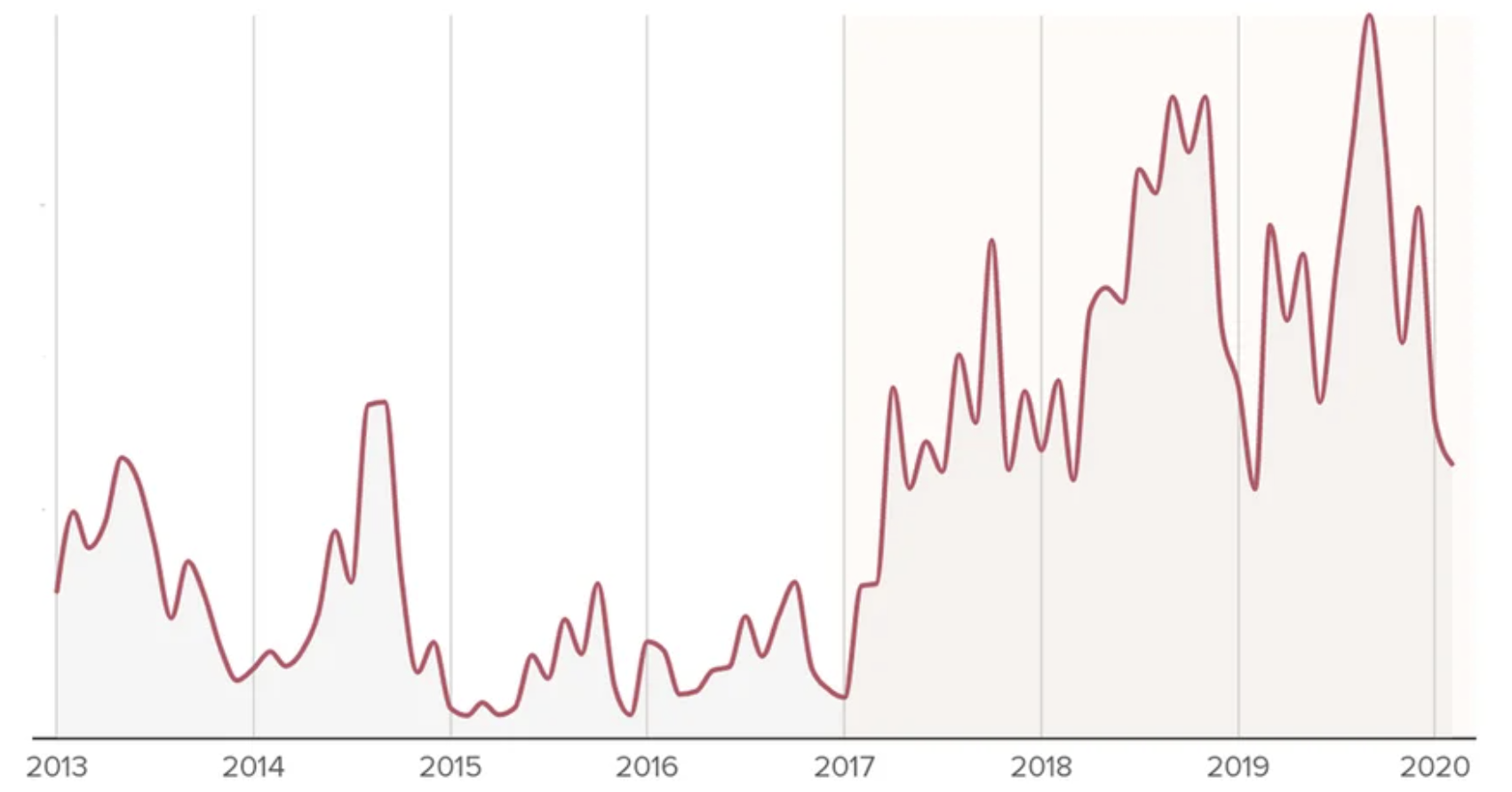
:quality(70)/cloudfront-us-east-1.images.arcpublishing.com/mco/QEFJZGYUGRBBPESJAHW3JU7O5M.png)







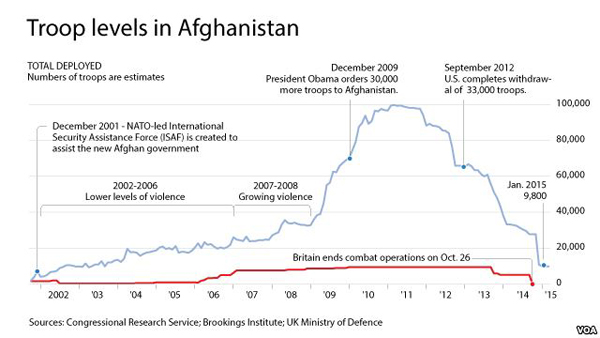
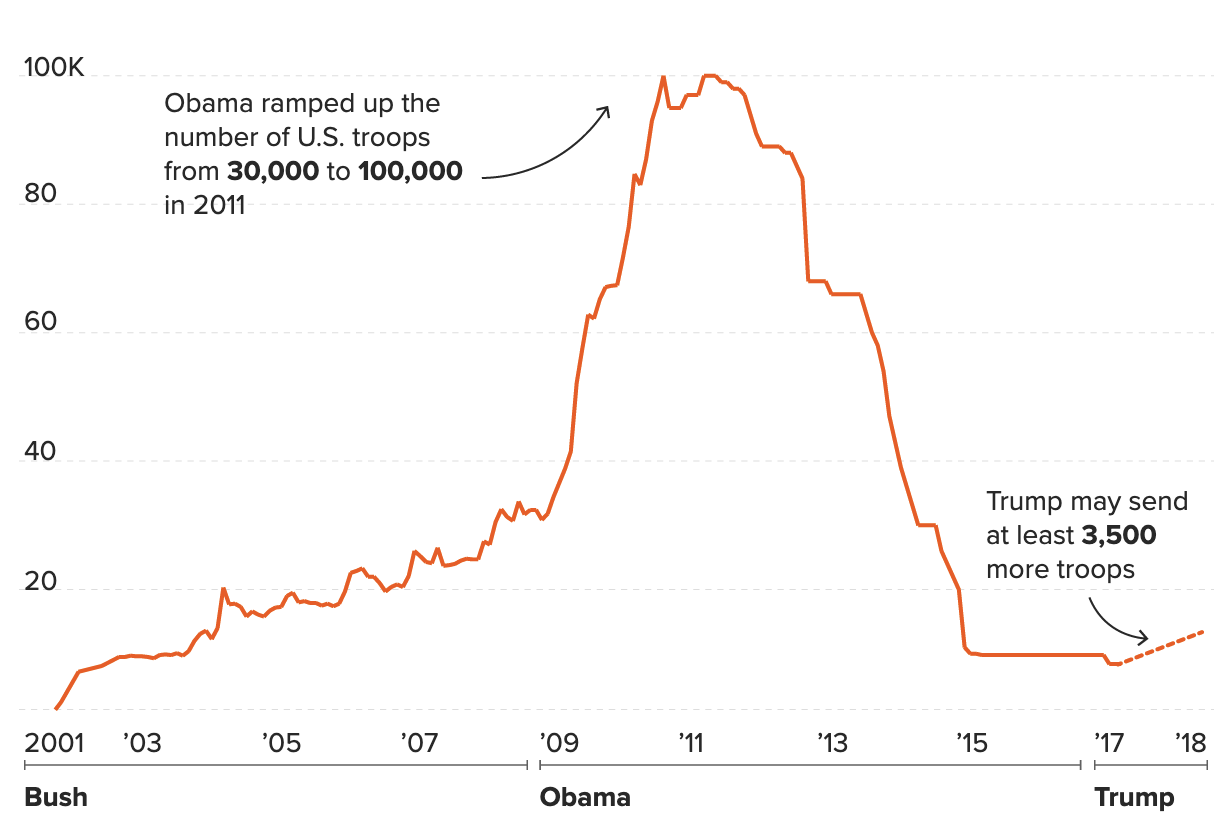


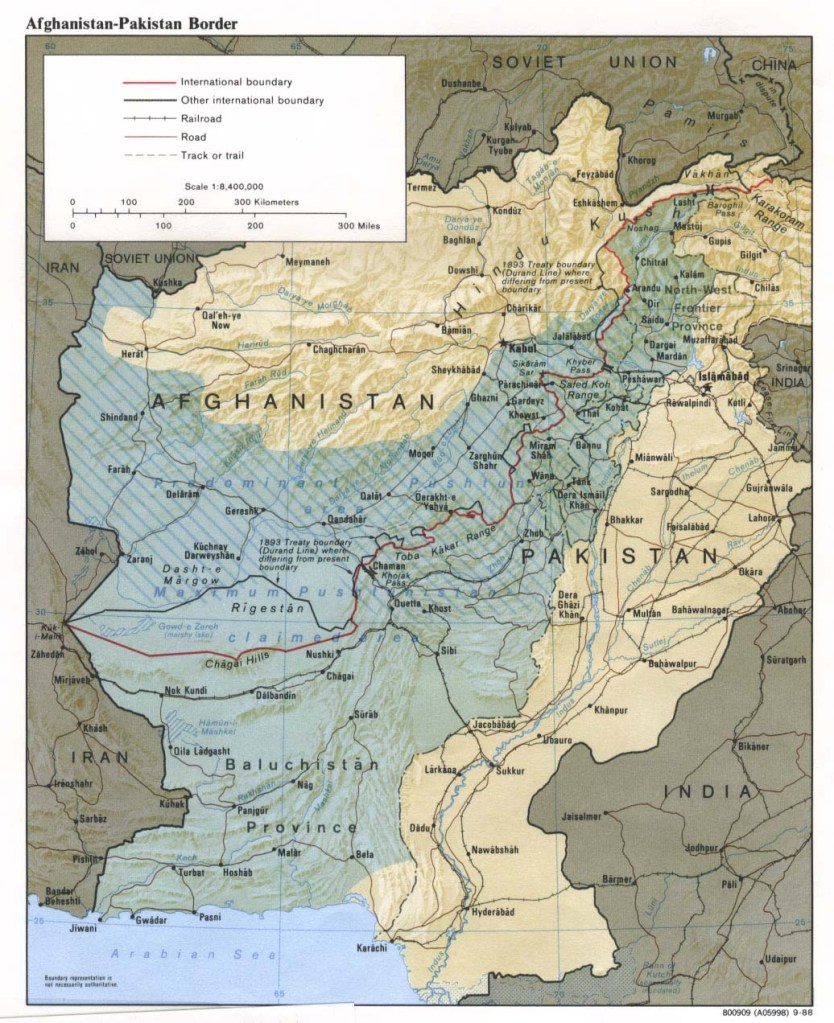








 Musings on Maps


