Donald Trump, in eyeing a new term as President, sought to make the global impact that he felt long denied–or robbed–in his first term. His frustration, if in part theatrical and hyperbolic, of the “Russia Hoax” was a deep discontent of being denied legitimacy, and a fear of being condemned to a Presidency with an asterisk beside it, either for having not gained the majority of votes for President, after all, or not winning the “landslide” that he felt a winner deserved. And as the first year of his second Presidency seemed to be gunning for an elusive Nobel Prize by bringing peace to Gaza and Ukraine as if to win legitimacy on a global stage, the image of global dominance–and hemispheric expansion of American power–had deep ties to his interest in the political lineage that was embodied by his one-time backer, and promoter, Elon Musk–who at a critical time was the needed P.T. Barnum to stage the comeback of Trump’s ungainly ride on a Republican Elephant. If Trump helped design the new logo of the GOP as a new circus animal–
–even personalizing it, by 2020, beneath a toupee echoing Donald Trump’s signature hairstyle, as an expression of fealty, the party of politics has become unprecedentedly politicized, all but obviating the need for a convention, as modifications that hairspray imbue the weave with vitality, despite its truly unearthly hue that even hairspray cannot create.
Trump has a dexterity with marketing and branding honed in the real estate business he made his name, and the remaking of the party is in his image is acknowledged in the button. But as much as a rebranding that nods to a fascist legacy in identifying the part with a personal brand, subsuming politics in a lexicon marketing in Trump’s America, the logic of rebranding did not emerge from Trump’s head, like Minerva from the head of Zeus, so much it was a product of the onslaught of rebranding and marketing across America, deeply shaped and inflected by the internet, and online communication, and deeply influenced to synergy with other brands–and possibilities of branding offered by such truly political constructions as a border wall. But the border wall became a subject of the political brand of Trump, the branding of Trump 2 is far more tied to Silicon Valley and Musk if it continues to expand the practice of national politics in ways not rooted in political traditions or the Constitution, and removed form civil law.
Without following legal precedent or legal formulations, the victory of branding the nation has a logic that is almost–and perhaps intentionally–removed from legal remedies or redress. For the logic of the building of a border wall that proceeded only by declaring a ‘border emergency’ and a national emergency became a ‘brand’ far outside of the legal framework of civil rights, and, indeed, flies in the face of civil rights. The brand of the wall by which Trump defined his first term and his candidacy may have had less power by the end of his first term, but the second term must be seen as a terrifying rebranding, and rebranding of America, by the logic of America First, rather than by laws or constitutionality, insisting on values of transparency and economy and an end to abuse–even if the reduction of government costs may mean that seventeen million Americans lose health insurance from Medicaid and the ACA, and reducing the $100 billion the government spent on food stamps and SNAP over ten years will affect the 5.5 million who depend on their food from federal funding in California alone, and leave two million without food. The simulacra of civility that the reductions of federal expenditures are a forced slimming not only of government, but of Americans.
The new branding of America is no longer limited to its borders, or territoriality, but depend on a remapping of an expansive mapping of American authority to use its military in what might be called the vaguest penumbra of actual legitimacy. For the first year of a Presidency has seen apparent expansion of the territorial waters of the nation as borders of military jurisdiction, and a definition not only of the ability to refuse visas to all deemed a potential threat to “Americans,” but to using the military–now understood as a Department of War, and not “of Defense,” in what is hardly only a semantic change or shift. Simultaneous to the unilateral rewriting of the global tariff system, as if arm-wrestling the global encamp, the lifting of protections for offshore drilling, and not only continental water but the nation’s Exclusive Economic Zone, the rebranding of the nation in maps have become unprecedentedly expansive in hopes to maximize the nation’s global impact, that not only flaunt the law, but expand the global footprint, as it were, of America on a global map.
The unprecedented expansion of the War on Drugs to an actual targeting of ships in international waters is not only a metaphor. The new “war,” this time, really is a declaration of military conditions that justify the discarding of international law in the basis of affirming national safety–as made evident in the recent reactivation of a slew of military bases across the Caribbean, to allow expanded bombing of shipping craft deemed a threat to the nation and a national emergency. The notion of a wartime powers that the Presidency has in the past assumed have become a way, at the same time, and with no coincidence, the Department of Defense is renamed the Department of War, to announce a war has been begun that will suspend civil rights and legal accords with nations, or any international body, to affirm the expansive legal domain of the United States over anything it deems a threat to the nation, whether or not such a threat exists. While the expansion of the “War on Drugs” as a metaphor of governance marked a decisive expansion of law-enforcement tactics, prosecution, and incarceration, evoking an “enemy” to be targeted among drug users and sellers, whose only alternative was decriminalization, the metaphor of a strategy of criminal justice has morphed to military policing of the nation’s vulnerable boundaries as if it was a real war understood by national boundaries. What has been treated as a shift of the metaphor to reality as if it were a confusion of categories, however, is in fact a redrawn theater of actual war.
Having renamed the Gulf of Mexico as the Gulf of America with little global pushback, if plenty of raised eyebrows, the recent expansion of targeted bombings on craft accused of ferrying drugs destined for markets of American customers–and cast as the pending incursions by foreign gangs of the nation–have occurred with the reactivation of American bases in the hemisphere, far outside of territorial waters, to a new level of alertness not seen since the Cold War–an amassing of 10,000 troops and expansion of military staging grounds that are intended only to facilitate extrajudicial executions far beyond the line of the border wall on pause since being built in Trump’s first term.
Reactivated American Military Bases in Puerto Rico, Panama, and US Virgin Islands/2025
It is as maddening as it is beguiling to map objectively Donald Trump’s relation to the world, so deeply is it performative. It does not objectively exist in ways that could be mapped, trafficking as he does so facilely with fears, existential threats and danger, that conceal a barely credible sense of purchase on reality. Trump’s inflated claims seized willfully and impulsively on maps in his political career, to validate his relatively unclear claims to a sovereign role, eager to try on ideas of sovereignty able to reoccupy the image of his early adoption of the military uniform he wore at the young age, leading a march with pomp and circumstance down Fifth Avenue, fresh from what passed as military training at the New York Military Academy,–anxious to inhabit newfound authority in the Fifth Avenue canyon of New York City–“prime property”–he had never set foot before, as he was trying on a uniform for size in ways that we cannot but associate with the imperial presidency he would later help to design.
Donald J. Trump Leads Military Academy on Columbus Day Parade at Fifth Avenue and 44th October 12, 1963
Fred Trump, no doubt drawing on his own fascist sympathies, had sent the unfortunate future president at age thirteen to learn the needed lessons of domination to reach a level of proficiency to be a capable future head of a real estate firm. But the lesson also gave him a keen sense of entitlement–not having to actually serve in the U.S. Army, increasingly the fear of the men subject to military draft from which Donald sought up to five deferments–and a sense of empowerment not previously encountered in life. The sense that the removed world of wealth was suddenly in reach, and not distant, led him to develop a sense of the synonymity of the Trump name with wealth inequality that helped Donald Trump get in bed with a variety of political forces, gravitating to a dark side of American politics of small government, low taxes, and paleo-conservatism to normalize and perpetuate wealth inequalities in America, at the cost of replacing or eroding government, or what we have come to know as government–and accept as government–without considering the withering away or puncturing of anything that is left of the welfare state or Great Society.
But before he headed to Fordham, and as he tried uneasily to imagine the status a uniform might bring to a child of wealth, the enhancement of his personal authority was but a glimmer to his young eye.
Donald J. Trump in full regalia in New York Military Academy Yearbook (1963)
If the frontiers of America have are a consistent theme of Trump’s Presidency–from the bombing of ships in international waters off of Venezuela’s or Colombia’s coasts, ascribed to “narcoterrorists” or “narcotics traffickers” in a “Trump Doctrine” of targeting what “came out of Venezuela” as if it was subject to attack as criminal. The new envelope of legality that Trump has advanced, insisting it not be covered by the War Powers Act and rebuffing international objections from the United Nations, occur under the pretenses that a nation is not being attacked, but criminal organization run by a “designated narcoterrorist organization,” as if this sanctions bombing ships and killing passengers in waters waters lying far outside of American territorial claims. If Rankin and others have suggested that the cartographic artifact of International Waters or an Exclusive Economic Zone can be seen in terms of an optic of globalization, the rejection of globalization or global orders of legal authority are likewise artifacts of globalization–but of the Trumping of globalization that is an assertion of the rejection of legal oversight on attacks of international criminal organizations. The blurring of the nation’s southern border drew condemnation of Caribbean states, claiming wartime powers in a far more open violation of international law than the US-Mexico border wall.
The border wall indeed receded into the baground, fast forgotten in comparison to the extent to which bombing offshore ships blurred the boundaries of territoriality in a misguided attempt to staunch the flow of drugs–a flow Trump and his henchmen too often argued is accomplished by smuggling routes able to be stopped by immigrants, as if this prevented the flow of cocaine, fentanyl and methamphetamines across the border–the blurring of territoriality now goes far beyond the “big stick” of the Monroe Doctrine that the nomenclature of the “Trump Doctrine” echoes, and sets a new standard for a “gunboat diplomacy” now waged from the skies, and from seven warships and aircraft carriers stationed in Caribbean waters by September 1–carrying over 4,500 sailors and marines beyond the nation’s frontiers, in a quite sudden and unexpected military buildup designed to “combat and dismantle drug trafficking organizations, criminal cartels and these foreign terrorist organizations in our hemisphere.” Is the sending warships a new expanse of borders to patrol international waters an act of aggression, or a war against non-state actors?
The nation seems to be expanding its frontiers, even as our government shrinks. The wanton summary firing of government employees during the shutdown over which he would preside in 2025, letting go of over 4,100 employees from “Democrat agencies” of government as Housing and Urban Development, Center for Contagious Diseases (shutting its entire Washington office), Education, Treasury (1,400), Interior (1,100), Environmental Protection Agency, and Commerce, and elections security and cyber in an unprecedented unilateral”Reductions in Force” as the shutdown was in its tenth day was a supreme act of plenipotentiary powers, as his Budget Director released “RIFs” in place of pink-slips, purging the note of government by massive layoffs (firings) in classic Trump style for big corporations and budget hawks. What might reduce our emergency preparedness on multiple fronts was conducted in the name of emergency cost-cutting. “March on, Dombrowski, lead the way! Our Poland has not yet perished, nor shall she ever die!” The expanding frontiers of the nation, as government sent guided-missile cruiser, an amphibious assault group, nuclear-powered fast-attack nuclear submarines with 5,000 sailors and Marines to the region–as ten Stealth Fighter F35’s have been shipped to Puerto Rico, supersonic jets of a lethality that has no clear tie to a narcotics war, save as a massive show of force, with eight destroyers.
September 2, 2025
Trump seems determined to send a new sign of his triumphal presence in the region, as if to declare a new relation to the Caribbean as an imperial space he is willing to defend by military roles and military engagement of nations. The metropolitan splendor of the broad streets of the modernist urban grid may have overwhelmed Donald as he stared downthe chasm of an urban canyon whose buildings’ art nouveau facades must have impressed him as a new social geography of which he had not been so keenly aware and a New World. It may have so impressed him as tying the historical figure of Columbus to a conquest of Fifth Avenue,–as a modern Christian soldier–stepping in his patent leather shoes into the future he would argue to have equipped him with “more training militarily than a lot of the guys that go into the military”–a distortion of magical proportions, perhaps born out of guilt for the five deferments obtained to defer service in the Vietnam War, determined to boast of a disciplined leadership without showing much true actual discipline military men are instilled. The determination with which Trump led his New York Military Academy class forward amidst along the glittering concrete neoclassical towers lining Fifth Avenue, as if they constituted a new world he had never personally seen, was a conquest of sorts, a conquest that was Columban in scale and grandeur, as if the commemoration was of his own new role in life.
Is this early image not at the heart of his deep ties to the defense of Columbus Day as a national holiday and collective celebration, in the face of reality and claims to the contrary? It is as if predating any sense of global politics, he naturalized the heightened socioeconomic divides of the impressive city. Indeed, the opening up of the landscape would long fascinated him as a developer that he set his sights on conquering this new land of wealth. Those looming towers would be a beacon of sorts for the real estate company he inherited, and provide a soundstage on which his public persona as a realtor could be orchestrated as if existed apart from his father or the rest of his family, and indeed a migration story of sorts from the outer boroughs across the bridge that spans from Brooklyn and Queens to the glittering tower of Manhattan that he traced compulsively on paper napkins as new maps to his identity and brand, even before he took to affixing his name indelibly with their glittering facades.
The new branding of the United States on the global stage is akin to a throwback mapping of a nation’s expansive authority, eerily evident in a favored map that Elon Musk may well have taken out of deep storage in his family memory as he developed plans to help resuscitate Trump’s candidacy in 2024, at a critical time, selling a new vision of the powers of the presidency that seems to have loomed large in Trump’s own struggle for power. Long before applying gold-painted polyurethane appliqué from Home Depot to the Oval Office for a mere $58 to create what he called, a real estate developer at heart, “some of the highest quality 24 Karat Gold ever used in the Oval Office or Cabinet Room of the White House” for “the best Oval Office ever, in terms of success and look” (his string of capitals), perpetuating the image of wealth inequality whose quality would impress “Foreign Leaders” who would “freak out” at its quality.
For Trump ran for President the second time almost under the promise to naturalizewealth divides in a landscape that dazzled him with its display of opulence, as a New World he seemed to have first confronted and remains, for the moment, to be vertiginously in complete command. The deep ties of Trump to a naturalization of wealth divides would lead not only to the demonization of migrants, blacks, and other undesirables, expressing a sense of grievance against them as a real estate developer preoccupied with fears of declining values of their properties,–but to find an eery kinship, at great costs to the nation, with the naturalized wealth divides of apartheid that were a formative part of the worldview of Elon Musk–similarly attracted to the promotion of fool’s gold.
Musk was an icon of the entrepreneurial abilities that seemed to be tied to genius, but was hardly American, and tapped, as has been shown, an eery brand of libertarian politics, not foreign to America, but a dark current that was accessible to the young man who grew up in a white enclave of Pretoria amidst a sense of the deep dangers of those without wealth, amidst the jacarandas and elite schooling, and his heroic grandfather, the dashing adventurer Joshua Haldeman, a refugee of sorts from Canada, who had played an uncelebrated but rather profound part in the social movement Technocracy, whose political imaginary is preserved in the map that is at the header to this post, and received attention as a political imaginary that has informed the apparent contradictions of the expansive isolationism of Trump’s second presidency. The expansion Trump has directed of Homeland Security to apprehend “illegal” migrants is not only an attack on the legal status of refugees–promised safe harbor in the United States and other countries by international accord since 1951 providing that no refugee be expelled or returned to the frontiers of a territory their life or freedom was compromised or in danger. As fears of political persecution have multiplied and the flow of refugees grown globally, the United Nations Convention has been not only questioned–but the safeguarding acquired rights were called into question by declaring the border a ‘state of emergency’ not demanding the following of agreed laws. Indeed, the digital dragnets that are targeting alleged “illegal” migrants compels many to present themselves before court without any right to a lawyer or legal defense, as they have no ability or right to hire one.
Donald Trump had been sent to military academy to dissuade him from a passion for films. Donald was wowed by leading a spectacle that of which he was the center–leading a Columbus Day march!–whose theatrics led him to remember the event. He boasted of being instilled with obedience and rules at the New York Military Academy, endorsing the creation of an online “American Academy” as he ran for U.S. President in 2024 to undermine the place of “radical left accreditors” in American educational institutions and the “left-wing indoctrination” so endemic to schools he argued were “turning our students into communists and terrorists and sympathizers of many, many different dimensions.” Trump was vexed by the protests at universities after his first election, channeling attacks of alt right online journalism as Breitbart News against the universities they argued had become opponents to free speech. Trump adopted a Manichaean grievance of disconcerting alliterative bounce, vowing to “fire the radical left accreditors that have allowed our colleges to become dominated by Marxist maniacs and raving lunatics” as if they had perpetrated a crime against the nation only he, the graduate of a Military Academy, was properly able to solve.
Trump Leading New York Academy on 1963 Columbus Day Parade, to immediate right of Flag Bearer
Trump as he marched down Fifth Avenue must had no sense of a defined a relation to the world–he was seeing New York luxury properties for the first time, but was opening his eyes to the scale of what seemed a global stage as he led the march with utter pride in his uniform and bearing. But President Trump’s conviction he is leading a white nation to an age of plenty, as he led the Columbus Day parade months after I was born, is tragically curtailed in its vision.
In glorying in a nation of closed borders, Trump has clung to a. geographic fantasy and a myth. The scale of global leadership may have long been a problem for Trump to comprehend. But the eagerness with which he entertained and promoted the mythic geographies Trump long trafficked in real estate have sought to promote the nation in a new global context, whose toxic spin is reflected in insistently casting Columbus as a basis for the Christian white foundation of America, embodied in his deep commitment to restoring prominence to a holiday named after the Italian Christopher Columbus. Even as we have documented and uncovered the scale violence Columbus and his sailors perpetrated in taking possession of Santo Domingo, the whitewashed elevation of Columbus as a, a founder of the nation if not of Christian Empire, with deep roots in the nineteenth century at great cost tot a nation. Even as Trump vouches opposing the “woke” change of critiquing Columbus as a figure of veneration, one who “all of the Italians love him so much,” Trump courted white supremacy by Columbus; he embraced a vision of imperial supremacy that animated a proposed monument to Columbus for New York Harbor of bronze kitsch designed by Georgian monumental sculptor Zurab Tsereteli,–in an effort to promote and re-imagine Columbus as a father to the Country, akin to Peter the Great in 1997, whose statuary Tsereteli had previously designed on the banks of the Moskva River to celebrate three hundredth anniversary of the Russian Navy in the very same year.
Tsereteli specialized in designing monuments, and the patriotic monument of grandiose statuary was underwritten by Russian funds as a free “gift” in 1997, in a stunning three hundred feet of kitsch to rival the Statue of Liberty in a foray into American politics. The monstrous kitsch statue of an apparently impassive navigator may have been in the back of his head as he appropriated government funds to reconstruct Columbus statues as his final act as President in 2020, seeking to leave his imprint on a society that had refused to commemorate Columbus as a savior to the nation.
Trump has perpetuated the grotesque myth of living in a prosperous nation within closed borders, as if the arrival of Columbus was triumphant and peaceful–not acknowledging indigenous peoples, slavery, or even non-white history, even in the face of historical evidence of the enslavement and violence that followed the disembarking of European settlers to the contrary. The massive whitewashing of the historical record pandering to visions of white supremacy redefined America in a globalized world as provincial and out of his league as that young costumed military school brat, marching in pants too short and outsized cap shortly before the American troops would be sent in escalating numbers to Vietnam. To be sure, Trump feigned his “military experience” as a doge for five successive draft deferments from military service. Elevating the Christian heritage of America Columbus has come to incarnate romanticized America in a global map of the powerful that Donald Trump could get behind. Yet the uneven distributions of global wealth–far greater than were defined by New York in the 1980s–offered by 2024 a vision Trump’s candidacy seemed ready to naturalize–offering Trump a means to orient his sense of politics to the world. claiming as President to bring “back from the ashes” the celebration of the Genoese navigator’s voyage, and end celebration of Indigenous People’s Day, by renaming the Federal Holiday. The new vision of global prominence for the nation that Trump promised was not dependent on or tied to Columbus, but to a vision of global economic dominance not only rooted but trafficked in myth.
Trump did so, this post imagines, side by side the other spokesperson of wealth inequality who offered a critical endorsement of the candidate in 2024–the South-African born Elon Musk–with world-changing consequences. Musk, like Trump, while super wealthy, also saw himself as an outsider, but claimed a persuasive way to orient Trump 2024 to the world, if not to orient the second Trump Presidency to a map that preserved the wealth inequality incarnated in the buildings and skyscrapers of Fifth Avenue within an increasingly globalized world, perpetuating the illusion of the wealth of the United States by whatever legal fiction possible to provide a vision of American pre-eminence that has some surprisingly scary echoes to the cartographic fiction Elon treasured from his father-in-law, and perhaps the largest paternal figure of his childhood, Joshua Haldeman, a chiropractor from Saskatchewan who accumulated wealth from ruby mines in Tanzania during Apartheid but ended his life piloting airplanes convinced of the hidden riches of the sandy savannah of the Kalahari Desert–not its actual resources of diamonds or uranium, even if it possesses one of the largest diamond mines in the world, but the ancient wonders of the Zambezi Basin of the Lost City of the Kalahari–an obsession of late nineteenth century geography that has survived in board games–of a lost pre-Ice Age civilization only officially given up on in 1964, but incarnated a vision of wealth inequality the likes of which rarely existed before globalization.
Lost City of Kalahari (Late Nineteenth Century and Modern Reconstructions)
The visions of wealth inequality by which both Trump and Musk were so attracted and obsessed made them a far less likely pair to endorse the divides of income inequality that have increasingly defined the United States and the world by the twenty-first century, but which we have been almost unable to glimpse. The manner in which Trump has shifted attention from income inequality to spectacles of state, indeed, is a critical means by which we have allowed our attention to be distracted by the policing of a southern border, but to turn the other eye to urban poverty and the social fissures exposed temporarily in the pandemic, but that exist in both health care, educational attainment, and life expectancies across America, in ways we have hardly seemed able to process.
HU–“Huster’s University”–is an “educational platform that teaches you skills and strategies and encourages you to achieve financial freedom and live your dream.” Moving between reality and dream in the fuzzy space of the internet, it allows you to assume the identity that you always wanted, if you are a man: it has taken to promote itself in its recent incarnation as “The Real World” as the only real access to a world of Money Makers where they can lead a fulfilling life. It promises to lead all who enter to an alternative reality, mentoring users who are able to click on a button to reach “the portal to escape the matrix.” Billing itself as an online portal for those who are making six figures every month, it is a creation of the internet that offers no certificate, but a fast-track entrance into the gateways of an alternative world that escapes one of increasing wealth imbalances in a world where one only needs to learn the skill of “making money,” in a modern updating of Trump University–a sort of precedent for these new influencer’s successful outfit, if the life skills that Trump University offered were never specifically explicitly tied to the sex trade.
If the Hustler Club was a sign of the ascendance of the porno industry and trade in New York, an actual destination and marketplace of its own marginal sort of seediness, the gutsy appropriation of a marketable good once imagined on the fringes of urban life have gained a new online currency as an actual hustle, a form of work that exists only and fully online, but in its online form erases and elides its true and increasingly dangerous human cost, as a space through which bodies move and identities are masked and marketed in something like a perpetual Happy Hour. If the tongue-in-cheek debasement of the term ‘university’ seems to grasp a newfound status and sleek sense of enterprise among true businessmen, the hustle of Hustler’s University is a specifically toxic creation of the online world of men and boys, a promise of satisfaction and attainment that Larry Flynt could hardly have foreseen.
The toxic masculinity that the Tates long purveyed–what might be called “hegemonic masculinity”–was the core of their charlatanry, encouraging exploitation of the most vulnerable underage women, often displaced refugees, even as prominent figures of the American alt right news, from Ben Shapiro to Megan Kelly to David Portnoy have tried to distance themselves from the dropping the criminal charges the Tates faced in Romania of trafficking and money laundering. Cigar-smoking Andrew Tate, his feet perched in luxurious leather loafers atop a veneered desk, puffing on a cigar and looking out from this alternate world that he has mastered and you can too. The promise of being fast-tracked by having access to real-world entrepreneurs, to celebrate their achievements, rather than going through life as a wage-slave prole. And as he cultivated the persona he gained on social media in ranting about women and feminism on the dark internet, a gleeful misogyny, singing the praises of “alpha men” suppressed by a society they are failed to be understood. The online avatar styled himself as “Top G[entleman]” or “$Daddy$” has continued to curry attention from Donald Trump, in a search for attention danced with The Donald, for whom he claimed he joined Twitter in 2017, and met with his son, Donald, Jr., in True Tower, soon after. Tweet suggest the chemistry of their online egos: “Do you understand that trump is the last hope of the western world? A literal hero against our destruction?”; “@realDonaldTrump Great job mr president! #maga”; “When I’m on a date if the girl says she doesn’t like trump I ask ‘why?’ She never has a reason. I correct her. She apologizes. We Fu**.” Soon attending CPAC in 2019, as a commodity on the Right Wing internet.
This was indeed an actual bromance, rooted in the kinship of scamming customers and casting oneself as a defender of hypermasculine values from the other end of the age spectrum. Tates’ relentless objectification and demeaning of women as a practice of self-fashioning became tools of trade, benefitting from real-life resentments via AI algorithms directing droves of young men to internalize from their misogynist websites abusive language and techniques of physical coercion as tools of the trade to turn their bad luck into skills to monetize. For Tate, the looking glass of a nexus of economic and actual porn that made up a Hustler’s life– Romania is not the hub of porn it was in 2015 or the start of the century, when high def webcams compromised the capital of porn by allowing a new adult entertainment landscape of streaming, the reservoir of desperate camgirls had offered a pool for the Tates to exploit in their new site of residence, fed by the growth of human trafficking on the border of Ukraine on a new scale difficult to monitor. If the porn industry is a global purview nourished by online services, providing a wide range of services for clients that are increasingly able to be mapped by anonymized data, the recent growth of the 18-24 year old users has been striking–even as the over thirty five group continues to drop.
Tate became an online puppet or avatar for making millions, as pumped up as the suntanned face of Donald Trump became an icon of patriotism. Lifestyles of the Rich and Famous was on steroids at Hustler’s University. For the Tates both embraced the endemic wealth inequalities of the present-day world, and promised a ticket to the gold-plated world that lay beneath a heightened map of wealth inequalities, a ticket to a world in plane sight, only waiting to be hustled by those ready to swallow its red pill. The algorithms that have directed more and more young boys aged eleven to fourteen that promote misogyny have only grown with the rise of AI platforms–some 69% of English teens being exposed, per Vodafone, to misogynist website from unrelated searches, exposing over half to misogynistic online platforms of the “manosphere” that the Tates occupy the marquee, who have absorbed sexist language that schoolteachers and parents have both noticed. Almost 40% of boys between sixteen and thirty believe that feminism has done more harm to society than good, and 21% of the same cohort have a favorable opinion of Andrew Tate–a third of men arguing that he raised important points about the threats that feminism has created to male identity. The result is that they benefit from nothing less than a polarization of attitudes to young men and women to gender equality that maps onto the split in political beliefs–in which the isolation of the online life of surfing the web terrifyingly mapped onto a political divide in the UK and Unites States alike. This was the world of the Tate Brothers, targeted to lonely males and determined to protect the world from gender ideology.
Young Men and the Populist Right in the United Kingdom and United States/John Burn-Murdoch 2024
Untethered from the economic world of payment processors like credit cards, it offers alternative banking systems as a pathway to personal responsibility, a “way out” of depression,–promoting easy entrance to a lifestyle of tech millionaires, a dumbing down, one might say, of the real university, for those who disdain them. The smooth entrance to a world of wealth in a frictionless world of the web is born of globalization, granting the Tate brothers–38 and 36 years old– the mobility of online life that made them seem robust digital nomads The influencers who champion their unrooted status are a creation of a rootlessness the internet allows, the holders not really of credible opinions, but constituencies that have allowed them to enter the circuit of the Alt Right as useful tools to corral followers, moving across boundaries in possession of seven passports.
When Andrew Tate returned back to Romania, head hardly between his tail, he appeared for cameras outside the Bucharest Tribunal, a Miami Beach version of Steve Jobs, back to Romania again, boasting he was “happy” to be back, as Romania lost its status of visa-free travel to the US–and as Andrew faced a civil case threatening to reveal how she had been coerced into sex work that the Tates didn’t want to go public. Despite their large following in the alt right circles in the United States, the Tates walked back to Romania, allegedly to “prove our innocence” as victims of a “coordinated attack” that had led to their house arrest over two years in Romania, where they fled an investigations of abuse in the UK–claiming they were “never going to leave” the new home they had successfully redefined themselves as self-made millionaires from a social media empire, and posed as useful icons of masculinity for an online empire that fed political divides in the US and UK.
Andrew Tate Confronts Media after Leaving Police Station in Romania, 24 March 2025/Vadim Ghirdă/AP
We have trouble connecting the role that broadcasts to his 10.7 million social media followers and the fragmentation of politics with the victims of sexual violence he advocates, but the it rests on the geography of resentment that social media fuels, in which Tate can pose as a hero of the alt right’s ideals of masculinity, evading national laws but benefitting from human trafficking to trump up hyper-masculine images of resistance that so verges on cosplay to challenge mapping.
Is this not the image of a self-made man, or is Tate’s enactment of resistance so slickly staged for a manosphere as a response to political vendettas staged by USAID organizations, DEI initiatives, and men so sadly weakened by feminist orthodoxy to be mindless tools fostered by an internet that recasts allows human trafficking crimes as a Galahad-like quest for virtue? Tate evaded the law in an eery miniature counterpart to Donald Trump’s evasion of the law, a sort of cameo that confirms the need for hyper-masculine vigilance social media helps internalize among a growing section of young men in our society. Having won fame from the emergence of a beating of a contestant on a social media show that he claimed entirely consensual, the Tates use truly pornographic references to discard all legal notions of consent, offering an app “Real World” to purvey instruction to teenage boys seeking to become “real men” as a question of claiming their own rights to resist gender roles of “socially induced incarceration” they promise to free their paying clients, casting himself at the center of an international web of enrichment outside legal authority or social norms.
The victims of Andrew and Tristan Tate were terrified at the prospect of the brothers’ release from house arrest in Romania. Even if they had been banned from social media platforms, the platforms allowed their work to flourish, and they continued to purview their hard core misogyny online. Andrew Tate returned to a location where he was had successfully run an empire of global streaming as a lifestyle guru and social influencer–a pernicious position to the rest of the world but from a position as removed as the unregulated economy of the offshore. While Romania offers a high speed internet, the expansive “cam girl” industry in Romania emerged from the ashes of the porn industry of recent years, mutated out of the exploitative services that were a casualty of streaming, but has provided a new niche from which Tate can claim status in purvey8ing a Returning to the area where he claimed to have employed 75 women at his cam girl business, in a country that claims to have a corner on “40% of the market in the world” for cam girl studios, per Anastasia, a 33-year-old manager of another studio, Models4Models; Tate holds but one of the 500 studios in the nation that benefits from the speed of the Internet connection, a site where more and more victims of human trafficking “are being recruited around the world to work behind a screen,” in studios featuring intimate décor, large beds covered with silk sheets and pillows, and a camera.
Cam Girl in Video Chat Studio, January 2023/Andrei Pungovschi, AFP
The platform that has provided Tate with his bread and butter are a stream of willing girls, entrepreneurs of their own, perhaps, who help provide a basis for his platform to flourish in an unregulated way that would not be so available in Ft. Lauderdale or even Miami. The platform pushes the limits of “Free Speech” but offers Tate a rich online persona that he has been able to cultivate and perpetuate online, indeed boosting his position even in a country where sexually explicit activity is a teeny share–but 5%–of the range of work women are able to earn when keeping their clothes on: the visages of the chat girl have offered a way to boost Tate’s reputation for his uniquely misogynist brand that has gained broad credibility online, providing a rich resource to which algorithms are able to steer his economic base of male clients of “Hustlers.”
But no one had exploited the internet like Tate from Romania, or gained the global following that won wide support on right-wing social media after he had thrown support bend Trump during the US election campaign. The fame that Tate one as an influencer had made him that strangest of animals of the internet, a hero of CPAC boys whose alienated isolated users saw him as giving voice to a resentment in his misogynistic rhetoric too over-the-top to be voiced by a right wing Republican Party, but whose followers were able to be brought into the fold of the Trump tent, and become a constitutive support for the team, fed by a close friendship with Donald Trump, Jr., whose condemnation of Tate’s detention as the “insanity” of politics echoed his father’s condemnation of a “witch hunt” paralleled his discussions with Tucker Carlson in 2023, endorsement by Elon Musk as a future candidate for the British politics, and support form J.D. Vance–a follower of both Tates on X–on pro-Tate podcasts. Tate has long condemned the compliance of conformity to DEI as a loss of soul and spirit; shortly after Trump’s electoral victory, Tate was poised for transactional gain, hinging at the coming dismissal of all charges against him. He had long been a social media imitator of Trump in attacking the politically motivated “witch hunt” against him, plotted by USAID programs weaponized against targets who were not woke, and verged from an influencer to a priest against the degeneracy that threatened straight, white males in a society where “if you’re a weak man . . . and you don’t have the strength and resilience to resist the trials and tribulations of being a man, and you’re constantly hurt by everything,” depression and isolation is a norm that needs to find refuge in the ethos of masculinity that Tate embodies but the radical left has marginalized.
The margins of the law–and of protection of individual women against predators–were pushed as Tate was offered entrance into the United States, before the admission was reversed on the technical suspension of Romania from the Visa Waiver Program granting admission without a visa for ninety days. But Tate had already become a poster boy for the very sexual predator that Trump has increasingly championed, and allowed to evade the law, whose hypermasculinity seems tied to his prominence on the manosphere, more than any credible rights of free speech. The Tates returned to the trappings of their international prominence–their multimillion-dollar supercar – no longer leaking oil on the streets of Bucharest, ostensibly to meet legal obligations to face trial without having to remain under house arrest, as the annulment of Romanian elections that were discredited after the revelation of Russian interference online campaign for the far-right candidate won–even. if J.D. Vance, fresh off experience with bankrolling right-wing candidates in allegedly open elections, crowed, “If your democracy can be destroyed with a few hundred thousand dollars of digital advertising from a foreign country, then it wasn’t very strong to begin with.”
Tate’s uncanny ability to monetize his omnipresence in the media manosphere may seem an eery reflection of that of Donald Trump, he has become a puppet of the alt right and Right Wing CPAC crew–Tucker Carlson; Elon Musk; Donald Trump, Jr.; Paul Ingrassia–that may well mirror the brew of False Populism espoused by each and the attack on the autonomy of a judicial system, or society of laws, that led UltraViolet Action to demand that Trump’s Attorney General, Florida native Pam Bondi, to extradite Andrew Tate to the United Kingdom from the Miami Beach mansion he rented to face charges against him, compiling testimonies of survivors of Tate’s violent abuse as a rapist able to exploit violence against women, as much as a poster child for free speech who was framed.
Despite Trump’s rhetoric of seeking to “protect women” in maintaining a clear division of sex roles, Donald Trump, Jr., J.D. Vance, and Tucker Carlson promoted Tate on social media, and appeared on pro-Tate podcasts that made social media circuits, during the election, leading Don, Jr. to attack Tate’s confinement as “absolutely insanity” and a politically motivated “witch hunt” from September 2023, aping Trump’s oft-repeated defense of his ties to Russia in the 2016 Presidential Campaign. Even as the Romanian court seized $3.9 million in cash and goods–fifteen luxury cars, fourteen designer watches, and cash in multiple currencies–he long insisted “there’s not a single video of an abused girl or one single statement against us,” promoting himself “one of the most important people on the planet,” the charges and accusations from multiple ex-girlfriends of sexual violence, coercion, and battery aside. Tate has remained a poster-child for absence of guilt, distracting from his unhesitating peddling pornography for self-enrichment on a global scale, with ties to trafficking, reveling outside of social norms or sanctioned codes of conduct in a social contract–his cultivation of misogynistic hate-speech in online forums have provided balm to the socially isolated men of the twenty-first century, the influencer in a hoodie who is professionally angry and aggrieved. This is increasingly a “real world” that young men increasingly live, and Tate sees himself as a totem of the aggrieved victim who is nonethlesss successful at making it.
But he is particularly distrusting as an emblem of a false populism, cultivated in the currency of the online where he continues to emerge unscathed from legal charges. The changes aside, the Tates seem free to cross borders, as denizens of a shady internet. If the two Tates possess three citizenship, British, American, and as naturalized Romanians, Andrew Tate was a global creation and seems a global trendsetter–storing profits from business ventures offshore in Dubai, an in Bitcoin, and other cryptocurrencies, given far fewer financial regulations in Romania than in the UK or United States, and to invest in a large portfolio of Central European real estate, vastly boosting his net worth, and evade regulatory oversight. The features made him the product of the slippery frictionless world of the internet, able to appeal to lonely disgruntled men across boundaries who turn to social media in an attempt to get ahead, and seek affirmation in worlds that are removed from actual human interaction, are overwhelmingly attracted to the targeting of women as at fault for their own sense grievances at an imagined loss of status, eager to turn to the internet into the platform of new identity as Andrew Tate so proudly has, flaunting his own sense of fame before cameras proudly, in violation of all social norms, an incarnation of pure testosterone.
Was his decampment to Florida a way to gain ready access to the “offshore” Caribbean countries whose passports he also held? They are also the new entrepreneurs, not real people, per se, but icons of hatred and resentment, promising new worlds outside the social reality of the many, an exclusive utopia of hatred and free from gatekeepers, where the non-person who cultivates online followings may promise an escape demanding little attention or reflection, but a reflexive thinking and action alternate worlds, existing entirely online, and far removed from he world of education.
Is Tate’s career something of a reflection of the scissors of an educated public, in which men have increasingly removed themselves from critical thought or education, rather terrifyingly dropping in their attainment of college degrees? The hunting comfort with which the Tates perpetrate attacks on women and champion toxic masculinity cater to the AI algorithms of the internet that offer a self-righteous claims that demand attention, attracting male audiences from the growing margins of wealth inequality and a society that cannot care for itself where more fall through the cracks, offering the worst convictions of unremitting passionate intensity among the lonely online, appearing as an answer to the bankrupt nature of an academic world dominated by women.
Declining Numbers of Men Attaining College Degrees in United States, 1970-2016/Dept. of Education
Indeed, the Tates have ably navigated the slippery sovereignty of a globalized world, evading any jurisdictions that set up laws that potentially restricted his trade. Tate modeled the personal freedom of holders of multiple passports–“passport bros”–among those disillusioned with the limited prospects in domestic market, to court economic investment opportunities or relationships outside legal oversight, cultivating “global citizenship” by purchasing citizenship in such offshore sites as St Kitts and Nevis ($250,000), St. Lucia ($100,000), or Antigua and Barbuda ($100,000), all for sale to attract real estate investment–and is a model for a future notion of post-citizenship, freed from national legal or economic regimes by a program of “Citizenship by Investment.”
Andrew and Tristan Tate on Release from Bucharest Jail on January 9, 2025/Vadim Girda, AP
The release of the Tates from house arrest in Bucharest arrived as they faced charges with the support of their followers. But the support of Don Trump, Jr., Alex Jones, and Elon Musk had improbably made them darlings of the alt right, even at the recent CPAC meeting. The celebrity of these notorious internet “gurus” or celebrity influencers extended beyond frequent media posts featuring sexist slurs and misogynist homophobic slurs to demean Trump’s political opponent–or the supporters of Kamala Harris, as if her political career was due to sexual favors.
These slurs were broadcast to his over fourteen million online (most likely entirely male) followers that had given him prominence in the MAGA universe. By promising to promote techniques of self-discipline, confidence and motivation common to talented and powerful men. Hustler’s University is a modern Machiavellian ticket to power, in a world where most all feel disenfranchised, promoting professionalism rather than credentials and confidence of self-determination in place of the slippery alternative of self-examination–promising confronting issues of “personal responsibility and accountability,” that promises as its very own “PhD”–the “Pimpin’ Hoes Degree” reflecting skills of grooming women for sexual work. The unfunny equation of wealth with skills of isolating and manipulatively persuading women to perform sex acts before webcams–transforming people into puppets–constituted the highest life skills the Tates promised at Hustler’s University. And if an investigation in Florida has begun into the Tates, who “publicly admitted to participating in what very much appears to be soliciting, trafficking, preying upon women around the world,” the question of whether they will continue to evade legal prosecution may be on the front burner of local and world news.
Tate’s debasing of education (even online education) in this alternative reality degree melds worlds of porno, bitcoin, and a smooth global surface of financial transactions that easily intersected with one of emotional neediness. It promised to smooth out your future by the psychological warfare tactics of ‘gradual steps to remove her entire support structure from her life” to create one for yourself. Proclaiming himself “one of the most dangerous men on this planet” in his own cultivated online persona, in eerily Elon Muskian ways, the Tates’ recent move to Florida may have been boosted by the lack of regulation in the state its governor, Ron de Santis, celebrated as a “freedom state” in the pandemic, but was easier something of a hub for alt right influencers who took up the Tates’ perverse cause. (Musk himself had long urged the Romanian government to drop the legal charges Tate faced.). Is it a surprise to hear Musk vouch to Joe Rogan that A.I. technology will bring “sex robots” to the market in “less than five years,” sex puppets if far more “realistic” than an inflatable dolls, allowing customers to “have whatever you want” from “a furry lady”to an alien Aurora out of the movie Avatar? The Avatar sex doll with blue skin on the market in 2025 is promoted as the “most realistic love doll” money can buy, with the “furry sex doll” made of “superior silicone and TPE materials” promising to “satisfy your fantasy” in harmony with nature. (These sex dolls, beside anime sex dolls of rather grotesque features, make up a market in alien sex dolls, a crude skimming of the internet reveals, are a rather rich niche market, featuring “unique non-human physical features, from green or red skin, large eyes, antennae and tails; the Pandora doll promising to be in harmony with nature features stylized beautiful blue skin, golden eyes, and pointed ears, with a truly “authentic feel” that boggles the mind about standards of authenticity as much as new horizons of pleasure–and simulated rape?–that Artificial Intelligence is promising.)
Andrew Tate promised his followers unfettered entry to a global community with access to tapping abundant wealth, a sort of Land of Cockaigne of untold abundance via sex videos flourishing on a virtual platform, promising a long-dreamed pathway to upward social mobility. Promising a way to beat the system, it is the ultimate red-pill entry to a “Real World” where “you’re part of an elite circle, receiving first-class training directly from seasoned millionaires,” allowing you to “elevate your game to levels you never imagined,” for those without much imagination of how to better their lives. You can be part of a globe-trotting world of men wearing sunglasses on airplanes, no longer “chained to mediocrity, laziness, and arrogance” that will take you to “true prosperity” in a pathway that has weird echoes of personal enlightenment and a financial scam, so blatant that it doesn’t might calling itself Hustlers University, that teaches you how to be a hustler on a global chessboard only superficially opaque, without any actual location, but converts the continents into a smooth gold surface of a gold-paved world that promises a generation of income through sexual subjection. If the Rook was a token of a global chessboard, the globe, for all its vaguely illuminated ghost-like grid, was a gateway to prosperity, or toolset for deception that would allow you to get ahead as they navigated the gold-plated manosphere that lay present in any map, so long as you could detect it.
The world glimmers beneath a rook that conveys domination, as if one merely need to learn rules of a game long concealed from you, but provides you with a sense of a deep game outside the deep state in exchange for a rapid payment of $8,000 that is a cheap ticket to life-long prosperity. The all-male club rests on the subjection of women to demanding tasks, often including physical violence, rooted in communicating a sense of total control over the vulnerable for personal gain. While rooted in cult-like brainwashing, the chatroom that incubates this access to a new world of wealth by the “life-changing positive force” of social media influencer Andrew Tate, a self-identified misogynist who rose to fame on the television show Big Brother in 2016 he had sought to model his violent lifestyle to 7.6 million Twitter followers–he now boasts 10 million on X–and recalls Don DeLillo’s prophecy that the future in crowds as much as Donald Trump himself.
The globe that Tate uses to describe his “university” is an eery reflection of global sex-trafficking, but it only highlights the money to be made in all places for the Knight–a horse-like figure that is arbitrary, and not clearly assigned a gender or sex, and defined by its motion on the chessboard more than gender, but which the Tates imagine a figure of martial conquest and an emblem of they role in the world. Tate has emerged from the world of kickboxing to cultivate an image and role as a global citizen, not confined by nationality, and espousing his creed and credo online–the very medium for his game. He boasts he is not subject to jurisdiction or national laws. In quite eery similarity to President Trump, Tate has openly boasted “I’m living in a society where my money, my influence, and my power mean that I’m not below or beholden” to the law–if women, he famously argued, should “bear responsibility” for sexual assault. His reality television gig on “Big Brother” in 2016 led to cultivation on social media of an alluring online presence, whose hateful charges that women who are raped are not victim, but should be considered responsible for the attacks, gained broad appeal. The “king of toxic masculinity” doesn’t really live in any society or legal regime–he claims nineteen passports, as if this gives him full legal immunity and extraterritoriality, as he has built his empire entirely online. What he most enjoyed, however, was “living in countries where corruption is accessible to everybody,” and where everybody is able to bribe their way out of petty offenses as speeding tickets–and probably set his eyes on escaping warrants issued against him in England, finding Romania highly ranking on Transparency International’s Corruption Perceptions Index, if not much more than the global average, and Europe’s primary source for sex trafficking.
Tate established the country of Romania as his base from 2016, cunningly selecting a known hub of human trafficking; Bucharest proved a site to locate fantasy portal of male domination able to be broadcast globally with relative impunity, and was in the EU. But with historically chronically low levels of oversight, Romania was a hotspot of trafficking from the start of the millennia between Eastern Europe, and the center for a new level of human trafficking in vulnerable refugees, the greatest site of women trafficked to Europe for sexual exploitation–
Increased human trafficking globally was a trade involving 140,000 persons a year, generating an astronomical $3bn annually, estimates UNODC, whose hub in Romania was well-established by 2010, many of whom were recruited to be sent by gangs to the UK against their will–at the forefront of pan-European statistics in recent years–
Romania has remained a primary “source country” for sex trafficking and labor trafficking victims in Europe, attracting the Tates to the country where they felt beyond the reach of the law by 2024, and a center for organized crime groups tied to human trafficking–whose victims, from forced begging, sexual exploitation, and labor exploitation, can be traced across Europe, and, despite the difficulties of counting or tabulating what is still tragically a largely hidden phenomena.
–many girls who were tragically recruited, as public signage in Romania warns, by acquaintances–the poster in a Bucharest public transit station features a lipsticked girl denying she might ever be a victim (“Me? It cannot happen to me!”)–to raise public awareness about trafficking dangers–
“Me?! . . . It Can’t Happen to Me!”/ Caritas Bucharest
–and several organizations have increasingly tried to raise consciousness about and help the victims of sex-trafficking, in ways that provide a needed context for the case against the Tate Bros–and feature the haunted look at the victims of sex trafficking mostly recruited by seeming friends.
Stop Human Tafficking!–Over 60% of Victims of Traffickers are Recruited by Personal Acquaintances/2021
Even if buying and selling sex is illegal. As single women and girls flee Ukraine, 6,000,000 refugees crossing to Romania since 2002, vulnerability to sexual trafficking increased by the thousands in Romania: about three quarters of Romanian girls 14-19, per World Vision, describe human trafficking as including prostitution (72%); a third forced labor (34%); a third forced begging (30%).
Was Tate a war profiteer? He certainly profited from and preyed on erasing women’s experience in a site where there were increasingly vulnerable refugees, extremely vulnerable to be controlled and without many defenses; he championed his ability to strip them of defenses. But since the expansion of sexual trafficking in Romania from the start of the millennium, the state government has tried to control trafficking to change its recent reputation for lawlessness–despite the high vulnerability of displaced women to human trafficking, increasing punishment for human traffickers since joining the European Union in 2007 in ways that would lead the state to charge Tate with arrest. And Tate was apprehended by a dedicated anti-trafficking unit create to prosecute trafficking crimes and provide training and support to prosecutors, gaining a financial investigations unite from 2023 that helped expand the number of sex trafficking cases they might investigate by mapping financial transactions, in ways that helped locate Tate within their sights.
The power of such “influencers” as Andrew and Tristan Tate dramatically escalated for the Alt Right media as Tate’s “imprisonment in Romania” became a rallying cry of Free Speech. Members of his cultish tribe of G’s vowed in open proclamations of fealty to “prepare for the time when our commander comes back” in ways that aped rich-wing militia like the Proud Boys, using the micro-culture of the online community to promote not only a self-help group that had the appearances of a get-rich-quick scheme as if it were an underground of warriors, whose “soldiers need to strengthen one another for the time when our commander comes back” after his time in a Central European prison on what seemed dubious charges, but were in fact the same charges he had faced in the UK. Dedicated converts glorified Tate as a martyr of global tyranny, swearing “we are all grateful for the ability you are giving us” to prove ourselves by “risking your life to fight the good fight against tyranny” by extolling his work in helping them see through the false scrim that was the “Matrix,” providing a Real World in Hustlers’ University that clarified the danger posed by “all the puppets involved” in it. His arrest in Bucharest on December 30, 2022 led to a brisk online trade of t-shirts and swag using what seemed his mug shot tp promote the cause of a man charged with rape, human trafficking, and forming an organized criminal group were a political prisoner–
For his many devoted online followers, Tate was accepted a savior who alone could help them to navigate though dark times of loneliness, rent payments, and medical bills, where they must have had problems in distinguishing the real world form that of psychosis for those who “live paycheck to paycheck” in hopes of help in increasingly urgent desperate tenor, vexing to read because they seem almost verging on a psychotic break. “Free Tate” became a collective cry, while Tate was imprisoned in Romania, where he had fled to avoid the law; he was safe, but the location he was held must have conjured a Central European prison, and transformed Tate into a victim of plutocracy, awaiting for his champion in Donald J. Trump. By September, 2024, Tate went so far as to offer free membership in his online community, boosting his online persona to raise funds for legal defense–#andrewtatelifstyle#wealth#andrewtatemotivation#motivationmafia#talismantate–to all as a FIAL SHOT–as if he were a political prisoner able to model a wealthy lifestyle.
Describing in his life biography being raised by a single mother in Luton, England, living only on the frozen leftovers of uneaten KFC take-out that they froze for future meals, he rose to fame in the world of kickboxing to model the ultra-luxury lifestyle that features a fleet of thirty-three cars whose emissions he has boasted to Greta Thunberg release “enormous emissions.” Tate’s unprecedented frankness goes beyond Free Speech, but opens a door to clarification of power dynamics that He opens an alternative world of reality, or an alternate reality, appealing to young men, where “when you’re a realist, you’re sexist,” and there is actually “no way you can be rooted in reality and not her sexist.” While claiming with fervor he is a “force for good . . . actually acting under the instruction of God to do good things,” banned from YouTube, Facebook, TikTok and Instagram, platforms on which he once flourished as X as “cobratate.”
The sole platform on which the Tates have survived was X. The Tates’ bread-and-butter currency was owned by Elon Musk, a virtual protector in the manosphere modeling the “self-made millionaire.” Using nothing but a “little webcam business in my apartment” outside Bucharest, Tate profited from using seventy-five women in four geographically dispersed locations to rake in “$600,000 a month from webcam” in what he innocuously called the “adult entertainment industry.” (Musk’s latest start-up ensuring vitality almost seems a license for future sexual predation.). The discussion that emerged on Discord led many to dedicate themselves to his freedom, as Tate nurtured the sense of a deep, hidden war, he Discord where he thanked them for their dedication–“Thanks guys, we’re all going to make it.” He was worried about the possibility of his eclipse as a social media star to solicit their continued sympathy: “I remember yesterday thinking I will never be like those guys that get views” as he continued to post videos that circulated globally, promising to pierce though the veil of lies by teaching courses in crypto, e-commerce, and drop-shipping, as a pirate of the internet with the machismo of the high seas. And the arrival of the Tates in Florida–the region he had somehow negotiated the dropping of all charges and his arrival by a Gulfstream G550 private jet was widely celebrated by some as the release of a political prisoner.
That the Tates landed in northern Florida while Prime Minister Sir Keir Starmer was visiting Trump in Washington was not on the radar of Starmer’s team, although Andrew Tate was fleeing charges he faced in the UK for money laundering, sex trafficking of underage minors, sex with minors, but felt like a triumph of the dark lower-feeders of the internet over the rule of international law. Tate was almost sounding victorious as he gloated, with deceptive half-truths, “We live in a democratic society where it’s innocent until proven guilty and I think my brother and I are largely misunderstood.” Long strong supporters of Trump’s candidacy for President, the online endorsements Tate provided, often using sexual slurs of deeply misogynistic nature, exploited how the “millions of men” following him on social media offered a snub of international law that had a special edge as Andrew insisted “we have yet to be convicted of any crime” and their lawyer told news his clients “feel secure in America for several reasons, the primary one being that Donald Trump is President”–as if their return was entirely contingent upon Trump’s electoral victory.
Andrew Tate after Arriving in Ft. Lauderdale/Vadim Ghirda/AP
The airplane landed in Ft. Lauderdale, but is it any surprise that one of the most notorious sites in America for sex offenders is in fact Orlando–a hub highly ranked among cities in America for sex offenders, next to Wilmington–a site whose numbers may be inflated due to the tax-free laws of a technically “offshore” site for credit cards. Neither Andrew or his brothers will be wearing electronic bracelets, as their charges have been dropped, unlike the many sex offenders who are sentenced to do so, some so indelibly described by Russell Banks’ Lost Memory of Skin (2011), a novel that invites readers to enter a community of unhoused sex offenders on the margins of residential Miami, finding shelter under a causeway near his house, that Banks read about in newspaper articles in the Miami New Times from 2007, describing the shanty town under the Julia Tuttle Causeway linksing Miami to the shore, a causeway that offered shelter in a world saturated with internet pornography, which the lost memory of skin haunts despite the psychic toll of residents: the inhabitants of an encampment populated by sex offenders was cleared by 2010, but the over two hundred and sixty sex-offenders clustered in some fifty tents who listed their only residence as the intersection of Hialeah and Miami, among squat warehouses, were bound by electric bracelets restricting their movement and beeped when they went out of range between 10 p.m. and 6 a.m. Banks mapped the community as a distortion of space, located in empty non-spaces in his 2011 novel, an intersection of the market and legal surveillance lying “in the misty zone between reality and imagery, no longer able to tell the difference,” a negative space created by the internet as an absence of embodied intimacy. The book’s twenty year old male antihero solicited a minor online as he felt “real” only when downloading porn–“watching pornography and masturbating were the only times he felt real,” Banks writes, when he was not moving as a “dust bunny shaped like a person” or a soulless puppet of accumulated dead skin.
The refuge in the encampment beneath a causeway that Banks entered by chance encounter with the article explored the placelessness of online screens, a negative space of refuge from electronic tracking of sex offenders, doubly marginalized as they live in a part of the city without emergency preparation or emergency response. The state of Florida has indeed long occupied the nation as a site of homelessness, it ranked sixth among states with large numbers of confirmed victims sex-trafficking, only behind Georgia, Mississippi, Arkansas, and Louisiana, and the number one ranked per residents, Nevada. No doubt the Tates will be welcome, if free from inclusion in registered lists of sex offenders police monitors maintain available online–
We are hardly immune, as a nation, from a global spread of human trafficking, if absent protection of victims keeps it off the front page of newspapers, and outside the public eye. Yet the growth of human trafficking in recent years has created clear hotspots in Nevada, strongly weighted by Las Vegas and Reno, and southern states of Georgia, Mississippi, Louisiana, and Arkansas, promised the very luxury lifetstyles that the Tates also knew was so crucial to the cultivation of their brand. In Florida, where the Tates arrived to well-wishers, the density of sex offenders is mapped by per 10,000 inhabitants, a rgzzly continuum for Tate takes his seat with less oversight, perhaps, than in Bucharest, if there seems to be little likelihood but that he is not about to start up his trade soon.
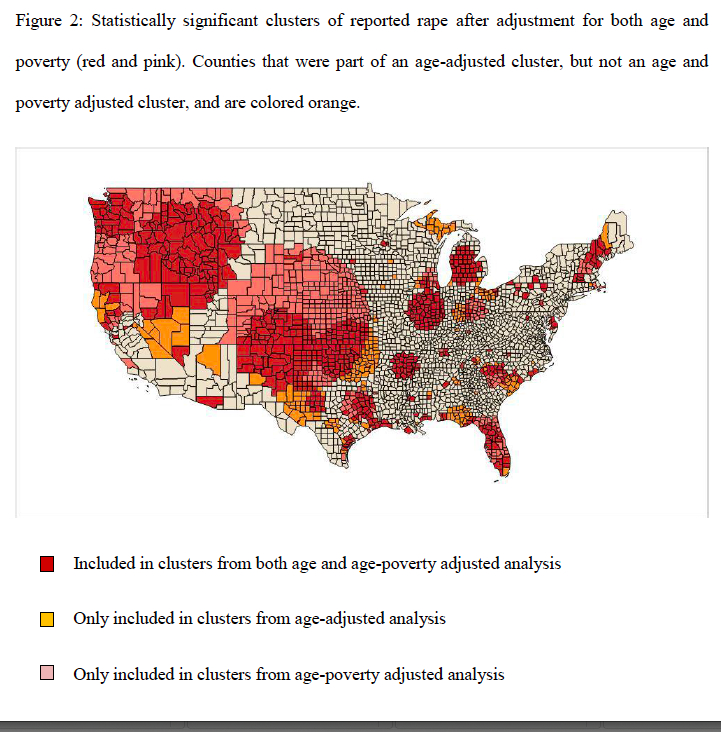
While Trump voters did not, perhaps, openly agree to welcome these sleazy smiling young men to fill the internet with male hegemony or misogyny, the new empire of the Tates in a state where there are more likelihood of a normalization of rape–based on adjustment for age and poverty–as Florida, as the second infographic map below shows or seems to reveal–mapping statistically significant geographic clusters of reports of rape in the United States from the years 2001-2011. The map hints at the possibility or alternate reality of normalizing rape as a community, as Florida alone among states approach the continuity and density of secessionist counties as Jefferson in northern California, a seat of the Alt Right, urban areas of Texas, or Reno and Las Vegas, Nevada-seedy sites, to be sure, but which in Florida seem a disquietingly dark shade of red–denoting clusters both age- and poverty-adusted, in ways that make their uniformity stand out in the lower forty eight.
This is the negative world not only on the margins of the law, or education, but not only of low-education counties, or low literacy but of low income, not only of low literacy–if there are some correspondences of note–but of deep inequalities. It is in some of these same spaces that the Tates are particularly successful at luring people with promises of wealth.
1. The offer to enter a world of untold wealth is promised and promoted, if you haven’t guessed, at Hustler’s University by the language of The Matrix. For it is in the real world, but at an angle to it, and provides a respite from the unfairness of society. For those ready and willing to take the red pill, to enter the reality of untold riches, as if a fantasy portal were ready by this seducer. It demands only recognition that you’ve been duped by a false map and a world of mediocrity that some folks are content to live. Are you ready to join? As if appropriating the language of a Calvinist elect, ready to offer illumination from a website of no real certification save that of bluster, as members of the church of the internet,–where you don’t even need a license to preach.
The pardon of King Trump awaits for the master hustler who is able to blame all of society’s issues on threats to the patriarchy in a world where most are being controlled and manipulated save those who take the “pill” of liberation by a portal of his own device, that borrows heavily from the film, operated by a bald man in Bucharest, recently retired from he world of kickboxing, itself based on staged illusion of Mixed Martial Arts, who appears with shades and a nicely groomed beard and sport shirts.
This is the mediated world in which Trump and his black-hatted buddy Musk dwell; it’s not unexpected that the head of Hustler’s University would gain the aid of Marco Rubio, who highlighted the injustice of jailing Andrew Tate, a military brat, in Bucharest, as the American was imprisoned under charges of rape and sex-trafficking in Romania for crimes that recent posturing of the American President suggested were in fact trumped up: but we might listen to Tate’s online boasting of the less than onerous nature of the trade in sexual domination and manipulation as a cushy job not demanding, but quite rewardingly remunerative as he converted his persuasive skills of domination and snake oil salesmanship through his webcam to reach a global paying audience.
This was not ever really about Free Speech as we know it, but about becoming the digerati who are able to make money on a new platform at an angle to the world, using only a cel phone to make money from drop shipping or e-commerce that required no actual labor, but entrepreneurship that smelled of a scam. Tate boasted in a notorious video aboutthe demands of the “job” he had fashioned for himself, that served as an example of his entrance to this world of untold wealth. “My job was to meet a girl, go on a few dates, sleep with her, test if she’s quality” and ensure she would be broken down psychologically to a point ‘where she’d do anything I say and then get her to go on webcam so we could get rich together” streaming porno to paying customers in the wider world–apparently the central conceit and get-rich-quick strategy of “wealth creation” promised by Hustler’s University, with its disturbing channeling of free-speech advocate Larry Flynt.
After facing jail terms for tax evasion for online businesses in the UK in late 2024, Tate had fled England to escape the threats of British courts to seize $2.4 million from his bank accounts. By then, Hustler’s University had morphed and expanded in the manner of online software, to new generations–Hustler’s University 2.0, then 3.0 before it was reborn as “The Real World,” as if in a bid to gain credibility as an alternate world without women, a virtual but deeply real version of a manosphere, offering men the ability to “escape slavery” for a mere £40 a month–which seemed a good deal.
The schemes began with sadistic exercises of psychological domination the Tates honed online but the tools of the trade were in fact hardly so new or particularly cutting edge at all, but a confidence game of sorts about staging empowerment before a live stream of paying customers: as if staging a puppet show of the internet, a drama denying subjectivity of sexual partners by gaining “consent” from women who were stripped of support structures or autonomy, while promising a respite from the “puppet show” of the other real life. The online version of a puppet show updated the oldest exercise of suspending belief, uncannily stripping subjectivity from the animated show of puppets that both entranced romantic figures as a theater of childhood and makes one, or made romantics as Goethe realize that they had to destroy the theater itself. This was not a theater to be destroyed, however, or grown out of, but available on one’s phone: the animated figures of female puppets of Tate’s theater of sex were trading in a currency of misogynistic domination doubling as get-rich strategies as well, the secrets of sexual domination presented as the ticket to wealth-generation by online schemes, only waiting for those who were ready to realize their visions of themselves as sexual dominators that they could use to win followers from the global audiences of online viewers.
Why is the United States government and the Trump administration paying such attention to release the restrictions that Tate faces in Bucharest? Does the social media influencer’s territory on X provide an answer? Human trafficking has long existed as a modern form of forced slavery based on a combination of coercion, deception and exploitation, an under-the-radar geographic mobility escaping attention, often, in modern times, coinciding with forced migration or refugee traffic, taking advantage of and preying vulnerable populations as streams of isolated women or children are seeking to move without defenses in unfamiliar circumstances and need.
But the internet makes this into an ever more monetized revenue scheme, animating often broken-down individual subjects for paying audiences of mostly paying men, expanding the routes of human trafficking and sex slavery on a new frictionless surface, moving often lower middle income persons on already existing patterns of exploitation by a slick visual medium on steroids–based on corruption and the lowered risk of criminal prosecution, and driven by economic need and necessity. Romania is a cutting edge country foe sex exploitation and trafficking as it is an edge or transit country, between two economic regimes with low legal oversight or protection, and lower income and higher income countries, encouraging rampant trafficking with impunity.
2. The territory is notional, but Trump and Musk are currently making it a national priority to block Romania from investigating the Tates for charges of money laundering, sex trafficking and rape. For Trump and Musk, he seems a sympathetic figure, wrongly jailed in a nation that is holding an American against wishes, even if he is not prevented from using his webcam in his apartment. When President Trump has his envoy bring up the case with Romania’s Prime Minister and government as if it were indeed a state issue, demanding Romania return the two brothers’ passports to them so that they might travel,–possibly to return to the United States, where he might be pardoned as the Proud Boys and Rod R. Blagojevich, aka Blago, to enter the legal marionette theater of Trump’s America, a true tauerspiel where the President acts as King and Puppet Master of a broad theater of unsavory characters with whom the Tates would presumably be right at home, welcomed into the manosphere that the United States was determined to become.
The thumbs-up Tate flashed as he had left house arrest that Tate delivered to the cameras as he was released from house arrest to await trial for human trafficking and rape on July 6, 2023, didn’t allow him or his brother Tristan to move from Bucharest, where they faced trial, but he insisted “We’ve been completely innocent since the beginning of this,” as if he were a victim of a political conspiracy, rather than an intimidator who was at the apex of a scheme of human trafficking conspiracy, rape, and sexual violence, his bother Tristan calmly assuring his waiting fans that “I’m always okay–I was okay in jail, I’m okay now” as supporters tribally cheered him on, chanting “Top-G1. Top-G!” as if to dignify him as the first among gentlemen, as the social media tribe prides thinking themselves.
Since then, Andrew and Tristan Tate have of course reemerged among the top demands of the new administration in Washington, as the envoys of Donal Trump work hard to secure his release, as if pandering to the fame that the Tates have won on social media as influencers, and particularly on X, as the eyes of the hurricane of a global manosphere.
But Trump’s envoy Richard Grenell saw fit to raise the fate of Tate in discussions with the Romanian Foreign Minister Emil Hurezeanu, who observed (until he thought it wiser to check himself) Grenell had pressed in his state visit he was “interested in the fate of the Tate brothers,” as if the issue of “the fate of the Tate brothers” were matters of national interest, and perhaps might provide a basis to rebuild diplomatic ties, before backpedalling to deny any appearance of legal impropriety, lest Bucharest appear a puppet state, confirming “no demands either during the Romanian Ministry of Foreign Affairs-Richard Grenell discussion or after it” during their talks: “Romanian courts are independent and operate based on the law,” rather than petty favors of quid pro quo–and only hold “the same values regarding the fundamental rights and freedoms of citizens” as America. Is that even a reassurance? The Prime Minister Marcel Ciolacu weighed in on X to clarify he never ever received “any requests to us upon the legal situation of well-known foreign influencers investigated by the Romanian authorities,” preserving a pretense of dignity and legal autonomy even if the whole thing was quickly degenerating into a global puppet theater, so that one almost lost sight that it–ans Tate’s wealth–was generated in part by global sex trade in the media frenzy.
Of course, those “fundamental rights and freedoms” are online speech, Trump has made clear early in his Presidency, and Is Trump being manipulated by Musk? The defense of Free Speech as a victory of the 2025 inauguration was nowhere more clearly evident than on the stage of the Inauguration, when an elated Elon Musk raised his fists in triumph, as Jeff Bezos smiled, and Sundar Pichai clapped somewhat sullenly, as Zuck looked on with his new bedfellows from a more marginal position than he’d have liked, and Trump’s visage was almost intentionally blurred.
Billionaire’s Row at 2025 Inauguration of Donald J. Trump
The protection of Free Speech on the internet, and the end of any filters on hate speech or fact-checks for a weird adoption of “community policing” seemed to open a new theater of fake news, hate speech and rumors, encouraging beliefs that the LA wildfires had indeed destroyed the homes of Ukrainian generals who had been enriched by American taxpayers, or USAID officers acting as fronts for corruption, even if Ukraine offered firefighters to combat the recent fires. The puppet theater is one of intolerance, in other words, and of protecting the rights of men like Tates who had millions of followers, proved good for the X platform, and attracted more users to their sites.
3. Or is Trump indeed not fascinated by the puppet? It is hard to forget the memorable accusations or counter-charges Hillary Clinton made in a Presidential Debate that merits rewatching today, as we try to understand where the United States is in global alliances. But it was the figure of female puppet–“No puppet! No puppet! . . . You’re the puppet! No!–You’re the puppet!”–with inarticulate bluster that became a comedic set-piece theater in the third Presidential debate with Hillary Clinton. What began as a debate on foreign policy, back in 2016, as Clinton charged that Putin “would rather have a puppet as president of the United States” shifted to borscht belt comedy on the status of puppets on a global stage that seemed a bit of a puppet show, after Clinton accused Trump of his willingness “to spout the Putin line” and “break up NATO, do whatever he wants you to do.”
Trump’s aggressive retort that seemed eerily to tap a deep-seated anger at being insulted onstage in such a manner was, of course, almost immediately eclipsed by the flood of internet memes it provoked—memes of puppets clamoring “No, you’re the puppet!” that, in an election turning on fears of America was rigged–had become rigged–and in which we were all, to some extent, puppets, left us wondering who was the puppeteer more than why Trump was so deeply wounded and ticked off. The exchange seemed evidence of “how childish our election system has become” as much as scowls of inarticulateness in contrast to Clinton’s poise. The theatrical staged exchange seemed evidence of the demeaning of politics of true virtues, or even interests, to a puppet show–
–or a “puppet madness” with its own seemingly vital online life in the post-debate world, as we looked to visual humor for some relief as Trump continued muttering, “No, you’re the puppet, . . . you’re the puppet” to gain some ground in ways that concealed how deeply wounded he was.
The puppet shows we now watch in our defense of two Anglo-Americans who made their fortunes teaching men the secrets of how to dominate and manipulate women as tools to escape the matrix, as if Fortune was a woman, and the platform they call Real World was “the portal to escape the matrix,” or the secret figures that, as a puppet theater, pull the strings and animate the individuals by controlling government and society, with only the freedom of online sex slavery the solution to make money, and unleash your inner millionaire, lest we continue to be distracted by those shadowy interests that “distract us for long enough so our bodies can be used for the machines”–as if it were a form of redemption. The unveiling of the “learning platform” that will dispense with all the necessary skills to become super-rich was long dismissed as another “get rich quick scheme,” with strong similarities, after all, to Trump University, although this is hardly the only superficial similarity between. the two men who have cast themselves as entrepreneurs.
4. Even if one shouldn’t say this, the demographic of one special sector the Trump voter may align more closely that we should ever admit. The stereotyping of the Trump voter should be resisted, as well as the attribution of the voter with a right-wing ideology. But the pool of pro-Trump voters overlap with the followers of the Tate brothers in disturbing ways, and indeed with the Tates –serial sex offenders who had gained fame as influencers on the manosphere district of the internet.
The release from jail of the two t-shirted Tates had fanboys who displayed their love for them in the manner many proclaimed devotion to Donal Trump at his rallies as Presidential candidate; as the ripped brothers emerged from holding cells in Bucharest, the Tates were swarmed by affection from fellow G’s who steadfastly and firmly supported Tristan and Andrew through their ordeal. The outsized support that the Trump administration took mirrors this outpouring of online sympathy at false accusation and imprisonment on house arrest. The support for the Tates in a country whose membership in the European Union is undecided given its widespread corruption has led to the restoration of their passports, confiscated financial assets, and dropping of criminal charges as they were provided with a private Gulfstream jet out of the country. Supporters of the Tates and long sought to protest and discredit the decision of courts in Bucharest, where the Tates fled to escape legal prosecution in England–seeking protection in the shadowy Central European country–the fear of a deal between the Romanian government and Trump White House seemed to reveal the preferential treatment to wealthy foreigners in a corrupt system, as Moscow was hoping to undermine the credibility of Romania’s elected government by trumping up its corruption. The release of the two Tates from house arrest in January, 2025, allowed them to continue to promote their brand of toxic masculinity online, possibly having bought their newfound liberty with unfrozen fortunes gained from their website, Hustlers’ University, their toxic online personas are poised to return to the internet as Romania faces more pressing problems of constitutional order.
The two bearded bros were in fact the very perpetrators of their own theater of cruelty of enticing women to acts of sexual submission. Yet, in the eyes of their defenders, it was they who at the end demanded their own freedom,–and what was the roll of the United States if not defend them? Who the constituencies were that attracted the Trump administration to the fate of the Tates was uncertain, but it might have begun in the Trump Dept. of justice, where lawyers who had defended the Tates was gainfully employed, and had fled to greener pastures, or maybe some of the fanboys of the Tates who had ties to the GOP, or even the folks at Turning Point, who had welcomed Trump’s election as “Daddy”–a term that Andrew Tate had reserved for his personalized T, “$Daddy.” Whatever the reason, if speculation is rife, the convicted Tates as they languished in jail in Romania quickly became a priority of the American government in place of America’s support for Ukraine, but championing the innocence of these poseurs is almost as much of a national embarrassment. Even if the Trump’s administration’s interference was criticized as a violation of their victims’ rights to due process, the muscular bros raised their fist seemed eager to cast themselves as vigilantes, warriors of the church on the internet far less violent than their online personas, even if they did seem hungry to return to the immersive world of online engagement.
Tates Leaving Criminal Court with Fist Raised in a Gesture of Defiance to Legal System
The fist-pump that Andrew Tate’s brother defiantly delivered as the two left Criminal Court in Bucharest telegraphed defiance in ways readily recognized online by the alt Right for whom Andrew became a prominent cause, even if he looked a bit more worn and peaked than he did on the muscleman portrait that broadcast his internet identity as $DADDY emblazoned defiantly on his shirt when he was taken into custody in August 2024. This moniker, and its sense of infantilization of the G[entlemen] of Real World, was a welcome submission to the power of the kickboxer who imposed his will on all women, holding himself up as a model for the male hegemony that would be their platform to a future better life. The Tates’ use of this rhetoric of conversion–a conversion expressed by the “red pill”–was an invitation to a real life of being without the false constraints imposed by society’s matrix, and the conspiracies that were preventing one from realizing wealth. Of course, Tate had only flow to Bucharest to escape the warrant that British officials had issue for his arrest, and the Romanian court granted the extradition request after the social media influencer would be tried, but that Tate was trying to escape the law for forming a criminal gang to sexually exploit women was of little import to his followers, who understood him as a martyr for their cause.
But there was also no doubt inescapable delight to the President in protecting the “rights” of the Tates as sex offenders for a President who describes himself elected as a sex offender, or to clear the charges that he was one–a first in American history. To be sure, Trump had a history of sexual misconduct, and the number of women who have charged him of sexual aggression has grown from two dozen women to forty so far. Trump has eagerly sought to deflect his conviction for sexual abuse in a civil trial as the outcome of a “legal circus”perhaps only a puppet show–puppet shows being parts of traveling circuses; Trump supporters accept his portrayal of the guilty verdict as “a continuation of the greatest witch hunt of all time”–despite the disservice to witches, and even the inquisitorial accusations of witchcraft that is meant to target the legitimacy of a modern court of justice or rule of law. The presiding judge had argued that the conviction of liability had amounted to a conviction of rape, but President Trump has resisted the accusation he compulsively denied, even seeking remuneration in the millions for being called “liable for rape,” nominating multiple accused serial sexual predators–Pete Hegseth; Matt Gaetz; Robert F. Kennedy, Jr.; Elon Musk–to be in his Cabinet. (Trump even energetically pursued several defamation suits against a network liable for a news anchor who identified him as “liable for rape,” questioning the semantics of statements he had “raped” a woman a jury deemed sexually abused as “false, mendacious, and designed to cause harm,” maybe still smarting from being called “the most mendacious President in American history”–if the presiding judge affirmed the charge of rape to be “substantially true.”).
The dismissal of charges for sexual trafficking fit Donald Trump’s increased inclination to open endorsements of hegemonic masculinity. Indeed, it seems to push the legal envelope in what was almost a personal vendetta, not only minimizing rape but condemning such accusations as malicious, if not “unlawful acts of election and voter interference.” The rejection of weakness and embrace of toughness seems central to Elon Musk, but was long cultivated in the torturous candidacy that led him to the White House, perhaps embraced as the key to victory over Kamala Harris, cobbling together a new Republican electorate by images of toughness and strength. While the Georgia jailhouse mugshot became one front on which Trump rallied against prosecutors with the charge “Never Surrender!,” the New York charges of sexual abuse was emblematic of a demand to prove his innocence, after the fact of legal judgment, casting the election as if a way to expunge the legal record in the court of public opinion, and reject the law. While social media influencer Andrew Tate was awaiting trial for accusations of human trafficking, rape, exploiting women, sex with a minor and money laundering, he contended he was being wrongly portrayed as a victim. Did Trump feel kinship with the man promising he hardly merited investigation by Romania’s anti-organized crime agency, DIICOT? The glamorously tattooed kickboxer complained that all evidence against him was trumped up, venting to the peoples’ court of the internet, as if he were on the cusp of innocence, despite a long history of cases of sexual aggression dating back over ten years.
But the absolute contempt for the law is very much on the surface of the stare conjures not the jaunty cover of the entrepreneur atop Trump Tower of The Art of the Deal, but an anguished pain that served, mutatis mutandi, as a model for the power pose of his 2025 Inaugural Scowl, a portrait that seems to be skirting legality and legal norms in time for a new Presidency. If a photograph is worth a thousand words, this mug shot was the photograph that changed Trump’s fortunes in the Presidential race, a fundraising opportunity of sorts that electrified his supporters and prepared them for the vigilante of Trump 2.0 as a man who was defiant, and confidently outside the law. While Trump was only visiting the jail–where he spent but twenty minutes before flying to his New Jersey golf club in a personal jet, his visit and mug shot offered an amazingly remunerative stage to repeat his claim that this prosecution was corrup–as the others he faced–and politically motivated.
He was resisting being a puppet of this corrupt legal regime, standing up for the freedoms of those who felt only anger, rage, and amazement at the inequities of th real world. The booking shot taken in Georgia serendipitously captured a sense of anger, resentment, and sense of grievance that may have thrown a life preserver to Donald Trump’s candidacy, generating after an outpouring of support that raise a record-breaking 4.18 million on the day it was taken, and raised $7.1 million since he was booked at an Atlanta jail. The single-day record for his entire campaign was a point of inflection, even more than the failed assassination in Pennsylvania when he dodged the bullet by jerking forward, the scowling mugshot reprinted on a range of merchandise–shirts, posters, bumper stickers and beverage coolers–with the telling tagline “NEVER SURRENDER!”
Is it any surprise that it became the template for is Inaugural Photo, breaking from tradition in using lighting from below and a grim scowl that glared at his public and the American people, a President who was fully prepared to show nothing but contempt for the law? The mugshot was posted on social media with the plea, as if felon to felon, to “make a contribution to evict Crooked Joe Biden from the White House . . . during this dark chapter in our nation’s history.”
Trump 2.0 was outside the law, maybe a puppet or maybe not, without any intention of complying with any court of law. He was content with the inevitable triumph in the court of public opinion, convinced of his place, even as the oldest President ever entering office, but in fact an outlaw President, fully confident of holding a secure place in the firmament of the manosphere. Trump realized that the resistance that the mugshot perfectly captured had an appeal and power over his followers that was the identity of Trump 2.0 as an outlaw President he was determined to embrace.
Daniel Torok
Was it a surprise that the first response to the image Trump posted of the 2025 portrait on Truth Social aped Tate, and led Charlie Kirk to crow “Dad is home” in response to the glowering portrait, as Byron Daniels, thanking Trump for the return of stability at the southern border, declared merely “Daddy’s back” and Lauren Bobert exulted on social media, “Daddy’s home!” The male figure of authority and discipline was adopted as a means of bringing discipline into the budget, even if many of the cuts of spending were alternatively exaggerated, obscene, and illusory, but talked a game of grandeur and a return of an actual figure of authoritarian power.
Trump is of course quite a master of delaying legal proceedings, blurring grounds of legal jurisdiction and appealing cases to defer the pronouncement of guilt. His bizarre exercise of visualization led him to imagine a grim fate and “very nasty life” had he lost the 2025 election–“it was dangerous, actually very dangerous“–as if the election might be understood in purely personal terms, even as he had framed it as a battle for “the fate of the country” in a nation divided between good and evil. Before guests from the Middle East, and Kingdom of Saudi Arabia, including its Princess, he suggested some introspection of surviving a deep personal crisis, public persecution, and vicious attacks more than assassin’s bullets, after riffing happily on economic progress of his future administration.–briefly entertaining the prison time he would have faced had not “all fifty states shifted in a Republican direction” as if this was a divine intervention delivering true justice, superseding any criminal trial. And a nod to the broad online community became part of a lineage of American entrepreneurship and innovation in the inaugural address, which praised the iPhone as condensing all knowledge to the palm of one’s hand: one wouldn’t ever need to leave the virtual world due to the triumphs of American skill
For tee election was a means of surpassing the travails of his worldly trial s in court. And his victory helped him win “great respect,”but demanded personal “courage” as if it were a trial to campaign on his own freedom, and overturn the judicial circus. As the ultimate confidence man, elected to terminate scams perpetuated on the American people, as he told the eager press gaggle, Trump seems drawn to the Tates, charlatans and online performers, as heroes of his own constituency, as much as purveyors of fraud strikingly akin to his own deceit, but also as purveyors of misogyny skilled at converting sexual abuses to personal fortunes. Most voters view sexual assault as disqualifying one from national office, but the embrace of the pleasure of demeaning women–often by sexual coercion–comes full bloom in the defense of the Tates within the performance of white masculinity. Rather than only a ‘brand,’ it is a dark ideology revering dominance, an extension of narcissism, that trumps the male hegemony reflected in cabinet picks.
6. Trump’s Presidency was never imagined to include champions of women. But as Trump embraces the Tates as props of hi sown theater of masculine, he acted to silence the accusers the Tates faced in the UK in an outrageous ways, and isolate them from legal accountability in their schemes of sex trafficking. Those championing themselves as the defenders of wrongly accused Americans held against their will in a foreign land, victims of a grievance, is an open perversion of the injustices that Trump seems eager to cast himself as able to rectify. The affirmation of the right of sexual harassment is far more explicit than in Trump 1.0, and is now a very unstable and risky propositions. The stubborn presence of four women alleging sexual abuse by Tate are distraught at Trump’s involvement in Romania’s court of justice. (Romania remained in the targets of Vice President J.D. Vance, who accuse the Constitutional Court as acting on “flimsy” evidence to charge Russians of any interference in Romania’s national elections, to undermine concerns the Constitutional Court expressed.) As a civil case against the Tates is pursued by English courts, many worry that Trump’s team is going out of their way to dismiss–“what’s a civil case?”–to allow the pair of brothers to escape, welcome them home to the fold to protect Tates. One of the brothers’ former lawyer has indeed found employment at the United States Justice Dept., praising Tate for “offering the dying West some hope for [historical] renewal” not a conman purveying evil.
Of course the women who are accusing the Tates must be trusted in recognizing a vile puppeteer–“Fie, fie, you counterfeit, you puppet you!” stammers Helena full of rage, in Midsummer Night’s Dream, Shakespeare’s drama about love, illusions, enchanted forest, and magical enchantment; amidst the tricks that hath such strong imagination, Hermia aims to turn the tables on her onetime friend by questioning the advantages by which she attracted her beloved by her stature: “she hath urged her height” to prevail “with her personage, her tall personage,/Her height forsooth” as but a counterfeit of love. Counterfeits of government and governing are central to all puppet shows.
Musk, for his part, has insisted that AI images of Musk as the puppeteer of Donald Trump that have become widely popular on the internet are mere malicious attempts to drive their bromance apart–“They’re trying to drive us apart!” But the disturbing visual of the President of the United States slumped at the Centennial Desk, his mouth closed, “like a puppet while his master does the talking,” raises questions. The man Trump named to run DOGE as a shadow-governmental organization explained to the nation what we voted for, and Trump didn’t smile, making much of the world wonder when they ever voted for Musk, and how much Trump is entranced at his dazzle and ready to consign all authority over state records into Musks’s ever-growing domain. The puppet show is here an unbalancing of the ship of state, a crisis of authority, yes, but even more gravely a sense of deep instability where the rule of law and all legal norms are up for grabs, with the promises of a paradigm shift lying in a theatrical exposing of the wrongs of government, while the Emperor wears no clothes, but because he is actually only made of the most malleable cloth.
Puppet theaters are, of course, what we have grown accustomed to expect from the Oval Office, where the props are on hand to turn the theater of state into a grand macabre, or a parody of state. Donald is there with his folly of renaming the Gulf of Mexico as the Gulf of America, as it’s only a map, and he’s a king, as if ready to stake claim to national waters that are far from his own territory, and expand the underseas seabed where the nation can stake claims for drilling oil, even pumping at underwater sites in Mexico’s national water, closer to Mexico’s shores.
The theater of domination is close to the theater of the nation, it seems, and maybe the real one that matters, before it is destroyed. Or will it ever be destroyed? For as our minds are being pummeled by the latest Punch & Judy show, with firings and dismissals proliferate in the name of streamlining and cost-cutting and undue excess, but the excess seems to be the point. And putting our national reputation on the line for the Tates, two truly despicable creatures not meriting defense who promise untold riches but have a habit of being so lax with their own databases to expose eight gigabytes of data of 968,447 user accounts to public scrutiny since 8 April 2024, suggesting they had little interest in the interests of their clients save their getting rich themselves.
Before the mass firings of civil servants, members of government, and oversight by the Trump administration, we were already shocked by two major disruptions that suggest the danger of the new President’s reflexive knee-jerk responses from his over-sensitive gut. Both–the fires in Los Angles and the failure of air safety at Reagan International in DC–are problems of an anthropogenic world, where the structures of traffic flow, water safety, as much cognitive failures of the current President. But the massive problems they suggest we will be facing are problems of mapping, as well. Water doesn’t flow naturally to Los Angeles, a city built in the desert,–as any viewer of Roman Polanski’s neo-noir Chinatown knows.
While the former director of the public utility, Noah Cross, is an evil mastermind too remove public water for his own private ends, is a scarier character, far darker than Donald Trump’s buffoonish public figure, who corrupts his family and the utilities by laying the seeds of a schemes of personal enrichment, and Trump’s inability to map the dangers the nation faces less rooted in venality, he conjures an image of corruption–and imputes corruption–so that the public good is almost entirely hidden, clouded and obscured in airing a broad range of grievances. For the problems of water flowing to the Los Angeles Valley became the dramatic centerpiece of this Depression-era classic, in an attempt to explain the lopsided geography of Los Angeles to the nation, and to do so within a rising taste for disaster movies that boded premonitions of massive destruction–infernos; earthquakes; tidal waves–Abel to be viewed in national theaters.
The United States had long indulged, to be sure, an unsustainably massive demand groundwater pumping for farming in the central valley. The diversion of waters to Los Angeles that caused the regional water table to drop so precipitously as local farmers’ wells ran dry in the largely agricultural San Joaquin Valley north of Los Angeles in central California, as groundwater depletion the aquifer of the Valley that intensified from 1925 to 1975 sucked water from the earth; thousands of pumps suddenly went dry by the 2012–2015 drought, due to cumulative effects of groundwater pumping predating drought, but the question of water use and Southern California on the minds of Robert Towne, who wrote the script of “Chinatown” a 1974 film noir as a drama that featured the opaque conspiracies of water diversion and depletion set during the Depression as a moment of the birth of the contradictions of the unevenly economically divided social landscape of Los Angeles that fit the era of Watergate, and showed conspiracies as deeply seated in the American grain. Cross is a dark nemesis, a seductive land magnate, Noah Cross, played by director John Huston, who pulls punches to divert pumped groundwater from the city to housing tracts in the desert. Chinatown immortalized the schemes of water diversion schemes that remade the sharp social divides in Southern California, whose false respectability seeks to drain the Owens Valley dry that only sharpen the pronounced inequalities in Los Angeles’ stark landscape, reforming the public Los Angeles Dept. of Water and Power for personal gains of massive private enrichment, by bringing the city to where the water flows, rather than by moving water to the city by aqueduct–enabling the urban expansion of Los Angeles.
The film channels a keen sense of short-sighted conspiratorial instability in a world of money and wealth, but may well reflect our own current dilemmas more than we imagined–and a world of graft and corruption that has provided Donald Trump with a means to imagine the status quo. The prescient observation of the cost of redirecting resources was keenly felt by 1974, when Chinatown was conceived, even if the film was set in the Depression. But we are perhaps living it only today. The idea of transformative powers that the redirection of water to the growing city might mask its deep inequities and inequalities, moving it from Chinatown to the “northern Valley,” was a get-rich-quick scheme conflating public and private works, but also a sign of the systemic failure of Los Angeles, and its deeply criminal origins. Was this, the film seemed to ask, really America? Or was the corruption on such a massive scale really what Donald Trump both describes himself as able to prevent, and which the systemic failures that his presidency seem slated to bring, imposing a world of trade tariffs, withdrawing from the world, and an absence of data privacy, indeed eerily akin?
Owens Valley Diversionary Supply of Water
For the creators of “Chinatown,” the Depression perhaps provided a compelling image of the huge wealth inequalities that have since come to be characteristic of the United States, inequities on display with a vengeance in 2025–where the richest men in the world were given front row seats to the 2025 inauguration–men whose combined value provided an image of over a trillion dollars of wealth at one event. Speaking before individuals whose fortunes of four hundred and two hundred billion, emblems of a massive privatization of government, boded poorly for the future. The first months of the Trump White House plagued by seemingly separate issues of fire safety and air safety are rooted in a failure to map increasingly apparent emergencies, specters dangers rooted in the modification of the built environment, as much as policy, that depend on good mapping tools. The eery sense of these inequities and systemic failures echoed through the inauguration ceremony–the fires were still burning, if they had been put out; the promises of American renewal seemed deeply deceptive, hardly addressing wealth inequalities. If “systemic” is among the worlds that the White House offers a guidance not to use, the failures of the first weeks of the Trump presidency seem so systemic to be a harbinger of what is to come.
President Trump seemed almost to stray from prepared remarks, as is his wont, calibrating the value of a rig on national television, as he took time to ponder with marvel how these fires had hurt even “some of the wealthiest and most powerful people of our country” on the stage, and promised to change a situation “everyone is unable to do anything about” but promised to change. Trump would probably never visit the scene the destructive fires had raged, but in detracting from the scale of their devastation he concealed the failures of destruction, loss of housing, loss of healthy land, and loss of economic wealth in the state–foregrounding the major losses of elites.
Trump, as a modern Noah Cross, luxuriated in the face of devastation, concealing the sense of systemic failure. The kinship of systemic failures in Chinatown’s corruption seemed to rise to the surface in this hardly tacit alliance with extreme wealth on the inaugural stage; Trump drew a similar tie to wealth in the face of loss, highlighting on the misfortunes of the “wealthiest and most powerful” amidst a partisan attack on local corruption, from a podium that seemed to trumpet its own corruption. For the President seemed as if he hardly appreciated the scale of the systemic failures that led to the fires, standing before Priscilla Chen, Mark Zuckerberg, Jeff Bezos, Sundar Pinchai, and Elon Musk, who seems to have viewed the inauguration with particular elation, as if the Los Angeles fires were only an example of the previous administration’s failures. If Parmenides suggested that fire was eternal, disordered, and changing, the maps of the destruction of residences seemed a puzzle of poor leadership and a failure of adequate priorities or preparation.
But these emergencies have been oversimplified by being converted to talking points. We often fail to appreciate the huge risk of the present by failing to map these changes, or acknowledge them. Yet without registering the increased risks of anthropogenically modified spaces from the woodland-urban interface or overcrowded skies, we risk losing the knowledge needed to confront these risks. Rather, we seem ready to cut needed federal expertise, believing the national emergency of high energy prices exacerbated by a diminished capacity to protect the nation rom hostile foreign actors. The schemes of corruption of the Department of Water & Power which Noah Cross manipulated to create housing in what we call the Central Vally seemed a look back at the deep levels of corruption from which Los Angeles was born. They pale in comparison to the rampant misuse of public funds for personal gains intertwine of personal advantage and public funds seem on show in the return of Donald Trump to the White House. Another film of 1974 that reveals a terrifying fear of distance from nature featured Mr. Kapital–in Dusan Makavejev’s Sweet Movie, a more comic Mr. Kapital boasted beside Niagara Falls of his plans to re-engineer its natural beauty as a spectacle–“my biggest undertaking in landscape architecture” as “I’m gonna buy it from the Canadian Government, . . . renovate it, redecorate it, get rid of the water, turn off the Falls“–a combination of graft and bombast more worthy of Trump, to amplify the falls’ crashing by “a huge quadrophonic sound system”–the “best available”–to increase its spectacle. Makavejev’s film features Mr. Kapital seeking to transform the natural monument not only to a tourist spectacle but light and sound show, an act of consumer fetishization of exploitation. Trump exploited the disasters of fires and mid-air collision as platforms for his brands, spectacles of his continued campaign and road show, as if they could become illustrations of the need for small government.
Increasingly determined to use public position for private gain, we have seen ungrounded accusations of mismanagement in the face of the growing risks of the effects of global warming and climate and environment blithely ignored, shifting blame to environmental policies or hiring practices. To do so only distracts our attention from growing environmental risks in an era not only of temperature rise, longstanding drought, and a demand to create agricultural productivity by irrigation. For if rising drought in western states–particularly California, mapped below by from data of Trump’s first term in office as a landscape he should have know well, reveal risks of extreme drought across the entire state.
Increased risks of what we still call wildfires, as if they are far from cities, in woodlands hit by lightning, reflect our impact on the environment, as increased extraction and appropriation of resources have continued without assessing the needs for better water storage, strategic burns, and protective barriers against fires’ spread. But the huge wildfire frequency of Trump’s first term–
–grew before lower levels of rainfall, as precipitation plummeted by the start of 2025, a truly perfect storm across Los Angeles, falling so far below usual since October to compromise reserves of groundwater across the county to heighten its combustibility as a site for future fires.
The massive fires that Trump argued we had dismantled defenses was a perfect storm, and a calamity almost foreseeable in public data compiled by NOAA, for which we were unprepared.
The similarities of President Trump’s policies to the management style of Noah Cross after he left Los Angeles’ ‘public’ Dept. of Water, having rigged local supplies of water, appreciated long before Elon Musk was a fixture of the Oval Office; we will soon be able to look back with romance at Cross’ devious schemes to leech public water resources from Los Angeles aqueducts for private gain. Cross engineered water supply for private ends, the corruption and public malfeasance of pervasive corruption of public resources were a premonition of rampant abuse of public resources, confusing public needs with accusations of maladministration seemingly slated to be a hallmark of the new Trump regime. The loss of insured properties of $30 billion and total economic losses beyond $250 billion pose problems of fire prevention far beyond local mismanagement or malfeasance–but will be one of the greatest costly of disasters we persist on calling “natural” more than man-made. Yet even as we began the Trump Presidency with a declaration of a National Emergency–not from the invasion of the southern border, declared a National Emergency in Trump 1.0, but the fr more menacing specter of “high energy prices . . . exacerbated by our Nation’s diminished capacity to insulate itself from hostile foreign actors . . . in an increasingly crucial theater of global energy competition,” the actual emergencies of climate and airspace that were largely man-made are not only ignored but reframed as errors of bad governance. For while the incoming President issued an early declaration of the need for coast-to-coast “integrity and expansion of our Nation’s energy infrastructure,” the emergencies on both coasts of fires far more massive than regular for January on the west coast and a tragic arial collision on the east coast provided not only spectacles but hints of the emergencies that the Trump administration is ready to exacerbate and downplay, casting their spectacular disasters as the result of the mismanagement of his political opponents.
The mipmapping of how modifications of the environment outside of Los Angeles, or over the skies of Washington, D.C., reveal problems of mapping far deeper than corruption, as they are rooted in deception and willed ignorance that distract us from real problems on the ground and in the sky. The question of moving water to the Los Angeles fires must have hit Donald Trump like a bolt, from a cinematic repertoire Trump has at the ready, and seems poised to provide, as if the cinema-starved Americans, still reeling hurt from pandemic closures, were starved of heroic narratives.
But the accusations of mismanagement that Donald Trump converted two national crises but days into his Presidency–the Los Angeles Palisades Fire he relegated to a local failure of corrupt environmentalists and the tragic in-flight collision at Reagan International–served only to stoke resentment from coast to coast, in denial of the deep stakes of future disastrous scenarios that the country faces with climate warming and the broad deregulation of anthropogenic change. And the current dismantling of ranks of needed forest workers, National Parks, and fire safety monitors, as well as the civil service of FAA engineers and technicians and air traffic controllers–jobs at short levels perennially–suggests nothing less than a massive privatization of resources that the current government has relished to destroy. The current firing of hundreds of “probationary” workers or recent hires responsible from radar, landing and in-air navigation and control automation from air traffic control towers courts systematic disfunction remind us America increasingly is Chinatown, a site of corruption where everyone does as little as possible work: if Trump has presented am image of a declining America, no longer a wealthy society but “a kind of Chinatown where unaccountable power is conspiring against everyday Americans,” compromised by elites, obscuring civil judgements of his own fraud and sexual abuse that deflect from his own “personal and public corruption,” Ronald Brownstein trenchantly observed, to present himself as a savior to the nation, and suggesting that financial elites in a “deep state” have hindered the interests of most Americans.
But the risks of these twin catastrophes at the start of the Trump Presidency suggest the vain boast that Trump will erase the corruption within the state fail to understand the growing scale of our environmental risks. common good. If Chinatown captured the dangers of a world of deregulation and criminality in the Depression era, the increased deregulation that Donald Trump proposes runs rising risks of returning to an era when all America will be Chinatown, lifting laws and regulations of environmental protection and workplace safety, and minimizing what were once norms of public safety standards, transforming all America to a landscape where the corruption of power will conspire against us all. The National Air Traffic Controllers Association has tersely claimed to be “analyzing the effect of the reported federal employee terminations on aviation safety, the national airspace system and our members”–although they include folks working on early warning radar systems for incoming cruise missiles that belong to the defense of national borders. The firing from non-government email addresses, hailing from “ASK_AHR_EXEC_Orders@usfaa.mail.outlook.com,” as if with DOGE fingerprints.
The indiscriminate mass-firings, meant to suggest a “fork in the road,” suggest a collapse of public and private among government. As civil service employees long overtaxed and understaffed are cursorily dismissed, the absence of accountability seems intentionally designed to circumvent regulations. The opaque firing evokes the greed of the “rape of the Owens Valley,” channeling water to the orange groves of a “northwest valley” by silencing opponents and critics, if not by killing, to stave off opposition to the wisdom of ever diverting the Colorado River and city water by Los Angeles Water and Power to quench the thirst of growing urban populations that led William Mulholland to argue, “if Los Angles does not claim the Owens Valley water supply, she will never need it.“
Amalgams of institutional distrust, and corruption of power, have been conjured to help Donald Trump power his way to the Presidency, for reasons themselves rooted in corruption, if promising to combat the untrustworthy corruption of powerful elites–not in the guise of a gumshoe but, as political journalist Ronald Brownstein observed in some astute cultural commentary, that fits the moment as an episode of political demonology, an incarnation of Noah Cross,– that mastermind of the Los Angeles Water System played by John Huston who corruptly allowed it cease to be privatized, but undermined its public performance as a public utility from the shadows. by silencing opponents, discrediting others, and literally killing opponents, Cross presided over a massive diversion for future of plans of property development. A network hidden in plain sight of dams, aqueducts, and man-made diversions carried water outside Los Angeles, opening new real estate lots for future homeowners in a “north-western valley” filled with orange groves,–a surrogate for the as yet unnamed San Fernando Valley where the Los Angeles viaduct led.
Los Angeles Aqueduct and Southern California/from The Water Seekers (1950), by Remi A. Nadeau
The silencing by firing, a massive laying off of skilled workers across under the aegis a Department of Government Efficiency. The eery prerogative of a shadow government, apparently intended to silence to redefine government quite literally by starting from the collective dismissal of Inspectors General, suggests the victory of a non elected body designed to prevent anyone from speaking out.
But the charges of corruption and sense of a rigged system have let President Trump suggest the need for better mapping of how to contain fires’ spread, rather than the dismissal of forest workers and even fire fighters and championing of easy methods to end fires in the future. Rather than by perpetuating a plan of official deceit, coverups, and public deception, current plans to cut forest workers, trail maintenance, and fire fighters to forge an optimal streamlining of government by rooting out public corruption seems the worst possible means of facing a landscape of heightened fire risk, where insurance fails to cover the costs of destructive fires, and encourages rebuilding only for the elites able to rebuild homes in what has been recently declared a disaster area but where fire codes had been not enforced, relaxed, or circumvented any spatial buffers, fire perimeters or barriers to fire spread. The systemic failures of the fire rested in the lack of any adequate areas without brush to stop the fires from spreading–not water, even if the hoses that firefighters were using to combat the blazes did run dry due to a perfect storm of contingencies.
Yet the housing markets that have conspired to create a Paradise without fire walls or buffers offers a hard space to combat fire, or plan for unwealthy residents less ready to pay insurance premiums and not rely on private firefighters. With the increased investments in local fire protection to supplement insurance, wealthier residents increasingly come to rely on private firefighters, and demand for funds for rebuilding without taxation for affordable housing in the region–rentals are quite scarce in Los Angeles, as much of the country, and increasingly out of grasp; and the local cost of rentals are inevitably destined to increase as Malibu and the Palisades and Altadena are rebuilt. The case against letting Malibu burn has, since Mike Davis posed the possibility, been stacked in favor of the super-rich; coastal enclaves that obstruct shore access for the unpropertied have proliferated, even if many beachfront properties are now ominously dotted with singed palm trees, signs of the serious trouble in paradise. Anyone who surveys the wreckage can only marvel at the socially leveling nature of fire–the most expensive if not expansive in American history.
The range of damage that the fires have brought–a clean up that a hollowed-out EPA hopes to complete in months, “working around the clock to get as many properties cleared of hazardous material as quickly and as safely as possible.” But as they confront 4,250,000 tons of structural ash and debris, including many asbestos-laced structures in the Pacific Palisades and Altadena threaten to transform what were bucolic beachfront properties into sites for removing hazardous debris from burnt out electric vehicles, explosive lithium-ion batteries, energy storage systems, propane tanks, swimming pool chemicals, uncombusted paints, and asbestos insulation. The fear of ocean pollution, indeed, suggests a far deeper scar than the value of initial property loss suggests–as risks of emission of toxic gases and particulates continue long after the fires have been extinguished. The fires threaten to become among the costliest natural disasters in American history, the spectacle of the fires ceased, and the goal of “expedited removal” by February 25 is not only optimisitic, but most likely unwarranted, despite deep concerns for toxic seeping into the earth and even filter into the limited levels of groundwater supply. But we have never been able to expect good skills of mapping from the Trump team, whose cartographic ineptitude primarily uses maps to rally up fears and generate grievances, rather than to assess actual dangers and liabilities. (Most current EPA workers dismiss the deadline as impractical if not unhinged and nearly impossible to meet.)
Beachfront Homes along the Pacific Coast Highway after the Palisades Fire/MediaNews
Donald Trump didn’t mention these intractable problems of housing in his inaugural address, but rather only noted “we are watching fires still tragically burn from weeks ago without even a token of defense,” showing almost pathological lack of empathy but raising a grievance familiar to many. The grievance he felt seemed to deflect attention from the dire situation he seemed ready to blame his predecessor, if there was in fact not much federal oversight over what was a local problem endemic to a region of the state that had been deeply impacted by increasingly arid air and winds of over a hundred miles an hour, possibly tied to the very pressures of climate change whose existance he has denied. For fanned by record-breaking winds that are higher, dryer, and more unrelenting than previous years, low humidity has made the region more combustible than ever, allowing flames to rapidly spread over space that outpace fire engines, at a time when fewer fire workers were employed, outside fire season. For five days, flames burned through Pacific Palisades and Malibu and Altadena, creating zones of destruction that truly resembled the destruction of a war zone–provoking worth-the-read comparison to the destruction zones of nuclear weapons. The flattened residential regions that have replaced communities are, however, more like war zones than any Trump has ever encountered, and may send a cautionary signal to the future regional devastation of fires in a warming world. Even with over 13,500 parcels eligible for clearing of debris and rebuilding, the Esri view suggests a chastening future of a burnt-out landscape scarred by fire.
Without much containment over five days, mega-fires of massive flattened real estate, homes, and work that even before they raised questions about recovery left many in awe of a destructive spectacle that destroyed some of the most valued properties in the coast United States. Watching the fires as they burned through Los Angeles county, one was almost able to bracket questions of how they would leave many unhoused, or the precariousness state common to inhabitants of mansions valued at over $40 million to much of the country, and many lower and middle class Americans: the fires were a terrifying leveling act, immediately expanding an already growing community of unhoused, adding to acute housing shortages across coastal California.
The violent fires were on their way to being contained by the inaugural, as many fire fighters had arrived, and water was being dropped from super-scoopers by the middle of January, including water from the nearby oceans that help to cut of the fires’ oxygen supply and cool burning zones. But they seemed far from Trump’s mind, as the hyperbolic grievance at the rate with which they had proceeded “without even a token of defense” offered no clues to map what had happened. If few engines were initially sent to the blaze and far fewer firefighters work outside the usual fire season in wintertime, containment in many areas had begun by January 10, as particulate matter filled the skies, creating a psychological toll due to stress and evacuation that cannot be measured by metrics of property loss or fire intensity alone in Malibu or Pacific Palisades. Trump had only referenced them as a grievance in his inaugural: if the narratives of the fire focussed on wealthy areas, the failure to include more middle-income areas can frame the response to the disaster.
The massive conflagration created a huge burn area that, after the spectacle of the fire ceased, receded from national attention–even if it should have remained front and center, rather than be argued to be resolved in ways that made up for the failures of on the ground emergency crews. The hyperbole of “without even a token of defense” was unwanted, mis-mapping the spread of multiple fires as due to avoidable error or bad government, and poor environmental planning, more than plagued by inadequate protection or regulations in the increasingly overbuilt wildland interface, that offer increased points of ignition in place of structural barriers and fire breaks to manage the mass fires of future conflagrations. Governor Gavin Newsom had, of course, invited Trump to view the fire damage at first hand, seeking to bring him on board to help hundreds of thousand displaced by fires; Trump promoted false narratives of a lack of water–even after ample sea water helped contain the fires. To see the fires as grievances we lack adequate defenses only echoed in their metaphorical construction migrants from the southern border entering the nation’s border,–as if needed water was blocked by poor government of a “his Los Angeles crew” of Democrats, more than poor systemic planning and climate change.
Trump told the world in his inaugural address as an occasion to view from afar the fires”raging through the houses and communities, –even affecting some of the wealthiest and most powerful individuals in our country, some of whom are sitting here right now” not as tragic moments, or times of heroism, but an infrastructure unable to serve the privileged or America. He complained with surreal pathos how some on that very stage “don’t have a home any longer” and noted others even worse off; the inability of the entitled to secure luxury homes provided a pivot to address the entire nation with a sense of grievance that provided a refrain of his recent campaign: he told America, “we can’t let this happen” to a great system–as we musn’t accept “we have a public health system that does not deliver in times of disaster,” “an education system that teaches our children to be ashamed of themselves–in many cases to hate our country,”– even if the federal governmental does not oversee these programs, or an ability to ensure that things will “change very quickly.” (For his part, Biden had emphasized the importance of providing federal assistance to a region where “All changed, changed utterly” in describing the “terrible beauty being born.”)
The readiness of Trump to channel grievance and discontent in a moment that demanded gravity revealed a pathological lack of empathy, that we soon saw again in the Blackhawk helicopter crash that killed sixty nine–more than the twenty-nine known fatalities in Los Angeles. More than a disconnect from climate change, there was alarming readiness in the President’s readiness to train our eyes on targets as scapegoats degrading our safety and self-image as a nation and erode our nation, rather than appreciate heightened dangers of a system challenged by intense unpreparedness. Yet the stress of a dangerously overcrowded condition–either of residences in the woodland interface, or in the increasingly crowded skies–offered little distance on these real problems, that are far more likely to be harbingers of dangers in a national structure unprepared for climate change or a climate emergency, and without tools to compensate for anthropogenic change. For the problems of human costs that are erased in Trump’s narratives of poor government or management suggest the blind spots of governing that mismap the nation in critical ways and reveal the failure to map dangers of a sudden accelerated downsizing of government. Fires grew in the state by the mid-1940s not only as record-keeping grew, but as increased density of settlement and above-ground electrical wiring expanded, even if they were nothing like the massive fires of recent years.
That change might well come by slashing the Department of Education and its ability to fund school districts, and end funds for fire mitigation. We might do worse than to remove our geography of fire from low rainfall, and consider new means of water storage. But preserving the vanity of what Mike Davis called “fireball suburbs” that is more prosaically mapped as the Woodland-Urban Interface, seeking to preserve a beautiful space for those who can afford high premiums to face heightened fire risk. While the recent Pasadena and Altadena fires are best mapped against the dryness of the soil in Southern California terrain that faced accelerated howling of Santa Ana winds, transforming aridity across much of the newly abundant chaparral, scrub and grasses into so much kindling for fires, the flammable landscape Angelino Davis famously traced to the entrance of new sources of ignition into the Malibu landscape in the 1928 opening of the Pacific Coast Highway to coast views created a new outpost of Hollywood stars along the views of beachfront mansions–indeed, a new sense of property foreign to the region–risked being consumed by “wildfire” in October 1929, a year before a five-mile front of towering flames led firefighters combatting them to fear the impossible containment might lead them to spread to densely inhabited urban areas.
As much as global warming heightened risk of dried out brush and higher velocity of winds, we have shifted a focus from prevention to insurance, rather than clearer laws and consciousness of controlling building materials, fire risk, and surroundings. Benjamin Franklin, who began the first insurance company in America in Philadelphia, as well as the first volunteer fire fighting company, Franklin’s Bucket Brigade, in 1736, was properly called the Union Fire Company, inseparable from the buckets that bore water to put out burning flames that improved fire safety in the newly settled east coast, whose energy sources were mostly both extremely combustible and above ground. Franklin made no bones about privileging the need for prevention in his writings from 1735, noting the need to consider the scale of damages from not adding “a clause too regulate all other Houses in the particulars of too shallow Hearths, and the detestable Practice of putting wooden Mouldings on each side of the Fire Place, which being commonly of Heart-of-Pine and fun of Turpentine, stand ready to flame as son as a Coal or a small brand shall roul against them,” inviting readers note “foul Chimneys burn most furiously a few Days after they were swept: People in confidence that they are clean, making large Fires,” but must be controlled btw fines if with the sweepers needing to be licensed and fined if their preventive work isn’t adequate; public pumps demand enough water “be had to keep them going for half an Hour together” for Fire Engines to perform best “in the Affair of Extinguishing Fires,” with tax exemption or abatement to all helping extinguish “fires . . . whenever they happen”–and covering the roofs of all building sight tiled surfaces, as is the case for all new buildings in London, even if “all the bad Circumstances have never happened together, such as a dry Season, high Wind, narrow Street, and little or low water,” this may have given us a sense of false security n our minds, though if such circumstances “God forbid, should happen, we should afterwards be careful enough.”
We should afterwards be careful enough. Franklin predicted confidently in ways that would make Mike Davis smile and laugh. That very cocktail seems to have happened in Altadena. Franklin was too aware of the danger of electrical strikes from lightening and the combustion of most materials, and flammability of oil and kerosene, sought to ensure the abilities to quench flames collectively. But fires grew as their own identity, to destroy cities undermining the regimes of good governance and disciplined spaces of cities, that urban societies and common fellowship had better protect themselves against: the Great Fire had wildly roared through city blocks unchecked, consuming them amidst helpless cries of help and fear. The fire was an uncontrolled entity, appearing with a vengeance as it “bounded up, as if each flame had a tiger’s life, and roared through, as though, in every one, there was a hungry voice” in Charles Dickens words. Dickens captured how insatiable urban fires roared as they consumed built structures whose hearths and wooden roofs posed heightened risks of combustibility. And it was when he lived in London, worked as an itinerant printer, was a bit of a center for flames and fire companies that were a model for quenching the flames whose “fearful symmetry” could not be framed, or even comprehended by “mortal eye.”
The danger of urban fires were tried to be mapped–and used as cautionary tales. Boston’s Great Fire of 1872 was not mapped by how the winds sent fire raging down streets across the financial district, in the map drawn for Currier & Ives that ran in Harpers, jumping from a burning roof to other buildings under high winds, running down streets as “fire poured with inconceivable force” that was only contained by dynamiting other buildings to create fire breaks in the city’s plant. The outlines of the fire broadcast in national news supplemented stories about fire fighters’ bravery beside ads using the conflagration as grounds to purchase policies to “insure against accidents,” generalizing the need for fire insurance to confront risks in increasingly congested urban areas.
We are now facing new fires, that roar even louder–driven by winds of seventy to eighty miles per hour, as if facing experiments of flammability in California, and much of the world, that we are only learning how to map, and fearing the even greater roars of a fast-approaching future. And we are only learning to map the rapidly burning landscapes for our eyes, and the dangers they present, and the inequalities that can be born from insurance market, where the rapidly rising costs of insuring homes in much of the old fire zones of the Palisades are most likely to bring booming costs of insurance to obstruct rebuilding in these regions, making the Palisades more outrageously unaffordable and exclusive. Far in the past has receded the recommendation for a protocol of containing risk in teams of firemen, by which these valiant “Men of Prudence and Authority, [may] direct the opening and stripping of Roofs by the Ax-Men, the pulling down burning Timbers by the Hookmen, and the playing of the Engines, and command the making of Lanes, &c. and they are impowered to require Assistance for the Removing of Goods out of Houses on fire or in Danger of Fire, and to appoint Guards for securing such Goods; and Disobedience, to these Officers in any, at such Times, is punished by a Fine of 40s. or Ten Days Imprisonment.”
The imposition of regulations is hard to imagine in southern California, where regulations are lifted by the preservation of the exclusive rights to property and luxury of homeowners lucky enough to live in the Palisades near the nearly 700 mansions that tragically burned in the recent fires while not adorable housing, lack the needed fire perimeters or fire-resistant plantings, or protection with adequate local reservoirs. For Franklin, extinguishing fires was a means of mutual assistance for homeowners in urban neighborhoods, more than a Wildland-Urban Interface. But living in the city of Philadelphia was in a sense closer to the wild than we might think, and close to an anthropogenic world of needed to be grasped as far more combustible than the wild–and whose heightened risk of combustibility he demanded be insured. As much as California exists under a different fire regime, the spread of reported fires around Los Angeles grew by 1945 in a growing Wildlands interface, as increased housing density in areas of combustable scrub, electric wires, and poor guarding of a fire permitter in housing created increasingly dangerous conditions for fire spread in the interface. They are tracked in statewide maps of CalMatters‘ Wildfire Tracker–and the responses to the fires in wildlands interface outside Los Angeles predating environmental regulations were far fewer.
The fires ignited in the states only significantly multiplied as rising danger of fire prevention grew, with increasingly dense housing along the coastal areas of Los Angeles by 1990,–
-that have only consumed a greater area of the state in the interface by 2020, creating an emerging recognizable landscape of great risk. The risk was not born so much as made by the increased density of the woodlands interfaced that expanded with limited prevention strategy on the books.
Water trucks were of course crucial in an earlier fire regime of urban regions, as risk grew with urban housing density. In demanding both leather buckets and “discoursing and communicating such ideas as occurred to us upon the subject of fires as might be useful on such occasions,” proudly asking if there was a city in the world better equipped than Philadelphia “with a means of putting a stop to beginning conflagrations” with fire-engines, thirteen ladders, two hundred and fifty buckets, and two fire hooks. He had been so struck by the transformative effects of the Great Fire that had caused houses in London to be built “chiefly of brick,” with walls of brick between each house “found to be, indeed, very helpful in case of fire,” and while Daniel Defoe considered Londoners to be “some of the most careless persons of the world in the world about fire” he approved fire insurance meant that “no sooner does a fire break out, but the house is surrounded by engines, and a flood of water poured upon it, until the fire is, as it were, not extinguished only, but drowned.” The local urban insurance companies founded after the Great Fire “keep in constant pay, and who they furnish wit tools proper for their work, and to whom they give jack-caps of leather, able to keep them from hurt . . . [who] make it their business to be ready at call, all hours of day, to assist in case of fire, . . . very dextrous, bold, diligent and successful,” who “they call fire-men, but with an odd contradiction in the title, for they are really most of them water-men.“
The foundation of an early insurance company in England fourteen years later–The Fire Office–was celebrated as it served all fires, insured or not, and this pillar of public assistance provided Franklin a model for the “Contributionship for the Insurance of Houses for Loss by Fire” with his fellow-volunteer firefighters–insurance companies equipped watermen “to repair all arms of fire,” responding to “all fires that shall come to their knowledge & give the best of their assistance to extinguish the same” as public forms of assistance per local statutes. If “in this world, nothing is certain but death and taxes,” a maxim Franklin took from Defoe’s Political History of the Devil (1726), the fire was nothing if not diabolic as it spread from the canyon mountains down to the shore, consuming houses and businesses and creating billions of dollars in loss. Franklin valued the lightning rod as an invention enhancing safety to aid a new regime of risk in urban landscapes of density, where lightning could strike roofs to cause loss of property–“cease, ye clouds, your elemental strife,/Why rage ye thus, as if to threaten life?/What busy mortal told you Franklin’s dead?/What, though he yields at Jove’s imperious nod,/With Rittenhouse he left his magic rod!“–and electric charge bring fire.
Franklin was alert to the need of fire prevention in 1735, mapping the dangers of a city where “foul chimneys burn most furiously a few days after they were swept.” Philadelphia should not feel secure, even if “all the bad Circumstances have never happened together, such as dry Season, high Wind, narrow Street, and little or low Water: which perhaps tends to makes us secure in our own Minds; but if a Fire with those Circumstances, which God forbid, should happen, we should afterwards be careful enough.” (He had proudly designed iron vented fire-places or Pennsylvania Franklin stoves to rede fire risk.). The city was only waiting for the eventuality of a perfect storm. By 1752, his insurance society would stipulate “no wooden Houses be built after the present Year, . . . nor any of the Hazardous Trades or Businesses following are carryed on, to wit, Apothecaries, Chemists, Ship-Chandlers, Stable-keepers, Inn-holders, Malthouses, Oyl and Colour Men, or which are used as Stores for . . . Hemp, Flax, Tallow, Pitch, Tar, Turpentine, Hay, Straw, and Fodder of all Kinds and Corn unthrasht,” carelessly stored in homes–“the Insurance of Houses from Loss by Fire hath, where the same has been practiced, proved very advantageous to the Publick” underscoring his awareness of the need to “promote so great and public Good as the Insurance of Houses from Loss by Fire, upon the most equal Terms, and apart form all Views of private or separate Gain or Interest.”
Franklin’s visit to London as a printer not only exposed him to a more expansive world of letters, but provided a quite compelling case in point. Fires were already experienced in Philadelphia–for one, the raging fire by which Virginia’s state capitol was deplorably consumed by arson in 1747–but the danger was succinctly and effectively stated by the argument in maps of the devastation of the Great Fire, preserved in memory if its ashes were of course no longer actually smoldering:
Wencelsaus Hollar,Plan of the City of Long after the Great Fire (1666), from Maitand’s History of London
The bad circumstances happened together in Altadena, even more than were imagined in 1735 in Philadelphia, as high pressure systems sent furious Santa Ana winds into the mountains, and then rushed to the ocean shores, seeming to carry a front of raging fire to the ocean that even the heroic drops of water that were dangerously flown over the flames seemed they might not be able to stop. Franklin printed a famous letter on fire prevention that urged basic preventive steps, before he founded the insurance company as well. The two were simply paired.
Franklin boosted public interest in the need for such insurance policies in best practices. He printed an anonymous letter, and perhaps penned it, arguing not only an end to “the detestable practice of putting wooden Mouldings on each side of the Fire Place,” ignoring their combustibility, by due diligence: “if Chimneys were more frequently and more carefully clean’d, some Fires might thereby be prevented,” leaving “People in Confidence that they are clean, making large Fires” and that ” in the Affair of Extinguishing Fires, tho’ we do not want Hands or Good-will, yet we seem to want Order and Method.” The Boston Fire Society existed from 1717, equipped with ladders, pails, engines and axes, to prevent fires’ spread, but it seems to have been made indelible by Defoe’s account of the scale of destruction of London’s 1666 Great Fire, and the mapping of the extent of the damages of the Great Fire, and indeed by 1744 the model for the rebuilding of London’s burned down center by Christopher Wren.
A Plan of City of London after the Great Fire, in the year of our Lord 1666, With the model of the new City, according to the Grand Design of Sr. Christopher Wren. London, 1749/British Library
Daniel Defoe provided a compelling narrative of the Great Fire’s spread that Franklin encountered, reding about the origins of the fire and with diagnostic skill in an elegant post-mortem to consign it to the past: the scale of loss of thousands of houses, fifty-two guild halls, St. Paul’s cathedral, and eighty-seven parish churches was unimaginable before, if to be expected given the crowded nature of the center,: “the houses all built of timber, lath, and plaster, or as they were very property called paper work” that might combust readily, allowing the fire to move by “on the tops of the houses by leaping from one side of a street to another” in narrow curving streets, given “the manner of building in those days, one story projecting out beyond another, . . . such that in some narrow streets the houses almost touched one another at the top.” Even despite challenges posed by global warming and the acceleration of fires fanned by the unprecedented velocity of Santa Ana winds above the San Gabriel mountains, there are certain problems of fire spread and fire prevention that are not so distant from those Franklin admired in Defoe’s account of the Great Fire of 1666.
In London, Franklin was particularly excited to learn upon his arrival, a new language for fire existed that might be worth importing to Philadelphia. The leaping flames were only mitigated by the fact that insurance companies paid specialists “who make it their business to be ready at call, all hours, and night, to assist in the case of fire; and it must be acknowledged they are bold, diligent, and successful: these they call fire men, but with an odd contradiction in the title, for they are really most of them watermen.” The question of how water was gotten to fire needing to be extinguished is underscored in the letter Franklin had printed in 1734 in hopes to sway public opinion to consensus for a fire company: “we have at present got Engines enough in the Town, but I question, whether in many Parts of the Town, Water enough can be had to keep them going for half an Hour together. It seems to me some Publick Pumps are wanting; but that I submit to better Judgments.”
What sort of judgements do we face in the age of global warmings, and what public pumps do we hope to use? The expansion of fire companies in London was amazingly effective, and renowned, in part as by the Great Fire of Tooley Street of 1860, starting on a waterfront ward, extinguished by the water-canons of fire-ships on the Thames which shoot arcs of water at towering infernos that spewed pillars of smoke to the skies, in an eery echo of the huge grey clouds of smoke that rose over Pacific Palisades and Altadena, creating an unprecedented damage of £2 million by the time the two-week fire stopped smoldering, leading to calls for a public Metropolitan Fire Brigade in place of local neighborhood companies: the incorporation of the city was to large by the late nineteenth century for smaller companies to supervise or carry out, raising questions of the integration of a fire company integrated with other public services of urban maintenance.
Urban Spectacle of the Tooley Street Fire of 1861
The towering flames were rather miraculously confined, but the urban crowds of 30,000 provided an urban spectacle to city dwellers, frozen before the destruction of eleven acres even as the flames were soon stabilized, including the London Bridge station, but the absence of effective hydraulic pumps. The flames that spewed from highly combustible tallow and oil created an urban spectacle early in the era of street lighting, seen for miles around, exemplified the failures of water delivery to leave underwriters aghast; unprecedented losses for insurance companies led to boosted rates–as reflexively, perhaps, to the rates boosted as State Farm is demanding a 22% “interim” jump for home owners across the states after almost 9.000 urgent claims and paying out one billion dollars. Both the fire boats and private engines insurance companies relied to shoot water seemed helpless before the combustion that led to a public company of fire suppression to limit the unsustainable rises in fire insurance premiums.
In the wake of recent wildfires, the absence of preparation or local water supplies led to panic, as if they had not read Davis’ The Ecology of Fear. The disaster drastically depleted insurers’ capital, compelling insurers to claim an urgency greater than in their hundred-year history of serving California homeowners–“risk is greater in California.” in hopes to secure the 2.8 million policies already issued in the state, even if it has ceased issuing policies and not renewed some 30,000–as home insurance contracts, in relatively shocking manner, have been unceremoniously “dropped” in much of the nation in the face of heightened unprecedented climate risk and “non-renewal” rates in much of California had grown in landscapes that were already identified as of high fire risk.
The insurance crisis that is increasingly gripping the nation as the government ignores or denies climate change is fraying the bonds by which insurance ties us. The late Mike Davis, whose evocations of Los Angeles fires have been cited and repeated and piggy-backed on as we again panic at the Palisades and Mountain Fires, was not thinking of the Great Fire of 1660 or of Ben Franklin’s recommendations for joint companies–for Mike Davis, of course, Los Angeles and Malibu might be mapped as a distinct ‘ecology of fear’ long before the Franklin Fire. California fire-fighting lies situated at a similar intersection of insurance and risk, but the absence of offering collective insurance to most suggests the deep dangers of the cyclical burns that much of Malibu and Pacific Palisades have long faced since they were developed in the 1920s.
For all the exceptional conditions global warming created that led the fire to spread at such high speed through the desiccated brush in Malibu, the Pacific Palisades, and Altadena erasing a bucolic landscape in a matter of hours, the intersection of risk with insurance supported a rather careless regime of rebuilding without adequate reserves of water. There were no requirements to create water storage underground in Malibu,–even if Los Angeles County Supervisor Wright realized as much back in 1930, as fire lines collapsed before rapidly burning fifty-year-old chaparral on Los Angeles’ city limits, after Malibu was evacuated, that should “fire raging in the Malibu district get closer, our whole city might go,” as if suddenly sensing the terrible fragility of the bargain of its built landscape before an all too real apocalypse.
Brush Fires Threaten Malibu Inn, October 28, 1935/courtesy Los Angeles Public Library
The often ramshackle houses, local columnist Robin Abcarian later observed, boast “the privilege of being able to gaze out the window at one of the most magnificent natural tranquilizers the world has to offer,” if they are also terrifyingly poised on the edge of natural disaster. One shouldn’t be surprised this is the landscape Thomas Mann wrote Dr. Faustus–a book more often linked to fascist Germany than to Southern California’s idyllic coast. Mann may have sublimated “The Fire” as the force of artistic ambition, more than natural disaster–he arrived as a refugee in California by 1941–but the choice between extreme cold and extreme heat provided the “ruffling, sublime shudders from pate to tiptoe over him who it visits and causing him to burst into streaming tears” perhaps tied to the dramatic swings of burning brush in southern California. Combustible brush fires spread so quickly across the Malibu hills fed by the fuel of abundant brush after last year’s rains, fanned at low humidity, by dry high-velocity winds Daniel Swain likened to an “atmospheric blow dryer” to flatten beachfront properties. (The loss of the Thomas Mann’s house was averted but close; the Spanish style Bel Air villa of fellow-refugee Lion Feuchtwanger, Villa Aurora, was singed recently by Palisades fires as it was again in 2025; Arnold Schoenberg’s home had burnt to the ground in 2015.
The contest between tranquility and chaos in Southern California maps onto the balance of risk and insurance. The veteran Los Angeles columnist detected the dissonance of a promise of peace and landscape of violence. The area’s attraction was underwritten to mask the risks of facing fires even as flames consumed 44,000 acres in Paradise Cove in 1982, over 11,000 acres in 1985, and, by 1993, the “Old Topanga Fire” grew over seven days across 18,000 acres,–covering ten million dollars in losses of public property and over two hundred million in private property damages. California homeowners resettled the region and the Pacific Coast Highway, their fears falsely contained due to the expansion of California Fair Access to Insurance Requirements Plan–FAIR, as laws intended to respond to the inequities of redlining by offering inner city homeowners insurance before historically discriminatory polices in many urban neighborhoods were expanded to “hard to insure fire areas.” Since 2018, FAIR has ballooned to become a major insurer of California properties, becoming a primary insurer of over 400,000 properties, with an astronomic risk exposure of $400 billion, and raising its coverage from $20 million per location to $100 million by, but leaving it unprepared for wildfires across the state as it expanded coverage to areas of wildfire risk by 2024–leading artists to lampoon the old WPA posters used by the National Parks as insurers were compelled to offer coverage for high-risk fire zones, and their exposure approached $350 billion.
Will the Franklin fire and the fires from San Luis Obispo to Indio be a tipping for insuring houses in fire zones? Sales of homes with stunning views that FAIR enabled artificially induced promises of reduced risk in the form of low premiums from the San Gabriel Mountains to Malibu, offering insurance to residences even as they were periodically facing threats of destruction that would warrant fears of building, in a false economy of abundance. But the scale of the fires are difficult to map–57,673 acres already burned, 16,255 structures destroyed, and twenty nine confirmed fatalities, and $186.6 billion of property at risk in Los Angeles, and $112.8 billion in Riverside. The news maps used on television could not but see this as a dark future at best, colored in the charcoal grey that spread across the Southern California skies and fell as flakes into swimming pools. The urgent petition for a rate hike of 22% on the heels of a crisis in insurance markets that follows swiftly from climate crises–as homeowners who lost their housing face questions of to rebuild or not to rebuild–as existential dilemmas in a state State Farm already ceased issuing new policies–and already raised homeowners’ rates by 20% in 2024, before the recent spate of fires in the south.
The extraordinarily strong Santa Ana winds that whipped up the flames of fires of up to forty and sixty-five miles per hour–over the speed limit!–that fanned the hills were pointed to for the inferno of the “particularly dangerous situation” in mid-January 13, as urged warnings were issued about infernos that had caused $250-275 billion in damages to property and were not contained, as gusts of wind grew from thirty-five miles per hour to seventy miles per hour, carrying flames and embers across a dried out landscape that indeed lacked water, and where fire fighters had no water in the ground, as they were forced to make heroic fire-drops–and we depended on them to contain the increasingly fanned flames, in ways hard to separate from the heightened levels of fire risk.
The threat to local governance or personal safety were clear, but the precarious nature of the future before such widely fanned flames seemed to offer little real possibility of protection.
Despite President Trump’s image of the valves that would allow water to flow south from the Sierras, and indeed flood the Central Valley, if all obstacles were removed, they would release adequate reserves of water to combat local fires, as if the spread of fires was due to poor water flow. In the Oakland and Berkeley Hills, the fires famously grew in 1991 across an expansive wildllands-urban interface where a firestorm destroying $3.5 billion in today’s dollars spread across dried out grasses with terrifying speed, as trucks arriving in the hills to found a lack of universal hookups to on hydrants, and negotiated destroyed above-ground pumping facilities, as accumulated debris on roofs spread the flames with highly flammable fluids. As the water supply was strained by fifteen hours of continuous drawing off of water the three largest tanks that held over a million gallons of water went dry, as firefighters drained the reservoirs on which they relied, and after four hours of burning under high winds, another million gallon water tank empty as the size of the fire tripled.
Timeline of First Twenty-Four Hours of Palisades Fire and Eaton Fire/Orange County Register
Under the pressure of high winds and with arid ground conditions allowing the fire to speed through combustible brush on the Palisades hills, the other hundred-gallon tank was empty, as it happened–a perfect storm for the fire to spread with a lack of adequate infrastructure in months that were believed to be outside the critical danger zone of fire season usually imagined over by November or December in most normal years. The nucleus of the fire that exhausted the tanks allowed to burn, the fire continued as a thousand fire hydrants across the neighborhood lost water pressure, stripping fire fighters with their basic tool to try to combat its spread, as high winds fanned the flames toward Malibu, and then into the hills where no reservoirs were to be found.
The hydrants did indeed go dry. But the fire hydrant became an emblem of the failure to quench the fires in troubling ways, fetishizing the failure of the old industrial warhorse. The hydrant is easier to see as an avoidable failure that distracts from a compromised state of events. For in focussing on firemen’s failure to provide the water needed to put the fires out, we fail to see the poor water pressure as a symptom of stressed urban water supplies, at a remove from the infrastructure of fire suppression, and as a fungible good on a marketplace of allocating abundant natural resources. The system stressed by a rapidly spreading fire in Altadena and the Palisades underscores the absence of urban water networks being designed for wildfires in the WUI, even in the face of growing fire zones and a continued threat of dry temperatures. Rather than trafficking in truth, or in true dangers, the President has elected to traffic in myth–echoing the “mythic fictions” that Thomas Mann felt the German fascists had in the 1930s used to shape political will, using “myths trimmed for the masses . . . [asthe] vehicle for political action–fables, chimeras, phantasms that need to have nothing whatever to do with truth, reason, or science in order to be productive nonetheless, to determine life and history, and thereby to prove themselves dynamic political realities.” (The absence of any underground tanks in the southlands suggest that the problem was not, as Trump would have it, created by Gov. Newsom’s foolhardy desire to “protect an essentially worthless fish” as the smelt, or the dams that he hopes to open to release the “millions of gallons of water, from excess rain and snow melt from the north to flow daily into many parts of California, including the areas that are currently burning in a virtually apocalyptic way.” )
Might an apocalypse fire prevention be averted by adequate investment? The terrifyingly rapid of the expanding fire that approached the 405 as it ran along the shore and Brentwood Heights became an eery sight for urban spectators, who stood motionless on lookouts, as if condemned to remain powerless, entranced as the unwilling audiences for its spread.
Trump seems to seek to reveal a new flowchart to understand the state’s economy of above ground water, but underground water tanks might be a form of insurance able to tether rising premiums. But the problem of a simple failure of hydrants that forced Dick van Dyke to flee his home was not a problem caused by faulty forged hydrants on which the fire department was force to rely.
The lack of water to extinguish the fires that begun–perhaps because of fallen electrical wires; perhaps because of homeless encampments; perhaps due to arson, or negligence, as most fires, have been less often blamed as culprits than poor design. The images of these hydrants were icons in the television coverage of the raging fires that almost dissociated the raging fires from the local landscape in global media. The sturdy old singed hydrants seemed emblems that the scale of maps of fire damage maps were hard to process, as of the residents who gathered to witness the columns of smoke from the nearby hills, wondering if they were safe. The hydrants seemed, however, telling synecdoches of the burnt acreage we cannot grasp or property loss–6.800 structures burnt in the Palisades Fire–that we cannot grasp, or the burn scars that are empty outlines of loss.
Fire Hydrant in Highlands Neighborhood after Pacific Palisades Fire Burnt 23,000 Acres/Loren Elliott
The ghostly form of burnt iron hydrants have become a haunting of the Palisades, a memento mori of modernity and even a haunting of the nation. The skyrocketing demand for private hydrants across Los Angeles seems to mark a major retreat from public utilities, as the hydrants running dry became a spectacle of spectacular failure, rather than a wake-up call. Streamed on media, the rusty hydrant became an emblem of infrastructural failure, and “absolute mismanagement by the city” as if it were a failure of governance that hinted at the failure of public protection. Local storage in tanks had been drained by heavy use in the uphill areas, however, as pressure for long-term usage had decreased so dramatically to make the preposterous charge that local authorities had denied needed water flow by failing to priorities local communities. But the image of the hydrant that ran dry became an emblem of what was wrong in America, the stationary hydrant enduring flames an icon of what happens a state run by a Democratic governor and with a Democratic mayor.
Fighting the fires from huge tanks of water able to hold a million gallons each unsustainably taxed the system, eventually draining the tanks that made water-drops the sole viable tactic to combat the fires, but not before letting fires grow. As water trucks brought in an other 76,000 gallons of water to fight the fires, and more water shipped for drops from the other far larger urban reservoirs, but the dry hydrants and low pressure seems a shock of poor planning and infrastructural failure, that left the stressed-out forged hydrant an emblem of a declining industrial landscape, as if the rust belt failed the Pacific Palisades. But the hydrants were evidence that the true culprits of the destructive fire was local mismanagement–rather than high winds or dry brush.
Dry Hydrant, Pacific Palisades/Eric Thayer
Locals worried about the danger of rekindling of fires that had retreated to seats in trunks or trees’ root systems, believed extinguished, but had only reignited as they were fanned alive by high Santa Ana winds, leaving firemen unable to stop their destructive spread. There was an online issuance of a “Right of Entry” form complete with QR code that could be scanned as a “crucial step to expedite your return home,” but no sense of a return home, or a return to safety was in sight.
America’s declining infrastructure was hardly raised in the last Presidential election. But it was a talking point of Making America Great Again 1.0. There was something truly evil and grotesque in how President Trump attributed the mid-air collision of an airplane descending to Ronald Reagan National Airport Municipal as due to DEI policy, not coordinating flight paths in overtaxed airspace. (The difficulties in the landing has more direct tie to the operation of the nation’s air traffic control tower below recommended levels of staffing,–even if the Reagan Washington National Airport was “not normal for the . . . level of air traffic” at the time of the midair collision over the Potomac. The collision of a Black Hawk helicopter rehearsing a training flight to preserve “continuity of government” to be ready to evacuated political leaders in case of a National Emergency with an incoming flight–became a national emergency. And it was symptomatic of a national emergency far deeper in scale than a single collision. Perhaps the air traffic controller was doing the job of two persons . . . what about the unexplained firing of all members of the Aviation Security Advisory Committee mandated by Congress to oversee safety issues in national airports after the 1988 PanAm 103 bombing over Lockerbie, Scotland? or the vindictive firing of members of the FAA National Defense Program seriously threaten to undermine national safety.
The Reagan airport is severely overtaxed, as overly stressed and as overworked as the air traffic controllers who work there, understaffed. Senator Tim Kaine had already worried about “increasing a safety risk because when you have one plane taking off or landing every minute, while other planes are circling, especially in very constricted air space, like DC’s airspace, you run the risk of serious challenge,” in May 2024, pointing to “flashing red warning sign” of audibly hearing air traffic controllers “having to shout ‘Stop! stop!’ to get two jets trying to use this main runway to stop within 300 feet of each other,” in an airport already overburdened with incoming flights–before the event: “God forbid waking up and looking in a mirror one day,” he worried to congressional reporters, “and say, ‘Wow, I was warned. I was warned and I shouldn’t have done this.’” Or just read the news:
Control Tower and Flight Paths at Reagan International Airport
What was the helicopter doing rounding a busy air traffic area at night, even if its pilot had fancy night goggles? What was the supercool Sikorsky helicopter doing flying at an altitude above two hundred and fifty feet (per the air controllers’ tools) and in actuality three hundred and fifty feet, or fifty feet above the height at which it appeared on the air traffic control display at the time of the mid-air collision–if that figure is a bit approximate for landings, and rounded to the nearest hundred feet, over the Potomac Rive–significantly above a flight path limited at 200 feet, perhaps due to winds. Their field of vision was drastically limited by night goggles, however, that restrict the field to but forty degrees–leaving one without peripheral vision–and facing challenges from the night-time illumination of a city below them, whose reflected illumination had been intentionally intensified by the night goggles that presume a need to augment or amplify ambient light to make one’s surroundings visible–even if the Commander-in-Chief insisted in his preferred all caps podium, it was indeed “a CLEAR NIGHT” for most, at least unless you were trapped in a Blackhawk with a faulty altimeter and wearing night goggles. In that case, your sense of your position was not only hampered, but inevitably compromised.
The difficulty lay in the relation between man, environment, and machine, but that is not saying much. The helicopter’s request for “visual separation” to decouple from air traffic meant that they were decoupled from air traffic, and less dependent on radar, reliant on their own eyesight in an are of enhanced light pollution, multiple landing aircraft that were hard to identify, without radar-based calculations of other planes’ position. The airpower allowed them the flexibility around airports, assuming they enjoyed good visibility; but it is likely that bad readings on a faulty altimeter and garbled warnings from tower controllers prevented advance warnings about the circling aircraft, as they flow to over three hundred feet–a hundred feet over the route’s ceiling altitude–hitting the plane at 278 feet if it had been as high as 400–and if they claimed they had the jet in sight, they were hampered by little guidance save direct observation, failing to to receive guidance from controllers along standard flight paths as they strayed above the allowed height. And if there were more than a few recent near-misses at Washington’s Reagan International, the eventuality of a collision seems to have been waiting to happen, even as the routes of planes was reliant on flight measurement, and often left helicopters manning compromised instruments while allowing the helicopter to fly close to the plane by “visual separation” to rely on coordinating their exact positions in relation to one another in a very crowded night sky.
Even if the Blackhawk wasn’t using AI,–though the Air Force is integrating AI to upgrade legacy helicopters like the UH-60, named after an indigenous American leader whose stealth and swiftness were celebrated in a pre-AI world, itself an updated of the UH-1 Iroquois, the tools were at fault. (The names for military aircraft that privilege indigenous models of agility and intelligence are as offensive as the idea of DEI, but in an administration railing against equal opportunity laws won’t likely cease such offensive labels to idealize military tactical technologies.). For all the indigenous metaphors of stereotypes of aerial agility, coordination of the dense flyspace failed, not longer effectively coordinated from the tower, instrumentation failed and all visibility compromised.
What sort of “visual separation” was able to be allowed to a pilot wearing night goggles amidst the glare of the overlit night sky, where the reflections off the Potomac compromised accurate identification that he even had ability to claim he had the right jet plane in sight?
The threshold of safety depended on relations of “human, machine, and the environment” ruled the National Transportation Safety Board–even as President Trump didn’t get that much in seeking a review of “all hiring decisions and changes,”–presuming that things were peachy until the wrong folk were hired, in a massive if blatantly tactical reading of the tragedy before sixty-seven bodies were dredged from the Potomac River, where the airplane from Wichita hit the Blackhawk. That triad doesn’t explain much, but it does express how we all live today. The problem of controllers granting the lovely if opaque circumlocution of “visual separation” with the jet at the moment their flight paths converged begs the question of the advantages of blindness in a metropolitan airspace and the wisdom of allowing pilots wearing night goggles to fly by their own sense of judgement. Why even have air traffic controllers at all?
Trump wants to use “common sense” to understand the magnitude of disaster as based on human error–“we have to have our smartest . . . they have to be talented, naturally talented people,” he lamented as if the the mid-air collision was the latest grievance he had with his predecessor, without showing any empathy for the dead, as if feeling ripped off this occurred on his watch, insisting “we can’t have regular people on this job.” The problem is more likely anthropogenic (air pollution), instrumentation (night goggles); and bravado (“visual separation”), and poorly integrated systems. Why was a helicopter with limited steering control in winds allowed to lurch above its intended path by an airport run way, asking to be released from air traffic control with false confidence, allowing it to pop up in ways that could not but have disarmed the pilots descending to a runway, in one of the most congested airports in the country?
Existing aviation rules require helicopters on that route above the Potomac to stay below 200 feet. In a supercool helicopter, the pilots outfitted with goggles felt they were equipped by technology that they didn’t see left them purblind in a sea of electric light. Was this one the Blackhawks used to capture Osama bin Laden outfitted with technology to avoid radar? As the plane entered its landing path toward the airport, trying to evade collision with the copter by trying to rise from the path of its descent, as airport employees capturing on their cel phones. The new regime of air traffic, and the new regime of public lands and national parks, suggest a systemic failure waiting to happen.
A historical question about the tragic emergency that is the largest mid-air collision in years: why has no one tied the deeper tragedy off the expanding runways of Reagan National to an airport named after a president determined to fire 11,359 air traffic controllers demanding higher wages, whom he order to return to work or be banned from future employment at airlines? (President Reagan consolidated executive power by angrily firing striking controllers whose labor rights he denied, and declared a “peril to national safety.”
The show of force reduced collective knowledge-pool of a profession we rely on as air traffic grew, orchestrating increasingly congested skies that placed increased levels of stress on controllers. “They are in violation of the law,” even as they had complained on under-staffing, Reagan heavy-handedly flatly “terminated” striking workers with the braggadocio of a cowboy, arguing public safety workers lacked rights to strike in a shift of labor law. He used military scars to make up for shortfalls and break the strike, issuing a directive the FAA hire new controllers to replace an entire professional cohort, reducing proficiency managing flight paths, as controllers did not reach pre-1981 levels for over a decade, even as demand grew in flight control. By silencing union demands for better equipment, depressing controllers’ wages, and increasing stress, Reagan compromised professional status, job security and national safety. “That’s not the way people ought to work,” he had angrily asserted, firing all who didn’t return to the towers by 48 hours–if not, “Tell them when the strike’s over, they don’t have any jobs.” The 13,000 air controllers who went on strike in 1981 compare poorly to the current need of 14,335 controllers to direct air traffic; only 10,8000 working certified air traffic controllers today are 2,000 less than forty years ago, leaving 3,500 control towers short-staffed, despite ever-busier flight paths and congested air traffic. Do workers’ old complaints of poor staffing and shoddy equipment haunt our skies?
Security seems to be a commonality here in the tortured American landscape of the 2020s, when global warming notwithstanding we face infrastructural challenges of unimaginable scale. While Reagan saw the strong-arming of the union who were demanding “a survivable contract” as a real act of political courage bolstering Presidential power, the unprecedented firing of 11,000 Americans from the Rose Garden that the striking air traffic controllers “will be terminated” banned the 11,000 from being rehired to bolster his own power–even after the union had endorsed his candidacy for President the previous year!–the blue skies that allowed air traffic to inch from only 50% of flights to 75% in two days sanctioned the practice of “permanently replacing” workers to diminish the job’s status and cast union-breaking as defending the interests of the everyday man. Despite the hopes to “ground the planes” and empty the skies, the precedent of a wholesale replacement of the striking workers and dismissal from work with a real threat of “permanent replacement” was more than a revision of air traffic control as a line of work, but a labor tragedy that took aim at the AFL-CIO, already weak enough but with difficulties overcoming the precedent, as its striking members were in fact jailed for seeking a four-day workweek and less overtaxed work conditions, and were transformed to a service economy workers without the rights to strike for higher wages. Strikers sfound themselves in jail, without a profession, or even a job to return, an earthquake making air traffic control a far less appealing position; what was a navigational beacon in all weather systems across the national skies, now recast in openly oppositional terms as part of a service economy.
If the government’s breaking of the PATCO strike is often treated as a watershed in labor laws, by reducing the bargaining power of the union that it challenged as illegitimate, another consequence of the strike was to create increasingly stressful working conditions and work shortages that made a weak link in an overburdened system of air traffic. With controllers chronically exhausted from a workloads of increased intensity in a sixty-hour work weeks of increased intensity to monitor flights in over-served airports of increased runways, Trump[s readiness to criticize the quality of workers typically overlooks the increased demands evident, in the judgement of trained air traffic controllers, in the voice of the “very, very busy, very task saturated” controller who was managing the tower in Ronald Reagan International on the night of January 29 when the midair collision occurred. The sympathy an aviation consultant familiar with the workload of air controllers felt for the worker handling air traffic that night is a striking contrast to the absence of empathy for striking workers by the President after whom the airport where the mid-air collision occurred.
When Ronald Reagan insisted that the strike was not “legal” and that the workers had no ability to negotiate for pay, they took to the streets for a survivable contract, trying to let the nation known that the flights they had presumed available might be stopped–and airplanes grounded–that sent the California Governor turned President into a tizzy, leading him to start training strike-breakers and collectively firing the entire union of a local that had endorsed him in ways that would compromised the profession of air controllers for future years, limiting the attractiveness of a job and ensuring that they would be understaffed and underpaid for decades to come, in ways we have perhaps only very recently begun to receive the bitter harvest of its fruits. The hope of that strike–to ground the planes and empty the skies of air traffic , in an attempt to show the muscles of air controllers angry at their low wages and lack of a viable contract or bargaining terms–
Professional Air Traffic Controllers’ (PATCO) Striking Workers, 1981
–had led them to join the AFL-CIO and show their force in a struggle of collective bargaining that led the President, Ronald Reagan, terrified of the instability empty skies would bring to America’s economy and middle class families, if the image of a sky empty of grounded planes came true.
Isn’t it a typical strategy of Trump to blame the poor training of airport workers for problems of ever-growing workloads, low wages, grueling hours of work that ask workers to cover multiple shifts, and overtime that undermines their performance? Air traffic control– as fire prevention–depends on the transmission of knowledge, and the knowledge loss is serious as cohorts air traffic controllers are constrained by being hired after age thirty-one and retiring at fifty-six years old, reducing the pool of knowledge for operating flight schedules to slim levels for coming decades.) Before the tragic accident occurred, 85% of post-pandemic air traffic control facilities were staffed below accepted thresholds, leaving shortfalls in the staffing of control towers in Dallas-Fort Worth, Atlanta, and Chicago, coordinating the busiest US airspace was an object of contention between the FAA and airlines, leading to cancellations and charges and counter-charges of inconsistent FAA hiring resulting–even as the airspace over the lower forty eight grew increasingly entangled.
The crisis of staffing of certified controllers became a new normal for decades, as the density of airplane routes was poised to escalate quite dramatically, air traffic controllers loosing a union with teeth, and many staffed buy air traffic controllers in training in a job that is plagued by labor shortages as workflow is increasingly challenging to map–in ways that poses a serious safety risk. For the sever shortages of staffing of Air Towers by professional controllers has quite precipitously declined since 2012, and even has not recovered since the pandemic–per FAA public data–long before we were two thousand controllers below the goal that the FAA set with controllers of 9,000–a number quite lower than the certified controllers we relied upon for landings and air safety.
The goals recently se try the FAA and air controllers’ union, in an attempt to get things back on track as the travel across skies is poised to grow in magnitude, suggests many slices of the pie gone with unmet goals.
The FAA report was unavailable on the agency’s website as of early February — if the numbers have resurfaced–in ways some fear is part of the recent purge of government data mandated in executive orders. But the shortcomings of controllers in airports in the nation–even if Texas, New York, California, Wisocins, and Arkansas seem in the red–cannot be seen as a local problem–if the planned expansion of more runways in the relatively narrow airspace over Reagan International is a worry. The crash due to a faulty altimeter occurred in a context of tightly competing air zones, and different priorities of military and civilian air traffic, where supposedly air traffic controllers were, if short staffed, not to blame so much as a convergence of factors. The expansion of air traffic into Washington seemed poised to escalate in ways that would only increase the danger of in-air collisions, warned many senators, including the warning from Virginia’s own Tim Kaine. And National Transportation Safety Board Chair Jennifer Homendy seemed to stressed as she tired to address the grim picture of safety of air travel around Reagan International to reporters, offering that the Fatal collision on tragically converging flight paths before a large FAA map, broaching the possibility the helicopter crew hadn’t heard the directions that air traffic controllers provided to position themselves behind the plane landing of Path Four, at a tense news conference February 14, because the pilot had been talking over them.
NTSB Chair Jennifer Homendy on February 14, 2025/Mark Shiefelbein, AP
As we register with open mouth after the death of sixty passengers and four crew members on the American Airlines regional jet that collided with a Sikorsky helicopter, we should consider how Kaine warned his colleagues that the readiness to expand runways posed a real national risk they had no contemplated. “You’re doing it to convenience a few dozen members . . . at the expanse of everybody who lives around this airport who would potentially victimized if there was some kind of collision,” he told his colleagues, in being willing to pass a bill to increase the runways without even having the air controller staff at an adequate level. And while we have been told it was a bad night at National when the airplane entered the regional airspace, allowing it to collide with a helicopter that was practicing, irony of irony, emergency rescue operations for the President, the safety of our airspace had already long been compromised. The safety we could offer passengers who were flying on board by accommodating to the logic of the skies, and challenge of an increase of flights local air traffic controllers had to accommodate, with New York’s Terminal control Center pulling outsized weight to handle a third of all national air traffic, despite serious attempts to organize “traffic flow management” of commercial aircraft, cargo transport and business jet in a web of air traffic netting that covers the continent like a quilt.
For just thirty minutes before any airplane’s pilot sets their sights on taking off to their destination, all planes notify the next sector of airspace of an adjoining air traffic control tower, to ensure that its flight path will not encounter problems as it approaches a new his airspace or needs to be redirected along an alternate heading or altitude as it plots its flight across the country–moving, as this flight did from Kansas City to Washington. Only after this change is made will the incoming controller accept the airplane into the network whose operation has been overseen by the Dept. of Commerce in July 1936, in the midst of the Depression, but by now expanded to“air traffic control” sectors on which we depend for controllers for safe travels, in order to ensure safe travels.
The towers studded across the nation, which are in control of all flight paths at distances from five to forty miles at the densest sites of air traffic, control routing and altitude over immense swaths of national air space, mandating the point at which any aircraft can clears 18,000 feet, when movement is permitted in the cabin, and more. If New York’s control tower covered a sixth of all global flights in 2015, the dispersive governance of the skies manages the scheduling and routing of air traffic of increasing density we never observe from the ground, filtering routing and scheduling decisions through an extended network and routing system, as the hands of local controllers using automated flight routing systems, but control final routing and scheduling from quite dispersed local hubs, within twenty-one united “states” of airspace of disproportionate air traffic.
Which maps are we paying attention to–maps of safety or maps of need? Or are our eyes being taken off the dangers and risks of increasing air traffic on our runways, imagining that this is a problem that doesn’t exist on the ground, as if it were out of sight and out of mind, and with less of a sense of the increasing servicing of airport hubs, even under difficult weather conditions. The level of work exhaustion of air traffic controllers is overtaxing workers’ mental energy and stamina even as President Trump, echoing his predecessor Reagan, has given controllers a kick in the pants, arguing that the FAA has been at fault for hiring policies encouraging “people with sever disabilities” and insisting that DEI initiatives are at fault for “regular people doing this job” rather than the “naturally talented” who might “restore faith in American air travel.”
Air Route Centers in Continental United States/Mitre Corporation, 2015
But the density the larger regions by which we map the confusion of air traffic into large boxes as a space that lies far above the ground as if they would continue to seamlessly interact.
Perhaps we must map not only the pressures of global warming on an increasingly anthropogenic world, whose infrastructure, increased landcover, and impermeability only increased the effects of global warming, but rather ways in which we might better plan to mitigate inevitable catastrophes. For we might talk “now of prevention, where they would be damage . . . for preventing Fires,” in Franklin’s words. The maps of infrastructure may be more readily ignored, as well as the maps of infrastructure, in the glare of the spectacularity of the televised fires. In fact, responders will be sifting through almost a hundred hours of videotape and audio footage as they try to pinpoint the causes of the fire, even as the infrastructure that failed to respond is ignored.
The relation of human, machine, and environment was reprised in the overtaxing of systems of water delivery in the Franklin Fire. Systems of water delivery in Malibu and the Pacific Palisades were hardly equipped for fires of such scale; poor local supervision left critical local reservoirs empty, despite an ever-expanding imbricated Wildland-Urban Interface–or “WUI.”
We need to use better maps, no doubt, as we try to reassess maps of the “WUI” from what we might have seen in northern fires, including integrating water systems into the intersection of chaparral and electrical wires–more than map the locations of houses and overhanging branches, the metric of mitigation in much of the north. Or must we depend on water-drops of daring pilots who must drop them by flying just above smoking infernos?
Water Drops over Pacific Palisades Fire, 2025
Every time it is a perfect storm, if the storms keep happening, and fire seasons expand beyond seasons, and not only due to rainfall. We have not created reserves for water capture, on the ground and for local needs. For in allowing hydrants to run dry as flames spread in multiple fires across the combustible landscape of the hills fed by the Santa Ana winds. It was a landscape that was desiccated due to an absence of rainfall, but not because of a chokehold on water supply from the Central Valley or north, and the opening up of those massive “valves”–as much as valves are automatically activated in an individual building’s or hotel’s fire system, the logic by which Trump has extolled the “valves” of an imaginary waterway linking California and Canada,–as if the needed flow of water had been shut off at the border. In the image of a state where water flowed in massive aqueducts, the project seemed one industrial engineering got wrong, where opening and overriding of federal laws protecting endangered species and environmental laws could save the state, to allow a hyperbolic “hundreds of millions of gallons of water [to] flow down into Southern California” as if they had won the jackpot or lottery in his Presidency after being deprived by the bureaucrats and nonprofits in Sacramento.
But such exercises in creative hyperbole hardly helps on the ground . . .
The idea that the water would be able to flow “naturally” from the Pacific Northwest and Canada was an imagined geography indeed, as if all water ran southwards on a national map, analogously to the Mississippi, as it had done for millions of years, rather than that the fire regime of California that global warming had accelerated and expanded was not itself millions of years old. The absence of any southward sloping of land out west, and the low point in the Sacramento-San Joaquin River Delta, means that water hardly flows naturally to the overbuilt southland, but that the region will need new water storage infrastructure. William Shatner’s proposal for an above-ground four foot pipeline that carried water from Seattle to Los Angeles along Highway 5, that might be allowed to leak, no problem, it will do double-duty to irrigate the arid Central Valley, proposed a $30 billion dollar pipeline a decade ago, may inform the Trumpian geography of the state’s water supply. Or maybe the film Chinatown does. Probably, the outdated and undated NAPWA plan, which might exist as a carrot in Trump’s mind to reduce tariffs, for Canada, might exist as a basis to access all the water in the Yukon, and the other reservoirs above the forty-eighth parallel, if it weren’t for the danger those recent fires in the Northwest.
But the problem may be a difficulty to look local, or build an infrastructure a bit less grandiose. Davis rued that given the scale of the tragedy in Malibu in the 1930 fire, long before the recent fires, the wisdom of opening Malibu to development should have been debated; in contrast, the insurance of Malibu homes in The term which he read in Defoe’s work was of a piece with Defoe’s celebration of rogue wider streets of the city after 1666, a threshold in Anglo-American urban design, in a sense, when “their are many more houses built than stood before on the same ground; so that taking the whole together, there are more inhabitants in the same compass than there were before,” in smaller dwelling with far wider streets. The basic precautions of changes in urban infrastructure to expand in woodlands-urban interfaces, include more reservoirs, attentive practices not only of conservation, and water conservation, but water storage, perhaps in underground tanks, akin to the artificial rivers that were constructed in London, as the New River, to offer London residents a new means for freshwater from Hertfordshire to the urban metropole beyond the River Thames and River Lea, a project at the massive cost of nineteen thousand pounds or in modern currency £4.44 million, costing an eventual £32,000 (£8.43 million today).
As Donald Trump acts to end proposed limits on releasing so-called “forever chemicals” into the environment or rivers, the water that is now able to flow southward in the state is destined to transport increased poison to farmlands it irrigates, ensuring that the water being pumped up from the state’s aquifers will be endangering our food supplies, compromising the health of salmon, and also entering our almonds, lettuce, tomatoes, citrus, grapes, kiwis, and figs–and even the robust market for California wines we will need to be drinking to confront the next climate catastrophe.
“I am looking at the whole Gaza Strip right now,” President Trump announced, “and it’s a mess. It’s a real mess.” Trump seemed not to consider the scale of American arms’ involvement in its destruction, but to steamroller over any hopes for reconstruction or rebuilding of Gaza for its former residents,–considering that they would be better served by resettlement in other Palestinian nations, like Jordan and Egypt, perhaps pliable to the anticipated demand of the American President. The words Trump spoke to King Abdullah II of Jordan in semi-confidence on Airforce 1 were quickly broadcast throughout the world,–as if wishfully recasting an old Port City that had been under siege from November 2, 2023 between Israeli Defense Forces and Hamas as a demolished lot whose rubble stretched under the feet of the Angle of History, replacing a place of memory with a blank slate,–rather than one 500,000 Palestinians might be trapped. As we face problems of mapping the Gaza Strip after the negotiated Ceasefire, and the transformation of a war zone into a civil space, we are must confront how calls to “Save Gaza” are increasingly being warped to calls for its development by a new American commander-in-chief seeking to insert himself in the war zone as its developer.
Gaza was an empty lot, it seemed to Trump, wanting to be rebuilt better and transformed by a mental imaginary of his own past, bearing no correspondence to the Gaza Strip or any sign of the role of American arms in reshaping the boundaries or escalating loss of life in Middle Eastern politics. What was Gaza? An demolished lot that might be, as any property. It might indeed be a valuable property, a trick to be turned and a deal to be made. The bizarre AI video that Trump would post on social media a few weeks later, imagining the rebuilt Gaza Strip with a soundtrack proclaiming “Donald’s going to set you free,” allowing refugees to escape ruins to frolic on the beach of a resort, seemed to claim to transform the humanitarian disaster to a luxury site for the super-rich, dispelling all concerns for health, devastation, and a shattered infrastructure with an AI image of untold wealth at the end of the tunnel. “I don’t think people should be going back to Gaza,” Trump offered about what was “a phenomenal location on the sea,” contradicting himself by adding “Palestinians will live there. Many people will live there,” as if imagining a Phoenix-like resurrecting a community from the rubble created over a year and half by American-made bombs.
The project of forced displacement of two million was melded with a vision of how the United States would assume its role as a military backer of Israeli’s army, to assume the “long-term ownership” over the Gaza Strip by which it might transform the rubble to an enticing view. On Inauguration Day, as Palestinian refugees were returning to their homes under a newly brokered ceasefire, Trump had proclaimed his vision for a rebuilding in this “phenomenal location on the sea,” a remapping that seemed rooted in his gut, more than , but seemed a reprise of the demolition of the classy emporium Bonwit Teller–but this time less as a tragedy of the loss of an icon of art deco architecture–that he replaced by a kitschy bronzed monument of Trump Tower, as if it were an extension of his own bronzed visage, unconscious that this time tragedy was reprised as comedy.
Palestinians Returning to jabalia Refugee Camp the Day in North Gaza, the Day Before Donald J. Trump’s Inauguration/January 19, 2025
Hopes for Palestinian statehood were implicitly “over,” Trump seemed to imply, as if the ruins of the Gaza Strip presented a fait accompli that the world should now listen, as it turned attention to the problem of who would rebuilt the contested area long occupied by Palestinians, and see it not as a contested grounds of war, but transformed to a lot of rubble he must have understood reflexively as waiting to be rebuild, not demanding humanitarian aid. Foreclosing any right of return to Gaza, the city flattened by bombs seemed transformed by eminent domain trumping international law, removing hopes for Palestinian territoriality from the table for bread and circuses, an image of two paunchy white suits making a deal over the situation on the ground that provoked global outrage.
Protesting President Trump’s Gaza proposal in Seoul outside U.S. Embassy, February 5 2025/Chung Sung-Jun
That major transaction that had helped catapult Donald Trump into prime time, as he entered prime real estate in New York City that distanced him from his family’s own Queens-based origins, was a major coup in rezoning laws, which allowed Trump to leverage his ownership over the old shopping emporium with its art deco facade, to create the gleaming gold tower now at home in a sea of midtown skyscrapers that defined Manhattan–and offered the stage, of course, by which descending from a golden escalator, he seemed to define himself as a presidential candidate for an era of steepened wealth inequalities, by refashioning and rearticulating an American Dream that had little to do with education, expertise, and competency, but with leverage of a sort Archimedes never had known by which he, Donald J. Trump, was somehow able to move the world.
President Trump, entering his second term, perhaps overly eager to claim credit for a ceasefire in Gaza, and ready to declare the war that plagued his predecessor at an end. But Trump was purblind to registering the greatest humanitarian disaster of the modern Middle East. And the odd elision of loss of life with rubble, and the prominence of a lot of rubble at the first White House press conference with a foreign leader –“Why would they want to return? The place has been hell!”–reminds one that hell is different for different people, if one often carries one one’s hell with one head.
Despite the return of some over 500,000 Palestinians to Gaza since the fragile ceasefire, precarious conditions across the Strip have been intensified with increased cruelty. The prospect to cease the flow electricity that Israel has long provided 120 megawatts to Gaza’s inhabitants on ten power lines on the tails of ending the flow of billions of approved USAID supplies to Gaza. The absence of the flow of the most basic humanitarian aid will hurt displaced mothers, babies, and young children facing needed medical attention–3,000 children facing malnutrition and thousands of pregnant or breast-feeding women, with only ten of twenty-seven health centers in Gaza operational, staffed by stretched and exahusted medical teams by February 2025, after the “ceasefire” was long negotiated: twelve million women and girls will lose access to contraceptive aid in coming months.
The curtailment of 2,300 trucks of needed aid stopped at border crossings since March 1 was followed by ending the flow of electricity to Gaza’s residents on March 9, leaving displaced increasingly vulnerable, living in tents adjacent to homes that are now destroyed buildings, as we approach the holy month of Ramadan, two months after the fragile ceasefire had begun and residents have begun returning to Gaza. Is this coordinated strangulation of the residents of the region not inhumane? Pregnant women and children long bore the brunt of starvation: with 50,000 pregnant women living in such conditions, many displaced at risk of giving birth in unsterile conditions, in rubble and on the streets, at risk of dying from complications, some 400,000 displaced people living under tarpaulins–more than a quarter of its population, per UNRWA, overwhelming postnatal and family planning services in a region where 1.9 million were displaced.
Displaced Residents of Gaza City in Ramadan/March 1, 20205/Gaza City, Gaza Strip/Abdel Kareem Hana
We mask these losses–and challenges–by re-mapping suffering in the region to a lot of rubble, and not including people in our maps, distancing the scale of the humanitarian disaster by a vision of abundance as if to wipe the slate clean with a vision of neoliberal opulence in itself offensive to distance suffering. For the characteristic of the region as rubble mask the contradiction of a return of peace that provides no return to stability. But is a disaster area, lacking water, electricity, water, or sewage lines, in which the most vulnerable women and children have long born the brunt, some sixty thousands of pregnant women are now suffering from malnutrition and ninety percent of children under two years of age face severe food poverty day-to-day. Are these bodies not being treated as rubble, allowed to weaken, wither, and lie without any permanent structures or warmth?
Trump’s words suggest a cognitive refusal to grasp the scale of a disaster that did not involve himself, and readiness to insert himself in the drama of lost lives as a real estate developer, used to rubble, and ready to rebuild “something that could be phenomenal” in its place, “something that could be amazing, the Riviera of the Middle East,” how Trump offered a brutal deal in improvised diplomatic channels immediately taken as an open offense. The refusal that his words provoked of Palestinians living ion the Gaza Strip to exchange that rubble for an “entire city” or “a castle in Egypt or Jordan” among rebuffed Trump’s words so keenly because the proposal not only adopted a right-wing Israeli belief that Gaza is not a Palestinian homeland, but erased a historic site of residence in calling it a lot of rubble, as if to foreground the fungible nature of Gaza City.
Trump’s boast recalled to this New Yorker the very fungibility of the landmark building in New York, once occupied by Bonwit Teller, more than having a historical significance for its inhabitants. As much as it reflected a tactical plan to render life in Gaza City so unlivable to force Gaza’s residents to leave the region, the topos of “rubble” immediately disenfranchised Palestinian inhabitants from the region. In offering them a “deal” of other unbuilt residences and promising to rebuilt a “new” and better development in its place, a promise that seemed more of a con man or realtor than a national leader or a President. For the boast that Trump made to rebuild an area he would “own” suggested the site that he purchased on 721 Fifth Avenue, far from the Middle East, that he proceeded to convince the City Council to rezone for residences, before demolishing the art deco building that he had pressured the company to sell for $15 million by January, 1979, persuading that Council that he would cease to rent the art deco skyscraper to the sophisticated luxury store for upper-class customers if it were not rezoned–and proceeded to reduce to rubble, including the stylized art deco relief sculptures and art deco artifacts he denied to preservationists, in what became the grounds for retail and commercial areas, offices, and thirty-nine floors of exclusive luxury residences, before its penthouse suite served in 2016 as the White House North.
The transformation of the building’s bronze-colored glass facade skyscraper he commanded his architect create was an intentionally showy, luxury footprint that sought to change the skyline of New York, with “flash,” at a far remove from Gaza’s inhabitants or arid sands. The conflation of the two places–the future of a built towers destined for the 1% and the rubble on the ground today in the bombed out site of Gaza City–was thematized in the AI video Trump promoted on TruthSocial–as broken down towers morph into a rebuilt exclusive beachfront paradise of soaring luxury towers, lined with palms, and without fear, was at a remove from the historical origins of the Arab presence in Gaza, as its minarets are seen behind luxury shopping spaces replace the residents’ suffering, as if the tenants who live in and occupy the building Central Park South building that became Trump Tower could be evicted and displaced. The spectacle of the magnificent building would arrive to obliterate all needless suffering that would erase the all too squalid past.
Gaza City and North Gaza in the British Mandate Government (1945)
Ready to flip the region to real estate lots, was Trump actually replacing international diplomacy and law to the hard bargain of Manhattan real estate markets of the 1980s, seeking to strong-arm a sovereign by the logic of real estate? He seemed to ask the world to imagine the Gaza Strip as a real estate parcel, and stop thinking about the people who lived there–indeed to realize that this rubble was destined for the site of rebuilding so that a phoenix might arise from it, akin to the rebuilding of the Bonwit Teller building that he purchased and had rezoned from a commercial development to a residential tower of luxury condominiums might effectively transform the contested land by fiat, as he had forced the construction of Trump Tower through the City Planning Commission, who he told “if I don’t get a zone change, I don’t rent to Bonwit Teller,” already imagining the luxury duplex he might build at the top floors of the monstrous building he had rendered before destroying the Art Deco landmarked building that had long occupied it for a new monumental project that would mark the start of “the monumental projects” he decided to dedicate himself by 1980–“not like the junk I destroyed at Bonwit Teller” that had so flipped aesthetic values of public architecture, its concrete superstructure clothed 3,800 tons of steelwork by a concrete superstructure more solid than the steel-framed architecture of skyscrapers. The erasure of the suffering and human rights crisis that Trump is unable to see or even detect suggests an extreme pathology, but an unhinged relation to the global map, building on a Presidency that promises to allow us not to see suffering, not to see displacement or refugees, and to detach America from a prominent position in the world.
The rubble that he saw in Gaza as an uninhabitable site of misery was a site of misery for many who had died there, or were still buried under its concrete rubble, but the concrete would be cleared, and replaced by steel structures he might build in their place. As the concrete of Bonwit Teller were cleared and soon forgotten, despite their iconic value, the flattening of history seemed sanctioned to Trump, as if the ruins of Gaza had crashed at the feet of the Angel of History who was born forward on winds, toward the future of the new Riviera of the Middle East.
Rafah Immediately after Hamas-Israeli Ceasefire Agreement/Ashraf Amra/Andalou
The header for this post was not only a pronouncement that the Hamas’ authority on the Gaza Strip is over, but the hope of Palestinian sovereignty is over, that the Two-State Solution is at its end, but that the refugees you heard about were no more. So declared Donald Trump and Benjamin Netanyahu at a joint press conference that opened the possible eviction of Palestinian refugees who had begun to return to there home after the recent Ceasefire for which Trump had, weeks ago, eagerly taken credit. Israel and Hamas had proposed multiple humanitarian ceasefires in the past, and the United Nations had called for decades, ineffectively at best, demanding the “immediate and unconditional ceasefire” in hopes to work toward “a durable and fully respected ceasefire” on humanitarian grounds. The hopes of the ceasefire became a building opportunity for investment, a question less of borders, or refugees, or humanitarian interest, as the building Trump Tower by topping fifty-eight floors of concrete–45,000 cubic yards!–to encasing four thousand tons of steel.
The ruins might be consigned to the past, and replaced by a worthy monument to fun in the alchemy of construction. The heightened level of destruction of so many IDF bombs–and prospect of a delivery of more powerful bunker-buster bombs to Israel in coming months–hoped to strong-arm the Middle East to finally map an absence of sovereign claims neither Trump or Netanyahu had never hinted might ever map in the so-called Peace Plan of 2020. As if it were long-established consensus, Tump’s spokewoman asked if “people should live in such dire conditions” that seemed a truly “uninhabitable place for human beings,” suggesting that this region in the Middle East had been rendered uninhabitable, a non-place of modernity, as Trump painted the possibility of a future plans for Palestinian resettlement, “if we can get a beautiful area to resettle people, permanently, in nice homes,” in the language less of a statesman than real estate developer. The Gaza Strip, so long celebrated and fought over as a site for a Palestinian homeland, was “an uninhabitable place for humid beings,” as if it were a torrid zone from medieval maps, in a band that was parallels the equator and lay beyond the human ecumene. This was not about human rights anymore; this was about the transformation of the most densely-inhabited area of the earth to a wasteland removed from governance..
The United States elected Trump to make sure we didn’t have to think about people. Trump was promising that we don’t really have to care about others, or even think about people: much as he promised to deport immigrants or refugees in the United States, and suspended refugee admission on the first day of his presidency. The declaration of January 20 he was “Realigning the United States Refugee Program,” by suspending the US Refugee admissions policy and refusing to accept refugees in America as they were “detrimental to the interests of the United States.” The rejection of a policy on refugees paved the way for the fluidity of the Gaza Strip, and the fluidity that the boundaries of Ukraine had at the end of another war he claimed to end,–leaving a tenth of the Ukrainian population, including 1.5 million Ukrainian children, under Russian rule. In a single news conference and on television, his preferred medium, President Trump had closed the door on the future of a Palestinian state with particular cruelty–there was just no place for it on the map, but we should stop even thinking about it. That was not the spectacle he wanted to focus on, and neither was the spectacle of the Palestinians in Gaza–or the Ukrainian refugees who would stream into Europe, fearful of future prosecution, or the unhoused in America, or human rights refugees.
What Trump was looking at as he was watching the “whole Gaza Strip” wasn’t ever clear, and it didn’t need to be. There was literally nothing to be seen there–just devastation, an a mess that was not worth thinking about. Trump’s declaration about the Gaza Strip seemed a prelude to the dissolution of a hoped for armistice shortly before he took office, as if that long process of negotiation that tried to offer a careful path forward to sovereign coexistence and military withdrawal were a ridiculous proposition to imagine. Despite traded accusations of violations of the Israel-Hamas Ceasefire, Trump escalated a rhetoric of bullying, as if he might force Hamas and all Palestinians from Gaza and dismiss claims of Palestinian sovereignty out of hand, claiming the Palesitinians at this point just didn’t have any place on any map: Netanyahu, who had allowed only enclaves of Palestinians without a state to exist in proposals of the previous six years, seemed to be delighted at the result of Trump, nudged by his financial backer, Miriam Adelson and the American right. It was about “protecting the meaning and value of citizenship.” It was not only bluster, if it left the world open-mouthed.
The map hadn’t changed much in Ukraine for years, but Ukraine as we know it seems to soon maybe not exist on the map, after a future press conference with Vladimir Putin will likely announce its newly drawn borders, after a war of attrition seemed to be shifting the other way.
Sovereignty may seem to be up for grabs in the regional map and in the global map, in a not that new spin on globalization. Trump may threaten to invade–or occupy–but to take any pathway to statehood off the map. The future of a Palestinian state indeed seems to be far more up for grabs than during the war. Then again, so does the Gulf of Mexico: that body of water’s renaming may be but a prelude to America’s assertion of its rights for underwater prospecting in the region,–and allowing American petroleum industries not to imagine the notion of Mexican territorial waters. If ten percent of Ukrainians who will be living under Russian sovereignty for the near future suggest the fluidity of borders and the U.S. Secretary of Defense calls the borders of 2014 “unrealistic,” we don’t have to care about the people who live in those borders. They are non-nationals, stateless who are as far from American interests as can be.
The fate of Palestinians seems more abruptly decided indeed: why don’t they go somewhere else? The stateless do that, and 700,000 Palestinians did in 1948, when Israel was founded. Rather than propose control of a zone by peace-keepers, the prospect of displacement of two million seems easier after destruction of over 90% of residences during fifteen months of bombardment or armed invasion has destroyed local infrastructure in ways that offer little point of orientation to a landscape that defies mapping.
Trump’s claims in semi-private confidence were of course broadcast to the world, and occupied the spectacle of Gaza’s ruins. The shift in spectacle–that of imagining the invasion and occupation of the region by America–was eery. Because it adopted or used the terrifying language of spectacle that he had adopted when promoting Trump Tower, forty years prior, using the destruction of lots of real estate to describe the Gaza Strip as if its rubble might be valuable beachfront property. The confusion of categories—not loss of life, humanitarian need, hunger, medical emergencies, bodies buried under rubble–raised the basic question of what map or drone footage of Gaza he was looking at exactly–even as footage of destroyed homes and buildings were intercut with a news conference Middle East, forcing Egypt and Jordan and Bahrain to accept refugees that would compromise any opportunity for Palestinian statehood, at the very time that displaced refugees try to return to their destroyed homes and neighborhoods utterly unrecognizable after near-complete aerial devastation.
The announcement that came quick on the shuttering of USAID suggested that rather than help any refugees with reconstruction, the United States’ intent to ensure there was no presence on the map of Palestinian sovereignty, and Hamas would be expelled from the region. What had been sovereign bounds were transformed into a war zone where past ideas of sovereignty did not exist, erasing the boundaries of Gaza that Israel had staged its ground invasion, as if the Palestinian refugees that entered Jordan, and Egypt, which was suddenly responsible for the Palestinians living in the Gaza Strip that they seized in 1948 in the first Arab-Israeli war.
Those displaced by the Gaza War would be resolved by sending more stateless able to gain Jordanian citizenship and be welcomed into Egyptian universities, despite destabilizing of forcing stateless to enter either nation from Gaza or the West Bank, and the utter disinterest it reveals of the Miiddle East’s instability, and dismissal of a future two-state solution as “a reward for terrorism.” With all funding for reconstruction in the Gaza Strip suddenly placed in jeopardy, and taken off the table, the war continues a year after the majority of building in the region had been destroyed–and all monuments, landmarks, and many orienting signs have been destroyed, creating a true sense of immediate local disorientation, with neighborhoods flattened beyond recognition.
Decentralized Damage Mapping Group/analysis based on Saentinel-! radar data, OSM, building footprints/ James Van Den Hoek and Robert Scher
The sick travesty that what remained was only rubble–and merited no attention for local claims of habitation to its residents–deflated any talk there had been of enacting a Marshall Plan for Gaza. The question of political control of the Gaza strip was placed into un certianty in the announcement at a press coherence with Netanyahu that America was ready to bully “Arab” states to accept the absence of any Palestinian sovereign bounds in occupied territories–and the erasure of the sovereignty demands to be mapped. In erasing the boundaries of sovereignty in the Gaza Strip, Trump tried to bully the global stage by evoking Gaza as mere rubble. Israel, a year later, for its part had refused to allow displaced Palestinians even to enter the “strip” that had been decimated, waiting until further Israeli hostages taken by Hamas were released–as if the clearing operations that the Israeli army had undertaken in the blue dotted lines below had relegated past inhabitants’ right to the place they lived by converting them to archeological sites to relegate them to the past.
The President announced he had spoken to the Jordanian King Abdullah II as monarch to monarch, rather than as a leader of the Free World. It was clear suddenly that during Trump’s second term, , he was more than ever apt to empty the land of people, and to treat space as fungible real estate to which no other nations or peoples had claimed–and that they might as well be stateless, as the Palestinians. For it just might be time to “just clean out” Gaza, forcing its inhabitants, whose suffering under American munitions and arms showed they had little “luck” in the region, to decamp for brighter pastures, and leave the beachfront Riviera to the map with the plan, which would not allow any space for the reconstruction of what used to be there at one time, or the hopes for sovereignty that were long rooted in residents’ minds that they had refused to leave until the local infrastructure had collapsed. This was a sense of unreality as the Palestinians who had fought for statehood–a Right of Return–appeared as if they might be displaced from their homeland. That hope seemed over–and the very idea of a two-state solution as well.
Trump’s assertion to the assembled press corps does beg the question of just what maps of Gaza or aerial photography he was just “looking at,” and what sort of spectacle he wanted to suggest exist in place of the destroyed landscape he dismissed as an empty lot of rubble. It was evident to all that there was no actual plan that he had revealed or disclosed–an American entry into Gaza, displacing refugees who had recently crowded its beaches, in search of assistance and shelter, with 80% of the residences dietroyed by bombs and materiel that America had sold to Israel. This was described as a deal he had worked out in advance, and sought to impose on the complicated map of the Middle East, but was reminds us more of the very transactional politics by which he approached diplomacy in the Middle East in Trump I, now on steroids as a purely transactional exercise of deal-making.
Displaced Refugees Crowded along Gaza Beach
“You’re talking about probably a million and a half people,” Trump said, referring with skepticism to what he saw as a relatively small number of residents to occasion a global outrage. “And we just want to clean out that whole thing, and say–you know, it’s over,” seeking to turn the corner on the Middle Eastern tragedy and to strong-arm Israel’s neighbors to just put up or shut up, and accept more refugees within their borders, as if the clean-up mess was just overdue, and it was time to “clean out” the Palestinian residents, historical shadows of forced migration and ethnic cleansing aside for the moment, and eager to release his predecessor’s hold on the sale of 2,000 pound bombs to Israel. The sense of treating the land as a real estate lot, suggesting the Gaza Strip had become a territory “nobody could live.” It was clear he wasn’t really looking at a map,–but there was a sense that he had finally considered it time to look at the spectacle of the destroyed Gaza Strip broadcast worldwide. The spectacle of the destroyed houses and bombed-out buildings was perhaps the point. “Gaza is not a place for people to be living,” Trump ominously declared, on the eve of hosting his first official state visit in his second Presidency–at least,-until it was suitably developed. And remember those bombs? Israel’s already bought them from the United States under his predecessor, and “They’ve been waiting for them a long time.” Netanyahu bore his White House smile, after the state visit had ended, grinning far more broadly even than after earlier meetings with Donald Trump.
The broad smile on the Prime Minister’s face at the press conference betrayed full satisfaction,–not only as a satisfied customer, or a client with his confidence man, but as one of two confidence men, far deeper than the smile with candidate Trump in Trump Tower’s gilded chambers, back in 2016–
Candidate Trump Meets Benjamin Netanyahu in Trump Tower, September 25, 2016/Kobe Gideon (GPO)
As they posed for photographers before the White House, after Trump had promised to find some enticements to attract Palestinians to leave Gaza, a long dream of the Israeli Prime Minister, as if it was an unexpected outcome of his visit, Netanyahu smiled like a Cheshire Cat, so that the smile seemed to be left hanging even after the photo session end, a smile that was a bit of a smirk, at the edge of his chair as if he couldn’t believe his luck, either during the talks in the White House–
February 4, 2025/Evan Vucci/AP
or by the time he left the White House, as if with a gift that he had hardly imagined barely within grasp, even if it was at an absurd distance from the displacement of refugees they had imagined, a reality far from the White House, whose implementation was yet to be defined. “It’s right now a demolition site, this is a demolition site, virtually every building is down, they are living under fallen concrete that is very dangerous and very precarious,” Trump told an audience of reporters, in which the “only reason” the displaced refugees even wanted to return to the bombed out region was because they had no “other alternative“–and he was going to be able to provide them one. And whatever the borders of the Gaza Strip and the rights of residence guaranteed its residents, only a “long-term ownership position [by the United States] would bring “great stability to the Middle East.”
Netanyahu was smiling ecstatically. His army having reduced Gazato rubble, destroying a fifth of its permanent buildings and 85% of its homes, bunker-buster bombs would be soon on their way, as the smoke was rising. The verdict of the International Criminal Court had charged Netanyahu a war criminal be damned. (President Trump was happy to thumb his nose at the International Criminal Court than Gaza’s refugees, when he decided to invite Netanyahu as his first state visitor to announce a deal on Gaza, also no doubt allowing Netanyahu to miss a court date–and jointly endorsing the war crimes a forced migration of Palestinians from the long-time homelands of the Gaza Strip, where they had lived since Israel’s independence. The spectacle of the sanctioning of war crime flouting the norms of international law, and the international Criminal Court was cast as a victory of national interests over international ones, and against the global interests perhaps incarnated at this point only by the United Nations and ICC. (Was Trump reminding that court that released its warrant November 21, 2024, of its continued lack of jurisdiction in the United States, and perhaps reminding the world how little he considered laws as valid, international or national?)
What was a bedrock of international law was cast as irrelevant before the brute reality of the post-invasion devastation of the Gaza Strip, where the absence of any ability to map the ruins of residences let Trump to question the interests of the Palestinian people–“I would think that they would be thrilled” to move!–as if the end of Palestinian sovereignty in Gaxa and the West Bank was a foregone conclusion, and the real estate value was degraded, beyond the possibility of rebuilding, unless the region were flipped, by the practices of good real estate managers, to a Riviera of the Middle East–a place where only the UAE is seeking to open up longstanding gambling laws–as if the casinos of Israel or Lebanon, and the options for gambling to tourists available in Jordan and Egypt, and the future casinos of the UAE, might be extended to Gaza to develop the current ruins.
The idea of replacing the ruins of Gaza as a true “Riviera of the Middle East” with a range of options of resorts and casinos was lampooned by the current Secretary of State Marco Rubio back in the 2016 Presidential primary–“The Palestinians are not a real estate deal, Donald!“–but now seemed to backtrack on this issue, insisting that the President of the United States was a pragmatist, whose position “was not meant as a hostile move.” Behind the scenes, perhaps Trump saw the loss of Hamas’ gamble to stage the October 7 attack on Israel to retake the Al-Aqsa mosque and East Jerusalem met its conclusion, in the pragmatic opinion of a past owner of several casinos in Atlantic City long-time associate of casino-moguls Sheldon and Miriam Adelson, to cast Hamas’ “gamble” of sovereignty in the Middle East as merely a badly placed bet–
Grok AI
–that might be best understood as a way to rebuild Gaza not, as President Biden imagined, by tools of governance and reconstruction, but rather by undermining international law or institutional support, seeing it as a “pile of rubble” as a demolition site to develop and rebuild.
The ruins of Gaza had no future for its former residents, who had no right to imagine let alone claim sovereignty over the land where they once lived, as their habitation of its was misguided and came to no good. The footage of the demolished regions of Rafah, the southernmost city of the Gaza Strip, of Gaza City, or of destroyed refugee camps that were targeted as site where Hamas was sequestered, were so thoroughly destroyed by US-made bombs over the past decade, even as journalists were denied entry, that the images of bombed out landscapes that seem uninhabited and uninhabitable seemed to have been replaced with rubble, an utter demolition site to which former residents had no rights to occupation or rebuilding.
Destroyed Buildings in Jabalia Camp in Gaza City/October 23, 2023/Yahya Hassouna, AFP
“You know, it’s all rubble,” Donald Trump mused as a confidence man from the Oval Office, reminding Palestinians that they really at this point had no choice but to look elsewhere for a homeland, and would be happy if they did–even after enduring aerial bombardment in the houses that were once a flourishing, if crowded, community–as they just hadn’t been that lucky after all in Gaza, a place they had no real future. Trumped seemed ready to unbalance the precarious nature of the Ceasefire Agreement that Israel and Hamas had recently brokered, with considerable United States help, which he once claimed credit fro: “all hell would break loose,” he predicted in two days, if the Palestinians did not accede to demands to release all prisoners, and leave the region whose map and ground plan seemed left without guideposts or remaining infrastructure to rebuild, as if it might be understood as a clean slate and a resolution to a grim future its residents must accept.
Rafah After Hamas-Israel Ceasefire Agreement, Ashraf Amra/Andalou
Sitting comfortably behind the Resolute Desk to met with Netanyahu, Trump used the first state visit since the election to show the world that the visit was not only an excuse for Israel’s Prime Minister to skip a date in court, but to flout it. “They have no alternative right now. I mean, they’re there because they have no alternative. What do they have? It’s a big pile of rubble . . .”
Khan Yunis, July 31, 2024/Hassan Jedi
Rather than seeing Gaza as a site of needed humanitarian aid after the Ceasefire Agreement that he claimed credit for having brokered was signed, going into effect the day before his inauguration, on January 19, 2025, he ended expectations of allowing the entry of humanitarian assistance to the Gaza Strip. Even as movement into and out of Gaza was allowed at opened border crossing, allowing plans for the region’s reconstruction and an eye acted rise in humanitarian relief, as well as the ceremonious exchange of mortal remains, before rebuilding homes, with a promised 600 trucks arriving per day and fifty trucks of fuel, with three hundred trucks heading to North Gaza to encourage the return of displaced Palestinians, Trump was telling the world that rebuilding might not even occur on his watch. If a bulk of the support for the people of Gaza had been arriving since 2021 via USAID, and the organization had promised $230 million for the West Bank and Gaza in November, 2024, as Joe Biden was leaving office, the substantial aid that had arrived for water sanitation, infrastructure, and governance, as well as cash flow, had been put on hold as the agency was in the process of being drastically reduced and all awards and support were cancelled, and over 5,000 foreign aid officers reduced to a rump of 290, and all foreign support contractors furloughed.
And so, although he acknowledged that he, Donald Trump, was quite a busy person, he would be talking to “various and sundry other countries“–his way to reference Jordan and Egypt, playing a tad better than “shit-hole countries” on the air–to make sure they would take in the Palestinians who could be bribed to leave Gaza, and maybe given an enclave elsewhere, “a lot better than going back to Gaza.” The hope may well be that these nations, which depend on US Foreign Aid, can be used by the latest form of global bullying at Trump’s disposal to be strong-armed to accept refugees who lack a home. Indeed, as Israeli Defence Minister Israel Katz ordered the army to develop a comprehensive plan to facilitate Palestinians’ permanent “voluntary departure” from the Gaza Strip, in quite open violation of forcing the movement of people living under military occupation by the 1949 Geneva Conventions, Netanyahu, who has already been judged a war criminal by the International Criminal Court, has endorsed the prospect of a mass emigration of Palestinians from Gaza praised Trump’s plan of developing the region as quite a “remarkable” idea.
The density of aerial bombings created far, far more deaths than Arab-Israeli conflicts of the previous fifteen years, and an astronomical measure of deaths per sq. feet if that metric existed, and “excess deaths” of starvation, and deteriorating psychological, infrastructure, and health services–by conservative estimates surpassing 67,000.–normalizing a level of violence rarely seen concentrated so intensely into a compact war zone able resembling an actual demolition site.
As non-human animals inhabited the edges of the inhabited world in medieval cosmologies, it may be unsurprising that the MAGA candidate who has done much to resurrect the contours of theocratic neo-medieval maps perpetuated stories of the consumption of pet dogs–the “pets of the people who live here”–as the latest hidden news fallen under the radar that he dredged up from the darker reaches of the internet. Donald Trump has long supercharged fears of migrants before the 2024 Presidential election. But the claim that Haitian immigrants who arrived illegally in Ohio were eating the pet dogs and cats of American citizens was a Hail Mary move of the 2024 election. As much as merely re-presenting the dark face of immigration unfurled as the banner of Trump’s 2016 Presidential campaign, delivered as he descended the golden escalator in Trump Tower, the fake news Trump was pedaling without foundation evoked an anxiety dating from the discovery of the New World, and the image of dog-headed men on the margins of comfort and of the inhabited world was registered in the first world maps,–not even intended to be truthful, but hoped to sell books that narrated a global history in the first age of the printed book–
Nuremberg Chronicle (1493)
–as a facile combination of the barely credible that courted anxieties of the unknown. The telling combination of the cartographic and hysteric, announcing discovery of New Lands with evocation of monstrous races off of its margins, drawn from a repertoire of medieval mythology, by presenting the new worries of the Modern Age in circa 1493, featuring not only a range of fantastic creatures–from monopods, headless men whose mouths were situated in their chests, to creatures with a large single foot, but human-like creatures on the margins of the known with heads of dogs.
Monstrous Races on the Edges of the New World and Beyond, Nuremberg Chronicle (1493)
And as much as the unfounded charges that Trump evoked in his bid to be U.S. President had a basis in law, or pretended to be grounded in fact, they trafficked in rumor and stereotype, drawn from the oldest anxieties of threats to stability and knowledge, myths of existential threats more than actual dangers, and a premonition of the baseless charges and illegal conduct and disrespect for legal norms that the Trump Presidency would encourage and indeed make its brand. While widely identified as from the internet, and quickly decried by local city authorities in Springfield as scurrilous, the outrageous charges held weight among all terrified to admit Haitians into the United States, as if an existential terrors to the American families that captured the charges of criminality and deviance identified with the immigrants accepted from below the southern border. The absurd claim was lent currency in the debate as valid evidence of the dangers migrants posed to residents of in the bucolically named Springfield, Ohio, was unfounded and without documentation. The theater of fear, and the theater of the unknown, was however the theater of American politics, at the start of a new Information Age stunningly removed from fact, but enmeshed in if not parasitic on maps.
But the imaginary dangers to “people who live there” have been accentuated, with brutal and compelling stories related to migrants retold to create a sense that the country is under attack, in ways that takes voters’ eyes off of the role that the United States might play to bolster regional security rather than build walls and deny asylum to migrants seeking to flee political persecution. In response to a question about immigration, the pivot to eating dogs was presented as evidence of fears that the twenty-thousand immigrants from Haiti in Springfield, Ohio, launched for all its absurdity as an attempt to resurrect fears of immigration across America, as a specter of the flouting of American values and identity across the border, and taking advantage of an alleged “open borders” policy that put America at risk: the arrival of even a small number of Haitian immigrants, even if the immigrants had boosted the local economy. The Haitians were seen as sites of deep anxieties of disruptions to normality, as dangers to personal safety, and as disrupting the all American family by the sacrifice of its pet–the friendliest family dog or cat–
–taken as an icon of American identity. For Trump wanted to cast them, not tacitly but explicitly, as proof of a “great replacement” of whites that that did not need to be located in a state–Springfield might be in Missouri, Florida, Massachusetts, Kentucky, Illinois, or Ohio, where like-named towns existed–but denoted a replacement of American values that American needed to be paid attention to. And given the almost generic image of a Middle American society at risk. To be sure, social media provided a willing megaphone to expand these fears, that the Biden-Harris team ignored. The Haitian refugees were conjured as a danger to the nation, a synecdoche for the figure of the migrant in its most un-American form in the only Presidential Debate between Harris and Trump. A set of talking points that emerged from an interview stating that there was no evidence that Haitians had eaten animals–ducks, geese, or dogs–was shamelessly manipulated in the coming weeks by Charlie Kirk, the head of Turning Point who has never shown much respect for the truth in making vitriolic points, as if it was all the proof he needed to confirm a vicious internet meme.
The Speaker at the Republican National Convention Who Eagerly Spread False Rumors of Dog Eating Haitian Immigrants
But if the talking points became central to energize audiences at the Presidential Debate, they gained a life of their own on social media that seemed to erase any question of reality, as the image of disappearance of ducks, geese, and dogs had quickly conjured an enemy from within that boosted calls to enforce the investment of public funds to guard the border. The former President showed little sense of responsibility that would make him merit the Presidency, of course, as he mapped migration by local and not global terms in declarative sentences: “In Springfield, they’re eating the dogs. The people that came in. They’re eating the cats. They’re eating — they’re eating the pets of the people that live there. And this is what’s happening in our country. And it’s a shame . . .”
The generic third person plural was left unidentified, but asked one to map one’s relation to the country–as in “they’ve shot the President” or “they’ve killed the Senator!”–to distribute collective guilt across all migrants, in ways that were, to be sure, readily echoed after Charlie Kirk’s shooting with the blurring of the motives of his assassination as the product of “Democratic left” and “Democratic assassination culture” (John Kass), out to kill the real inspiration to America’s young, “the political left” (Governor Spencer Cox), and “an attack on [President Trump’s] political movement” (Lindsay Graham), or Joe Biden’s attempt to “silence people who spoke the utter truth” (J.D. Vance), and even “the damage that the internet and social media are doing to all of us” (Spencer Cox again, this time on Meet the Press and not a news conference). Yet the drumming up of internet rumors, as much as Kirk’s genius in organizing outreach to younger voters, was the basis of the sordid stock racist accusations of immigrants eating dogs. “They” did not need to be identified; “they” were the people we needed to keep out of the country.
The fears of the “open borders” policy that the Biden-Harris team had willfully persisted was cutting short America, as the Republican congressmen on the Judiciary Committee investigating the injust policy hadgenerated on what seemed official masthead, a waste of official papers to distract American voters–
–in a waste of official congressional paper, to make the meme material in the national news media and the consciousness of Americans who worried about those “leaky borders” as being a threat to American society. And now, it had gotten so bad that even the dogs would suffer.
Not only Charlie Kirk ran with this, but the entire right wing media system seems to have kicked in as the story materialized. The insinuation profited from how the “pet dogs”–even if they did not exist, or were not eaten as per rumor–had become red meat as clickbait within the Turning Point media empire and social media of the Alt Right. The alternative reality Trump dignified was imported wholesale from social media. Indeed, when the moderator questioned the basis for the statement in a forum for selecting the future President, Trump offered no actual proof but returned to innuendo: “Well, I’ve seen people on television . . .people on television say their dog was eaten by the people that went there,” revealing the wrong of offering migrants asylum as a threat to domestic pets. “Cats are a delicacy in Haiti,” offered the video that Kirk made to give wider currency to rumors of the abduction of pets–as if it were the 2024 version of the international pedophilia ring Hillary Clinton allegedly “ran” out of a pizza joint–and “ducks are disappearing,” as if to map the Springfield as a “tinderbox” of the crisis of immigration, and the 20,000 Haitian migrants who arrived in Springfield over the last four years who have helped to drive the small city’s economic boom became evidence of illegals taking open advantage of the Immigration Parole Program of Joe Biden to sacrifice American pets as if they were cannibals, eating the dogs that became a synecdoche for all Americans–and the American Dream.
Even as Haitians had themselves insisted on the news that “We’re here to work, not to eat cats,” in response to the outlandish accusation, the footage of their protests offers, however circularly, footage that was consumed as evidence of an admission of their alleged guilt. The protests became evidence for the need for a new Immigration Ban, and stoked fears of the Great Replacement. What was red meat for social media clickbait became passed off as truth, in the false currency occasioned by Presidential elections, that have become sanctioned rumor mills since Whitewater if not Watergate, as charges of incompetency materialize in disproportionate commensurability to the weightiness of the office of U.S. President.
The feast of hate male that the MAGA movement has invited has opened up the sluices on social media innuendo, inviting us into the society of spectacle of online memes to launch a bid to defend the nation. Trump’s brusk adoption of the first-person reminded us that he was in charge, and should be, effectively asking viewers of the debate to join him, watching TV in his home. He seemed to call for a need vigilance to supervising the crisis of migration that Vice President Kamala Harris had permitted to threaten the country, papering over a national emergency that the Democratic Party refused to acknowledge as an invasion as he had called-even at the risk of endangering the safety of Springfield’s domestic pets. He’d be watching . . .
For her part, it was utterly unsurprising Kamala Harris was unable to respond to the outrageous charge with concreteness. Did she fail to connect in any similarly visceral way or was she just unable to reply to the outrageous claim? Trump had outflanked the outrage that his constituency had come to expect. The fictional charge perpetuated myths of aliens endangering Americans’ pets J.D. Vance used to reveal the threat admitting immigrants–even granting asylum–as a threat undermining civil behavior and the American family, but pushed the boundaries of civil norms. There was no sense that the charges aiming to dehumanize the immigrant and to blame her for the endangerment of American pets could be presented on national television as evidence of the danger she would cause the nation: it was all but impossible for her to enter that rabbit hole. Could one even trust Kamala Harris to be a defender of America against these Haitians, her very appearance and hair suggesting that she could not be trusted to protect white Americans from the arrival of migrants who failed to understand American values, and failed to integrate in white America? This proclaimed the reclaiming of tacit racism on steroids by Trump, Kirk, Vance and Stephen Miller.
Presidential Debate in Ohio, September 10, 2024
The outrageous and ungrounded accusation against Haitian immigrants of being cannibals recycled old fears of the beast-like nature of an island colonized by Spain and long used for American enterprise at low wages, was rather tired. After all, it was one of the more striking images of the Governor of the colonial administrator who had served as Governor of New York State, the Irish-born Cadwallader Colden’s colorful description of the Five Indian Nations of Canada, based on his early position as the first colonial representative to the Iroquois nation. His familiarity with the Five Nations of the Confederacy had featured the puzzled anthropological observation that “the young men of these nations feast on dog’s flesh,’ although Colden, in 1747, confessed he was unsure “whether this be, because dog’s flesh is most agreeable to Indian palates, or whether it be as an emblem of fidelity, for which the dog is distinguished by all nations.” Whatever the reason, he admired the indigenous “boast of what they intend to do, and incite others to join, from the glory there is to be obtained: and all who eat of the dog’s flesh, thereby enlist themselves” in a gory potlatch of canine flesh to display their martial bravery. The dog-eating indigenous males revealed their militant character that Colden felt worthy of the virtue, discipline, and honor of Romans, if their modern use of muskets, hatchets, and sharply pointed knives, if abandoning bows and arrows, accompanied fierce adornment of themselves with red war-paint, “in frightful manner, as they always are when they go to war,” rivaling the military discipline and honor of Romans.
Not so for the Haitians Trump painted who arrived across our open borders. The accusation Trump leveled suggested a third reason for the eating of dogs: the Haitians’ absolute inhumanity, which needed to be separated by a wall. It clearly bore fingerprints of his speechwriter Stephen Miller, who had just crested 100.000 views on X after questioning allowing “millions of illegal aliens from failed states” in “small towns across the American Heartland.” Donald Trump could not help himself in echoing Miller’s charge, as he held his ground on the debate stage, summoning a sense of grievance by lamenting as if to himself “What they have done to our country by allowing these millions and millions of people to come into our country . . . to the towns all over the United States. And a lot of towns don’t want to talk — . . . a lot of towns don’t want to talk about it because they’re so embarrassed by it.”
September 19, 2024
Was this not itself an open violation of social norms? It mapped Haitian migrants in the United States, if not openly criminal, as endangering the nation that demanded to be fully revealed. The outrageous charge of “eating the dogs” was not only unfounded, but pushed the nightmarish scenarios of migration, a stock trick of the 2016 election, mapping an invasion migrants allowed under the poor vigilance of Joe Biden and Kamala Harris: an outrageous charge fabricated out of whole cloth dominated post-debate discourse, becoming remarkably effective in social media, resurrecting the worst stereotypes of deep prejudice that subverted any debate on immigration policies by purported evidence no one in the White House was willing to acknowledge. The protection of domestic pets started to seem like it was about the enforcement of border policy. Was this pandering not a sort of primal fear of othering, tracking the approach of a race not like us who didn’t share our basic customs or social codes as they crossed the southwestern border?
Planting the rhetorically powerful fears of dog-eating immigrants as invasive revealed the Haitian as an attack on values that need not be brooked–an attack on American values passing under the radar of the current administration that failed to screen migrants in promoting a CBP One™ Mobile App as an open portal for undocumented migrants to allow migrants provisional I-94 entry, schedule appointments at points of entry, or gain temporary visas–a program he immediately shuttered after his 2025 inauguration. The mobile app reduced illegal immigration grew popular among Haitians, Cubans, Venezuelans, and Mexicans as it streamlined opaque processed of applying for residence, but Trump reviled it as evidence of a policy of open borders, attracting almost a million users for tens of thousands appointments with migration courts. It would abruptly cease functionality in January 2025, cancelling pending appointments migrants made, leaving many without any basis to pursue the hopes some 280,000 had had hopefully logged into daily, as he pledged to use the army to remove 11 million he claimed in the country illegally by mass deportations, and canceled court appointments of some 30,000 migrants made for coming weeks. The need for an “immediate halt to illegal entry” he asserted, began with a need to to restore human agency to define who gets to become an American citizen and ending refugee resettlement.
Trump has of course vowed to end illegal and legal entry of migrants, asserting as illegal border crossings had plummeted that the current pathways of migration were not sufficiently controlled. He cast the expedited streamlined avenues of legal migration by Apps as oversteps of Presidential authority, affording provisional entry of undesirables who the Haitians were a recognized token; the MAGA movement outrageously tagged Kamala Harris as having abetted illegal smuggling by an app that allowed nearly a million migrants to enter the United States. The sudden suspension of the app’s functionality be executive order would reduce the reliability, speed, and assistance available to migrants, as if they creating what he called illegal smuggling routes. echoing outdated MAGA maps that accused the Mexican government for enabling the smuggling of “Haitian words” into the United States illegally back in 2016, a map that probably lay at the back of his mind as he cast aspersions on the smuggling of Haitians into America that the CBP One™ mobile app allowed.
“Mexican Officials Quietly Helping Thousands of Haitian Make their Way to the United States Illegally,” Washington Times, October 10, 2016
“Hatian Hordes” did not emerge as a meme in the 2016 election, but it may have lay hidden at the back of Trump’s capacious mind. Did this outdated map of “Haitian Hordes” of the alt right Washington Times not rolled out as fodder in advance of his own earlier campaign for President, eight years ago, underly the logic of his new rather extravagant claim about “eating the dogs,” made without any grounds at all? Candidate Donal d Trump had repeatedly promised audiences of rallies he intended to “end asylum” most Americans did not want or desire, as if the Biden-Harris had enabled an unprecedented national invasion. The figure of the Haitian demanded to be contextualized in the escalating illegal immigration that Biden and Harris had abetted. At his rallies, he had promised the liberation of the nation he would bring about by “return[ing] Kamala’s illegal migrants to their homes,” explaining his intent to replace immigration with “remigration,” or forced rendition, vowing in rallies and social media to “save our cities and towns in [the swing states of] Minnesota, Wisconsin, Michigan, Pennsylvania, North Carolina and all across America!” Perversely, he would do so by ending an app the app directs each type of user to the appropriate services based on their specific needs. indeed, “the United States lacks the ability to absorb large numbers of migrants, and in particular, refugees, into its communities in a manner that does not compromise the availability of resources for Americans,” read the Executive Order he signed upon inauguration in 2025, cutting off access to jobs in America or migrants fleeing persecution, or even American allies from Afghanistan, as if drawing up a drawbridge that had long existed on the grounds that the nation was “full up.”
August 20, 2024/Trump Rally in Howell, Michigan/Nic Antaya
The charge of dog-eating Haitians elevated the gutter of the internet to Presidential debates, as an exemplification of the false statistics displayed at rallies in order to make his point to the nation. The salacious accusation picked up off of social media was presented as if objectively true, elevated from social media to the forum of a Presidential debate as a basis to chose the next President. Trump recycled a hurtful and demeaning meme as if it were a charge, and evidence of the clear need to restrict and stop migration outright–and discontinue granting asylum to refugees, legal or illegal. The charge elided the right to asylum, or the persecution that immigrants faced–or, indeed, the dependence it would throw migrants into on smugglers. For by revealing the true identity of foreign-born immigrants as dangerous outsiders, ready to consume domestic pets, Trump tagged the Haitians as threats to the nation by mapping their foreign origins, introducing a logic of mapping the threats by their nation of origin as needing to be expelled from the social body to make it healthy again–and in suggesting the need of a strongman able and ready to confront the eaters of dogs to expel the migrants for breaking the deepest social bonds of American society.
Indeed, the rhetorical image of migrants suggested an image of rounding up stray migrants, posing a danger to naturally born Americans, and the limits to which the Biden-Harris migration policies had pushed the nation to the bursting point–a powerful narrative if one hardly grounded in fact. The charge was but the latest dog whistle designed to stir up anti-immigrant fear resurrected old tropes not only of casting Haiti as the target of fear as a rare outpost of the European colonies where slavery was outlawed, where black majority rule stood to upset racial hierarchies and upset a civilized order. Fears of an imbalance in racial hierarchies fed unwarranted fears of immigrants fleeing repression as a known vector of infectious disease. Trump had long attacked a “Phone App for Smuggling Migrants” as a way to facilitate illegal immigration that Harris and Biden created for the sole purpose of “smuggling” migrants into the United States–an app Trump vowed to terminate, and did as soon as he entered the Oval Office. He blamed Harris for allowing migrants to access App dating from his Presidency, available from Google play stores and Apple since 2020, that he identified with Harris–maliciously vowing to “terminate the Kamala phone app for smuggling illegals (CBP One App), revoke deportation immunity, suspend refugee resettlement, and return Kamala’s illegal migrants to their home countries”–as if the presence of migrants eating pet dogs was due to Harris’ negligence in outsourcing human intelligence, rather than an effort to increase border security. The “big reveal” during the debates revealed the inner nature of the migrant as a threat, undetected by an app, and demanding human intelligence and vigilance he could provide, promising to end the spike of an alleged “Biden world record illegal immigrants, many from prisons and mental institutions, also terrorists”–as undesirable as the dog-eating Haitians seem to be.
The vignette was a theatrical reminder of the need to “immediately end the migrant invasion of America,” blurring the need to “stop migrant flights, end all illegal entries, [and] terminate the Kamala phone app for smuggling illegals as if they were all contributing to an invasion we allowed–although the misleading chart he was so fond of displaying that suggested an emergency indicated not “illegal immigration” at all, but Border Patrol statistics on those stopped at the border, not admitted, and the drop in immigration arrivals of the pandemic shot up in his Presidency, readers of the Washington Post, before it became an organ of government, were reminded over a month after Trump presented the meme domestic pets had been injured by immigrants who crossed the border.
The misleading charts later touted as the “chart that saved Trump’s life” not because of its inaccuracies, but that had grabbed his attention for a moment as he looked toward it in the rally of July 14, 2024, moving his head to the chart that became the basis to boost his political fortunes, he dodged an assassin’s bullet. But for all its abundance of stubby red arrows and acronyms, was a story that he was massaging all along:
Washington Post/October 24, 2024
The statistics he presented of the escalation of illegal migration into the county. The insinuation animal-like people had attacked the pets of American families appeared grounds to impose discriminatory immigration policies that would abandon longstanding principles of granting asylum.
The baseless charge pushed us back in time, stoking fears of globalization opened the nations to attacks on white American families that dated from the first age of globalization. While presented as the latest evidence of the wiles of these immigrants Biden and Harris allowed to enter our borders by their Border App, it seemed evidence of their readiness to sacrifice the safety of the nation to a dog-eat-dog world that existed outside the safety of American borders, rather than expedite the complicated process of cross-border migration. If the partnership of man and dog has been long a sturdy basis for cooperation, and indeed a paradigm for human companionship, if not of parallel evolution, the immigrants were upsetting of categorical distinctions fundamental to the nation by treating pets as meat. This was not only evidence of their alleged desperate hunger, but an insidious attack on the stability of the social order–upsetting of naturalized hierarchies of man and animal feared since first contact with the New World and the naming of Hispaniola in 1492.
What was presented as the big “reveal” at the debates of the failure of the Harris-Biden team to look at the evidence before his own eyes was grounded in stereotype, it recycled fears dog-headed men inhabited New World islands on the edges of the inhabited world–among other monstrous races–in the first printed book to recycle attention-grabbing images in the encyclopedic images used in 1493 Liber chronicarum known as the “Nuremberg Chronicle”–a historic achievement of the early press–their wagging tongues colored red in deluxe editions to suggest their inarticulacy–
–where the corrupted tongues of the inhabitants of New World islands were imagined as a focus of concern, lacking rational speech.
Dog-Headed Man, or Cynocephali, from Nuremberg Chronicle (1493)
There was almost the sense in Trump’s odd declaration in response to question about immigration to the United States that he expected us to believe at least some of those twenty-thousand might actually have, even if legal immigrants, crossed a threshold of civil behavior and violated one of the greatest taboos in the lands the AI image in the header to this post tries to conjure. “They’re eating the dogs” launched the most recent addition to the laundry list of the hidden cost Americans pay for a poorly policed border–but it raised the bar beyond criminality; dealing drugs; belonging to gangs; taking jobs; and taking housing. When I canvassed for Kamala Harris in Nevada, it was memorable that a friendly man on whose door I knocked in Carson City smiled as he lifted his cute kitty before me, assuring me at once that he would soon be voting Democratic and loved his pet– “[’cause] I don’t eat dogs; I don’t eat cats.”
In the month and a half since Trump delivered the unfounded accusation on national television it had percolated within the political discourse, taking shape as a hateful accusation and a venting of anti-immigrant sentiment. The confession was a joke, more than a confession, but an admission of the power of the Trump-Vance trope that extended to a theatrical appropriation of citizenship by a prospective voter, jokingly confessing to me the absurdity of the situation where migrants were so thoroughly demonized in ways that even if I weren’t the son of a psychoanalyst would make me think of Sigmund Freud’s reminder that jokes are deeply related to the unconscious–and even the collective unconscious that Trump had so successfully tapped–that reservoir of rhetorical figures of “women, fire, and dangerous beasts” that led Freud to ponder in 19054 how “only a small number of thinkers can be named [in western philosophy] who have entered at all deeply into the problems of jokes,” plumbed the relations of the comic to caricature, rooted in the comic nature of the verbal contrast between apparently arbitrary connections or links seem to discover a sense of truth in its verbal economy–a compression of meaning that creates a new statement, where the allusion to the monstrous may be a stimulus to revealing the nonsensical nature of the statement, as if it imagined the half-human people on the worlds’ edges imagined in 1493, as the first news of the New World filtered back to Germany, by the printing house in Nuremberg, blurring fact and fancy be medalling visually inventive if vertiginous half-truths.
The widely performed song adopted as a call and response by touring bands in clubs, audiences recite a chorus of dog sounds and cat purrs to personify the purported victims of Haitian migrants. If Freud reminded us that jokes rely on operations of condensation and displacement to subvert judgements by releasing what we might repress, Trump seemed to tap a long repressed collective unconscious of New World cannibals that cast migrants as non-humans, as much as not living legally in the land, drawing lines of exclusion to affirm the rights of nativism long repressed to assert them on the debate stage about the carnage faced by domestic pets–as it became a central point on which to determine who would occupy the White House.
This is not only interrupting consensus on immigration statistics, but elevating internet rumors to the stage of political debate of a Presidential election that is comic enough as displacement of speech acts. Eating pets powerfully indexed otherness and terrifyingly tagged a threat to domestic tranquility; in a nation where pets are in fact among perhaps the best-fed and most-protected of its inhabitants, the threat to domesticated animals violating a salient border of civil behavior, marking a moment of catharsis for its patent absurdity but evoking a long repressed image of the other. Harris had to laugh when Trump stressed “they’re eating the PETS of the people who live there” as if a refrain of moral outrage: the White House had just taken their eyes, the hidden message ran, at what is happening in small towns “across America”–and the state of affairs confronted by the people of Springfield or Aurora: “they don’t even want to talk about it,” because “it is so bad.”
The debate, widely promote4d as determining the next executive to lead the nation, may have allowed him to ask viewers who voters in America wanted to put into the White House, and who would have their best interests in mind–not only global warming, revealing a hidden “real threat” that immigrants posed in ways that Biden and Harris blithely overlooked from Washington, DC.
This wasn’t “news,” but demanded to be included among the issues confronted on the debate stage. For Trump specializes in escalating his oratory to stentorian tones, in explaining political elites had neglected that “they’re eating the dogs, they’re eating the pets, of the people that live there,” weighting each syllable as Harris reflexively laughed, and tried to preserve composure while wondering what she might say to reassure Americans as he uncorked a disclosure of the violence on unleashed on American soil. “This is what is happening in our country, . . . and it’s a shame,” Trump gravely intoned, masking his reach into the dark gutters of the internet with gravitas. Harris barely processed the outrageous claim clothed in faux seriousness as a peril. Harris clearly never expected to hear a displacement so extreme on the debate stage before a national audience, or an issue that the nation was taking seriously in a debate on their visions for the nation’s future. The red flag that was raised alleging that immigrants with government “protection” were engaged in eating pets gained national attention, as it coursed through the internet in ways that amplified a rumor to a story, gaining a faux credibility among anxious Americans, so that Springfield was forced to close its public schools and offices during the presidential campaign, after attracting numerous bomb threats from vigilantes interested in protecting American values that were allegedly under attack.
U.S. Presidential Debate, September 10, 2024
The question was rooted in anxieties that were not rooted in Springfield, or limited to Haitians, but the demographic proved a particularly scary straw man: the charge that an influx of below 135,000 Haitian immigrants Social services and the local health care system in a county of about 15,000 people was magnified in ways that reached the nation. Springfield’s public health officials have struggled to cope with the influx of an estimated 10,000 to 15,000 Haitian migrants during the past three years, but the rage was directed to the fact that the US government was offering “Temporary Protected Status” to those fleeing violence and widespread poverty, a humanitarian action that Trump wanted to demonize, long before shuttering USAID: the idea that Americans might help others flee tough circumstances they didn’t deserve was identified as an example of international largesse that the United States couldn’t, in a global economy, afford to continue, as it had encouraged the destabilization of local communities and redirected assistance not to Americans, but to foreigners. And the Temporary Protected Status program had been filling many jobs across the country, but was a subject that was able to come in for a lot of wrath, as s displacement of the focus of government from Americans–even if maintaining a good relation to local states and populations was definitely in national interests. The presence of persons benefitting from Temporary Protected Status whose protections Trump had boasted he would immediately revoke were distributed across much of America, in fact–
–and the notion that these protections were granted seemed a great way for Trump to bring back the sort of cooperations of local law enforcement with federal immigration authorities that were a priority of his first presidency, and which, while Biden had attempted to roll them back, had split the country by 2019, when Biden was elected, as many counties had begun the very sort of close involvement with ICE that Trump was about to promise to restore.
The huge incommensurability between the safety of pets and migrants fleeing persecution was so great it was truly comic in its slippage, as Trump seemed to be spinning facts in ways that seemed to be about borders, but was doing so by peddling utterly unsubstantiated fears. If Harris was trying to process how seriously this fabricated claim might be taken by the viewing audience, amazed that there would be many ready to fall for the bait, and ignore the debate, the direction of which seemed like it might be in danger of suddenly slipping away, as easily as Trump had seemed to recover from the questions she raised about the size of his rallies by attacking her for fabricating the rallies she had held for the previous days. But the issue of a debate about elections seemed less important than the identitarian fears of endangered pets that Trump seemed to be saying had been neglected by the Biden administration.
Fears of dog-eating immigrants were outlandish. They echoed the fearsome nature of the unknown featured prominently in the 1493 Nuremberg Chronicle as an image of otherness outside the inhabited world–the dog-headed people who gestured, lacking recognizable human speech, were placed at the edges of the known world, talismans of the fake news about “barbarous” peoples and “marvelous races” that early modern readers might expect to define a threshold of the known.
The woodcut of dog-headed exotics placed prominently on the edges of the known world circa 1493 in Buch Der Croniken und Geschichten to grab readers attention in the compendium of texts purporting to synthesize all known history, by situating many woodcuts to encourage reading its derivative text. While this motif can be seen as a classic–if not primal–dehumanizing of foreign peoples–the implicit question it raised in the early modern era was whether these dog-headed men possess souls. At a time when Europe was understood to lie on the boundary of an expansive ocean and bounded more clearly, revealed in the edges of early global map featured in the popular book–
Nuremberg Chronicle, detail of world map at Blatt XIIv-XIII Munich State Library, Staatsbliliothek
–the dog-headed men that lay among the fantastic races that ring the global planisphere of Ptolemaic derivation were inhabitants of the edges of the known world described not by Ptolemy, but Pliny Augustine, and Isidore of Seville, and Pliny, authorities one was loath to contradict, whose assertions demanded to be reconciled with the new maps that increasingly included New Worlds. The men who seemed to gesticulate with animation spoke no recognizable tongue, and may have been of some sort of diabolical creation, even if they seem to us early modern cartoons.
Are not the dog-eating immigrants not their most recent iteration, people who don’t have respect for pets, fail the affection and citizenship test in one go,–and maybe even lack souls? They surely were imputed to lack patriotism and be un-American, putting aside for now the question of souls– even though the legal migrants in Springfield do not eat dogs. They were terrified at the charge that they did, as the Haitians of Springfield must have wondered what a weird, tortured, social media world they had moved to, where they might be accused of stealing their neighbor’s pets.
Yet these hoary old recycled images of dog-headed men, whose long, loose tongues seemed to compensate, if one notices their animated gestures, for their inarticulateness, emblematized babble in an early book of global history cobbled together from sources of dubious authority and biblical paraphrases. The synthesis of world history was in fact akin to a sort of early modern internet, recycling images and legends circulating in flysheets and leaflets in visually entertaining ways helped readers navigate derivative text that purported to summarize global history. At the same time the edges of Europe were defined, dog-headed Cynocephali were located at the edges of the known world as it was being remapped in real time, situating an upsetting of the divine order of creation that were echoed in fears of dog-eating immigrants who had the edges of the nation.
The eating of dogs has, incidentally, only been legally forbidden in the United States, with the exception of Native American religious ceremonies, and in New York specifically illegal to “slaughter or butcher domesticated dog” for human or animal consumption, suggesting how our legislators take the matter quite seriously–and even if the majority of dogs globally are free-roaming or stray (70% per one estimate at PetPedia, the existence of “dog meat markets” in Viet Nam, the Philippines, China, Indonesia, and Cambodia suggests a blindspot for animal suffering–South Korea will ban meat markets from 2027. The consumption and slaughter of dogs and cats for human consumption was part of the reconciled version of the Farm Bill the Trump White House helped pass in 2018, featuring the “Dog and Cat Meat Prohibition Act,” signed into law by President Trump. The ban on eating dogs was an achievement of the Trump Era, holding there was no place in America for the eating of dogs or cats–both animals “meant for companionship and recreation” and imposed penalties for “slaughtering these beloved animals for food” of up to $5,000. (While China tolerated such meat markets, its sponsor held, “should be outlawed completely, given how beloved these animals are for most Americans” on American territory.)
A part of Making American Great Again was criminalizing killing of dogs and cats, save for religious practices of indigenous,, by imposing federal penalties for slaughtering cat or dog meat for consumption, not protecting animal welfare. While there is no clear coherence for the alliance of the Animal Hope and Wellness Foundation, the nonprofit that promoted the bill’s passage in Congress, dedicated to protecting dogs and cats from being butchered abroad for customer markets in China and Viet Nam, as a step in “making America a leader in putting an end to this brutal practice worldwide,” seeking “to move towards bringing an end to the suffering of these animals who are like our children, our family,” identified two species sought to be banned from foreign meat markets was always a local exercise in response to global problems. The refugees escaping a human rights crisis in the hemisphere would perhaps be both a proxy and symbolic surrogate to the crisis of “illegal” migrants moving across the southwestern border.
The number of Haitian immigrants to the United States had for some precipitously risen–doubling since 2000–as immigration became a hot-button issue, and seems on track to grow tenfold since 1980, creating an irregular influx in response to economic crises, natural disasters as the 2010 earthquake, rising gang violence following the assassination of the Haitian President Jovenal Moïse in 2021, that make Haitians an ever larger immigrant community–and given the threefold increase in immigration since 1990, the community is easily othered, perhaps explaining their targeting by outrageous conspiracy theories about eating pets.
We read more maps than ever before, and rely on maps to process and embody information that seems increasingly intangible by nature. But we define coherence in maps all too readily, without the skepticism that might be offered by an ethics of reading maps that we all to readily consult and devour. Paradoxically, the map, which long established a centering means to understand geographical information, has become regarded uncritically. As we rely on maps to organize our changing relation to space, do we need to be more conscious of how they preset information? While it is meant to be entertaining, this blog examines the construction of map as an argument, and proposition, to explore what the ethics of mapping might be. It's a labor of love; any support readers can offer is appreciated!



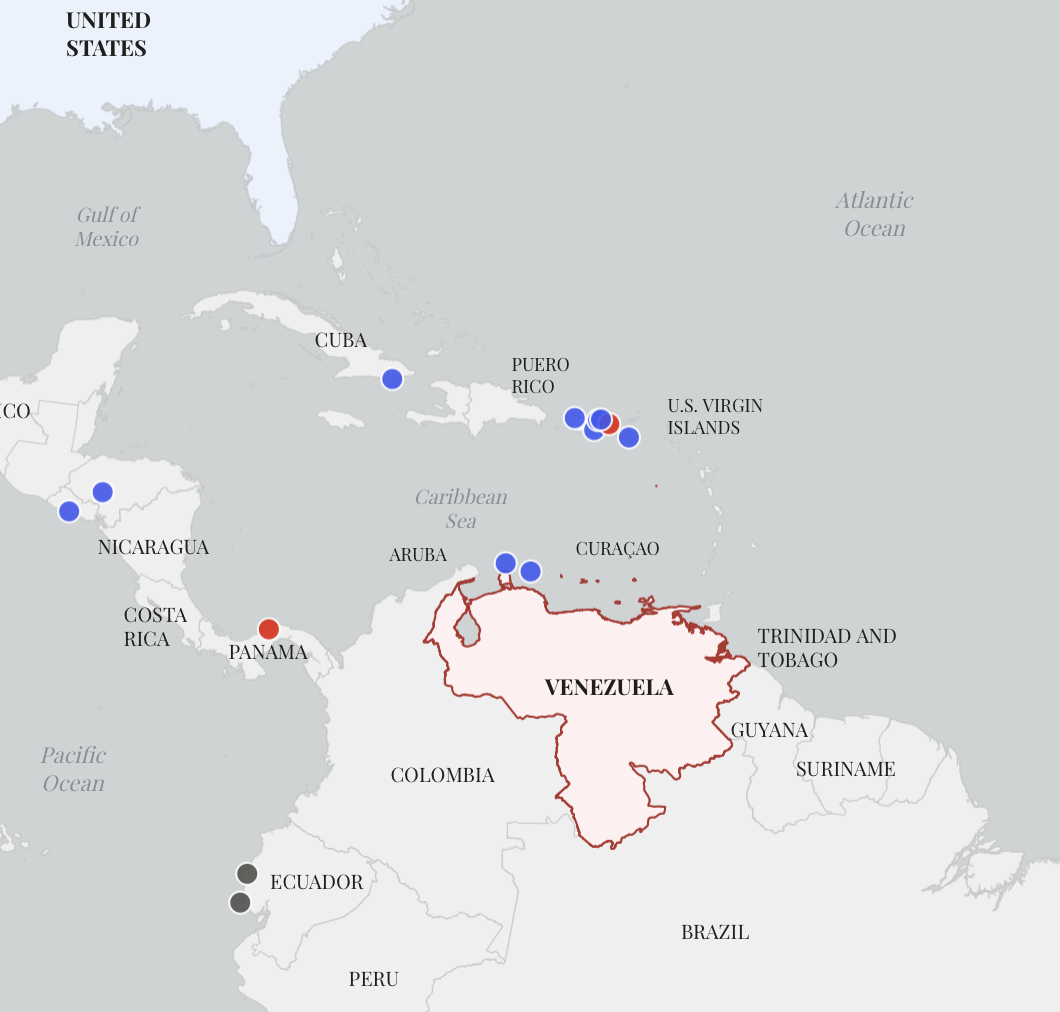


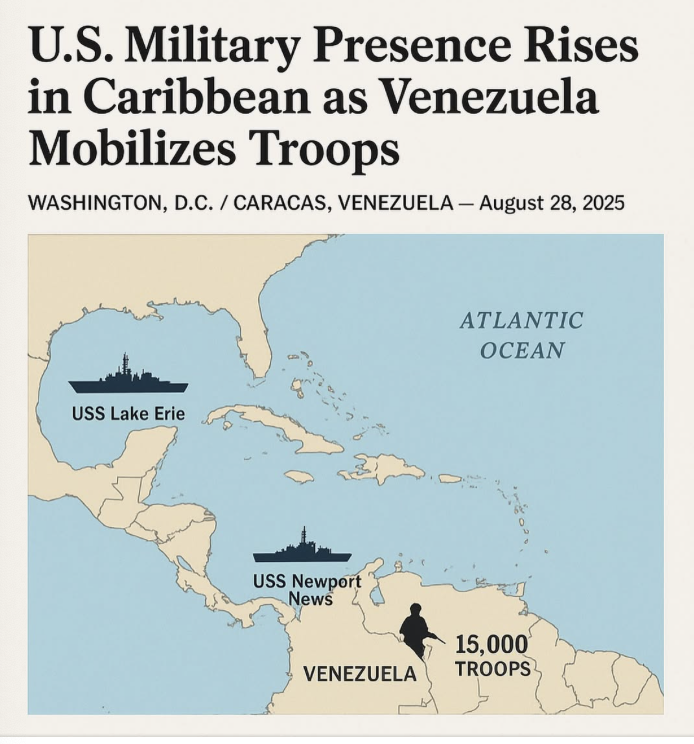

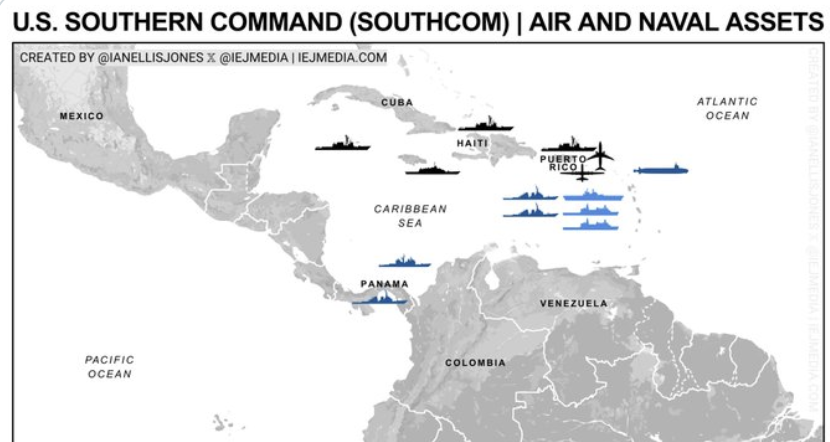





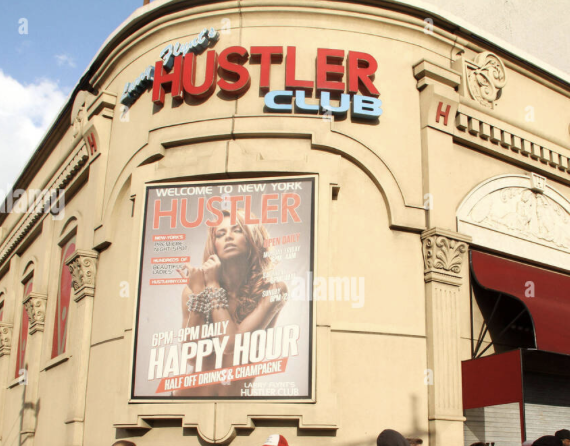
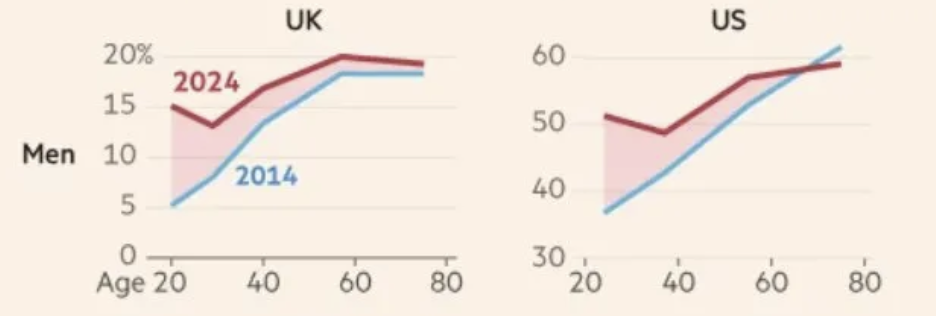

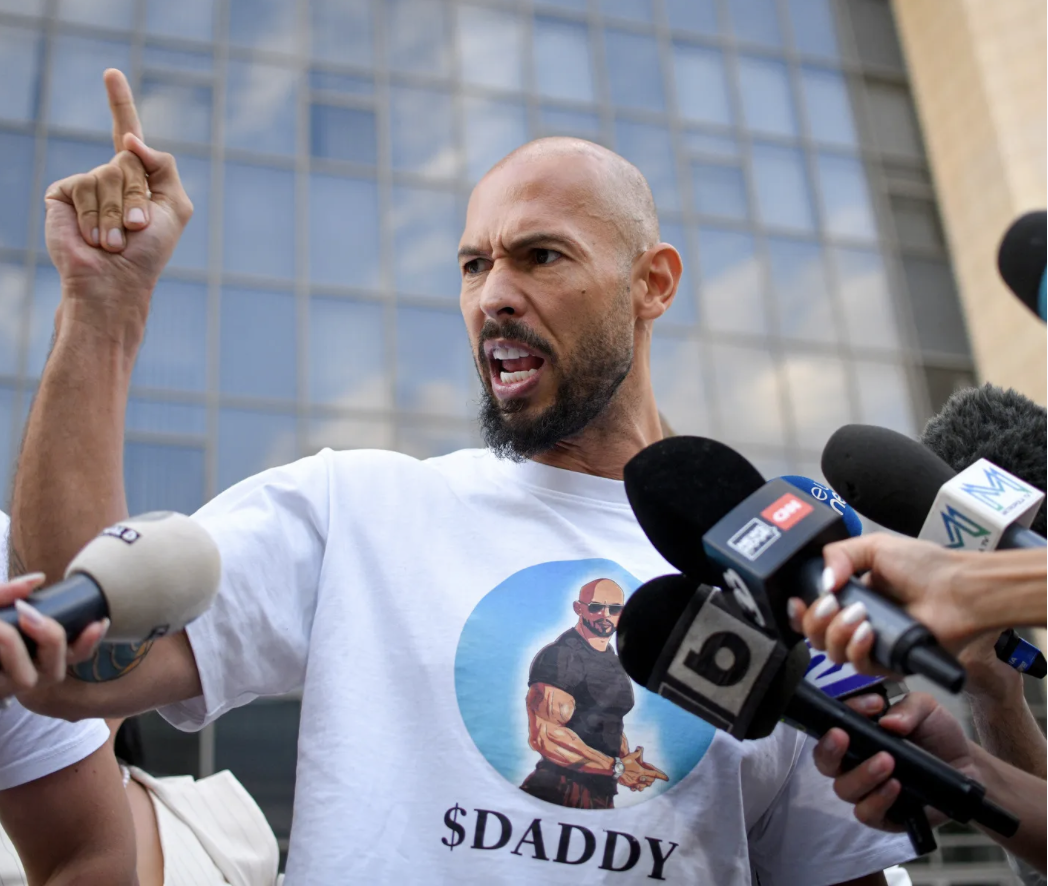


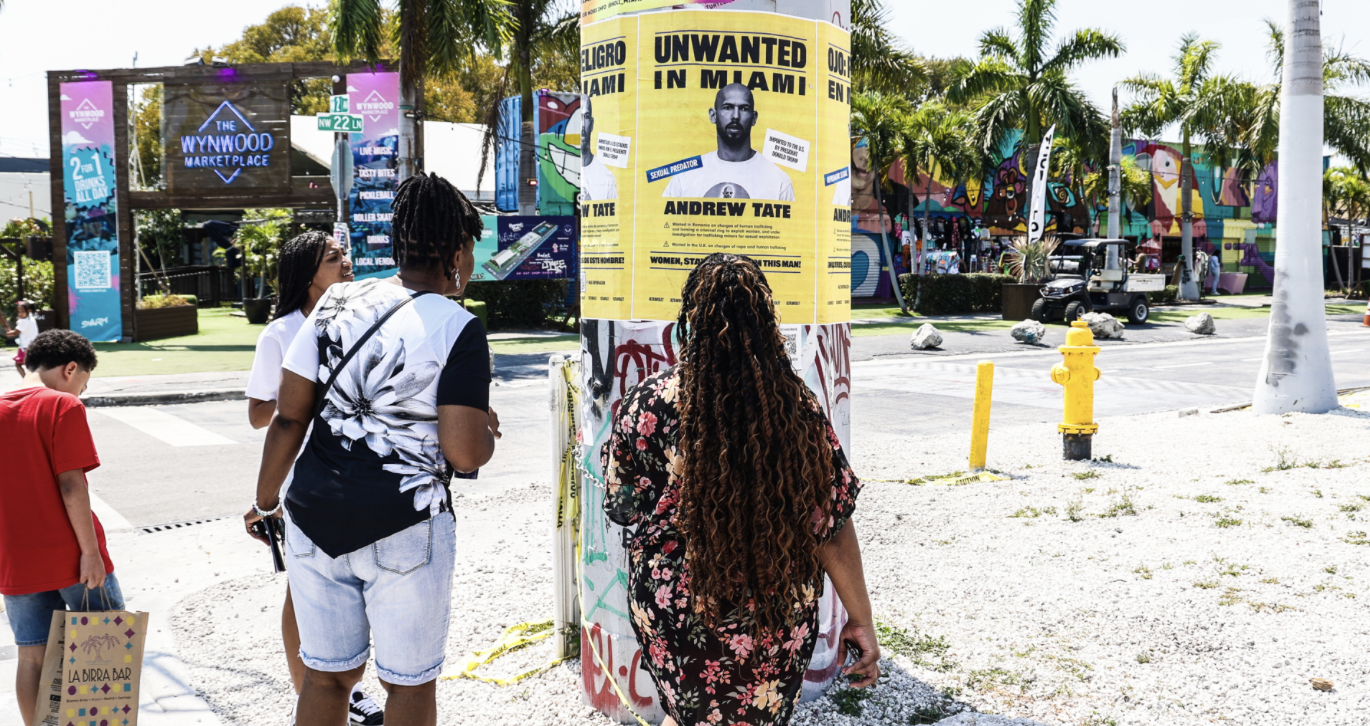

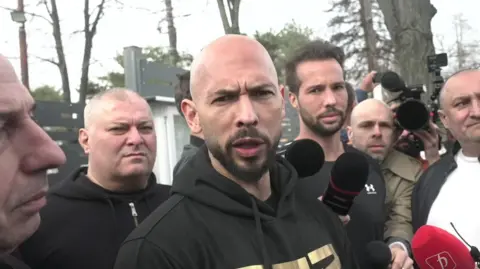
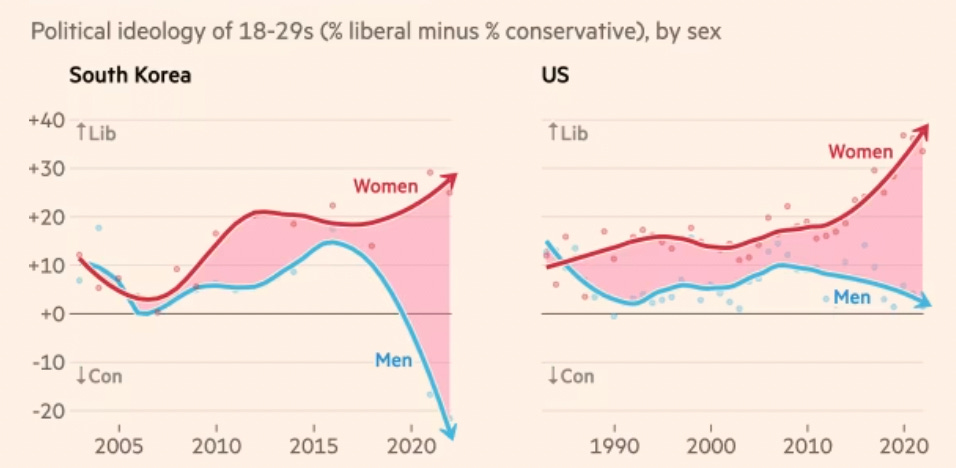
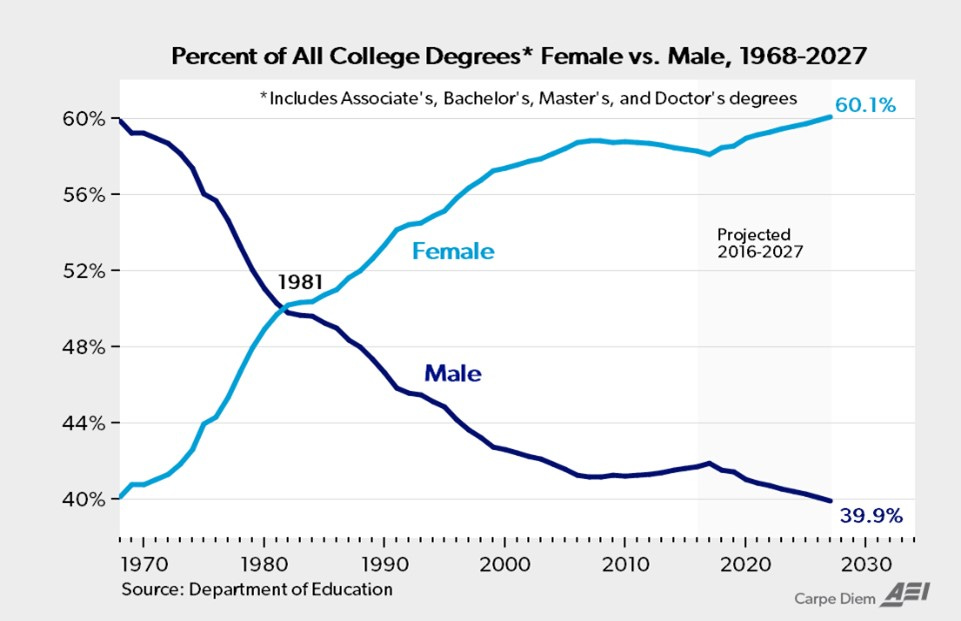


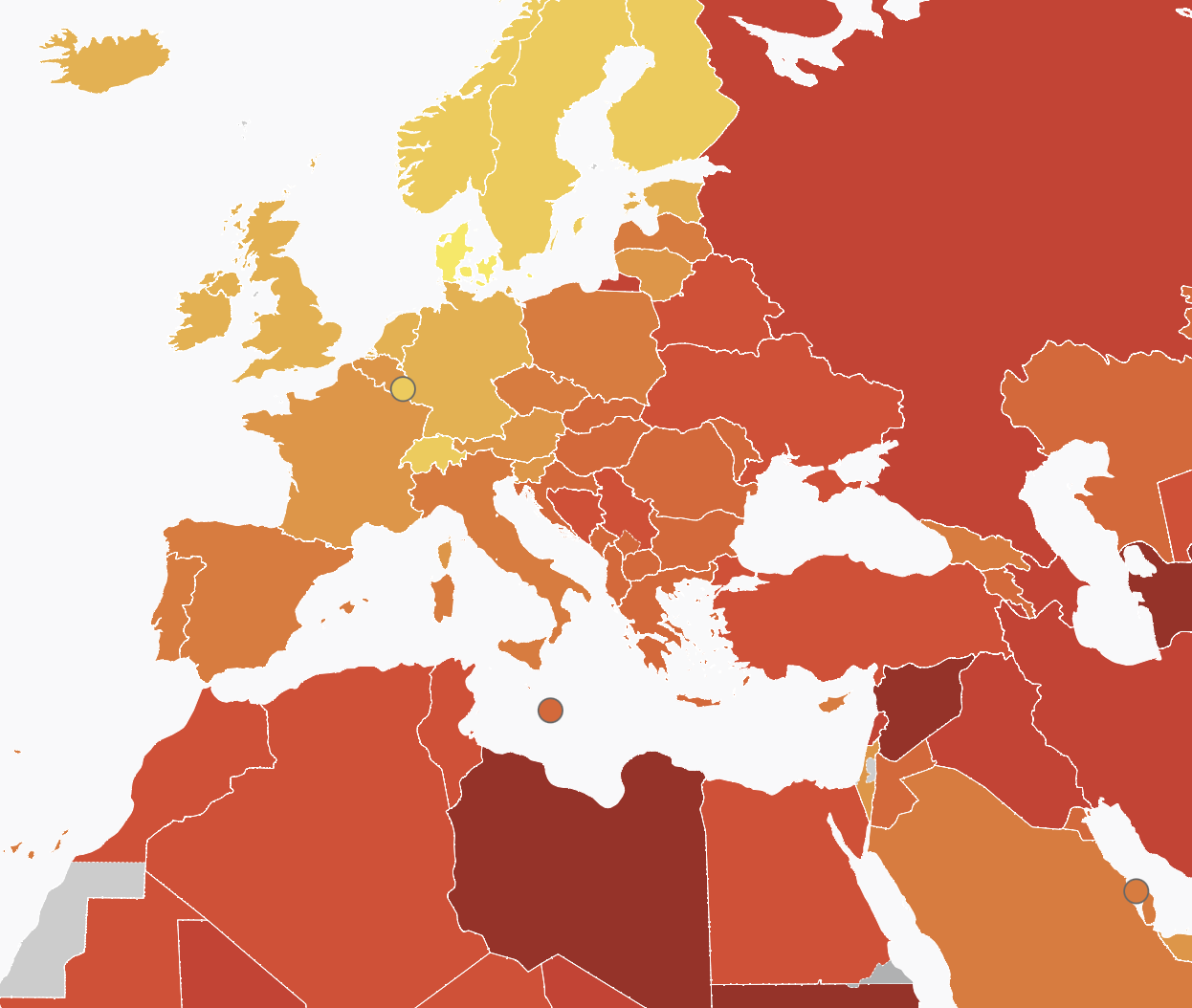
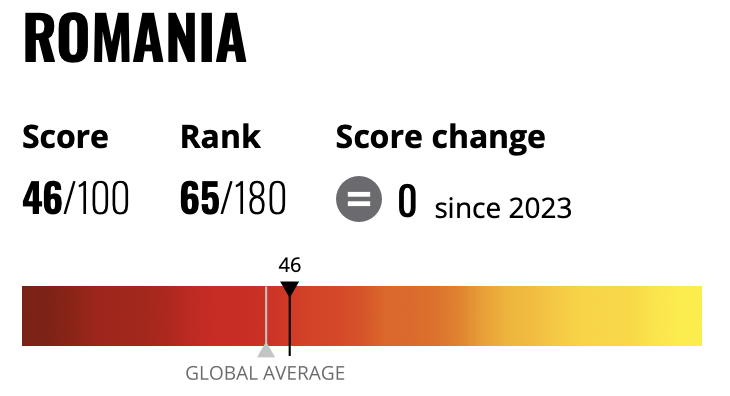



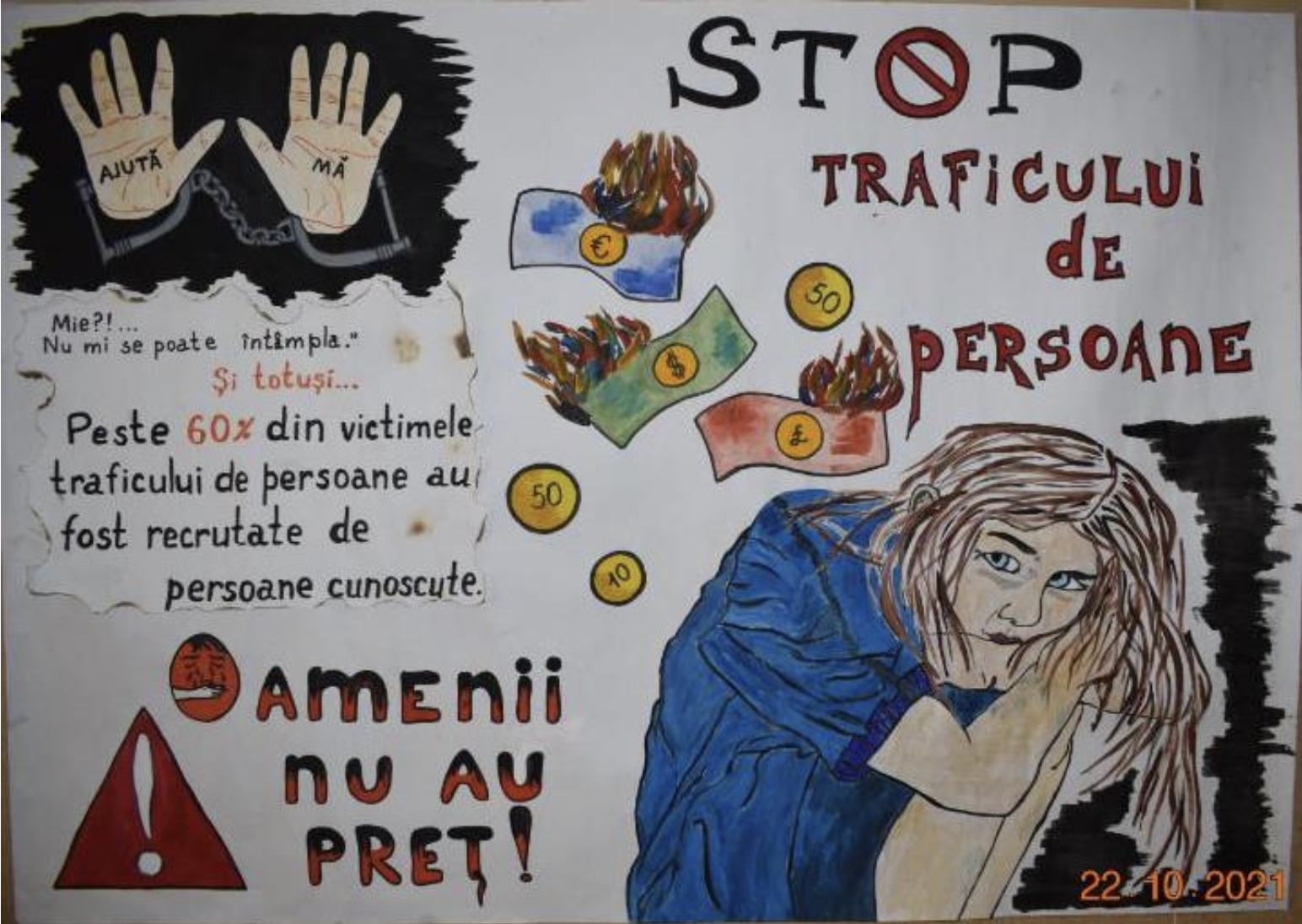


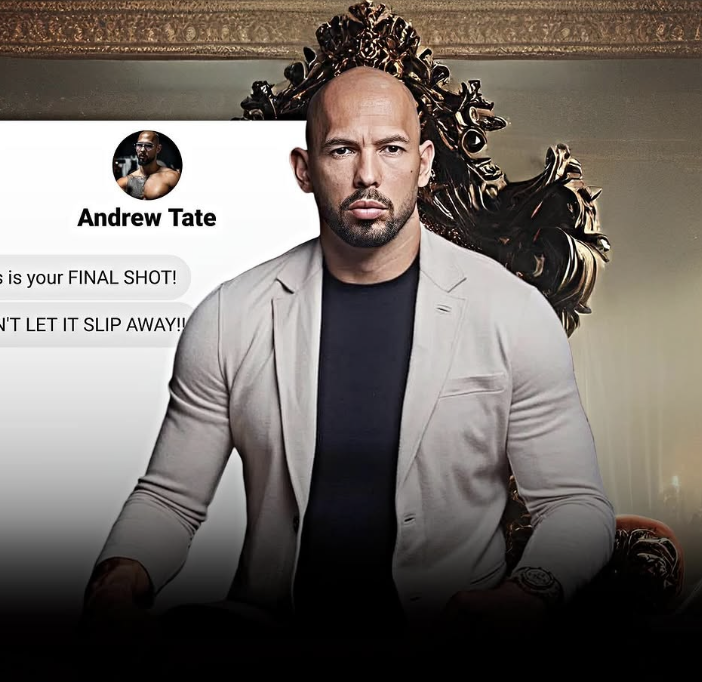


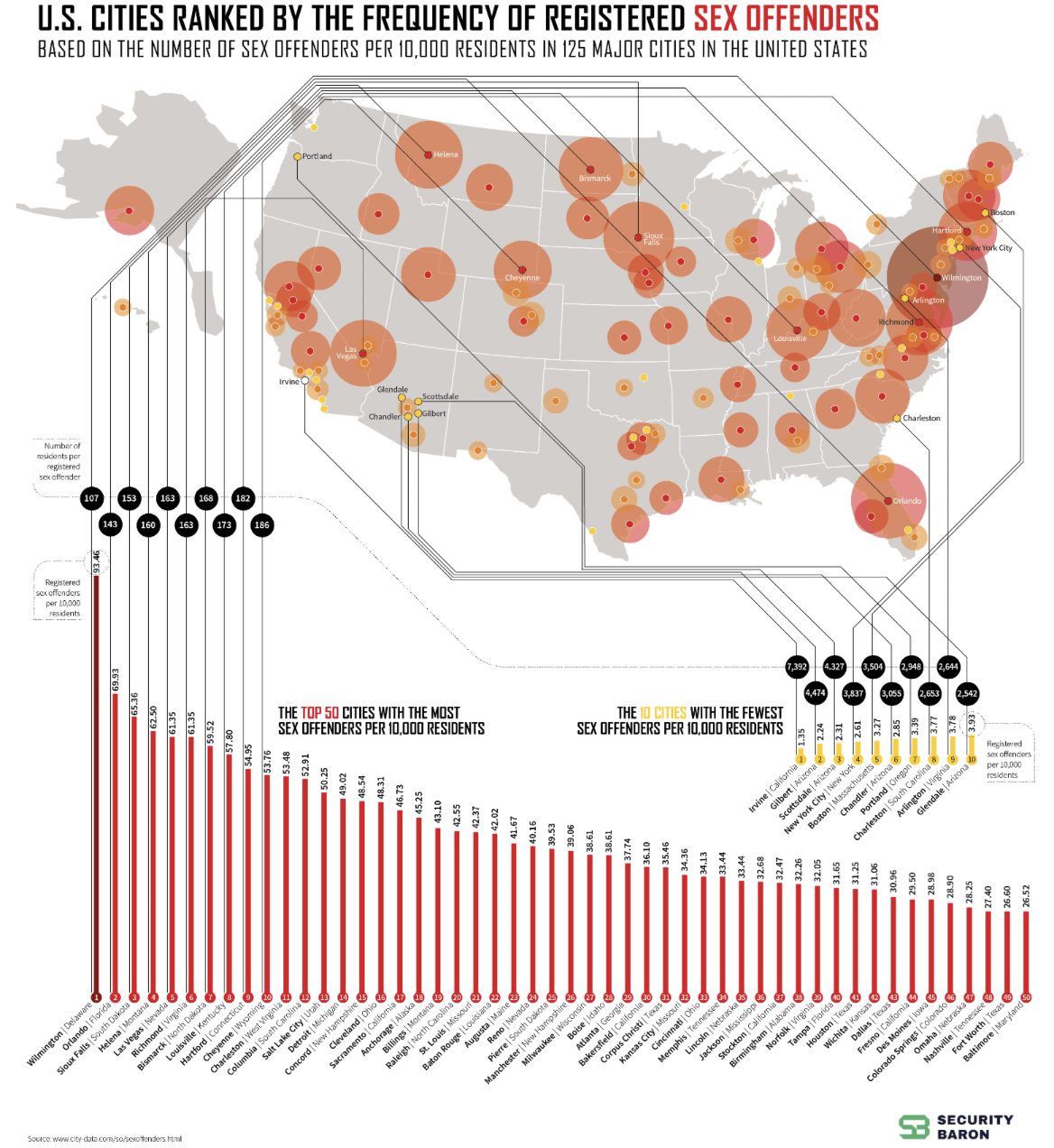


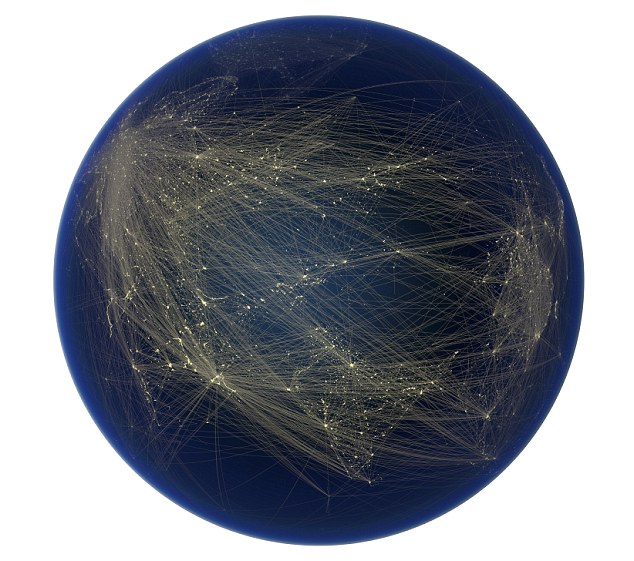



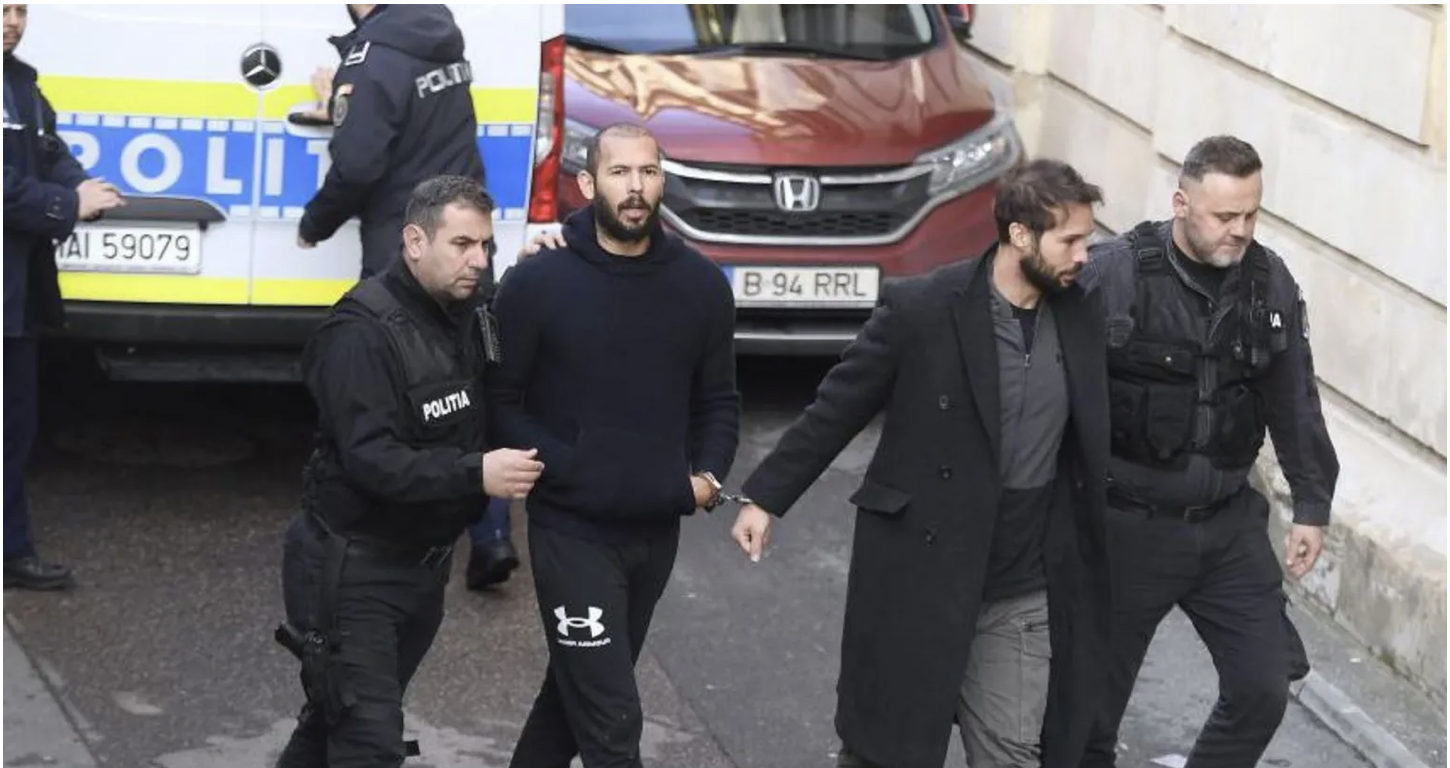
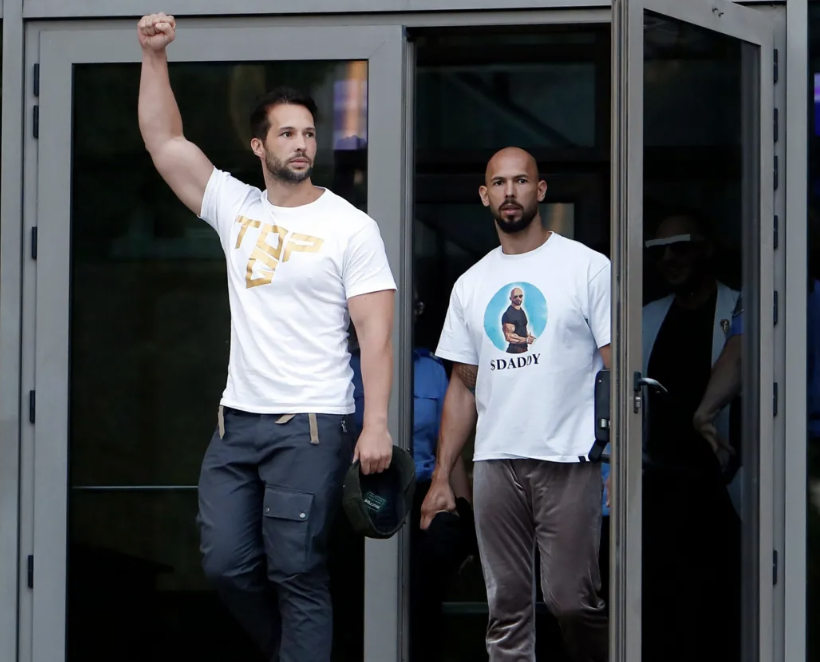
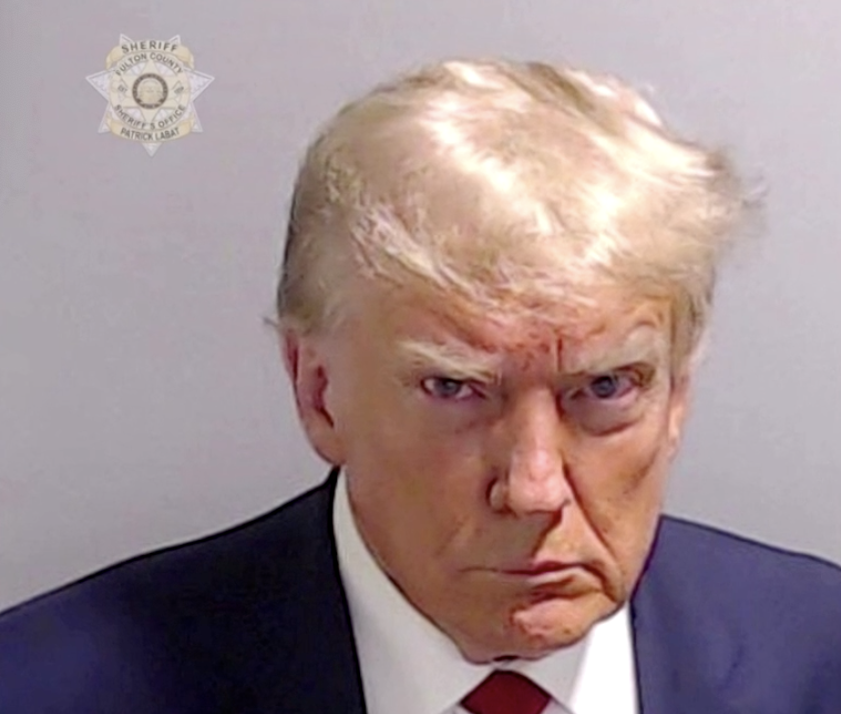





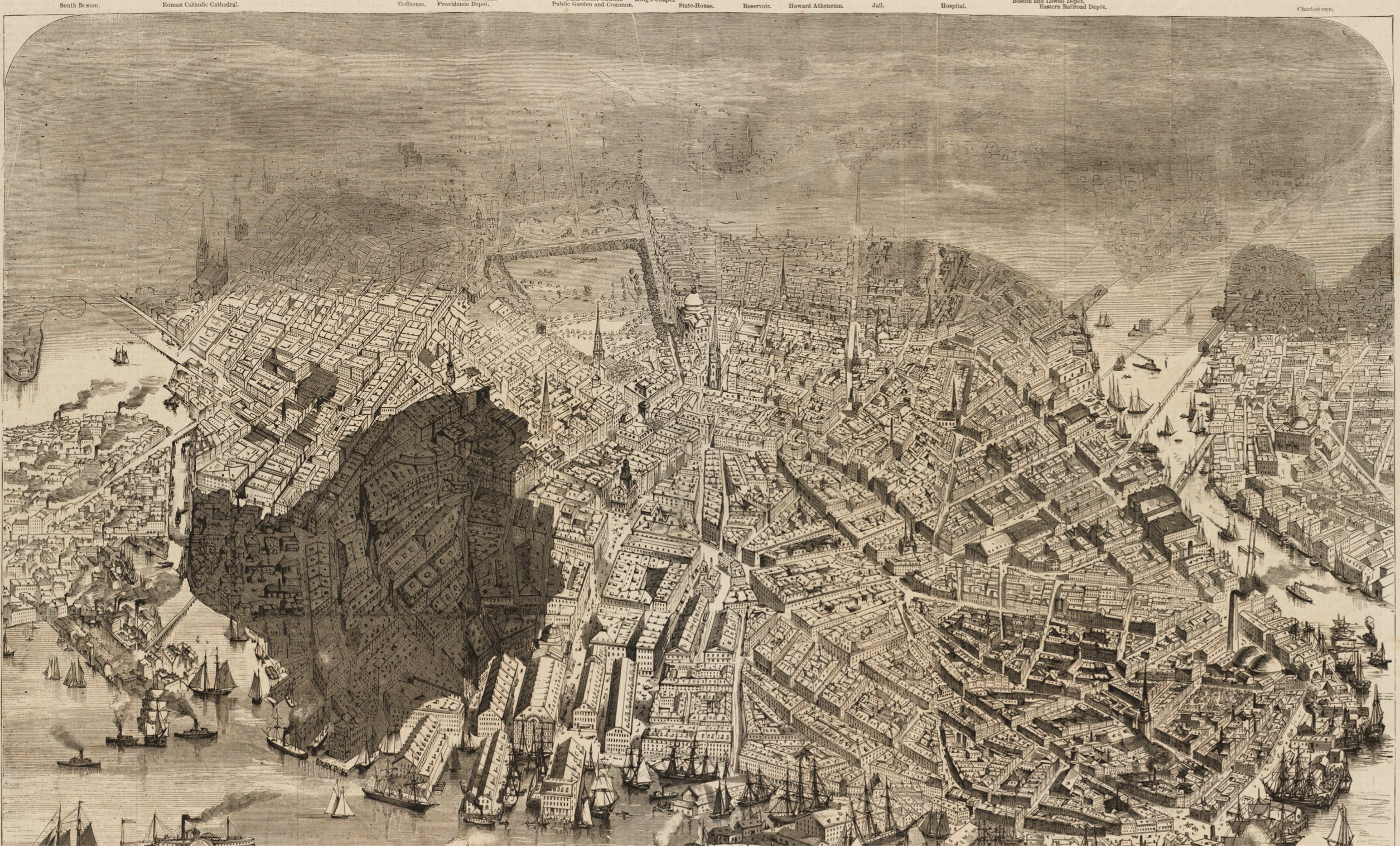

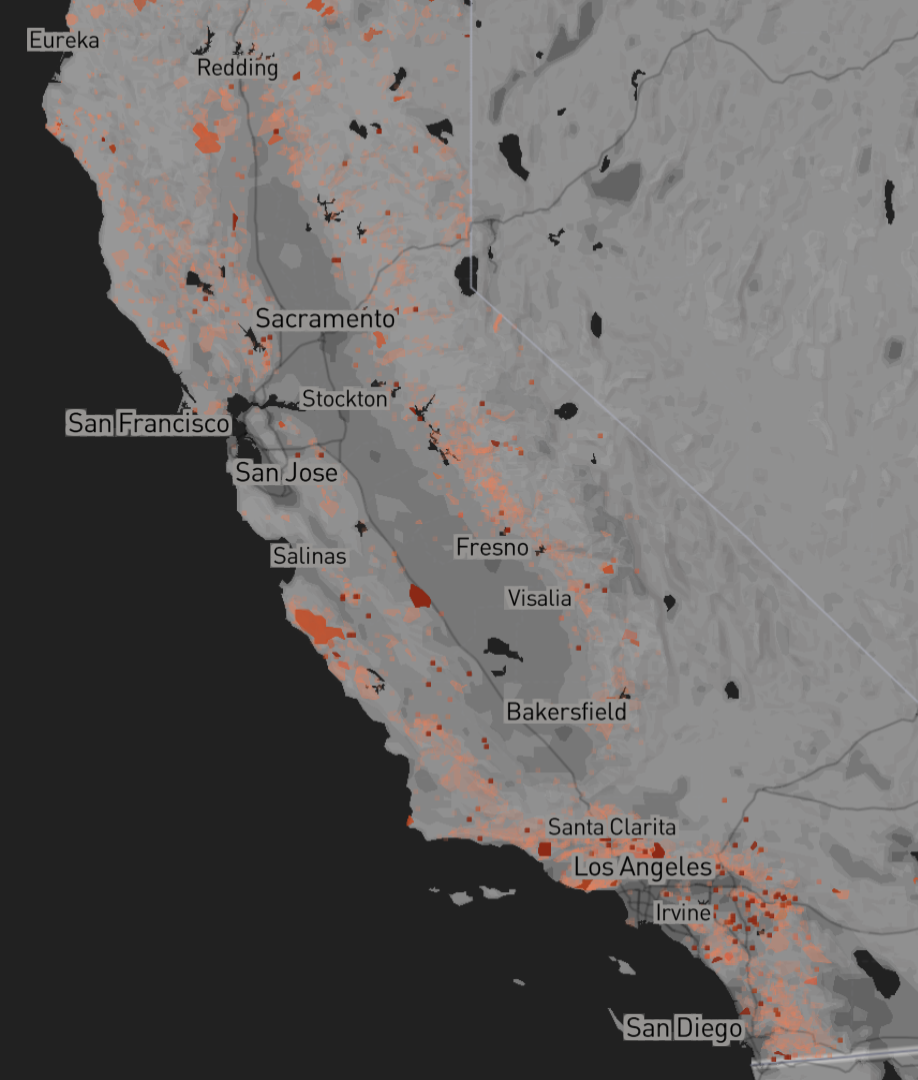
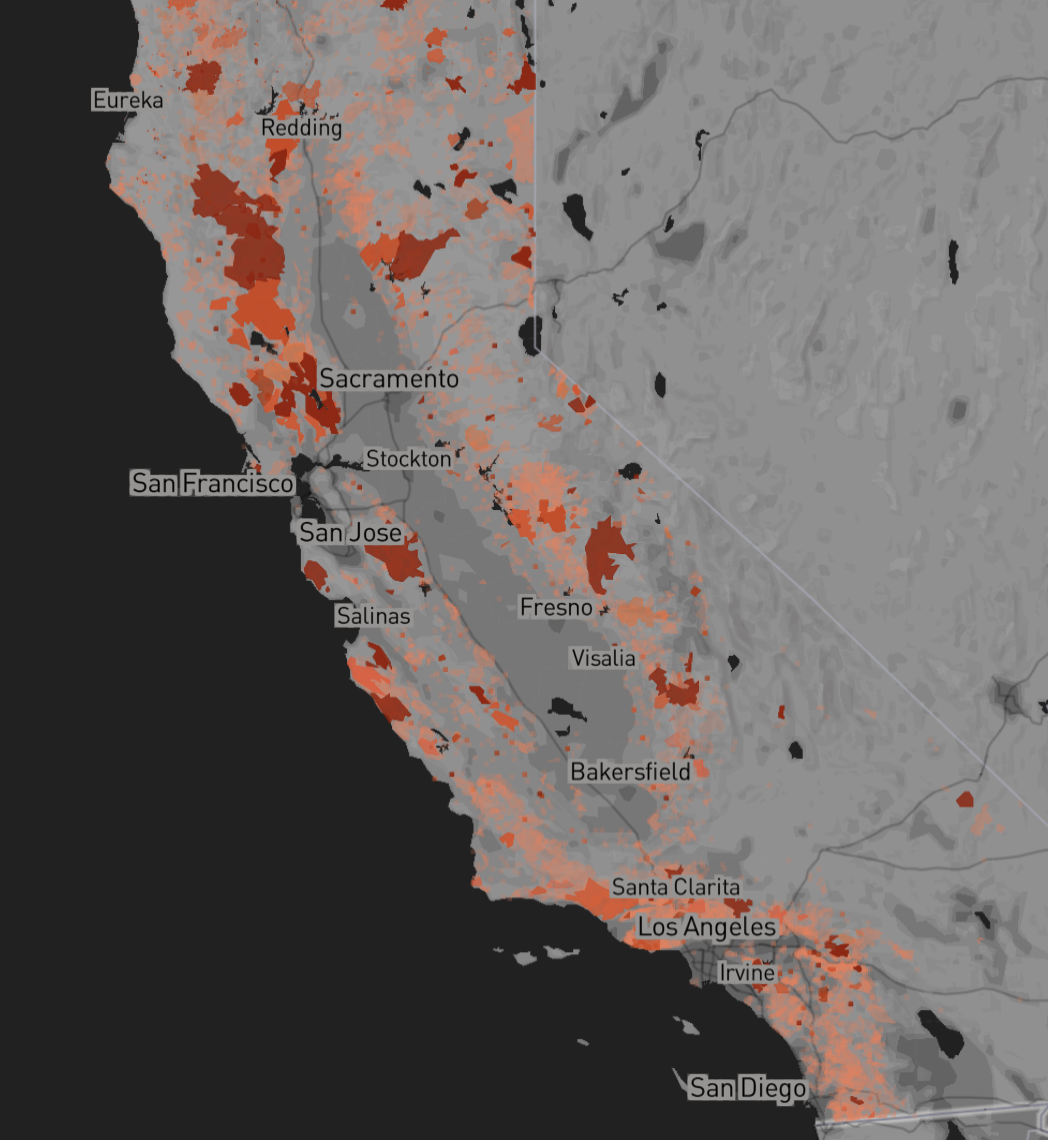
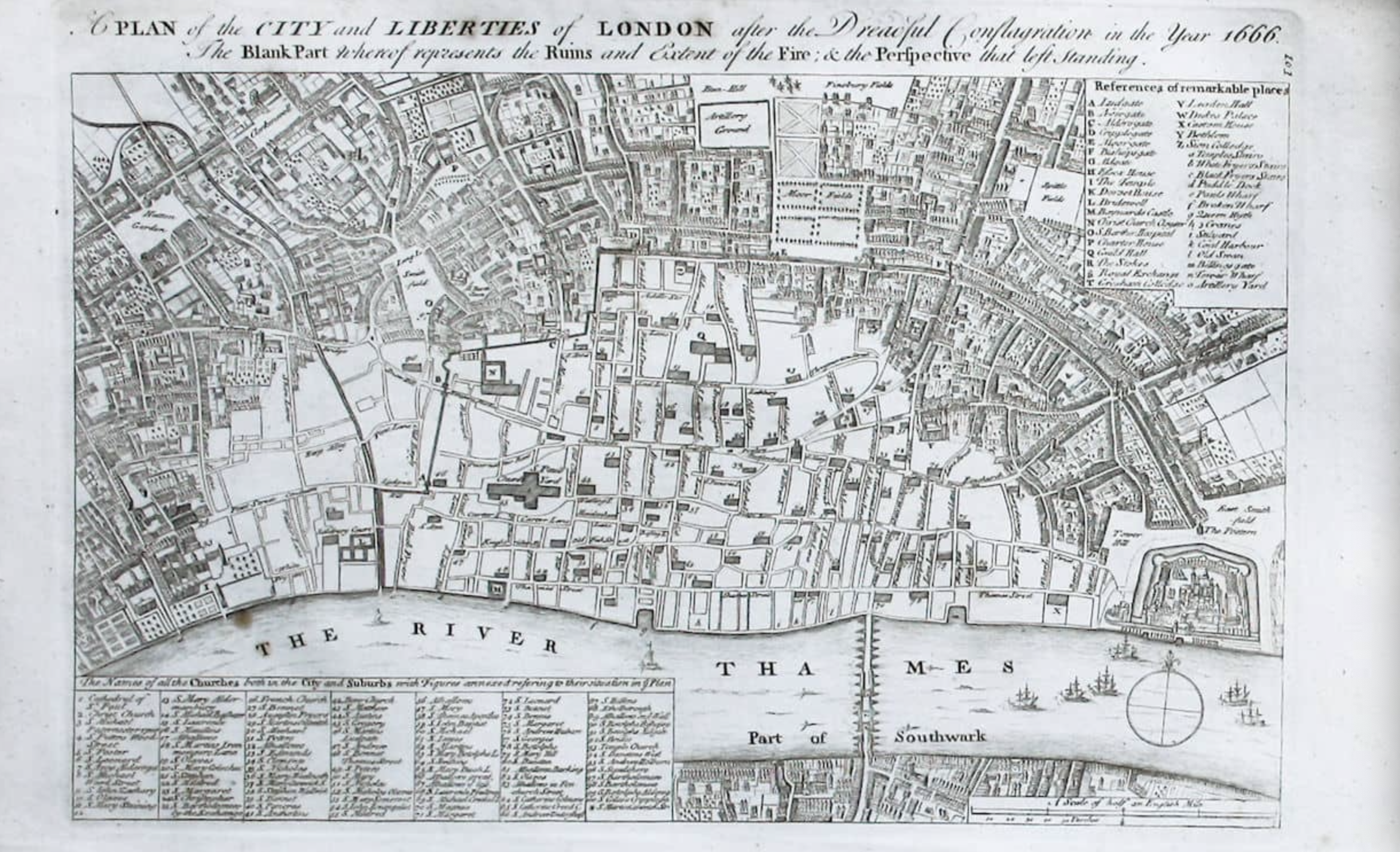











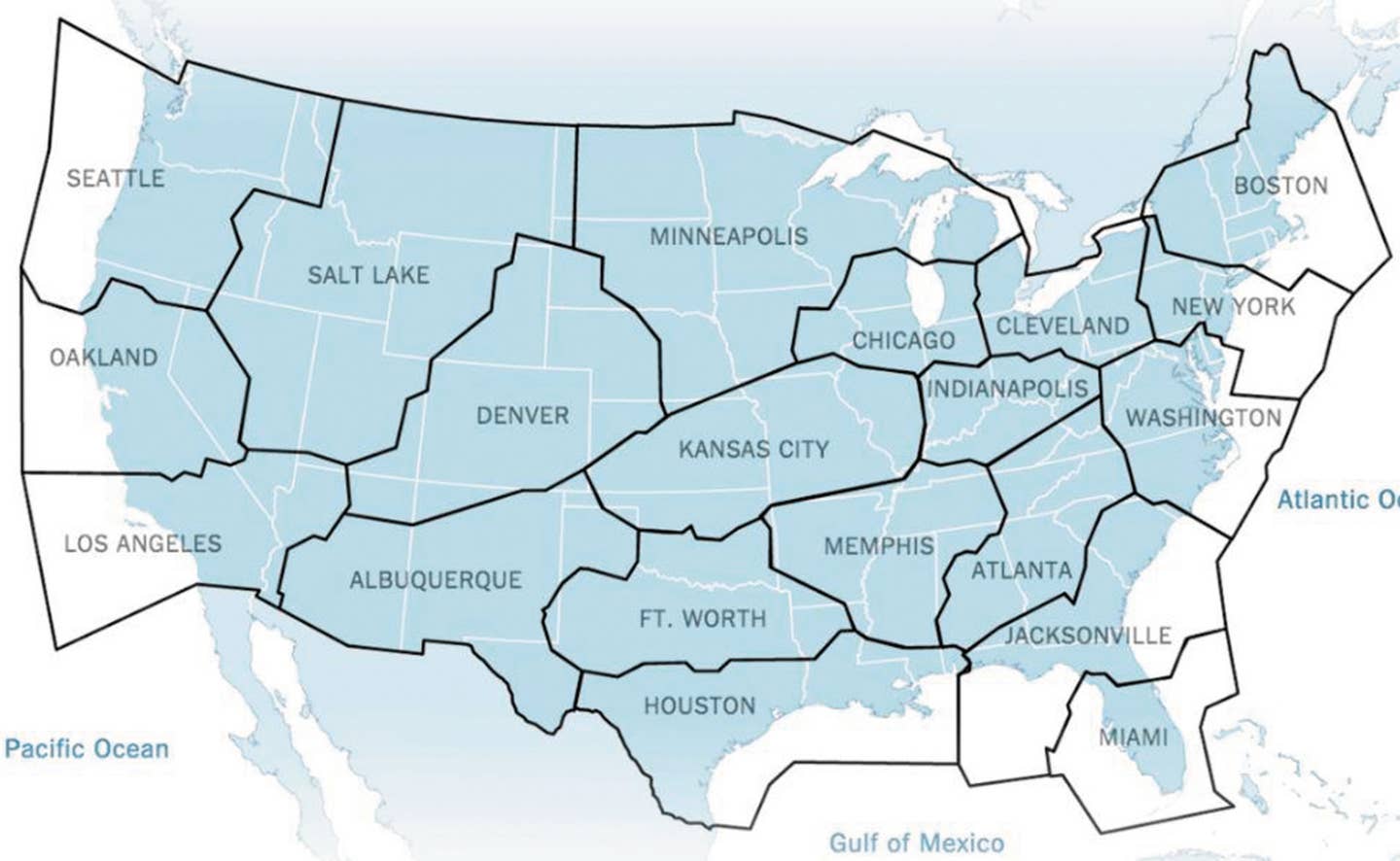

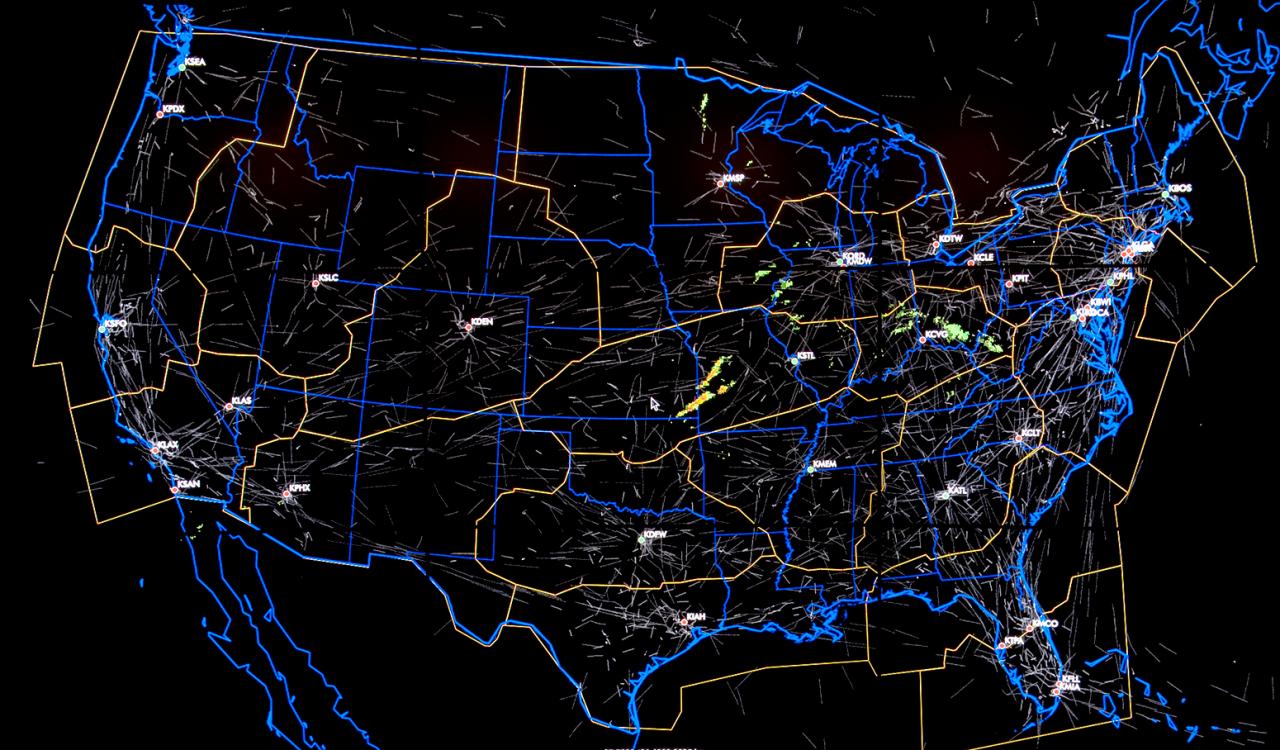
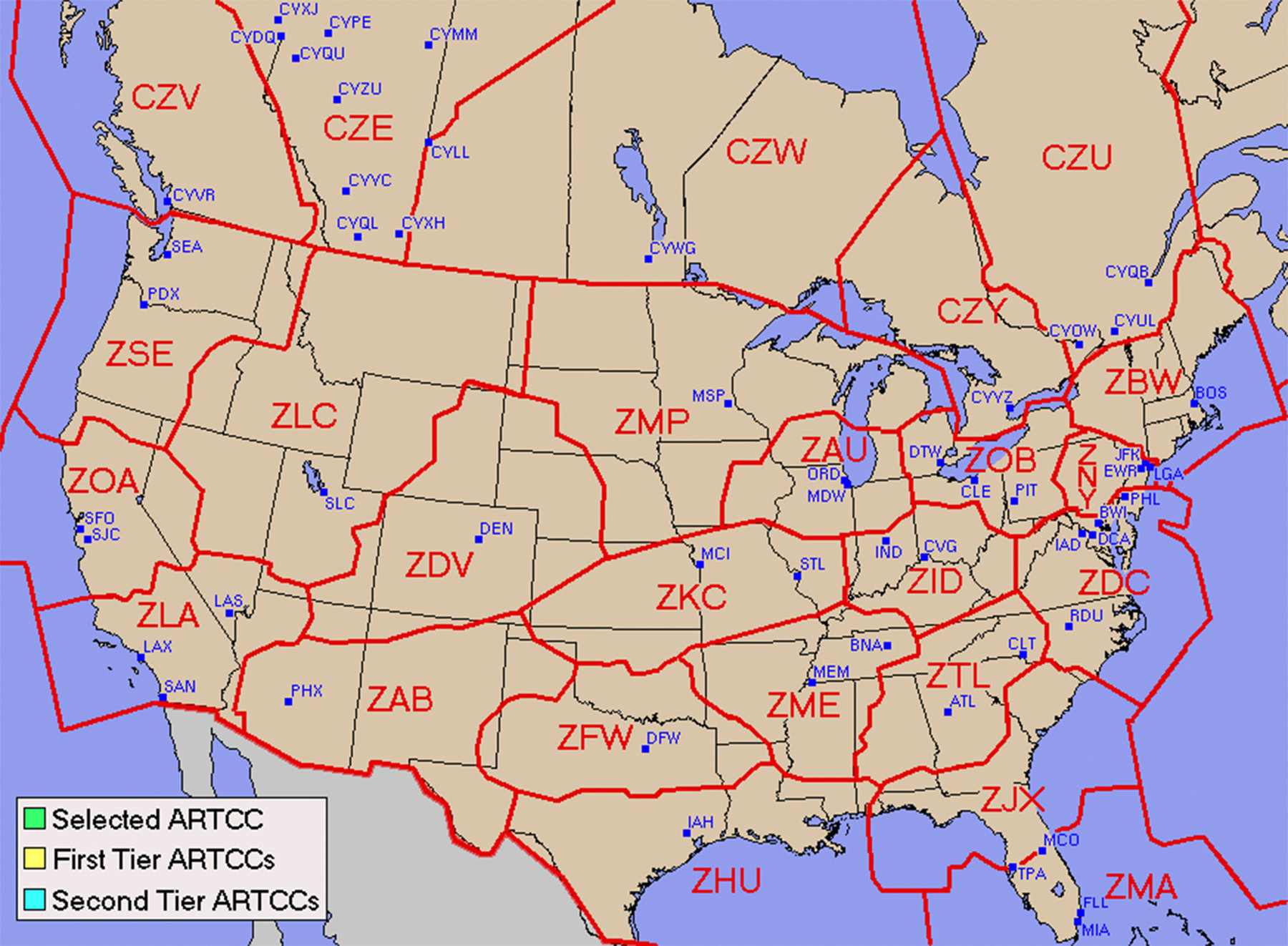

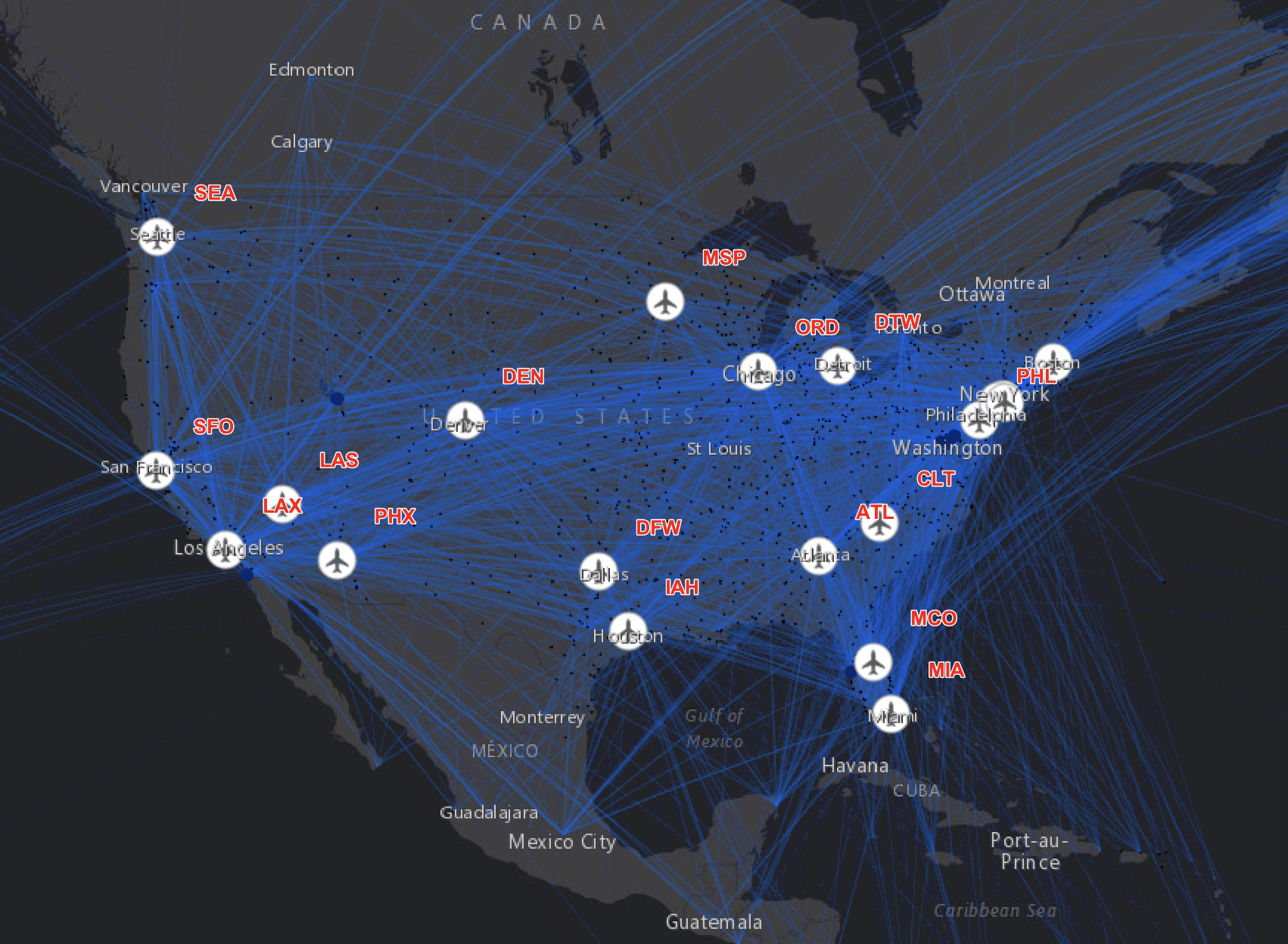
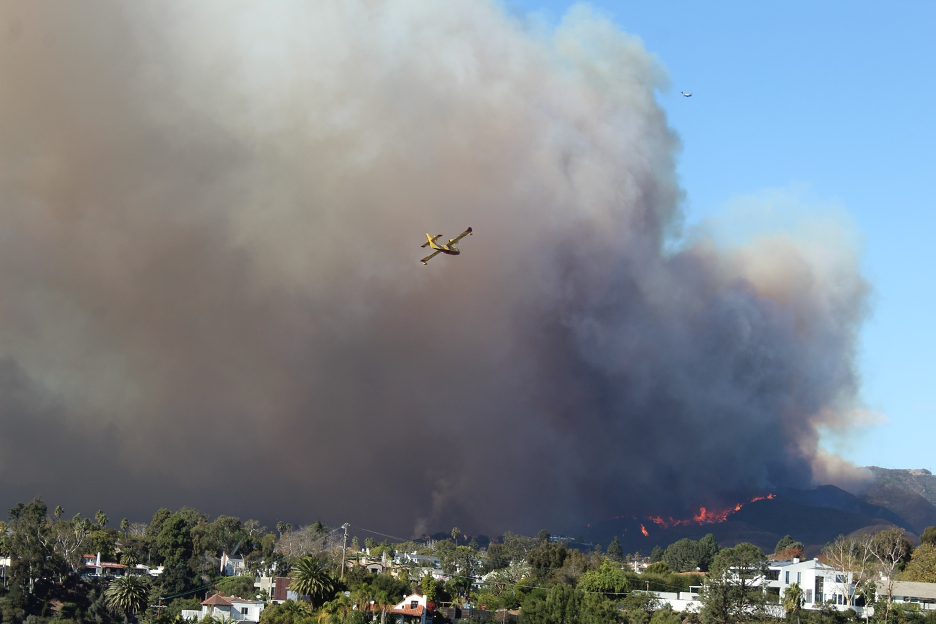

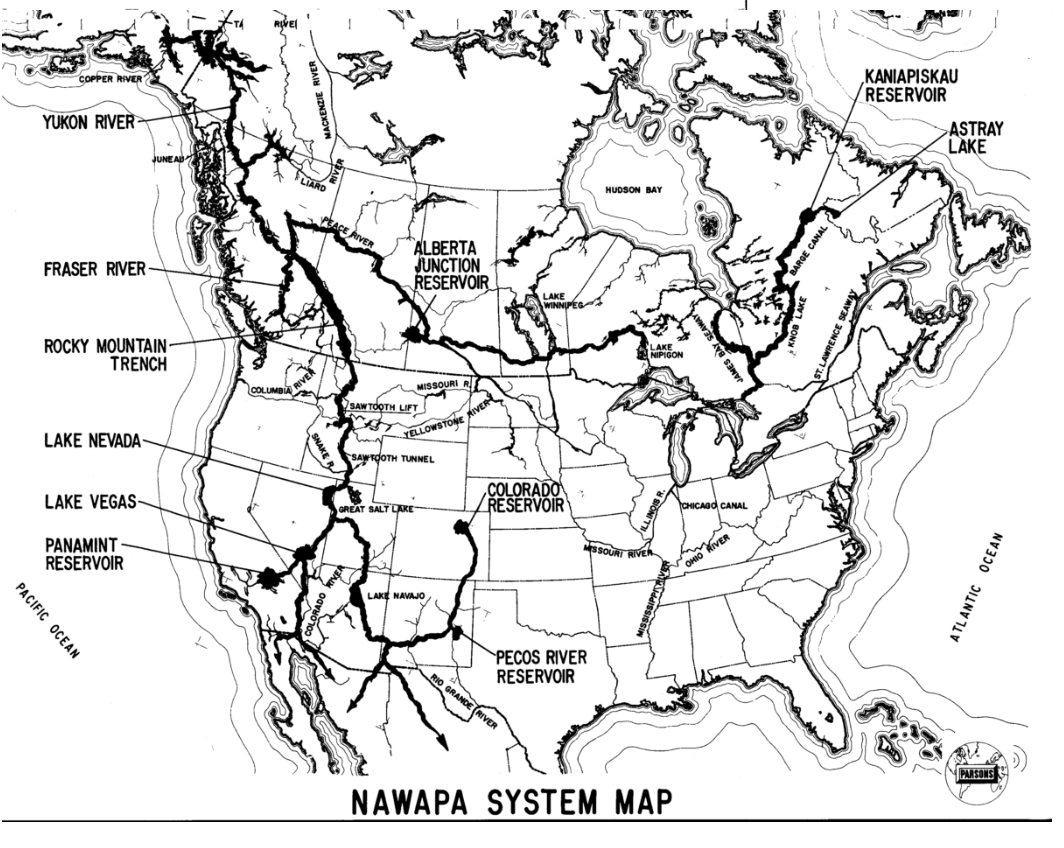








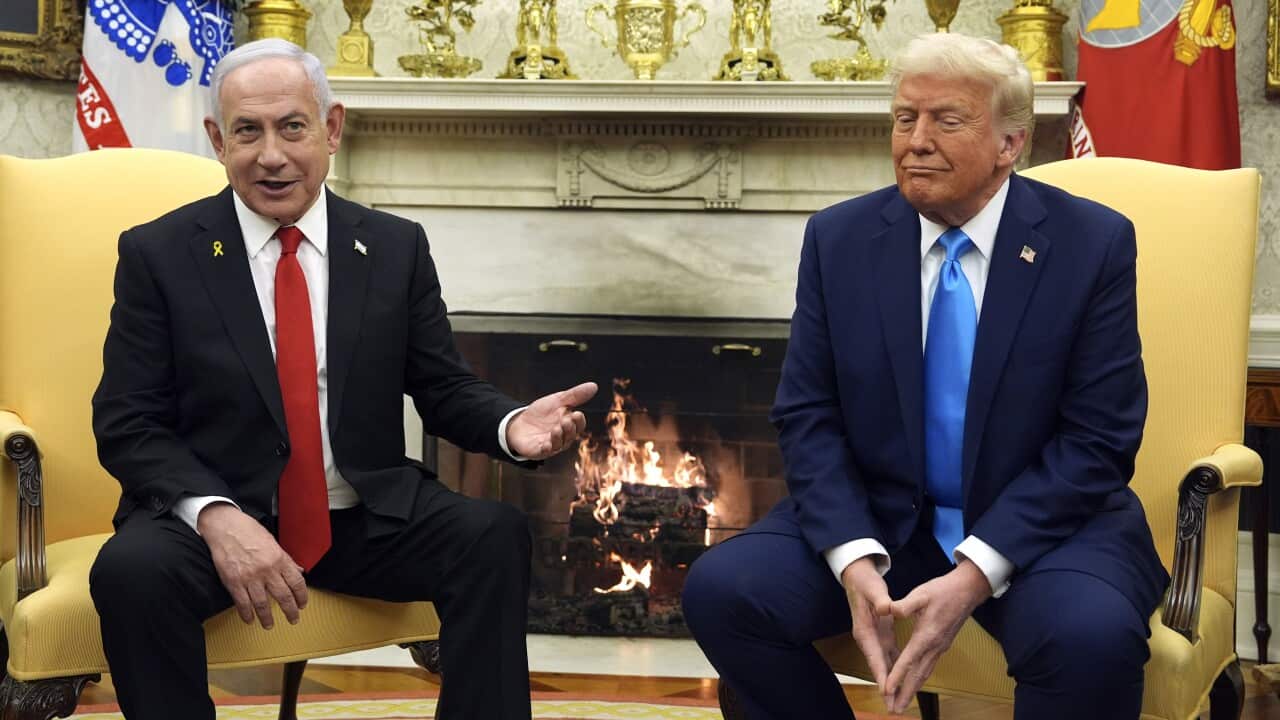


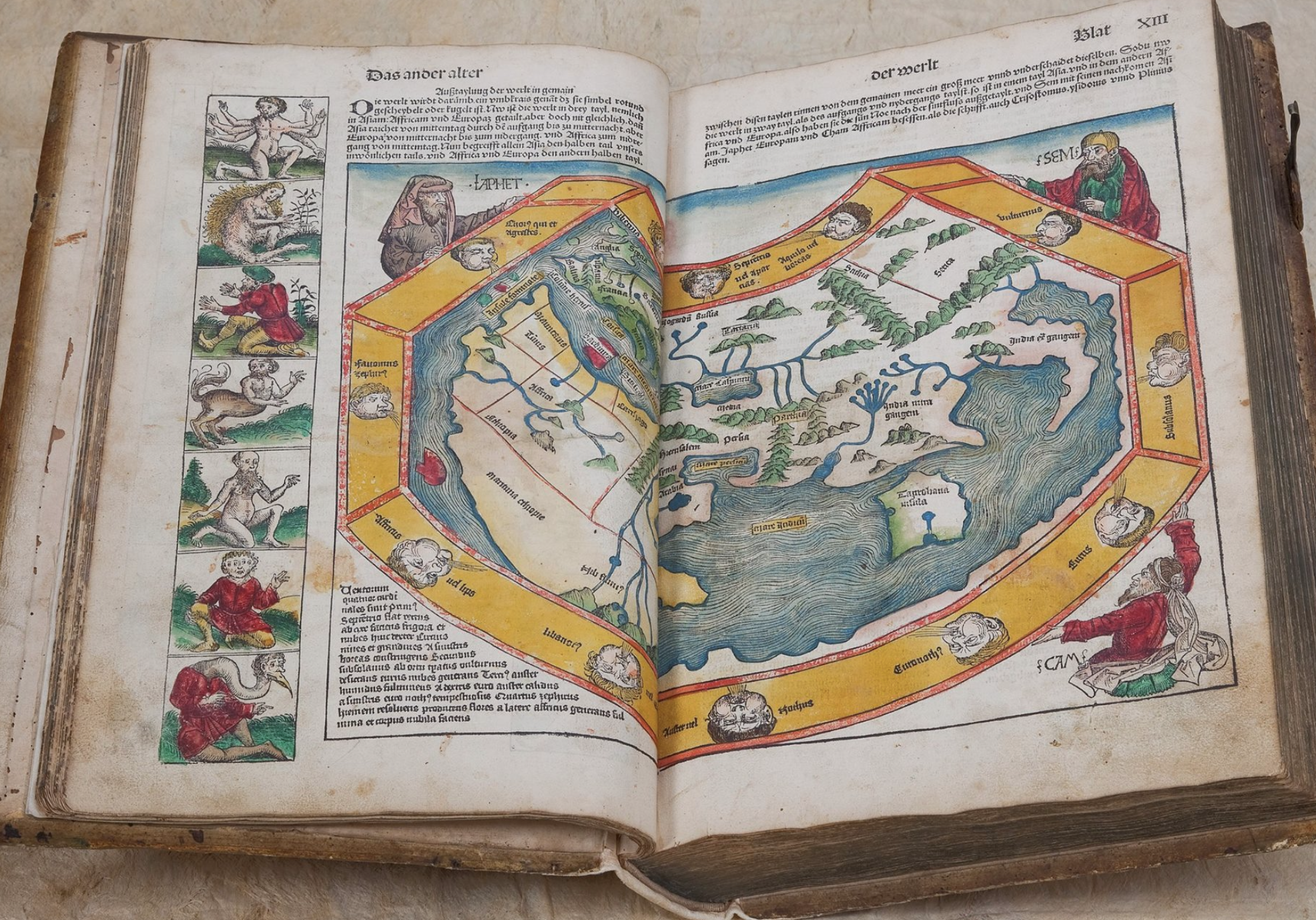


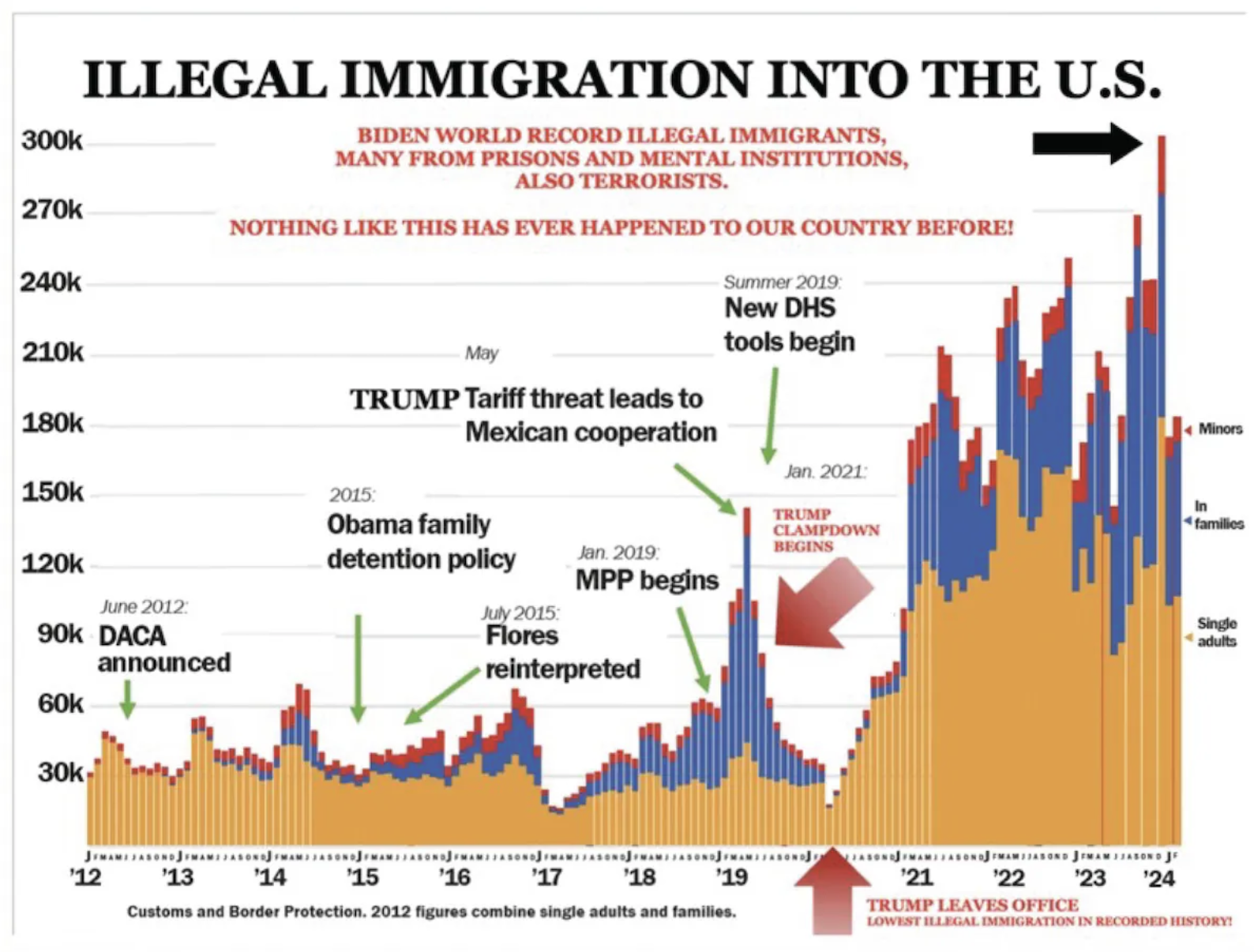
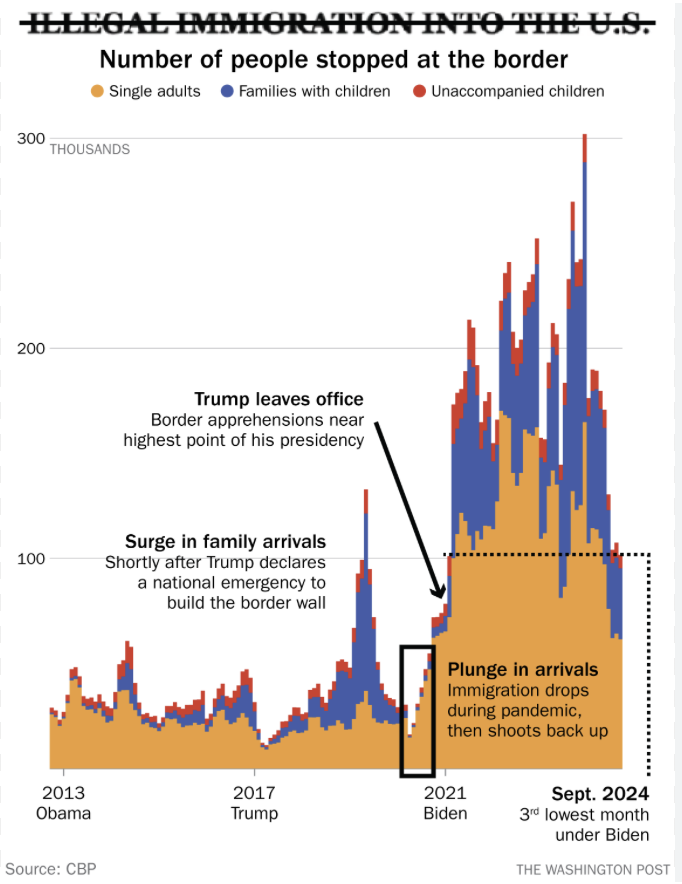
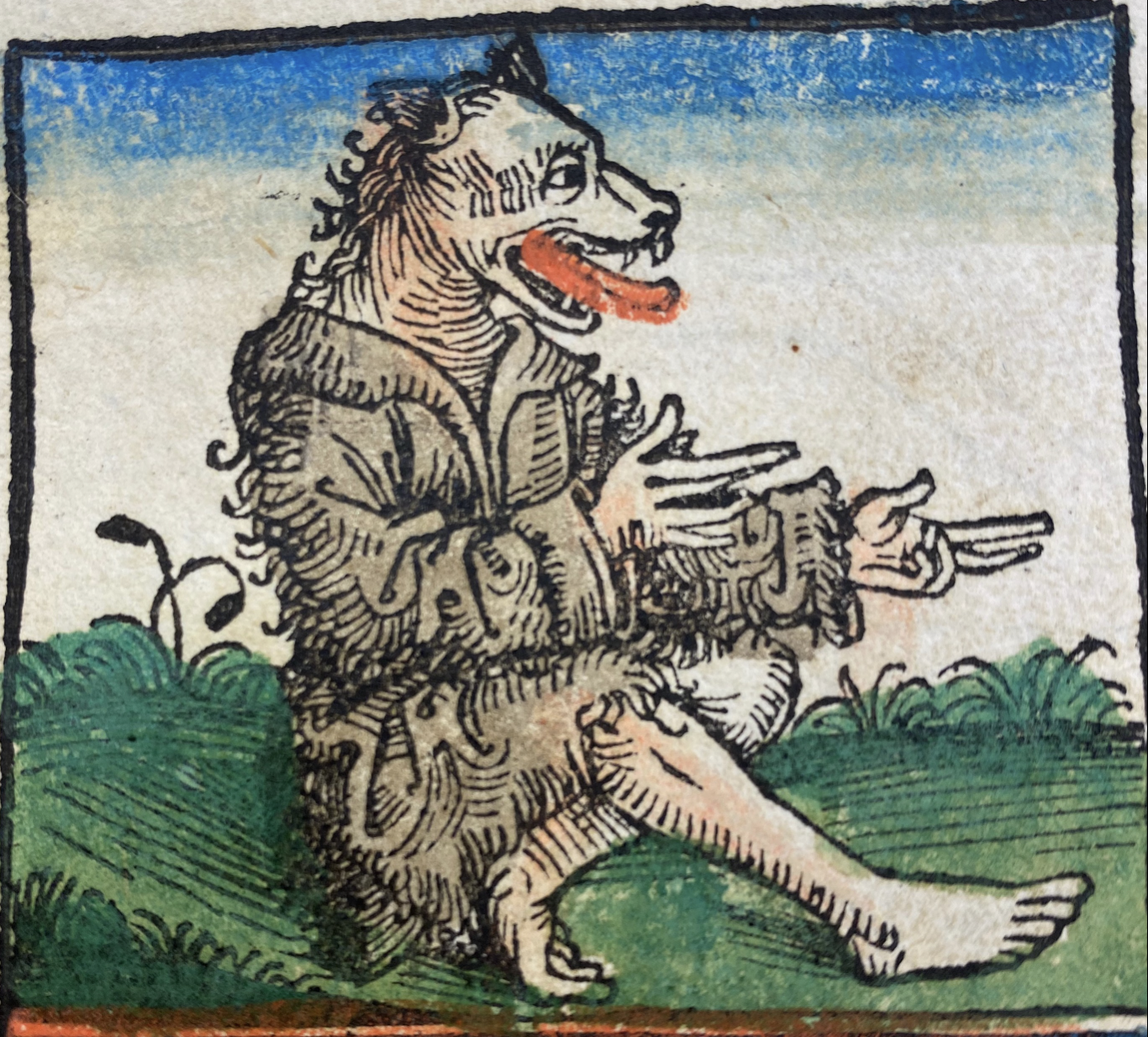


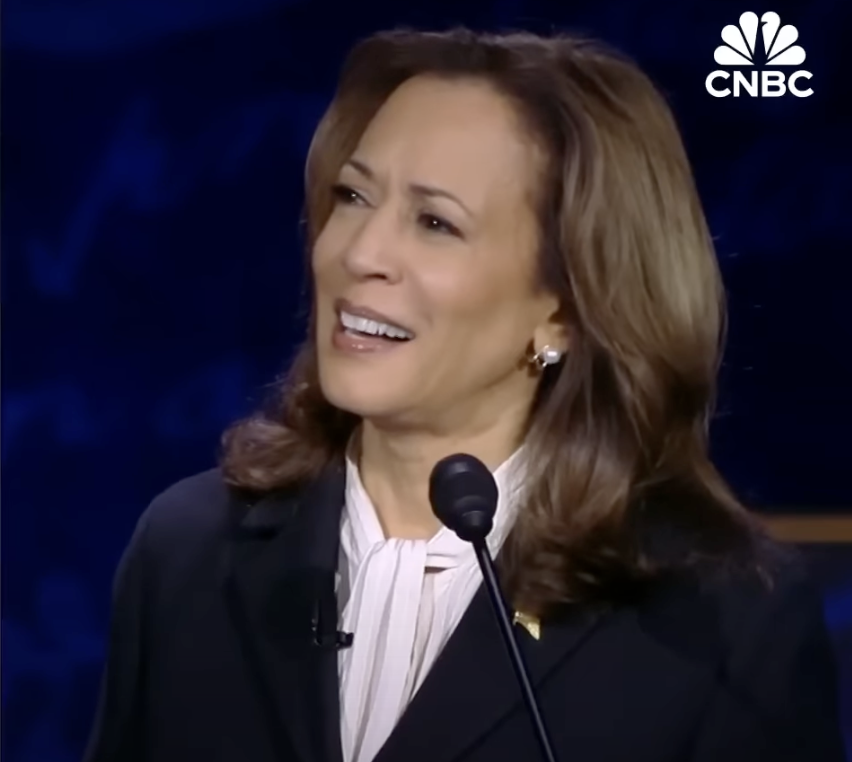
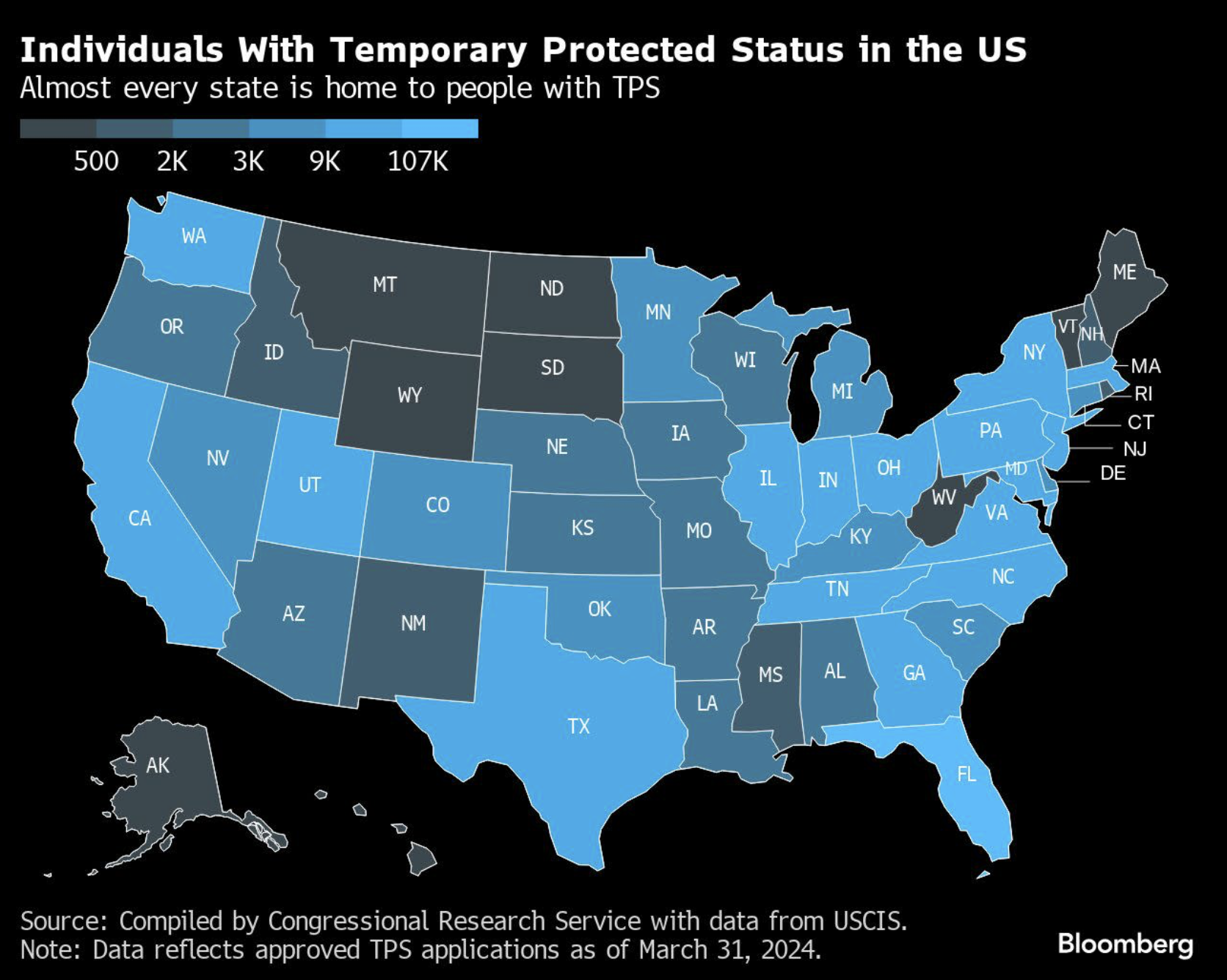




 Musings on Maps