The Less Visible Paths of Economic Giving

At the same time as Pope Francis elegantly entreats all to view the world less through the distortions of economic markets–and without forgetting those who are all too often overlooked–we rightly grapple with ways of imagining global inequalities, working to view the world less in terms of economic markets of commercial exchange or banking centers.  For Francis asks us to find a way to map the debt the producers of greenhouse gases owe to developing countries, lest their weight fall on poorer countries, rather than industrialized countries bearing their cost, and as well as a way of correcting the usurious rates of lending money, by guarding against those “oppressive lending systems . . . which generate further poverty.”  The United Nations served as the  setting to stage a dramatically and radically revised ” Urbi et orbi” address by the first transatlantic pontiff, and one deeply conscious of that status.  Francis enjoined us to imagine a common good–chastened by the harms of seeing social needs only in terms of economics.  The moral injunction to consider the deepening economic imbalances of national debt recalls the difficulties of picturing a more equal and more ethical distribution of space, taking stock of the globalized world outside dominant patterns of economic exchange.

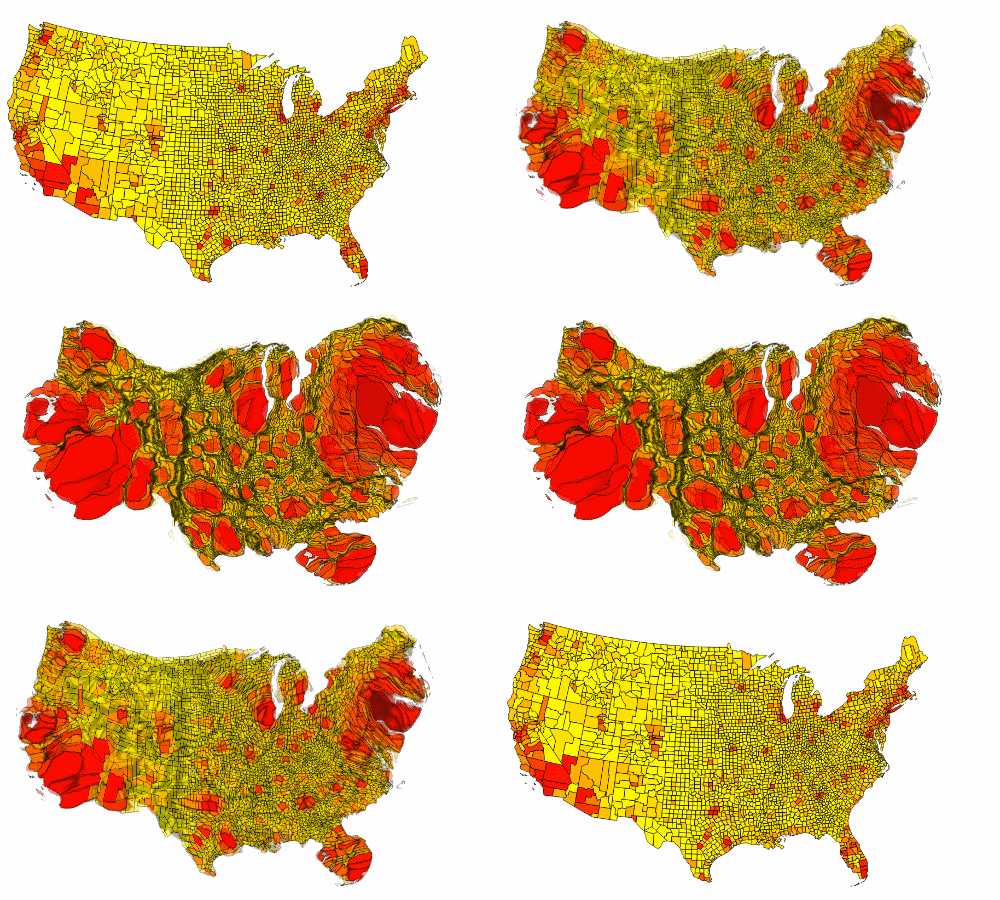
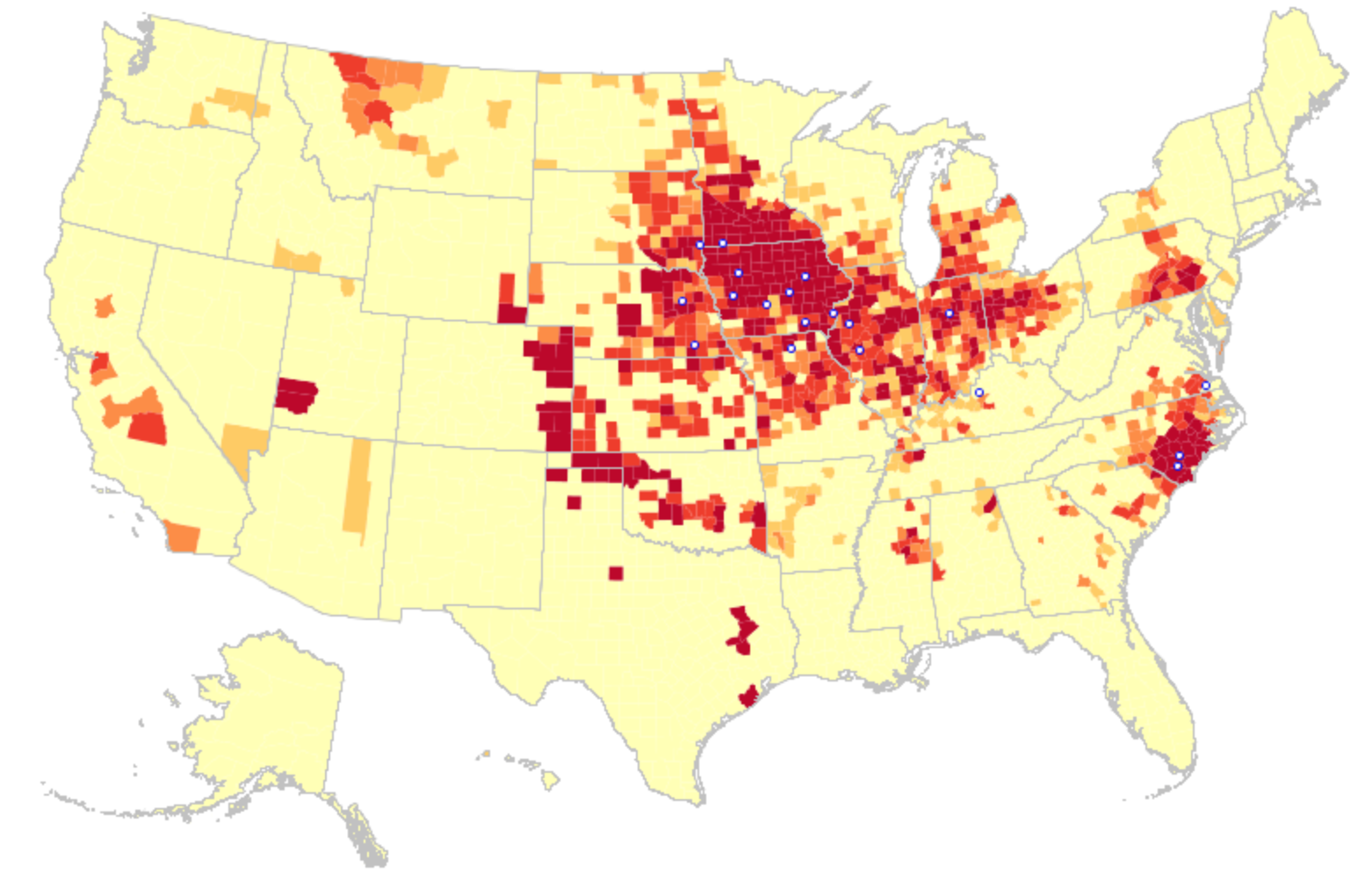
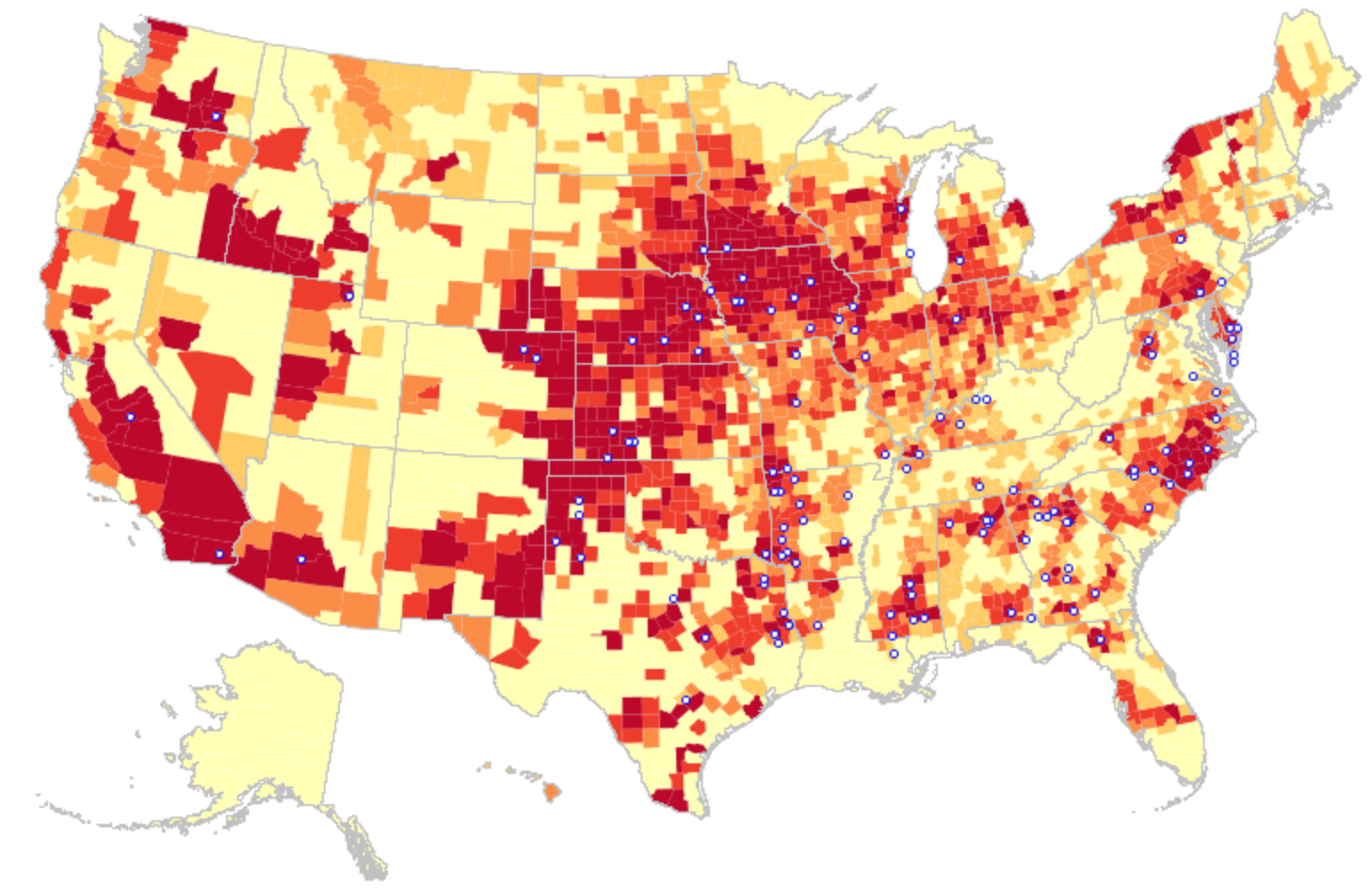
If oppressive systems of lending create states mired in relatively equally distributed poverty, and others increasingly less egalitarian–as JapanSouth Africa and the United States–poorer individuals or countries all too easily fall through the cracks and off the mental map that privileges dominant economies.  Indeed, so obsessed have we become with noting, accepting, and internalizing property lines that we seem trapped into forgotting the actual distribution of inequalities in our country.  The warping of economic conditions in the United States alone–a warping toxic for local politics, and compassion–are nicely illustrated in microcosm in a glorious if grotesque GIF Max Galko offered, via Metrocosm.  In its warping of a planimetric image of national space, it seeks to track the terribly troubling distortion of civic space by wickedly substituting residential values on land to reveal hypertrophied concentrations of capital in a few regions—mapping value onto land in ways that display the drastic diminution of housing stock in far more regions of the lower forty-eight that contract out of sight.

af6689aa5

Metrocosm, based on data from US Census and Lincoln Institute of Land Policy


The bloated property values of urban and exurban areas are hardly signs of a healthily beating heart, but a Rabelasian image–if it weren’t also such a very accurate illustration of our current national political quagmire of using a map to create consensus when concentrations of wealth looks so different than the one which determines our representational government, and a clear social commentary and scathing socioeconomic critique.  For how can we create a clearer map of priorities, when the very levelness of a playing field is so distorted beyond recognition?  The cartographical contraction of so many areas that seem overlooked seems also a metaphor, as tNew York City, Miami, San Francisco, Seattle, Orange County and Chicago acquire hideously gargantuan proportions to seem countries of their own, as they assume their relative values of residential properties, leaving the majority of the country to disappear within the folds of their overvaluation and market-driven expansion, as if to show the difficulty with which market valuation maps onto our own space.  All this to raise questions of how a map of global economic relations might best begun to be traced, or how we might imagine the disruptive inequality on our perceptions of space–and, indeed, the inequalities that spatial orders increasingly come to reflect and perpetuate?

Does this image of a “beating” heart only map the absence of empathy in a map?

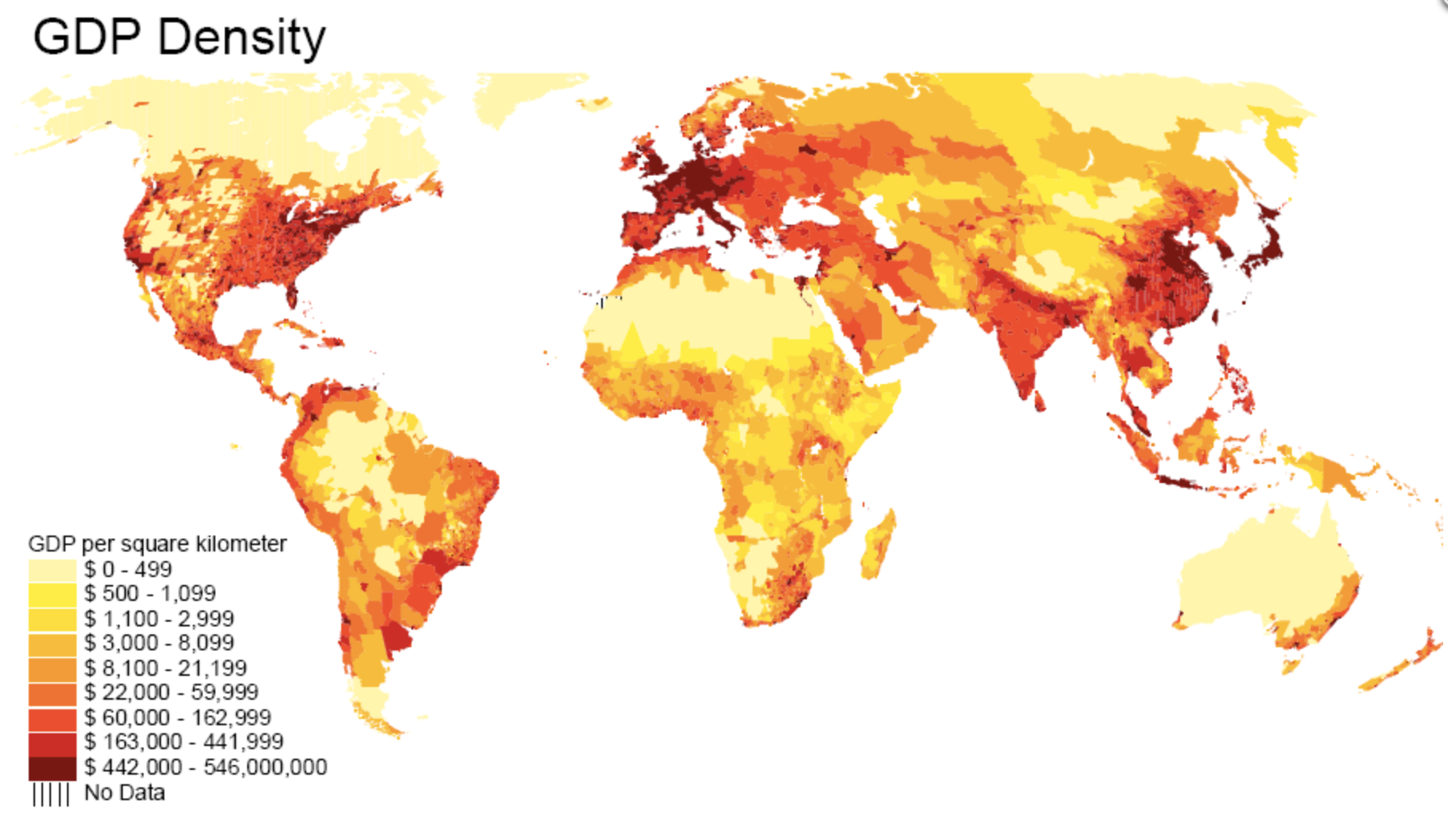
1.  For economic exchanges seem strikingly complicit in perpetuating inequalities, if only by diminishing those very inequities of economic productivity perpetuated in most maps fail to adequately attend or obscure.  One might hope, with geographer Andrew Linford, and Martin Lewis, the benefits of a map illuminating the inequities of global disparities in economic productivity–and try to use such a map to address how both regional and national disparities, often oddly dividing coastal areas from poorer interiors, might be overcome, and the ways that what pass as concerted attempts to do so often only shore them up. But such a map only confirms the sorts of distortions that most are only too aware already exist.

GDP Density

Geocurrents global  map of GDP Density (2011)

The illusion of equality is more often maintained by the belief that by mapping all aspects of the earth we are ensuring a sense of equality for all, or allowing no inequities to be hidden from view–as if the projects of world-mapping, and exposing to the public eye, is a means of responding to global needs–rather than obscuring these inequalities.

2.  Or can this even be captured in a map?  It bears noting that even if we have a totalistic map of global coverage, we tend to not come to terms with the depth of inequities and wealth, so obsessed we’ve become with what we can record as if it was a picture of the status quo.  In an age where outfits like Planet Labs or their friendly competitors at DigitalGlobe readily provide satellite-generated images that map the surface of the earth from space for their client base at an astounding resolution of two to three meters, what’s being mapped omits the truly important transactions, exchanges, money-laundering, and other financial transactions that underlie the ever more globalized economy.  Even as the platforms of Geo Big Data may appear comprehensive in detail, the undercurrents of these claims provokes questions about what they fail to communicate. Perhaps the very promise of totality for such claims of whole-Earth imagery–to be sure, at lower resolution for the state of Israel, by a ‘flock’ of “Dove” Satellites–only confirms that the real action lies elsewhere:  maybe in those shifting currents less readily subject to be seen, tracked or so readily surveyed, as much as on the edges of urban and rural life.  After all, if one accepts a uniform mathematical grid as a way of mapping, one omits any local knowledge of place, andy any notion of representation.

Satellite Dove

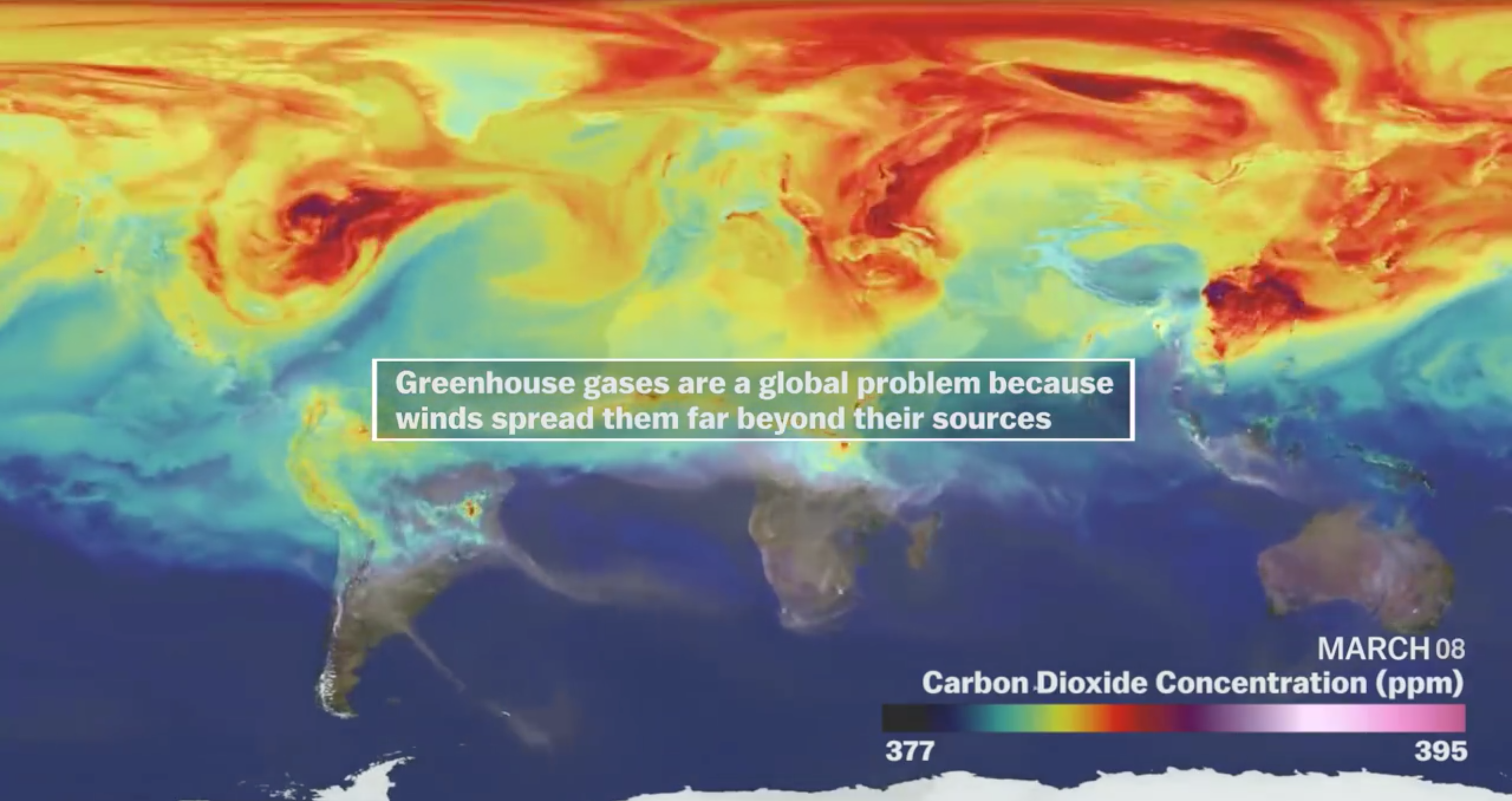
There must be more that resists such ready capture–from the rampant inequalities of wealth that organize our cities to the disparities of wealth around the world.  What other underground streams of electronic or financial transfers can we trace?  These streams constitute the new mare nostrum, the non-territorial terrain on which both worldly power and economic activities are waged, and run across the boundaries of either a settled or defined geopolitical space.  But the space of climate change is one that is best rendered as transcending a map of territorial bounds or geopolitical space that is rooted in the antiquated notion of “countries,” which not only seem increasingly removed from our planet’s fate–

Screen Shot 2015-07-13 at 8.21.05 PM

–but from it’s actual experience.

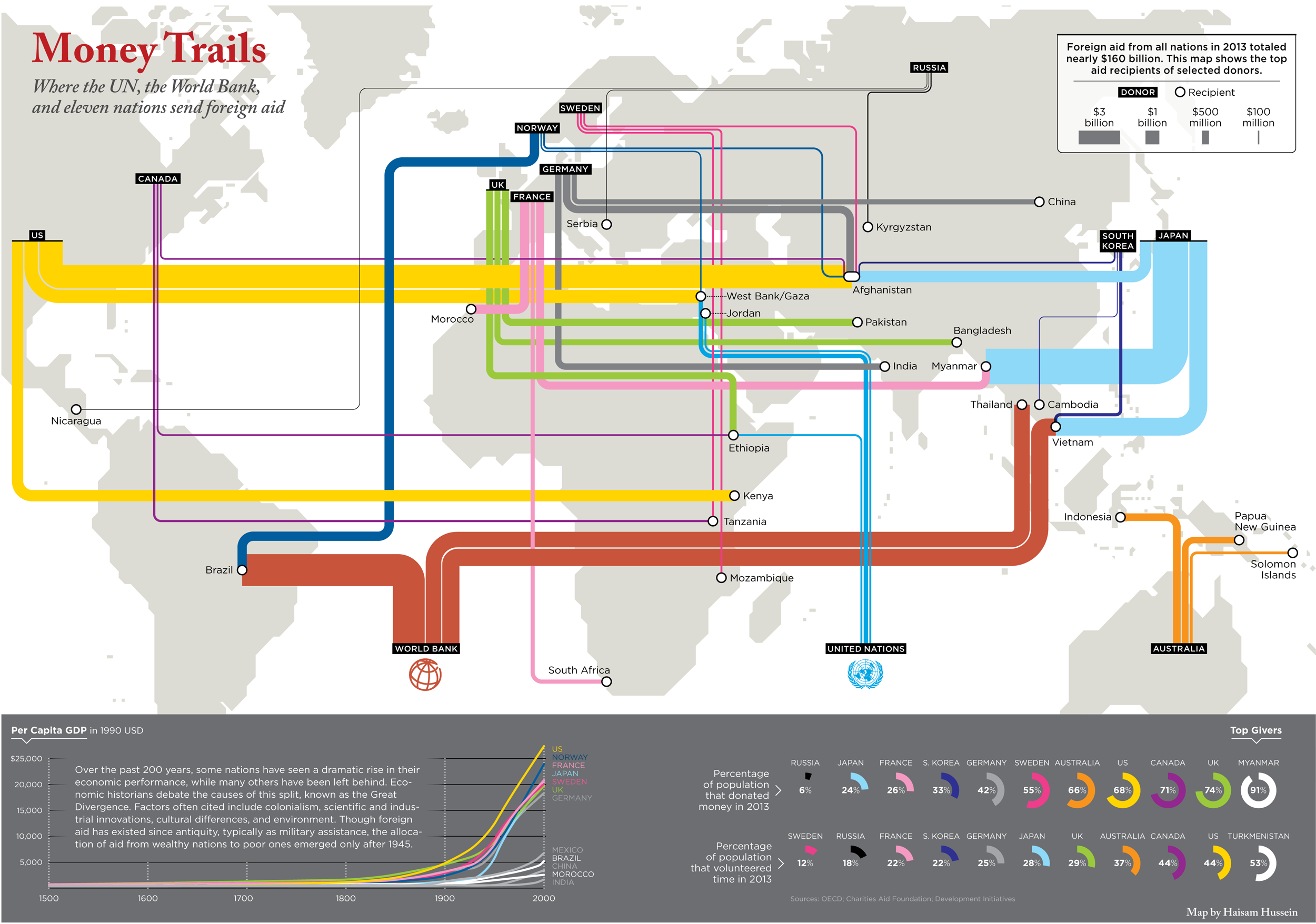
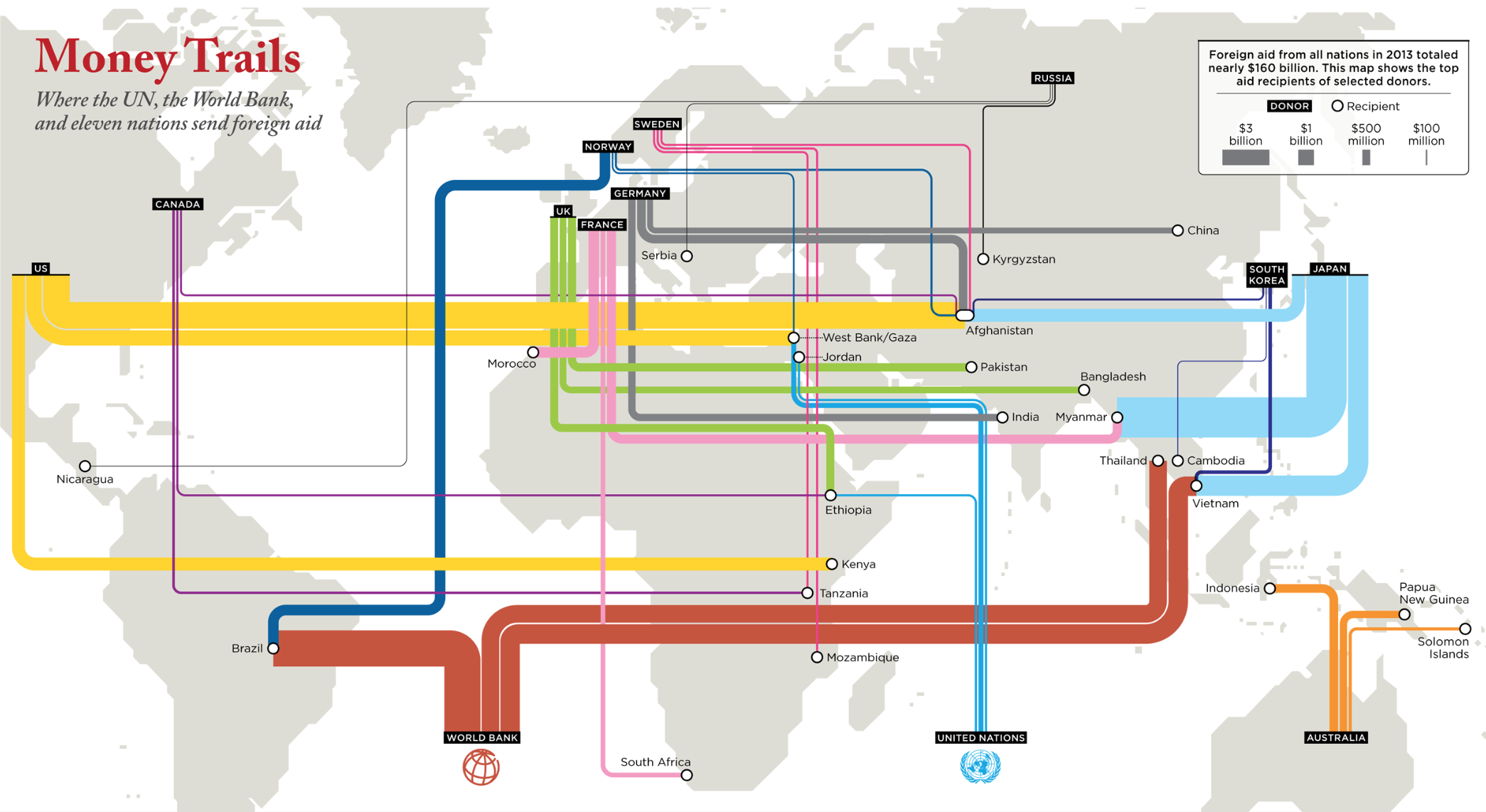
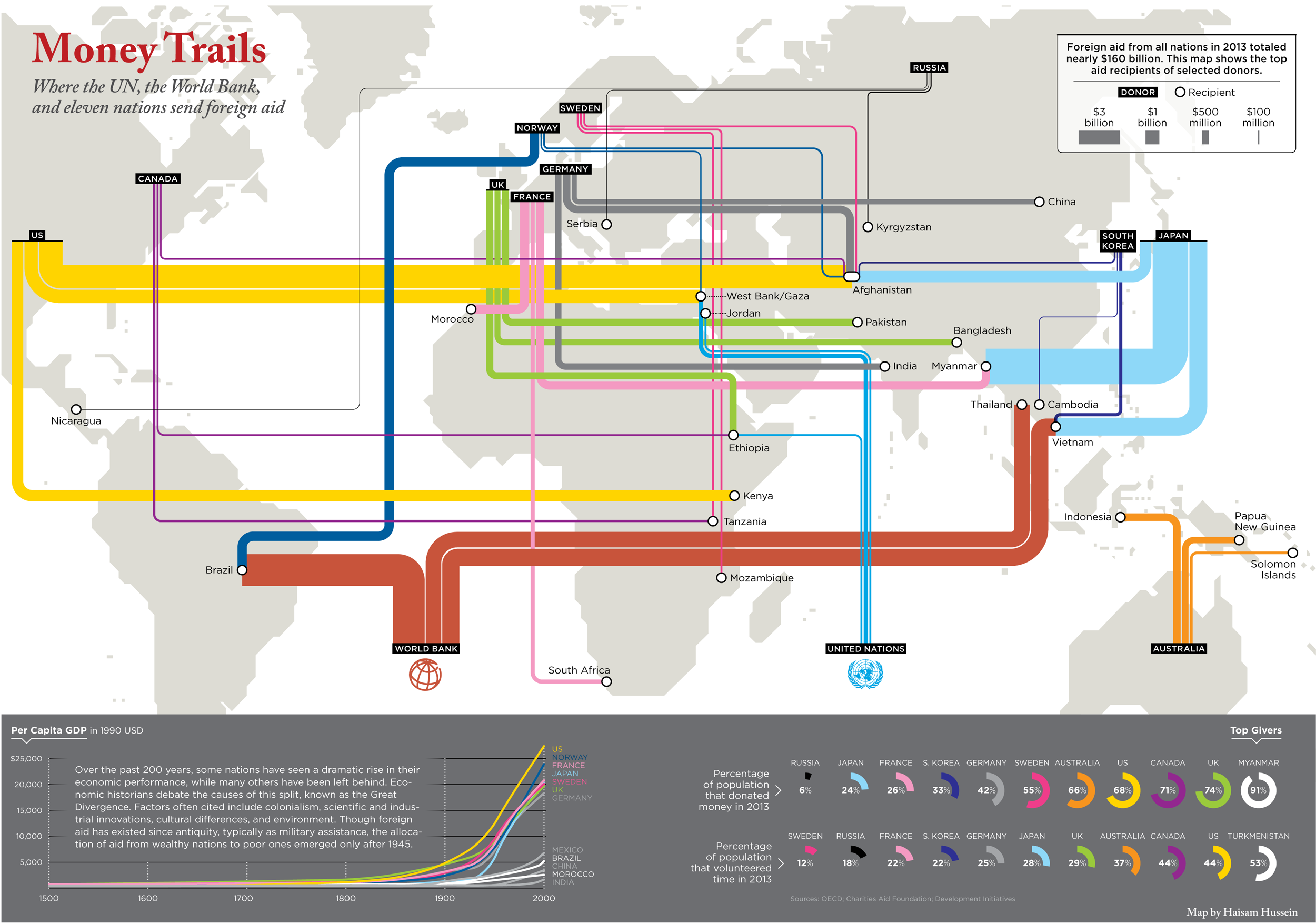
3.  The map “Money Trails” traces the actual paths of the disbursement of funds by the UN, World Bank, and 11 industrialized nations to reveal the distortion of global ties transcending geopolitical space.  So much seems revealed in the major unmapped pathways that structure our increasingly disturbingly decentered globe–which infographic artist Haisam Hussein used to map the distribution “foreign aid” in the pastel hues and curving bars reminiscent of the London Tube Map that the engineer Harry Beck so cleverly devised on the model of a simple circuit board–but which suggest a decentered lack of familiarity, and raise the stakes on processing how foreign aid is allocated, as much as to explain the circulation of funds with an air of transparency.

31_philanthropymap

Lapham’s Quarterly

Hussein’s uncanny infographic tacitly calls attention to the status of Aid as an artifact of the Western World (to which Beck so clearly belonged), even if the destinations of most of the billions tend to arrive at destinations whose open circles peripheral to or far outside the west, from Afghanistan, Myanmar, Vietnam, Brazil, Kenya or the West Bank–as well as India and Ethiopia.  Beck’s design had once simplified the confusion that Londoners faced in confronting underground routes by simplifying the Tub to a circuit’s dense pathways in ways riders quickly came to disentangle:

beckcb

What does it mean for huge sums of foreign aid to travel as they do, through such sanctioned if somehow secret hidden pathways of economic exchange?  Can one begin to disentangle their distribution by different agencies and governments, and the parallels sources of foreign aid dispatched to those needy, or to enter into a logic of their distribution?  Can one ever expect the distribution of Foreign Aid to run along such clearly defined pathways?

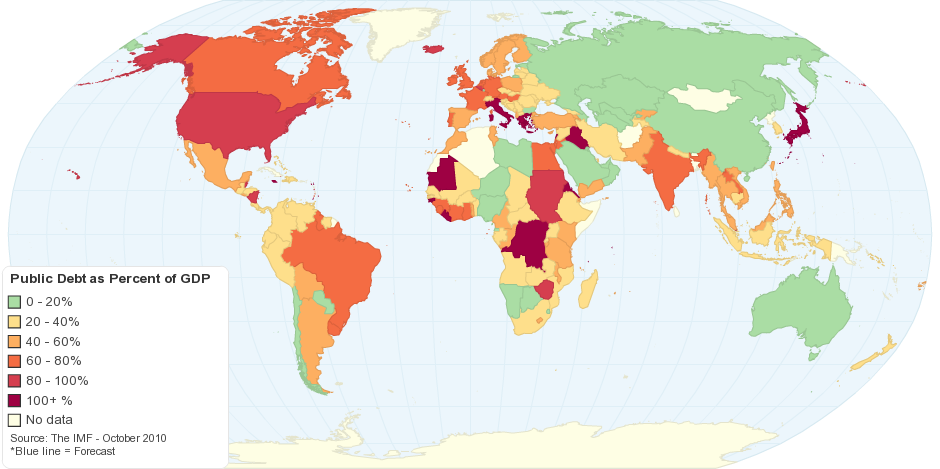
4.  In an age where the vast majority of financial transactions occur online and data centers channel chains of information with increasing speed, the paths of financial transactions are rarely transparently mapped.  Although we accept multiple ways of mapping and surveilling the world, but mapping the global exchange of money and financial assistance are less clearly established–if only because the mobility of money presents far less easy or a static image and is less about clear relations between place than often undisclosed channels of exchange.  If we know the GDP of different countries, national debt, global debt, or even map government debt as a percentage of GDP–we can rank countries’ relative consciousness of balance of payments, or the ability with which debt is able to be sustained, while those deepest crimson threaten to drop from view or implode:

l_2108_fd0c07716bed57e5759d1025fa89e780

Such a static distribution of debt offers a basis not to consider the distribution of productivity; it describes the ability of countries to carry debt even if carrying this load provides the basis to perpetuate their global roles.

The basis for understanding the circulation of money around the globe raise questions of the continued relevance of connectivity, distribution, and indeed the privileged point of orientation to the circulation of power.  For a map that privileges clear boundary lines of jurisdiction serves to regard each nation as an autonomous economic actor, but in an era of the paperless transaction of funds, the map that continues to privilege territoriality seems not only out of date, but increasingly irrelevant to describing the process of globalization.

One might also see the development of aid as a holding pattern or mode for tacitly creating consensus and uniting an increasingly uneven playing field of the economic state of play.  If empires were once seen as controlling the sea and mapping control of navigational spaces, the notion of the “Freedom of Seas” or Mare Liberum that Grotius proposed as the basis for mercantilism in the early seventeenth century have long ceased to be the basis or the illustration of imperial mandates:  whereas the concept of the Freedom of the Seas was in ways an extension of ancient Romans’ control over the Mediterranean, the ocean is no longer the screen to project projects of dominion than are the pathways of aid whose currents more aptly flow from centers of geopolitical power–and can only be mapped in far more fractured, and indeed postmodern, globalist terms, where economic aid is tied to the opening of markets as well as political ties–and might be far more challenging to map.  The sea is no longer the primary surface of economic exchange, and the relatively recent migration of monetary exchanges onto virtual space poses unique challenges to trace.

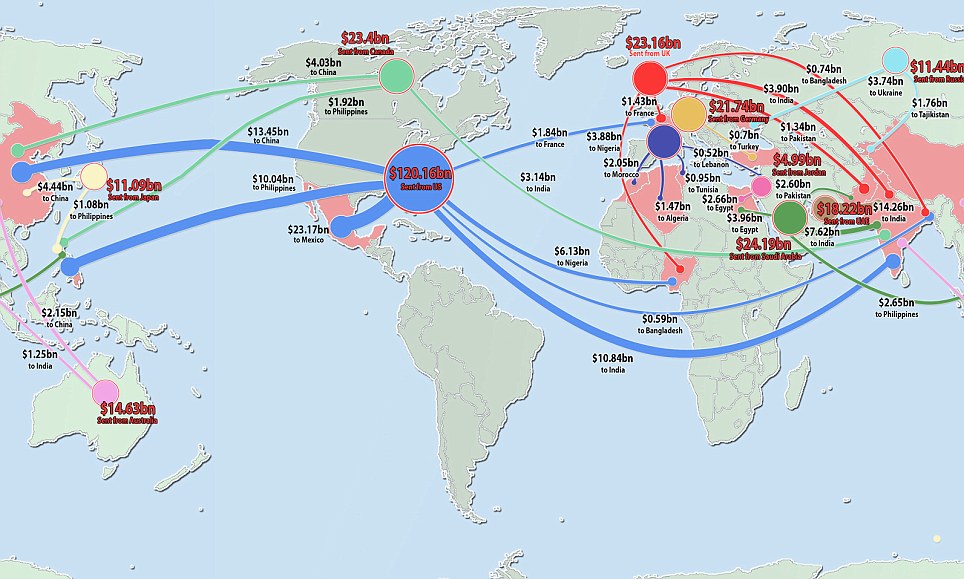
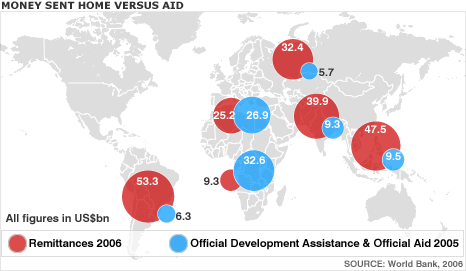
The less visible pathways and more visible tentacles by which foreign aid is dispensed may not only lend coherence to our national markets, despite the dramatic inequalities that continue to exist across the inhabited world–the expansion of aid may indeed make it ethically and conscionably possible to live in its huge differences of well-being and lifestyles that we wouldn’t be able to otherwise ignore.  An astounding $530 billion was informally sent, through unofficial channels, by immigrants, in 2012, according to the World Bank, in ways that might represent the economy of a sizable nation–and a huge uptick over the $132 billion sent in 2011.  The pathways of finance suggest a new model of global circulation of giving and receiving that offers something like an underlayer of the global economy.

Migrant money graphic.jpg

As of 2006, the money sent home from industrialized countries in the form of individual remittances was for the most part (outside of Africa) significantly larger than the official development assistance and foreign aid worldwide, according to the World Bank, whose donor countries commit to sustainable development or poverty reduction in ways that provide a plan for dealing with economic disparities.

remittance_world_466

But the dramatic expansion of foreign aid far more often travels along official currents, supported by a logic that demands some excavation of internationalist motivations that transcend mere economic need.

5.  While the notion of Christian charity was long linked to the local public use of personal wealth, as upper-class Roman elites gave money as they wanted to civic causes in much of Europe and North Africa, the flows of philanthropy that have been increasingly institutionalized have become ever more difficult to trace and complex to map as foreign aid has tried to reduce growing income disparities worldwide.  Giving is institutionalized by governments–and by United Nations organizations with the World Bank and their non-profit NGO allies, but mapping flows of philanthropy are far from the sorts of local giving of the past.  Increasingly mediated by non-national entities, the flow of funds in an era of global cash flows and transfers is increasingly dematerialized or immaterial, even when growing to the inconceivable amount of $160 Billion.

Perhaps rendering them concretely provokes more surprise than recognition as the courses of capital are remapped on a geographical projection.  And when Haisam Hussein chose to map trails of foreign aid against the famous transit map of a city once the financial center of world markets, as if to map the spatial contraction of the global economy to several principal routes of financial disbursement, the map suggests not only the mobility of money, but the degree to which the major economies like the United states and Japan, as well as Norway, Sweden, England, Germany, France, Australia and Canada pump money into a global system of credit that sustain global markets, helped primarily by the World Bank, and basically bankrolled by eleven nations, including Japan, Canada, the US, Britain, Sweden, Australia, Russia and South Korea–who exclude the “other area,” left grey on the map, of the People’s Republic of China.

Money Trails and UN

Lapham’s Quarterly

The money flows are modernistically represented as if to show the progressive possibilities of aid in streamlined terms, the distribution is at the same time  in no way equal and strikingly disproportionate and the larger flows of aid dissonantly disruptive of the modernistic design–the pathways of economic aid are clearly and lopsidedly dominated by the nations of the northern hemisphere.  Despite the modernism of the routes, the disproportionate paths on which aid travels disrupts the symmetry of its so sleek tube lines, as distortedly large baby blue rivers dominate the map as they flow from Japan beside yellow-gold currents from the United States, reminding one of the deeply engrained national inequalities that underpin much “giving” today–and dazzling us with an array of colors and flows that leads us almost to forget the global presence of the PRC, or the grey persistence of global poverty.

But the selective nature of support seems particularly striking–with, as of 2013, the UK tied to Pakistan, Ethiopia and Bangladesh, the US to Kenya, Gaza and the West Bank, and Afghanistan, Australia to its neighbors Indonesia, Papua New Guinea, and the Solomon Islands, Norway to Brazil, and France to Myanmar and Morocco.  The routes for disbursing foreign aid are hardly a process of global circulation, but provide something like a strategy for promoting the possible circulation of global funds.

31_philanthropymap

Lapham’s Quarterly

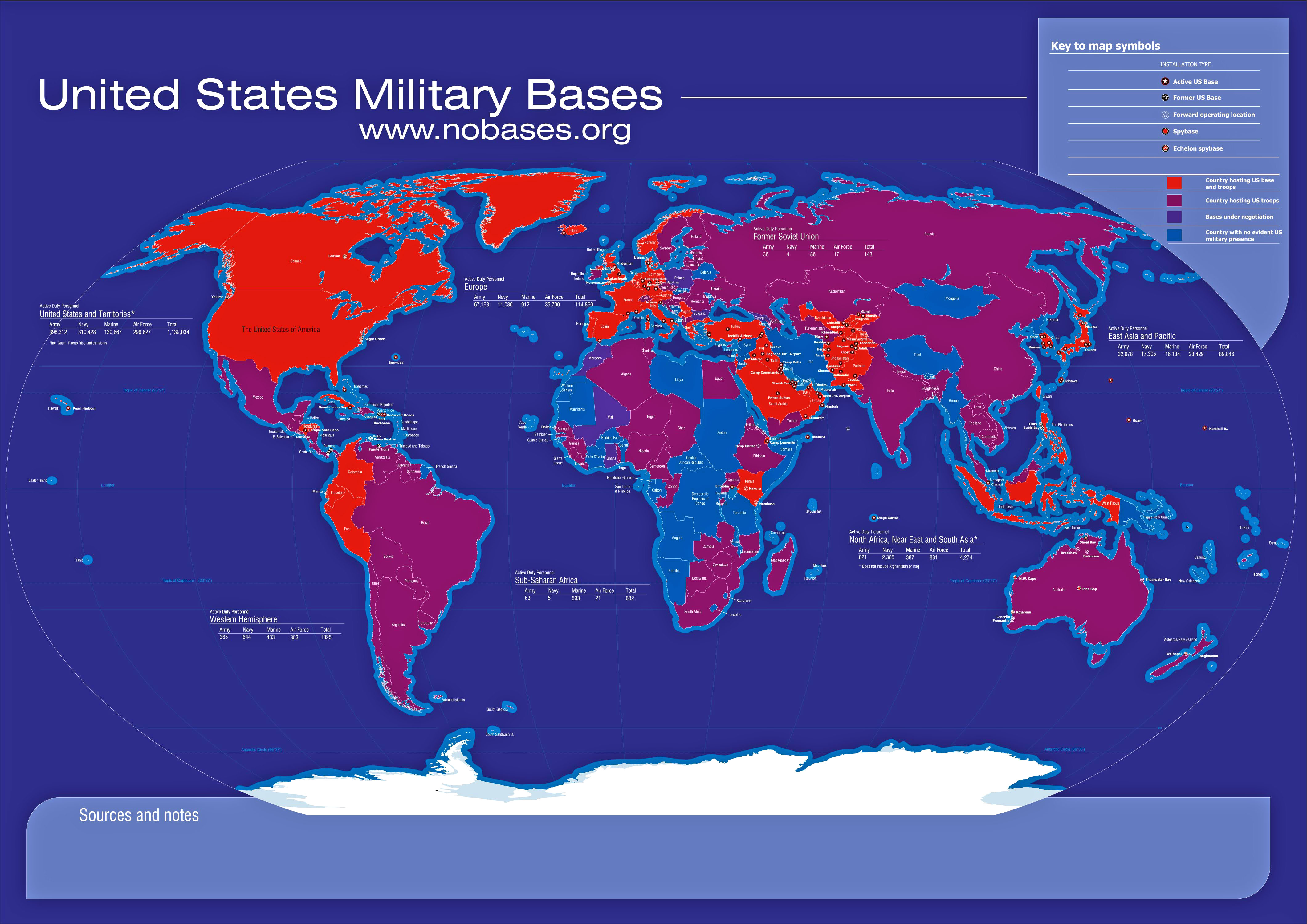
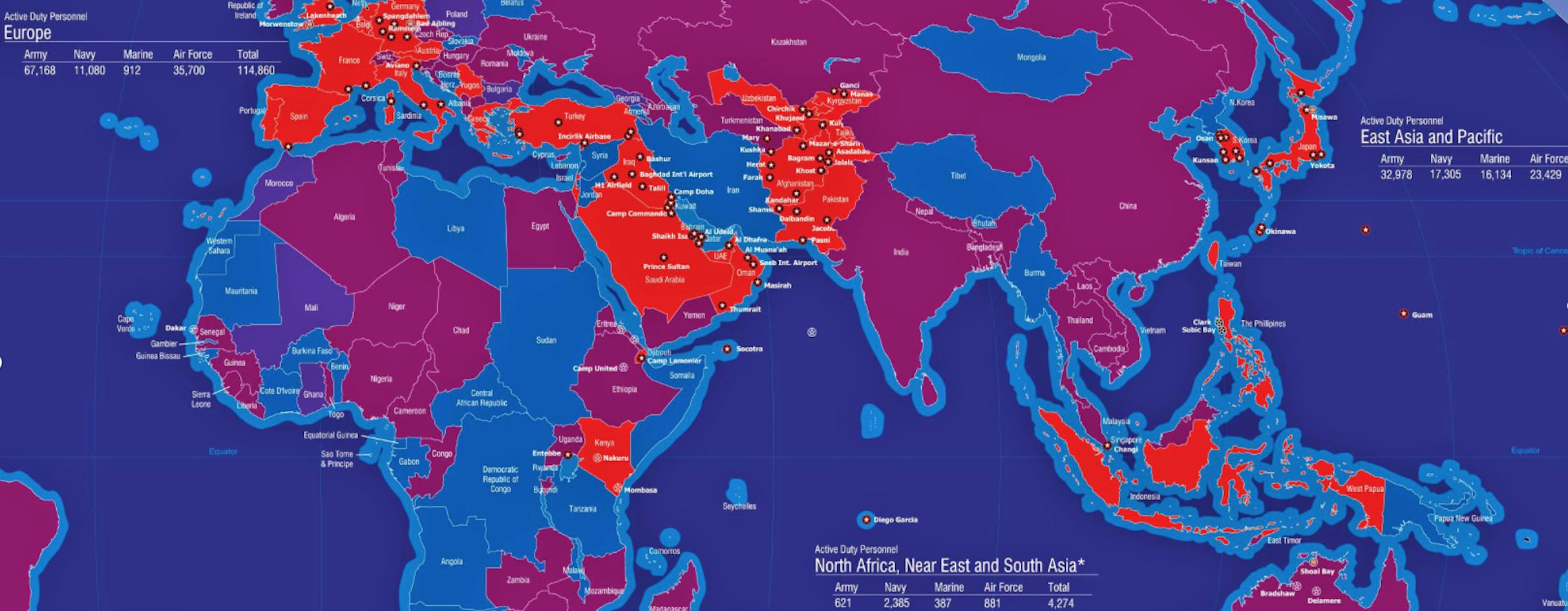
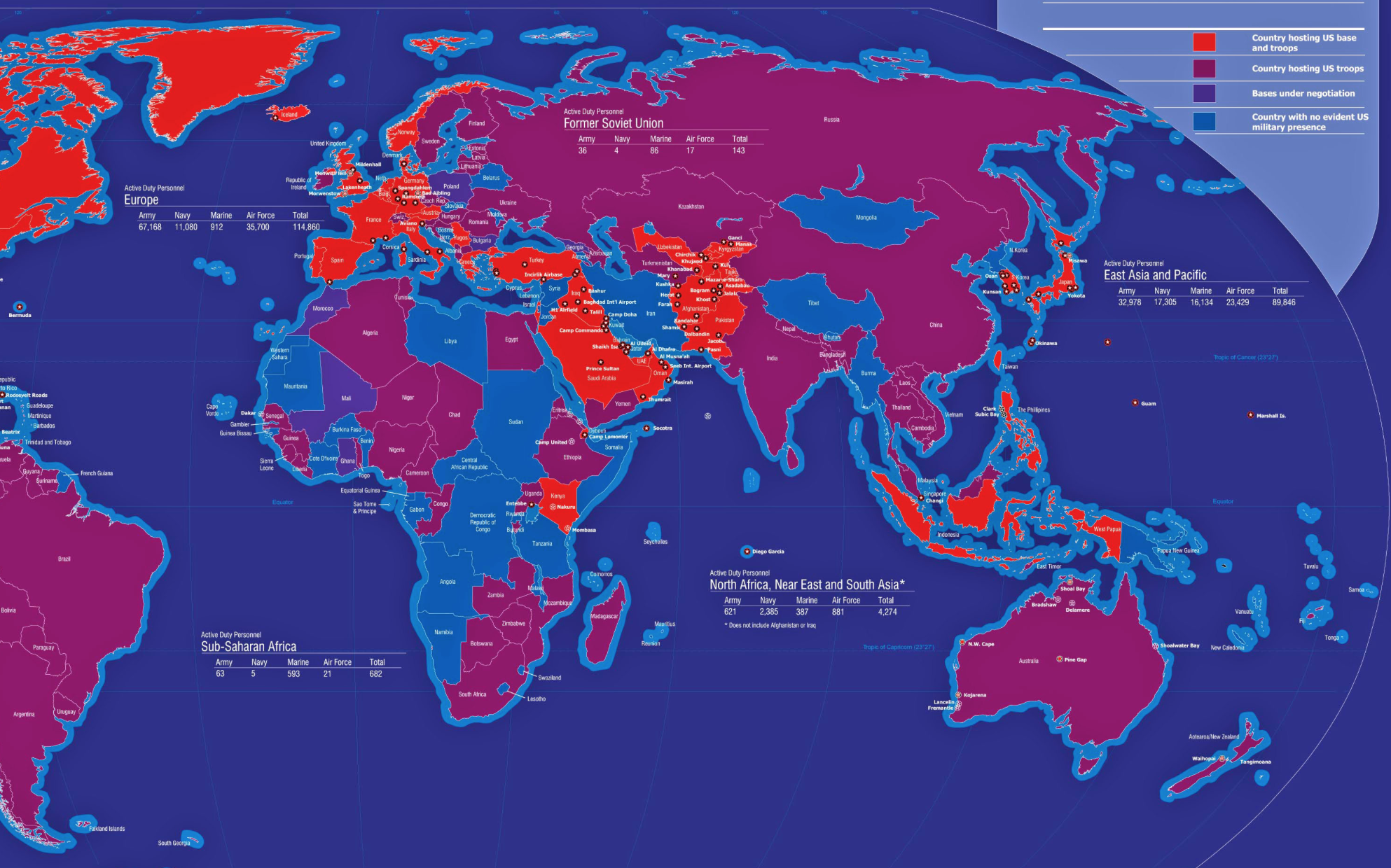
The circulation of “aid” is in part a sort of shadow-map that helps shore up and support the  US military’s presence.  The spread of what seems an extended carte blanche to settle the US military in bases abroad has grown steadily since World War II, and has currently grown to spread to over 800 foreign bases in 160 other countries and territories outside the United States–excluding Afghanistan and Iraq, sustained at a cost of over $156 Billion annually.  The current constellation of what Chalmers Johnson called “base world”–a parallel imaging of military extraterritoriality–of which the Pentagon lists not only 174 US “base sites” in Germany, 113 in Japan, and 83 in South Korea, but hundreds more in around 80 countries, including Bahrain, Bulgaria, Colombia, Kenya, and Qatar:  if those countries colored bright red are hosting actual basis, those in purple are hosting US troops, and those in dark blue are countries where the US government is currently negotiating the presence of troops, and the rare spots of a lighter shade of blue mark those with “no evident” US military presence–limited to Mongolia, Tibet, Burma, North Korea and Iran, and the northern and central Africa nations of Libya, Somalia, the Central African Republic, Democratic Republic of the Congo, and Sudan.  (But one never knows.)

globalmilitarism58_14

While one might rightly wonder why the army, navy, and marines are based so widely over an “empire of bases,” the cost to the government is no doubt not only expressed in the cost of running the bases that are outposts of Americana where one would think oneself to be geographically removed.

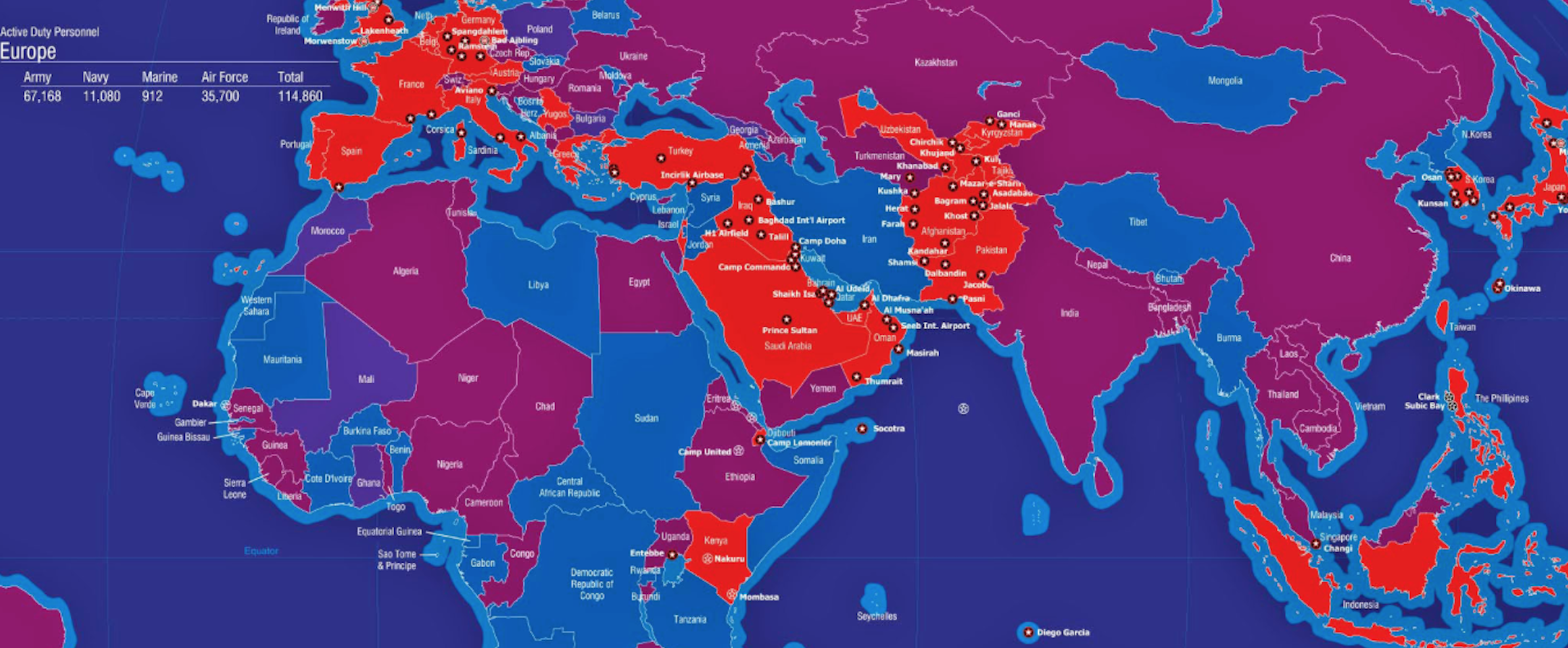
A closer look at those sites of centers of active duty of US soldiers–not including the recent theaters of war of Afghanistan and Iraq–shows a diaspora of bases across the globe that the Department of Defense sustains, allowing the US to have a greater presence worldwide than any actual nation, empire, or people, in seems the underside of globalization, as well as the fantasy of a paranoid extra-national archipelago of active duty that may respond to a vision of global danger:

Active Duty Map

Is foreign economic “aid” somehow a tacitly understood bribe to continue to tolerate such an expansive military presence, or to negotiate with nations for the possibility of securing a future base, or some other sort of economic open-ness?  Is it an excuse to overcome resistance to perpetuating ongoing military presences, or a new way of strategically and cynically waging a global war of chess?

Hosting US Bases

The image of active duty soldiers settled in bases across what might be called Eurasia reveals an often unmapped constellation of sites of settlement, far different from the cities that usually appear on a political atlas or any map.

Active Duty in EurASIA

6.  The World Bank does not primarily speak, despite what its name might assure us, for the world, and may charge usurious fees, but a counter-geography suggest the limits of the pathways Hussein so cleverly mapped from a first-world perspective.

For an unspoken and often ignored “other map” of economic aid, as well as, perhaps, of the “soft money” that allows military and economic expansion, flows not from the World Bank or United States, of course, but from China–all too absent from our own eyes, much as the very same region of the world is so conspicuously absent from maps of Facebook “friending” and “likes” in ways that makes one smirk with superiority at the eerily blacked-out region of a world otherwise illuminated by “friendships” and photo exchange.  The same area not so oddly omitted from the map of global foreign aid, since it is not our aid or the sort of aid sought to be mapped, is actually of course not nearly so passive, or lacking networks of giving.  Although Facebook’s ““Friendship Map” tracks networking, as much as it registers an increasingly vibrant emotional pulse of the digital culture of linking that grips much the globe, leaves a blank space of seep blue or empty lacuna in tracing over 1.5 billion friendships–half of its users have successfully “friended” over 200 other users.  The largest hole of social network gapes over China–though one still can’t really expunge its territory from a map–although the map only reflects individual and collective investment in social media.

5236592-3x2-700x467

Global visualisation of every connection between two people on Facebook

Perhaps the map is far more distorting than admit it to be.

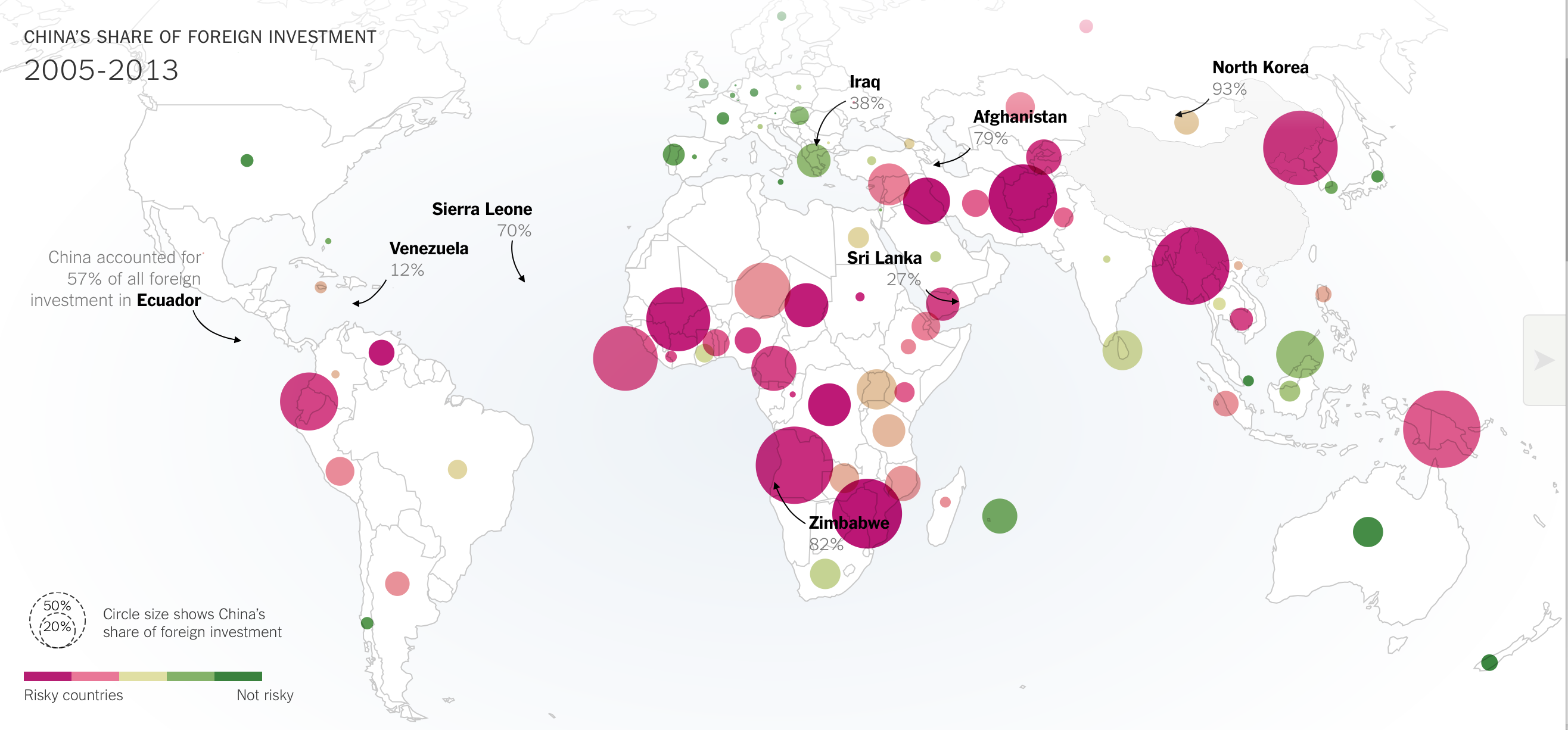
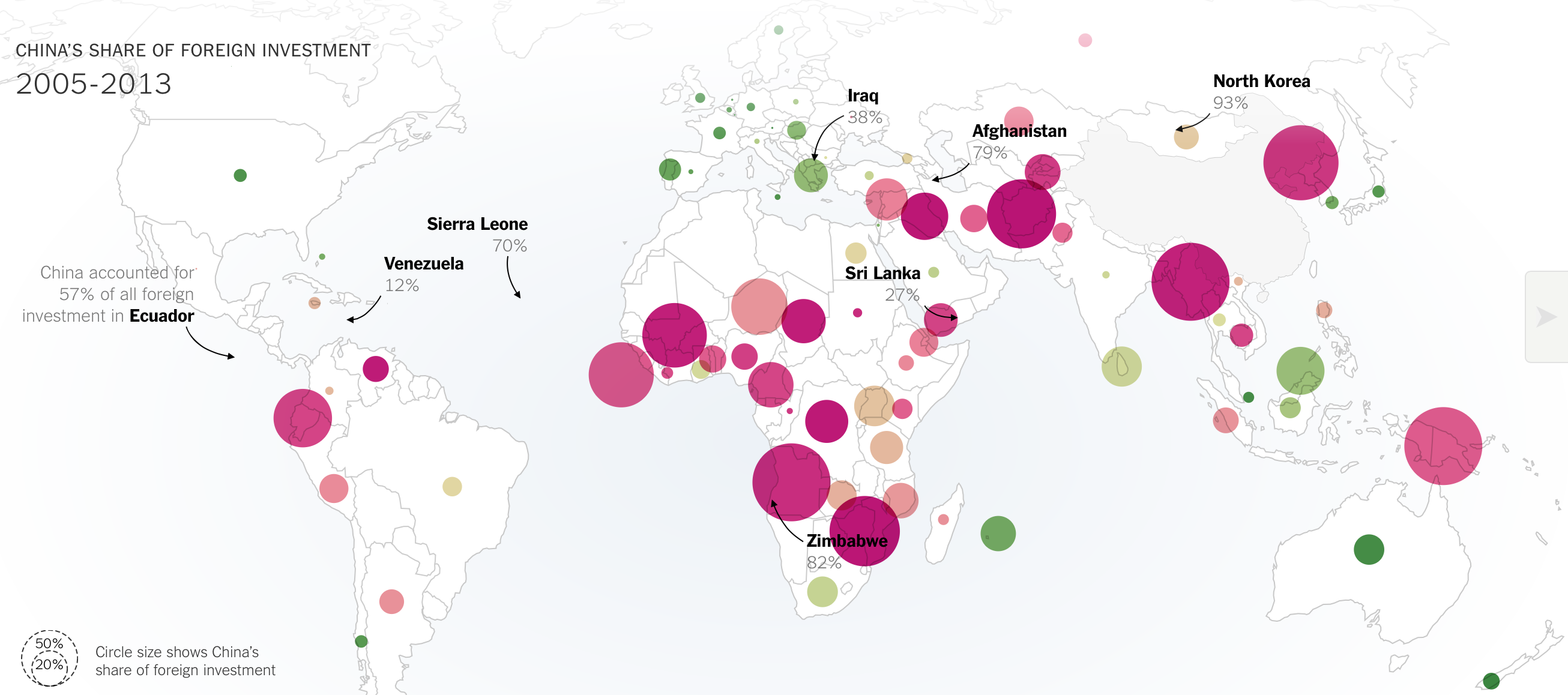
In the more real world of global finances, funding provides an image of governmentally that reigns in the massive economic disequilibria around the world at at time of dramatically curtailed prosperity.  China’s foreign aid reveals distinctly different paths of money to North Korea, Srl Lanka, Sub-Saharan Africa–including Ethiopia and Sierra Leone–and Ecuador; aid is proffered with quite different degrees of riskiness, in ways that suggest the large number of risky bets that China seems to be making in “foreign investment”–described here as something unlike and distinct from “aid” or charitable giving, but as something of a gambit of clearly strategic scope of investing in future markets or potential future sources of food:

China's investment and riskiness of its investing

New York Times

Yet the degree of cumulative investment deserves attention as an alternate visualization of globalization that is not scary, but nonetheless can’t help but be salutary at least in illustrating global imbalances as a counterpoint:
China's Investment, 2005-13:NYT

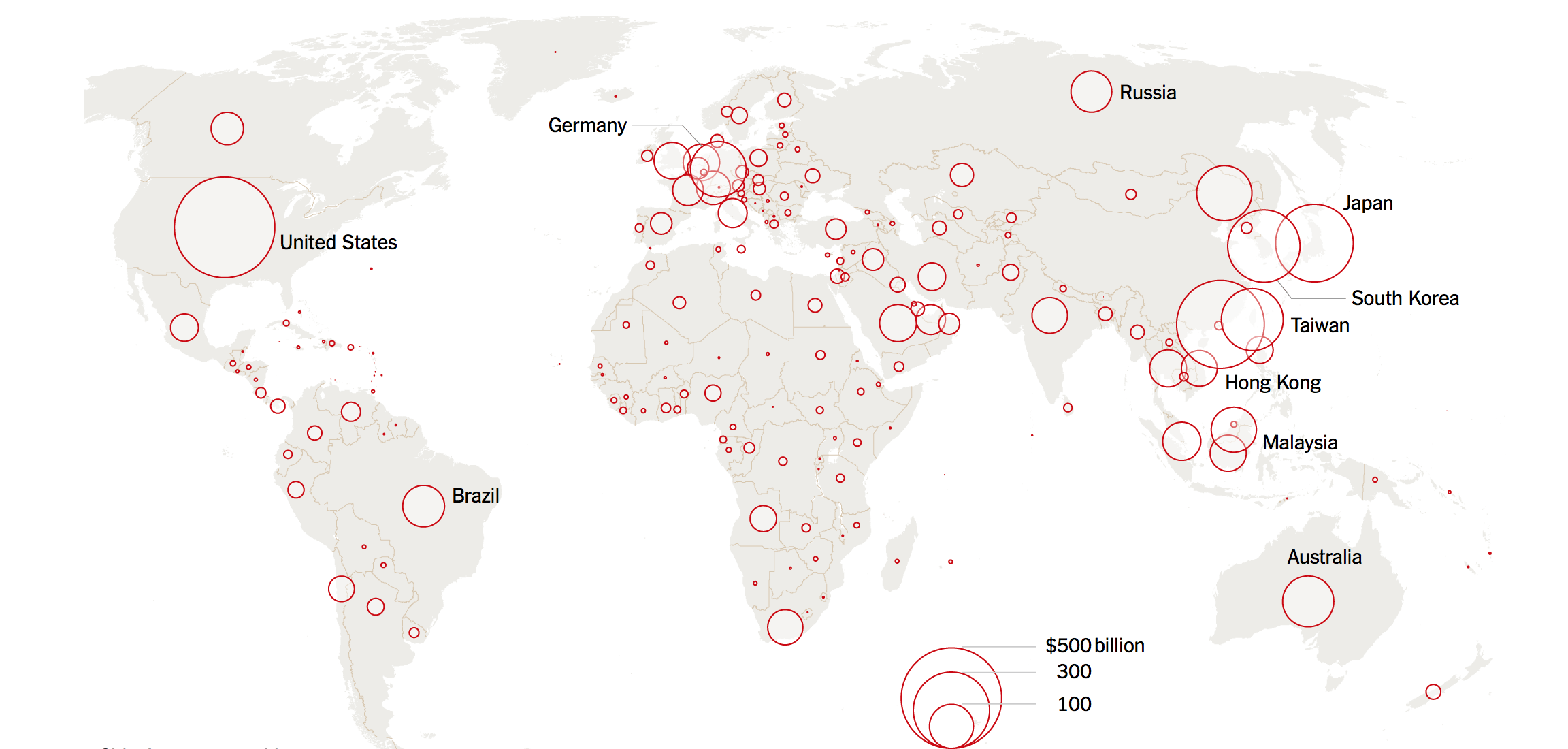
One can further profitably compare this to the aggregate numbers of Chinese exports and imports go, to see its economy’s global reach, and ask why the range of its “giving” or aid is ommited from the above map–in ways that suggests the degrees of strings attached to it.  The size of exports suggests a complementary set of ties to areas in Europe, the United States, Japan, and South Korea, as well as Australia and South Africa, where a smaller degree of aid arrives–no doubt with invisible strings of its own implicitly attached.

Value of Chinese Imports and Exports Worldwide 2015Value of Chinese Imports and Exports Worldwide 2015New York Times

These somewhat silent and far less evident paths of “giving” and GDP, as well as export values, seek to map a more dynamic image of the current state-of-play of globalization as a sort of state of flux, even if its economic ecosystem is all too often obscured, but also a screen for introspection of the proportions of globalization and its sins.  After all, whoever gives themselves the mantle of global authority most convincingly seems to get to draw the map. Or to decide that it might be time to reconsider the current map of giving, and foreign aid.

2 Comments

Filed under Foreign Aid, globalization, infographics, mapping economic inequalities

Fenced In/Forced Out: On the Uncertain Fate of the Refugees Kept Outside of Hungary’s Borders


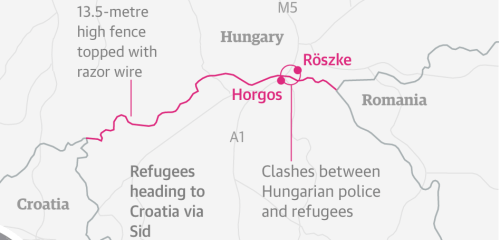
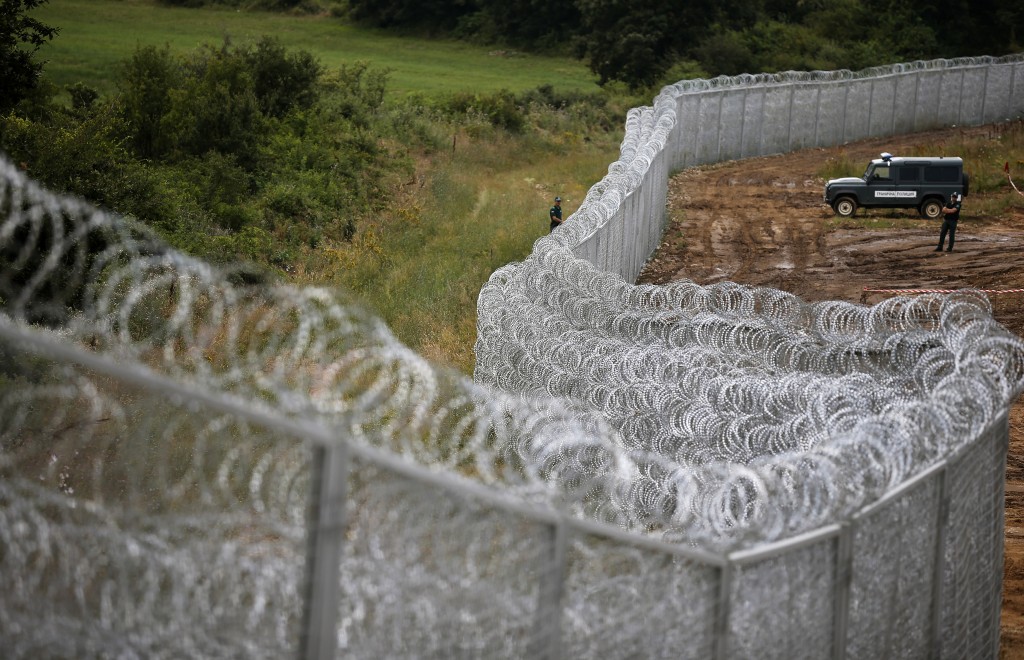
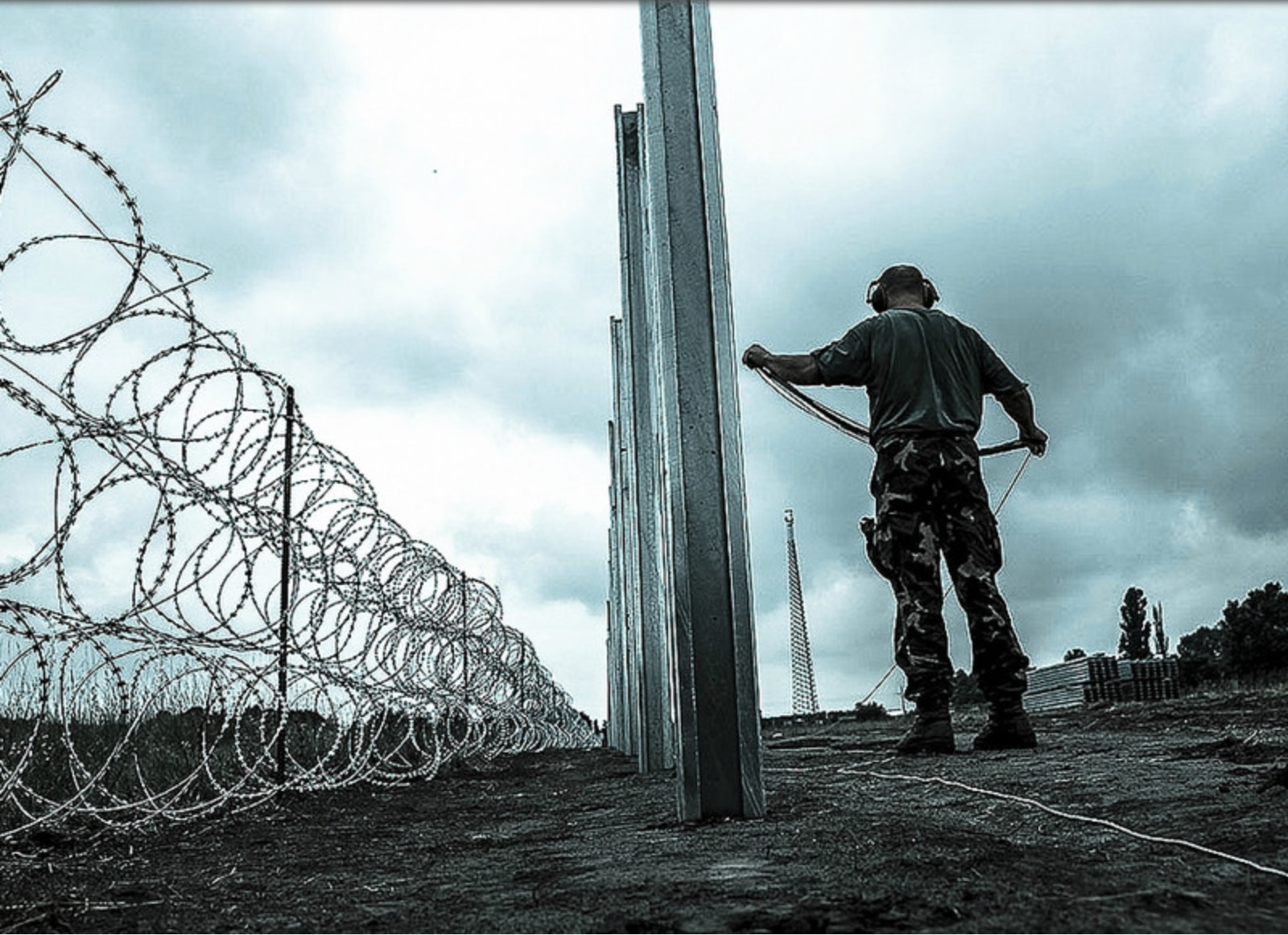
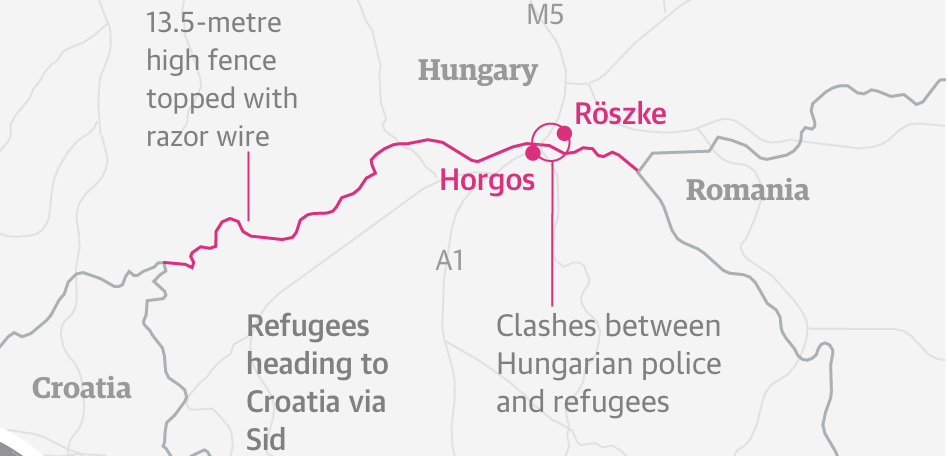
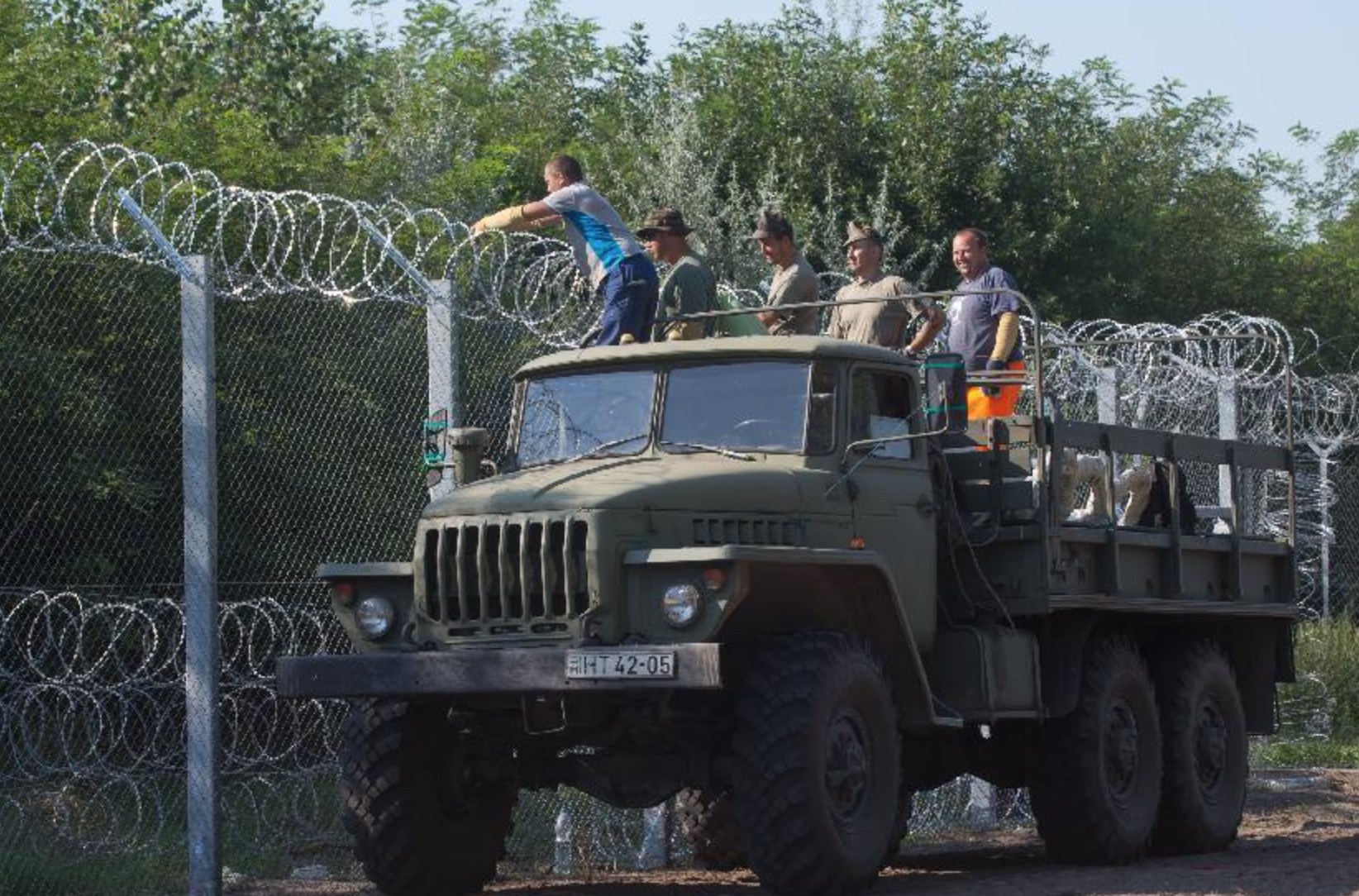
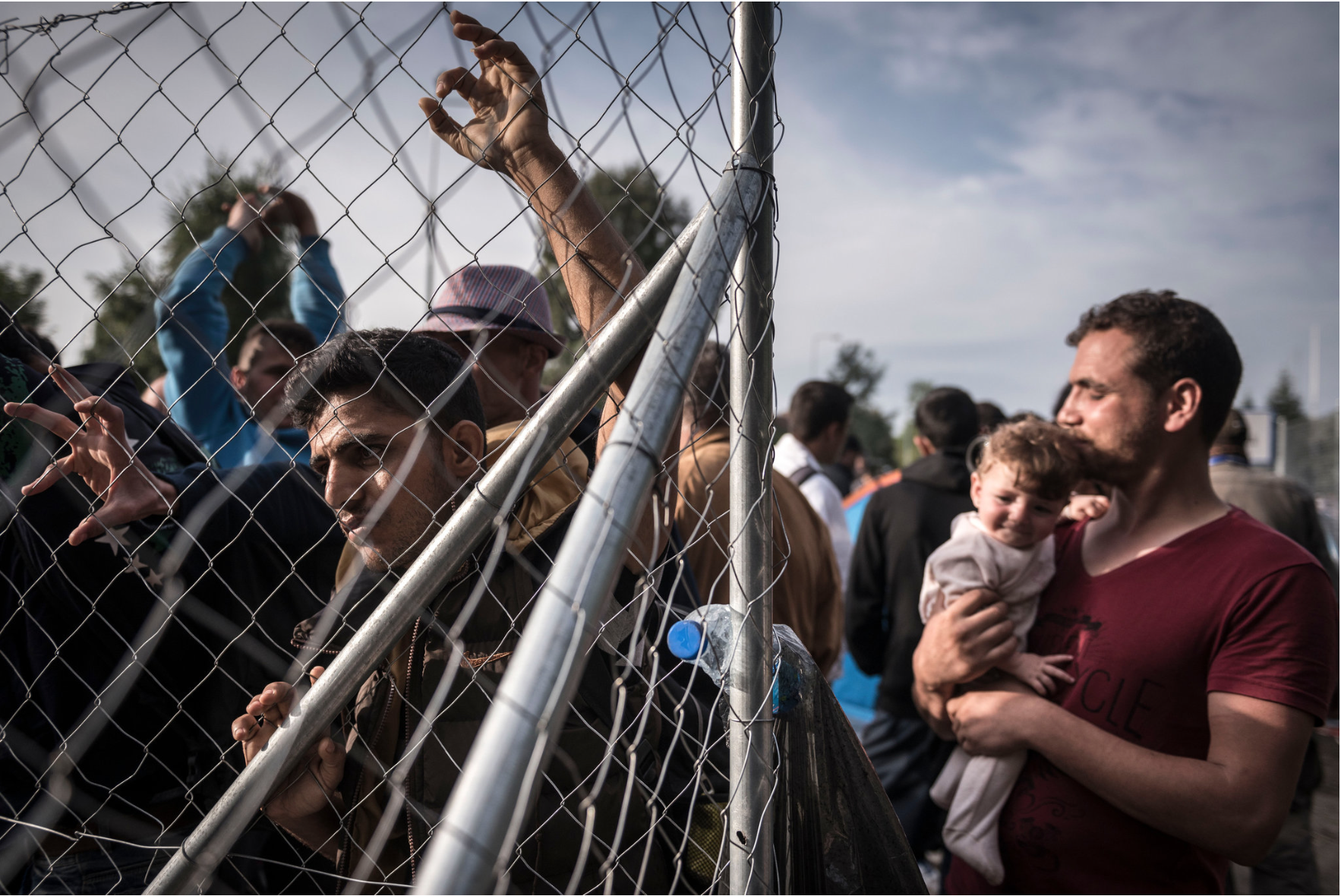
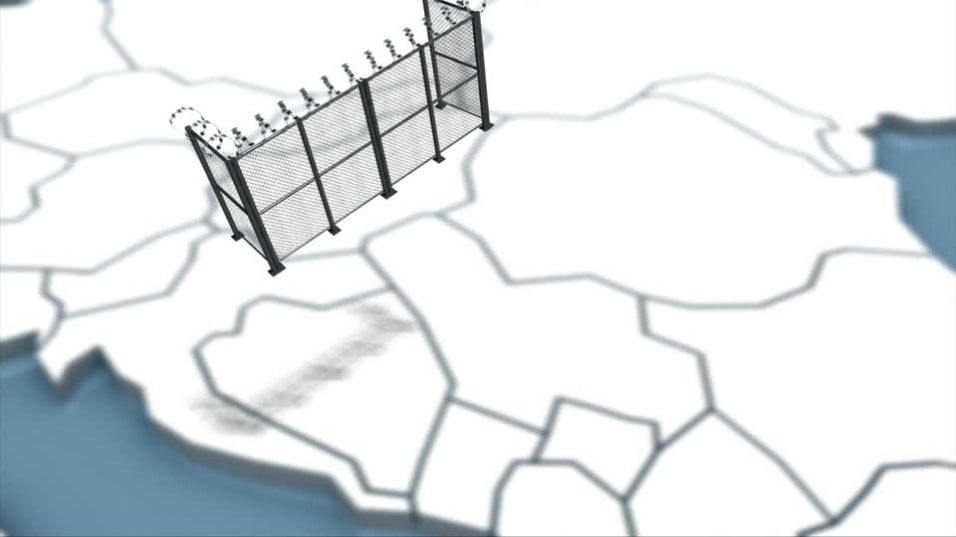
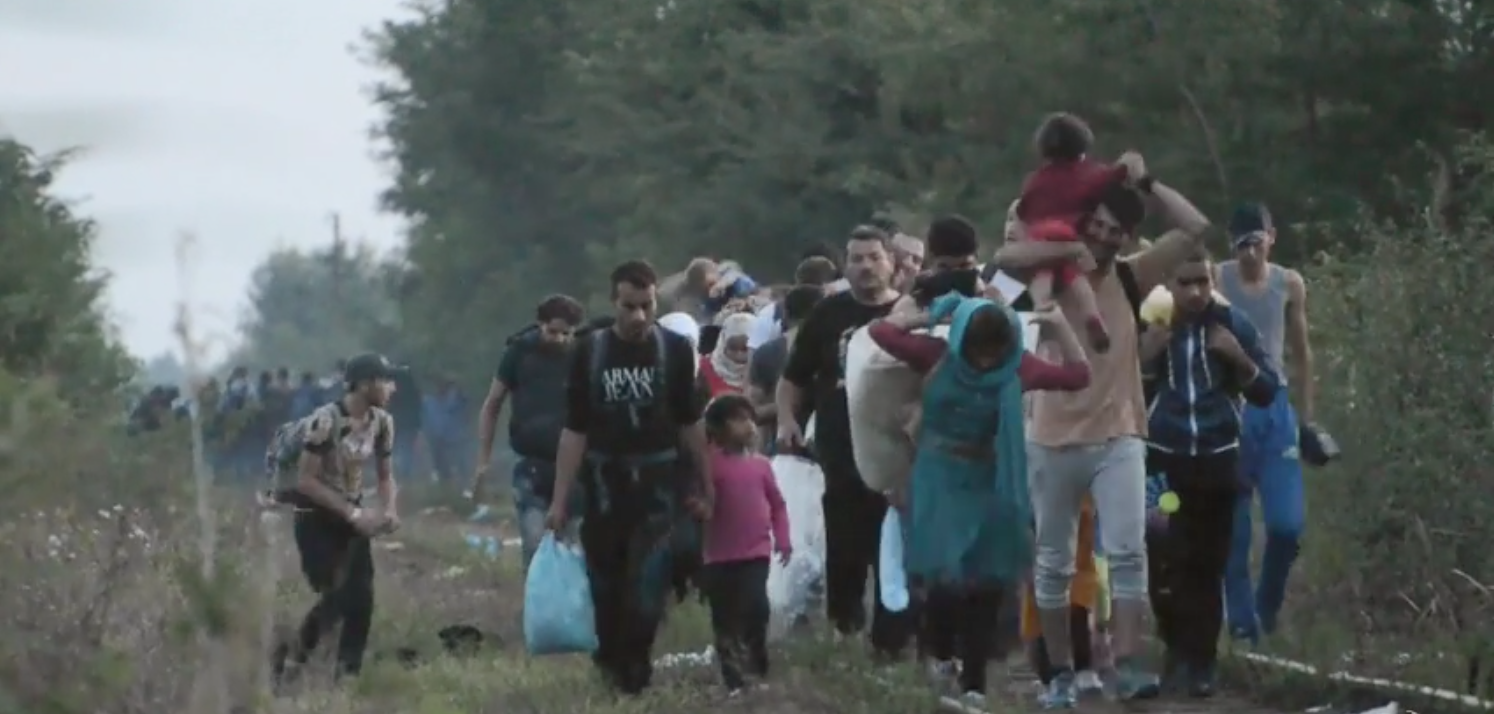
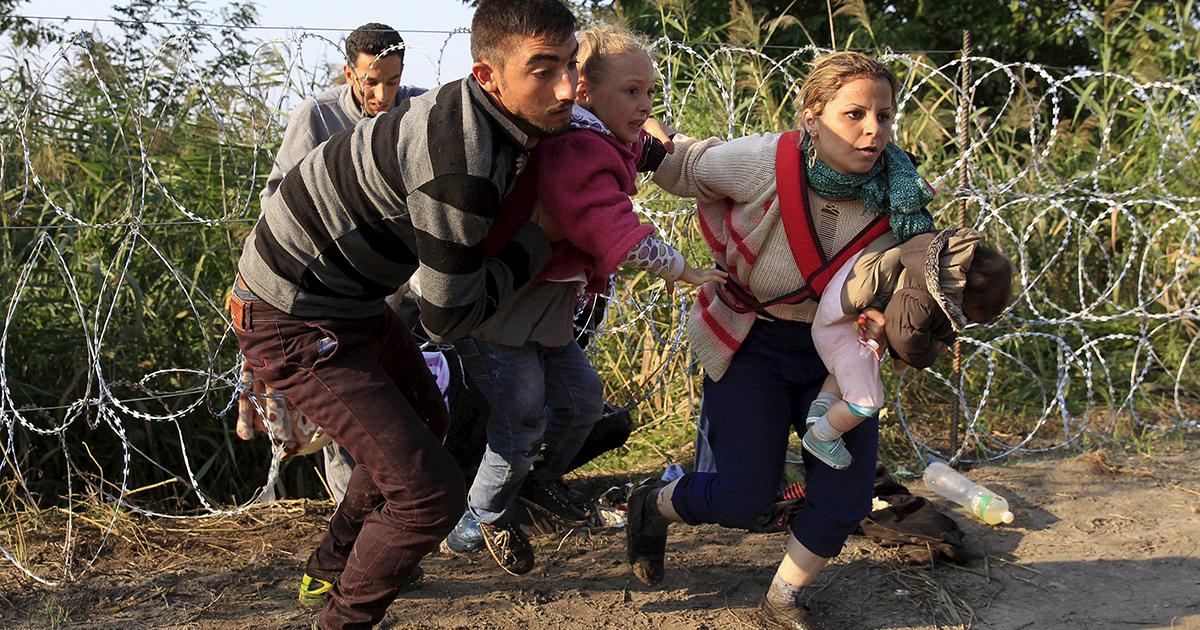
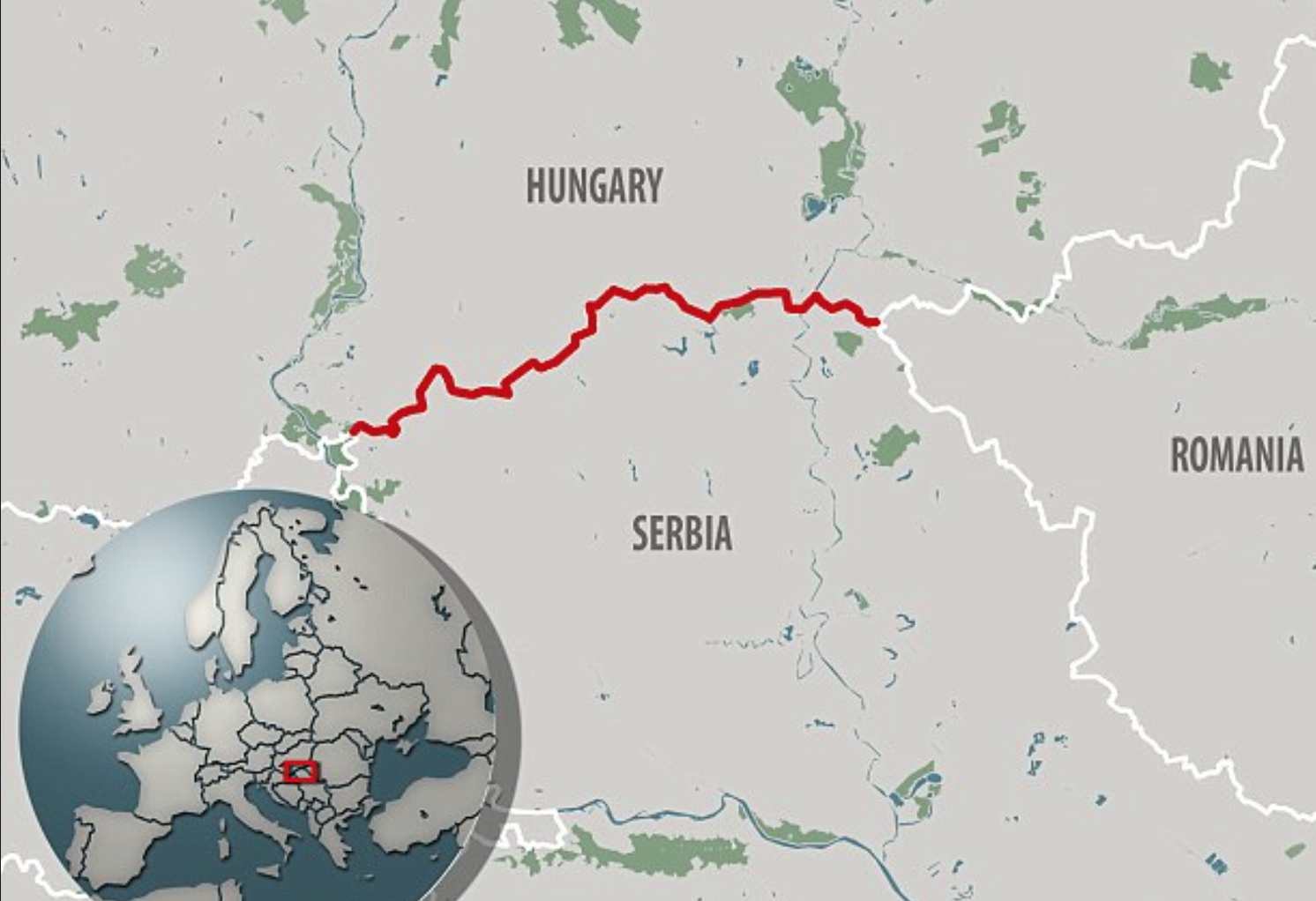
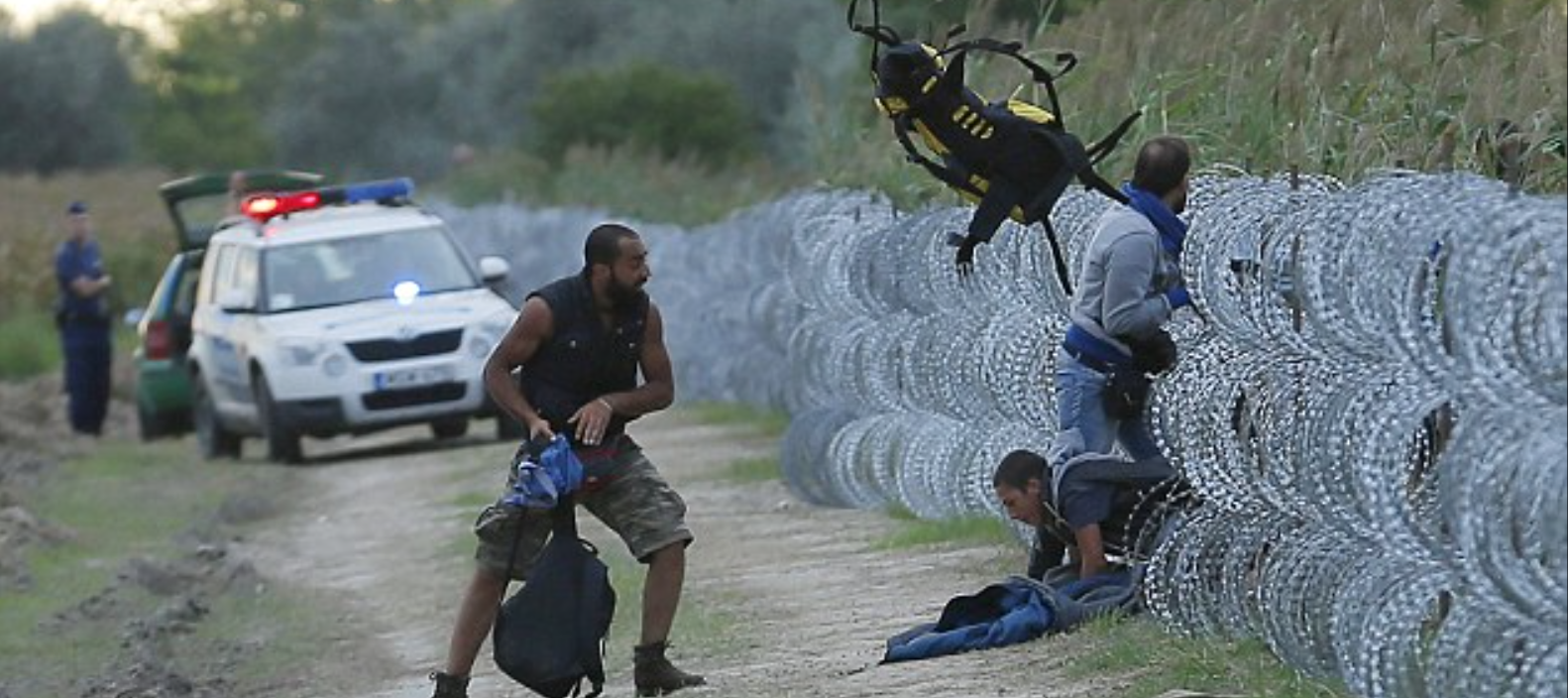
The coils of razor-wire lain by a rag-tag group of workforce workers atop the thirteen-and-a-half meter high fences seek to define Hungary’s southern border by mapping a visible barrier against refugees fleeing Syria’s civil war.  It is low tech.  As much as blocking attempted passage across the border, the project has been a crusade of Hungary’s Prime Minister, Viktor Orbán, in an attempt to inject vigor into the Hungarian strongman’s flagging political career, as much as to create fear among border-crossers.  Since Orbán’s public promise in mid-June to construct a fence that defined Hungary as Europe’s frontier to mid-September, made mostly by state-paid workers, created a sufficiently imposing fence to close the country’s border with Serbia.  This is border building as performance–introducing the sort of fencing that reveals his own strength to his nation, and to the European Union, staged by thousands of uniformed soldiers and with military vehicles and designed to illustrate the integrity of Hungarian border policy before the world media, as much as to demarcate Hungarian territory.  The spectacle of the border has made a lasting impression on Europeans and the global media, creating a visual representation of a border for entry into Europe, even if it has not helped process refugees.

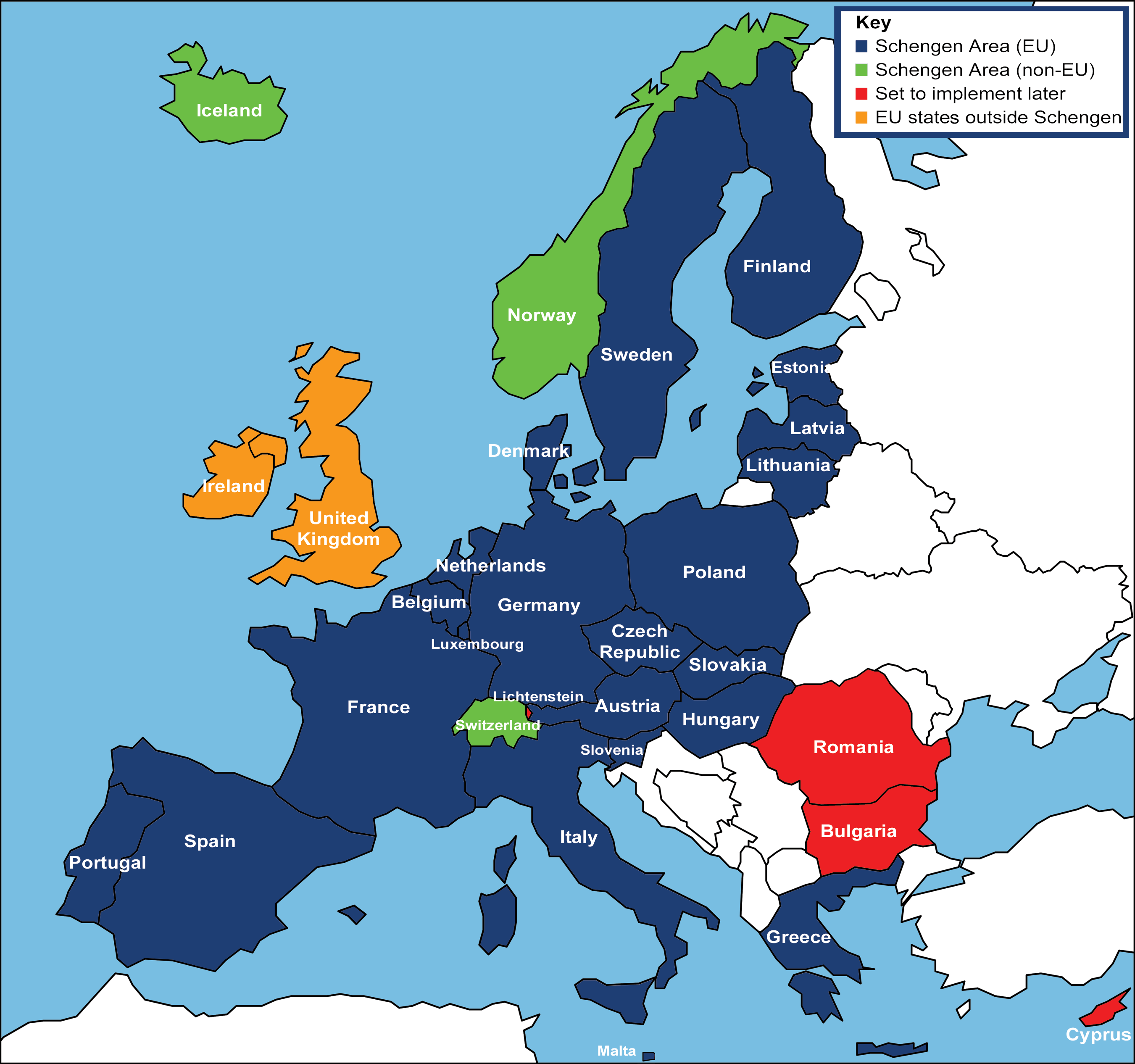
The fence has come to symbolize the tragic plight and obstruction faced by refugees who took a humanitarian corridor across the Balkans on foot or by car to enter Schengen countries, and present them face-to-face with an unexpected obstruction that would define Hungary’s integrity.  The fence topped with razor wire and manned by improvised forces of military policing has become a notorious national symbol reveals the blatant disregard for human rights in a time of increased humanitarian crisis.  It rests on a deeply misguided mapping of the bounds of the Europe Union, an entity under increasing pressure, now understood more as an employment zone than a geographic entity.  The state police who ask refugees to apply for asylum at the newly prominent border as they wait in “transit zone” create a spectacle for Hungarians as much as for the global news.  The liberal use of concertina wire along one hundred and ten miles (one hundred and seventy-five km), topped by security cameras and surrounded by border guards, created a newly militarized space–whose relation to an earlier iron curtain, by no means lost on bloggers, clearly evoked an earlier sense of a work-camp.

The eagerness with which Orbán promoted and adopted the project of border boundary building may originate in the somewhat liminal geographic situation of Hungary in Europe, but the viciousness of the enterprise reflects Orbán’s increasing desperation–and that of his nationalist anti-immigrant FIDESZ party–makes due on his promise to Hungarian voters to act as defenders against the imagined enemy of “migrants” entering the country, to inflate its power by bolstering its own borders in increasingly militaristic terms.  For while the construction of the wall is indeed part of an increasing construction of fences, border barriers and border controls that have emerged across central Europe to repel an increasingly desperate attempt of refugees to enter Europe, and find employment and safety in the Schengen region, the decision to construct such a brutal wall complete with “transit zones” to process refugees may be understood as having its origins in the grotesque theater of Hungarian politics:  although the decision to erect the wall along Serbia’s frontier may precipitate a crisis in refugee flows, it has origins in the willingness of the current Hungarian government to act as the defender of an imagined “European” identity–as evidenced in its blame of the European Union itself for not clearly formulating a plan or policy to deal with refugees, and to assign soldiers along European borders to process human rights migrants.  And as winter descends along a well trodden “West Balkan route” of travel, migrants face new dangers that demand a humanitarian response.  For the dramatic expansion of an even larger two-hundred-and-sixteen-mile long fence topped with razor wire along Hungary’s border with Croatian frontier in mid-October promises to interrupt refugees’ movement on an established West Balkan route, but create a backup that would constitute and even more shameless affront to global human rights and an affront to their actual plight.  Orbán has portrayed the entrance of migrants as an offense against Hungary’s frontiers in manipulative ways–but also wanted to strengthen border boundary to illustrateHungary’s ability to guard the border of “Europe,” after an unprecedented number of 20,000 refugees illegally crossed the border to enter the European Union by crossing the Hungarian border in the Balkans during 2013, a number which had doubled during 2014, increasing alarm of poor border management and giving rise to an unprecedented wave of xenophobic violence.
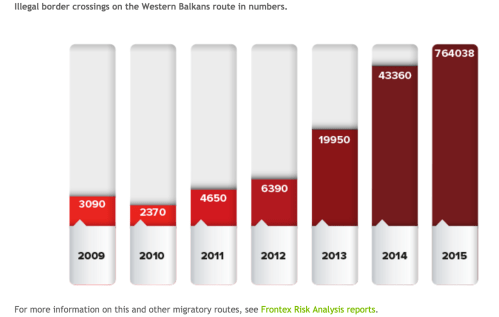
 

West Balkan Migrations, 2009-2015.pngFrontex Risk Analysis reports


In ways which will have quite steep consequences for the actual fates of many refugees in Europe, constructing so prominent a wall is a bizarre exercise both in Hungarian historical memory, and a posturing of a a local strongman who seeks to represent a global crisis through the distorted lens of purely local terms to Hungarians, in what he paints on a global stage as a crisis in European identity.  Orbán has quite outrageously called for “defending the common borders of the European Union with European forces,” but blocking the transit of refugees–or quarantining the newly arrived in euphemistically dubbed “transit zones”–will not intimidate them or prevent their arrival in Europe, but only reroute them, and delay or divert any successful humanitarian strategy from being effectively framed.
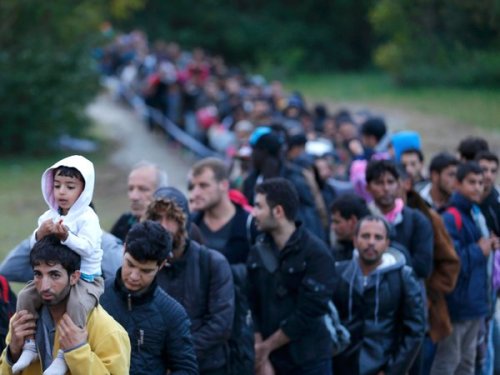
 

MIGRANTS2-articleLarge

This makes the pretense of acting as a defender of Europe all the more outrageous.

1. Although the wall was ostensibly built to protect Hungarians from the arrival of refugees, the symbolically powerful wall across the Hungarian border has become an attempt to preserve the strength of Hungary’s government against a largely imaginary enemy.  While few refugees hope to settle in the country permanently, the border-fence is a particularly tragic rewriting for the start of the twenty-first century of Marx’s bold statement at the start of The Eighteenth Brumaire that figures and personages of history not only often repeat, as Hegel believed, but do so first as tragedy and then as farce–if the farce is poised to precipitate an international human rights tragedy of its own.  For the walls evokes historical memories for Hungarians and for Europeans as an assertion of the right of state, even as it seems staged a spectacle to illustrate the strength of the Hungarian state to ward off an entirely imagined enemy, and aggressively grandstand on an international stage in myopic ways.

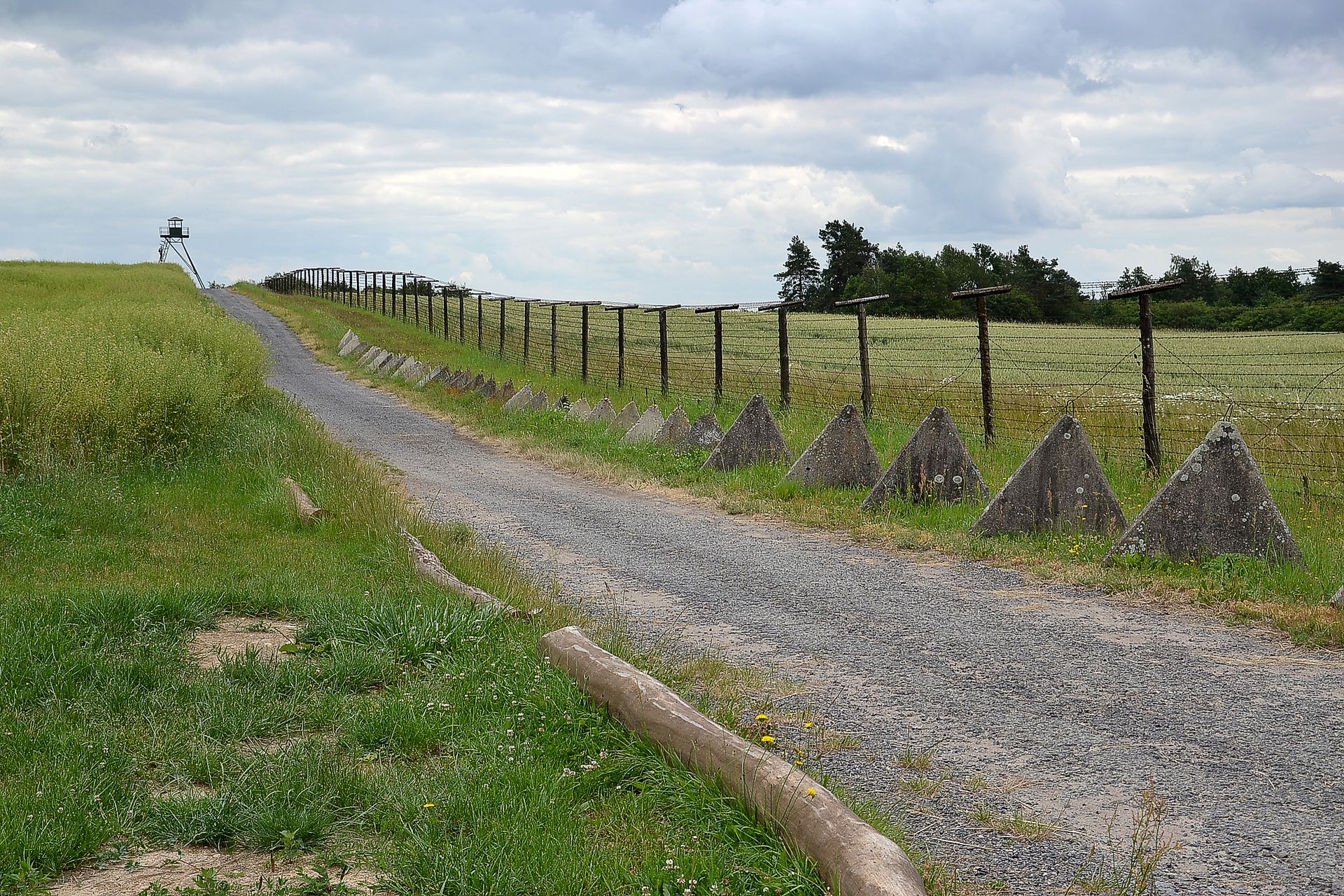
For if the actual iron curtain was dauntingly divisive, the rather hastily erected fence nominally sought to prevent the arrival of refugees, far less impermeable for desperate refugees than an illustration of the Hungarian government’s resistance to allow progress across a Balkan passage, than notice of the government’s open disregard for their rights.  Refugees are penned like animals along the fences congruent with national borders, rather being than extended asylum or offered any needed humanitarian assistance or refuge.  The building of the border barrier by conscripted labor–as much a police–the border boundary is more of a declaration, and a site for exhuming memories–both of the electric wire fences taken down along the Hungarian-Czech border in 1989-90, pictured below, retained when the fall of an “iron curtain” was celebrated–with far more violence than that longstanding boundary barrier.  Indeed, the sole surviving fragment of that border is far less  threatening than the new barbed wire barrier that was ostensibly built to block entry of the destitute into Hungarian lands.
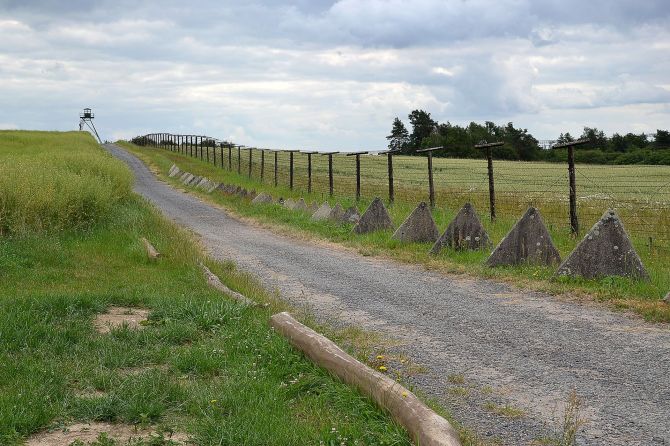
 

Čížov_(Zaisa)_-_preserved_part_of_Iron_curtain

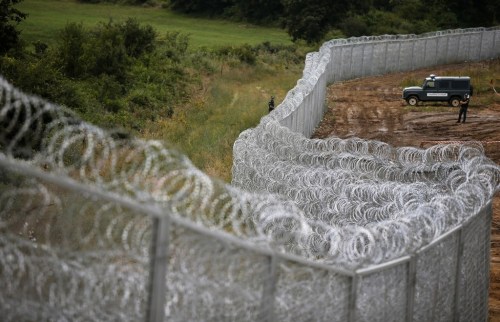
Bulgaria.border-1024x660

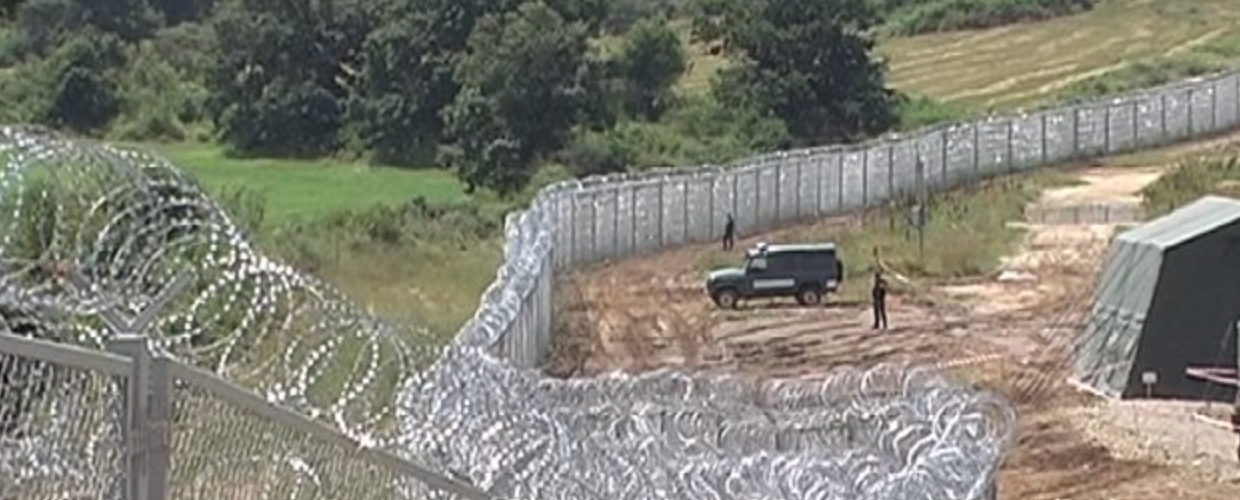
Along Bulgarian-Turkish Border, July 17, 2015 (REUTERS/Stoyan Nenov)


The fence on the Hungarian-Serbian border was allegedly constructed only after Orbán declared himself open to consider all options which could stop the flow of refugees into Hungary short of physical closure of the border, after discussions with Serbia.  Hungary’s Minister of Foreign Affairs Péter Szijjártó mustered the declaration that he  believed that its planned construction would not violate international accords or laws–yet it is truly hard to even imagine how he thought it did not, and was quickly recognized in Budapest to be a somewhat ghastly public unthinkable refashioning of the Hungarian state.
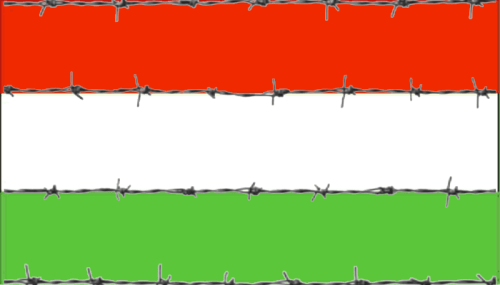
 

barbed

Budapest Beacon (June, 2015)

Beyond obstructing or refusing entrance of those who have travelled from former homes through crowded refugee camps in Turkey and Greece, recast refugees fleeing destruction in Syria and Iran as criminals.  For as well as a means of preventing passage across borders, the notorious construction of the border fence is particularly opportunistic move of Prime Minister Orbán:  constructing such imposing border fences cynically re-regulates the very legal procedures to which asylum-seekers are forced to submit.  Is the recent rehabilitation of this oldest and most authoritarian of fictions of national identity not the most reactionary of performances of national exclusion?
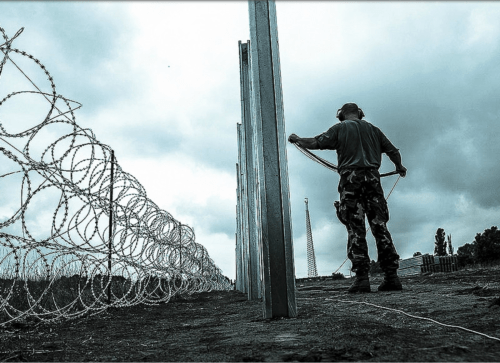
Kelebia FenceTriple Concertina-Wire Fence at Hungary’s Serbian Border near Kelebia (Photo: Freedom House)


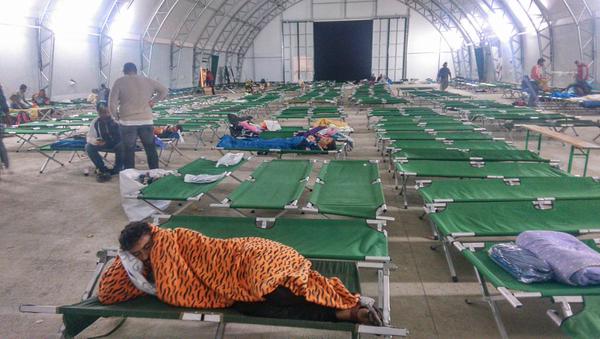
The geographical location and situation of the imposing border fence have been mapped multiple times in the news as an obstacle to the northward progress of “thousands of migrants and refugees”, and portrayed as a crisis in European unity as Germany and other countries ordered temporary border restrictions.  But the fences that run across Hungary’s borders are less often examined as a dangerous psychological projection of the Orbán government’s loose understanding of legality and manipulation of national identity.  For the increasingly militarized boundary fence not only traces the border barrier around Hungary.  It translates the mapped boundary line into an impassible frontier, surrounded by resettlement camps, which effectively places refugees outside both the status quo and apart from the state.

Has the marginalization of refugees along Hungary’s borders also become an occasion for recovering memories of the marginalization of populations in Hungarian politics, most recently the Roma people and other immigrants?  The patrolled barrier on Hungary’s southern border ostensibly responds to fears of an “endless flow” of illegal immigration which Prime Minister Orbán warns would threaten to “overrun” Europe.  By militarizing the border barrier on its southern border, the Hungarian government ostensibly seeks to defend its protection of its citizens, but also allows itself to charge refugees with violating local laws and protocols in ways that disrespect international law.  Since the fence was completed on September 15, Prime Minister Orbán’s priority recasts him a strongman able to protect the country and defend the state.  The barrier offers Hungary’s government the excuse to punish attempted crossings with three years of imprisonment and automatic deportation.

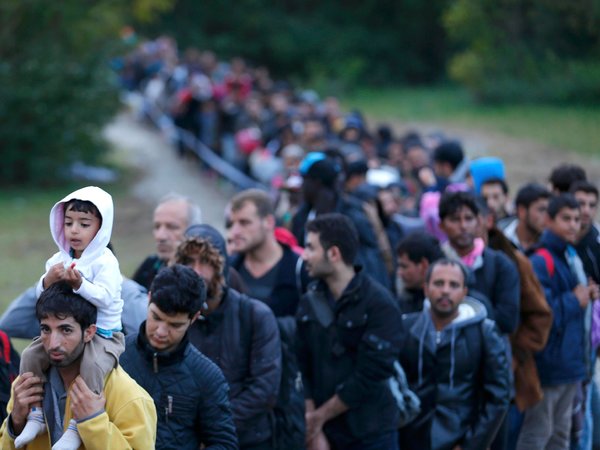
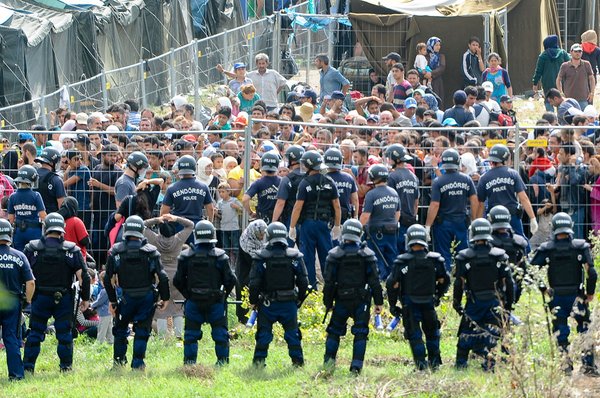
This haunting but perverse image of the reception of migrants–at a time when Hungarians view emigration as a more dangerous threat to the nation than immigration or the arrival of new and potentially skilled workers–offers an illustration of the strength of the nation and the extent to which the nation will go in taking strong mesures against an imaged enemy.  For in  refusing entry to refugees as they seek to enter the European Union, confining them in “transit zones” sealed off from Hungarian territory, but open to Serbia, Orbán’s government turns the other face to many without medical, legal, or financial assistance.
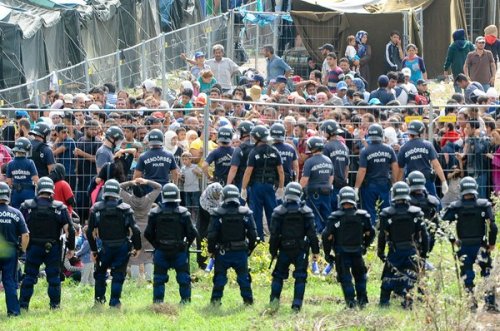
migrant-reception-hungary_jpg_600x624_q85

2.  By declaring “a state of emergency due to mass migration,” that expands police rights to stop suspected “illegal” refugees, the Orbán government has rewritten the rules refugees follow while authorities decide asylum applications and decide who can be admitted to Hungarian territory:  hence the need for the fence.  (The decisions are unilaterally made without possibility of appeal.)

The barrier quarantines those pleading from asylum on the margins of the country through which they desire passage. Does the fence, patrolled by police and the state army, not provide an image of the defense of the nation where one lacked before, blocking transit across a route where some 170,000 refugees have already entered the EU this year?  The militaristic maneuver seems a show of force disproportionate to, as does the recent dispatching of armored vehicles and hundreds of troops to its Croatian border.  In undermining the most central values of granting asylum that most all European Union countries affirm, dehumanizing refugees as the new target of xenophobic accusations recasts their plight as a disturbance to the state.  And in using national workers to create this boundary barrier, as an artificial boundary of the state, the Orban government could be accused of reallocating funds that the EU had in fact provided his country.
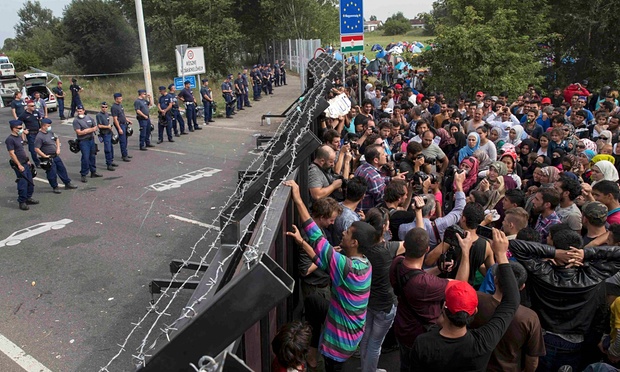
4546

Hungarian Border near the village of Horgos, Serbia; September 15, 2015 (The Independent)

Even if it is not the impermeable boundary it has been touted–
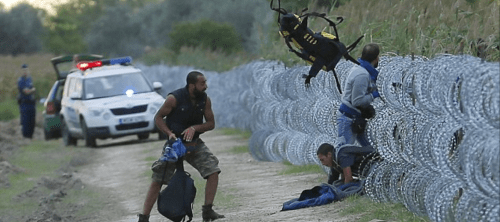
across the fence? Under it?

Near Röske, Csaba Segesvari (AFP/Getty Images)

What role does the fence serve in blocking refugees entrance to the Schengen countries where they have travelled in search of work?  Designating those who attempt to cross its borders as “illegal” dramatically reinforces regional ethnic prejudices, blaming those undocumented for their circumstances and alternately recasting their identities as muslims, opportunists and actual terrorists, the construction of border barriers crudely exploits the mapping of the national unity as a way to divide space and the flag as a threatening sign of national belonging.

3.  Hungary may lack prison space to accommodate refugees, but seeks to portray itself as able to manage the “crisis” of refugees’ arrival, choosing deportment while ignoring their presence or dilemma.  It is almost paradoxical that the insistence on protocols of boundary-crossing and legal procedure should be so strongly espoused by Prime Minister Orbán–who has regularly flouted and rewritten laws and the constitution, and attacks an independent judiciary.  For the Hungarian border barriers continue Orbán’s openly anti-democratic defense of the Hungarian “homeland” even as he flouted the many EU reprimands his government has already received.  Building the border wall offers a way to ignore global actualities even as refugees cannot continue to comprehend the interruption of their attempt to flee civil war.

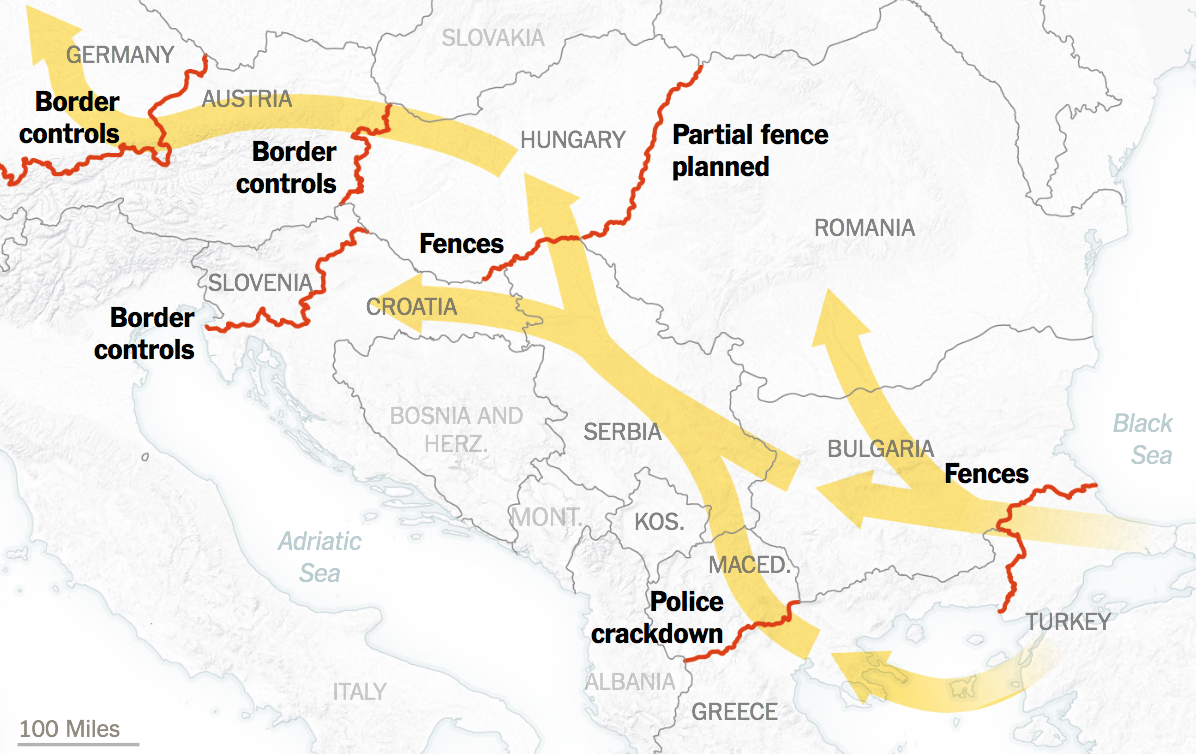
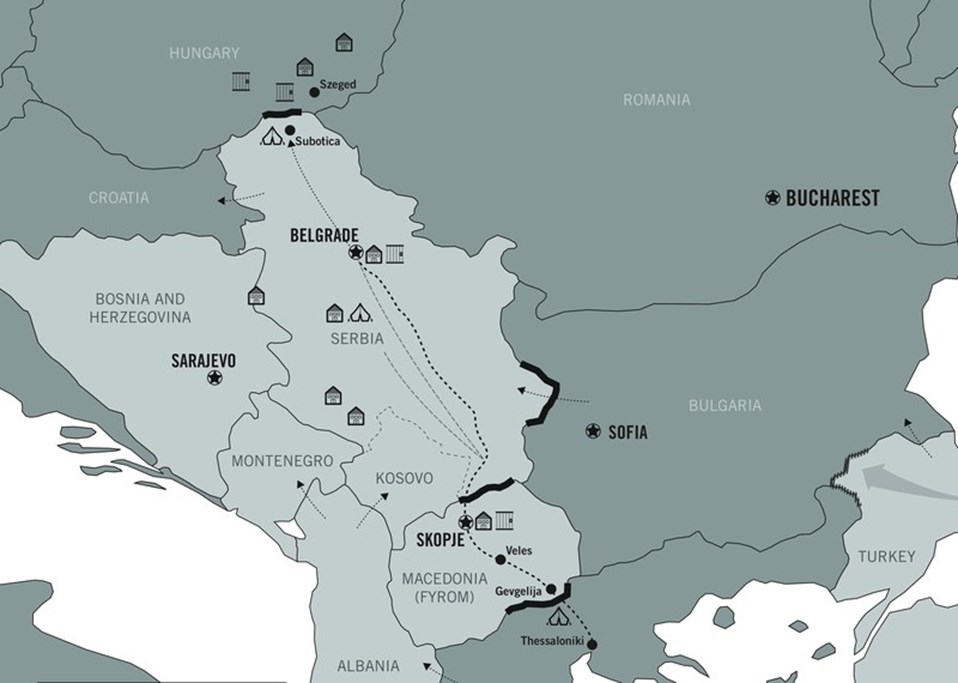
Refugees from Turkey and Syria who have crossed the Balkans have been met by similar barriers along the borders of BulgariaSlovenia, Austria, Germany, and Macedonia, to be sure.  While Hungary insists, in double-speak fashion, it hasn’t betrayed the Schengen Accords allowing free transit, whereas border controls were thought dissolved by the European Union, they have returned with a vengeance, stranding many families and individuals in the non-places of airports, parking lots, and improvised camps guarded by attack dogs.  Current plans to expand similar fences and border barriers have spread to Serbia, Ukraine and Estonia, who see themselves as victims of Germany’s vice-chancellor promise to accept one million refugees and half a million yearly.  The fence has served to direct media attention at the problem of a refugees trying to enter western Europe, illustrating the reflexive response of a government providing similar fences of barbed wire on its borders with Romania and Croatia–lest Europe indeed be “over-run,” whatever being over-run by those on foot might mean.  Perhaps we have a failure to map their arrival less in terms of lines of sovereignty–and border fences–and governmentally than charting their painful itineraries.
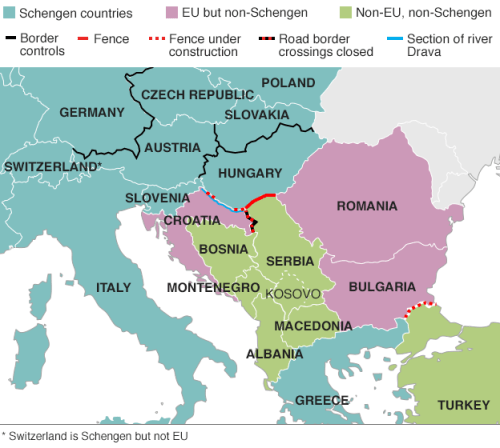

_85630511_balkans_migrants_624_v7

BBC

The erection of such border fences on Europe’s edges echo a concept of state sovereignty that seems outdated at a time when the national protection of governments in Syria, Iraq, and elsewhere no longer exists. Their creation on a map offer a truly paradoxical means and symbol to cynically assert his own authority, openly rebuking human rights traditions even as he shrouds himself with legitimacy, but has sanctioned the spread of similar frontiers that obstruct the local overland routes on which most refugees have travelled.
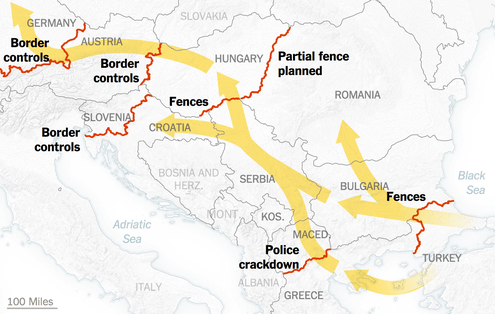
migrant-borders-europe-1442357424369-master495-v3

ˆNew York Times


By 2016, they had grown, and seemed to reflect not only growing xenophobic suspicions but a deep distrust that actual borders provided meaningful national frontiers, with the number of countries that had completed boundaries or planned to do so providing cordons against future travel that eerily illustrated the removal of the Iron Curtain:
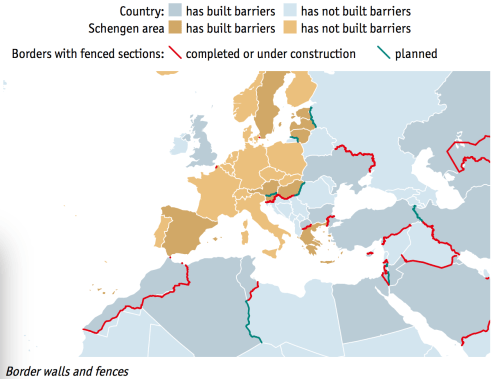
 

European Fences

Economist:  January 7, 2006


And the world looked little different, as the reaction to growing global migration was to construct imposing walls to impede human motion:


Economist: border walls and fences.png

Economist:  January, 2006


The long-planned fence championed by the Orbán government as a response to the “mass-migration” of refugees seems to have sanctioned the “return of the long repressed.”  For it has given a green light to the proliferation of other border controls that constrain refugees’ movement as they search for safety and homes.  The effective obstruction refugees now face has redefined their movement as “illegal”–in ways, that, as Bill Frelick warned, create a categorical confusion that questions the value and rights of humans and transforms their movement across boarders into a punishable event.  If this seems to respond to the 85% jump in requests for asylum since 2014, mostly Syrians followed by Afghani, Albanians, and Iraqi, the abdication of actions of processing or accepting individuals in civil society intentionally marginalize refugees.  Even if Hungary is only a transit zone for these families of refugees, the construction of a fence responds to their arrival in ways that have only unleashed as a response latent xenophobic tendencies.

4.  As increasingly desperate and uneasy refugees walk on foot to reach the perpetually receeding illusion of the “rich EU”–many hoping to join their families–by foot, taxis, rented minibuses, trains, or through human traffickers, their searches for asylum are complicated by the relative nature of European prosperity in the poorer countries through which they travel.  After refugees and immigrants were granted asylum at rising rates in western Europe since 2010, Hungary has erected a militarized border against those forcibly displaced entering central Europe as if to distance the plight of those crossing the Balkans through Turkey and Greece from the mental space of Hungarians and portray their entrance into the country as a national danger–inordinately magnifying the role of Hungarian law on the already unduly onerous lives of refugees beyond what they ever expected.  The difficulty in mapping the numbers of those seeking asylum, and the difficulty of determining where increasingly desperate refugees might settle, complicate the inhuman exaggeration and magnification of the difficulties they pose to governments who may grant them asylum, as do the multiplication of dehumanizing metaphors of swarms of insects, tidal waves, a tsunami, herds of animals,  or indeed as an army convert the almost two million who have fled from Syria and live in refugee camps in Turkey.  Such metaphors certainly seem to sit well with the Hungarian government, who demolished neighborhoods where Roma live only to pay the cost of their reconstruction; other party members call for a ““final solution” for Roma in Hungary–even as the EU has both funneled money to Hungary to aid Roma and prioritized their integration in Hungarian society.

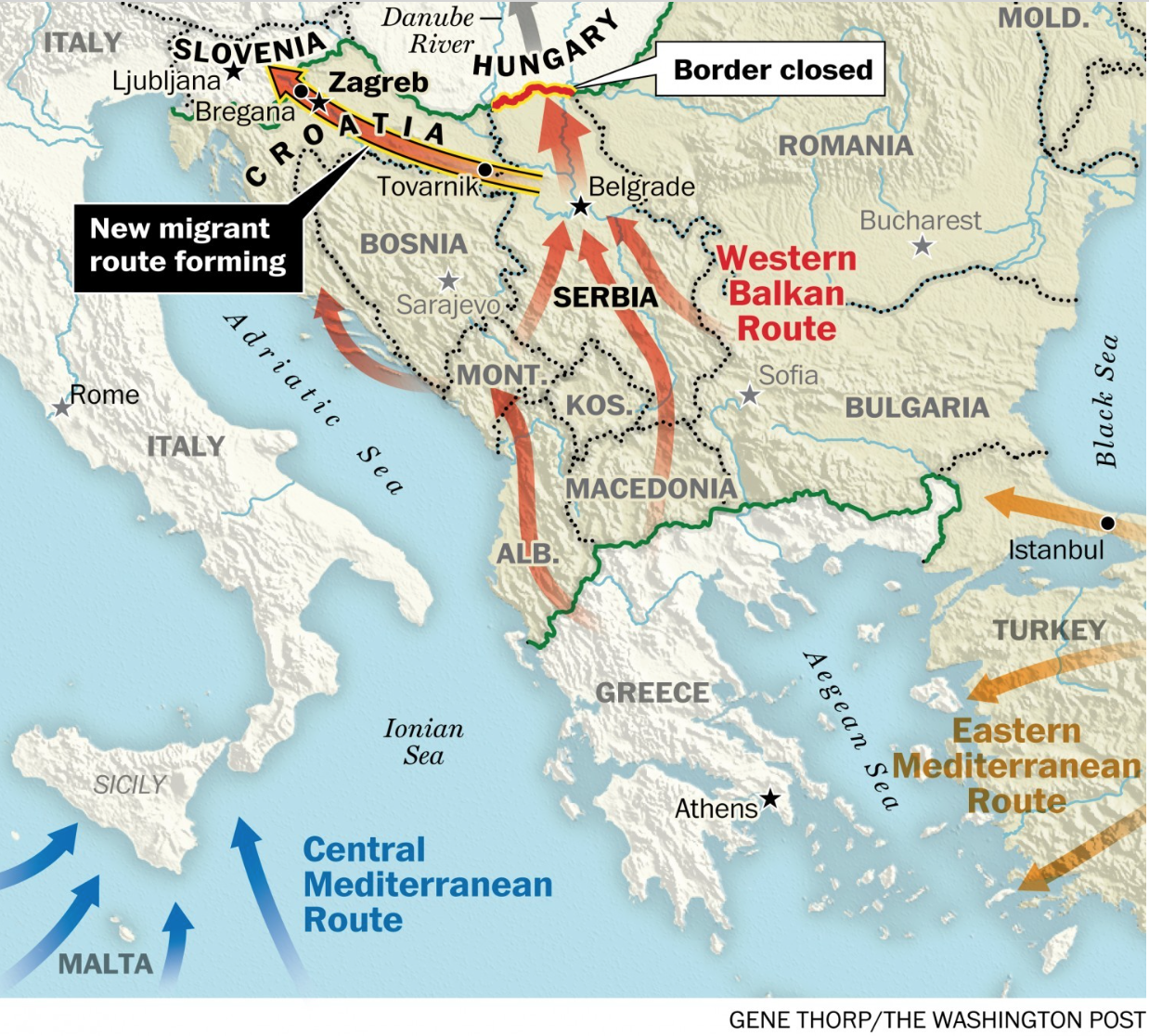
Are our very maps complicit in concretizing and perpetuating such dishonest and profoundly unuseful metaphors as they show the routes refugees take across the Balkans, and the exclusion from countries they confront?
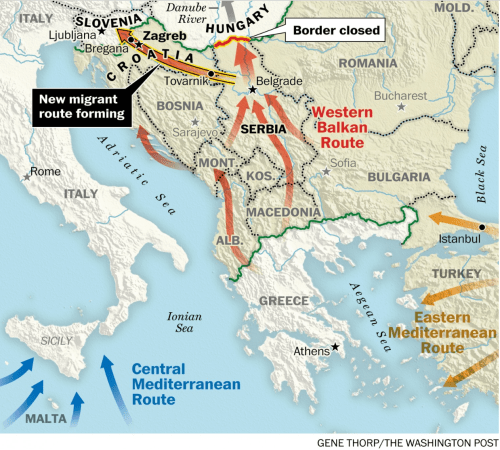
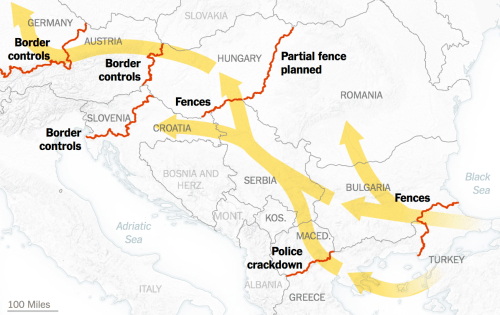
Wa Po Migrant Routes around Hungary

refugee fences

New York Times

Since the now rightly notorious wall was completed on September 15, the Orbán government announced that any attempted crossing the border barrier by families and children will be punished by Hungarian law.  The continued “mass-migration” has led the Orbán government to declare a state of crisis in which it needs to defend its borders in ways that trump international law–and the rights of persecuted refugees arriving from Syria, Afghanistan, Iraq and Pakistan, detaining them in “transit zones” controlled by military police.  If the fence responds to a crisis in governmentally–alleging that the river of refugees who have crossed the Balkans from Afghanistan, Syria, and Iraq were not displaced–the newly militarized borders of nations facing arriving refugees have cast themselves as victims of “mass-migration” by desperate people fleeing on foot; hastily erected fences are monitored by officers in riot gear, bearing ammunition, and water-guns, installing security cameras at a barrier they are investing a paranoid tenor with quite terrifying concreteness.

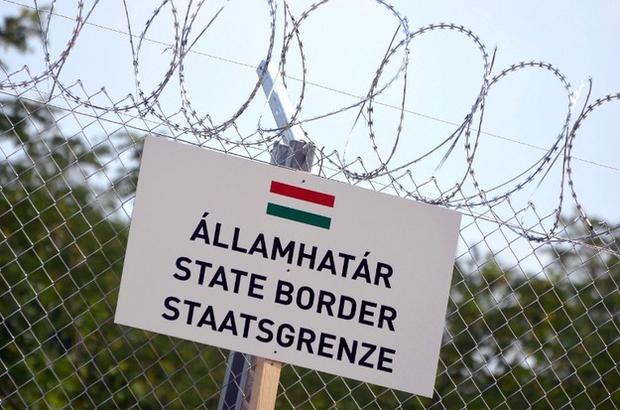
The chain-link fence topped by barbed wire and security cameras suggests a knee-jerk response to mass-migration with eery echoes of the past.  Hungary’s government has only proposed its rights to build analogous fences on the country’s borders with Croatia and Romania–even as UN officials and the UNHCR voiced dismay at the militarization of its southern borderline.  For while those seeking asylum view Hungary as a site of transit to Europe, and to a new home, this affirmation of local boundaries and exercise in territoriality places those following the hundreds of thousands who have already fled civil wars in countries like Syria, Afghanistan, and Iraq, in a sort of legal limbo of displacement unforeseen by countries who  became members in the Schengen Agreement promising unity to asylum requests.  Rather than grant asylum, the labelling of refugees as terrorists, criminals or violent, collectively not deserving entry, rehabilitated flimsy conceit of the border as impassible barrier.
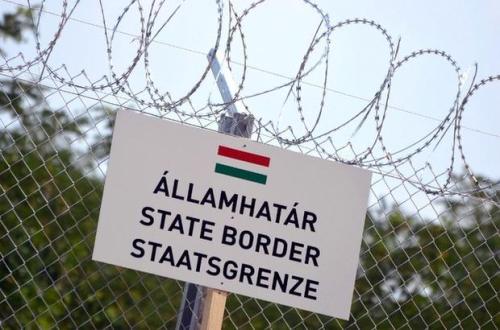
state border

 AGENCE FRANCE-PRESSE 

Guardian

scale bar

The Guardian UK

Such widespread projects of constructing militarized border fences mark unprecedented local distortion of the thirty-first article of the Geneva Conventions.  The consensus of preventing punishment for refugees illegally entering any territory of a contracting State responded to an era of violence Europe sought to banish. But the barrier distorts Hungary’s place in the world, by treating those who seek passage through Hungarian lands as criminals who are to be kept at a gate.   While the Geneva Conventions affirmed rights for those with refugee status, without medical care or financial means. the criminalization of border-crossing lies not within any nation’s right to police its boundaries, as has many sustain in the United States, is an affront against humanity and international law.

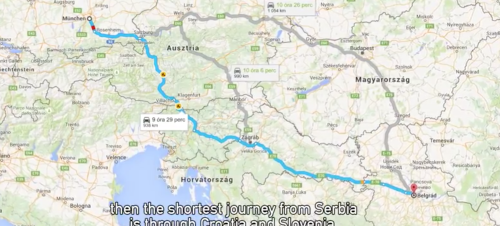
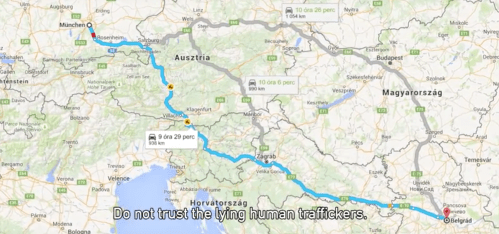
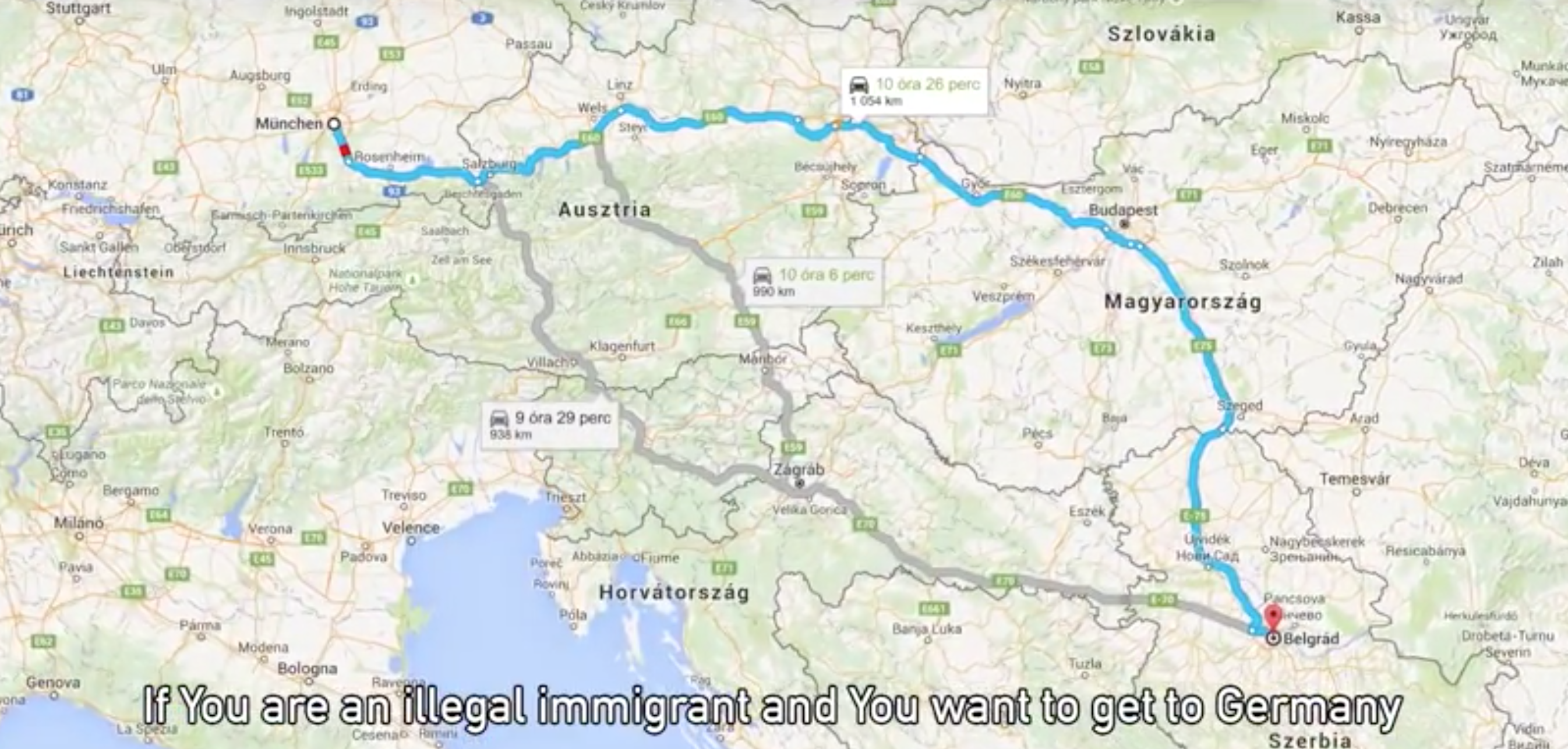
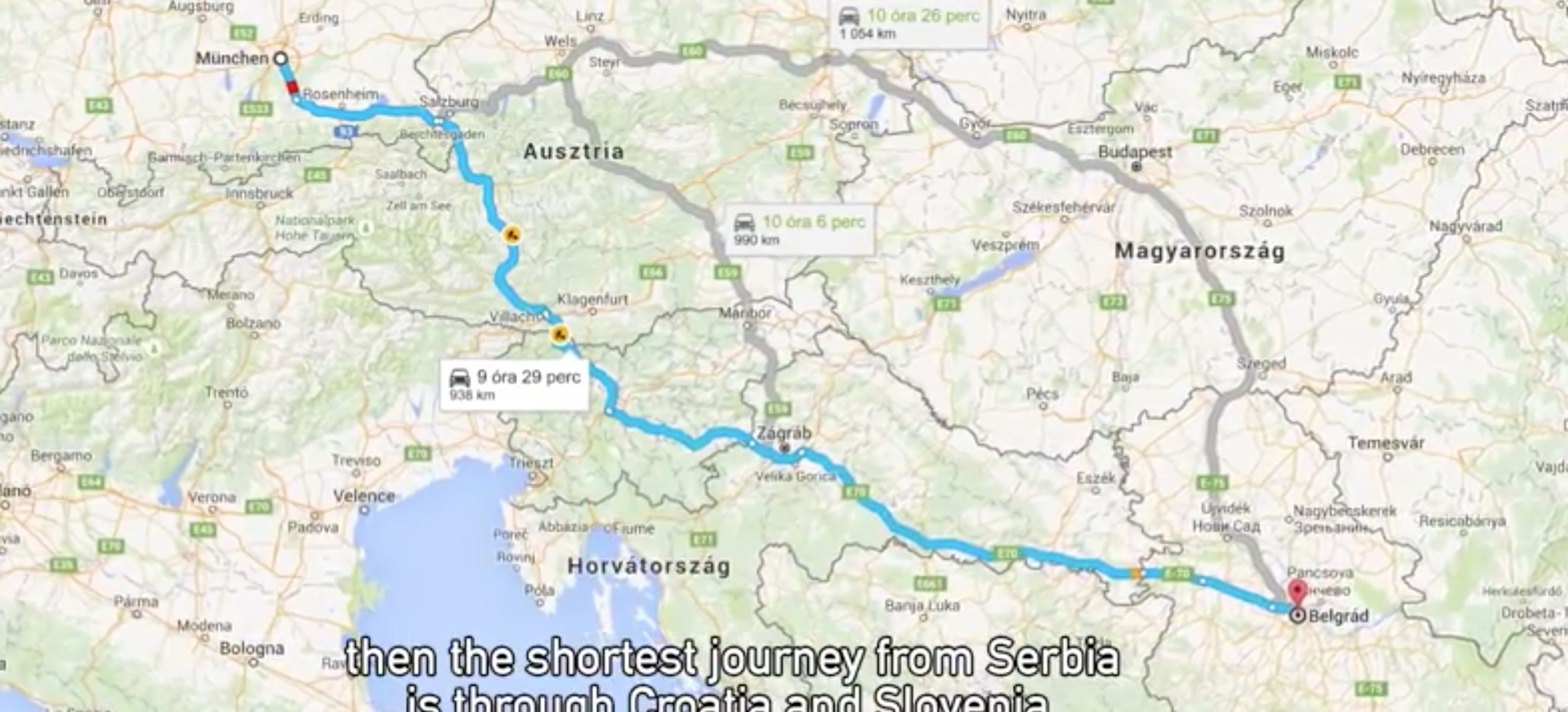
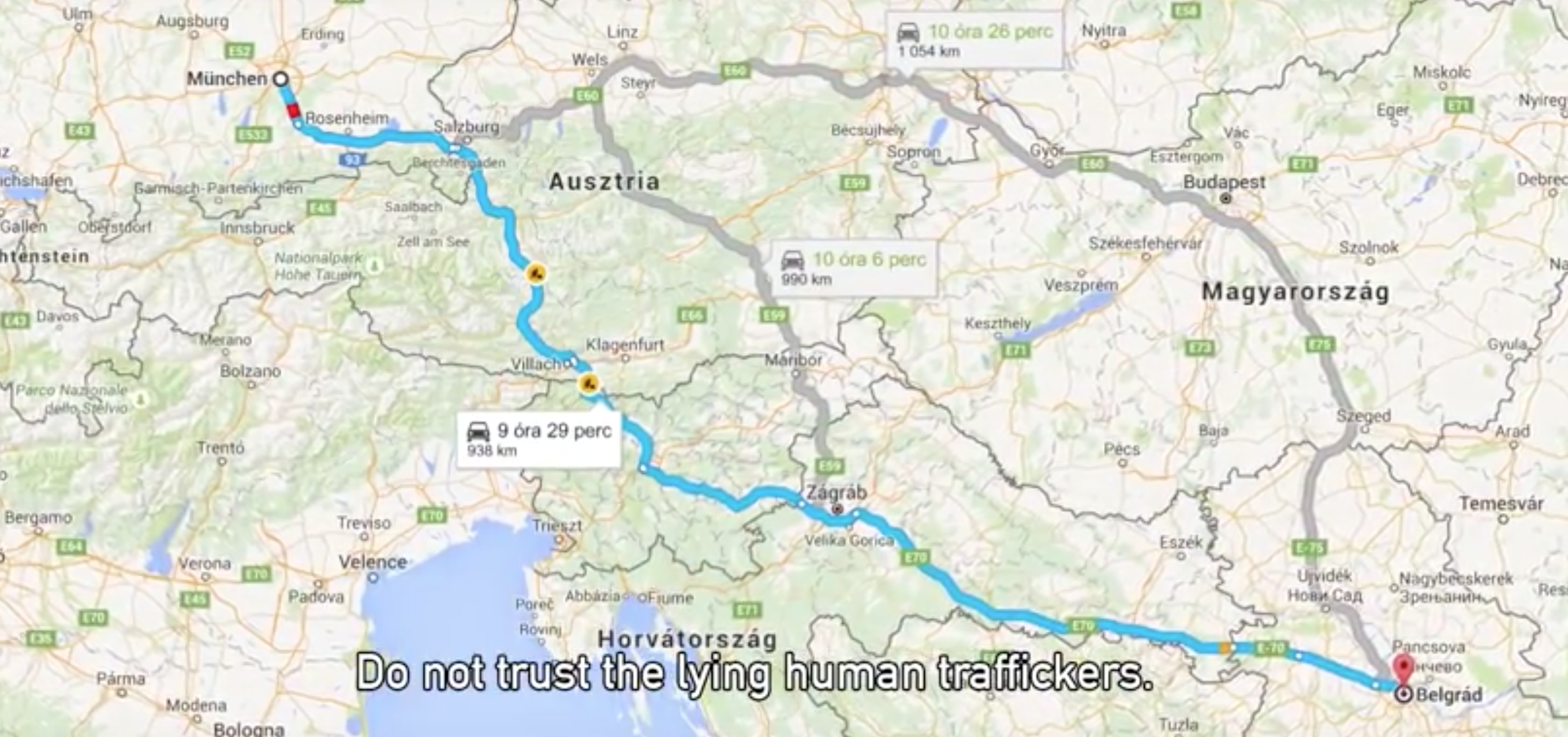
So much is already apparent ent in locally-produced videos seeking to persuade refugees–here identified “illegal Immigrants”–to adopt alternate pathways for eventual asylum in Germany, across mine-filled Croatia:
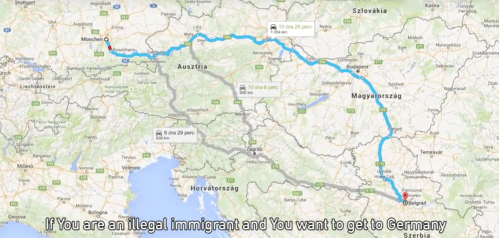
Illegal Immigrants and You want to get to Germany

The Shortest Journey from Serbia

Do Not Trust the Lying Human Traffickers

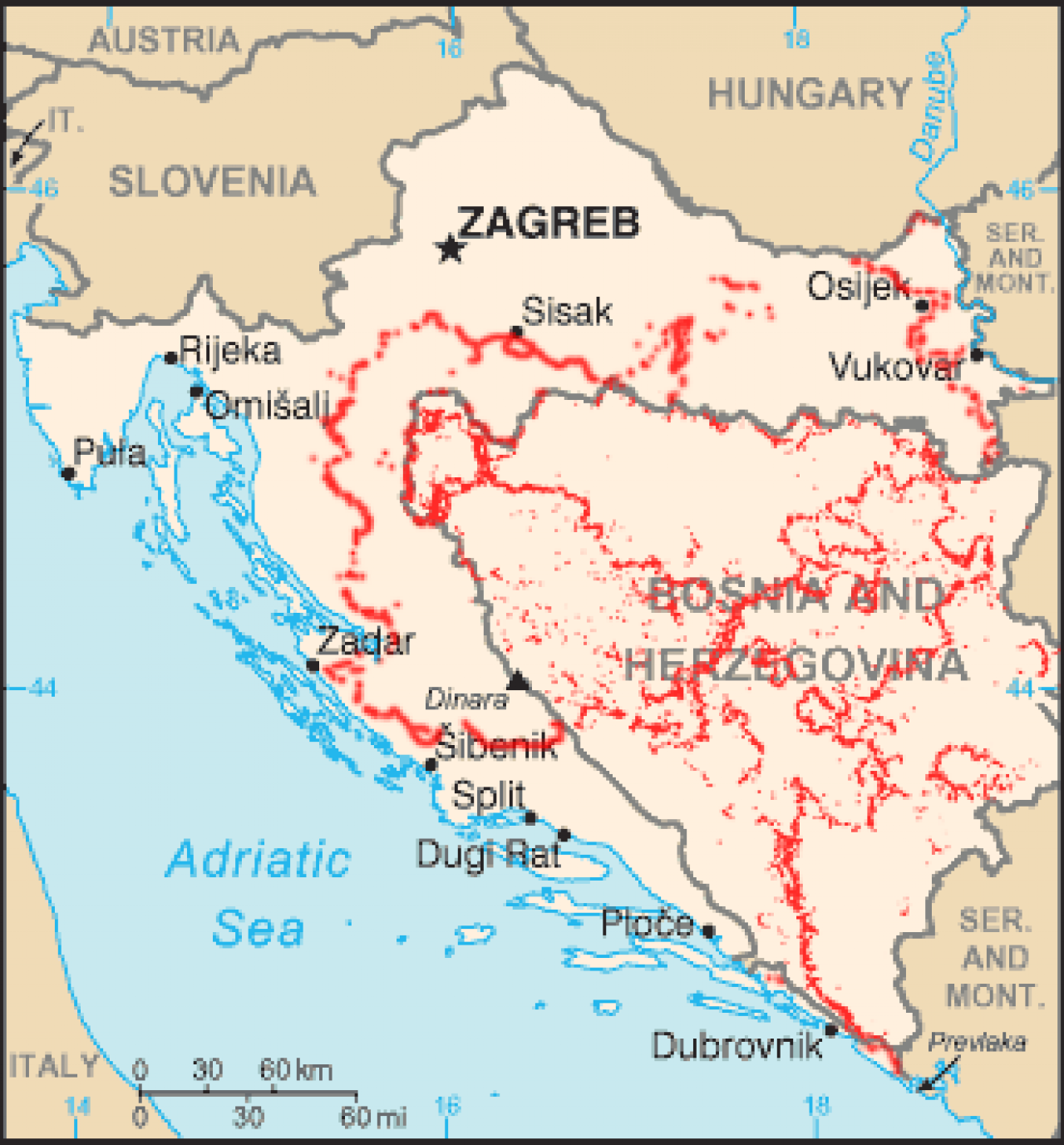
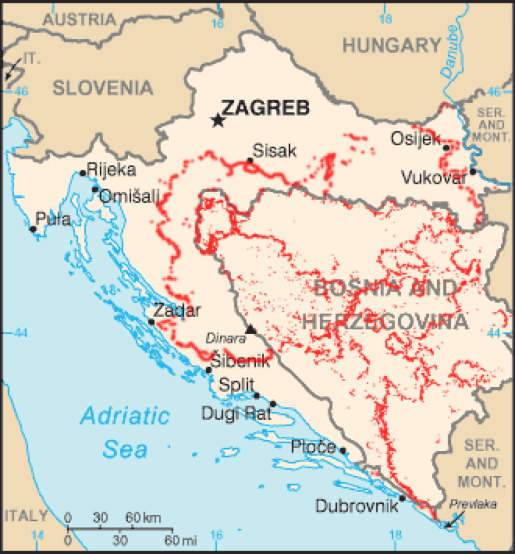
The desire to shunt refugees through Croatia, rather than Hungarian lands, conceals the ugliest of inheritances in the Balkans–and its distinctive topography of active land mines blocking most paths and roads to Austria or to Zagreb.
mines_map

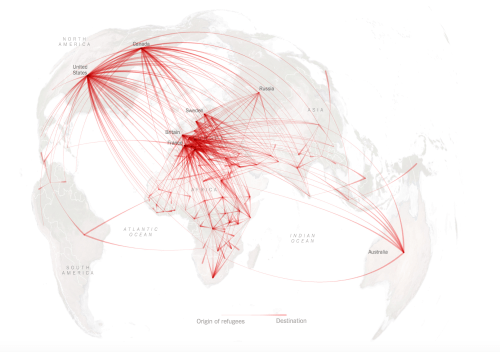
The obstruction of the progress of landless refugees lacks any sense of the global dilemma we increasingly face.  For the notorious fence strikingly reveals how this oldest of designators of territoriality has been rehabilitated and so openly championed when the pathways of refugees across borders is both common and challenging to visualize–and distorts their plight as if it were a purely local affair of following procedures, but whose Kafkaesque character conceals a hatred fueled by xenophobia.
Global Trends in Displacement: Destinations

“Global Trends in Displacement”/New York Times (based on UNHCR data from 2014)

Such authoritarian boundary-building is all too easily justified by ignorant questions of who deserves refugee status or which government is rightly tasked with processing petitions of asylum–even if Schengen accords clearly place that responsibility in the country of entrance, the massive movement of nationals across the Balkans was never imagined.  Rather than appreciate human displacement, the Hungarian decrees unilaterally police entrance into a region of passport-free travel by local law; those seeking asylum are “othered” as illegal, and deserving punishment, without recognition of their dire trajectories or desperate search for new homes:  labelled “migrants,” rather than refugees, those fleeing civil wars and destroyed states are portrayed as opportunistically seeking benefits and jobs–rather than the economic air political security that is their legal right.

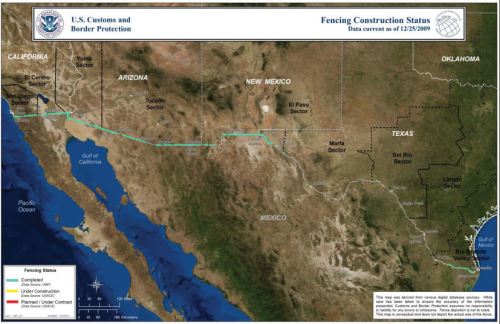
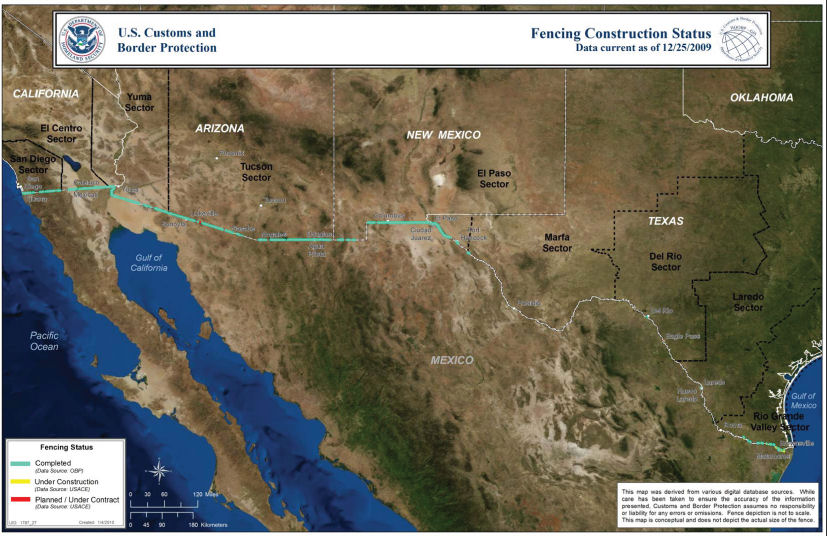
As much as the arrival of refugees challenges a notion of governmentality, refugees are unfairly recast as offenders decorum who stand in violation of legal codes.  The argument for building boundaries on our borders to prevent human border-crossing is not without other precedents, as Americans well know–and are knee jerk responses to questions of governmentally, as much as they offer responses to human needs.  Is it a coincidence that the assertion of this imaginary borderline by an actual wall–similar to the fortified border barrier between the US and Mexico, lambasted by Vincente Fox as “disgraceful and shameful”?   President George W. Bush had prioritized the fence to prevent “illegal entrance” and immigration in 2001.  It has not prevented migrants from crossing–and, as Michael Dear noted, whatever deterrence of migration is created by the barrier, it can hardly justify the “enormous expense of maintaining the fortifications — estimated to be $6.5 billion over the next 20 years.”  But the game was always primarily political, and when it was resurrected in the first platform paper Donald Trump released for his presidential run, he cast the plan to expand the border barrier in particularly xenophobic terms–and may have led the hapless Scott Walker to continue the folly of drawing borders by casting wall-building on the US-Canada boundary as a “legitimate issue”.

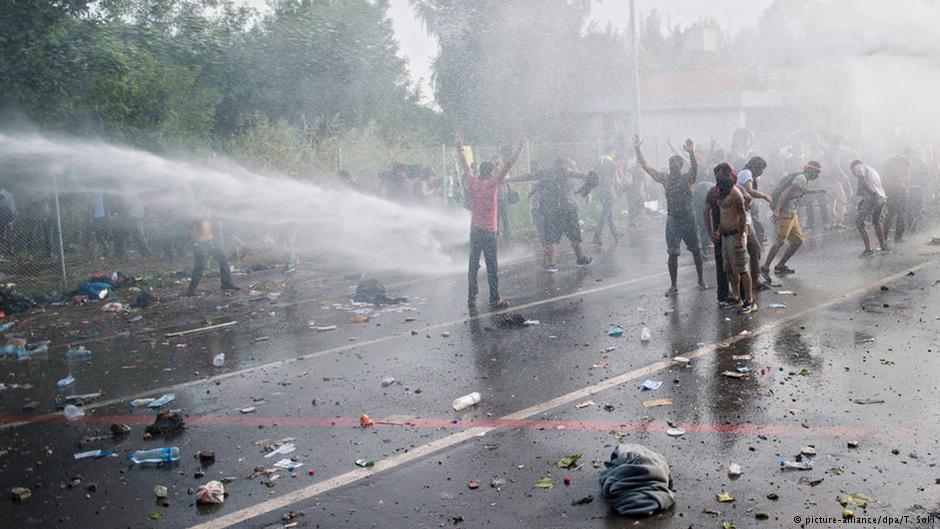
The border barrier Orbán erected along Hungary’s southern frontier echoed that on the US-Mexico border, but averts eyes from the refugee crisis:  “Don’t come,” an aid to Orbán quipped, “because this route doesn’t lead where you want to go.”  “Don’t come here anymore,” chimed in Serbia’s Interior Minister, pressing his government’s control over passage; “This is not the road to Europe.”   Inhumane response almost taunt refugees–as liberal use of pepper spray, water canon and teargas against those who have tried to breach the barrier materialize these only slightly veiled threats.  The fence not only keeps out refugees, but imagines their distance from the Hungarian state, and indeed costs Hungary as a frontier of Europe–and a country of Christian Europeans.  Much as patrol agents prevent passage at the US-Mexican border, the border barrier distorts questions human rights by way of recasting them in terms of national defense, in ways far less constructive or considered response to human needs or occasion needing international cooperation.

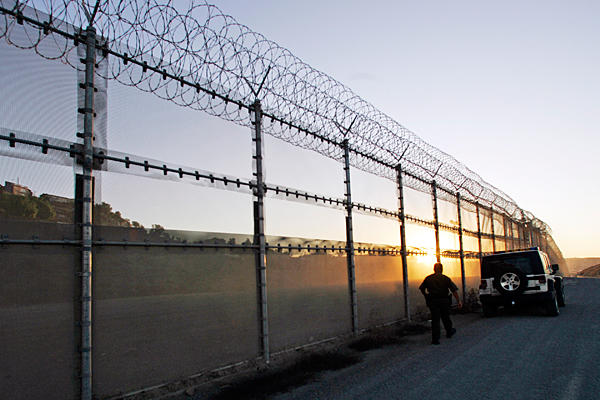
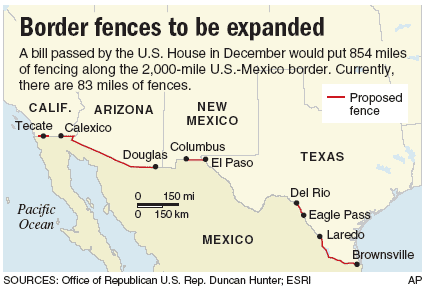
The fence that several presidential candidates propose to further expand the fence that runs along a third of the boundary ignores that the fence’s ineffective role in stopping migrants than has the US Border Patrol–the border barrier has been ineffective in discouraging migration, although it has actually prevented migrants from returning to Mexico–expanding 83 miles of fenced border to militarized expanse of 700 miles at a cost of $2 billion.  The embrace in Hungary of fortifications that recalls the triple curling of concertina wire atop the US-Mexico fence at Tijuana “to make the border safe and secure” claimed to have reduced illegal border-crossings by 50% in 2008, forgoing the  “aesthetically pleasing” federal design standards used in other regions of the US-Mexico fence, the fence is a similarly foreboding remapping of the boundary line for visual effect in a new rallying cry.
0515-US-mexico-border-fence_full_600

Razor Wire Fence Patrolled along the US-Mexico Border
AP_BorderFence_2

AP (2006)

fence-20091229

Donald Trump’s logic that “A nation without borders is not a nation” seems adopted by the Orbán government’s actual plan.

The improvised barricade constructed iduring the summer of 2015 runs along Hungaryy’s southern border with Serbia seeks to create the absolute division one might read in a regional map.  But protection of the actual border may have somewhat less relevance to FIDESZ Prime Minister Orbán than the desire to appear strong in the face of the anti-migrant and anti-gypsy rhetoric he has profited from and continues to incite.  Orbán declared with mock magnanimity that “the tolerance period is over” for granting refugees asylum as it was erected, intentionally creating, seeking to “stir up popular sentiment against immigrants and refugees” by any means possible, observed Marta Pardavi.  Despite being a signatory to the Geneva Convention that makes it incumbent to accept refugees from war-torn lands, even to a country which sees itself as poor, the wall prevents recognition of refugees–each of whom the far-right-wing Jobbik party, which has portrayed the arrival of refugees as a failure in local governance, argues will cost Hungarians 4300 HUF daily, in a country where daily unemployment benefits for its citizens come to 2362 HUF.

In this politicized context, the plans for enforcing the construction of the fence along Serbia’s border primarily constituted a strong public statement.  The enforcement of the boundary barrier illustrates Orbán’s commitment to a distorted image of the Hungarian nation’s integrity, and suggesting his willingness to defend Europe from refugees who most saw as fleeing from their lands, but he portrayed as alien migrants.  After protesting delays in its construction, the deployment of troops to this newly militarized zone to stop those seeking transit to Europe creates fixed portals for processing people without according them human dignity, for the rationale that “They don’t look like people who could become useful members [of society].”  There is all too clear a danger that the refusal of Hungary’s Prime Minister and government to process refugees who seek asylum and have traveled across the Balkans on foot from Syria, Afghanistan, and also Iraq is an attempt to pander to the right-wing Jobbik party, who have consistently claimed and asserted that the current government will not be able to solve the refugee crisis as it has staged public anti-refugee rallies in Budapest that distort the dangers that the “migrant crisis” will cause the nation–and that Hungary’s current government fails to fully address.

The imagined dangers posed by such refugees, wrongly cast as opportunistic threats, or immigrants in search of work, uses the border from a map as a way to disengage from refugees’ actual plights.  (Indeed the unstinting support Hungary’s Foreign Minister voiced for Germany’s decision to start border controls on rail travel from Austria seems a poorly disguised attempt to unite Europe against the arrival of refugees.)  Meanwhile, alternative routes refugees might take to have been proliferating on social media.  Will the creation of such controls, now enacted by both the Netherlands and Slovakia and apparently being considered in Denmark, impel more human smuggling of refugees who are often both educated and able-bodied and even with cash reserves, and expand the humanitarian crisis of refugees?
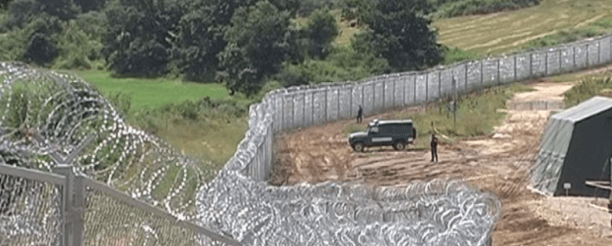
Bulgarian Fence

Border Barrier Under Construction in Bulgaria

Has the Hungarian government’s sanctioning of the building of this fence from June 2015 given rise to a knee-jerk defense of territoriality?  Or has the fence also inspired a return of memories of strongmen from Hungary’s past?

The completed border fence on Hungary’s border with Serbia is more suitable for animal chattel to halt the progress men, families and children, and constitutes a new low point in local respect for human rights–oddly resonating with how members of Orbán’s party liken Roma people in Hungary to “animals” who are “not fit to live among people.”  As much as it reveals a panicked response to the global rise in refugees, the chain fence reveals the reluctance of Hungary’s government to confront the problem of refugees, and refuse, ostrich-like, to believe that problems might enter their own national space–a space from which Orbán’s circles have already expelled Roma.  The rhetoric of the wall closely mirrors the project of wall-building US Presidential candidate Donald Trump openly xenophobic proposal to extend a fence across the US-Mexican border to ward off the arrival of “criminal” Mexicans, as much as migrants in search of work who the wall originally targeted.  Indeed, the Orbán government’s “defense” of the boundaries to Schengen countries of the European Union both recalls the creation of an impermeable US-Mexican wall, 700 miles of which already exist–and uses the outdated nature of the national border despite the limited value of border patrols beyond public political posturing.

Is it only a coincidence that the strengthening of such walls parallel the vanishing of the frontiers and borders that once defined the imaginary integrity of the nation-state?  Both “walls” ignore the growing irrelevance of the borders in a global situation.  Both take refuge behind the most antiquated of artifacts:  indeed, the construction of such barriers only affirms the declining significance of the border as an actual divide, in the face of anxiety about the diminished meaning of national borderlines, and offers opportunities for photo-shots to affirm a national imaginary.  Is it only a coincidence that Trump trumpeted an expanded border barrier against the “extreme danger” of Mexican arrivals at the campaign stop he made at the border city of Loredo, TX, for the first time sporting a now-famous trucker hat bearing his campaign promise to restore America’s national greatness?

Trump's Promise

Donald Trump First Sports His Campaign Hat at the Border City of Loredo, TX

When the unlikely presidential candidate looked at the camera declaring that the future of the United States rested in extending border barriers along the entire US-Mexico boundary against “illegal” migrants, Trump unwittingly offered a defense that has been adopted by countries who take it upon themselves to militarize and police Europe’s borders.  As Trump espoused the expansion of border barriers that illustrate national sovereignty in an age that demands increasing international cooperation, the devotion of attention to the policing of boundaries comes at huge cost for addressing refugees’ actual needs.

5.  The Hungarian government has similarly linked the militarized border-zone built along its southern border to the preservation of its national identity.  The fence intentionally creates a no-man’s land and quasi-police state suspending human rights, filled with refugee camps which fail to help prioritize or meet individual needs, and dehumanize refugees, in the ugliest of illustrations of inhumane treatment at “migrant centers.”  For the razor-wire fence that traces Hungary’s southern border with Serbia seems both to be an abdication of legal responsibility and ethical obligation to those seeking asylum from war-torn nations–and a misguided local response to a global problem whose actual proportions it sadly seems to seek only to obscure.  As much as the wall on Hungary’s border has complicated questions of European unity and identity, it puts into crisis a coordinated response to the global problem of refugees.

As Hungarians seem to refuse to grant asylum as the first country in the Schengen area, where passport-free travel is allowed, it has offered a case where the global crisis of refugees in need of protection have been met by a hostility that treats their movement from shattered pasts as a threat to the civil society–and intentionally obscures the role of Hungary as a transit country.
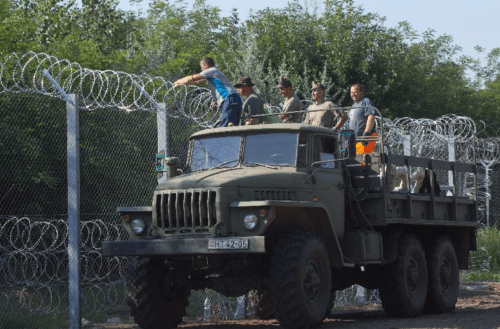
adding razor wire

Hungarian Soldiers Building a Fence near Asotthalom, southern Hungary, on Aug. 30, 2015 (Xinhua/Attila Volgyi)

How did this come to be?  The border-fence built by Hungarian soldiers seems created to prevent any passage of refugees seeking asylum, but suggests a cynical exploitation of a global crisis.  Building an improvised wall of some one hundred and eight miles, complete with a public announcement that any damage to the temporary fence along Hungary’s Serbian border will be punished by imprisonment, is a theatrical attempt to refuse housing or accommodating the refugees who have travelled across the border since the Spring by foot.  For the highly staged building of a such a highly symbolically charged, breachable, and deeply inhumane metal-link fence–whose breaching will be punished, according to the books, by three years imprisonment.

For those seeking refuge from persecution are indeed regularly beaten by police as if they were criminals and left “in legal limbo” in Serbia and Macedonia, wbhie seeking asylum as they try to enter the European Union.  Refugees have been forced to face increasing barriers created to their entrance to Europe even as they are subject to routinized bad treatment and forced to negotiate police brutality on Europe’s borderlands.  “We are human too,” plead refugees, fearing state police.  Orbán’s fear that Hungary may receive some 800,000 asylum requests, and by “next year we will be talking about millions and this has no end,” has fomented xenophobia against refugees at significant human cost, and perversely magnified the problem of those seeking refugee status as a purely national problem at significant cost.

But the true disgrace, as the invocation of a line on a map–the line of the European Union–but is the last in a series of protective insular walls of small-minded construction.  It symbolizes a quite desperate and panicked attempt to keep reality at bay, in the perversely misguided belief that a truly global disaster could be either held at bay or flat-out locally denied.  But the arrogant assertion of the fence is far more emblematic of the hysteria that the Hungarian government seeks to stoke rather than it contains any legal justification.
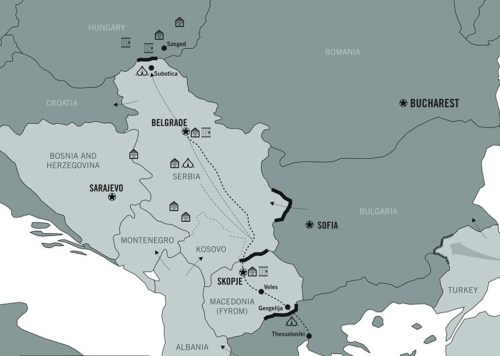
7f439e0b905866aafbef4ece4bcd09850d87d7b6

At the same time as refugees seeking asylum have abandoned perilous transit across the Mediterranean, and were rebuffed by Iran, Hungary has become a default to enter the EU and area Schengen accords that permit travel without a passport.  Passage by the Balkans is now the recommended by smugglers as a route of transit–such smugglers seem to have a more clear map of the geography of displacement and challenges of asylum than even the UNHCR.  Although Hungary has received a significantly larger number of applications for asylum for refugee status by June, 2015, when Orbán announced the wall’s construction, the requests are merely a way to enter a new life in Europe–as all refugees are obligated to declare their status at a point of entry.  Rather than process those seeking asylum, the wire fence barrier is both a blatant and a cynical rebuff to human rights and legal rights, and an exercise of turning the other shoulder to those attempting passage.

The dedication of public funds to such a barrier seems a further violation of refugees’ legal rights, and constitutes a glaring slight to if not an actual crisis of international law.  The position adopted by Hungary’s FIDESZ government deeply distorts its position in relation to Europe and the world by casting the “crisis” in purely local terms–far beyond the practical difficulties of processing and registering refugees who cross its southern border with Serbia.  The distortion of a ‘local’ crisis created by “migrants” has led the government to use state radio and immigration police to use the border barrier to remove desperate global refugees from their own mental space.  The dangers distort precedents of anti-semitism and xenophobia that the government has long pandered:  indeed, the strongly anti-gypsy rhetoric Orbán’s party has recently exploited and normalized has been rapidly refashioned as Islamophobia, in ways that echoes the antisemitic rhetoric of one of Hungary’s pasts.

As much as the fence reflects an actual rise of immigrants with Hungary as their destination, the figures of those seeing asylum in Hungary  the wall is part of a highly choreographed if misguided moment to rebuff refugees that will allow his xenophobic FIDESZ government to prevent refugees from entering the attention of the government–and claim to represent not only the Hungarian people, but by arrogant and increasingly evidently self-important assumption, all Europe.  As the Balkan route of refugees grows, even as the rights of refugees fail to be adequately defended, a renewed on-foot march of refugees to Austria and beyond has resumed.  Even as a refugee policy is not clearly in place.  Illustrating belonging and its boundaries is what the Hungarian government’s spectacle seems chiefly to address and to do in particularly terrifying terms.  The severely imposing barricade (or fence) constructed from June is the latest attempt to prevent refugees who have travelled from Syria and elsewhere from crossing the frontier–although their suggestion of a fence more worthy of animal pens than humans reveals the disdain and hatred that the Orbán government has concertedly sought to direct to the refugees, to obscure their own dire situation, as much as the threat that they purportedly pose to Hungarian social services–and to treat refugees as human chattel that Roma people have been so regularly cast.

Refugees at Serbian Border:Sergey Ponomarev:NYTSergey Ponomarev/New York Times

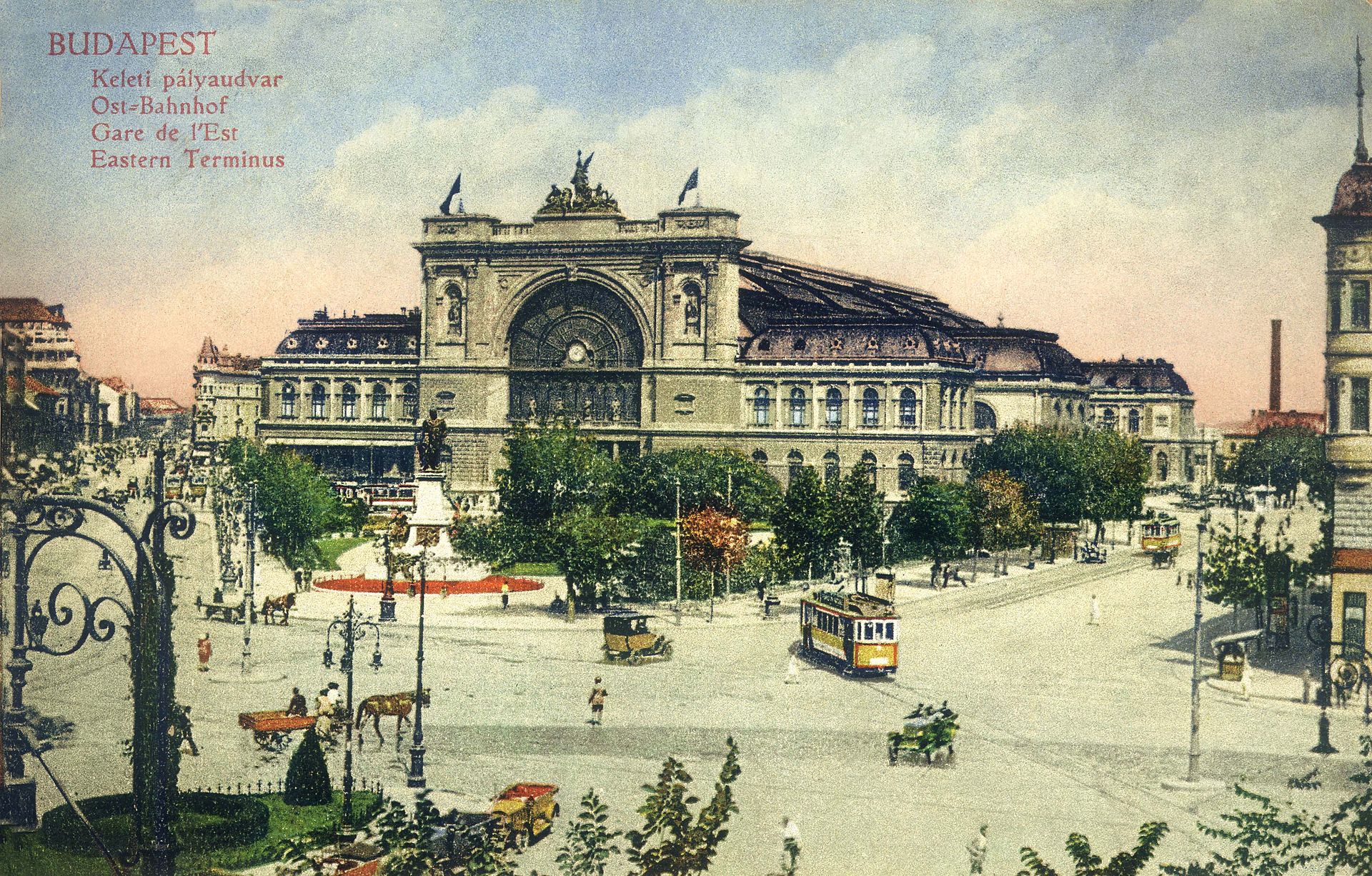
The fence is most inopportunely placed.  The fence is an assault on human dignity which however has clear origins in the theater of Hungarian politics.  For it was in part built as a  response to the threat refugees pose to the mental space of the Orbán’s government and his FIDESZ supporters, as much as Hungary–as is the recent confinement of desperate refugees who have arrived, homeless, at Budapest’s nineteenth-century eastern Keleti railway station, in search of final passage to Germany and the European Union.  (The buses that had carried thousands of refugees to Austria–where they have been more generously received–are no longer being provided, according to Hungary’s police chief, but some 1,200 also attempted to walk the same distance, on the highway, to seek to try to reach their destination by foot in the stifling midday heat, after westward buses and trains to Austria and Germany were suspended.)

There a sense that the current and ongoing crisis of processing refugees creates a conceptual crisis in the nation-state, but the reaction to an influx of refugees from Syria, Afghanistan, or Iraq.  But it has been highly staged as a way to deny the humanity of those fleeing, rather than to need to address their misfortunes, and the response of other countries, as Austria, reveals a clear possibility of a different reception for refugees in Europe, less dictated by fear.
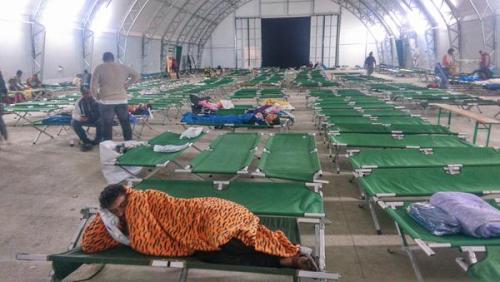
COGp73eWsAAfsVK

The cyclone chain link fence that along ten miles in length was planned on a political map, in hopes to prevent a global disaster from entering the mental space of the Prime Minister and of sustainers of the right-wing FIDESZ party, as well as Hungarian territory–it stands for a reactionary impulse to affirm the impermeability of the country’s national frontier is an unacceptable reaction to the arrival of refugees in increasing numbers and with increasing desperation.  By exploiting the status of Hungary as the first Schengen nation able to grant asylum, tasked with the job of fingerprinting and processing refugees, the Hungarian government has opportunistically and inhumanely decided to exploit its situation to prevent those seeking asylum from entering the European Union, in ways that have tended to elevate its status as a frontier for its own ends.
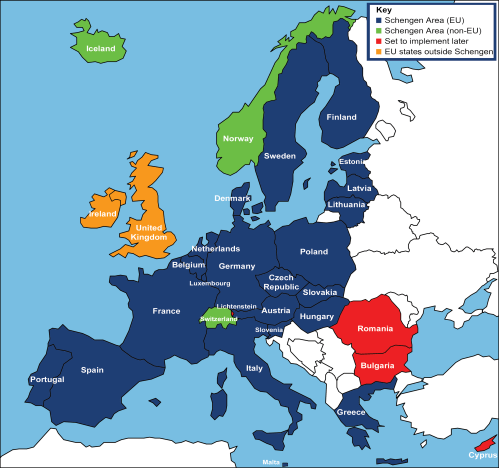
schengen-alternativaeuropae

While the problem of processing refugees is surely not only a European one, the position that the Hungarian government has taken is more than opportunistic.  The overtly protectionist barricade is an attempt to force those desperately seeking asylum, and may also encourage them to search for other, riskier, overseas routes.  It seems, moreover, inseparable from terrifying images of the mute rebuff met by the anguished face of terrified refugees.   But it is also a deadly political game.  Prime Minister Orbán’s Foreign Minister, Peter Szijjarto, stoically vowed in mid-June of 2015, unilaterally and with the apparent intent of stoking alarmism, that his country “cannot afford to wait any longer” having processed 54,000 immigrants and with the count of refugees poised to rise 120,000 by the year’s end–even though Hungary was actually way-station to asylum elsewhere, rather than a final destination, for most, and was obligated as the first nation in the Schengen area to grant asylum to refugees who had crossed the Balkans.

But the sense of desperation that he voiced reflected a deep confusion about the place that Hungary seemed to have inherited on the border of Europe.  The fence slated for completion in August, 2015 was not alone; it was only one in a series of fences that Europeans are engaged in building as they wrestle with new global patterns of refugee traffic in Calais, Greece, Bulgaria, Estonia, and the Ukraine, misguidedly construe local perceptions of a truly global crisis–much as Orbán has recast the plight of refugees as a conflict between opposed faiths.  The reaction to refugees has been particularly poignant in Hungary, and has prompted news maps to characterize the dreams of the ruling party to create a gate to Europe, as much as provide a possible response to hopes many refugees will continue to nurture.
2015-06-18T062355Z_1_LOP000H44IRMI_RTRMADP_BASEIMAGE-960X540_HUNGARY-IMMIGRATION

Yahoo News

Sealing the border with a militarized chain-link barricade provides a particularly stony rebuff, truly terrifying, evident in images of recent encounters with the anguished faces of desperate and panicked refugees who sought asylum.
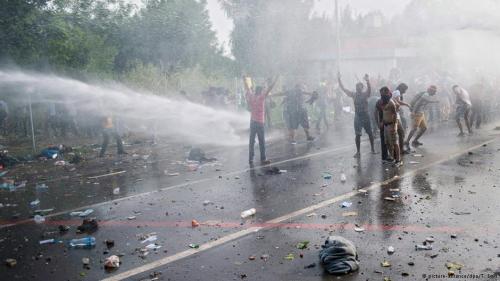
0,,18718489_403,00

For the attempt to block the flow of refugees what one seems to erecting is not only an inhumane gesture, but a desperately local distortion of a global problem.  The fence has recently impelled French Foreign Minister Laurent Fabius to express credulous wonder at the scandal that this act disrespects European respect for human rights–as United Nations refugee agencies stepped just short of condemning the construction of a fence as a fit response to those searching for safety and protection–and asylum; the Swiss would ban Orbán’s travel to their country, and freeze Hungarian assets in response to indignation at the “human rights situation and the refugee scandal” in the country.”  The fence may well encourage those fleeing their own perilous conditions from adopting still more dangerous itineraries and routes of illegal migration.  “This wall–we will not accept it,” Syrian refugee Mohamed Hussein bitterly observed, pausing on travels through Turkey and Serbia, as he attempted to walk from Iran to Turkey.

How can one, however, insist on responding locally to a truly global dilemma of desperate flight?

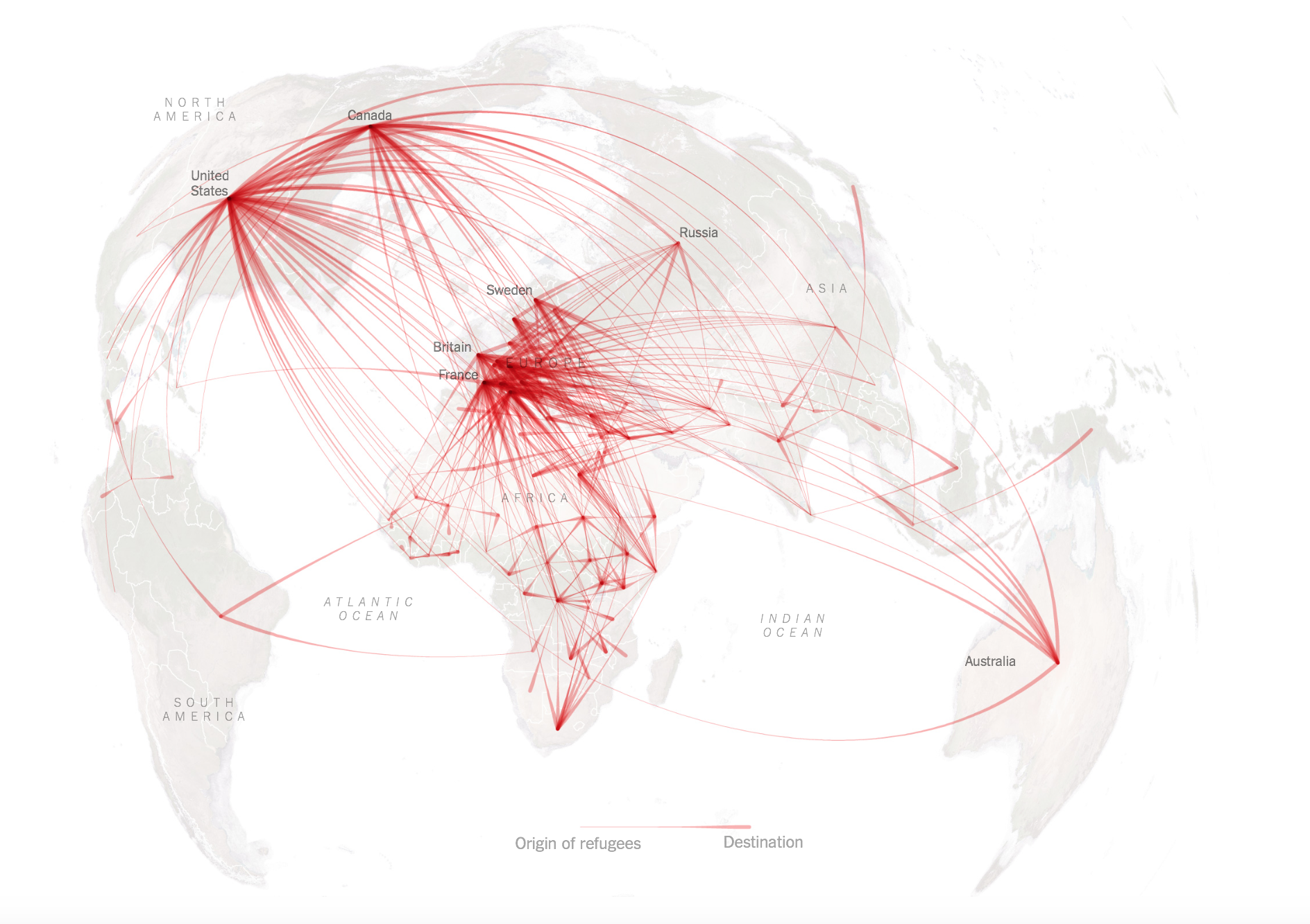
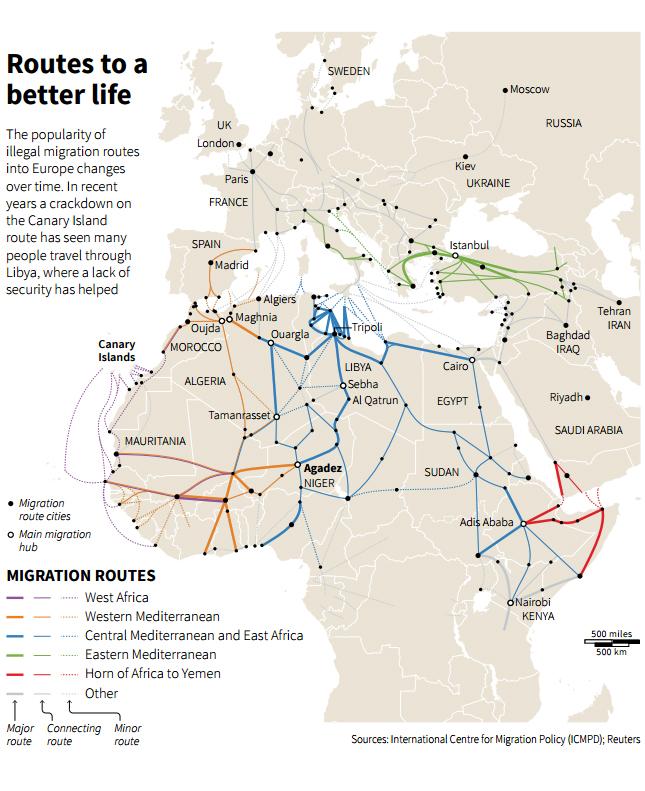
Even though the actual routes of illegal immigration of refugees are so complexly negotiated and improvised to defy a clean cartographical synthesis, the actual routes of refugees were rarely imaged as running through Hungary on earlier news maps.
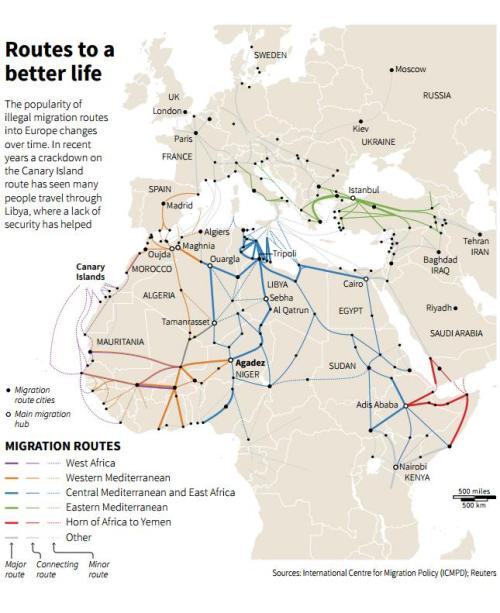
migrants-map

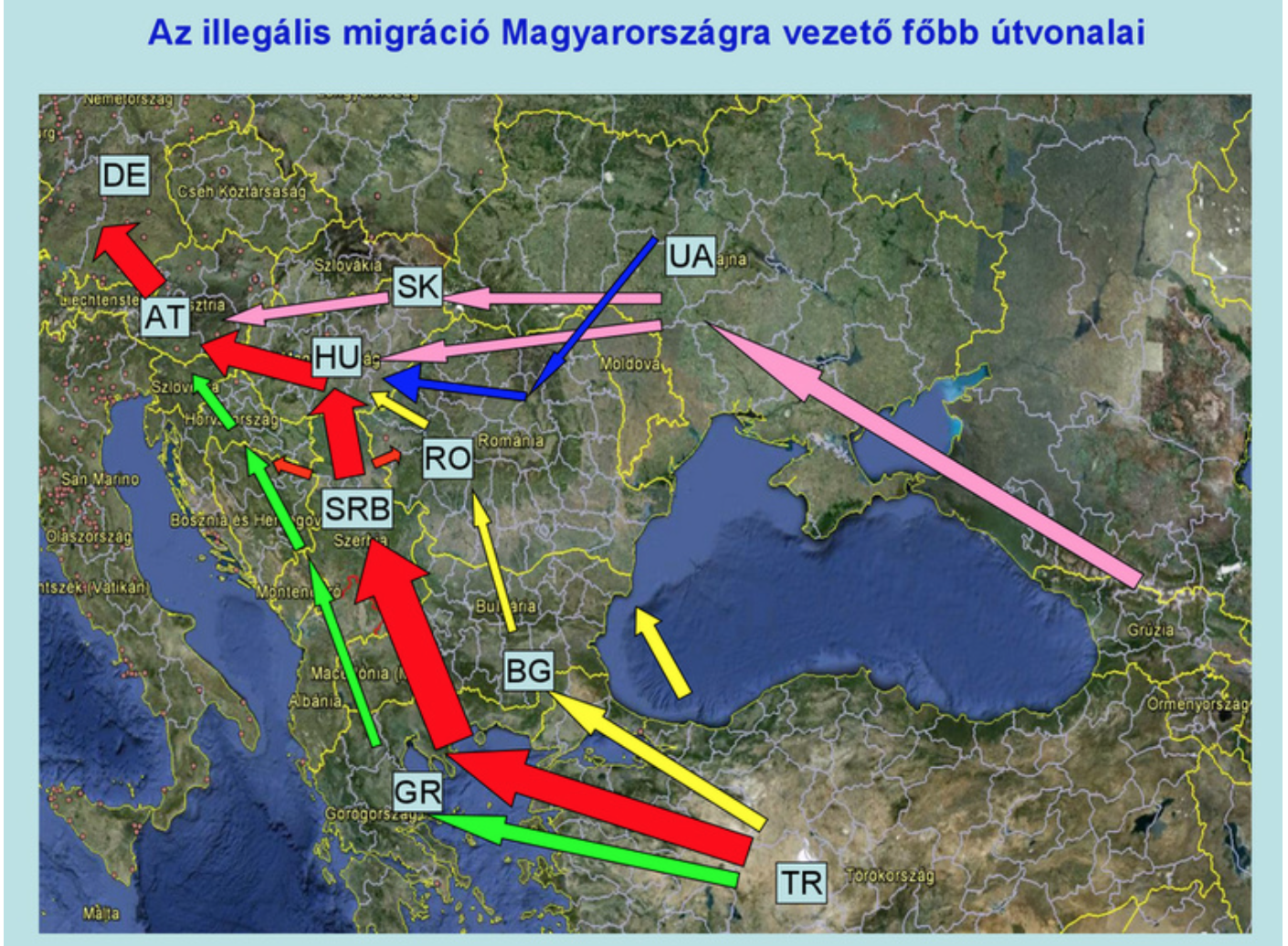
But if the routes of refugees are difficult to map, the propaganda map issued by the Hungarian government’s Office of Immigration and Citizenship pictured the routes of refugees in ways that seem particularly distorting :  the map almost openly validates fears of invasion in a crudely (and no doubt intentionally) propagandistic map designed to stir up fears that shows the Hungarian nation as imperiled from an onslaught of “illegal immigrants” needing to be stopped:
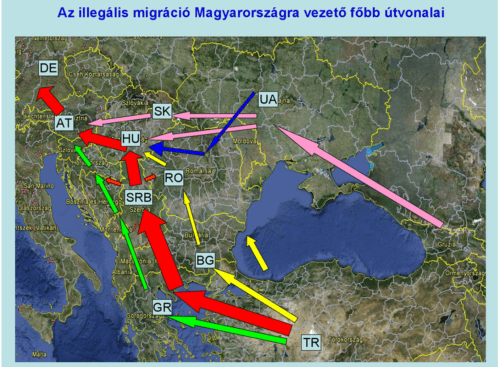
Office of Citizenship and ImmigrationHungarian Office of Immigration and Citizenship

The bold and forceful red arrows that lead directly through Hungary conjure the flows that the proposed barricade proposed to stop or “staunch” along the boundary lines between Hungary and Serbia.

The propaganda map issued by the Office of Immigration and Citizenship seems designed to intentionally stoke xenophobic fears, emphasizing the nation as a unit of continued meaning in an emergency of truly global proportions, as well as to magnify the role that such a fence on Hungary’s border would have.  There is something grotesquely inhumane to chart the itineraries of refugees who have travelled on foot from Iraq, Afghanistan, or Syria as if they were a phalanx of approaching Panzers, adopting the rhetoric of a map of military advances–although the refugees who often took these paths often travelled not only without arms, but barefoot.  But the map conjures a threat as if it were in danger of being immediately posed to the national frontiers.
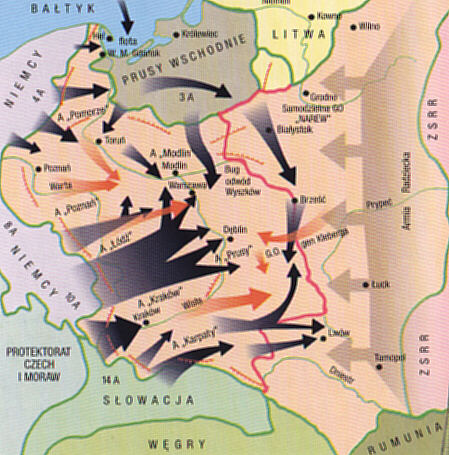
map-5

The actual routes of refugees take are considerably more complicated and improvised, of course, but when schematically mapped reveal routes less exclusively focussed on a Balkan itinerary–although this is one of the sites of greatest police push-back according to Amnesty International–until they find detention centers to welcome them across the Sebian border.
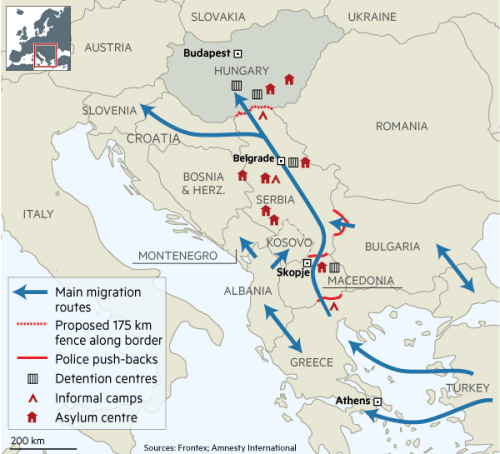
ce8df936-2c97-11e5-acfb-cbd2e1c81cca-1.img

Financial Times (September 2, 2015)

Yet the image echoes the deeply xenophobic fears that the Orbán government has intentionally sought to stoke.  Faced with growing unemployment rates and nourished by openly racist xenophobia, the 23,000 people who applied in the past year for asylum in Hungary alone from Syria, Afghanistan and Iraq no doubt created a basis for panic in the Orbán government and ruling Fidesz party, whose prominent display of public billboards cautioning asylum-seekers “IF YOU COME TO HUNGARY, YOU CANNOT TAKE HUNGARIANS’ JOBS” in Hungarian were not only the revers of a red carpet, but widely cast their xenophobic rhetoric–long adopted by Orbán’s FIDESZ ruling party–in the disquieting garb of national protectionism.  Despite the posters, however, Oban has continued to state that the arrival of Muslim immigrants poses not only a challenge to jobs, however, but a challenge to Europe’s faith in particularly incendiary rhetoric, describing the “madness” of the current EU immigration policy as a departure from common sense.
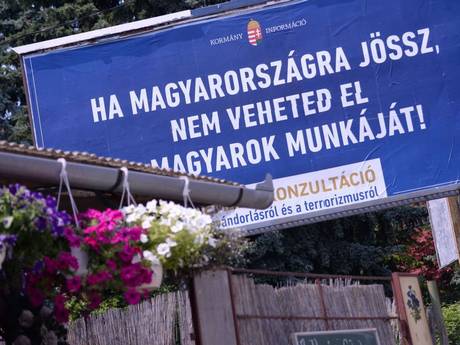
Hungary-posters

Independent

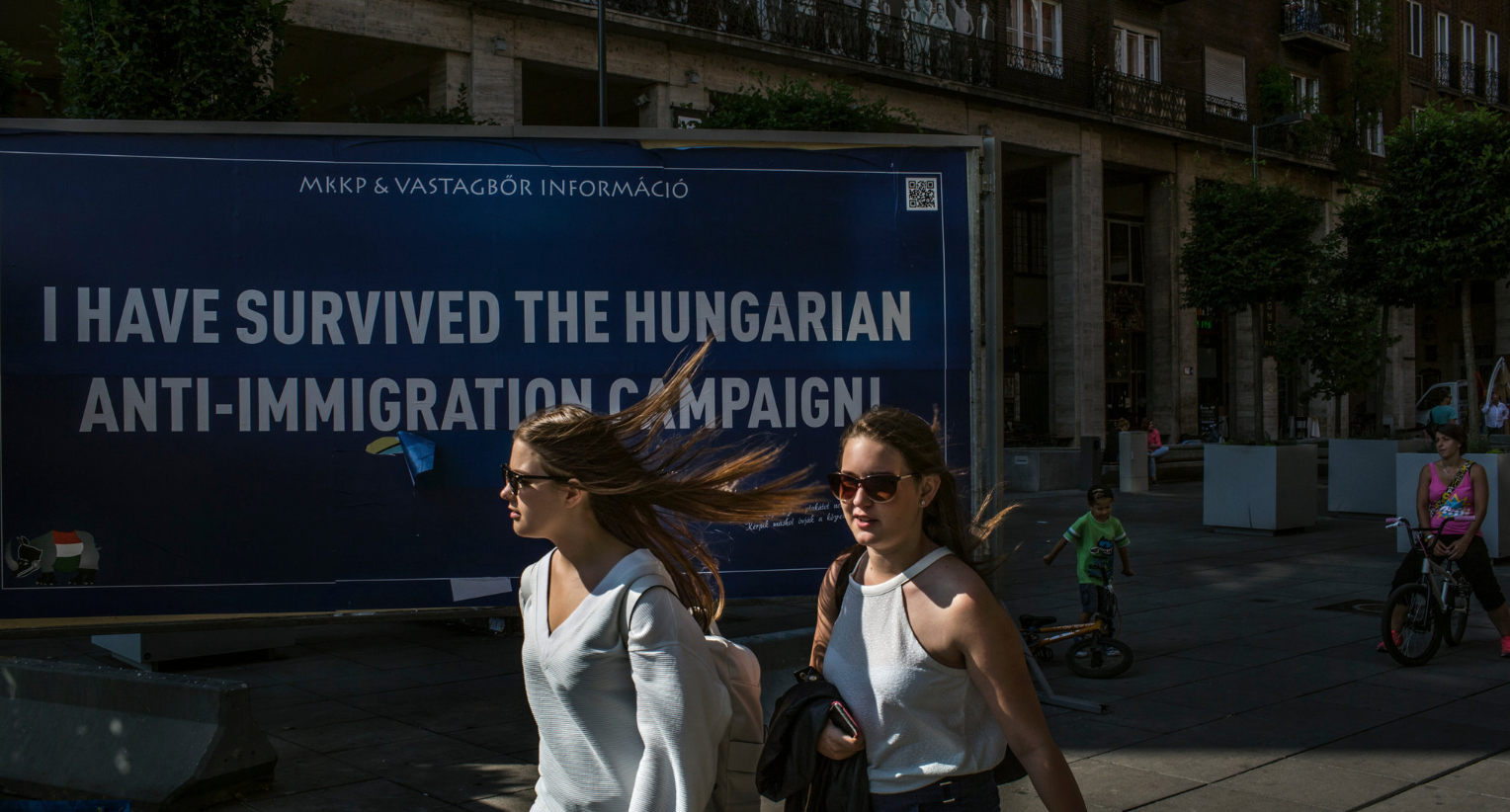
As the United Nations’ Office of the High Commissioner of Refugees has noted, such response hardly befit refugees seeking asylum who are in need of international protection.  And in an attempt to gain the upper hand, UNHCR displayed its own counter-billboards in Budapest–
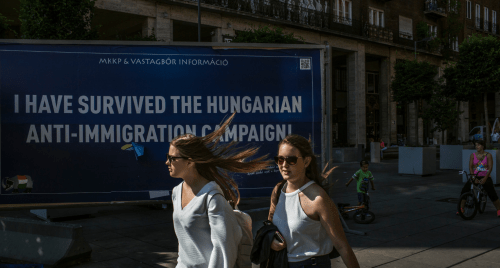
Anti-Immigration Campaign

–providing images of integration of immigrants that the FIDESZ seeks to banish from Hungarians’ minds.
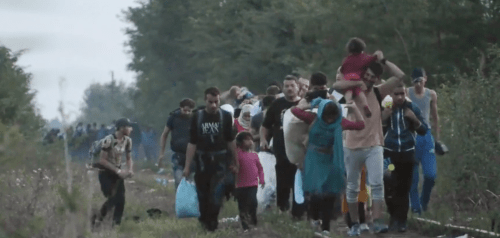
In Hungary

AGENCE FRANCE-PRESSE

The rhetoric of preventing the arrival in European territories of refugees who have travelled through the Balkans appeals to the nationalist imagination of some Hungarians.  The fence was build, allegedly, in a move of protectionism of European identity, “to stop the flood,” as Zoltán Kovács, government spokesperson, coldly put it, indulging a particularly dehumanizing rhetoric that has led not only to the construction of the fence.  In going so far as to claim that Hungary is “the most affected EU country in absolute terms,” the government has perversely distorted a crisis of painfully global proportions by representing it in local terms.  The defense Prime Minister Orbán openly made advocating the use of internment camps as suitable responses to immigrants reflect this perception that Hungary lies the “forefront” of the immigration crisis–although this crisis is clearly global–in order to justify the building of a fence along the Hungarian-Serbian border of over 100 miles in length.

For Orbán has gone to great pains to defend the impassibility of a border rather than devote public funds to possible resettlement of immigrants, or to their processing as refugees.  While the construction of an improvised fence of coiled razor-wire and chain link, to be monitored by armed officers who will guard the border with the aim to prevent the fence from destruction with wire-cutters, builds on a conviction that Hungary is the gateway of illegal immigrants to Europe’s borders, and filled his self-assumed charge “to keep Europe Christian,” as Orbán told the German Frankfurt Allgemeine Zeitung in a particularly ill-considered attempt to win sympathy, does not conceal disregard for human rights in proclaiming the risk of Europe being “overrun“–adopting a explicitly anti-islamic xenophobic tenor that unabashedly invokes a politics of global opposition, if not a conflict between faiths, that echoes Samuel P. Huntington’s clash of civilizations.  The very deployment of this inappropriately oppositional rhetoric all too conveniently overlooks the desperation behind refugees’ flights.  (FIDESZ is an acronym, but evokes the Latin deity of trust and reliability–much as Agenzia Fides remains the news agency of the Vatican, adopting the term for faithfulness or faith to link its pronouncements to those of the Catholic church–even as Pope Francis has ordered all churches and clergymen in Hungary and Europe to open their doors to those claiming status as refugees.)
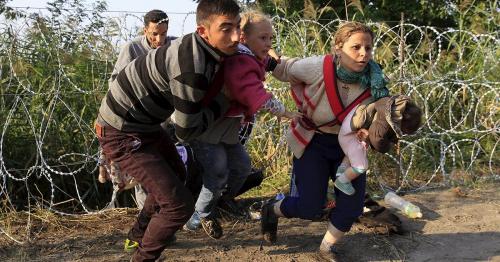
1200x630_312463_hungary-razor-wire-fence-fails-to-hal

Attila Kisbenedek / AFP / Getty Images

Overrun, we might well ask, with whom, or with what?

It is true, the strident rhetoric of Orbán’s government may build on a series of similarly xenophobic precedents by which flustered bureaucrats have, maybe imitating the United States, built walls–perhaps more for their own populations than as actual preventive measures.  In seeking to terrify immigrants and refugees, Orbán has all too openly conflated the dangerous criminal and the immigrant with particular zest.  For the image of a fortressed Europe is a scarily common reaction to fears of immigration that many Europeans can barely suppress, and may press unique pressures on the European Union.

If English newspapers like the Daily Mail seized up on the image of the Hungarian fence as a response to illegal immigration–
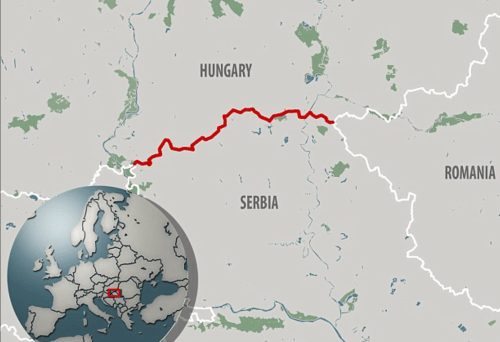
FENCE

Daily Mail

–no doubt in part due to the proximity of London to the 3,000 refugees crowded into substandard camps in Calais, where refugees are waiting to cross the channel, even as British PM David Cameron has publicly ruled out the granting of safe havens, as Englishmen have volunteered to provide them with some relief in migrant camps, and hundreds from Ethiopia, Sudan and Somalia daily risk travel to England by train and ferries.
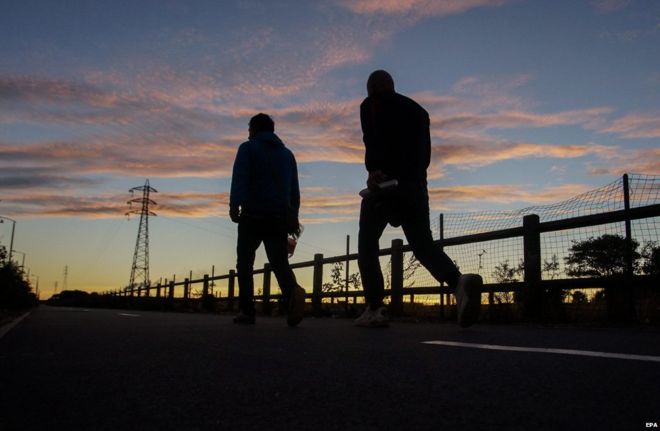
_84871950_migrants_epa

6.  The demands to contain the global flow of refugees has often been perceived in a very distorting local optic that seem less interested in care–or of conceptualizing care–than of creating clearer boundaries than refugees might perceive.

The widespread trending across much of Europe toward “fencing” borders to turn back immigrants echo a broad misconception that the best defense is to built fences that blithely believe they can push the “problem” elsewhere in areas on the edges of Europe, as public projects that resemble the extensive ditches dug in the Middle Ages, if they are far less effective:
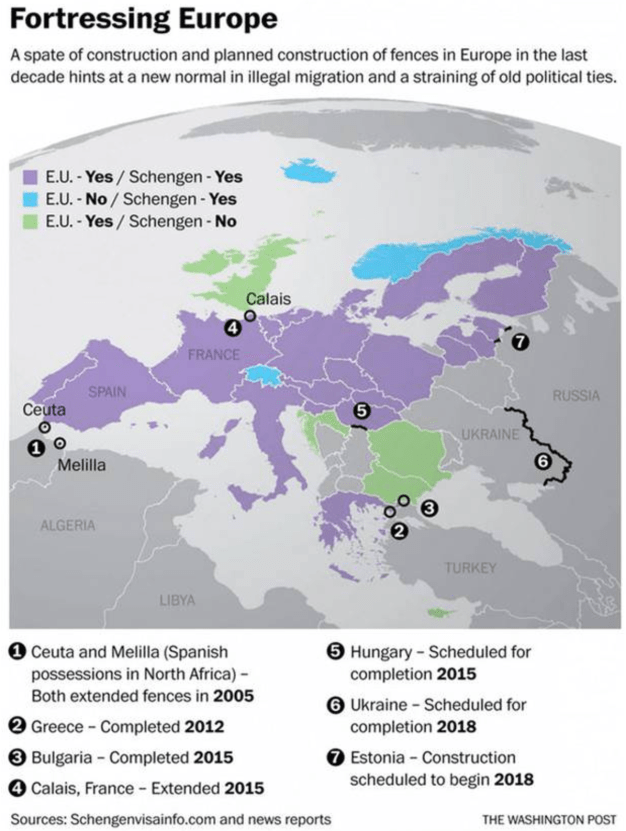
Fortressing Europe

Such public works projects suggests unique pains of the human rights crisis of refugees seeking asylum, albeit that these attempts have so far been largely located on the margins of the EU (Bulgaria; Greece; Estonia; and Ukraine)–and uncomfortably imitate the same sort of strong-man statist rhetoric with which Orbán confronted his own government’s crisis.

But the truly terrifying materialization of the border line with razor wire in the lengthy fence along Hungary’s border with Serbia conjures a distinct flavor of xenophobia, no doubt, of dubious legality, oddly analogous to the Catch-22 type of situation at Budapest’s Keleti station, where refugees are clustered, confined by guards, in ways that have increasingly come to reflect the markedly increased brutality that the creation of fences so often inspires among border guards and police officers.  Did the existance of the fence not increase the markedly inhumane violence of border guards and police at Keleti station?

Such rhetoric is tied to the improvised creation of a counter-city that has emerged at Budapest’s Keleti railway station, as migrants are denied transit on trains that would provide passage to other EU countries where they would more readily be granted asylum.

Refugees After being forced Outside Station in Budapest:Lazar Simeonov, Al JazeeraLazar Simeonov/Al Jazeera

Is detention, and the prospect of the completion of the iron fence–so analogous to the fences that Donald Trump has promised to build along the United States’ border with Mexico, and based on the distorted logic of viewing non-nationals as akin to terrorists that has been diffused by the US Office of Homeland Security–either an adequate or humane response?  Fears of the brutality of guards brought into face-to-face confrontation with immigrants who border guards feel are both illegal and guilty of having entered across a state-built barrier seem more likely to occur.
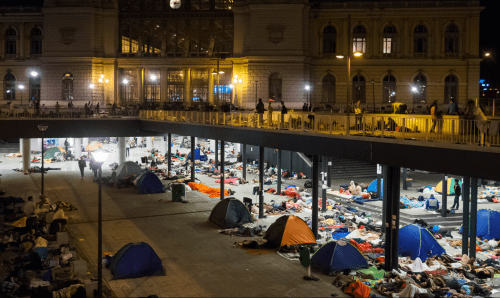
Refugees Asleep outside Budapest Station:Simeonov

Lazar Simeonov/Al Jazeera

There is something deeply troubling–and deeply pathetic–that the Eastern Railway station of the capital, a triumphalist beaux arts symbol of the Hungarian nation’s new image of industrial progress, has become a site of confinement–and of refusing to asylum or refugee status to those seeking passage to Europe.  The marginalization of these refugees to a stateless limbo hopes that their problem will go away, rather than develop a consensus that their fate remains a pressing problem needing collective attention.  So much seems a symptom of the priorities that the Orbán government has established, as if to deny any possibility of refugees’  entry and to deny their actual itineraries and travails.
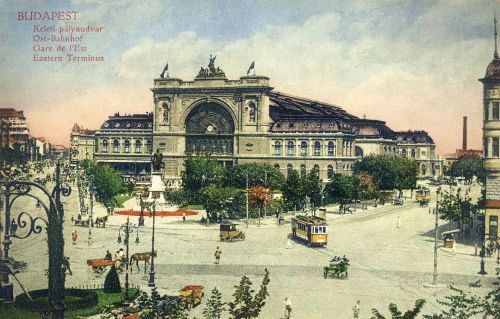
Budapest_Keleti_Palyaudvar_1912_Kepeslap

4 Comments

September 3, 2015 · 2:19 pm

Looking for the Local in the Age of Unilever

The branding of Ben & Jerry’s “Home-Made” ice cream exploited Vermont’s appreciation of its local dairy farms from its very start:  the image of the green grasses that fed Vermont cows and independent farmers helped promote the home-grown qualities of what once passed as artisanal ice cream in America–as much as its super-premium swirled chunks.  But fears that the famously reputedly socially-conscious manufacturer of ice cream might lose track of its local origins as it was distributed by the Unilever ice-cream Anglo-Dutch conglomerate seem to have been borne out by the shifting relation of the brand to space, to judge by the relation of the ice-cream maker that long trumpeted its specific geographic origins to the farms that lie in its real and metaphorical back yard.

What are the costs at which the Vermont ice-cream maker that  cast its use of local dairy–before the allegedly Scandinavian recipe of Haagen Dasz–as a defense of the home-made forsaken its ties to the very state that it once announced as its  home?  While long known for paying premium prices to Vermont dairy farmers, as well as for its super-premium ice cream, recent questions about the company’s treatment of migrant workers may lift a corner on some deep transformations of its ethos.  Despite the celebrated smoothness with which the Anglo-Dutch conglomerate fielded a CEO to the guys who marked “Imagine Whirled Peace,” and spun other up-beat slogans into their wares with the abandon of clusters of chocolate-covered caramels and toffee while donating percentages their pre-tax profits, the transition of the ice-cream maker’s identity may have been far less smooth.  Despite the continued services provided by listing Flavors We Could Lose to Climate Change on their website, the strained relation between the “local” and “global” is increasingly apparent in the balance between sourcing local ingredients and caring about global issues, even if everyone loves ice cream and the donation of 27,ooo pounds of ice cream to help create the world’s largest sundae merits congratulations–as does all their work in creating jobs with a product that continues to taste good.

Ben-Jerrys.jpg


The early appropriation of the image of local Vermont dairy farmers’ cream and milk was no small part of the allure Ben & Jerry’s long cultivated as a locally sourced ice-cream, created only with milk purely from Vermont cows–and co-opting the support for local milk, long, long, before ban-RBGH concerns were even voiced, and when the ice cream appealed primarily to the local sweet tooth, and the milk seemed unproblematically local.

Has the sweetness of Vermont dairy curdled in an age less tied to place, and where the community of Vermont dairy workers is no longer entirely clear?  For even as the external values of the corporation have thankfully remained fairly intact since 2001, allowing continued philanthropy, embrace of progressive politics as well as of organic, sustainable, and Fair Trade suppliers,the ice cream maps far less closely onto the local community from which those crêpes and ice cream sundaes first sprung.


1978

FullSizeRender-18

o-BEN-JERRYS-30-ROCK-facebook


Ben & Jerry’s Finest ice cream quickly became a local icon in Vermont; its Waterbury location is near the now legendary first site of ice-cream churning with an old VW bus, where it has served as a sort of shrine, tourist destination, and site for indulging in ice-cream concoctions, and the official burial site and graveyard of retired flavors, and the firm has long reached out to support worthy local causes to illustrate the centrality of its membership in the local Vermont community.

The brand has of course long capitalized on exclusively using locally sourced cows for its milk and supporting Vermont farmers–years before and after they went public in 1984, and back in the late 1970s.  But something slightly odd happened to “all those quirky values” in the agrarian economy of the state and the local status of the brand that is all too evident in the geography of its current Scoop Shops.  For the renegade ice cream of two regular guys changed from one of the most popular items at local gas stations, general stores, and Scoop Shops in Vermont, to being an object of relative revile in some areas of the same state.  While the celebrated “quirky style” of super-premium flavors boasts by Ben & Jerry’s Homemade was long part of the local geography of a region dotted with dairy farms, the promises of the glocal mission of a corporate distribution of the expanding flavors has swiftly bent the rainbow of Scoop Shops to the forces of marketing with visible results.

The result is to warp the landscape of local loyalty, spreading with a density that seemed like broken “Oreo”-style cookie bits throughout the northeast and eastern seaboard, albeit with large, empty distances apparent on Google Maps.

map-of-benandjerrys-locations

In this condition of national expansion–and distribution world-wide–it makes sense to consider the relation of Ben & Jerry’s home-made is to the Green Mountain state with which it still publicly self-identifies.

For the embrace of global causes by the ice-cream maker seems to dovetail with the distribution of a globalized world, so that as it has spread across America, the ice cream seems to have become distanced from Vermont.  When the store-owner of one store was politely asked whether they carried the ice cream advertised on a poster showing the smiling faces of Ben Cohen and Jerry Greenfield from days gone by, the amiable if gruff shop owner seated directly behind a worn wooden counter replied “Nope,” and when asked why grumbled the equally reticent if slightly exasperated and drawn out “Because they’re assholes,” without further comment.  None was needed for the shopkeeper, who kept a worn Ben & Jerry’s post in the window as if in memory of times past.
The local shop-owner of few words wasn’t referring to Messrs. Cohen and Greenfield, long locally celebrated stars, but rather to the distributors of ice-cream since 2001, Unilever–an Anglo-Dutch conglomerate who snapped up the once “Home-Made” company, with far fewer ties to the Vermont farmers and stores than the company’s founders, and linked it to the corporate world at $43.60 a share.  Free cone day–famous as the day that its internet site crashed because it coincided with the hottest day of the summer–was in fact celebrated in relatively few stores in the Vermont area, according to B&J’s own website . . .

scoop shops in age of Unilever

The story of what happened to the local ice-cream after its acquisition by Unilever is interesting to map.  The acquisition reflects the transformation of a local success story into a cultivated boutique factory that claims to boast local charm, but ships worldwide to big stores and cultivates college towns, as it neglects its very own back yard.  So much is suggested in the relatively glaring absence of celebrated Scoop Shops across Vermont nearby the factory store itself, which still attracts visitors for tours.  The story surely demands to be told in relation to the changing landscape of ice cream–a $32.4 billion market in 2006–and the currently quite indistinct relation to the concept of the locally sourced, and depends on supermarket chains where the seemingly ever-more-candied and cream-rich confection is sold.

The ice cream makers seem to have themselves cultivated a numinous relation to world freedoms in flavors like ‘Rain Forest Crunch’ and ‘Imagine Whirled Peace’ (an overpowering caramel and sweet cream, swirled with fudge peace signs), the self-satisfied ‘Save our Swirled’ (Raspberry Ice Cream with Marshmallow and Raspberry Swirls, and Dark and White Fudge), pushing new limits of swirling, or ‘Brewed to Matter’ that exclusive uses shade-grown coffee?  Is its promise of “euphoria” a bit too stratospheric in its aspirations?

globe of ice cream cone

Ben_and_Jerrys_cone_day_2015-322x480

The fears of an eventual loss of the small-town culture once cultivated by the successful if once renegade ice-cream makers of Waterbury, who opted to sell their company as the notion of broadening their commitment to social justice was effectively dangled before their eyes, when Unilever co-chairman Niall Ferguson, arriving to meet Ben & Jerry sporting a knapsack rather than attache case, addressed concerns by promoting his own interest in sustainable agriculture for three hours, and then let Richard Goldstein, head of Unilever’s North American operations, approach Ben Cohen himself with the words, “Ben, do you realize the opportunity you have here to help this company grow in its social commitment?” as a teaser of the still-greater “social impact” the ice-cream maker might have in this new business arrangement.

The broad social platform Ben & Jerry’s has since eagerly assumed have channeled its brand recognition to advance causes from non-GMO foods and marriage equality to rain-forest preservation and global warming.  It has led to the creation of several persuasive maps that are identifiably promoting the font and iconography from cartons of the premium ice-cream, in ways that seem to lend if not cement the ice cream’s logo to progressive causes.  The playful “Ben & Jerry’s” font was used to follow the evolution of states’ legal stances toward marriage equality in previous decades, providing a platform to direct public attention toward tracking the advance of marriage equality in the United States in the very lettering that we might be more familiar from reading in scoop shops or on ice-cream cartons:

B&J Marriage Equality Map Same-Sex Ruling OCt 6

B & J Marriage Equality

And, of course, the Burlington Scoop Shop was indeed often made the symbolic center of advancing progressive causes–especially when Vermont was one of the few states in the union where same-sex marriage was legally allowed–that seem fueled on the sugar-backed ice cream served across the street on Pride Day, adopting the trademarked lettering and rainbow backdrop for cows to sport heart-shaped pink-tinted eyeglasses that echo the nineteen-sixties’ counter-culture it has effectively reclaimed:

B&J Marriage Equality march

Is the political platform of Unilever offered, by allowing the ice-cream to go “hands free” that can promote social causes also a bit of an inevitable abandonment of the very rootedness in the Vermont dairy community that once defined the ice cream’s core values in the days before it marked such core centers as fudge, caramel, or real raspberry jam?

The costs of becoming one of Unilever’s “global brands”–and among its 2000 brands of ice-cream it owned by 2006, in what was a growing 32.4 billion ice cream market, in which place or locality seemed to mean much less.  The contradiction was apparent as the ice-cream began to loose market shares quickly–even as it gained a global presence, and “went warehouse.”

Ben & Jerry's vs. Haagen Das

One visible consequence of “going warehouse” is present on the map.  The distribution of scoop shops in the state of Vermont sharply reduce once abundant celebrated stores on the state map.  For the distributors of the locally produced ice cream have, in a snub to their clientele, closed many of the very shops that once sprouted up with the density of candy and cookie bits that once seemed so specific to the super-premium ice cream.  The maps displayed on the company’s website which allows customers to find the stores nearest to their zip suggest the considerable costs of the greater remove from Vermont at which that buyout came–and of the shift to a global/glocal ice-cream that the company adopted in its new corporate guise.

absence of scoop shops

Panning out nationally on the OSM slippy map, one finds a paltry three Scoop Shops in the state that once seemed inseparable from the charm of an ice cream that promoted local values, but seems now more glocal, and more with an eye on outside markets than the state for which local farms were long said to produce the milk and cream–or the notion of Scoop Shops were less appealing, and too much overhead, in comparison to supermarkets after the big acquisition removed the ice cream from the community, and its social mission expanded to making “the world a better place” by taking on climate change through Rain Forest Crunch and GMO farming through its reliance on somewhat carefully sourced ingredients, and its economic mission geared primarily to “sustainable financial growth.”  Although “climate justice” is difficult to see as compatible with a product that depends on refrigeration, long-term trucking, and huge freezer storage space in the warehouses it employs to distribute its product nation- and world-wide–despite some notable attempts to introduce innovative low-energy freezers.

scoop shops in age of Unilever absence of scoop shops Scoop Shops Post-Unilever

28_big

Those few Scoop Shops easily located on the company website indicate the increasingly market-driven nature of the locations of a chain that seems somehow less based in Vermont, site of its main factory that offers year-round tours.  A cute map uses chocolate ice-cream cone designators that pop out of whatever landscape “near me” at its website–yet few stores have survived in the state apart from three scoop shops in Waterbury, Burlington, and Rutland.

Scoop Shops Post-Unilever

southern us

One can’t go home again, to be sure.  But is the disappearance of the local in this once locally-produced confected treat more symptomatic of a deeply corporate design of the marketing and the production of ice cream?  For the production of an ice cream that long vaunted locally sourced milk from Vermont dairy farms seems to depend far more on migrant labor–and poor working conditions–than the brightly colored ice-cream containers would suggest.

But has the ice cream once boasted “Vermont’s Finest” deeply divorced itself from the site of its first success?  For the recent spate of complaints and protests that the ostensibly socially minded brand of super-premiums actually rests on the sweat of migrant workers and low wages raises more than an eyebrow about the wage and labor conditions that go into producing all those rich flavors, and cannot but echo the chagrin of the local shop-owner.  For the problems of profit-sharing–almost a mantra in the early days of the ice-cream makers–has launched a Milk with Dignity (MWD) campaign that aims at improving the living conditions and wages as well as work conditions of the   1,200 to 1,500 migrant workers who help manage milk production on Vermont’s 868 dairy farms.  The sort of demands for  greater autonomy and a say in working conditions is not specific to dairy production or Ben & Jerry’s ice cream, but range from better housing to leave time in ways that would surely fluster the former ice-cream makers.  

For despite the vaunting of global causes on the tops and sides of those containers of ice cream, the local conditions of work for many seem horrendous, and hard to defend.  Of the workers recently surveyed, some 40% earned less than the minimum wage.  Many lack health insurance, are denied medical care, or allowed breaks for eating during their workdays, which sometimes exceed twelve hours in length–in ways hard to square with the company’s stated social mission or its stated ethical imperatives from fair-trade bananas to non-RBGH milk, or cage-free eggs.  Despite the continued window dressing of imperatives that resonate with Whole Foods, the ’s signature do-gooder brand seems to have neglected the workplace conditions of many of the dairies with whom it contracts, and failed to adopt an agenda of improving workplace conditions besides vague hopes that try to link humane farming practices about cultivating a work/life balance.
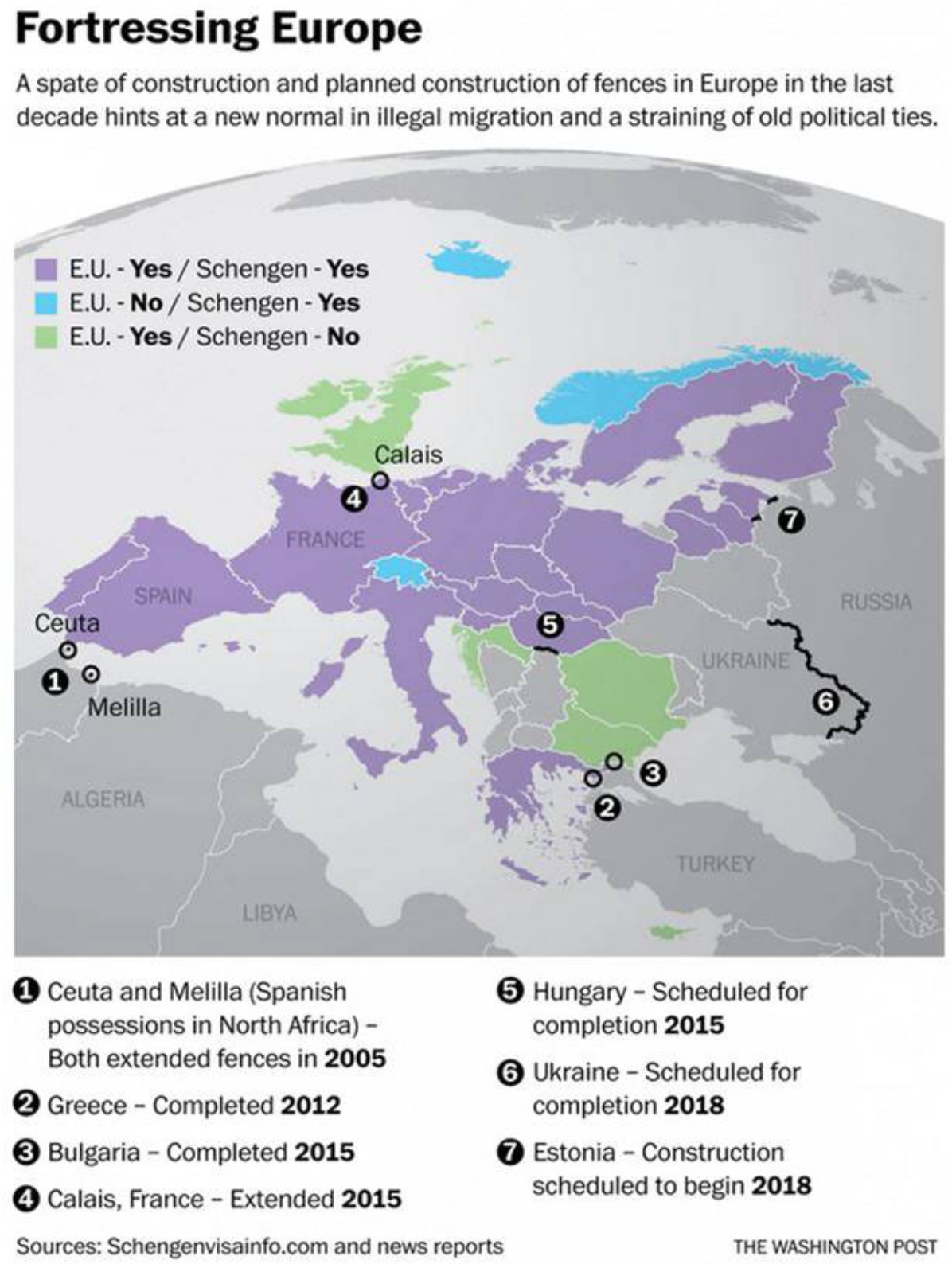
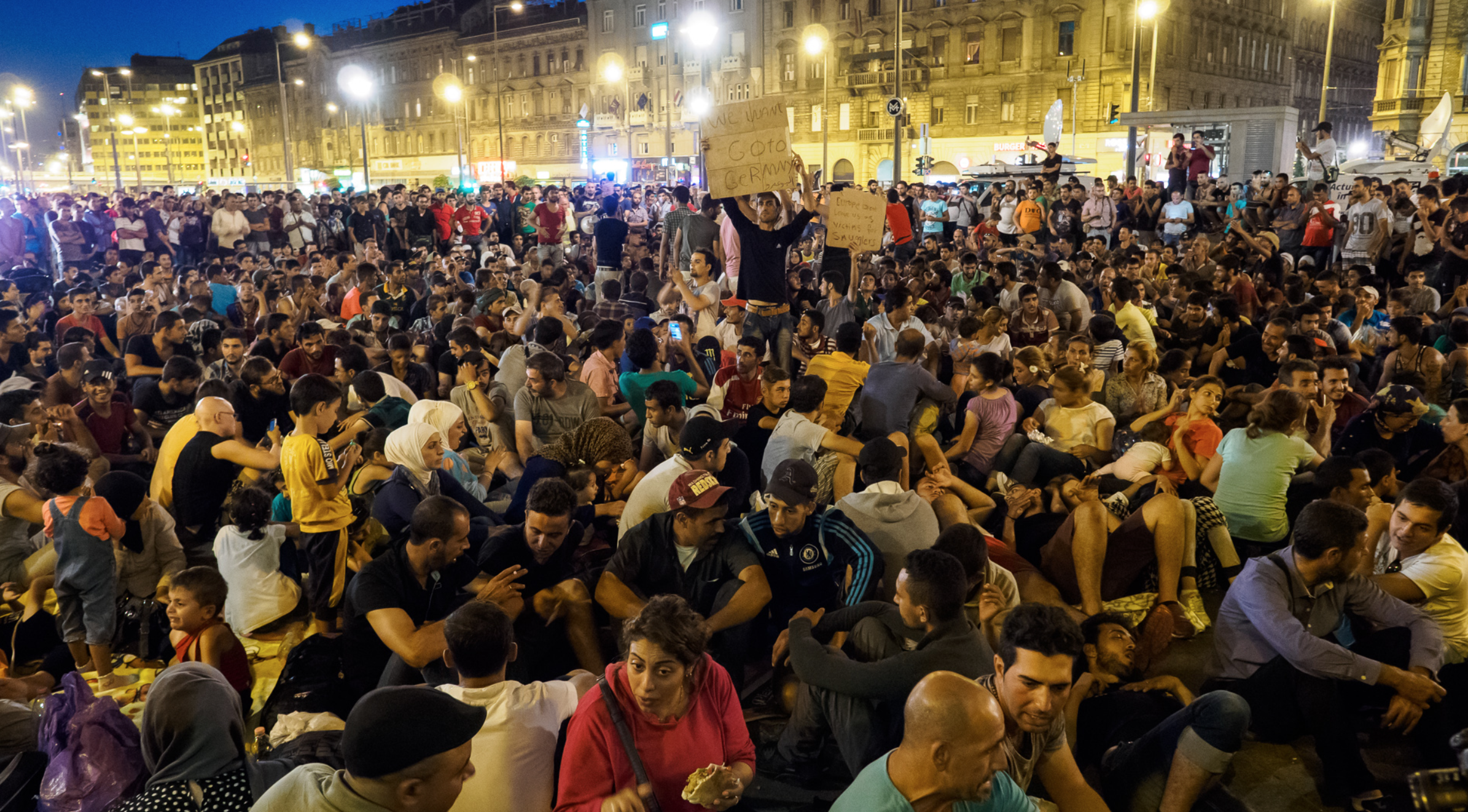
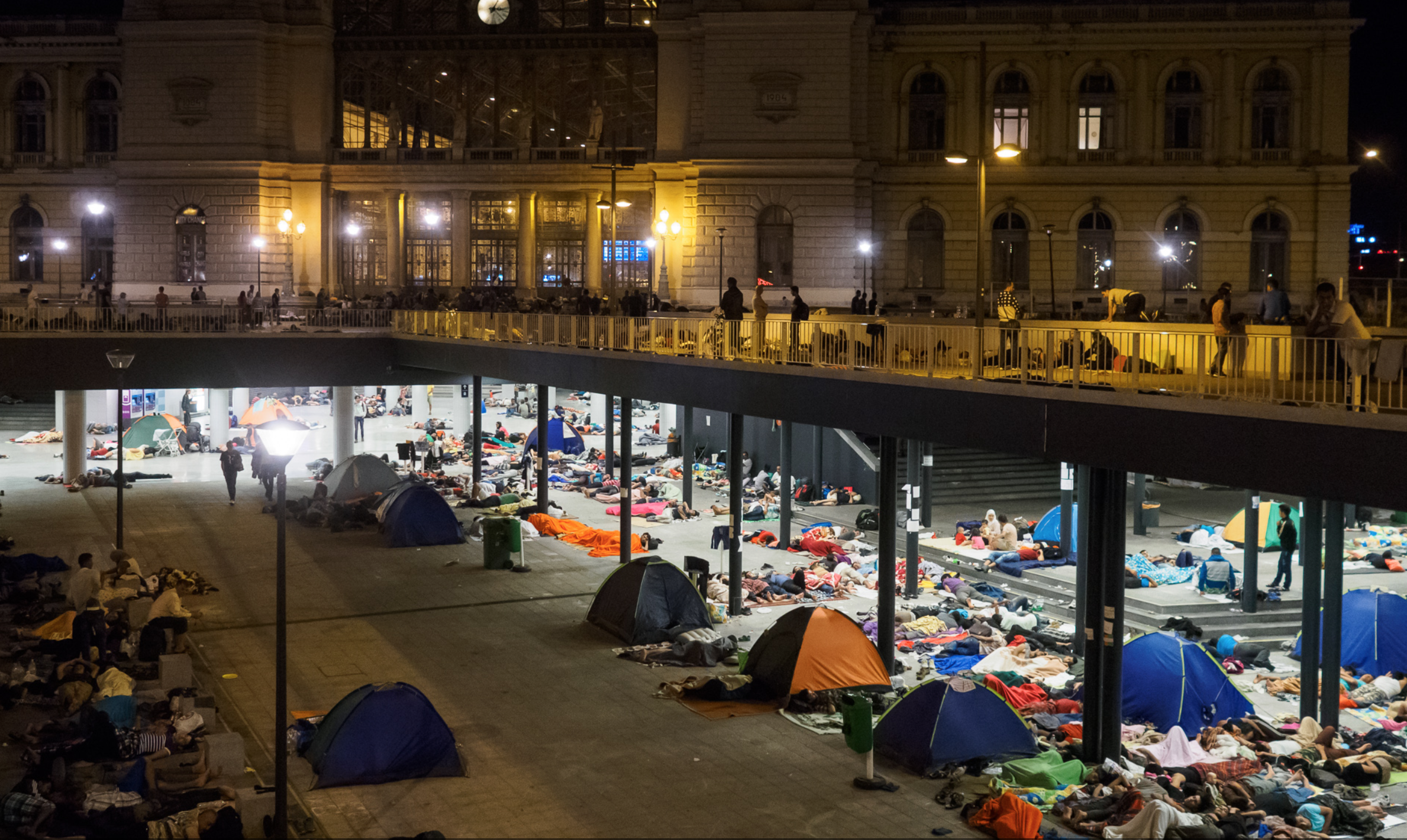
Milk with DignityMigrant Justice

1 Comment

Filed under Ben and Jerry's, labor conditions, Vermont

The Consequences of Over-Crowding our Country with Factory Farms

Questions of scale, distribution, and crowding are increasingly central to mapping and data visualizations.  The increasingly troubling geographical crowding of factory farms in the country constitute a cautionary reminder of our shifting relation to the production of food–and the perils not only of concentrating most livestock in inhumanely crowded conditions, but concentrating our farmlands at a physical remove from most populations.

By a perverse twist in the logic of economic conditions, the unprecedented concentration of farmlands at a remove from populations not only changes our food; the ways we to treat food production come with steep environmental costs.  This post teases out some of the consequences of the transformation of agricultural practices, as intensified application of pesticides to produce the huge quantities of grain that enable industrial-scale ‘farming’ with their own costs.   Despite a renewed culture of small farming in select economies, the remove at which factory farms lie from populations have not only changed our relation to food but created after-effects we have only begun to unpack.

Although the mundane nature of our food supply is rarely so explicitly tied with the anthropocene–a topic especially in vogue, but usually comparison with the carbon footprint or petroleum products.  Yet the density of factory farms in America has left inroads in the landscape that seem truly difficult to erase, from the growing number of “food miles” that much meat now travels to processing plants to reach consumers in restaurants and supermarkets, to the damage that technologies of over-fertilization and pesticide-use.  The shifting landscape of farming, or of big agra, creates a dense concentration of farms in the United States–a post-modern geography that is revealed in the disquieting distrubution that Chris Kirk of Slate created in a web-based map that calls to attention the select space in which American farmers/1,000 people lie–a map that implies the growing distance of most farmers from markets of food, and indeed the concentration of areas where farmers constitute a sizable share of the population.

Farmers:100 eah state

Chris Kirk

Even more striking, perhaps, is the limited range of locations where the production of crops retains greatest value.


Crop Value

The consequences of this quite uneven distribution will be increasingly significant.  Indeed, the greatest environment impact of varied foods are most easily measured by the distances food takes to reaching consumers, the growing “food mileage” fostered by factory farms located in landlocked regions of the country are one of the most strikingly inefficient ways of delivering food–and provide one of the best indices of the impact of food on our environment.

32b75d68bd9abbf1986c2474c58c6ee0

Robert A. Rhode (2000)

1. The data visualization of the distribution of factory farms included as the header to this post places in evidence the concentration of factory farms in America.  It tells a story of the changing nature of animal husbandry in a world where markets have become dissociated from agricultural production–and suggests an absence of attention to the origins of most meat, and the redrawing of husbandry, as well as the redrawing of cropland, far from centers of densest inhabitation, where food-miles are further expanded than in any other era of human history–with indelible consequences for the human diet.

For the intensity of the concentration of factory farms in America is emblematic a strange but powerful illustration of economic disequilibria, where expanding farms have rendered independent farming barely profitable, and driven farmers to become technology-happy in their purchase of new tools of pasturing that almost erase the need for pasture.  The business model that has replaced crop rotation, and open fields of pasture, has not erased the differences between the farming of cattle, pigs, and chickens, but dramatically decreased them to create a terribly terrifying sort of man-made experiment that may not be only waiting to occur.

Increasingly, technologies of mass-farming livestock are not only removed from pasturing, but adopted in places increasingly removed from centers of population, and depending on transportation networks of their own to arrive at consumers in their less-than-fresh state.  The turn toward a dense clustering of factory farms offers a fairly terrifying view of the marginalization of the space where pastured animals dwell–and, of course, chickens have it hardest, both given their size and manipulatable conditions.  The remove of current conditions from sustainable roaming and feeding on nutritious grasses may be ironic, given the clustering of factory farms in many areas of the Midwest, but they are particularly torturous to livestock–animals are increasingly raised with limited access to sunlight, fresh air, or open space–and indeed consumers, as such farming techniques increasingly necessitate antibiotics to prevent outbreaks of disease from high-grain diets that are far less healthy for livestock.

The influence of such a concentration of farms seems to leave an increasingly indelible footprint on our environment.  The arrival of increasing anthropogenic agricultural landscapes reflects the growing congestion of farmlands–but in a sense begins from the poor stewardship of the land in which the free market has led to a wholesale promotion of the inhumane and unhealthy crowding of a concentration of over-fertilized farms in the so-called heartland of the midwest, a deep distortion that the recent funding for the Farm Bill perpetuates in ways that make it seem difficult to turn back the page on the density of factory farms in many states–and the consequent degradation of the surrounding lands and the environments that factory farms pollute.  Mapping factory farms is not only about communicating the incredible scale of current-day farming, but the increasingly indelible traces that they leave on the land by their use of broadly cast nitrogen-rich fertilizer, neonicotinoid insecticides and other herbicides, for which farm workers–or handlers of produce–are rarely provided any protection.

And although interactive maps have yet to develop adequate synesthetic models to render the human sense of smell, the concentrations of factory farms demand models of integrating interactive with scratch-and-sniff techniques to adequately indicate the 13.8 billion cubic feet of waste factory farms collectively generate, in greater excess of what the land can absorb or incorporate–at considerable danger to polluting drinking water and air, since factory farms fail to use manure to fertilize in the manner that farms did in the past, as well as one of the greatest sources of the release of methane gas.  Neil Gaiman’s Wednesday recently ruefully remarked “San Francisco isn’t the same country as [the imagined town of] Lakeside anymore than New Orleans is in the same country as New York or Miami is in the same country as Minneapolis,” despite “certain cultural signifiers [like] money, a federal government, entertainment” that perpetuate the illusion of one country like money, television, and McDonald’s.

The area occupied by factory farms suggest something of an actual country within the country, apparently insulated from the population at large, but plays with different rules that stand in increasing danger of contaminating the world from which it appears removed.  For maps suggest significant evidence that the arrival of the anthropocene may lie in the growing disequilibria of ecosystems that have grew up around unnaturally dense concentrations of factory farms.

2. The clustering of factory farms charts an ever-expanding distance between food production and consumption, and a deep re-understanding of man’s relation to the environment.  The alarming scale at which we have come to produce food has entailed a warping of agrarian environments that produce a limited range of foods on ever-increasing scale.  Those pockets of the deepest red–the instinctual signifier of danger–marks an extreme congestion of the landscape with factory farms for livestock and intensive agriculture grown in a scale beyond bulk, whose density carries clear costs.  For with over nine million land animals killed each year in order to produce food for Americans in 2014, factory farms have reached a scale and concentration rarely dreamed of, and the scale of its farming has provoked unfamiliar environmental effects:   the amount of animal manure produced in expanding factory farms in the United States have come to produce the fastest growing source of the greenhouse gas methane in the US since 2007–and as well as producing animal waste, stream harmful quantities of ammonia, hydrogen sulfide, and particulate matter.  And their geographic concentration by 2012, largely in an areas of cheap land, and landlocked states, removes them from the possibility of any transport save trucking–

2012

Distributions like the above show the concentration of such “factory farms” across the lower forty-eight states as recently as 2012 demand scrutiny as an object-lesson of a post-industrial agrarian age, whose pockets of deep red or crimson sharply contrasting with wan yellow expanses where factory farms are absent from the landscape.

The distribution demands comparison with a more finely grained map showing the declining number of smaller farms. But its totality confronts viewers with the increasing saturation of pockets of the farms cape in such indelible reds to force us to ask not only about the desirability of producing food so intensively in select regions, but to try to investigate the steep consequences, costs and effects of the colonization of the farmscape by radically intensive factory farms, dedicated to cultivating mono-crops on a far greater economy of scale (and subsidization) than was previously imagined possible. The result is to create a farmscape more increasingly removed from consumers.  For the industry of agriculture–either in the form of crops or animal pasturage–contrasts sharply to the very notion of farm stewardship, and indeed is situated at a greater remove from the most densely inhabited land.

2012

Food & Water Watch analysis of U.S. Dept of Agriculture Census of Agriculture Data

Whether or not it is still true that, as Gertrude Stein once said in her Geographical History of America, that “in the United States, there is more space where nobody is than where anybody is,” there are surely a deeper concentration more farms built to “feed” Americans than anywhere else.  By using a range of data visualizations, this post poses questions of how we can best orient ourselves to the increasing crowding of the national farmscape with monocultures that the monopolies of farming Big Agra has introduced.  It then turns to consider the increasingly steep consequences and costs that they pose in our society of laws.

For the drastic dependence on synthetic fertilizers–which now consume a fifth of fossils fuel use, and allow new economies of scale of monocultures releasing farms from a diversity of crops, at the same time that their production was increasingly subsidized, freeing them from the market.  The consolidation and concentration of food-production are enabled by large-scale production freed from sales at the marketplace, doubling of the size of the average farm, while decreasing farms have decreased from 7 million in the 1930s to almost 2 million today, based on an increased ability of production that diminished the nutritional value of produce; animals that are fed almost entirely on a diet of corn produce meat far higher in saturated fats.  The  toxic cocktail of such distorted land-use is complicated even more by the regular release from factory farms of nitrogen and pesticides into the environment posing problems from oxygenic depletion to drastic decreases in local species’ fertility:  the factory farm, liberated from biological constraints of earlier times, has grown to meet radically new economies of scale.

Rather than grow corn, squash, peas, pumpkin, parsnips, carrots or onions, the landscape of the factory farm is focussed on corn–the over-subsidized as the dominant mono-crop grown across the perpetual harvests of over-farmed fertilized lands.

2002 Factory Farm All Map USA

legend factory famrsFactory Farms in the United States, 2002/Food & Water Watch, analysis of U.S. Dept. of Agriculture Census of Agriculture Data

By adopts a crude sort of map algebra comparing data visualizations, this post juxtaposes a range of datamaps that raise pressing questions about such steep levels of concentration of factory farms, and the severity the extreme crowding of space by factory farms that is scarily demonstrated in the above data vis.  While they are able to go unnoticed, the proximity of small blue dots that designate “meat plants” in the data vis above seem worthy of special note, both because of the considerable geographical remove of such plants that “feed” much of the nation and the clear bands on which they are situated.  Eyeballing these maps of the colonization of much of the midwest, and a density of farming that places a demand on overwatering–and okverfertilizing–select regions, in ways that put an increased premium on long-distance trucking, unfreeze farm products, and huge storage houses.  The concentration of factory farms for hogs, for example, creates an intensity and crowding that cannot be conceived as healthy–where sows pumped nurse piglets in gestation crates, as breeding machines, before being led to the slaughterhouse.

Hog_confinement_barn_interior

Wikimedia

The concentration of hog farms is abstractly rendered in a map, but their increasing intensity is elegantly communicated to viewers of the several interactive visualizations Food & Water Watch devised from GIS data of USDA agrarian censuses from 2002 to 2012:

hogs 2002

Hogs 2012

Food and Water Watch

For such livestock and poultry factory farms, largely out of public view, are quite aptly characterized as concentration camps for animals, which “aren’t farms at all”, and the dangers of such a segregation of such segregation of factory farms, which aim to ban observation by journalists or observers.  Recent attempts to ban observers from reporting on the practices and conditions in farms run by corporations like Tyson Foods, Smithfield, and Borden–“Ag-Gag” laws–make the mapping of such farms more compelling.  Despite the spate of state legislators seeking to tar the observers of the animal factory as guilty of “an act of terrorism,” their mapping far more necessary. For the mapping of the factory farm and the pesticides and fertilizers they spew provides the best way to embody crises otherwise difficult to comprehend from antibacterial resistance to colony-collapse disorder, which have resulted in a decline of 40-50% of bees at farms in recent years that may be due to the increasing use of neonicotinoid insecticides and pesticides that may reduce the homing abilities of bees, and compromise their nervous systems–


9474246_orig


–to deeply uneven distributions of epidemiological imbalances, examined in detail at the end of this post.  The density of the colonization of farmlands with factory farms and commercial crops provides a way to embody such complex patterns of causation–even if they hardly resolve the problems they pose.

Such severe environmental imbalances are the product of the concentration of agricultural practices that are increasingly removed form a sense of land-stewardship. The severity of the imbalance created both by the isolation of farms from the landscape and the poor practices adopted by Big Agra without adequate oversight is problematic.  The effective cordoning off of such spots as “off the map” make it important to take stock of their distribution, and the distortions created by their economies of scale–economies that both diminish foods’ nutritive value, endanger farm workers and regions, and make it difficult to quantify environment costs and consequences where they exist.


3.  Over-use of the “anthropocene” inevitably provokes sighs of deep resignation.  But it is rarely tied to the production of food or the bloating of farms beyond a responsible stewardship of th eland.  Even if numbering is knowledge, the quite extreme quantitative density and spread of factory farms across what remains of the arable expanse of the central states suggests a shift in our relation to the land from which there is no clear turning back:  the data visualization in the header to this post may only scratch the surface of an ill-fated agrarian revolution that entails a shifted relation to the land. This data reveals not only a deep distancing from farmed land, but a change in how things grow and live in the land, and how people work the land.  The remove of agribusiness from policies of land management is apparent not only in the changing national farmscape, as well as the broad potential for agrarian mismanagement that the recent proliferation of unmonitored factory farms represent in the United States–where they seem something like the perverse inversion of the yeoman farmer ideal.

For the dramatically increasing density of factory farms in focussed geographic locations have wreaked systemic changes in ecosystems so deeply devastating to be difficult to map in quantifiable or quantitative terms.  Indeed, one would be challenged to isolate the very indices by which such devastation might be meaningfully measured or capture the shifts in landscapes of food production of which they are among the most extreme, so removed are they from notions of captivation and husbandry of the recent past, and so widely have they changed not only the produce–GMO or not–and the livestock and animals that are maintained for slaughter.  The radically changed relation to the land.  Viewed in aggregate, the contours of an almost unbridled presence of Big Agra across specific states offer a striking landscape–and farmscape–that profits from the continued availability of groundwater and aquifers.  The consequences of intensive raising of livestock and drastic consequences of agricultural runoff whose abysmal results is readily revealed in other maps.

What notion of the custodial relation to the most intensively farmed regions If the notion of “rewilding” the landscapes of industrialized nations is a response to the growth of the anthropocene, the factory farm epitomizes an expansion of anthropogenic pollutants that have shifted the environmental landscape of developed countries, and come with significant human costs.  A growing range of GIS data visualizations that can be seen as symptomatic of an age increasingly obese with data–and difficult to process let alone comprehend, as navigating robust data streams quickly leads to a sense of drowning and disempowerment, the ability to distance oneself from the changing landscapes created by the increased intensity of factory farming provides the possibility of regaining a sense of critical perspective on the anthropogenic changes in the ecosystems of agricultural life.  The density of the aggregation of factory farms reveal an imbalance due to lack of clear restrictions on the intensity of their development, the excavation of whose consequences call for more careful comparison to other data maps. To be sure, the lack of restrictions on such intensive farming reflects, in a global context of aquifer depletion, provided by researchers at UC Irvine with NASA data, profiting from the continued supply of groundwater in the central states–


Global Water Storage 2003-13

legend UC Irvine


and the peculiarity of that abundance in a global context, which has created a particularly warped perspective on the feasibility of continuing to water such large-scale farms.

The retro maps of annual rainfall in the US produced by Flowing Data reveals, based on NWS data, how weather patterns in 2013 facilitated the sort of spatial distortions in the farmscape that the map in the header documents.


CHzuHwCUYAANoph.jpg-large

But the intensity of the landscape of factory farms that has been fashioned by Big Agra facilitated a huge rise in GMO crops, pesticides, herbicides and antibiotics that suggest the systemic unhealthiness in the ecosystems that result.


4.  The quite rapidly shifting nature of the landscape of farming that has emerged in recent years, when factory farms have gained an unheard of density in many regions that signal a radically changed relation to food, suggests a new horizon of the anthropocene that demands excavation as an infographic that depicts our shifting relation to how Americans inhabit terrestrial expanse–and the risks we run in doing so.


Big Agra Maplegend factory famrs


The landscape of farmlands Big Agra has colonized and settled reflects a shift in the notion of land-use tied to globalization.  Even as glob tied that have freed humans from their dependence on local or regional ecosystems, the extent of alienation form an agricultural landscapes that have occurred in the past twenty years, and even over the last ten.

For the map reveals a profound super-personal alienation and remove from the farmed landscape, and remove from an ever-increasing density of farmland truly “extreme” in its narrowing of concentration on the potentialities of abundance and perverse privileging of an artificially induced economic abundance of select regions of cattle raising, dairy farming, hog farming, and chicken breeding that cannot be healthy or sustainable as forms of stewardship.  In a time when McDonald’s promises us artisan grilled chicken of a “stringy interior” distinguished by a “somewhat chewy texture” and “fake butter flavor,” the broader relation of most consumers to the meat that they eat seems distinctly challenged.

Even if the clustering darkest crimson that denote an extreme density of factory farming happens to aptly indicate the masking of an emotional attachment to place–more central a premise of factory farms than economic demand–the deep unsustainable nature of the density of factory farming is only scratched in the data visualization that is the header to this post.  For the deepest reds blanketing central states (and the Central and Imperial Valleys of the western states, as well as clear concentrations of crimson in pockets of North Carolina, Florida, western New York and the northwest) suggest scars that may prevent us from recognizing the places in a map that we might otherwise have recognized or know.  The illusion of economic security is in danger of erasing emotional attachments to place, in ways that have only begun to be appreciated or understood.

Such strikingly dense concentrations of factory farms in such regional pockets–indeed, their confounding resilience–is all to evident in the data visualizations that Food and Water Watch has carefully compiled from agricultural censuses over the past decade.  The recent multi-media assemblage Factory Farm Nation–an evident reference to “Fast Food Nation,” whose commercial injunction to overeat, “supersize it,” placed the blame squarely on the business of purveyors of easy meals that were sold at illusionistically cheap prices, without asking about their future health costs.  Yet what of the rewriting of agriculture that has concentrated dense sites of overfarming into our national landscape, as if to meet the nation’s ever-expanding and insatiable taste for meat?  Far from a pastoral landscape, the zones of intensive farming of subsidized monocrops as corn, soy or sorghum so often encouraged by subsidies and so readily converted to a plentiful source of animal feed.

The collective distribution of factory farms spread across the country are not so surprisingly concentrated in its Central Zone.  But the business model has taken seed in regions from California to Washington and Idaho, and to Montana, Arizona, New Mexico, and North Carolina–as of 2012, the concentration of both the largest farms and the centers of meat processing were increasingly concentrated not only from decades past, but even over the past ten years, as large regions of deep red–marking extreme concentrations of factory farms–come to overwhelm large regions and specific economies, and be absent from other regions removed from agribusiness.

The spread of factory farming, facilitated both by state subsidies and GMO crops, is partly premised on the economic transformation of agriculture.  Less visible are its deeply deleterious environmental consequences and ecological effects–as well as create an increasingly unhealthy food chains–and systems of production that seem forcefully remove the consumer from the farm and manufacturing of food that arrives in most supermarkets across much of America.


Big Agra Map

Big Agra Map


legend factory famrs

5.  What makes the concentration of large farms so troubling is both the remove of food from markets and the conditions farming create–from both slaughterhouses and meat-packing plants, shown here by asterisks, and the sacrificing of freshness (and nutritive value) in the over-production of such megacrops.  The concentration of farms pose challenges to the survival of small-scale farming outside very select economic niches, from parts of California, like Silicon Valley, to parts of New England and Vermont–and the steep challenges small farms face from Big Agra even in these areas.  But they depend on the increasing dependency of farmers on the technologies of farming on which Big Agra depends, both from standardized resistant seeds and pesticides to machinery.

The formidable concentration of cattle farming–a quintessential staple of factory farming–reflects the total distribution in 2012 of factory farms in the country, and even more intensely concentrated in the economies of the midwest,

Factory Farms: Cattle

legend factory famrs

With dairy farmers almost living in a somewhat greater variety of other states as of 2012:

Factory Farm Dairy 2012

legend factory famrs

and hog-farming occupying a similarly concentrated, if further contracted, set of select sites largely in the central states:

hog farming

legend factory famrs

The incredible intensity of carmine clusterings revealed in the data visualization above had profoundly changed from 2002, when the agrarian landscape was marked by a robust density of relatively high factory farms, but with fewer extreme concentrations, and an apparent greater range of meat-packing plants–

Big Agra Map

legend factory famrs

and even from the levels of large factory farms across the nation in 2007–

2007 Factory Farm Map Concentration

legend factory famrs

The state of Iowa appears as a uniform red that render its borders indistinct:

Iowa

Or the uniform red spread across similar farming states that border the Mississippi, which has helped create one of the largest hypoxic site in the world within the Gulf of Mexico, which absorbs the agricultural runoff emptying from the Mississippi River:

midwest factory famrs

The shift in the notion of a farm is suggested by the concentration in bordering regions of the apparatus of farming–including the threat of resistant strains of bacteria, large feed lots, and almost insoluble problems of the disposal of animal waste.

hqdefault

The parallel radical contraction of regions of chicken-meat “farming”–the raising of “broilers”–suggests an unwarranted density of what was once the most familiar of barnyard animals, and now seem to serve much of the country from select areas of megafarms in the southern states, as well as parts of Pennsylvania, California, Wisconsin and Washington, and a range of factory farms along the Mississippi in 2012, that suggest a landscape little changed from 1997, if even more localized:

chicken breeding

What happened to effect such a change save weak agricultural rules and opportunistic farm policies?  One can see a notable consolidation of those “farms” that raise “broilers”–chickens destined for cooking–during the decade and a half between 1997 and 2012, with a rising density of factory farms and the industrialization of poultry farming.

broilers 1997

broilers 2012

FF-BroilerChickens

6.  The rapid rise of large-scale supplies of feed generate steep risks.  Their expansion was doubtless encouraged by the subsidization of ever-larger farms that allowed geographic concentration of intense factory farming in the central states, the densest clustering of centers of meat-packing.  Fertilizing practices are a part of the picture of creating large feed lots that are in need of better mapping, and provide the possibility of the supersizing of farms across America together with the expansion of the application of herbicides–as much as pesticides.  Such new increasingly agricultural practices characterize most factory farms in America.

A combination of practices such as no-till agriculture, large feed lots, mono crops, and over-fertilized lands are the enabling factors, as much as the consequences, of the spread of the complexes of factory farms across so much of the agricultural landscape of the United States according to the U.S. Department of Agriculture’s recent Agricultural Census.

How these practices encourage the unhealthy degrees of concentration of factory farms raising animals for slaughter suggest not only hugely increased animal suffering.  The increase of some 20% of livestock that are raised in large factory farms created, for example, a huge amount of manure–some thirteen times that produced by the human population of the United States–that pose a risk to local ecologies.  It also courts the steep risk of effectively creating reservoirs of antibiotic resistant bacteria, not only in specific regions, but in the meat that arrives on one’s table or in restaurants, and provokes the evolution of bacteria resistant to the antibiotics that are regularly fed at low dosages to all livestock–effectively increasing the threat food-born pathogens that industry has minimized.  Indeed, the mapping of AR bacteria across the United States (antibiotic-resistant bacteria) have begun to be mapped themselves, although the data and certainty of the distributions mapped interactively by Extending the Cure based on particularly resistant infections has created a distribution that demands to be further refined in future years–but have already shown a huge rise over time.
mrsa_us_map_blog_final

p4-us-maps

Indeed, the extreme density of such factory farms in areas such as Iowa and Nebraska, whose almost undifferentiated terrain of deep red is studded with staggered meat-packing plants that serve a far greater area, preoccupy–as the steady rise of resistant antibiotic strains of bacteria across our national space, and the rise of antimicrobial resistance, and the huge expenditures of health care that both rises threaten to bequeath.  If increasingly sweeping the more developed world, related to both different standards of eating and to the marketing of anti-herbicides, as well as to problems in the recycling of wastewater, the resistance of antimicrobial bacterial strains pose a range of immense health risks–and a current health care cost in the United States that is estimated at 21-34 billion dollars a year, and some 100,000 deaths.

Although the diffusion of AR bacteria are to a large extent dependent on meat consumption, as much as actual locations of factory farms, the distribution of deep crimson in the central states and north and southwest offer an image of disturbing trends that demands to be excavated for its consequences, as well as contemplated for its intensity.  (They parallel the rise of glyphosate-resistant weeds.)

This seems to mirror both the extreme concentration of factory farms evident in the central states, as seen above in the case of Iowa,

Iowa

midwest factory famrs

or pockets of the American South,

Southern States

legend factory famrs

These images trace the increasing remove discrete stretches of farmlands from the bulk of the population, if not an actual alienation of farmlands as the raising and butchering of meat migrates into controlled settings where antibiotic-resistant (AR) bacteria flourish.  Resistant strains of staph are a problem worldwide, as the below prevalence map reveals, and Methicillin-resistant bacteria have become common across many of the regions consuming factory-farm raised poultry.

FF-BroilerChickens

533px-EARSS_MRSA_2008-en.svg

Registered incidence of MRSA in human blood (2008), Wikimedia

But it is one in which the United States remains in the lead–and far ahead of Mexico and especially far ahead of Canada, our neighbors to the north, where one finds anti resistant strains to be a fifth of the prevalence of the US:

38mrsa06

–and which seems concentrate din the eastern southern states, where it seems predominantly communicated in meat:

mrsa_us_map_blog_final

Such intensive areas of factory farming are more directly tied in the United States due to the unique geography of intensive farming promoted by Big Agra, the Sisyphean twin of the factory farm.

FF-DairyCowsFeedlot

7.  Agribusiness is the not-too-silent twin of the factory farm, generating the copious abundance of cheap feed that is the bread and butter of factory farm feed lots–the shortsighted widespread use of herbicides Big Agra increasingly adopts, with minimal federal oversight, has facilitated the suppressing of factory farms of similar short-sighted agricultural practices and the poor stewardship of the land they reveal.  Even as the existing studies by the WHO’s anti-cancer arm found “sufficient evidence” that the herbicide glyphosate causes cancer in non-human animals, and “limited evidence” of its causation of chromosomal damage and kidney disease in humans, the Monsanto produced pesticide was reclassified by the EPA with the result of allowing its increased use within the food chain, much as it had earlier shifted the herbicide’s classification as “possibly carcinogenic to humans” to having “evidence of non-carcinogenicity”–a shift of 180 degrees–after Monsanto petitioned to increase the allowable amount of the herbicide that in 2001 was already the most-used agricultural herbicide–and constituted 74% of the herbicides farmers used in California in 2012–having increased some 65% in commercial agriculture during the previous decade.

While the widespread uses of such herbicides are not mapped and readily measured with the relative precision and exactitude of factory farms, whose census offers a projection of the estimated extent of the pounds of pesticide used in the US in different states, and indeed an estimated projection of the diffusion of their residue, that demand reflection.  The striking spread of Atrazine, among the deadliest herbicide that is most concentrated in the groundwater of the US, across agricultural states may reflect its use on corn.  But the subsidization of corn and sorghum have so facilitated a dense concentration of sites of cattle feed–some 80 million pounds were used in American crops in 2014, with a rather striking geographical concentration–that the demands to produce corn in abundance for ready markets has led to a concentration of corn-growing and a concentration of Atrazine application that seems to have changed the groundwater supplies of areas of the United States’ most abundant aquifers:

map-atrazine-us-usgs

map-atrazine-use-keyUSGS

The extremely high concentration of the particularly pernicious pesticide that has been so aggressively marketed by Syngenta is not only dumped in the ground in massive amounts in the ground.  But its traces persist in rivers and streams in 2007 in ways that reflect the expanding scope of its use in agricultural lands including more than half of all corn acreage–two-thirds of sorghum acreage; and up to 90 percent of sugar cane acreage in some states, creating run-off that by agricultural overflow that quite perceptibly pollutes the ambient waters–where it has, Professor Tyrone Hayes has shown, apparently creating sexual abnormalities in amphibian life–conclusively enough for Syngenta to pay $105 million to reimburse cities for the cost of implementing water filtration systems to remove Atrazine from drinking water in 2012 to conclude a class action lawsuit, and a multimillion dollar campaign aimed at discrediting scientists suggesting its the dangers of biological mutation its residues have been compellingly argued to cause.  Only long after the EPA had banned the use of the pesticide chlorpyrifos in homes due its close correlation to ADHD, reduced IQ, and poor cognitive development, the same pesticide was widely used in the Central Valley of California on crops of almonds, walnuts, oranges and alfalfa, ignoring the clear dangers that it poses to farm-workers and in run-off, even though the Pesticide Action Network urged an immediate and complete ban to protect agricultural workers and rural communities. The recent plan to restrict the pesticide’s use in farms came against arguments of its manufacturer, Dow Agrosciences, that its presence in runoff has a “negligible” effect, and noting that it is approved for use in some eight-eight other countries.
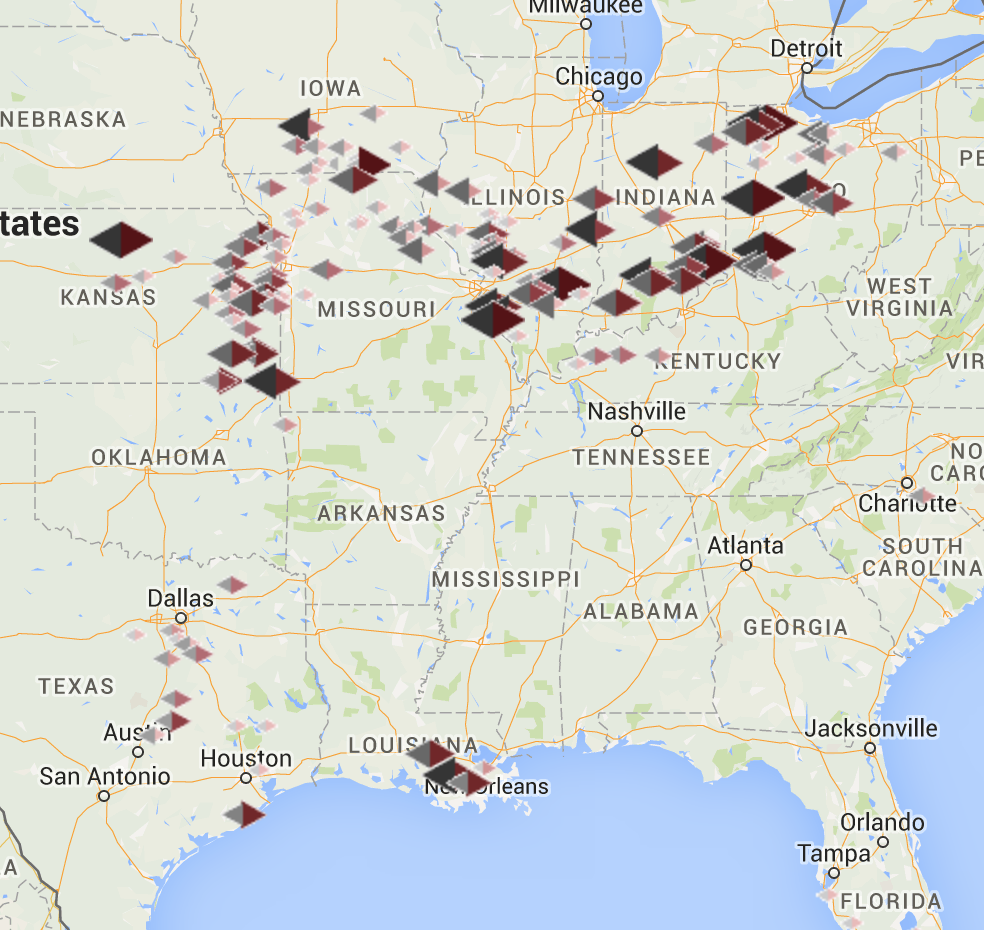
The spread of Atrazine in streams and waters that has been mapped on the basis of its agricultural use–if hypothetical and based on modeling–indicates the range of its potential spread into the regional groundwater of much of America.

map-atrazine-streams-500

atrazine_map2


The EPA has unsurprisingly found markedly high concentration in the surface water of those states where Atrazine is applied in greatest abundance, but a notably increased presence of Atrazine in groundwater as well:


Atrazine in Crops:Water EPA for Surface and Ground

EPA

Are the evident traces of herbicides such as Atrazine that seem evident in the environment similarly passed on through meats from nearby factory farms–and are they indicative of the sorts of attitudes to the environment that factory farming creates?  Indeed, a clear varying of the presence of the pesticide in drinking water is registered in those summer months of greatest runoff of water into the environment in a farming state such as Iowa–

Atrazine Levels Reflect Planting Season in Iowa

–and NRDC has found remarkable correlations in the pesticide’s concentration in watersheds and Public Water Systems that provide drinking water that reflect its greater presence in surface water, and cannot but raise eyebrows as to the changing quality of water and heath of inhabitants of such regions:  even though the high spikes of Atrazine in ground water during the months of June and July, when plants are presumably given the highest doses to keep pests off, the lower national averages measured by the EPA allows such unhealthy levels to exist during a few month every year, although at substantial risk to nearby communities.

The picture of water systems and watersheds with hold high concentrations of the pesticide in both “raw” and “finished” water was measured in 2015, showing greater local concentrations in Kansas, Indiana, Missouri, Ohio, and Illinois, as well Iowa, which suggests the spread of the pesticide’s contamination of regional drinking water supplies.

Atrazine in Stream Water

NRDC (map data from 2015)

IA [Converted] EDIT.eps

There is the sense that a different set of standards has occurred in exposure to health risks in select parts of the nation that reflect the intense application of pesticides like Atrazine in those regions that tolerate factory farms.

The strikingly intense and expansive use of the most popular herbicide Paraquat in crops from corn to sorghum to tubers and as well to sugar–leaves a considerable residue on crops, even if it is designed mostly to eliminate weeds and other plants.  After being both notoriously and extensively sprayed from the air by helicopters in the late 1970s on marijuana and opium fields in Mexico’s Sierra Madre, in a historical roll-out of the pesticide, it has gained wide sales–but also tied to liver, lung, and kidney failure, it has made a huge comeback with the rise of no-till farming at many large farms, broadly distributed across the nation.  Also marketed and produced by Syngenta, the corporation has spent considerable funds to dissociate from studies that suggested the close ties of its residues to neurotoxicity and Parkinson’s disease.

fig-072

And the remarkable promotion and rise of the agricultural use of Glyphosate–the most popular herbicide across the country–and its residual effects tells a similar story. From 2009 to 2012, is estimated agricultural use was particularly prominent across California’s Central Valley, but expanded across the big farming states of the midwest and eastern seaboard in ways that echoes the distribution of large factory farms.

GlyphosateUsage2009

Untitled 5Glyphosate high 2012

8.  A strikingly similar estimated distribution of the potentially devastating neonicotinoid Imidacloprid–believed a major factor in apiary colony collapse disorder–is scarily similar, if not even more widespread geographically–and has only grown.

2008mapimidaclopridCCD/Neonicotinoid

CB-FIgure-1

The most common herbicide in America, whose application pretty much mirrors the disposition of agricultural lands in the country, was long ago approved by the EPA, the potential carcinogen glyphosate has been used without the degree of harsh criticism that use of Atrazine faced after repeated studies indicated its potentially debilitating deformities on wildlife. Yet increasing ties of the herbicide to autism have been terrifying–and led Stephanie Seneff to the recent prediction that half of American kids will be autistic by 2025, and the Environmental Working Group to create a quite sophisticated ESRI interactive map designed to help parents learn whether children’s schools lie within zones where glyphosate is sprayed, and reveal the particular concentration of pesticides in close proximity to schools across the central US and Mississippi.

elementary schoolsEstimated Glyphosate Application/Environmental Working Group/www.ewg.org

EWR legend

The probability that the non-selective herbicide, marketed since 1992 under the trade names designed to appeal to a sense of security–like Roundup, Rodeo, and Pondmaster, actually allows residues to accumulate with carcinogenic effects in produce like soybeans and wheat has been suppressed, despite the mapping of its potential effects.  This may especially have grown Monsanto has introduced GMO glyphosene-resistant crops–greatly expanding the market of an herbicide still widely marketed at Walgreens and other stores, and used in residential areas as well as in agricultural sites.

Glyphosate

8.  The rapid rise of GMO crops has encouraged the ascendancy of Roundup, now patented by Monsanto, which has replaced Atrazine.  As the effectiveness of atrazine declined, and since many crops no longer tolerate glyphosate, the chemical prohibits the rotation of crops once a common agrarian practice, and suggests a new landscape of over intensive farming, which in corporates herbicide residues–as well, predictably, as glyphosate-resistant weeds in some thirty-five states.

resistant weeds

As much as we demonize nefarious chemical corporations who are the purveyors of poisonous sprays, from Syngenta to Monsanto, perhaps the true culprits lie in the lack of agricultural regulation, and poor economic planning that allowed the rise of factory farms, where the rise of cheap feed created by large-scale agriculture has generated the not-so-astoundingly parallel rise of feedlots in factory farms, in ways that have changed the landscape by which much food is eaten across the country, encouraging a free market of consolidation of farms, without calculation of its costs.

Increased population in suburban areas, often quite close to farmlands, has increased the risk of exposure to known carcinogens and rates of childhood cancer.  The results of such factory farms and economics of subsidized agriculture has led to an increasing number of schools that lie beside areas where GMO crops are planted, and roundup used, in ways that create considerable risks we haven’t bothered to adequately envision, even if they might be easily foreseen.

Total Schools in States within 1,000 feet of roundupd:GMO corn or soybeans

Well-funded teams of publicists and scientists help the PR machines that are run by firms such as Syngenta have effectively blanketed the media not only to undermine –and even created its own PR groups, spin teams, scientists, and “grassroots” groups–in a malapropistic move apparently oblivious of its own odd choice of terminology for a producer of herbicides–that is dedicated to misinform American consumers.  Such a legacy of promoting agribusiness and factory farms seems a lasting legacy from two Bush administrations that will continue to afflict the country’s landscape in future years, as engines of disinformation distance the meaning of actual debate from the general public.

Based on data that the National Resources Defense Council acquired by a Freedom of Information Act during litigation with the Bush Administration, from the EPA’s “Ecological Watershed Monitoring Program” and “Atrazine Monitoring Program” that they released in August 2009 and from a report on Atrazine contamination in surface and drinking water across the Central United States, the hidden topography of atrazine pollution across the United States reflects the dangers that even low-level pollution in groundwater has created in ways that give a new meaning, if with some symbolic appropriateness, to the much-bandied about notion of what constitute our nation’s “reddest” states.

atrazine_distribution_map_400_0_0

Indeed, the data on the growth of herbicides and pesticides so central to the spread of agribusiness in America, and the consequent reproduction of oversized factory farms, demands mapping and remapping in terms of the prevalence of cancer and other potentially environmentally-induced genetic mutations, and increased incidence of cancer among the young–especially in regions that border beside farmlands were use of Glyphosate and other herbicides or pesticides has rapidly increased.  One study that mapped potential exposure to carcinogens commented on the rising populations near to farmlands in the agricultural powerhouse of California’s Central Valley, the epicenter of a state known for using a large share of all agricultural pesticides and herbicides in the US–to reveal their increasing proximity to residential settlements.

Propargite

9.  What are some of the ways of taking stock of the considerable damage of such widespread use of carcinogenic or possibly carcinogenic pesticides, both to farm workers, neighbors, and also in the food chain?

While few contractors provide protective clothing or respirators to migrant or local workers, and many use clothing or cotton bandanas that, when washed with family clothing, risk spreading contaminants within a family, the recent creation of adequate protective costumes farm workers can easily don, such as the Seguro Protective Suit, are actually designed to be worn everyday by farm workers who work with fruit and vegetables in California’s Central Valley, lest workers be forced to dispose of or wash clothes separately:  the suit features materials able to repel and absorb airborne pesticides that might otherwise settle on skin or clothes, and prevent them from lodging in the lungs of farm workers who would otherwise be exposed to them.  If many workers bring home high concentrations of pesticides into their home and exposing them to steep risks both of birth defects and genetic mutations–despite protective goggles, chemical gloves, or masks.

uites

The residual presence of pesticides lodged in handkerchiefs and bandanas lack adequate chemical filters and carry carcinogens into the home and belongings; and despite current proposals of the Berkeley Expert Systems Technology Lab, producing or providing workers with adequate protective suiting actually rarely occurs.

10.  The topography of pesticide use is not exactly news.  But the widespread nature of the concentration of factory farms, which approaches terrifying intensity in specific census blocks, seem destined to have an increasing effect on human life.  Despite the lack of acceptance of confirmations of the risk of pesticides like Roundup, due to their corporate production, the diffusion of pesticide use exposes both farm workers and populations to increased medical risk, as well as nearby residents and transportation workers.

The lack of adequate measurement of rising level of risk is shocking.  But its ill effects can be measured and visualized in a recent bevy of maps of causes of hospitalization throughout the state, using data generated by the California Health Care Foundation, to map local variations of operations and disease based on state-wide hospitalizations.  Viewing these maps, striking in themselves, is a chance to perform the simple relational algebra to compares the intensity of distributions of farming with the prevalence of illness that might be termed a mental form of map algebra for California alone, without getting into GIS tools, to observe the otherwise unexplained regional and zonal concentration of illness:  even without subtracting those areas of least farming, a picture emerges, even without the prevalence of farming areas in or around the central valley.

One might profitably run through a list of reasons for the radical local variations in the distribution of hospitalization for hysterectomies,

hysterectomies in California

cases of bilateral mastectomies,

bilateral mastectomy

or gall-bladder removals

Gall Bladder Removal CA

in ways that raise clear and pressing questions about the effects of ambient areas.

The different distribution of operations such as coronary angiographies throughout the state rather reflect the relative availability of diagnostic services in specific areas.

coronary angiography

The practice of such “map algebra” involve, properly speaking, creating relations, as by subtraction, of spatial incidence over a set of cells, in order to reveal relations among two temporally sequential or related (or potentially related) raster datasets to reveal interesting homologies, as these maps of NASA’s Land Surface Temperature in North America of 2014 and 2015:

Map-Algebra-Logo-1

A similar subtraction of individual cells is less able to reveal so clear a contrast of regional variations, perhaps, in the intensity of pesticides and cancer, or the presence of pesticides with the possible likelihood of cognitive impairment and dementia–by Alzheimer’s disease or Parkinson’s disease, or even of depression, and heightened neurotoxicity especially in the case of Paraquat–would provide a compelling correlation over space and a map that would be difficult to ignore.  One might begin from a negative map of the correlation of diseases to those areas where pesticides are less prevalently used, or a simple ratio between incidence of illnesses in cells correlated to with the prevalence of pesticide use.  In either case, a focus on the increased chance of illnesses in those areas where pesticide use is most intense–and potential carcinogens most intensively applied–demands correlation to hospitalizations as well as to length of chemotherapy treatments.

88 Comments

Filed under Big Agra, data visualizations

Sleeping Roads, Ancient Highways, and Paper Towns

What’s the significance of names on a map?  Do they register roads that belong to the territory or only reflect continued use?  What sort of authority does a mapped road, byway, or highway retain in common law–and for how long must it be recognized as a road?  The existence of place-names and routes on a map have become an increasingly contested way to preserve a sense of place, and the survival of the “sleeping roads” of Vermont, the “Class 4” roads that are not maintained by towns, even if some receive some limited maintenance, suggest a historical network of the past, still partly visible and indeed rarely used, but providing a vanishing network of the past inhabitation of rural space and its organization before the introduction of the interstate system.

“If you walk down that road,” a Vermont farmer gestured at the end of Lavender Road in Central Vermont, “it’ll be like you’re walking into the past.” Meaning that the flat stone walls bordering the path, now overgrown with ferns, fallen logs, exposed granite, and an abundance of mushrooms and twigs, not to mention suspicious looking poison ivy, was an earlier system of land management and division, as well as an earlier route of access among the private property that divided Central Vermont hills, Long before I-89 ploughed through the countryside of central Vermont as a central artery of automotive traffic, cut through dark bedrock of metamorphic Cambrian and Ordovician eras, seizing thousands of acres across the state and displacing houses and farms, the roads we now see as arteries that cut through old forests and Silurian and Devonian metasedimentary rocks displaced the roads that once defined travel, reducing once luscious habitats of oak forests to the veils of Potemkin forests. Those illusory strips of six to ten trees deep to create the illusion of forest for tourists and motorists on the highways that cut across New England, vestiges of an earlier arboreal ecosystems living only in the minds of motorists on paved roads from which they rarely deviate or depart.

 
Two Thousand Acres Seized to Make Way for I-91/Vermong State Archives and Records

Newly Paved Interstate Curves through the Waterbury/Middlesex region, circa 1960/Vermont Historical Society

The very same roads that are no allowed to afford prospects of the fall foliage for which the same landscape is so well known were, of course, creations of an earlier area of land-movements and massive landscape shifts. What roads lie beneath them? How can they be seen or even mapped?

6K stock footage aerial video flying over interstate 89 through colorful trees  in autumn, Sharon, Vermont Aerial Stock Footage AX150_453 | Axiom Images

Interstate 89

The survival of so many earlier “sleeping roads” are increasingly threatened in an age of the road. The increased division of the long predominantly rural state on property lines, driven by a  market of construction threatens to obscure local knowledge and a long-valued sense of place that the cutting of highways had long altered. If the preservation of dirt roads without much gravel in Vermont towns was an early development, which contributed recently to the real fears of erosion with flash floods and inundations, the drainage problems of the considerable number of municipal roads in the state have remained largely unpaved–about 75% in 2018, of municipal roads that comprise some 70% of total road miles–the problem of best drainage practices are an inheritance of the longstanding protection of the states rural character in its towns. But the landscape of the interstates brought a deep local resistance to the remapping of interstates and federal roadways that Vermont towns were quick to protect their local character in keeping with a longstanding agrarian economy, rooted in pasture and the production of cows’ milk. 

Yet the increased presence of paved miles, even despite the increased danger that the state faces from stormwater damage and erosion in cases of increased stormwater and river inundations, has threatened the value of local roadways. The rapidity with which many roads were re-graveled, and provided with new culverts, ditches, and drainage systems after they washed out in the massive rains of the summer of 2023 led to a sense global warming as the latest threat conspiring to wash out the old lattice of historic roads in the state, and a quick and rapid defense of the local roads that were so much of the tourist industry depends. The deep sense of injustice in the prospect of loosing the legal status of “ancient” and long-pathways preserved in records of in local townships face possible obliteration in the legal memory as such unpaved roads–often more tacitly known than still used for commerce–are going to be reclassified.  Indeed, as the state’s legislature has decided to reclassify common law roads to homogenize property records across the state, the outburst of local mapping seems not an act of antiquarian obscurantism, but a defense of local knowledge in an age of globalism and satellite mapping, where few of the older roads might appear from the sort of satellite-based mapping systems on which we increasingly depend.  While many of the “class 4” roads might be sought out by mountain bikers, eager for off-road experiences, or back roads where they can snake around mountain farms, but only maintained if deemed necessary for the public good. Yet the rediscovery of these “ancient roads” that are still able to be found on some edges of historic farmlands open up prospects of the topography of the past, evident in the gaps between tree tops and the old stone walls of the edges of the pathways, rather than their navigability or use.

The plan for a massive reclassification of “ancient” highways on the books but actually dormant in much of the state of Vermont may be a pro-development land grab, but suggests that the struggle for designating once common lands as private property (and resistance to it) are waged on maps.  The recent promise to reclassify registered but unnamed byways in the state–a mass of roads which were at one time used or previously surveyed as common-law byways, but have since fallen out of use to different degrees–has unintentionally generated a set of local storms about public memory.  In a state where many current town roads remain unpaved, and many more have faded into the largely forested landscape, their traces still in evidence in the midst of a somewhat bucolic space of passage, tree growth impeded by the stones and often muddy road between old flat stone walls that had once been built to separate famers’ bow long overgrown fields.  

The drive to reclassify the diversity of unpaved roads and common law byways once preserved in local jurisdictions reveals the rise of property development for whom the retention of old systems of spatial classification obfuscates the exchange of private lands.  And if the preservation of old farmlands in Vermont provided a rare historical perspective of longue durée for early twentieth century historians as George Perkins Marsh, who rote long before the rise of environmental history or of the Annales school focussed on land management practices as a lens to observe long-term changes in social history. And in a fascinating illustration of how local collective mapping practices provide a unique point of resistance to mapping software systems that are primarily oriented to paved space, rather than the commons, or, as it is now known, the closely connected right to wander.

The Vermonter developed a broad history of the dialectic relations of what we call the Anthropocene between “man” and “nature” avant la lettre. He dis so out of a deeply American vantage point on world history, as he contemplated the “destruction wrought” on his native state’s local landscape in 1864, about twenty years after Henry David Thoreau lamented the presence of the intrusion of railway lines in the idyllic space of Walden Pond. He offered a global perspective that took its spin from his deep impression by the effects of the retreating and shifting landscape of Vermont, where he had been born in a farmhouse, the vantage point from which Marsh defined his perspectives on human destruction of the global landscape.  After travels in Italy and study of the deforestation Mediterranean basin, he bemoaned that the case of Vermont’s loss of native trees as a similar global historical shift of consequence; in the introduction of his massively learned work, Marsh affirmed that “The earth is fast becoming an unfit home for its noblest inhabitant, and another era of equal human crime and human improvidence . . . would reduce it to such a condition of impoverished productiveness, of shattered surface, of climatic excess, as to threaten the depravation, barbarism, and perhaps even extinction of the species.”  In his metahistorical masterwork, Man and Nature, Marsh contemplated the “wide a circle of disturbance we produce in the harmonies of nature when we throw the smallest pebble into the ocean of organic life” and watch it send ripples across the surface of a body of water, offering one of the more prescient images of the cascading effects of anthropogenic change in the Anthropocene.

Vermont’s deforestation was so accelerated and traumatic in scope that–long before the expansion of its interstate that destroyed farms, homes, and an agrarian economy–the state offered an important perspective for articulating an early environmental vision of the planet’s dire state that in 1874 Marsh found it to carry “the force of revelation.” As immersion in the resettlement of dustbowl refugees prompted historical reflection of self-made environmentalist Clarence Glacken, about man’s relation to the habitable environment; his experience of resettling refugees forced from farms by a lack of rain prompted sustained reflection on the relation of “man to environment” that resulted in the synthetic surveys he taught in the 1950s, which culminated in Far From the Rhodian Shore, a compendium of classical to enlightenment thought that was in the course of being complemented by a second volume when it appeared in cloth in 1976. If Glacken viewed the interaction of humanity and the environment as a baseline for humanism, the devastating experience of deforestation provided for Marsh a baseline for the dangerous rewriting of relations to the natural world; the scale of the deforestation witnessed in Vermont as a circumscription of access to natural worlds provoked a terrifying resonance with the deforestation of the Mediterranean he witnessed, leading him to view environmental change as a altering one’s relation to the world, when the logging industry clearcut oak, birch, below 2,000 feet in a massive harvesting of wood, producing 375 million board feet of wood by 1889, and leading the treeless slopes of Mt. Tom near a town known as “Woodstock” to experience massive soil erosion with hard rains that it altered its shape in Marsh’s own line of sight. His own reflection on “man [as] a disturbing agent” able to turn natural harmony to discords wherever he arrives generalized the land-altering consequences of clearcutting without constraint as a force of history: and whereas metahistorical interpretations of Hayden White and others may smell of the libraries where men like Michelet, Burckhardt, Marx and Vico worked, we might well map the alteration of lived environments provided the optic by which Glacken and Marsh structured pessimistic historical dialectics of their own.

A log drive on the White River
Log Drive on the White River Near Sharon, VT/Vermont Historical Society

The massive rewriting of Vermont’s once rich arboreal landscape by the 1890s was so extensive to alter the economy of the land and man’s relation to it. The scope of devastation was not without resistance as the old map of a relation to landscape was preserved, in no small part by th donation of a Middlebury legislator who incarnated local ideals of environmental stewardship by decrying devastation of “timber butchers”: as soil erosion was devastating local tourism, legislators founded a Forestry Commission, similar to the Board of Agriculture, leading Middlebury legislator Joseph Battell to act preemptively to purchase and donate a thousand acres of forested land comprising Camel’s Hump, Bread Loaf Mountain, and other peaks of the Green Mountains to the state so that they preserved their form–and later donated lands from Hancock to Fayston, to his alma mater, Middlebury College, a land grant that provided the nucleus of the broadleaf trees in the Green Mountains National Forest.

If the extraction of wood from the state’s lands reshaped the soil as the cutting of trees on many hills was accompanied by rise in quarrying to mine slate, granite, marble, and copper; often, smelting left wastelands behind in place of forested lands–leaving old growth trees to act as wayfinding signposts for a drivable road network created on cleared land, paved or graded to allow increased automotive traffic unsuited to dirt roads from 1908.

Did not the rebuilding of paved roads as Interstate 89 not encourage the growth of a fossil fuel economy in the 1960s as it cut across once forested terrain, forcing the vision of Marsh’s coherent landscape further into the receding past, as automotive space shifted the function, use, and scope of a local infrastructure of roads?

The back of this 1964 photograph reads, "Unvailing [sic] of new gas signs on I-89." An exhibit at the Vermont History Museum features historic photos from before, during and after the construction of the state's interstate highway.

New Gasoline Station Signs placed along Interstate 89 (1964)/Vermont History Museum 

The local resistance to such a reclassification of roads in the rural state, which has attracted its share of fierce defenders of the local rights of communities long granted precedents to federal or state law, make the proposed elimination of “Ancient Highways” from local law a matter of contention.  The proposed reclassification of a multiplicity of roads poses a problem of having ceased to reflect the sort of use of landscape that developers want to encourage and private home-owners want to ensure.  Given the shifting nature of land use in Vermont, where older houses are increasingly on the market, as smaller agricultural farms close and die out, a premium has developed for the clear definition of ownership without any liens or qualifications.  Hence the increasing tensions between local municipalities in the state and any move by state government to abolish roads they long oversaw.  In a sense, the increased interest in helping demand for fungible residential properties that can be sold without qualification have run up against the multiplicity of roads that have continued to remain on the books.

As the real estate market in Vermont seems poised to heat up in much of the state, and smaller towns face a demand for brisk sales and a large pool of properties arrive on the market, the state seeks to remove any obstacles to development or become notorious for arcane property laws, remapping the “ancient” roads of Vermont opts to treat them as ancient, and, far more than unpaved, not part of its future landscape.  Yet the quilt of county regulations of roads that existed for most of the eighteenth century and was retained in most local maps before World War II reflected a local landscape of counties and townships rarely challenged before the arrival of interstate federal highways across the state during the 1970s, erasing the varied paths, trails, and common-law roads, long overseen by local city Selectboards and regarded as parts of the local landscape.

A Quilt of Counties
Continue reading

Leave a comment

Filed under anthropogenic change, antidepressants, GIS, GoogleMaps, the commons, Vermont