On the Proposed Balkanization of California

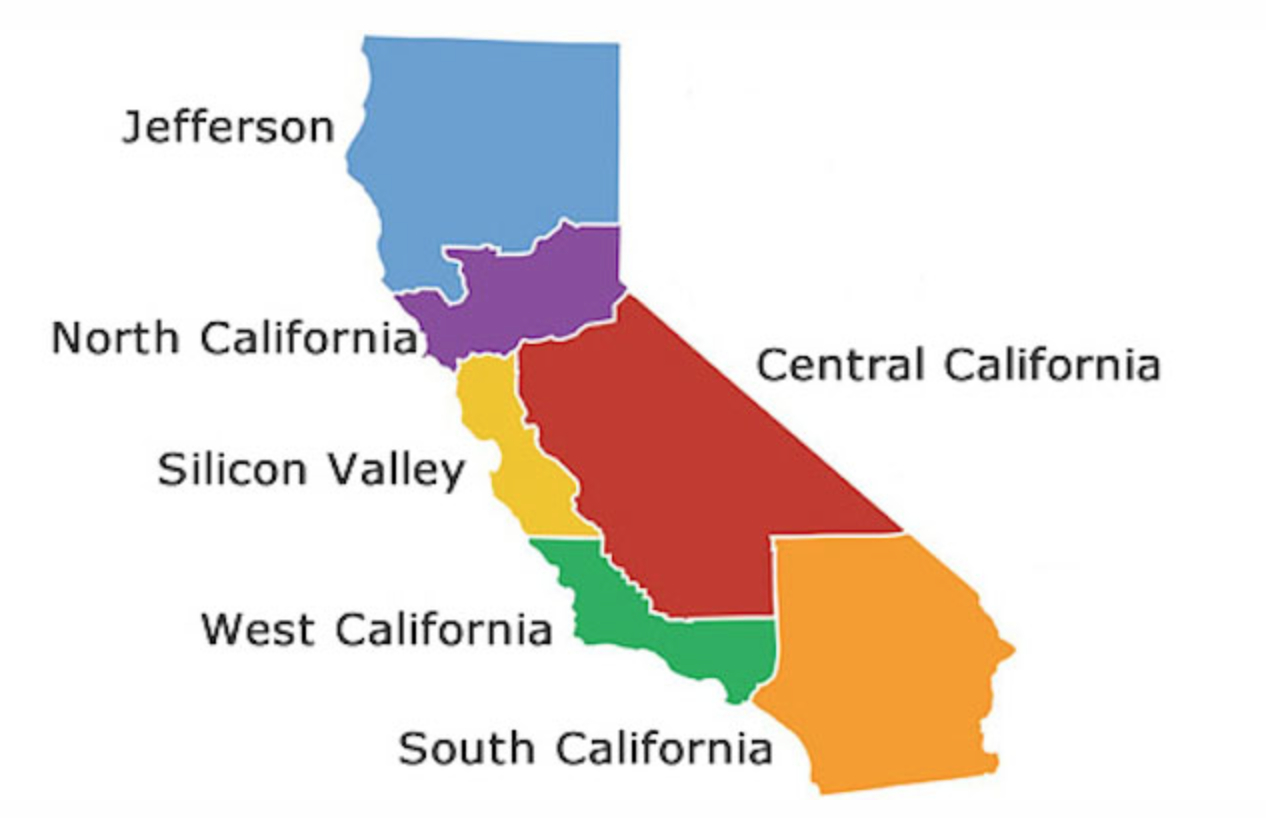
Timothy C. Draper fondly reminisced that “I grew up in the state that was number one in education, the number one place to do business and the best place to live.”  The venture capitalist who brought the nation hotmail, Skype, and Tesla was savoring the new mental landscape that he argues would be recaptured by remapping California as six separate states. That simple cartographic intervention, and the “autonomy” it would serve to return each region–or all of its six new states to be carved from it–would fulfill the ideals of a rapidly receding past, and allow each to independnetly confront the problems of a crumbling infrastructure, poorly performing public schools, and pension obligations for state workers, and taxation practices that he judges unfriendly to business.  The “start-up guy” sought to restart the project of California in 2014, spending $5.2 million to liberate each of the state’s six parts, which failed to make the ballot, if it gained the national spotlight thanks to Stephen Colbert. The self-defined “start-up guy” returned to the table to reparse the largest state in the union in 2018, when the notion of national division gained traction in the national news, with hopes to give a greater tax franchise to at least two of the regions–the rump “California” around Los Angeles and Orange County; “North California;” and “South California”–as if to allow citizens to self-sort themselves into their own “like-minded” communities and unique styles of governing, to reboot the largest state that had just become too populous into three.

The insistence of these aspirations to cartographic self-definition suggests, in other words, the fiction of independence that Silicon Valley has been selling the nation for some time. As Draper has argued American would be best by adopting Bitcoin as its national currency, cutting out the Federal Reserve as so much excess baggage, the big stakes questions as land maintenance, coastal commissions, and Fish & Wildlife would be deferred, as would many questions of ecological conservation and fire management that are currently on the front burners of most Californians. By persuading us to see the state as a set of discrete regions, however, bushy-eyebrowed Draper hopes to urge voters to realize his political strategy to divide California into six cantons of different hues.  And when he rolled out the project for dividing the state–and its resources and economy–once again into three states,  one named simply “California” on the coast below San Jose to Los Angeles, bounded by the “Northern” and “Southern” California, as if in an attempt to make the map look clearer, Draper seeks to persuade voters to overlook the complex web of natural resources (like water), but huge discrepancies in public education, pension plans, transportation needs, and water management that demand resolution in coming decades–and in effect heighten the levels of inequality already permeating the state, as well as diluting its political voice.

A six-color map of the state offered the rallying call to generate support for his map to renewed economic prosperity–a spectrum intent to underscore inherent differences between each region.  The cartographic division of the state became a logo for a movement, found a nice logo in six colors, designed to strike a key in reflect the parched nature of the more arid (purple; red; orange) and waterless or irrigated areas of the state, and to suggest they were best left to fend for themselves, especially, perhaps, the orange Southern California and the Imperial Valley and bright red Central California’s desert. The coastal communities would have their liberties, and the tax franchises that went with them.

New Map of California

Draper’s initiative to “divide” California into six California’s–six separate states–picks up the inventive cartographies of division that partition the United States into more “rational” or “reasonable” mega-regions, macro-states, or mini-countries, and betrays what little sense he has of the environmental or ecological status of the state.  His proposal stands at odds to how, back in 1837, the German-American jurist Franz Lieber famously doubted that merely altering hues of any map could affect its political economy. He doubted that “the face of our country would change” as a result, and saw little impact for changing a map’s color-scheme, and hoped that “if the engravers were able to sell their maps less boisterously painted and not as they are now, each county of each state in flaming red, bright yellow, or a flagrant orange dye arrayed, like the cover produced by the united efforts of a quilting match.”  Lieber had studied topographic mapping in Dresden before coming to America, and meant to contrast realities of political economy with the coloration of maps–probably contrasting the four-color maps of the United States to those of Prussia with his Berlin-trained mind’s eye; the flagrant color-scheme of a map, however, becomes a device for Draper to urge that we remake California into six “political entities” that most of those living in them wouldn’t actually recognize.

In treating California as a landmass whose extent is able to be parceled into six–or three–blocks, the iconic visualization presumes “California” is not a landscape bound by coastal rivers, streams, glacial ice-pack, or viaducts, but might be parsed as the graphic designer wishes, in what seems the utter alienation of map from place.  By converting California to six cantons, the hope is to remake the state as six more manageable mega-regions to bridge perceived distances between government and Californians.  Draper represents the remapping of the state as a means to reconnect its residents to a model of good government in something of an extension of the argument of states’ rights.  The graphical division of the Golden State into six entities, maxi-regions or mini-states, each emptied of local meaning and purged of cities, provides the rallying cry of the venture capitalist’s movement for the May 2016 ballot, having gained over 1.3 million signatories of in-state residents–at the time of its submission in mid-July–and of a charge that Draper hopes would open up the possibility that other states follow the lead of his movement to break into separate states as well.

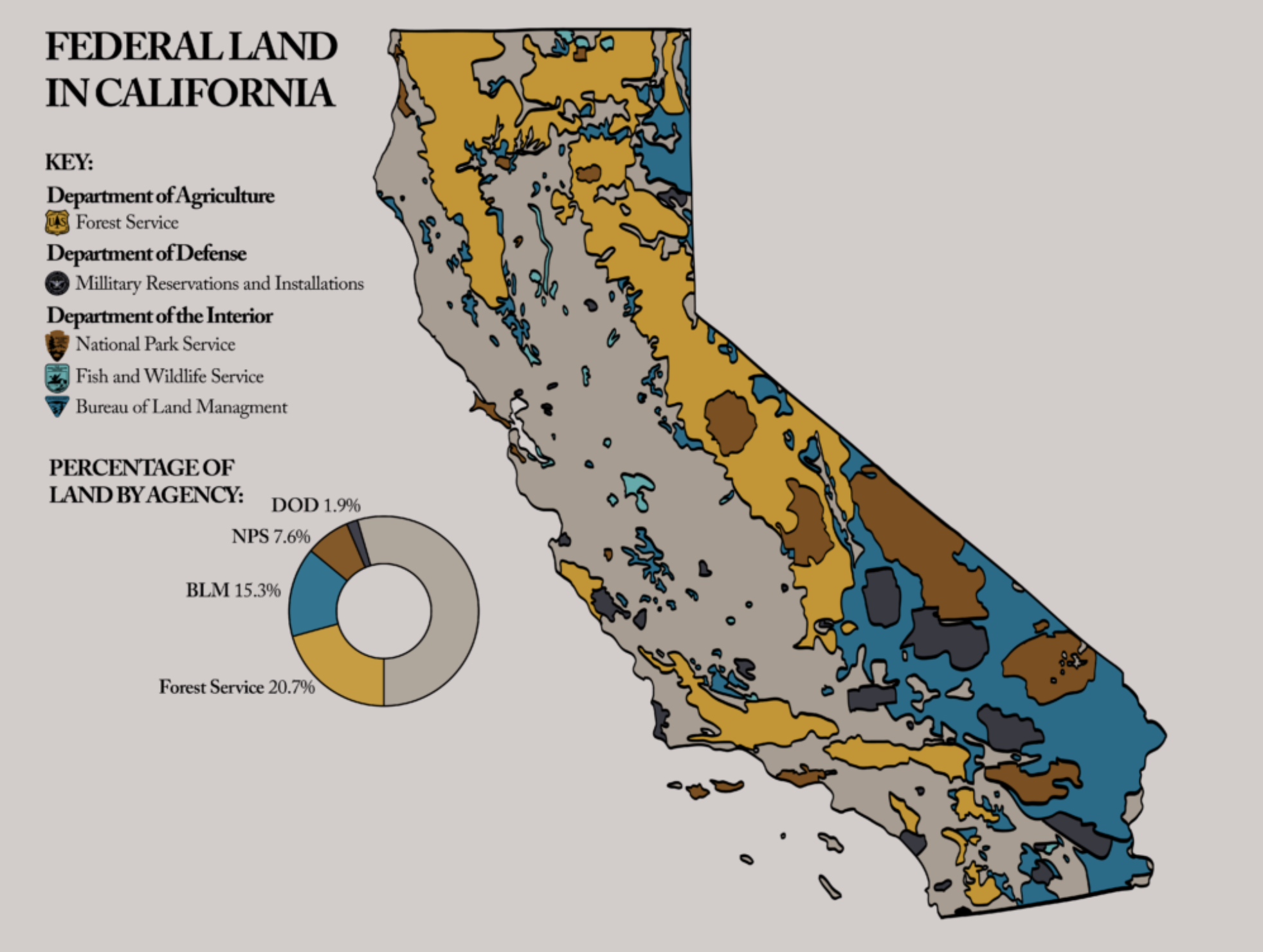
The return to the map as an iconic form of taking self-consciousness as Draper urges is a bit odd, to be sure, for a libertarian. For the image of the map as an icon of national destiny–the pentagon of France; the “lebensraum” of Germany; the unity of China–has a distinctly nationalist heritage, as does the call for a Red-State America with disturbing similarities in its contours to the Confederate States of America. The map indeed conceals, by a nice slight of hand, how much of California is “open space” managed by the U.S. Forest Service, Department of Defense, or Bureau of Land Management, in its attempt to carve up neat bundles of California in the hopes that these would align–or soon come to align–with independent interests. Fearing the administration of wilderness areas of the National Park Service or Forest Service during the Trump regime, Governor Jerry Brown had indeed not only filed a spate of twenty-four law suits against the Trump administration in 2017, the first year of the Trump Presidency, but questioned the validity of any attempt by the chief executive to sell or exchange land rights in the state, by pronouncing them void ab initio, without review by the State Land Commission, fearing the dismantling of hard-won environmental protections across the state.

The defense of undeveloped land that Brown holds dear and near was a pre-emptive strike that provoked a quick legal response from Jeff Sessions’ DOJ: “California was admitted to the Union upon the express condition that it would never interfere with the disposal of federal land,” he cautioned, defending the “rightful prerogatives” of the Interior Department, U.S. Military, and Bureau of Land Management “to buy, sell, exchange or donate federal properties in a lawful manner in the national interest” that should rightly make Californians fear the actual intent of the U.S. Government. While the admission of California to the United States in 1850 indeed stipulated that “the people of the said State, through their legislature or otherwise, shall never interfere with the primary disposal of the public lands within its limits,” the mandate for the state’s defense over those public lands may well be, in an era of accentuated climate change and fire danger, the rationale for rationale for administering public lands had so dramatically changed since the expropriation of public lands from indigenous tribes and mandates of public land management that the threat of their misadministration or maladministration by the rapacious Interior Dept. of the Trump era had grown pronounced–and fears of the placement of lands of the Bureau of Land Management and National Parks had been warranted, given the stunning removal of public lands protections in the first year of Trump’s administration, mostly directed to review the protections of federally owned lands from oil and gas drilling, groundwater mining, logging, and offshore drilling–all triggers for immediate protection–as well as removing responses to climate change from the administration of Park Service lands. The real fears of leasing lands for oil and gas extraction had led to the leasing of 223,200 acres of public lands to private individuals in FY 2014 alone, and the expansion of such leases would render the potential influx of cash as music to Draper’s libertarian ears.

While Draper’s initiative of the “Three Californias” was not openly framed by the tussle over land management over open spaces or wilderness areas, the fact of the federal management of 45% of California’s territory provoked fear of a slippage of protection of grazing rights, timber and forest management, and development of extractive industry that were cleverly concealed by the Three Californias, and which render California a fairly unique target of free market forces. The anger DOJ barely concealed in sniping at the “extreme state law attempting to frustrate federal policy” that Attorney General Sessions may have been born from venting about the state’s resistance to policies of border protection, and the incarceration of “illegal” migrants, with the pretense of drug enforcement, but created a unique opening for Draper’s initiative, an economic bottom-line of as limited ethical scope and compass one might associate with Don Draper, the fictional composite protagonist of “Mad Men,” but aligns closely with the brutal calculus of Tim Draper’s broad-strokes vision of governmental reform. Perhaps the true base-map, if often hidden, that lies beneath the busting up of California as a state are the network of environmental protections and protection of public lands and coasts, enforced by state regulations and commissions, that would be removed by the division of the state into cantons that would be open to the free market, pried from a vision of environmental stewardship.

Continue reading

1 Comment

Filed under California, data visualizations, environmental stewardship, Six Californias, Timothy Draper

Weed Maps?

The

Whereas the criminalization of marijuana over the past decades strove to push the stuff literally off the national map, the last election opened up the frontiers of the legalization of pot in ways one could scarcely imagine in previous decades.

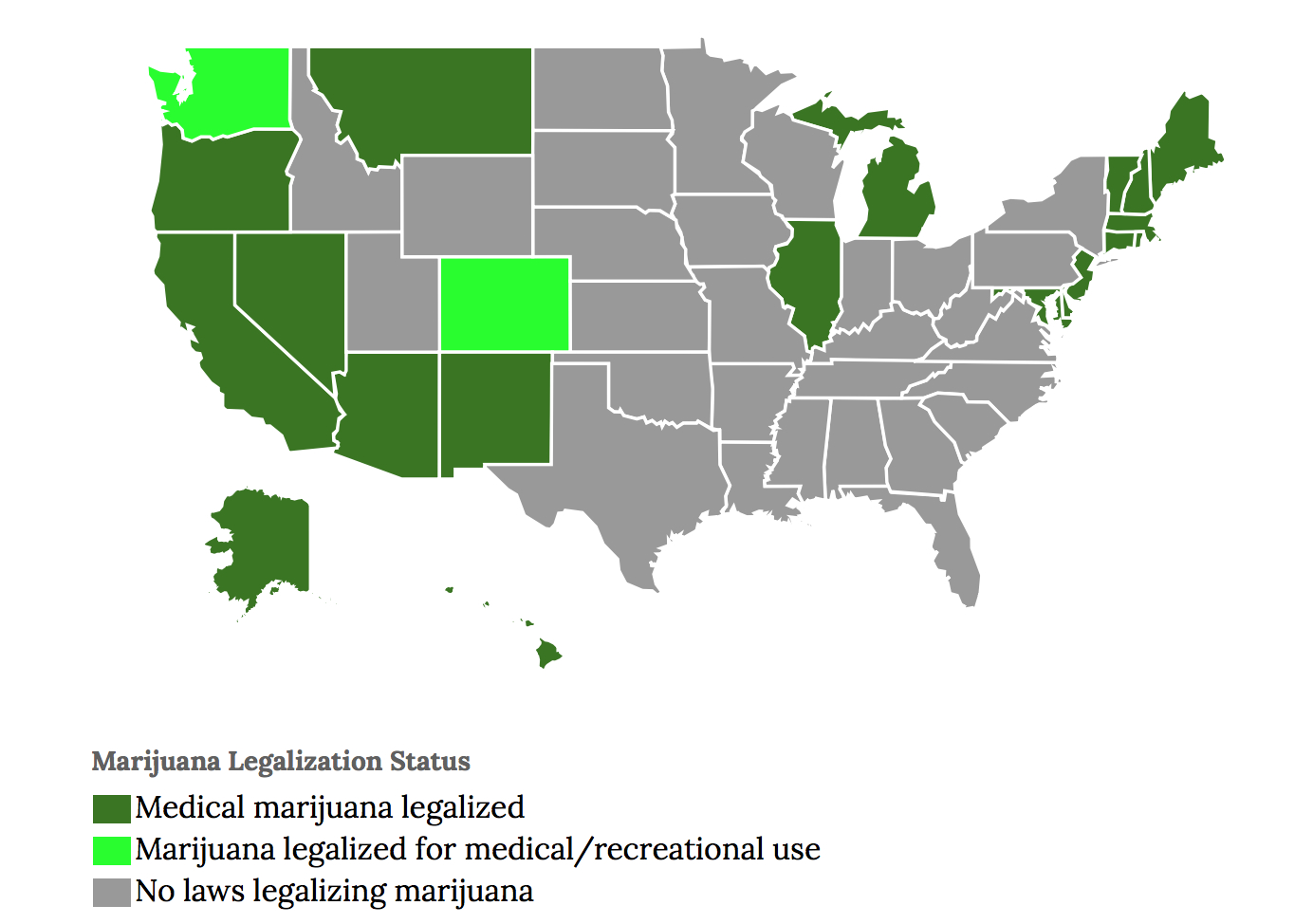
For the rethinking of the efficacy of a “war on drugs” offered a new map of the legalization of cannabis as a recreational pursuit and legitimate business.  The rise of legal marijuana dispensaries in many states of the nation have created yet a new manner of mapping our national divides–itself a favorite national past-time.  From the illustration of which states have enacted laws of marijuana legalization as a substance and, increasingly, as a crop–


Marijuana Legalization map


–or, to offer a more updated account of “decriminalization” as well as “legalization” in a map of quite unharsh lavenders, light blues, and sea greens:


Map-of-US-state-cannabis-laws.svg   Legend MariJ Map clean


Only recently, the newsletter of our local organic farmer, while allowing the stupidity of “trying to outlaw a plant,” took the time to explain to his customers that, despite some demand for the inclusion of the crop in the harvest boxes currently on offer from his farm, “medicinal herbs” long lay off of his radar, and would involve him with a “milieu of doctors, patients, quacks, drama, stress, illness, research and recovery” that were not quite what he had ever planned to dedicate himself:  “just because marijuana is legal doesn’t mean I choose to grow it,” Andy explained, while offering that the past two years had already seen a “green rush” on farmlands in much of Central California, grabbing land in the hopes of its future legality as a crop in ways that have placed a new pressure on renting and locating greenhouse space as marijuana growers are posed to drive up rent–although the market for growing grass has also attracted a new demographic to agricultural farming, in his opinion leaving us posed to have an oversaturated market.

The new green of the nation has been seen as a market for financial futures–

cash crops.png

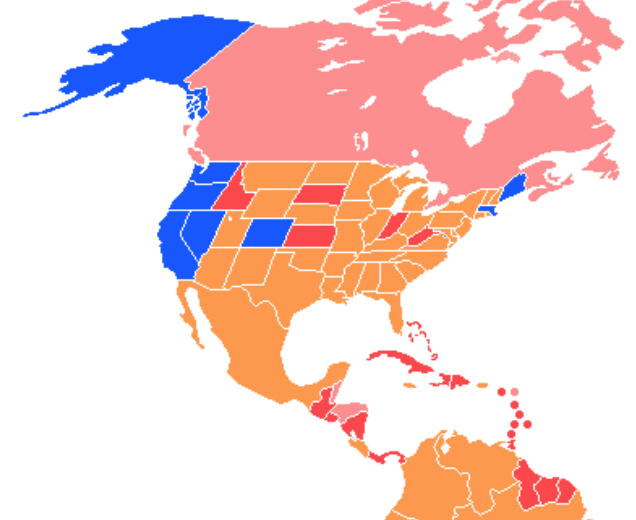
–but we’ve only begun to navigate its availability on the ground, trusting perhaps on the free market to provide for weed dispensaries in many states that have recently “gone blue” of making it legal, creating islands of legality in a sea of decriminalized (if illegal) orange, and sites where it is illegal (red) or where its illegality is less often enforced (pink).


NAFTA decrim mari.pngWikipedia/Creative Commons


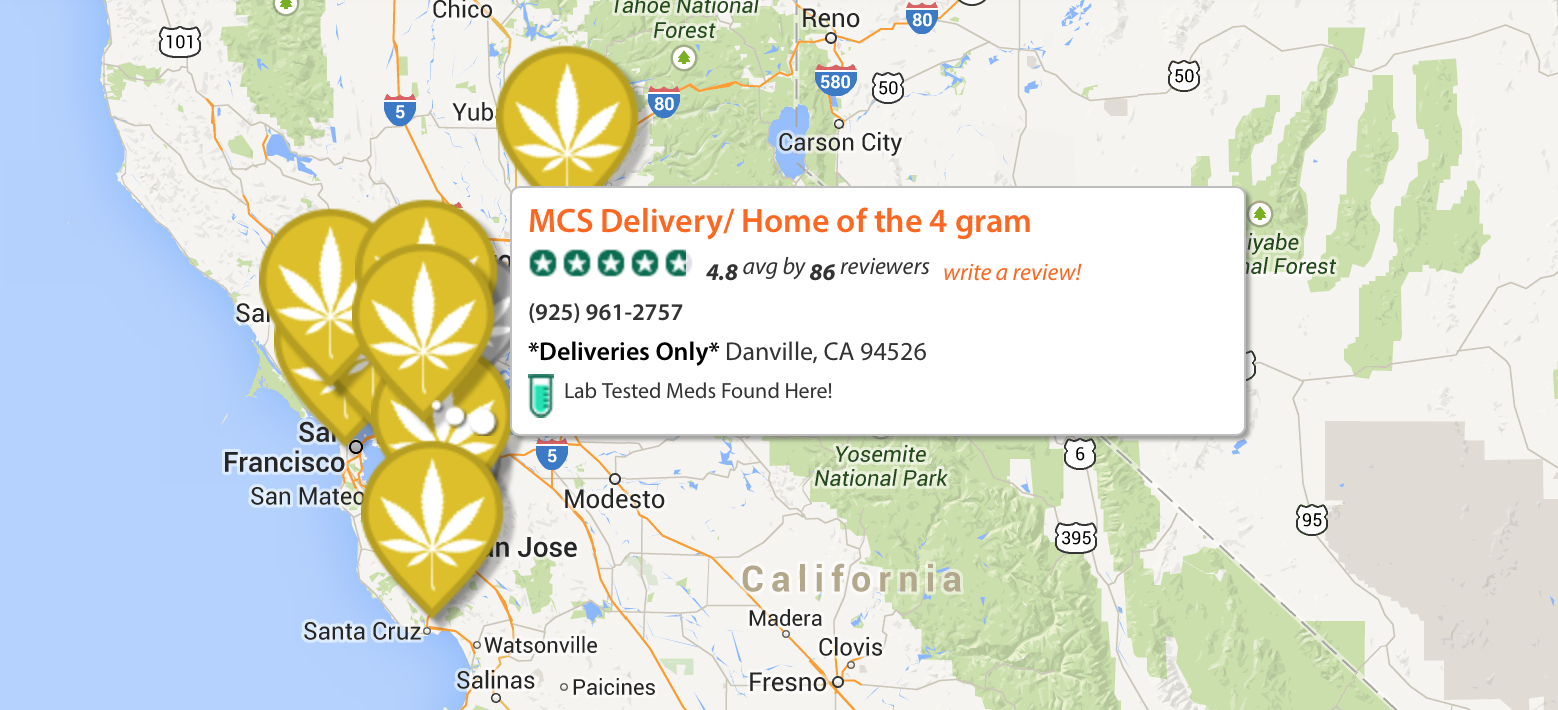
These broad brush-strokes of cartography demand a far finer grain, or course–to show their impact on the ground.  And a finer grain has arrived with the entrepreneurial folks at Weed Maps who have painstakingly collated, shortly before the vote for legalization, those local dispensaries where medical marijuana was available.  The topography of pot was delineated with qualitative ratings, offering a range of scale to which one can zoom to reveal a geography of availability and even openly ranked dispensaries that are perhaps the closest available we have to sanctioned standards.  Users can click on the clickable icons of dispensaries that appear on the screen with precise geolocation, differentiating “laboratory tested” from, presumably, riskier, and delivery services from in-store only.

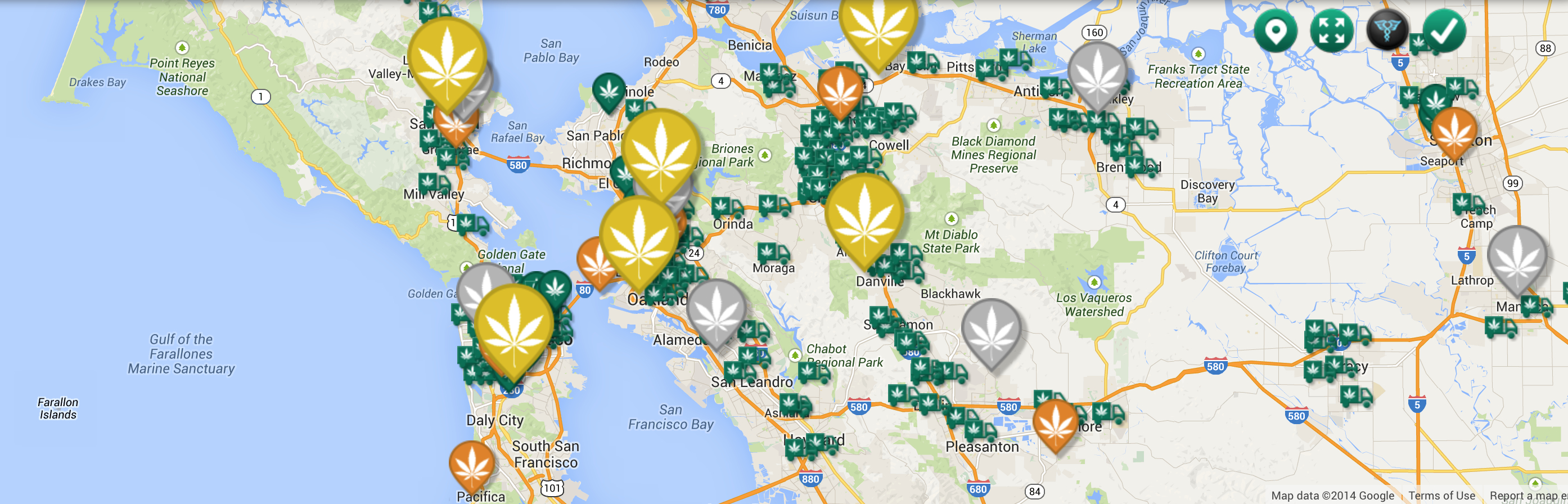
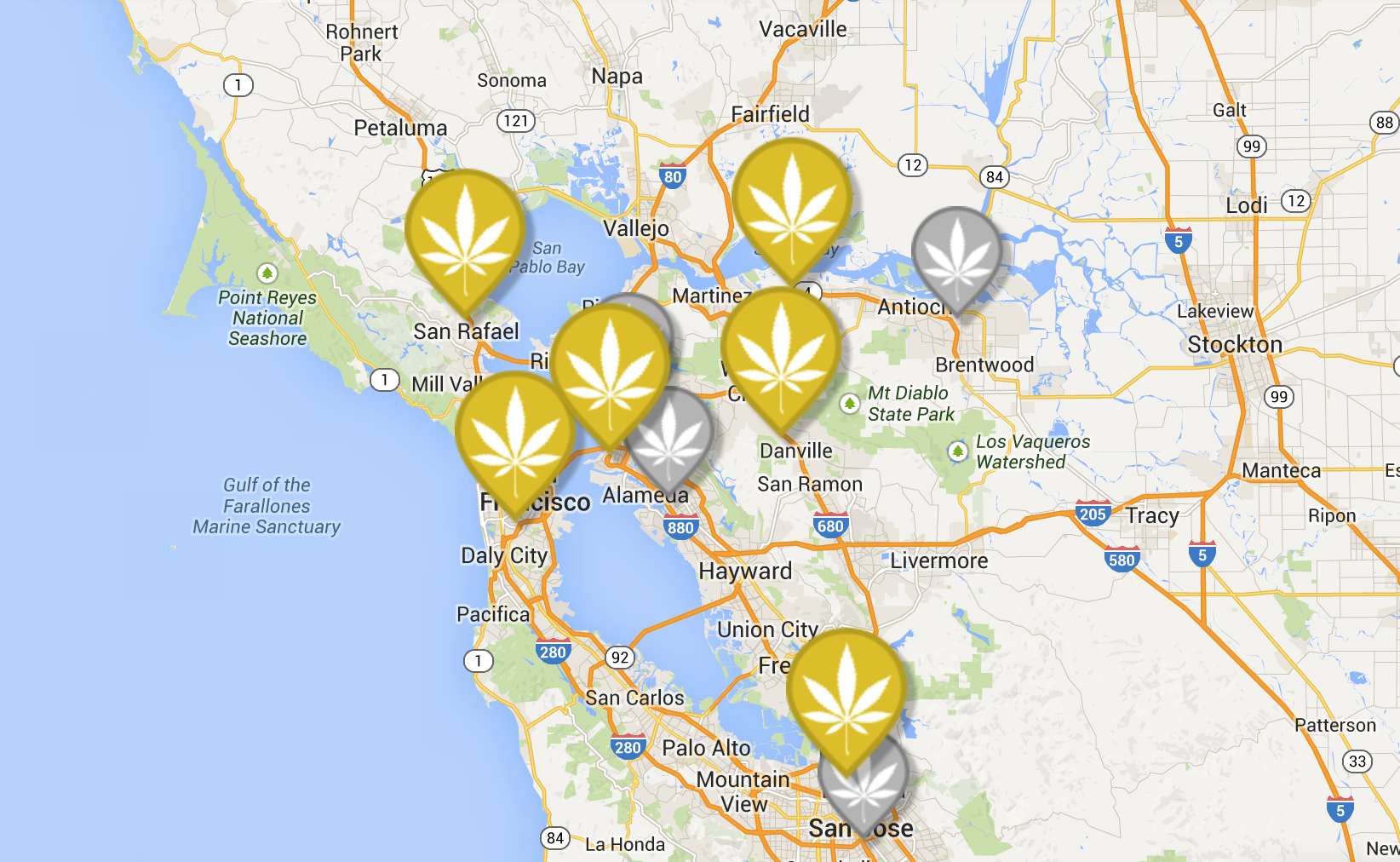
A Google Maps template essentially provided a new iconography of pot, particularly useful when one is addressing customers and taking laws for medical cannabis at their word.  Issues of legibility and economy in a map lies always at the crux of cartographical invention, and we might look at these early models of mapping as a sort of prototype that has sprung up on a website that includes such euphoric messages of encouragement of abundant capitalization as “Congratulations Washington!  Legal Weed Has Arrived!” and ponders “What a long, strange road to legalization it’s been in the Evergreen State.” Consider the local density of outlets in the Bay Area, in a map offering a busily synoptic overview of the rich efflorescence of the weed economy, as a promising point of departure:


Bay Area Weed Map


Hard to read, you may say, and too crowded and complex in its iconography, not to mention for readers with occasionally addled brains?  The interactive map produces its best results by hovering over specific sites, but in the large-scale version just gives an idea of the abundant range of buying options available. But let’s just focus on buying clubs around the East Bay:


East Bay Dispensaries


and take advantage of the range of ratings and select reviews that you would not usually expect to find on Yelp!:


Rating and Reviews


This could be of use for the traveller–not many legal dispensaries in Fresno or Reno–or for whittling one’s abundant range of options down to the lab-tested–


Lab Tested


or, to restrict oneself to both recreational AND lab-tested–


Bay Area Recreational, Lab-Tested


or, shifting the geographic terrain a bit to a nearby destination, to explore the rankings of regions closer to the Sacramento foothills:


Sacramento Foothills--review and rank


And you might do a double-take at finding out how quickly demand has driven the rapid growth of dispensaries that have sprouted up around greater Seattle:


Dispensaries in Washington


For this inventive appropriation of the Google Maps API and the ranked range of selectivity that might best suit the searcher of legalized cannabis, we have to thank the folks at “weed maps” for the mash-up, even if one wished they used an OSM base map, whose “open access” options might allow easy mapping of the proliferation of future sights of sale.  Even though recreational use of marijuana is not legal in 48 states of the union, Weed Maps CEO Justin Hartfield, a visionary and a man on a mission, projects annual earnings of upwards of upwards of $30 million, and uses his mashup as something like a crusade to keep marijuana in the hands of user.

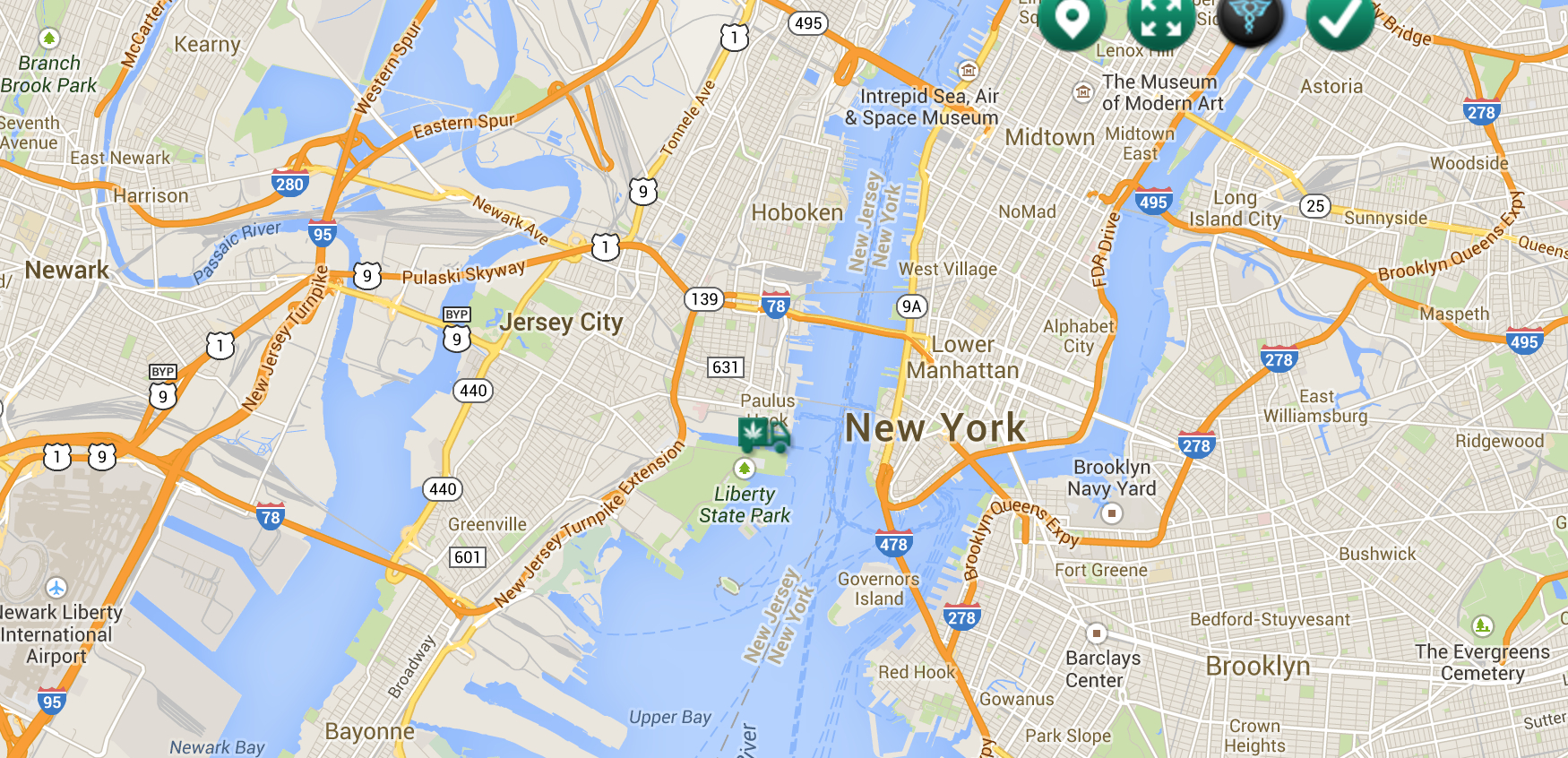
The iconography of mapping marijuana’s availability can get curious as an early mashup.  Often, for example, despite the inventive and unconsciously playful iconography, one gets some nice visuals, but most maps are often all too crowded–as one can already see in those of the Bay Area, with information and odd juxtapositions, as in the proverbial New Jersey delivery truck seeming poised to carry cannabis to Manhattan through the Holland Tunnel–


Some of the Iconography is Cool


The API reveals some nice “weed islands” that will be useful to note, even in states where legalization is the norm, as Rhode Island.


Weed Islands?


While quite rudimentary in design, the proliferation of push-pins pointing to places to purchase pot posit a pivot in themselves in the changing topography of cannabis in the new millennium.  More than anything, it just shows the relative rapidity with which marijuana is openly on the map. So, go forth and map?  It’s a lot easier to negotiate the topography.  Hartfield himself boasts at having lit up “almost every day” for fifteen years, as a medical marijuana customer who was impressed with the extreme openness of information about pot options at his local dispensary, which gave him the idea of mapping quality and availability, so that “people can do their own research.”

Mapping such a mashup seems a start for revealing something like a new landscape:  if legalization advances, of course, as advocated quite recently by the New York Times, the newspaper of record, and the ranking of quality reaches mainstream consumers, the WeedMaps ratings system might merge with or be overwhelmed by Yelp–although the data already accumulated, and the audience that they’ve reached, seems to put them a leg up.  “We know more about the plant and love the plant,” Hartfield observed, perhaps with something of a sly smile, “than anybody else.”

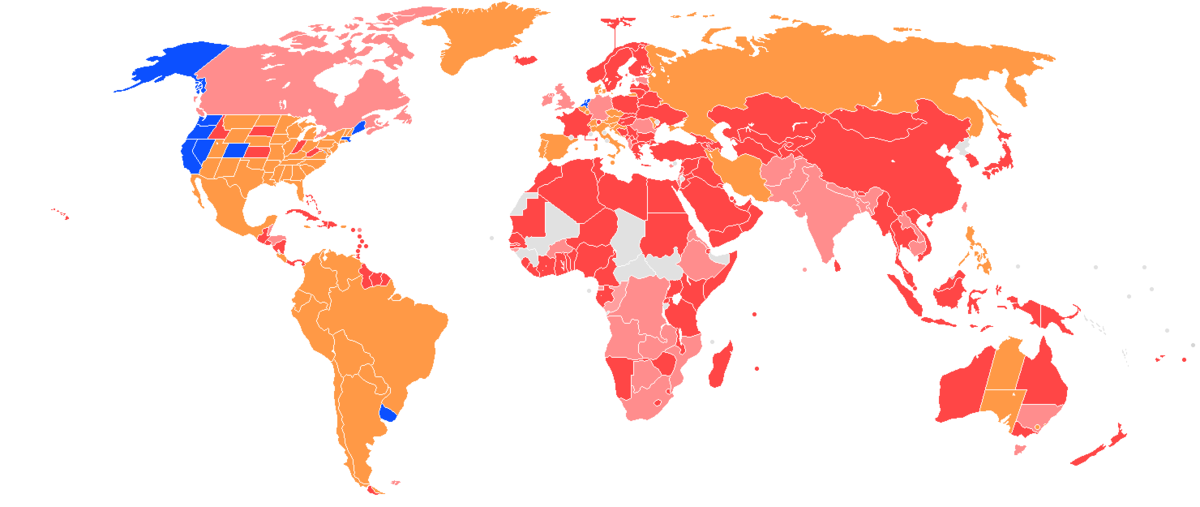
Despite the complex global landscape of legality–


1200px-World-cannabis-laws.pngWikipedia–Multiple Authors


–the excitement of this islands of blue largely on North America’s Pacific coast have created considerable commercial interest in the possible open markets for pot.

2 Comments

Filed under Google Maps, Google Maps API, marijuana, marijuana legalization, medical marijuana, weedmaps

Mapping the Wobbliness of the Polar Vortex

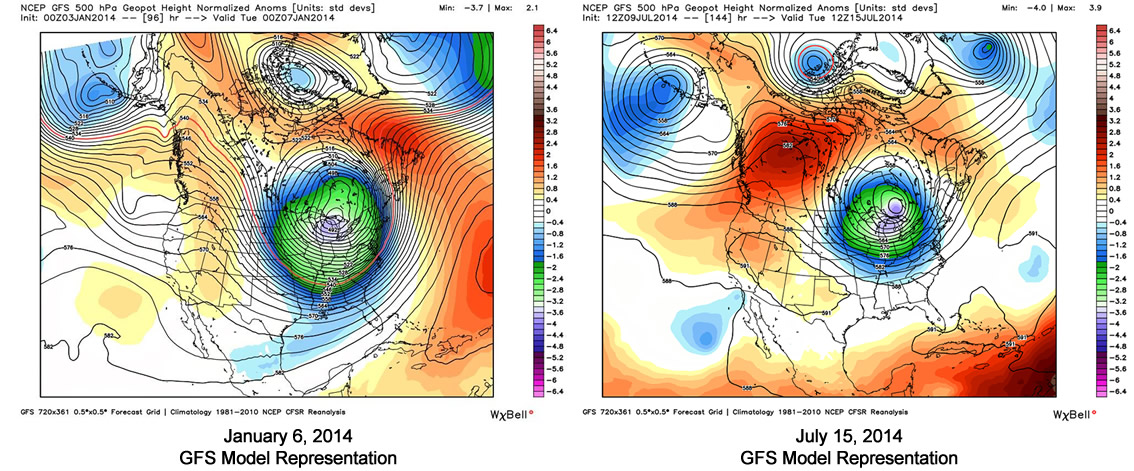
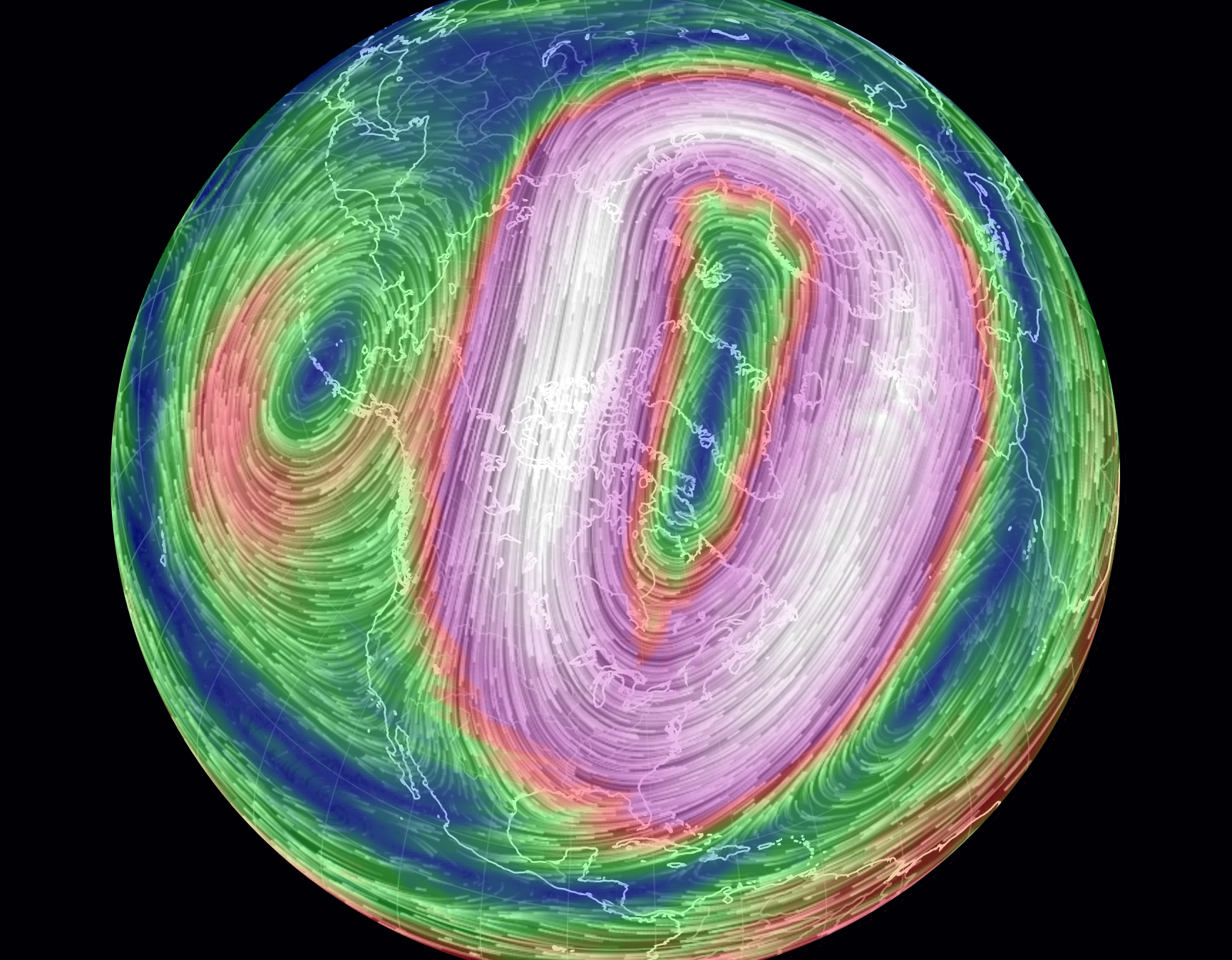
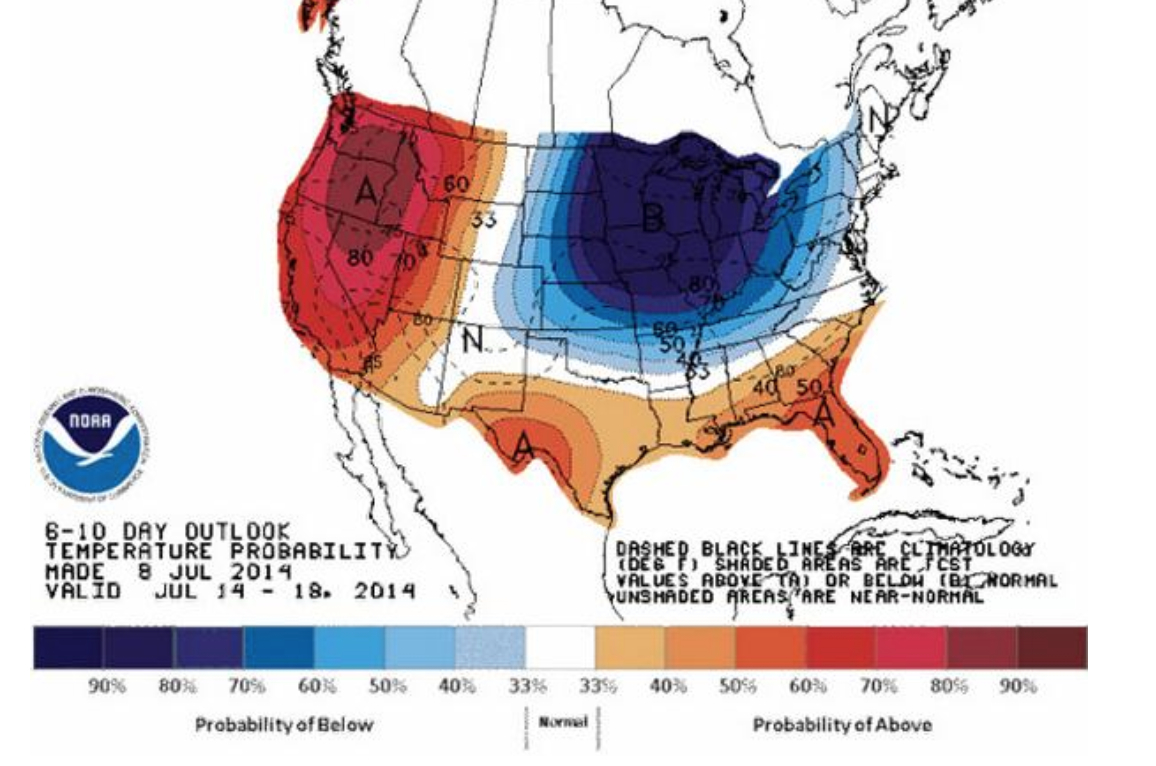
Since we use the conventions of map making to endow solidity, or reify, even the most abstract ideas, it is interesting to examine how the ‘Polar Vortex’ has spread across the mass media as both a meme and icon of the current weather patterns of the new millennium.  Rather than map place by a matrix of fixed locations alone, maps of the Vortex offer a visualization of temperature variants that reveal an anomalous weather conditions that track the Vortex as it moves, intersecting with place, across the stratosphere into our own latitudes, tracking not only a “cold front” but, globally, the disruption of the path of the circumpolar winds, or splitting of the vortex from the north pole.  We are most likely to “see” the Vortex as an incursion into our own map, effectively dividing the country (yet again?) this summer into regions of cold and heat.  The currency of visualizations of the Vortex reveals not only a meme, but a model for encoding multi-causational weather maps.  Indeed, the mapping of the divergence from usual temperature range reveals the anomaly of a north-south weather front with the solidity of a national divide, raising deep questions of its forecast of extreme weather throughout the year more than offering something like a “poor man’s vortex.”

PolarVortex2

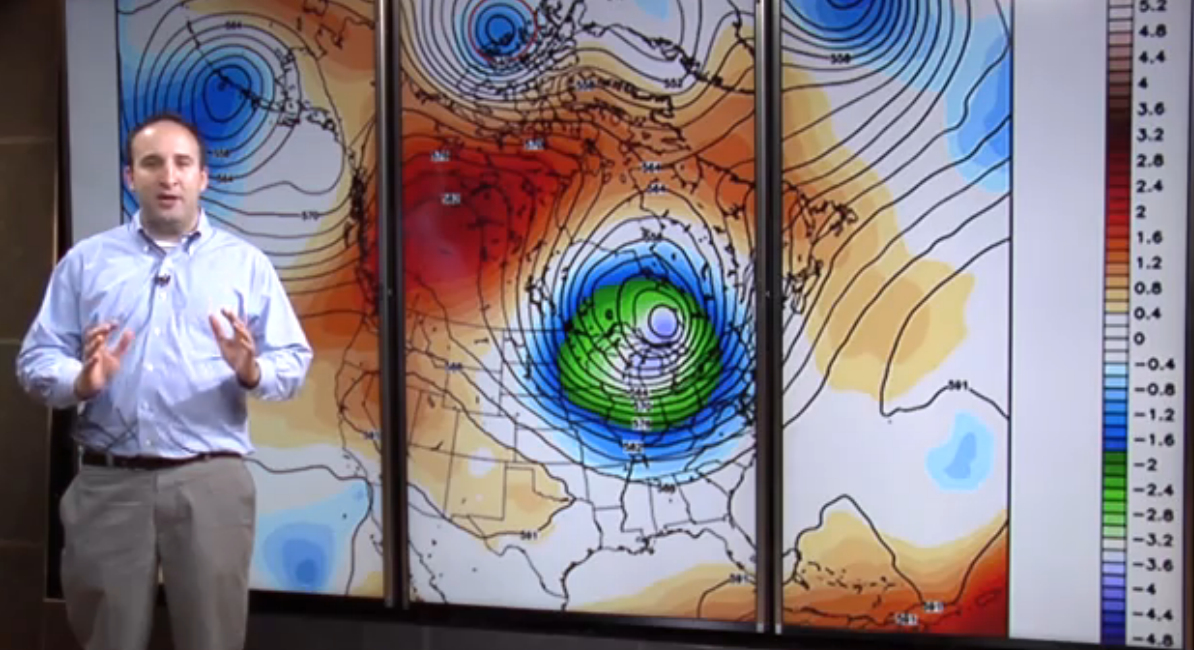
As the term has gained wide currency as a challenge within data visualization world for throwing weather systems into legible relief, it set a new bar for producing visualizations that are challenging to fully comprehend.  The Polar Vortex is mapped as it moves, as if on its own, across the stratosphere into our own latitudes, condensed in a range of data visualizations of stratospheric or tropospheric low-pressure fronts, in ways that map onto current quandaries of atmospheric and climactic imbalance.   The animated superimposition of weather patterns condensed in a range of data visualizations of stratospheric or tropospheric low-pressure fronts themselves map onto concerns about climate change, and conjure narratives of global atmospheric change and climactic imbalance:  the disruption of the usual harmony of the polar jet stream perhaps maps onto both notable rises in polar temperatures or torrential rains off the coast of Japan, but whether due to a spike in northern pacific offshore typhoons or openings in polar ice cover, the markedly increasing waviness of the vortex has allowed increased amounts of cooler air seep south once again, in an eery echo of last January’s mid-winter chill, that has lead weatherpersons to scramble for clarifying narratives about the return of that green blob.  (To be sure, back in January, the naysayers of climate change parsed weather maps as counter-evidence to global warming, allowing them to indulge in alternate meteorological realities, before they were batted down in two minutes by the President’s Science and Technology Advisor, Dr. John Holdren.)

Weatherman scrambling to gloss

twins-gfs

Offering a marvelous array of vowels and pattern of assonance, with a name befitting a Marvel comics super-hero as much as a weather pattern, the Vortex is a touchstone of climate change and a great case of how we have yet to ken the global as intersecting with the local.   But we have unfortunately trended to oscillate, as it were, in our maps between national weather maps, where the Vortex made such a splash as a newsworthy low-pressure pattern, to maps of patterns in global environmental change, that might better direct attention to changing meteorological realities.

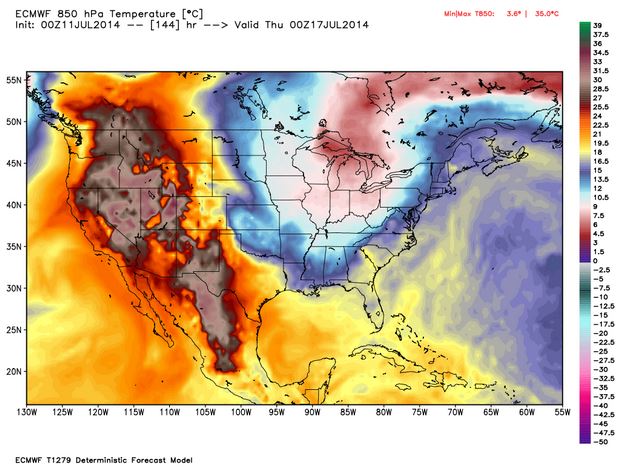
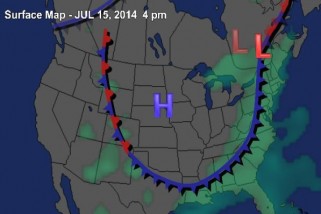
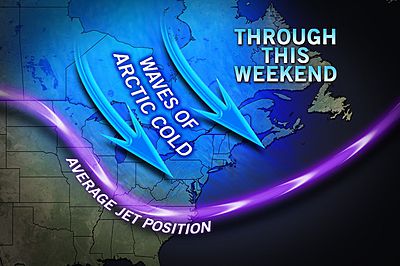
Part of the problem is adopting a point of view on the weather that we are tracking–or of viewing the Vortex as a stratospheric phenomenon around the polar regions, or charting a weather pattern forecast as occurring within our nation’s bounds.  The reprise of the spill of northern air into the upper United States returned the Vortex into national news this July has provided a basis of the latter, to judge by this new visualization that projects the cooling temperatures in the northern United States, as a deep wave in the Jet Stream brought colder air to the Northeast.  Even if the cooling air that arrived was not arctic, the pattern of its arrival to the continental US this summer has prompted some significant debate among meteorologists who have glossed the map in alternate ways, almost entirely still focussing, oddly enough, in a reprise of the mid-January news blip on the Vortex, on the unit of weather in the United States in isolation from a global context.  The anomaly of the “Vortex” has become something of shorthand for a southern swing of cold air from north of the Great Lakes, produced by a decreased disparity between polar and sub-polar continental temperatures that lower the latitude of the jet stream, according to some research that has been endorsed by the National Academy of Sciences, and increased its waviness as the Arctic warms.  The maps serve to embody the increasingly newsworthy weather in the Northeast, reaching down to the southern states as if an invading army as much as a meteorological cold front, placing the anomaly of the displacement of cold air against the screen of an iconic national map on which it has been superimposed.

polarvortex-321x214AccuWeather.com

The map recalls a similar dispersion of circumpolar winds from the arctic into the lower forty-eight already called the “most upsetting” data visualization of the winter of 2014.  The drift of circumpolar winds at stratospheric levels offers a compelling means to understand the arrival into the Midwestern states of cold air once more from the north during the mid-summer of 2014.  Rather than only being a meme of the media, or being coined as a manifesto a group of avant-garde modernist meteorologists who found energy in the abstraction of weather forms, the term tracks the dispersion of the circumpolar whirl usually uniformly swirling about the pole offer both a rogue arrival into our national climate and a sort of emblem of an imbalance of circumpolar stratospheric harmony by pushing down the arrival of winds from the Pacific ocean.

650x366_01161752_hd30-2AccuWeather.com

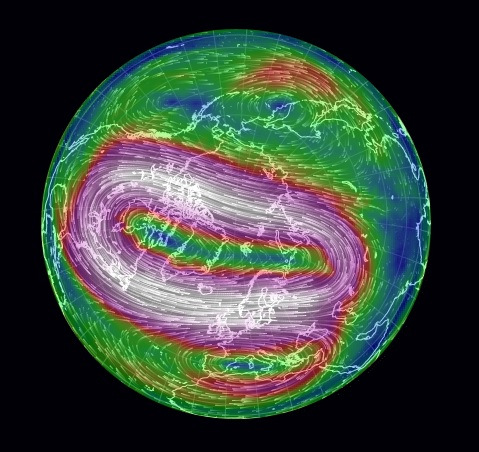
The benefits of shifting iconography to the global are immediately apparent if only because they reveal the divergence of the weather system from a meteorological status quo.  The cycle of wind, usually located in the mid- to upper troposphere, has apparently begun to split or splinter from it usual centers above Baffin Island and Siberia as its air warms, and moves below the arctic regions.  The displaced vortex, which migrates below the arctic circle in the stratosphere, reflects the warming of temperatures at the poles, creating currents able to funnel the figurative migration of arctic air currents to sub-arctic latitudes, even if the air in question this July might more likely be northeast Pacific more than arctic in its provenance.

Displaced Vortex-full color windsEarth.com

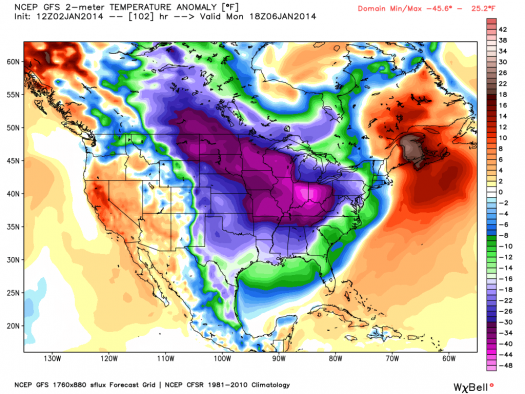
The local is, however, far more easily digestible for viewers of The Weather Channel, and the Vortex is shown as an intersection of the global with the regional weather map.  Collating data from divergences or temperature anomalies from a database covering local temperatures in 1981-2010, the spectrum of a “heat map” tracks currents of cold across the backdrop of the lower forty-eight in an easily digestible manner that packed so big a punch for folks trying to puzzle over the freezing over of roads, local lakes, or back yards:

Vortex in States

Once more thrown off-balance, it sends cooler air below the lower forty eight and forty-ninth parallel, making it national news as a dramatic aberration that marked the entry of intense cold.  Data visualizations provide new tools of making the meteorological concept legible in ways that gain sudden particular relevance for audiences familiar with weather maps, for whom immediately powerful associations of shifts in the measurements of regional temperatures will pop out at viewers of a forecast or weather map, forcing them to pay attention to the meteorological imbalances they portend.

400x266_01221625_weekendcold

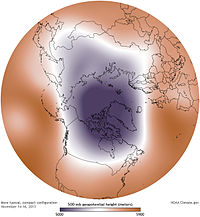
Recent global maps of the Polar Vortex offer more than an icon of the transcendence of territorial boundary lines systems, by processing and portraying the Vortex as an expansion and  breaking off of cold air outside the restraints of an arctic air system.

November2013_polar_vortex_geopotentialheight_mean_Large

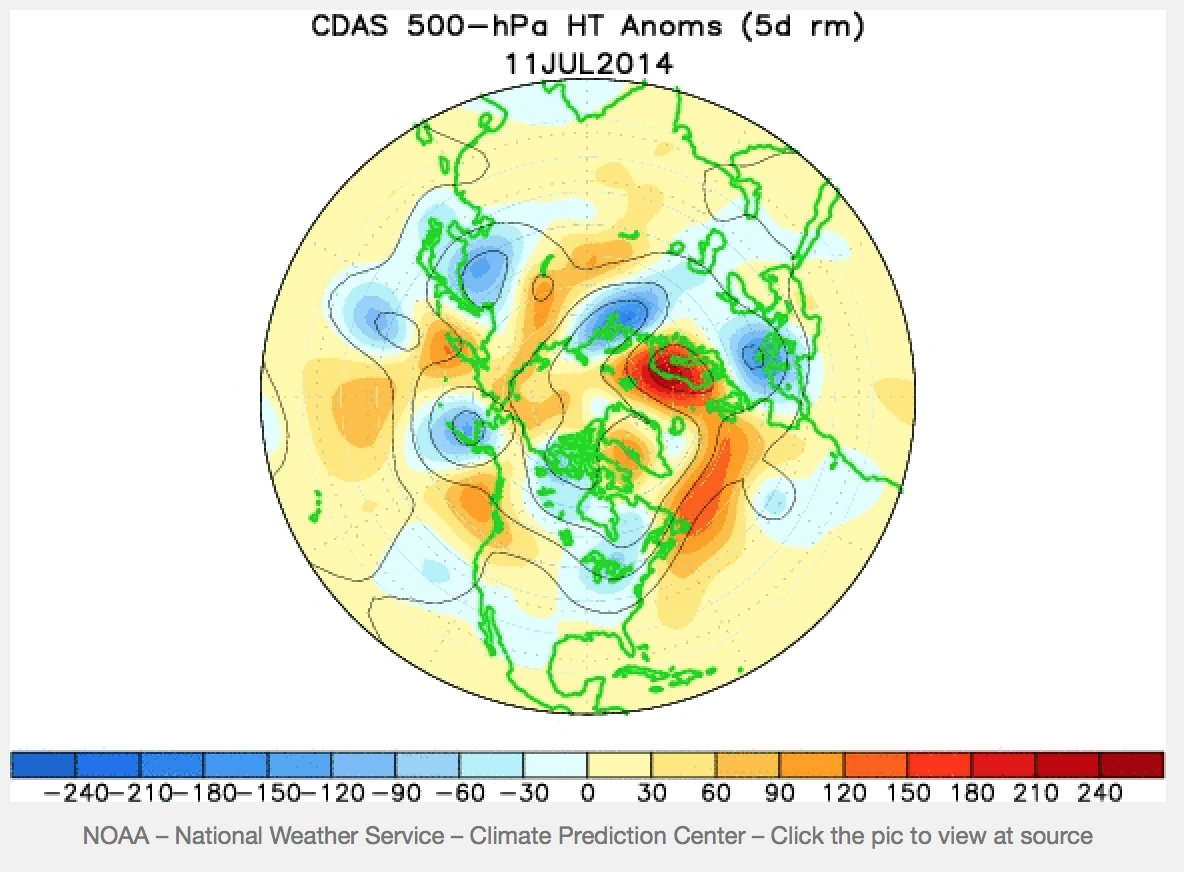
The dramatic splitting of the arctic jet, due to atmospheric pressure anomalies, was mapped by NOAA in this data visualization of July 2014, of a splintering of the vortex, in apparent response to the warming of our poles, hastened by the diminishing snowfall and ice-cover that create new chilly islands or microclimates on the ends of a warming pole we often seen as lying so far away:

July Polar Vortex 2014

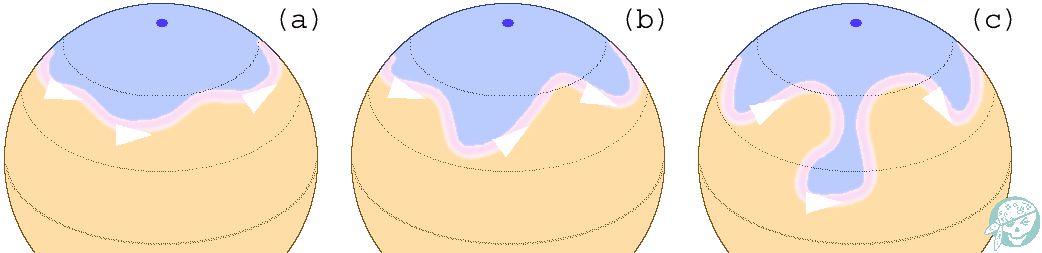
The disruption that results brings the displacement of arctic winds that most often sit anchored around the polar region.  A “weak” polar vortex, interacting with arctic ice-cover decline and reduced snow cover, was some time go modeled as resulting in a meandering arctic jet stream and occasional detachment of a polar weather systems and consequent decline or weakening of pressure gradients of the vortex, and consequent reconfiguration of the arctic jet stream:

N_Jetstream_Rossby_Waves_N

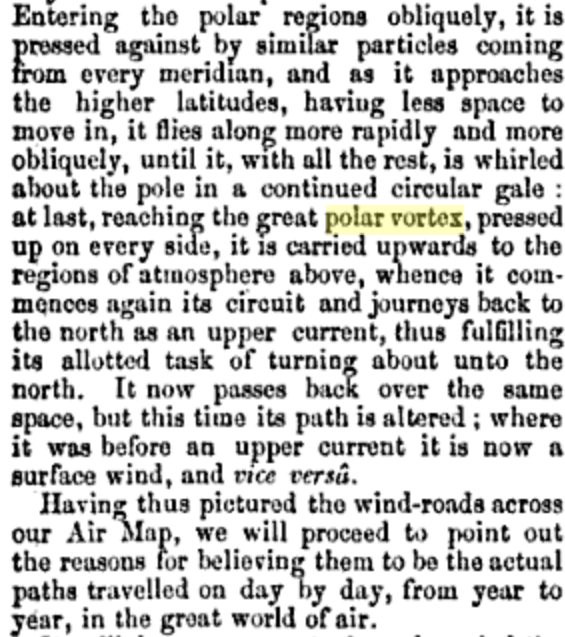
Has something like this occurred?  The dynamic visualization of weather maps in five colors and striking contour lines provide clear tools to visualize its speed and energy, in ways that might even have helped resurrect a term that had languished in meteorological lexicons from at least 1853, when the “continued circular gale” was described as flying “more rapidly and more obliquely . . . carried upward to the regions of the atmosphere above,” as lying in the ambitions of a “great Air Map” but based on the recent 1851 NOAA mapping of “great undulatory beds of the oceans . . . for all practical purposes of navigation.”

great polar vortex

But now we have a recognizable image that can be tracked over a recognizable terrestrial map that concretizes the Vortex in ways that its winds can be understood as extending over a region of truly global expanse.

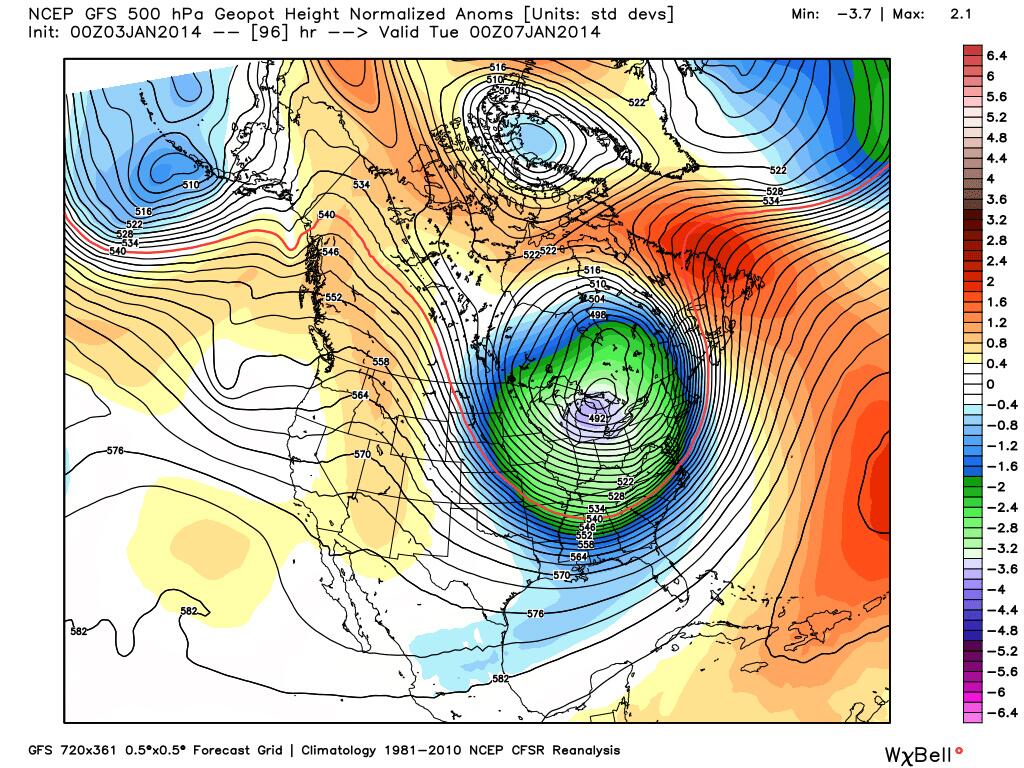
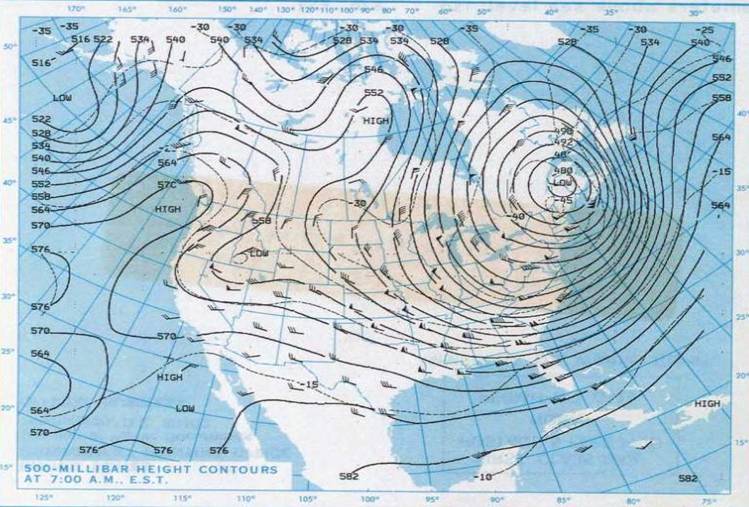
Tracked in terms of actual temperature anomalies, in the winter of 2014, when newscasters and NOAA (the same agency) mapped the migration of cold air southwards of the pole into our frontiers, far outside the usual path of the jet stream, in a disturbance of the weather systems worthy of national news last January, in a data visualization which tracked a green (or purple) blob whose forced migration of frigid air from the polar regions that disrupted weather patterns with national consequence as it migrated out of Canadian airspace.

500_mb_Mon_night


Vortex in States

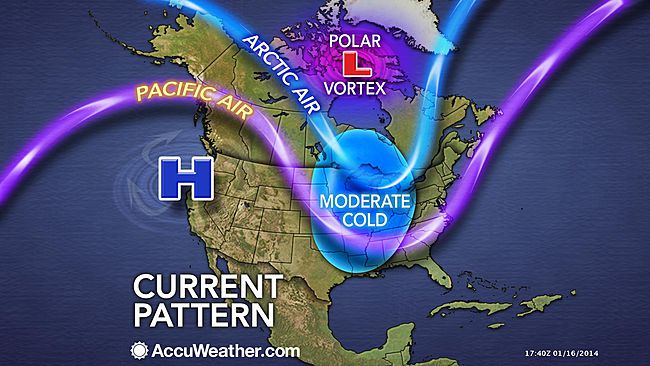
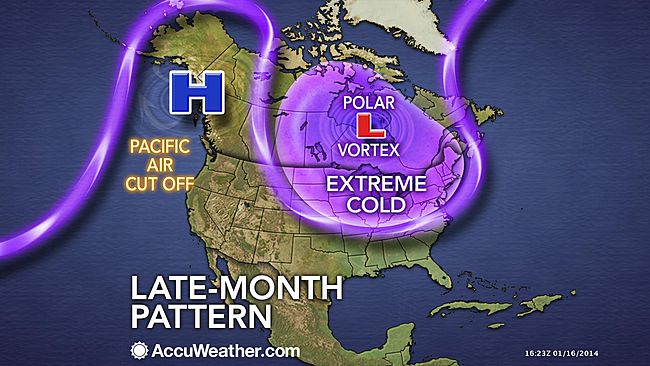
In the dramatically eye-catching graphics of television’s mass-media, as the bulge of purple and magenta of detached low-pressure systems migrate south, crossing the very same borders to which we are increasingly sensitized in our national news media, albeit at tropospheric altitudes no fence or border guards could ever patrol.  Indeed, the map suddenly suggests the increasing vulnerability of our delicate weather systems, echoed by the language with which the Polar Vortex’s “EXTREME COLD” loops invasively southward across our northern border, cutting off Pacific Air:

650x366_01161627_hd31-1

650x366_01161752_hd30-2AccuWeather

The apparent incursion of its jet stream into the bounds of our national airspace, as in this image of cold air migrating across the northern border, results in the proliferation of metaphors all too often violent in tone:  Climate Central may have only adopted the robust rhetoric of sportscasters when it described high pressure systems in quite athletic terms that “block the eastward progression of weather systems, like an offensive lineman protecting the quarterback from the other team,” allowing the air that circulates around the arctic to start “spreading tentacles of cold southward into Europe, Asia, and North America.”  Less dynamically interpreted and understood once cast in global terms, rising temperatures at the poles–the very sites where, we should note, global warming is occurring at a rate twice the global average–displaces the previously concentrated flow of a jet stream of cold air from its arctic abode.

Of course, few seem ready to tie this to the diminishing ice-cover of the north pole, which still seem a leap too far to be made logically. Oddly, the meteorological mechanics of the expanding split-off of polar winds is modeled as an incursion of weather patterns echo the metaphorics of a military situation map of fixed borders, a historic hold-over for national weather organizations like NOAA:  the global image of wind velocities around the pole, depicted below, is oddly absent from what is actually a global phenomenon.

polar-wind-displaced-vortex-2-1-14Earth.net

But we are all too used to interpret and read weather maps with both a sense of voyeurism for our friends and relatives, but from a subjective lens.Despite the adoption of globalized images from our friends at National Geographic, who used Mass FX Media’s animation to visualize circumpolar air flows, and despite the continued live monitoring of wind-flows at “Earth,” the isolation of the nation in the maws of the vortex is so readily discussed as the “most upsetting map of the winter,” as if the migration of the pool of arctic air into the northern United States were best understood as a disturbance of national temperatures.

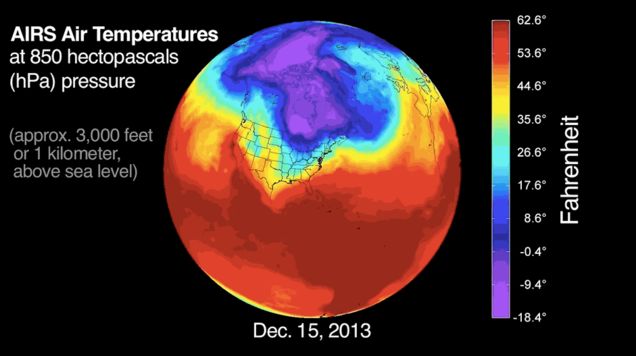
The similar narrative about the Vortex in national forecasts stands in contrast to the maps of rising temperatures, but create a visual modeling of a meteorological distribution that almost resembles an invasion.  Even though the distribution and speed of the Vortex in summer is usually slow, the polar air however seems to be arriving from across the border with unstoppable velocity, the below global visualization, also based on a similar distribution of deviations from average temperatures craft a similarly compelling large-scale weather pattern–albeit one occurring some 3,000 feet above the earth’s surface–in which, rather than reveal a lack of equilibrium, arctic air dips south across the forty-ninth parallel and past the Mason-Dixon line, confirming its occurrence as a shift of national consequence.

19g70jjap4syugif

Because the “most upsetting map of the winter” tracks the pooling of arctic air into the northern United States created a disturbance of national temperatures into the Eastern United States and much of the central region of the country.

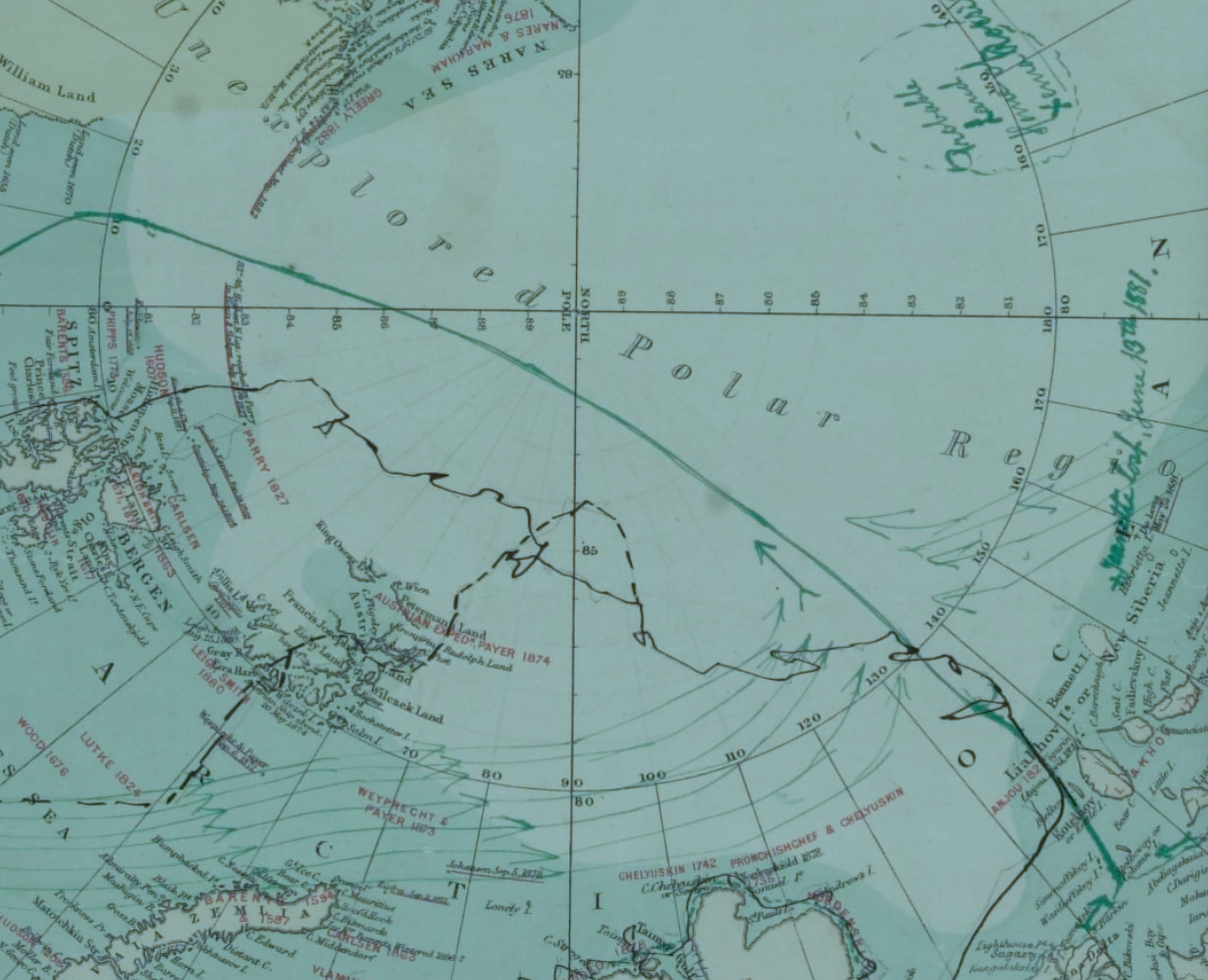
Wasn’t it once more reassuring to understand the polar regions, its topography unknown, as somehow removed from the atmospheric currents than being mapped around the world?

UNEXPLORED POLAR BLUE

The wonderfully protean animated map of disequilibria in the harmony of stratospheric currents of cold polar air within the jet stream opens breaches across national boundaries, albeit at considerable elevation, and also offers a way of tugging at one atmospheric phenomenon to unpack a web of inter-related phenomena.  Unlike maps of habitation or land-surface, the map traces a low-pressure system at high altitudes far above the settled or occupied land, but intersecting with it in ways that conjure a failed ability to contain colder air over the polar regions.  (Taking the iconography of weather maps as transparent, the blogosphere has suggested the adoption of charges of circumpolar intoxication.)

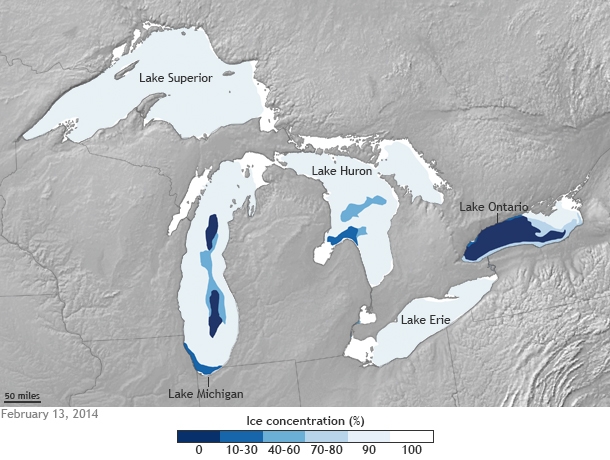
The distribution of stratospheric air whose flow is charted in global map as an irregular anomaly of temperatures’ spread, is perhaps most concretely rendered by the iced-over bodies of water it left in our own upper latitudes.  The striking freezing over of the Great Lakes, covering some 88% of the lakes’ surface area by mid-February, a greater proportion of seasonal ice-cover than ever registered, and surpassing the 82% record of 1996, according to Caitlin Kennedy of NOAA, which render the striking concentration of ice in frozen lakes a concrete map of the local effects of truly polar weather.

GreatLakesIce_610-1

The material manifestation of the cold on the surfaces of those five lakes–all frozen solid, to appearances, save Lake Ontario, seem as concrete a result of the consequences of climactic change one might have in a chart, by placing the ice-covered lakes in a local landscape.

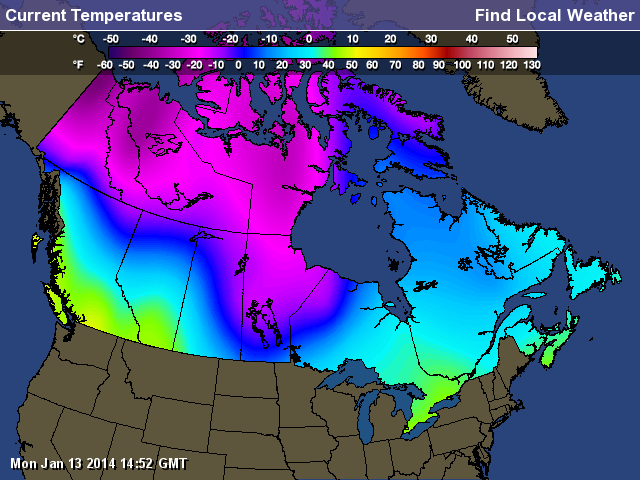
What seemed the displacement of the frigid polar air to the Great Lakes became something like a confusion of the local and the global in the news media that was played out in weather maps.  Of course, the meteorological mapping of this winter’s Polar Vortex in Canadian outlets seemed more the status quo, with most of the country facing sub-zero temperatures:

640x480_currents_ca_temperature_i1

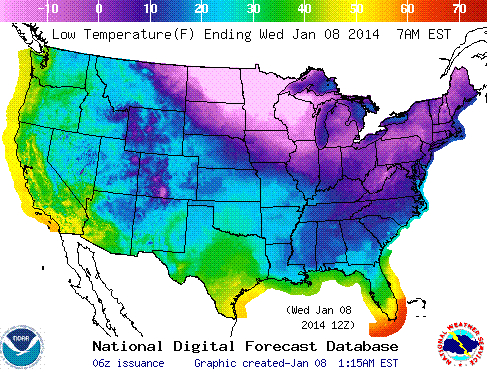
The US “low temperature map” used a slightly different temperature spectrum, but preserved a more alarmist image of anomalous weather conditions even in the National Digital Forecast:

temperature spectrum us vortex

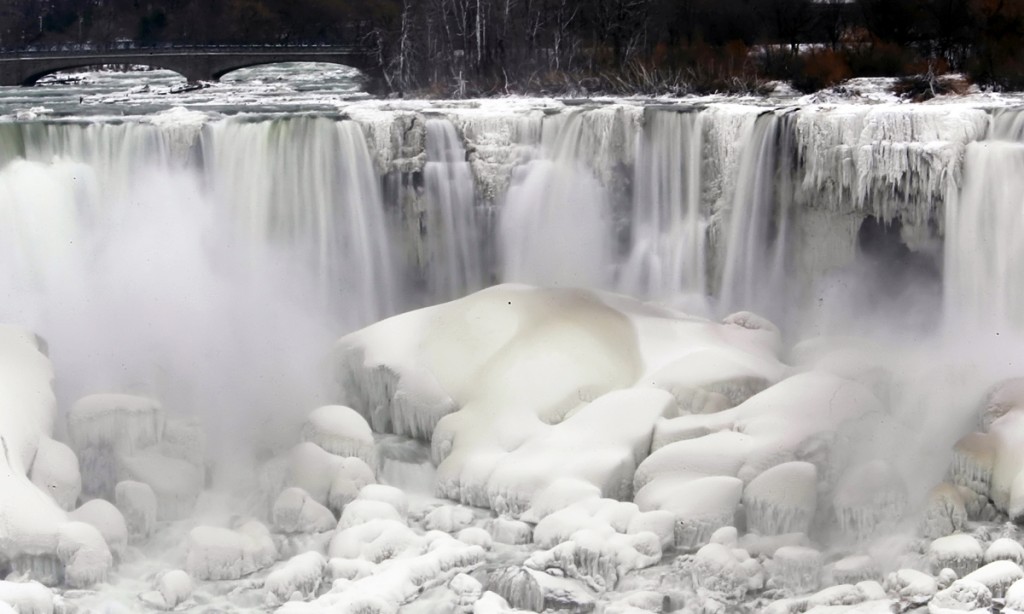
The striking visual by far was from a site located exactly on the US-Canada border, an  eye-catching a frozen Niagara Falls, that icon of liminality:

52d0f434d39a1-1024x614

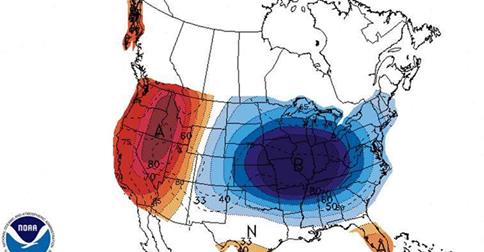
The distributions that charting the mid-July summer chill newly arrived in the Midwest and much of the East coast of the United States from Canada is less striking, even if it will bring dips of twenty to thirty degrees form the normal.  NOAA omits Canada completely from its prognostications of the arrival of the coming cold, as befits its role as a national agency, and restricts its purview to United States coastal territories, even though it would make the graphic far more credible to offer a greater coverage.  It provides something of a summertime counterpart, however, in which the probability of lower temperatures than usual seem to create a ring about the same lakes, radiating almost to the Atlantic coast:

NOAA POLAR VORTEX

Where is the center of this new system of cold air? With roots in Hudson Bay–where else?–the polar air will be spinning southwards at the upper levels of the atmosphere, spinning southwards toward the United States. There were past migrations of arctic air over Quebec and Maine, back in late January, 1985:

Polarvortexjan211985

The Detroit Free Press even seized on a recent NOAA projection of a similar displacement of arctic air, that locates the center of cool air migrated toward Michigan, forming a pool of air that had descended into the central United States, as if to cast the event as something like local news, even as it suggests the rise of two weather systems:

safe_image.php

The occurrence isn’t strictly polar, or arctic, in its origin.

But the results are the consequence of a sort of distorting decentralization of the polar cold air outbreak that hovers around the arctic circle, running around the pole and allowing or protecting cold air from drifting south, containing cold air or not it its high altitude low-pressure system.  (Of course, the west coast is poised for a dryer and hotter-than-normal week.)  The decline of snow and ice around the Pole, combined with the warming of the wobbly gulf stream, will allow the chilly polar air to spill southwards to the plain states, covering not only Canada but spilling outside the low-pressure system and over to the seaboard, in a sort of nervous breakdown of meteorological model behaviors.

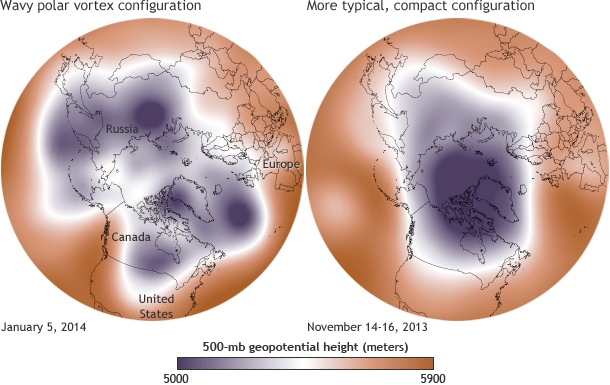
The disturbances of equilibria in our weather maps makes it worthy of more than symbolic note. The increasing variability that the waviness of the outer line of the low-pressure system, or jet stream, related to the declining snow cover in the far north, in the a “warm Arctic-cold continents” pattern, where the compact containment of colder airs was broadly breached.

Jan5_Nov14-16_500mb_geopotentialheight_mean_620

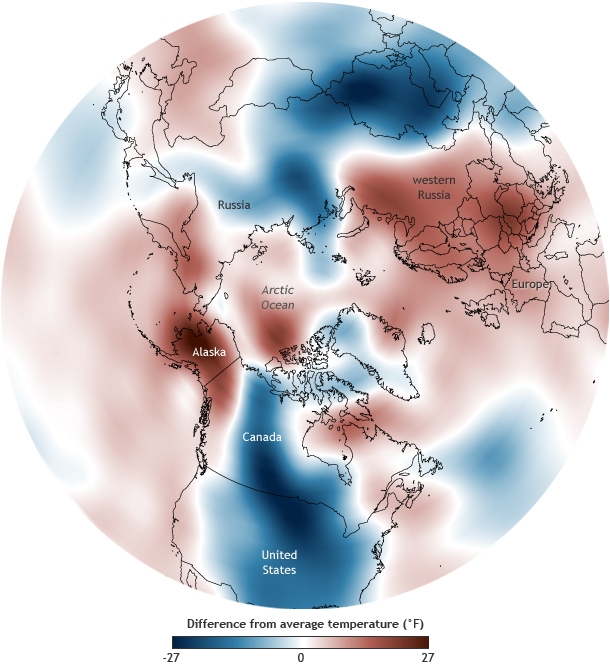
The lack of equilibrium in the stream of polar winds–distinct from the widening polar ozone hole–opens up more of the terrestrial surface to chilling shifts in temperature. As much as the embodying a low-pressure system, the map is a narrative of the disruption of climactic harmony, and view toward the future of weather systems world-wide.  The results of the wavy polar vortex, joined with rising world temperatures, create a map of bizarre spottiness in average world temperatures that is difficult to conceive or map, precisely because its high-altitude distribution is difficult to transfer from a spherical to a flat surface, and because its distribution unfairly privileges the tracking of cold air in ways that seem, misleadingly, to fly in the face of the maps of our overheating world.  This past January, NOAA crafted a digital globe that displayed the distortion of local temperatures distorted beyond the norm, with cold displaced from its polar resting place, resulting in a cognitively useful modeling of a disjointed jigsaw of cold and warm air, where the warmer deviations of global temperatures spick not only over western Russia and Alaska, but at the polar regions itself.

polarvortex_airtempanom_610NOAA Climate.gov

The result is a jigsaw reveals the breaching of cold air from the cap of winds that encircle the polar cap has a enough of touch of biomomorphism to echo ecofeminism; the forcing of warmer air patterns resembles a blurry sonar image of curled-up embryonic twins resting in a womb as if evoking the shape of future weather systems, offering a biomorphic visual metaphor for something like an eery augur of a future holding limited possibilities for an afterlife–and of the unknown future of our planet’s atmosphere.

2001SPACEODYSSEYABOL1

2001

Leave a comment

Filed under Climate Change, climatology, meteorological maps, NOAA, polar vortex, weather maps

The Betrayal of Sykes-Picot? Mapping the Expansion of Violence in Syria’s Civil War

In the shadow of two large, formerly centralized states–Iraq and Syria–the “Islamic State” has spread across their common confines in ways that seem to re-map the Middle East.  The surprising success of the ISIS in Syria has been striking in the face of fatigued fighters of the Free Syrian Army, who, exhausted by fighting three years after the uprising began, have enjoyed considerable success in the face of the attrition of rebel fighters.  Even as the Assad government worked to retake significant ground in the country’s center and north, the new stability of ISIS has drawn on Sunni ties and allegiances deeper than national ties, and promised greater regularity in food supplies that have enjoyed wide appeal in a worn-torn country.

How to map the basis of this appeal, and how to chart the entity of the Islamic State has frustrated western cartographers and news maps alike, despite the proliferation of maps to track the unfolding of day-to-day events on the ground.  Recently, the possibility that “it may be too late to keep it as a whole Syria” that John Kerry acknowledged–and that the prospect of dividing the country between forces controlled by and loyal to Bashar al-Assad in Syria’s northwest–would be a painful rejection of a secular Syria.  It would also be a capitulation of sorts to Russian interests of securing a rump state of Syria to defend their airbases and deepwater naval bases in Tartus, established since 1971, confirmed by the cancellation of a huge $13.4 billion debt for Soviet-era arms sales in 2005 of which Russia is loathe to abandon as it is the basis for continuing arms sales and its sole tie to the Mediterranean.  The capitulation to the division would effectively abandon parts of the country to the Islamic State, Hussein Ibish has argued, as a “Little Syria” would effectively be a Russian client state, and a strong ally of Iran.  The current plan for partition seems to take its spin from the Russian demands for a sphere of influence, but would carve Syria in ways that erase the state.  A cartographical archeology reveals the deep difficulties in preserving the current theoretical national boundaries of the multi-ethnic state.

The boundaries between Syria and Iraq drawn for the interests of occupying British and French powers at the end of World War I and fall of the Ottoman Empire at the Sykes-Picot Accord of in 1916, is being altered in the region’s current map:  yet the deep destabilization created across the former provincial regions of the Ottoman empire reflect problems in defining allegiances in a map.  The increasingly tenuous ties across the region are tied as often to the provision of bread or the guarantee of temporary security in regions which have suffered ongoing lack of stability in past years–or any ties of food or health security–as they are to the effective tolerance of an ongoing civil war that has destroyed national infrastructures.  The severe instability across Syria that has ramped up support of ISIL, making the Islamic State a credible opposition to Bashar al-Assad, that reflect less the undue carving of the Ottoman Empire’s expanse than continued juggling of a system of alliances to secure oil, with little attention to the country’s inhabitants, that have allowed us to tolerate or suspend attention to the deep instabilities revealed in Syria’s civil war, and to the effective implosion of its state.

The newly centralized state that has emerged after the truncation of its name from the “Islamic State of Syria and the Levant” to “ISIS” transcends the notion of national boundaries.  As much as reject the reconfiguration about the littoral region of the Levant, in pivoting from the Mediterranean region of the Levant, ISIS has tried to assume the status of a state that is able to recuperate the notion of a mythic caliphate as a point of resistance.  But it is deeply rooted in the Syrian revolution, and a good portion of ISIS fighters have not only come from Syria, but have left the Syrian Free Army for ISIS, a more credible opposition to Assad’s regime, dissatisfied with their own leaders, and attracted by the clear vision of a state that the Islamic State provides.  The declaration of a New Caliphate not only “seeks to redraw the map of the Middle East, but dismantle the shortcomings and maladministration that is associated by earlier mappings of the region, and with the corruption of the Syrian state.

Its future survival however raises questions what sort of unity and coherence exists within a region out of the deep instability of Syria’s civil wars.  There is a clear tension in articulating a “State” in dialogue with extant maps, including the many maps drawn and redrawn across the region since World War I, in the hope of securing more fixed territorial bounds than existed in the Ottoman Empire, and a rejection of the territorial entities that seem to have been created in a colonial past for the ends of replicating a Eurocentric balance of powers, as much as the needs or allegiance of local residents.  Although ISIS promises to promote “justice and human dignity” for Muslims everywhere, the creation of such universal claims to over-write existing formerly centralized states in the region–dismantling any pretense of unity or national centralization that used to exist in Iraq, or of the imploded state of Syria–only mask a deep fracturing as individual oil companies back the break-up of oil-rich northern regions of the former Iraq in ways that may yet happen in other regions of the Middle East.


Continue reading

2 Comments

Filed under Bashar al-Assad, ISIS, Islamic State, Middle East, Syrian Civil War

Cabstopping: Data Visualization and the Re-Mapping of Urban Space

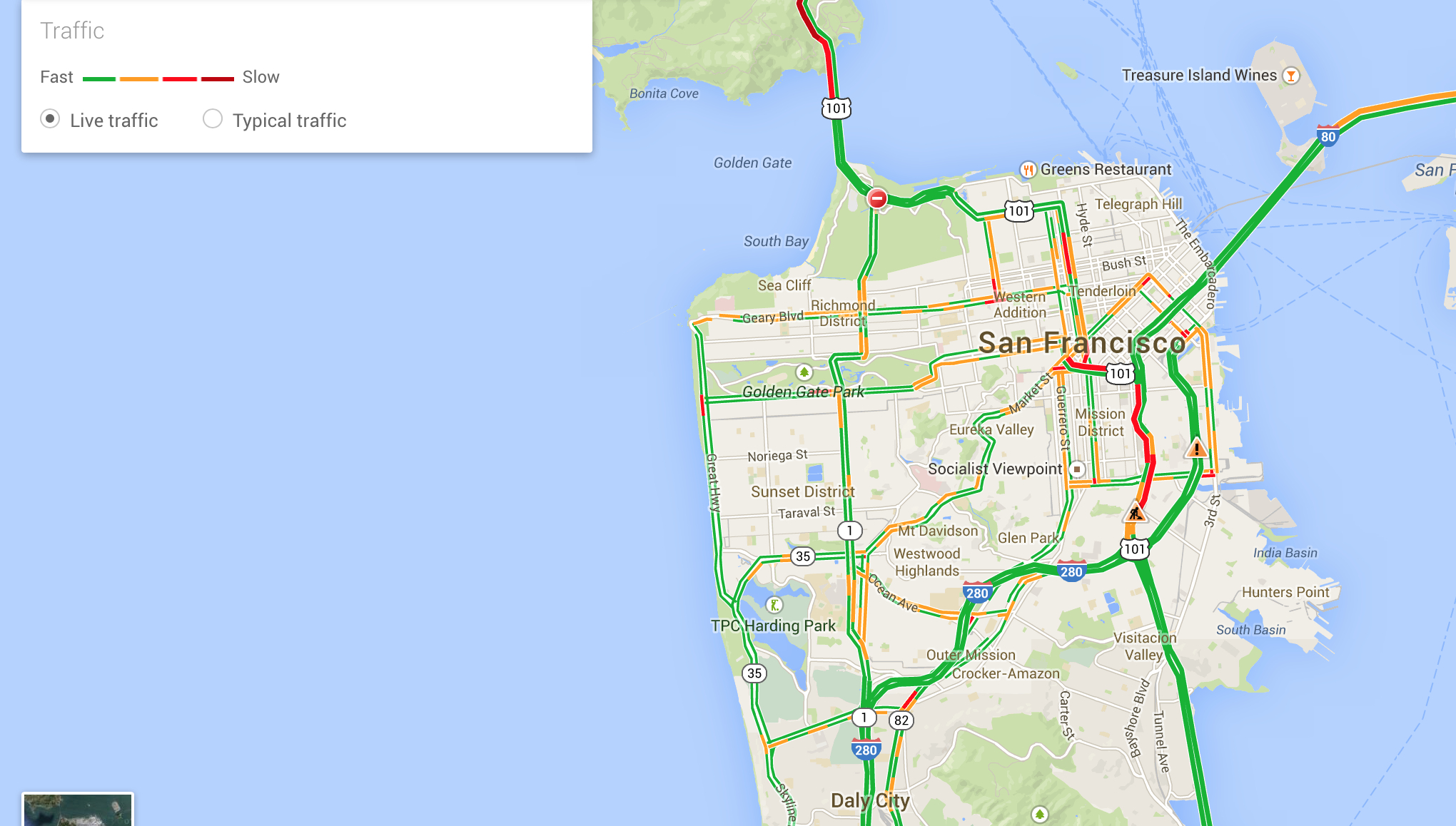
Data visualizations often employ maps to make their point, and organize an effective argument that will engage their audience:  when we see data embodied in a map, and are best engaged in its interpretation.  The alchemy of the data visualization is a magic way to throw the map’s content into multiple dimensions:  data visualizations offer plastic forms of mapping to illustrate the way we fill and occupy space, transforming the mechanics of mapping specifically intended to track the stability (and meaning) of constructions of place, and orient us to different perspectives on how we move through space.  We can better understand the ways links can be drawn about data in clear synoptic terms, and reassured by the act of discovering new patterns in a readily recognizable form.  In describing the spatial distribution of an attitude or affinity, maps are readily consumed.  But they are also cognitive tools to process shifting notions of place:  the sleek tapering negative lines in the above visualization of San Francisco’s cab traffic offers a dynamic model to examine how GPS changes relations between cities’ center and margins.

Data visualizations are not present in the recently published primer “Make Map Art” invites us to adopt traditional cartographical tools as helpful strategies to “creatively illustrate your world.”  Mapping has long been rooted in the world of graphic design.  But the siblings Sue Swindell and Nate Padavick’s Map Art invite readers to embrace the diffusion of mapping as a form of making in the service of self-expression in this lovely book–whose championing of the hand-made map seems a counter-strategy to the near-ubiquity of Google Maps on hand-held screens and maps in evites, embedded in social media, that direct us to a destination.   The toolkit offered readers of Make Map Art invites us to adopt tools and forms of maps not only as orienting tools but instruments of “creative illustration” that suggest we rehabilitate forms of mapping as our own tools.  These maps are marketed more as a hobby than a strategy of resistance:  but in their romanticized vision of the self-made map, a sort of trickle-down of the popular resurgence of hand-drawn maps, they neglect the diversity of spatial knowledges in their “creative toolkit” of easily mastered tools of design.  The handsome how-to book offers some twenty projects by which to frame  cartographical interventions in a world already abuzz with maps:  but the forms of mapping 2-D toolkit primarily marketed in stationery shops and bookstores neglect the most interesting ways cartographical design has caught up with how increasingly stark social divides have come to structure quite divergent perceptions of space.

Web-based maps are not included among the toolkit for map-your-life/make-meaning-from-maps they present, since their medium doesn’t fit the niche audience or the Luddite inflection of the book–or the sense that the map, once considered a tool of government, can be a relaxing way to order space in a world where we are all too often confronted or running to consult a handheld screen.  But this might be unfortunate.  For in a culture where we are consulting or faced by screens in  the forms of attentiveness data-driven maps create compelling models for charting our occupation of space and indeed processing our own relation to space in particularly creative ways.  If the screen often provides compelling tools to grasp our increasingly uneven occupation of space to a degree of visual attention unlike–although not foreign to–static maps.  They can show us how we fill space, and how our experience of place is redefined with a rapidity that the static design of a local or regional map has difficulty continuing to fulfill its orienting functions.  We are impoverished by circumscribing our access to a full range of mapping forms.
SF Traffic

In their engaging how-to book of personalized map design, Swindell and Padavick offer a something like a basic toolkit for those eager to respond to fears of being dominated by data.  In designing customized maps, one might resist widespread concern for being regularly mapped by unwanted forms of surveillance, and indeed dominated by the ways in which our lives are regularly mapped.  But Padavick and Swindell don’t push back that hard: they dwell in the cozily utopian idealized spaces that any map invites viewers to inhabit. It’s cool to play with our sense of space and abilities to create forms of personal orientation for ourselves or indulge in returning to cut-and-paste type of social media of material design in a DIY guide for fashioning personalized geographies ready “to be framed and displayed as artwork” to gain new decorative status as personalized cartographies.

Data visualizations, unlike static maps, define the networks of interaction in which we have increasingly become enmeshed, tracing forms of  inhabiting place that are often illuminating of the complexity of navigating place than they are comfortably reassuring.  Map-based data visualizations orient us to the shifting ways we fill space and inhabit our streets, and make interpretive demands on their viewers about how we actually have come to use our space.  For while the formats of maps offer cool tools of spatial orientation that remind us of the favorite streets we love–and how we walk across them–if the alchemy of data visualizations remake maps as especially creative tools of engaging with one’s environment, they process our own relation to a built space in dynamic ways, effectively organizing our orientation to space by revealing contours of divergent perceptions of and access to space in cities–spaces that are now no longer easily mapped by public transport maps, grids of streets, or even schools and social services.  The patterns that data aggregates are particularly valuable as a tool to unpack the changing occupation of urban spaces, from public parks to freeways to avenues, and to interrogate the practical and real boundaries of known space.  And they raise questions, perhaps known to some extent in anecdotal experience, about the increased dependence on GPS to navigate urban space in many drivers of ride-sharing services–from Uber to Lyft–perhaps in distinction from drivers’ familiarity with the automobilistic navigation of city streets.


1.  Maps that derive from big data offer particularly versatile tools, in contrast, to visualize the ways that we inhabit space and, by extension, how we travel through it and make it our own:  much as flows of information or currency or patterns of immigration, data maps show patterns of collective action that is rarely otherwise aggregated, and help us visualize how we inhabit space in dynamic ways.   They present the ability to map a network around both space and place as, indeed, constitutive of both, dispensing with and not adopting a static cartographical frame of reference to describe our relationship to space.  The alchemy of data visualizations allows us to  illustrate shifting relations between urban centers and peripheries in a map, tracking shifts in the nature of mobility in urban space, beyond a physical plant, but embodying how GPS readings tracked each cab across urban space as they move on major arteries, noting not only their positions over time, but indicating patterns of traffic, shifts in density at different times, relative rates of acceleration and different speeds of travel–all to chart how different dynamics by which the aggregate of cab riders’ experiences across urban space, the access to urban space that the self-selected demographic of cab-riders share, and the areas of cities that remain off their maps.

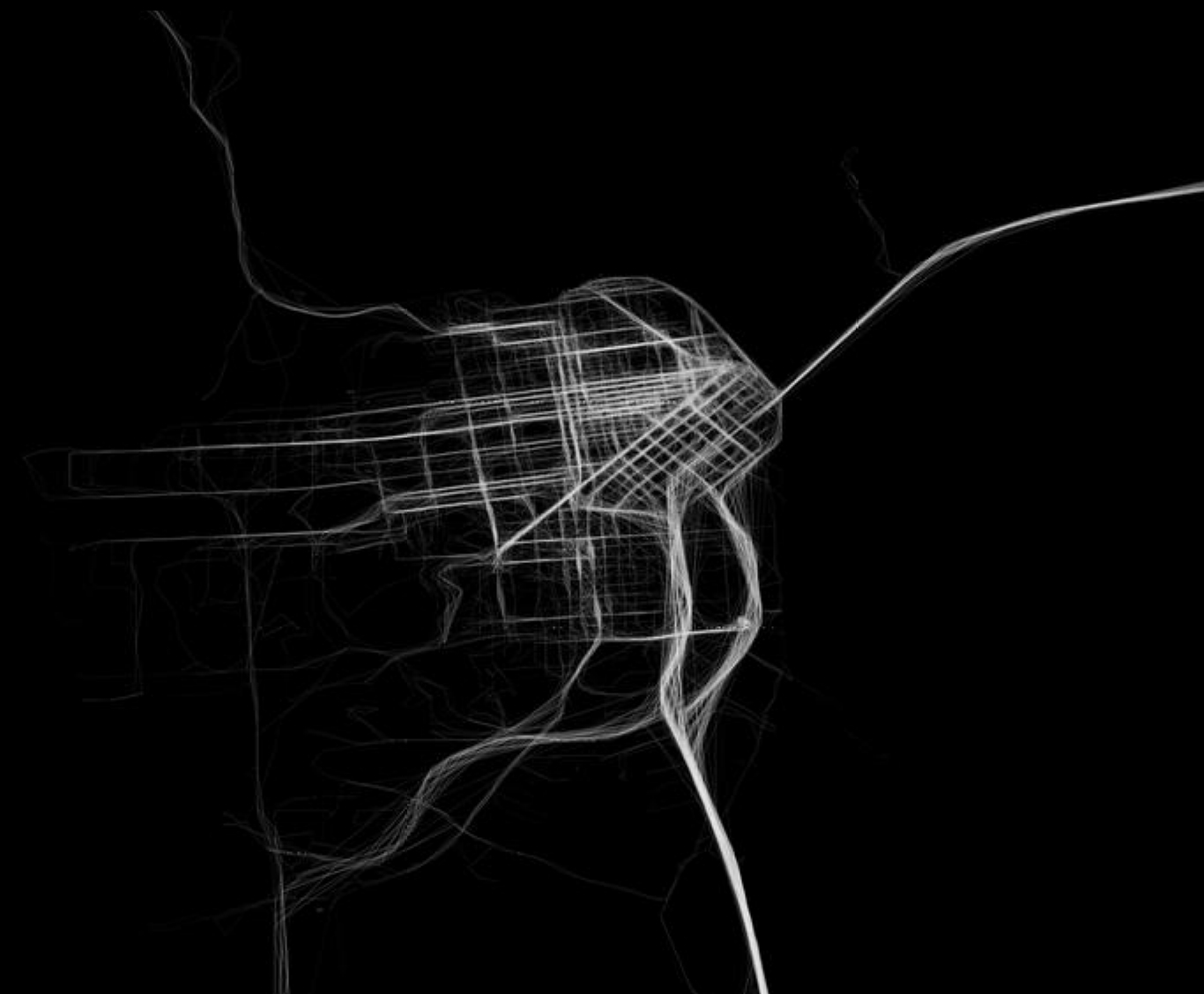
The dynamic results of such data visualizations provide compelling ways to understand the organization of urban space.  And in such lies their attraction for puzzling the existence and resilience of place.  “Cabspotting” at San Francisco’s Exploratorium invites us to track cabs as they carry fares at different rates of speed and acceleration across that city’s thoroughfares.  The data visualization is designed after the pioneering aggregate mapping of cabs in San Francisco’s streets by stamen design’s Shawn Allen and Eric Rodenbeck, displayed in a gallery setting in 2008 at MoMA, and first designed in 2005 by Scott Snibbe, Amy Ballin, and Stamen design.  This “high art” of data visualization was devised as a tool to reveal social, economic, and cultural data about the city in a variety of video platforms, exploiting the ability to download massive amounts of data about city cabs in aggregate that could be graphically condensed to a single image of apparent simplicity that spoke volumes on space use.  “Cabspotting” (2005) created an innovative alternative model of revisiting the city as a permeable and open space that was at the same time structured by economic patterns and social divisions in urban space:  the famous visualization of how people use cabs to inhabit urban space re-envisioned the city’s physical plant in a dynamic data-driven pattern varying trail length in response to cab speed.  Its particular power as a data visualization lies in its tracing of a collective iteration of individual itineraries, whose line thickens as they accelerate, creating an image that asks viewers to cathect to real routes through and across the city–either in an aggregate view as below, or in a real-time film of the routes and speeds on which cabs move.
Cabspotting

We are able to enter into the pathways along which the city plan is traversed and experienced, as well as occupying an Olympian point of view.

The sinuous traces left by the aggregate of cab-fares allow us to watch cabs moving at different velocity and acceleration across the city, to reveal a haunting socioeconomic X-Ray of the city’s space, and pathways within in its streets.  While omitting large areas of poorer regions, from Hunters Point, Bayshore, or Daly City, it illuminates areas in the financial district arrived at with disposable income:  thick lines of rides near the shores show a general acceleration, especially on the Central Freeway, Market St., the James Lick Freeway or the 101 and 280, as well as along the Bay Bridge and out to the Airport, reveal a dense distribution of cab lines filling the city plan that hinges on Market Street.  The absence of a network of freeways built within the city seems to have helped cabs’ circulation, but cabs are limited to a dense occupation of downtown streets.  Indeed, if the sort of freeways and highways were built over and across the space of San Francisco in the way that they were in other cities, perhaps the illumination of that gridded downtown would be less prominent in the Stamen visualization–although one can still discern the 101 or James Lick Freeway and Marina Boulevard leading to Ghirardelli Square in the Stamen map, imagine the shifting spatial spread in a city defined by the proposed arterials which would have rendered the city more navigable, but faced such intense local opposition  that they were never in fact built or got beyond the drawing board.


picture_4


The animation of traffic around San Francisco’s roads and freeways that Cabspotting celebrated the unique space of San Francisco’s streets, removed from a world fearing surveillance.  It also provided a model for processing data from taxis to illustrate the ways we use cabs to inhabit and navigate a city’s streets, emphasizing what routes cabs take and how San Francisco’s urban space is navigated, by taking up the perhaps oxymoronic proposition of surveillance technology as truly inspirational, in Scott Snibbe’s phrase.  The resulting graphic illuminates a hidden geography of how San Francisco is experienced across time in cabs, whose tracks trace a socioeconomically differentiated space in ways that cast the city’s physical plant in a dramatically new lens, where the density of downtown peters out to wisps along those avenues where fewer cabs run their fares:  Cabspotting set a compellingly high bar for data art.

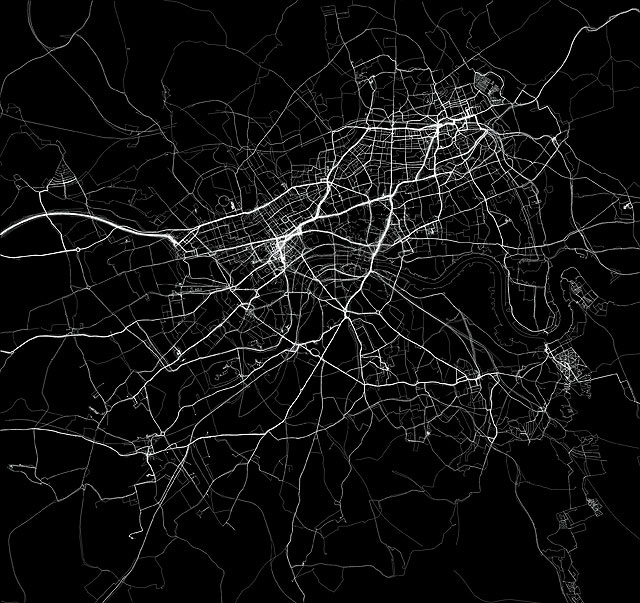
The compelling portrait that emerges from the Stamen visualization offers of primary routes of cab entry generated considerable excitement for a virtual palimpsest of how urban space is navigated by paying customers in a city on a single day.  In ways that privilege specific areas of the downtown, and the larger streets–around the bay near the Embarcadero, down Geary Street, along Mission Ave. or nearby Civic Center, it suggests a living template of the city, noting each cabbie’s trajectory of driving by a white line, and increasing the size of its ghostly white lines by velocity and frequency of cabs.   As a form of GPS-based art, the ghostly image of the city may have shaped Jeremy Wood’s use of GPS in 2009 to track his personal cartography in the Gliclée print “My Ghost”, imaging an overlay of his own itineraries over the span of a year, but Wood’s image lacked the richness of wealth implicit in Stamen design’s data overlay.  Even if it suggested the lack of access of certain areas of London to Wood’s experience of the city, and a wide wandering over a hairy looping of space, the individual migrations through London streets suggests restless  iteration of an individual across city streets, unlike the densely packed social clustering of cabs  concentrated in the downtown San Francisco and accelerating along freeway lines.
 

my-ghost


The image Snibbe and Rodenbeck designed offered a memorable real-time contours for a city’s urban space that show a far less dispersive wandering around the vagaries of urban byways, and a focussed repetition of routes around a relatively restricted urban grid.  In each of its successive animated time-lapse iterations and real-time rehearsals, the Stamen’s “Cabspotting” re-mapped urban space by tracking the collective aggregate of motion across urban space, using data from embedded GPS data of position, speed and acceleration to remap a strikingly plastic living urban landscape in dynamic–if haunting–ways:  pay-per-fare riders sculpt streams of traffic across its major streets and thoroughfares, rife with cab rides, appear illuminated by the aggregated overlay of rides over time, showing the different rides of the city that were being performed as if to condense a residue of the collective transit through the city around select hubs and thoroughfares of increasing or diminishing traffic.
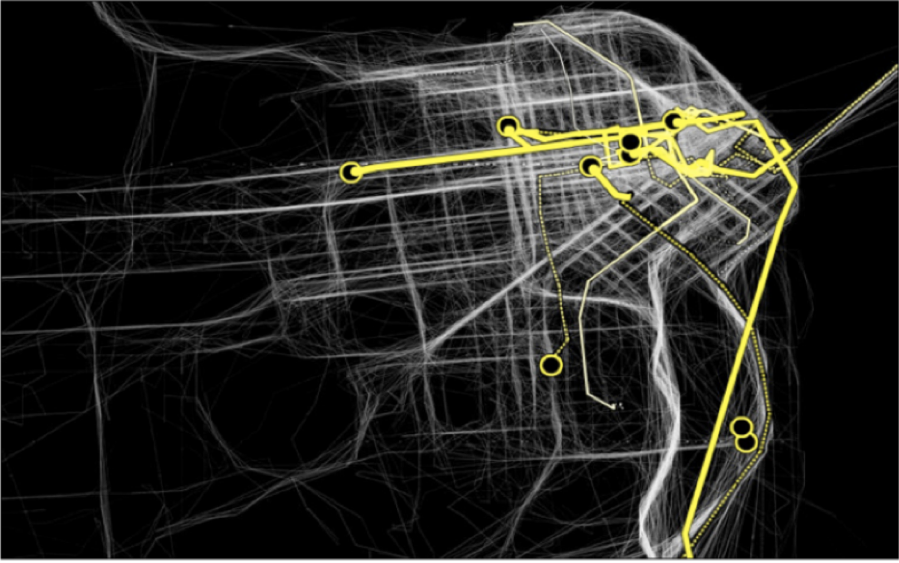
 

Stamen Cabs


2.  The wealth of data mediated by GPS measurements allows one “map” space around each of the “lines” that designate cab-rides by relative speed, using red to highlight moments of acceleration at a fixed period, in a time-lapse moving image that traced the matrix of the city’s streets.  In ways that predate but prefigure the current rise of on-demand  smartphone-based apps as Umber or Hailo which aim to displace the local cab economies in most metropoles, the pulsing traffic of animated  tracking of taxi-cabs renders the city’s grid in a wonderfully dynamic way:  Cabspotting serves to delineate clear economic patterns and socioeconomic points about how different folks perceive the same space of the city.  The dense glow of traffic around Union Square of cabs parked, circling, or just stationary reveals a center of commercial congregation.


colored map cabs' speeds


Such tracking of cab-traffic of course may sharply differ in other urban spaces, where centers or commercial districts are more concentrated or differently distributed, and access to space less clearly privilege distinct thoroughfares.   The real-time tracking features of Cabspotting liberated static models of mapping by using GPS to amass data in ways Rodenbeck and Allen could readily visualize in clean lines.  But the “snapshot”-like nature of the Stamen graphic led to some early envy in data visualization, as Kottke and folks on the East coast imagined what a similar data vis of taxi flow for midtown New York would look like, and first obtained the GPS data from taxi trips to create an image of the “vital signs” of where cabbies picked up their fares in the first half of 2009.

The resulting temporal condensation of an animated sequence of cab traffic between January to March, once sped up to suggest something of a regular flow over time  is clearly made to appear synchronized with human cycle of breath, as if to suggest its record of the vitality of the city’s traffic, with fares increasing from 7 am to 8 am, expanding to their highest density in midtown every morning, pausing, and rising again, only to decline in their yellow-hued intensity by nighttime, and leave the city blanched in the early a.m. hours.  (The maps should be looked at by anyone interested in hailing a cab, and as a companion piece to the guide of NYC cab etiquette–asking cabbies “What route do you think fastest?” “instills trust in the driver”, rather than giving directions on where to go–although it is unable to be accessed in real time.)
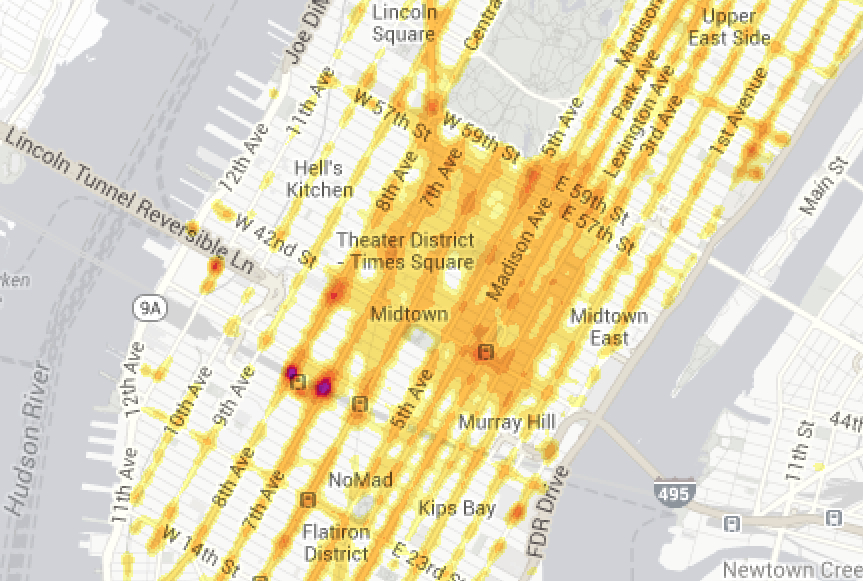
 

Densest at midtown #4


This apparently anthropomorphic time-lapsed image created suggests the inexorable daily constriction and dilation of the city’s vascular system, in tempo with the gorging of taxi fares that slowly dissipate, as if in a forced analogy for urban vitality:  the density of fares in midtown suggest clots more than flow, but provided a neat heat-map of city traffic’s frenetic pace. The distinct flow of cab traffic responds to the dense layout of Manhattan, and the saturation of the midtown and lower Manhattan with cab rides that fan up and down its major avenues.  Unlike the smooth flows out of arterials and to the outer edges of San Francisco, the knotted nature of the New York City visualization suggested a rigorous diurnal rhythm of relatively small trips of privatized transport, densest at the city’s midtown hubs, and reaching over to its wealthier east-side avenues.  But while its anthropomorphic form may be stretched as a bridge fusing nature and culture, the map reveals in important ways the individual specificity of taxi patterns within an urban topography, and indeed the specific diurnal fluctuations that define the demand of taxis–fading as we approach uptown above the blip of the 79th street subway lines–and suggest distinct rhythms of distributions and concentrations of demand for cabs that appear across each urban space, focused in midtown below Central Park, along Broadway and Third Avenue, and specific spots in lower Manhattan.

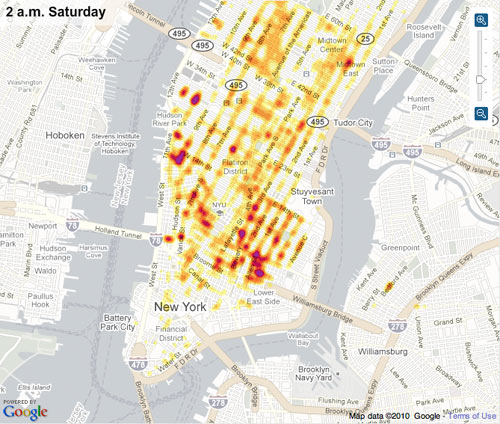
 

Screen shot 2010-04-05 at 9.05.50 AM Screen shot 2010-04-05 at 9.05.50 AM Screen shot 2010-04-05 at 9.05.50 AM taxi-flow-nyc   taxi-flow-nyc


The specific density of midday midtown reveals a complicated geographical picture a city served by experienced drivers doubtless working in tandem with a sense of its rhythm, best able to gauge the shifting traffic contours of urban avenues.
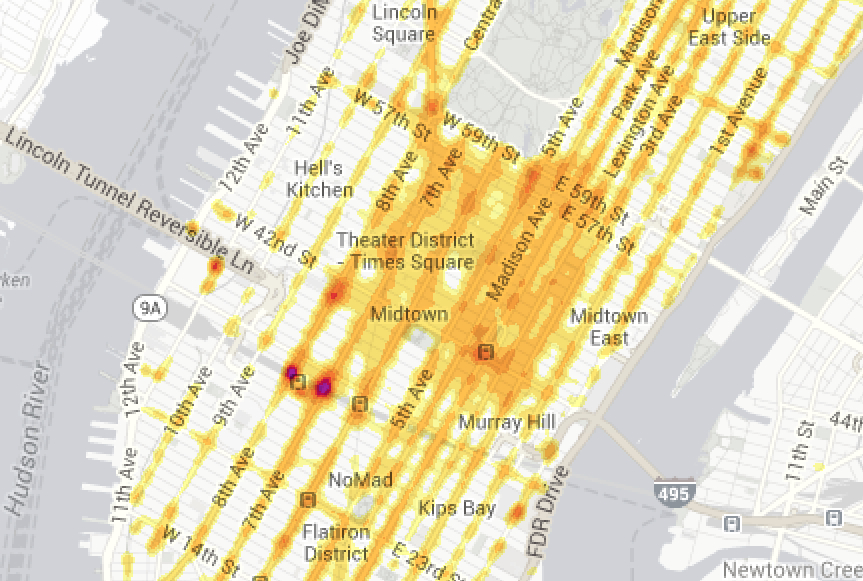
 

Densest at Midtown #2


This image, if interesting, has been recently refined in a two-color data visualization that refine the image of how New Yorkers enter and exit from taxis to navigate New York’s urban space.


3.  Eric Fischer re-mapped a specific topography of ‘cabstopping’ by aggregating the range of cab hailings (blue) and destinations (orange) across the city in 2013.  And an even more massive amount of cab data was declassified after Chris Whong and Andrés Monroy used New York City’s Freedom of Information Law to obtain a copy of the taxi records from 2013 they soon published on the web.  The big data of some 187 million geo-located cab-rides inspired transportation visualization guru Fischer to map the aggregate of total rides taxi drivers gave passengers across Manhattan’s particularly packed automotive space, now on Map Box, in a striking visualization of the collective use of cabs across Manhattan.  The map’s strikingly clear block-by-block topography is of striking precision; it illuminates how densely cabs are concentrated in midtown Manhattan and how specifically the vast majority of pick-ups and drop-offs center in specified regions–and how omnipresent are cabs up to Columbia University and 96th on the East:  cab-density, unsurprisingly, is a measure of socio-economic wealth and property value.


Big Mapping NYC Taxi Trips from Open Data


The social topography of the city is balanced by the white skein of veins in midtown that define a special density of cab-use along major traffic arteries.  And it presents one way of mapping a changing configuration of center and periphery across the city. For Fischer, a fan of both crowd-sourced mapping and urban transport system, dissected the data in visually compelling ways by highlighting the starts of taxi rides in blue and the end-points of destinations in orange, a spectrum that allows us to map the topography of collective cab-use around Manhattan, Brooklyn and Queens. The demand for local usage of cabs isn’t divided into analytics, but provides an image of the density of cab-use in an actual topography before folks like Uber or Hailo threaten change its face–and seem to use their own GPS tracking to exploit by a smartphone app to connect passengers with vehicles of hire, provoking some concern about using GPS to charge fares, and adjusting fare rates in relation to the density of traffic flows:  indeed, the apparently clear preference of New Yorkers to use Uber in off-peak hours and geographically removed and less-served locations suggest that Uber might, in New York, be better conceived as complimentary to the apparently engrained services of other cabs.  Are such drivers even more dependent on GPS to discover the relations between fares’ destinations and the cityscape, as well as to find their next pickup?


Uber hand


The data that maps coordinates for the start and end of cab rides provided a way to “map” what places New Yorkers are most likely to hail a cab–perhaps the most difficult places to get a cab, but also no doubt those areas where cab-drivers aware of an increased demand–as local knowledge of cab-riding more informational of urban space than even the most comprehensive transit map–and perhaps augur the life-span of cabs in the age of Uber.  It also offers a readily accessible instance of open data which provides a nice counterpoint to the banality of the Google-Maps-based cityscapes that feature on demand cab-hailing apps:  or the difficulties for the sophisticated software that sets its rates in relation to the hours of increased intensity to offer what an actually accurate image of the urban space in which it promises travel.
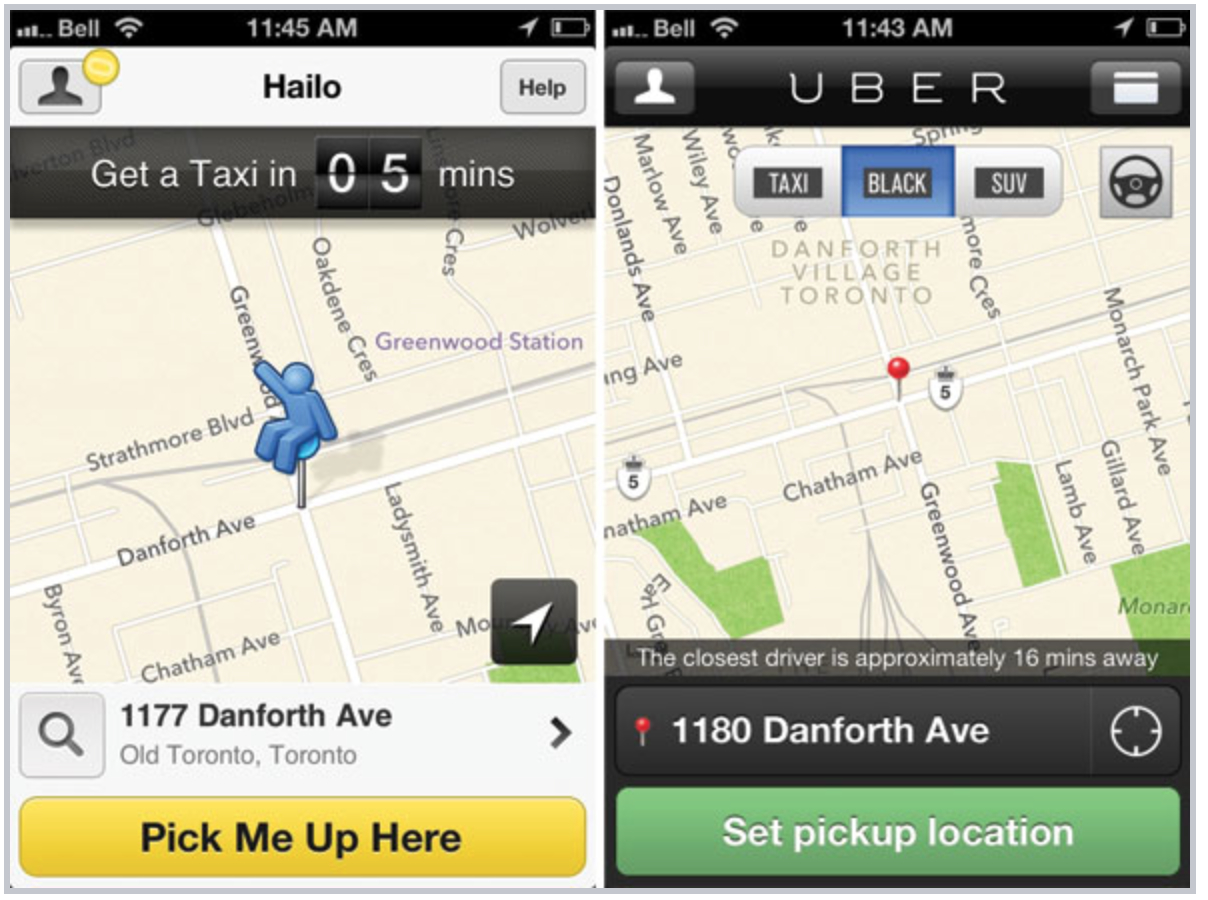
 

Hailo:Uber


But let’s return to the subtlety Fischer’s coding of end points in orange and sites of hailing in blue allows.  The aggregation is so dense that it defines the entire street grid.  Most superficially, a scan of the data visualization he posted shows the hailing of cabs to be clustered on avenues where cabs congregate and course North or South–joins legibility with aesthetics, charting where New Yorkers access and stop cabs to tell us a lot about the navigation of the city’s grid in its crowd-sourcing of automotive itineraries.

For Fischer’s visualization deserves plaudits for elegantly synthesizing an exact visualization of the unique ways that folks use urban space:  of the over a million and a half taxi-rides that were taken in 2013, most concentrated in the cab-mecca of Manhattan, most seem to be taken along the North-South axes of the avenues, somewhat predictably, with a striking density of destinations on almost all of the major streets, often ending along North-South avenues.  Fischer’s map almost illuminates the grid of city streets in ways that tell us considerably amount the range of disposable income available to Manhattanites as well as to most visitors to New York.  The intense activity that the cab occupies as a sort of “second car” and mode of transit suggest a fully served community, if it sacrifices data on speed, acceleration, and delays that might be necessary to really envision drivers’ relative effectiveness.


187 mill Taxi Trips in NYC


4.  Access to this huge data offered a rich vein of data for Fischer, a data artist who often sources huge amounts of information off Twitter, to work characteristic visualization alchemy in a static spectrum to conveys the dynamics of how people move in patterns to organize urban space.  While the image is 2-D, the fading and clustering of its range of illumination invest the Manhattan grid with an illusion of three-dimensionality by using a simple set of primary hues.  Indeed, the phosphorescent blue taxi pick-ups create indelible records of where the cabs were “spotted” and used, although something of a patina in this digital visualization is created by shimmering “GPS-static” in the more densely built skyscrapers of the city, which are odd artifacts of the mechanics of data collection:  as Fischer notes, in certain spots, GPS signals have reflected off buildings’ windows, in ways that add an other (if not welcome) layer of legibility to the map of the city’s space.  (Far crisper contours of cabs’ signals arrive from streets that service the much lower-lying buildings of Brooklyn or other boroughs, even if cab-traffic there is far less intense.) We can read the data visualization to detect the conscious choices of cab drivers to negotiate the flows of urban traffic, even though the image is static, based on the similar clustering of overlays in data.    Although midtown is somewhat filtered beneath  a gauzy layer of interference or blur of GPS-signals’ distortion, as is much of lower Manhattan, reflecting the interference created by urban canyons of clustered skyscrapers that render GPS reception less precise–though we can see the white heat of cabs hailed or congregated at businesses and hotels that serve as sites of conferences and conventions, and detect a temptation to leave rides on East-West streets,as on Central Park South and 57th Street:
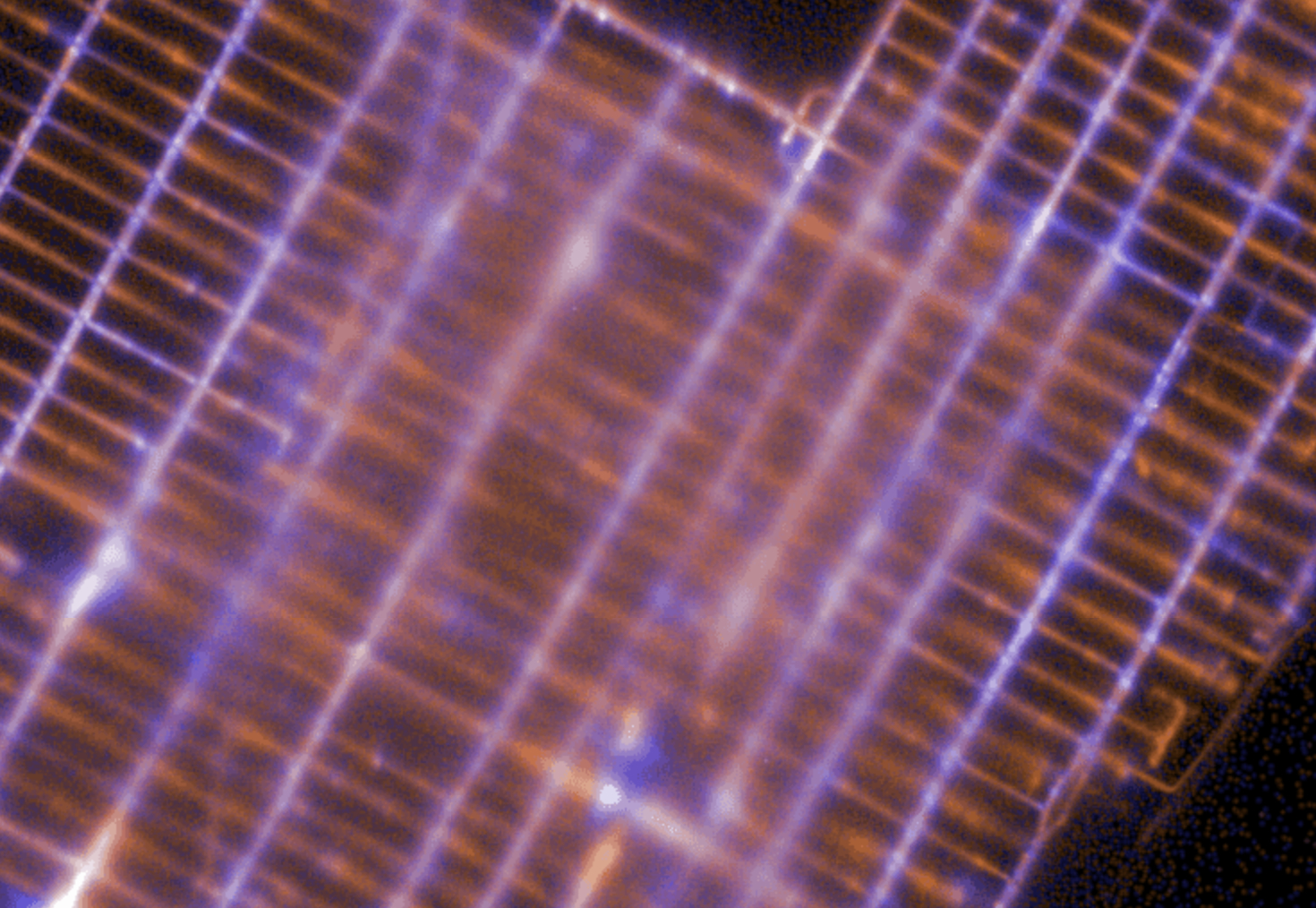
 

Blur of Midtown's White Heat


The data visualization charts the tacit mechanics of the topography of cab use, by using a orange-blue color differentiation to set of regions where destinations dominate cabs hailed or flagged and journeys begun, and where they leave passengers.  We can see a sharp preference to take cabs to destinations on East-West streets, negotiating a topography of traffic that taxi drivers’ familiarities with the different velocity in the white-lit larger avenues control.  In contrast, the specificity of red bulbings of destinations at various crosstown blocks where passengers stopped cabs suggests a specifically situated transportation midtown, even with clear evidence of the blurriness of GPS-interference.  (GPS fixes are also less easily held near LaGuardia airport, as bright red “worms” approach the access roads of terminals, as if to indicate “premature” arrival of a cab stopping before where they were surely headed; a pattern of blue blurs result that seem air-brushed, in comparison to the crisp lines in Cabspotting.)


GPS Fixes near LaGuardia Airport


If the Bay Bridge stood as a beacon of taxi density in the Stamen visualization of San Francisco, La Guardia seems a brightly burning beacon off Manhattan, and the Brooklyn Bridge provides a lighter but indelible tie recording of inter-borough taxi traffic.

The traffic patterns recorded in the visualization reveal a palimpsest that demand interpretation of denser lines of red (where cabs leave folks in the city) and a tool to investigate how city space is used and what neighborhoods visited per annum:
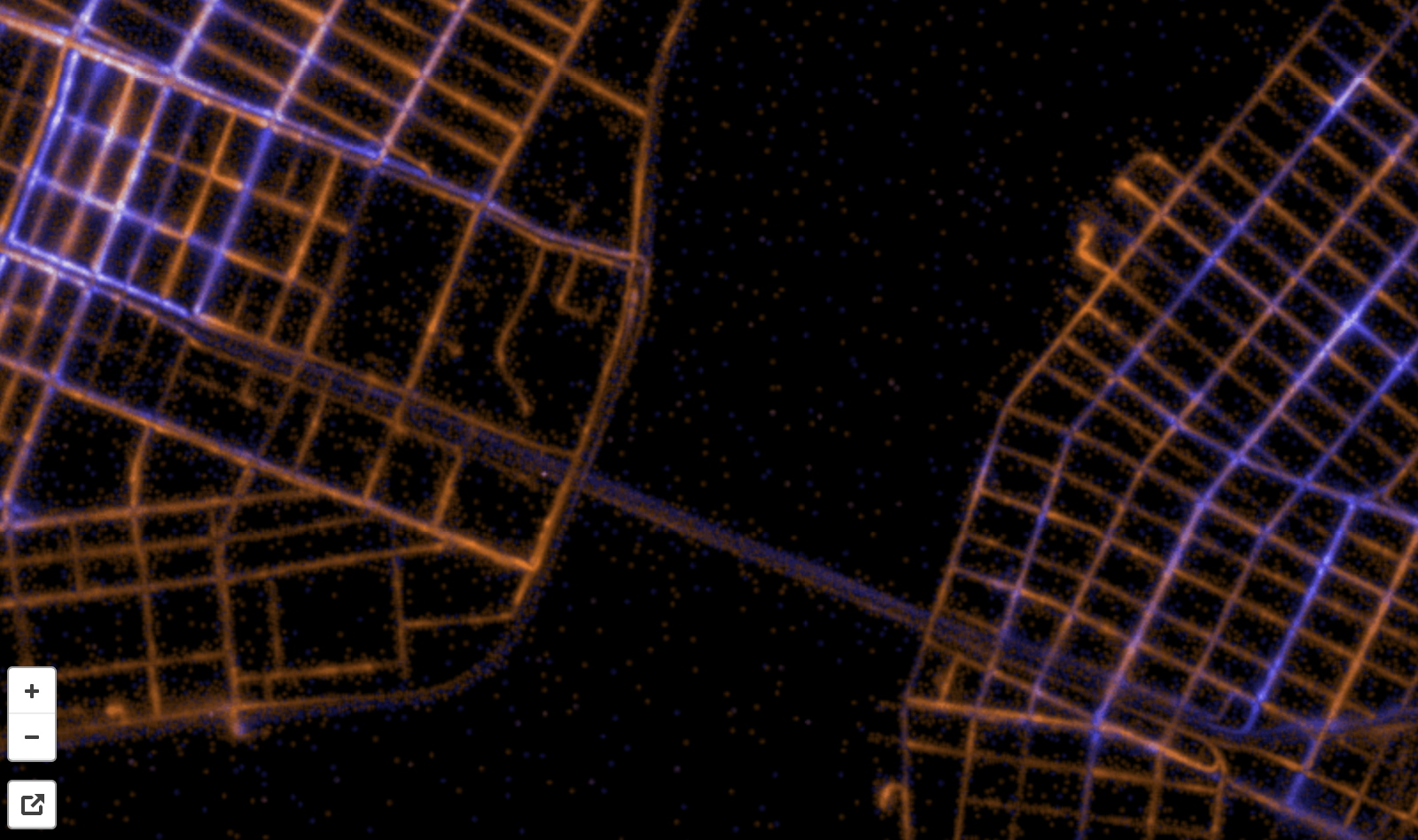
 

Strats Blue:Ends Orange-BrooklynBridge #2


Red lines are veins across New York City’s Central Park, where one can’t imagine the destinations are actually along the crosstown lanes of traffic that run on paved roads across the park, where tunnels that cabs run through seem to have interrupted the GPS signals as well at 86th street, 81st Street, and 66th:
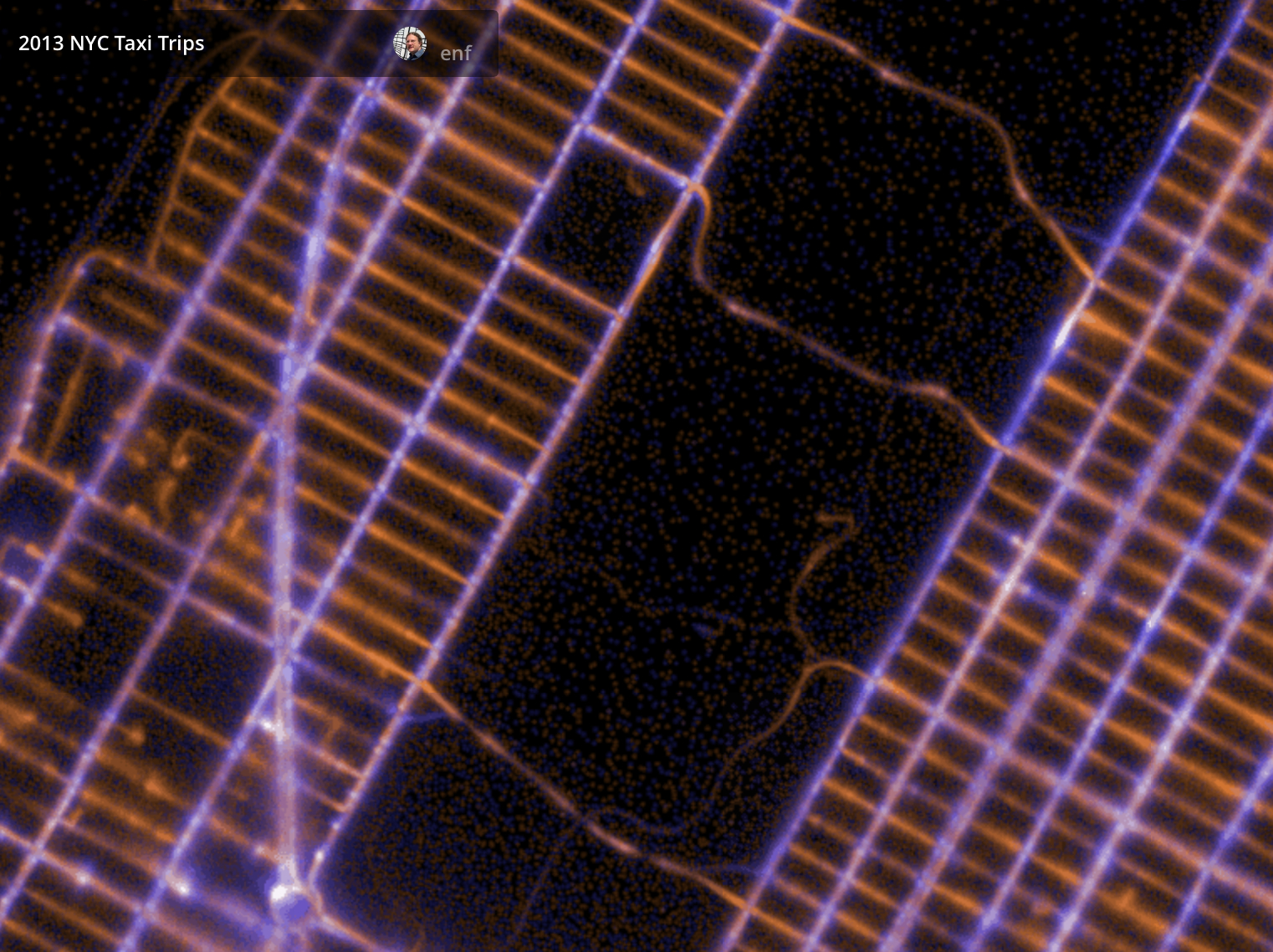
 

Veins around park and Mysterious Red Dots


Brightly lit blue lines illuminate 5th Avenue, a street almost always crowded with cabs, and light up both lanes of Broadway, in ways that offer a beautiful visualization of the way we demand to be driven in Manhattan’s urban space and across its street plan that demand to be pored over with a magnifying glass in hand to best interpret its elegant aggregation.  The map can help us create a better navigable urban space–and perhaps respond to the needs for taking cabs in the city–by mapping needs of public transit, and the readiness of customers to use cabs to navigate urban space.  The street plan provides tons of neat points about the nature of collective behavior, as all aggregated data, nicely foregrounded in Fischer’s color scheme:  just as we detect bright blue sites of starting cab-rides near the Brooklyn Bridge, if considerably brighter in Manhattan, and notice bulb-like orange clumps of drop-offs in Dumbo–the downtown municipal buildings are the looming black blocks.
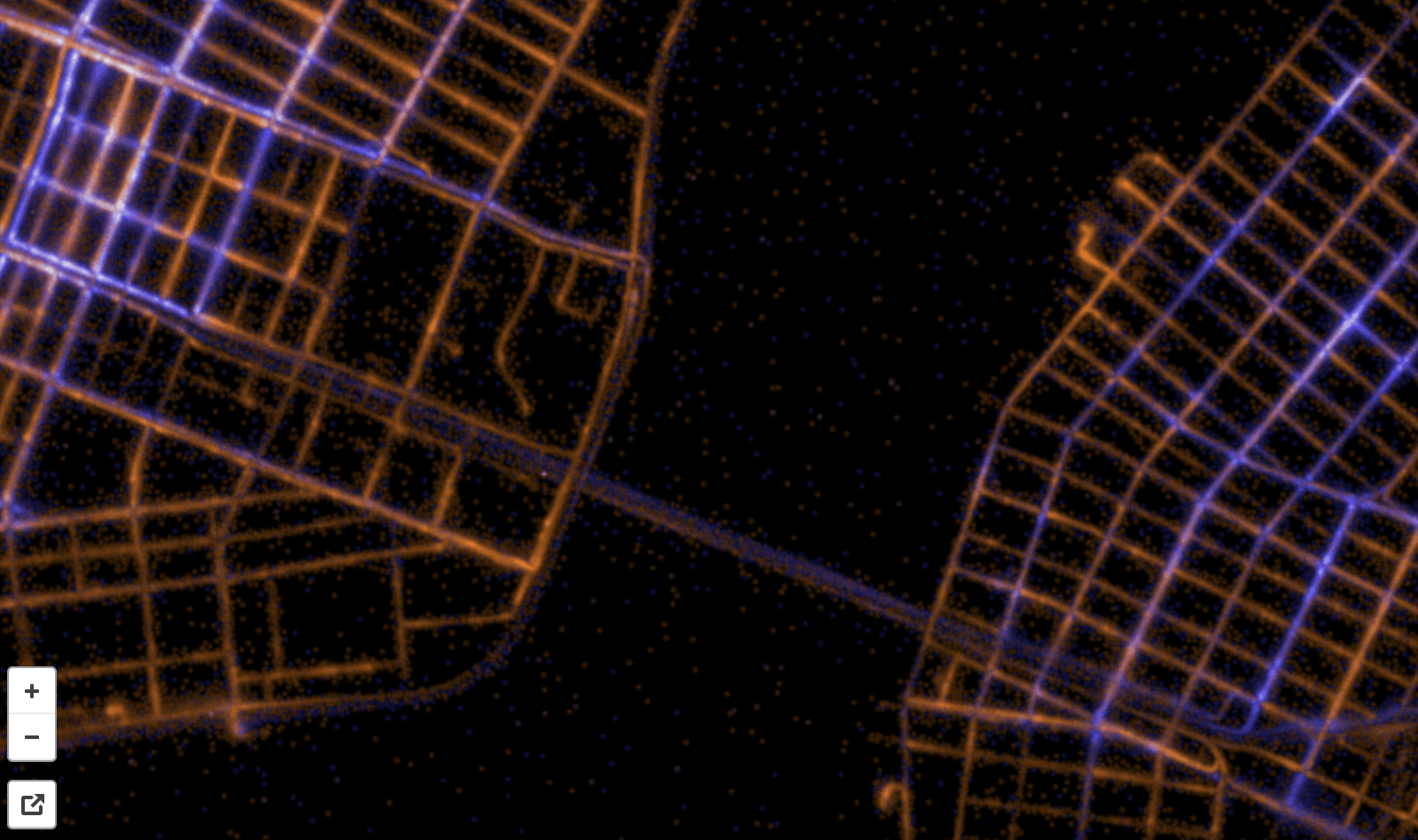
 

Strats Blue:Ends Orange-BrooklynBridge #2


The blue bulbs at street corners give a more likely (more convenient and better) place to start one’s cab-rides in Manhattan, as our GPS lines bulb out at centers of cab-hailing at intersection in the form of a Q-Tip, suggesting considerable refinement of the data, in spite of the occasional blurred reception of GPS signals:  some corners burn an incandescent blue.
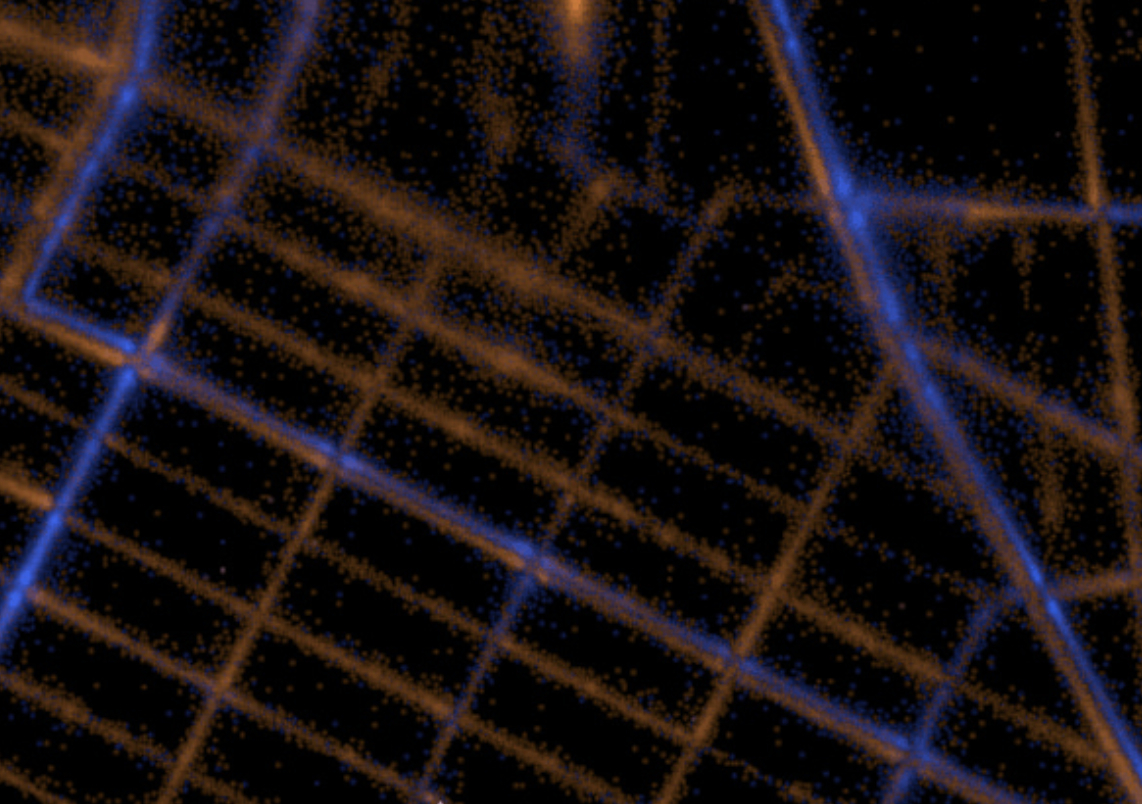
 

Corners are often Bulbs


5.  The specific transportation needs that taxi cab services supply suggest a distinct manner for negotiating urban space at a pace that public transport can’t provide, and a particularly resilient form of a local economy.  How might this relate to the specifics of the survival of the cab as a viable vehicle and model of transportation (and the regulation under which cabs function)? In an era when GPS’ing pickup locations in the crowded downtown by Uber threatens the cab-drivers who have so long made their livelihood in the city’s streets.  It awaits to see how the density of cab traffic already available in the city will react to the influx of passengers with handhelds.
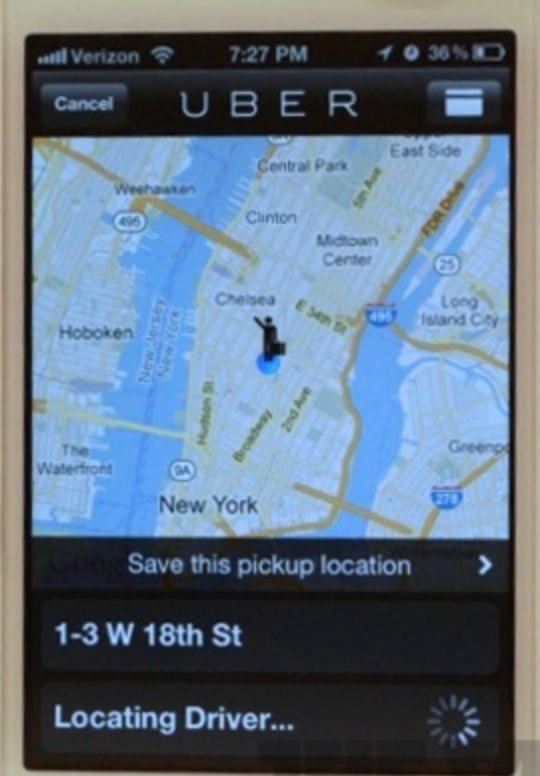
 

uber


Indeed, despite the universalizing nature of Uber’s intentions, the app they offer may best function  precisely in those cities and urban areas which fit the traffic patterns specific to San Francisco most closely.  San Francisco, the city where the app was first devised, offers a unique problem of navigation for taxis:  pedestrians and inhabitants both face a scarcity of free cabs and often face the need for long trips from downtown to, say, the Inner or Outer Richmond or Pacific Heights, call cabs over to the East Bay, and are often located at a distance from taxi stands, and where fares might have too much difficulty hailing a cab at later hours.  And where single women who want a secure ride door-to-door make up, it’s been suggested, a major portion of the fares.  (It might be argued, however, that the whole point of Uber was to harvest a huge amount of data that can be plotted by future mapmakers and indeed predict the relative likelihood of destinations across the city in a more sophisticated way than was ever possible.)

But even in San Francisco, it bears noting, the recent introduction of “Pick-Up Points,” or recommendations of specific pick-up locations in mid-2015 suggest a new way of mimicking mobile taxi-stands for their users–as if to acknowledge the difficulty inherent to promising mobility for an urban space that is often by definition clogged.  Although the potential to be anywhere–or assign a driver to appear anywhere–at first distinguished Uber’s provision of crowd-sourced drivers, eerily soon after the suggestion that the rideshare service provide precise locations of where a fare might be best able to draw drivers–and, if not hail a cab, meet one’s driver–the urban maze of U-turns, changing traffic flows, one-way streets and freeway onramps makes it not only more convenient but more enabling to imitate the interactive suggestions made by Lyft, for example, in inviting its users to indicate where they might best meet their ride:
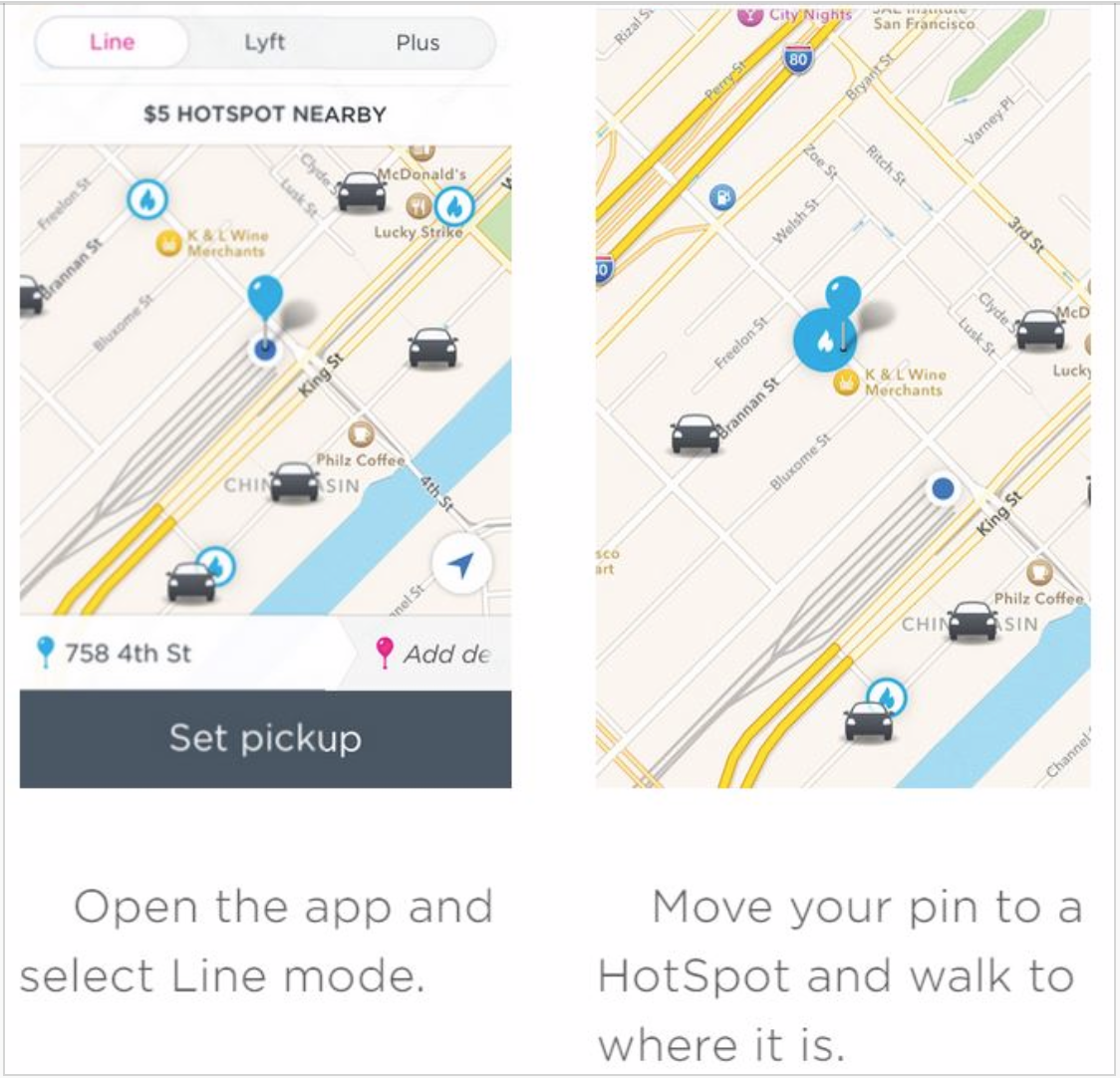
yft

The innovation is not to become less interactive, but to offer a set of coordinates from, for example, a crowded field or region, where one’s ride might otherwise have difficulty locating you, even if that selection may sacrifice the illusion of being anywhere, anytime, and involve some extra footsteps of one’s own:
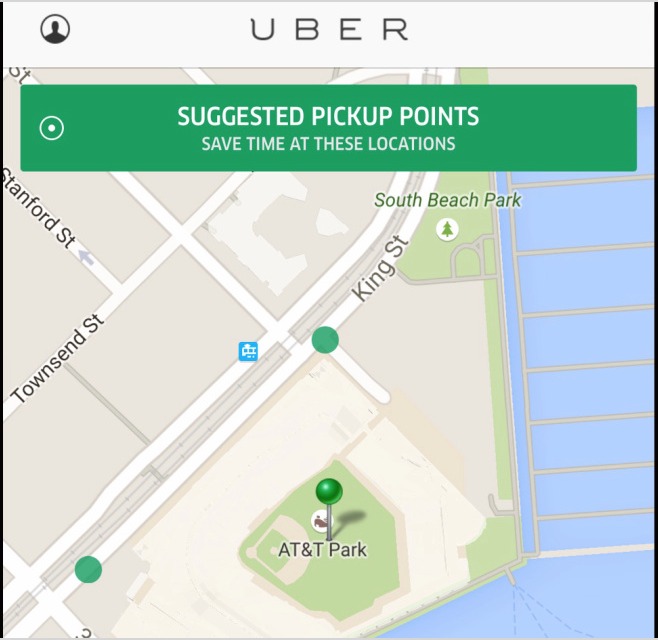
Suggested Pickup POint UBER


There is some data that demonstrates that the indication of such exact sites of pick-up may allow riders to appear at precise times without creating a situation where drivers would actually compete for fares, and to ensure the illusion of personalized service in a service that in aggregate reveals clear patterns of its own.

The harvesting of data that Uber allows, indeed, makes it a sort of Google for the taxied set, and creates something like a valued dataset that Uber has done its best to exploit.  As Bradley Voytek has noted in a neat on the Uber Blog, in a neat weighted diagraph visualizing the flow of rides from one of San Francisco’s neighborhoods to another, noting the aggregates of rides leaving a neighborhood by a circle of varying size and drawing weighted arcs in the color of the neighborhood of a destination, the flow of Uber rides predominantly originate from South of Market or downtown–the largest point of departure of Uber clients by far.  Almost all the rides originate from the downtown.  This clustering of rides around a single region of the city suggest a restricted range of sites of departure for on-demand rides, and a marked clustering among three neighborhoods from which users predominantly originate–although it should be noted that Voytek used dated data rather than the data Uber now possesses–and offers a larger visualization here.
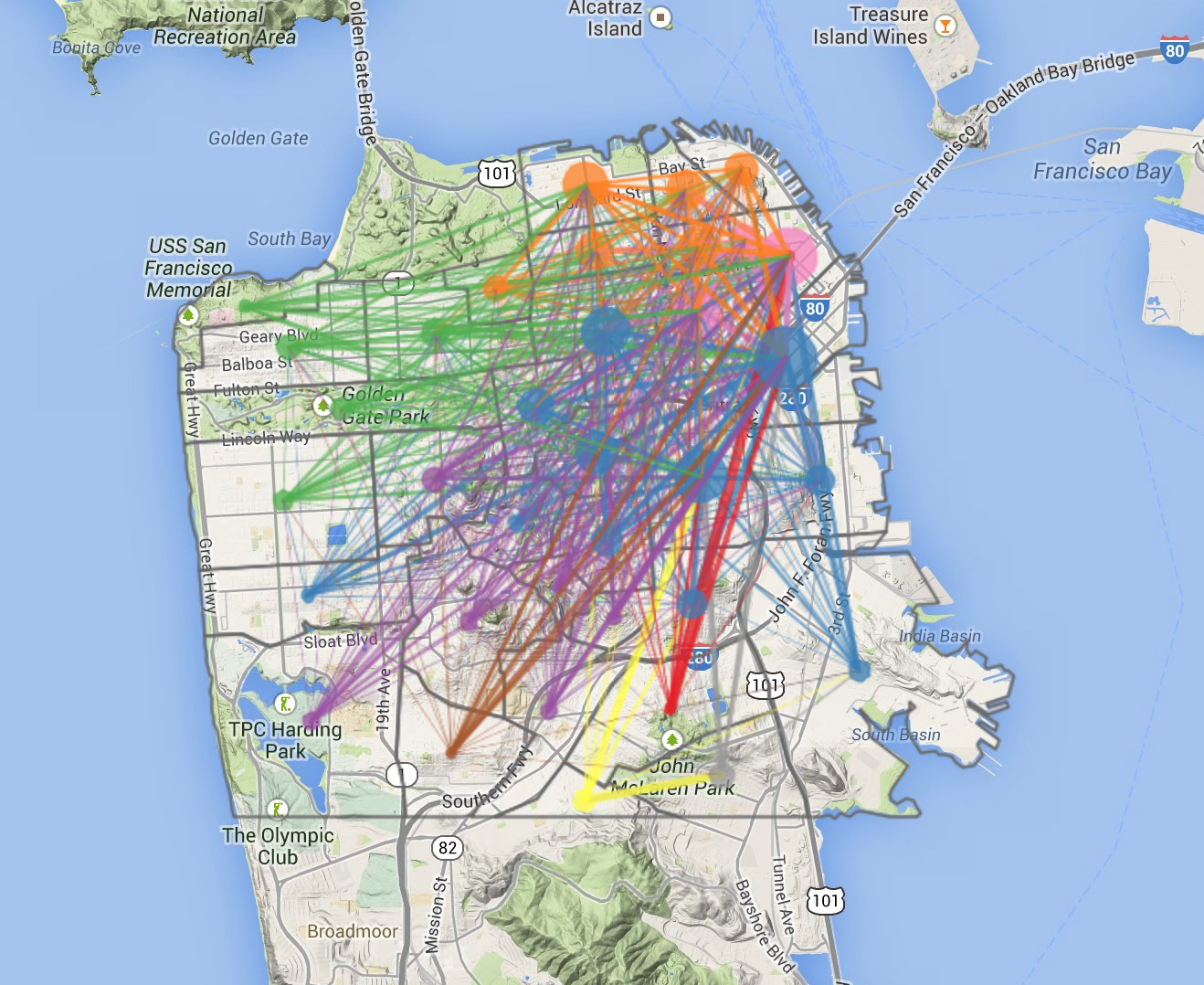
Rides into neighborhoods Bradley Voytek


Might one decide to map the different topographies of traffic flow across different cities in the hopes of predicting how well Uber offers a fit for the navigation of a distinct urban space?  Even with the increased homogenization of cities, the underlying plans and patterns of local traffic provide some guide to its potential “fit” with local traffic and cab-use. It demands investigation how the market would adjust for Uber to be most complimentary to local needs.  The integration of GPS with a local taxi economy has been recently argued to create an artificial scarcity of taxis squelching competition, but to champion the free market approach runs the risk of setting off shocks in the local economy of providing short-term rides that has developed in the city’s somewhat fragile transportation economy.  For as well as reveal the pathways of negotiating urban canyons of New York, the visualization reveals a delicate local economy in which car-users navigate the available calculus of transportation–a city where few drive the cars they own every day, and despite a relative density of car-ownership in Manhattan and New York City as a whole.

Indeed, many don’t even rely upon cars–despite the incredible density of cars per square mile in the relatively affluent region, according to the data mapped in StreetsBlog LA.
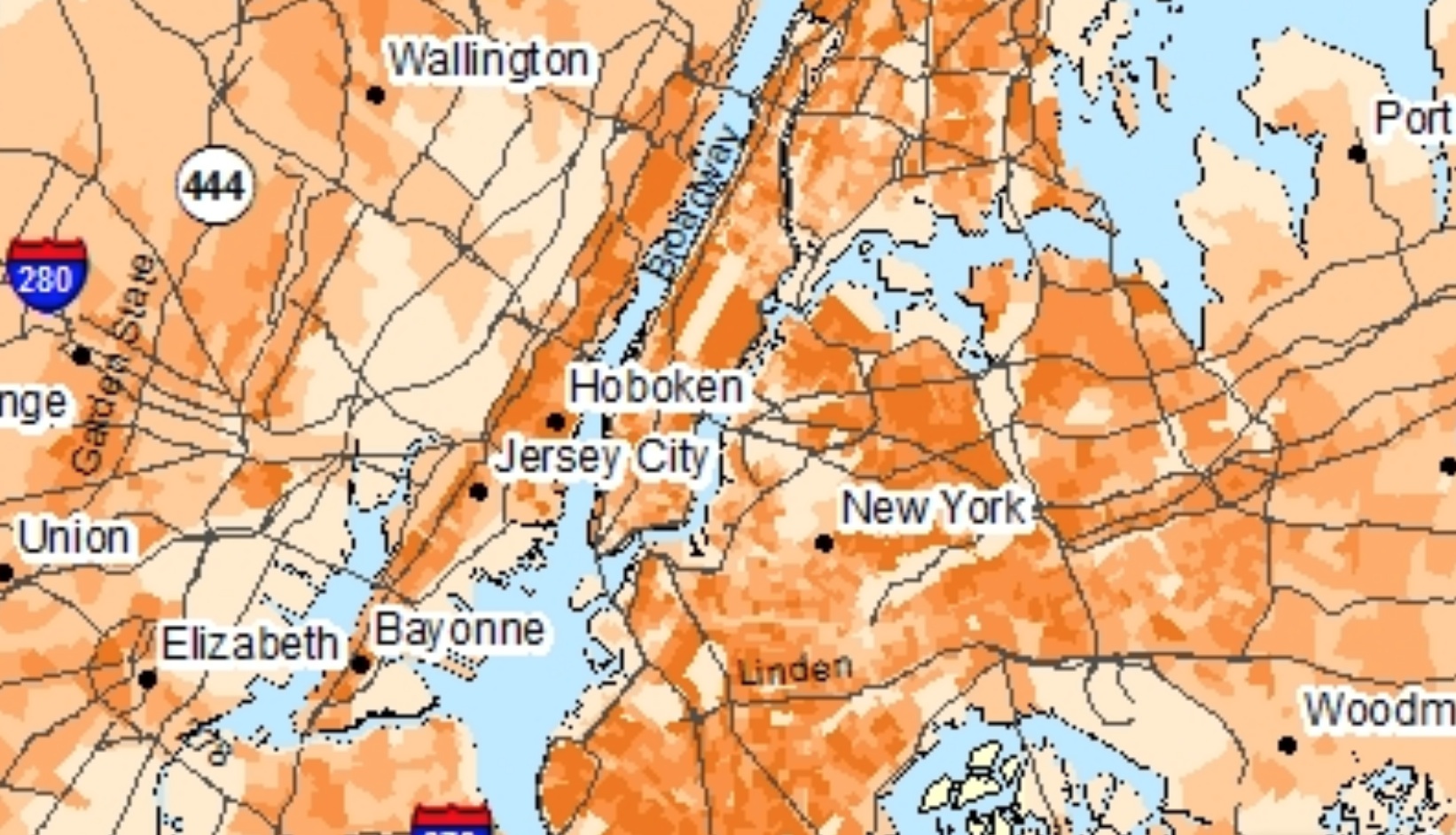
 

Vehicles:Sq Mile NYC   Vehicles:Sq MileStreetsBlog LA

Viewed another way–vehicles/person–New York City seems relatively low-density, indeed, because of the sharp contrast to outlying “suburban” areas or peripheries:   few cars are used for commutes, and multiple car ownership is quite rare.  Reasons for owning vehicles shift in different social topographies.


Car Ownership in NYC and environs Vehicles:Person StreetsBlog LA

The stark contrast in the regional distribution of statistics of car ownership are striking on the micro-level of Manhattan are indeed evidence of a large commuting culture, where many cars belong to commuters who live in more car-friendly lands outside the five boroughs:
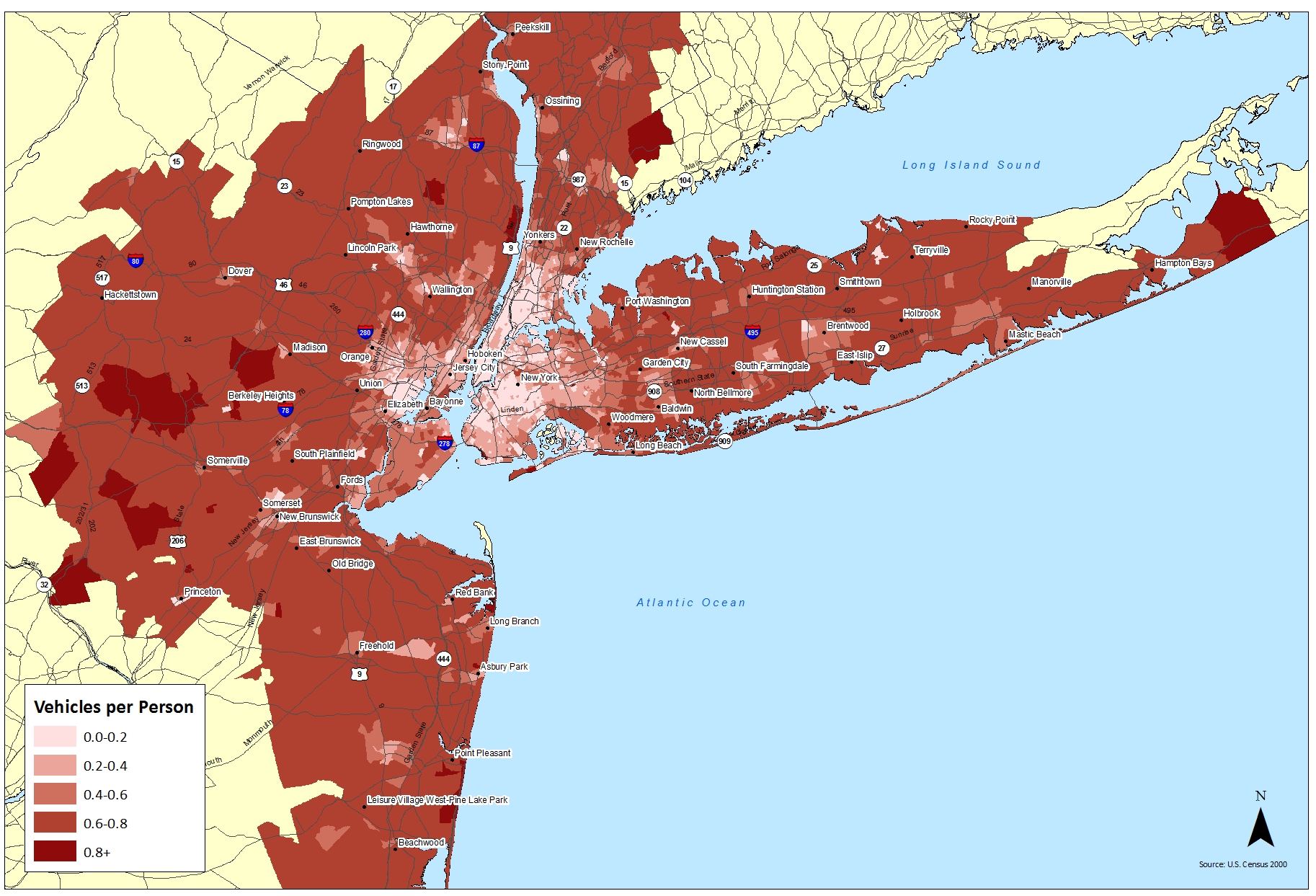
NY-Vehicles-Per-Person   Car Ownership in ManhattanStreetsBlog LA


Although the vast bulk of cab-rides in New York City are based in downtown traffic, where garages are costly and urban street space at a premium, the data visualization reminds us of the continued importance of cab services to negotiate local space.  The relatively subtle tool for moving in a narrow time-window that cabs provide offer an increasingly needed medium to move through and use space that seems unwise to disrupt not only as a way to move the city’s economy, but for the very reason that it is so deeply established of negotiating specific constants of its traffic patterns and laws.  Indeed, the poor ability of GPS or any GIS system to record the shifting pulse and intensities of traffic raises questions of the time which its drivers need to accommodate to actual traffic flows.

If Uber is able to navigate it, best of luck.  Maybe it already has:  but the uncertainty of how markets are currently treating this ride-sharing service suggests that it may have opened the way to far more competitors than it ever foresaw.
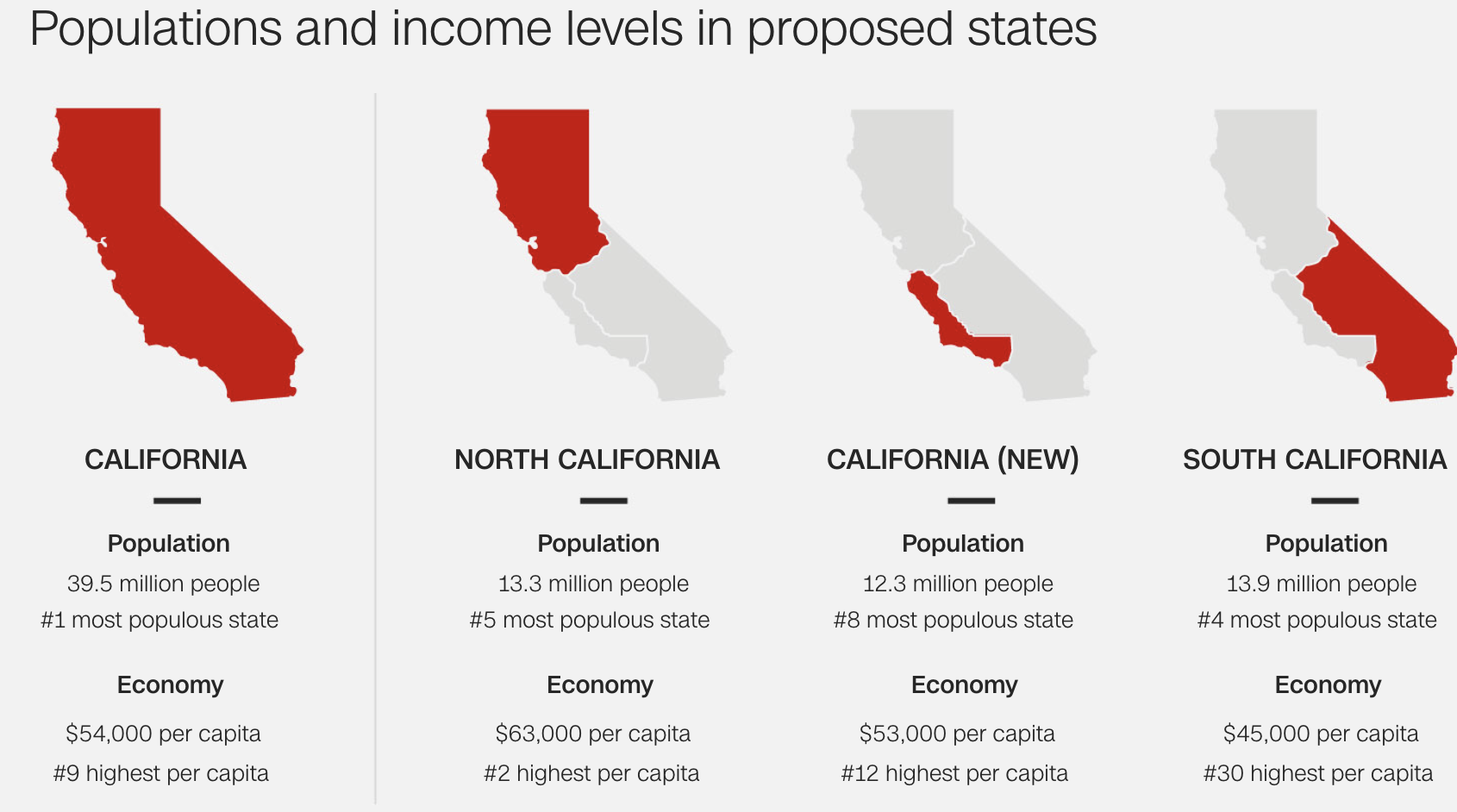
Leave a comment

Filed under cabspotting, data visualizations, GPS, GPS devices, mapping city cabs, maps and surveillance, on-demand taxi service, Uber, unwanted surveillance