Donald Trump, in eyeing a new term as President, sought to make the global impact that he felt long denied–or robbed–in his first term. His frustration, if in part theatrical and hyperbolic, of the “Russia Hoax” was a deep discontent of being denied legitimacy, and a fear of being condemned to a Presidency with an asterisk beside it, either for having not gained the majority of votes for President, after all, or not winning the “landslide” that he felt a winner deserved. And as the first year of his second Presidency seemed to be gunning for an elusive Nobel Prize by bringing peace to Gaza and Ukraine as if to win legitimacy on a global stage, the image of global dominance–and hemispheric expansion of American power–had deep ties to his interest in the political lineage that was embodied by his one-time backer, and promoter, Elon Musk–who at a critical time was the needed P.T. Barnum to stage the comeback of Trump’s ungainly ride on a Republican Elephant. If Trump helped design the new logo of the GOP as a new circus animal–
–even personalizing it, by 2020, beneath a toupee echoing Donald Trump’s signature hairstyle, as an expression of fealty, the party of politics has become unprecedentedly politicized, all but obviating the need for a convention, as modifications that hairspray imbue the weave with vitality, despite its truly unearthly hue that even hairspray cannot create.
Trump has a dexterity with marketing and branding honed in the real estate business he made his name, and the remaking of the party is in his image is acknowledged in the button. But as much as a rebranding that nods to a fascist legacy in identifying the part with a personal brand, subsuming politics in a lexicon marketing in Trump’s America, the logic of rebranding did not emerge from Trump’s head, like Minerva from the head of Zeus, so much it was a product of the onslaught of rebranding and marketing across America, deeply shaped and inflected by the internet, and online communication, and deeply influenced to synergy with other brands–and possibilities of branding offered by such truly political constructions as a border wall. But the border wall became a subject of the political brand of Trump, the branding of Trump 2 is far more tied to Silicon Valley and Musk if it continues to expand the practice of national politics in ways not rooted in political traditions or the Constitution, and removed form civil law.
Without following legal precedent or legal formulations, the victory of branding the nation has a logic that is almost–and perhaps intentionally–removed from legal remedies or redress. For the logic of the building of a border wall that proceeded only by declaring a ‘border emergency’ and a national emergency became a ‘brand’ far outside of the legal framework of civil rights, and, indeed, flies in the face of civil rights. The brand of the wall by which Trump defined his first term and his candidacy may have had less power by the end of his first term, but the second term must be seen as a terrifying rebranding, and rebranding of America, by the logic of America First, rather than by laws or constitutionality, insisting on values of transparency and economy and an end to abuse–even if the reduction of government costs may mean that seventeen million Americans lose health insurance from Medicaid and the ACA, and reducing the $100 billion the government spent on food stamps and SNAP over ten years will affect the 5.5 million who depend on their food from federal funding in California alone, and leave two million without food. The simulacra of civility that the reductions of federal expenditures are a forced slimming not only of government, but of Americans.
The new branding of America is no longer limited to its borders, or territoriality, but depend on a remapping of an expansive mapping of American authority to use its military in what might be called the vaguest penumbra of actual legitimacy. For the first year of a Presidency has seen apparent expansion of the territorial waters of the nation as borders of military jurisdiction, and a definition not only of the ability to refuse visas to all deemed a potential threat to “Americans,” but to using the military–now understood as a Department of War, and not “of Defense,” in what is hardly only a semantic change or shift. Simultaneous to the unilateral rewriting of the global tariff system, as if arm-wrestling the global encamp, the lifting of protections for offshore drilling, and not only continental water but the nation’s Exclusive Economic Zone, the rebranding of the nation in maps have become unprecedentedly expansive in hopes to maximize the nation’s global impact, that not only flaunt the law, but expand the global footprint, as it were, of America on a global map.
The unprecedented expansion of the War on Drugs to an actual targeting of ships in international waters is not only a metaphor. The new “war,” this time, really is a declaration of military conditions that justify the discarding of international law in the basis of affirming national safety–as made evident in the recent reactivation of a slew of military bases across the Caribbean, to allow expanded bombing of shipping craft deemed a threat to the nation and a national emergency. The notion of a wartime powers that the Presidency has in the past assumed have become a way, at the same time, and with no coincidence, the Department of Defense is renamed the Department of War, to announce a war has been begun that will suspend civil rights and legal accords with nations, or any international body, to affirm the expansive legal domain of the United States over anything it deems a threat to the nation, whether or not such a threat exists. While the expansion of the “War on Drugs” as a metaphor of governance marked a decisive expansion of law-enforcement tactics, prosecution, and incarceration, evoking an “enemy” to be targeted among drug users and sellers, whose only alternative was decriminalization, the metaphor of a strategy of criminal justice has morphed to military policing of the nation’s vulnerable boundaries as if it was a real war understood by national boundaries. What has been treated as a shift of the metaphor to reality as if it were a confusion of categories, however, is in fact a redrawn theater of actual war.
Having renamed the Gulf of Mexico as the Gulf of America with little global pushback, if plenty of raised eyebrows, the recent expansion of targeted bombings on craft accused of ferrying drugs destined for markets of American customers–and cast as the pending incursions by foreign gangs of the nation–have occurred with the reactivation of American bases in the hemisphere, far outside of territorial waters, to a new level of alertness not seen since the Cold War–an amassing of 10,000 troops and expansion of military staging grounds that are intended only to facilitate extrajudicial executions far beyond the line of the border wall on pause since being built in Trump’s first term.
Reactivated American Military Bases in Puerto Rico, Panama, and US Virgin Islands/2025
It is as maddening as it is beguiling to map objectively Donald Trump’s relation to the world, so deeply is it performative. It does not objectively exist in ways that could be mapped, trafficking as he does so facilely with fears, existential threats and danger, that conceal a barely credible sense of purchase on reality. Trump’s inflated claims seized willfully and impulsively on maps in his political career, to validate his relatively unclear claims to a sovereign role, eager to try on ideas of sovereignty able to reoccupy the image of his early adoption of the military uniform he wore at the young age, leading a march with pomp and circumstance down Fifth Avenue, fresh from what passed as military training at the New York Military Academy,–anxious to inhabit newfound authority in the Fifth Avenue canyon of New York City–“prime property”–he had never set foot before, as he was trying on a uniform for size in ways that we cannot but associate with the imperial presidency he would later help to design.
Donald J. Trump Leads Military Academy on Columbus Day Parade at Fifth Avenue and 44th October 12, 1963
Fred Trump, no doubt drawing on his own fascist sympathies, had sent the unfortunate future president at age thirteen to learn the needed lessons of domination to reach a level of proficiency to be a capable future head of a real estate firm. But the lesson also gave him a keen sense of entitlement–not having to actually serve in the U.S. Army, increasingly the fear of the men subject to military draft from which Donald sought up to five deferments–and a sense of empowerment not previously encountered in life. The sense that the removed world of wealth was suddenly in reach, and not distant, led him to develop a sense of the synonymity of the Trump name with wealth inequality that helped Donald Trump get in bed with a variety of political forces, gravitating to a dark side of American politics of small government, low taxes, and paleo-conservatism to normalize and perpetuate wealth inequalities in America, at the cost of replacing or eroding government, or what we have come to know as government–and accept as government–without considering the withering away or puncturing of anything that is left of the welfare state or Great Society.
But before he headed to Fordham, and as he tried uneasily to imagine the status a uniform might bring to a child of wealth, the enhancement of his personal authority was but a glimmer to his young eye.
Donald J. Trump in full regalia in New York Military Academy Yearbook (1963)
If the frontiers of America have are a consistent theme of Trump’s Presidency–from the bombing of ships in international waters off of Venezuela’s or Colombia’s coasts, ascribed to “narcoterrorists” or “narcotics traffickers” in a “Trump Doctrine” of targeting what “came out of Venezuela” as if it was subject to attack as criminal. The new envelope of legality that Trump has advanced, insisting it not be covered by the War Powers Act and rebuffing international objections from the United Nations, occur under the pretenses that a nation is not being attacked, but criminal organization run by a “designated narcoterrorist organization,” as if this sanctions bombing ships and killing passengers in waters waters lying far outside of American territorial claims. If Rankin and others have suggested that the cartographic artifact of International Waters or an Exclusive Economic Zone can be seen in terms of an optic of globalization, the rejection of globalization or global orders of legal authority are likewise artifacts of globalization–but of the Trumping of globalization that is an assertion of the rejection of legal oversight on attacks of international criminal organizations. The blurring of the nation’s southern border drew condemnation of Caribbean states, claiming wartime powers in a far more open violation of international law than the US-Mexico border wall.
The border wall indeed receded into the baground, fast forgotten in comparison to the extent to which bombing offshore ships blurred the boundaries of territoriality in a misguided attempt to staunch the flow of drugs–a flow Trump and his henchmen too often argued is accomplished by smuggling routes able to be stopped by immigrants, as if this prevented the flow of cocaine, fentanyl and methamphetamines across the border–the blurring of territoriality now goes far beyond the “big stick” of the Monroe Doctrine that the nomenclature of the “Trump Doctrine” echoes, and sets a new standard for a “gunboat diplomacy” now waged from the skies, and from seven warships and aircraft carriers stationed in Caribbean waters by September 1–carrying over 4,500 sailors and marines beyond the nation’s frontiers, in a quite sudden and unexpected military buildup designed to “combat and dismantle drug trafficking organizations, criminal cartels and these foreign terrorist organizations in our hemisphere.” Is the sending warships a new expanse of borders to patrol international waters an act of aggression, or a war against non-state actors?
The nation seems to be expanding its frontiers, even as our government shrinks. The wanton summary firing of government employees during the shutdown over which he would preside in 2025, letting go of over 4,100 employees from “Democrat agencies” of government as Housing and Urban Development, Center for Contagious Diseases (shutting its entire Washington office), Education, Treasury (1,400), Interior (1,100), Environmental Protection Agency, and Commerce, and elections security and cyber in an unprecedented unilateral”Reductions in Force” as the shutdown was in its tenth day was a supreme act of plenipotentiary powers, as his Budget Director released “RIFs” in place of pink-slips, purging the note of government by massive layoffs (firings) in classic Trump style for big corporations and budget hawks. What might reduce our emergency preparedness on multiple fronts was conducted in the name of emergency cost-cutting. “March on, Dombrowski, lead the way! Our Poland has not yet perished, nor shall she ever die!” The expanding frontiers of the nation, as government sent guided-missile cruiser, an amphibious assault group, nuclear-powered fast-attack nuclear submarines with 5,000 sailors and Marines to the region–as ten Stealth Fighter F35’s have been shipped to Puerto Rico, supersonic jets of a lethality that has no clear tie to a narcotics war, save as a massive show of force, with eight destroyers.
September 2, 2025
Trump seems determined to send a new sign of his triumphal presence in the region, as if to declare a new relation to the Caribbean as an imperial space he is willing to defend by military roles and military engagement of nations. The metropolitan splendor of the broad streets of the modernist urban grid may have overwhelmed Donald as he stared downthe chasm of an urban canyon whose buildings’ art nouveau facades must have impressed him as a new social geography of which he had not been so keenly aware and a New World. It may have so impressed him as tying the historical figure of Columbus to a conquest of Fifth Avenue,–as a modern Christian soldier–stepping in his patent leather shoes into the future he would argue to have equipped him with “more training militarily than a lot of the guys that go into the military”–a distortion of magical proportions, perhaps born out of guilt for the five deferments obtained to defer service in the Vietnam War, determined to boast of a disciplined leadership without showing much true actual discipline military men are instilled. The determination with which Trump led his New York Military Academy class forward amidst along the glittering concrete neoclassical towers lining Fifth Avenue, as if they constituted a new world he had never personally seen, was a conquest of sorts, a conquest that was Columban in scale and grandeur, as if the commemoration was of his own new role in life.
Is this early image not at the heart of his deep ties to the defense of Columbus Day as a national holiday and collective celebration, in the face of reality and claims to the contrary? It is as if predating any sense of global politics, he naturalized the heightened socioeconomic divides of the impressive city. Indeed, the opening up of the landscape would long fascinated him as a developer that he set his sights on conquering this new land of wealth. Those looming towers would be a beacon of sorts for the real estate company he inherited, and provide a soundstage on which his public persona as a realtor could be orchestrated as if existed apart from his father or the rest of his family, and indeed a migration story of sorts from the outer boroughs across the bridge that spans from Brooklyn and Queens to the glittering tower of Manhattan that he traced compulsively on paper napkins as new maps to his identity and brand, even before he took to affixing his name indelibly with their glittering facades.
The new branding of the United States on the global stage is akin to a throwback mapping of a nation’s expansive authority, eerily evident in a favored map that Elon Musk may well have taken out of deep storage in his family memory as he developed plans to help resuscitate Trump’s candidacy in 2024, at a critical time, selling a new vision of the powers of the presidency that seems to have loomed large in Trump’s own struggle for power. Long before applying gold-painted polyurethane appliqué from Home Depot to the Oval Office for a mere $58 to create what he called, a real estate developer at heart, “some of the highest quality 24 Karat Gold ever used in the Oval Office or Cabinet Room of the White House” for “the best Oval Office ever, in terms of success and look” (his string of capitals), perpetuating the image of wealth inequality whose quality would impress “Foreign Leaders” who would “freak out” at its quality.
For Trump ran for President the second time almost under the promise to naturalizewealth divides in a landscape that dazzled him with its display of opulence, as a New World he seemed to have first confronted and remains, for the moment, to be vertiginously in complete command. The deep ties of Trump to a naturalization of wealth divides would lead not only to the demonization of migrants, blacks, and other undesirables, expressing a sense of grievance against them as a real estate developer preoccupied with fears of declining values of their properties,–but to find an eery kinship, at great costs to the nation, with the naturalized wealth divides of apartheid that were a formative part of the worldview of Elon Musk–similarly attracted to the promotion of fool’s gold.
Musk was an icon of the entrepreneurial abilities that seemed to be tied to genius, but was hardly American, and tapped, as has been shown, an eery brand of libertarian politics, not foreign to America, but a dark current that was accessible to the young man who grew up in a white enclave of Pretoria amidst a sense of the deep dangers of those without wealth, amidst the jacarandas and elite schooling, and his heroic grandfather, the dashing adventurer Joshua Haldeman, a refugee of sorts from Canada, who had played an uncelebrated but rather profound part in the social movement Technocracy, whose political imaginary is preserved in the map that is at the header to this post, and received attention as a political imaginary that has informed the apparent contradictions of the expansive isolationism of Trump’s second presidency. The expansion Trump has directed of Homeland Security to apprehend “illegal” migrants is not only an attack on the legal status of refugees–promised safe harbor in the United States and other countries by international accord since 1951 providing that no refugee be expelled or returned to the frontiers of a territory their life or freedom was compromised or in danger. As fears of political persecution have multiplied and the flow of refugees grown globally, the United Nations Convention has been not only questioned–but the safeguarding acquired rights were called into question by declaring the border a ‘state of emergency’ not demanding the following of agreed laws. Indeed, the digital dragnets that are targeting alleged “illegal” migrants compels many to present themselves before court without any right to a lawyer or legal defense, as they have no ability or right to hire one.
Donald Trump had been sent to military academy to dissuade him from a passion for films. Donald was wowed by leading a spectacle that of which he was the center–leading a Columbus Day march!–whose theatrics led him to remember the event. He boasted of being instilled with obedience and rules at the New York Military Academy, endorsing the creation of an online “American Academy” as he ran for U.S. President in 2024 to undermine the place of “radical left accreditors” in American educational institutions and the “left-wing indoctrination” so endemic to schools he argued were “turning our students into communists and terrorists and sympathizers of many, many different dimensions.” Trump was vexed by the protests at universities after his first election, channeling attacks of alt right online journalism as Breitbart News against the universities they argued had become opponents to free speech. Trump adopted a Manichaean grievance of disconcerting alliterative bounce, vowing to “fire the radical left accreditors that have allowed our colleges to become dominated by Marxist maniacs and raving lunatics” as if they had perpetrated a crime against the nation only he, the graduate of a Military Academy, was properly able to solve.
Trump Leading New York Academy on 1963 Columbus Day Parade, to immediate right of Flag Bearer
Trump as he marched down Fifth Avenue must had no sense of a defined a relation to the world–he was seeing New York luxury properties for the first time, but was opening his eyes to the scale of what seemed a global stage as he led the march with utter pride in his uniform and bearing. But President Trump’s conviction he is leading a white nation to an age of plenty, as he led the Columbus Day parade months after I was born, is tragically curtailed in its vision.
In glorying in a nation of closed borders, Trump has clung to a. geographic fantasy and a myth. The scale of global leadership may have long been a problem for Trump to comprehend. But the eagerness with which he entertained and promoted the mythic geographies Trump long trafficked in real estate have sought to promote the nation in a new global context, whose toxic spin is reflected in insistently casting Columbus as a basis for the Christian white foundation of America, embodied in his deep commitment to restoring prominence to a holiday named after the Italian Christopher Columbus. Even as we have documented and uncovered the scale violence Columbus and his sailors perpetrated in taking possession of Santo Domingo, the whitewashed elevation of Columbus as a, a founder of the nation if not of Christian Empire, with deep roots in the nineteenth century at great cost tot a nation. Even as Trump vouches opposing the “woke” change of critiquing Columbus as a figure of veneration, one who “all of the Italians love him so much,” Trump courted white supremacy by Columbus; he embraced a vision of imperial supremacy that animated a proposed monument to Columbus for New York Harbor of bronze kitsch designed by Georgian monumental sculptor Zurab Tsereteli,–in an effort to promote and re-imagine Columbus as a father to the Country, akin to Peter the Great in 1997, whose statuary Tsereteli had previously designed on the banks of the Moskva River to celebrate three hundredth anniversary of the Russian Navy in the very same year.
Tsereteli specialized in designing monuments, and the patriotic monument of grandiose statuary was underwritten by Russian funds as a free “gift” in 1997, in a stunning three hundred feet of kitsch to rival the Statue of Liberty in a foray into American politics. The monstrous kitsch statue of an apparently impassive navigator may have been in the back of his head as he appropriated government funds to reconstruct Columbus statues as his final act as President in 2020, seeking to leave his imprint on a society that had refused to commemorate Columbus as a savior to the nation.
Trump has perpetuated the grotesque myth of living in a prosperous nation within closed borders, as if the arrival of Columbus was triumphant and peaceful–not acknowledging indigenous peoples, slavery, or even non-white history, even in the face of historical evidence of the enslavement and violence that followed the disembarking of European settlers to the contrary. The massive whitewashing of the historical record pandering to visions of white supremacy redefined America in a globalized world as provincial and out of his league as that young costumed military school brat, marching in pants too short and outsized cap shortly before the American troops would be sent in escalating numbers to Vietnam. To be sure, Trump feigned his “military experience” as a doge for five successive draft deferments from military service. Elevating the Christian heritage of America Columbus has come to incarnate romanticized America in a global map of the powerful that Donald Trump could get behind. Yet the uneven distributions of global wealth–far greater than were defined by New York in the 1980s–offered by 2024 a vision Trump’s candidacy seemed ready to naturalize–offering Trump a means to orient his sense of politics to the world. claiming as President to bring “back from the ashes” the celebration of the Genoese navigator’s voyage, and end celebration of Indigenous People’s Day, by renaming the Federal Holiday. The new vision of global prominence for the nation that Trump promised was not dependent on or tied to Columbus, but to a vision of global economic dominance not only rooted but trafficked in myth.
Trump did so, this post imagines, side by side the other spokesperson of wealth inequality who offered a critical endorsement of the candidate in 2024–the South-African born Elon Musk–with world-changing consequences. Musk, like Trump, while super wealthy, also saw himself as an outsider, but claimed a persuasive way to orient Trump 2024 to the world, if not to orient the second Trump Presidency to a map that preserved the wealth inequality incarnated in the buildings and skyscrapers of Fifth Avenue within an increasingly globalized world, perpetuating the illusion of the wealth of the United States by whatever legal fiction possible to provide a vision of American pre-eminence that has some surprisingly scary echoes to the cartographic fiction Elon treasured from his father-in-law, and perhaps the largest paternal figure of his childhood, Joshua Haldeman, a chiropractor from Saskatchewan who accumulated wealth from ruby mines in Tanzania during Apartheid but ended his life piloting airplanes convinced of the hidden riches of the sandy savannah of the Kalahari Desert–not its actual resources of diamonds or uranium, even if it possesses one of the largest diamond mines in the world, but the ancient wonders of the Zambezi Basin of the Lost City of the Kalahari–an obsession of late nineteenth century geography that has survived in board games–of a lost pre-Ice Age civilization only officially given up on in 1964, but incarnated a vision of wealth inequality the likes of which rarely existed before globalization.
Lost City of Kalahari (Late Nineteenth Century and Modern Reconstructions)
The visions of wealth inequality by which both Trump and Musk were so attracted and obsessed made them a far less likely pair to endorse the divides of income inequality that have increasingly defined the United States and the world by the twenty-first century, but which we have been almost unable to glimpse. The manner in which Trump has shifted attention from income inequality to spectacles of state, indeed, is a critical means by which we have allowed our attention to be distracted by the policing of a southern border, but to turn the other eye to urban poverty and the social fissures exposed temporarily in the pandemic, but that exist in both health care, educational attainment, and life expectancies across America, in ways we have hardly seemed able to process.
While we’ve been driving ourselves to distraction with the distortion of the electoral maps, projecting the failure of our system of government in the specter of “tied” electoral contests in which the vote is thrown to the House of Representatives, rather than anyone having a vote, we as if realizing the real fears of disenfranchisement that are all too palpable in the current status quo. The possibilities of choosing a President in a polarized nation have led, not only to consecutive weeks of polling so closely within the margin of error to be set many to rip out their hair, but also inevitably ratcheting up the fears of violence–and violent confrontation–at the polls.
As if a concrete version of swinging, the fears of fists swinging at the polls seemed all too real, perhaps in the memory of January 6 still fresh in some minds, and the major actors, decentralized and all-male actors seeming to respond to Trump’s rhetoric, claiming that they would “show up” at the polls, as Ohio-based groups posted “the task is simply too important to trust to regular normies,” legal norms, or boards of election. All ratcheted up fears that the election would be stolen, amplifying anxieties about the authority or legitimacy of the election. by taunts that “FREE MEN DO NOT OBEY PUBLIC SERVANTS” on alt right social messaging platforms before Election Day. The Proud Boys, famous for having been told by Donald Trump in past Presidential debates to “stand down and stand by,” now stood “locked, loaded, and ready for treasonous voter fraud.” The demonization of public servants and the civil service, only to be amplified by the Trump White House in later months, was indeed launched within the election.
The feared violence did not happen, but a violent shock seemed present as votes were counted in a new electoral map, as the battleground states that had long been contested seem to have folded, and shifted red. But Trump’s ties to the Proud Boys–or the ties that were not only seen on January 6, but even back to the “stand down and stand by” remarks in the Clinton-Trump debate that curried so much favor with the radical alt right group. Indeed, they raise the question of whether, even if violence at the polls or voter intimidation did not occur, it still makes sense to map the electors in purely partisan terms, in this most polarized of ages, and how much that polarization rests on the personal power that Donald Trump has gained. But we have retained the map of “red” and “blue” states as a visual shorthand, dating twenty years ago on the television news, that has dominated our understanding of partisan divisions, and indeed been naturalized as a shorthand of political brand, able to take the metaphorical temperature of the nation and “decide” its leadership–even if the cartographic shorthand may be outdated in the era of the strongman. And we have forgotten how narrow the election was, as Trump has claimed a “mandate” while in fact loosing the popular vote, on the basis of winning six swing states–as if those close margins of victory, and a failure to gain a majority of the votes in what was for all practical purposes a two-candidate race, led to an electoral map that was rather divided–and offered little consensus–despite an illusion of a continuity of red states, rooted in the less educated and more economically disadvantaged ones, who bought Trump’s deceptive assurances of the arrival of lower prices on food and gas.
Have we allowed our minds–and our journalists’ minds–to become too filtered by the distorting principles of electoral maps? William Galston, an observer of elections and insider who worked for four presidential campaigns, ran with this cartographic metaphor, noting that if political parties had gained and lost ground in states and regions in earlier eras, we “live in an era of closely contested presidential elections without precedent in the past century.” As one candidate promises to divide us like we have never been divided, we are divided by the smallest of shifts in voting patterns, the electoral map of “the contemporary era resembles World War One, with a single, mostly immobile line of battle and endless trench warfare”–that reflect the increasingly and unprecedentedly sharp partisan tenor of our politics. Galston argued this was increasingly true in 2020, the election when states’ partisan opposition seemed to harden over forty years–if not sixty?–despite the interruptions of the Clinton and Obama years, the rare excerptions. But this divided landscape gained a terrifying sharpness that crystallized in how seven “battlegrounds” decided the election in 2024, justifying outsized attention from Presidential campaigns in the 2024 election.
Even as the United States Justice Dept. monitored twenty-seven states–and some eighty-six jurisdictions!–to ensure compliance with federal voting rights laws, prevent voter intimidation, and law enforcement agencies were braced for violence, no cases occurred–despite tangible fears of violence or intimidation. But the shock of the red map lead to existential worries of a story that ended in the wrong way. If 77,000 votes from Wisconsin, Michigan, and Pennsylvania put Trump in the White House the first time, in 2016, a big push from all three states did the trick by promises to a Christian Right. Even if Harris cut Trump’s lead in the battleground states, Trump continued his advantage in battlegrounds of the light blue Democratic victories of 2020. And so the first returns in the Election Day scenario of the 2024 suggested a shift in the landscape rightwards, a mass shift Trumpwards, in fact, that had not been seen before, a shift in collective action and identity voters adopted en masse–as if rejecting partisan allegiances to run against the polarization of the past–
CBS News/November 7, 2024
–that provided a new landscape by the evening of November 7 of increased margins of victory from 5% to as much as 20% among for the party that had undeniably become, as many fretted, the Party of Trump, in ways that tested the carving up of the electorate into demographic groups or genders.
The array of arrows lurching red seemed to blanket the nation appeared nothing less than a major electoral paradigms. And the victory of Trump was not a victory of the GOP, but a confirmation, in some sense, of the full takeover of the Republican Party by Trump’s promises of making things right again, promises that seemed more concrete in its details–even if they were largely vague assurances, moral victories of slim benefit like the restoration of values and end of access to abortion–promises at well in exurbs, far from cities and urban disturbances, from private equity to prisons to gaming to casinos to gun advocates, finding a gospel of mall government and low taxes, a salve to anger at pandemic restrictions, an exurbia on the edges of cities, fleeing all disturbances to an elusive status quo, believing hopes of bracketing costs of global warming and near gaining a critique of Trump’s abundant lack of any actual economic plans.
CNN, November 7, 2024
The sudden parsing of the flow of margins erased the red state-blue state electoral map, with a precinct- or county-based tally of margins from the previous election, seeking to size up candidates by socioeconomic or other groups, but confronting an apparent large-scale shift of the electorate. Trump’s victory was not overwhelming in its margins, but re-mapped most large stretches of the country red left the notion of “red” states in the past, to augur a new landscape for the United States–not only in domestic policies, but, of course, its relations to the wider world. But it was more than decisive, and the “break” in many districts once dependably mapped as Democratic voters to Republican suggested a wake-up call, even if the election was by no means a landslide: it felt like one, and that nagged one’s mind and would in days to come. And, perhaps more importantly, the perception of a landslide–even if it was by small margins–was exultantly viewed as a license to remake the government, remake the presidency, and redefine the role of government.
The bitter truth Trump did well among, non white voters, lower-income Americans, and women cannot be explained easily, and surely not by class-based disaffection from Democratic candidates.
Red Shift across American Landscape Showed a Decrease in but 240 Political Counties/New York Times
Despite fears of violence, the eery absence of any disturbances paralleled the rightward swing of the American electorate, evident in the rightward swing of voters not only in those seven “swing states” but the great majority of counties across the nation evident as the first votes were tabulated on election night. This was a punch to the right, a lurch right save spots in Georgia, South Carolina and Michigan–once considered swing states, to be sure, but now trending red. How did all the so-called “swing states,” uncertain in their voting practices but which we had been reminded from the summer, would, in fact, be selecting the President as much as the country, swing red in ways that seemed more overdetermined than seeming news?
The map hit viewers like a slap in the face, a rude awakening of heart-breaking disconnect with America, but was also cause for a recognition of deep-lying and relatively dark undercurrents that found grounds to turn away from a convincing female candidate, even in favor of a convicted felon. The bomb threats on election across swing states provoked fears of a conspiracy of Russian origins, but the lurch seemed terrifyingly home-grown and domestic, and seemed profound. It was only as more votes came in, early results revealed a shift of over 90% toward Donald Trump, a terrifying landscape indeed, but as the votes continued to be tabulated nationwide, the electoral map and the tally of votes suggested a narrow victory, in many senses, as more votes came in from California–but revealed the stubborn draw of this year’s Republican candidate, former President Donald Trump, who attracted voters across many of the states once thought in play. Candidate Trump currently only leads the vote count by 2.5 million votes nationwide, but the large turnout paradoxically benefitted him, suggested the special draw that he had as a candidate among many voters, from a far more “diverse” background than Republicans had indeed ever assembled.
The light pink areas that were not so dominated by Republican voters presented a fractured landscape that broke the wrong way, and did so by small margins and very much perhaps for not the right reasons. But the break in votes was striking, as if able to be mapped as continuous regions. We are still haunted and traumatized by the mapping of the way the national population had split in 2016,–of siloed blue towers, removed from he rest of the land, a hived off vision of politics that we faced with frustration as Trump entered the White House for the first time–winning the backing of the interior forty-eight with an intensity not reflected in any earlier polls.
We had pored over those maps that haunted our minds with endless precision as data arrived on county and district level, to search for signs of the anatomy of the loss, hoping to grasp the gaping division of the national vote. Did Trump’s continued appeal redraw the political landscape, or was there something wrong baked into aggregating the general will? Did tailored talking points about access to abortion and an attack on price-gouging fail to motivate voters, or provide a convincing narrative of steering a more vital economy, or at least a convincing trust in the law?
Or, the voting map almost seems to beg the question, were we relying on the wrong maps as we focus on electoral maps, and ceaselessly made new maps for electoral prediction, seeking to craft multiple scenarios for how electoral votes would fall out this time, scenarios whose endless proliferation seemed a suspension of agency? The real maps of the election lie far outside demographic metrics not mapped by demographics or class or race or gender divides, but a space of a lost community, where the battle cry to Make America Great Again exercised undeniable appeal.
The massive scale of the red shift evident by the morning after Election Day was a wake-up call that suggested a changed landscape. The red arrows lurching right seemed evidence of a disconnect of Democratic campaigns and candidates that provoked an immediate introspection and conveyed the shock many felt in he nation. Amazingly, rather than the election being close in any way, it seemed, the election that was long said to come down to thin margins of voters, per the polls, were upended. Trump’s margins built on 2020 and significantly grew in 2,367 counties nationwide. The red arrows overwhelmed any of the fears of heightened violence in Trump’s political rhetoric elected, with the demonization of opponents, or indeed just suggested they were meaningful rallying cries far more successful than polls had showed or political junkies had expected.
Although we imagined that the barbarians crossing government barricades would arrive from the edges of empire, the edges from where the acting President had been mapping threats of their arrival for five years, imagining the crossing of caravans from south of the border with near anticipation, these barbarians arrived from all over the nation, from outside of the gridlock of Washington, DC, but to the Capitol building, to reclaim it for the people. While we focussed on the crowd assembled at the Rally to Save America as an event announced as an event that “will be wild,” on December 19, as if to make plans before Christmas to attend a final rally in Washington, DC, a final event to “swing victory to Trump” on the eve of the inauguration of Joseph R. Biden.
Trump approached the crowd of admirers less as a farewell speech than one energized by being surrounded by MAGA gear, affirming losing the 2020 Presidential election was “statistically impossible” to an assembly he had convoked to affirm “Today is not the end. It’s just the beginning. This might seem the last address he would offer to the nation, or perhaps it was the first address to a new nation the would arise, phoenix-like, from the destruction of old election laws and the fire that presaged the end of an earlier regime that would arise, as an old new America, from its ashes–not only a domestic resurgence of a Christian right, but a revisiting of the tortured reinterpretation of the confused message all but evident in the tea leaves of the electoral map.
Trump’s speech intentionally triggered the onrush of a crowd. His words created a set the stage for a reversal of the election’s results–and led so many of the MAGA crowd to bring election garb and flags to the event organized to stave off a peaceful succession. The January 6 Committee found Trump consciously energizing the armed crowd to charge the U.S. Capitol–a script that echoed Hitler’s instrumental use of lies to undermine the workings of government by appealing to a love of country and nation to the Nazi party. But his energizing of the crowd created an energy among them that ran around the justice of the nation’s governing body. Trump recast the election as invalid, and the incoming President as a criminal, enabled by a corrupt system, and demanding the reform of electoral laws as a legal end-run to secure his Presidency, all but intimating saving the country by an overthrow of the government–“calling on Congress and the state legislatures to quickly pass sweeping election reforms, and “you better do it before we have no country left,” he began his speech by saying, in an End of Times rhetoric, even as he assured the crowd that it was “Today is not the end. It’s just the beginning.” If his speech animated a March on the Capitol that would end in a disastrous fiasco as much as Hitler’s 1926 Munich Putsch, it may have allowed a new theater of the creation of national martyrs–as David Gumpert has argued–it mobilized a politics of grievance that was as steeped in fundamentalism and white christian nationalism and forged in a media ecosystem that whose retaking of the nation from news media that were “the enemy of the people,” as if convoking a personal redemption and a redemption of the nation.
The attention was heightened by what was a final chance and opportunity to reverse the incorrect results of the national election, resolving and a moment of a crisis of state by revoking the election and changing election laws to recognize the true nation he had assembled in the Ellipse. Trump electrified the assembled crowd to ready themselves to advance, as a crowd, united if not recognized by the media, to move across police barriers, past the capitol police, into the halls of governance, in a collective body, trying to fill the legislative chambers to retake the nation. Were they not being given permission to enter teh halls of state from which they had been wrongly exlcuded? Trump would recast January 6 not as an armed insurrection but as inevitable: one of those “things that happen when a sacred landslide victory is so unceremoniously & viciously stripped away from great patriots who have been badly & unfairly treated for so long.” The issue was personal, but far beyond personal, as it reflected the entire question of the security of the nation on which he had entered politics to defend, and with which his entire public service career had been oriented toward protecting: “This is not just a matter of domestic politics, this is a matter of national security.”
How can we question Trump’s responsiblity for orchestrating the attack on the hall of governance? The crowd was energized to assemble as if they were the true representatives of the nation, annointed by their ties to him. Trump had staged an attempted coup–or a half-hearted attempt to improvise one–inviting admiring acolytes to “walk down Pennsylvania Avenue” as a body to halt the joint session of Congress tabulating electoral votes–in an invitation to enter the halls of government with violence to overturn the election on that day, or create a good story of preserving the nation–and capital-“C” Country. The term “Country” invoked over forty times in speech transcripts are not capitalized, but he ad-libbed an invitation supporters to move toward the Capitol, framing the march as an attempt to prevent what “will be a sad day for our country,” urging them to “stand strong for our country, our country [as] our country has been under siege for some time,” invoking opponents eager to “hurt our country,” reminding them, eighteen minutes in, “you’ll never take back our country with weakness.” The “lying media” failed to report even “the magnitude of this crowd”: “Even I, when I turned on today,” identifying him as just another ember of the collective television audience, “I looked, and I saw thousands of people here, but you don’t see hundreds of thousands of people behind you because they don’t want to show that.” The rejection of the story or the judgement that he had lost the election, broadcast on news and by tabulation machines, was also not the full story, but was only a false story that the crowd must reject, as they assumed their true nature to remake the nation, energized by his speech.
Trump had elevated them as the real, true representatives of the nation, able to forestall a sliding of national grandeur that would leave the actual borders of the nation, and the border walls he built, and had campaigned on, vulnerable to the barbarians. He had, he told them, “ever seen anything like it.” They were ready, indeed, to become the new barbarians themselves, lest they invite the barbarians waiting at the border to invade the nation. And they had come, he assured them, as a mirror image of the barbarians or refugees that were waiting at the border, “from all over the world, actually, but they came from all over our country,” ready to reverse the false results of an election which “they rigged . . . like they’ve never rigged an election before,” evoking the fears of a “rigged” election of 2016, rehabilitating the word to which the audience would have cathected, as he converted them into an image of armed barbarians ready to enter the chambers of government. This was a false populism like never before, equipped with a vendetta of betraying the basic promise and function of representation.
Telling the rump of constituents that had congregated at the Ellipse they were “protecting the country,” the master of extended ellipses crafted a speech at the Ellipse rich in innuendo and and suggestion of danger to the nation–and mentions of “Country” that the transcripts of the speech cannot fully capitalize. The identity of the crowd that Trump created was planned over the long term–not crafted in twenty days between the call to assemble in Washington DC on December 19 and January 6. We might well map the arrival of energized participants in the culmination of Stop the Steal rallies across the country, a rally that promised to Save America as if to echo the end of times, by flared arrows, as they migrated down Pennsylvania and to the Capitol, as if on the street directions issued by the outgoing President.
Trump was verbally mapping an image of a dysfunctional country, where other barbarians were standing at the gates, not at the Ellipse. Channeling the rhetoric of hell-fire preachers promising redemption and national will, as if to go back in time to undo the election as Inauguration Day approached, the question of whether the crowd gained its unity as the President spoke, urged on by militant groups on the way to the Capitol may be debated. The master of the ellipsis found his stride at the Ellipse, basking in the display of signage and flags, perhaps, to stray from his Teleprompter to improvise an ad-libbed call to advance to the capitol, directing his followers to advance to the Capitol building as if to sanction their unity as a violent group, before they moved toward the Capitol grounds and moved to breach its perimeter, and the “rally” assumed new organic force.
The almost entirely all-white crowd of men–and very few women–carried signs of starkly ideological bent that seemed to overflow on television screens, as if designed to throw civil society off balance rather than allow the election to conclude. They mapped their own progress in the name of the multitude of flags they bore, dominated by the flags of the election that they refused to admit they had lost, as if to elevate the claims of election fraud Trump promoted as a crusade for the country. The crowd he assembled so provocatively, heard how a “system absolutely, totally rigged” had led to a stolen election was not only marked by “massive, widespread, total fraud,” as he had insisted since November, but had found the moment to “fight to expose this voter fraud and demand transparency and election integrity” by advancing to the Capitol. The call to erase any gap between political representation and voters was a call to arms masquerading as a call for transparency, mobilizing a crowd as truth-tellers who might invade the Capitol while fully armed as one body. When Elias Canetti pondered the force acquired by a crowd as an entity, and the consolidation of a crowd in terms of an elemental power, he addressed fascism, but also raised questions of the responsibility by which a crowd could be invested that seem to remain on the table after the hearings of the January 6 Committee have ended.
If the January 6 Committee after exhaustively interviewing the Trump White House staff and campaign associates found Trump consciously assembled and riled up a crowd to enter the Capitol to prevent the ceremonial transfer of power, creating a crowd as the crucial backdrop of consensus to flaunt the election’s results and to rewrite history. The staged coup was a way of marking a final attempt to retain the Presidency, it may have echoed the prominence that Hitler would assign the Bavarian Beer Hall Putsch in his prison memoirs, the forward to Mein Kampf, a book Trump once kept on his bedside, and that echoed the disgust with which Trump queried the loyalty of the American military while in office–“You f—ing generals, why can’t you be like the German generals?”–as if to model the subservience of the American military he imagined German generals had for Adolf Hitler, shortly after his election, in 2017. Hitler had commemorated the 16 party members killed by state police as he tried to kidnap government leaders by gunpoint became the propaganda victory for the Nazis, calling them martyrs in the preface to Mein Kampf, and burying them in “temples of honor” in downtown Munich where he staged party rallies to their remembrance on the anniversary of the putsch even after he was elected chancellor, celebrating their devotion to Germany. Trump had not only adopted increasingly violent language by the summer of 2020, but was immersed in these speeches: presidential historian Michael Beschloss set off a social media flurry over Trump’s relation to Mein Kampf or a volume of collected speeches My New Order, a sequel of Nazi propaganda repeatedly cited the Putsch as critical point of the Kampfzeit and sacred history of the Nazi Party– Heilsgeschichte–whose martyrs were commemorated in national parades in the German Reich, its “martyrs” buried in sacred temples.
By 2020, the concept of an “insurrection” had suddenly come home to roost, ready to be staged for national television, as the term if it loomed large in people’s minds. The nativist tenor of the March on Washington seemed reflective of a weird, old crazy America, reborn to prevent a stolen election, and the dire consequences that from such theft–as if it were akin to a new Original Sin, might ensue. The advance of barbarians were invented by the founders of democracy, the Greeks, Mary Beard argued, animated by the fears that their conquest, either imaginary or real, would be destined to triumph–from Persia or, later, from tribes living in German lands–but the fears were born from the awareness that the true barbarians lay within their midst, even if the fears were projected beyond the borders of the democratic nation or the boundaries of the city-state.
Barbarians Who Attacked and Destroyed the Roman Empire
Barbarian Invaders Filling the Vacuum of the Disappearance of Late Roman Empire, c. 480 AD
The entrance of migrants into the United States is perhaps a primal fear of globalism or globalization among the Trump crowd, of crossing boundaries, breaking boundary lines, and violating the nation and its sanctity.
We had all been waiting for barbarians for some time. The President had, for over six years, mapped the threat of the barbarians advancing from across borders as a security threat. but these barbarians came not from Mexico. For those ready to accept a wall between the United States and Mexico as a function of good government, it made sense to breach the Capitol, lest that border wall not be built . The fear that the charismatic leader who had been elected against the mainstream media’s prediction, and the interests of political elites, was about to be removed from office, and the borders of the United States in danger of opening to immigrants, gangs, and drugs, in the imagery of Trump supporters who feared the rising tide of globalism that Trump had staunched about to overwhelm the nation. He had declared a national emergency against the threat of the arrival of migrant caravans, and the arrival of “unprecedented numbers” of immigrant refugees at our borders.
The energized crowd surged over barriers to cross the perimeter of the U.S. Capitol lest forces of globalization from entering the nation to undermine its sovereignty, but entered the capitol only to venting their rage and vandalizing the government building. The barbarians entered the gates of government to prevent the erosion of the nation and follow the call to Make American Great Again–national integrity was in danger of being undermined, insisted online misinformation, detailing how nefarious foreign forces had shifted the result of the 2020 vote, as the software of electronic voting threatened to disenfranchise Republicans and end democracy. The danger of the subversion of the vote would require complete auditing of votes, lest ballot counting systems be allowed to maliciously delete over 2.7 million votes by voting systems in twenty-eight states, from Pennsylvania to Michigan to Georgia–causing rioters to arrive from all over the nation to defend the President, if we track those Proud Boys who arrived in the Capitol by their geotagged tweets.
Vigilantes had patrolled the border for years, animated by an ethos of defense of national borders, and mobilizing within the Customs and Border Patrol to find meaning in the slogan to defend deportations of migrants that “we need strong borders,” and “we have no country if we have no border,” as if he were defending American families, and the “blood” of those families, and celebrating his defense of borders and accusing his opponents of open borders. But the border of the U.S. Capitol was rendered open on the morning of January 6, 2020, as the Congress was about to confirm the electoral votes as barbarians entered, as if invited, into the Capitol, to make their voices heard.
This crisis was occasioned by the sudden loss of a charismatic center, and by the consecration of the crowd with new psychic energy to affirm the restoration of the Trump to power. With YouTube channels live-streaming fake projections as maps of election results as polls closed to hundreds of thousands, framing the narrative of the election as a theft of the nation, as self-made maps proliferated and confused all clear consensus and interpretation of electoral results, it made sense to enter the halls of government to force the issue of Presidential succession in a decisive manner that was fully merited by the distortion of the electoral results, and the incorrect tabulation of ballots, lest America was going to just stand by.
The poster and invitation to the event that was disseminated online in December as a last stand of indignation didn’t specify a time or location at first, when issued online, but the meme generated energy from across the nation, with an energy that evoked not only the fear of the end of a Trump Era, but the fears of an end to the collapse of a vision of globalization, maintained by that charismatic center, a wall built around the nation against immigrants more than against Mexico, a defense of unfettered wealth, and white privilege, a call-and-response rally able to generate a massive dynamo of popular wildness and will to secure America’s red, white, and blue whose philosophy was all there in black and white set the terms for the license of January 6.
Call to Protect Election Integrity
Trump sanctified the crowd, as the Preacher in Chief, as an alternative assembly of the nation. This was a nation whose borders we could strengthen by overruning the Capitol itself. Did Trump aim at creating a similar moment of national commemoration, akin to the bizarre National Garden of American Heroes he had imagined on July 3, 2020, while attacking the “angry mobs . . . trying to tear down statues of our Founders [and] deface our most sacred memorials”? The rhetoric of sacralization that was implicit in Trump’s address may well have anticipated a memorial of a scene that was of truly historical proportions, Trump implied, for those who were willing to participate. It was an alternative history in which they could take part, akin the bizarre Garden of American Heroes that had been the closest attempt he had ever made of a positive map of America, rather than one bound by poured concrete walls.
While I was phone banking in Texas, Nevada, and other states in months before the 2020 election, I fielded a surprising number of questions of access to absentee ballots and mail-in voting, as well as being assured by many voters that they had refrained from mailing in ballots, and were planning to drop their ballots off directly in polling stations, or brave the lines, to ensure their votes counted. I’d like to think they did. (The woman I reached in Texas who had moved from Nevada and was awaiting an absentee ballot to arrive two days before the election, past the deadline of registering in Texas, may have not.)
Even as we repeatedly review”Trump’s final days of rage and denial,” and charges of fraudulence and the robbery of red states from the Grand Old Party’s self-appointed King haunt public White House pronouncements and social media posts, the electoral map that provide the formal reduction of how votes were tallied is cast as a contested ground, questioned on the basis of voting machines, absentee ballots, and socially distanced voting practices, as if these inherently distance the franchise and undermine democratic practice. Donald Trump invites the nation to squint at the map, examine its mediated nature and instability, querying the resolution of any election as, shockingly, only a handful of congressional Republicans admit he lost a month after voters cast seven million votes for his opponent, whose victory 88% of Republicans in Congress refuse to acknowledge.
Unlike other elections, for a month after Election Day–November 3, 2020–the nation waited in eery limbo, uncertain about the legitimacy of the election so that even by December 2, CNN was projecting victors in several “swing” states. Although the New York Times and AP projected the conclusion of the election on paper, announcing late-arriving news of electoral victory almost a full week after Election Day, seeking to invest a sense of conclusion in a protracted debates–if oddly channeling “Dewey Defeats Truman.”
New York Times, November 8, 2020
The inset map still indicated three states still “not called.” But the new President Elect appeared boosted by the classic alliance of Democratic voters that Donald Trump saw as unlikely, and had failed to align in 2016.
Months after Election Day, CNN was still “projecting” Biden’s surpassing the electoral vote threshold of 270, shifting two midwestern and one southern state to the Democratic column, with Arizona: the delay of verification in a range of legal gambits still being followed by the Trump campaign, which raised over $170 million to press its case for recounts, investigations into allegations voter fraud through the Save America PAC, disorientingly stubbornly refusing to admit the validity of the electoral map, and even repeating, into December, hopes that an opening for a Trump victory materialize if one state select electors, to reassemble the swath of red that flooded the national map back in 2015 as if playing a puzzle: “If we win Georgia, everything falls in place!” The electoral map was something of an idol of the Republican Party, as Donald Trump’s hopes for electoral victory faded, but refused to recede into mid-December.
CNN, December 2 2020
Weeks after Election Day, we entered into a weirdly protracted attempt to game the electoral map, long after the initial tallying of votes had ceased. A range of recounts, hand-counts, investigations of absentee ballots and even querying of the legitimacy of voting machines have been launched to challenge the representational validity of the electoral map in ways that should give us pause for how it aimed to undermine the representational value of the voting practices. In querying the functions of the map as representation–by querying the tabulation of votes that comprise the electoral map–Trump has stoked tensions in representational democracy. With unsettling abandon, Trump stoked national tensions by refusing to acknowledge he did not win the election, as if determined to break with Presidential decorum for a final time, as if seeking to leave a legacy of disruption in his wake.
To be sure, gaming the electoral college has emerged as a recognized campaign strategy in 2020, increasingly distancing the franchise of the nation, as campaigns focussed with assiduity on the prospect not of “swing state” voters as in the past, but in flipping or holding a slate of states, that left the electoral map rendered as a sort of jigsaw puzzle that would add up to 270 votes from the electoral college, as the Wall Street Journal reminded us by mapping the Republican “game plan” that Donald Trump long knew he faced for holding onto tot the states where often slim majorities put him in office, as Democrats aimed to flip states to their column: the rhetoric of “gaming” the map to create the victorious outcome was echoed in the news cycle,–and not only in the Journal–in ways that seemed to have dedicated the distribution of public rallies that Donald Trump held long before announcing his candidacy officially, almost as soon as he entered office, in an attempt to solidify the bonds of the red expanse he celebrated as America’s heartland with his political charisma.
If Trump may have wished he didn’t take the southern states so much for granted, he had targeted Pennsylvania, Florida, and Montana–as well as Arizona and Nevada–by staging rallies, in those pre-COVID years, as if to shore up his support as if investing in the electoral votes of 2020.
If that map from National Public Radio, based Cook’s Political Report and the White House, only takes us through 2019, the campaign stops of Biden and Trump show a density to Pennsylvania, Michigan, Wisconsin, Florida, and North Carolina that suggest the depths of commitment to the gaming of the electoral map, and a deep battle in Arizona between the population centers in Phoenix and its suburbs and more rural regions.
The metaphor of “gaming” the map was hard to stop, and its logic seems to have inevitably led to the endless endgame that may result in clogging the nation’s courts with suits about the circumstances of mail-in voting in multiple states. Trump’s insistence in claiming the election not “over,” as if unfamiliar with someone else setting the parameters for television attention, speechless at the unfolding of a narrative shattering conviction of his inability to lose–that “in the end, I always win“–is not only a deepest reluctance to admit losing.
The logic of the gaming of the electoral map clearly has him and his campaign in its sway. The deeply personal sense of the election as a referendum on him and his family may have been rooted in a sense o the legal difficulties that his loss might pose: among the many emails that were sent to his base, pleading for campaign donations to the “Save America” PAC, which seemed the last line of defense to Make America Great Again,” supporters were begged to do their part in “DEFENDING THE ELECTION” and hope they hadn’t “ignored Team Trump, Eric, Lara, Don, the Vice President AND you’ve even ignored the President of the United States” given how much was on the line. The sense of impending alarm reminds us of the confidence that Trump lodged in preserving the red electoral map of 2016, a confidence that seemed almost born from his ability tot game the electoral map yet again, and overcome the polls even after they pollsters had tried to recalibrate their predictive strategies and demographic parsing of the body politic.
1. The very close margins voting margins suggest we narrowly escaped an alternative history of a second Trump term, and can explain the tenacious grip that Trump seems to have had on an alternative outcome, an outcome that he has tried to game in multiple ways and strategies that eerily echoes with the strategies of gaming the electoral map that seems to have occurred through the orchestration of telling postal delays, delayed returns of absentee ballots, and the strategic gaming of the distribution of a distanced franchise. It forces us to contemplate the counterfactual history of the far darker reality of a scenario where his expectations came true. Indeed, it should make us consider the closeness of overturning democracy. In was as if the reporting of the timestamped electoral map of Saturday, November 7 that was an inset of the Times only encouraged resistance to admitting the failure of Trump to preserve the “red swath” of 2016 across what coastal elites long bracketed as “flyover country,” where the effects of economic recession had never stopped.
New York Times, November 8 2020, “Results as of Saturday at 10:30 Eastern/ Map Shows Maine and Nebraska statewide vote
It had almost happened. In Trump’s White House, a boisterous watch party was underway, crowded with FOX anchors, watching the big screen that FOX results showed to the audience, anticipating the reality of a second Trump term. But all of a sudden, Trump was so incredulous he refused to admit seeing Arizona called at 11:20 as a Biden victory, shouting to no one in particular, “Get that result changed!” Hoping to calm her triggered boss, who must have been catapulted into alternate scenarios of having to leave the White House where he had expected to encamp, former FOX employee Hope Hicks fretted about the newsfeed.
Could the map be changed? Trump was frustrated at his in ability to manipulate the news, and already apprehensive at what endgame was in store. At this point, it seems, Trump’s every-ready servile son-in-law, Jared Kushner, hurriedly placed a direct call to Rupert Murdoch to rectify the call, assuring better data would arrive from Arizona’s COVID-denying governor, Doug Ducey (R), to restore the state’s redness on the electoral map, in desperate hopes of jerry-rigging his electoral fortunes. Back in 2016, Trump had indeed only won Arizona by the narrowest of margins–by about half of the margin by which Romney won in 2012–and only third-party candidates’ popularity concealed that Democrats boosted margins of victory in precincts beyond Republicans, flipping seventy precincts to their column–perhaps as Maricopa County featured a PAC that attracted millions of dollars to defeating Sheriff Joe Arpaio’s bid to consolidate an anti-immigrant agenda.
Trump quickly recognized the danger a flipped state posed to hopes for another red swath, as the contestation over the state that he had hoped to pry from the Democratic map was a poor omen of the election, and needed to be stayed.
In 2017, Trump was so enamored of the expanse of his electoral victory to given paper copies to White House visitors–until he framed a version for the West Wing, five months after the election. And if the state is visibly fragmented in an identical mosaic in the map that Trump framed in the White House, the brilliant red of nearby Nevada and bright red diagonal suggest the state was more firmly in Republican hands than we might remember. After hoping that The Washington Post might celebrate his hundredth day in office by featuring the “impressive” the electoral map on its front page, his pride in the map led it framed the map in the West Wing, a reporter from One America News Network obligingly showed.
This alternate world of electoral victory created what must have been a prominent counter-factual map that had dominated the Trump team’s plans for victory in 2020. The White House watch party must have been haunted by the very same map of which Trump was so proud.
Rarely has a political convention focussed so strongly on distracting attention from current actualities and reconstituting a disparate party as the 2020 Republican Convention that met to nominate Donald J. Trump. The mood was tense, and the nation as desperate for a powerful political icon. While the country had been counting COVID mortality rates and lamenting police violence and the injustice of health inequalities across the nation, a balloon of good news was levitated, a roly poly elephant leaping to the stars. Rarely has an animal assumed so much iconographic power and significance as the in the field of vision of spectators as the monochrome red elephant that the RNC adopted, seeking a needed sense of purity to the circus animal that was a longstanding symbol of the party. Amidst numerous bona fides to Trump’s character that were paraded from the platform in place of a platform, the tacit claim to “Support President Trump to Keep America Great” was captured by the almost floating icon of an elephant rising, lifting its trunk regally, unveiled in 2019 as moment marked by newly invigorated partisan identity, if not a reassuring rebranding.
The rising elephant aspired to the monumental scale of an already anointed candidate’s victory; more than a mirror and a map, its shiny surface akin to those shiny reflective gold plates on the latest skyscrapers adorned by “TRUMP,” was an emblem off which history slid, less as a future map than a monolith blending partisan confidence with revisionist history. Revisionist history was historical fabulation for Donald J. Trump, of course, who had adopted the elephant as something of a mascot for Trump Taj Mahal, one of the three casinos built on the New Jersey coastal resort town in the 1980s–before it went bankrupt in 1991, and Trump Casinos and Resorts filed for bankruptcy in 2004, but the elephants that adorned the Taj Mahal added a weirdly nostalgic glitz akin to a Crystal Palace for the fin de siècle, disguising the value of the property by sheer investments after the city decided to legalize gaming in a bid to rescue a sagging economy, that Trump could not resist as a scheme to make money at three new casinos, the centerpiece still remembered as decorated by gaudy elephants–in what might, in an alternative universe, have been the end of the story.
Trump Taj Mahal, Entrance, Atlantic City, New Jersey
The saddled elephant raring its trunk in orientalist garb might have been from the Crystal Palace’s East India Company’s exhibit. The striking image of luxury promised a new venture for the construction magnate, and the reburnishing of the party mascot of the elephant seemed to disguise the absence of any clear political platform, debates, business meetings, or slates of candidates at the Charlotte, NC convention–only speeches vouching for the candidate’s credibility despite all evidence to the contrary. The new elephant that had a complex racial history of proving the purity of. the party when it was introduced at the same period that P.T. Barnum had introduced to his circus the first “white elephant”–a Burmese beast, publicized as a “sacred elephant” to complement his crew of African Grey’s, as a sign. of the purity of their party. Some four years and one election cycle after the circus Barnum & Bailey had retired elephants from their show, after 145 years, the iconic raised trunk of circus animals entered the Republican party that Trump now adopted, the circus having complied to state and local laws that prohibit the use of bullhooks trainers long used to train the animals for their gaudy performances.
May, 2016 Final Performance of Trained Elephants at Ringling Bros., Barnum and Bailey Circus
In retrospect, the affidavits of credibility assembled at the 2020 Republican Convention were a rogue’s gallery anticipating the absence of unity or direction in the party with Trump at its helm. Herschel Walker took the stage with black Republican representative Tim Scott to vouch for Trump’s absence of racism. The revisionary history “honoring the great American story” as much as history minimized the place of race or white supremacy in the past or current party; while the convention occasioned no change in a political platform boasted to remain unchanged, the convention featured affidavits that Trump’s “actions” illustrated just “how much he cares about social justice and the Black community,” all evidence to the contrary. Before the red elephant that sought to celebrate the party’s integrity and honesty, perhaps Hershel Walker, Tim Scott, Vernon Jones and Nikki Haley all protested too much, their eyes on the elusive “black vote” in the general election, more than the politics the circus elephant embodied. The speakers bent backwards to minimize Trump’s place in America’s racial politics, claiming “free minds” in “a large and growing segment of the Black community who are independent thinkers . . . believe that Donald Trump is the President that America needs to lead us forward;” Jones vouched that Democrats no longer served “Black Americans’ interests” in the manner they might claim.
Yet the orange-tinged weightless elephant that raised its trunk victoriously behind each speaker seemed a form of cross-messaging in recuperating an icon of tinged origins. The “great American story” offered lip service to racial harmony from Walker–prompted to oppose the first African American senator from Georgia, Raphael Warnock–Scott, and Nikki Haley filled four nights of testimonials black voters would support Trump by testimonials that denied Trump’s open appeal to white supremacists in the election. Audiences may have been assured by the solidly red beast, branded with five stars in a ‘W’ semaphoring victory, that the party was Trump’s, and the platform always the same, and racism had no place in it. But as Haley vouched that “America is not a racist country,” the hopes to levitate the elephant behind the podium told another story, its slick surface resisting the archeology that this blogpost will attempt.
Unveiling the New Logo of the 2020 Republican National Convention, Charlotte, NC, 2019
Racial politics held centerstage of sorts in the new partisan icon. The mascot of a bloated elephant of wide torso not only coronated “The Donald” as the candidate of the party’s future but celebrated the purity of the party’s coalescing about the cult of a the other great elephant who was onstage in everyone’s minds. The rebranding was puprosely thin on any history, which it seemed to deflect off its shiny surface, but pregnant extravagant symbolism–predictably over-the-top, over-determined, gold-rimmed, and also, despite including the crown of Charlotte, SC. cheap. It may have also indicated the beginning of an end of cultivating an image of victory amidst mismanagement, self-inflicted crises, and deep social unrest. But it is more: the flat nature of this circus elephant, apparently returned to the ring after sojourning as a symbol of the party, unlike the abstract GOP elephant of just four years ago, seemed historically flat, bulked up and red hued, five stars seemingly blazoned in a W-shaped constellation as if an augur for electoral “victory,” was seemingly unveiled to celebrate its own utter obliviousness to its sense of past.
Perhaps this was a trick of gigantism: for by transforming what was once a circus animal to a monolith of “red states” and uniformity, used to suggest not a “big tent” politics, but, rather, an immobile and inflexible set of positions, values, and national identity, increasingly elided with the fears of allegations of electoral integrity to the need for a rambunctious, beyond normal political practice, and outside of its performance. The new vitality that was given to the elephant as a sleek, emoji-like character was an attempt to be forward-looking, as if incarnating the false “red wave” that only disguised the advantage among votes cast on election day–rather than those that arrived by early voting or absentee ballots.
Did the elephant symbolize the assembly of a new coalition of red states behind the all-but-presumed Republican nominee? The “red mirage,” or a red wave waiting to happen, was not after all a message of rallying an army of patriots to Save America in 2020–the partisan gains of a “red wave” fizzled in 2020 even more than it would again 2022. But the arrival of a bloated elephant seemed design to promote it, and to do so in coded ways. And in the adoption of the emblem of a ‘star-studded elephant’ standing before a navy blue crown was described in 2019 by RNC chairwoman Ronna McDaniel as incarnating in cartoon form the “traditions of the Republican Party” as much as a common sense of purpose that would fill the bill for a call to “Support the Elephant Heard,” one always suspected that it carried with it a sense not only of gigantism but dung. But was the rebranding of the red elephant not just a ground-plan for electoral victory in a future electoral map, that offered naught but a uniform red field, or a mirror of a monumental vision of a groundswell for a red dynamo of partisan strength–but a terrifyingly coded image? The resurrection of this old emblem of partisan unity as rearing on its feet, uniformly red, broadcast an. icon of consensus to the MAGA crowd with dark roots deep in American history.
But who could doubt that the distinct smell of copious dung all along? And the recent online sharing of an elephant encoding subtly placed KKK imagery, as if a game of seeing as, on the webpage of the Alabama GOP, may have only helped to unmask the “hidden content” and “hidden figures” for which the new county chair of the Lawrence County GOP apologized–as if without knowledge that the image derived from graphics commission by Mother Jones for an article in which David Corn observed how Trump persisted to foreground a politics of personal grievance to make a case for four, as if gaslighting the nation by evading the mismanagement of the real coronavirus crisis he had cast as a border crisis in new guise, and arguing that they party was appealing to white supremacists–and the currency of the adopted emblem in a GOP event in Arizona to promote a local candidate for law enforcement suggested that the image had traction in the party far beyond copyright infringement or accidental internet searches. Is it possible the graphic of hooded figures peering from conical pointed hoods from between the elephant’s column-like red legs was proudly appropriated as an in-the-know icon by party members?
The droppings of the upward-rearing circus elephant raising trunk on cue from an unseen circus-master were concealed in the three klansmen figures staring out from the Facebook page of Lawrence County’s Republican Party, but eerily conjured a past that few wanted to advertise. The graphic designed by Woody Harrington, newly adopted to announce the retirement of the former county chair and thank him for his service, suggested that the dung was not only always there all along–the graphic was first from an article that described how white supremacy was taking over the Grand Old Party–but its racist provenance. For as much as deriving from cut and paste–or accidental misuse–the original adoption of the elephant as a partisan icon was steeped in an iconography of steeped in a segregationist past.
The Facebook post, claimed incoming chair Shanon Terry, who made it, used an image that the incoming party chair claimed derived from a Google search engine, to have no hidden meaning, and to be without malice, in a “deep and sincere apology” such “hidden images that do not represent the views or belief of the Lawrence County Republican party,” responding to calls he resign from his role. But he may well have protested too much. In unveiling of a new red elephant as RNC mascot, the Republican Party elided the racially coded origins of the pachyderm were quite obscured by the red hued elephant rearing its trunk, the introduction of the emblem was an uncanny recuperation of the original radicalized intent of the circus elephant that recalled the racist connotations of circus elephants that were imported from Africa by P.T. Barnum for his circus when it was adopted as a partisan icon in 1884, or as the southern states emerged from Reconstruction without expanding the popular franchise, or inequities of enslavement, over a century ago, even if, as Terry claimed, “I did not properly review a cut and paste image used in that post from an internet search for a ‘GOP elephant.'” Yet as much as an accident, the Thomas Nast cartoon promoting the arrival in Barnum’s circus of an elephant of pure white skin not as “Towering Monarch of his Mighty Race” but akin to the white Burmese elephant that Barnum had purchased to expand his menagerie of African Greys.
Yet was the importance of the new emblem under-appreciated as a form of branding for 2020? Indeed the revision of the anthropomorphic emblem seems to hearken to the circus elephant that first inspired the logo of the Republican party, transforming a famous cartoon of American history into a partisan icon. The apparent solidity of an electoral “landslide” of 2016 in the sparsely populated “red states” was enlivened by appeal to white supremacy that went unacknowledged: to disguise his far fewer votes, he displayed the electoral map as a victory map, blue regions confined to its coasts and inland seas.
The elephantization of the political party conjured an invisible army of belonging with deep roots in the mumbo jumbo of circus performing–and, indeed, close ties to the popular circus animal, Jumbo, whose size may to some have incarnated the monumental scale of the Republic hopes. If the prestige of the elephant was coopted in England as a “traditional” symbol of divinity in the empire–and India–in the stuffed pachyderm bearing an imperial carriage displayed by the East India Co. of the Crystal Palace, in 1855, in full regalia, in the “Company Room,” just five years before Phineas T. Barnum brought the beast to his menagerie. The new circus elephant, as if to signal that Trump was a new political animal, not in the mold of the Grand Old Party of the past, but a future icon of red hope, seemed to pronounce itself as propelling enough red ink against the map to flood the nation a deep shade of crimson, unlike the more jig-saw like coloration of lighter reds, pinks, sky blues, or powder blues of electoral maps past.
Did Trump not imagine himself not only as a new political beast, whose public performance was able to paint the map red more fully than it had long been seen? The new elephant may have conjured similar aspirations and was a new sort of political symbol for a new candidate–if not a new party, in a variation of an old political icon for new partisan ends.
This was itself a sort of circus trick. It may be no surprise that the origins of the party’s icon of an elephant drew upon the anthropomorphic partisan emblem designed by American cartoonist Thomas Nast, and adapted from the advertisements and publicity that circus impresario and entrepreneur; Barnum was the first circus in America to focus a menagerie on elephants, in the reconstruction era, by tacit references to race and the geographic origins in an American vein: Jumbo, the first Bush Elephant in the circus, captured in Sudan by a game hunter in 1860, left Paris’ Jardin des Plantes for Barnum’s menagerie twenty-six years later, was such a crowd pleaser in New York’s Madison Square Garden in 1882 that two weeks’ ticket sales fully recuperated Barnum’s costs for purchase and transport overseas.
The elephant featured as the centerpiece of the “Greatest Show on Earth” was long tied to showmanship, and claims of grandiosity, inflating the spectacle offered circus-goers by skillful messaging and marketing that the Republican Party’s 2020 convention seemed eager to evoke to its own paying customers. If the nation needed a circus, the elephant seemed to occupy center Barnum displayed the elephant to paying audiences as the “Towering Monarch of his Mighty Race“–openly invoking racial ideals as an attraction–at the centerstage of his traveling menagerie, promoting it as the largest elephant held in captivity became a focus of mass communication. In future years, Jumbo was replaced by “sacred white elephant” of Burma, as a new centerpiece for currying racial fascination that, soon after it was presented as a new attraction in Barnum’s menagerie, become, mutatis mutandi, now the mascot and icon of the Republican party in the pen of the cartoonist Thomas Nast, he of father Christmas fame. From the appearance of the November, 1884 political cartoon used the purity of the white elephant assumed to cast the Republican vote as a group of voters scared by the prospects of a Democratic President of dictatorial pretenses remaining in office.
The progression or symbolic conversion from Barnum the skilled impresario to Nast’s cartoon came full circle in disturbing ways in Trump’s 2020 “coronation” as the Republican candidate for President in a convention that featured no contest of securing a nomination–but was a coronation of a victor, before the election. Barnum’s eager hocking of a hoax–a trickster “hocus pocus” redirecting his audience’s attention to concerns that were latent in the display of the menagerie, of detecting racial difference, were converted into showmanship in the circus he promoted, in ways that might be profitably compared to the disguise of racial anxieties and feelings of persecution or economic compromises within the identification of “hoaxes” that Trump pointed out to the electorate in his candidacy.
As Trump’s career as a real estate promoter eerily paralleled Barnum in his promotion of size, immensity, and over-awing over-the-top gilt grandeur–he was a promoter more than an actual expert in construction, and skilled in transforming his boardroom to a television set before the White House became one as well. His promotion of multiple hoaxes and slogans fed a candidacy as they generated new attention in which he based as a candidate, working with similar television set designers. And it comes as no surprise, in effect, that the introduction of a new symbol for the Republican party, a “red elephant” rearing with five stars featured on his body, seemed to embody the tradition of hoaxes and promotions that the use of the elephant as an icon for the Republican party had long enjoyed, since it was introduced by cartoonist Thomas Nast in the era of Reconstruction. But the white elephant–who Nast introduced in the press as a new symbol of partisan purity in 1884 as proudly possessing dignity unlike the beast fleeing from a gun–invested the President with over-sized jumbo value even as he was overstepping his office; the elephant as a trope recast the corruption-free party as a sacred beast as Barnum billed the latest circus attraction of pure skin color as a “Sacred Elephant” in not subtly racially coded terms–terms on which Thomas Nast seized, clever cartoonist as he was, as a braggadocio illustration of the Republican party’s new purity.
Nast’ Hidden Self-Portrait in 1884 Cartoon
Thomas Nast introduced White Elephant, 1884
Trump, in adopting Nast’s clever cartoon, seemed more akin to a circus promoter even as the RNC promoted red elephant promoted as a new partisan brand. America was more than ever in recent memory haunted by blackness in the summer of 2020, as racial justice movements exploded across the nation in the wake of George Floyd’s killing and the cancer of the racist Trump Presidency: the RNC was proud of re-introducing the Red Elephant as an icon of redemption in 2020, a new symbol of the reborn party that would revitalize the nation, and, in an evocation of the associations of the elephant and memory, restore national traditions, poised as if newly resurgent over threats to the social body, a gold-limned red elephant, with a as if tattooed with an auspicious constellation of pentagonal stars across its side telegraphing a sign of victory.
RNC 2020 Logo in Convention Swag
Was this the elephant securing borders, defining the new edges of the polity, promoting those who were part of it and trampling no the rights of the undocumented, the underprivileged, and the unemployed?
The bush elephant Jumbo had indeed moved or been trafficked across borders to reach the London Zoo, and, more recently, been outfitted with a cage of its own bespoke design for transoceanic transport to New York, where it was first billed as an attraction of The Greatest Show on Earth: trafficked across the Mediterranean by a network of animal traders, first to the German traveling Menagerie Kreuzberg, Paris’ Jardin des Plantes, and London Zoo had featured “Jumbo” to impress audiences with his enormity, where “mumbo Jumbo” was a true crowd pleaser who delighted children and audiences alike. P.T. Barnum had renamed the elephant he bought for public display from the term of endearment,”Mumbo Jumbo” Londoners used to indicate its African origins, referencing to the masked male west African dancer, in Mandinka “Maamajomboo”, to promote its exoticism as a pagan idol, to foreground its size alone. If Mumbo Jumbo was a fallen idol of the imperial periphery become a popular attraction for London children to exercise imperialist imaginations, however, he felt it less reciprocal, and increasingly succumbed to increasing fits of rage. The showman Barnum did not curry religious hokum, but shortened the name of the elephant to bolster claims of gargantuan size that fit the Greatest Show on Earth; its iconic image gained center stage on promotional posters plastered towns he toured–long before the elephant was adopted as the emblem of the GOP, Barnum strikingly made the elephant into a curiosity of openly racial intent.
The arrival of the “white” albino elephant during the era of American reconstruction after Jumbo’s death, Toung Taloung, was promoted as a gentler and more civilized version of the African Bush, and indeed of a different race, to delight popular circus-going audiences with the notion of an elephant from a different corner of the world by clear analogy to the debates of blood-purity and skin color that were dominating America, as has been argued: the white elephant was not only an exotic beast, but Barnum’s celebration of its “white” constitution could be understood by white circus-goers as a response to the tensions around racial tensions in Reconstruction America. While the introduction of a red elephant as a revised emblem of a partisan icon was by no means referring to race as explicitly as had P.T. Barnum in displaying African or Burmese pachyderms, the partisan icon of a red elephant–invoking the size of the red states in the electoral map, channeled connotations of race for American audiences. Is it a coincidence that the red elephant was trotted out in 2020 as a purified elephant–now entirely red!–to meet the tastes of the Party of Trump? The large size of the elephant seemed capacious enough to contain the many hoaxes that Trump had promoted from before announcing his Presidency, in order to create a political movement rooted in promotion and promoting the sense of rugged stalwart isolation before the dangers of a rigged world.
The introduction of the red elephant as a party emblem boasted the chromic homogeneity of the GOP in ways that almost seemed to revive the long forgotten fascination in elephants as a nativist symbol. If the cartoonist Thomas Nast famously assigned the dignity, probity, and size of the popular central figure of the circus menagerie as an aspiration of how claims to dignity that might allow his party to win the White House once again, Trump consciously chose the beast of a uniformity of color to express aspirations of recreating the red map in the 2020 Presidential election, in selecting it as the new emblem of a party that had grown increasingly identified with his person, casting the new red elephant as a bold statement of partisan aspirations that may have bracketed race–but channeled the deeply racialized character of the white elephant of Reconstruction. While the story of Nast’s invention of the anthropomorphic icon has been often recited, the use of an elephant to incarnated the current capaciousness of a desired electoral victory echoed the rhetoric of securing the presidency by replicating the same margin of victory in red states alone, in the victorious image of a rearing, martial elephant, as if auguring a rise of red states in 2020 as staging a cartographic reconfiguration of the electoral map.
The elephant was an emblem of the go-it-alone spirit of the party, repurposing the animal affirm the capaciousness of a secessionist nation that echoed a Manichaean gloss of “sovereignty” RedStateSecession.org had extended across all of North America by 2019. The image of a “peaceful red state secession” was by no means mainstream in the political party, or a part of its platform, that no platform was ever devised for Trump’s renomination courted the broad worries of the dilution of a white majority nation filled with “illegal aliens” and foreigners Republicans had often mapped onto blue states–and echoed the strength that a “country formed from red states” might provide, in substitution for the internationalist commitments of a non-white majority nation that the actual United States held–promising the rebirth of a “country formed from Red States” alone, in a 2018 Facebook meme might generate a form of national renewal adhering to the U.S. Constitution. The pseudo-map, which circulated on social media and the internet, rather than in printed form, was itself a hoax–to use the terms Barnum claimed–using the smoke and mirrors of data visualization to crop the counties of an electoral map as if they would provide the new borders of a “new country formed from Red States” as if it was more faithful to the spirit of America–while leaving little question in the mind of viewers that the verb “follow” meant adhering to the politics of national renewal that were tied to a closure of national borders, embrace of white-majority culture, and refusal of “socialist” health care.
RedStateSecession.org, 2018
The pseudo-map existed only as a derivative copied form of the distribution of Republican voters in recent elections, but it was powerful and strong as an image of common like-minded ideological preferences and political cultures, a sort of resegregation of the nation that might reveal the enlargement of the old south, not suggesting only white-majority areas, but areas where conservative voters had won since 2018. While the bizarre image of the “Sovereign States of America” took the logic of rewriting sovereignty of clear borders to an extreme, in its explicit adoption of an electoral map, omitting Broward and Miami-Dade counties in Florida, omitting much of the Northeast, Illinois–home of Barack Obama–and Southern Wisconsin, as well as California and most all of Arizona, the monochrome icon seemed to willfully dispense with California, New York, and Washington out of hand, with a vitriol that only grew in the year of social justice movements of 2020.
The emblem of the big red elephant referenced a notion of a nation created from a congeries of conservative-dominant counties, disdaining “blue states” as compromises not worthy of inclusion, lest they sacrificed ideals of America’s purity in light of the danger of immigration by creating new borders for the nation as a nation. The elevation of the monochrome pachyderm became a floating signifier of the ideals of red purity on which the party would base itself in a new image of sovereignty, often asserting economic independence by the addition of oil- and gas-rich provinces within a “Sovereign States of America” of the like-minded social media bubbles, echoed in the attacks directed to “globalists” on Canada-based alt right networks like Rebel Media, that proposed a repurposing of nation as a concept and conceit, and would be mapped onto the new sacred collectivity of a purely red beast that threw earlier Republican’s red, white, and blue elephants out as relics of RINO’s–those “Republican in Name Only,” and to map a scrappy new collectivity which hewed to one geopolitical agenda and moral script. Did the “fantasy map” not only push the logic of extreme federalism to its ends, but in juxtapose the “Sovereign States of America” with a far-fetched notion of energy independence, dismissing the allegedly “internationalist” regions of the US-Mexico border, the northeast, and Pacific rim as an internationalist “Bluetopia”–by remapping the Keystone XL and other crude pipelines as in line with American economic interests located entirely on sovereign soil.
Tale of Two Countries, 2019
To be clear, the map was a bit of a “hoax,” or the logic of the hoax–a term deriving from “hocus pocus,” the claim of a magician or juggler, and itself the sham-Latin perversion of the sacramental claim that the host present the body of Jesus Christ–an etymological origin for “hoax” that was oddly appropriate to the re-presentation of the nation as another beast, and the rewriting of sovereign allegiance to an underlying fabric of America in red states alone, a blood and soil doctrine that mapped energy extraction to allegiance to the political party representing the nation.
The red elephant rising echoed the glee of remapping of national sovereignty as if sovereignty were lines of affect–ties to the true interest of the nation, evident in the preservation of racial hierarchies, preserved, in the circus, by the in If Trumpism depended on a new “red nation,” RedStateSecession.org materialized a cartographic rewriting of the nation and national sovereignty, often privileging energy independence and clear borders, and imposing those borders on a map, but affirming the elephant as an image of its capacious quality–adding the petroleum reserves of Alaska and shale deposits across Saskatchewan, Alberta, and Manitoba as if to make up for the absence of the wealth of California, the northwest, and the northeast from a “sovereign” map that would end culture wars. Revising the “Jesusland” map of 2004 to include shale deposits in the north integrated a network of petroleum pipelines from like-minded “red states” north of the border, imagining a “United States of America” of radically redrawn borders embracing Calgary, Regina, Edmonton and Saskatoon as its own endless reserve of energy and national wealth–a new fantasy of national “belonging” that denied the actually lopsided nature of the America’s population and wealth.
Mark Joseph, February 2020
The fear of globalism was a steeped in internationalist rhetoric of “open borders,” disguising a disdain for national culture and America First, in its promotion of open borders, was deemed a dismantling of the nation as we know it. The map of “red America” was a rewriting of NAFTA, and a rewriting of the secessionist Civil War, imagining the Mason-Dixon line elevated to embrace all Pennsylvania, imagining the survey that defined the border disputes between Maryland, West Virginia and Delaware as a basis to expand the division between two “United States,” one blue and one red, a spectacle of sorts that engaged observers in the image of a remapped red United States, as if imagining the old northern border of the confederacy to be hiked to include the swing state of Pennsylvania, even above the “West Line” Charles Mason surveyed between Pennsylvania and Maryland in 1768, to create a mythic country of 2020 that expanded upon Trump’s surprising 2016 electoral victory, as if re-imagining the boundary line that became a division of slave states and free states as a division between Americans and internationalists. Indeed the determination of the new “boundary” able to preserve American integrity was cast as natural, but included the area along which the Keystone XL was planned to transport crude and Canadian shale reserves as well within the United States of America–arriving at an economic integrity that the Confederate States of America had lacked.
“A Plan of the West Line or Parallel of Latitude,” Charles Mason 1768 (detail)
Such a realization of economic imperatives transcended the use of lines of latitude as a dividing line; the inclusion of the land where the Keystone ran within the “new nation” gave it an integrity often lacking in the division of the nation by political affiliations or voting patterns–
Dicken Shrader, 2018
–but sought to prevent the fluid Geography_of_Gilead, in which “where the edges are we aren’t sure . . . they vary, according to the attacks and counter-attacks,” but try to preserve an image of American integrity as if it were “natural,” by incorporating the petroleum pipelines and the shale reserves from which they carry crude sludge to realize the adoption in the 2016 Republican Party platform of promoting the Keystone XL within a vision of “North American energy independence” as if the Bluetopian environmentalists of the previous Democratic administration had strayed from such ideals. The map realized an actual division that seemed economically viable, if it would indeed “Support #CALEXIT!” as the “Tale of Two Countries” meme suggested.
If the electoral map has become. a spectacle of repeated glossing, fetishizing, and analysis since 2008, often wrestling with an imagined discrepancy between the appearance of greater sovereign acreage of a party with fewer votes, essentializing “redness” lay in the eye of the observer, and the old partisan mascot served to embody the identity of a party that trumped reality, as if the continuity of red counties might gain sovereign status of its own.
There was something almost Barnum-esque, as much as Alt Right, in the prominence with which Trump raised th hoax of globalism to expose as a conspiracy of “globalist elites” as a threat to the nation in almost existential terms. P. T. Barnum had hewed the cultivation of hoaxes as a means to attract his audiences in the first age of mass-printing, viewing the “hoax” Barnum viewed as a part of the spectacle and business plan for the circus that he pioneered: from the display of mermaids to human freaks, Barnum promoted illusions to attract the complicity of spectators in “hoaxes” in ways surprisingly akin to the centrality of “hoaxes” as hooks able to attract and to consolidate support for Trump’s Presidency and presidential campaign. If some hoaxes served to distract attention of collusion of the Trump campaign and Russian government, Trump had long reserved ire for the allegedly internationalist “hoax” of global warming and climate change he had disdained revealed in 2015, before announcing his candidacy, through casting the coronavirus pandemic as “their new hoax” in the final year of his Presidency, from February to March of 2020, adopting the term “hoax news” later dropped to the damning “fake news” to suggest the extent of an information society that was rigged.
Trump’s labeling of “hoaxes” is not only an echo of QANON, but used the identification of hoaxes engaged in a “plot the destruction of U.S. sovereignty” to attracted many supporters by seeing economic integration, internationalism, much as Barnum promoted hoaxes (if he didn’t call them that in announcements) as a way to attract audiences. For Trump, hoaxes served to stoke popular anger by unmasking how his opponents disrespected the nation’s integrity: Trump attacked “global warming hoaxsters” of scheming to raise higher taxes in January 2014, and labeling a “hoax provided a powerful way to rally his base before a new sense of the nation, freed from the allegedly pernicious logic of “open borders,” globalist elites, digital media and internationalism–the very same specters he decried on January 6, 2021.
If “hoax” was not at first among the preferred words of rage to use in his social media accounts, it grew as a way of voicing collective rage. A text analysis of Trump’s tweets charts how he grew aligned with political discourse as a way to vent his anger and direct the rage of his constituents, as his use of social media morphed from personal attacks promoting the bogus “birther” theory about Barack Obama’s birthplace–a primal hoax–to the calling out of hoaxes more quickly than they might be mapped, processed, or charted, as he alternated schoolyard insults to channel a paranoid persecution of describing hoaxes with greater traction as he ridiculed investigation into the Russian ties of his campaign and cabinet. The twittersphere encouraged Trump to act as a border guard, identifying “hoaxes” with illusory clarity on a medium that encouraged the retweeting falsehoods; as Trump attacked Fake News, his public statements included an increased number of falsehoods, according to Factba.se’s tracing, rising with his social media presence, calling out hoaxes became a broader truth game that extending to questioning the accuracy of voting machines of the 2020 Presidential election, allegedly both owned and operated from overseas. And as claims of a stolen election seem set to be relaunched in debates about voting integrity, the fierce urgency of identifying a hoax may loose momentum as they are increasingly evidently about race. The candidates’s visibly vertiginous delight in discerning of globalist hoaxes only came back to bite him only as he persisted casting the spread of COVID-19 not as a pandemic, but just another liberal hoax–stretching credibility in the face of cognitive dissonance of rising mortality rates of coronavirus and Trump claiming people’s surprise . . .
Claims of hoaxes–or fake news–had mutated into claims that the candidate alone understood or got global politics. The red elephant introduced in the 2020 Convention afforded a new image of the nation that was the inverse of the hoax. It was a statement of the credulity of the party and the party line, as well as an identity for partisan unity–channeling a mental imaginary rooted not in continuity or federalism, but a uniformity of consensus in Trump’s own words. Trump’s attachment to “hoaxes” as compelling fighting words defined much of his presidency, as much as his social media presence. But the identification of hoaxes as objects of scorn, and insults to the nation, found a counterpart in the newly triumphant icon of decorous anger Ronna McDaniel unveiled in 2019, in hopes to consolidate or conjure a new alliance of red states to promote the Republican hopes for victory in 2020.
Charlote, NC/August 2, 2019
One could detect a sense of the circus when political strategist Ronna McDaniel took it on herself to channel Vanna White and middle America, revealing a reinvigorated elephant as a new logo for the Grand Old Party for 2020, her flowing red dress underscoring to the new monochrome of icon. Having been named to lead the RNC by Donald Trump after she had served as a delegate from Michigan who supported Trump in 2016, as the vacancy opened, with Rience Priebus becoming Chief of Staff, with the only precondition dropping her maiden name to erase any hint she had supported her uncle Mitt Romney’s 2012 campaign, McDaniel was elevated to be the chair of the Party, ensured that she could be counted on for her allegiance to Trump’s agenda and to promote his brand–demonstrating allegiance by imitating Trumps’s own warnings of voter fraud before the 2020 election and warning widespread fraud had led to the electoral loss of the man she trumpeted as as a “moral leader” while using her zealous defense of Trump as a cover to steer RNC funds to companies run by family members or as a quid pro quo for donations.
President Donald Trump arrives to speak at Republican National Committee, Aug. 24, 2020, in Charlotte NC (AP Photo/Evan Vucci)
Could not one say that the use of the red elephant by Trump, a man widely known to delight in manipulating details of his public image, and indeed his brand, channeled P.T. Barnum in re-presenting the red elephant as a party emblem to the 2020 Republican Convention in Charlotte, NC? The elephant that was displayed in the political convention that was located proudly in a southern state without explanation by RNC Chairwoman Ronna McDaniel in 2019, as an icon of partisan purity by 2020. Was the red elephant not a recuperation of the spectacle of the elephant as a refraction of America’s still fraught racial politics? Barnum was a master of public relations, and used the magnificence of the elephant as a centerpiece for his show, and an elephant seemed to incarnate hopes for an augur of victory in the next Presidential election, in the memes and media circus of unveiling of an icon of partisan identity. The symbol of the 2020 Republican Convention was unveiled to bridge novelty and tradition within the Republican party, but invoked performative rituals of circus-going as a spectacle about race, whiteness, privilege, and spectatorship–as much as a new mascot. Its political symbolism might be placed in a volume of Circus Studies or political symbolism, a regal pachyderm that recalled the Monarch of Illusions by invoking the partisan remapping of American politics as a swath of red states. The energetic red elephant proposed as a new symbol of partisan identity seemed an attempt to reenergize the party headed and embodied by the circus-master Donald J. Trump.
Was not Barnum, a showman who had perfected the arts of mass communication in the Gilded Age, gliding from popular entertainments to mass spectacles with unprecedented ease, able to transform the circus into an economic machine and public spectacle in ways eerily akin to how Trump has changed the political process of the United States? As much as changing Free Speech, Trump has exploited anxieties by offering what audiences “wanted to see” in a new regime of politics and political performance, continuing a Barnum tradition of combining minstrelsy, freak shows, entertainers, collections of menageries, and clowns in a “big tent” of the profitable economy of the circus show. Barnum was not only an orchestrater who expanded the circus as an institution of modern life and mass culture, converting spectacles into profits by promising to transport audiences into the fantastic, but was a promoter who insistently promised “good faith” to his audiences even as this strained credibility.
Barnum was the great American creator of ‘hoaxes’ central to capturing public attention and framing public opinion. Although the “Sacred Elephant” he later displayed to extend anxieties of the determination of racial difference to the animal kingdom was not white, promotion of the elephant that was appropriated by Thomas Nast as an icon of the Republican party prominently triggered fears of the identity of racial characteristics by universalizing them to the ostensibly pleasurable arena of the circus. Hoaxes were there from the very start of Barnum’s career as a promoter of the fantastic and curious wonder for audience’s pleasure: Barnum’s career began with his purchase of a slave he exhibited as George Washington’s own Mammy–a figure able to cross racial lines, peddling racial stereotypes in a spectacle of servility. Barnum promoted the woman, Joice Heth, as a sideshow curiosity, importing the plantation economy into vaudeville, as the allegedly hundred and sixty one year old Mammy of the first president entertained white audiences with barely credible stories of how she had nursed George Washington, that promoted the social dynamic of a plantation as the American narrative, as he deployed race and racial anxieties in a human museum, in the American Museum in downtown New York from 1842: as improbably as the White Elephant he imported from Burma gained crowds as an alleged education on racial difference, Barnum began from exploiting desires, fears and boundaries of normalcy; mass advertising in printed flyers attracted audiences’ interest to freak shows, promising “prices reduced to suit all classes” and boasting of his own populism, offering audiences primarily “instruction and happiness” while pursuing financial gain. The show begged complicity with the master-showman–Barnum boasted at combining “smoke and mirrors” with “a little ‘clap-trap’ occasionally, in the way of transparencies, flags, exaggerated pictures, and puffing advertisements” in “the wildness of wonderfully instructive and amusing realities,” that set their own criteria of truthfulness.
P.T. Barnum’s 1835 Handbill Advertising Joice Heth as “Natural & National Curiosity”
Was prominent billing of a long-lived manny as a “natural and national curiosity” a template for inviting audiences to witness the contrast the “sacred” elephant to darker African elephants, shipped to America at Barnum’s expense?
Mr. Barnum’s White Burmese Elephant, ‘Toung Taloung”
P.T. Barnum had arrived at the use of the elephant as a focus on entertainment and moral instruction followed how his American Museum suggested a welcome traffic with and blurring of knowledge and science in the name of compelling illusions and pleasure. And after the Museum burned down in 1865, rather than being the end of his career, he promoted “P.T. Barnum’s Traveling Museum, Menagerie, Caravan, and Circus” as a road show, publicizing its contents for audiences across the nation. He returned to New York by 1877, promising to cater to all audiences’ pleasures by featuring the new addition of “$500,000 worth of Foreign Features” with assurance of “prices reduced to suit all classes,” emphasizing his egalitarianism. If Barnum boasted “the largest, finest, and best menagerie and circus in the world” he cast himself not as a promoter but as acting “to my countrymen and countrywomen as a minister of instruction and happiness, while pursuing my primary purpose of making money.” The arrival of a Bush Elephant purchased in 1882 from London Zoo as the central exhibit in the menagerie displayed in Madison Square Garden, promoted widely as “the largest elephant in captivity,” whose prominent billing and attracted such massive crowds to recoup costs of transport and purchase in just four days; Jumbo’s later 1885 death in a train accident led the elephant to be replaced him with the commanding attraction of a Burmese albino elephant, shipped to New York, to replace the bush elephant’s center stage in his menagerie. Barnum long exploited print advertising, and promoted the “sacred” Burmese, Toung Taloung, imported from the Near East, as a “white elephant” whose different stock than elephants of African origin was morally instructive, Barnum, as if its white skin denoted a different race, courting popular fascination with miscegenation and shades of skin color in Reconstruction America.
The hoax, as so often in recent years, was part of the point. Even if the display of the white elephant was more about race than exoticism, the shift from the size of the elephant Barnum promoted fit the times of Reconstruction, but tapped into the display of race and racial difference within Barnum’s promotion of a carefully curated image of Americana. Barnum featured exploitation of race in his showmanship in 1835 by exhibiting former slave Joice Heth to paying audiences, as the mammy of George Washington as a national curiosity in New York’s Niblo’s Garden. The hoax who delighted audiences by promising stories of raising “little George” for the Washington family, Barnum adeptly exploited the place of enslavement held in the national fabric of America led directly to his subsequent exploitation of an elephant in the racial politics of reconstruction America by 1884, when he had promoted the purity and probity of an albino “white elephant” before it arrived in New York by ship from London as an animal possessing greater distinct characteristics from the African Grey he had featured in his menagerie and traveling show–a probity featured as Nast used the pachyderm as an anthropomorphic icon of the Republican party that very year.
Who else but a zealot and convert to the cause of a candidate obsessed with political promotion and image would realize the critical importance of rebranding of the party in anticipation for the 2020 election, to take time to promote and announce the roll-out of a new political iconography of the elephant–a red elephant–with purity of purpose? While Trump’s commitment to steer the party to victory in 2018 midterms had failed to translate unprecedented advantages in fundraising McDaniel had ensured to a margin of victory, the largest elephant in the room of animating the electorate for the Presidential election.
Was it at all surprising Trump felt the party needed rebranding? The elephant would be a potent signifier of the purity of red states to those who wanted it, inviting images of a domestication of wildness, a channeling of white anger, and a sense of bucking tradition and loosening of decorum, all rolled into a rearing beast.
President Trump Addressing 2018 Republican National Committee Winter Meeting
The redesigned “red elephant” was perhaps a white elephant of political iconography, but a new regime of truth for the political party. For in abandoning the red, white and blue to promote a uniformity of purpose and single mindedness that echoed the “sacred elephant” cartoonist Thomas Nast had adopted to represent the Republican party’s nobility by anthropomorphizing Barnum’s new exotic addition to his famed menagerie–a “white elephant,” nobler and more kind and docile than its African cousin–in ways that would consciously play to the consciousness of race among circus-goers in post-Reconstruction America. Was the new red elephant, distinctive in its chromatic design, a color that might not only signal rage, or anger at the declining moral standards and protection of liberties, but a conformity around an image, in ways that Trump, a master of the image, must have found appealing as a new branding of the political party under his own imprint?
While the elephant was long red, white, and blue, the new monochrome elephant projected an imaginary of a unified party, no doubt composed of “red” states, purified and poised to advance into the 2020 Presidential election as a united front, long before the social justice protests of 2020 that reacted in shock to George Floyd’s brutal murder by white police, head forced to the ground in Minneapolis by local police before a crowd of onlookers, and the social reckoning these protests bought by the convention itself. Having spent party funds on covering all legal fees related to defending the sitting President from charges of Russian interference in the 2016 Presidential campaign, McDaniel seemed to seek to make a fresh start for Trump’s campaign for reelection, adopting a logo of chromatic conformity for a campaign that would not adopt or issue a party platform, but that revolved around the new leader of the party.
How the party would map onto the country was a question that was on the front plate of many separatist groups by the summer of 2019, when the question of how a non-nation rightly secedes to create a ‘country’ prompted many cartographic fantasies rooted in the appeal that “nation” was an ethno-linguistic group of common customs, and the alleged principle that all states have the right to secede from the union: “red states” did not really follow state lines, but could be carved from electoral districts and drawn by software in a loopy map of alleged unity, not without appeal to many white supremacist ideals, avoiding most coastal regions, and larger cities outside Texas and Georgia. While this internet map originated from a political fringe, the fantasy of a monochrome elephant foretold a red coalition’s coming victory, as in inviting readers to contemplate the legal justification that might exist for eastern Texas, western Louisiana, or the western panhandle of Florida to secede from the nation.
Red State Secession/August, 2019
Redesigning the very republic as if in DIY drawing of electoral districts, in an inelegant from of gerrymandering that dropped sections of Florida, Wisconsin, Michigan, Ohio, Arizona, Colorado and Virginia and a strip of Nevada that echo the demand to “do your own research” to recognize your allies. The oppositional politics of the map of almost Manichean design was best met by a uniformly red elephant as its emblem. Perhaps the deep fantasy of cartographic excision was less based on the secession of the Civil War, than the Looney Tunes logic of separating Florida from the United States to the Atlantic with a saw in 1949, with the cry “that does it–South America, take it away!” to redraw the nation in the Red State Secession by cutting Broward, Palm Beach, and Miami-Dade counties from the Union, in a hardly convincing map of states that “follow the Constitution”–derived from electoral maps. The almost comic cohesion of a red elephant might enjoy suggests a regime of stagecraft and suggestion, that openly showed little but gestured to a rich history of political iconography far deeper than its crude cartography suggests.
The fantasy of the monochrome elephant might be sufficient to accommodate all local interests in a buoyant beast of even larger girth was hardly new. The image of a monochrome elephant s party logo began with the introduction of the animal by Republican cartoonist Thomas Nast, who took the image of an albino elephant–the first “white elephant” of allegedly greater purity than its African cousin–at the height of reconstruction to appeal to Republican’s adherence to greater dignity in their own party’s principled platform of reform. By the time that the convention to anoint Donald J. Trump as nominee for a party without a platform got underway, as if to tell us we had been watching dangerous performances all summer long in social justice protests spread across America, the remodeled red elephant that hearkened back to Thomas Nast’s pioneering use of the bull elephant to champion the vigor and capaciousness of a party to which he belonged as an image of the nation and the purity of its leadership. The recuperation of what Nast saw as an image of nobility and purity of purpose in Barnum’s new addition to the traveling menagerie boasting moral instruction was also in ways a return of the repressed, tapping into the racial anxieties that were projected onto the African elephant as an emblem of the domestication of the savage beast.
For elimination of all tricolor in the new brand of the President’s party recycled the very racial insensitivity and unsavoriness that the exhibition of circus elephants had long signaled. When circus entrepreneur P.T. Barnum extolled the purity of the exhibited albino “white” elephant he purchased to introduce to American audiences as a nobler alternative to African Greys, he desired to please circus-going audiences in Reconstruction America. Unlike the darker “cousin” Jumbo, who after being captured in Abyssinia in 1861, was sold by animal traders to the Jardin des Plantes as the largest elephant in captivity, and who Barnum had brought to America by boat from London as a centerpiece for his traveling show, Barnum promoted the albino elephant as a gentler, nobler, and more docile breed. The creature, described as of different cast and moral status than other elephants who had toured the nation, became a media sensation whose claims to purity Nast had channeled. While the cartoonist hoped to communicate the new moral character of the Republican party, in the very costume Barnum outfitted and exhibited the Burmese beast, the racial anxieties he tapped were eerily akin to those Trump stoked at the 2020 Convention. Barnum had promoted a beast not captured from Africa, but from Burma’s court, where it was regularly serenaded and invested with sacred character, suggested the subject removed from “blackness” and slavery, a different stock and perhaps race of elephant, in ways that the audiences of Barnum’s circus could not fail to appreciate and discern. Was the watered-down eugenics of Barnum’s beast not implicit in the “white elephant” by which Nast embodied his own political party?
Thomas Nast, “The Sacred Beast” (1884)
The vaunted new red elephant was a new embodiment of the party, but mapped it onto red states. The new logo keyed into a color line, in ways that may hint at the future meaning of the semiotic weight of the party logo for generations who may only know the political animal and not the living beast. To be sure, whatever future semantic properties of the pachyderm as a symbol of political party were raised in 2010–as the animal’s significance seemed remote from then-current political debates–
–found an unexpected response as the Party of Trump reclaimed the elephant in ways that reclaimed its spectacularity in a circus, as the jumbotron in Charlotte, NC, unveiled the spectacle of the pachyderm, devoting far more attention as the party leaders who planed the meeting wanted to discuss the “new logo” combining the iconic elephant and the city’s crown, describing the city they claimed to be far more concerned with business and development of the city. The logo’s unveiling followed President Trump’s disgraceful call for members of the U.S. Congress to “go back to the countries from which they came” in a city viewed as “business-first, not politics-first,” calling the first order of the day being “the unveiling”–a term often associated with commemoration than politics.
August 1, 2019
The Republican Party unveiled a sleek lines of a new red elephant in preparation for the 2020 Republican Convention recuperated the performative origins of the once-sturdy quadruped as it appeared on the jumbotron, whose very size communicated how much air the presence of Donald J. Trump had sucked out of Charlotte’s Convention Center.
What the party billed as a rejuvenation of the vitality of the old elephant staged a rebirth of the party at a time when its ties to the nation had been increasingly tenuous, and seemed to mask the deep fragmentation that the politics of divisive opposition had been stoked by the shock jock tactics of a President over his first term.
The GOP elephant had by the 1970s and 1980s retained its stability in abstract form, but seemed an unassailable image of the party’s security, its sleek form a clear contrast to the far more fluid, and perhaps mutable, Democratic donkey–and, when the streamlined icon emerged int he late 1970s, to assert its modernity.
The new “red elephant” was not only a logo to be used at the 2020 Republican Convention, but a branding of the party that had arisen on social media, akin to the new emblems of patriotic devotion that were first engraved by the U.S. Mint on national currency to offer evidence of the piety of the after the Civil War, when Secretary of the Treasury Salmon P. Chase received letters from ministers beseeching him to include adequate “ recognition of the Almighty God in some form on our coins,” and imploring him “What if our Republic were not shattered beyond reconstruction? Would not the antiquaries of succeeding centuries rightly reason from our past that we were a heathen nation?,” leading Chase to impress upon the Director of the Philadelphia Mint the need of a device able to depict “the trust of our people in God . . . on our national coins” by a device and motto proclaiming national recognization of God, reasoning that it was evident that “no nation can be strong except in the strength of God, or safe except in His defense.” Facebook groups Red Elephant media launched March 5, 2017 or The Red Elephant–a FB group and twitter handle, @redelephantt–founded April 9, 2018–suggested the new hue of the populist party of Donald J. Trump , an aggregator and amplifier of tweets by folks like Rep. Jim Jordan, Rep. Matt Gaetz, Gov. Ron De Santis and Marjorie Taylor Greene, a new republican Party that issued the post-inaugural proclamation to be back in other form.
Donald Trump’s party may not have known how sharp his focus on Law & Order would be in 2019. But the focus on a red-state party, which commanded consensus as much as presented a platform, used the traditional party logo as an “proud and strong symbol” of–pardon the pun–a deeply truncated party, which might have been indeed a stuffed beast, eviscerated of any vital principles, and more of a symbolic avatar of fealty to a new ideal type of red states. The Republican elephant of 2020 unveiled in Charlotte, North Carolina, attempted to invest strengthened unity for a party that had changed its identity, in ways that threatened its resilience. The proverbial four blind men who came to describe an elephant might not detect the chromatic shift, but the seismic shift in partisan identity was huge in a party whose sense of identity was being strong-armed by the sitting President. The prime political parties of American politics were defined since the late nineteenth century were symbolized by animals in ways that reveal the dominance of the popular press and editorial cartooning of Harpers magazine, where cartoonist Thomas Nast elevated the elephant to a symbol of party, embodying the collective vote in less that laudatory ways, have become potent signifiers their partisans invested with positive qualities to define their affinities, invested in tricolor mascots imbued with patriotism, the elephant associated with memory, probity, and intelligence bearing three stars, and the donkey, populist, dedicated, and stubborn in holding its ground, emblazoned with four, no longer the American flag that the GOP had once pretended to incarnate for its members, but far more akin to the image of capaciousness and stolidity of tradition, known sufficiently embodied only by red states.
We read more maps than ever before, and rely on maps to process and embody information that seems increasingly intangible by nature. But we define coherence in maps all too readily, without the skepticism that might be offered by an ethics of reading maps that we all to readily consult and devour. Paradoxically, the map, which long established a centering means to understand geographical information, has become regarded uncritically. As we rely on maps to organize our changing relation to space, do we need to be more conscious of how they preset information? While it is meant to be entertaining, this blog examines the construction of map as an argument, and proposition, to explore what the ethics of mapping might be. It's a labor of love; any support readers can offer is appreciated!

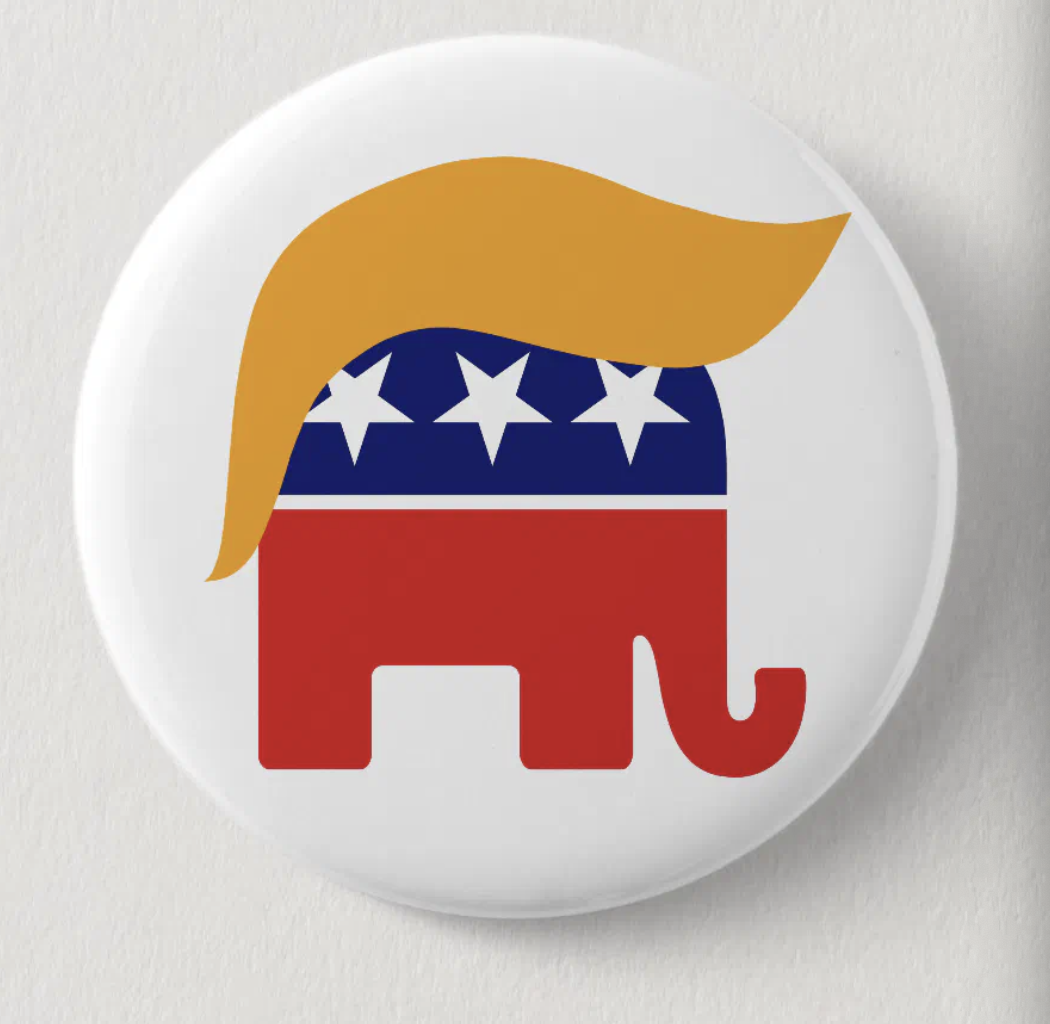

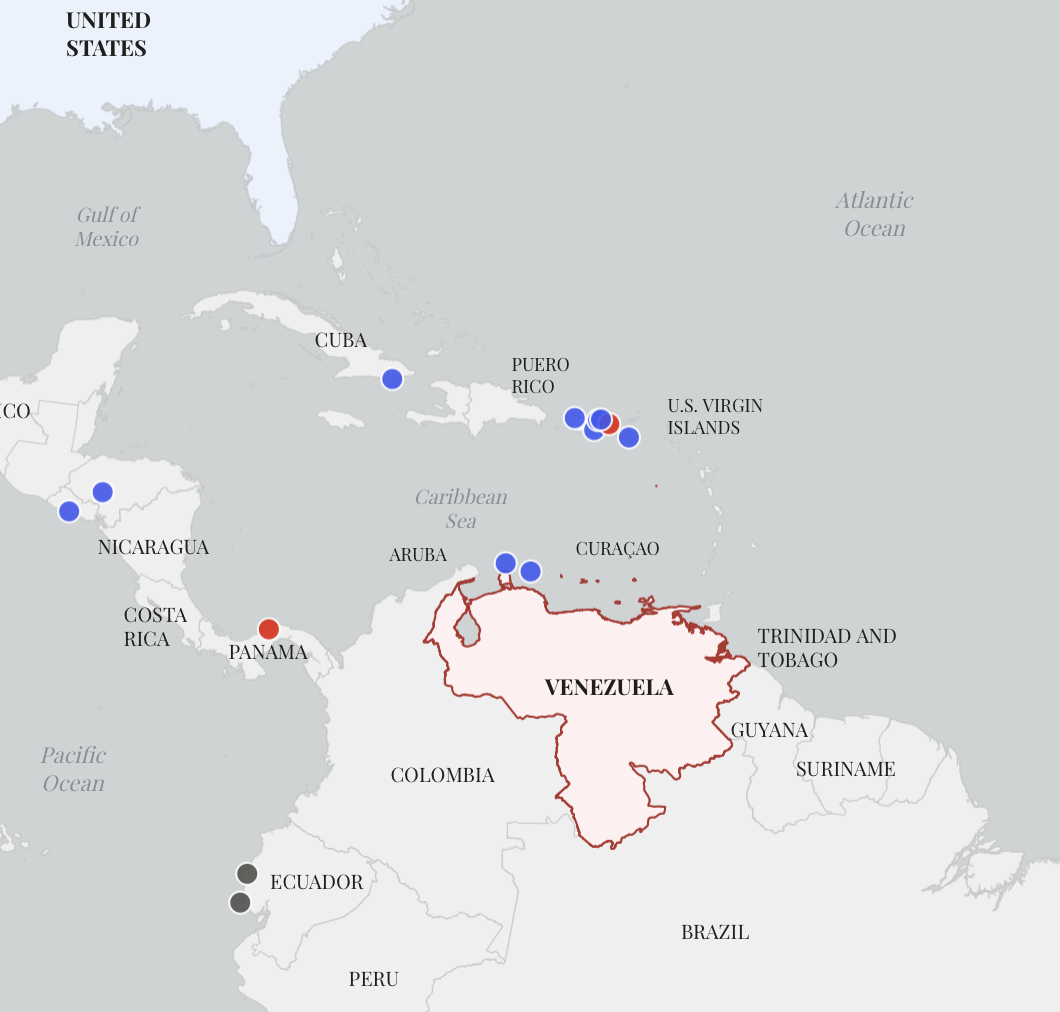


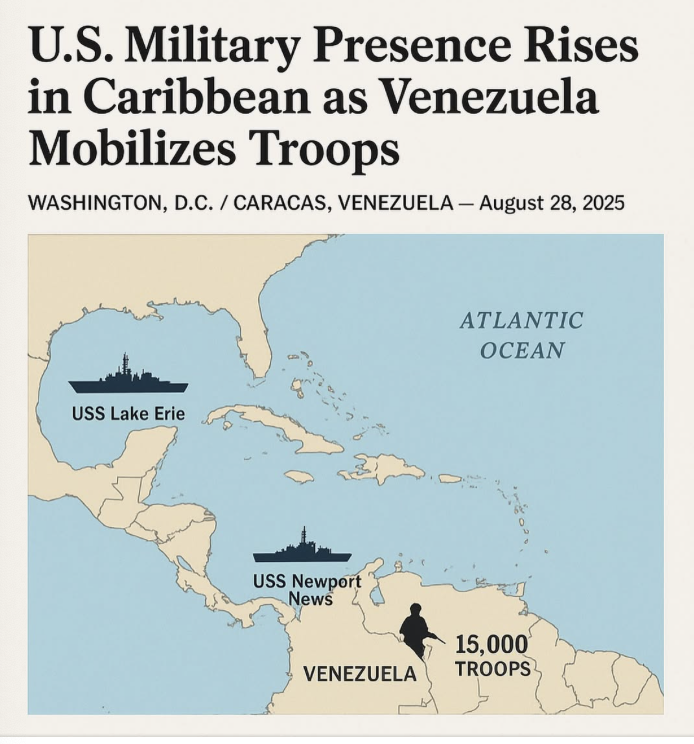

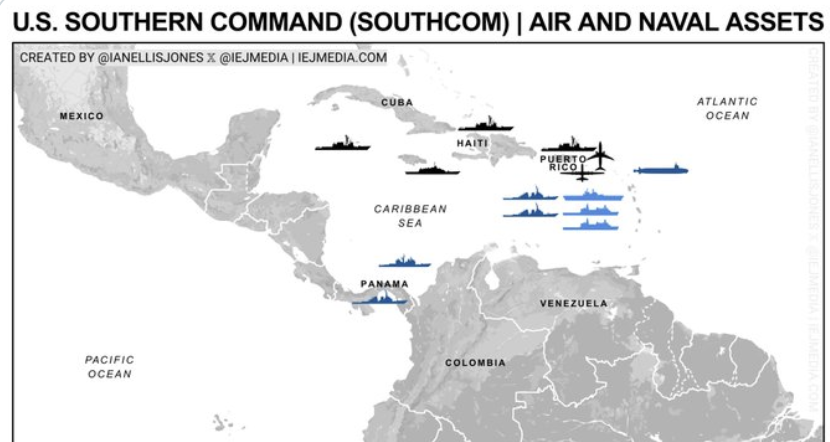


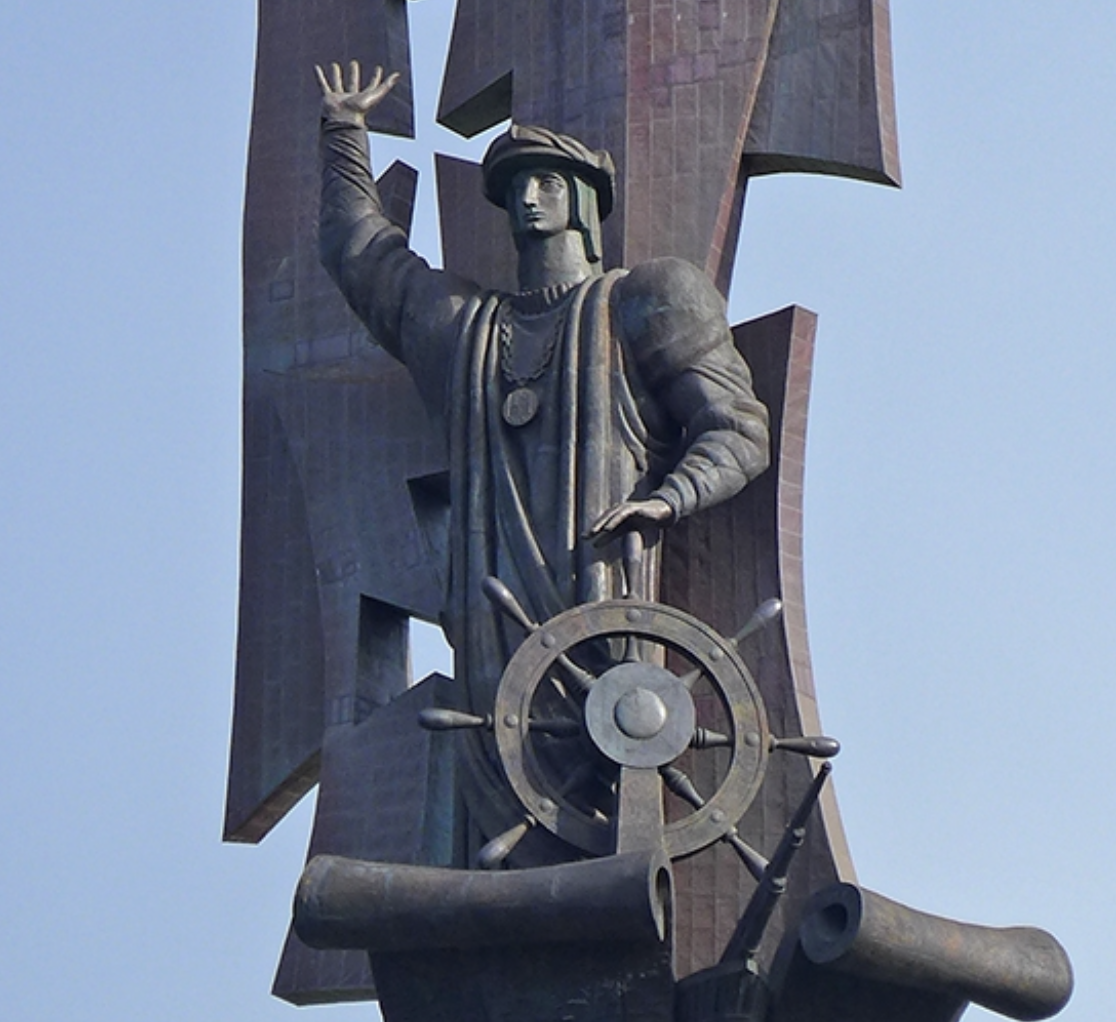


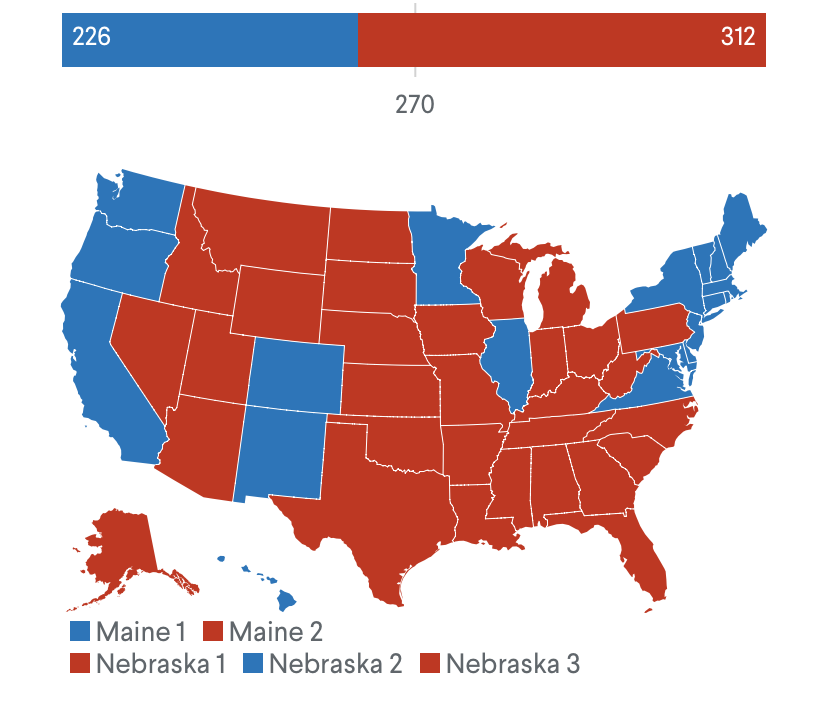

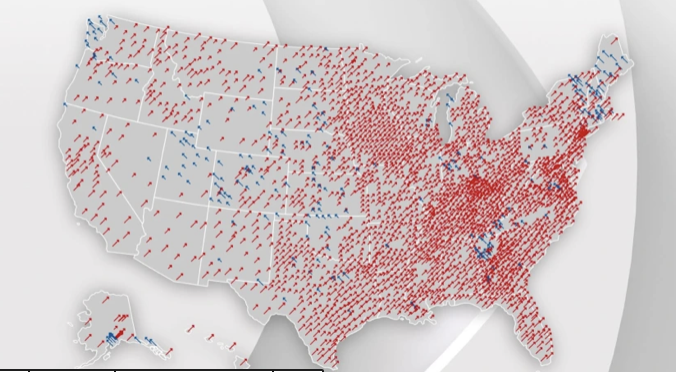


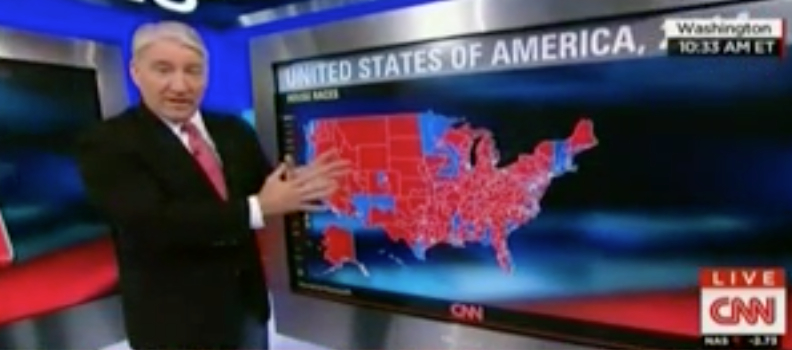


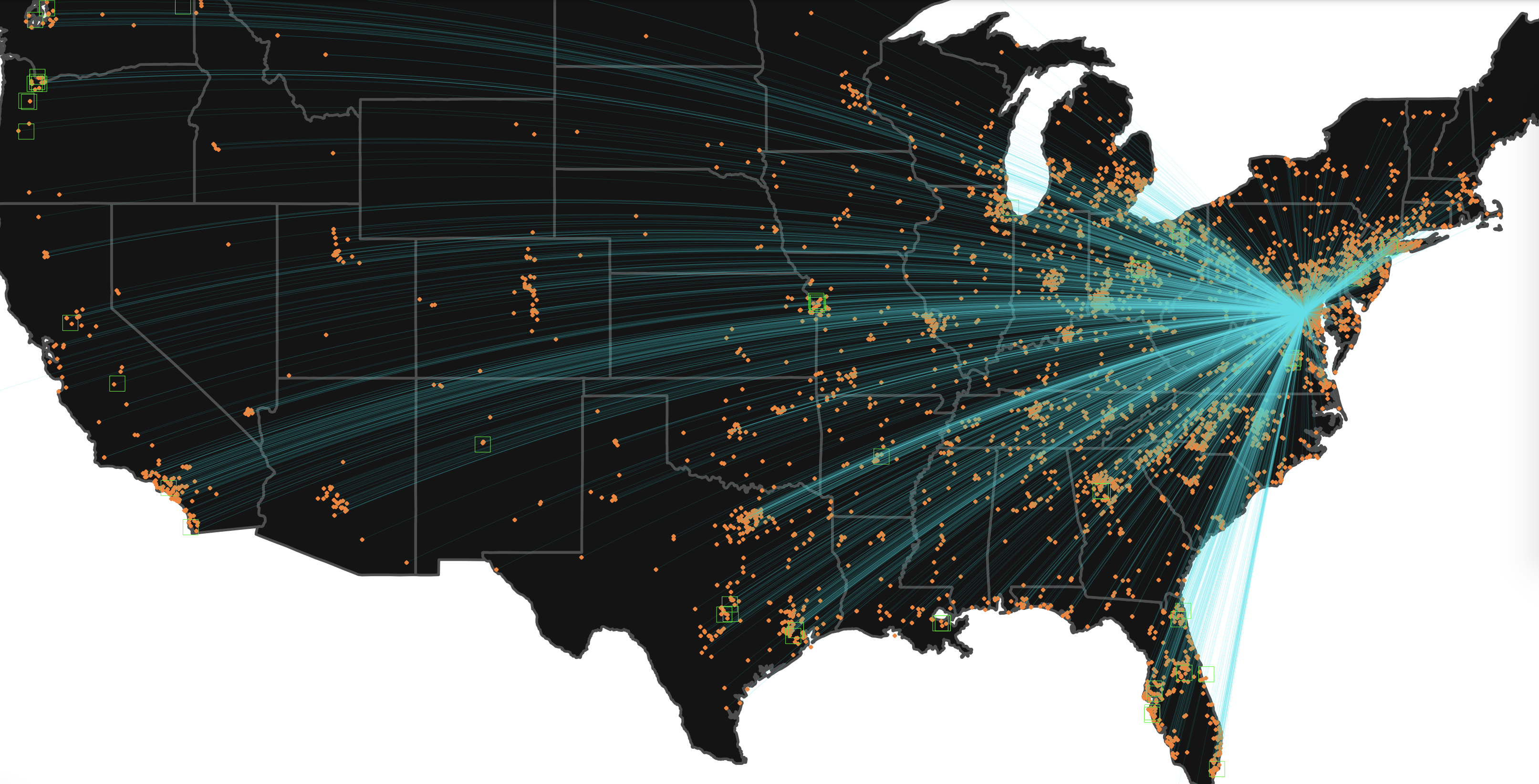


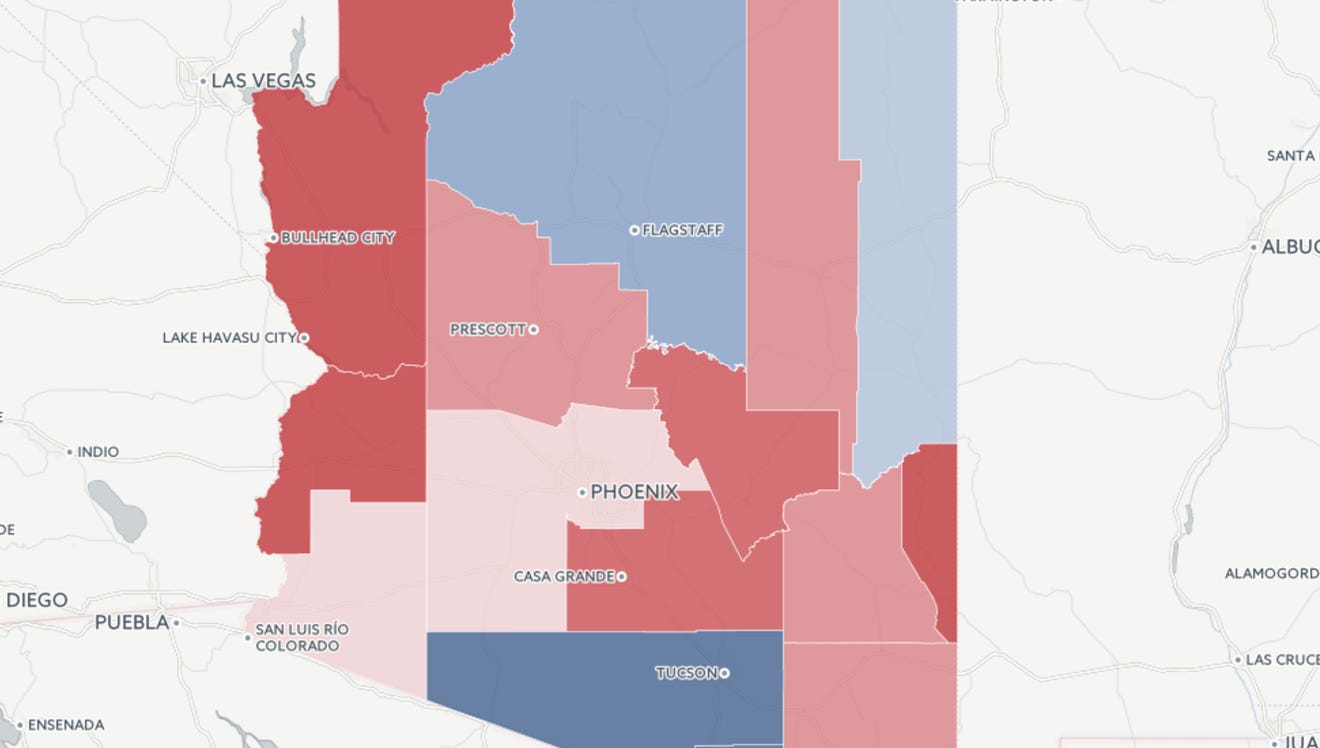

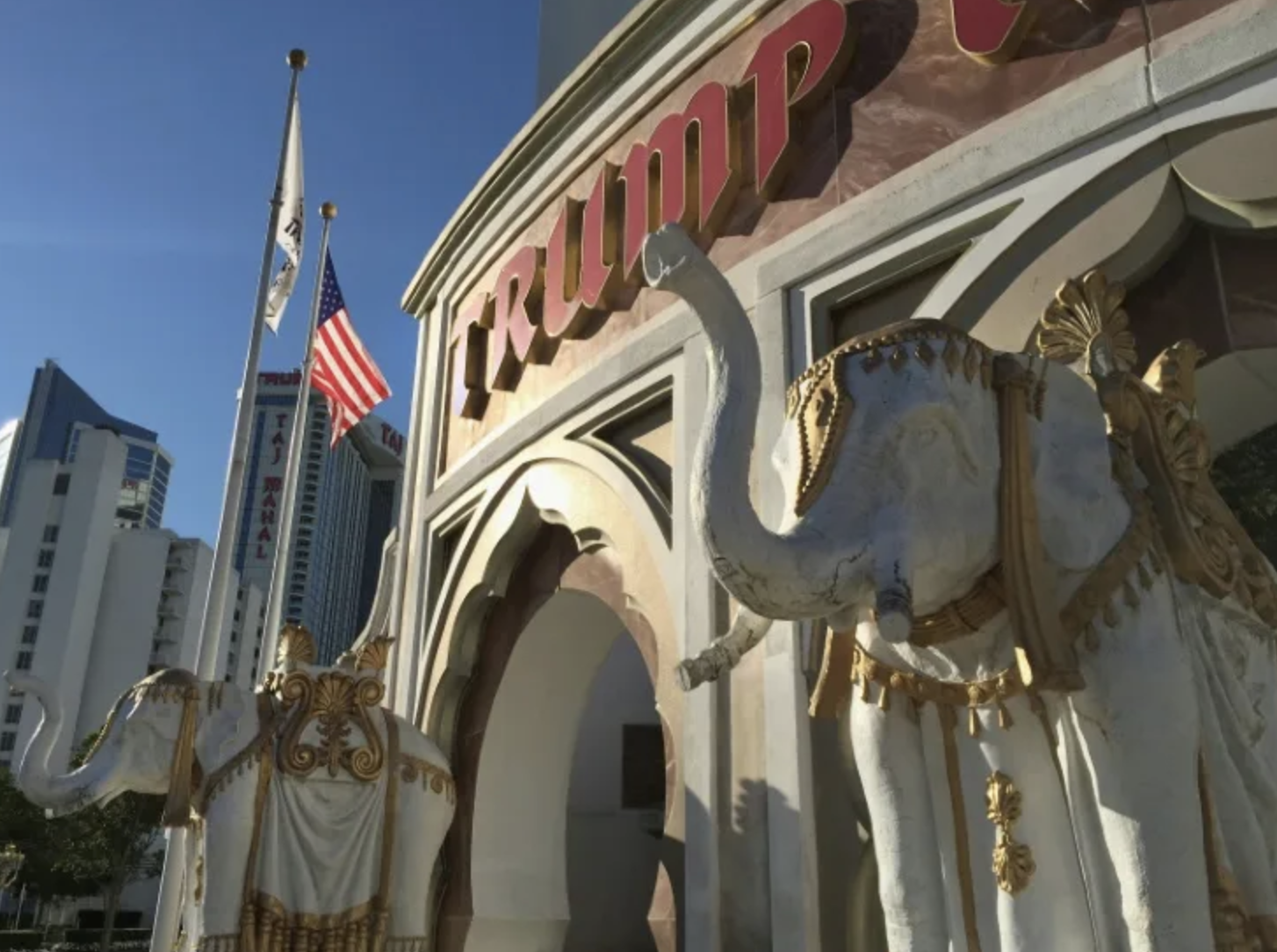


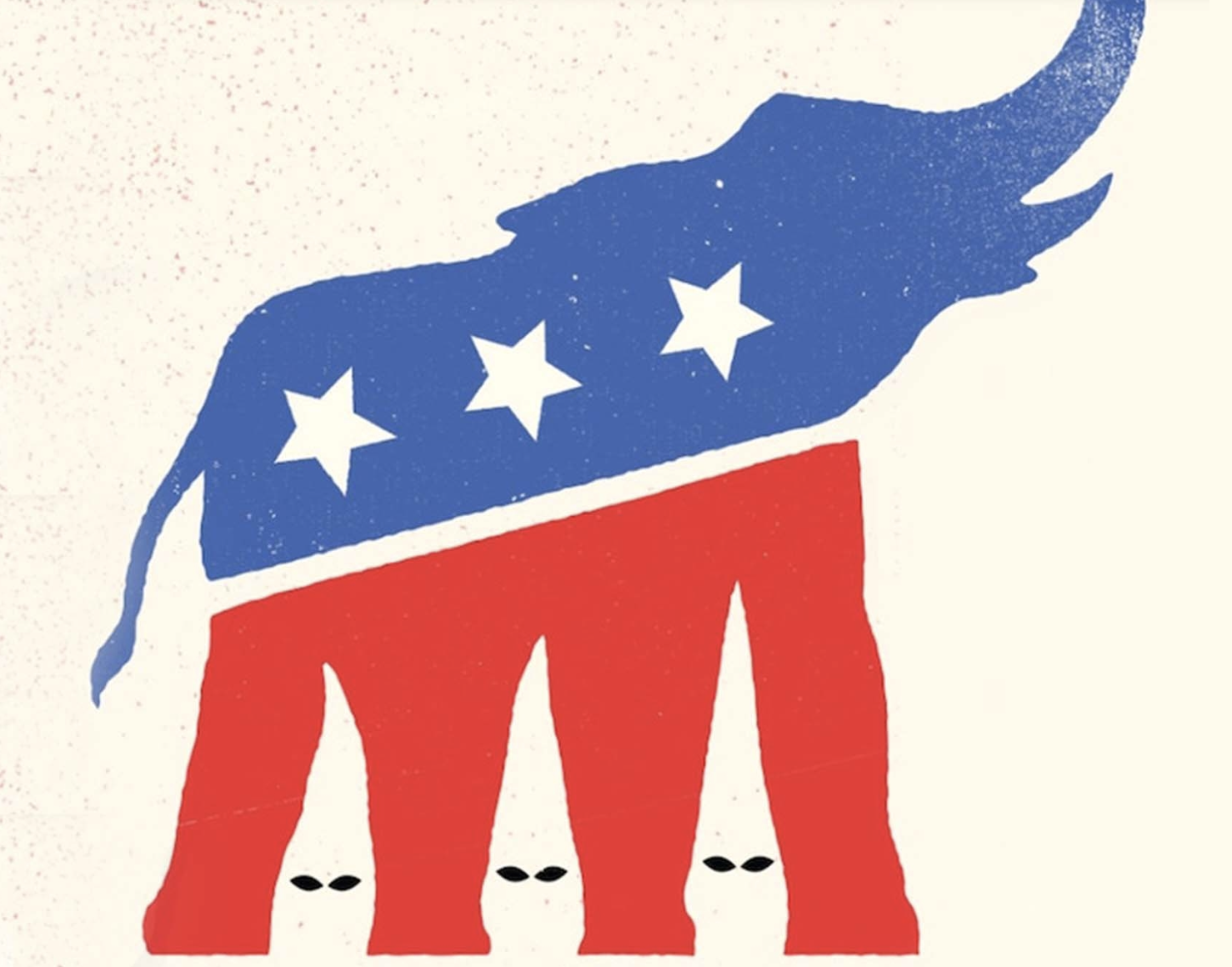
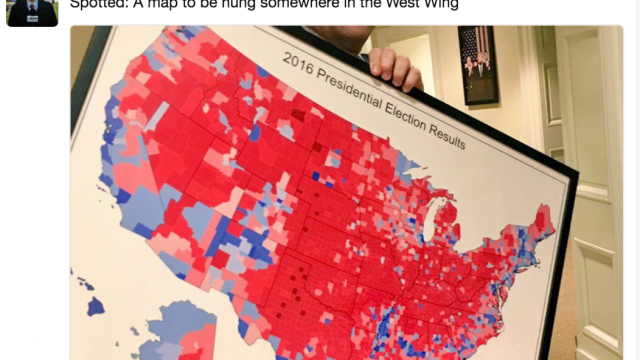
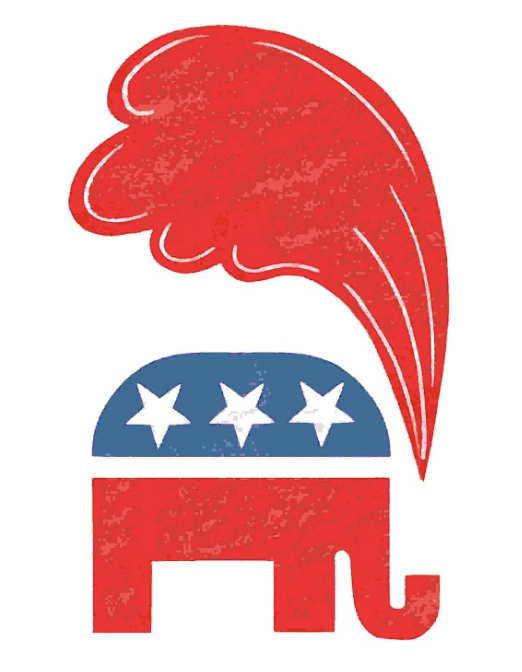


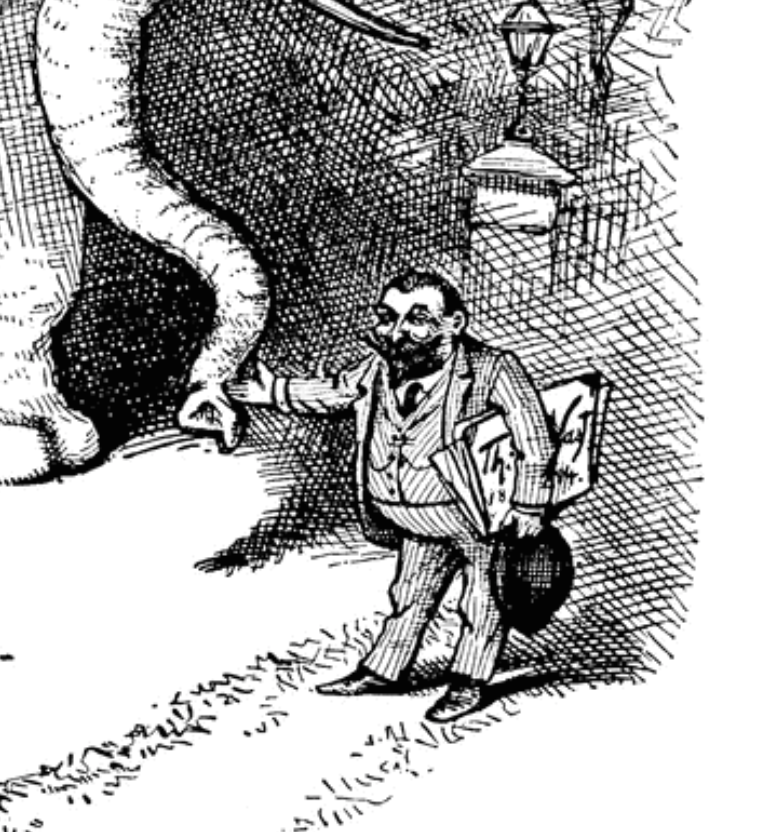


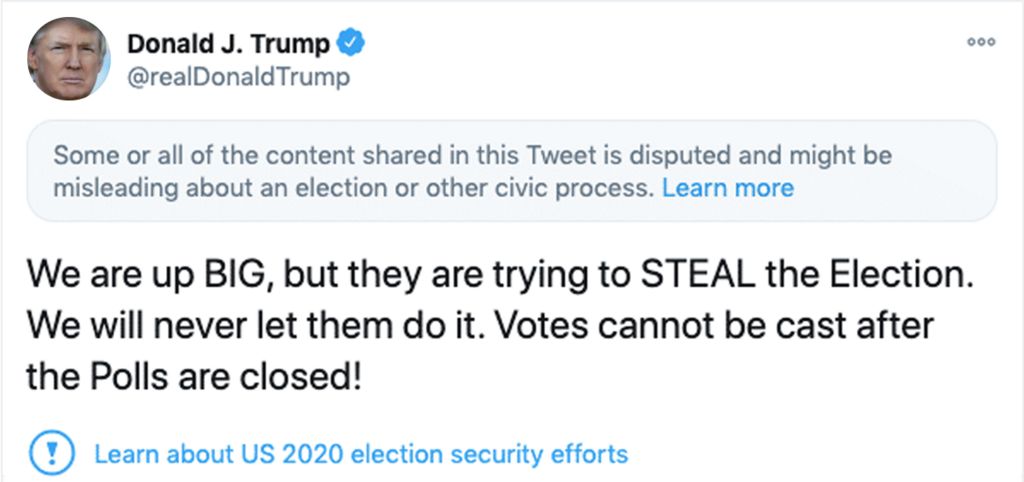
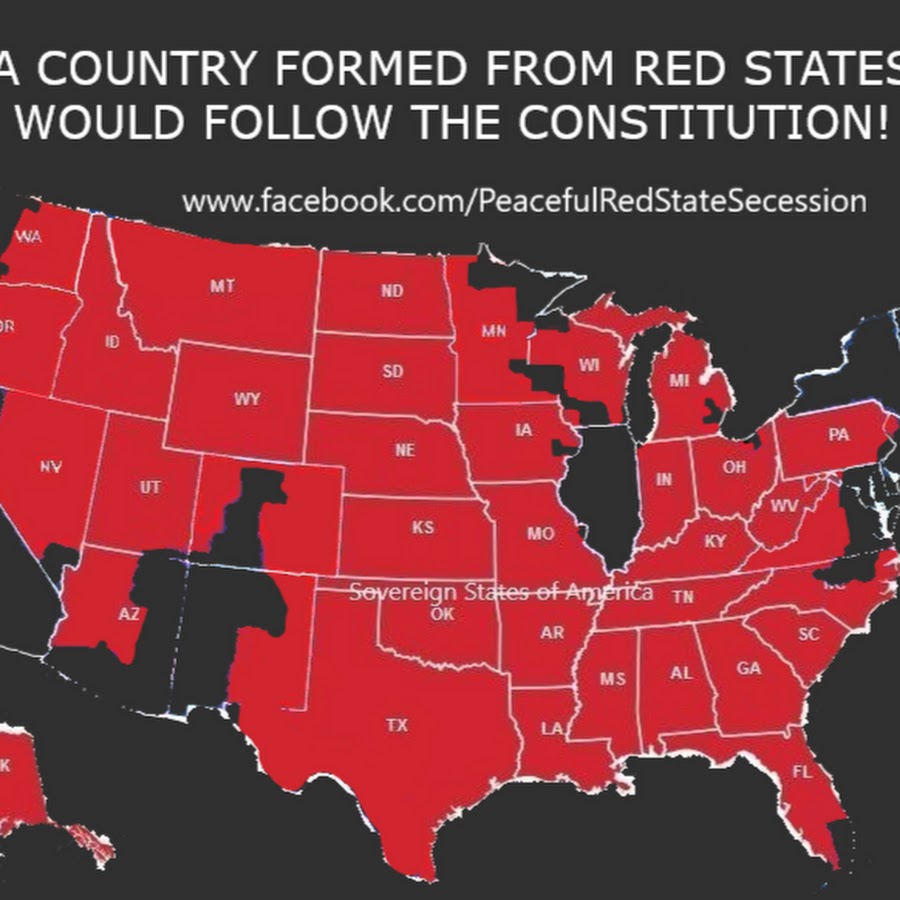

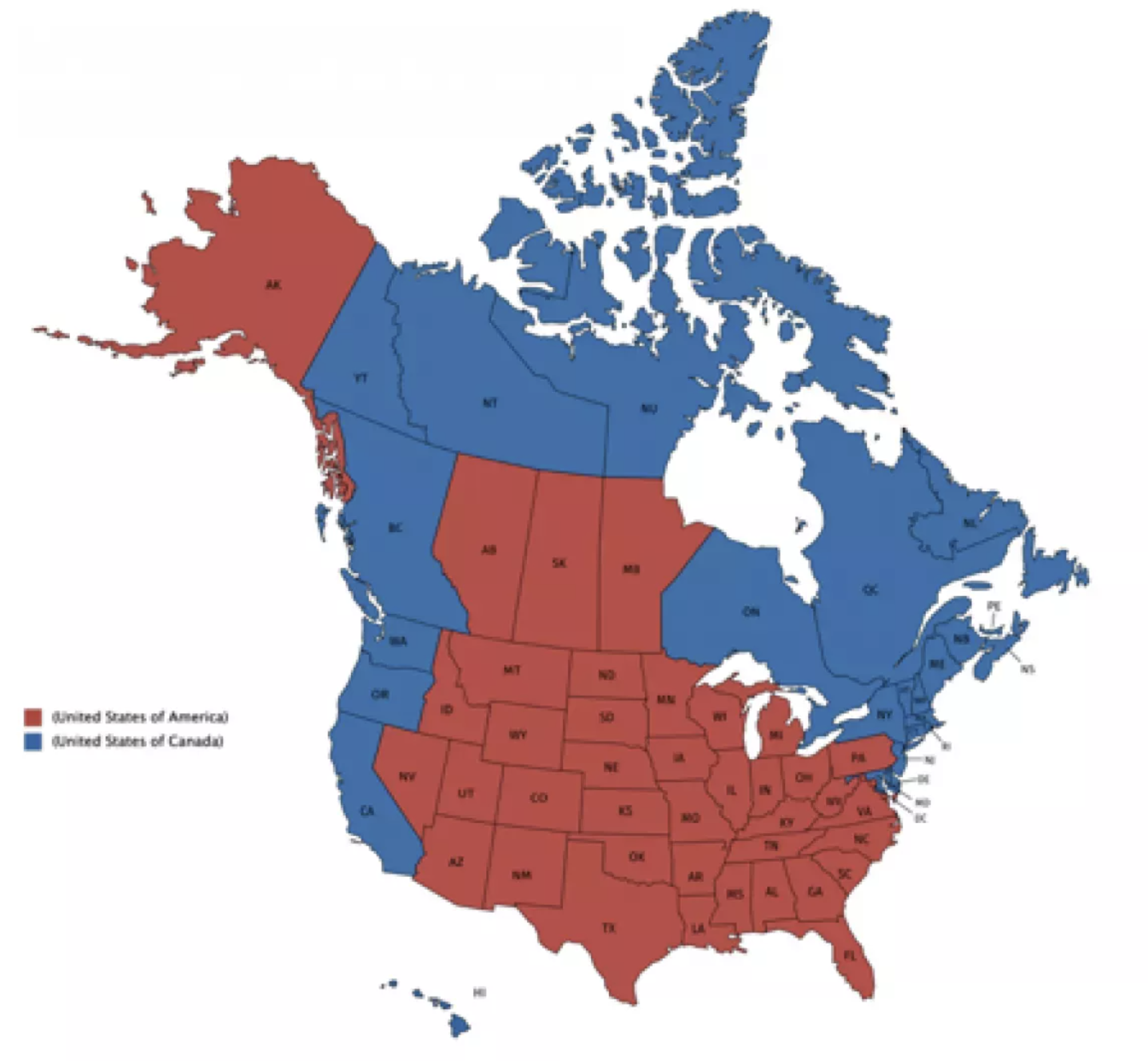
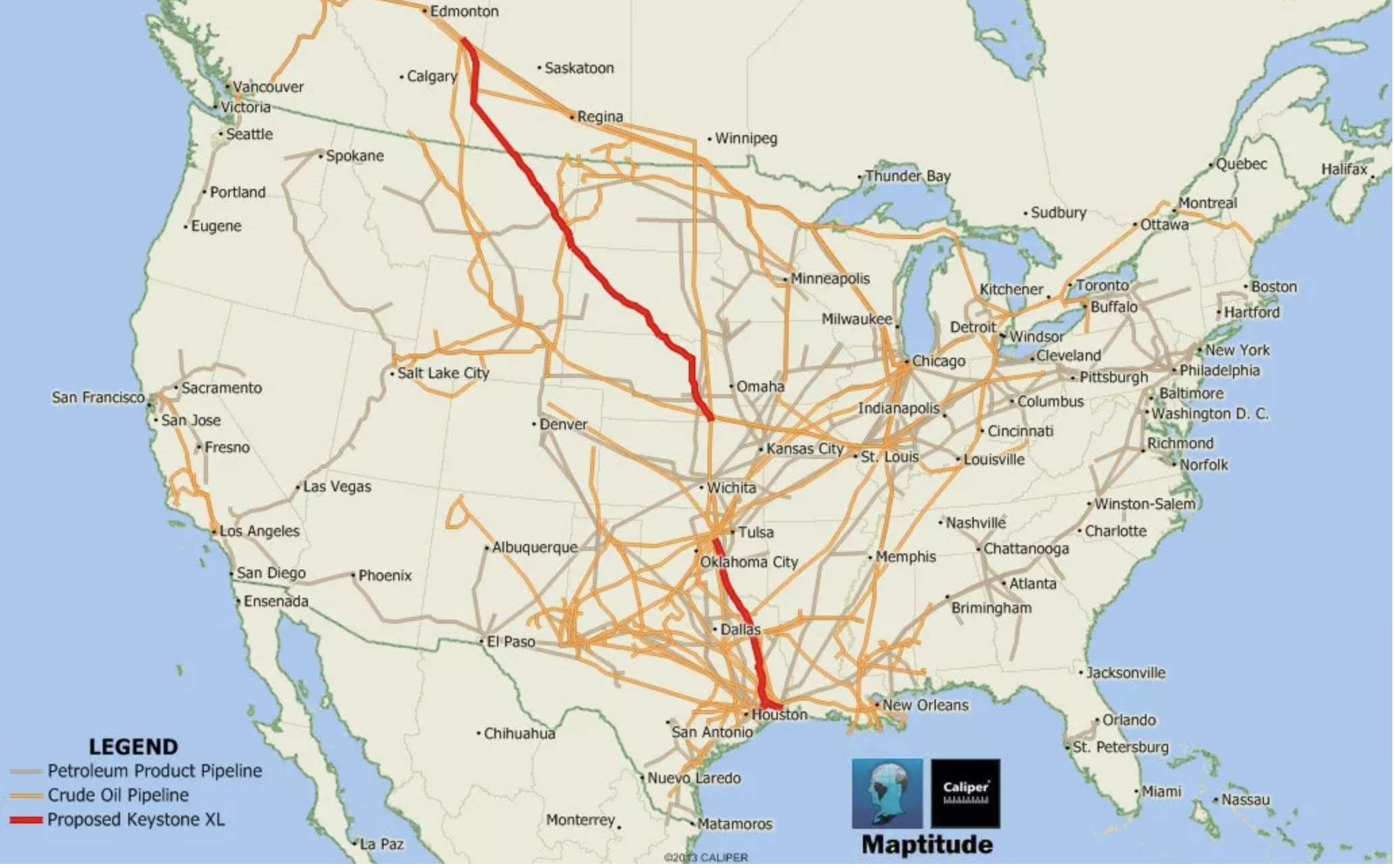


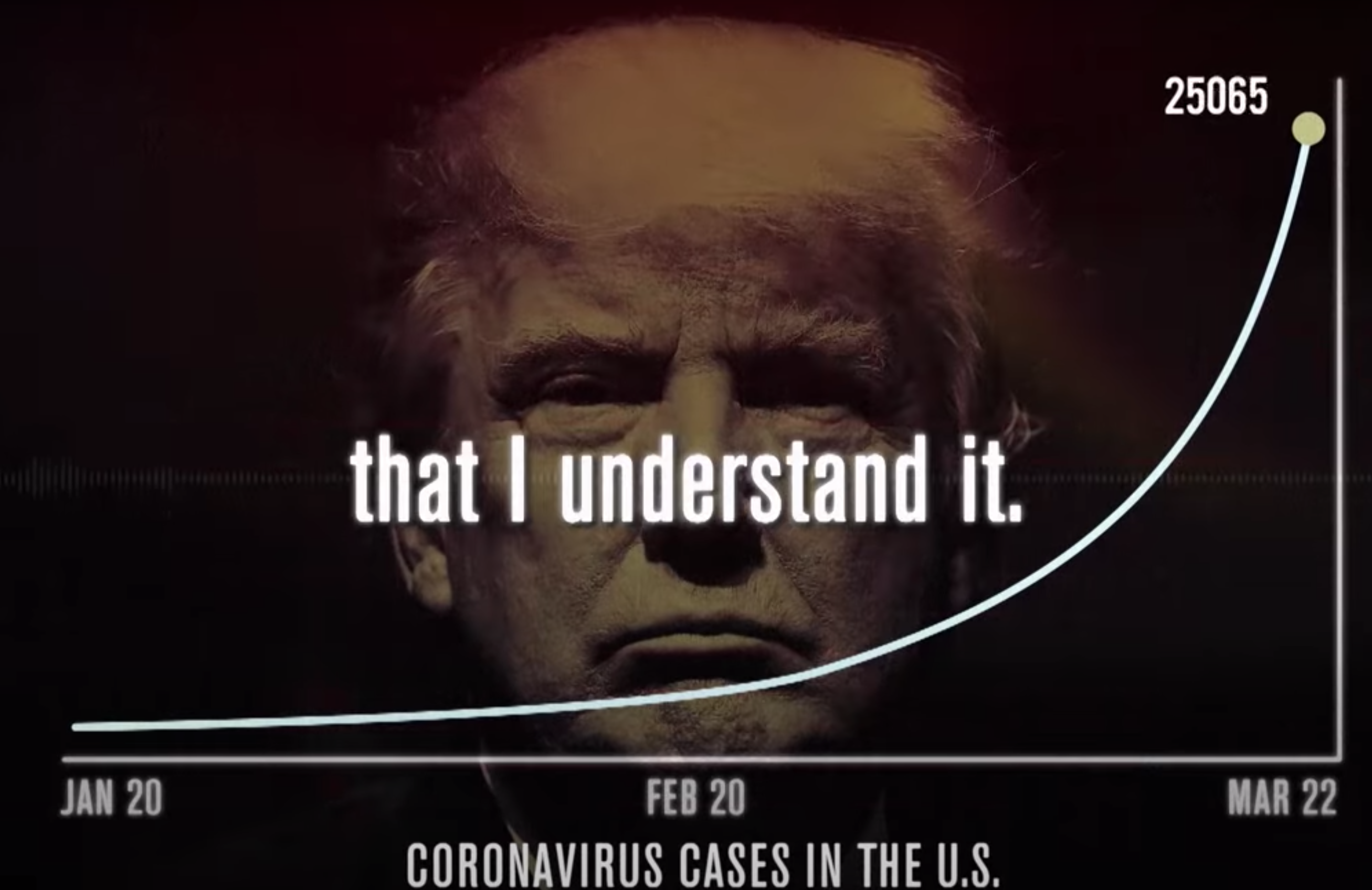
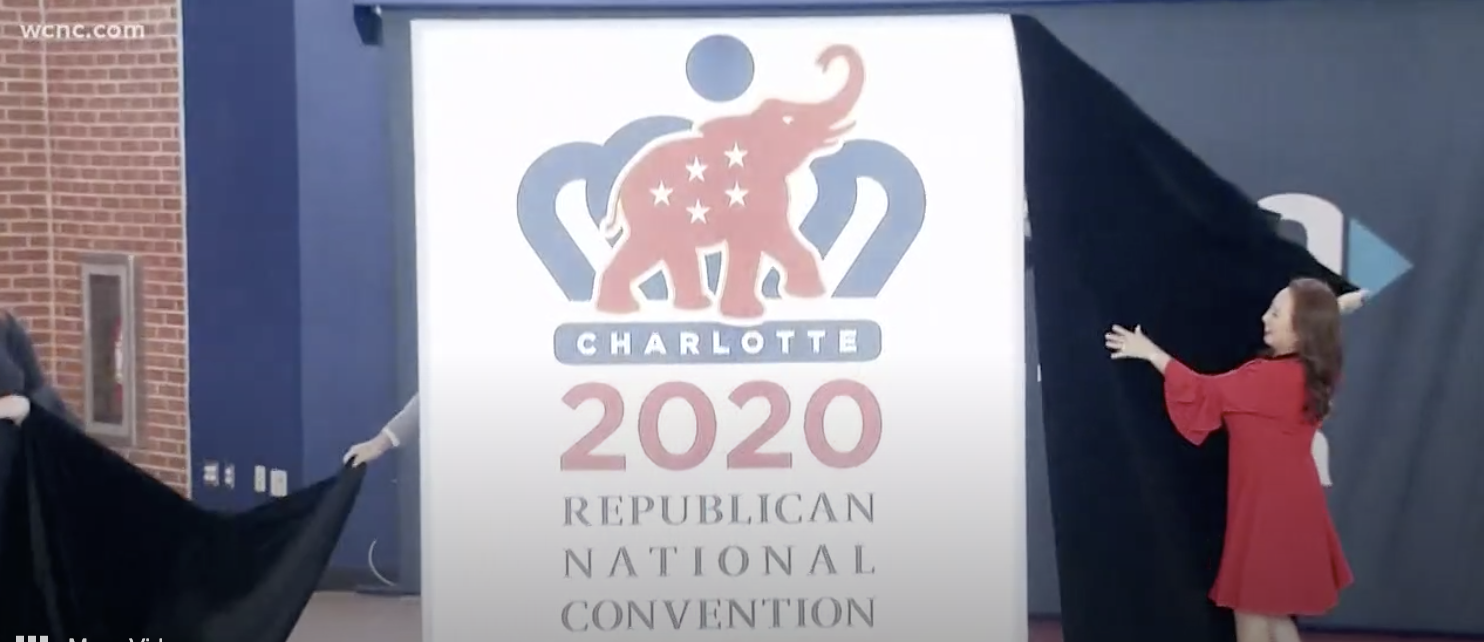


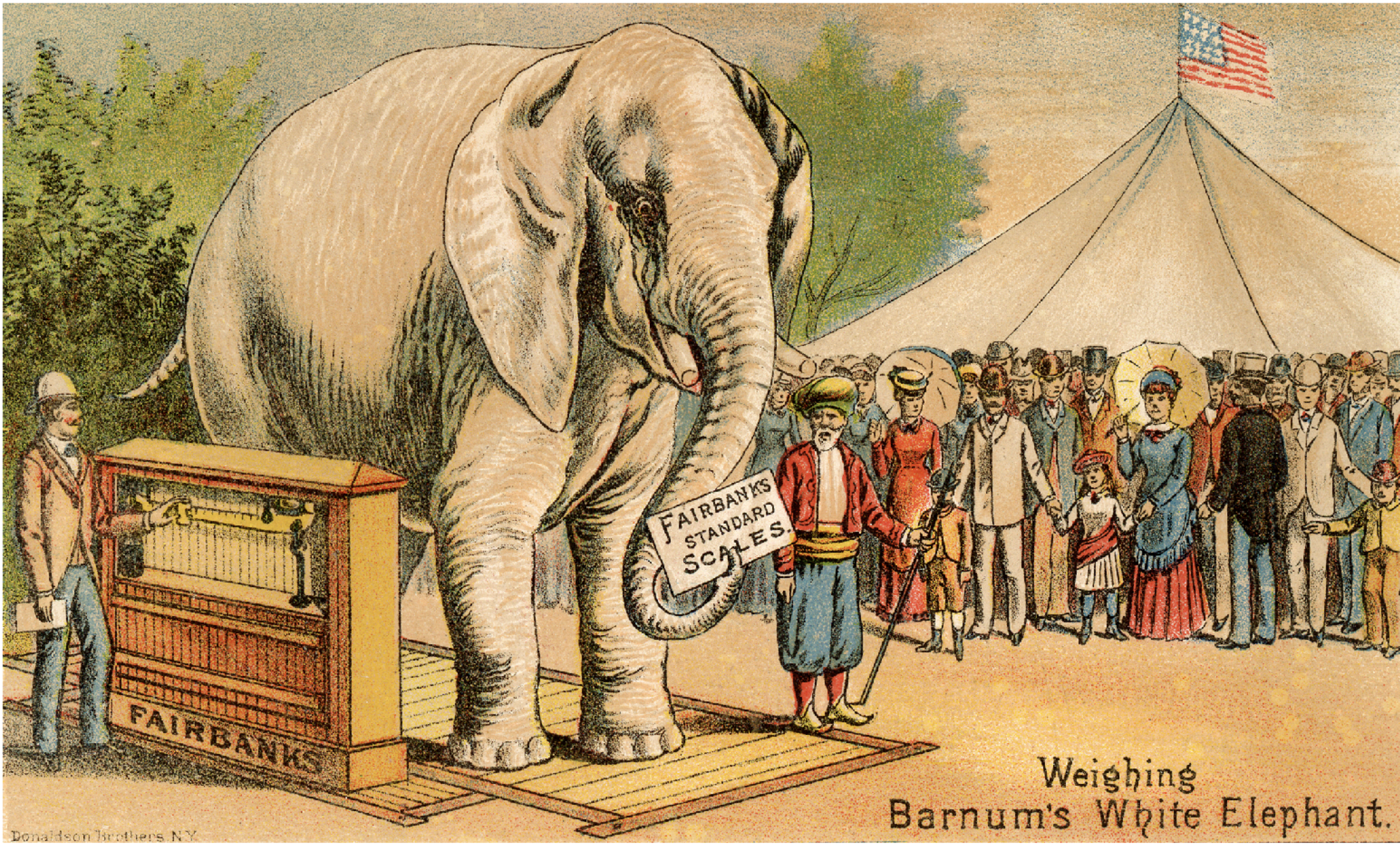


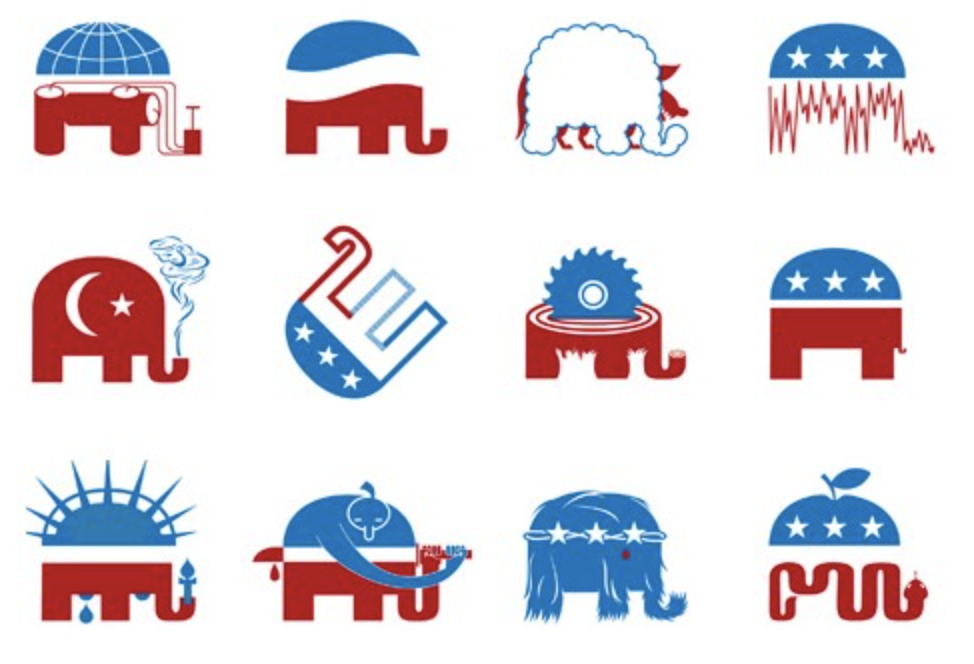


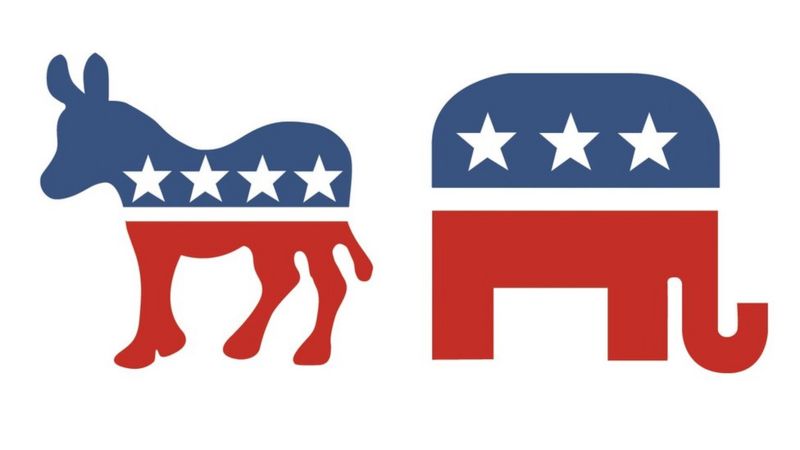
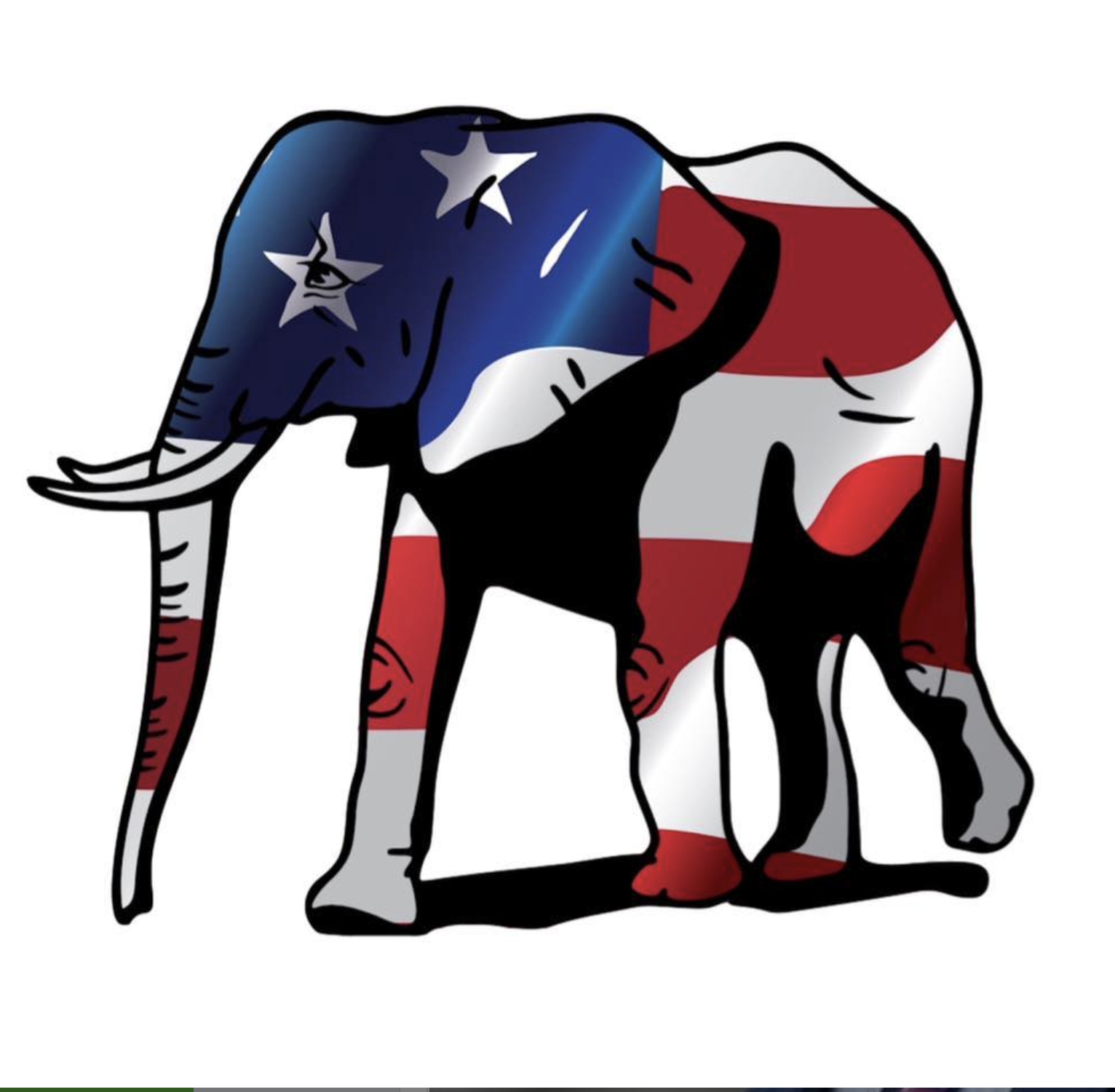







 Musings on Maps
