Re-Mapping Terror

Going to Teherean

It’s hard not to admire the design of this poster that advertises the coming talk of Flint and Hillary Mann Leverett.  It’s not a secret  to readers of this blog that maps make great, cogent arguments:  and even a map without a clear road map or national boundary lines–or noting cities or centers of inhabitation.  This map effectively uses the lay of the land to shift the pragmatics of mapping our relations to a country and region poisoned by political posturing, and how–in a world without clear boundaries–it makes no sense to continue to demonize Teheran as a site of terror or the prime site of nuclear threat.  (It’s not as if non-proliferation treaties are in vogue across the rest of the globe.)  After years of some pretty oppositional if not Manichean rhetoric, shifting the map, emptying it of the targeting of danger is sane and salutary and quite a relief.

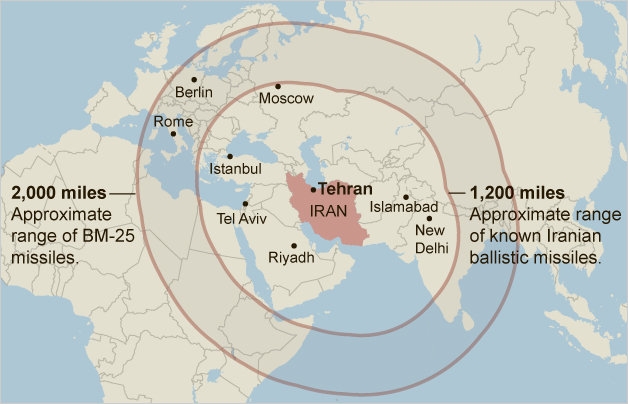
It is a counter-map to militarized map to distort actual geography and, whose cold-war paranoic cartography that imposes the ranges of missiles arrayed as geometric concentric rings on the land, designed to provoke panicked visions and activate one’s amygdala.

Map - Iranian Missile Range(1)

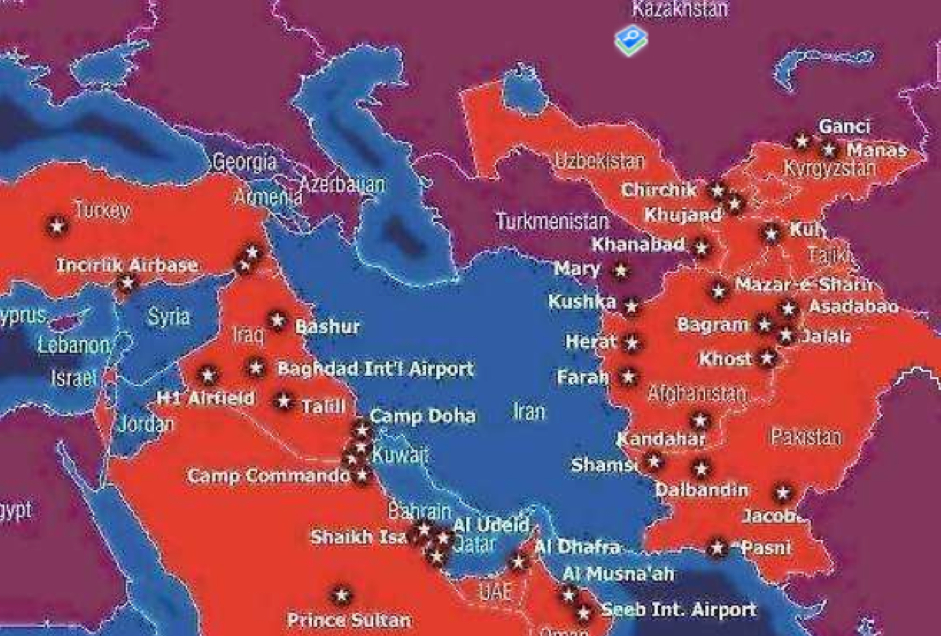
If we retain a memory map of the 44 active bases of the United States Army that surround Iran in eleven surrounding countries, most of which share borders with Iran, we could just as easily offer a different and equally compelling map of fear.

US Army Bases around Iran

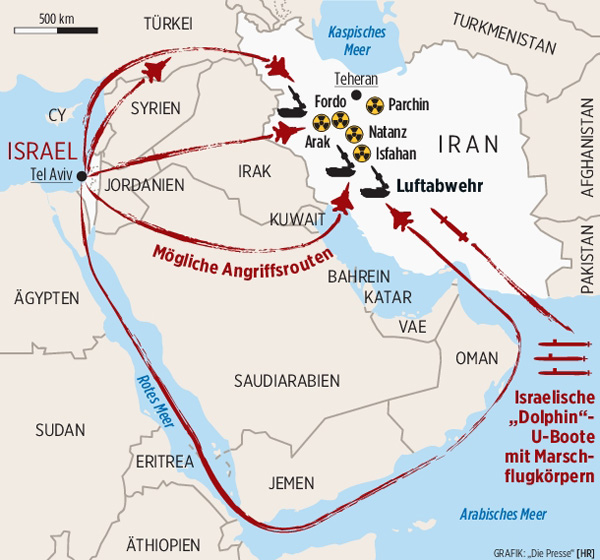
The all too familiar military map below presents an even more haunting spectre of a military scenario all too easy to map. (The German text might underscore the active belligerence of the red missiles streaking from Tel Aviv toward Fordo, Arak and Isfahan, or the red Israeli Dolphin U-Boats floating in the Arabian Sea.)  Those provocatively elevated anti-aircraft guns noted in black in Iran map the seat of militarism and violence, unsurprisingly, that naturalize its military threat in the landscape of the Middle East.

israelischer_angriff_iran_ablaufen_grafik20120223104456

It’s not a surprise we need to create another and radically different map of the region, and do so by a counter-map of aggression.  The swirls of yellow between the Persian Gulf and Gulf of Oman to the Caspian Sea conjure the muddiness of our maps of the region and benefits and needs of remapping its place in our spatial imaginary.

1 Comment

Filed under Iran, Map of Fear, News Maps

The Ancient Glaciers of F. E. Matthes’ Cartographical Sublime

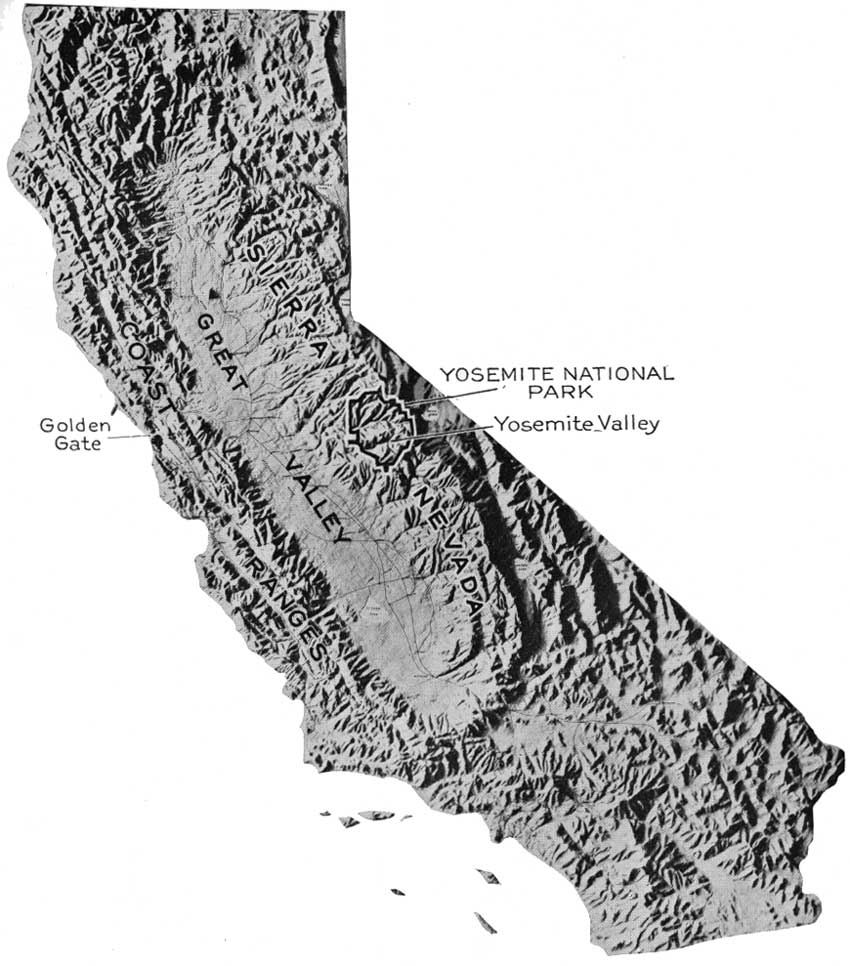
Matthes' Map of the Ancient Glaciers of Yosemite Region


François Emile Matthes’ stunning survey of the ancient glaciers of Yosemite were his first geological investigation.  They built in a stunning manner on questions raised about the origins of the Valley’s unique form in repeated surveys of the Valley’s unique and striking topography, and renewed attention to the role of glaciers, winds, and water in its formation.  From the USGS survey of organized by George Montague Wheeler, whose large-scale topographic map of the region immediately preceded the geodetic survey begun in July and August of 1890, to link the region to the transcontinental surveys by means of astronomical observations, and the stunning progress refining maps of the back country Sierras since the 1880s.  Wheeler’s men in fact mounted a twenty-inch theodolite on a concrete pier atop Mount Conness, dragging it up by horseback and donkeys, to be housed in a small observatory tethered on a rocky peak by sixteen separate twisted wire cables.  The subsequent Sierra Club map of the Yosemite and Hetch Hetchy valleys in the 1890s by U.S. Army officers and finished in 1909, just after Matthes began work, used short seasons to map the Valley as best they could–R. B. Marshall and H.E.L. Fussier surveying both the Yosemite Sheet, Dardanelles, and Mt. Lyell sheets, and two colleagues the Bridgeport Triangle–but faced multiple obstacles to coordinate a completed survey in this hitherto hidden region of the Sierras.

Matthes’ deep appreciation of cartography not only as a survey of the land, but as “an interpretative and synthetic art,” as he often sustained, that depended on “intelligent insight into the nature of land forms” as much as the accuracy of delineation suggests how Matthes realized good mapping was an interpretation based on the successful wielding of the line as a tool of reflecting actively on excavating a deep understanding of a terrain.  Unlike a topographic relief map, Matthes’ map of the valley’s ancient glaciers charted the progress of glaciers that defined the Valley by arrows that suggest their ancient progress and movement, viewable in the above map from the National Park Services, delineating how the movements of the Hoffman, Merced, Tenaya, and Yosemite ice glaciers shaped the valley’s waterfalls and mountains.


plate1

Matthes delineated the region’s complex geomorphology with an eye trained to synthesize observations of how glacial progress sculpted and shaped the land, as much as craft a scientific image that asserted authority in a rhetoric of objectivity.  The historical depth of Matthes’ work sustained his attention to the Valley floor as a geomorphological investigation, distinguishing it from any map ever made since of that part of the Sierras.   Matthes’ map uses new surveying techniques of registering elevations, which he studied at MIT, and had wanted to perfect it by shading.  Matthes’ learned cartography approached surveying from a distinctly academic perspective to pose new questions about the terrain, as much as map its trails, hidden lakes, and shifting topography of a region that was then over half the year under snow, displaying the drama of the landscape in a cartographical form, that recall his own intensive observation of mountainous Alpine topography in Switzerland and nourished in America by studies of his beloved White Mountains and the Grand Canyon.

gerard_francois_matthes_1886

From the age of eight, François and his twin brother George contracted malaria in their canal-side residence in Amsterdam, where their father had directed “Natura Artis Magister,” Amsterdam’s zoological gardens.  They belonged to a merchant family that furnished rubber for the first transatlantic cable.  Just before their tenth birthday, the family doctor prescribed a multi-year stay in the Alps for the twins in the Alps, far from malarial flies, that gave him both a visual interest in alpine topography and a close familiarity with map-use:  when they lived on a mountain overlooking Lake Geneva in 1885-6, in summer months, they joined their father to climb mountains using “cloth-mounted military maps (General Dufour’s series) which showed all triangulation stations” that his father brought from Amsterdam, which lacked any contours but he remembered as “beautifully finished with hatchures, which brought out the relief in great detail” much in the manner that Matthes would later aspire.

His early exposure to maps was somewhat legendary, and perhaps mythologized.  Their father taught him and his twin how to read these maps, leaving them to wander with the maps “without fear of getting lost,” Matthes remembered, and the family regularly returned to the Alps, visiting Chammonix to scale Mont Blanc and its glacial formations for summer expeditions.  Both studied technical drawing from an early age, admiring Frederick Remington’s art and other images of nature, and after studying technical drafting in a German Ober-realschule in Frankfurt am Main, travelled to America with their family where François studied at MIT, as well as being active in the Agassiz Association at Boston’s Museum of Natural History, influenced by a professor to work with the US Coast and Geodetic Survey, and in 1895 he started surveying in Rutland, Vermont, Indian territories, and the Grand Canyon, pioneering a telescopic alidade to sketch form lines and contours lines that effected alpine glaciation.  Matthes’ survey of 500 square miles of the upper Grand Canyon provided a basis for “perfecting the extreme test of the efficiency of that instrument,” and he petitioned to construct the map the unheard of scale of USGS,1:48,000, with 50-foot contour intervals, following his own field map, to reveal its complexity.

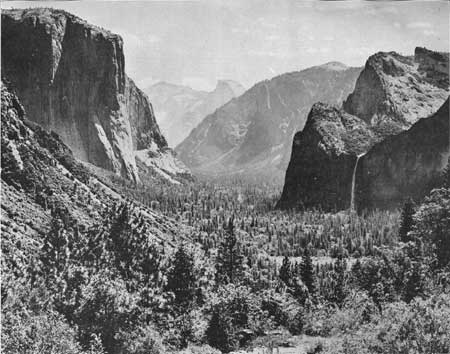
And so he arrived in the Yosemite Valley, where he would devote two seasons of fieldwork. He interrupted the survey begun in 1902 to travel to the Yosemite Valley the following June, impressed with the “overwhelming” view from Inspiration Point in the Valley that he would later photograph: he returned after spending the winter in postgraduate studies in geomorphology at Harvard that informed the dense observations compiled in the map engraved in July 1907.

yosemite valley from Wawona road

The scientific artifice of such unprecedented large-scale maps documented of nature as the Yosemite valley and Grand Canyon were first known, mediating a scientific record by which their nature was apprehended with wonder.

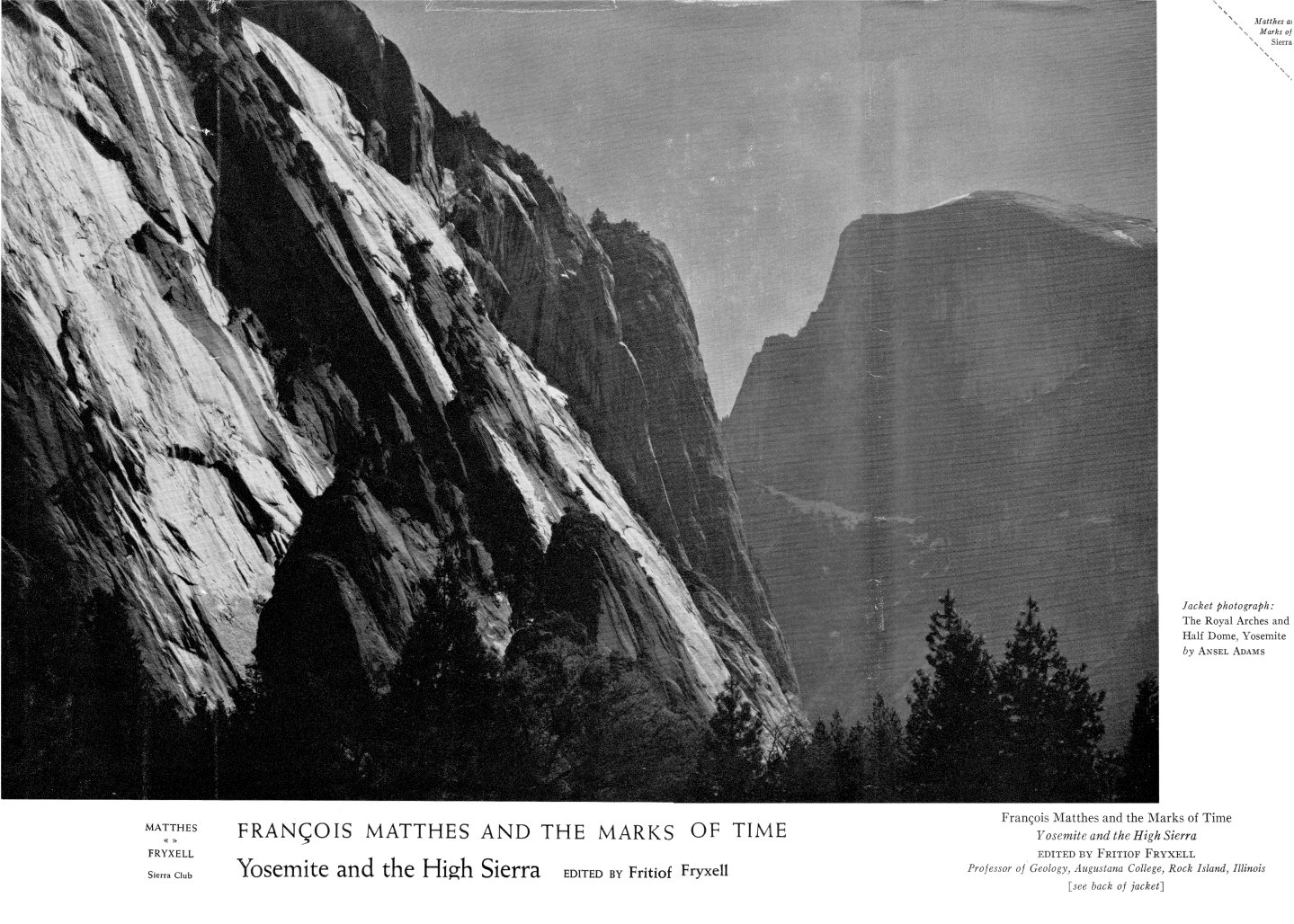
Matthes’ desire to chart the genesis of the Valley’s landforms led him not only to invest detailed attention in the 1906 map of Yosemite value, but to view its compilation as a study of glacial geomorphology, paired with loving black and white photographs.  “Natura Artis Magister”: before Carleton Watkin’s photographs of the Valley, or the later black and white images of Ansel Adams, or John Muir’s inspirational 1912 The Yosemite, Matthes’ scientific atlas of glacial paths constituted a model of the artifice of recording nature from which others would later depart.

dust_jacket-1

There are many narratives of the valley’s mapping.  Matthes’ topographic map constitutes at least two narratives–both loving–one of scientific activities of practices of observation, sightings, and measurement, and, more importantly and compellingly, a deeply historical one about the glacial formation of the Valley itself.  Mathes’ close attention to the Valley that he loved, and to the shape of the contours excavated by glacial drifts over time, is sublimated in the detailed maps he drafted to track glacial courses and showed how “glaciers take advantage, rather, of the fractures already existing in the rock—the joints by which is divided into natural blocks and slabs,” carrying objects stuck to the frozen ice, and “shod with coarse rock waste frozen in their basal layers” had such “strong frictional hold on their beds” that “as they move forward, though at a rate of only an inch or two a day, they  dislodge and drag forth entire blocks and slabs.” The natural sculpturing of the Valley was tracked, as if in stop-motion photography, in the small arrows that punctuated his topographic rendering of the floor.

Matthes, trained in Germany, used his first geographic assignment to draft the first accurate topographic map of the Valley Sheet in hopes to chart a path of glacial progress across the region.  A scholar of glacial geomorphology, Matthes mapped “the Incomparable Valley” at an unprecedented scale of 1:24,000 or an inch to 2,000 feet.  The map appears a relief map of the Valley’s topography, but records the topographic tracks of glacial flows and provided keys to track the courses of glacial movement that refined the Valley’s form, that substantiated his theories of its formation.  His attempt to investigate the origins of the Valley’s formation, disputed since the 1860s, resulted in a painstaking account of  the “process whereby glaciers excavate to best effect in hard rocks is by plucking, or ‘quarrying’ entire blocks and slabs,” and map the process by which, glaciers of up to 3,000 feet exerted pressure of some thirty tons per square foot, “shod with coarse rock waste frozen in their basal layers, glaciers have a strong frictional hold on their beds; and so, as they move forward, though at a rate of only an inch or two a day, they dislodge and drag forth entire blocks and slabs” (USGS Professional Paper 160, “The Geologic History of Yosemite Valley“).  The detailed result of these glacial flows used a unique iconography to reconstruct the movements of the glacial ice mass, and retrospectively map its progress seven miles across the Valley for his readers to reconstruct its effects.
Glacial Flow


Constructing the map made Matthes realize that he had staked out his scope of life-long investigations in the map, indeed, for although it gave him a huge reputation as a topographer, it confirmed his attention to the creation of landforms, rather than their depiction or mapping, and focus on geomorphology in the remainder of his life, finally transferring from the topographic to the Geographic Branch of the USGS seven years after the survey–which was reprinted as late as 1946, although much of its topographic detail was lost by overprinting–had been published.  The 1946 map of the sculpted floor of the Valley added the shading that he had desired in place of a five-color map, with an artifice and splendor never achieved in later topographic maps of the region, but reveals the amazing attention that he dedicated to the valley in  his 1905-6 survey.  Shaded so carefully to appear as if a relief map, with its exquisite caring detail to basin, crater, ridge, and mountain range, the map organized the Valley’s historical formation in historical time, beyond triangulating sightings of mountain peaks.


matthes_yosemite_valley_map

1 Comment

Filed under geodetic survey, geomorphology, John Muir, Mapping Yosemite, relief map, telescopic aledade, topographic map, Yosemite, Yosemite Valley

Mapping the Materials of the Human Body

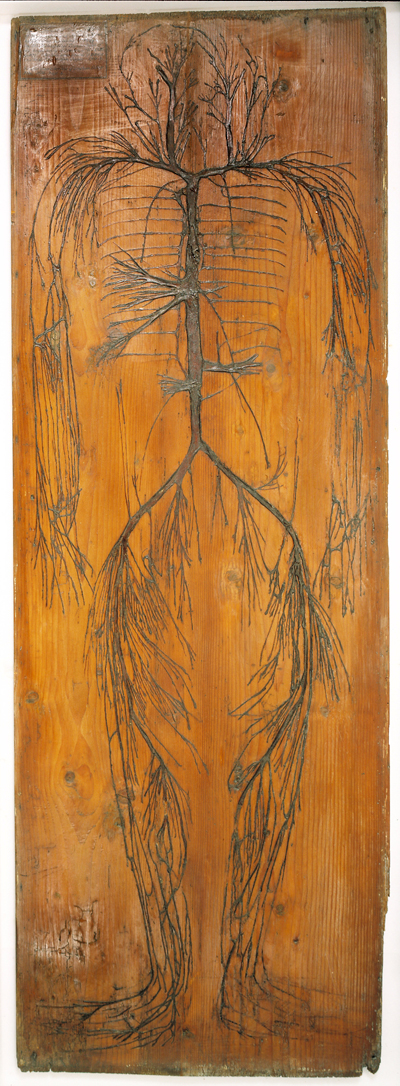
The pine planks displaying the configuration of veins in the human body that John Evelyn bought in Italy from a dissector of anatomy at the annual university dissection in 1646 gained immediate value as a depiction of the body’s inner structure.  Anatomical dissections that divided a corpse into its constituent bones, muscles, veins, arteries, nerves, and organs had been conducted at the medical university for over a century, and a permanent theater had been built at the imposing medical university’s building for some fifty years, if dissections had been long integrated into the academic teaching calendar; Evelyn felt privileged to have bought the planks on which the extracted veins were preserved and affixed onto the wooden planks, apparently covered with varnish, not only as a souvenir but as a teaching aid, bringing them back to England.  When Evelyn returned to England, where he had the tables shipped, he remembered how he had approached Johann Vesling’s surgical assistant, “of whom I purchased those rare Tables of Veines & Nerves & causd him to prepare a third of the Lungs, liver & Nervis . . . with the Gastric vains, which I transported to England” which he believed them “the first of that kind had ben ever seene in our Country, & for ought I know, in the World.”

Evelyn remembered with excitement watching the dissection of a male body, female body, and child by Giovanni Leoni d’Este, the dissector working with Vesling, and how the surgeon was expert at the task of “extracting the Veines and other vessels which containe the Blood, spirits &c. out of human bodys, . . . to distend and apply them on Tables according to their natural proportion and situation.”  Leoni d’Este showed the elegance and virtuosity to display the body that was expected at the annual dissections in Padua’s university, long an attraction and destination for medical students, since the creation of a permanently standing “theater” of anatomy in 1594.  Vesling was the successor to Giulio Casseri and Girolamo Fabrici, surgical doctors and pioneers of the use of visual aids to anatomy that surpassed the multi-panelled woodblock prints Vesalius had designed in six elegant tables for students in 1537 and expanded to a folio-sized book in 1543.  For his part, Fabricius had created cross-species anatomical atlases in colorful paints.  But these boards, if few survive, seem to have been regular teaching aids in the anatomy lessons that attracted students from all Europe, held in a permanent wooden theater in the form of an oculus at whose center lay a marble table, ringed with benches of steep grade.

Lauren Fried aptly wrote recently that the planks “looked like something a cartographer had given some serious time to fantasising about,” in a recent review of the multiple exhibits on the dissection of human anatomy showcased this year at both the  Hunterian Museum and Wellcome Collections in London, as well as Resurrection Men, at the Royal College of Physicians.  The intensity of a detailed cartographical rendering is evident, whatever the format and resolution of your screen:


John-Evelyn-Dissecting-Table-c-The-Hunterian-Museum-at-the-Royal-College-of-Surgeons


The popularity of such traveling exhibits suggest the huge interest in the market for medical museums and the public display of bodily insides of which Evelyn’s “Tables” are something of a seventeenth century precedent. But the model of mapping, an innovative tool of demonstration and display Evelyn’s time, were more the prototype and model for the planks Leoni d’Este helped fabricate than the far more spectacular types of display of body parts in the contemporary exhibits that have been widely marketed in the United States as “Bodies–the Exhibit”” in recent years.

The darkened rooms, wax-museum like uncanniness, and oddly posed mute expressivity of these plastinated corpses of uncertain provenance are something like the spectacle of the anatomy lessons of past years in the traveling exhibit, a new height in our Debordian society of the spectacle.  Given the spectacular origins of the tables that Evelyn procured, it’s not surprising the pine planks he had shipped to London recall the traffic in foreign body parts that make up the exhibit on plastinated bodies that has been traveling the world.  The exhibits in London seem something like a British response to the traveling exhibits on body-parts procured from Chinese prisons–before setting up grounds at the Luxor in Las Vegas, as well as in Atlanta in New York–as well as a way to drum up further tourism from the rather eclectic collections of the Welcome Trust.  Surely these tables, elegant in the extreme, have gained a second life in comparison to the rather gruesome unveiling of flayed corpses in this show, most procured in a dubious manner, that has enjoyed such success for audiences of all ages.

Bodies–the Exhibition is promoted as a pedagogic aid:  “discover how to enlighten, inform, and inspire your students to learn about the human body,” enjoins the website’s special section for educators, arguing in hygienic (rather than biomedical) terms that by understanding “how the body works” student’s can better learn how to keep it healthy.  Multiple ethical questions about the origins of these bodies, and the trafficking in these multiple body parts–preserved by techniques of polymer plastination pioneered by Gunther von Hagens to forestall bodily putrification in organs or tissues by removing all fluids in tissues by a (patented) process of “forced vacuum impregnation.”  (Ethical questions around their origins abound, but the show was so popular that it is now booked permanently next to artifacts from the Titanic, as if both shockers could put the losses of gamblers into perspective in a bracing fashion.  But both are billed as hands-on educational experiences.) Recent entries on the exhibit’s blog however debate the benefits and healthiness of dark and white meat of turkeys, which is more of what might be going through your mind as you leave the rooms, trying to distance the fact that these are actual people’s body parts, moved under stage lights for public consumption after no doubt pretty tragic if not grizzly deaths, as a spectacle for the public good. (It might even be for the kids in a family trip:  “‘This exhibition taught my students more than I could ever teach them with mere words,'” reads an unattributed endorsement displayed prominently on this website, inviting schools the Las Vegas NV, New York, or Atlanta areas to book a class trip.  It would at least provide material for discussion that would not leave their attention spans.)

So what of mapping?  If the “Bodies” exhibit is an immersive spectacle that might nicely punctuate the boring routine of the school day, Freid’s comparison of the Evelyn tables to maps has a nice historical ring:  mapping is a classic form of distantiation, and would have been perceived as such.  If we are impressed with the formal parallels Freid noted, this sort of combination of a printed genre was more recognizable during the rapid increase of printed maps and images over the sixteenth century, when the production of new genres of printed engraved images rapidly grew.  In his 1502 treatise on human anatomy, which lacked illustrations, the Venetian physician Alessandro Benedetti invoked nautical maps produced by sailors as an analogy to describe the value of transmitting knowledge by images.  At the same time as the ancient geographer Claudius Ptolemy’s precepts for conformal map projections were revised by recent findings registered in sailors’ manuscript portolan charts, he noted the huge value of recent atlases of nearby Adriatic islands or the Greek peninsula in marine charts as wonderful addition to geographic maps, distinguishing the practical knowledge of mariners’ maps at the time when images had limited prestige or clear social niche as media of learning.  The terrestrial and island maps were both powerful models for keeping one’s visual distance, and objectifying a collective record of sense-perceptions, as much as offering a comprehensive synthesis of centers of habitation across the continents.

The Evelyn planks are in this sensed informed by such a cartographers’ attention to setting out the contours of the venous system  in all its gory materiality, and a sensibility of reading the detail of the mapped world–as opposed to the landscape–that paralleled the huge interest in maps and local skills of territorial and terrestrial mapping during the same period in Italian university milieu, where maps were esteemed as particularly valuable syntheses of overseas continents and their inhabitants, as well as elegantly stylized constructions.  The disembodied structures of the veins, if truly ghostly, offered a accurate if somewhat distorted map of venous anatomy valuable for one with limited recourse to comparable comprehensive dissections, and an emblem of his learning.


John-Evelyn-Dissecting-Table-c-The-Hunterian-Museum-at-the-Royal-College-of-Surgeons


The panel, one of a set of four, were no doubt prepared as pedagogic devices, shortly before the death of both Vesling and his surgeon in 1649.  The two varnished panels of pines recall Leonardo da Vinci’s explicit comparison between the world or macrocosm and the microcosm of the body, as well as the varnished surface of an early globe.  The veins the surgeon disembodied and affixed to pine boards for Evelyn indeed resemble roads or routes, and recall the rivers that flow over the surface of the earth that Leonardo compared to the rivers that course through the macrocosm of the earth.   Leonardo boasted of plans for a book of anatomy in which:  “I will . . . divide them into limbs as [Ptolemy] divided the whole world into provinces, [and] then I will speak of the function of each part in every direction, putting before your eyes a description of the whole form and substance of man . . . ,” using the map as a likely concrete metaphor for investing the detailed images of body parts he drew with the weight of knowledge claims of a map, seeking to give them a jointly informative and orienting function.   He seemed to scoff at the futility of doctors’ attempts to describe human anatomy in words, and expressed the potential of anatomical images by drawing a likeness between how the works of Ptolemy and Galen relied on graphic artifice to  transmitting personal observations incommensurate with written texts.  The material reproduction of images in print of human anatomy and maps both grew in the early sixteenth century in ways that were linked not only to the prestige or design of engravings, but a new attention to how engraved images embodied their subject–at the very time that the anatomist Andreas Vesalius–who had himself studied surveying–helped design six large engraved tables of the body’s skeleton, veins and arteries, and nervous system.

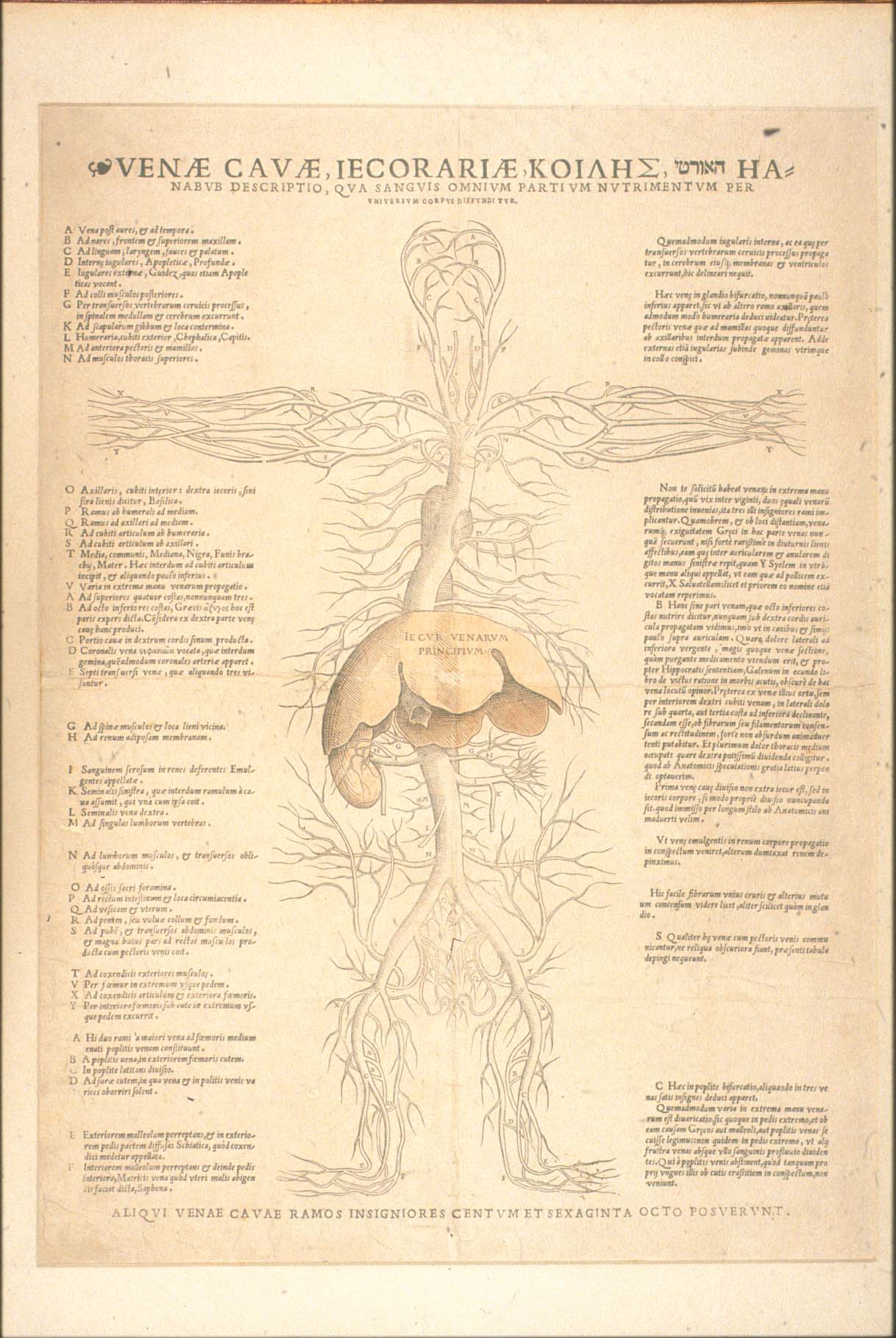
The “Evelyn tables” echoed the anatomical prints, also made for students in Padua for consultation by students who attended public dissections.  Before techniques of wax-injection, these images not only provided an invaluable pedagogic device to “view” the body’s interior; the metaphor of the map also provided a ready model of readability for an image of the body.  The surgeon William Cowper, to whom Evelyn boasted of having obtained the planks, later designed engraved images after their disposition of veins to teach his students, reflecting the huge interest Evelyn had for an image he believed totally foreign to England.  They how it recalls the skill with which the anatomist Andreas Vesalius had crafted detailed a large detailed image the body’s veins engraved by an artist, Stephan von Calcar, in Padua in 1537-8, in an often-reprinted image that foregrounds the centrality of the vena cava–and whose position was  relevant in debates on sites of bleeding to relieve pain in the side of the body, and as a guide to understand the benefits of bleeding at the inner elbow, forearm, or below the knee.  The vena cava leading to the liver assumes a centrality in this image, more reminiscent of a caricature than an objective illustration or a map, but which focusses attention on its course:


Vesalius2


This was, then, a sort of map for orienting students to methods of phlebotomy by providing a material image of the venous blood’s path.  The principles of such a selective guide to internal anatomy would have made such a notion of genre-crossing less surprising to educated readers.  Both images are specifically map-like in their selective attention to detail, as well as their departure from a point of view of individual observation.  Vesalius had himself studied with Gemma Frisius in Basel, the pioneer of land-surveying practices of triangulating by base-lines, which later provided a powerful model to envision local territories that Venetian cartographers would come to employ to chart inland possessions, but which had been increasingly refined from the early sixteenth century by men like Vesalius’ teacher Gemma.  Indeed, if maps objectify but create our concept of territories, the practice of mapping bodily structures constituted the autonomy of the underlying structures of skeletal, venous, and nervous anatomy as networks, before their physiological function were understood or theorized.

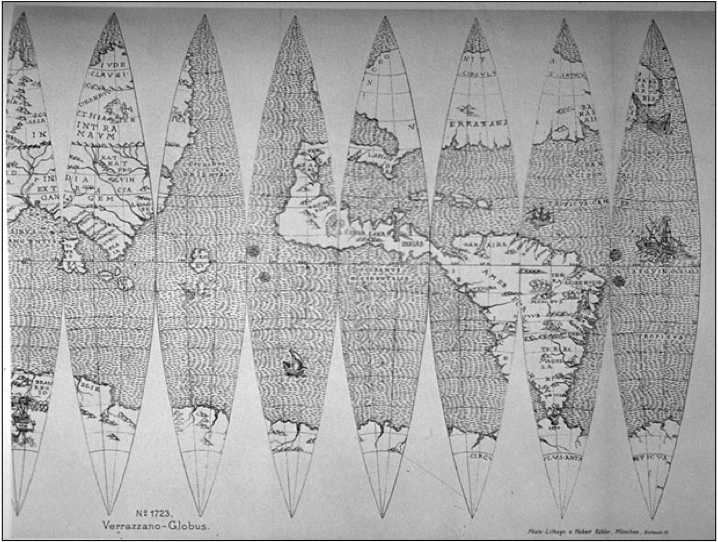
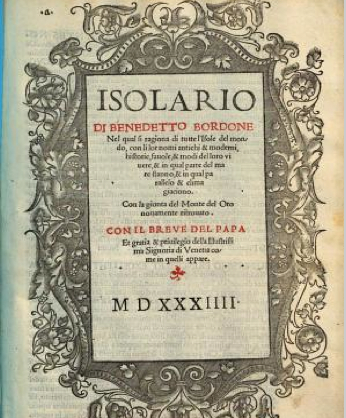
Hence Alessandro Benedetti, who demonstrated human anatomy in Venice at the time of Leonardo, invoked nautical maps as accurate records of the shorelines of coasts and islands of the Adriatic not only mediated spatial knowledge in visual form but embodied it in engravings.  By the 1530s, not only did Benedetto Bordone, an illuminator and engraver in Venice, publish books of islands in Italian, but doctors in Padua such as Girolamo da Verrazzano, the explorer, fashioned elegant globes gilded in copper in Padua– long before the printing and marketing maps in Venice peaked in the 1560s–like the one housed in the Morgan Library.  Their maps embodied knowledge in new ways, and with new pressing urgency, for a wide audience.

5a6f8018e070068ab0a89177b7ecbd9d


The following gores made after the 1530 globe reveal the precision of delineating coastlines of  islands and continents to meet considerable expectations for detailed topical cartographical detail:


Verrazano Gores


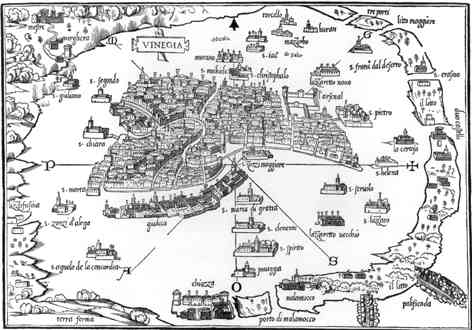
The engraved globe is  remarkable for its detail–apparent even more in its gores–and for the claims of a mimetic visuality that it promised, replicating an expanse that could be readily surveyed in its coastlines and totality by readers, who could imagine a relation to the embodied contours as a whole.  Benedetto Bordone’s book that claimed to map “the islands of the entire world” of 1528 included some 111 maps of individual islands.  A shift in the visibility and embodiment of the world that occurred around 1535 in Italy and Europe, and particularly in Venice, shifting awareness in maps not only a register of information, but as embodying a tactile relation to the world through their synthesis of different registers of spatial information and first-hand observation.  Space is embodied in maps of Crete and Cyprus printed by Giovan Andrea Vavassore in 1538, and earlier views of Constantinople and the Levant, but also by the generation of contemporary cartographer-engravers who specialized in woodcut maps that were contemporaries, after the many nautical charts in that maritime city:  and in 1516, a Venetian engraver first boasted to reconcile the forms of Ptolemaic world maps with charts based on maritime observations, and in 1528 the engraver Benedetto Bordone printed in Venice his popular Isolario, which mapped not only the maritime situation of Venice itself,


Venice_by_Bordone


but included numerous maps of cities and islands in the New World–among them a famous map of Cuzco, in Italian, which provided the first information of New World inhabitants for many book-buyers, including an image of human sacrifice at its central square:


Tenochtitlan


The print business that led to such a market for maps of new curiosities in maps–so unlike the more humanistic maps that accompanied editions of the ancient geographer Claudius Ptolemy’s treatise on world-mapping, or Geography, encouraged the above medical images to be engraved as tools that embodied a similar relation to human anatomy, at the expense [“de sumptibus”] of the artist who is credited with their design, based on drawings of the anatomist.


isolario bordone


Vesalius was also not the only anatomist to image these parts of the body in ways that provided the notion of synthesizing first hand observations of interior anatomy that their viewers would consult, whose engravings form of visual learning and teaching human anatomy. The work of Bartholomeo Eustachio contested Vesalius’ account of venous anatomy and the relations between human and animal anatomy–so central to Vesalius’ critique of Galenic medicine, and of Galen’s own investigations in the six books of his Anatomical Procedures–by offering his own “map” of the pathway of the azygos vein, including both the thoracic duct and the and valvula venae in the heart’s right ventricle:  to reveal the material distribution of the relation of the azygos vein to the heart, he worked with his disciple Pier Matteo Pini and the engraver Giulio de’ Musi, both to better objectify the body’s hidden structure and to create a clearer model to debate its form.  The thirty-seven images they drafted employed a numbered grid to better situate the vein in measured coordinates for their readers:


Bartolomeo_Eustachi_Giulio_deMusi


The vast majority of plates that embodied human anatomy which Eustachi had engraved in his life were not printed, although the anatomist prized them enough to leave them to his pupil, Pier Matteo Pini, but can be viewed among the collections of the U.S. National Library of Medicine’s Historical Anatomies on its website.  It’s not known who viewed them, if anyone, in the period from Eustachi’s death in the 1570s to 1714, when they were printed after being discovered in the Roman hospital of Santo Spirito between the Vatican and Tiber:  but their attention to embodying physical structures and organs of the body for viewers was evident in the odd sequence of detailed observations of renal anatomy that were printed in Venice in 1566, disembodied from a human figure:


Eustachius_adrenals


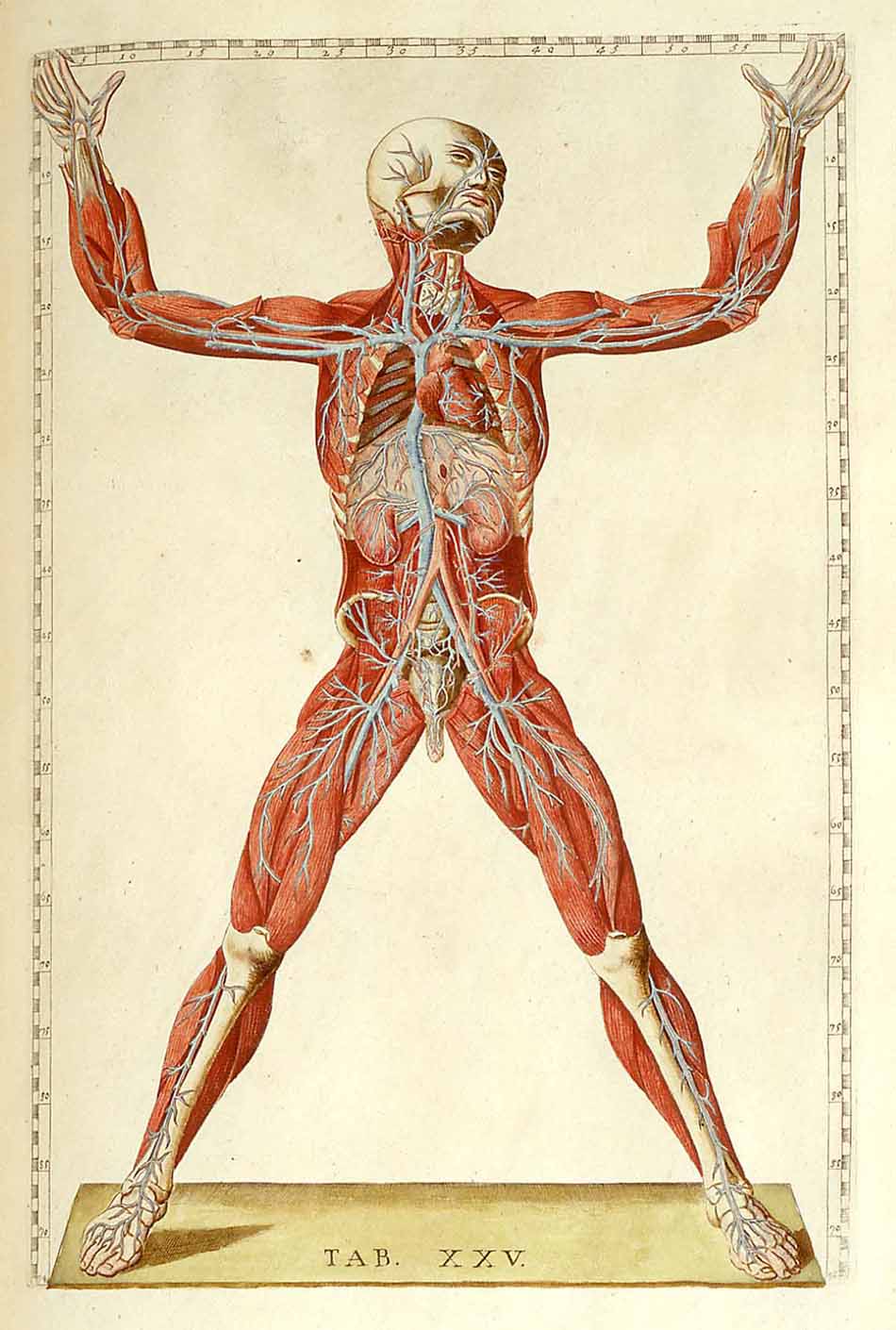
The so-called “Evelyn Tables” are the mid-seventeenth century continuation of this tradition,  and a similar materialization mapping the venous anatomy for educated readers.  There is a sense of the performative in this map who exposes his interior, his crudely drawn face turned upward, as if oddly to shrug off the pressing question of his own subjectivity, that may echo unspoken curiosity about the source of the veins in the “Table,” but one reads both as a map, and a mapping of the body’s interior space.  There is less distance–and that is the point, perhaps–in the plastinated bodies viewable 24-7 in Las Vegas, created from cadavers not made of locals, but bodies who have been flown , perhaps from Chinese prisons, half way round the world.

3 Comments

Filed under cadavers, Evelyn Tables, Gunther von Hagens, Human Anatomy, human dissection, medical maps, surveying, Tenochtitlan, Verrazzano Globe

Maps, Mapping, Globalism: Imaging the Ecumene’s Expanse

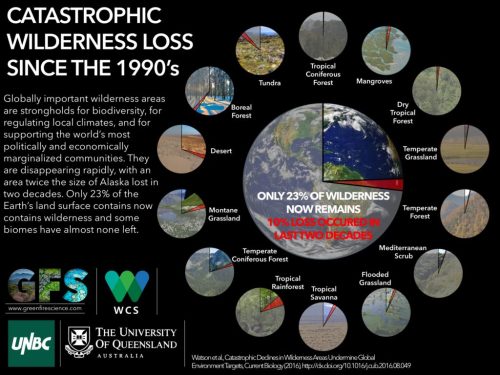
That most ancient of words, Oikumene, expanded from the Greek “oikos” to designate a dwelling or residence, or ecumene denoted less the technical abilities of mapping or tools for describing of the world than the demarcation of inhabited lands in which civilized people or members of the church existed:  but the divulgation and expansion of the notion of mapping abilities have in recent years, since the explosion of information databases and during intense globalization since the 1980s, extended the notion of the ecumene that has grown to extend beyond the map.  It increasingly is invested as a terms with ethical connotations to understand or foreground humanity’s relation to its environment–or retake the human from the map–at a time when virtually no part of the world is not inhabited.  Indeed, the possibility of drawing frontiers between an uninhabited and inhabited world–or of defining limits of the inhabitable world–is so diminished that the concept of bounding areas are not clear; the areas of the earth that are no longer inhabited, its “open spaces” or unsettled areas have catastrophically declined in the past twenty years.

But the continued interest we have in describing how we occupy the world, if not demarcating the boundaries of the world, is at the center of the data flows and databases we process in GIS and that increasingly lie at our finger tips.  The instant generation of maps of the inhabited areas of the world have paralleled the catastrophic decline since the 1990s, when a tenth of existing wildlife declined and the catastrophic losses of wildlife confirmed at the  IUCN World Conservation Congress:  the shocking fact that only 23 percent of wilderness remains doesn’t even include the future effects of global warming, the current crisis in history’s tragedies mankind is currently in the process of having created or on its way to create.  Indeed, the destruction of wilderness–what are deemed intact landscapes that are mostly free of human disturbance–has perhaps most radically changed the nature of the inhabited world.  Since the “Last of the Wild” map was first published in 2002, the loss of almost a tenth of formerly uninhabited lands in the last decade is the most rapid expansion of human settlement of the planet, with some 3.3 million sq km of once-uninhabited lands lost, of which 2.7 million sq km2 are considered globally significant–a loss of some carbon biomass in forests destroys a resource that offsets atmospheric CO2.
wild_infographic2-1-1-1024x768

But let’s return to maps, such realities being to painful for me to contemplate.  Even as the entire earth is now inhabited, much is to be gained in the concept of actively mapping expanse both by preserving an analytic relation to that image of expanse, too often rendered abstractly in computer-generated cartographical media, and encouraging an analytic relation to how the material contents of maps embody space.  Crafting an image of the inhabited world as a bound expanse enjoyed a somewhat neglected historical lineage as a form of knowing the nature of an inhabited world and of orienting viewers or readers to the expanding unknown from the Roman empire:  the considerable intellectual heft of the term inherited from ancients–Eratosthenes, Ptolemy, and Strabo–and its signification of the inhabited and inhabitable earth informed most Renaissance maps and atlases, in which practices of mapping gained new epistemic ends as mediating comprehensive knowledge.

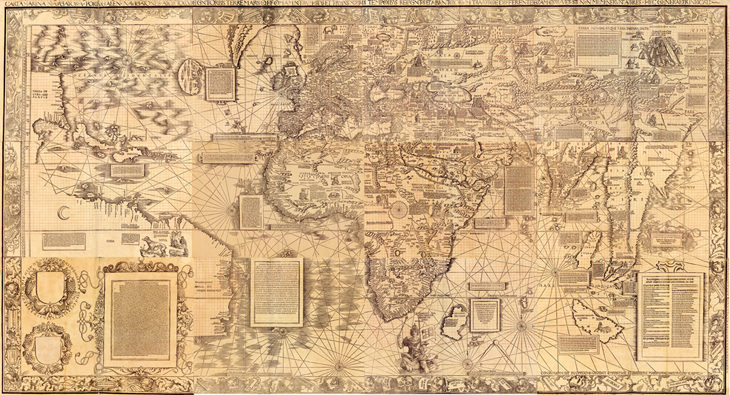
The comprehensive genre of the atlas, an illustrated set of maps promising true global coverage of lands linked by seas, developed in concert with the knowledge that the inhabited world extended beyond earlier imagined confined, and borrowed an expansiveness previously limited to nautical cartography or mapping.  The description of the distance to the edges of the world, if inherited from antiquity, provided a model for understanding the nature of the discoveries for the educated audiences among whom the first maps of the terrestrial ecumene first circulated both in manuscript and print–from the illuminated codices produced in Florence to the massive twelve-sheet wall-map announcing the Columban discoveries that the erudite Martin Waldseemüller compiled in the early sixteenth century Strasbourg from the school at nearby Saint-Dié-des-Vosges.

.

Waldseemuller-Map-631

The visual qualities of mapping, symbolized as an expansive landscape, cast the embrace of the inhabited world with qualities of perceptual transcendence over its variations and divisions.  Ancient geographic treatises included few maps; but mapping the ecumene created a relation of expanse and an observer’s eye in the late fifteenth century by organizing and ordering the globe’s inhabitation.  And although it’s odd to think of the ecumene as an inheritance of ancient geography that’s still employed, the inheritance mapping the inhabited earth resonates with Geographic Information Systems–although fashioning an image of the world’s geography has little of the ethical intent it seems to have enjoyed in both the ancient and early modern worlds.  When we daily orient ourselves to how space is inhabited on our computer screens, iPhones, or androids, we frame an image that bounds a record of how space is inhabited either to orient us to where we are going or how the presence of cars, people, bacilli, or weather defines the inhabit world.  Paradoxically, the growth of GIS technology has increased the manner of ways we can chart the inhabitation and presence of man in space, if it has not increased how we define its continuity, it has also provoked both a Renaissance of mapping and a crisis in the authority of the map as a representational record of the ecumene and its bound, as well as its bounded nature.

While the rest of this post isn’t exactly heavy lifting, but is stuff I’m still processing and finding my way around.

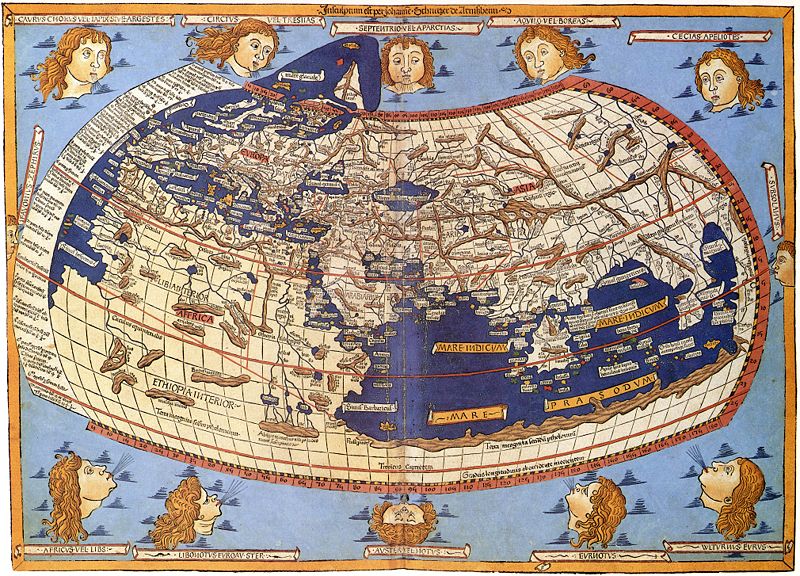
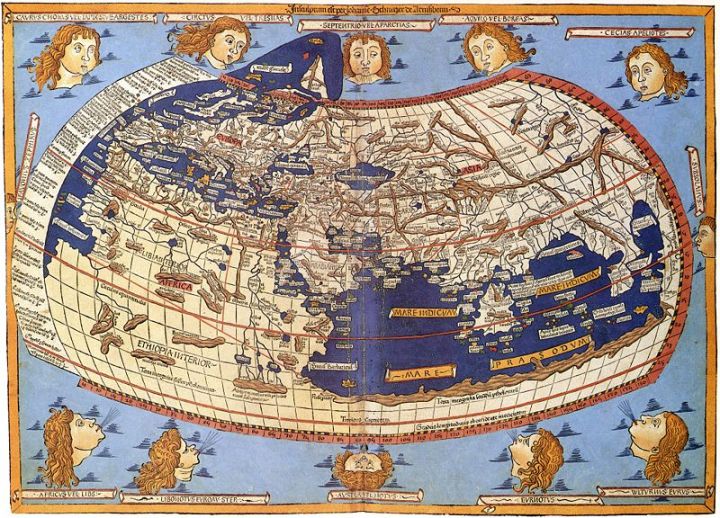
1.  The assemblage of maps in a sequence of global coverage was identified with the cultural distinction Ptolemy gave to the project of world-mapping on a graticule of meridians and parallels, to be sure, both compressing a growing sense of the world’s navigable expanse and indexing its toponymy along climactic zones.  The term ecumene challenged the mental imagination by encompassing local variety in a capacious global category, ordering a global map in a neatly bounded surface beyond the Indian Sea, and up to the limits of known land, in a feat of mental dexterity as much as precise or accurate map of exactly determined scale.  The lower boundary of the map copiously noted “terra incognita,” as later projections–and left it at that, as an expansive white space that exists beyond the sea and lakes of the moons, as this Florentine map includes, adopting the notion of an extensive northern ocean to frame the inhabited world–even while seeing the Indian Ocean as closed.
800px-Claudius_Ptolemy-_The_World

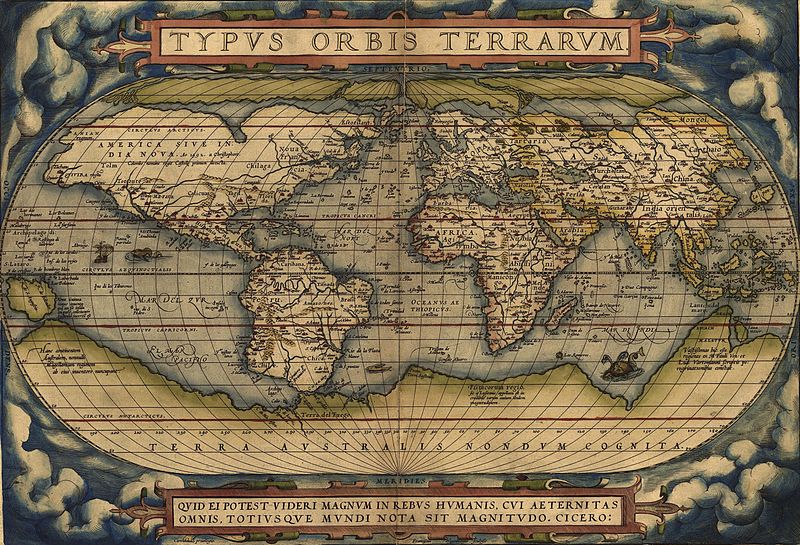
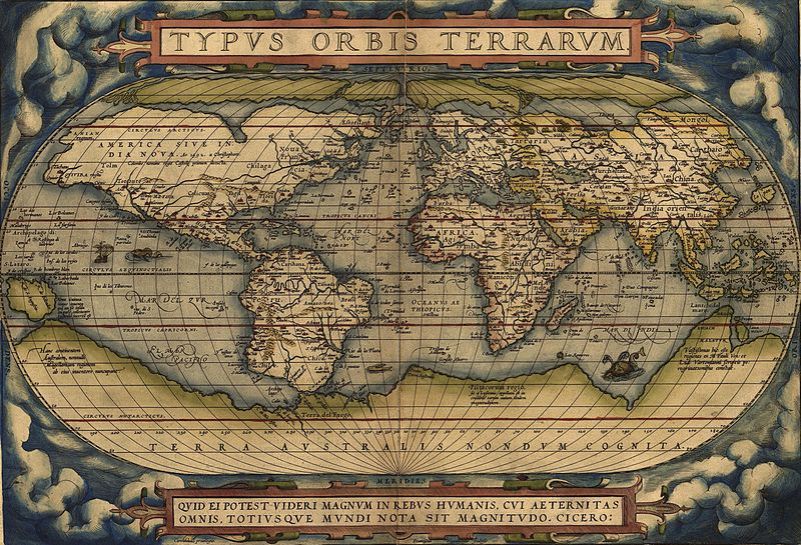
Indeed, even as the world grew more detailed and other continents were registered as inhabited, as in the Ortelian planisphere, the growth of regions of terra incognito expanded, as if to parallel the known regions which were designated by naturalistic landscapes:  the unknown regions of “America dive India Nova” were paralleled with the imagined “Terra Australis,” a later configuration of the mythical Java la Grande.
800px-orteliusworldmap1570

The ancient Greek astronomer and scientist Claudius Ptolemy proposed using terrestrial maps on geometrically derived parallels and meridians as tools of portmanteau-like capacity to comprehend terrestrial spaciousness, by segmenting the world’s inhabited surface by degrees of longitude.  The notion of mapping totality was particularly fertile for early map-readers a decade before 1492.  The tools for mapping the ecumene or inhabited world provided an ambitious compendium of global knowledge, although the geographic knowledge of the world was limited–and still was by the time of this world map, illuminated circa 1482:  although restricting the ecumene for modern eyes, its capacious reach extends south to inner Ethiopia and northward, beyond its broken frame, to embrace northernmost isles beyond Thule.  Rings of uninhabited islands indeed constituted, John Gillis has recently noted, part of the mental furniture on the boundaries of the inhabited world for most fifteenth-century men, and suggested a comforting bounding of the world that seemed to illustrate its protection and insulation, lying as it did between uninhabitable climactic zones and far-off seas.

The ethno-centered ancient term maintained a sense of charting the world’s recognizable inhabitants or those that mattered to the readers of maps:  so, in the Augustan age, Roman’s referred to the expanse of the empire as the ecumene, beyond which lived barbarians.  But even as it retained a bounded sense for Renaissance readers, the totalizing image of an ecumene provided a way to imagine the population of an expanse greater than lay in the ken of most–and to understand coherence within a world that included information from far-off lands, even if many fifteenth-century people lacked clear geographic categories of spatial division of an inhabited terrestrial expanse.  The edges of the earth were oddly clear for a period that suggests limited familiarity with expanse: the monsters and extraordinary riches found there were included in fifteenth-century editions of Ptolemy’s handbook of world geography, including elephants in the island of Taprobane, beyond India, trees that had leaves year-round, multitudes of serpents, and cannibals.  These were the signs of the world beyond what humans knew, and included the bare-footed gymnosophists of India.

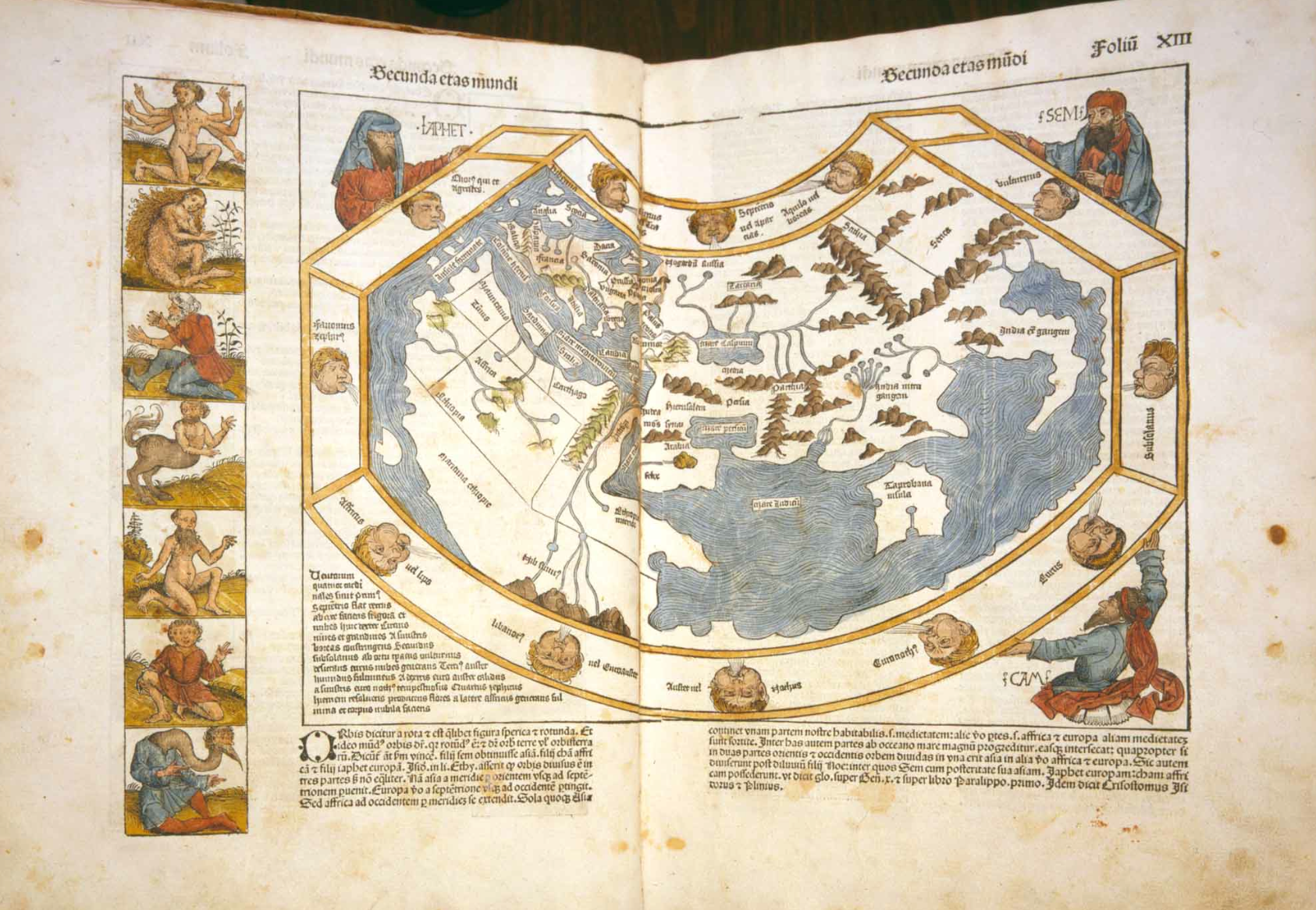
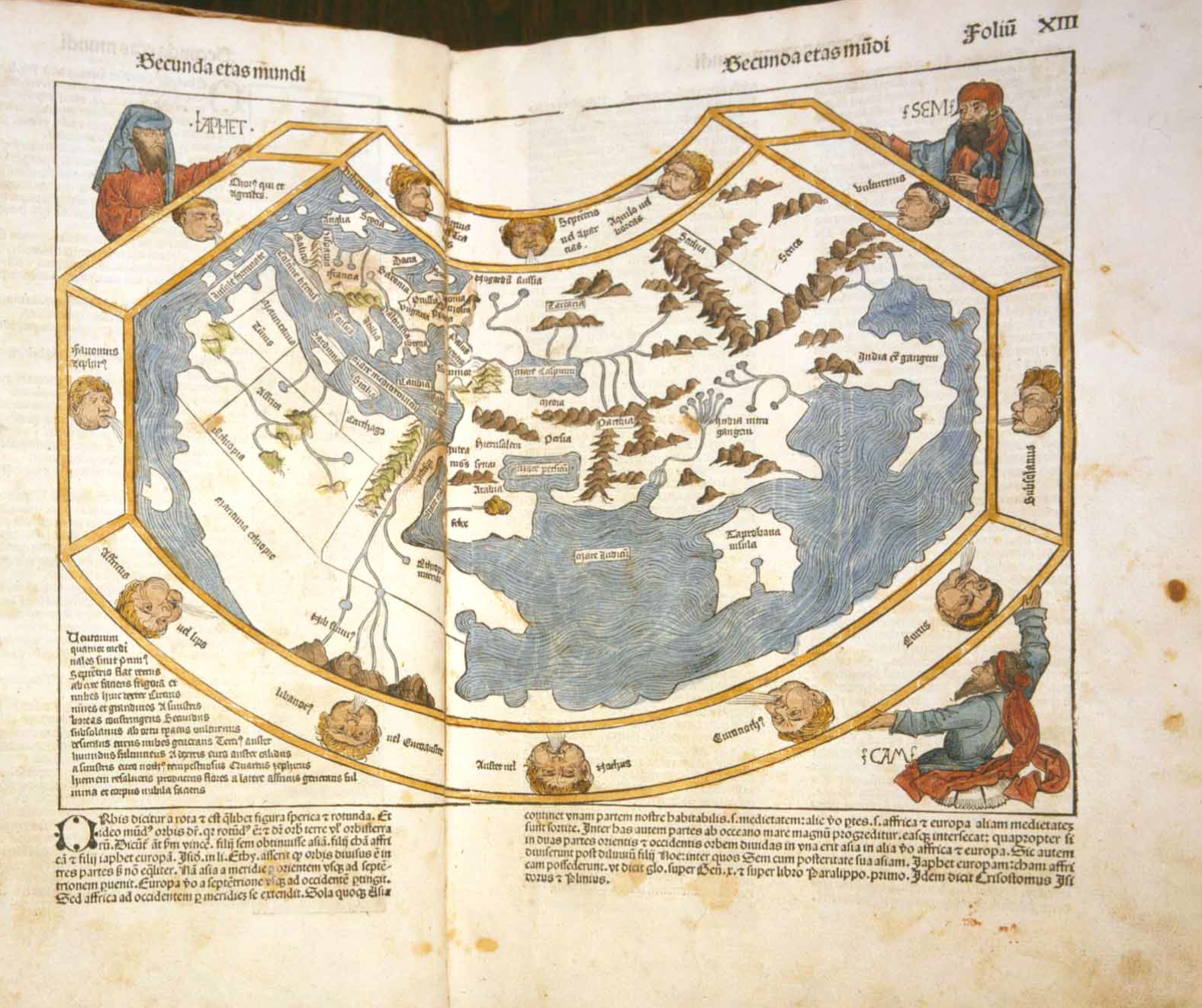
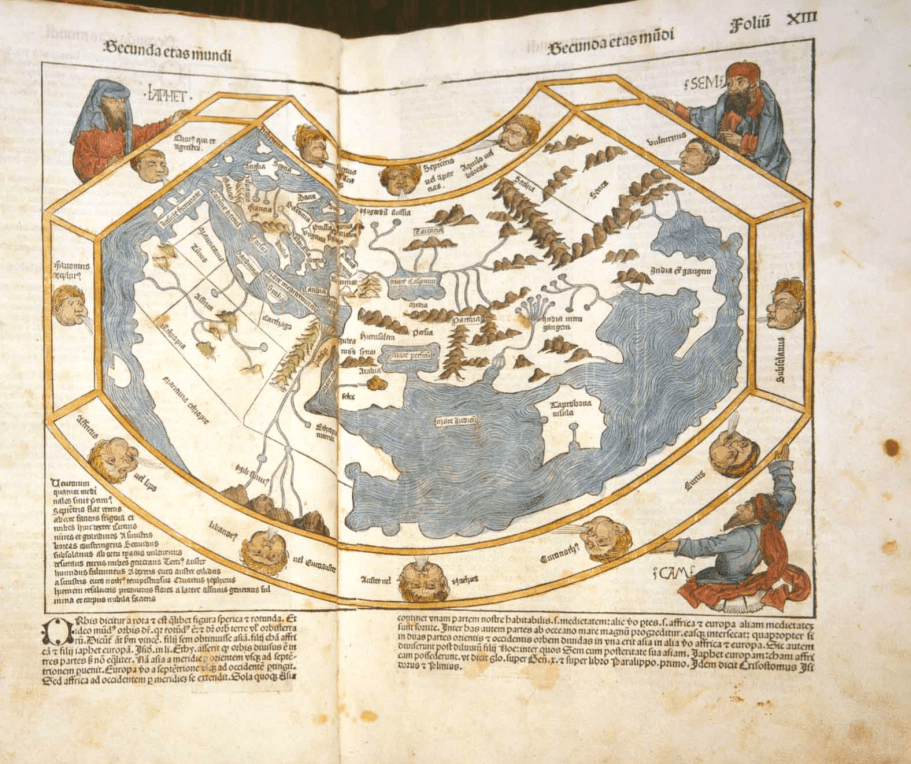
The compendious divisions of this mental map in a sense informed an engraved world map printed as the sixth page of the 1493 Nuremberg Chronicle, or “Book of Chronicles,” a “universal” history that promised a temporal compendium of world history, embracing historical ages in order to be able depict the division of continents from its creation through after the recession of waters in the Noahic flood through the succession of worldly empires that Augustine and Orosius had famously described–a work that captured the early taste for engravings as mediating information in Renaissance Nuremberg.   Romans discussed their empire as the ecumene, imitating how Greek geographers discussed an ecumene at whose fringes lived fundamentally other foreign Peoples, outside the scope of human concern and beyond the limits of human inhabitability; the world-map in the Chronicle placed outside its borders the excluded races of  Cynocephali, one-footed Sciopods, reverse-footed Antipods, bearded women, and one-eyed cyclopean monsters.  These lay outside the three regions divided among Noah’s three sons Shem, Japhet and Ham, or ecumene, and outside its image of the inhabitable world where humans dwelled, but also reflected the new world that the recession of waters in the Noahic flood had revealed to human sight, and the projection of the world that its editor included registered the shock of the prospectus terrarum that the lessening of global waters worldwide revealed–and the ecumene it unveiled:

SECUNDA ETAS MUNDI


Hand-illuminated versions suggests significant curiosity in these creatures placed outside of the map’s ruled boundary who dwelled in a different space from the river-nourished environment of what one supposed to lie on the edges the habited world:
 

Secunda Aetas Mundi


The ecumene had of course already expanded dramatically by 1490 or 1493 that challenged thought about its both its boundedness and uniformity and cartographical forms to represent spatial expanse.  It continued to expand dramatically in the following years for readers of maps.  Similar monstrous races were included on its peripheries:  in the northern limits of Asia, a boundary of the inhabited world, even in Martin Waldseemüller’s learned Carta marina of 1516–both in response to literary sources and travelogues as well as the mental furniture of the bounded region of human habitability.  Many of these races were left off of the map as “an empirically known space,” for the very reason that they challenged and threatened a human space, and the boundaries of the world revealed by maritime exploration were unknown–even if sea monsters were increasingly banished from the more the edges and unknown areas of the more refined world maps, as the Carta marina.


Waldseemuller 1516 carta nautica


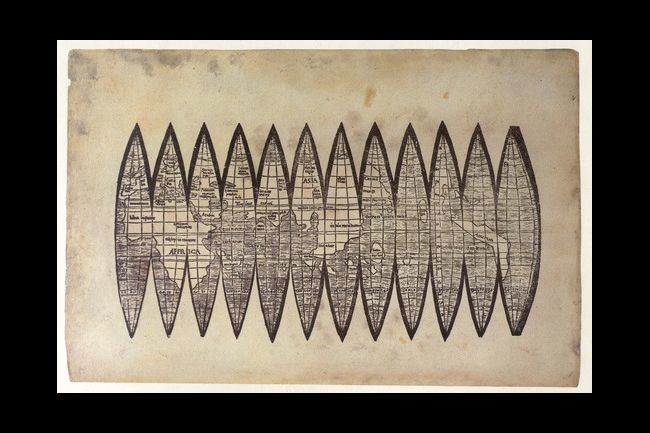
The consciousness of limits of habitability or human settlement was a graphic expression of Strabo’s mandate that geographers show the world’s inhabited part, as much as its inhabitants or populations to readers to satisfy curiosity and to respond to a need to describe its limits, as much as its totality:  “the geographer must describe the inhabited world in its known parts, neglect its unknown regions, as well as what is out of reach” (II, 5,5), placing a primacy on describing those parts of the world or communities in which humans live.  Although most fifteenth-century people did not easily domesticate the idea of an extensive space, let alone an undifferentiated expanse, picturing the unity and comprehensiveness of the ecumene became a basis for thinking about expanse, and comprehending difference:  the image of the ecumene in the Nuremberg Chronicle became a basis for continuing a rambling shapeless narrative grounded in a series of embedded or potted histories of place, each defined around an individual city and city view:  the ecumene was the landscape, if you will, in which each was situated.  There is often limited notation of a matrix of parallels and meridians in what might be called a readable fashion in early Ptolemaic maps:  it helped make space legible and material–or a sense that they are conventions of understanding the dramatic contraction of global space, but not indices of way-finding or marking place, as in these gores, identified with Waldseemüller’s school of cartography, ostensibly made for a small globe.


waldseemuller_map_found_4_7_2012


What has happened to the notion of the ecumene?  Even as the Ptolemaic ecumene was expanded, the community embraced in the map grew, rather than being abandoned, if New Worlds were processed into a map that reduced the prominence of Europe at the center of the inhabited world.  But the expanse of the ecumene held together, as it were, a sequence of regional maps, partly because the concept contained the promise that the whole world could be divided and known in synoptic form in a series of synoptic images that reconciled spatiality and territoriality.  Although mapping the continuity of expanse undergirded Renaissance cartographical images, the precision offered considerable wiggle-room, as it was limited only to the known.  But the division of space into bounded records of expanse were influential; the “chorographical” map of community became a counterpart of the totalizing coverage of a geographic projection.  To be sure, such maps responded to the diversity of ecumene that were discovered.  And maps provided models to mediate culturally fragmented collectivities, and fashion coherence across confessionally-divided communities– as the national map Oronce Fine designed of France to the French national atlases of the late sixteenth century to the English maps of Christopher Saxton, or Philip and Peter Apian’s maps of Central Europe, or a cycle of maps of the Italian peninsula that Egnazio Danti organized for a corridor leading to the apartments of Catholic Pope, discussed in an earlier post.  The coherence of each of these regions provided a sort of microcosm to the ancient geographic ecumene as it gestured to the wold that Romans civilized.


2.  The second half of this blogpost shifts focus.  In ways that less linked to cartographical models, it uses the notion of an ecumene to interrogate the survival of a  mapped global space in more modern mapping techniques.  We now lack similar boundary lines, of course, and measure contact among its regions rather than being awed by the immensity of the world’s expanse.  But the same term gained an ethical heft  in Enlightened thought to express a mandate for cosmopolitans to inhabit the world to become citizens of its entire expanse and cultures.  This shift in meaning, often thought of as a rupture, suggests continuities with the contemplative uses of globes for ancients as signs of learning or stoic remove.  The modern recuperation of the ecumene, distinct from its sense of the community of Christians (inherited from the Enlightenment) or the community of mankind is more striking as a relation to a lived environment, in ways that recuperates the ontological category of ecumene in order to describe and refer to the “humanized” world in which we now live–whose surface is more fully inhabited than ever before, but its nature shaped and informed by humanity both in regional environments and as a whole.

Augustin Berque has emphasized the benefits of attending to a relation, described by Tissier, between man and the planet in his 1993 article in the journal Persée, striking for how they dispense with the very category of a map if provocative for how they recuperate the ancient term in an ethical sense.  The term “ecumenical” oriented the term to the continuity in a community of believers.  But the ethos recuperated by Berque refers to what is human in the world, and a way of being, stripped of a fixed ethnocentric perspective.  By locating the “oikumenal” in terms of human geography stripped of a cartographical foundation, his sense eerily prefigures the images of the inhabited world that are both the benefits and costs of GIS as a basis for judging one’s own relation to the global world.  Berque has removed this ancient term of encyclopedic or positivistic coverage as a material register of geographic toponomy and the ancient craft of map making that embodied a fixed relation to the world.  His construction of an ecumene encompassing human society and its relation to the environment melds nature and culture in ways similar to the ancient term in its ethical connotations.  But his usage oddly dispenses with its graphic construction in favor of a global consciousness:  for in calling attention to the “ecumene,” has removed mankind’s relation with the earth’s surface is removed from a simple demonstrative function of the map:  much as the medium of GIS  defines the inhabitation of the world from one slant or subject, Berque asks us to embrace the multiple effects of mankind on the planet.

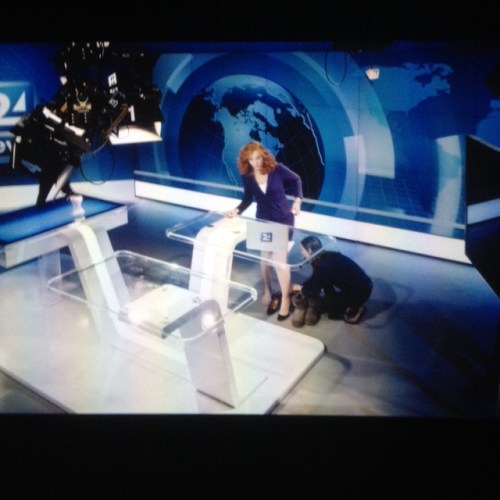
Berque believed that with the humanization of the planet complete, and the physical planet dominated by the effects of human life, more emphasis should be placed on a phenomenological analysis of the relation of subject an ambient by this Greek term, now removed from mapping practices to embrace human geography as a tool to consider the relation of man and his [made] environments. Putting aside the value of Berque’s point, the disposition of this philosophical standpoint  reflects the deconstruction of the privileged place of the terrestrial map and of geographic knowledge in GIS, and the image it perpetuates of the inscription of a human geography.  The relation of man and his planet–or the effects of man on the planet–are now the scope of a wide range of GIS maps of human habitation and Google Earth, or maps of influenza, infections and disease in data visualizations or geographic metadata catalogues, whose aim shift from physical geography to the place of mankind in it.  Increasingly, we are prepped to see the world nightly with a false immediacy of the nightly news, less focussed on territorial boundaries than a token of comprehensive coverage, prepped for consumption much as the newscasters who present an account of the “daily novelties” are prepped and outfitted in the apparatus of a news room.
 

Newscaster prepping.png.JPG


As put it eloquently (and cleverly) by Bruno Latour and friends, our ideas of territory so clearly derive from maps that the digital ubiquity of mapping places us into a new relation to territory:   we now navigate not based on “some resemblance between the map and the territory but on the detection of relevant cues . . .  to go through a heterogeneous set of datapoints” by which to move from different posts to gain new bearings.  We are always navigating a new relation to territory, or understand territorial models, not assuming defined and predetermined boundaries.  This notion of the environment is based on an ability to read signs of its inhabitation and peopling, rather than with reference to previously mapped territories, and is rooted on the ability to navigate by using maps on a screen, rather than on paper–in which the lack of resemblance indeed has further purchase (and persuasive power) as a gain in both certainty and objectivity.


3.  The analytic nature of the reader’s relation to GIS maps is less based on embodying place or expanse in a cartographical manner, because it is not rooted in mimetic qualities.  For the map, in much GIS, is used essentially as the primary field to encrypt variations in data, and removed from any pictorially descriptive function.  Put better, the map is something of a found object, a template, an objective construction in which we sort out the real information that is displayed upon it in an appealingly objective fashion, but one that lacks an orientational power rooted in mimetic claims and indeed turns away from making any actual mimetic claims:


usmap9

Indeed, the underlying positivism of the objectivity of the map is recycled in most visualizations that are rooted in GIS.  If modernity, as Doreen Massey put it, involved “a particular hegemonic understanding of the nature of space itself, and of the relation between space and society,” drawing expanse on multiple computational platforms in GIS has decoupled space from a precise location:  we now know from a true “view from nowhere.”  The differentiation of terrain or local constructions of space are of less interest than the projection of meaning on a map that is treated as a screen, and several significant local markers may be absent or not noted.  Shifting scale by moving a cursor does not create a more readable space, but provides a very odd reframing of space as a unit that is not comprehended by the reader, but able viewed simultaneously at multiple scales of changing parameters, zoomed into and out of, and adjusted on a digitized scale bar. Our current National Research Council argues in its spatial literacy report on spatial thinking that “the important thing is that they allow for the spatialization of data and use a range of types and amounts of data,” lending primacy to the readability of data over the analytic or representational basis of map-making.

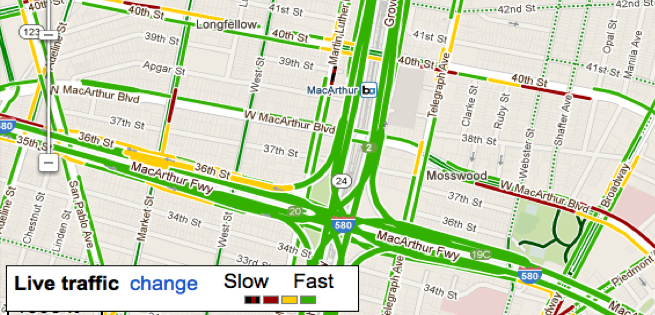
What is physical geography, after all, in many of these maps?  The prime mandate is to map one’s relation to the environment in a readable fashion, rather than to encode layers of local topography or meaning, and to streamline the map to allow its reconfiguration in different datasets that prepare for readability, rather than granularity or density of meaning.  Again, this is based not in mimesis, and no longer based on the notion or mimetic projection of territory:


MacArthur Freeway 11-00

Children's Hospital 11-51

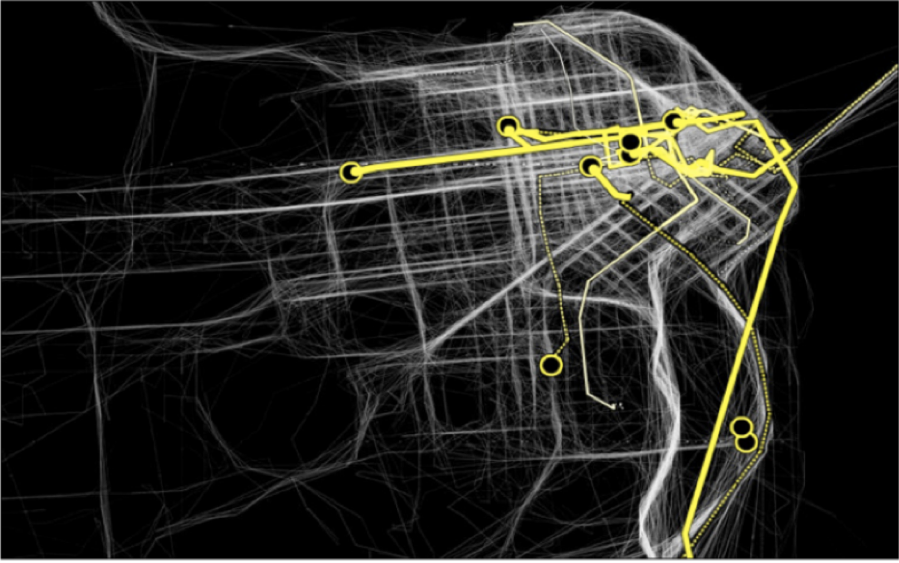
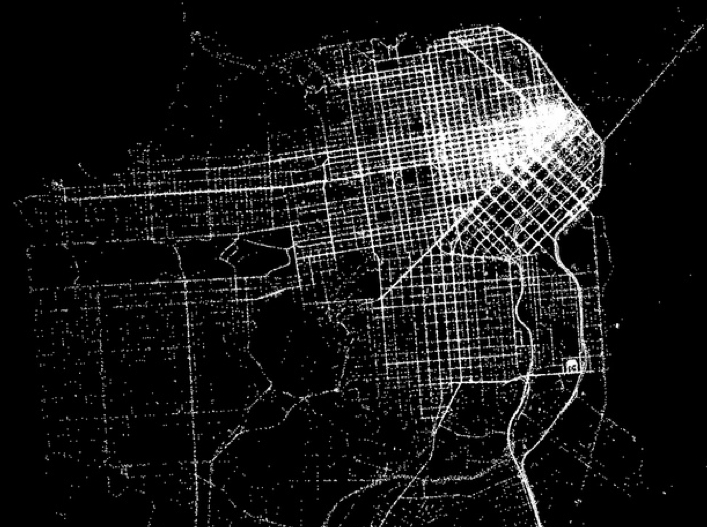
If we speed this up, to look at a sort of time-stop photography of cabs in San Francisco’s downtown area, as did Stamen design in a pioneering map that combined aesthetics and the abundant database of the surveillance operations of Google Maps, and is based on readings taken from the GPS data of the Yellow Cab Company of San Francisco, available also as a film:

Stamen Cabs

Or, in Shawn Allen’s map/photo, which resembles a direct transcription of the taxicab scene in downtown San Francisco on June 15, 2012:

Shawn Allen's map:photo

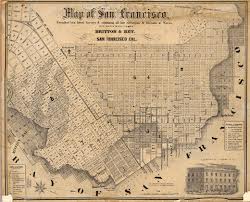
Does an impoverishment of spatial literacy or toponymy result from such containers of datasets that use maps as formats?  The omniscience and transcendence of the map viewer is immeasurably increased, but the viewer is the receptacle of data, as much as the perceiver of the scene:  new currents are configured and new flows revealed, as data from a variety of sources are richly encrypted into the surface of any given image, compressing the sort of media to which we might have access to a single screen.  One has a different sort of relation to a screen than to a variegated surface, reading a way of configuring information in different ways:  but the difficulty with the screen in particular is its lack of a sense of spatial embodiment. Compare it to an earlier map of the same region, not at all sparing with information but bending backwards to compress legible content within a description of the city’s environment:

sfharbor

These are, perhaps, essentially different modes of data compression, based not only on distinct tacit presumptions, with one angled toward data flows, rather than to the ostensible objectivity of a perceptual model.   But the difficulty to embody data flows can generate an oddly 2-D superficiality that forsakes the very quality transcendence to which earlier ecumene aspired.  Data-streams provide a selective mapping that illuminates one angle of analysis, as it were, rather than aspiring to process an image of the entire city’s or world’s actual inhabitation.

Let’s however insist on being more concrete.  When used to display shifts in a census, the map below displays data removed from topography or centers of population density, and is a data visualization without refined conventions to process its content or meaning for viewers, even if its meaning is quite serious and subject quite human, because it displays information on a static template with little interpretive key–since this map is less of an autonomous and self-standing unit of meaning than a map that demands to be read in reference to familiarity with a map of the distribution of the state’s population:
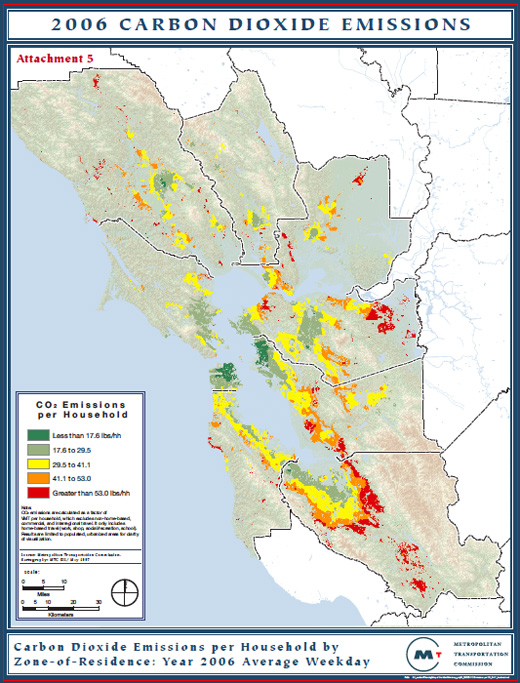
CO2 emissions


The above map of CO2 emissions of Northern California households elegantly foregrounds one specific reading of the relation of man to the environment. The challenge raised by such an elegant map is to retain communicative flexibility of the conventions of terrestrial mapping, however.  In any GIS map, there is the anger of emptying the format of project from content such as topographic variations, specific local detail, or the dynamic relations of space and habitation within a map:  the conventions of the format gains an iconic or symbolic register alone, in short, and is considerably impoverished as a description of terrestrial habitation when it serves as a field to display data flows or project a database.  One issue is to combine the data with how the analytic framework of the map integrates word and image or creates a structural distribution–something like the poetics of mapping–rather than employ maps as a passive container for spatial information instead of actively creating a way of thinking about space. The mapping of the results of a census regularly lack a sense of topographic variation or differentiation of urban and rural population which would render it more meaningful, and give a plasticity to its already remarkable contents as readable content.  This partly lies in the lack of a dynamic relation between the visual field of the map and its reading, as in this map of the regional variations in the India’s regional population per square kilometer:
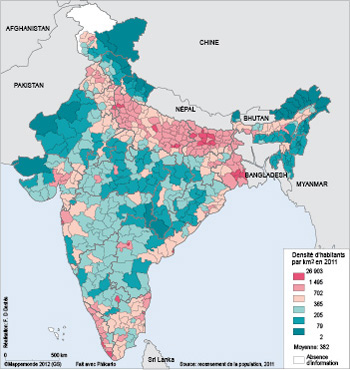
 

dastes_F2


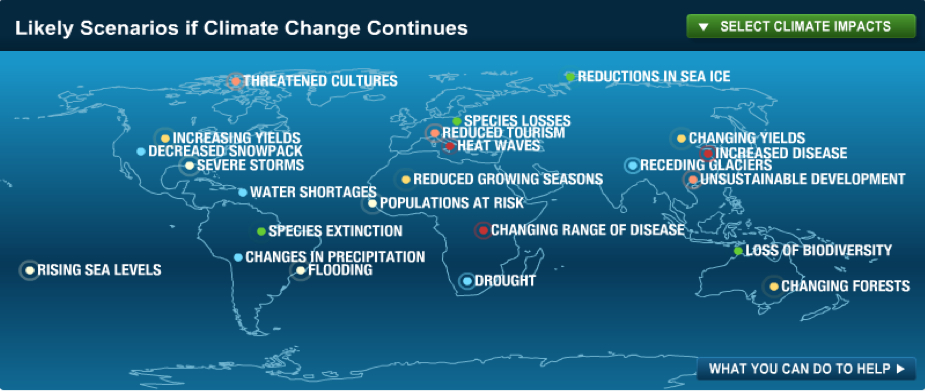
The map does not exploit its own conventions of orienting readers to space or expanse.  But GIS mapping offers a significant range of angles by which to read and explain its content.  The relevance of clarifying readers’ relations to the environment are in fact pressing, as revealed on this interactive map–which even includes an option for the reader to learn in detail what s/he can do to help:
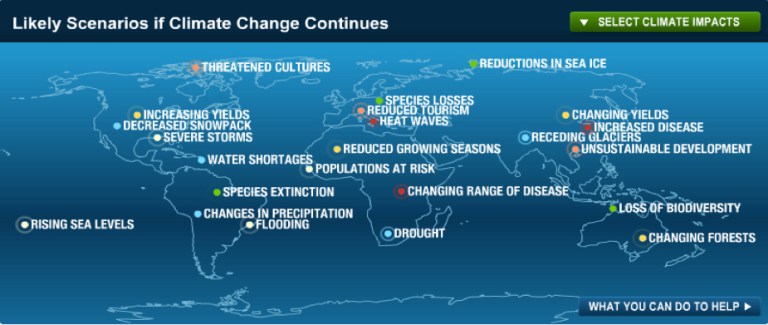
 

Scenarios of Global Warming


At the same time as this pessimistic picture of the actual eventualities of climate change in the age of the anthropocene, the radically shifting nature of a world which is no longer shaped by proximity, or challenged by distance.  The map of internet penetration suggests, rather than a new map of inequalities alone, the new obstacles to the penetration and responses to messages worldwide, and, no doubt, contributed to the difficulty of the transport of needed goods and medical supplies to western Africa during the current epidemic of Ebola, which seems to have left populations scarred by the difficulty in transatlantic communication, as much as the lack of adequate maps, as OSM-H has shown, of adequate mapping on the ground.


2000px-InternetPenetrationWorldMap.svg


Indeed, the map of internet penetration, for all its unpleasant echoes of a colonializing perspective, where first-world countries receive greatest coverage, reveals the extreme difficulties of penetration of all of the coastal countries of West Africa–unlike Nigeria–where the highly contagious virus has proved most difficult to be contained, and information about  the virus less able to be widely disseminated.

Are the edges of the penetration of the internet the most vulnerable edges of the inhabited world, and as the edges of the accessibility and sharing of human information the most vulnerable to cataclysm?


4.  To some extent, this takes us back to Berque’s notion of the ecumene.  But the relative thin-ness of encrypting data projection on the map is so less fine-grained to impoverish the relation between reader and map or registers of engaging readers:  the granularity of the map is particularly great perhaps because the map’s visual qualities are less closely joined with its textual ones, or the hypertext only uses the map as a static schema. There seems the danger of how maps direct our attention to spatial variations and complexity with the proliferation of maps as visual media across different venues and platforms, and a dissipation of the authority of demarcating expanse or of compacting data in a uniform surface.  Perhaps this recalls Berque’s notion of the ecumene as a set of relations to the environment, which can be read in different ways rather than in one way.

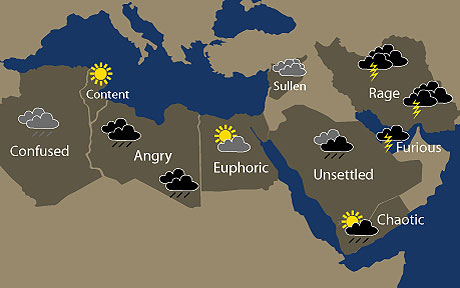
The question of habitation has become turned, like a prism, to illuminate new points of view and angles of perception, a topography of habitation indeed seems beside the point.  After all, there are no real areas of the globe that are not inhabited, and the questions of orienting individuals to space seem more pressing than ever on ethical, ecological, and moral grounds alike–if not of just making sense of the effects with which man inhabits space. In a somewhat ponderous post, let’s offer a comic conclusion, however, rather than carping about media for mapping in an age of digital reproduction and increasing vectors of data flow.  The GIS map has become a versatile demographic tool to reframe questions and reveal spatial links, possible vectors of influence or pathways of causation, and indeed maps of emotions or violence.  The question is at root what sort of remove it places the map reader to interpret those vectors on its surface.  There is a temptation to deflate the authority of the descriptive value of such a matrix for its lack of fine grain.  Amidst the attempt to map the Arab Spring there was the inevitable  GIS irony of naturalizing political movements with the ephemerality of a weather map–more a mental map of what the media presented, to be sure, rather than a map designed to orient its content to a reader practiced in interpreting a map’s construction or its conventions.  The map has the value for its viewers of an illusion of transparency and a medium of omniscience:


middleeast_map21_1829864a


Or GIS-inspired variations on sabre-rattling from the American right, which was openly alarmist (if not antic) in tone, against a backdrop from Wikipedia commons:


ZIO_middle_east_map_jpg_big_1


These pseudo-news maps come from the GIS family of signs, even if they are not based on actual data.  They orient viewers with a wiki-like remove. It makes sense that at this point ecumene denotes more of an ethical stance to describe man’s relation to the environment, shifting from to what that process of inhabitation might mean; there is no demand for graphically rendering the inhabited world, but rather the ways mankind inhabits the earth and has filled and marked its space.  But there is a loss of mapping habitations. And so map making in the flexible media of GoogleMaps is no longer an expandable portmanteaux of fine grain, but rather a matrix of data streams where one charts multiple consequences of inhabitation rather the local terrain.  If we no longer have Sciopods outside of our human realm, we lose a sense of an ethics of mapping or even of relating to maps when we dispense altogether with practices of map-making.
Leave a comment

Filed under anthropocene, data visualizations, globalism, Google Maps, metageography, Ptolemaic geography

Mapping Open Waters: Bay or River?

The relation between land, sea, marsh, and landfill provided something of a dilemma of cartographical rendering in the Bay Area, mirroring the fluid relationship that has long existed between land and sea.  But if fluidity of the shoreline of the San Francisco Bay was less understood in terms of erosion, global warming, coastal flooding, and king tides back in the 1950s, the human fiction–and graphical statement–of the map of expanded bay fill provided a potent image to engage the shifting contours of land and sea.

The grassroots community activists reacted to it to protest plans for a radical narrowing of the Bay, whose success created the first inter-city compact for shoreline preservation with broad consequence for habitat conservation in the Bay Area–preserving tidal flats, coastal marshes, and wetlands that stand as a living model for conservationists, in close proximity to the city and coastal highway–as well as a legacy of the protection of open waters.

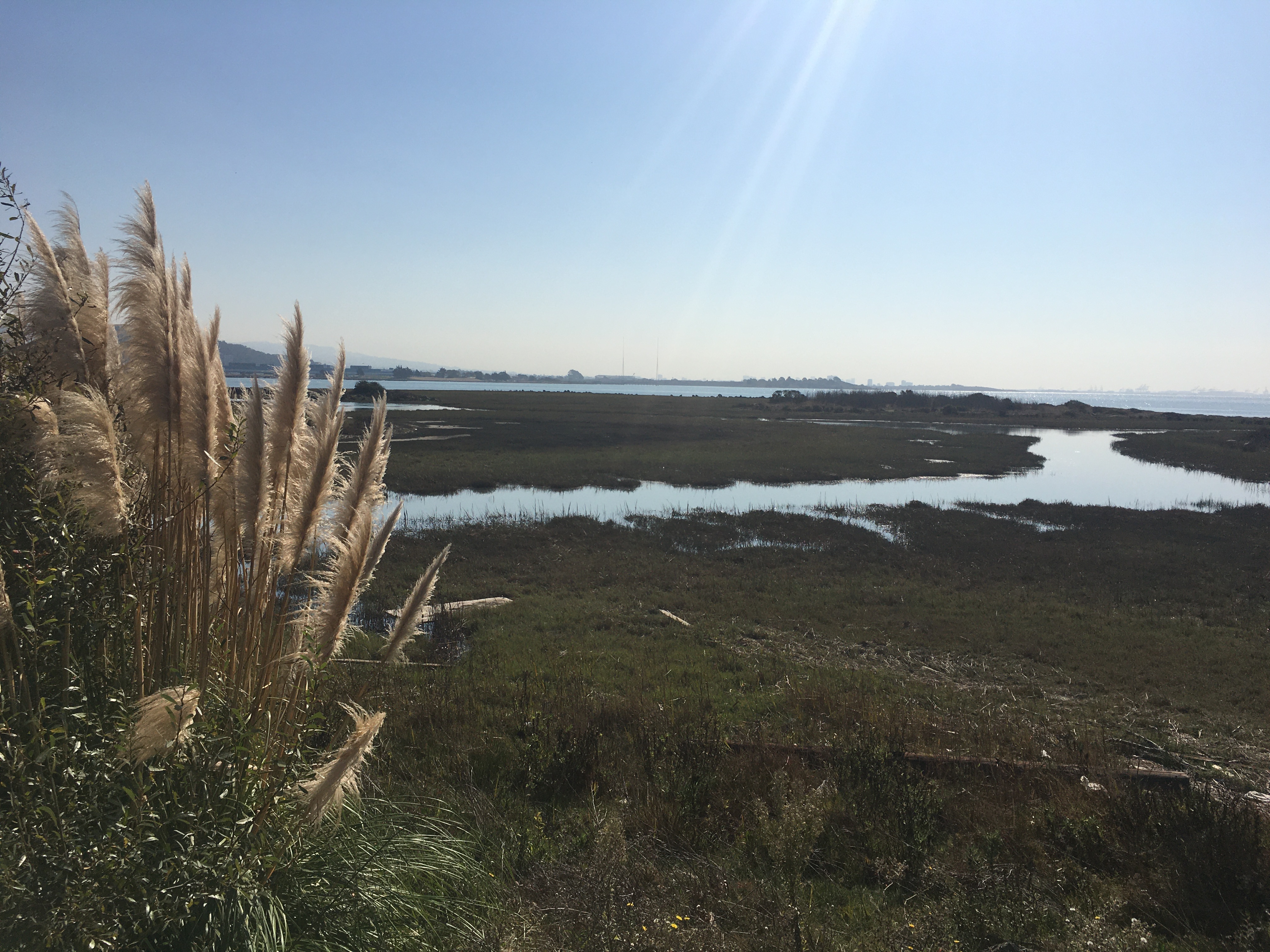
The subsequent designation of a large strip of coastal lands as a margin including Regional Protected Areas would later cover 1,833 acres of coastal lands and tidelands from the Bay Bridge to Richmond, along eight and a half miles of coast; the removal of all hazardous chemicals and garbage from 1998 restored the seasonal wetlands that were developing atop landfill in the seventy-two acre meadow, which was restored for $6 million over five years in a model to protect habitat and open space, as well as restoring a protective barrier of coastal wetlands that has long helped to protect the shoreline and bay. But the buy-in of 4,000 stakeholders in the multi-year project of habitat restoration and native habitat types however began from a protest map.

The complex bayshore that bridges four to five individual cities in the East Bay presents a complex picture of landscape and shoreline preservation and conservation, one whose sense of wonder and interest was in fact fought out in maps: if the mosaic of shoreline restoration, habitat preserves, parks, and greenspace that dot the coastline of San Francisco Bay between Oakland and Richmond offers a unique way of respecting open space on the margins of developed land, offering a landmark constraint for building out into the bay, the battle of visions for bay conservation were very much waged out through how mapping redefined the individual’s relation to local space and the world.

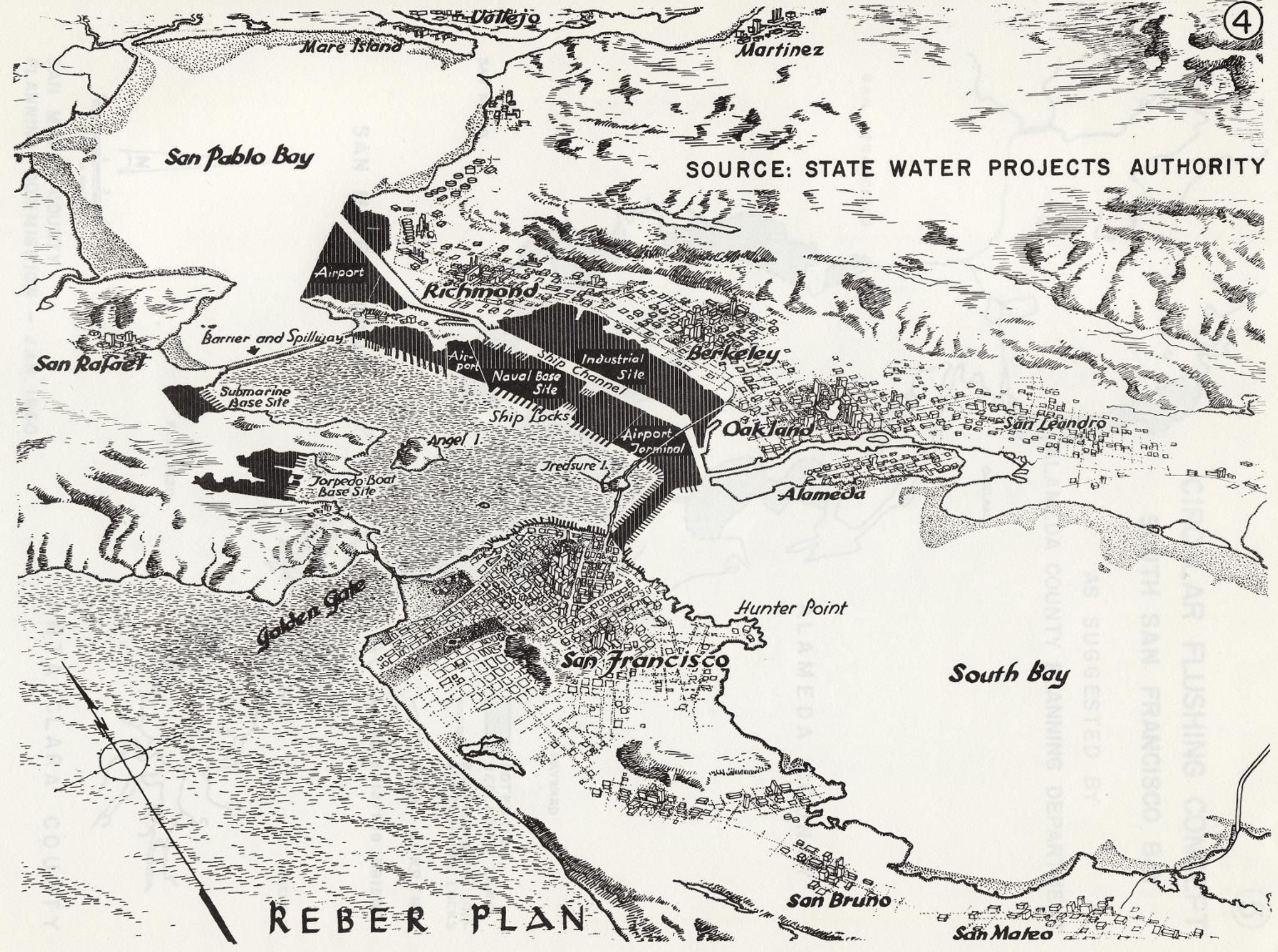
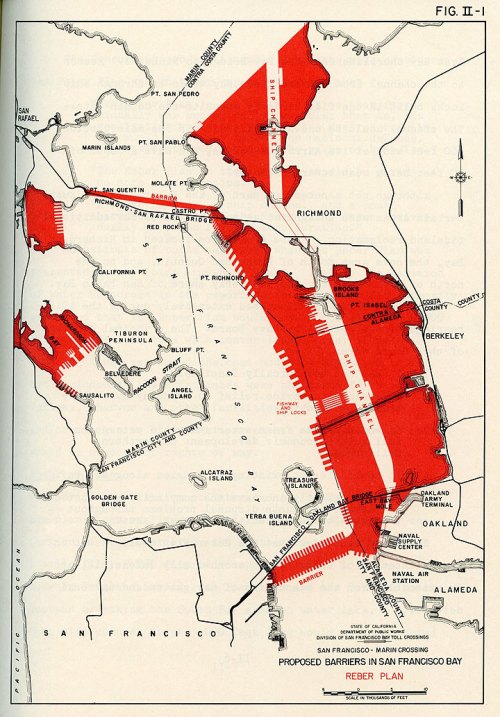
The story of coastal preservation that has often been cited as a model of a broad range of stakeholders began from a map. When the Save the Bay organization was formed by an improbably interested Berkeley patricians and Sierra Club members to prevent the waters from development and city housing that proposed building out into the bay in the post-war period. The military engineer John Reber drafted a plan that would reduce the bay dramatically, eliminating wetlands by adding landfill West Berkeley into the San Francisco Bay, in a monument of post-war engineering. The project of landscape modification bore all the hallmarks of modernity, and would have dramatically shrunk the bay’s open water, as much as open space, narrowing them by a massive fill to dramatically shrunken size, as well as the expansion of shipping lanes in Marin and Sausalito, that would have altered the Bay Area.
Proposed Barriers in San Francisco Bay (Reber Plan)

The triumphalism of the Army Engineers seemed almost to unite the U.S. Army bases in Alameda as a guideline to shape a modernistically sleek shoreline, punctuated by shipping corridors the open waters would accommodate. The expanded plan identified with Reber and the Department of Public works was announced quickly in the postwar era, as a massive project of infilling tidelands for a deepwater port, airports, and military bases by 1949, that would imagine an expansion of greater pierspace and nautical traffic in a Bay Area that seemed poise for financial growth as a hub of trade, as well as military outpost, expanding an “industrial site” in the smaller cities of Berkeley and Richmond, now equipping them with a airport terminals and a permanent Naval Base, and a Torpedo base in Hunter’s Point, expanding the military presence in northern California far beyond the military base in Alameda.

Reber Plane for a deepwater port, airports, and military bases (1949)[1580 x 1224]

Although the proposal for a contraction of the open waters was set as a landscape view, as if to naturalize it within the scenery, the 1949 proposal attracted heightened possibilities of greater infill that led to the reduction of the San Pablo Bay after its development of a massive landscape intervention for ten years that is rightly included among possible destructions of San Francisco by overdevelopment, even if it would have impacted the entire Bay. But the proposal for subdividing and radically reinventing the San Francisco Bay and bayshore as a basis for further development came to a rather sudden halt after over ten years of expansion, stopping in its tracks the promotion of a a modernistic streamlining of bayshore and bay waters as sites of economic development, as the plans were adopted to proposae an alternative model of conservation.

The questions about conservation that were posed at the local level on the East Bay mounted a staunch opposition, applying pressure as it coalesced through the compelling rendering of an alternative map, questioning the public commitment to a new level of landscape change and leading to a sense of reckoning about bay waters. The logic of remapping the plans of development, and the effectiveness with which a map that posited the problems and dangers development posed, however won buy-in from multiple stake-holders–now exceeding 4,000–of huge consequence.

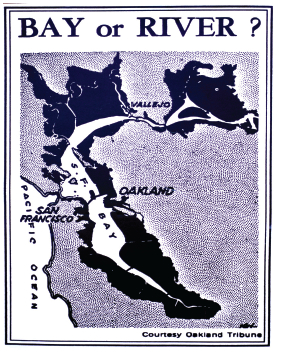
1. What allowed the revisioning of the Bay’s open waters to be preserved? The Reber Plan would famously attract condemnation as an artificial reduction of the open waters to a shipping land, the power of the map in mobilizing resistance suggests an episode of cartographic creativity as much as public mobilization.

But the very possibility of local resistance to such rebuilding preservation of greenspace in Tilden Park had no doubt provided a stunning achievement for the Works Progress administration, allowing land procured from East Bay Municipal Water District to be converted into the East Bay Regional Parks, in one of the great New Deal projects of land conservation, leading to a decade of landscape transformation across 4,300 acres, the potential of converting lands by the precedent that invited residents to explore the local greenspace must have provided an encouragement to the preserving the bay. And the cartographic celebration of the conservation of lands and expansion of East Bay parks was able to provide a powerful, and indeed liberating way to contemplate and engage the material landscape.

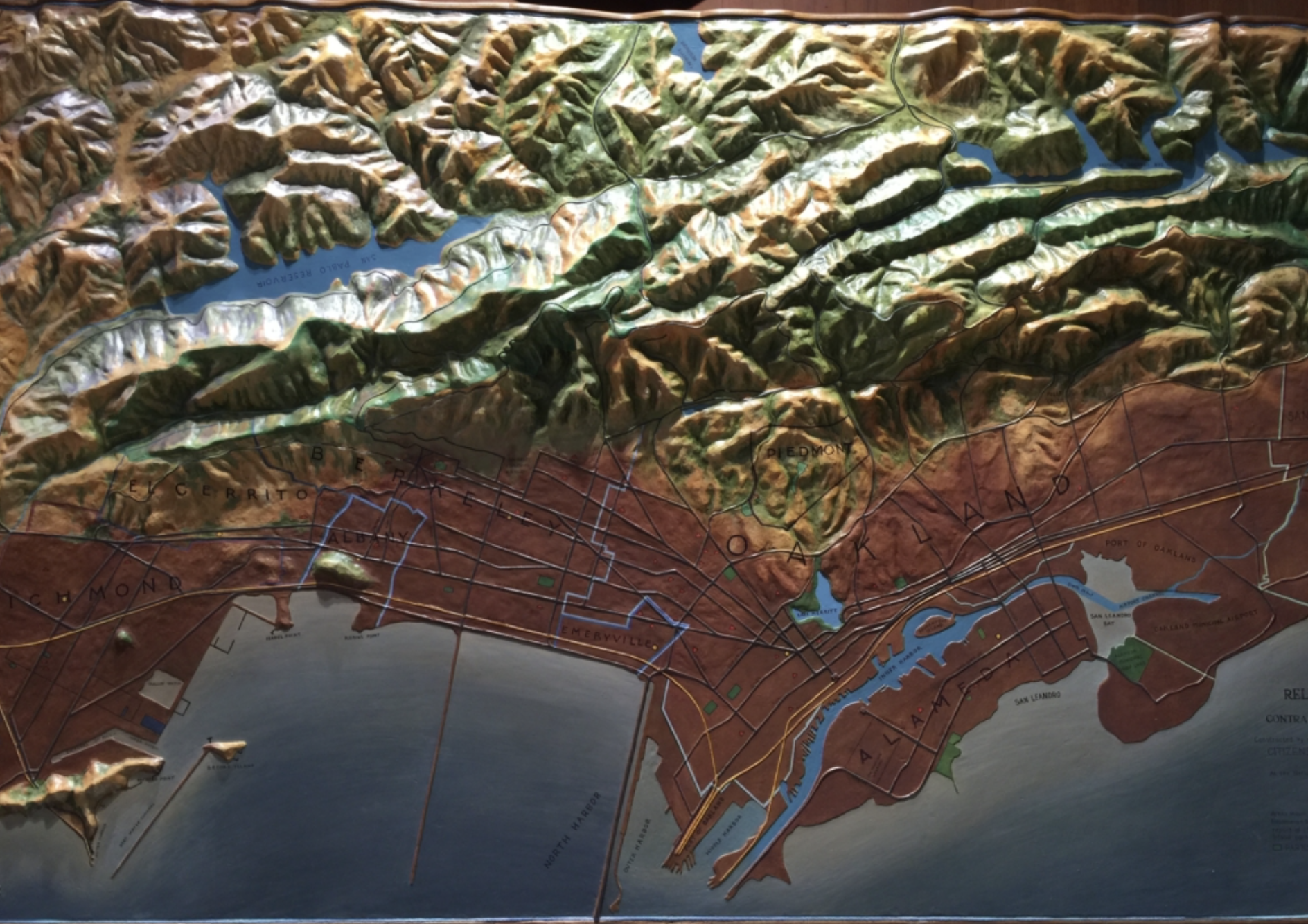
The luxurious relief maps created by the Civil Conservation Corps who had administered the East Bay parks through 1942, since restored, invitingly celebrated pathways to explore and navigate the greenspace in plastic form–made during the 1930s–that preserved an image of a sense of rural versus urban space, back in the days when the hills were far more green.

While the relation between the shore and bay is hardly the focus of the relief map made in the early 1930s for the East Bay Regional Parks–perhaps as a working model to demonstrate the easy linkage of city to open space that the acquisition of lands from the Water District allowed–the careful shading of the bay waters in a gradation from deep blue to the shore provided a quite detailed sense of the sensitive of land and sea that the detailing of several creeks underscores. The aesthetic contemplation of landscape was a consideration of land and bay–or demanded one, offering a rendering of the complex of open space, lakes, creeks, and estuaries as a unified whole, and aesthetic unity, that the transformation of the bay to a shipping channel–or “river,” as polemic maps of the Save the Bay project would affirm. The old piers of Berkeley’s marina was not clearly landscaped, but the shore was defined by the tracks of the railroad, in the restored East Bay Parks relief map in a model of conservation and what land conservation might achieve, and indeed the possibility of securing land against over-development, a plan accentuated by the addition of rustic architecture and monuments in Tilden, Lake Temescal, Sibley, and Redwood Parks. The monument to conservation that had become part of the sense of place contrasted in their ethos with the stark shipping lands that would have altered not only the shoreline, but the bay waters as well.

The counter-map of the Bay waters was inspired by the subsequent brutality of adding infill in the Reber Plan.

Reber Plan: Proposed Barriers in San Francisco Bay (1959)

Designed with the apparent abandon of a crayon coloring book, in order to maximize the piers for arriving container ships in the postwar boom, the Reber Plan suggested a startlingly bold intervention in natural space to accommodate economic growth, crudely imposing economic infrastructure as if saddling it on the bay. For the Army Engineering Corps, the shallow East Bay coast, and large tidal lands, beckoned re-engineering provided a plan to envision the region in terms of “areas susceptible of reclamation” by the year 2020, back in 1957; years before the Bay Bridge, the bay’s low waters seemed ideal for a long-term plan of engineering a shipping corridor from Richmond to Oakland, domesticating the bayshore to maximize its economic utility and shipping locks would contracted San Francisco Bay, in a vision of development imagined in Washington, DC, with the endorsement of the US Chamber of Commerce.

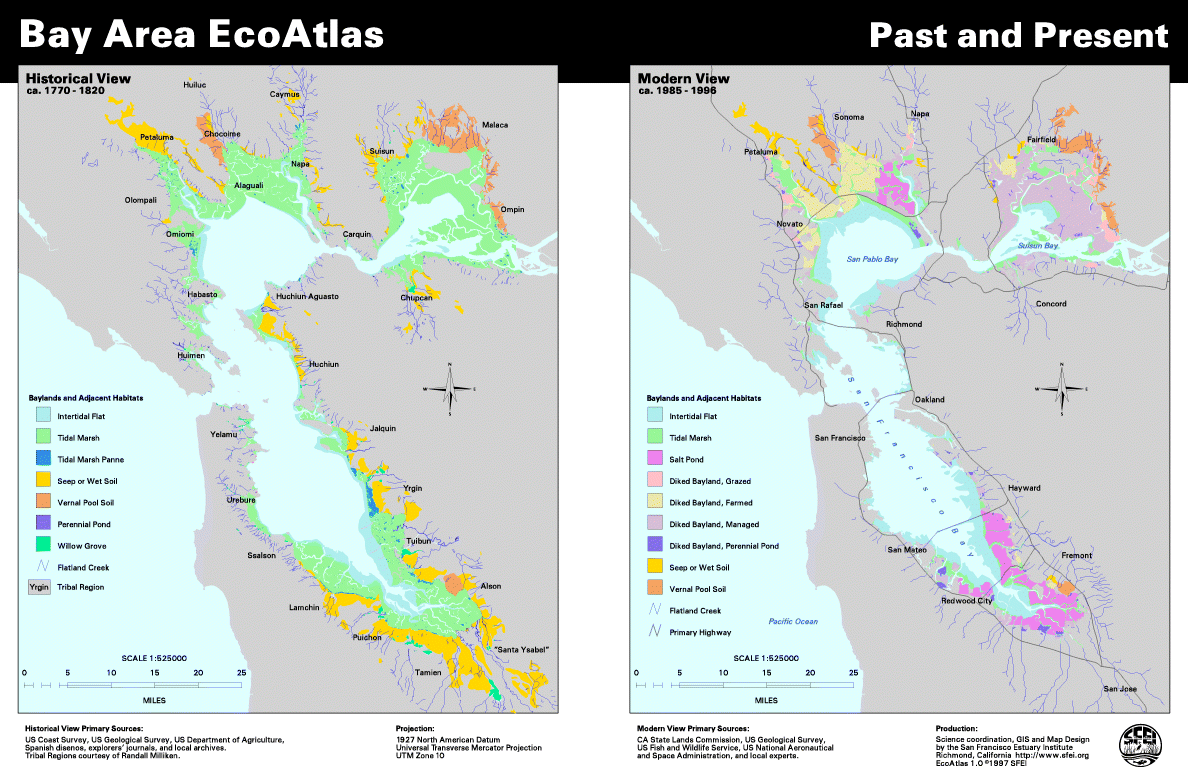
For the project of land reclamation that the Army Corps of Engineers envisioned in the postwar era were a program to transform the settlement of the Bay Area in ways that extended pathways of marine communication by shipping industries as well as the U.S. navy in areas that were long predominantly marshland, imposing a dualistic opposition between “land” and “sea” in an area where the barriers between land and sea were blurred and fluid, and indeed on which local ecosytems were dependent: the eclipse of the regions of the Sacramento River’s expansive estuary were defined by marshland, tidal flats, wetlands, and in the East Bay shoreline, especially in Berkeley, seep or wet soil that the Plan did not register or accommodate, in its premium on economic expansion and strategic development. The coastal mapping projects that the United States Coastal Service had long engaged were put aside, and the stark land/sea duality proposed a limited way of seeing or imagining ‘development’ that seemed a logic of urban expansion that ran against the ways that the conservation ofEast Bay parks ha provided an important precedent to to manage, indeed taking it in different directions than the mapping of open space had set a powerful precedent by the 1940s–and a future that they would want to resist. If a full third of the bay had been diked off, infilled and built out that radically shrunk its open waters, Save The Bay was founded in 1961 to stop the acceleration of projected infill that would severely compromise the Bay, and has survived as an ecological monitor on infrastructure expansion and one-sided plans for development that would adversely affect the integrity of the Bay. The proposed reduction of wetlands and wetsoil along the Berkeley shore became a precedent for the ecological vulnerability of wetlands and bayshore to expansion, at a time when only a small fraction–but a tenth–of the Bay Area’s wetlands remained, and almost none of its shores were publicly accessible to residents, in the manner that the preservation of parks in the hillls provided such an important precedent that led directly to the 1965 foundation of The Bay Conservation and Development Commission (BCDC) to restrict or limit future projects of adding infill to reduce its open waters.

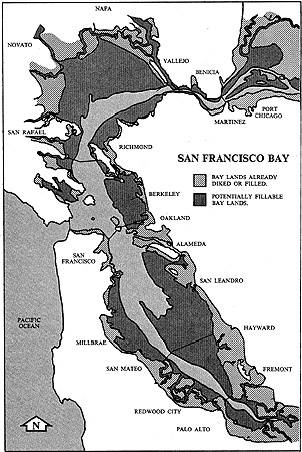
The relative murkiness of the areas the Army Corps of Engineers projected as ripe for infill envisioned a narrowed body of water without coastal access, in sharp contrast to conservation of greenspace around the expanding city:

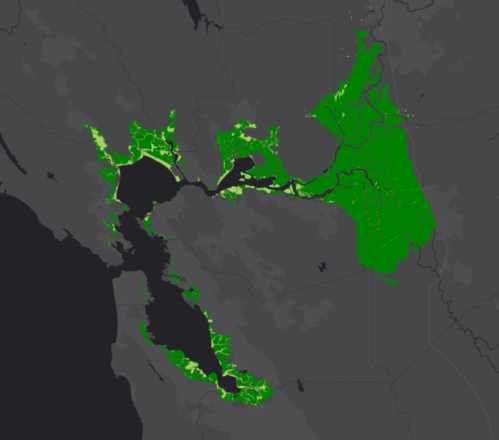
The vision of the massive constriction of wetlands, tidal marsh, intertidal plains, and shallow sea or seep soil marked 325 square miles a “potentially fillable bay” as if it was an area for potential economic expansion, as much as urban growth, developing the port city as a set of functional shipping channels, seeking to crystallize a notion of functionality that offered no space for conservation. While the infill would have doubled Berkeley in size, the dramatic disappearance of San Pablo Bay by a hundred miles, even if it wouldn’t have obviated need for the Richmond-San Rafael bridge, already opened in 1956, would have been a development project of San Francisco’s coast that expanded the considerable growth of San Francisco by landfill to the entire Bay Area.

The logic of development that the vision of the Army Corps of Engineers promoted publicly in 1961 Save the Bay crystallized around a cartographic revision of Reber’s map was, in a sense, a critical turning point, or crossroads–suggested by the etymology of the word “crisis”–in how the bay could be actively remapped in the face of development, more recently culminating in how San Francisco Estuary Institute has mapped past against present landscape to orient us to historical ecology of the man-made nature of the shoreline we have inherited.

Viewed a bit differently, in materials that were provided by Save the Bay, to situate the organic place of the bay within the western landscape, the rivers whose confluence runs into the Bay join waters from the Sacramento to San Joaquin rivers run to the San Francisco Bay as a delivery of sediment from the landscape, uniting the Sierra Nevada and Coastal Range in its waters.

Save the Bay

If the bottom topography of the Bay had been dramatically altered by the flushing of sediment downstream rivers as the Sacramento, sending sludge into the Pacific Ocean, the arrival of sediment may have set a precedent for the proposed addition of infill that would deliver unprecedented sediment to the San Francisco Bay’s seabed.

But the “green shoreline” of the East Bay suggested a unique biophilic resistance to the addition of landfill, preserving the sense of open waters with which this post began.

So radical was the scale of the transformation of the Bay that Reber drafted to provoke a catalyst for the collective buy-in for opposition at the start of the environmental movement. The counter-map became a rallying cry of the defense of the bay’s open water against development by the shipping industry that affirmed the defense of a privileged relation to place for Berkeley residents, shocked by the alienating nature of the expansion of the lines of old wooden docks that dotted much of Richmond and Oakland, the two largest harbors in the East Bay. The plan would have both promised economic development, and expanded housing, into the Bay, eliminating open waters by amalgamating harbors to a straight manmade shoreline that would have connected the San Rafael Bridge and Alameda Naval Station, imposing expanded shipping lanes over the bay waters, that, as its effects were mapped, were realized to radically threaten habitat. The remapping of the preservation of bayshore helped radically change the perception of the water from the land, that helped to create a place where, when one walks today, the city and San Francisco indeed recede across the tidal flats.

2. The plans for developing the coastline by the addition of bayfill that would create either a vibrant port for pacific shipping industry were stayed as a rallying cry to mobilize opinion around the planned bayfill that would contract the East Bay, erasing wetlands that would be landfilled, dike or leveed for development, as growth of the Bay Area in the postwar period had already brought the filling in of entrance of the Sacramento River and five other rivers to the unique wetlands complex of the Bay Area–a lost environment that has been contracted by urban expansion and the reshaping of the shoreline ecosystem of so much of the bay, from the south Bay to the north bay to the estuary complex that framers of the contracted image of the San Francisco Bay to shipping channels that Reber envisioned took for granted as an inevitable process of development–but which we are now far more liable to map in terms of loss.

The protest to “Save the Bay” was animated by a counter-map that animated resistance that asked residents what sort of bay they wanted to live beyond. The abstract map of a landfill project of 1961 came to concretize the costs of development, and served–perhaps for the very reason that it was not detailed–to generate a broad coalition of protest against the imagined expansion of housing and shipping development in the East Bay. The printed map delineated how much was at stake in proposed coastal transformation so persuasively it became a powerful logo and rallying cry for the Save the Bay project from a new alliance of environmental groups and other stakeholders: if the military engineer’s map documented the modernistic redesign of the natural shoreline, in ways that extended the compromised habitat loss in other areas of the Delta and estuary, the convincing contrast between two visions of the bay–“Bay or River?” the map’s legend directly framed the future of the San Francisco Bay–put breaks on the continued development of much of East and South Bay. The map helped pose a simple question that asking readers to consider themselves stakeholders in a bulwark against massive environmental change in suggesting the near-apocalyptic scale of added landfill in dark black. While the story has been often told, the vital role an engineering map played in pushing back against vested propertied and industrial interests is arresting.
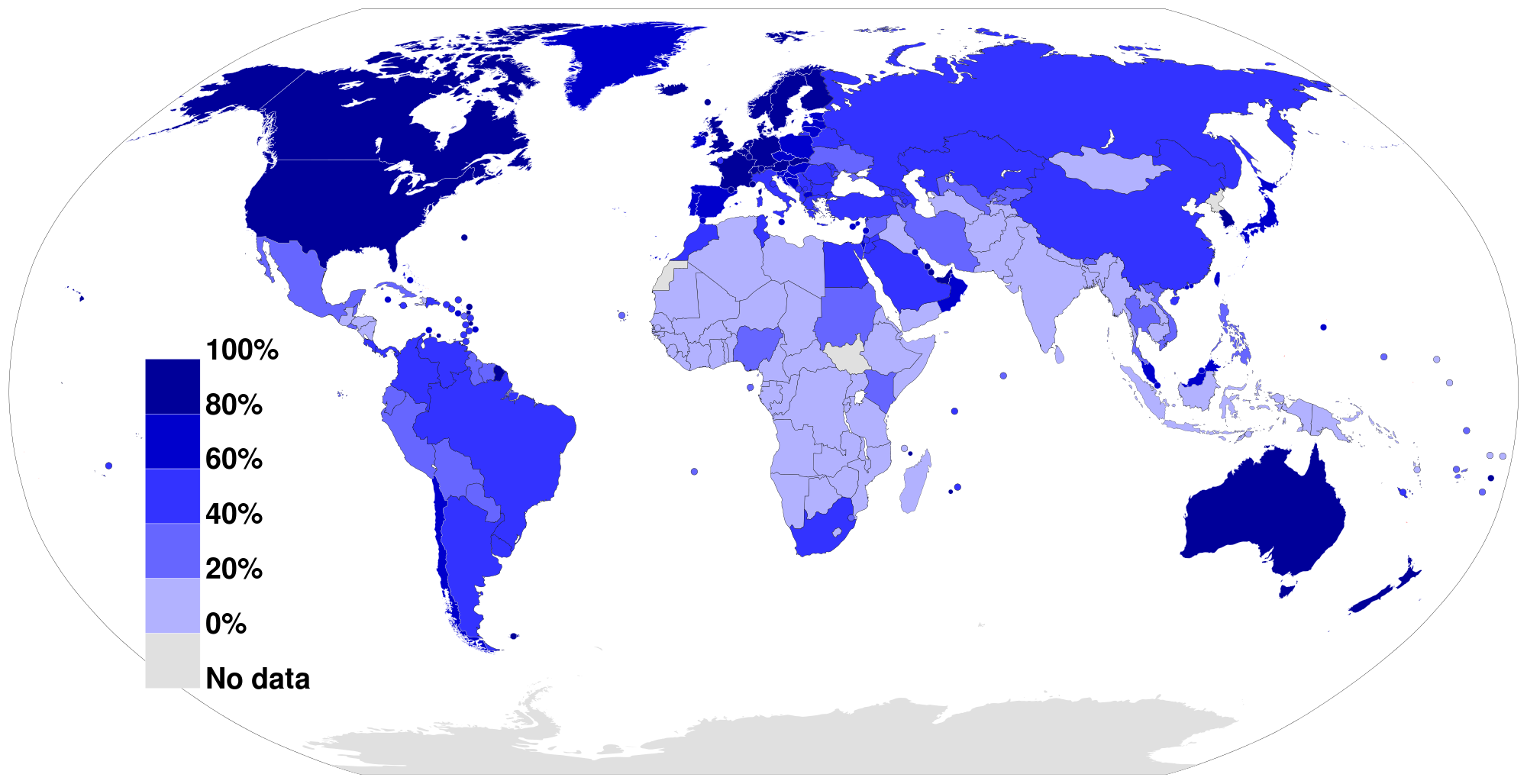
It was begun by a realization prompted from seeing a map announcing the future re-engineering of the San Francisco Bay, reprinted in the Oakland Tribune, and contemplating the possible extent of changes that would reconfigure the shore of an area that drains up to 40% of the land of the entire state, that prompted the preservation of its open waters. The prospect of such a radical remapping of the region’s open water–more than its shores alone–invested the planning map drawn up by the Army Corps of Engineers triggered the attention among three women over tea, contemplating the reduction o the Bay–and the beauty of vistas from their windows–against the areas up for potential expansion, that encapsulated and condensed the areas the Army Corps identified as susceptible for landfill.
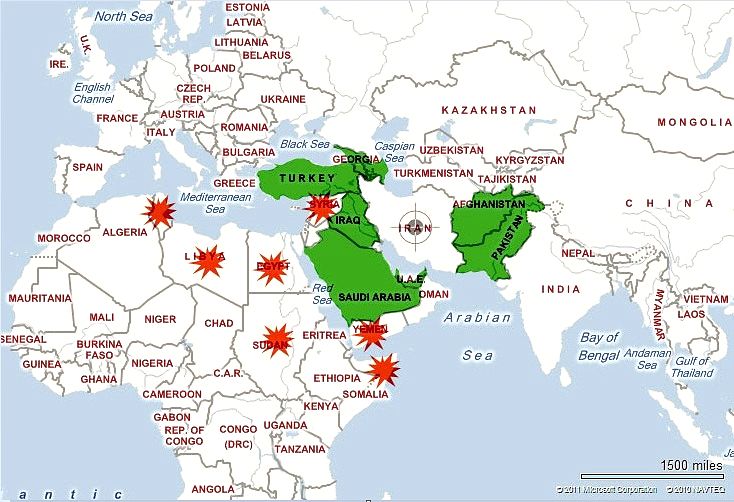
The simple two-tone graphic generated a broad awareness of the region at a significant time in urban development, and helped to brakes on the inertia behind the radical reengineering of the bay as a shipping lane. The Save San Francisco Bay project that was the contribution of three women tied to educational groups and educators at the local university by marriage mobilized public opinion around the preservation as the wife of the past University President, Kay Kerr, herself “very disturbed about the filing of the bay” assembled a group disturbed by how “ongoing filling of the edges of the bay for airports, harbors, subdivisions, freeways, industrial sites and garbage dumps,” threatened to transform its open waters to a biological desert. Aptly, she calling an assembled group of conservationists and neighbors to order a meeting in a home overlooking the bay by a map of a produced by the Army Corps of Engineers calling for adding landfill that would leave “little more than a ship channel down the middle,” as she put it.

Proposed 1959 “Reber Plan” for Barriers Expanding East Bay Piers as Shipping Corridor

The City of Berkeley eager to expand to provide more housing, sought to double in size by filling in 2,000 acres of the bay shallows. Indeed, as late as 1980, the City of Berkeley hoped to expand the bay waterfront into a shopping center, resulting in the public trust over tidelands of the East Bay that preserved them from bay fill almost two decades later, in a suit that one of the first legal advisors of the Save the Bay Association directed as amicus curiae, in City of Berkeley v. Superior Court (1980) 26 Cal.3d 515, continuing to defend the bay wetlands’ integry against a defined shoreline.

The ability to stop the projected bayfill set a precedent that altered the relation of citizen groups and ecologists to the preservation of coastal habitat and parkland. The power of the rhetorical contrast between two maps of the future framed a vision of the local environment and access to a coast in an effective manner that one can forget looking out over the living landscape of the Bayshore Trail, but that provides a powerful reminders of how maps mobilize consensus and embodied the wetlands and tidelands as a features we have only more recently detected in the Bay as a wetlands ecosystem, truly far from built space.

Continue reading

1 Comment

March 4, 2013 · 11:02 am