Category Archives: boundaries

The Office of the Geographer and Art of the Deal

Plenty of blame has been going round this election cycle on the Democratic Party for having given material assistance–if not tacitly supported–in the bombing of Palestinian settlements in Gaza by Israeli Defense Forces. The drumbeat of disquiet about the Democratic President for lending apparently unfettered support to Israeli bombs and air force in destroying the Gaza Strip is not only a cause for pronounced disquiet. The destruction may be a determinant factor in an election cycle that could open floodgates to untold ramifications of both foreign policy and domestic inequality. But as the world focussed its eyes on Gaza, we have taken our eyes off Trump’s promotion of a deeply symbolic if imaginary tie to Israel, and Israeli claims over Palestinian lands.

This tie is not only tied to imperial legacies or geopolitics, but stands to gain a new zeal, melding the early Zionist idea of a “greater Israel” with American expansionism and a Christian Zionism of peculiarly Trumpian stamp. Many believed that Netanyahu, confident in the hopes of Trump’s future victory offering a basis to enter the once and future President’s good graces, and led Thomas Friedman to argue that Netanyahu only suggested to be interested in a ceasefire in Gaza in order to achieve “total victory” of hoping to occupy both the West Bank and Gaza in the near future by escalating the war in Gaza before Election Day, in order to proclaim his ability to work toward “peace” after a Trump victory, having established the transactional value of reoccupying Gaza, while helping to return Trump to the White House again.

Despite the global revulsion at the killing of civilians, forced migrations, and violent atrocities, it is so difficult to process for the violence of suffering we may forget the tactical role maps of supposed peace “solutions” played preceding these struggles–and indeed how “remapping” the Middle East to defuse its conflict only served to sanction or endorse an unprecedented explosion of violence. Did the maps that the Trump White House created, assisted by the Office of the Geographer in the U.S. State Department, help to sanction a ground plan to drivePalestinians from Israel’s borders?The cartographic framework that President Trump deceptively promoted in his first Presidential term as a “Deal of the Century” was boasted to be a gift to the Middle East remade the borders and normalized the rebordering of Israel in quite violent ways. The consolidation of expansive borders was done quite aggressively-by invoking far-right Israeli ideas of territoriality of scriptural precedent removed from the ground, rooted in myth more than precedent. Trump bombastically magnified a “deal” that was of course both one-sided and deceptive, not a treaty or process of negotiation, and perhaps never really or truly on the table; it demanded few sacrifices if any from Israel even as it promised it was an end of sectarian violence.

The rather crude maps not based on GPS and drawn on paper napkins that came out of the Trump White House however became a basis for a “deal” in the Middle East gained a tactical role as Trump positioned himself as master of the “art of the deal” able to bring peace to the Middle East, born of a transactional logic of personal negotiations. The improbable prominence of Jared Kushner as alleged architect of a new “peace plan” long elusive to previous American administrations balanced a promised port, access to the River Jordan, and a cut-out boundaries as a viable future for the State of Israel, constraining Palestinians to islands of green. The “Plan,” as it was known, was never taken that seriously, if promoted as a once-in-a-lifetime “Deal of the Century, was drafted with no input from Palestinians, and ignoring all stated desires, but offering several carrots in mistaken hopes to end diplomatic stalemate to restrict Palestinians to a reduced presence in the new State of Israel. If President Trump is best known perhaps for his dictum that a state without clear boundaries is not a state, the Palestinian population would not be in defensible boundaries, or any boundaries, but linked by a set of bridges, tunnels, roads, and islands, without coherence in this “visionary” plan.


President Trump remained oblivious he hadn’t addressed the situation in a meaningful way: “All prior [American] administrations have failed from President Lyndon Johnson,” he said beside Netanyahu in 2020, “but I was not elected to do small things or shy away from big problems.” Netanyahu was overjoyed at a man he praised as “the first world leader to recognize Israel’s sovereignty over areas that are vital to our security and central to our heritage”–obfuscating words about the protection of a barrier of security in Israel’s bordering with Palestinian populations, and offering no “right of return” for Palestinians expelled from ancestral homes in Israeli territory, and offering Israel “access roads” across and between Palestinian enclaves.

The hope that if extending Israeli sovereignty “to Judea and Samaria” would anger the Palestinians, all bets were that the Palestinian Authority would in the end “maintain a certain level of security cooperation with Israel to prevent the strengthening of Hamas–as if the calculation of according Israeli sovereignty would be a step toward “peace” ensuring “dignity, self-security, and national pride,” offering a prosperity that could be fashioned out of whole cloth and promises of independent economic wealth.

Trump” Peace Plan for Middle East, 2020

Since then, despite–or perhaps because of–the incomprehensible scale of tragedy and violence in Gaza and much of the Middle East, we have continued to consume our information by infographics and maps by territorial maps that foreground borders, as if this was a geopolitical dispute about territory, in ways that ignore how these are a new war of bordering–and often mythic borders, as much borders that can be mapped or reflect the situation on the ground, as if legal precedents–and how far we have come from a war that new borders might resolve. The very maps we use to help process attacks that are cut as border-fighting often destabilize the viewer’s perspective on the Middle East, distrusting Israeli politics, and the tactical goals of the Israeli army–and rightly so.

And although Kamala Harris has refused to distance herself from the War in Gaza, and affirmed the policy of providing support for Israel, even as the United States has little apparent leverage to shape Israeli aggression, despite her empathy for Palestinians, the endorsement of robust military action of Israel to defend its borders, and to attack trans-border threats, not only to vilify and condemn all anti-war protest with antisemitism, as part of a transnational “Hamas Support Network,” by the President who authorized annexation of the West Bank, endorse the annexation of the Golan Heights, and relocate the United States embassy to Jerusalem–the strident pro-Israel branch of the Republicans Overseas promise to secure a remade the map of the Middle East with the active contribution of a new Republican President who proclaims himself “Israel’s Best Friend” will be far more ready to supply Netanyahu with arms to defend borders and offensive weapons rather than stop their flow. If globalization ensures every point in the world can be more immediately connected to any other than ever before, a President promising to encourage Israel defend its borders and “finish the job” of extermination in Gaza blurs America’s borders with the defense of Israel’s borders and a license for far more escalated violence. The readiness with which Netanyahu has praised Trump as a “savior” for Israel, amidst the increased violence on three fronts of war.

A large billboard posted by the Ayalon highway in Tel Aviv, in support of Republican presidential nominee and former US president Donald Trump, October 30, 2024. (Avshalom Sassoni/Flash90)

Tel Aviv, October 30, 2024/Avshalom Sassoni

Donald Trump’s vaunted promise to “make America great” was more closely tied to the role of the United States in Middle Eastern politics than has been acknowledged. Trump’s “Deal” replaced true negotiation with a set of illusory promises of economic benefits, investments, and technical know how. The offering of this “deal” was presented in patronizing terms, economic advantages and promises was all Trump offered to the Palestinians, a carrot of future investments. Could it be that the death of any two-state solution lay in the ultranationalist ideologies of Trump and Netanyahu, whose respective ultranationalist ideologies, for all their differences, invoked state boundaries with massive blind spots to the situation on the ground?

The promotion of the rights of an army of settles to expand a protective buffer or envelope for Israel, the hundred mile envelope Customs and Border Protection and the Border Patrol conducted warrantless searches from any “external boundary” of the United States strips innocent people of constitutional rights–limiting constitutional rights along the entire coastlines as well as southern border, allow new technologies of surveillance in a range of technologies as a militarization of the border. If the battery of surveillance technology lack geographical limits, the border zone expanded by settlers long militarized an expansive boundary of the Israeli state, in powerful cartographic genealogy of the demands for a “Greater Israel”–a concept that found surprising acceptance and endorsement from the very individuals Donald Trump would come to nominate for key roles in his cabinet upon winning the 2024 Presidential election, Pete Hegseth for the Department of Defense, who was proposed as a key negotiator in any future military deals with Israel, and Mike Huckabee, the former Arkansas Governor and Baptist minister reborn as political commentator as the next U.S. Ambassador to Israel, who has been long committed to establish Israeli sovereignty over Gaza, impressed by the “overwhelming spiritual reality of understanding that this is the land that God as given to the Jews” while hosting tours of srael hundreds of times since the 1980s–and arguing that the very concept of Palestinian Identity is not a valid concept of governance, but invoked only as “a political tool to try and force land away from Israel.” All this is well-known. But the circulation of this sentiment among American Baptists and evangelicals across the Atlantic to reinforce or grant currency to resurrect a zombie idea of Greater Israel in the current Middle East is beyond imperial, but is a symptom of globalization, if not a symptom of the “shallow state” enabled by drafting lines of polygons in crude overlays, as if toponymic tropes of biblical tropes respond to current crises.

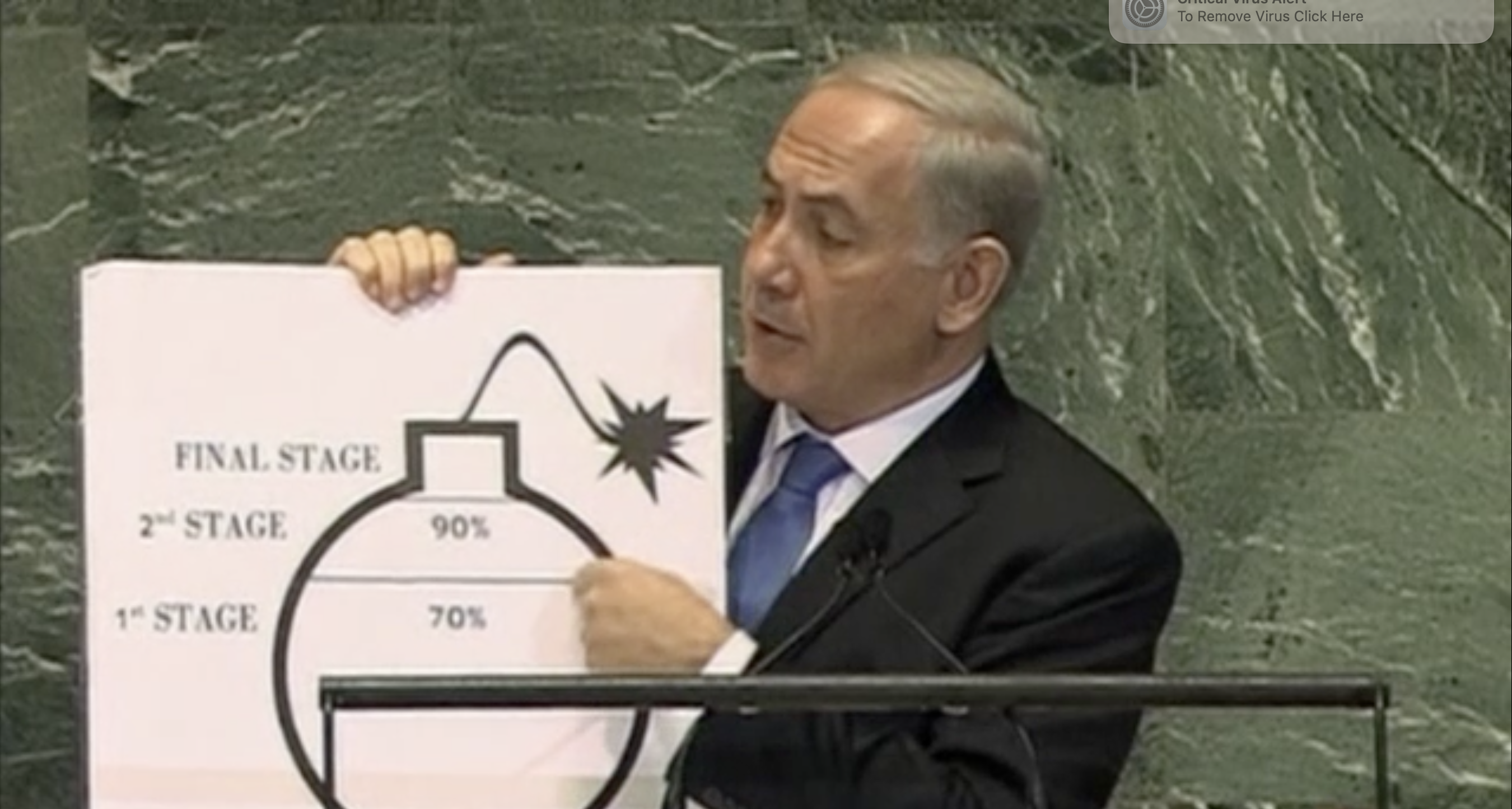
The conceit of a Greater Israel, at the start of the twenty-first century, is a symptom of the confused legacies that were promoted by Donald Trump and Co. to give license to the expansion of military might over Gaza, as much as the alleged failure of the United States to intervene. Would the idea of intervention even seem possible, once the entertainment of the permission to expand Israel to the West Bank and the Mediterranean was floated in the first Trump Presidency in the maps that the Office of the Geographer at the U.S. Dept of State had given their imprimatur? The maps that were made by the United States, as much as displayed by Benjamin Netanyahu to the U.N. General Assembly, suggest the deep origins of the expansion of Israeli territory in perhaps the shallowest corner of the first Trump era, where the boundaries of Israel were tacitly expanded and the two-state solution taken off the table as a desideratum. The pro-settlement ideology Huckabee has openly espoused and literally preached rests on the belief that expulsion of all self-identified Palestinians from the biblical bounds of Israel is part of a preordained divine plan for Christ’s return, opposing any two-state solution–at least, “not on the same piece of real estate.” The old conceit of “sovereignty over Judea and Samaria,” regions that did not exist on earlier maps of the Middle East, is presented as a decision “for Israel to make,” even if they were not named in any recent maps of the region, as the future Ambassador described himself as “very pleased that [Donald Trump’s] policies have been the most pro-Israel policies of any President in my lifetime.”

Applying Israeli Sovereignty to Parts of Judea and Samaria according to the U.S. Peace Plan – Implications

President Trump Announcing Comprehensive Settlement Between Israel and the Palestinian People, January 29, 2020

The genealogy of these “pro-Israel” ideas rests on a reconstruction of a longtime US-Israel alliance in the optics of the rise of apocalyptic rhetoric far different from the afterlife that the Cold War granted Imperialist ideas. (The central crux of an oxymoronic credo of “Christian Zionism” denies blame or agency for the killing of Palestinians in the Gaza War, and whitewashing of Likud regime policy with Christian millennialism.). It is also less of a “vision forward” than resting on the recycling of some of the most toxic concepts of nationhood that demand to be fully examined to be understood. Although Huckabee has claimed that Trump will assemble a “pro-Israel dream team” to ensure that nothing like the bloody massacres of civilians in the invasion of Israel on October 7, 2023 will ever occur, the notion of turning the page on October 7 seems designed to demonize the Palestinian slogan, “From the River to the Sea” to an excuse to obliterator the legacy of Palestinian presence from the map–and to assert, as Huckabee claims, that the legitimacy of biblical terms “like ‘Promised Land,’ and ‘Judea and Samaria'” hold the significance “that live from time immemorial,” a nomenclature that the United States has had no small part in perpetuating.

The castrophic events foretold in the Book of Revelations were not close to the ideas of right-wing Zionists who affirmed the boundaries of a “Greater Israel” as the historic borders of a sovereign state. Promoting expansionist vision of territorial maximalism of a Jewish state beyond the boundaries of a Palestinian Mandate, and across the River Jordan, of biblical derivation, was first championed by the Right Wing Zionism before the state of Israel was founded, informing the current demands to annex lands beyond mapped borders, if they now neatly dovetail with demands for security and with evangelist eschatology. Expanding the current boundaries of Israel in the ultranationalist vision of a greater Eretz Yisrael beyond ends of security, power, and reflected in the affirming state boundaries in Israel? The ultra-nationalist vision of far-right supporters of a fixed protective barrier securing a frontier meshed with the resurrection of the map of an expansive Greateer Israel advertised “The Only Solution”–the sole solution–years after the Final Solution imagined the idea of a world without Jews set sights on a Greater Israel–

Irgun Poster from the Military Organization of Eretz Israel, beyond Palestine Mandate

–whose decisiveness underlay the cartographic genealogies of ultranationalist thought from the time former Irgun like Menachem Begin entered Israel’s government, advancing advancing gradual annexation by settlers of “lost” lands. The map produced in Central Europe in the post-war period of the 1940s set a territorial goal. If the constitutional silence on territorial borders in Israel’s constitution is invoked as berth preserving the vision of “Greater Israel” in Israeli politics, the ultranationalist ideology of America First ideology invokes an expansive border as a site for federal law enforcement of a “virtual border fence” of Border Patrol’s federal mandate has compromised individual liberties in Donald Trump’s vision of the United States in the Trump era, Likud nourished outwardly expansive borders, as if resurrecting a zombie idea from the dead, but one of deep biblical resonance with the land granted Abraham’s children “from the brook of Egypt to the Euphrates,” accomodating the territorial given to the children of Abraham and Israel over generations to the new language of nations.

For this map–that places Palestine beyond the borders of Israel, in Lebanon, Jordan, and an “Arab Palestine” to the south of “Eretz Israel” of bright blue hue, that encompasses in its midst the biblical territory of Jerusalem, and the Jordan River, and assumes an almost cloak-like form, in a land map recalls modernist abstract expressionism argues that lands promised to the children of Israel when they left Egypt in Exodus or Deuteronomy offers a template to a modern Israeli state–“two banks the [River] Jordan has./One belongs to us; the other does as well,” read lyrics at its base, redrawing state borders already being negotiated in interwar years.

Greater Israeli from the Nile to the Euphrates, 1947

Which returns us to the telling erasure of a Palestine on the River Jordan’s left bank in the map that Prime Minister Benjamin Netanyahu, Begin’s heir, brought to the United Nations’ General Assembly to make his case While the Democratic presidency is faulted for pursuing a “deal” rather than supporting the future rights of a Palestinian state to exist, there is a stunning amnesia of the promotion of the language of a “deal” in the maps designed and issued in the architect of the Art of the Deal, who set the terms for a “deal” that would given Palestinian territoriality, delimit Palestinian rights, and offer an upper hand to the Israeli state. President Trump’s vaunted “Deal of the Century“ has perhaps been overshadowed by the violence of war, but is a “deal” for which we can find ample fingerprints–and indeed a famous scrawled signature!–among paper maps not only props of statecraft, but frameworks with power to re-shape Middle Eastern politics on the ground. These are maps that echo ultranationalist demands, and echo the forms of ultranationalism that became platforms he articulated in his first Presidential campaign.

As props, these maps–in tiresome ways–demand to be traced as symptoms of the personalization of the political, and indeed the entrenchment of the United States in projects of remapping the Middle East, as much as personalized as a “love affair” between Netanyahu and maps, as Middle East Eye has with accuracy recently observed, noting the “history of using controversial maps” in public presentations to international bodies and the Israeli press, while not fully underlining the personal sanction that the cartographic gifts from President Trump provided Israel’s Prime Minister both to promote his vision of Israel to the world, but a platform to rehabilitate Netanyahu’s political career.
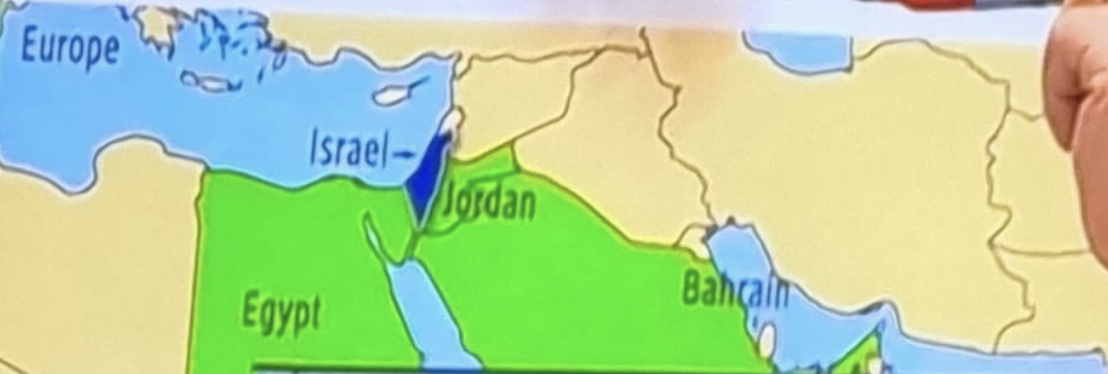
The oddly vivd green-hued map all but eliminated Palestine from the Middle East. The blue island of Israel placed “Palestine” in vivid green nations mapped as Palestinians’ actual homes: “Egypt,” where potentially over 270,000 Palestinians live, Jordan, home to 3.24 million Palestinians, and Saudi Arabia, home to a community of 750,000, and quite vocal as to Palestinian sovereignty–as well s Bahrain, where pro-Palestinian advocacy has been intense among its pluralistic population and Sunni Arabs among the most influential groups–and Sudan, where many Palestinians reside.

The color scheme of the political lay of the land erases Palestinians, perhaps, in a bright blue Israel which lies like a mosaic amidst the clear borders of nations. But the coloration of the political lay of the land is slippery. Such vivid green, long a color symbolizing allegiance to the cousin of the Great Prophet, Ali, gained status since the prophet’s lifetime as a the important color in Islam and the green spirit, Al Khader, and a sign of the vitality of Islam alive from the rich cultural Fatimid era up until the arrival of western crusaders. Netanyahu rose to political prominence, by no coincidence, amidst this improvised patriotic flag-waving in the occupied territories when flying the flag’s colors was forbidden in Gaza, the West Bank, or Golan Heights by Israeli law–provoking the improvised creative display of its colors in laundry hanging outside windows of private residences. If the same flag led the watermelon to become a symbol of resistance, combining the four colors of the flag, the red marker that Netanyahu used before the United Nations to draw a “trade corridor” across an Israel straddling the Mediterranean Sea to River Jordan “map” Palestine outside of Israel’s borders.

Netanayu and ‘The New Middle East’ at 78th session of United Nations General Assembly/September 22 2023 AP/Richard Drew

The vivid light green color of “The New Middle East” that Netanyahu crossed with a red marker was no longer needed to be a theater of war, but could be transformed to one of economic vitality, as if coopting the “green fields” in Safi al-Din al-Hali’s verses Arab nationalists first coopted in the early twentieth century and by 1947 Ba’athists and members of the Arab League took as the national flag of Palestinian people–“White are our deeds, black are our battles,/Green are our fields, red are our swords.” Netanyahu wanted to place these fields securely behind the borders of Jordan, Bahrain, Egypt, and Sudan, not in Israel that lay on a channel of trade to Europe. This quite rebarbative map–as others that Netanyahu brought to the General Assembly of the United Nations from around 2018, and the maps he continued to display through 2023, as if to make the case Israel demanded to be seen as a “normal nation” among nations. But increasingly it may indeed seem to conceal it is not–indeed, Palestinian residents in Israel are not deserving of any clear political role in the New Middle East.

Netanyahu Addresses General Assembly from UNGA Lectern September 22, 2023/AP/Mary Altaffer

The geopolitical situation as he spoke was extremely complex, but the presence of Palestine was masked in mapping Israel by a blue island by the River Jordan held before the General Assembly, in ways oddly incongruous with the image of global peace on the lectern from which he spoke. The map clearly showed a West Bank and Gaza under Israeli control, even though the situation on the ground as he spoke was one of fragmentary political control by both Hamas in Gaza and Fatah in the Jordan Valley, largely subject to the “supervision” of Israel’s government. The complex administration of the areas of Fatah control in the West Bank and Jordan Valley contrast to muted blue areas jointly administered by Fatah and the Israeli military, and a light green sea of Israeli military control surrounding the lands of settlers in the Jordan Valley If the blue regions were subject to joint administration by Fatah and the Israeli army, light green showing areas of Israeli military control, rather than administration by a civil government, the airspace of the entire region was administered by Israel, but the entire region not controlled by any means by an Israeli state.

Evan Centanni, Administration of Land October 6, 2023,/reproduced by permission of Political Geography Now. Sources: B’Tselem, UN, Gisha, city population.de

Why was such a mixed administration around areas of Fatah control masked before the General Assembly? Was this intended to normalize the Israeli control over a mythic “Greater Israel” or was it just a map? The map Netanyahu held proudly of The New Middle East as if teaching a class without familiarity with world affairs. It was a sort of magic trick as much as informative, and masked actual bounds. It successfully concealed the violence of apartheid relations, on the one hand, and erased historical Palestinian demands, simplifying history immediately raised eyebrows by rendering a “New Middle East.” The map that the Prime Minister brought to New York while his generals planned the invasion of Lebanon was reflecting back at Americans a recognizable coinage of then Secretary of State Condoleezza Rice, who in late July 2006 had vouched during an earlier invasion of Lebanon with American arms–and just before the United States invasion of Iraq–the bombing campaign focussed on freeing Lebanon of Hezbollah that targeted terrorists with unprecedented force marked “the birth pangs of a New Middle East” able to accelerate a “freedom and democracy agenda,” rather than one of dislocation and destabilization. Secretary Rice had promised a “domino democratization” across the Middle East would result from assisting these “birth pangs” by “pushing forward to the new Middle East, not going back to the old one.”

Secretary Rice invoked the groundless discredited rhetoric of “dominoes,” not as about to fall to communism but as an extension of a “green revolution” in Arab states that would alter the geopolitics of the Middle East in definitive ways to the benefits of Americans. Armed with these persuasive tools, Rice cast extirpating Hezbollah not as violence but as a “moment of opportunity,” advocating the chance to intervene decisively to remap the geopolitical center in the Middle East among Egypt, Jordan, and Saudi Arabia during the war between Israel and Hezbollah–in place of the “old Arab center,” and leaving the question of the future of Palestine off of the political map, remapping the Middle East from afar for American eyes. Indeed, the affirmation of Jerusalem, a divided city with a large Palestinian presence in the East, which Israel considers critical to its territorial integrity as a capital, was surrounded by light green territory under Israeli military jurisdiction, beside a mosaic of light blue regions jointly administered by the army and Fatah.

Territorial Administration around Jerusalem, August 2023/Evan Centanni, detail of above

In ways that obscured this complex balance of shared authority and jurisdiction, the map of “the New Middle East” Netanyahu presented was not a return to the rhetoric of George W. Bush, but refracted through the hardball politics of redrawing of boundaries encouraged by Donald Trump. Was not the map of Jordan, Bahrain, Egypt, and Saudi Arabia but an updated version of that hope? Netanyahu may have implicitly told the United Nations that Israel, extending from the Mediterranean waters to the River Jordan, was already surrounded by states of Palestinian populations–that Palestinians, in other words, who often designated themselves by light green, had “their” states already. The Palestinian flag of white, green, and red, prominently included green to designate the survival of nationhood of which medieval poet Safi al-Din al-H’ly rendered an icon of three colors–“White are our deeds, black the fields of battle, our pastures are green, but our swords are red with the blood of our enemy.”

The tricolor was proscribed from flying in Palestinian lands– Gaza, the West Bank, and Golan Heights–for the generation,1967-1993, as Netanyahu rose to political power in Likud; the cartographic symbology seemed coopted in the map Netanyahu conspicuously displayed at the United Nations, placing Palestinian pastures beyond Israel’s borders. In the “New Middle East,” Israel possessed the Golan Heights and lands of the West Bank, the reduced Greater Israel is far more limited scope than Jabotinsky’s vision, but integrated in a community of nations–imagining a new “security envelope” that expanded Israel’s territoriality to the West Bank.
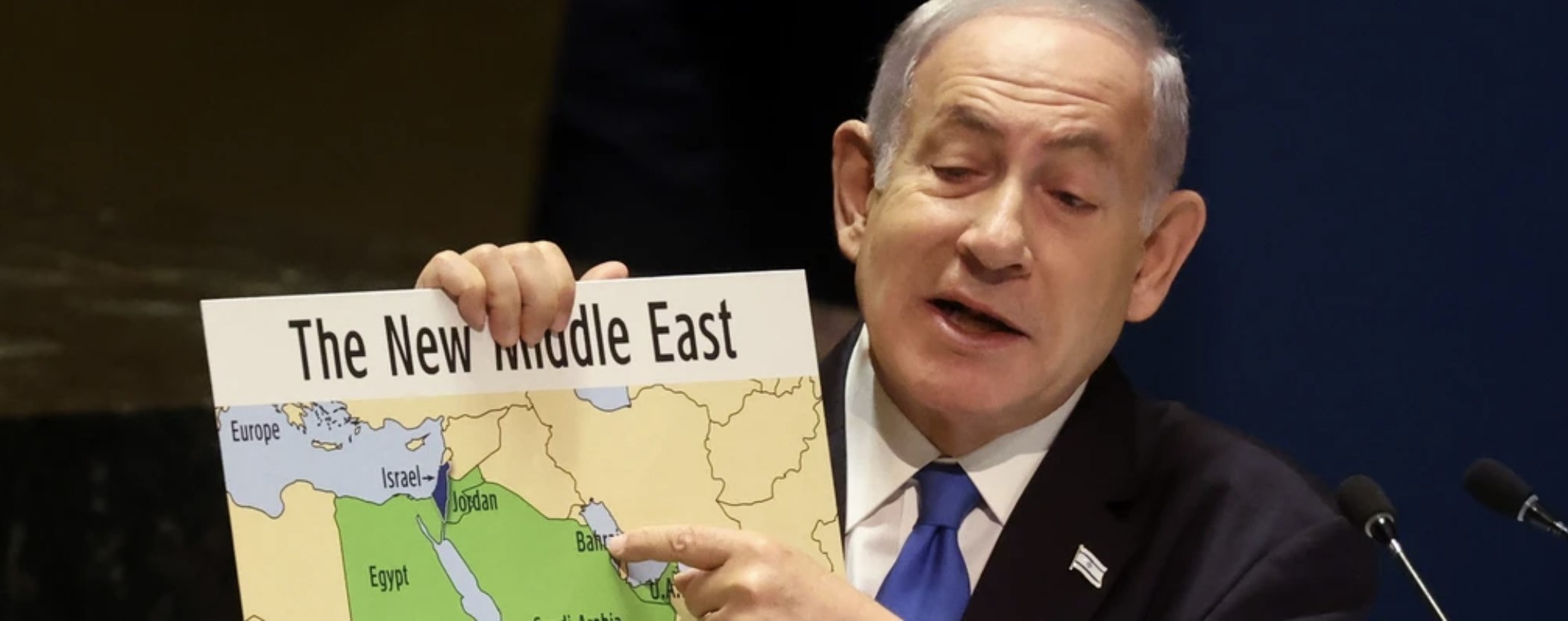
Map of “The New Middle East” Netanyahu Prominently Displayed to Address General Assembly Sept. 22, 2023/ Spencer Platt/AP

The Israeli Prime Minister was using the map to demonstrate a world view, more than a regional map. No map is all-seeing, objective, or all-knowing, but maps shape reality as knowledge-making systems: the powerful map green seemed to illustrate an Israeli state surrounded by the Palestinians with which Israel could live. The security of such secure bounds was a creation of the Trump presidency, but we may have forgot how keenly Trump fed that new map of the Middle East to Netanyahu in transactional exchanges to maintain his political survival, navigate a future with far right-wing allies, and win a second term. A sort of “Dance of Death” had indeed emerged between this remapping and remaking of the Middle East in the Trump Presidency, that used maps to redefine reality, and indeed maps to redesign political boundaries from an increased removed from the ground. Yet the situation was quite different, PolGeo reminds us, on the ground.

Administration of West Bank October 6, 2023, Evan Centanni/used with kind permission of Political Geography

The map of a Greater Israel became a sacred icon for the new hardball politics of the Middle East parallel how Trump employed crude maps of the US-Mexico border maps to advance the populist politics of a nationalist movement. In the map Netanyahu used to address a mostly empty halls of the General Assembly in late September 2023, Lebanon was notably not marked as a nation. As the map showing the boundaries of Israel after the first Arab-Israeli War in 1948 Netanyahu displayed incorporated the West Bank, as if to erase history, the “New Middle East” resuscitated the ultranationalist vision of an Eretz Yisrael— a “Greater Israel” including the West Bank and Golan Heights. The “map” was in fact less a nation than a concept of a nation, but the ultra-nationalist older right wing Zionist conceit quashed any idea of negotiating about a Palestinian state.

The expanded territory of Israel symbolically expelled the 1.7 million Palestinian residents of Gaza–before the October 7 invasion, retaking the ancient “territories” of Judea and Samaria, west of Jerusalem, to use the scriptural place-names of ancient biblical Kingdoms–as if those were the true territories the nation of Israel was historically destined to include. Entrusting an army of settlers to annex over future generations lands claimed as lying within Israeli territory seems to naturalize a territoriality by a map of transhistorical verities, rather than of political process or human rights.

“The New Middle East” Netanyahu Displayed at U.N. General Assembly on September 22, 2023, detail

Netanyahu’s notorious use of maps noting “military control” of Gaza’s borders by Israeli forces, like the these maps that extended Israeli territory to the West Bank, make offensive arguments of silence by erasure. They offer templates for failing to recognize Palestinian presence. If Zionist groups had earlier at times claimed the Transjordan, or historical Mandate, to imagine an expansive ‘Greater Israel”, the Likud Party set its sights on settling the West Bank, and even resettling a Greater Israel that included the Gaza Strip and Golan Heights–a far right conceit that extended beyond Israeli borders to the Transjordan and Sinai Peninsula, its capital in an undivided Jerusalem. As much as geopolitical intentions were ascribed to Israel of territorial ambitions to settle the region from the Nile to Euphrates, little different from how the Israeli flag was allegedly interpreted by leaders of Hamas as the “map” of a region extending from the Nile to Euphrates that included Jerusalem at its center, as claiming territory from the Mediterranean to the Jordan.

The actual proposals for securitized corridors around Gaza bounded Palestinians outside Greater Israel, after the armed reprisals for Hamas’ invasion of Israel, dismantling Hamas’ presence in the region and policing the boundary between Egypt and the Gaza Strip under Israeli control in future years, so that it is residents are entirely bordered and contained by Israeli military authorities. The demand to block what Israel treats as a dangerously transnational space–the very route by which arms, weapons, and bombs entered along the only remaining corridor of Gaza to the outside world–is cast as an objective of the Gaza War, demanding control of a narrow space lest it continue to provide “oxygen” for Hamas in the Gaza Strip., as if the border crossing Israelis have held since May provides a sort of tourniquet and security envelope for the future. Is the image of protective corridors not a Trumpist vision of space of a militarized border zone?

 “Philadelphi Corridor under Israeli Military Control”/Ohad Zwigenberg (AP)/September 2, 2024

But the use of these maps to normalize aggression–perhaps even raising questions of a future Israeli settlement of Gaza that has recently emerged as a far-right agenda–provoke and enrage only since October 7, 2023. The truly mythic geography that placed Jerusalem at the center of a “Greater Israel” could not but include the mythic, biblical kingdoms of Judea and Samaria–not on any actual political maps, but nourished in ultra right-wing Zionist political rhetoric and increasingly close to platforms of Likud. The recognition of Jerusalem as a capital of Israel early in Trump’s presidency responded to an old demand that the divided city be recognized as a national capitol. In announcing a decision to place the American Embassy in Jerusalem from he White House had sent shock waves around the Middle East. For he seemed consciously to recognize and proclaim a new order of American foreign relations in 2017, by announcing in a news conference “Today we finally acknowledge the obvious: that Jerusalem is Israel’s capital” as “nothing more or less than a recognition of a reality.” But no map, of course, is ever merely a reflection; as much as a recognition, maps offer a shaping of reality.

The map that officially designated Jerusalem as Israel’s capital–long a demand of the Israeli state that American governments resisted–was an affront to allies across the Middle East, and remaking of decades of rather delicate foreign policy, opening fault lines between Palestinians and Israelis, and making the United States an outlier among nations–even as Trump deceptively cast it as “a long overdue step to advance the Peace Process,”– even as he recognized having rocked the international boat while appealing to “calm, . . . moderation, and for the voices of tolerance to prevail over the purveyors of hate.” By November 17, the United Nations, over American opposition, declared void any action by Israel to impose its laws, jurisdiction, and governance over Jerusalem as “illegal and therefore null,” invalidating all authority of the “occupying power” and demanding withdrawal from Occupied Territories. Netanyahu responded by the bluntly drawn borders of a counter-map.

American Shift of U.S. Embassy to Jerusalem, Lending Recognition to Israel’s Declared Capital City/NY Times

Who were the “purveyors of hate” but the Palestinian people? The maps that were provided by the Office of the Geographer of the United States of the future “State of Israel” in the Middle East curtail hopes for a Palestinian state, if not provide grounds for the disarming arrogance with which Israeli right-wing forces seem to have adopted an open policy refuting the right of Palestinian settlements or states as it situated the U.S. Embassy in Jerusalem, only recognized as the Israeli capital as President Trump single-handedly issued a Presidential proclamation in 2017, shortly after his election, ordering relocating the embassy be situated in Jerusalem, to the glee of Prime Minister Netanyahu, who won a sort of prize from the United States in official placement of a five-pointed star designating a capital in a city that sparked such sudden protests across the Middle East in early December, 2017, the United Nations Security Council immediately condemned the proclamation as destabilizing of any peace process in early December 2017.

Trump saw the early declaration of a new site for the embassy as purely “transactional” more than political or ideological–“today, I am delivering!”— fulfilling a campaign promise he long ago made the late Jewish American financier Sheldon Adelson, who with his Israeli-born wife made it a hobby of vanity to meddle in Israeli politics and media. Trump wanted to recognize Jerusalem as Israel’s capital, he argued, before the Israeli-Palestinian conflict was resolved, echoing Sheldon and Miriam Adelson’s intense opposition to a two-state solution from 2017. The opposition grew into an agenda for the Israeli-American Council political lobbying group, arguing against history “the Palestinians are an invented people” to promote the right of return of diasporic Jews to Israel–promoting the Birthright Foundation with a half a billion dollars of their fortune to take Jews from across the world to visit the Holy Land to strengthen ties to Israel. By inverting Jews’ historic expulsion from the Roman Empire’s borders forbade Jews led to settle the expanded boundaries: whereas Romans forbade Jews to settle in Jerusalem or Palestine, the call of return inverted the wrongful diaspora created after wrongful blame for Hadrian’s death, the expulsion from the Empire’s borders ca. 133, effecting a “return” from the Empire’s edges in Egypt, Babylon, Italy, Spain, Eastern Africa or India.
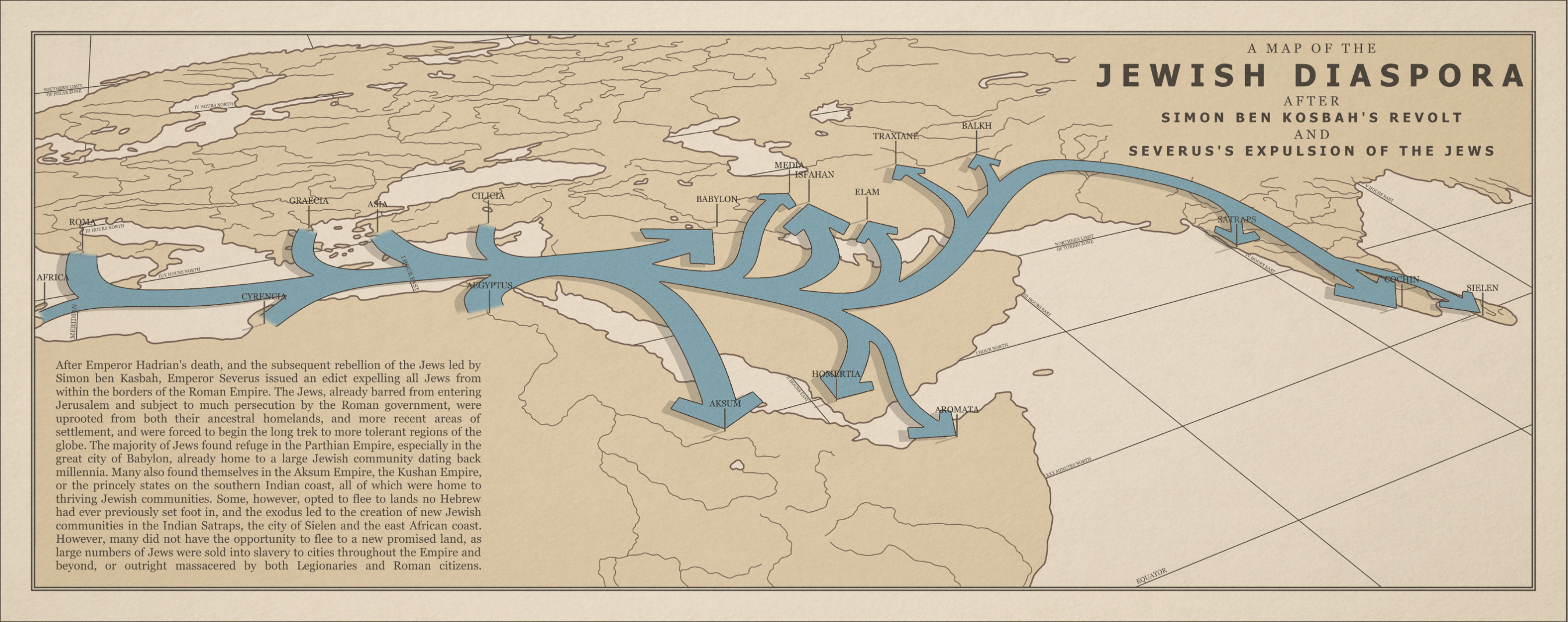
Imagined Trauma of c. 130 AD Jewish Diaspora from Severus’ Expulsion of the Jews from the Roman Empire/ Radioactive_Bee/r/imaginarymaps

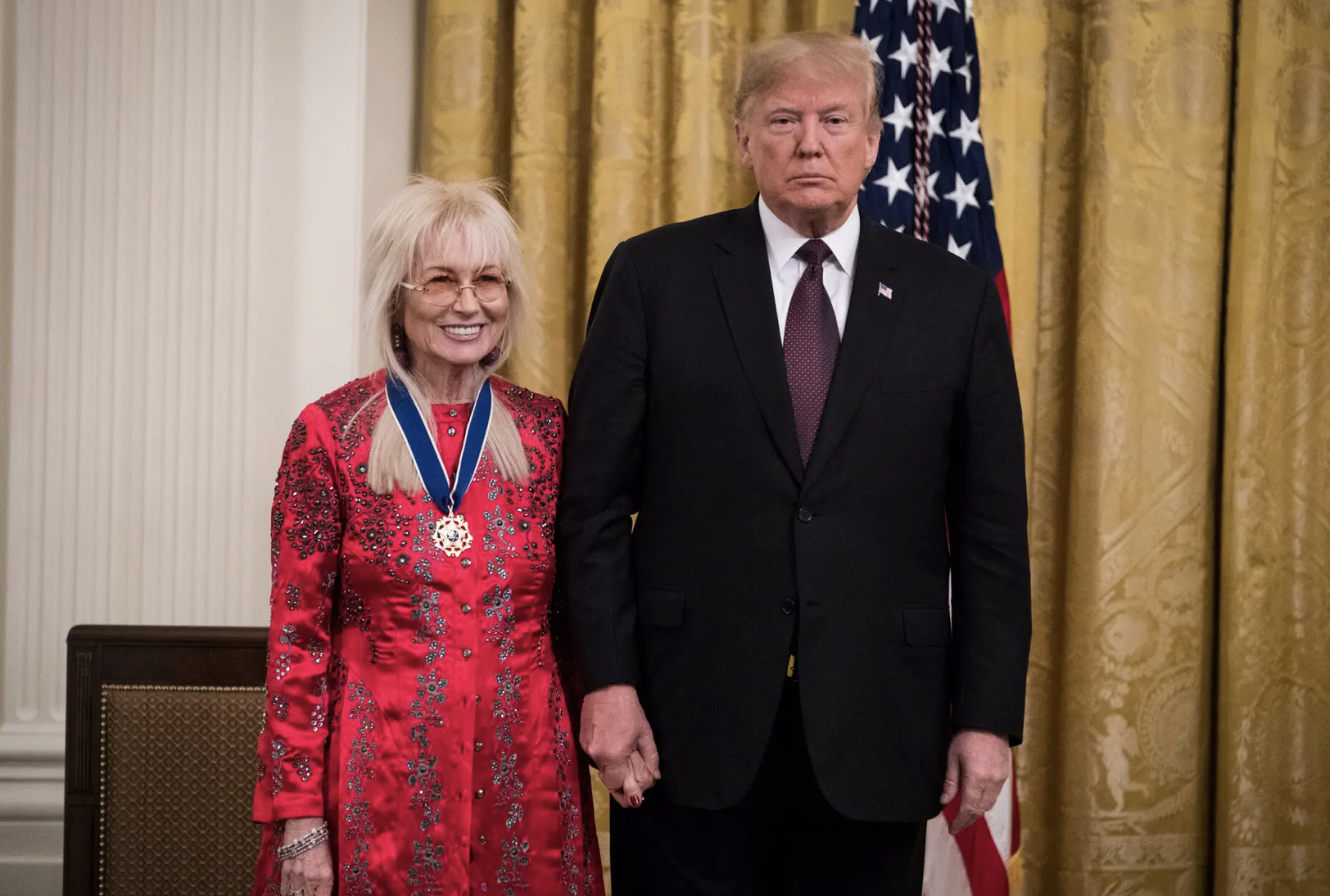
Miriam Adelson, a megadonor to Trump’s 2024 Presidential campaign, donated a sum second only to Timothy Mellon and Elon Musk, over $106.8 million, five times what her husband contributed in 2016, and has courted billionaires to support Trump’s White House bid. Her award of the Medal of Freedom in 2018 confirmed her role as a kingmaker of sorts, and she attracted a hundred donors to her own SuperPAC to swamp the airwaves of battleground states, convincing WhatsApp founder Jan Koum to add a five million dollar contribution. Her auditions of Republican candidates in Las Vegas became a litmus test that fed Trump’sinitial expectation that Trump she was good for $250 million in 2024–she aimed to drum up the support as Trump made it clear he demanded from mega donors to appreciate the strings he could pull after his return to office, reminding them repeatedly how much they had to be grateful for for tax reductionss, militaRY support and defense of Israel’s expansive boundaries, even after the Gaza War, alternating assurances over cozy candlelight dinners at Mar-a-Lago and text messages angrily demands donations to his campaign through Election Day to expand his support for moving the American consulate to Jerusalem, for which the late Sheldon Adelson had long mobilized support, provoking Miriam Adelson to demand Trump support an official annexation of the West Bank and deny all possibility of a Palestinian state. Critics of the Israeli counter-offensive in Gaza “are dead to us,” Adelson ominously warned; Adelson promoted not only Micke Huckabee for ambassador and Elise Stefaniak at the United Nations.
The myth of expulsion was mapped in the didactic style of an old schoolbook is fictional despite its authoritative arrows, the infographic attracted attention on reddit; it might be an icon of a diasporic imagination. Tracing the imagined consequences of a ban from the Roman empire’s borders after the Bar Kochba revolt, it embodis the mythic diaspora that Zionism seeks to reverse–a reversal invoked in the mythic geography as a basis to demand that Israeli law be applied to the fictional regions of Judea and Samaria–regions Israeli settlers have increasingly occupied, demanding military protection, that led to Likud demands to reject international law designating ‘Judea’ and ‘Samaria’ as “occupied territory.” This wanton elision of international law was basis for a roll-out of the “Trump Deal,” expanding a “Greater Israel” outside Israeli borders, a flouting of international agreements that must be placed in the chronology of current understandings of the Gaza War. The erasure of international law that was adopted in the Likud platform included a “right of settlement,” that continues to animate the current calls of right-wing ministers to “settle Gaza” and encourage Palestinian migration as a restoration of a “Land of Israel” as if it could be imagined as “the most ethical” solution to the currently devastating war, mirroring calls to settle the West Bank. The fears of actual threats of “rocket strikes” from Judea and Samaria have mobilized fears about the regions–the presence of settlers argued to prevent rocket strikes on Israel’s unsecured borders, as Israeli withdrawal from Gaza led Palestinians to fire Katuyusha rockets to Israel.
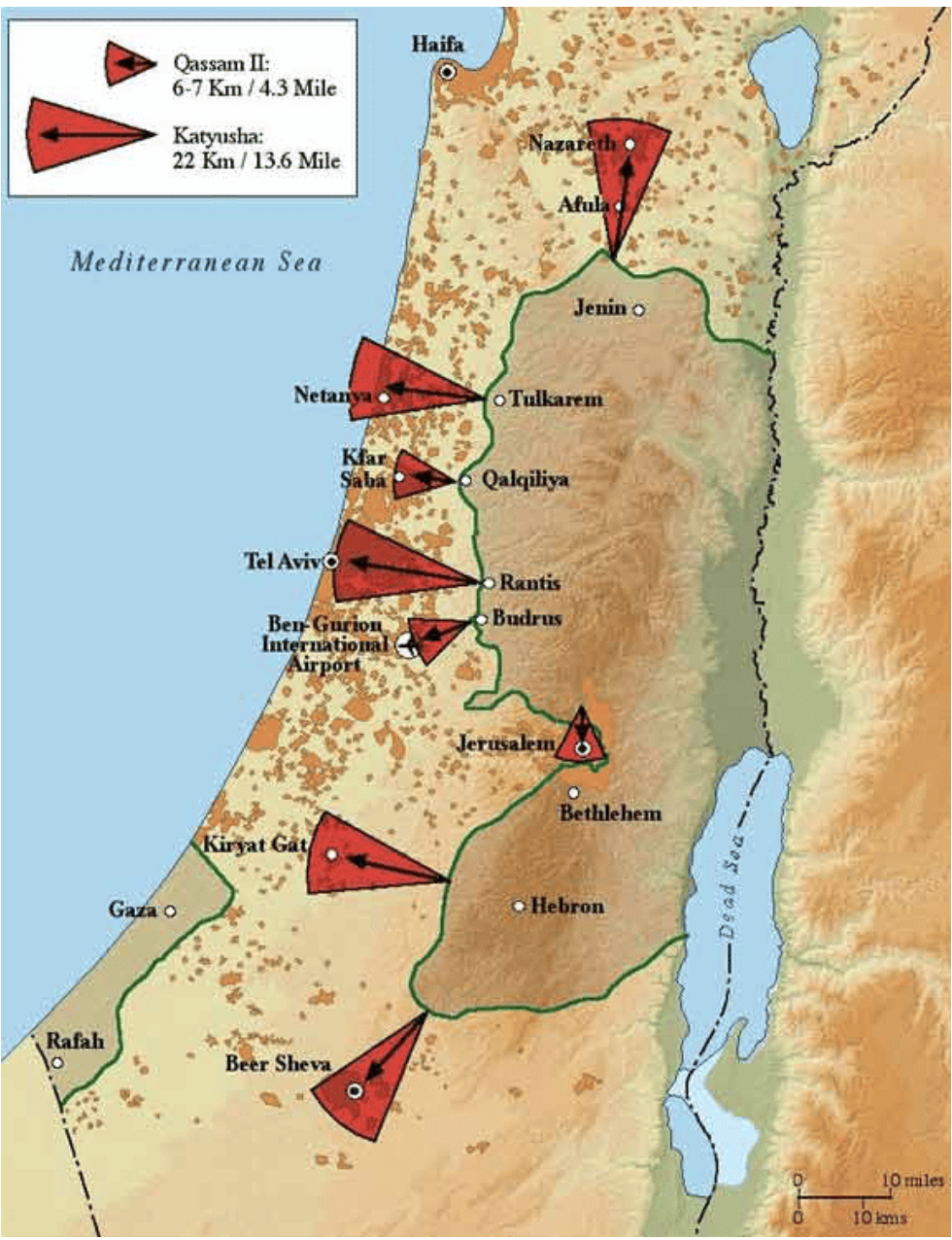
Map of the Rocket Threat from Judea & Samaria to Israel (2020)/Endowment of Middle East Truth

The fear of transforming Judea and Samaria to a grounds for staging a terrorist attacks on Jerusalem, Nazareth, Beer Sheva, and Tel Aviv makes the “green lines” of this map of rocket threats leap to prominence, and demand the protection of settlers’ de facto annexation of the West Bank.

The securing of a “Greater Israel” is impossible to separate from the designation of Jerusalem as the capital. Trump’s recognition of Jerusalem as a capital was an insult to hopes to secure East Jerusalem as the capital of a Palestinian State were placed on ice, even if Trump’s Texan Secretary of State, Rex Tillerson, sought some conciliation in statements that the move “did not indicate any final status of Jerusalem” and “that the final status, including the borders, would be left to the two parties to negotiate and decide.” Despite such ample acknowledgement of some form of future agency, apparently betraying a lack of attention to details as actual borders, the interest in determining new borders–and defensible borders–were promoted in the “deals” to animate a promised “peace plan” resolve longstanding Palestinian-Israeli conflict, entrusted to the 38- year old apprentice, Jared Kushner, the son of the wealth realtor and son-in-law of the President, promising varied economic plans and proposals and touring six capitals, in a week-long trip of Middle Eastern countries, even after the Palestinian Authority preemptively had rejected any United States proposal after the affront of relocating the embassy to Jerusalem–long the center claims and counterclaims to the sacred center of any two-state solution, and the site of the division since Israel’s founding in the 1948 Arab-Israeli War, long sectored by different temporal authority,–

— but unilaterally annexed since 1980, when Israel declared its capital, even if Palestinians make up close to 40% of its current population, and the city is divided in East and West, and bisected by a complicated curving wall, check-points, and gates manned by soldiers, increasingly to protect enclaves of Israeli settlements in East Jerusalem.

[Chart]

Boundaries featured, unsurpisingly, fashioned in simplistic, arrogant, and insulting terms in the different iterations of the Trump Plan, hardly led clarity to the islands of Palestinian population, but created a “green entity” linked by roads, and tied to the River Jordan, while offering Israel control over the West Bank, and being presented as a concession that allowed the fiction of an Israel that stretched from “The River to The Sea,” if one accepted the map’s general design. If the kingdom of Judea existed in the 9th Century BCE, to one side of the Jordan from the Ammonites and the Moabites, the historical populations of an ancient Kingdom of Israel was able to be mobilized, as the ancient Temple Mount in the Old City remained very much at the center of territorial dispute.

The Trump Plan proclaimed a resolution of Israeli-Palestinian differences with bluster as the first “plan” to be put on the table and have multiple signatories–save Palestinians, that is, whose arms were seeming to be twisted to gain approval through a broader international consensus and economic carrots to promote the far bleak futures of impoverished residents in a Gaza Strip, but required no Israeli concessions. The map granted single isolated port city for Palestinians, was premised on drilling an underground Gaza-West Bank Tunnel (!) linking Gaza to the Palestinian enclaves lying at a remove west of the River Jordan, suggested a massive remaking of Israeli state’s position of strength in the Middle East, and victory of absolute recognition of Israel’s right to exist from Palestinians–the map was a map that would guarantee recognition of Israeli boundaries, rather than a Palestinian land.
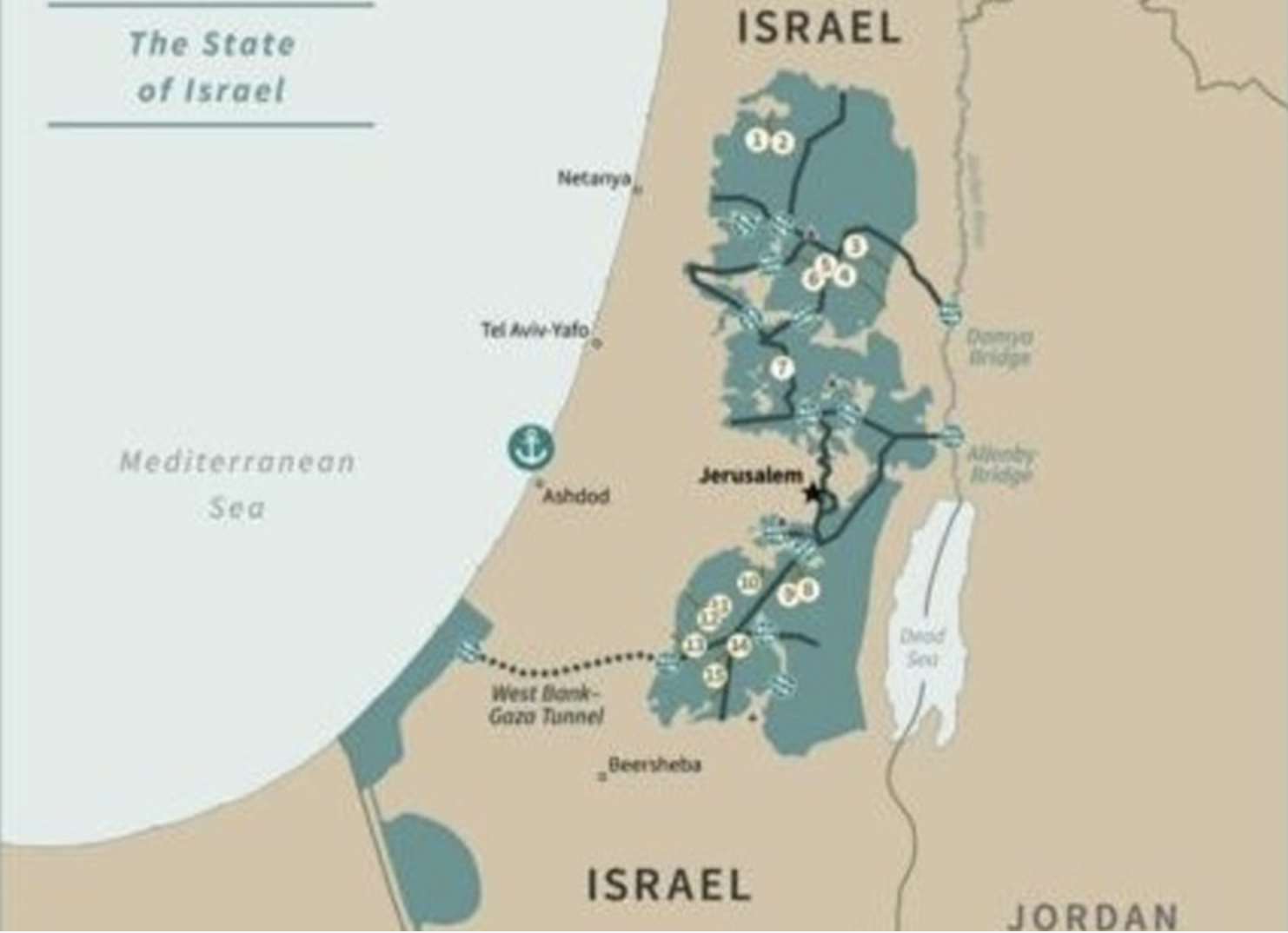
The promises that the Palestinian economy might be boosted by planned residential, agricultural, and industrial communities way to the south of Rafah, if an acknowledgement that few fertile lands would be in the reduced Gaza Strip, would be oddly placed at a remove in the Negev, linked by thin roads or causeways along the border with Egypt, fragmenting the Palestinian presence.

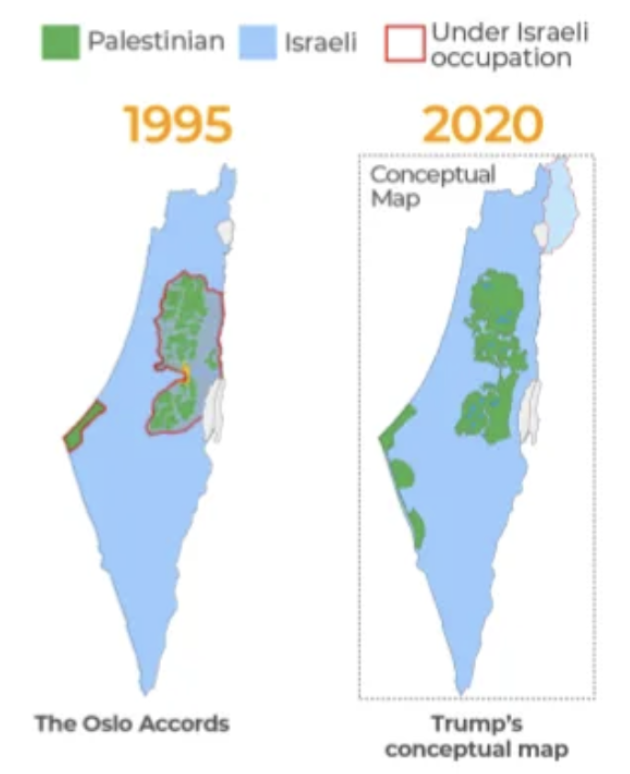
But the closest appearance of Trump’s figurer prints lay on “the new official U.S. map of Israel” that Trump personally allowed Kushner to give to Prime Minister Netanyahu, as a promise to be in his court, in his February 2019 trip by the apprentice Kushner, the thirty-eight year old son-in-law Trump had placed in charge of the deal he called a “peace process’ that at last recognized the Golan Heights–a site of the current war between Hezbollah and Israel–as Israeli territory. This map set a powerful precedent of similar international precedence essentially recognizing lands occupied since 1967, and annexed to Israeli territory in 1981, removing what the rest of the world recognized as Syrian territory that the Israeli army had occupied, as part of Israel’s sovereign grounds. Indeed, the “plan” registered a severe and unidirectional loss of Palestinian lands that Al Jazeera was quick to note, removing lands form Palestinian sovereignty to make the Oslo Accords look like the good old days, shrinking land under Palestinian control away from the West Bank and limiting jurisdictions.
If the firing of many Hezbollah rockets into “Israel” were target at the Golan Heights in recent months, the unusual map presented Netanyahu two weeks before what would be his reelection became a slap on the back and endorsement, labeling Israel’s annexation “Nice! Recognizing the reality of what were deeply contested boundaries as straight lines, Trump took to what was then Twitter to tweet he was “hoping things will work out with Israel’s coalition formation and Bibi and I can continue to make the alliance between America and Israel stronger than ever. A lot more to do!” The recognition of Israeli sovereignty over the Golan Heights had been formally recognized on the visit of Netanyahu  to the White House in an earlier proclamation of March 25 confirming Israel’s ability to “protect itself from Syria and other regional threats” in defending the Golan Heights–a move of chess of fundamental import in the current war against Hezbollah and invasion of Southern Lebanon by the Israeli army. The arrival of Kushner with the map in April, just before the Israeli elections, led him in May to showcase the “update[d]” map as the basis for the Trump ‘Peace’ Plan.

The proclamation asserted a deep commitment of the United States to the acknowledgment “any future peace agreement in the region must account for Israel’s need to protect itself from Syria and other regional threats,” not naming non-state actors but giving backing and carte blanche to the Israeli leader to defend enhanced boundaries of the state. When the map was displayed by Netanyahu at t press conference, he crowed “Here is the signature of Trump, and he writes ‘nice.’ I say, ‘very nice!'”–as if delighted with the new objective truth and framework the map set forth.

The sentiments were reprised in Kushner’s late May public statement stating “The security of Israel is something that’s critical to the relations between America and Israel, and also very important to the President, and we appreciate all your efforts to strengthen the relationship between our two countries;” Prime Minister Netanuyahu happily stated Israel’s relation with America had “never been stronger, and we’re very excited about all the potential that lies ahead . . . for the future.” The powers of prognostication were in a sense supported and formalized but he
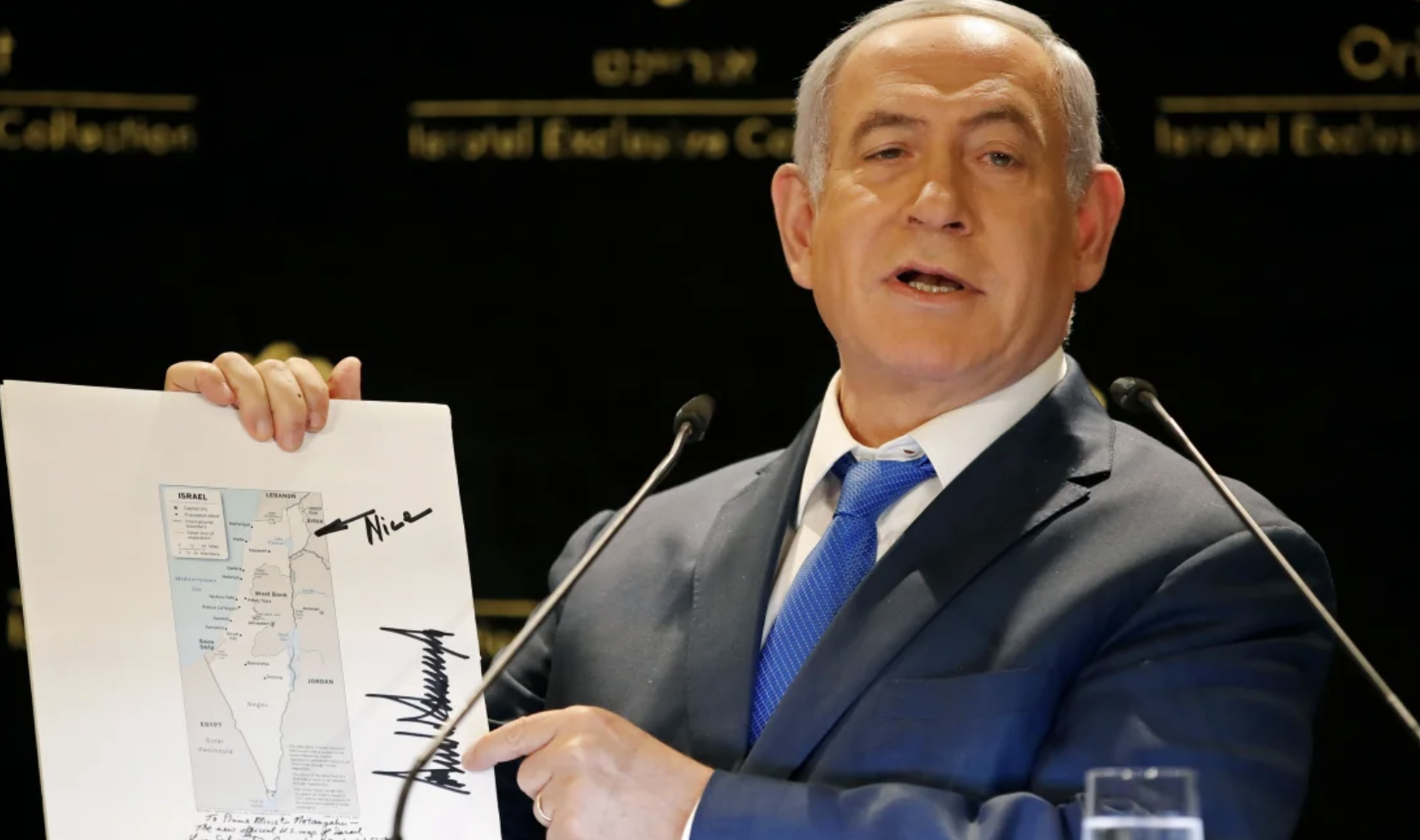
May 30, 2019Thomas Coex/AFP

The election of April, 2019 was hardly a massive victory for Netanyahu, if it meant a fifth term. His political party won a mere 35 of 120 parliamentary seats, but it placed him in a new alliance with the far-right parties that had been engineered by the cartographic gifts that Trump had provided the Prime Minister became props for a new form of political theater with which Netanyahu was particularly taken. The map was a gift that kept on giving, a new knowledge system to deploy the firmed up boundaries of the Israeli nation that no other nations would recognize save the United States. Even if it was not a recognition of “reality,” the flouting of international consensus offered Netanyahu a needed shot, a show of support for the defense of current expansive borders, and even support of the arrogance of drawing borders,–as if the “Geographer of the United States,” Lee Schwartz might take up a larger role in the State Department, where his office was in fact located.

This map was the gift that kept on giving, a showpiece of sorts that preceded the many maps that Netanyahu quite triumphantly brought to the United Nations, maps that set the precedents for the maps Netanyahu brought to the United Nations General Assembly to lecture the world on the possibilities for peace in a New Middle East, in which Israel controlled the full West Bank–a map he had displayed before the April election on Israeli national television, and the map where Gaza was shown to be part of Israel, absorbed in an attempt to focus on the international alliances that Israel was announcing, the small details of Palestinians’s hopes for territoriality were dwarfed by the fantasy of a new community of nations–that led to campaign promises to incorporate the West Bank to affirm an expanded Jerusalem at the center of the Israeli nation, reaffirming in “blue” the territory of a united Jerusalem that was nestled right up to Jordan in the 2019 election. The map was a political promise to expand Israeli territory in the West Bank he insinuated the Trump Plan would allow him to annex in the Jordan Valley, due to his close relation to the American President.

The speech before the 2019 elections promised “Peace and Security” as if citing Revelations 19:20, at time when the contents of the Trump Plan were not yet fully known, and the power of suggesting a major remapping of the relation of Israel to the West Bank might be persuasively made. The map, whose logic seems to underlie the claims of the map of the “New Middle East” Netanyahu would use before the General Assembly, on September 23, 2023, just weeks before the October 7 invasion. Indeed, the image of an annexed West Bank suggests a negative image of the invasion of Gaza, or make Jericho, as Youse Munayyer, the Director of the U.S. Campaign for Palestinian Rights put it quite succinctly, leave Palestinian residents of Jericho dependent on Israeli authority to enter and exit what would be a “new Gaza, another open-air prison Israel can lock down as it pleases.” The desired transformation of almost a quarter of the West Bank by the wave of a magic wand into an area of Israeli control area would disenfranchise Palestinian residents who would lack all voting rights or citizenship, but live in a system of limited autonomy might be better called apartheid, controlled by a minority of Israeli Jews.

Menahem Kahana/AFP

What Netanyahu boasted was a “dramatic” plan and opportunity for fragmenting Palestinian communities within Israel was hardly a “deal” acceptable to Palestinians, and prevent a future Palestine, annexing a quarter of the occupied territories. Describing the option as able to be realized by virtue of his privileged relation to Trump, he openly appealed to far right parties: by calling the Trump Plan “visionary” in scope, he offered the vision of a containment of Palestinian hopes for sovereignty in an Israeli state that was in fact recycled form a 1968 plan for a divided West Bank that annexed rural Jewish settlements to an expanded Israel, while allowing enclaves of Palestinian communities around Jenin, Nablus, Ramallah, and Hebron to formalize ties to Jordan.
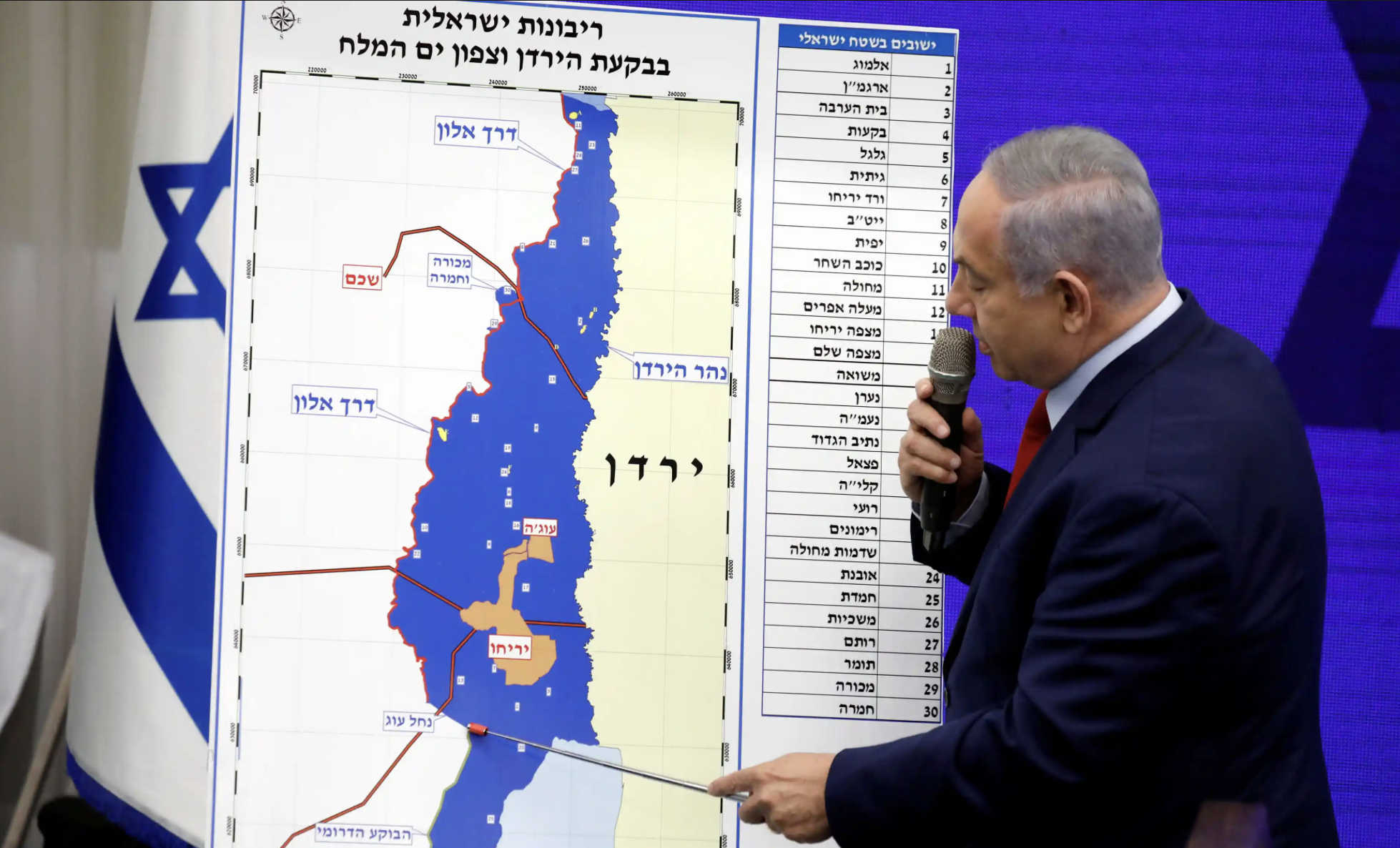
Netanyahu Hints Trump Plan Will Let Israel Annex Key Land

Netanyahu’s 2019 Proposed Annexation of West Bank and Confinement of Palestinian Civilian inhabitants

But if Netanyahu spun fantasies of new borders and expanded Israel out of maps, this post is about the fate of the Trump maps. For the presentation of that map–and the map of a peace proposal that demanded no sacrifices of land for Israel–seems the tipping point of sort. The maps played a large role that provided Netanyahu with the credibility of a statesman in Israeli national elections, a gift allowing Netanyahu to claim control over territory that Israel had not won recognition by the rest of the world. When Netanyahu displayed the personally signed map to the nation in a news conference, even if he failed to assemble the coalition needed to gain a second term, the Prime Minister used the maps s prop to affirm his ability to navigate the nation to the future defense of its borders and boundary lines by his personal ties to the United States President, a gift of statecraft that materialized boundaries of a newly expansive sort as if they were a true consensus. Displaying the map helped his foreign policy expertise to be leveraged for a new term. He quite quickly invited Americans to visit the new Israeli town he in northwestern Golan to found in Trump’s name to acknowledge the meaningful nature of geographic recognition of the Golan plateaux under Israeli sovereignty, voyaging to the region to celebrate Passover as part of a “thank you” for the gift of an American president who “recognized Israeli sovereignty over the Golan Heights forever,” declaring the foundation of a new permanent village be named after the former American President.

Was the gift of the map that Kushner was entrusted not the basis for the forging of a new personal friendship of transactional sorts that Trump was able to present Netanyahu as a promise to stand behind the Israeli Prime Minister’s illusions of protecting Israel’s greater borders, to protect its security? The United States Geographer Lee Schwartz, who signed the map that Trump entrusted Kushner, lists his remit as “defining detailed and advise policy makers on territorial disputes to aid international boundary negotiation may have gone above and beyond his role to offer “guidance” on the ways boundaries are shown on government maps, to adjudicate and resolve international disputes, as Schwartz had in Kosovo and the Baltics, and to guide the Office of the Geographer and Global Issues–a weighty title, not to suggest that folks at the office didn’t also have fun with maps.
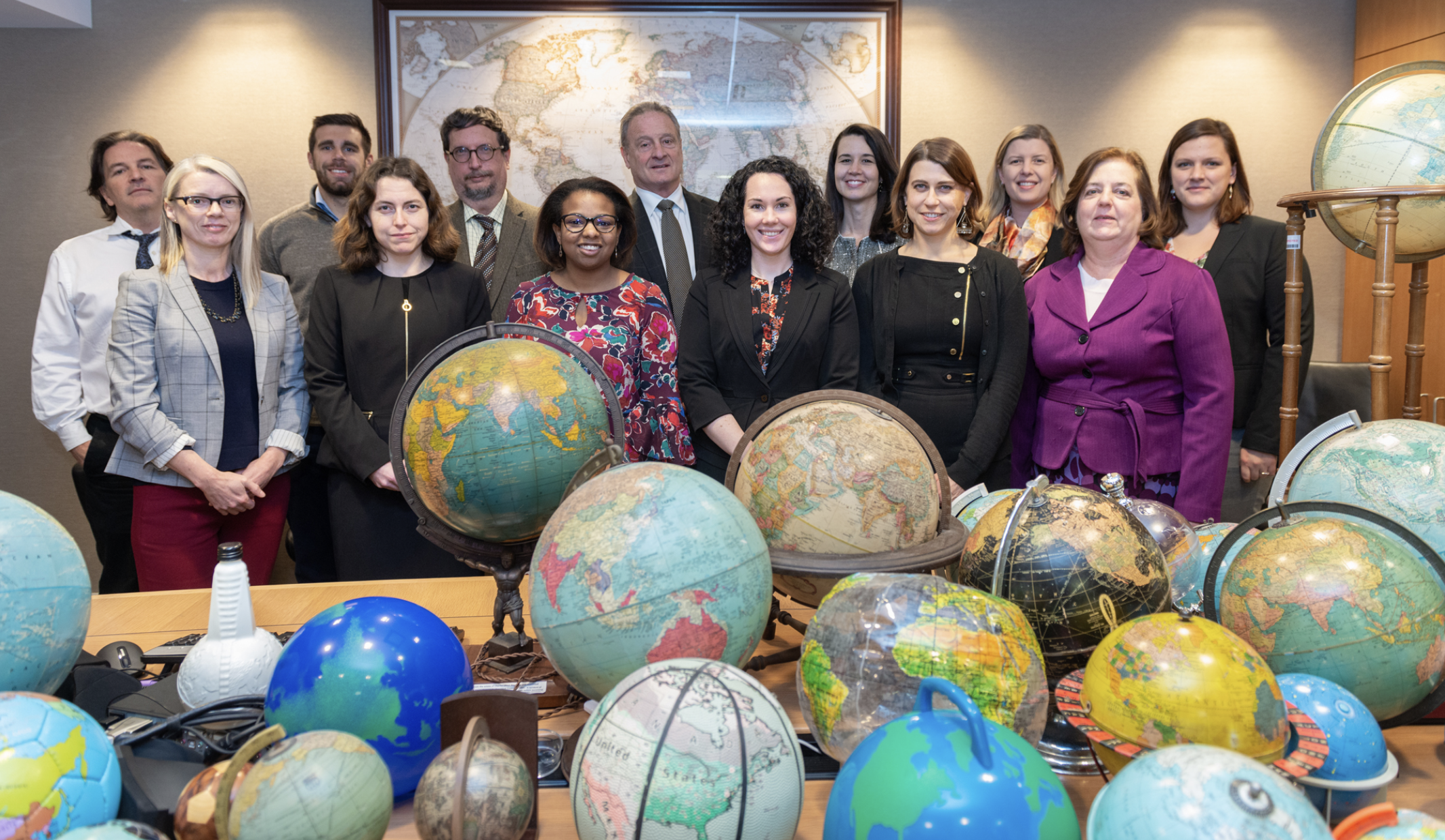
Dr. Lee Schwartz with INR/GGI Team at the Office of the Geographer on Global Issues, 2019/Isaac D. Pacheco

The office of Geographer had evolved in a global context after the Cold War to endorse claims of sovereignty and international boundaries to federal agencies became a platform of sorts to curtail the advantage of redrawing boundaries, as well as determining problematic questions of naming, even adjudicating maritime boundaries that addressed “global issues” analytically from an office within the Department of State. Haing taught at American University in Washington, DC, with a background in the Cold War, Schwartz was soon recruited at the State Dept. to work in the office of regional analysis, specializing in refugee affairs.

Stream episode Lee Schwartz: The Coolest Geographer You'll Ever Meet by US  Embassy South Africa podcast | Listen online for free on SoundCloud

The drawing of boundary lines recognized by the U.S. Office of the Geographer were trusted as “holding up in court cases.” The Office used s “compelling evidence” to map states in the Balkans, that were seen as far more compelling than satellite views. But the maps of Israel’s expanded sovereign bounds launched a missile at the heart of Hezbollah and of Palestinian claims to the region, providing “legal” validation of Israeli territoriality anticipating Israel’s legal rights to territory above any other nation, offering legal validation of the expansion of Israel’s frontier outside the United Nations or international community. Which makes the speeches Netanyahu delivered all the more frustrating. For his cajoling of the United Nations General Assembly to “go along” with new maps in future years played fast and loose with the shifting toponymy of a country much as Trump’s unilateral shifting of the United States Embassy to Jerusalem. The recognition of Israel’s capital as Jerusalem led to the renaming of a small square in Jerusalem beside the embassy’s new location after the United States President, nominally in recognition for his having the courage to “stand on the side of historical truth and do the right thing”–coopting the phrase in an act of pretty radical historical revisionism, eliding the sacred and the secular and echoing biblical geography for his American fundamentalist audience. Trump may not be personally invested in a Christian Zionist vision; but he has cultivated religion as a critical constituent in the marketplace of ideas as a valuable investment. For Trump, the sacred rhetoric easily bled into the image of a strongman. It was fitting Trump concluded his campaign by arrogantly assuring audiences should God “come down and be the vote-counter for just one day,” Trump would win decisively states with immigrant populations–he singled out my blue state of California–by excluding illegitimate votes.

For a strongman who has advantageously coopted agendas, cobbling together religion and apocalypse provided vast reservoirs of hyperbole in Donald Trump’s political imaginary. The survival of a sacred image of Israel has gained an untold and terrifying prominence in the American imagination, not of Puritanism, or of a nation in the wilderness, but of of apocalyptic meaning, as Trump himself assumes a near-biblical prominence as a prophet in the MAGA world who is able to claim a historical destiny not only for Israel, indeed, but, by way of extension into the notion of a sacred nation of America, within the ultranationalist imagination. In this imaginary, territoriality of scriptural sanction bears a close family resemblance to the fundamentalist insistence on borders over rights, and of near-divine sanction, in the promotion of the southern border of the United States as it is promoted with a near-apocalyptic vein and verve. While the same twill cap retails on Etsy for $29.99, it opened a view on a mental geography I was quite surprised to see in the Sierras offered a window into how Christian Zionist imaginary invested the geopolitics of the Middle East with prophetic meaning. Tapping an evangelical strain I associated more with Mike Pence, the cap seemed an artifact of globalization, hardly out of place in Ace hardware store in Nevada stocked with objects made in China. But it provided a vividly sense of the access to Middle Eastern politics the Trump campaign promised that I hadn’t ever appreciated with such sudden and direct impact.

The year 5785 that began at sunset on October 2, 2024 places Trump’s Presidential campaign in a calendar not of the secular world but from creation, by God’s calendar, beyond any political cycle or national calendar. The year end of times destruction may be the conclusion, revealed in the Hebrew letters of Trump’s name on a cap fit for a coming apocalypse, more than any election, seemingly signed by the signature of the very same executive proclamation that recognized Jerusalem as Israel’s national capitol, and cemented Trump’s symbolic ties to a Holy Land. The headgear that was in fact widely available online was no doubt not made in America, but was an ideology whose eschatological implications sent my head spinning as I was preparing to canvass voters who might be eager to support a ticket that was ready to promise it was zealous to acclerate Armageddon, and eager to promote a sense that the proverbial prophetic writing was indeed already on the wall.
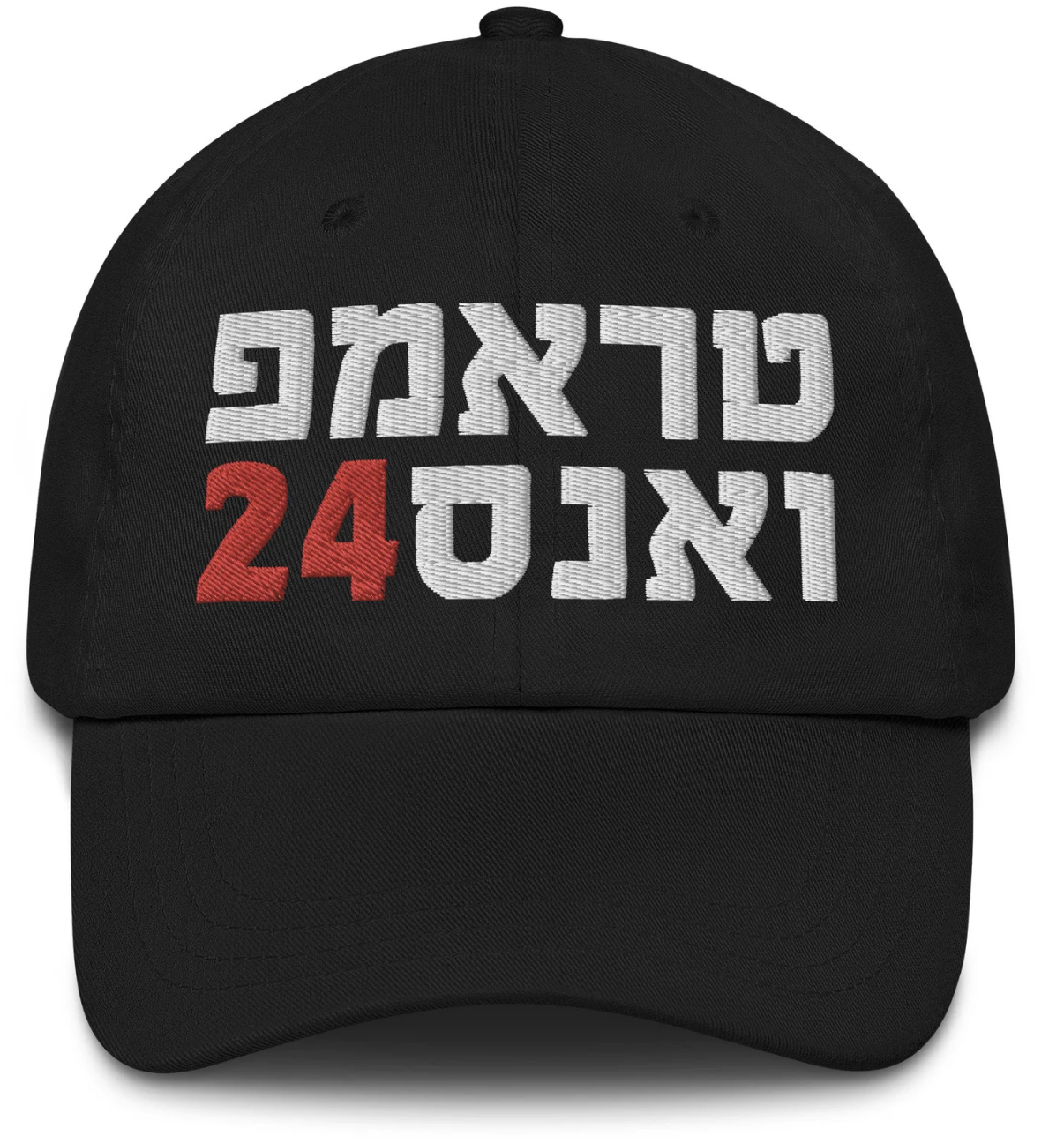
Hebrew Hipster ships the RUMP VANCE 24 (2024) in Hebrew Embroidered Baseball Dad Hat from California

Hebrew hipster ships the MAGA kippa, needless to say, as well as MAGA twill caps, for the faithful.

But if the Jewish electorate or “vote” is important, the evangelical may be as critical. For the cap remained me how much the end times teleology of Christian Zionism was apt to link the current election to a date ready to be remembered by the Jewish calendar from creation. The awakening of 5785 suggest a deliverance and spiritual rebirth that is provided only a candidate inspired by the breath of God, no matter what events are occurring in the world: if 2020 was a season marked by a lack of faith, the coming year would bring a final revelation of God’s word, to combat the Moabites, Ammonites, and the proud people of Mt. Seir attacking the nation of Judah, for Israel to occupy the restoration of its full territory in the year when Israel and America will, per Christian Zionism, also recover territory the enemy had wrongly entered as the entire nation will come to repent–and by Psalm 85, in order to restore divine favor to the land–lest abortion, same-sex marriage, trespassing against one’s created identity, and absence of prayer inspire God’s Old Testament wrath. Let us heal our land in the first forty days of the Jewish New Year, lest it be destroyed by his fire.

Ace Hardware, NV

A semiotic decoding of the hat, so overdetermined in its Hebrew lettering and Old Testament associations, is challenging, so cluttered is it with symbolic paraphernalia, accumulated symbolic identities of faith, nation, and masculinity to resist interpretation, subsumed in combination of Old Testament faith and Christian apocalypse, save as an announcement of destiny to prepare for the awaiting of the Rapture. It proclaims that the faith of “proud deplorables” intersect with a vision of Trump-as-biblical-prophet of apocalypse whose time has indeed come in America, even if it may begin in the calendar of Hebrew scripture.

In proselytizing a candidate for the American Presidency in black Hebrew letters date the campaign from the creation of the world, the salesman I met while canvassing was promoting a cult of personality as a prophecy destined to inaugurate a new historical era more than a President. Even in a store selling goods mostly produced overseas, the largest proportion probably in China, the cap reminds us to place Trump’s candidacy in a global context, as much as one of Making America Great Again, transposed from a medieval universal history culminating in the Apocalypse, which resonated strongly with the Fundamentalist origins of placing the capitol of Israel back in Jerusalem. While I was in the state to encourage voting, I didn’t need to reflect much how the prophetic vein was bound to elicit votes far more effectively than an army of door-knocking volunteers. Could it be that in the current United States, apocalyptic rhetoric has become the ultimate strategy of getting out the vote? In affirming right-wing Zionist Israelis hopes to restore God-given borders of sacrosanct nature, mutatis mutandi, the logic of territoriality was doubtless but a reflection in many ways of continuing to defend “our” borders as well, and a restoration of its rightful extent and “legal” boundaries in maps, no matter the situation on the ground.

Borders were framed in prophetic ways for 5785, as if created by the force of worship: as if the expectation of the year were an anointing of a monarch, able to set those borders, returning to a new level of reverence for life, and restoring favor to the land; numerologic glosses on this year’s digits, 5 + 7 + 8 + 5 = 25, or two fish and five barley loaves of abundance, affirmed God’s intelligence in providing, and encouraged thanks to God’s demands for a candidate to enact his will, and service in the election to confront those intimidating giants that have threatened the nation as David threw five stones against intimidating giants with the outpouring of spirit and a new battle plan. Despite transposition of loaves and fishes to decipher the prophecy of the year, the gloss demanded believers give freely of what God needs of us–votes for Trump?–to steward of things beyond individual needs. The message emblazoned on the man’s cap burst on the eyes of customers akin to the revelation of the prophetic writing that burst before the eyes of Nebuchadnezzar as he stole the sacred goblets and golden cups from Jerusalem’s Temple, perhaps seen as somewhat akin to the stealing of the vote and White House–as prophetic words of caution and terror, “mene, mene, tekel, upharsin“, letting him know the4 days of his kingdom are indeed numbered. If Svetalana Alpers argued that Rembrandt painted gold objects and clothing to play with the value of the painted work of art, the below painting of Belshazzar’s Feast, far from a foray into the baroque, is an escalation of the rendering of gold of a new level of the divine sublime of perhaps the greatest value–gold letters drawn by the disembodied hand of God, a model far from the glittering if polished mock-gold facades of hotels Donald Trump so delighted to inscribe his own name in capital letters to convince the world of their inestimable value.

Rembrandt van Rijn, Belshazzar’s Feast (1635-1638), National Gallery, London (Daniel 5:1-31)

Only the visionary Daniel can interrupt the mysterious letters–apparently arranged in an acrostic cypher, that evaded the interpretation of any Babylonian wise men, as a prediction of the doom of the king and his dynasty. The failure of the royal astrologers Belshazzar had summoned to read the golden letters were only able to be read by the visionary Daniel, who realized the doom they prophesied was evident to all who read the letters as columns, rather than trying to force meaningful words by reading from right to left. The discovery that God had numbered the days of the kingdom of Belshazzar in the Masoretic text depended on glossing the same verb as both senses of “numbered” and “finished,” the third column as “to weigh” and “find wanting,” and the fourth as both “divide” and “Persia.” In the electoral fantasies of a divided nation, wanting the election of a true leader, the cap had of course provided the illustration of a direct tie of individual to leader, a sartorial proclamation of a direct allegiance to a leader akin to the brown shirts of Nazi storm troopers issued from 1925 or the immediately recognized uniforms of Mussolini’s blackshirts.

If the inscription that Belshazzar witnessed on the Temple walls demanded Daniel’s interpretation to decipher, eluding even the Babylonian wise men, any in the know grasped the meaning of the revelation of Trump’s name in Hebrew–a revelation akin to the inscription traced on the Temple wall. There is nothing wrong transcribing a candidate’s name to Hebrew characters–but the valor into the cap seems to violate a division of church and state, commanding a vote for a candidate as if it was a message from on high, and question of obedience to God. The inscription of Trump’s name in Hebrew characters assume a divine command, as if invoking a scriptural authority in Trump’s support. Rembrandt relied for the top-down columns of his painted Hebrew characters on the learning of a rabbi and printer who lived in Amsterdam’s Jewish quarter, Manasseh ben Israel, despite incorrect transcription of one character–a zayin for a nun–render the luminous prophetic inscription traced by a disembodied hand on the temple wall to the amazement of all present:

Rembrandt van Rijn, Belshazzar’s Feast (1635-38), detail: Inscription on Temple Wall, ()

The difficulty in interpreting the Aramaic chiding that was included in Daniel 5 derived from the encoding of the sacred message in an early form of encryption, a matrix of coded data that demands to be read from top to bottom, rather than right to left, an early form of cypher that was historically accurate, but pushes us to demand the decoding that hat. If the son of Nebuchadnezzar, the conqueror of Jerusalem, had not recognized his own hubris of destroying the Temple and carrying off its sacred vessels to be used as goblets to drink wine at a banquet with his concubines, the cryptic message demanded God be shown reverence as it was dramatically inscribed on the palace wall. If the glitter of gold was a frequent color Rembrandt used in his studio paintings, from helmets to coins to a cuirass, and the artist must have delighted in depicting the abundant wealth of Belshazzar’s Feast by painting the sacred goblets of gold and silver stolen from the Temple.

The set of stolen sacred goblets seem suddenly to fall as God’s hand leaves a shimmering on the palace wall. A shocked Belshazzar sees the inscription with terror as he turns a turbaned head atop which a gold jeweled crown seems to totter; the inscription warns his days of rule are numbered and his dynasty will fall due to failure to honor Israel or the kingship of the God of Israel: the “writing on the wall,” that claims inevitable restoration to a throne of rule by one who honored God in words, Mine, MENE, TEKEL, UPHARSIN, that outshine even his glittering royal gold encrusted cloak.

For the candidate who still reminds audiences of his plans to laud efforts to Stop the Steal, the story of Belshazzar is not only biblical legend. It may even form a natural part of the aura of a God-given inevitability of his return to the United States Presidency. Trump eagerly revealed at a Pennsylvania rally in mid-October how in a “very nice” [telephone] call” he gave Netanyahu his blessing to “finish the job” in Lebanon and Gaza, promising “you do what you have to do” when it came to defending Israel and its border, determined to allow Israel to “ultimately make decisions according to her national interests.” Trump’s affirmations of placing a premium on Israeli interests revealed the far more solid commitment of his relations to Netanyahu than Biden’s; it made him a true confidence man. Trump regaled audiences with how Netanyahu took his call from his private vacation residence in Caesarea after it had been targeted by a drone, reminding supporters of their regular contact, as if to evoke the deep ties a Trump presidency would have to Israel. Trump had, after all, from 2017 transferred the American Embassy to Israel from Tel Aviv to Jerusalem, removed the Palestine Liberation Organization from Washington, D.C., stopped referring to Israeli settlements as illegal and ensured the United States State Department no longer called the West Bank “occupied territories.” This was the very map that Netanyahu presented the United Nations.

To flip the metaphor, the writing was indeed on the wall–and on the map!–since Trump removed occupied territories on the West Bank from State Department map. This “new map” was indeed but a model of the Middle East that the Trump Presidency worked hard to map. In the cap I saw as I canvassed in Nevada, Trump’s name seemed to affirm his destiny to win the election, an event of such historical importance fit for counting from the creation of the world. In ways that recall the insidious intermingling of the sacred and secular in the Trump Presidency, the Presidential election of “5785” has become in large part a referendum on Donald Trump’s continued defense of the United States as a sacred nation with boundaries the former President has defended as if it were sacred and worked to sacralize.

The man’s cap was emblazoned with a logo so aggressive to be tantamount to a revelation: it was nothing less than a divine endorsement from on high, on a bright red field that may as well be glittering in gold. It reminds us of an end times philosophy, and a Republican Party exhorting more arms flow to Israel to defend the sanctity of the borders of a Holy Land. It affirms the impending inflection of global history 5785 is destined to bring. Indeed, the date on the cap may gesture to revelation of Ezekiel 47:13-20, sketching “Boundaries of the Land,” a vision of the future boundaries a restored land of Israel, running east to the Jordan, that run near Damascus, unified “into one nation on the mountains of Israel” with a temple at its center.

This vision of reconstituting the State of Israel was of course of meaning among Christian Zionism not as a political affirmation of an apartheid state, but a precondition for the end of time, and return of Jesus; the religious right’s ideology interpret all Middle Eastern politics through the lens of a prophetic of end-time teleology and premillennial belief, more than geopolitical dynamics let alone a demand for human rights. The previous President has nourished if not cultivated an intentional confusion of a vision of geopolitics with one of spiritual authority and territory with a revelation of a scriptural legibility. Even as we continue to insist that the conflict is between nation-states and ideological in nature, and demands to be solved between nations, by shuttle diplomacy and Secretaries of State, the confusion between a sacred map and a map of territoriality of the Middle East has been nourished in that vision of the Middle East for decades, juggling around the pieces as if to find a winning and unable solution. For we continue to insist that the conflict is geopolitical and at base ideological and between nation-states, in ways that blind us to its distinct and deep-seated nature of these claims of territorial possession, as if is between nations among other nations, as if purposefully creating and bequeathing blind spots in our maps.

5785 has been called a year to invest kingly and priestly authority, await divine intercession and kingly rule, a year of righteousness and peace where the Lord will give what is good to yield increase and a year of awakening. If the current Middle Eastern situation has proven to be a time of crisis not only in Gaza and Lebanon, and Israel, but a moment of revealing the lesser role that the United States can play in global affairs and global wars, an apparent lessening of authority and prestige that seems to show the weakness of the Biden administration, and reorient America’s relation to the world, and the apparent erosion of anything approaching a secure grip on global affairs. In the legend of Balshazzar, the hubris of the worldly ruler is punished by the inscription of the legend that the King immediately beholds, with his assembled guests, who dropped the sacred goblets from which they were obliviously drinking wine in shock. “The God who controls your life breath and every move you make–Him you did not glorify! He therefore made the hand appear and caused the writing that is inscribed: Mene Mene Tekel Upharsin . . .” that predicted the doom of the pagan ruler and of his dynasty, from a God who would soon bring both to their ends (Daniel 5:22-25). The writing was, as it were, on the drywall in the Nevada hardware store that I glimpsed the MAGA hat two weeks before the Presidential election. Maybe 5785, I thought, will be a year all plumbing issues will be suddenly resolved, fixtures will be free and lightbulbs easily able to be returned.


Leave a comment

Filed under boundaries, Gaza, Gaza War, Gaza-Israel Boundary Wall, Israel, Israeli Borders, Israeli-Palestinian relations

Dropping Dozens of Bunker-Buster Bombs in Beirut

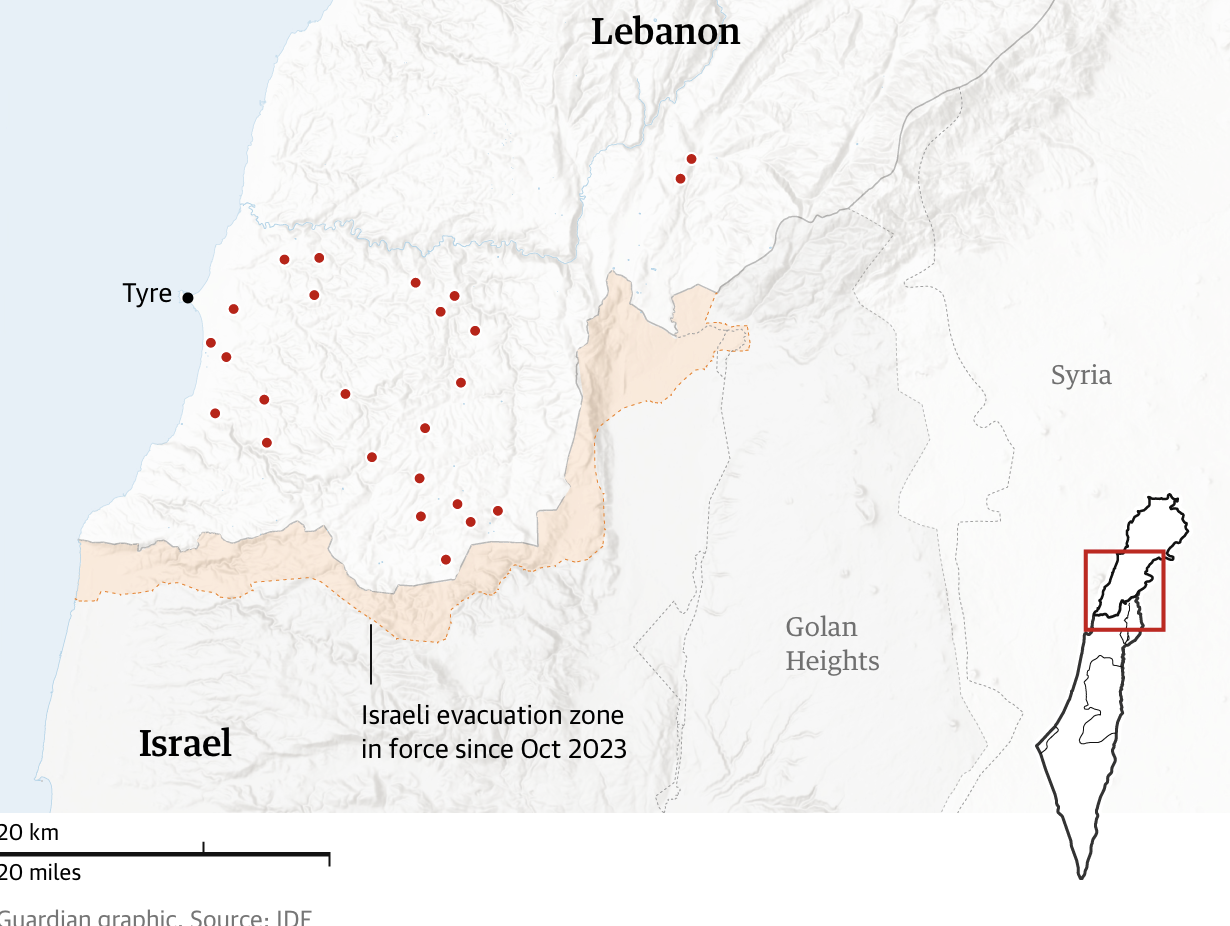
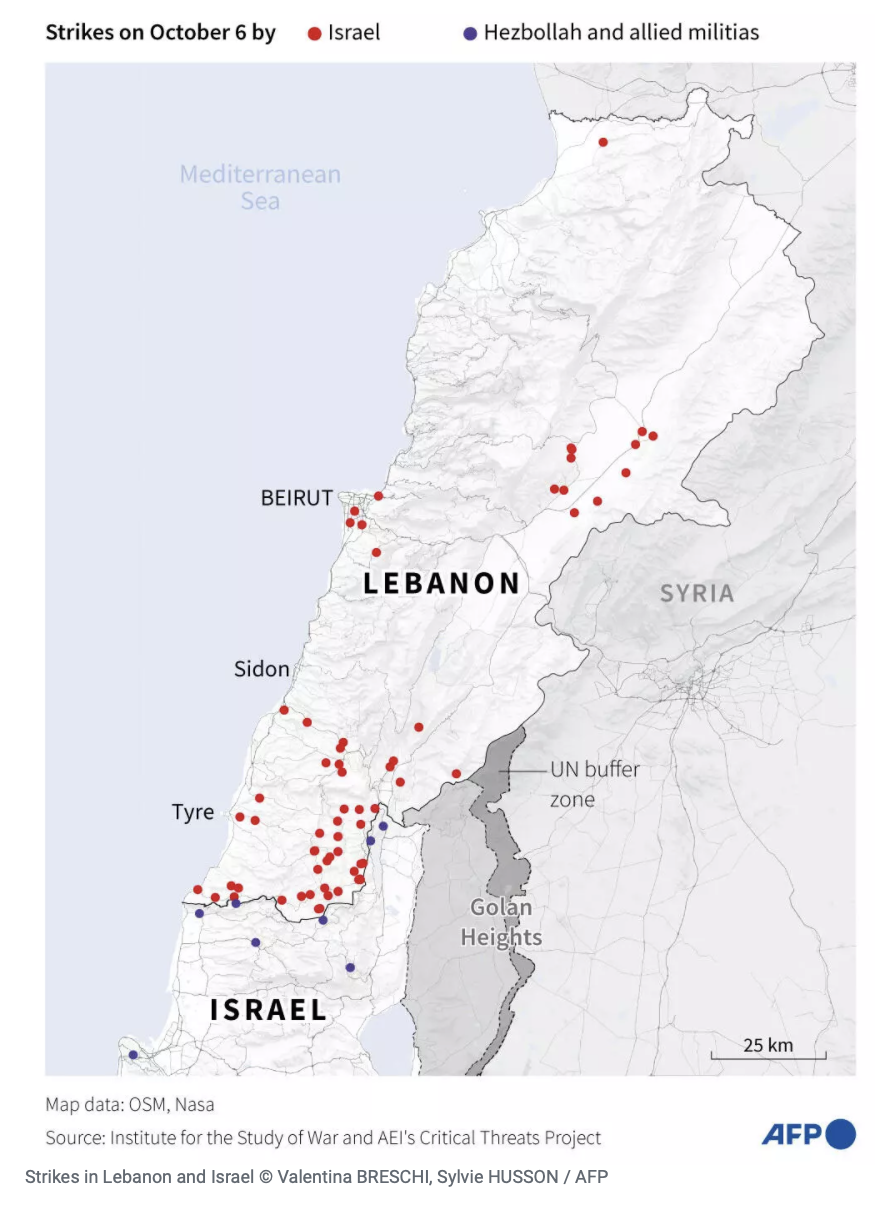
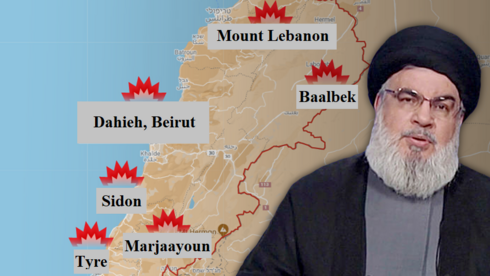
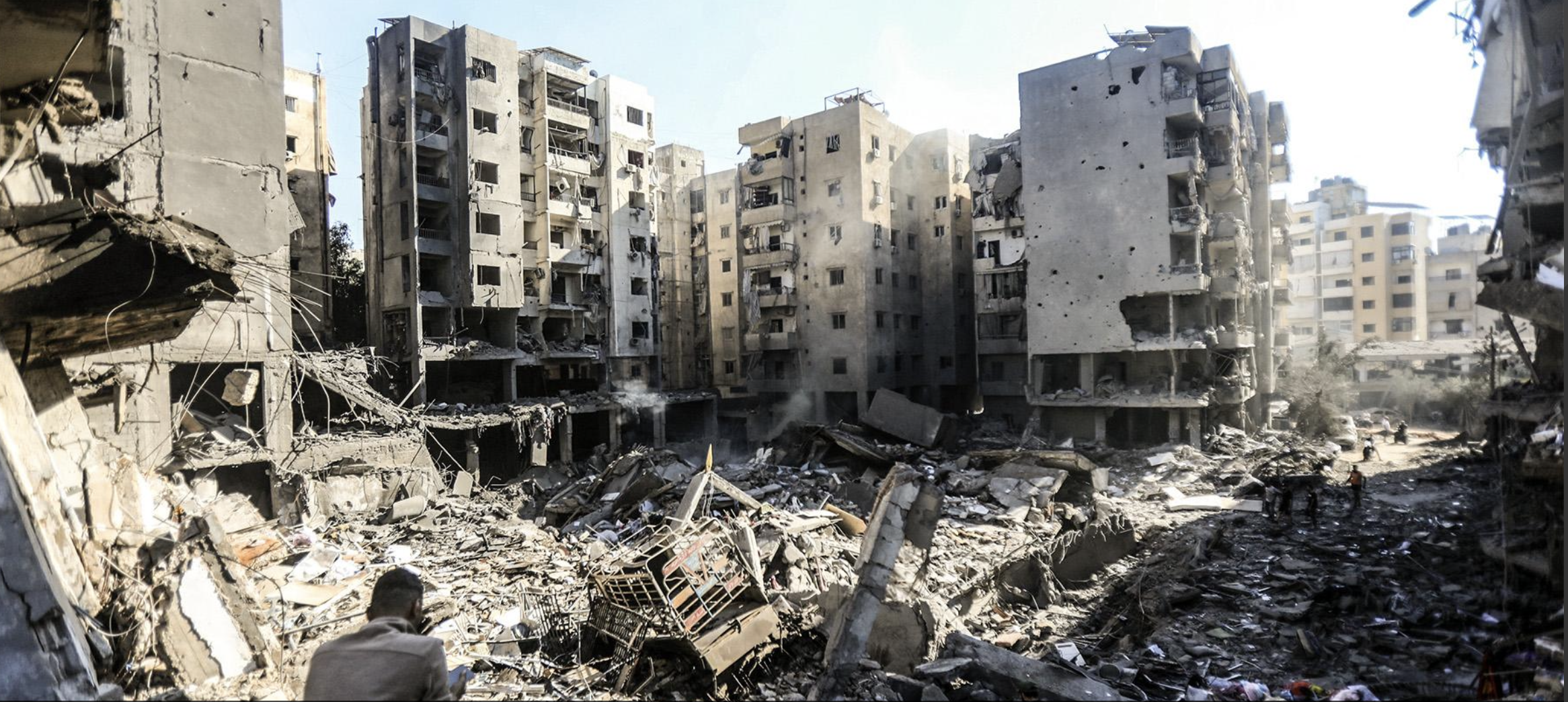
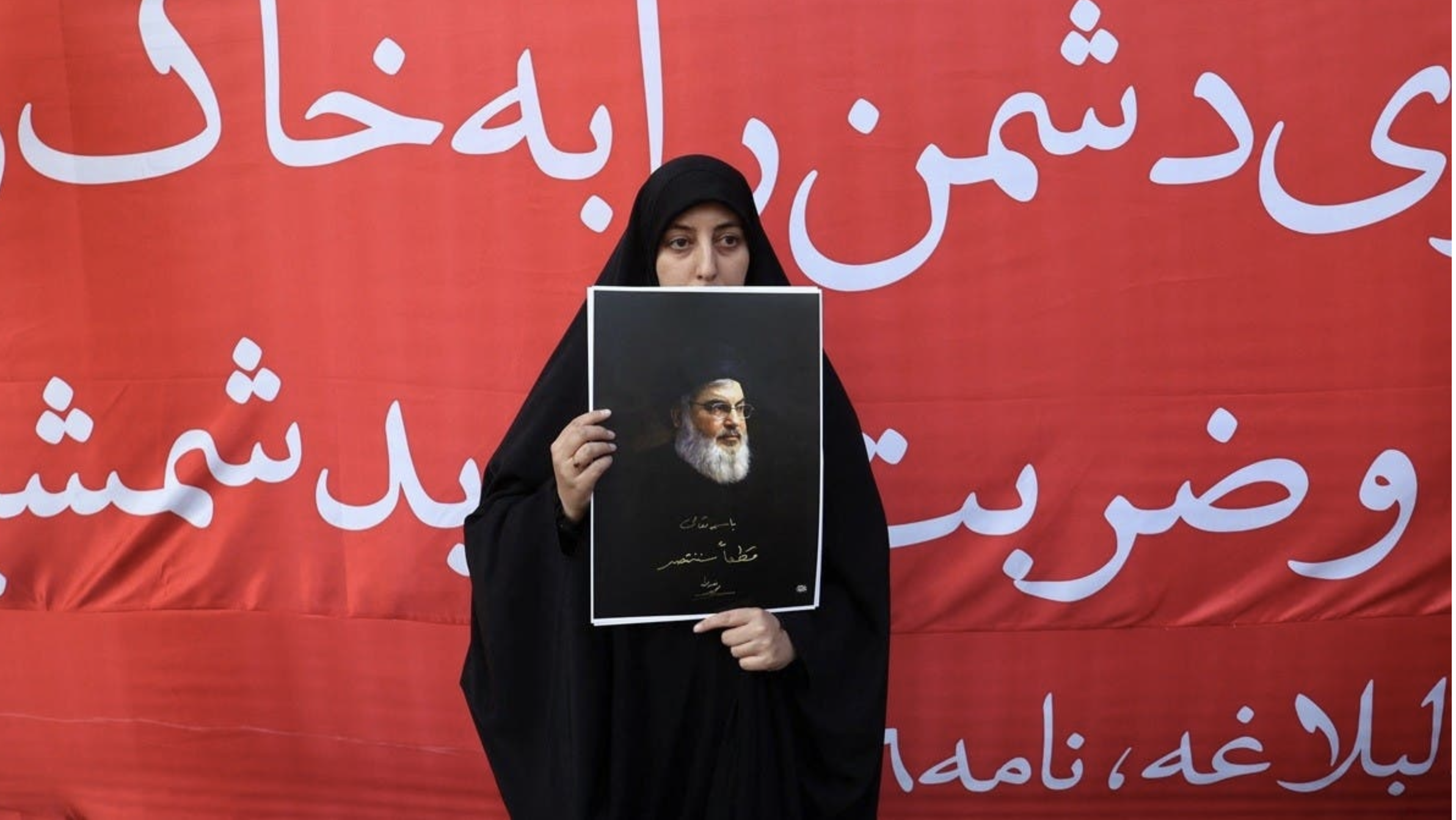
A pillar of orange smoke rose over Dahiyeh, outside of Beirut, the site of Sayyed Hassan Nasrallah’s death, on the night of September 27, creating a crater some twenty feet deep. As local residents flooded shelters in downtown Beirut from the southern suburb, the intense bombing illuminated the night sky an extreme show of force that Israeli Air Force knew no boundaries in the control it exercised to defend its borders across the Middle East. Dozens of precision-guided bombs that enetered four high rises were designed to penetrate heavily fortified bunkers or caves with a thirty five meter radius; the bombs exploded at time delay after entrance, destroying the four buildings with a force three times of bombs dropped by United States in the Iraq War. The headquarters Hezbollah used to coordinate military responses since October 8, 2023 was reduced to a fifty meter deep crater as large as an entire city block in Beirut’s southern suburb, erasing its presence.

The airstrike that killed Nusrallah together with seven highly ranking Hezbollah commanders and officials from the powerful group sought to paralyze the deep commitment to support for Hamas on Israel’s northern border, and the increased flare-ups along the occupied Golan Heights. The massive explosion of dozens of bunker-buster bombs–designed for fortified compounds, more than residential settlements–itself mapped the overlap between militants and civilian residences that Israel had long argued non-state actors had taken advantage, using communities as human shields, and has led to the blurring of so-called “safe zones” that have so tragically become sites for the massacring of innocent civilians with a regularity that is truly hard to stomach, that has provoked global indignation, which the airstrike against Nusrallah–followed by killing Hamas leader Yahya Sinwar after he was encountered in a civilian zone in Rafah, a city on the Gaza Strip’s border with Egypt. The massive scale of the vengeance strike in Beirut was a response to the tranquility of the AI scene, suggesting the deep evil character of the non-state actors and disabling their abilities of resistance.

The massive explosion of military munitions in the Beirut suburb didn’t erase a global threat posed by militants–but rather magnified it, escalating cross-border violence to a new threshold and level of destruction with a rapidity that is unprecedented. The complex politics of the Middle East since October 7, 2023 were cast as a conflict of good and evil, but the execution of the Shiite Muslim secretary-general long designated a “global terrorist” reconfigured a long-simmering local border conflict as a war far beyond its borders, or the safety of those borders. Indeed, the air raid was a transgression against the very authority of or respect for borders in targeting non-state actors within a narrative beyond states. The fear of a global threat–a threat to the Jewish people only able to be understood in global terms–that Nusrallah propounded justified the huge deployment of force, magnifying and realizing the rhetoric of destruction as an escalation that can only be understood in retributive terms of a lex talionis, outside either international law or the laws of war.
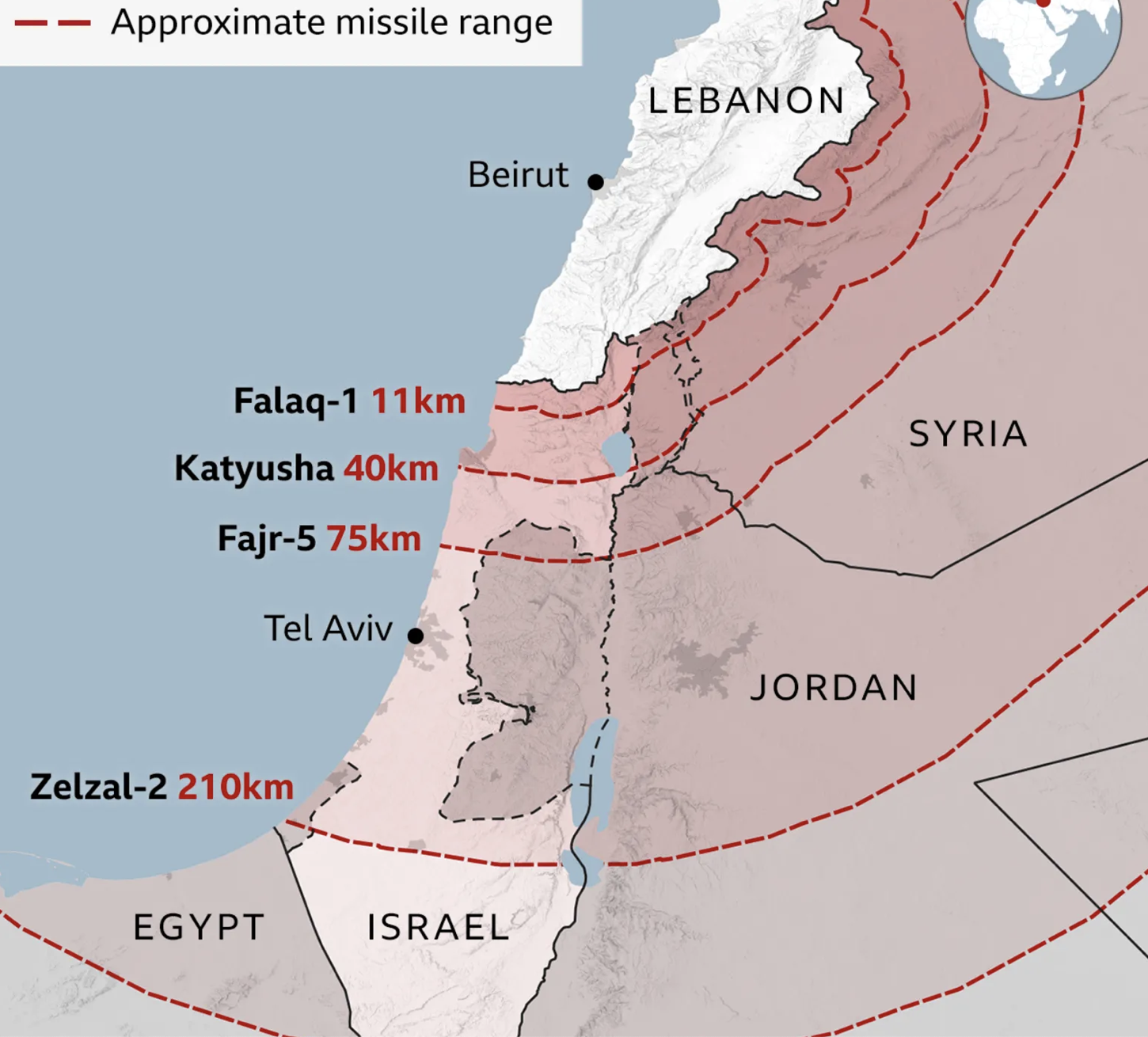
The strike at the heart of Beirut’s residential neighborhood was a qui pro quo responding to attacks on Israeli territory. The attacks were on territorial claims long denied by Hamas and Hezbollah–but the retributive strike of long planning was a proof of concept of the power of the Israeli Defense Forces had to strike–and indeed flatten-any village in Lebanon to protect its own frontier, civilian loss of life discounted. The assassination was a demonization of all civilian infrastructure violating international law, but presented as a retributive strike for a higher good–a “measure of justice” to achieve war aims, and a map of frontiers, escalating the violence of the war on civilians beyond earlier wars, even amidst current calls for de-escalation. Rather than map the war by frontiers, or by national borders, the attack on the stronghold of the non-state actor in Beirut flattened four buildngs to kill its Secretary-General Hassan Nasrallah and elite, blurred boundaries of civilian casualties and military targets in violation of international law and legitimate tactics of war. The bunker where senior leadership convened for strategy seemed an actual bonanza. But in expanding the battle beyond Israel’s actual frontiers, yet of utmost urgency as a jackpot strike against the leadership who had perpetuated the assault on its northern frontier. The Israeli Defense Forces boasted, “Hassan Nasrallah will no longer be able to terrorize the world” spoke to the globe–as if justifying the huge show of force–three times the bombs of the “shock and awe” Iraq War on a Beirut suburb as Israeli Prime Minister Benjamin Netanyahu addressed the United Nations.
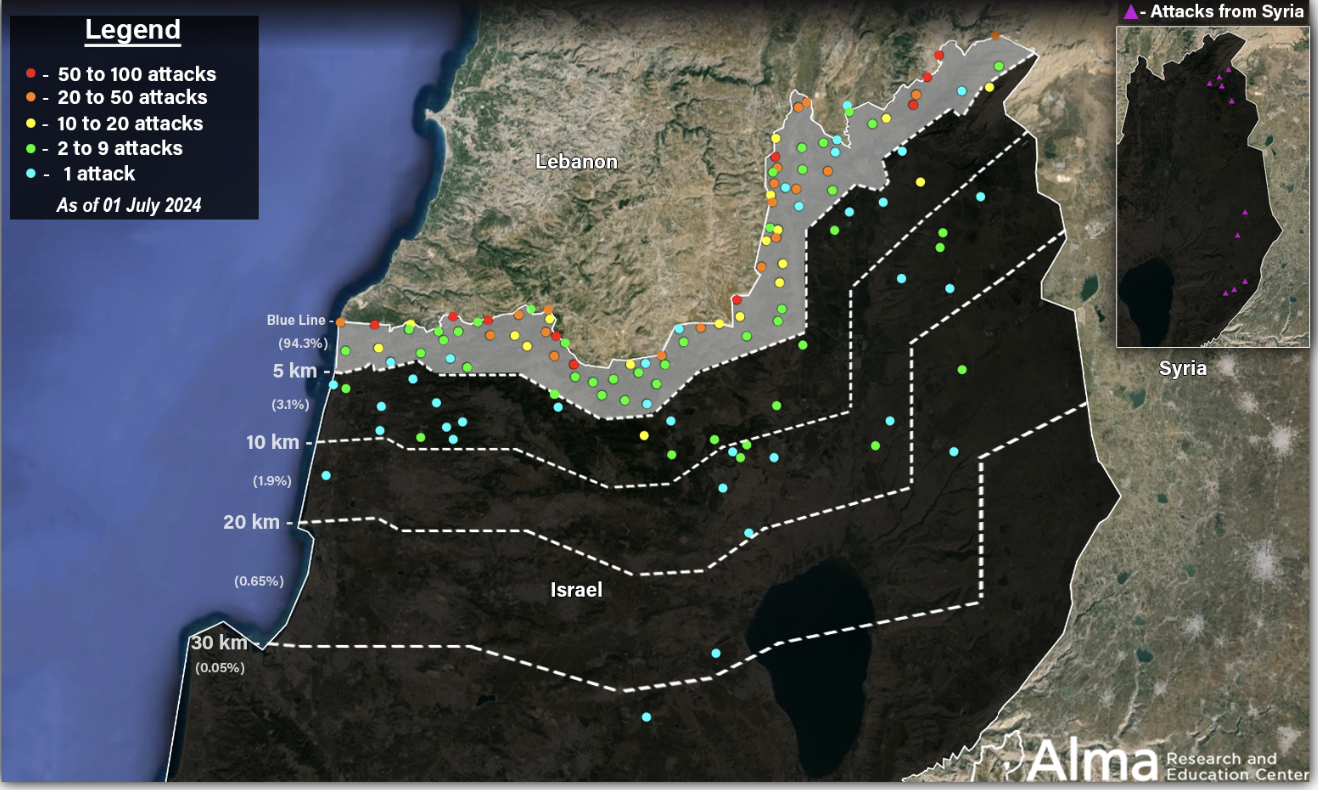
People Displaced During Armed Confrontations on Southern Lebanon Border from October 8, 2023-August 22, 2024/ Mobility Snapshot by International Organization on Migration (IOM) Based on Daily Monitoring/UN

The strike was an explosion not only of six apartment complexes, but an illustration of the power of a retributive logic of cross-border attacks, a logic manifested the violent military exchange across borders that have led to the growth of evacuation zones, non-man’s lands, and dead zones. Whereas the unclear locations of the Israeli hostages in the tunnels of Gaza City were not known–and while the leader of Hamas, and mastermind of the October 7 invasion, Yahya Sinwar, has long surrounded himself with “at least twenty hostages” per the expert on the conflict who interrogated him for Shin Bet, Kobi Michael, who continues to elude Israel Defense Forces in the Gaza tunnel networks. The assassinations of Hezbollah leadership flouted borders to send a message.

The bombing escalated the exchanges of rockets fired from southern Lebanon’s territory from early April, as border tensions on Israel’s northern border heated up, all but invoking a higher narrative of collective memory to sanction destroying infrastructure for staging attacks in Southern Lebanon on northern Israel.  Israeli Defense Forces Rear Admiral Daniel Hagari “contacted the residents of the three buildings in the Dahieh” living in units “above and near Hezbollah’s strategic assets must evacuate immediately for their safety and security,” blaming Hezbollah for placing their lives at risk by burying “strategic capabilities . . . underground in Beirut,” demanding a bomb of requisite force in a residential neighborhood by a surgical strike as itself an abnormal violation of the law. (Hagari indeed advocated a surprise reprisal attack on Lebanon after the October 7 invasion, not Gaza.) In the year since the invasion, Israeli forces fired some 80% of rockets across the border. But the assassination of Nasrallah together which Hezbollah’s high command was followed by the displacement of a quarter of Lebanon’s population–some 1.2 million innocents, a mass exodus is rarely mapped–poorer Lebanese citizens; Palestinian refugees; migrant workers, and Syrians, and killing over 1400 residents of the region.

Displacement of Lebanese, Palestinian, and Syrian Civilians from Lebanon, October 8, 3023-August 20, 2024

But the redrawing of the lines of “normal” interaction of the strike–and in the war–was predicated on erasing the idea of clear parameters of safety or precaution, expanding the battle zone in ways that frontier and border disputes can no longer illustrate or explain, as we map the “evacuation zones” imposed by the Israeli Defense Forces based on the data they released against the border which has ceased having much practical (or even tactical) meaning any more. The dispensing of the border as a unit on the map seems to have been the terrible result of the logic of this war.

Guardian/Evacuation Zone, October 1

BBC, October 8, 2024/IDF Data, OpenStreetMap

These “warnings” may arrive only a half hour before the start of bombing, as if their delivery has become increasingly perfunctory, provided as a script to undertake the bombing of a broad sector of the border zone the first week of October, per a recent map of Amnesty International, rather than in a manner that would allow civilians to plan evacuations at all, researches like Ahmad Baydoun have found, trying to track not the arrival of bombs by IDF data, or their effect and impact on the ground, but the communication to residents living south and north of the Litany River.

Villages and Regions Impacted by Evacuation Orders, October 1,2024-October 7, 2024/Ahmad Baydoun, OSM

The frame of reference for the barge of such precision strikes are increasingly cast in terms of divine wrath and retribution–and the killing of Hassan Nasrallah charged with opening a “northern front” against Israel, linking that war to the army’s defense of Israel’s borders. American President Joe Biden explained the strike on Secretary-General Hassan Nasrallah as a retributive act–“a measure of justice for his many victims” –echoing the apocalyptic terms Netanyahu cast the war, by a Biblical frame of reference as much as a geopolitical explanation. Indeed, while this is a war pursued on non-state actors–Hamas; Hezbollah; the Houthi in Yemen–the tribal terms in which they are cast by reference to Amalek, often tied to the “chief of the sons of Esau” in the Bible, as a nomadic tribe of ancient Israel or Canaan–who came before all other nations to make war on Israel, or to the descendants of Esau, whose tribe first encountered the ancient Jews as they came “out of Egypt,” and were the first and primal enemy inhabiting the idolatrous cities that demanded destruction–destroying the original inhabitants of Canaan to fulfill the covenant with Abraham, for a conquest in a Promised Land. If the October 7 attack reawakened Israel to the fact that the New Middle East could not avoid the Palestinians, it led to the evocation of the Amalekites, leading Netanyahu to invoke Amalek, as if prompting the involuntary memory of collective recitation,  “You must remember what Amalek has done to you, says our Holy Bible. And we do remember.”

The imperative remapped power dynamics within the Middle East in a way that was best evoked by a Black Cloud. The tribe of Amalek is not thought to have existed, but the current war is animated by a rhetoric foregrounding the divine punishment of Amalek “for what he did to the Israelites.” Th punishment has been long remembered, celebrated and recited as a collective truth in a scriptural narrative. It has become a terrifying topos justifying a war without borders, of visiting divine wrath. The pronouncement by Israeli Defense Forces “Hassan Nasrallah will no longer be able to terrorize the world” was not an understatement, but a justification of the totally overwhelming use of force. The increased equation of Hamas, Hezbollah, and the Houthi with this mythic tribe, allowing Netanyahu to lump these allies together, casts them as a war against Israel that must be waged as one of divine wrath, and a war that will be truly apocalyptic–that mirror Nasrallah’s own fiery rhetoric. Indeed, the repeated invocation of the Amalekites kept alive the memory of biblical destruction, leading up to the invasion of Gaza and the invasion of Lebanon, that offered something like an alternative orientation to a map, a model of describing the relation of the Jewish people to justice, and to escape the confines of international law–and indeed of nations. This is not a newly deployed future–Netanyahu compared the prospect of a nuclear Iran to Amalek before the US Congress in 2015, declaring that “the days when the Jewish people remained passive in the face of genocidal enemies are over”–even though the comparison to a ritualized memory of a biblical memory is absurd to modern geopolitics, and made Israel unlike any “normal” nation. Yet the “normalcy” of these operations depends on inherited narratives of scripture to motivate a military campaign without any clear endpoint of goal, that stands to consume the land.

The threat of failing to exterminate and destroy Amalek has redrawn the map of the Old Middle East in place of any rapprochement to Saudi Arabia in a New Middle East, which is now relegated to the past. This makes the invocation of the “Curse” that the Middle East faced out of keeping with the family of nations–or the participating of a council of “normal” nations, the United Nations–or hopes for peace among “a new Middle East, between Israel, Saudi Arabia and our other neighbors.” The a community of nations joined by a nation forged by shared memory of how it had come out of bondage, but been defined by a lineage and shared memory. The “Curse” lay outside of any nation’s history, and, via the invocation of a perhaps purely legendary people of the Amalekites was elided with the new shadowy non-state actors, identified as part of the “war against Amalek throughout the ages” that was waged by Jews. And Nasrallah’s refusal to cease waging war on Israel and fire on its northern regions until the end to all Israeli hostilities in the region of Gaza, a belief tied inseparably to his conviction that he was indeed shaped by having watched  “what happened in Palestine, in the West Bank, in the Gaza Strip, in the Golan, in Sinai” and Israeli hostilities in Gaza. At the same time as the war has been pursued, in hopes some living hostages survive in the two hundred tunnels below Rafah, the slogan of global alertness–“All Eyes on Rafah”–calls attention to the dangers of residents of the city were Gaza’s 2.3 million civilians were forced to migrate–a social media counter-offensive, launched in parallel to Israel’s military offensive in early May if generated by AI and shared on Instagram and TikTok, of orderly rows of tents.

These hostilities have made that border war with Lebanon not about a Blue Line, or about Lebanon’s border with Israel, but about the persistent conflict of Palestine with an Israeli state. The attacks on Gaza increase the license of cross-border attacks on Israel, Nasrallah felt, justifying the lethality of the strikes independent from their legality, expanding a “balance of terror” to an axis of resistance.

Nasrallah Preaching, circa 2014

The activation of the memory of the Amalekites provided a way to understand the need to visit destruction on the Amalekites as a way of living in the present. The ritualistic memory of the tribe who were hereditary enemies of the Israelites from the time of their arrival in Canaan elided the Palestinians–and Palestinian identity–with an ancient enemy of the ancient Israelites native to the Negev, dating from the era of Moses and Joshua, transporting audiences to pitched battles of an era of stateless wandering from a period before settlement in the Holy Land, who in Exodus had viciously attacked the Israelites at battles in the actual battlegrounds of the Sinai Peninsula, recalling the Mosaic altar inscribed with promise that “The Eternal will be at war with Amalek throughout the ages,” as if they were continuing a war of extermination internalized ritually, but was now transposed from a historical Canaan to a nationalistic notion of Israel’s frontiers: did the boundaries even have to exist or be drawn to continue the war that Amalek had himself advised other nations afraid to join him to join his initial push against their : “Come, and I shall advise you what to do. If they defeat me, you flee, and if not, come and help me against Israel.” Is not “war against Amalek [continued to be fought against the continuity of the deep rhytms of history] throughout ages?” The memories of these deep rhythms are preserved by telling, hearing, and repeating, but kept alive as a way of looking forward by looking back and–as Gabriel Josipovici observed of Jewish scripture–“by looking back only to help it move forward” in the “ritual recalling of what once happened” that is not historical or fixed in remote time, but an ongoing story, not motivated by looking back with nostalgia, but by demanding reform in the present.

The jagged line of the current de fact division of the states was never an international boundary, but the conscious choice of Deuteronomic terms of vengeance and retribution of the current mission to “blot out the memory of Amalek from under heaven” as one of eliminating attackers of the state of Israel–transform a war disputing boundaries to one of smiting those who staged an attack of viscious surprise on the Israeli people–erasing the long contested boundaries of northern Israel to an existential war at the heart of Judaism, devastating land, property, and border lines. The references are not only asserting a biblical right to territory, but a Jewish Holy war, mirroring the oratory of non-state actors as Hamas and Hezbollah, that stands in place of a language of nations.

Israel-Lebanon De Facto Boundary Demarcation Line

The boundary derived from triangulation of Palestine in 1948 that became the base map for the state of Israel–boundaries with Lebanon from the Mediterranean to cairns at Las-el-Nukurah, Khirbet Danian, Labuna, the edge of cultivated lands of the Waddi Kutayeh east to the Wadi Dalem as an armistice line, rather than an international boundary, to the villages of Ramia, Rita-al-Shaub, and valleys of Wadi Bediyeh, to villages of Tarun, El Malikiya and eastern village of Meis, Odessa, and Metallic or Metulla, the cairns of triangulation of the armistice line never intended as an international boundary than a line of withdrawal for Israel’s army, even in the Blue Line–a de facto line, provisional more than ever intended to conclusively resolve borders or boundary disputes. The mutation of a fixed line to security zones, and zones to be cleared of population, not only to meet the demands of Orthodox supporters of his own government, the language of biblical vengeance was supported by the invocation of the “horrific attacks of October 7,” attacks that were clearly intentionally designed to provoke the collective memories of panic of an actual holocaust–removed from any mere debate about “borders” and “boundaries” on a map. As Netanyahu used the narrative of “genocide” in terms of a revenge on the Amalek–“Go and smite Amalek, and utterly destroy all that they have, and spare them not; but slay both man and woman, infant and suckling, ox and sheep, camel and ass“–as an existential threat, the armistice boundary of Lebanon was undone, erased and replaced by a devastation of a border zone.

The pseudo-scriptural injection to “eradicate this evil from the world” has been cast as for the benefit of American evangelicals or indeed for Orthodox allies, sanctioning his attacks on Gaza by the fact that “the Lord will have war with Amalek from generation to generation,” so much as a statement of the collective memory of Jews Palestinians would recognize and shudder. The projection of divine law offered a transcendence of the legal boundaries of Israel, unable to undermine or be in conflict with Israel’s longstanding aspiration to be a “normal” nation-state. If the triangulation of Palestine that preceded the State of Israel organized the mapping of temporary land settlements in a framework of organizing the territory in terms of its colonial administration, visualizing the temporary nature of divisions of land as a state of “permanent temporariness,” rather than of temporality. Indeed, the claims of naturalizing or institutionalizing boundaries present at the founding of the state of Israel are quite dramatically being undone and revised in the current remapping border zones of Southern Lebanon. While they may seem to be in terms of “Friend” and “Enemy”–the polarity of politics famously espoused by political theorist Carl Schmitt in the Nazi Era–the zones of evacuation, exclusion, and displacement are not about sovereignty, in a Schmittian sense at all: as much as a political theology, the intensity of such retributive strikes are Deuteronomic at core, if designed tto preserve the safety of an Israel. It is a logic of securing its borders to “blot out the memory of Amalek from under heaven” per the Book of Deuteronomy, by visiting a retribution of such intensity and wrath that emulates the divine. The operations bring commands of remembrance–“Remember what the Amalekites did to you when you came out of Egypt . . .”–of scriptural origin to the modern day. Indeed, the figure this fictive tribe of Amalekites occupies in collective memory is an imprecation that today is akin to “Never forget . . .,” of deep resonance for the Jewish nation as a biblical collective memory from the very foundation of the Jewish people, no longer of a removed historical event but a living memory by virtue of its repetition as an ancient event bounded in space and time, that has become timeless.

If the injection is experienced as a bonding of God to his children as much as a leader to a nation, it has created a new logic of cross-border attack that demands to be appreciated outside the political. For as much as merely the recollection of a removed event of scriptures, the figure of Amalekites has become or been activated in contemporary Israeli political discourse and theology as a guide of living in the present; the call to “remember” becomes to learn how to remember becomes a way to “know” of a resonance that transcends political boundaries–even those confirmed in December, 1948, after the First Arab-Israeli War, at the Israeli Declaration of Independence that created the boundaries Israel shared with Egypt, Lebanon, and Jordan. If those boundaries were created by a series of famous armistices signed with Egypt on February 24, with Jordan March 3, and with Lebanon on March 23, 1948, the last of which set a basis for military withdrawal at the “Blue Line” that led Israeli forces to withdraw from thirteen villages in Lebanon’s territory, on July 20, 1949, the armistice line that was agreed to in Northern Israel is no longer a line of armistice,–but has been cast in a different collective memory, no longer on paper maps or set stations of triangulation–

undefined

Israeli Delegation to 1949 Armistice Talks: Yehoshafat Harkabi, Aryeh Simon, Yigael Yadin, Yitzhk Rabin

Geodetic Triangulation of Palestine, 1946

–but by the logic ofan internalized narrative. The frontier nominally about a line of withdrawal enemy forces was, indeed, a basis to visit violence of a new level of complete destruction, and a new sort of enemy beyond the notion of a boundary dispute, and which challenged registers of mapping that reflected only on-the-ground damage: the level of damage inflicted over nine months and more of border fighting between the Israeli Defense Forces and armed Hezbollah forces in Lebanon goes beyond a border dispute, as the reference to the Amalekites tapped a collective memory of a litany of destruction that in fact knew no place, but was an almost timeless narrative not confined by space or time, a visiting of vengeance on a people who demanded divine punishment–“Now go and attack the Amalekites and completely destroy everything they have. Do not spare them. Kill men and women, infants and nursing babies,[1] oxen and sheep, camels and donkeys“–that was a divine judgement and not even a human one between nations or nation-states. This alone served to explain the non-state actors who attacked Israel–Hamas and Hezbollah–in ways that were foreign to a discourse of nations or a law of nations.

If the complex military situation on the ground was extremely contingent, and multinational in its composition of conflicting Syrian Iraqi, and Lebanese “Defensive” forces, the complex armistice line determined along the mountainous terrain of Southern Lebanon respected Israeli military control, if it was drawn along the line between Lebanon and Mandatory Palestine, with careful attention to Armistice Demarcation Lines that hinged on the control over mountainous terrain as much as permanent legal borders–at Arab insistence–but which would mutate into Israeli borders–refusing to recognize the boundaries as a settlement of the Palestine question in interim agreements that lead to the creation of demilitarized zones around many of Israel’s “borders” never leading to the signing of a peace treaty between Israel and Lebanon,–a problem of renewed relevance today.

Into this absence of clear cartographic rendered boundaries, and a stasis of military control led to deep resentment, the invocation of the shared memory of almost involuntary rather than voluntary recollection entered, echoing the imperatives to preserver memory and keep memory alive that may have been consciously invoked by the brutality of the invasion of October 6 by Hamas, but was a away to process the violence of the invasion. The tag “Amalekites” emerged as a counter-memory meriting the retribution on a biblical scale, invoking the Deuteronomic law of a lex talionis, not about the actual ancient landscape of the Middle East of Canaan–in which no proof has ever been found for the Amalekites–but an anathema-like demonization of a living threat to the Jewish people, tied to the deep political rhythms of their suffering and the affirmation of their primary and precedent tie to God–irrespective of who first inhabited the land of Canaan east of the Jordan, whether the Ammonites, Moabites, Edomites or Amalekites. For in the ritual recitation of Jewish belonging, it was the Amalekites who had joined the nations ion Moab and the Ammonites to attack the Israelite tribes, capturing “the city of palms” – perhaps Jericho or its pasture lands–(Judges, 3:12-13), and joined the Midianites in destroying the crops of farmlands they raided as desert tribes, before their decisive destruction, when Saul responded to the divine request to obliterate their memory by driving the nomadic tribe back close to the border of Egypt, reducing the influence of the Amalekites in the border regions of Judah and the Negev, back into the western Negev. The timelessness of a struggle against evil was a far more powerful lens to see the current war as a dichotomy between Good and Evil, removed from circumstances of dispossession of land, and far preceding the foundation of Israel in 1949.

This was a construction of the Palestinians in the modern Middle East as removed from actual problems of discrimination, an apartheid Israeli, or a dispossession of homes, but as an enemy to the Jewish state. The tag of the Palestinians as a tribal people of the desert–the “Amalekites”–were terrifying fighting words to designate Palestinians in Israeli politics. In national discourse, the evocation of Amalekites, even if the tribe is now thought never to have existed in Canaan, save in the scriptures as a people whose destruction was worthy of memory. The offense preserved in Deuteronomy and the Book of Samuel has become shorthand for acts of violence preserved in the collective narrative of Israel’s eternal memory; these original inhabitants of Canaan who terrorized the Jews. The Amalekites had occupied a figural if imaginary prominence as a threat preserved in collective memory of the Jewish people through Deuteronomy 25:17, a touchstone of calling to witness, and a call to witness in post-Holocaust Israel, a process of bearing that was deployed to process October 7 the violence of the attacks as an invasion meriting immediate retribution, and process events that intentionally triggered reflexive memory of the violence of a pogrom occurring on Israeli soil. The visiting of a ritual terror on the Israeli people merited a lex talionis akin to Amalek was not modern in any way, but confirmed the tribal nature of the peoples who had lived in Canaan before the Jews’ arrival out of Egypt. Both recent Israeli settlers and right-wing politicians have deployed the imagined tribe as a figure foreign to the world of “normal” nations, to conure an existential nemesis to be destroyed with a violence that did not belong to the world of normal nations, of divine proportions; the violence may stand in contradiction with Israel’s founding goal to be seen as a “normal” nation not unlike other nations from its 1948 founding, a steep problem of there constitution as if an exception of the ability to pursue geonocide.

The terrifying salience of the Amalekites in contemporary political discourse among settlers and Likud members is particularly striking, and suggests more than an audience to which Netanyahu played. Benzi Lieberman, Chairman of the Council on Settlements, invoked with zealousness the destruction of Palestinians by the boogeyman of Amalekites to map a people worthy of destruction–“The Palestinians are Amalek! We will destroy them. We won’t kill them all. But we will destroy their ability to think as a nation. We will destroy Palestinian nationalism.” Similarly, Likud activists used the equivalence to justify genocide: “Arabs engage in typical Amalek behavior,” a proclivity to evil resonating with the ritual retelling of scripture; if the prominent Likud activist was unable to “prove this genetically,” he recognized “behavior of Amalek” demands destruction, even a destruction as that visited on the Amalekites by God.

 The reference to the Amalekites—who didn’t even exist!—offer the outlying example of acceptable conduct, even if it betrays the goal of being a “normal nation,” and casts Israel apart from normal nations, betraying its goal of being a normal nation—though what a normal nation is today is hard to know.  “Torah commands the Israelites to wage an eternal war against the nation of Amalek, and to wipe them out totally,” reads the current website of Chabad, arguing that theAmalekites are no longer a foreign nation, but “an internal enemy” who “wage a lethal war with our soul,” and must accordingly be annihilated. “Amalek unfortunately and definitely exists,” and the South African legal team accusing Israel of genocide at th International Court of Justice quoted the commandment to “erase the memory of Amalek” to convict Netanyahu of having plans for genocide, but another face of Amalek is identified as forgetfulness, and the casting of the Amalekites as not fixed in time, but “internal enemies of the Jewish people” from he Nazis in the twentieth century to Hamas today suggests the demand to recognize the survival of the Amalekites, and “never forget'” what threats they continue to embody. The rather timeless opposition that Netanyahu invoked served as a way to cast the global threat as an existential threat, not tied to contingent circumstances or the dispossession of land, but only as a form of pure evil.

The diffusion of the future of speech in Israeli politics cannot be overlooked as a part of Netanyahu’s long game denying boundaries and borders. Over a decade ago, a member of the National Religious Party saw collective guilt of all Palestinians as “creatures who came out of the depths of darkness,” who “we will have to kill,” they characterized them as Amalekites–a people needing extermination. They are people who know no borders, who are not nations, and who have no place in the Middle East if Israel is to belong to a world of nations. When the remarks of Netanyahu were glossed by 1 Samuel 15 in the American media, a divine order to “destroy Amalek entirely,” the prime minister’s office insisted news agency clarify the exact citation of Netanyahu’s speech to the Book of Deuteronomy; if both passages reference elimination of a people, the Prime Minister’s office insisted the Deuteronomic origins clarified the logic by which these Amalekites were especially dark vicious non-state actors–whose extermination was demanded as they had no place in the world of nations, as it was entirely foreign to it, but a f tribe–even if there is no evidence for the tribe–save as a place-holder of collective imagination and collective memory. The Deuteronomic origins of the mandate for destruction was not to “blot out the memory of Amalek,” but to dispose of the creatures of darkness of the Amalekites by the logic of the Israelites penal code of the lex talionis of Deuteronomy 19:21, “life for life, eye for eye, tooth for tooth, hand for hand, foot for foot”–as a law of retaliation, and of protecting humans from every threat to their lives, the Old Testament principle, not a historical narrative of kingship, but precept for brutally visiting punishments on a people out of respect for the value of human life.

While the refenrce to the Amalekites was a potent signifier in right wing politics of a collective memory that offered tools of living in the present, the figure of speech was no doubt readily recognized by the Palestinians in Hamas and Hezbollah as a declaration of war that disrespected borders, a contradictory evocation of a license to kill–a declaration of genocidal intent to remove the “ability to think like nation”–a group that was likened to a tribe, rather than a nation. The characterization was a terrifying explanation for justifying failure of adherence to international norms by a nation, and, perhaps, the license to act as a nation outside of national norms. The new norms for visiting destruction on the Amalekites was not in the handbook of national norms, but was a script that mandated a total destruction of borders, indeed, and a reversal of the idea of the border to a border zone of safety of military creation, of evacuation zones from the Gaza Envelope to the border zone of Southern Lebanon, zones whose destructiveness with no similarity to borders.

The ceasefire lines between Lebanon and Israel, if long established, were in a sense negated by the assassinations, if they were already allowed to be contested in the expansion The assassinations of Nasrallah and two successors to his leadership–“Nasrallah himself and Nasrallah’s replacement, and the replacement of the replacement,” as Netanyahu crowed, sewed leadership chaos as a means to redraw Israel’s Northern border, even if it contravened international law. Netanyahu openly threatened Beirut stood at the abyss of “a long war that will lead to destruction and suffering like we see in Gaza,” on the anniversary of Hamas’ invasion of Israel, as four heavily armored divisions of Israeli troops filled southern Lebanon, destroying villages and burned thousands of hectares of farmland in Southern Lebanon, in a rewriting of the map that raised the specter that the nation no longer able to feed itself, seeking to destabilize the entire nation to pursue its ends of remapping the dynamics of power in the Middle East. Much as the Israeli Prime Minister hoped to “evacuate the whole Gaza Strip in coordination with the Egyptian government,” the hope of normalizing the expunging non-state actors from the future map of the Middle East was a “plan for the resettlement and humanitarian rehabilitation of the entire Arab population in the Gaza Strip which aligns well with the economic and geopolitical interests of Israel, Egypt, the USA, and Saudi Arabia,” remapping of national interests that expunged non-state actors from the map.

Netanyahu was addressing a press conference after addressing the General Assembly in New York, but the military planning of the assassination demand a reexamination of the maps Netanyahu had presented to the United Nations General Assembly–long involved in the negotiation of Lebanon’s southern border–and the maps by which we understand what was treated as a border conflict has become a map that expanded to what might be call a border zone, if not to create a demilitarized zone or a “dead zone” in ways far more literal and apocalyptic than the rhetoric of Nasrallah or Netanyahu had used. In arguing to Beirut’s residents “We’re not at war with you. We’re at war with Hezbollah, which has hijacked your country and threatens to destroy ours,” as meaning “Israel has no choice. … Israel must defeat Hezbollah,” the mushroom-cloud image of destruction that began in the evening and sent massive clouds smoldering sent a plume over Beirut in dawn hours and early morning rocked underground Beirut suburbs, demanded residents evacuate southern Beirut, blaming Lebanon for having allowed the transit of munitions from Iran to arrive in civil airports of Beirut, and continuing to target buildings housing munitions across southern Lebanon and Beirut.

September 27, 2024/Hassan Ammar/AP

The delayed reaction bombs entered the buildings to explode, creating a devastating if targeted damage by their pinpoint accuracy, striking Hezbollah commanders. Nasrallah had been tracked for twenty years, killing the head of Hezbollah, his successor, and close circle of commanders in an underground compound, is an illustration of frustration at inability to define the prolonged war at its borders. The strike across borders raised questions of violating international law, and of legal munitions, but eerily evoked a divine sort of justice.

The pinpoint strike at the circle it blamed for plotting attacks on Israel shifted the long war on its borders to an urbanized area: Nasrallah had angrily condemned how the planting of explosives on Hezbollah’s pagers and walkie-talkies for having “crossed all red lines,” and “broken all the rules,” as it had issued a virtual “declaration of war” by flying supersonic planes over Beirut, buzzing the headquarters of Nasrallah as if taking a reconnaissance flight over targets of later bombed. The final televised address he made condemned the aggression of the strikes airplanes made on Lebanon’s territory, coordinating a set of explosions across the entire nation of Lebanon, as if to alert the leader and of Hezbollah of the possibility of an Israeli strike at any site in Lebanon–a television appearance curious for how the Sayyed was instant on the bounds of Lebanon.

This can be seen as a declaration of war,' Nasrallah says as Israeli Jets  Fly Low Ov

September 19, 2024

The the coordinated air attack that sent columns of smoke into the night air crossed those lines even more emphatically and spectacularly, revealing the precision mapping of the targets with a rather awesome if terrifying sophistication, suggesting a sort of divine wrath by dual guidance bombs that exploded eighty 2,000 lb bombs after they entered the four buildings, sending a fireball into the night sky, after residents were asked to evacuate all buildings that held “Hezbollah facilities and interests,” in a protocol of warning that has become standard to shield the civilians of the Gaza Strip and southern Lebanon.

Defense Minister Yoav Gallant (left) and Chief of Staff Lt. General Halevi (center) watch the September 27, 2024 Attack in underground Israeli Air Force Command Center near Tel Aviv/Ariel Hermoni/Defense Ministry

But the strike that was monitored closely from Israeli Air Force Command Centers in Tel Aviv, show how the security of Israel’s borders knew no limits. The war begun as a defense of Israel’s boundaries was presented as neither in cities or Lebanese territory, but against the infiltration of Hezbollah, a non-state actor, deep underground in Lebanon.

Explosions over Southern Beirut of September 27 Bombing of Southern Beirut Spread over the City/AFP

President Joe Biden, an honest man, declared “his death from an Israeli airstrike . . . a measure of justice for his many victims, including Americans, Israelis, and Lebanese civilians,” the statement issued September 28, insisting he had no advance warning of the strike, but calling the death “welcome” even if it may well destabilize the region. While his Defense Secretary had spoken with Israeli allies about using the bunker busters only as the operation had begun and was already underway, Israeli official described Netanyahu’s address of the UN General Assembly amidst escalating fighting with Hezbollah in Southern Lebanon as a ploy and “part of a diversion” to lull Hassan Nasrallah into believing in his safety, the open rejection of any hope for diplomatic resolution of the ongoing border conflict ramped into new gear as the aim was revealed “for threats to Israel to be removed.”

Bombed Compound in Beirut Suburb, Dahiyeh, September 28, 2024/AFP

The assassination, timed after multiple unsuccessful attempts to locate the hostages of August 7 or protect its victims from attack, was based on tracking the senior chain of command of attacks on Israeli citizens, as if dropping at least sixty bunker buster bombs equipped with precision guidance systems–bunker-busters able to penetrate deep underground and flatten built structures–killing Nasrallah and much Hezbollah elite was a just strike. Nasrallah had been long targeted by Israeli forces, after being tracked by radioactive material placed on his palm in a friendly handshake, ageolocation of a man long underground was able to offer inside intelligence. Ten days after a spate of terrifying explosion of thousands of pagers booby trapped with explosives across Lebanon in the hands of Hezbollah commanders on September 17, and walkie-talkies on the following day, had compelled a meeting of commanders, the strike in Beirut’s suburbs revealed terrifying vulnerability of once-secure borders. The border treaties suddenly destabilized with the jackpot of killing believed the senior chain of command planning “terrorist activities against the citizens of Israel” as if to legalize the strike, by preemptively eroding the borders of a zone of conflict across Lebanon.

Borders were the center of Nasrallah’s active engagement in the military, defending Lebanon as a frontier. Nasrallah had long claimed the resistance of the “oppressed people of Palestine” would triumph even over a nuclear powered Israeli army, preached the power of on the ground resistance to any military force. And the explosion of pagers on Lebanon’s territory violated “all red lines” in its brazen violation of the integrity of territoriality, the arrival of bunker busters in a residential neighborhood suggested even more completely the absence of respect for sovereign lines. Indeed, if the disputed borders in the world of territorial disputes are widely spread–

Territorial Disputes in the World, 2024

–the focus of territorial disputes in the Middle East were intensely linked, with firing cross-border rockets from Lebanon as the Gaza War began, or after the Al Aqsa invasion, and the rockets of reprisal Israel fired at underground tunnels for assembling rocket launchers in southern Lebanon.

Territorial Disputes in Mediterranean Theater and Middle East, 2024

The intensity of arial bombs that were three times the force as used in the Iraq War suggested a massive show of force. Yet the long disputed border in which Nasrallah had essentially dedicated his life–inviting Iranian arms into the longstanding dispute on the border with Israel, daring Israeli forces to enter Lebanon or Lebanese lands, seeing each village as the basis for defying Israeli arms, after having expelled Israeli forces from southern Lebanon in 2000, while wearing the black turban of a Sayyed, or descendant of Mohammed, had declared the imminent arrival of a moment of reckoning, had avoided assassination for more than a decade, but the onslaught of precision bombs offered a near-apocalyptic ending for his life, as much as a precision strike.

Americans might wonder at the use of bombs of this strength in an urban area. The strike targeted the rapid expansion of rockets supplied by Iran to arm Hezbollah–estimated with 150,000 missiles, drones, and rockets, over ten-fold what it possessed at the end of the 2006 war. The current explosion matched attempts to stop the smuggling arms to Syria, Lebanon, and Yemen–a black cloud hovering above the region that Benjamin Netanyahu, having approved the massive strike, showed the UN as “The Curse” of the modern Middle East. While “A few years ago, I stood here with a red marker to show the curse, a great curse, the curse of a nuclear Iran,” the return of “The Curse” on the eve of the assassination of Nusrallah seemed a cause for celebration. In a sense, the map was a smoke screen and distraction from the invasion of Lebanon’s frontier, ignoring national sovereignty and laws of sending bunker-busters in inhabited areas or military targets near them: but the “lumping” of nations opposed to Israel’s borders–Iran, Iraq, Syria, and the Houthi non-state–as if it was the mushroom cloud portentously spreading above the entire Middle East–

Map Displayed to U.N. General Assembly, September 27, 2024

–that his precision strike hoped to end. The map masked how the bombing was a transgression of international norms. Israel had undertaken in targeting the leader of Hezbollah for three decades, but finally did so in ways Netanyahu seemed to offer an explanation, if one that was not logical in any way. “The Curse” evoked a Neo-scriptural justification of the precision strike already planned against Nusrallah and underway, as pinpoint bunker-busters had left to strike at a link at the heart of the black cloud hovering over the Middle East–Iran’s man in Lebanon, who had been firing rockets across the northern border of Israel with considerable annoyance over the past year.

Sick of the involvement of Iran in non-state actors in the Middle East, the Prime Minister ended his press conference in New York quite abruptly as he was informed the strikes had been achieved, not taking any questions. The massive show of force intensified cross-border rocket attacks at northern Israel and reprisals preceding Nasrallah’s assassination blurred a border drawn on the ground, relegated to a relic of the past. To affirm the integrity of Israel’s borders, the planes flouted the sovereign space of Lebanon, at great costs to seeing Israel as a “normal” nation among nations, sending a two thousand pound bunker-buster bomb agains the man they had tracked for years, but now claimed, using a word that had its Old English origins before 1150 to cast an anathema on the forces of non-state actors that threatened Israel’s borders, and in his eyes threatened a global order: if the map was more of a news map, a backdrop of a television news show of the 1990s rather than a map of any granular resonance,–or that reflected actual mapping technologies the Israeli Air Force was using at the very same time to kill Nasrallah asNetanyahu finished his address.

The map conjured the scale of an anathema that existed in the present more associated with the occult or medieval origins–if recently revived in Harry Potter–to conjure excommunication from the world of nations, or the church, the opposite of a blessing of a future of peace. Was there not an intentional similarity of this dark map of the Iranian state’s infiltration of non-state actors to the remapping of the Middle East in maps that circulated online a decade earlier, in 2014, allegedly depicting the world domination sought by ISIS, a mashup of earlier maps, as a curse, to evoke a perspective restoration of a Caliphate that might bridge Iraq, Syria, and Iran, up to Vienna? The map emerged online, an emblem of fear paired with the change of ISIS’ name to “the Islamic State,” and pronounced its leader to be the caliph, or the global leader of Islam–and seems a projection (so to speak!) of the fears of an actual caliphate bent on global conquest–as a pseudo-Stalinist “Five Year Plan” that seemed to broker a resurrection of an early modern version of a global Cold War–“a chilling plan for global domination” per the Daily Mail–was the original image of a global threat.

Although the purported “five year plan” of the Islamic State made runs as “showing their plans for the next five years” on American television networks, eager to find a new image of global divides–

no-caption

False Mashup of Islamic Hopes for a New Caliphate, Twitter circa July, 2014

–themashup of online extremists, based on a hundred year old map of an imagined Caliphate, was an old recycled map, rather than designs for global domination. If versions included India and Bangladesh for good measure as a counterweight to Europe, it sought to conjure fears of barbarians at the gates of Europe, a sort of expansive vision of a Fall of Constantinople to barbarian hordes, to which Netanyahu’s September 2024 map of the “The Curse” made some weird reference. This was the global threat that the bombing of Beirut was serving to puncture or thwart.

Maps stoking fears of the spread of Sunni extremism were amped as the Islamic State as a miasma spread across an expanded Middle East, destabilizing the post-Cold War New World Order with a near global reach. The specter stood behind the map Netanyahu brought on September 27, 2024 was itself a massive exaggeration of the fragmented pockets of Sunni terrorism, per the US Office of the Director of National Intelligence, yet the cartographic mashup activated a potent emblem of fear, circulating quite widely as a haunting of the Middle East that seemed destined to spread to the EU.

1. When Netanyahu claimed that Hezbollah–and Iran–constituted a global threat “able to terrorize the world,” he was magnifying his own perspective on the world, and elevating the strike of Israel’s Air Force to a global intervention of its own. The strike was a bonanza in geolocation, a payload that seemed a jackpot against Hezbollah after a year of deepest frustration. After Nasrallah had charged Israel “violated all red lines”–not only the so-called “blue line” that marked the border of Lebanon since 1948–as it blew past the militarized borders in an unprecedented firepower claiming legitimacy, as if visiting a divine judgment on a man who has long preached the destruction of Israel in Messianic terms. It revisited the apocalyptic rhetoric of Nasrallah on himself and his inner circle, as if to reclaim a rhetoric of divine judgment and wrath at the violation of Israel’s borders.

Banner of Nasrallah’s Turbaned Head Held on Religious Procession in Beirut, July 2023

Mourner of Nasrallah’s Death in Iran

Yet the Prime Minister who ordered the bombing tried to make the case of its necessity, even if it removed Israel from ceasefire or peace process. In contrast to the regional the maps Netanyahu had displaced before of Israeli frontiers, he bought a map of an expanded Middle East to the United Nations of alternative future geopolitical scenarios, Israel’s incursions of the border to “limited, localized, and targeted ground raids” against Hezbollah in southern Lebanon, the tonnes of bombs seemed to se disarray in a “militant infrastructure” of Hezbollah on the eve of the first invasion of Lebanon’s border for eighteen years. The presence of Hezbollah among residential areas–per Netanyahu, in late September 2024, “a missile in every kitchen, a rocket in every garage” merited returning Lebanon, per Yoav Gallant, “back into the Stone Age,” in June, 2024, if a diplomatic solution does not present itself. As journalists are for the first time invited into Southern Lebanon, to witness the degradation of Hezbollah in villages across the border, achieved by airstrikes, artillery and raids, the invasion past UN demarcation lines revealed weapons caches, Kalashnikov rifles, artillery, hand grenades, and mortar shells, designed to stage an invasion of Israel, to disable all remaining offensive capacities of the terror group by the end of the first weeks of October, 2024.

But the IDF had already made its presence known. If the walkie talkie and pagers exploded to injure faces and arms of many, the attempt to cut off the head of Hezbollah was designed to send shocks across the system. The sudden shock of pagers long used as they were believed possible to avoid geolocation in their lack of sensors seemed a magic trick of sorts: “we are everywhere, and we can strike you anywhere,” able to strike in the web of the secret militant organization under Nasrallah’s eyes, troubling his sense of control. He did not know that he had been tracked for some time–a trackable substance being placed on his palm in a handshake in Iran or Saudi Arabia or Beirut, per Saudi news, placing him in the building complex.

Deep underground beneath an anonymous apartment complex outside Beirut, the long-hidden Nasrallah, nemesis of the Israeli state determined to undermine the Peace Process for three decades, was as vulnerable as a sitting duck by a massive explosion–unable to hide longer. His death at sixty-four cut short a fiery leader of thirty years, offering stunning confirmation soon following Prime Minister Benjamin Netanyahu’s declaration of what seems an ultimatum to the United Nation’s, not revealing or tipping his hand about operations that were by then already underway, “We will not accept a terror army perched on our northern border able to perpetrate another Oct 7-style massacre.” The “limited” operation seems a way of expanding an occupation of the region Hezbollah has long worked and based its infrastructure of rockets and missile launchers from the south of Lebanon, as it has attempted almost forty years ago to root out the Palestine Liberation Organization from Lebanon in 1982.

The explosions of low-tech pagers and walkie-talkies did not rely on geolocating sensors–but revealed the hidden reach of Israeli Defense Forces into the organization. Panicked at hearing rumors and buzz of an attack, Nasrallah instructed Hezbollah members to rid themselves of phones, bury them or put them in lock boxes, back in February as compromised–“I tell you that the phone in your hands, in your wife’s hands, and in your children’s hands is the [compromised] agent.” He had heard rumors on intelligence lines for the planning of the attack that would render his forces vulnerable in new ways. The operation had been planned for over twenty years, the result of outrage at the border war. Nusrallah had concealed himself for eighteen years, shunning public appearances since 2006 war, aware he was targeted, was a victory of mapping, as much as inside informants. The blast of eighty tons of bombs that followed in quite dramatic fashion based on real-time intelligence triangulated a quarry long sought in a dramatic blast of thunder from above. The Hezbollah leader had been shaped by the Israeli invasions of Lebanon, religiously trained in a Shia mosque in Iraq, combined liberation theology and apocalyptic imagery to articulate a charismatic vision of the struggle non-state actors suited to wage against Israel in his customary black turban and brown robe. After remote assassination by cel of a Hamas bomb-maker in 1996, he grew rightly wary of remote devices able as keys revealing the location of soldiers, in danger of lifting a needed veil of institutional secrecy to his enemy. The planting of timed explosives in walkie-talkies and pagers evaded his justified suspicions of mobile networks, but penetrated deeply into his infrastructure.

Reported Locations of Surprise Explosion of Pagers and Walkie Talkies across Lebanon, September 16-17, 2024

The shock of the exploding pagers staged a cross-border assault of brazen intrusion and infiltration that suggested the intensity of the war no longer about the contested border of Lebanon, or the range of Hezbollah in Lebanon, but the open wide nature of war.

Indeed, these exploding pagers were but the prelude to a new state in cross-border infiltration and attack, a long designed operation of which the supply chain infiltration in pagers–in which explosives were inserted as they waiting to be shipped to Lebanon–was the first escalation of cross-border strikes. The strikes that maimed some 1,500 fighters from September 17-18 set the stage for the bombing of the complex in which Nasrallah summit had called a device-free summit in Beirut, to plan future attacks against Israel, to open a needed window in which Hezbollah’s arsenal might be strategically dismantled in Lebanon. Overriding desire to find hidden underground leaders of Hezbollah and Hamas across jurisdictional borders has prioritized problems of cross-border tracking as well as of evasion.

The increased sophistication of strategic tracking became paramount in ways that cannot be explained by the boundaries of the Middle East and the Israeli state since its founding in 1948, even if Israel’s boundaries are defended as having the authority and legitimacy of a scriptural covenant. With boundaries this intensely in need of defense and guarding, how can Israel be a normal nation, or a nation like all other nations, when it is dependent on firm borders to exist? Are the barriers that were built around Israel–and the concrete barrier along the “Blue Line” of withdrawal in the north, the divide from Lebanon, a sign of strength to be defended, or of weakness, isolating the nation from its neighbors, even if the hope is to live peaceably with them? Is not the northern border with Lebanon, more than the border of Gaza across which Hamas charged on October 7, the more dangerous border on which IDF forces have focussed in the previous decade? The completion of the barrier of border fences that were completed by the one hundred and fifty mile frontier fence between the Sinai and Negev deserts in the south of Israel, leaving only the barrier between Jordan and the Dead Sea without a physical border barrier, were claimed necessary deterrents against terrorism, complete with the thirty-two mile barrier with Gaza that Hamas insurgents pierced on October 7, 2023, including the new wall planned around Metullah in the north.

Border Barriers Constructed around Israel, 2012

The maps that Netanyahu brought to the United Nations General Assembly as the attack on booby-trapped walkie talkies and pager was underway was crude, if to the point–not of nations, or of states, but of “The Curse” that had afflicted his nation–as if to conceal this was a war of stateless–positing the true dark nemesis that was the “curse” of dark forces that threatened Israel’s existence and had in fact animated the distraction–absent from this map–of the Gaza War–there was no Gaza, no Palestine, no West Bank, but a true menacing black cloud without “true” borders. The black expanse almost surrounding Israel is identified only as an anathema–“The Curse”–to suggest what has been mapped predominantly as an issue of territorial jurisdiction is a spiritual, temporal, and even existential evil. Challenging his audience to open the “black box” of threats Israel faces is perhaps the only way to appreciate the operations already in the process of being launched into Lebanon’s sovereign capital, as four planes bearing bunker blaster that would soon be on their way to bomb apartment complexes in Beirut.

The dropping of a hundred “munitions,” dropped by bombers over Beirut every two seconds in a stunning precision, erased any trace of the commanders of Hezbollah in ways that were hoped to clear the board to remake the map of the Middle East and northern Israel, yet again. The black cloud of accursed enemies of Israel–Syria, Iraq, Iran, Lebanon, and the Houthis–were not only the sources of increased missiles attacks on Israel,–was shown as a transnational alliance, intimating if not mapping the constellation of state, semi-state, and non-state actors supported by Iran as a destabilizing agent of regional instability, united with allies, as the audience of nations of the General Assembly understood, to undermine the presence of the United States influence and indeed a UN presence in the Middle East.

Netanyahu Addresses the United Nations General Assembly, September 27, 2024

The black transnational “curse” stretching from Lebanon to Iran exposed an unconventional alliance hardly in need of mapping. It made the link implicit in the vengeance strike that would arrive later the next day in Beirut as a strike of vengeance akin to of a deity, although he didn’t say so. As if announcing the traditional role of an ancient king of Israel to “break the power of the wicked,” by the state prerogatives of defense akin more to a Law of Kings of Israel than grasped by the law of sovereign states. This ruler of the state stands in place of the king. Indeed, as the message of Samuel to Saul, Israel’s king, that he punish the Amalekites for “what they did in opposition the Israelites when they came up out of Egypt” to the land of Canaan, that lead Saul to “utterly destroy all the people with the edge of the sword” [1 Samuel 15.8] in a central “genocide narrative” in which the Israelites received the divine sanction to wipe out an entire people by a “holy war” over a sacred space, not necessarily believing or even lending credence to biblical legend but ramping up the shows of force against non-state actors to a level historical inevitability of the acceptance of the unending presence of a state of Israel in the Middle East. Rather than occupying merely a story of the legends of ancient tribal heroes–Samuel or Saul–the Book of Judges–that suggest a story of the regaining of the spiritual destiny of the Jewish people, the origins of the legend of the Amalekites that Netanyahu’s office reminded American press agencies belonged to Dueteronomy, the sacred and most deep-lying legal codes of the Jewish people, from a time of their deep tie to God, rather than the Babylonian period or Roman period or a lamentational prayers to God as a righteous judge.

The maps Netanyahu carried to the United Nations was not a map of boundaries, but a haunting of the Middle East with anathema. The ongoing presence of a malignant “curse” of proxies was a continuation of the Amalekites, in some sense; it helped to make the state of Israel difficult to see as a normal state, as it could not be understood by a map of boundaries and their defense: the map of the black blot that spread as a dark cloud across the Middle East from Iran, even if this was not identified, was paired duo with “The Blessing,” as a theological or exegetical map, masking as a geopolitical map. It invited member-states of the General Assembly to take sides while they still could, in order to stop gathering clouds of an end to peace sponsoring terrorist organizations dedicated to Israel’s distruction. The map Netanyahu presented to the UN General Assembly, after he had given the go-ahead to the bombing of the bunker where the Hezbollah leader was sequestered. This killing might dismantle the anti-Israeli Axis of Resistance, Netanyahu hoped, diminishing anti-Israeli forces in the region and ending the threat to his northern border. It was a map that was not designed for American audiences in particular, but its display, combined with news of the assassination in progr4ss, led increasing American forces to be stationed in the Middle East, as ceasefire negotiations continued, was a smokescreen to the incursions of Lebanon’s border.

Arrival of Amp[lified United States Strike Groups in the Middle East, October 1 2024

These new forces were off the map, a bit jarringly, as Netanyahu somewhat blandly compared the options for the community of nations in his address to an almost empty chamber in New York on a late Friday afternoon. Speaking five days into the launch of the attacks across the northern border into Lebanon, the map of the Middle East was a blunt refusal to recognize international pressure for a ceasefire, and a refusal of the two-state solution establishing Palestine as a “normal” nation, as the Israeli Defense Forces were given the directive to “continue fighting at full force” to protect its borders amidst a map of such looming existential threats.

The paired maps offered a rhetorical smokescreen, a counter-map to the question of the conflict on Lebanon’s southern border, on the eve airplanes were sent over Beirut’s night skies drop bunker-busters that would kill Nasrallah, Hezbollah’s leader, and justify the pummeling of cross-border attacks on residential communities in southern Lebanon, where Israel has argued Hezbollah is entrenched as a proxy for Iran. The map was launched in response to Hezbollah’s cross-border attacks to protest the invasion of Gaza, but the map Netanyahu brought to the General Assembly this year neither showed Gaza or the West Bank or military operations of that invasion. The speech was not performative, but a stubborn tenacity to a map that might later be understood to justify the hope that a planned ground invasion of Lebanon would reconfigure the map of the Middle East in the long run. It was a smokescreen not to look closely at Lebanon’s border–or a summons of a sort of shadow-diplomacy to send quickly more American reinforcements to the Middle East.

Netanyahu had given approval to the assassination of Nusrallah with bunker-buster bombs shortly before he addressed the United Nations on September 27, and his use of maps as visual aids in a speech that commanded less attention than his previous addresses of the General Assembly can be seen only in the context of the surgical strike he knew already underway half way across the world.

Prime Minister Benjamin Netanyahu Addresses United Nations General Assembly/September 27, 2024

Netanyahu set the map of “The Cures” off against an alternative vision of a far rosier sense of the future, the map of “The Curse” rhetorically presented, as if diverging roads in a wood, a stark choice of the world between alliances, as if a compare and contrast question for High School art history. The black block of nations that were seen as agents of Iran perhaps addressed an Israeli public as a message of resolve, and in part addressing Iran, with the declaration that, with attacks of increased firepower in Lebanon underway, that the crude superficial maps depicted a reality that “There is no place in Iran that the long arm of Israel cannot reach, and that’s true of the entire Middle East.” There was of course no monopoly that Netanyahu had on apocalyptic visions–they were central to Nasrallah’s oratory and his own political thought, if it can be called that, and his motivational calls for the role of Hezbollah in the Middle East as an agent of destruction.

But it was also a map for the American public and an attempt to rebuff the possibility of negotiation or a ceasefire in a war that was fundamentally for the world’s future. The global map of Manicahean alternatives was a map of theological dimensions, delivering two ways Israel could be integrated in the community of nations. The pressing importance of the potential constellation of alliances between Saudi Arabia, Egypt, and India illustrated a de facto annexation of Gaza and the West Bank as if this were the starting point of negotiations, and the reality that Iran was isolated and contained as a nuclear power by the alliances he showed in green. But if the map of “The Curse” of the current geopolitical landscape that Israel faced in the Middle East, it hardly presented Israel as a normal state; far from it, the rhetoric of vengeance of the current map threaten to recast it as a a pariah state. Although the mapper maps projected the deep isolation Israel felt. It failed in its attempt to visually communicate the pressing urgency Netanyahu (and Israel) both felt at the need to act alone, even in the face of the broad condemnation of Israel’s invasion of Palestinian lands in the Gaza War as the air raids on Beirut unfolded. Perhaps the shift from the map of Israel secure behind borders in a “new Middle East” Netanyahu held up in 2023 before the General Assembly,–offering no mention of Lebanon, as a new regional alignment just before the October 7 invasion–

Map Netanyahu Displayed to the UN General Assembly of “The New Middle East,” September 22, 2023

–secure behind the barriers constructed to defend its borders, including between Lebanon and Israel, that preserved Israel as cosseted in a super-national of regional consensus on its autonomy as a state. Israeli independence was recognized without qualification in “The New Middle East” he invited the General Assembly to visualize. That global perspective may have been unexpected, from a nation that has been focussed on barrier walls, but was not asking them to visualize peace. The map is an open affront to the General Assembly, eliminating non-state actors in a community of nations, and mapping the nemeses of the Israeli state against a trans-border entity that the Assembly’s failure to comprehend could not be expected–it didn’t seem likely given that it was cast “a swamp of antisemitic bile” from which Israel was increasingly quite desperately left isolated.

Netanyahu had deployed a different infographic–a ticking bomb!–to demand in 2012 the General Assembly recognize “a clear red line” about Iran’s nuclear program, as if addressing kindergartners by declaratives such as “This is a fuse” and “This is a bomb,” to demand nations adopt “a clear red line on uranium enrichment” for the future of the world, not Israel’s future–for nuclear weapons “in the hands of the most dangerous regime” would become corrupted “by the lust of violence”–we must prevent Iran’s access to a final stage of access to high enriched uranium, that would allow the Iranians to complete a true bomb to which it was per open data 70% of the way to possessing–

–and, he grimly concluded, allow Iran, a rogue nation, to arrive at full possession a nuclear bomb–

Netanyahu Addresses U.N. General Assembly on September 26, 2012

–that Netanyahu used a sharpie to prevent, beseeching the United Nations a decade ago force Iran to “back down” not only from introducing nuclear weapons in the Middle East, but upset the balance of power in which Netanyahu claimed he sought to “forge a durable peace with the Palestinians” that had long been elusive, implicitly blaming Iran as the chief bad actor to ongoing crucial process of peace negotiations to secure the recognition of a Jewish state of Israel. Netanyahu used public reports of the possession of enriched uranium, but turned to cartographic props in later years to describe Iran not only as enemies of Israel, but enemies of God, like the very Amalekites who it was the duty of the Jewish people to wipe and eliminate (Deut. 25:17-19), as they were of an order of evil and threshold of wickedness that demanded to be contained, Netanyahu has relentlessly, and per formatively turned to maps to erase occupied territories and Gaza, but imply, as his cartoon bomb, the fear Iran would enhance Hezbollah’s ability to strike targets in Israel.

Netanyahu Iran

The map seemed revised “Greater Israel” transcending its borders to a threatened nation, aspiring to normalcy, but threatened by the non-state actors tied to Iran, the “threat” or curse in a region where boundaries and borders made no sense. Netanyahu paradoxically condescendingly lectured the community of nations at the meeting of the 79th General Assembly to defend Israel’s conduct in war, without saying so, mapping the transnational ties that had become a threat from the perspective of an isolated country. This was the deepest reality Iran must understand, the states of the world must recognize it was impossible to tolerate any longer, and the reason for the border wars he was about to launch with increased intensity. The violence of the attacks, he seemed to be saying, or apparent violation of international law were the least of the world’s real concerns. The remainder of this post is concerned with mapping of the threats to Israeli sovereignty, the mapping of the borders of Lebanon that Israel invaded, and the question of mapping the future of the nation. When he returned to the United Nations on 22 September, 2023, no doubt enraging Palestinians in the audience, he displayed the future “New Middle East” with no Palestinian presence visible–

–in ways that this blog has linked to the invasion two weeks later of Israel in the Al Aqsa Raids, named after the old mosque in East Jerusalem whose presence was recently closed to Palestinians. That performative use of the map of a bucolic “green” future appropriated the green banner of Palestinians for a “New Middle East” that suggested a community of nations poised to recognize the legitimacy of Israel in 2023–Egypt; Sudan; Saudi Arabia; Bahrain–that appeared to welcome Israel as a “normal” nation in a map of clearly drawn borders.

The strikes on Lebanon, he seemed to say, were the “domestic policy” of a “normal” nation. But the increased scale of the bombing raids that followed Nasrallah’s violent death under Israeli bombs led to a massive attempt to degrade the strength of Hezbollah on a region not imaginable before, providing a massive launching of air raids across southern Lebanon, focusing on the area below the Litany River in the southern part of the country, but extending up to the area below the Awali, the two proxies for the agreed lack of a border of Lebanon, as if to compel the United Nations and international community to accept the borders of Hezbollah’s presence in the nation and in the Middle East. The folks at “Understanding War” provided a far more sanitized image of the localized strikes that Israel had taken of cities or villages south Sidon, as well as just outside of Beirut–where they destroyed the compound of buildings where Nasrallah was meeting operatives of Hezbollah–including reconnaissance and observation points of the Israeli territory in the Golan Heights, based on local Lebanese reporting, that seemed destined to “degrade” the force of Hezbollah in Lebanon.

The demand for such a degrading of the border zone emerged as a logical response to waves of rocket attacks on Israel, mostly on IDF positions and an attempt on the Mossad headquarters outside Tel Aviv, the later fired in response to the bunker blasters that killed Nasrallah on September 27. The flurry of cross-border bombs can offer some clarity on a war that was still being called “focussed,” “targeted,” and “delimited” but appeared intended to secure a sense of lasting violation of borders and sovereign integrity, and to reassert its control of the area south of Sidon.

Capacities of Hezbollah Missiles Striking Deep within Israel/BBC, via CSIS, AFP/October 1, 2024

To a certain extent, the targeting of the southern third of Lebanon made little tactical sense, with missiles of considerable precision no reaching not only a forty kilometer rang of Katyushas, but the seventy-five km range of Fajr-5 missiles, the Iranian made long-range multiple launch rockets named after the morning prayer, first developed in the 1990s. modernized with GPS guidance in 2017, or the two hundred and ten km Zelzal-2 long range unguided rocket–Persian for “Earthquake”–which promises an enhanced level of local destruction upon impact, but also offers far less precision, but the Israeli precision strikes seemed surgically elegant, but seem to respond to the increased accuracy of short-range missiles, and the hope of removing the threat of cross-border strikes of increased velocity and defined by “more accurate, more precise, multidirectional fire” for the past six years of increasing chances and worries of cross-border war, in many ways more salient than the Gaza Strip had ever been in the previous decade, per the IDF’s former chief of operations.

Vulnerability of Israeli cities to Syrian-Made and Iran-Made Missiles/GIS Reports Online, 2018

From October 2023 to July, 2024, there were over 2,295 rocket attacks on Northern Israel, displacing many, but over a far more limited range than the study of Syrian rocket ranges revealed, mostly confined with in 20 km of the armistice line, and few beyond 30 km of the border, designed the abilities of Syrian and Russian long-range missiles, whose use was understandably restrained–the greatest majority within but 2.5 km of the border, and 94.3% within half a kilometer of the border.

Attacks on Israeli Territory, October 8, 2023-July 1, 2024/ALMA

Netanyahu seems to have won Americans go-ahead for “for dismantling [Hezbollah’s] attack infrastructure along the border,” assurances bolstered when US Defense Secretary Lloyd Austin “reaffirmed US support for Israel’s right to defend itself against Iran, Lebanese Hezbollah, Hamas, the Houthis, and other Iran-backed terrorist organizations.” Although Hezbollah had no intent to withdraw from the border, viewing its fostering of a “resistance society” as a prelude for the collective annihilation of the Israeli state, if not the annihilation of Jews that suggested defense was only possible by all-out war. While the lame duck American President bravely held out hope for a ceasefire, the war on the border had raged for weeks, and wouldn’t stop soon. In launching fireballs and incendiaries with trebuchets and from missiles, a border war of new intensity and scale had emerged for which Gaza may have been a rehearsal, and the purported choices of two maps–a “blessing” of alliances and a “curse” of Iranian proxies’ victory–is itself a smokescreen.

Or was the map not only a smokescreen, but demands to be taken seriously as a counter-map of the maps of bombing raids that he at this point knew were imminent, and underway? The deployment of the bunker-busters was not taken light heartedly and without much internal debate with members of his cabinet; the blast that seemed a veritable hand of God and strike of death for the elite commanders of Hezbollah and their General Secretary was sought to be explained, before it happened, by the lamentation of the situation in which Israel found itself. The map provided a “message for Teheran” Netanyahu had traveled to New York to bring–“if you strike us, we will strike you “–invoked the absence of borders, opening a window to escalation or a imminent missile strikes from Iran threaten. No magic marker was required, or any clear rhetorical hectoring of his audience–he seemed now heavy lidded and quite tired as he spoke to the General Assembly, with full foreknowledge of his order to send the bombing strike that would assassinate Nassrallah in his hiding place. The visual aids keyed to a language of biblical derivation, oddly misplaced on the modern geopolitical situation of Israel, was a language of self-preservation and of flattery–Indian media seemed a bit overjoyed it had been identified as “The Blessing,” irrespective of the dark side of these visual aids–the “dumb” map of the political dilemmas of the Middle East evoked the very biblical terms in which he had cast his retributive strikes on Gaza, and would now strike Beirut.

September 22, 2034

Continue reading

2 Comments

Filed under border barriers, boundaries, Hassan Nasrallah, Hezbollah, Israel

Mapping Migrants’ Deaths along National Divides

Mortality is mapped to gain a grasp of geographical distributions of illnesses over space.  The mapping of death helps to embody the pathways of disease, and allow us to see otherwise inapparent vectors of transmission, which have historically provided crucial ways to assign meanings to a disease’s effects and pathways.  In ways, the map manufactures and embodies the pathways of a disease’s infectious spread: the rise of deaths in the borderland between the United States and Mexico can only be mapped as a dereliction of national responsibility that charts an erosion of civil and moral codes.  The recent erosion of civil law and attacks on immigration law conceal a longstanding withdrawal of responsibility along the border, opening the way to creating the borderland as a military jurisdiction—rather of civil law.

We have long mapped diseases to grapple with their causation.  Even before the bacillus of a disease might be known or seen, the founder of modern epidemiology, John Snow, critiqued miasmatic theories of contagion by mapping the distribution with which cholera spread across London neighborhoods during the 1854 London epidemic, visualizing the disease as a social network of contagion by a dot map of neighborhood outbreaks that used a dot map to as proof that “nearly all the deaths had taken place within a short distance of the [Broad Street] pump” whose water was a vector of transmission.  The distribution of mortality around public fountains provided a basis to demonstrate vectors of contagion for Dr. Snow, and by mapping all deaths from cholera to have occurred in recent years in relation to one pump on Broad Street in relation to London’s thirteen city wells by a voronoi diagram.

By locating each and plotting the distribution of deaths from cholera in the city in relation to the significant incidence of deaths form cholera near specific street-pumps revealed a way to grasp infectious transmission from the Broad Street pump that embodied a new notion of contagious diseases that challenged miasmatic transmission—making for the first time a clear spatial argument about how disease existed and moved in an urban environment, and presented a second map, with clearly traced polygons to indicate routes of transmission to the local parish showing routes of walking by which the disease was transmitted—using the recent mapped deaths from cholera in London Edmund Cooper tabulated—


—in hopes to encourage a level of civic engage about the origins of cholera infections that had plagued Londoner’s for twenty eras in the city’s fabric.

The source of deadly infections that this famous data visualization revealed suggests the communication of fatalities by a clustering that indicated clear routes of the spatial communication of a viral infection, focused on a large subset of deaths in close vicinity to the Broad Street pump, even without bacteriological or microscopic evidence.

The exact distribution Snow organized contrast to the terrifying distributions of the deaths of migrants seeking passage across the border, which resists any extraction of an explanatory framework or conclusion, but raises questions about the inhumanity of the terrain we have created.

Snow-cholera-map-1.jpg


Dot maps of migrant deaths follow no such clear distribution, and has no sense of transmission form a single site.  It forces us to acknowledge the deep problems of the criminalization of immigration on the Mexican-US frontier by charging its human costs.  The sites of mortality from hunger and thirst are tragically dispersed over a far great undefined space, but embody the human costs of existing border policy, even a decade before Donald J. Trump used the management of the southwestern border as a campaign talking point to pole vault into public politics.

No similar diagrams can be drawn to elucidate the range of dead bodies discovered in the desert of migrants who were attempting transit into the United States for better homes: can one better explain their deaths b a virtual miasma of cruelty that fills the air of the border zone. Their deaths were caused by dehydration and starvation, as well as cold, but suggest nothing so much as a miasma of neglect. The distribution of deaths of migrants in the Organ Pipe Cactus National Monument, adjacent Cabeza Prieta National Wildlife Reserve, and O’Odham Reservation already illustrated a dereliction of national responsibilities.

The map is a deeply tragic reminder of the loss of life that is forgotten in the dry expanses of these deserts where the border, such as it is, lies, and the distinctly disturbing regime of a lack of interest or care for human fate that—even with the mortality of children in detention camps at the border—still can stretch incredulity at the evidence it offers of a large theater of cruelty.  They recall the denial of burial to the bodies of enemies in the ancient world, left as prey to dogs and vultures:   the Enlightenment jurist Giambattista Vico faced considerable difficulty explaining to his readers that there was a time when the bodies of anyone was left unburied in an earlier age in his Scienza Nuova, “an inhuman custom—so contrary to what the  writers on natural law of all people’s claim to have been practiced among any nation— . . . which [once] prevailed among the barbarous peoples of Ancient Greece,” described in Homer’s Iliad, and at which he marveled as “crude, coarse, wild, savage, volatile, unreasonable and unreasonably obstinate . . . and foolish unreasonable customs,” far removed from his own age and from the imagination of his readers, so “discordant” was it with our own civil age. Yet the unburied dead whose bodies have been located in states of extreme decomposition along this border zone reveal a discordant reminder of the return of such an inhuman custom on the borders—and within the borders—of what we consider is a region that is distinguished and administered by civil laws. Whether this region can be rightly considered a region of lawfulness or civility seems to be raised and put on the front burner by the discovery and attempted identification of the human remains discovered lying in the desert, often dramatically decomposed, of migrants’ bodies dating from the administration of George W. Bush.

If Vico could scarce imagine the barbarity of leaving bodies exposed to the elements even in war—and the spectacular cruelty of the dragging of the body of Hector around the perimeter of Troy three times—among those who “were held to have spread humanity across the world,” given the sheer physical disgust of leaving the body unburied, and given that “all gentle nations certainly concur that souls [of the unburied] remain restlessly on earth, wandering around their buried bodies,” from Guinea to Peru to Mexico to Virginia to New England to Siam, the readiness of Christians to leave the dead unburied by the border, if not intentionally, haunts the border region with its own inhumanity. The violence of this early heroic age was before the age of laws of nations, for Vico, and belonged to the age of “violent and impious men who dared to enter the cultivated fields [] in pursuit of the weak who had fled thither to escape them,” and belonged to “the vulgar customs of the barbarous Greece” of Homer’s day, and adequate burial in fact constituted one of the three institutions of human society—with marriage and religion—in ways that betray the huge remove of a heroic era, which incredibly lacked burial customs or rites, from our own.

Yet the abandonment of unburied bodies has returned in the no-man’s land of the US-Mexico borderland, where the abandoned bodies of would-be migrants fall between governing bodies and accepted customs.  Migrants that were stopped during the course of their attempts to reach a new life in the US were clustered at a distance from the border but reveal the amazing distances many undocumented migrants travel before they collapse, without food, and most often out thirst and dehydration–leaving them exposed as “prey to dogs and vultures” in the very horrifying ways that Vico was so horrified. The recent spatial distribution of such abandoned cadavers and corpses, left without any rites of burial, force the viewer to scrutinize its mute surface of dots against a deceptively pastel base map as if they might magically be able to glean or recuperate the silent, forever-lost stories of migrants who lost their lives attempting to cross the border, and the stories of whose travails and travels can never be told. The ends of their lives, reduced to the finality of a bright red circular dot in the data visualization, out of scale, arrests attention but is disarmingly and alarmingly flat, resistant to any further narrative or even identifiable name.  Over 2,000 dead migrants whose bodies were retrieved at a significant distance from the border suggest their desperation to make their way across the border by clandestine routes, and the extreme climactic difficulties that they face, with few adequate provisions for crossing deserts whose expanse they feel forced to travel to search for jobs–risking their lives to do so.  

Ex Voto painted to express thanks for successful crossing of the Rio Grande

If the many migrant deaths of those attempting to cross the border between the United States and Mexico are often expressed by crosses that are hung on sections of the fragmentary “border wall,”—

—the precise distribution of the dead in sites of their death is rarely preserved in public memory, and the archive of dead migrants who did not survive passage is rarely assembled as a geospatial record.

The number of the dead remains but a fraction of those who have actually died attempting to travel north, leaving detritus and lost objects in their wake that only beg deciphering as images.  For although their overlap suggest something like a clustering that might belong to an external infective agent, the alarming nature of the red points call attention to the human costs–and the anonymity of lives lost–that are the victims of the intense dangers of border-crossing that migrants accept and undergo, who we have forced to accept and risks of dehydration, heat stroke, hyperthermia, and starvation which have killed them.

GIS Mapping of Individual Deaths on Arizona Border

If the deaths of those attempting to cross the border will probably never be know with precision—and is often lost to oblivion—the recovery of human remains affords a grim picture of the actuality of recovering the dead, and the attempts to name, identify, commemorate and memorialize their fates as well as prevent the loss of their identities, despite the jarringly abstract geospatial symbology of this map, and the minuscule proportion of those remained that have been so far identified.

This project of memory and memorialization, echoing the imagery of northward passage in the famous Underground Railroad taken by fugitive slaves taught to recognize the handle of the Big Dipper to follow the North Star to find their path to freedom, “Follow the Drinking Gourd,” the symbol of the constellation has been adopted by the Humane Borders organization which has identified remains and sought to allow them offer needed geospatial assistance to migrants in their search to find a path north.

2 Comments

Filed under boundaries, data visualization, GIS, mortality maps, US Border Patrol, US-Mexico Border

Alberto Uderzo’s Maps

“All Gaul Was Divided into Three Parts . . . “

The cynicism of the Republican party’s attempt to redraw the electoral map of the United States certainly withdraws from reality:  when you’ve lost a big election, just take a few steps back, breathe deeply . . . and re-write the map.  It’s hard to take seriously the attempt–as if gerrymandering wasn’t recent history.  If votes didn’t materialize the first time, just change the rules of the game:  these are only conventions; why not protect the economic homogeneity of the electoral district to get more votes?  We’ve recently obsessed as a nation with questions of boundaries and drawing firm lines in maps, a pursuit which hasn’t got us that far in international affairs, or anywhere worth being.

If drawing boundary lines in the sand or in Ohio are powerful exercises in power, my favorite case of delineating boundaries for readers is from the popular comic, drawn by Uderzo from 1959, each issue of which began from the stark boundaries of an imagined ancient world:  even without consulting Ferdinand Lot’s Les invasions Germaniques:  La pénétration mutuelle du monde barbare et du monde Romain (1945), the identity of Gaul/France was the recurrent theme of Goscinny and Uderzo’s rendering of the adventures of the blond Gaul Asterix and his band of fellow-villagers as they continue to resist Roman invaders to their lands.  Indeed, the Gaulist conceit of the cartoon series plays with the idea of national and linguistic diversity in the ancient Roman world, imagining a past of fixed territories, clear borders, and national aggression that mirrors our own, or mirrored what would be a clearly defined region of Gaul–as if by a modern boundary line–from which a magic potion allows them to undertake the against-all-odds deviance of one city, not yet fallen to the Roman troops, and to preserve their identity even if they are within the Roman empire.


Fearful Gauls.png

The potent image of Gallic resistance that the comic strip has inspired has spawned theme-parks, stuffed animals, live-action films, and legions–sorry–of admirers, as well as probably having directed the imaginations of more kids to antiquity than any other media.  (So powerful were the connotations of resistance that when Uderzo’s daughter wrote a column for Le Monde in 2009, protesting the sale of the series to the French publisher Hachette Livre, she wrote that it was “as if the gates of the Gaulish village had been thrown open to the Roman Empire,” to give voice to fears that the resourceful cartoon characters discovered in 1959 would be exploited by marketing, as if they would be Disneyfied–a fear Uderzo himself counter-charged was only motivate by greed.


Uderzo’s now-iconic “Map of Gaul” introduces every one of Asterix’s adventures.  But the map becomes a them of a relatively early book in the multi-volume collections that is un-coincidentally entitled Asterix and the Goths.  On the comic book’s cover, the imaginary boundary line that bound Gaul/France was concretized for readers of the strip, as the boundary line between became the stage for action:  Uderzo marked a dashed line (familiar from road maps or national atlases) on the ground, to essentialize differences between France and Germany, if not intentionally to mask how the historical determination was actually more fluid than Uderzo rendered the boundary line between Gaul and Germania for readers, but which the wily Francs were about to invade, even if that meant leaving the flagstones that Roman conquerors had used to pave roads in Gaul.


9780752872636-1

Border of Germania.png

Border to Germania


Historical accuracy or verisimilitude wasn’t exactly the point for the authors or readers of Asterix.  But celebrating a mythistory very much was:  much as our hero stands for the defense of Gaul against the invading Roman Empire, the looming shadows of the helmeted Goths in this image echo the Bismarck-style helmet that date from World War I, and cause our hero to turn his attention from the Roman legions that Obelix stands posed to clobber, reaching for the sword to face a new enemy.  After all, the colors of the map are evident in the land that he defends:  Gaul is green; Germania yellow.  The border marking is clear, and the border sign notes the different fonts used in each land just as the Germans speak in Gothic letters in the speech bubbles in this comic book.

Demarcating regional boundaries was of course not so much a reality for the ancient world, or migratory Goths, as they are in historical reconstructions.  But the comic essentialized France by the gallantry and derring-do of its Gallic ancestors–as the counter-weight and barbaric other of the Goths to the east.  In each adventure, Gallic wiles defied the formal boundaries displayed in the frontispiece in Uderzo’s map of Gaul’s division into three parts in they year 50 BC, where all of Gual is indeed divided, . . . save one town that holds out to the north in Caesar’s time . . .


Gaul 50 BC.png

The regional divisions of Gaul are pseudo-scholarly, if not antiquarian, and the joke of the towns that are revealed, surrounded by Roman camps, by the magnifying glass, is matched nicely by the cracks of the earth caused by the cracks in the Gallic landscape, as if by an earthquake, caused by the aggressive planting of the Roman standard in the south of France, casting more than a shadow over the region’s fertile plains.

There was a something of a tradition of an imagined creation of boundary-lines in Renaissance editions of Caesar’s Commentaries on the Gallic Wars, to be sure, that is echoed in Uderzo’s clever cartographical cartoon.  The insertion of such boundary lines into the landscape is  reflected the increased national segregation of regions in Renaissance maps and national atlases.  They paralleled, to be sure, the fantasy among Germans that the region Tacitus described to the Romans in his Germania revealed the antiquity of the Germanic people.  National maps were popular in France from regional maps from 1550, or the national atlases of Bougereau and others, and commissioned by the monarchy–even if they were far less colorful than Uderzo’s cartoons.


IG6515-2


The notion of the invasions of Goths in a later date was rendered as a cartographical violation of French territory in the great medieval philologist and demographer Ferdinand Lot’s 1935 Les invasions germaniques, an erudite study republished in two years as Les invasions barbares, a work whose cover oriented the work around its central subject–France, in the guise of Francs–despite Lot’s positivistic evaluation of historical evidence.


Lot.png


A subsequent edition of the map was noticeably far more reticent:


invasions_barbares_L25.jpg

But let’s go back to the comic books.  Uderzo’s boundary line in the two-color Asterix map is an actual sequence of dashes, thick dashes, beside a marker which seems to have been drawn in the Gaulish/Roman side–Gaul is predominantly indicated in the sign, and, betraying the question of who wrote/drew it, the presence of Gaul in the Roman Empire is noted as something of a parenthetical afterthought. This is a boundary line for twentieth-century observers of the map, in ways unavoidable when the first comic was printed in 1959:  Asterix is a national hero who brilliantly and craftily defended, after all, occupied Gaul with ingenuity and help from a magic potion. The region’s bounding is totally unlike the tribal distributions that characterized Europe’s peninsula:


Unknown


And so it’s not a surprise that maps are always coyly present as a conceit in Asterix, as well as national identities that the Gallic hero visits with or without his local bard, including not only Spain, England, and Rome itself, but even America.  This fantasy of mapping was part of the fun, as well as part of the creative anachronism.  Why were maps such a recurrent part of the comic, save as guides to narrate the Gaul’s worldly adventures?

Asterix was only something of a semi-serious hero who defended the cultural boundaries of occupied Gaul.  But the defense of occupied Gaul was of course a powerful motif in the twentieth century, and the recurrence of maps in the entire series–from the brilliant  frontispiece that begins each book, and is included below, by way of summation–repeatedly employed maps as the perfect stage for Gallic ingenuity and wit.  The man from Gaul had a certain international fame recognized on the covers of later volumes:


images-1


Well, that combines a map and aerial view, but seems straight out of a classroom map, if not a Michelin touring guide.  But Asterix and Obelix encountered plenty of signs like that of Paris carefully marked on their travels and itineraries across the ancient landscape that looked suspiciously modern in the iconography of their design:


250px-Asterixcover-the_golden-sickle


But the line between Gaul and Germania, or the land of the Goths, is the on-the-ground view of the clear demarcation that existed in the minds of all the Gauls at that time, runs the conceit of the comic book, or, er . . . all except in one town.


images-2

Such is the beauty of maps, and their power as iconic images.  It’s not surprising that such resistance was shown when  Uderzo, who had worked so lovingly and hard to create these characters got slammed in the national press in 2009 by his own daughter for planning to sell the franchise after his own death as betraying a national hero to “the modern-day Romans–the men of finance and industry.”  Uderzo eventually appointed his own assistants to continue Asterix’s adventures.

Unknown-1

Leave a comment

Filed under Asterix, boundaries, Gaul, historical atlas, Roman Empire