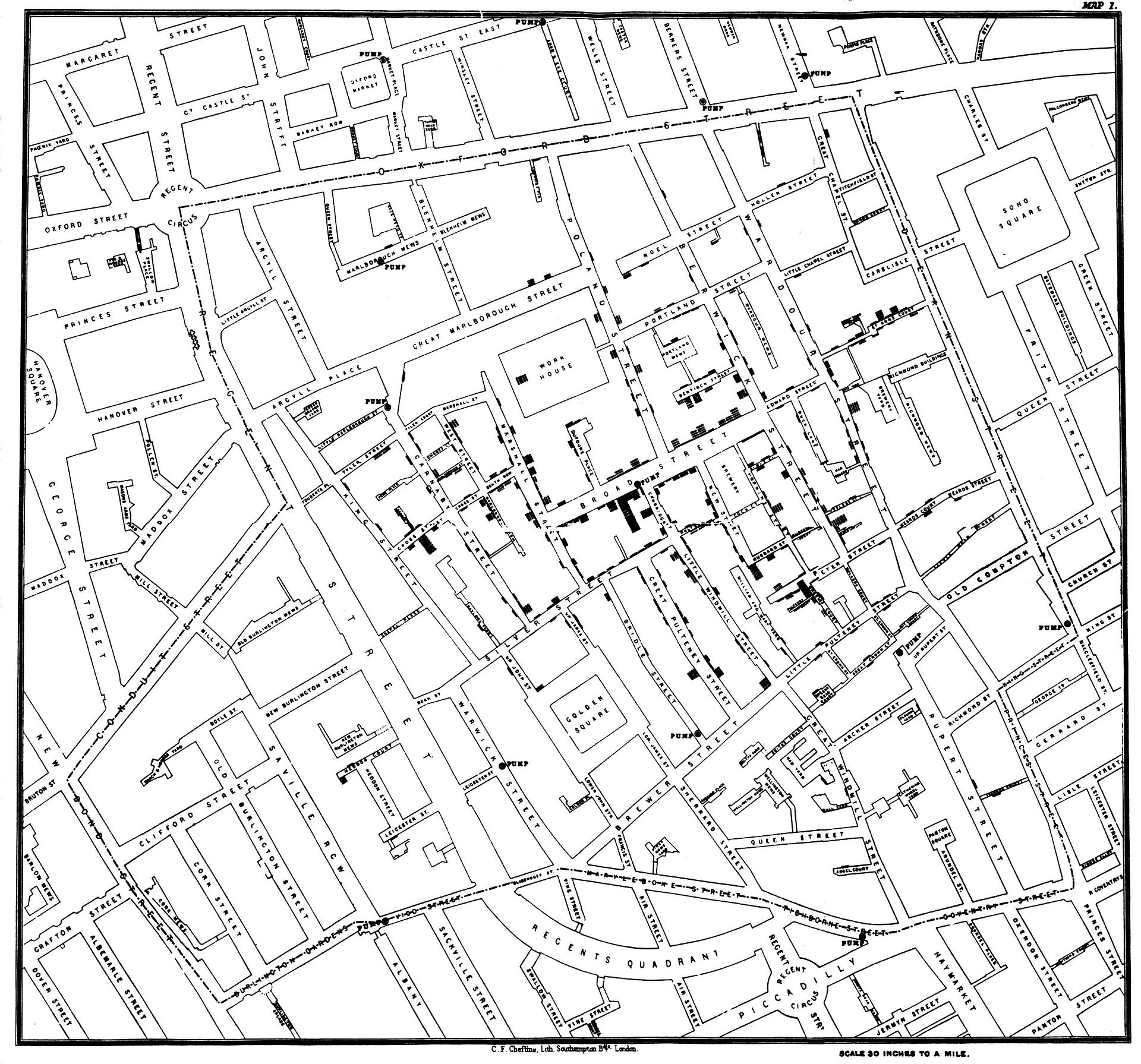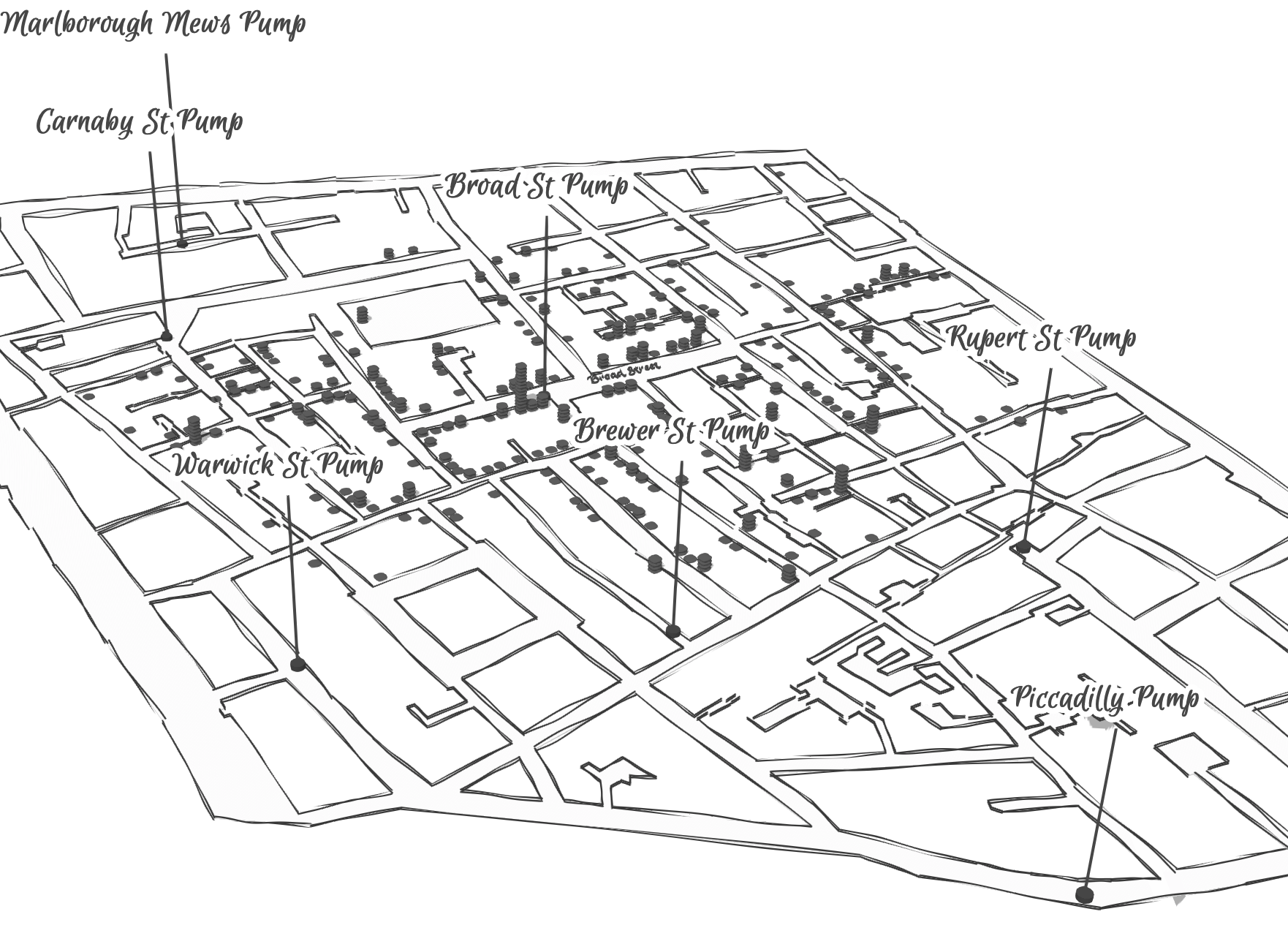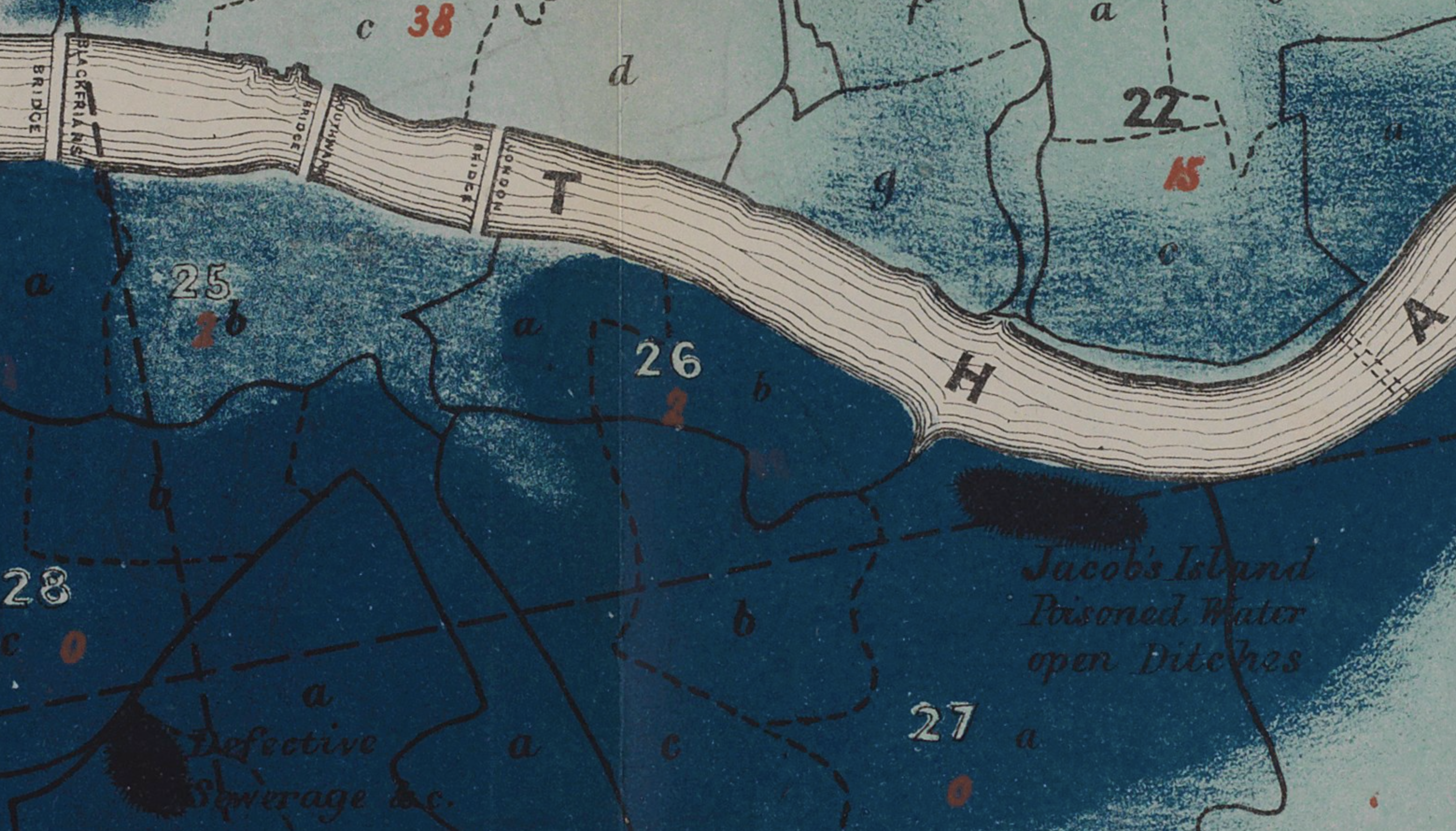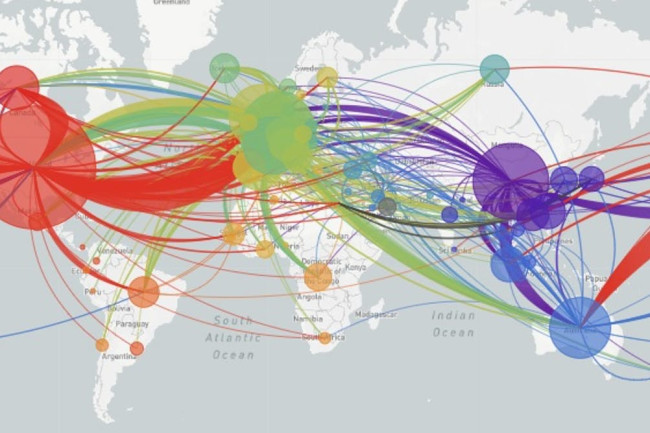
Tag Archives: infectious diseases

Florida Tweets

Can we believe anything from the office of Governor Ron DeSantis? It was the height of irresponsibility, but one that should make Jack Dorsey breathe a sigh of relief that at last he is no longer responsible for Twitter: the Florida Secretary of State used bad data about the rates of COVID infection around the nation to trumpet the peninsula as a vacation land as a safe space in the pandemic, using an utter absence of ethics to promote disinformation about viral spread in the peninsula that almost echoed the denialism Governor DeSantis long promoted in bashing vaccines, masking, or market constraints as a way of combatting viral spread, even if his assertion ran against established ideas of contagious disease and viral transmission. Florida is facing numerous existential threats, from sea-level rise to saltwater flooding of coastal areas, but promotion of the state as a site of safety from the global pandemic was the height of duplicity.

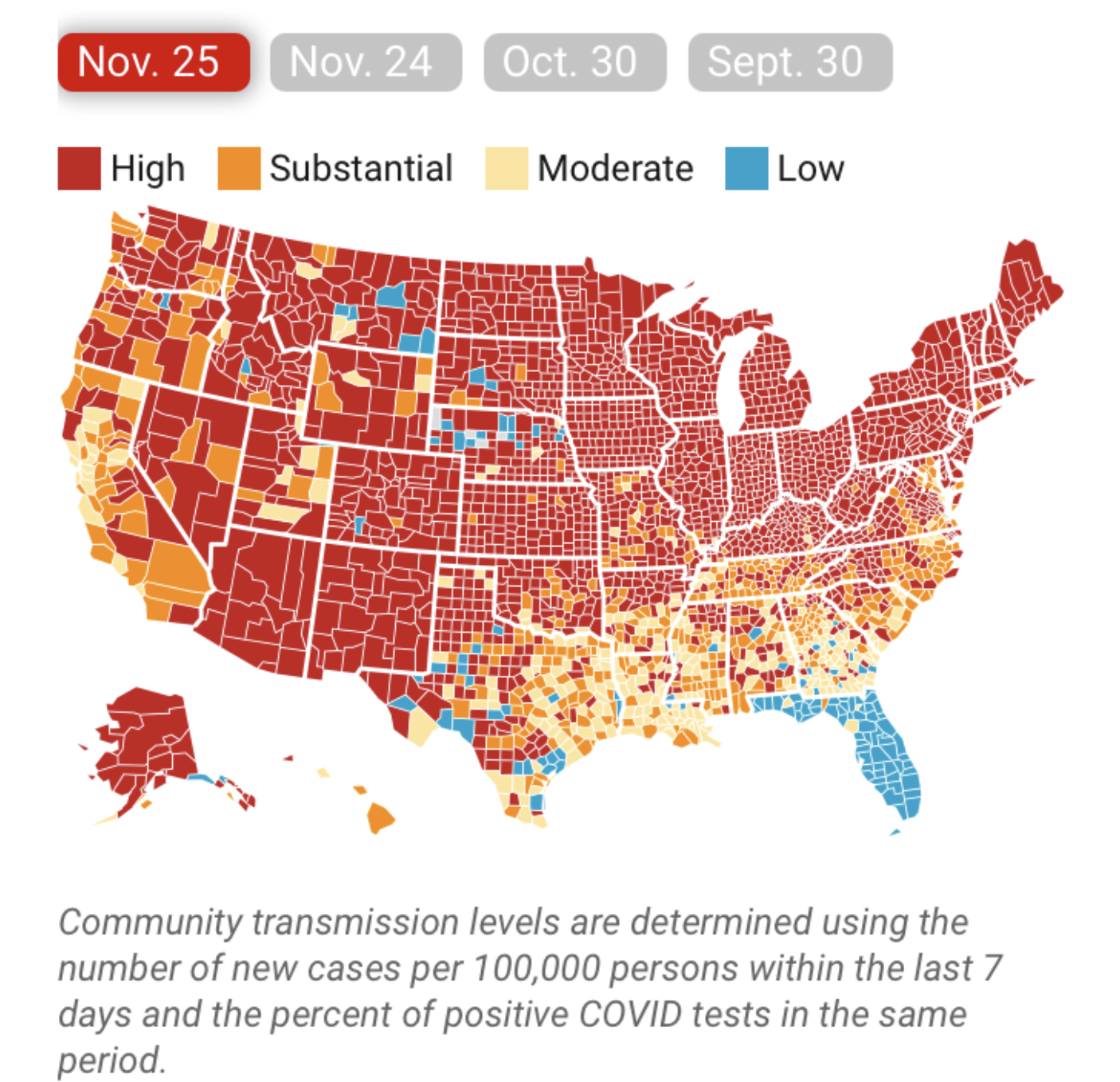
Exercising the prerogative DeSantis long claimed to guard the health practices of Florida, apart from the nation, his office and press secretary must have been thrilled at the latest pre-Thanksgiving COVID data vis that the issued by the CDC, that showed Florida as lying apart form the nation in a bucolic preserve of blue of low coronavirus transmission rates. The announcement by Florida’s Dept. of Public Health on June 8, 2020 of the first twelve deaths due to COVID-19 in the state of Florida 0, when just over 63,000 were testing positive in the state, led the DoH to promise to “provide more comprehensive data,” releasing daily reports on COVID-19 cases in Florida on the DOH COVID-19 dashboard is also providing updates once per day for every Florida county, “available here,” of new positive cases, that state residents and the nation watched rise. If folks had become habituated to dashboards as a way of accessing up-to-date data on viral transmission and public health, the tweeting out of a map that integrated outdated data on infections in Florida with shifting national picture as even as the arrival in the United States of an Omicron variant put a chill on national travel over the Thanksgiving weekend, but year-end travel was predicted to see a rise in air-travel that would approach pre-pandemic days.

The Age of COVID has encouraged an amplification of graphic story-telling about the hot spots and safe spots of viral transmission or local virulence. And the infographic appearing to label Florida, the nation’s storied vacationland, as featuring far lower community transmission seemed ripe for a retweet. Caroline Pushaw, Florida Governor’s social media savvy press secretary, seems to have issued it as an invitation to the state’s winter beaches, as if Florida policies had, despite anti-vaccination campaigns and few masking mandates, gone beyond other states in reversing the high rates of COVID-19 mortality that once afflicted the state per public dashboards of years past.
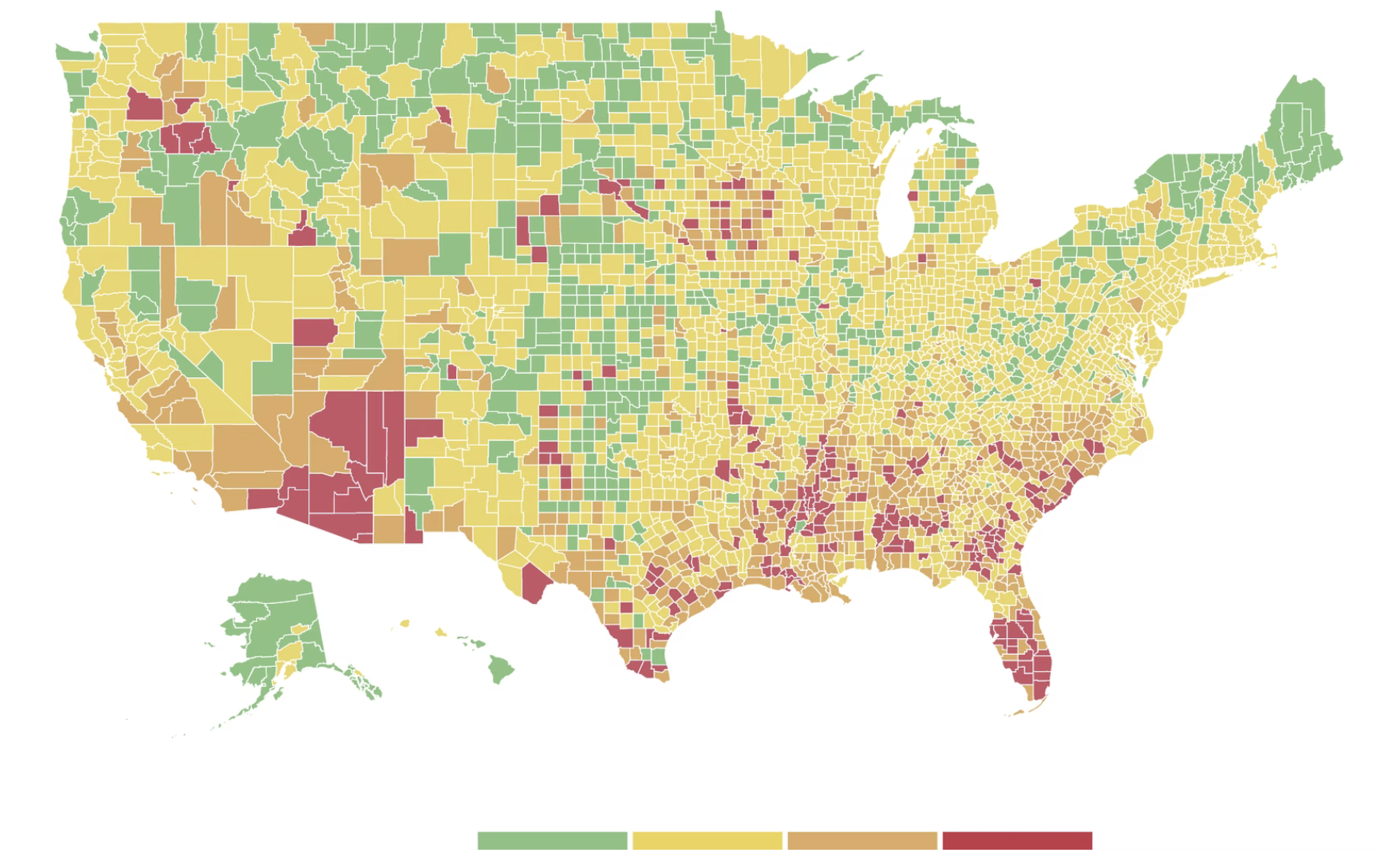
COVID-19 RIsk Rate/Harvard Global Public Health/Talus Analytics
July 2020

Gov. DeSantis was a huge denier of the infectious nature of the virus, even resisting Trump’s own calls for Americans to stay at home when possible to contain virtual spread, arguing that imposing any “lockdown” and “shutting down the country” was an excessive response. DeSantis’ prominent place in Trump’s inner circle of response to the pandemic increased his profile in the COVID response, and inflated his own sense of national responsibility, as well as causing his pro-business policies to shift in March 2020 by closing Florida schools in the end.

The national map of community transmission rates attempted to bolster Gov. DeSantis’ national credibility. The arrival of the Omicron variant, boasting over three times as many mutations as the delta variant, became an opportunity to boost perceptions of Gov. DeSantis’ public health creds. Despite the Governor’s vaccine denialism and diminishment of public health risks–and utter lack of interest in vaccine equity–low rates of transmission offered a useful icon of peninsular identity to promote the governor on the national news, from FOX to OANN, as if to suggest that “as winter approaches,” Florida was doing something right–as if in an invitation to the nation to make travel plans to consider visiting the sunshine state.

It must have been clear quite immediately to DeSantis’ press secretary, who tweeted it to her 22,000 Twitter followers as evidence of an ethically dubious ethical invitation to the Sunshine State for future travelers–per what seemed currently reported transmission levels. Strikingly, low levels of community transmission in most counties south of the Mason Dixon line would obviate the need for mask-wearing even in public after the arrival of new variants, although not the bulk of the nation, colored red for high levels of transmission that merited masking in the all counties colored red for high levels for which the CDC recommended masking in public to contain potentially very dangerous COVID-19 transmission in the form of new variants.

But the map “lacked” a legend and was in many ways cherry-picked–or based on cherry-picked data, as the statistics for infections in Florida were decisively from an earlier date than the rest of the country, artificially rendering its community transmission rates low. It seemed as if the apparently real-time picture was evidence of a stark change of events that talking heads debated as if it were proof and evidence of DeSantis’ underestimated smarts in pushing back against national health policy. Yet the story is far more complicated–and far more Machiavellian–as the pristine blue image of the state–a blue aquamarine that handily recalled those beaches and sun’n’fun for which Florida was long celebrated in the national imaginary-was based on counts from a different time than the dates of cases in all other states, conveying the appearance of salubrity when that was not the case.

Did the state’s office really fudge the public data on its case rates, which it had long ceased releasing daily, using outdated numbers to showcase an apparent contrast sharply evident on state lines? The meaningful legend that might be juxtaposed with the “snapshot” that the delayed reporting of statistics of coronavirus transmission in Florida shaped might be the way that the state had in fact earlier been rocked by successive waves of coronavirus infections, a roller coaster of infections of which the state Governor, who had only recently unveiled a new image for the separate task force of the state that showcased its unique health policies, seemed oblivious, but whose bursts of new cases of infection seemed the bête noir against which DeSantis was forced to tilt in the public eye.
For in taking the emblem of an alligator fiercely guarding its territory, must have loved the data visualization that “mapped”–if deceptively–the improbable case his unique health policies not only separated Florida from national guidelines, as a paradise free from mask-wearing and vaccine mandates. It was a perfect case of how maps lie, which removed him–or his press secretary–from any liabilities, as the map gained a robust afterlife on social media, free from the constraints of real public health data or true comparison of COVID case counts.

DON'T TREAD ON FLORIDA': Ron DeSantis Promotes 'Pro-Freedom' Flag | Sean  Hannity
October 21, 2021 by @GovRonDeSantis

Modeled after the Gadsden flag, the image radiated a stubborn sense of obstinacy as the omicron variant lead to renewed fears of a new spike of coronavirus in Florida, worry that found an odd counterpoint in the map the press secretary took comfort in tweeting out. Yet by Christmas, the gift of the CDC data vis seemed not the gift that keeps on giving at all, as Omicron infections had hit the Sunshine state, proving that its barriers were hardly fixed frontiers.

Although most all Florida had been colored red for much of the summer–amidst concern for the Delta variant, and for “breakthrough” infections–and the new tracker map seemed a lucky break. As the omicron variant leading to rising fear of a new spike of coronavirus in Florida, DeSantis’s press secretary took comfort in an opportune recently issued CDC map to suggest that, low and behold, things had changed, and current COVID visualizations showed “low transmission rates distinguished the panhandle and peninsula, as if the state public health policies had in fact, contrary to recent pandemic history, been doing something right all along.
The crisp borders of low community transmission that seemed to define Florida seemed to be a tip-off, even if the image that was tweeted out was picked up on FOX-TV and other “sources” of right wing or alt right news. The image of a combative alligator defending its territoriality, as a sign of local resilience before fears of rising rates of infection and hospitalization, and is now available at PatriotFlags.

The image of defending a swamp fit DeSantis’ promotion the ports of the Sunshine state as the logjams in ports on the east coast and west coast created problems for transportation hubs in California, Washington state, and New York. “We’re also seeing increased costs, inflation, and higher food prices,” he added. “We in Florida,” DeSantis ventriloquized for the state, showcasing his mastery of boosting public health with the bona fides of a newly minted pro-business eecutive, “have the ability to help alleviate these logjams and help to ease the problems with the supply chain,” with little care for vaccine mandates: In Florida, “At the end of the day, you shouldn’t be discriminated against based on your health decisions.” 

When Christmas did come, it didn’t seem that the state of Florida was particularly bad off in relation to the rest of the nation–but the rising death rates related to COVID-19 dramatically grew across the peninsula in truly terrifying ways, drenching the peninsula pink, and belying those low transmission rates about which Gov. DeSantis’ office was so eager to tweet out.

The level of disinformation is rather without precedent, but speaks in many ways to the hyper-reality of maps of COVID-19 infection that were based on rather dubious and incomplete data providing a rudder in an age of uncertainty. DeSantis’ press secretary tweeted out the CDC map to bate the anti-vaccine commentariat. Arriving pre-Thanksgiving, it seemingly celebrated the arrival of a new state of salubrity: the boundary lines of Florida popped bright blue of unearthly nature not because of what Florida was doing right, but was based on data of community transmission rates at days behind the rest of the nation: state data days out of synch with the national norm created the impression of statistically low transmission rates in the state, and south of the Mason-Dixon line, affirming how things were always better in Dixie.

DeSantis had been comparing the low rates of per capita COVID mortality in Florida, despite its large share of elderly, from March, 2021, claiming higher mortality rates for seniors in forty other states had offered evidence that his policies were indeed far more effective than those states that mandated lockdowns and suspended schools, insisting on the benefits of helping businesses and keeping local commerce flow. As FOX news commentators spun the CDC map of community transmission rates as evidence of nothing wrong with fighting masking mandates, or vaccinations.

Yet by mid-December, 2021, reality had reared its ugly head. Skyrocketing rates of infection from the Omicron variant proved the folly of asserting any containment of the coronavirus that any policy of one state might so easily fix, as the high rates of infection shifted the panorama of the pandemic, with the fifty millionth case of COVID-19 recorded, and deaths due to the virus across the country topping 800,000–far more than the deaths of the US Civil War, by recent estimates, and more than the current population of Seattle. And if Florida was increasingly as red as the nation, the rise of COVID death rates by the month’s end had effectively eroded all of DeSantis’ suggestion of the benefits of adhering to alternative models of public health care.

covid-map-us
CDC Dashboard, December 2, 2021

If the arrival of the Delta variant had led to the growth of mortality by another 100,000 in two and a half months, the advance of the more transmittable Omicron would stain the whole map red, bridging boundaries and state divides, as thirty three states hosted large infections, with little clear relation to their health policies–save perhaps low population rates and density. By Christmas 2021, national dashboards of infection rates made it clear that Omicron infections advanced not only through the northeast but along the sandy beaches of the Sunshine state.

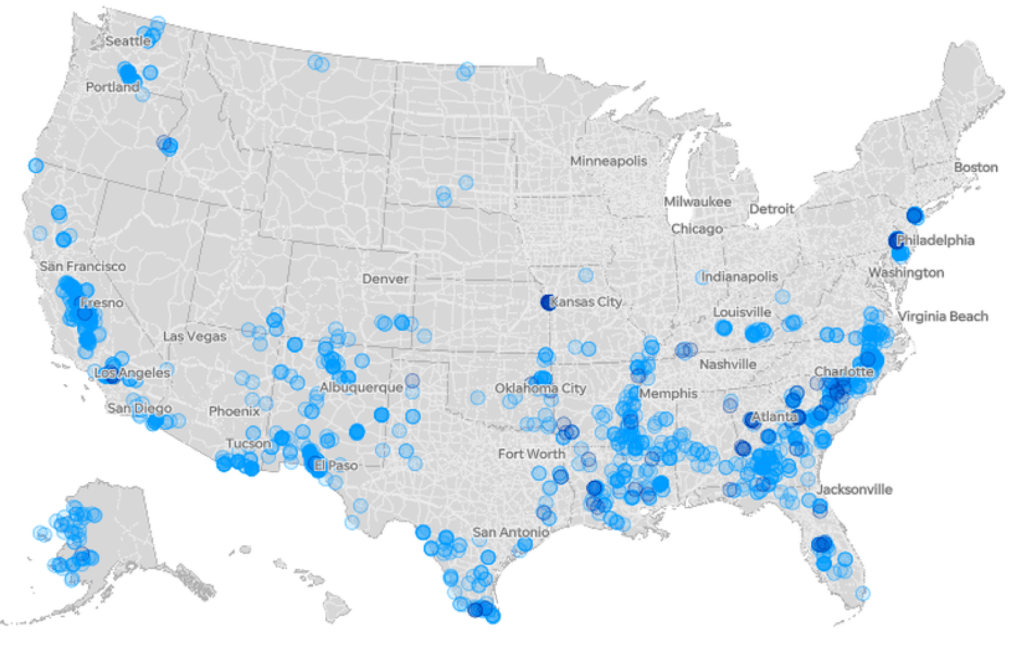
National COVID Infections/Mapbox
December 20, 2021

Yet that single CDC map in the header to this post suggested low COVID transmission rates in Florida was suspiciously more than opportune. For it suggested, lo and behold, starkly lower transmission rates across the panhandle and peninsula, as if the state public health policies had in fact, contrary to recent pandemic history, been doing something very right all along, as DeSantis continued to fence with Joseph Biden’s attempts to devise mandates of mask-wearing and vaccines, all but defining himself as a sort of shadow-government in opposition to the White House, in the manner, say, that now-disgraced Governor Andrew Cuomo and California’s own Gavin Newsom played to Donald Trump, as if voices of stability in the time of need. DeSantis had provided an alter-reality of risk-free no masking or vaccines, freedoms at work and at school, refusing to limit the social interaction and tourism that Florida needs–even accepting cruise lines and offering to provide shipping ports–arguing that reopening was indeed in everyone’s interest, variants be damned: could it be that the CDC was offering a map validating that his policies were working well after all?

Florida boasted low transmission rates, putting the past history of the pandemic in the past, and effectively inaugurating a new news cycle that made this the map to count on and trust–the one dated that very day!–and putting lack of COVID vaccination out of folks’ minds as they booked their family travel plans for late 2021-2. Florida regained its storied status as a site for healthiness and well-being, unlike, it looked at that moment, like the rest of the nation, leading FOX commentators to spin new stories about the long-term success of DeSantis’ absence of clear public health plans.

For although Gov. DeSantis had pulled the plug in June, 2021 on a public-facing COVID-19 dashboard tracking daily updates on cases, deaths, and open hospital beds across the state, inviting those glued to their computers to take two giant steps back from the spate of emergency preparedness that seized the nation from March 2020, the CDC data vis plotted handily outdated data, skewed from rising rates of Omicron that were spooking the nation.  As there was no public source of infection rates in the state that was available anymore, the disturbing orange dots that crowded the Florida beaches on the COVID dashboard of the past seemed like it was dispensed with, and the seas calm and skies rosy in a bright blue of low transmission levels–despite DeSantis’ longstanding opposition to vaccine mandates or even public masking across the state.

Instead, the spokeswoman of the DeSantis regime tossed to right-wing news sources a rosy picture of the calm waters of Florida–he must have loved the blue azure that the state was tinted to proclaim low community transmission rates over the Thanksgiving weekend, as if it was a sea of tranquility in a nation that was revving up as word of Omicron spread. (“I hope you make it through Omicron,” the man behind me in Whole Foods said as if a neighborhood sage, finger of the pulse of the rising national pandemic anxiety that had recently seemed safely in the rear-view mirror.)

The CDC image of transmission offered a useful icon of peninsular identity for DeSantis’ media savvy press secretary, who tweeted it out to her almost 22,000 Twitter followers as a dubious ethical claim of the health that the Sunshine State held for all future travelers, according to the current community transmission levels. Indeed, as this detail of the data vis shows, the lower than substantial levels of community transmission in most counties south of the Mason Dixon line would obviate the need for mask-wearing even in public after the arrival of new variants, that the CDC had advised for all counties colored red for high level of transmission.
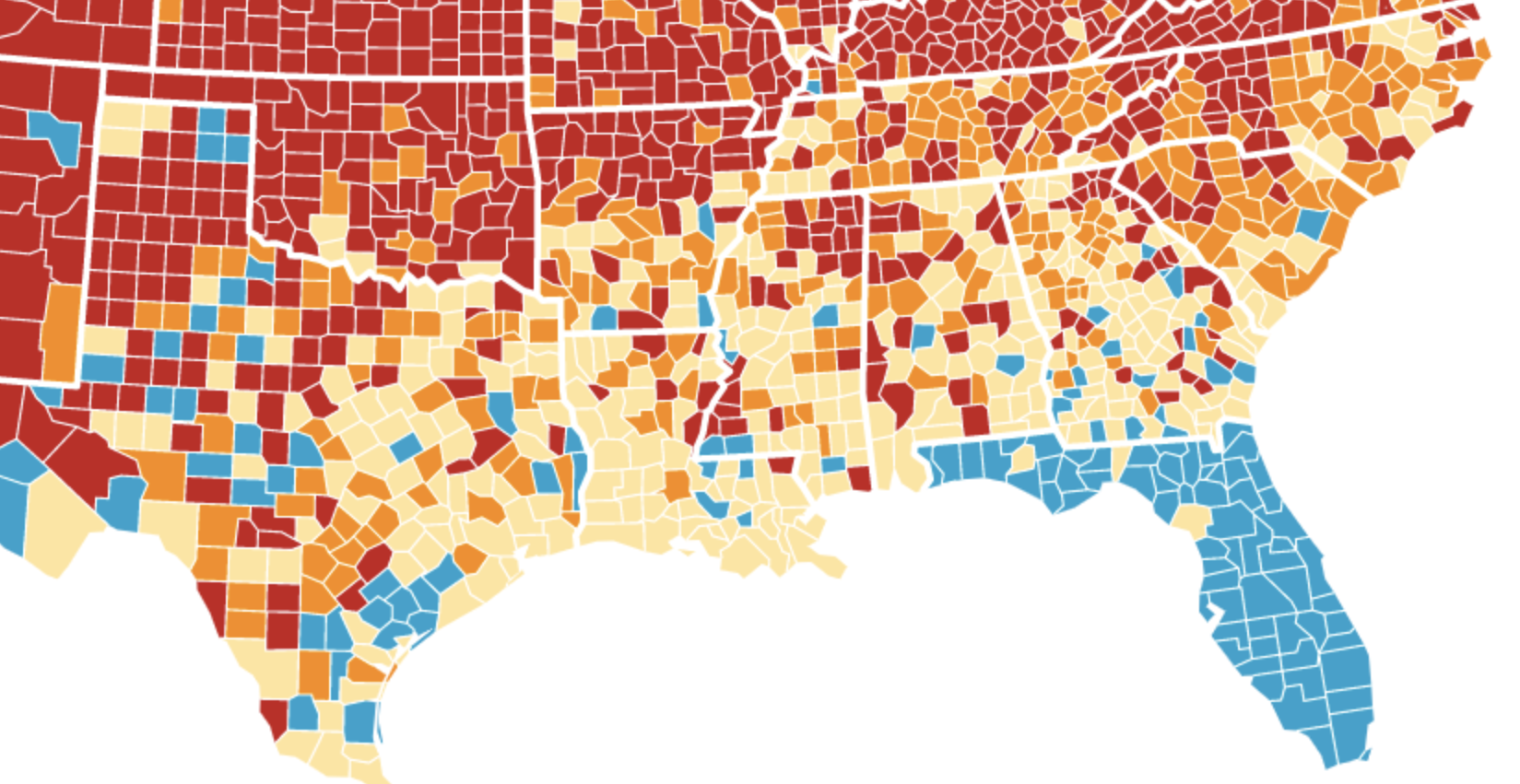
David Schultz/Orlando Sun Sentinel from US Center for Disease Control Data

The striking if deceptive visualization that Ron DeSantis’ press secretary tweeted out on Thanksgiving morning had the benefit of depicting the desired “low community transmission” rates that seemed to confirm DeSantis’ attempts to bolster confidence in his public health policies, even if his longtime war on vaccination was not the success story that the map showing the state as an island of relative salubrity was based on an outdated tally of infection rates in the state whose public health policies seemed a concerted effort to sew fears of vaccine safety. DeSantis’ press secretary, who has cultivated a broad presence on twitter since gaining the job, aimed to promote public perceptions of the success of the Governor’s bellicose strategy of vaccine denialism and scoffing diminishment of public health risks.

The data vis was important to tweet out at 6:30 am to hit the national news outlets, because it helped begin or frame a narrative that Christina Pushaw, who had long questioned the value of a “piece of cloth” and long defended the Governors’ criticism of mask mandates. The low transmission rates that cast the peninsula as an island of salubrity amidst national rising fears distinguished Florida as a rare area in which the CDC was not returning to recommend mask-wearing even among those vaccinated–at least per appearances, or a superficial reading, endorsing the exemplary nature of its public health protocol. Unlike most all counties in the nation, prominently colored high-risk red to indicate the return of high transmission rates, Florida (a “red” state) was bright blue as a safety of haven as it had, conservative media argued, weathered out the storm of masking hysteria. All of Florida had been colored red for much of the summer–amidst concern for the Delta variant, and for “breakthrough” infections–and the new tracker map seemed a lucky break.

But the data was off, way off. In fact, the data vis used cherry picked numbers of a previous days that concealed the hight rates of transmission that existed for southern Georgia and all of Florida–as an updated vis of community transmission for the very next day revealed. The shifting image of transmission rates suggested the lag in data that the state was providing the CDC, as well as the greater risk for variants the nation now faces as a whole. But the data vis, entered into the media cycle of the nation, threw many off ground, in its apparent objectivity. Perhaps that was the job of a press secretary: to distribute any image that provided cover for the Governor who had faced criticism for his handling of COVID-19 by fashioning a new media cycle.

These maps show the levels of COVID community transmission in Florida's counties on Nov. 30, when data for the state was missing from the CDC's portal, and Dec. 1 after the state's data was updated. (Source: U.S. Centers for Disease Control)

So intertwined is travel with the identity and economy of the state, that it was no surprise that the Florida beaches already made it grounds for public health concerns, and the measures during Spring Break, 2021, gave rise to a spike of COVID cases from new variants. In Spring, 2020, infections in Florida had just begun as its beaches filled, and rose again in the summer; but this Spring seemed the textbook case of exactly “what a lot of public health folks have been afraid of.” Increased partying brought rates of infection of a magnitude six times greater, with up to five variants, in the second spike of infections in the state.

The Governor came under fire for his resistance to mask-wearing, social distancing, and toleration of partly open restaurants and beaches, as the coronavirus literally ate into his popularity, and he became something of a “mini-Trump” as Trump’s popularity slid, and many questioned if his positions reflected political expediency and short-term gain, rather than Florida’s interest. But by May he was proclaiming “landmark legislation” banning “vaccine passports” in the state, boasting that the state had, unlike others “avoided protracted lockdowns and school closures in Florida because I have refused to take the same approach as other lockdown Governors,” boasting that the legislation forbade the danger of arbitrary school closures or shutterings, and that “In Florida, your personal choice regarding vaccinations will be protected.” A year after school closures rocked the nation, calling for a rededication of state funds to pay parents for home schooling on FOX, the economic nightmare of state over-reach replaced fears of infection.
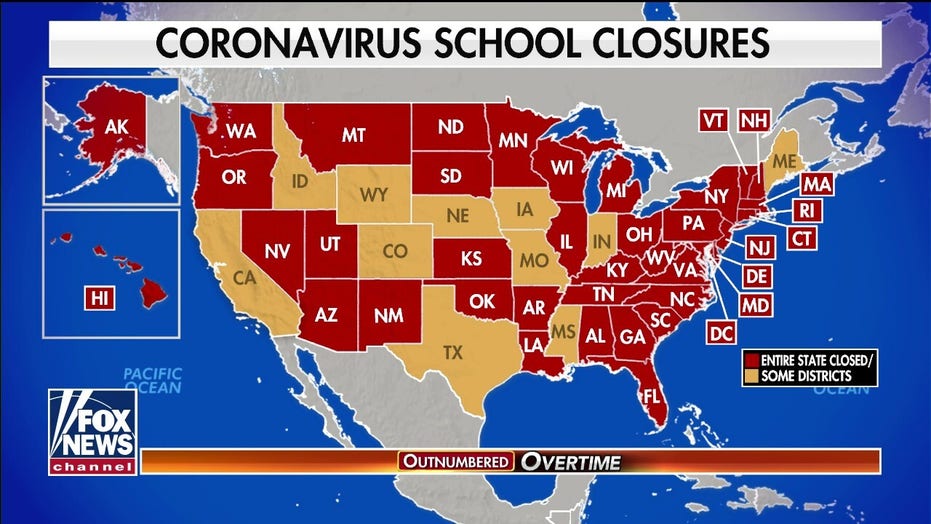
Lindsey Burke: Coronavirus school closings should prompt states to pay  parents to educate kids in other ways | Fox News

March, 2020

DeSantis’ sense of himself as a savior grew in public statements and edicts denying any government overreach, his national ambitions were evident. Arguing that while many other states were just beginning to re-open, Florida was responsibly opening up. He cast the new COVID surge as but a summertime blip, as he embraced “freedom” as a choice of parents by keeping schools open, refusing policies of masking in public, and questioning the wisdom of masking or vaccines, even threatening to not pay county officials who enforce mask mandates, trusting the survival of FLorida’s tourism industry would consolidate his status. Governor DeSantis stood his ground as an ardent supporter of his anti-masking policies and a Trump legacy. He attracted admiration and interest of the communications professional, Christina Pushaw, whose admiration of how DeSantis stood up to “persuasive . . . false narratives” begun in the public press. Pushaw all but publicly identified herself as a new press secretary for the beleaguered governor, whose admiration of his public heath policies, landed her a job but helped to transform the press secretary to an alternative news source, to remap the risk of COVID-19 by a new public health narrative–a narrative that, until recently, had only lacked the right data maps to treat her office’s social media as a new news source.

A screen grab of a tweet written by Ron DeSantis Press Secretary Christina Pushaw.

The rise of infections in Florida echoed the first opening up Florida to tourism in early May, 2020 that continued through June. The recent promotion on social media of the low transmission rates in the state suggest difficulties in balancing a parallel calendar of tourism on which Florida has long relied to the accurate tally of community transmission–a tension that may go back, for Governor Ron DeSantis, to his office’s extended tussles with the GIS analyst at the Florida Dept. of Health who first constructed the dashboard of daily and cumulative infections in the state.

While the Governor had claimed that he would “follow the data” in his opening plans, there were deep concerns that the data was not transparent. When Pushaw wrote a set of attack pieces on the GIS analyst who felt that figures of infection rates were being manipulated, massaged or suppressed infection rates, DeSantis’ Lieutenant Governor promoted it as evidence of “one of the biggest media fails during the pandemic.” DeSantis soon gained a new press secretary, who had essentially applied for the job by praising the skill with which the Florida governor had resisted public masking and vaccines, working to combat the “devastation caused by socialism . . . happening in our country,” and assailed the “big lie” about corruption that a GIS analyst had charged the state. The woman who had worked as an attache in Georgia for Mikheil Saakashvili, now working in Ukraine, might not be a common itinerary to Florida’s Governor’s office, but Pushaw wrote, “If there are any openings on the governor’s comms team, I would love to throw my hat in the ring.” Having assailed the GIS architect of the Dept. of Health COVID dashboard, she offered her services to Florida’s embattled governor to shift attention from COVID-19 infection rates.

After taking the post, Pushaw cultivated a broad social media presence by tweeting some 3,800 times in her first month on the job,–including one arguing watching one’s weight was more protection against COVID-19 than “a piece of cloth” or mask, and promoting the state’s organization for Florida residents of free “antibody infusion treatments” across the state.
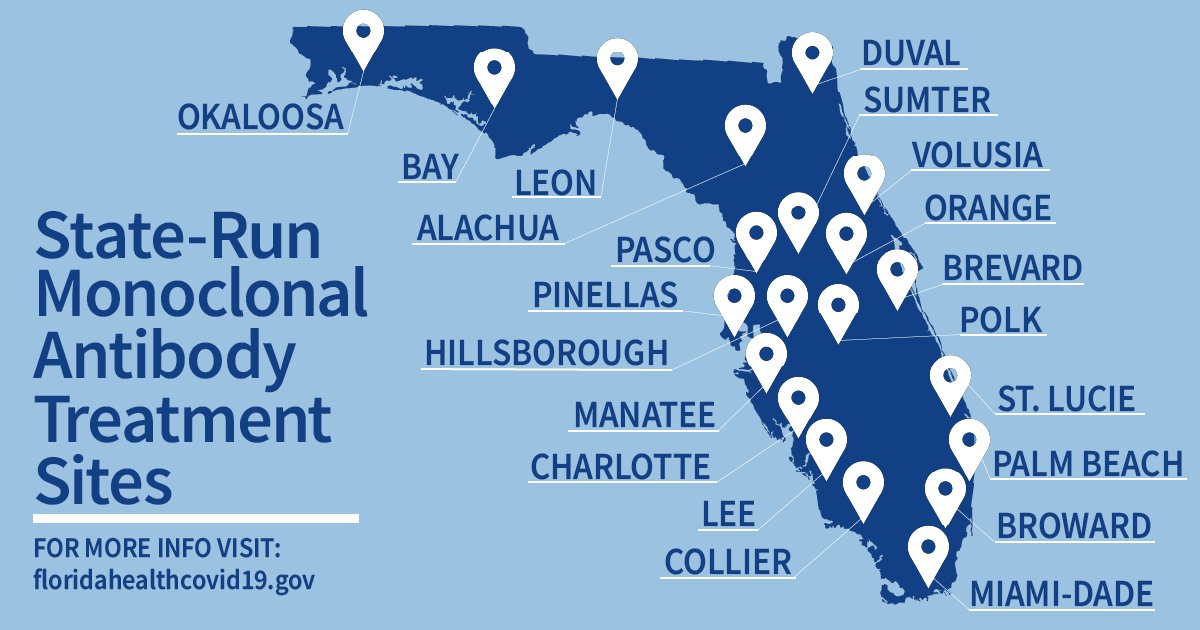
Image
State-Run Monoclonal Clinics for COVID-19/@GovRonDeSantis, August 28, 2021

While the map of “state-run treatment sites” seemed to counter the data visualizations of local infection, it tried to set a counter-map to images of level infection or mortality. The notoriety of COVID-19 cases in Florida must have encouraged De Santis’ press secretary to retweet a CDC map dated November 25 that appeared to document low transmission rates in almost all state counties–offering evidence of the healthiness for Christmas visitors. Notwithstanding its Governor’s longstanding resistance to masking and infrequent masking in public spacearding one of the biggest media fails during the pandemic.”. The map retweeted early morning on Thanksgiving Day a shout-out for shifting public perception of the state, as it paints the state as the being sole site of “low” community transmission in the nation, and followed the calls for more praise for DeSantis’ brave strategy of handling the pandemic, since Pushaw became press secretary, both from the Wall Street Journal (Media Ignore Florida COVID Recovery,” October 31, 2021) and Fox News, on which DeSantis echoed Pushaw’s points as he claimed poor media coverage in relation to COVID-19 “deadly” in mid-November, after a rough summer in which 60,000 deaths related to COVID-19 afflicted the state. In early November, One America News Network promoted a special report from this summer (“America’s Governor and Florida’s Grit”) about DeSantis’ guaranteeing of increasing access across Florida of “a life-saving COVID-19 drug” that reduced severe illness.

It was hardly surprising with such lead-up of an alternative narrative on Conservative news that Pushaw seemed to seek to boost the narratives that were launched in conservative media when she retweeted a new data map of COVID community transmission news on 6:30 a.m. Thanksgiving morning as if to target Christmas travel plans to be discussed at the harvest feast that rather highlighted the far lower transmission of COVID-19 relative to the rest of the country as fears of COVID variants multiplied nationwide. The map with national imprimatur showed a drop of community transmission levels in Florida alone, and seemed to offer some back-of-the-envelope evidence that the spikes of previous years in the southern states and in Florida had created local resistance to the coronavirus and its new variants.

The bifurcated image of the nation that showed Florida as, essentially, the sole site of low COVID transmission, would be sure to attract attention and conversation, political ethics be damned. Flying in the face of the longstanding resistance of Florida Governor Ron DeSantis to curtail out-of-state tourism that encouraged him to keep the state open to travel, DeSantis’ new press secretary used the map to show Florida open for tourism, after having weathered three waves of spiking coronavirus infections. Perhaps the state’s poor planning for public health in the past by lifting guidances ofr mask mandates might, DeSantis ventured, create safety in the beaches of the Sunshine State in a winter of variants, as the ‘conservative’ media–Wall Street Journal and FOX–had hinted might be the case.

DeSantis’ groundless claims of safety found somewhat predictable support from FOX commentators in sustaining “natural resistance” to COVID-19 from past exposure, a “natural” immunity better than vaccination, was a data-based strategy, although what sort of data they were using is unclear. (The CDC finds those who had recovered from COVID-19 but were not vaccinated were five times more likely to contract it again than the fully vaccinated.) The conflicts DeSantis’ office seemed to manage between a state economy dependent on tourism and the calendar of increased community transmission suggests a lack of transparency, but also a duplicity based on improvised off-the-cuff diagnoses of a dangerous disease.

The lack of COVID-19 transparency that had been a continuing issue in the state since 2020 had reared its ugly head again, and just in time for post-Thanksgiving Christmas planning. Indeed, the absence of transparency was particularly troubling as we increasingly depend on dashboards, tracing, and positivity rates in grappling with the virus and its ongoing mutations. As the self-declared attack dog of the GOP, Governor Ron DeSantis was by 2021 boosting the dubious concept of “natural immunity against COVID-19” as the forefront of a fight against mandating vaccines for large businesses, exempting from vaccination all recovered from Covid; with full vaccination rates in Florida about 60%, around the national average, Florida ranked twenty-first among states providing at least a single shot to residents. Those already vaccinated in Florida were mostly elderly–a demographic on which DeSantis had dutifully concentrated to provide the vaccine. But many residents in the state, liberated from mask-mandates, were partying, barhopping, hitting the beaches, as masking was unenforced at schools, kept open five days a week, or on cruises–DeSantis promised cruise ship companies that in Florida, they wouldn’t need “vaccine passports.” Bahamas Paradise Princess Cruise Company promised that “safety, fun, and vaccines” were all priorities as it docked in Palm Beach on June 25, having suspended per CDC regulations on March 14, 202, and the fireworks festivies cancelled the previous July 4 due to COVID restrictions were planned again, now with a Cuban reggaeton as a featured guest for the festivities, voluntary masking, as Florida as a state checked out from updating its COVID-19 dashboard, tracking updated cases and deaths across the state.

Governor DeSantis, amidst COVID spikes, emerged as a Trumpian cheerleader standing steadfast in against a “biomedical security state” as COVID infections spiked yet again: “Florida, we’re a free state–people are going to be free to chose to make their own decisions.”
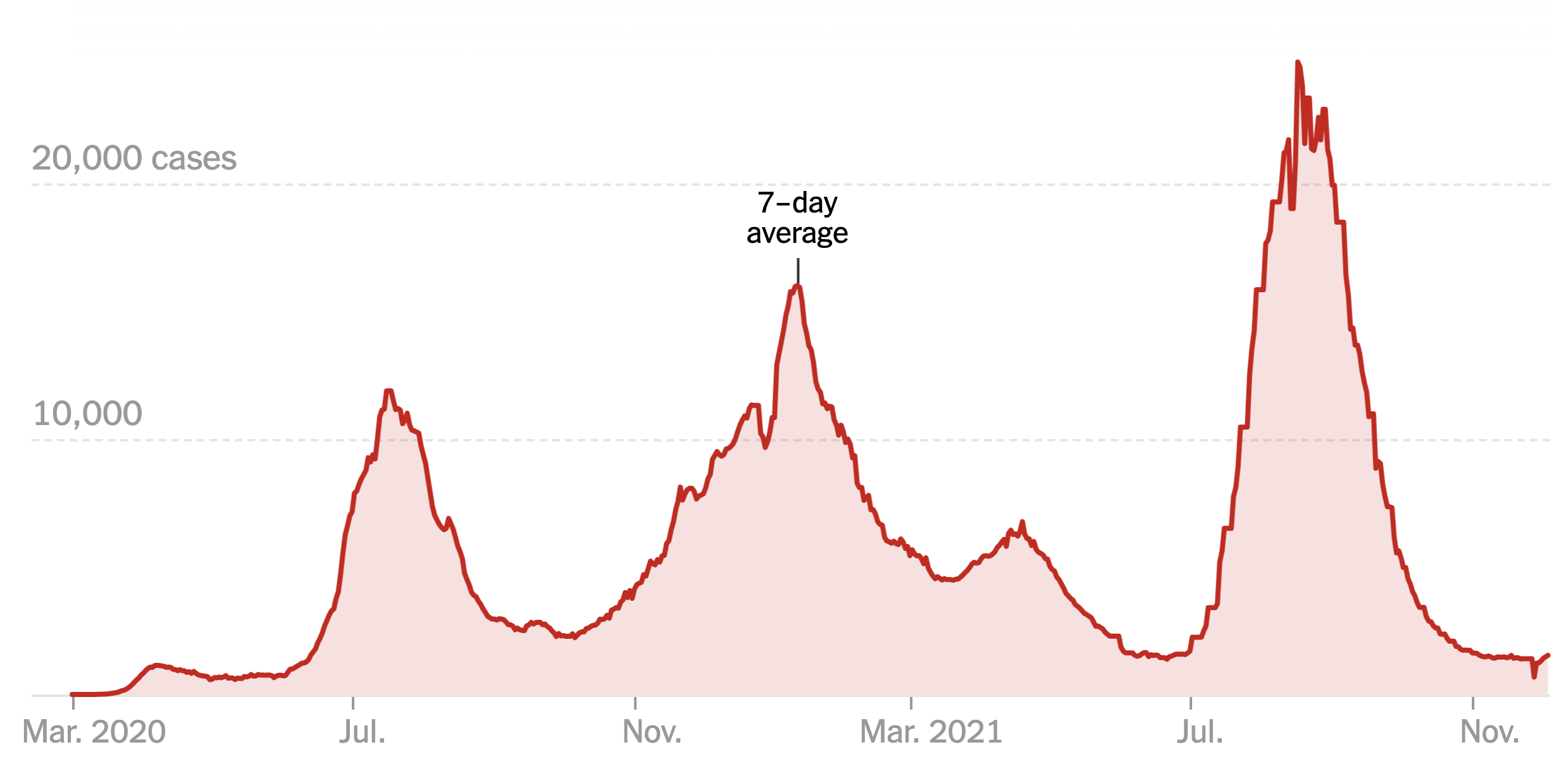
Daily Cases of COVID-19 Reported in Florida by State and Local Health Agencies/New York Times

Days after DeSantis challenged Biden’s authority by declaring “We’re respecting people’s individual freedom in this state,” and banning businesses from adopting vaccine mandates–even though the state’s sizable elderly population was demonstrated to be at risk for co-morbidity.

At the same time, a DeSantis spokesperson and press secretary retweeted a rather striking map with CDC imprimatur made rounds on Twitter: the striking data visualization suggested that rates of community transmission plummeted in comparison to the lower forty-eight. While the image depended on the outdated data Florida provided the CDC, a symbolically powerful image as rising alarm about rising rates of transmission injected fear in holiday plans.

DeSantis’ energetic and telegenic press secretary, Christina Pushaw, whose Twitter profile shows her pushing her hair over her head with a smile as if seeking to embody Florida cool, seemed all but to channel a vacation advertisement in her retweet. In promoting the alleged decline in COVID-19 cases from it appeared that Florida had been granted a reprieve as folks were finalizing winter vacation plans in the face of worries about increased infection rates. Pushaw’s tweets had been flagged for vacuuming up right-wing media–a constituency to which she had belong–and had already been suspended once from Twitter in the past. But she retweeted a CDC data vis to promote the apparent decline in rates as evidence that the state provided the secure vacation spot to soak in sunshine this winter after a stressful year.

@ChristinaPushaw

The bright blue expansed that so conspicuously appeared to isolate the peninsula in a sea of high rates of community transmission of COVID cases appeared to promise Florida offered some sense of shelter from the storm. Yet in spite of all its apparent objectivity, the CDC data vis Pushaw tweeted out on social media didn’t really prove the assertion of Keesman Koury of the Florida Department of Health that low cases of community transmission the data vis registered reflected the “result of our innovative and strategic COVID-19 response that focuses on prevention and treatment,” as if that included no mask mandates or social distancing. As if providing evidence of how much the global pandemic was fed by local bad messaging and toxicity, Pushaw boasted of its safety as if promoting a healthy vacation site in the tradition of the State Tourist Board: “Florida still has the lowest case rate per 100,000 in the entire country and this continues to decrease,” as if the data vis provided cutting edge news, sufficient to rethink the state’s ham-handed response to preventing the virus’ spread.

The tweet amounted to outright disinformation–and showed sense of the media savvy of a National Interest journalist turned DeSantis spokesperson known for offensive and off-topic tweets of scurrilous content. Few out-of-staters may have known that she had been accused of stalking the Florida Dept. of Health geographer and data analyst Rebekah Jones, the geographer responsible for having publishing and curating data of COVID-19 infections daily tracking infections, hospitalizations, and deaths related to infection across the state–having built the COVID-19 dashboard to track cases and deaths. Jones had been terminated by Florida’s Department of Health for “extensive, unauthorized, communication” about the dashboard–where she was in charge of answering public questions–and unceremoniously fired May 18, 2020, after raising questions about changes in the publication of data and functionality from May 5, including the combination of tallies of total negative COVID tests and positives, perhaps to lower the calculation of COVID positivity on the dashboard she designed, and the re-tallying of deaths certified as due to coronavirus infections.

As the beaches of South Florida were readying to re-open, Jones, fearing the state fudged public health data irresponsibly, unethically adding negative tests in a false aggregate–even if conducted for the same person–to diminish the ranking of positivity, even as DeSantis proclaimed he was “following the data” in re-opening. Months earlier, Jones had created the dashboard and apologized for the lowering of mortality rates announced per Florida’s Dept. of Health, in the course of reclassifying many coronavirus-related deaths, as the Dept. and adding fewer deaths despite rising mortality rates in Florida to deaths verified as related to COVID-19. The state argued it would “continue to provide the most up-to-date information to arm Floridians with the tools and knowledge necessary to flatten the curve,” but seems to have shifted the nature of its total counts of deaths or indeed of positive cases of infection. But, unlike the state dashboard, Jones showed the density of confirmed COVID infections and the few Florida counties which, by her count, ready to reopen. 

1. The data aggregated on Jones’ alternative dashboard suggested that rather than the curve flattened, only two of sixty-seven counties in Florida met the state’s established criteria for re-opening. She complained Florida’s Dept. of Health had wanted her to delete the report card of infections per county, as it showed “that no counties, pretty much, were ready for reopening;” FDOH didn’t want that visible on the dashboard in ways that would “draw attention” to an inconvenient truth, she said in mid-June. (At the same time, the state had witheld data on deaths certifiably related to COVID-19 at nursing homes and assisted living facilities, unlike other states, to keep figures low.)
As the data guru in charge of publishing the data, Jones would be expected to be central to any public health work that was based on the data. But she alleged her refusal to lower the state’s positivity rating to allow it to meet its target for reopening led her to be dismissed: as the state became an epicenter for infection in March 2020, the state faced increasing pressure to meet goals to be “ready to open” for the summer.

Rebekah Jones in her office at the Florida Department of Health.
Rebekah Jones at Florida Dept. of Public Health/Photo Courtesy Rebekah Jones

Despite noting the “dramatic changes” on the data portal of concern back in May, 2020, Jones, whose dashboard had long been trusted as a source, seemed to feel it had swung beyond her control: she would only say in early May, “I helped them get it back running a few times but I have no knowledge about their plans, what data they are now restricting, what data will be added and when, or any of that.

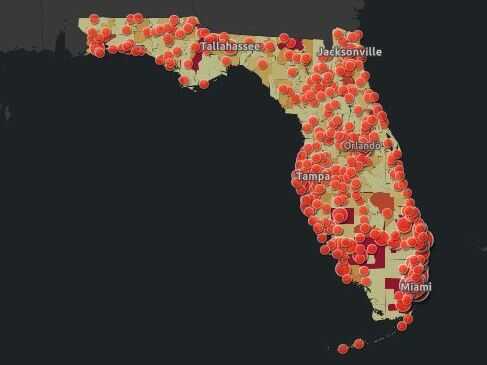
The long familiar site which Florida residents had used to orient themselves to daily updates of county-by-county breakdowns of new and total positive cases of COVID infections, virulence, hospitalizations, and deaths had shifted,–about a month before infections would peak–
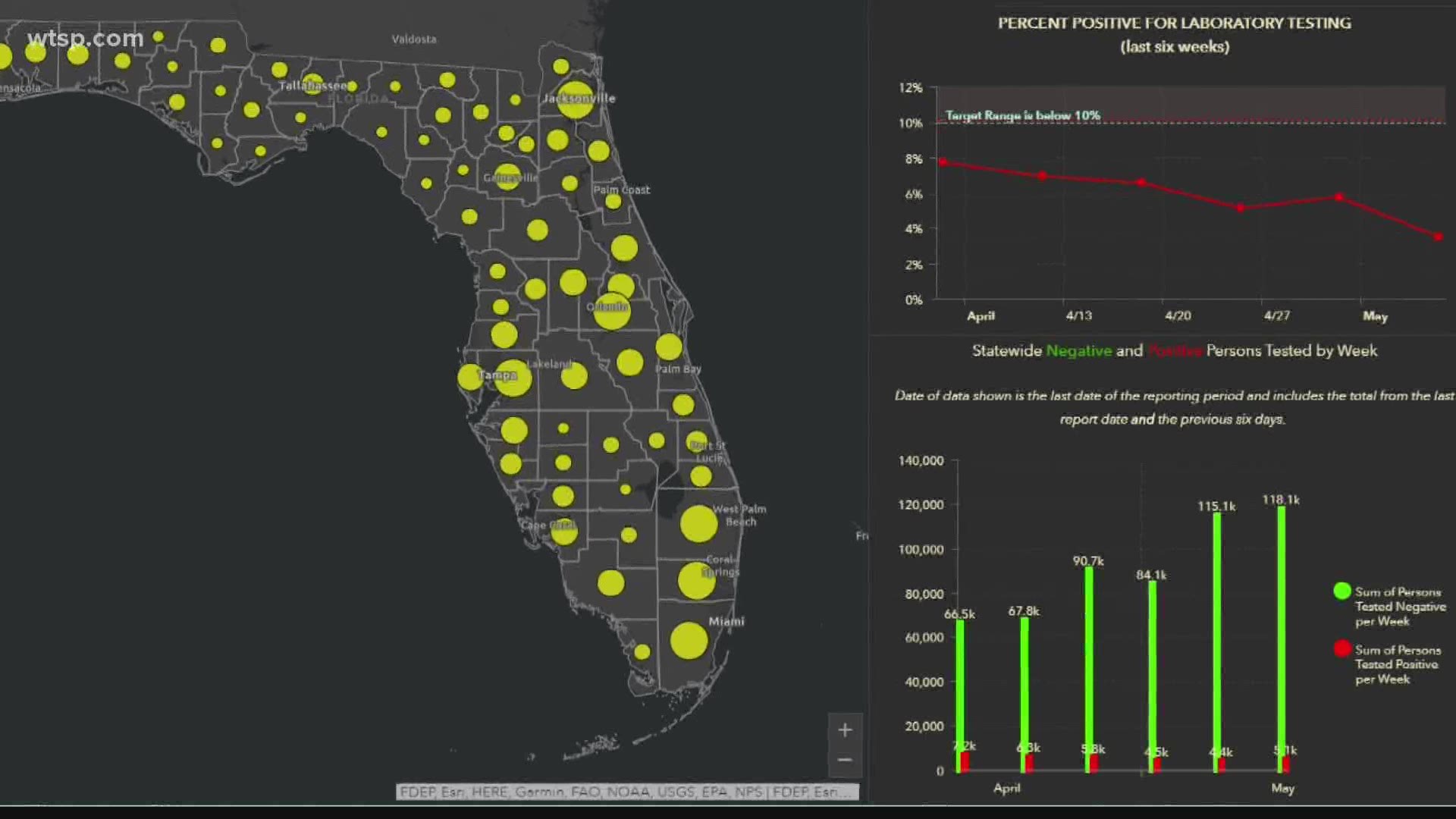
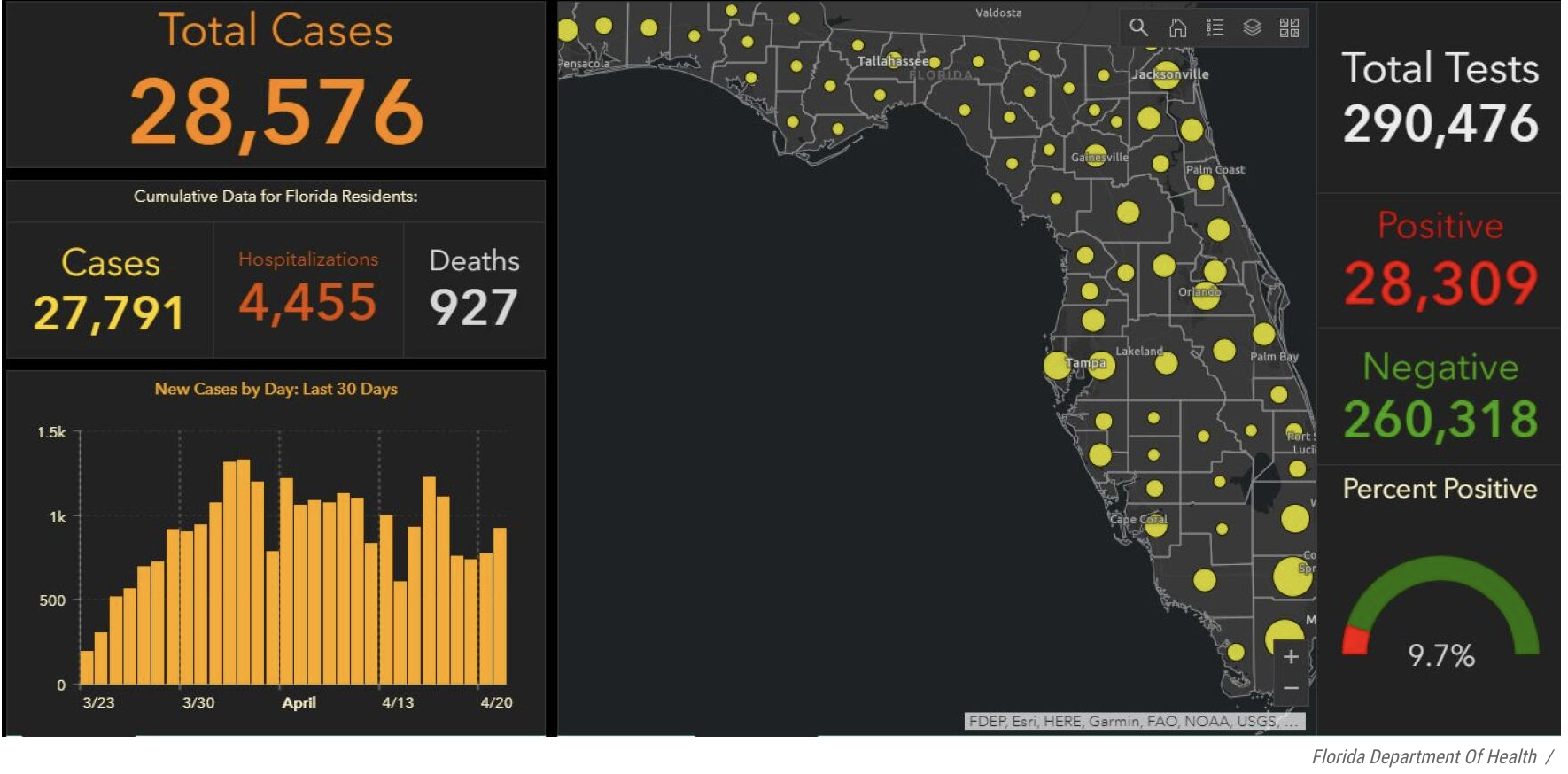
Woman who built Florida's COVID-19 dashboard removed from project | wtsp.com
April 22,2020

–and infections in the state broke previous records, adding nearly 9,000 new cases in a new daily record by June 22, 2020, before the arrival of the Delta variant.
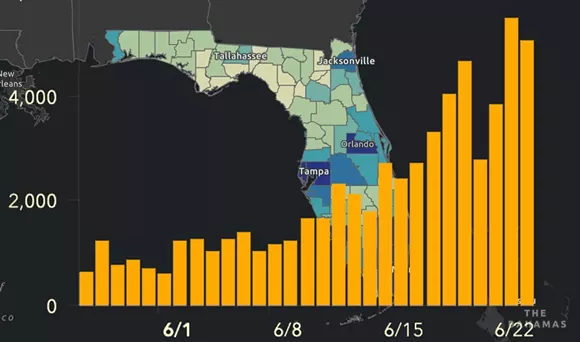
New COVID-19 cases for Friday, June 26 - IMAGE VIA FLORIDA DEPARTMENT OF HEALTH
Screengrab via Florida Dept of Health, for Friday, June 26 2020

The numbers of positive cases for state residents grew, as hospitalizations, during that very summer, when they ballooned, and multiple counties in the state grew deep blue.
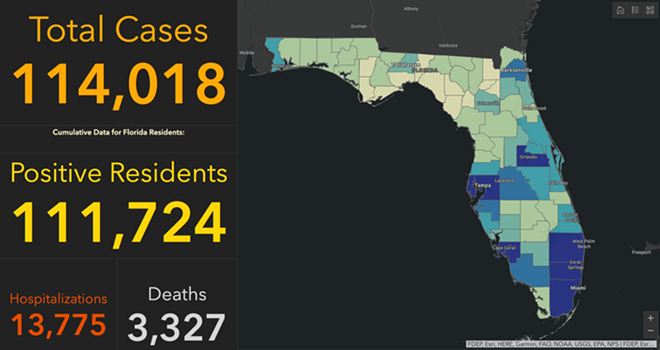
SCREENGRAB VIA DEPARTMENT OF HEALTH

As if in response to what she contended was an unmerited ouster from Florida’s Dept. of Health for failing to fix datasets, Jones quickly founded her own alternative “rogue” informative COVID-19 dashboard, Florida’s Community Coronavirus Dashboard.

2. While DeSantis had outlined, under the approving eyes of then President Trump, plans to re-open the state by placing “public health-driven data at the forefront” along fixed “benchmarks,” his data guru insisted her refusal to be part of promoting “misleading and politically driven narrative that ignored the data;” she constructed an alternative dashboard showing only one of the sixty-seven counties in the state revealed sufficiently low positivity to warrant reopening or easing restrictions on social distancing. The exclusion of positive antibody tests on the Dept. Health website was clarified on the new site, which aimed to be far updated daily and far more user-friendly when it appeared in June, 2020, and tracked the rise of positive cases that summer, adding increasing features of legibility and of tracking change over time.

Florida's Coronavirus Dashboards
Florida’s Community Coronavirus Dashboard, June 2020

The new site foregrounded total “COVID Positive People” detected in both PCR and Antigen tests in running tallies, listing new positives from the previous day, running counts of recoveries, and available hospital beds beside a county-by-county breakdown, the dashboard offered a far more synthetic fine-grained map of the COVID-19 ground-game of public health to grow public trust. The rival dashboard that debuted in mid-June aimed to show accurate geodata of “what’s going on in a straightforward, nonpolitical way,” FloridaCOVIDAction.com synthesized publicly available open data, mined from state reports but not reported straightforwardly on state-run websites.

As it became clear that the data for which Jones and a group of epidemiologists had been never incorporated in DeSantis’ vaunted plans to rely on the data in plans for re-opening the state; reopening brought a five-fold surge in COVID infections by mid-July. The expansion surpassed the rate and number of Covid-19 infections than any other state in the pandemic, breaking records for the highest number reported in a single day–15,300–or in New York in early April, during the worst outbreak in the city. The wave, which might well have been prevented, strained hospital and treatment by antivirals. It called into question the logic of DeSantis’ reopening plans, or how much he had relied as promised on health-driven data, but a blind adherence to the sense of “best practices” that could allow the economy to be open, beaches and restaurants stay open with adequate distancing, and schools not be closed–meeting short term demands and needs for the summer economy, but sewing skepticism.

April 23, 2020/Drew Angerer

The state in fact seemed to lack even sufficient testing to measure the scale of the outbreak, even as he reopened the state at a far faster clip than New York or California, re-opening all gyms, bars, indoor dining at restaurants, schools, pools and salons and ending stay-at-home orders but a month after they went into effect, to welcome tourists to the state from Memorial Day, increasing the risks to the state’s older residents greatly, before closing the bars in late June. By November, after an other rise in COVID cases ran through the state, Jones’ public message to the Florida Dept. of Public Health to “speak up before another 17,000 people are dead” as the dashboard stood at 17,460 COVID-related deaths in the state, law enforcement served a search warrant at Jones’ home, guns drawn, seize the laptops from which the former GIS manager of the Division of Disease Control and Health Protection ran the alt dashboard–“all my hardware and tech”–seven months after her firing from the Dept. of Public Health.

The dashboard of rising COVID infections released on an ArcGIS platforms was a bombshell that placed her in the public eye–and was regularly updated. The alternative website seems to have led to her attack as a discontent “rogue” rather than a whistleblower in the national news. Its release lead to subsequent national media slamming of Jones in conservative media as a serial social media abuser, as outlets tagged the former public health official as a “super-spreader of COVID-19 disinformation,” to defuse her own charges of community transmission. Jones was charged of being guilty of having openly invented lies “about Ron DeSantis’ Press Secretary” using social media to pedal pandemic falsehoods. @GeoRebekah temporarily de-platformed on Twitter, Pushaw crowed that her suspension revealed Jones’ untrustworthiness and abuse of the medium, calling it “long overdue.” No doubt infuriated and flustered by DeSantis’ own consistently relax and dangerously reckless policies on keeping schools open and removing COVID protection policies, Pushaw must have been not only frustrated, but a target of DeSantis’ ire.

Pushaw went further by attacking the GIS systems manager as nothing less than “the Typhoid Mary of COVID-19 disinformation,” echoing the bombast of the DeSantis regime. DeSantis and his office dutifully applauded Jones’ temporary suspension as evidence for her duplicity, as guilty of “defamatory” statements and a “COVID super-spreader,” happy to see her public profile reduced. Comparing the systems manager to an Irish-born cook whose asymptomatic infection spread to her employers what was known as Salmonella oddly served to demonize her as an immigrant carrier of disease, echoing Trump’s obsession with “foreign” origins of COVID-19; it shifted attention from dangerous mortality levels in the state, and gestured to an era when the pathogenic transmission of salmonella was not understood, more than inadequate responses of the Governor’s office to three waves of COVID-19 in the state. A leader who had and would repeatedly cultivate “strongman tactics” in a dangerous time, as Ruth Ben Ghiat recently noted as this blog was first written, DeSantis performed a version and vision of leadership that seemed to establish himself as an autocratic leader of Florida, with a proposed a new Florida State Guard to assist the National Guard in public emergencies, that he would oversee as a state militia, that could act “not encumbered by the federal government” or federal regulations, from federal masking policy to vaccination mandates, and banned vaccine mandates or masking in public as unsafe and unscientific.

DeSantis chose another official to be an attack dog to step up vaccine disinformation. The campaign of disinformation continued DeSantis had appointed a surrogate “State Surgeon General” who stood beside vaccine skeptics who encouraged misinformation from claiming the vaccine altered your genetic RNA to a lack of scientific consensus in its value. Surgeon General Ladopo spread dangerous COVID denialism, instructing the public “to stick with their intuition and their sensibilities,” demeaning the public health value of the vaccine a misguided “religion” and emphasizing the monoclonal antibodies treatments DeSantis has vigorously promoted in the place of vaccines–and indeed as an alternative public health policy. In so doing, he mimicking the public health maps like Alabama’s “COVID-19 Dashboard Map” that foregrounded Monoclonal Antibody Therapy (mAb) therapy as a counterpart to Vaccine Distribution in an ESRI Story Map; Alabama’s Dept. of Health boasted a 60-70% success rate at “preventing high-risk patients” from being hospitalized–a strategy of off-loading any public health care policy or plan.

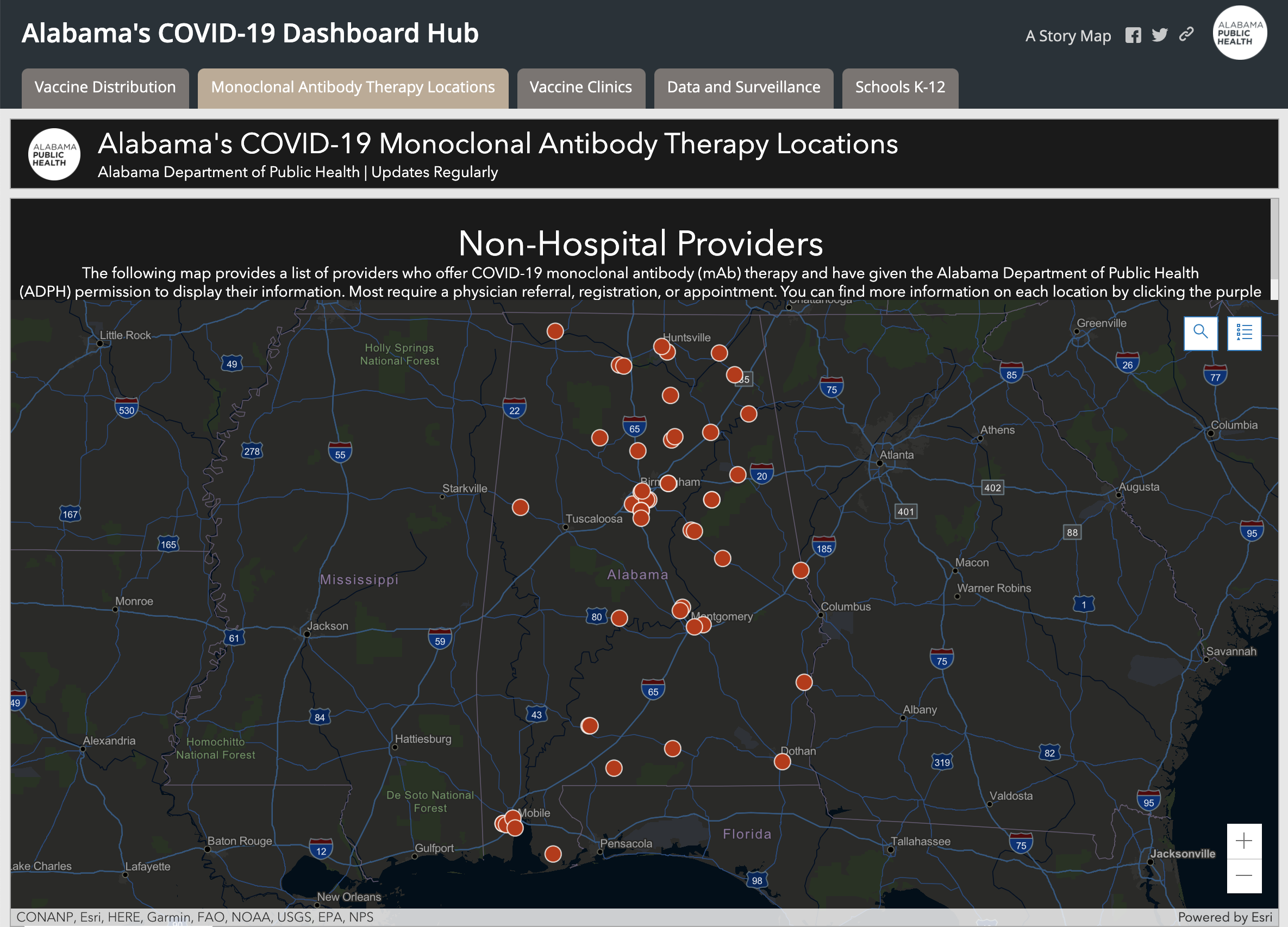
Monoclonal antibody therapy
Alabama COVID-19 Dashboard;Non-Hospital Providers of Monoclonal Antibody Therapy

If we are approaching a time in the history of COVID-19 when our fears of catching the disease may soon be replaced by an acceptance that we may become infected, and will manage that infection, the hope to navigate infections that would be more severe among the unvaccinated populations suggest a tinderbox that will require an armed guard of the sort DeSantis has imagined as running when he announced in Pensacola his plans for a military unit with uniforms tagged “FLORIDA” rather than “U.S. ARMY” from a podium bearing the sign “Let Us Alone” that echoed the “Don’t Tread on Florida” sign displayed at a special October session of the state legislature to counter federal COVID-19 vaccine mandates. The curious unveiling of a “civilian volunteer force that will have the ability to assist the national guard in state-specific emergencies” seemed design either in case of another surge, or to support DeSantis’ distinctive public health policies. The banner “Let US Alone” first displayed in the 1841 inauguration of Florida’s first Governor, William Moseley, was a cause for celebrating the independent health policies in the state, which had by then reached the third-highest number of infections in the nation–3,730,395.–and the third-highest number of deaths, 52,647.

The image shard of a combative alligator defending its territoriality, Florida’s own Gadsden flag was unveiled at a press conference speaking out against vaccine as the new logo of the state: the alligator with gaping jaws, ready to attack or defend its ground, was tweeted out on October 21, 2021 by @GovRonDeSantis as a sign of resilience and power in the face of the fear of rising rates of infection and hospitalization, and is now available at PatriotFlags. The image of defending a swamp fit DeSantis’ promotion the ports of the Sunshine state as the logjams in ports on the east coast and west coast created problems for transportation hubs in California, Washington state, and New York. “We’re also seeing increased costs, inflation, and higher food prices,” he added. “We in Florida,” DeSantis showcased the pro-business benefits of his health politics with the confidence of a newly minted executive, “have the ability to help alleviate these logjams and help to ease the problems with the supply chain.” In Florida, unlike Biden’s America, DeSantis proclaimed as a rallying call, “At the end of the day, you shouldn’t be discriminated against based on your health decisions.” 

DON'T TREAD ON FLORIDA': Ron DeSantis Promotes 'Pro-Freedom' Flag | Sean  Hannity

Gadsden flag - Wikipedia
Gadsden Flag

The Gadsden Flag, beloved by separatists–and displayed at the door of a neighbor of mine in Berkeley with the slightly menacing words “Don’t know what it is? Look it up!”–has of course become a treasured emblem of the right, and Patriot groups, as well as militias, and was flown on the U.S. Capitol briefly on the morning of January 6, 2021.

3. Pushaw and Jones had a long history of entanglement. The ways that their fraught relations determined the battles over the local messaging on the pandemic remind us of how its global spread was brewed in the toxic channels of local miscommunications about public health. Governor DeSantis had only hired Pushaw as a press secretary, per WaPo, after realizing public messaging on COVID-19 crucial to his public image. The Florida Governor seems to have been especially keen on Pushaw’s exposé of Jones’ “big lie” about DeSantis’ reticence in releasing total counts of positives, long before he restricted state dashboards to weekly updates of limited information by June, 2021, as total cases of infection surpassed 1,7783,720, creating a crisis in calm as the state faced a second spike. By then, Florida ceased reporting deaths or infections daily to the CDC, making them hard to tally with regularity, and shifted the format to weekly tallies of vaccination and infections, as the “surveillance dashboard” radioed staying away from the beaches around Daytona Beach or from Fort Lauderdale to Miami Beach, even as new cases seemed to decline, and hospitalizations grew, as the daily tabulations of resident deaths and COVID positive suddenly ceased.

COVID dashboard 020821
June 4, 2021

The articles Pushaw had written attacking Jones’s whistleblower status may have encouraged a long-running conflict that led her to be charged with “computer crimes”; Jones’ charged the press secretary with having stalked the GSI analyst obsessively and aggressively, slurring her reputation after she was fired, allegedly for insubordination for refusing to undercount infections and magnify the number of people tested. The vindictive attacks on the data analyst obscured the problems of reduced clarity of replacing the daily updates on which viewers had relied with weekly tallies.

Florida Covid-19 Dashboard and Surveillance Dashboard
Florida's Rising COVID-19 Numbers: What Do They Mean? : Coronavirus Updates  : NPR
June 24, 2020/Florida Dept. of Health Public Dashboard

The Surveillance Dashboard offered a comprehensive running count and cumulative tally that Jones was charged with having crashed before her dismissal from the Dept. of Health, six months before the police entered her house in December, 2020, weapons drawn, to seize her computers as the novel coronavirus was spreading widely across the state.

Despite the value of allowing state residents to orient themselves to the spread of COVID-19, Jones disturbingly suggested the state was playing fast and loose by manipulating data of infection rates by slimming counts of positives by omitting almost 10,000 antibody tests from its tally. Yet by June 22, 2020, twice broke records for single-day infections in a week: the state dashboard of daily data announced a new record of nearly 8,000 infections and 13.5% positivity rate–a critical number just over the early baseline for re-opening of 10% positivity–even if the WHO baseline for reopening was set in May, 2020, in preparation for summer, at 5% or lower for two weeks. Playing fast and loose with time-stamped data in troubling ways, DeSantis assured the public in mid-June as positivity grew that journalists should realize the past was more important than the present in his allegedly data-driven response, rather than the policies he had adopted: “the main thing is just for folks to look, in May, if you remember end of April, May all the way through, you know coronavirus was relatively quiet in Florida. You had manageable cases. Our positivity rate was 4 or 5 percent consistently.

Only in late June, 2020, was a Public Health Advisory issued that back-tracked on Governor DeSantis’ longstanding objections to preventive measures like public mask-wearing, social distancing, and caution. In fact, some 20 million cloth masks distributed statewide that “all individuals in Florida should wear . . . in any setting where social distancing is not possible” and social interactions limited for all over age sixty-five. The cautionary tone was not alarmist, keeping bars and restaurants open in the sixty-four counties it defined as in “Phase 2,” and allowing all retail businesses and gyms to operate at full capacity, entrusting their clientele to practice social distancing from one another, as part of a “plan on public recovery.

Coronavirus Rising in Florida, Arizona, California and Texas: What We Know  - The New York Times
June 24, 2020

Yet the Governor, in his wisdom and care for his pubic perception , issued an Executive Order Affirming Freedom to Choose emulating the then-President, by June 2021, after school boards considered adopting mask-wearing mandates for their students, as a part of schools being “open for instruction” since the summer of 2020, noting how “masking may lead to negative health” and the CDC “guidance . . . lacks a well-grounded scientific justification.”

By August, as the weekly counts of new infections surpassed 110,000, according to CDC data the most in any state of the country, Floridians missed getting daily updates on the counts of infections per county. The old regularly updated dashboard has became a focus of public attention in what seemed a laboratory case of an unfolding public health disaster–DeSantis had phased out county-by-county daily breakdowns as he issue weekly tallies, having argued that the state had rounded the bend, and removed the regular daily updating of dashboards on which Floridians had long relied on to orient themselves. Age breakdowns and a geographic distribution by county–features of the old dashboard–were no longer available, even as schools were reopening, parents deciding on vaccination and masking, and public trust frayed.
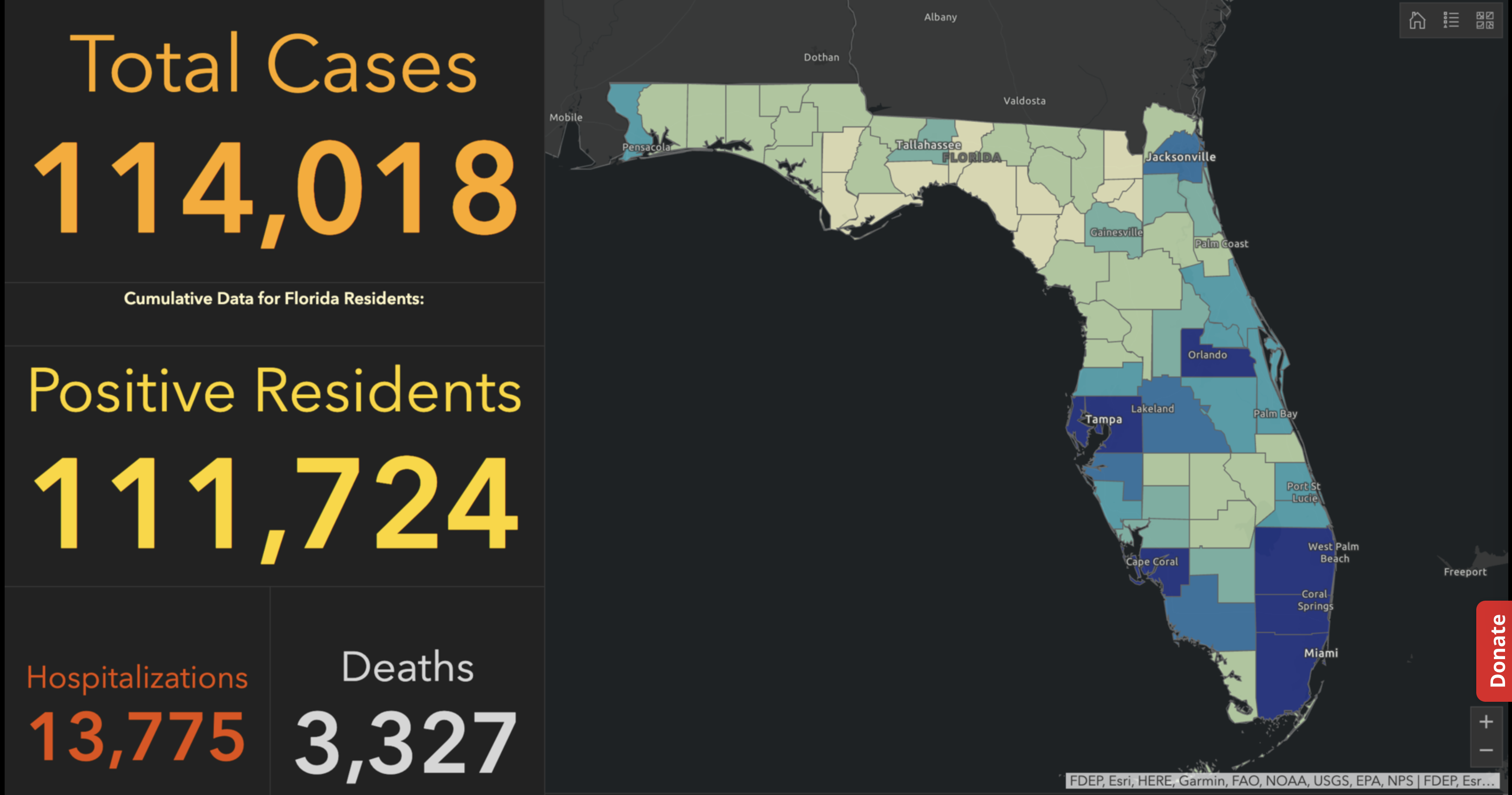
June 22, 2020, via Florida Dept. of Health (screengrab)

Since the escalating records of early summer cases in 2020, the state dashboard had provided a familiar breakdown of infections, offering real time information based on age in a county-by-county breakdown that all of a sudden wasn’t there as a guidepost for local decision at a critical time, once it had been removed.

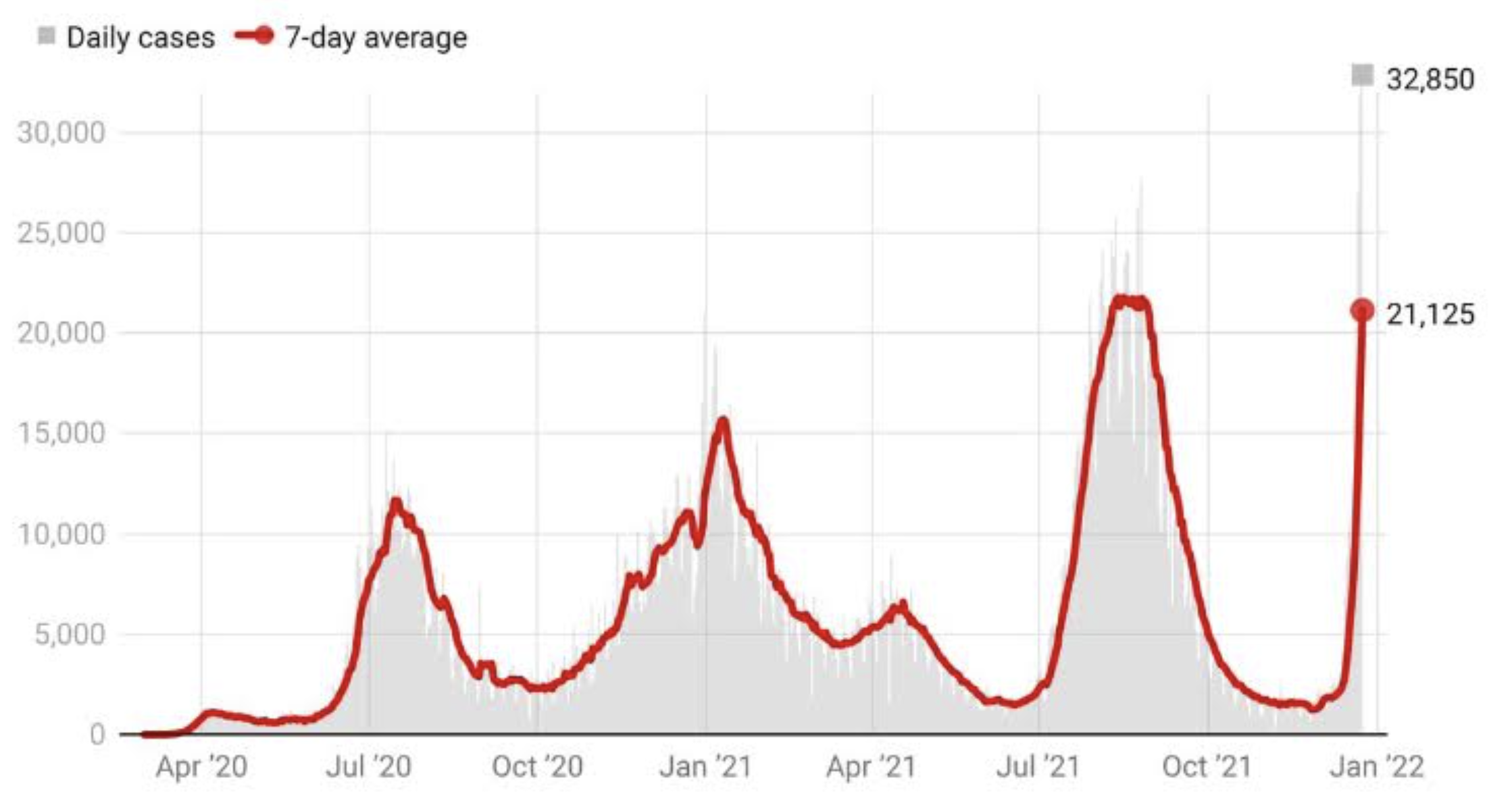
More crucially to this post, the constraints over how much information of COVID transmission was publicized–and how accurately it was compiled–suggested that DeSantis’ office commitment to ensuring the calendar on which the state’s economy for tourism depended had displaced the monitoring of a calendar for community transmission. By June, 2020, the Florida Dept. of Health substituted weekly COVID tallies in place of the daily breakdown and count that Jones had worked, explaining that the state wanted to streamline information and reported daily case data to the CDC. The new weekly dashboard failed to orient users to a geographic distribution of COVID-19 or what counties infections had occurred, so prominent in the old dashboard; it provided little data that could be drilled down into, by abandoning a county-by-county distribution and dropping the stark visualization of state counties as a “third wave” of COIVID-19 infections hit in 2021, and DeSantis mused that the county-by-county breakdown might be useful to some.

July-August “Third Wave” of COVID-19 infections in 2021 in Florida/New York TImes

DeSantis proclaimed the state had turned the bend. But as Florida led the country in newly confirmed cases in early August, 2021, folks wondered why the daily dashboard of old was no longer readily available as a tool of visualization, worrying that the daily updates were pulled by the Governor’s office prematurely in June, as the pandemic led to more hospitalizations in the state than ever before, but the Governor’s office, rather than offering public health data to state residents, asked for patience “in returning to normalcy”–even after twenty-four days with over 1,000 new cases discovered daily. And in tweeting a map of low transmission rates in the post-Thanksgiving days, claiming COVID cases had begun to “bottom out in Florida,” while they started to peak nationwide, Pushaw seemed to seek to clean up Florida’s public image, by directing attention on social media to an alternative reality that may have benefitted a map that rendered rates of community transmission taken, albeit a map that had benefitted from the new timeline at which Florida was releasing data to the CDC. Indeed, the release of figures of community transmission at different times from the country seemed to offer evidence of how clear-headed policies had kept local transmission rates low, even if the data ws comparing apples and oranges.

The tweet seemed to seek to erase memory of those dashboards of the recent past, that might well have kept tourists away from Florida, due to high positivity rates. The apparently credible picture showing low risks of viral transmission statewide was a retrospective reprieve of sorts for the inexcusably poor public health policies of the past. Although the CDC had updated data on community transmission for the nation, the state received a rather convenient break: for local data had ceased to be updated with much regularity for Florida, compared to the rest of the union, rendering its counties an almost continuous bright blue. Pushaw’s early a.m. tweet was the perfect graphic for her smiling Twitter profile, which recalled the vacation ads of old that promoted the salubrity of the state’s sunny beaches.

The imaginary fault-line that seemed to isolate the panhandle and peninsula as a sight of purity and safety was itself a creation of the lag in the reporting of state data, rather than reflecting a break in community virulence or the “bottoming out” of COVID cases. But the implication that Florida had suddenly become an area of low community transmission reflected cherry-picked data crafting a false comparison between apples and oranges, so to speak, since the state’s data had stopped updating as the rest of the country suffered from rising rates of COVID-19. Was the absence of inclusion of available data on the national COVID data tracker a mistake, or a convenient untruth of deeply unethical nature?

The maps of cases, infection levels, and fatalities, had been if only six states have mask-wearing mandates for the vaccinated and unvaccinated, whereas in 2020, forty-three states had adopted them, the low levels of transmission seemed to promote an image of azure seas across the peninsula that was oddly akin to the images promoting the Vacation Land U.S.A state from the mid-1950s, presided by a beneficent smiling sun, whose rays boded health for all–where the sun was able to be drunk to good health daily in the state’s unofficial elixir, fresh orange juice. Concerns about the continued popularity of winter beach destinations during the rise of the new Omicron variant may have been leading many to rethink their vacations, but the data vis was dropped at a strategic time to plug the beaches’ open space as a space for rejuvenation, a ready get-away for those seeking escape from COVID stress.
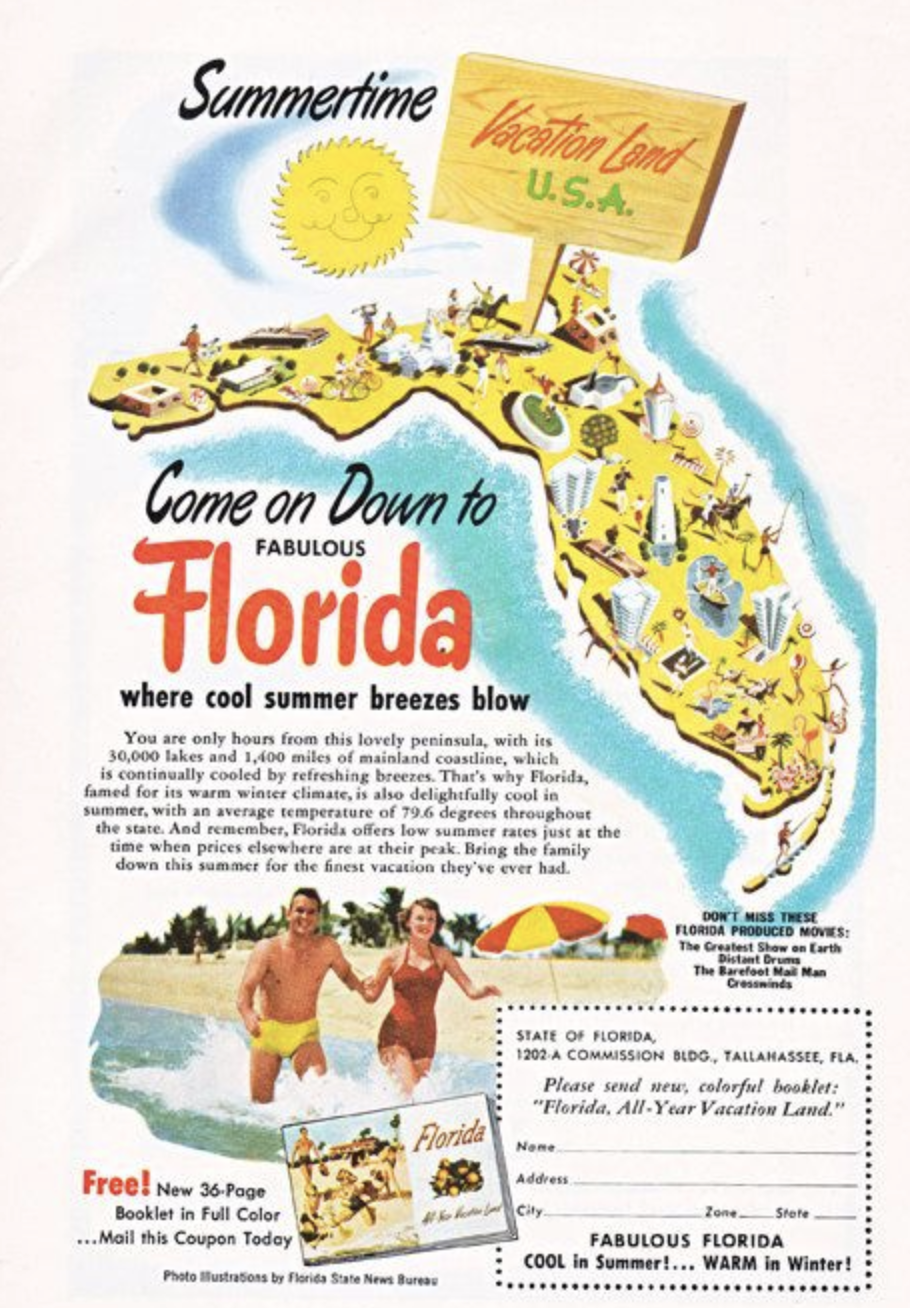
“Come on Down to Fabulous Florida,”
State of Florida Tourism advertisement placed in National Geographic, 1952

The couple romping through the surf promised escape in a “lovely peninsula, with its 30,000 lakes and 1,400 miles of mainland coastlines, which is continuously cooled by refreshing [ocean] breezes” is removed from the fears of coastal erosion that recently reared its heads in the collapse of the Seaside FL towers. But the coast beckoned as a site of sociability, for many who had been spooked by the rise of COVID-19, the beach offered an image of health in ways that rehabilitated the classic cinematic myth of the sunshine state of ocean fun.

The past imaginary was one of all carefree abandon, promising a year-round vacationland, outside of the normal flow of time or the seasonal change–as the 1954 advertisement put it, “WARM in Winter–COOL in Summer!“–that would produce “a fabulous state of well-being.”

1954 State Travel Advertisement, “Fabulous Florida . . . WARM in Winter-COOL in Summer!

The “extra special” nature of Florida as “one of the world’s greatest concentrations of fun facilities” was tied to its beaches, but stretched “border to border,” mapping a vacationland free from worry. Was Republicans’ not readiness of to nix the federal budget over mask mandates, and resist previous mandates on vaccination that would buck the federal advisory that folks “resume activities without wearing a mask or physically distancing” in areas of high or significant transmission risks, mandates for the unvaccinated only existed in reliably “blue” states–California, Connecticut, and New York–where they did not face legislative pushback, and the mask mandate for all only applied to those island territories with uncertain public health infrastructure–Puerto Rico, Guam, and the U.S. Virgin Islands–where an outbreak could be devastating, and where Democrats acknowledged the public costs as critical, from Hawaii to New Mexico to Nevada to Illinois, where the COVID scare remained fresh in memory.

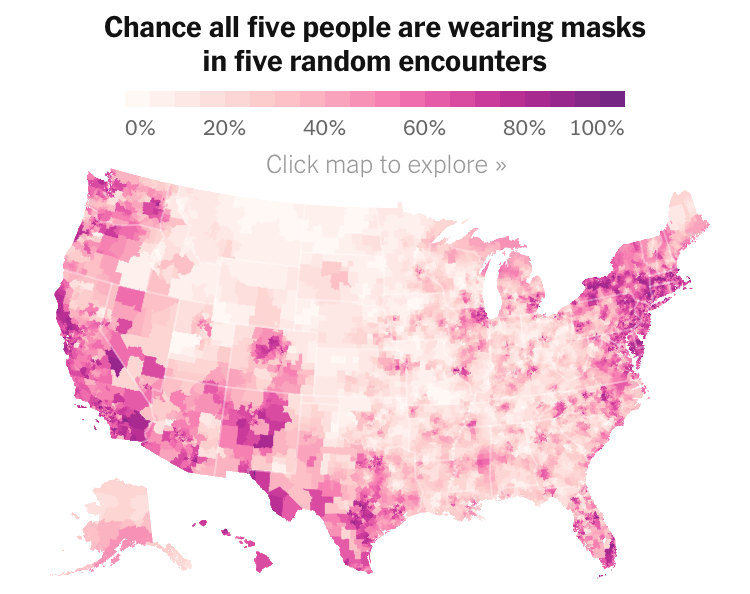
Florida was long an outlier of mask-wearing, especially on its beaches, per this classic Mapbox data visualization of the likelihood of meeting masked friends in public from mid-July 2021, that reflected the split sort of realities with which the nation had been confronting COVIDThe rarity of spotting mask-wearing in midsummer 2021 was super spotty in the Sunshine State, especially on its beaches, in a state seemingly torn by parallel realities.

Wat is the Likelihood of Encountering Groups of Five People Following Mask-Wearing Mandate in the United States? New York Times/July 17 2020

The stark local divisions of adopting masks in public space won world-wide attention early in the pandemic. No masking regulations on beachfronts were a sort of albatross for the state governor DeSantis, famous for issuing a forceful Executive Order later in the month, resisting school boards trumpeted the absence of “well-grounded scientific justification” that mask-wearing reduced transmission and finding an absence of sufficient evidence masking could reduce community transmission in the state schools, had openly run against national opinion and allowed “all all parents have the right to make health care decisions for their minor children” affirmed patients’ “rights under Florida law” and vowed to protect all Floridians’ constitutional freedoms. By the time that the new CDC visualization dropped, anxiety was growing the rebound of COVID-19 both in Delta and omicron variants would kill the tourism industry for Christmas Vacation 2021, and DeSantis’ spokesperson must have been primed.

The flimsily persuasive nature of the cherry-picked data of the data vis can be handily spot checked on the CDC website itself, by stepping back just one day for a better view of the risk levels of putting caution aside and heading to the beach. For the lag of a few days of renewing data reminds us of how important the daily release of accurate data is, and how easily it can skew a national image of community transmission that seems to provide a “snapshot” of national levels. Florida’s rates of infection didn’t remain an island from the nation, so much as a lag in reporting failed to show comparable rates of infection to the rest of the nation. The differences were not so pronounced: indeed, the previous day–November 24–mapped the state as being a site of moderate and substantial transmission that could not have suddenly shifted in but one day, so much as the new visualization fit the “narrative” about DeSantis and COVID-19, more than the situation that Floridians experienced on the ground.
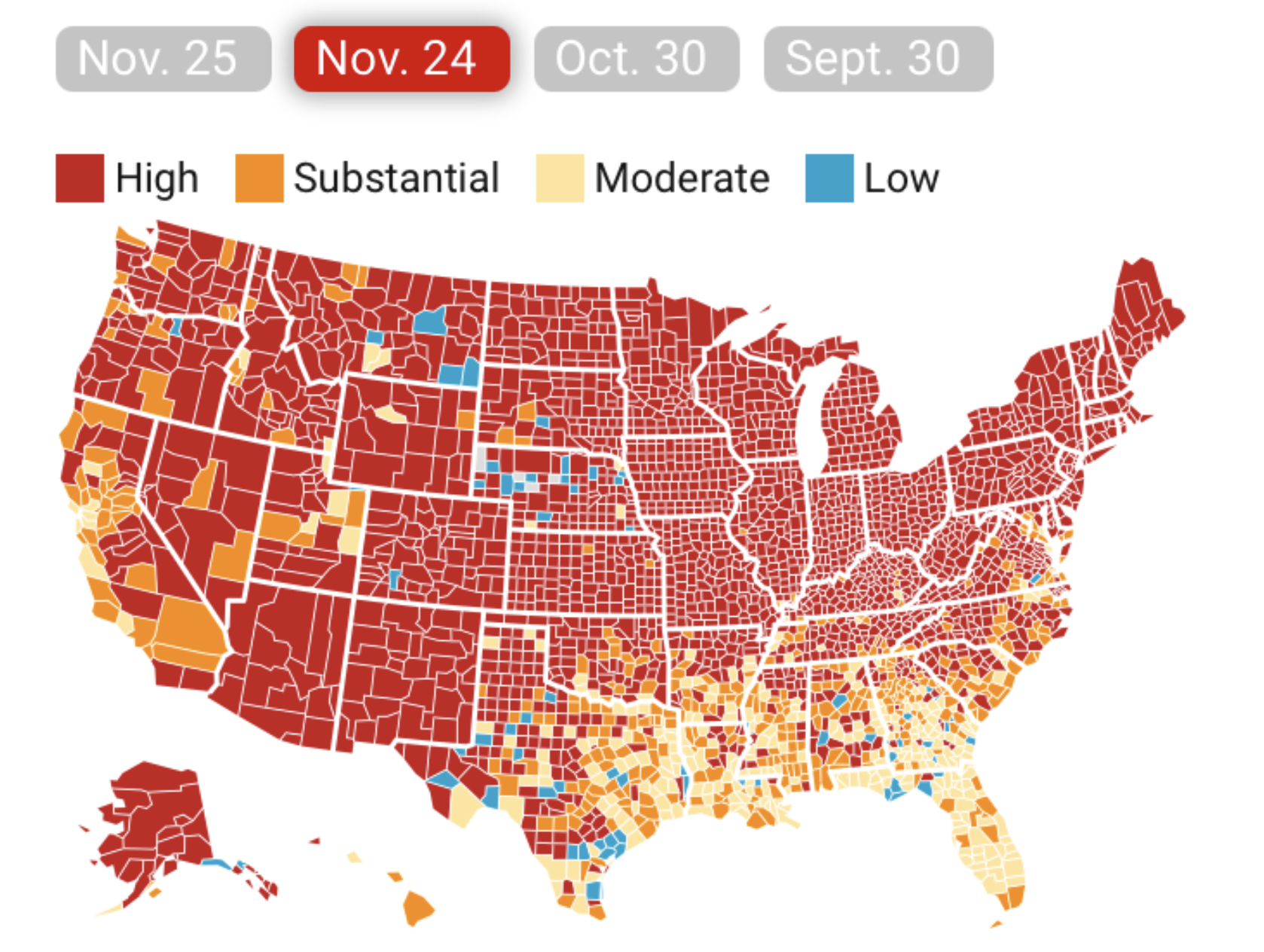
And flipping back just a few days previous, the stark divides of low rates of transmission and the substantial to high rates in other states offered little grounds for off the cuff collective diagnoses of the greater hardiness that exposure to COVID due no mask mandates offered a benefit to the state’s population, or might in fact be considered a viable public health policy: a month earlier, transmission seems roughly equivalent on the Florida or Texas coast, and relied on uniform assessment and tallies–but we may have reason to suspect Florida of undercounting to keep its numbers low.

The lay of the land was basically not at all that clear-cut. One can only hope that few made travel plans after seeing that bright blue peninsula on social media: a better bet, it seems, would be Puerto Rico, if the mask-wearing mandate could be tolerated by visitors. In fact, the very areas that visitors might be hoping to travel–from Daytona Beach to Cocoa Beach, or the area around Miami and South Beach, down near the peninsula’s tip–suggested areas of substantial and even high risk, save for the area lying in the Everglades.

Community Transmission by County in the United States, November 26-December 3,
CDC Covid-19 Data Tracker by County

Indeed, a Moderate Risk seemed the fate of much of the state, if the tracker were looked at with regularly updated data sets. And this is relying on the numbers that the Department of Health provided–numbers that might be well scrutinized, given the complaints their former data guru had raised. All said and done, the “narrative” was not one of the power of a Governor to imagine his ability to purge COVID infections from the state, so much as a burst of virulence that demanded to be mapped and tracked in better detail.
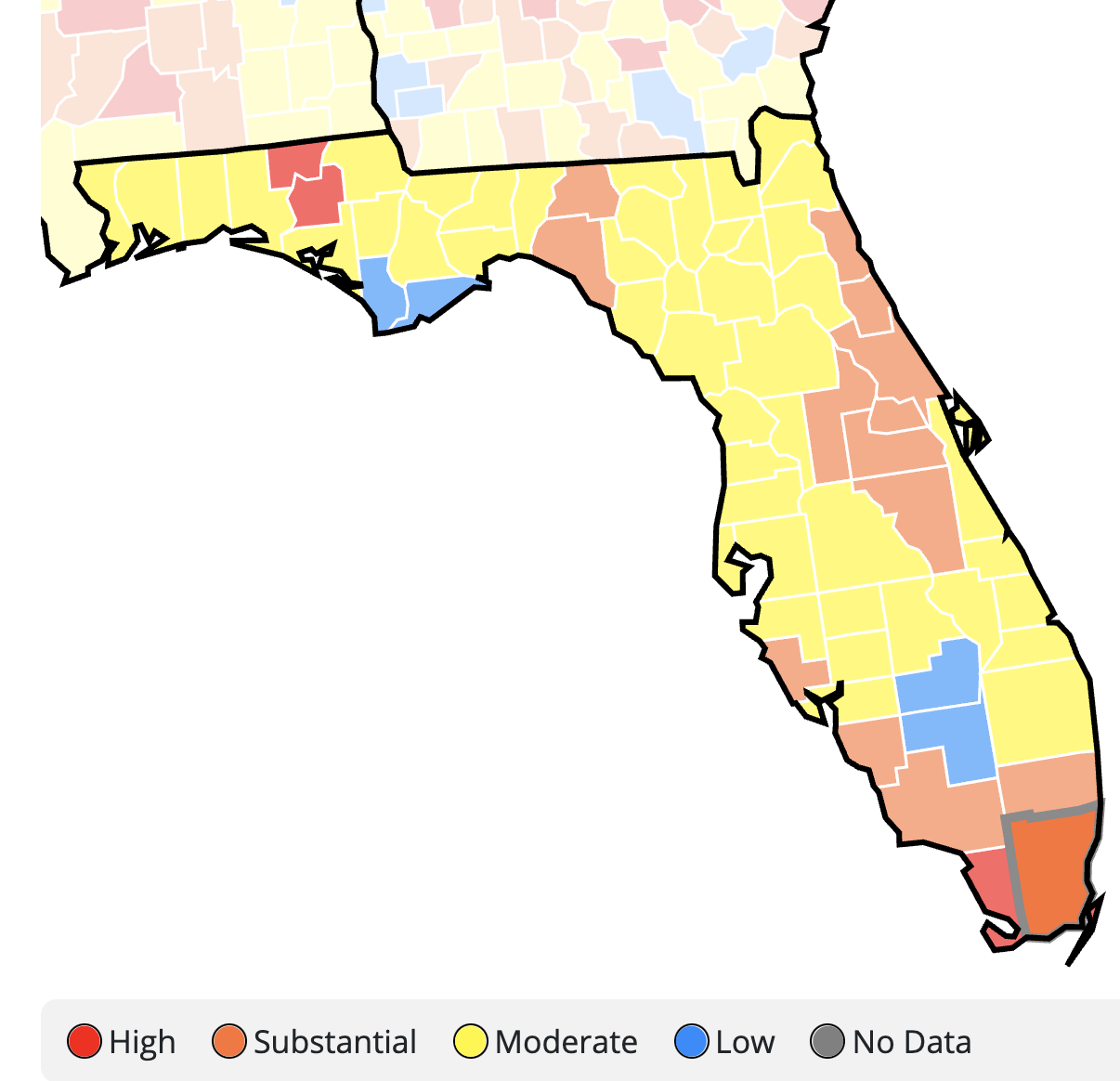

CDC COVID-19 Data Tracker, November 26-December 2 2021

2 Comments

Filed under COVID-19, data visualizations, Florida, public health, social media

Coronavirus Advances

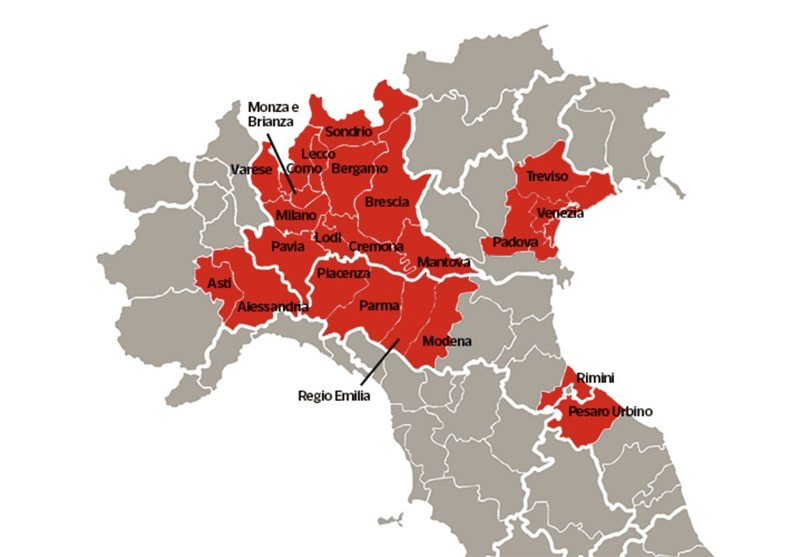
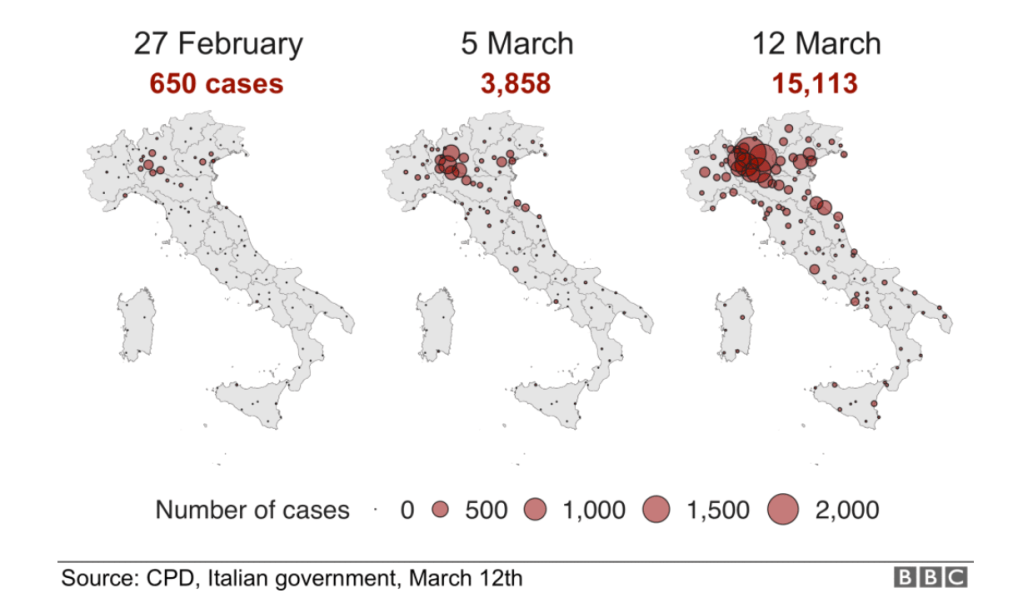
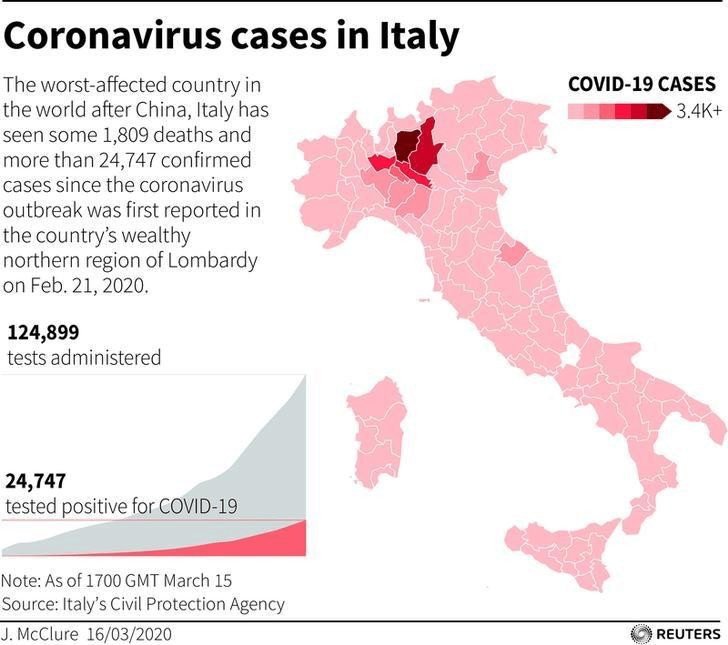
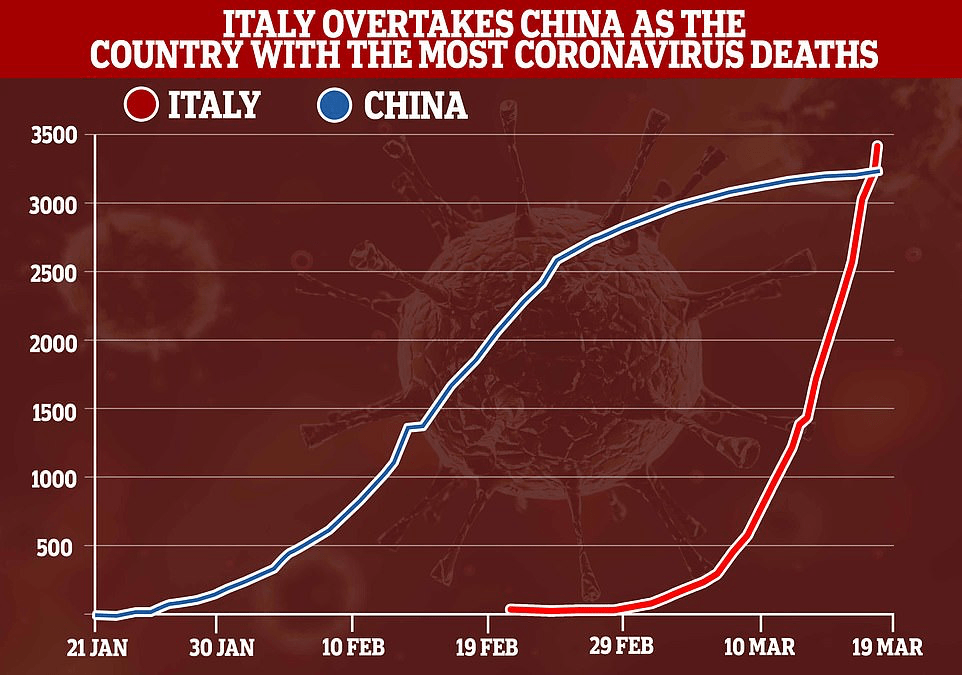
While we are increasingly deadened by data visualizations that track the infectious spread of COVID-19 across the world and country, their logic has often been implicit. As much as tracking real-time data of deaths and “hot-spots” in the world and the nation, we trust the data viz to orient us to the infectious landscape to better gain understanding of viral spread. We seek to grasp nature of the virus’ transmission, and perhaps hope that we can better grasp its spread. We depend on these daily updates to retain a sense of agency in the chaos, but realize that they are provisional, contingent, and selective snapshots, based on testing, and exist at a time delay from the virus’ actual distribution–without much predictive value. We maddeningly realize they are dependent on testing rates and reporting, and only as good as the datasets which they re-present.

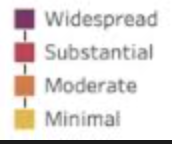
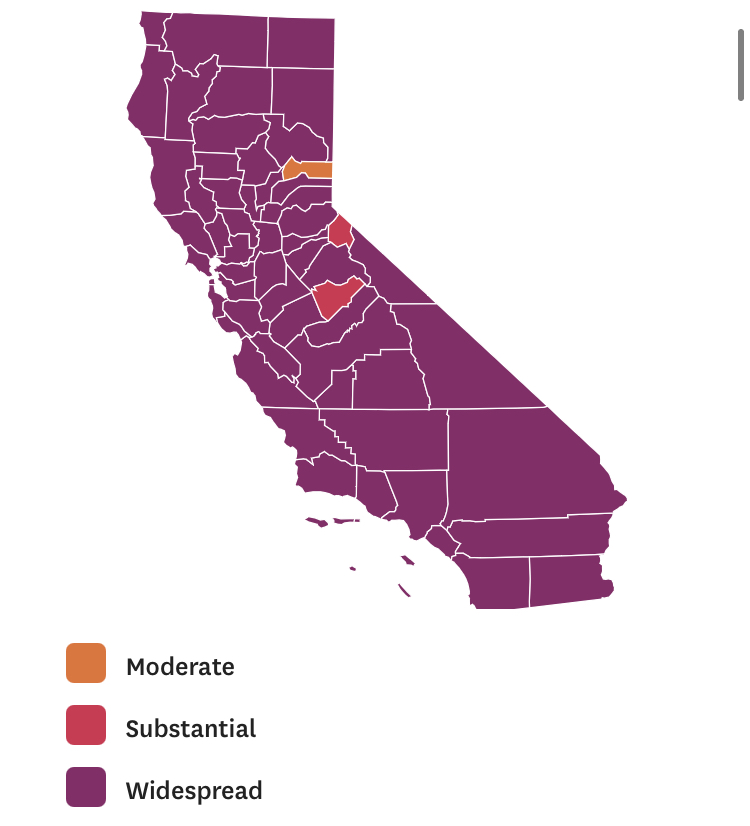
On the heels of a 5% statewide positivity rate on December 5, 2020, California was declared in a state of shut down in all its counties. It almost seems that such graphics have started to fail us, as the spread of the virus overflows the boundaries of the map and permeates its space. The choropoleth renders individual counties all but indistinct, the state drowned in widespread infections, with only a few of its less populated regions as refuges. With a flood of purple overflowing the coastal counties, the delta, the Central Valley, and the entire south of the state, was there even any point in mapping the danger of viral spread beyond a state of red alert?

Dec. 5, 2020

While mapping offers little comfort in the era of saturation of heightened risk, the color-codes alert inhabitants to the danger of increased stresses on the public health system–as much as visualization challenges to translate tools of data aggregation to visualize the pandemic., as December 6 rates grew by December 19. As we shift to map a decreasingly multi-colored state by the moderate, substantial and widespread virus, and widespread cases seem to flood the state, the map offers a security of some sort of monitoring of the pandemic’s spatial spread.

The sea of purple is like Spinal Tap going raising the volume “up to eleven,” and are a sign that we are in unexplored territory that won’t be accommodated by a simple color ramp–or, indeed, a familiar cartographic iconography among our current tools of styling space. While we are used to maps embodying meaning, what the colors of the map embody–beyond risk–is unknown. To be sure, at a time when fatalities from the coronavirus in the south of the state have skyrocketed from the middle of the month, hitting records in ways terrible to even contemplate, the field of purple is a deeply human story of loss, as a surge of hospitalizations have flooded the entire healthcare community, and stretched facilities of critical care beyond anything we have known, filling half of intensive care beds in LA County at Christmas. 2020 enough to make it hard to feel any relief in the close of a calendar year, as if that unit still held any meaning, and very grim about 2021: and while the CDC allowed that there may already be a new, more contagious strain, in the nation two days before Christmas, the arrival of the more contagious strain in California and Colorado increased alarm before New Year’s.

San Francisco Chronicle, December 6 2020
SF Chronicle, December 19, 2020

How to get a handle on the novel coronavirus that we have been pressing against COVID-19 dashboards since March to grasp better, and will we able to do so in 2021?

Whatever sense agency the maps impart, it is an agency that is only as good as the compromised sense of agency that we expect in an era of geolocation, on which most maps track reports of infection. Even as we face the rather grim warning that we are waiting for the arrival of a vaccine that, in the Bay Area, rates of immunization face steep obstacles of vaccine distribution due to pragmatics of freezer space required, training of extra health care workers, and monitoring and tracking the two-stage process of vaccination, we will depend for public sanity on maintaining clear communication in maps. The actual tracking of the novel coronavirus doesn’t translate that well to a state-wide model, or a choropleth, although it is the method for public health advisories that makes most sense: we do not have small-scale public health supervision in most of the nation, although they exist at some counties. The stressed Departments of Public Health in areas are without resources to manage COVID-19 outbreaks, public health compliance, or retaliations for public health violations: and the effort to create public health councils to manage compliance and violations of public health orders may be seen by some as an unneeded bureaucracy, but will give local governments resilience in dealing with an expanding epidemic, at the same time as governmental budgets are stressed, and no body of law about COVID violations exists.

Rather than map on a national or state-wide level, we can best gain a sense of how much virus is out there and how it moves through attempts of contact tracing–even if the increasing rates of infection may have gone beyond the effectiveness of contact tracing as a methodology that was not quickly adapted by a federal government the prioritized the rush to a vaccine. The basis for such a map in LA county can reveal the broad networks of contagion, often starting in small indoor gatherings across the region, and moving along networks of spatial mobility across the city and San Fernando Valley, and help embody the disease’s vectors of transmission as we watch mortality tallies on dashboards that give us little sense of agency before rising real-time tolls.

ESRI

If such ESRI maps suggest a masterful data tracing and compilation project, the data is large, but the format a glorification of the hand-drawn maps of transmission that led to a better understanding of the progress of Ebola on the ground in 2014, used by rural clinics in western African countries like Liberia and Rwanda to stop the infectious disease’s transmission and monitor the progress of contagion to limit it–as well as to involve community members in the response to the virus’ deadly spread.

We may have lost an opportunity for the sort of learning experience that would be most critical to mitigate viral spread in the United States, as no similar public educational outreach was adopted–and schools, which might have provided an important network for diffusing health advisories to families, shifted predominantly to distance learning and providing meals, but we became painfully aware of the lack of a health infrastructure across America, as many openly resisted orders to mask or to remain indoors that they saw as unsubstantiated restrictions of liberty, not necessary measures.

Hand-Drawn Public Health Map of Ebola Transmission in Liberia (2014)

We are beyond contact tracing, however, and struggling with a level of contagion that has increased dramatically with far more indoor common spaces and geographic mobility. Yet the broad public health alerts that these “news maps” of viral spread offer readers omits, or perhaps ignores, the terrifying mechanics of its spread, and the indoor spaces in which we know the virus is predominantly acquired. The rise of newly infectious mutated strains of the novel coronavirus was in a sense inevitable, but the rising tension of what this means for the geographical distribution and danger of the coronavirus for our public health system is hard to map to assess its wide distribution, and we take refuge in mitigation strategies we can follow.

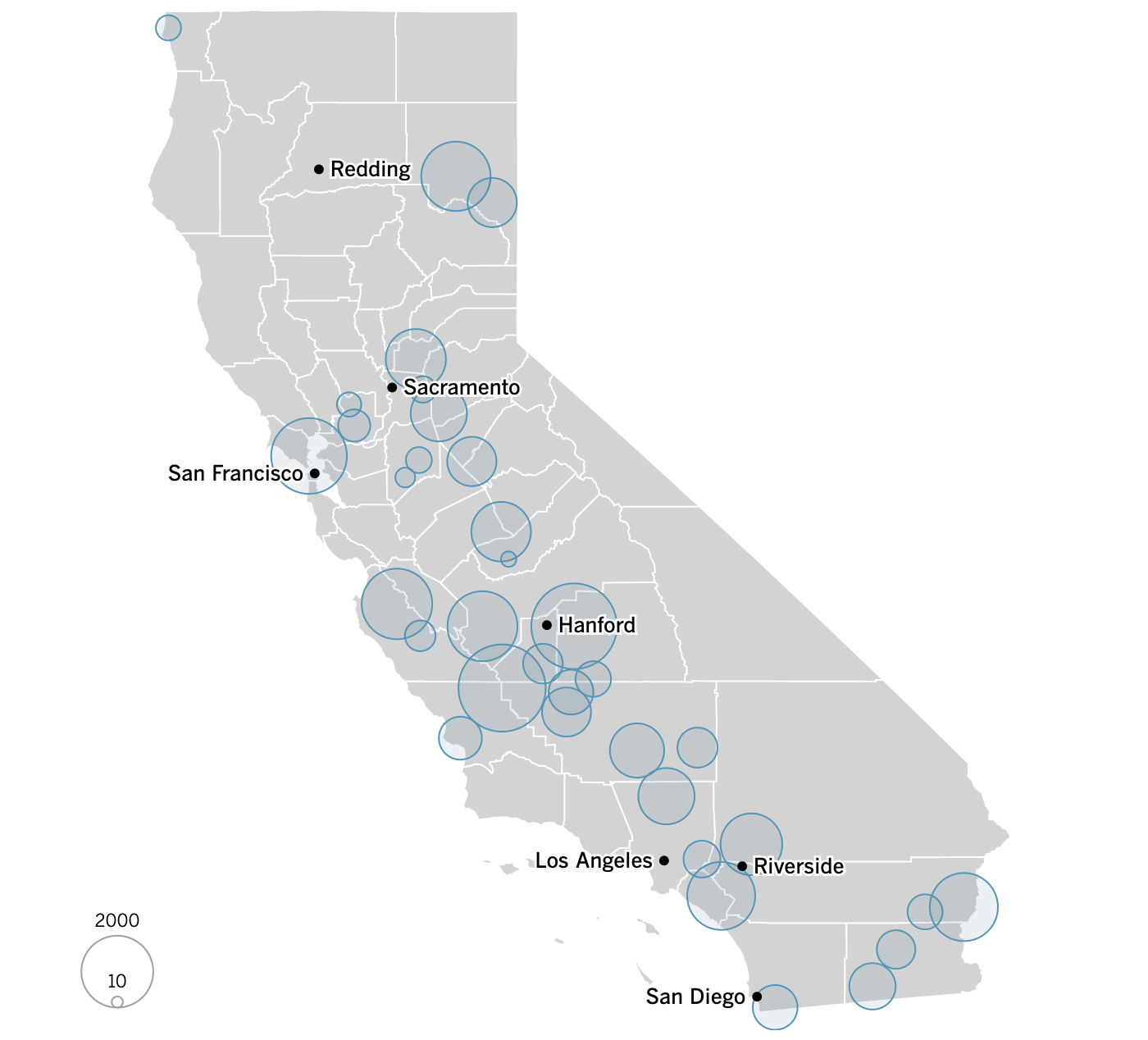
Why have we not been more vigilant earlier to adapt the many indoor spaces in which the virus circulates? It bears noting that the spread of virus in the state was undoubtedly intensified by over a hundred deaths and 10,000 cases of infection to spread in the density of a carceral network, which seems an archipelago incubating the spread of viral infections in the state. We only recently mapped the extent of viral spread across nineteen state prisons by late December 2020, tracked by the Los Angeles Times, but often omitted from public health alerts–

Coronavirus Cases Reported in Nineteen California Prisons, Dec. 21, 2020

–and the density of Long-Term Care centers of assisted living across the state, which were so tragically long centers of dangers of viral spread, as the New York Times and Mapbox alerted us as the extreme vulnerabilty of elder residents of nursing homes, skilled nursing facilities, retirement homes, assisted-living facilities, residential care homes who cannot live alone was noted across the world. The data that was not provided in the grey-out states interrupted the spread of infections among those often with chronic medical conditions was not surprising, epidemiologically, but terrifying in its escalation of the medical vulnerability of already compromised and vulnerable populations–and steep challenges that the virus posed.

unlike those greyed out states that fail to release data on deaths linked to COVID-19 infections, congregate on the California coast: while the New York Times depicted point-based data of the over 100,000 COVID-related deaths in nursing homes are a small but significant share of COVID deaths, exposure for populations with extraordinarily high probability of possessing multiple possibilities for co-morbidities is probably only a fraction of infections.

Coronavirus Deaths linked to Nursing Homes in United States, December 4, 2020

We strain to find metrics to map the risk-multipliers that might be integrated into our models for infectious spread. It seems telling to try to pin the new wave of infections in a state like California to increased contact after Thanksgiving–a collective failure of letting up on social distancing in place since March–as the basis for a post-Thanksgiving boom in many regions of the state, using purely the spatial metrics of geolocation that are most easily aggregated from cell phone data in the pointillist tracking of individual infections in aggregate.

New York Times/CueBiq Mobility Data

Based on cell-phone data of geolocation, a proxy for mobility or social clustering that offered a metric to track Americans’ social proximity and geogarphical mobility–including at shopping centers, oceanside walks in open spaces, and even take-out food curbside pickups, as well as outdoor meals and highway travel, few counties curbed aggregation as one might hope–although the fifty foot metric accepts the many outdoor congregations that occurred, well within the Cuebiq metric, wearing or without masks. A magenta California registered pronounced proximity, grosso modo, discounting any mindful innovative strategies in the state.

Increased Spatial Closeness within Fifty Feet/CueBiq/Graphic NBC News, Nigel Chiwaya and Jiachan Wu

It is stunning to have a national metric for voluntary mobility, rough as it is, to measure internalization of social distancing protocols and potential danger of a post-holiday COVID-19 bump. To be sure, we are stunned by geolocation tools to aggregate but risk neglecting the deeper infrastructures that undergird transmission, from forced immobility. While geolocation tools offer opportunities for collective aggregating whose appeal has deep historical antecedents in measuring contagion and anticipating viral transmission by vectors of spatial proximity, geospatial tools create a geolocation loop in visualizations which, however “informative” perpetuate a spatiality that may not clearly overlap with the actual spatiality of viral transmission.

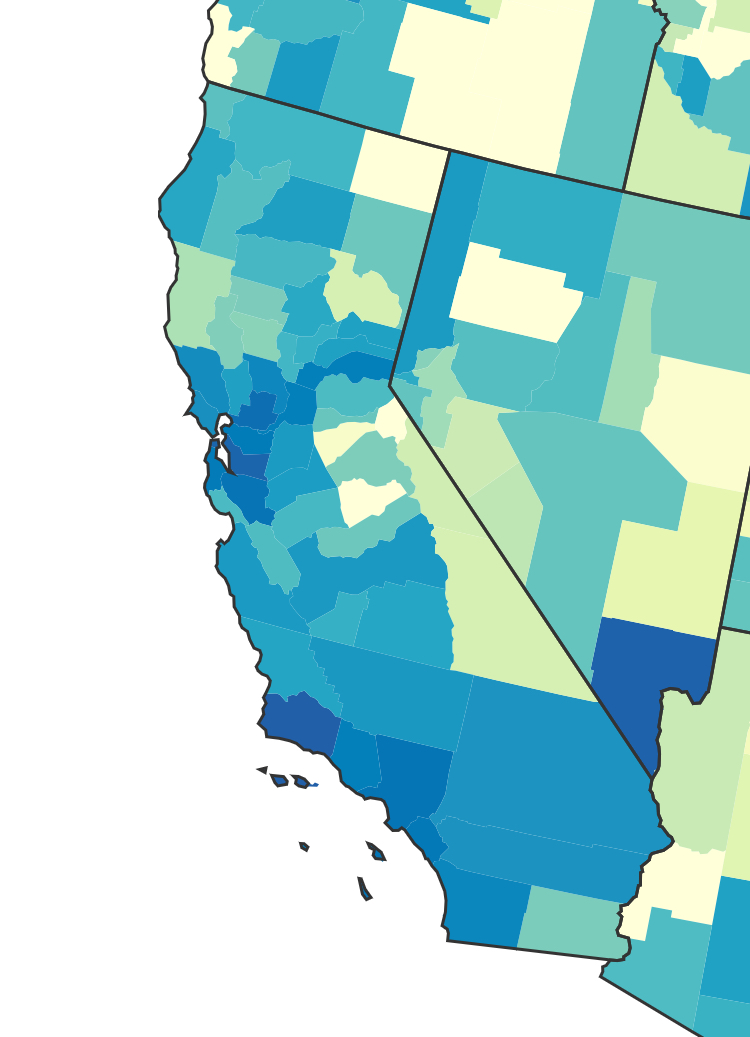
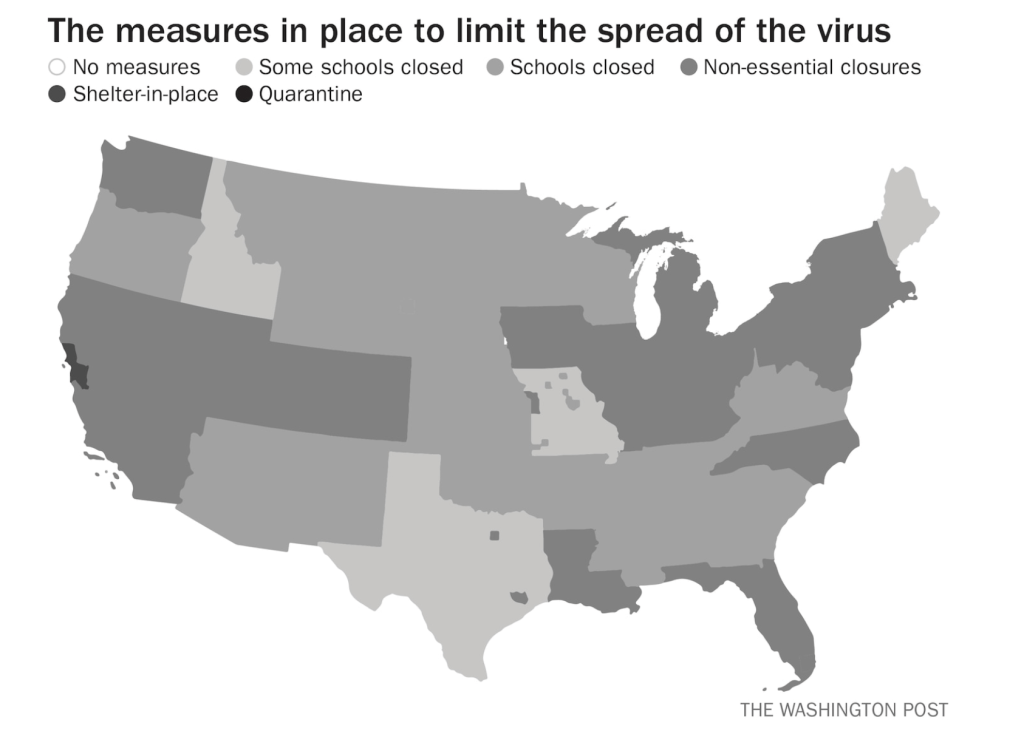
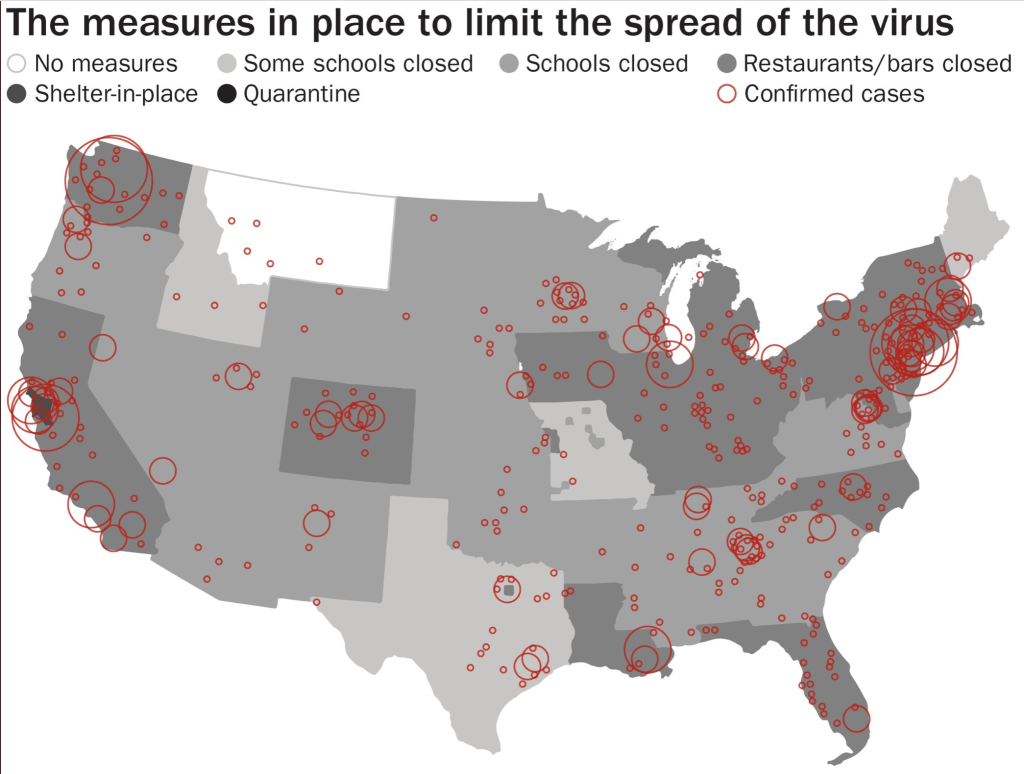
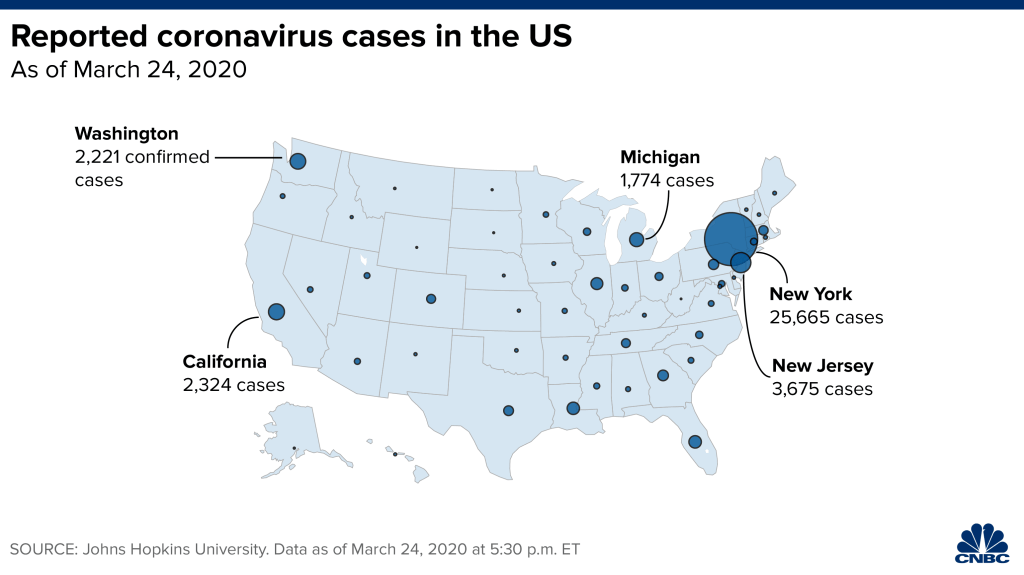
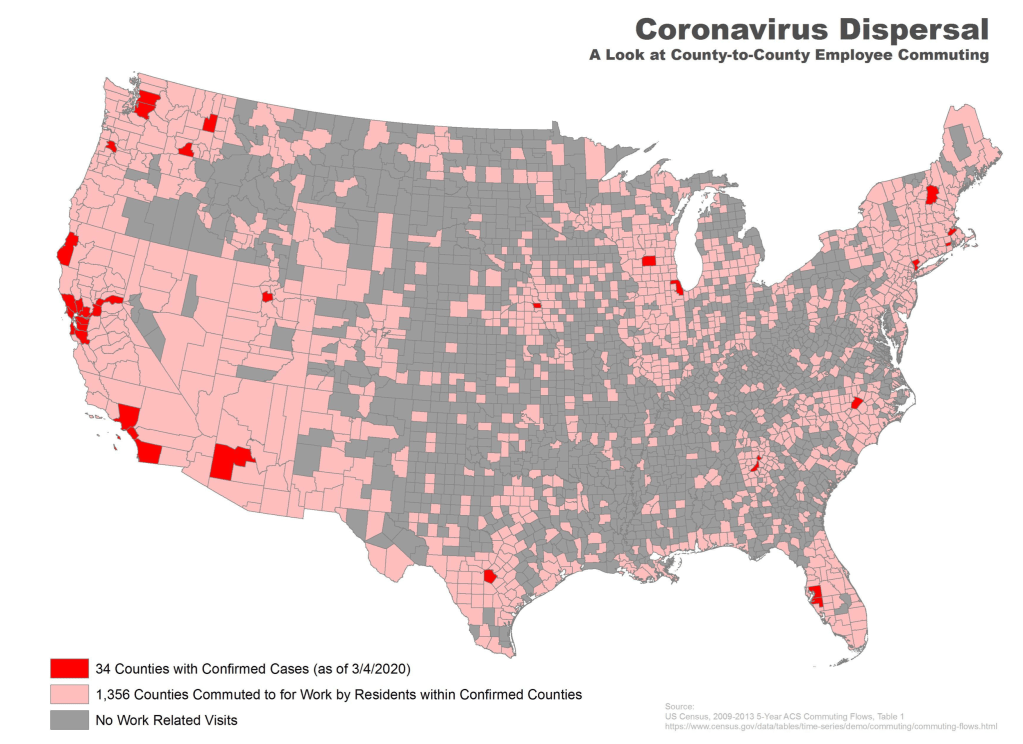
Even if we demanded to map what were the novel coronavirus had “hot-spots” in mid- to late March, as if processing the enormity of the scale we didn’t know how to map, aggregating data without a sense of scale.

March 26, 2020

Across the summer, it seems best to continue to map daily numbers of cases, relying on whatever CDC or hospital data from Hopkins we had, trying to aggregate the effects of the virus that was spreading across the country whose government seemed to provide little economic or medical plan, in maps that tallied the emergence of new cases, as new hotspots appeared across the land, meriting attention difficult to direct.

We are plowing infections and mortality with abandon in a steady diet of data visualizations that purport to grasp disease spread, that were once weighted predominantly to the New York area, even as they spread throughout the nation by the end of March, but remaining in the thousands, at that point, as even that low threshold was one by which we were impressed. The tracking of the local incidence of reported cases seemed to have meaning to grasp the meaning of transmission, with a pinpoint accuracy that was assuring, even if we had no way to understand the contagion or no effective strategy to contain it. But we boasted data visualizations to do so, focussing on the nation as if to contain its spread in antiquatedly national terms, for a global pandemic, not mapping networks of infection but almost struggling to process the data itself.

After all, the John Snow’s cholera maps of John Snow are the modern exemplars foregrounded in data visualization courses as game-changing images as convincingly precise pictures of infection progressing from a water pumps in London neighborhoods is often seen as a gold standard in the social efficacy of the data visualization and information display. The elevation of the pinpoint mapping of cholera mortality in relation to a water pump from which the deadly virus was transmitted in a nineteenth-century London neighborhood:

John Snow, “Cholera Deaths in Soho”

The Snow Map so successfully embodies a convincing image of contagion that it has taken on a life of its own in data vis courses, almost fetishized as a triumphant use of the plotting of data that precisely geolocated mortality statistics allow, and can indeed be transposed onto a map of the land to reveal the clustering of death rates around the infamous Broad St. pump, that created a legible vector of the transmission of diseases in the Soho neighborhood, so convincing to be touted as a monument of the data sciences.

Open-Air Water Pumps Tainted by Cholera measured in John Snow’s Map

Snow is lauded for having effectively showed that, in ways that changed scientific practices of collective observation and public health: rather than being communicated by miasmatic infections that spread to low-lying London from the Thames, mortality rates could gain a legibility in proximity to a pump that transmitted an infectious virus, often presented as a conceptual leap of Copernican proportions (which it was, when contrasted to miasma that emanated from the Thames to low-lying areas–if it anticipated a bacteriological understanding of viral transmission). The association of danger with the water procured on errands from neighborhood pumps however replaced the noxious vapors of a polluted river, as in earlier visualizations of the miasma that lifted the noxious fumes of the polluted Thames river to unfortunate low-lying urban neighborhoods, who were condemned by urban topography to be concentrations of a density of deaths of more striking proportions and scale than had been seen in the collective memory.

Snow made his argument by data visualizations to convince audiences, but he mapped with a theory of contagion. But if Snow’s maps works on how the virus is communicated in outdoor spaces–and how a single site of transmission can provide a single focus for the aggregation of mortality cases, COVID-19 is an infection that is most commonly contracted in indoor spaces, shared airspace, and the recycled unfiltered air of close quarters. And the indoor spaces where COVID-19 appears to be most often transmitted stands at odds with the contraction in outdoor common spaces of the street and service areas of water pumps, that create the clear spacial foci of Snow’s map, and the recent remapping by Leah Meisterlin that seeks to illuminate the urban spaces of the contraction of cholera in a digital visualization as a question of intersecting spatialities.

Current visualization tools compellingly cluster a clear majority of cholera deaths in proximity to a publicly accessible pump where residents drew water where viral pathogens that had colonized its handle. But we lack, at this point, a similarly convincing theory of the transmission of the novel coronavirus SARS-CoV-2.

But the logics of COVID-19’s communication is nowhere so crisp, and difficult to translate to a register that primarily privileges spatial contiguity and proximity–it is not a locally born disease, but a virus that mutates locally across a global space: a pandemic. And although contact-tracing provides a crucial means of trying to track in aggregate who was exposed to infection, we lack any similarly clear theory to metaphorically grasp the contagion–and are increasingly becoming aware of the central role of its mutation to a virus both more infection and that spreads with greater rapidity in confronting the expansive waves of infection in the United States–as if an escalated virulence grew globally in the first months of this rapidly globalized pandemic.

Our dashboards adopted the new versions of web Mercator, perhaps unhelpfully, to offer some security in relation to the nature of viral spread, which, if they served as a way of affirming its truly global scope–

NextStrain

–also suggested that global traffic of the virus demands its own genomic map, as the virus migrates globally, outside strictly spatial indices of global coverage, and that perhaps spatial indices were not the best, in the end, for accounting for a virus that had began to develop clear variants, if not to mutate as scarily as many feared, into a more virulent form.

And it may be that a genomic map that allow the classification of viral strains of genomic variability demand their own map: for as we learn that genomic mutation and variation closely determines and affects etiology, communication of the viral strains offers yet a clearer illustration that globalization articulates any point in terrestrial space to a global network, placing it in increased proximity to arbitrary point not visible in a simple map, but trigger its own world-wide network of markedly different infectiousness or virulence.

NextStrain

From December 4 2019, indeed, we could track emergent variants of the virus best outside of a spatial scale, as much as it reminded us that the very mobility of individuals across space increased the speed and stakes of viral contagion, and the difficulty to contain viral spread, in the interconnected world where viral variation recalled a flight map, set of trade routes, or a map of the flow of financial traffic or even of arms. Mutations were understood to travel worldwide, with a globalism that a spatial map might be the background, but was indeed far removed, as we moved beyond questions of contact tracing to define different sizes of genomic mutation and modifications that we could trace by the scale of mutations, not only the actual places where the virus had arrived.

Was place and space in fact less important in communicating the nature of COVID-19’s increasing virulence?

The maps of genomic variation traced not only the globalization of the virus, but its shifting character, and perhaps etiology across some thirty variants by late April, that show both the global spread of the virus, and the distinct domination of select strains at certain locations, in way that researchers later theorized the ability to “track” mutations with increasing precision. If researchers in Bologna defined six different variants of coronavirus from almost 50,000 genomes that had been mapped globally in laboratory settings to map variants of the virus whose signatures showed little more variability than strains of the flu in June, variations of signatures seemed a manner to map the speed of coronavirus that had traveled globally from by February 202 to the lungs of the late Franco Orlandi, an eighty-three year old retired truck driver from Nembro, Italy, whose family could not place China on a map when, following diagnostic protocol, attendant physicians in Bergamo asked if Orlandi had, by chance, happen to have traveled to China recently.

NextStrain

Despite lack of serious mutation, thankfully, the data science of genomic sequencing of the COVID-19 cases triggered by genomic mutations of SARS-CoV-2 genome of just under 30,000 nucleotides, has experienced over time over 353,000 mutation events, creating a difficult standard for transmission into equivalent hot spots: some hot spots of some mutations are far more “hot” than others, if we have tried to plot infections and mortality onto race, sex, and age, it most strikingly correlates to co-morbidities, if all co-morbidities are themselves also indictors of mortality risk. While the mutations have suggested transmission networks, have the presence of different levels of mutations also constantly altered the landscape of viral transmission?

Global Distribution of Sars-CoV-2 Variants, March 15, 2020/Los Alamos National Laboratory

It makes sense that the viral variant was tracked in Great Britain, the vanguard of genomic sequencing of the novel coronavirus as a result not only of laboratory practices but the embedded nature of research in the National Health Services and the monitoring of public health and health care. Enabled by a robust program of testing, of the some 150,000 coronavirus genomes sequenced globally, England boasts half of all genomic data. Rather than being the site of mutations, Britain was as a result the site where the first viral variant was recognized and documented, allowing Eric Volz and Neil Ferguson of Imperial College London to examined nearly 2,000 genomes of the variant they judged to be roughly 50% more transmissible than other coronavirus variants, magnifying the danger of contagious spread in ways feared to unroll on our dashboards in the coming months. As teams at the London School of Hygiene and Tropical Medicine studied the variant in late 2020 in southeast England, they found it to be 56% more transmissible than other variants, and raised fears of further mutations in ways that rendered any map we had even more unstable.

The virus SARS-CoV-2 can be expected to mutate regularly and often. While England boasts about half of all global genomic data on the virus, of the 17 million cases of SARS-CoV-2 infections in the United States, only 51,000 cases of the virus were sequenced–and the failure to prioritize viral sequencing in America has exposed the nation to vulnerabilities. And although California has sequenced 5-10,000 genomes a day of the novel coronavirus samples by December, and Houston’s Methodist Hospital have mapped 15,000 sequences as it watches for new viral variants; an American Task Force on viral variants will be rolled out early in 2021, as the discovery of viral mutations haves spread across five states in the western, eastern, and northwestern United States. While it is not clear that the viral variant or mutations would be less susceptible to polyclonal vaccines, most believe variants would emerge that would evade vaccine-induced immunity.

Continue reading

Leave a comment

Filed under California, California Politics, Coronavirus, data aggregation, data visualization

Distance Learning, Disrupted Learning & Social Eruptions

On a morning walk, my mind turning to Dr. Anthony Fauci’s injunction to exercise, I daily move between the many signs posted outside houses in my neighborhood congratulating graduates of the Berkeley CA public high school my daughter attends or Oakland’s School of the Arts and Tech, ending among million dollar homes sporting yard signs congratulating graduates of elite private schools. This is America, and not uncommon. The path I take traces yawning shifting divides of public schooling across America in the most blasé of ways. The uneven distribution of different schools barely conceals the deep divisions between schools and families seems to widen in terrifying ways as the coronavirus pandemic continues to ravage the nation. While we are shocked to learn that Donald Trump delayed informing the nation about coronavirus not to panicked markets, the lack of school policies stood only to magnify existing fracture lines: for the failure to provide any overarching vision left school districts with the football as decision makers they are unequipped to assess of learning requirements in remote settings of learning, and to bear the weight of difficulties in shaping remote learning programs without training.

Ill-equipped boards are asked to struggle in high pressure situations with finding ways of engaging students increasingly removed from one another or instructional settings. Increasingly, states are offering regional guidelines, but the absence of a national policy may rupture public trust with the very schools on which the nation most depends, now treated as swimming in a laissez-faire sea without guidesposts in an already disrupted educational setting, raising questions of graduations, requirements, baselines of school performance, or even study habits and the value of coursework and requirements for diplomas or graduation, as the educational market long an unqualified good in America stands to erode.

But if this might have been an opportunity for collective response, we have no evidence of any preparation to supplement what school networks offer, as if those who can afford the private tutors, off-site education, and private educational services are alone provided with continuing education, as other scramble to make up the gaps school closures create. Unprepared with a broader educational strategy in the midsized of a global pandemic, we have all in essence “left the library” of schools, pausing education or switching the nation onto a disembodied experience, that makes the old physical globes of schoolroom study seem emblems of a far less complicated past, when global topographies lay undisturbed beside books in cozy nooks, waiting, as it were, for new fingers to turn it with curiosity, while more and more schools are compelled to remain on the remote learning platforms to which they gradually shifted en masse over the month of March, 2020.

U.S. News & World Report/Bret Zeigler
Confirmed COVID-19 Cases, March 2020

The status of education–and of school closures and now school reopening–became a sort of political football. Despite the readiness of a switch to remote learning and online platforms of education, school closures echoed a cartography of abandonment, in unforgivable ways: if closures were born of necessity, and disorientation before the pandemic’s spread. And the levels of insecurity that have been fostered in the desire for mitigation may remind us that the problem of COVID-19 has been a crisis of public education, as much as a lack of frontline workers’ protective equipment–PPE–or adequate testing.
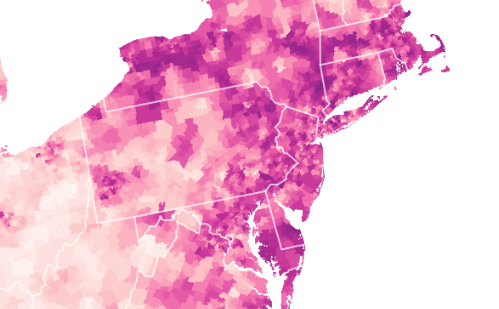
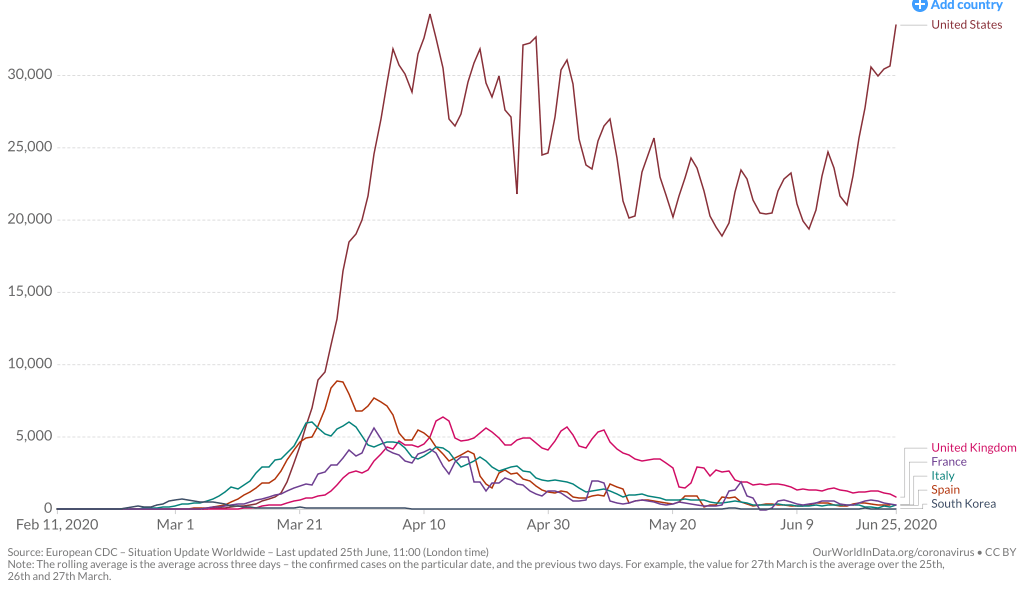
To be sure, the many functions that schools now provide across the social spectrum of the United States–meeting nutritive needs; offering social and emotional support and providing models outside the family for structuring time; minimal levels of health services–go far beyond being quantified by educational standards: by a magic trick of tests and quantification, government may have reduced education to metrics that erased their value as sites of community from the Bush administration, and led them to be sacrificed with deeper costs than many have registered. Without metric to tally schools’ dividends to students and communities, we omit the crucial educational role of instructing about coronavirus comportments–from regular hand washing to social distancing to mask-wearing, to bridge some of the enduring divides that have endured in the nation, with coastal “elites” donning masks more than the “heartland” of an expansive non-urbanized midwest.

Mapbox from Dynata Data/Upshot, New York Times July 17, 2020 (link to interactive map)

Is not the deep and tragic failure to not “educate” the nation to mask-wearing, sustained since the first cases of the coronavirus reached our shores, suggested the only the initial hot-spots where infections ravaged communities in the New York tristate area, Seattle, the Imperial Valley and coastal California, and central Texas are sites of mask-wearing, with Chicago, Detroit, Denver, the southwestern border and coastal southern Florida and Tallahassee. Only a fifth of the time or less were all five people who might meet at a large part of the nation likely to be wearing protective masks.

Why is such a paucity of mask-wearing continuing save an absence of public health education? There is a predictable if terrifying congruence with areas that were themselves, by the proxy of underserved medical communities Mitchell Thornson mapped, also by a Mapbox distribution of commute-based health centers, rather than by counties, to suggest the sites most vulnerable to disasters such as viral infections: even if the promise of a complete count of infections recedes, the inhabitants of some 300 counties underserved by federal health services suggests fault lines of future sites of vulnerability, that may accentuate with continued school closures.

Mitchell Thorson, clinics in counties medically underserved and vulnerable to disasters. featured in USA Today, March 31, 2020

These steep inequalities of health care suggested a very broad difference in those able to weather and sustain COVID-19, to which the Trump administration seemed blind. School closures created insecurities for American families was perhaps not different from globally, but they lacked any support network: social support had withdrawn to schools in the United States more than other nations. The lack of any narrative of the sudden closures, and interruption of human contact and resources that followed, were deeply disorienting. And the lack of oversight from a government that one expected, perhaps with little grounds, to provide a sense of purpose and oversight in an unprecedented health crisis was, unbelievably, punted to the states, and from the states to local school boards, utterly unprepared to cope or plan–as admittedly, even are many medical specialists and health professionals–with the scale of a pandemic.

It seemed like a charade of government effectiveness; Secretary DeVos shifted from leniency, lack of coordination, to steadfastness concealing unprecedented circumstances. And the recent possibility that private schools and sites of instruction will be allowed to open their doors, while poorly funded public schools serving adjoining communities, if sometimes distinct demographics: whereas public schools that serve up to 90% of American children–just short of 51 million (50.8) by federal projections–open for restricted hours if at all, private schools possess the needed funding for on-staff epidemiologists, thermal scanners, and additional teachers–as well as often enjoying more space.

The Emoji Icon Index tells at that on Instagram, the story of a skyrocketing use of the  😷 emoji from early March, as the. Face-with-Medical-Mask rose in use in parallel to the icon of the virus, but a plan for schools, quickly shuttered in China, was not imagined, as wishful thinking prevailed.

While our nation is prepared to react to the novel coronavirus by high-level cabinet meetings to bail out airlines after summoning executives or the bail out of banks, school are evidently far lower down the list. If Donald Trump prioritized cabinet-level meetings on bailing out the airline industries to ensure the Dept. of Treasury provided passenger airlines $25 billion, cargo haulers $4 billion, airports $10 billion and airline contractors $3 billion as industry lobbyists demanded to recognize a 95% reduction of passengers in response to the epidemic, saw meeting with executives to work out that deal worth the time of health officers and coronavirus response team–

–while he saw no similar body of school executives with whom he might meet in one room around a glistening desk with nametags, mugs of coffee and glasses of water. A past President of the P.T.A. of an Alameda CA public elementary school was familiar with reduced funding of California’s public schools since rollbacks on property taxes, smarted at the clear contrast of inability to prioritize public schooling as part of our national infrastructure. Is it not most probable that the very corporate structure of the airline industry provides a more familiar set of faces to interact earning high incomes, unlike the leaders of the dispersed structure of public schools, or community voices, that Trump is so much more apt to dismiss and neglect?

Or is it that the nation is ready to sacrifice the public schools that are less likely to have the funding, save in wealthier districts in Durham, NC or Charlottesville, VA, echoing lines of a deep class divide? Not only were private schools prepared to devote attention and benefited from technological resources to transition to online platforms in the Spring, but are able to use larger buildings and reduced class sizes to benefit the children who attend them, while the aging ventilations systems of older buildings of public schools lie on the other side of a technological divide that plagues the nation.

To be sure, there are deep discrepancies–informing the Mapbox Upshot map, of which one might be rightly suspicious given the potentially unsound sampling practices based on the interviews conducted by Dynata, both in the United States and globally,  based on 250,000 survey responses between July 2 and July 14; the surveys administered by a firm boasting to provide businesses with a sense of global trends of consumption able to reorient businesses and advertisers to “re-opening,” but while showing vast expanses with relatively lower incidence of a group of five wearing masks–

–fails to acknowledge a rift among state governors who recommend masks, rather than require mask-wearing–or the considerable role that mayors have consistently played in advocating mask-wearing, if they often appear over-ruled by governors who have been filling the absence of federal policy: the looses of “recommendations” in Iowa, Wisconsin, Missouri, and Oklahoma, Kansas and the Nebraskas meant that only in some cities, where mayors had advised protective measures, was mask-wearing adopted, creating a terrifying prospect for the pandemic’s future.

When Fauci addressed the question of health disparities between race, he reminded the nation stoically that “we are not going to solve the issues of health disparities this month or next month . . . but what we can do now, today,” the voice of reason was probably far less reasonable for many, who had already tuned out, before he described the need for social distancing that was, in fact, a privilege for many. The mottled nature of northeastern communities the Dynata found in its interviews suggested an uneven terrain of mask-wearing policies, even in the Tristate Area, dictated by individual choice–and underscoring the lack of regional or federal policies.

The social topography of crowding, of second homes and of gardens or access to parks that was revealed in the Bay Area made us think in practical terms to egregious inequities that were perpetuated by sustained lack of investment to resolve pronounced racial disparities in health came as COVID-19–and the uneven landscape revealed as the coronavirus tore through communities where it was contracted in the United States. The revelation of inequalities was striking, as it suggested how communities experienced it quite differently, and the question of access to education–and access to remote education–cut across social divides in profoundly different ways.

The almost purposeful pronounced lack of master narrative in confronting COVID-19 was long apparent. President Trump, grasping for authority as a true authoritarian playbook, argued the situation demands force, as his removed son-in-law, the dauphin Jared Kushner, spun 60,000 deaths from COVID-19 as a “great success story,” as if to challenge the nation’s personal narratives with a monolithic storyline of a disconnect from communities which were ravaged by hospitalizations. In claiming his father-in-law created a “pathway to safely open up this great country,” Kushner radiated overconfidence as he painted a future as rosy as the marble atrium of Trump Tower, even when the figures didn’t add up. It was akin to Trump’s 1993 proclamation, after huddling with bankruptcy lawyers to obtain new lines of credit, having had “the most successful year I’ve had in business!”–he reprised in a compulsive act of boosterism over the next decade, and continues to rely upon in the pandemic.

The dauphin Jared had not only used a spilt infinitive, but a split reality, a divergence destined to make the Presidential Election about COVID-19, whose malevolence is hard not to say: as the growth of rates of infection by the novel coronavirus most rapidly grew in the United States, claims Trump was doing “things right” with coronavirus testing plummeting to 30% percent, over twenty-five million unemployed and further furloughs coming, and one million infected by the coronavirus and 60,000 dead in a month, hardly fit narratives that suggest “great success,” even as the rates of infection from the coronavirus may have by mid-March grown greater in the United States than any place in the world, as escalating infection rates would continue to elevate the United States far beyond other nations. The manifestation of symptoms of COVID-19 grew two weeks after contracted, and by late March through late June, they had risen above all other nations.

Yet no clear plan for school closures had emerged on a national level in the United States, and denial at the danger of the infection’s growth dominated. Vice President Pence adopted similar talking points, in a few months, taking it upon himself to bestow premature congratulations that “we slowed the spread, we flattened the curve, we saved lives,” in a mismatch evident to any map in news media, but to the actuality on the ground.

Continue reading

Leave a comment

Filed under Coronavirus, COVID-19, education policies, remote learning, school closures

Cartographies of Covid-19: Unclear Paths Forward

A pandemic is by its nature both local and global by definition–and begins from a local outbreak. But if the only way to gain orientation to a pandemic is by accurate local counts, the problem of balancing–or toggling between–the local and global has become staggeringly pronounced in the case of COVID-19, as if the point-based cartography that we use to track the disease has the better of us, and upper hand, with the absence of accurate local counts. The lack of clear data that came from Wuhan in the days that followed the outbreak of the virus revealed worrisome problems of transparency. The difficulties Chinese government authorities faced in getting bearings on the zoonotic virus, lab-born or not, raised problems of even trying to map its rise, and we tired to look at maps as tea-leaves of future responses, as well as retrospective diagnoses of the point of origin of disease spread–as if maps could explicate our uncertain conditions, and increased vulnerability.

Data visualizations since seem to proliferate in response to uncertainty and an absence of consensus, as we turned to maps as a hope for truth in an age of increased uncertainty: as local officials were loathe to shoulder responsibility, the tally of infected in Hubei Province jumped, astoundingly, forcing the government to recognize the ease of its transmission among humans, was far more virulent than believed. But at this point, looking back in the mirror provides little sense of orientation to the multiplication of dispersed local outbreaks of coronavirus that we are increasingly challenged to map in relation to ourselves. Were the first maps of the New World similar responses to the deep sense of religious and eschatological uncertainty of the early modern period? Whether or not that was the case, we all felt especially early modern now, plague victims of a sort that led us to look back on the mapping and mapping of responses to the spread of pestilence, and hoping that past experience–or our current increased ability of empathy–gave us more meaningful access to the epidemics and pandemics of the past.

The sudden uptick of cases reveals a reticence in tallying the infected out of fears of reprisals for apparent incompetence, an institutional blame-shifting triggering mechanisms of concealment that has led American meat-packing plants to hide numbers of infected workers, and numbers of tests for infection to be far lower than official records suggest: the absence of ability to control the spread of SARS-CoV-2 led us to proliferate maps in hopes to grasp its rapid doubling, uncomfortable at the world they began to show, apprehensive at how to come to terms with the rapidity of local outbreaks of confirmed cases with sufficient granularity, and enough continuities, hoping to track contagion as hopes of containment were beginning to fade in the new aggregates that were increasingly evident.

New York Times

The warning of the virus’ spread was raised by Li Wenliang on December 30 from Wuhan, inter-agency shifting of blame and responsibility in Wuhan– a reflexive institutional blame-shifting by “throwing woks”–abruptly ceased with summons of Shanghai Mayor Ying Yong, he who lured Elon Musk to Shanghai, to restore order: as a new hospital was built, tallies of new cases of coronavirus in Hubei astronomically grew by nine from 1,638 to 14,840, shocking the world–a figure was in keeping with the nearly 1,400 people dead in the country, but suggesting a viral load of unprecedented proportions. Americans apprehensively watched the disease afflicting passengers of cruise liners as if it would arrive ashore, its virulence was in fact already of pandemic proportions: yet American disinformation here took over, as we were told to stick our heads in the sand, ostrich-like, as fears were overblown, and tried to keep calm. And then, the tables were turned, as the United States President described, or suggested, a national policy of intentional undercounts, and limited testing, lest the counts discovered tank his popularity–the stock market value of Trump, International, or, rather, Trump-in-Office, Trump-as-Chief-Executive, whose new season might be canceled due to low ratings. And although the virus began in China, how the United States increasingly came to be the outlier in the numbers of infection confirmed weekly suggested a national story of mismanagement, as the narrative we told ourselves of American exceptionalism before illness seemed to have boomeranged, with the three-day averages of confirmed infections skyrocketing, and setting us apart from the very nations we compare ourselves to, but whose health-care policy we increasingly realize we are distinct from.

Americans were soothed by deceptive common-sense talk. But the results of a lack of investment in public health are all too evident, if our maps are . Robert Redfield, a virologist who served as the public spokesperson of reassurance who had long sustained false theories about retroviruses causing HIV and AIDS, argued that even if the fourteen confirmed cases of the novel coronavirus were monitored and traced, “the virus more exploded . . beyond public health capacity,” he seemed to forget he had not developed that capacity. Virology is of course Dr. Redfield’s area of expertise, but he won his political post in no small part by being practiced in massaging truth statements for political ends. During AIDS outbreak, the last major plague in the United States, he had advocated unproven drugs billed as HIV vaccines and encouraged quarantine, abstinence, and stripping the medical licenses of HIV-infected medical workers, more than accelerating cures; Redfield took time to blame the Obama administration for implementing clinical tests, to please his patron. Bt he obscured the level of infections that in truth were not known, blinding the nation to a cartography of COVID by not advancing adequate levels of testing, that returned us to the simple equation of the dog days of AIDS, only able to make us yell, yet again, this time with Larry Kramer, stalwart resistor of the silencing of AIDS by the failure to use on-trial medicine–

–at the utter deception with which we met the pandemic. Dr. Redfield must have met his commission to radiate calm by assuring Americans in late February. As he assured us only fourteen cases had been diagnosed in the United States, the number meant little, as any virologist should kmow; while hindsight is a benefit that obscures us from the need to life life forwards, we suspect urban hotspots were already laden with infected individuals by March 1, a silent ticking bomb of urban outbreaks already infecting 28,000 as it spread broadly its “hotspots”–New York, Chicago, San Francisco, Seattle, Boston and Chicago–all of massively different density, without tests being able to affirm the scale of its spread.

There was no map. And then, all of a sudden, the globalization of coronavirus hit home; any place in the world could be related to any other place, as rates of infection bloomed globally in geographically disjointed hotspots, spatially removed from one another, even as a standard for uniform testing lacked. And there was no sense of an art of dying, as the amazingly rapid contraction and worsening of illnesses left many without a script, and many more silent before a dizzying multiplication of statistics of mortality in the face of COVID-19, several weeks later.

Every other map of COVID-19’s spread seems an attempt to persuade the viewer of its accuracy and totality, in retrospect, even as we have no clear sense of the total figures of infection-or even of the paths infection takes. We are mystified by the geography and spatial dynamics of the virus’ travel, but realize the severe communicability of a virus whose load is stored in the naso-laryngeal passages, and can be communicated by airborne drops. Is distancing the best way we can constrain the geographic spread of infection? Can statistics demonstrate the success of curtailing its spread?

It was a hidden agenda in the maps of news agencies and to register the accurate levels of infection, promising the sorts of transparency that had been clouded in much of January. And while we watch the progress of the pandemic on screens, there is a sense of truth-telling, as a result, of revealing the scope of the virus’ actual spread that compensates for the lack of clarity we once had. But it is also increasingly difficult to orient ourselves to the GPS-enabled scales of its spread, for we still are looking at pretty limited and almost superficial data, in the sense we have trouble plotting it in a narrative context, or find a reaction more than shock. The virus is easy in ways to personify as a threat–it wants us outside; it comes from afar; it pervades public spaces and hospital grounds; it demands vigilant hand-washing and sanitizing–but the very numbest are elusive. While we try to track reported cases, hoping that these limited datasets will provide orientation, we have been lumping numbers of tests that might be apples and oranges, and have not found a consistent manner of testing. Deaths are difficult to attribute, for some, since there are different sites where the virus might settle in our bodies.

Even while not really following the pathways of its transmission, and the microscopic scale of the progress of the pathogen in bodies. And if we rely on or expect data visualizations will present information in readily graspable terms, we rarely come to question the logics that underly them, and the logics are limited given the poor levels of global testing for COVID-19. It is frustrating that our GPS maps, which we seem able to map the world, can map numbers of surrogates for viral spread, but we have yet to find a way to read the numbers in a clear narrative, but are floored by the apparently miasmatic spread of such a highly contagious disease that makes us feel, as historian of science Lorraine Daston put it, that we are in “ground zero of empiricism,” as if we are now all in the seventeenth century, not only in being vulnerable to a disease far less dangerous or deadly than Yersina pestis, but without explanatory and diagnostic tools.

This was, to be sure, a past plague come to life, requiring new garb of masks, face-shields, and protective gear for health workers–

–as the cloaks, leather gloves, staffs and masks that made up early modern protective gear returned to fashion, as if in a time warp, in new form.

We find a leveling between folk remedies and modern medicine, as we live collectively in what she calls a “ground-zero moment of empiricism”–if one in which we are deluged by data, but short in knowing what is data, as we are lacking in explanatory models. This is a bit unfair, as we still can profit from autopsies, and have been able to contain spread by hand-washing–but the images of a single magic bullet, or antiviral cure, are far, far away in time. But there is no longer any familiarity with an art of dying, although we found we encountered death with an unforeseen and unpleasant rapidity: we moved from hopes for awaiting immunity or antivirals to a basic need for some consolation of our mortality. There was no possibility of transcendence in a crisis of mortality of dimensions and scope that seem outside the modern era.

And it is ironic that distancing is the best mode to prevent infection–and many deaths may have been enabled by quicker decisions to adopt practices of distancing that could manage viral spread, Trump seemed not to notice that the very globalization he had resisted, and swung against with all his force to win votes, had facilitated the spread of a viral agent whose arrival was denied even as SARS-CoV-2 had already begun to flood the United States, in ways we only mapped in retrospect, as a global village that by March 1 had already grown satellites of viral loads in South Korea, the Middle East, Iran (Teheran), Europe (Milan; Gotheborg), South East Asia, and Hong Kong, as we anticipated its arrival with no health policy in place and no strategy for containing what was already on our shores. The global crossroads defied any choropleth, but we had only mapped the virus for some time in choropleths, as if believing by doing so we could not only map it by national boundaries to keep the virus at bay.

New York Times

But if we lacked a model of infection and communication of COVID-19, we lacked a sense of the geography by which to understand its spread–and to map it–and also, deeply problematically, an inter-agency coordination to assess and respond to the virus’ spread as we sought to contain it: and in the United States, the absence of any coordinating public health agency has left the country in something like free-fall, a cluelessness emblematic by a map cautioning American travelers to take enhanced protections while traveling in Italy or Japan, two major destinations of travel, and avoid all nonessential travel to China, but refrained from ceasing travel plans.

1. The most compelling language of the novel coronavirus is “false positives” and “false negatives,” that seem to betray the unsure nature of standards; the most haunting is the multiple sites COVID-19 can appear in the sites of the body we use to map most disease. While we associate the virus with our respiratory tracts, the virus can do damage to multiple organ systems, as well as create blotchiness of “covid toes” due to burst peripheral blood vessels; it can damage multiple organ systems simultaneously, including the kidneys, heart, lungs, brain, and linger in our intestinal tract where it can flourish and proliferate; the virus can reduce the ability of our blood to form clots, or disable our ability to form clots.  The ACE-2 receptor protein, a launching pad for viral infections, lies in our lungs and respiratory tract but in stomach, intestines, liver, kidneys, and brain. Increased sensitivities among those suffering from high blood pressure, cardiac disease, and diabetes reflect the nosological difficulties of classifying the virus as a cause of death or to grasp it as an illness, let alone to read data about the disease. If the virus lodges in the most delicate structures of the alveoli, which it causes to collapse as it infects their lining, it can take multiple pathways in the body, and as its pathway of infection may be multiple, medical response must be improvised with no playbook for clinical care.

All we know is that our medical staff desperately need protective gear. On top of that, it hardly helps that we are without a clear national policy, and find that the United States government has engaged in far less transparency that one could have ever expected.

We can only say its spread is accelerated dramatically by structures of globalization, and it stands to disrupt them. utterly Even as we map what seem total global knowledge of the disease, analogous to what we have come to expect from Global Positioning System, the multiple holes in our picture of the spread of the disease provide little sense of mastery over the pathways of communication, contraction, and infection we have come to expect from maps. These maps may even be especially disorienting in a world where expertise is often dismissed in the United States–not only by the U.S. President, but out of frustration at the inability to distance, diagnose, track or supervise the disease that is increasingly threatens to get the better hand. Have our visualizations been something of a losing battle, or a war of atrophy we will not win? Or do we even know what sorts of data to look at–indeed, what is information that can help us process a sense of what might be the geography of the contraction or the transmutability of the virus? Is the virus eluding our maps, as we try to make them? These sort of questions of making sense may be the process of science, but they trace, suddenly, a far steepder learning curve than we are used.

A dismissed biomedical researcher who ran efforts to develop a vaccine cautioned that we still lack that the failure a trusted, standard, and centralized plan for testing strategies must play a part in the coordinated plan “to take this nation through this response.” Dr. Bright, who was abruptly removed last month from his position as head of the Biomedical Advanced Research and Development Authority, bemoaned the limited statistics, alas, in large part as fear of providing too many tests–or fanning the flames of insecurity that testing might promote in the general public and in our financial markets, seem to have created the most dangerously deceptive scenario in which the United States seems to be committed to projecting confidence, even if it is the global epicenter of the pandemic.

Have we developed a language to orient ourselves to the scale of emergency in the spread of COVID-19? While we turn to images of natural disasters in describing the “epicenter” of the outbreak in Wuhan, this hardly conjures the species jump and under-the-radar communication of the virus that was not tracked for months before it emerged as a global threat. In tracking COVID-19 globally, or over a broad expanse of nations or states, we often ignored the pathways by which the novel coronavirus is spread in crowded spaces, where the single strand of RNA may hang in droplets that linger in the air, and are looking at the small scale maps to track a microscopic pathogen. But we are increasingly aware the spread of these strands, of the virus SARS-CoV-2, that infect populations along increasingly unequal fault lines that divide our cities, nations, health care systems, and crowding, or access to open space, are all poorly mapped in the choropleths into which we continue to smooth the datasets of infections and hospitalizations. While the problems are posed for national health services in each region, the devastation and danger of overloading public health systems and hospitals outweighs are local manifestations of a global crisis of the likes we have not confronted.

2. And the crowding of such numbers beyond the buffers that began with lead to a visual crowding by which we continue to be overwhelmed–and will have been overwhelmed for some time.

April, COIVID-19Iinfections Globally by Country/Clustrmaps May 12, 20202020

For although the global pandemic will clearly be with us for a long time, spatial narratives might be more likely to emerge in networks and in forms of vulnerability, in ways that might reveal a more pronounced set of narratives for how we can respond to a virus than the deep blues of even the limited and constrained datasets that we have, as we struggle against the blindness we have in containment and mitigation, and the frustration of the lack of anything like a vaccine. (This pandemic is almost a metastasis of the anti-vaxxers: confirmation that a vaccine cannot check a disease, it gives rise to concerns that vaccinations might have left us immunologically more vulnerable to its spread . . .and a sense that the hope of eradicating COVID-19 by the availability of a vaccination in four to five years will be widely resisted by anti-vaxxers and their acolytes, to whom the pandemic has given so much new steam. Yet as the virus interacts with the viral posting of anti-vaxxers resisting social distancing or collective policies of response, the stresses that exist in our society will only be amplified.) And if as late as February 24, only three laboratories in the United States did test for COVID-19–artificially lowering public numbers–even confirmed numbers through March and April were as a result tragically low. Could maps even help to track the disease without a testing apparatus in place?

Global Covid Infections/Datascraped by Avi Schiffman, May 11, 2020

The prestige of the data visualization has been a basis for reopening the nation. Yet if less than a tenth of the world’s population has yet to be exposed to the disease–and perhaps only 5% of the American population, in one estimate, if not lower–the virus is bound to be endemic to the global landscape for quite a considerable length of time. At the same time, one must wonder if the many fault lines that have created such peaks and valleys in the virus’ spread, if confirming its highly infectious nature, to be sure, are not removed from us in some degree by the smooth surfaces of the screens on which we watch and monitor, breath bated, with some terror, its spread, unsure of the accuracy or completeness of the data on which they are based but attentive to whatever they reveal. In many ways, these maps have created an even more precarious relation to the screen, and to the hopes that we find some sign of hope within their spread, or hope to grasp the ungraspable nature of COVID-19.

These datamaps suggest a purchase on a disease we don’t understand, and we don’t even have good numbers on contraction. Yet we are discussing “reopening” the United States, while we do not have anything approaching a vaccine, let alone the multiple vaccines that medical authorities desire before resuming social contact at pre-pandemic levels. How to process the data that we have, and how to view the maps not only by hovering, zooming in, or distancing the growing rates of infection, but tracking the virus in spaces, mapping levels of infection against adequacy of testing, mortalities against comorbidities, against with the chronic nature of the virus must be understood, as well as levels of hospitalization levels; and distinctions or mutations of the virus and against age ranges of afflicted–by, in other words, drilling beneath the datasets to make our maps’ smooth surfaces more legible, as horrifying as they are?

Can we use what we have to pose problems about the new nature of this contagion we don’t fully understand, but has been mapped in ways that seek to staunch fears of a decline in the stock market, as much as an emergency of public health, with up to one third of the population at risk of infection? The instinctive reaction of the Trump Health and Human Services to create public-private “community testing sites” for drive-thru or drive-up testing at Walgreens, CVS, Rite Aid, Kroger and other pharmacies seems reflexive for a government wanting to minimize federal overhead, but a far less exact means, and a far less intuitively sensible basis to attract potentially infected individuals to sites of public congregation. The hope of Verily–a subsidiary of Alphabet, whose Project Baseline boasts the slogan, “We’ve Mapped the World, Now Let’s Map Human Health,” in a bizarrely boosterish rhetoric, aggregates medical for medical screening in California–

Select States for Project Baseline Testing/Verily

–and select states–was the primary response that Trump had promised of a network of drive-up testing sites that has never materialized, even as it expanded to a hundred sites in thirty states. After Walmart opened two sites, and Walmart 40, the difficult accuracy of creating multiple testing sites was prohibitive, the testing sites that were rolled out with the assistance of private entrepreneurs that Jared Kushner enlisted, that filled the absence of any coherent public health response–perhaps, terrifyingly, in concert with his brother’s health care company, Oscar, which also partnered with CVS and some of the same pharmaceutical services, focussing on drive-thru sites more than sustained medical care, focussing largely on calming retailers who feared the arrival of infected patients on their parking lots, more than on the efficacy of testing, which they didn’t understand. If only 40% of promised test kits were made available, the absence of providing staffers or selling, as in Massachusetts, self-testing kits–and failing to provide many in large cities like New Orleans, as if to keep the final tally of infected artificially low. Even if the Center for Disease Controls had never done clinical tests on hydrochloroquine, whose dangers on humans were not studied, and despite some benefits of the antiviral on cell cultures, none appeared in mice, the drug was promoted widely on social media as late as April, although its mention on Twitter grew, even as the government delayed any roll-out of testing sites.

The demand to calm the nation, a position dangerously close to concealment, delayed action on a wave of infection that President Trump had long sought to deny, claim to be overblown, or call Fake News. The lack of a public testing initiative, and rejection of the tests of other nations, forced the United States to adopt a disorganized go-it-aloneist approach, akin to isolationism, not benefiting from the potential ties to Chinese doctors’ response, or the testing kits that would have been available that the World Health Organization (WHO) had suspected since January, and made test kits for poorer countries that might be replicated in the United States–which chose to make its own tests to ensure the highest quality. When WHO had urged countries “test, test, test” for the coronavirus to contain its spread, the global health organization provided 1.5 million tests to 120 countries who lacked the ability to test by March 16; the United States went without the diagnostic tests developed in Berlin by la Charité, implemented in Germany. If the United States had submitted a test to WHO as well, the German test the health organization adopted was never used or ordered–and by mid-March processed a sixth the specimens as in Italy, with found over six times as many cases, and an eleventh as in South Korea, which found double the cases.

By April, the picture had improved, but not much.

COVID Tracking Project (Data)

And based on later data of the virus that spread to other American cities, the virus that had infected so many in New York seems to have spread to other American metropoles by May, as we were still awaiting broad testing.

Read more

2 Comments

Filed under data visualization, disease maps, infectious diseases, political polarization, public health

Shelter-in-Place?

If elites have long harangued lower classes for continuing behavior that continued to spread disease, interpretation of the spread of illness has rarely divided so strikingly along separate interpretations. It is as if life or death matters were open to public debate: rarely have reactions to an infection been able to be received so clearly along partisan lines. While reaction to COVID-19 were long cast in partisan terms by the President, our Fearless Leader of Little Empathy, as far overblown, the surprise was perhaps that even as the data grew, and the exponential growth of infections in American cities began, the decision to announce Shelter-In-Place directives in hopes to “flatten the curve” shuttering non-essential businesses with increased fears of overloading public health facilities. As anti-vaccination movements grew in the United States, the skeptical strain of coronavirus denialism grew with anti-federal government movements, and the weak national public health policies in America created an uneven topography of health care as the mapping of infections provided no real sense of orientation at all: no one knew what to expect, but the uncertainty of prognosis created levels of unprecedented anxiety about disease spread, as we all visualized the worst, and grew more addicted to maps than ever before, and on more insidious platforms, remapping the causes, consequences, and corollaries of Covid’s spread–and trying to “stack” data visualizations, as if we were all experts not only in infectious disease and epidemiology, but of data visualizations–how hard could that be, actually?–too.

Faced by drastically uneven hospital bed capacities in individual states, reflecting existing fears of hospital bed capacities for intensive care units or floor beds, and deepening fears of needs to add increased beds across the nation, to confront a major public health emergency. Using different scenarios of increased needs for beds based on infection rates, a relatively moderate need for beds: infection of a fifth of the population in six months would compel expanding existing capacity for beds in multiple western states already hard-hit form infections, like Washington and California, east coast states, including Massachusetts and New York, and Midwest’s like Ohio, Michigan, and Minnesota, and many pockets of other states, including Louisiana. Actual fears of such an impending emergency of public health emergency —

–grows even sharper if one allows oneself to imagine an expansion of infection rates to 40%–not unheard of for the highly infectious novel coronavirus–over the same six month period:

.The Upshot/Interactive Version/March 17, 2020

1. Even as “Shelter-in-Place” measures sought to staunch the spread of infections across the nation, the uneven nature of the measures adopted by state governors, mayors, and counties suggested a fragmenting of the nation, as the governors of many states reacted to the issuance of shelter-in-place orders or stay-at-home directives by declaring their separate rule of law, in the words of Alabama’s Governor, “we are not New York state, we are not California–right now is not the time to shelter in place.”

Shelter in Place Measures Confined to Bay Area/Washington Post, March 15

Yet if the confirmed infections of the novel coronavirus seemed concentrated in preponderance in Louisiana, California, and New York, the virulence of its transmission was far more widely distributed, Philip Bump created a simple overlay to show, and the readiness of imposing measures of restriction were often resistant to accept school closures, or shuttering bars and restaurants as a means to restrain the virus’ spread.

Such choropleths are poor indicator of concentration and dispersion of infection, or of the “hot-spots” early watchers of the novel coronavirus hoped to isolate, folks commuting from counties of identifiable outbreaks created an immediately far more complicated map of viral dispersal, often crossing state lines and state jurisdictions at the very start of March, as work commuting alone bled from 34 counties into 1,356–even into Mississippi!

County-to-County Commutes from Confirmed Cases of Coronavirus COVID-19/March 3
BRENNEJM, r/dataisbeautiful/

Despite some a lone call the President impose a national shelter-in-place order, but the response of asking for a collective sacrifice would be hard to imagine. But the animosity that Trump revealed to any governors who tried to impose a policy of social distancing has intensified a new sense of federalism, as the increasing opposition that President Trump has directed toward Governors who have responded with attempts to enforce social distancing led, mutatis mutandis, to a new call for “liberating” states from social distancing requirements, President Trump announced April 21 that “We are opening up America again,” with great content, heralding an “opening” across twenty states comprising two-fifths of the nation’s population, if partial reopening are only slated in eighteen states.

But how could one say that the need for social distancing was not increasingly important, in a nation where health care is not only not accessible to many, but that hospital bed capacity is uneven–and would need to be ramped up to serve the communities–

–but that many areas are distant from ready testing, diagnosis, or indeed the ability for easily accessible health care? What is COVID-19, if not a major wake-up call for disparities in public health and medical access?

New York Times

–and many regions suffer severe health care professional shortages, that have been obscured in the deep shortages of health professionals, according to Rural Health Info, who have revealed these gaps in the following infographic, but many towns in each county remain difficult to get to hospitals in time in cases of emergency or need.

2. The legitimacy offered to “re-opening” states for business channeled a rousing sense of false populism across the nation, courting possible onset of a second wave of infections by easing llocal restrictions on social distancing–although testing is at a third of the level to warrant safe a transition, several governors claim “favorable data” to justify opening shuttered businesses. But when @RealDonaldTrump retweeted an attack on public safety measures against COVID-19 that were enacted in California and other states to slow airborne viral infection that labeled the closures of bars, restaurants, and theaters as revealing local states’ “totalitarian impulses” in the face of COVID-19, as having effectively “impaired the fundamental rights of tens of millions of persons” and flagrantly abrogating constitutional rights and natural liberties: the endorsing of a tweet of former judge, Andrew Napolitano, of an open “assault our freedom in violation of Constitution” demeaning sheltering policies as”nanny-state rules . . . unlawful and unworthy of respect or compliance,” inviting the sort of social disobedience, encouraging the stress-test on our nation that the pandemic poses be generalized?

COVID-19 Infection Rates in United States/New York Times/March 27, 2020

While the calls to prevent violations of the U.S. Constitution have grown in recent weeks from March to April, it makes sense to question the validity of an eighteenth-century document to a public health emergency–or to abilities to respond to a zoonotic disease of the twenty-first century. Never mind that such arguments ignore the reserving of rights of state governors in the U.S. Constitutions Tenth Amendment to protect the safety, health, and welfare of the inhabitants of their territory, is the ability to manage state health not a calculus for public health officers, rather than a partisan debate? There is a despicable false populism and rabble rousing in decrying “nanny-state rules” as “unlawful and unworthy of compliance,” and covers for “assaults on freedom” as a Lockeian natural right. Yet in retweeting such charges and denigrating policies of social distancing as “subject to the whims of politicians in power,” President Trump perpetuated the notion that medical consensus was akin to an individual removed from public concerns. In doing so, Trump echoed the opinion of a member of his own Coronavirus Economic Advisory Task Force, Heritage Foundation member Stephen Moore, to protest “government injustices” echoing false populist calls to “liberate” Michigan and Minnesota from decrees of Democratic governors. As Moore called for further protests, opening a group, Save Our Country, dedicated to agitating for the reopening of states, out of concern for the “abridgment of freedom” of sheltering in place.

The call to arms over a rejection of social distancing emphasized the translation of the pandemic into purely partisan terms, and echoed the partisan resistance to the states-right discourse of a rejection of health care, using the panmdemic to divide the nation along party lines.

3. The weekend before SIP was announced in the East Bay, my daughter’s High School suspended, and I snuck out in the mask-free days for a Monday morning coffee at my favorite café, where my friend Mike caused some consternation in line by ordering through his black 3M facemask. The mood was survivalist and grim, but we stopped outside our local Safeway, as if to provisions before an impending lockdown, looking for half-and-half. Staring me in the eyes, Mike said with some resignation that the massive mortalities in northern Italy were our future in a week at most, as the spreading waves of infections migrated crosscountry, approaching in something like a delayed real time; the question was only when “It’s gonna happen here.

What was happening across the Atlantic Ocean was trending not only on social media, but was being attentively followed by epidemiologists like Dr. Cody, apprehensive of the state of development of pubic health across the entire East Bay.

The Public Health Officers in the region had been haunted by the vision, alerted by the tangible fears of the Santa Clara Public Health Officer, Dr. Sara Cody. That very day, Cody was convening the coming early Monday morning, gripped by a sense of panic for a need for action, as the public drinking festivities of St. Patrick’s Day loomed, and as Chinese health authorities curbed travel and cancelled New Years celebration, even if its airborne communication was doubted, in hopes to contain an outbreak that still seemed centered in its largest numbers in Wuhan province–

Quartz, January 22, 2020

4. It was if we were watching in real-time image the global ballooning of COVID-19 infections in the Bay Area feared was on its way to Silicon Valley, or the entire Bay Area, as the virus traveled overseas. The lockdown that had begun in northern Italian towns in a very localized manner from late February when a hundred and fifty two cases were found in Turin, Milan, and the Veneto, had, after all, only recently expanded to the peninsula, filling Intensive Care Units of hospitals or transforming them to morgues. Although elegant graphics provided a compelling narrative, with the benefit of retrospect, that “Italy’s Virus Shutdown Came Too Late,” the interactive story of a “delayed” shutdown after the February 24 shutdown of sites of outbreak within days of the first identification of an infection in Milan, across two “red zones” around Italian cities, and the March 3 cordoning of larger areas.

February 24, 2020 Lockdowns in Northern Italy
Lockdown in Response to COVID-19, March 8 2020

The reluctance to impose a broader shutdown over the northern economy created a tension between commerce and public health that led to a late ‘shutdown’ of the movement across the peninsula by March 10 to prevent infection risks, haunted by public health disaster.

Multiplication of COVID-19 Cases in Italy, February 27-March 12, 2020 BBC

Fears of the actuality of a similar public health disaster spreading under her nose led Dr. Cody to convene a quick check-up with local public health officers to see if they registered a similar alarm, and what policy changes were available across a region whose populations are so tightly tied. And the need to convene a mini-summit of Public Health Officers to take the temperature of willingness to recommend immediate public policy changes was on the front burner, as one looked at the huge difficulty of containing the outbreak in Italy–often argued to not have been responded to immediately enough, but revealing a full public health response that the Bay Area might not be able to muster, as Italy’s hospitals were flooded by patients with infections and was on its way to become the site of the most Coronavirus deaths.

Vivid fears a growth of COVID-19 filling the hospitals and emergency rooms after St. Patrick’s Day–an event for a far larger audience contracting the aggressive virus–led Dr. Cody to arrange a group call among the Public Health Officers in San Matteo and San Francisco early Monda. Dr. Cody had broad epidemiological training was rooted in an appreciation of contagious disease–including contagious diseases outbreaks like SARS, H1N1 influenza, and salmonella, and had worked on planning for public health emergencies and completed a two yer fellowship in Epidemiolgoy and Public Health, managing E. coli outbreaks as an Epidemic Intelligence Service Officer with CDC. Fears “crystallized” quickly of a scenario of similarly exponential rise in case loads making Silicon Valley a new epicenter outbreak of an epidemic overwhelming the public health services. As she quickly contacted Public Health Officers in San Francisco and San Matteo, to contemplate a response, by March 8, a lockdown in all Lombardy and other states was declared, as COVID-19 cases multiplied, in a chilling public health disaster replicating the lockdown in China.

In contrast to the uncertain public health numbers from China, as the city’s airport, highways, and rail stations, images of massive mortality from health care disasters in Italy were haunting and suddenly far closer in space, even if cases of viral infection were already reported in each province, Macao, Hong Kong, and Taiwan–revealing a global pandemic that linked place to a global space in ways difficult for some to get their minds around. The honesty that came out of Italy was an alarm.

The Bay Area health authorities were looked with apprehension at the arrival of St. Patrick’s Day celebrations, after the exponential growth of infections from COVID-19 in the region: Dr. Mirco Nacoti had just published an eye-catching account of the catastrophic conditions of Ospedale Pap Giovanni XXIII in Bergamo that weekend, describing the levels of general contamination of caring for COVID-19 patients, for whom over two thirds of ICU beds were reserved, and filled a third of 900 rooms in thd peer-reviewed NEJM Catalyst; he described phantasmagoric scenes of a hospital near collapse as patients occupied mattresses on the grounds, intensive care beds had long waiting lines and with shortages of both masks and ventilators, and poorly sterilized hospitals became conduits for the expansion of diseases. The clinical model for private care incapacitated, as patients were left without palliative care; a surge of deaths in overcrowded wards overtook China’s community-based clinics at such higher death rates of 7,3% Italian doctors plead felt incapacitated by the surge of cases overflowing at intensive care units from March 9-11 as a model for mass infection, before COVID-19 was declared a pandemic.

The desperation of a staged re-enactment of Michelangelo’s Pietà of L’Espresso were a few weeks or so off. While the spread of infections in our region had not yet begun, ant eh below photoshoot by Fabio Buciarelli did not appear until April 5, we were still formulation the desperation of confronting the ravages of disease we lacked time to develop any reactions, processing current or impending mortality rates.

Fabrizio Bucciarelli/COVID-19 Pietà. 5 aprile 2020, L’Espresso

The danger of trusting scientific modeling, or data, and fostering deep suspicions of trusting data on confirmed infections, or modeling that suggested the danger of failing to practice social distancing.

5. Decisions to “shelter in place” promised to “slow the spread” of COVID-19 transmitted widely in group settings, and able to create a public health disaster in the Bay Area, and was quickly followed by Santa Cruz county. After the growth of cases in Santa Clara county–whose rates of infection doubled over the weekend to 138 as of Monday–the absence of a any national restraining order save a suggestion to social distance, as Seattle cases of infection had grown to 400–and some 273 cases of infection had appeared over th weekend, despite limited testing availability.

The clear eventuality of a public health disaster, after a directive closing bars, night clubs, and large gatherings, as well as many school closures in San Francisco and the East Bay–where my daughter attends Berkeley High, whose doors shuttered on March 13; Los Angeles’ mayor, Eric Garcetti, closed bars, gyms, movie theaters, bowling alleys and indoor entertainment on late Sunday night, as Gov. Newsom encourage all elderly to self-isolate immediately. The 6.7 million in the Bay Area early agreed on the need for a “shelter in place” order as a basis to control the spread of COVID-19 that had been discovered in the region on March 16, 2020, anticipating the nation by some time.

The closure of all non-essential businesses in the seven counties sprung from the epicenter of Santa Clara county–Silicon Valley–but included affected a much larger area of commuters, no doubt, across an interlinked region of commuting far across the northern state to twelve other counties.

The cases in Italy would only grow, creating a textbook case of the exponential expansion of illness that killed a terrifying number of physicians in hospitals on the front lines against its expansion, as the arrival of medical supplies and medical viral specialists from China increased the logic of the lockdown as a response to its spread.

The evident stresses on the health care system of Lombardy, where a terrifying number of physicians on the front line contracted the virus and died, in the wealthy region of Lombardy, distanced the disease whose effects were projected or distanced onto China, and provided a clear scenario that Cody understood could be repeated, with even worse consequences, in the crowded population and limited health facilities of Santa Clara County: her own close ties to public health authorities in Italy made the exponential growth of cases from February 21 across the peninsula seem a preparatory run-through for a future disaster, as China was sending increasing medical supplies and specialists to Italy in a global story as a pandemic was declared in China March 11; northern provinces were declared under lockdown March 8 quickly extended to the nation, as a spike in 1,247 cases were found on the previous day.

When Cody urgently alerted San Francisco Public Health Officer, Dr. Tomás Aragón, to discuss the fears of a new epicenter of COVID-19 spread in Silicon Valley, they did not start by contemplating their authority to issue a legally binding directive to shutter businesses in the region. But as they discussed consequences of the exponential increase in Santa Clara County and the greater danger of facing an analogous overwhelming of pubic health hospitals as in Italy, haunted by a danger of a similar scenario overwhelming public health, and Cody’s tangible fear, Aragón floated the idea of a shutdown, acknowledging their authority of acting without permission of governors.or mayors or county supervisors; the call touched on a series of calls to debate options, including the most dramatic — a lockdown order–which seemed the only certain means to enforce isolation and social distancing haunted by the image of the increased diagnosis of COVID-19 across the Italian peninsula that would indeed only be publicly released March 18. Two days later, Governor Newsom expanded the policy to the entire state; the time lag meant that by late April, almost half of all infected with the novel Coronavirus in California were found in Los Angeles County, and were facing the prospect of overloading its public health system and hospitals.

Diagnoses of COVID-19 in Italy/ Ministero di Sanitá, March 18 2020

The influence of the health care provider Kaiser Permanente was unseen, but the preventive agenda of the health provider can be seen in a sense in the shadows of this quick consensus among six Public Health Officers. But the qyuick defense of the decision–soon followed by dozens of states since–suggests the prominence of Kaiser Health Care in the dynamic of emphasizing preventive health care, and in anticipating epidemiological spread. Cody’s brave insight into the fact that northern Italy provided a rehearsal for the public health disaster, shifting from the ban on mass gatherings to a concerted effort to isolate millions, was less apparent to the nation.

Continue reading

1 Comment

Filed under Coronavirus, COVID-19, public health, shelter-in-place, social distancing