Tag Archives: US Politics

Cartographies of Covid-19: Unclear Paths Forward

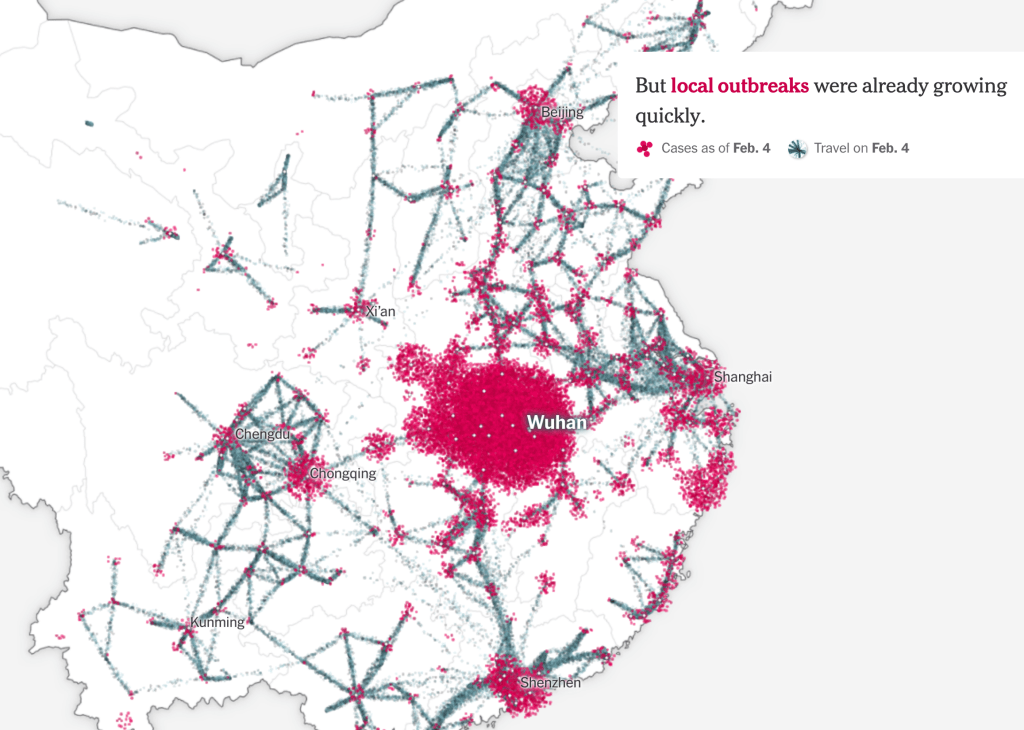
A pandemic is by its nature both local and global by definition–and begins from a local outbreak. But if the only way to gain orientation to a pandemic is by accurate local counts, the problem of balancing–or toggling between–the local and global has become staggeringly pronounced in the case of COVID-19, as if the point-based cartography that we use to track the disease has the better of us, and upper hand, with the absence of accurate local counts. The lack of clear data that came from Wuhan in the days that followed the outbreak of the virus revealed worrisome problems of transparency. The difficulties Chinese government authorities faced in getting bearings on the zoonotic virus, lab-born or not, raised problems of even trying to map its rise, and we tired to look at maps as tea-leaves of future responses, as well as retrospective diagnoses of the point of origin of disease spread–as if maps could explicate our uncertain conditions, and increased vulnerability.

Data visualizations since seem to proliferate in response to uncertainty and an absence of consensus, as we turned to maps as a hope for truth in an age of increased uncertainty: as local officials were loathe to shoulder responsibility, the tally of infected in Hubei Province jumped, astoundingly, forcing the government to recognize the ease of its transmission among humans, was far more virulent than believed. But at this point, looking back in the mirror provides little sense of orientation to the multiplication of dispersed local outbreaks of coronavirus that we are increasingly challenged to map in relation to ourselves. Were the first maps of the New World similar responses to the deep sense of religious and eschatological uncertainty of the early modern period? Whether or not that was the case, we all felt especially early modern now, plague victims of a sort that led us to look back on the mapping and mapping of responses to the spread of pestilence, and hoping that past experience–or our current increased ability of empathy–gave us more meaningful access to the epidemics and pandemics of the past.

The sudden uptick of cases reveals a reticence in tallying the infected out of fears of reprisals for apparent incompetence, an institutional blame-shifting triggering mechanisms of concealment that has led American meat-packing plants to hide numbers of infected workers, and numbers of tests for infection to be far lower than official records suggest: the absence of ability to control the spread of SARS-CoV-2 led us to proliferate maps in hopes to grasp its rapid doubling, uncomfortable at the world they began to show, apprehensive at how to come to terms with the rapidity of local outbreaks of confirmed cases with sufficient granularity, and enough continuities, hoping to track contagion as hopes of containment were beginning to fade in the new aggregates that were increasingly evident.
New York Times

The warning of the virus’ spread was raised by Li Wenliang on December 30 from Wuhan, inter-agency shifting of blame and responsibility in Wuhan– a reflexive institutional blame-shifting by “throwing woks”–abruptly ceased with summons of Shanghai Mayor Ying Yong, he who lured Elon Musk to Shanghai, to restore order: as a new hospital was built, tallies of new cases of coronavirus in Hubei astronomically grew by nine from 1,638 to 14,840, shocking the world–a figure was in keeping with the nearly 1,400 people dead in the country, but suggesting a viral load of unprecedented proportions. Americans apprehensively watched the disease afflicting passengers of cruise liners as if it would arrive ashore, its virulence was in fact already of pandemic proportions: yet American disinformation here took over, as we were told to stick our heads in the sand, ostrich-like, as fears were overblown, and tried to keep calm. And then, the tables were turned, as the United States President described, or suggested, a national policy of intentional undercounts, and limited testing, lest the counts discovered tank his popularity–the stock market value of Trump, International, or, rather, Trump-in-Office, Trump-as-Chief-Executive, whose new season might be canceled due to low ratings. And although the virus began in China, how the United States increasingly came to be the outlier in the numbers of infection confirmed weekly suggested a national story of mismanagement, as the narrative we told ourselves of American exceptionalism before illness seemed to have boomeranged, with the three-day averages of confirmed infections skyrocketing, and setting us apart from the very nations we compare ourselves to, but whose health-care policy we increasingly realize we are distinct from.
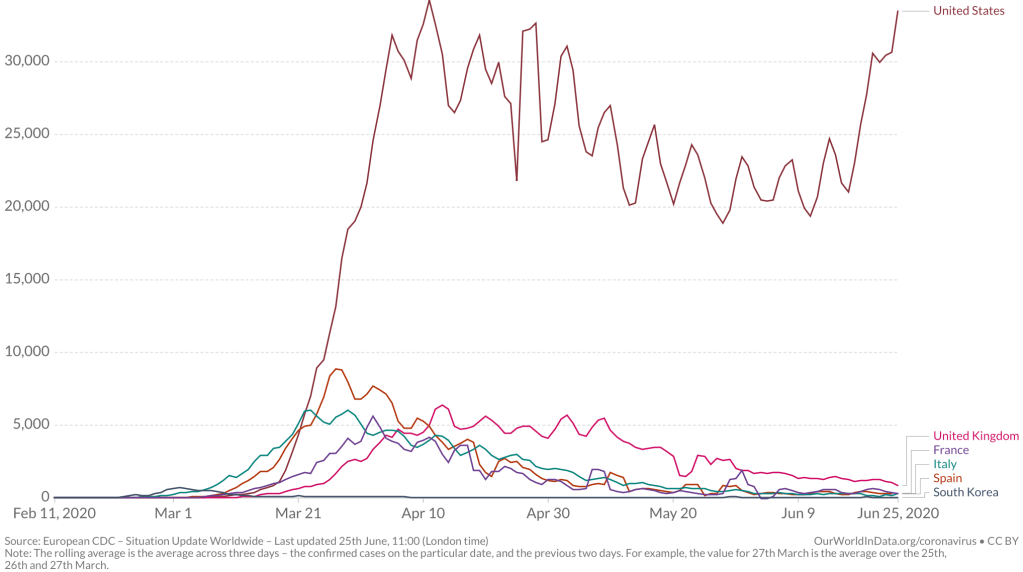
Americans were soothed by deceptive common-sense talk. But the results of a lack of investment in public health are all too evident, if our maps are . Robert Redfield, a virologist who served as the public spokesperson of reassurance who had long sustained false theories about retroviruses causing HIV and AIDS, argued that even if the fourteen confirmed cases of the novel coronavirus were monitored and traced, “the virus more exploded . . beyond public health capacity,” he seemed to forget he had not developed that capacity. Virology is of course Dr. Redfield’s area of expertise, but he won his political post in no small part by being practiced in massaging truth statements for political ends. During AIDS outbreak, the last major plague in the United States, he had advocated unproven drugs billed as HIV vaccines and encouraged quarantine, abstinence, and stripping the medical licenses of HIV-infected medical workers, more than accelerating cures; Redfield took time to blame the Obama administration for implementing clinical tests, to please his patron. Bt he obscured the level of infections that in truth were not known, blinding the nation to a cartography of COVID by not advancing adequate levels of testing, that returned us to the simple equation of the dog days of AIDS, only able to make us yell, yet again, this time with Larry Kramer, stalwart resistor of the silencing of AIDS by the failure to use on-trial medicine–
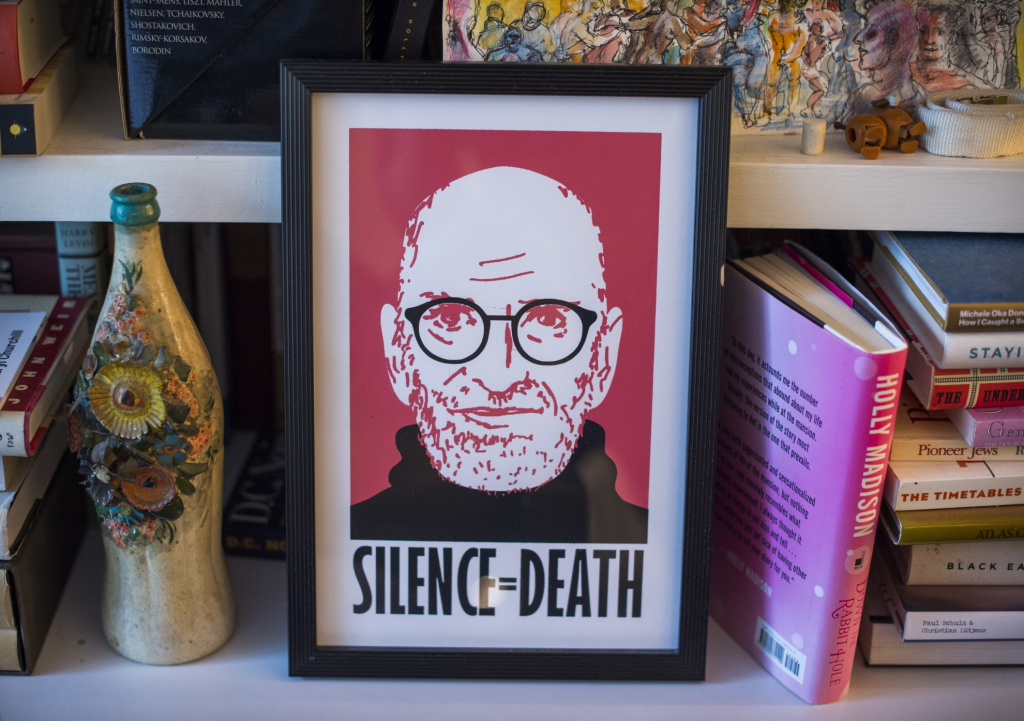
–at the utter deception with which we met the pandemic. Dr. Redfield must have met his commission to radiate calm by assuring Americans in late February. As he assured us only fourteen cases had been diagnosed in the United States, the number meant little, as any virologist should kmow; while hindsight is a benefit that obscures us from the need to life life forwards, we suspect urban hotspots were already laden with infected individuals by March 1, a silent ticking bomb of urban outbreaks already infecting 28,000 as it spread broadly its “hotspots”–New York, Chicago, San Francisco, Seattle, Boston and Chicago–all of massively different density, without tests being able to affirm the scale of its spread.
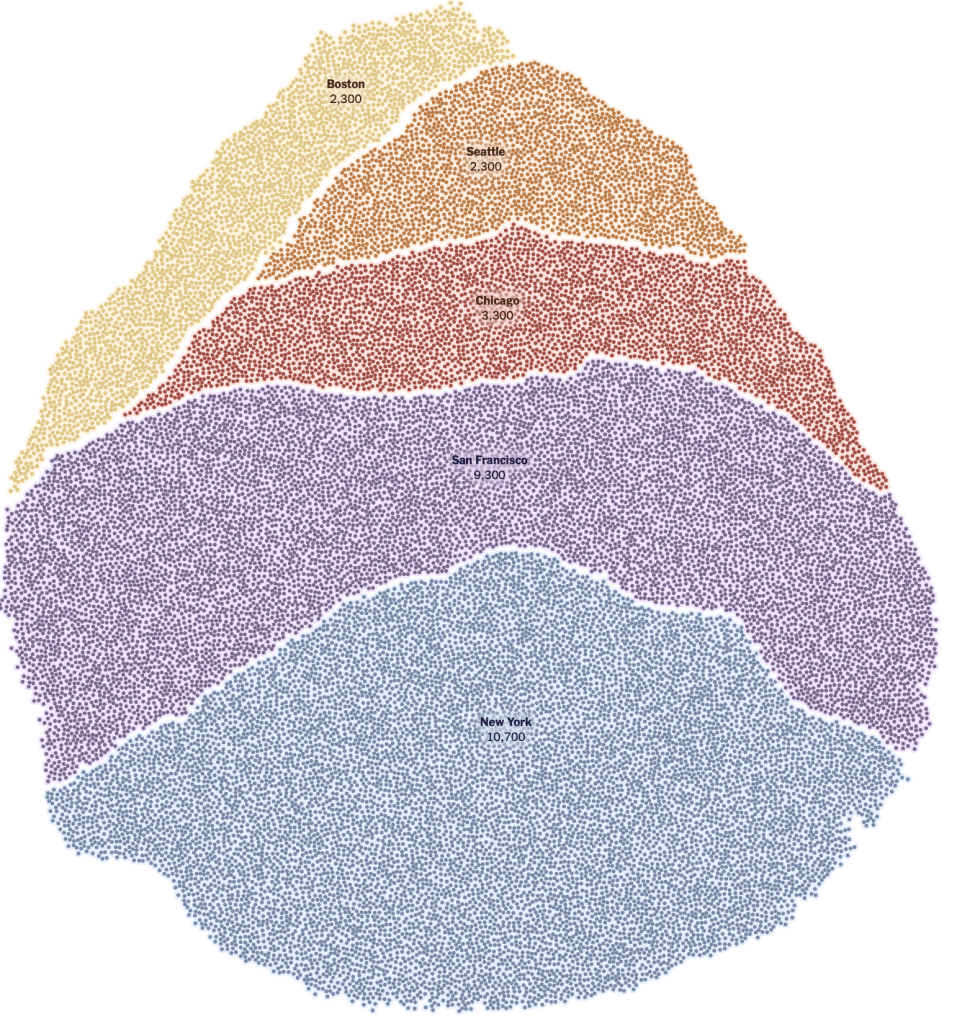
There was no map. And then, all of a sudden, the globalization of coronavirus hit home; any place in the world could be related to any other place, as rates of infection bloomed globally in geographically disjointed hotspots, spatially removed from one another, even as a standard for uniform testing lacked. And there was no sense of an art of dying, as the amazingly rapid contraction and worsening of illnesses left many without a script, and many more silent before a dizzying multiplication of statistics of mortality in the face of COVID-19, several weeks later.

Every other map of COVID-19’s spread seems an attempt to persuade the viewer of its accuracy and totality, in retrospect, even as we have no clear sense of the total figures of infection-or even of the paths infection takes. We are mystified by the geography and spatial dynamics of the virus’ travel, but realize the severe communicability of a virus whose load is stored in the naso-laryngeal passages, and can be communicated by airborne drops. Is distancing the best way we can constrain the geographic spread of infection? Can statistics demonstrate the success of curtailing its spread?
It was a hidden agenda in the maps of news agencies and to register the accurate levels of infection, promising the sorts of transparency that had been clouded in much of January. And while we watch the progress of the pandemic on screens, there is a sense of truth-telling, as a result, of revealing the scope of the virus’ actual spread that compensates for the lack of clarity we once had. But it is also increasingly difficult to orient ourselves to the GPS-enabled scales of its spread, for we still are looking at pretty limited and almost superficial data, in the sense we have trouble plotting it in a narrative context, or find a reaction more than shock. The virus is easy in ways to personify as a threat–it wants us outside; it comes from afar; it pervades public spaces and hospital grounds; it demands vigilant hand-washing and sanitizing–but the very numbest are elusive. While we try to track reported cases, hoping that these limited datasets will provide orientation, we have been lumping numbers of tests that might be apples and oranges, and have not found a consistent manner of testing. Deaths are difficult to attribute, for some, since there are different sites where the virus might settle in our bodies.

Even while not really following the pathways of its transmission, and the microscopic scale of the progress of the pathogen in bodies. And if we rely on or expect data visualizations will present information in readily graspable terms, we rarely come to question the logics that underly them, and the logics are limited given the poor levels of global testing for COVID-19. It is frustrating that our GPS maps, which we seem able to map the world, can map numbers of surrogates for viral spread, but we have yet to find a way to read the numbers in a clear narrative, but are floored by the apparently miasmatic spread of such a highly contagious disease that makes us feel, as historian of science Lorraine Daston put it, that we are in “ground zero of empiricism,” as if we are now all in the seventeenth century, not only in being vulnerable to a disease far less dangerous or deadly than Yersina pestis, but without explanatory and diagnostic tools.

This was, to be sure, a past plague come to life, requiring new garb of masks, face-shields, and protective gear for health workers–
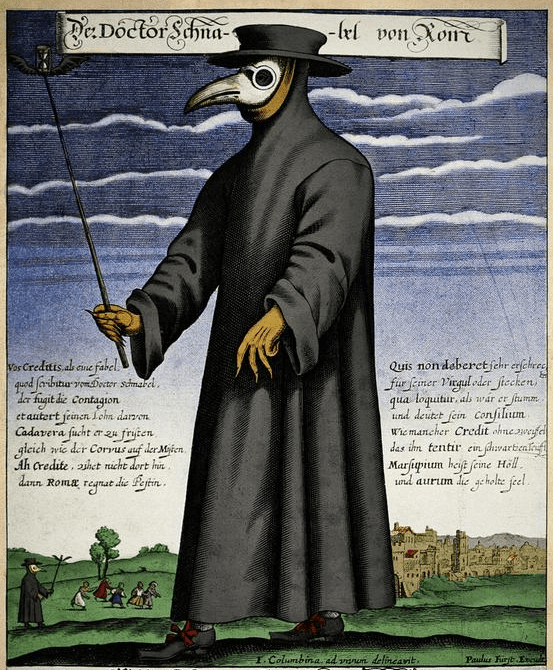
–as the cloaks, leather gloves, staffs and masks that made up early modern protective gear returned to fashion, as if in a time warp, in new form.

We find a leveling between folk remedies and modern medicine, as we live collectively in what she calls a “ground-zero moment of empiricism”–if one in which we are deluged by data, but short in knowing what is data, as we are lacking in explanatory models. This is a bit unfair, as we still can profit from autopsies, and have been able to contain spread by hand-washing–but the images of a single magic bullet, or antiviral cure, are far, far away in time. But there is no longer any familiarity with an art of dying, although we found we encountered death with an unforeseen and unpleasant rapidity: we moved from hopes for awaiting immunity or antivirals to a basic need for some consolation of our mortality. There was no possibility of transcendence in a crisis of mortality of dimensions and scope that seem outside the modern era.

And it is ironic that distancing is the best mode to prevent infection–and many deaths may have been enabled by quicker decisions to adopt practices of distancing that could manage viral spread, Trump seemed not to notice that the very globalization he had resisted, and swung against with all his force to win votes, had facilitated the spread of a viral agent whose arrival was denied even as SARS-CoV-2 had already begun to flood the United States, in ways we only mapped in retrospect, as a global village that by March 1 had already grown satellites of viral loads in South Korea, the Middle East, Iran (Teheran), Europe (Milan; Gotheborg), South East Asia, and Hong Kong, as we anticipated its arrival with no health policy in place and no strategy for containing what was already on our shores. The global crossroads defied any choropleth, but we had only mapped the virus for some time in choropleths, as if believing by doing so we could not only map it by national boundaries to keep the virus at bay.
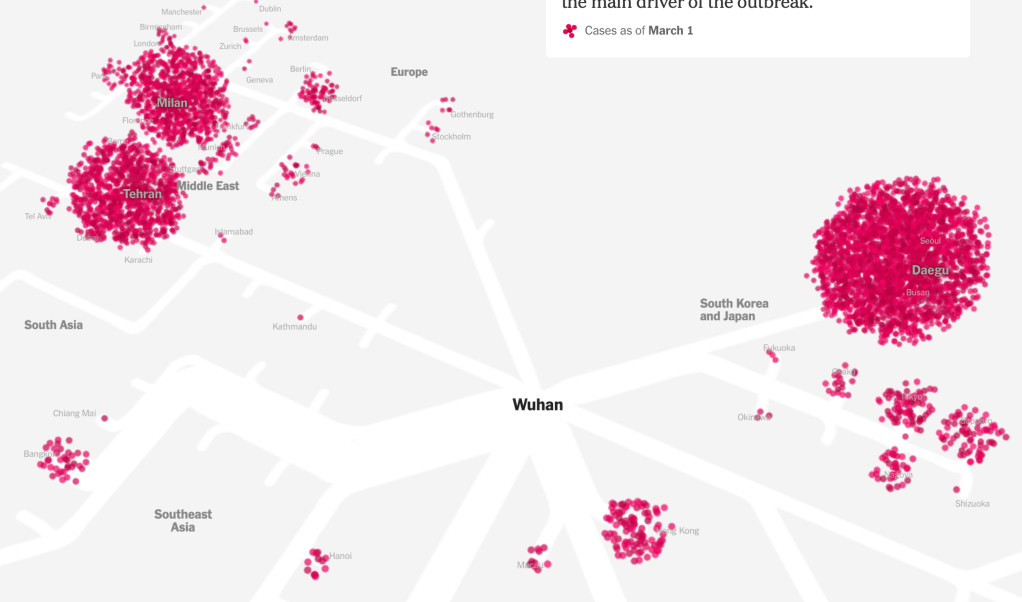
New York Times

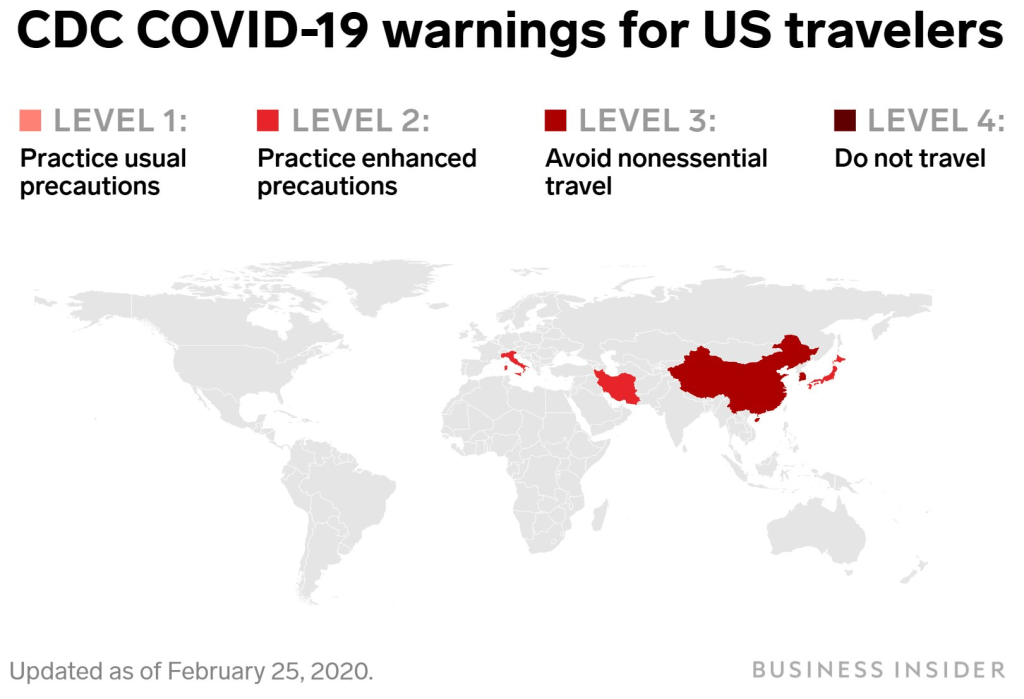
But if we lacked a model of infection and communication of COVID-19, we lacked a sense of the geography by which to understand its spread–and to map it–and also, deeply problematically, an inter-agency coordination to assess and respond to the virus’ spread as we sought to contain it: and in the United States, the absence of any coordinating public health agency has left the country in something like free-fall, a cluelessness emblematic by a map cautioning American travelers to take enhanced protections while traveling in Italy or Japan, two major destinations of travel, and avoid all nonessential travel to China, but refrained from ceasing travel plans.
1. The most compelling language of the novel coronavirus is “false positives” and “false negatives,” that seem to betray the unsure nature of standards; the most haunting is the multiple sites COVID-19 can appear in the sites of the body we use to map most disease. While we associate the virus with our respiratory tracts, the virus can do damage to multiple organ systems, as well as create blotchiness of “covid toes” due to burst peripheral blood vessels; it can damage multiple organ systems simultaneously, including the kidneys, heart, lungs, brain, and linger in our intestinal tract where it can flourish and proliferate; the virus can reduce the ability of our blood to form clots, or disable our ability to form clots.  The ACE-2 receptor protein, a launching pad for viral infections, lies in our lungs and respiratory tract but in stomach, intestines, liver, kidneys, and brain. Increased sensitivities among those suffering from high blood pressure, cardiac disease, and diabetes reflect the nosological difficulties of classifying the virus as a cause of death or to grasp it as an illness, let alone to read data about the disease. If the virus lodges in the most delicate structures of the alveoli, which it causes to collapse as it infects their lining, it can take multiple pathways in the body, and as its pathway of infection may be multiple, medical response must be improvised with no playbook for clinical care.

All we know is that our medical staff desperately need protective gear. On top of that, it hardly helps that we are without a clear national policy, and find that the United States government has engaged in far less transparency that one could have ever expected.

We can only say its spread is accelerated dramatically by structures of globalization, and it stands to disrupt them. utterly Even as we map what seem total global knowledge of the disease, analogous to what we have come to expect from Global Positioning System, the multiple holes in our picture of the spread of the disease provide little sense of mastery over the pathways of communication, contraction, and infection we have come to expect from maps. These maps may even be especially disorienting in a world where expertise is often dismissed in the United States–not only by the U.S. President, but out of frustration at the inability to distance, diagnose, track or supervise the disease that is increasingly threatens to get the better hand. Have our visualizations been something of a losing battle, or a war of atrophy we will not win? Or do we even know what sorts of data to look at–indeed, what is information that can help us process a sense of what might be the geography of the contraction or the transmutability of the virus? Is the virus eluding our maps, as we try to make them? These sort of questions of making sense may be the process of science, but they trace, suddenly, a far steepder learning curve than we are used.

A dismissed biomedical researcher who ran efforts to develop a vaccine cautioned that we still lack that the failure a trusted, standard, and centralized plan for testing strategies must play a part in the coordinated plan “to take this nation through this response.” Dr. Bright, who was abruptly removed last month from his position as head of the Biomedical Advanced Research and Development Authority, bemoaned the limited statistics, alas, in large part as fear of providing too many tests–or fanning the flames of insecurity that testing might promote in the general public and in our financial markets, seem to have created the most dangerously deceptive scenario in which the United States seems to be committed to projecting confidence, even if it is the global epicenter of the pandemic.

Have we developed a language to orient ourselves to the scale of emergency in the spread of COVID-19? While we turn to images of natural disasters in describing the “epicenter” of the outbreak in Wuhan, this hardly conjures the species jump and under-the-radar communication of the virus that was not tracked for months before it emerged as a global threat. In tracking COVID-19 globally, or over a broad expanse of nations or states, we often ignored the pathways by which the novel coronavirus is spread in crowded spaces, where the single strand of RNA may hang in droplets that linger in the air, and are looking at the small scale maps to track a microscopic pathogen. But we are increasingly aware the spread of these strands, of the virus SARS-CoV-2, that infect populations along increasingly unequal fault lines that divide our cities, nations, health care systems, and crowding, or access to open space, are all poorly mapped in the choropleths into which we continue to smooth the datasets of infections and hospitalizations. While the problems are posed for national health services in each region, the devastation and danger of overloading public health systems and hospitals outweighs are local manifestations of a global crisis of the likes we have not confronted.

2. And the crowding of such numbers beyond the buffers that began with lead to a visual crowding by which we continue to be overwhelmed–and will have been overwhelmed for some time.
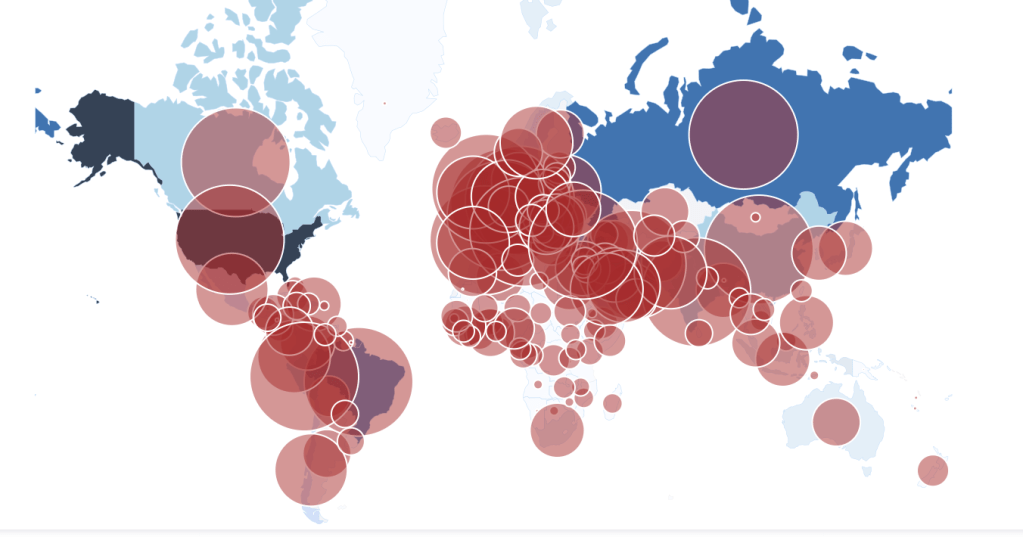
April, COIVID-19Iinfections Globally by Country/Clustrmaps May 12, 20202020

For although the global pandemic will clearly be with us for a long time, spatial narratives might be more likely to emerge in networks and in forms of vulnerability, in ways that might reveal a more pronounced set of narratives for how we can respond to a virus than the deep blues of even the limited and constrained datasets that we have, as we struggle against the blindness we have in containment and mitigation, and the frustration of the lack of anything like a vaccine. (This pandemic is almost a metastasis of the anti-vaxxers: confirmation that a vaccine cannot check a disease, it gives rise to concerns that vaccinations might have left us immunologically more vulnerable to its spread . . .and a sense that the hope of eradicating COVID-19 by the availability of a vaccination in four to five years will be widely resisted by anti-vaxxers and their acolytes, to whom the pandemic has given so much new steam. Yet as the virus interacts with the viral posting of anti-vaxxers resisting social distancing or collective policies of response, the stresses that exist in our society will only be amplified.) And if as late as February 24, only three laboratories in the United States did test for COVID-19–artificially lowering public numbers–even confirmed numbers through March and April were as a result tragically low. Could maps even help to track the disease without a testing apparatus in place?
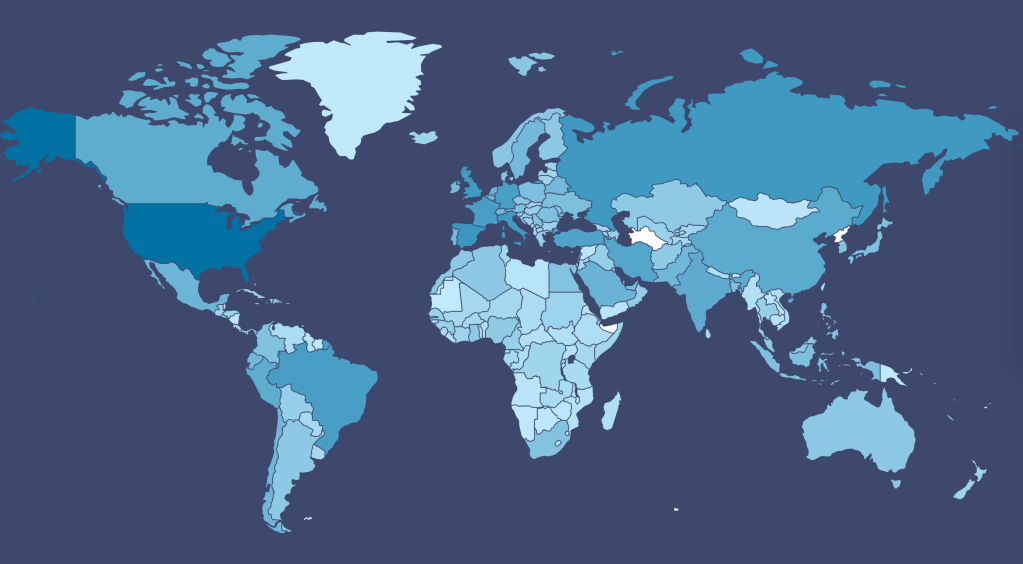
Global Covid Infections/Datascraped by Avi Schiffman, May 11, 2020

The prestige of the data visualization has been a basis for reopening the nation. Yet if less than a tenth of the world’s population has yet to be exposed to the disease–and perhaps only 5% of the American population, in one estimate, if not lower–the virus is bound to be endemic to the global landscape for quite a considerable length of time. At the same time, one must wonder if the many fault lines that have created such peaks and valleys in the virus’ spread, if confirming its highly infectious nature, to be sure, are not removed from us in some degree by the smooth surfaces of the screens on which we watch and monitor, breath bated, with some terror, its spread, unsure of the accuracy or completeness of the data on which they are based but attentive to whatever they reveal. In many ways, these maps have created an even more precarious relation to the screen, and to the hopes that we find some sign of hope within their spread, or hope to grasp the ungraspable nature of COVID-19.

These datamaps suggest a purchase on a disease we don’t understand, and we don’t even have good numbers on contraction. Yet we are discussing “reopening” the United States, while we do not have anything approaching a vaccine, let alone the multiple vaccines that medical authorities desire before resuming social contact at pre-pandemic levels. How to process the data that we have, and how to view the maps not only by hovering, zooming in, or distancing the growing rates of infection, but tracking the virus in spaces, mapping levels of infection against adequacy of testing, mortalities against comorbidities, against with the chronic nature of the virus must be understood, as well as levels of hospitalization levels; and distinctions or mutations of the virus and against age ranges of afflicted–by, in other words, drilling beneath the datasets to make our maps’ smooth surfaces more legible, as horrifying as they are?

Can we use what we have to pose problems about the new nature of this contagion we don’t fully understand, but has been mapped in ways that seek to staunch fears of a decline in the stock market, as much as an emergency of public health, with up to one third of the population at risk of infection? The instinctive reaction of the Trump Health and Human Services to create public-private “community testing sites” for drive-thru or drive-up testing at Walgreens, CVS, Rite Aid, Kroger and other pharmacies seems reflexive for a government wanting to minimize federal overhead, but a far less exact means, and a far less intuitively sensible basis to attract potentially infected individuals to sites of public congregation. The hope of Verily–a subsidiary of Alphabet, whose Project Baseline boasts the slogan, “We’ve Mapped the World, Now Let’s Map Human Health,” in a bizarrely boosterish rhetoric, aggregates medical for medical screening in California–
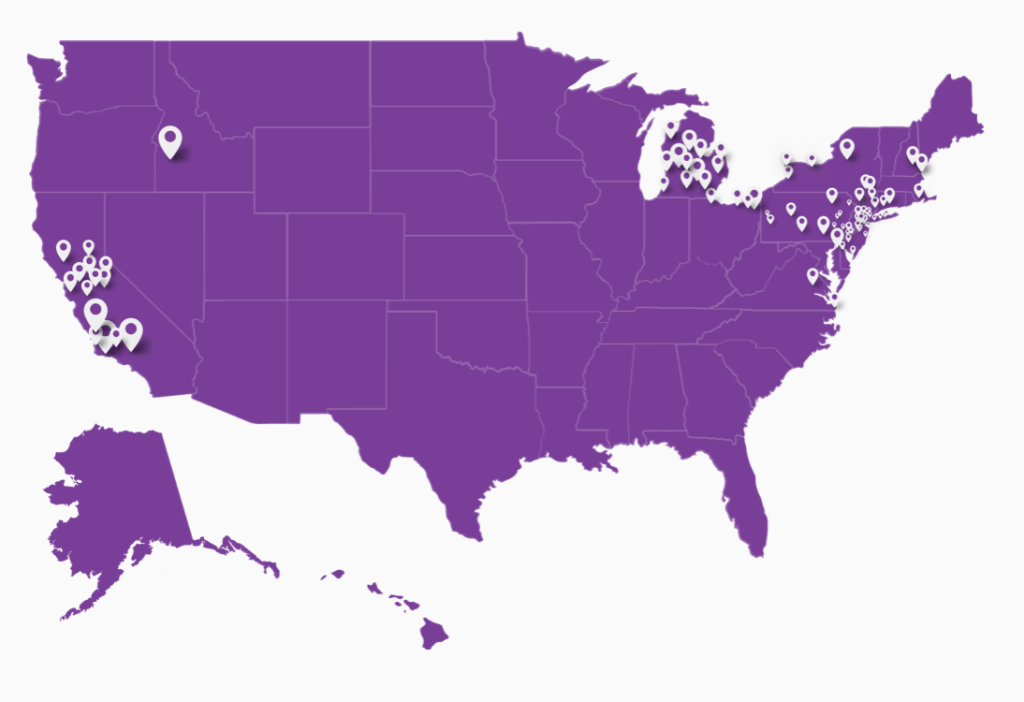
Select States for Project Baseline Testing/Verily

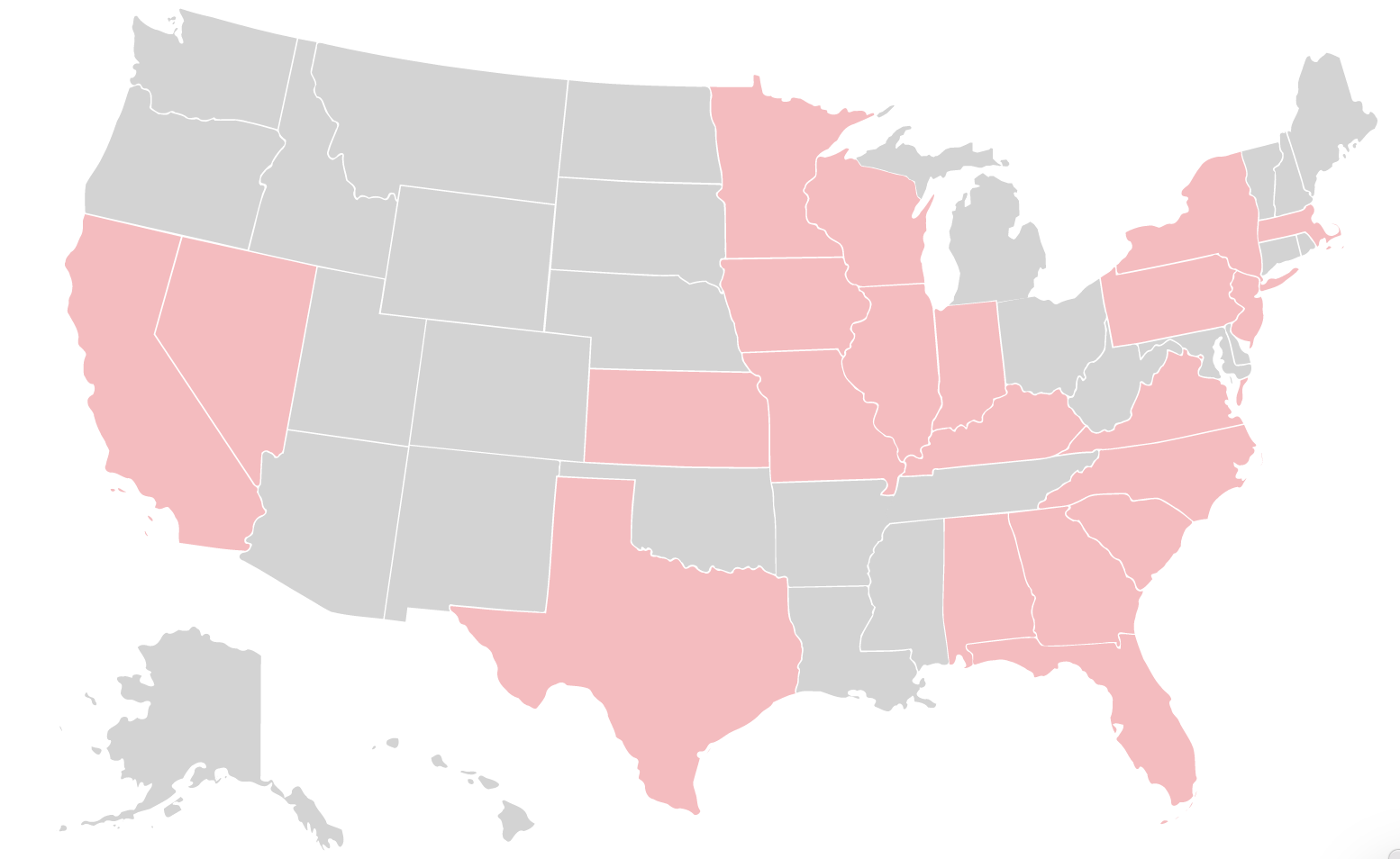
–and select states–was the primary response that Trump had promised of a network of drive-up testing sites that has never materialized, even as it expanded to a hundred sites in thirty states. After Walmart opened two sites, and Walmart 40, the difficult accuracy of creating multiple testing sites was prohibitive, the testing sites that were rolled out with the assistance of private entrepreneurs that Jared Kushner enlisted, that filled the absence of any coherent public health response–perhaps, terrifyingly, in concert with his brother’s health care company, Oscar, which also partnered with CVS and some of the same pharmaceutical services, focussing on drive-thru sites more than sustained medical care, focussing largely on calming retailers who feared the arrival of infected patients on their parking lots, more than on the efficacy of testing, which they didn’t understand. If only 40% of promised test kits were made available, the absence of providing staffers or selling, as in Massachusetts, self-testing kits–and failing to provide many in large cities like New Orleans, as if to keep the final tally of infected artificially low. Even if the Center for Disease Controls had never done clinical tests on hydrochloroquine, whose dangers on humans were not studied, and despite some benefits of the antiviral on cell cultures, none appeared in mice, the drug was promoted widely on social media as late as April, although its mention on Twitter grew, even as the government delayed any roll-out of testing sites.

The demand to calm the nation, a position dangerously close to concealment, delayed action on a wave of infection that President Trump had long sought to deny, claim to be overblown, or call Fake News. The lack of a public testing initiative, and rejection of the tests of other nations, forced the United States to adopt a disorganized go-it-aloneist approach, akin to isolationism, not benefiting from the potential ties to Chinese doctors’ response, or the testing kits that would have been available that the World Health Organization (WHO) had suspected since January, and made test kits for poorer countries that might be replicated in the United States–which chose to make its own tests to ensure the highest quality. When WHO had urged countries “test, test, test” for the coronavirus to contain its spread, the global health organization provided 1.5 million tests to 120 countries who lacked the ability to test by March 16; the United States went without the diagnostic tests developed in Berlin by la Charité, implemented in Germany. If the United States had submitted a test to WHO as well, the German test the health organization adopted was never used or ordered–and by mid-March processed a sixth the specimens as in Italy, with found over six times as many cases, and an eleventh as in South Korea, which found double the cases.
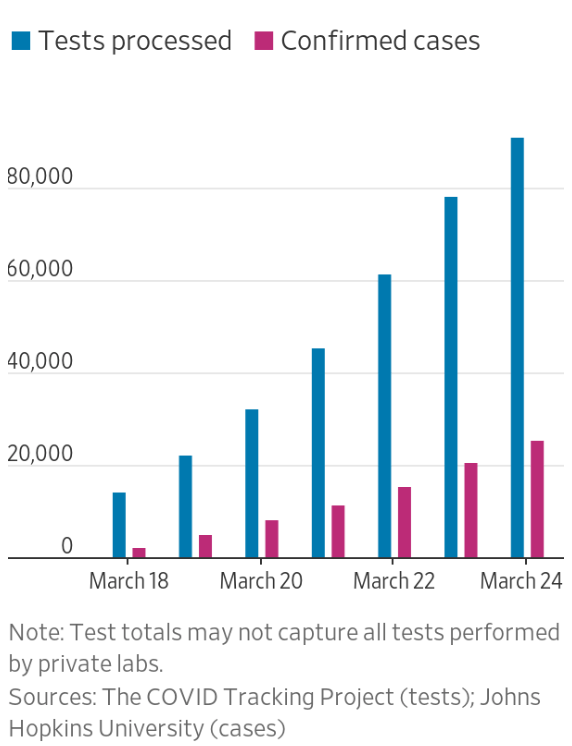
By April, the picture had improved, but not much.
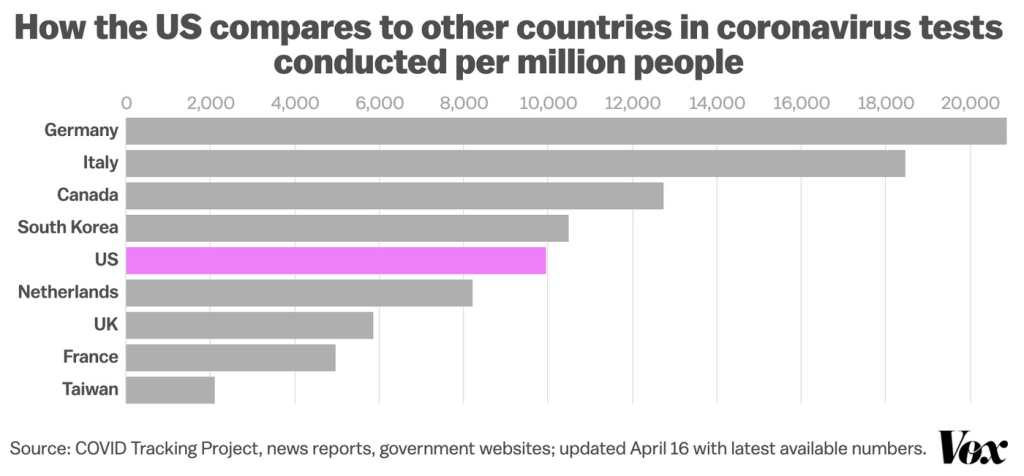
COVID Tracking Project (Data)

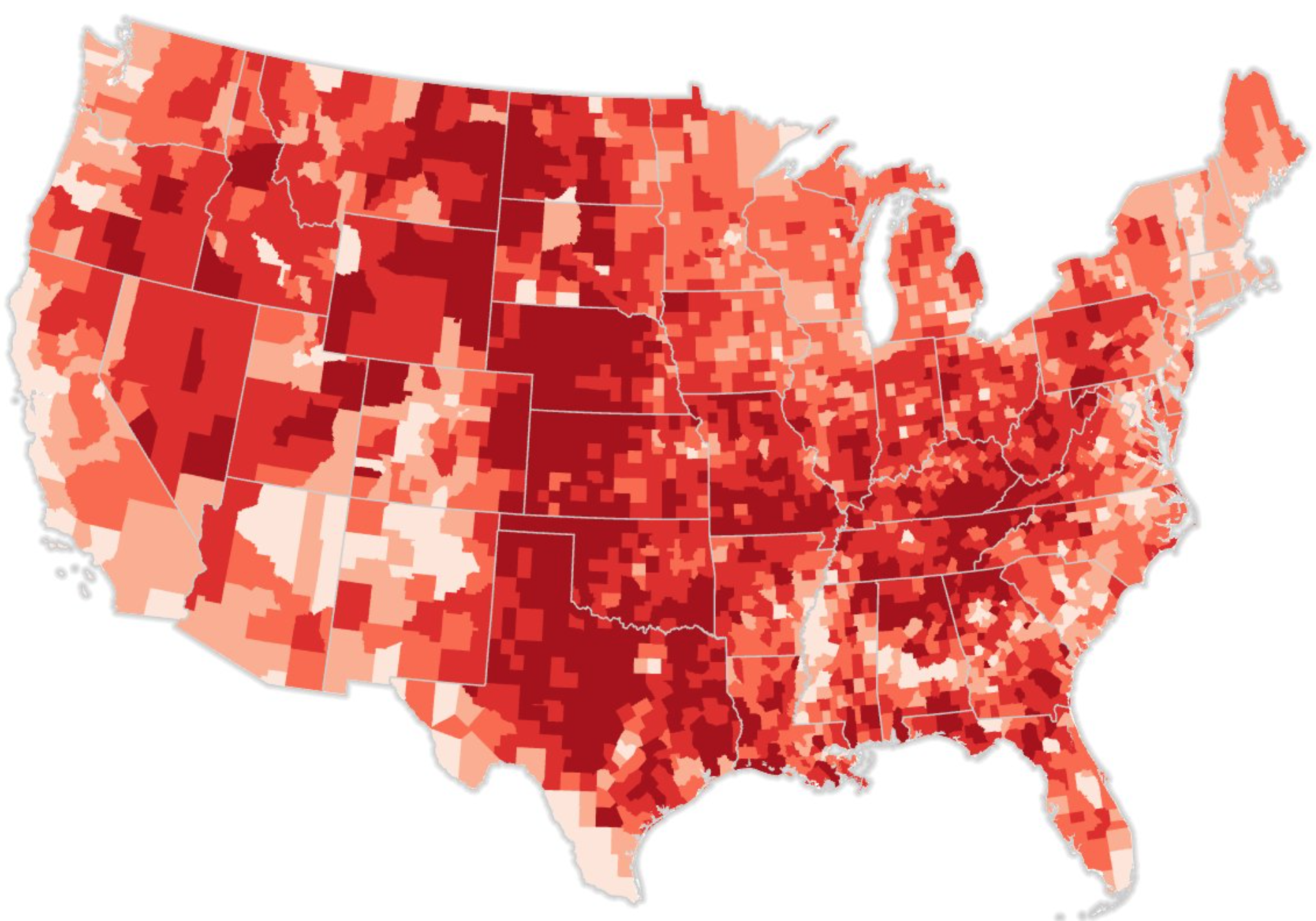
And based on later data of the virus that spread to other American cities, the virus that had infected so many in New York seems to have spread to other American metropoles by May, as we were still awaiting broad testing.

Read more
2 Comments

Filed under data visualization, disease maps, infectious diseases, political polarization, public health

Mega-Regions, Super-States, Micro-States, Islands

Like a patient rising from bed to look in the mirror for superficial signs of illness  or searching for visual evidence of clouded thoughts after a hangover, we compulsively turn to data visualizations for bearings on our body politic, preoccupied by its bruised appearance and searching for visual distillations that tell the story of its apparent fracturing into red and blue.  Anyone reading this blog is compelled by the search for a rendering in iconic form of this sharp chromatic divide by which we seem beset, as if to mute its edges and suggest that a possible contexts of such stark political divides.  But how one can provide an account of the map–or map the meaning of these divides–has created a cottage industry of visualizations, images that serve both as glosses and counter-documents, against which to gainsay the meaning of the impasse of the most current electoral divide of 2016.

We seem to search for a sign of meaning in our body politic, if not  in our representational institutions, and to understand political divides less as signs that all isn’t *quite* all right, and the coherence can be found in how the democratic process balances local interest.  But most importantly, we seem to try to process deep concerns that the electoral map lied:  for if the electoral map is in some sense a powerful measure of our coherence as a community, it seems important to affirm where that coherence lies, if it does indeed still exist–and can be detected in a map.

And in the long aftermath of the 2016 Presidential election, it is not surprising, somehow, that we are still eager to understand or imagine what that “new America” is or what a new map might reveal.  Uncertain in our ability to question our representational institutions, we are pressed to ask how our electoral predictions “lied,” and whether the electoral map itself “lied” by serving to magnify the political voice and agency of a demographically diminishing region.  At a distance of two and a half years from Donald Trump’s surprising election as U.S. President, we continue to seek more refined district-by-distict distributions to pore over the stark chromatic divides, reading them as tea leaves for some sign of what will happen with the 2018 midterms, or as entrails to divine what to look for in our nation’s future.  And then we try to reframe the issue, and see what we can salvage about our actual divisions.


Come to termsNew York Times/Mapbox


Skilled at reading maps, and at detecting their distortions, we also seek to recuperate a sense that maps do not lie.   We pore over data vis to restore a sense of unity in an era when it seems we’re saliently divided by race, class, and religion, but are compelled to locate a sense of home in those divide, and seek a sense of balance and objectivity that can distill the intense rhetoric of deep-lying divisions.  For rather than suggesting or asking how an electoral map may lie  in ways that balanced a widespread sense of shock with a skepticism that that was our map.

And the continued skepticism and uncertainty in the meaning of the divisions of the electoral map lead us to try to dissect and parse their meaning, filtering and sifting their data within other data vis to illuminate, by new granularity and spectra, a broader spread of variables, in hopes to unlock the questions and overcome the challenges that our representational system pose.  We peek deeper into its red heart, as if in hopes to find the coherence or possibility for change in its red center, as if in a form of national introspection performed on the most superficial of registers, whose “truth” cannot even be gainsaid, hoping that it lies there, perhaps in the heightened distortion of electoral votes that distilled from district maps.


Red Center?.pngDetail of above


Do electoral maps lie more than other maps?  Any is something less like a reflection of actuality, than a puzzle, in which we can uncover not only telling traces among electoral divides  But the new configuration of space that the 2016 election bode, as well as the greater sensitivity that we like to think we’ve gained at measuring spatial configurations in meaningful terms.  The attractiveness of remapping the voter distribution may be a bit of a red herring and distraction from the magnification of divides elaborated in internet chatrooms from 4chan to 8chan, as much as above ground, but the searching for new signs in the entrails of the voter maps–a post-mortem on the body politic–carries as much sense as the foreboding that the representational institutions of states, counties, and other traditional geographic units might make less sense as a basis for structuring a truly representational democracy.

Seeking to stabilize current fears of a crisis of our democracy, we keep on returning to maps, insistently and repeatedly, as if out of trust for grasping how politics is shaped by deep-seated divides by finding a new way space is configured–as if that would help us understand the appearance of our divides.  And so, in hopes to digest the dilemma of representational democracy in we look for cartographical terms, to provide it with some grounding or objectivity, that offer some sense of purchase, other than by affirming the intensity of our divisions and to see that the institutions of political representation we’ve long trusted might make sense with the migration of populations to urbanized areas or the recasting of politics discourse in dissatisfaction with the status quo.

Perhaps, convinced of our increasing savviness to read the display of information in a colored sheet, we try to grasp the distributions of data as a configuration of space by which to grasp what happened in the 2016 election,  What is shown to lie in the deep splintering–does this take many by surprise?–across a body politic and economy afflicted by a politics of intense opposition seems suddenly normalized and explained by maps that normalize our divisions, and set them before our eyes.  But we have been poring over maps of the nation for years–or at least multiple election cycles–to be able to better process the tensions between regionalism and federalism in ways we might be able to come to terms with or effectively digest as presenting–and representing–an actual record of the status quo that is not so fragile.


imageColin Woodward (2013)


The representational system is oddly sidestepped, of course, by placing the divisions of a fractured electoral map in terms that see it as a lay of the land. The questioning of the fifty-state primary system–or whether our version of representational democracy best accommodates local interests in a fifty-state system–are not seen as being able to be adjusted  to balance regional interests or economic needs better, but reflect a lay of the land.  So much is suggested in by the growth of tribal senses of belonging that provide affective ties that lack in the state or even region, and span space in ways that online groups and news sharing seem to have filled an increasingly pronounced need for meaningful political involvement, in ways television once afforded a social glue.  The deep uncertainty and sense of social dislocation that defined the 2016 Presidential Election in the United States, manifested in the mistakenly salvific power of social media memes seem to have gained as a substitute for other forms of belonging, seems to find a resolution in the power of maps.

Of course, this was the third election cycle that we were divided by maps, and electoral projections, a division that Trump–and his allies, whoever they may be–only sought to exploit and reflect, or unleash with greater intensity by playing them for whatever they were worth in broad circulation.  Maps provided a form to counter that dislocation.  The rage for maps to comprehend an icon of the spatial promise of a United States has led, empowered by GIS, to an intense search for a more meaningful system of maps than that of counties, states, or congressional districts that the economic realty of the metropolis can no longer afford.  The role of GIS here is less instrumental than a sense at grasping for straws to identify the meaningful regions on the map, puzzling the potential for future unity in a terrain whose political processes and practices map poorly onto its divisions.

We were compelled just not to make sense in a fundamental way of the coherence of the political map, if it existed,  but to process what it means for a rearrangement of political constituencies.  If any map presents a puzzle that can be read for its argument, we compulsively returned to the past-time of glossing the electoral map as a way to find resolution.  We returned to data visualizations, especially if paradoxically, as a trusted form of post-traumatic healing, and continue to look to them to try to embody and diagnose our deepest divides, if not overcome those seemingly salient divisions.  Faced by a feeling of fragmentation we turn to maps to better grasp where these divides lie and to try to bridge their fractures.  We turn to maps, to prevent a sense of loss, or prevent the foreboding of a lost unity, and deep-seated fragmentation.

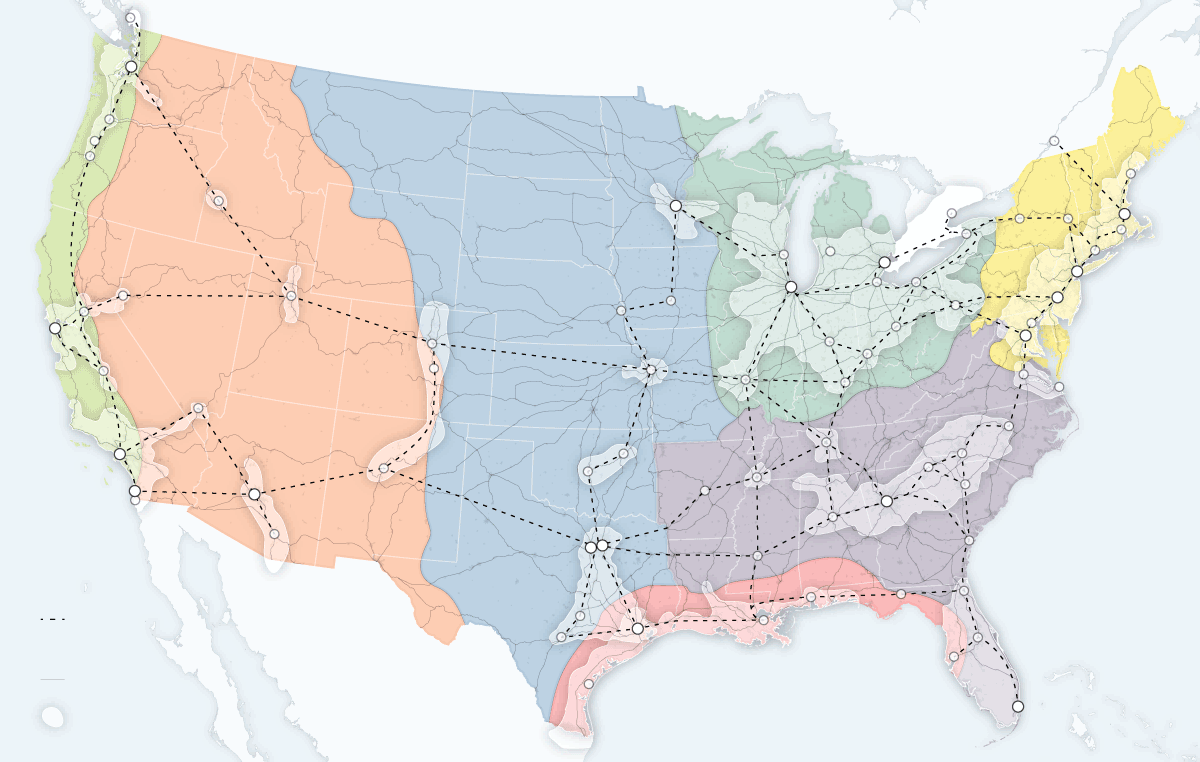
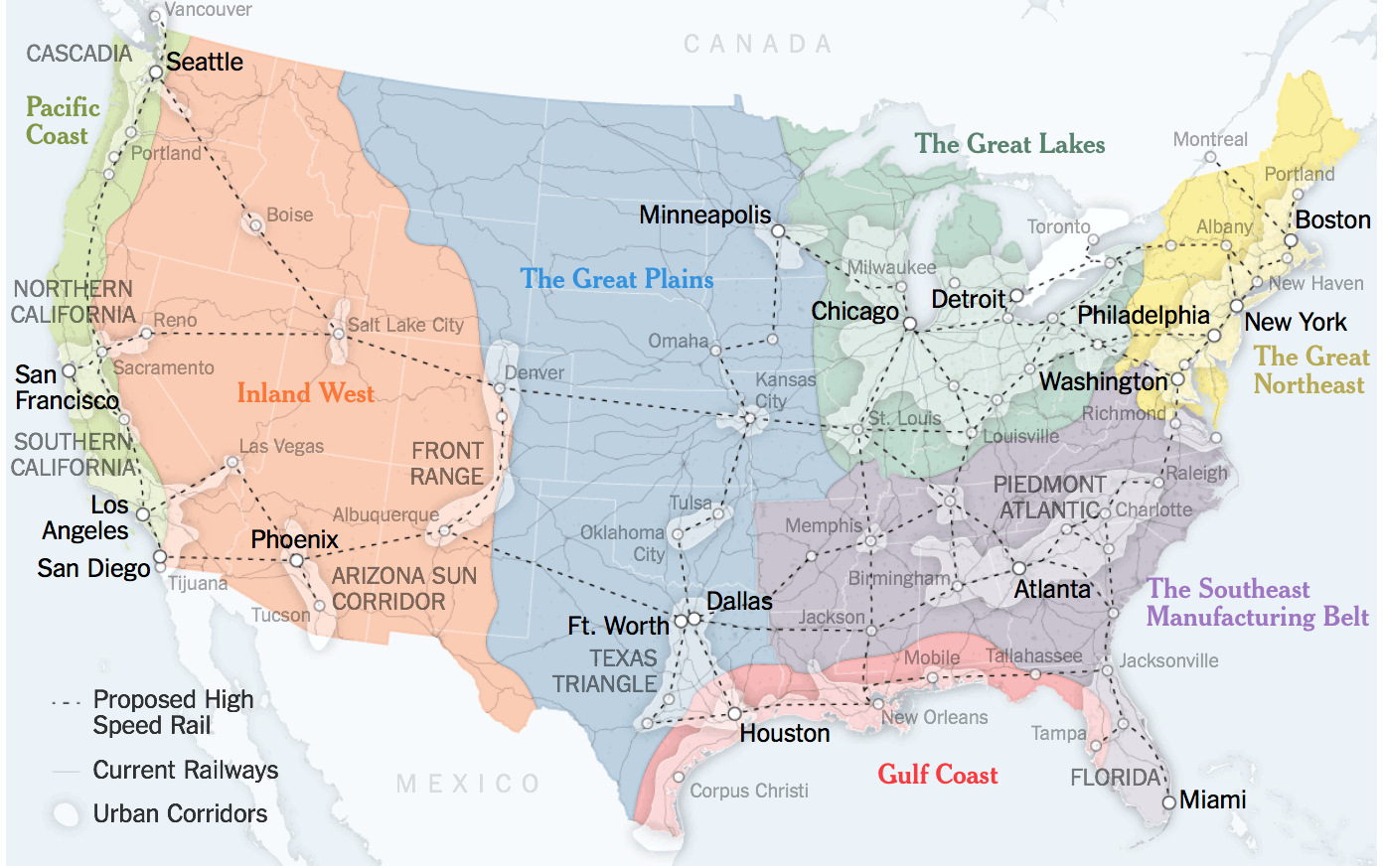
Whether maps can do so much reparative work is open to question, as is the power of maps to explain the deep discomfort at our social divides.  Since they are so salient, and oppressive, the thought goes, they must be able to be mapped.  The relatively recent re-imagining of the nature by which the United States are united led, during the heat of the last election, to a proposal of ordering districts around the metropoles that were foreign to if linked with them–Seattle, San Francisco/Bay Area, and Los Angeles and San Diego were his in this cartography of mega-regions where urban corridors defined the map’s meaning, as much as the regions in which they were nestled or situated, emphasising a metro-cartography of political identity keeping with the times.


image.png


Dissatisfied with the state as a parsing or unit that was forward-looking, we accepted new geographical units as “megalopolis” to designate the sites that have superseded the city in this cosmopolite model of America, reflecting hubs where the large bulk of the GDP is located, and economic interests increasingly located, although this may neglect the extent to which GDP is linked not only to abstract able figures of income generated, but urban snarls, pollution, garbage production, and greenhouse gases and other forms of waste, using a variation on a five-color map to suggest the units of productive regional planning that might be able to better connect localities–or local needs and economic interests–with a federal government perceived as distant and removed.


1.  The notion of using the map to reaffirm a connectivity and continuity that seemed lacking provided a new way to ramp up our 2-D cartographical concerns less to foreground fractures than meaningful commonalities which could be acted upon as the borders between states seemed far less meaningful to suggest  economic connectedness, and indeed national borders seem less profitable fictions to provide possibilities for future economic growth–and indeed the state university structure provided a far less practical basis for public education, despite its value, as public universities seem more removed from educational opportunities or research funds, and others are somewhat vengefully recast as public employees, teaching mission be damned.

The map affords a prospect of tangibility and coherence, particularly compelling in its abandonment of the “state” or “county” as a unit of the polity, and appealing in its potential encouragement of a new sense of infrastructure–a term that provided such an appealing keyword way back in the midst of the  2016 American Presidential election–even if the New Map for America was presented for the lower forty-eight as a sort of forward-looking economic blueprint before the General Election, as if to orient us to a vision of the pastels of a future less brash than the red vs. blue electoral map, its regions far more recognizable, and decisively upbeat, from Cascade through the Great Lakes and Texas Triangle to the Southeast Manufacturing Belt.  The hope is to respond to a sense of dislocation by more meaningful economic units, and indeed an agenda to move forward advanced in Connectography: Mapping the Future of Global Civilizationa hopeful manifesto to shift debate from territorial units and semantics to a vigorous statement of economic power.


New York Times/Parag Khanna


The shifting of attention to the divides in our electoral map to a the sorts of channels of connectedness Parag Khanna proposed were not to be–or aren’t yet, so strong was the localist and isolationist tide against them.  The cartographical intervention was a view of globalization that was sunny–and with an emphasis on affirming possibilities of connectivity, as opposed to the terrifying sense of an exposure of unraveling and intransigence that the formation of a Trump Train–rather than the sort of proposed High Speed Rail lines–were proposed to create as a new economic infrastructure for a nation that seems increasingly unsettled, and seems increasingly unsettled, and might be hoped to be healed by a remapping of its economic interconnectivity, rather than its divides–an image of interconnectivity that the election erased.

To be sure, the use of the map to affirm needed connectivity (and continuity beyond proximity) among states was long realized to lie in the potential of the map to create further connective lines of communication and economic development.  The promotion of surveying projects, from the railroad lines by Abraham Lincoln through areas of Appalachia in Kentucky and Tennessee, where the President realized the possible vitality of an economy not rooted or based on enslavement of populations provided a basis to encourage unionism.  Walt Whitman saw, in 1860, the nation as a great nation “of many nations,”  and Lincoln argued to survey the region to increase its connection, and offer a new basis to integrate the economic complexities of a union divided on an apparently intractable political debate.  The notion of mega-regions and economic corridors is not, in this sense, so new at all;  fostering economic interests has long been tied to the need to try to envision future possibilities in maps–a need that the 2016 Presidential election has undoubtedly necessitated, although the Trump administration seems dedicated to obscure that need.


2.  But if the model was conceived in the midst of a tense primary season that saw political splintering and a large fear of depression in a search for a politics of meaning, the fears of a distance from Washington, DC became the victors of the 2016 Presidential election, as we saw a new and apparently heightened red-blue division imposed on the nation that we have been still trying to wrestle or digest and place in political or historical context, and to parse meaning from a map that seems all too neatly clean-cut after all–unless the fracture lines were indeed that strong that the nation might once again divide, as if reporting on the electoral results were a sort of performance art.


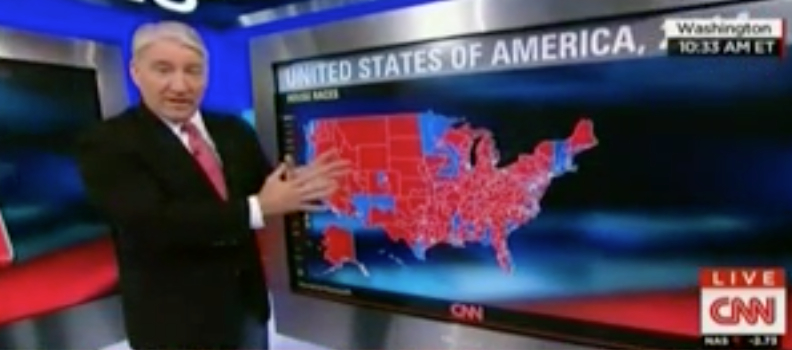
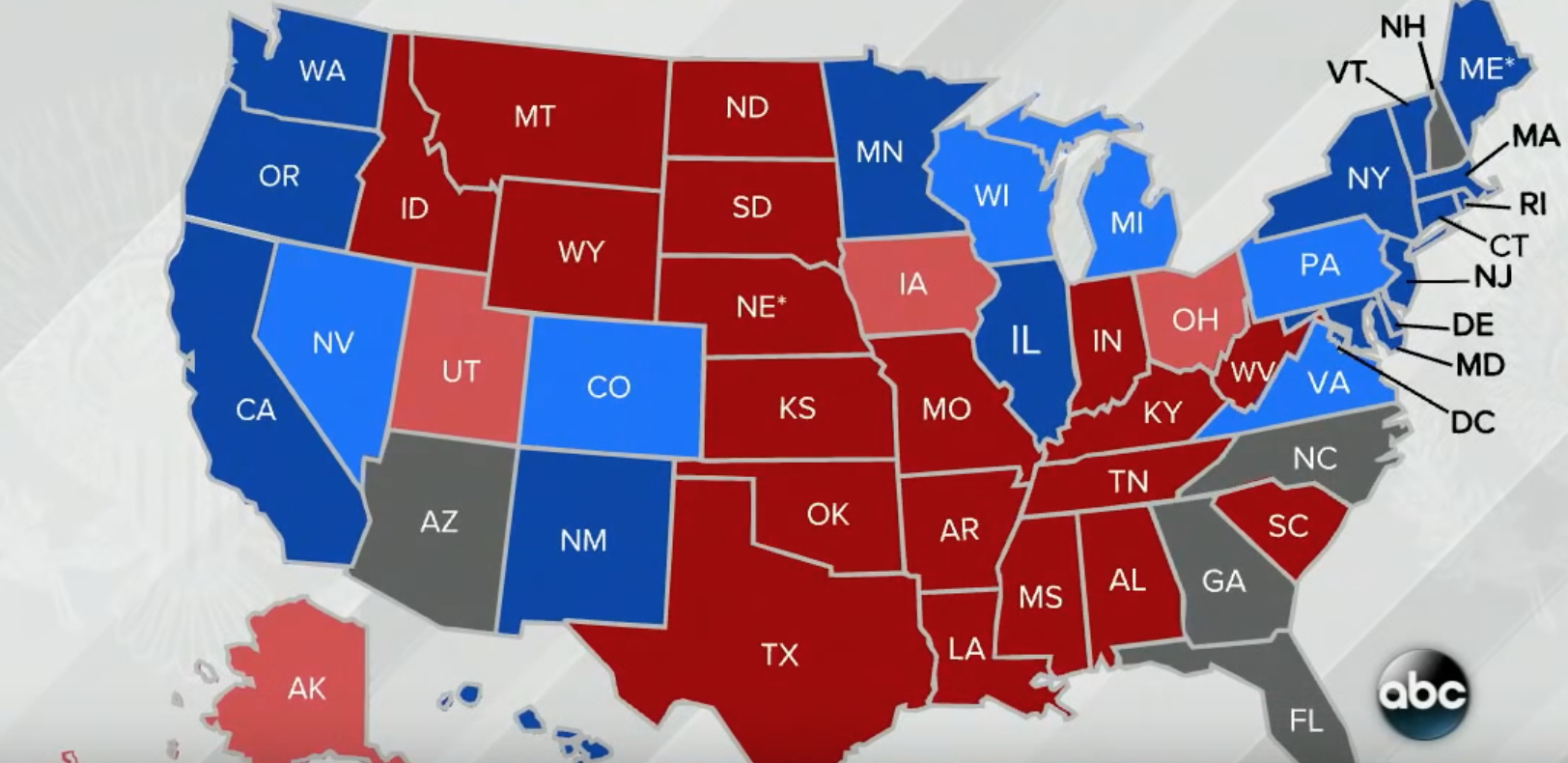
Sea of Red


Blue America or Red America?


The fissures of red and blue reappeared again as what seemed a safe bet of a Clinton majority victory repeated, although newscasters and talking heads found it hard to say anything interesting about it, just three days from the 2016 Presidential election.  But the confidence of these electoral projections that seemed to give a fragile if solid coherence to a Clinton electoral victory, if one that would hardly unify the nation–


–but contain its increasingly evidence divides, rather abruptly ceded to a sea of red, where alternate projections failed to alter the depths of a geographic solidity of those voting for Trump, even if a majority of them seemed resigned that the election would not make a substantive difference.  As multiple electoral night watch parties disbanded with disillusionment, we were resigned to accept these divides, not knowing whether the geographical cleavages had either surfaced or crystallized in the actual electoral map, but suggested a somewhat surprising rejection of the status quo, and an eery sense of a red state continuity, as though we were divided regional blocks after all–


–and so we pored over visualizations of the nation’s new voting patterns that were increasingly and perhaps over-generously provided to stunned media viewers with a sense of collective trauma, to be processed only by reviewing endless cartographical parsings of the deep reds of the adjusted choropleth of 2016 revealed the coasts could hardly understand the intensity of the interior, seeming to reveal a convincing record of a deep-set urban-rural divide in a map of county-by-county voting trends.

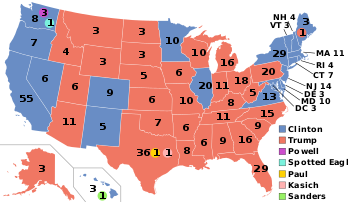
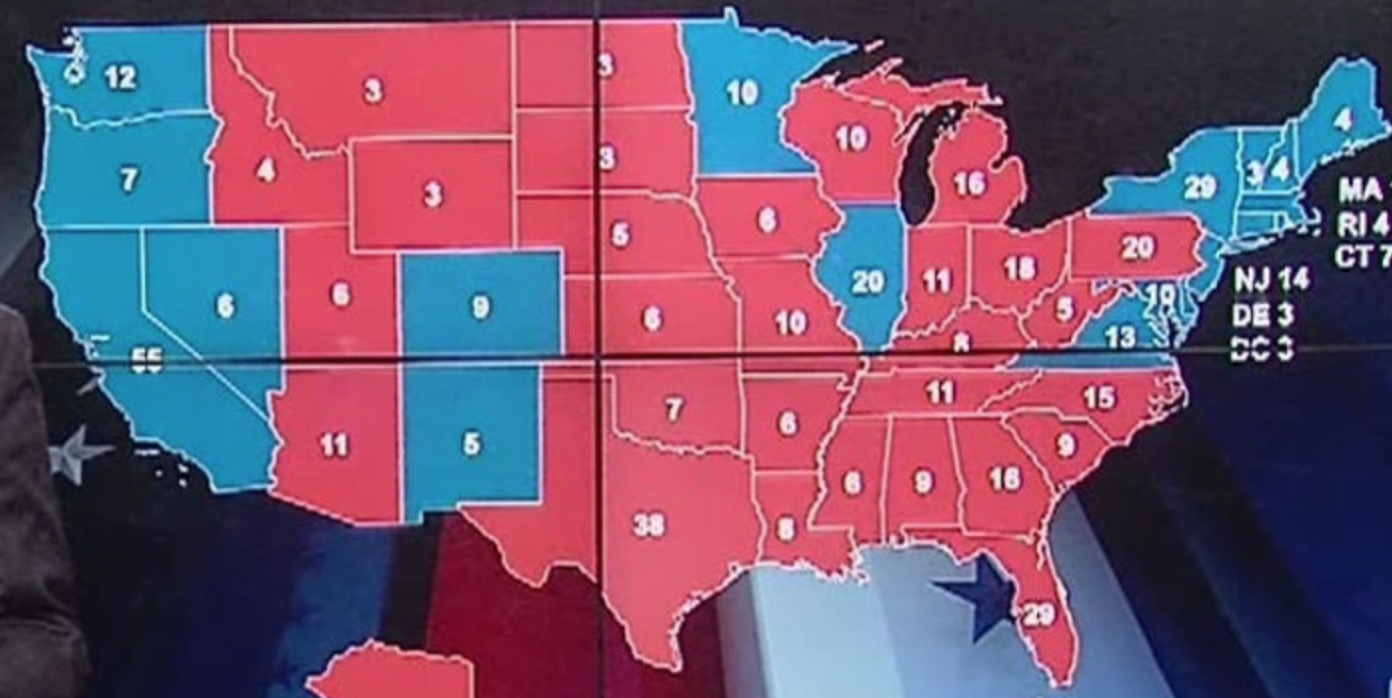
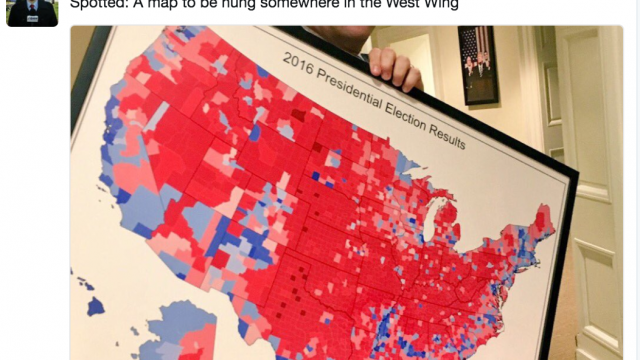
The map of electoral votes was just as widely championed by Trump himself, of course, who not only seemed to have installed it in the White House, but to present his candidacy as victory over the interests that he proclaimed had “rigged” the election, as if it provided a demonstration that the process not so rigged.  (For Trump followers,  the championed results, in which the President “elect” exulted, might have in the “Fake News” of predictions of his electoral defeat, and the false predictions of their marginalization from the country.)  In an election when “rigged” seemed to have defined the 2016 Presidential election as it was used to invest emotions by different candidates, Trump had exulted in what applied equally to the economy, political process, and judicial inquiry as if applied to a “system” that he seemed to disdain, if only to recognize that the “hot term” he used became a basis to showcase his alleged outsider status.  But the electoral map provided, for all its distortion of population, an argument that the “rigged” nature of the vote and “system” was undermined by the electoral system–the same system that he may have called “rigged” at one time.  Trump’s claims for having “introduced the term”–“I’m the one that brought that word up!’–was in fact suggested to him by Roger Stone, who argued within two months after Trump descended his escalator to announce his candidacy, and recommend he base his candidacy on claims ‘the system is rigged against the citizens’ and that he is the lone candidate–did this offer any ideas to Bernie Sanders?–‘who cannot be bought.’”  Trump didn’t immediately adopt the term, but by the Spring of 2016, the term became used to insert himself into a corrupt system of which he could be the savior.

Trump ran so insistently and deftly with the idea to make it his own, treating it as a term to cathecting with his rallies.  He soon began to inveigh against the whole “rigged, disgusting, dirty [political] system” as being rigged, first the Republican primary and then the Democratic, discrediting the electoral process as a “rigged, crooked system that’s designed so the bosses can pick whoever they want” that revealed itself to be during the primaries to be “totally rigged to keep incumbents in power.”   Arguing that the word was his intellectual property, as he had used it before Bernie Sanders or Hillary Clinton adopted the term he claimed to merit authorship for having introduced into  the election, it cemented new constituencies in an age of increased income inequality, playing very well to an anti-establishment crowd as a new language of empowerment–so that the electoral map seemed to some a populist victory.


After insisting and bemoaning the extent to which the voting process was “rigged” during the primaries and into the general election by parties and elites, openly fostering distrust in the political process, the narrative suddenly switched when the electoral map–that map that so shocked the nation–was presented as a true victory that rather preposterously confirmed the success with which Trump had presented himself as not beholden to outside interests to a specific audience, as if it was a record of reality.  Enamored of the map of electoral votes’ distribution, Trump presented the electoral map as confirming a populist victory that occurred against all odds., at the same time as his skill at gaming a system of electoral votes.   He wanted the Washington Post to display the map on its front page, as if to announce it as a new reality, a hundred days into his administration, in a bizzarro illustration of his desires to run the press, asking reporters Aren’t you impressed by this map?¨–and regaling reporters with copies of the map as a testimony of reaching a broad audience of voters, as a source of pride and a deeply personal accomplishment of which he was the author, as well as a form of evidence he wanted the entire nation to be entranced–whose stark divisions he even had framed for the White House, as a confirmation of the extent of his appeal outside of coastal media elites.


imageThe Hill


The electoral map showed a defeat of the so-called “elites” on both coasts.  The majority of voters’ opinion mattered less than how divided we had become, over the next year and a half.  It was hardly a surprise to find these divisions, but their salience seemed a strong shift in political decorum.  As Trump’s Presidency continued, we mapped rise of hate crimes inspired by Trump, as if to conjure the sense his Presidency and rhetoric had changed the nation, and suggested a new meaning of the term “red state” based not on majority voting but confirming a sense of deep-seated anger against an “other” embraced by a good share of the nation, as if tolerance for violence not acceptable elsewhere.


The crisis in belonging seemed, in this red-hued preoccupation, almost about blood, and innate differences, and an anger that had been unleashed either on the campaign trail or its social media spin-offs and detritus, where suddenly the most marginal of voices, rarely recognized in print, began to circulate, and reached a large and strikingly contiguous electorate, from which “we” were actually removed.


image


3.  Which brings us to the deeper crisis of understanding how much of the nation seemed to rally around the idea of a need to garrison and fortify a southwestern border long left intentionally open, as if this would somehow Make American Great Again, and affirm its aging economy, persuaded they had been huckstered by international trade accords, as protection of the border gained greater reality than the civil liberties and rights of due process by which the nation was, for an actual strict constructionist, long defined.

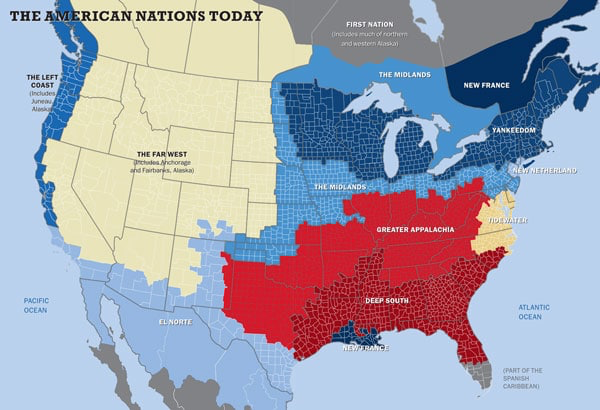
The demand to think “beyond states”–plus ultra!–has been conceived not as a possibility of growing connectivity, but as resigning ourselves to deep divisions as if they were embedded in the territory in the revival of what were argued somewhat misleadingly to be “southern interests” or heritages, and accommodate and instantiate in a map that Colin Woodward has long argued reflects the dynamics of their original settlement–rather than economic development and local political cultures–as if to accommodate the “local cultures” of politics, such as they are, as fundamentally distinct economic patterns that transcend the division of states or economic development.

Possibilities of new sorts of economic interconnectedness be damned, Woodward would have us recognize the long shadows attitudes toward work and not toward race, education, gender, or religion cast across the political fracturing of the once United States, as if to suggest that the notion of being united was itself a bit of a big fraud, or a pretense needed to unite what were long fundamentally different regions, in a new fracturing that reflects eighteenth-century precedents as if to trace the differentiation of ethnic or racial stock in ways that he claims effectively map on our own political divides, and offer new tools to help us understand different points of view that even a Continental Congress was foolhardy to pretend they could ever adequately reconcile, so steeply do they haunt the current polity.

The oracle of Freeport, ME reminds us that “regional cultures” have existed since the era of the continent’s first colonization in ways that command attention, despite the burning issue of apparently recent hot-button concerns from terrorism or immigration, despite their salience in the political debate and their prominence in motivating sectarian hostility.  In a sense, the map may consolingly remind us that Trump has not appealed to “Make America Great Again,” but festered its deepest historical divisions and divides; its commanding division into colors of distinct hues a refutation of the idea that we are living in an era without intersectionality, where divisions deriving from historical priority trump any of the effects of economic inequalities and disparities of income.  It indeed seems to naturalize race relations that have gained ugly  prominence in recent years as being a world that must be accepted as “modeled after the slave societies of the ancient world,” where “democracy is the privilege of the few,” as if this were a tenable cultural position but demands to be appreciated as such.  Rather than describe racism, or race relations, Woodward lets us know that “black people confronted” dominant cultural norms, a formulation that strips them of much agency indeed–or denies it altogether, more accurately.

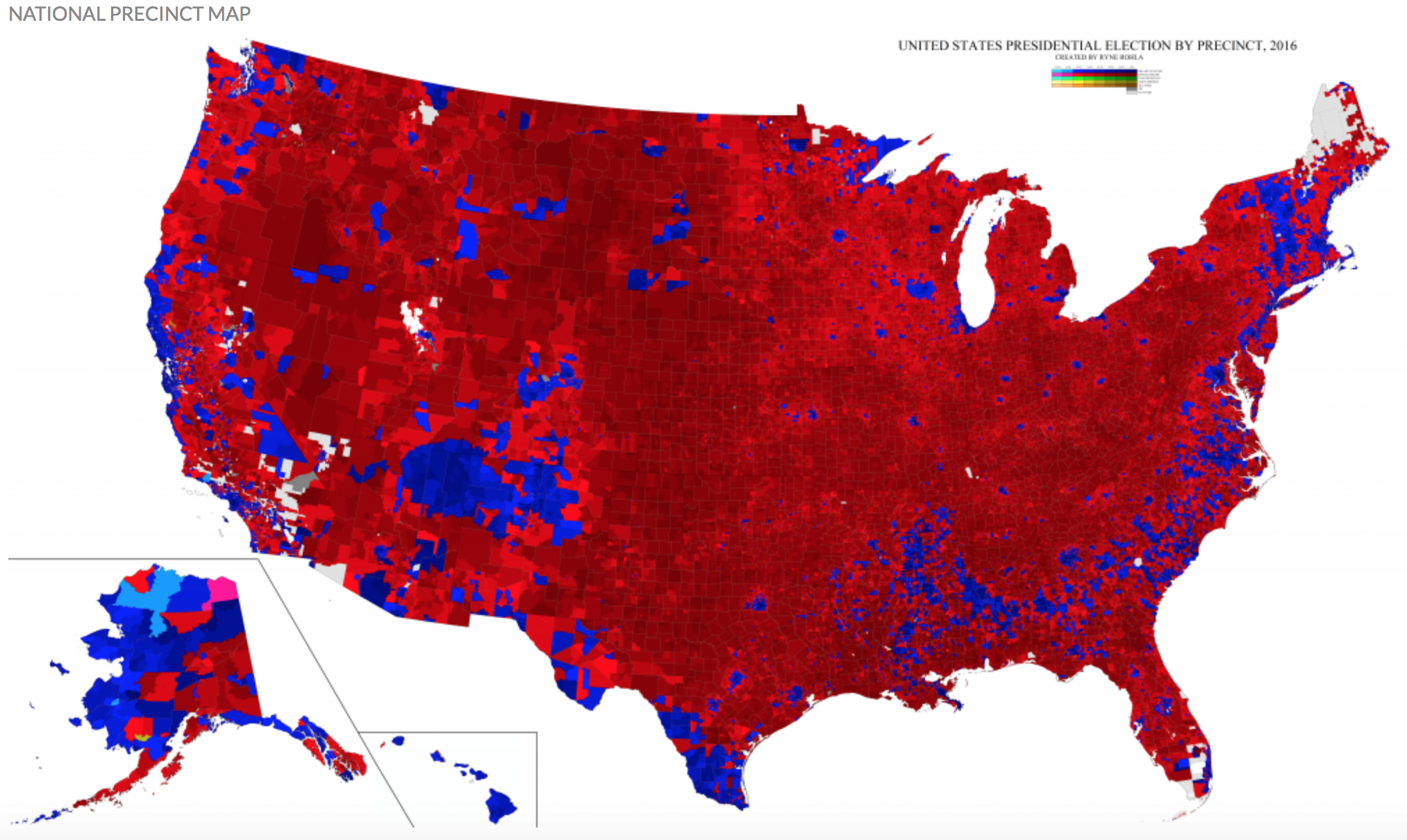
The quite flat five-color schema of 2013 was recycled in the news, perhaps, because of how it seems to erase the far more finely grained visualizations of the election that appeared in late July 2018 in the newspaper of record, five days previous, as if the precinct-by-precinct map of Ryne Rhola could be made to disappear beneath the far flatter overlays of Colin Woodward’s breakdown.


National Precinct Map.pngRyne Rhola/Mapbox


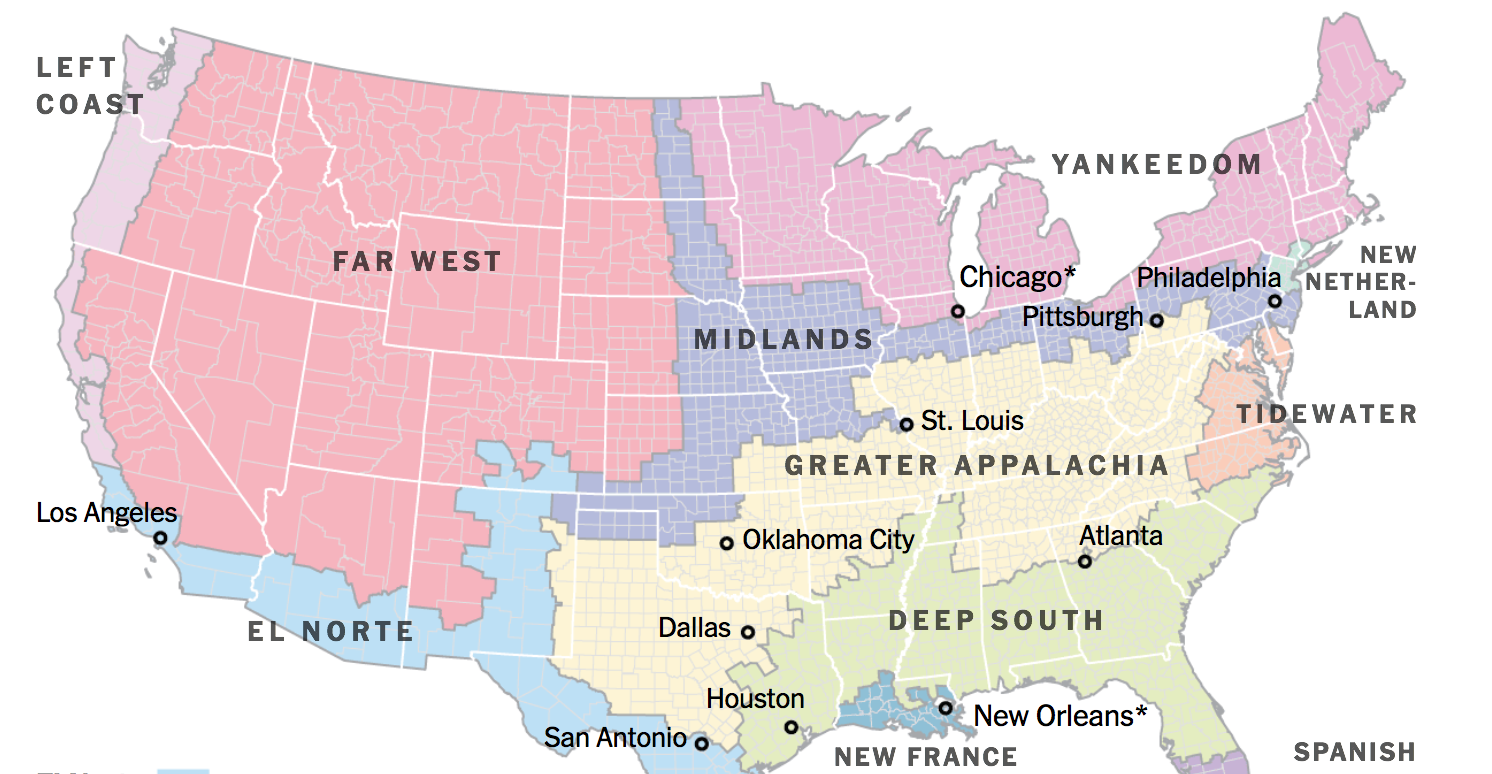
For Woodward’s map viewed the United States not as a composite of populated blue islands in a sea of chromatic shades of red that slid to scarlet expanse, but rather crisp lines whose constitution was defined in the eighteenth century, and perpetuated in the self-sorting machine that the United States has become, arguing that the affinities of each place attract their own political brand–a notion that Woodward emphasized in the new iteration of this map that adheres more closely to the national boundaries of the lower forty-eight.


New York Times/Colin Woodward (2018)


Forget any preconceived ideas of geographical mobility or migration, Woodward enjoins:  the map suggests the computational shape-sorter that the deep circuits of the United States’ history has defined.

That such divisions inform the breaking lines of the new “partisan landscape” hardly require a five-color map.  But Although meant to displace a divide between urban and rural, they may remind us that we are in fact living in an age that might be as easily cast–and we’ll return to this–as a trumping of the local, where states have faded away with the accentuation of local interests.  In ways that are filtered and refracted though the relative homogeneity of media markets and the traditions of certain areas of the nation where immigrants are indeed less openly welcomed or accepted may tend to the slogans of America First championed by Trump, and lines of gender are differently drawn.  Such regions might be less likely to be sympathetic in a deep way with a woman who reminded them, rightly or wrongly, of coastal elites, and accepting of the very caricatures of coastal elites that Trump, in a canny exercise of deflection and personal rebranding, managed to project on her–palling with Goldman Sachs; attending as Secretary of State to foreign relations and not the American worker–that the more removed regions would accept.

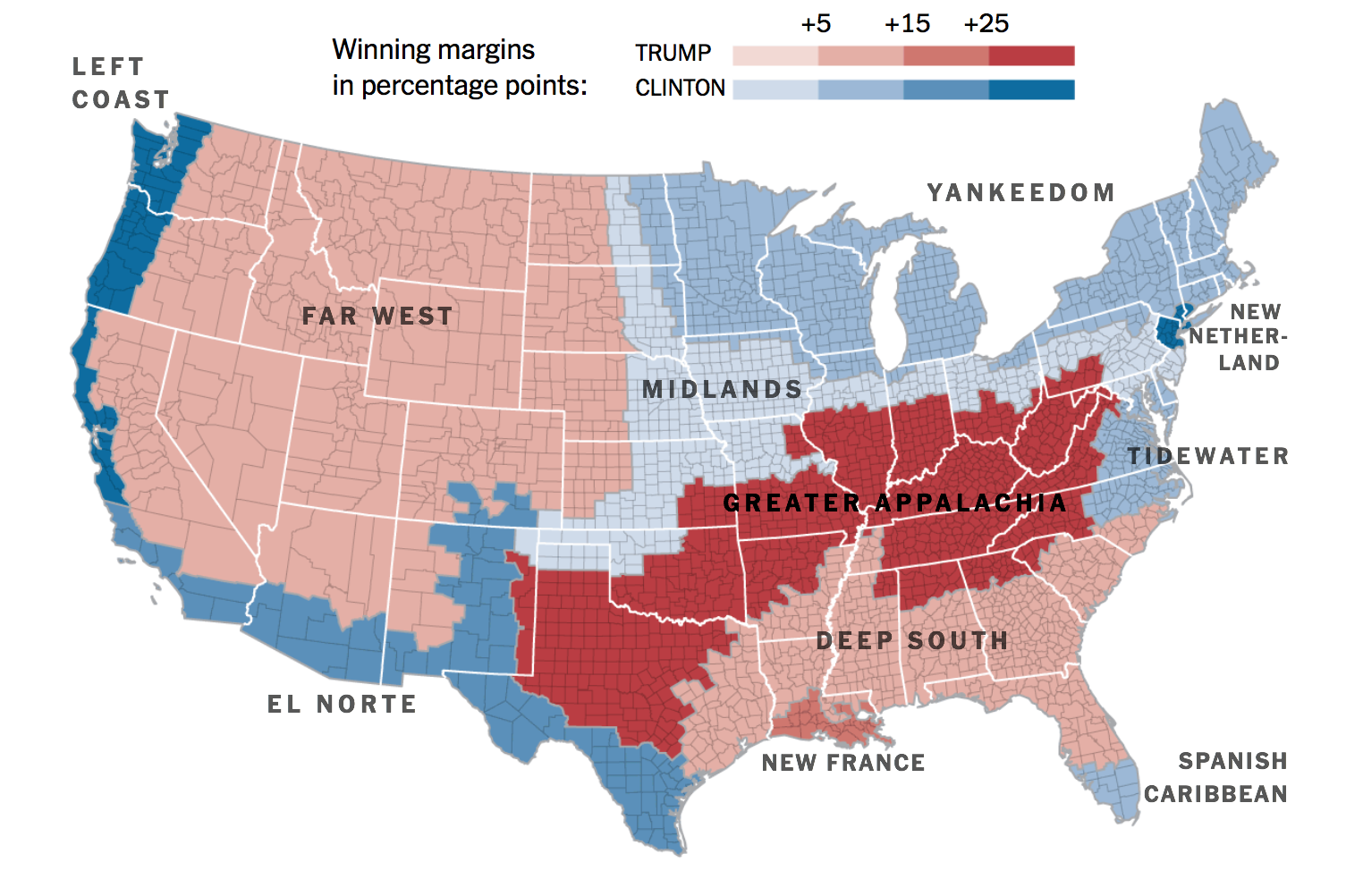
The divisions in the “partisan landscape” of the nation that Woodward presented are considerable and are economic–


Partisan landscape.pngNew York Times/Colin Woodward (2018)


–but curiously suggest the deep red remove of the very region of Appalachia that President Lincoln once sought to integrate better both economically and infrastructurally in the United States, but has sadly lagged further behind, and felt further removed from Washington.

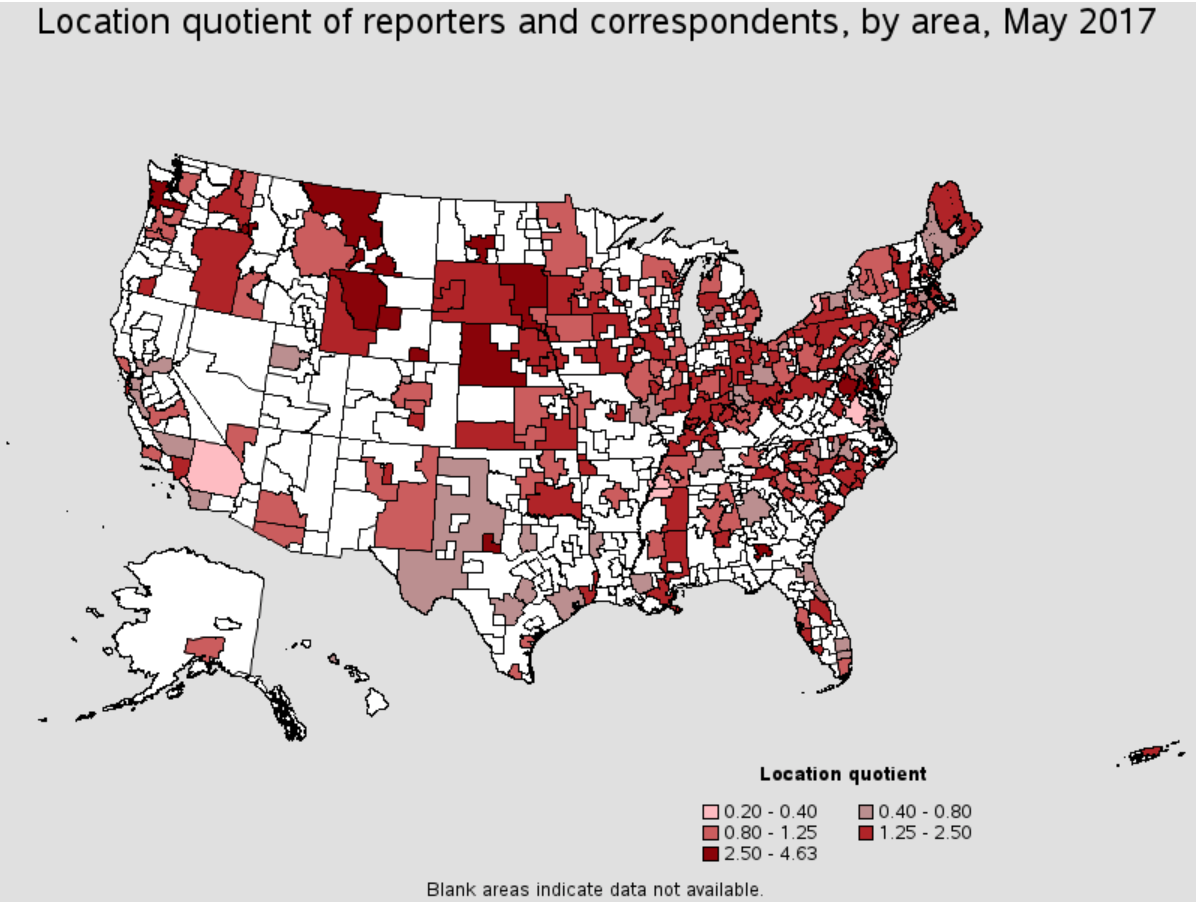
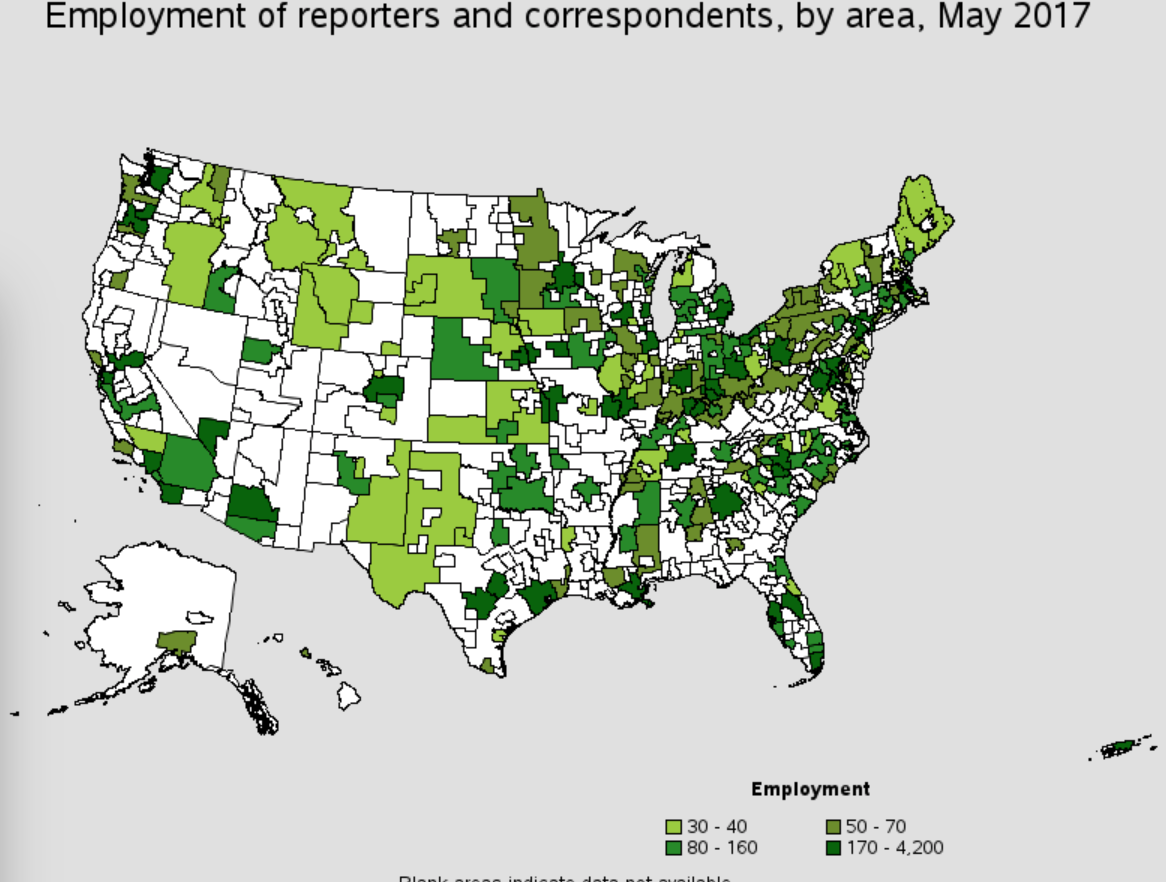
And not only from Washington, DC, but from the complex of the news that is so demonized by President Trump as being an “enemy of the people” today.  For though it is never made precise who this collective is–“the people”–it is not the folks who read newspapers or watch the nightly news, but those who feel far less represented in them, and by them, and less familiar with them to less present to them–for the known density of reporters and correspondents appears an odd echo of the parsing of the lower forty-eight into “Yankeedom,” “Tidewater,” “Greater Appalachia,” “Far West.” and “Left Coast,” as not only different media markets, and different areas that are represented in the news–


local qotient reportersDept. of Labor, Bureau of Labor Statistics/Occupational Employment Statistics


employment correspondents 2017Dept. of Labor, Bureau of Labor Statistics/Occupational Employment Statistics


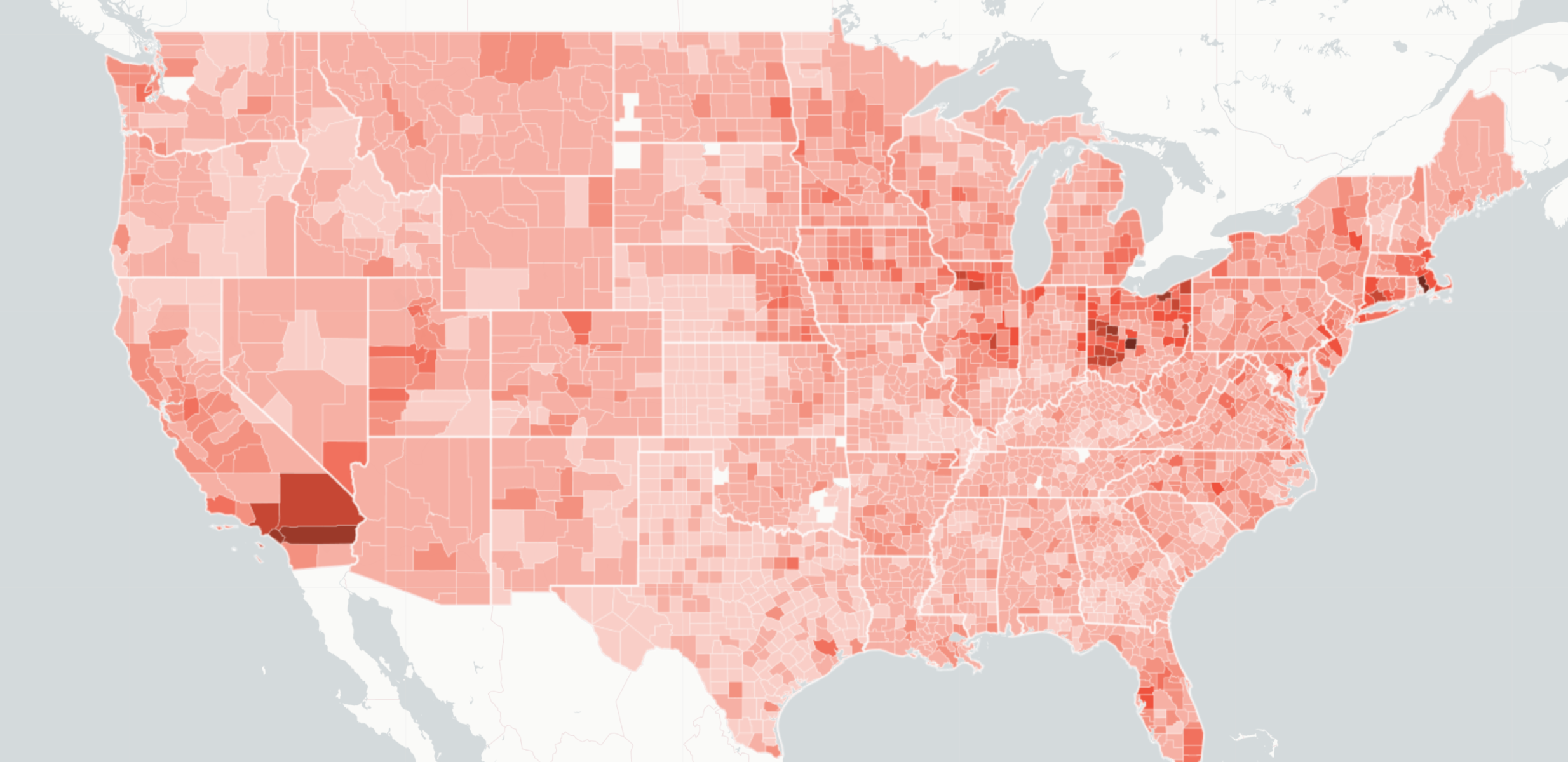
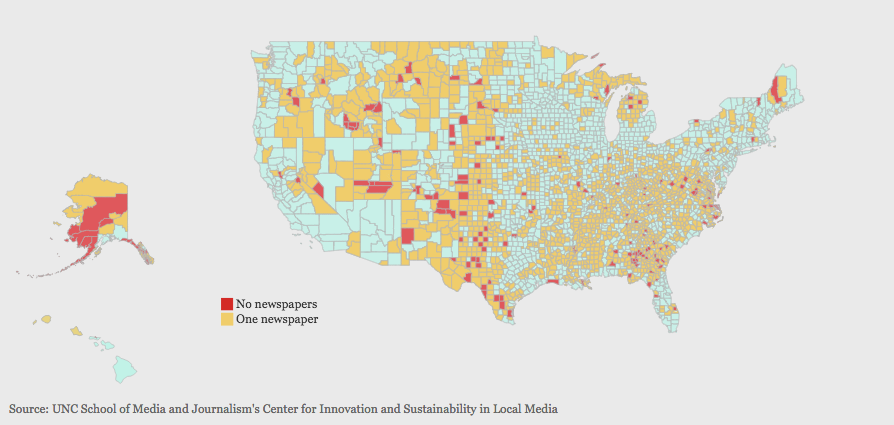
–but that feel alienated from its constitution of reality, because that stands at a remove from their lives and regions.  The existence of pronounced “news deserts” in areas as Appalachia suggest a fragmentation of our news economy that weakens local solidarity and opinion, and creates large voting blocks that are terrifyingly coincident with the paucity of local news sources, as Chisolm’s below burnt red interactive Carto data vis rather scarily reveals, as it invites and allows one to explore in even more fine-grained from over the lower forty eight.  The blanked-out regions of lightly hued regions reflect areas aggrieved areas by the absence of a diversity of local newspapers–institutions long identified with reflection on local political institutions and practices.  They are, in other words, afflicted with the absence of a plurality of avenues for the shaping of public opinion and political debate, and bound to rely one less active political debate.


Carto-News Deserts


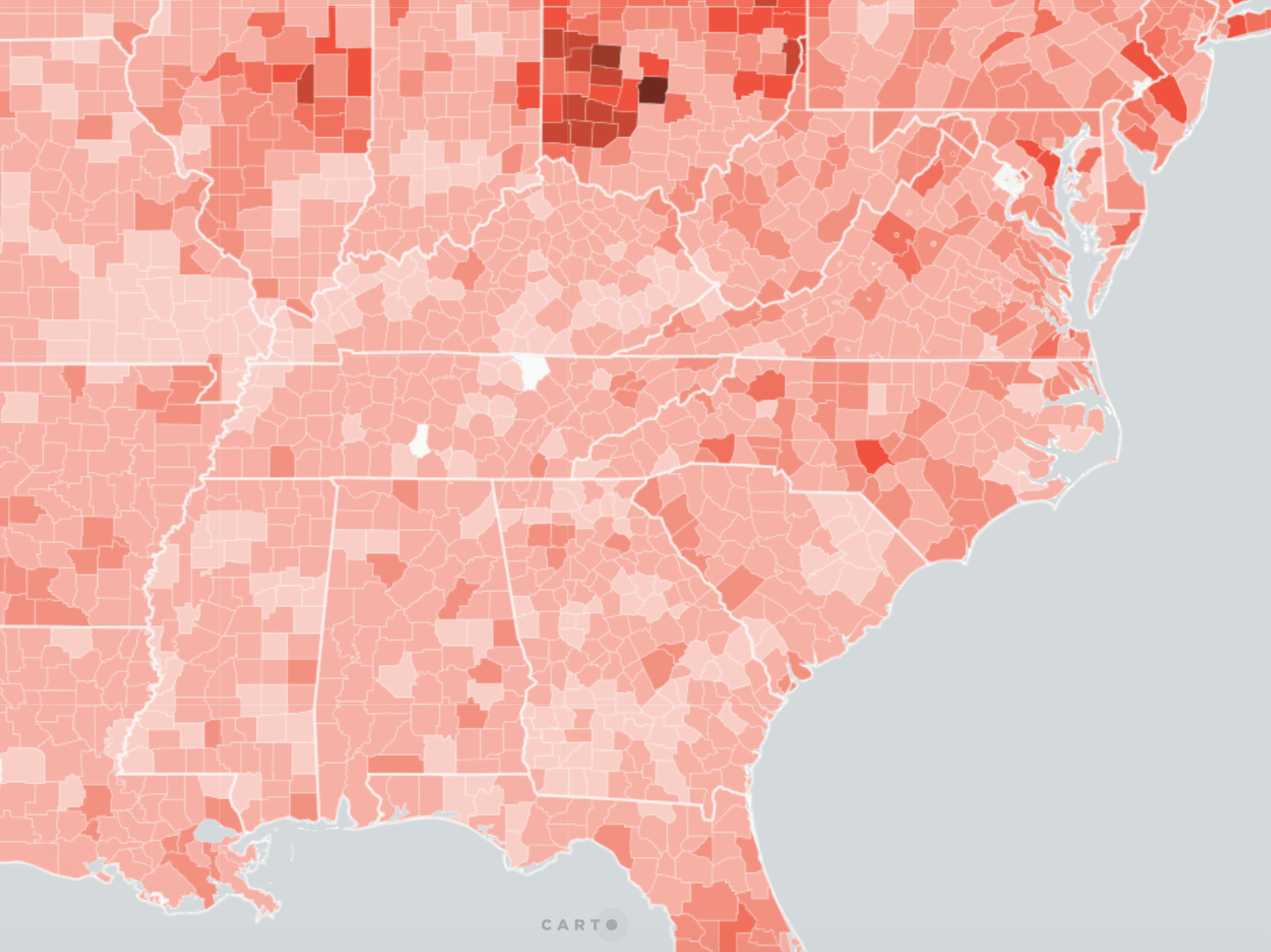
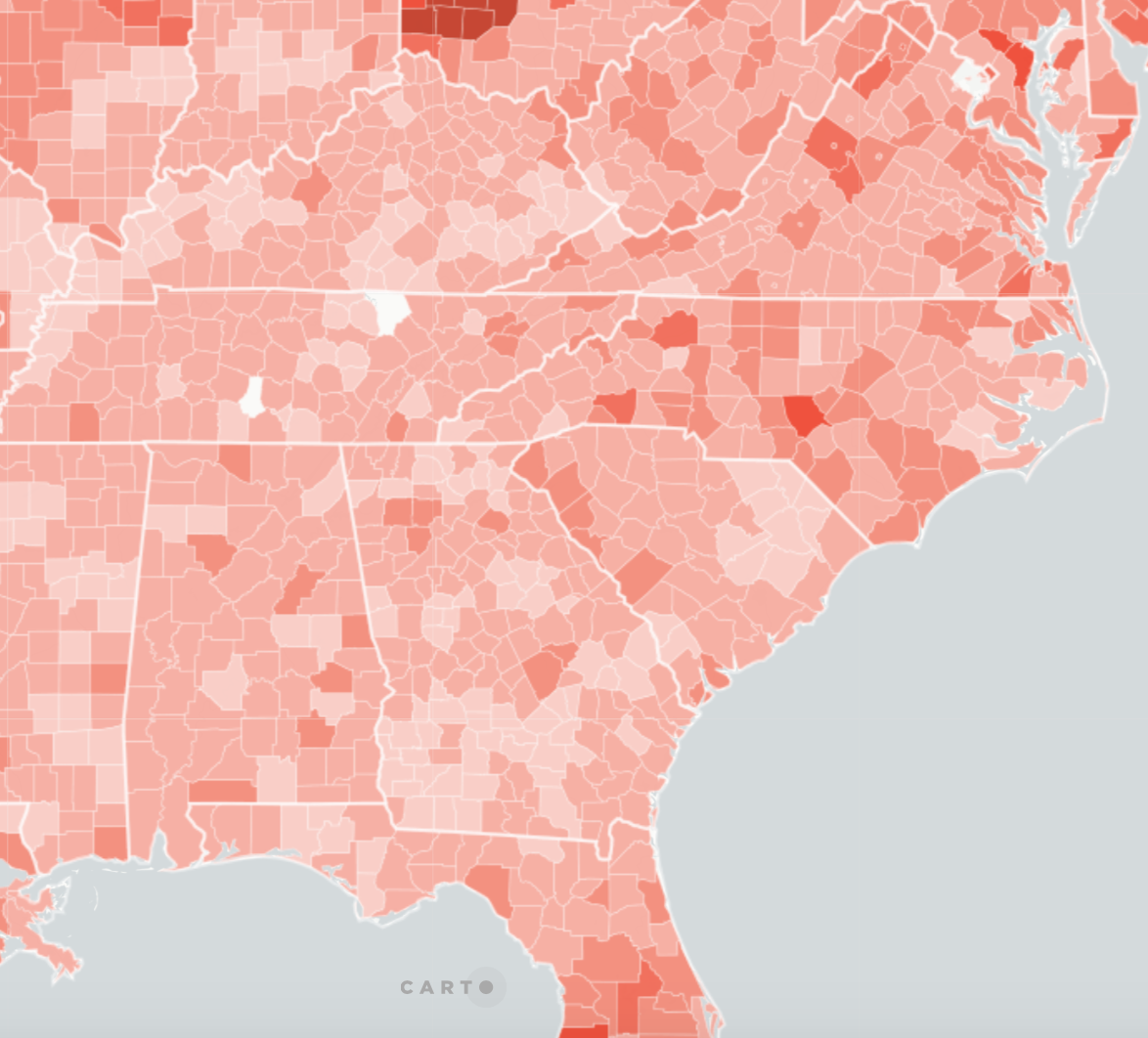
The striking thinning out in many regions of Appalachia as well as the south of so-called “news deserts” is not a longstanding historical divide–the death of the local newspaper is


Appalachia News Deserts multipleAmerica’s Growing News Deserts/Columbia Journalism Review (2017)


–in which limited investigative reporting on local issues, discussion generated by print, and indeed informed local political decisions and checks on local power seems to create a vacuum into which rushes a new tribalism of largely symbolic issues.


The difference between these regions is not necessarily so continuous, or suggestive of nations, despite the startling continuity in “news deserts” and areas of the low level of occupational employment of journalists or correspondents that is its correlate.  Deep divides of terrifying continuity are at basis economically driven, and seem impossible to reduce only to cultural divides–or reduced to existing historical divides, so much as an erosion of local institutions designed to foster reflection on political institutions and discourse.

The increasing gaps in sites where only one newspaper–or no local news–exists will be made up for in new ways, but the growth of News Deserts from 2016 marks a change in the information economy, and a change in which the role of newspapers in constituting and encouraging the community long existed.  The rise of digital news outlets that have taken up the nourishing role traditionally and long played by journalism is promising, but the attack on the few remaining news sources that exist and on which folks rely stands as a new challenge, with the number of reporters covering local news having dropped in half since 2004, and some 1,800 newspapers–many venerable institutions in communities that helped make new communities–having folded in the same time, leaving all the tanned out regions with one newspaper, and the burnt siena dots counties with no local newspaper at all–areas reliant on other news sources and online information, according to Penelope Muse Abernathy of UNC’s Center for Innovation and Sustainability in Local Media, which points more deeply at the need for a new business model for local news, but also the increasing vulnerability of many counties–and many individuals–to the older, less educated, and poorer, farther from metropolitan areas in parts of Texas, the Dakotas, Alabama, Florida and Georgia, where our democracy may fracture.


Abernathy, 2018


The problems of an engaged citizenship through newspapers is not, of course, the only line of fracturing in the social body.

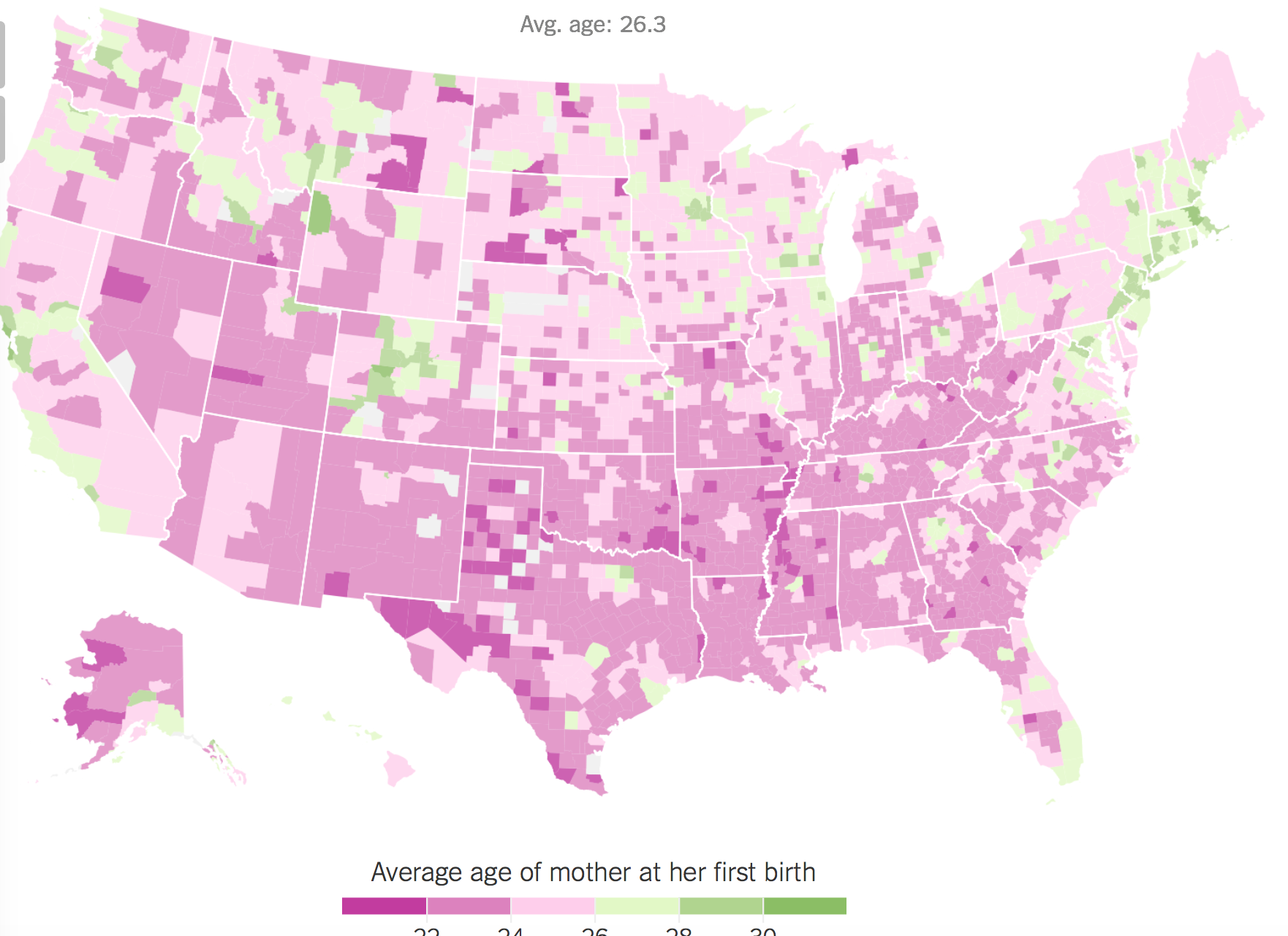
The increased divergence of the age at which women have a first child in different regions of the United States suggests a huge difference in life-perspective–or “life style”–which is clearly identified with those areas of denser presence of reporters, correspondents, and news reporting, suggesting a huge difference–and deep divergence–among the priorities, and negotiation of labor markets.  Although the different preferences for childbirth in the United States’ regions are not a big surprise for many women, the strikingly different age of women at birth maps onto the “regionalism” and regions of the United States in striking ways, unsurprising in an era when birth control and abortion are seen as the “issues” that define political divides–both around appointments to the Supreme Court and around what makes up privacy, personhood, and rights.  The pronounced oscillation around the age of a mother at her first birth is striking, not only in its divergence but the large span of the nation where birth is defined at twenty-four years of age, and what this mans for families and women’s work–and of female experience at the same time as the first female candidate became nominated by a major party–and the huge gaps this created.


Motehrs age at birth


New York Times: Birth Age Gap in the USA (2016)New York Times: Birth Age Gap in the USA (2016)


Does the puzzle fit together better now, looking at the relative number of reporters and correspondents employed and stationed in areas of the United States, and the remove of many regions–either apparent or real–from the media markets that exist, and the sense of alienation and remove of those areas  from actualities reported in the “news”?

Woodward’s “map”–updating or revisiting the divisions he had in fact foretold in 2013, just after President Obama’s second election as President, reprised for readers always hungry for a good data vis, that distilled confusion to stark lines of a 2-D paper map, called less “nations” (as he previously had) than “regions” which transmitted through the ages the spirits of their respective colonizers, in a complete revision of the image of the nation as a melting pot, economic integration and disparities of wealth be damned.

Rather than a melting pot having ever existed, the oracle of Freeport has it, distinctions between a Puritan legacy with assimilates others by championing a common good, the multicultural materialism of Dutch founders, the manorial society of the British gentry, quakers and pluralistic protestants of the midlands, and rigorous independence of the Scots Appalachians abut slave-holding southerners from the Barbados and Spanish-American periphery, shaping the nation’s fractured political present:  aside from some limited intersection of these realms, the melting pot not only never existed, but “deep cultural” values provided an optic that refracted every political event of the twentieth and twenty-first century, as if a deep memory of the mind that we will not escape.  The rigorous and purposive historical flatness of Woodward’s “map” seems a point of pride.

The schematic map recalls a study sheet for  high school U.S. history, claiming to reveal a landscape that lets scales fall from its viewers’ eyes.  Such radical essentialism–or deeply conservatory if not reactionary cartography–reminds us with considerable offhand pluck that we’re in fact far less mobile than we would like to think.  Rather than dig into the data in any depth, the map “shows” that we remain dominated by almost essential cultures that have been perpetuated by local institutions for all our championing of free will; we are, yes, really cultures, but cultures that no person can actually make.  Indeed, Woodward had originally cast the divides as separate “nations” that were both in evidence “today,” but revealed a deep geography of eleven nations in a 2013 map first published in the fall of 2013 as a guide to the “deep differences” into who he argued people in the nation sort themselves, as if into political preferences.  If a degree of self-determination surely remains, geography has the commanding upper hand, Woodward seeks to let us know, but his argument verges on an environmental conditioning by which the continent’s settlement runs against the idea of any  easy arrival at consensus:  indeed, “to understand violence or practically any other divisive issue, you need to understand historical settlement patterns” that defined the matrix.


Washington Post/Colin Woodward (2013)


Woodward responded to the stark fragmentation of the electoral map in 2012, to be sure, but has reprised his divisions again to explain the Trump phenomenon, and effectively raise questions about the midterm elections as if to suggest that no real deviation from a foretold story will occur.  And it is no surprise that the area of Greater Appalachia he has mapped, colored bright red in the image of 2013, which consciously riffed on the red state/blue state divide, without mentioning it.  Indeed, those “eleven nations” break into what look like voting blocks,–even if they are meant to remind readers that “lasting cultural fissures” were established by  “Euro-American cultures [that] developed in isolation from one another,” reflecting how “the American colonies were [first] settled by people from distinct regions of the British Isles” who we shouldn’t confuse.  Woodward presented his map as evidence of deep roots for the sectarianism we think of as modern, and “there has never been an America, but rather several Americas,” even if we all share one legal code.  Deadlock is natural on gun control or other issues,–but to appreciate that you “need to understand history” that political debate cannot alter.

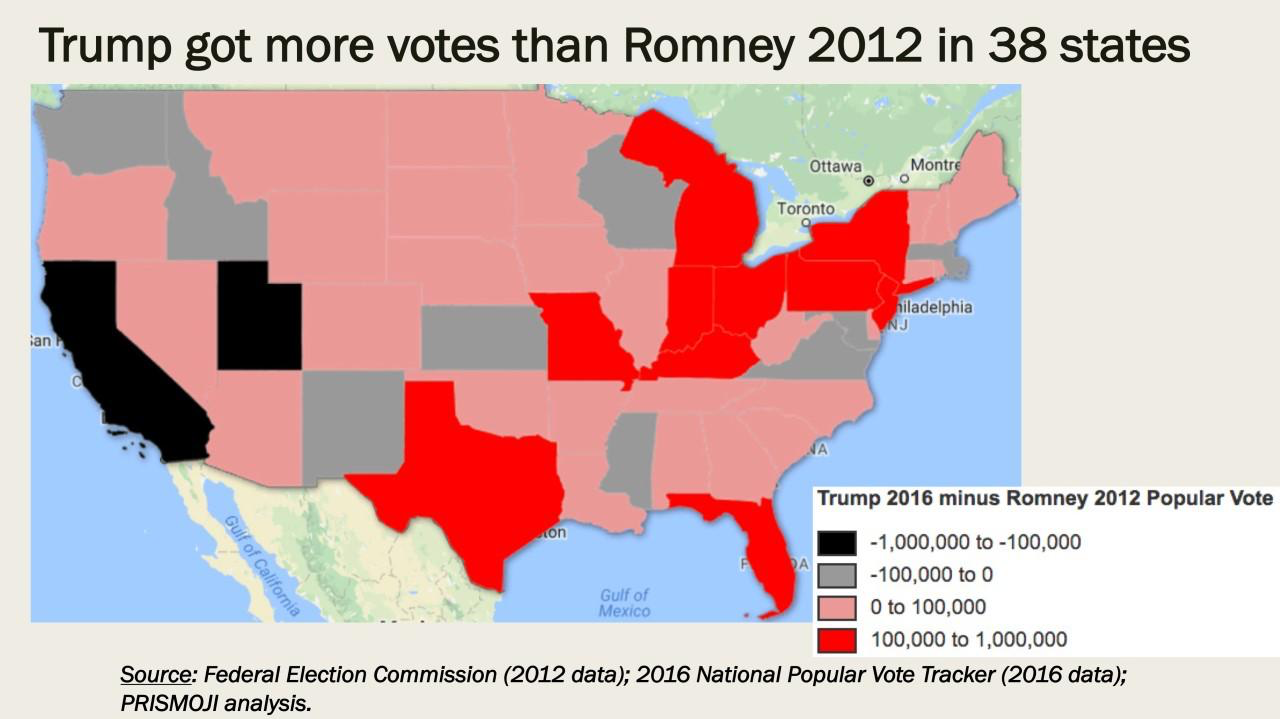
When Woodward revived the twelve nations as divides as tools to explain a sense of regional divides to replace the truism of thinking about America in a rural/urban dichotomy, he wanted to go deeper than the big data of a district-by-district map and its information overload.  But leaving aside that his geographic divisions handily capture some of the largest cities and urban areas in the “Left Coast” and “New Netherland” region, the map seems deeply flawed in its use of voting preferences in an era when voter turnout is notoriously low–voter turn-out was not substantially lower than in other years, but hovered about 58%–and the areas where Trump surprisingly outperformed the previous Republican Presidential candidate in a majority of states–


image.png


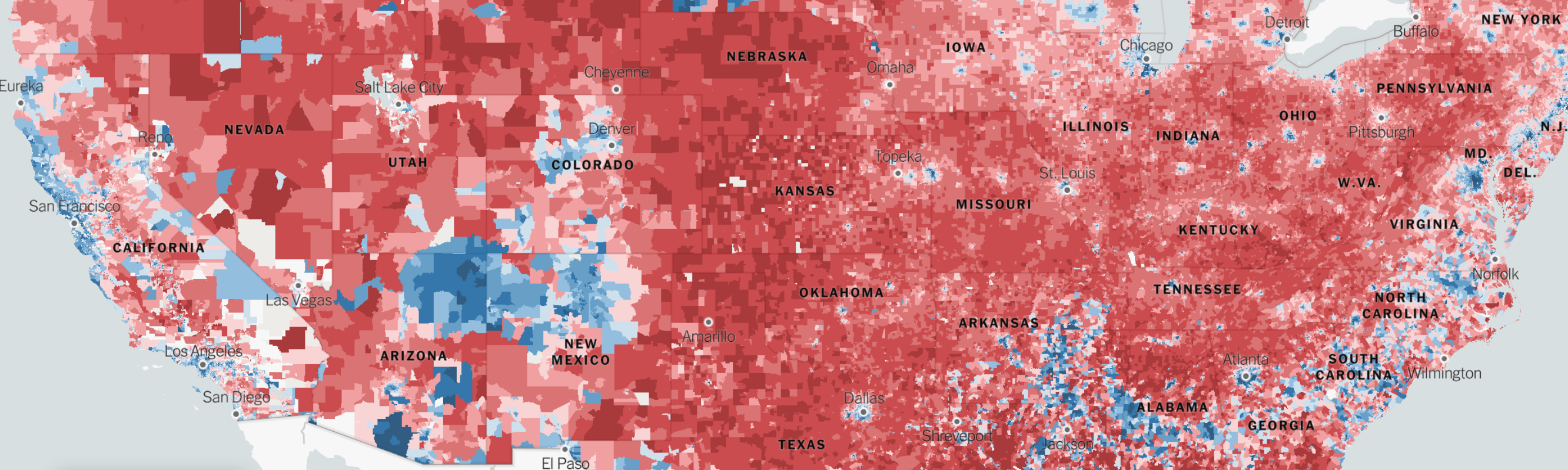
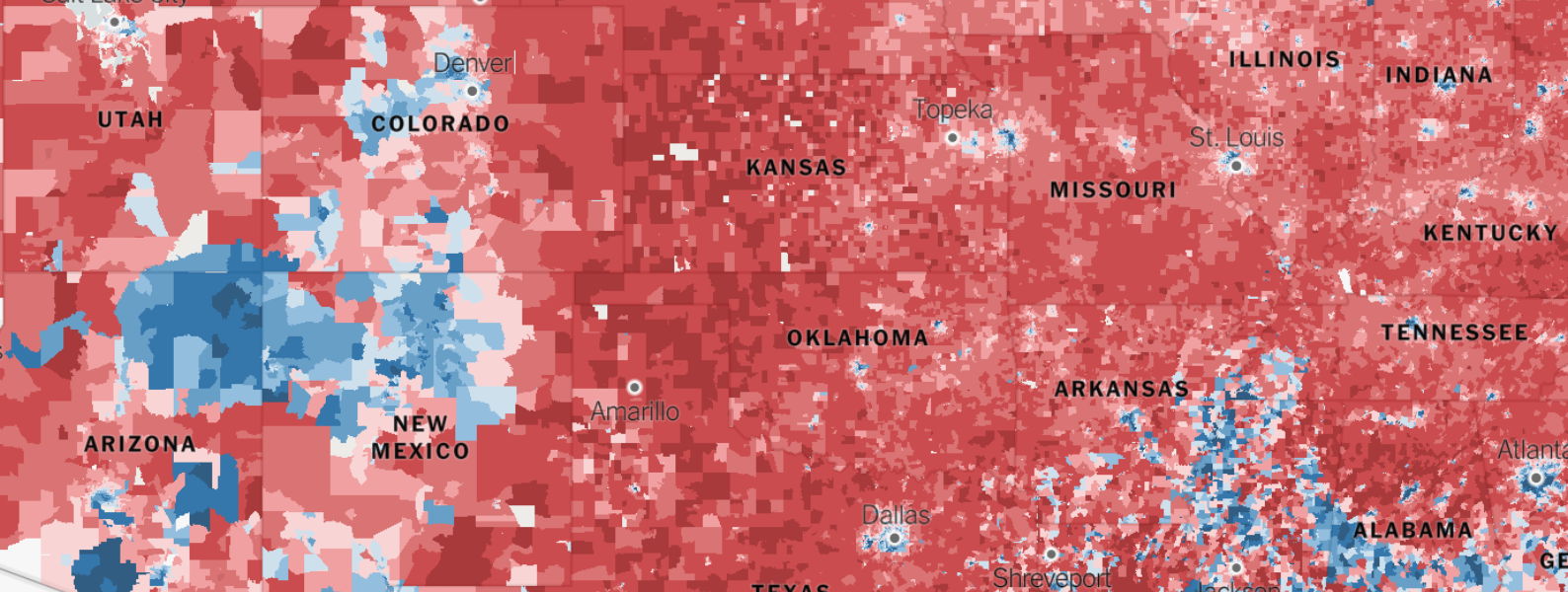
The divisions map most precisely on regions that perceived their economic remove from the coastal elites with whom the Democrats have been wrongly identified.  Indeed, it is not surprising that the Greater Appalachia region that Woodward’s original 2013 map cast as bright red assumes a pretty monochrome hue when chopped out of the elegant Mapbox visualization, suggesting that that region played a large outsized role in the last election, or as much as Purple America, and occupies the heart of the area where Trump outperformed Romney in the 2016 election, reconfiguring the red-blue divide.  The deep crimson area, with scattered islands of blue to the east and north, where Greater Appalachia ends, suggests less a new nation than a remoteness,


Greater Appalachia.pngArea roughly corresponding to Greater Appalachia/Mapbox/New York Times
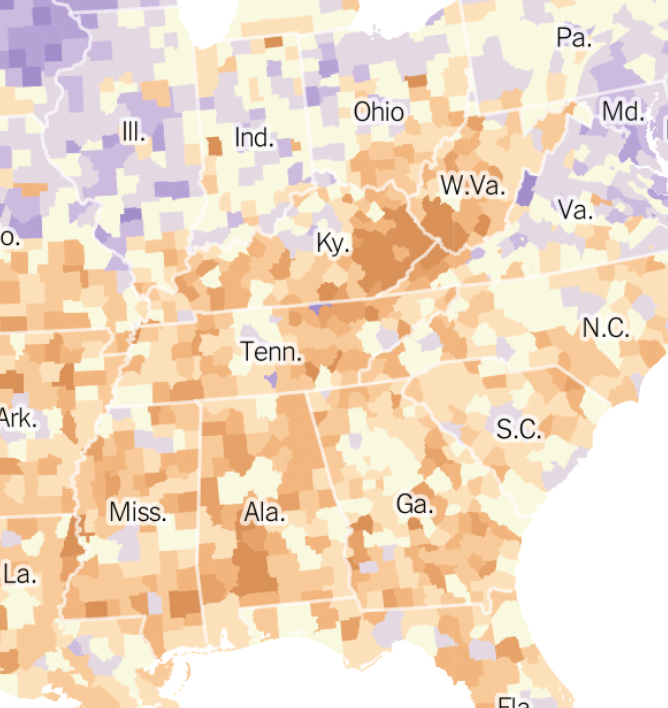
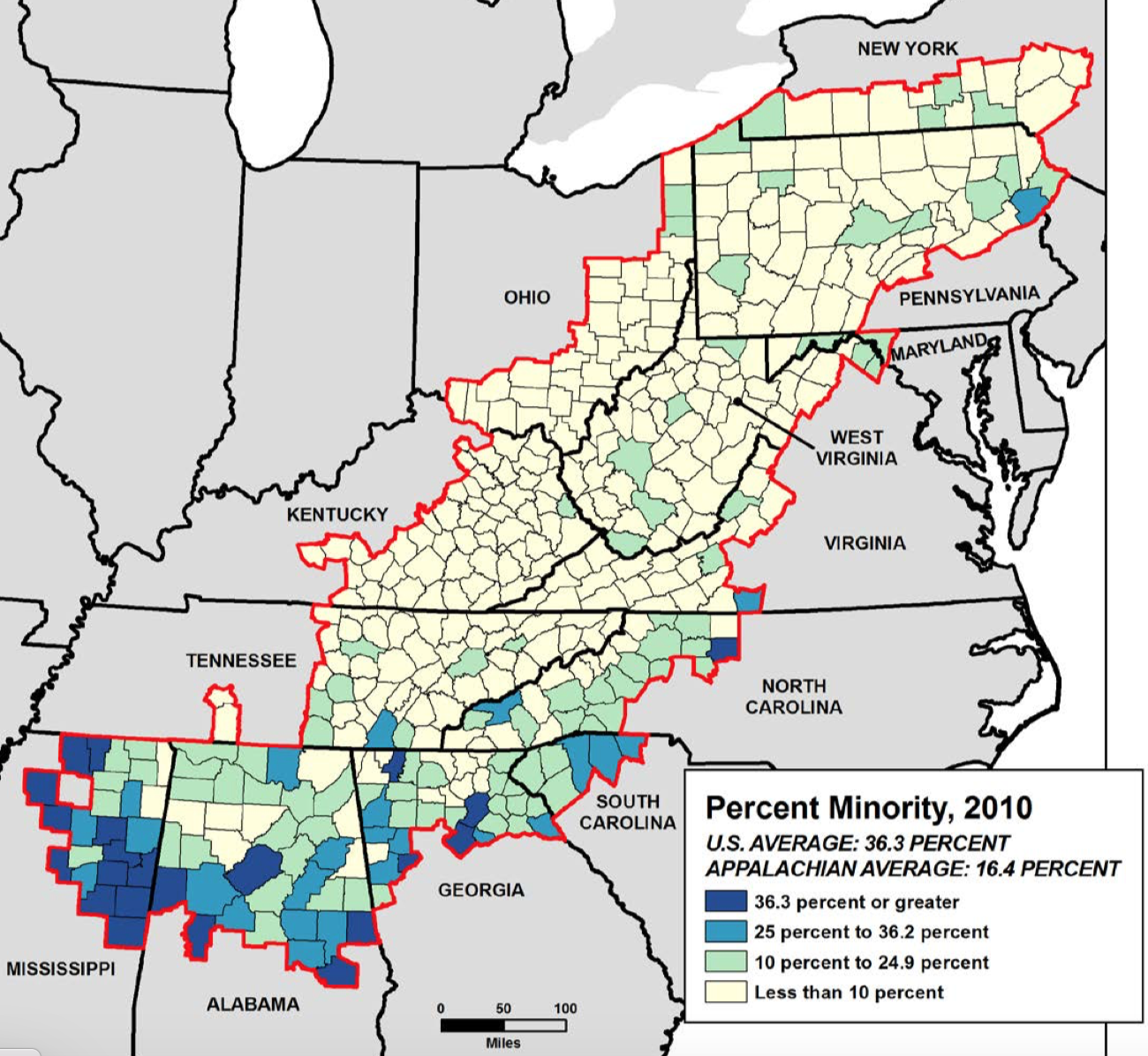
 

not only removed from broadband or access to health care, but relative per capita income rates in relation to the United States average, completion of high school, ethnic diversity, and women in the workforce and unemployment among young men–in short, a nation apart from the nation, less exposed to racial diversity and who the federal government had let down in its priorities.


Women in Worksplace, below average in tan.png

New York Times (2015), tan counties from below average; violet (above average)t


This was just the sort of area where Hillary Clinton would have the hardest time with her message, and possessed striking insularity.


Minority presence Appalachian Avg 2010U.S. Census Chartbook, 2010 (2011)


The trap of thinking in states may distort the above map, but the increased number of votes  seem rooted in “Yankeedom,” as well as “Greater Appalachia” and “Midlands,” than the logic of Woodard’s map would have us believe.  Of course, Woodward’s map might be more convincingly read not as a divide between rural and urban, but a heightening of the local, and a collapse of cross-regional collectives that once animated our politics and were known as parties, or groups that bargained for collective interests as unions.

For it surely takes into account the deep crisis in our democracy of a disconnect that many feel compelled to seek affective ties that are deeper than the remove they feel from Washington, and hard to find in a map.  It is saying something that even a year and a half from Trump’s inauguration as President, we continue to return, as if to find more information, to even more detailed parsings of the political map that might allow us to explore and, more importantly, come to terms with the extent of fracturing in our political landscape, where urban “voter islands” in Denver, Minneapolis, St. Louis, Chicago, Washington DC, Atlanta, Miami, Houston, Phoenix, San Francisco, Seattle, Boston and New York are so strikingly pronounced–and try to understand what that heightened insularity can mean.


Ryne Rhola/Mapbox (2018)


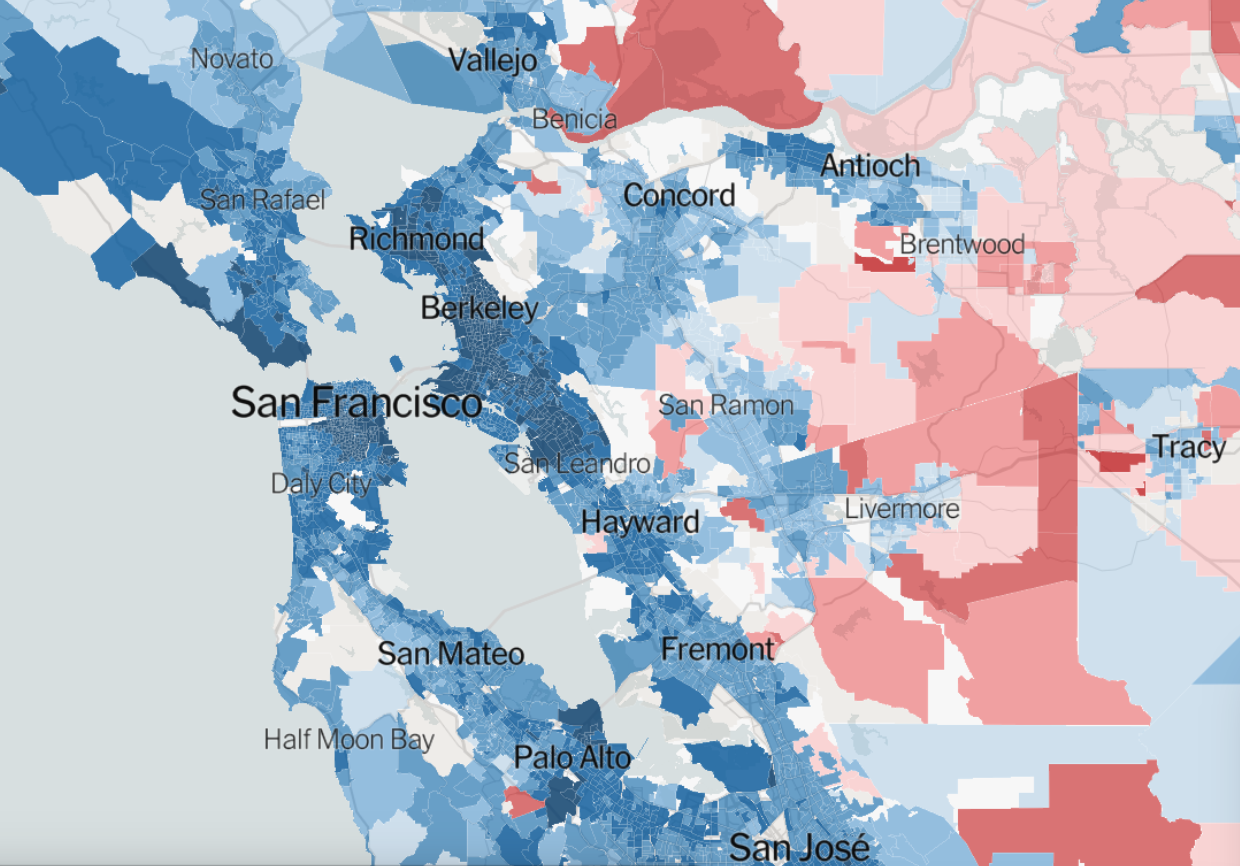
We are asked to use the map to avoid being in a “political bubble,” and to explore the area that you “know”–no doubt where you reside, where everyone first turns in a map–as if to measure what you expected that you knew against the “extremely detailed map” of our political divisions, courtesy of Mapbox, where even the divisions in a reliably “blue state”–as where I live, California–can be parsed in greater detail, as if to gain intelligence of the political lay of the land, in time for the mid-terms, and to learn what districts you might to go to canvas or contribute to a political campaign, as possible on many partisan apps,


California.pngRyne Rhola/Mapbox (2018), 2016 US Presidential Election
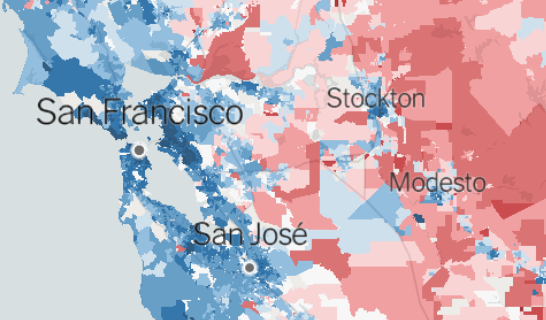
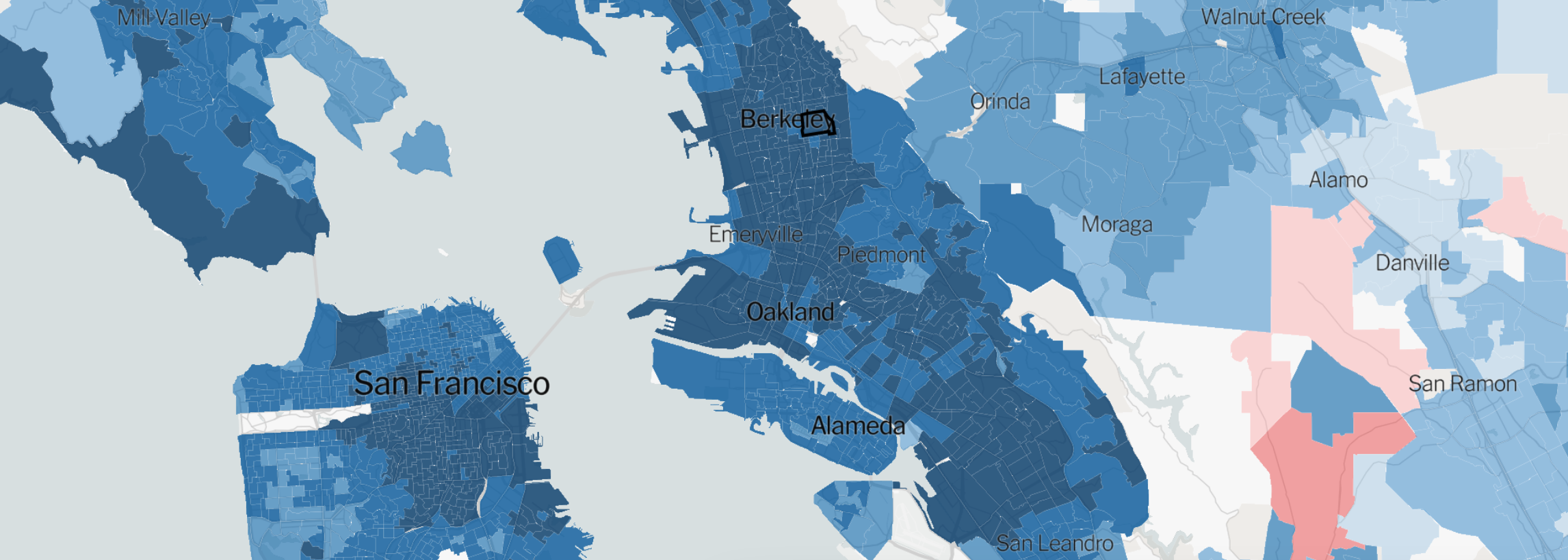
 

The divisions in political or electoral preference seems hardly surprising, but the divides show up as stubbornly sharp in the Bay Area, whose insularity is long supposed and often championed, but where the directive to “explore” an area you “know” to see if you live in a political bubble seems all too apt.


Bay area


east bay alone with Danville


For the “areas you know” still seem ones that you can’t quite get your head around, too much like bubbles than regions, where fault lines of political opposition are located a bit more inland, but seem sadly inscribed on the land.


The maps remind us that, rather than live in nations, we seem to live in tribes.

Leave a comment

Filed under data visualization, infographics, news graphics, political geography, political preferences

Strongman on the Border

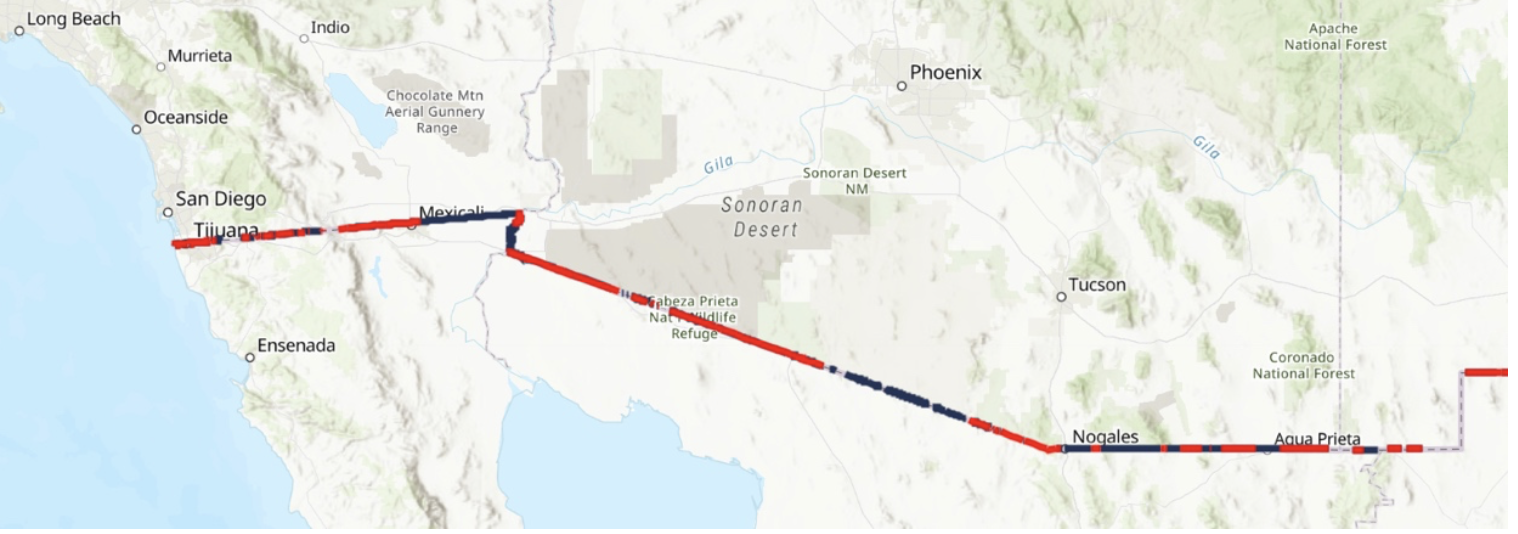
The border was closed and immigration authorities simply ‘at capacity,’ announced newspapers, after a Caravan of migrants from Central America arrived.  In rejecting the ability to process new arrivals who lacked necessary papers of transit, the papers parroted a an anti-immigrant line, revising the southwestern border from a line of passage, or space of transit, in what seemed a meme about the border as a threshold of legality-as if a line defines the legality of those who cross it.  If the border wall is a “new” creation, it seems designed as a monument of the “new” nation, bisecting an area that was not truly demarcated for some time, despite it suggestion of eternal authority–the Thono O’odham Nation of the Sonoran Desert long lived on both sides of the modern “border” before either nation existed across its divide, and are recognized as “border dwellers” in both the state of Arizona and Sonora.   But the wall served as a label, and a divider between “us” and “them,” a boundary where the outsider was defined as an enemy, and “politics” was indeed the definition of the enemy lying outside of the social body. To affirm that distinction, the wall needed to be built–and to explain the enemies to the body politic, the performative spectacle of the confrontations that might occur at the border was in need of staging, again and again, as a primal scene, as much as the wall-as-border might be mapped.

Department of Homeland Security

The creation of the border as a defining feature of the nation–a nation that was able to be recreated, or literally “made great again” as a nation by its border wall as a human creation–suggested the deep belief in the making and remaking of nations, a concept of the intellectual creation of nations that oddly echoes the legal historian Giambattista Vico in its insistence on the making of a nation not in reference to its laws, but as a collective whole who felt that borders were defining characteristics of modern states.  But the institution of this border at the same time exists outside of the law, and assumes an oddly primal characteristic as a site of sacrifice, echoing in surprising ways how the Neapolitan jurist Giambattista Vico saw borders as defining the inclusion and exclusion of rights to property, and senses of citizens, that was prior to and predated the law. Although the massive public works project that the state had mandated at the U.S.-Mexico Border was not at all an Enlightenment project, so much as a mega-project that was destined to incarnate state authority in an age of mass politics: a public works project proclaimed to fill multiple needs of protecting property, securing wealth, and building the nation’s power, of Neo-imperial dimensions, akin to Mussolini’s draining of Pontine Marshes or to the state programs of collective transformation of the mid0twentieth century, by dramatically staging the power of the nation in its ability to incarnate mythic notions of a powerful state for the benefit of all its members.

The creation of a strongman, who has arrogated the American eagle clutching fasces and a laurel, announcing that it will transform “many” to “one,” but only the many admitted past its sign. For the legist Vico, the ongoing brutality and conflict of society was not only natural, but a position even of possible growth: the very words of one society and culture might be reused and adopted by the following in even discordant ways.

But if Vico was clear about the “boria delle nazioni“–the conceit of nations–that they were unique in the very national characteristics that only they possessed, and the each nation had most critical aspects only it alone possessed. The conceit is amplified by the border wall, and the lie that it is built on to keep out others–and indeed to perform a sort of ritualized sacrifice of the other on the built barrier that the nation sought to create. For the Border Wall, if the most vain construction of any nation, a homeostatic barrier or norm of sorts that proclaims the identity of the nation, the unveiling of the border wall was an exploitation of the potential of television and the stagecraft of nationhood to stage that identity, as a fascistic or photo-fascist rehearsal of national foundation, or refoundation, by newly erected boundary walls that lack all porousness of the past. Indeed, the border wall seemed to be an occasion to re-educate the nation on the notions of citizenship, and the barrier that needed to be created on which to sacrifice the other. Was the conceit of the border wall a medieval conceit, or a form of statehood that was only made in the twenty first century?

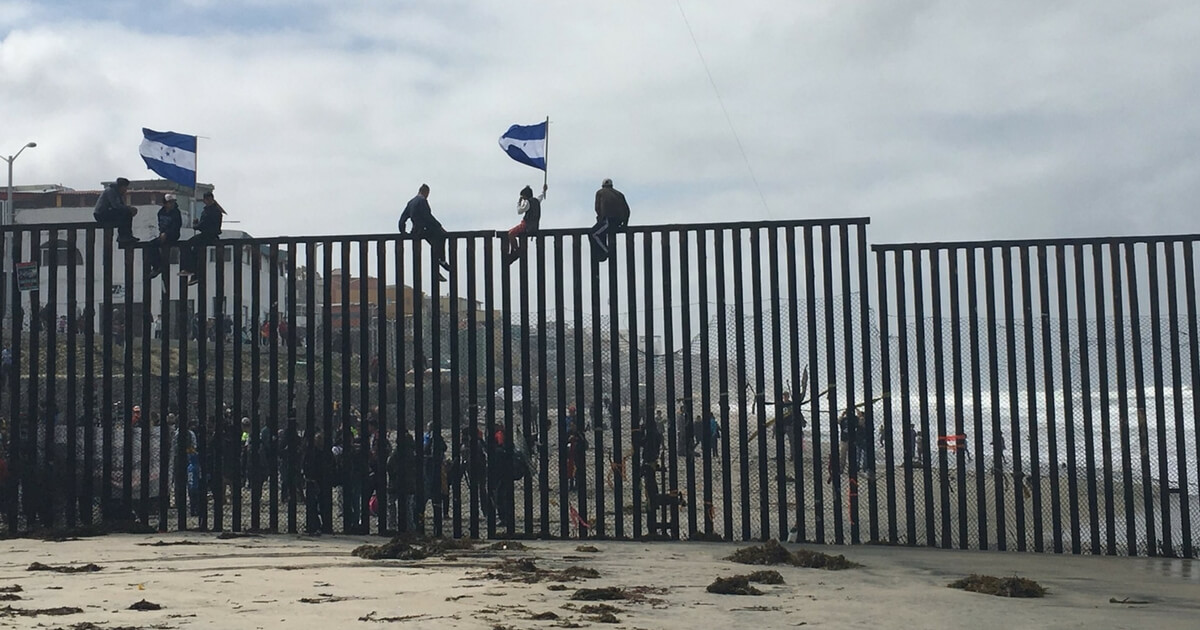
The image that suggested migrants atop the wall, or of others scaling a dilapidated section of slatted border fence near San Isidro–“through a dark, treacherous canyon, notorious for human trafficking and drug smuggling”–collapsed multiple tropes of border-crossing on the least likely of targets:  a peaceful procession through Mexico that began on Easter Sunday, crossing borders to call global attention to migrants’ rights.

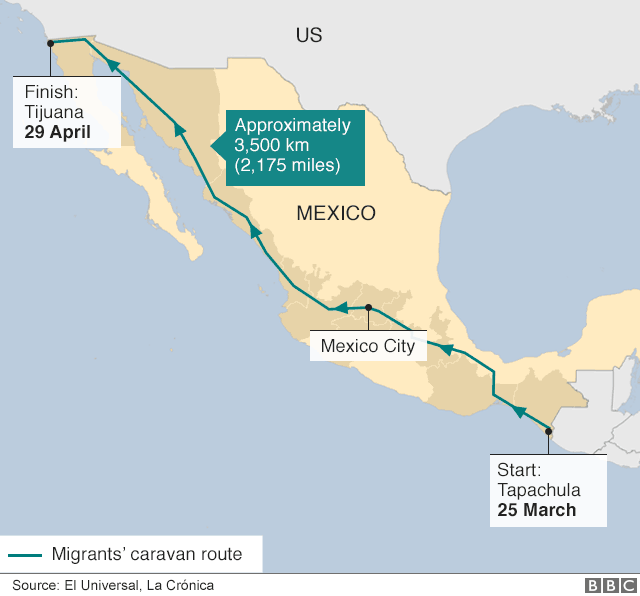
_101103435_mexico_caravan_migrants_route_640-nc

While the simple visualization of the course of the procession that wound through Mexico City from the southernmost border of Mexico cannot trace the mental geography on which the arrival of migrants was mapped in the United States, the progress of Central American migrants was viewed and mapped by Donald Trump and FOX in terms of the desire to see their arrival from behind the proposed $18 billion border wall that has become a contentious object of debate.  As the number of arrests along the border has grown above 50,000 for the third straight month in a row, and more children separated from parents in an attempt to broadcast cautionary warnings about the dangers of attempting to cross the border, or to appeal to existing immigration laws by asylum pleas, stories of migrants that the proposed wall would silence are increasingly difficult to silence or contain, and the human narratives of migrants are increasingly difficult to place behind the imaginary screen of an insurmountable border wall,–which of course does not exist, save as a mental construct–but is cherished as one and difficult for many to relinquish or deny.  

Even though there is no structure corresponding to the height, thickness, and architectural design that Trump had treated audiences during his campaign, the Caravan threatened to remind us that the wall didn’t exist, despite the attention that has been lavished on its proposed construction at a cost of an estimated $18 billion, far below what actual costs might in fact be. Yet the specter of the arriving migrants from Guatemala, El Salvador and Honduras–the triumvirate of “failing states” that Trump has demonized has provided a new basis to affirm the urgency of its construction. The caravan of migrants was cast as a threat to the nation, of urgency to place at a distance from the nation–even if they were also cast an oddly unstoppable “horde” able to evade or defy Mexican immigration authorities who had not successfully turned them back. As if to say that the “buck stops here,” their impending arrival was rhetorically magnified as a threat to create a persuasive image that reminded the nation of the urgent need for the border wall as an artifice of defining the nation.  

After months of dehumanizing migrants as faceless hordes, poised at the border, migrants seemed to have arrived at the border fencing, about to breach an inadequate barrier that is a relic dating from the era of the Vietnam War.  The news of the progression of the Caravan–and clouded interpretation of what their aims for crossing the United States’ southwestern border truly were–led them to become a poster child for the urgency with which Donald J. Trump has so stridently advocated the construction of a “real wall,” with an intransigence that almost embodies the physicality of an actual concrete wall, a month before the construction of the border wall began in San Diego and Calexico, CA, replacing some fourteen miles of improvised border fencing that was long ago made of scrap metal to “secure our border” as a way to “make America great again.”  The promotion of building the border wall was a way to ensure “public safety” followed repeated images of migrants attempting to scale or protest before existing improvised fencing–

image

-whose inadequacy to deal with the border threat Trump had relentless ridiculed as useless during his Presidential campaign.  The danger of cross-border traffic that Trump had repeatedly magnified circulated back to prominence within the national media with the arrival of the migrant Caravan.  The hope for the migrants to gain asylum in the United States was immediately questioned as their true agenda was assumed to be one of evading the border controls before the Wall was built–and the immigration laws that would permit their entry changed.

If the announcement of the construction was a feign of a a show of strength, and promoted as a basis for national pride, it was an insult to migrants petitioning for asylum, as the promotion of the border wall as a sign of national security debased the notion of the nation as one of laws and civil society.  The promotion of the wall as a slogan of nationalism remapped the nation in relation to the border, after all, in the Newspeak of social media and twitter–“Strong Borders are Security”, “Immigrants are Criminals”; “Refugees are Terrorists”–the border wall protected national security and projected the idea that all migrants were illegal.  The spatial imaginary of the border wall echoed the longstanding claim, made without evidence, that the immigrants at the border were “the worst” of their society, and for allowing an untold number of undesirables to enter the the nation.  As well as protesting the treatment of the United States”the dumping ground of European Refuse” as an insult to the nation, the insult was accepted by the nation.  The blame rests on citizens who are accept the very immigrants Europe does not want.  The image, which appeared just before Bartholdi’s “Statue of Liberty” was erected in New York Harbor, raised objections to accepting those rejected by Europe’s crowned heads, of dubious value to the nation that echoed Trump’s position.

European Refuse.pngKendrick, “And We Open Our Arms to Them” Life Magazine (July 12, 1885), 

The very chaotic narrative of depositing “human refuse”–a group of former colonials identified as “not like us” but being advanced by an invisible broom–was repeated in the image of the approaching Caravan, as the legitimacy of their requests for asylum from Central American nations were questioned, and suggested to be fundamentally an illustration of disrespect for the law.  The “Caravan” of over 1,000 migrants seeking a better life was widely mapped as a threat to sovereignty and law, recasting a protest march that promoted migrants’ rights as an invasion of sovereign space–and a grounds to deny migrants’ rights.  The  tweets of President Trump directed the attention of the country to the border to query the status of the migrants who were headed to the nation, as he announced instructions  “not to let these large Caravans of people into our country”–magnifying the migrants as a national threat through a dichotomy between “them” and “us.”   The anxieties about immigration policies that Kenrick’s cartoon registered panic at the caricatured faces of the new arrivals.

In announcing an intent of illegal entry across the border, Trump once again conjured the need for a border wall, as if trying to co-opt the message of migrants to create an image of a cross-border threat.  The construction of border walls against an “existential threat to the nation”–as did the former commander of the southern border who was named Trump’s director of Homeland Security and now his Chief of Staff—creates an urgency for protection that corrodes the possibility of an open society.  Kelly’s disparagement of migrants as “people who would not easily assimilate into the United States,” “overwhelmingly rural,” from countries where “fourth, fifth, and sixth grade education are the norm,” described them with the same disdain as Kendrick’s cartoon from the early Life of the 1880s protested the insult by which ex-colonials were sent to the United States as to Australia or India, which had indeed become “dumping grounds” for convicts, remittance men, and socially unwanted cast-offs, as well as seeing them as barbarians who threatening the social fabric of the United States.  The disparagement of migrants who are seeking asylum as uneducated, of rural origins, or indeed, as Kelly’s remarks must have reminded his audience, criminals.

ICE 2014 arrests gangs--ms13?ICE Arrests of undocumented immigrants, 2014
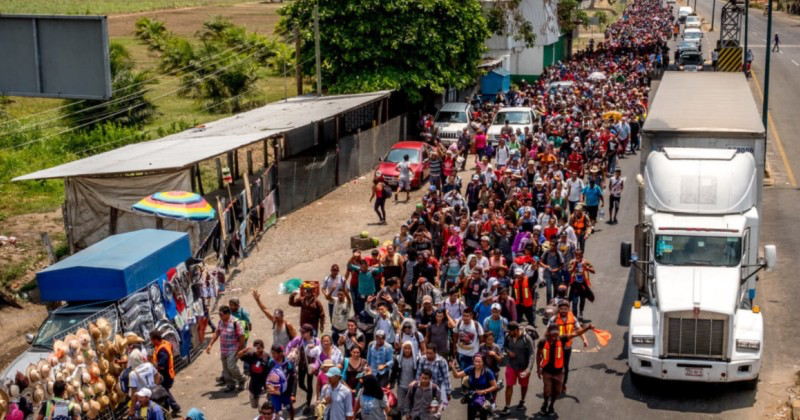
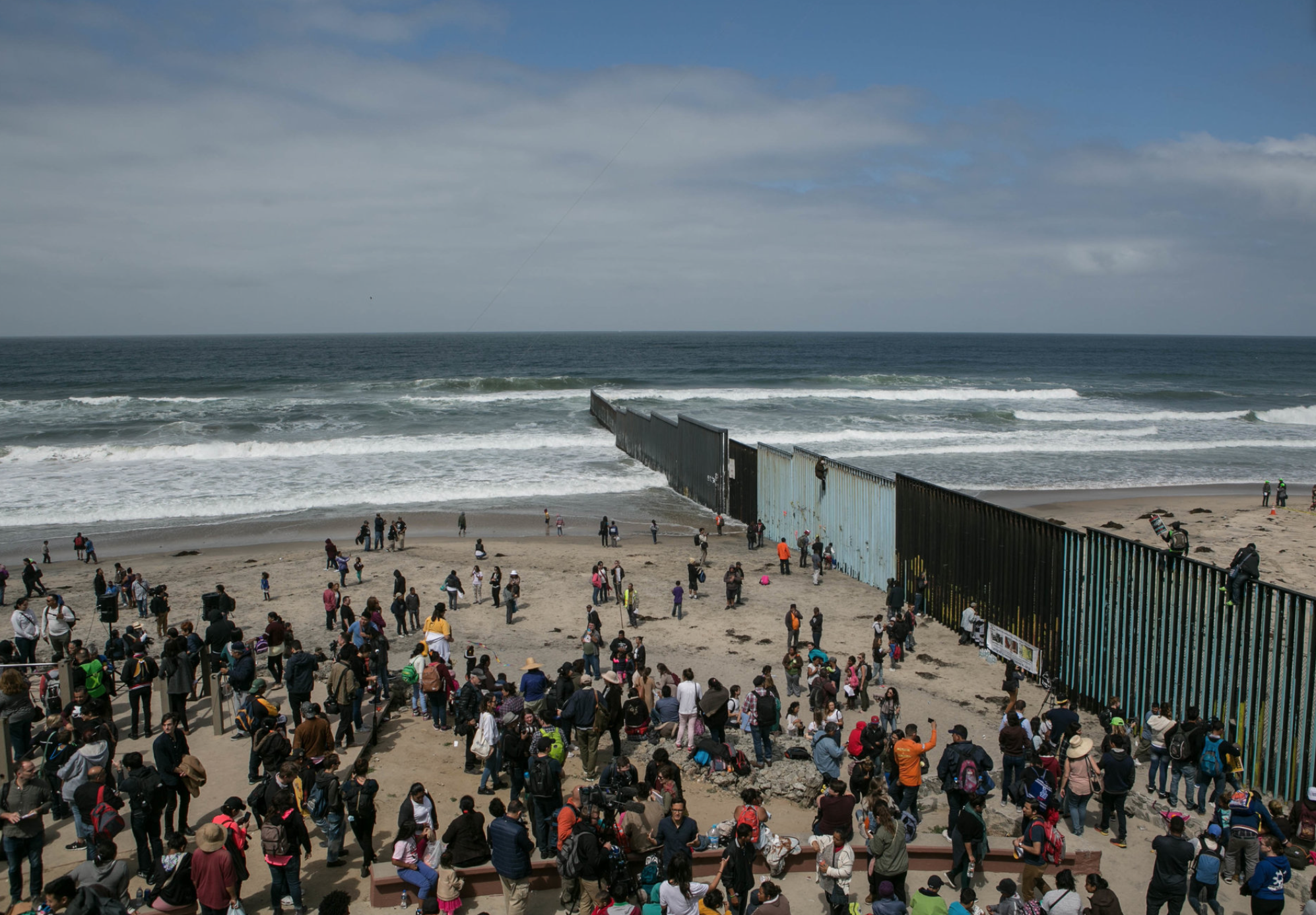
The disproportionate warnings of a “border threat” or “trouble at the border”  telegraphed on Twitter was inserted in a narrative rooted in the plan to create a border barrier of cast concrete in August 2015, in the heat of the Presidential election–a mission that crystallized support behind Trump’s campaign.  Trump insisted that the border wall he advocated wasn’t rhetorical, symbolic, or virtual–a space defined by hi-tech monitoring–but an impervious barrier that would succeed where other poor-quality fencing had failed.

The build-up of the arrival of the migrant caravan ran against the disproportionate attention that Trump had drawn to the border.  As Trump pedaled the fiction that the wall had already been begun, newscasters on FOX mapped a showdown by the approach toward the border of “that scary migrant caravan” of Central Americans with American law enforcement as inevitable, placing the migrants in a narrative of unwieldly crisis of immigration management on the US-Mexico border.  In ways that intersect with a broad unease of increased immigration–often manifesting itself in extreme xenophobia, othering and racism–a vaguely masked anti-immigrant sentiment that has growth in the United States over the last four to five years which Trump has deftly exploited. For the ‘border wall’ was recognized code for a thinly disguised racism, captured in John Kelly’s characterization of the Caravan–and migrants–as “overwhelmingly rural people” not capable of assimilating, who “don’t have the [necessary] skills” to do so, and are “overwhelmingly rural people,” as if ignoring just how dependent U.S. farms are on immigrant labor.

The disproportionate attention the Trump and his planned border wall directed to the southwestern border made the region seem far more immediate to all Americans–and defined the Caravan’s approach as national news.  Although the formation of such “Caravans”–a name not coined by Americans, though it gained new spin in the mouth of President Donald J. Trump, who had grown frustrated with an uptick in U.S. Border Patrol metrics of illegal entry–the tactic that was long adopted by advocacy groups to foreground migration difficulties was used by the group Pueblos sin Fronteras, or Peoples without Borders, whose name was seen as revealing their opposition to the redefinition of the southwestern border of the United States, which has also been mapped onto the wall–creating a reflexive panic at the sight of large crowds of unidentified migrants marching toward the border.  The legal and physical obstacles that Trump promised to place on Mexicans or Central Americans seeking entry to the United States were always twinned, but the arrival of the migrant Caravan seemed to give it a new urgency, and to legitimize, as a suddenly mainstream demand of border management, the ability to control human cross-border flows.

image.png

The march was described disdainfully as a “political stunt” in media, as the Attorney General and Director of Homeland Security demonized the “Caravan of migrants.”  Trump had promised the nation a border wall unlike the reclaimed corrugated metal fencing in Tijuana, but made of  “precast [concrete] plank,” a protective barrier far more powerful and robust than the inadequate fencing he treated as “a joke” and a disgrace to the nation, and which the multitude of migrants were seen as able to cross, but in need of immediate arrest and detention in a fantasy of border enforcement.  If Trump had promised to be a strongman at the border, the old border wall seemed indeed flimsy obstacles, unable to stop even the crowd from the Caravan who arrived to petition for asylum at San Ysidro, CA.

Migrants arrive at Tijuana

The peaceful protest of the Caravan de madres centroamericanas, to use their full name, was recast as a march of opposition to Trump’s border policy, while for Trump, as some three hundred odd members of the Caravan arrived at San Isidro, a recognized port of entry, in five busloads, and mounted on a fence made of repurposed scrap metal became for President Trump evidence of a crisis of sovereignty.  In response to a crisis he seemed to have created on Twitter, he ordered the Department of Homeland Security to “stop the caravan,” displaying his knack for sound bytes and slogans, and imagine that, searching for the right string of capital letters on his keyboard,  only “a strong, impenetrable WALL. . . will end this problem once and for all”–even if the problem lay with the places the migrants had fled.  The motion of “migrants,” now cast as “illegal aliens” in the right-wing press, even as they hoped for a miracle from god able to “touch the hearts of immigration agents,” was not able to be seen clearly by many, even if their course was carefully mapped over the previous month in increasingly colorful reportage.

image.png

Continue reading

Leave a comment

Filed under border barriers, border policy, Donald Trump, immigration, undocumented migrants